LILA 2026 Portfolio Distinction
Portfolio: Liwei Shen
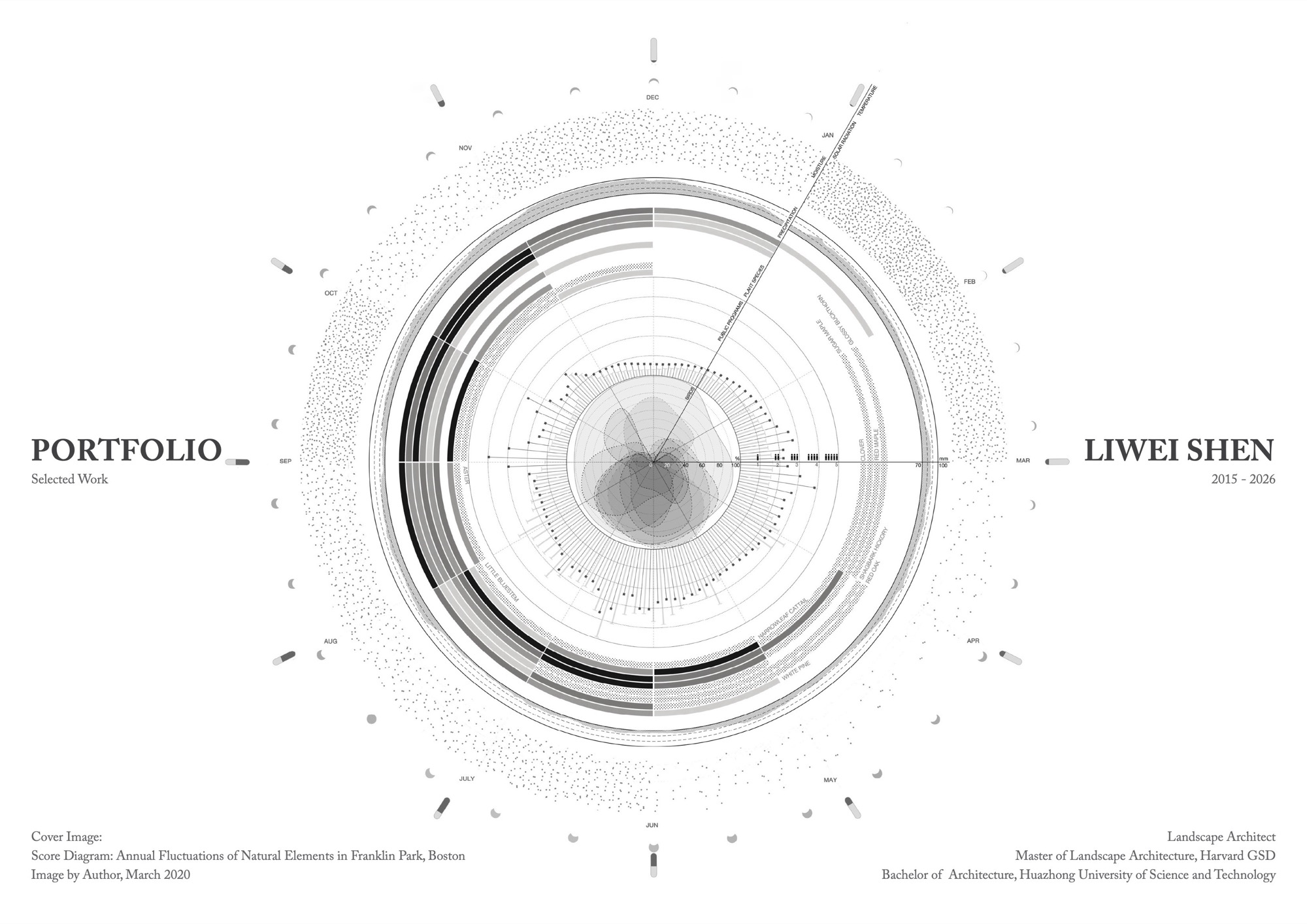
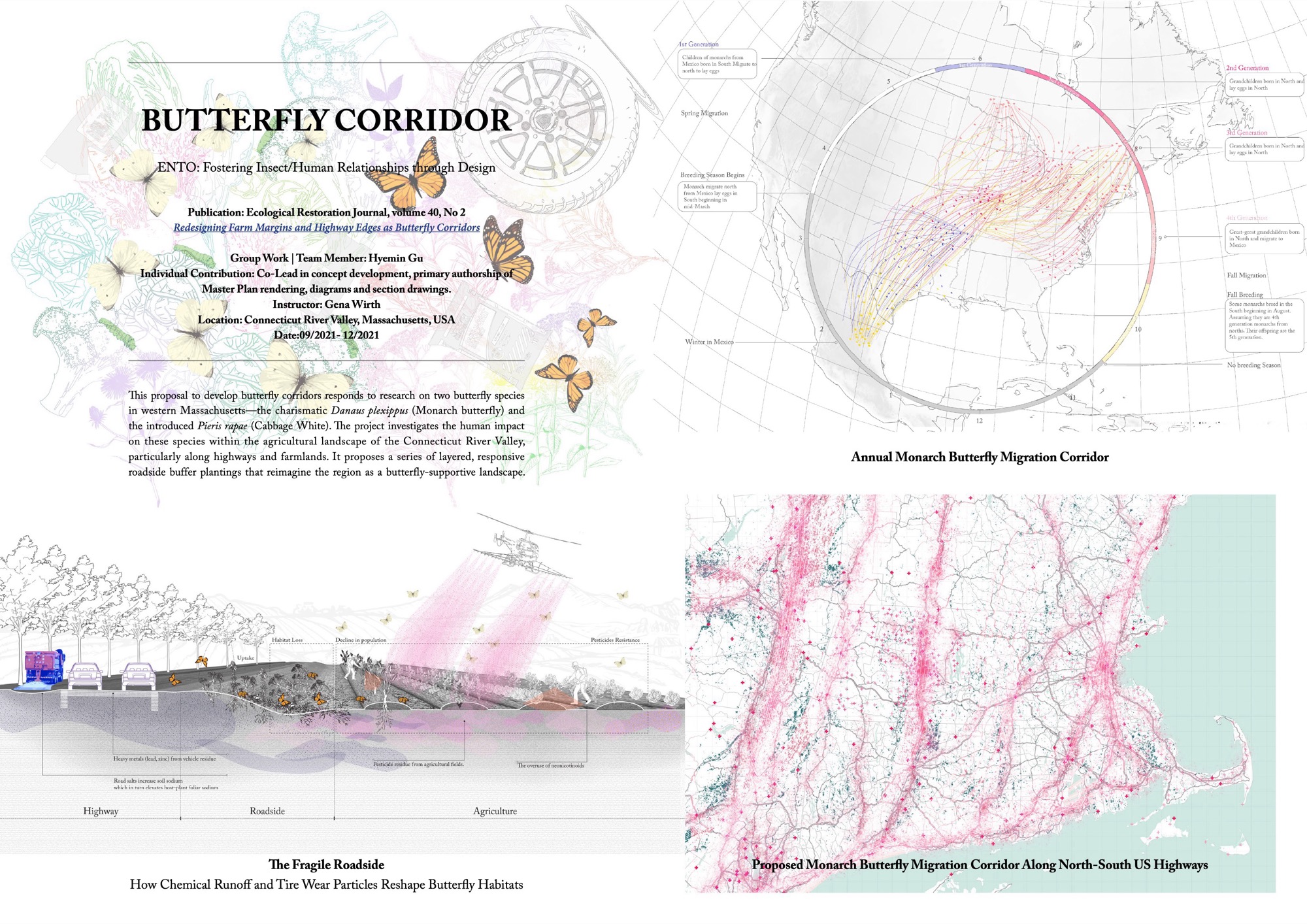
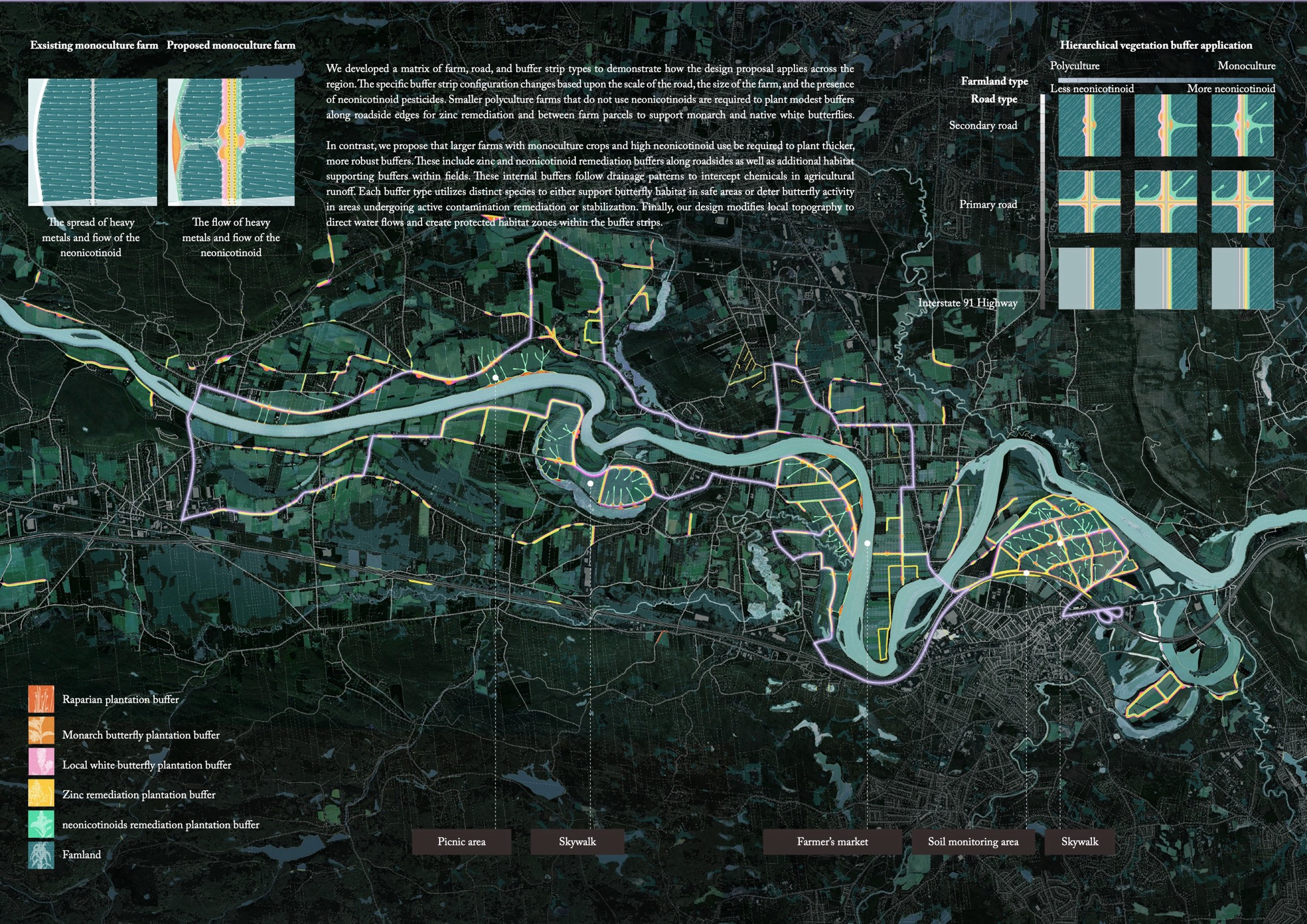
Liwei Shen’s portfolio is recognised with distinction for its ecological intelligence and technical sophistication. It demonstrates a remarkably broad and complete design competence, tackling water, air and soil, and directing this versatile spatial command towards accessibility, fish habitats, eelgrass habitats, butterfly corridors, Alzheimer’s disease and even a critical engagement with the difficult issue of weather modification, specifically cloud seeding. Liwei excels at producing concrete spatial propositions from complex and overlapping systemic issues.
- from the award statementsMy journey in landscape architecture is defined by a dual commitment to addressing global climate and political challenges alongside a poetic sensitivity to local cultural narratives. Holding both a Bachelor of Architecture and a Master of Landscape Architecture with Distinction, I view the built environment through the multidisciplinary lens of a landscape architect, urban designer, and architectural designer.
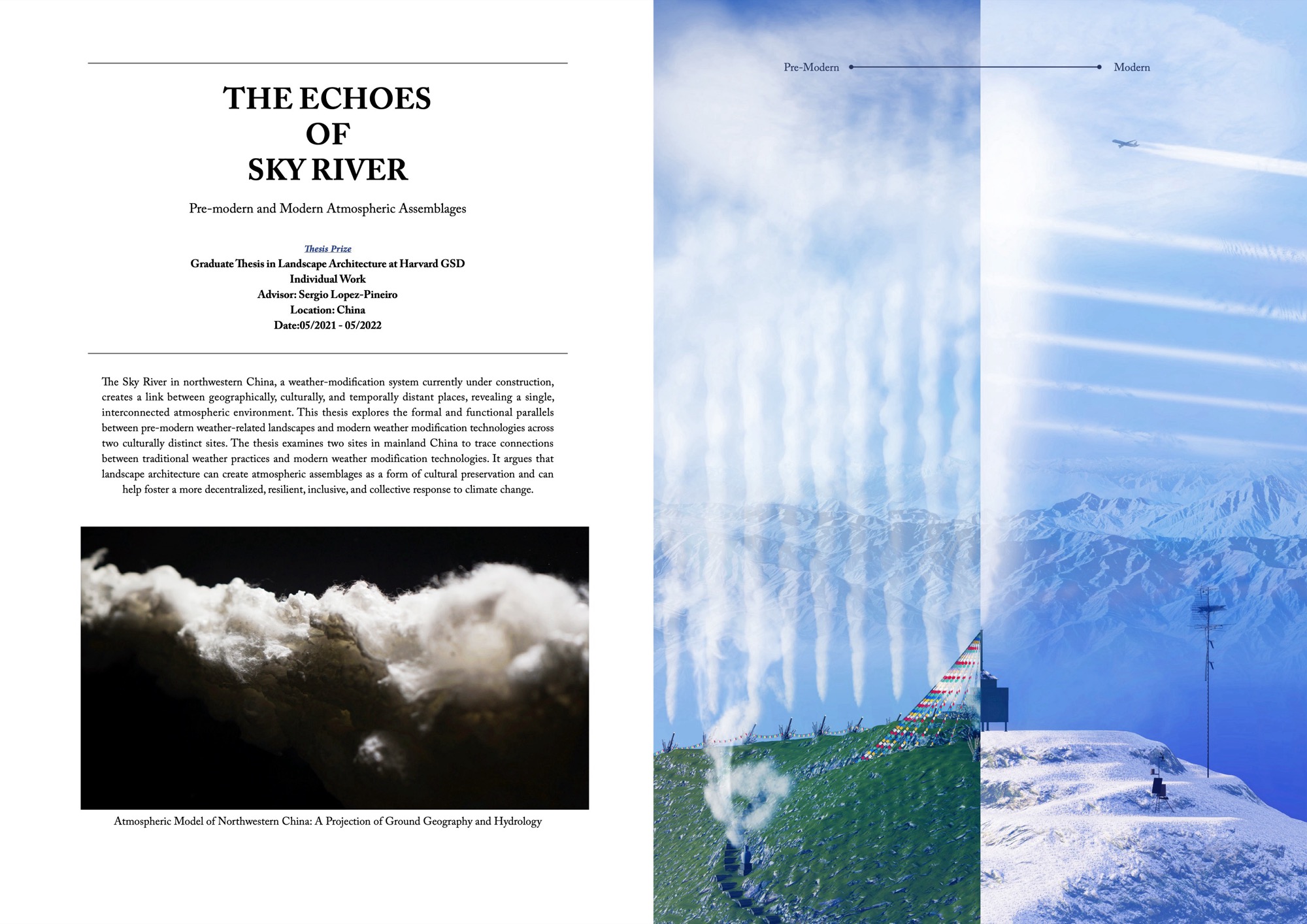
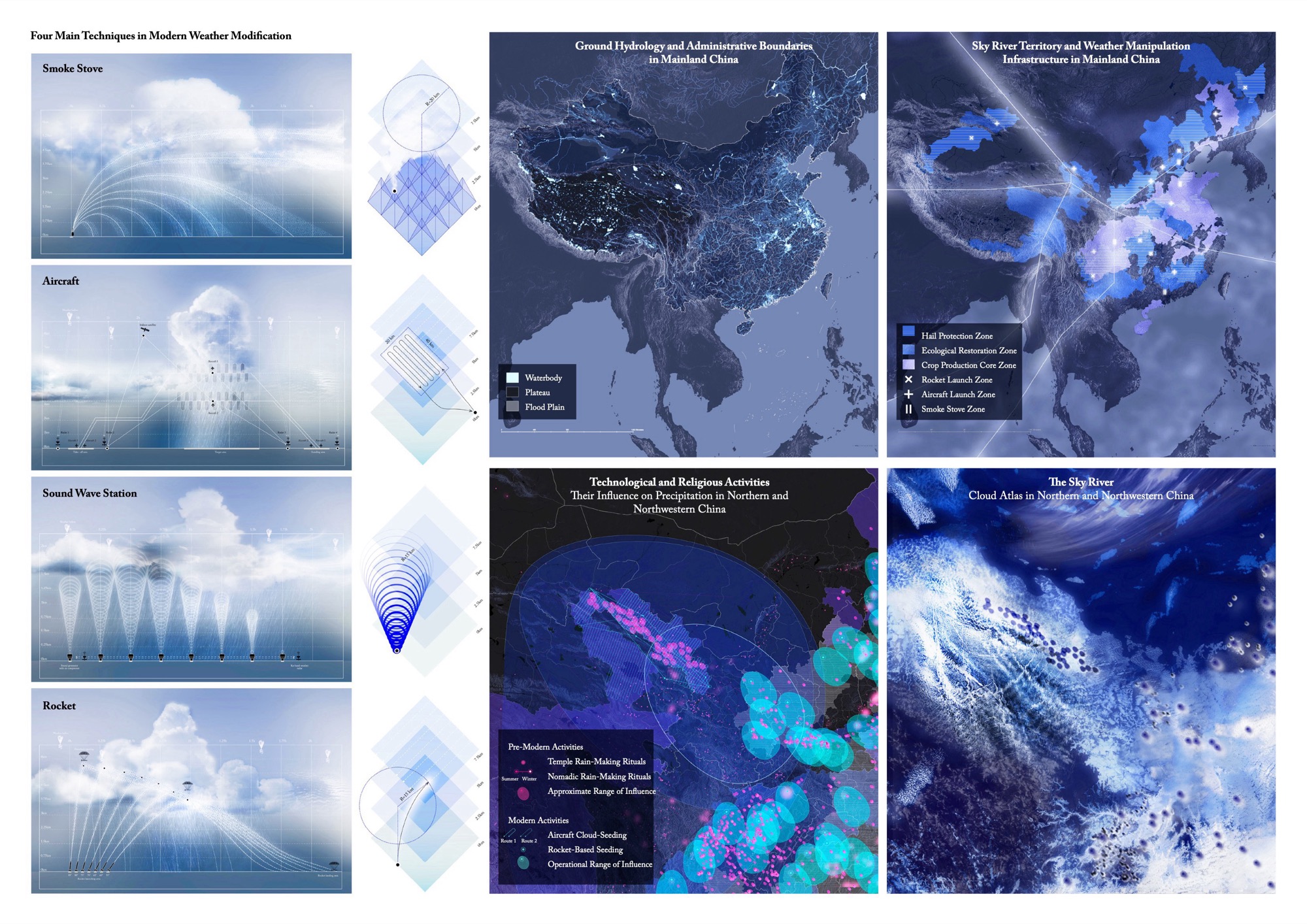
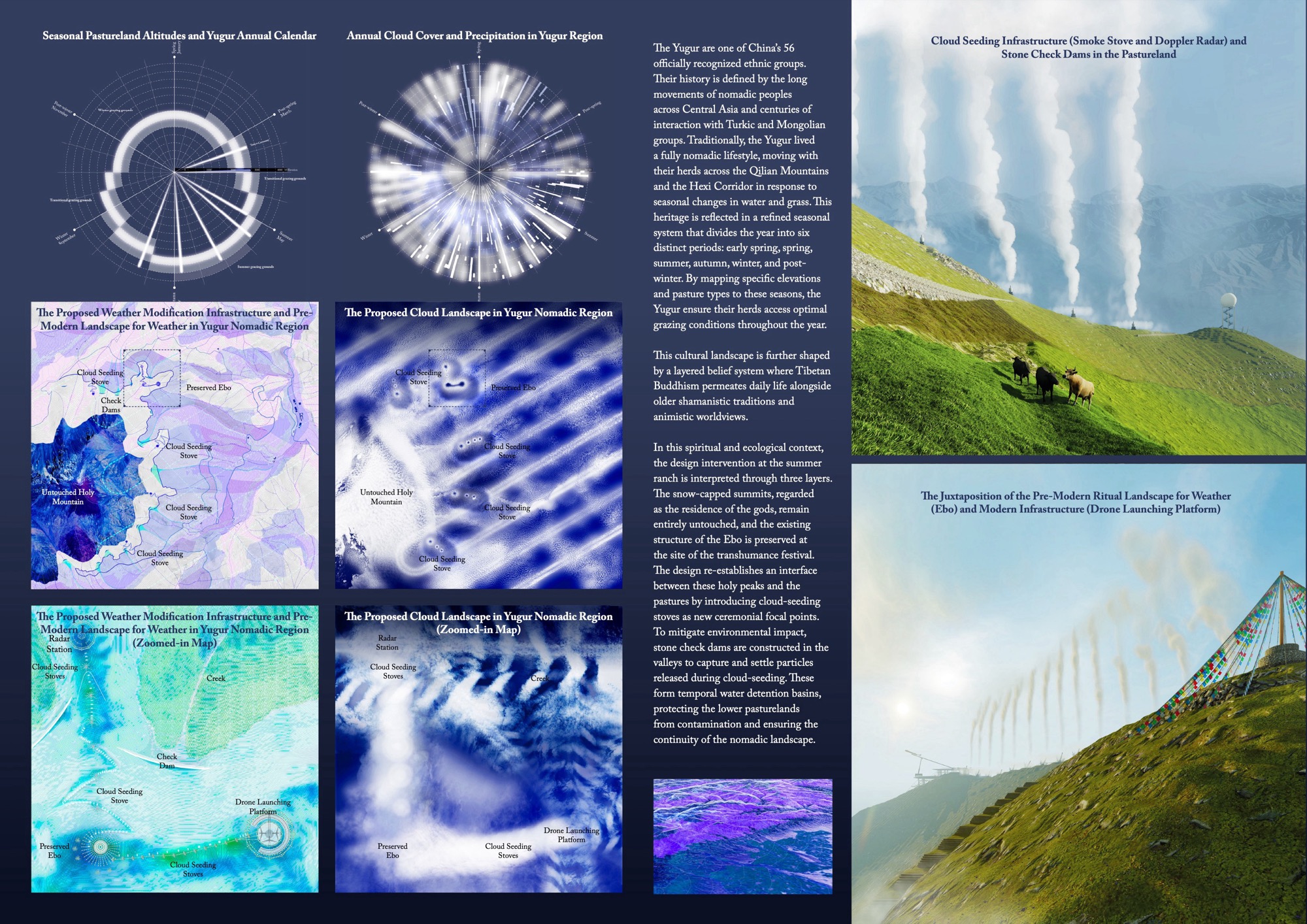
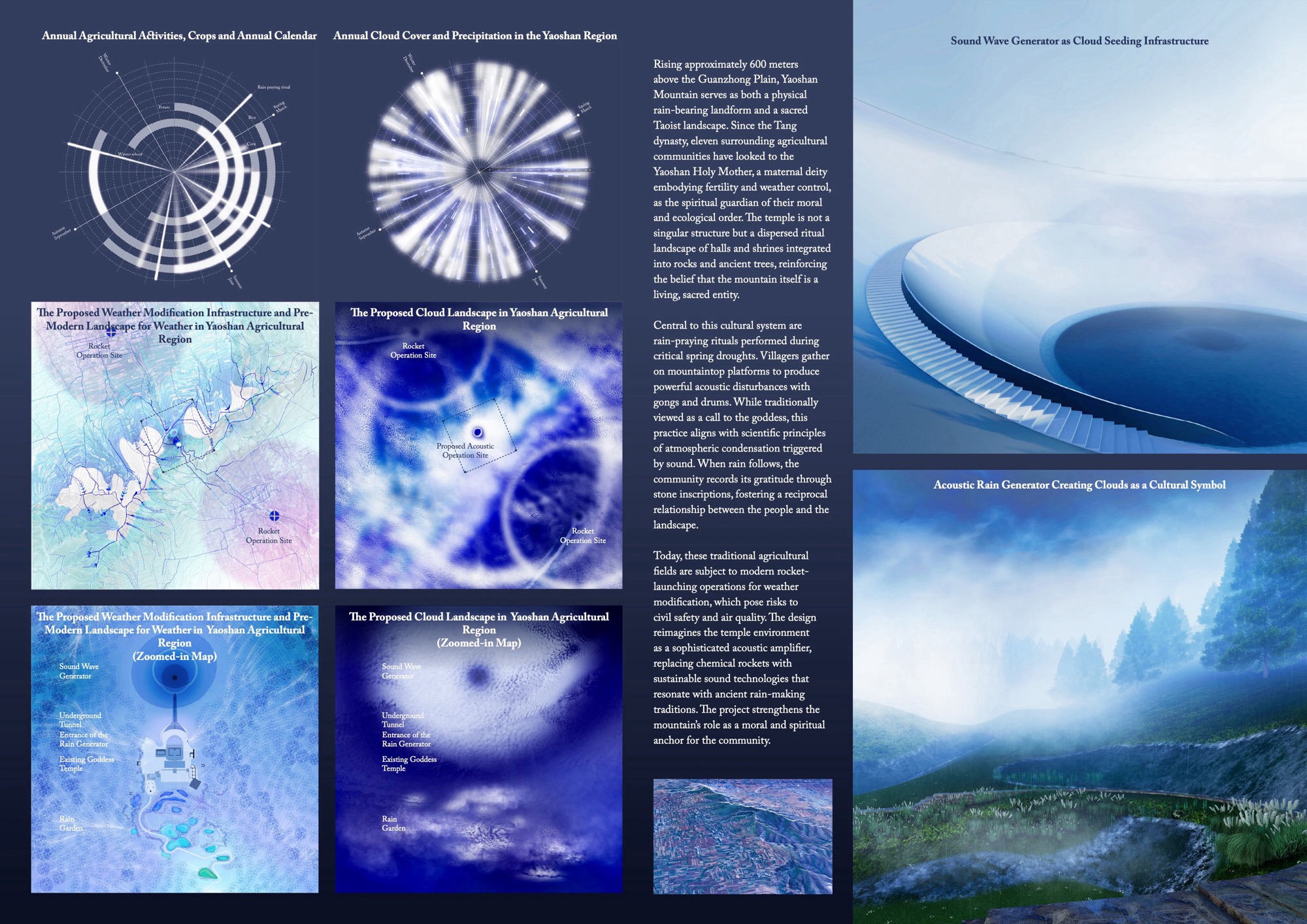
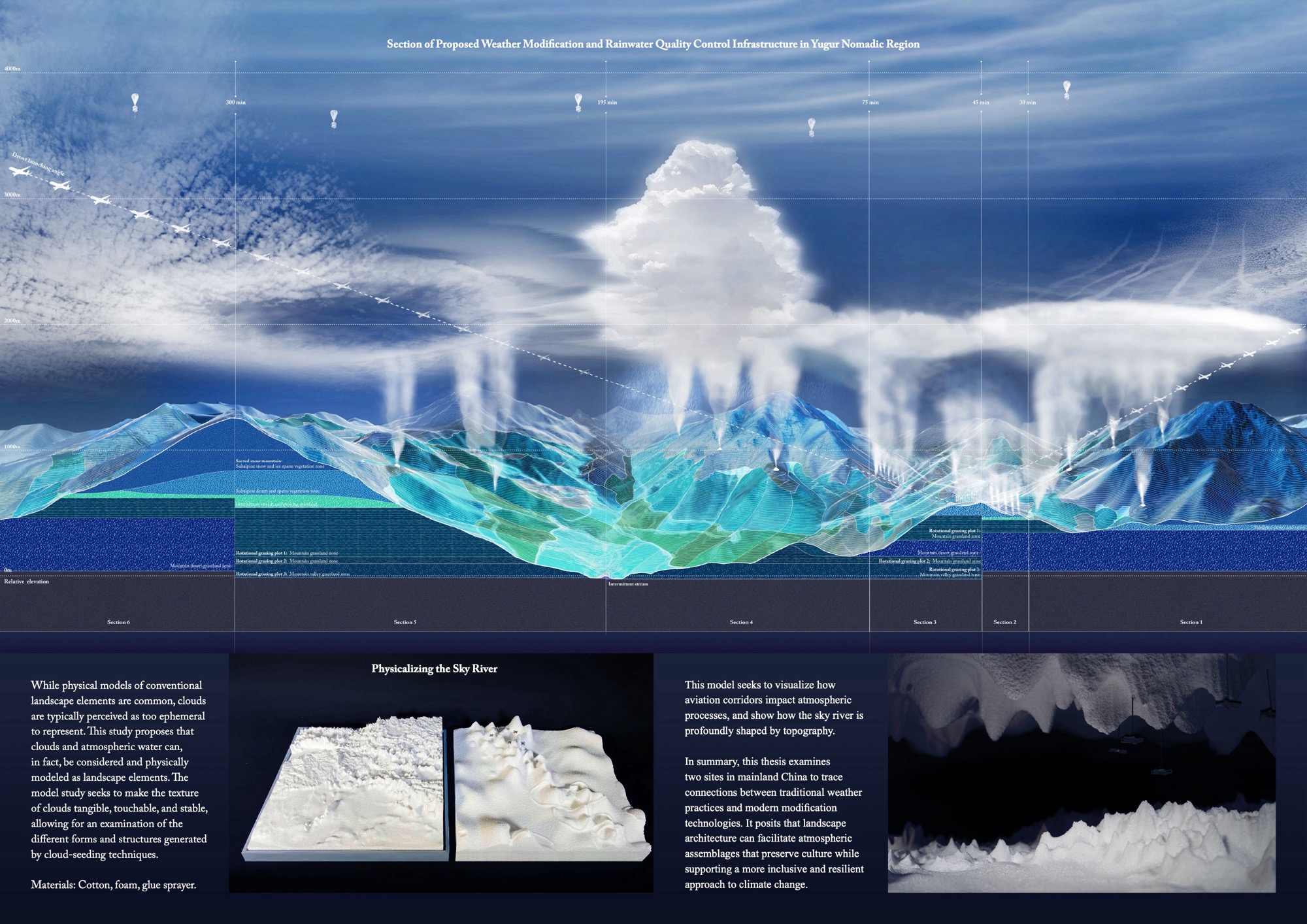
A primary focus of my study is the positioning of atmospheric water as a central subject. Moving beyond the traditional engineering of surface and groundwater, I explore atmospheric assemblages as a bridge between cultural interpretations and modern technologies. In my project The Echoes of Sky River, I use ethnographic and scientific literature to investigate how different cultures perceive and interact with atmospheric water at both global and local scales. Through sections and elevations of atmospheric rivers, I illustrate the temporal aesthetics of weather. My research includes mappings across eight scales, ranging from 1:5,000,000 to 1:500, to demonstrate how traditional rituals and technical approaches, such as rain making and cloud seeding, influence larger atmospheric systems. Additionally, I utilize physical models to visualize ephemeral fogs and clouds, studying their unique patterns to better understand their role in the environment. Ultimately, this work argues that landscape architecture can create atmospheric assemblages as a form of cultural preservation. By shifting away from dominant geoengineering approaches, we can foster a more decentralized, resilient, and collective response to climate change.
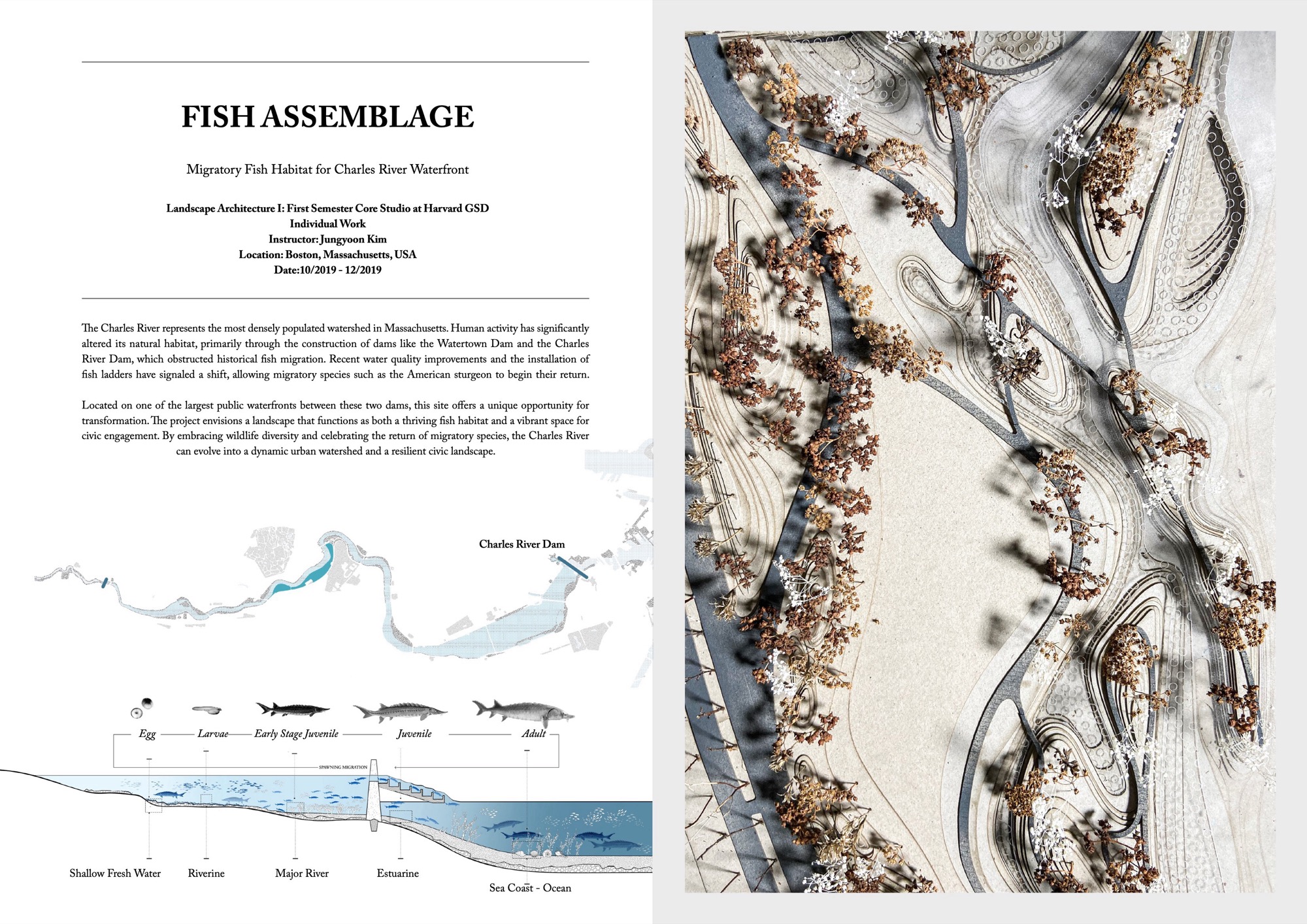
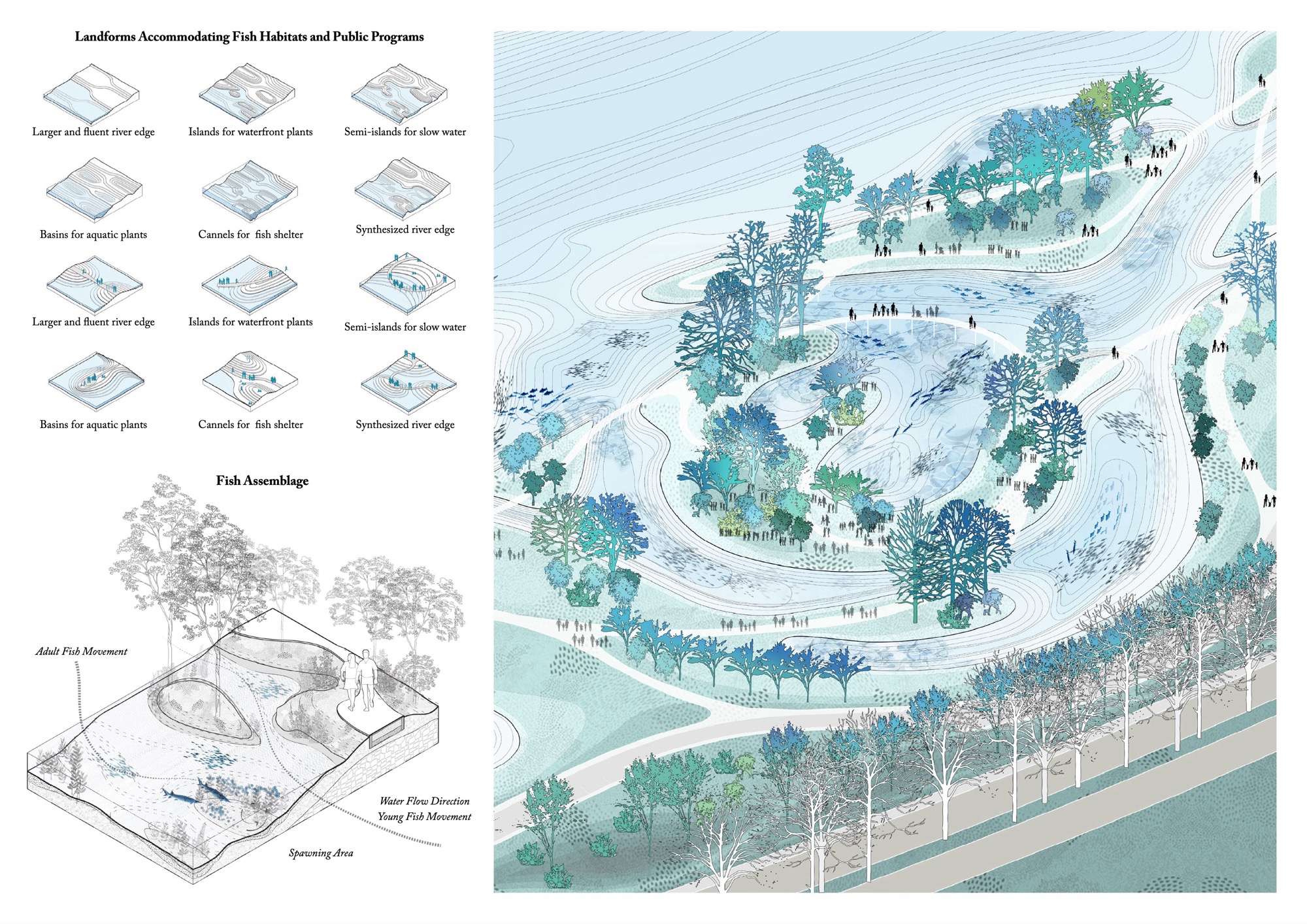
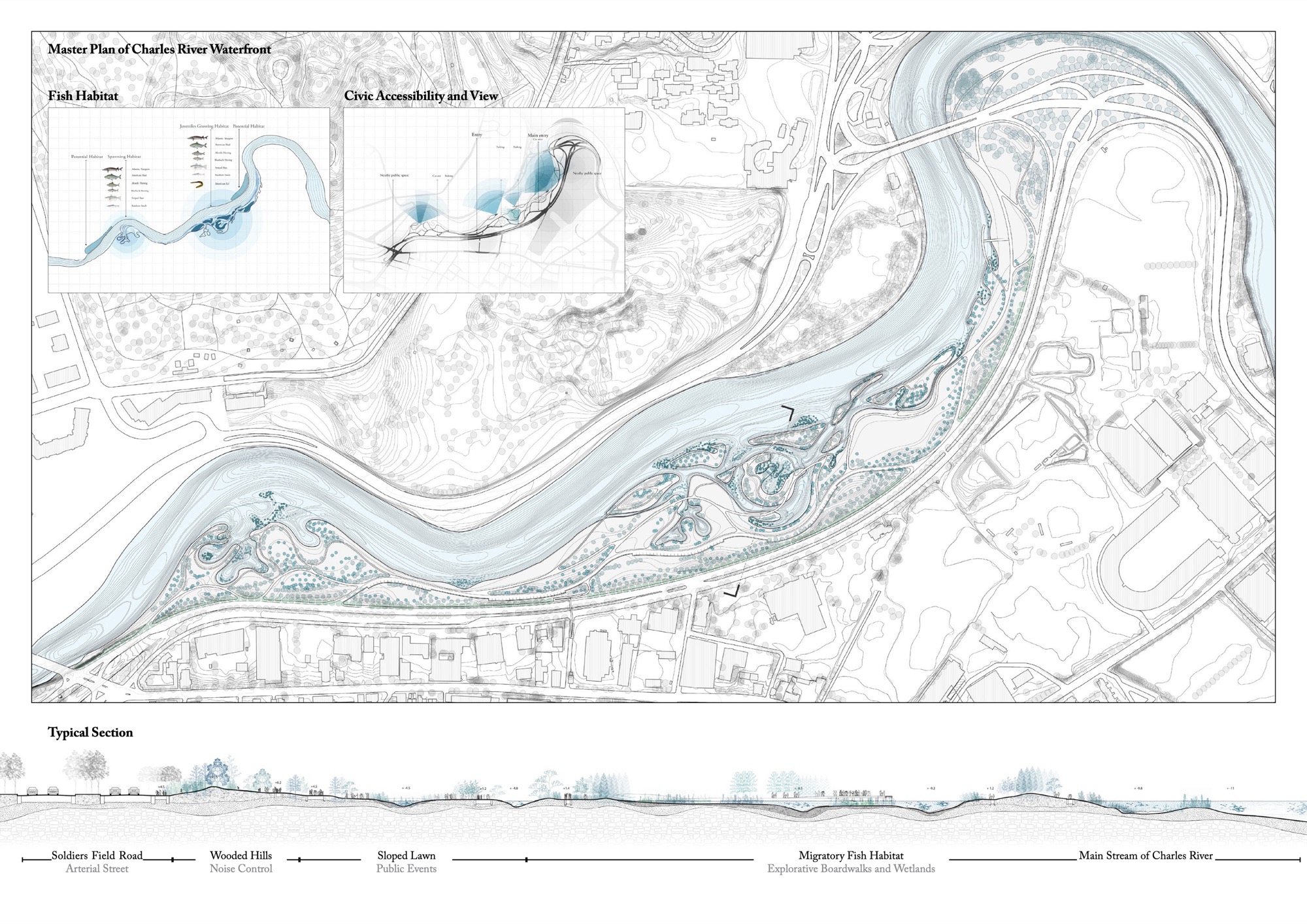
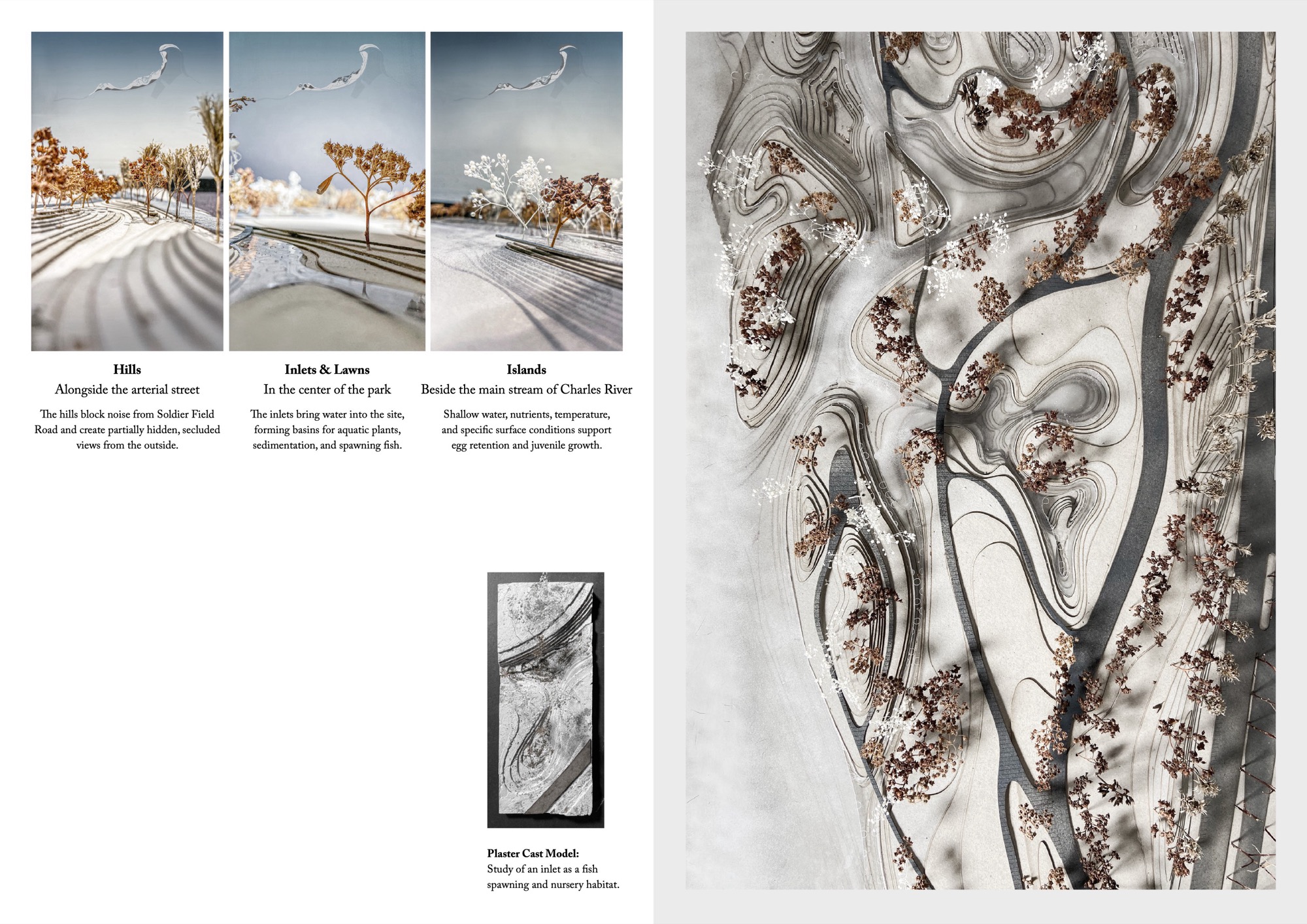
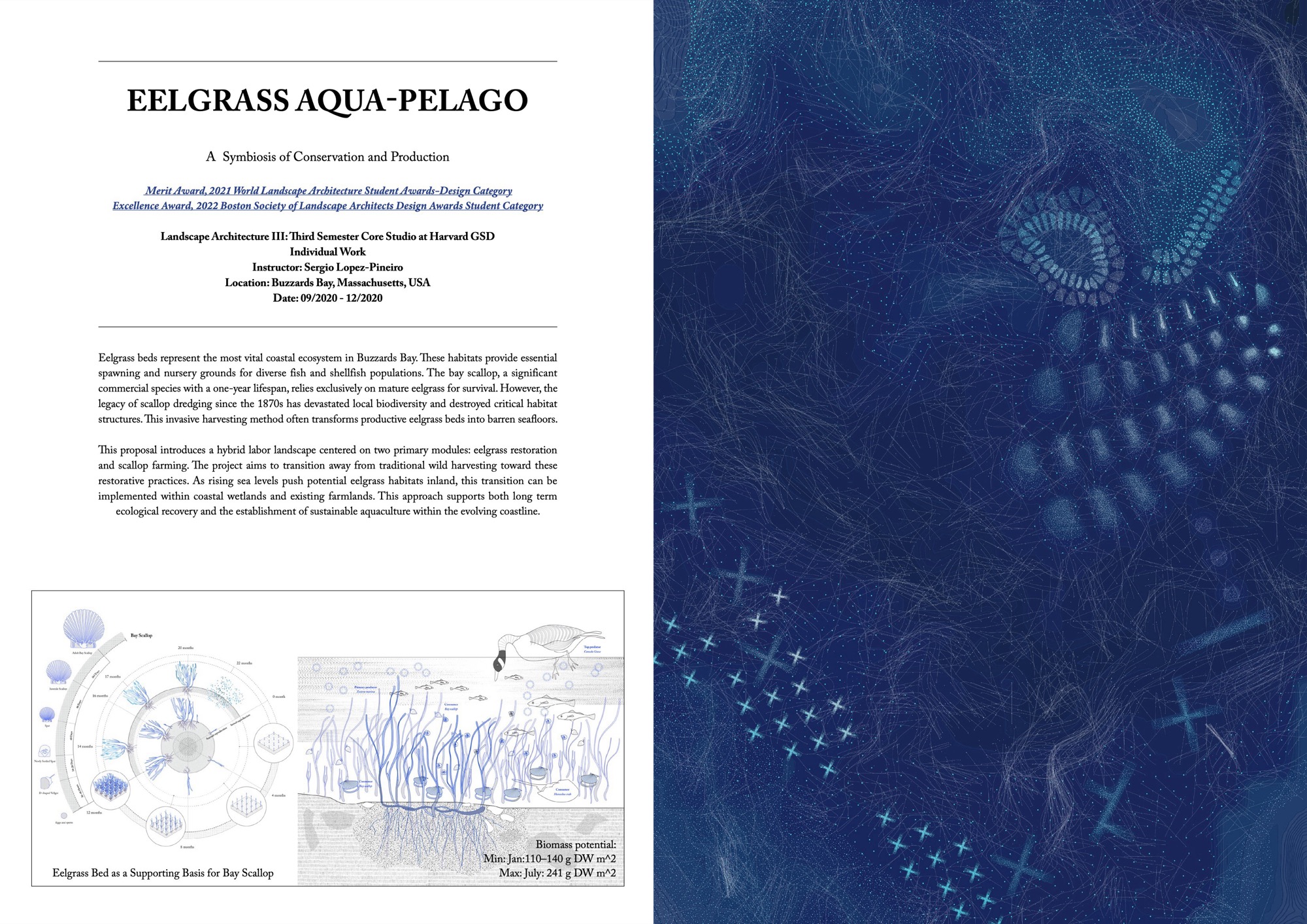
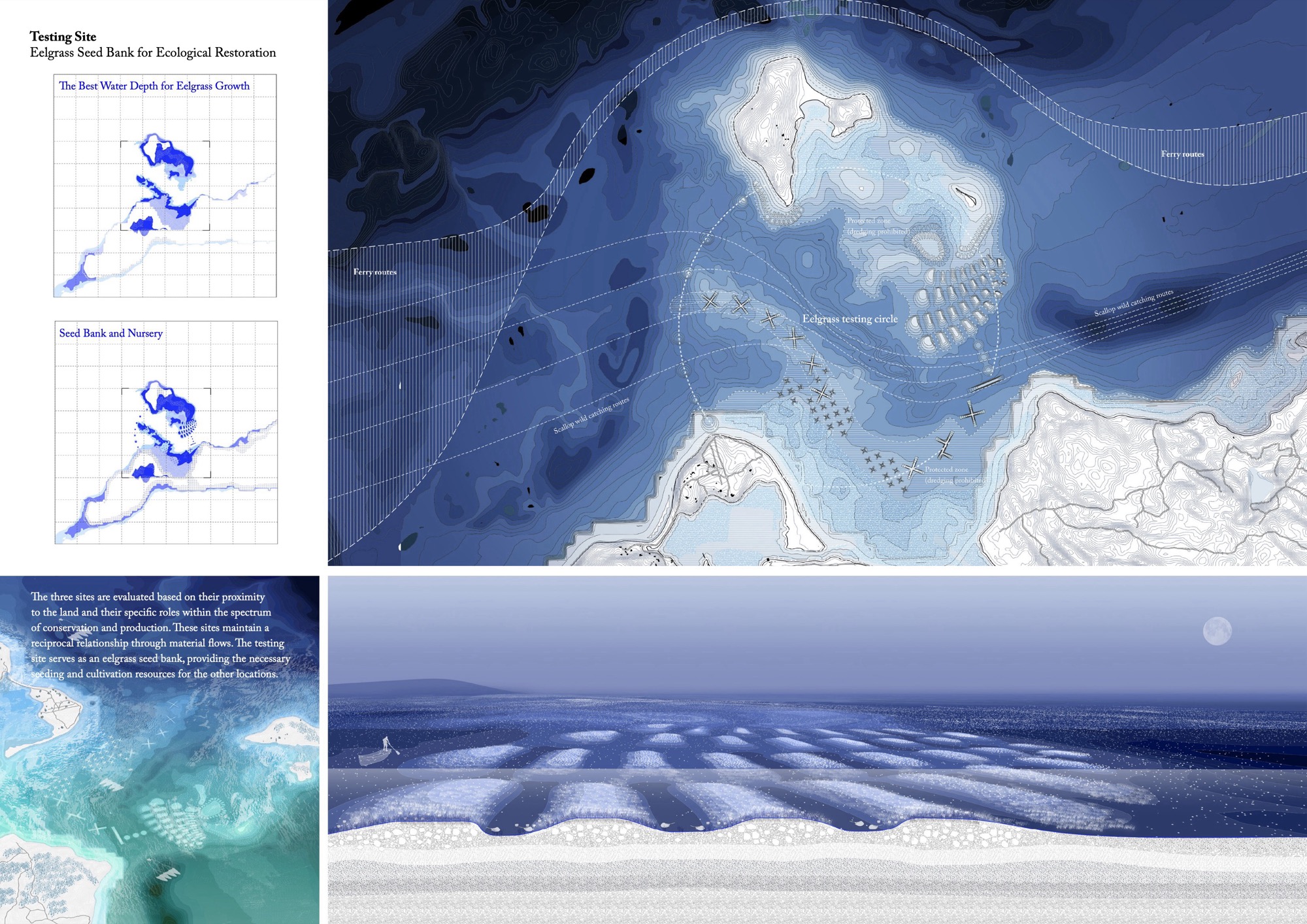
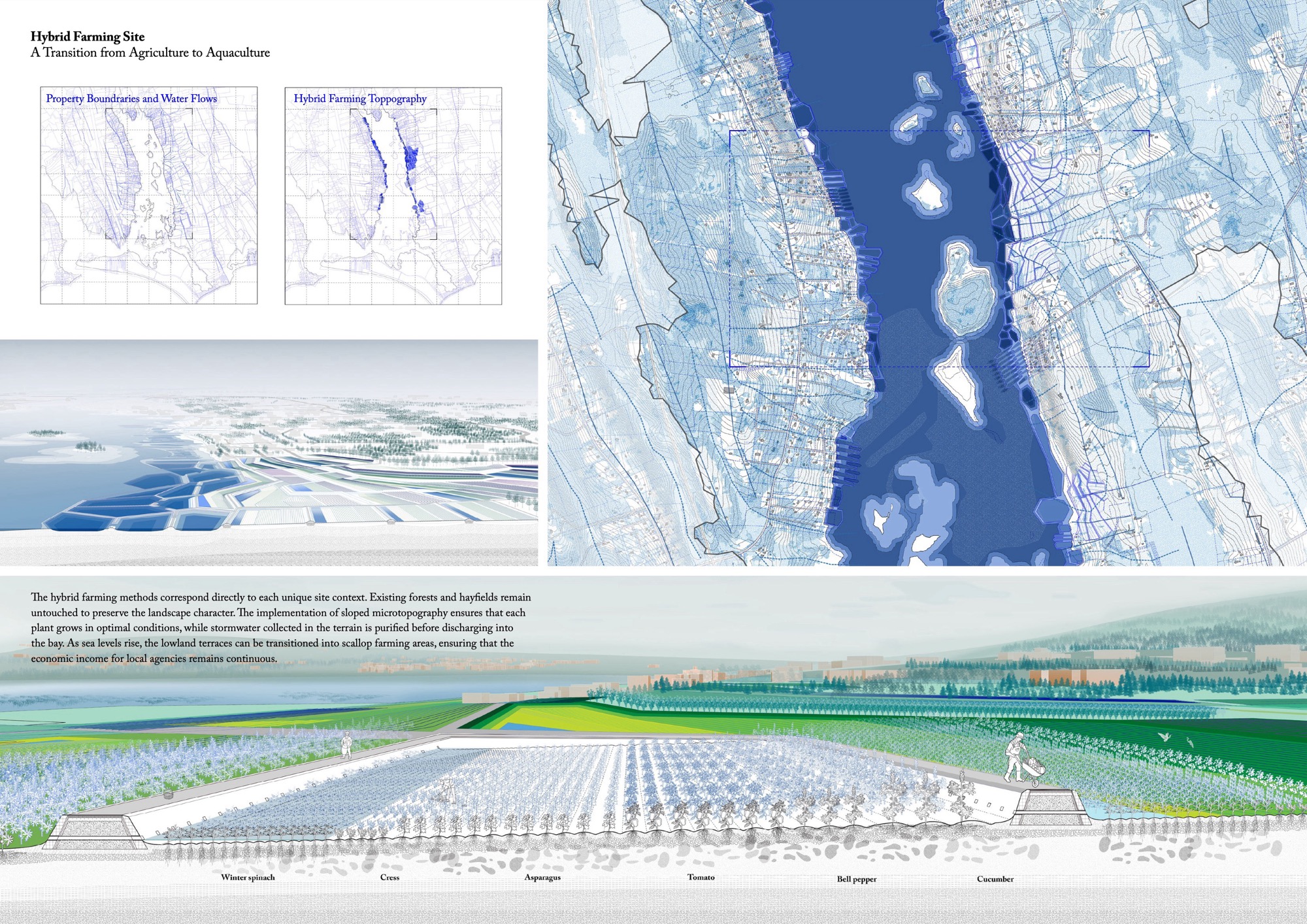
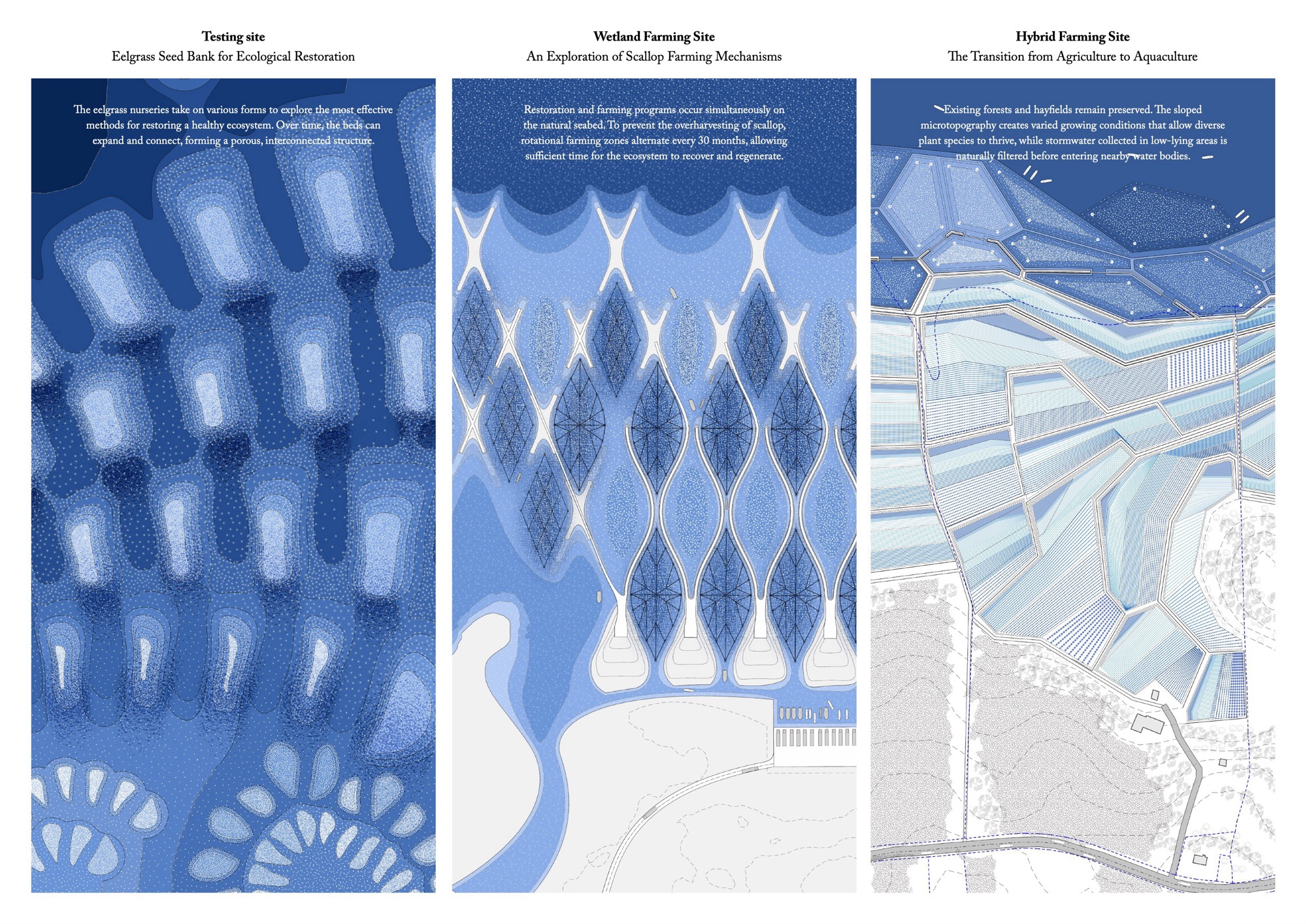
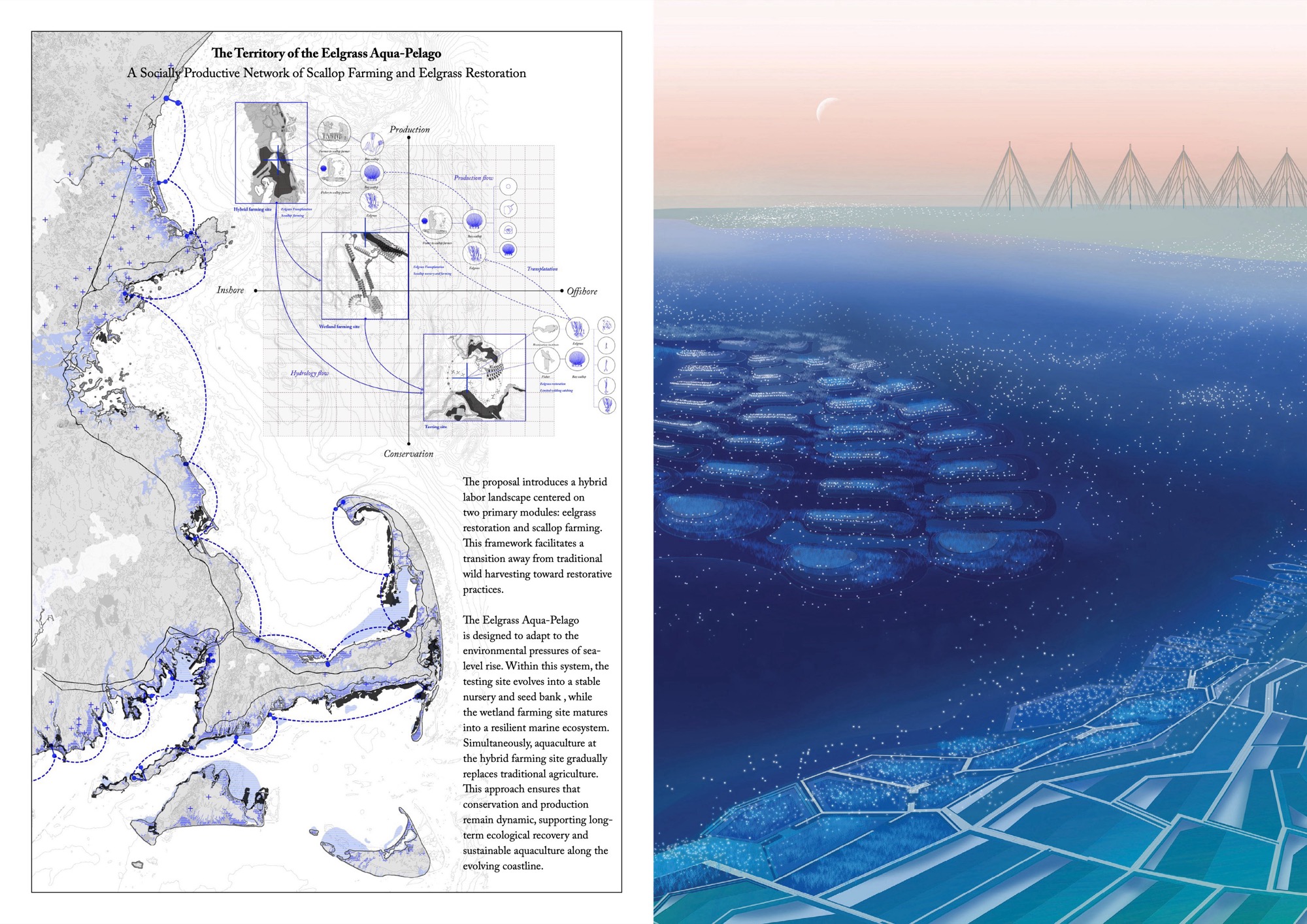
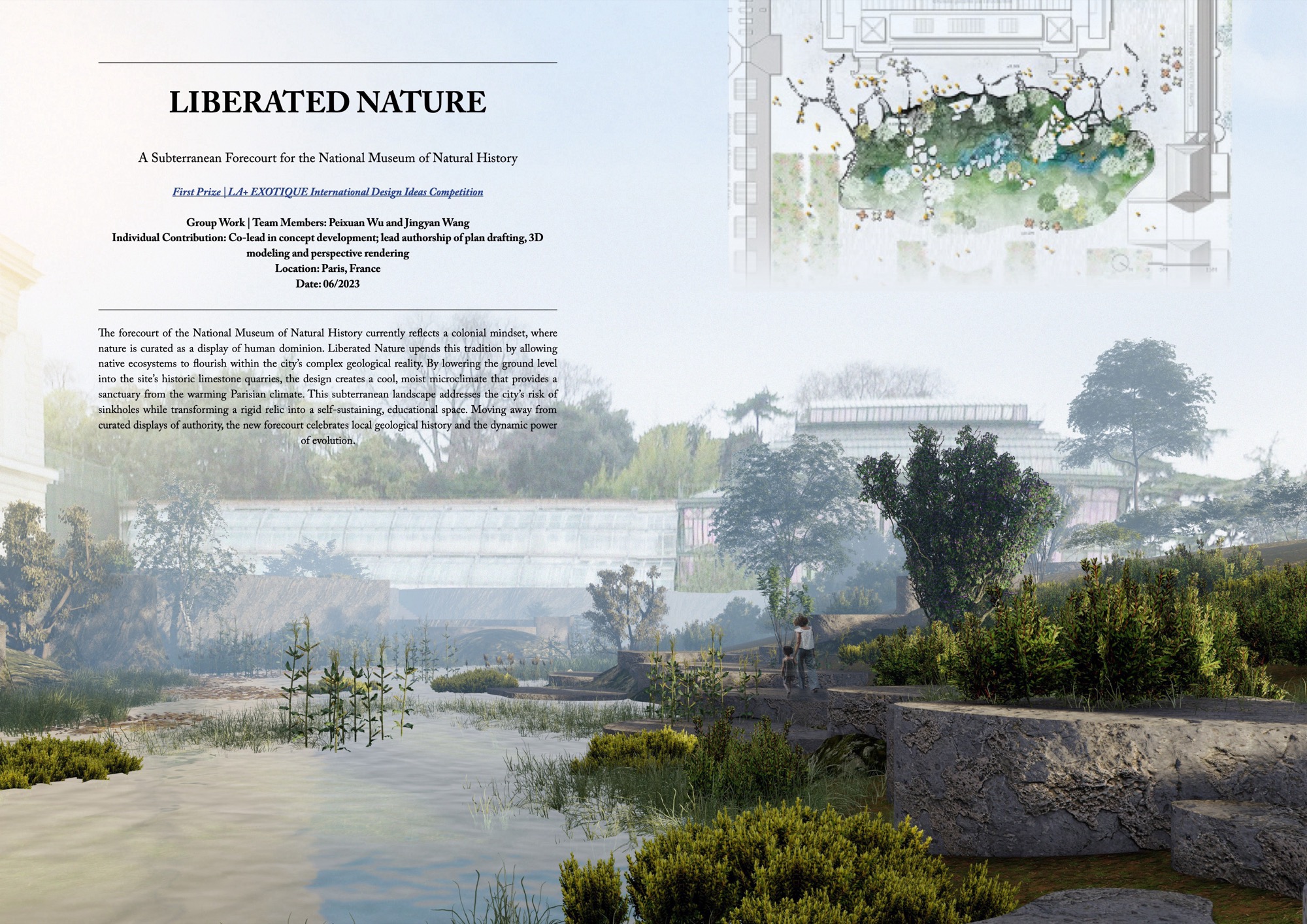
Moving beyond the intangible, my work on surface water explores the symbiosis between human experience and ecological conservation. In Fish Assemblage, I study the return of migratory American sturgeon to the Charles River, transforming altered watersheds into thriving habitats and spaces for civic engagement. Similarly, Eelgrass Aquapelago proposes a new metabolism of conservation and production in Buzzards Bay, utilizing a hybrid landscape of eelgrass restoration and scallop farming to transition away from destructive harvesting technologies. This commitment to inclusivity is further realized in Liberated Nature, where I challenge the Western colonial mindset of static botanical showcases by transforming the forecourt of the National Museum of Natural History in France into a self sustaining ecosystem. By carving a deliberate crack into the concrete to expose Paris’s hidden geological quarries, the design creates a sunken garden that serves as a cooling climatic refuge and a buffer against urban heat.
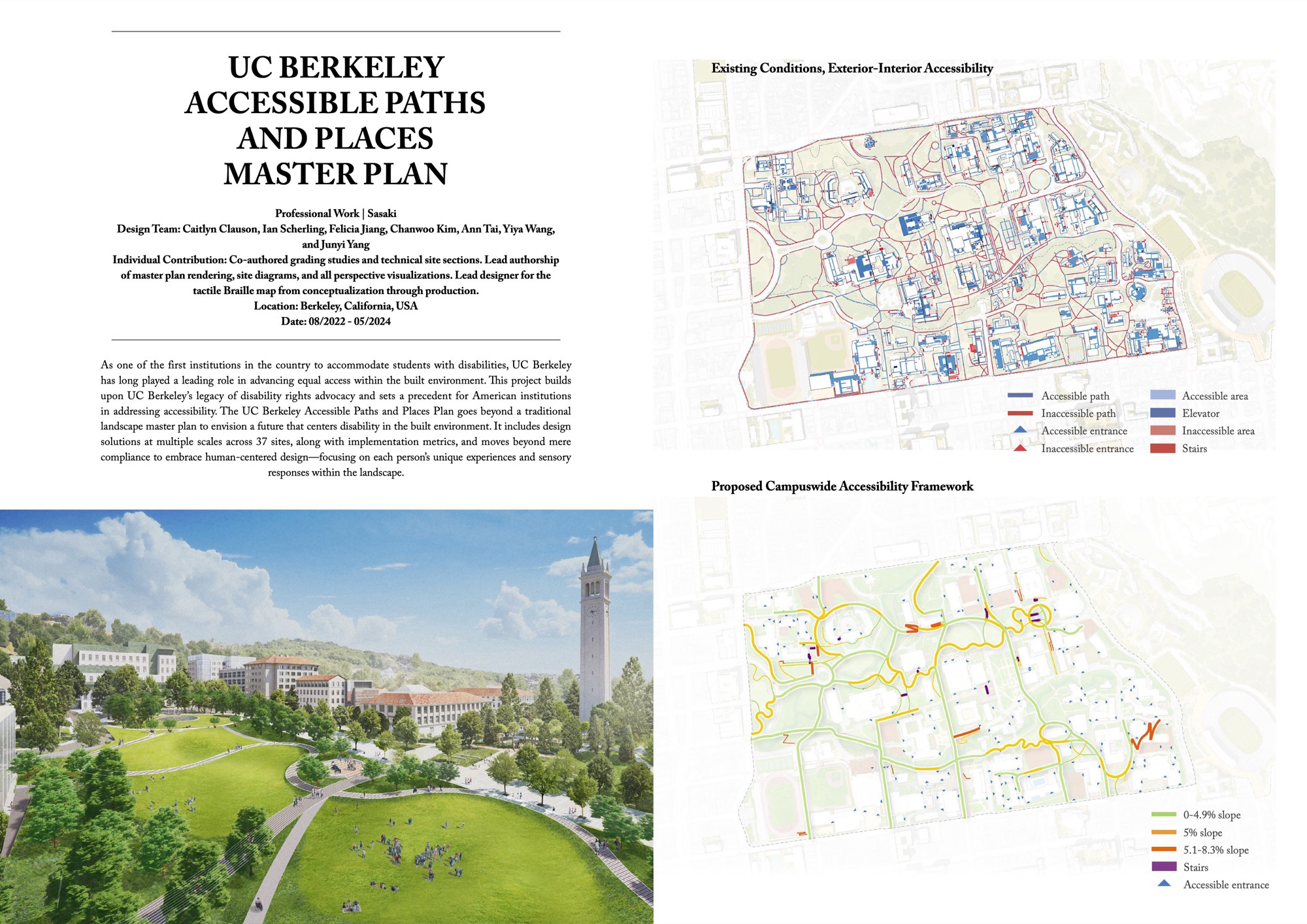
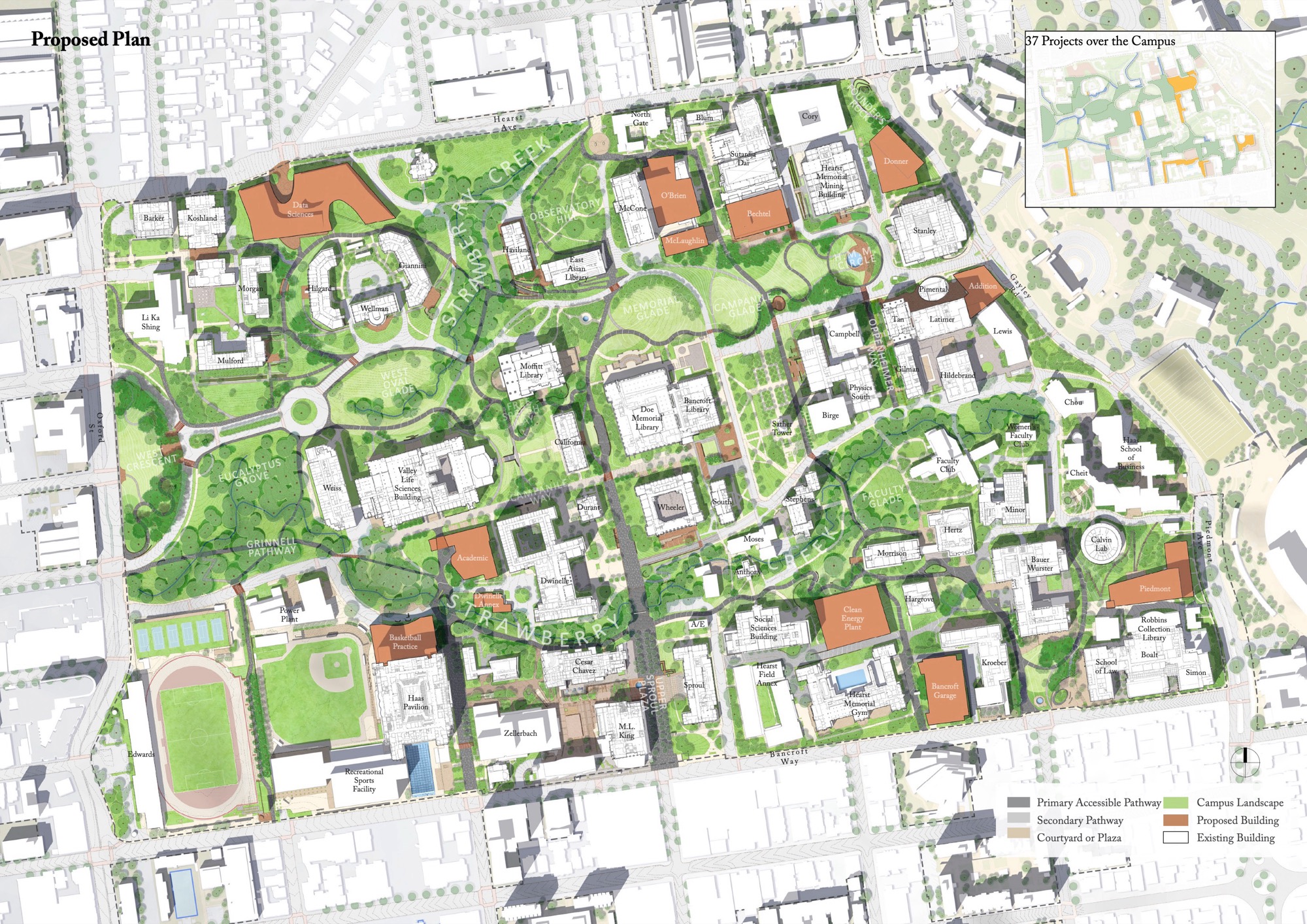
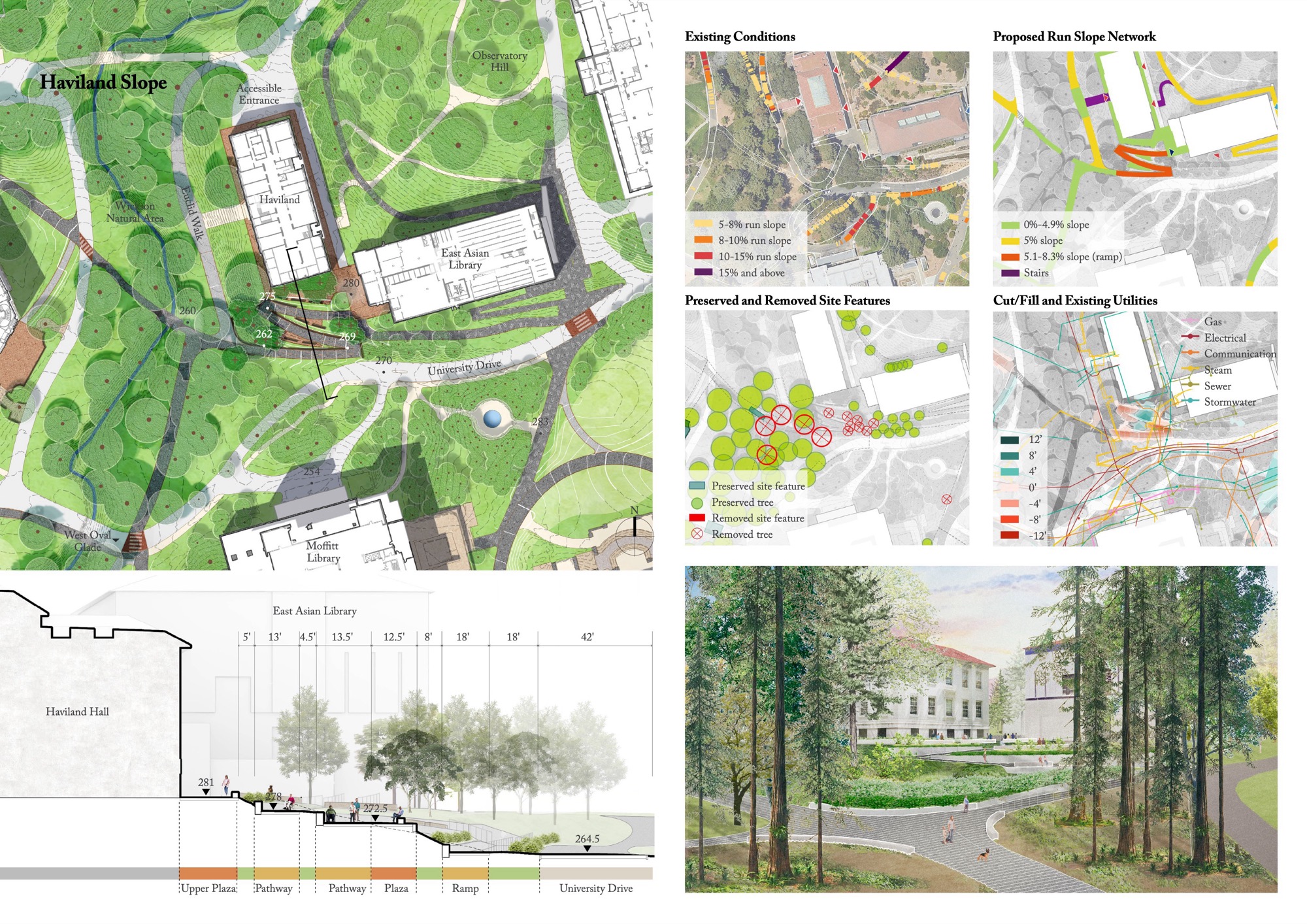
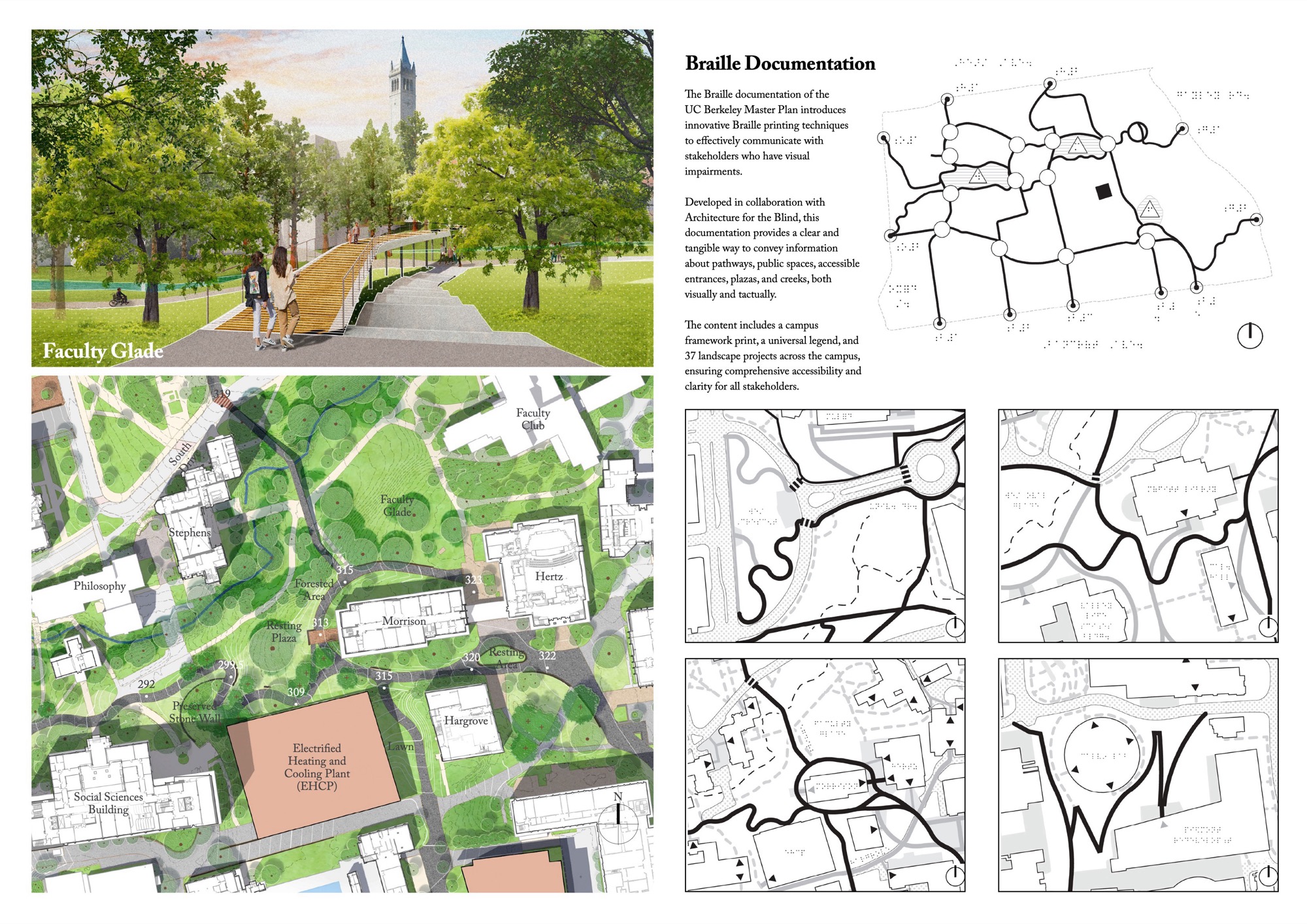
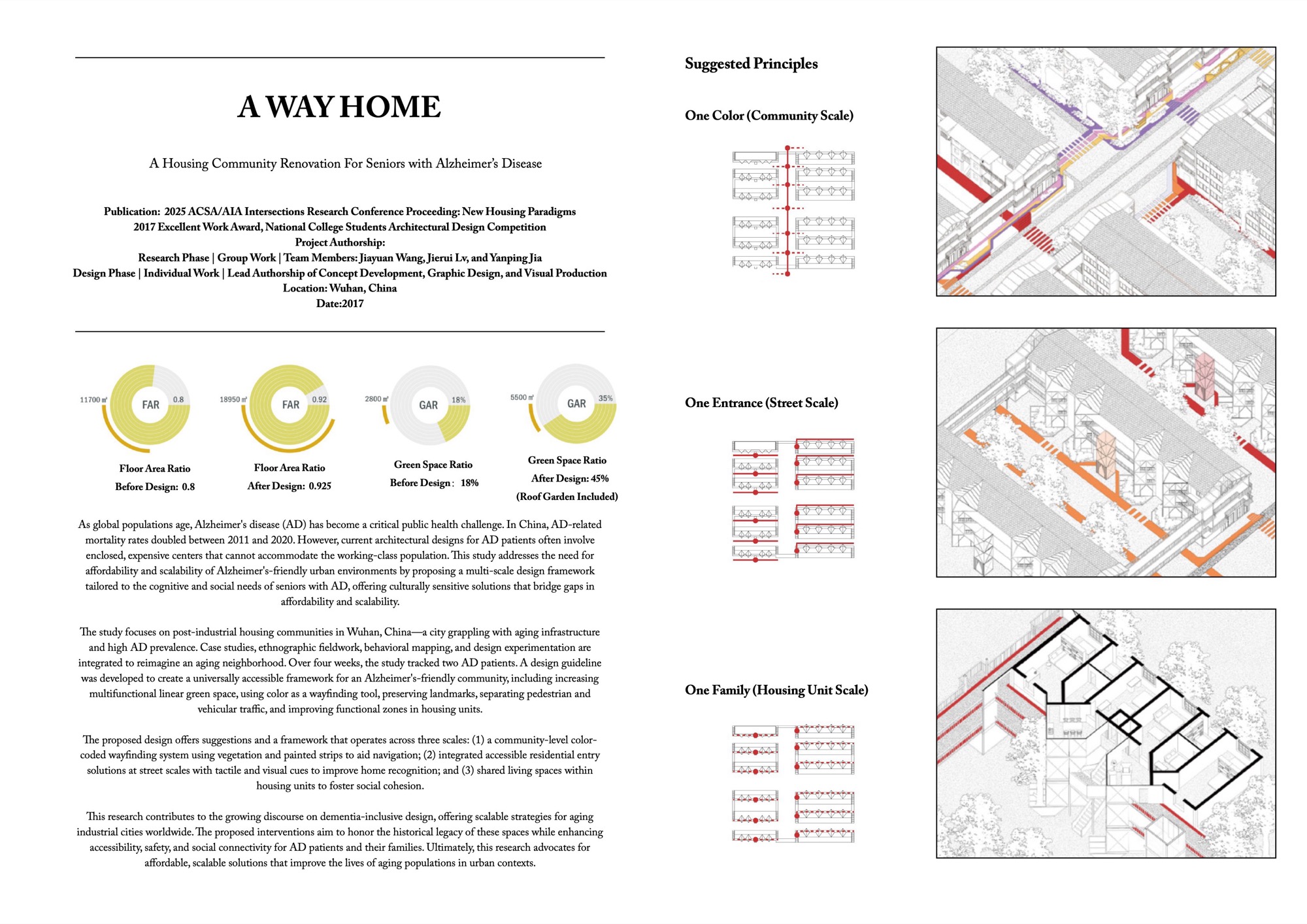
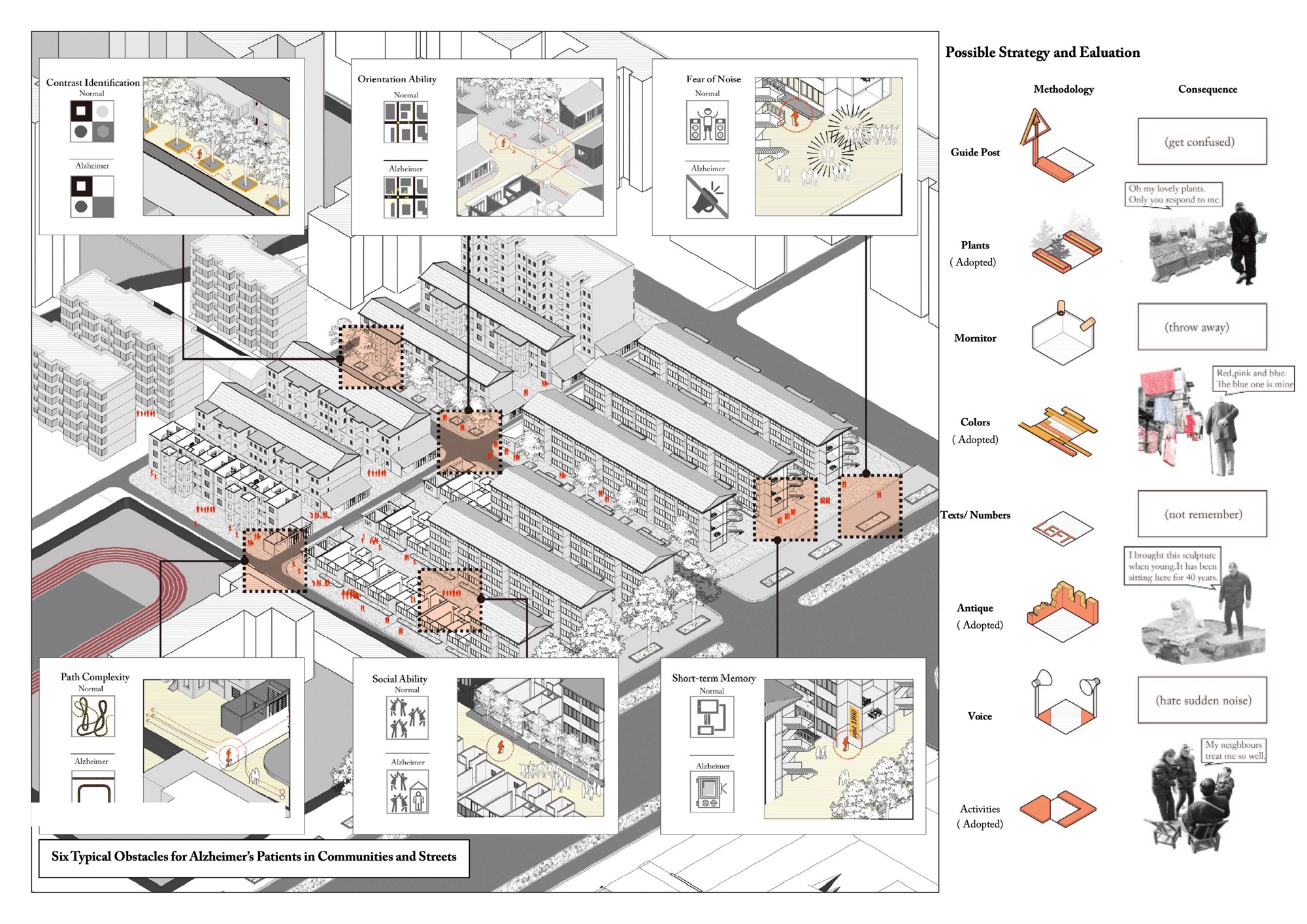
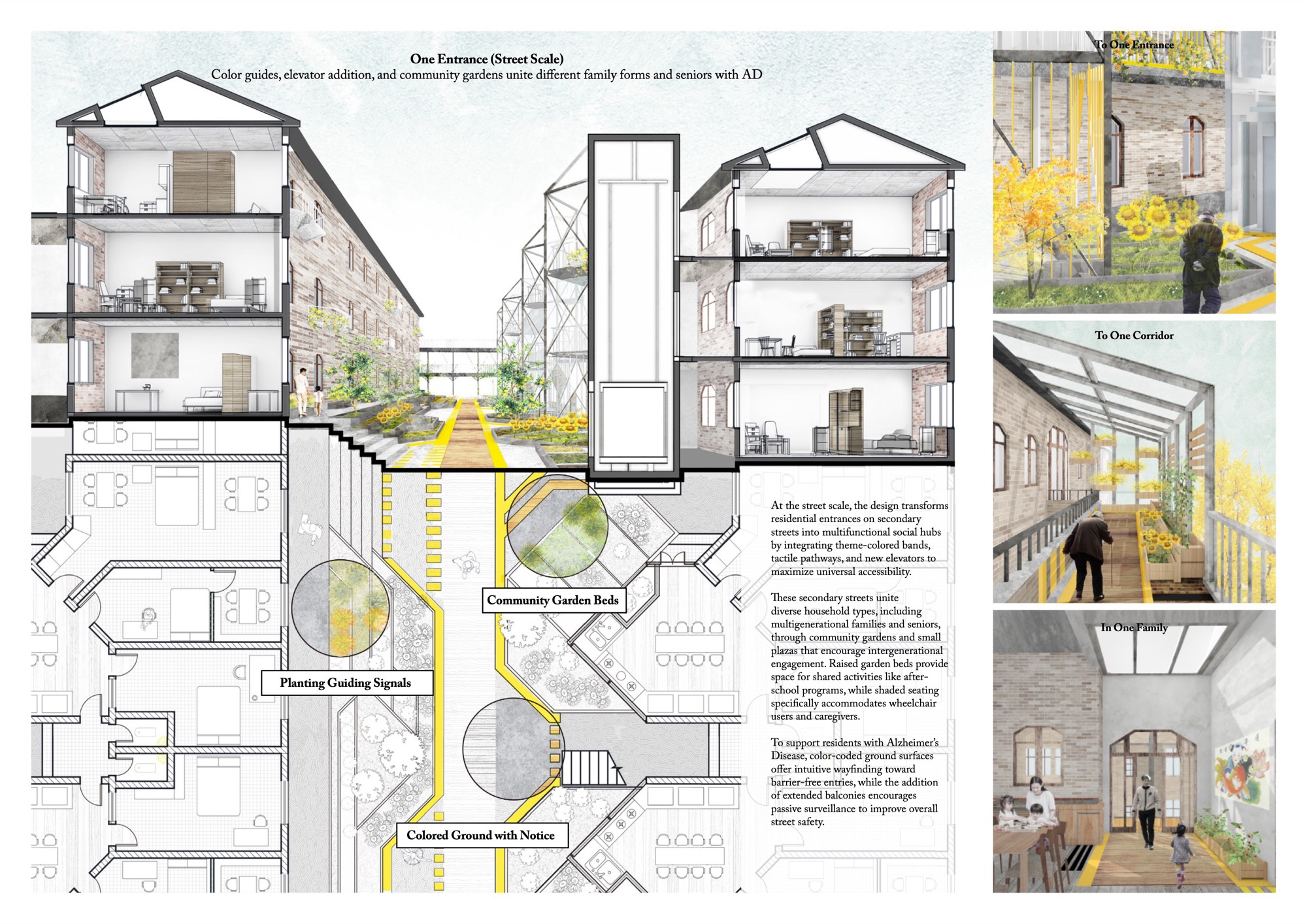
True sustainability is impossible without inclusivity, which is why a significant portion of my research and professional practice is dedicated to universal accessibility. This commitment began at a residential scale with the project A Way Home, presented at the 2025 ACSA-AIA Intersection Conference, which explored housing community renovations for seniors with Alzheimer’s Disease. During my time at Sasaki and now at Field Operations, I have applied these values to large scale work, best exemplified by my contribution to the UC Berkeley Accessible Paths and Places Master Plan. I have included this project in my portfolio to celebrate the incredible teamwork of the planners, urban designers, and architects at Sasaki who made this vision possible. Our team utilized accessibility-driven grading strategies to transform complex topographies into meandering paths and inclusive places, all while preserving the historical Olmsted landscape planning and aesthetic structure. A vital component of this work was the development of Braille documentation in collaboration with Architecture for the Blind. By introducing innovative Braille printing techniques, we were able to effectively communicate the campus framework, a universal legend, and 37 individual landscape projects to stakeholders with visual impairments. To me, topography remains a social frontier where design has the power to either welcome or exclude.
I strive to remain active at the intersection of practice and academia as a practitioner-scholar, bringing research-based rigor to complex urban challenges. This portfolio reflects my journey from the conceptual freedom of the Harvard Graduate School of Design to the technical complexities of professional practice at Field Operations and Sasaki. Serving as a peer reviewer for CELA and ACSA and as the 2022 LAF Olmsted Scholar allows me to maintain a critical perspective while delivering high stakes public landscapes. I aim to design landscapes that precisely and sensitively represent local cultural identities while beautifully navigating the aesthetics of global dynamics.
United States
74881


LILA 2026 Sponsor