Tianmuli Urban Block Regeneration
www.ztsla.com/
2026 Public Projects / China / Built in 2025 /
![Magic international Kindergarten, located in Baoshan District, Shanghai, is a renovation project that used to be a sales center in a housing estate in the past five years. In 2018, the community repositioned this 3100-square-meter site, to transform it into an outdoor playground for the daily activities of the kindergarten. The building area of the […]](https://landezine-award.com/wp-content/uploads/2023/05/Project-main-photo-2-600x400.jpg "Magic international kindergarten")
![Project Statement The Enning Road Urban Renewal Project is an endeavor to rejuvenate a historic neighborhood in downtown Guangzhou City. The Enning Road neighborhood is unique yet typical – it represents the comparable challenges of such community in today’s urban China, rich in history, poor in growth planning, high density, severely run-down infrastructure, shrinking population […]](https://landezine-award.com/wp-content/uploads/2023/05/Project-main-photo-600x450.jpg "En‘ning Road")
![Project Statement The Tangshan Quarry Park is a project to rejuvenate an abandoned quarry into a dynamic public space. Facing the given condition of three large quarry craters and severely damaged ecosystem around the quarry, our design response is to create an experience-based park that integrates the community and restores the integrity of the ecosystem. […]](https://landezine-award.com/wp-content/uploads/2023/05/00-Project-main-photo-8-600x337.jpg "Tangshan Quarry Park")
![The Cloud Paradise Park is an edutainment neighborhood park by the lakeside in the Luxe Lake Eco-city in Chengdu, China. The park occupies 5.5-acre linear waterfront of a 1,000-acres storm-water treatment retention lake constructed for the Luxe Lake Eco-city. We took a step further from the conventional approach and transformed the passive lakeside green space […]](https://landezine-award.com/wp-content/uploads/2018/05/005-meandering-creek_main-600x400.jpg "The Cloud Paradise Park")
Hangzhou, historically renowned as “Heaven on Earth,” has in modern times experienced rapid urban expansion and development, leading to extreme climate conditions. During heavy rain seasons, the city faces immense pressure from drainage and flood control.
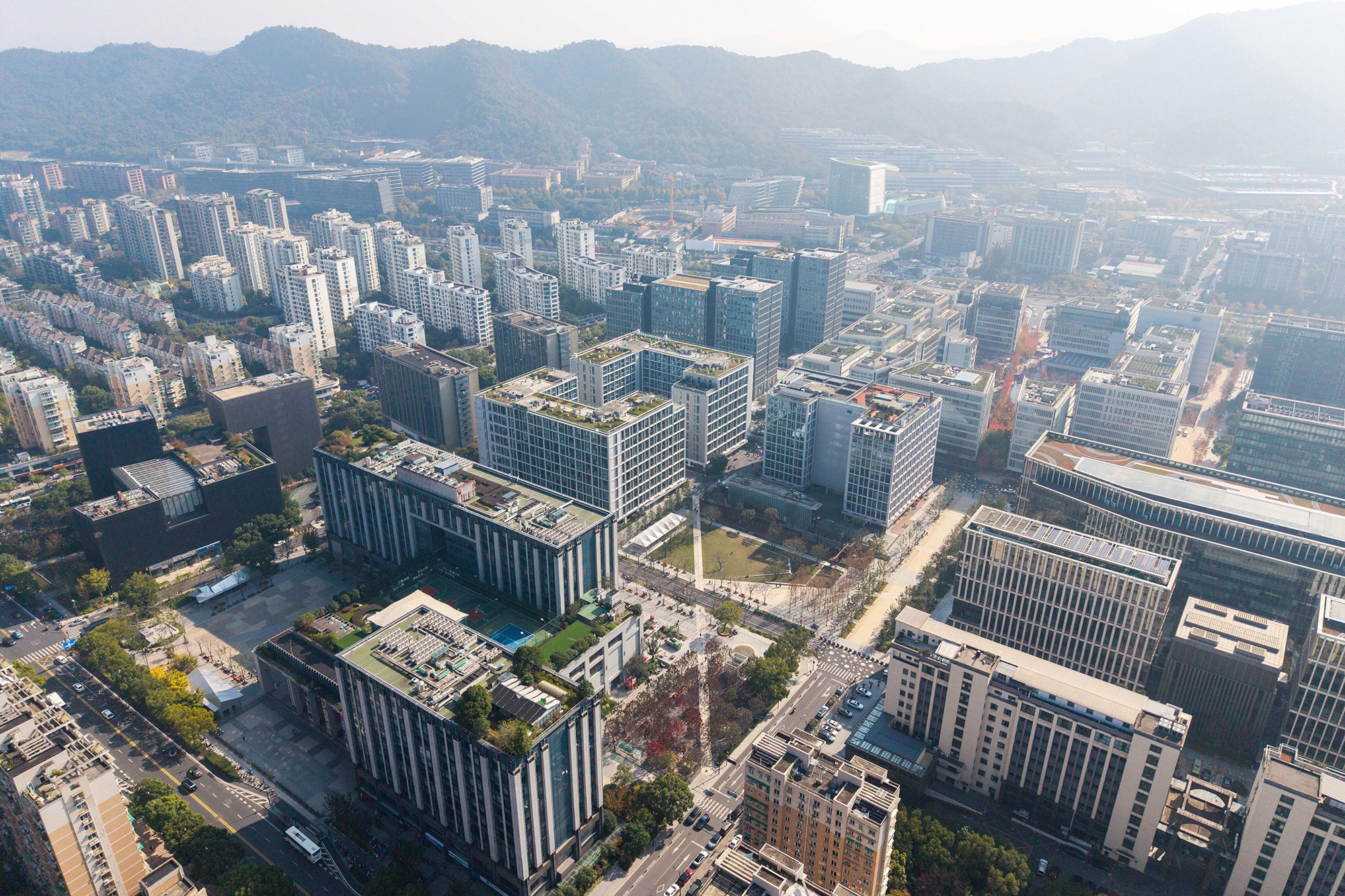
The project is situated within the corporate headquarters clusters, primarily employing enclosed management systems, resulting in a monotonous and limited outdoor environment for nearby residents.
The redesign provides a rich array of outdoor living spaces for the area, reshaping the streetscape. Most importantly, the entire site functions as a stormwater management hub for collection, treatment, and reuse, implicitly offering environmental education while setting an example for improving the urban microclimate.
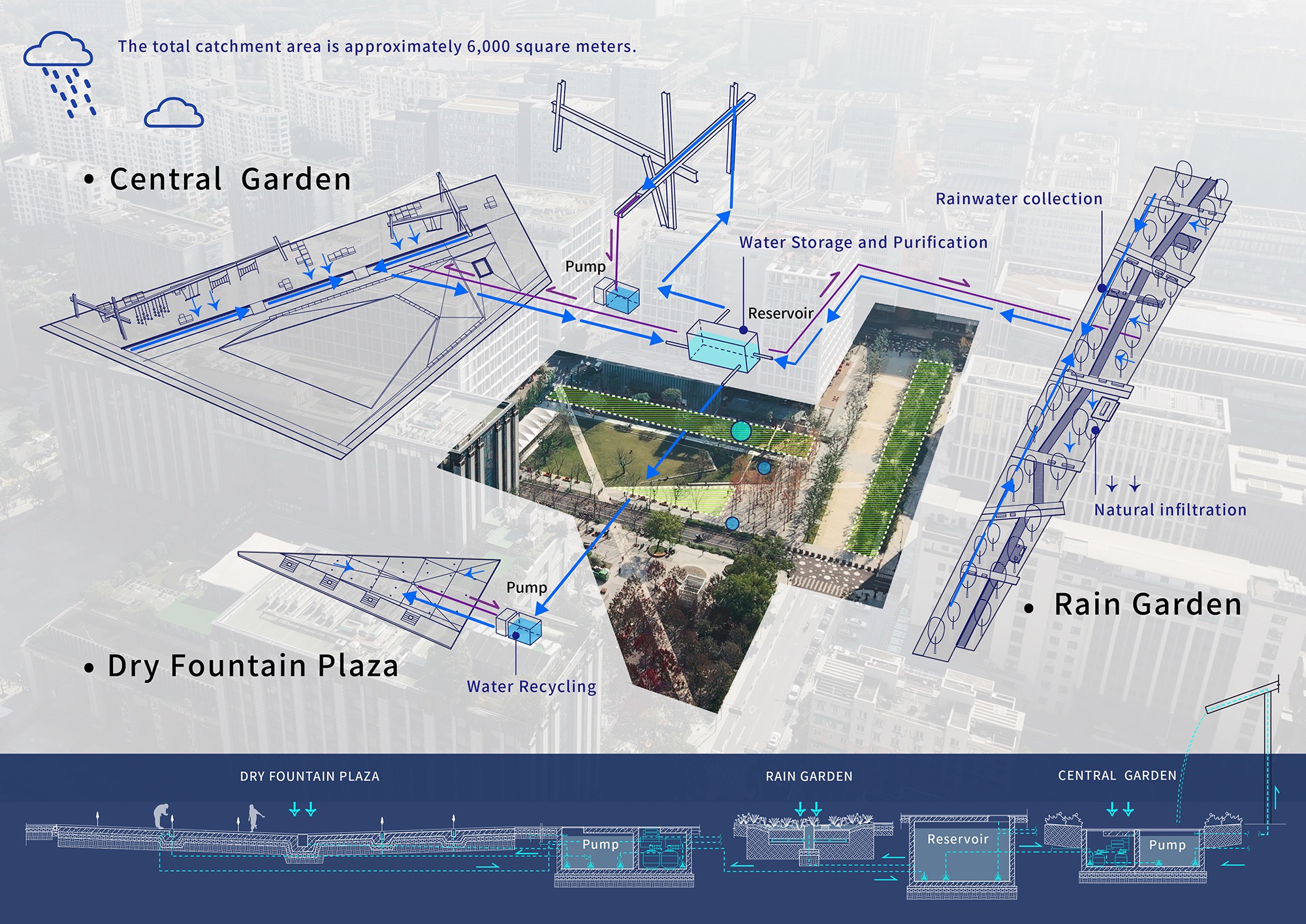
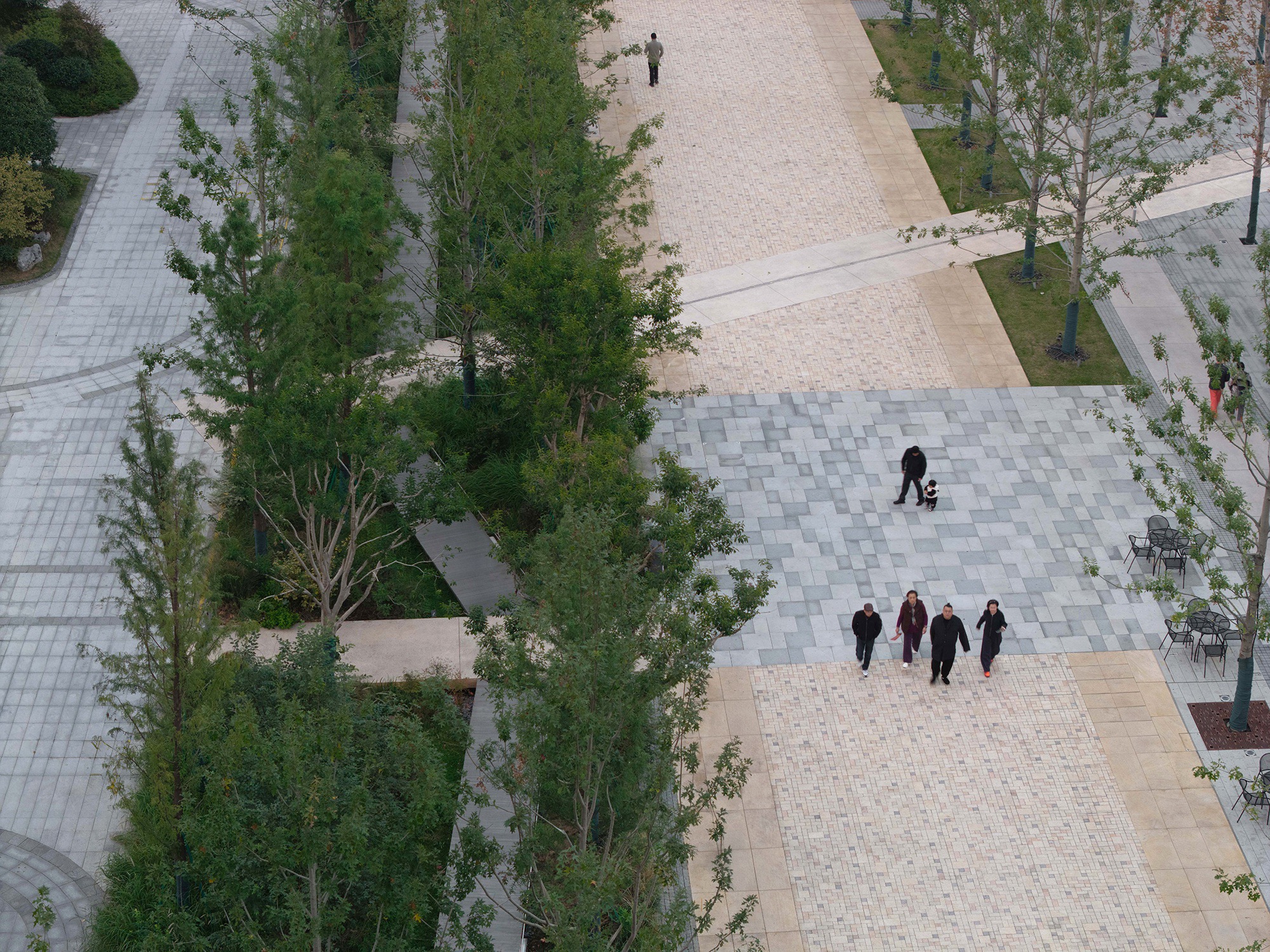
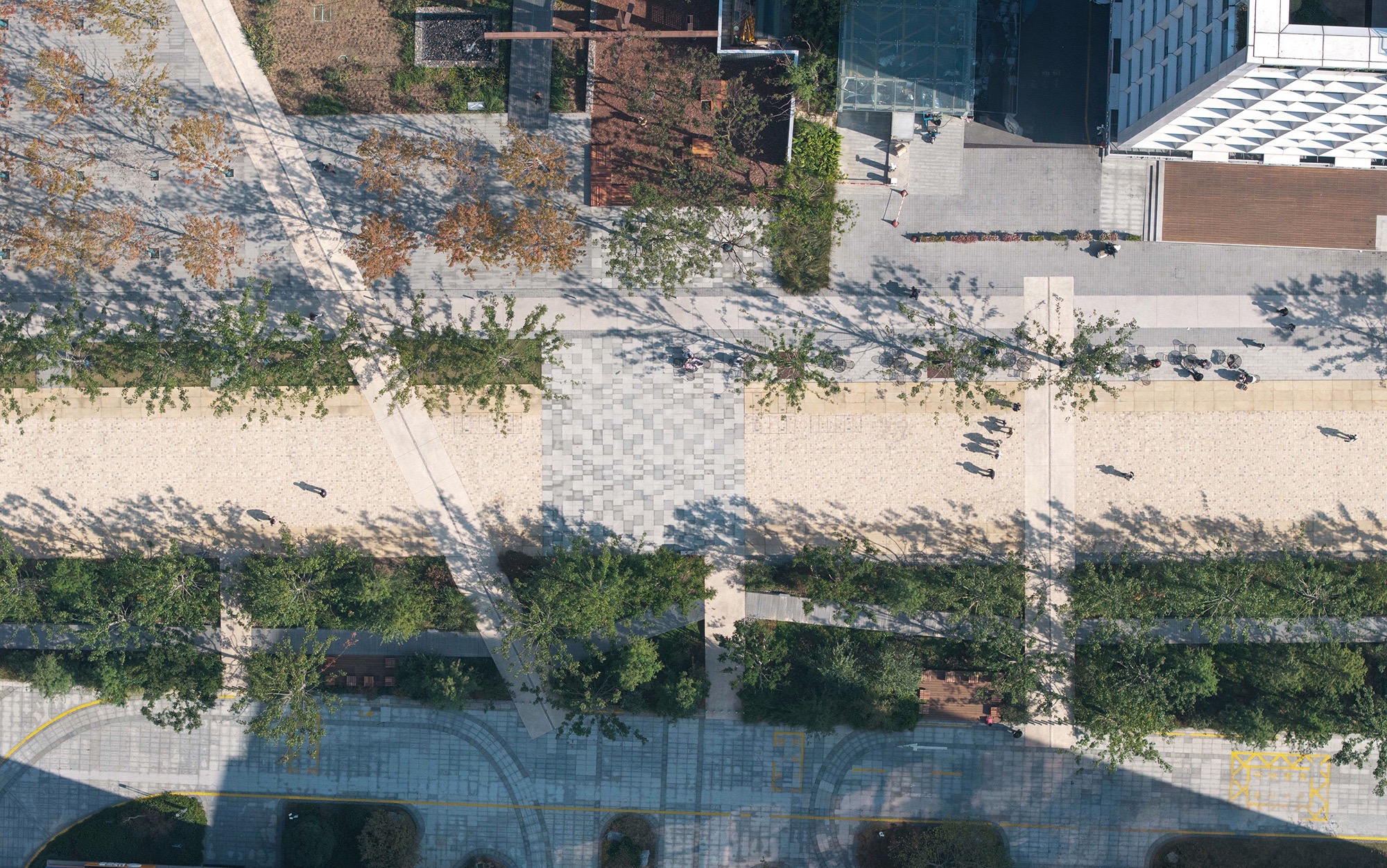
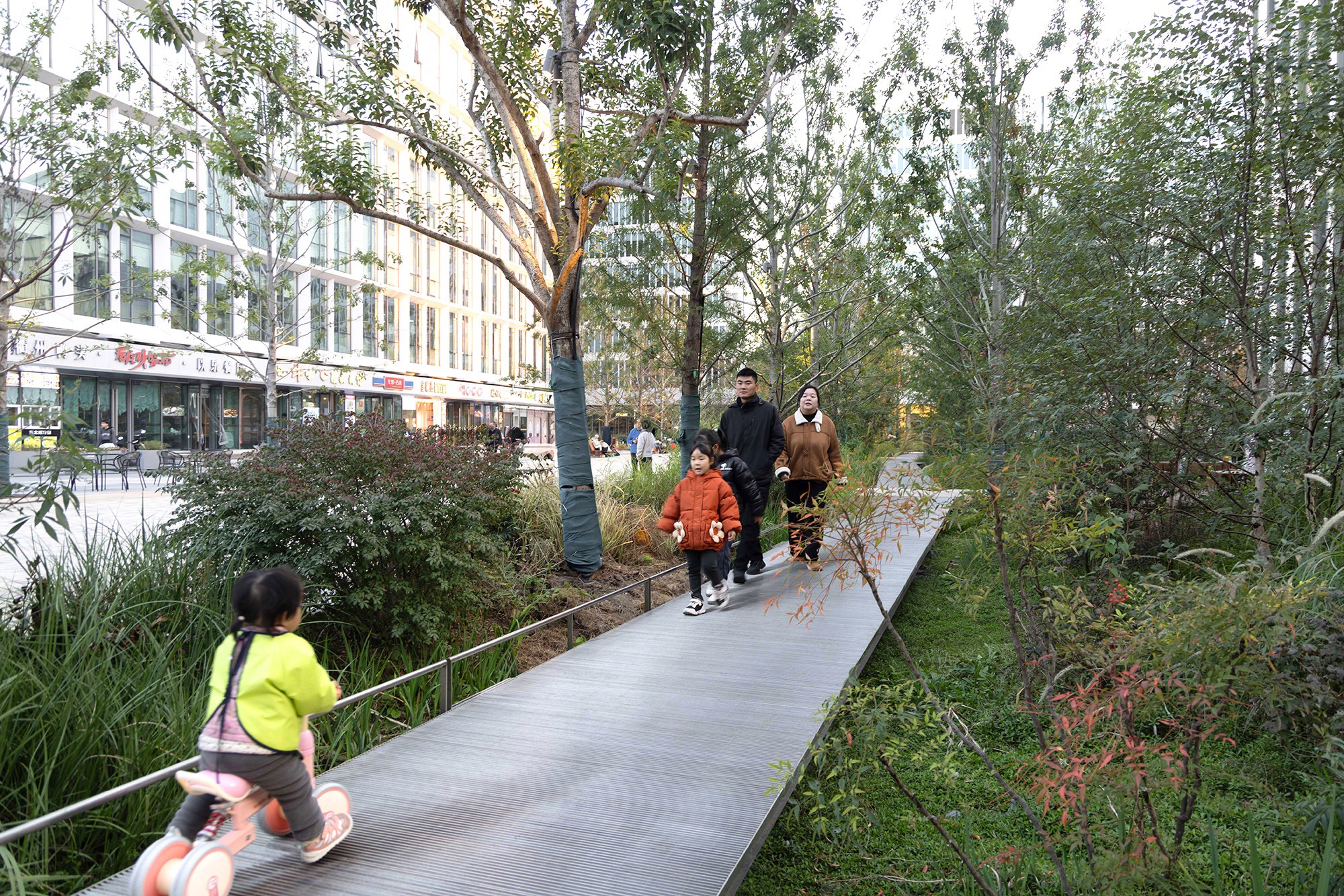
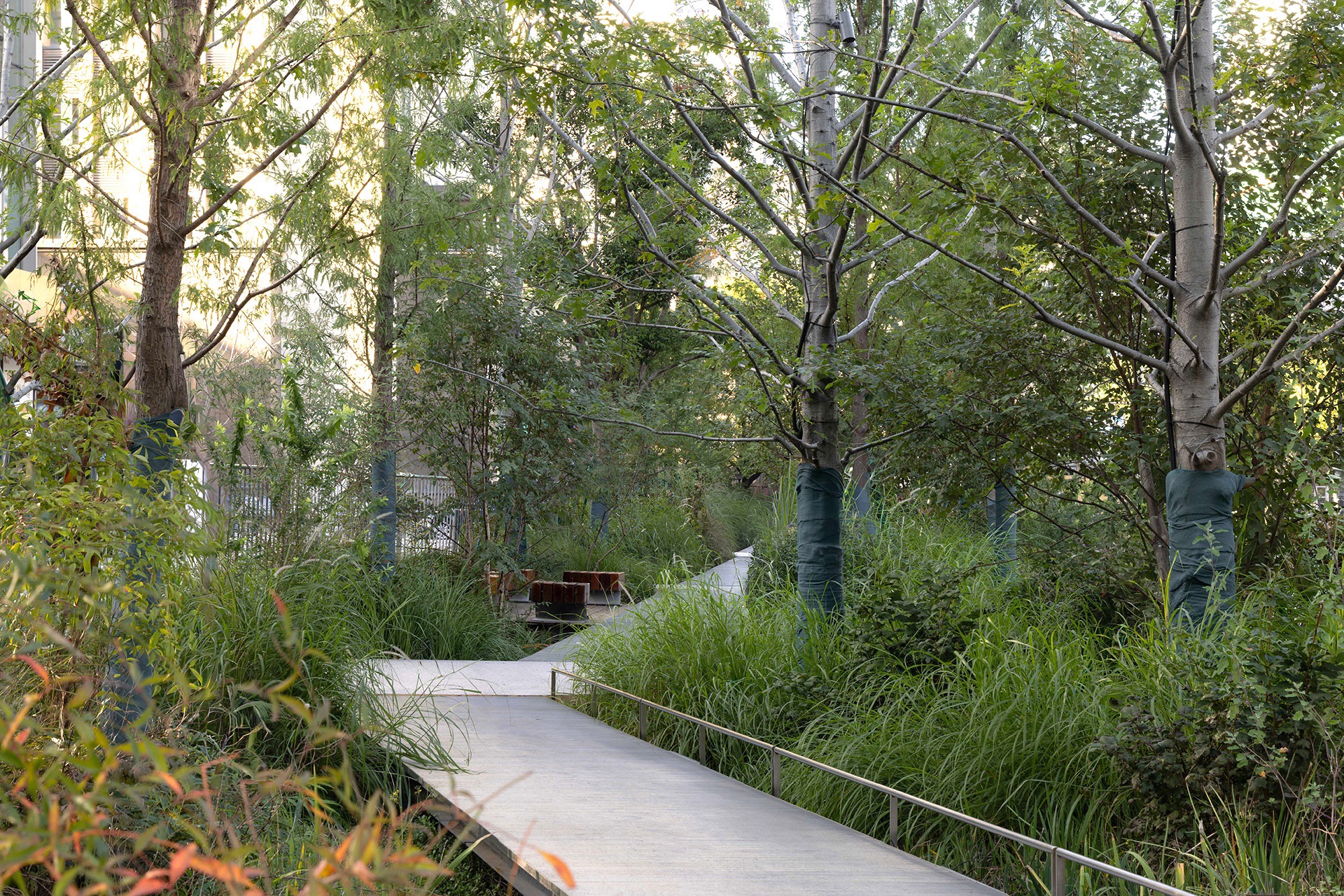
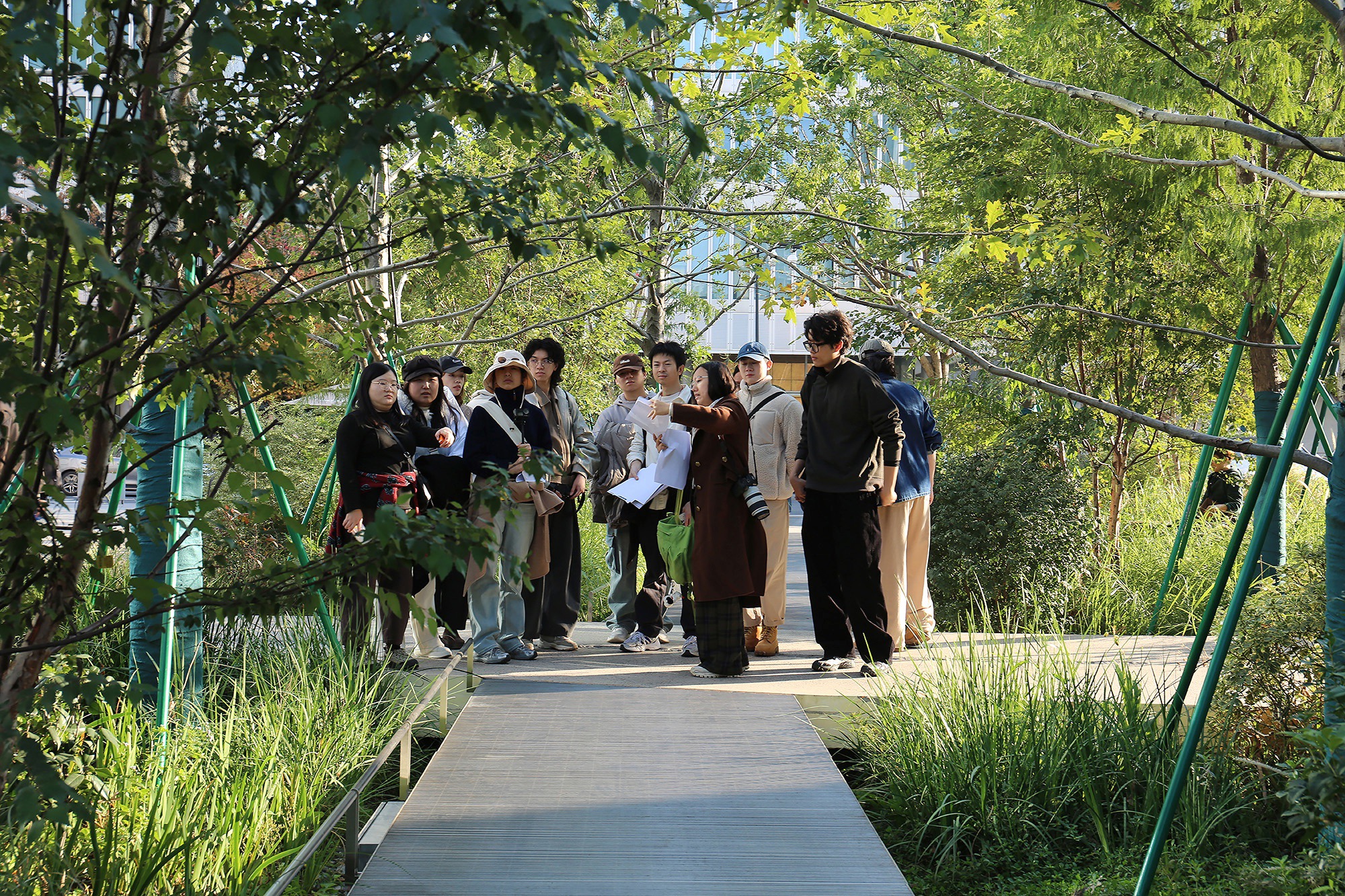
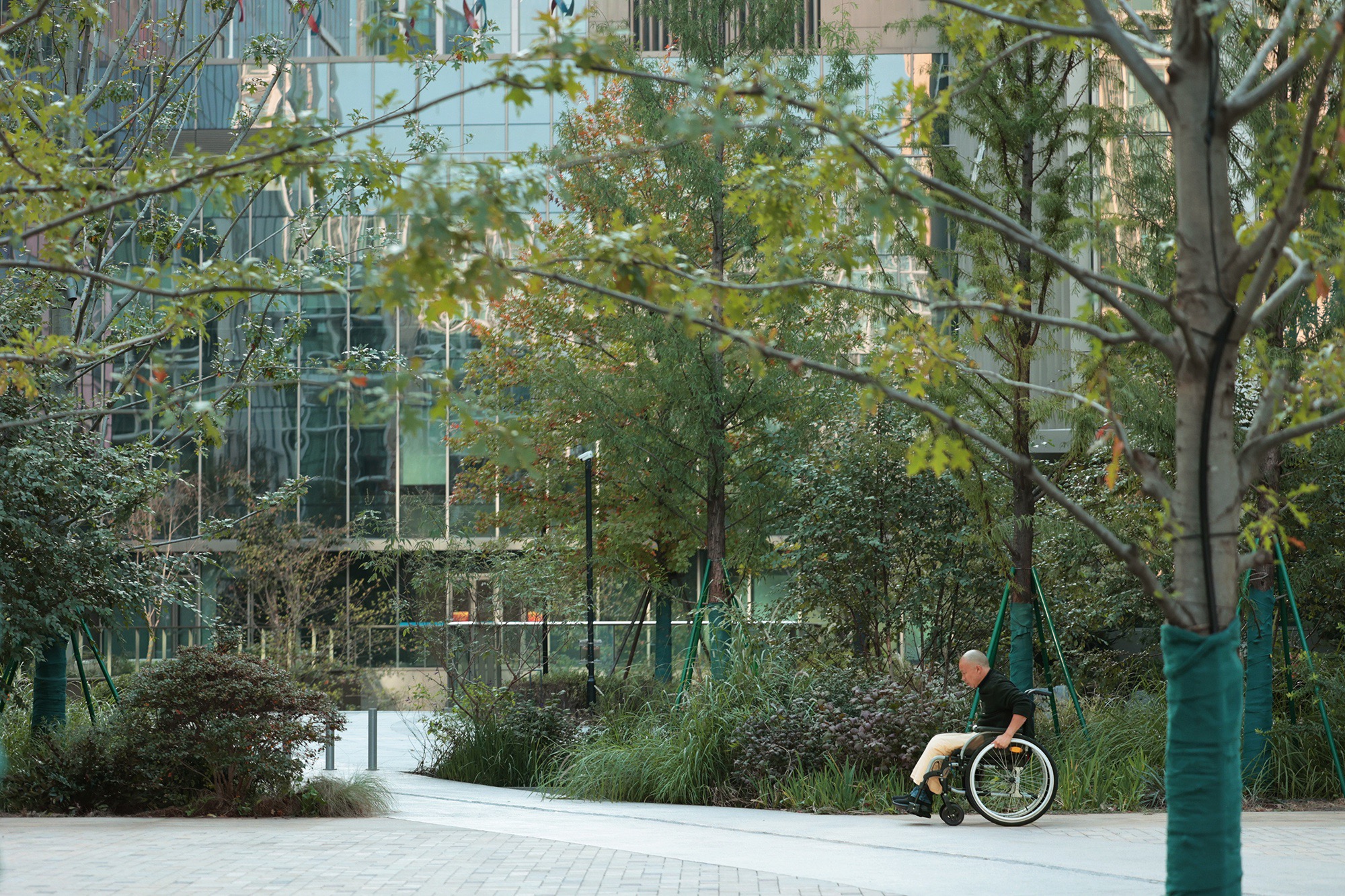
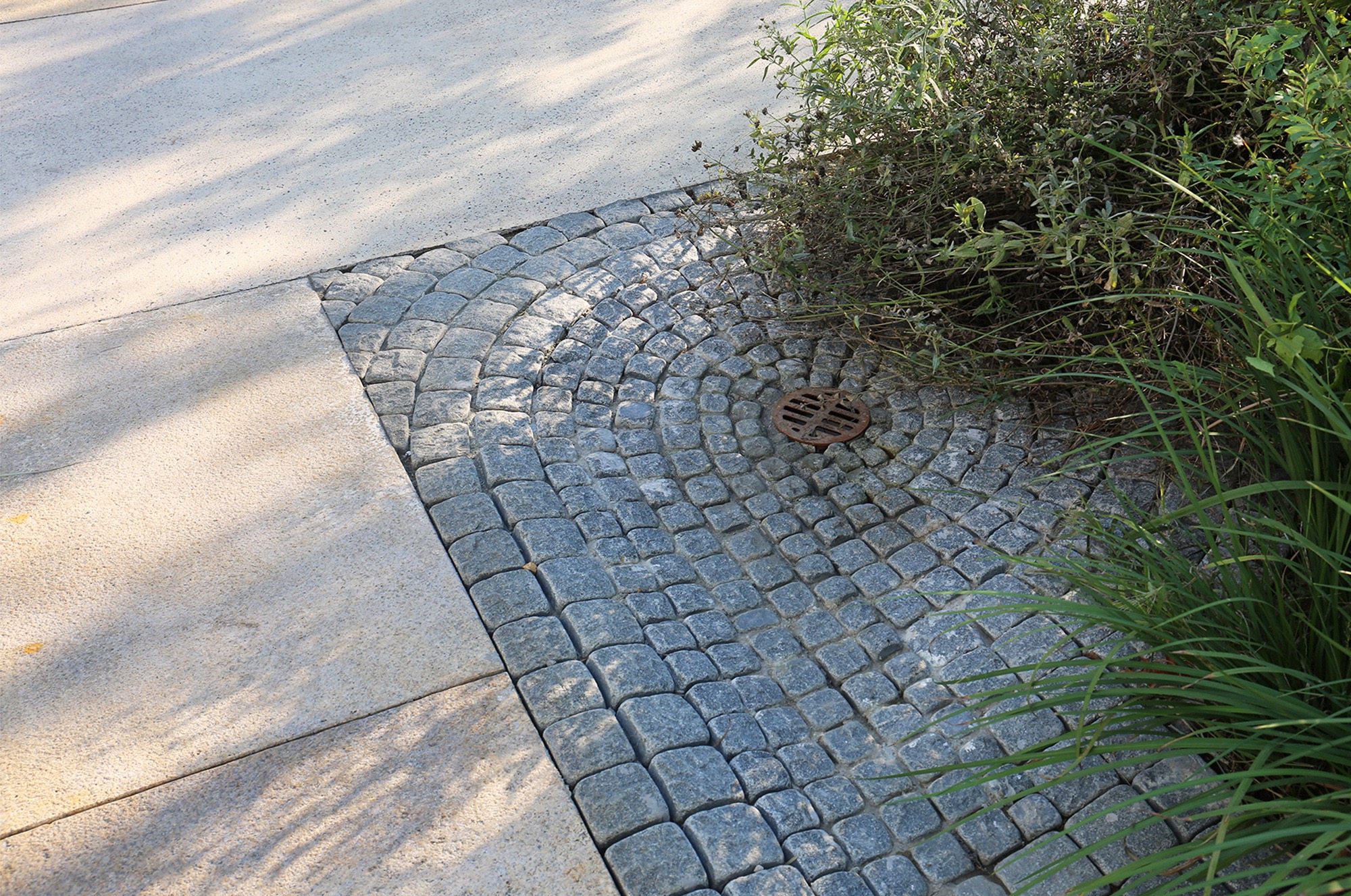
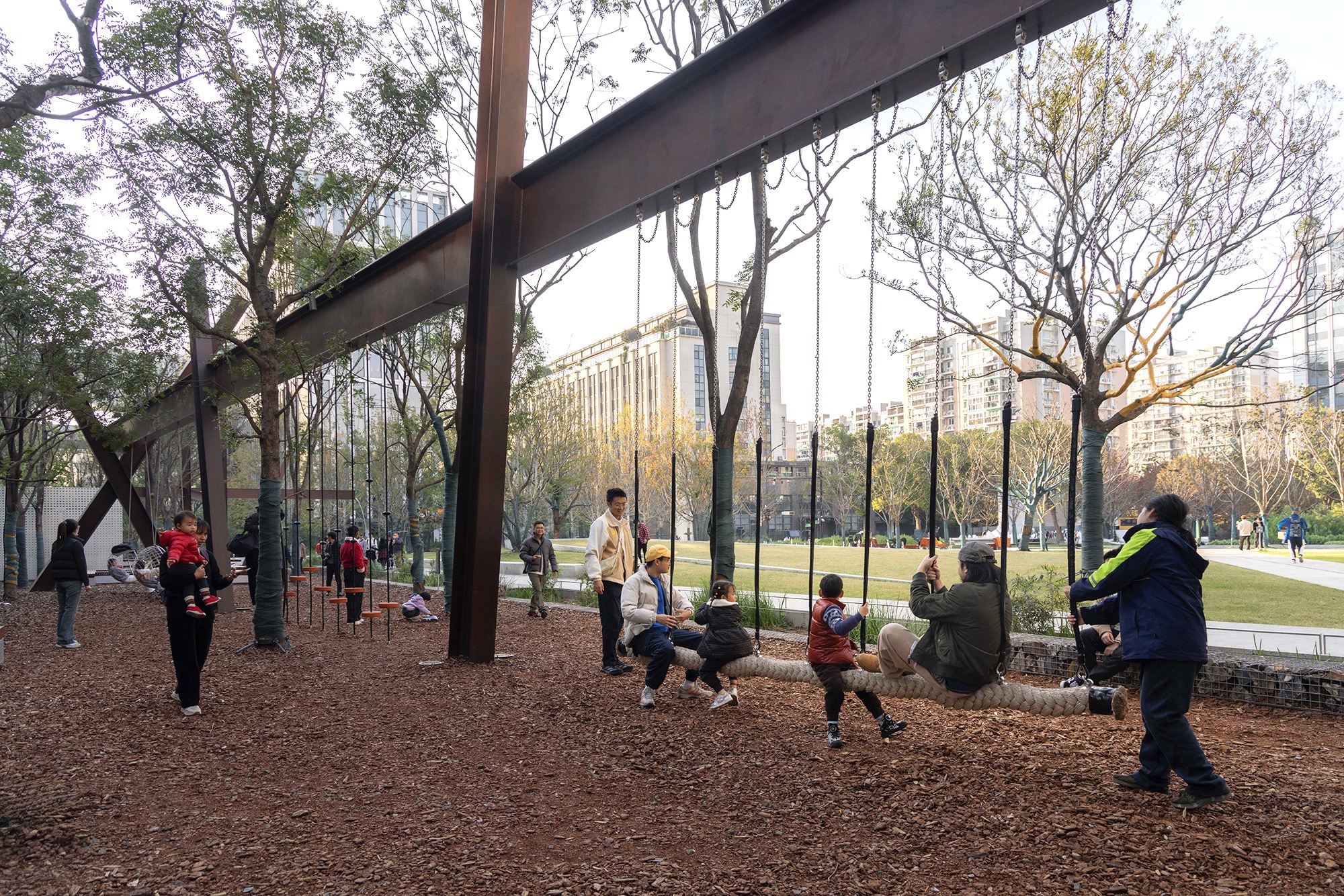
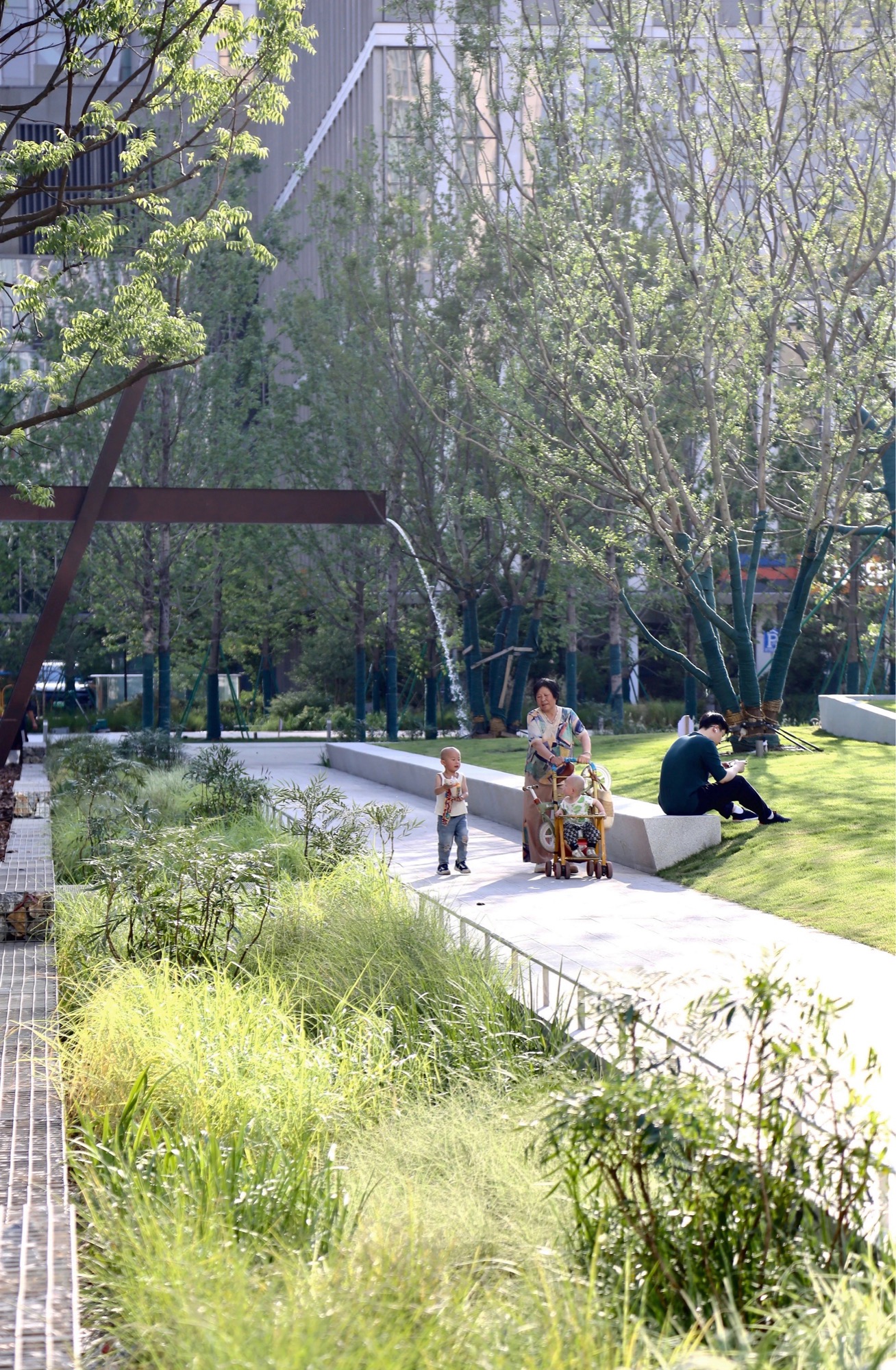
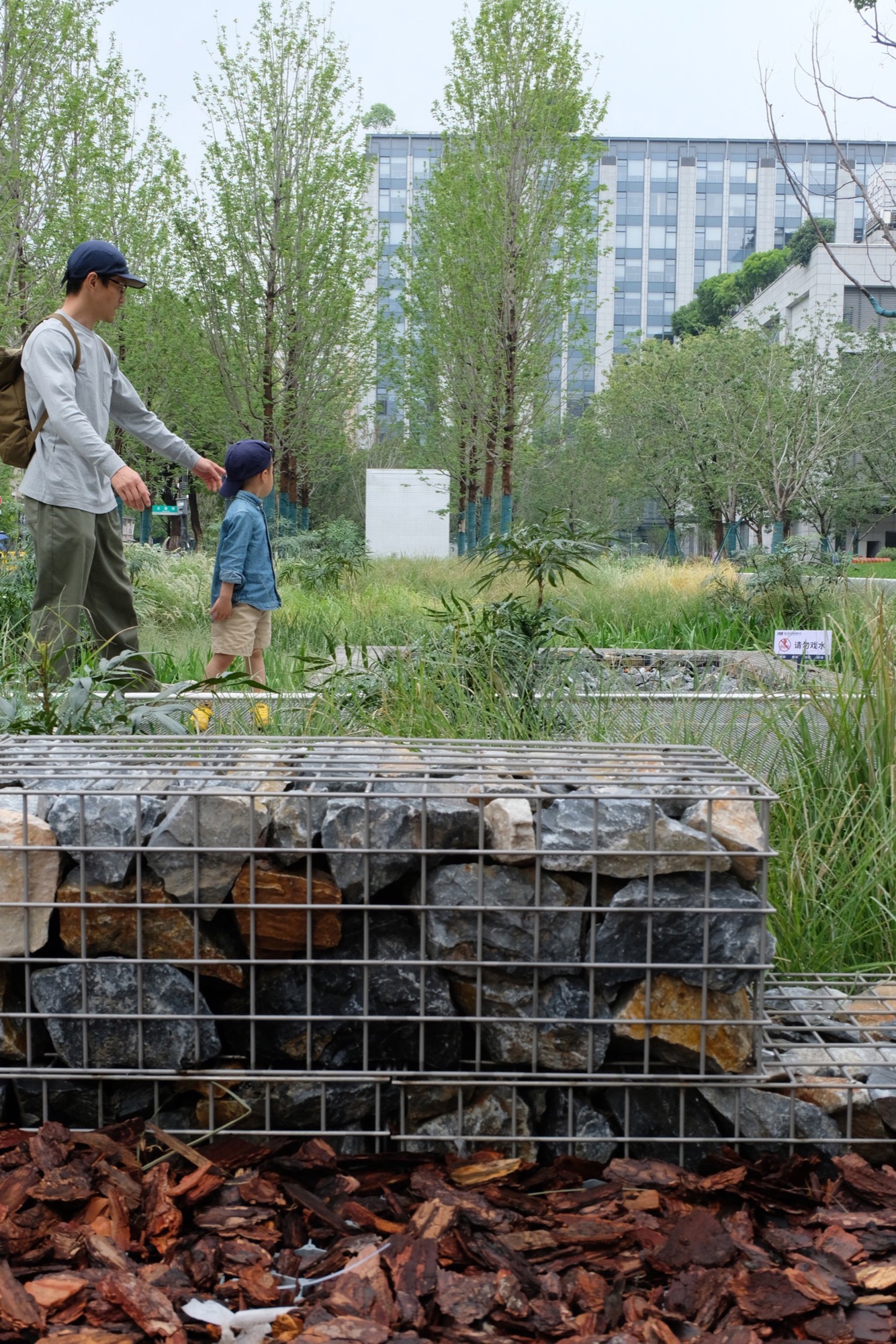
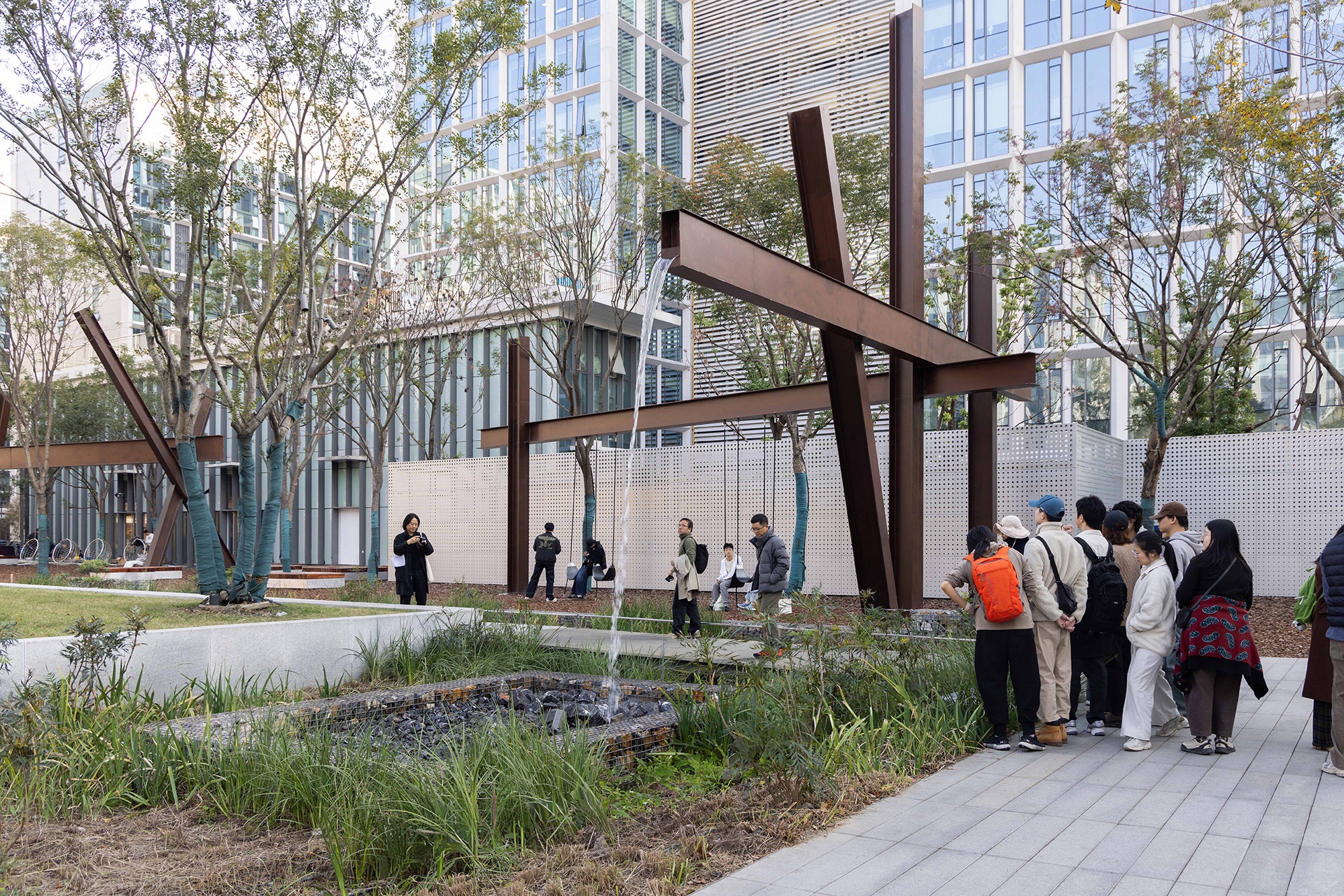
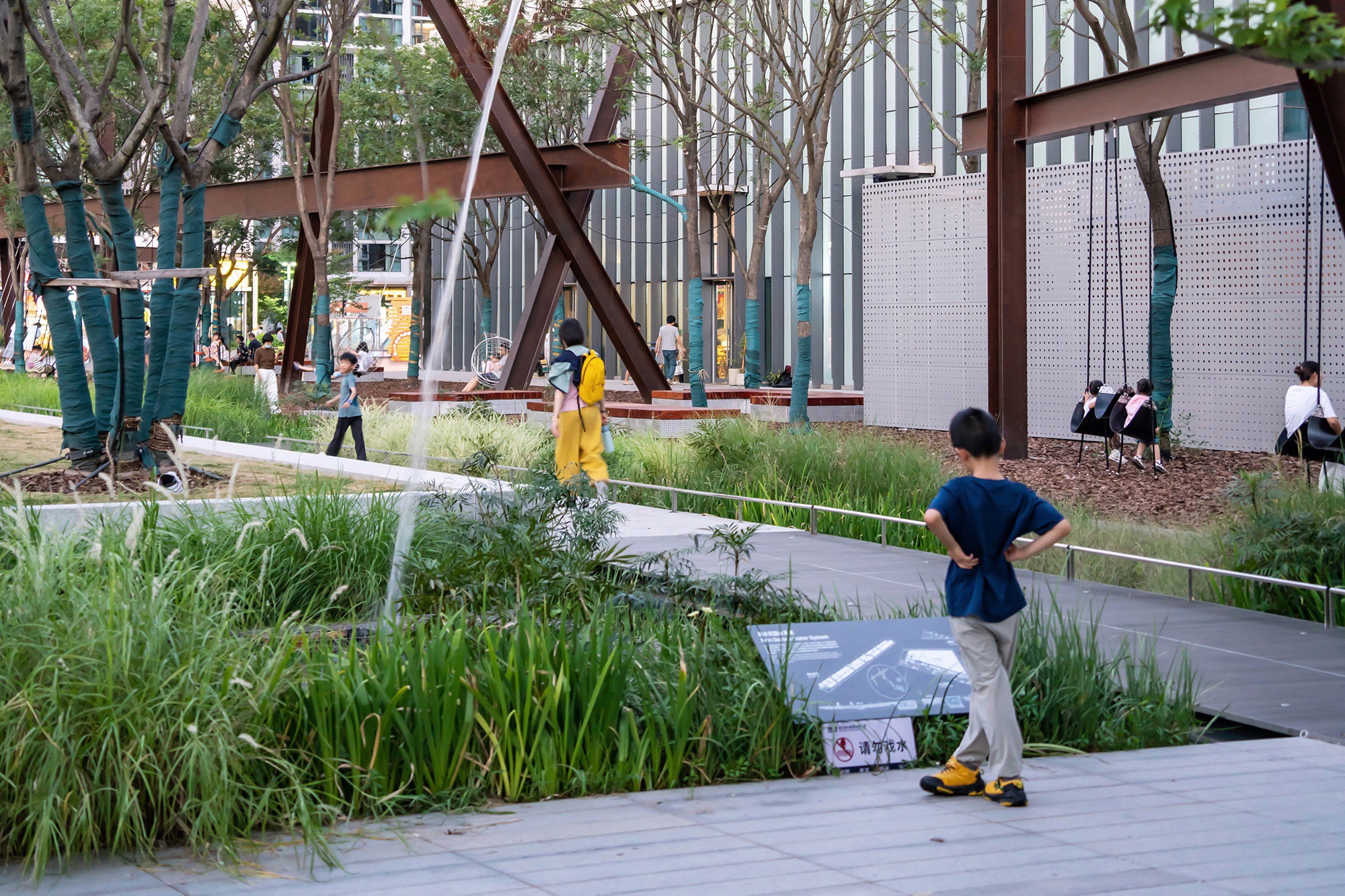
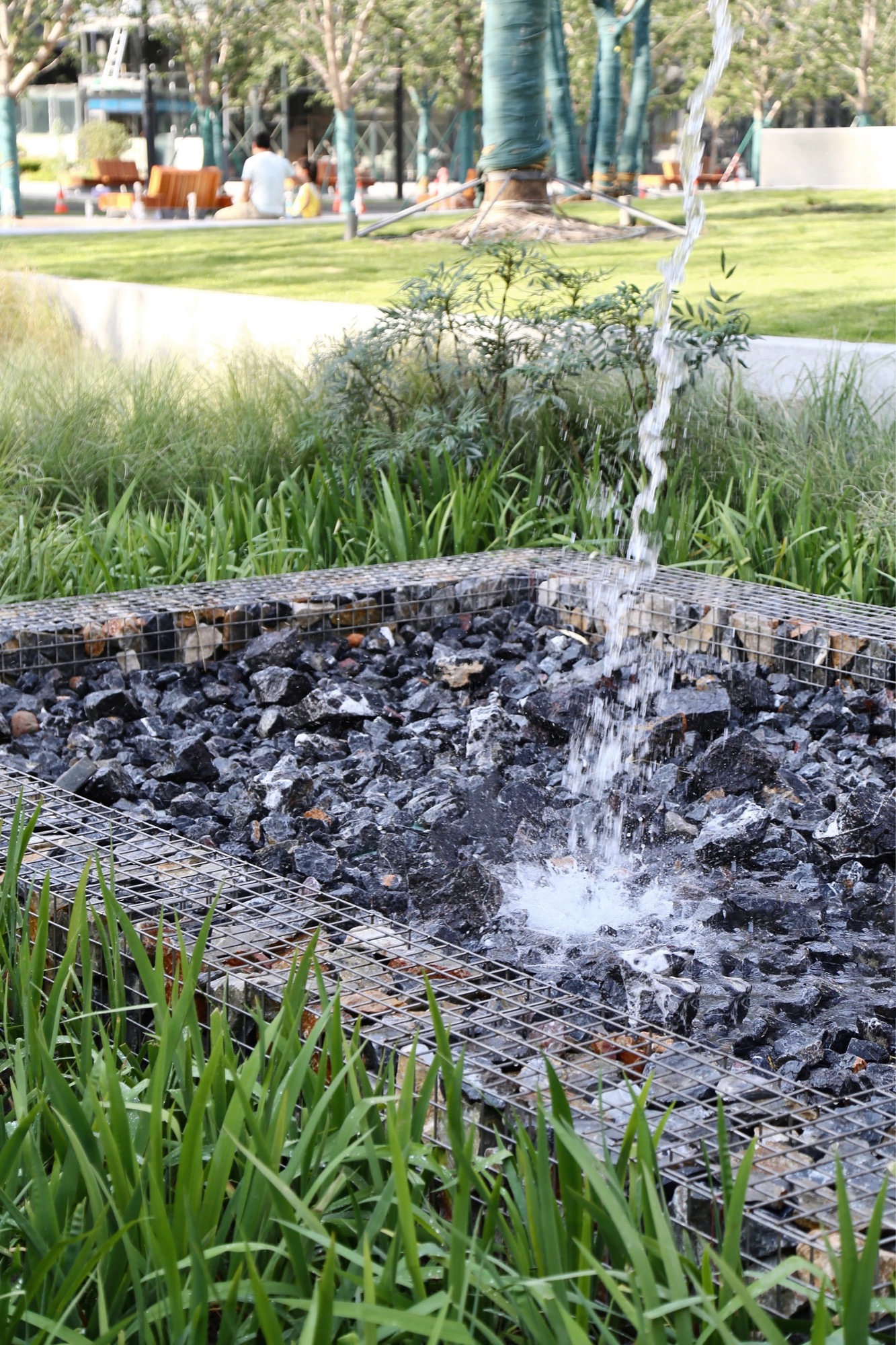
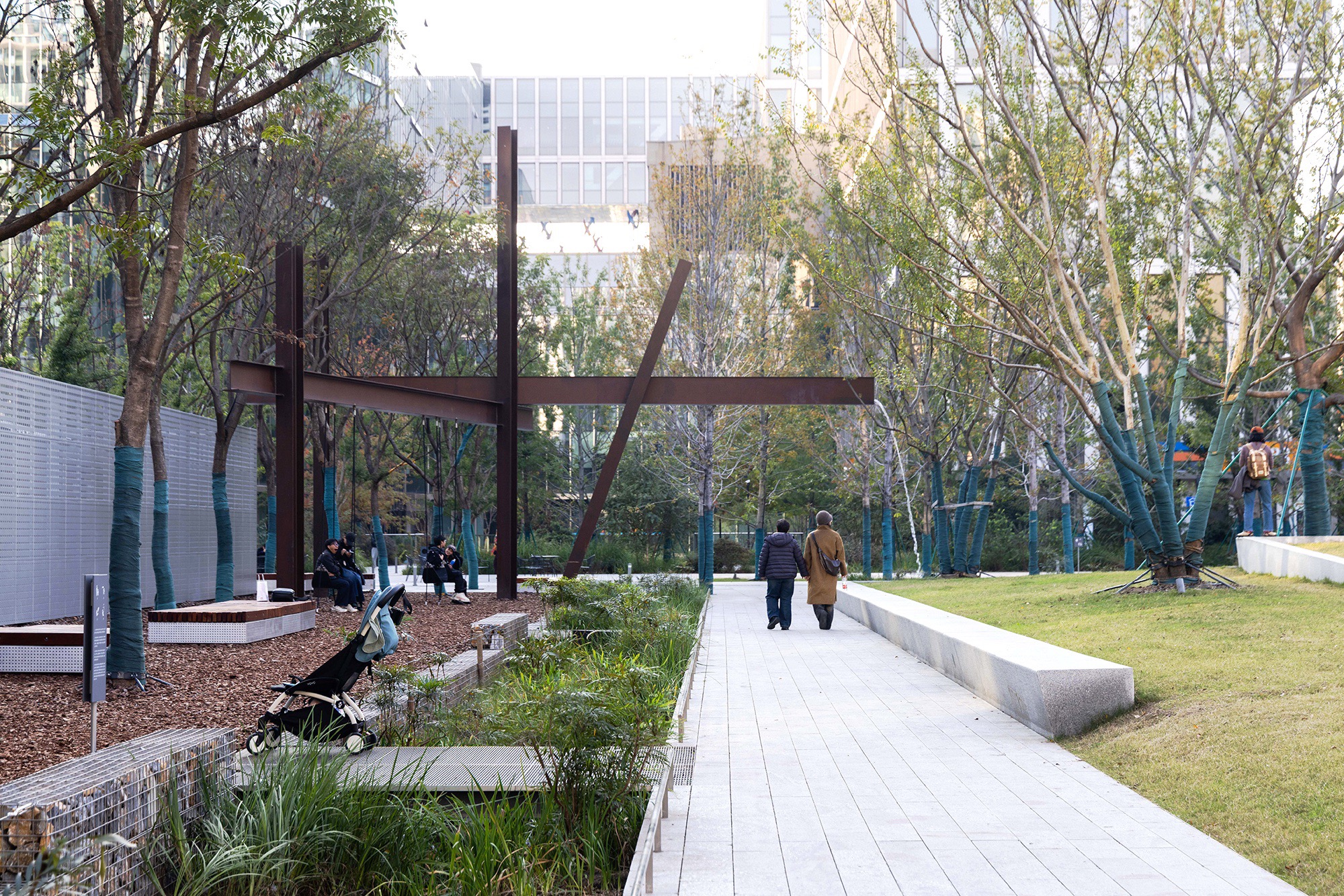
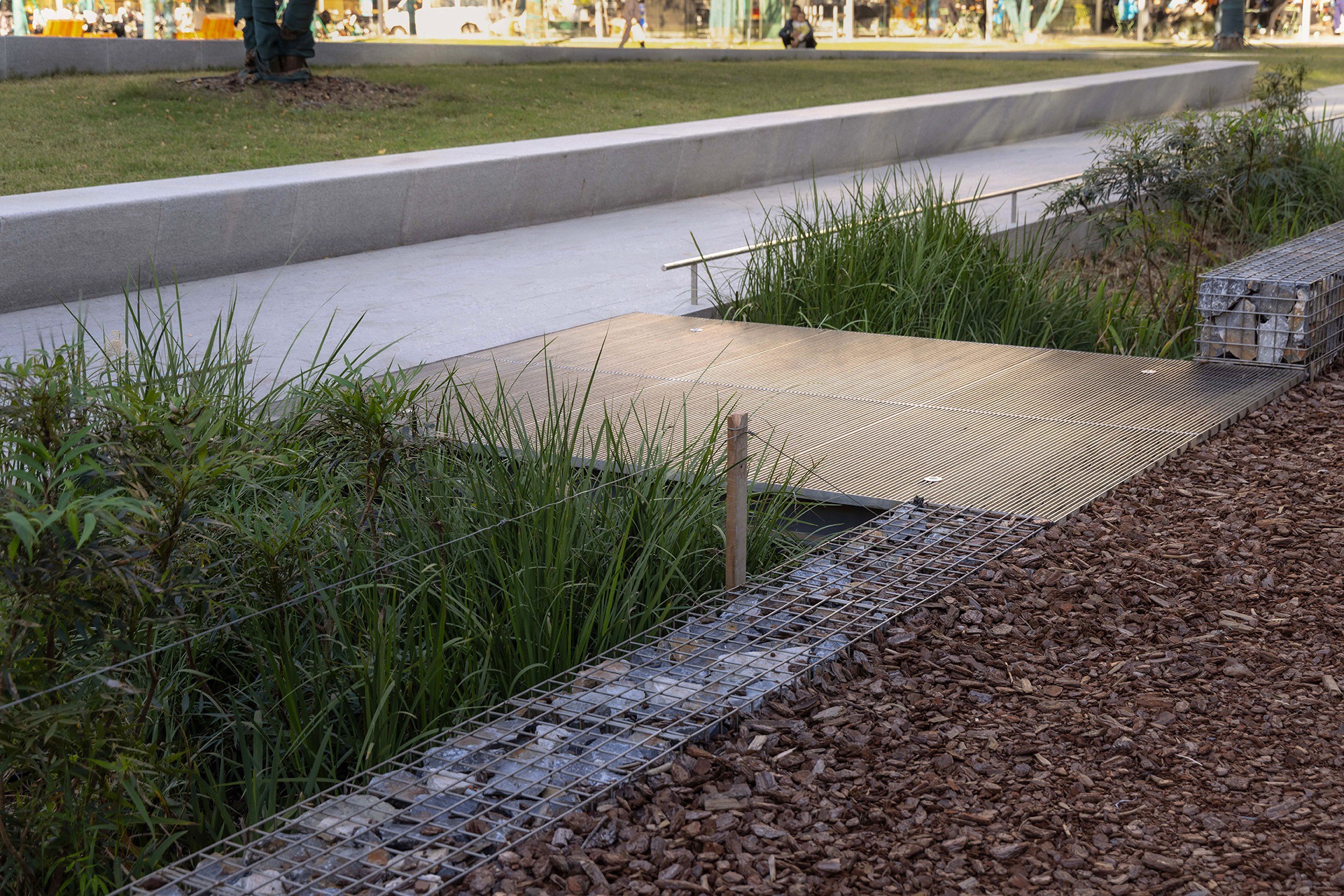
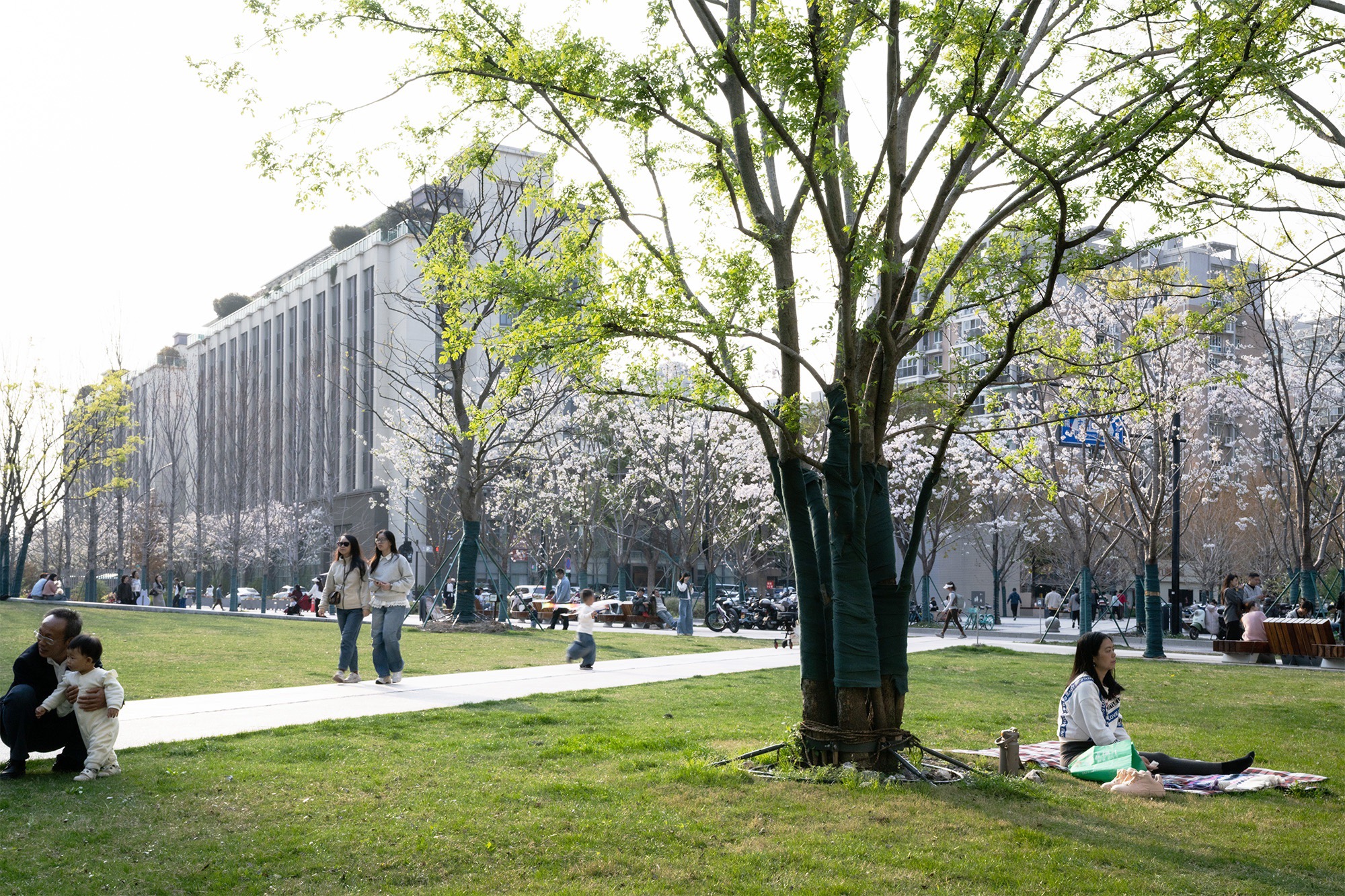
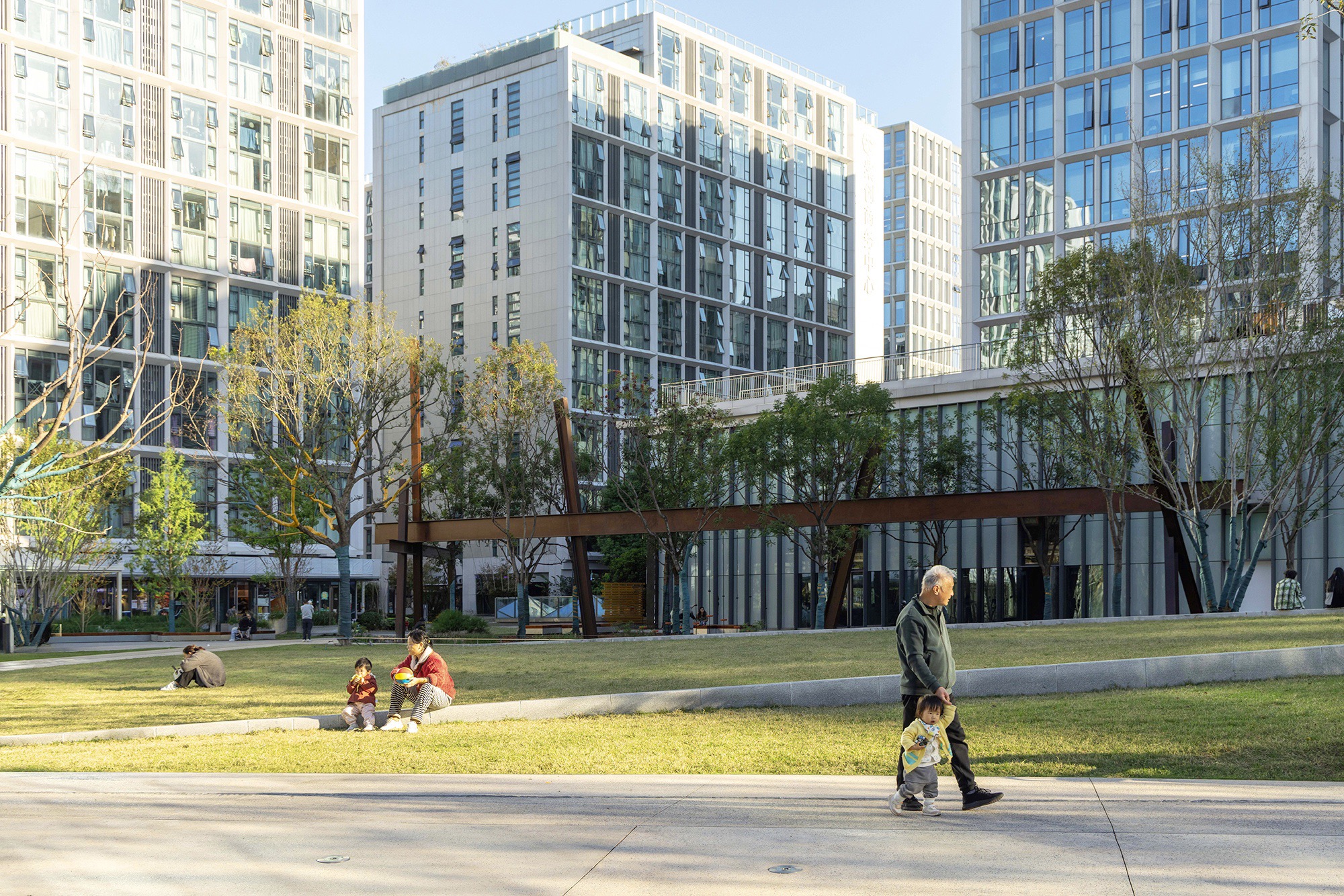
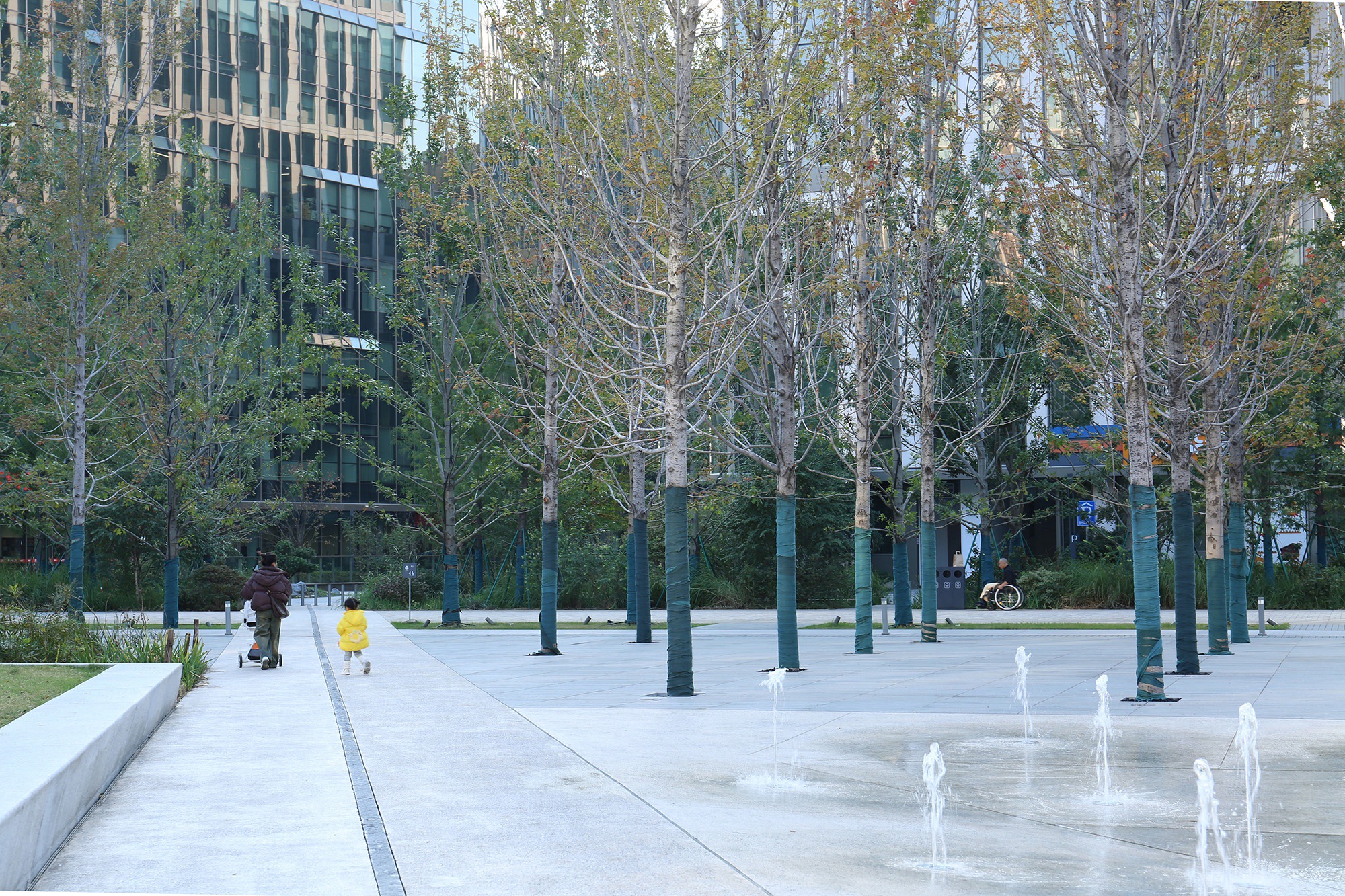
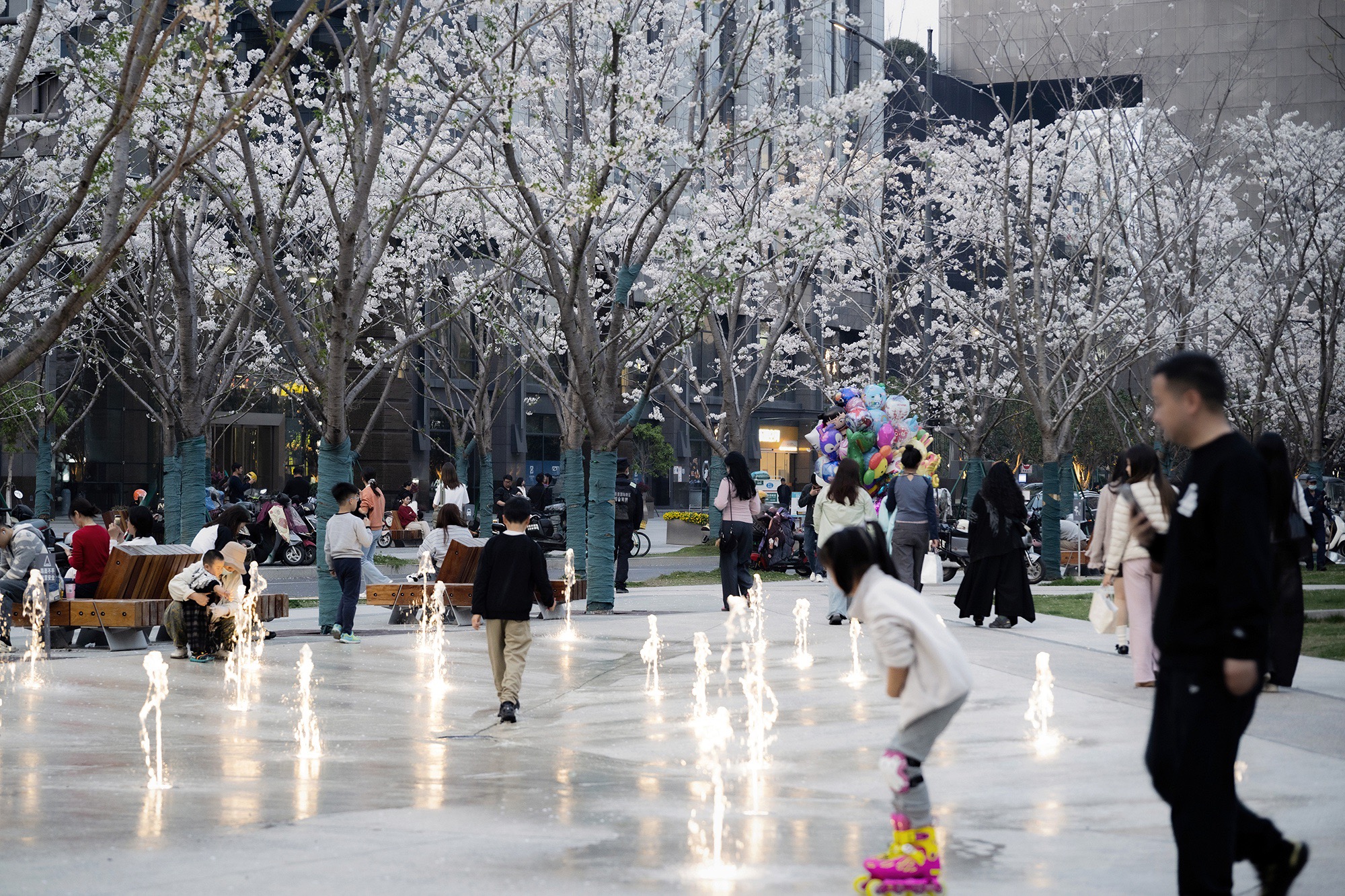
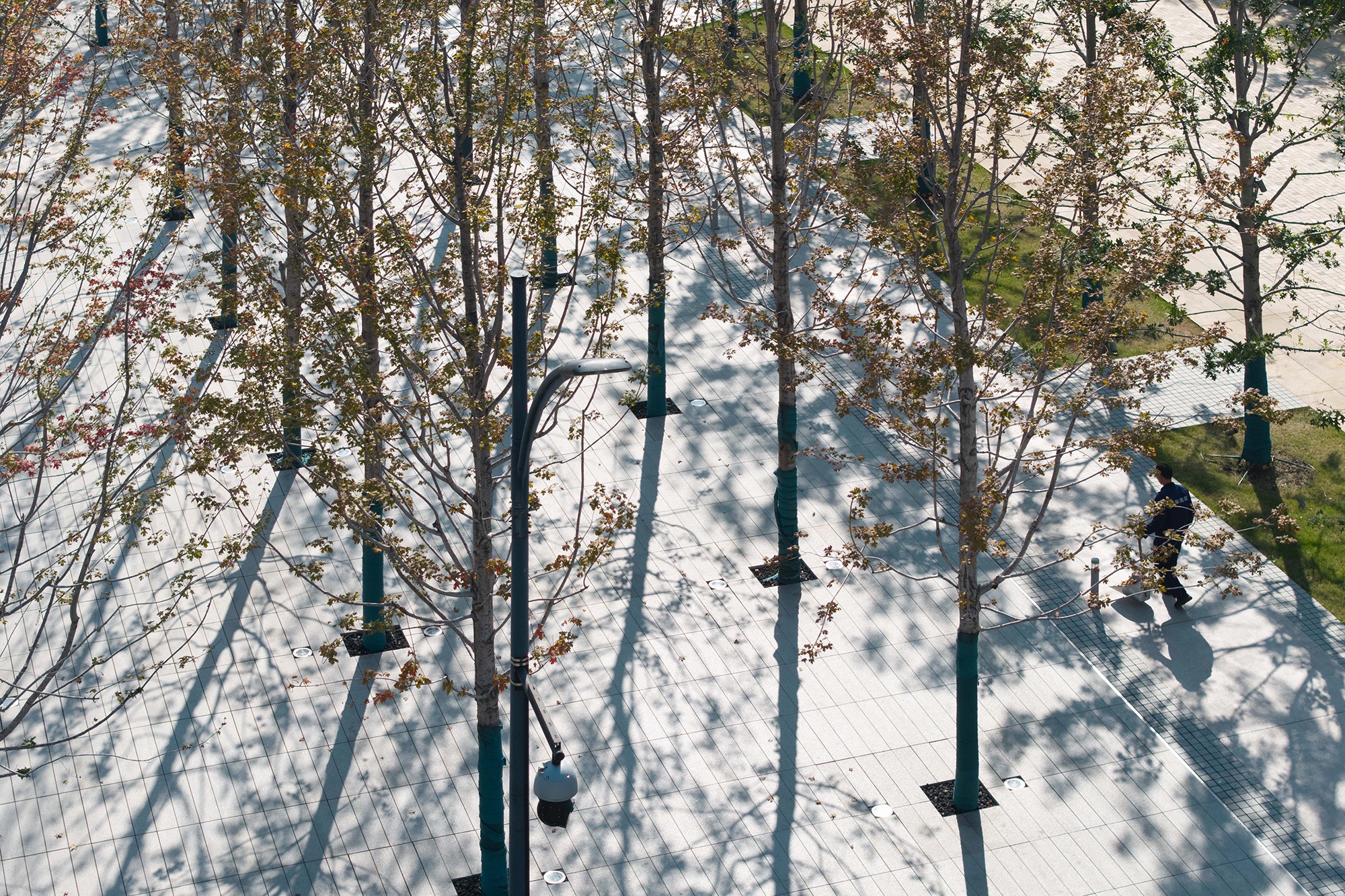
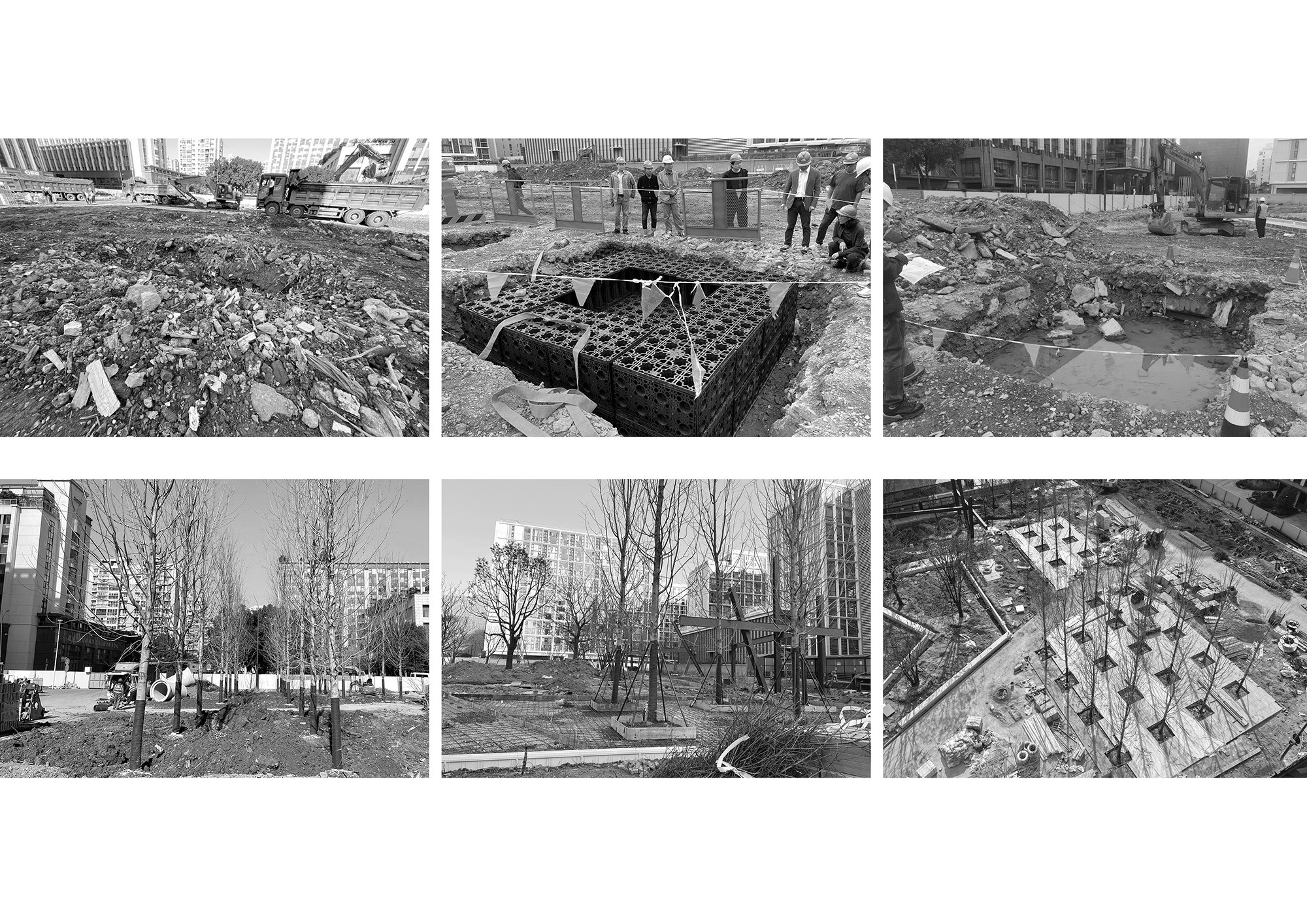
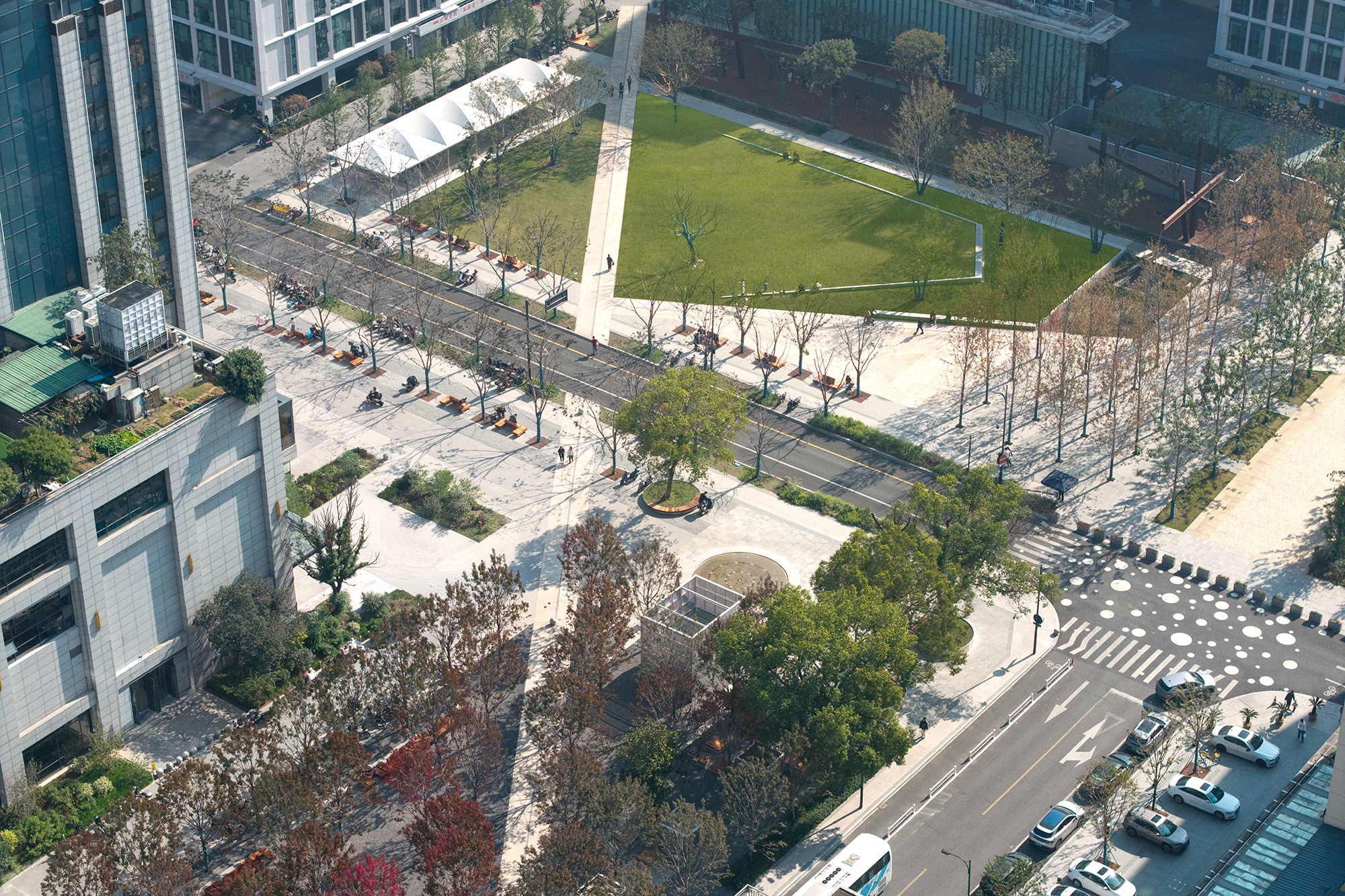
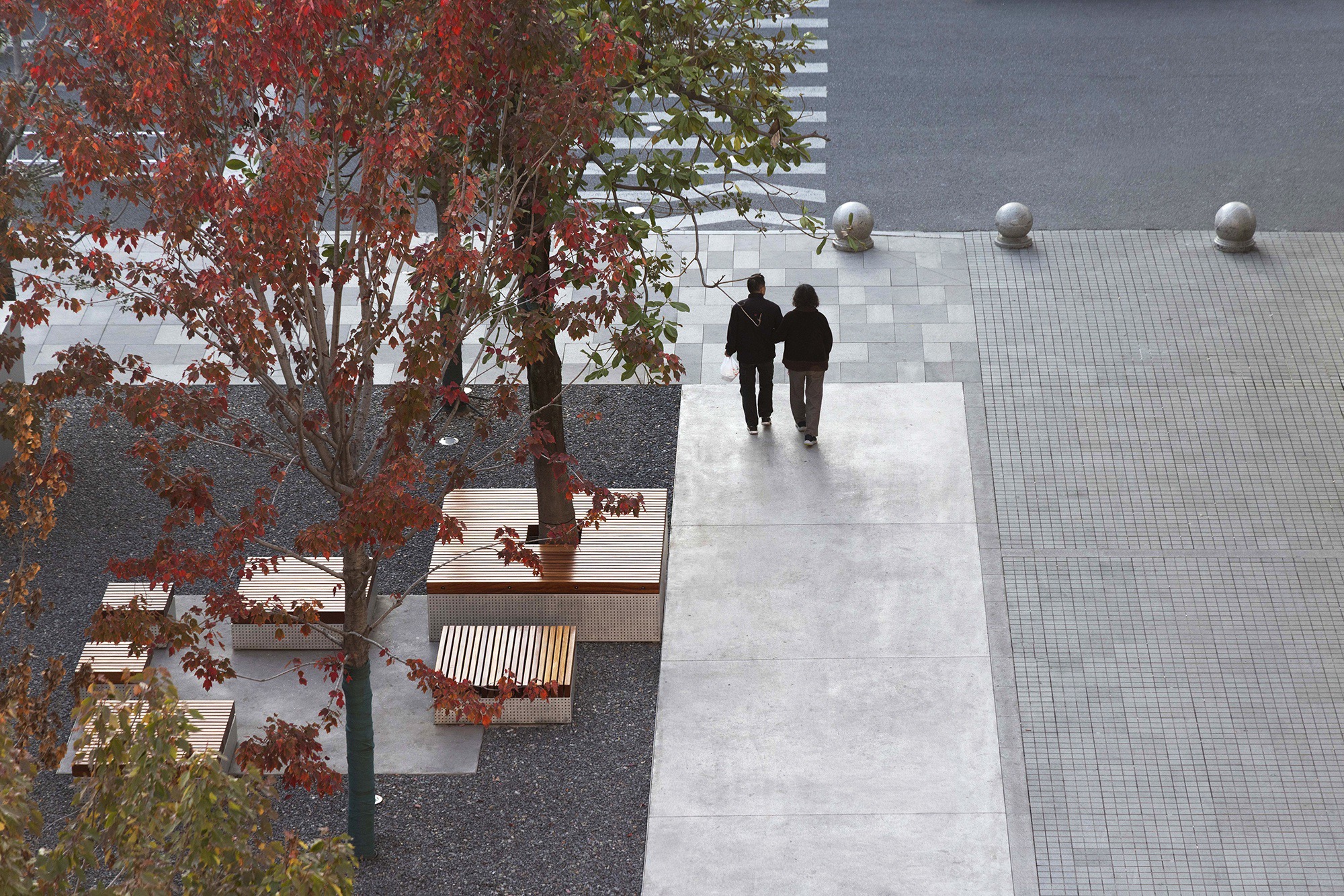
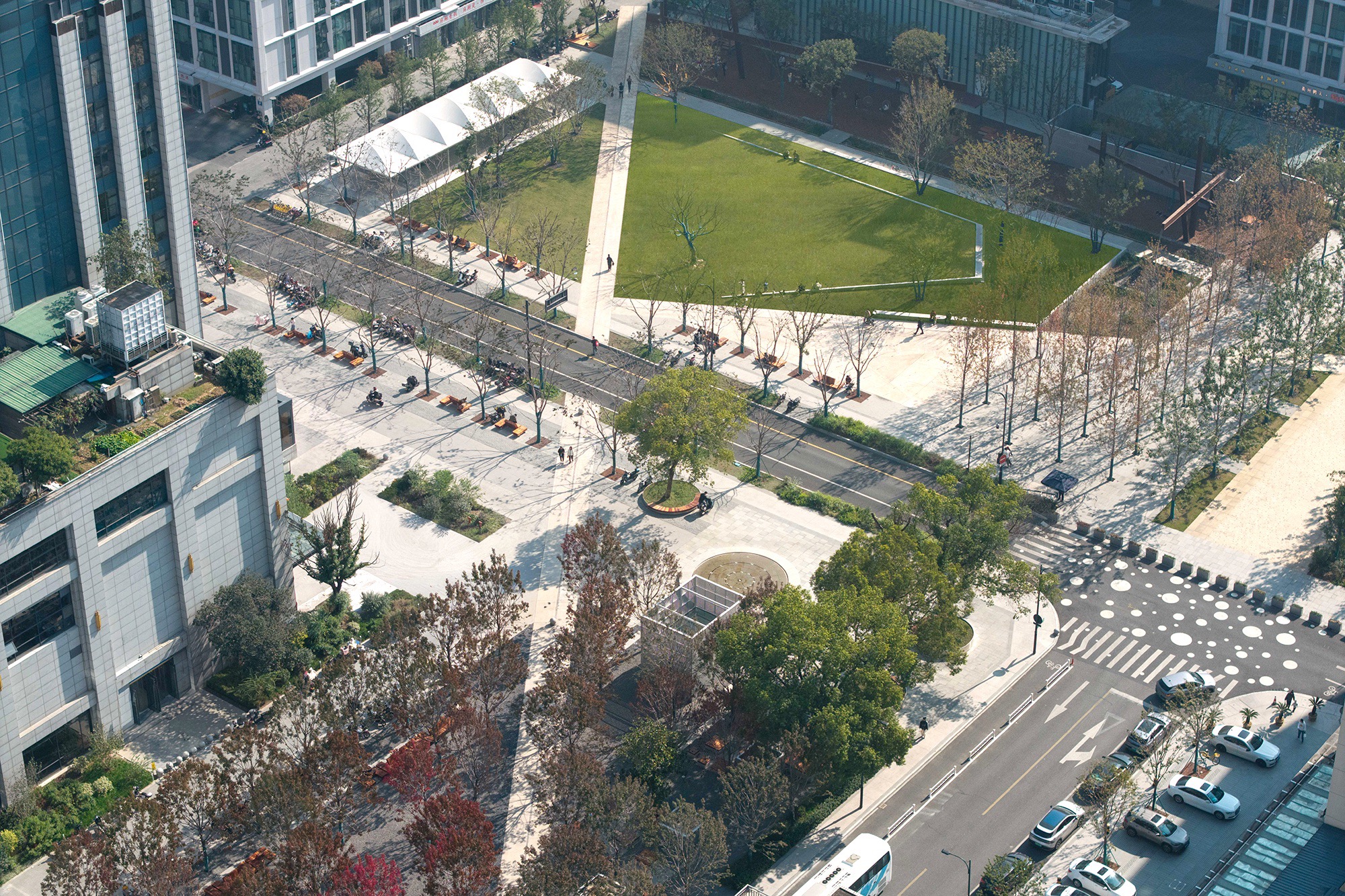
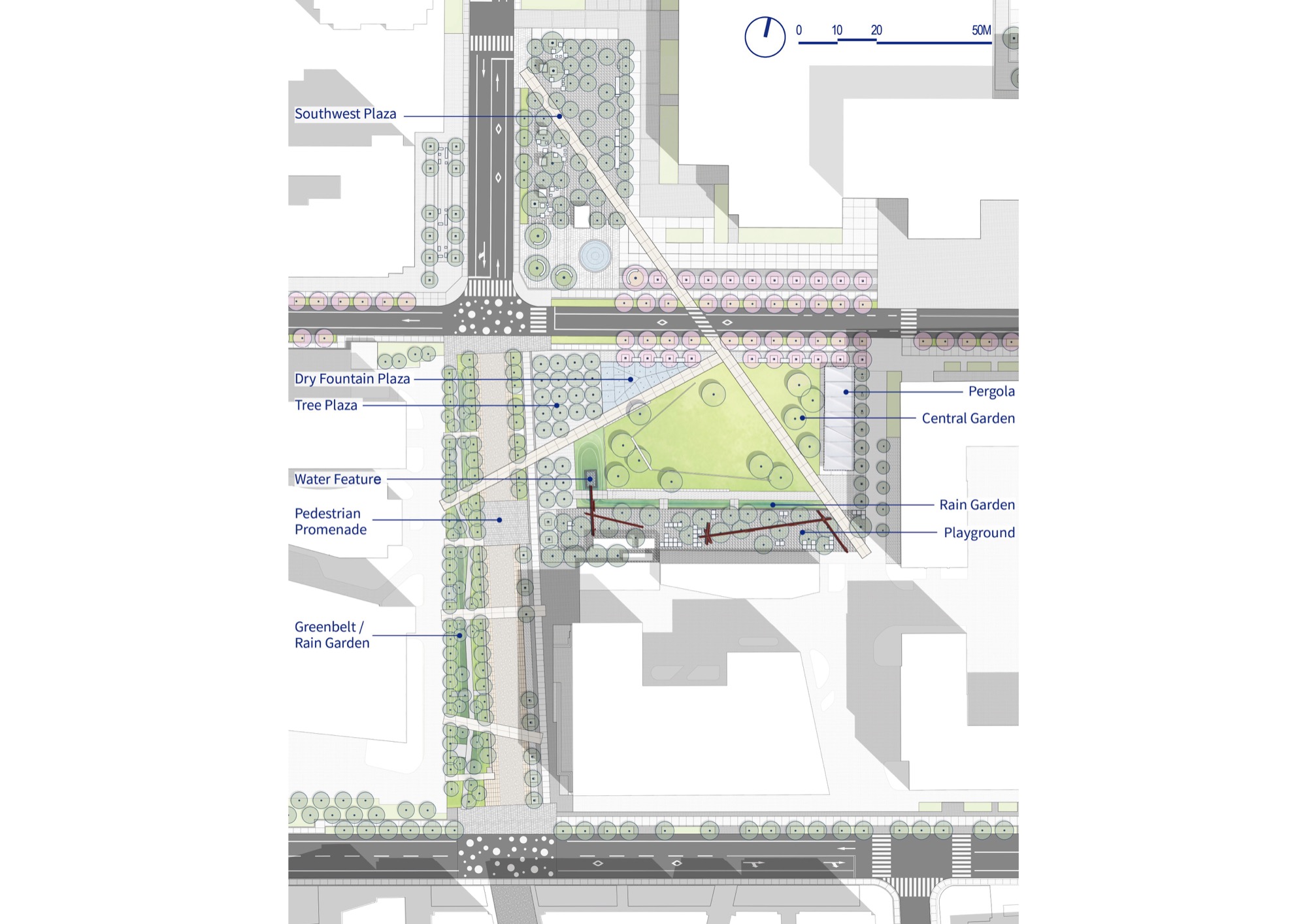
A comprehensive underground water circulation system has been designed beneath the entire central district. The surface components include a pedestrian street rain garden, a central garden, and a fountain plaza, with a total catchment area of approximately 6,000 square meters. The system achieves efficient water reuse through staged treatment: a portion of the rainwater naturally infiltrates to replenish groundwater, while the remainder is stored in cisterns. Through multiple purification processes such as disinfection and aeration, it becomes reclaimed water, used for landscape and irrigation purposes.
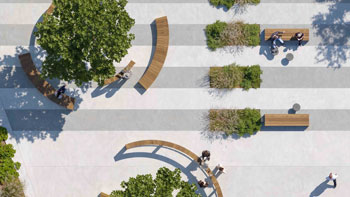
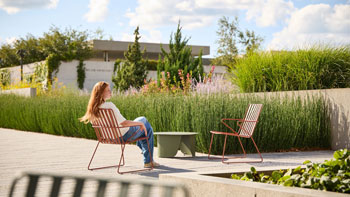
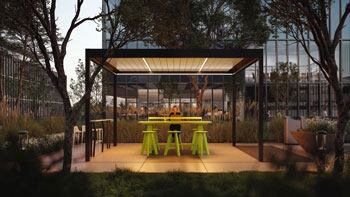
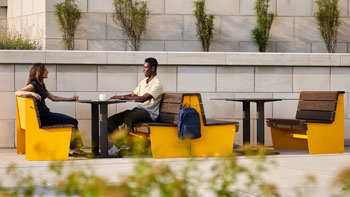
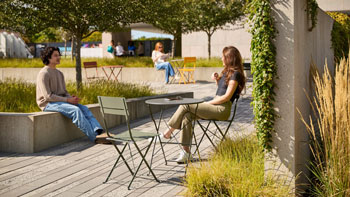
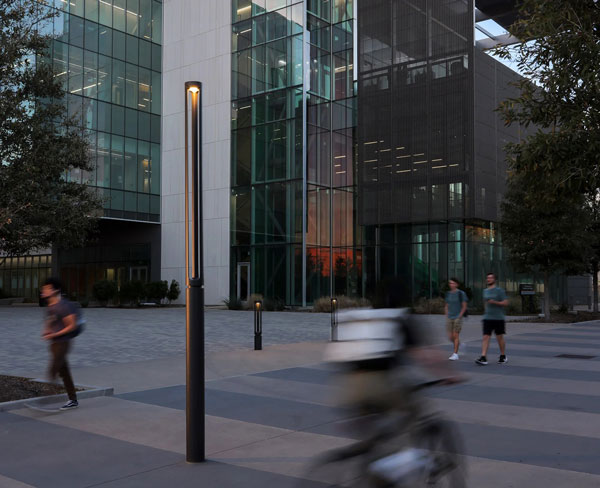
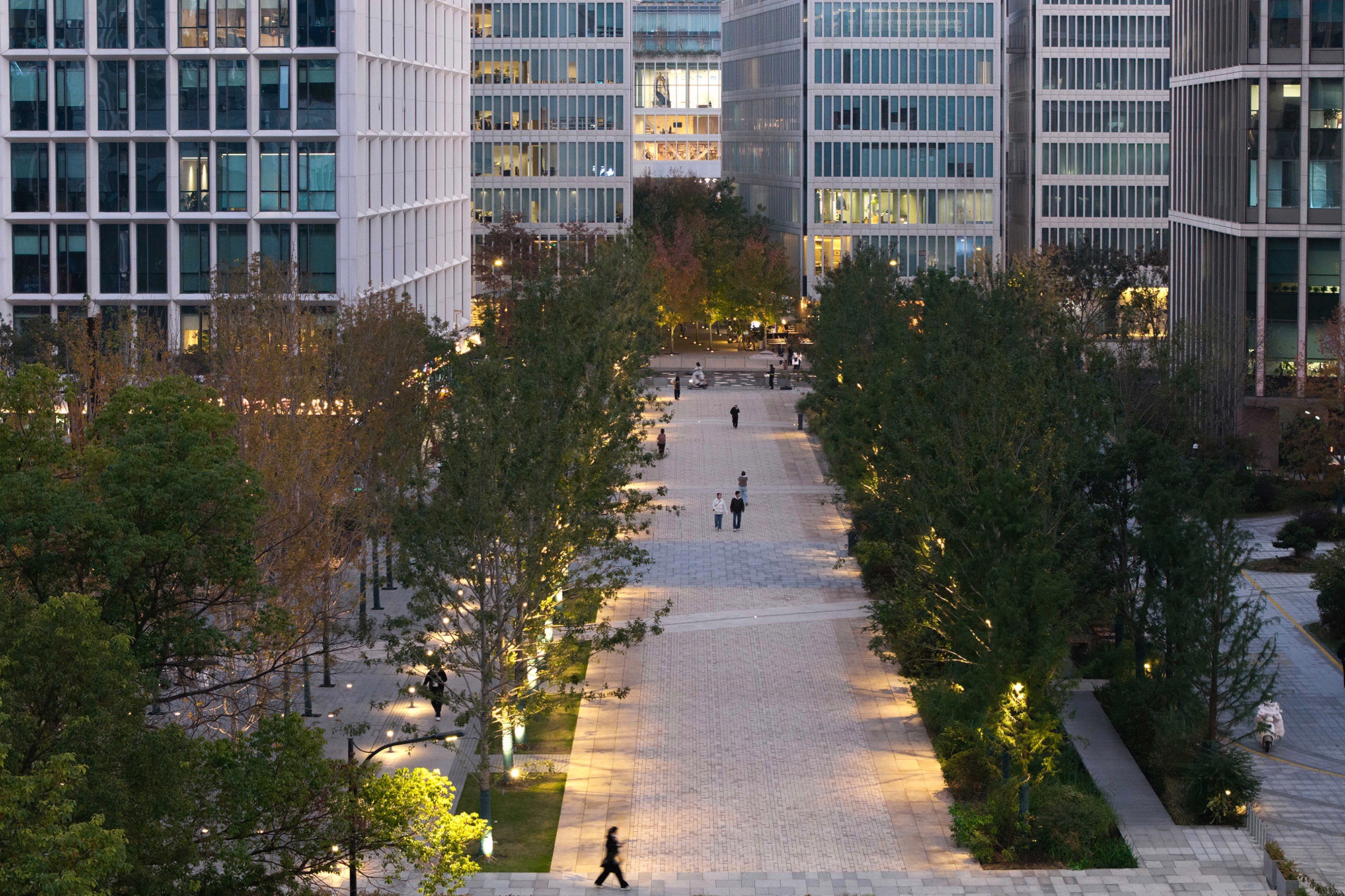
On the walking promenade between corporate buildings, which is 45 meters wide, the design proposed a 10-meter-wide linear ecological greenbelt to divide the expansive space into human-scale, while still meeting the planning requirement for a 12-meter-wide emergency vehicle lane. An elevated boardwalk in the center of the greenbelt guides people for rest, cooling off, and social interaction. Indigenous plants and water tolerant shrubs are used to purify surface runoff from the entire pedestrian zone. This collected water is stored in the cistern for reuse. In area of conflict with existing infrastructure, rest platforms are used to stop and sit, creating a varied rhythm to the linear space. Covering approximately 1,000 square meters, the rain garden’s planting scheme aims to establish a complete, self-sustaining micro-ecosystem through long-term natural succession. The paving design of the hardscape utilizes materials of varying sizes and textures, imbuing the large hard surface with detailed patterns. The promenade also serves as a highly flexible space, providing a public venue for morning/evening markets or other multifunctional activities.
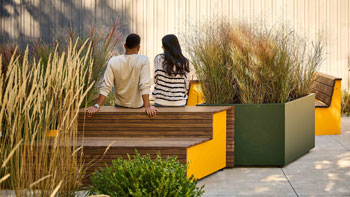
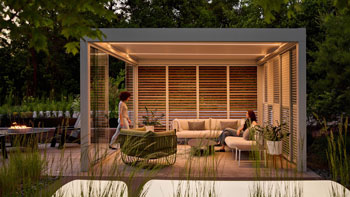
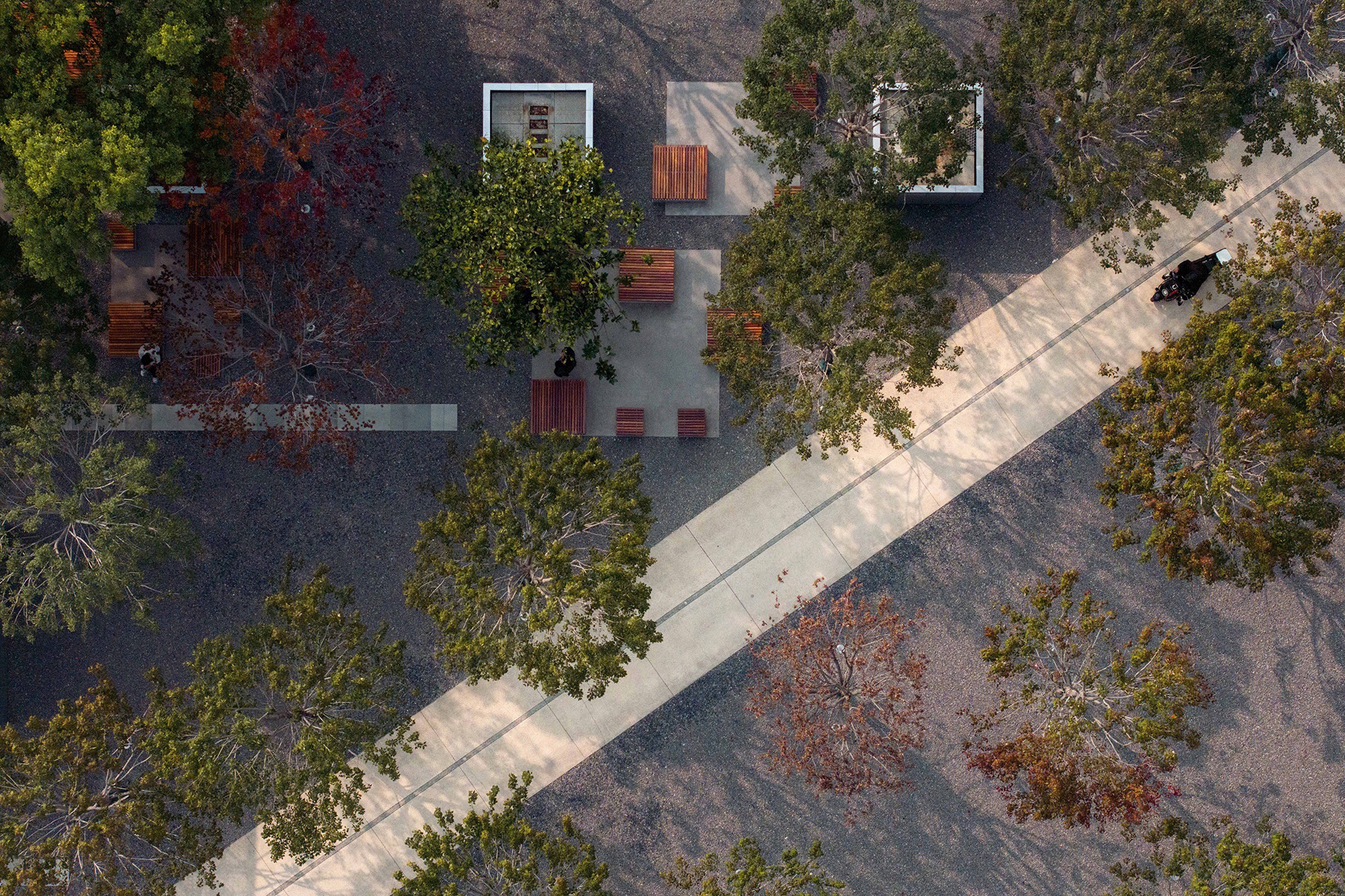
Another linear rain garden, spanning 160 square meters, forms the boundary of an activity area, which surface covers with permeable pine bark and wood chips. The overflow rainwater is filtered through gabion retaining walls and collected in the lower rain garden, where it is stored, purified, and reused. A structural steel frame, serving as an activity facility, ultimately becomes an outlet for rainwater aerating. It’s simultaneously acting as a visual focal point within the central landscape.
The triangular fountain plaza features a gentle slope that directs water to its center. When dry, it serves as a space for roller skate or other activities. The fountains are supplied by the harvested rainwater that has been purified and stored.
Trees planted in the plaza utilize supportive, modular, breathable planting modules underground. The process involves deeply excavating and replacing the existing construction waste, installing 3.2m x 3.2m finished modules, and backfilling with layered planting soil.
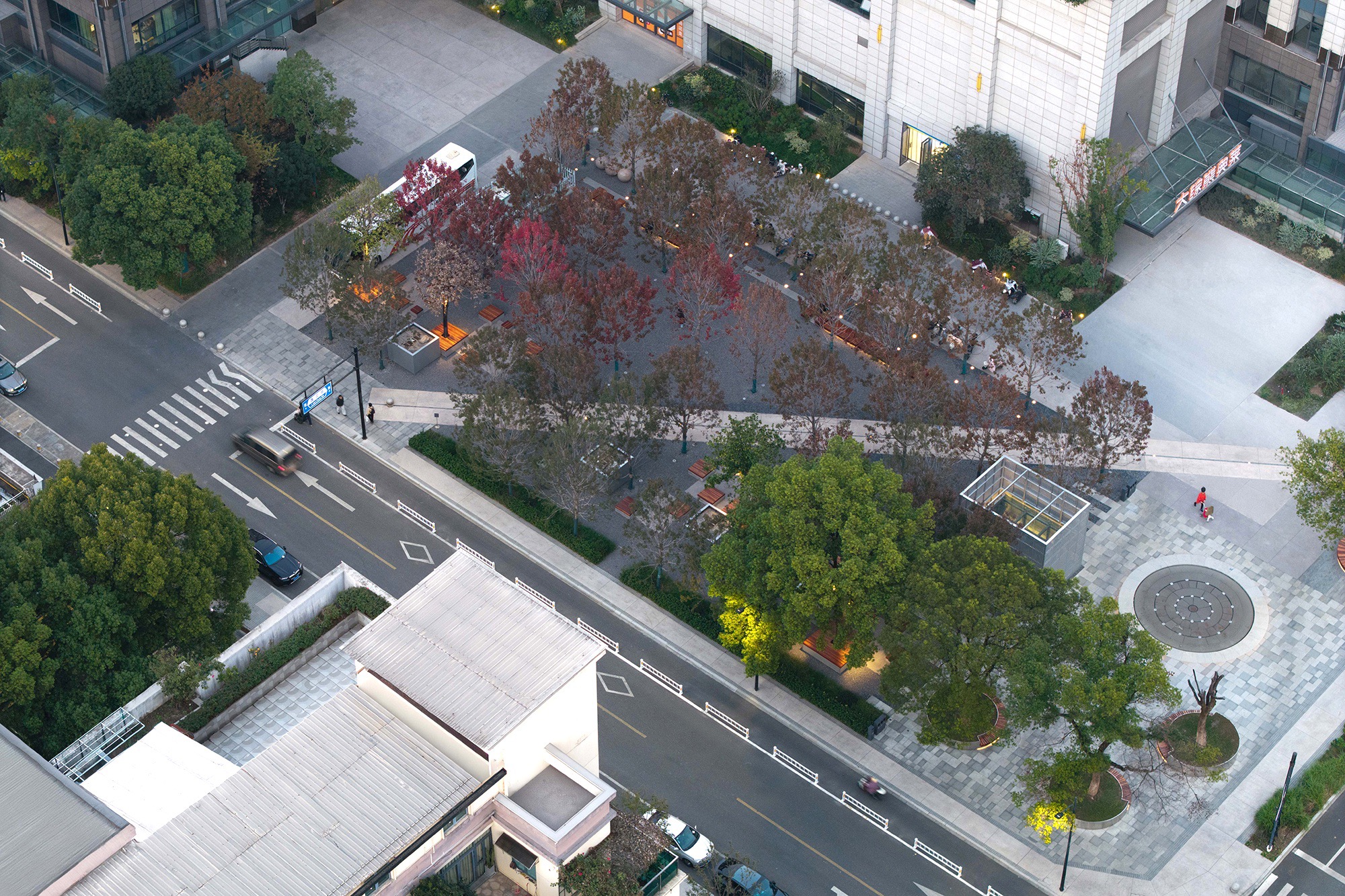
The southwest plaza of the promenade is the extension part of the central landscape axis. The original site had occupied by infrastructure with evergreen plantings as screen. By reorganizing and coordinating these functional elements and preserving mature trees, the site is transformed into a shaded area for rest and activities. A circular water terrace is created, echoing the fountain plaza across the street and converting the street corner into an open and vibrant space.
This renovation project involved coordinating with over a dozen corporate entities, each with its own boundaries and enclosed management. Through intricate negotiation process, the companies made varying degrees of concessions, including partially opening site boundaries, modifying internal traffic flow, and reducing surface parking. The project shifts the community away from enclosed, isolated entities toward openness, sharing, and participation. In the process, it brings global environmental and climate issues into broader public consciousness, with the hope of inspiring new strategies and pathways forward.
Client:Gudang Subdistrict Office, People’s Government of Xihu District, Hangzhou City
Facility Design and Construction: Hapitor
Architectural Design :Group of Architects
General Contractor: Zhejiang Xieli Construction Co., Ltd.
Photography: ChillShine, Yaoyu, Jiulisong, Zola, Rao Jiangtao
30°16'14.2"N 120°05'40.9"E
74059


LILA 2026 Sponsor