High Meadow
www.bluegreenaspen.com
2026 Landscape and Architecture / 2026 Private Gardens / USA / Built in 2024 /

CONTEXT
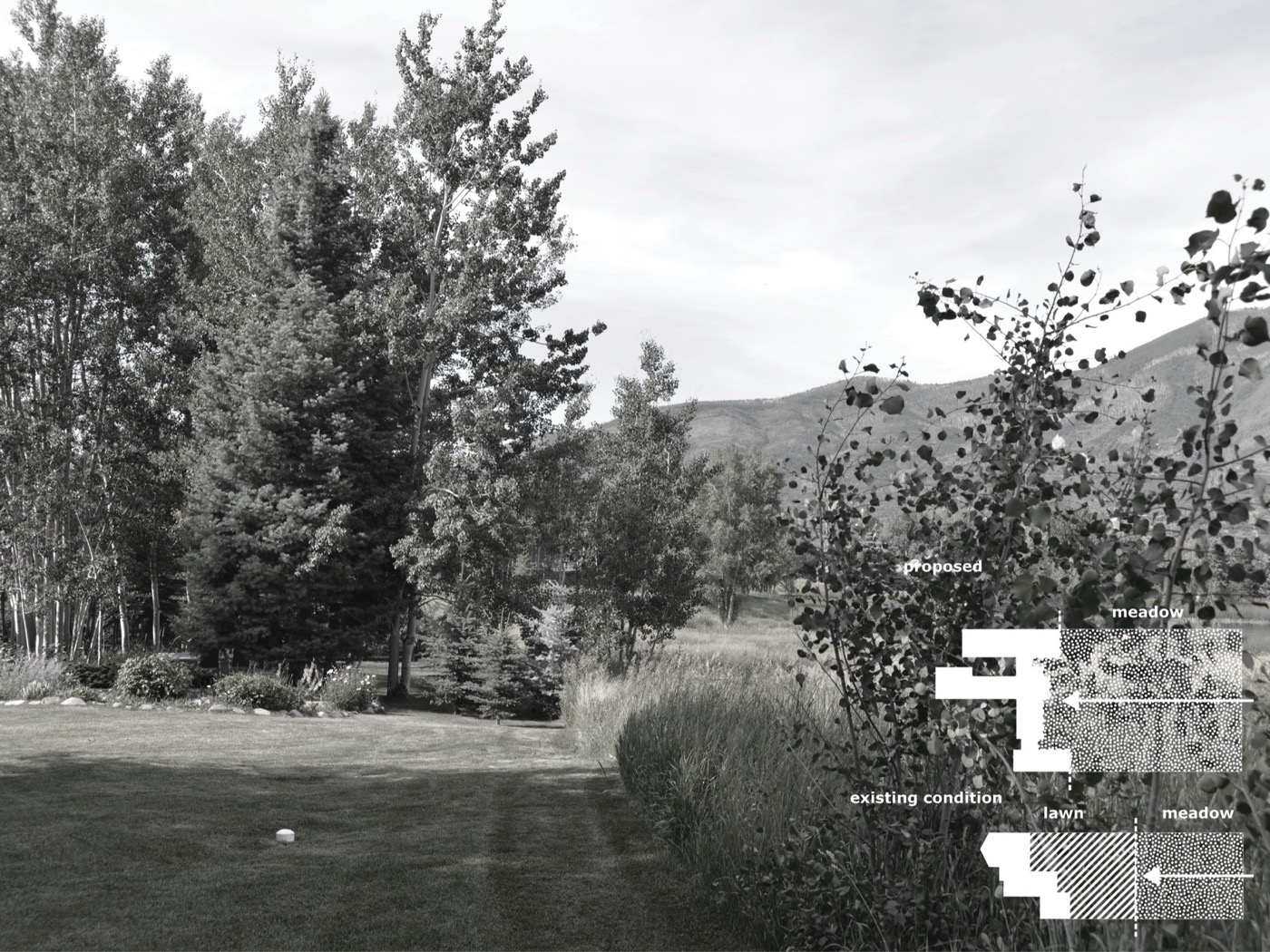
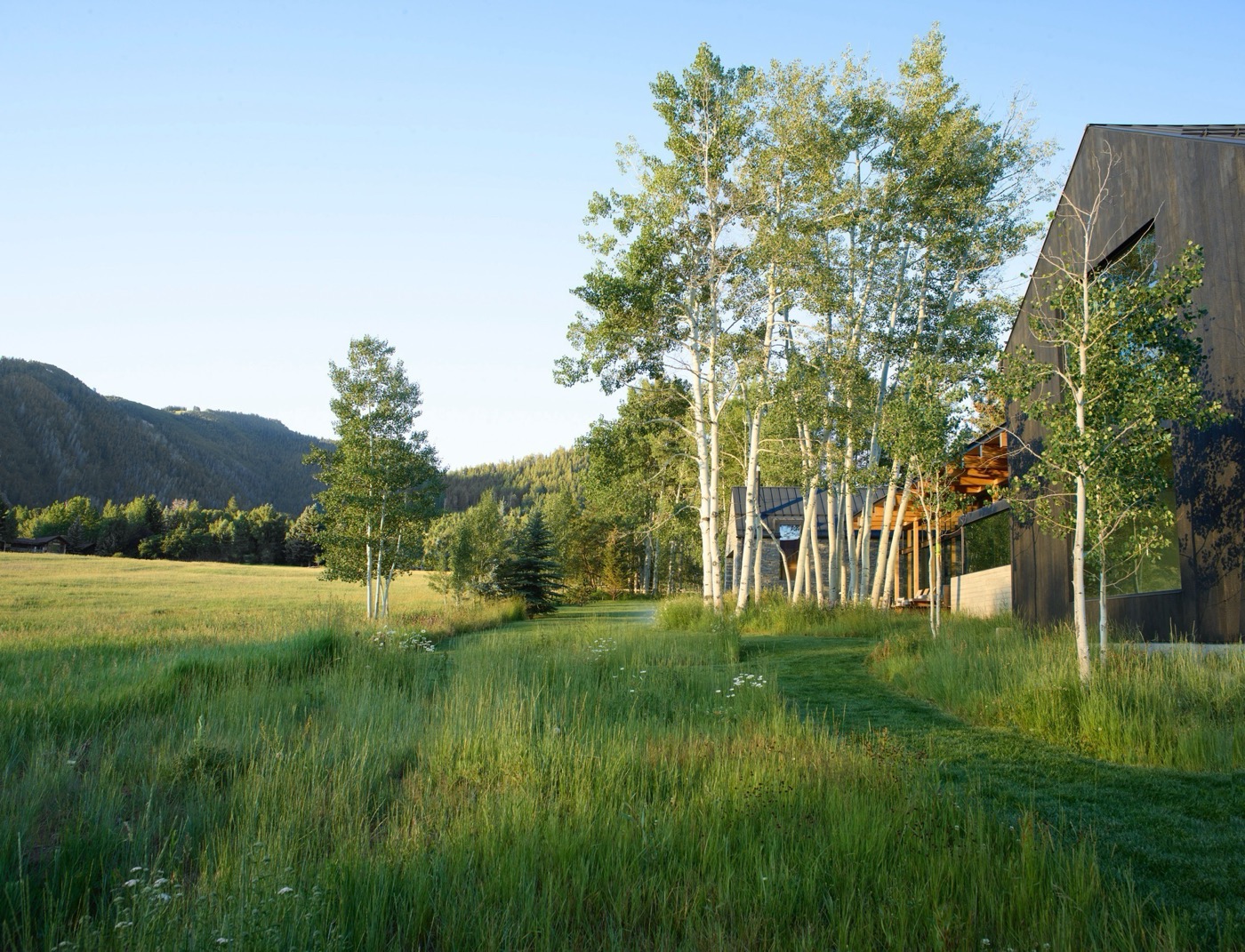
For years, property owners viewed the adjacent 45-acre meadow as a backdrop for homes to enjoy at a distance. Decades of human intervention left the site ecologically compromised: nutrient-deficient soils, excessive irrigation, and invasive plants degraded what was once prime montane meadow habitat. Lot lines were starkly visible in aerial photographs due to the harsh contrast between irrigated lawn and dormant native vegetation. Early in the conceptualization of High Meadow, the team envisioned a bold reversal. Rather than isolating the home from its surroundings, the design would restore and integrate this critical ecology, dissolving boundaries between property and landscape.
VISION
The clients sought a home that embodied environmental stewardship—a residence that would heal rather than degrade the land, creating a transferable model for design that prioritizes ecological restoration and invites native habitats to blur the lot line.
COLLABORATIVE PROCESS
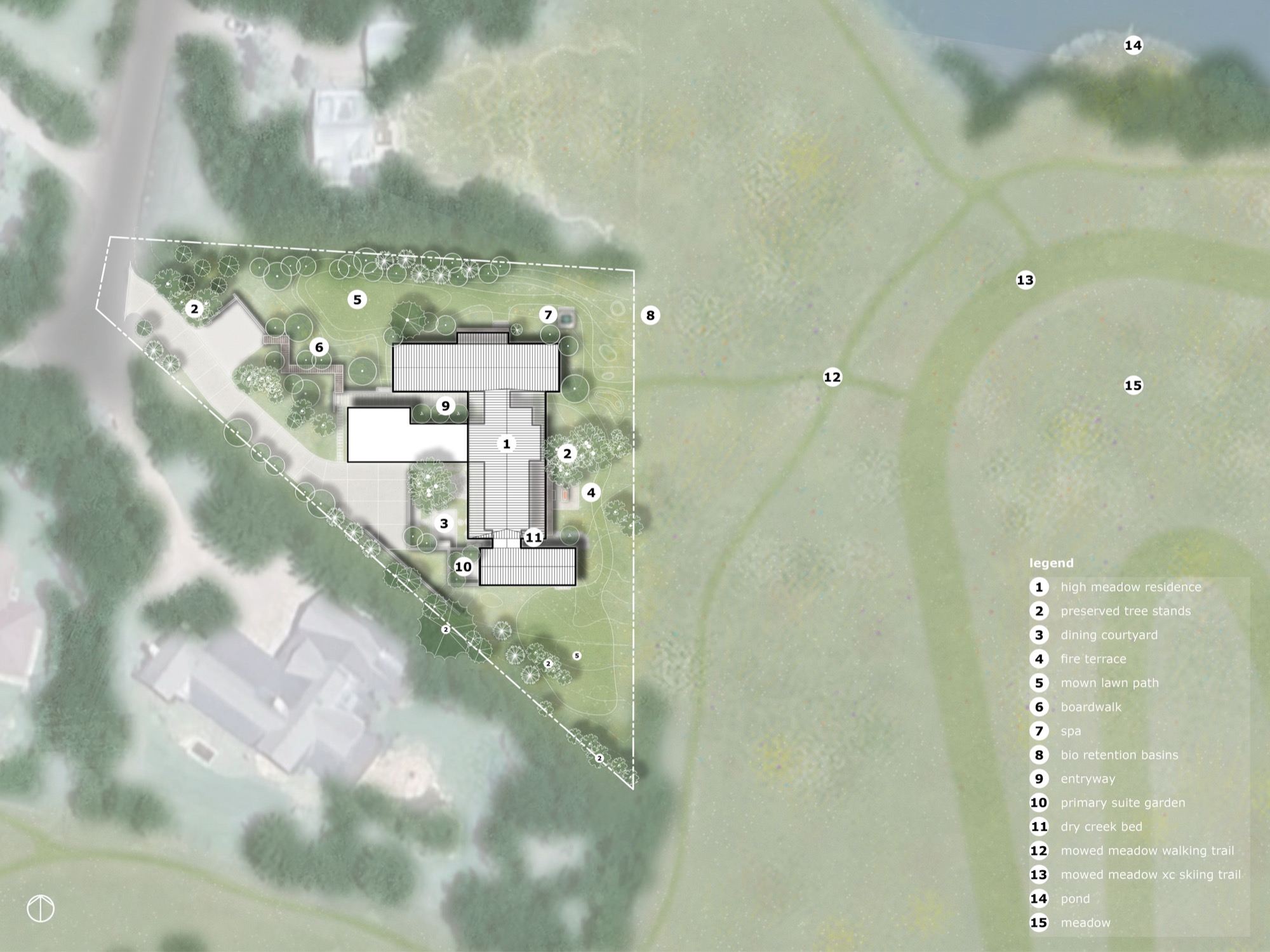
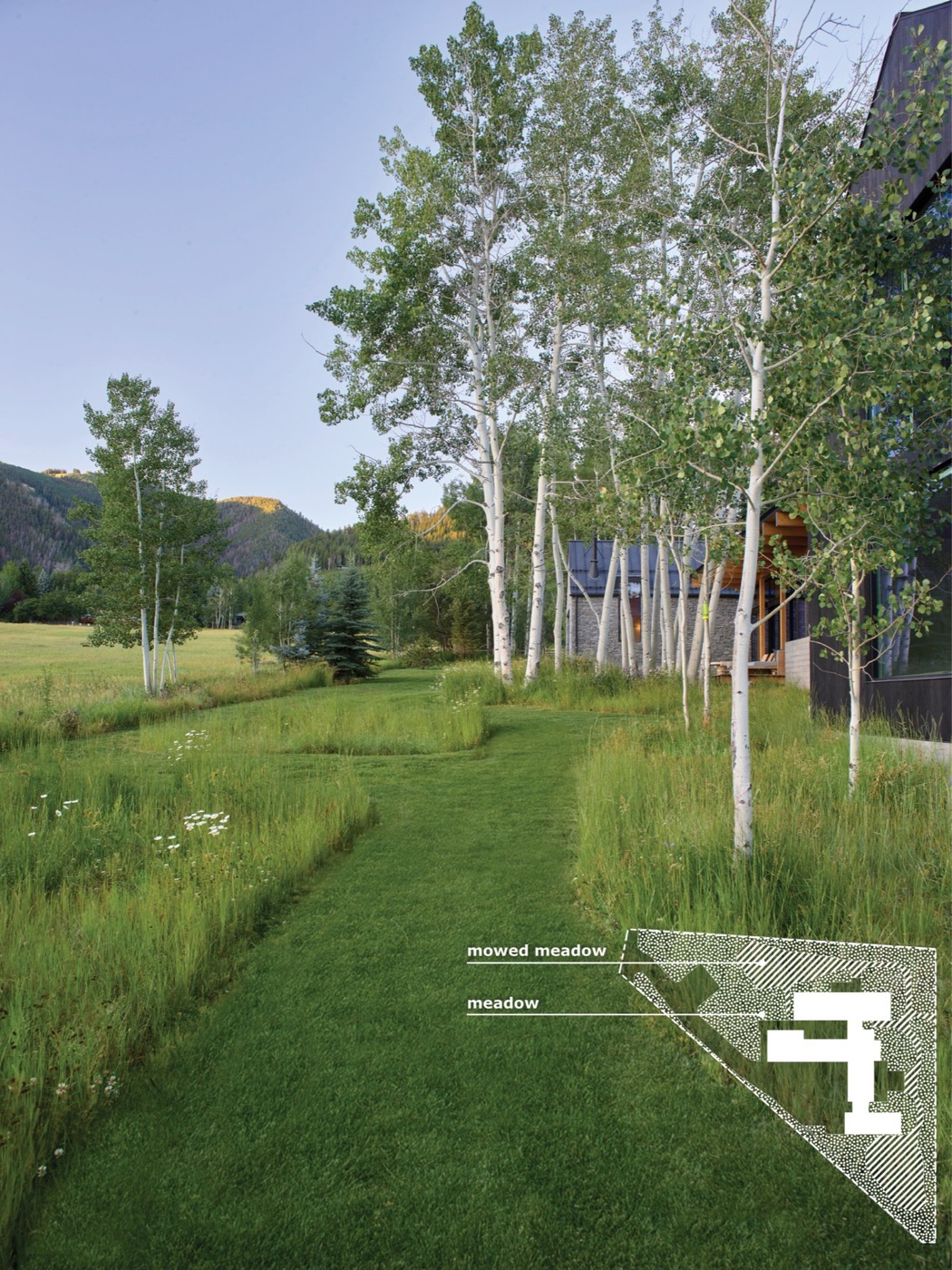
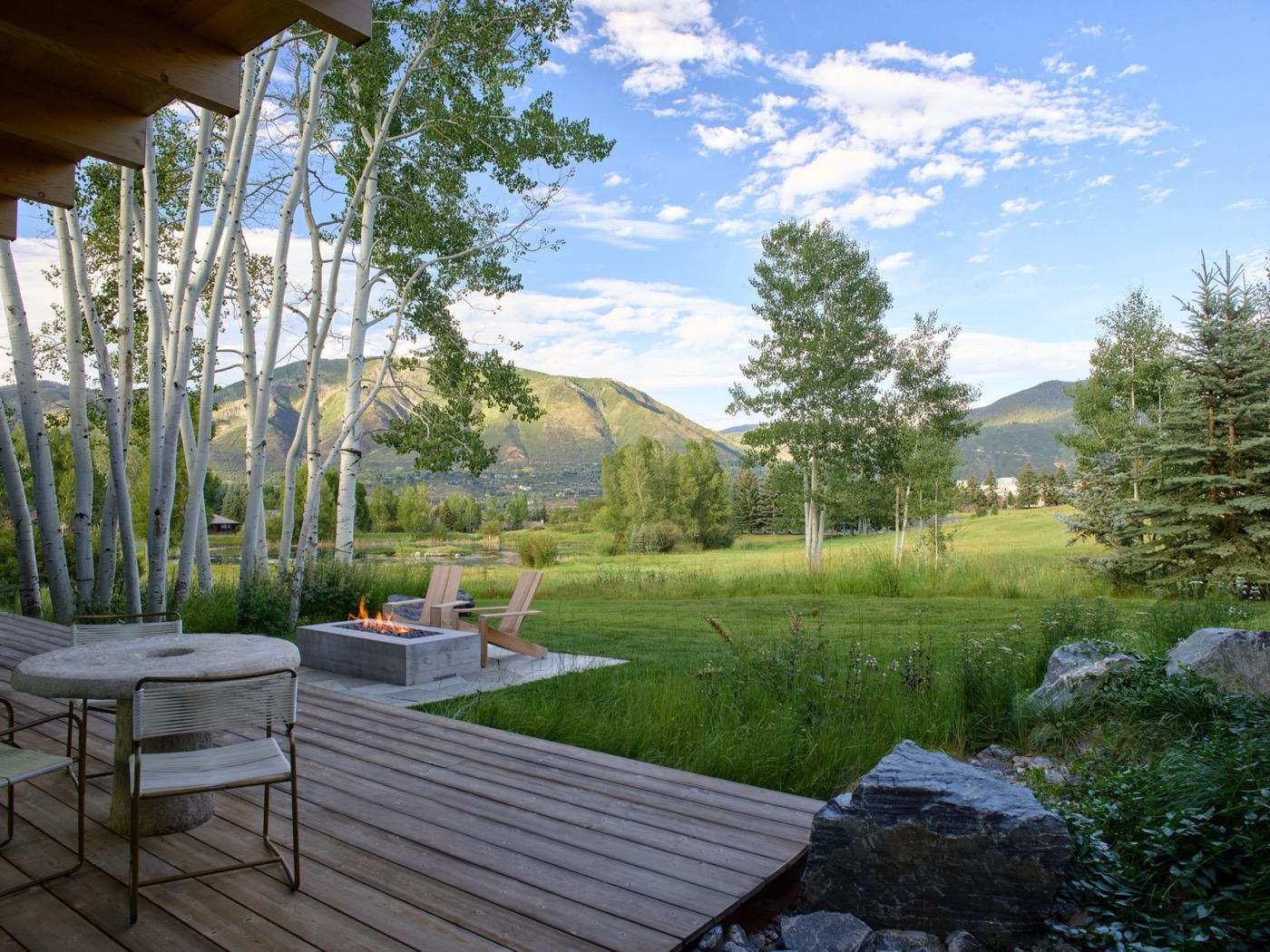
The realization of this vision demanded close multidisciplinary collaboration. The landscape architect worked alongside the architect and civil engineer to strategically place the structure between intact stands of aspen and spruce, preserving existing canopy and minimizing disturbance. More than 18,000 square feet of previously disturbed land was reclaimed and planted with native grasses, wildflowers, and sedges. The team developed a comprehensive soil remediation and seeding strategy to minimize loss from wildlife grazing and wind. Detailed hydrology analysis by the landscape architect and civil engineer resulted in an open system of swales and bioretention basins.
ECOLOGICAL SERVICES
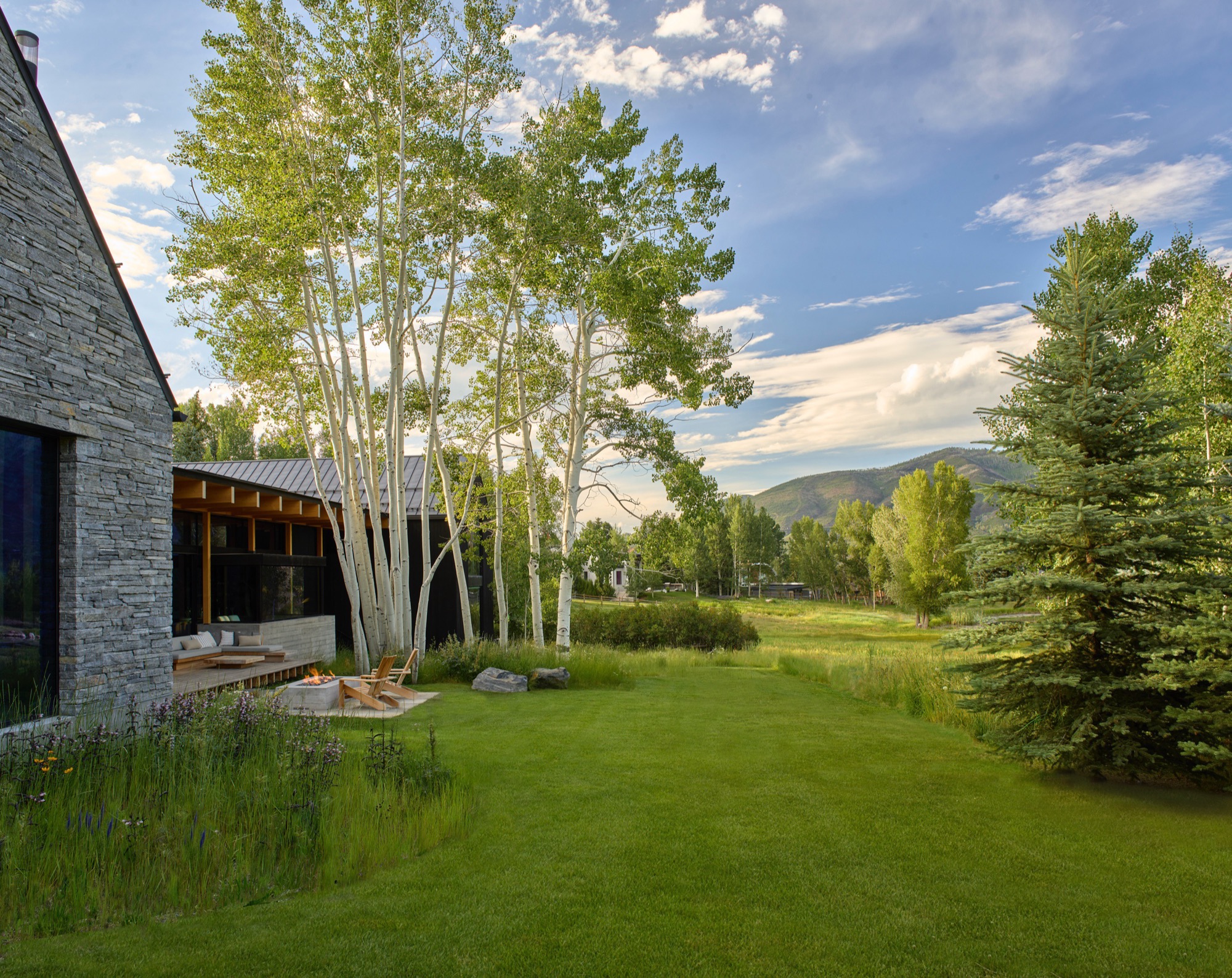
Bringing the meadow into the site allowed the team to capitalize on its ability to manage stormwater, improve water quality, and support wildlife. Being higher in the watershed, increasing infiltration and groundwater storage is a critical step in improving streamflow during drier months. This slow release of groundwater also contributes to regional wildfire mitigation efforts through the reduction of downstream fuel load.
SITE-SPECIFIC PLANTING STRATEGY
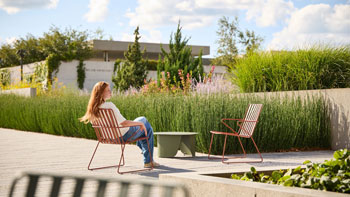
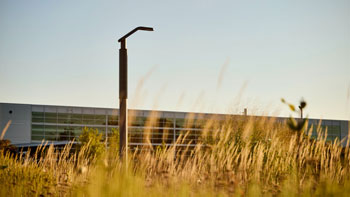
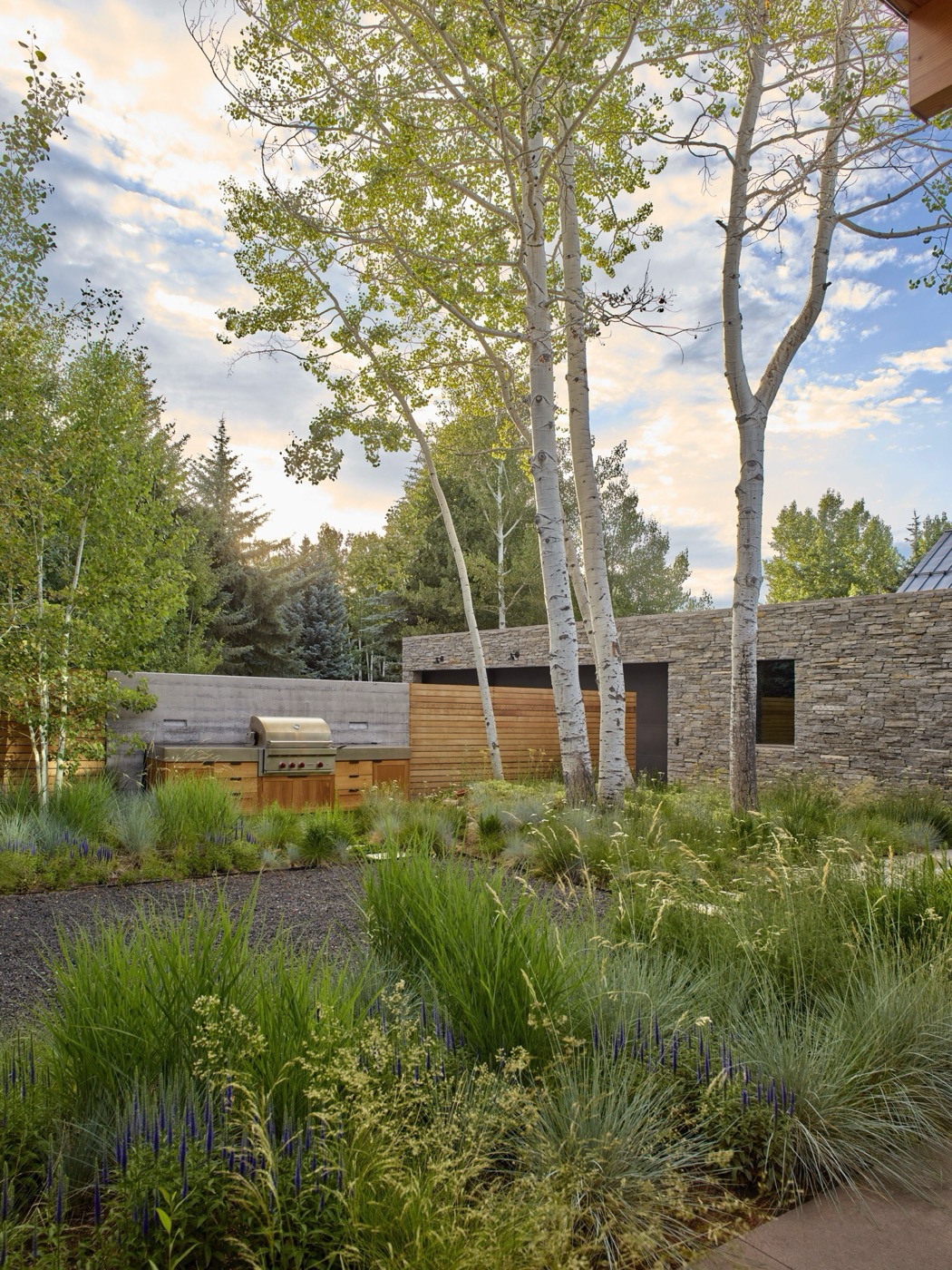
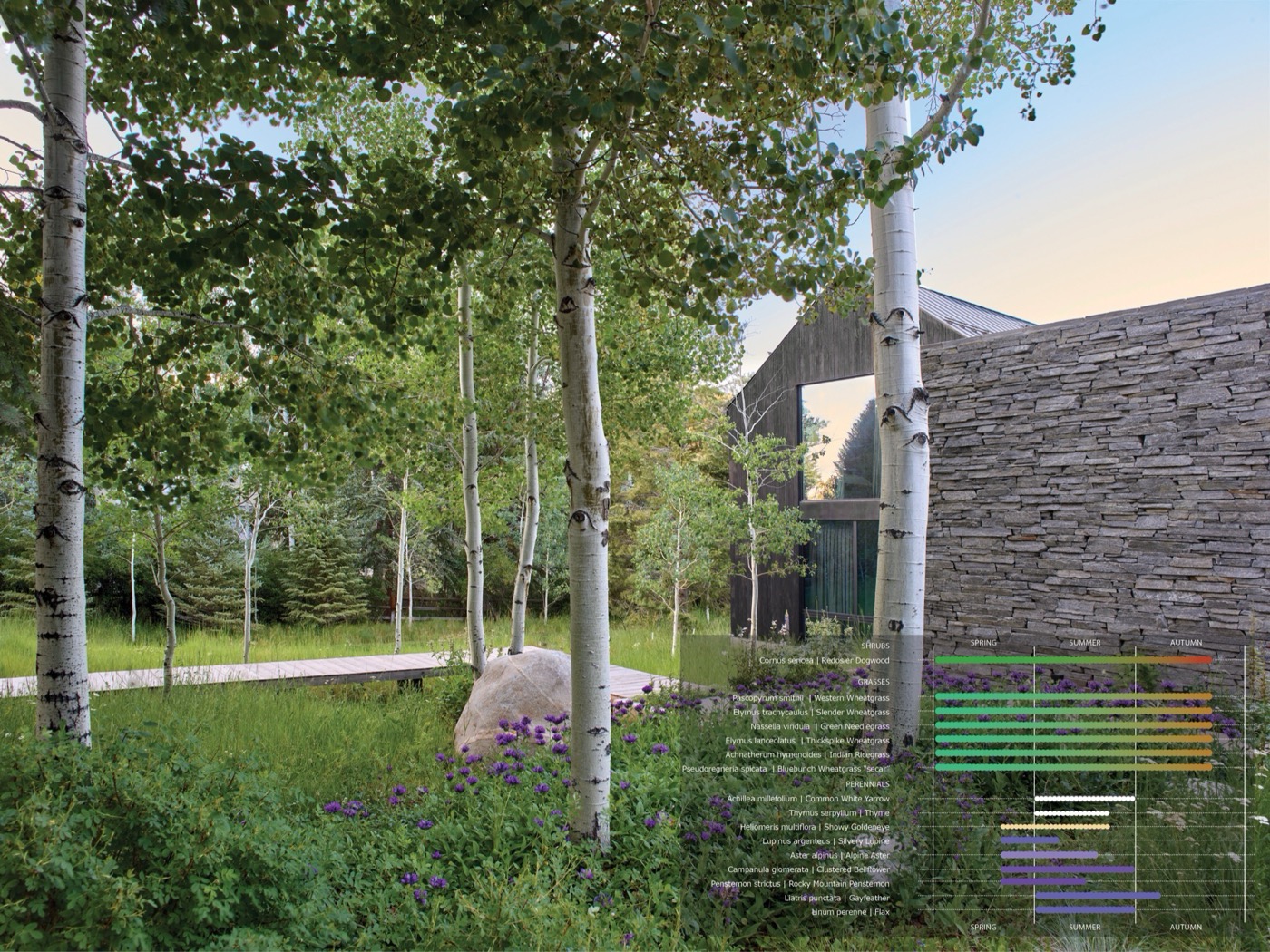
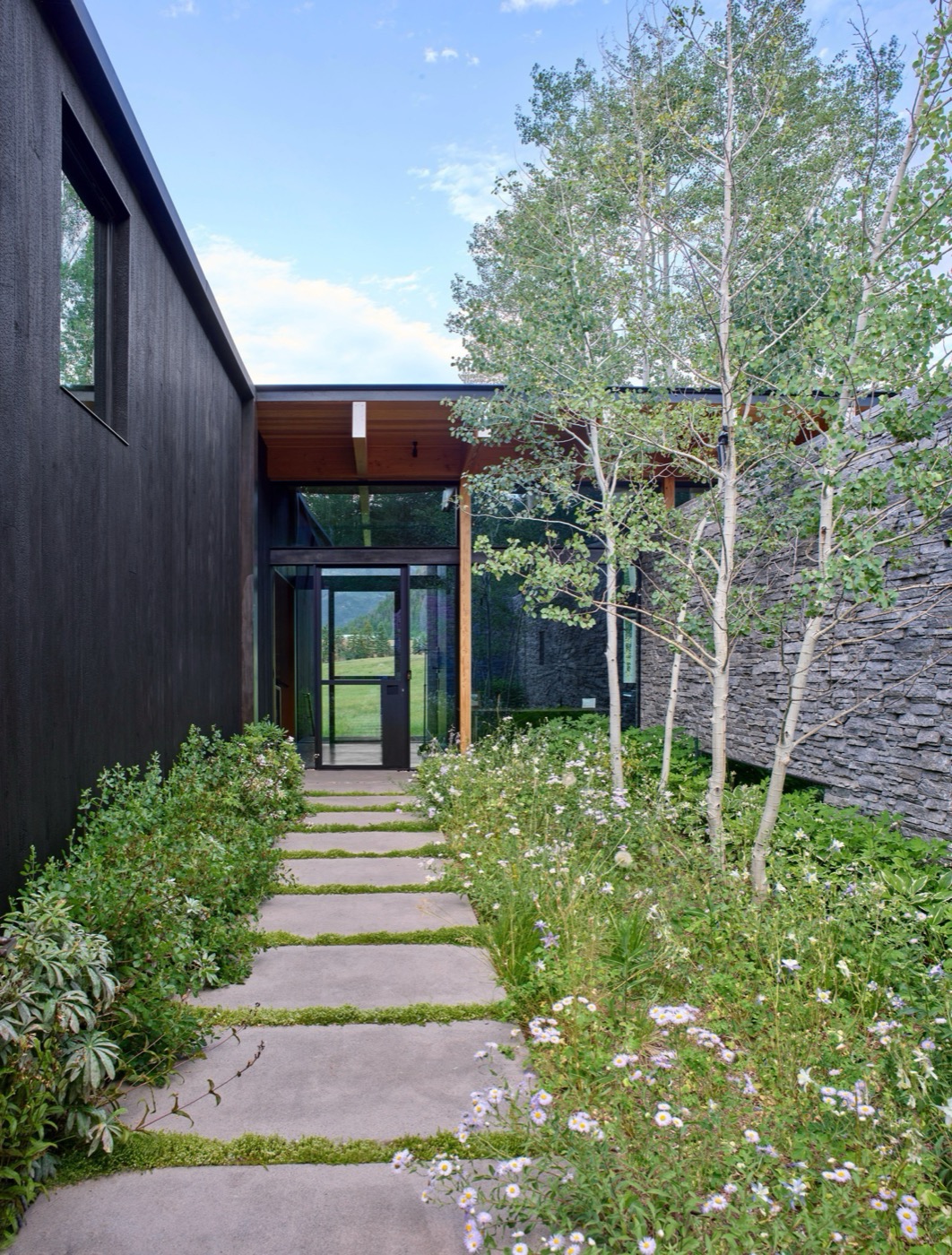
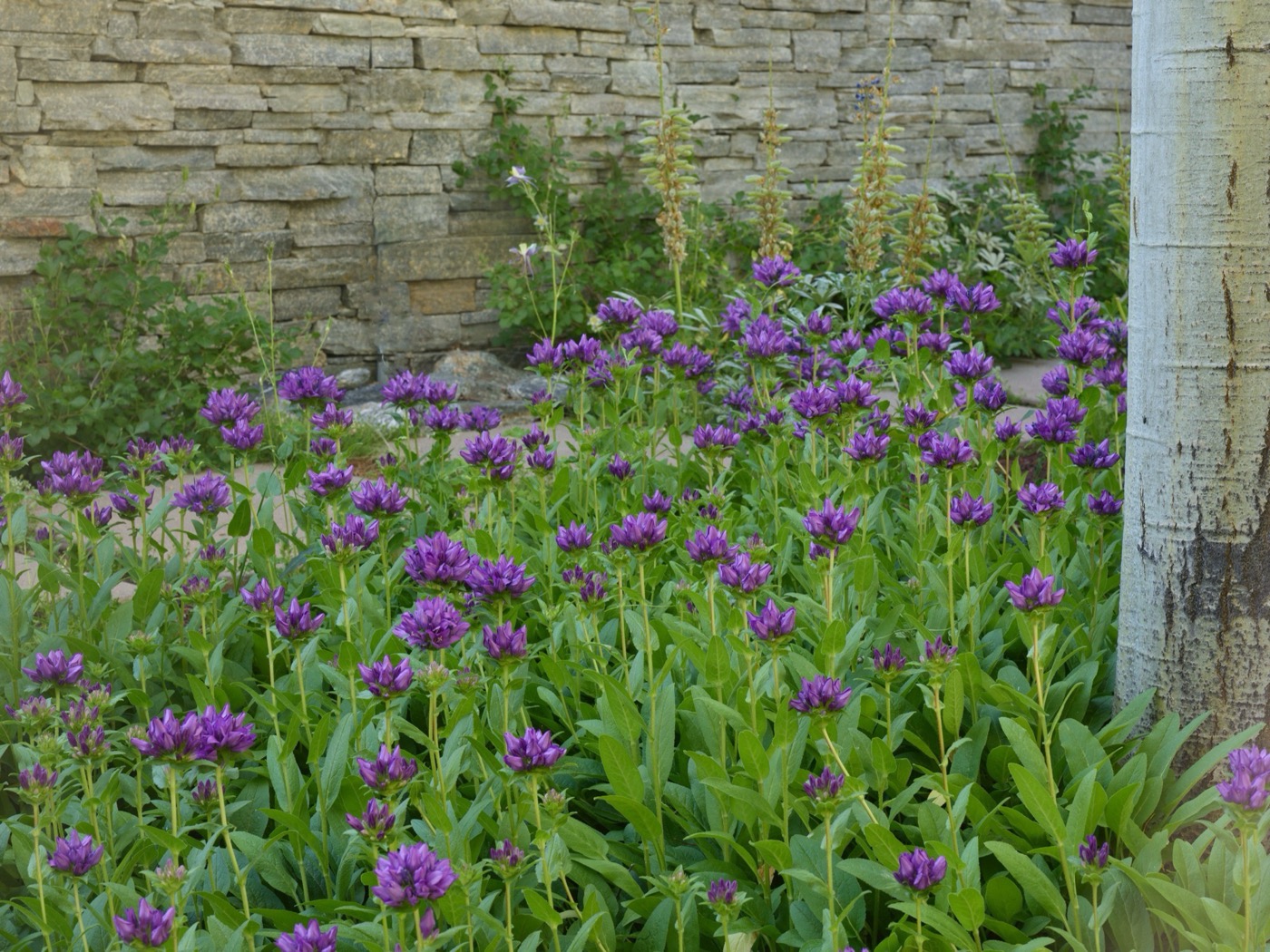
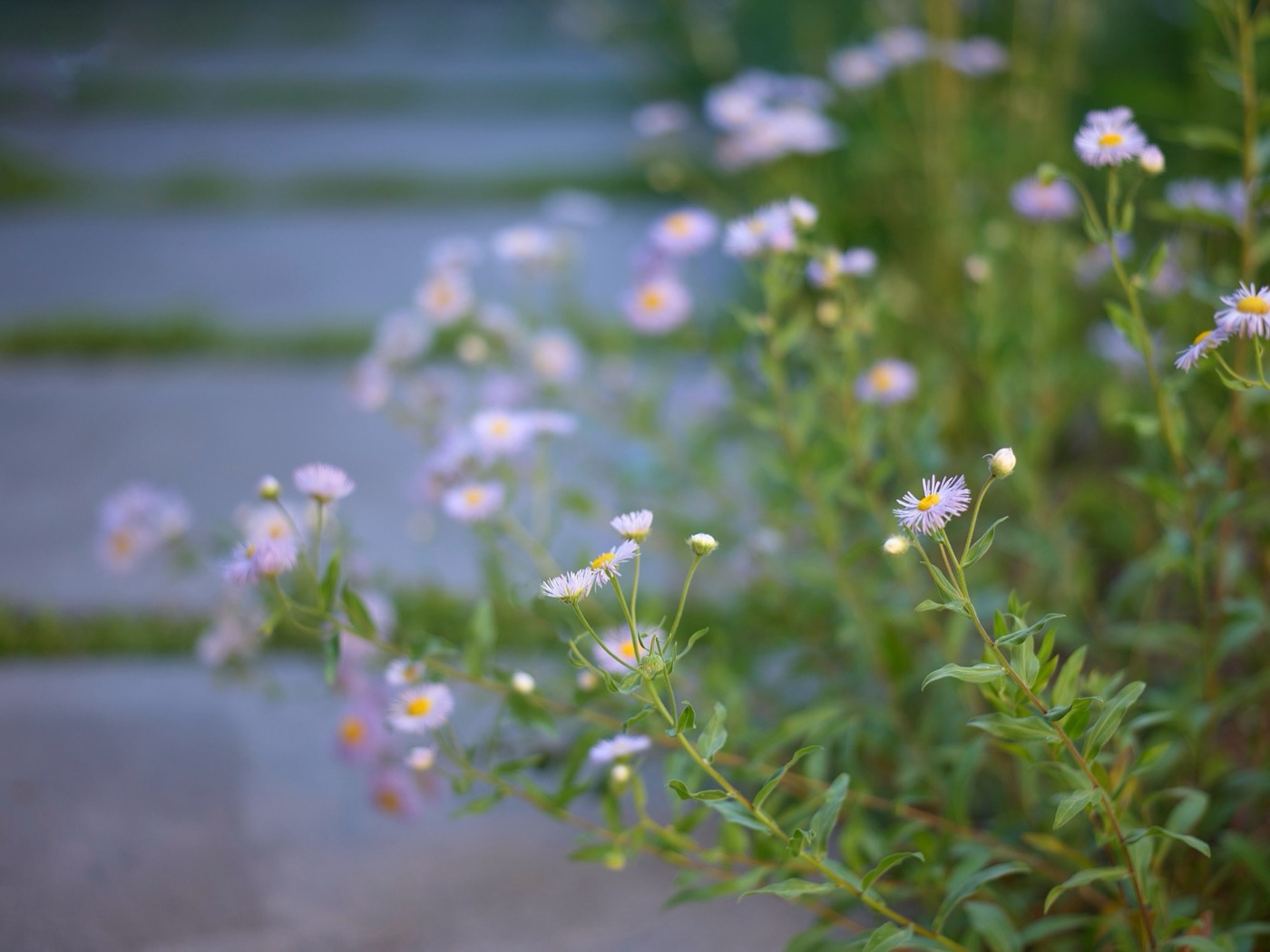
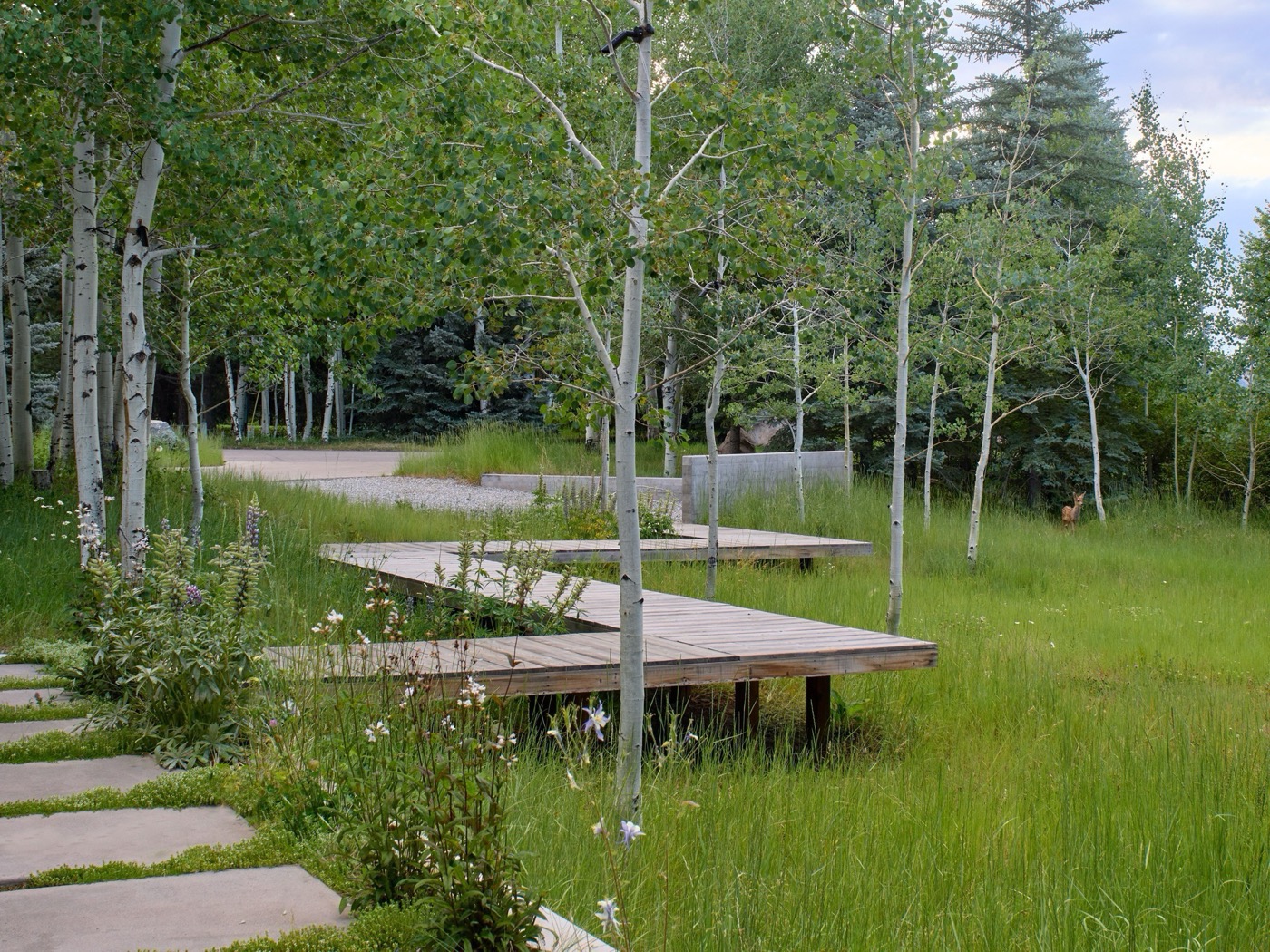
The planting design responds to microclimates across the site. Outer extents abutting the existing meadow were seeded with a locally sourced seed mix developed for this region. A diverse blend of native grasses formed the bulk of the mix with wildflowers interspersed for seasonal interest and pollinator support. Courtyard and entry boardwalk planting transitions to a curated, more verdant palette that includes shade and water-tolerant meadow species.
STORMWATER MANAGEMENT
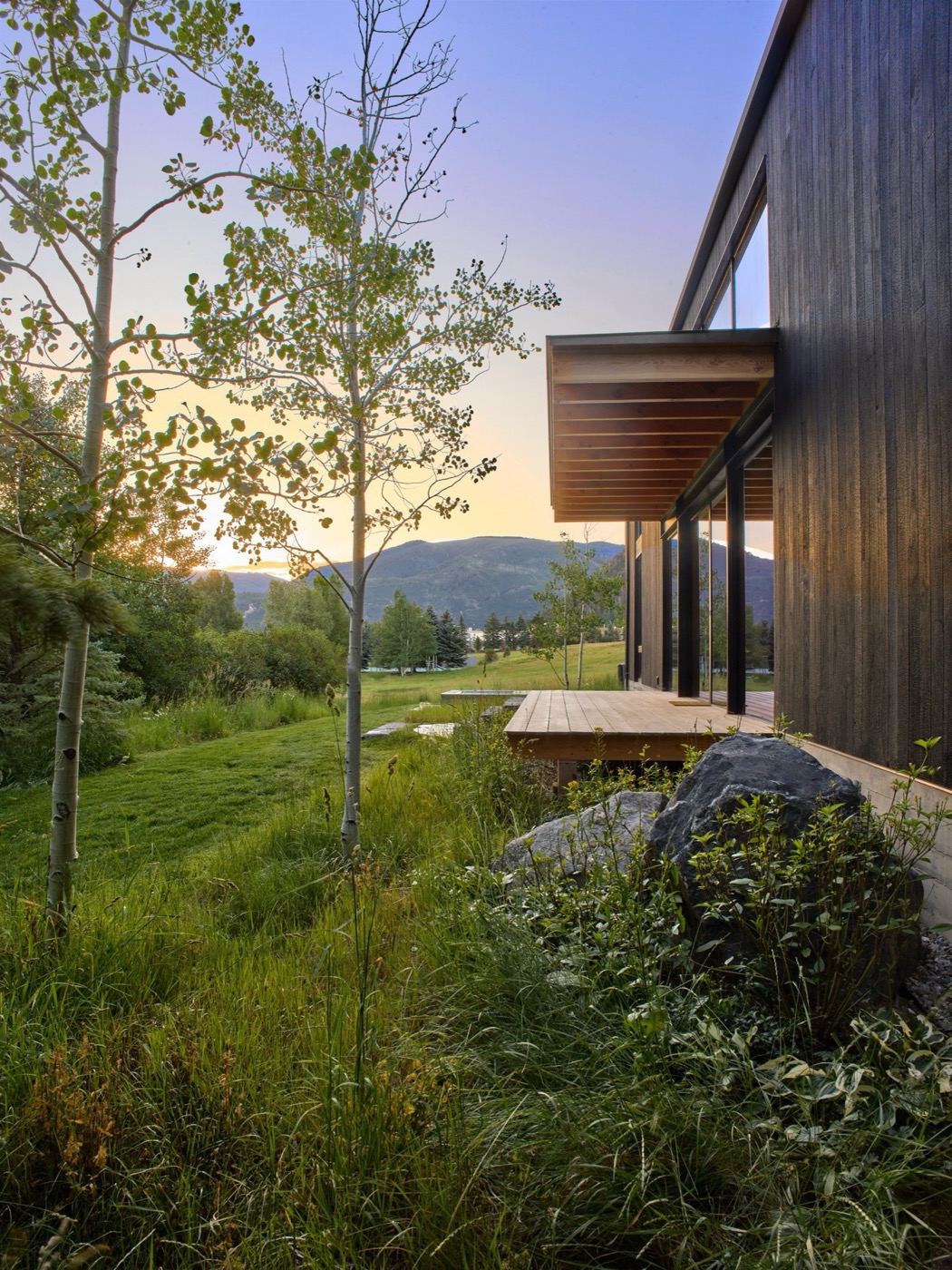
Shallow depressions planted with flood-tolerant meadow species capture the first flush of runoff. Heavier downpours are conveyed through the meadow’s open system of swales and eventually to a retention pond before reaching the Roaring Fork River.
TREE PRESERVATION
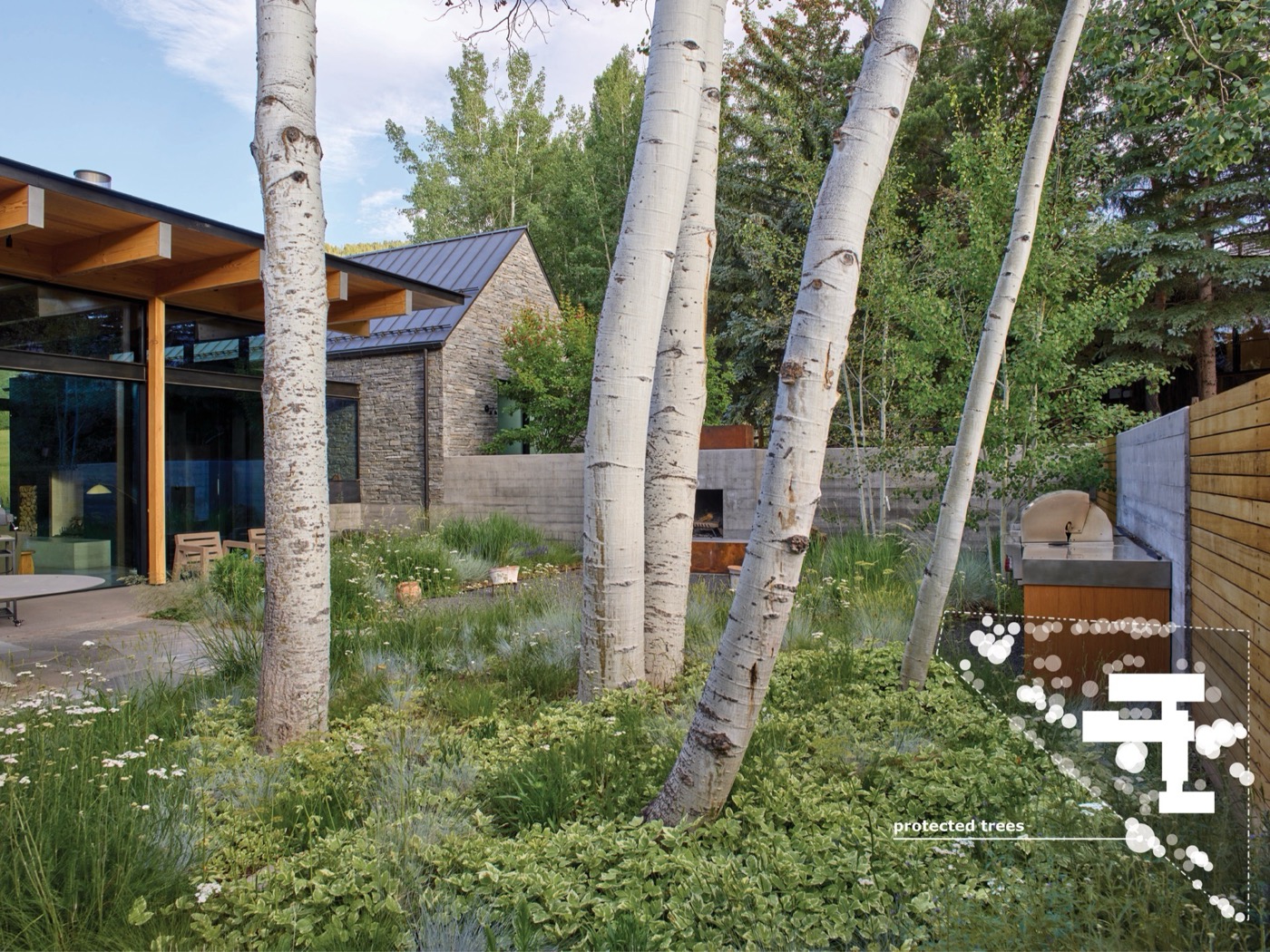
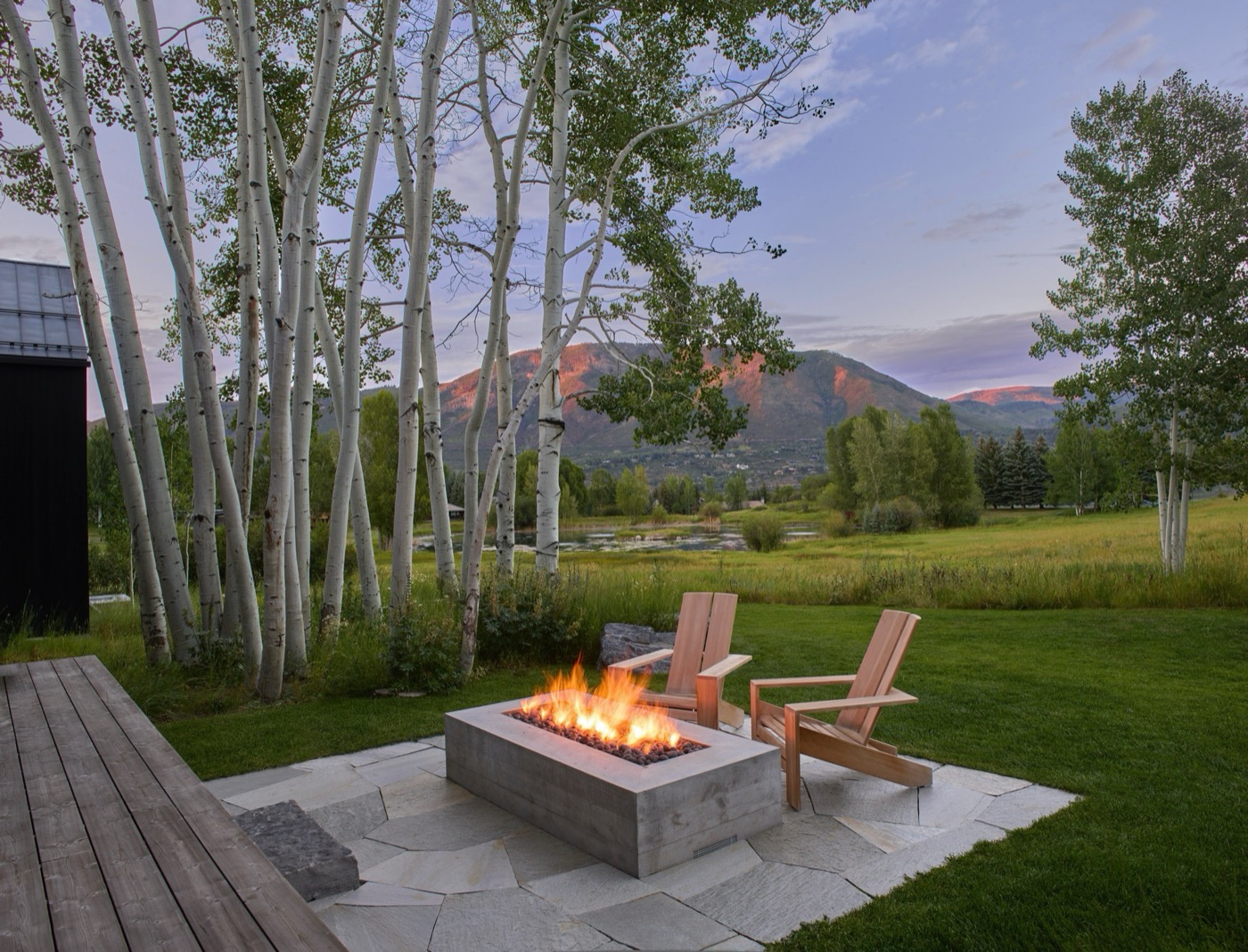
The structure is shaped around two mature stands of aspen trees. One anchors the courtyard, providing dappled summer shade; the other frames views from the living room patio. Existing spruce trees screen the back of the property and direct the eye towards the meadow.
CIRCULATION & MATERIALITY
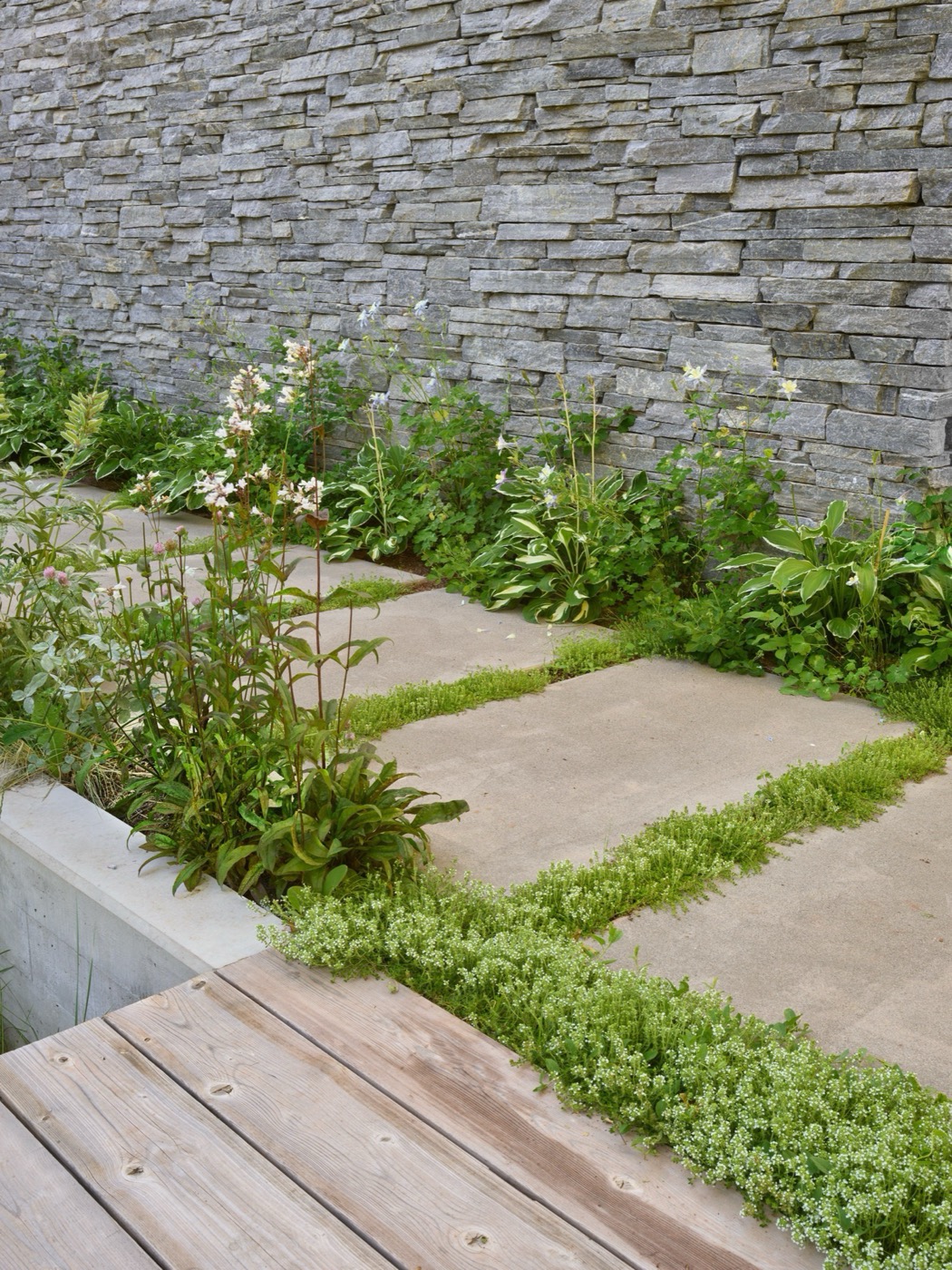
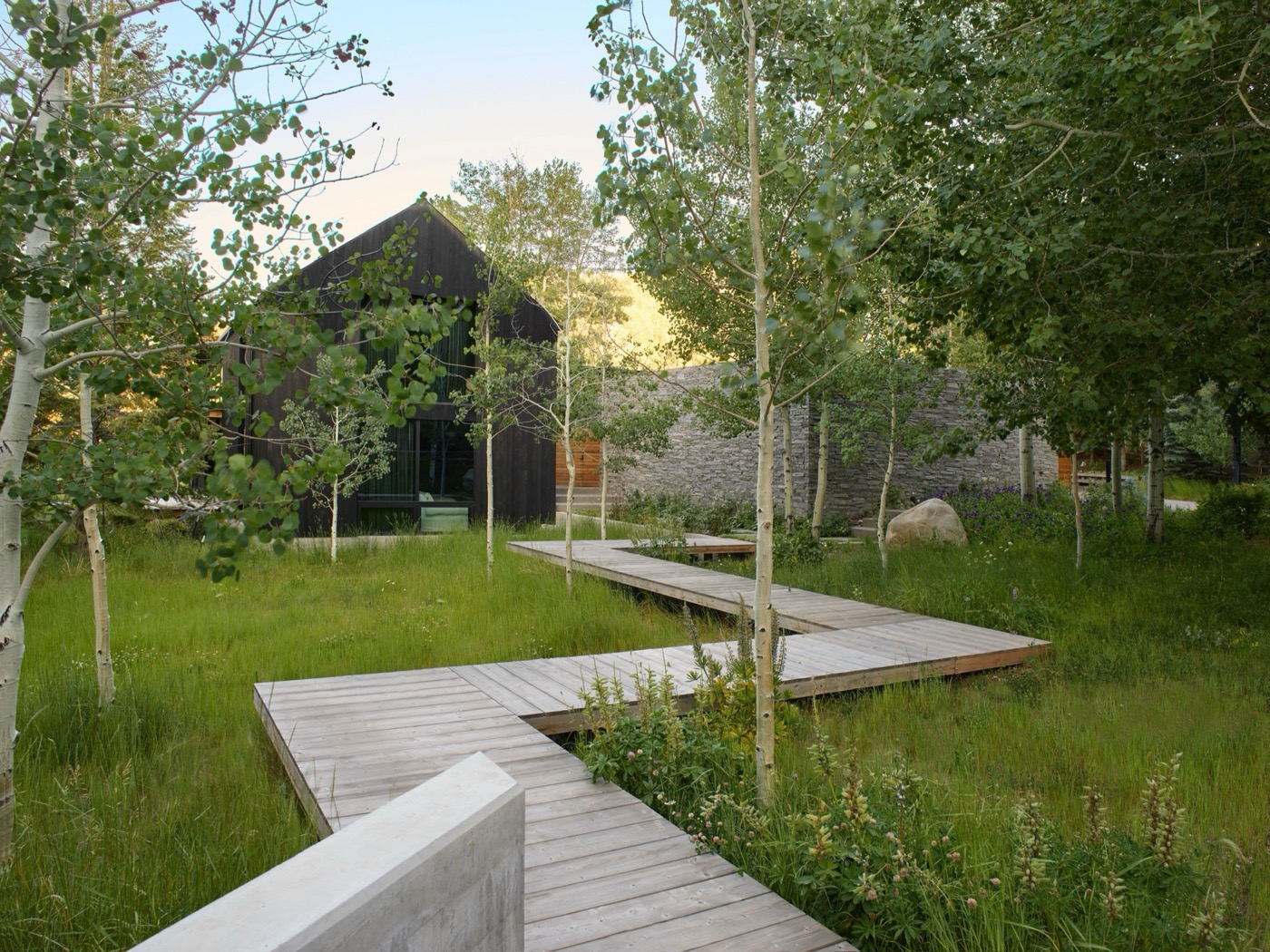
Mowed meadow paths and a boardwalk bridging a shallow, planted swale embody this project’s light touch upon the land. Permeable paving comprised of locally sourced stone directs guests along primary circulation routes, reducing runoff while harmonizing with the natural palette of the site.
75920


LILA 2026 Sponsor