Place des Montréalaises
emay.com/
2026 Landscape and Architecture / 2026 Public Projects / Canada / Built in 2025 /

![Hidden for over 70 years, Cardiff’s dock feeder canal has been brought back into the light and is a central feature of a transformational urban regeneration project: ‘The Canal Quarter’. By reconnecting the city with this historic waterway, this innovative public realm project has created a unique and special venue, demonstrating the broad social, environmental, […]](https://landezine-award.com/wp-content/uploads/2026/02/1_Canal-Quarter_Hero-Image-600x338.jpg "The Canal Quarter, Cardiff by AtkinsRéalis")
![PLACE VAUQUELIN Showcasing heritage through innovation and accessibility A STRATEGIC SITE WITH FORGOTTEN POTENTIAL Last updated a half-century earlier, Montreal’s overgrown and crumbling Place Vauquelin had lost its significance as a social hub and the showpiece of Old Montreal’s Administrative District, a grouping of several municipal buildings with tremendous heritage value. A recessed design limited […]](https://landezine-award.com/wp-content/uploads/2021/04/00-Place-Vauquelin-Montreal-Lemay-600x400.jpg "Place Vauquelin")
![Reviving the spirit of a legendary space This sweeping transformation project sparks wonder by recreating the magic of a legendary site, showcasing a rich history and boosting biodiversity through maximum multifunctionality, with a meticulously optimized, four-season user experience. Punctuating the majestic St. Lawrence River that runs along Montreal’s southern edge, Saint Helen’s Island’s bucolic character […]](https://landezine-award.com/wp-content/uploads/2020/04/00-ĖSociété-du-parc-Jean-Drapeau_Aerial-view_-600x379.jpg "Espace 67 – Parc Jean-Drapeau")
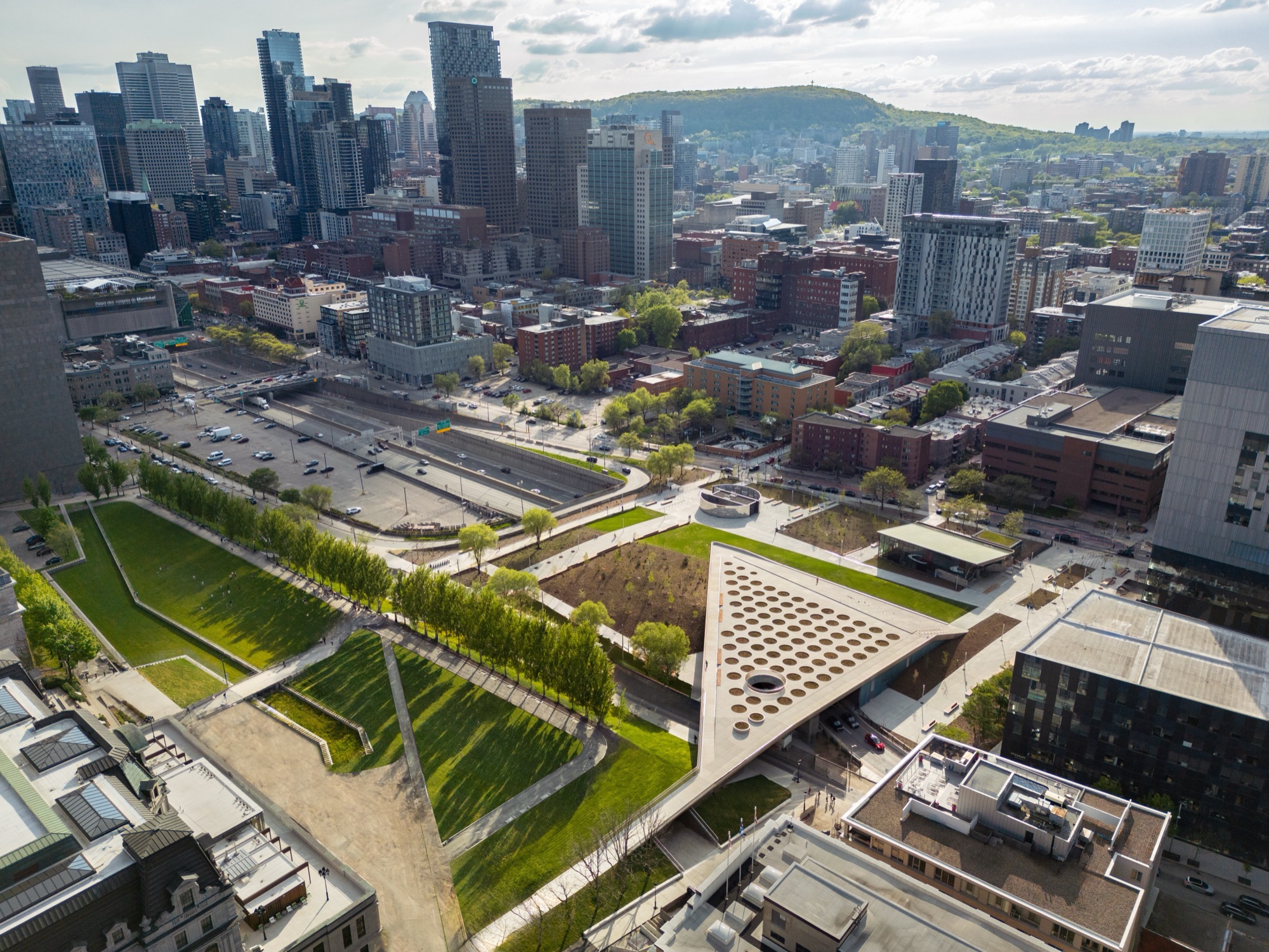
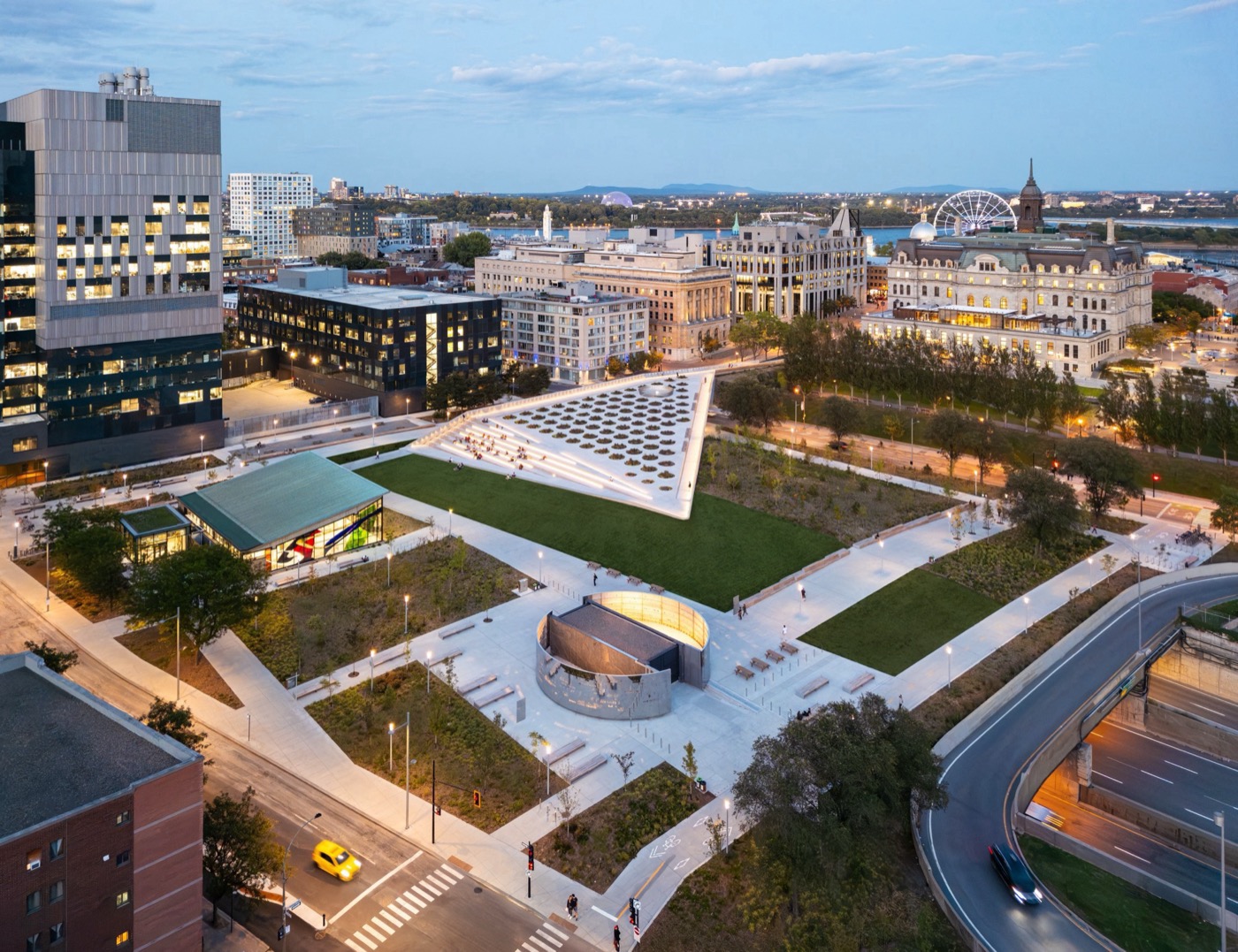
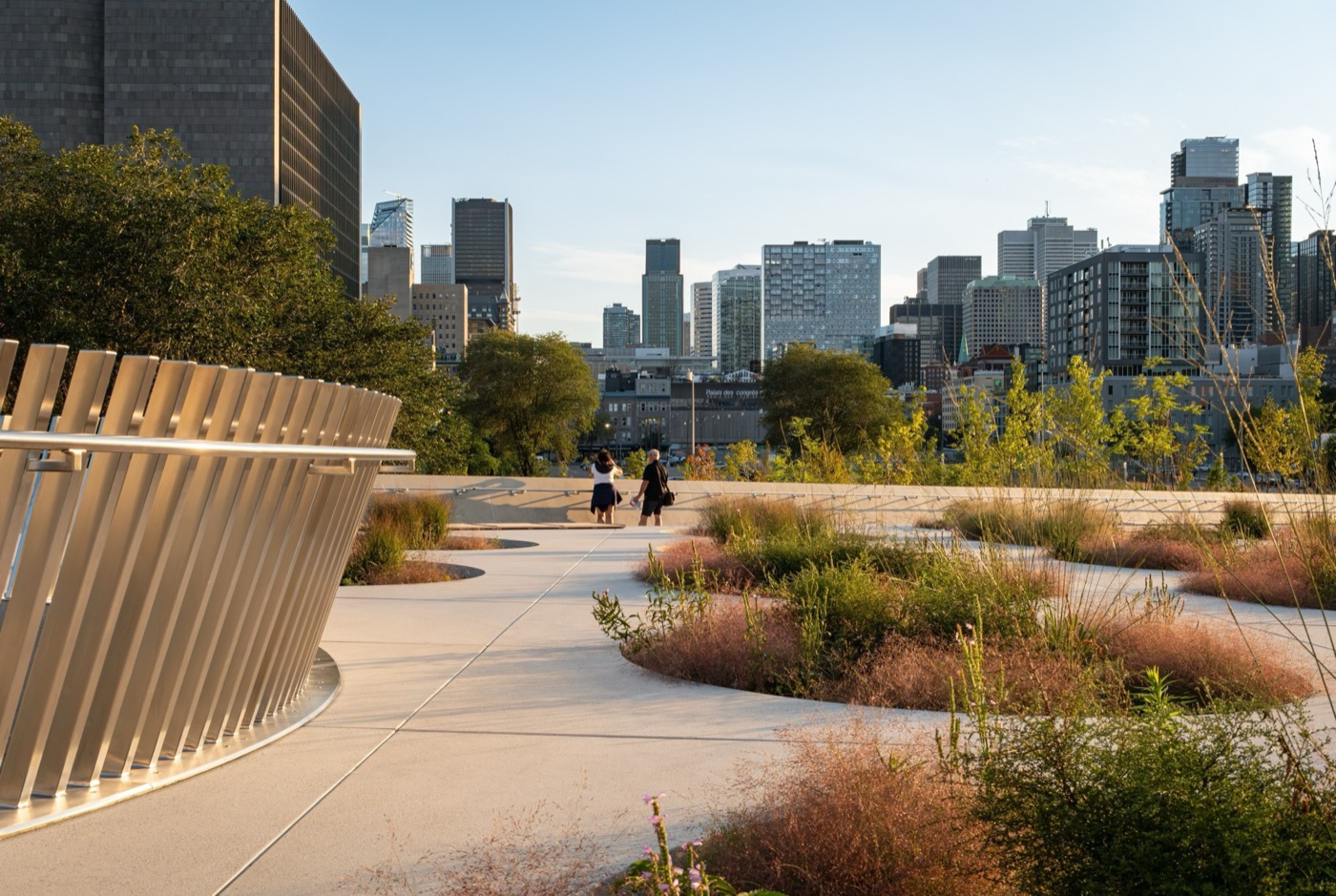
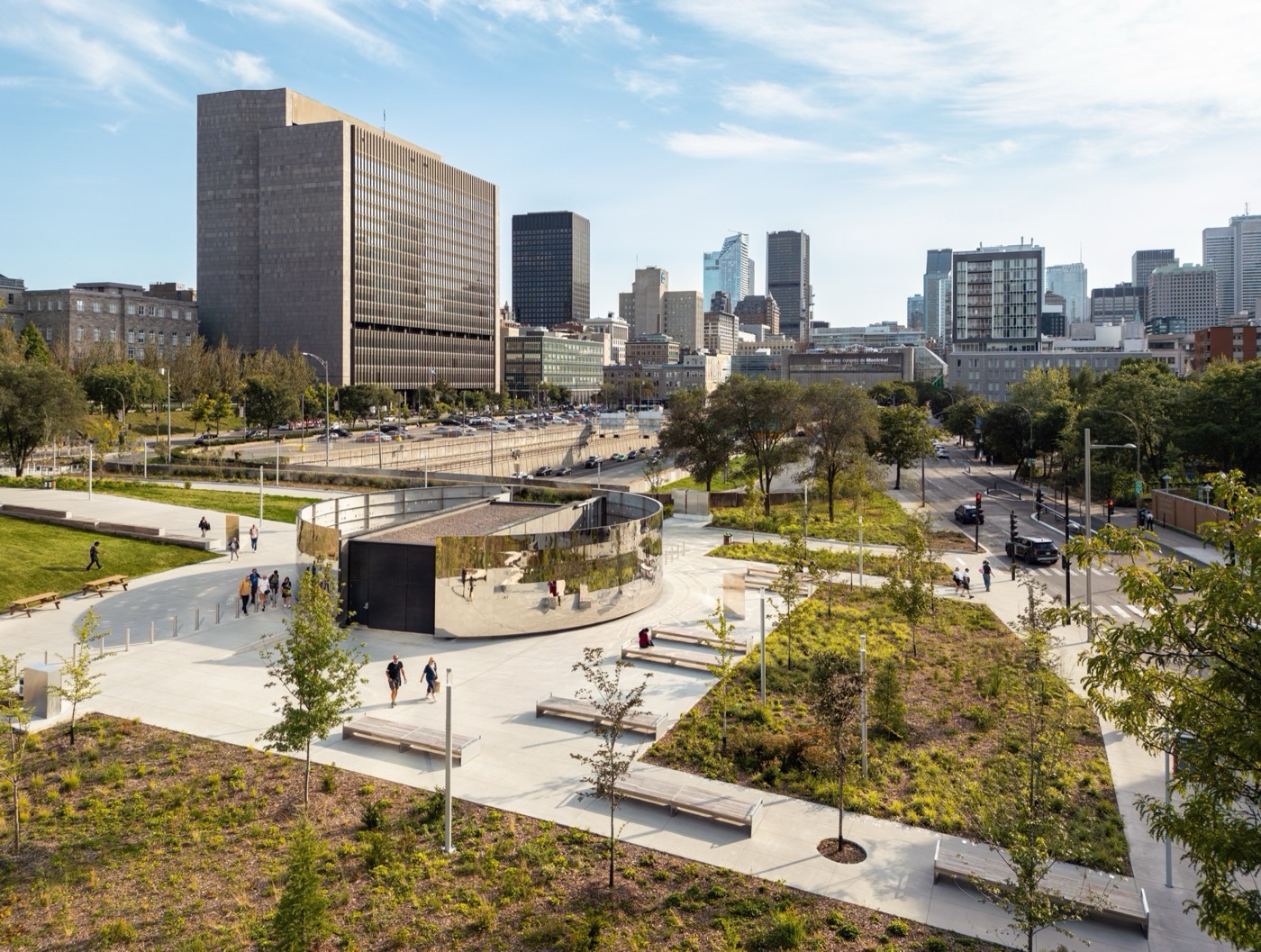
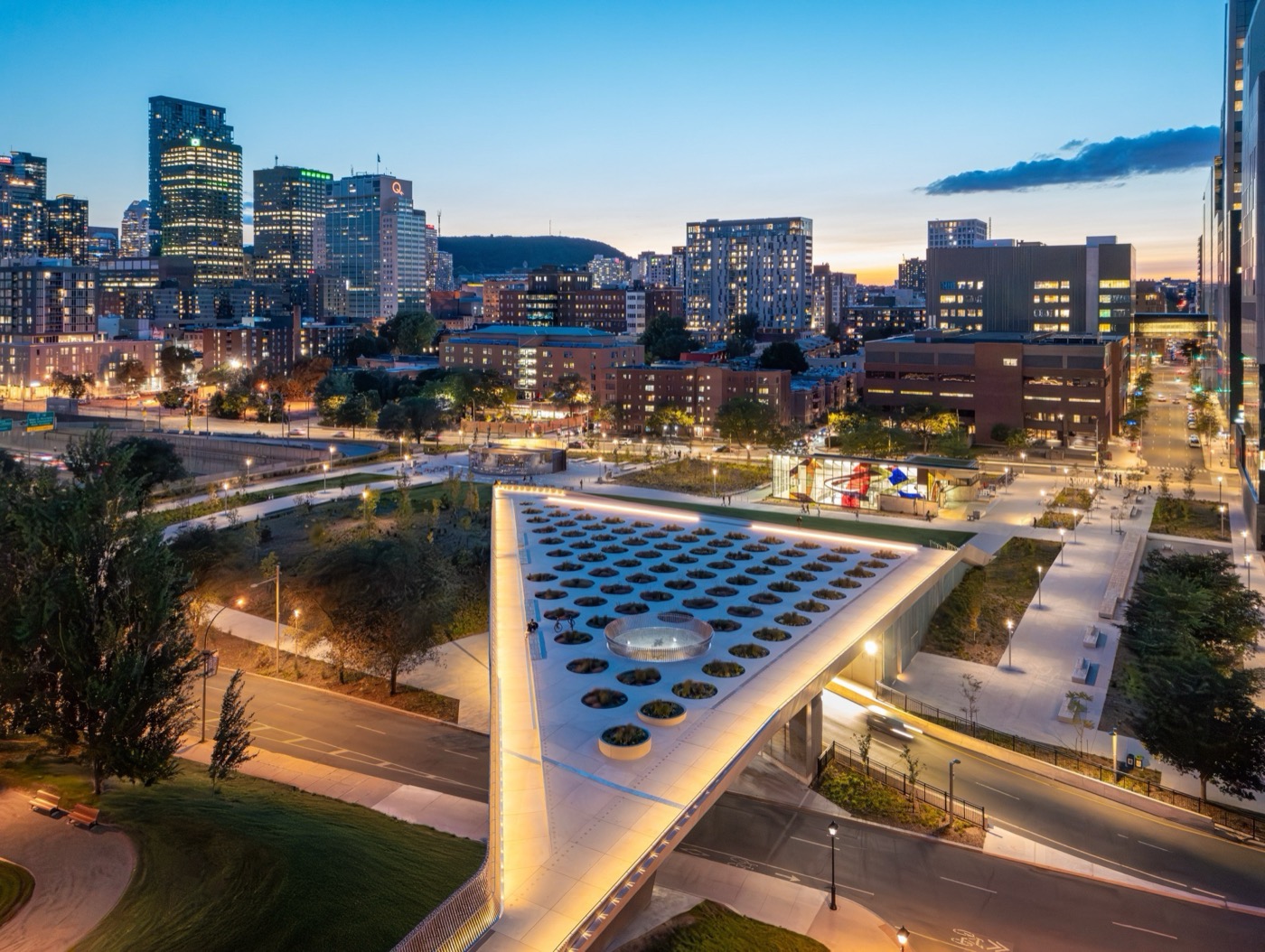
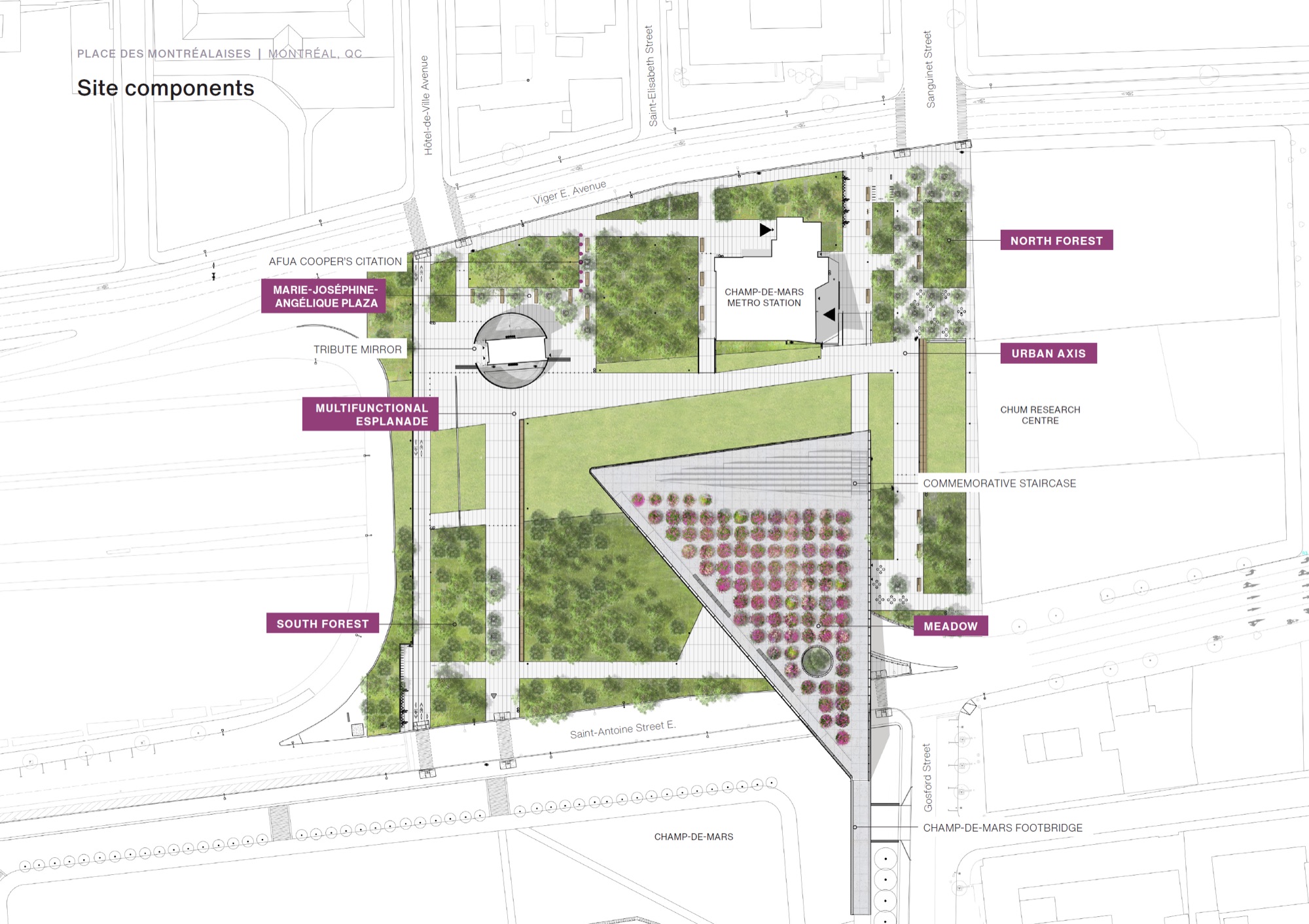
Place des Montréalaises is an urban landscape grand gesture that transforms a covered section of Montreal’s Ville-Marie Expressway into a connective civic space. Located at the critical hinge between Old Montreal and the downtown core, adjacent to City Hall and the Champ-de-Mars historic park, this project was commissioned by the City of Montreal as part of the major revitalization of the Champ-de-Mars Sector. Designed as a reclamation of infrastructure for commemorative placemaking and ecological longevity, it completes a sequence of public spaces above the expressway corridor and establishes the first universally accessible pedestrian link between the Champ-de-Mars metro station and Old Montreal, healing a scar left by decades of urban fragmentation.
Operating as an urban connector and a tribute honouring 21 Montreal women pioneers and victims, the project proposes a new model for what a memorial can be: a living topography in which remembrance unfolds through occupation, season, and use. It also acts as an apology within a broader narrative of memory and justice, acknowledging Marie-Josèphe-Angélique and the enslavement of Black people in Canada. This position emerged directly from an extensive public consultation process, in which citizens called for a space that would be democratic, inclusive, and woven into the rhythms of the city. The result is a 1.8-hectare public ground that holds commemoration, ecology, and urban infrastructure together as a single, inseparable civic act.
A calibrated landscape over active infrastructure
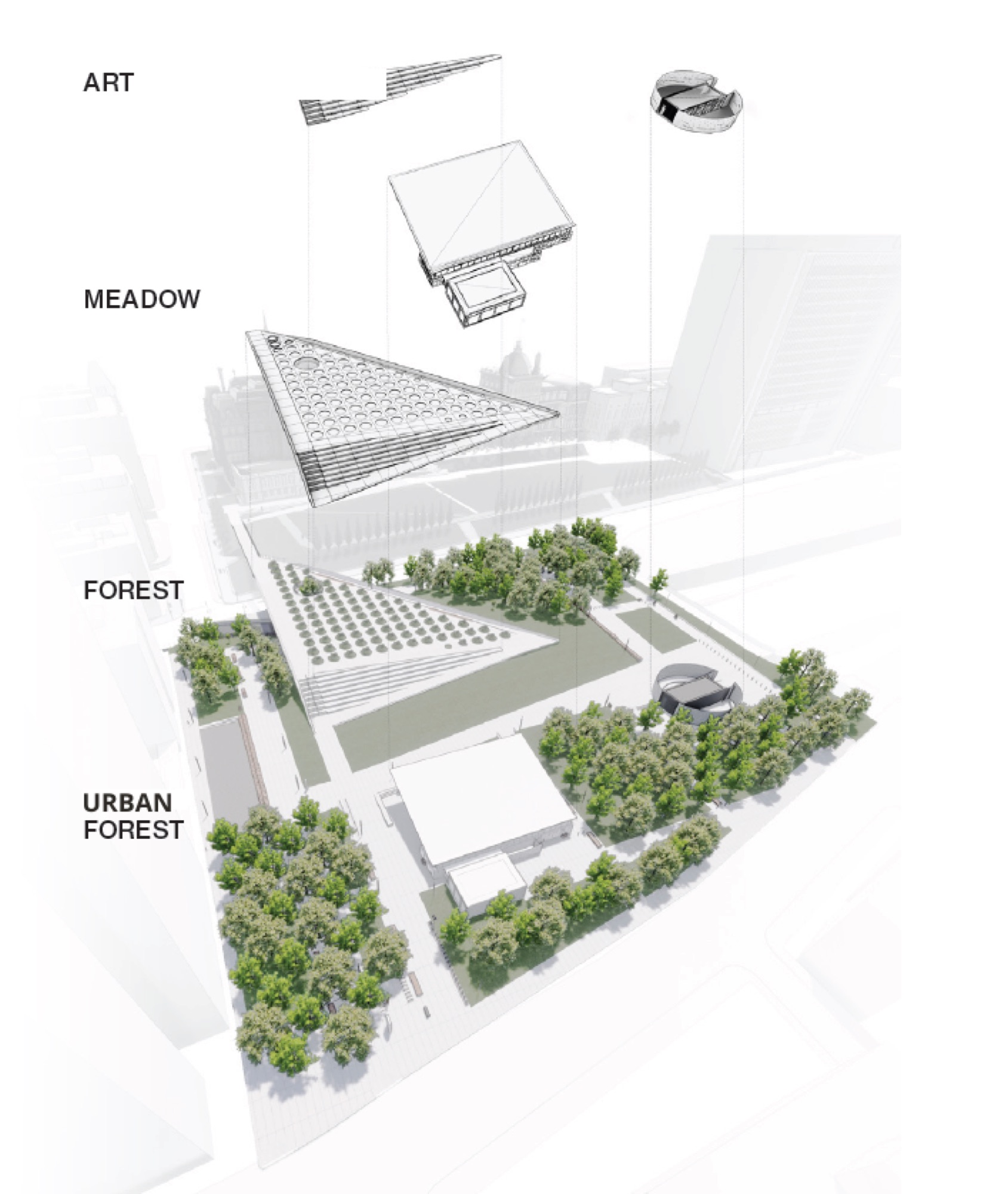
Built entirely over active highway lanes, metro tunnels, and dense underground utilities, the site imposed structural and spatial constraints. Soil depth, tree planting, and structural loading were subject to strict zone-by-zone limits determined by the underlying infrastructure. In response, the project deploys a calibrated, site-specific strategy in which vegetation was treated as essential infrastructure, subject to the same level of coordination and precision as structural and civil systems. The structural system employs a pre-stressed, post-tensioned concrete slab engineered to span this complex three-dimensional field of constraints. Soil volumes, rooting conditions, and species selection were refined zone by zone through microclimatic analyses and structural load assessments.
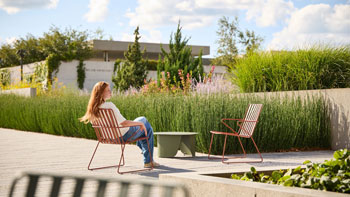
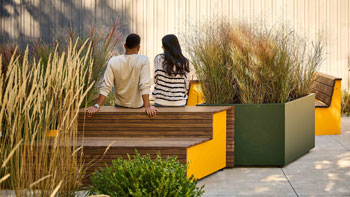
Areas capable of supporting deeper soil volumes were allocated to canopy trees and forested planting conditions, providing climatic benefits and long-term ecological value. More constrained zones received smaller-calibre plantings and adapted species groupings selected to ensure successful rooting environments despite severe limitations. Nearly 100 trees and tall grasses establish long-term canopy cover, while vegetated areas capture and filter rainwater, reinforcing the role of green infrastructure in climate adaptation within a dense urban core.
Three gestures, one landscape
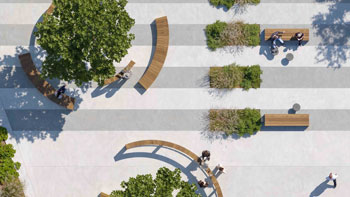
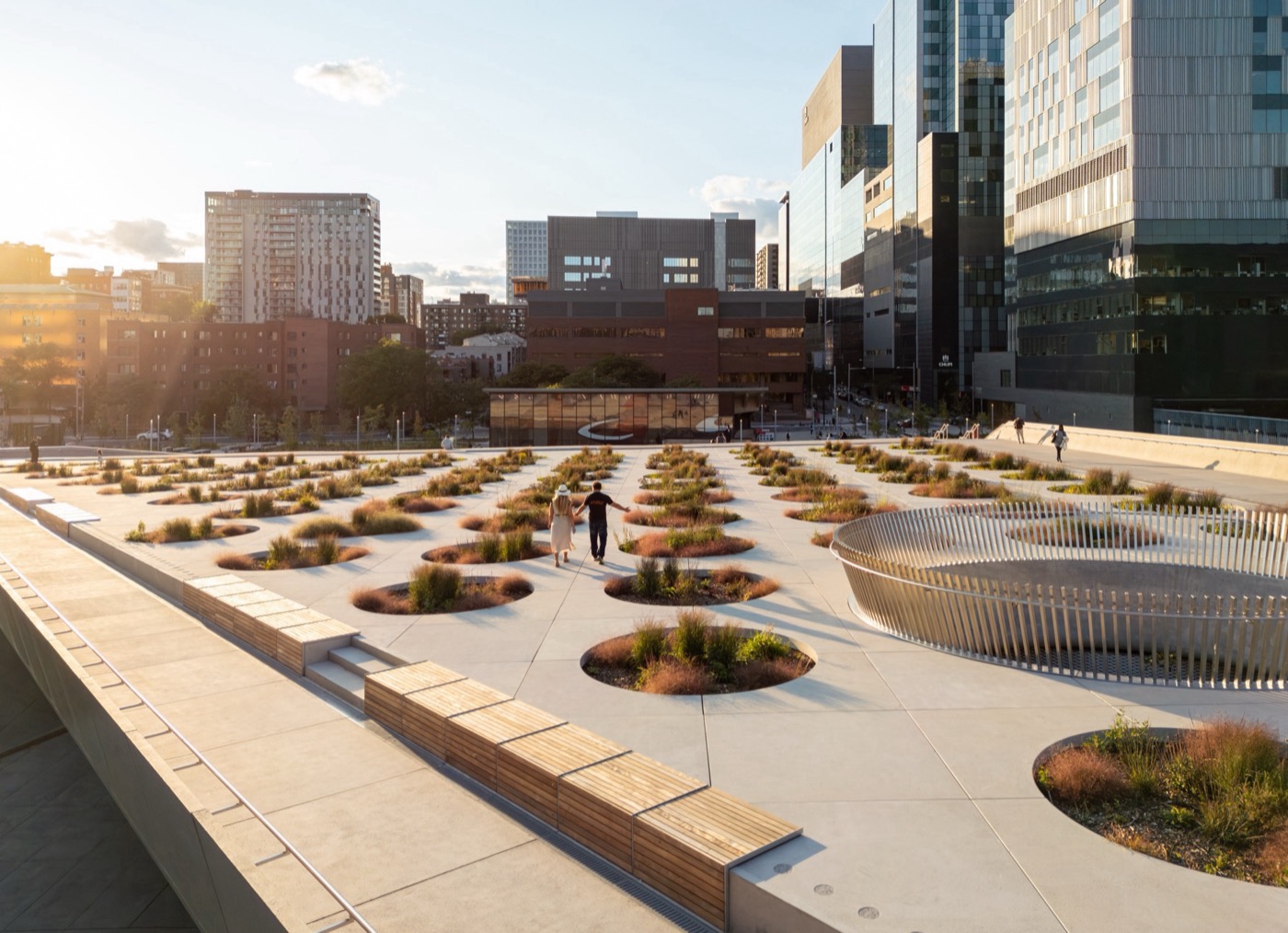
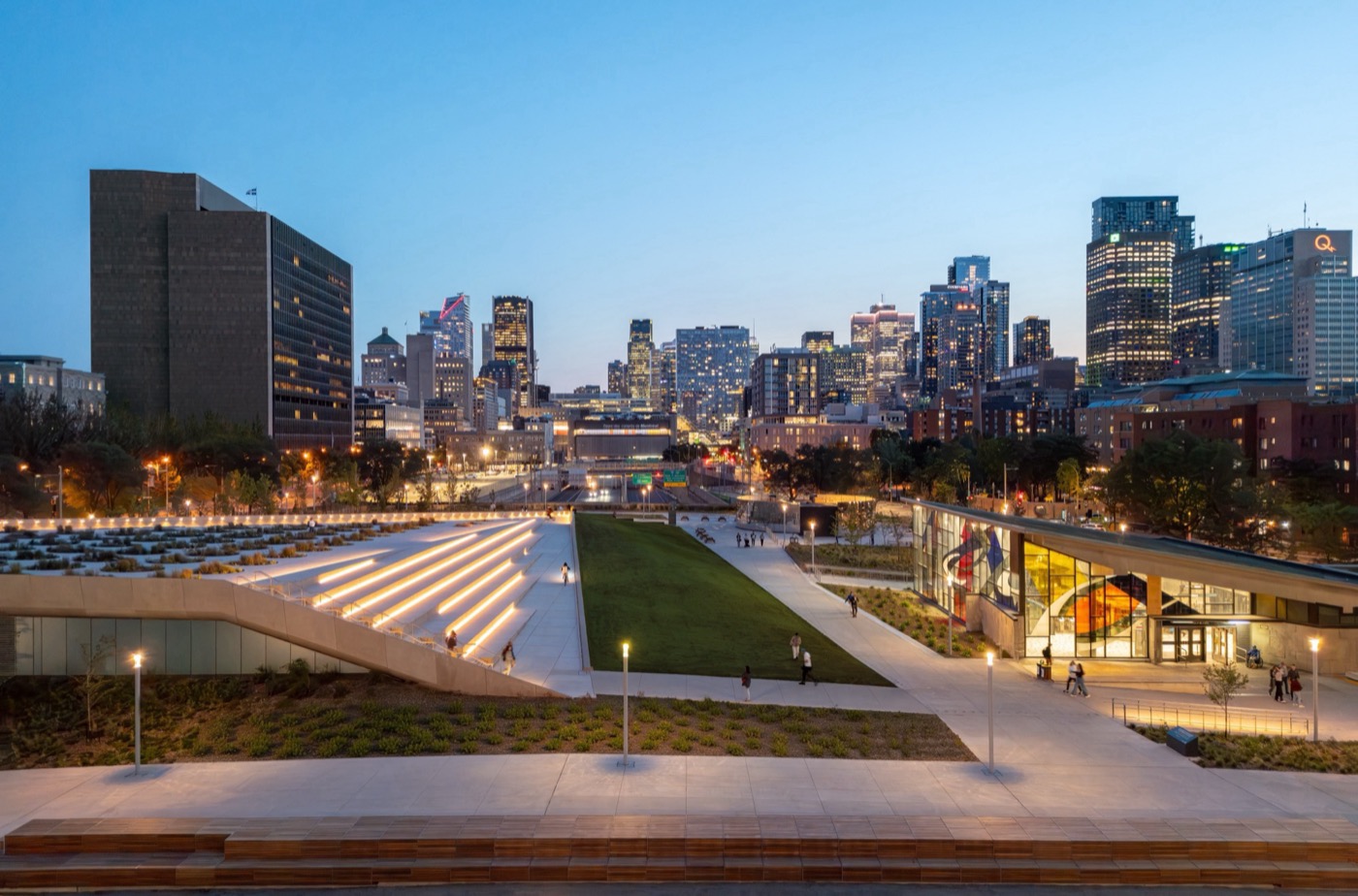
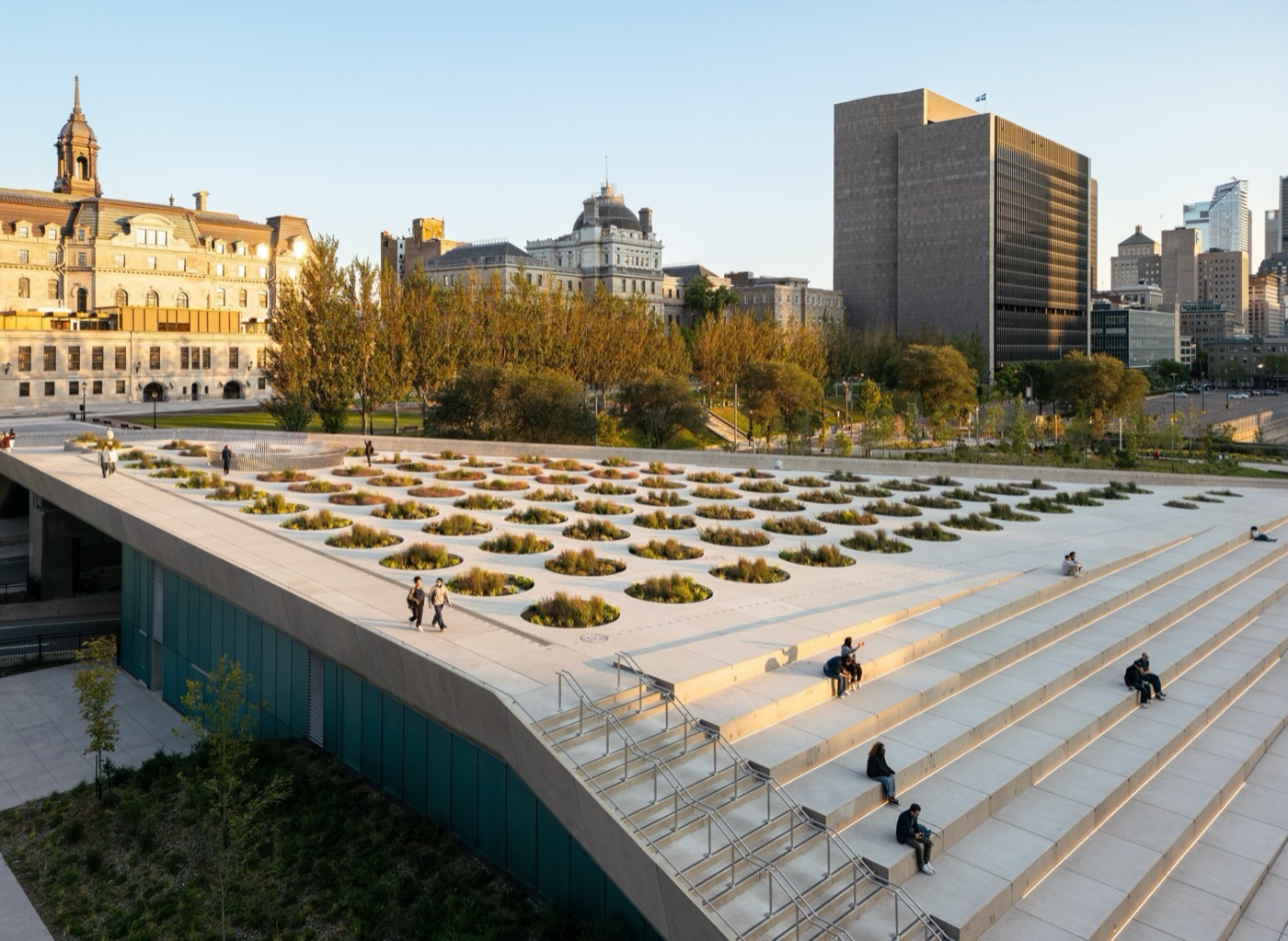
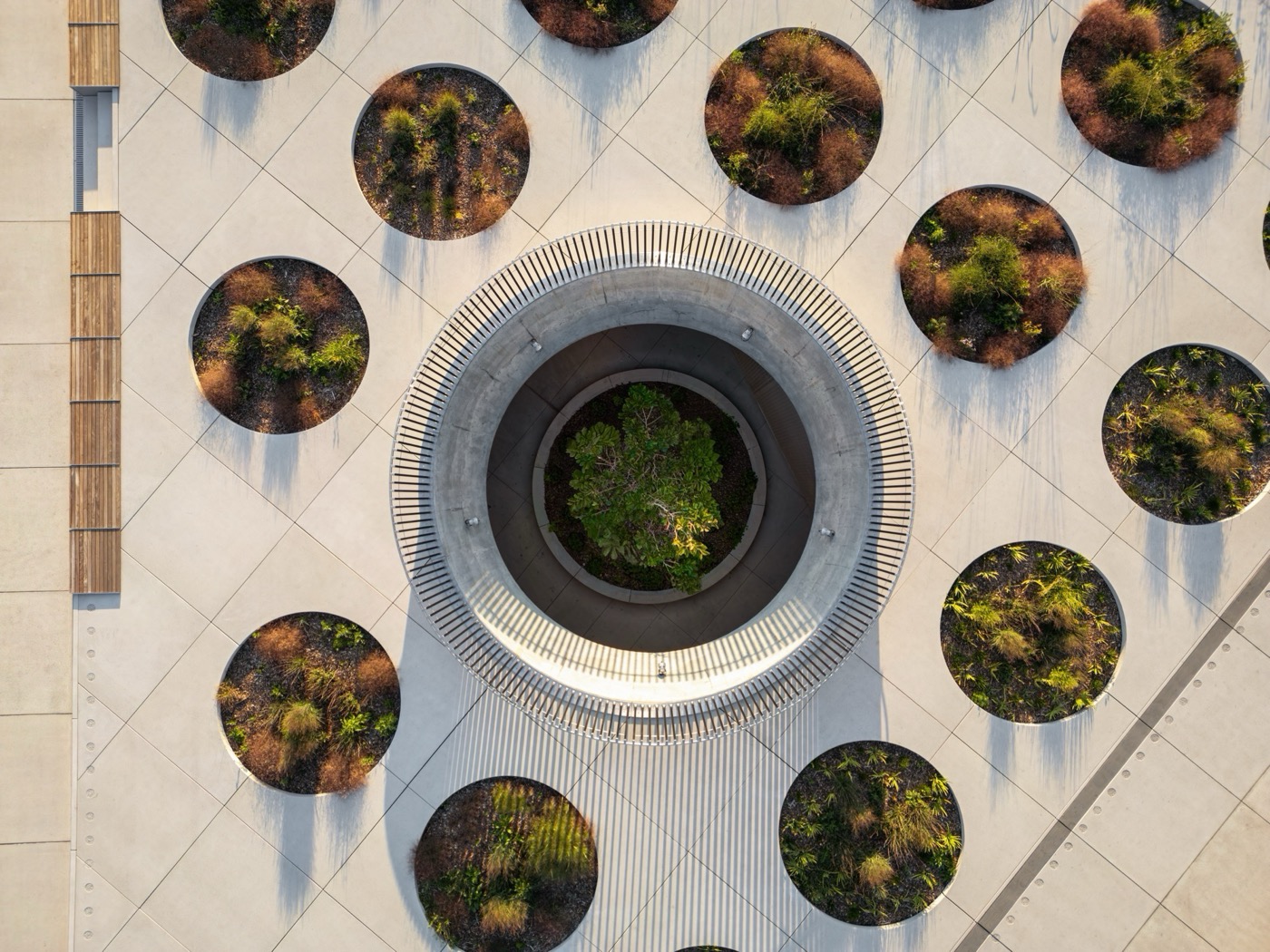
Three spatial gestures define the landscape. An inclined plane, functioning simultaneously as belvedere and promenade, links the upper and lower levels of the city. Its surface is perforated by 86 circular openings, each planted with indigenous perennial species, 21 varieties in total, one for each of the honoured women, selected to bloom sequentially across the calendar year. The result is a surface that transforms month by month, from the sparse geometric pattern of winter to the layered greens of spring, the full chromatic abundance of summer, and the amber tones of autumn. Commemoration here is not a fixed inscription but a seasonal phenomenon distributed across the entire landscape.
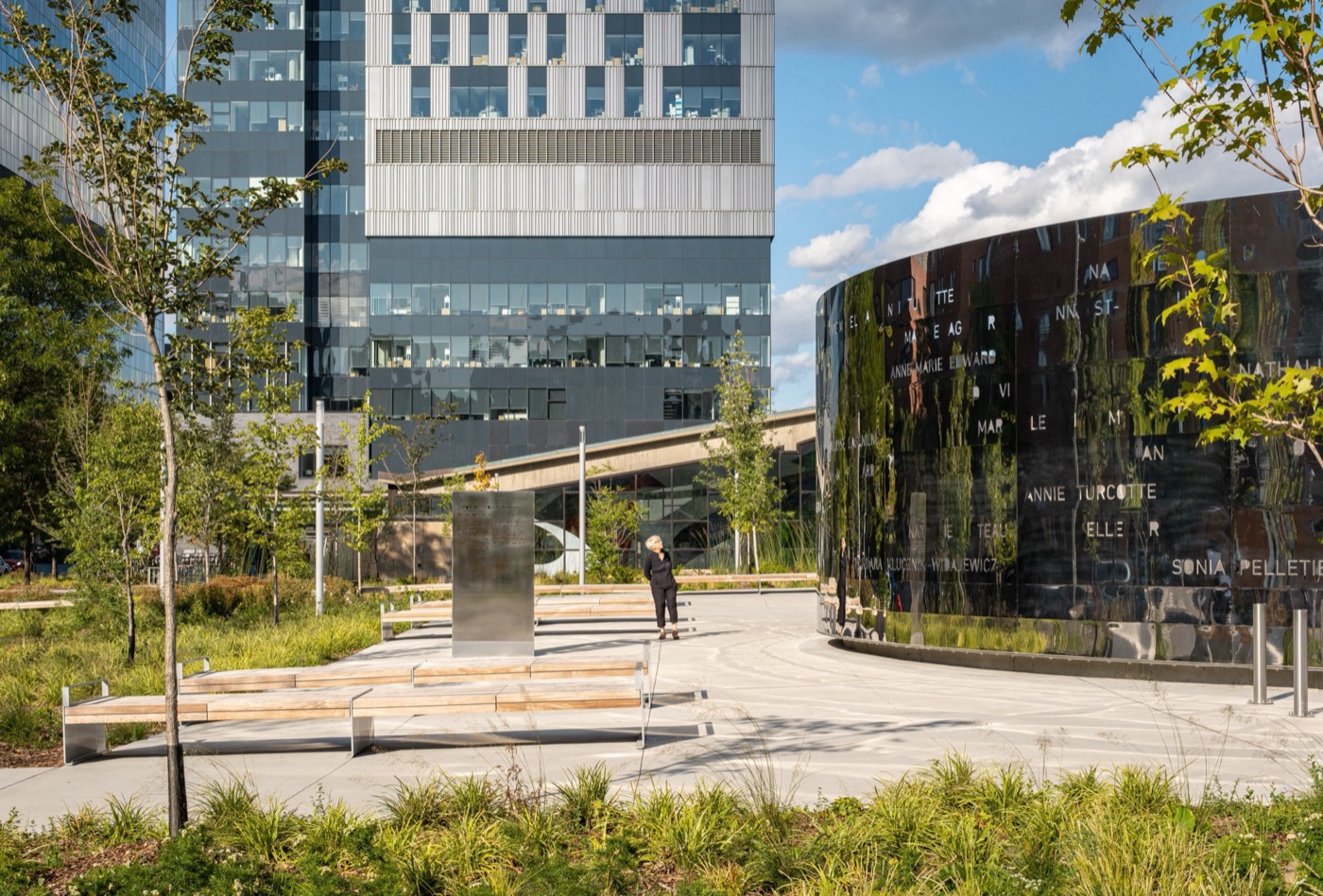
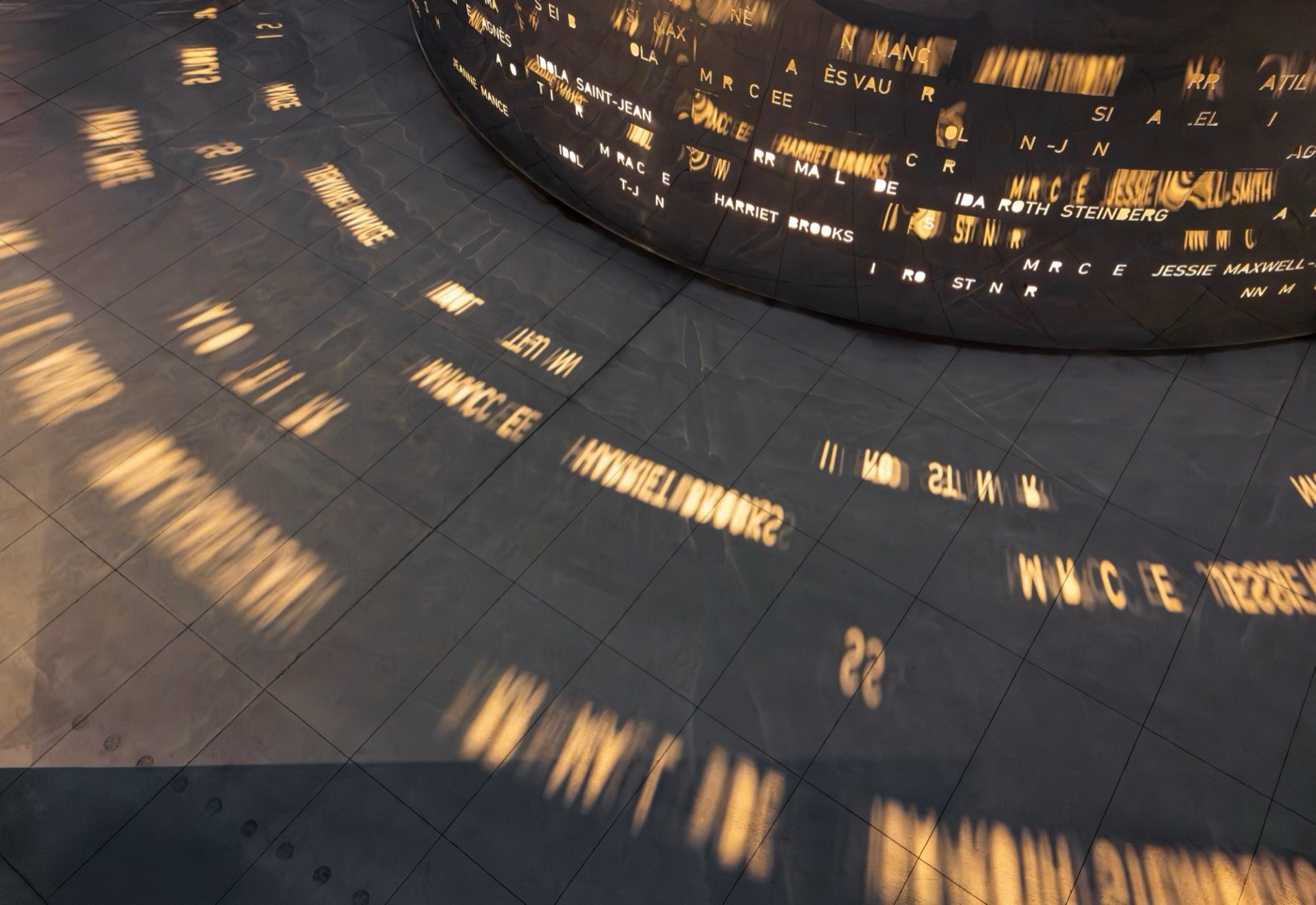
The Miroir des Montréalaises is a polished stainless-steel cylindrical shroud operating as an inverted cloister, open to the sky. Its reflective surface is laser-engraved with the names of 21 Montreal women, projecting letter-shadows across the ground plane and activating the paving with shifting light, time, and weather. The power of their fragmented names is a sculptural homage mirroring back the image of onlookers discovering this revealed story.
A commemorative staircase completes the composition. Engraved with letterforms extracted from the mirror, the monumental stairs create a topographic dialogue between the meadow above and the esplanade below, functioning simultaneously as threshold, gathering space, and civic belvedere.
Client and project manager: City of Montreal
Architecture and landscape architecture: Lemay
Artist and project partner: Angela Silver
Structural engineering: AtkinsRéalis and ELEMA experts-conseils
Civil/Mechanical/Electrical engineering: AtkinsRéalis Contractor: Construction Génix
Site supervisor: EXP
Lighting: Ombrage
Planting strategy: Lemay and Isabelle Dupras
https://maps.app.goo.gl/P7nqNscmiaCeRJSD6
74273


LILA 2026 Sponsor