Anwebiiwining
architecture49.com/en/
2026 Campuses and Corporate / 2026 Landscape and Architecture / Canada / Built in 2024 /

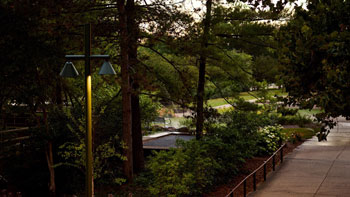
Outside Confederation College’s brick walls lies a quiet, wooded place called Anwebiiwining–“a place where one rests.” Two hundred years after European settlers colonized Anemki Wajiw (Thunder Bay), the College is initiating an Indigenous‑led vision that embraces traditional teachings and land‑based learning, with Anwebiiwining acting as the catalyst for transformation.
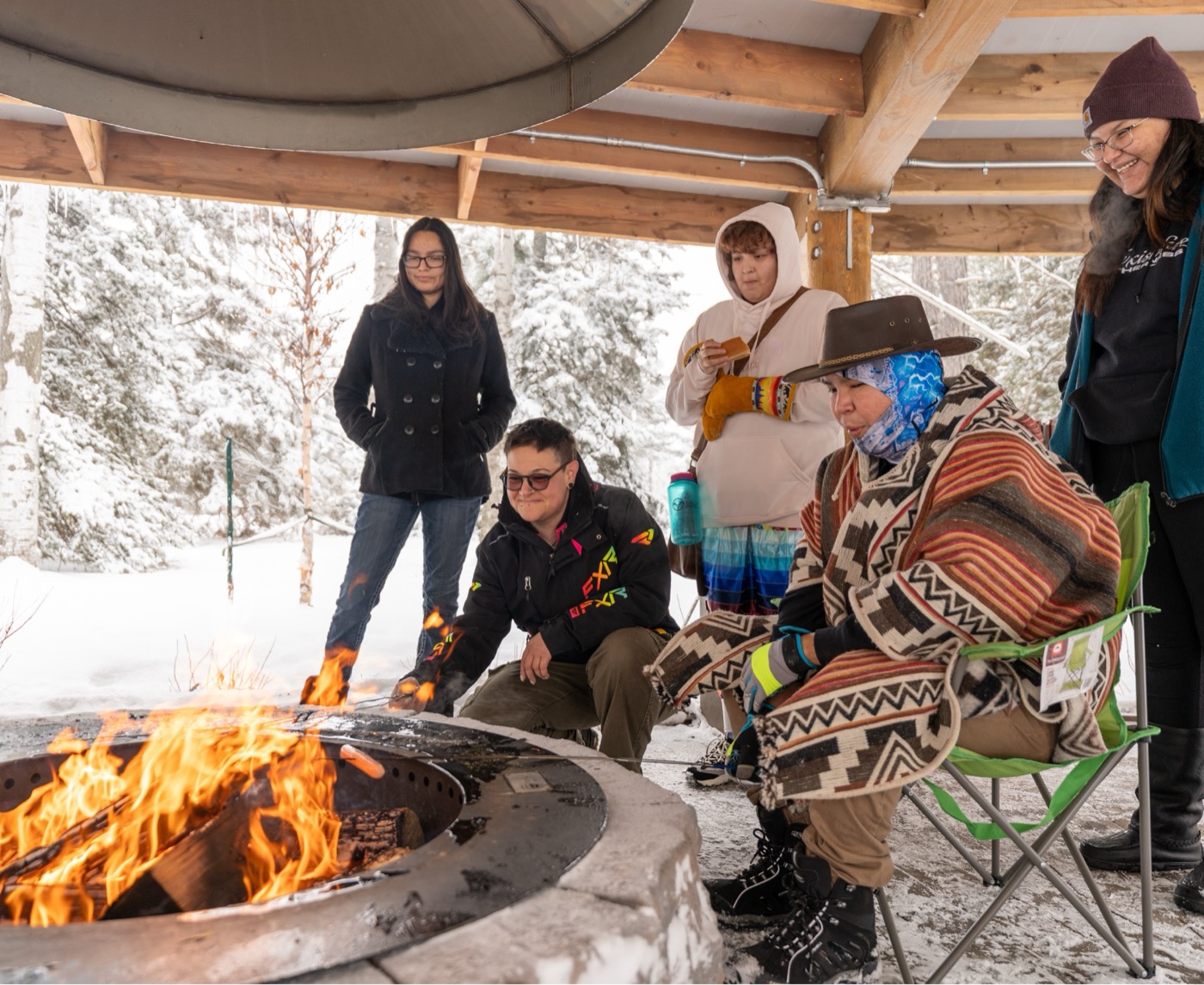
The College’s existing firepit supported smudging and teachings for small groups, but its location within a poorly draining floodplain limited access for Elders and mobility‑reduced users, and unfavourable weather often disrupted events. A sunken plaza with a brick colonnade could host large gatherings, but it lacked comfortable amenities and felt “colonial” and unwelcoming to Indigenous users. Accessibility, all‑season comfort, and Indigenous values were therefore identified as key design principles.
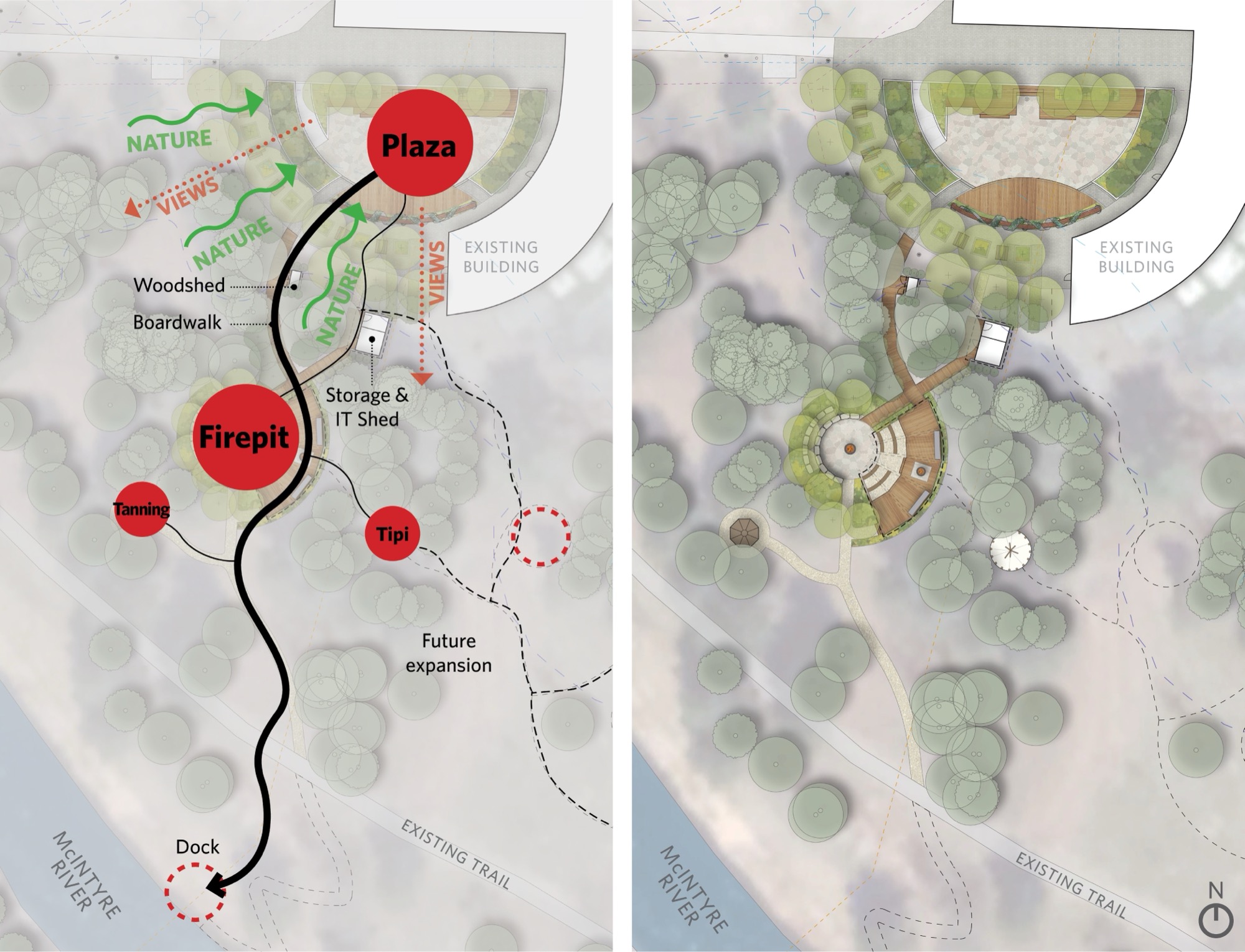
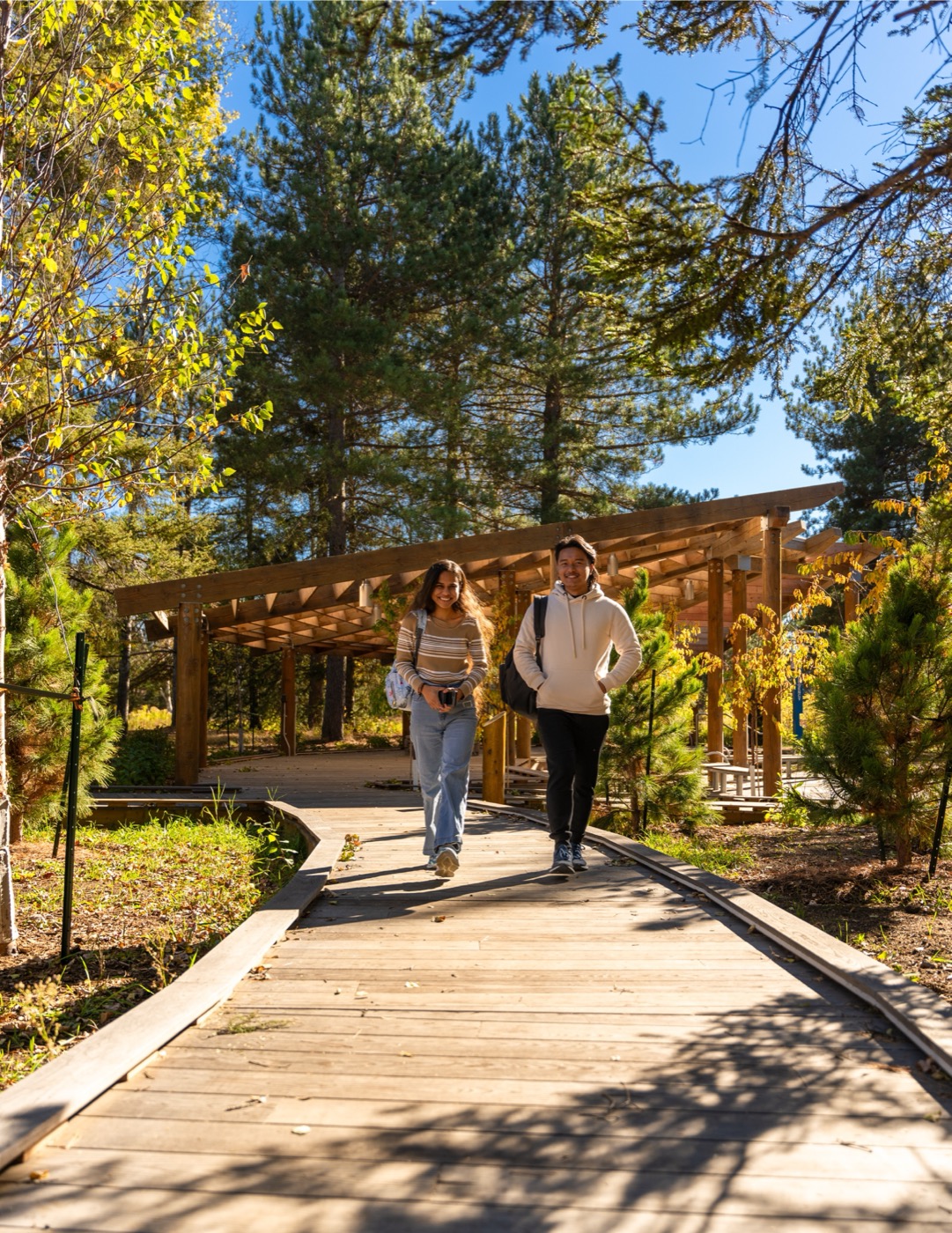
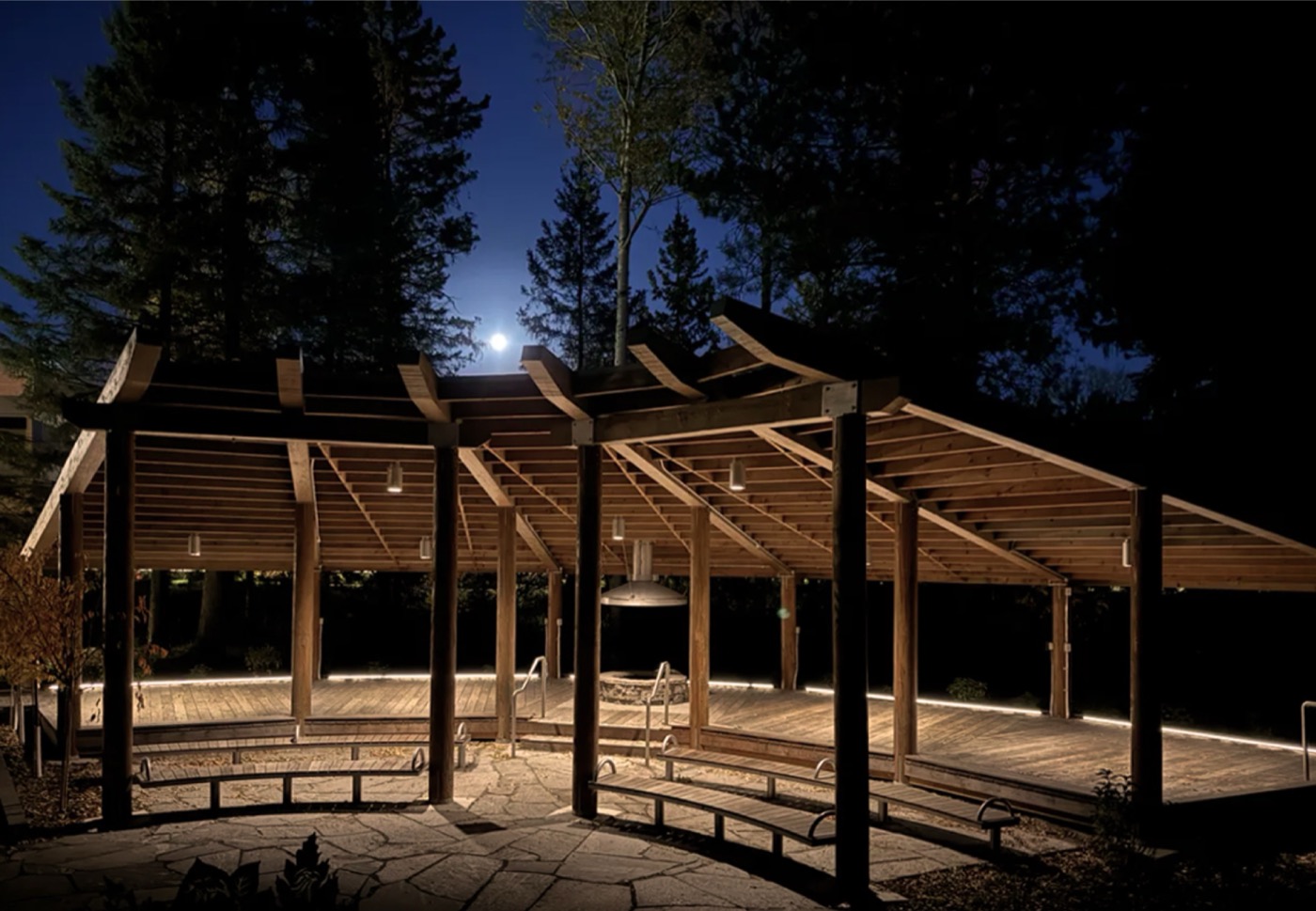
Developed with staff, students, and Indigenous community members, the masterplan highlights the journey to the river, reinforcing the cultural and natural significance of water. The plaza and firepit serve as gathering nodes along the way. Like a river, a continuous, accessible boardwalk meanders from the plaza to the shoreline. Its innovative design incorporates subtle strip lighting within the edge guard, sustainably sourced thermally treated ash, and dimensions that accommodate snow clearing. The existing gazebo was repurposed for hide tanning, and a new IT/storage shed supports events and broadcasting for remote communities. The forest, deeply valued by the community, was preserved by protecting existing trees, minimizing grading, and elevating the boardwalk on helical piles to preserve the forest’s sensitive soil structure, drainage patterns, and root systems.
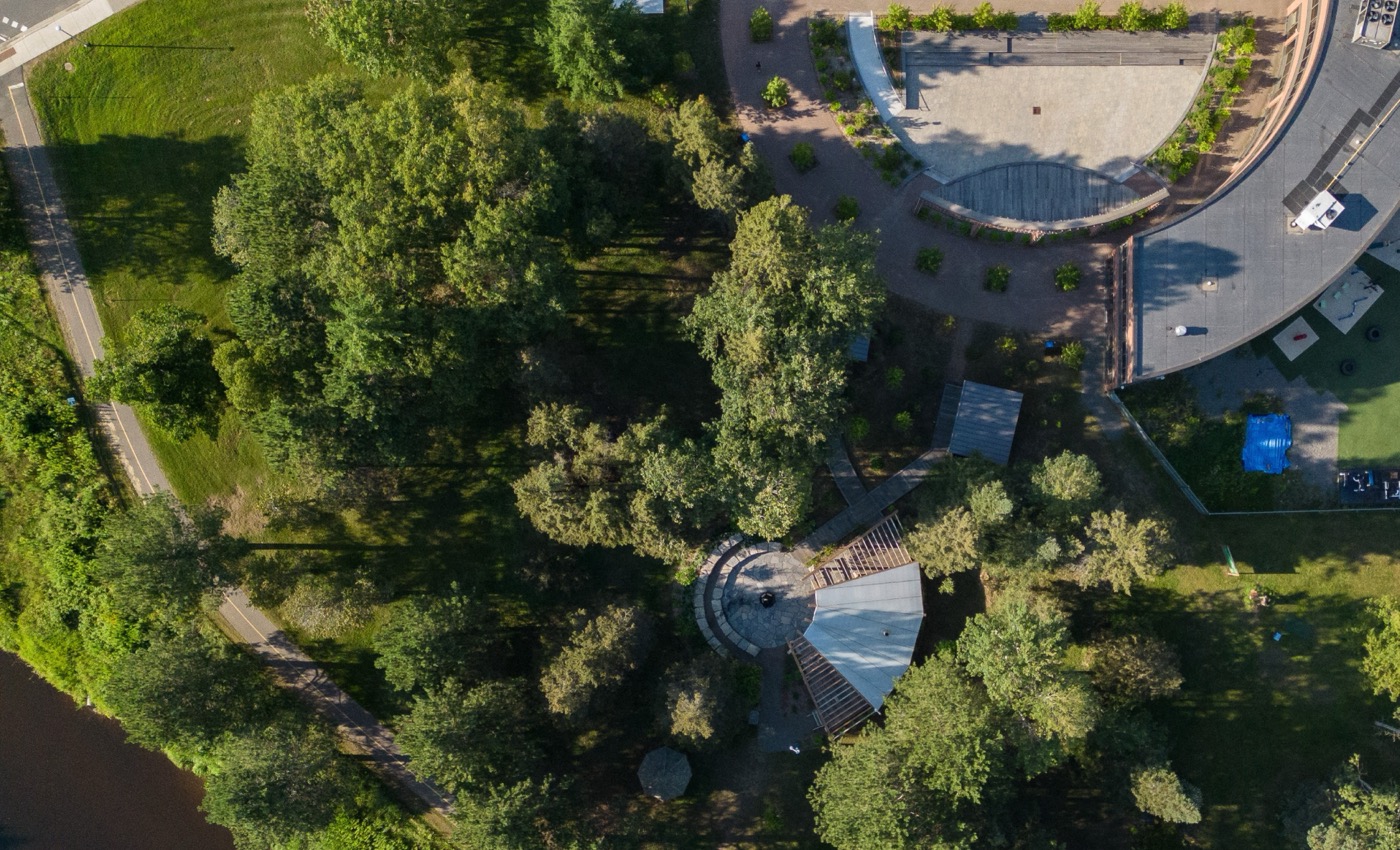
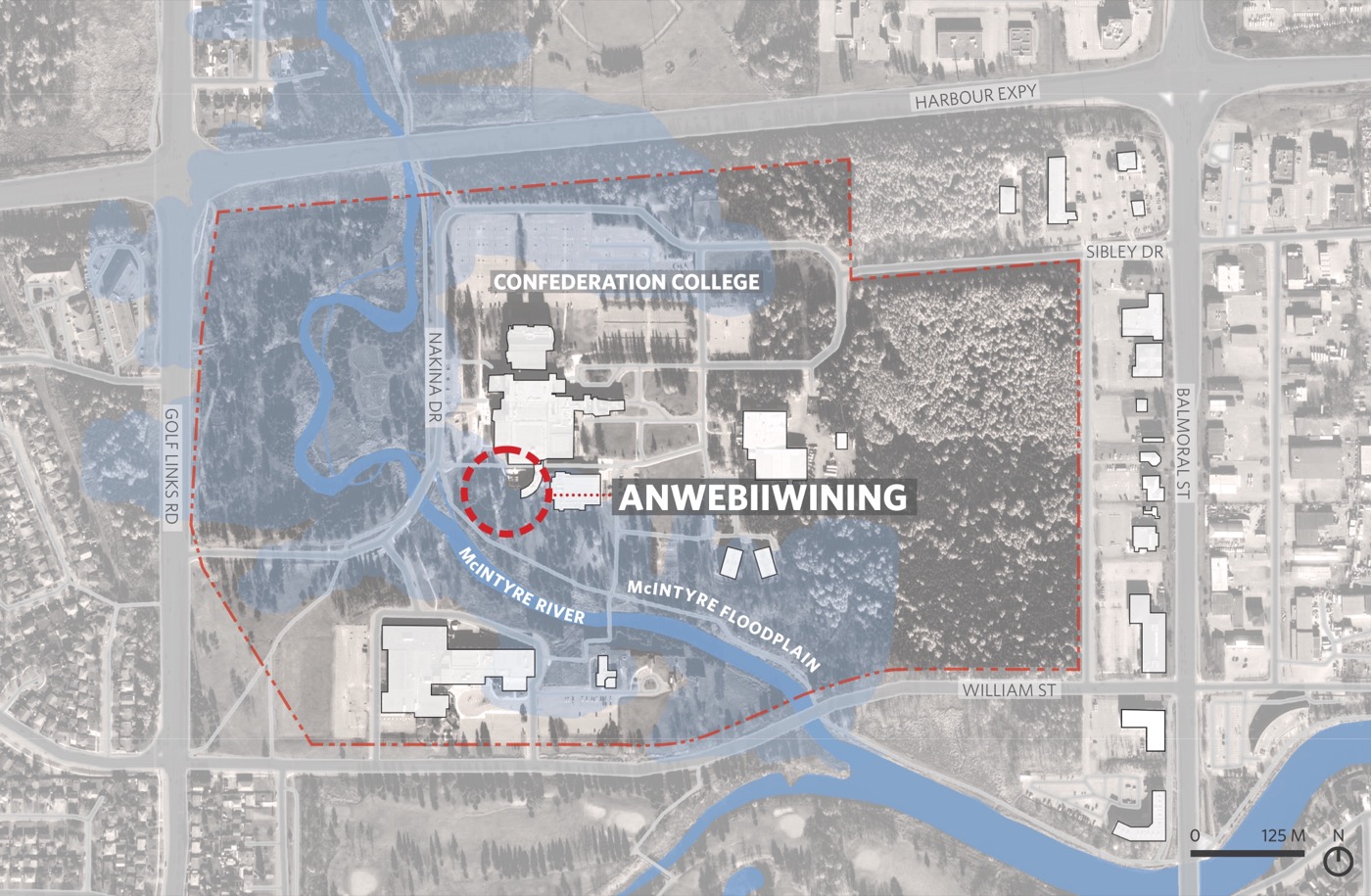
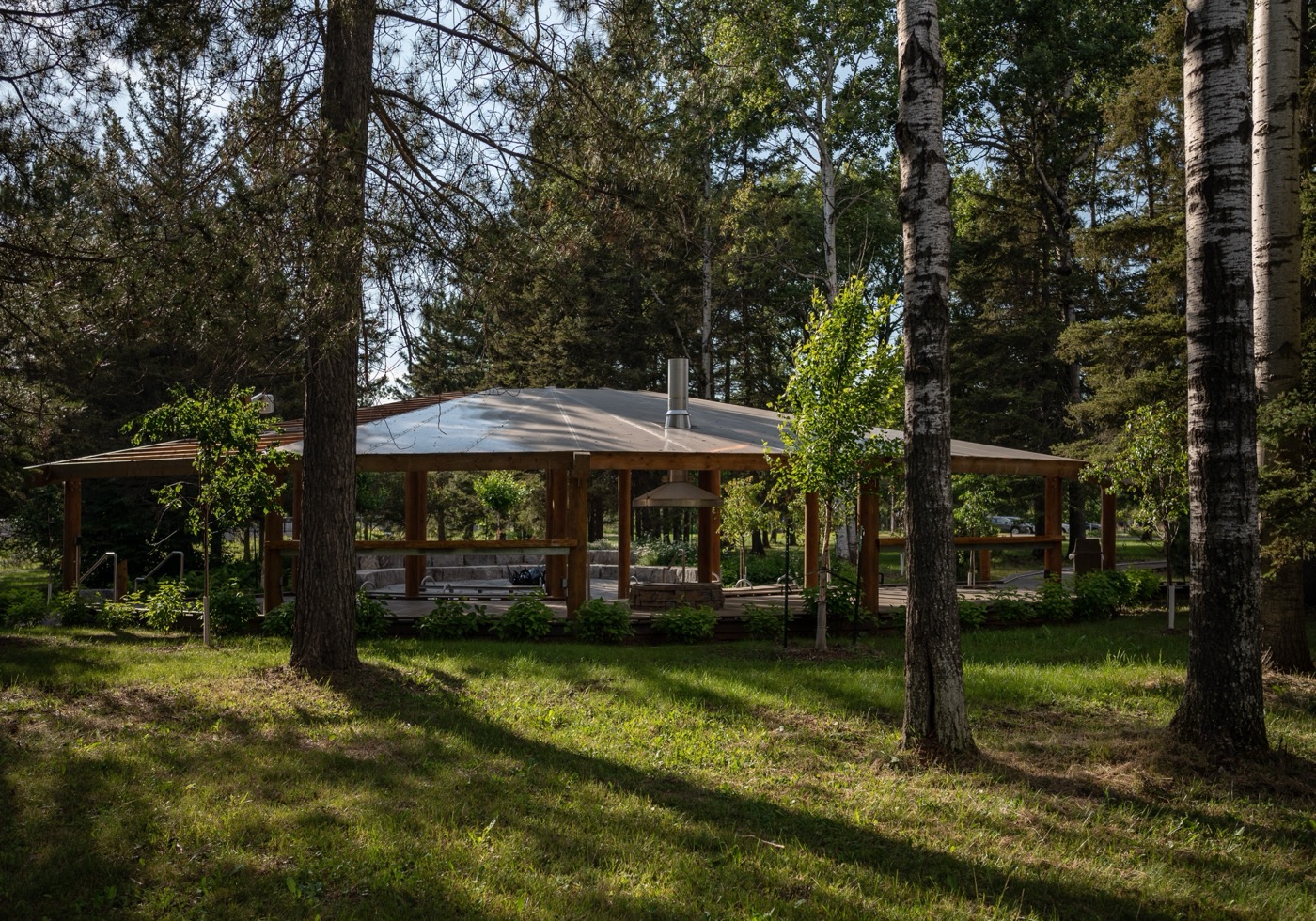
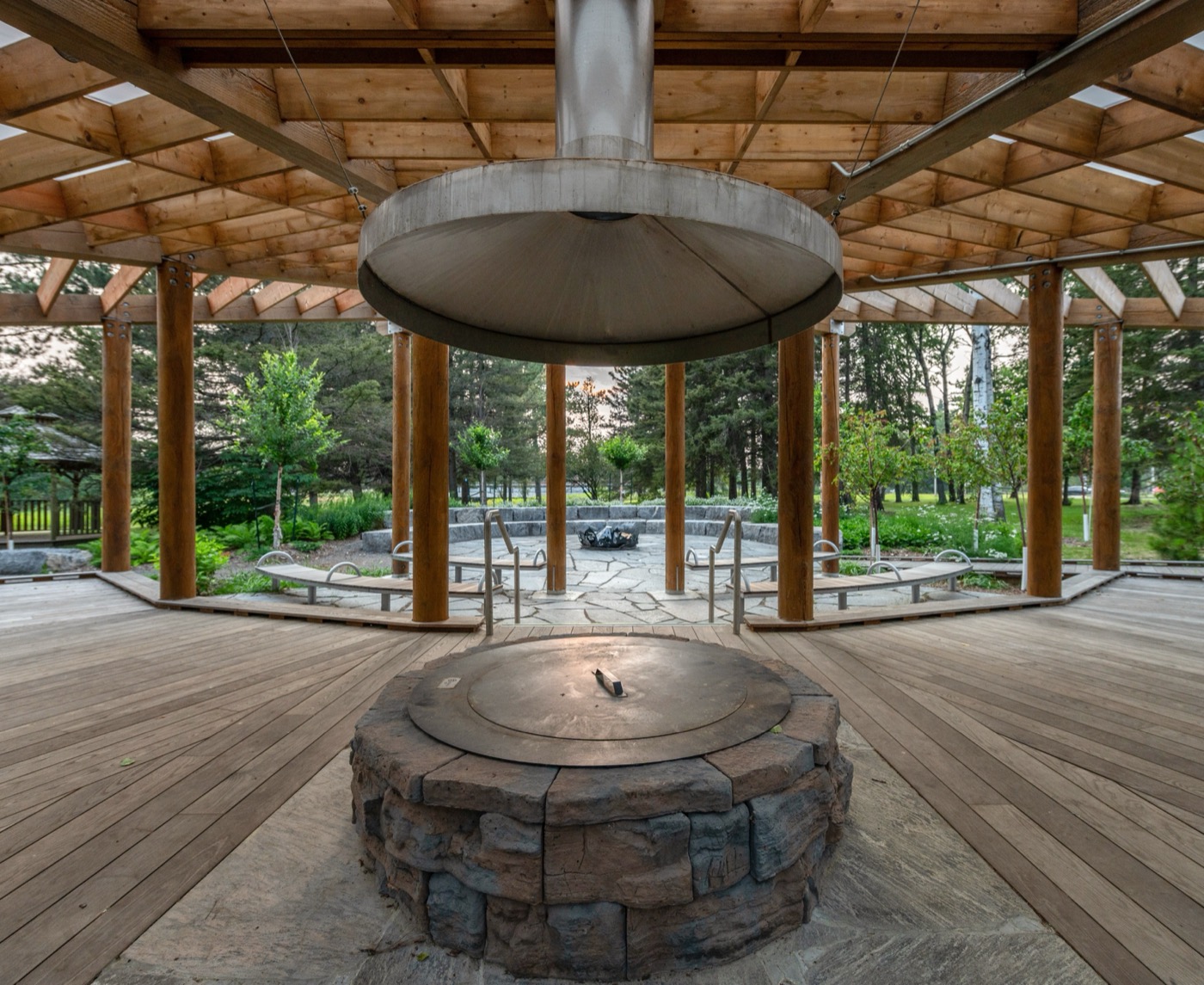
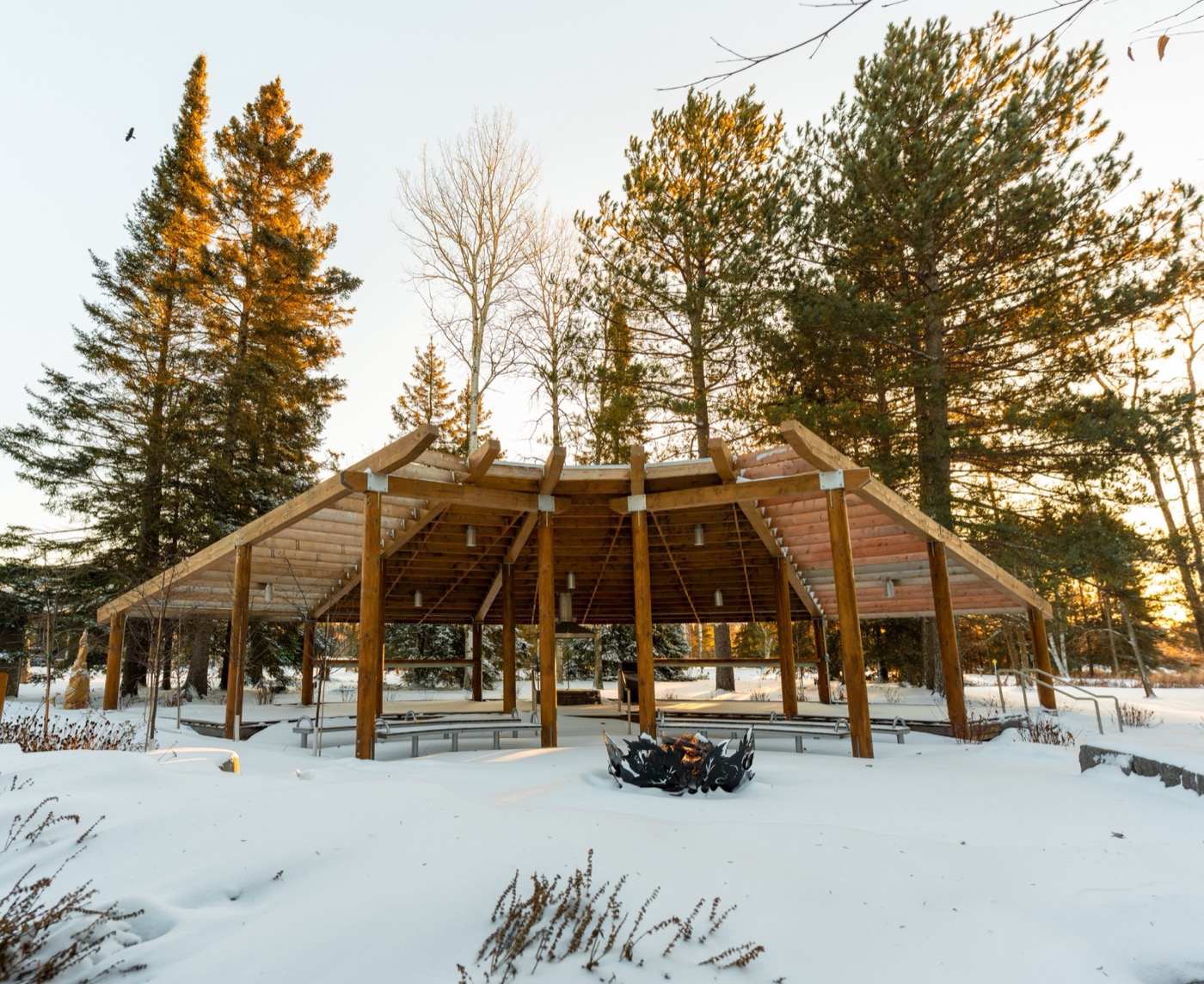
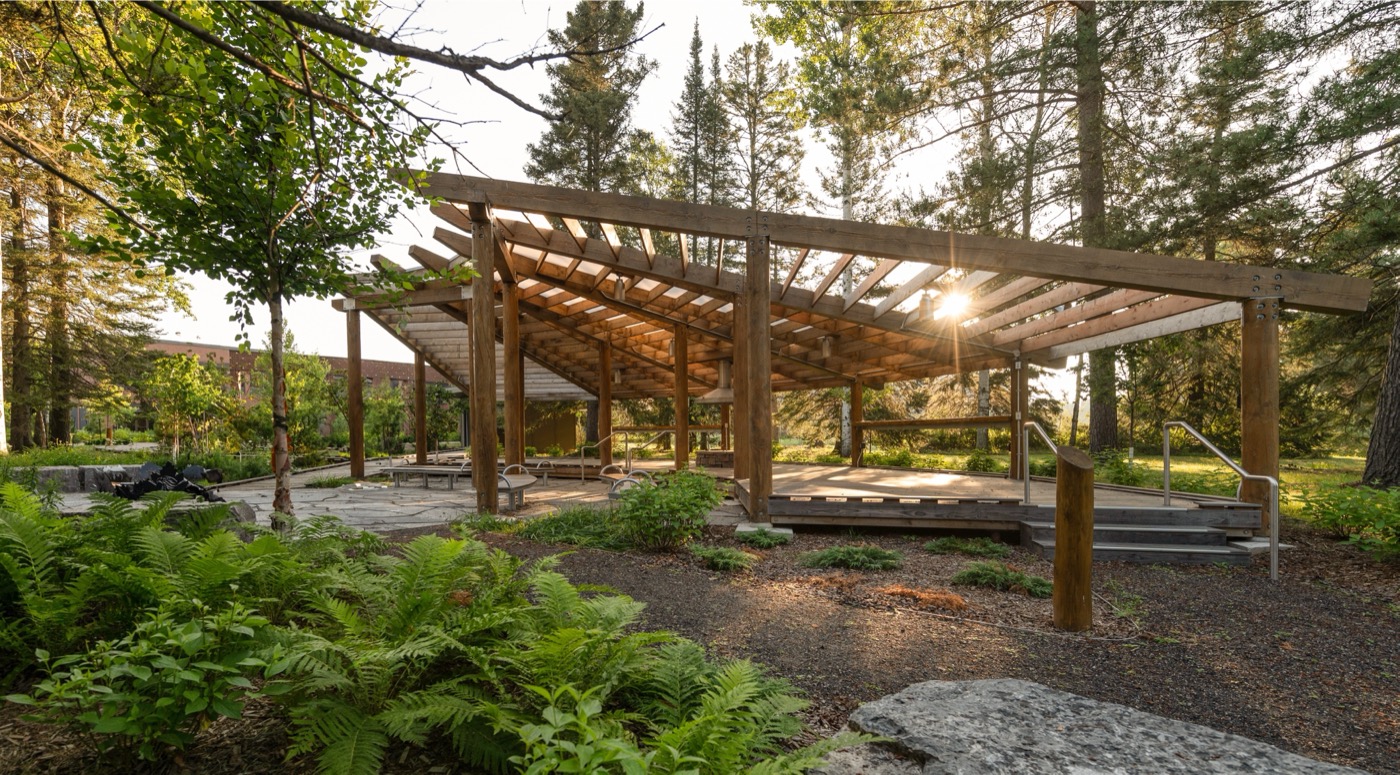
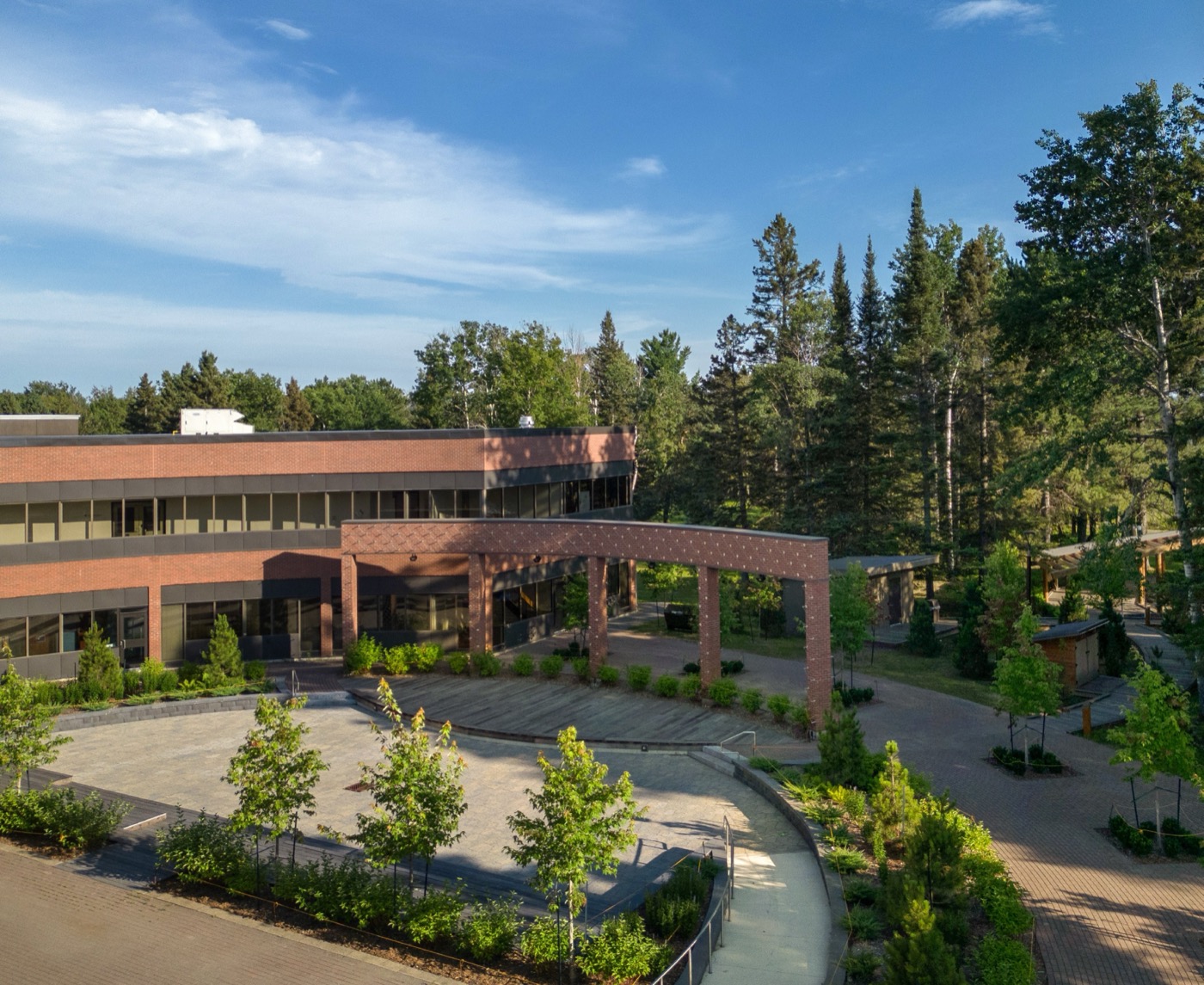
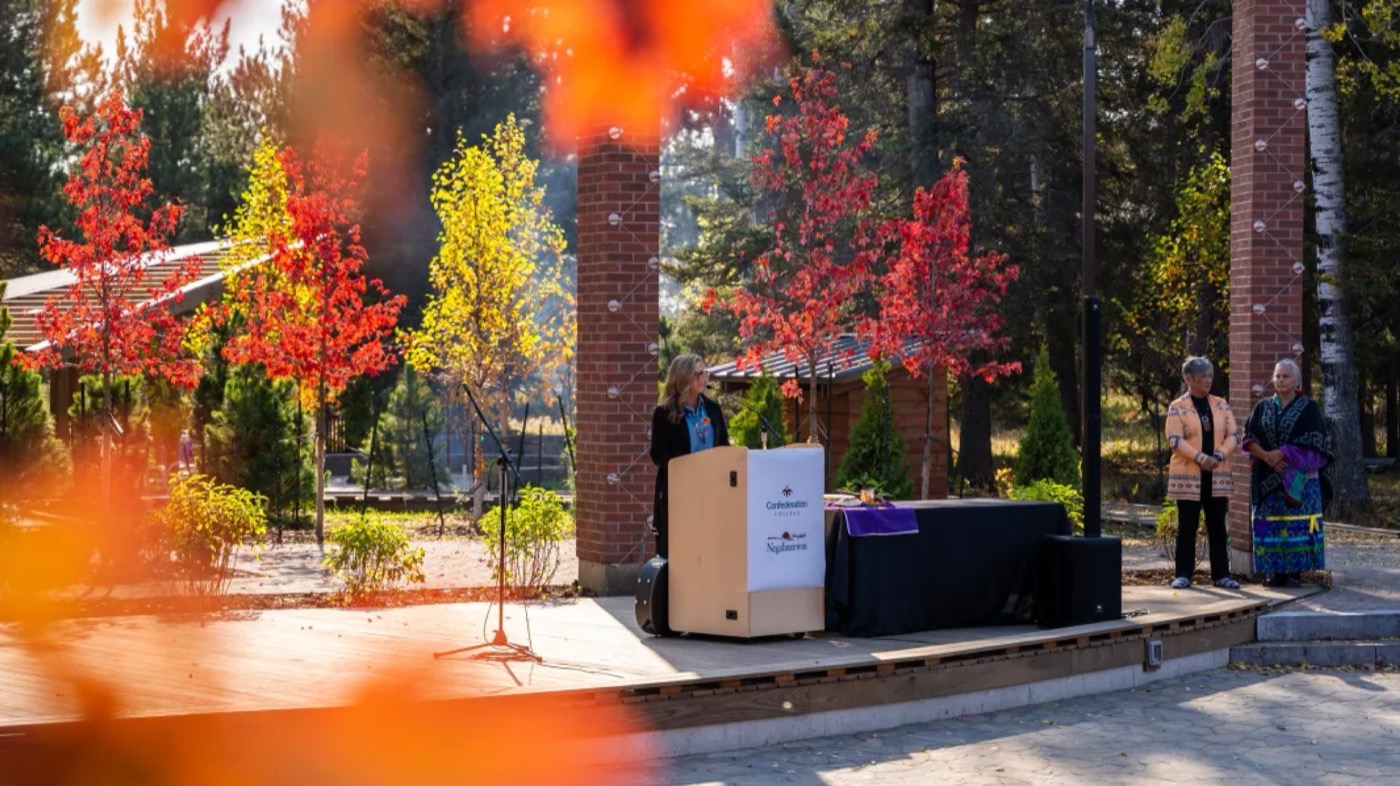
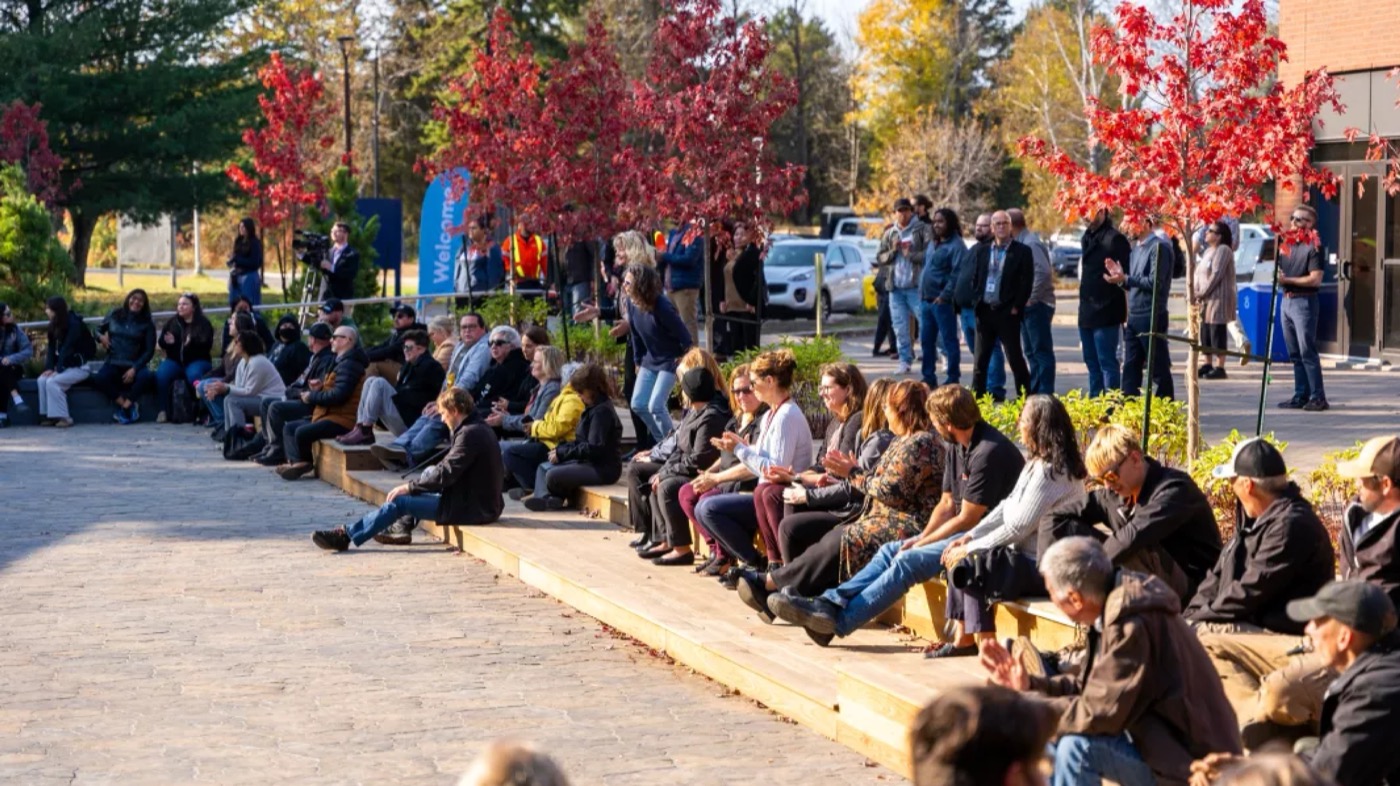
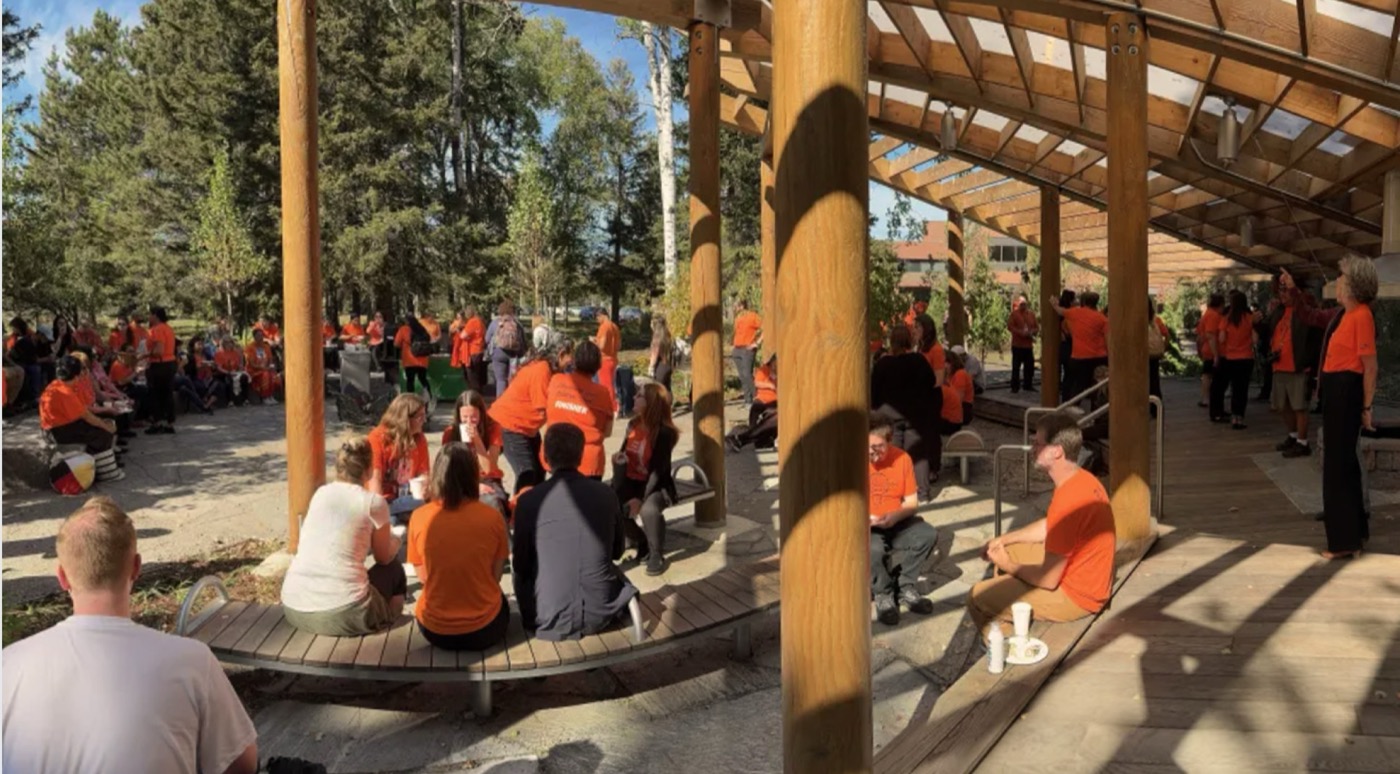
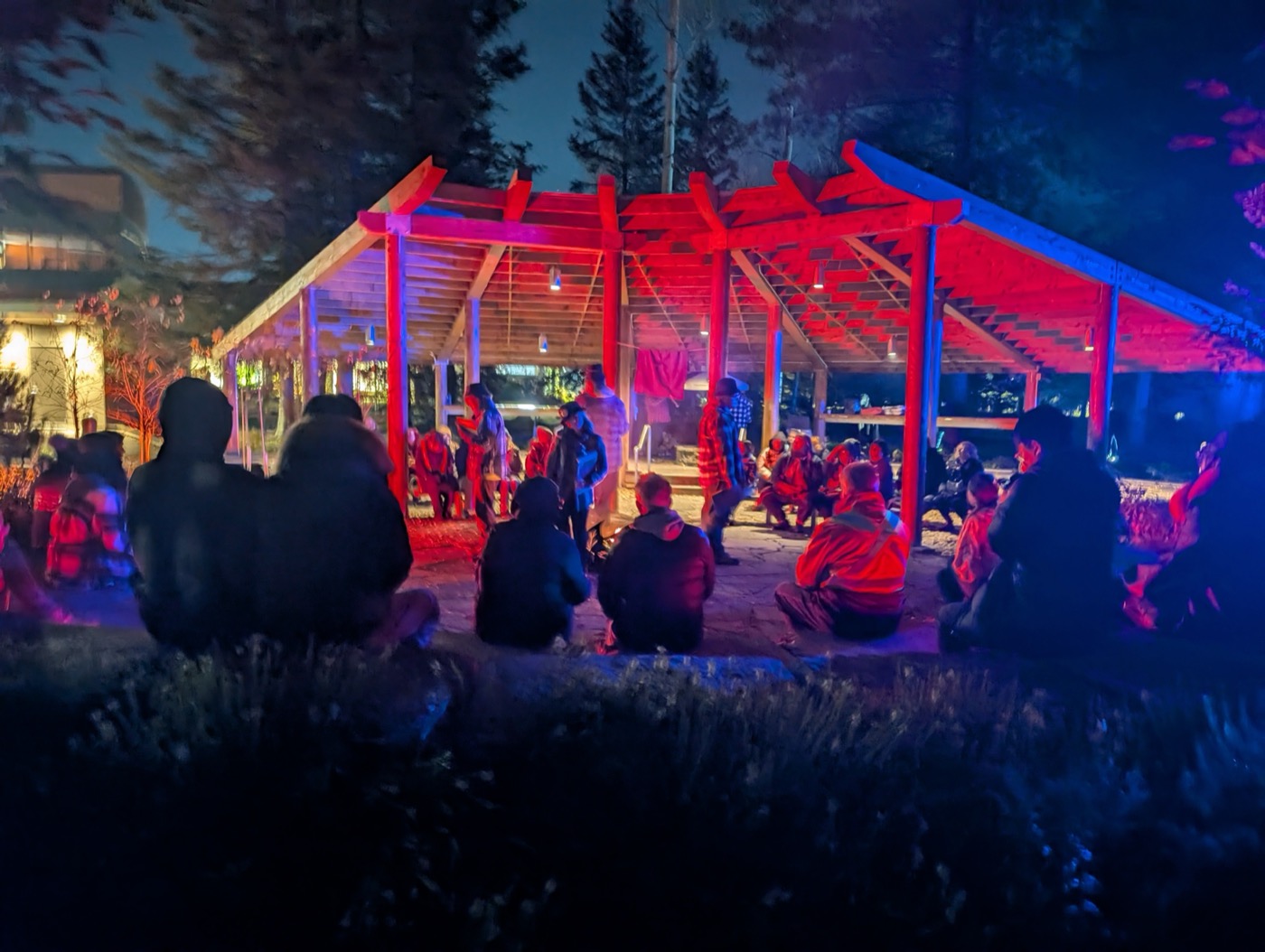
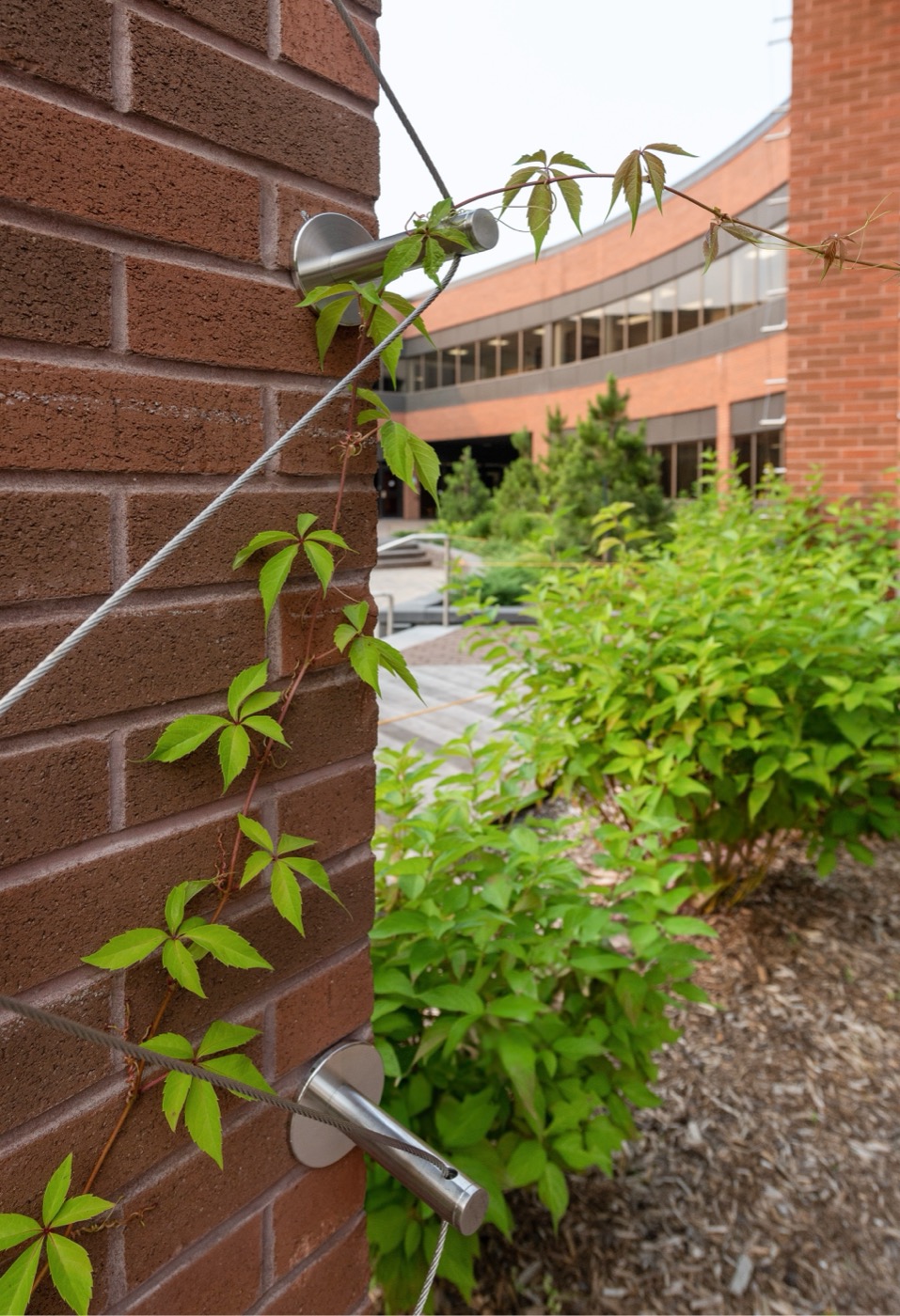
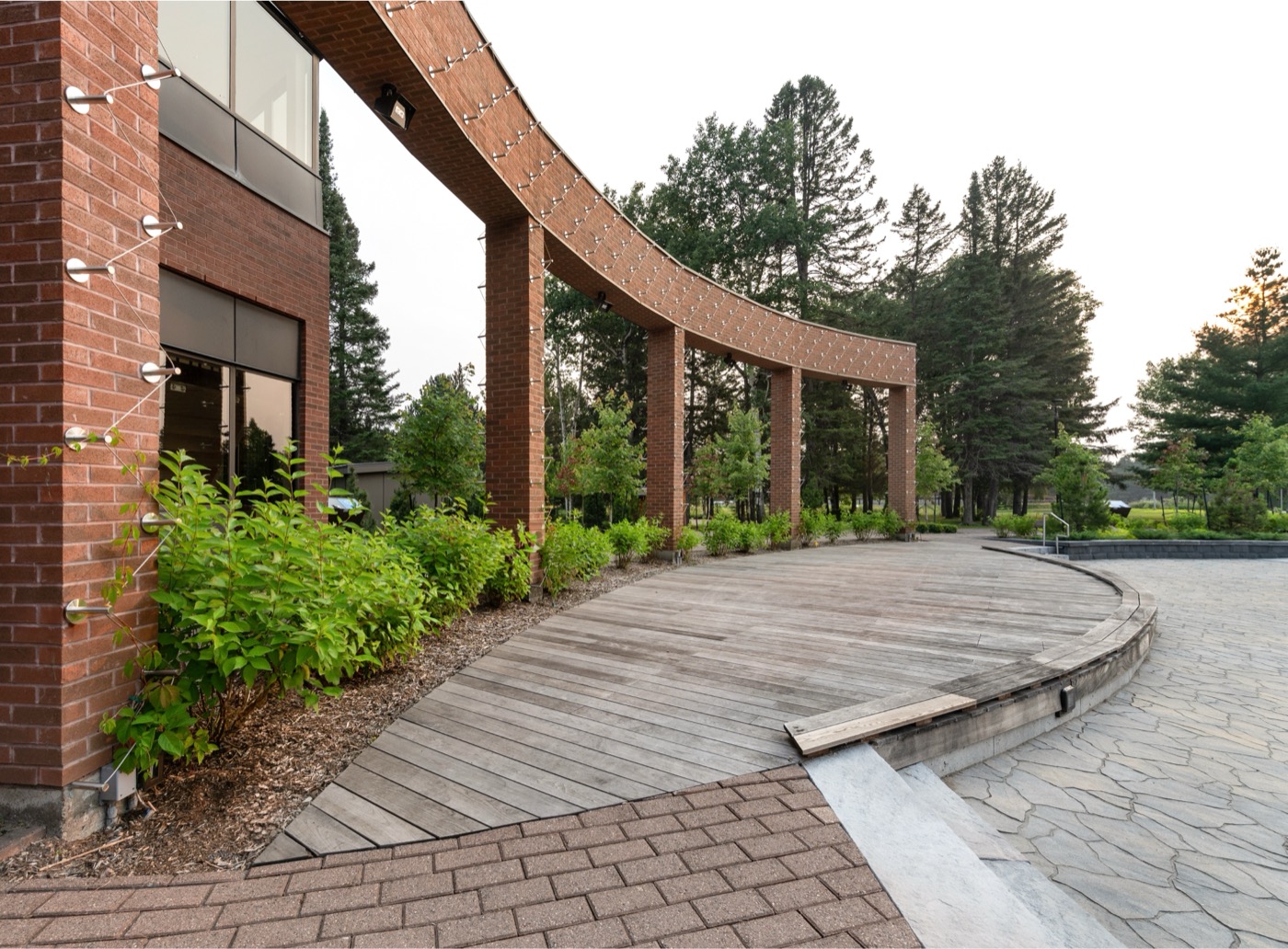
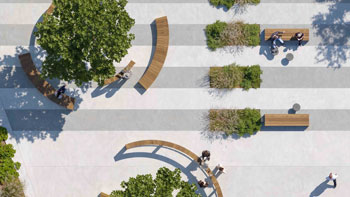
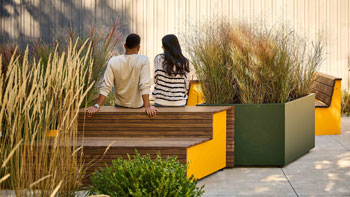
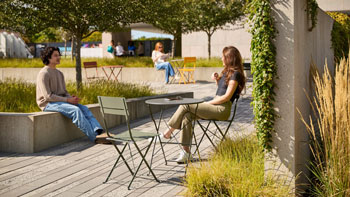
The colonial aesthetic of the plaza was addressed by reversing its orientation to highlight the forest as a backdrop for a new multifunctional stage, which accommodates events, seating, sunbathing, and socialization. Natural materials–ash decking, local granite flagstone, native trees and shrubs–and a trellis system for climbing vines allow nature to reclaim the space. Existing materials were reused wherever possible: the existing retaining walls were retained and cladded with wood to create an integrated stair and seating area, and the old pavers were salvaged to refurbish the surrounding walkway, thereby reducing the project’s carbon footprint.
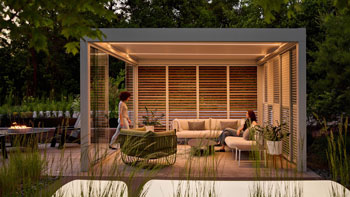
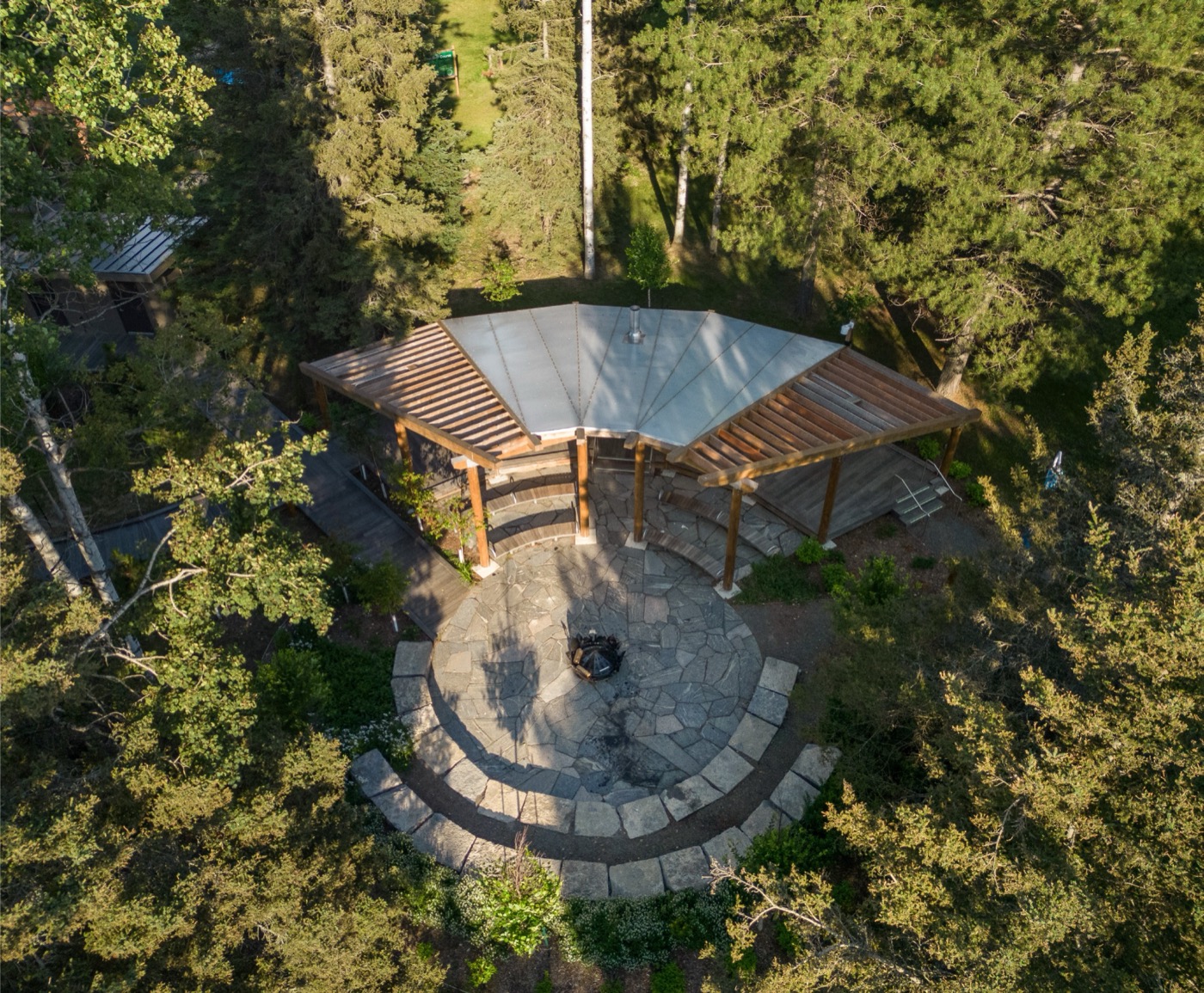
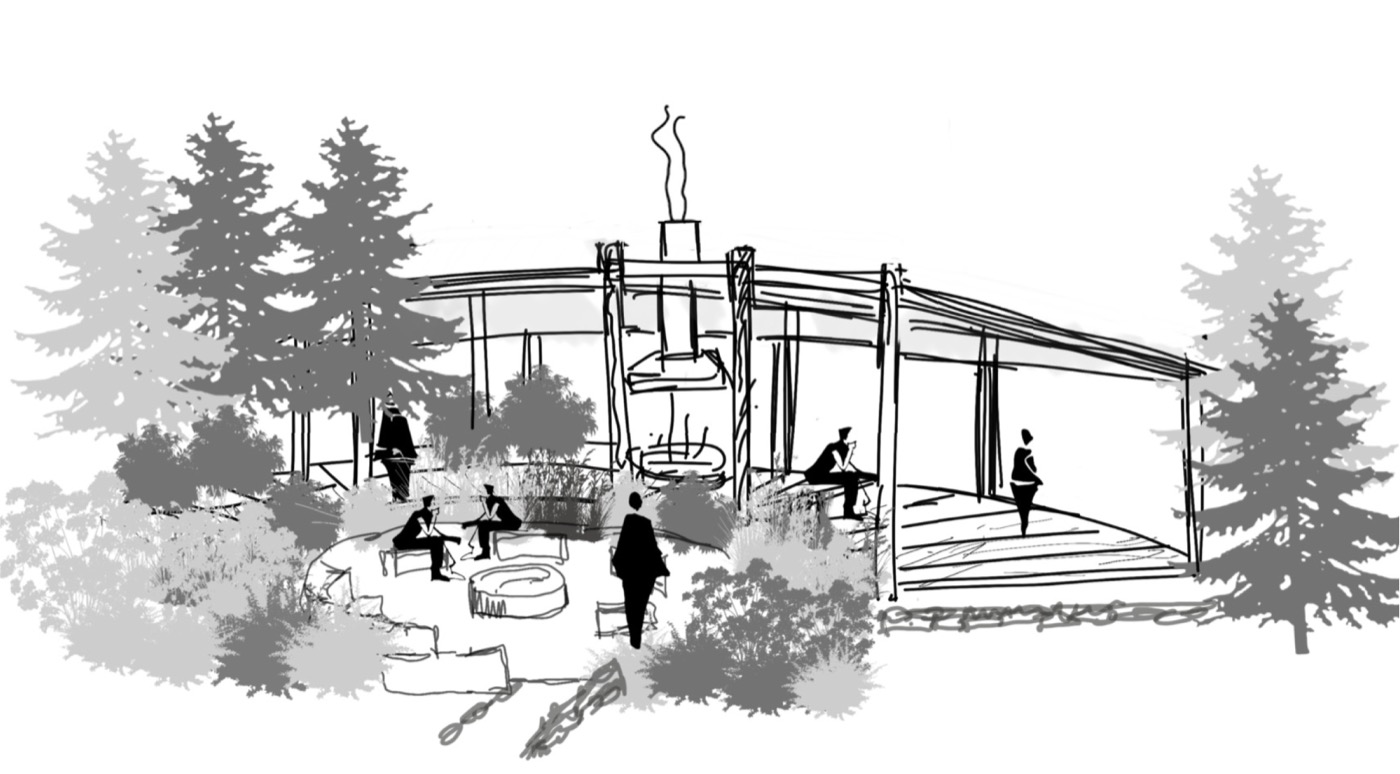
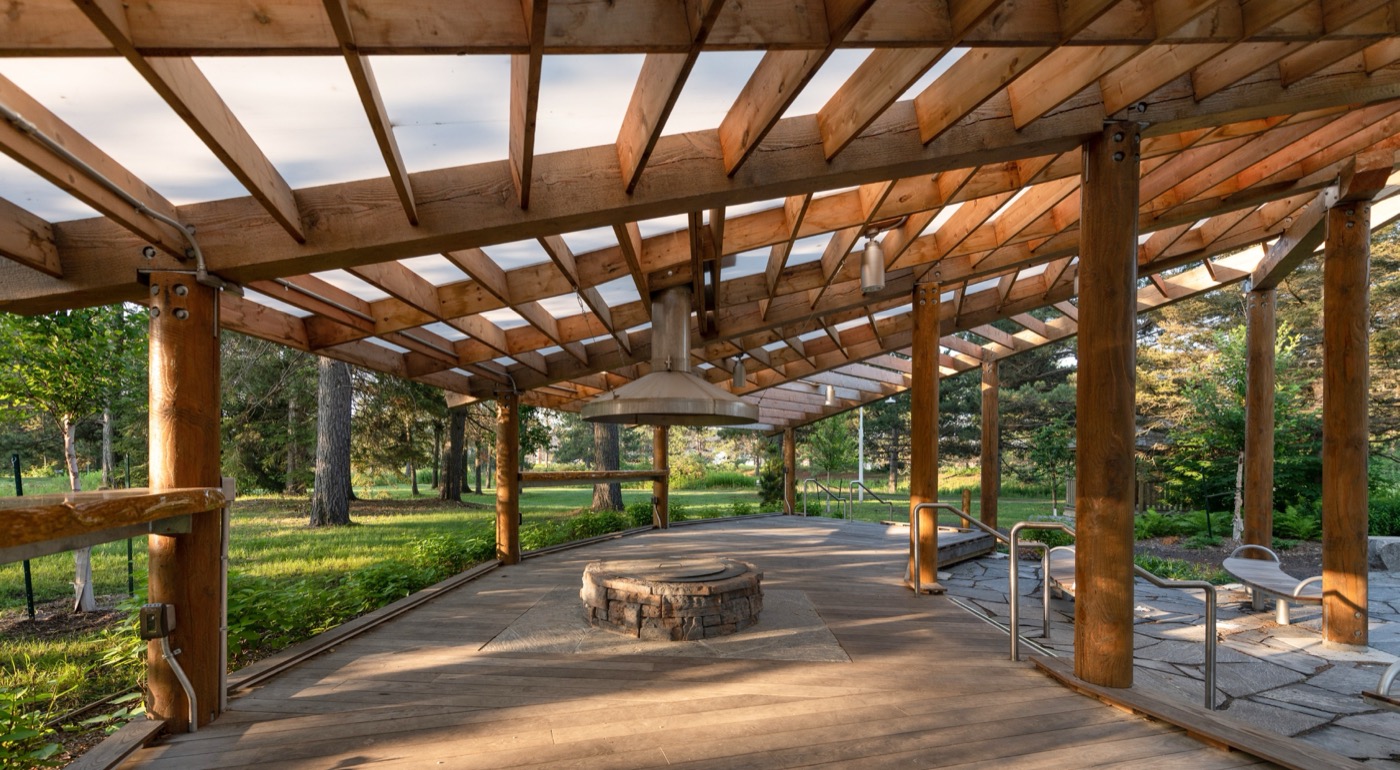
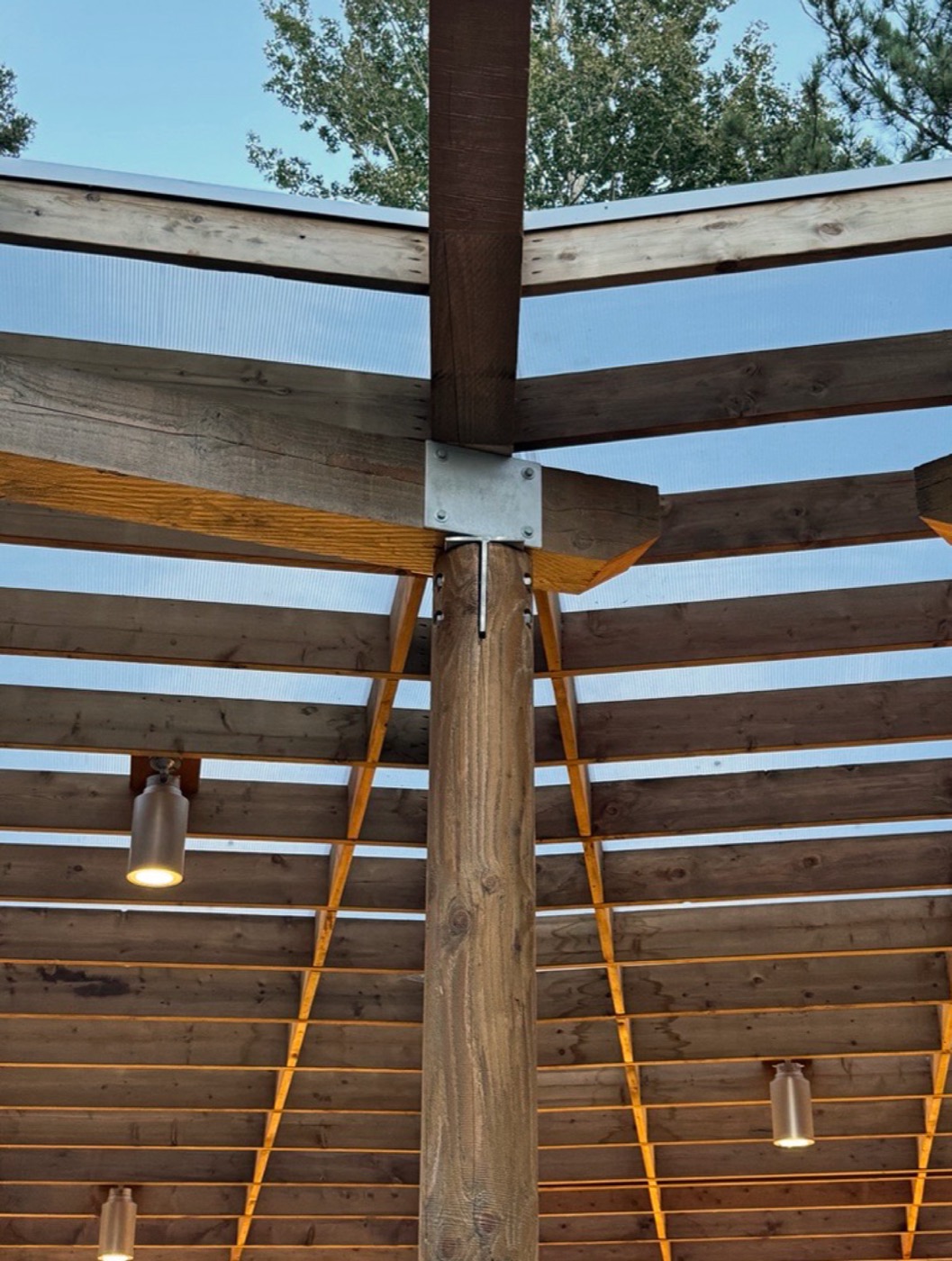
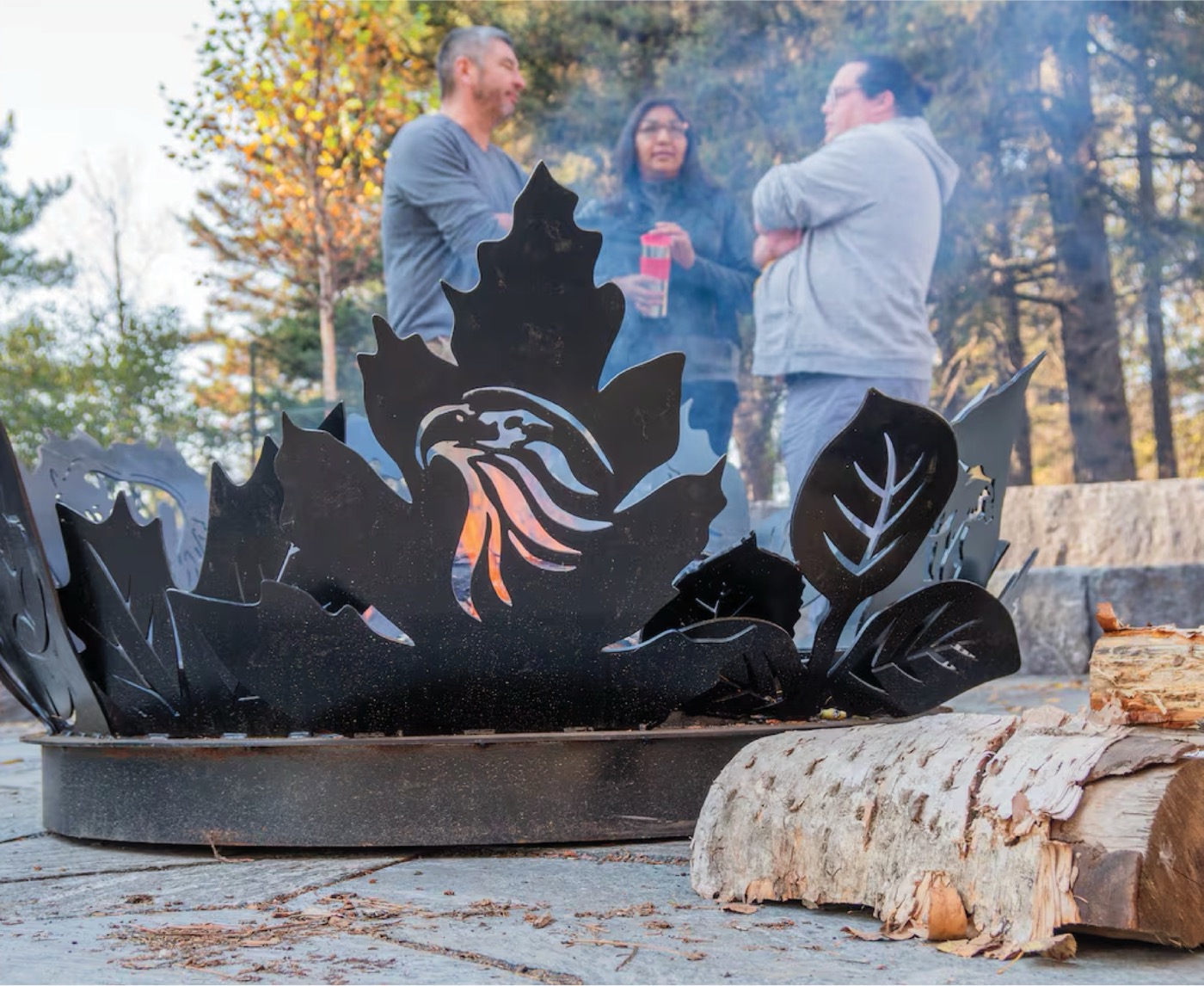
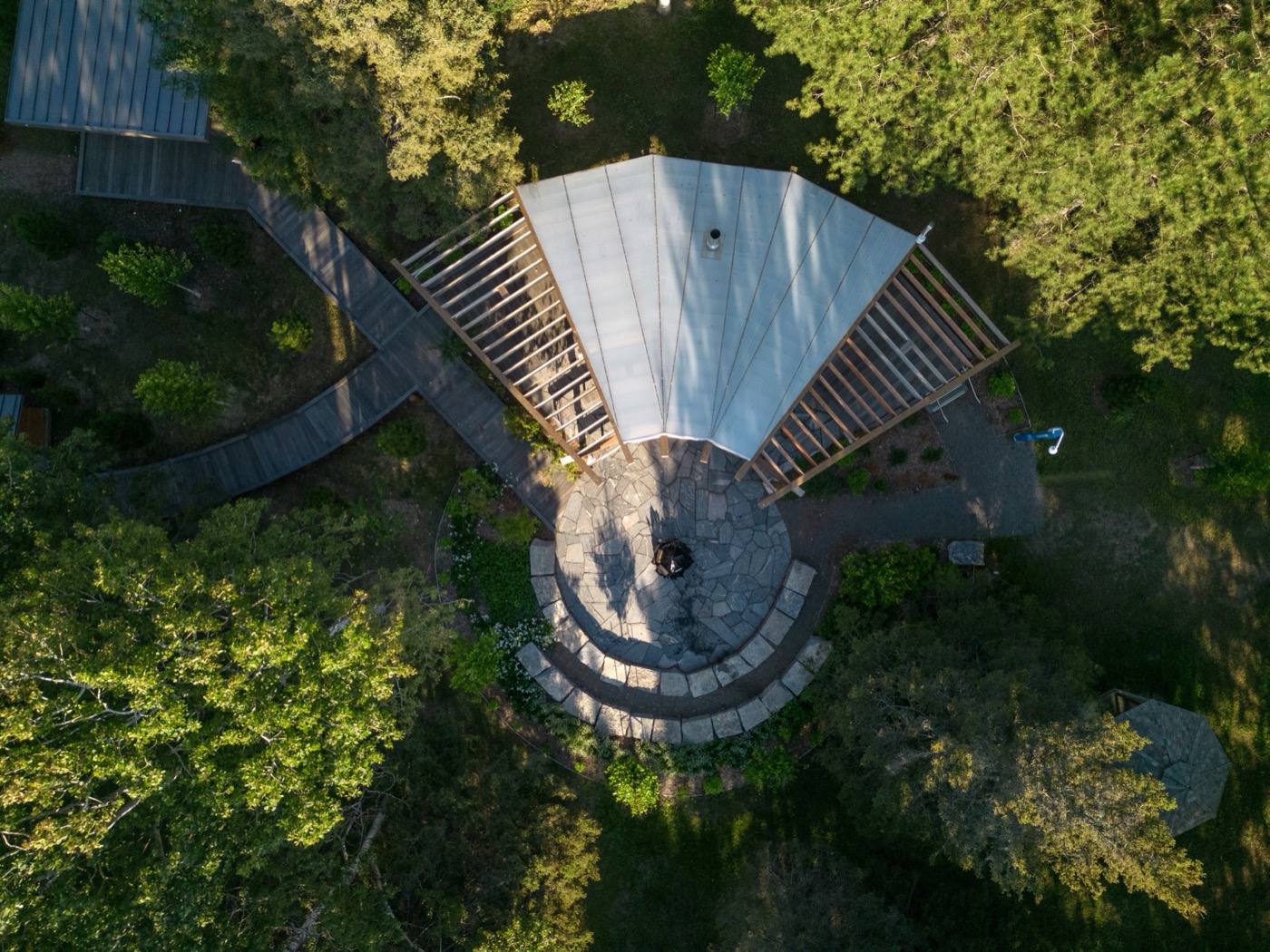
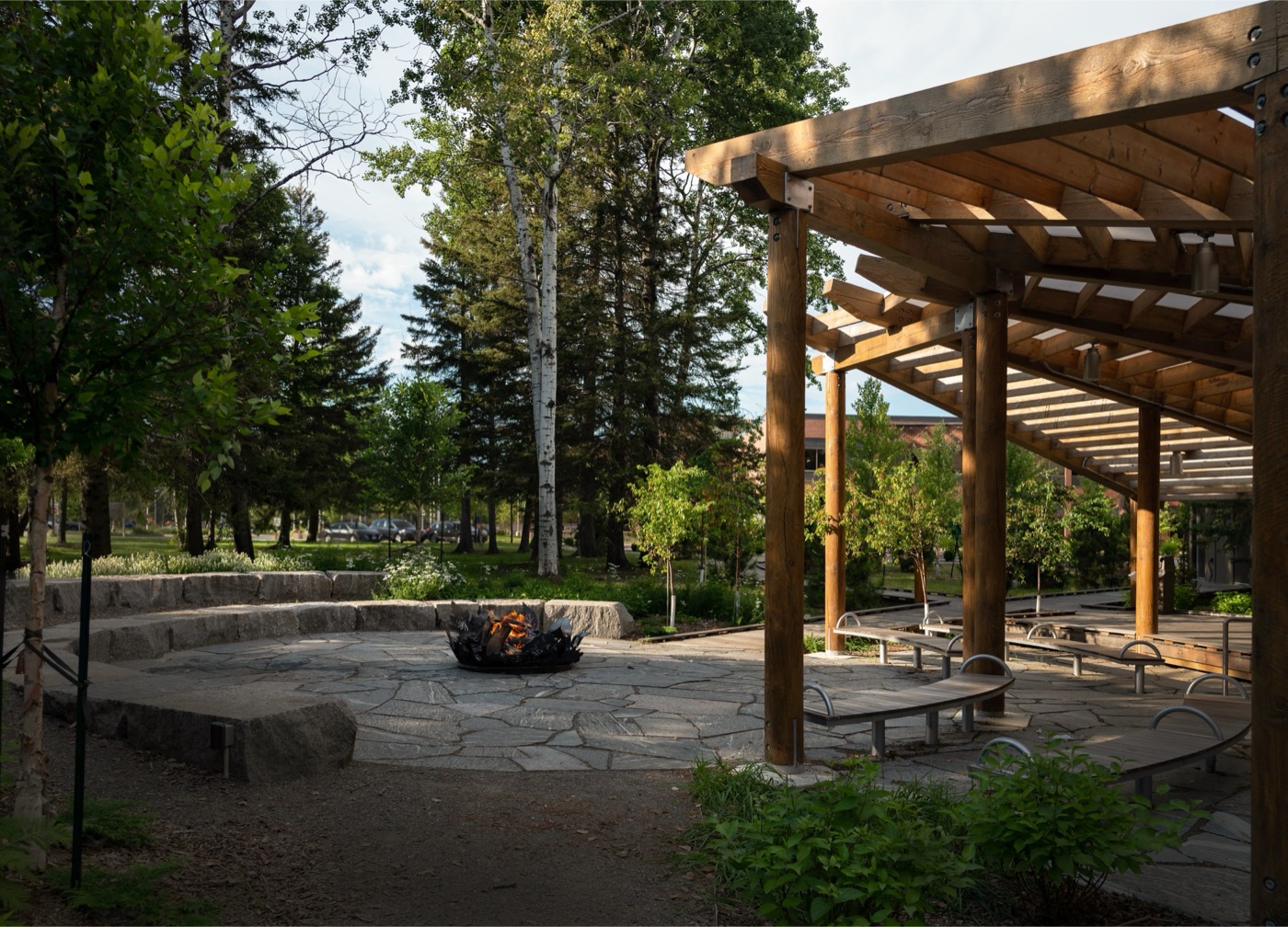
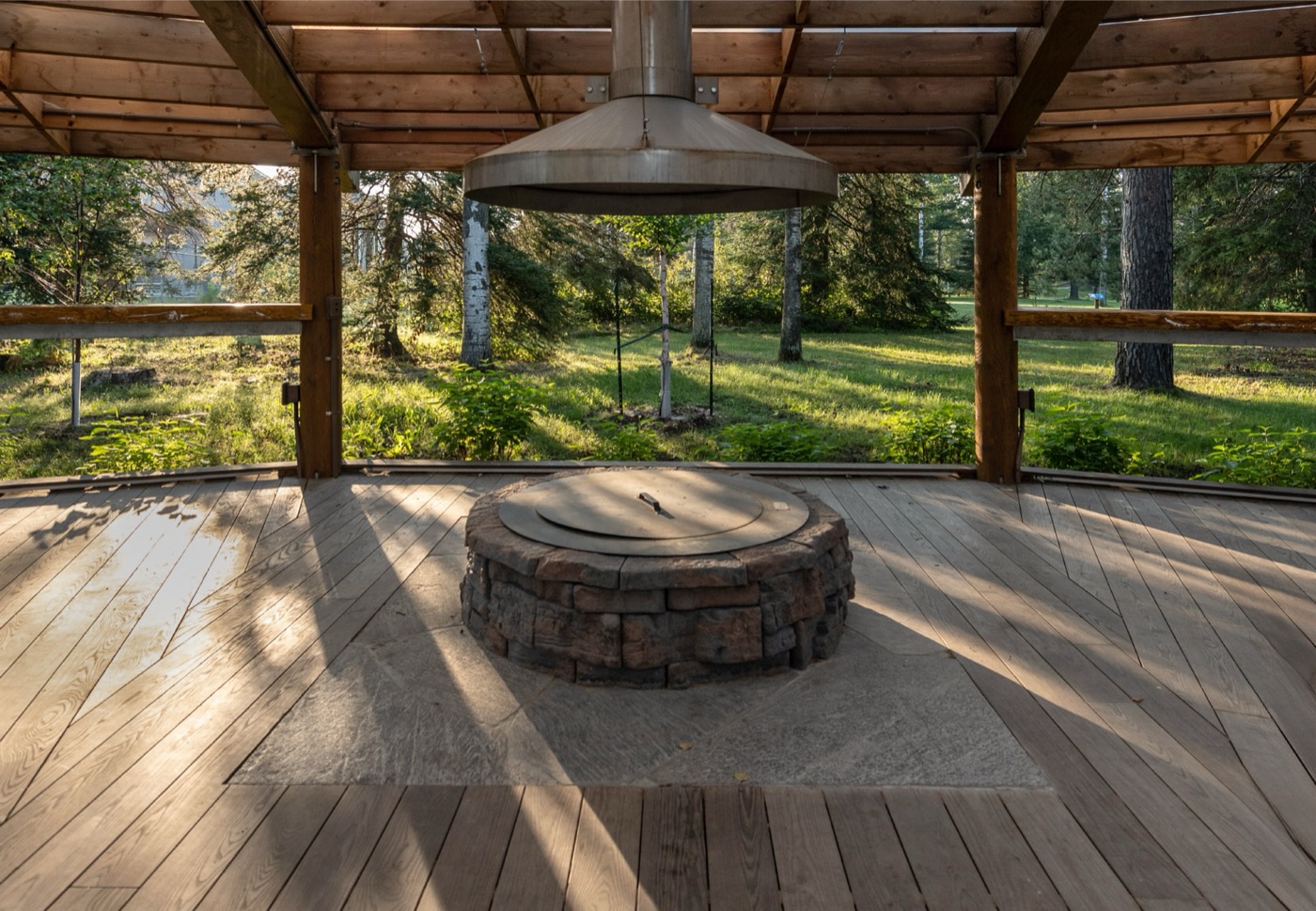
Following the curvature of the stage, the boardwalk enters the forest, passes a woodshed for gathering firewood, and leads to a tranquil clearing. A sacred firepit–designed and built by students–forms the spiritual heart of the site and the geometric anchor from which the design radiates. A tipi-inspired pergola features tree-like, timber poles and a translucent white “hide” roof. A second, covered firepit and wood countertops support practical uses such as cooking, teaching, and crafting – importantly kept separate from ceremonial uses. Tiered stone seating, wood benches, and the deck’s widened edge accommodate different seating preferences. Native and medicinal plantings surround the space, and a fern-lined trail continues the journey toward the river.
Anwebiiwining supports Canada’s commitment to reconciliation with Indigenous Peoples by acting on the Truth and Reconciliation Commission’s Calls to Action related to education, health, language, and culture. The name Anwebiiwining, chosen by Elders, establishes ownership and supports Indigenous language continuity. The space finally enables Indigenous knowledge‑keepers to teach, host events, and practice culture comfortably outdoors using non‑Western pedagogies. Through collaboration, Indigenous students, staff, and community members helped decolonize and transform the campus into a place where Indigenous students feel welcome, safe, and represented, which is especially important as Indigenous adults in Canada continue to face increased barriers to postsecondary education. A fully accessible design, all site users–both Indigenous and non-Indigenous, of all ages and physical abilities–can engage in alternative, hands-on education methods, experience year-round enjoyment of the natural environment, learn and participate in cultural activities, and become informed advocates for reconciliation–fostering understanding and advocacy for reconciliation.
Anwebiiwining demonstrates how an inclusive, collaborative design process can decolonize and transform space, honour the land and recenter Indigenous voices and values. By allowing nature and Indigenous perspectives to reclaim campus, Anwebiiwining sets standards for sustainability, land-based learning and reconciliation in postsecondary spaces.
Client–Confederation College
Prime Consultant–Architecture49: Bhavana Bonde, Nicole Reenders, Greg Little, Andrew Puiatti, Carole Godecki, Evan Chezick
Engineering Subconsultant–TBT Engineering
Cost Estimation Subconsultant–Postma Consulting
Contractor–Tom Jones Corporation
48.402392, -89.269305
77146


LILA 2026 Sponsor