BoAi Lake
www.swagroup.com/
2026 Public Projects / China / Built in 2022 /

![In a five-acre clearing near the rebuilt Sandy Hook Elementary School, you can hear the sound of children at recess blend with birdsong from the surrounding dogwoods and maples. Donated to the town by a local athletic club, the site is now home to a permanent memorial honoring the 20 children and six educators tragically […]](https://landezine-award.com/wp-content/uploads/2026/02/01_Hero-Image-600x400.jpg "Sandy Hook Memorial: The Clearing")
![Part of the Shenzhen SEZ (Special Economic Zone) established in 1980, Shekou became an important gateway for foreigners to discover mainland China after its open-door policy started to connect the country with the rest of the world. Its urban public realm, however, suffered from the fast urbanization and lacked attractive parks and facilities for the […]](https://landezine-award.com/wp-content/uploads/2018/04/MAIN-IMAGE_Shekou-600x400.jpg "Shekou Coastal Promenade")
BoAi Lake consolidates a fragmented network of fish ponds into a contiguous urban lake and civic waterfront. Former aquaculture infrastructure is restructured as a climate-adaptive, ecological landscape that supports community access and long-term environmental performance.
Located in Shishan Town in Foshan, the 136-hectare site originally functioned as a freshwater reservoir before being subdivided into multiple fish ponds at varying elevations and water levels. This fragmented condition limited hydrologic continuity, habitat connectivity, and public access to the water’s edge. Bounded by emerging mixed-use development to the north and preserved forest to the south, the site presented an opportunity to unify natural systems, reconnect communities, and establish a new civic identity around the lake.
The project reframes the lake not as a static amenity, but as multi-functional landscape infrastructure where environmental performance and community life are inseparable. Rather than isolating flood control, habitat restoration, and recreation into discrete zones, the design integrates these systems into a single, continuous framework. By stabilizing water levels and reconstructing the lake edge, the former pond network is consolidated into a contiguous lake supporting climate resilience, ecological restoration, and inclusive public access at the district scale.
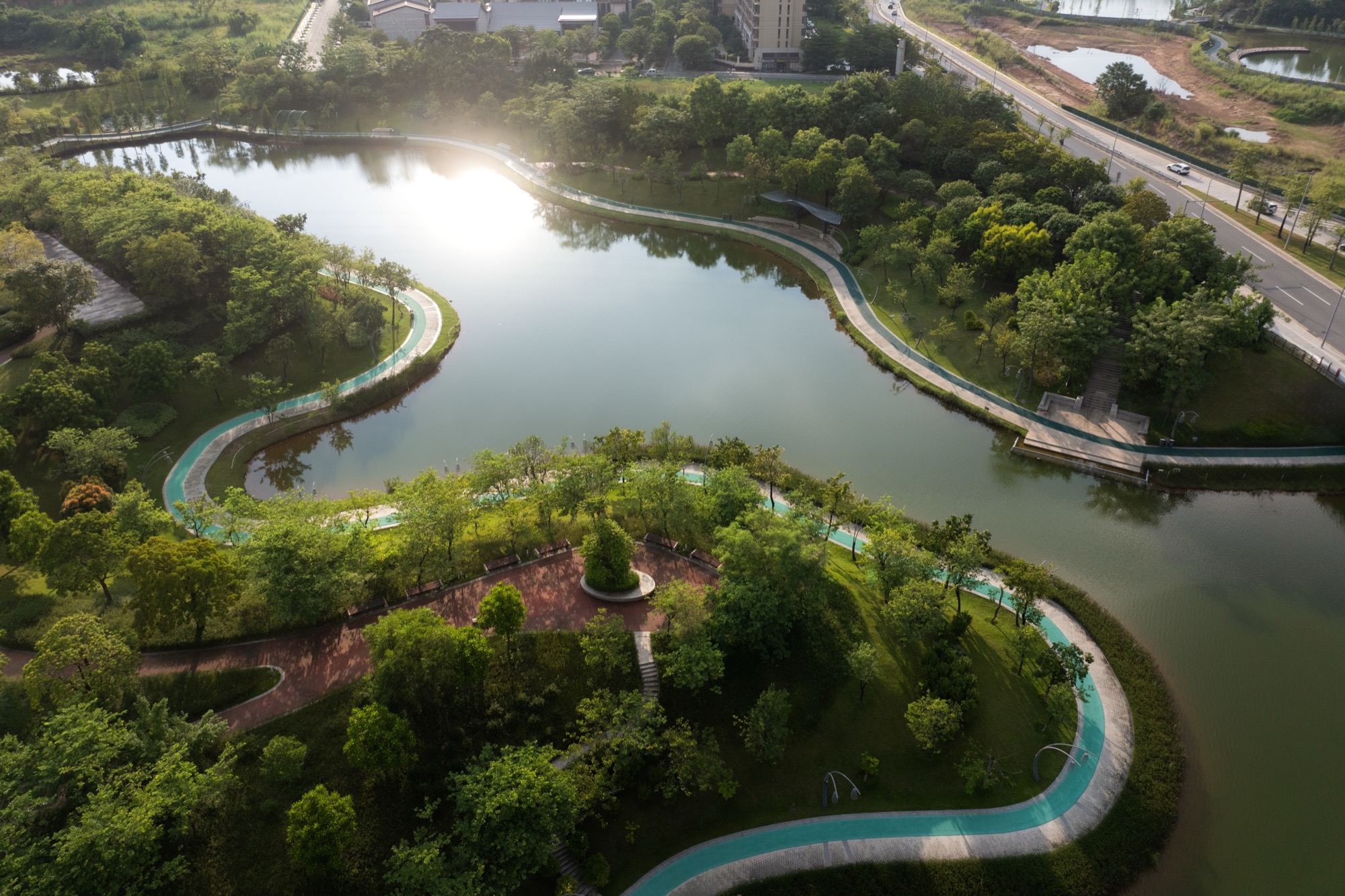
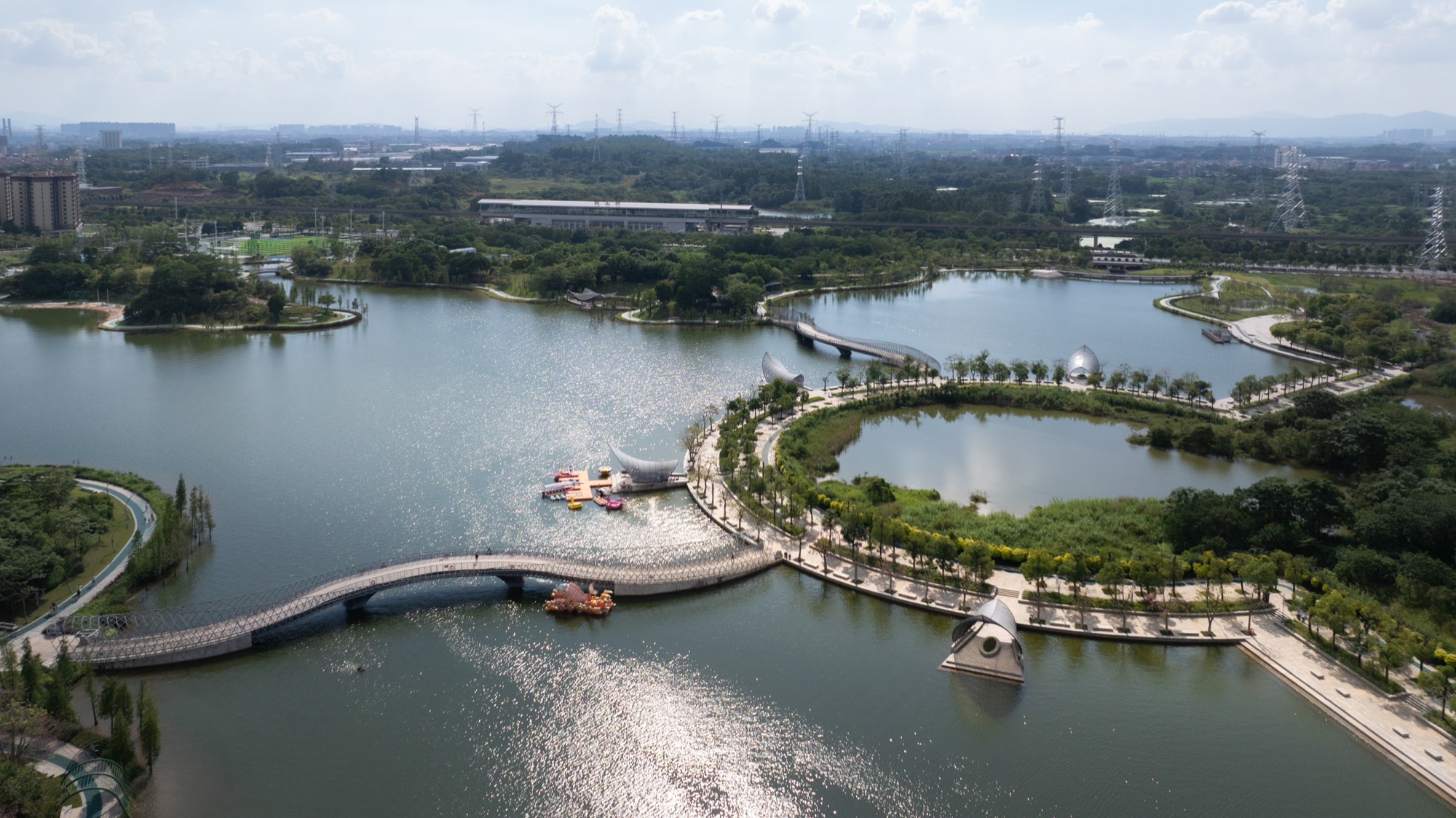
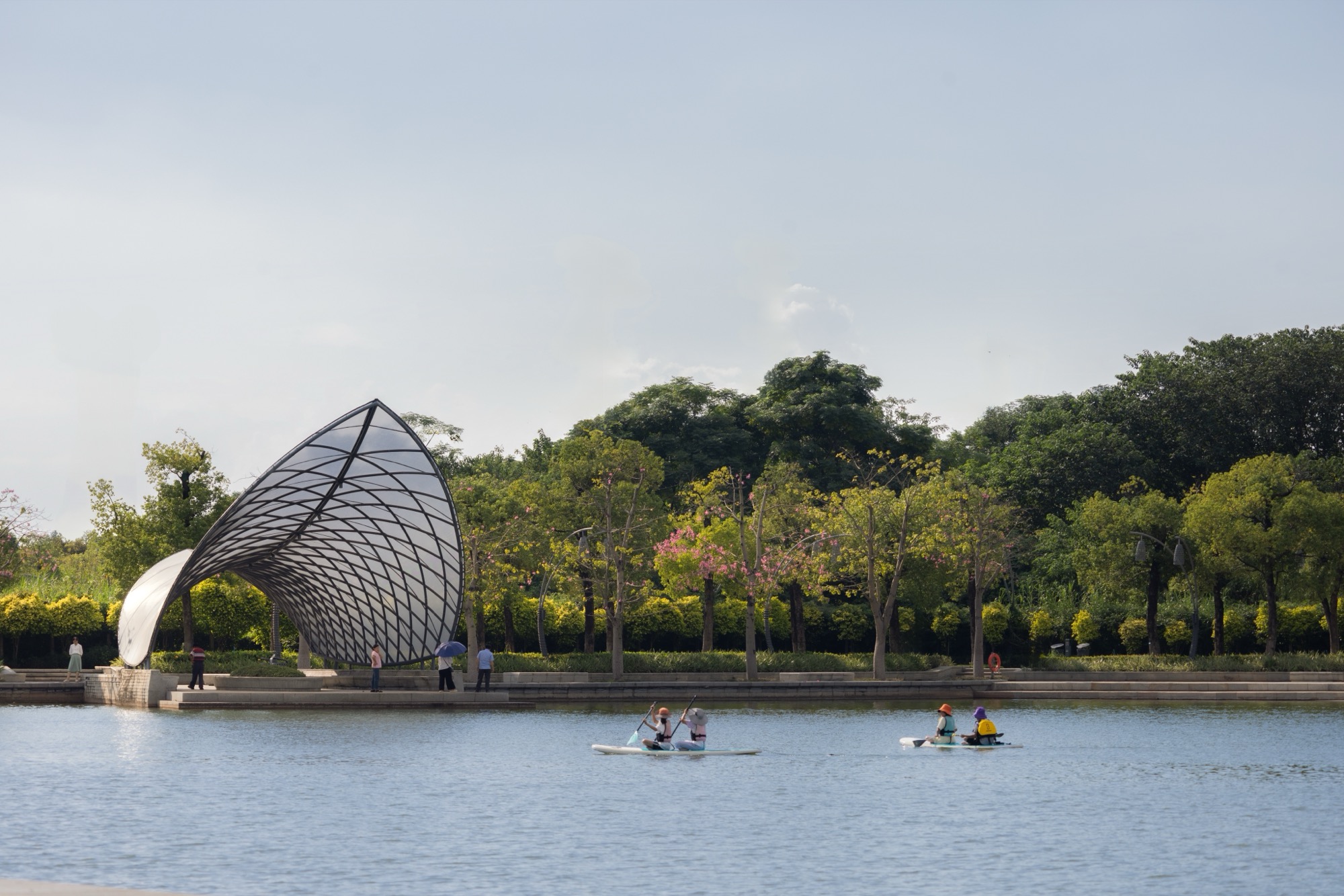
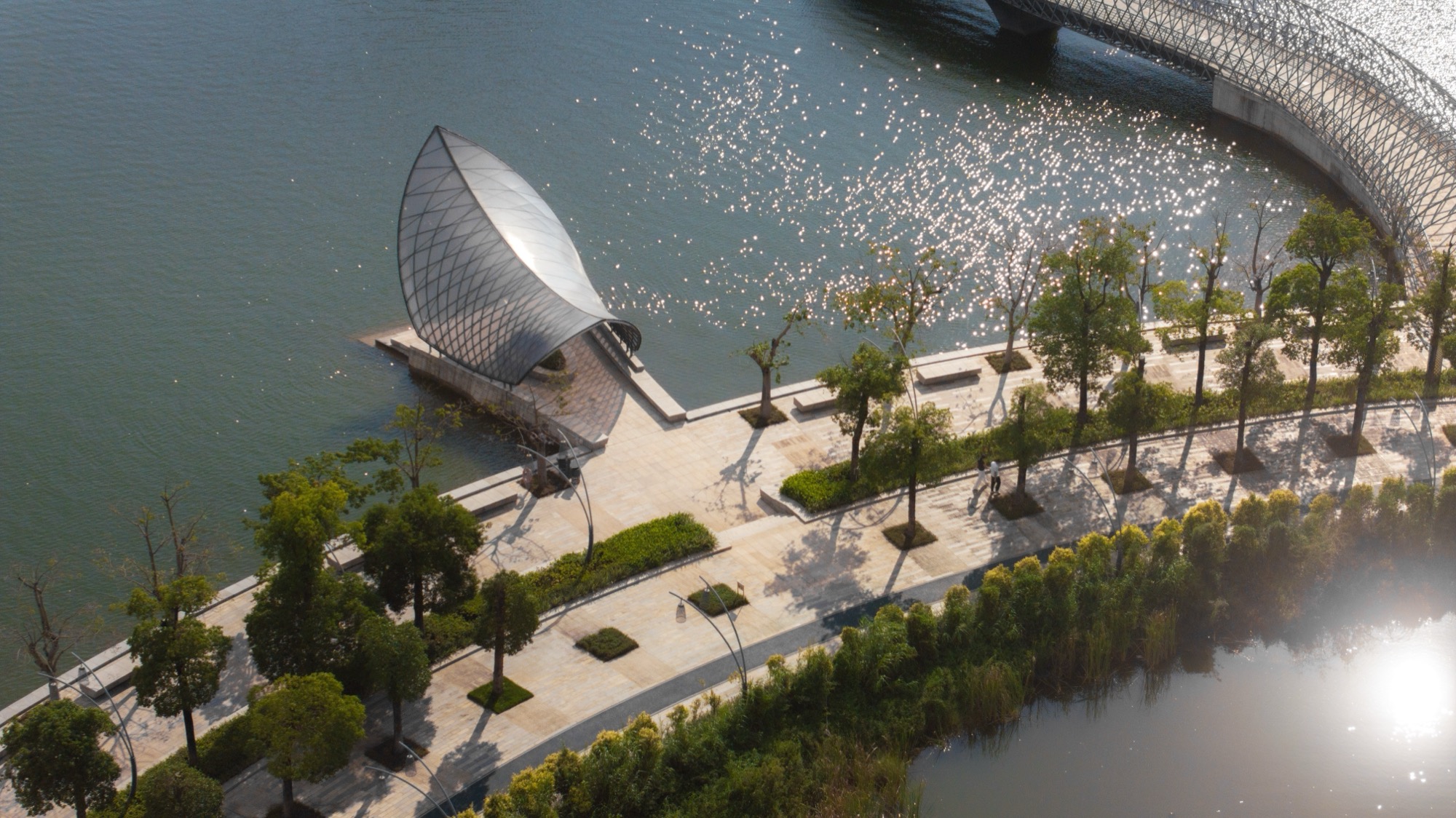
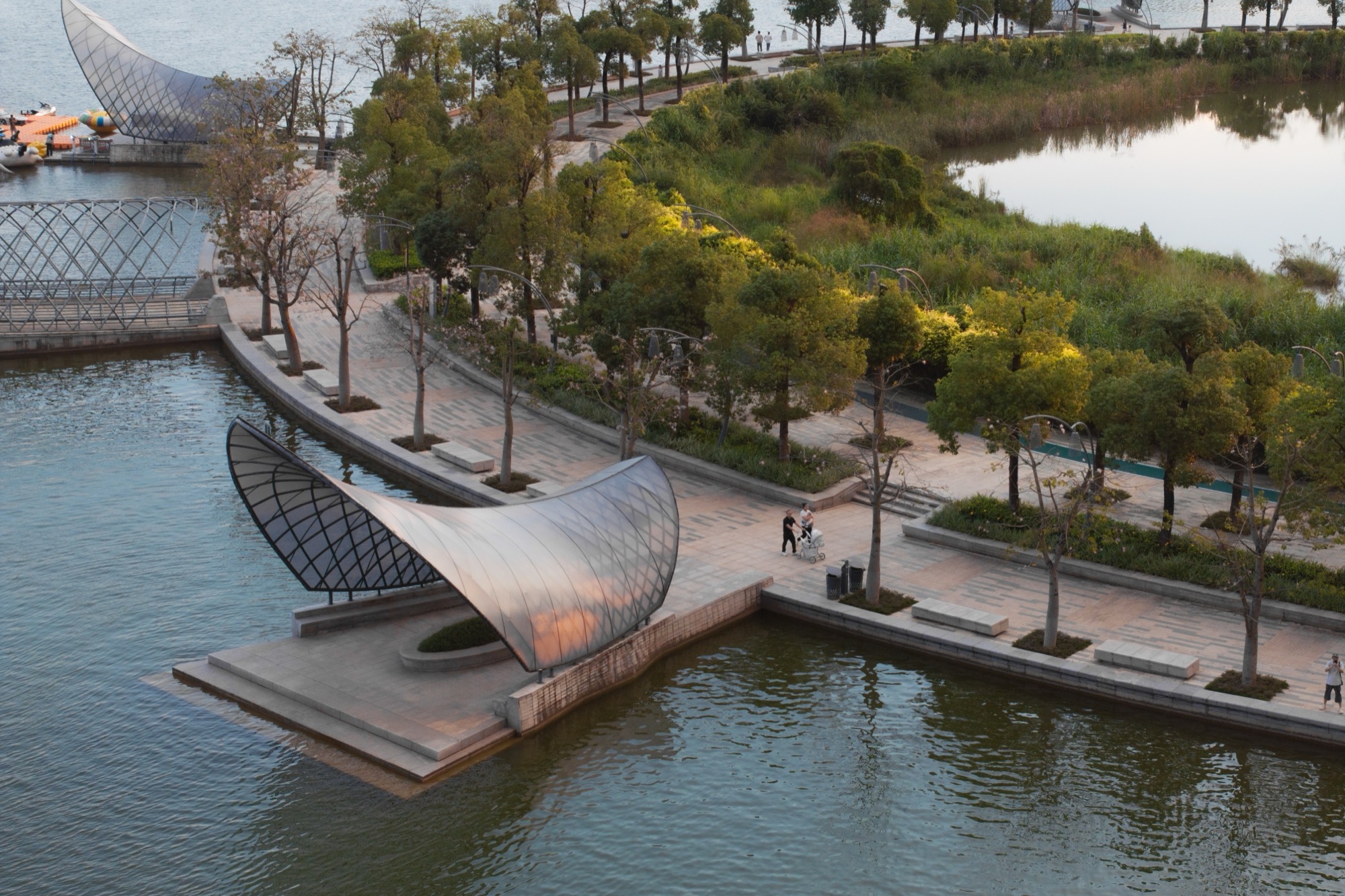
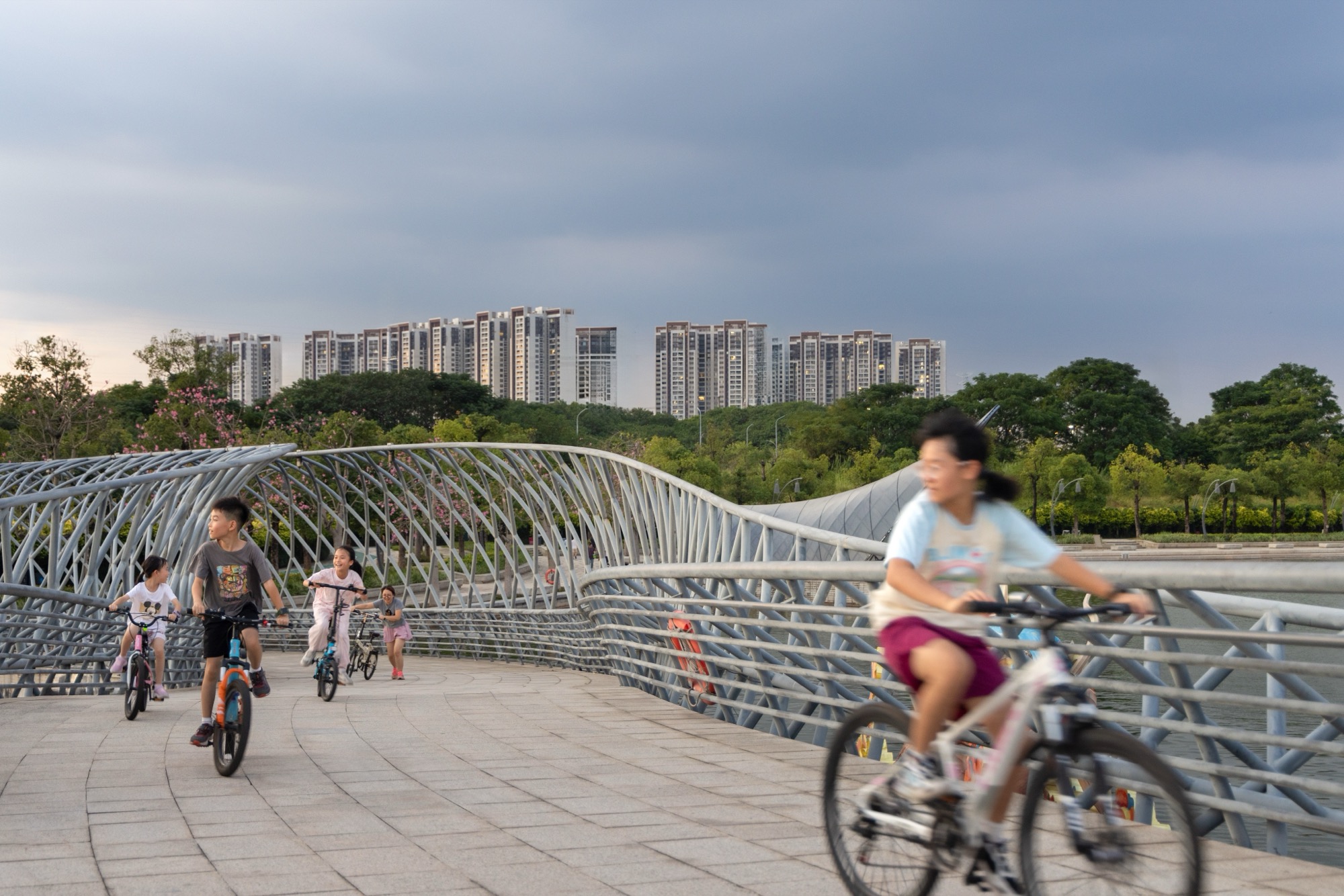
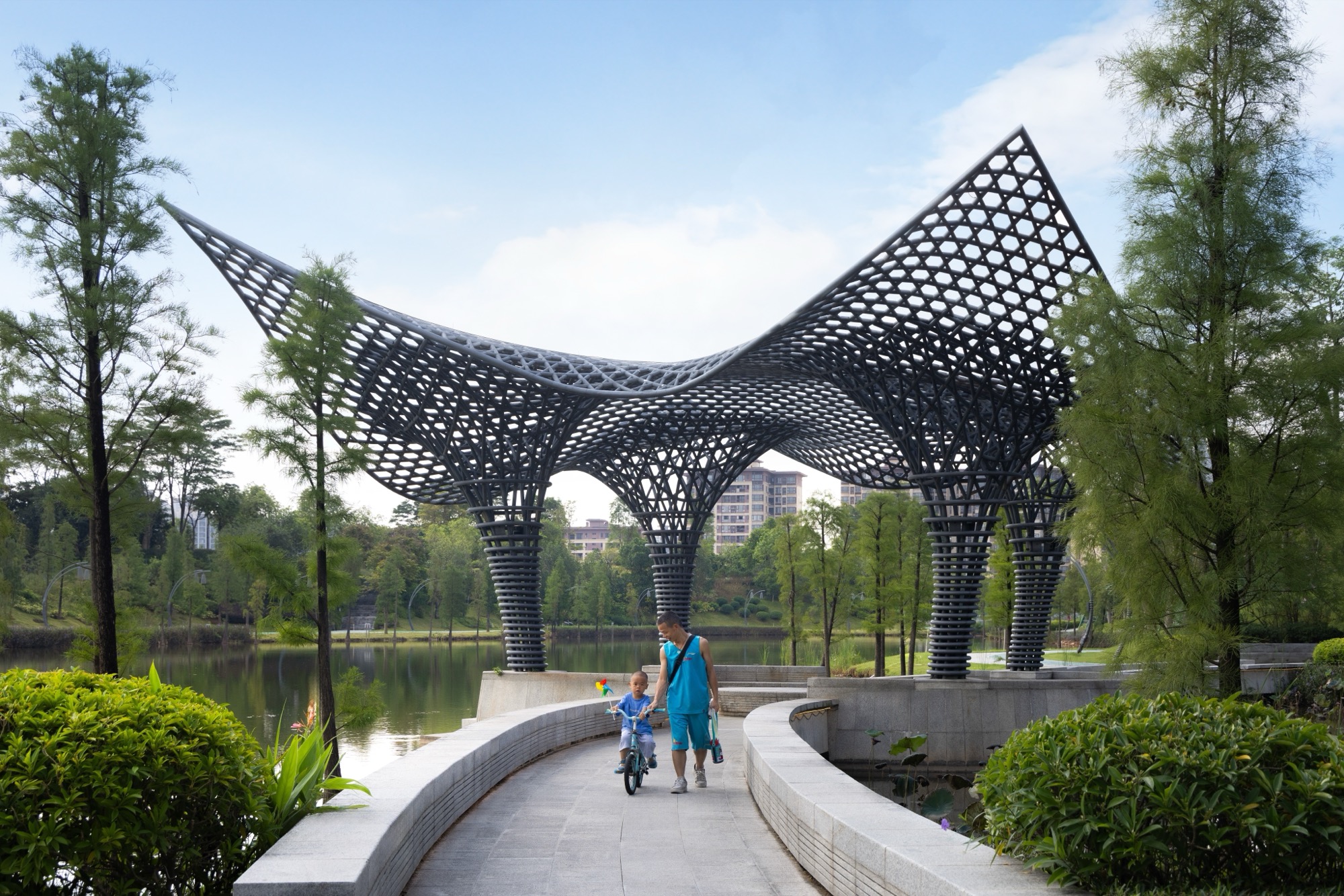
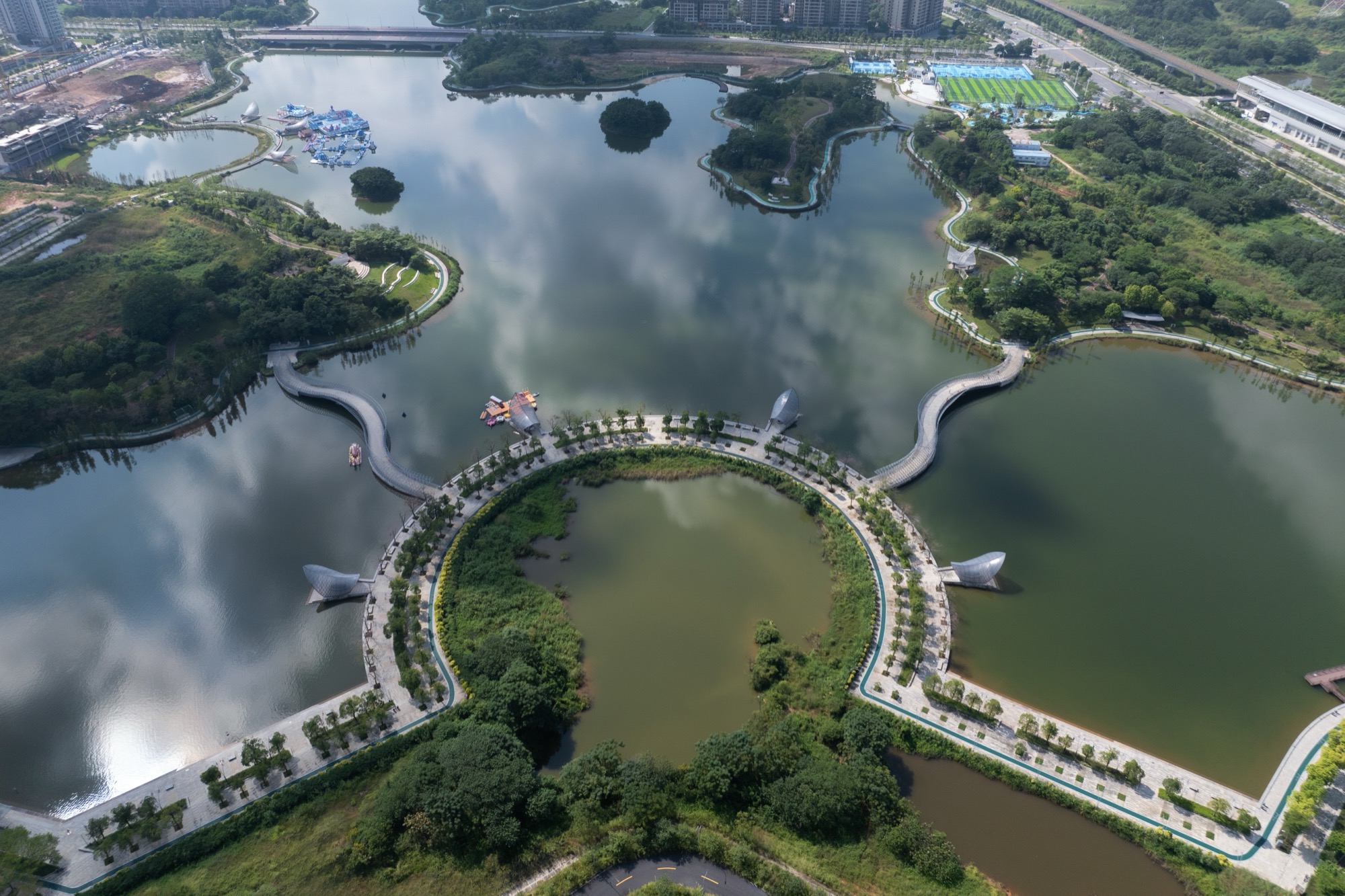
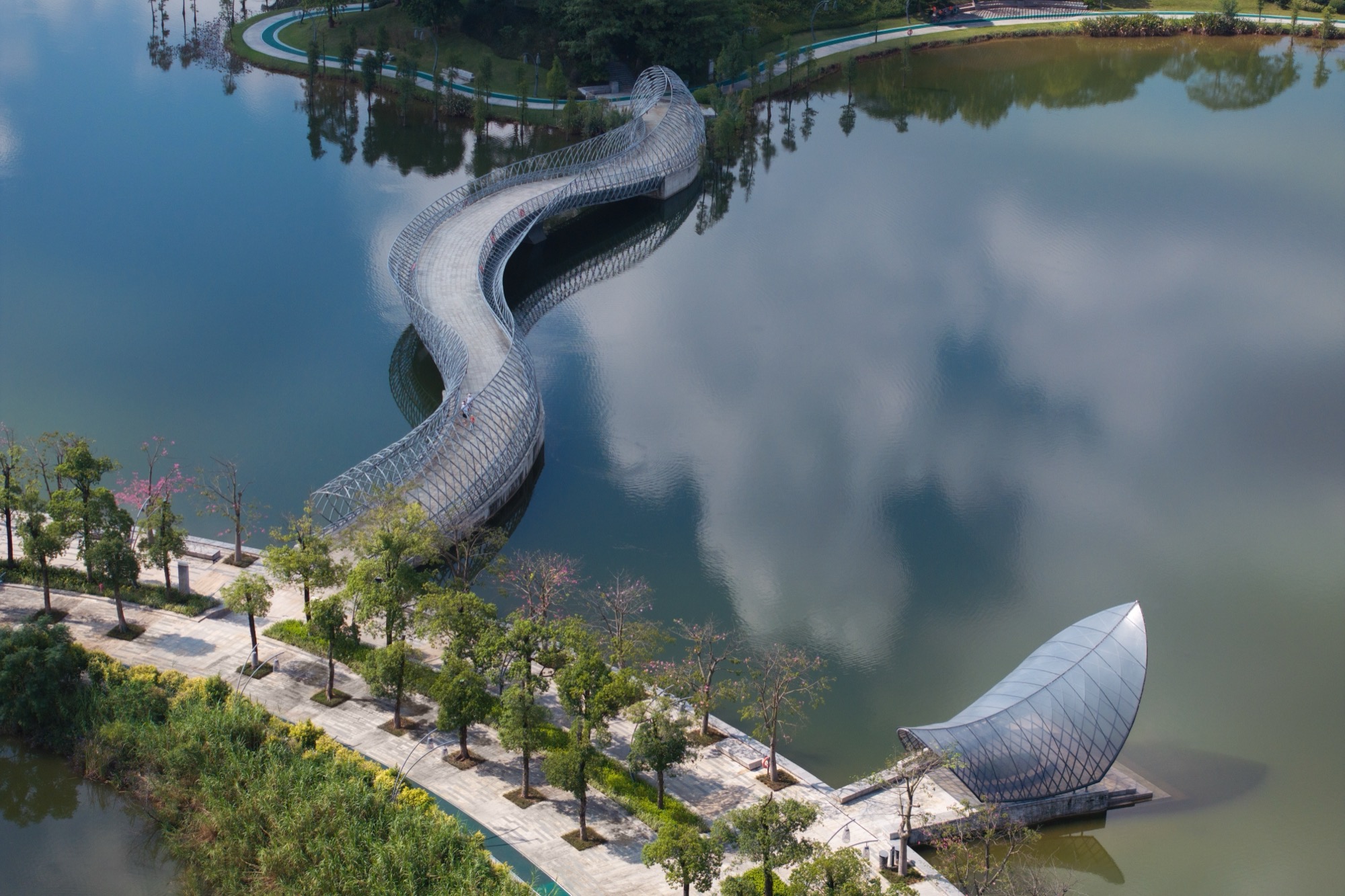
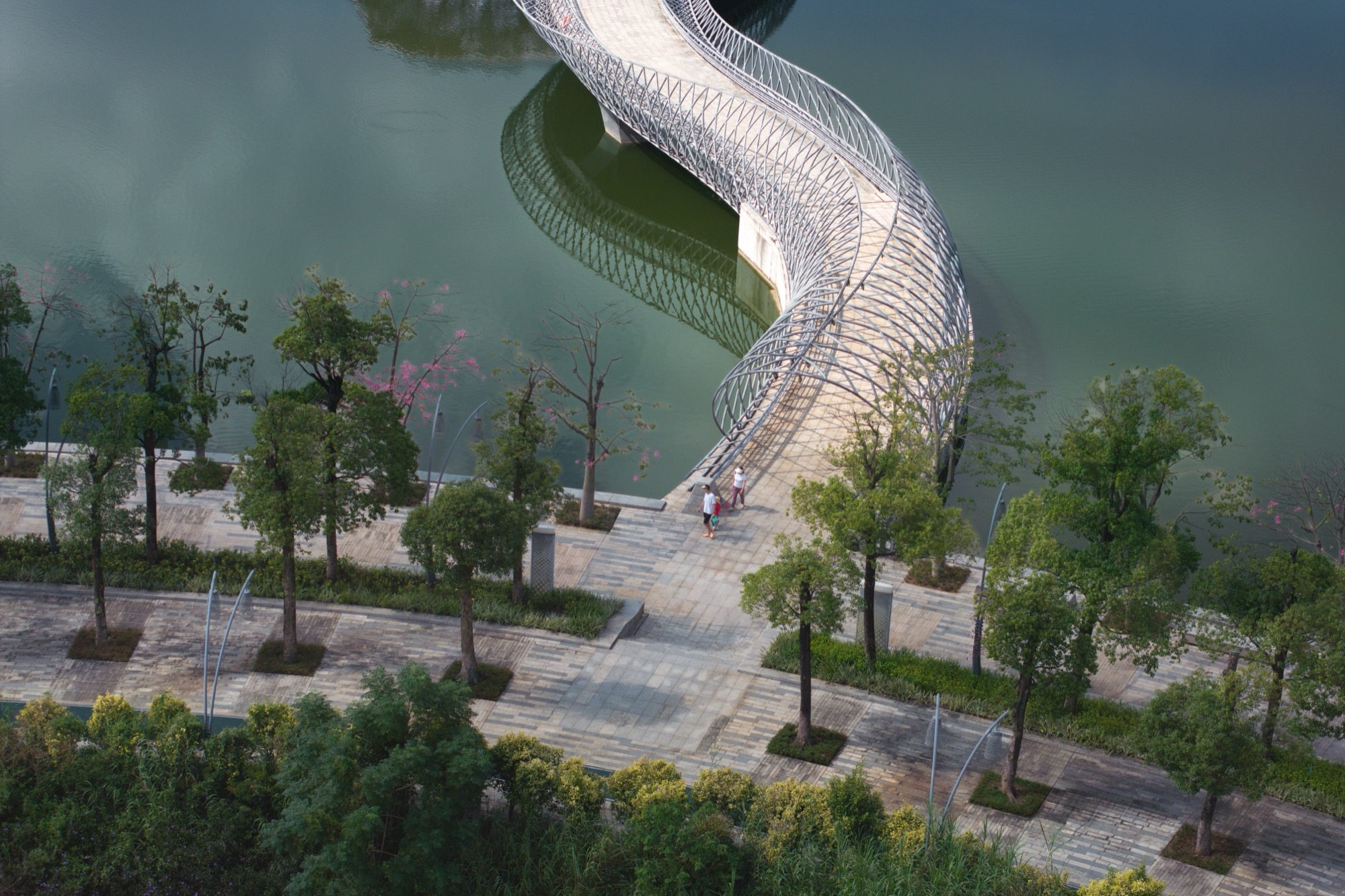
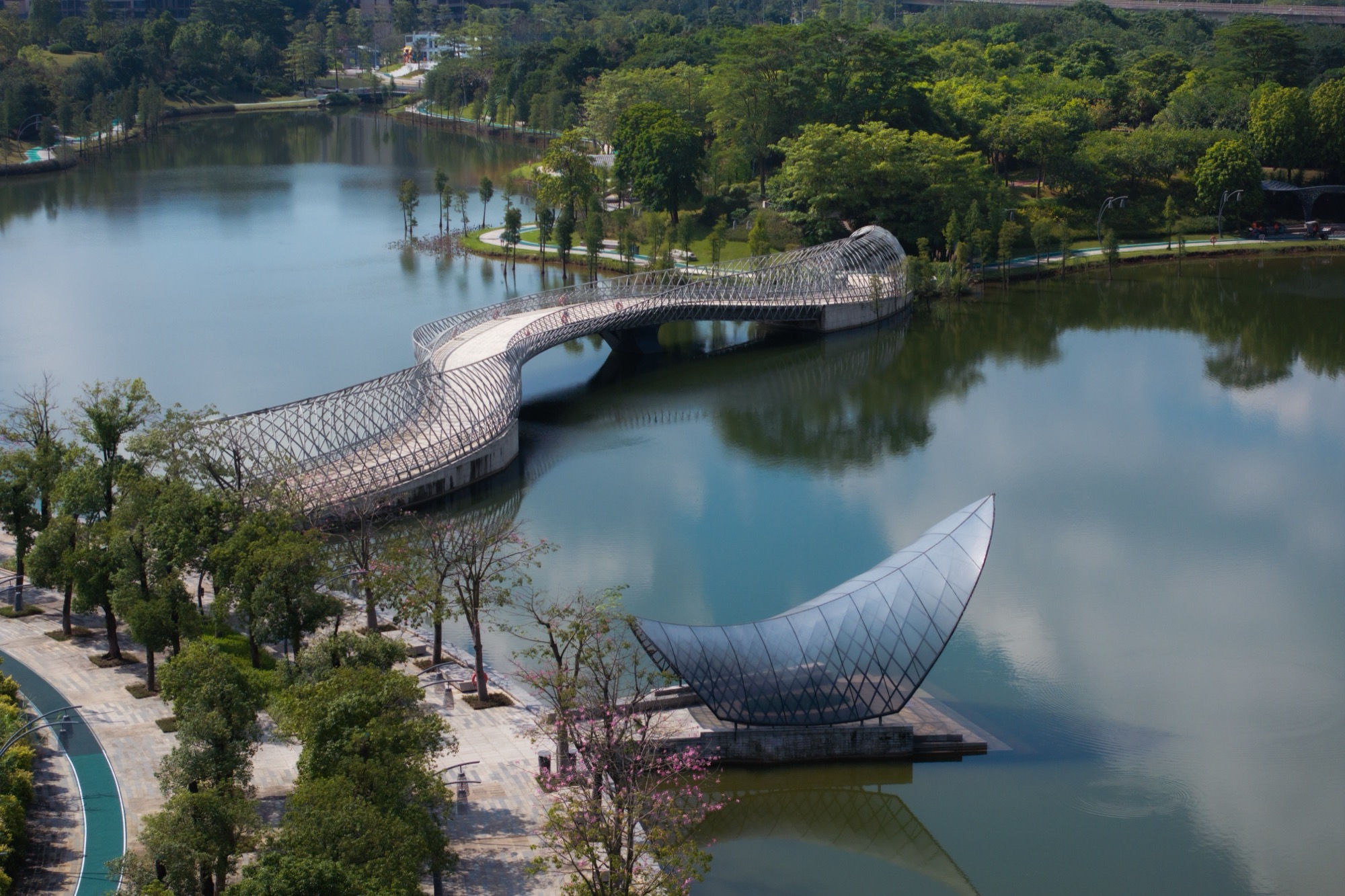
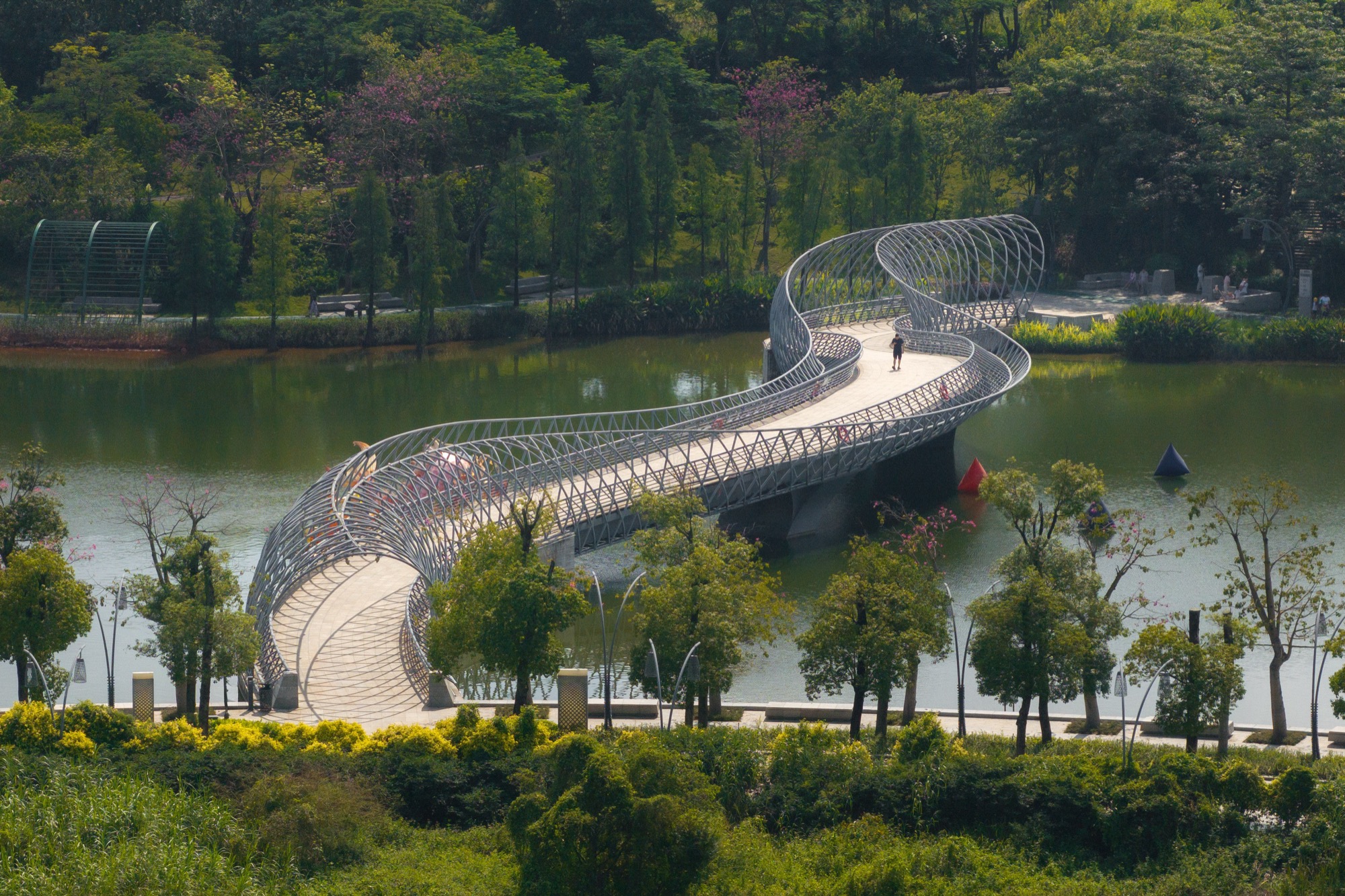
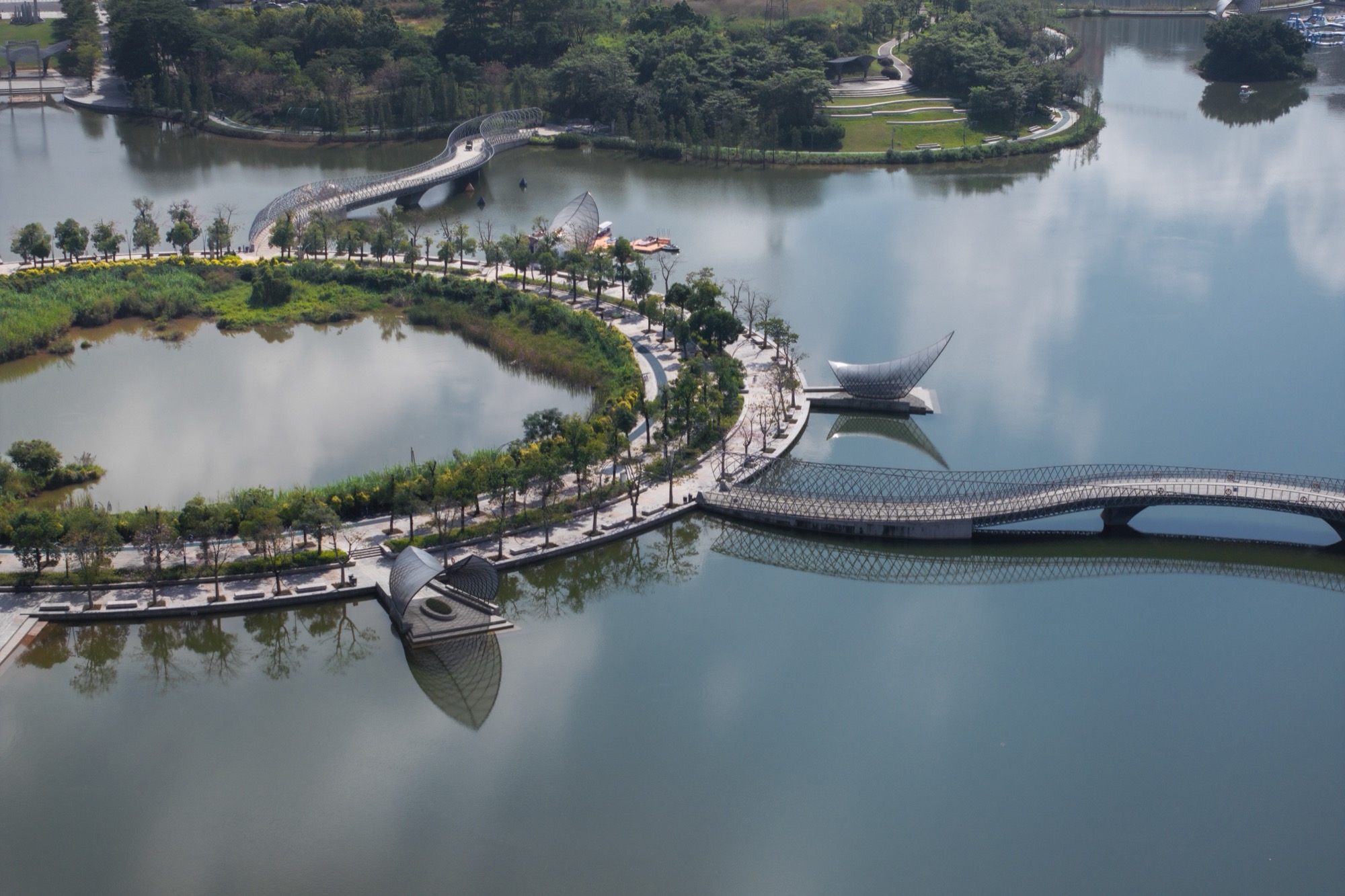
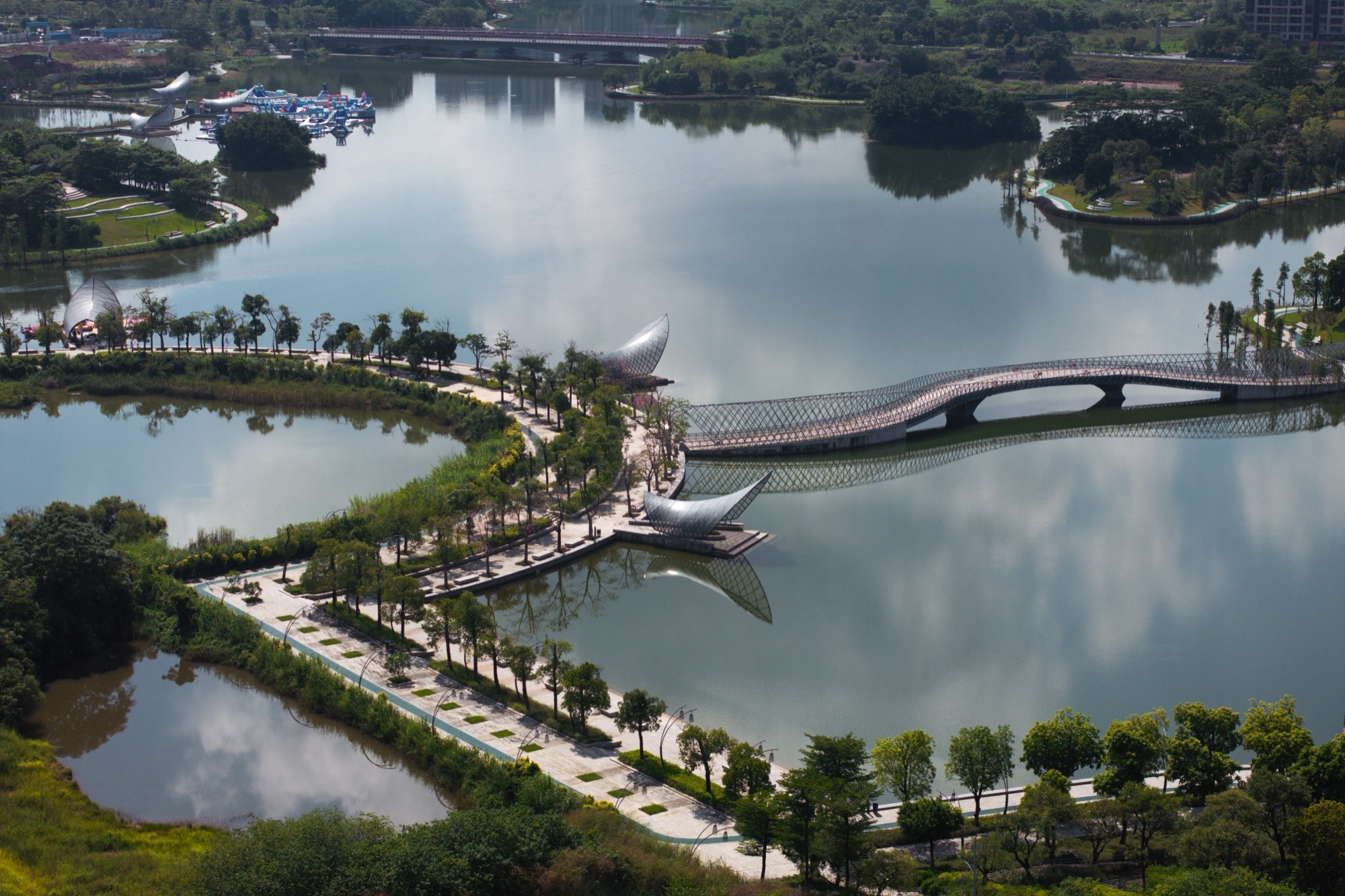
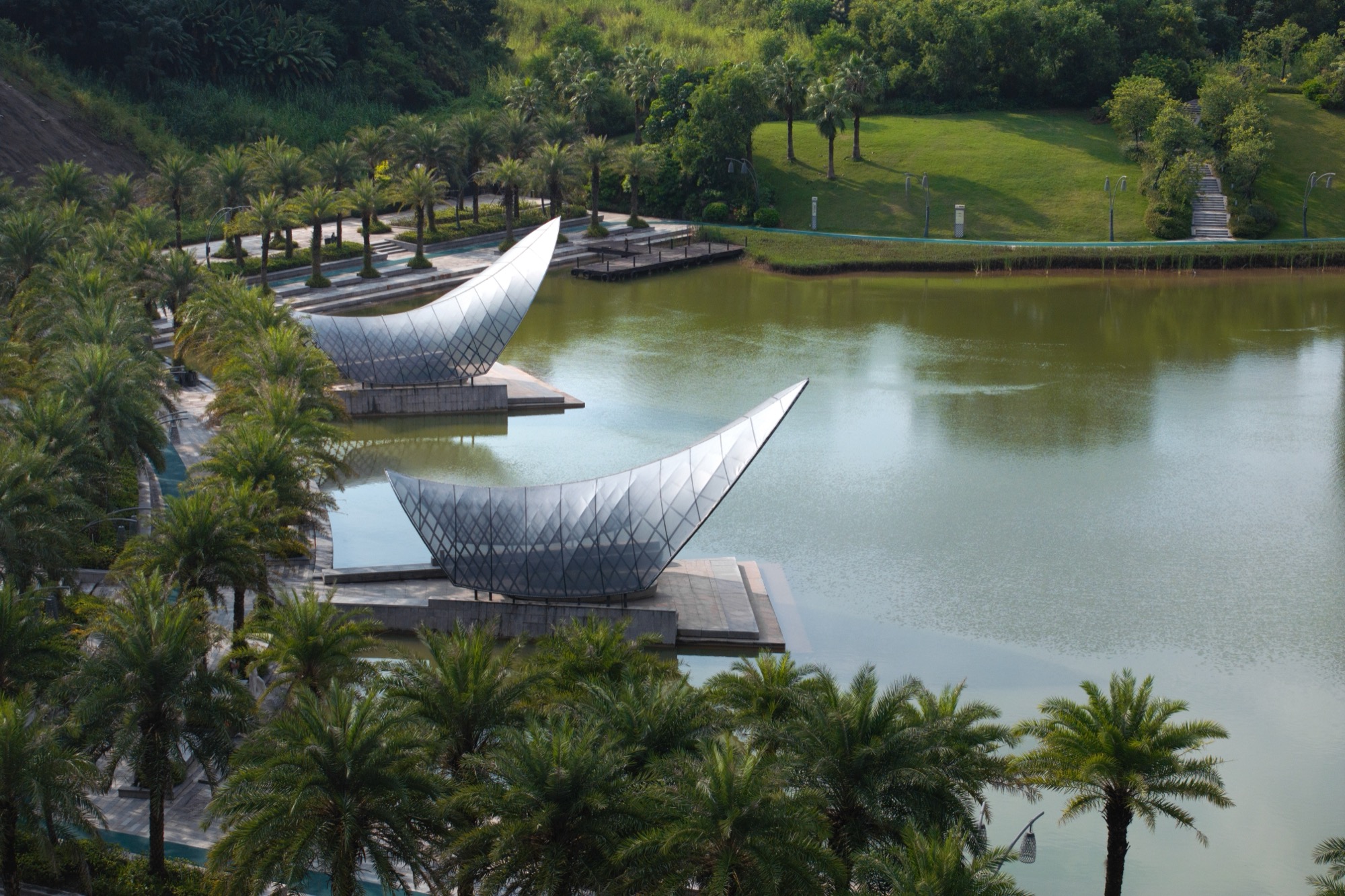
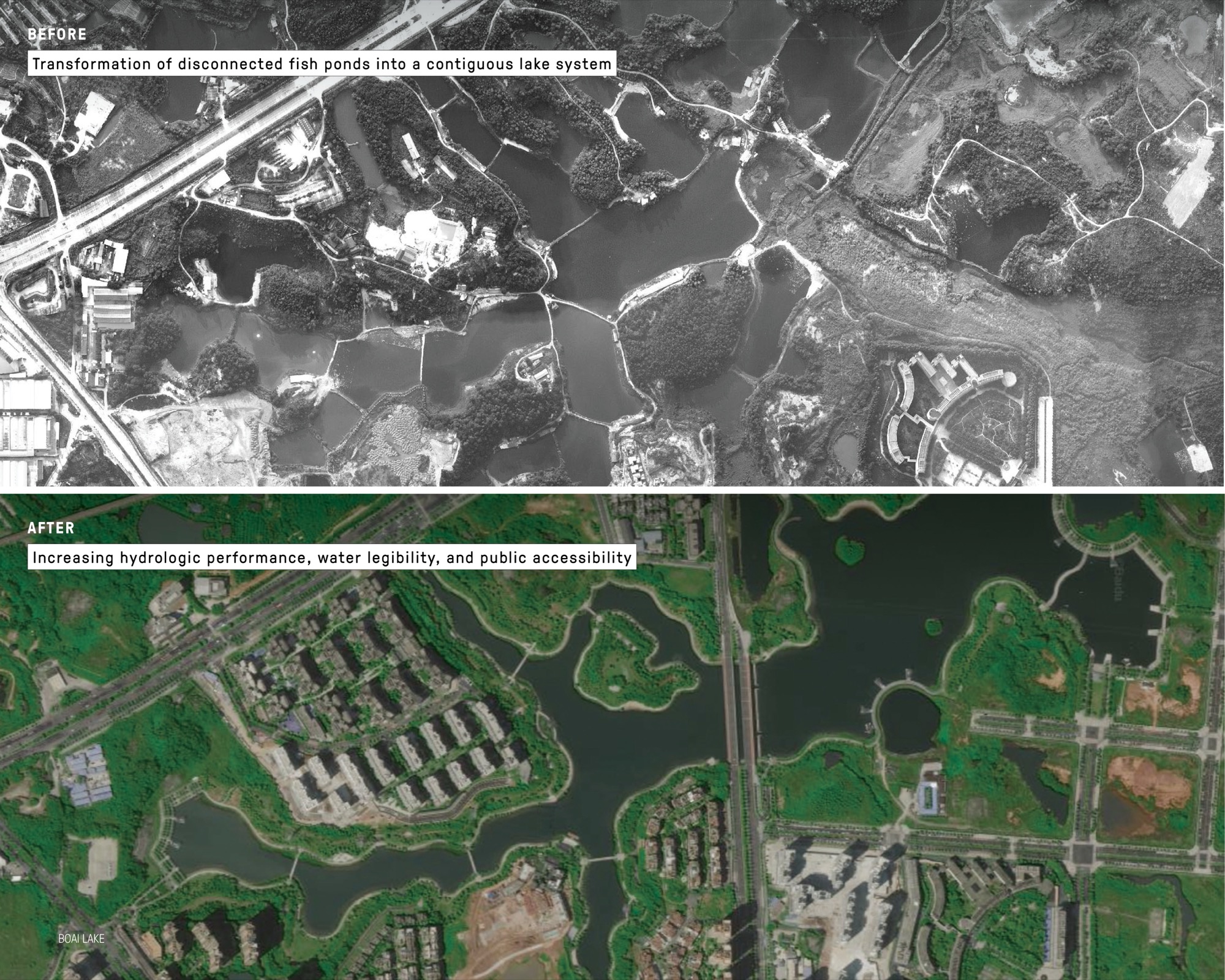
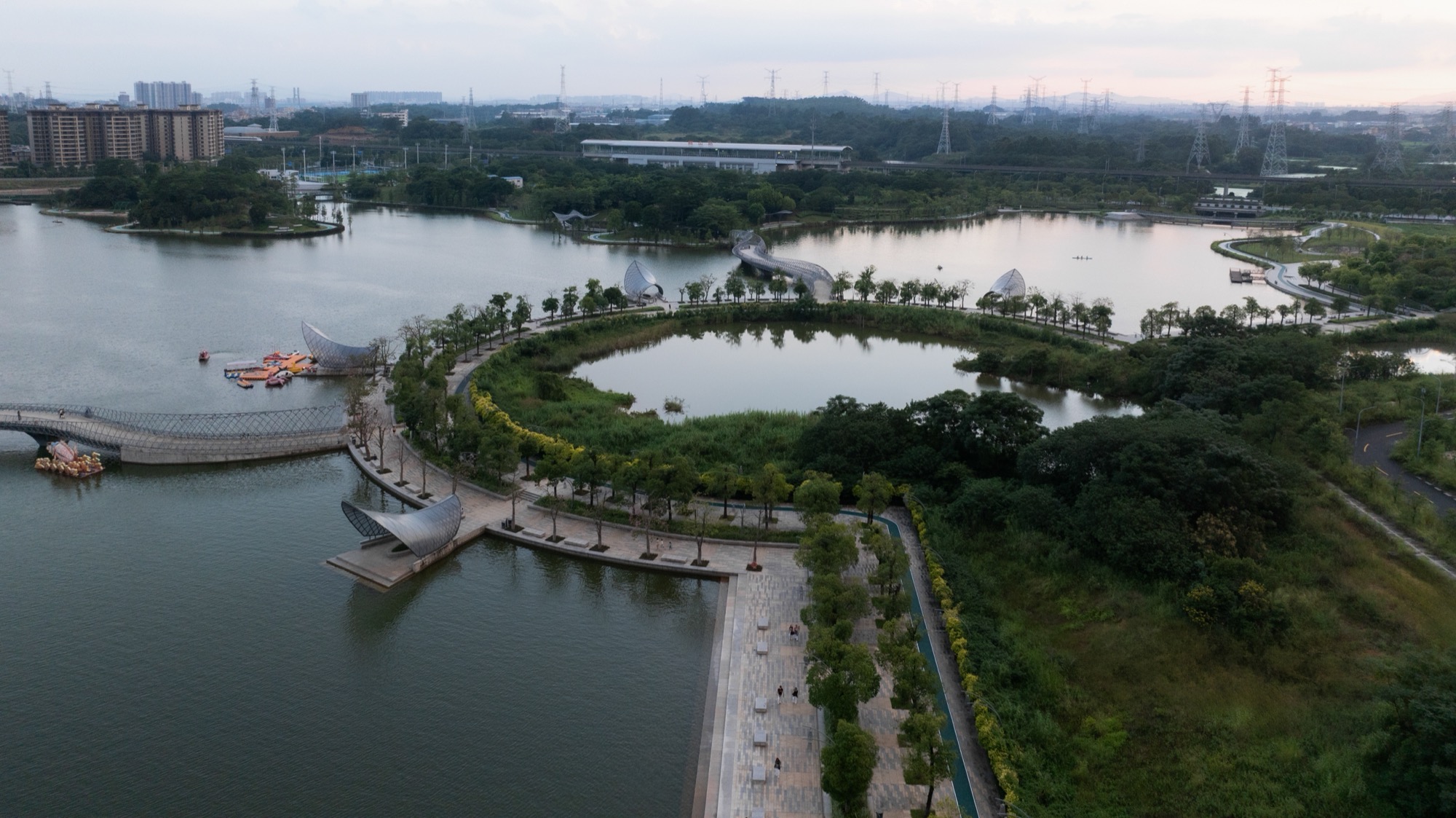
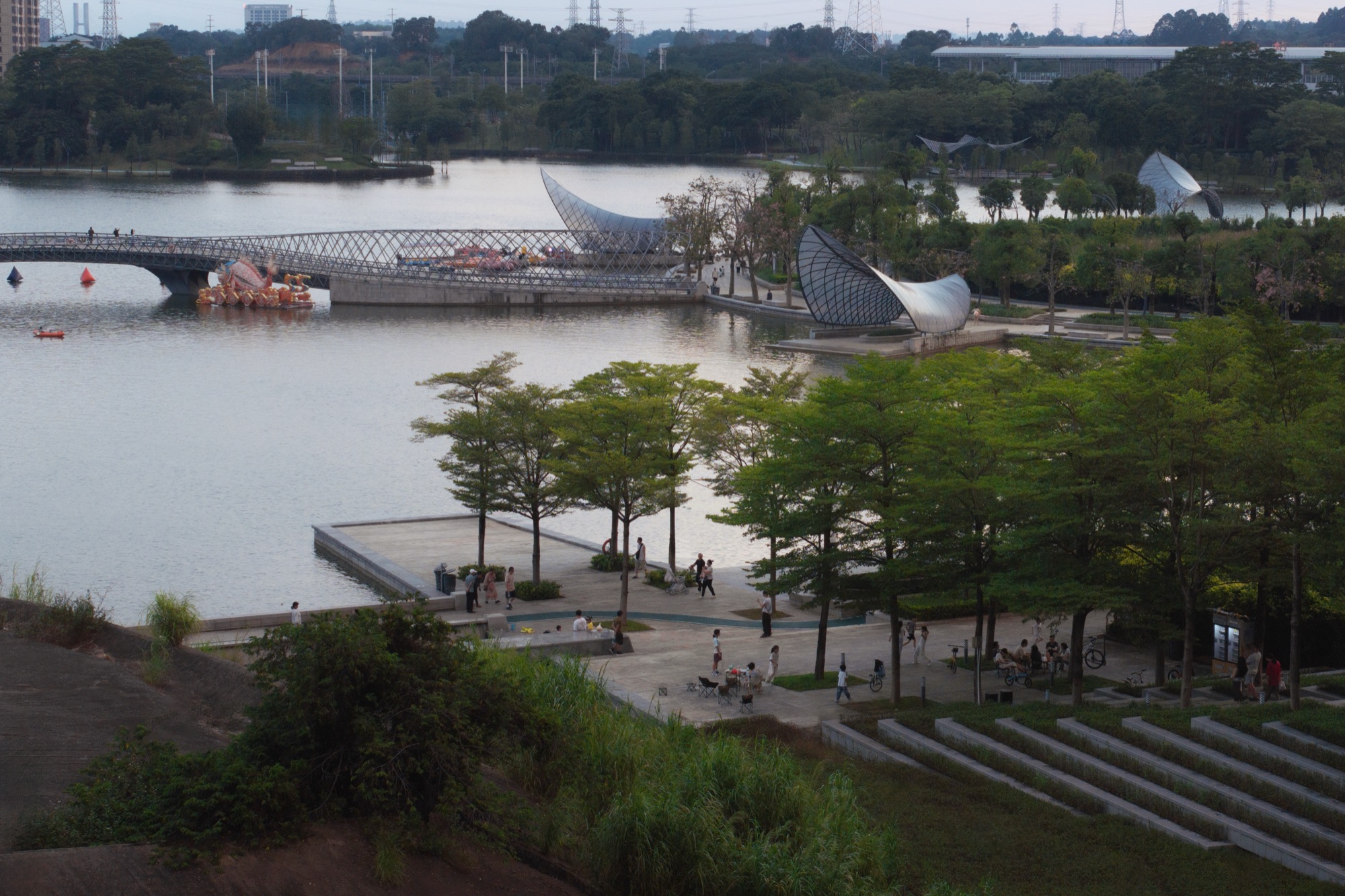
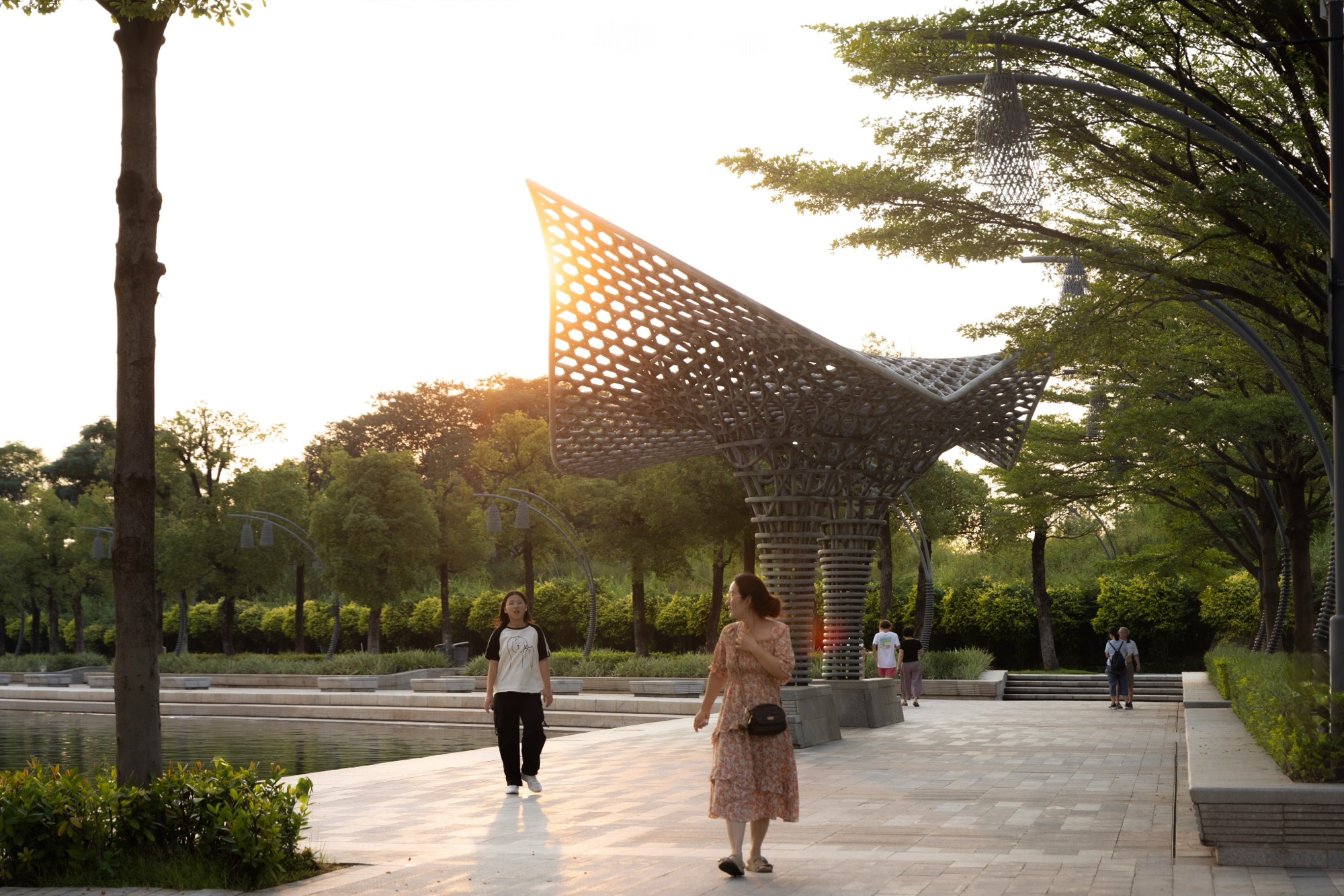
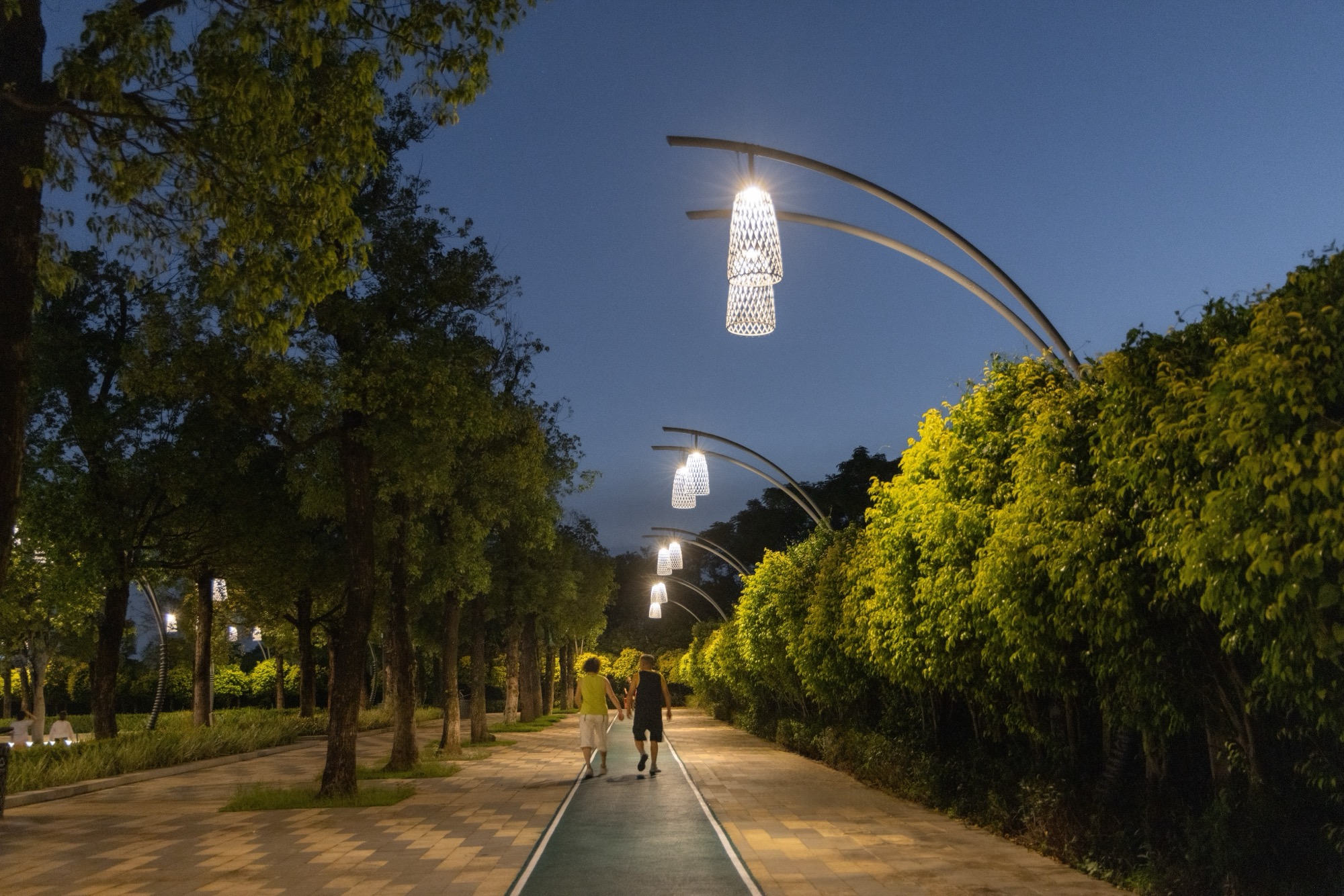
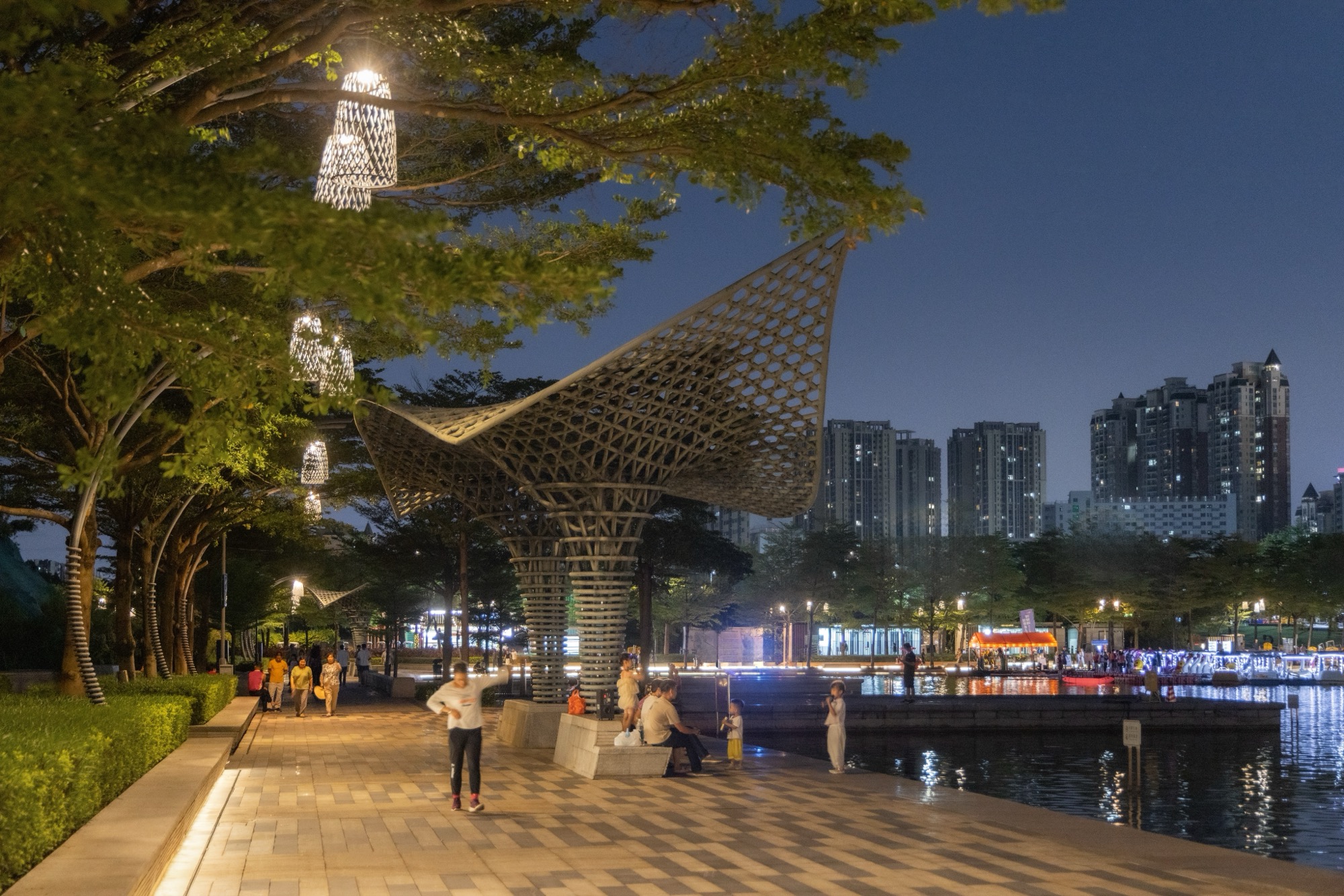
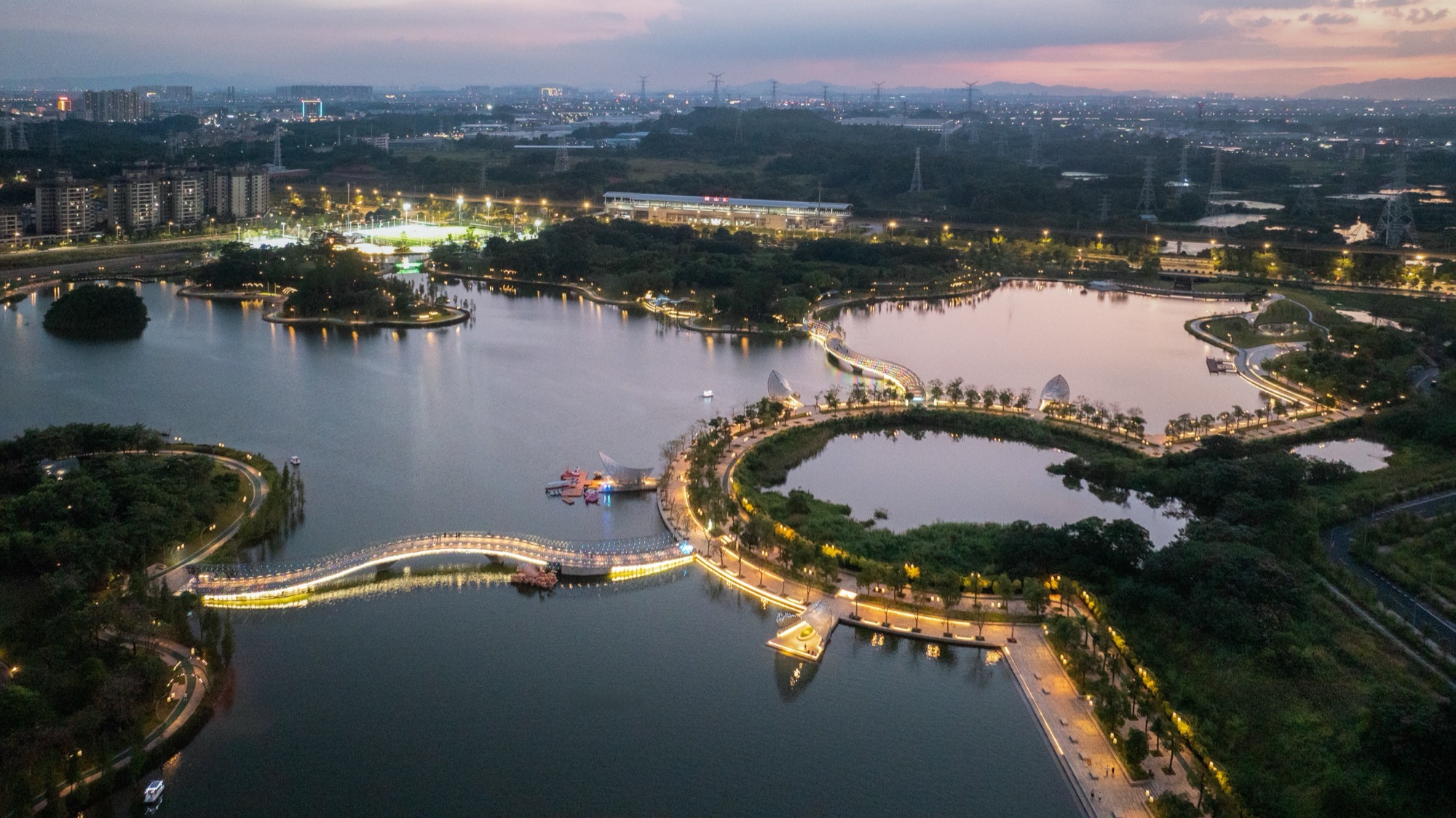
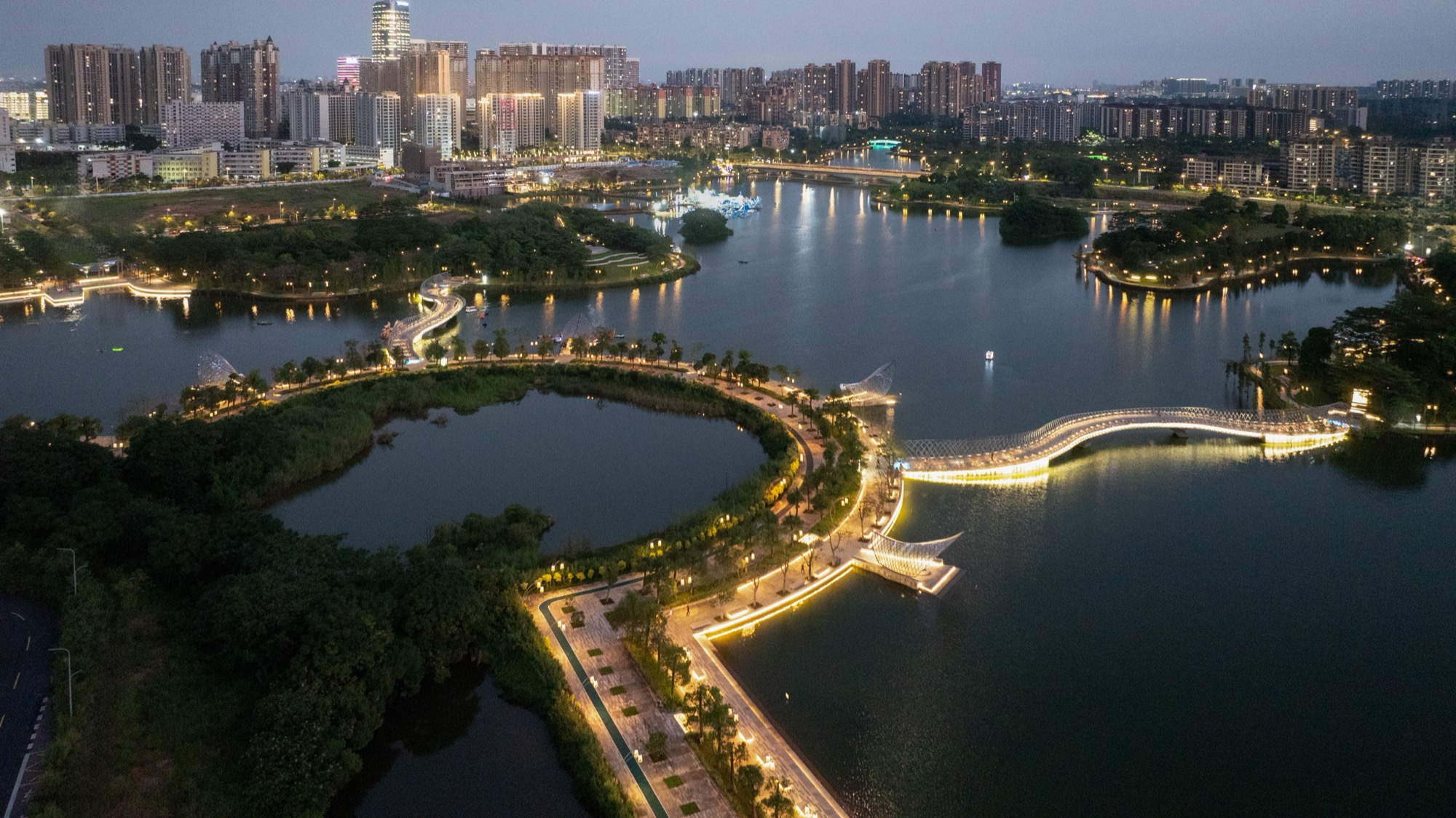
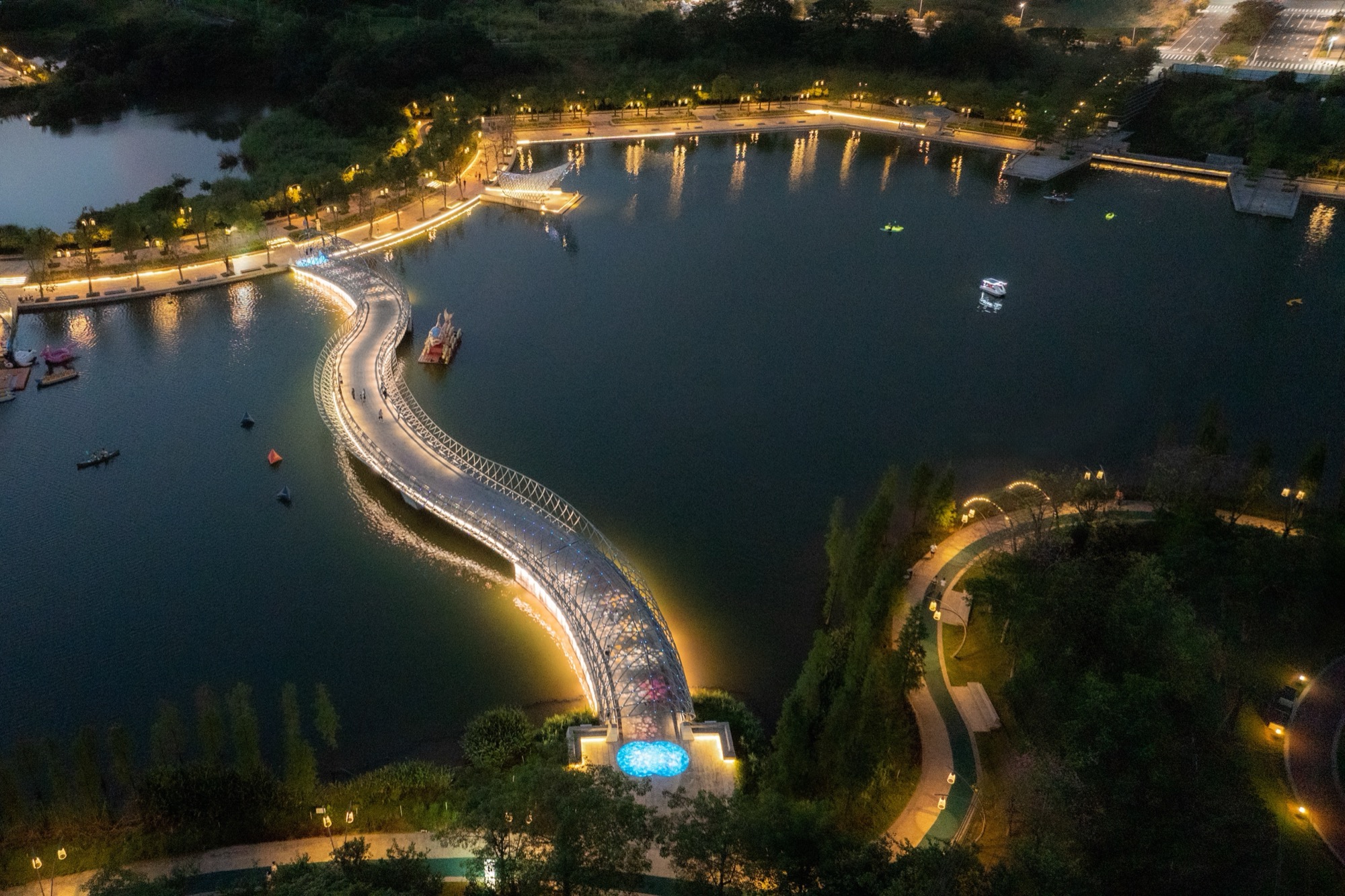
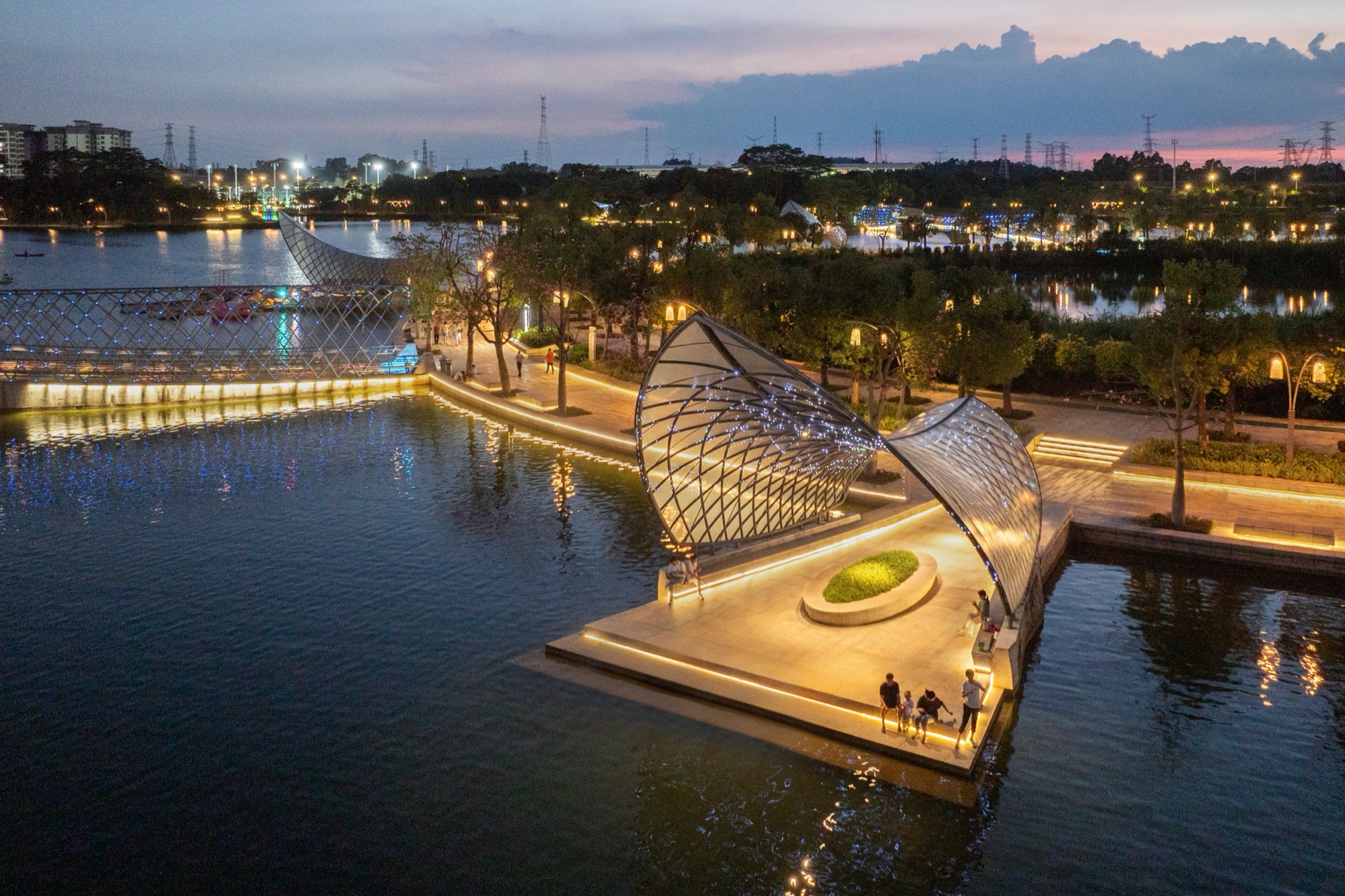
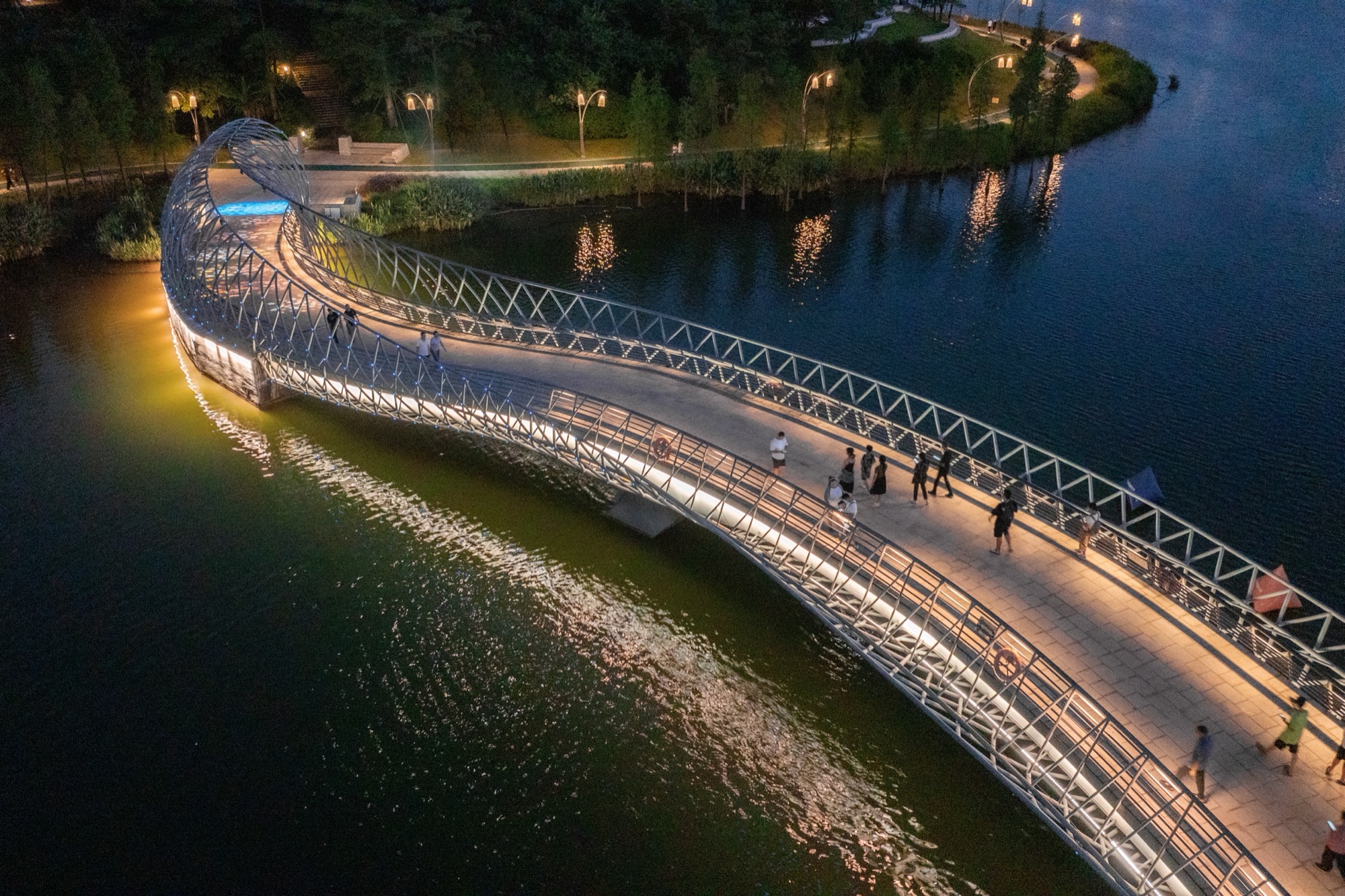
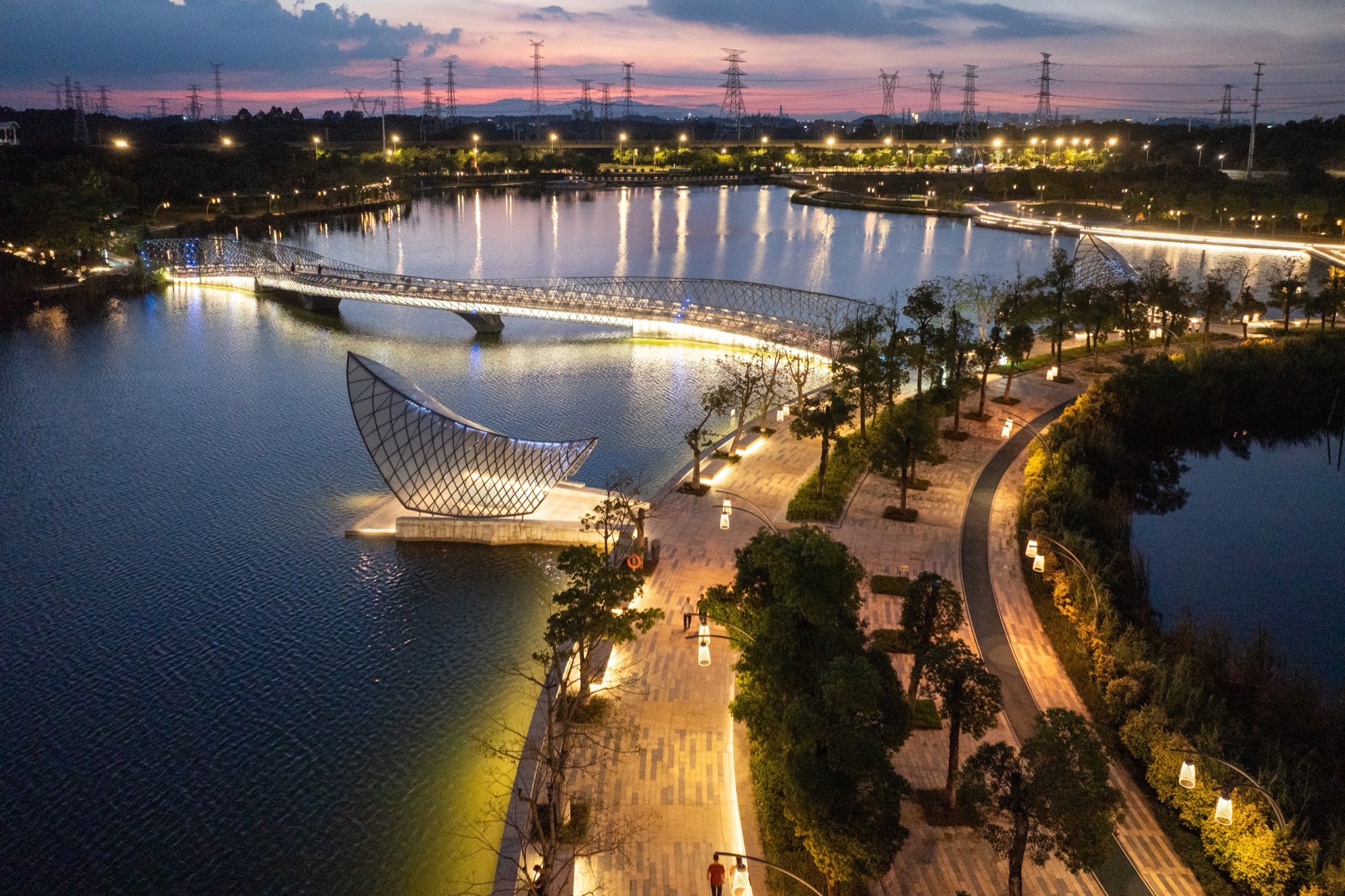
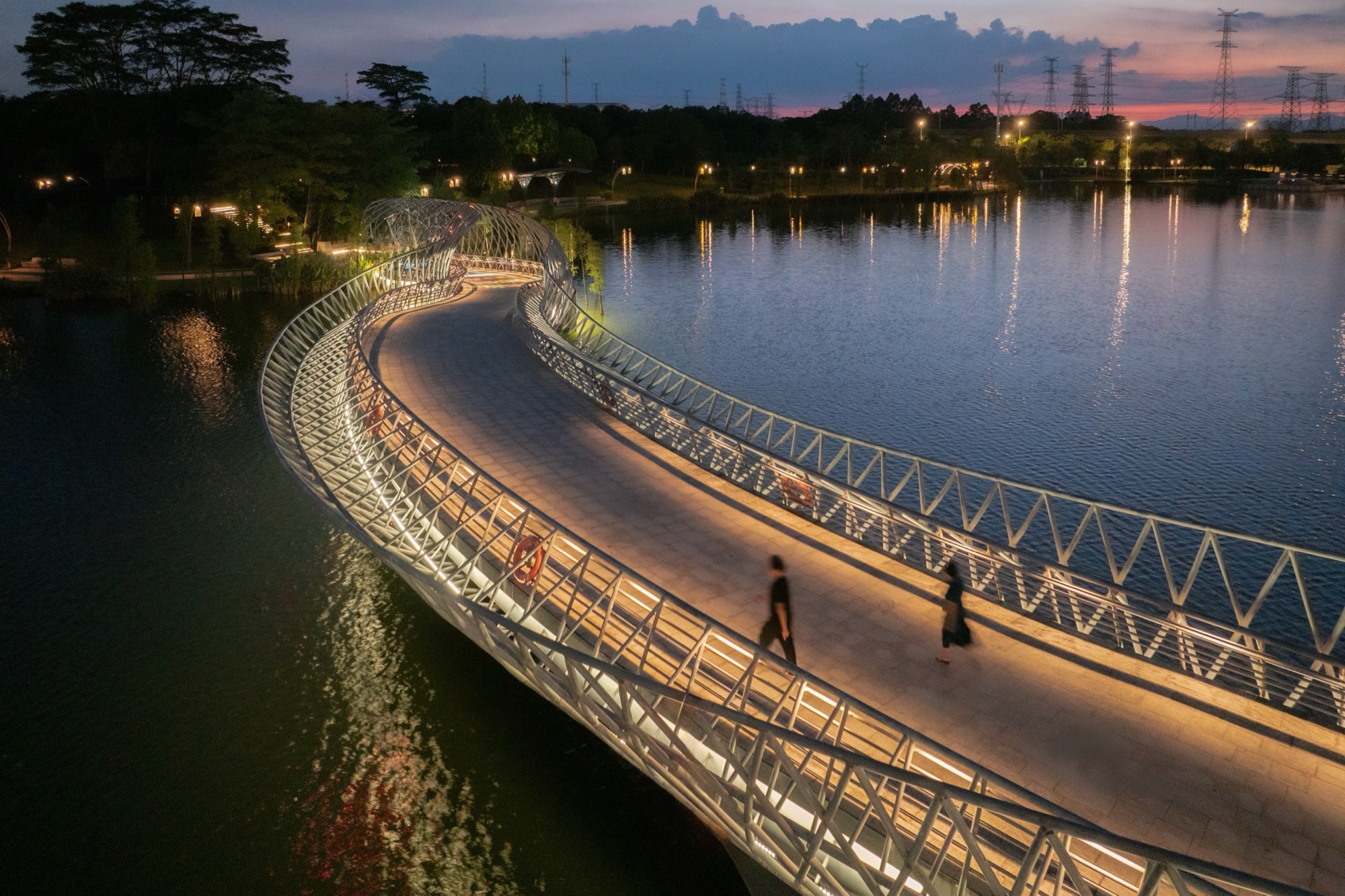
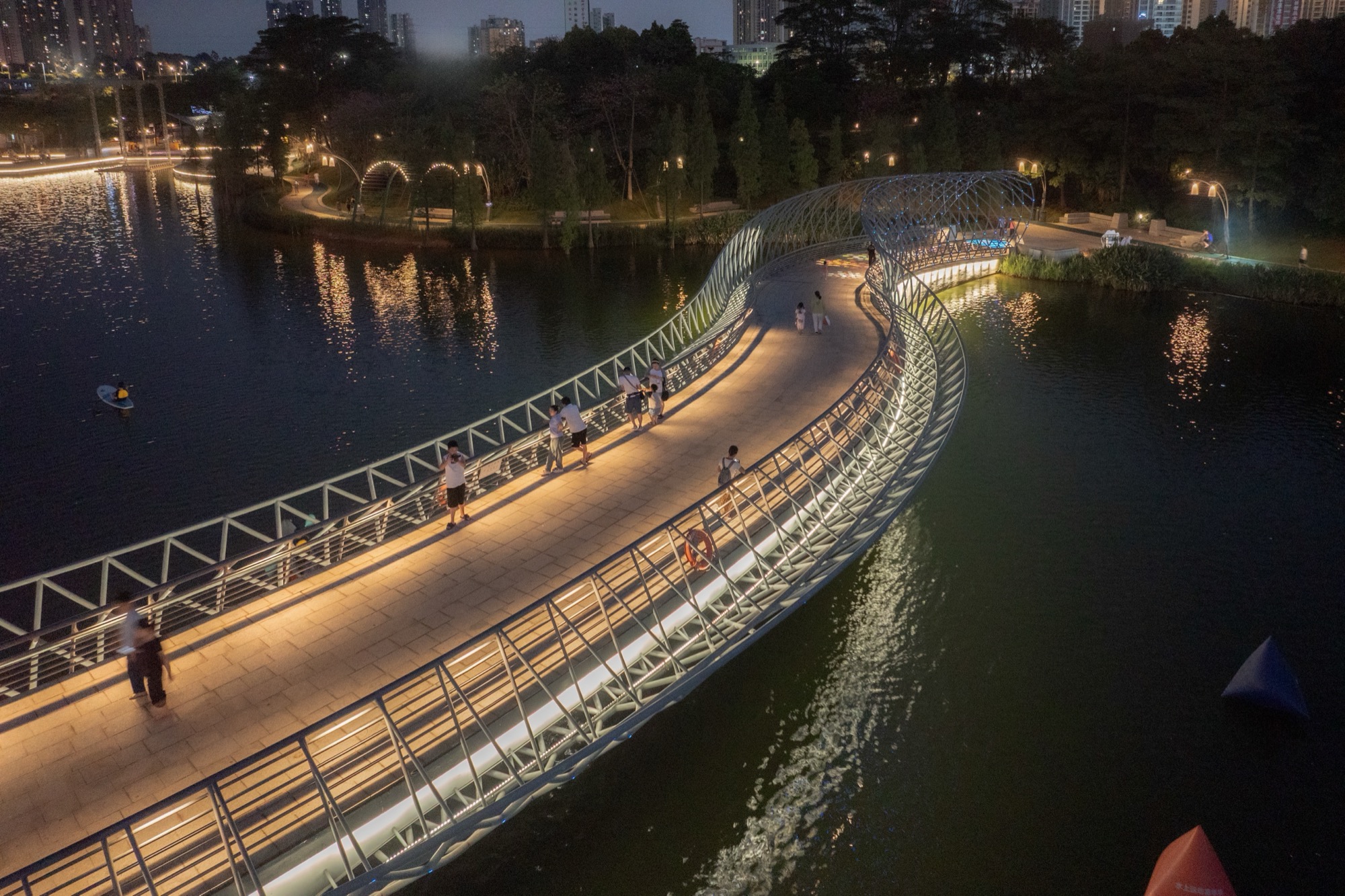
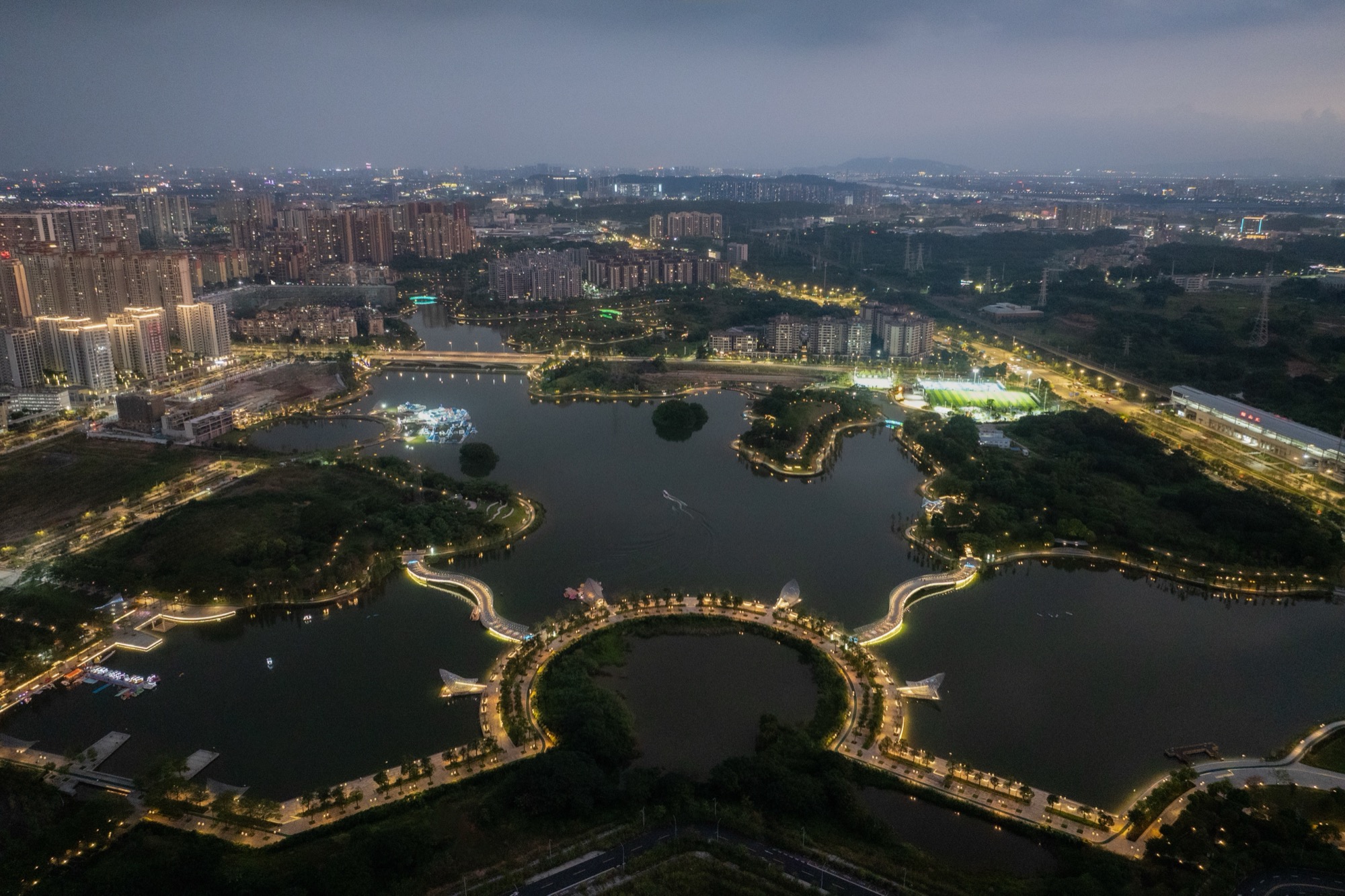
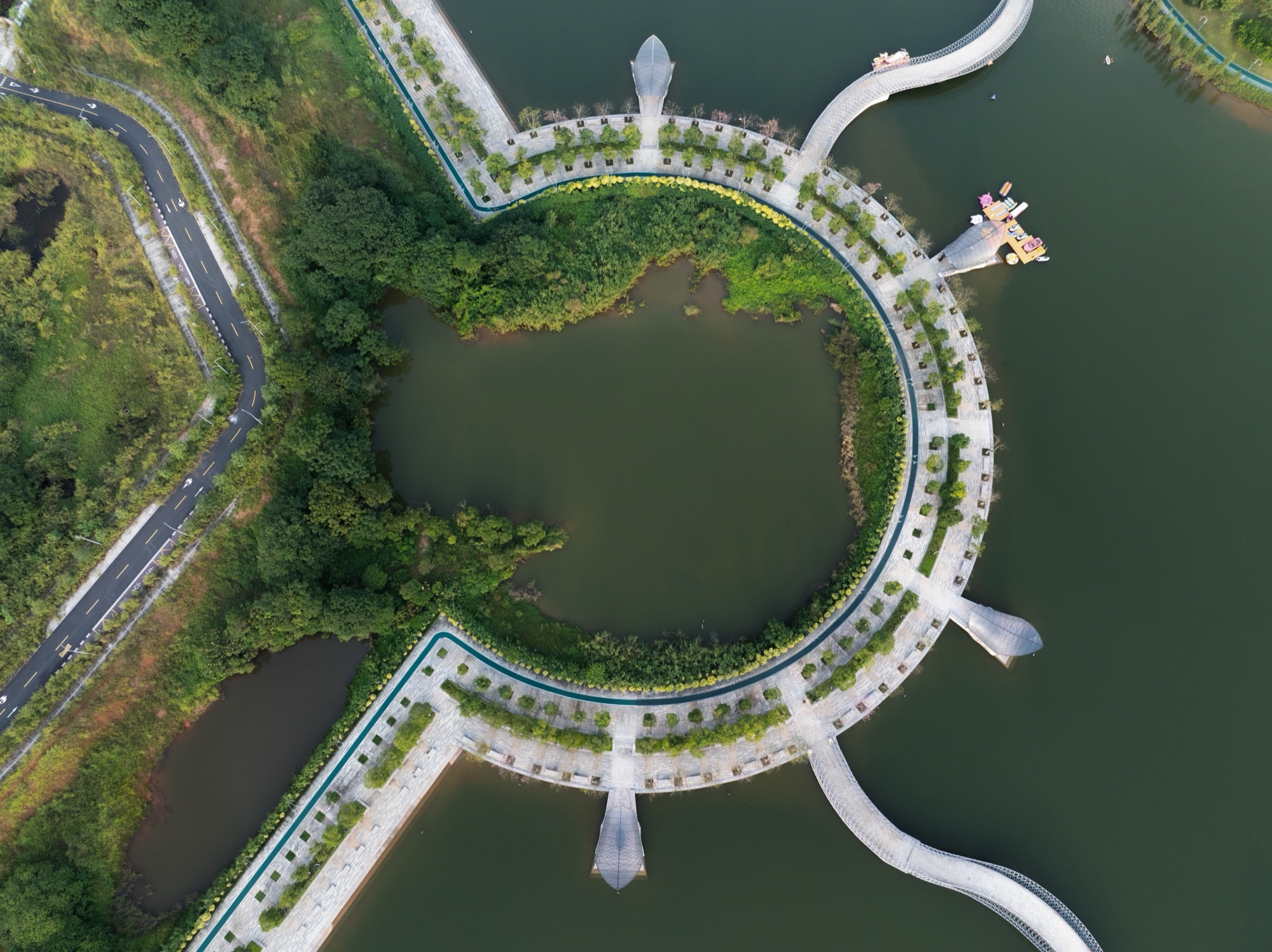
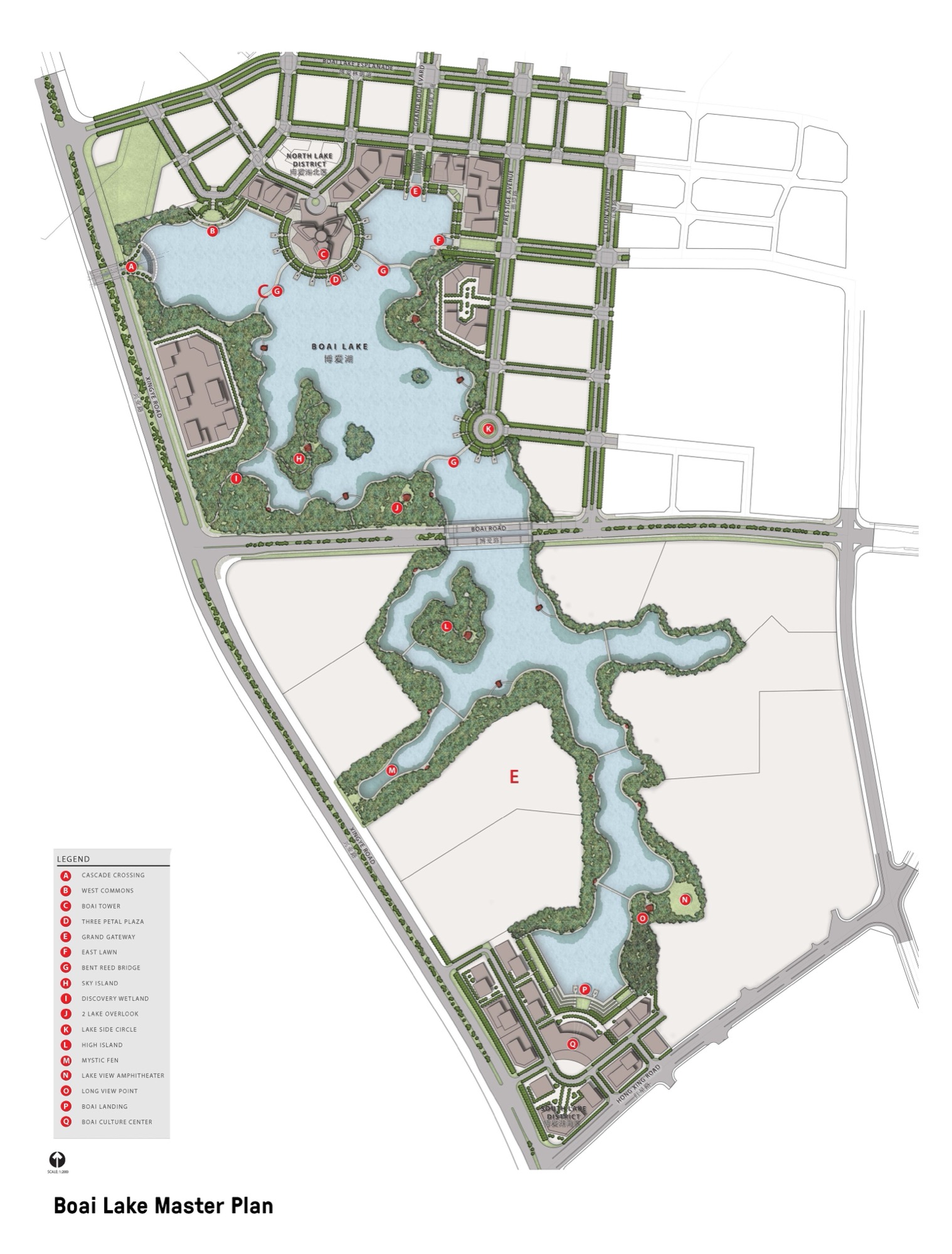
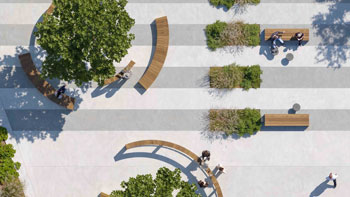
A layered waterfront framework of promenades, bridges, hillside trails, wetlands, sloped lawns, plazas, and event terraces establishes continuous passage along the lake while supporting environmental and hydrologic performance. These elements allow visitors to experience the shoreline from multiple elevations and perspectives with uninterrupted perimeter circulation.
Along the urban edge, a defined community frontage uses a hard lakefront promenade, tree-lined walkways, and gathering terraces that support daily walking, informal assembly, and larger civic use. Toward the preserved forest, the lake transitions to softer ecological edges with wetlands, reforestation areas, and habitat islands, creating a clear gradient between urban development and the natural landscape.
The waterfront operates safely across variable conditions. Multi-elevation promenades, stepped terraces, and flood-tolerant lawns accommodate seasonal fluctuations and periodic inundation without structural failure, allowing the landscape to adapt to hydrologic change while remaining publicly accessible.
A distributed framework of wetland benches, treatment wetlands, bioswale corridors, and vegetated shoreline edges filters stormwater, moderates runoff, and improves water quality. These systems make environmental processes visible from paths, bridges, and overlooks, supporting community understanding of landscape performance.
Environmental responsibility is reinforced through balanced earthwork, reuse of on-site soils, and replacement of rigid shoreline structures with planted living edges, prioritizing material efficiency, constructability, and long-term resilience.
Climate-forward strategies are embedded throughout the project and aligned with the ASLA Climate Action Plan’s goals for mitigation, resilience, biodiversity, and equity. Approximately 22 hectares of reforestation areas, habitat islands, and wetland planting zones support ecosystem connectivity and carbon sequestration potential. Planted shorelines reduce reliance on hard retaining structures while expanding filtration capacity and biodiversity.
Continuous tree canopy along promenades and hillside trails creates shaded pedestrian environments that improve thermal comfort and encourage outdoor use in Foshan’s humid conditions. By framing climate-responsive systems as accessible gathering space, the project distributes environmental, cultural, and recreational benefits across adjacent communities.
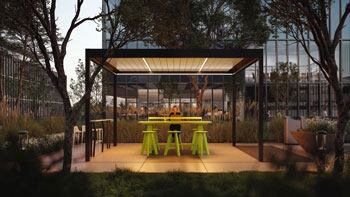
Signature structures, including bridges, pavilions, overlooks, and waterfront gathering spaces, create recognizable landmarks that organize movement, frame views, and support community activity around the lake. Since completion, the lake has become widely recognized as the “living room of Shishan,” serving as a central setting for neighborhood gatherings and cultural events, including dragon boat races and lantern festivals.
While these civic programs are municipally led, the landscape’s spatial capacity, access, and flexibility enable such uses within a functioning ecological system. What was once a fragmented and inaccessible aquaculture landscape now performs as a climate- resilient hydrologic system, a continuous ecological corridor, and a connected civic waterfront.
Client: Foshan Nanhai Boai investment and Development Co. LTD
Engineer: Shenzhen BIY Landscape, Architecture and Planning Design Institute Co., Ltd.
Landscape Architect: SWA Group
SWA Group Team:
Kevin Shanley, Principal-in-Charge
Matt Baumgarten, Design Principal
Jiyoung Nam, Associate Principal
23.127781, 112.981918
74061


LILA 2026 Sponsor