Central Squares in Koprivnica
nfo.hr/
2026 Landscape and Architecture / 2026 Public Projects / Croatia / Built in 2023 /
EXISTING CONDITION
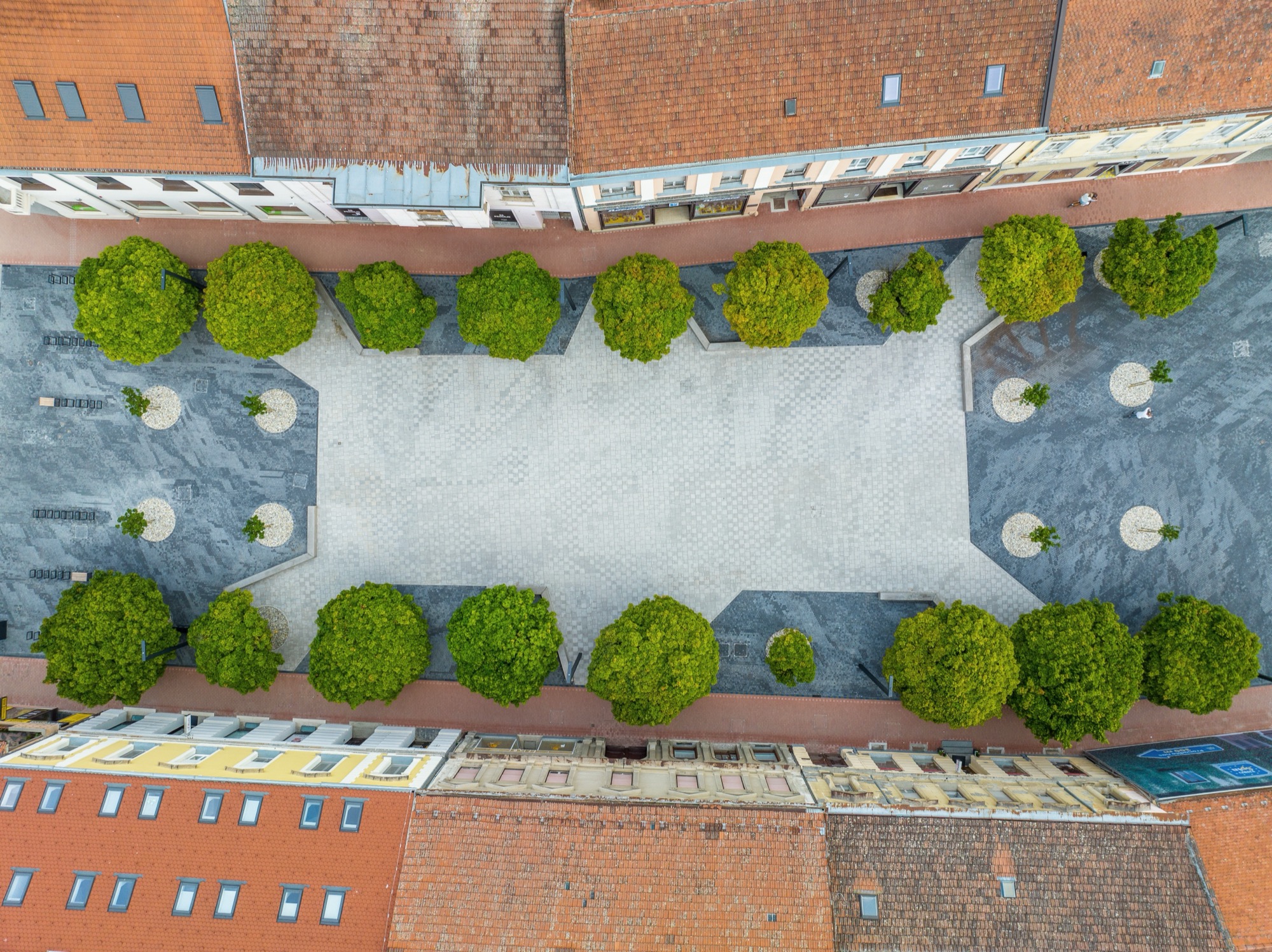
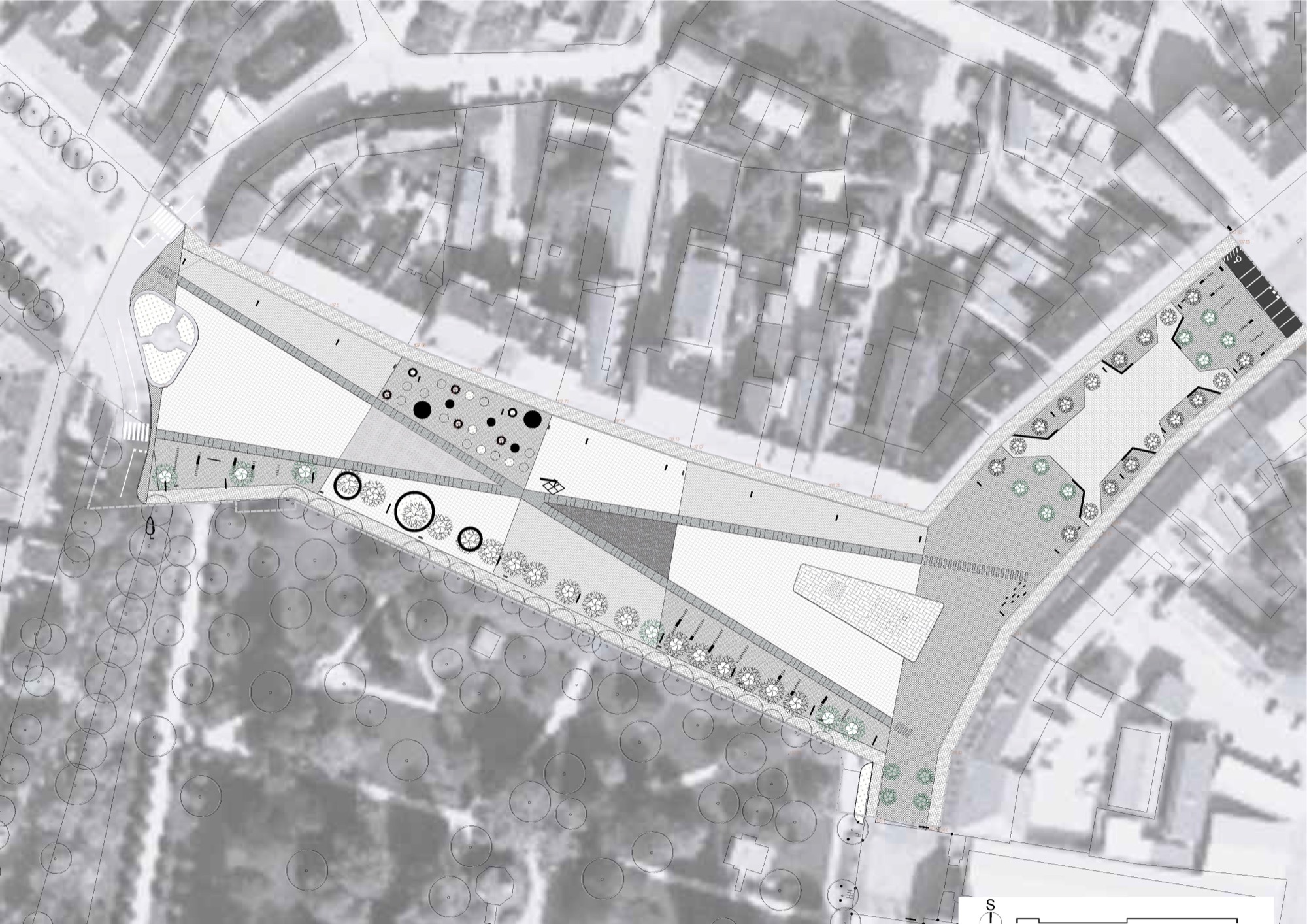
The area of intervention can be segmented into three zones that form logical spatial units: Ban Jelačić square : a wide street with trees that occasionally hosts seasonal events; a square in front of the market: generator of the largest daily pedestrian and bicycle traffic; and the main city square Zrinski: an apparently oversized square bounded on one side by the green facade of city park, and on the other side by the facade of an unfinished block of various contents and the city hall to the east and the old “Podravka” building in the west. Each of the mentioned spaces has a specific potential that distinguishes it from others, and the possibility of joining the system of public spaces in the center of Koprivnica.
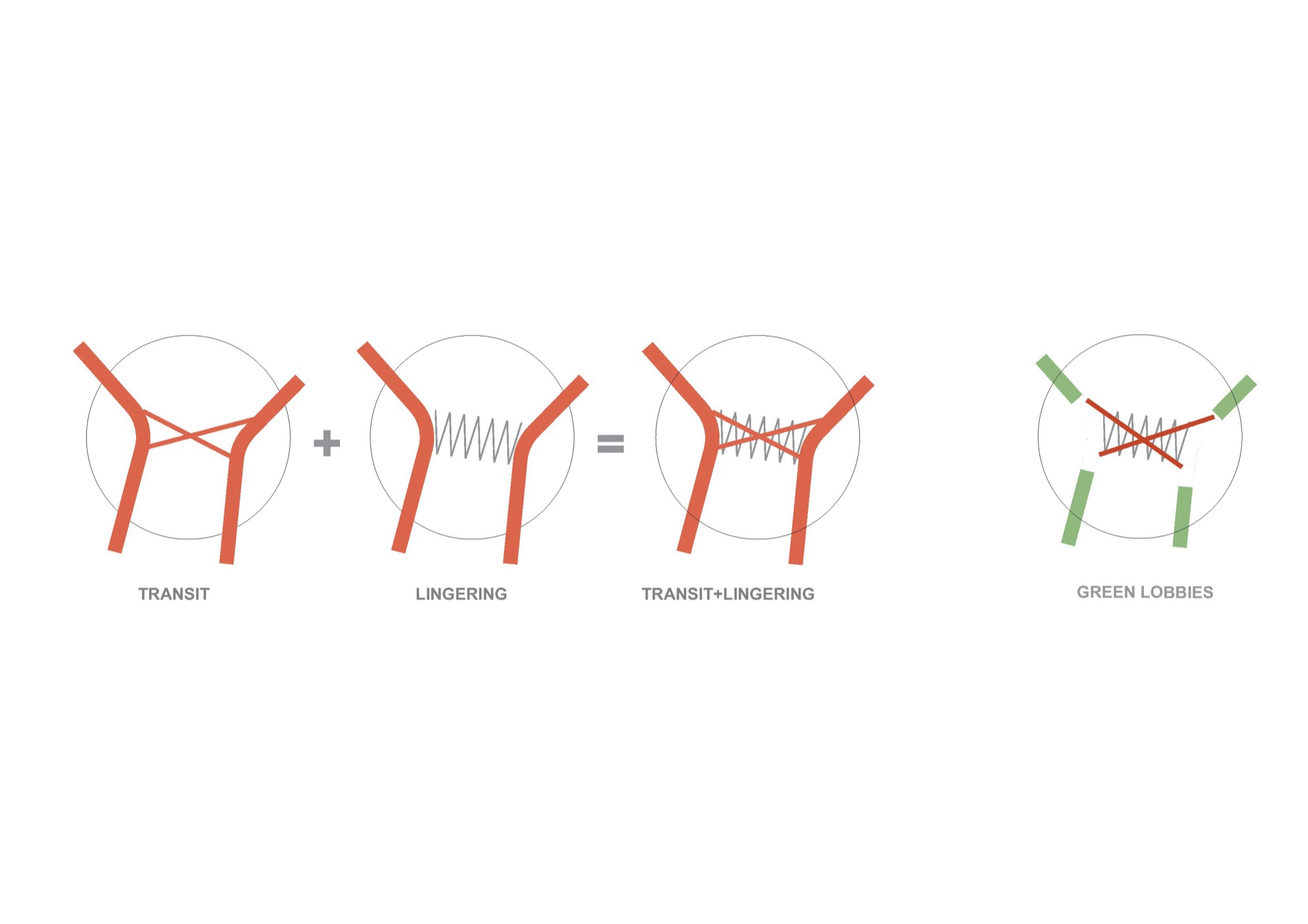
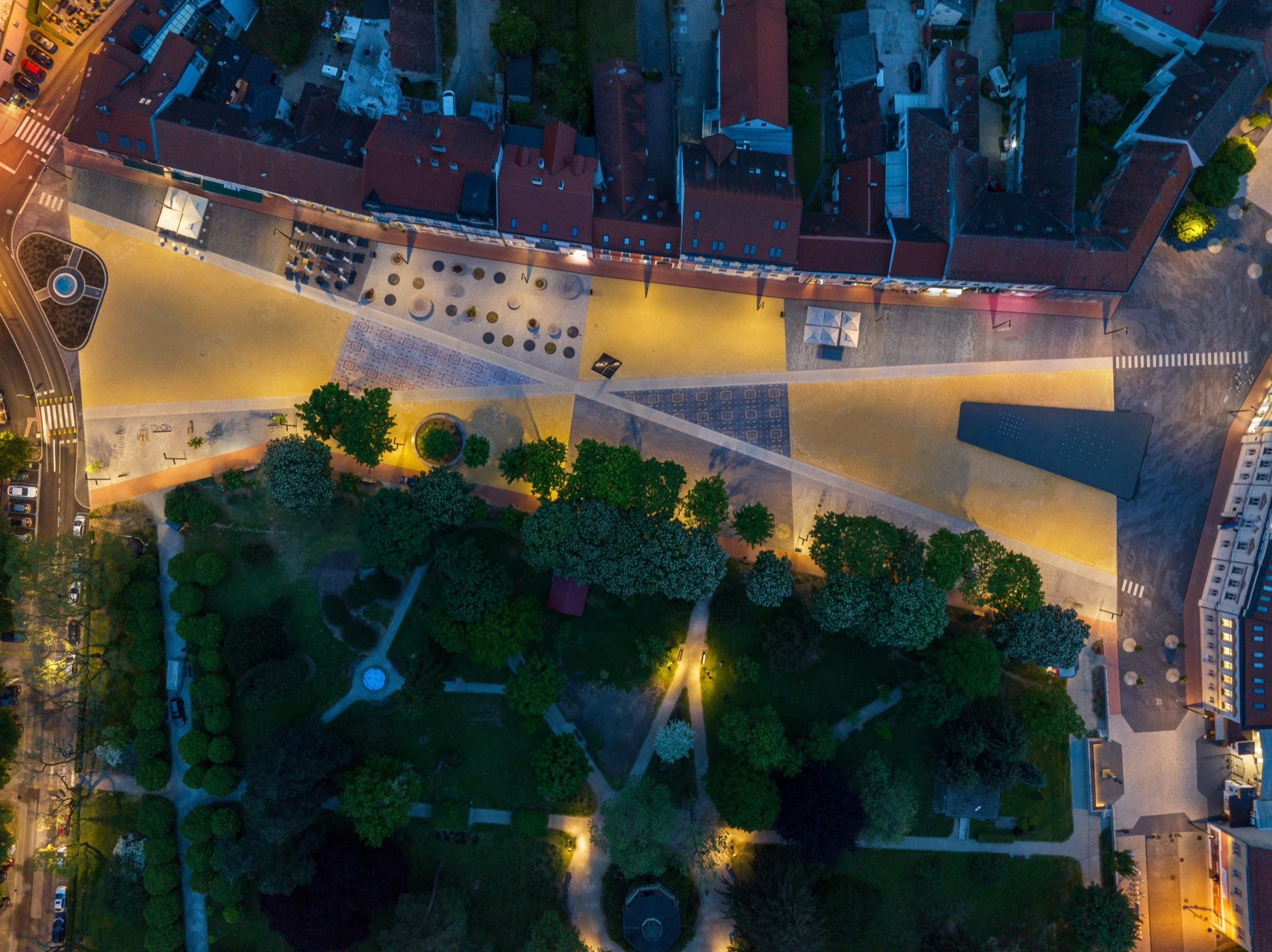
The main square of Zrinski, seen from the air, acts as an intersection of roads and pedestrian wpaths stretched between streets and smaller squares in the east and west. This spatial tension has made the main square of Koprivnica a transit place: a space defined more by flow and movement, and less by lingering and everyday activities. With intuitive lines of movement, cyclists bypass the vast empty space “cutting” the square diagonally in order to get from one end to the other as quickly as possible.
CONCEPT
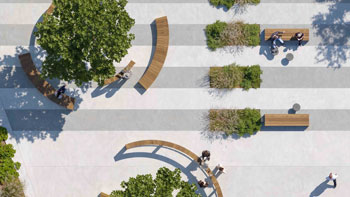
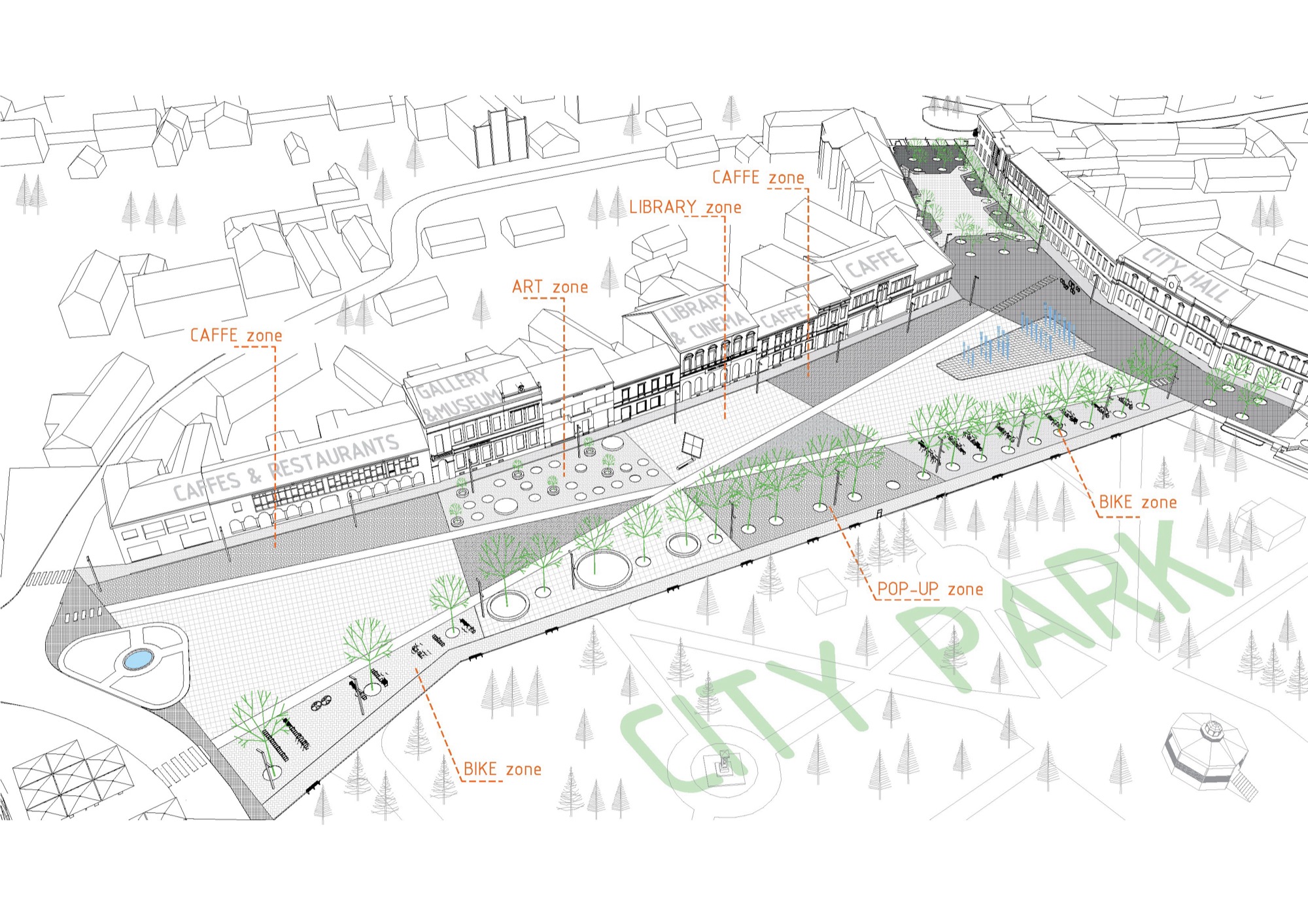
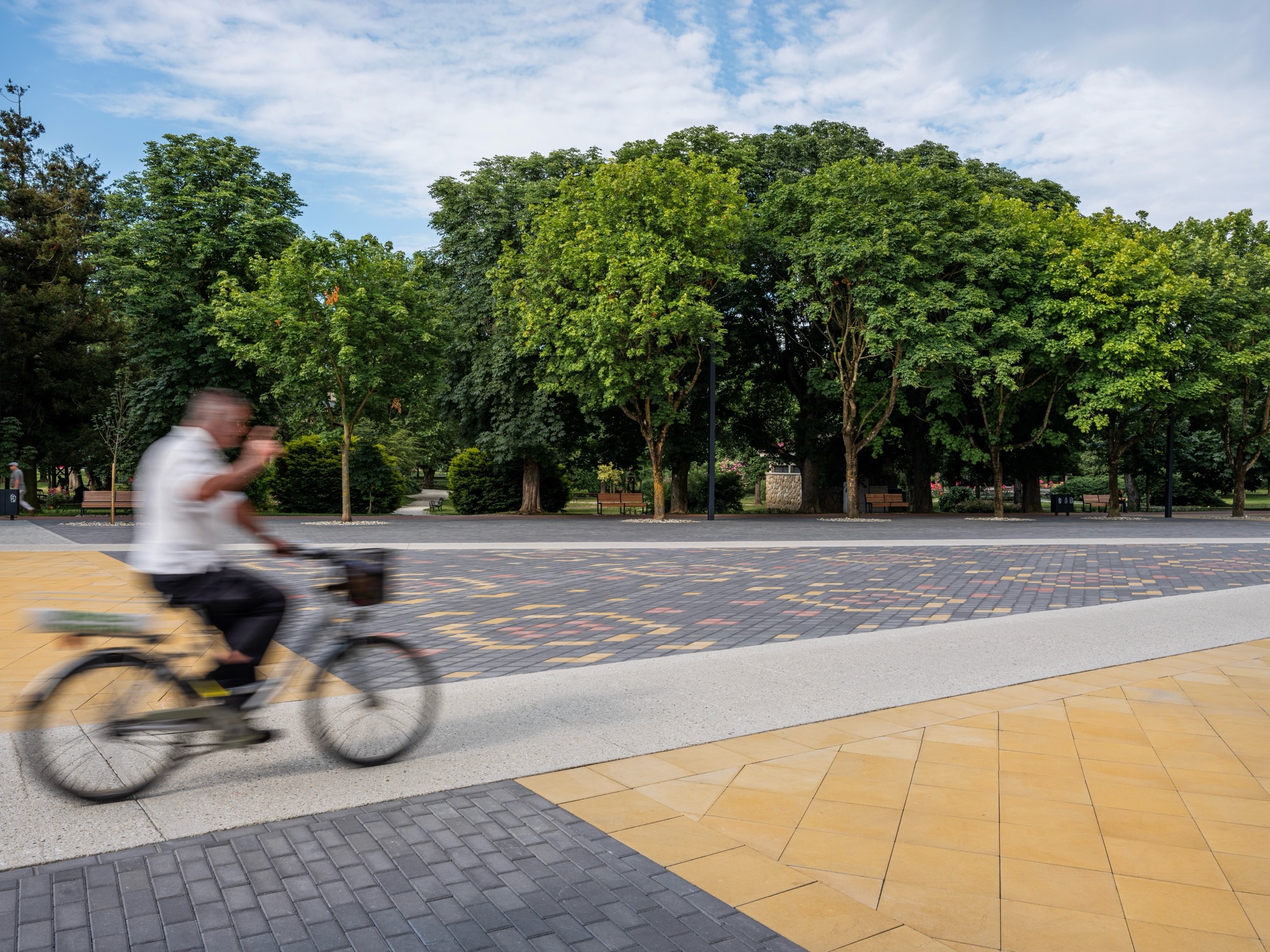
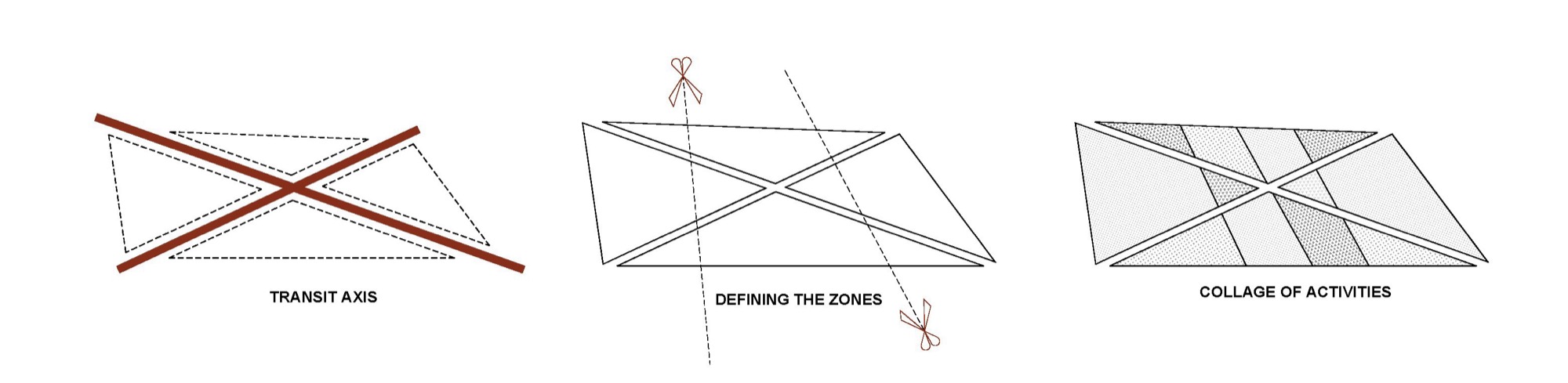
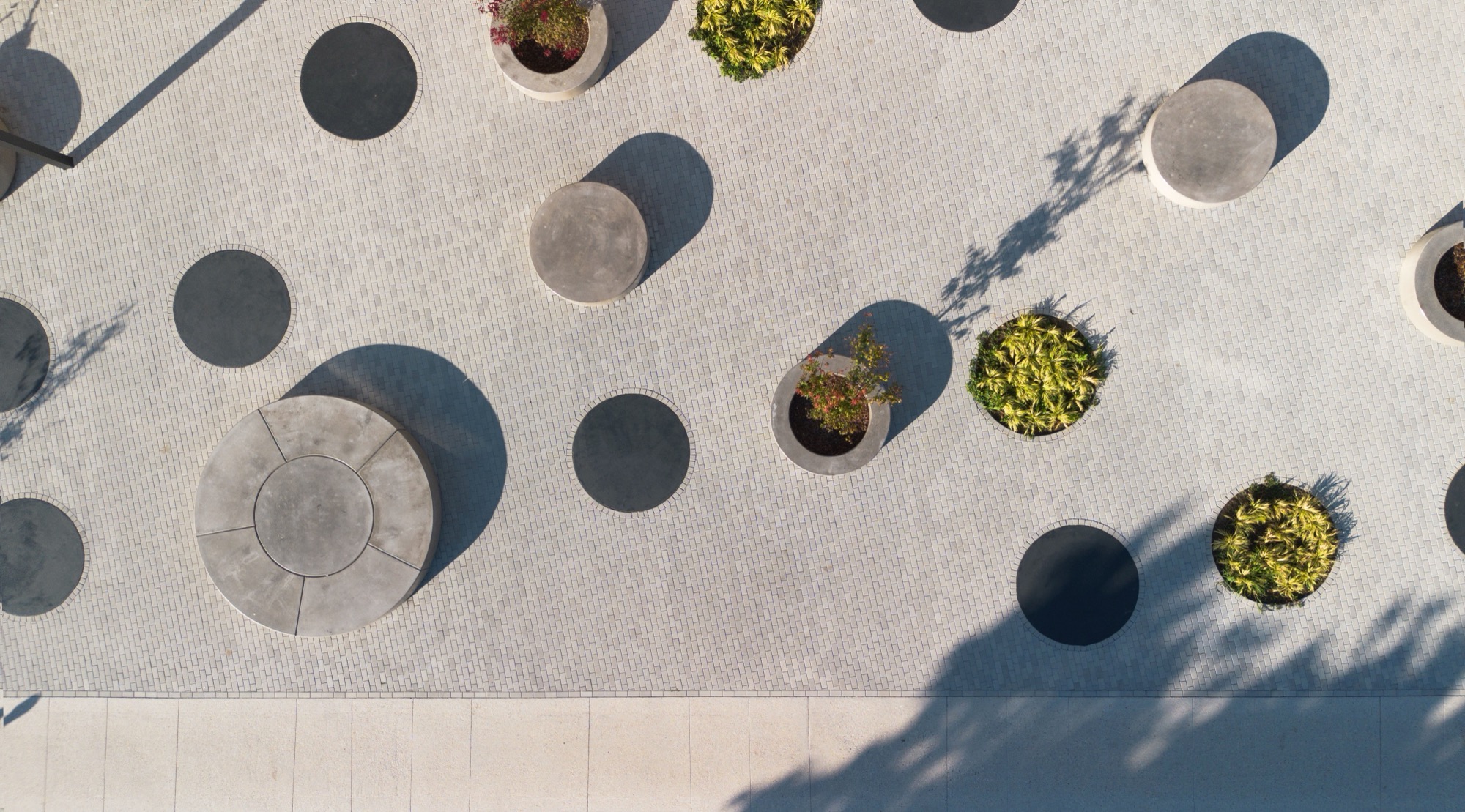
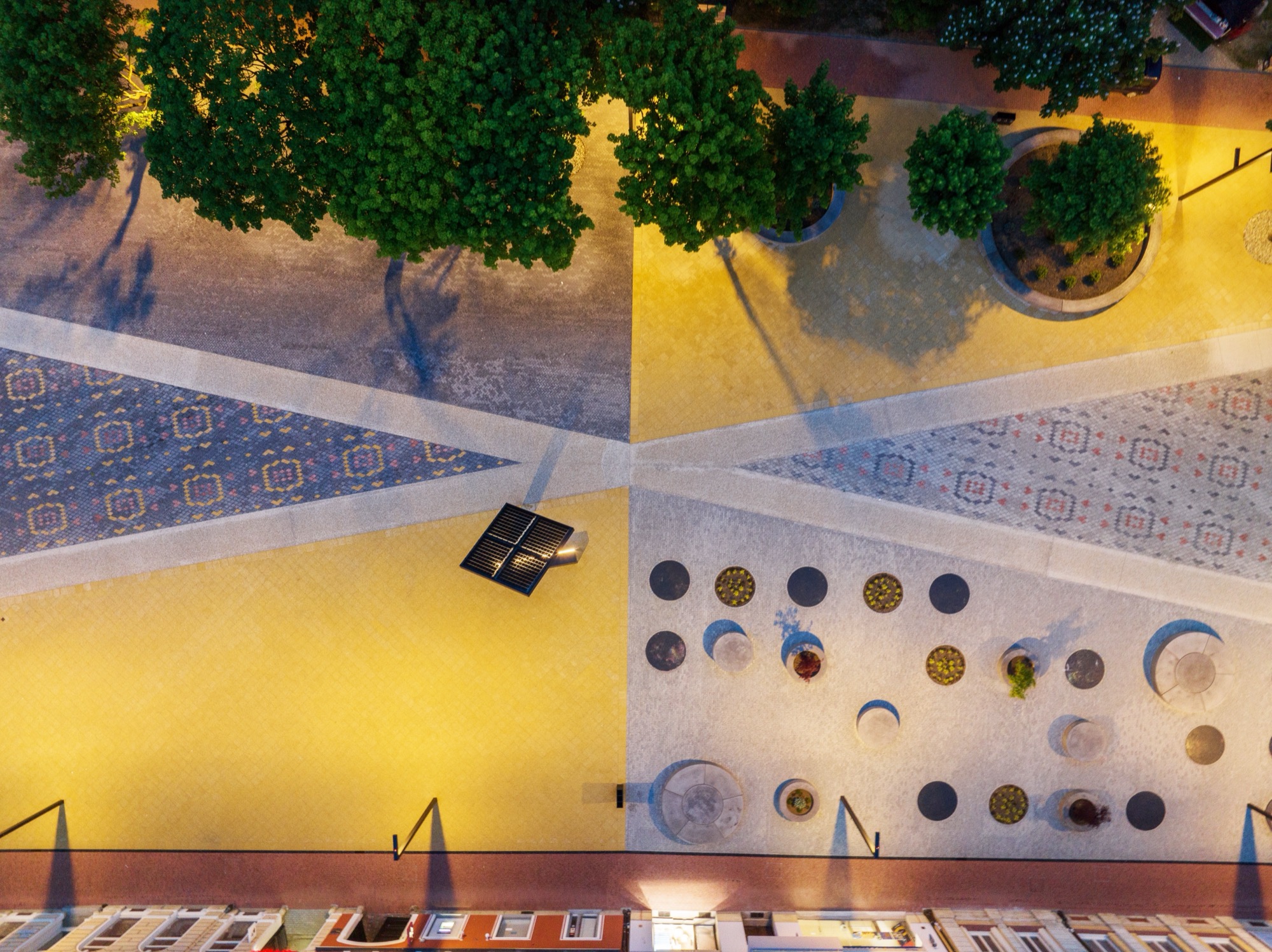
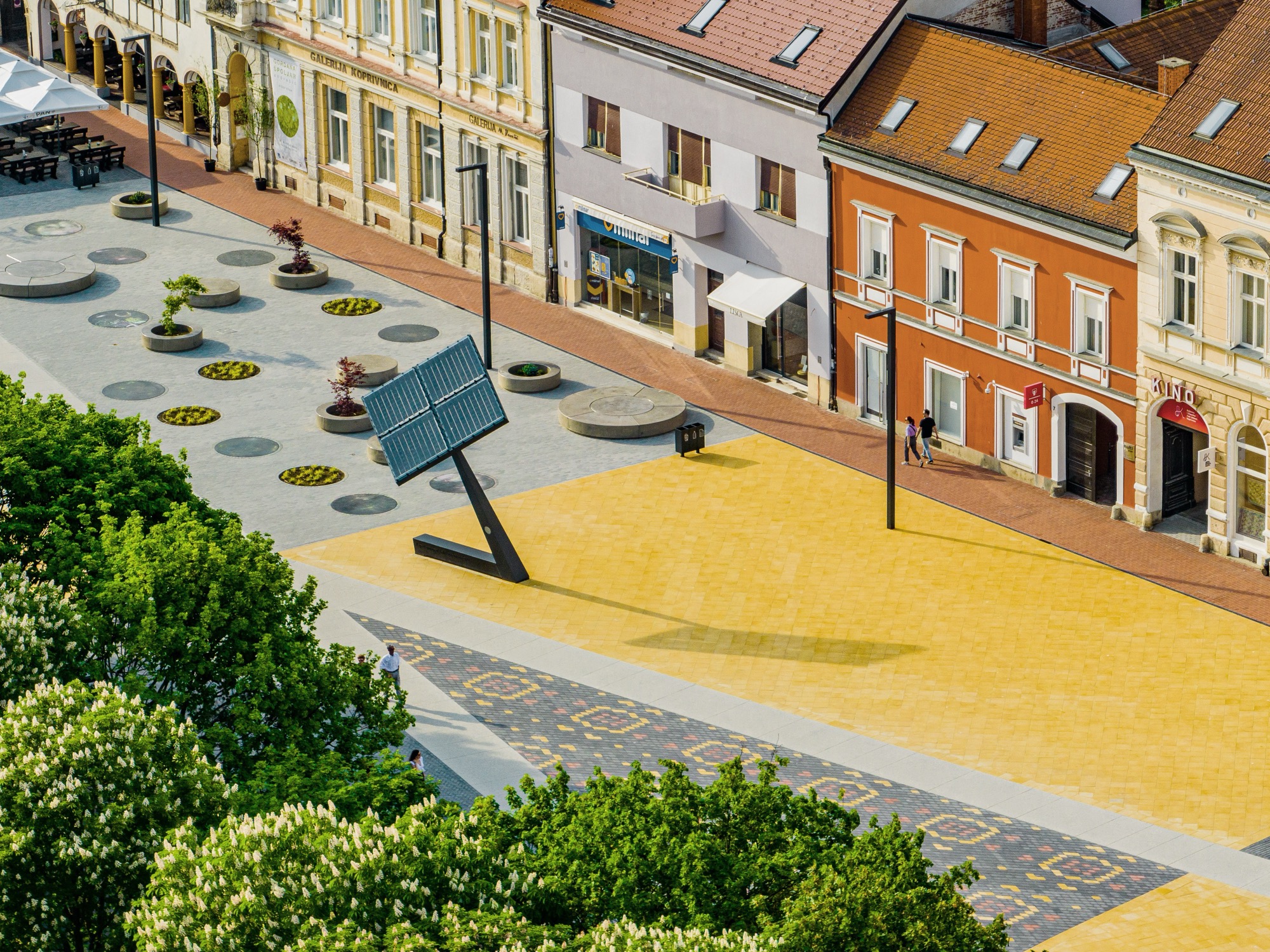
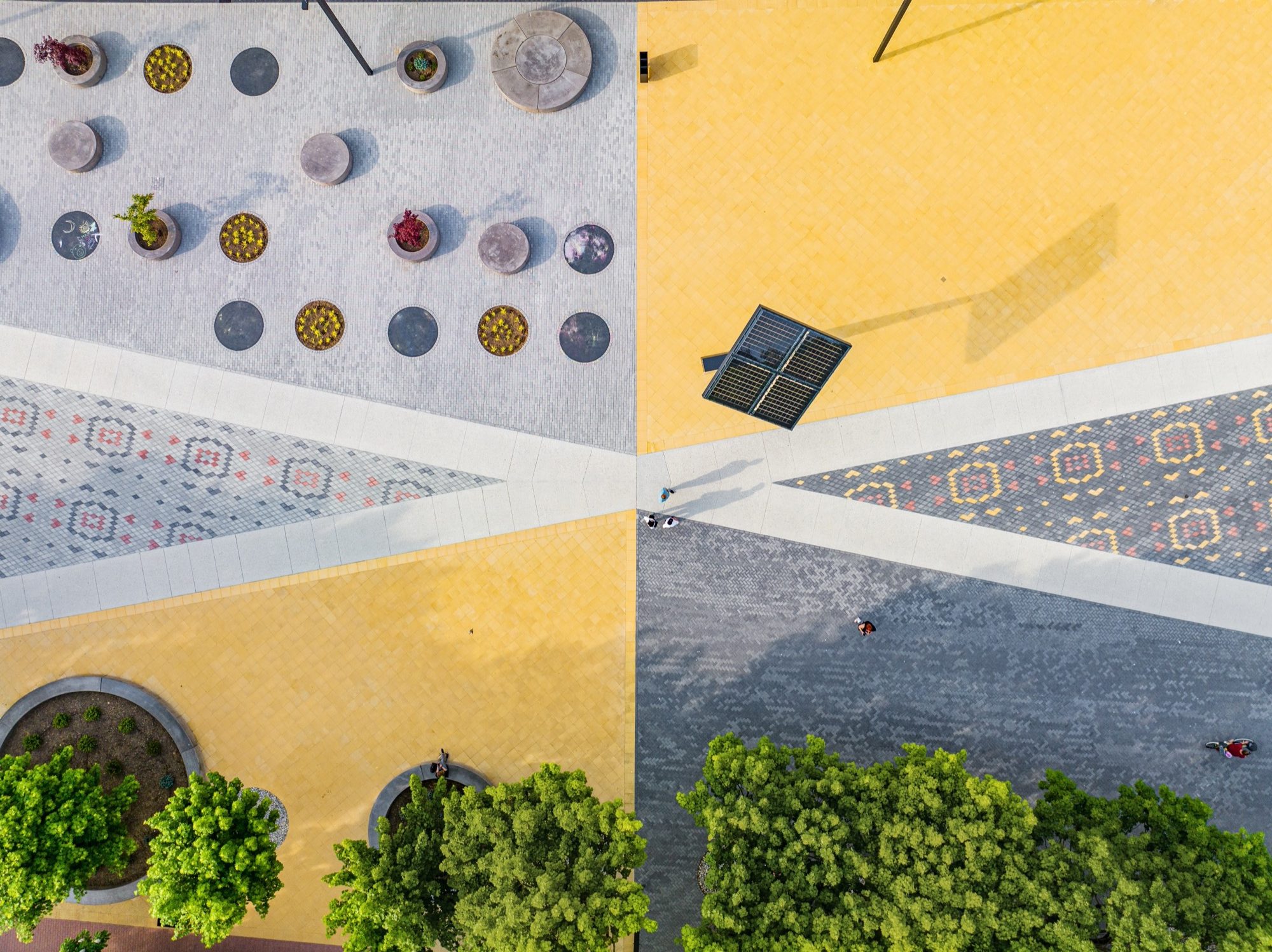
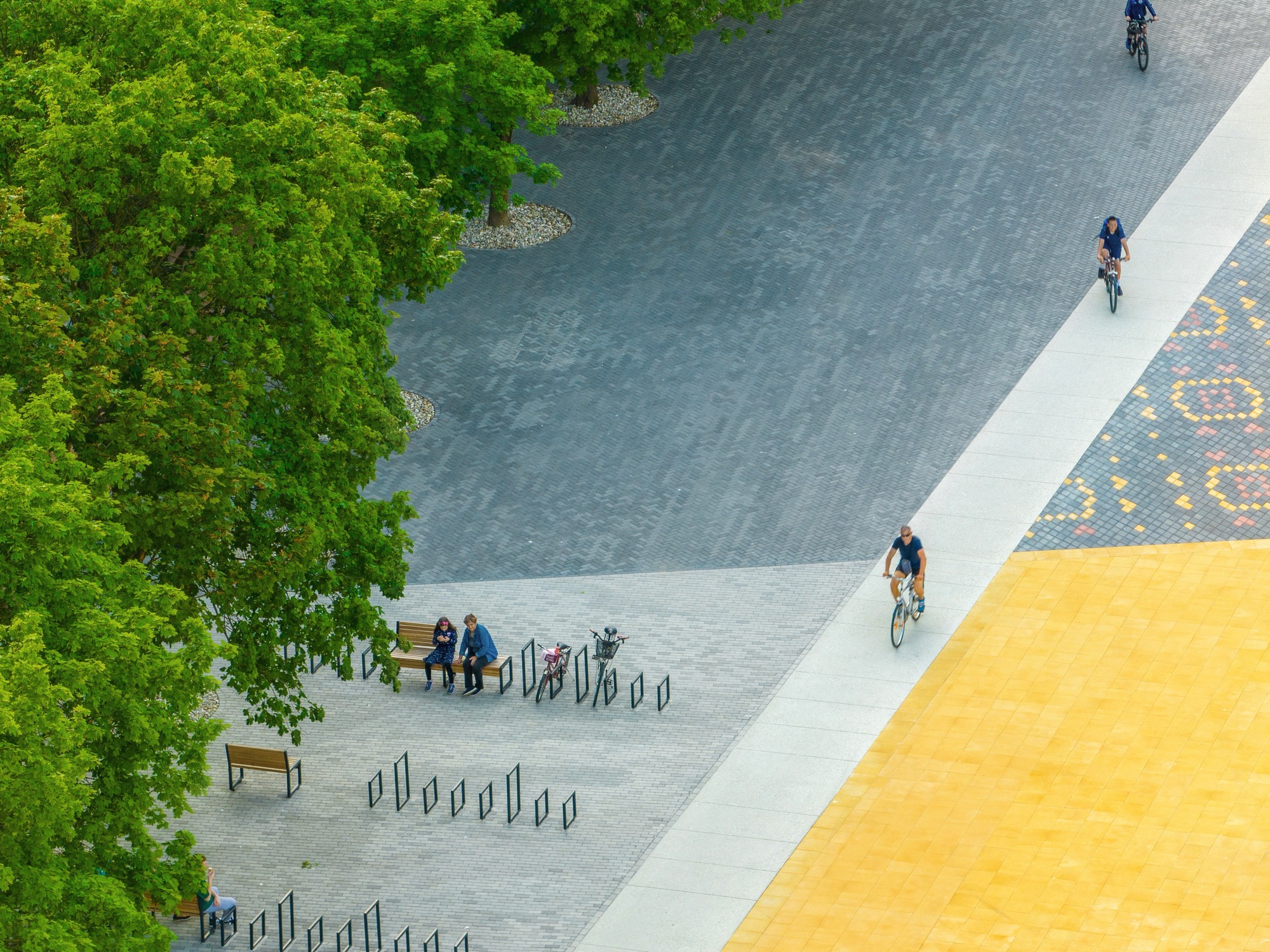
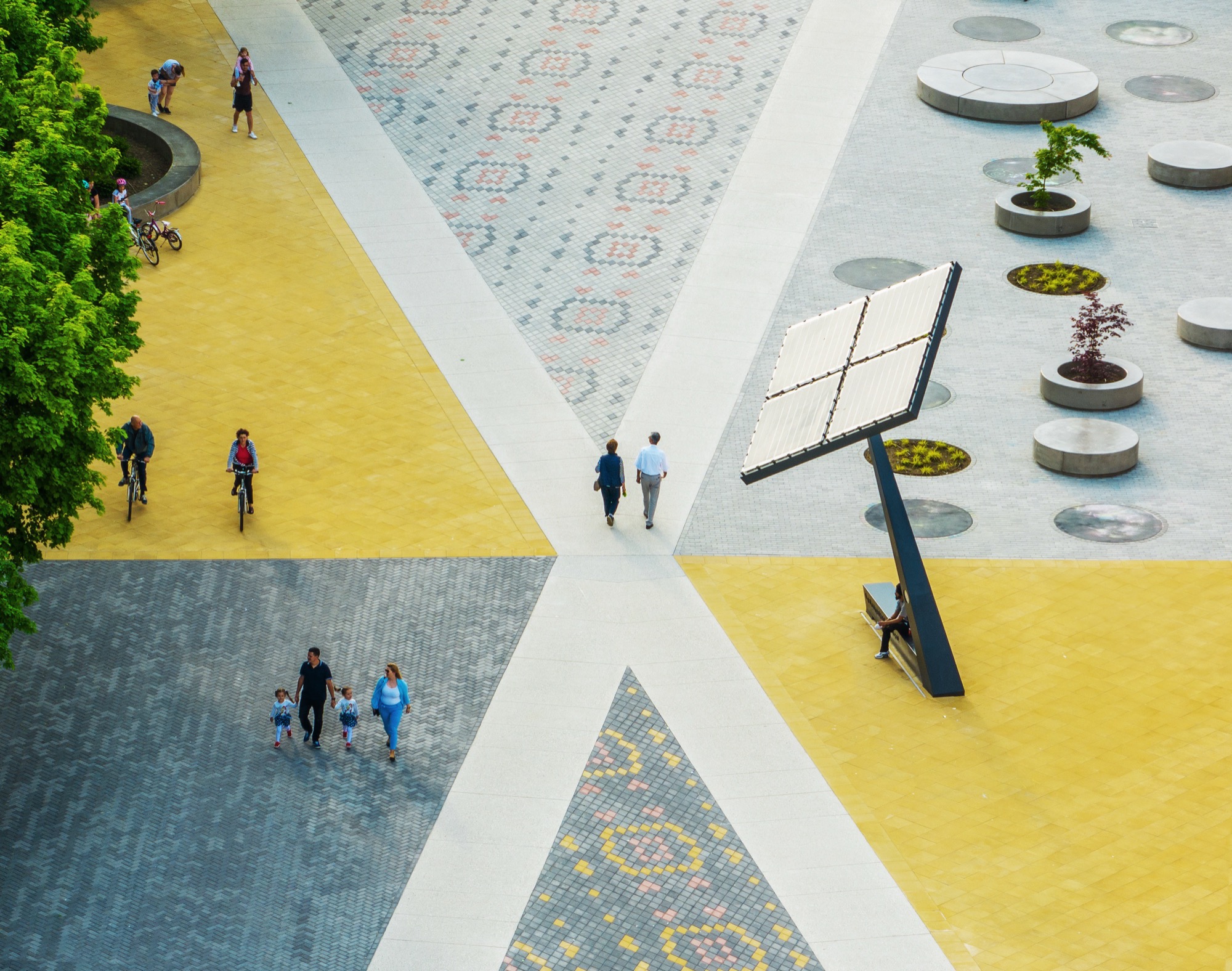
By accepting the bicycle traffic as an inevitability in the functioning of new city square, bike lanes form an “X” shaped coordinate system for the new public space. A “tapestry” of smaller zones structured around the axes of bike lanes has been laid on ground. Each zone corresponds directly with the surrounding context or brings its own new amenity: in front of the gallery there is an „art zone“ with pedestals for occasional exhibitions and circles for drawing; Under the park trees is a “pop-up zone“ for summer events; In front of the bars and restaurants are „cafe zones“ for parasols and tables. By using different urban equipment, different greenery and different paving, each zone has it’s own identity thereby adjusting to the ever changing needs of citizens of Koprivnica.
PROJECT
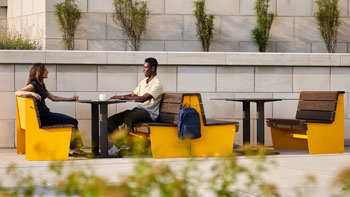
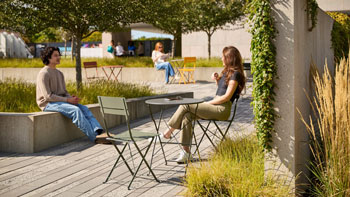
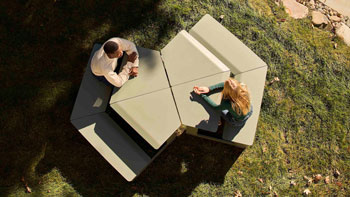
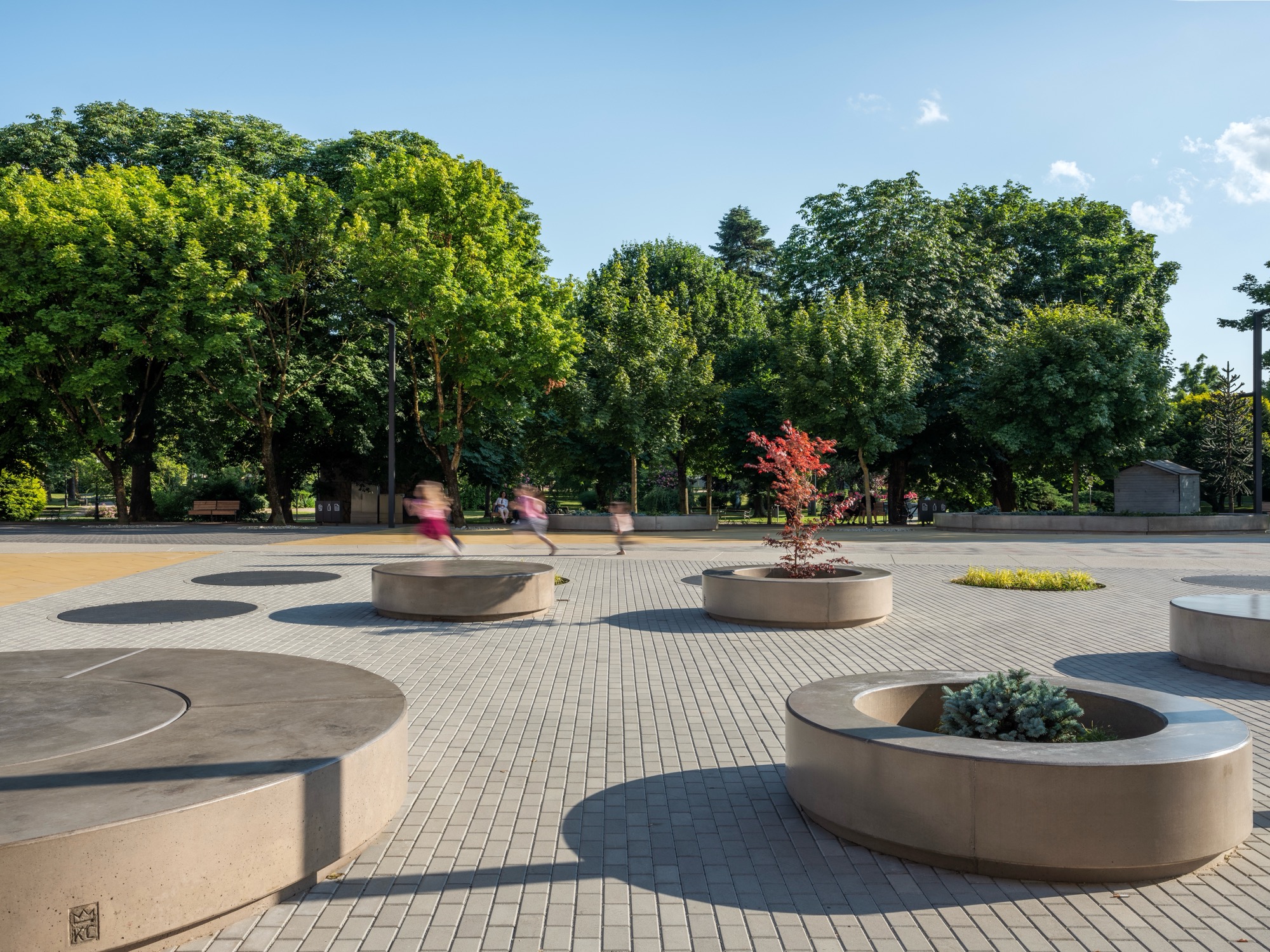
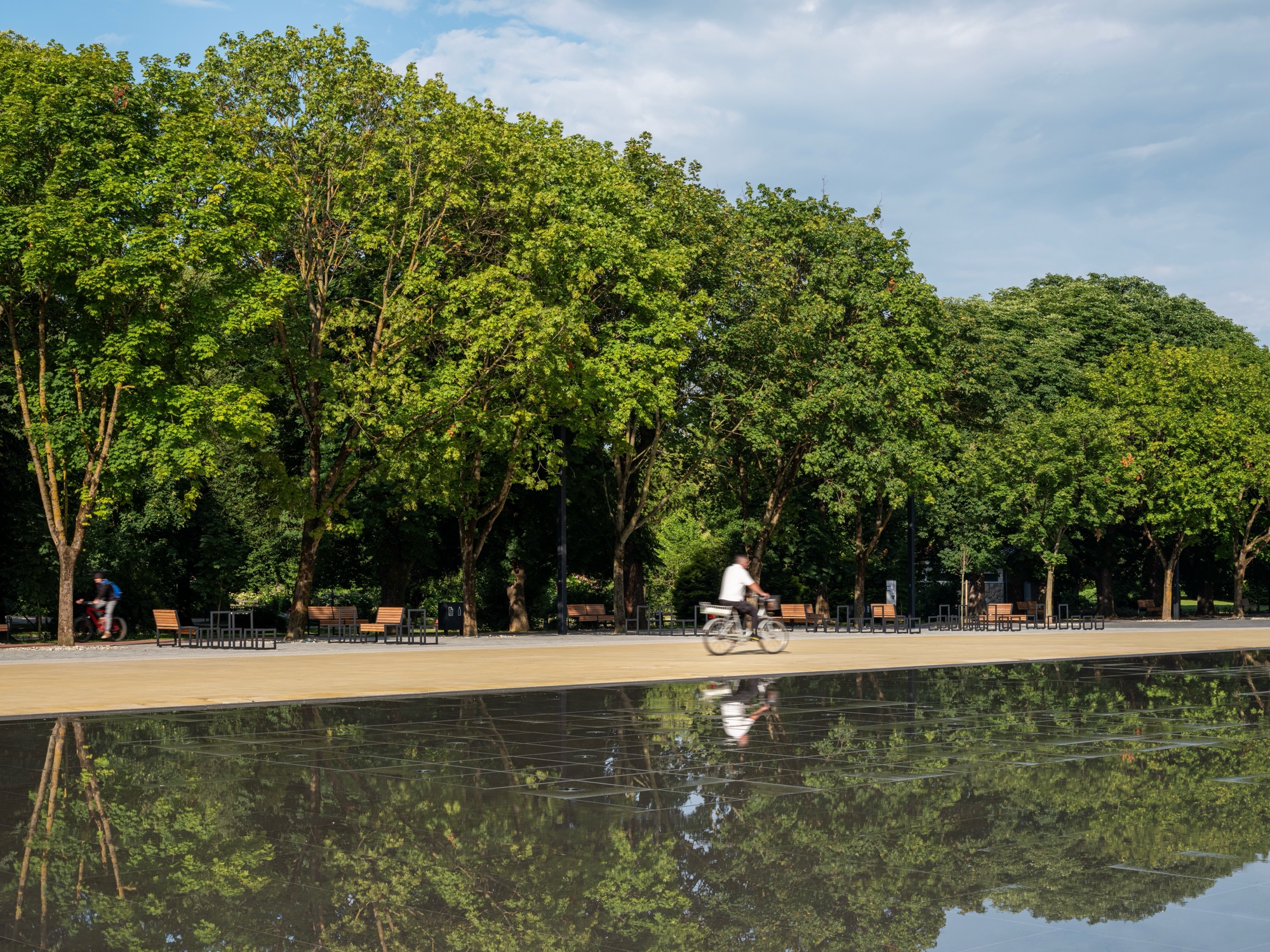
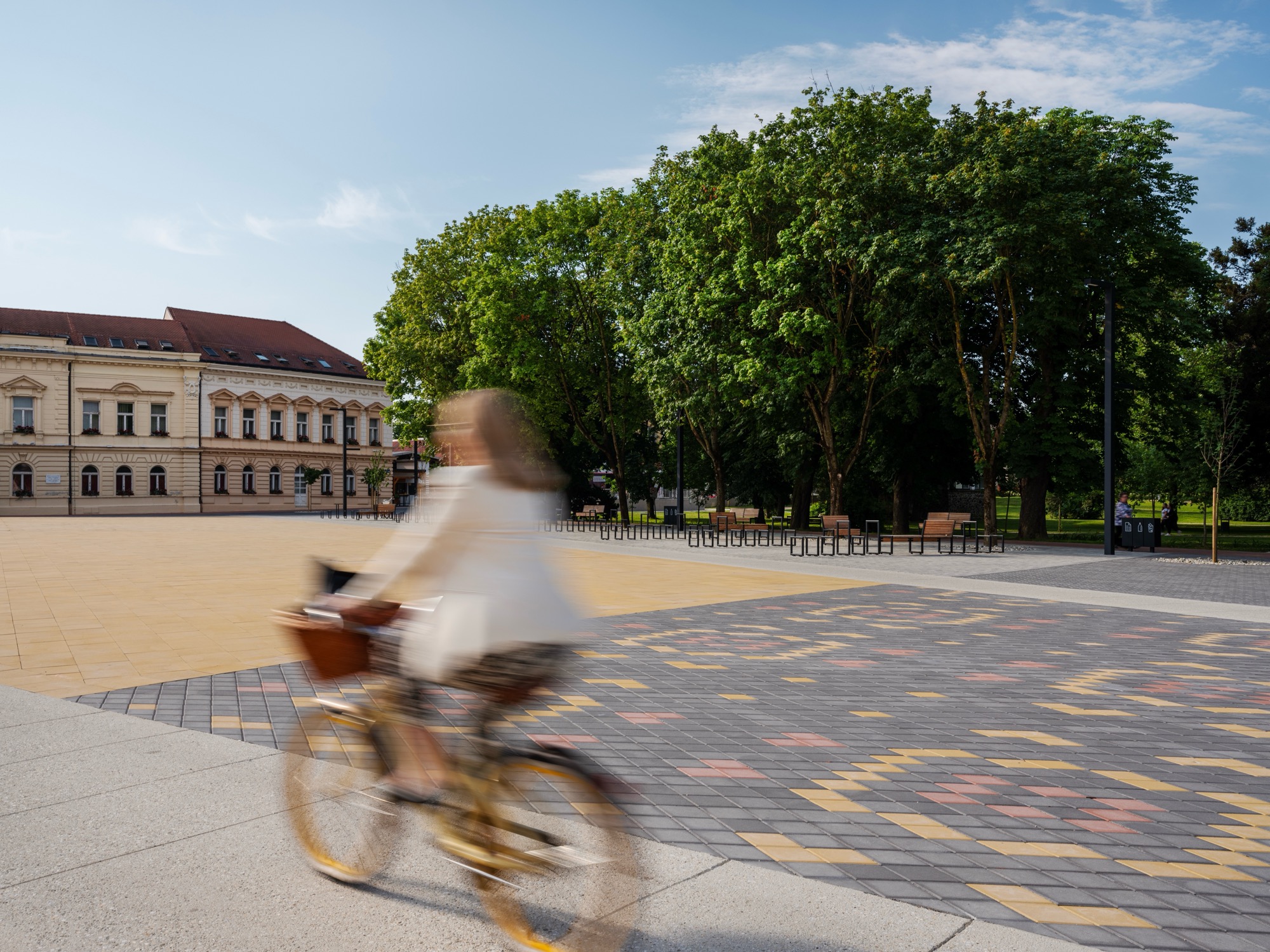
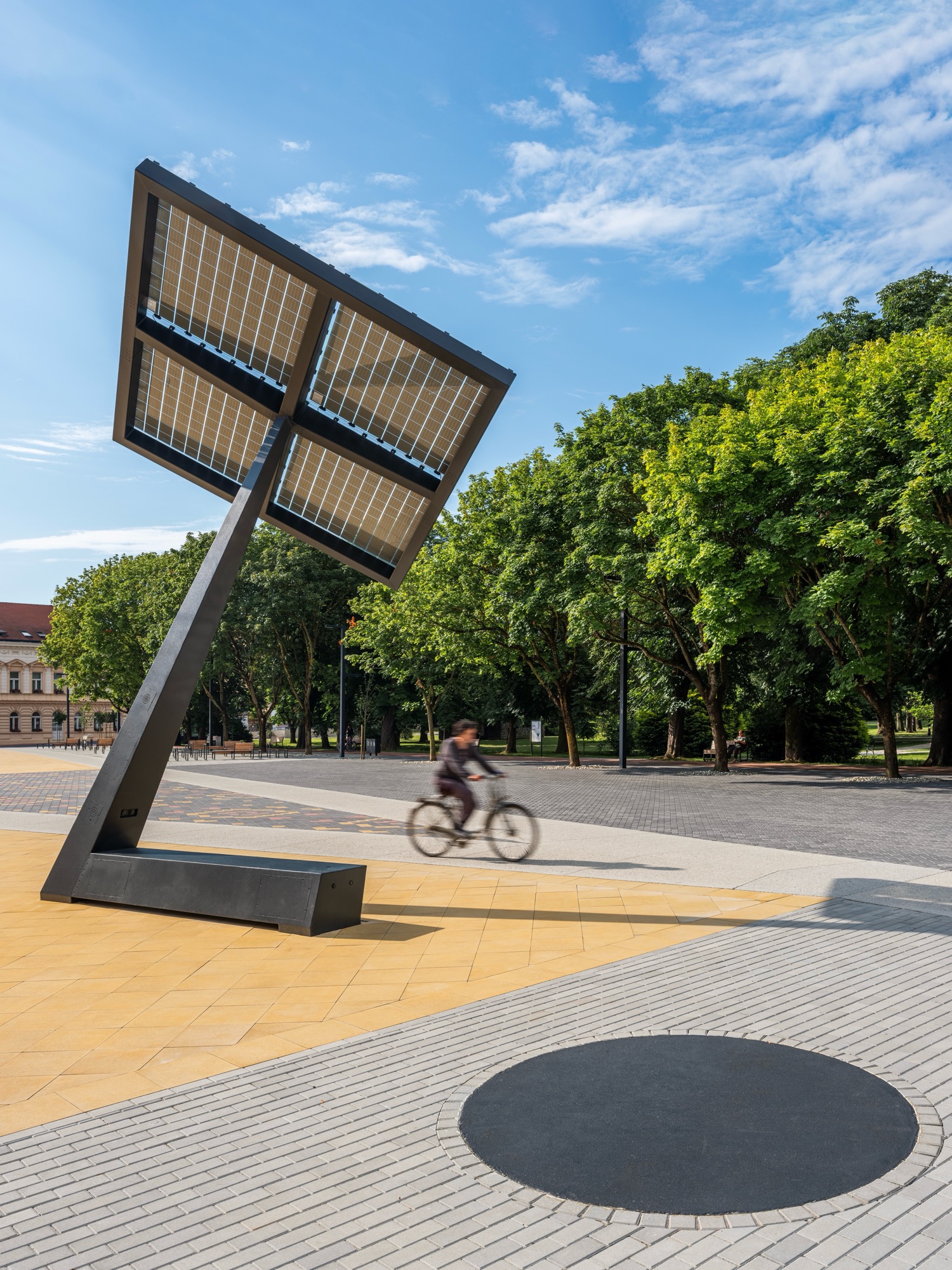
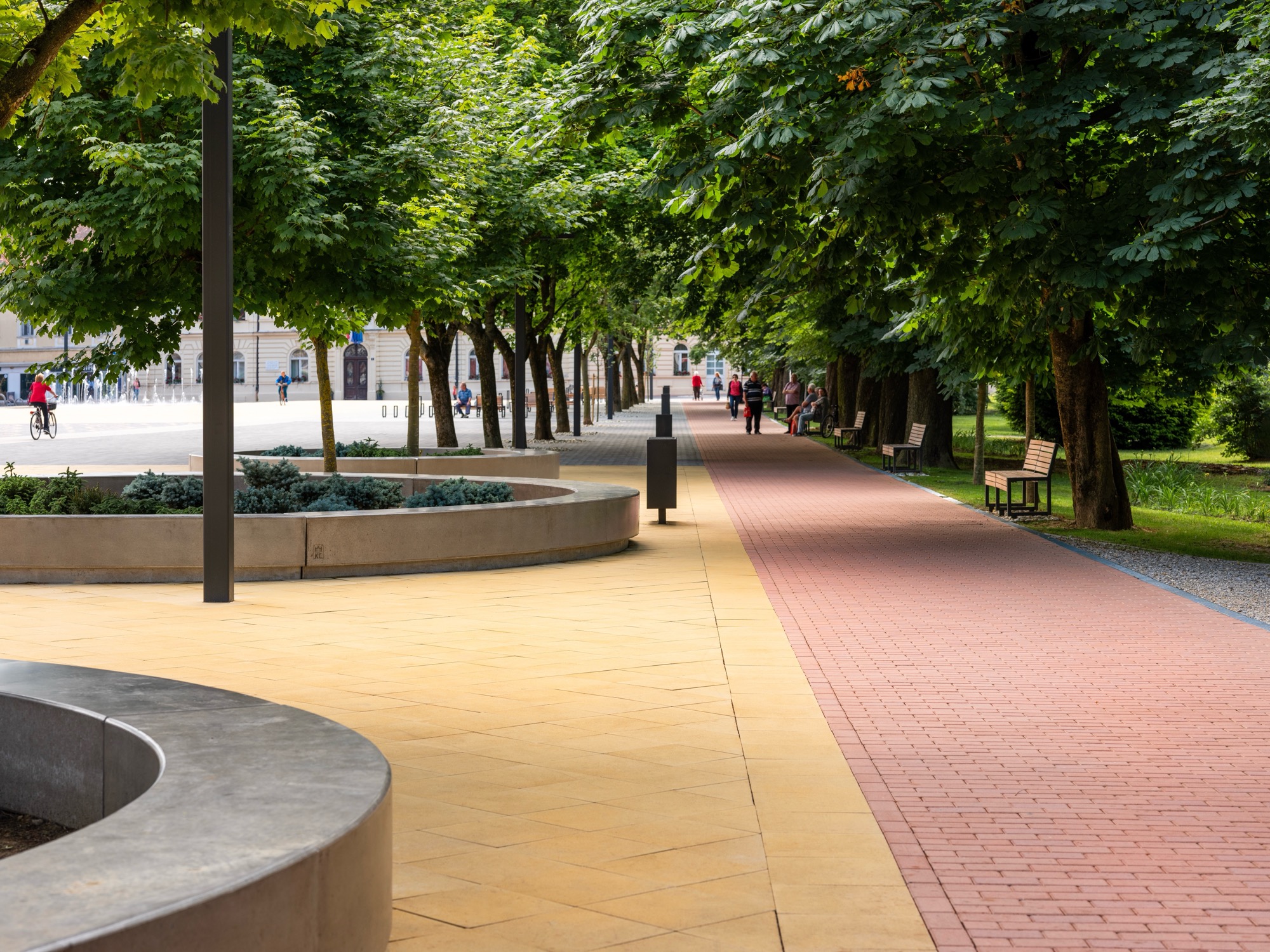
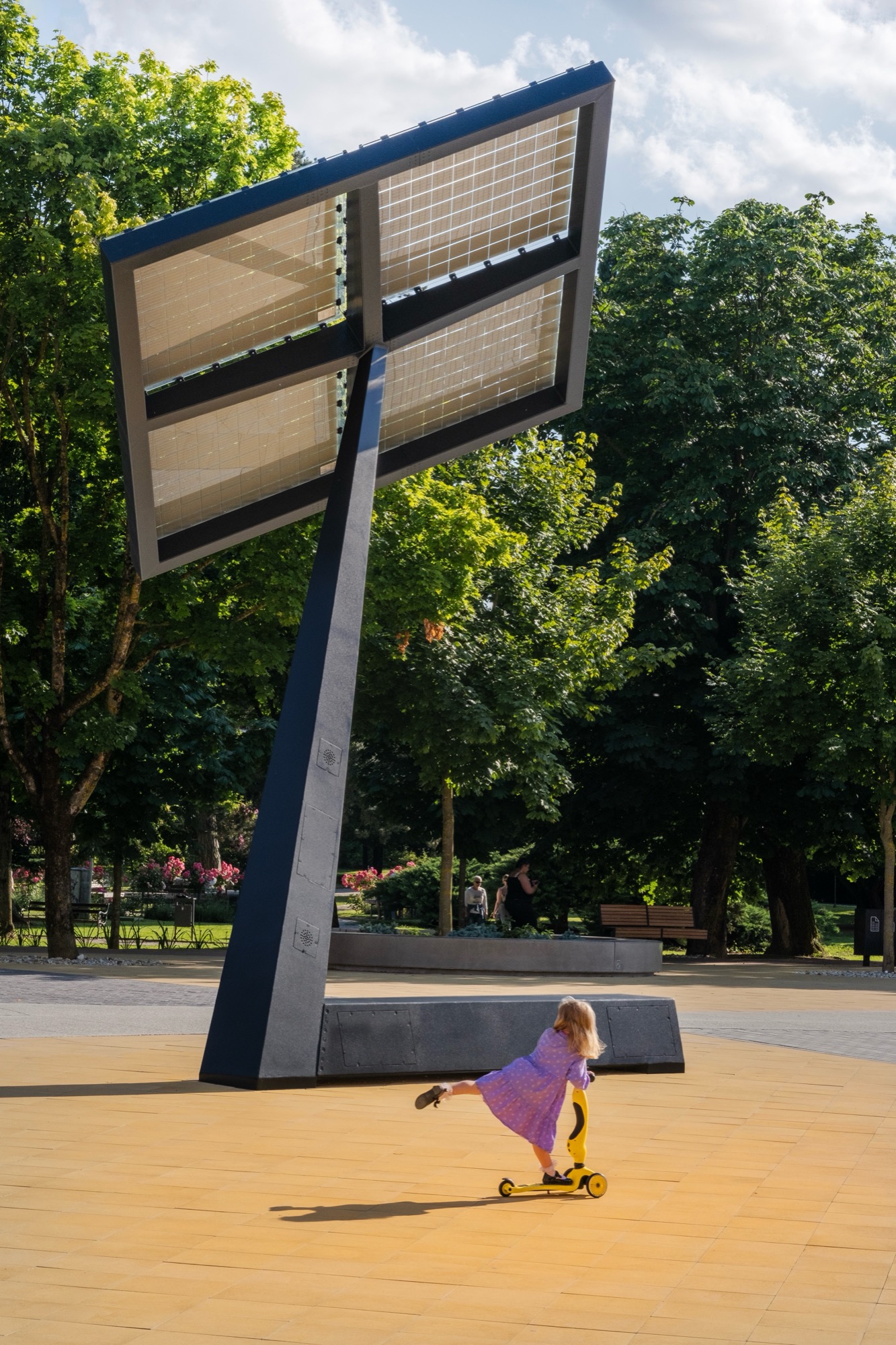
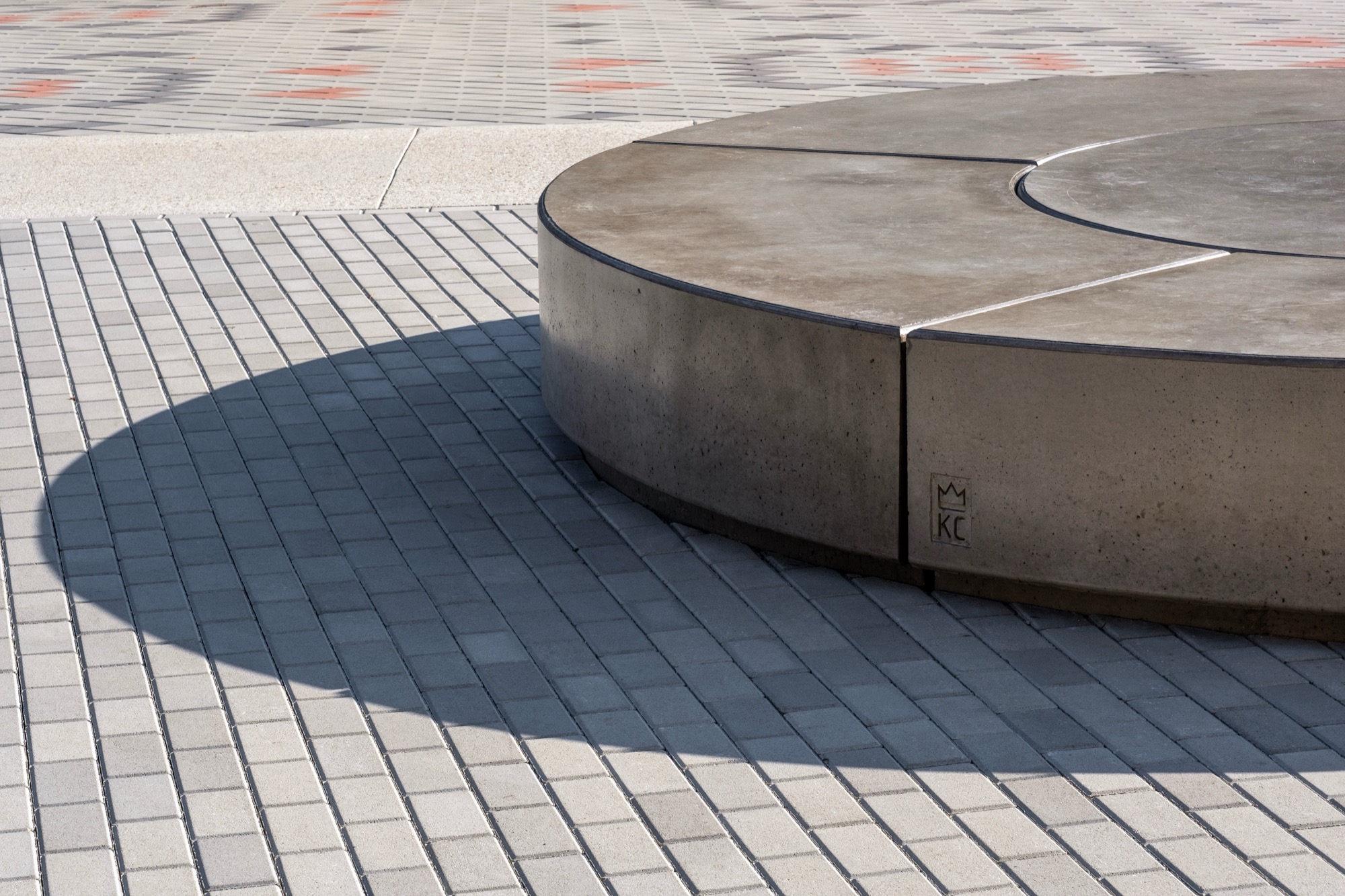
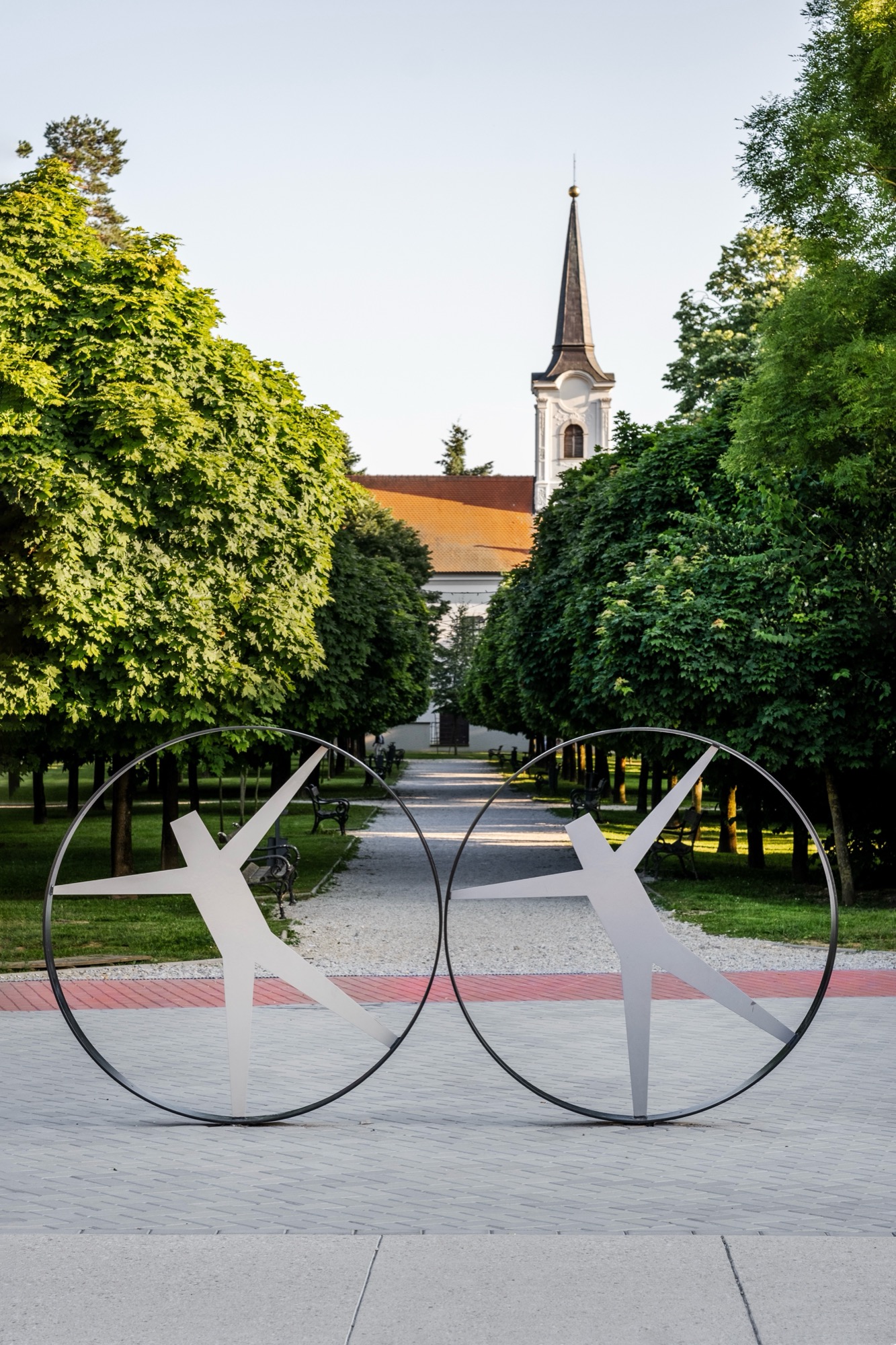
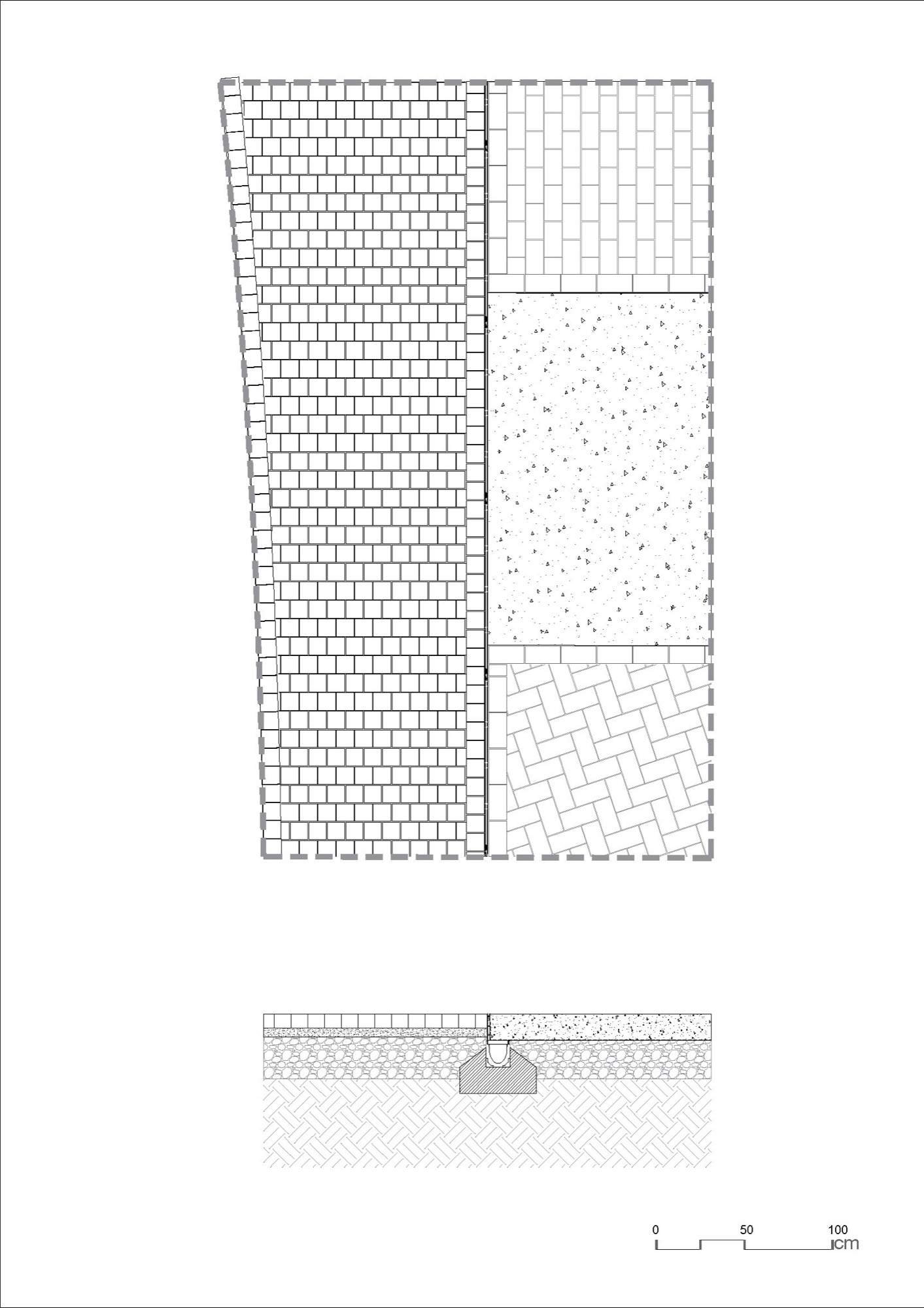
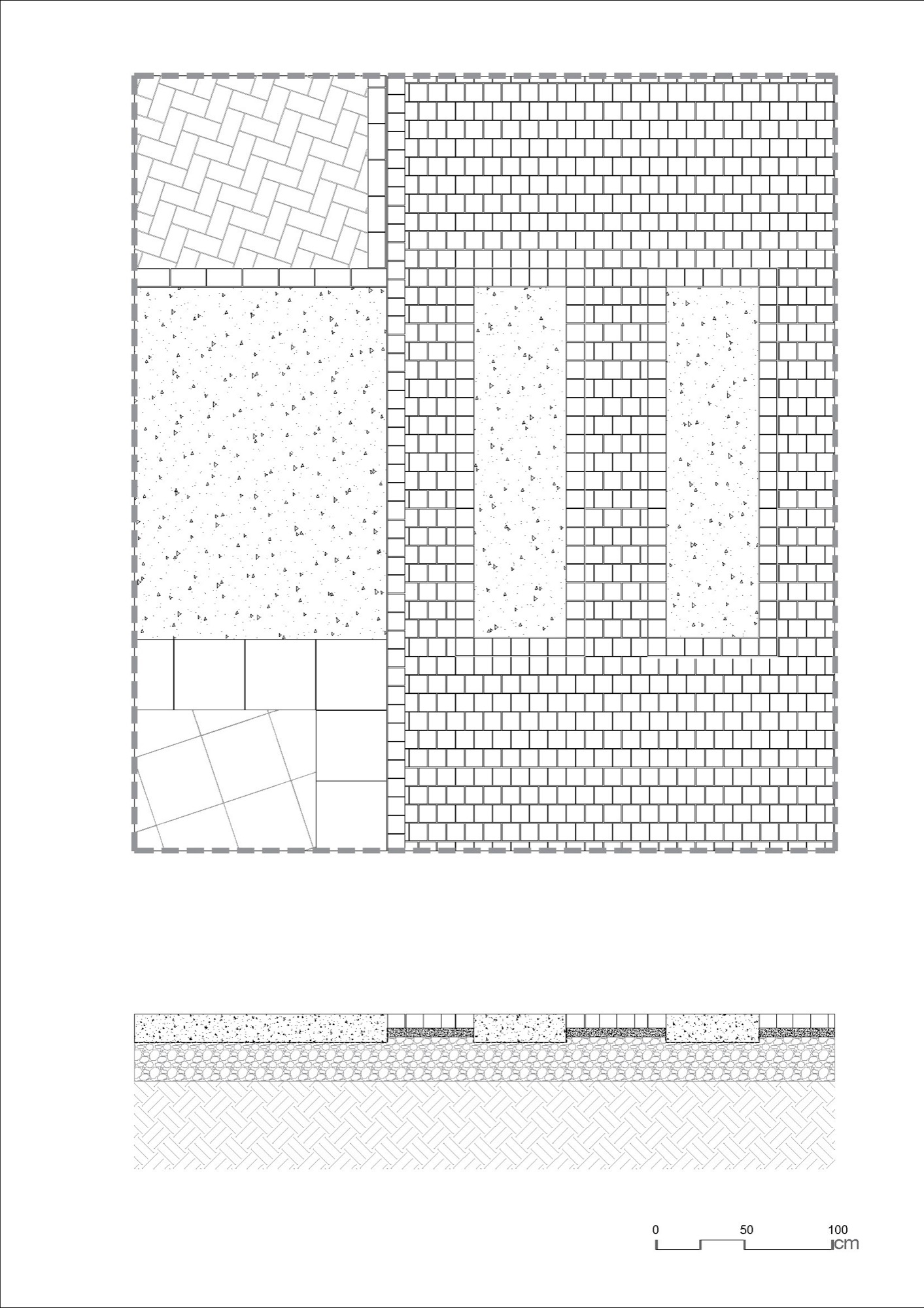
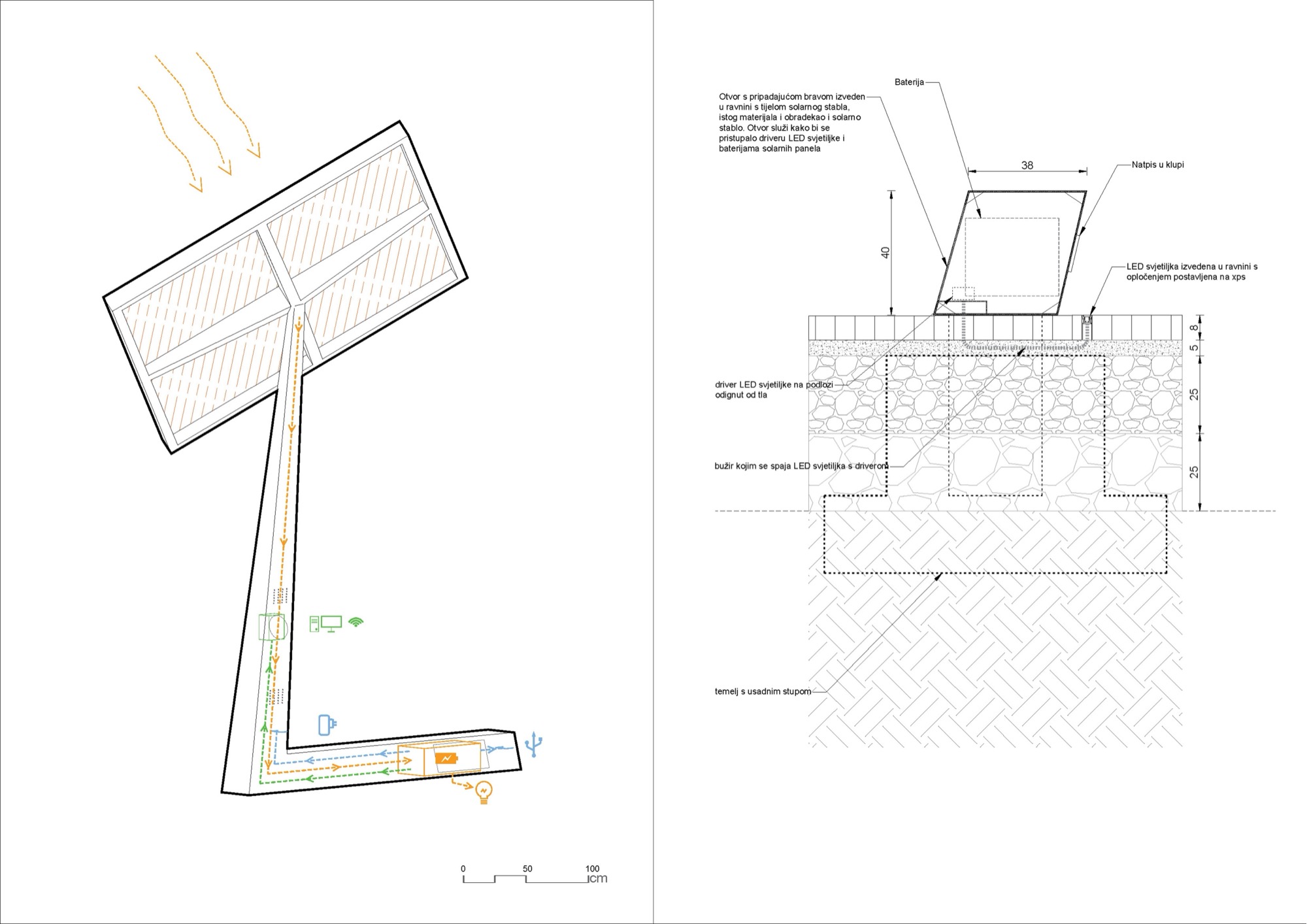
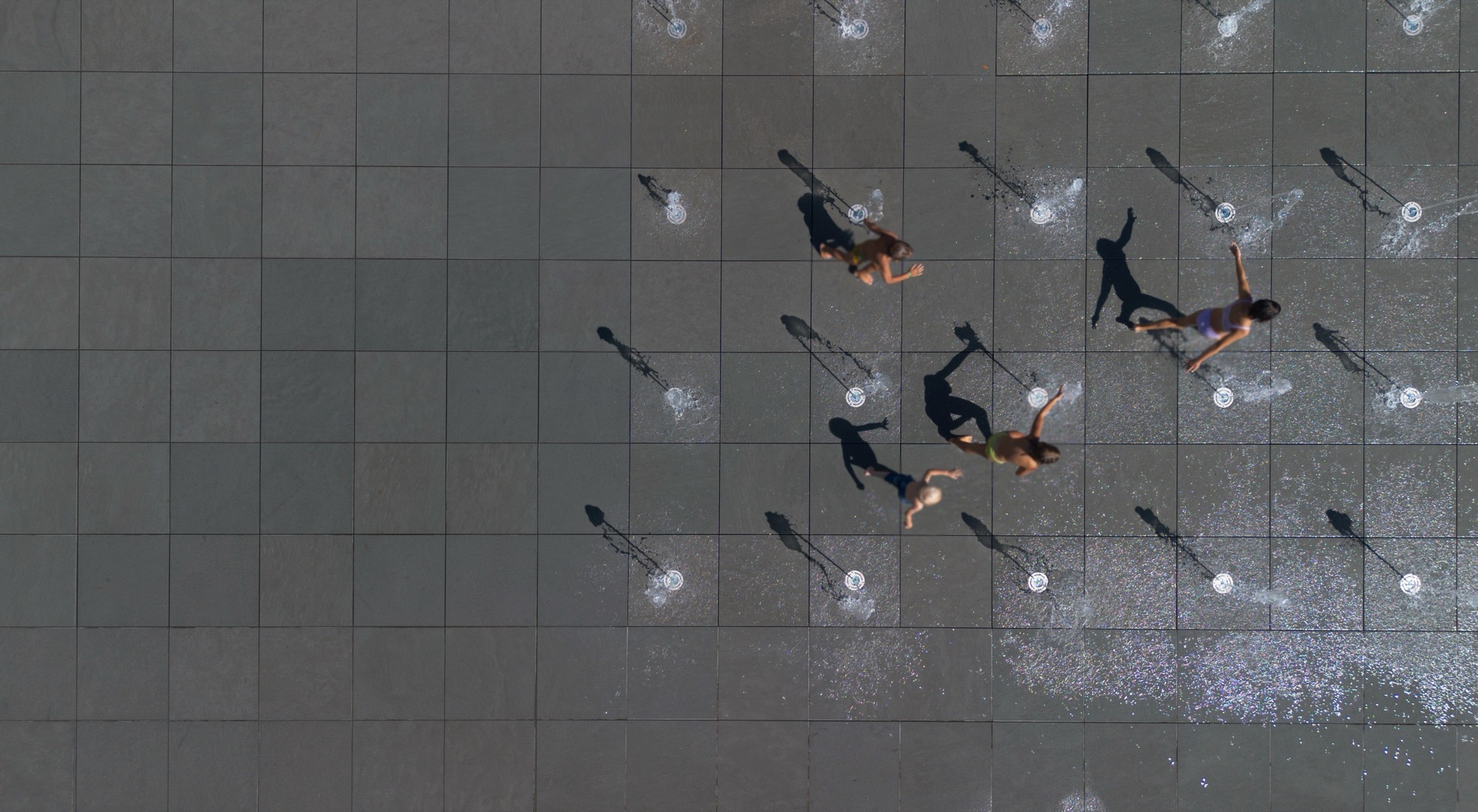
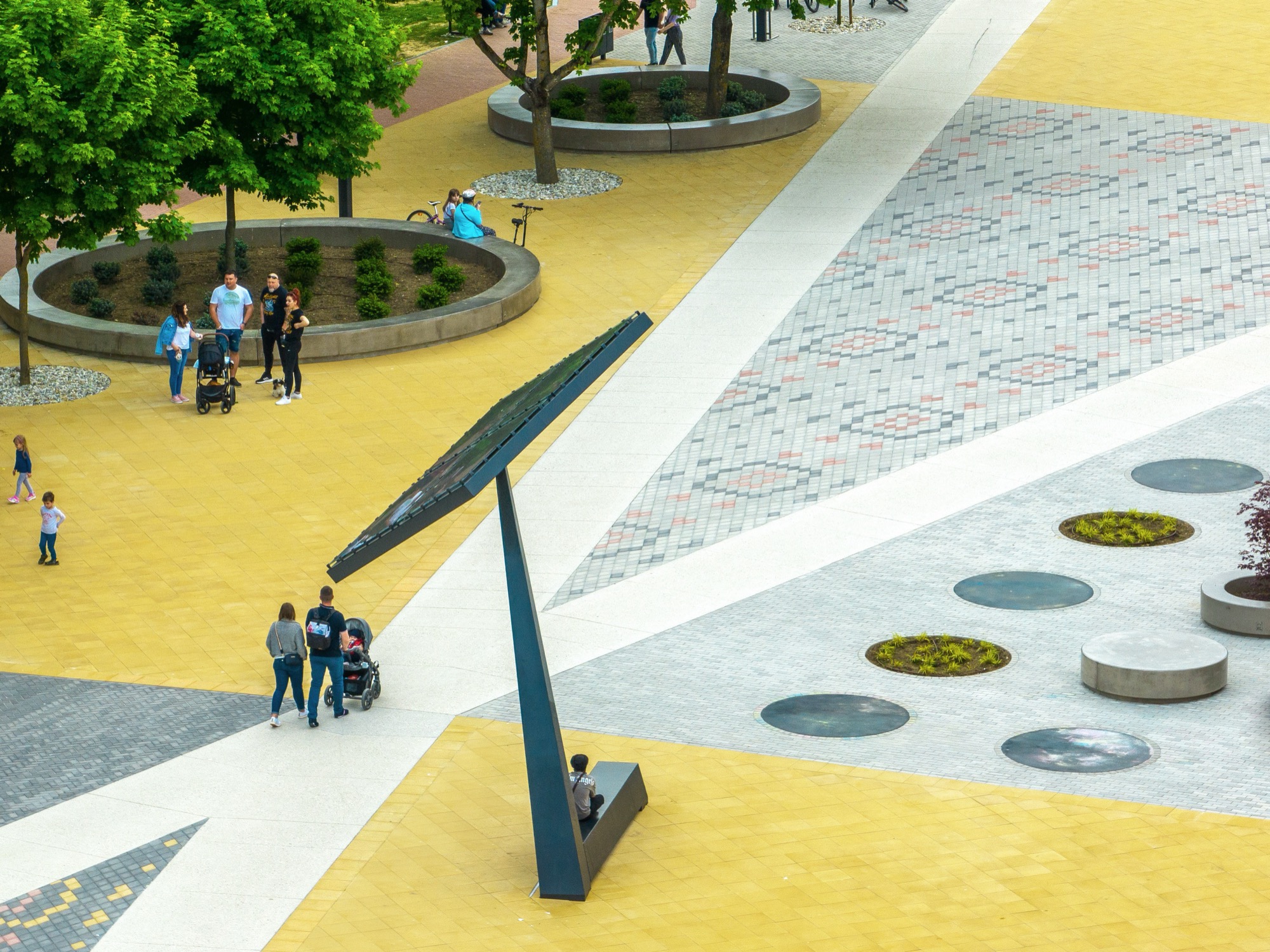
The Zrinski Square is divided into twelve smaller zones. The square is mostly made of concrete pavers of different dimensions, layout and processing schemes. The color of the pavers themselves is the result of a careful analysis of the facades of the surrounding buildings, historical heritage and the Podravina ambience itself. Paths with reddish paving stones, which are a reference to old brick roads, are especially emphasized. Multifunctional zones for occasional gatherings are ocher-yellow ephasizing their symboling importance, while other zones are in shades of gray. In the middle, there are mosaics – an interpretation of the famous Podravina embroidery. The bicycle lane “X” that crosses the square is made of rough-hewn concrete to emphasize the change in material. The new fountain, identical in shape to the old flower garden – rundele, is now a multipurpose fountain paved with gray flamato sandstone. The fountain itself is lowered 2 cm in relation to the square, and can form a water mirror that reflects the park and the old Town Hall, while in the summer it becomes water playground for the youngest residents of Koprivnica. The urban equipment of the square adapts to the environment and encourages different activities. It includes wooden benches next to the park, benches/pedestals on the “art-square”, benches-bike racks at the entrance areas of the square and concrete circular benches around the existing tall trees towards the Park. The area in front of the library and cinema is dominated by a solar tree equipped with Wi-Fi, power outlets and a screen displaying meteorological data. Sculptures, such as the existing but also the new monument to cyclists, have been placed on the oposide sides of the Zrinski square. Horticulturar species are mostly similar to those found on site.





SUMMARY
This project transforms an oversized, transit-dominated square by accepting movement as a fundamental spatial generator. Cycling is not treated as a problem to be displaced, but as a primary ordering system that shapes the geometry of the space. The resulting structure is a direct translation of everyday behaviour into form.
The design is grounded in a careful reading of how citizens actually use the site. Existing patterns of movement and occupation are not erased but amplified, producing a layered public ground that accommodates both transit and staying. A sequence of adaptable zones enables different intensities of use while maintaining a coherent spatial identity.
46.17902281348689, 16.829538080302214
74495


LILA 2026 Sponsor