Shortlisted for LILA 2026 Jury Award:
CHATELAIN CANOPY SQUARE
www.taktyk.net
2026 Public Projects / Belgium / Built in 2025 /

![Dear Jury members, dear Landezine community: Our contribution to the LILA 11 Awards enters the “Other” section not merely as a category, but as a deliberate territory for research and experimentation. It is a space where we believe the future practices of landscape architecture can be glimpsed, tested, and shared. We observe a profound and […]](https://landezine-award.com/wp-content/uploads/2026/05/00-7-600x400.jpg "GUARDIANS OF WATER EXHIBITION")
The Challenge of Precise Calibration
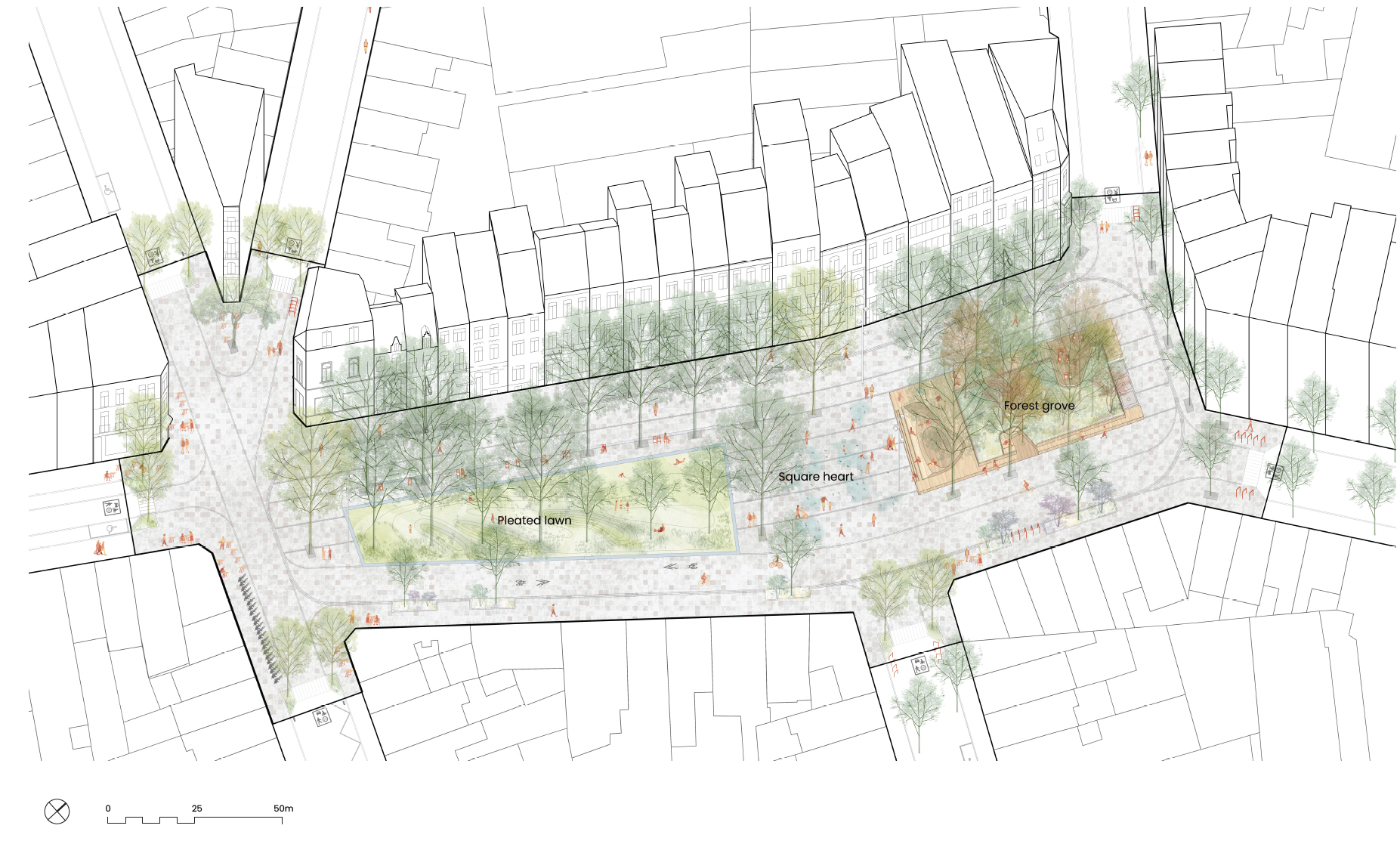
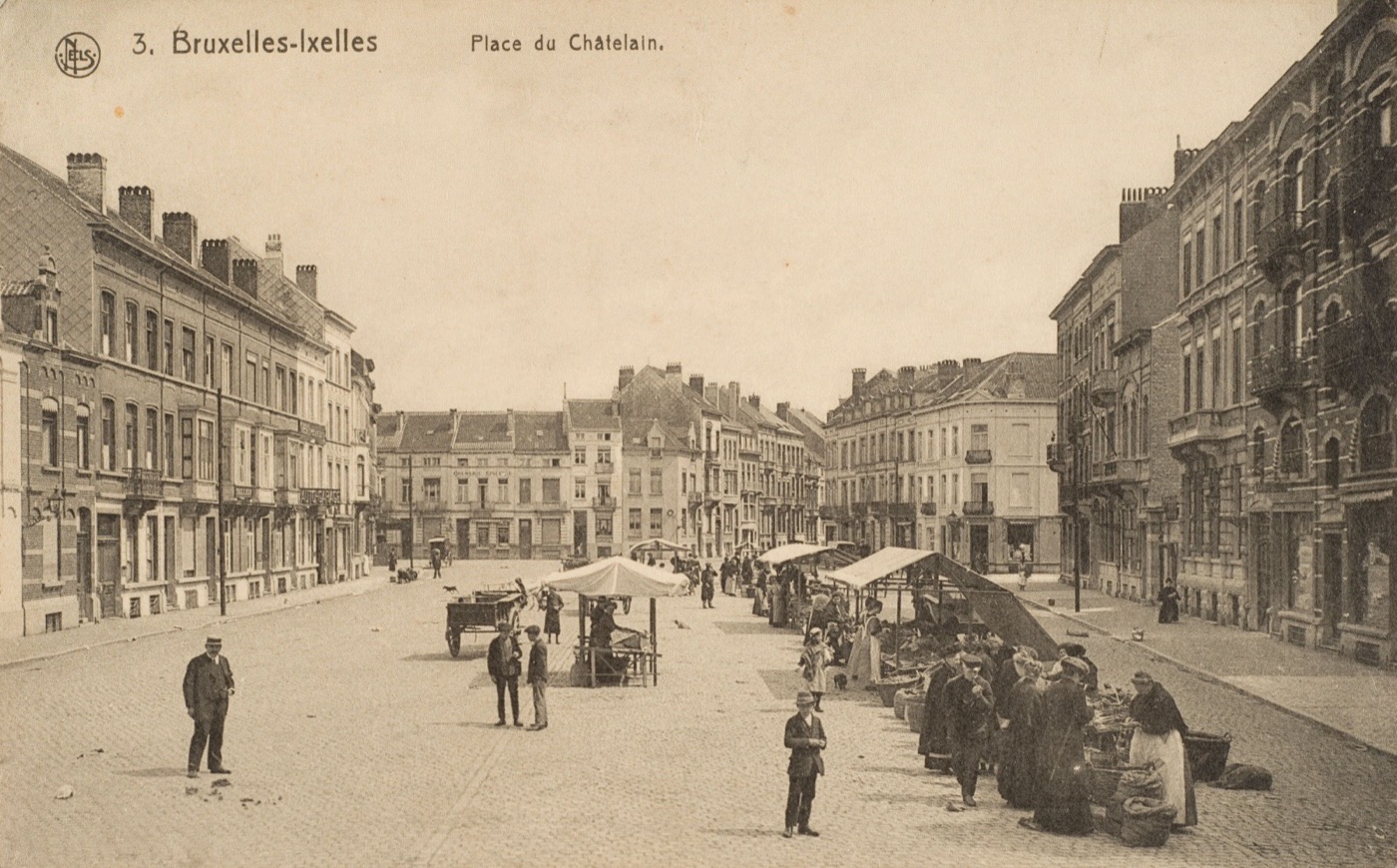
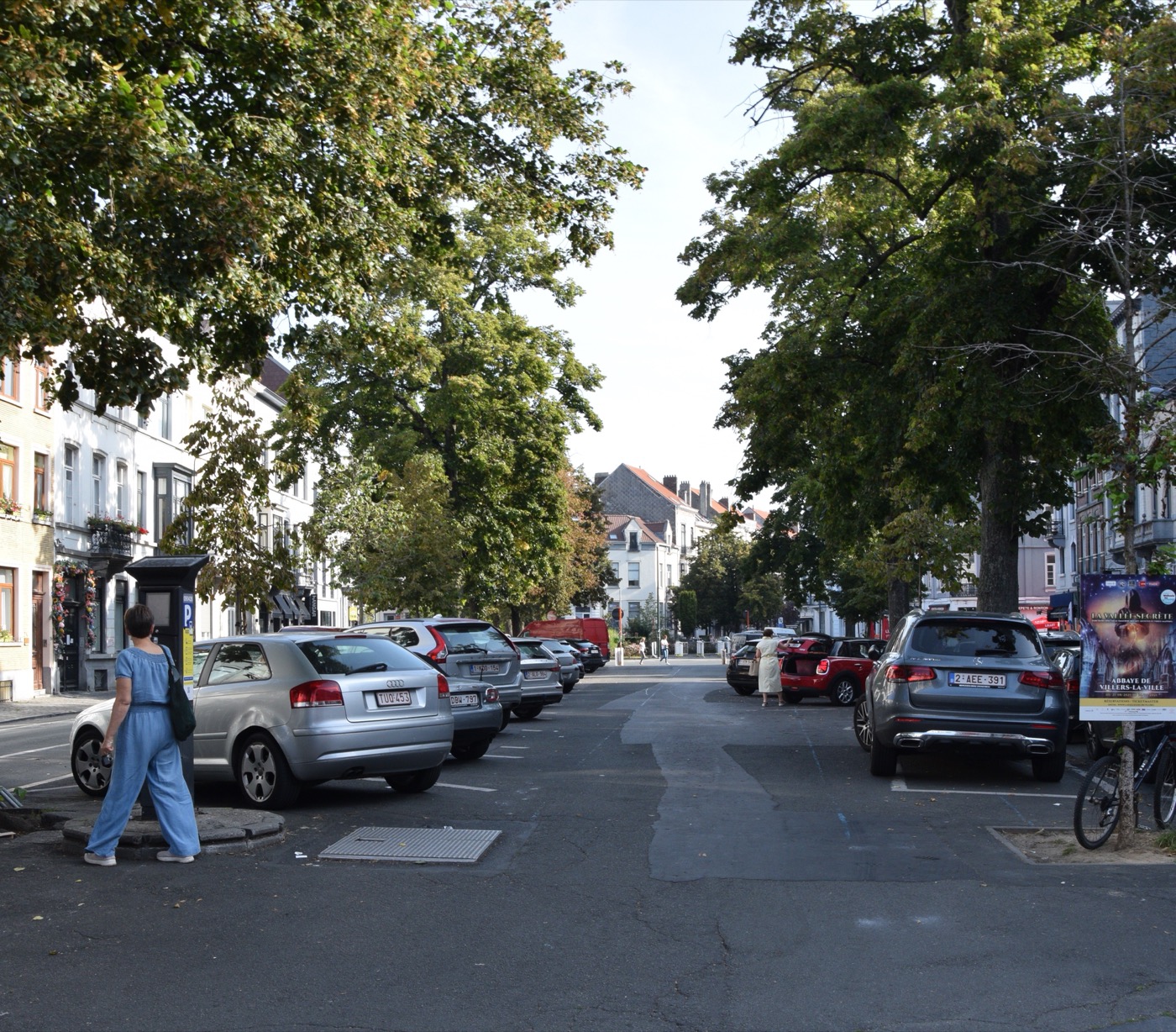
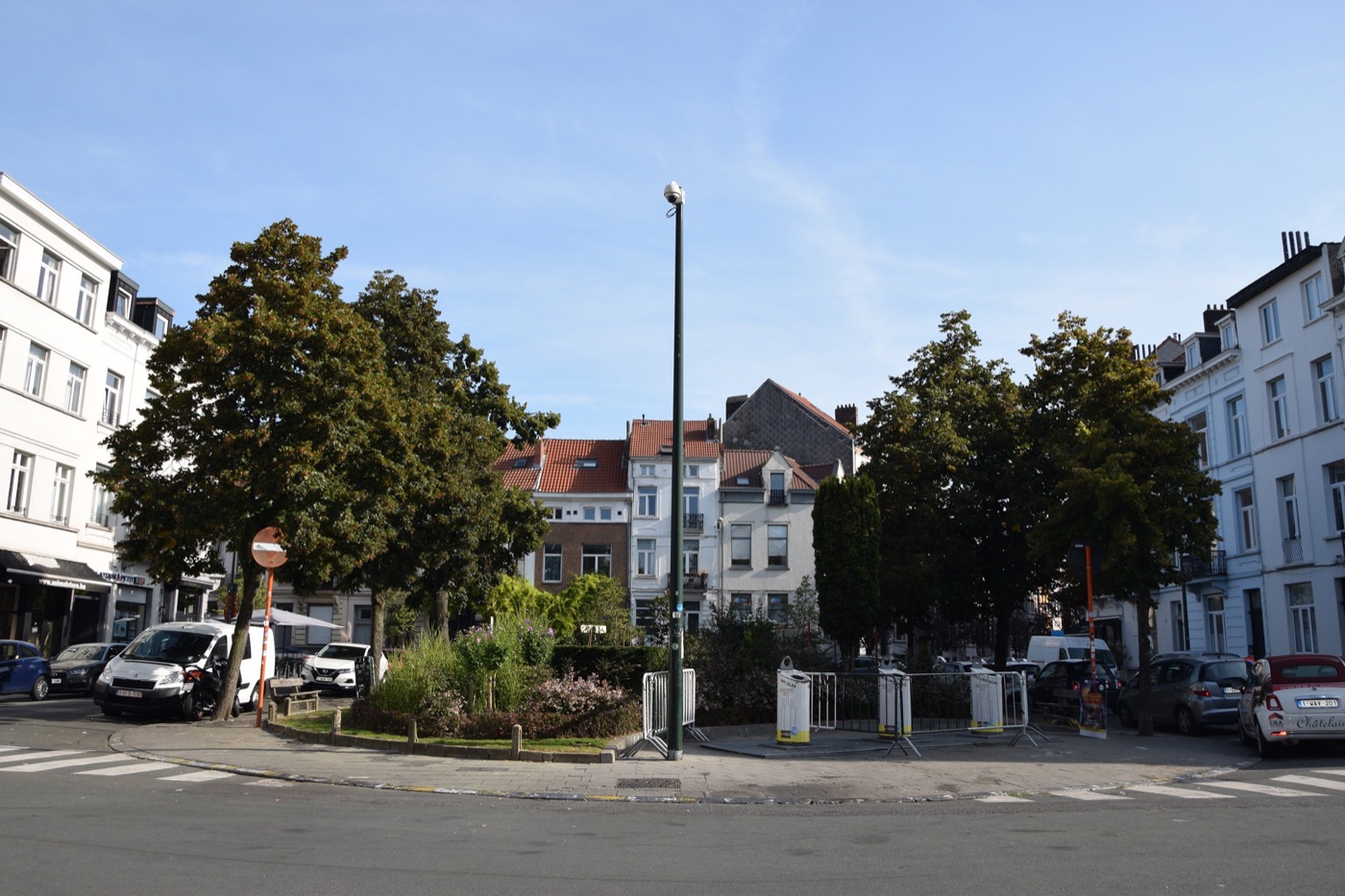
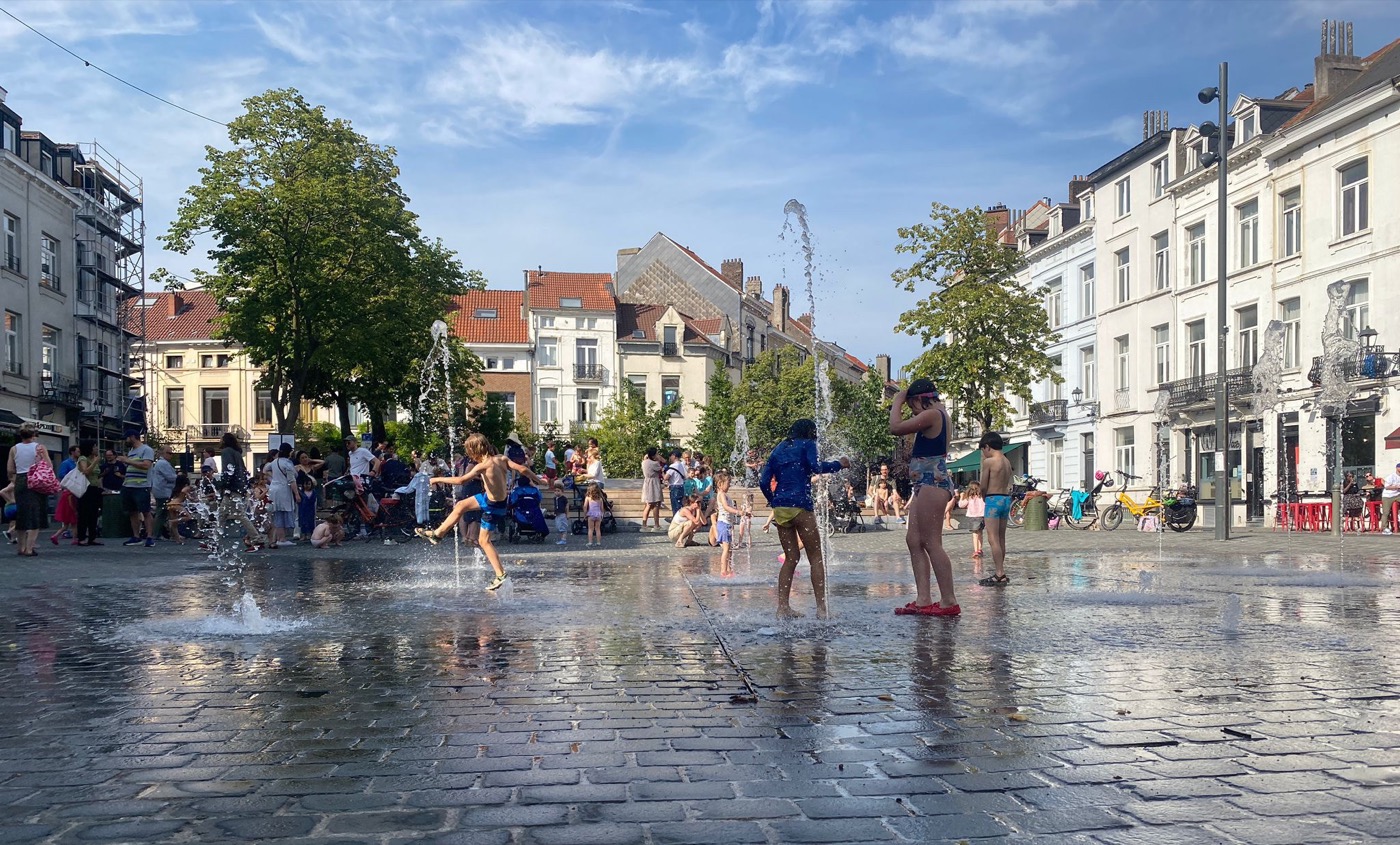
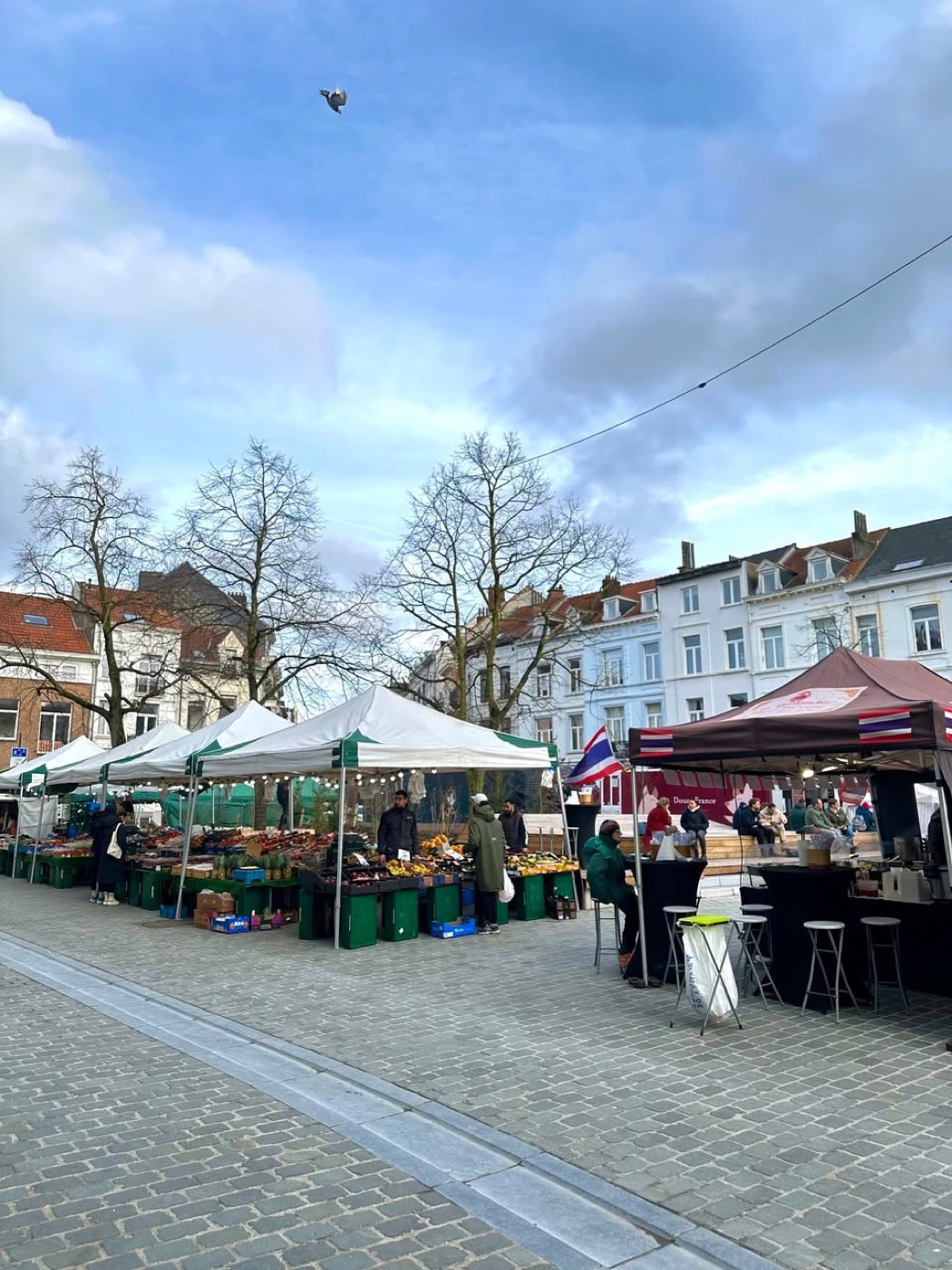
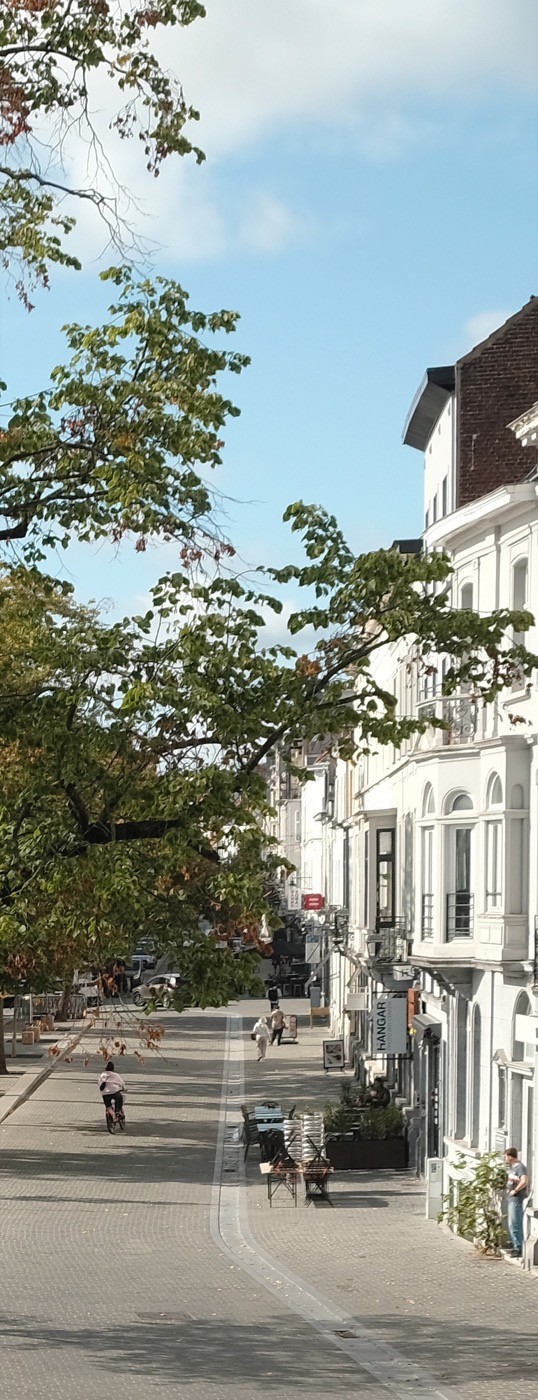
The post-pandemic era has acted as a catalyst, underscoring the vital necessity for dense urban environments to accommodate an increasingly diverse array of social practices while fostering long-term ecological and biological resilience. LILA has recognised this shifting attitude in Brussels, notably with the successful greening of Place Flagey. Châtelain represents a more complex scale to negotiate, one that landscape architects tackle daily: a domestic, neighbourhood scale where local daily life and supra-local functions, such as the weekly market, must be calibrated with extreme precision.When the Municipality of Ixelles decided in 2021 to transition this site from a mineral parking lot to a public square, the challenge was to avoid the common pitfall of over-programming. The design ambition was to walk a ‘difficult line’: how to introduce a multiplicity of places and micro-atmospheres within a tight urban frame while maintaining a legible spatial framework and a comfortable human scale. We approached the design through the lens of affordance, creating elements that suggest and invite use without dictating it. This allowed us to transform a former mono-functional ‘mineral carpet’ into a bioclimatic landscape.
Heritage Revisited Through Soil Affordance
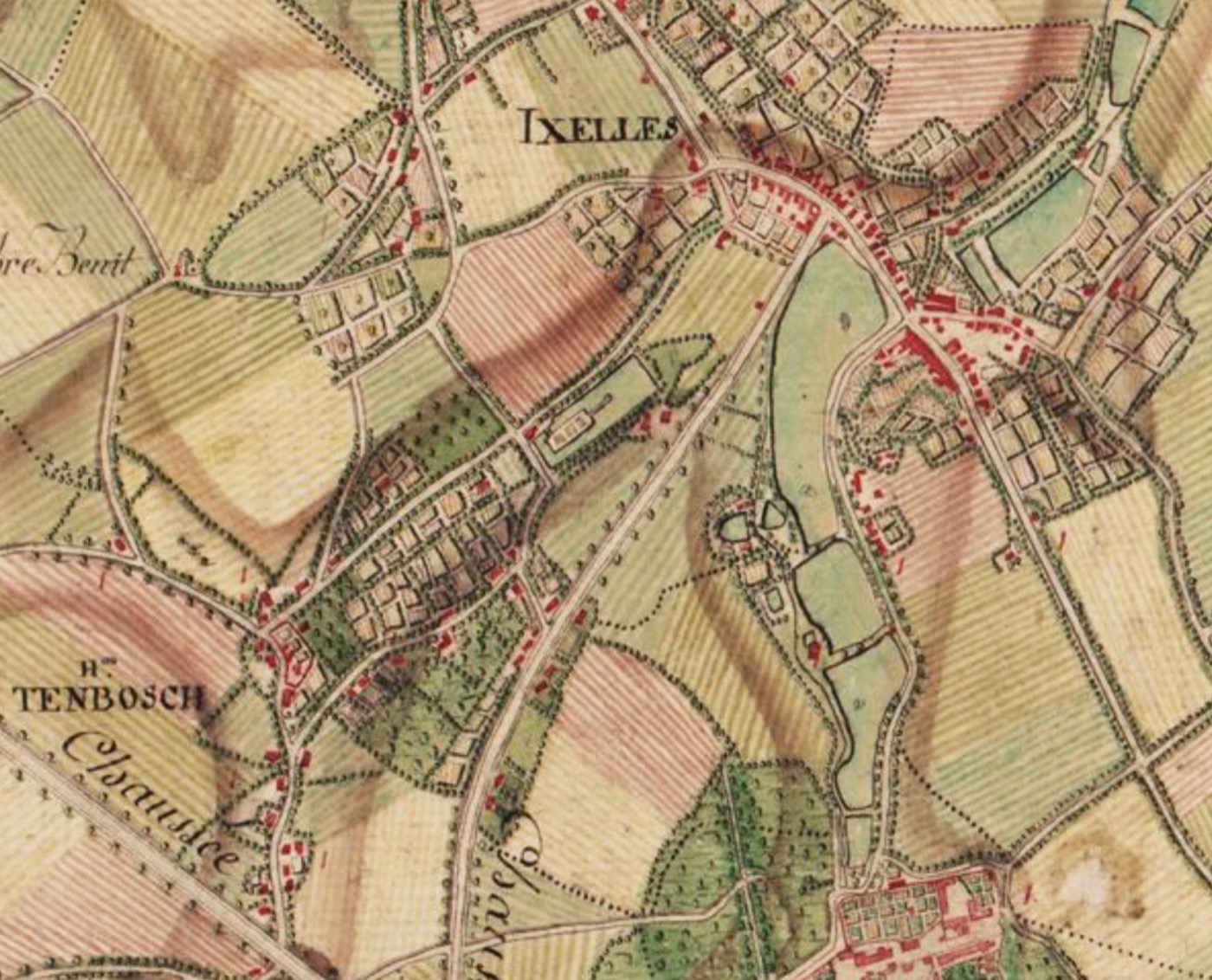
Our approach focuses on the requalification of the ground to evoke a threefold heritage: geological, historical, and biological. The site was originally a fertile valley, which was backfilled with four metres of sand during the grand urban embellishment works commissioned by Leopold II. The programmatic demand required a delicate reconciliation: maintaining the logistical pressure of the weekly market while significantly increasing soil porosity and space for plants. Our response ensures the longevity of the existing ‘living capital’, a grid of double-row lime trees languishing in a ‘sea of asphalt’, through three strategic responses
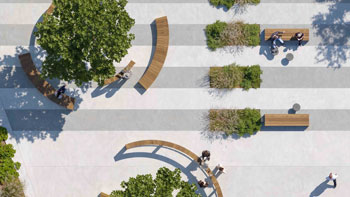
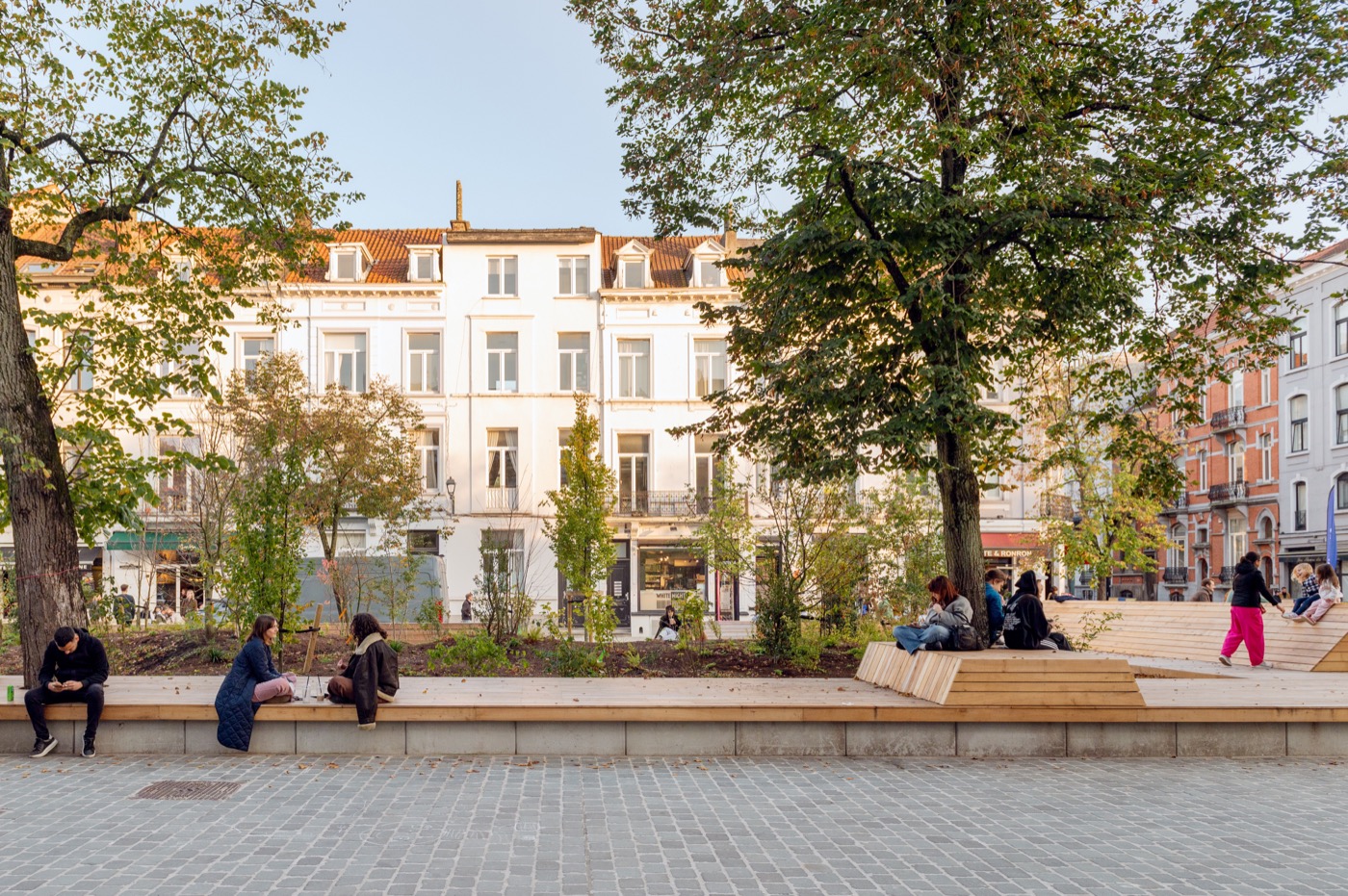
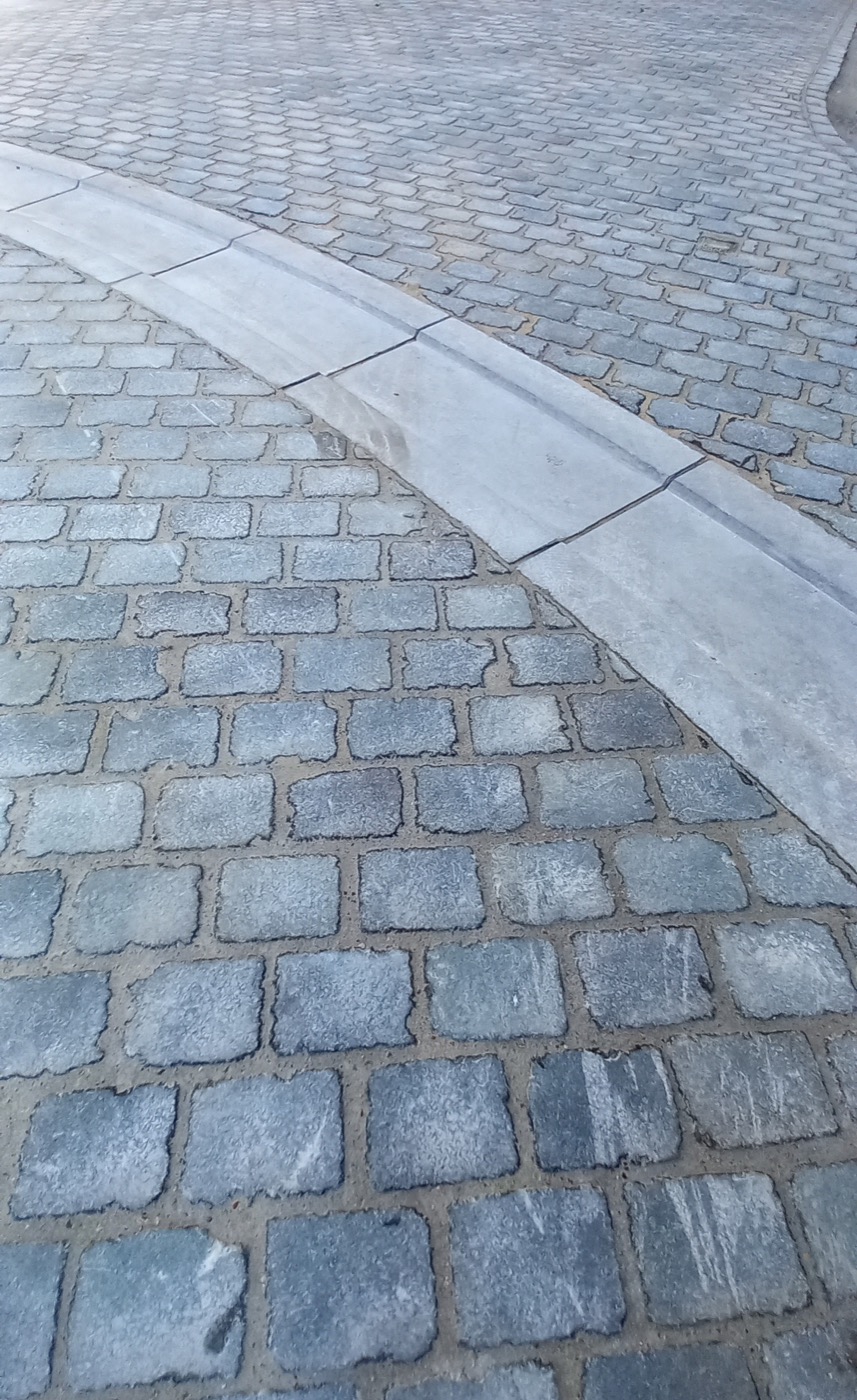
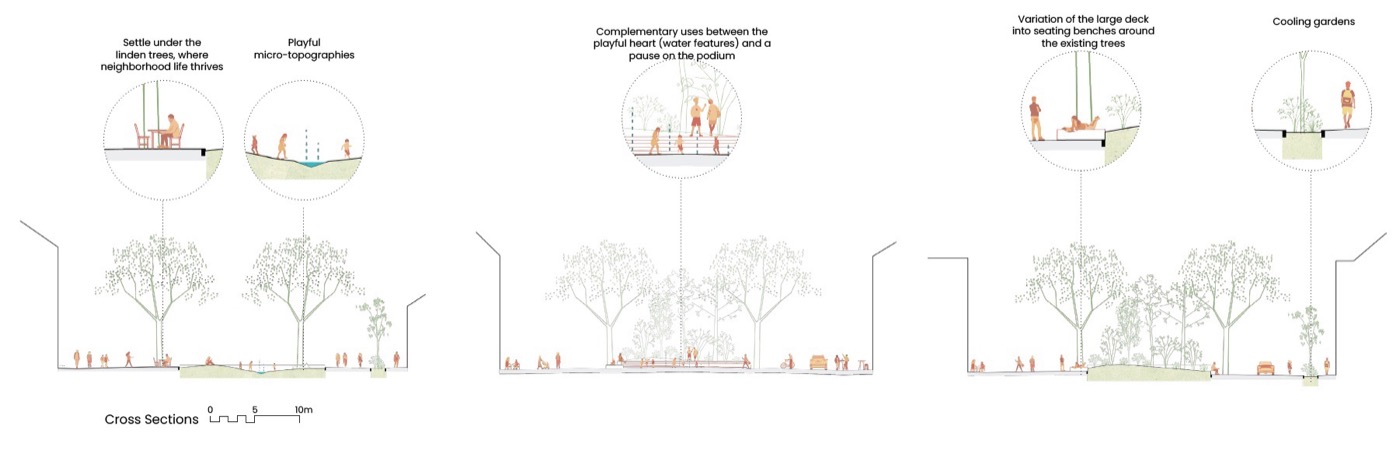
The first response focuses on tree root systems. A Belgian bluestone gutter subtly traces the outline of the neoclassical square, defining a mineral space within the edge of the pavement. This composition localises the market footprint while maintaining clear pedestrian paths. The gutter collects rainwater runoff and directs it into the ground, where the high porosity of the historical sandy subsoil enables water to percolate and revitalise the trees.
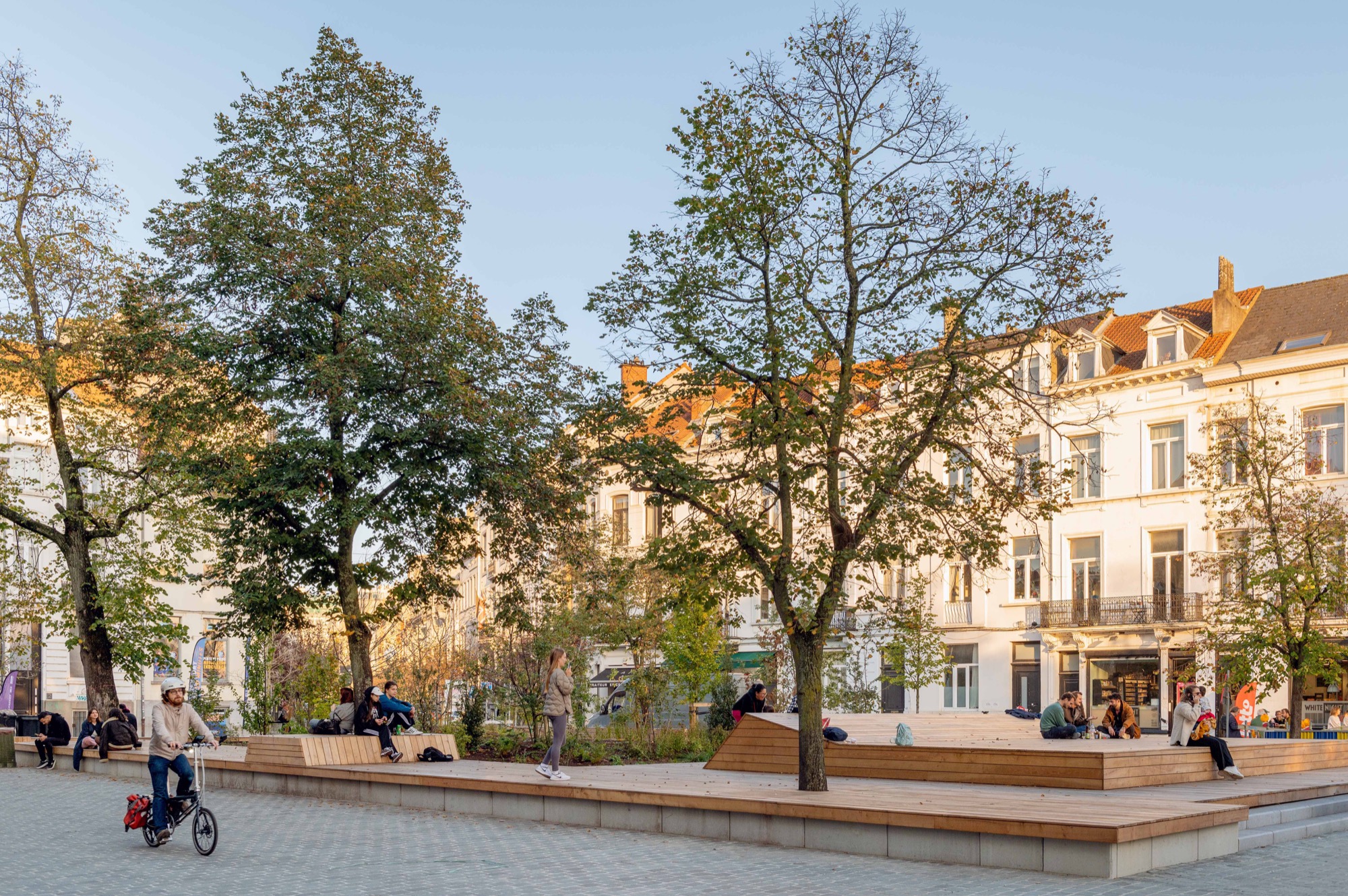
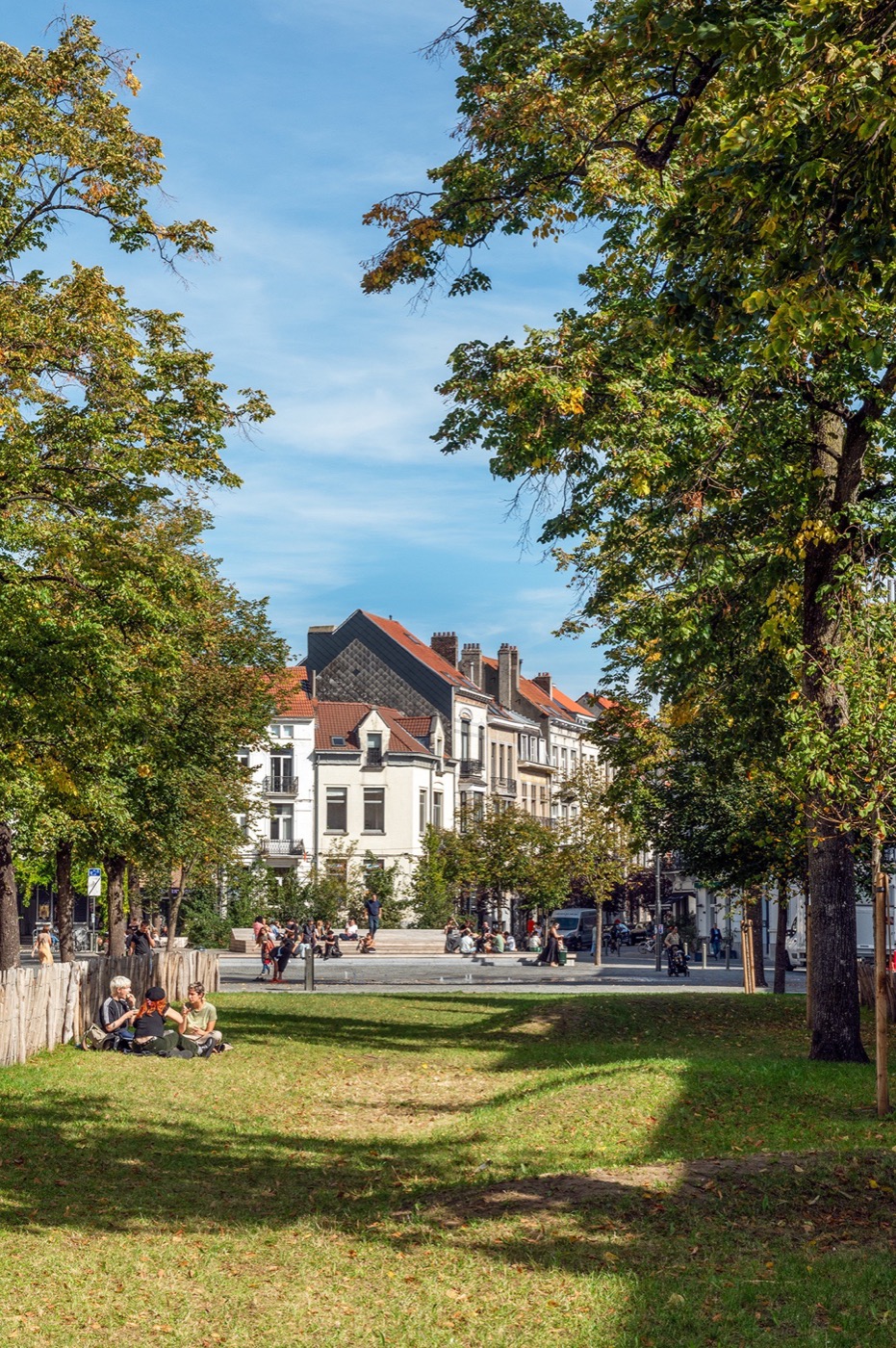
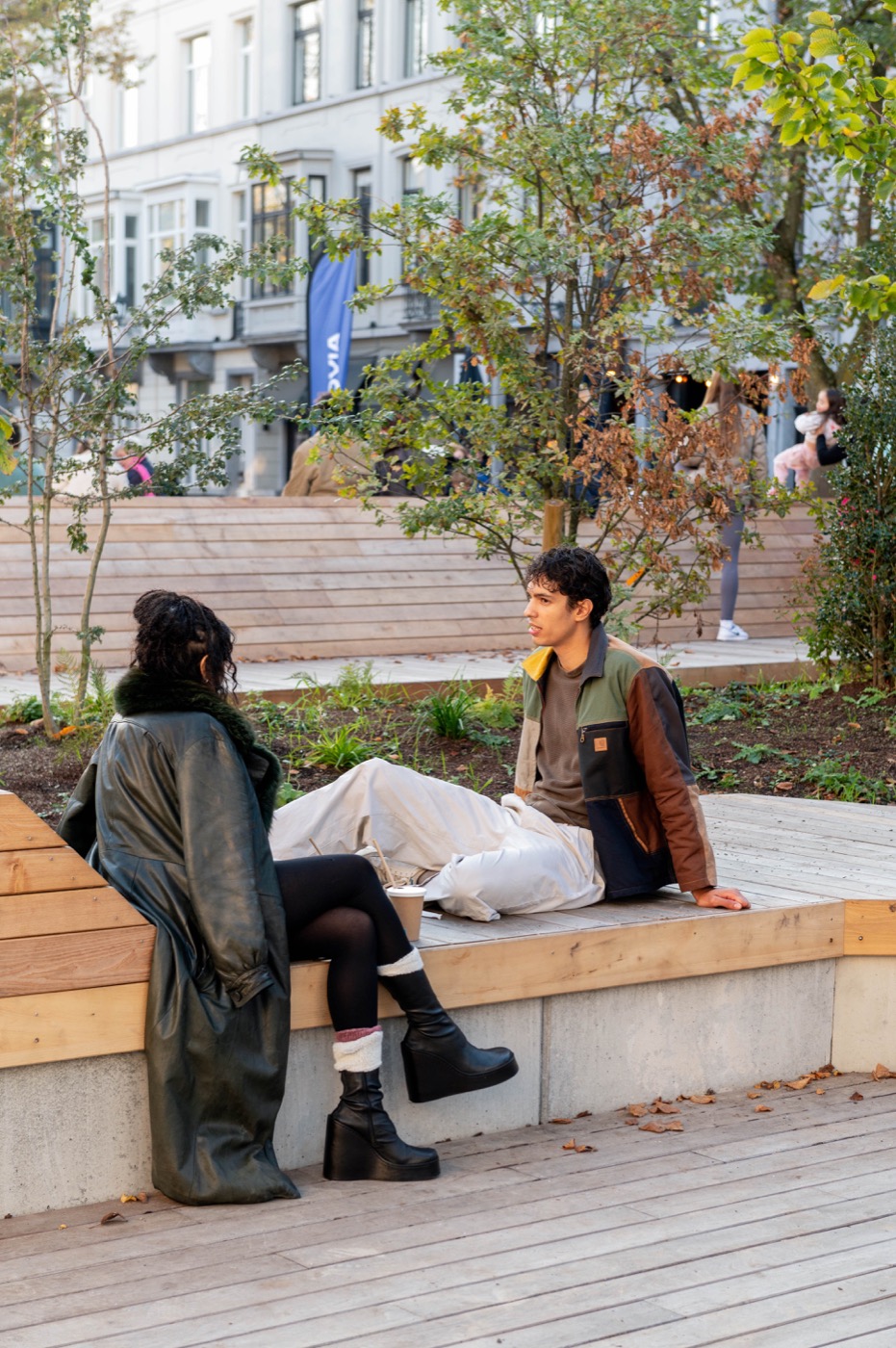
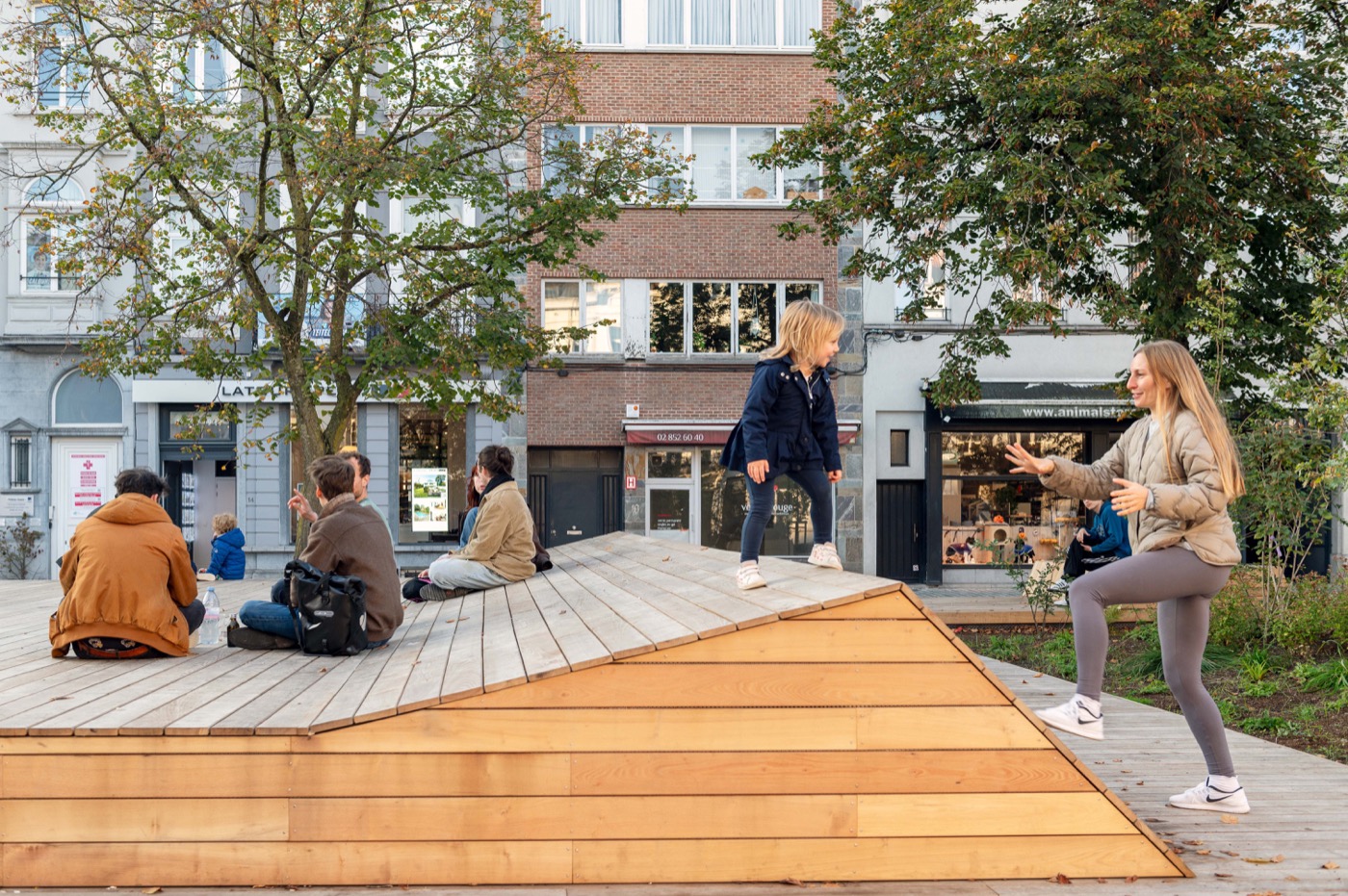
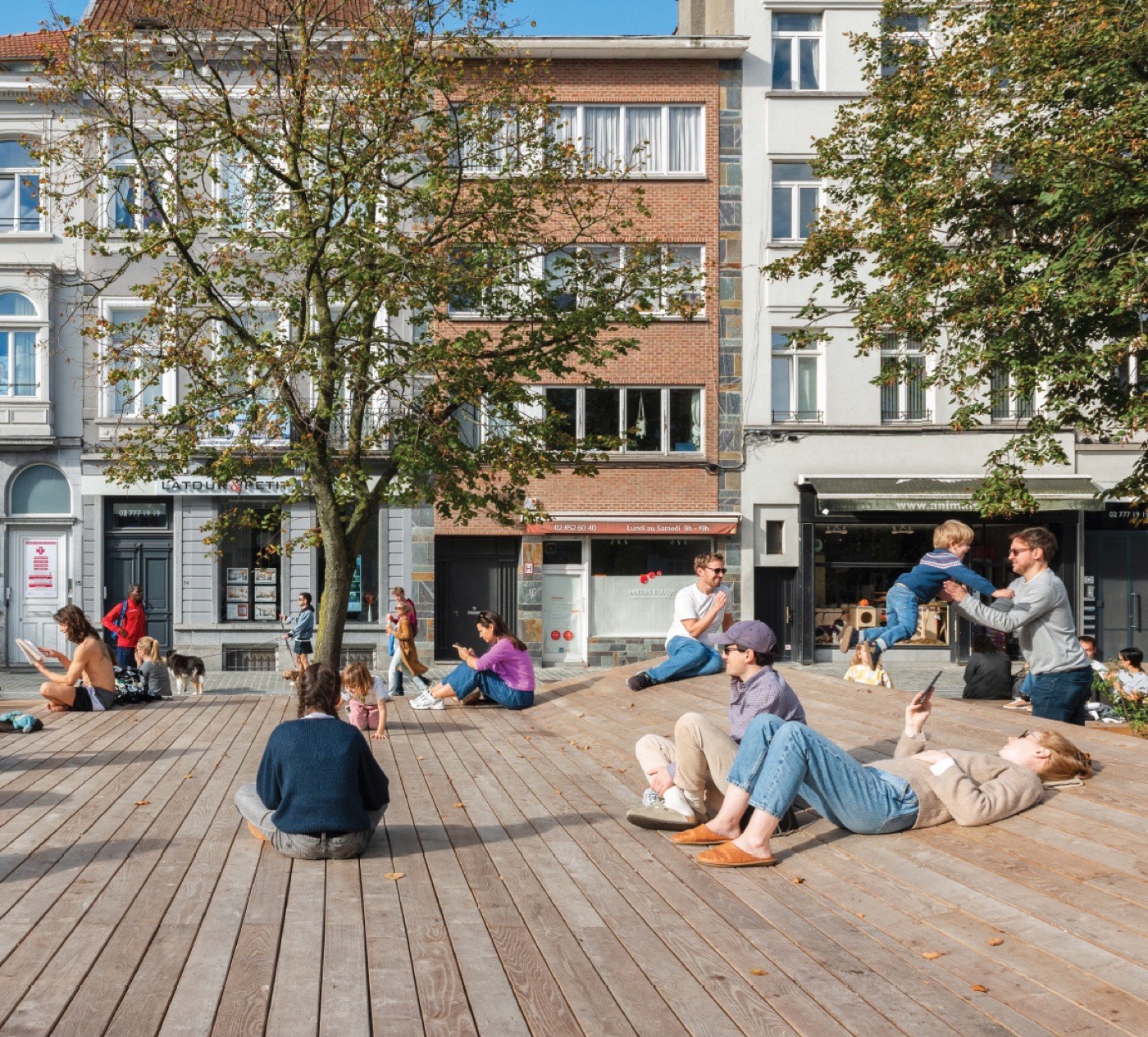
The second response involves ‘opening’ the ground to release space for unsealed surfaces. The original topography is reinterpreted through the folds of a playful lawn that weaves between the trees. This topographic adjustment works with the slope of the site to act as a multi-scalar tool. It offers varied affordances, surfaces for lounging, sitting, spontaneous play, or even walking dogs, without requiring heavy infrastructure.
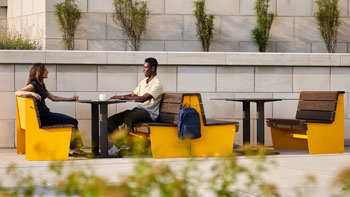
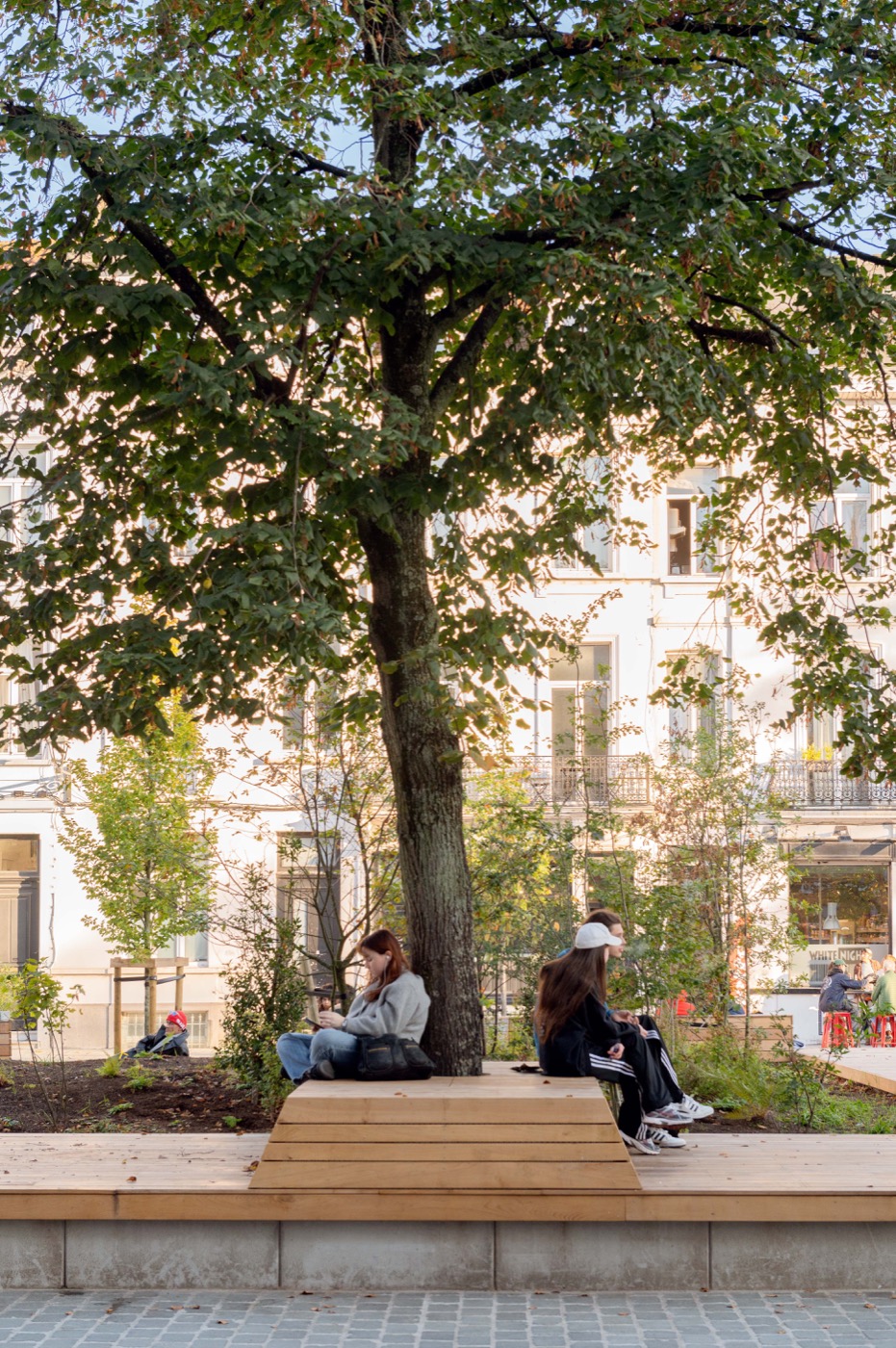
The third response addresses the protection of an existing grove degraded by overuse. We chose to protect this grove through bespoke, custom-made furniture. By working with the trees and the ground, we revealed the square as an ‘urban living room’. The trees are no longer mere scenery; they are active interlocutors providing bioclimatic shelter. The intention is to build public spaces not only for gathering, but for listening, a space of co-presence.
Modest Craft
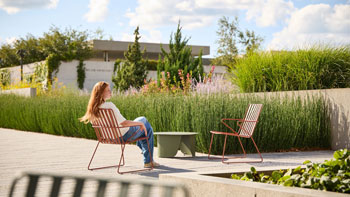
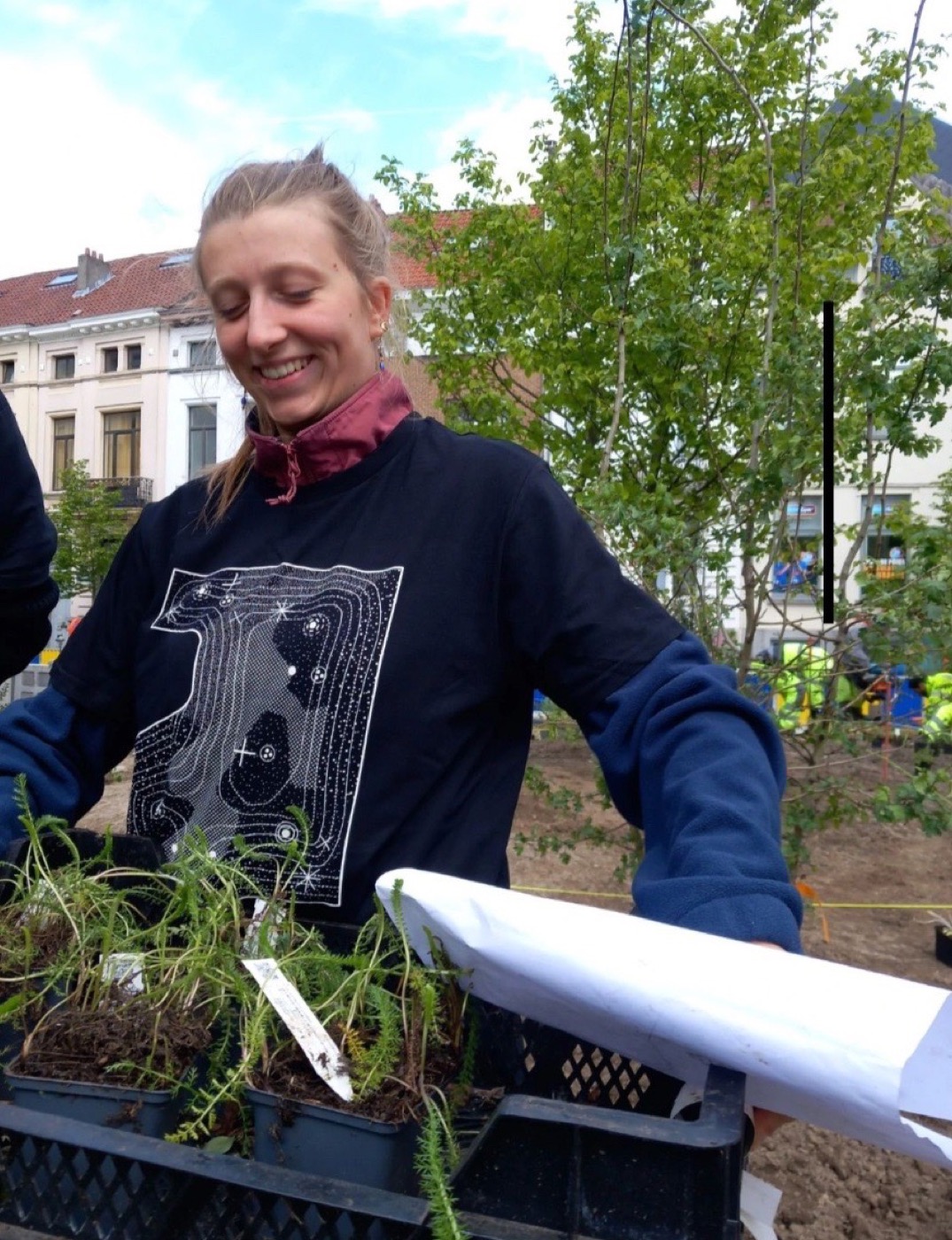
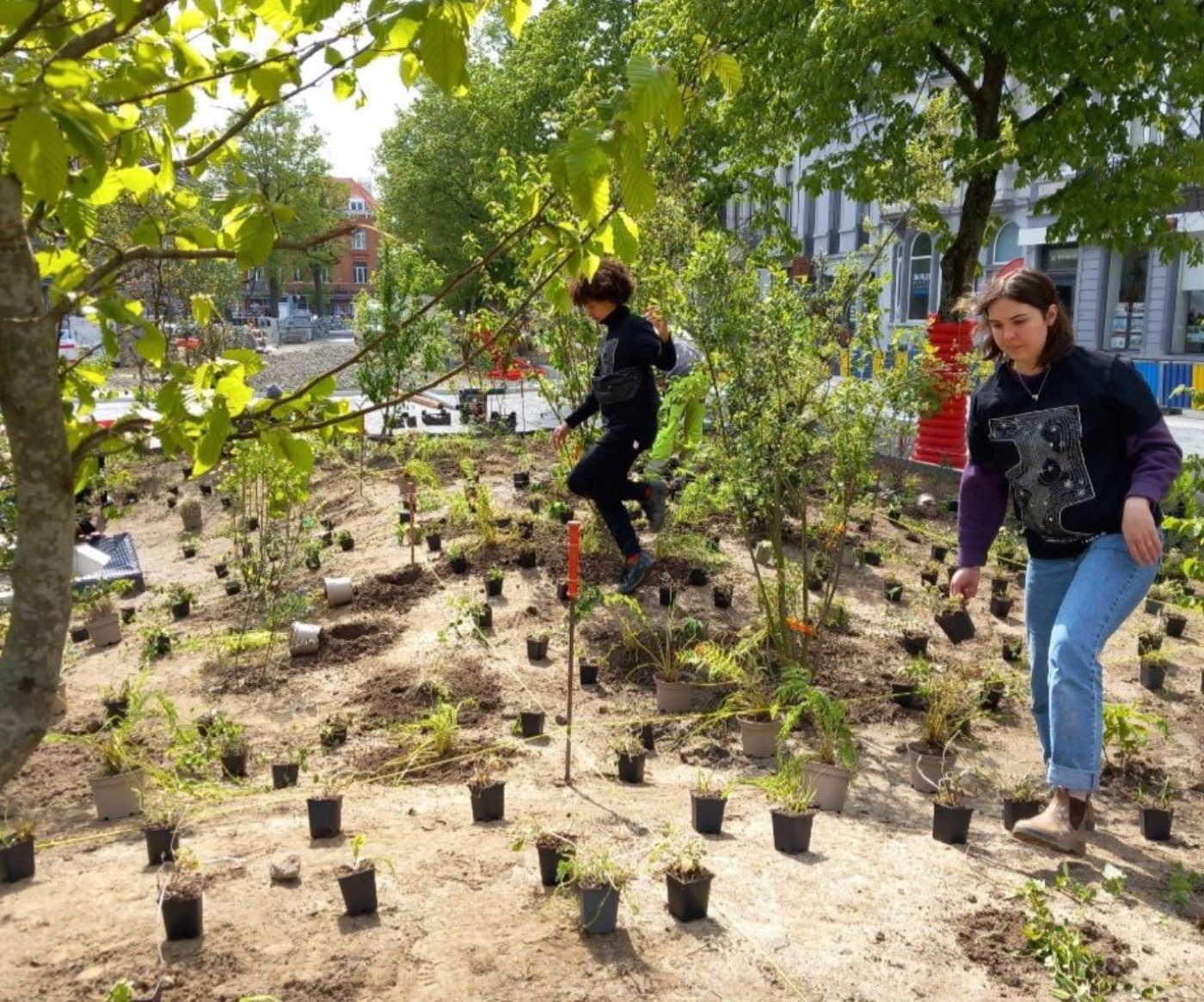
To honour this botanical heritage, we chose to reclaim a lost tradition of excellence. In the 19th century, Belgium was a global leader in horticultural knowledge. Observing a decline in the specialised technical skills of traditional contractors, we decided to personally curate and hand-plant the vegetation ourselves. This ‘hands-on’ involvement, an attitude usually reserved for experimental gardens, shifts practice for a public square, ensuring horticultural precision and a renewed intimacy with the living soil. Materiality also reflects this modesty. To address the urban heat island effect, we turned to a resource already part of the region’s broader ecological cycle. Following a severe storm along the A42 highway, we salvaged a hundred felled Black Locust trees, reassembling them into bespoke, XXL-scale furniture. This is a physical manifestation of circularity through local craftsmanship.
The Ethics of ‘Just Enough’
Dear Jury members, dear Landezine community: this contribution demonstrates that the future of the urban square lies in the precision of the intervention rather than the scale of the budget or the vision’s grandiosity. It is a call to work with the existing fabric of the city,its trees and history, and to anticipate the many demands of its inhabitants. By balancing a multiplicity of micro-places and a legible human scale, we have created a canopy square that proves a modest intervention, when properly calibrated, honours the co-presence with this tree heritage.
Project Data
Client: Municipality of Ixelles, Brussels, Belgium
Design Period: 2023–2025
Team: taktyk landscape + (lead), Alive, AnteaGroup, Res Derelictae
50.82480702932747, 4.360554269735823
73554


LILA 2026 Sponsor