Dumas Sea Face Masterplan, Surat
inidesignstudio.com/
2026 Public Projects / India / Built in 2025 /

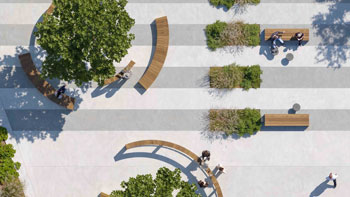
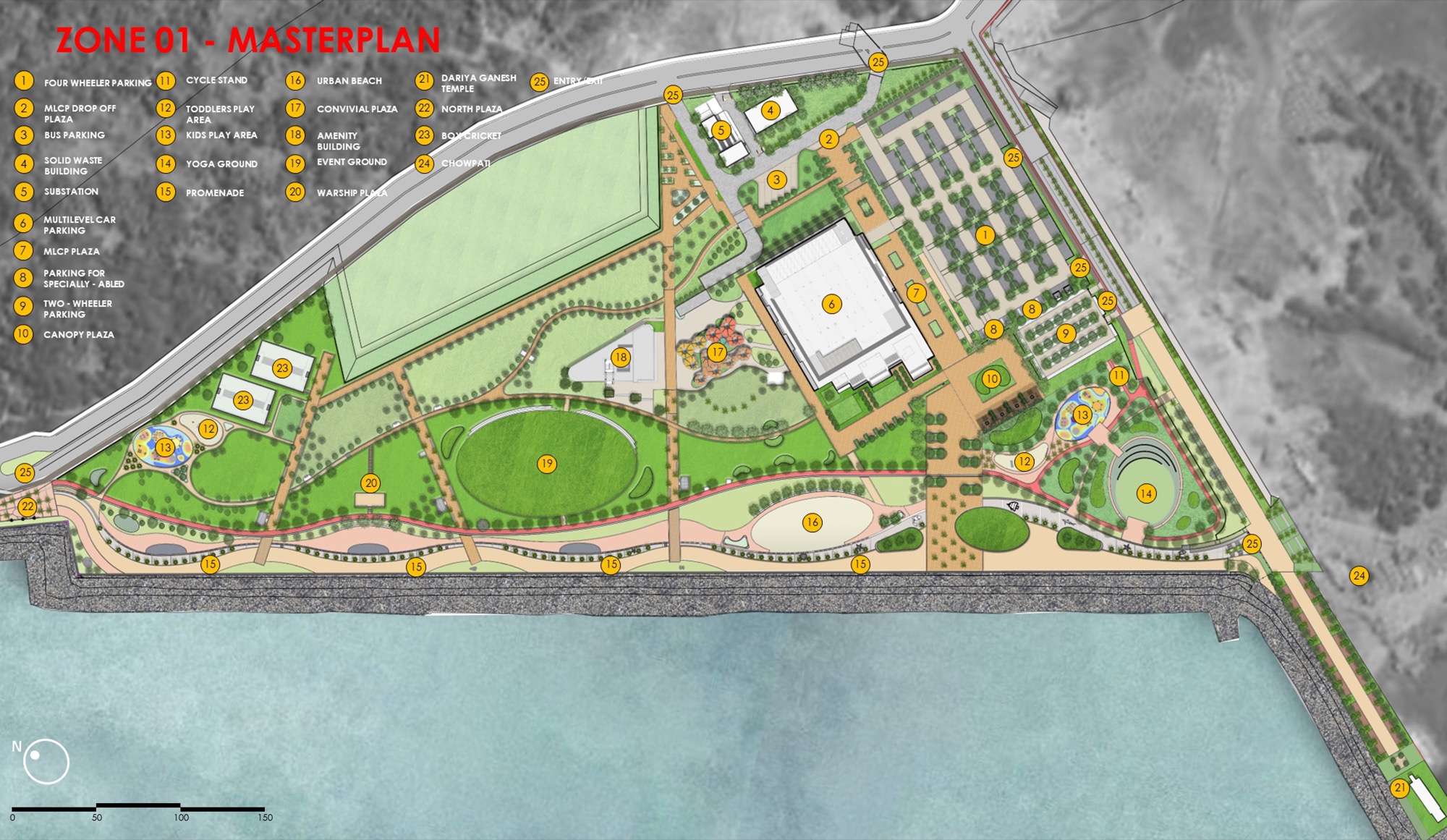
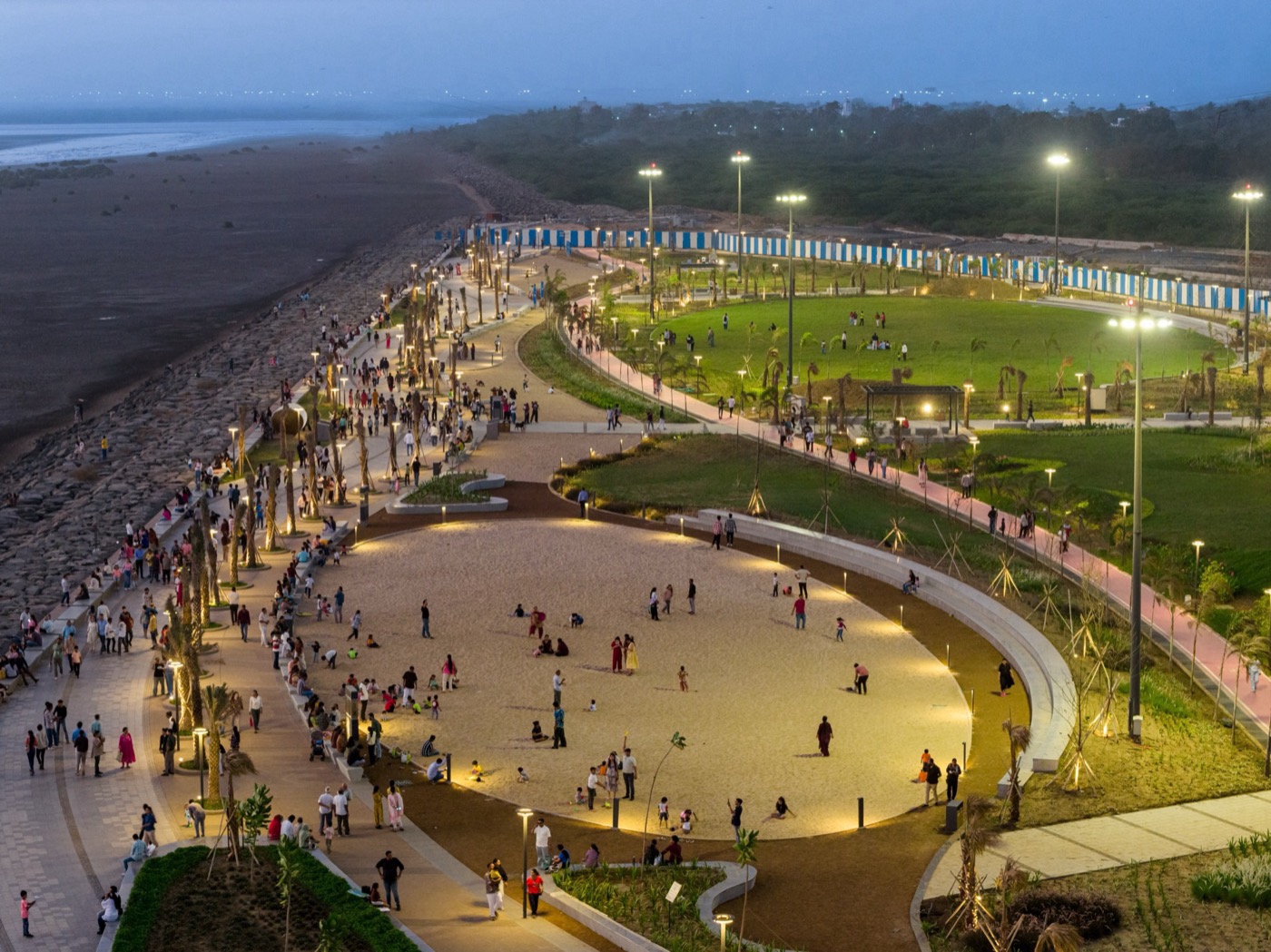
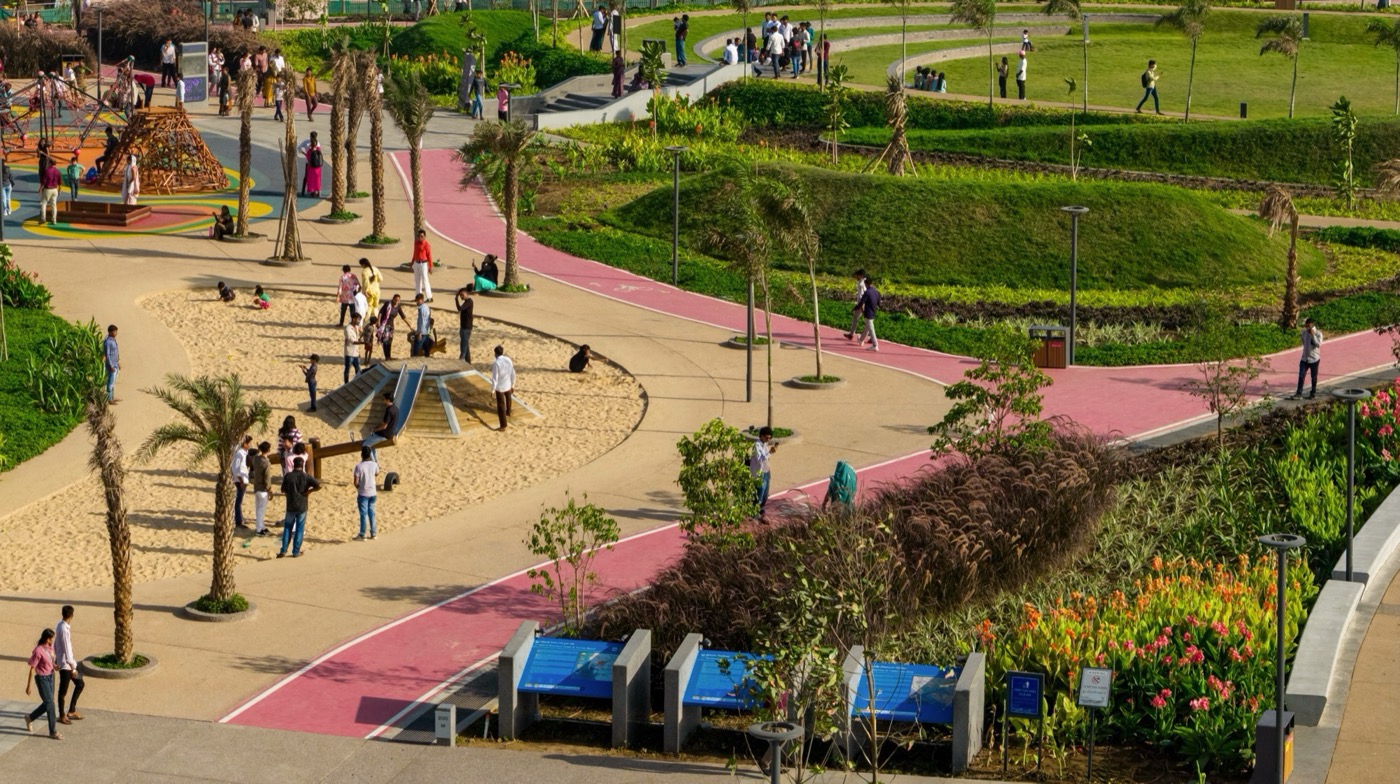
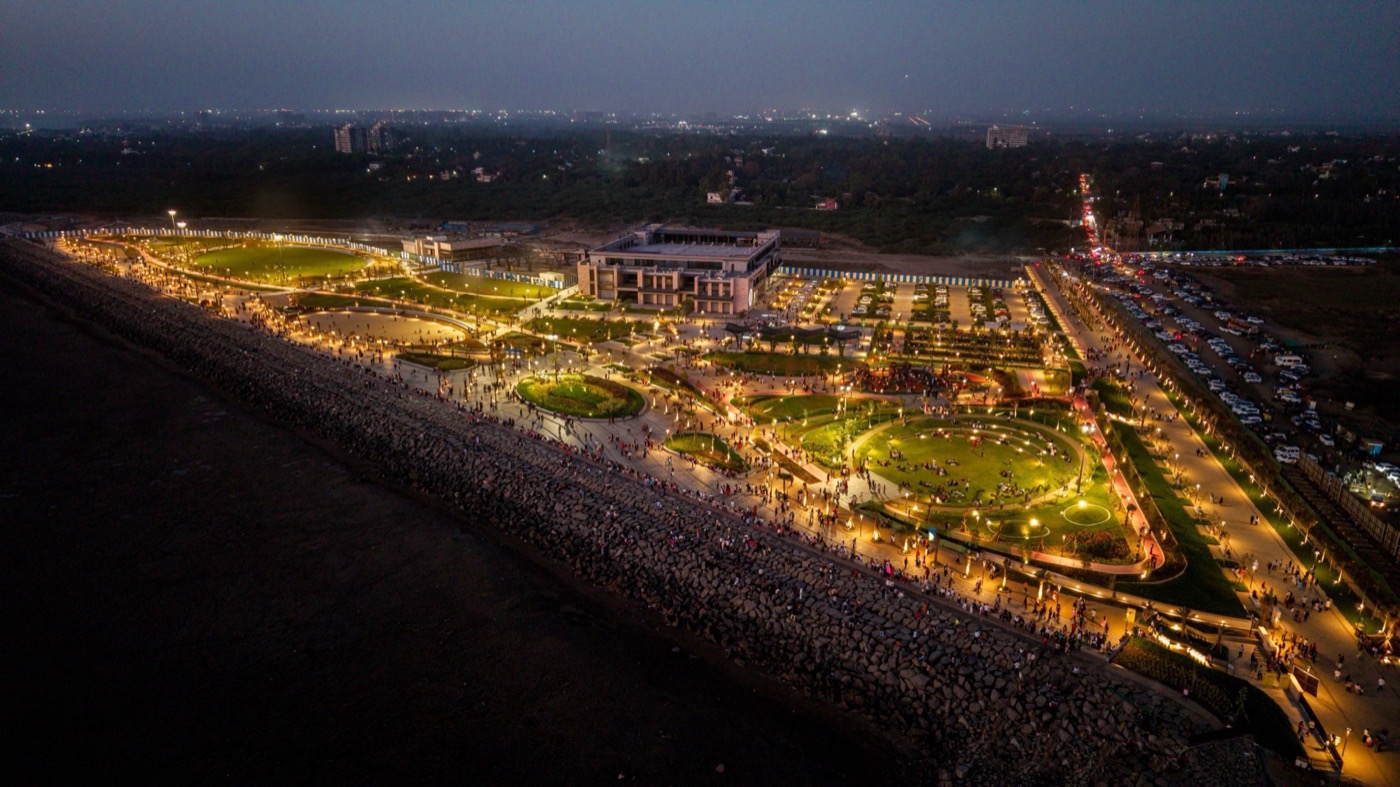
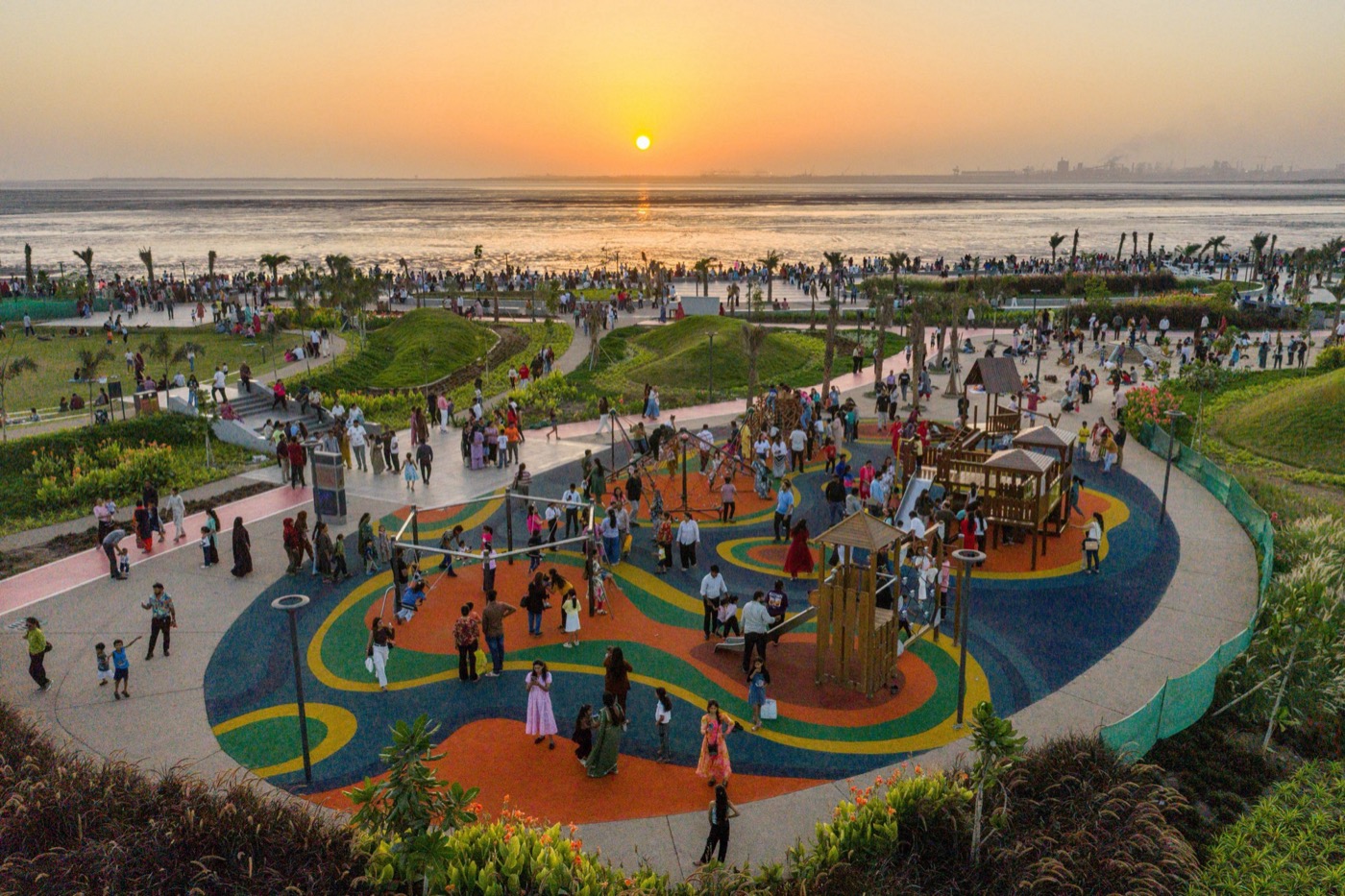
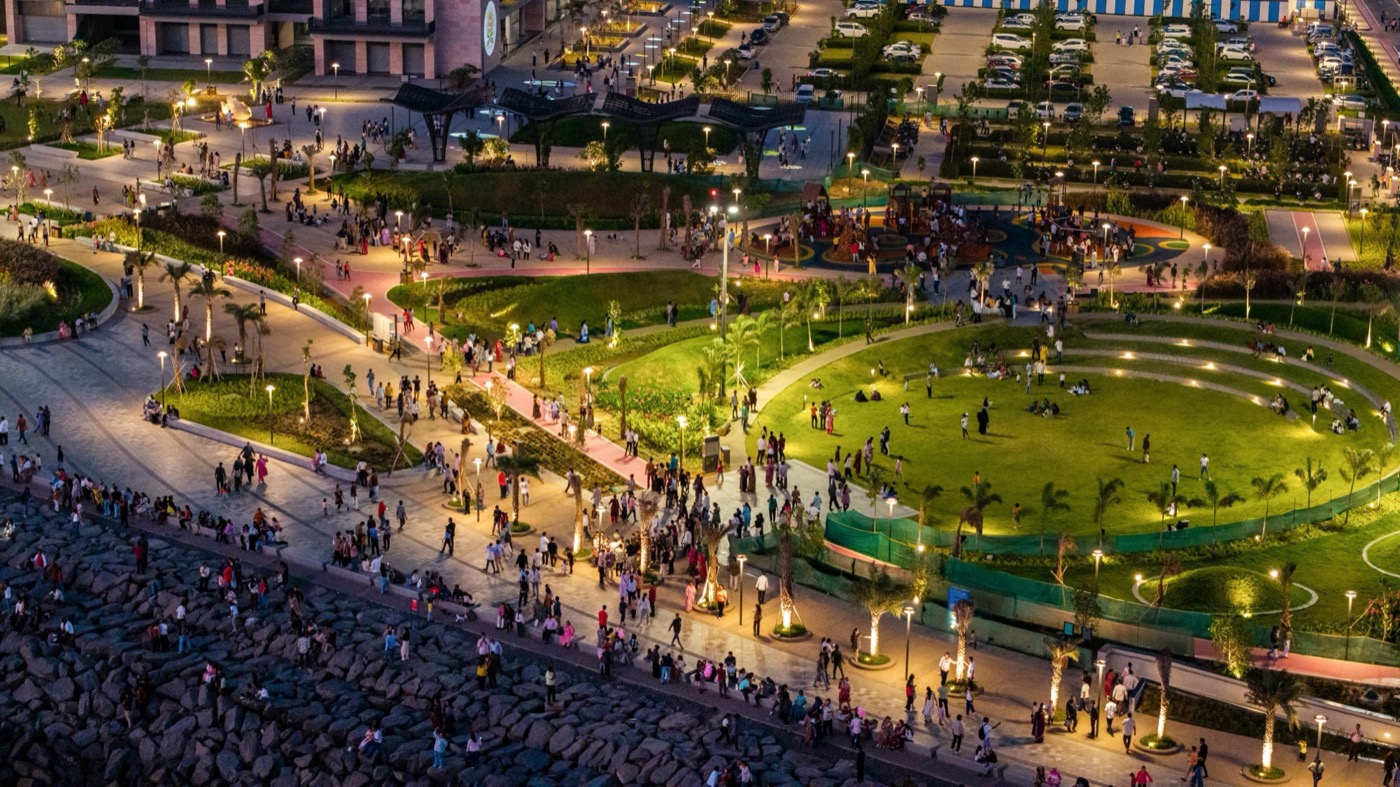
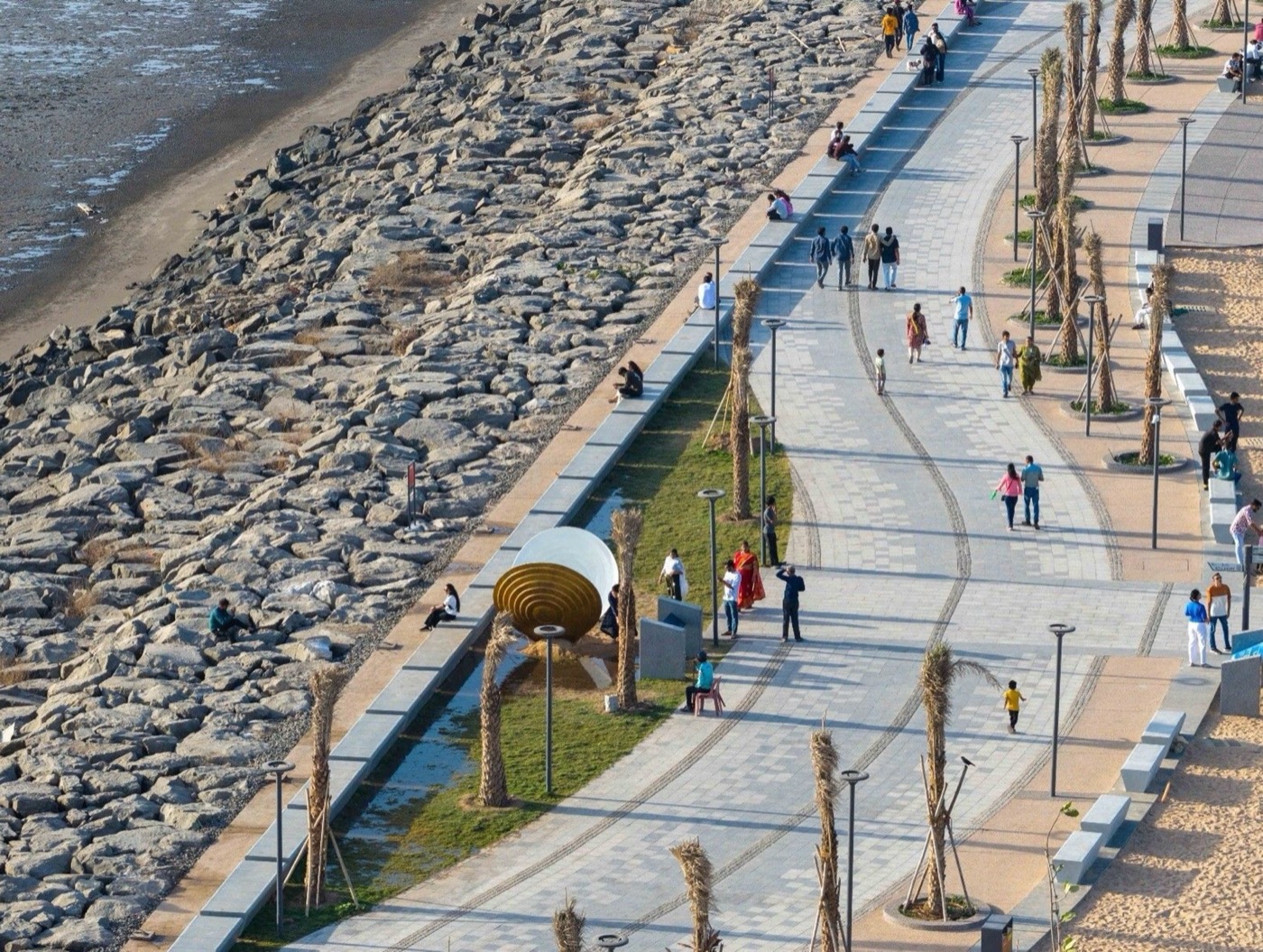
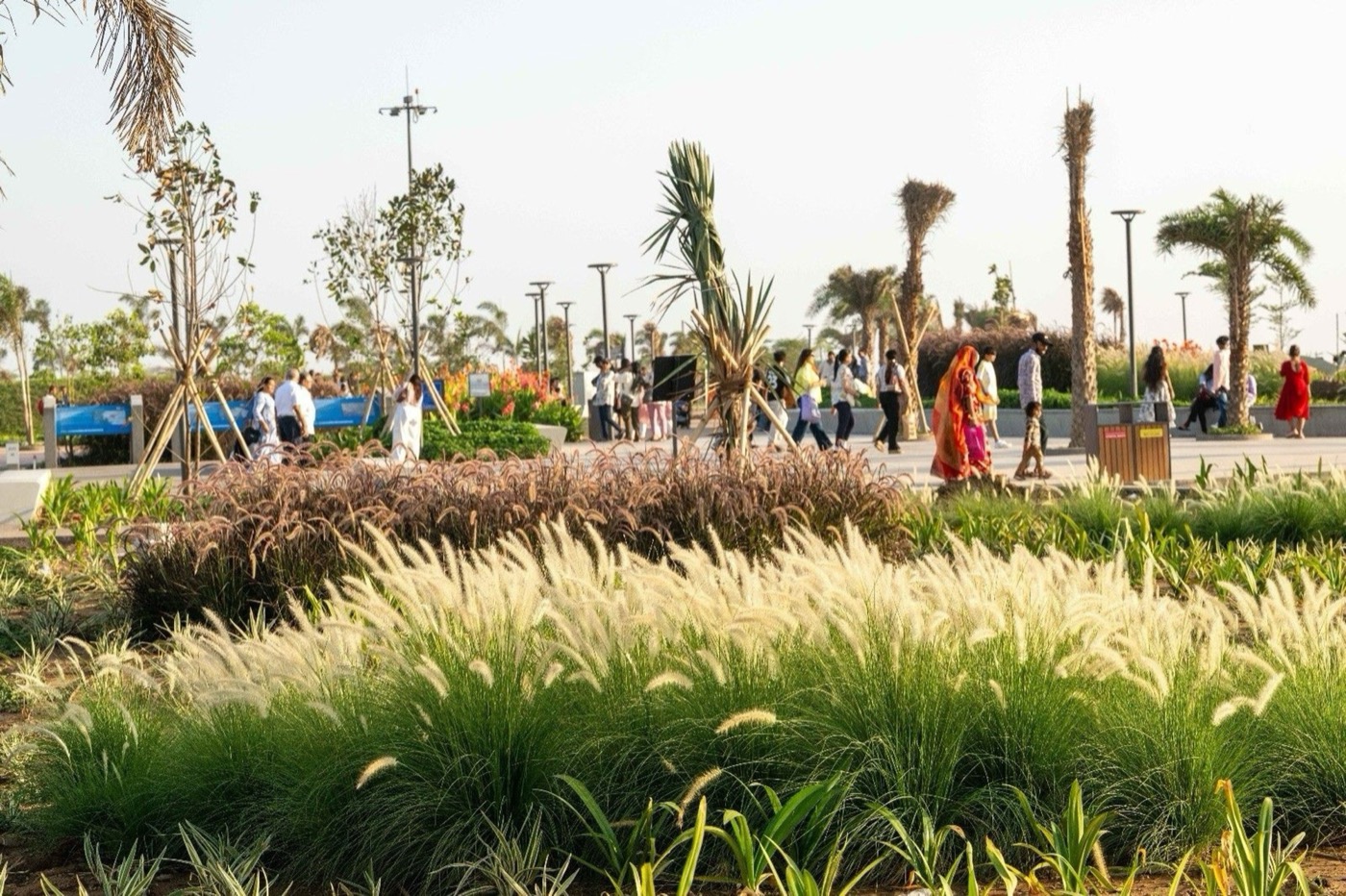
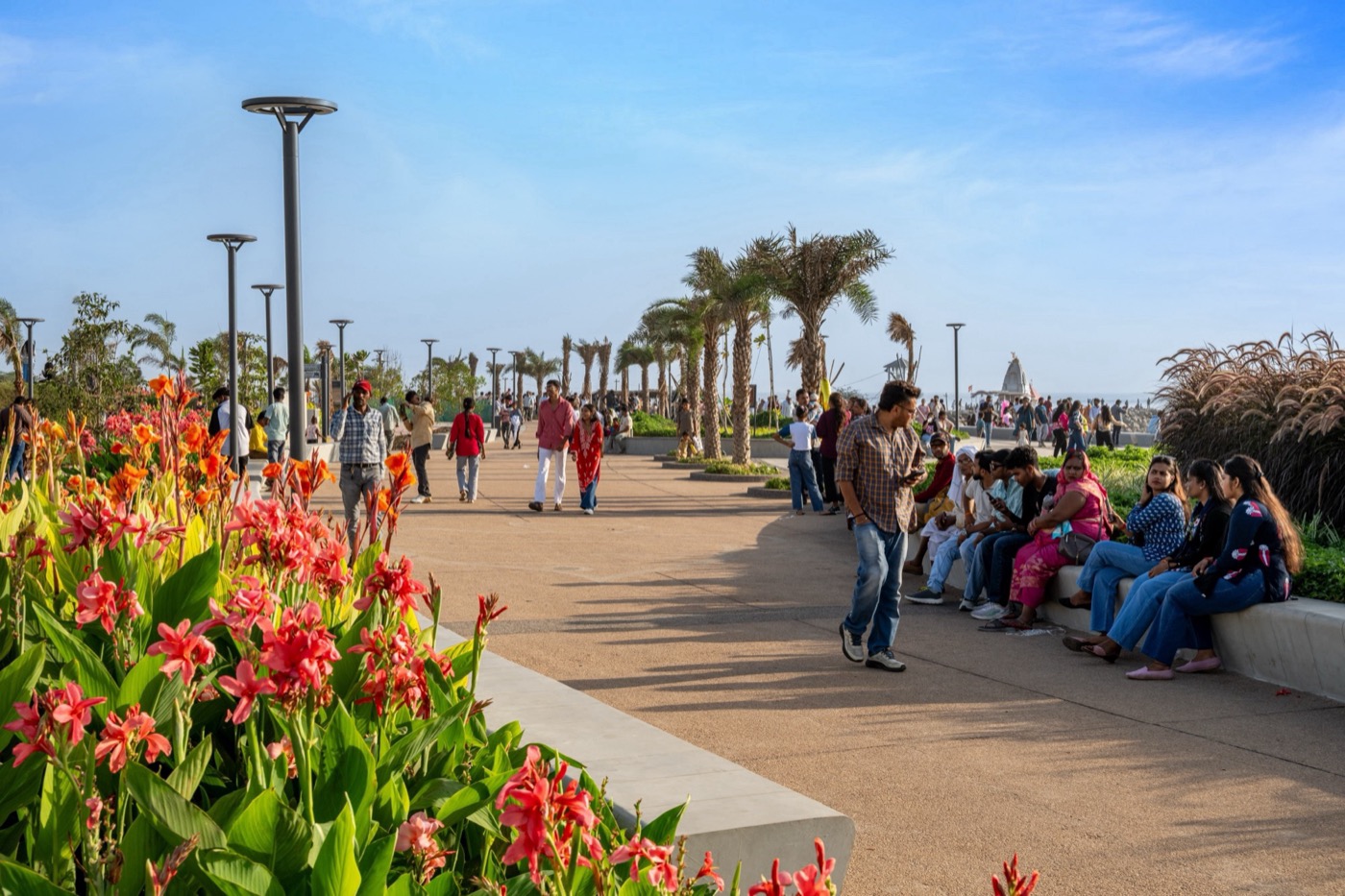
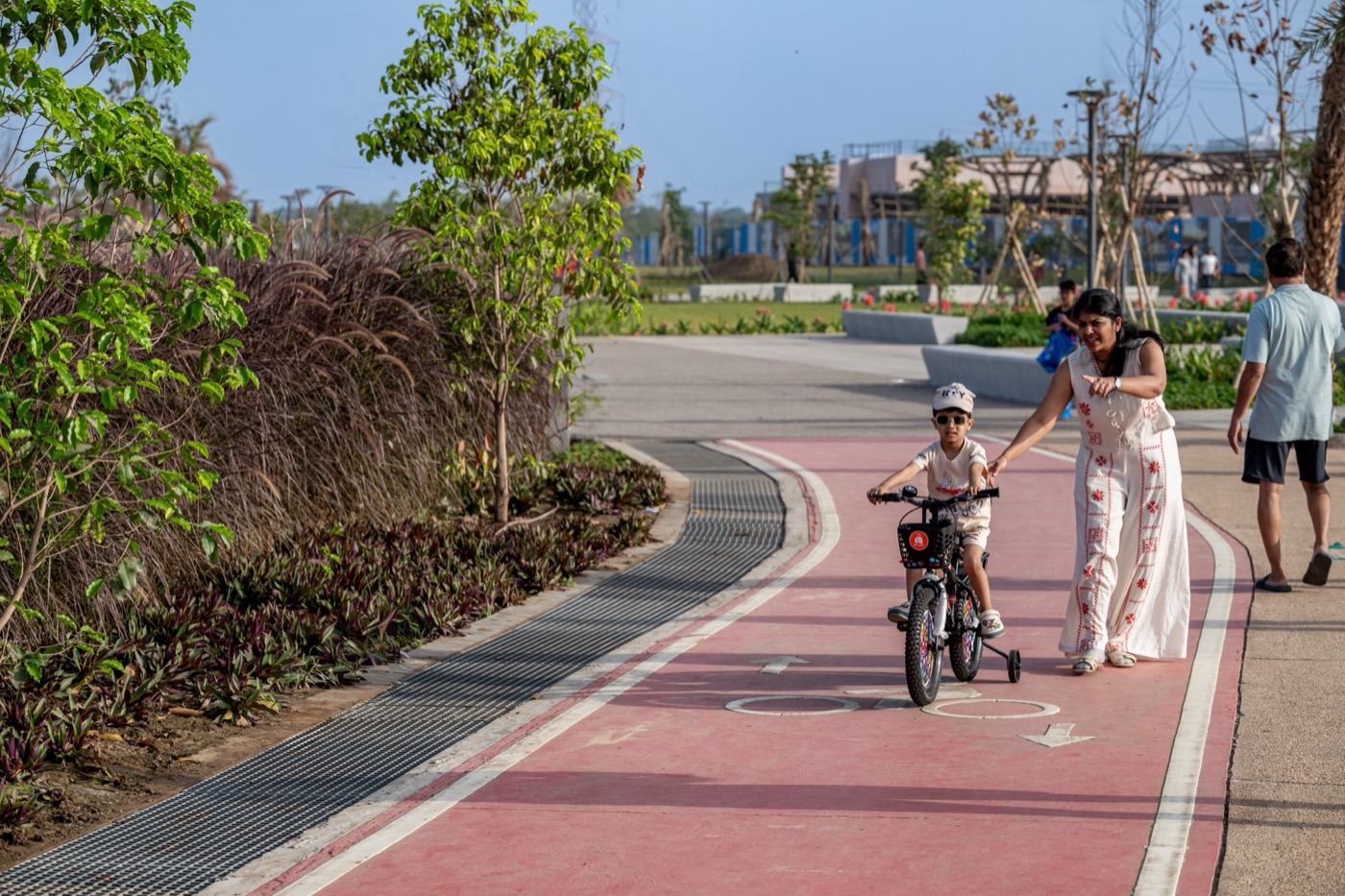
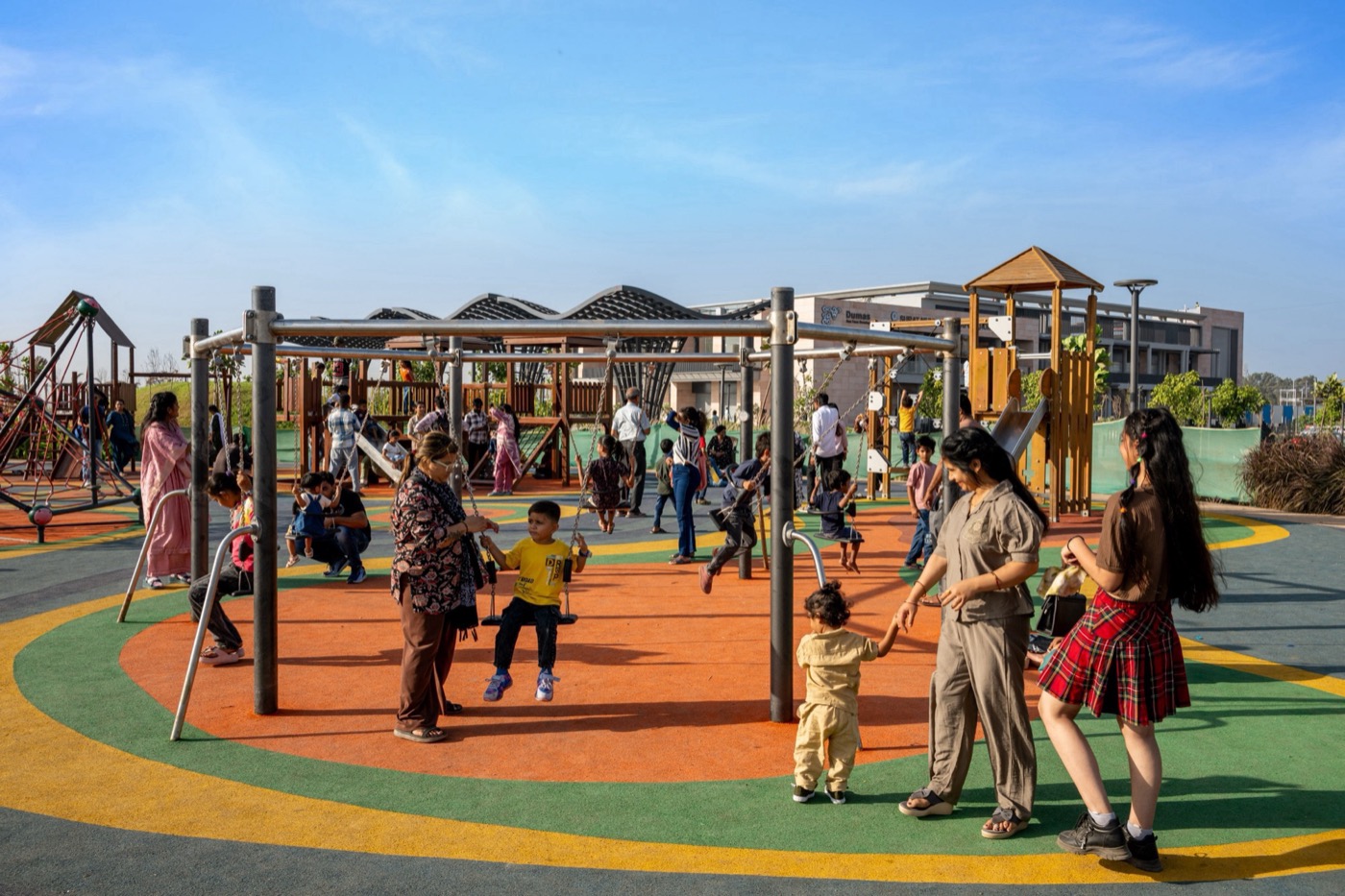
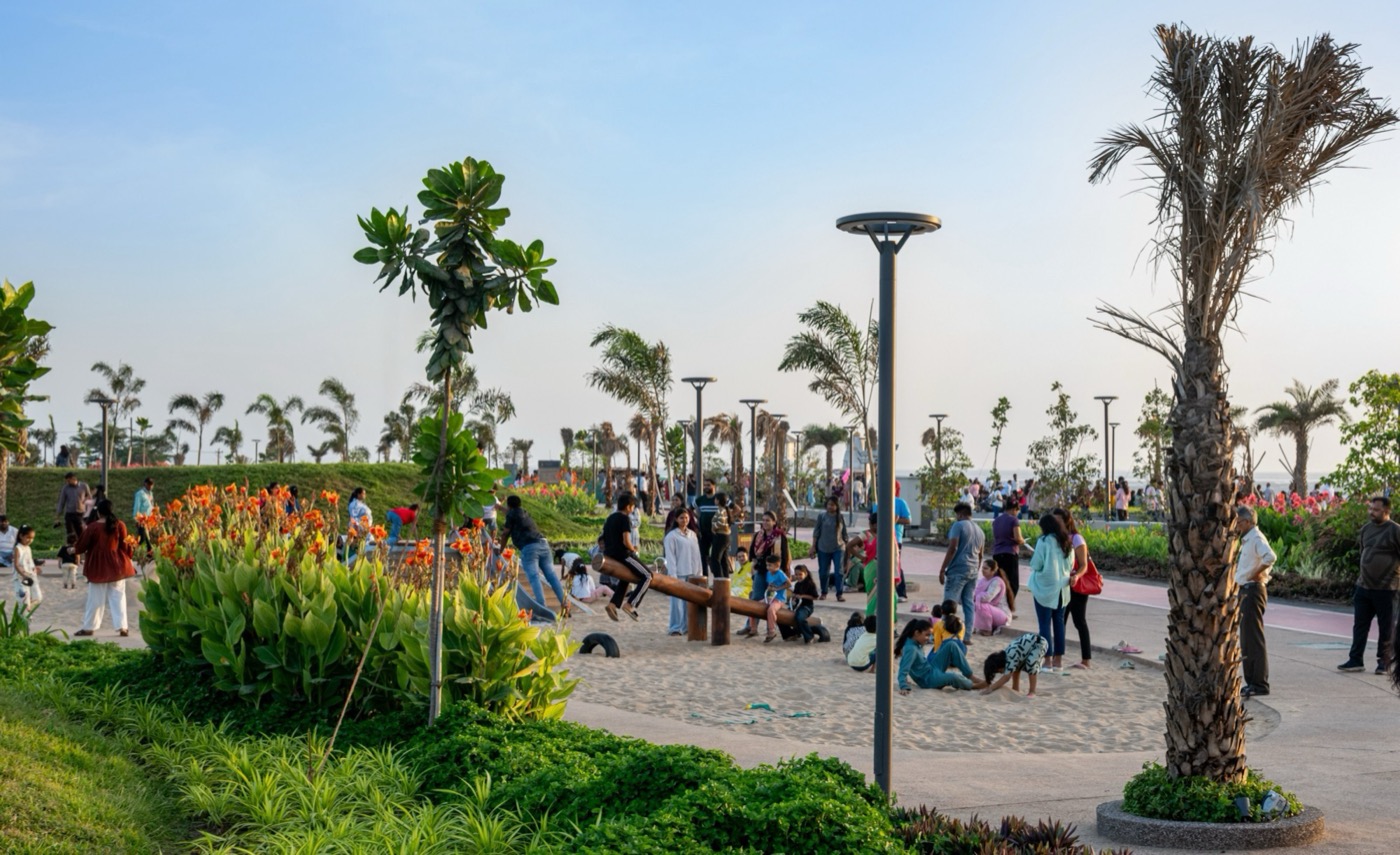
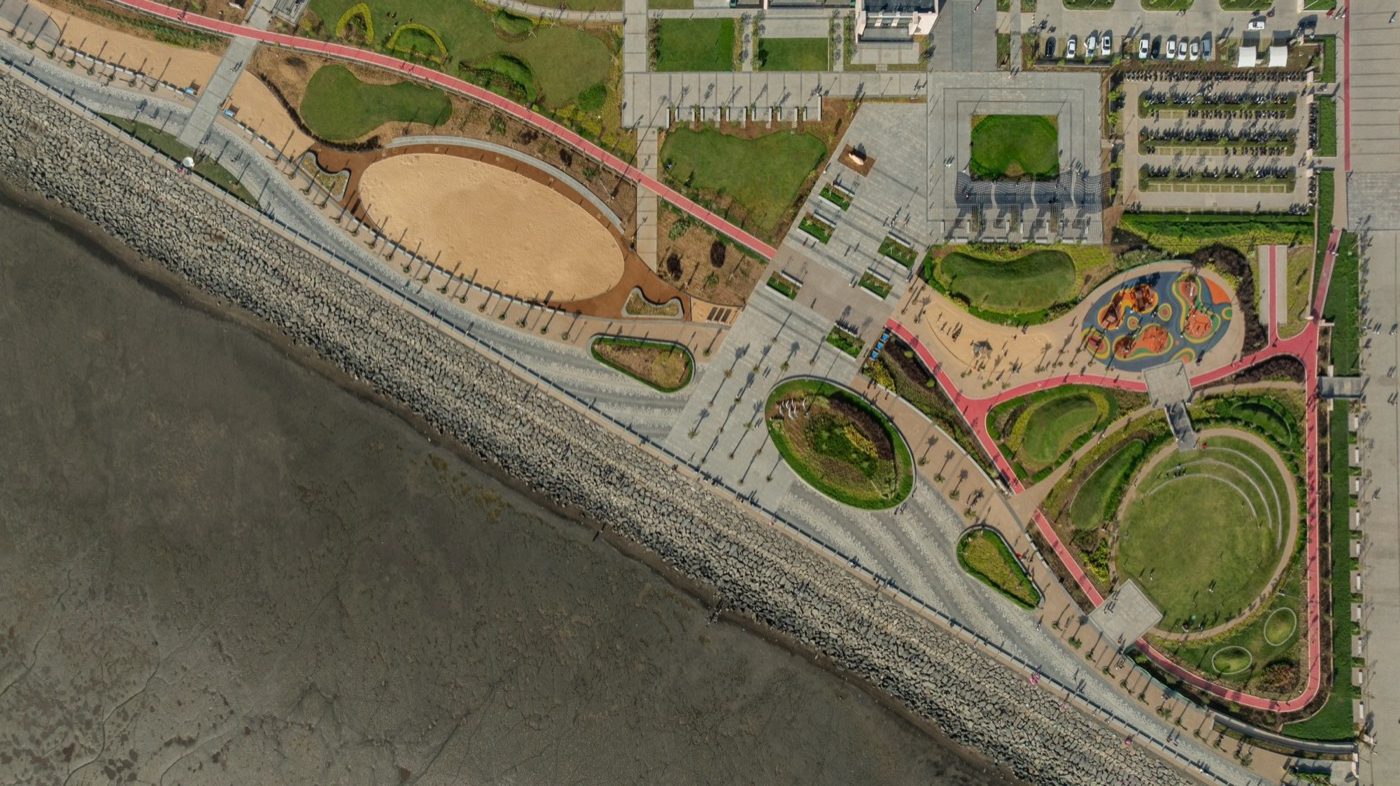
The Dumas Sea Face Masterplan reimagines a vast, underutilized coastline stretch of the rapidly urbanizing Surat city, as a continuous, accessible, and resilient public landscape, transforming a fragmented shoreline into a vibrant civic waterfront that reconnects people with the sea while reinforcing ecological systems. Historically significant yet underdeveloped, the Dumas shoreline suffered from poor accessibility and lack of cohesive planning. The masterplan addresses this by stitching together disparate segments into a legible and inclusive urban continuum. A continuous promenade forms the primary organizing spine, structured around a sequence of plazas, performance spaces, play areas, and quieter retreats—ensuring a diverse and democratic user experience.
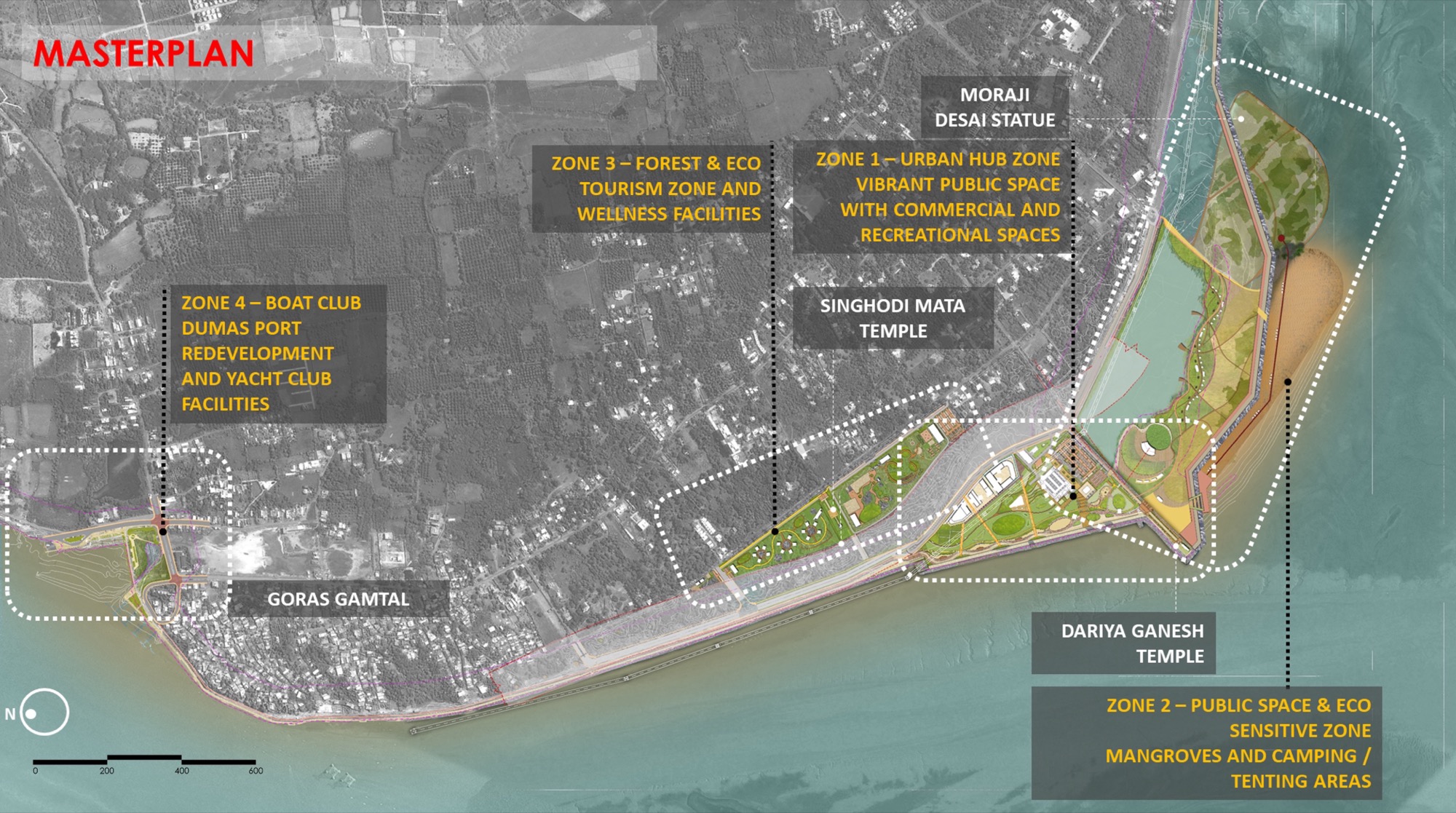
The 252.20 acres master plan was resolved in four zones, with the 31.8 Acres Zone-1 developed as an urban hub for recreational and tourism activities. Rather than treating the edge as a fixed boundary, the design conceives it as a fluid, inhabitable zone that accommodates movement, gathering, and environmental flux.
Public Realm and Imageability:
Drawing from Kevin Lynch’s concept of “imageability,” the design integrates paths, edges, nodes, and landmarks into a coherent spatial framework and creating a memorable and navigable public environment. Distinct zones unfold along the promenade, each with its own character yet contributing to a unified identity.
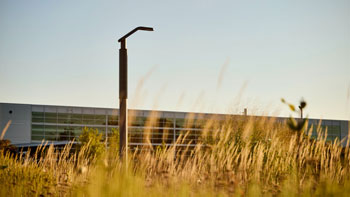
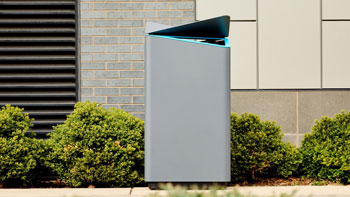
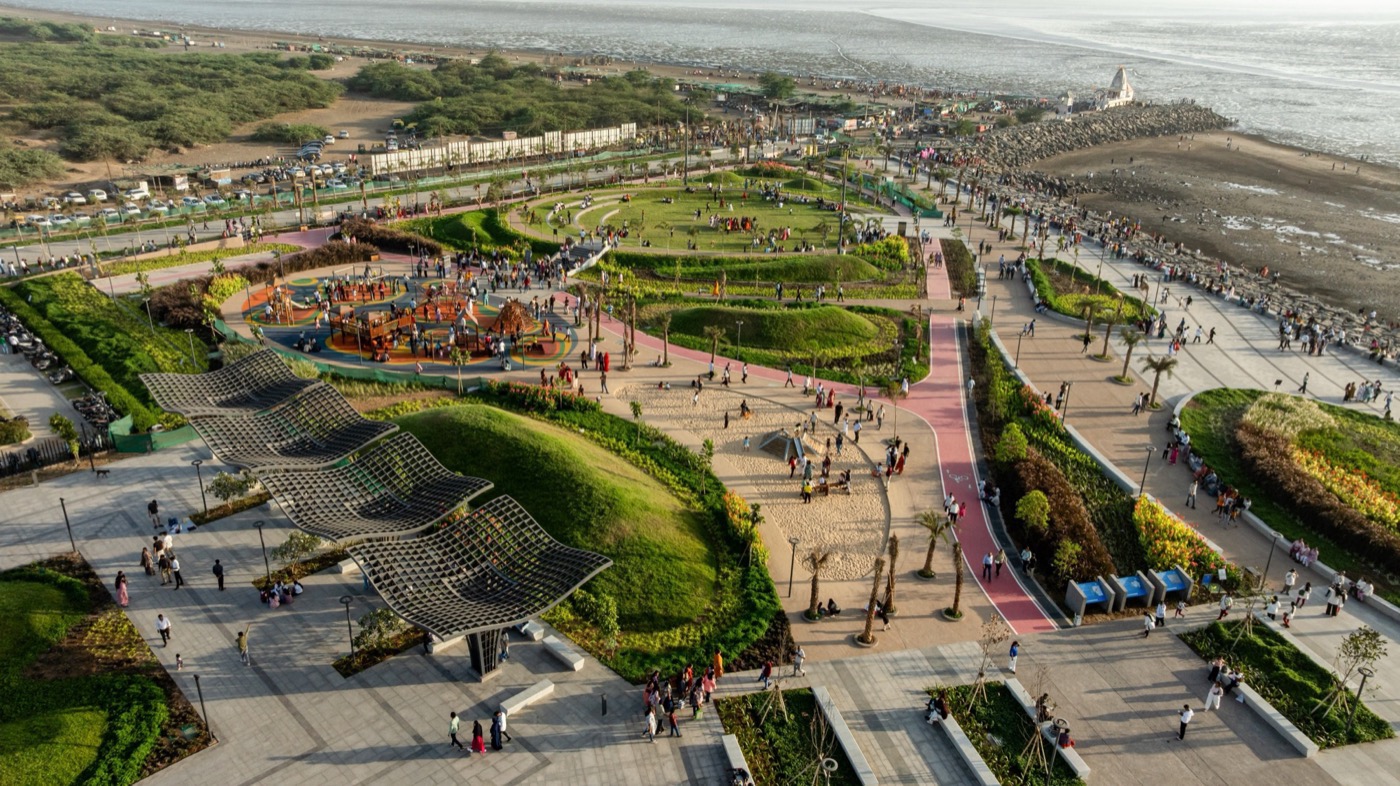
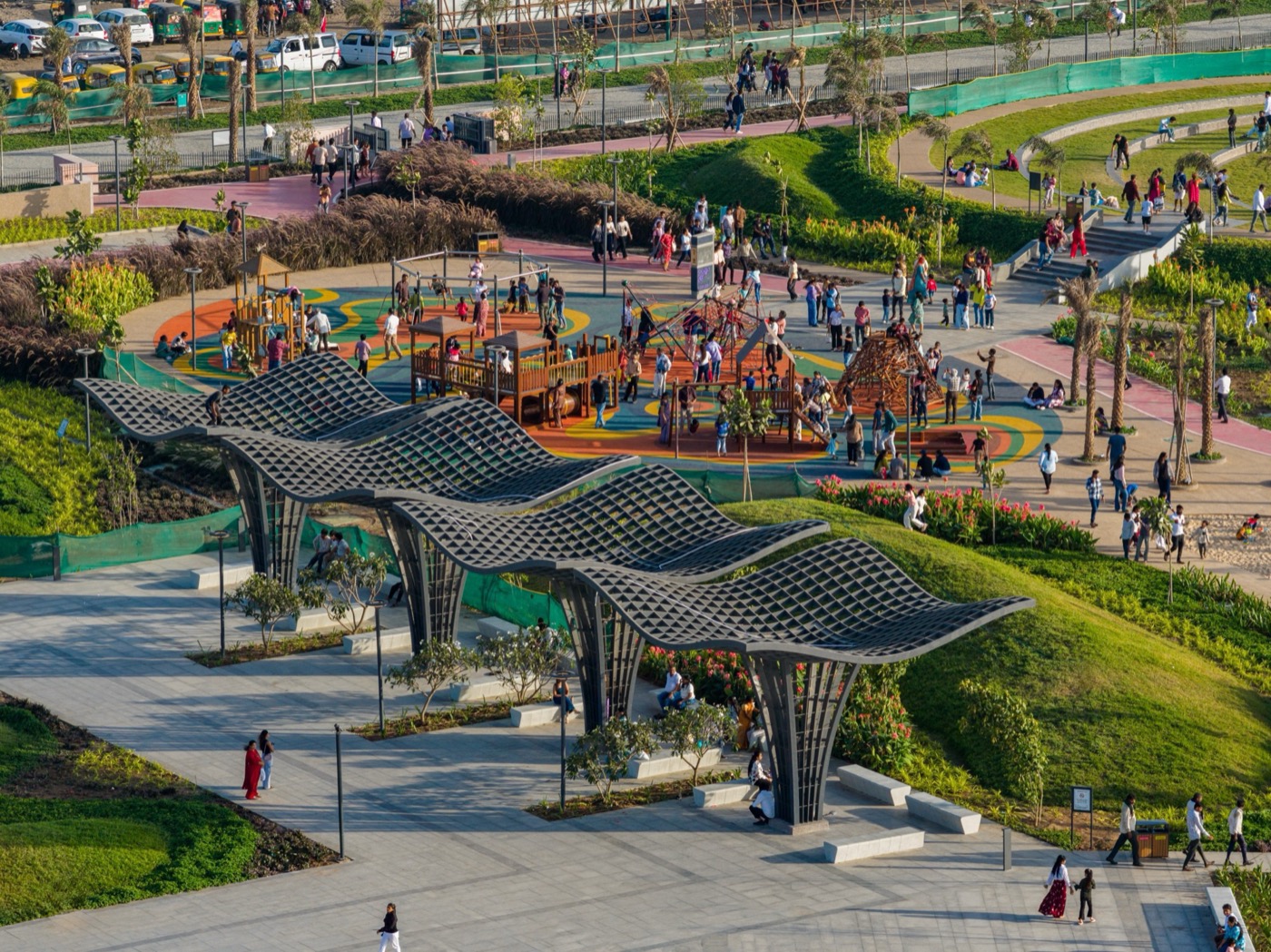
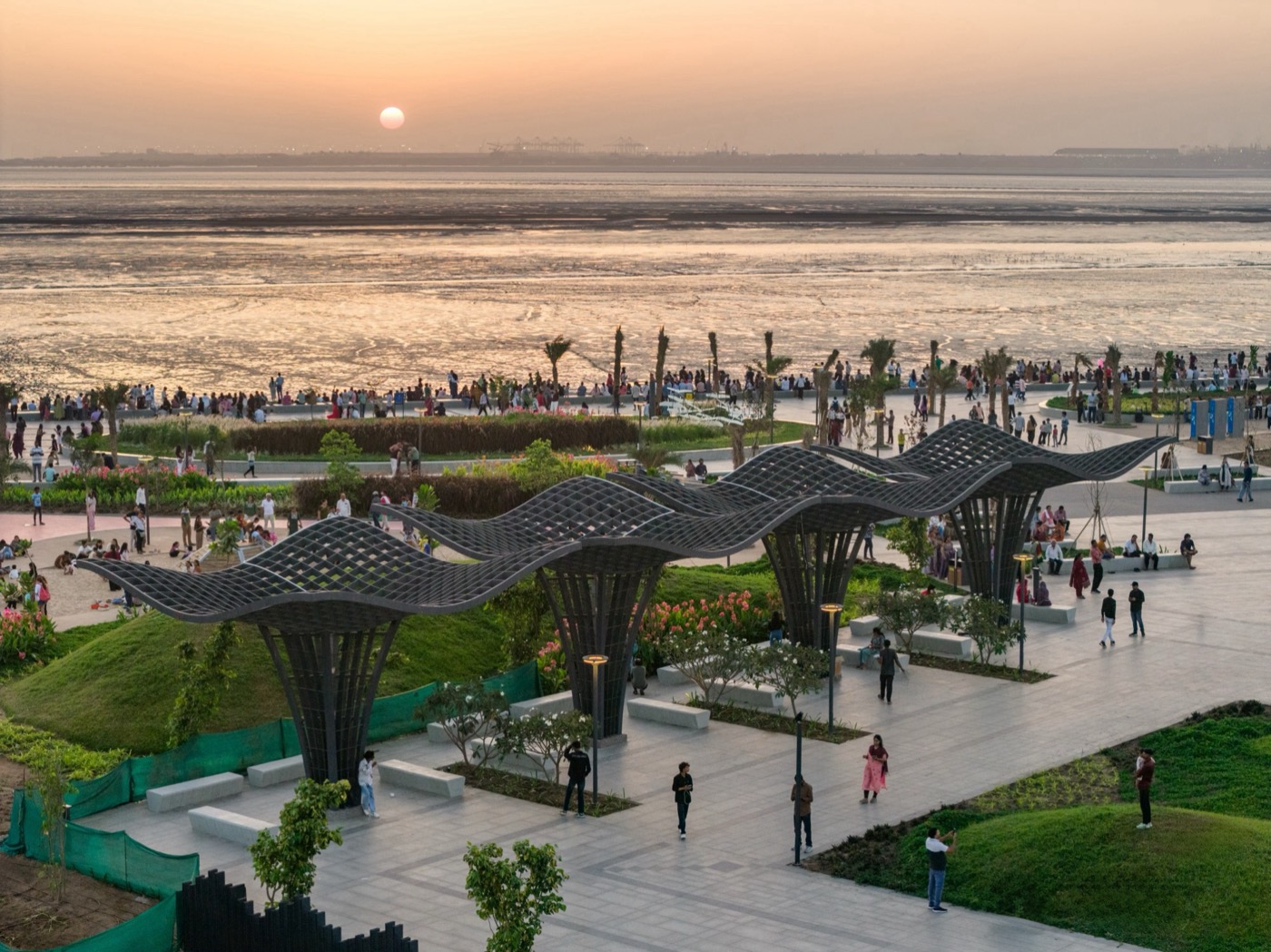
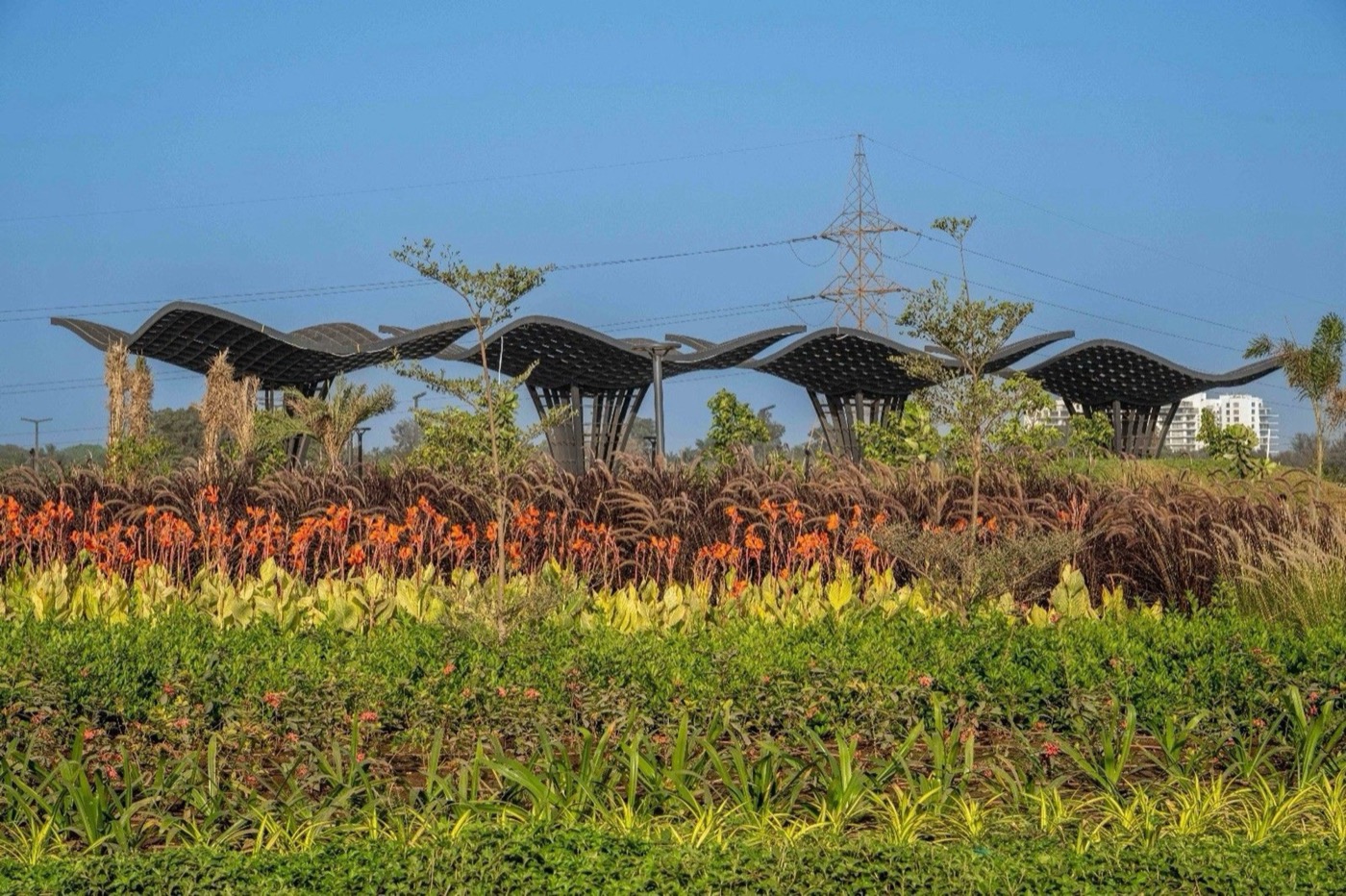
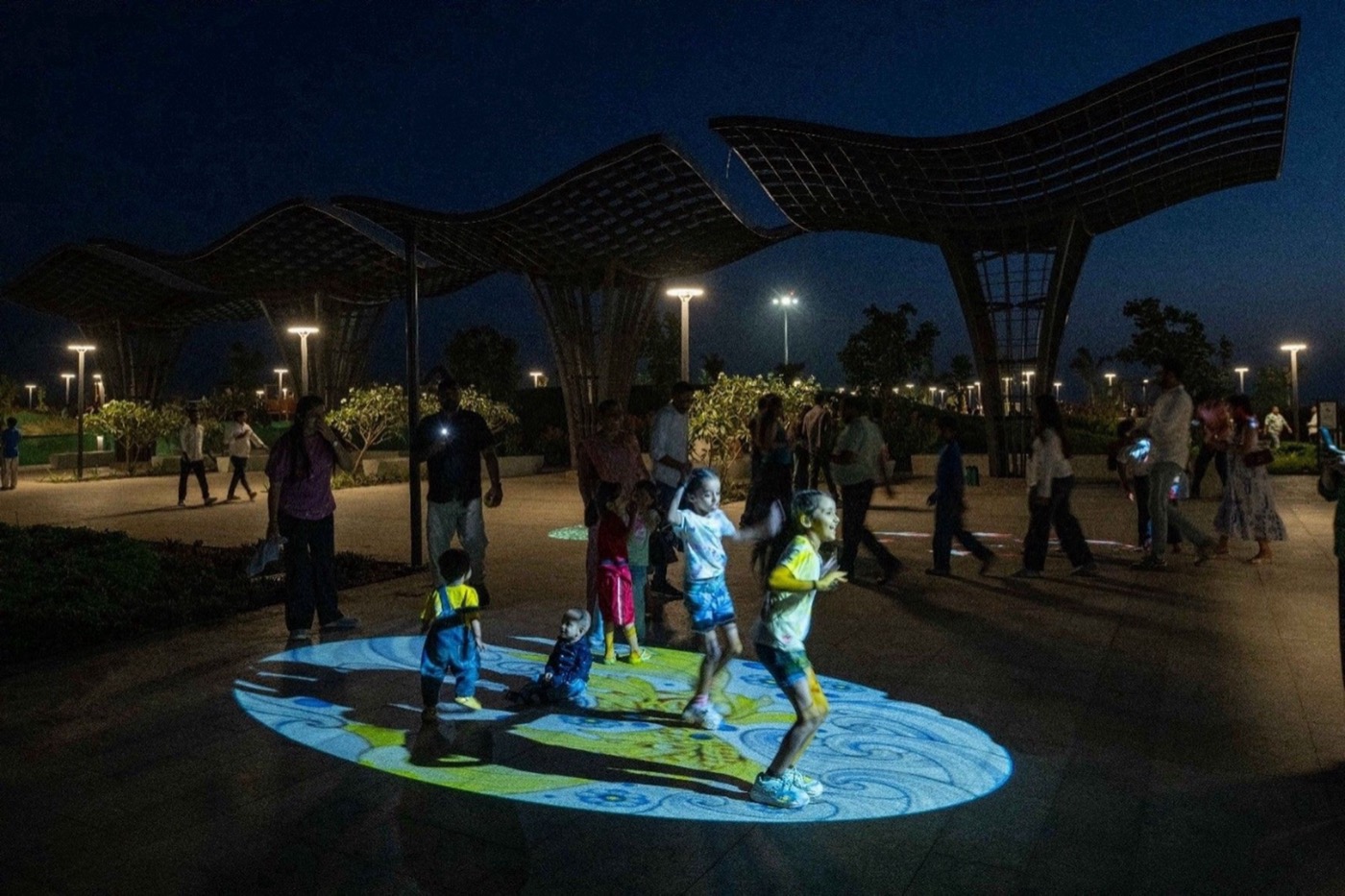
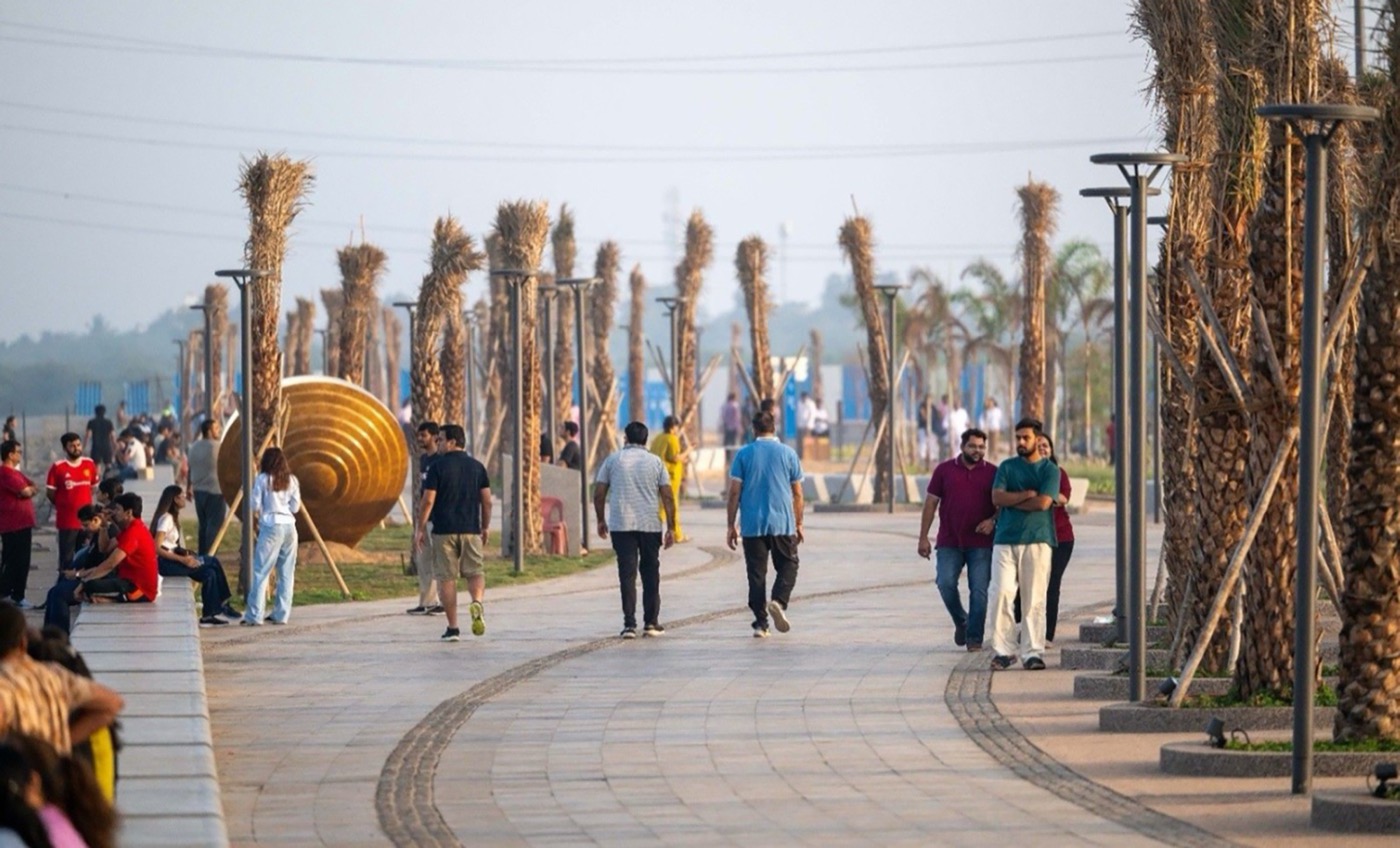
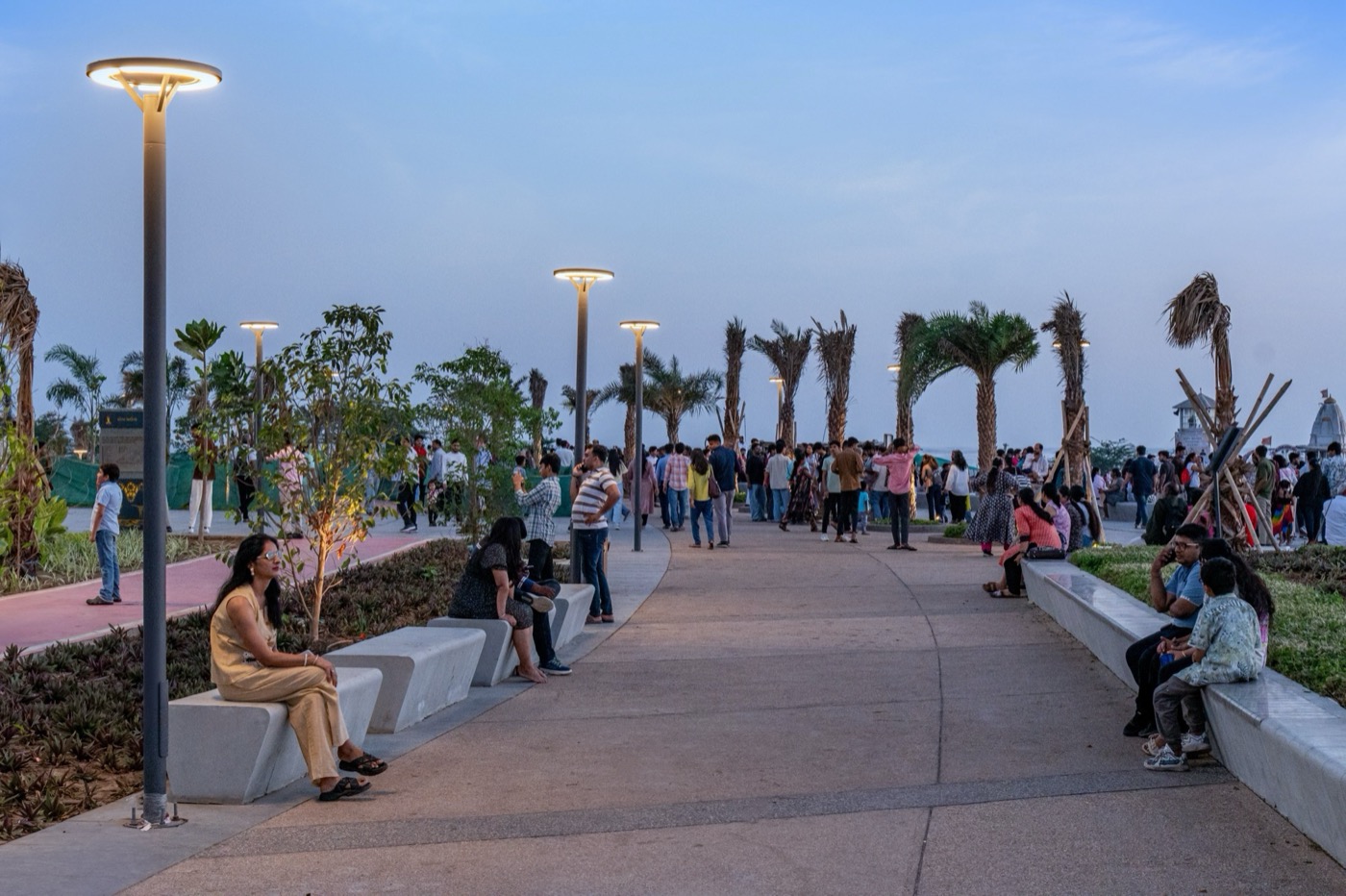
Landmarks and sculptural installations at key nodes serve both as visual anchors and wayfinding devices. Fluid geometries, inspired by marine forms, guide the design language—from paving patterns to street furniture and lighting. A layered lighting strategy extends usability into the night, enhancing safety while transforming the waterfront into a dynamic nocturnal landscape.
Coastal Resilience and Ecological Integration:
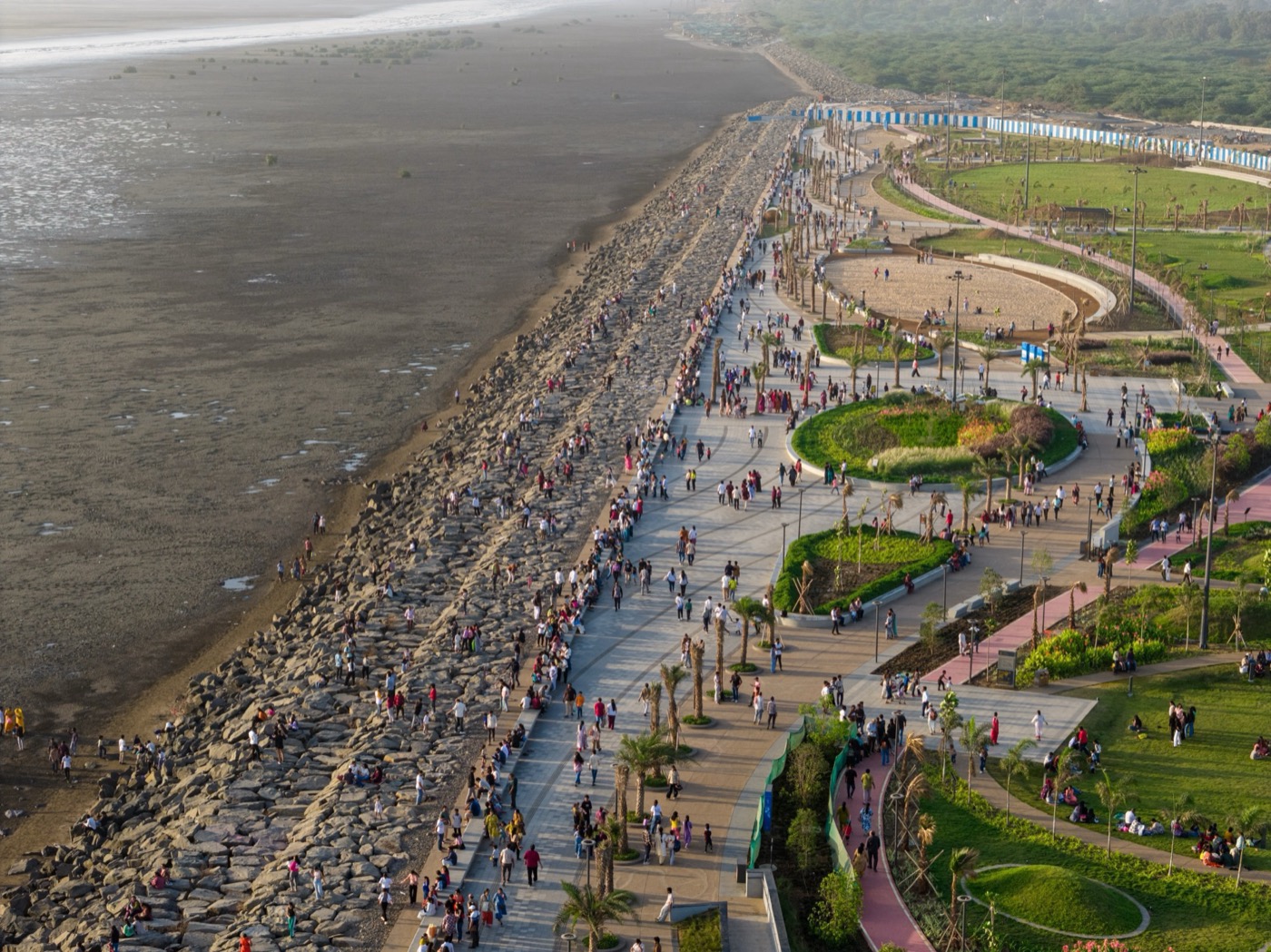
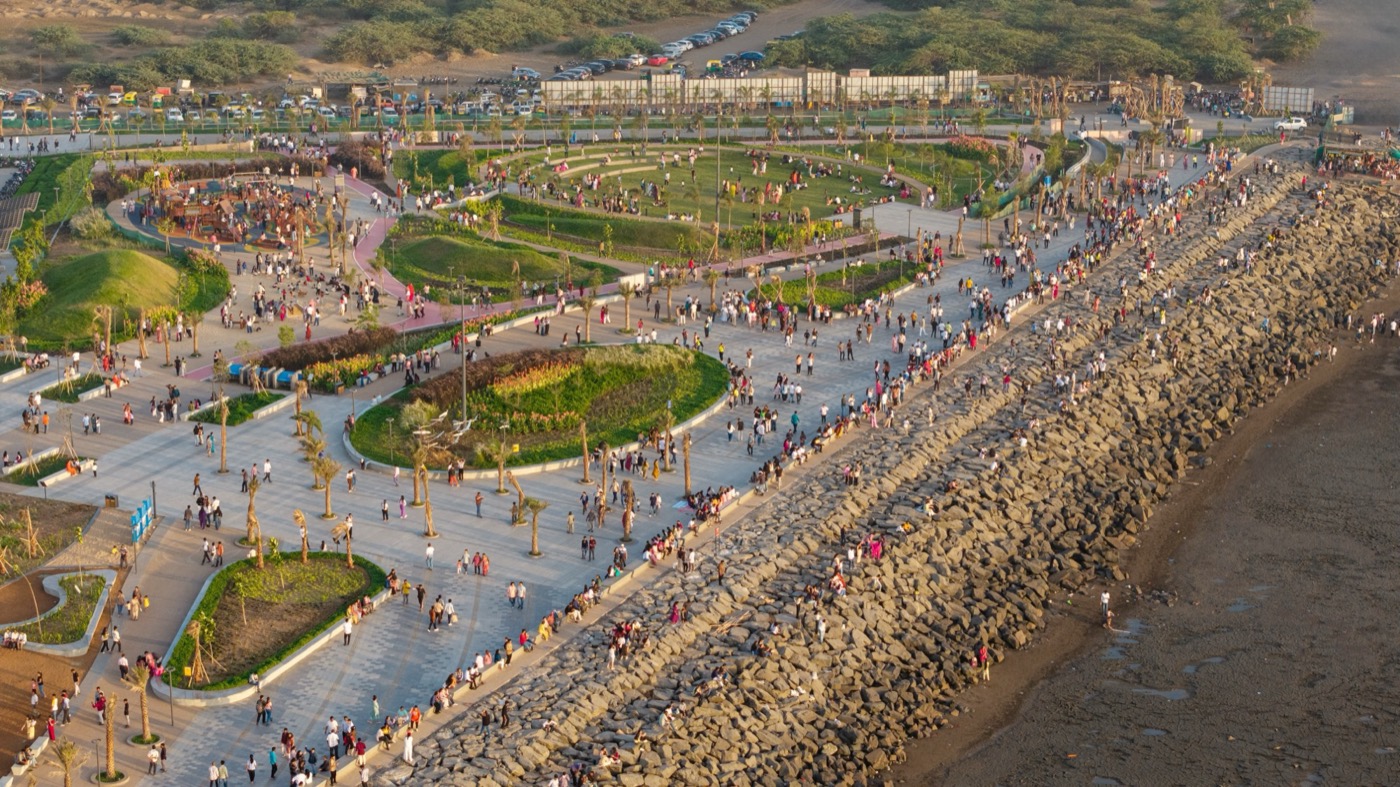
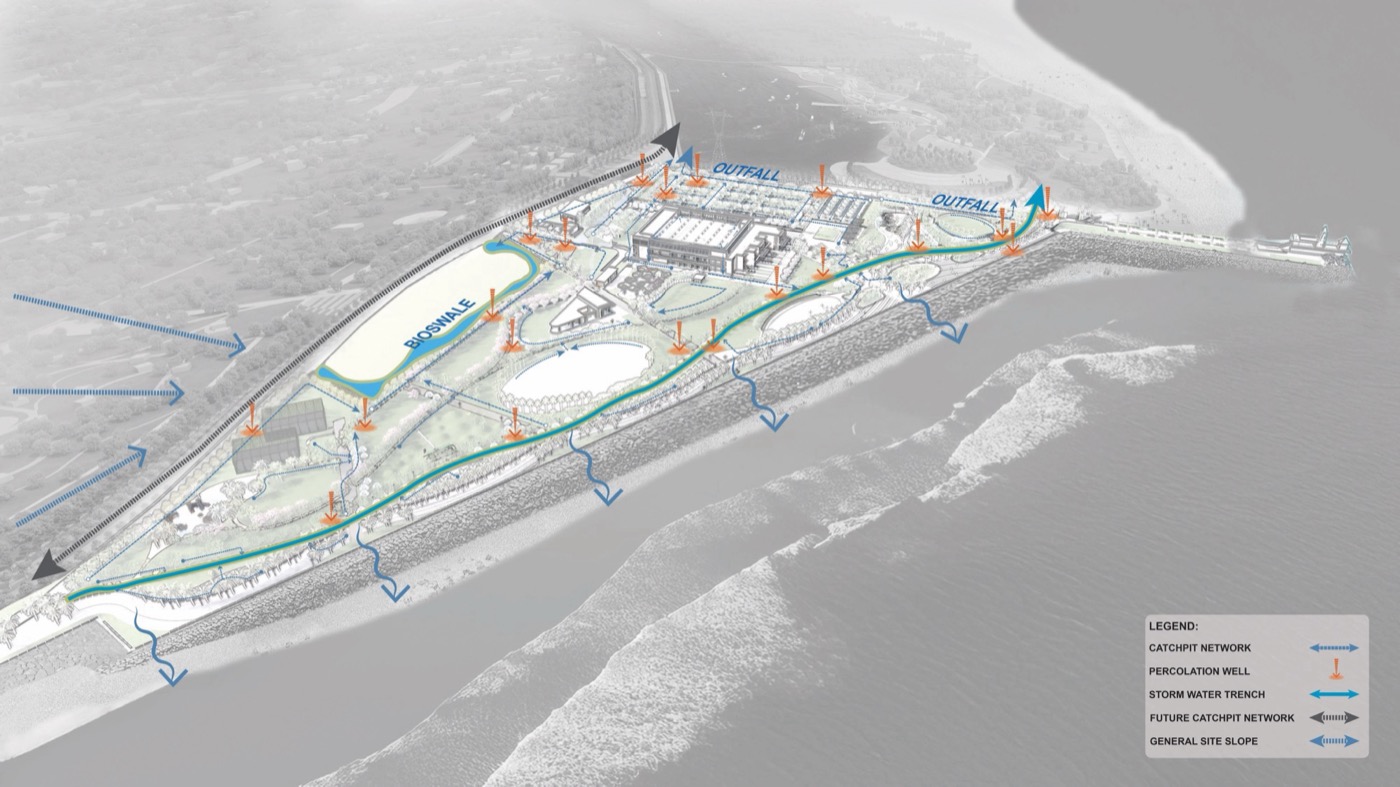
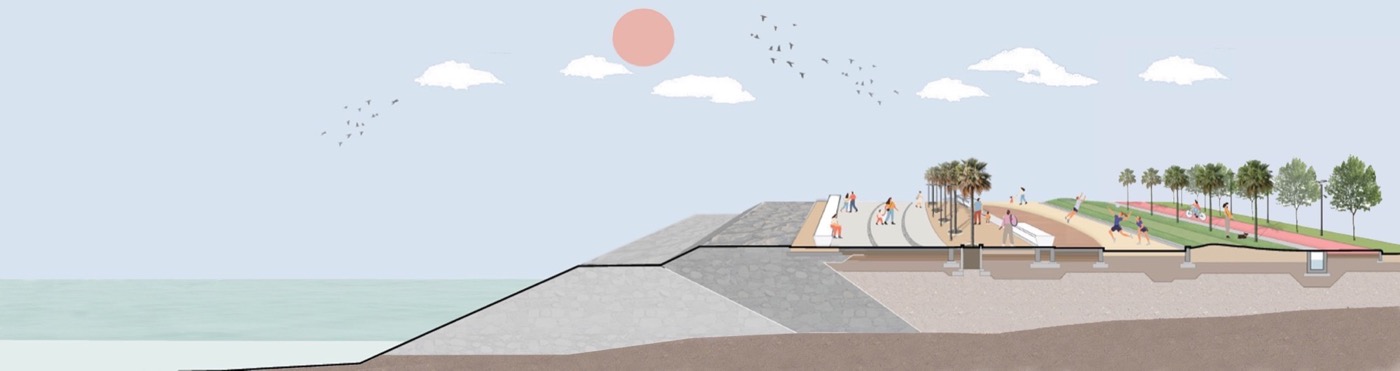
Resilience drives the design of this sea-facing landscape through an integrated, nature-based approach. Natural stone edges combined with layered coastal systems dissipate wave energy and protect inland areas, while sensitive zones are minimally intervened to retain tidal flow and sediment movement. Porous edges and intertidal zones support coastal habitats. Permeable surfaces, bioswales, and integrated stormwater systems reduce runoff, enable groundwater recharge, and mitigate flooding. The landscape accommodates tidal fluctuations through zones designed for periodic inundation without affecting usability.
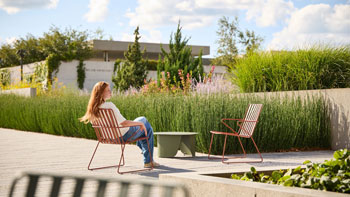
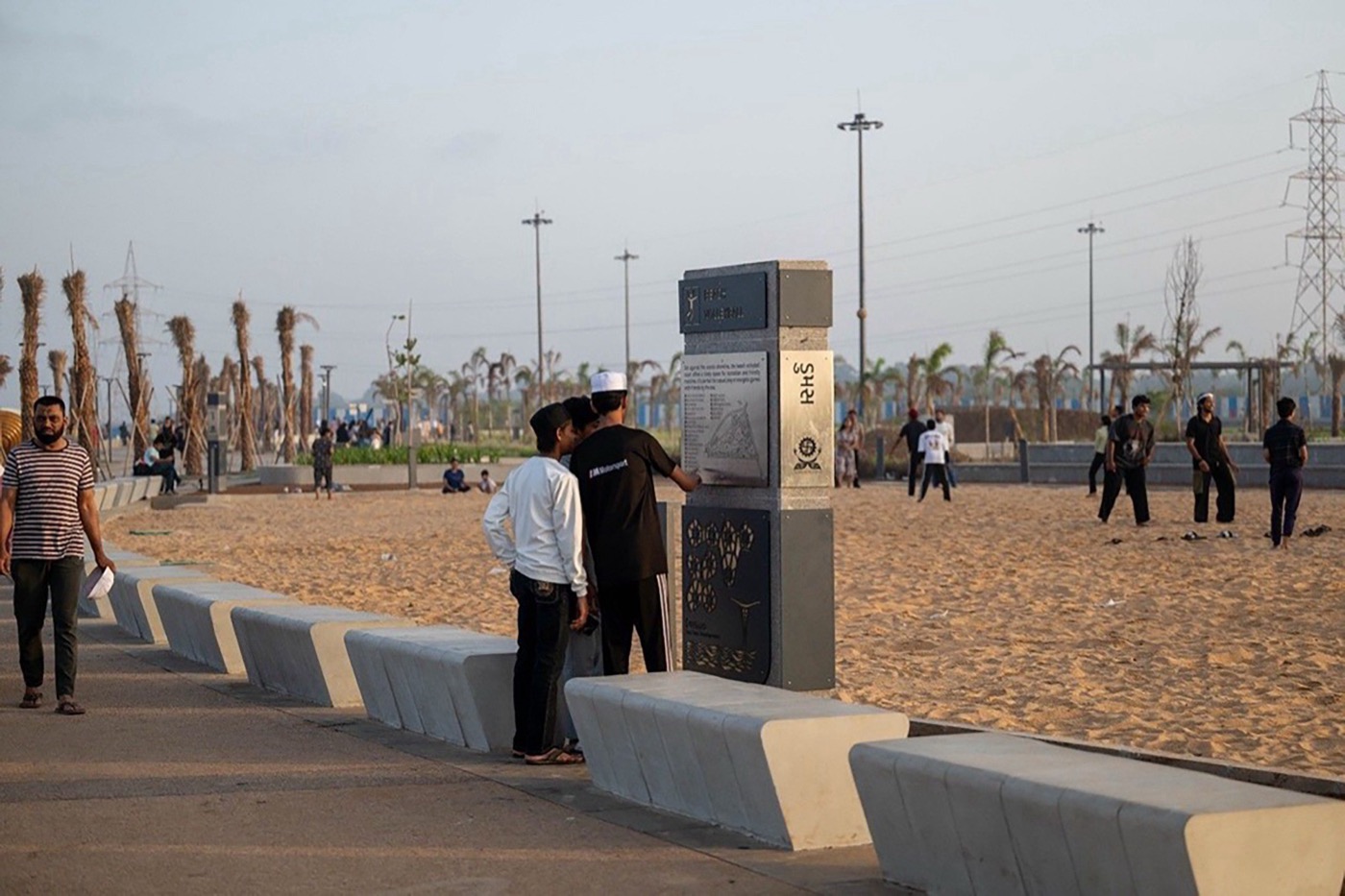
Native salt-tolerant planting enhances ecological stability, improves microclimate, and reduces maintenance. Supported by interpretive elements, the project fosters environmental awareness—resulting in a resilient, adaptive, and ecologically responsive waterfront.
Materiality and Landscape Expression:
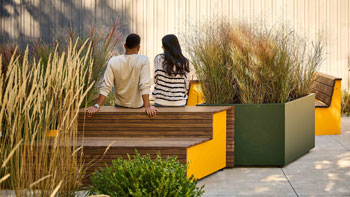
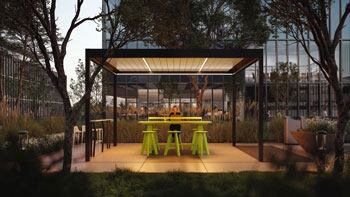
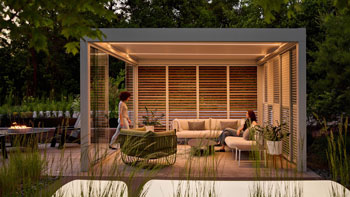
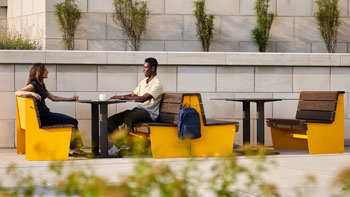
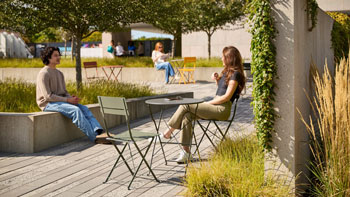
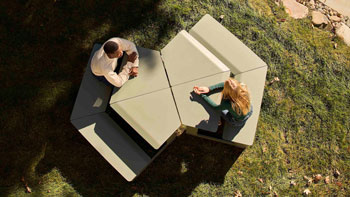
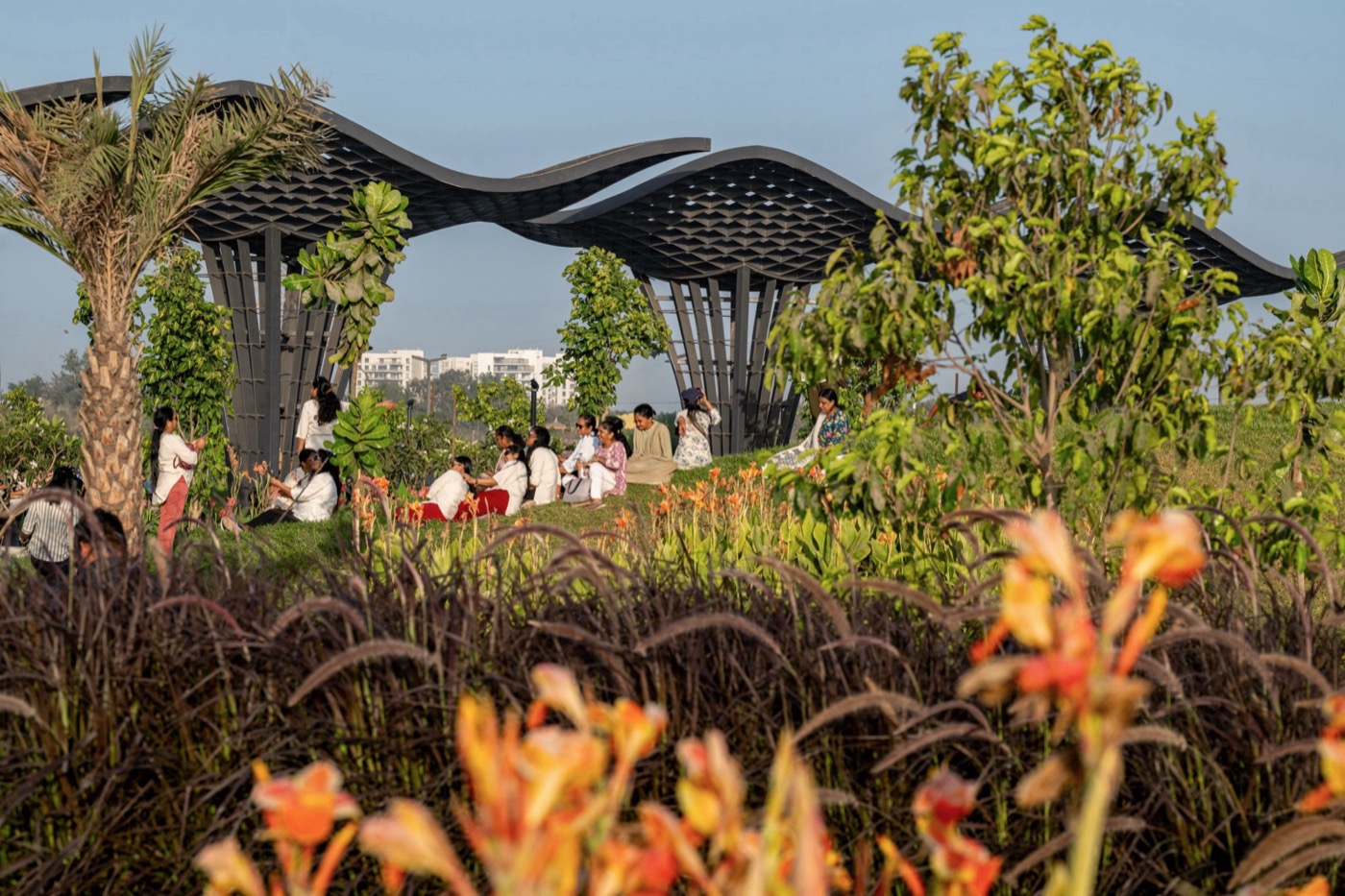
The material palette draws directly from the coastal context. Natural stone, sand-toned surfaces, and weather-resistant finishes ensure durability in saline conditions while evoking the textures of the beach and aging gracefully over time. Built elements are conceived as extensions of the landscape. Seating integrates with retaining edges and planters, while shading structures derive from organic forms such as shells and waves. Planting compositions—grasses and wind-responsive species—add movement and reinforce the sensory connection to the sea.
Social and Cultural Integration:
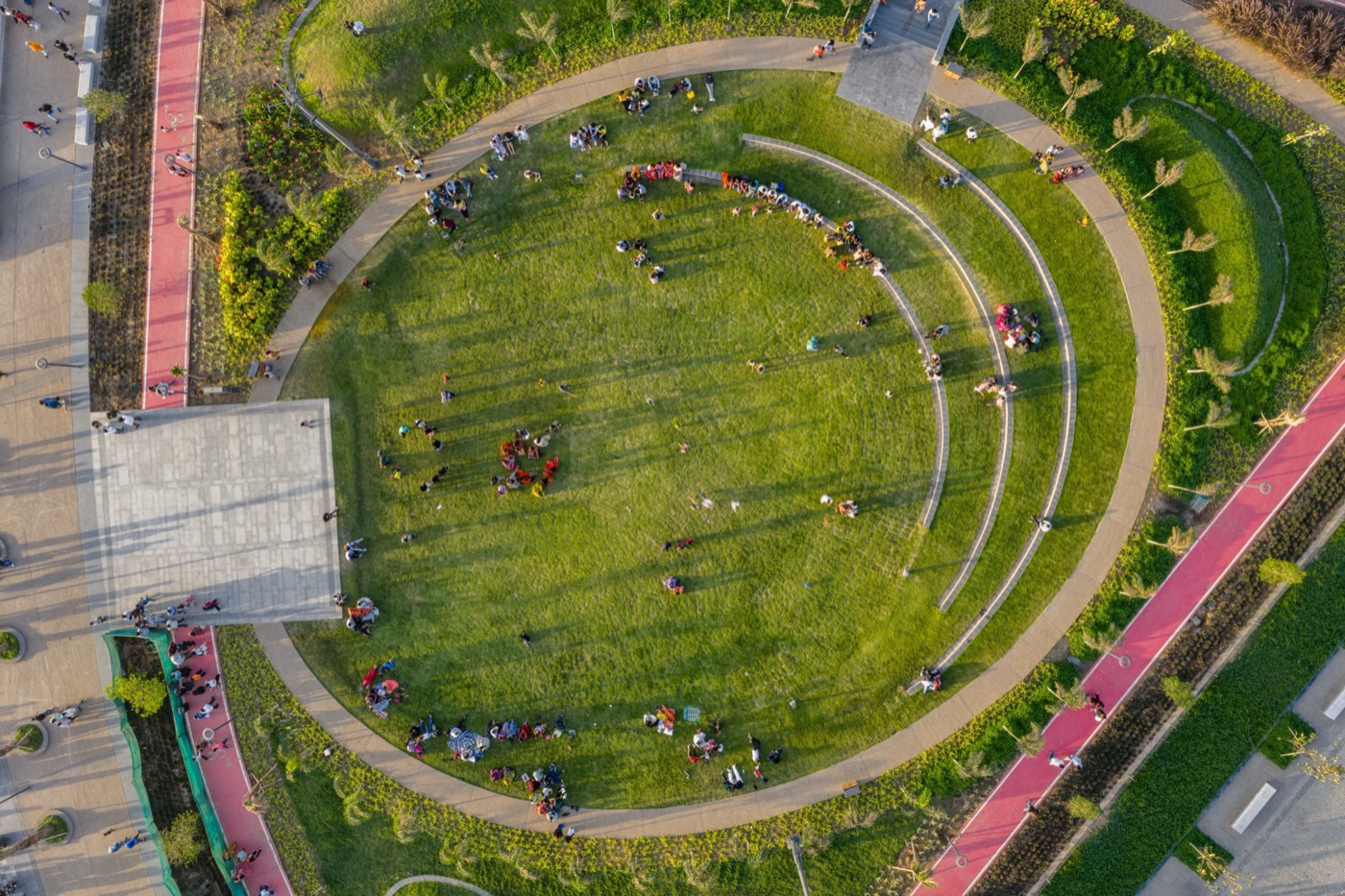
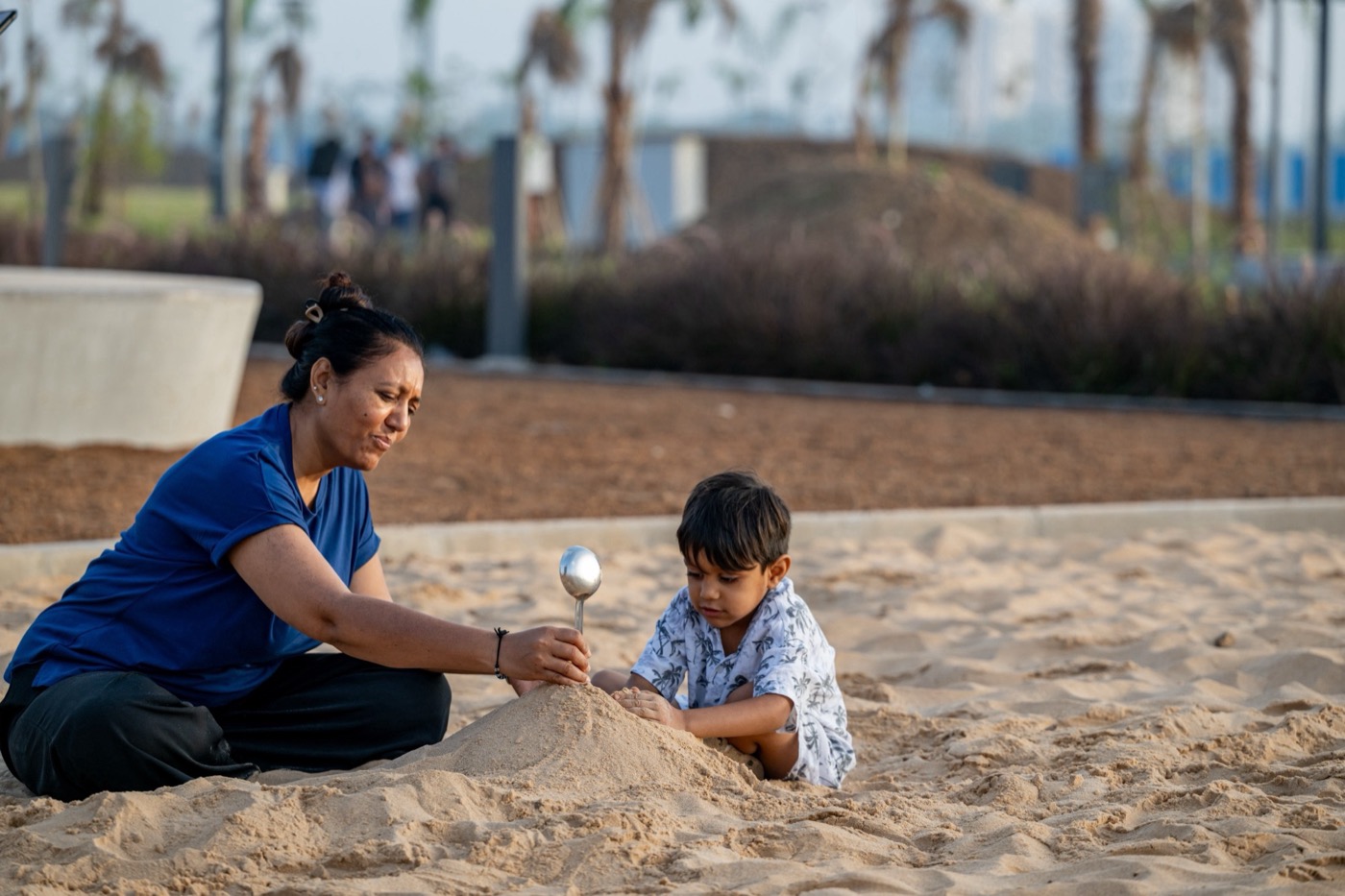
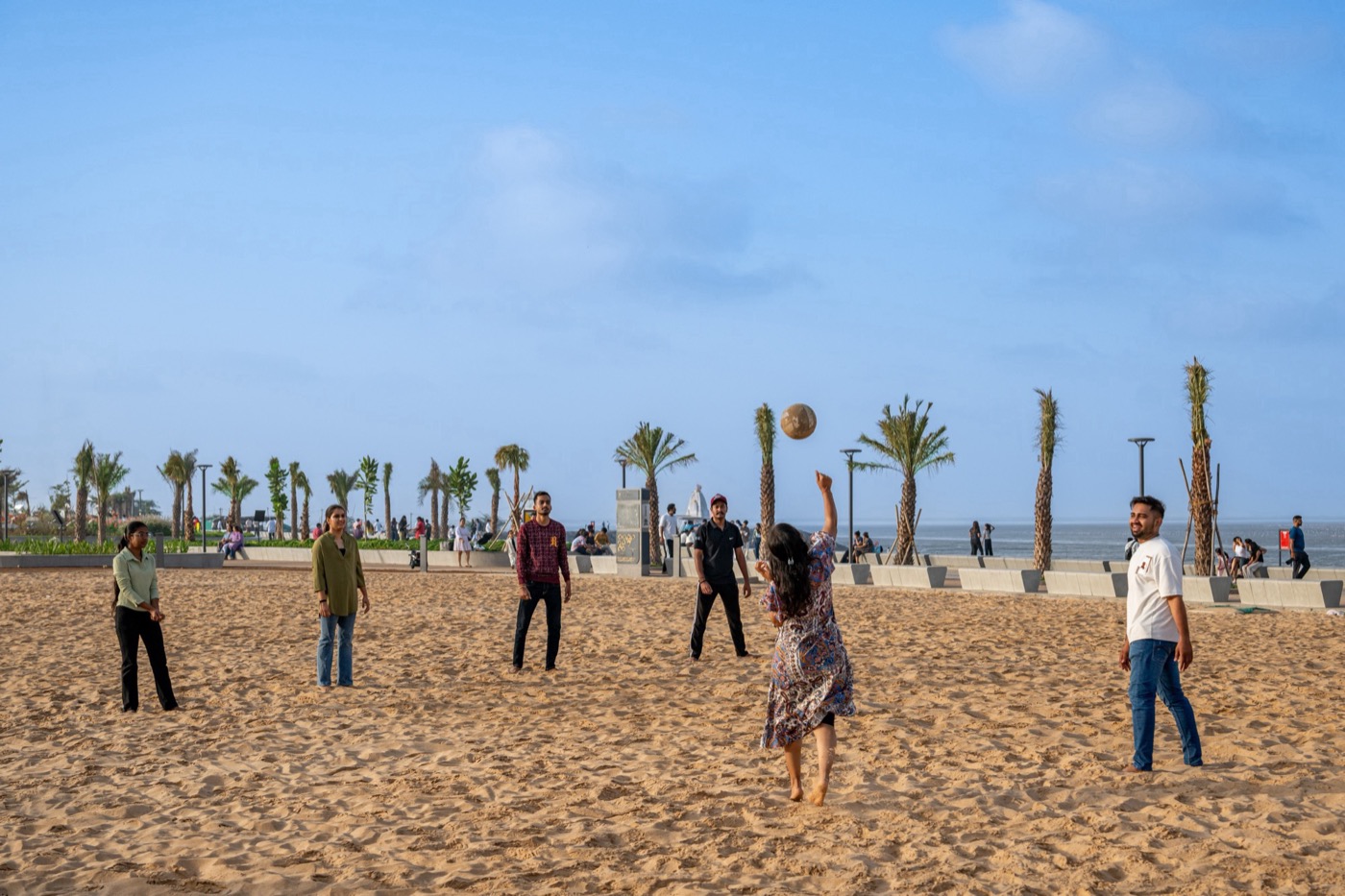
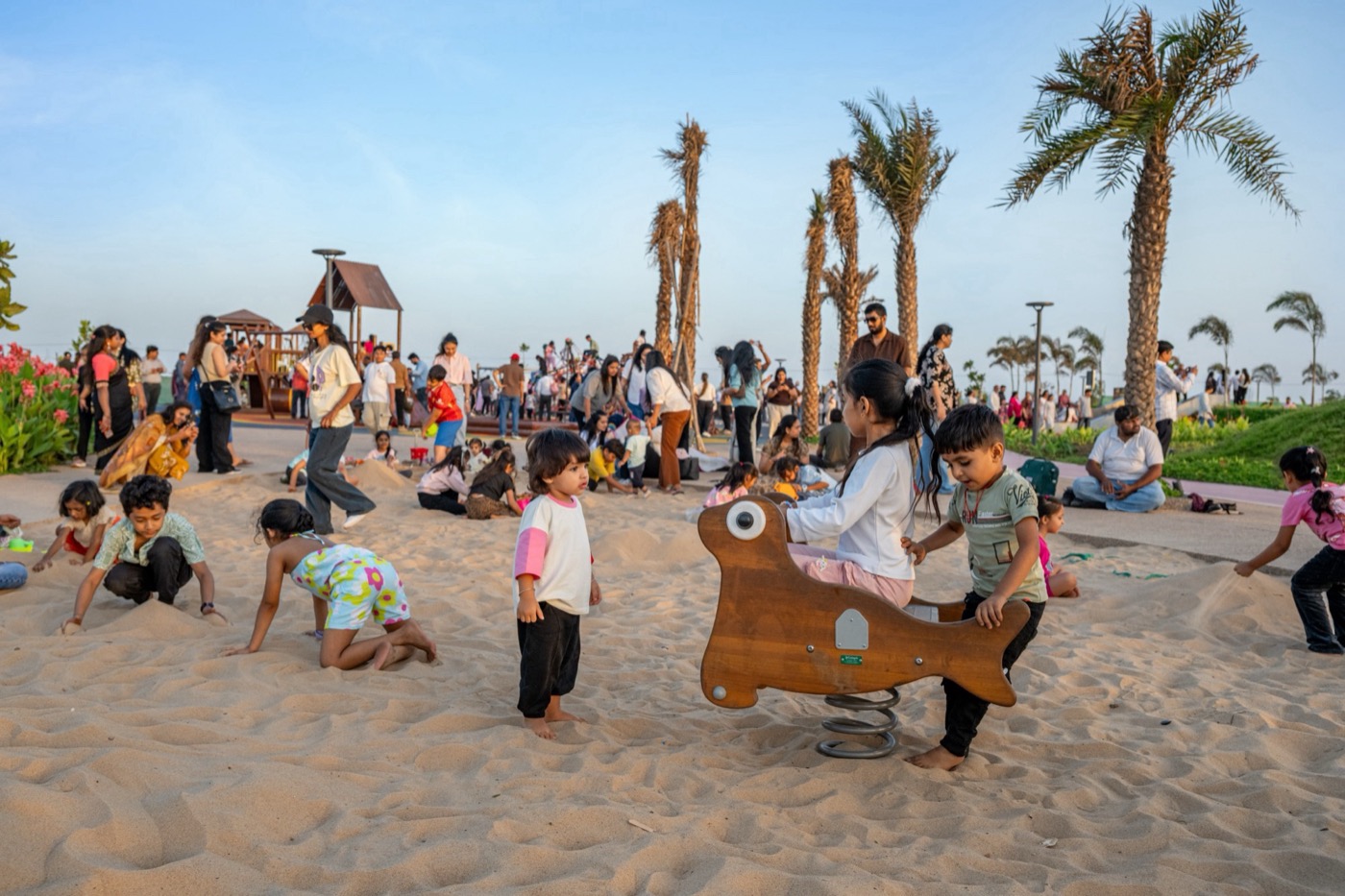
As a public landscape, the project prioritizes inclusivity and accessibility. Barrier-free pathways, seating, and amenities ensure usability for all age groups and abilities. The flexible open spaces and stepped plazas accommodate a wide range of activities—from daily recreation to large cultural events.
The integration of the historic Dariya Ganesh Temple strengthens cultural continuity. The approach road is re-envisioned as a ceremonial axis, enhancing both access and spatial experience, and connecting the urban fabric to the sea.
A New Coastal Identity through Future-Ready Infrastructure:
Open spatial planning allows spaces to evolve with changing needs, while provisions for smart systems, sustainable mobility, and efficient maintenance ensure long-term relevance. Durable materials, low-maintenance landscaping, and integrated drainage systems reduce lifecycle costs, reinforcing the project’s sustainability.
By aligning urban design with landscape systems, it establishes a new model for coastal development—one that balances environmental sensitivity with civic ambition. More than a recreational destination, it becomes a shared urban commons—where the people of Surat engage with their coastline, and where the city’s identity is redefined through its relationship with the sea.
Credits:
Design Team: Harsh Goel, Jayesh Hariyani, Pathik Gandhi, Meeta Goel, Priyank Bhavsar, Harshad Raval
MEPF: INI Infrastructure & Engineering
Structural: Global Marine engineering
Client: Surat Municipal Corporation
https://maps.app.goo.gl/vJphnm9cWGYo8vCHA
74358


LILA 2026 Sponsor