Elemental House
oasisdesigns.org/
2026 Landscape and Architecture / 2026 Private Gardens / India / Built in 2023 /
![The Verandah – Valankulam Under-Flyover Cultural Hub: Coimbatore’s Lakeside Revelation In the bustling city of Coimbatore—often called the Cultural Capital of Tamil Nadu—under the scorching southern sun, a quiet opportunity lay hidden beneath a flyover. For years, this 4.5-acre stretch under the Sungam Bypass Road beside the serene Valankulam Lake was forgotten. Once a dump […]](https://landezine-award.com/wp-content/uploads/2025/05/00-Hero-Image-3-600x450.jpg "The Verandah, Under Flyover at Valankulam, Coimbatore. by Oasis Designs Inc.")
Grounded Continuum: A Contemporary Farmstead Landscape
In an age where life increasingly unfolds in the intangible realm of screens and networks, The landscape design of the Elemental House is conceived as an act of grounding, both physical and emotional. It is a space that reconciles dichotomies: rural and urban, traditional and contemporary, soft and hard, built and grown. Rather than forcing a choice between these, the design allows them to coexist, dissolve, and enrich one another.
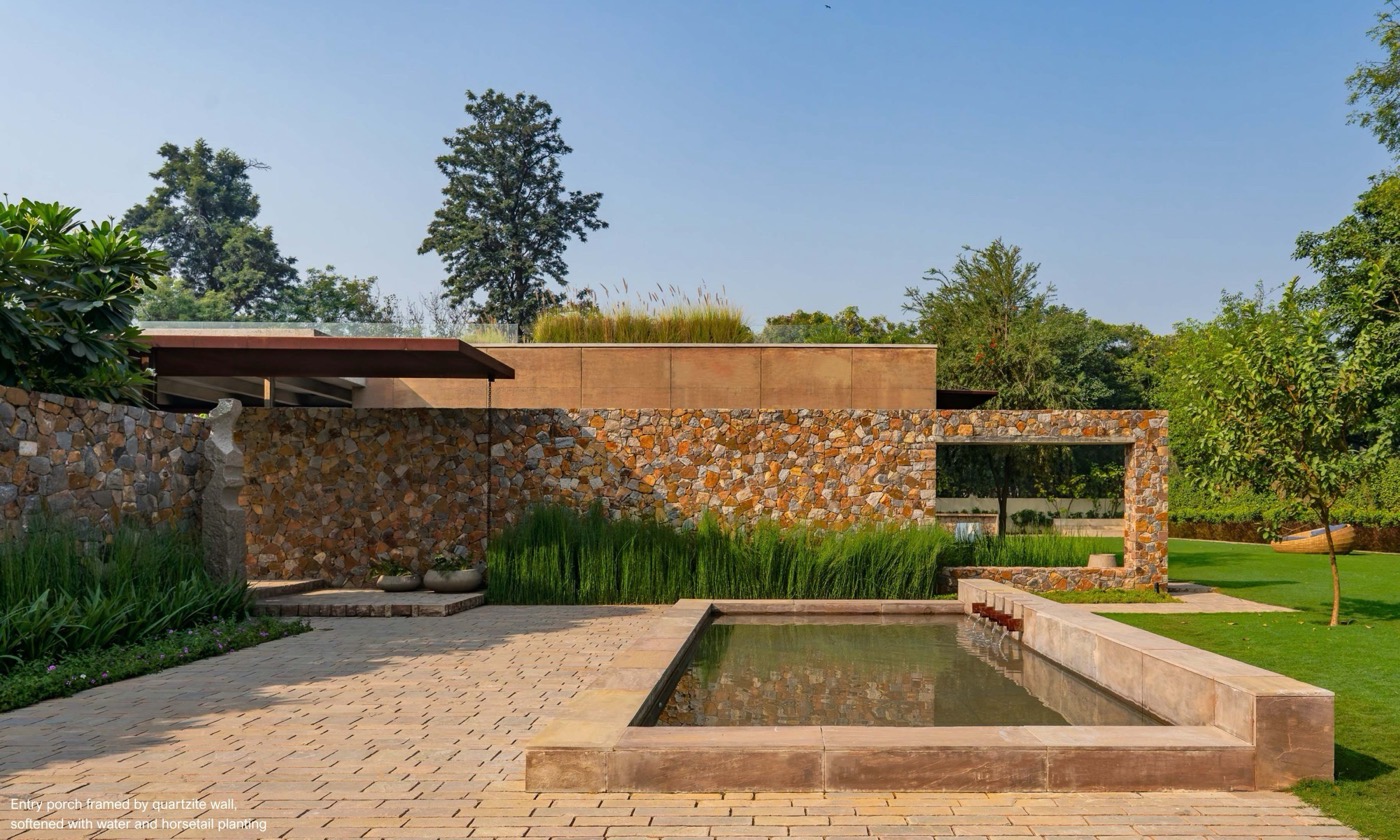
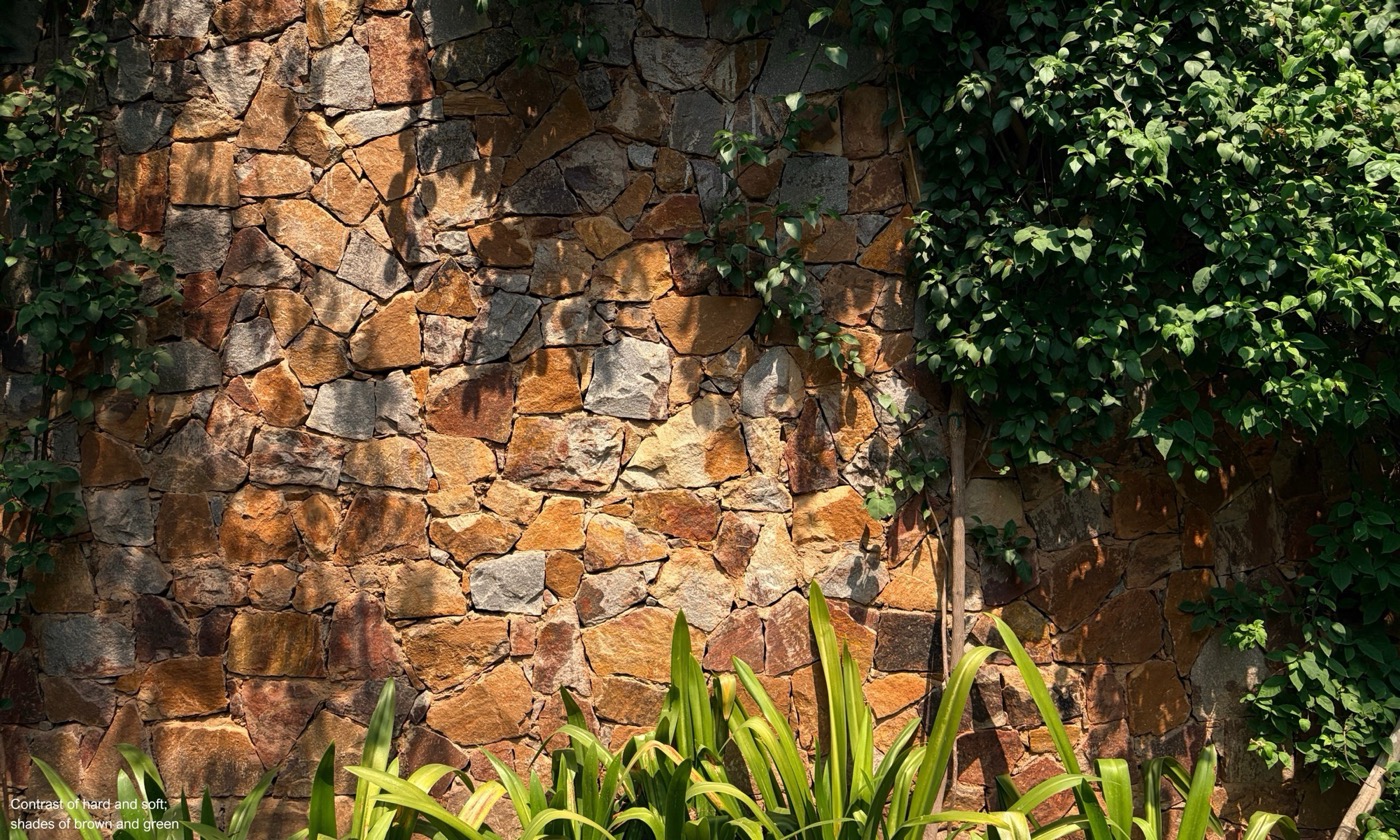
At its core, the Elemental House draws from the ethos of the farm: its honesty, materiality, and quiet rhythms, while interpreting them through a contemporary spatial language. Set in New Delhi, India’s urban capital, the farmhouse is constructed from the most rural of materials: mud. As the natural element from which our ancestral villages were built, mud is the core around which the very essence of the farmhouse revolves. To support this, the palette has been kept deliberately restrained and tactile: locally sourced stone, weathered metal, and muted surfaces form a robust yet understated base. These elements are not overly refined; instead, they embrace a certain rawness and imperfection, evoking familiarity and warmth.
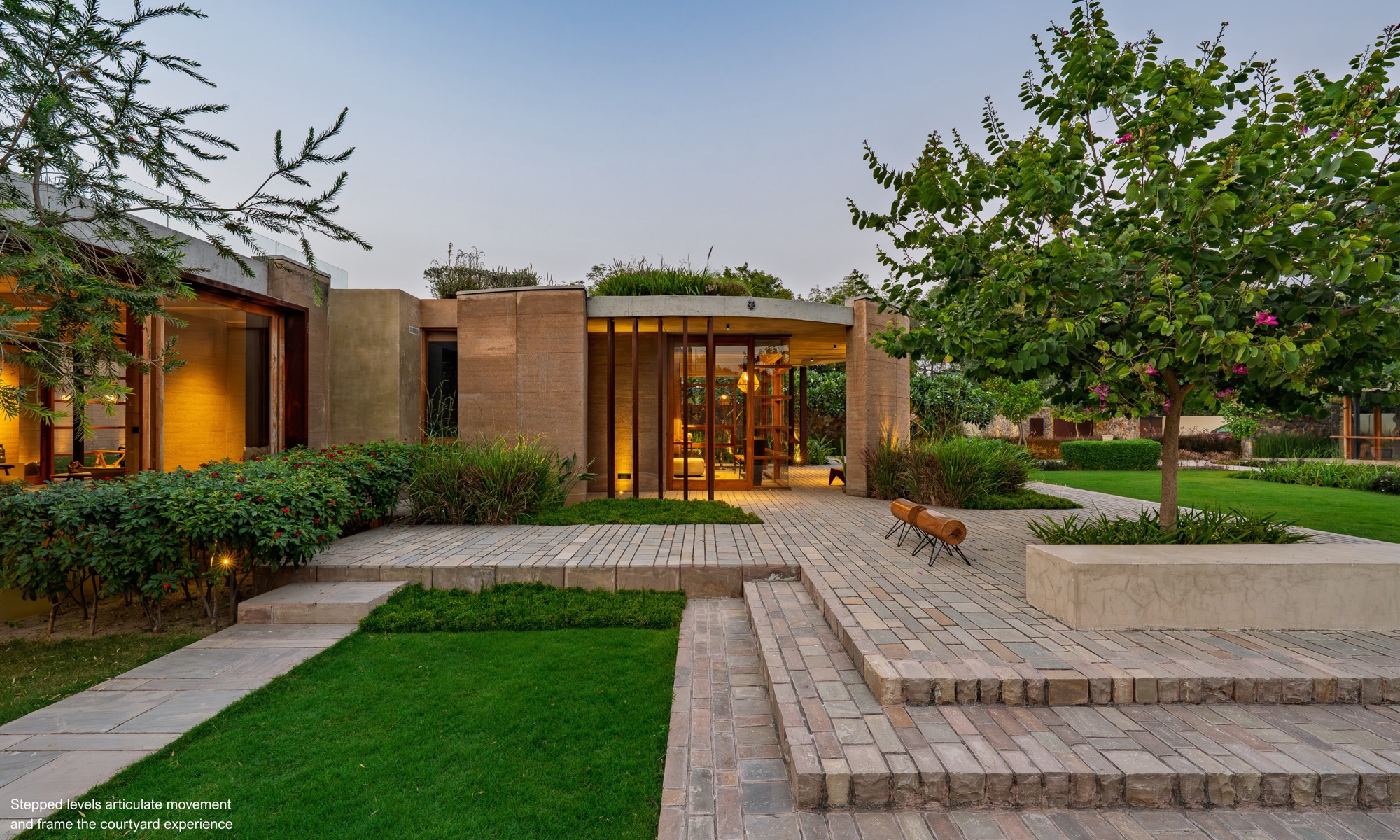
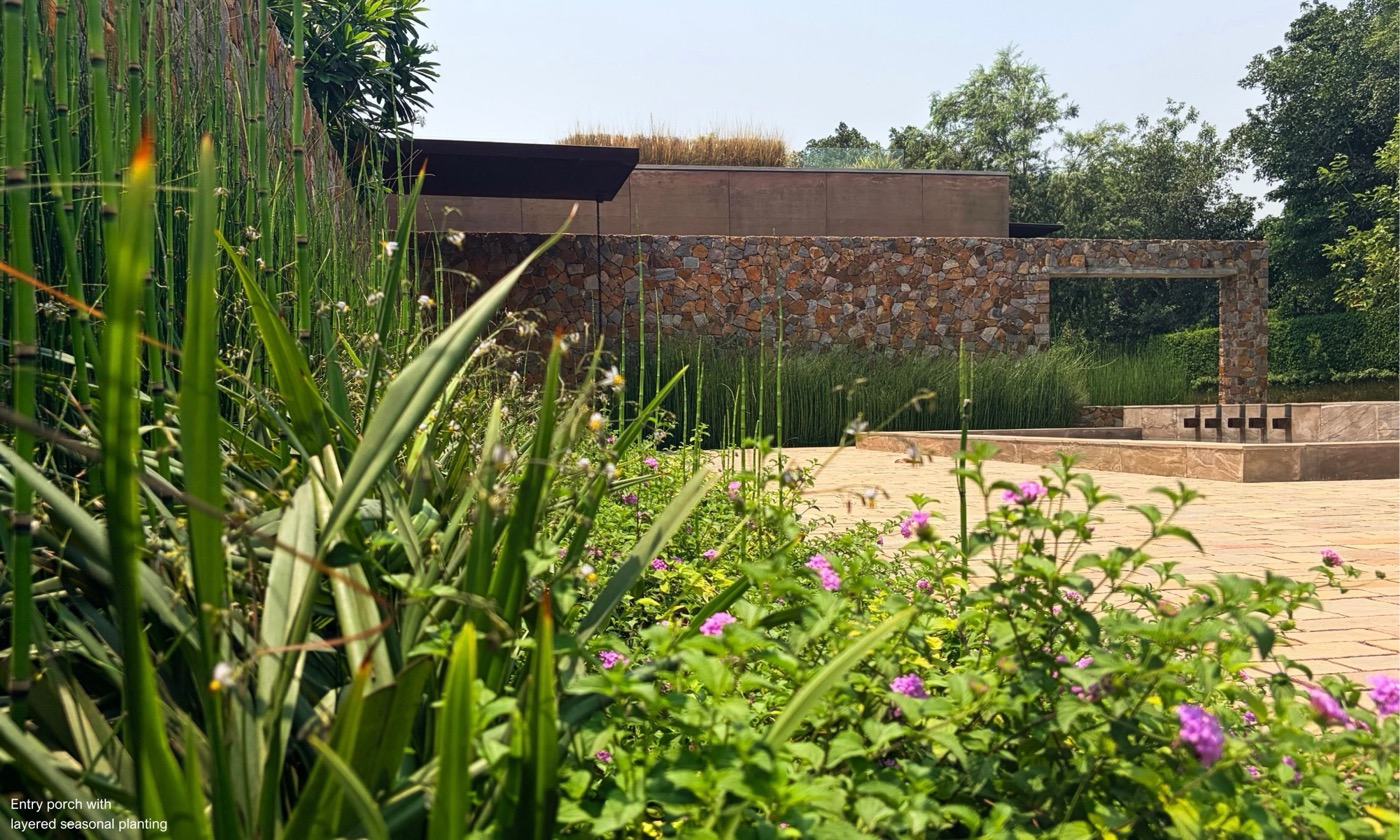
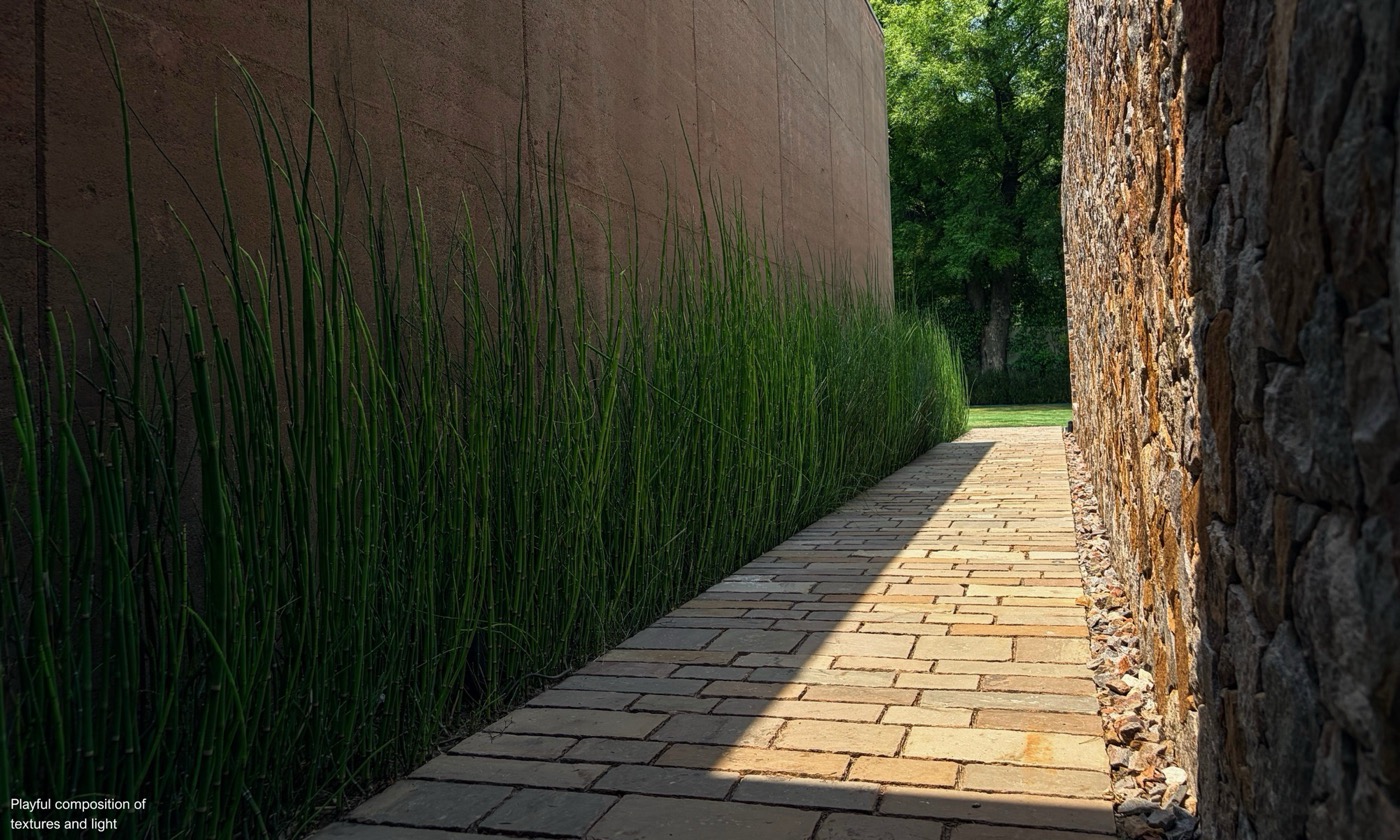
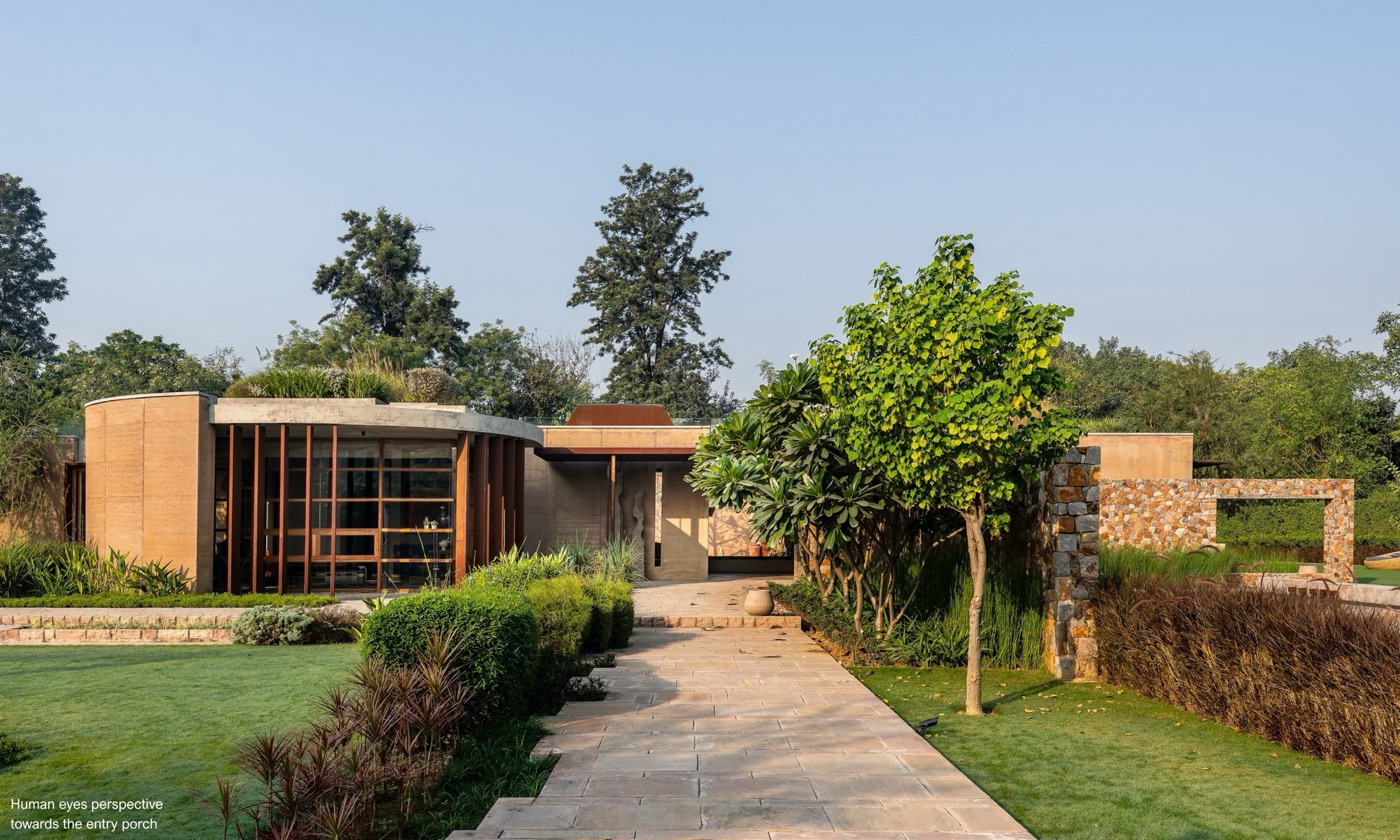
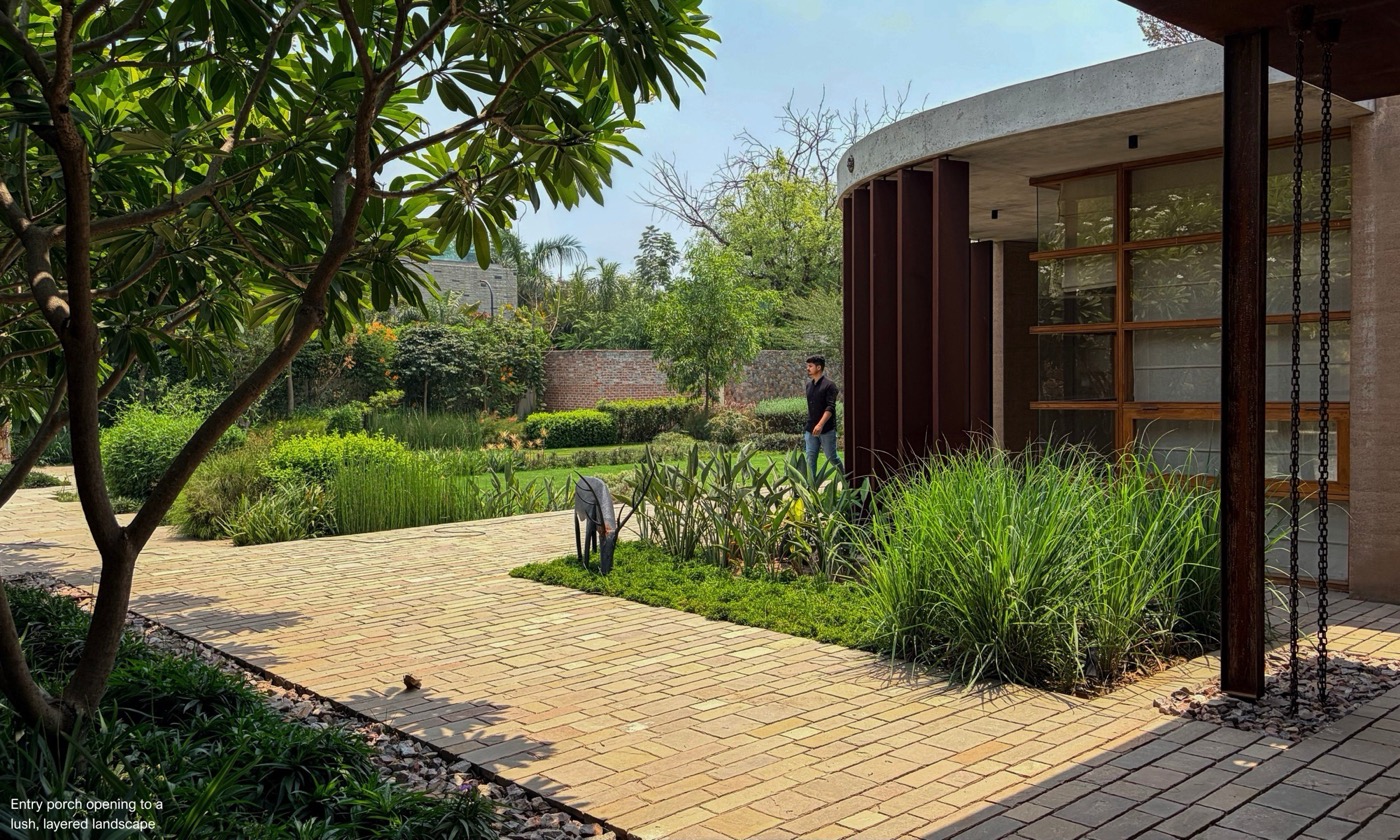
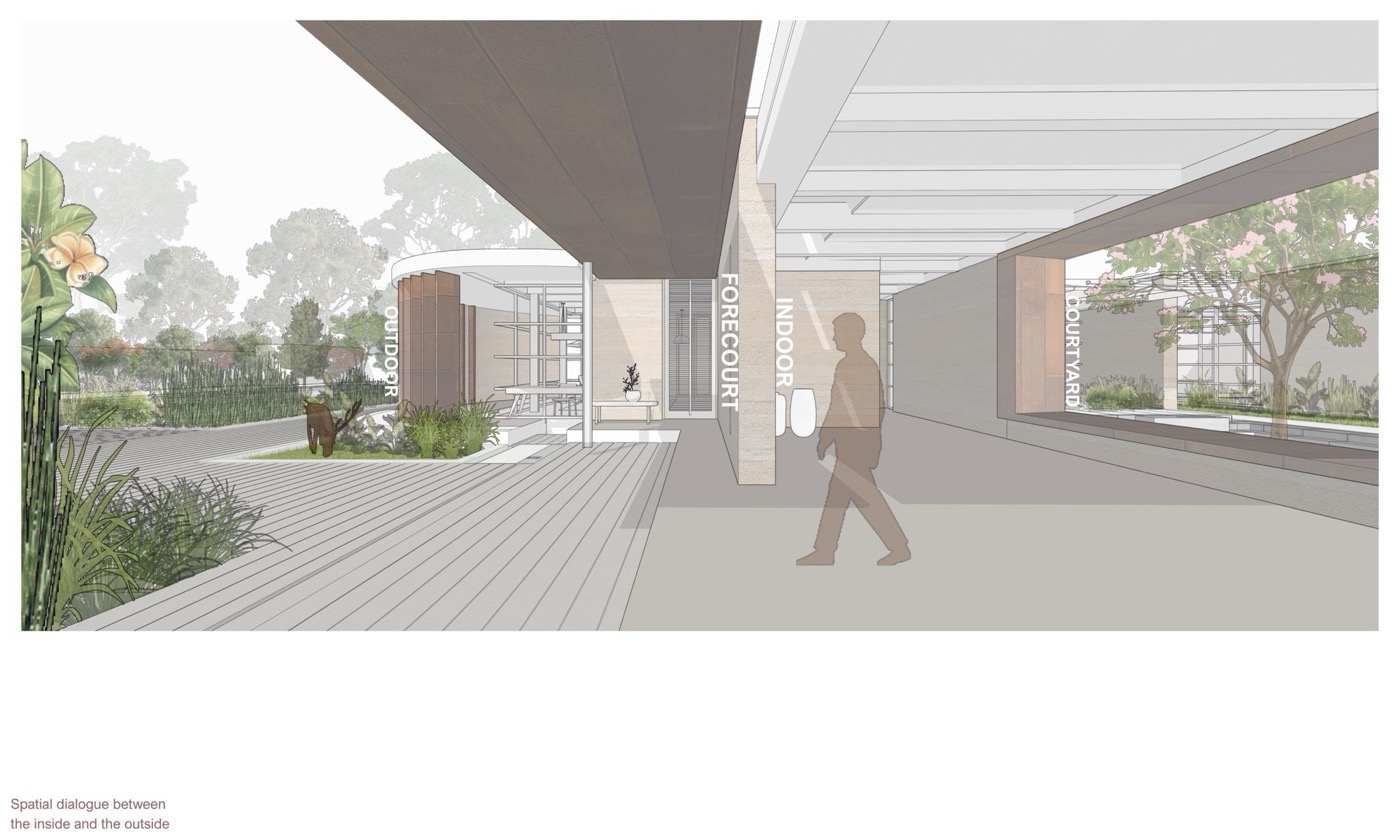
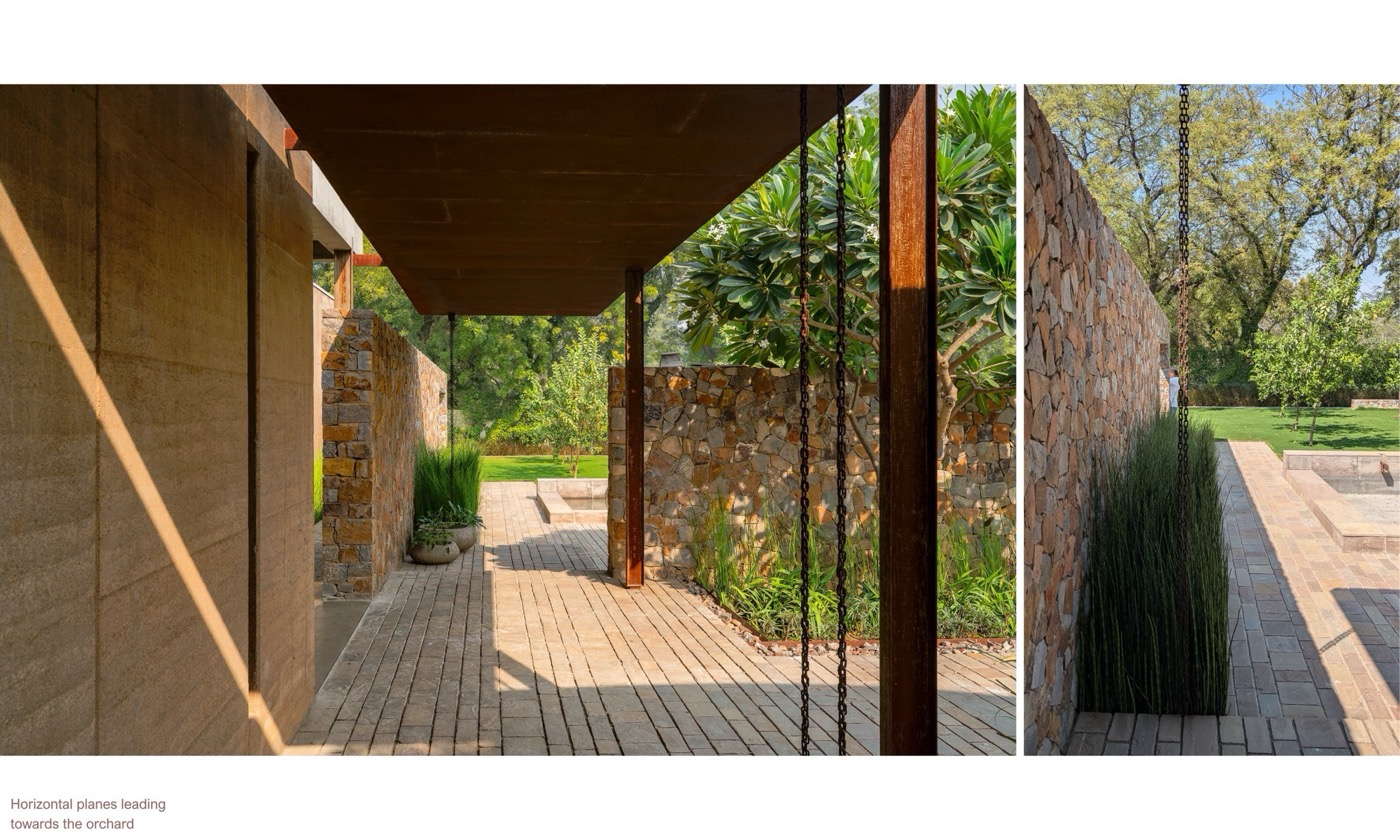
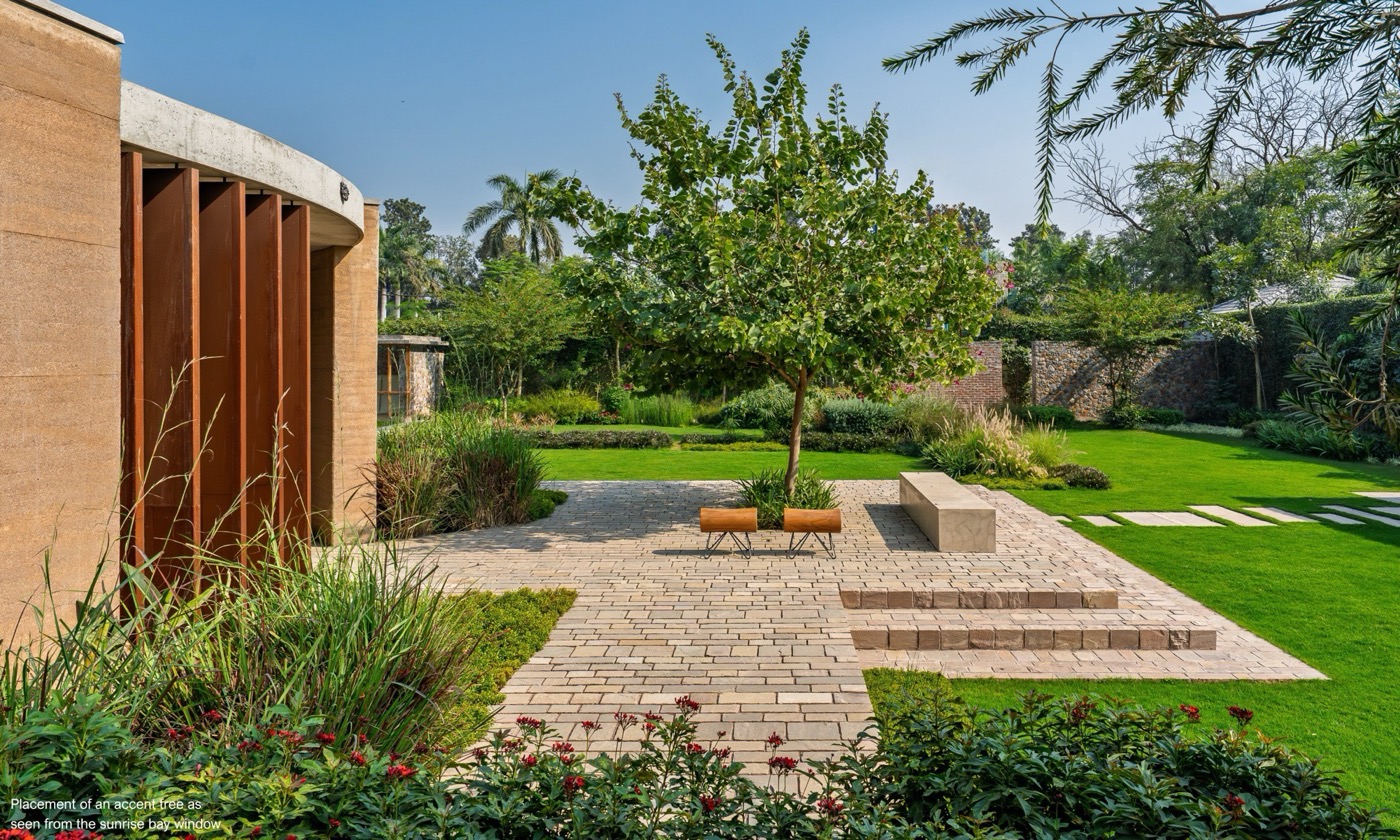
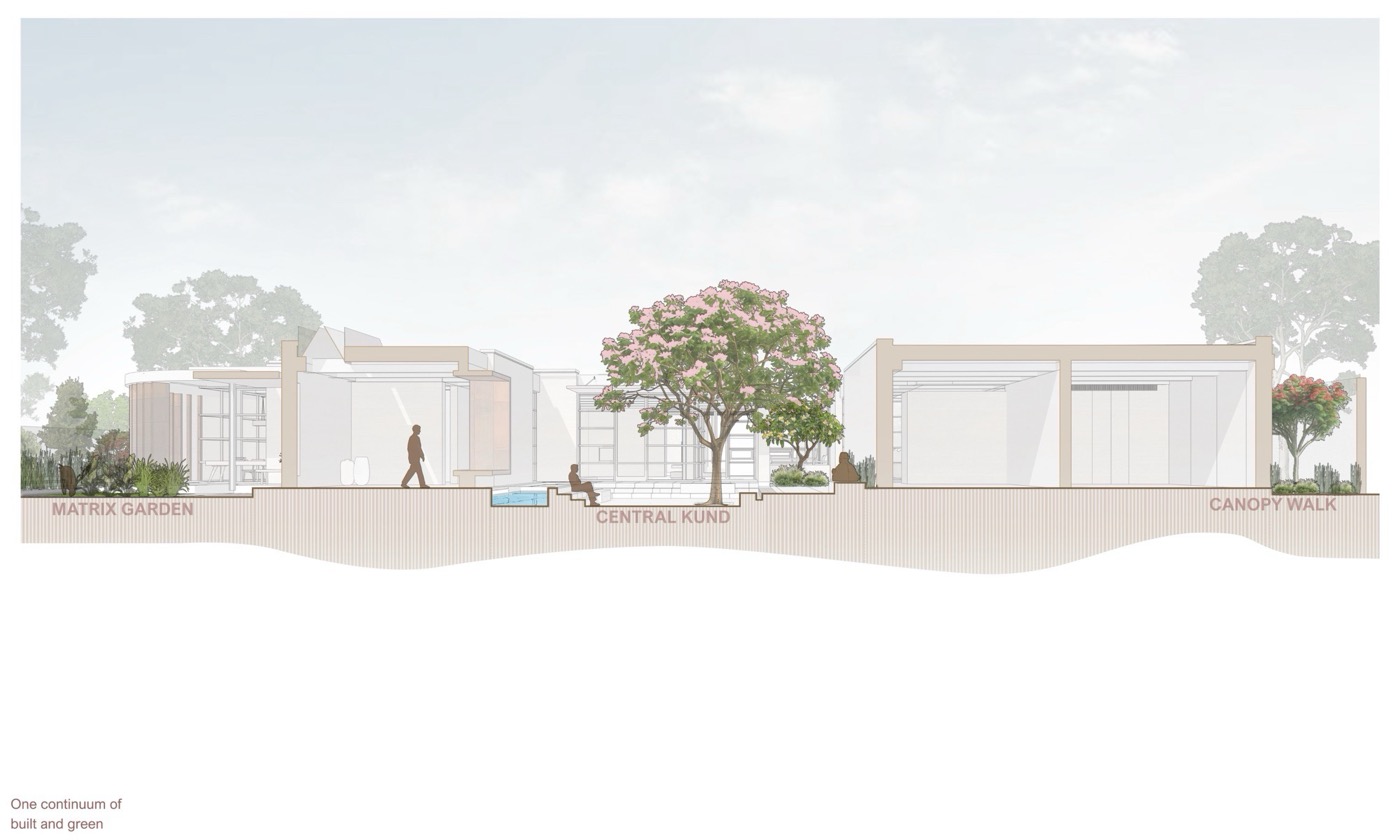
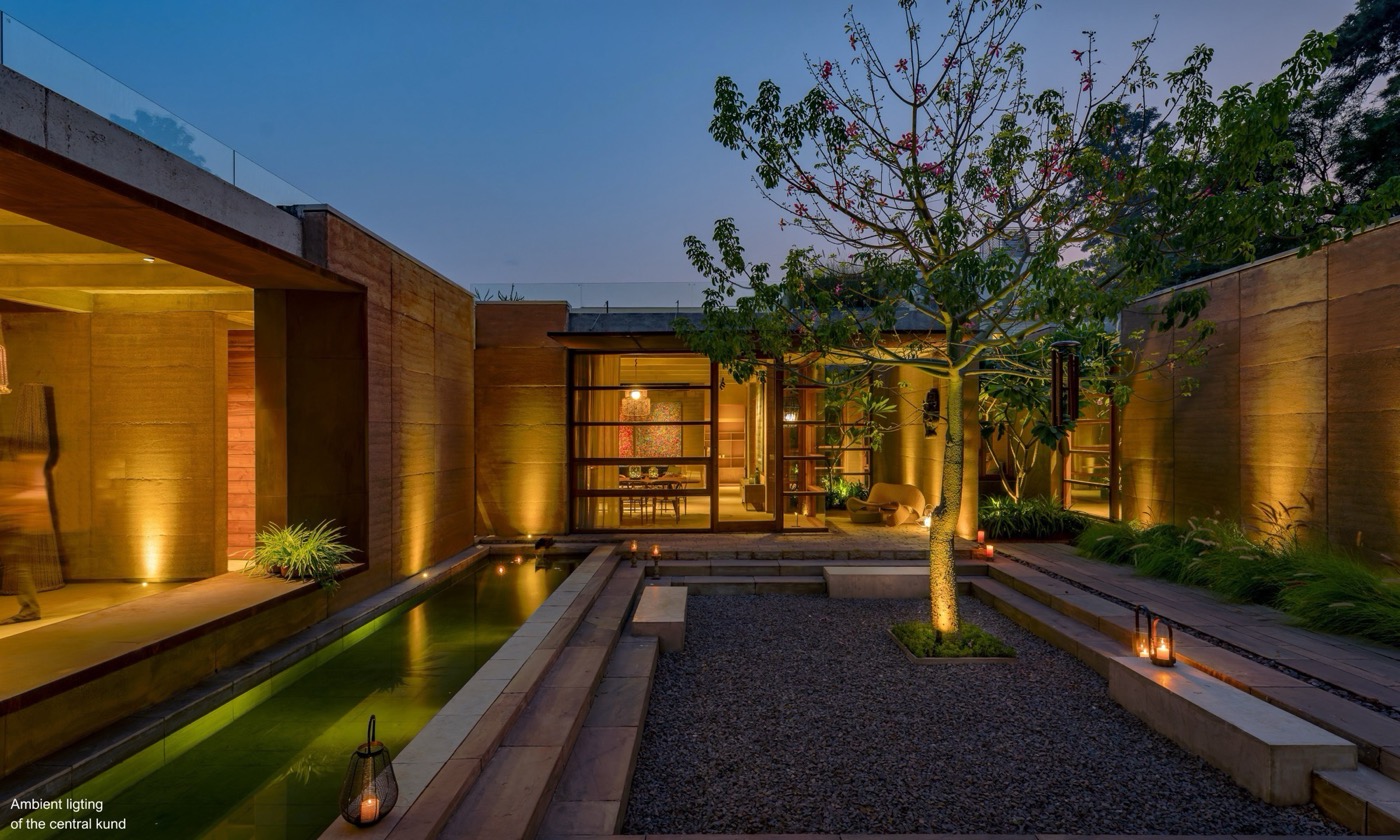
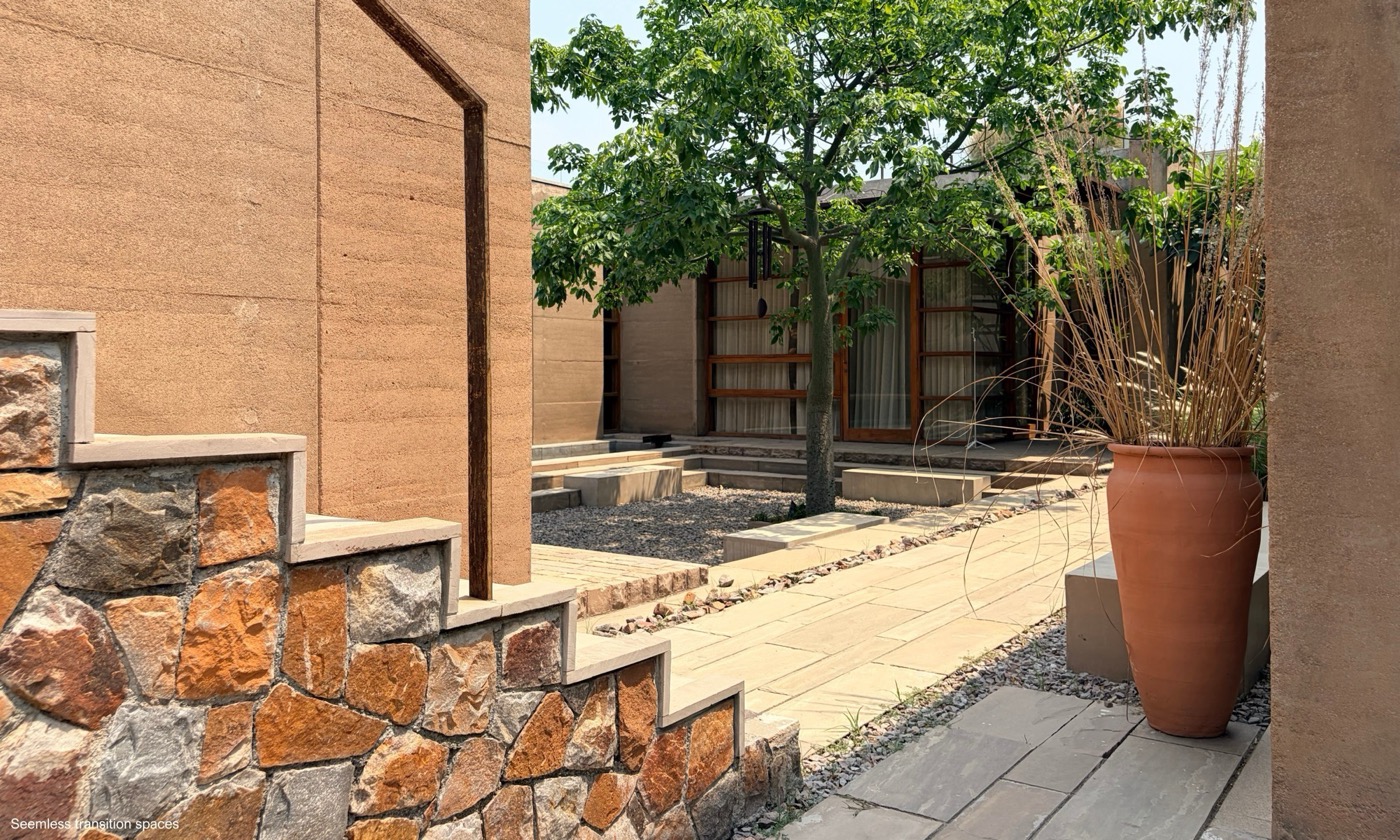
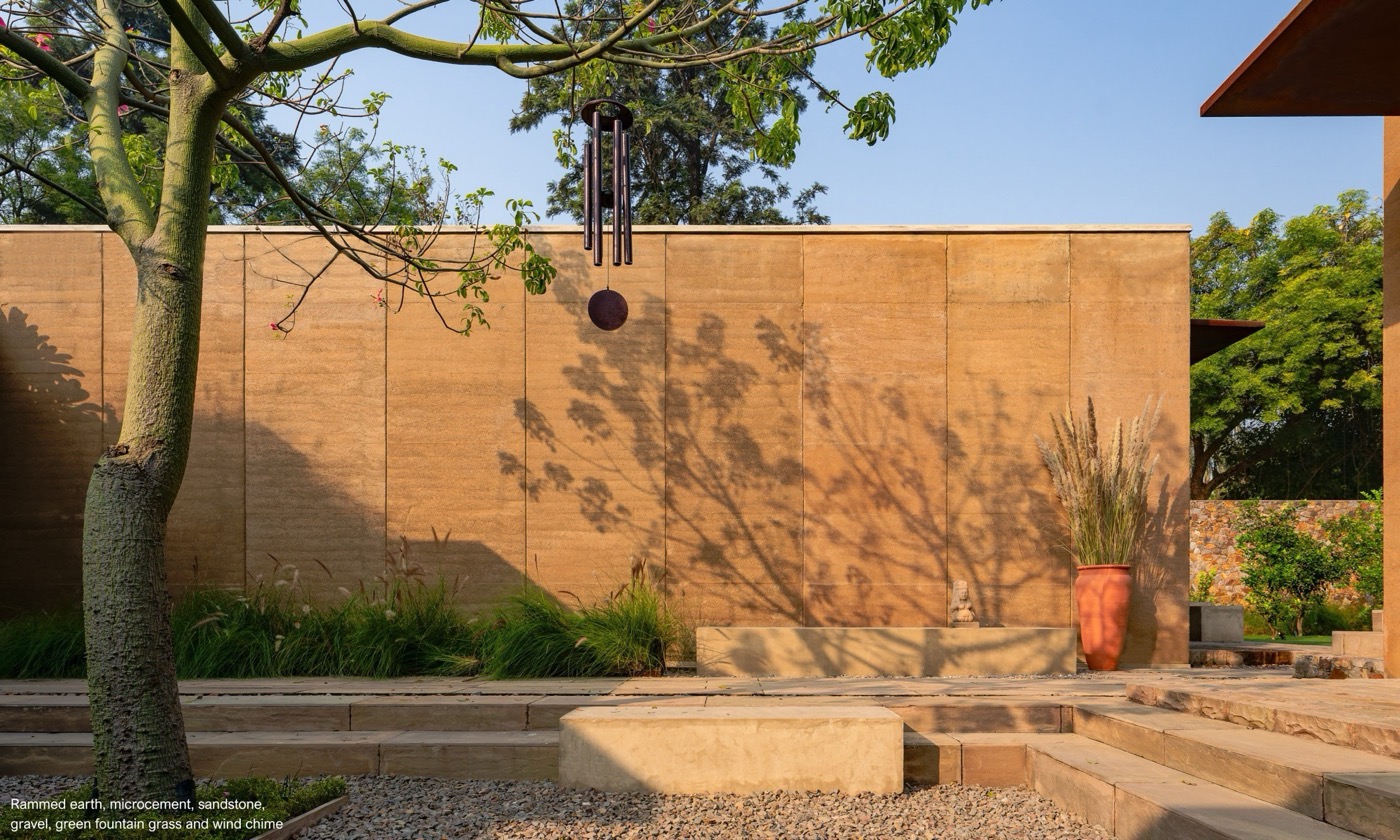
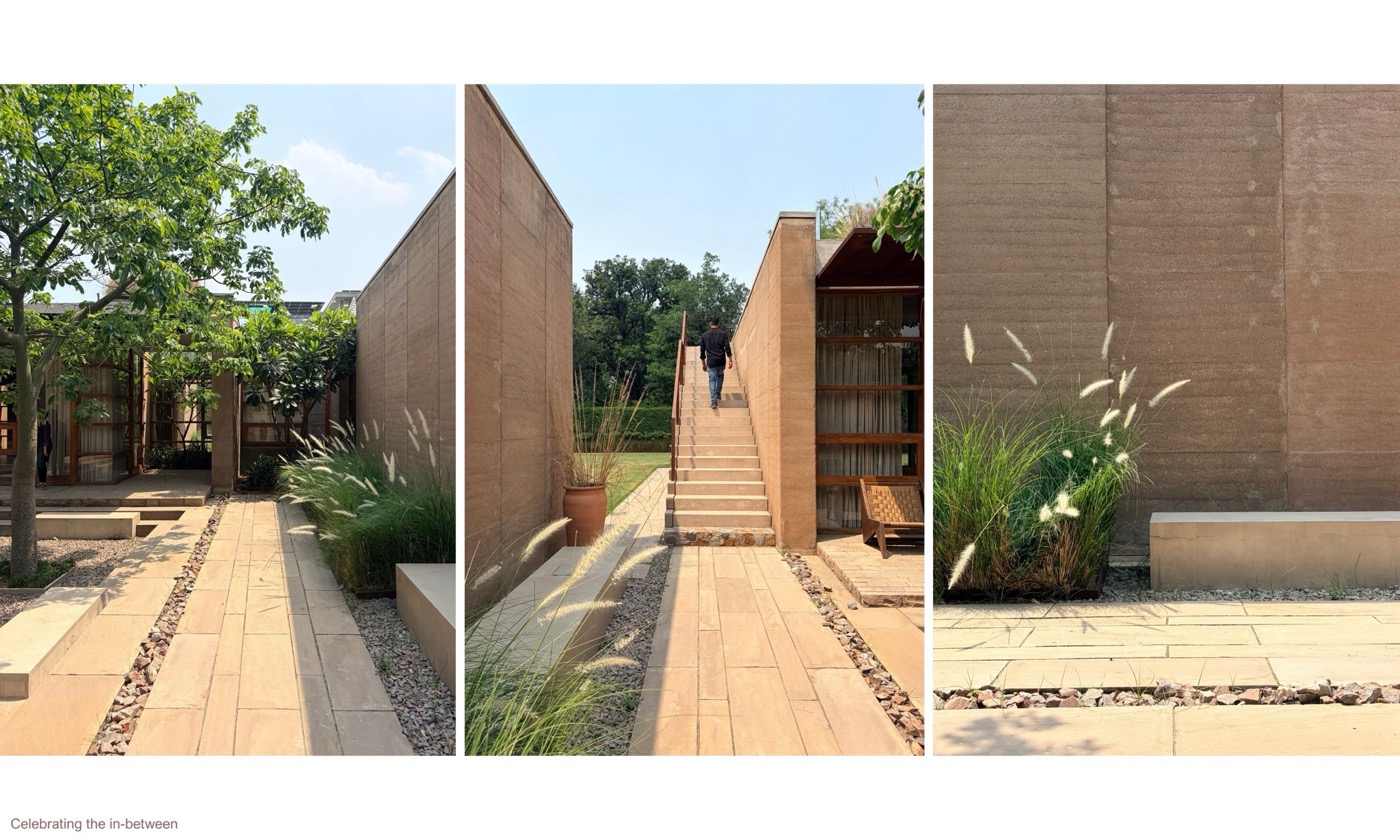
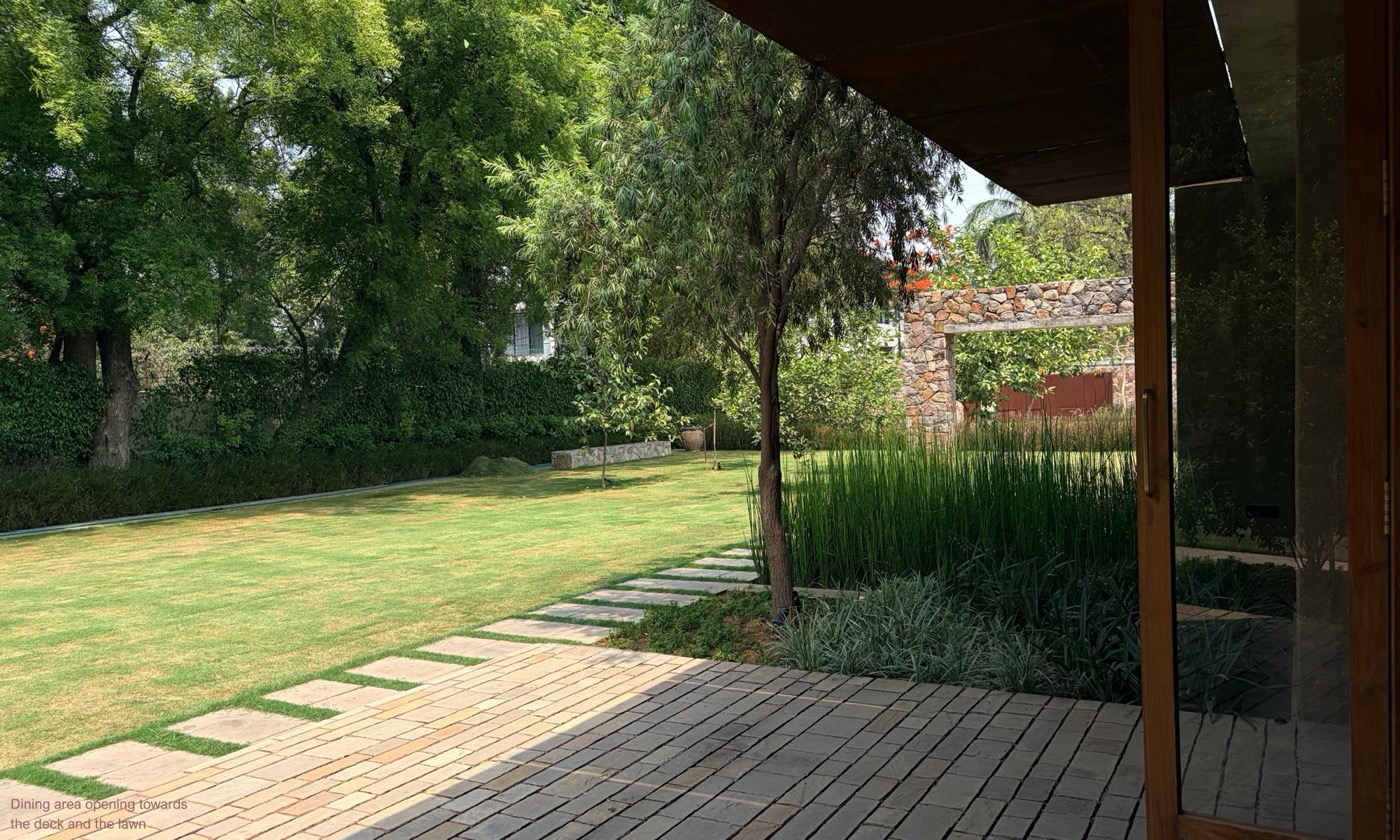
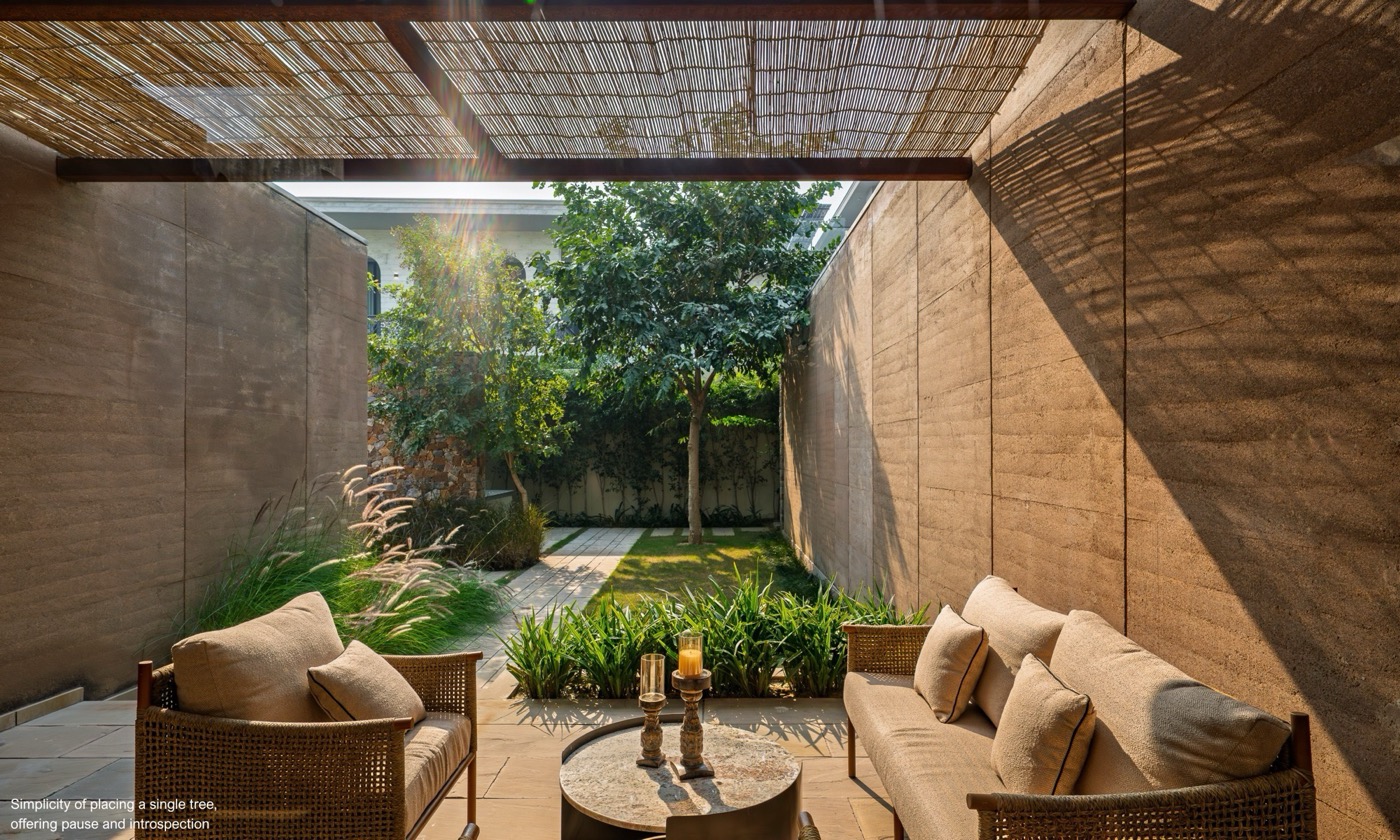
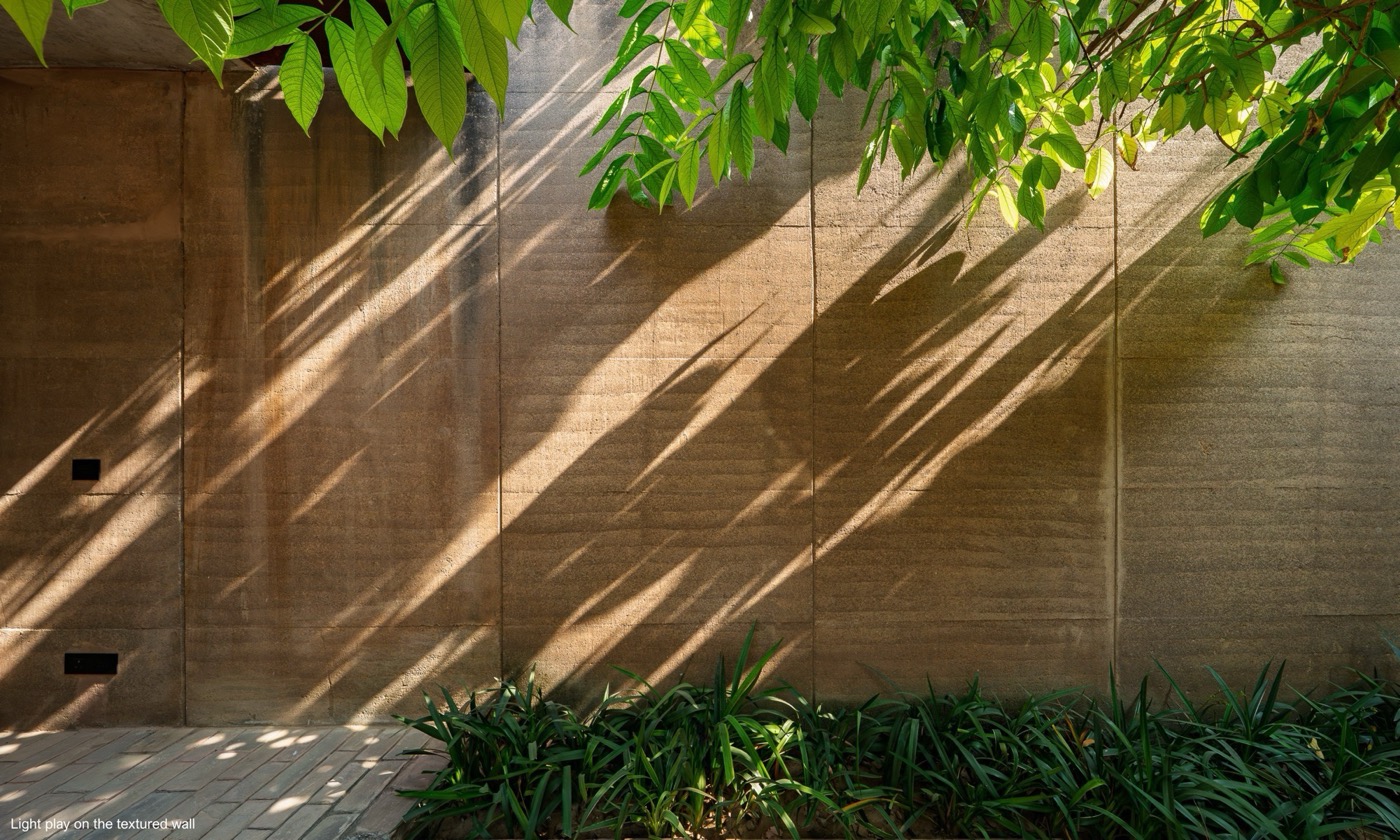
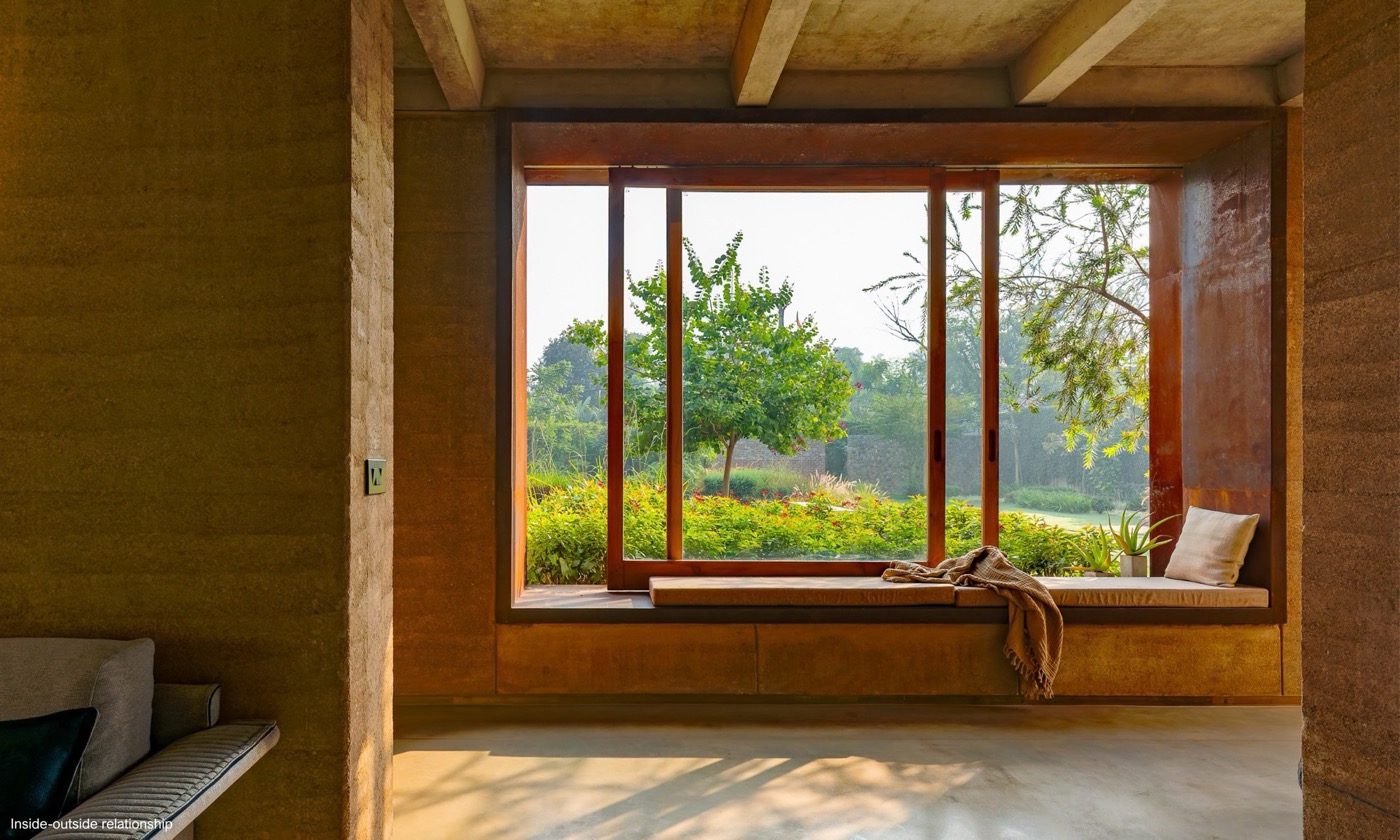
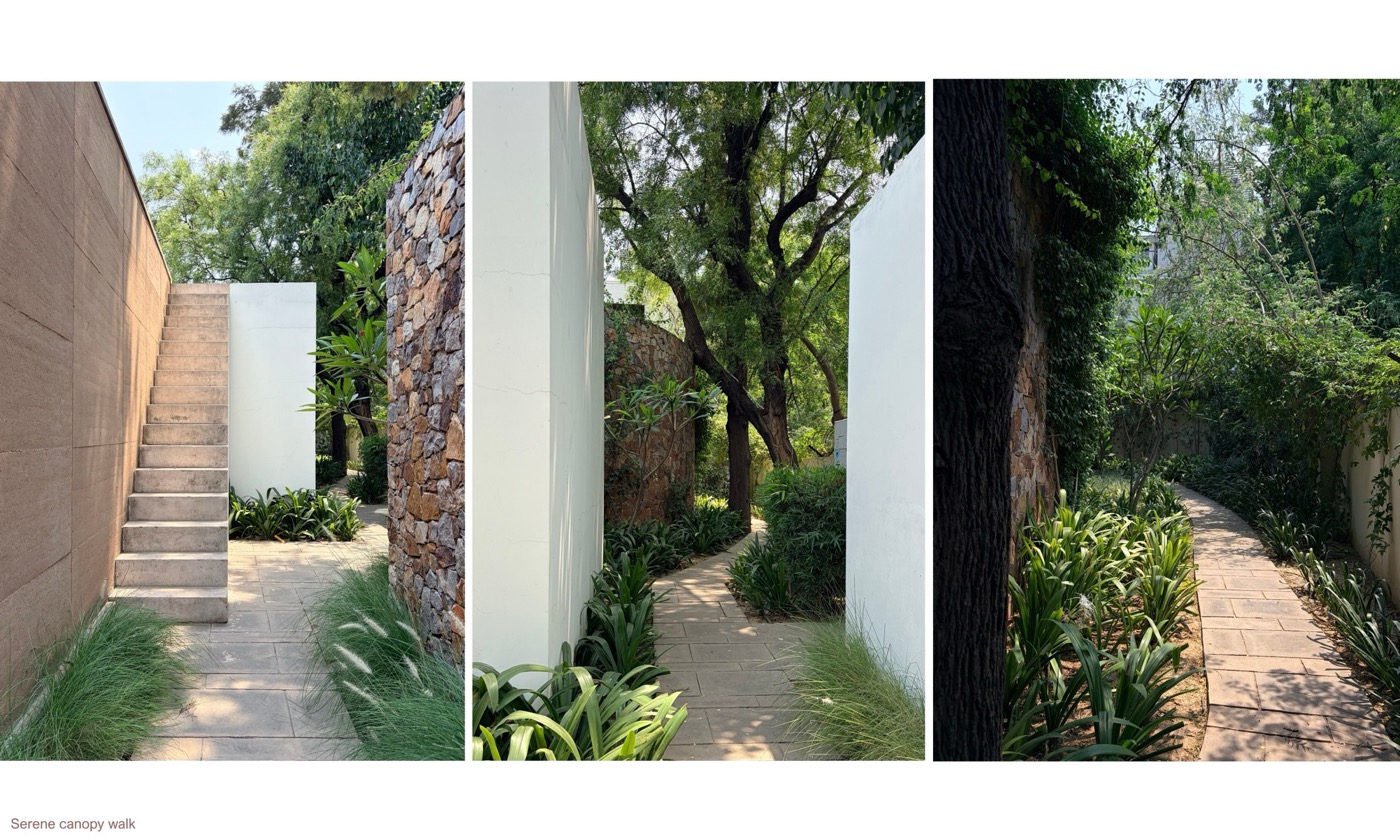
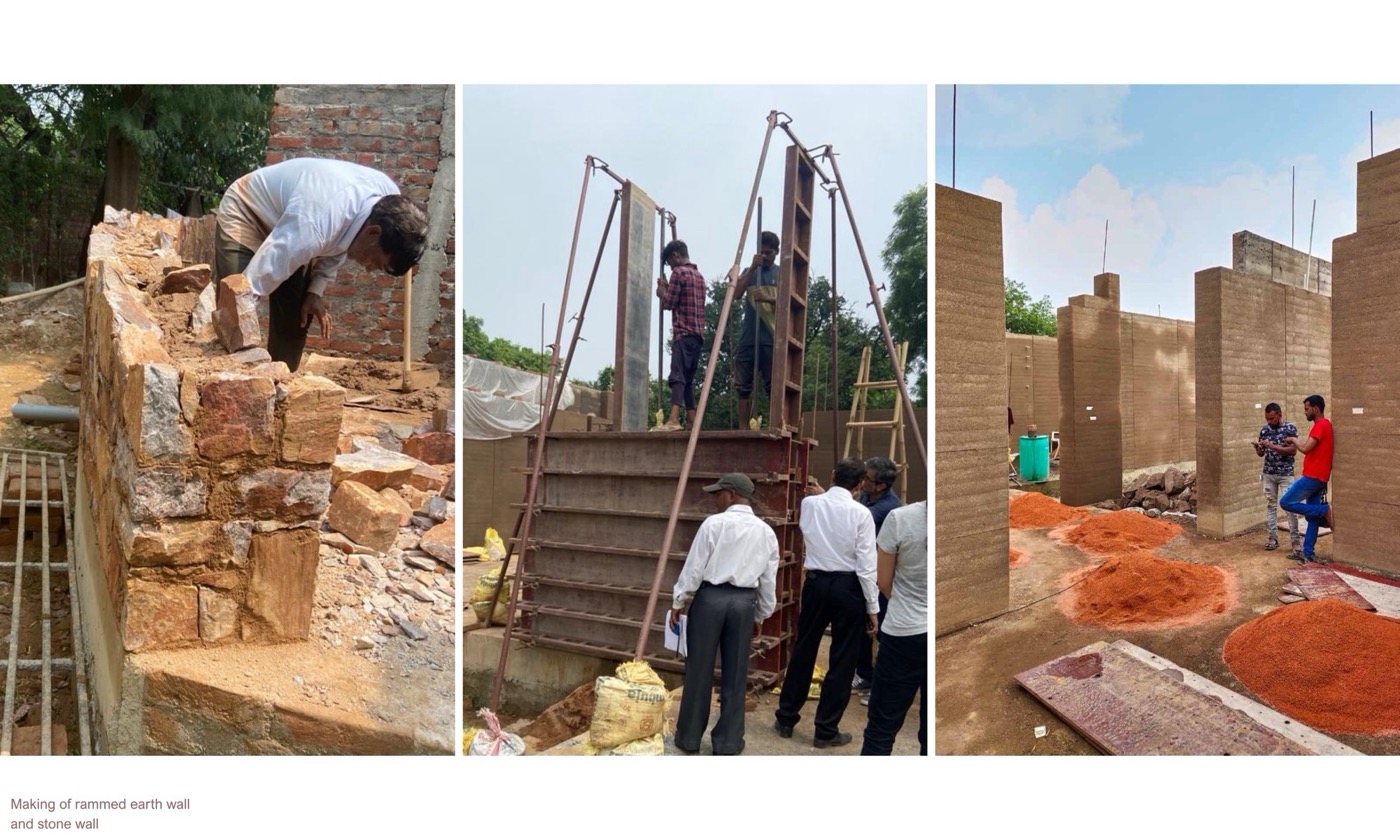
The signature of the house structure is a set of stretched-out vertical planes running east-west. These 16-inch-thick rammed earth walls each begin and end at the formation of an open space. Each room, while self-contained, initiates a dialogue with the landscape, acting as both a transitional and social space.
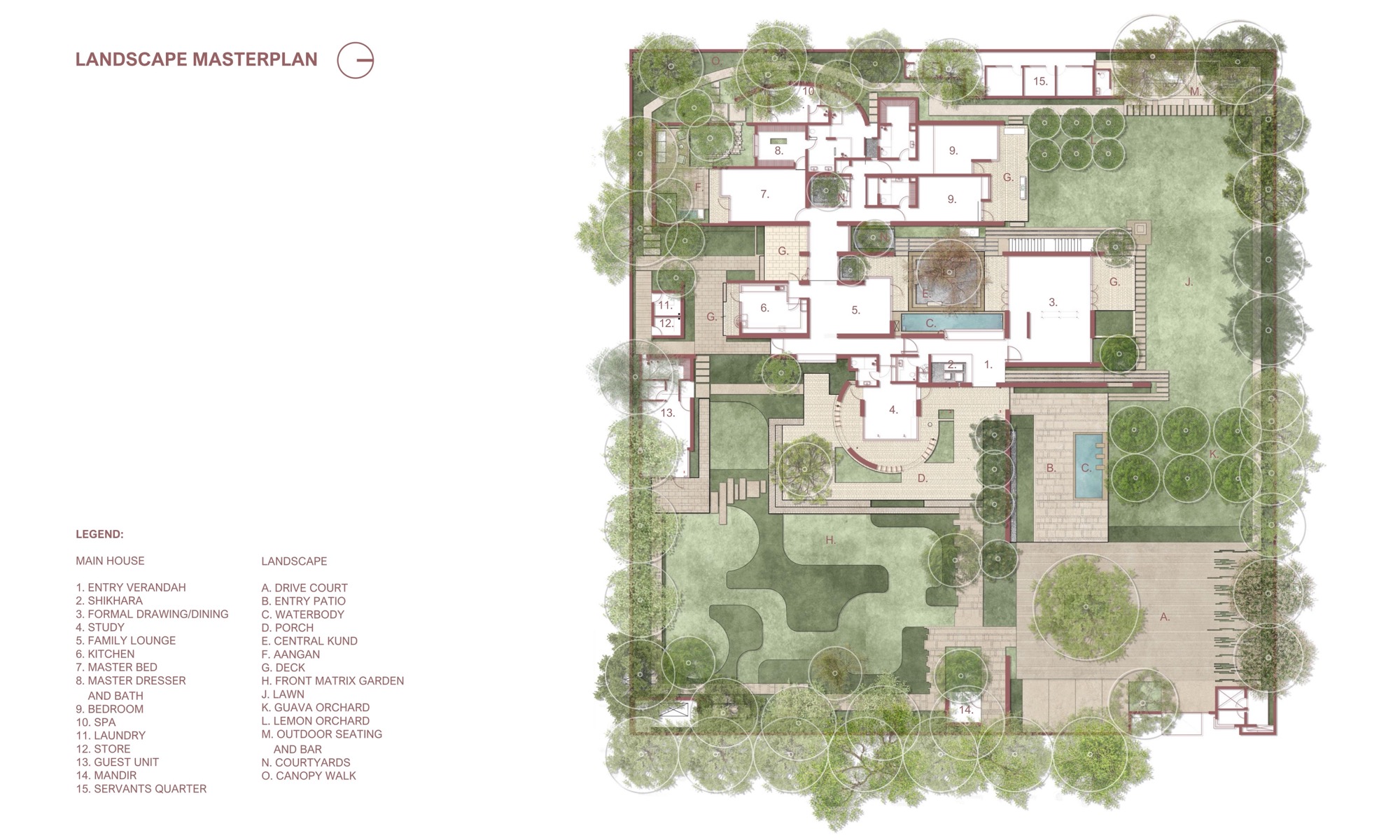
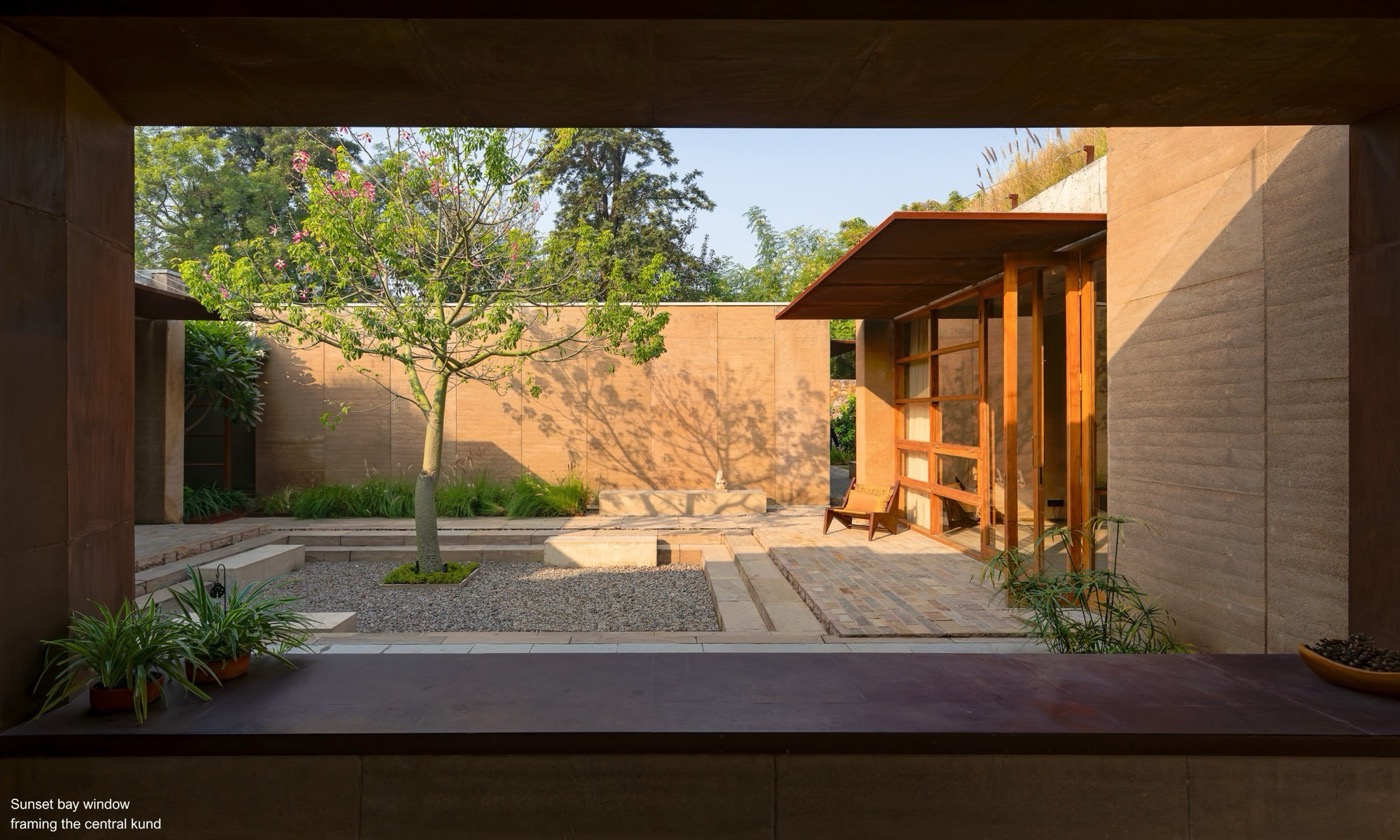
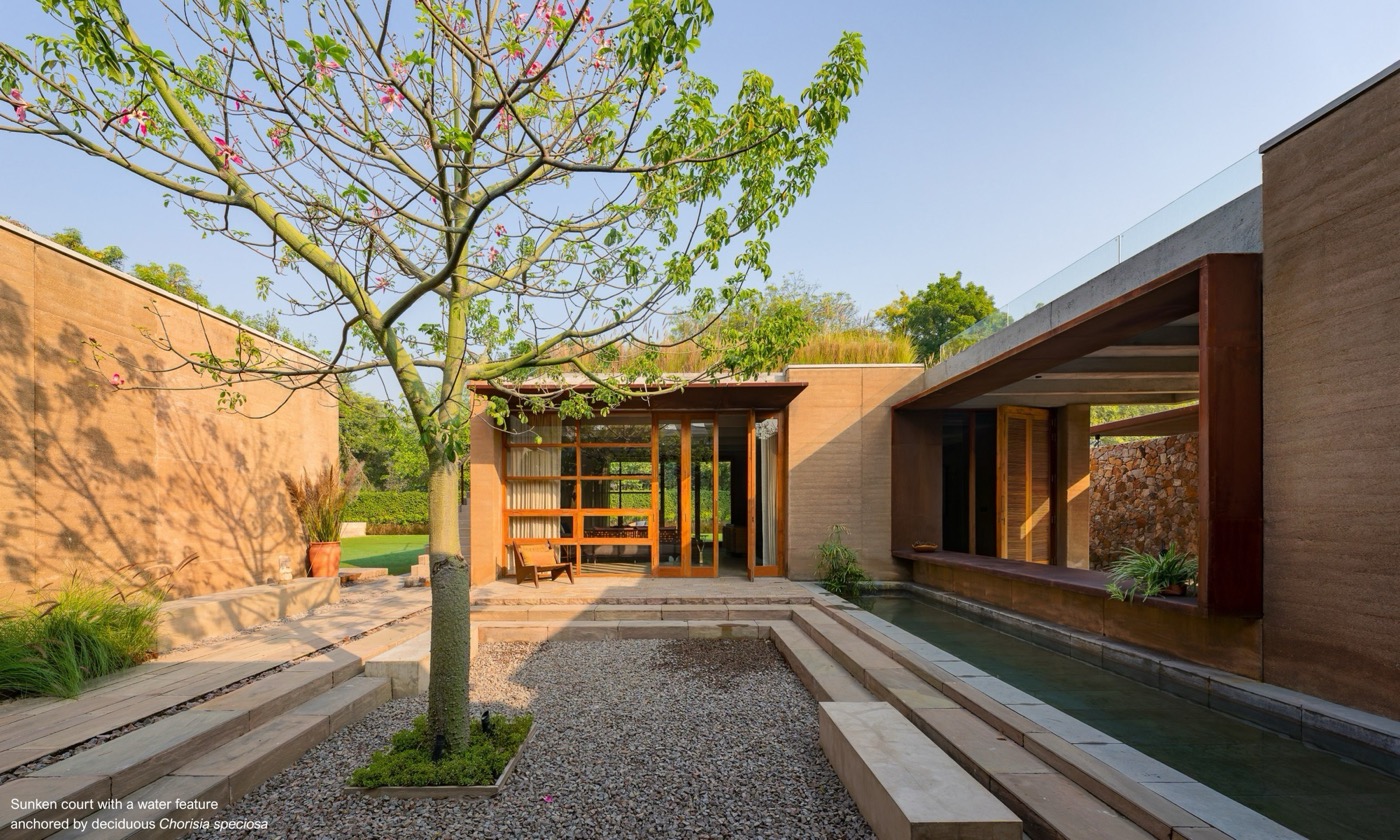
The primary organizing element is the *kund*, or central court, which often defines traditional typology in the tropics. This is the heart of the house; a space that pulsates and connects almost all internal areas. It is designed as a sunken court with a water feature, anchored by a deciduous *Chorisia speciosa* (Silk Floss tree) that provides shade in the summer and welcomes the winter sun, allowing the family to enjoy the space year-round.
Overall, the spatial experience of the landscape unfolds through a carefully orchestrated sequence. Upon entry, a seemingly familiar lawn reveals itself first, offering a moment of visual pause. Yet, just beyond, partially concealed and intriguing, lies a matrix-planted landscape that draws the eye and invites movement. This deliberate layering of visibility fosters curiosity, encouraging exploration rather than immediate comprehension.
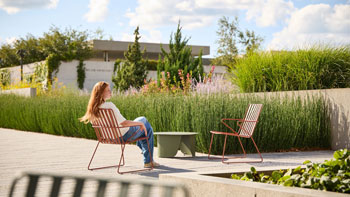
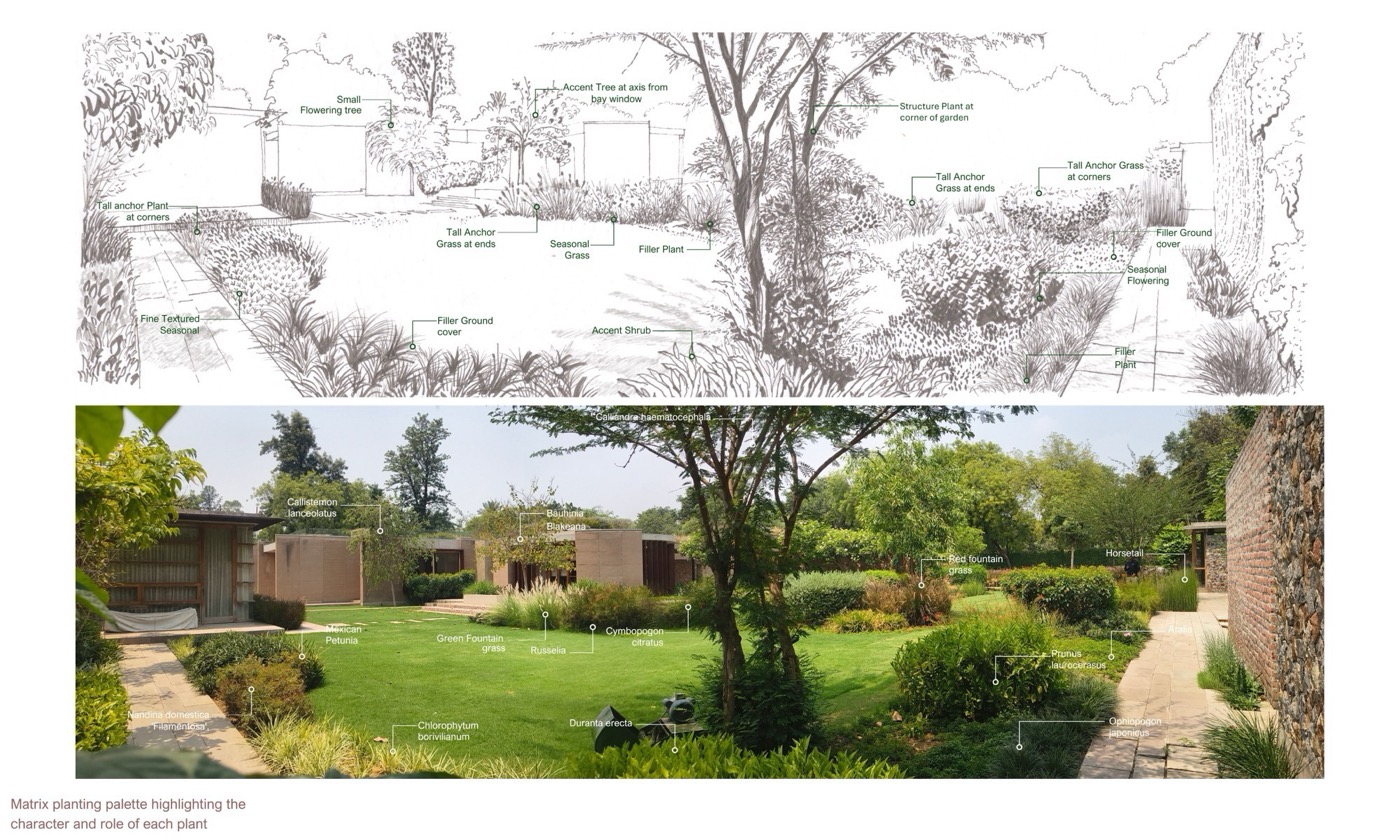
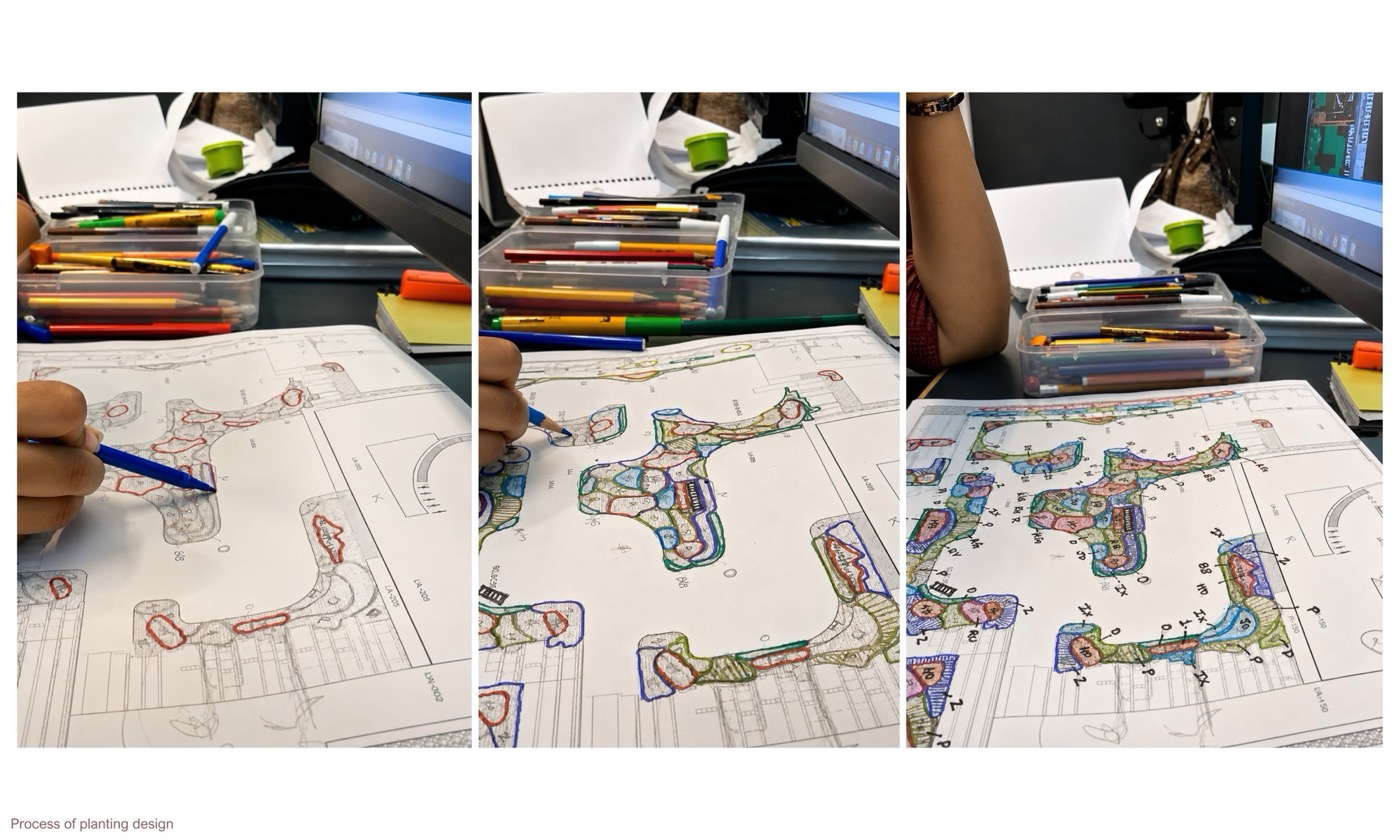
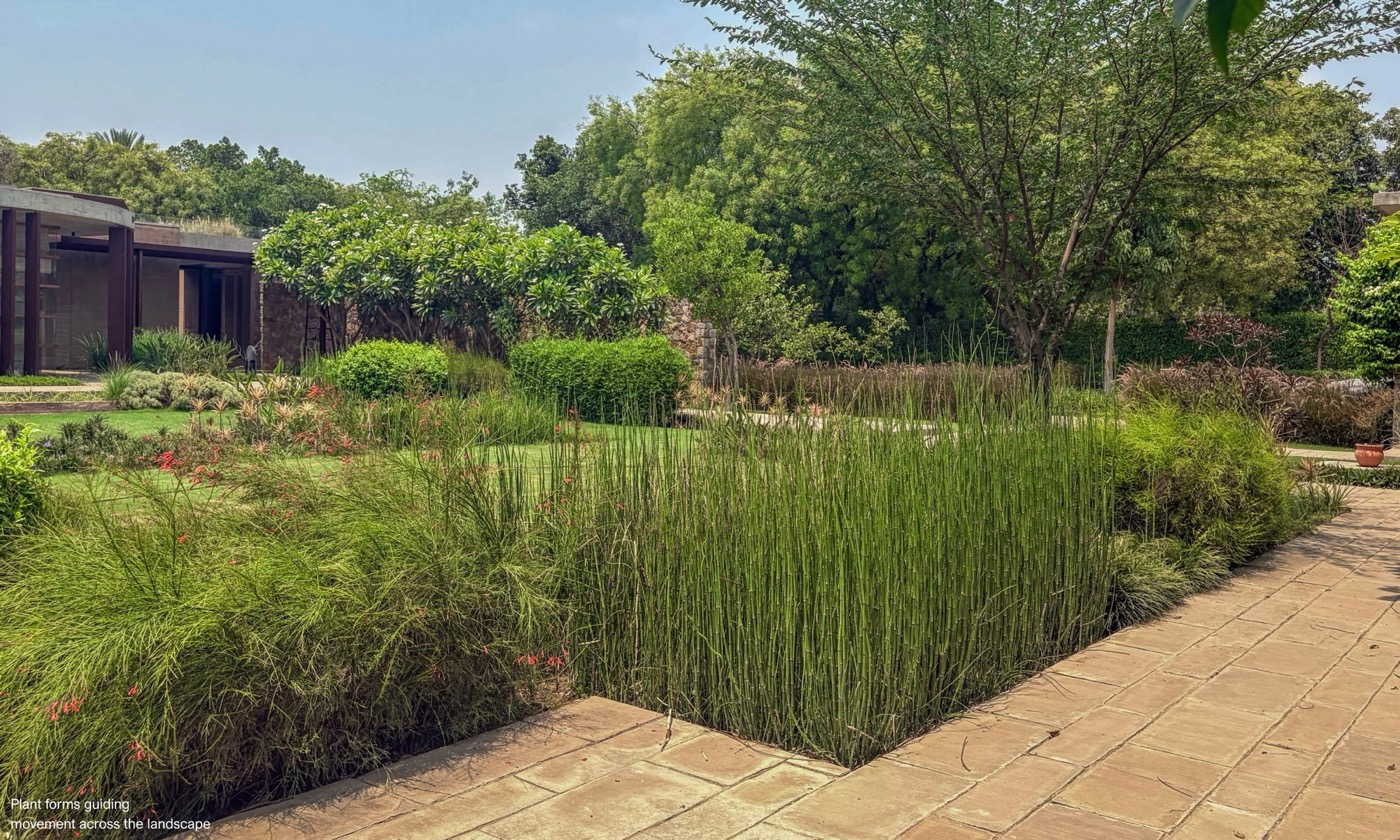
Rejecting the conventional dominance of expansive lawns, the design introduces matrix planting as its central strategy. This approach transforms the landscape into an immersive field rather than a static foreground. Movement is not peripheral but embedded within the planted fabric, with walkways subtly carved through it. The user is invited to inhabit the landscape, to walk within it rather than observe it from a distance.
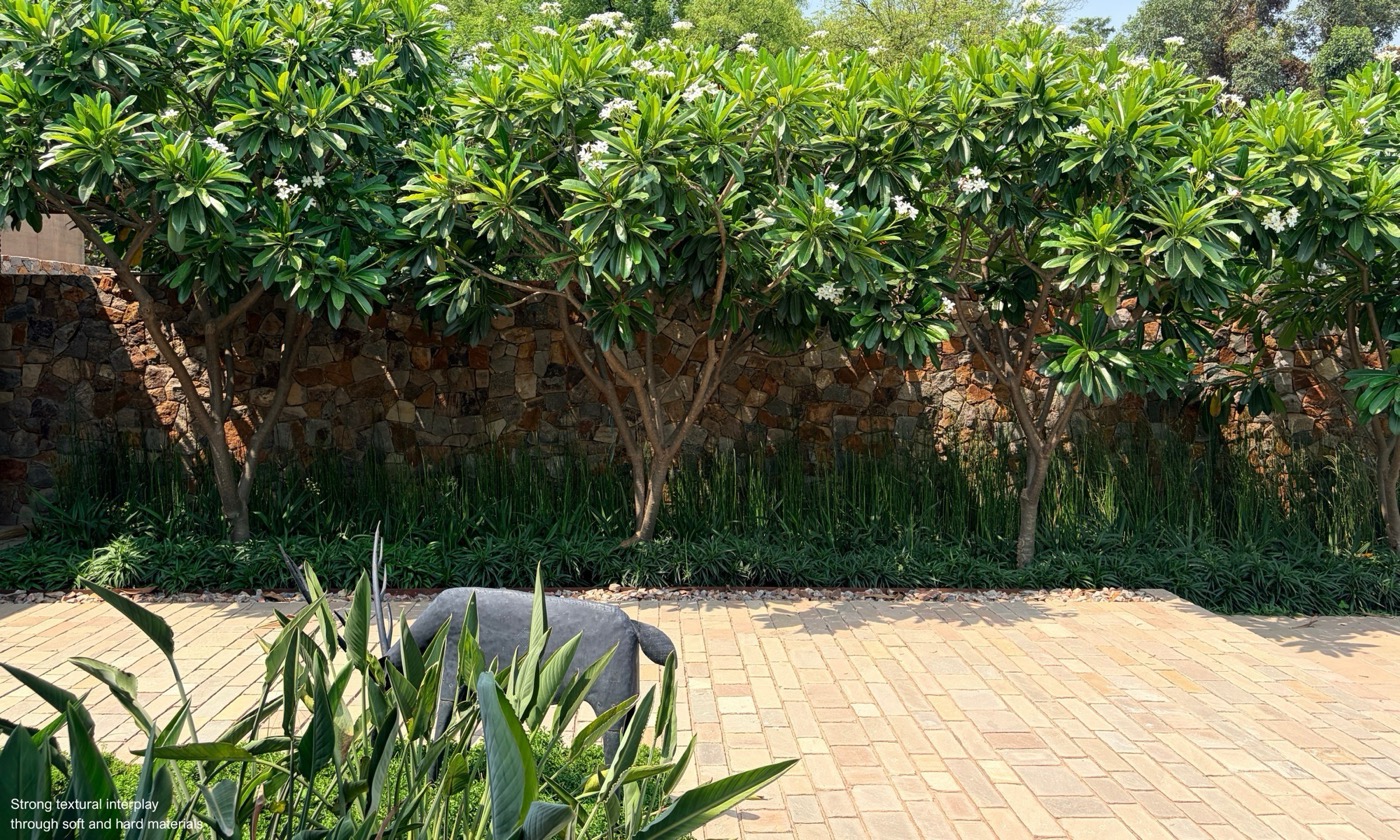
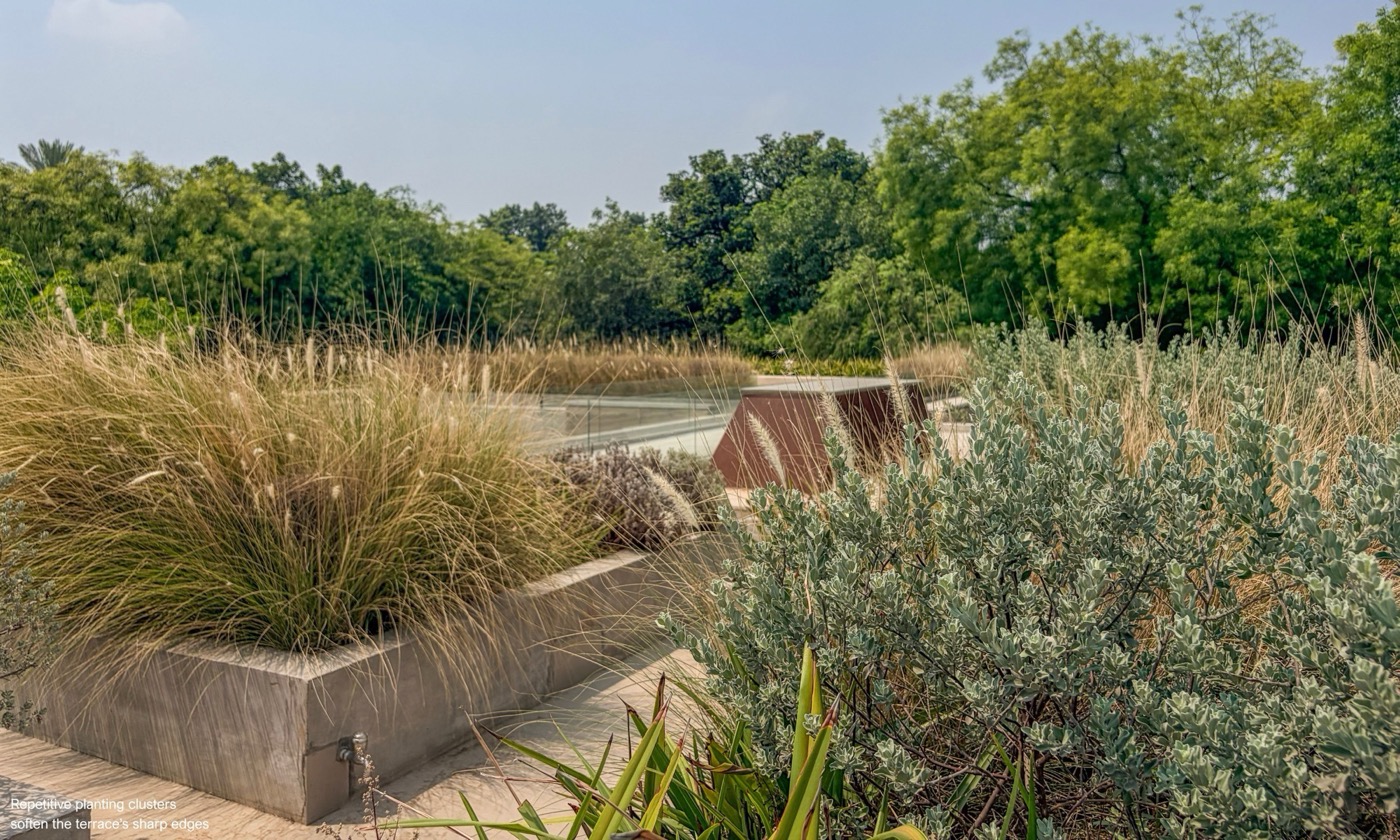
The client, a renowned florist, is deeply passionate about botany and was open to exploring a variety of planting styles. Consequently, the design is driven by diversity and depth. Variations in height, texture, foliage, and seasonal change create a dynamic, ever-evolving environment. Tall grasses, such as fountain grass, and structured verticals, like horsetail, act as anchors to establish rhythm and orientation. Flowering species and trees, including the delicate presence of *Calliandra*, punctuate the landscape with moments of color and lightness.
The layered planting softens architectural edges while enhancing microclimatic comfort through shade and evapotranspiration. Unlike the predictability of a conventional lawn, this landscape unfolds gradually, transforming a static view into a rich, sensory journey that rewards exploration over time.
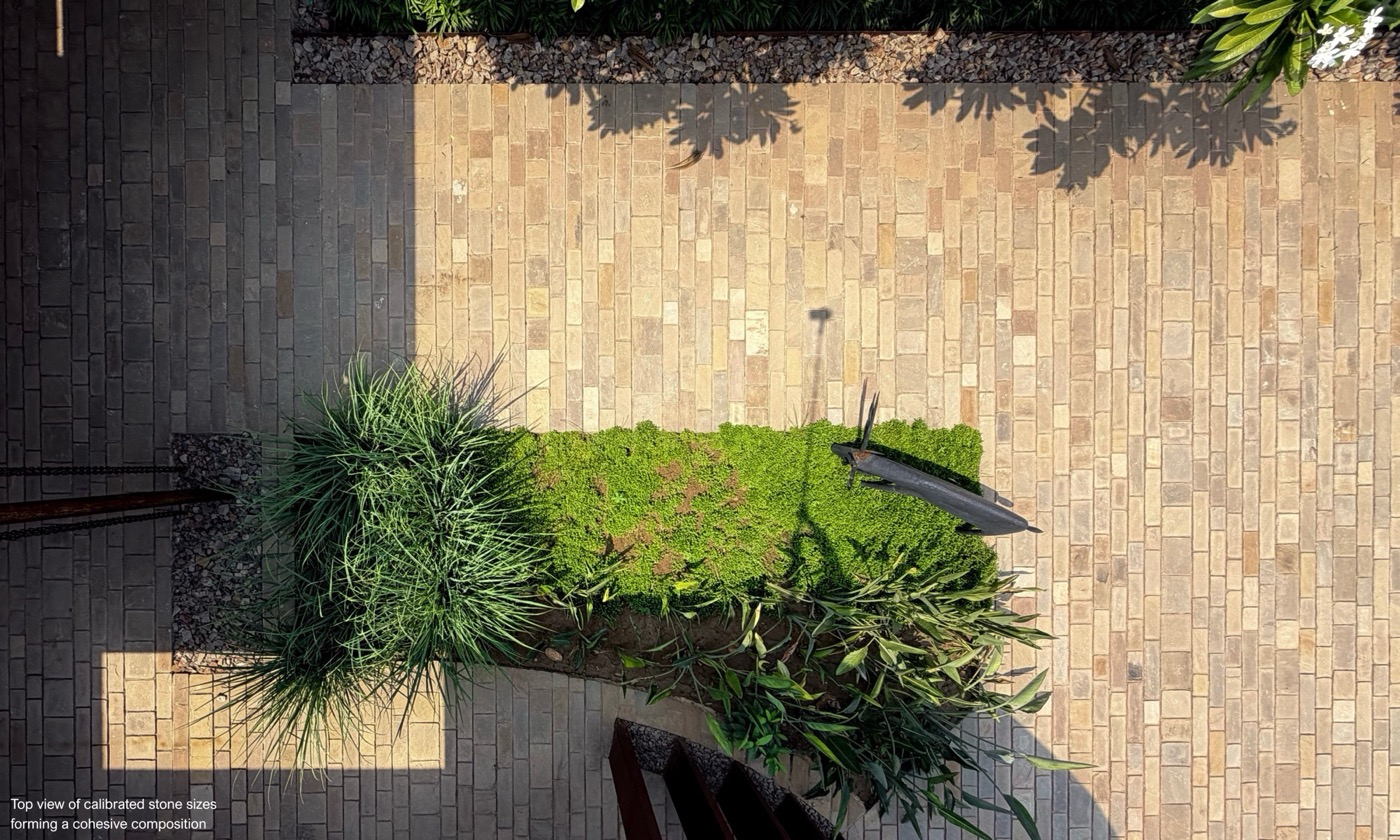
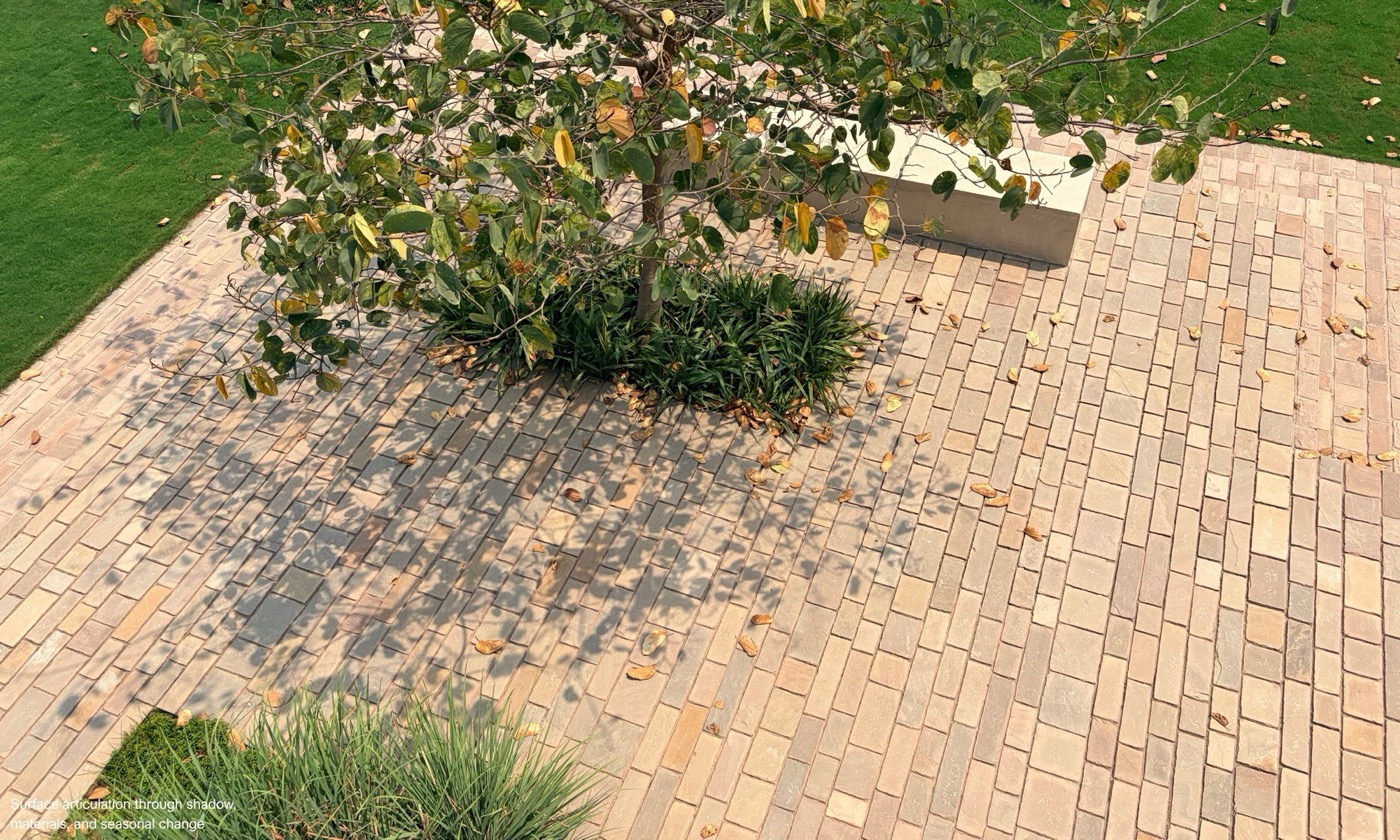
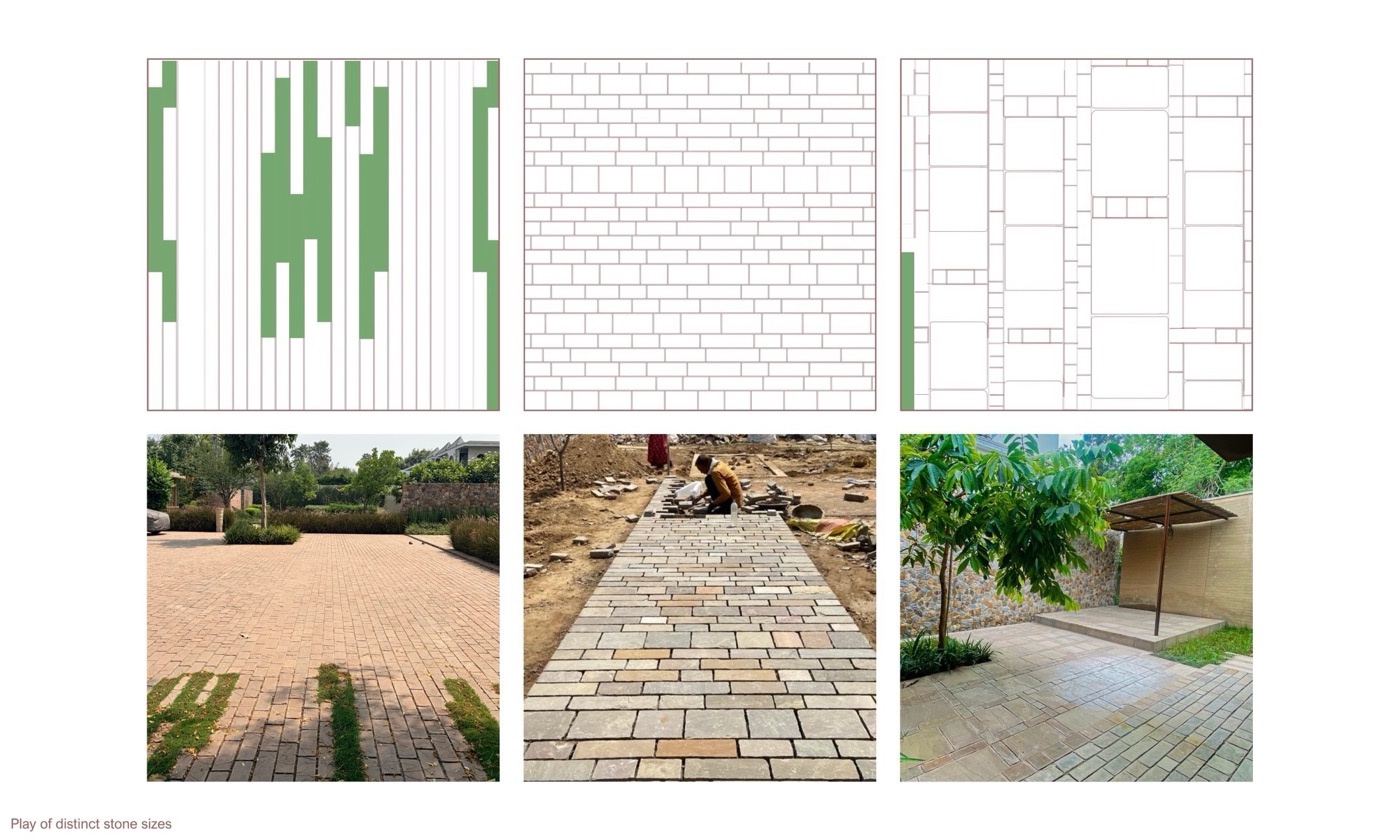
Beyond the greenery, the ground plane utilizes varied, locally sourced stone to establish tactile continuity. Edges defined in weathered metal further reinforce the design’s core dialogue, bridging the gap between crafted precision and natural imperfection.
More intimate moments are explored within the courtyards, particularly those attached to private spaces like bedrooms. These are conceived as quiet, contemplative enclaves. The placement of a tree within each was carefully determined from inside the house, framed by millwork windows so that the greenery becomes an instant part of the room without hindering the view of the landscape beyond. Their simplicity is their strength, offering pause and introspection within the larger spatial narrative.
Ultimately, the project is less about form-making and more about experience-making. It seeks to re-anchor the user in a sensory, grounded reality; where light, shadow, material, and planting converge to create a landscape that is at once timeless and contemporary. In doing so, it offers not just a retreat, but a recalibration of the relationship between people, place, and nature.
Location- New Delhi, India
Architects– DADA Partners
Client– Ferns N Petals Pvt Ltd
Design Year– June 2022
Year Completed– November 2023
28.48342587537637, 77.15872169015348
73594


LILA 2026 Sponsor