Flying Gardens // Adobe Founders Tower
bioniclandscape.com
2026 Campuses and Corporate / 2026 Landscape and Architecture / USA / Built in 2023 /
![Emery Yards represents a paradigm shift for this small city with big urban design challenges and a post-industrial history. This urban design transforms a mega block district into a pedestrian-oriented science campus that seamlessly integrates new land uses, public spaces, improved urban networks, and modern infrastructure. Faced with challenges of oversized blocks, high groundwater, abandoned […]](https://landezine-award.com/wp-content/uploads/2025/05/00-Emery-Yards-Images-project-main-photo-600x400.jpg "Emery Yards: Transforming Postindustrial Emeryville by Bionic")
![Unlike other closed-off campuses in rapidly urbanizing Dublin, CA, the Force Field is a public-facing ecological wetland park. Designed around a complex water system to protect and enhance an existing seasonal wetland, the project creates equal access to nature and ecologically centered systems to demonstrate the potential every development offers to stimulate ecology. It proposes […]](https://landezine-award.com/wp-content/uploads/2025/05/00-Force-Field-Images-Main-Photo-600x480.jpg "Force Field: Ecological Park Shaped from Wind, Water, Motion & Science by Bionic")
![Bionic is a landscape architecture, urban design, and planning practice based in San Francisco, California. Founded in 2007 by Marcel Wilson, the firm’s mandate is to enable life at all scales of design—microscopic to macroscopic. This pursuit involves the stimulation of culture, the design of ecologies, and the negotiation of complexity between the built environment […]](https://landezine-award.com/wp-content/uploads/2016/10/Bionic-Office-Photo-600x221.jpg "Bionic")
The Adobe Founders Tower landscape reimagines outdoor space within a dense, vertical urban campus by integrating landscape, architecture, and art to support a culture rooted in creativity, experimentation, and co-creation. The project transforms rooftops, terraces, and a pedestrian skybridge into immersive environments that bring nature and community into the workplace. Sculptural landscape forms embed art, planting, seating, and lighting into expressive yet high-performing systems. Through resilient planting strategies, green roofs, and precision detailing, the landscape enhances environmental performance while demonstrating how private investment can generate lasting cultural, ecological, and public value in a high-density urban setting.
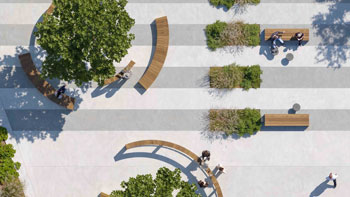
The project is a significant addition to a growing urban campus in downtown San Jose, demonstrating how landscape architecture can operate at the intersection of architecture, ecology, and art within vertically layered environments. Designed for a company whose culture is rooted in creativity, experimentation, and collaboration, the landscape was envisioned as an extension of the workplace by encouraging informal exchange, reflection, and inspiration through immersive outdoor experiences. Integrated across the ground plane, multiple rooftop terraces, and a pedestrian skybridge, the project transforms constrained exterior spaces into a connected system of multi-functional environments.
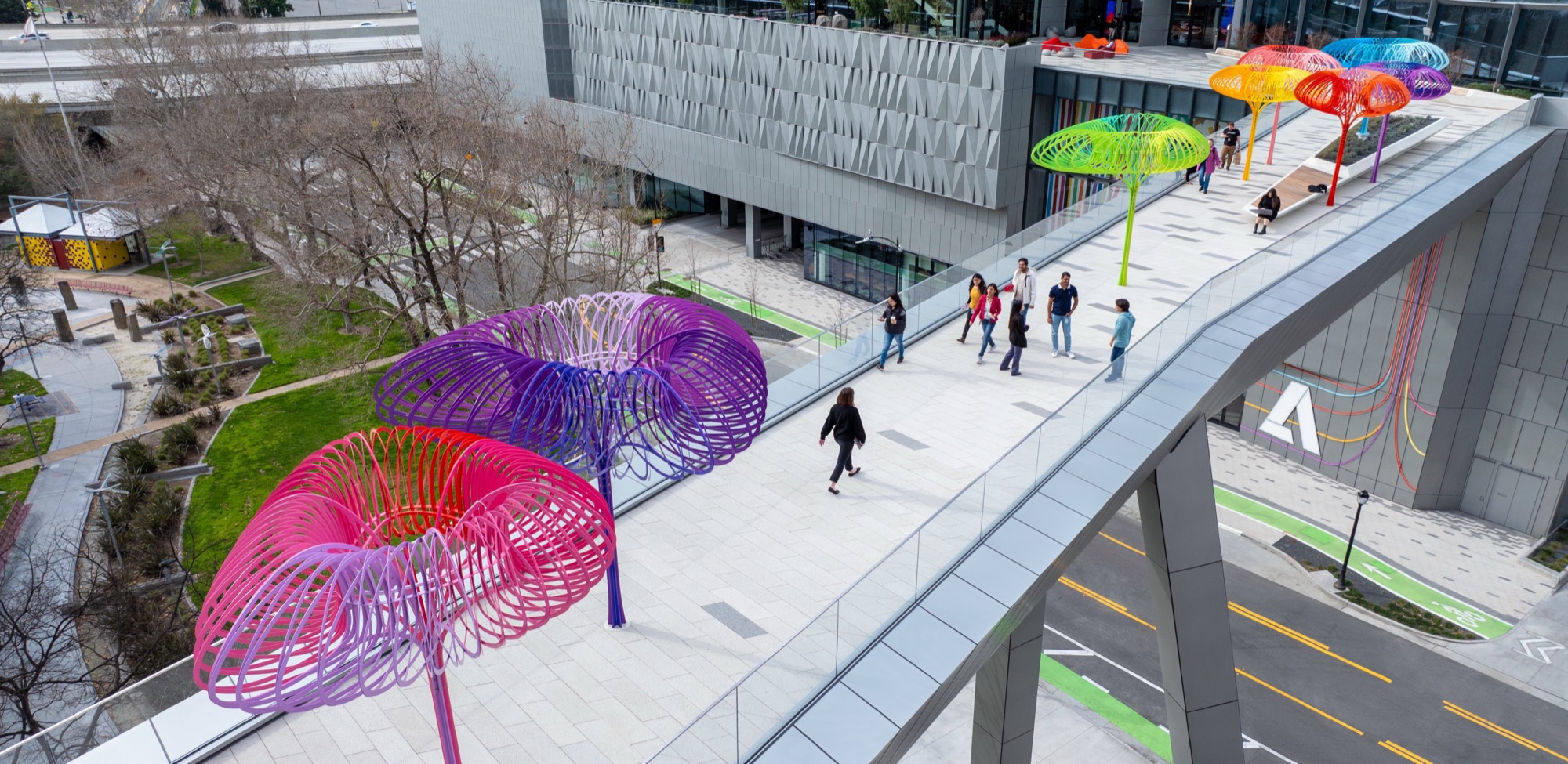
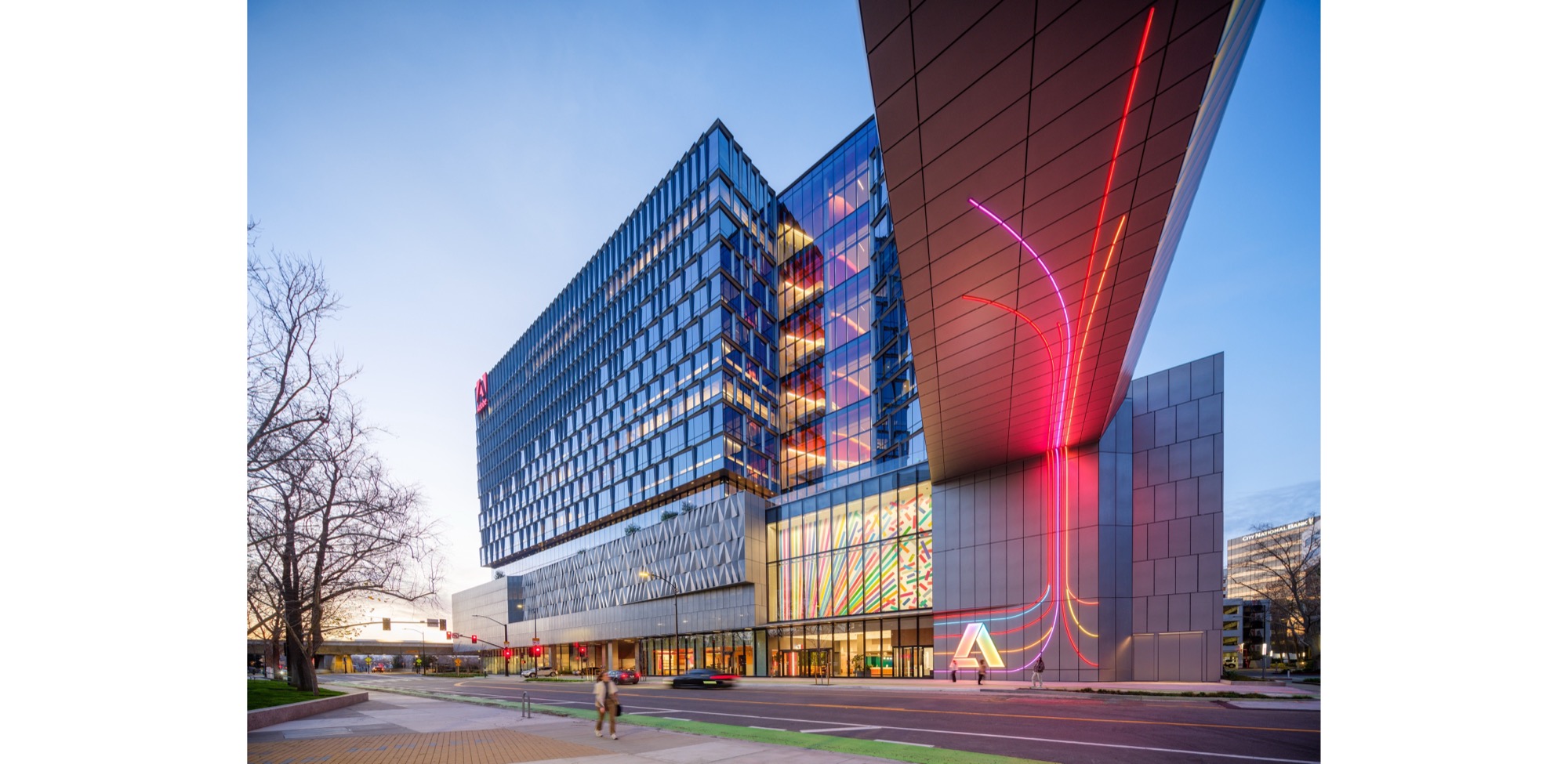
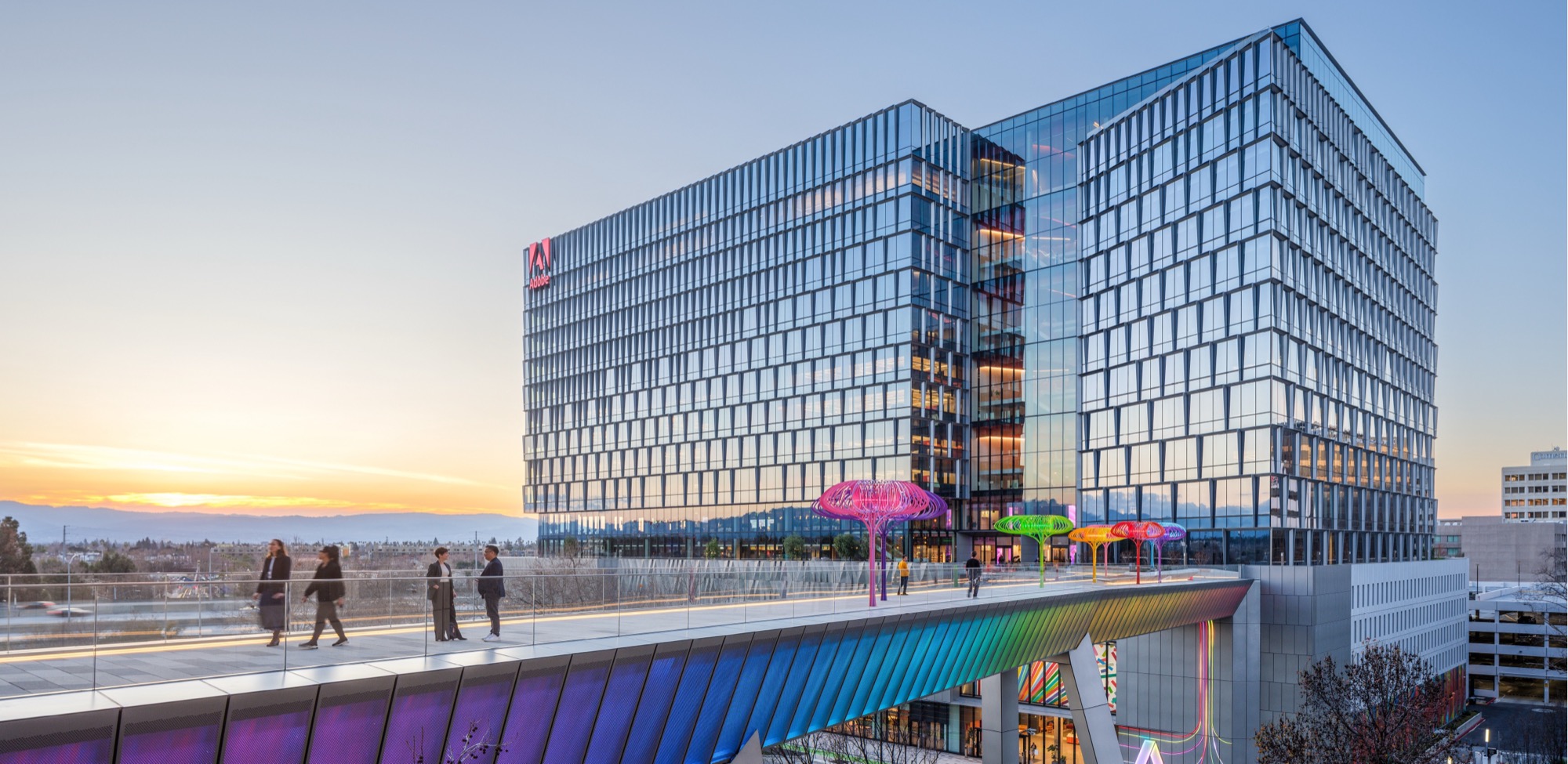
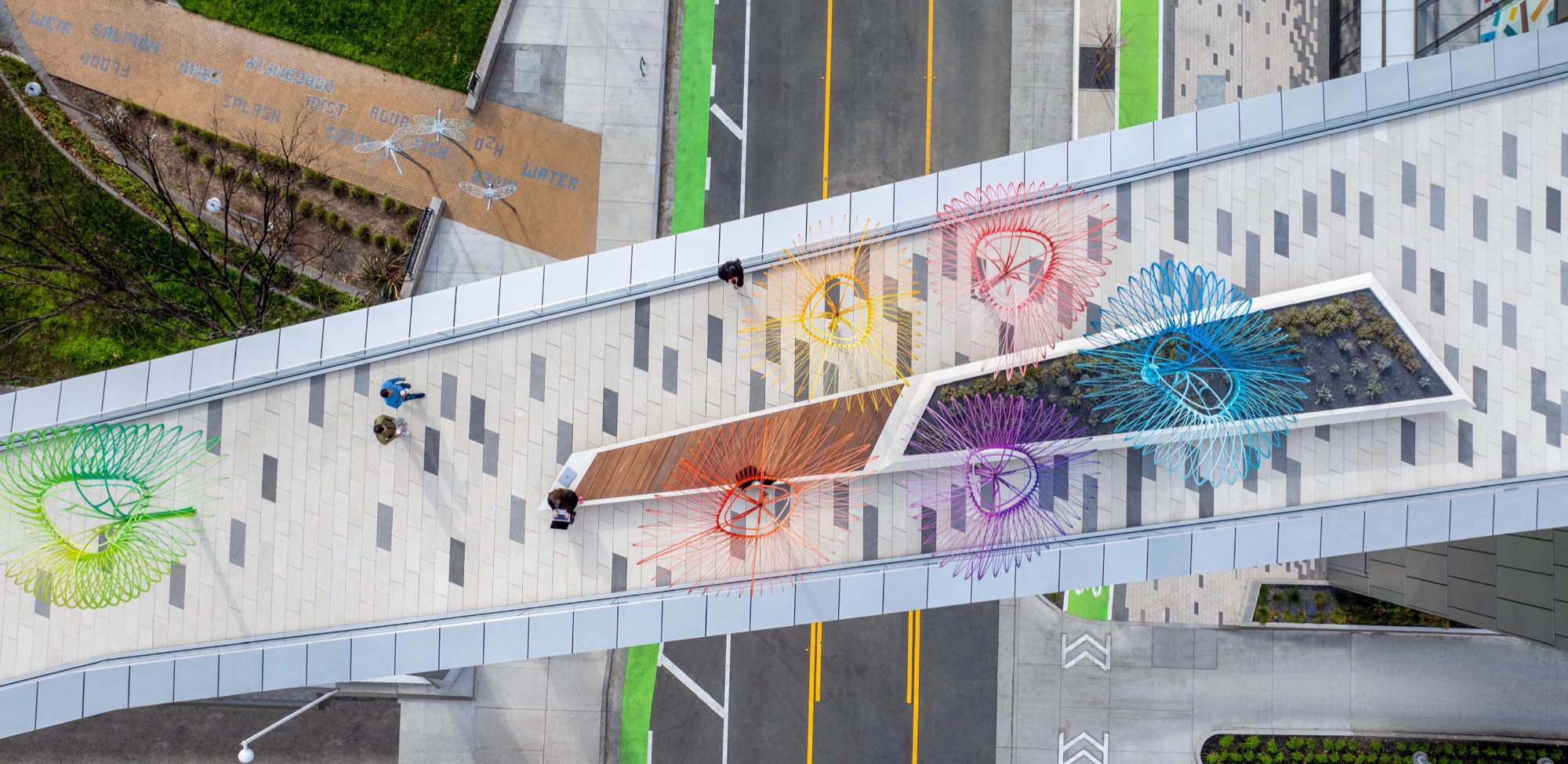
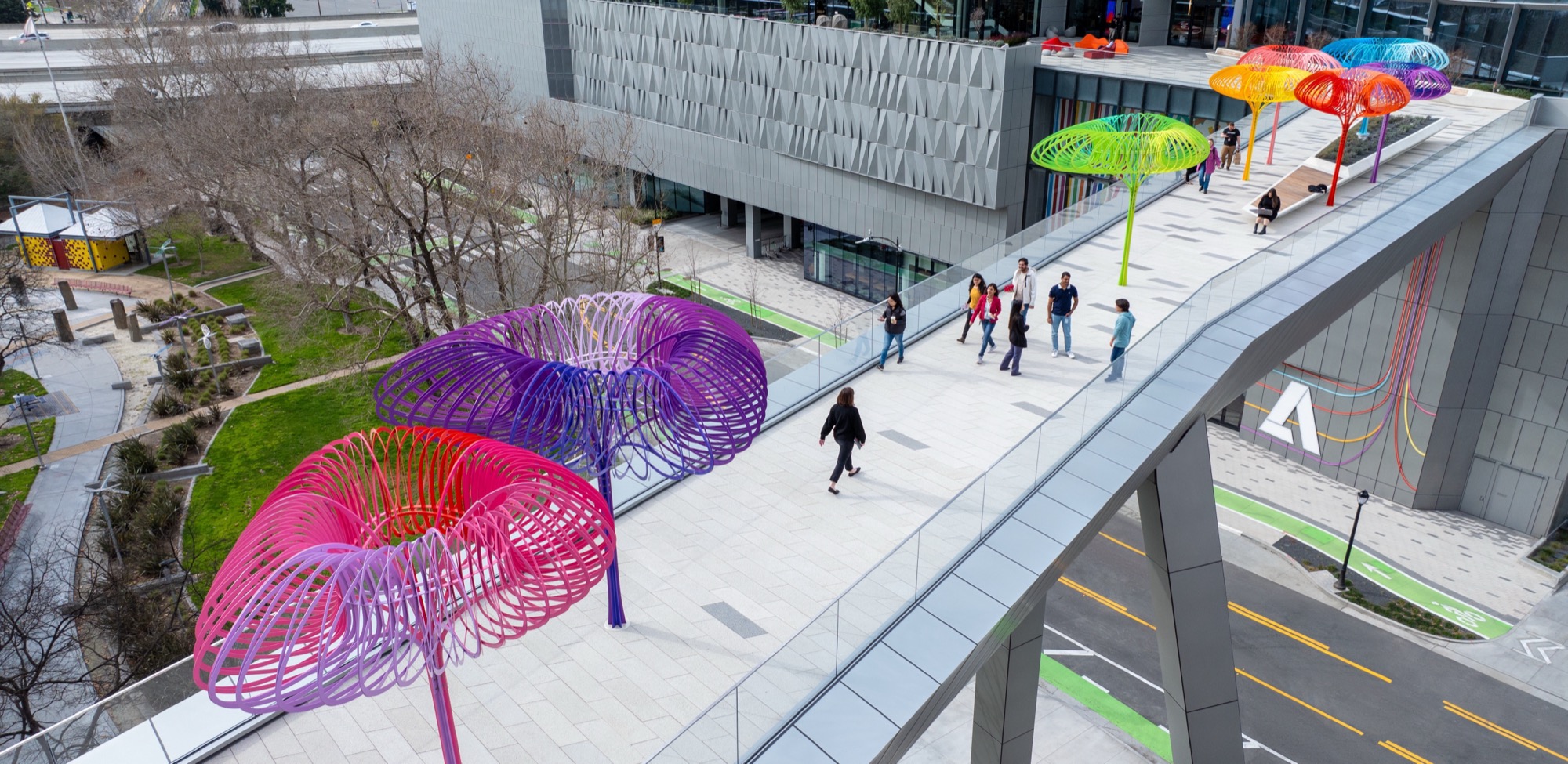
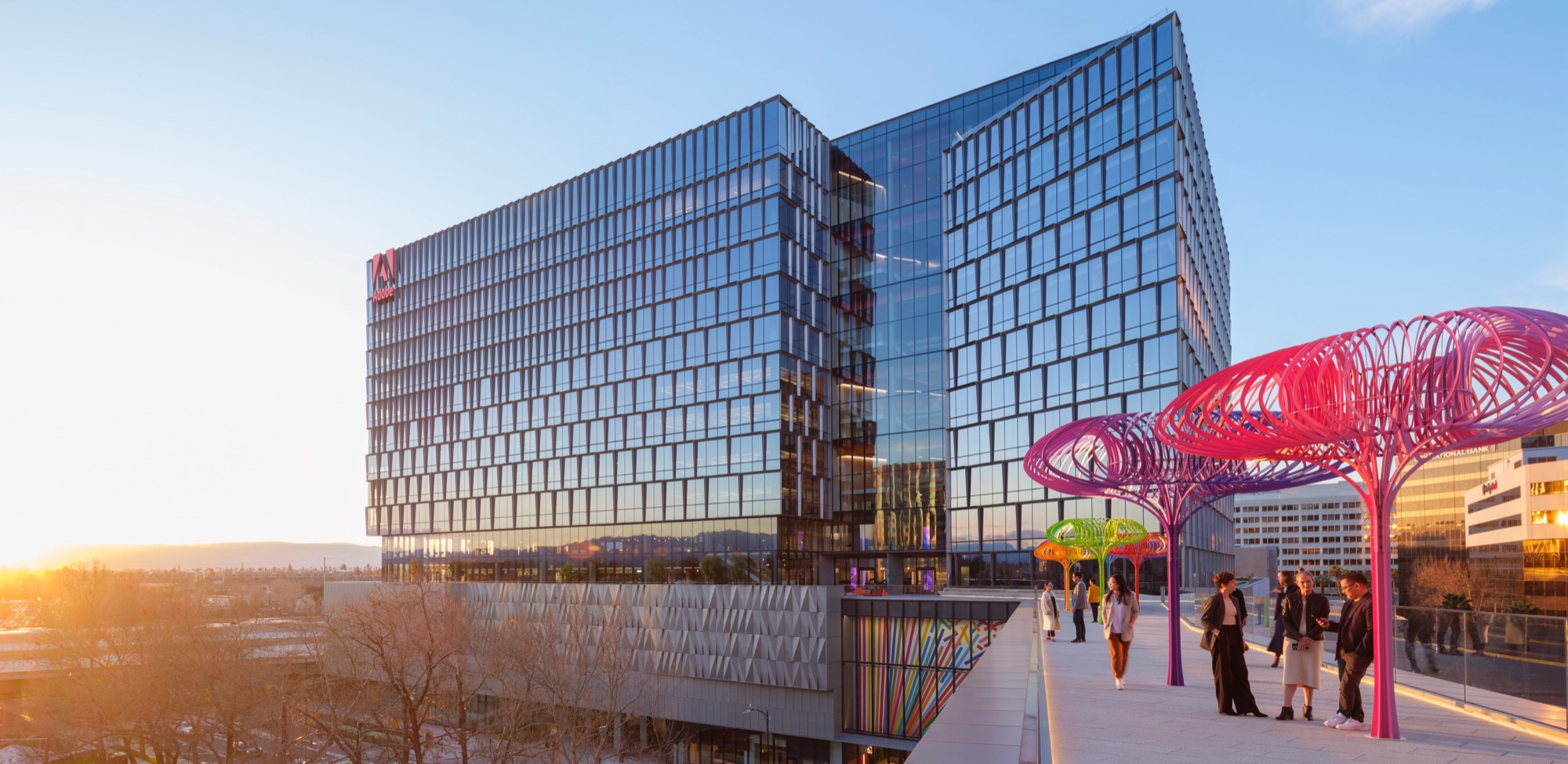
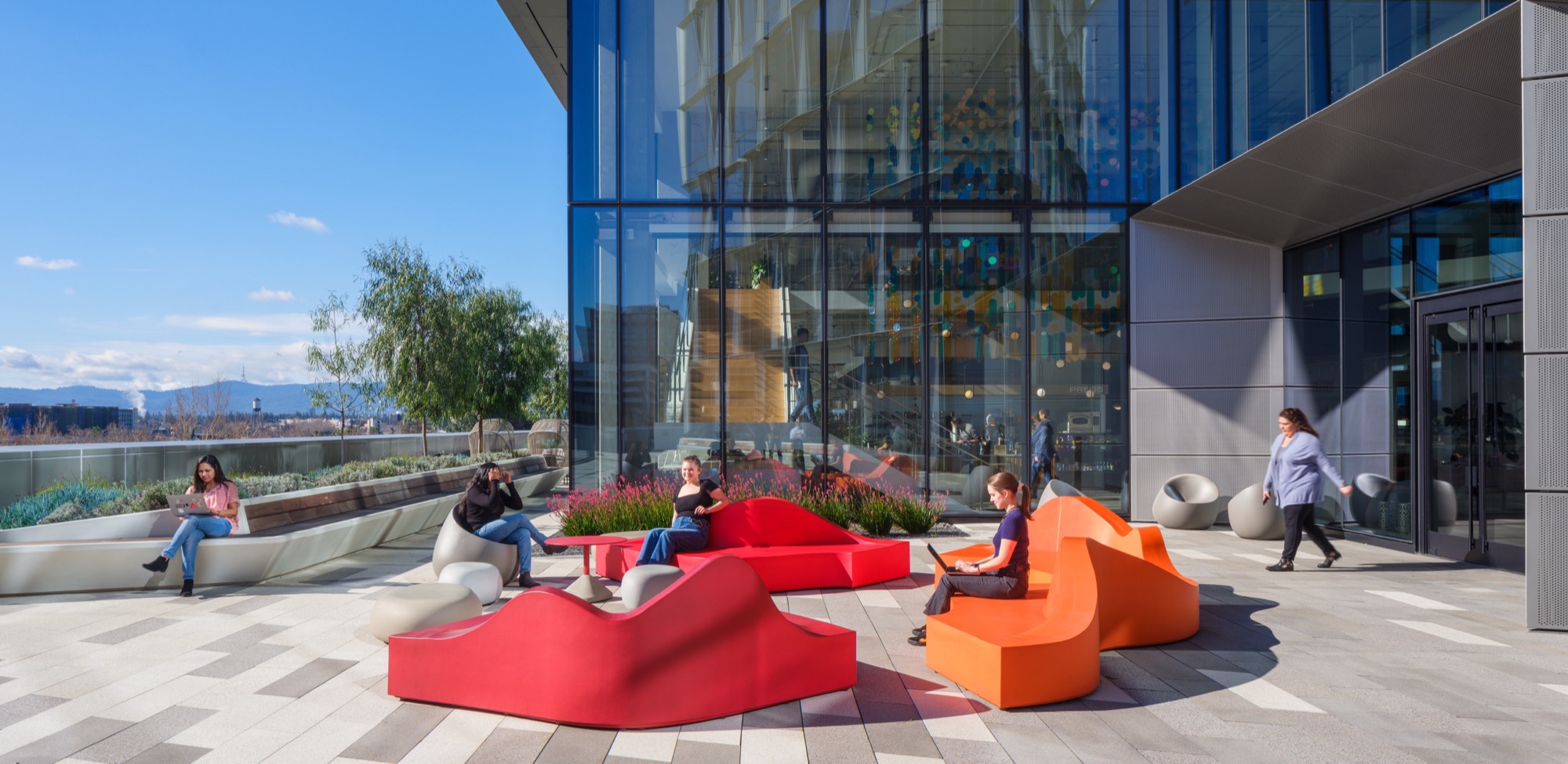
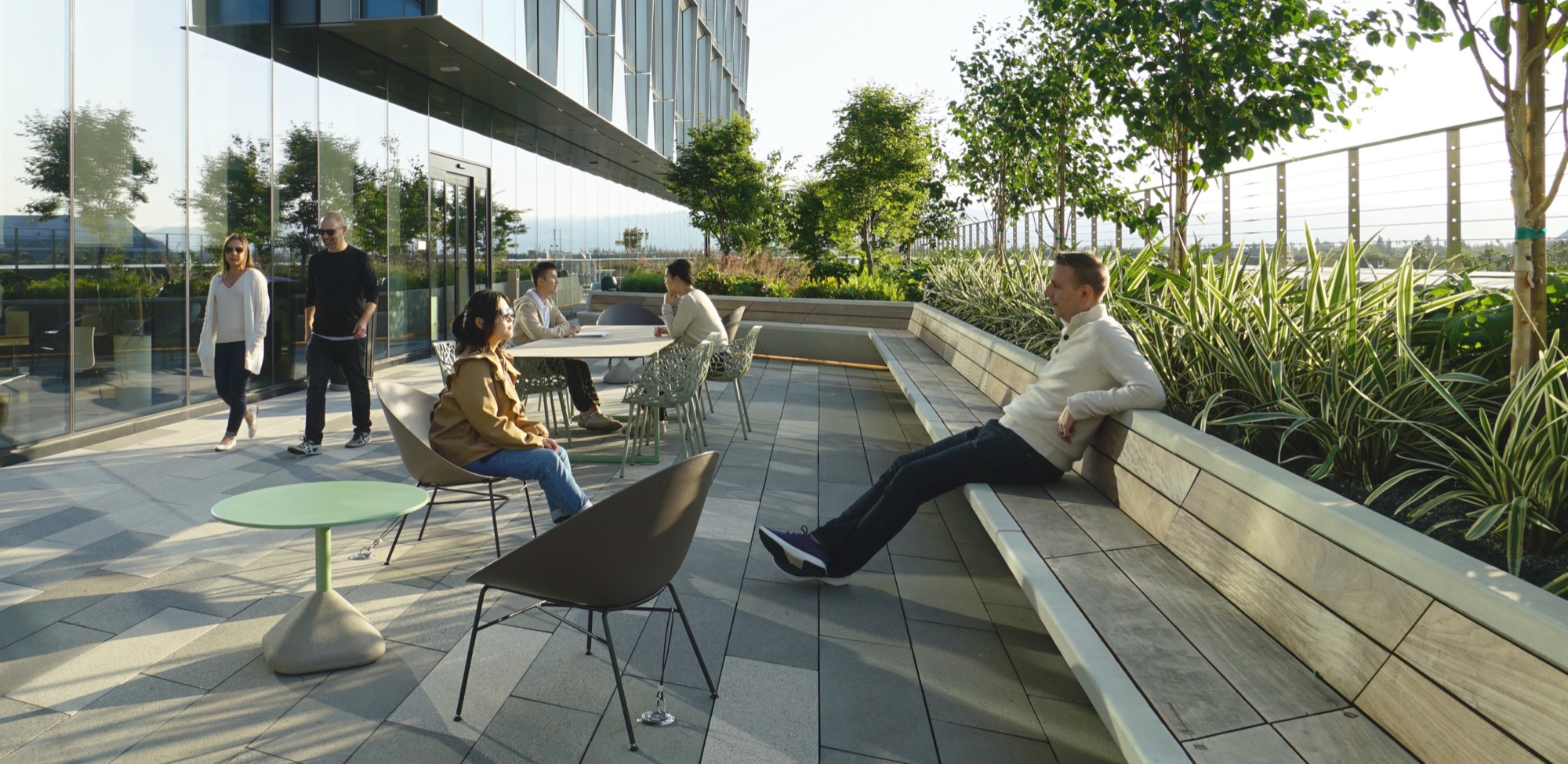
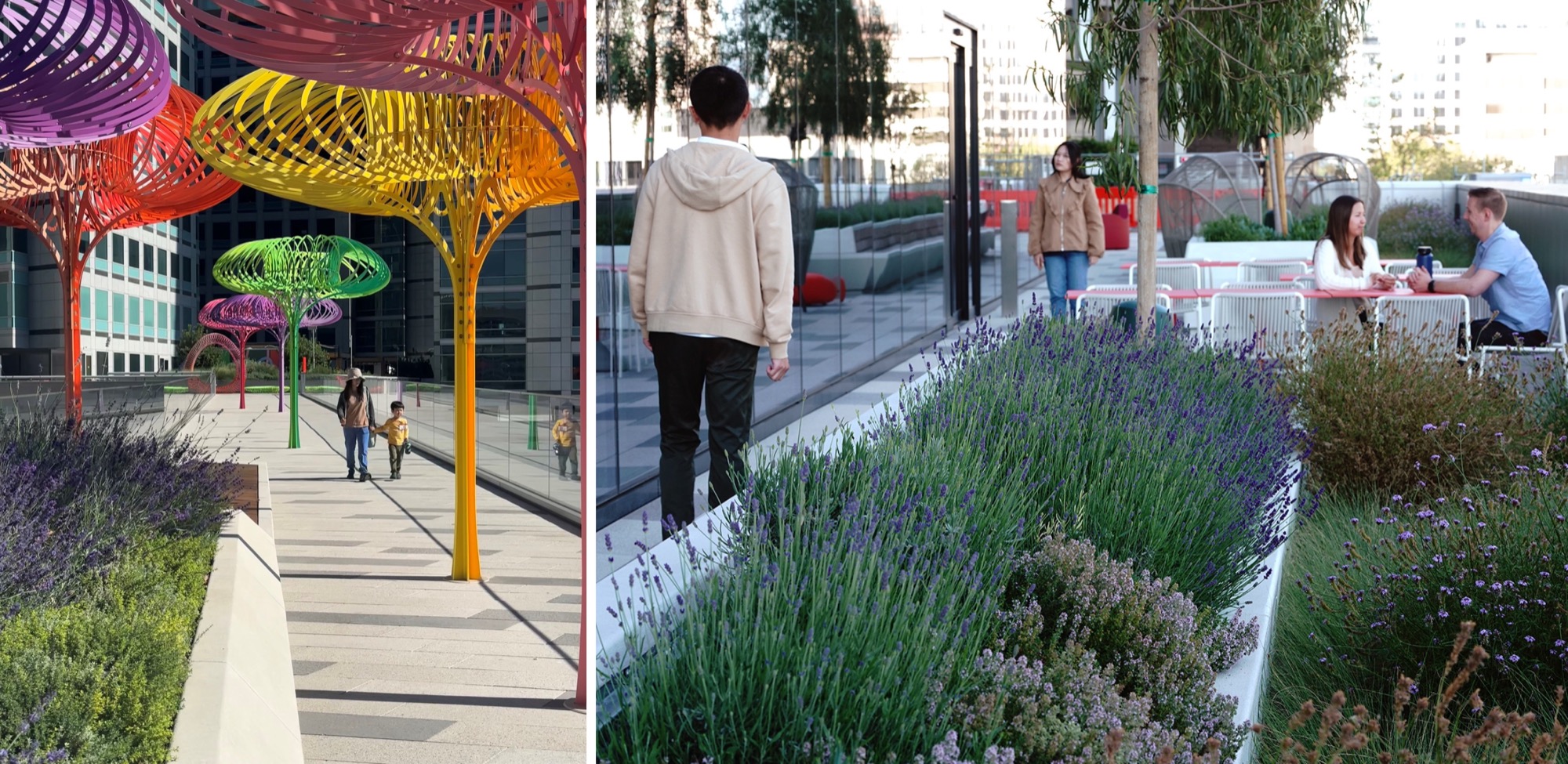
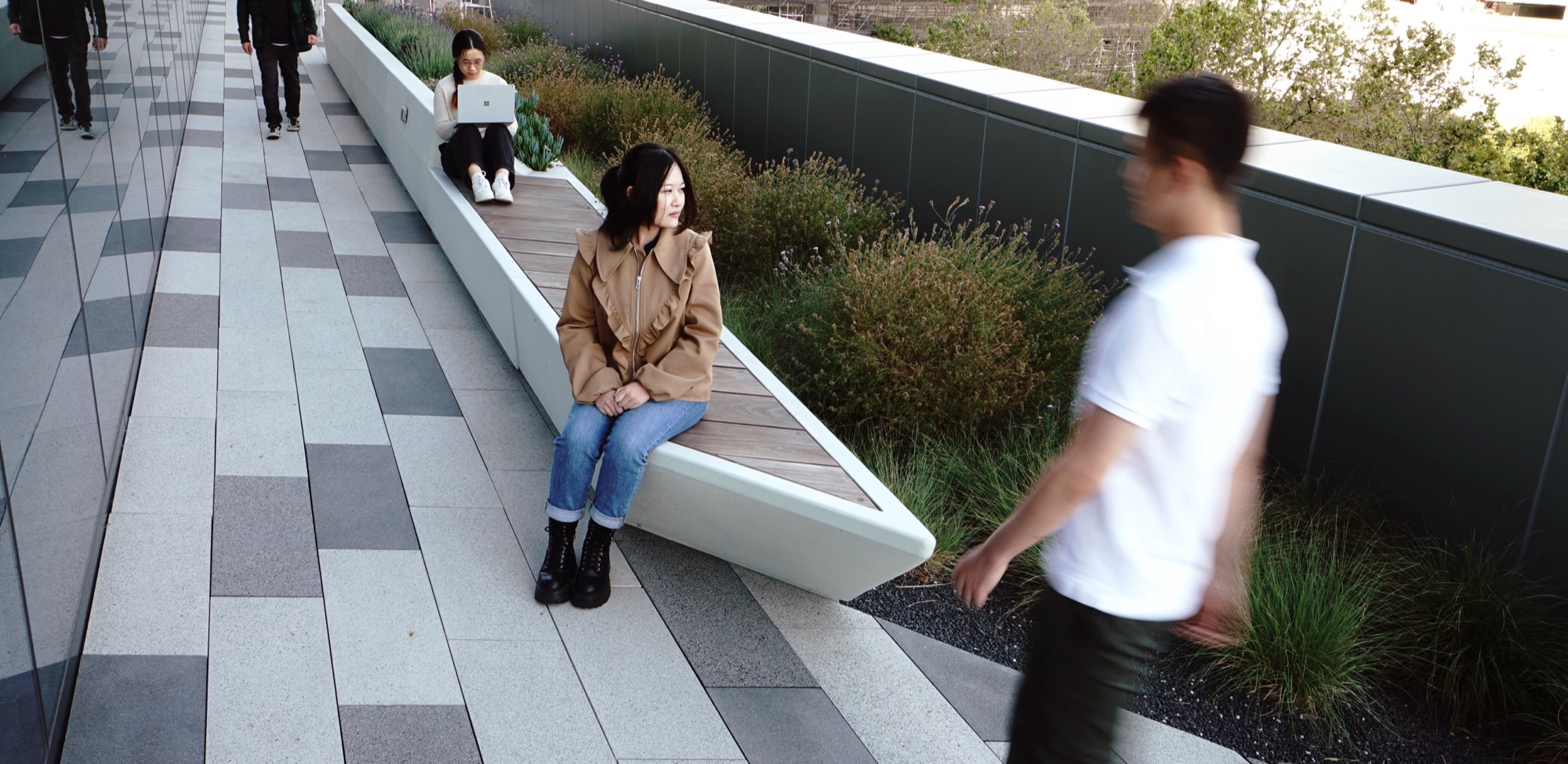
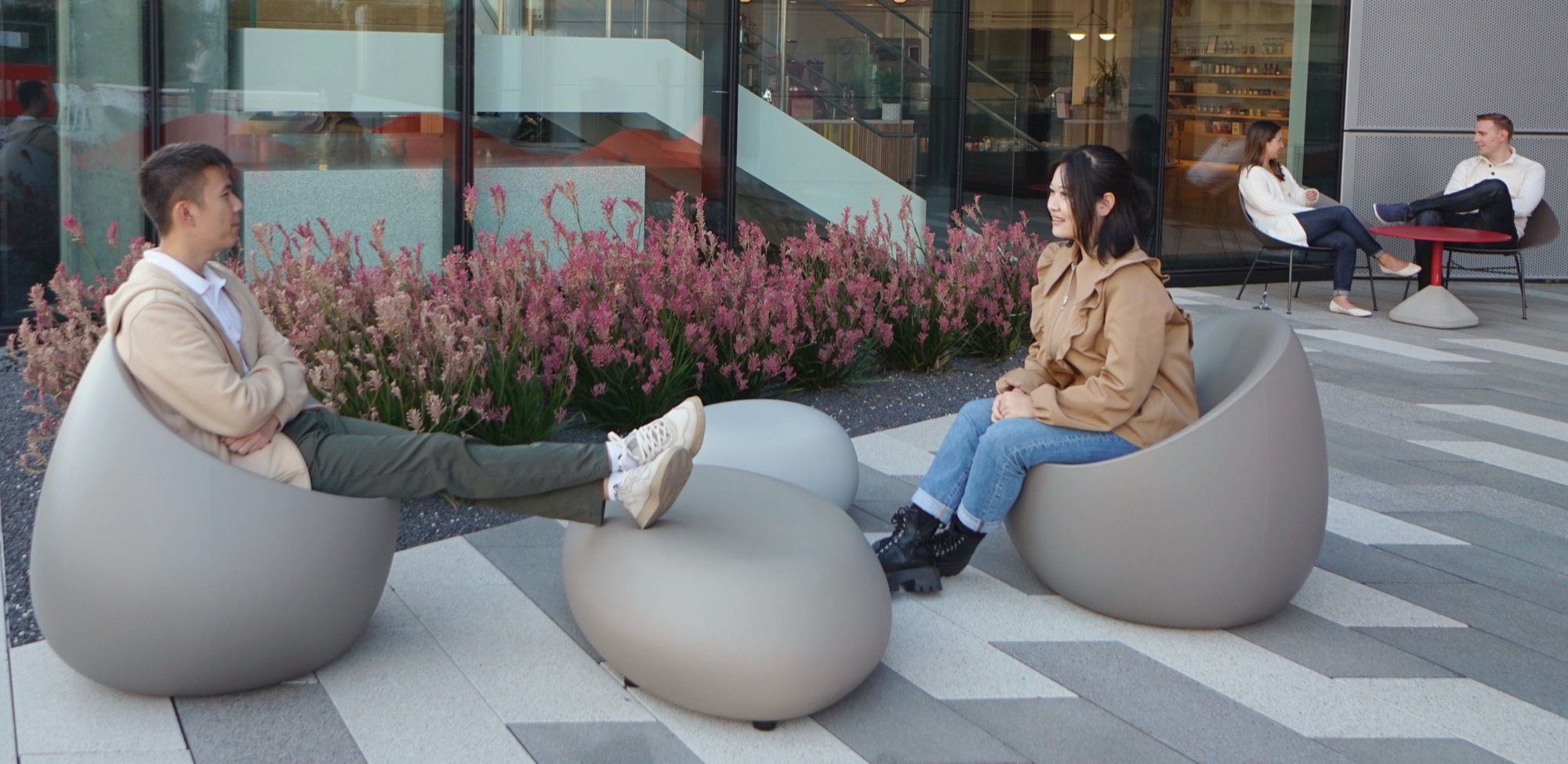
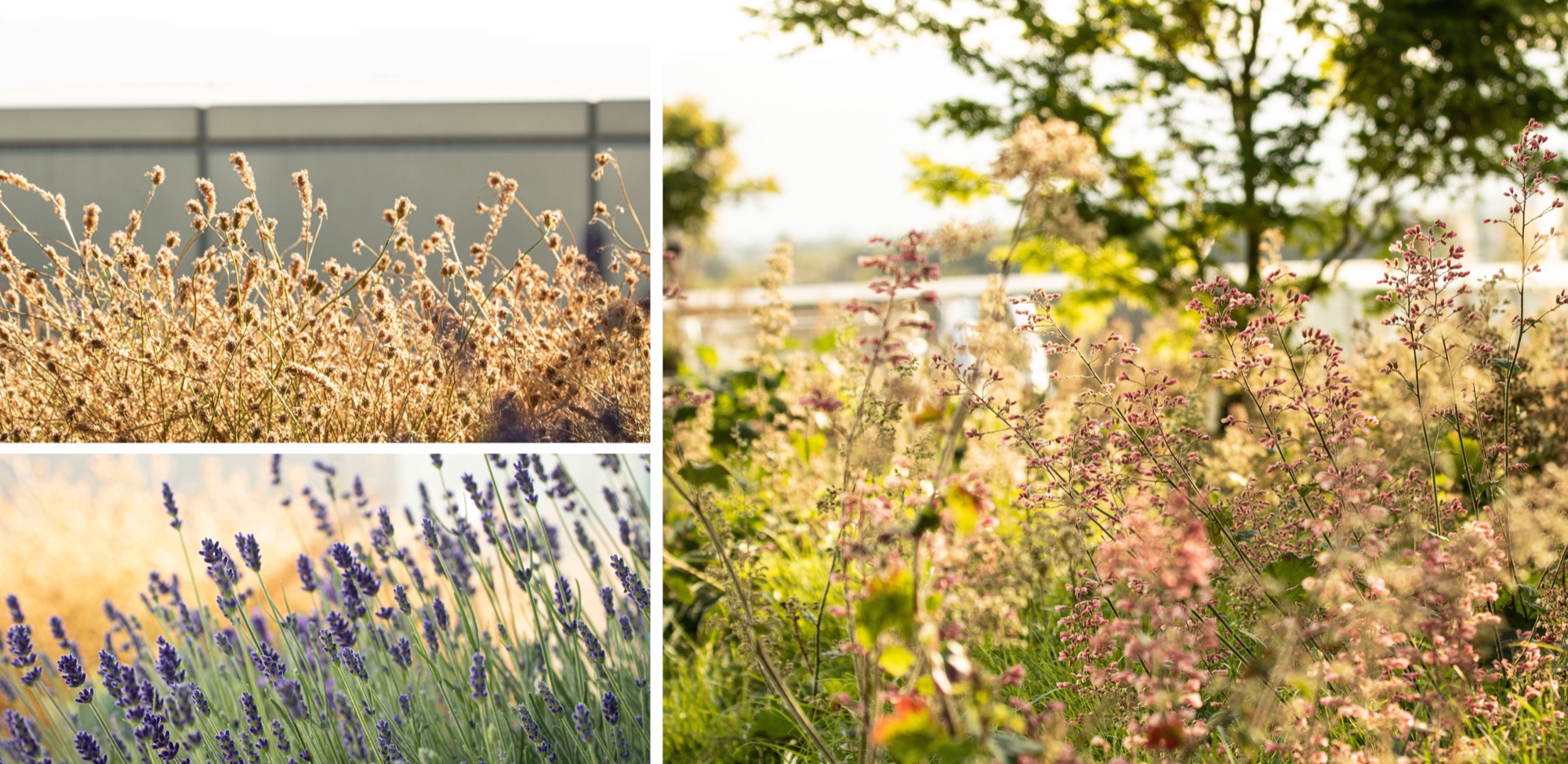
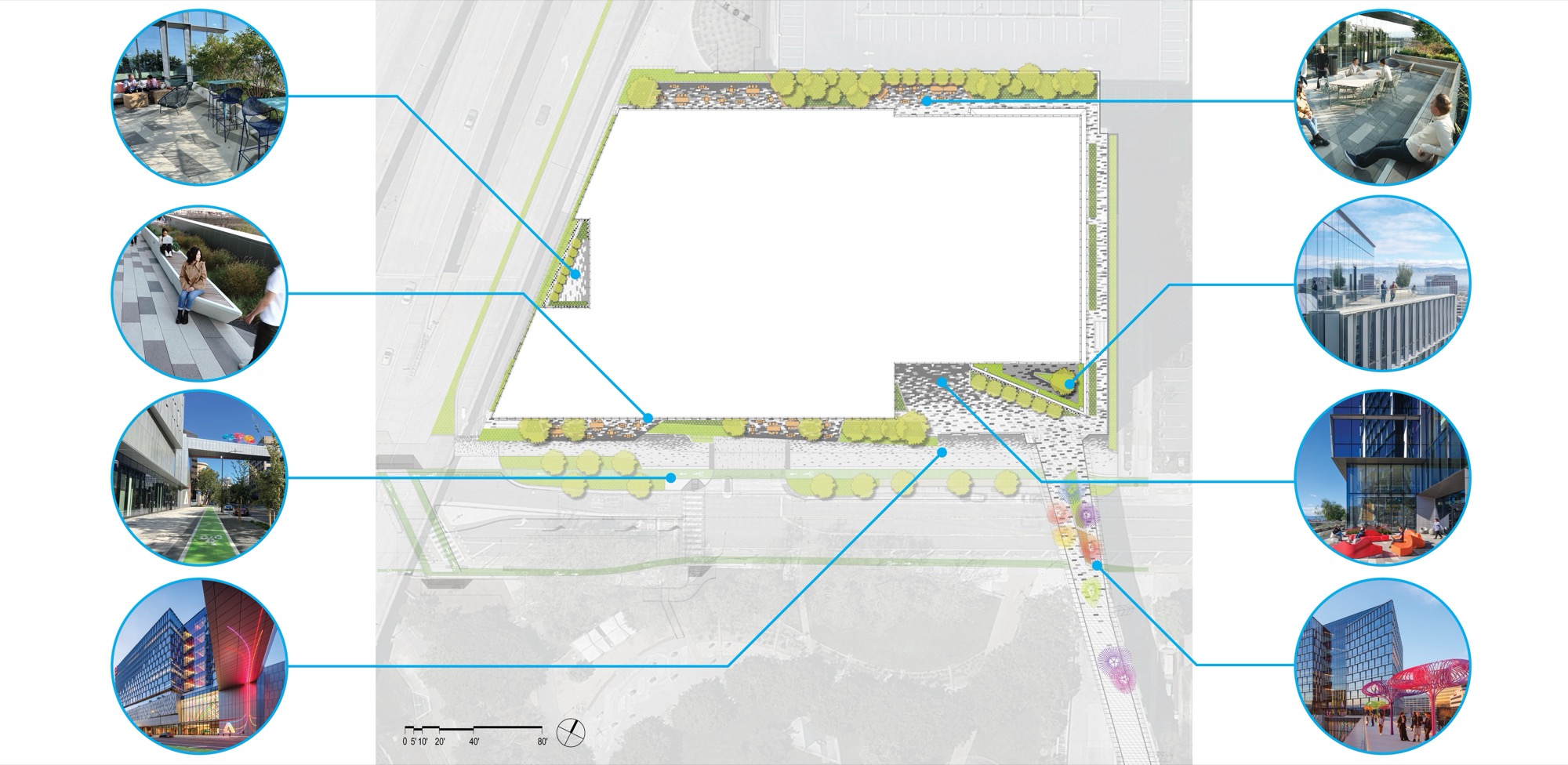
Situated in a rapidly transforming downtown district, the site presented complex challenges including limited ground-level area, irregular geometries, and the need to function as a cohesive vertical campus. Exterior spaces were required to perform structurally, environmentally, and socially while responding to varied microclimates, wind exposure, and load constraints. These conditions informed a design approach that treats constraint as opportunity, sculpting landscape forms that create viable horticultural conditions and meaningful social spaces in extreme above-grade environments.
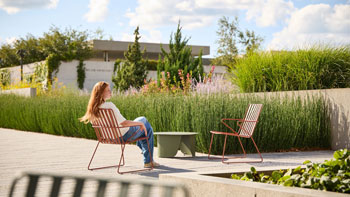
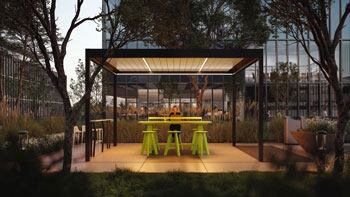
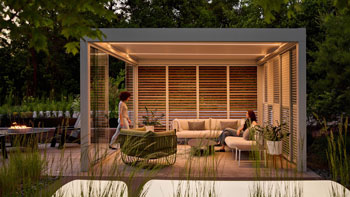
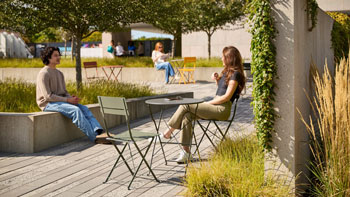
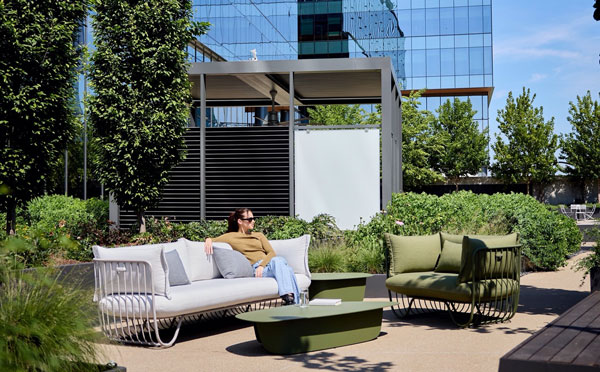
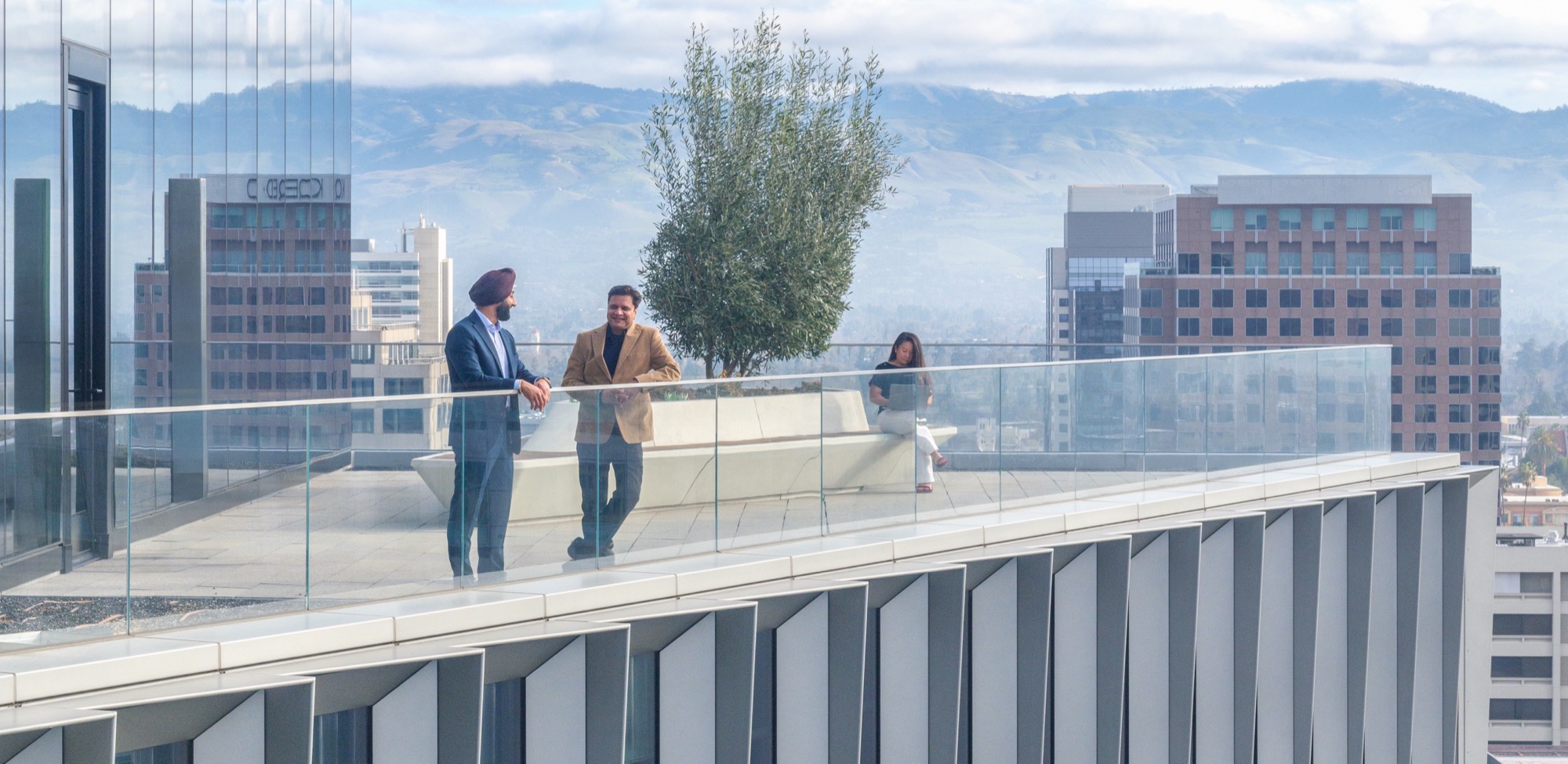
The landscape, conceived as a series of flying gardens, was shaped through close collaboration among the design team and client. Rooftop terraces vary in size and character, accommodating informal meetings, events, and quiet work while framing expansive views of the Santa Clara Valley.
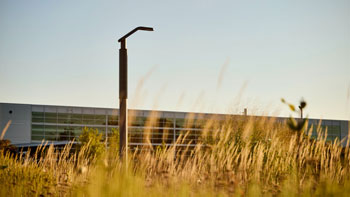
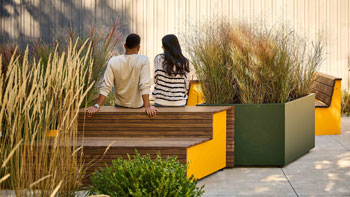
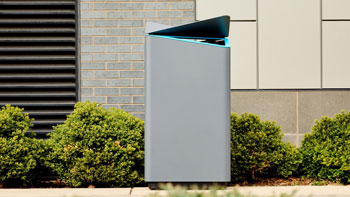
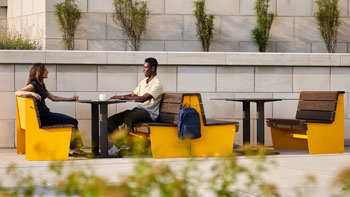
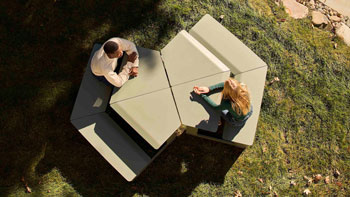
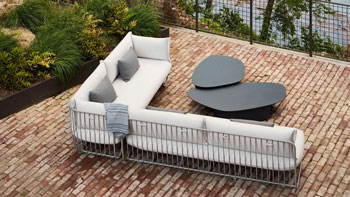
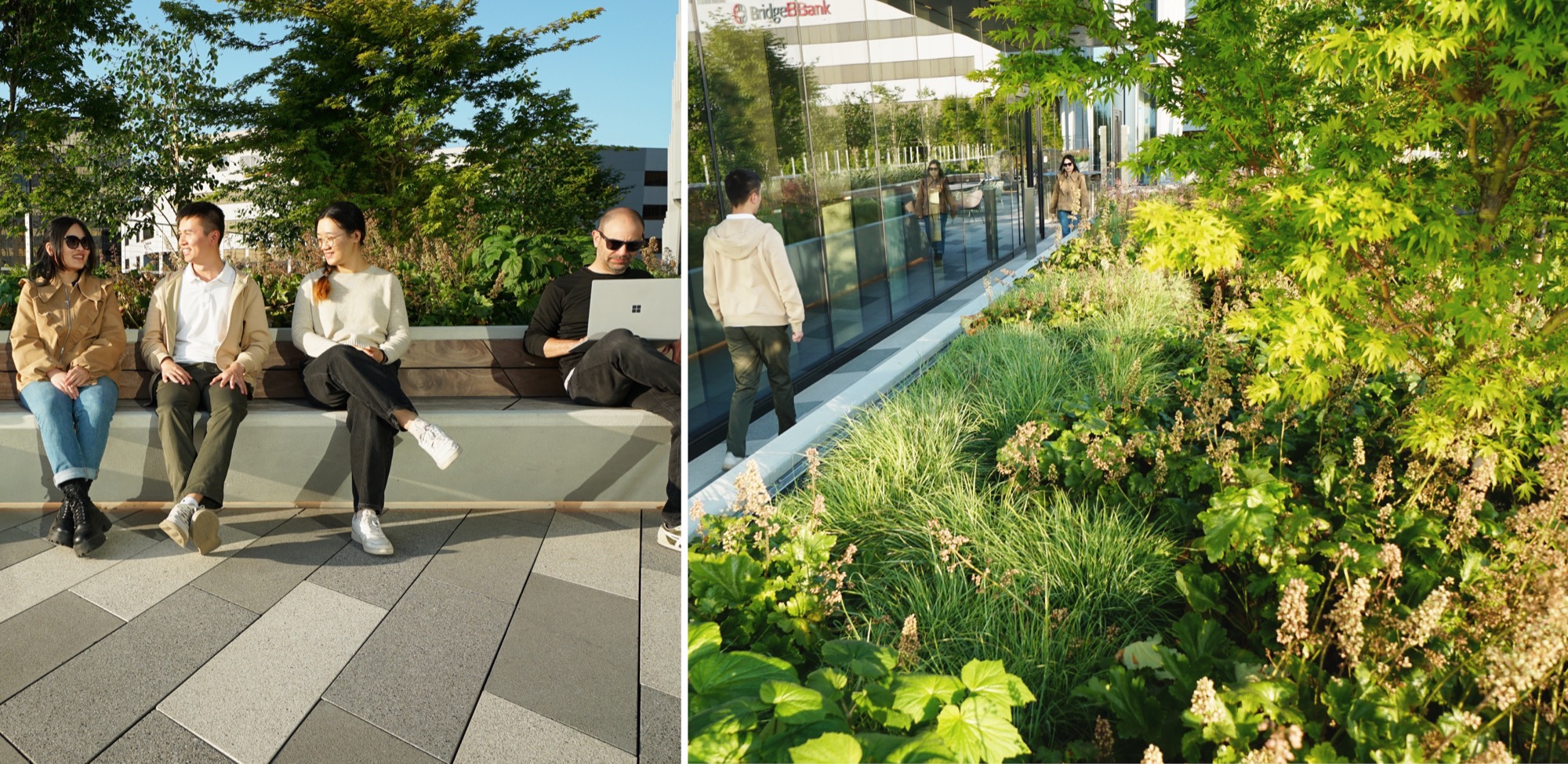
Artworks were developed in parallel with the landscape and integrated directly into terraces, planting systems, and circulation routes. Rather than functioning as isolated objects, these sculptural and experiential elements are embedded within the landscape’s spatial and material logic, contributing to wayfinding, identity, and experiential richness. Custom concrete forms, planters, seating, and lighting express technical precision and craft, blurring distinctions between art, infrastructure, and landscape while supporting gathering, dialogue, and creative exchange.
A defining feature of the project is the pedestrian skybridge, which elevates a utilitarian connection into a memorable social and cultural corridor. Animated with integrated planting, seating, lighting, and sculpture, the bridge functions as a suspended garden promenade that encourages pause, movement, and interaction. At street level, the bridge establishes a symbolic gateway to the campus and contributes to the public realm, reinforcing the project’s visibility and civic presence.
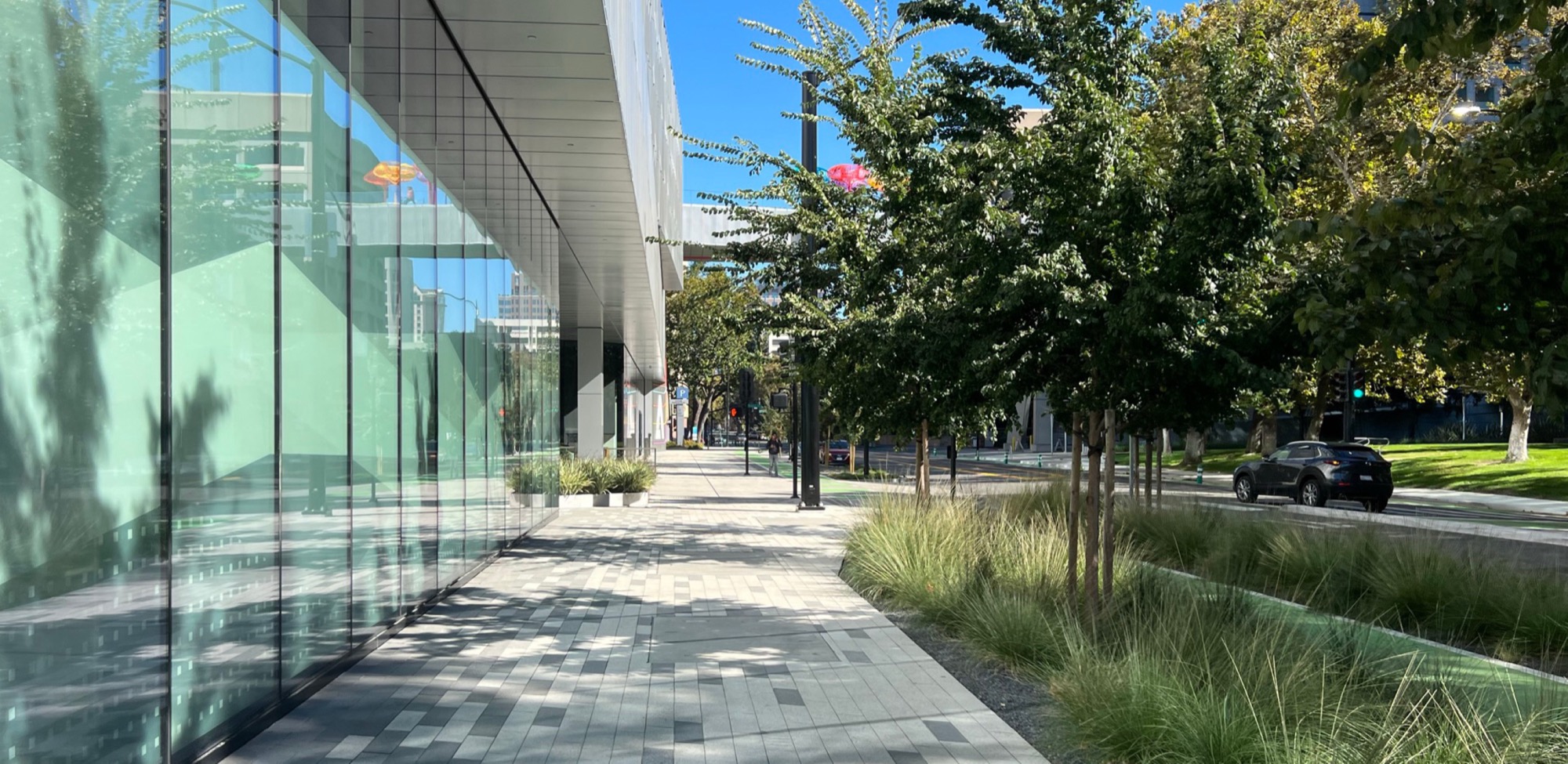
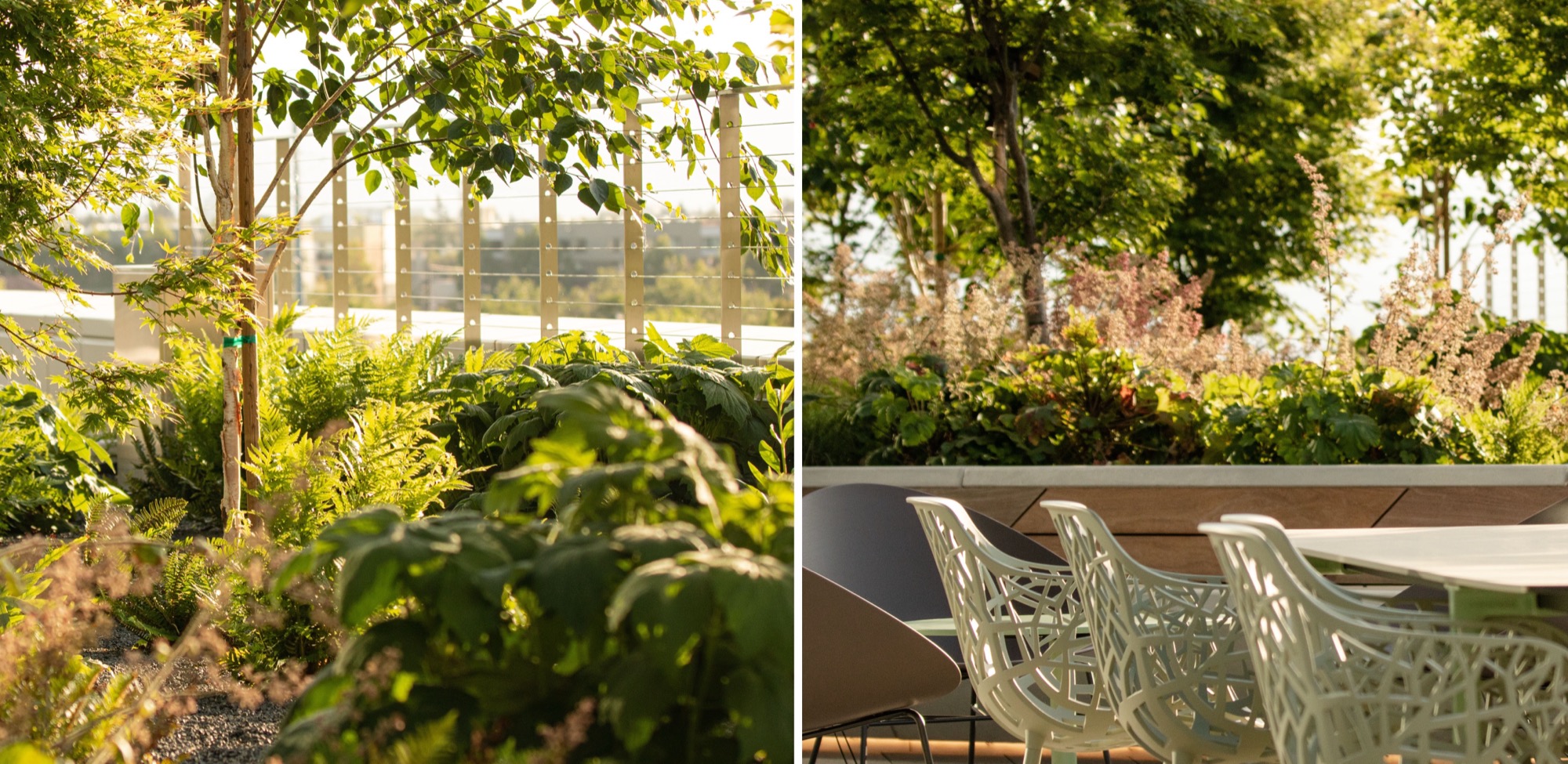
Environmental performance is embedded throughout the project. Above-grade planting systems utilize lightweight soils, efficient irrigation, and native and climate-adapted species selected for resilience, seasonal interest, and habitat value. Green roof strategies capture and manage stormwater, reduce heat island effects, and improve building performance by buffering solar gain.
By investing private resources to create public-facing streetscapes, green infrastructure, and cultural expression, the project demonstrates how landscape architecture can deliver ecological and civic benefit within dense urban contexts. The Adobe Founders Tower landscape exemplifies how technical rigor, artistic integration, and environmental intelligence can expand the role of landscape architecture in shaping resilient, human-centered urban environments.
37.33194751915449, -121.89552843486048
74248


LILA 2026 Sponsor