Galchino Urban Forest
www.ab-basis.com/en/
2026 Landscape and Architecture / 2026 Public Projects / Russia / Built in 2025 /

![The Pavshinskaya Poyma is a densely populated residential area of Krasnogorsk with a very compact development of high-rise residential buildings which needed recreational areas for comfortable living, walks with children and leisure (the nearest park was not located within walking distance). Basis studio has been working on this project for five years and continues to […]](https://landezine-award.com/wp-content/uploads/2025/05/00-DJI_0185-600x395.jpg "Pavshinskaya Poyma by Basis architectural bureau")
![Creating an urban beach is a challenge, since it must combine a connection with the natural recreation and the functional saturation of the urban environment. We were faced with the task of designing a comfortable place for recreation by the water in an urban area. The project was completed in the fall of 2023. It […]](https://landezine-award.com/wp-content/uploads/2025/05/00-1-5-600x333.jpg "Zhivopisnaya buhta beach by Basis architectural bureau")
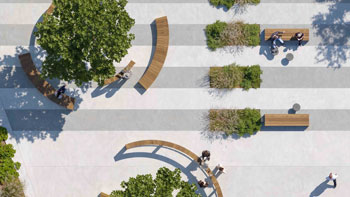
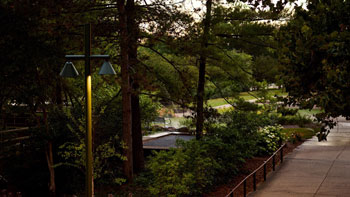
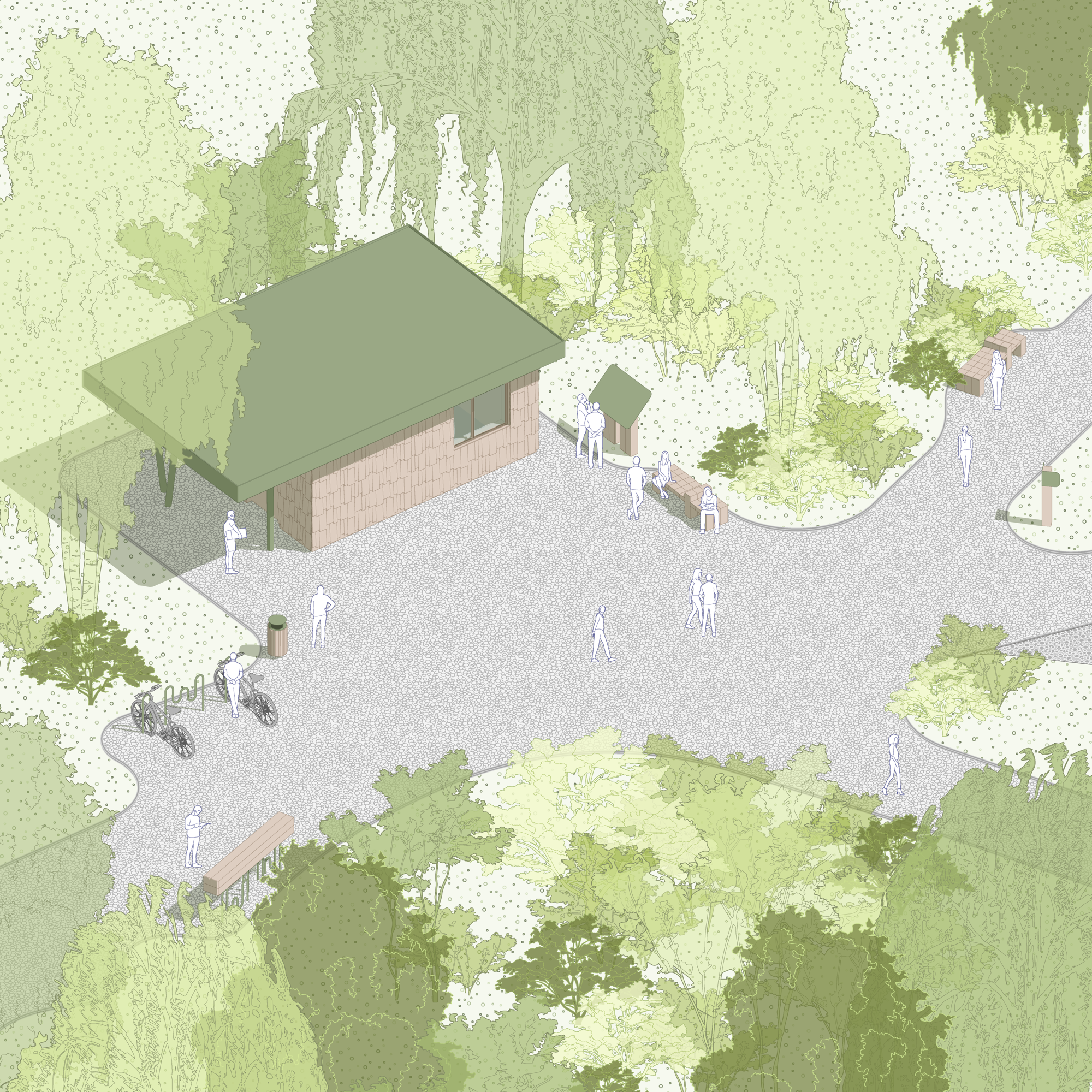
A landscape architecture design was developed for an urban forest in the scenic village of Galchino. Located away from large settlements, the forest functions as a natural courtyard for local residents, with a park-like character that balances coziness and a sense of wildness. The master plan emphasizes a layered spatial structure with clear nodes, sightlines, and a coherent circulation network of axial and meandering paths.
Most homes feature small adjacent green patches for outdoor use, so the site plan prioritizes an open, well-lit public realm and a planting palette of native species to encourage strolling and social interaction. Softscape and hardscape treatments reinforce the site’s character: canopy-forming pines and understory shrubs frame open lawns, while native grasses and wildflowers define meadow edges.
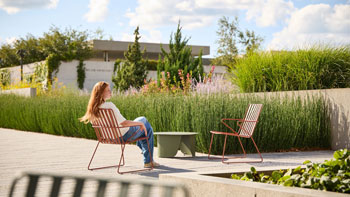
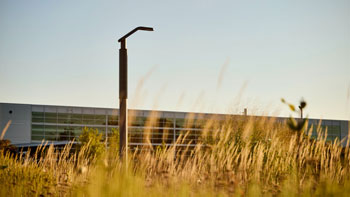
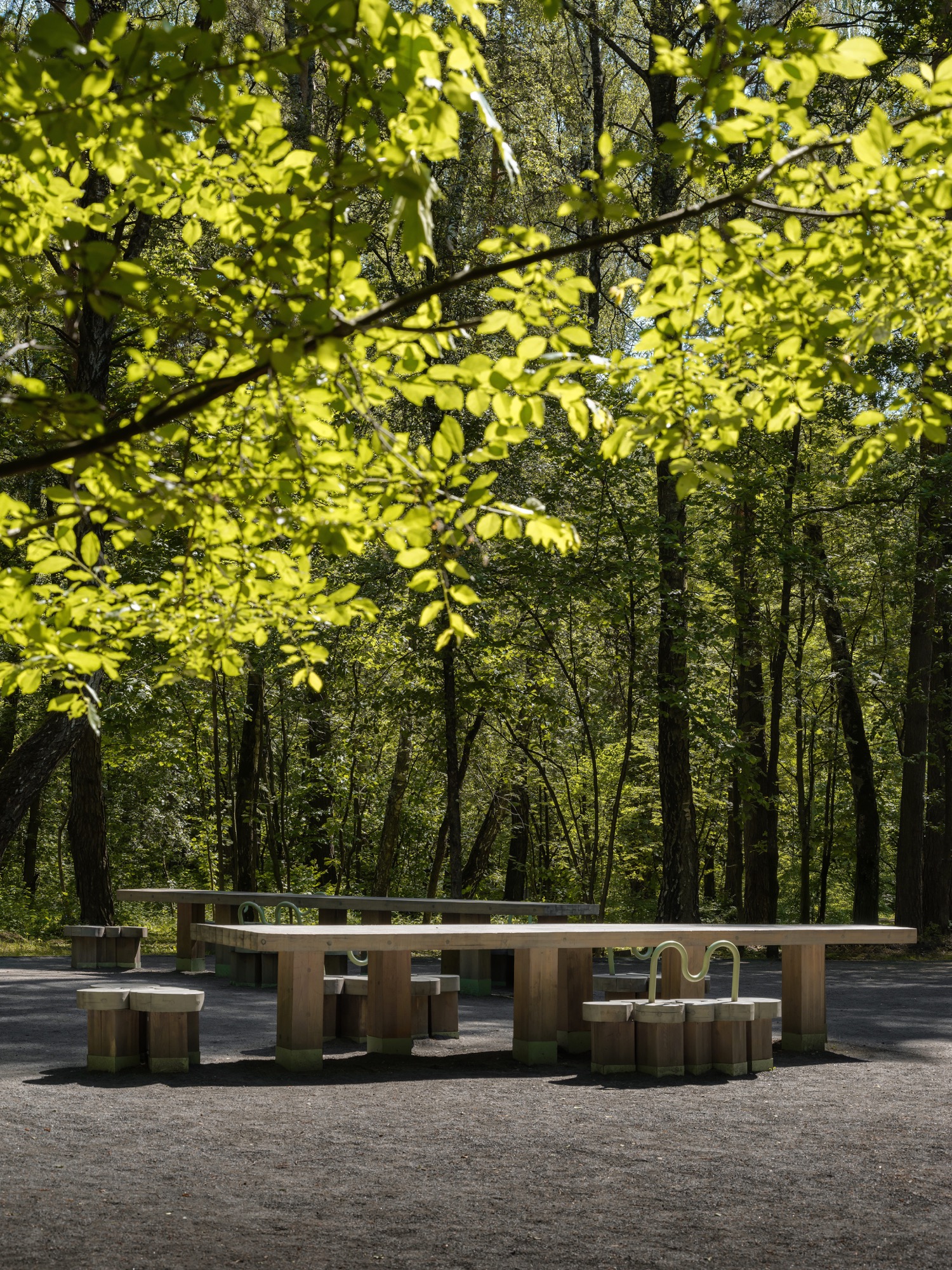
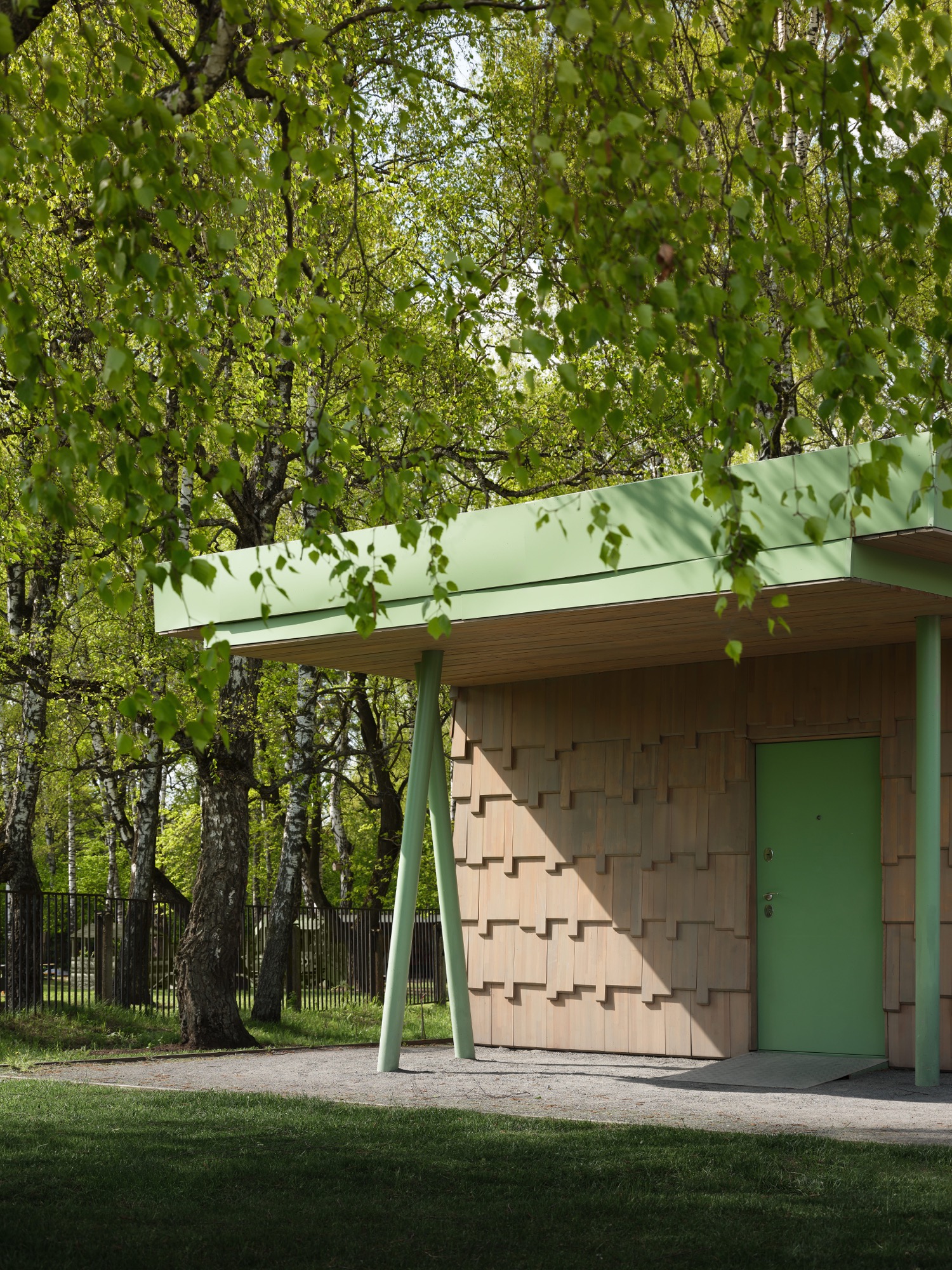
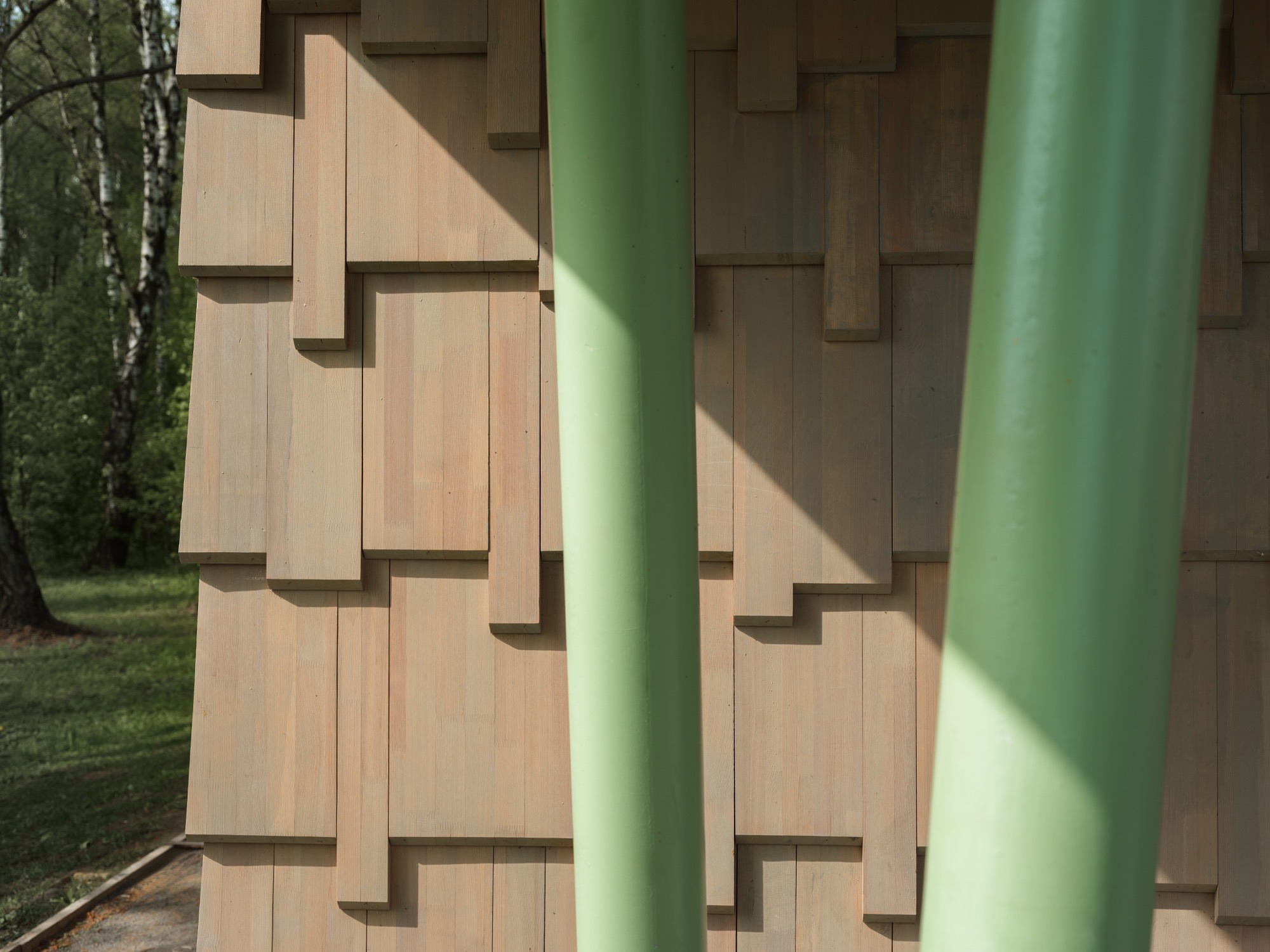
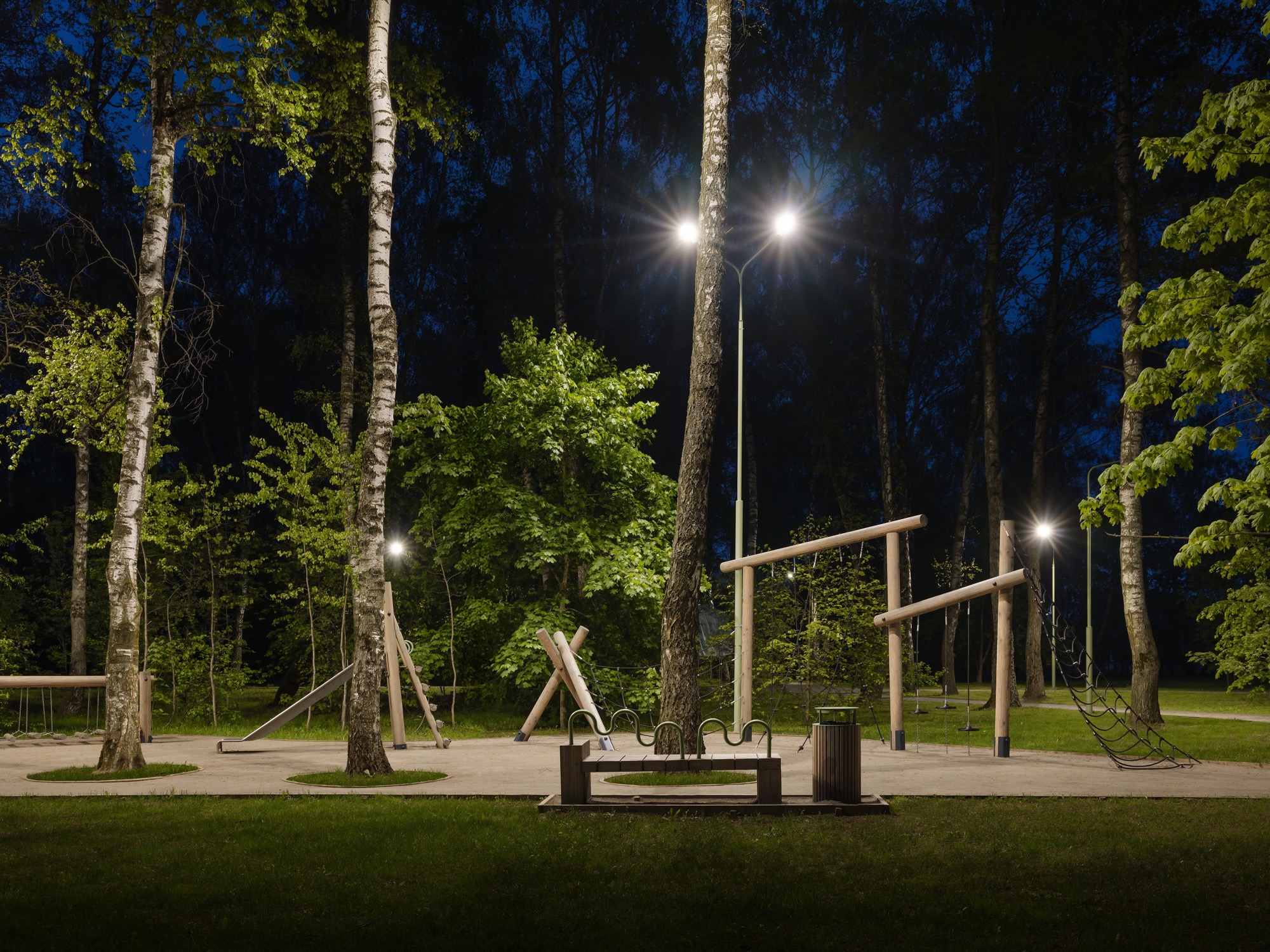
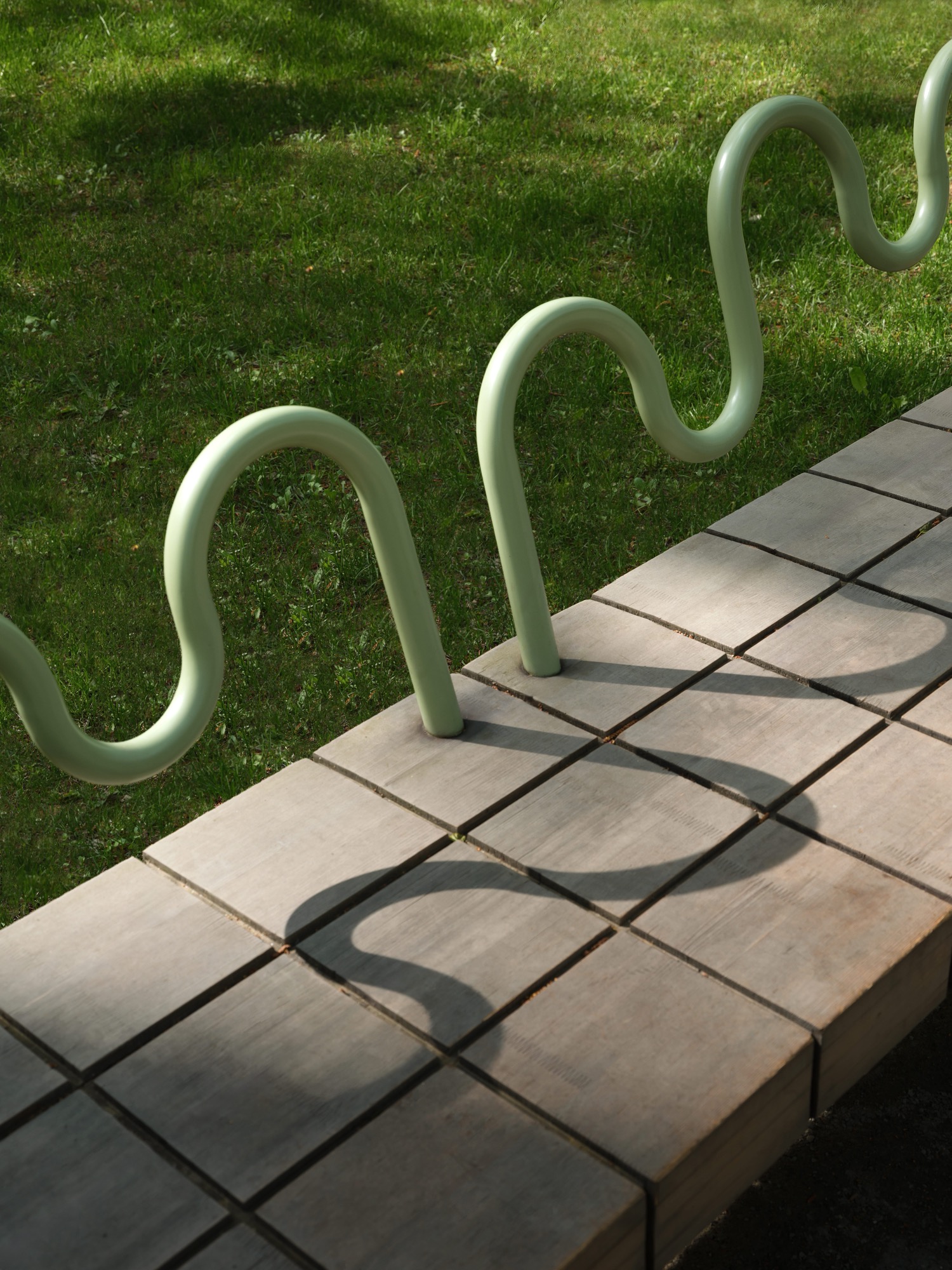
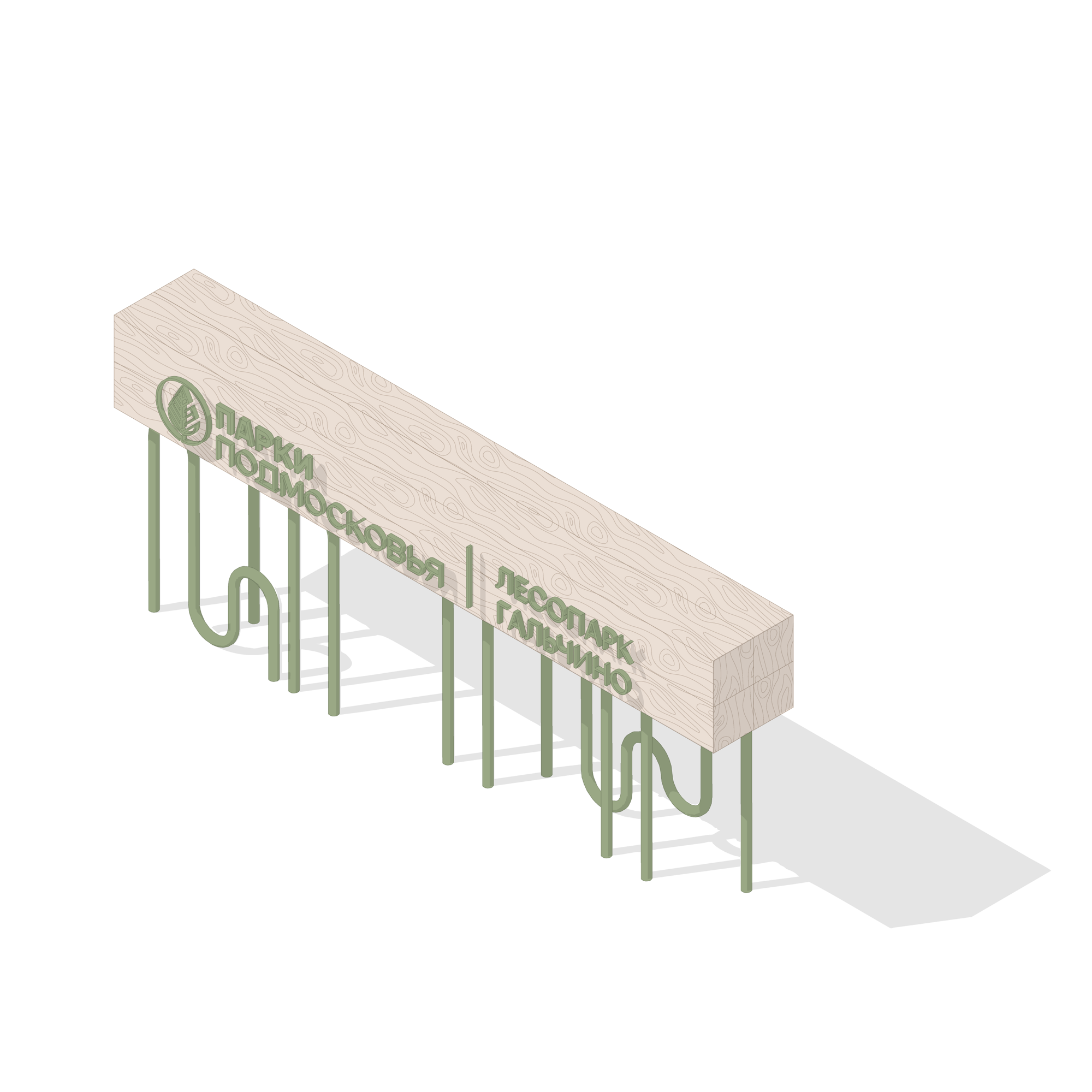
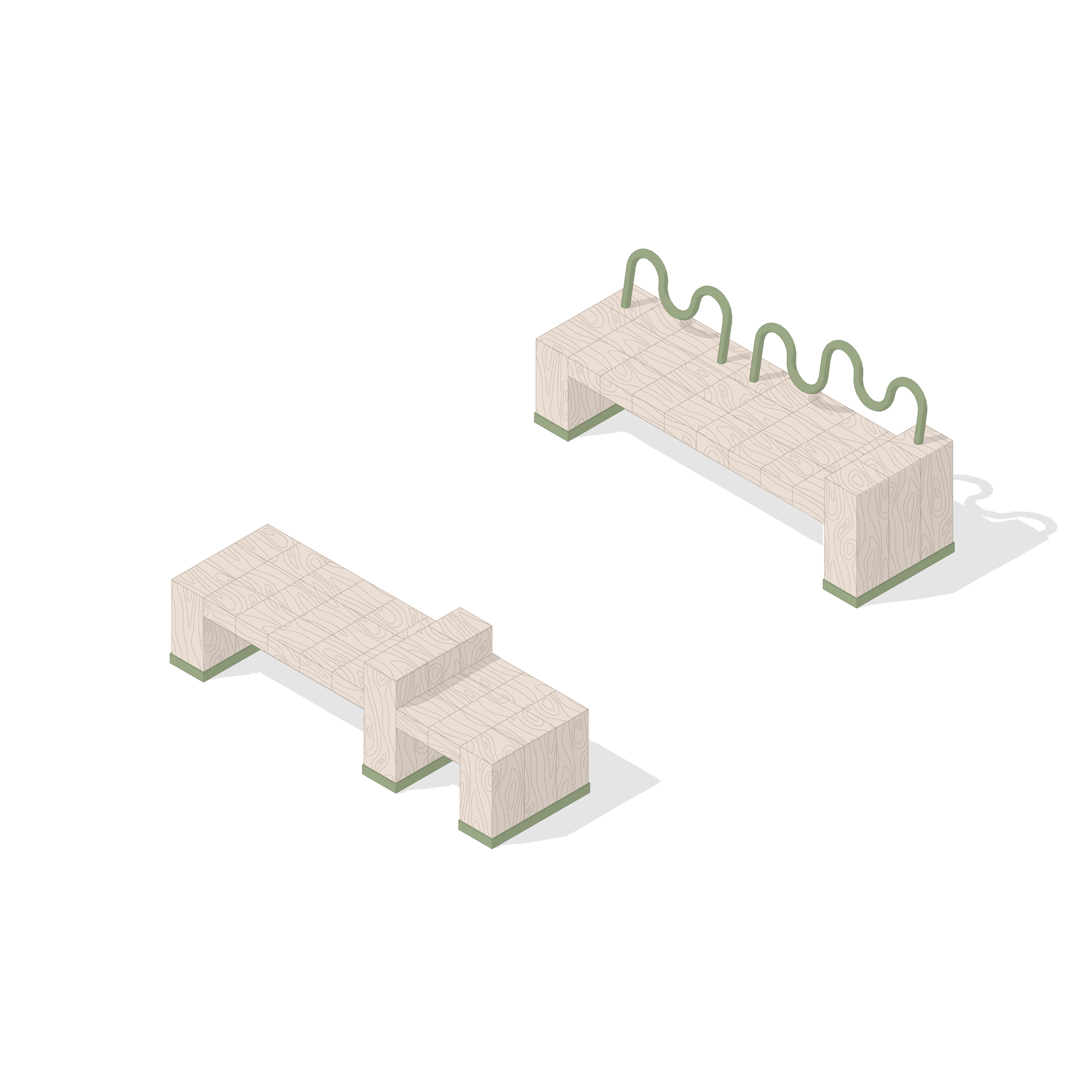
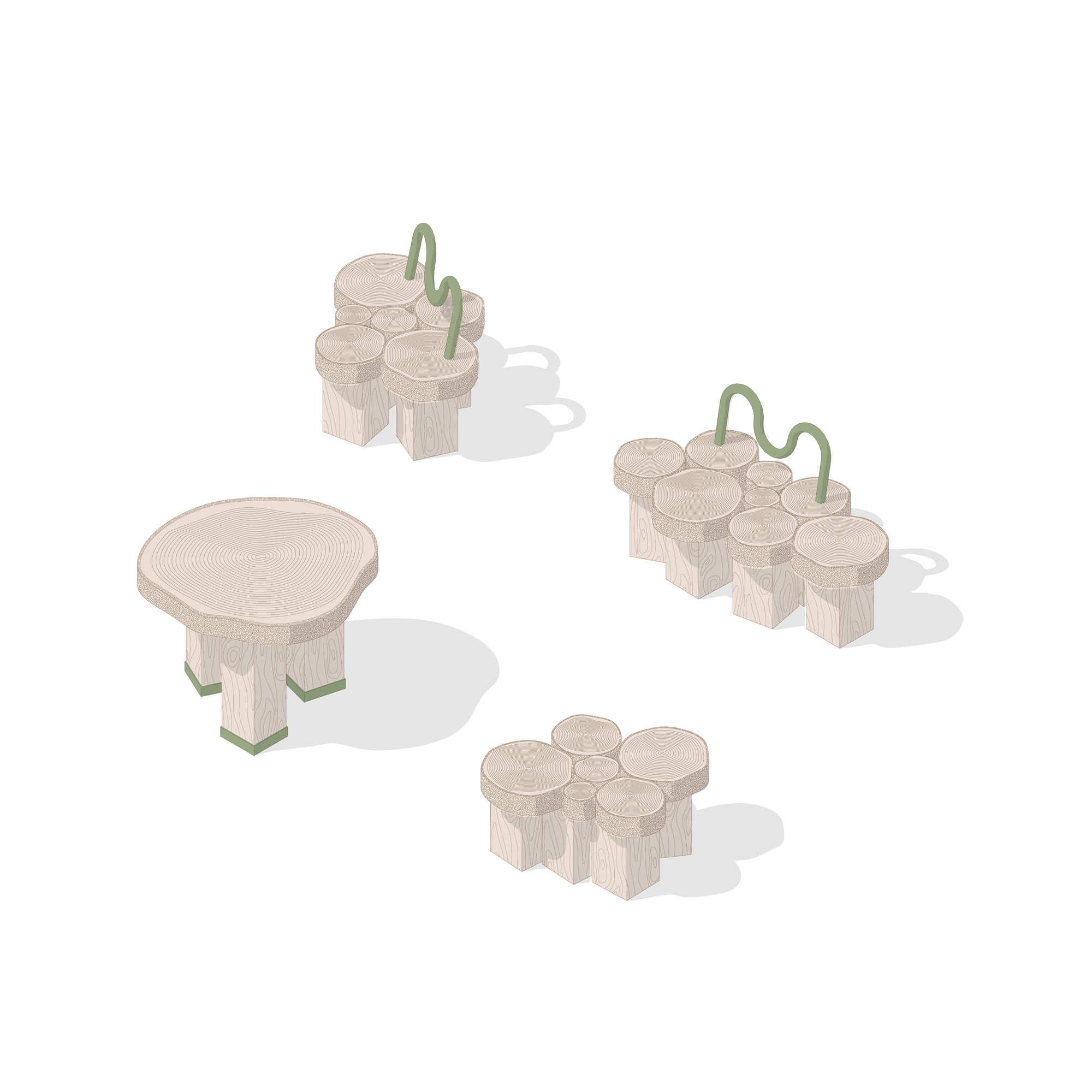
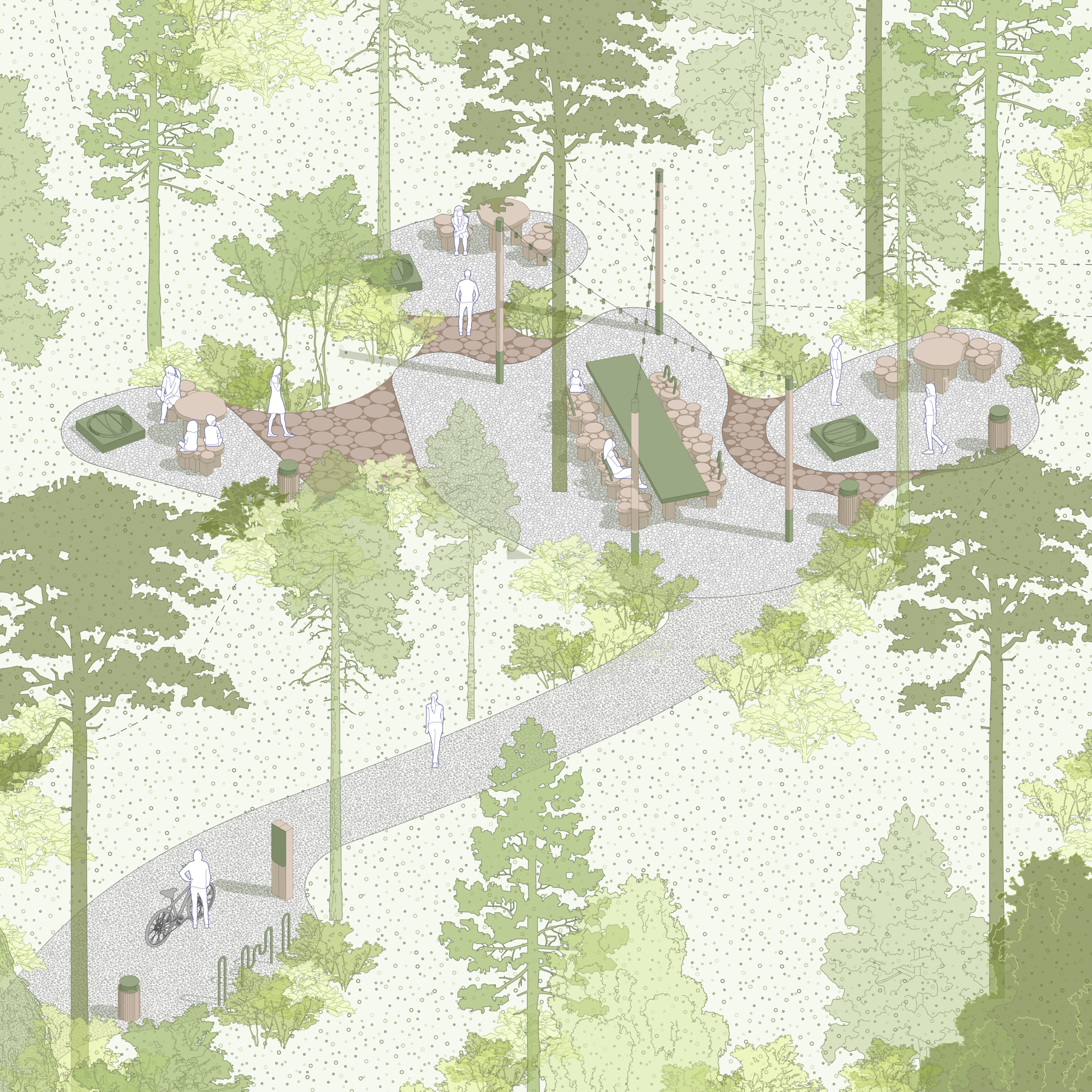
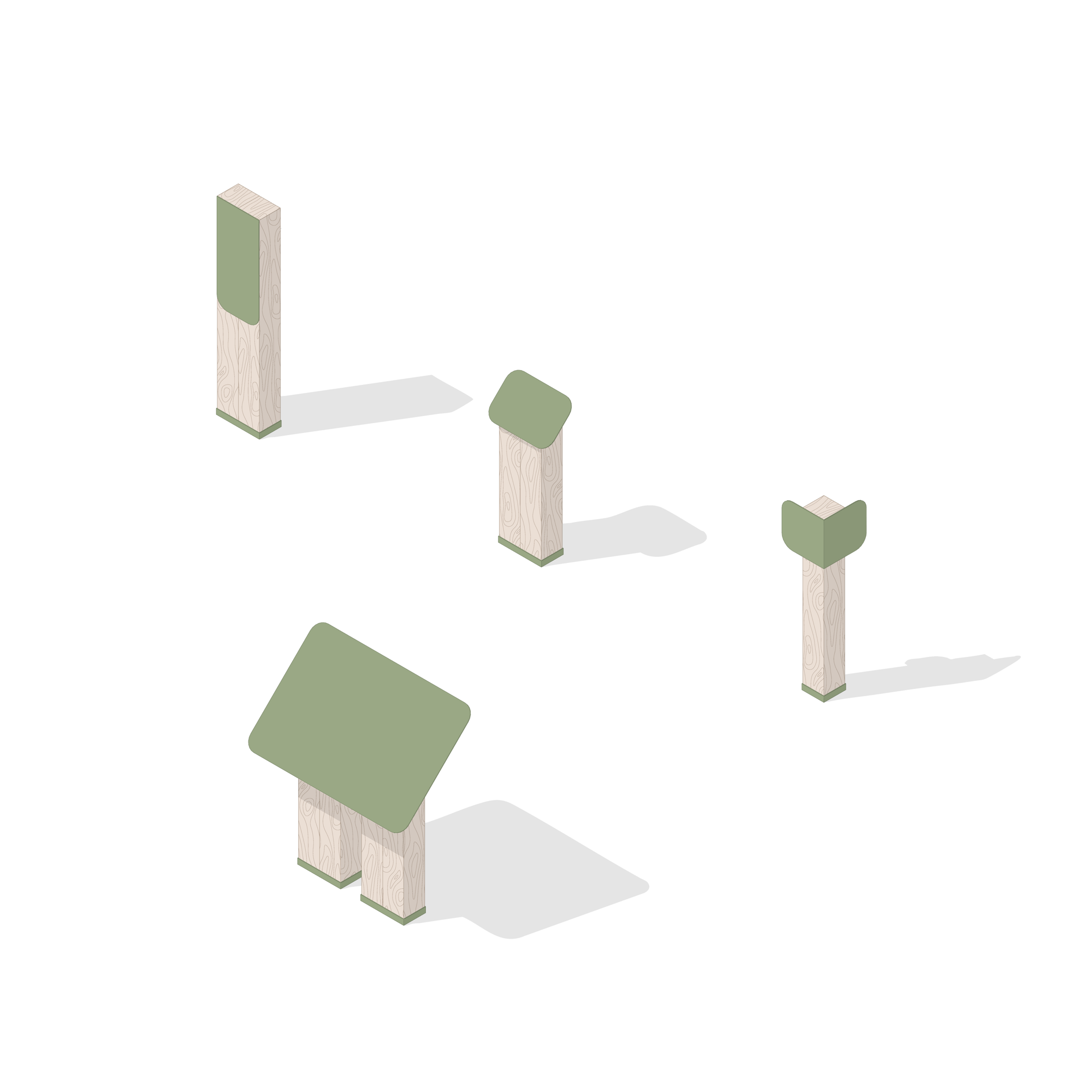
Minimal intervention in the forest layout preserves the natural topography and authenticity of the site. Landscape interventions are restrained: slope stabilization and discreet retaining solutions at steep sections; timber decking and pile-supported boardwalks through wet areas; and metal stair flights and switchback ramps where grade changes require vertical circulation. Site furnishings (benches, bike racks, litter bins) and wayfinding signage highlight the contrast between organic curved forms and engineered straight lines; materials and textures reference pine bark, branches, and moss.
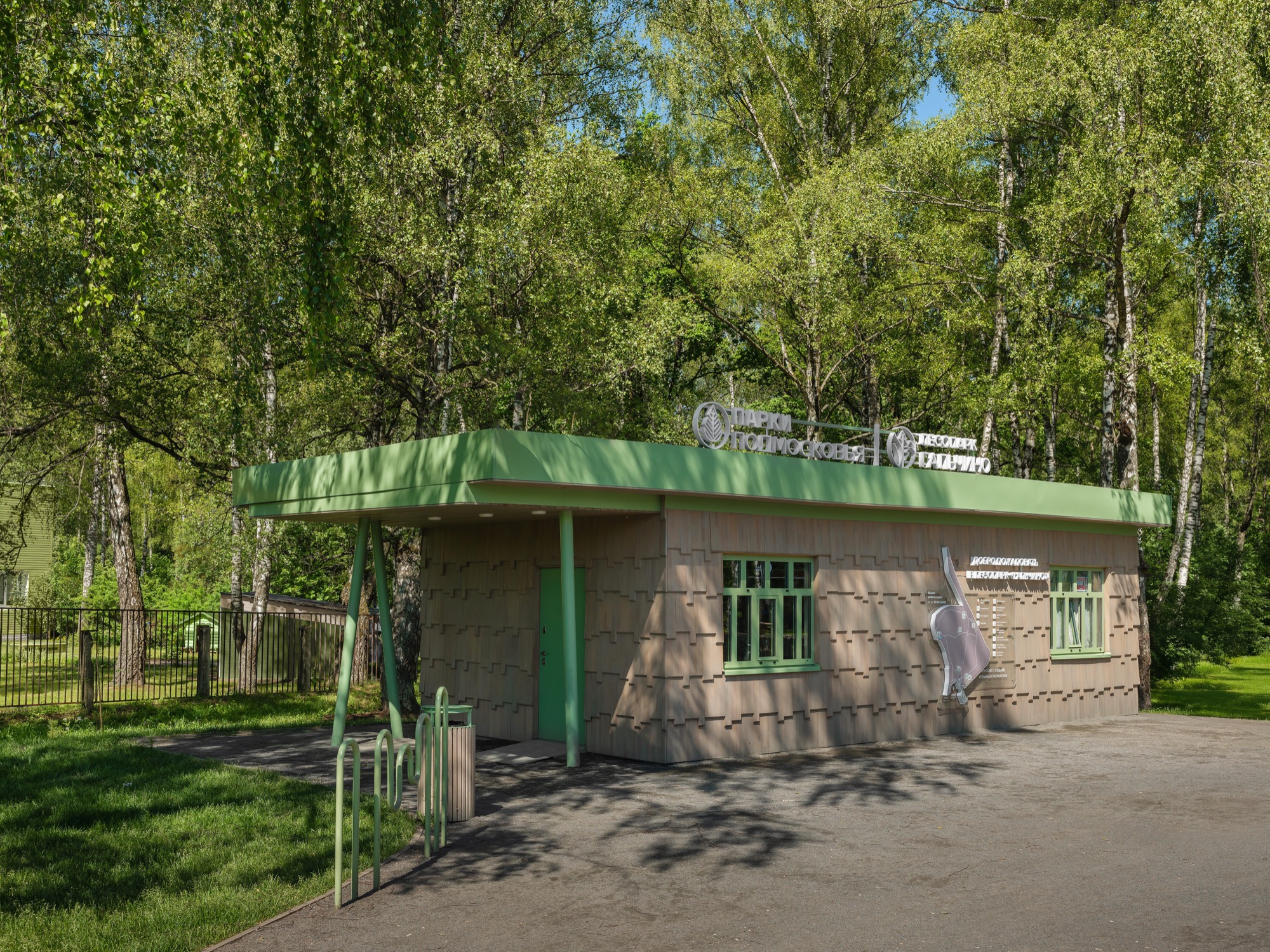
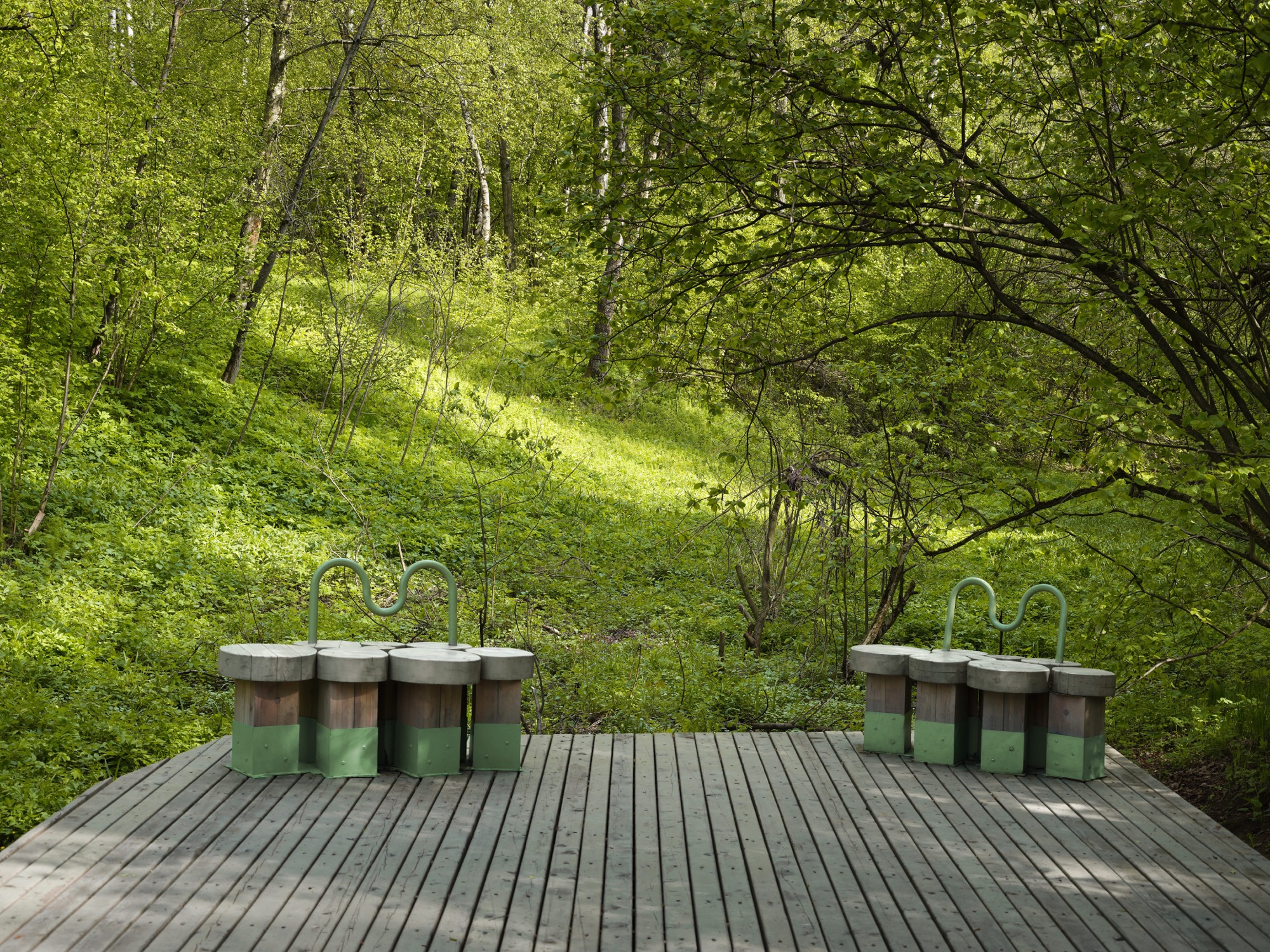
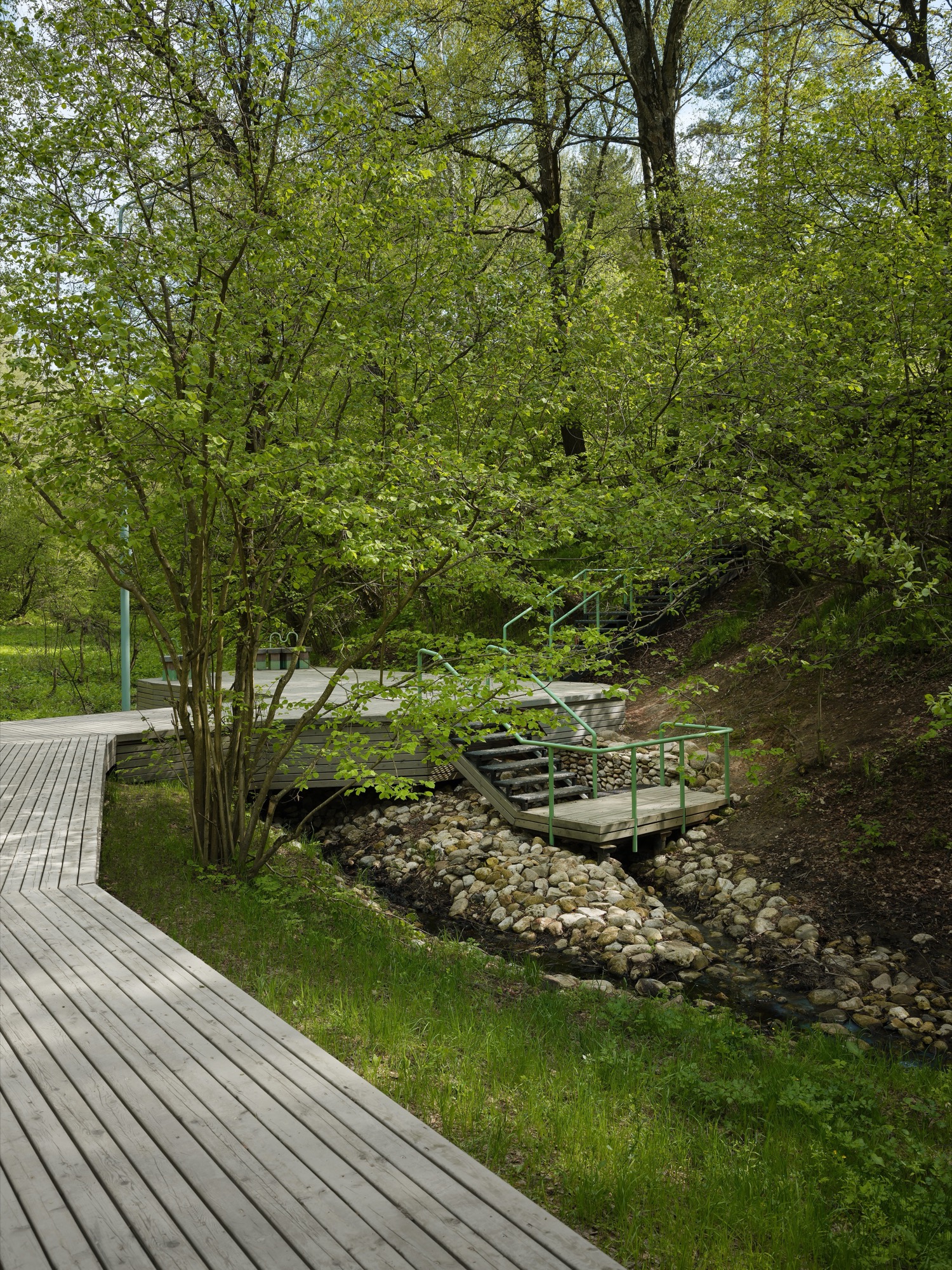
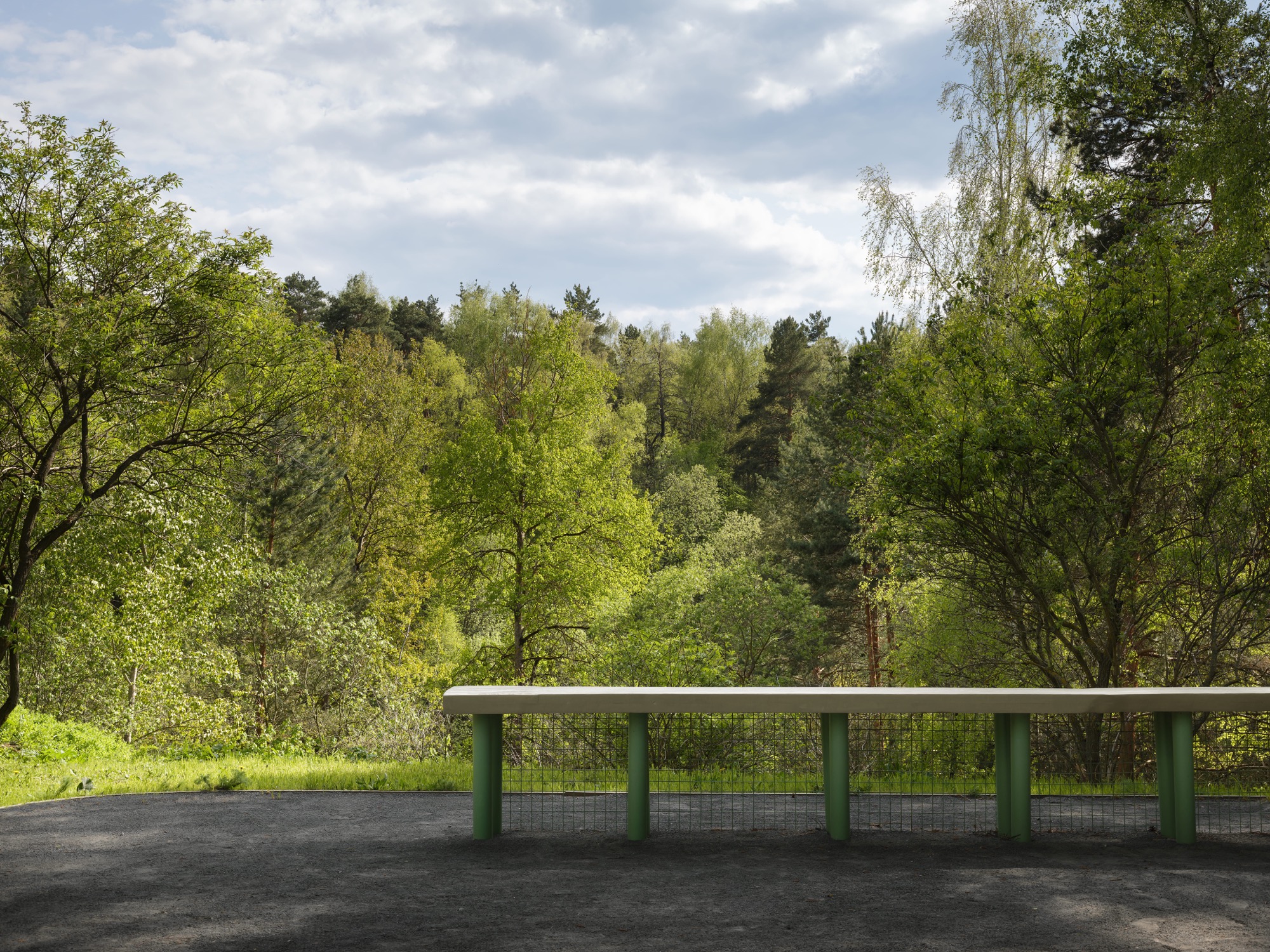
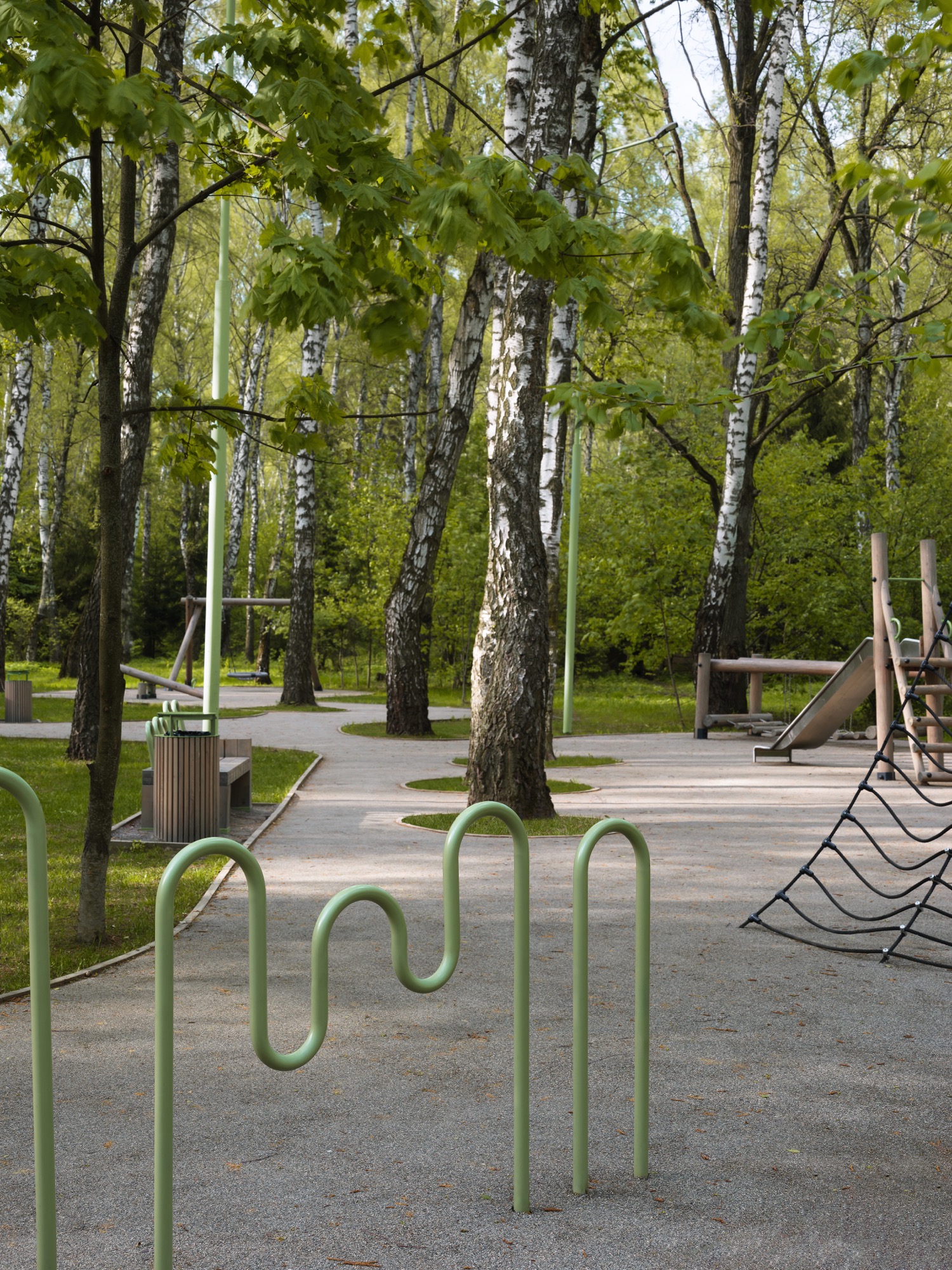
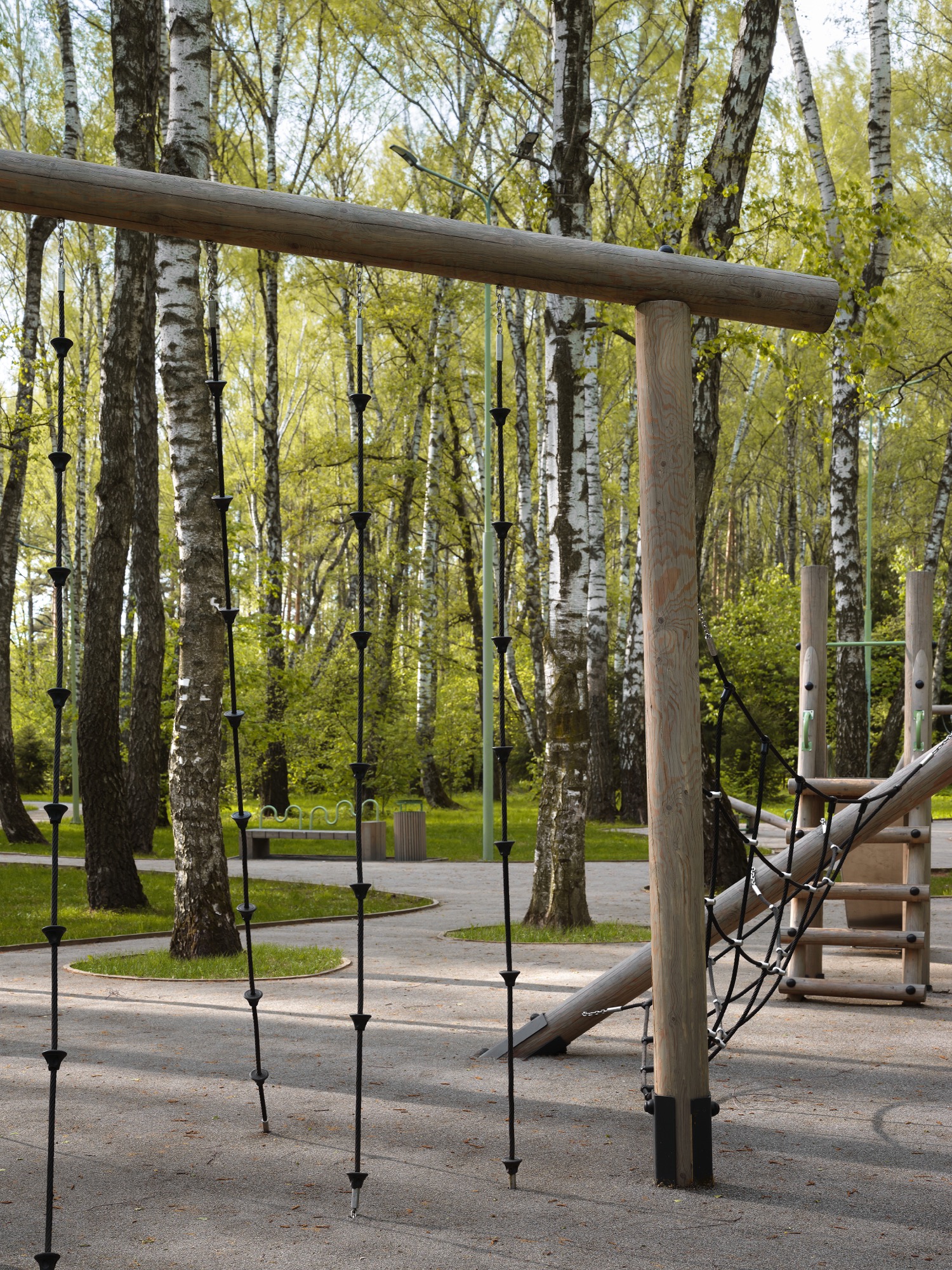
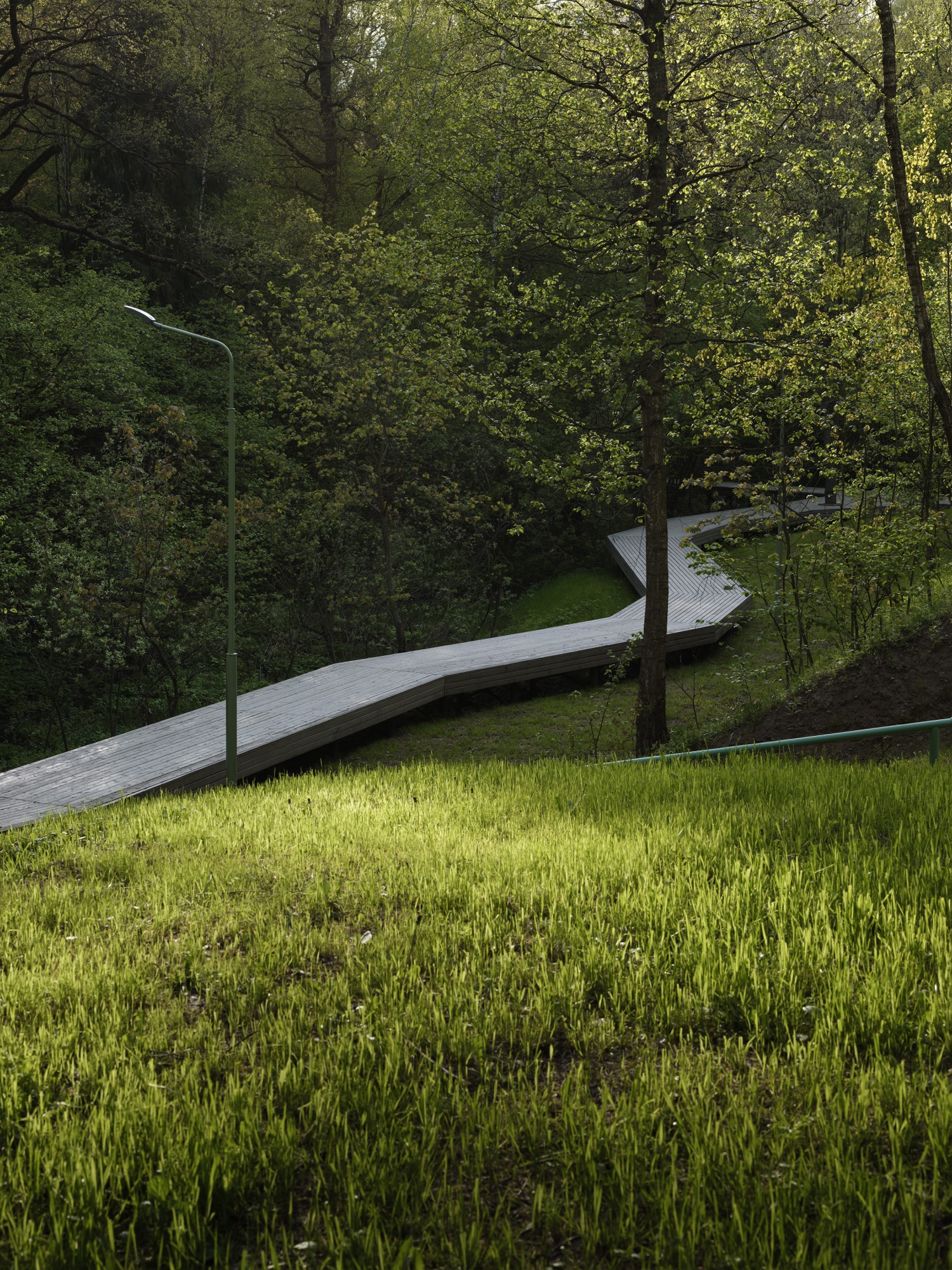
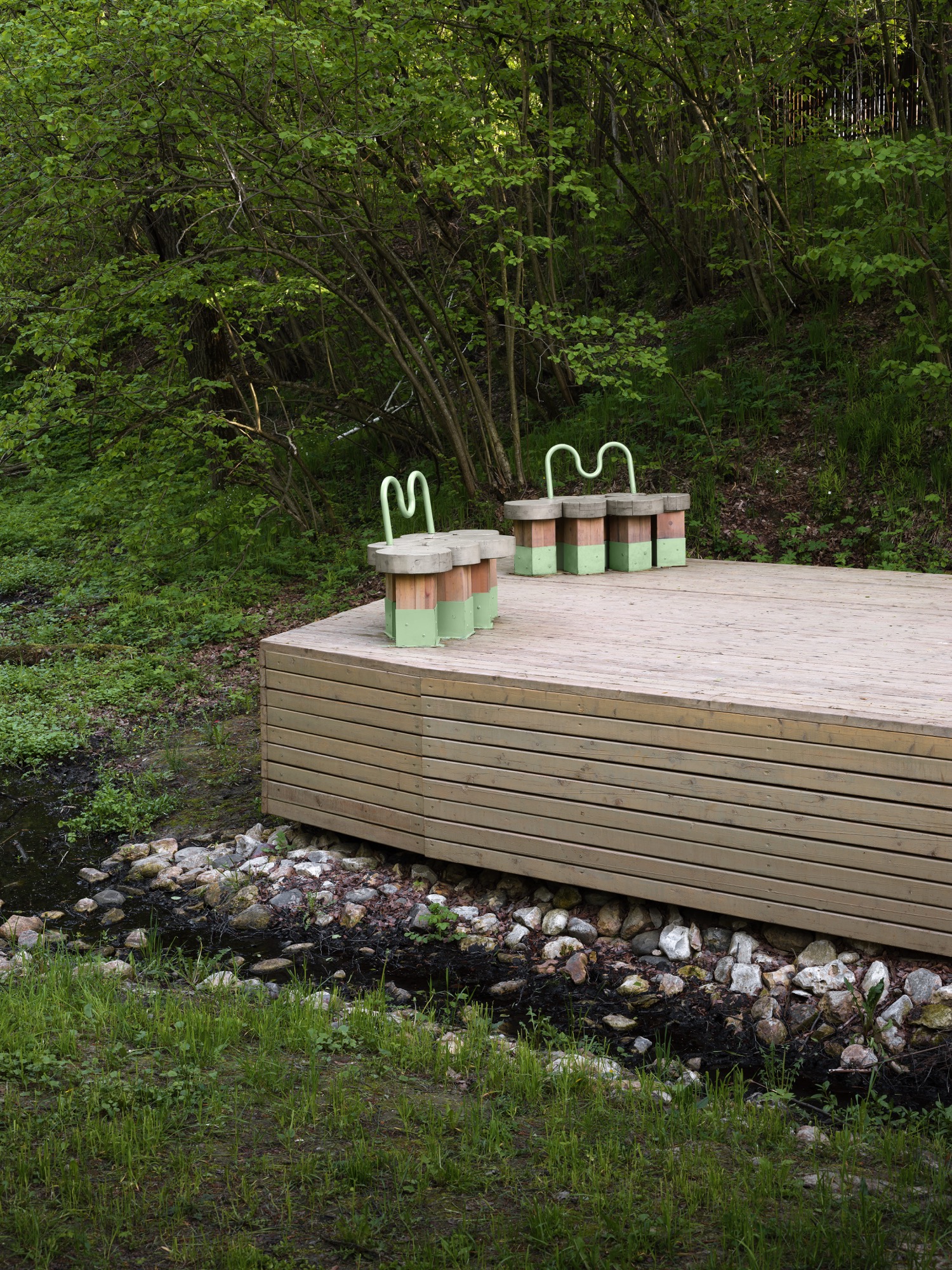
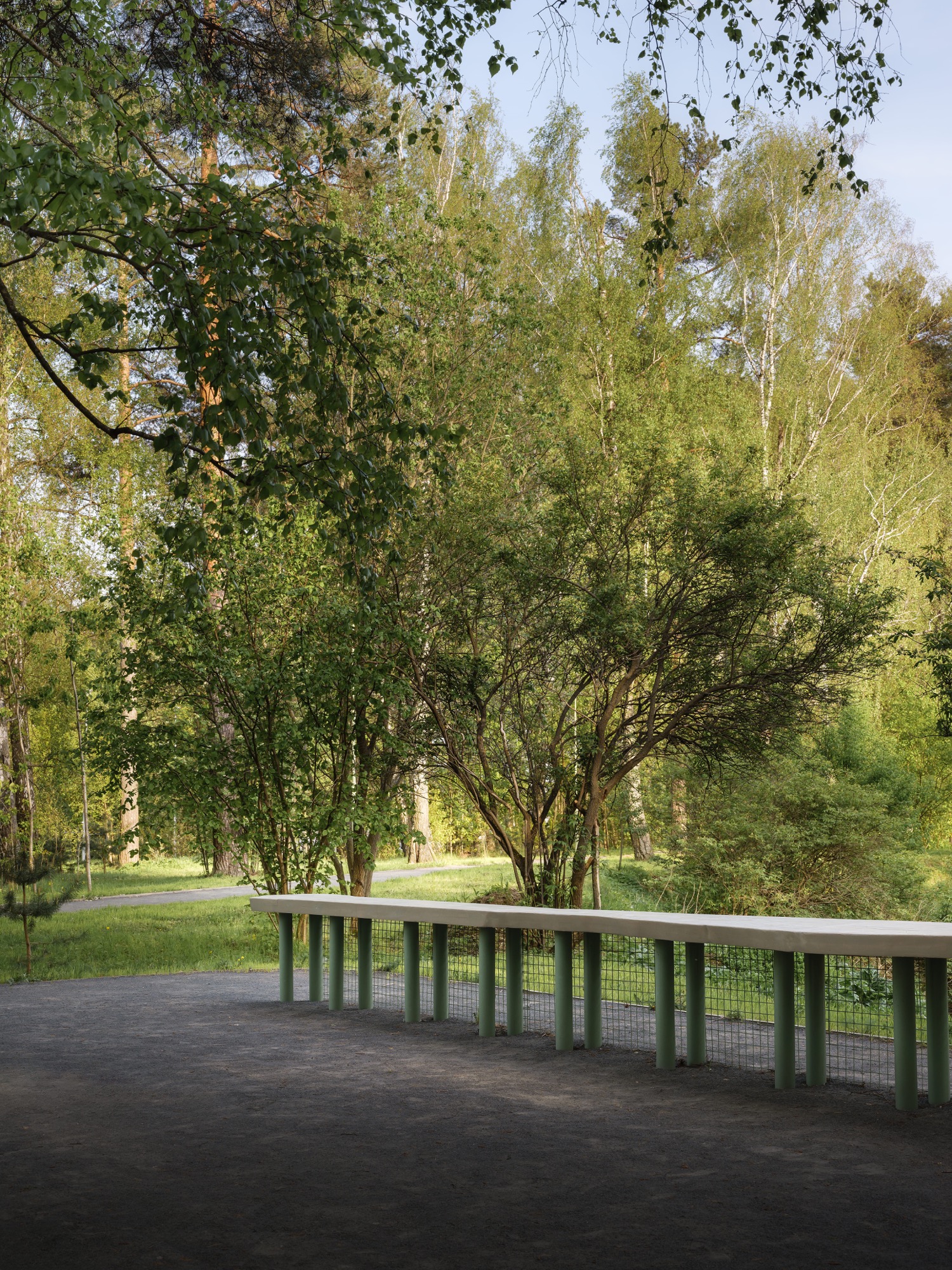
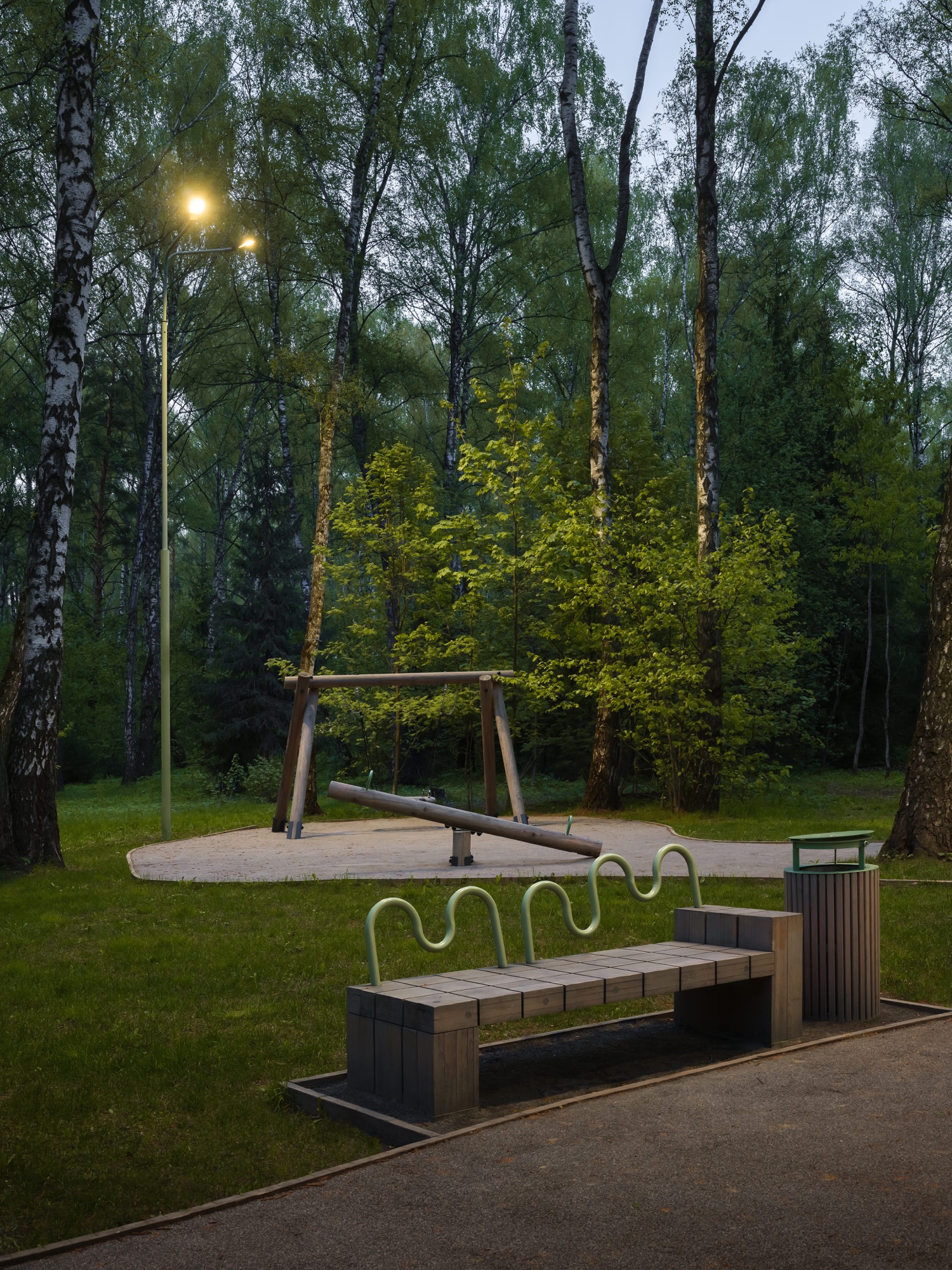
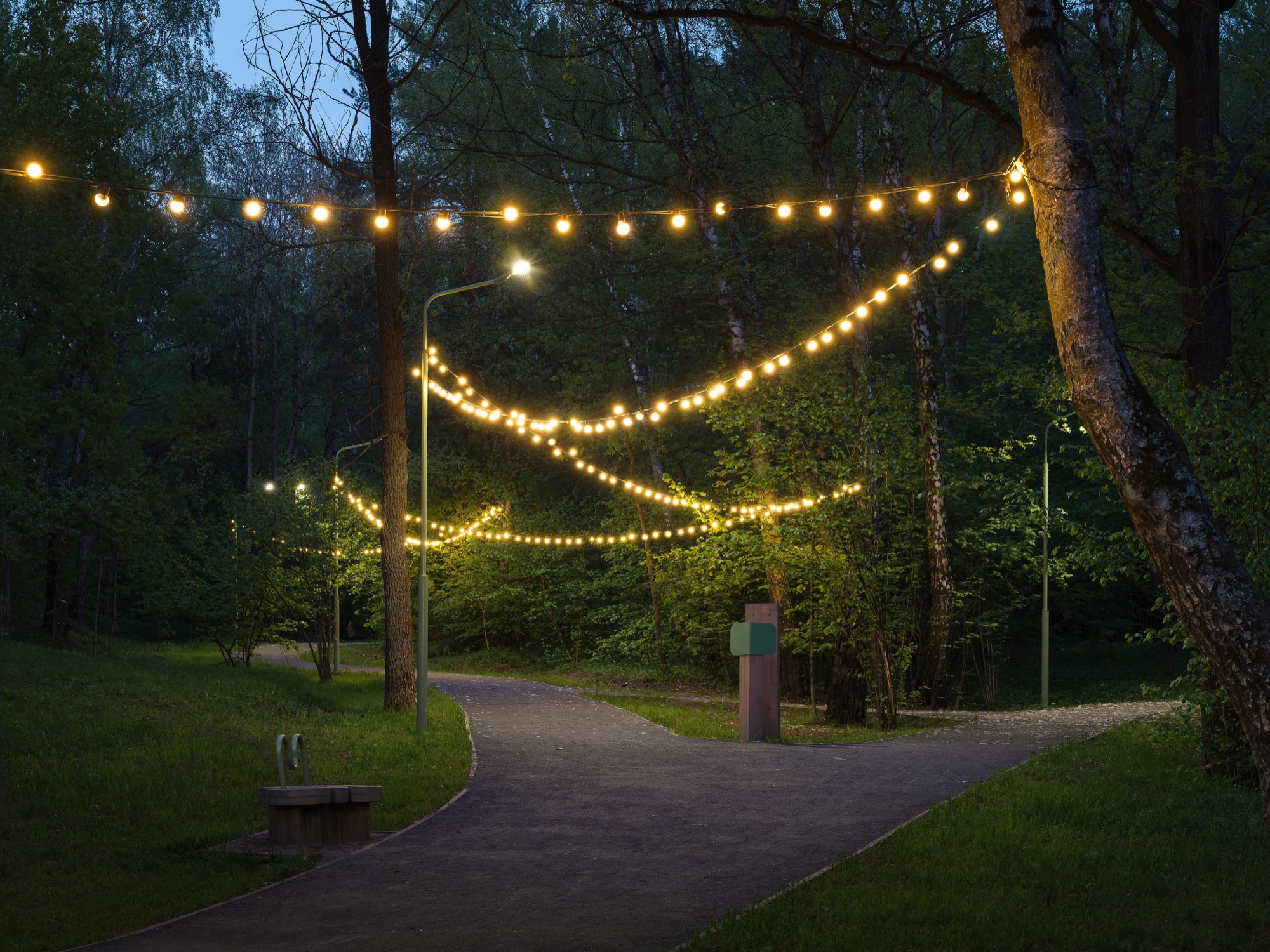
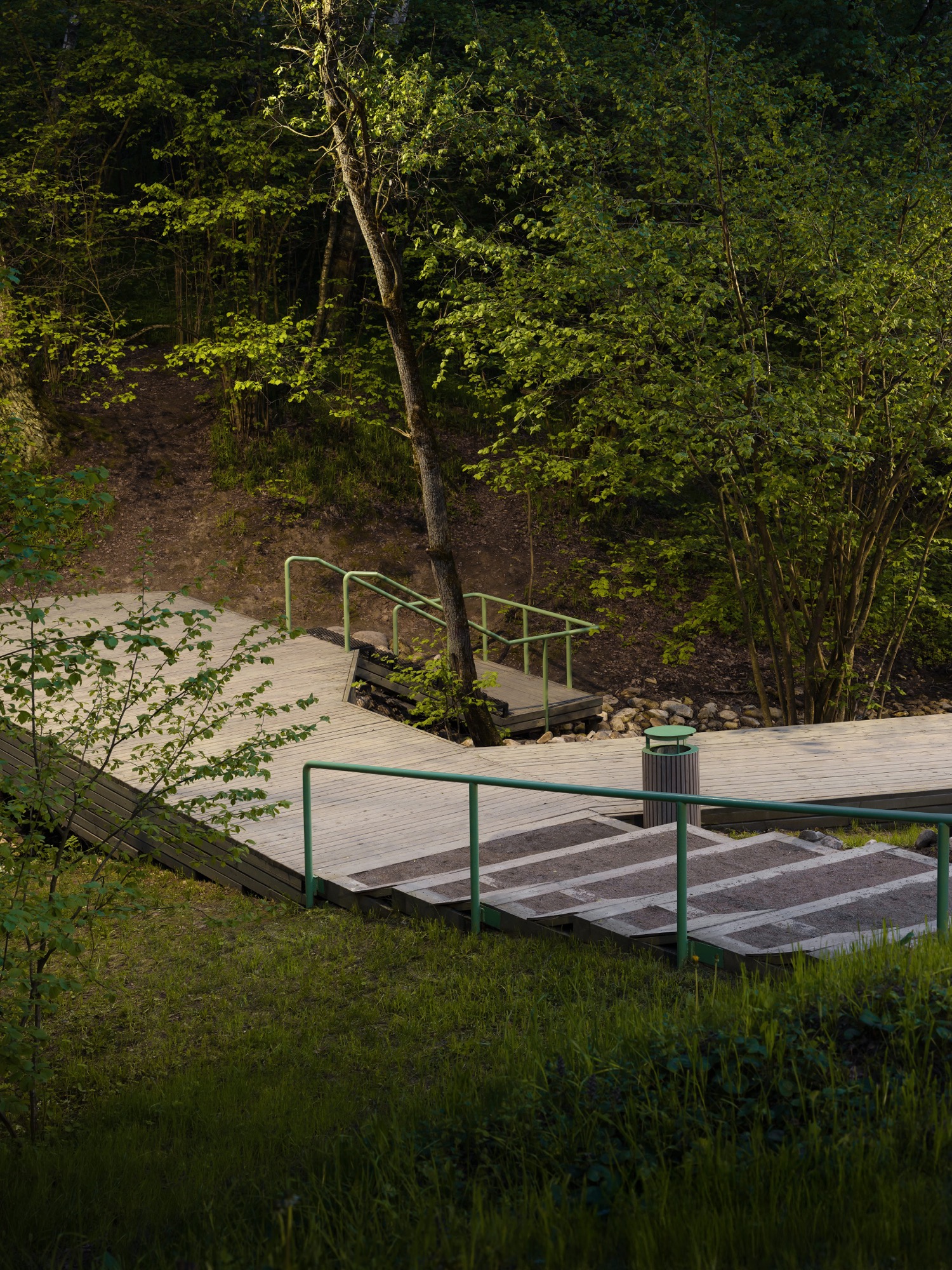
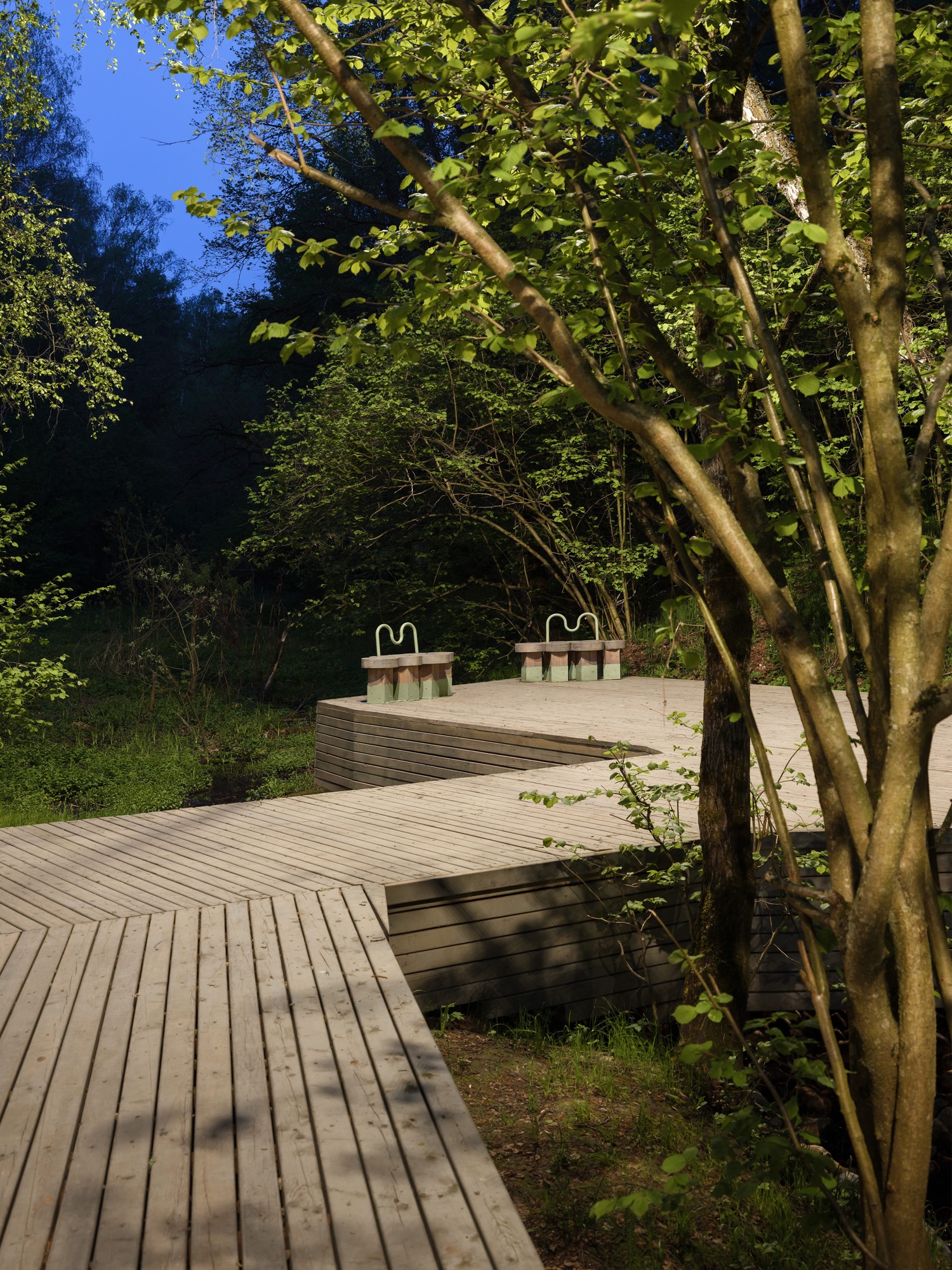
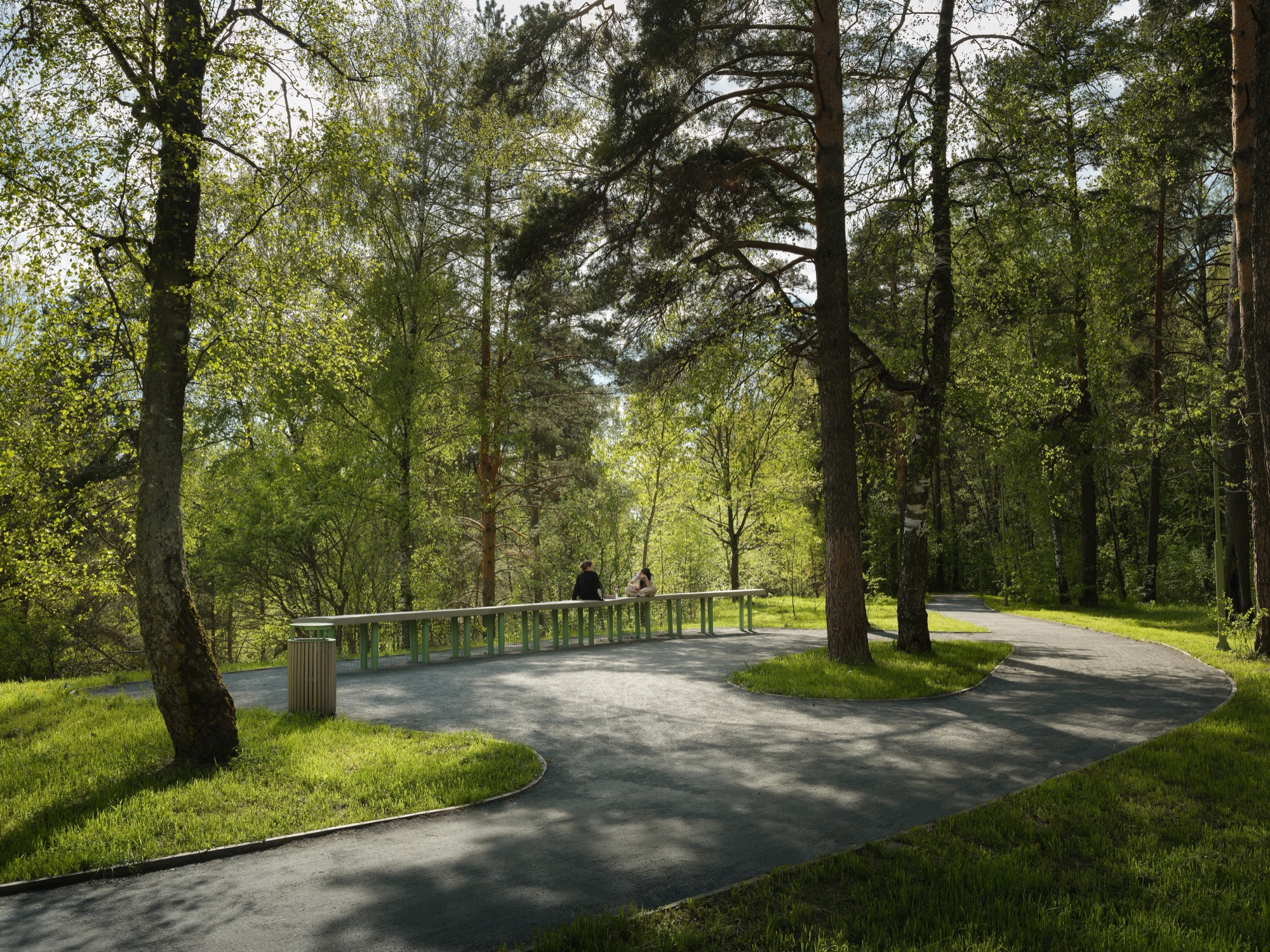
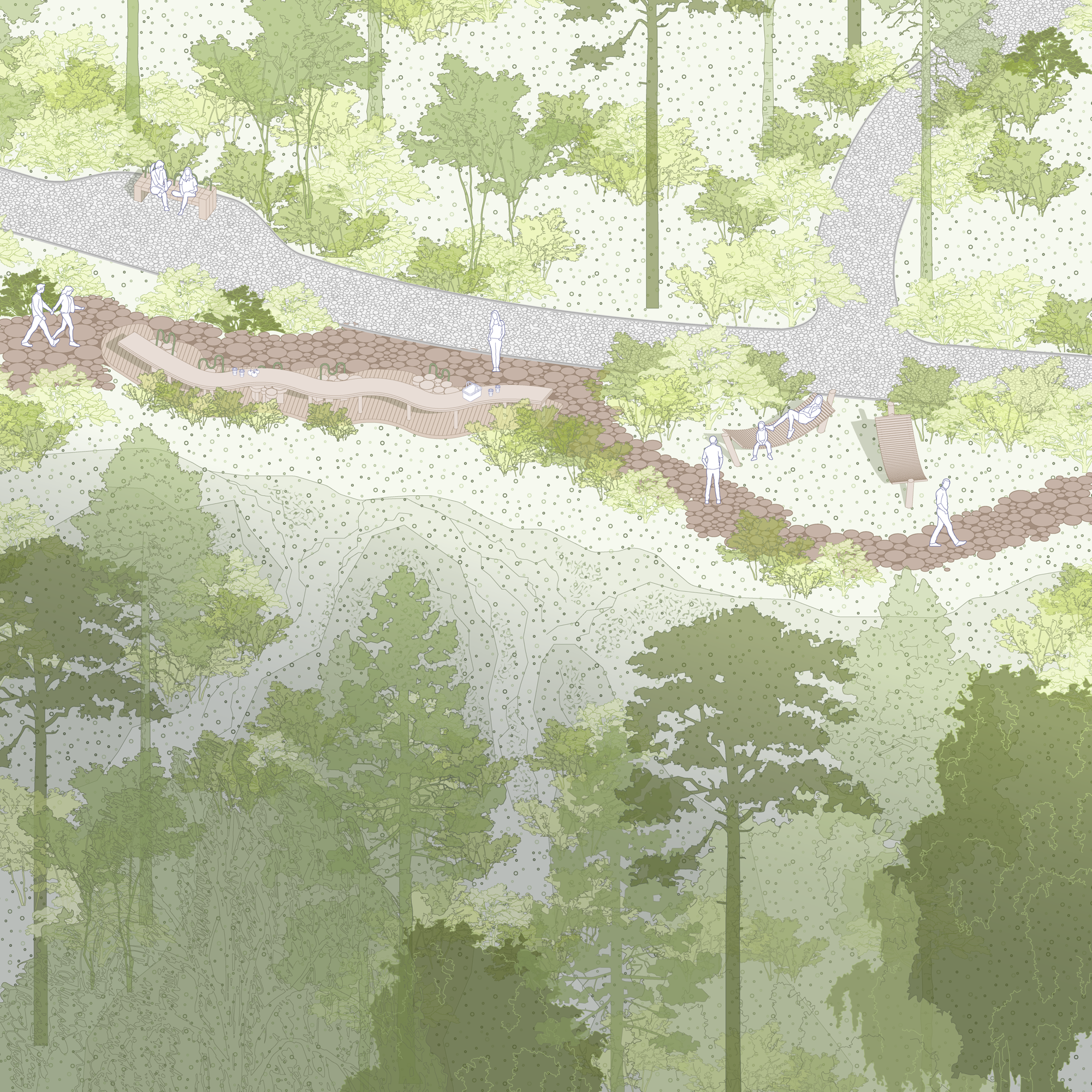
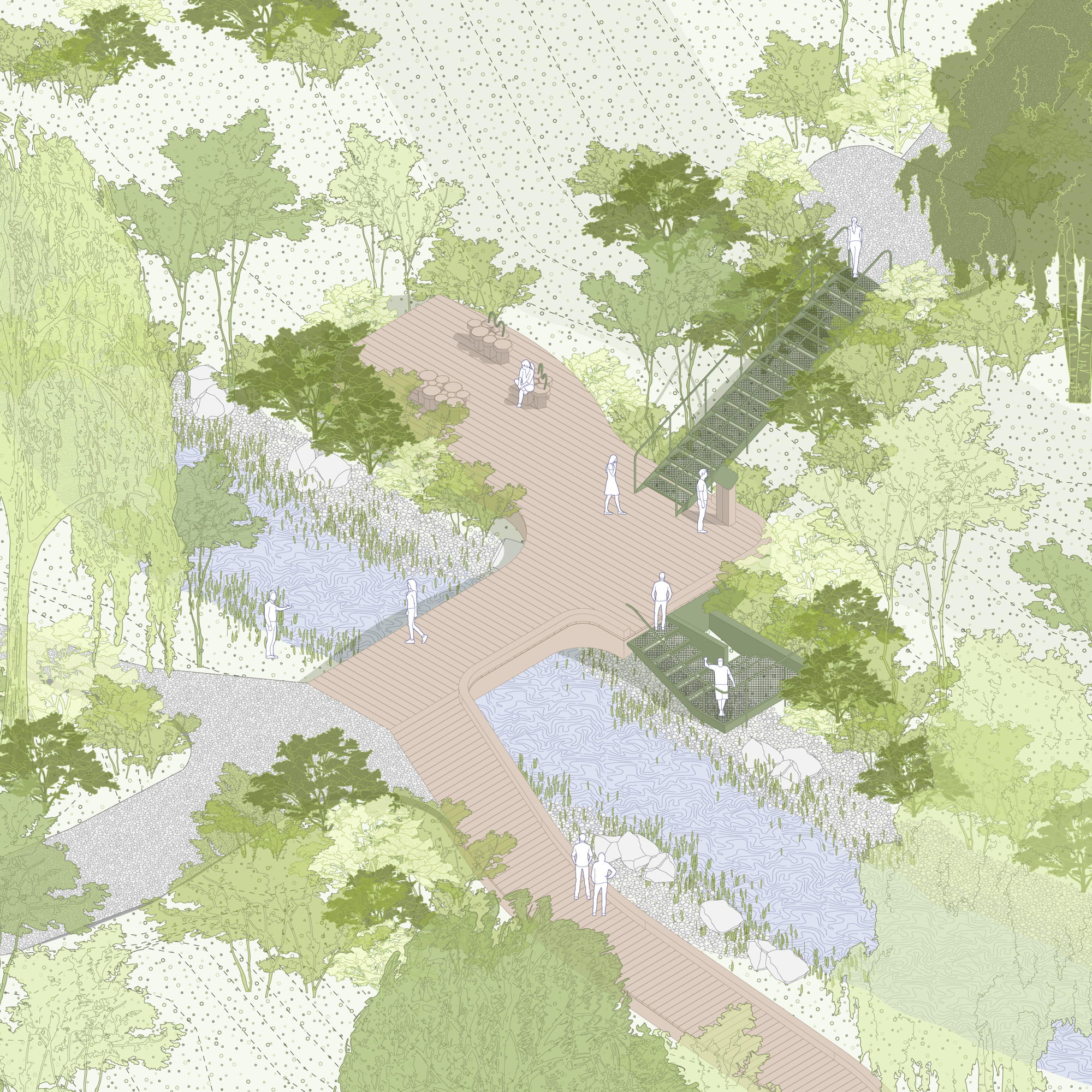
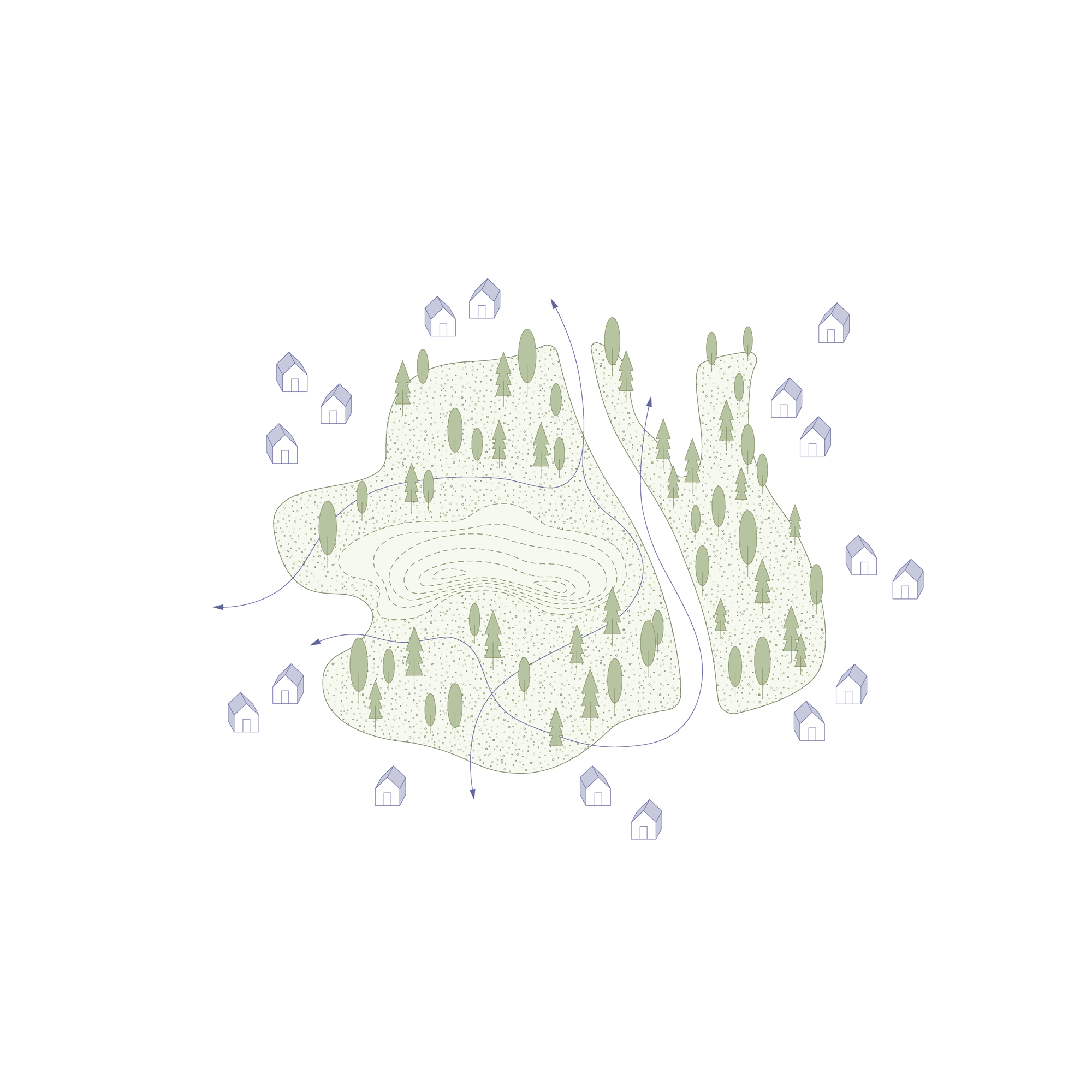
Two natural landmarks define the site: an old quarry and a clear spring that feeds a stream. The quarry, ringed by large pines, features steep slopes and dramatic vistas; viewing platforms and overlooks with protective balustrades are located at the most picturesque and safely accessible points. Riparian restoration and stormwater management strategies—bioswales, permeable paving, and erosion-control planting—support the spring and stream corridor.
A boardwalk along the spring-fed stream provides an accessible promenade for residents and visitors. Downhill paths and metal staircases have been upgraded, and resting nodes, footbridges, and pile-supported timber paths are integrated into the circulation system to create continuity and connectivity.
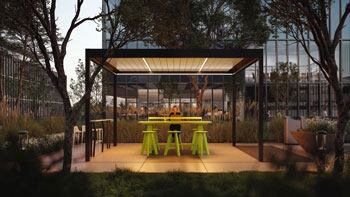
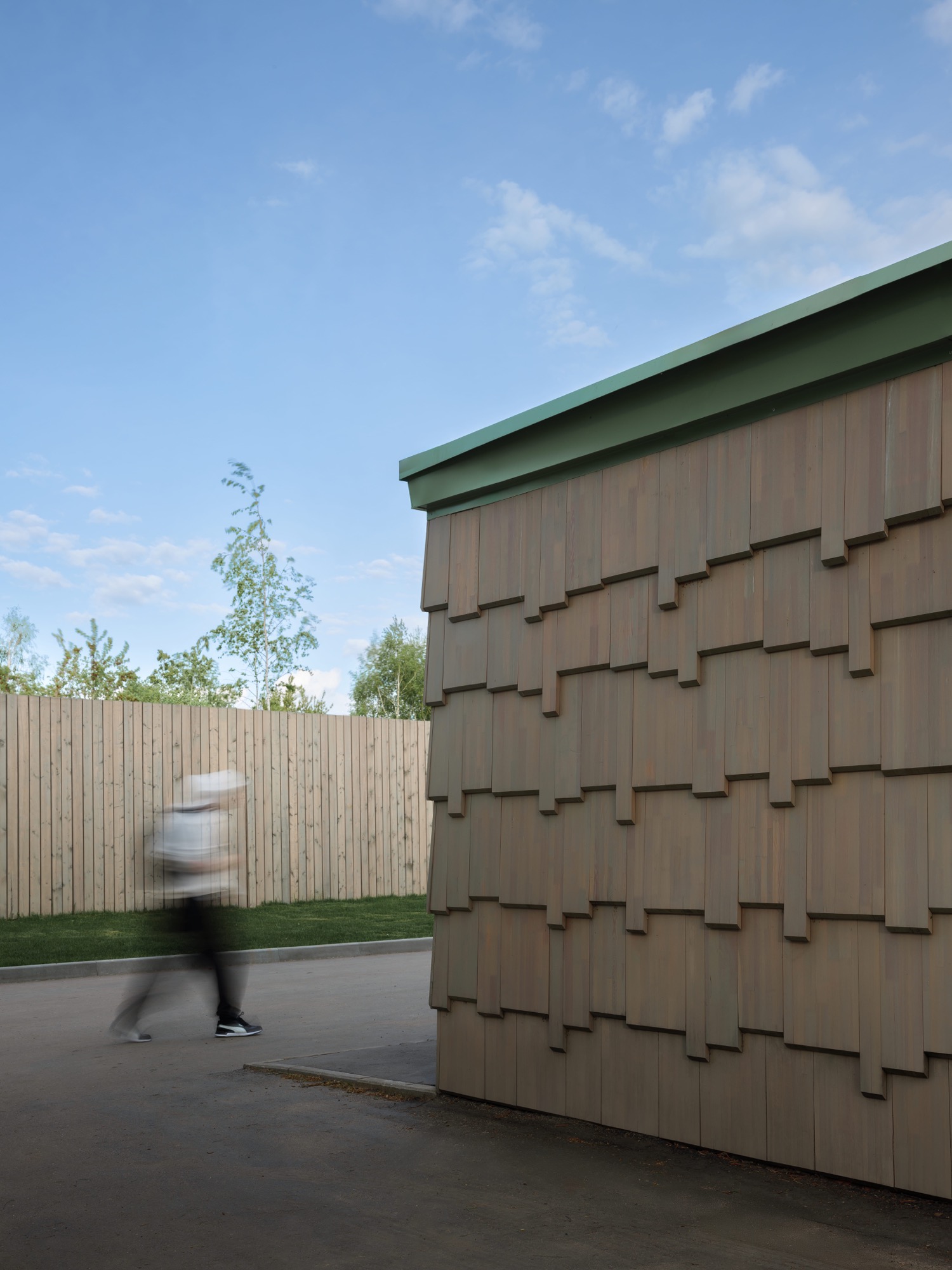
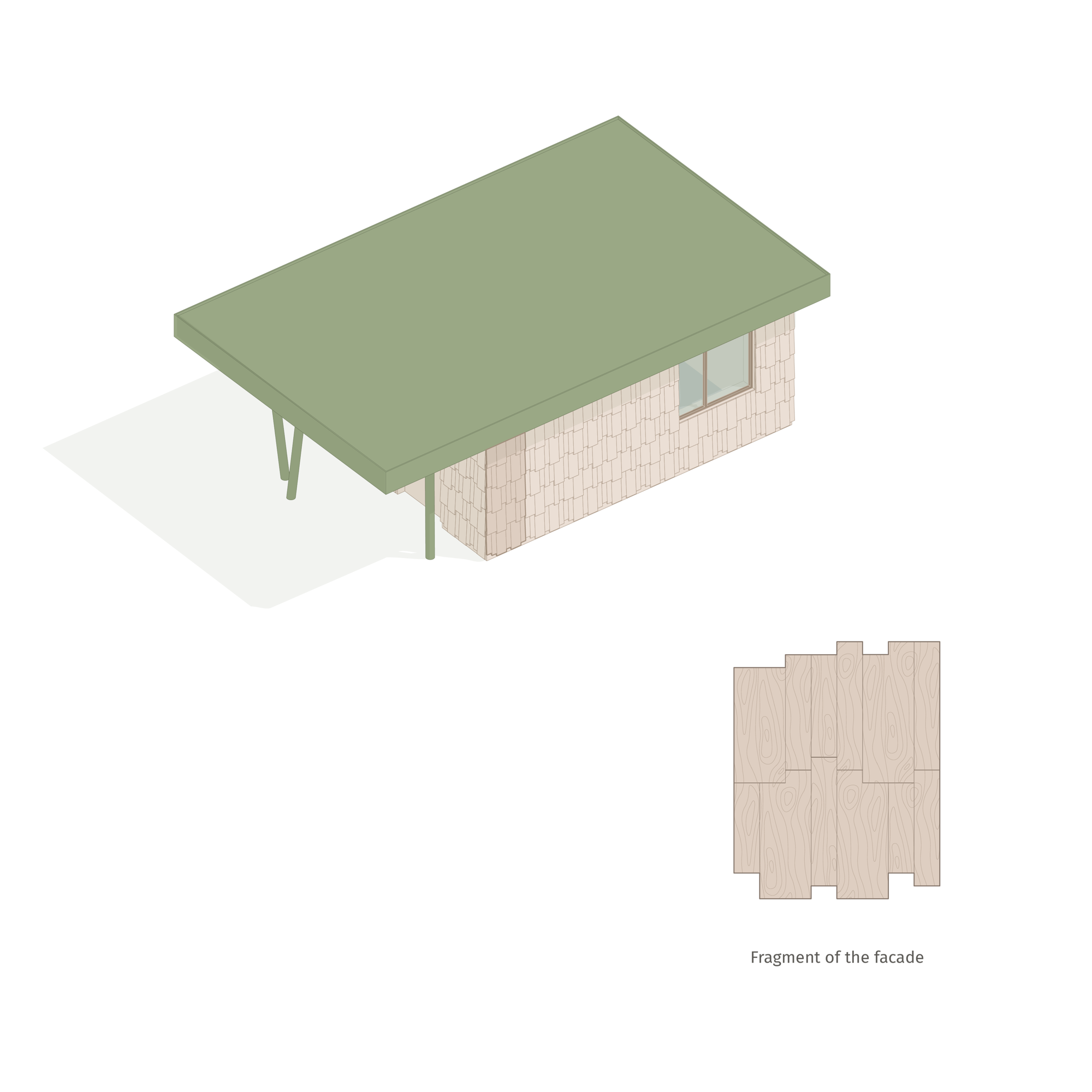
A broad meadow divides the forest and hosts an obstacle course designed as a play node for schoolchildren. Deeper in the fir grove, a sheltered picnic precinct will feature subtle lantern-style lighting, individual picnic plots with charcoal grill stations, and communal tables. Programmatic zoning accommodates diverse user groups: a playground, a multi-use sports ground, and quiet respite areas. The entrance forecourt includes an equipment rental kiosk, vending machines, and restroom facilities.
The project was developed in collaboration with the Ministry of Landscape Architecture of the Moscow Region.
55.284394, 37.903326
74243


LILA 2026 Sponsor