Habit to Habitat
landscapeinteractions.com
2026 Public Projects / USA / Built in 2023 /
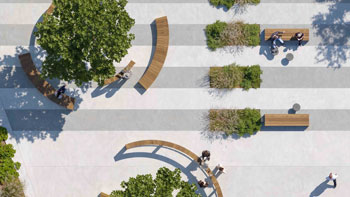
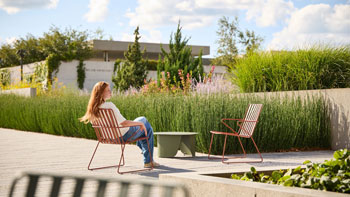
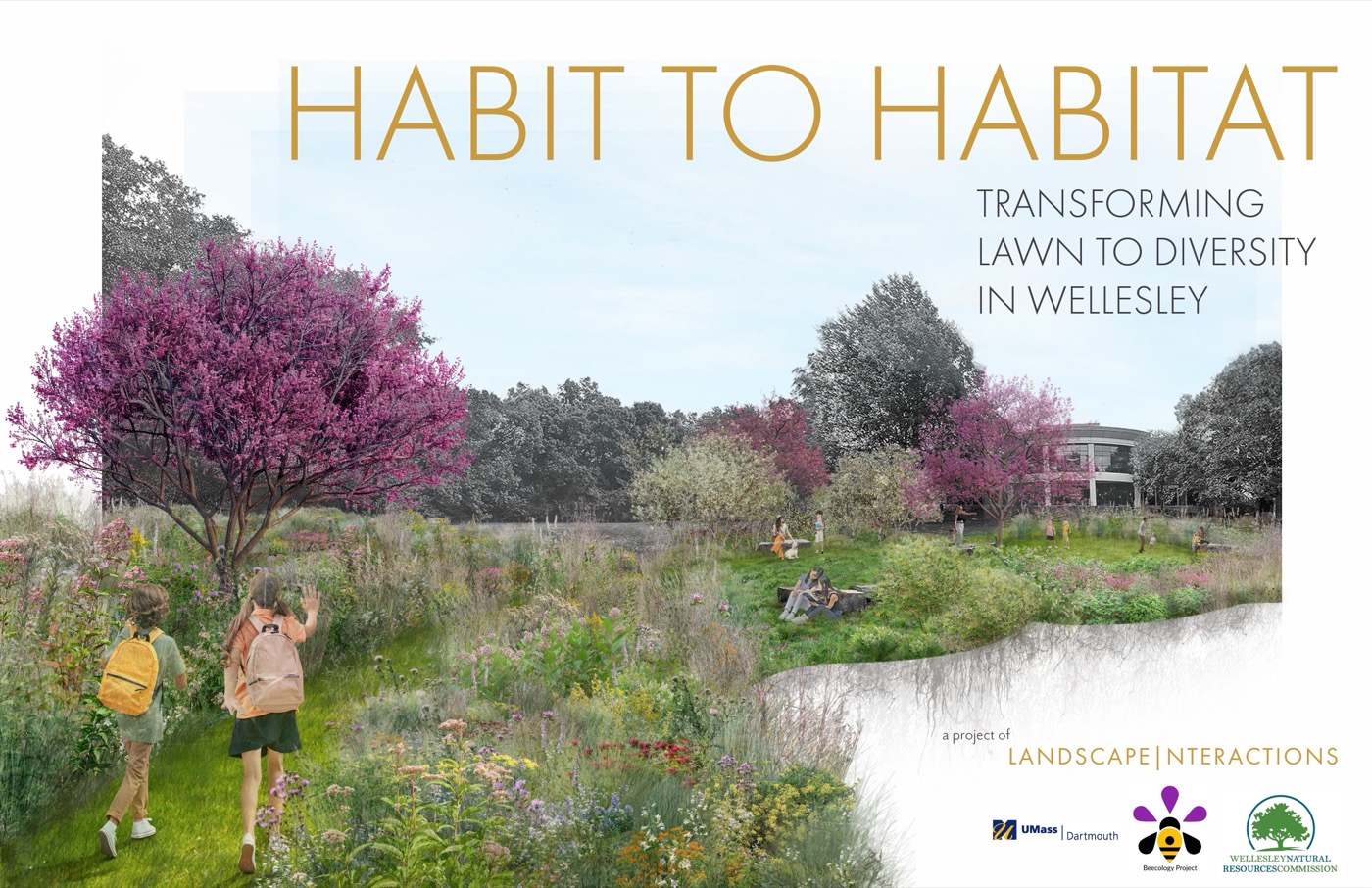
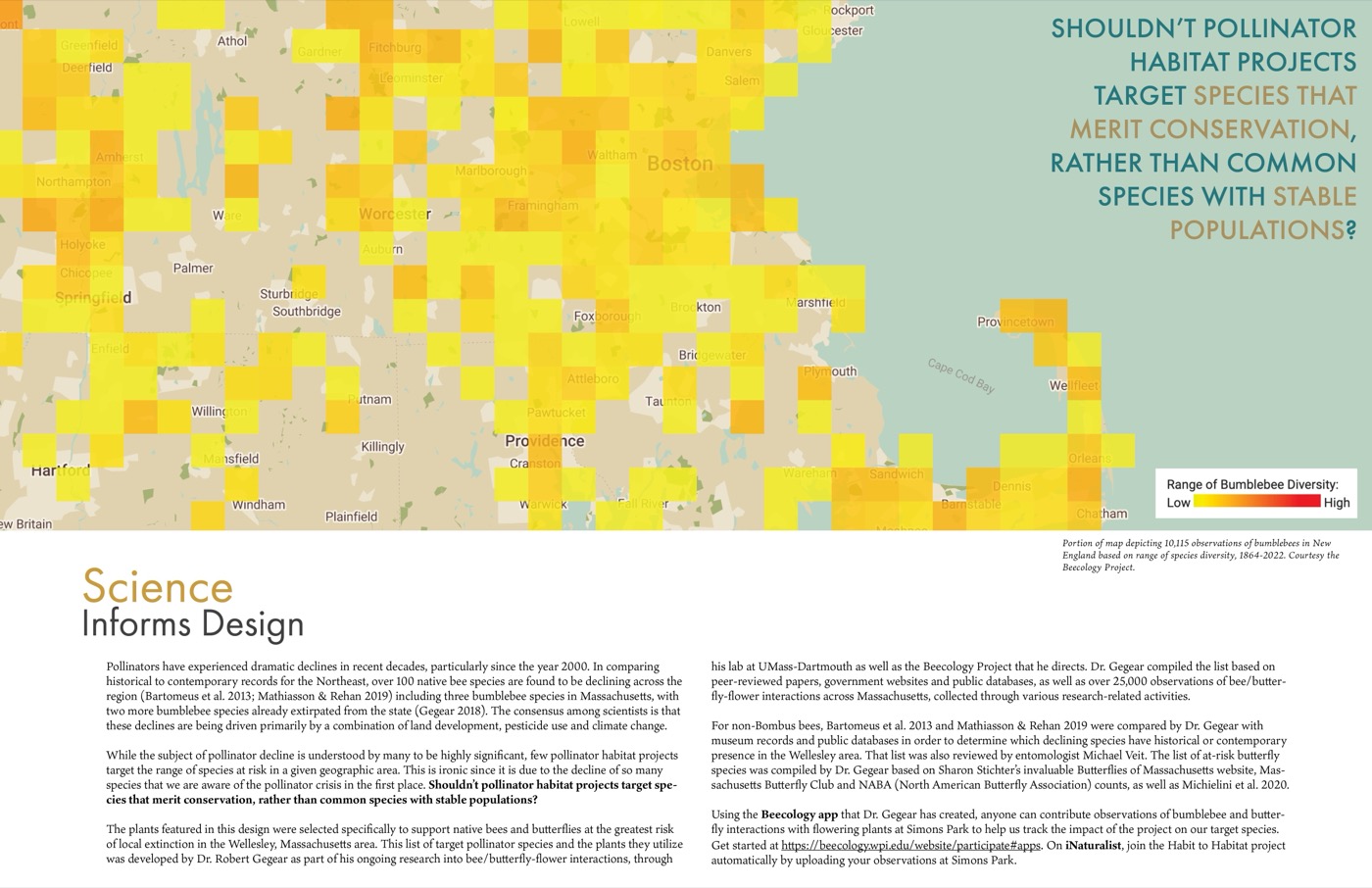
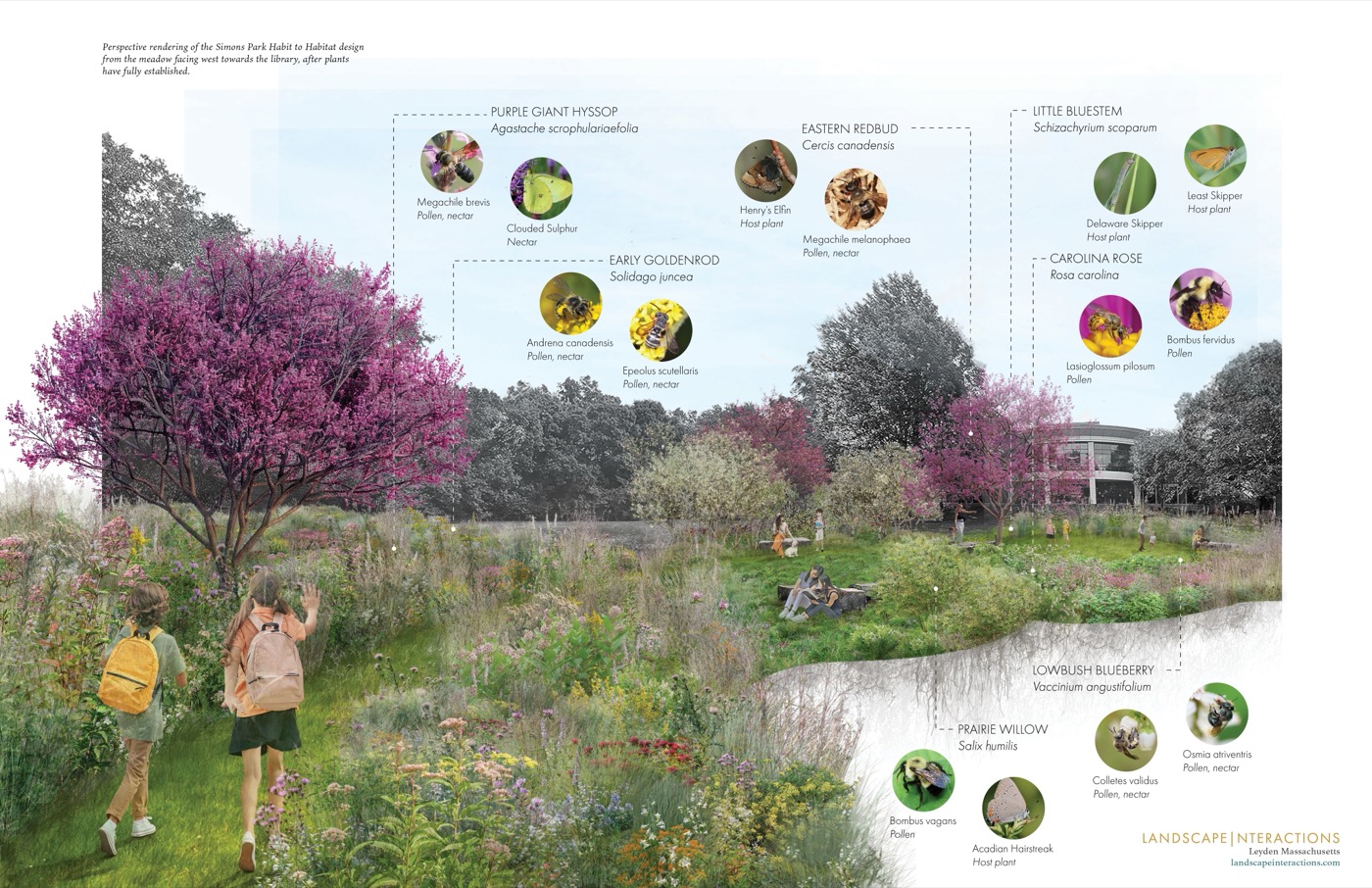
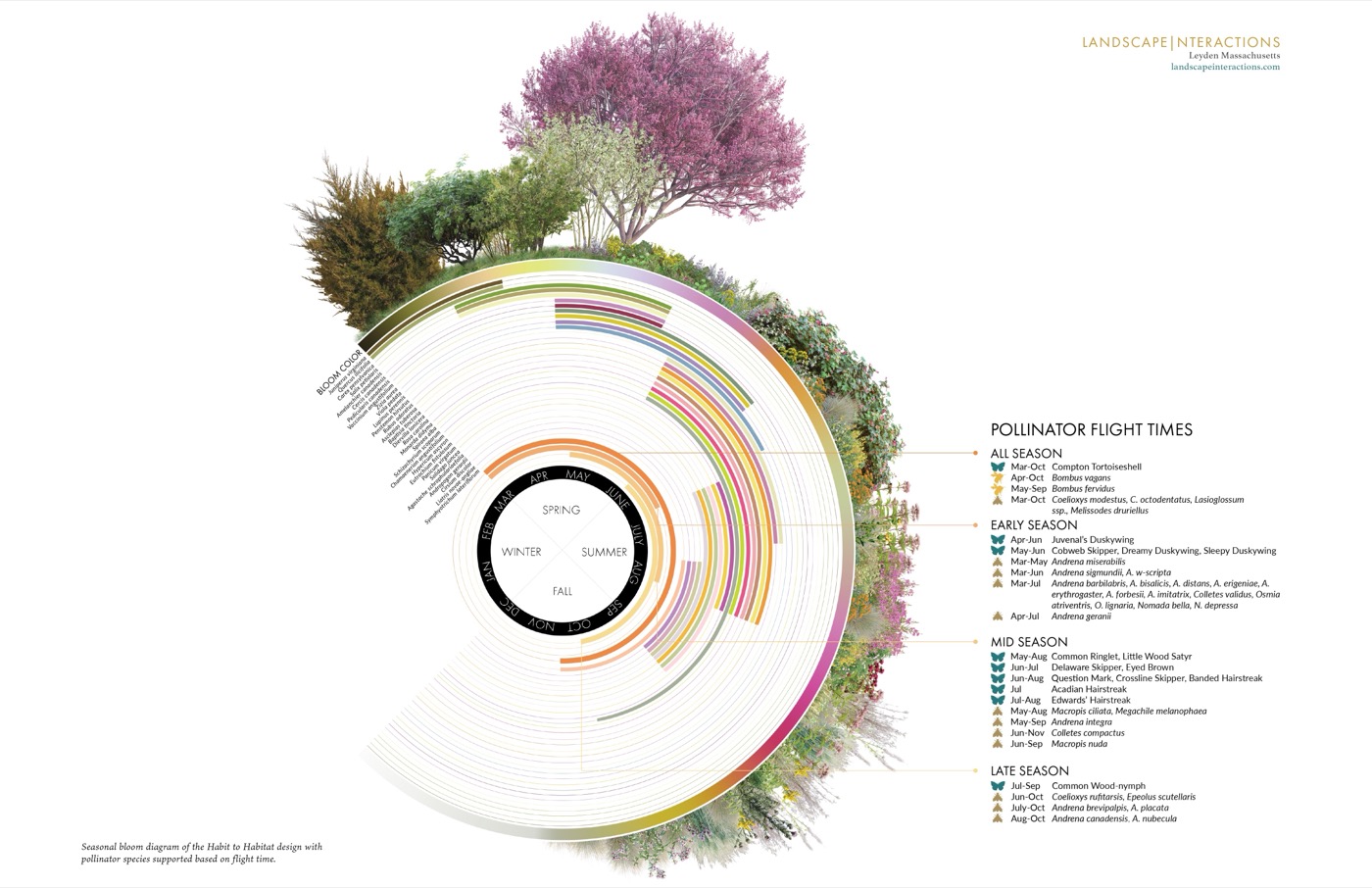
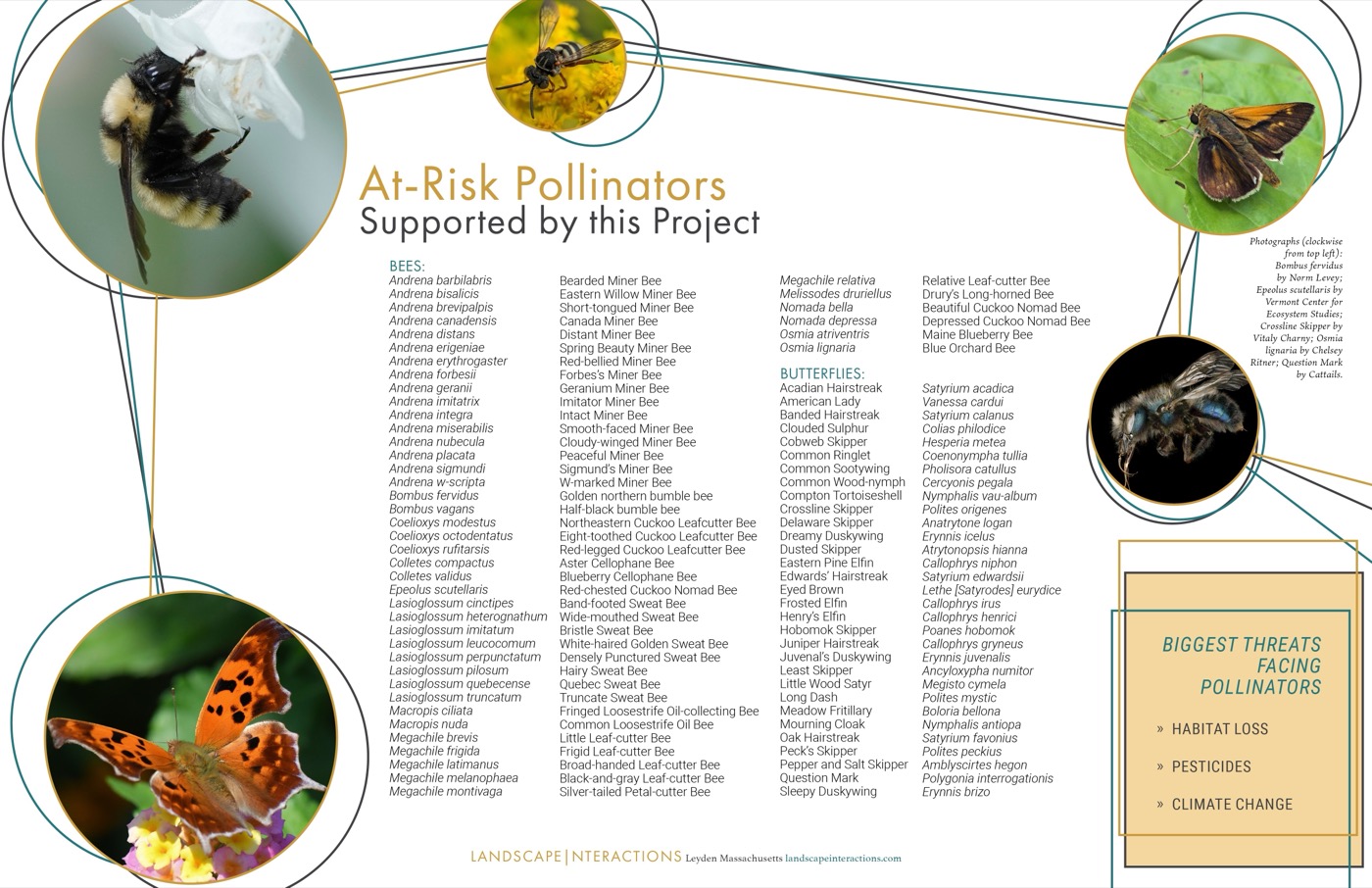
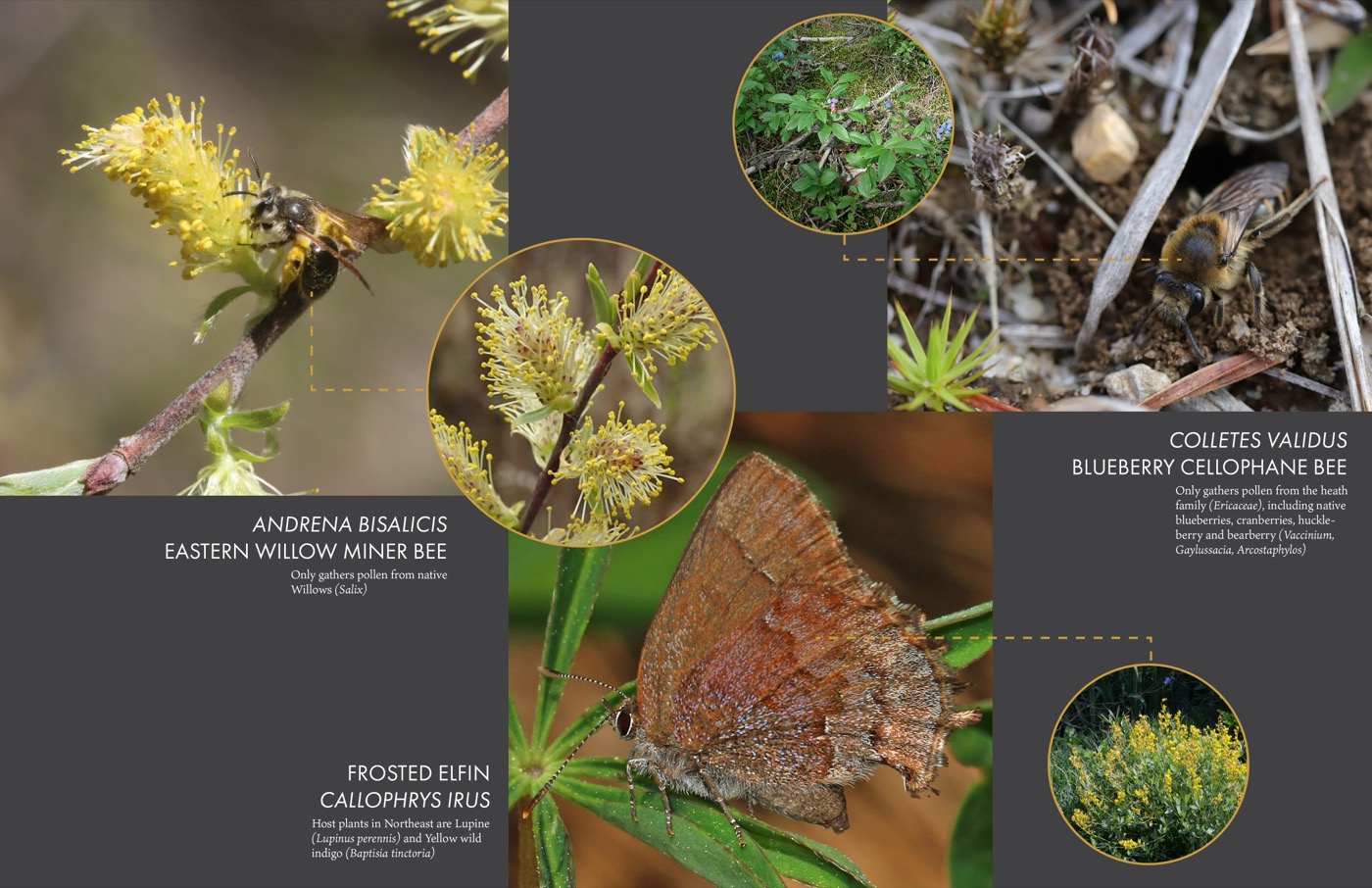
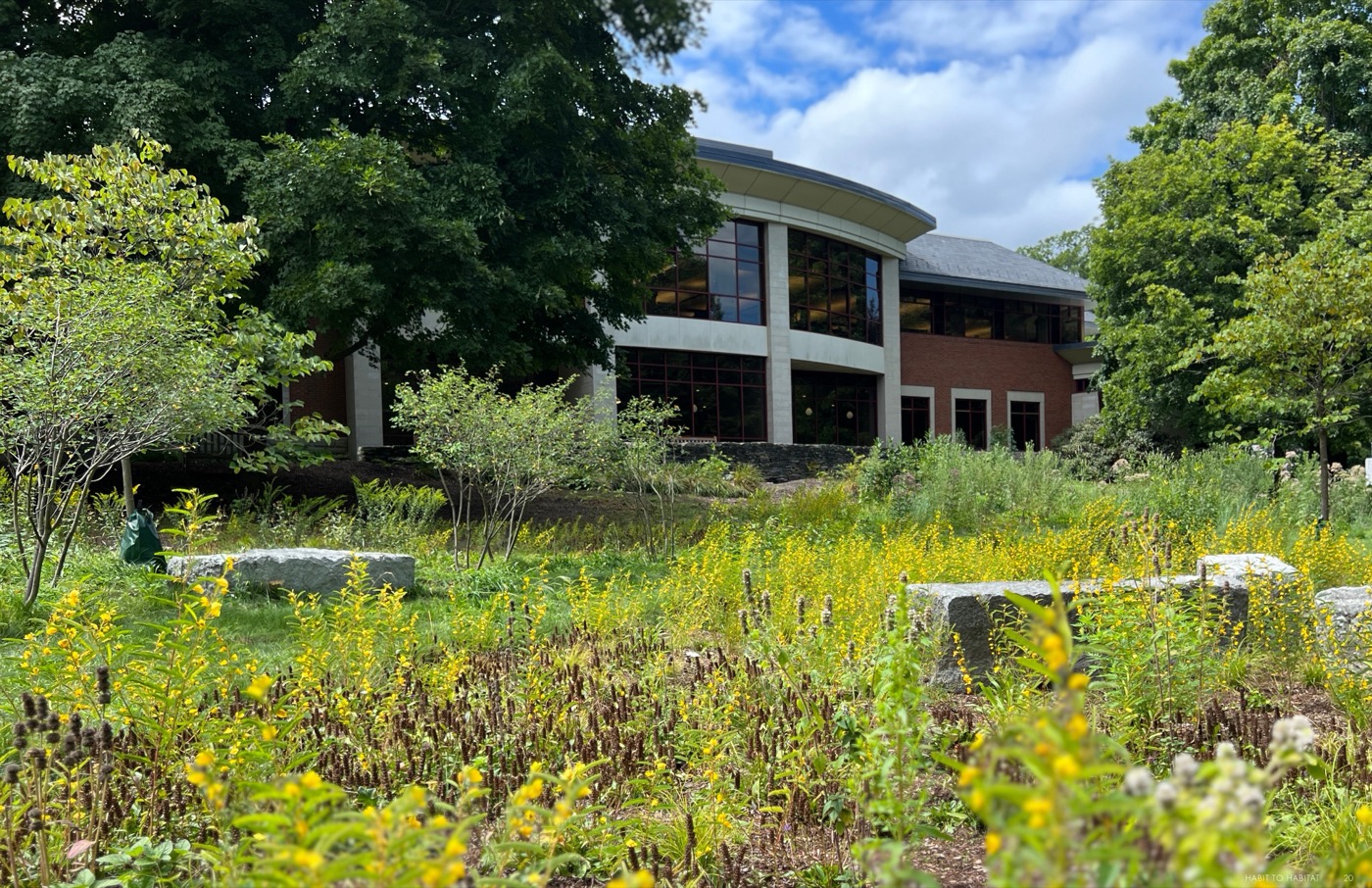
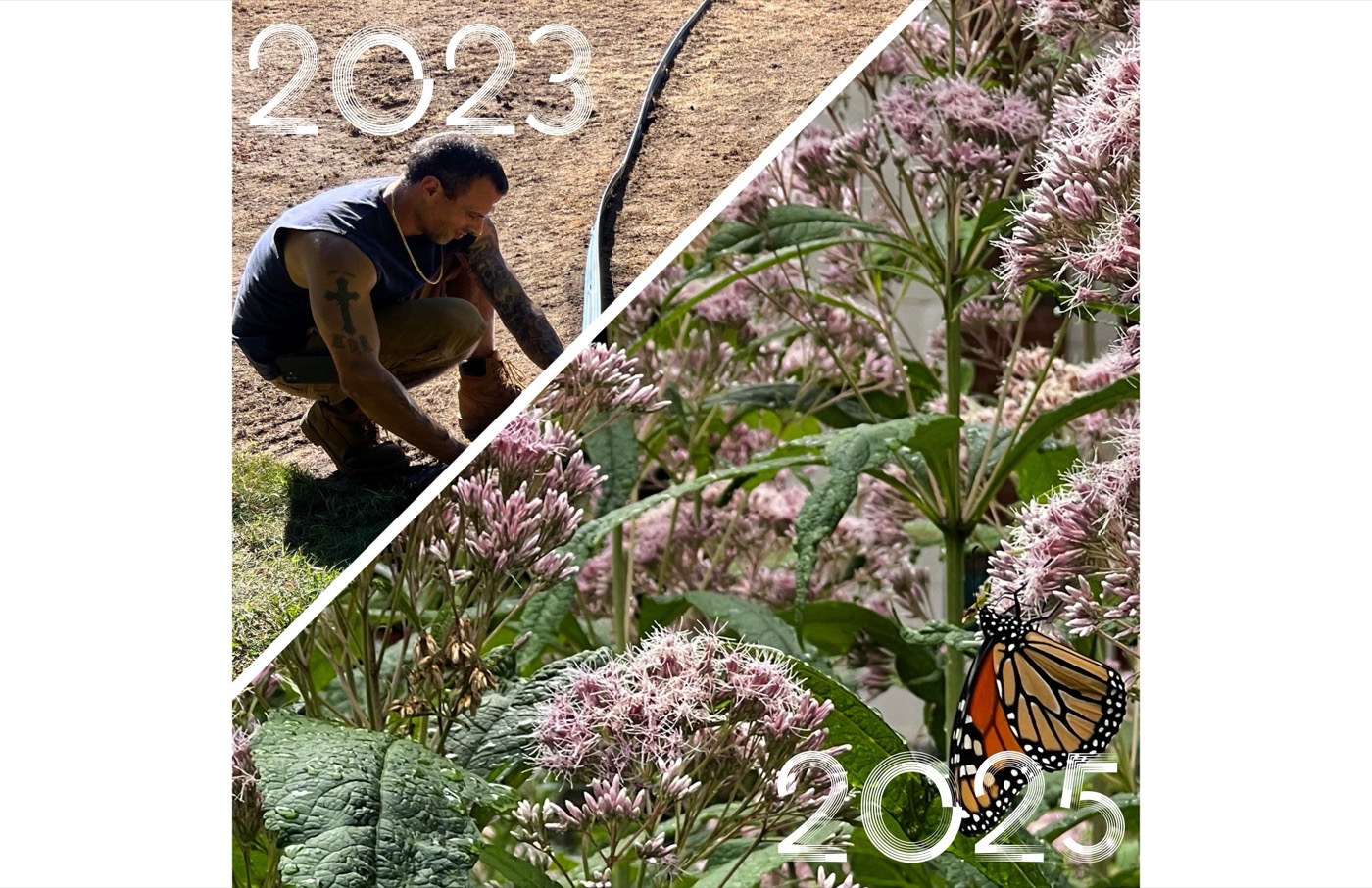
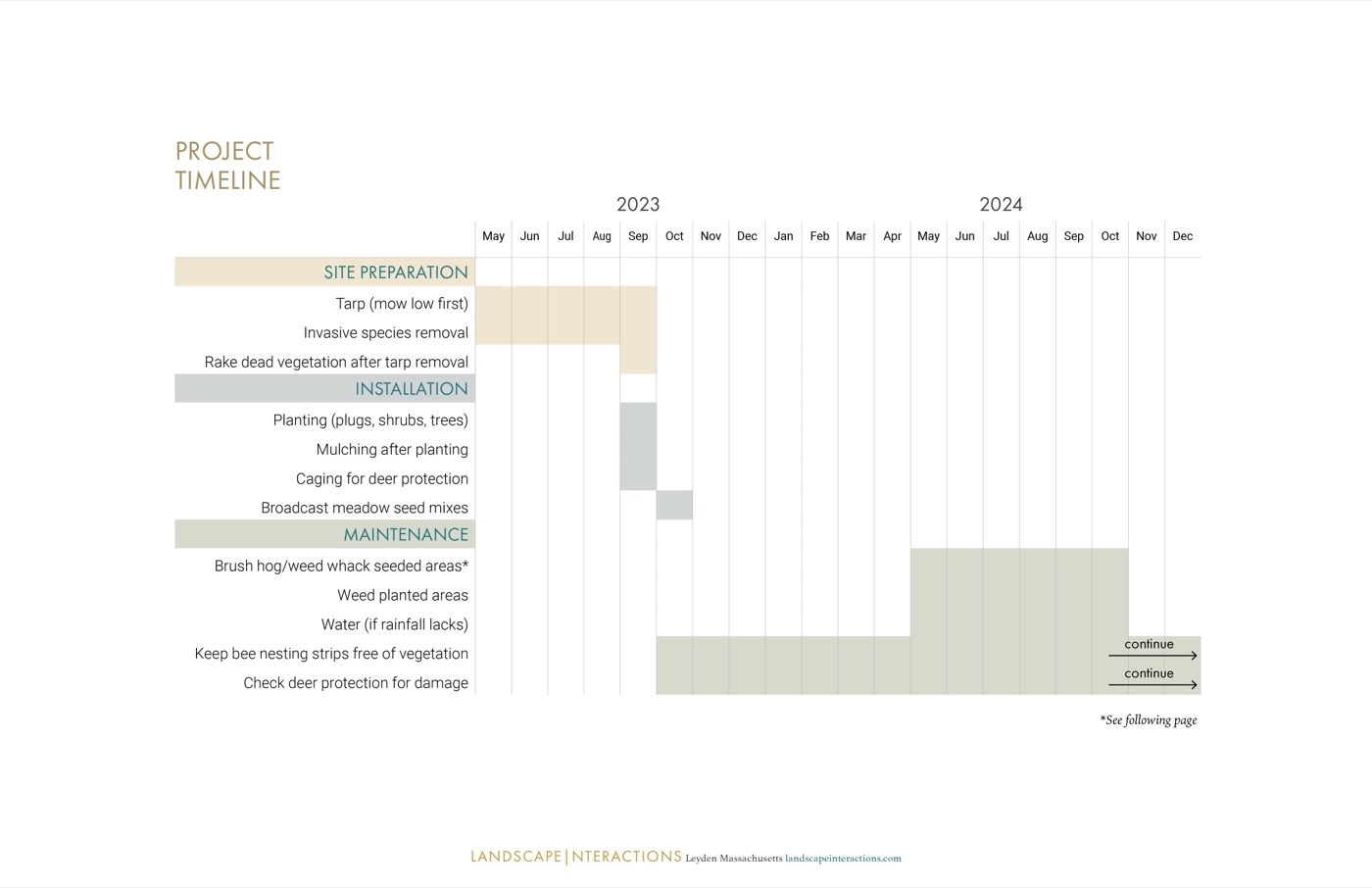
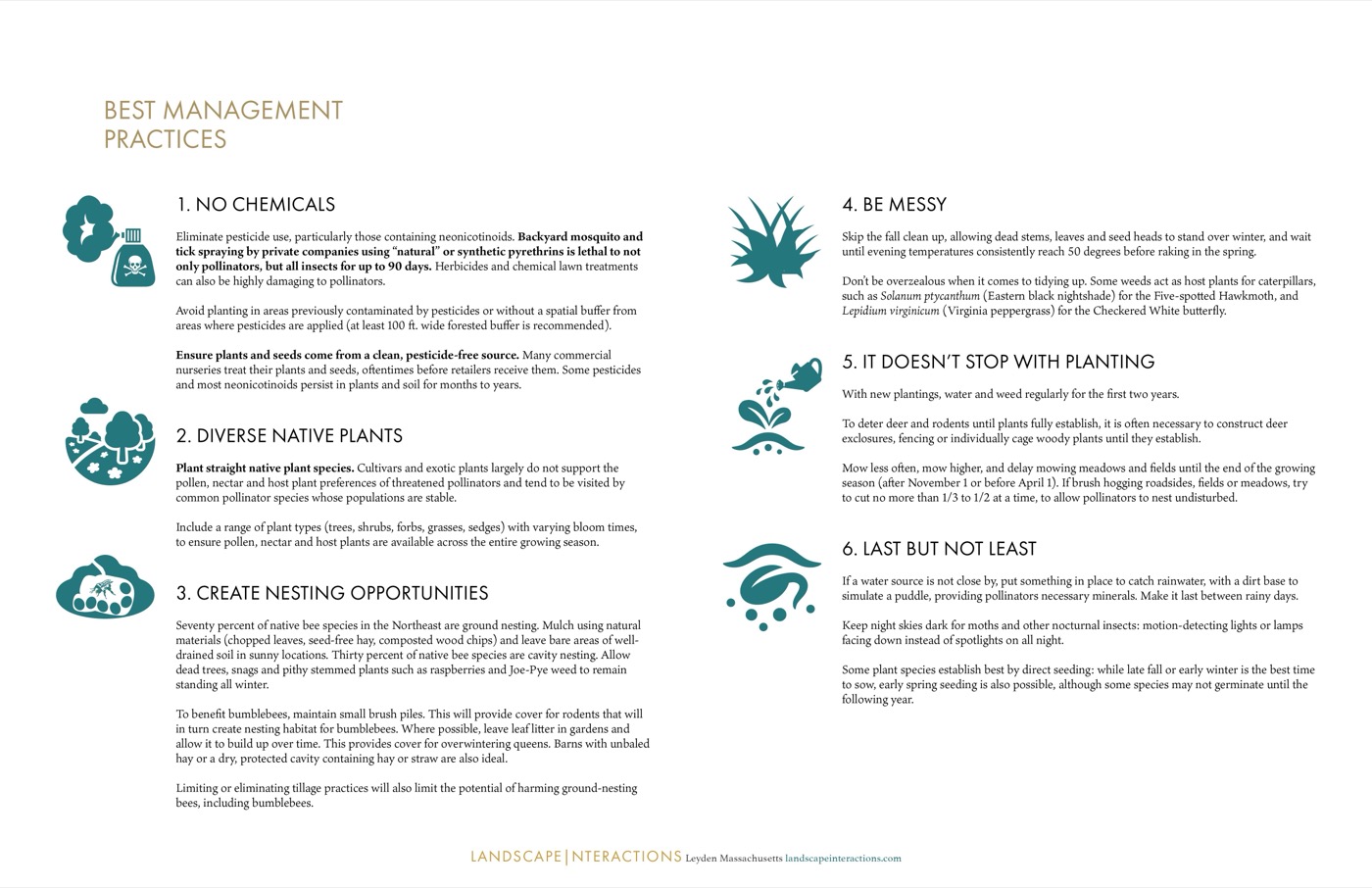
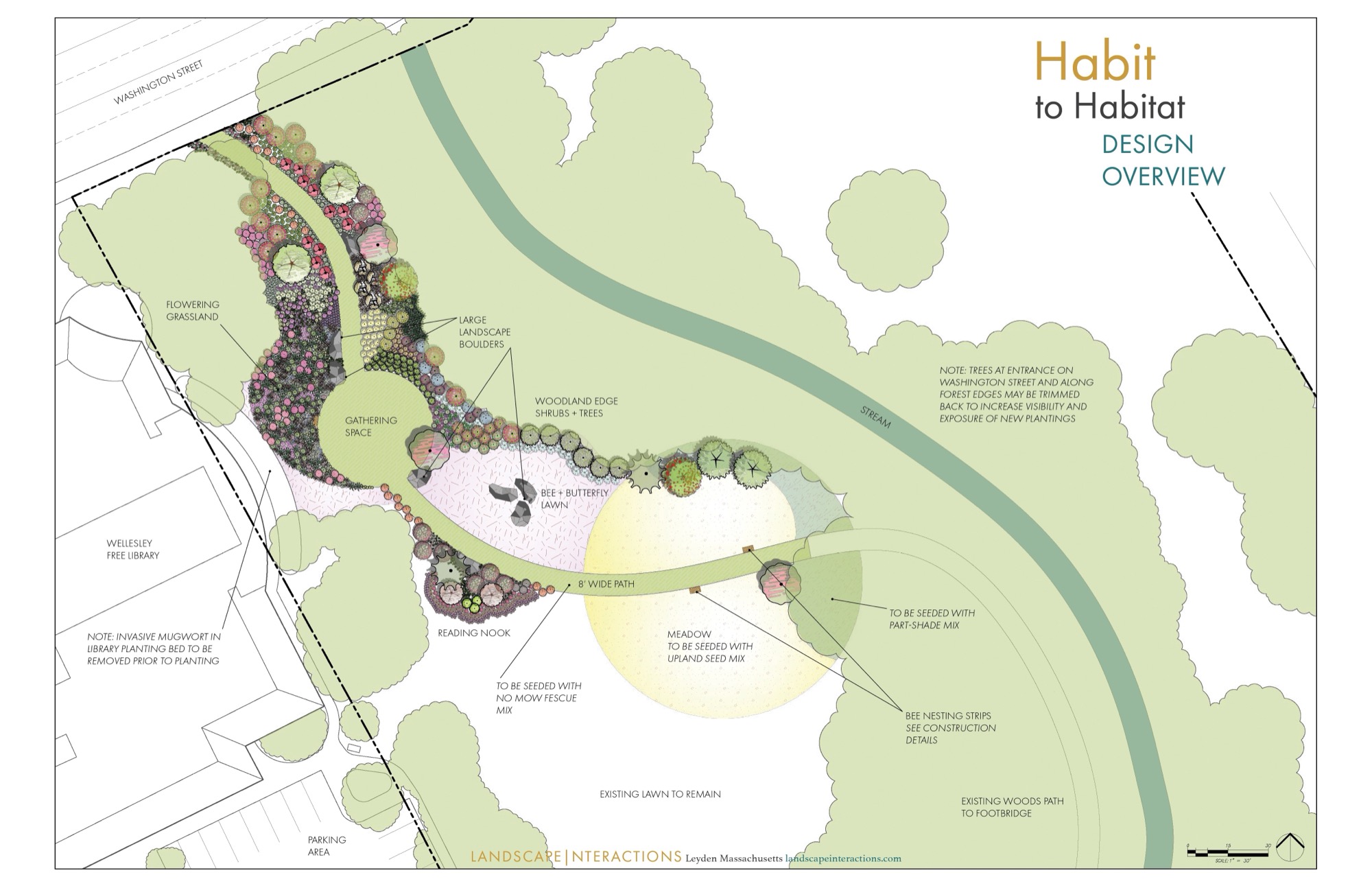
Habit to Habitat is a case study for community-driven landscape design to increase biodiversity and climate resilience by supporting native pollinators at risk of local extinction. Between May and September 2023, Simons Park in Wellesley, Massachusetts was transformed from a 2-acre lawn into a biodiverse habitat of over 4,000 native plants supporting 76 at-risk bee and butterfly species and their varied pollen, nectar, host plant and nesting requirements. The design features seven unique spaces, including a flowering grassland, bee and butterfly lawn alternative, reading nook, meadow, woodland edge, shaded understory and circular gathering place, and was installed entirely by volunteers and town staff over two weekends.
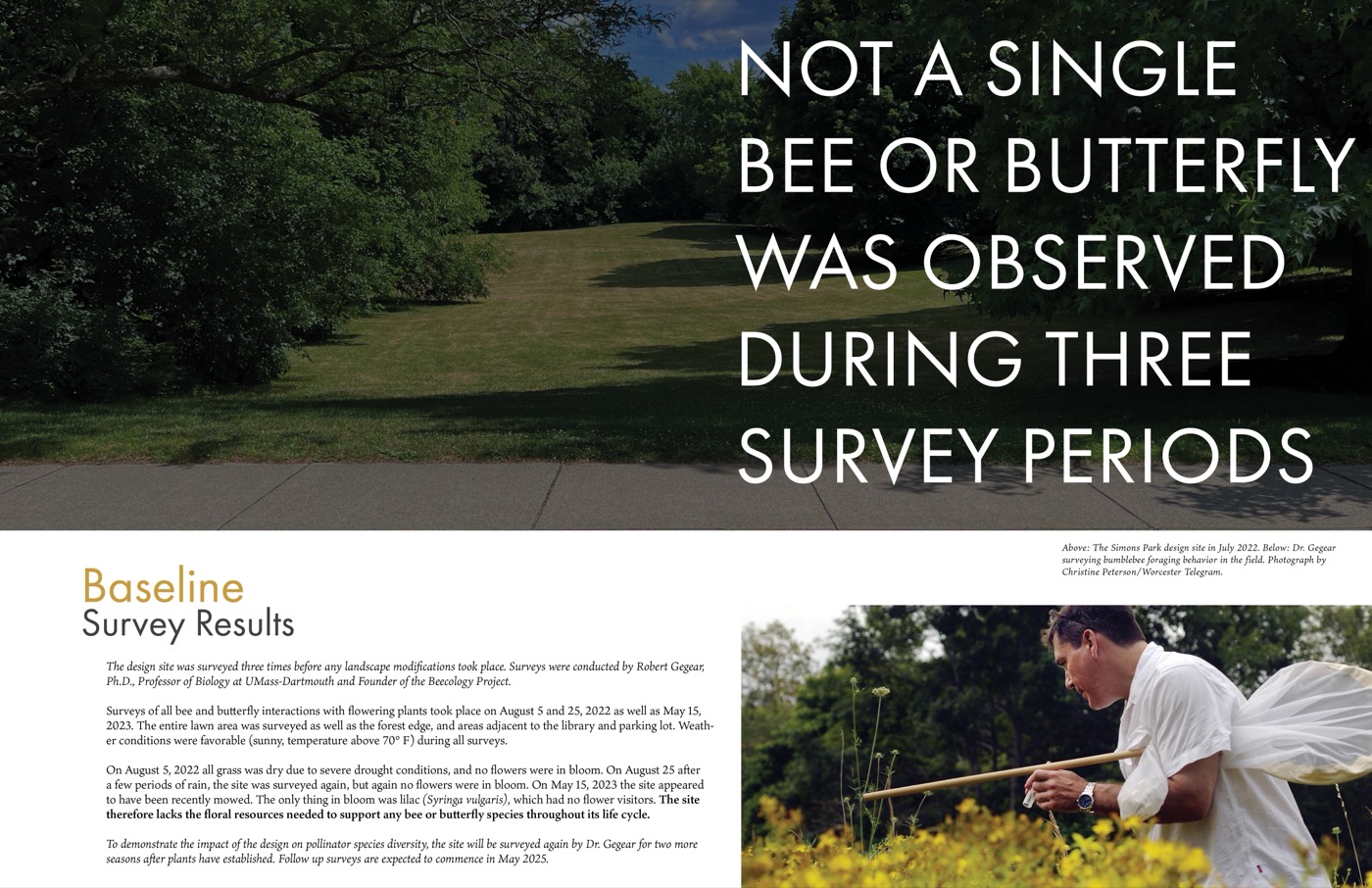
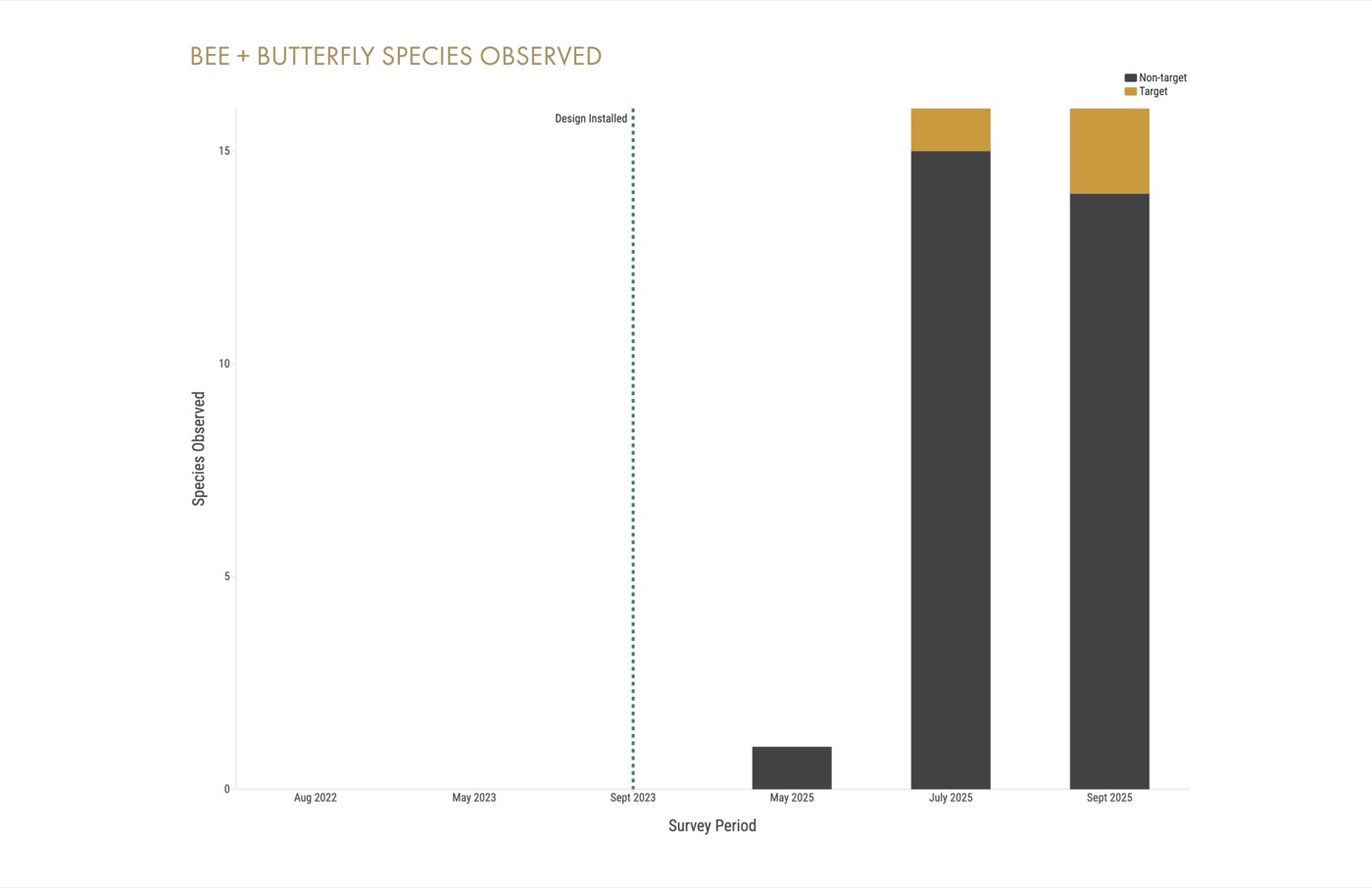
Ongoing data collection at the project site, including citizen science contributions, demonstrates the before-and-after impacts of the design on pollinator species richness, diversity and abundance. To establish baseline biodiversity conditions prior to design, the site was surveyed three times by pollination ecologist Dr. Robert Gegear before any landscape modifications took place. All bee and butterfly interactions with flowering plants were surveyed across the entire design area. Not a single bee or butterfly was observed during any of the the three baseline survey periods.
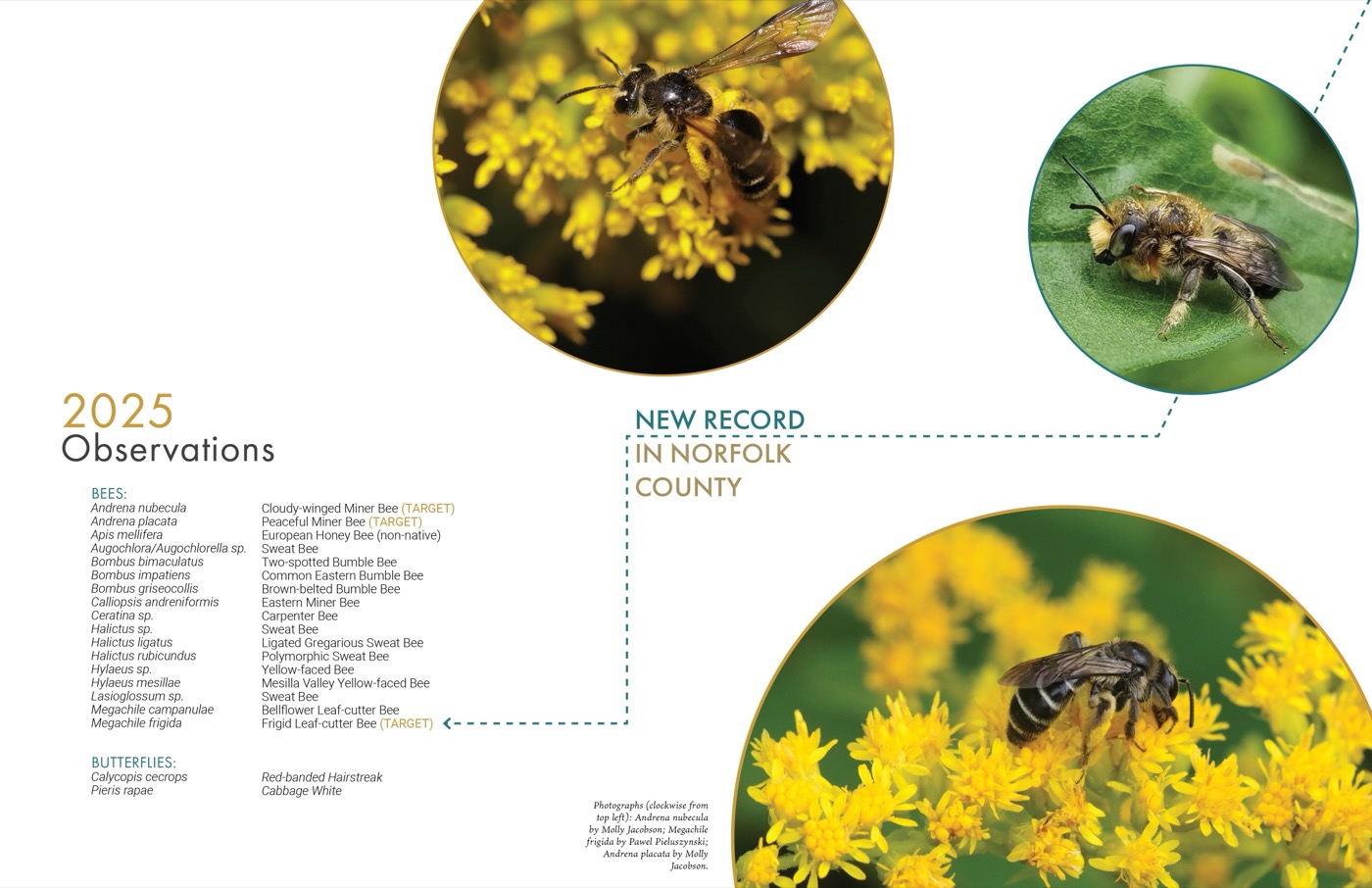
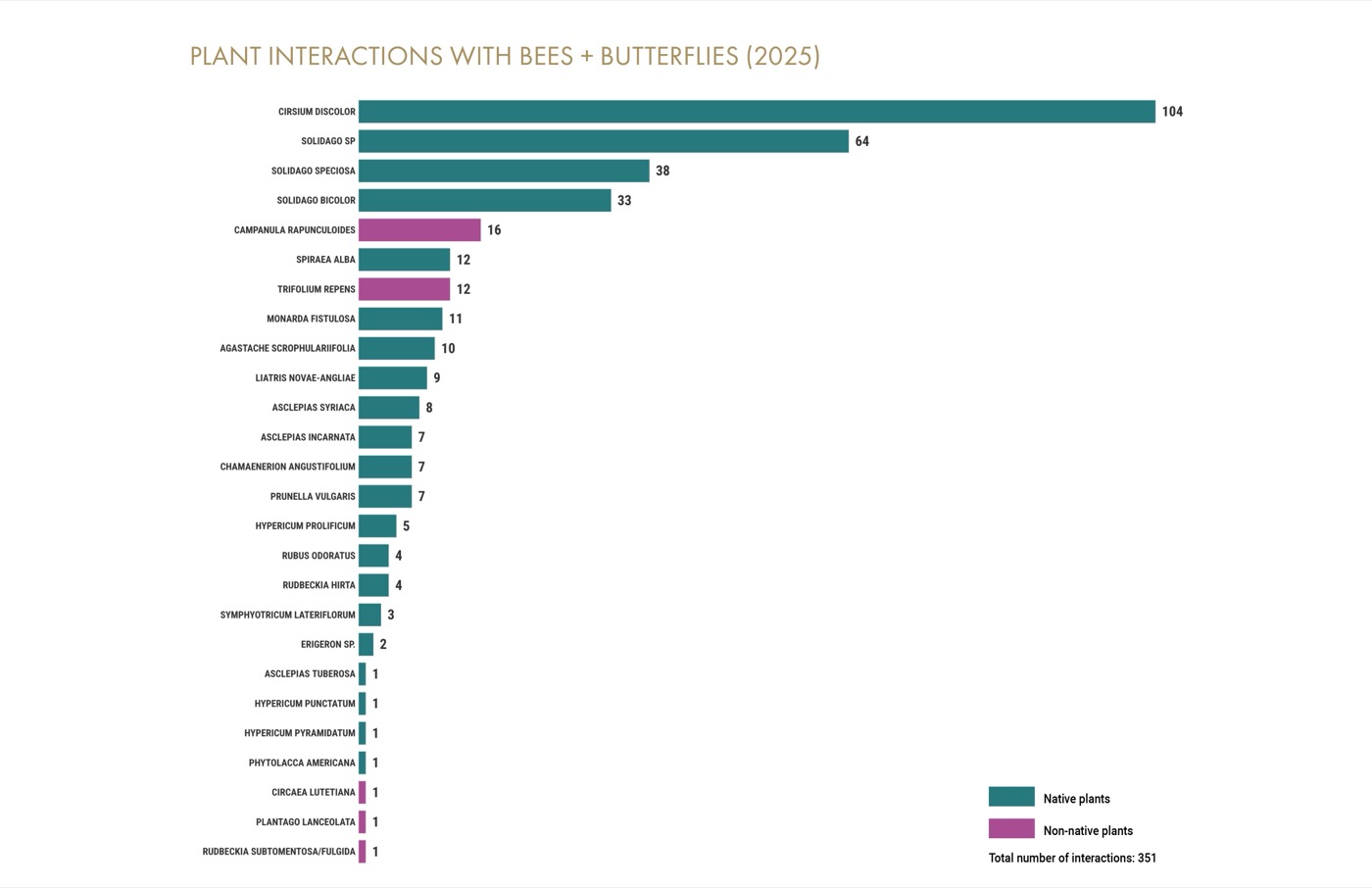
Less than two years following the installation of the design, three follow up surveys were conducted in 2025 by pollination ecologist Molly Jacobson, MSc. All bee and butterfly interactions with flowering plants were surveyed across the entire design area. Twenty-four bee and butterfly species were observed, including three of the target at-risk species, one of which was a county record. A total of 351 observations of bees and butterflies interacting with flowering plants were recorded, 91% of which were with native plant species.
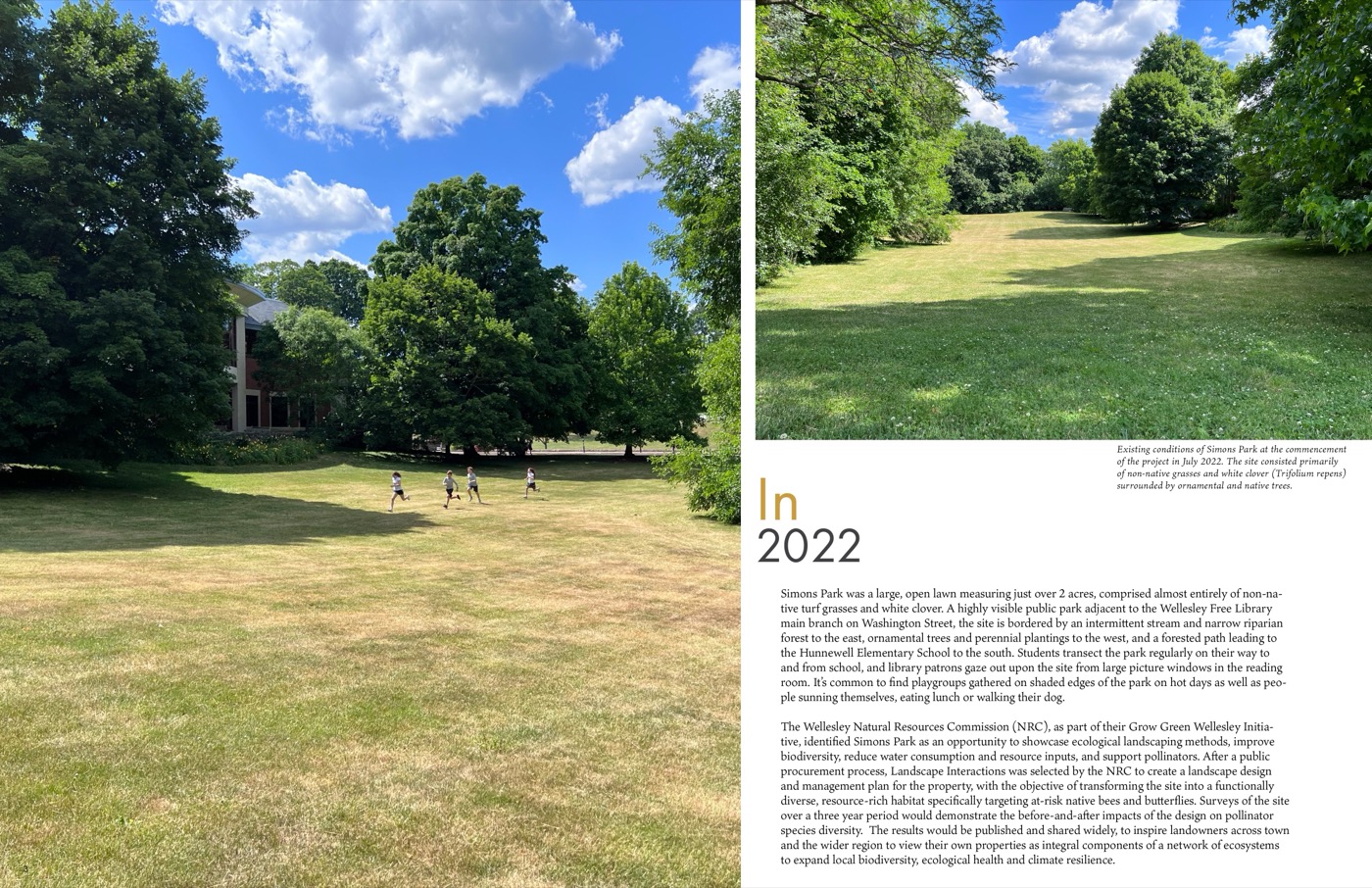
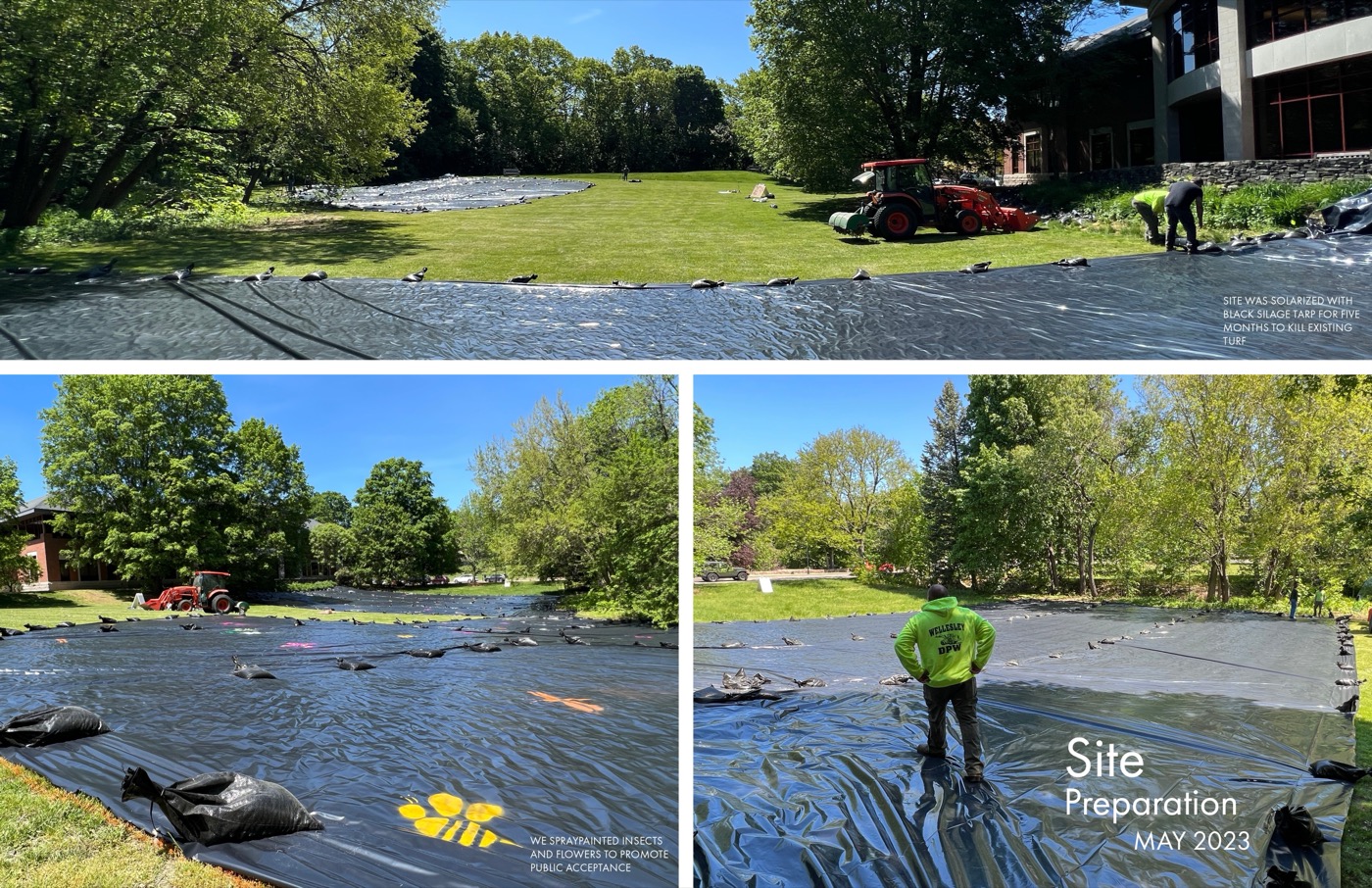
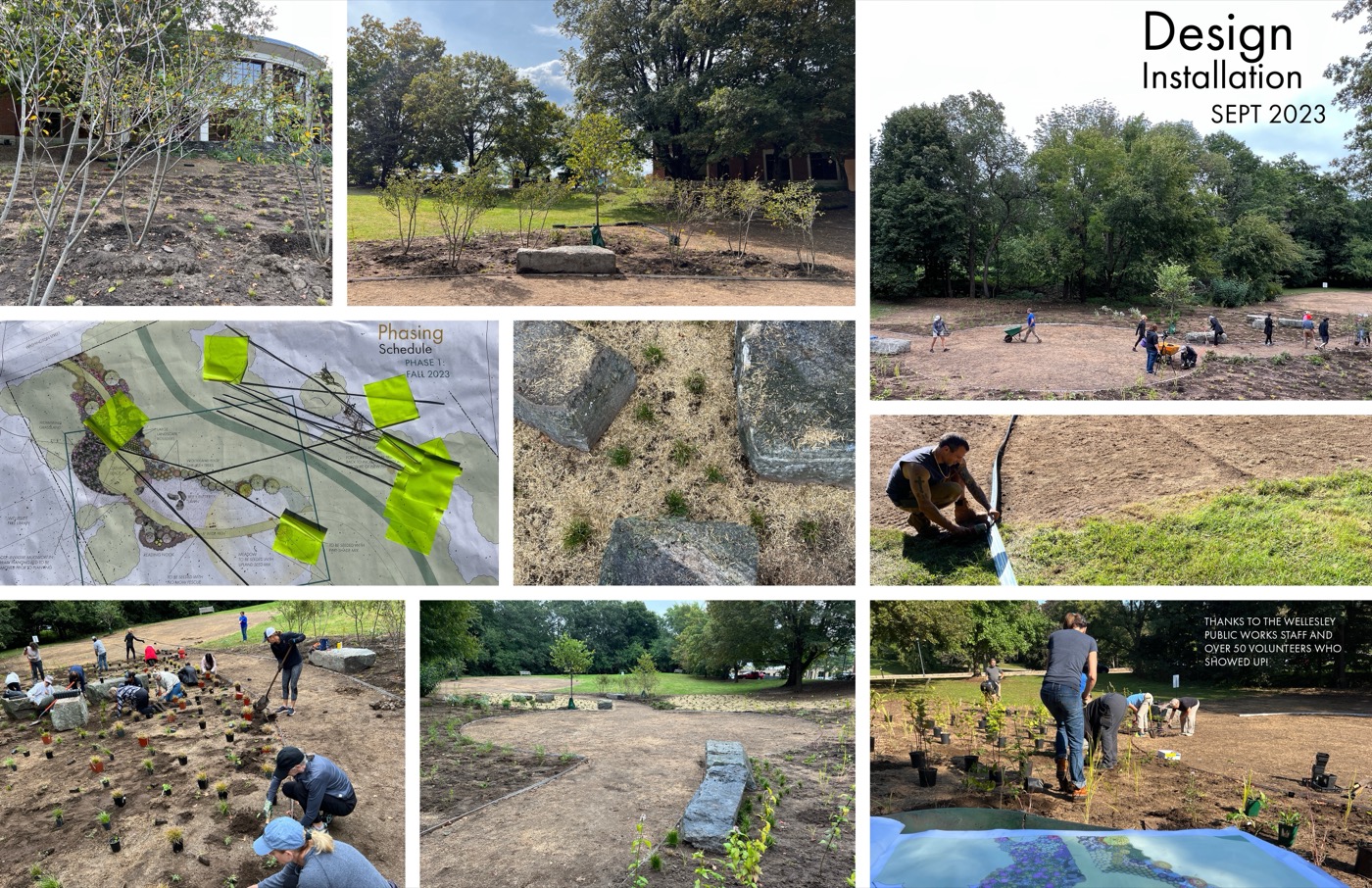
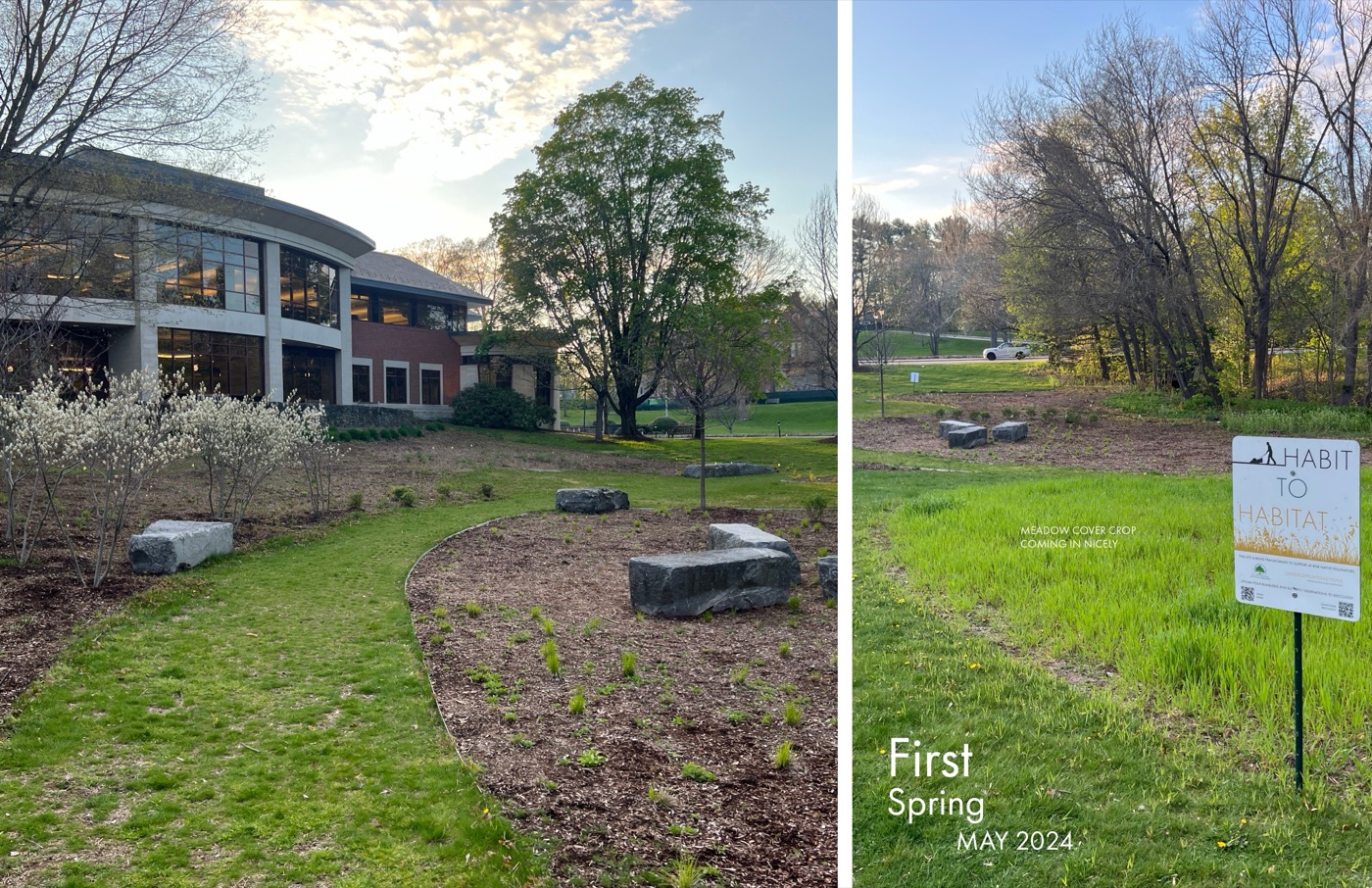
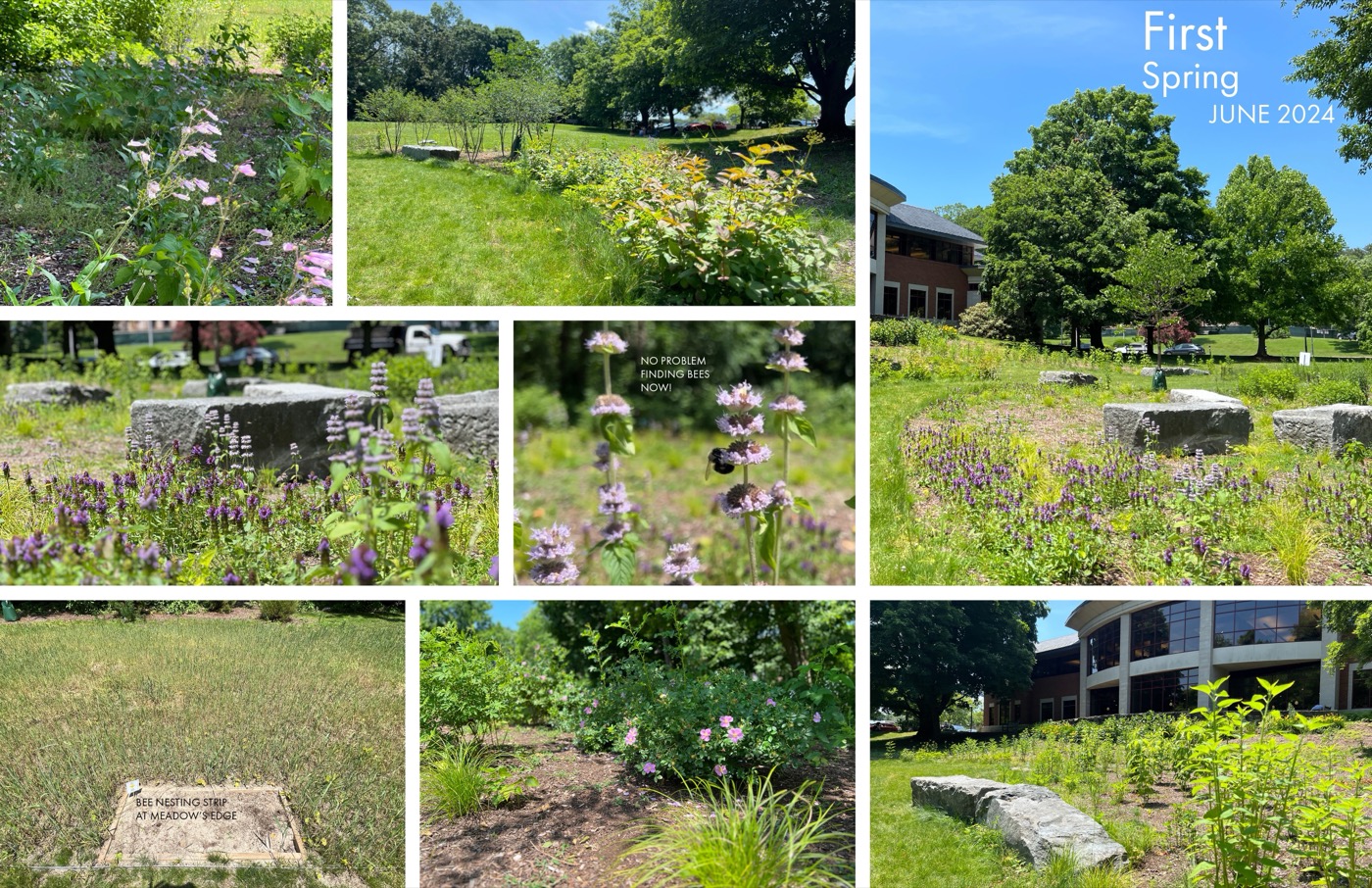
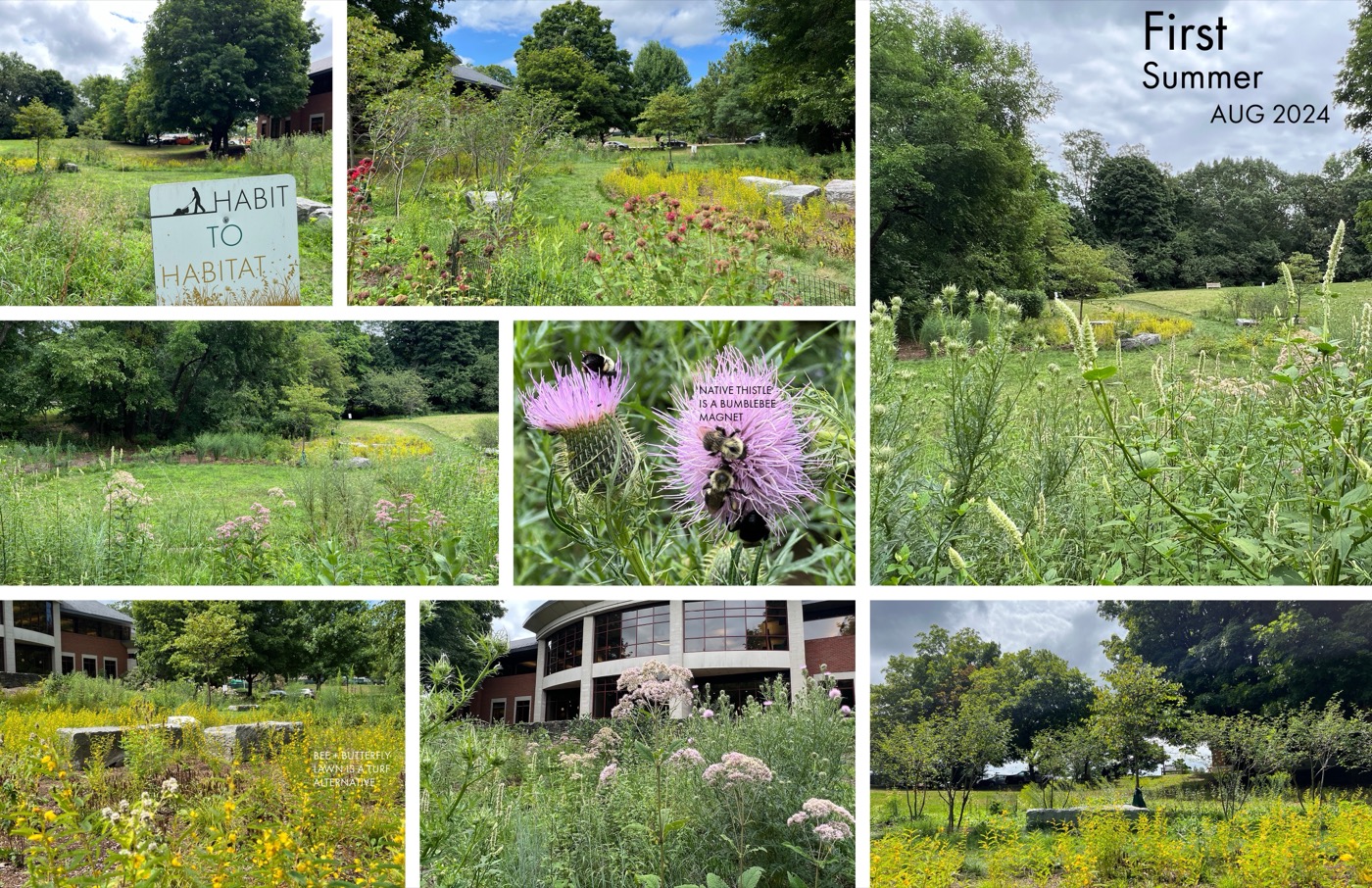
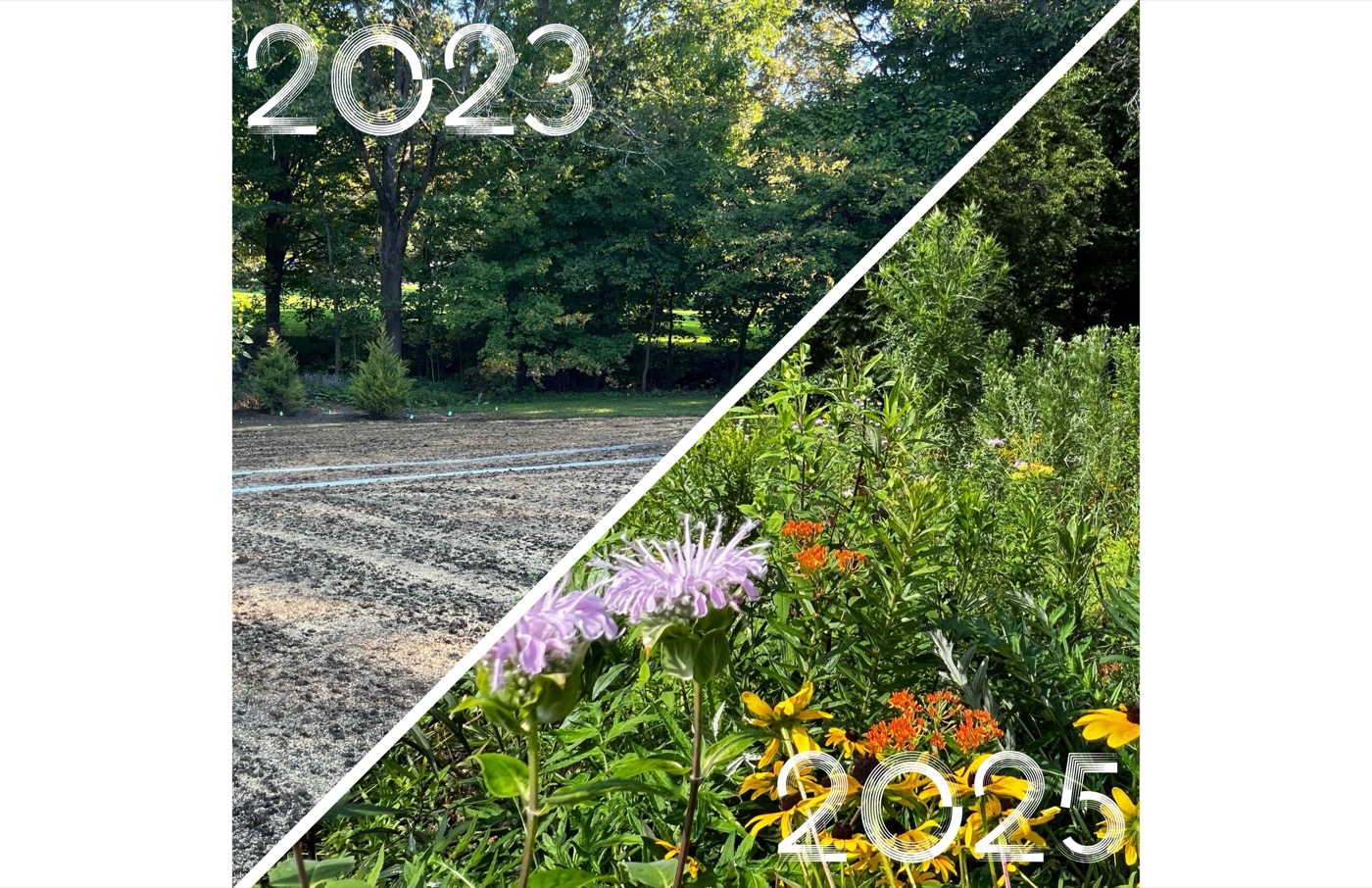
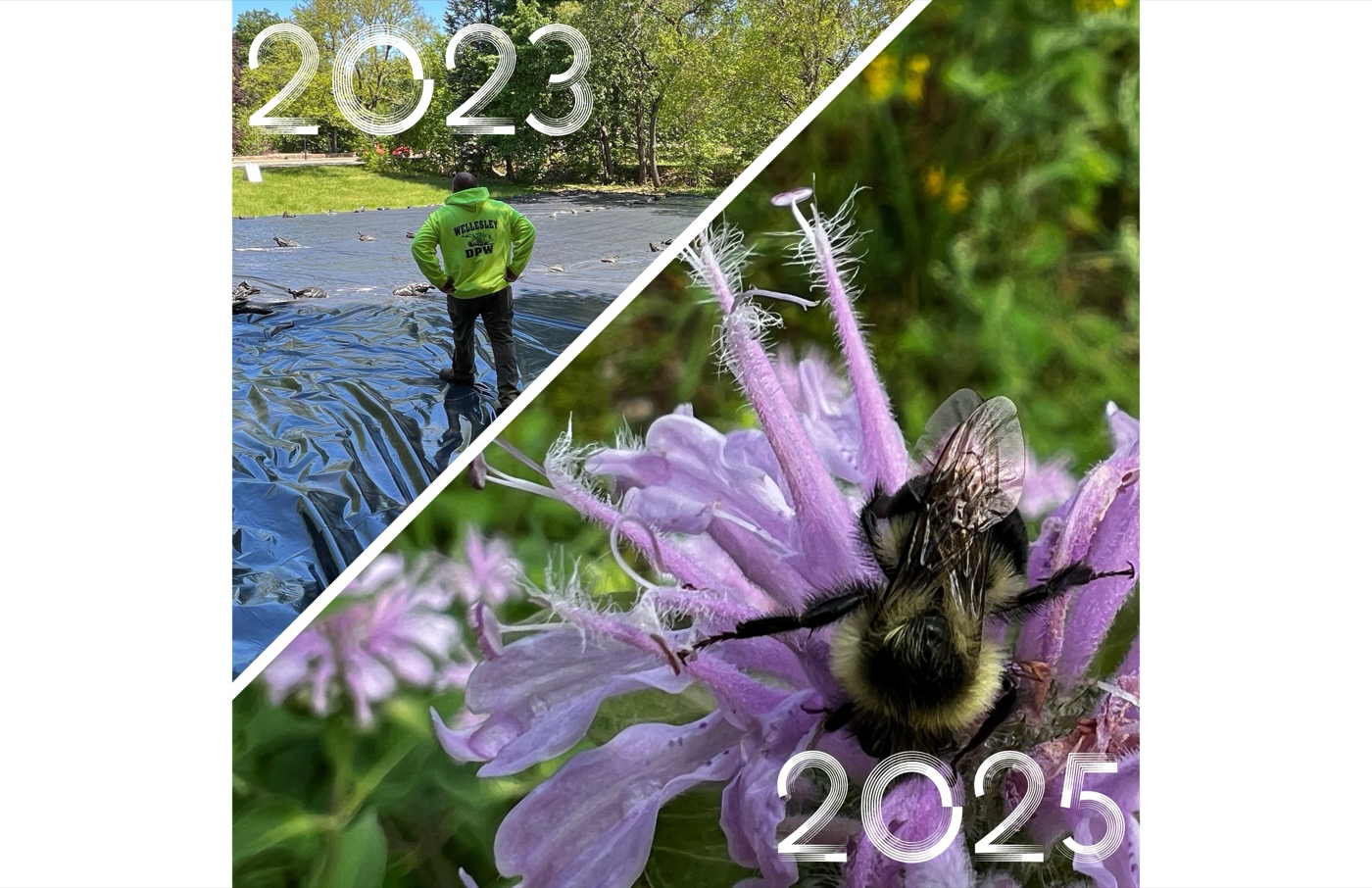
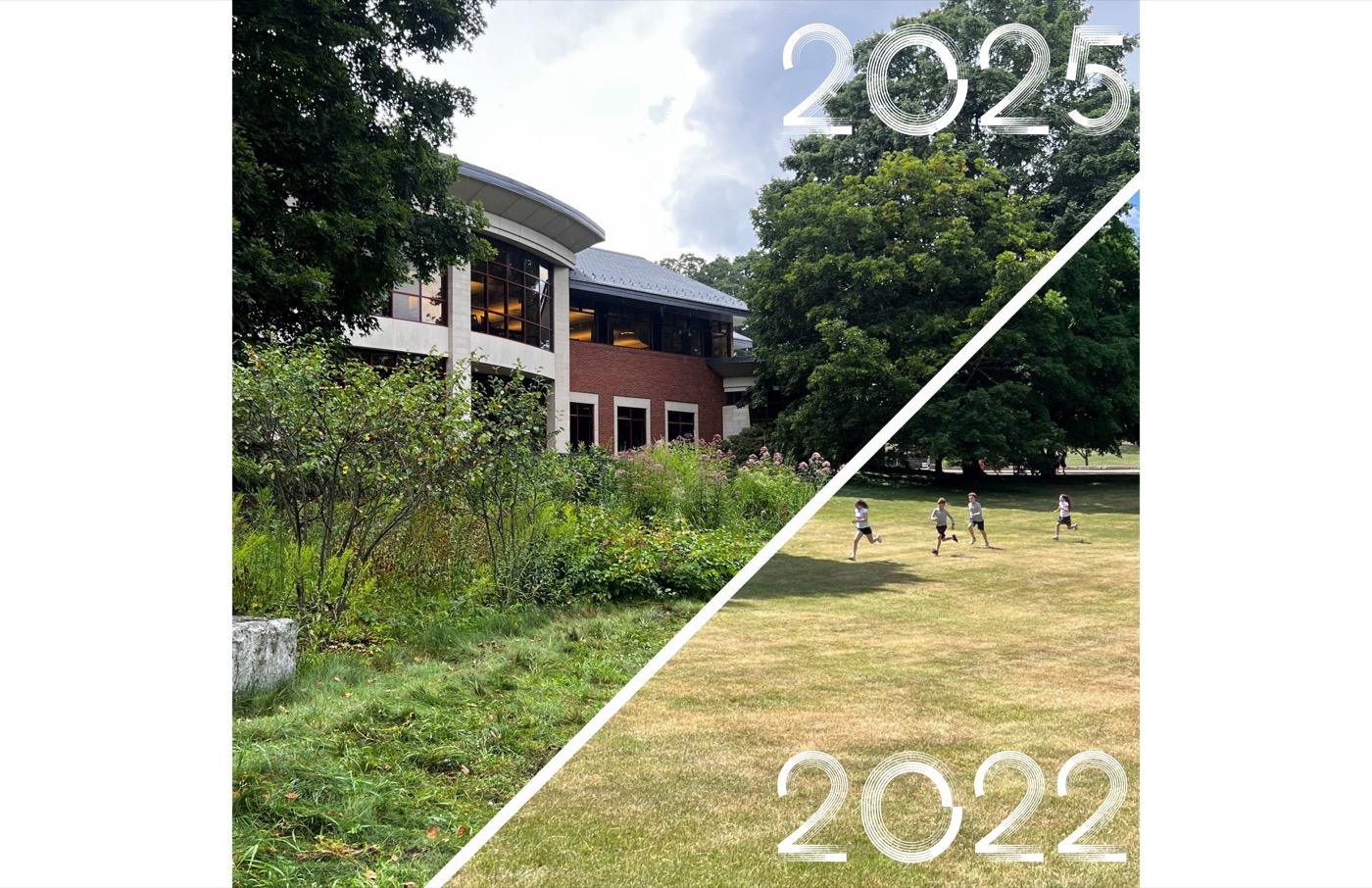
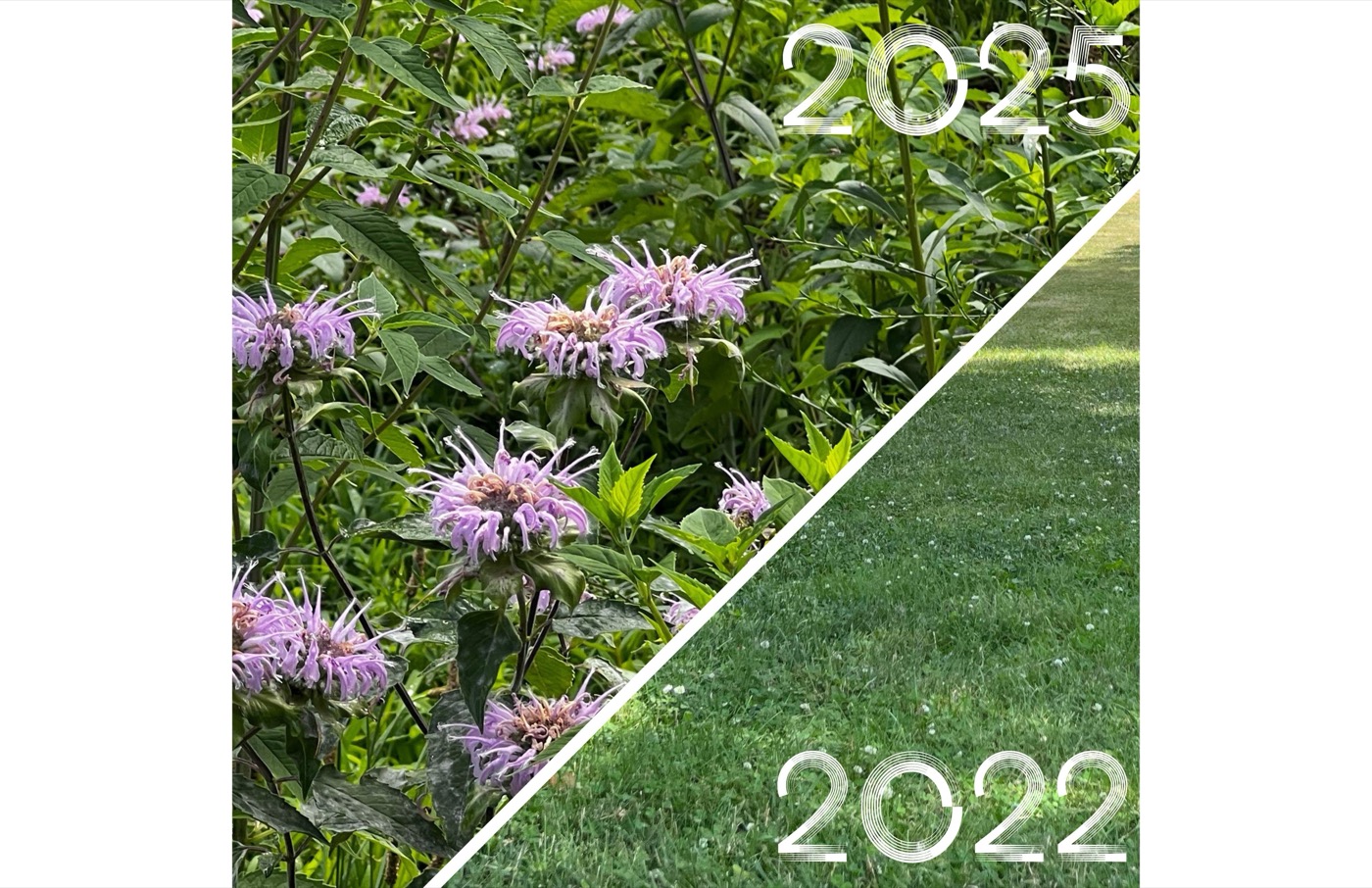
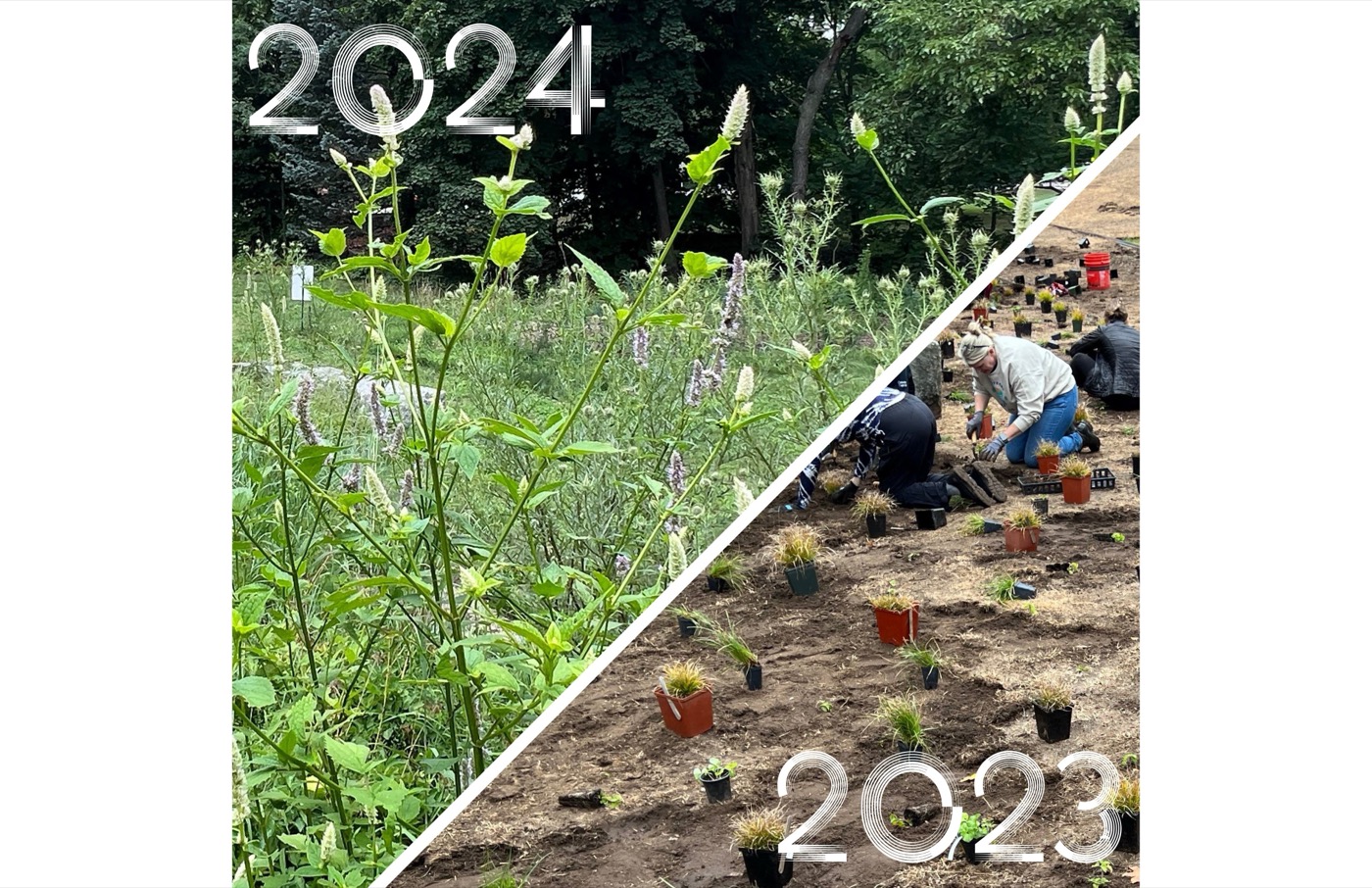
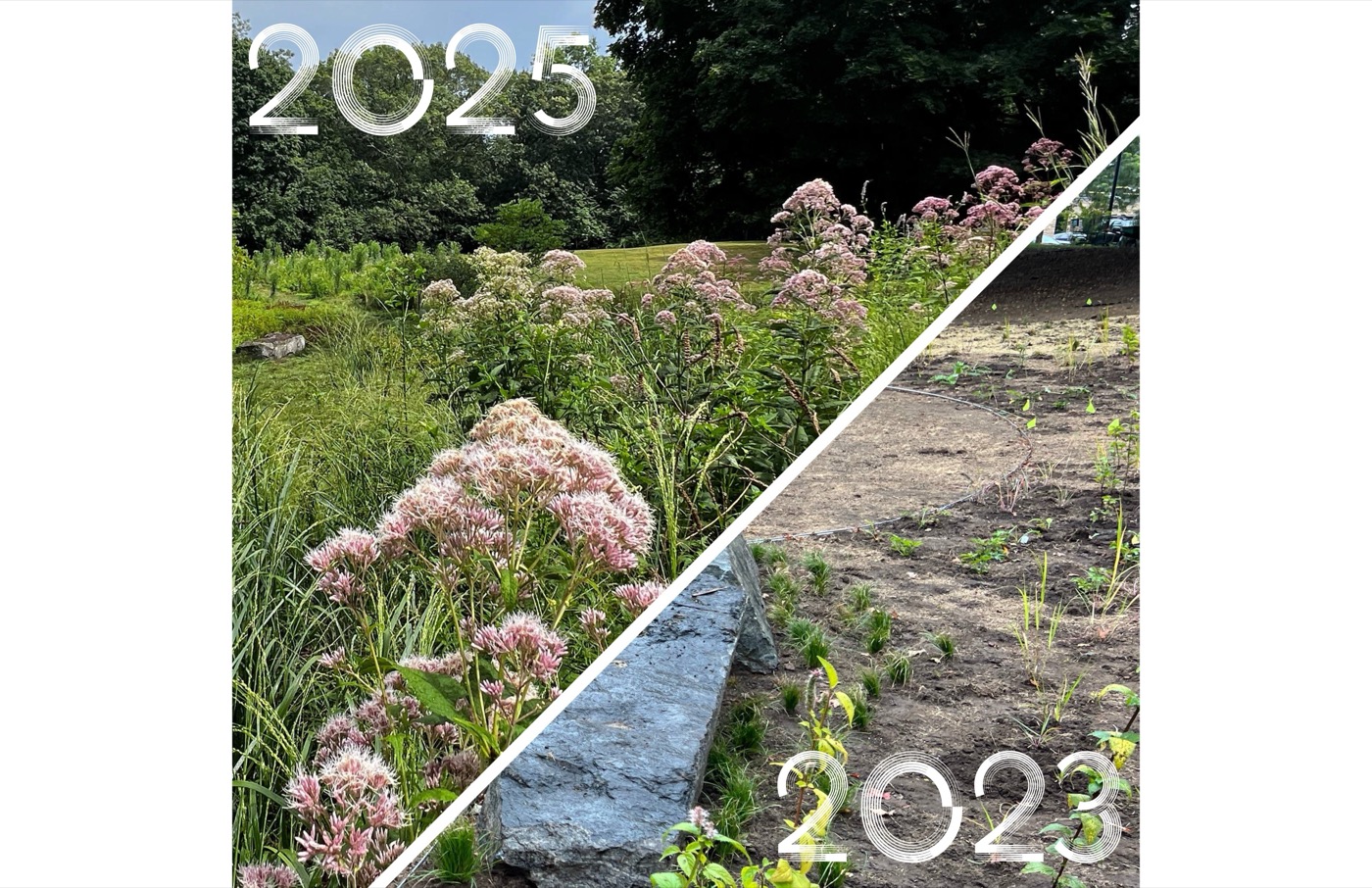
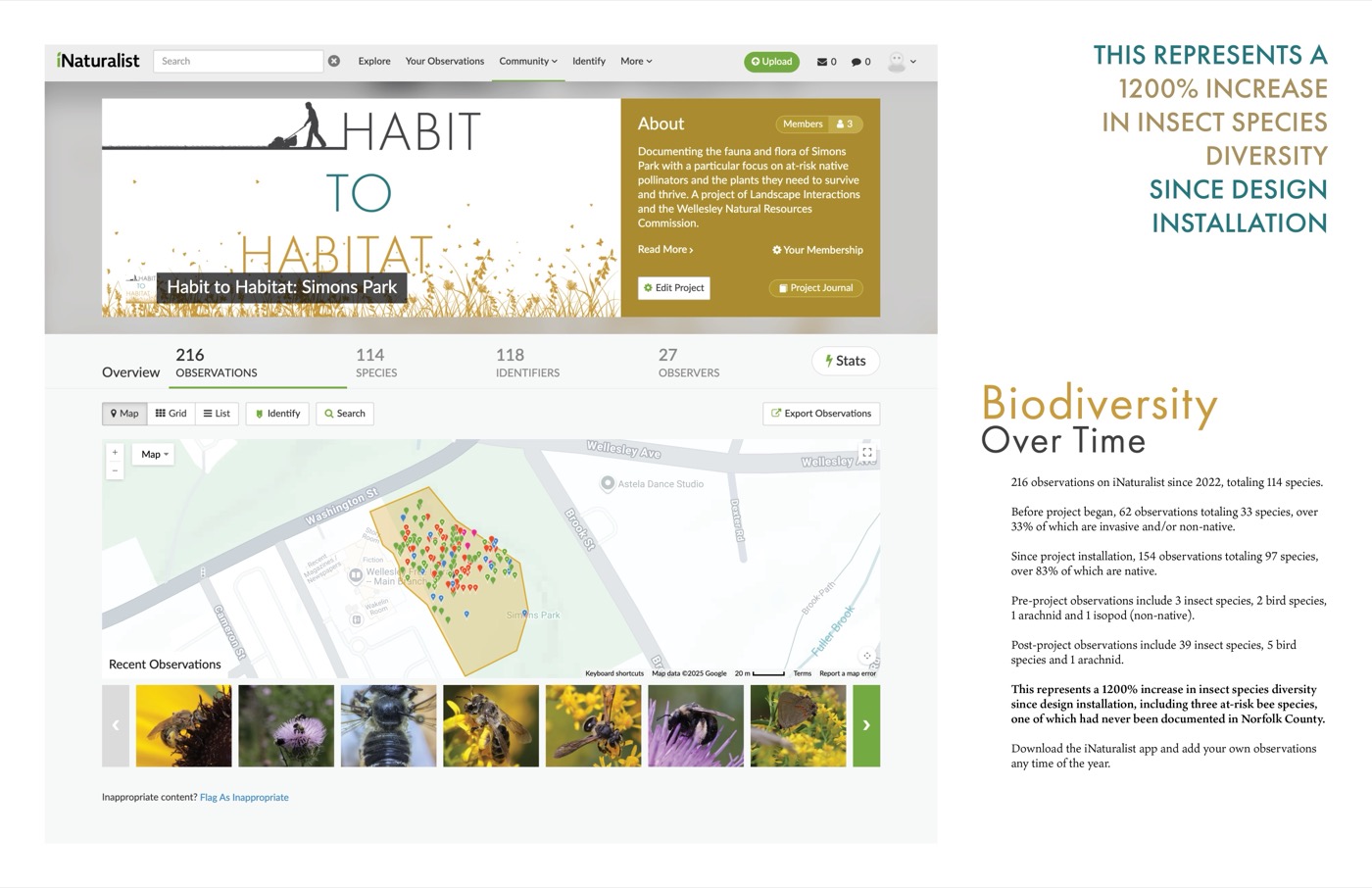
To incorporate observations from citizen scientists and build a more complete picture of the site’s evolving biodiversity over time, we created a project on iNaturalist that is geolocated to the design site and only includes observations that are logged from within the design area itself. Before the project began, 62 observations were logged on iNaturalist from the design site, totaling 33 plant and animal species, over 33% of which were invasive and/or non-native. Since the design’s installation in September 2023, 154 observations have been logged on iNaturalist, totaling 97 plant and animal species, over 83% of which are native.
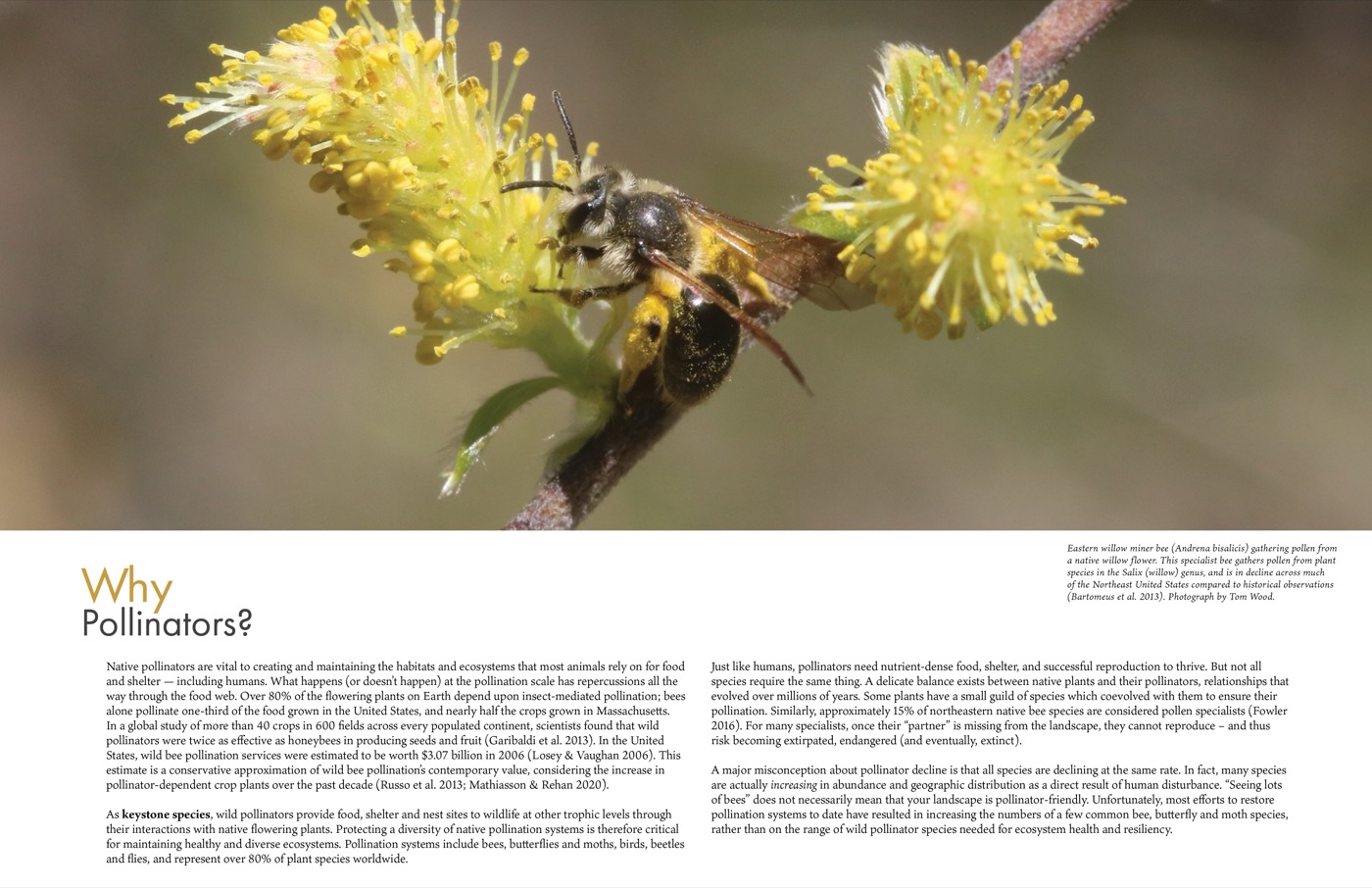
Pre-design observations on iNaturalist include three insect species, two bird species, one arachnid and one (non-native) isopod. Post-design observations include 39 insect species, five bird species and one arachnid. This represents a 1200% increase in insect species diversity on the design site over a two-year period, including three at-risk bee species, one of which had never been documented in Norfolk County, Massachusetts.
Client: Wellesley Natural Resources Commission
Landscape Architect: Evan Abramson, Landscape Interactions
Scientific Consultants: Dr. Robert Gegear, Molly Jacobson, Michael Veit
42.29688924431665, -71.28993948349785
73552


LILA 2026 Sponsor