Haitang River Eco Park II
www.lola.land + www.lola.land/project/haid-campus-landscape
2026 Public Projects / China / Built in 2025 /

![It all starts with nature, and so does the Biotech HQ Science Campus. Guided by its mission to build a stronger future for rural China through cutting-edge agricultural and animal husbandry technologies, the HAID Group has established its headquarters in Guangzhou, Guangdong. To bring this vision to life, HAID Group commissioned LOLA Landscape Architects to […]](https://landezine-award.com/wp-content/uploads/2026/05/lola-landscape-architects-haid-campus-3-3-600x400.jpg "Haid Science Park")
![The LOLA Landsape Architects designed Parkstadroute is a recreational route for cycling and hiking with a total length of approximately 35 kilometres. It runs through IBA Parkstad, a region in the southern Netherlands historically known for coal mining. The route is conceived as a slow, landscape-oriented infrastructure that reveals most distinctive spatial, cultural and natural […]](https://landezine-award.com/wp-content/uploads/2026/04/LLL-20250924-lola-parkstad-route-limburg-1-sanne-creuels-photography-2-600x399.jpg "Parkstadroute Limburg")
![Monumental industrial site
De Meelfabriek is a landmark industrial complex in the city of Leiden, the Netherlands. Covering an area of no less than 55.000 square metres and listed as a national monument, De Meelfabriek is a major redevelopment project. For nearly four decades, Meelfabriek initiator Ab van der Wiel has been the driving force […]](https://landezine-award.com/wp-content/uploads/2025/05/00-LOLA-Landscape-Architects-4-De-Meelfabriek-garden-seating-edge-photo-Studio-Akkerhuis-Corentin-Haubruge-600x400.jpg "The Meelfabriek Garden by LOLA Landscape Architects")
![De Groene Kaap is a nature-inclusive stepping stone in the urban nature network of Rotterdam. LOLA Landscape Architects’ approach to the built environment is centered around creating a nature-based city. A series of courtyards and roof landscape gardens allows people, animals, and plants to thrive in their habitat. With 450 homes spread across four residential […]](https://landezine-award.com/wp-content/uploads/2024/05/00-LOLA-DGK-de-groene-kaap-rotterdam-08-bridge-to-enterance-inner-garden-photo-laurens-kuipers-copy-600x400.jpg "De Groene Kaap")
![Etzenrade Castle Garden publicly opened in September 2021 and has grown into a popular destination for national and international walkers and garden lovers. The public garden holds its name after the castle that once stood on those grounds. Today, visitors can see the ‘Etzenrader Huisken’ (Etzenrader House), a national and provincial monumental building made from […]](https://landezine-award.com/wp-content/uploads/2022/05/00-LOLA-Landscape-Architects-Etzenrade-Castle-garden-600x401.jpg "Etzenrade Castle Public Garden")
![The new adidas World of Sports Campus is a former military airbase that turned into a fresh and future-oriented 14.000 m2 campus. The world-renowned sports brand adidas Group commissioned LOLA Landscape Architects to design its headquarters campus expansion in collaboration with consultants and designers. The ambition is to immerse employees and visitors into the sports […]](https://landezine-award.com/wp-content/uploads/2020/05/00-ADI-LOLA-image-06-red-star-arena-©-Hanns-Joosten-600x400.jpg "Adidas World of Sports Campus")
![LOLA landscape architects is an office for progressive landscape architecture. The name LOLA is an abbreviation of LOst LAndscapes, which symbolizes our focus on spatial optimization of existing cultural landscapes, while embracing and using their local particularities and re-establishing them as strong features for the future. With thoughtful ideas and targeted interventions, LOLA wants to […]](https://landezine-award.com/wp-content/uploads/2022/05/POR-20170330-office-team-photo-bw-600x397.jpg "LOLA Landscape Architects")
![LOLA Landscape Architects, TALLER and L+CC won the international competition for a 600 hectare forest and sports park in Guang Ming, Shenzhen, China. The forest and sports park is to become a destination for the Big Bay area. As this metropolitan region finds its success in innovative industries, the park focuses on innovation in sports […]](https://landezine-award.com/wp-content/uploads/2021/05/00-LOLA-TALLER-LCC-forest-sports-park_main-photo-600x400.jpg "Forest Sports Park Shenzhen")
Haitang River Eco Park: A Tropical Ecotopia at 18°N
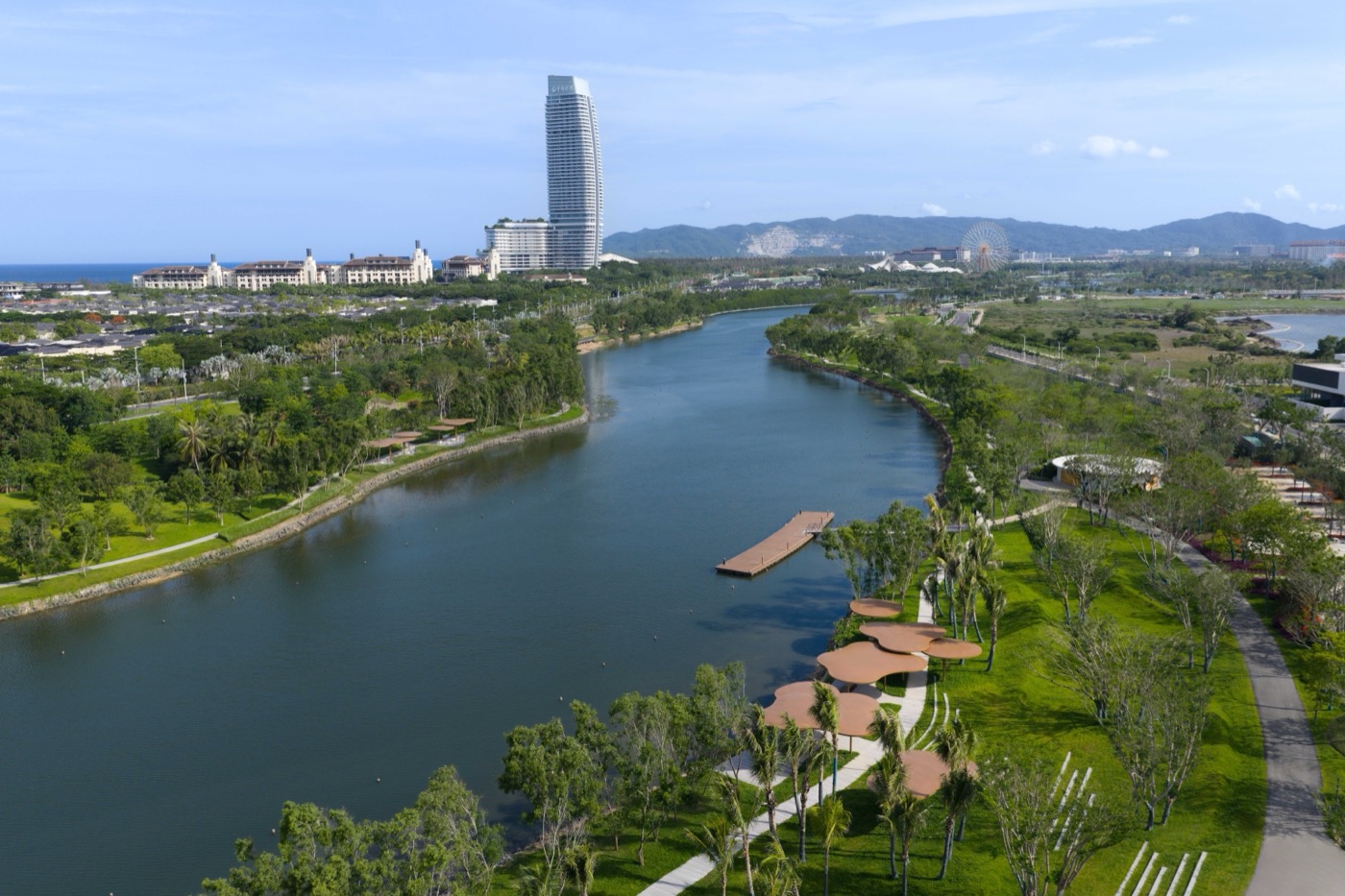
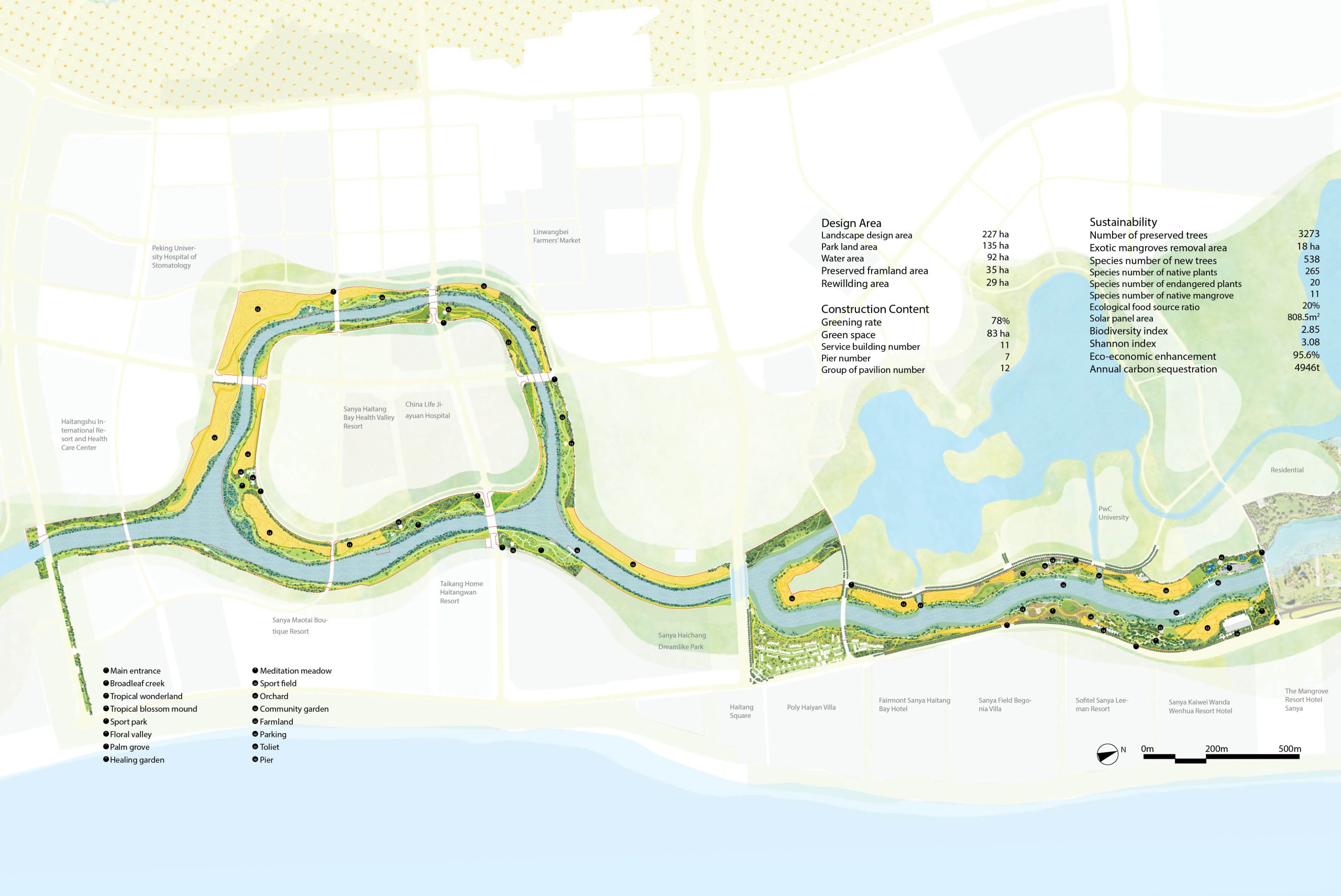
Haitang River Eco Park is a visionary masterplan located just inland from Haitang Bay in Sanya, a nationally recognized tourism destination. The project transforms nearly 14 km of former industrial riverfront into a thriving tropical ecological corridor. As Asia’s first urban rewilding initiative, it integrates three core strategies—ecological restoration, biodiversity conservation, and public engagement. Rich rewilded landscapes now span the riverbanks, offering a replicable model for harmonizing urban expansion with ecological resilience.
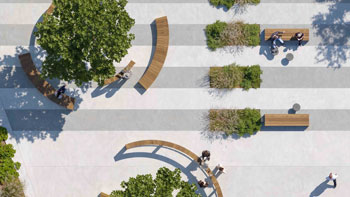
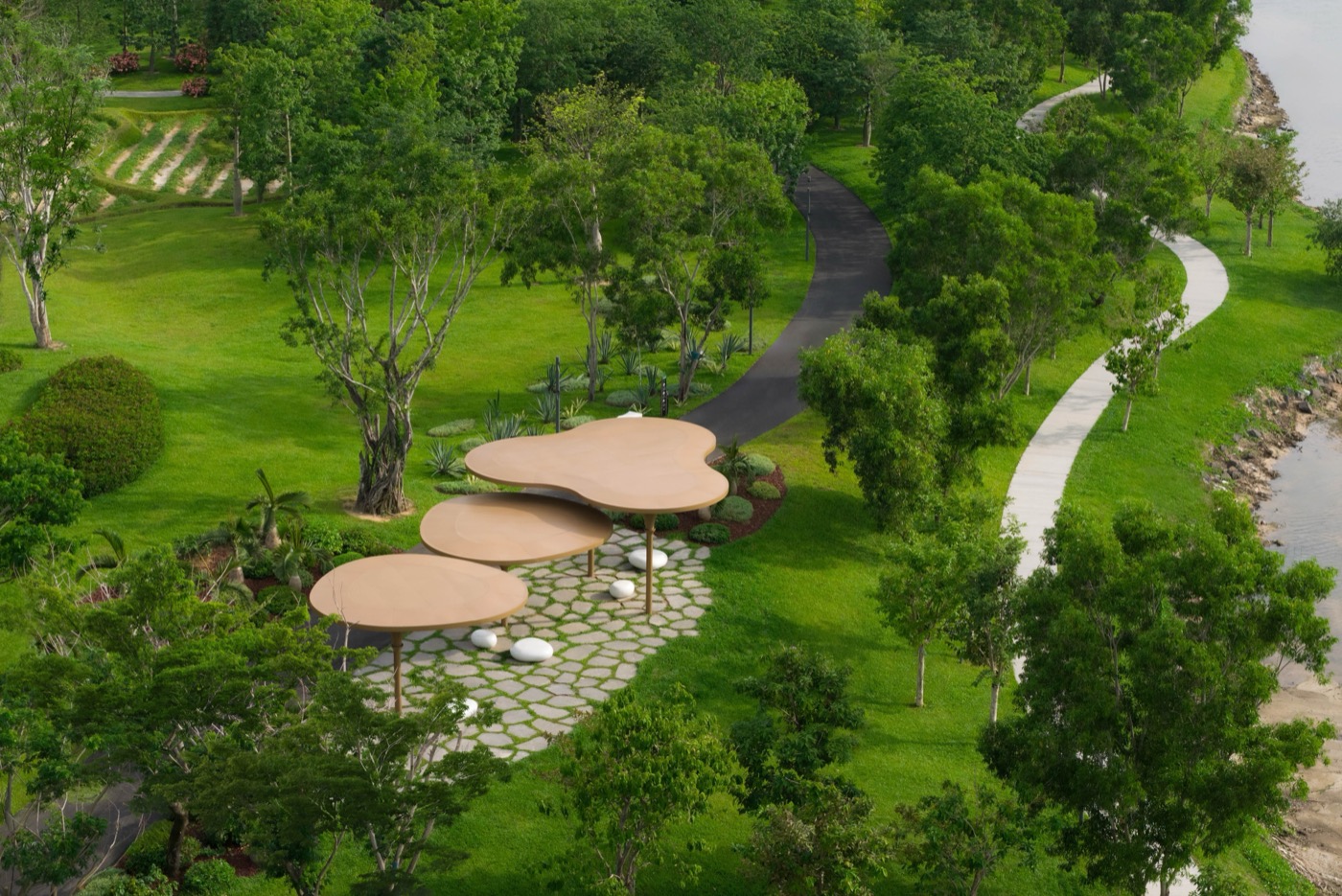
To achieve a sustainable balance between nature and human activity, the river and its slopes are approached as one sculptural entity. While nature itself sculpted the site originally, agricultural and urban development had lead to its degradation. The project resculpts the river with respect to natural processes. It is a sculpture that gives space for the river to breathe, for the tides to take space, for the rainwater to flow, the plants to blossom, the animals to thrive, and the people to enjoy this spectacle of nature. The landscape design follows a simple set of rules, based on knowledge of ecology, water management and microclimate. They support the river as a healthy, living system and shape the area into an attractive destination.
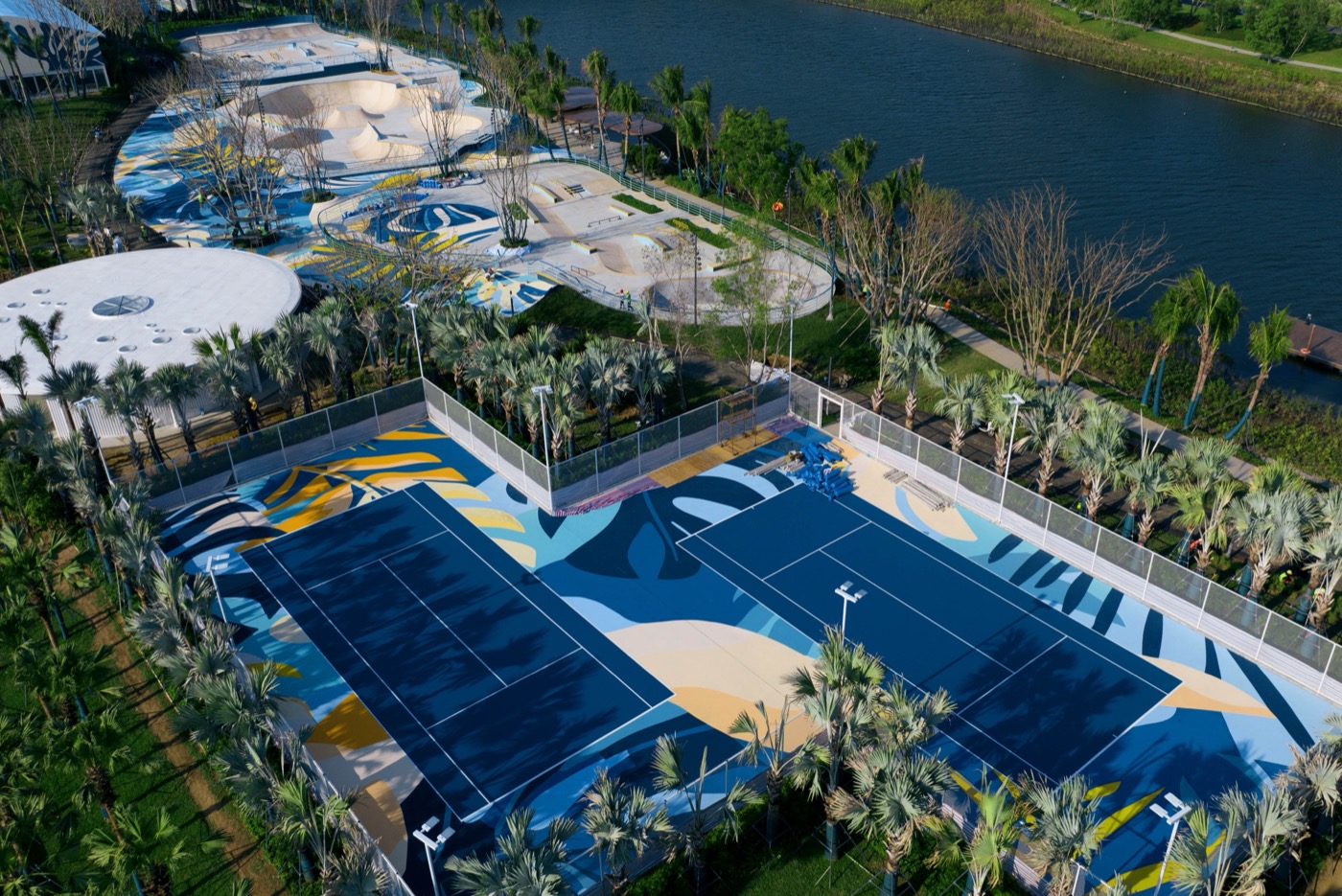
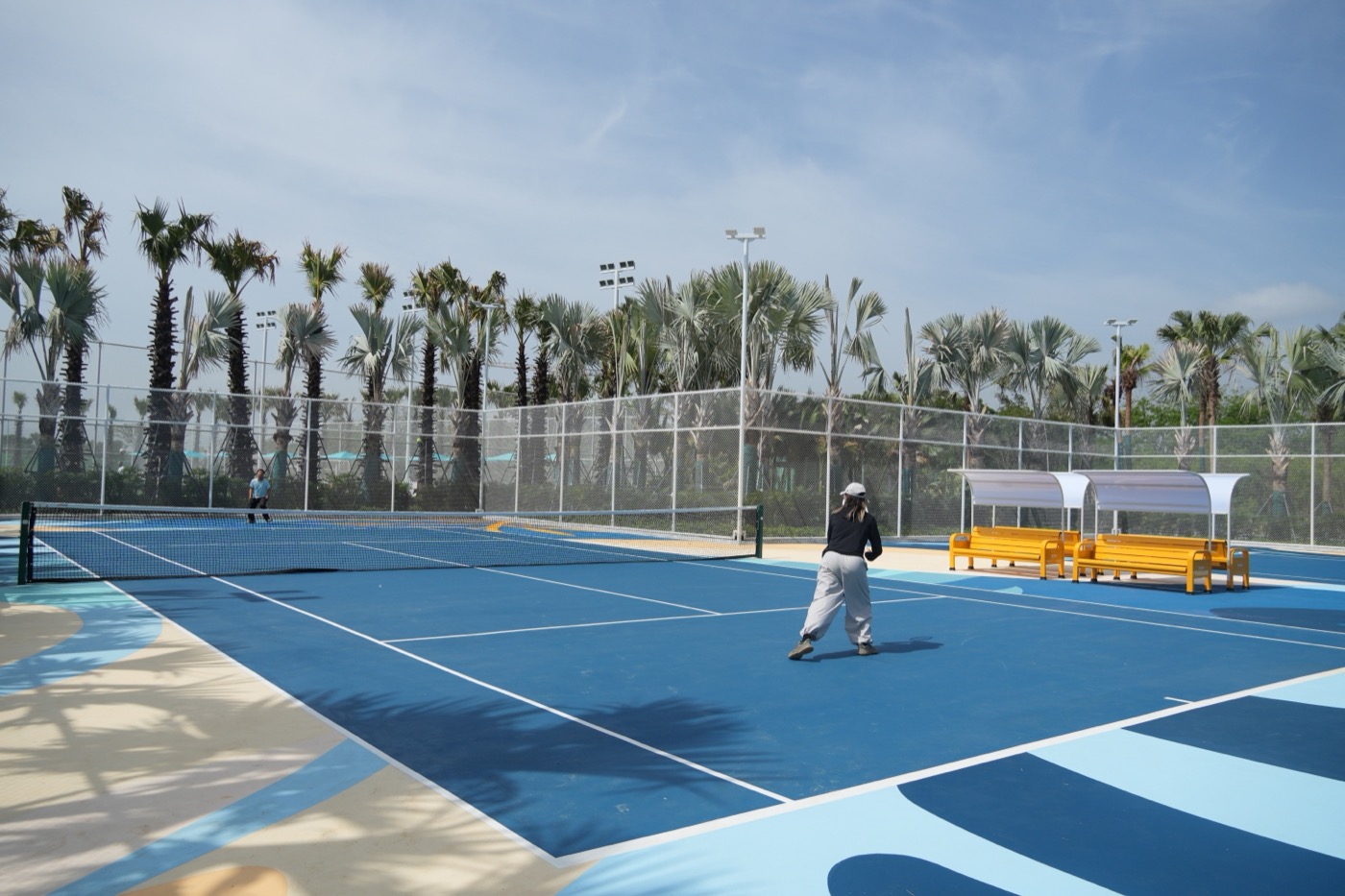
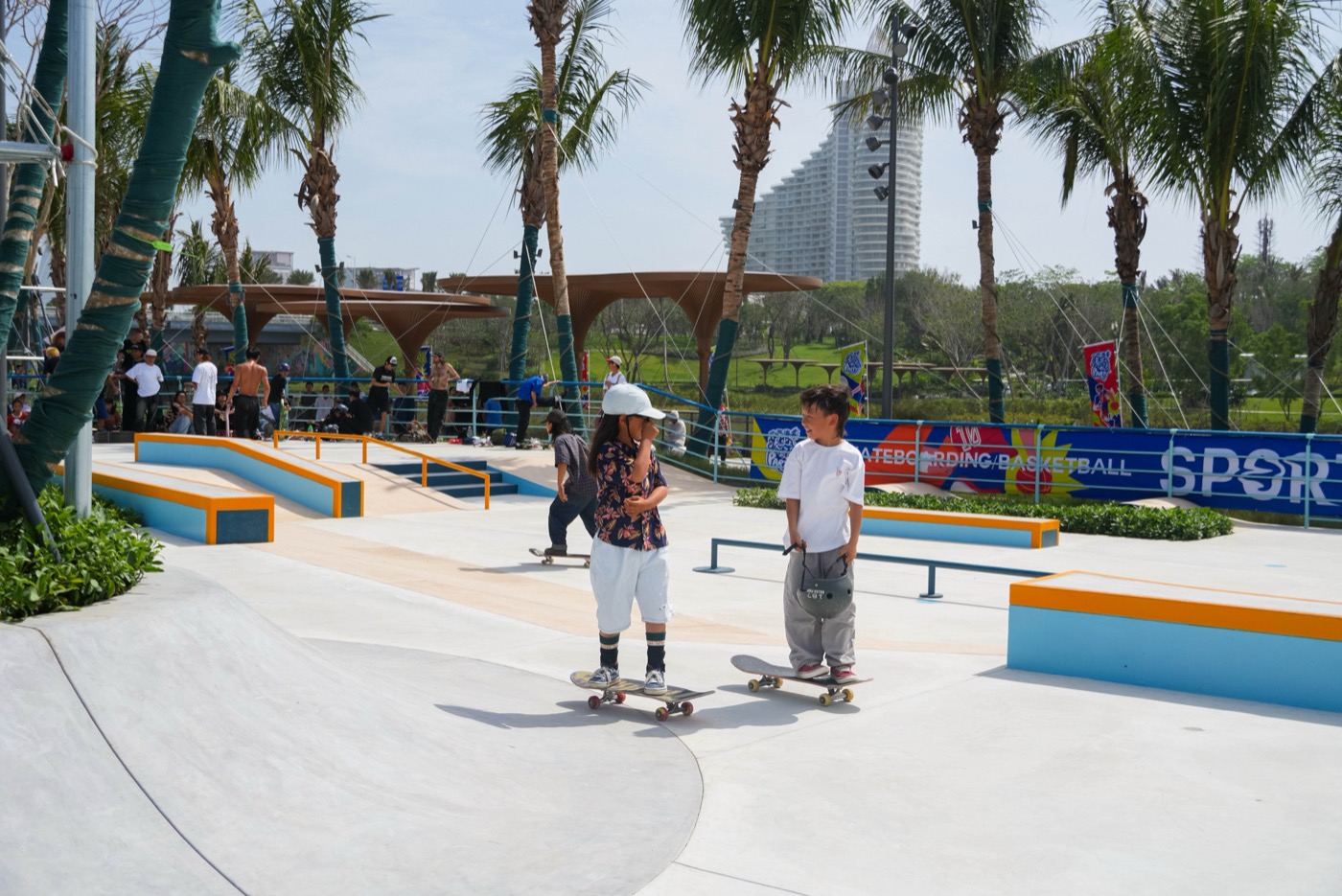
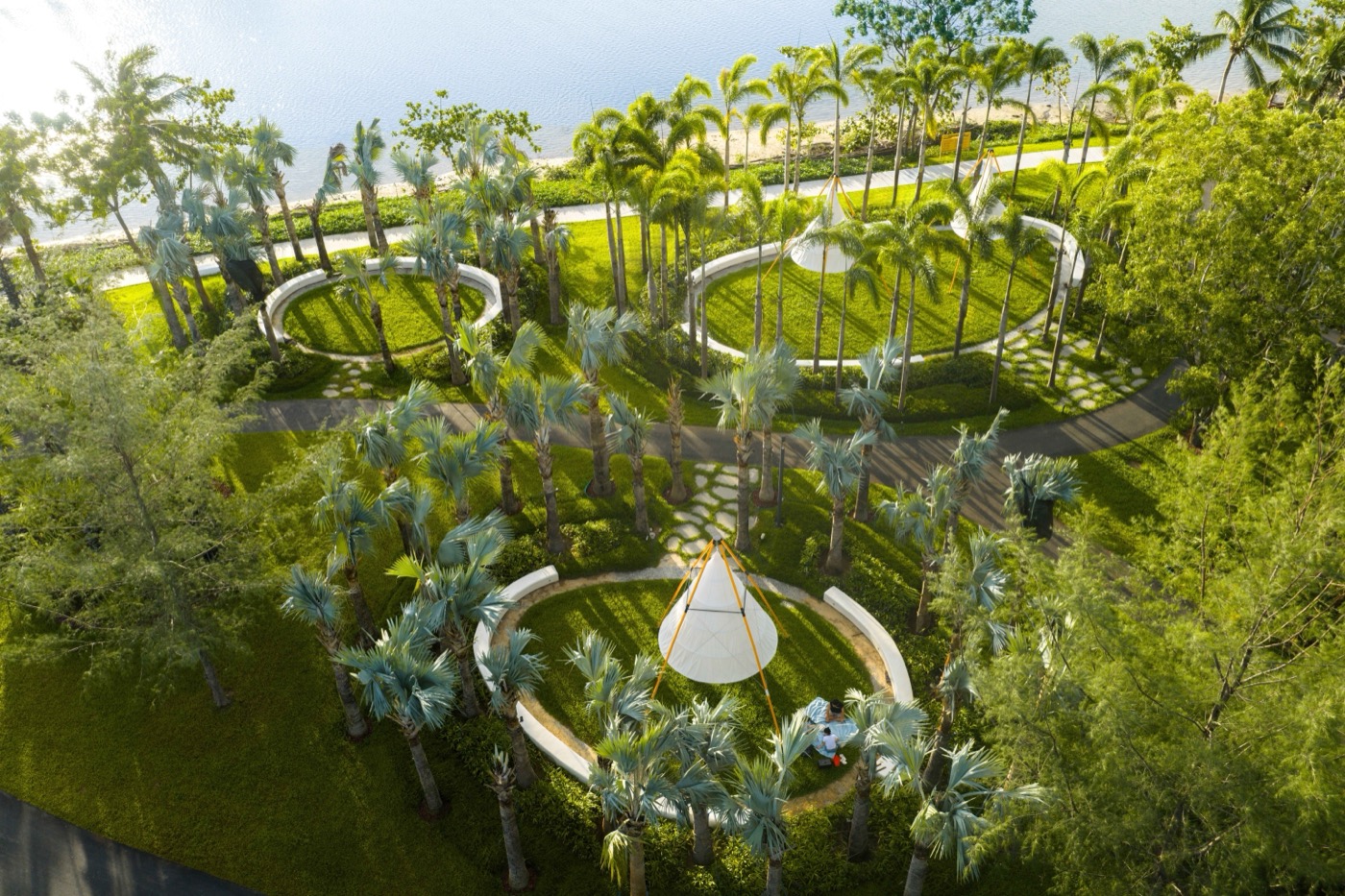
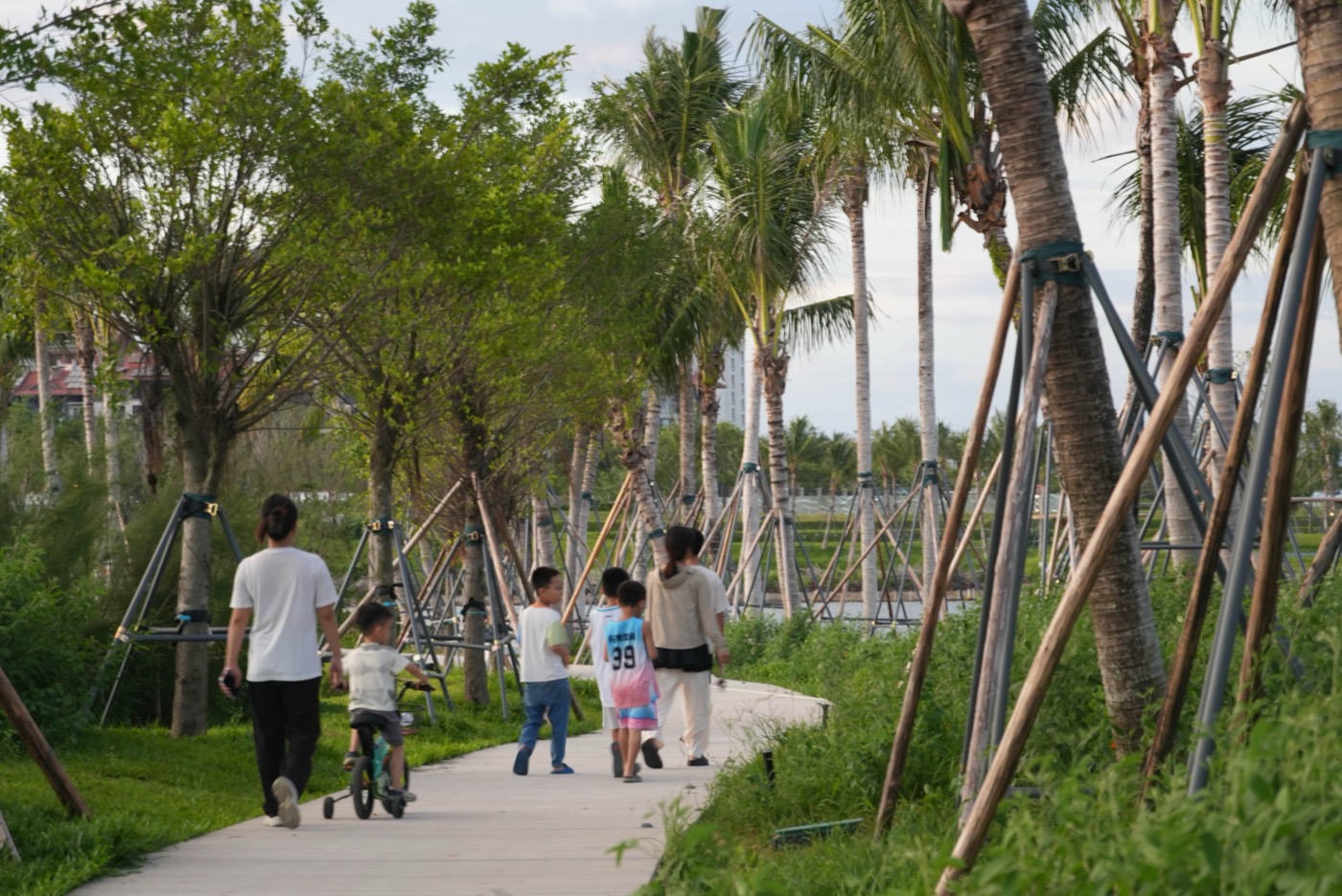
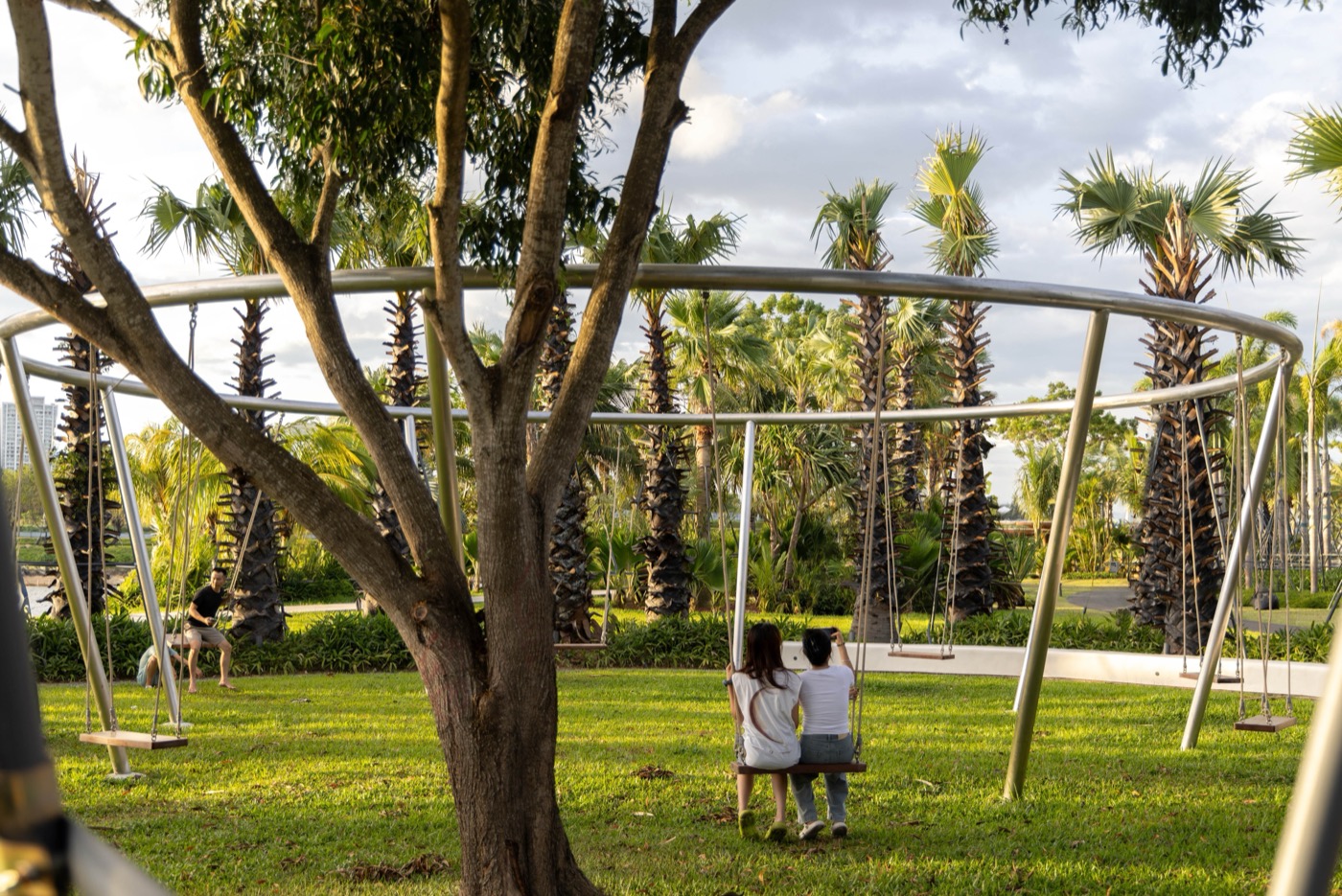
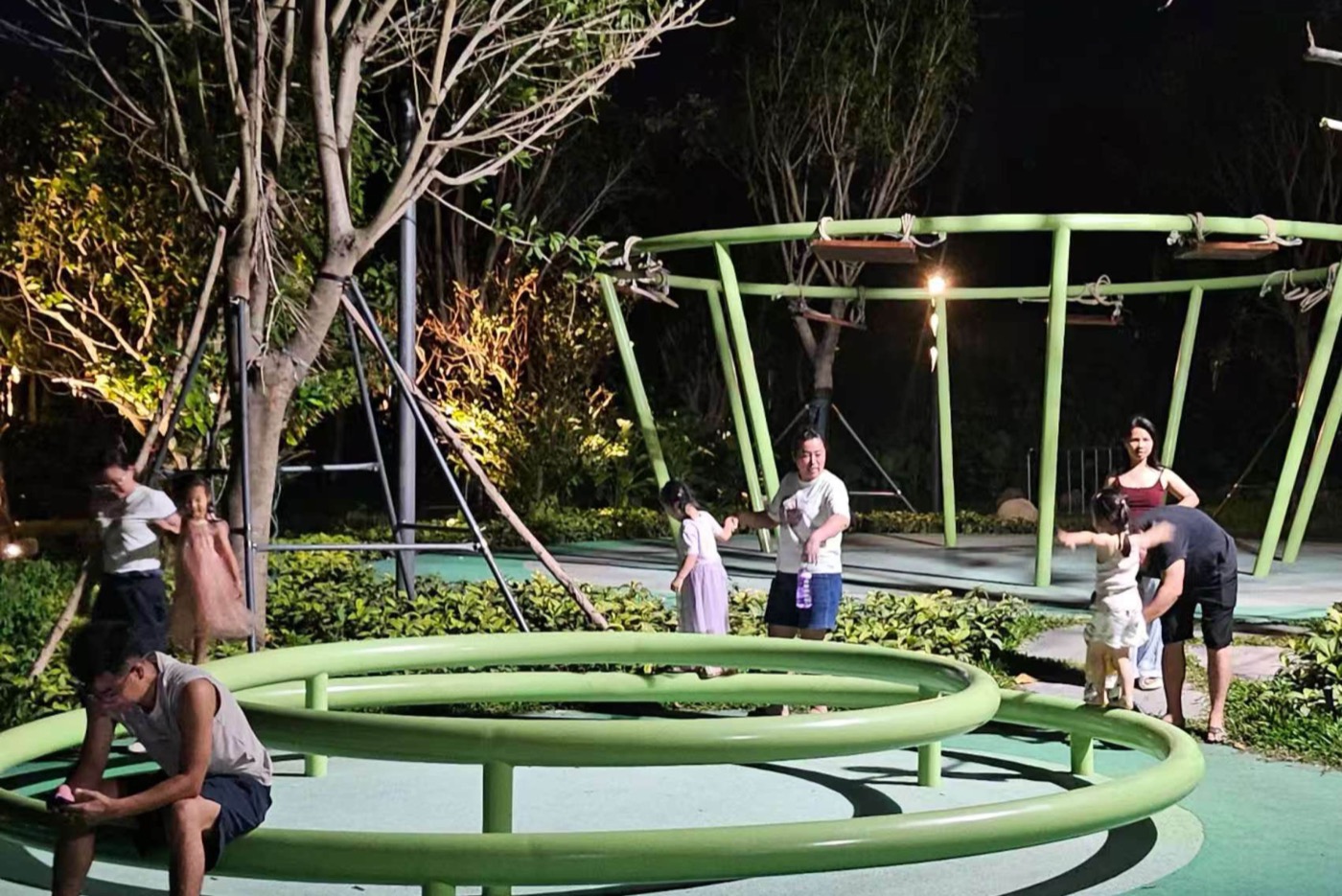
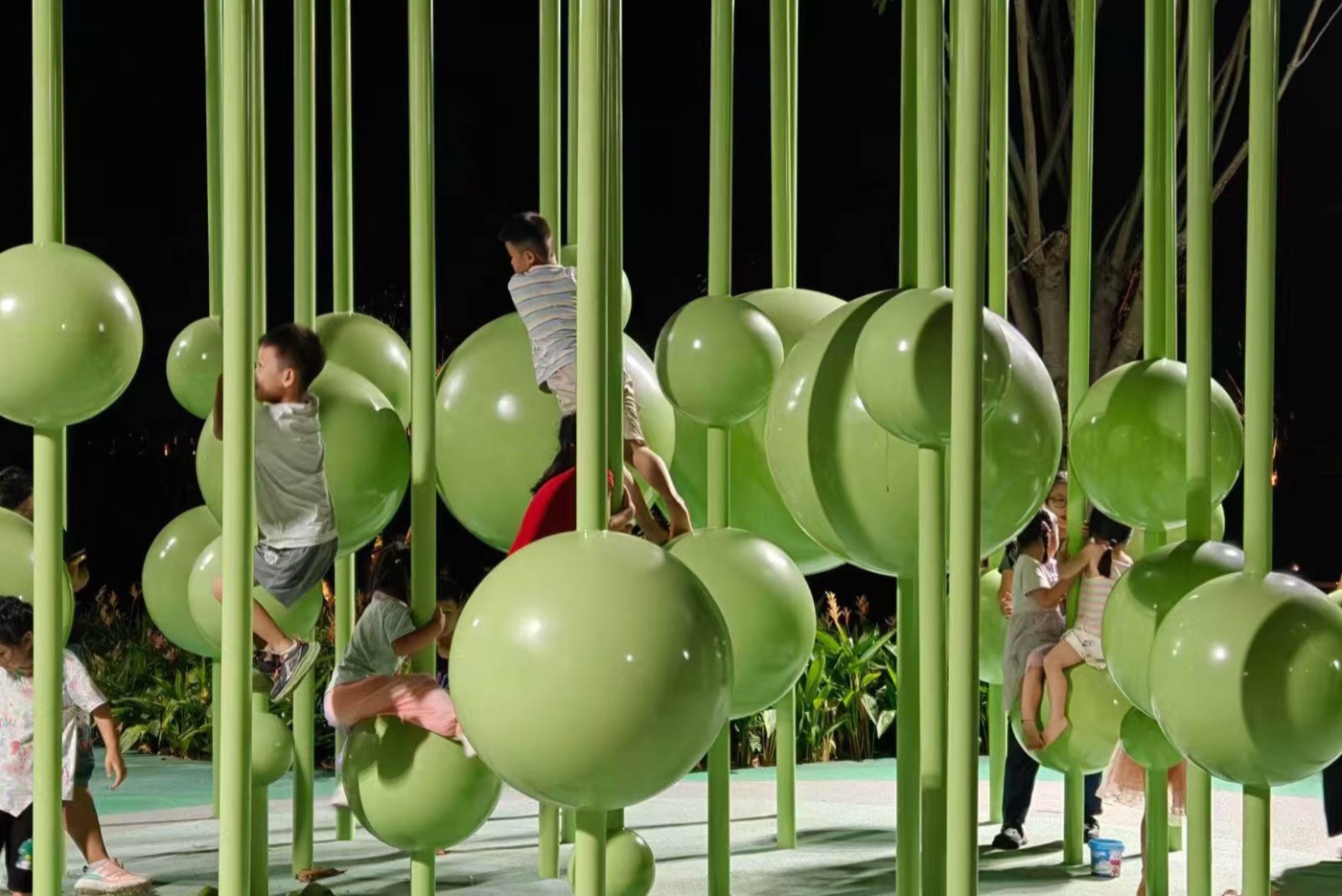
Ecological Design & Rewilding Practice
Polluted lands are revitalized through innovative ecological engineering. Native leguminous trees rehabilitate depleted soils through their symbiotic mycorrhizal fungal networks, naturally detoxifying contaminants and replenishing fertility. A 29-hectare rewilding zone employs low density planting and seed broadcasting to establish six indigenous plant communities—Meliaceae groups, tropical fruit forests, coastal plains, flowering woodlands, native figs, and tropical palms—restoring biodiversity while minimizing construction and maintenance costs. By removing invasive mangrove species and reintroducing native ones, the original habitat has been reestablished. These restored mangroves not only enhance flood resilience but also serve as vital nurseries for diverse fish and birds species.
Living Tropical Habitat Museum
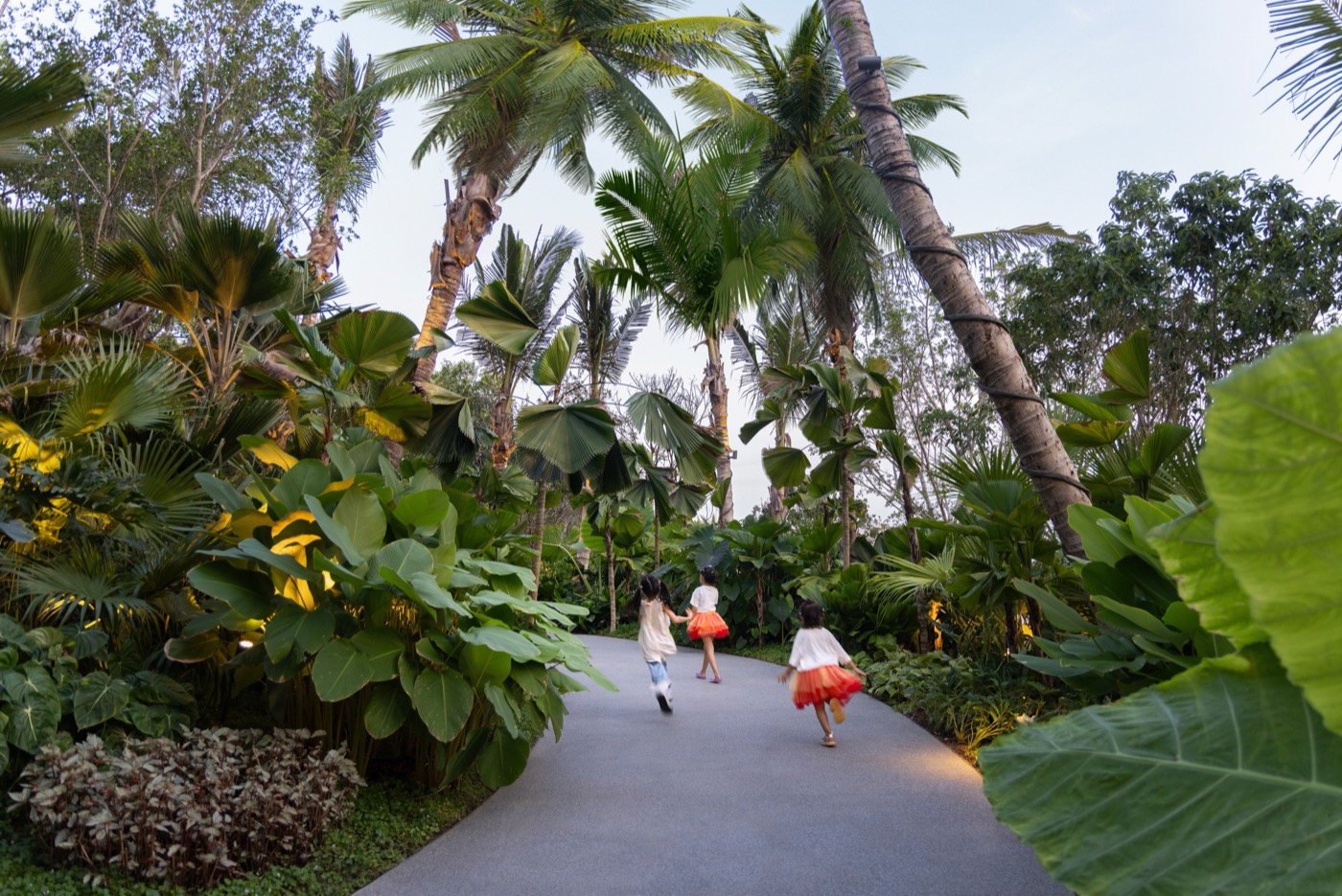
Ecological initiatives have fostered rich biodiversity along the river corridor. Over 380 plant species—69 percent native to Hainan—now thrive across a mosaic of wetlands and forests. Endangered and protected species are safeguarded in dedicated conservation zones, where companion plantings ensure robust genetic exchange. Seasonal nectar gardens attract 40+ butterfly species, rejuvenating pollinator networks, while food source plants, comprising 20 percent of the flora, draw insects, birds, and other wildlife. Humid amphibian migration corridors connect fragmented wetlands, ensuring safe passage for frogs and small animals. Additional innovations—frog friendly stormwater inlets, artificial bird nests, and squirrel shelters—further enhance habitat quality. Upon completion, the park is expected to host over 20 amphibian species, 30 small reptile species, 300 invertebrate species, and 120+ bird species, achieving a Shannon Biodiversity Index of 3.08—on par with primary rainforests in Brazil (3.16–4.29).
Tropical Eco Tourism & Public Engagement
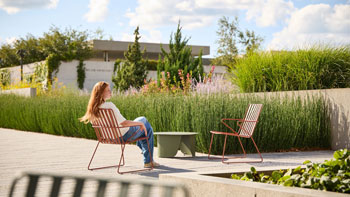
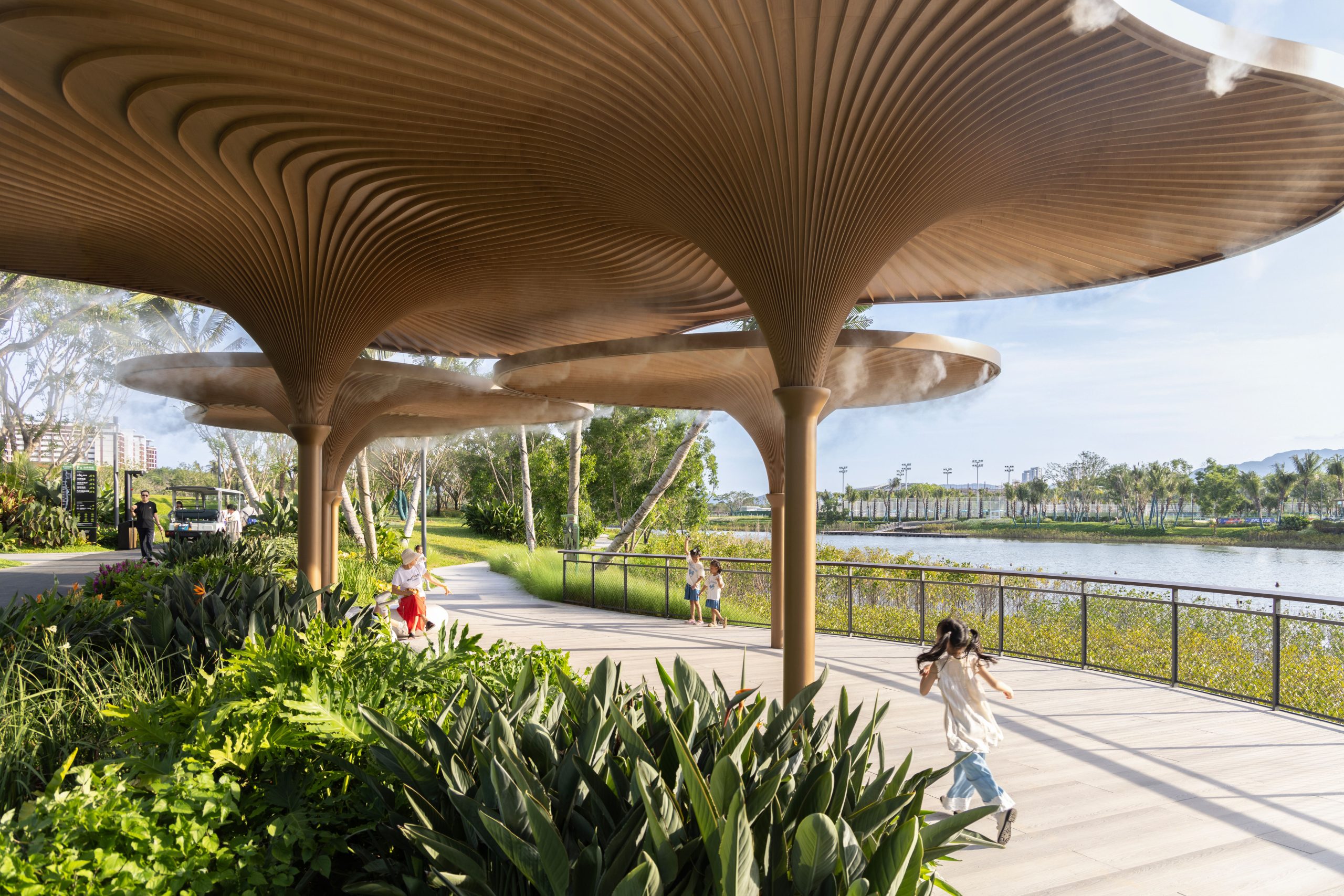
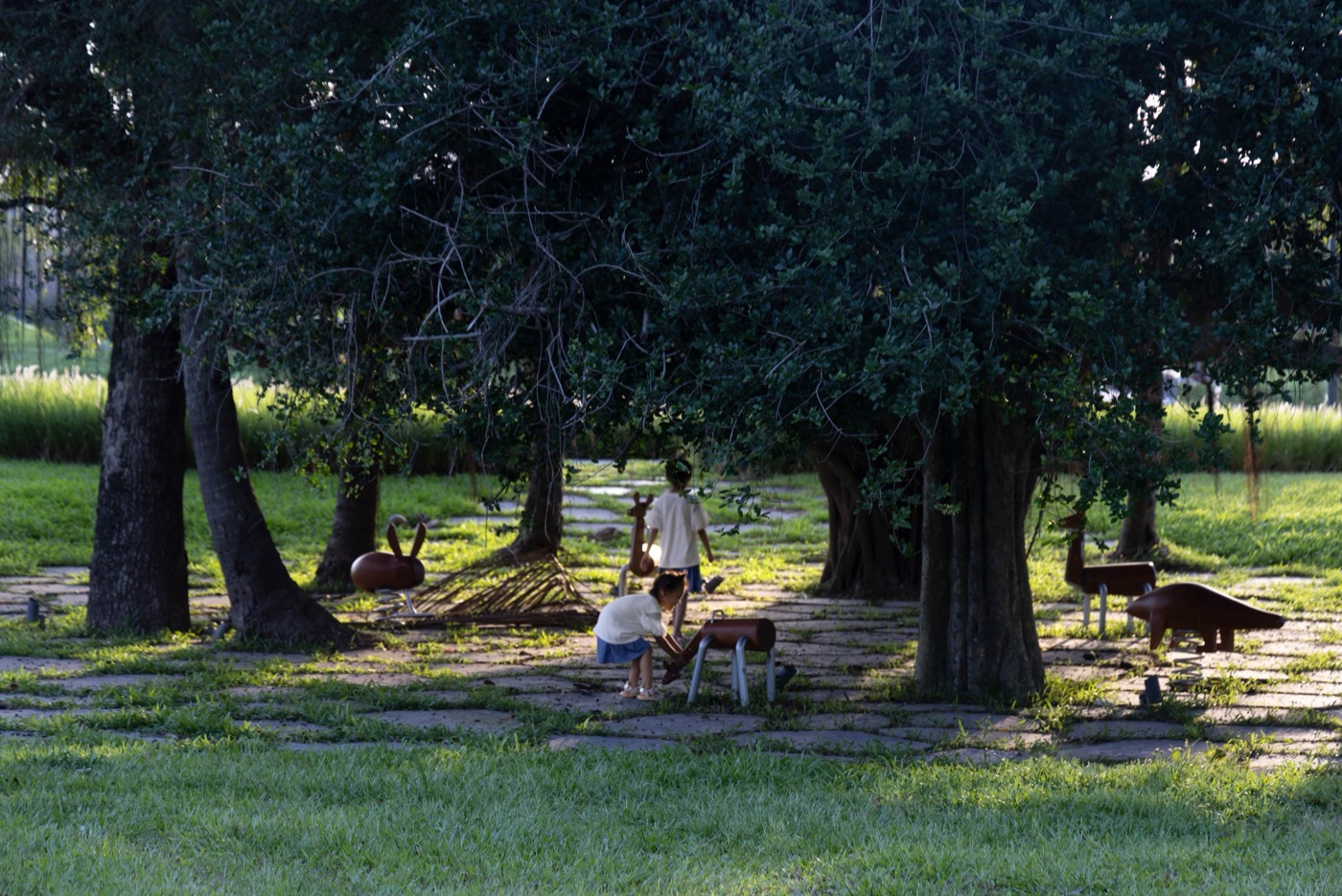
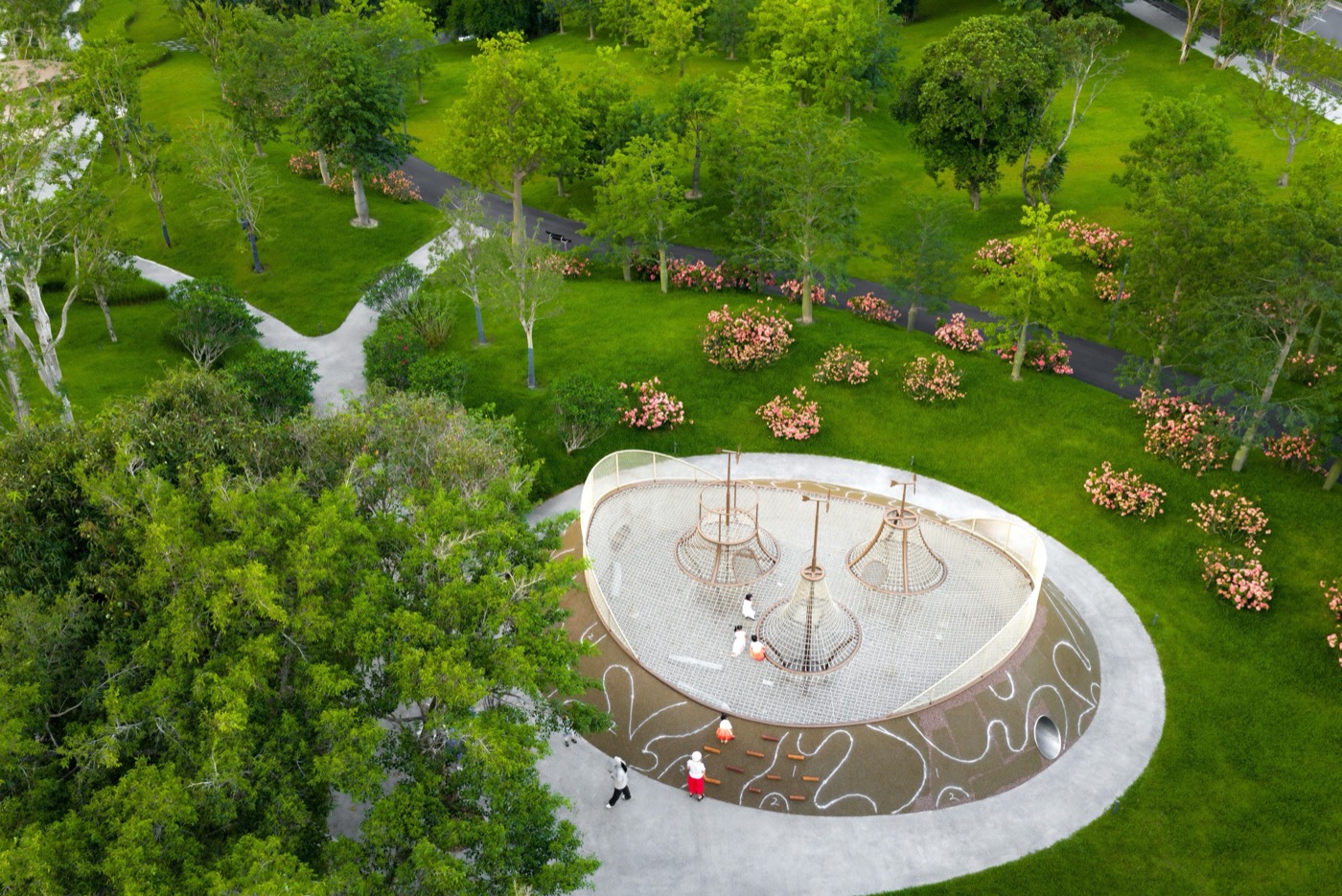
Rather than remaining an isolated reserve, the park invites visitors to engage directly in rewilding. 35 hectares of former farmland have been protected and transformed into a composition of terraced fields and winding paths, generating economic returns for local farmers and serving as an ecological buffer. Interactive “eco detective” installations educate guests on biodiversity, while sensory gardens let visitors touch orchid roots, inhale vanilla orchid scents, and sample edible and medicinal plants. Aromatic wellness trails planted with lemongrass and vanilla orchids offer therapeutic respite for seniors. Seasonal events—such as bird watching tours and guided nighttime amphibian walks—deepen visitor engagement. With 67 percent tree canopy coverage, the park provides shade and cooling, linking nearby hotels to the Super Mall and demonstrating how ecological design can drive urban renewal.
This initiative proves tropical cities need not choose between development and conservation: rivers can serve as ecological corridors, cultural links, and economic lifelines when we learn to work harmoniously with nature.
Project credits Haitang River Eco Park II
Landscape design – LOLA Landscape Architects
I.c.w. – Shenzhen Runzhi Urban Construction Management, Guangzhou Pubang Landscape, Handsome Design Consultants, Shenyang Yibang Qicai Enterprise Marketing Planning, Shanghai Zhijie Architectural Design Consulting, Chongqing Tianhua Garden
Client – CR Land
Photography – Yoya, LOLA Landscape Architects
18.266532533944368, 109.51056959194798
73532


LILA 2026 Sponsor