Hall Steet Pier
www.the-mbac.ca + www.soahome.ca/
2026 Infrastructure Projects / 2026 Landscape and Architecture / Canada / Built in 2024 /
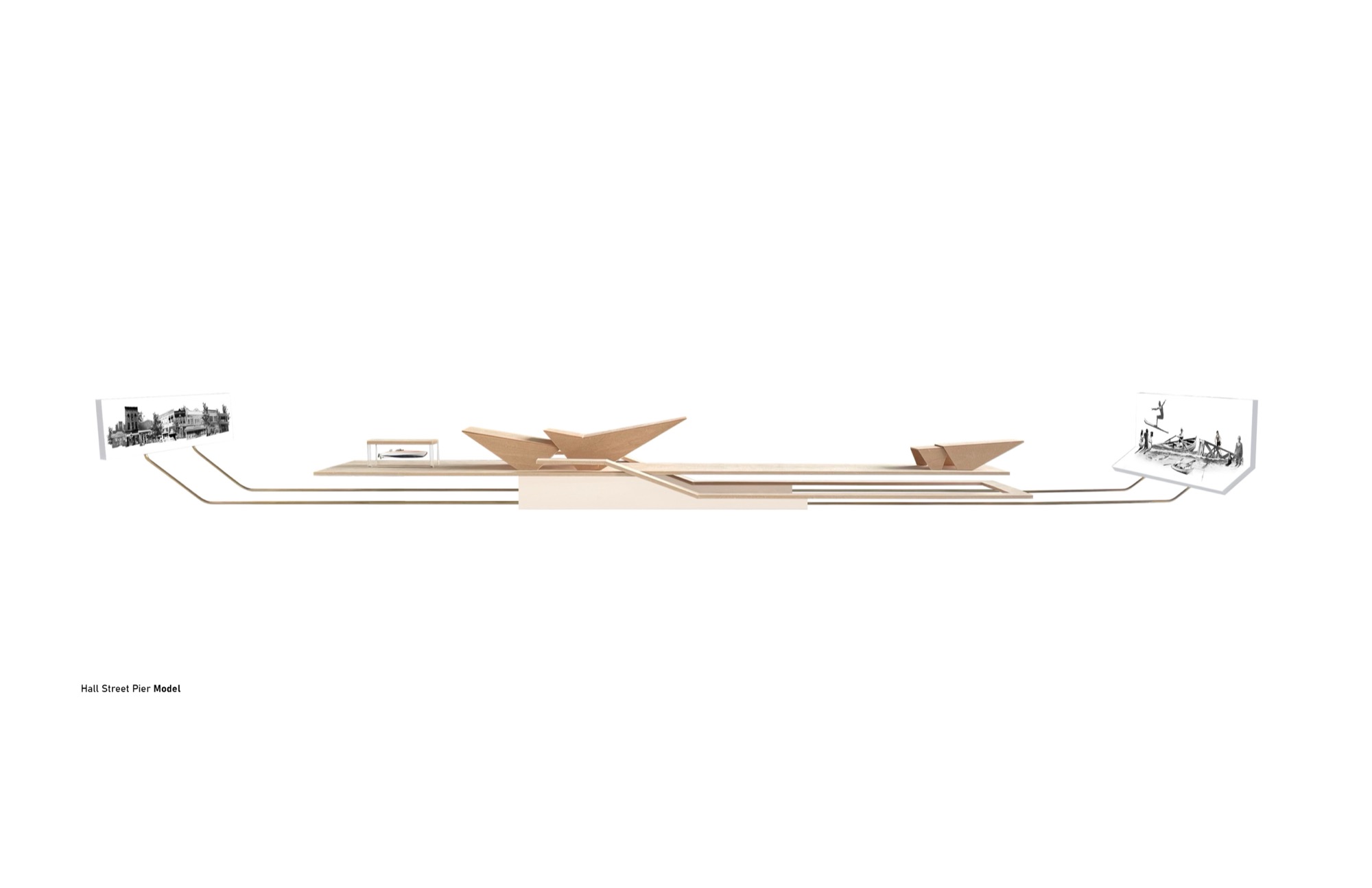
A story of community, water, wood and steel. This project starts with a speculative interpretation of Nelson’s most famous boat project, the Ladybird. The Ladybird won the world’s speed record in 1933, an international success story borne out of a collaborative process that involved the entire community. The project galvanized the entire community and still exists as a matter of pride for Nelson’s citizens.
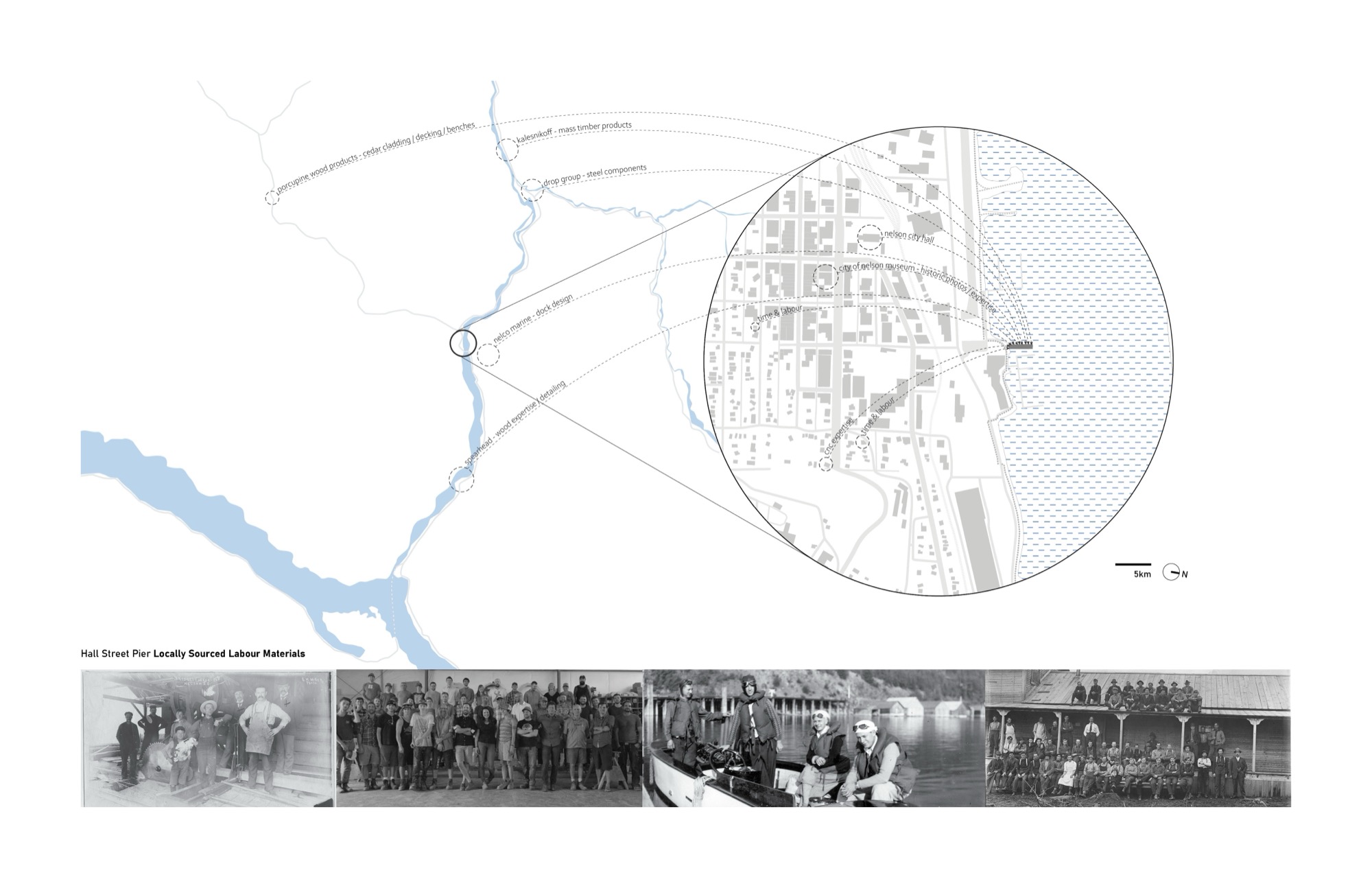
A process of co-design and volunteerism. Like the Ladybird, the Hall Street Pier is a community initiative that involves co-design with a multitude of volunteers, stakeholders, local wood workers and suppliers, as well as time and materials donated-in-kind. This effort not only made the project a reality, but also transformed it into an expression of pride and purpose reflective of Nelson’s culture.
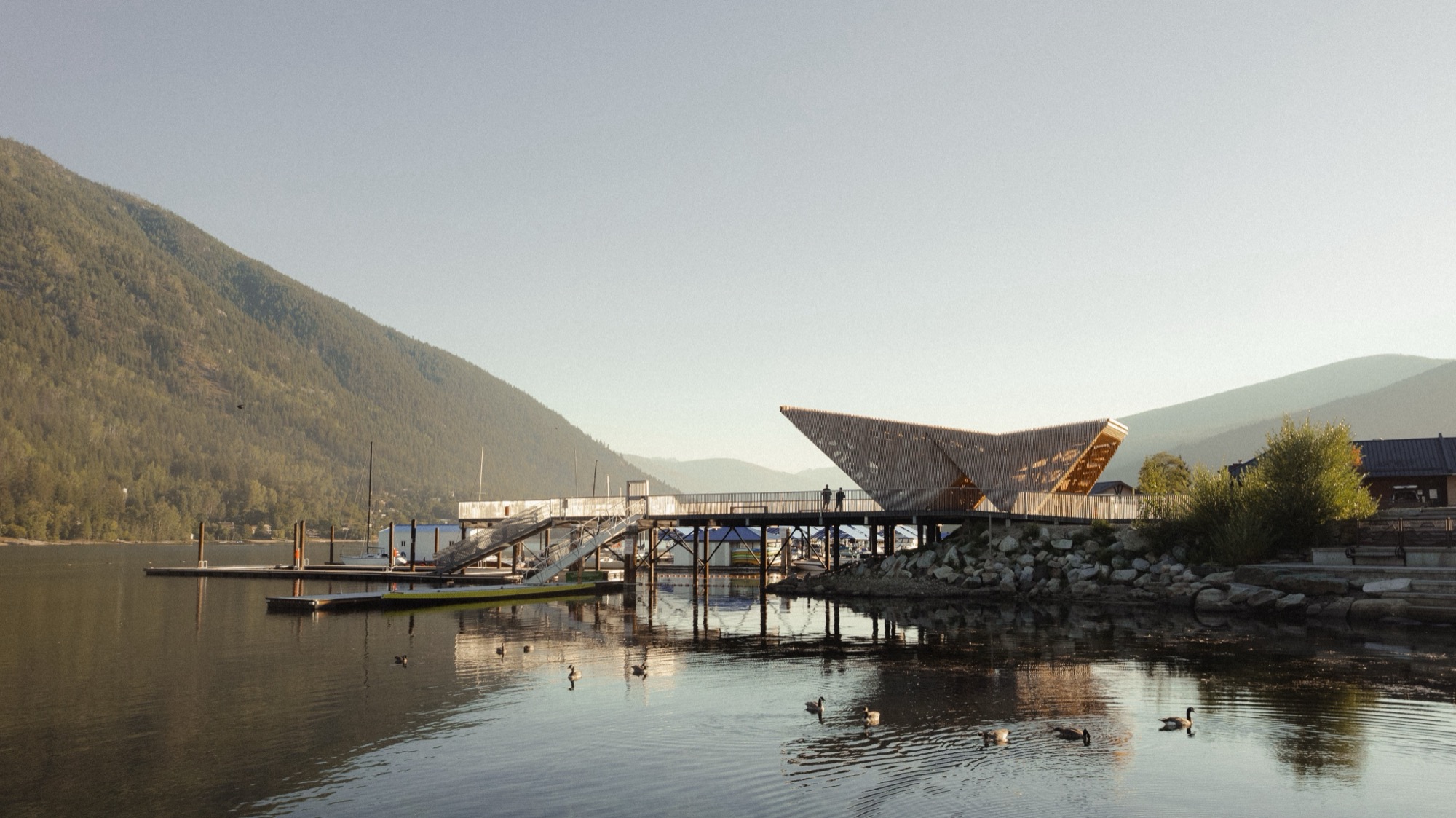
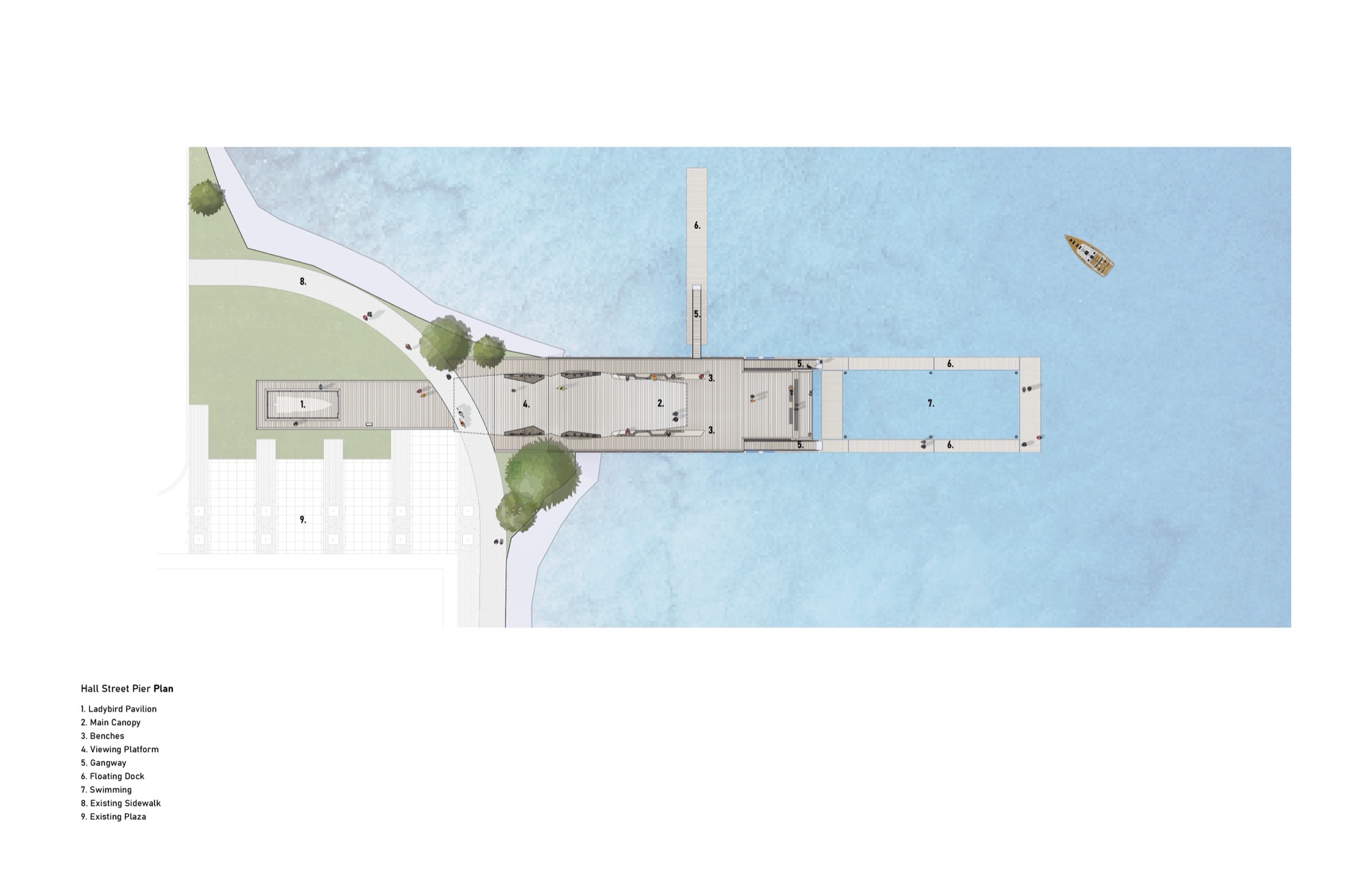
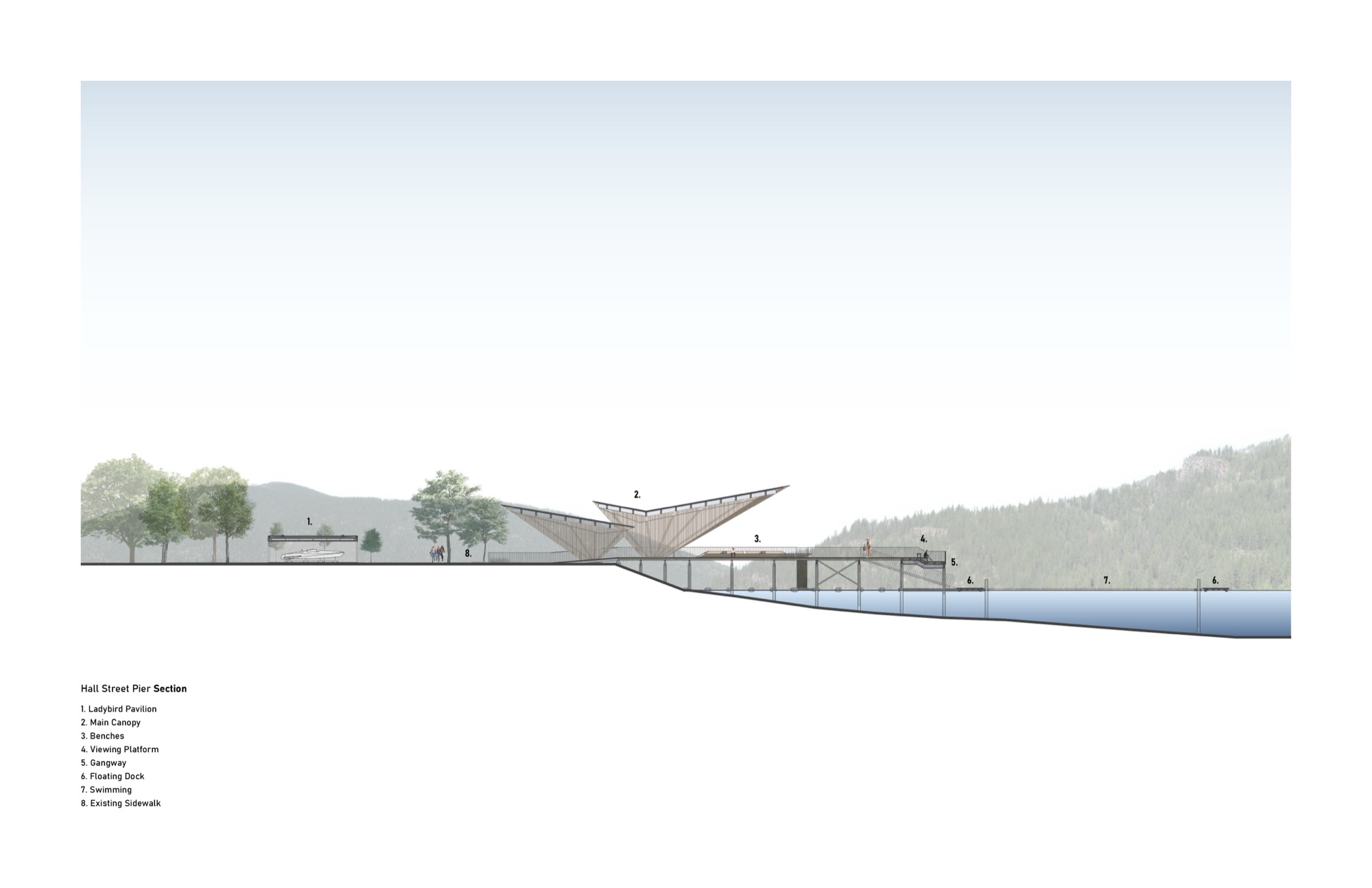
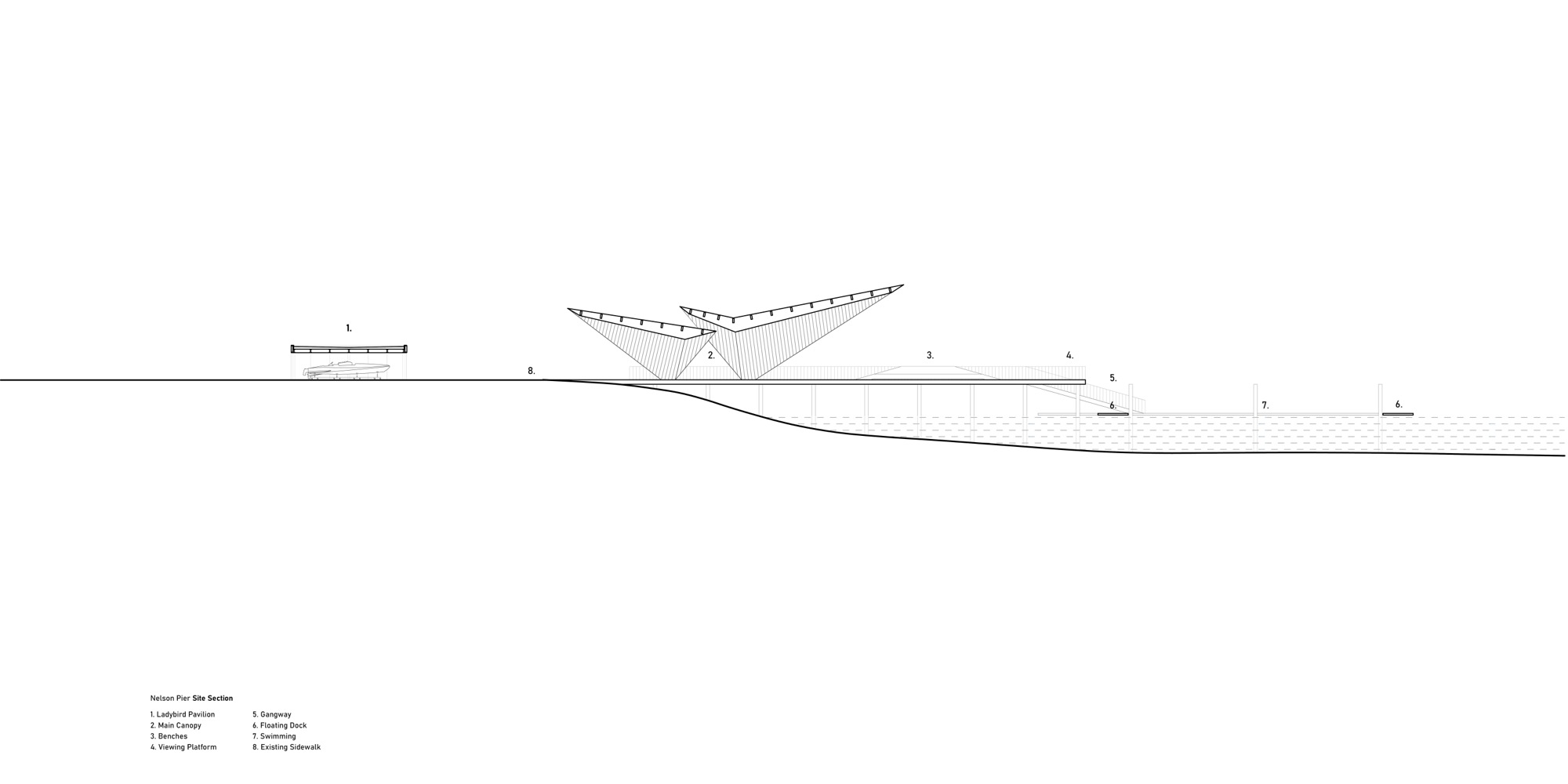
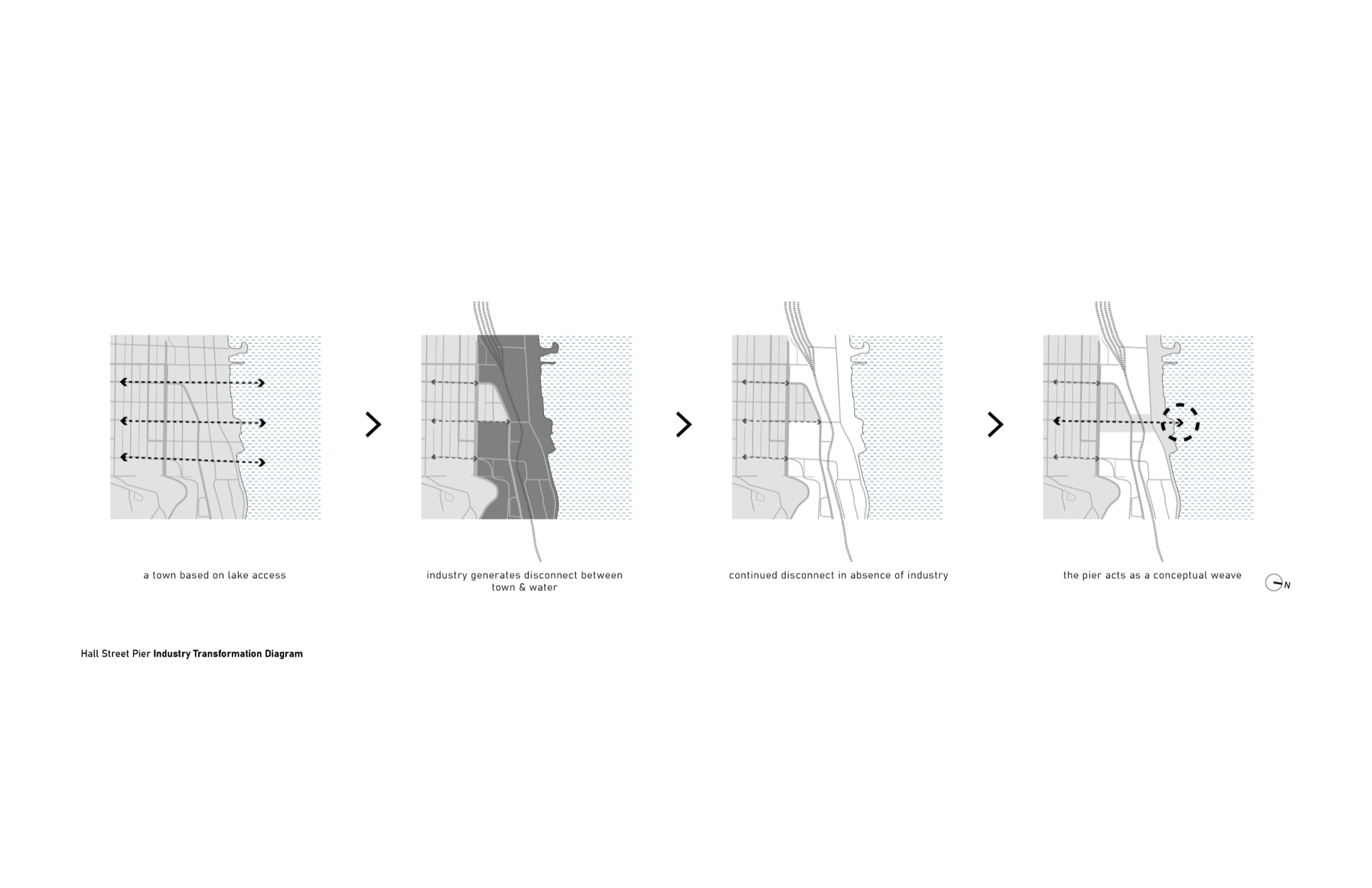
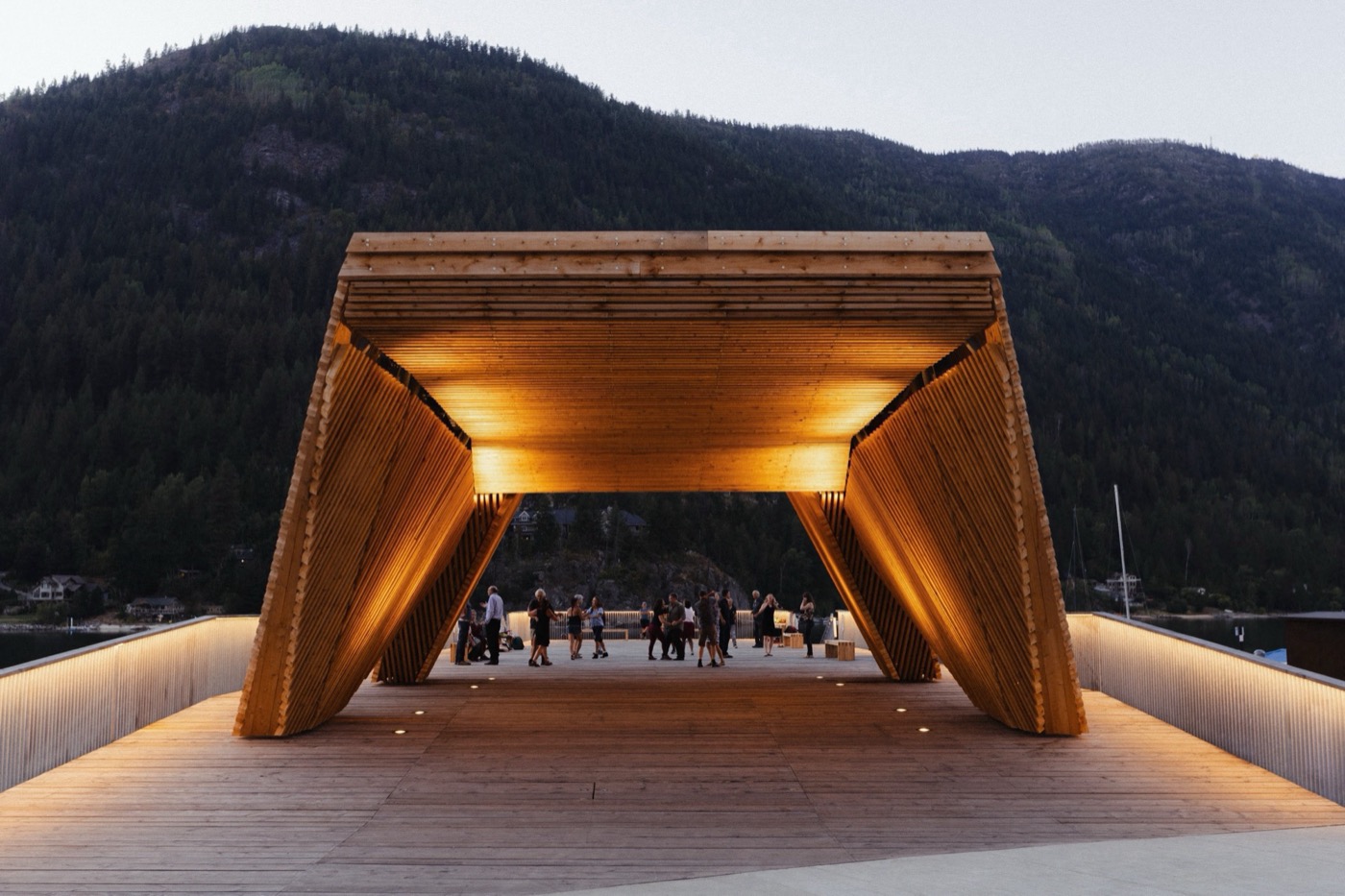
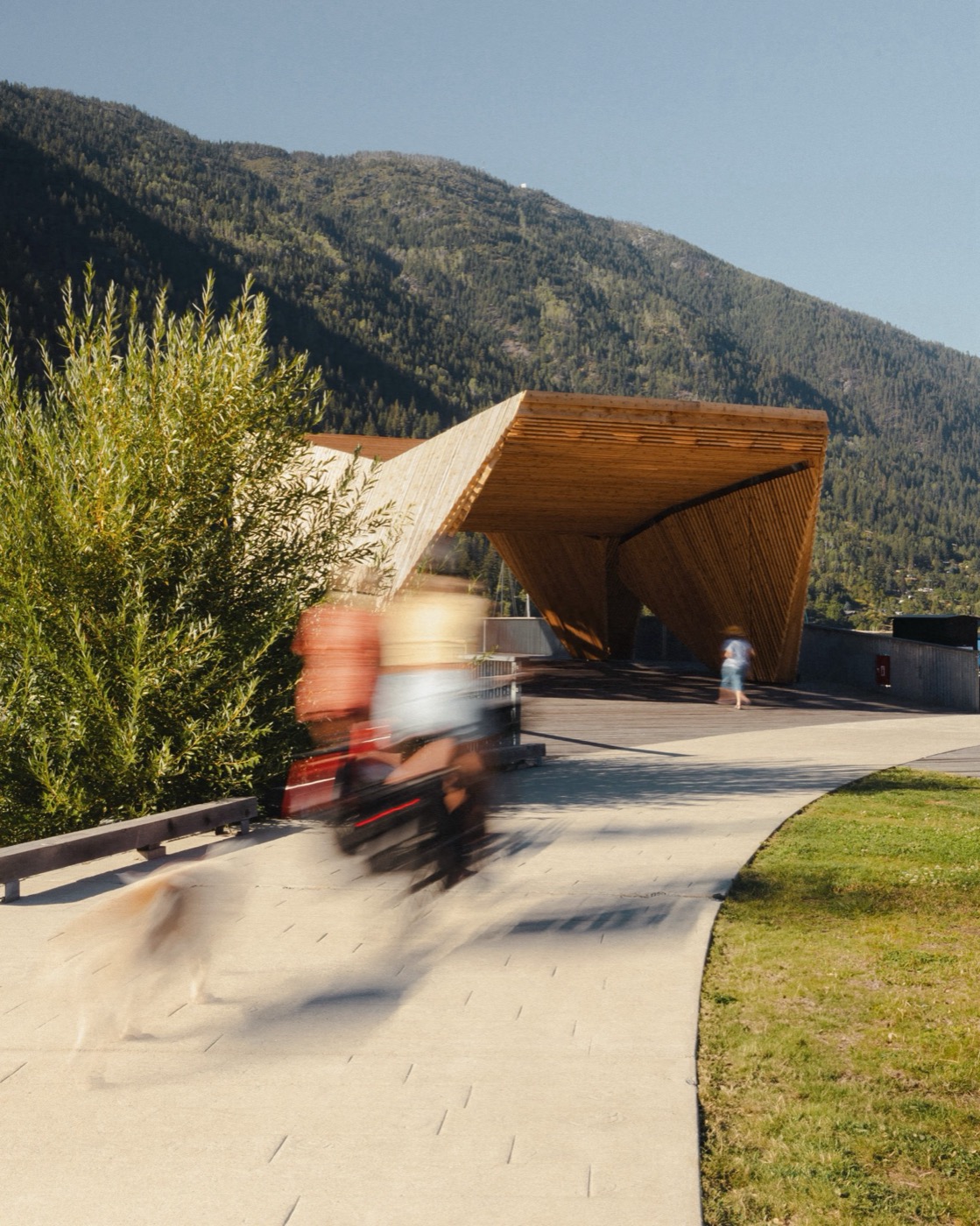
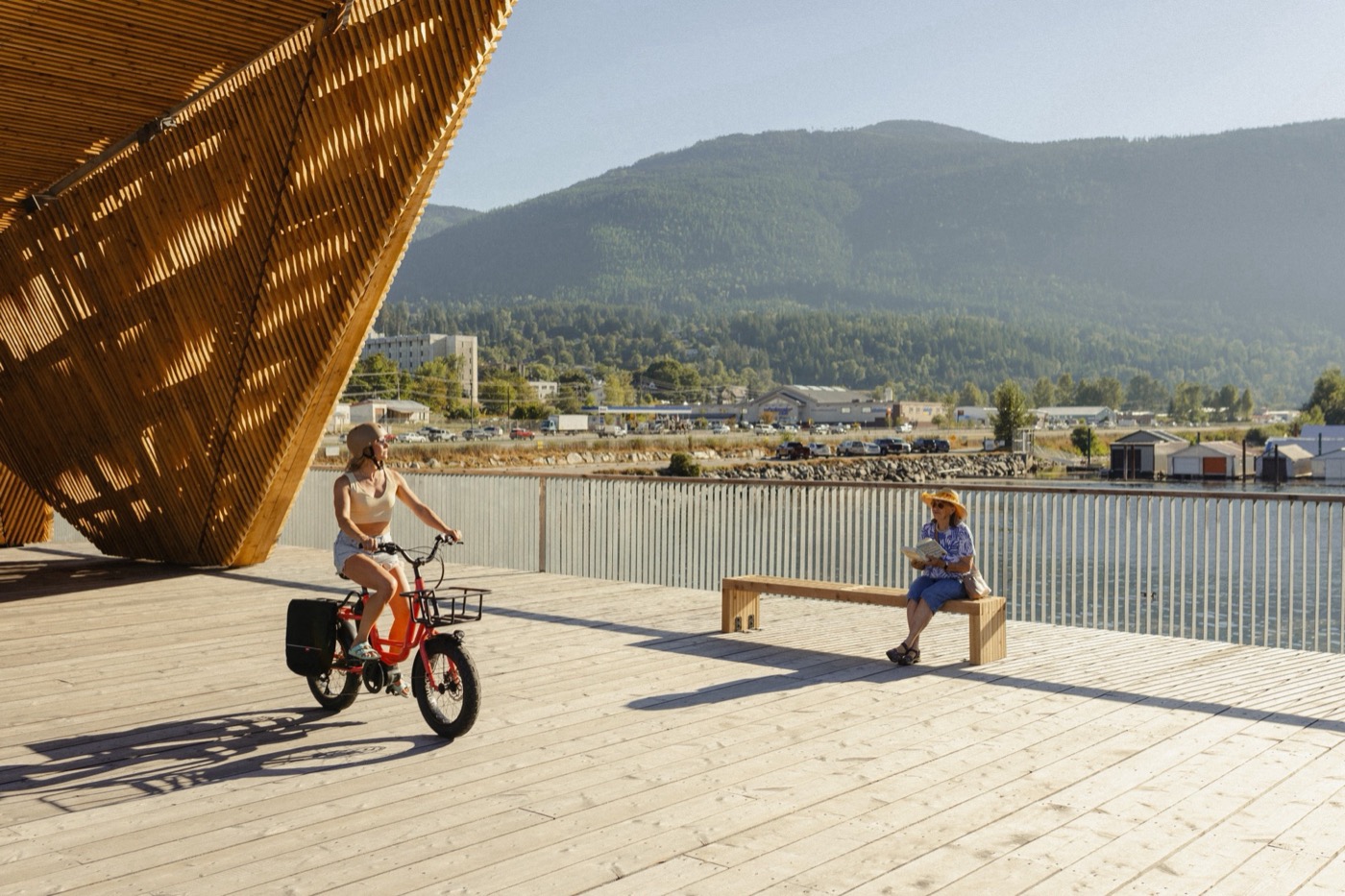
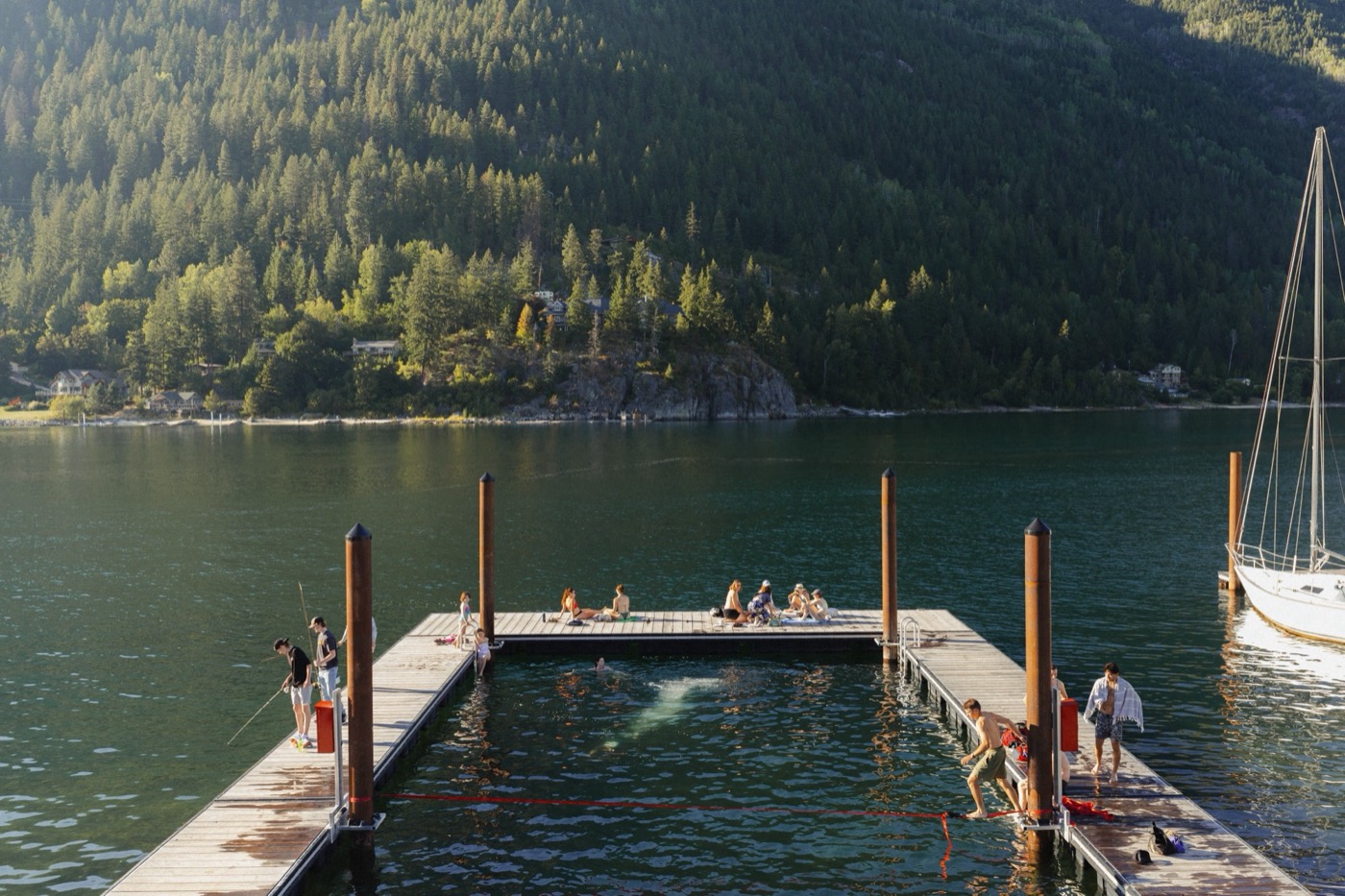
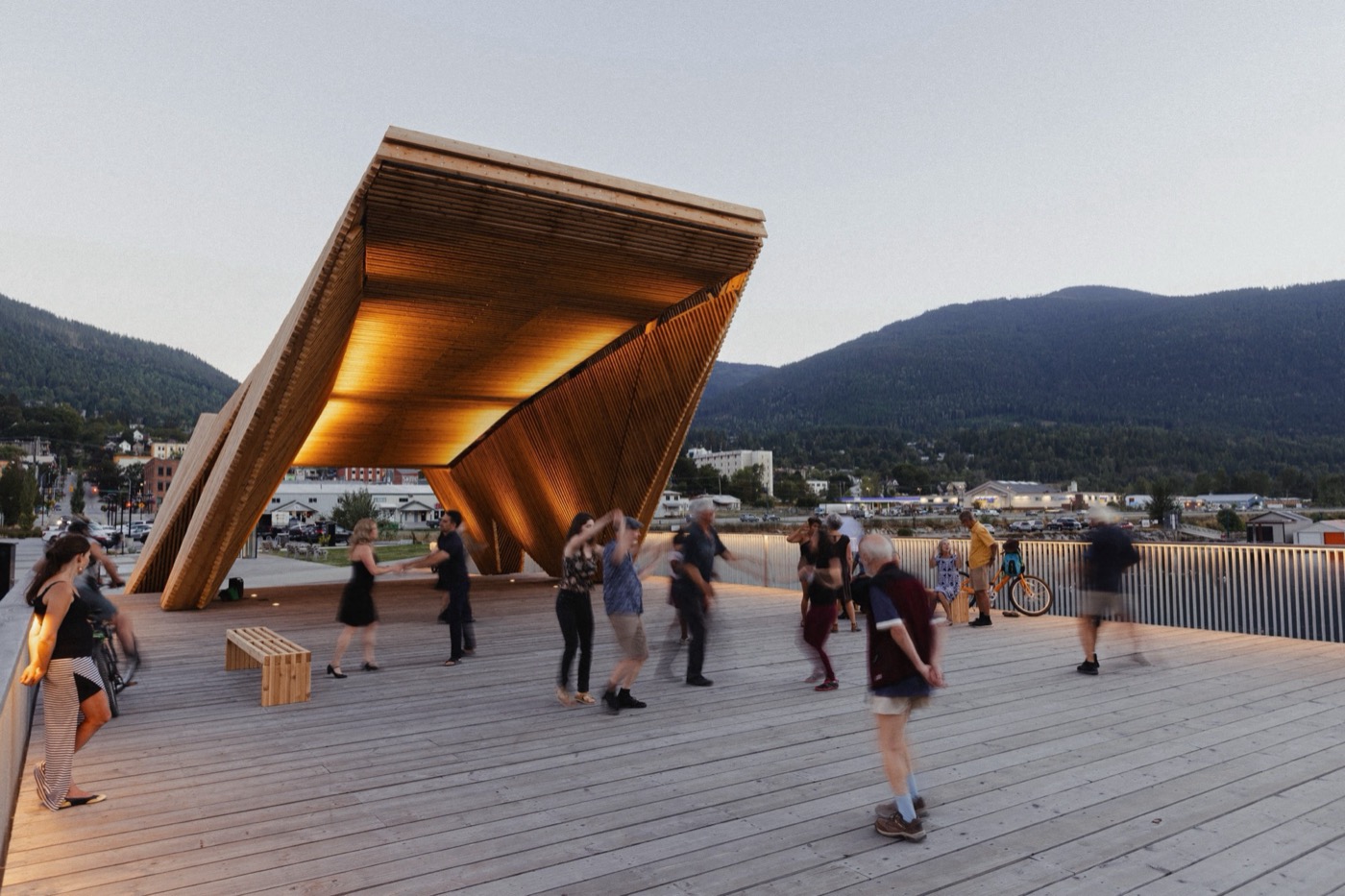
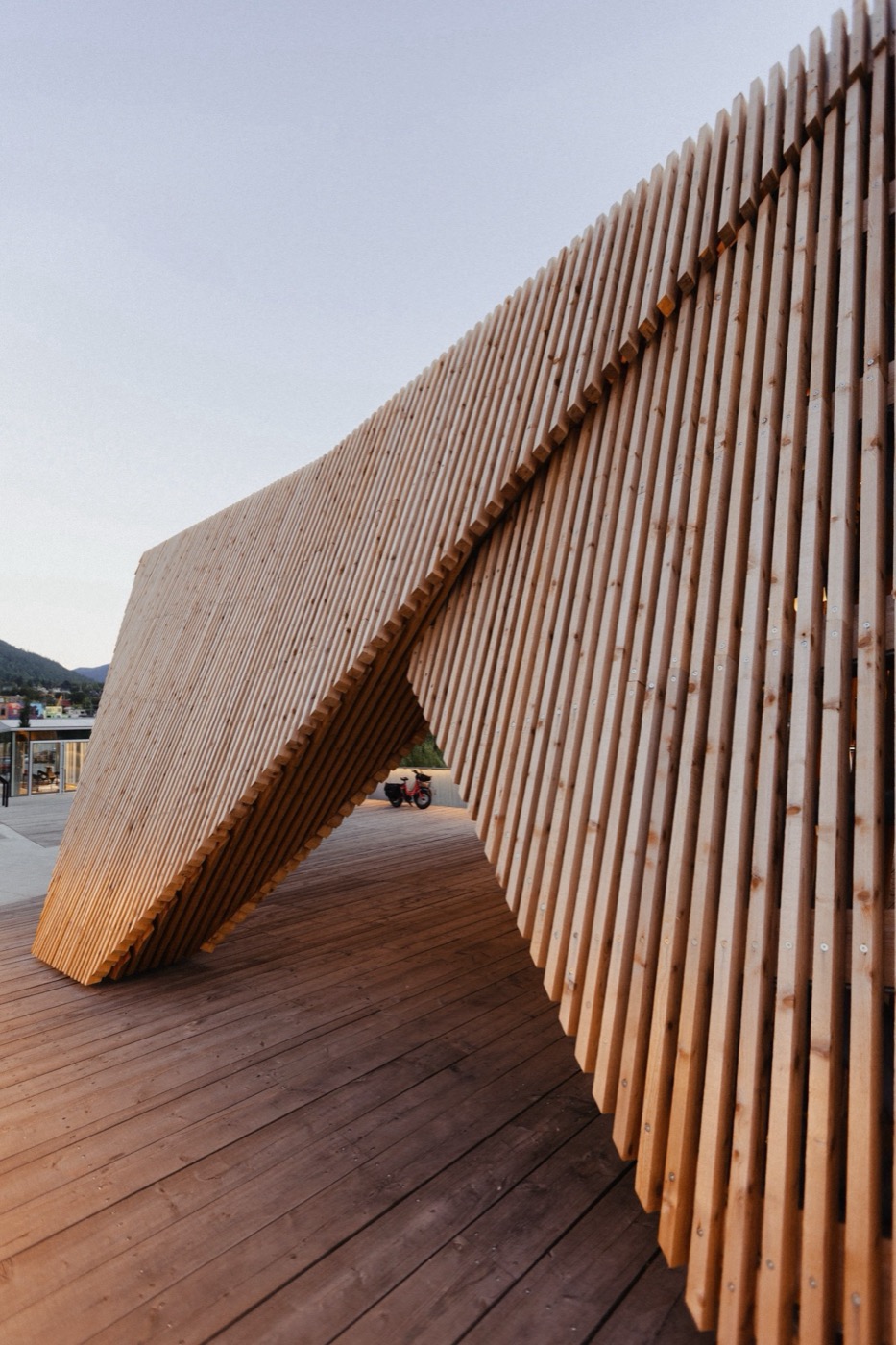
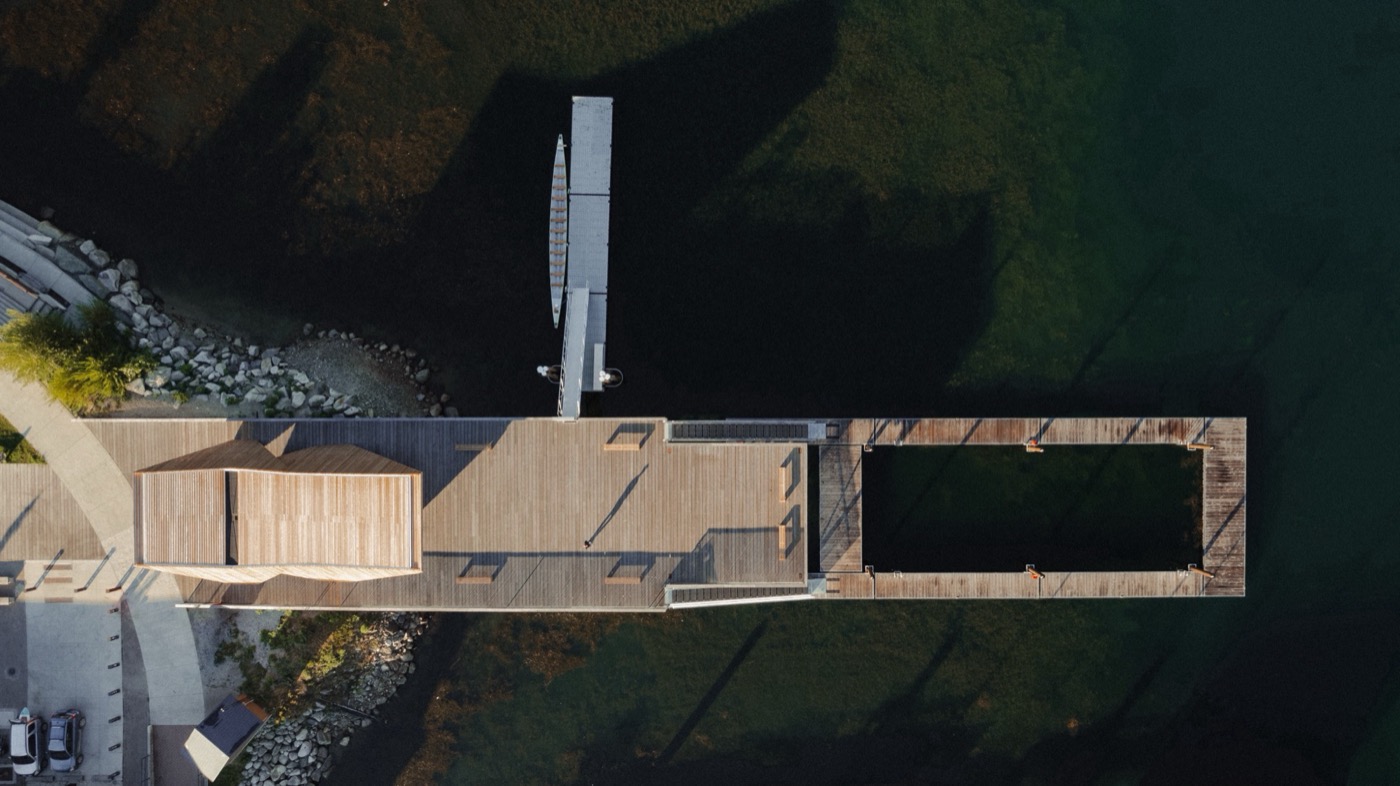
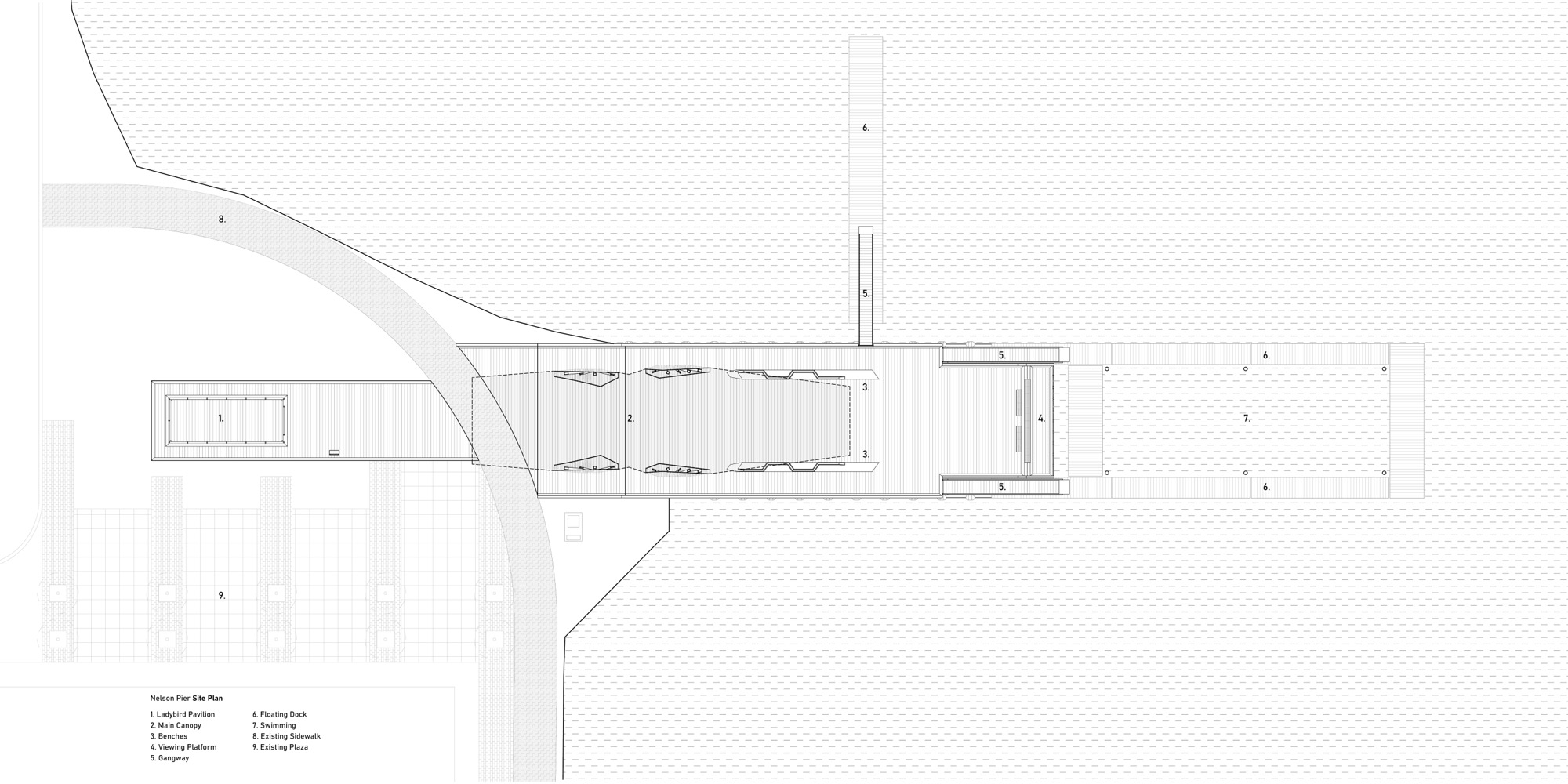
A context of disconnect. The design intent of the project is to suture city and lake, reconnecting the city to its most prominent but underutilized amenity. The design is characterized by a wood canopy that defines the entry to the pier while providing covered programmable space. The lower section of the pier creates a publicly accessible swim area and boat mooring locations.
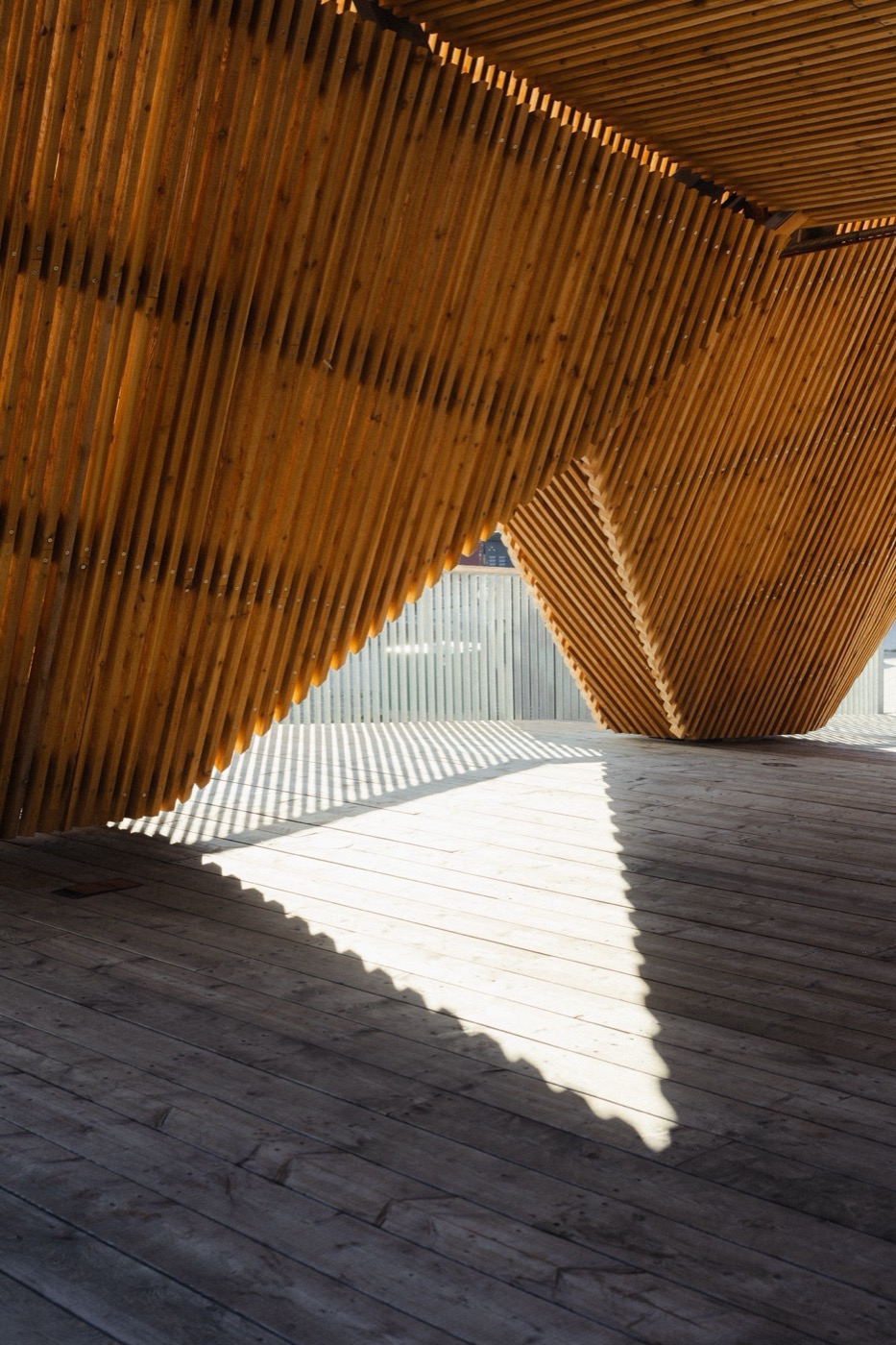
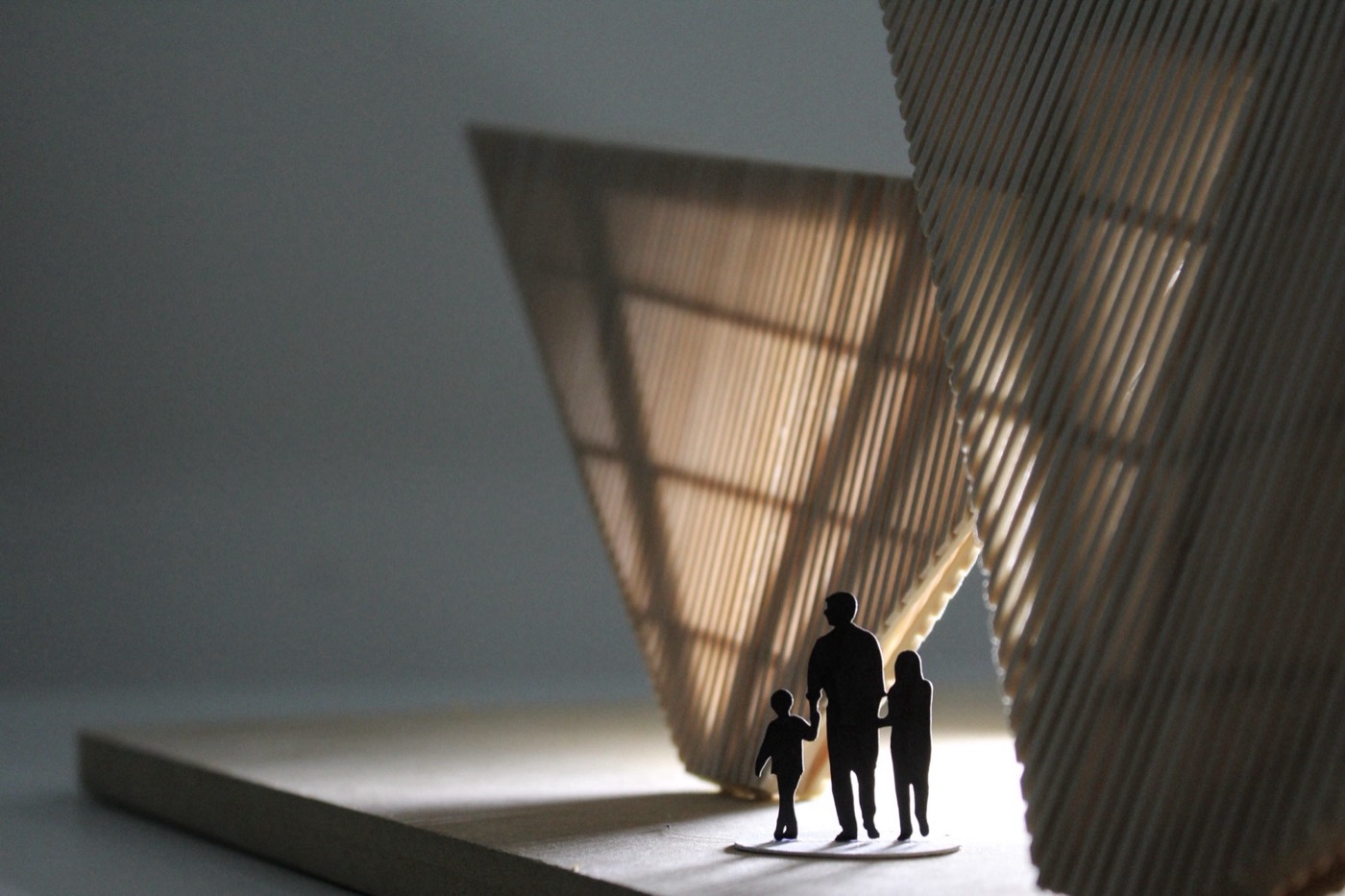
Multi-sensory space: an experiential field between land & water. Leveraging Nelson’s culture of wood manufacturing and wood crafting, the design explores wood and wood tectonics as a vehicle to condition our perception of space, our negotiation of bodies in space, and to condition light, including acting as a repository of the shifting light-scape defined by the surrounding water’s reflection of light. The canopy is designed with a hybrid wood and steel primary structure layered by two slatted surfaces that are biased to induce strategic views and transparencies. The pier exists to connect and augment our experience of water through the crafting of wood, the design builds similarities with the Ladybird, a machine that augmented our senses connected with water and motion.
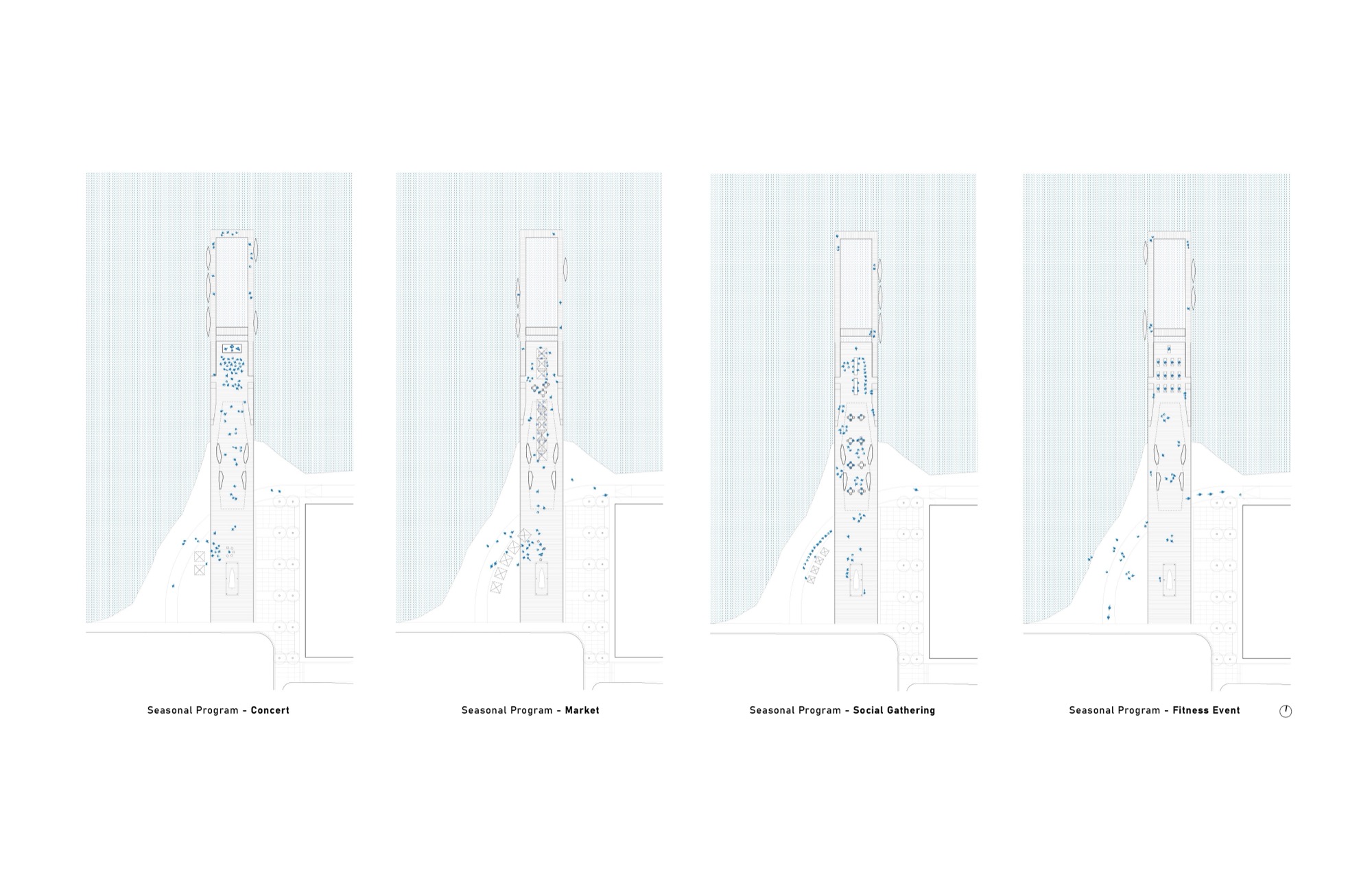
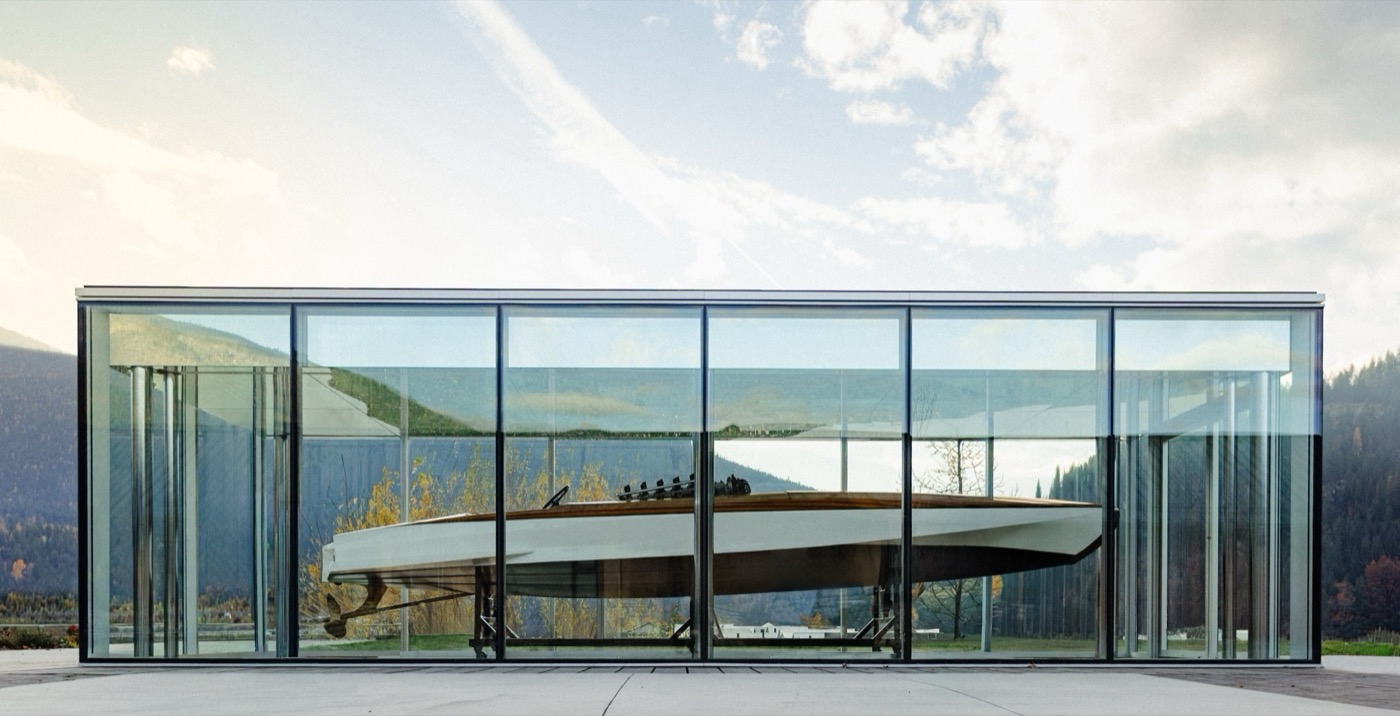
The social condenser: a re-grounding of the city at the water’s edge. The project widens the existing footprint of the pier and provides new services (electrical, data, water, and gas) to facilitate community programming and everyday activity, including informal gatherings, boating, strolling, and people-watching. Finally, the new pier is home for the Ladybird itself, housed in a climate-controlled glass pavilion as part of the outreach of The Nelson Museum of Art and History.
Client: City of Nelson
Design Architect: the marc boutin architectural collaborative inc. (MBAC)
Architect of Record: Stanley Office of Architecture (soa)
Structural Engineers: Fast + Epp
Mechanical & Electrical Engineers: Prism Engineering
Geotechnical Engineers: Pennco Engineering
Geotechnical Engineers: Deverney Engineering
Geotechnical Engineers: SNC LAVALIN
Environmental: Mass Environmental
49.497546, -117.295417
77154


LILA 2026 Sponsor