Hanging Out on the Ridgeline
www.green17design.com/
2026 Landscape and Architecture / 2026 Private Gardens / USA / Built in 2023 /

![At its best, landscape architecture reshapes how we experience and inhabit place. Perched above Sonoma Valley, this project transforms a confused arrival and underutilized edge into a unified architectural–landscape composition. Through strategic simplification and intensification, mature olives structure circulation, gardens extend to amplify views, and native plantings blur foreground and horizon. In collaboration with architect […]](https://landezine-award.com/wp-content/uploads/2026/05/00_Hero-Image-5-600x430.jpg "A Place Apart, Above the Valley")
![Set within a woodland valley overlooking Mount Tamalpais, this garden is conceived as a living nautilus—an inhabitable expression of the Fibonacci sequence unfolding across the landscape. More than inspiration, the nautilus shell serves as the project’s generative framework: a geometry of growth, proportion, and expansion that organizes space, movement, and experience. Translating that geometry into […]](https://landezine-award.com/wp-content/uploads/2026/05/00_Hero-Image-4-600x400.jpg "High in the Hills, Under the Sea")
![When the owner of this private oasis left the high gloss beaches of Los Angeles to re-ground in Northern California, she found a natural small-town embrace in Sonoma. We were tasked with turning a lifeless rear space blocks from vibrant Sonoma Plaza into a seamless extension of living space – an expression of the sophisticated, […]](https://landezine-award.com/wp-content/uploads/2021/04/00-Image-11-600x400.jpg "Sonoma Cottage")
![The owners of this unique property are collectors of artifacts from all over the world, and returned from a trip to China having fallen in love with the massive bronze bells they discovered there in rural temples and hidden tea houses – so much so that they commissioned one from a local craftsman to bring […]](https://landezine-award.com/wp-content/uploads/2020/05/00-1-600x450.jpg "The Teahouse")
![This project is a consideration of two acres perched on a slope overlooking the idyllic hamlet of Mill Valley, California. The assignment was to create a series of garden rooms that could be for small family gatherings or large celebrations and keep the landscape open and connected to the architecture while providing small intimate moments […]](https://landezine-award.com/wp-content/uploads/2020/05/00-A-600x450.jpg "Marin County Modern")
Some properties carry their greatness quietly—foundational architecture and an extraordinary site doing much of the work. Others, over time, fall out of step with their potential.
By honoring principles of modernism, constraint is transformed into character. Organic geometries answer rigid architecture. Mediterranean plantings respond to microclimate. A suspended deck turns an inaccessible slope into the property’s most coveted vantage point. The result is not a departure from what the property always was, but a fulfillment of what it always could have been.
Atop a ridgeline in southern Marin County, California, a linear piece of architecture from the 1960s was showing its age. Built along a rigid north-to-south axis, the existing landscape was only partially developed, carving the 1.6 acre lot into accessible and inaccessible zones and leaving much of the property’s potential unrealized.
The property owners solicited this firm with an express request to reinvigorate the landscape and fully indulge in all angles of a stunning 360-degree view of Mount Tamalpais. In collaboration with the interior designer, the task was to reimagine what existed while simultaneously conceiving a new vision for the undeveloped portions of the property, and weaving it all together into one harmonious outdoor living space.
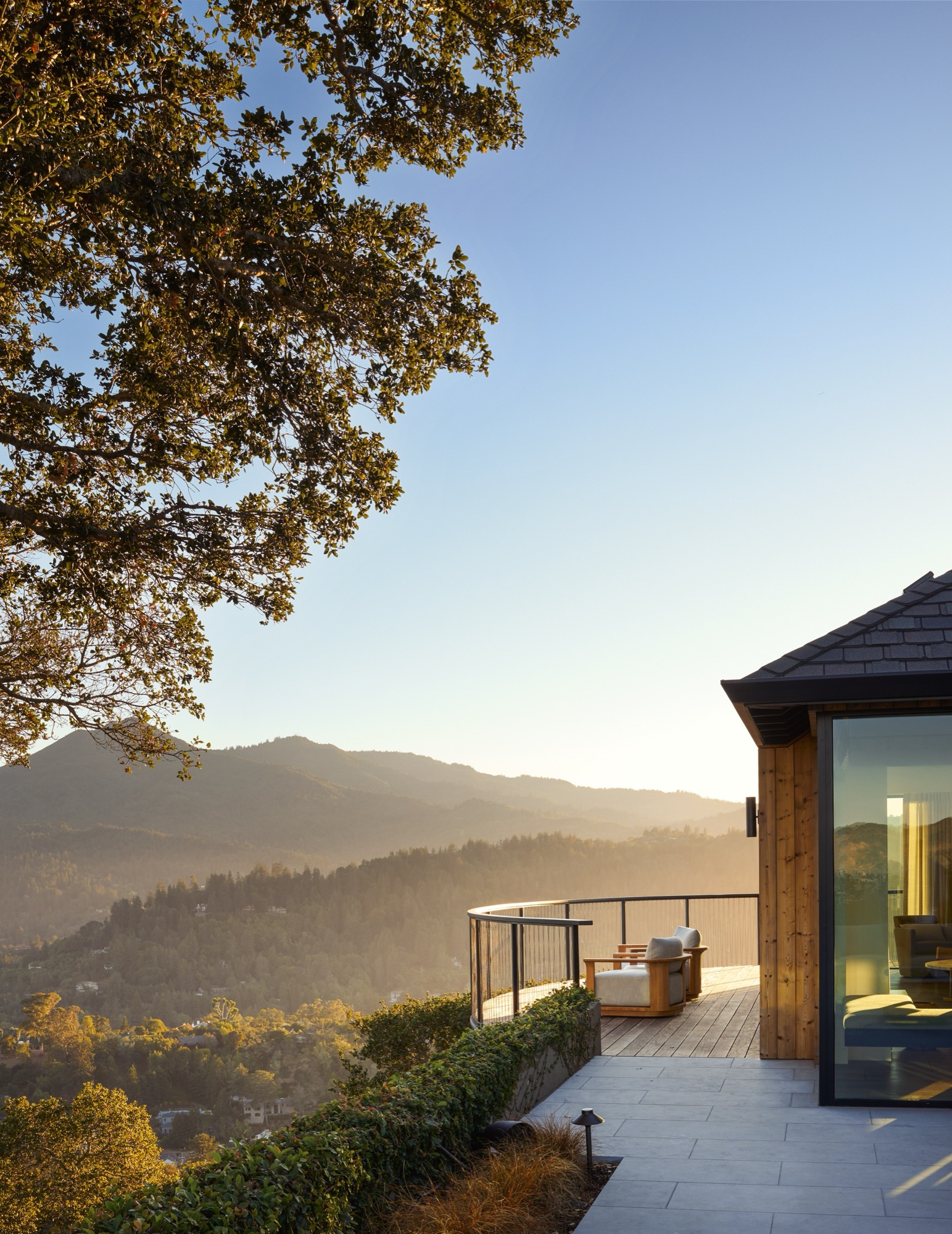
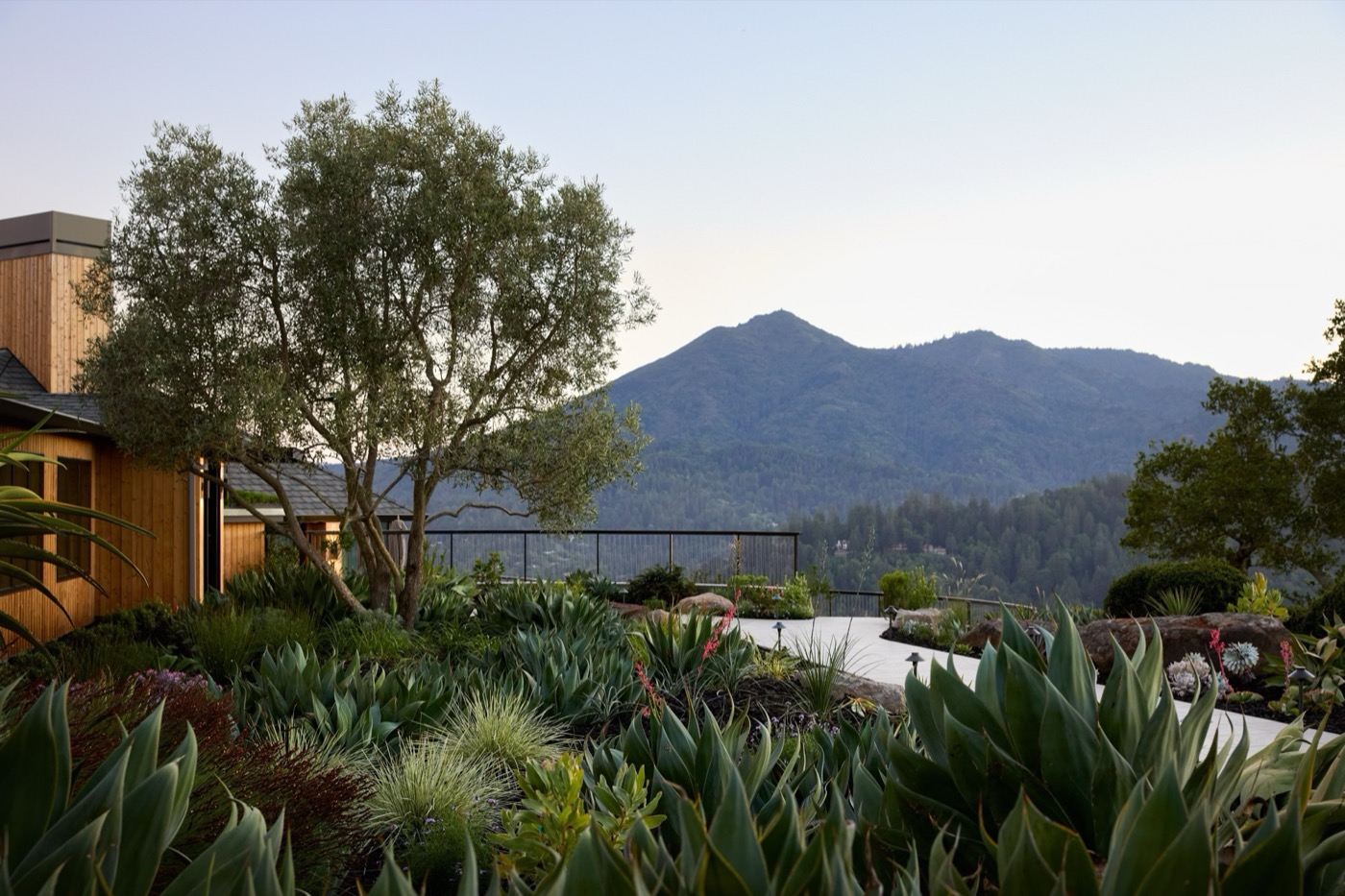
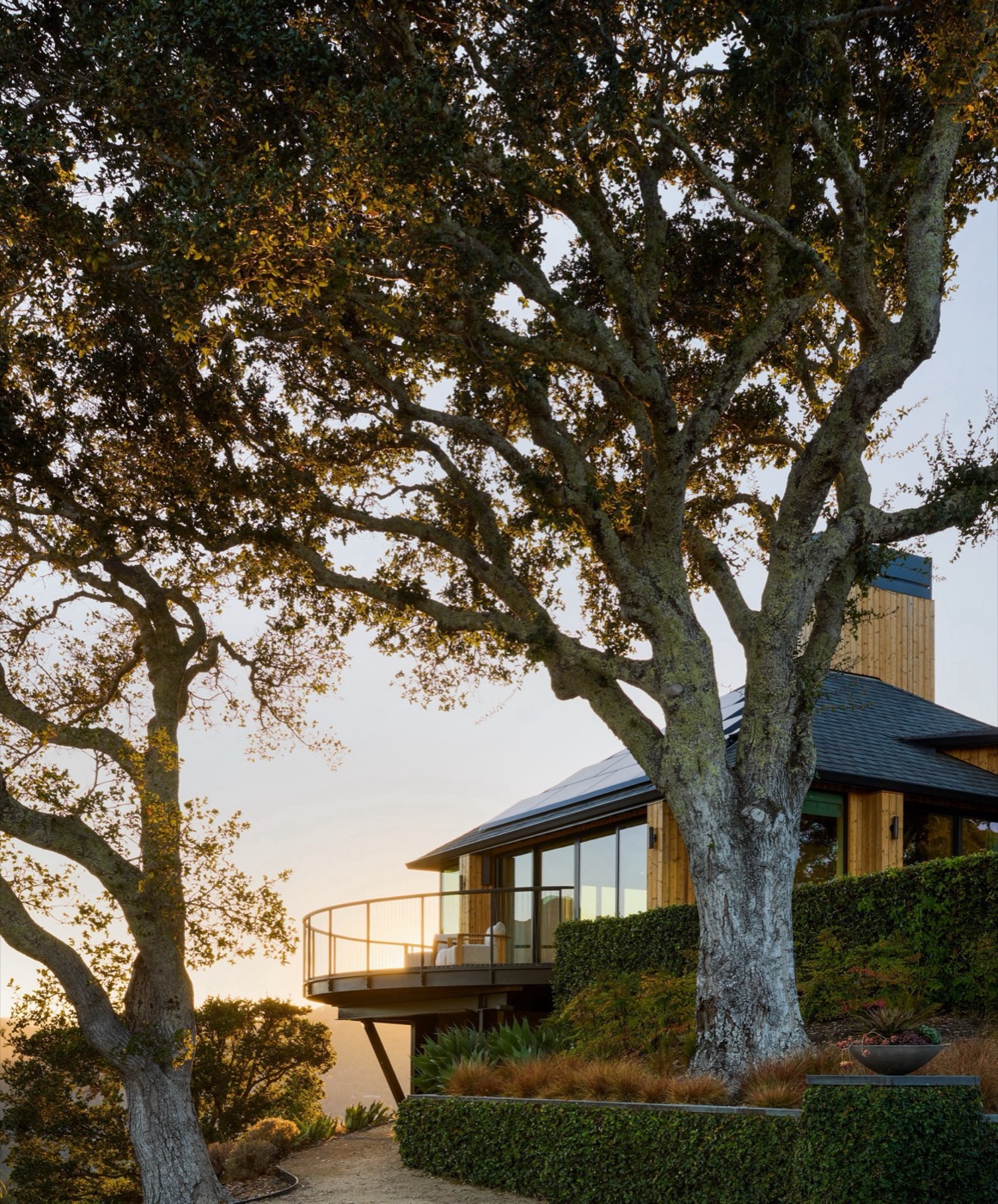
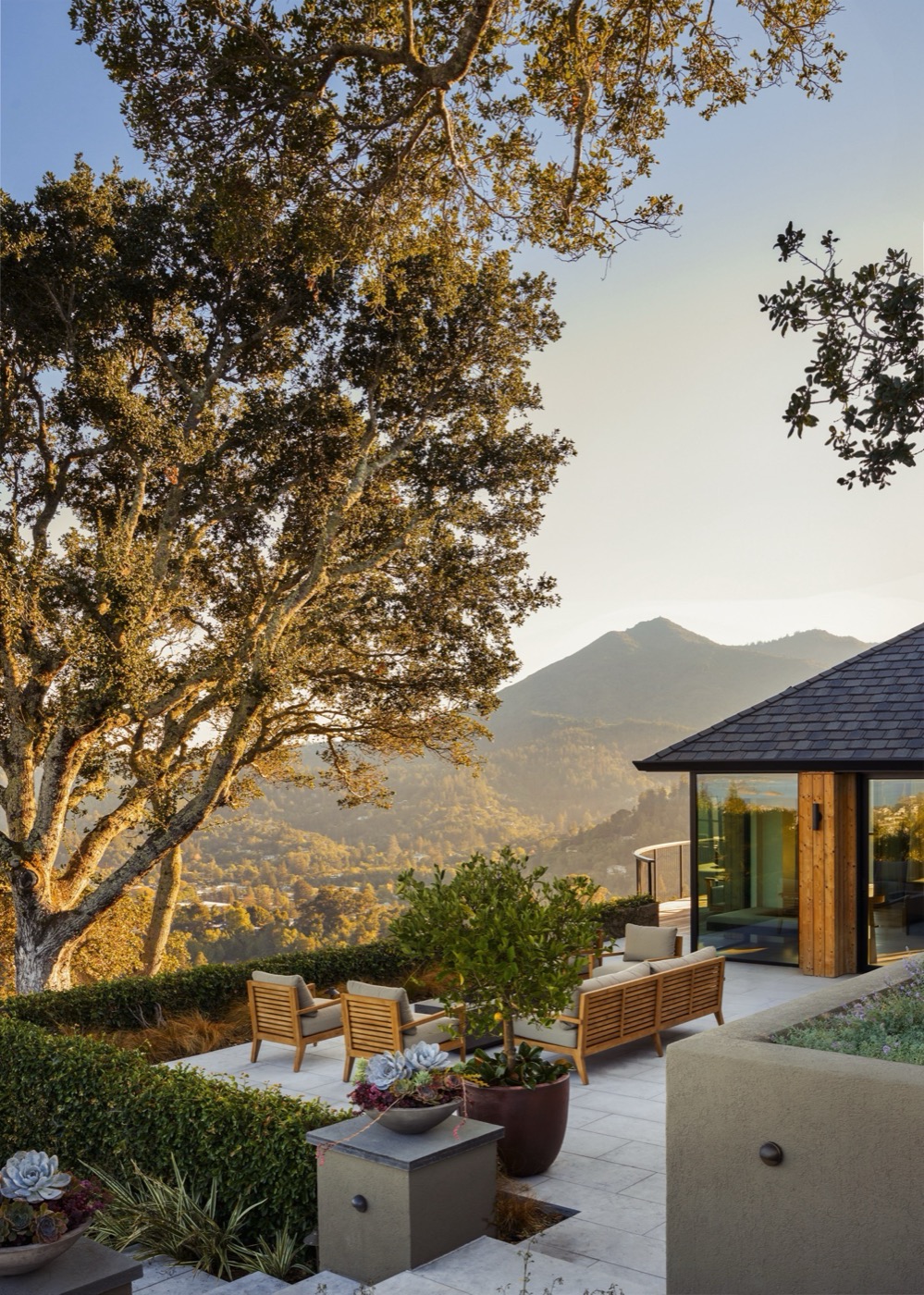
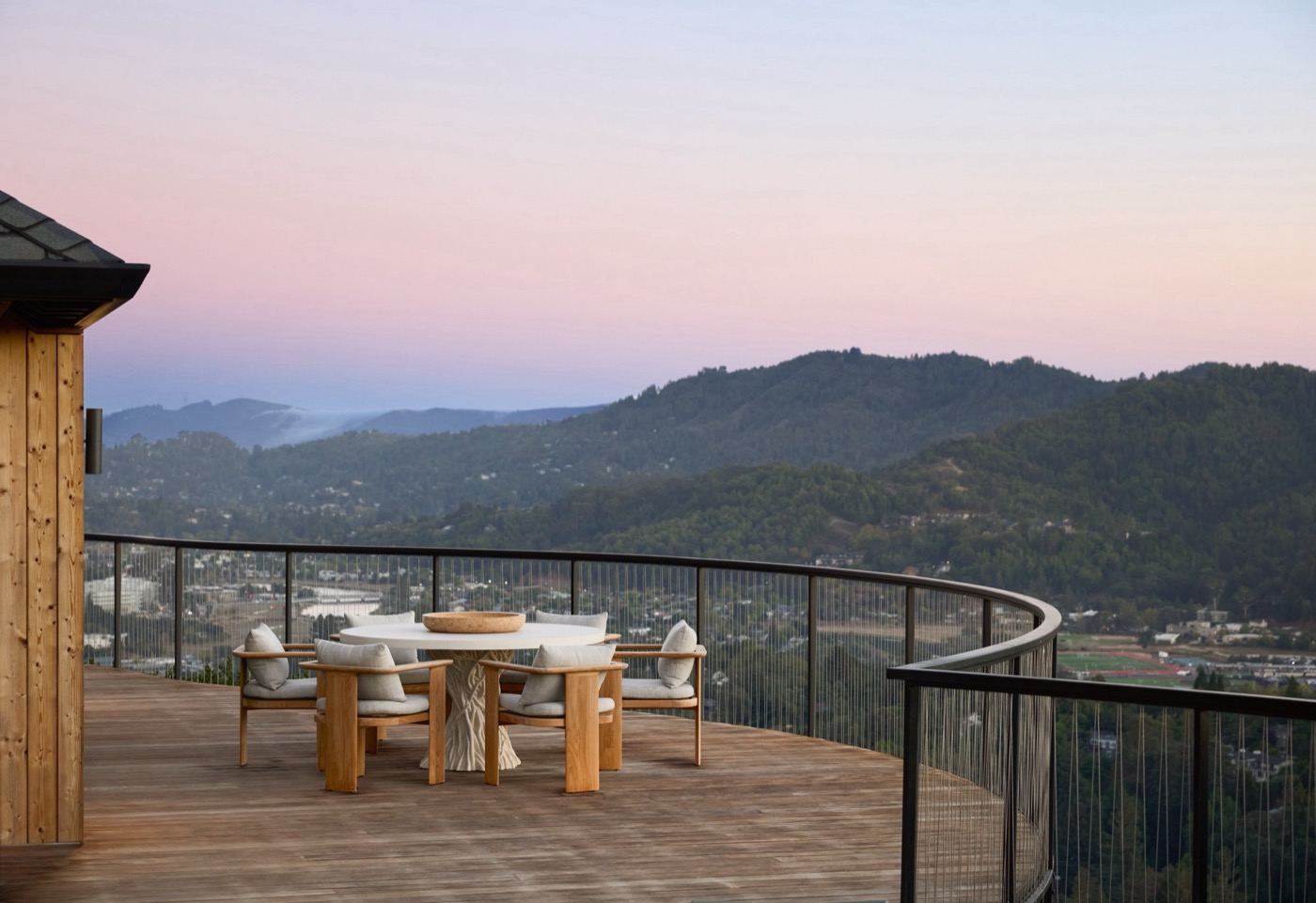
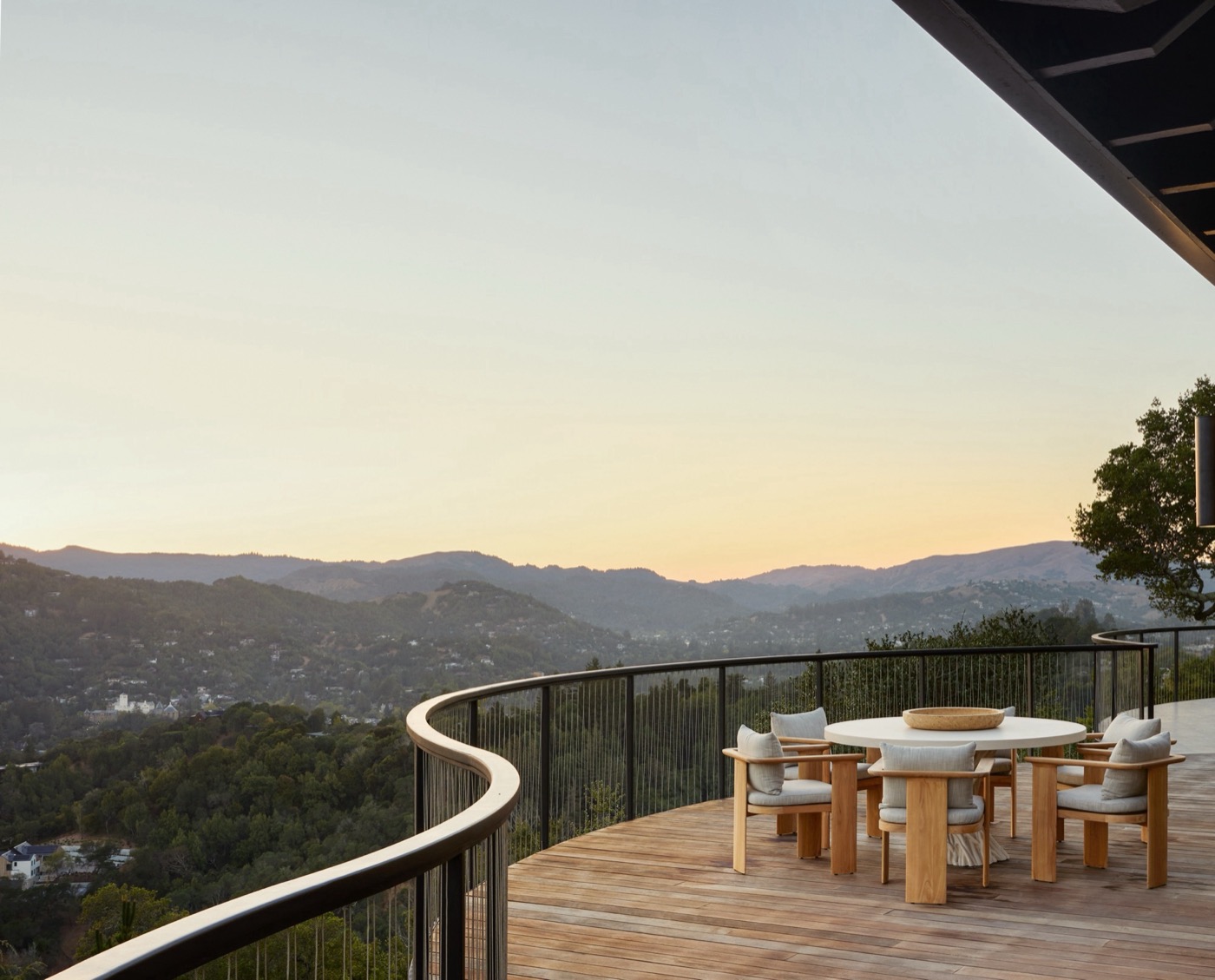
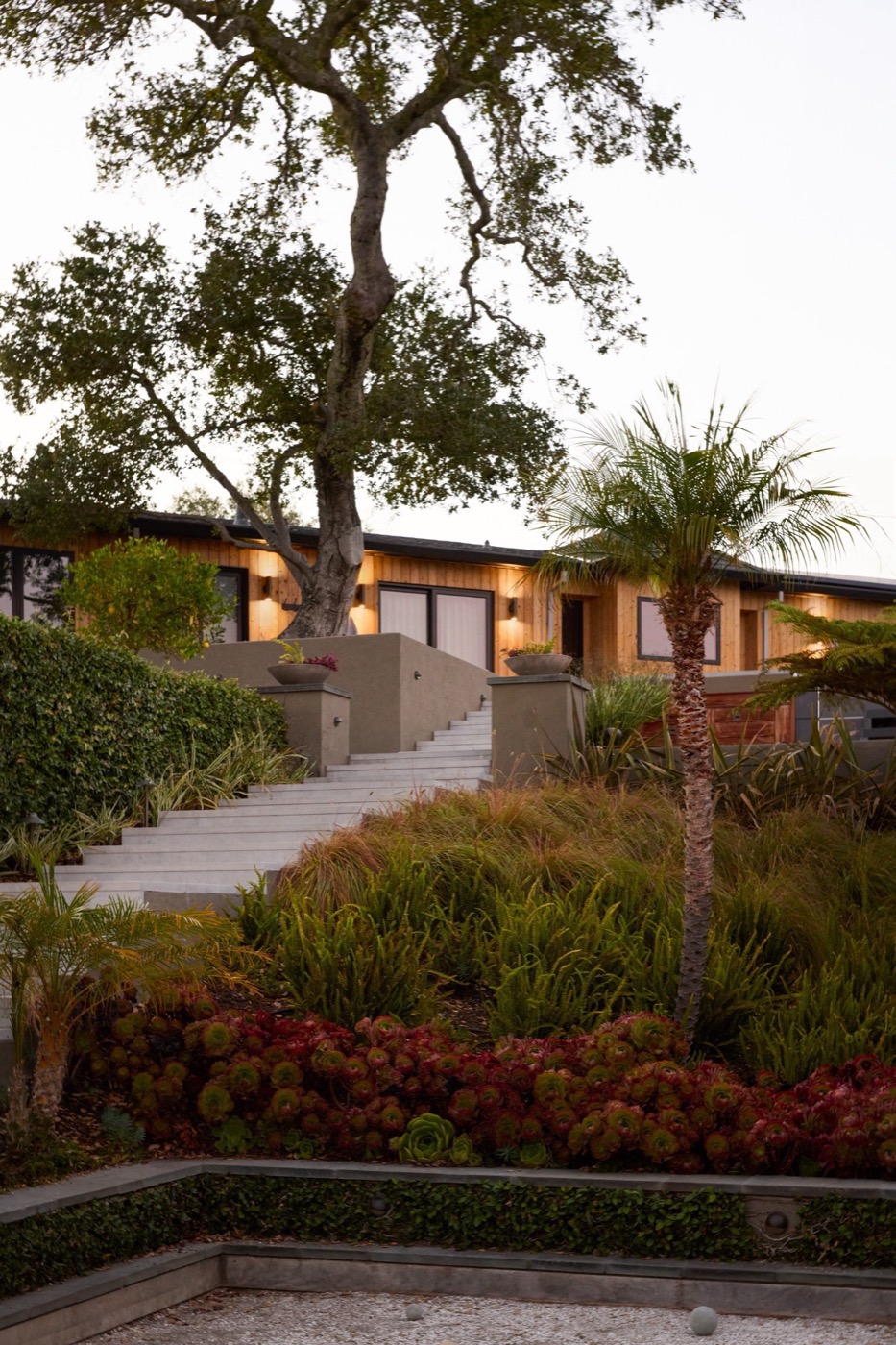
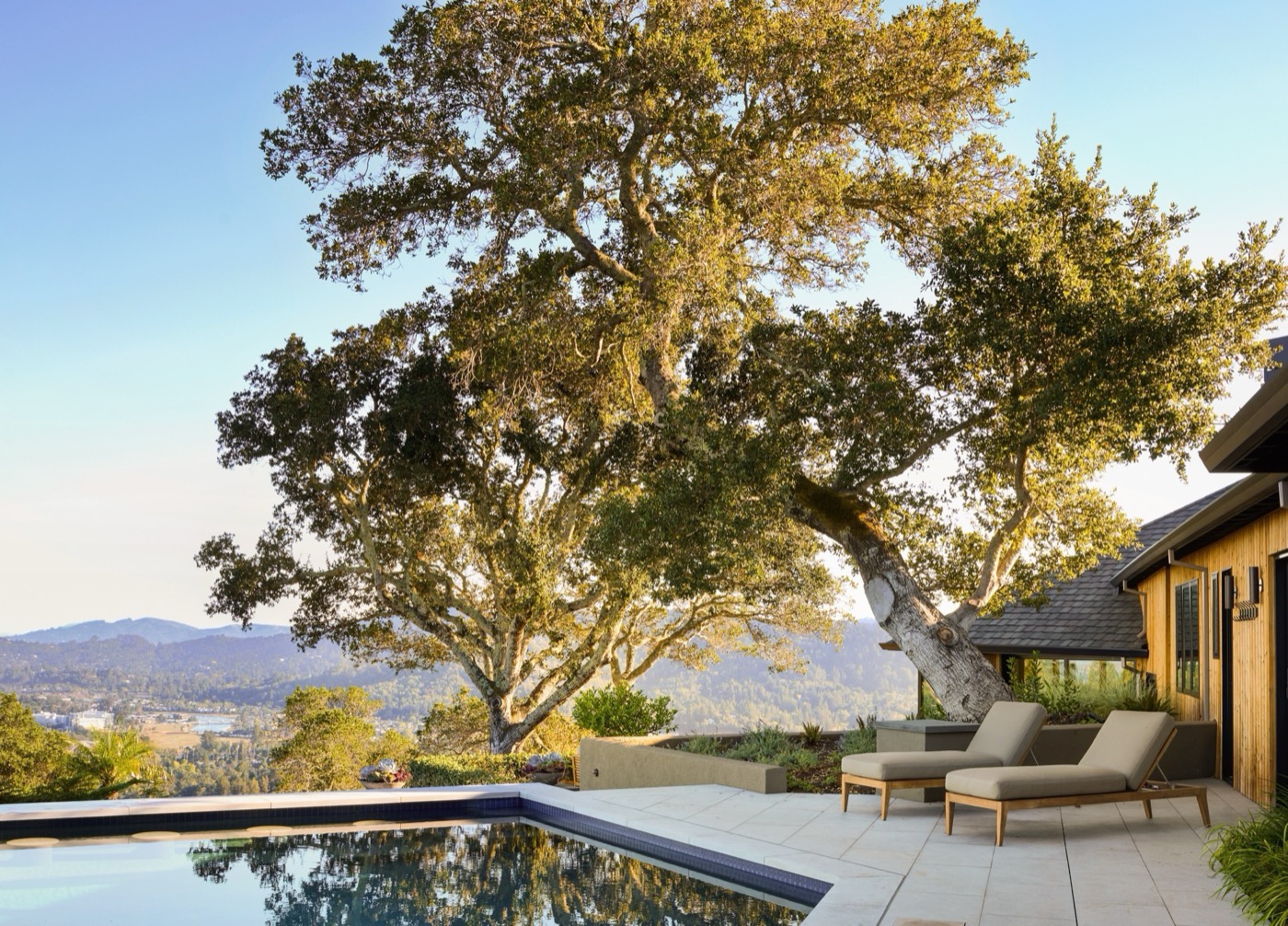
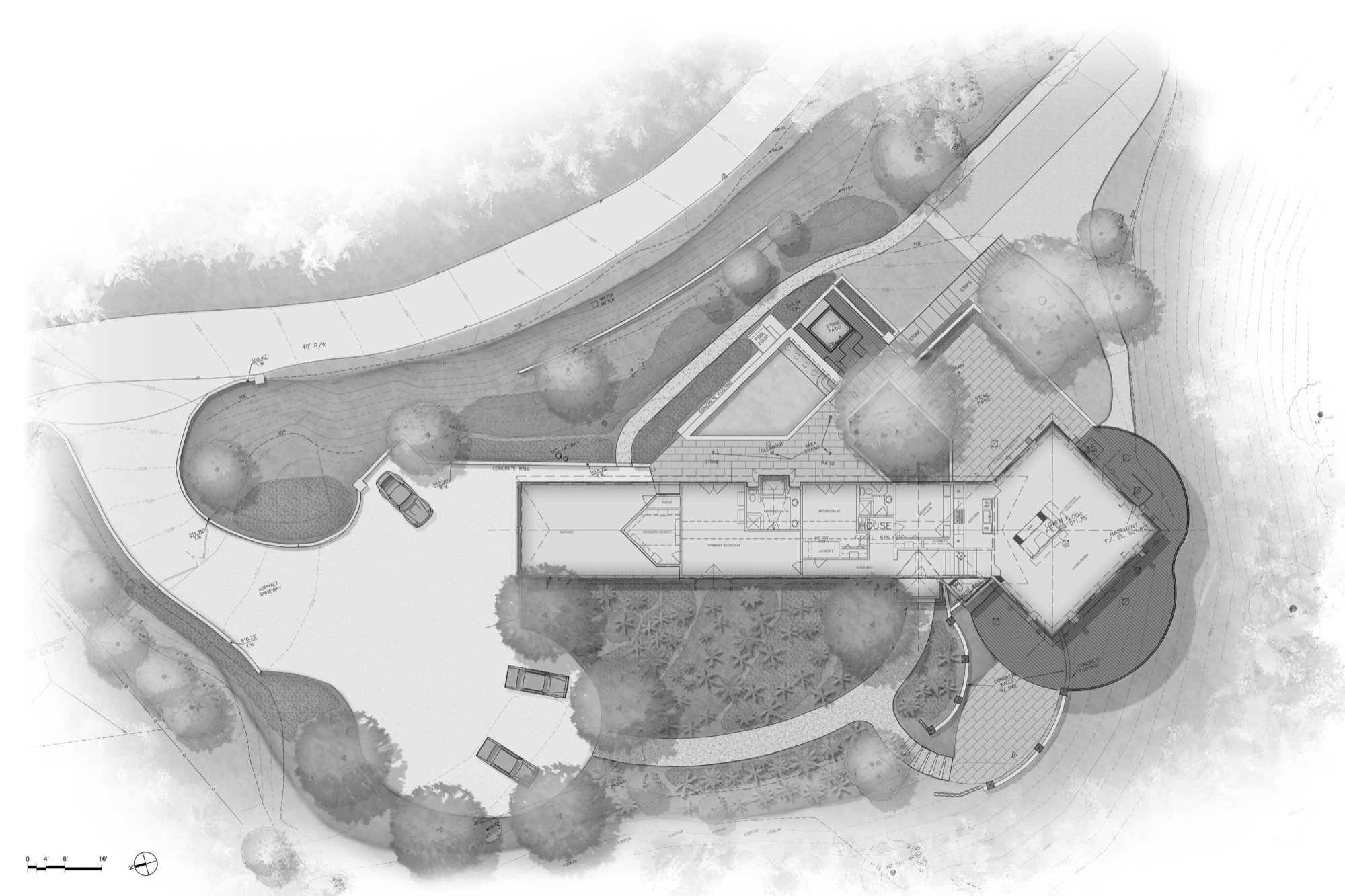
Beginning with the previously developed eastern and southern areas, the existing angular swimming pool provided the narrative thread for the renewed design. The concept of fluidity—cascading spatial environments, organic and amoeba-like forms—guided every decision that followed.
The pool was redeveloped in restrained blue and gray tones to reflect the foggy valley and distant bay views below. An integrated hot tub was added adjacent to the pool, oriented toward the ridgeline views while minimizing impact on existing terraces. The surrounding floor and steps were resurfaced in warm gray limestone, seamlessly connecting each of the cascading spaces.
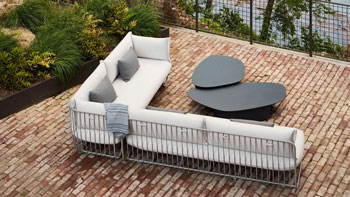
The undeveloped western and northern portions of the property were a blank canvas. To reclaim these previously inaccessible areas, our firm installed the property’s signature feature: an amoeba-like deck that releases occupants from the interior great room onto a platform suspended above the steeply descending valley below. The organic shape directly contrasts with the rectilinear architecture, allowing for an intuitive flow that breaks the home free from prior spatial rigidity. Structural support for the deck was developed with fire-rated wood joists above a streamlined metal substructure. The sinuous metal railing weaves wire vertically to gracefully navigate curves while preventing horizontal interruption of the ground-to-sky panorama. Simple seating arrangements mirror the programming of the neighboring interior rooms, allowing dwellers to spill naturally from indoors, out. A minimalist sensibility throughout ensures that views remain unobstructed.
Across all areas of the property, plantings were selected for both style and ecological function. The original shrubs along the east side were ill-suited to the local climate and provided insufficient screening from hikers on the road below. On the hotter west side, existing succulents lacked cohesion but offered a blueprint for how to proceed. The new plant palette leans into evergreen screening textures on the east and low Mediterranean accents on the west, responding to the property’s dynamic microclimates and programmatic needs.
The result, like the project as a whole, exemplifies a marriage of harmonious opposites—hard and soft, flow and structure, canopy and ground cover—reinvigorating what already existed and reclaiming the potential of what did not.
ADDITIONAL CREDITS
FTF Engineering – engineer
HKB Interiors – interior design
Stone Yard, Inc. – dining table
Yedda Morrison – stylist
Four Hands – furniture
RH – furniture
Suzanna Scott Photography – photographer
73680


LILA 2026 Sponsor