Heritage Park
spacesarchitects-ka.com/
2026 Public Projects / India / Built in 2023 /

In the dense fabric of Old Delhi, where over 300,000 people live at nearly 35,000 people per
square kilometre, Heritage Park emerges as a much-needed urban pause. An open space that
reconnects the city with its history, people, and everyday life.
Located on the important axial road connecting New Delhi to Old Delhi, the 1.8-acre site sits
between two of Delhi’s most powerful historic landmarks -Red Fort which is a UNESCO world
heritage site and Jama Masjid which was built in 17thcentury.
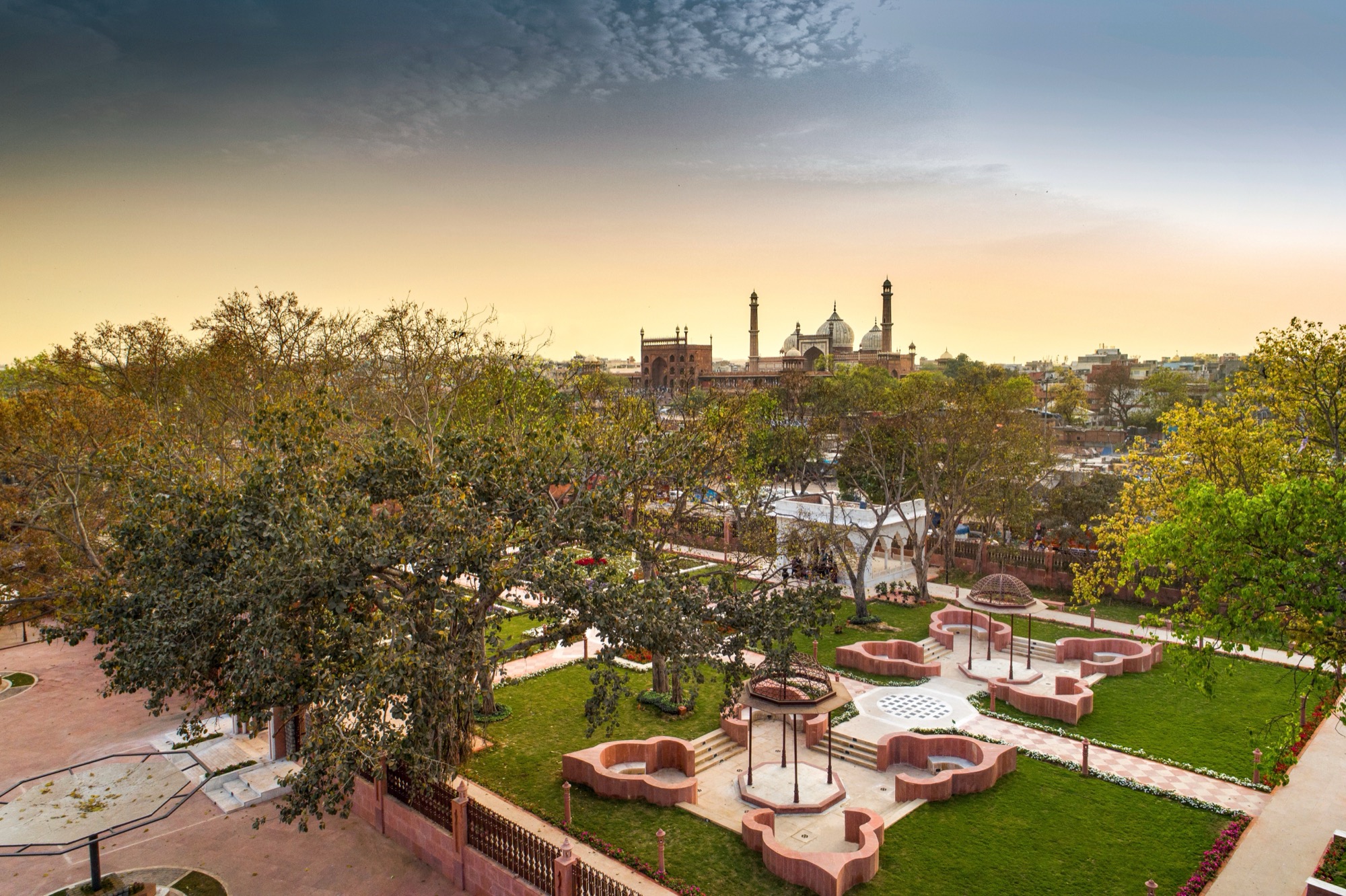
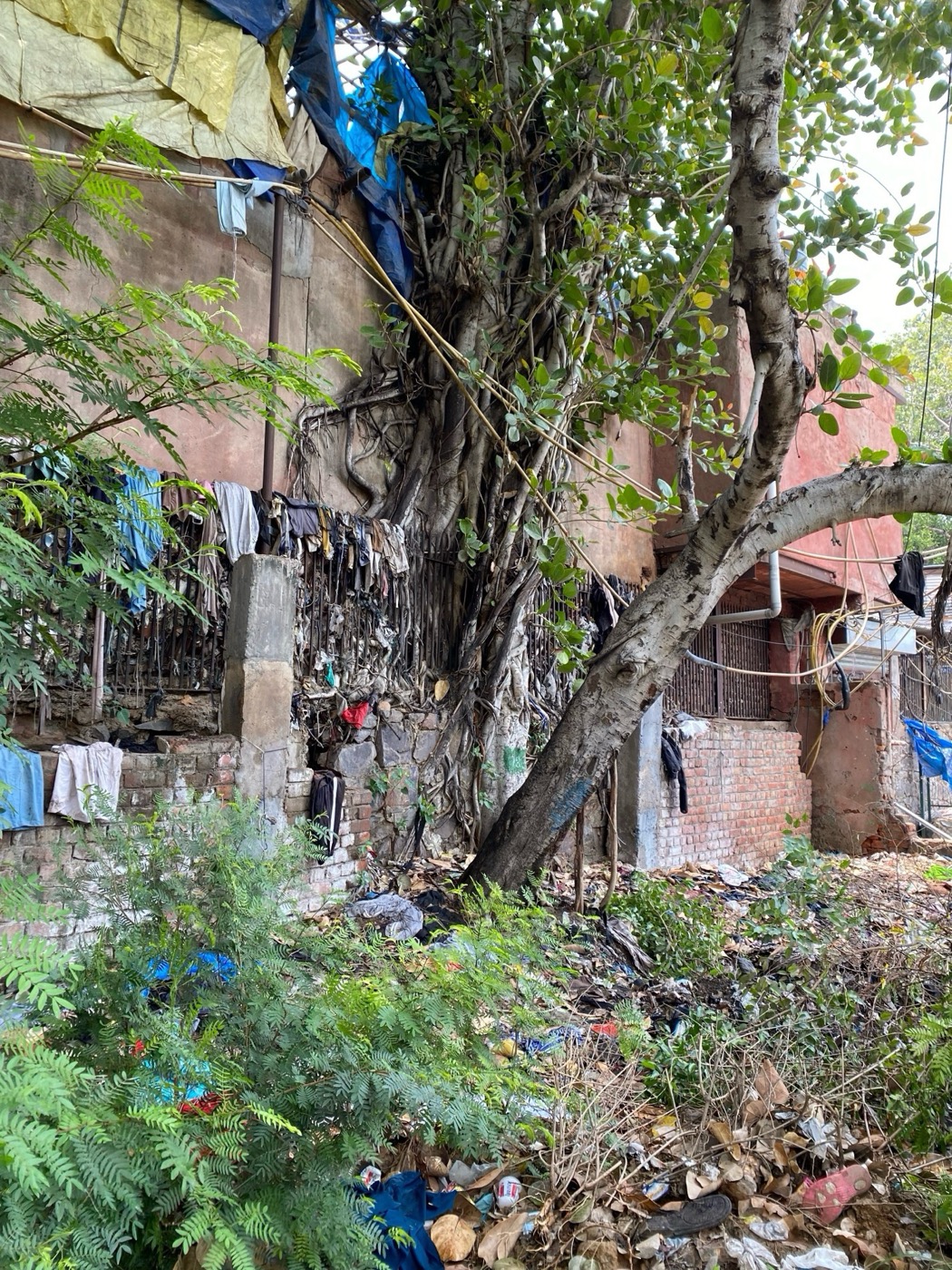
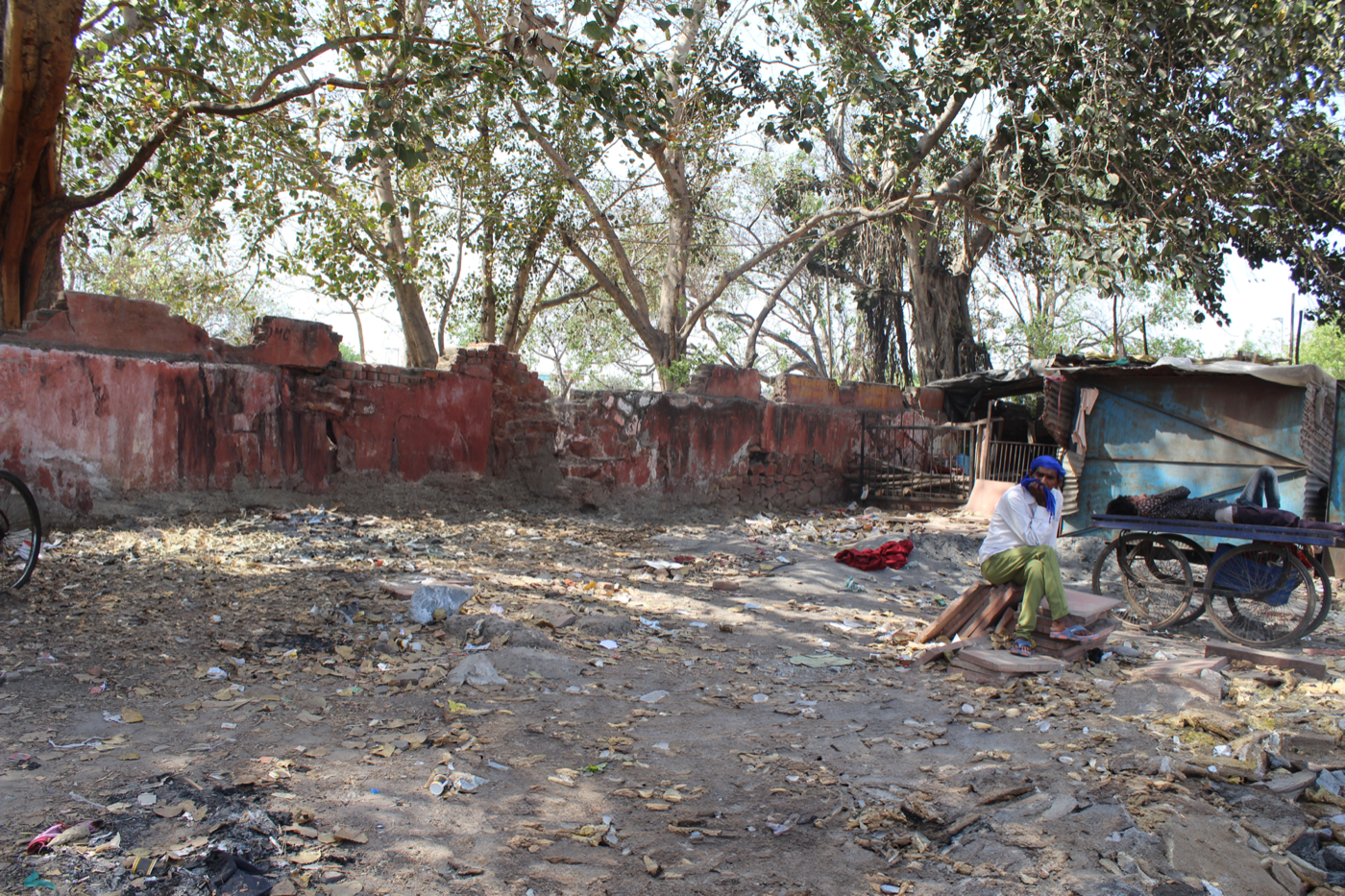
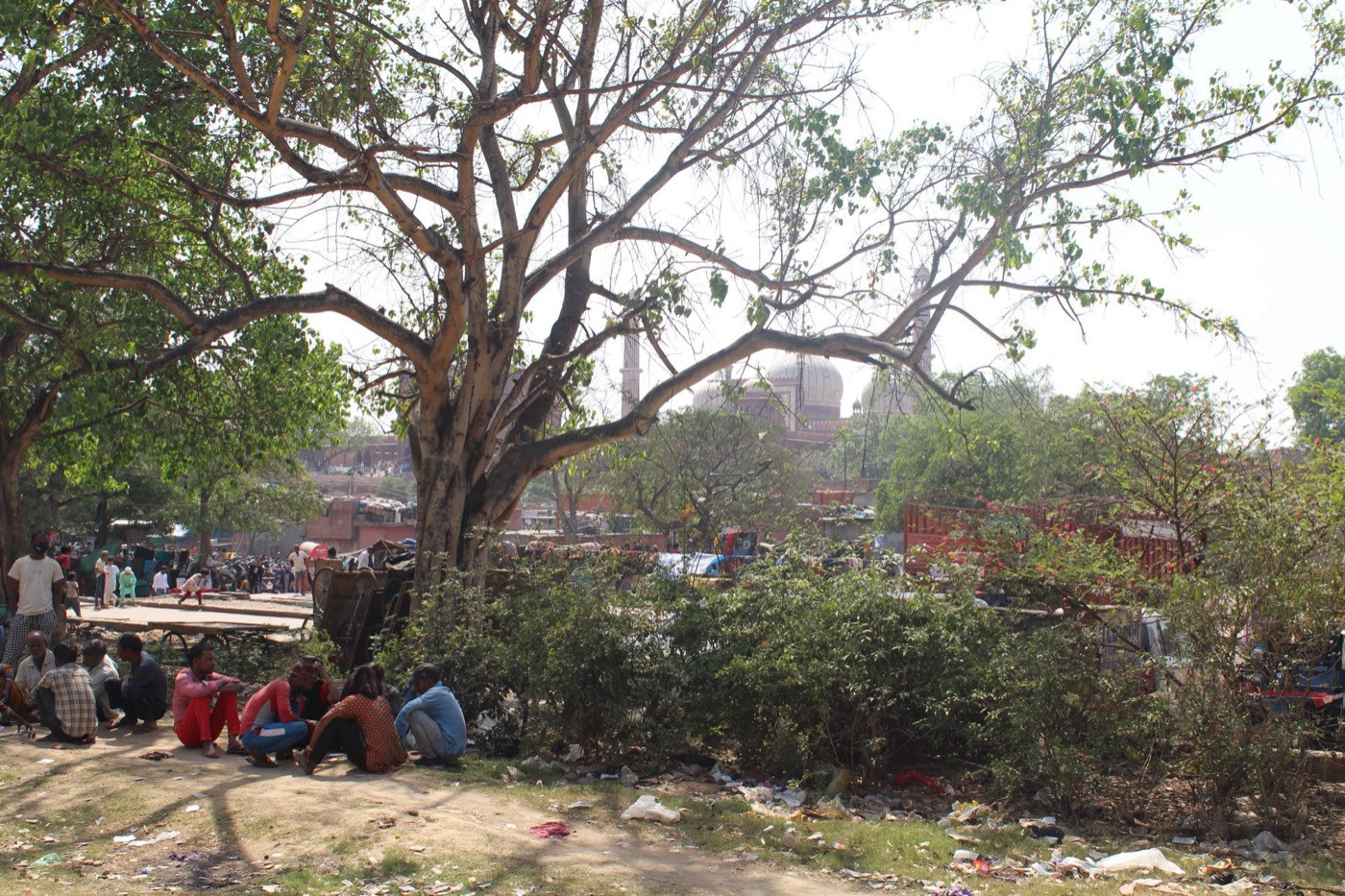
Once a neglected barren ground, the site had become a space for unsafe and unethical
activities. The project transforms this forgotten land into a cultural and social landscape that
restores dignity to the place while respecting its strong historical context.
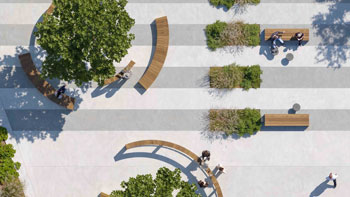
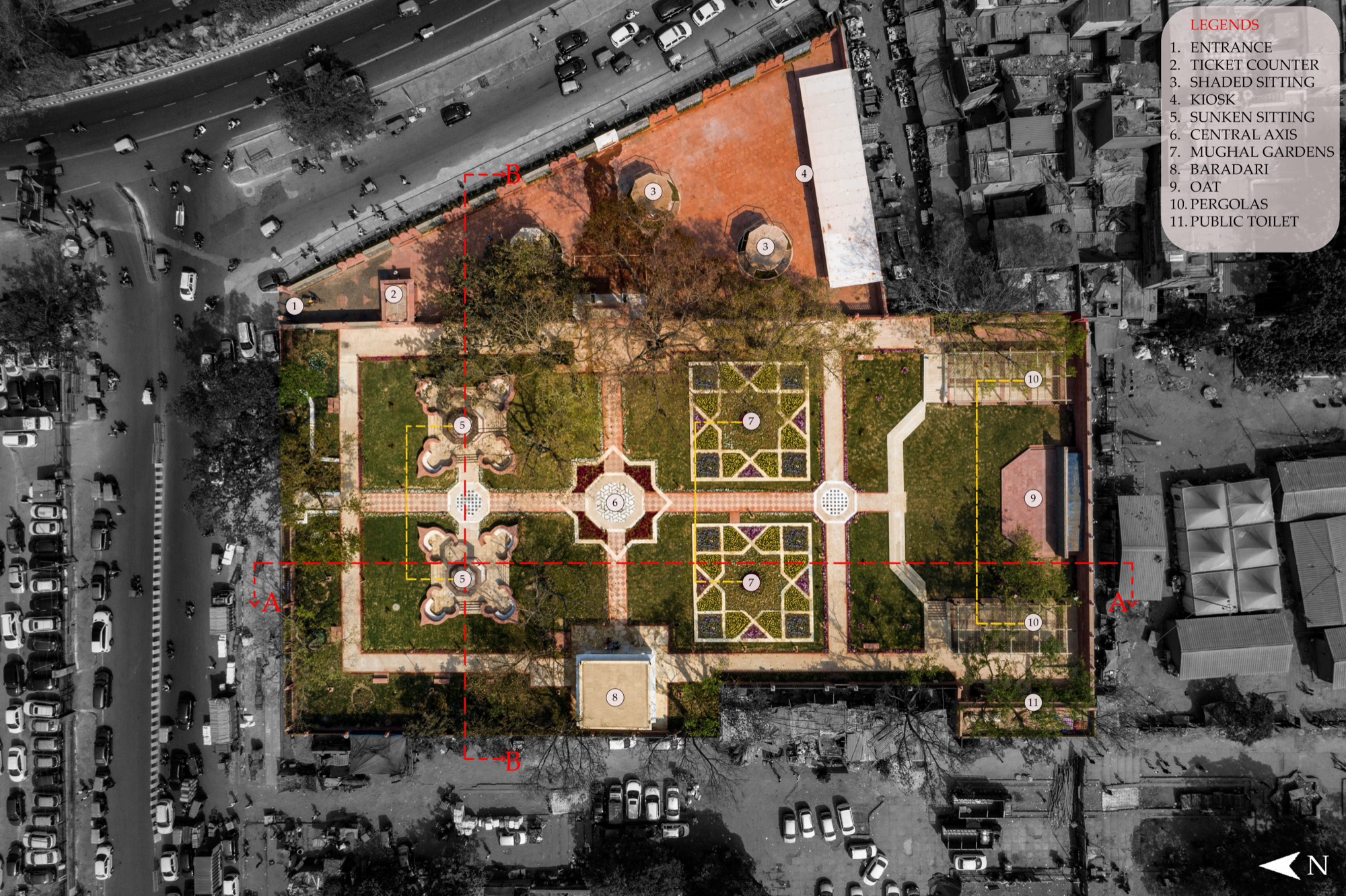
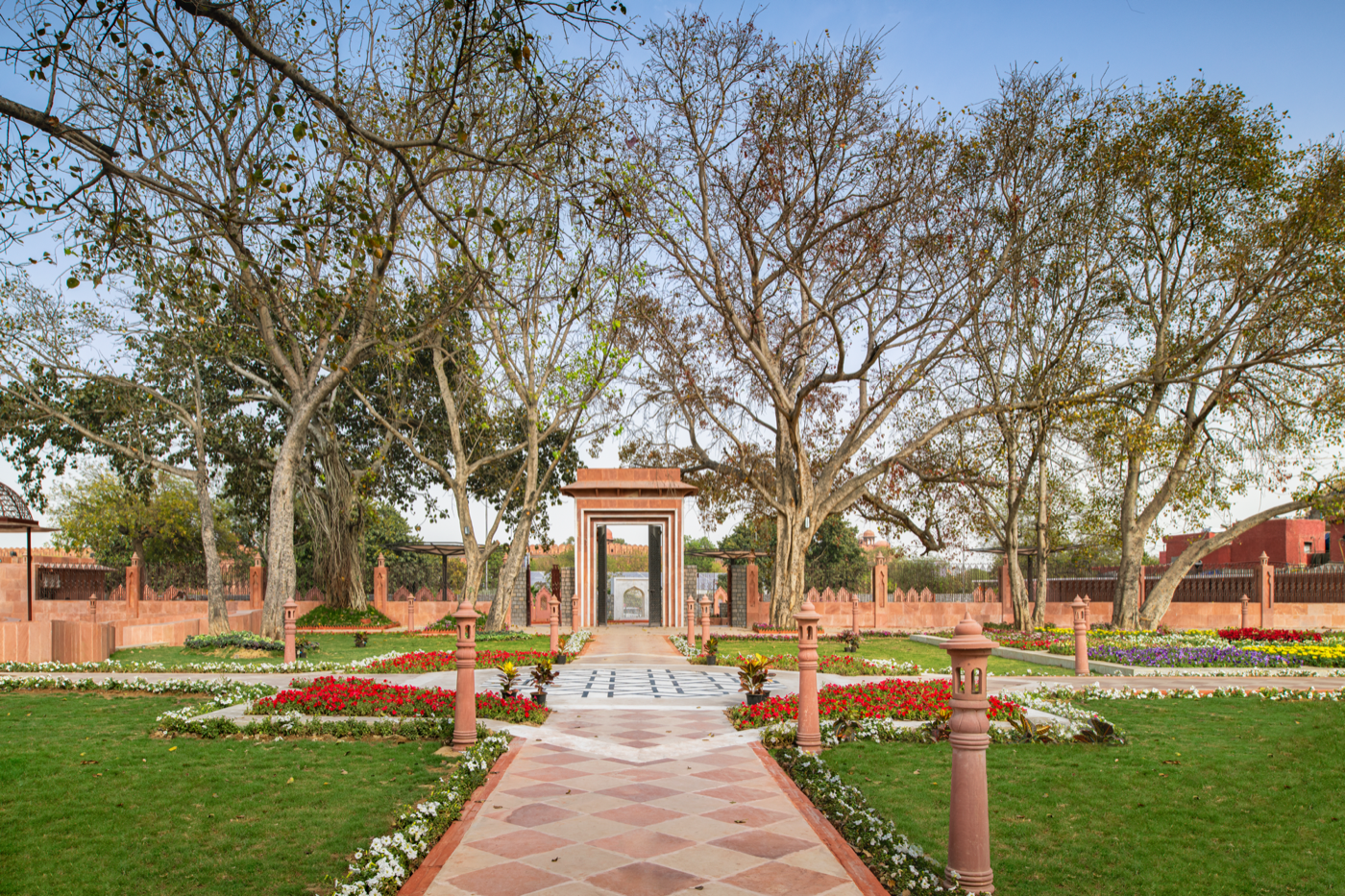
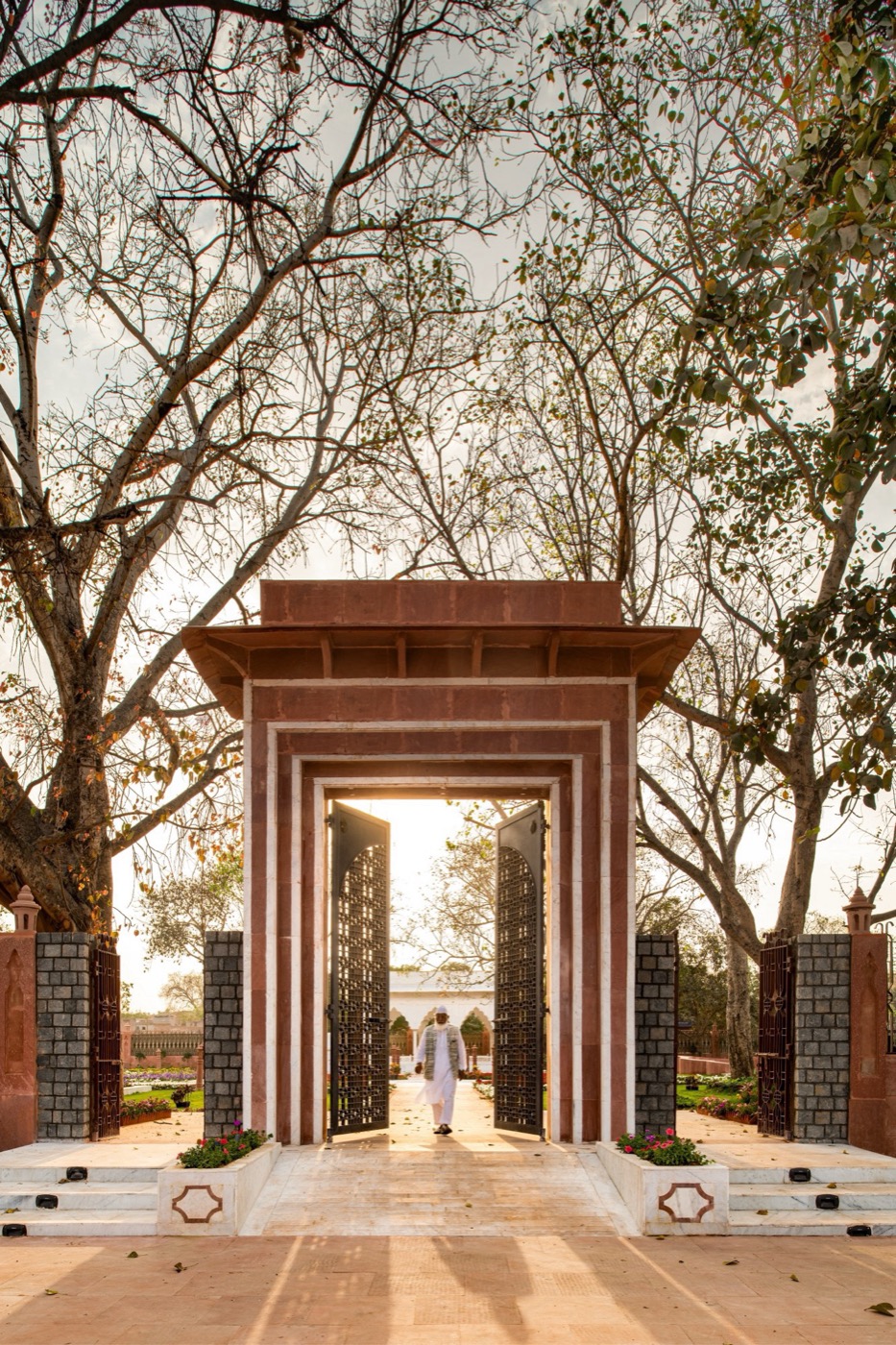
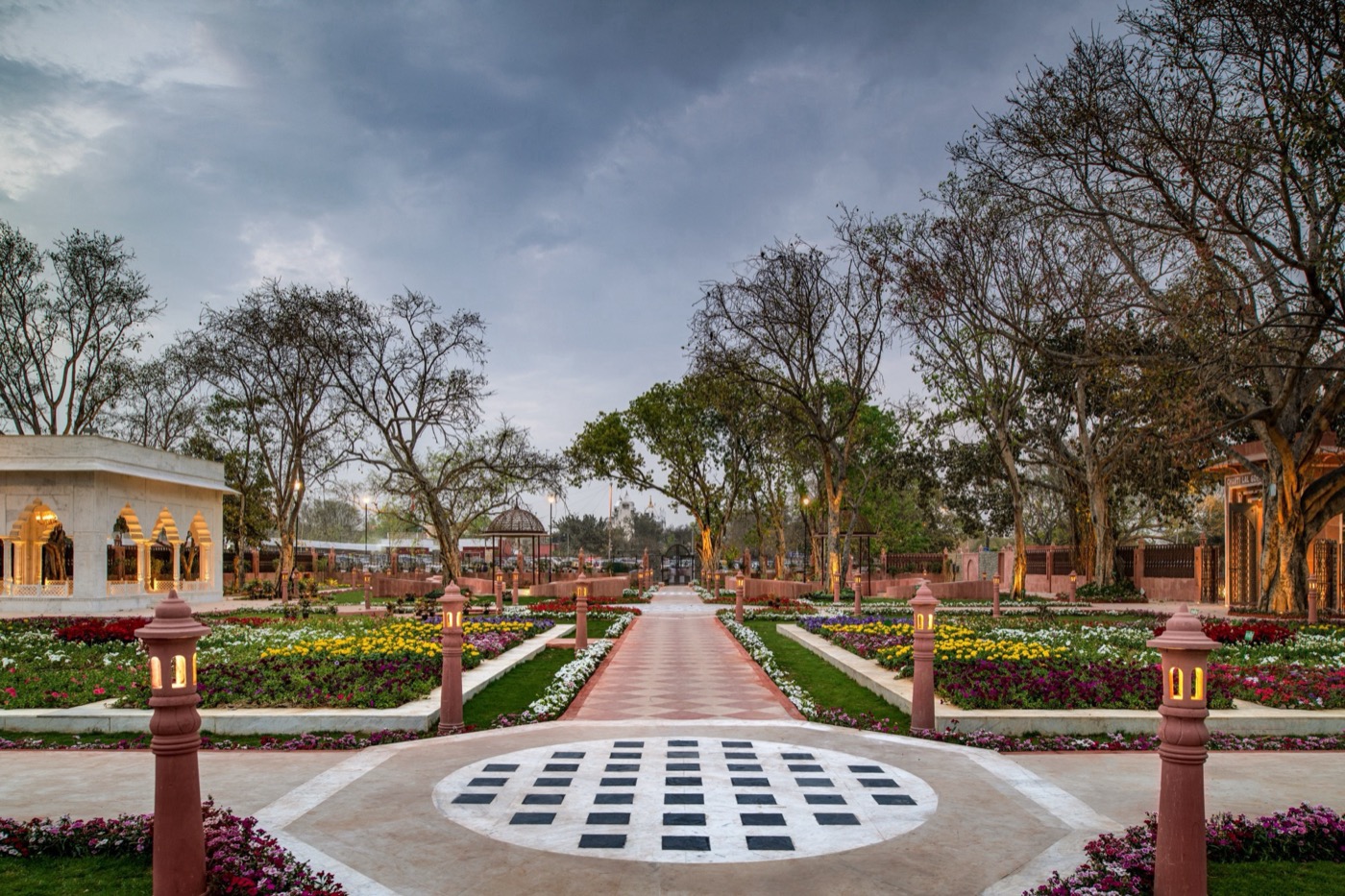
The design is organized through a central perpendicular axis that divides the park into two
distinct zones -a front triangular hardscape plaza and a lush green garden beyond. This
movement spine becomes the main experience of the park, carefully navigating around all 27
existing mature trees, preserving them as an integral part of the design rather than treating
them as obstacles.
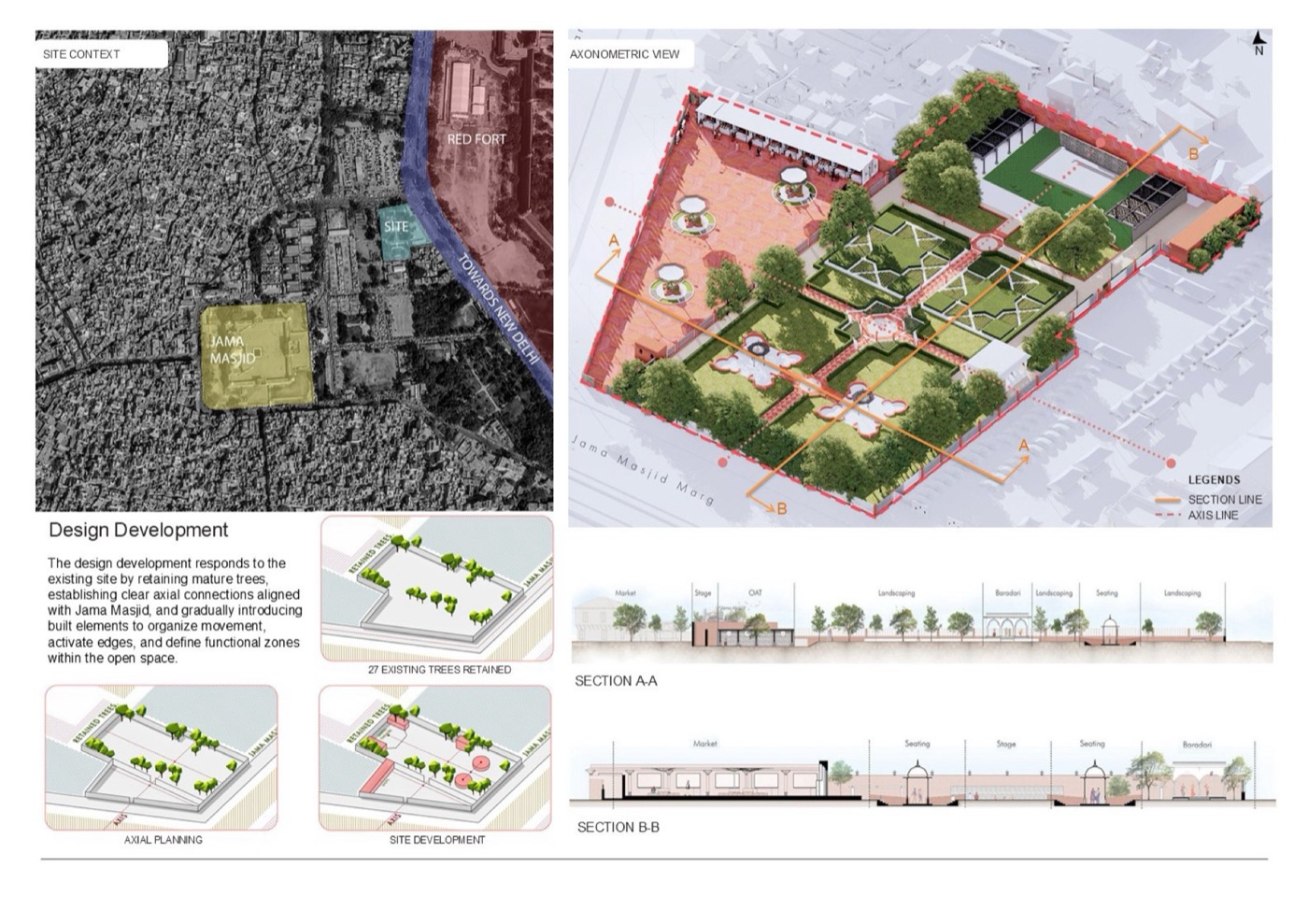
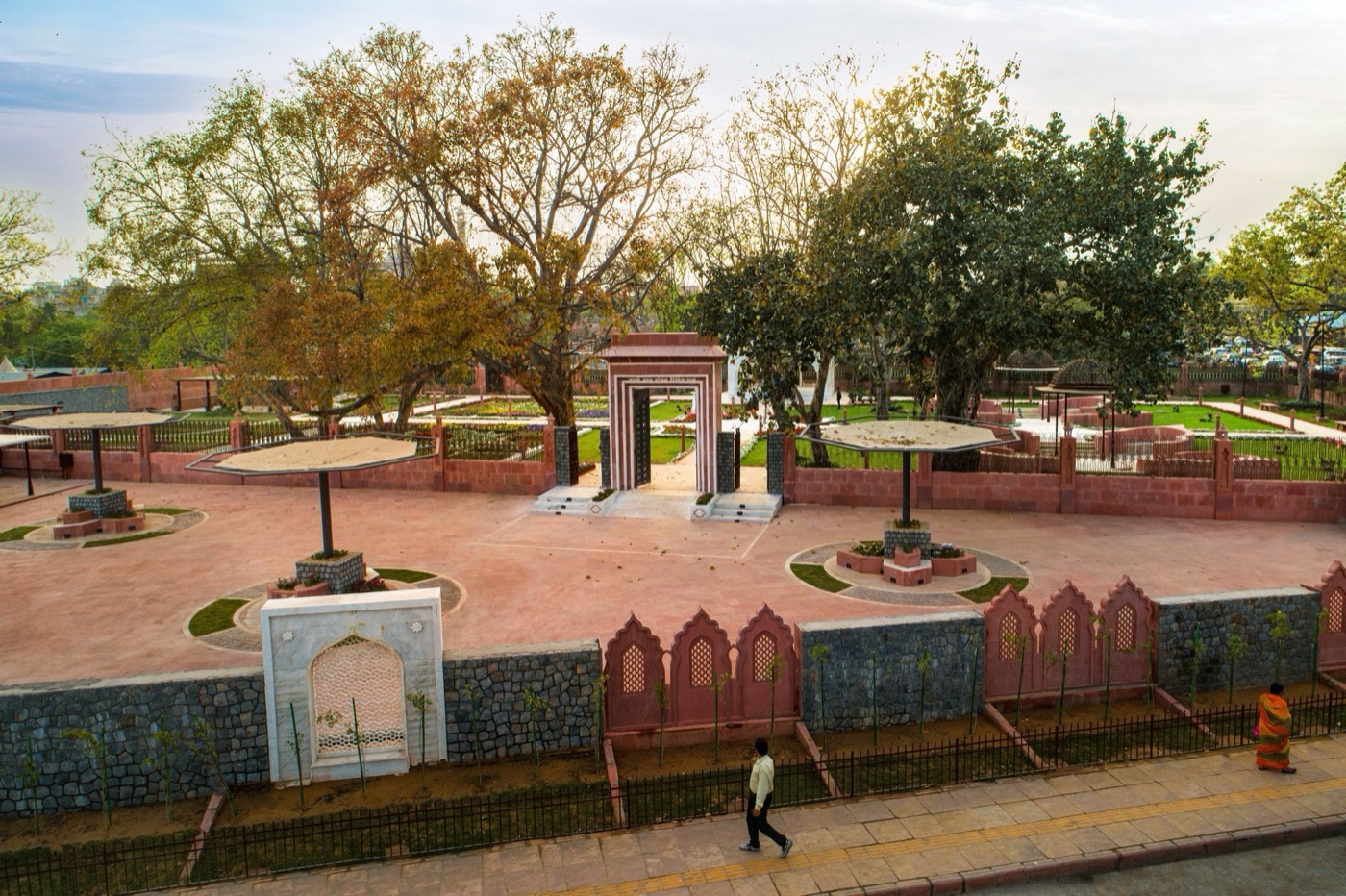
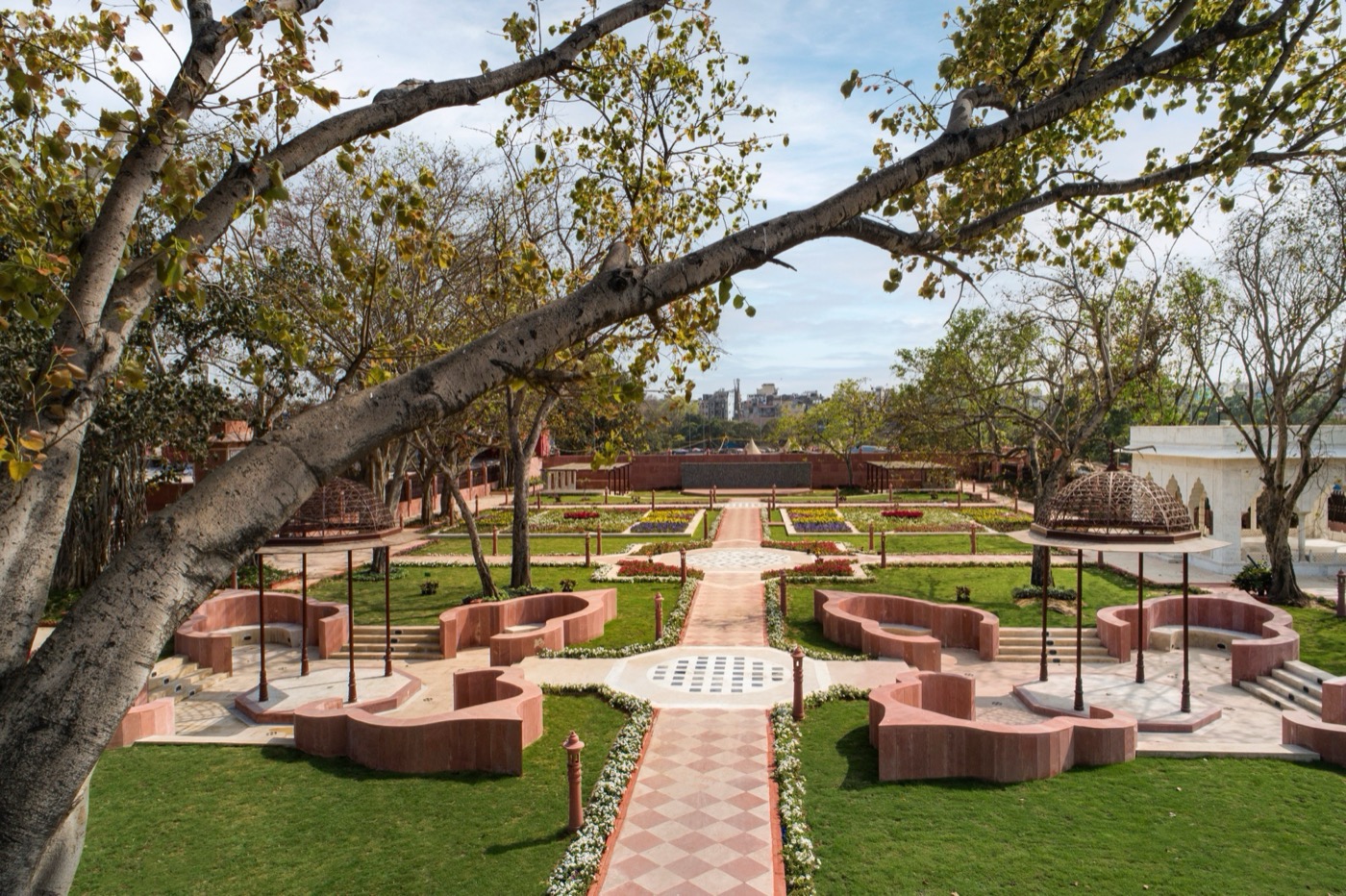
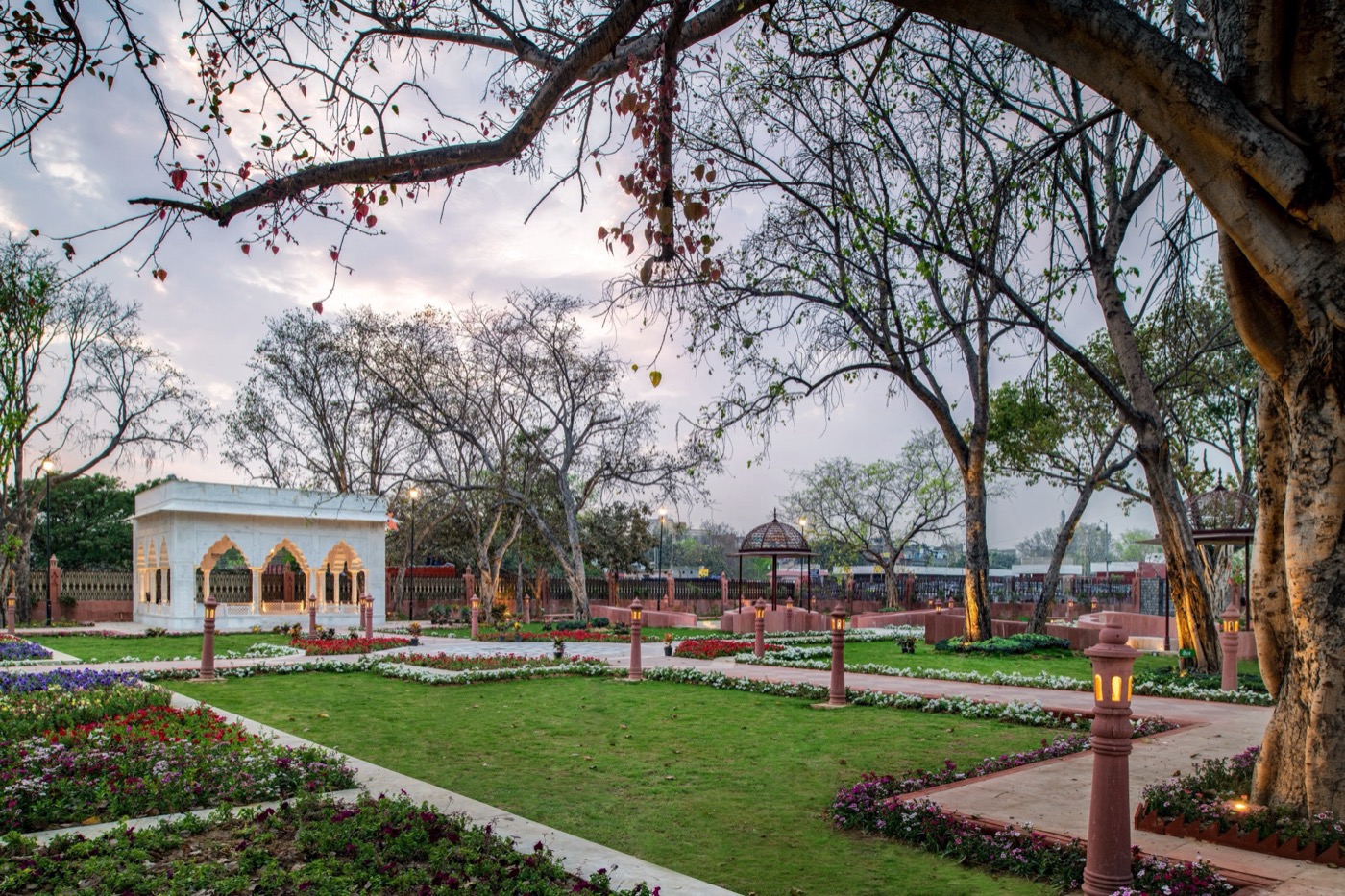
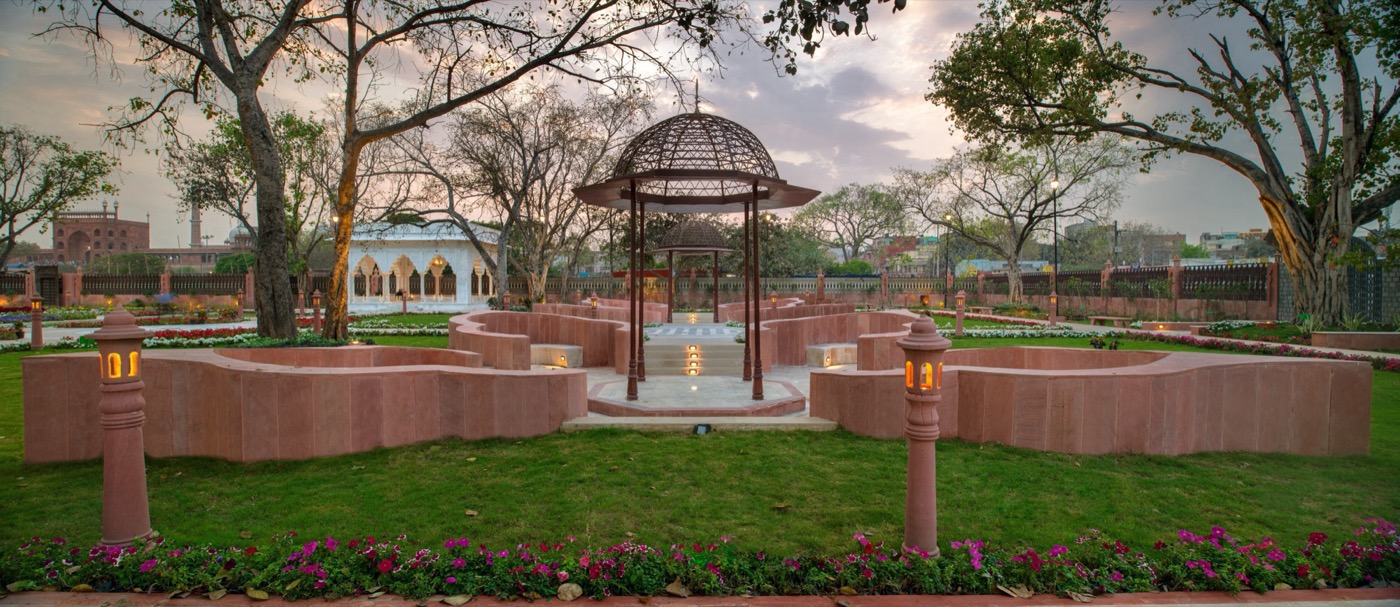
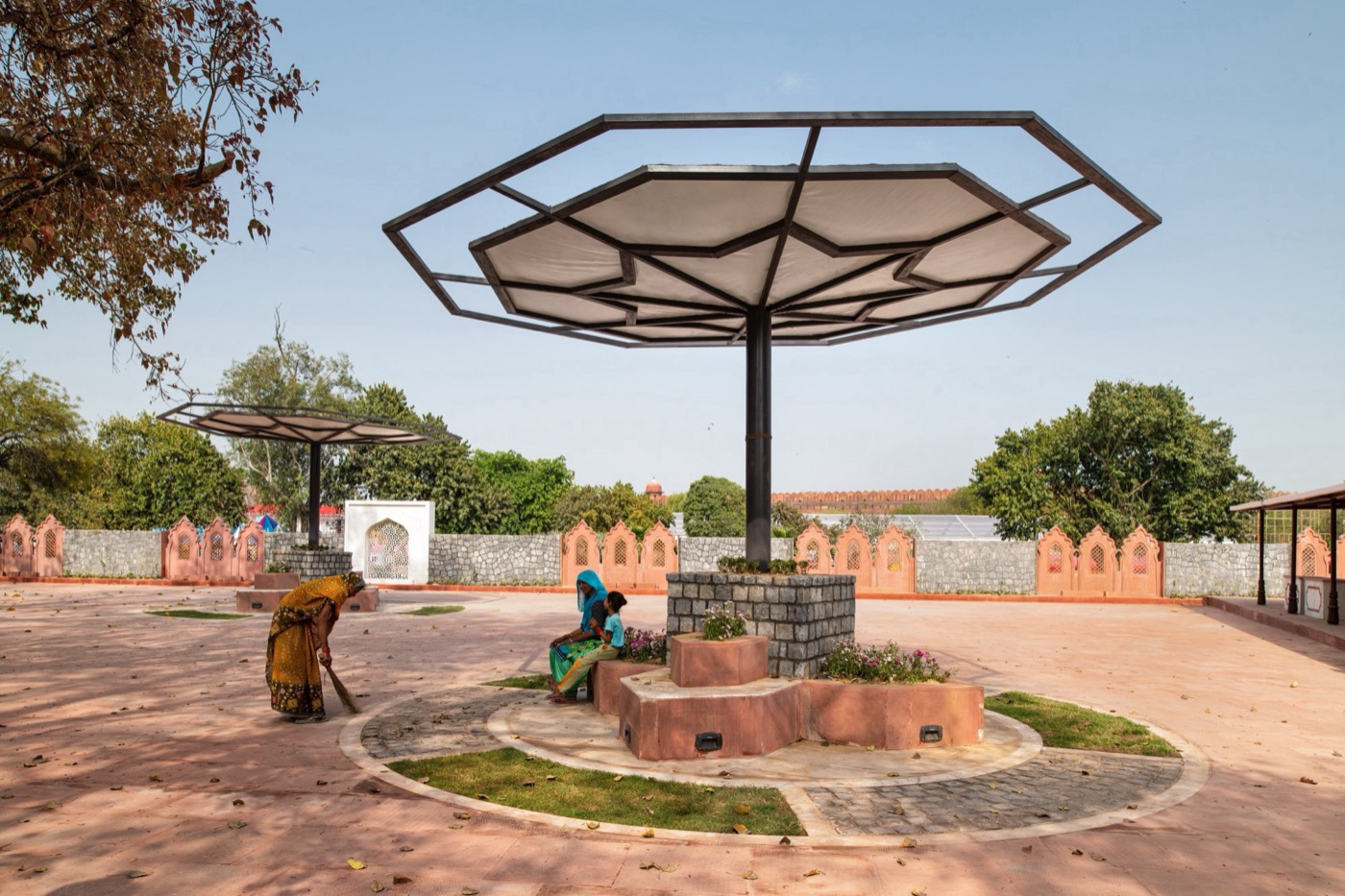
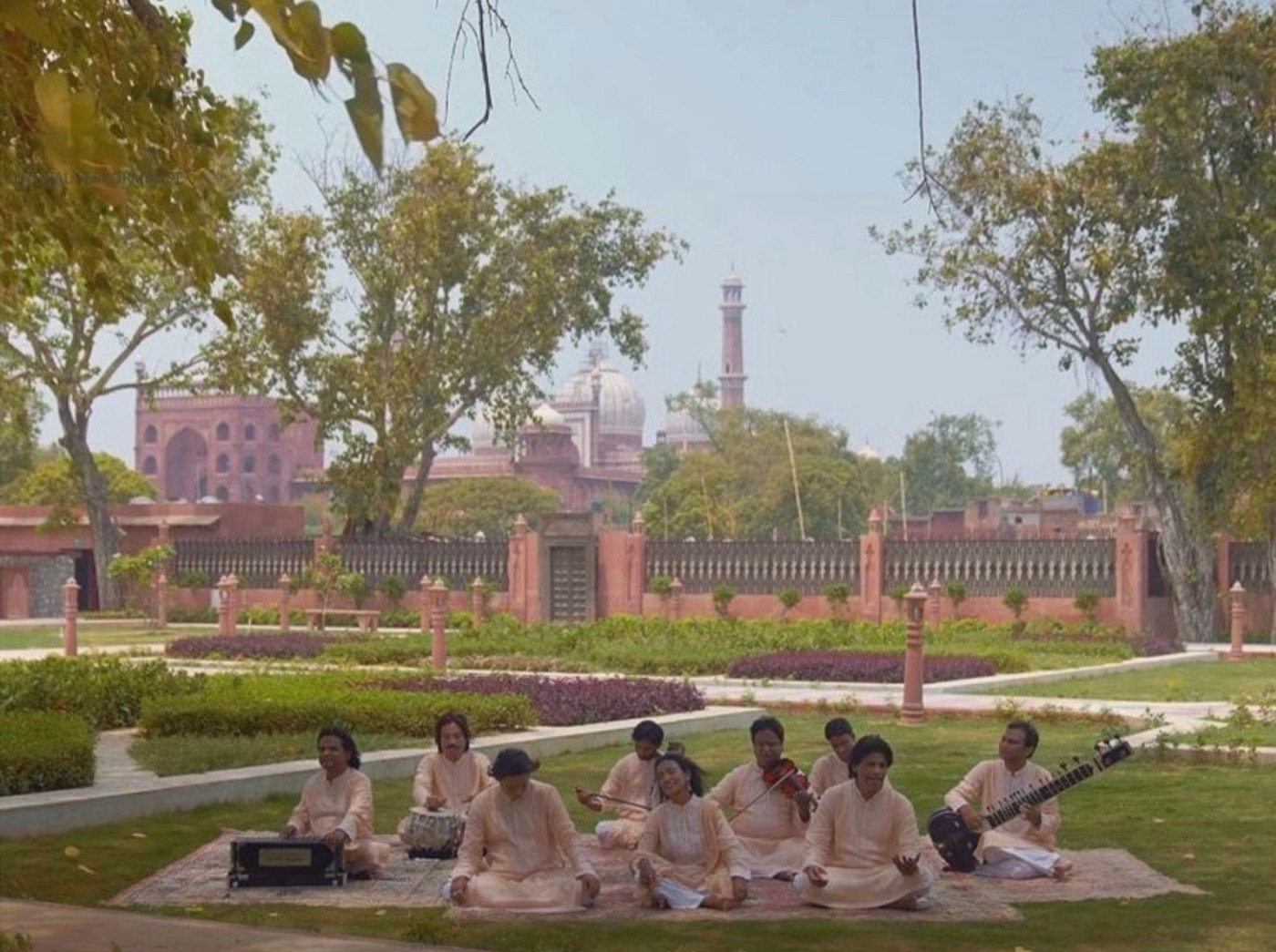
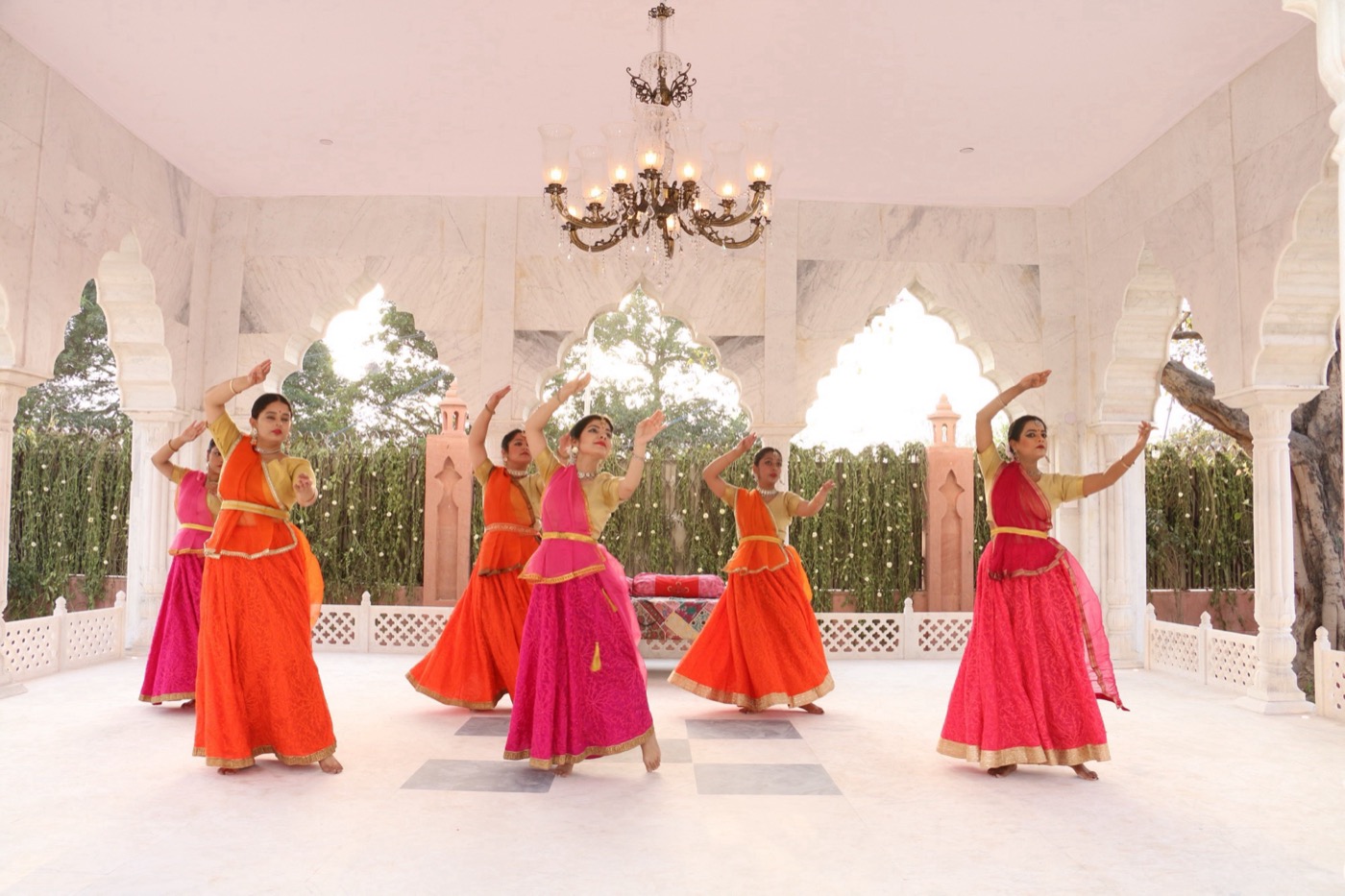
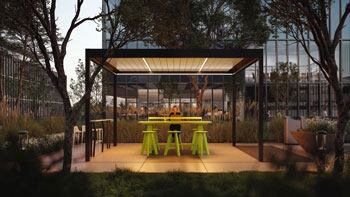
The shaded seating structure takes inspiration from the geometric language of the heritage
domes of the Red Fort, translated into a contemporary architectural form. Floor lighting
elements draw from the minarets, subtly embedding memory into everyday experience. Semi
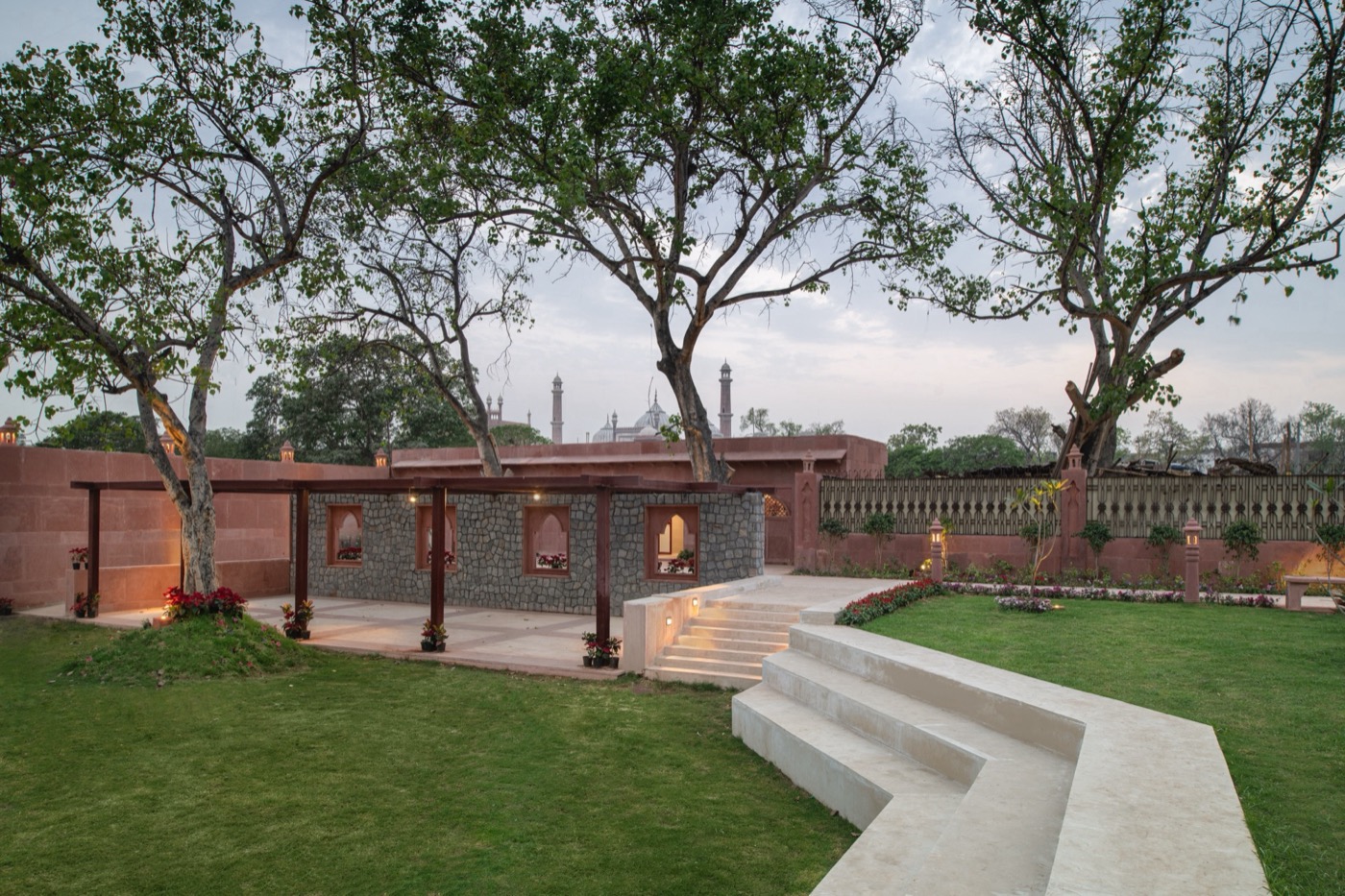
open kiosks for local food and small retail create activity while generating revenue, ensuring
long-term sustainability of the park.
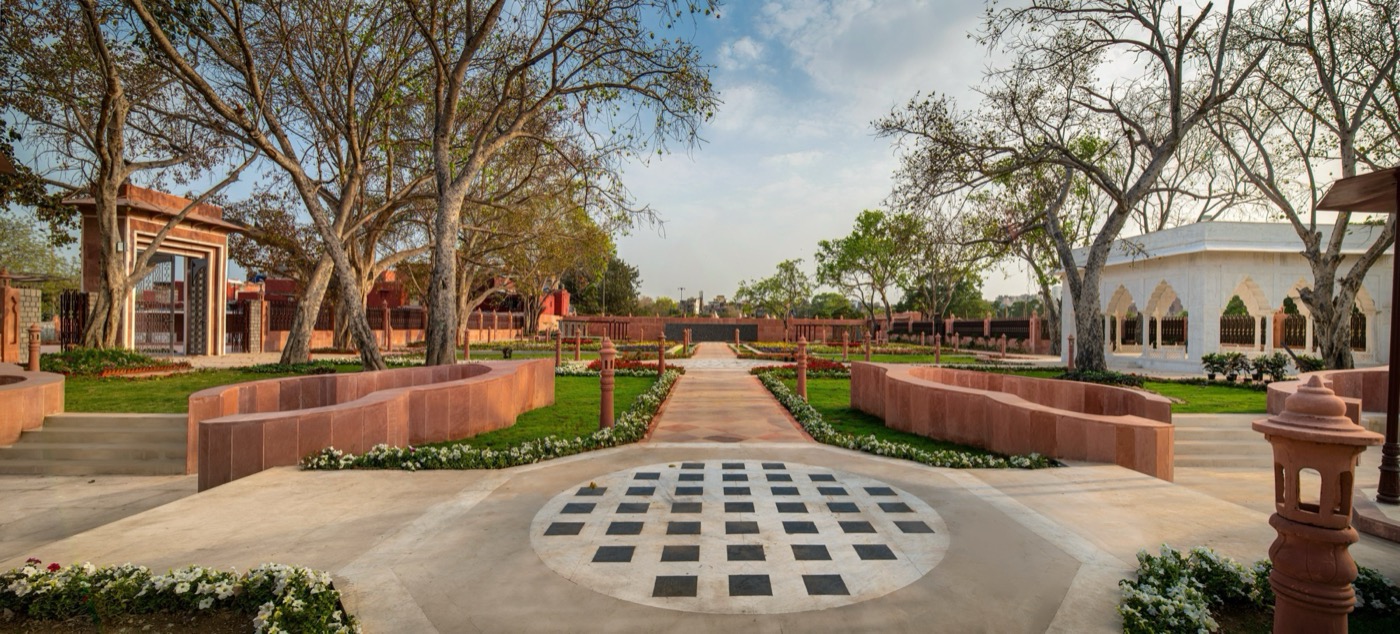
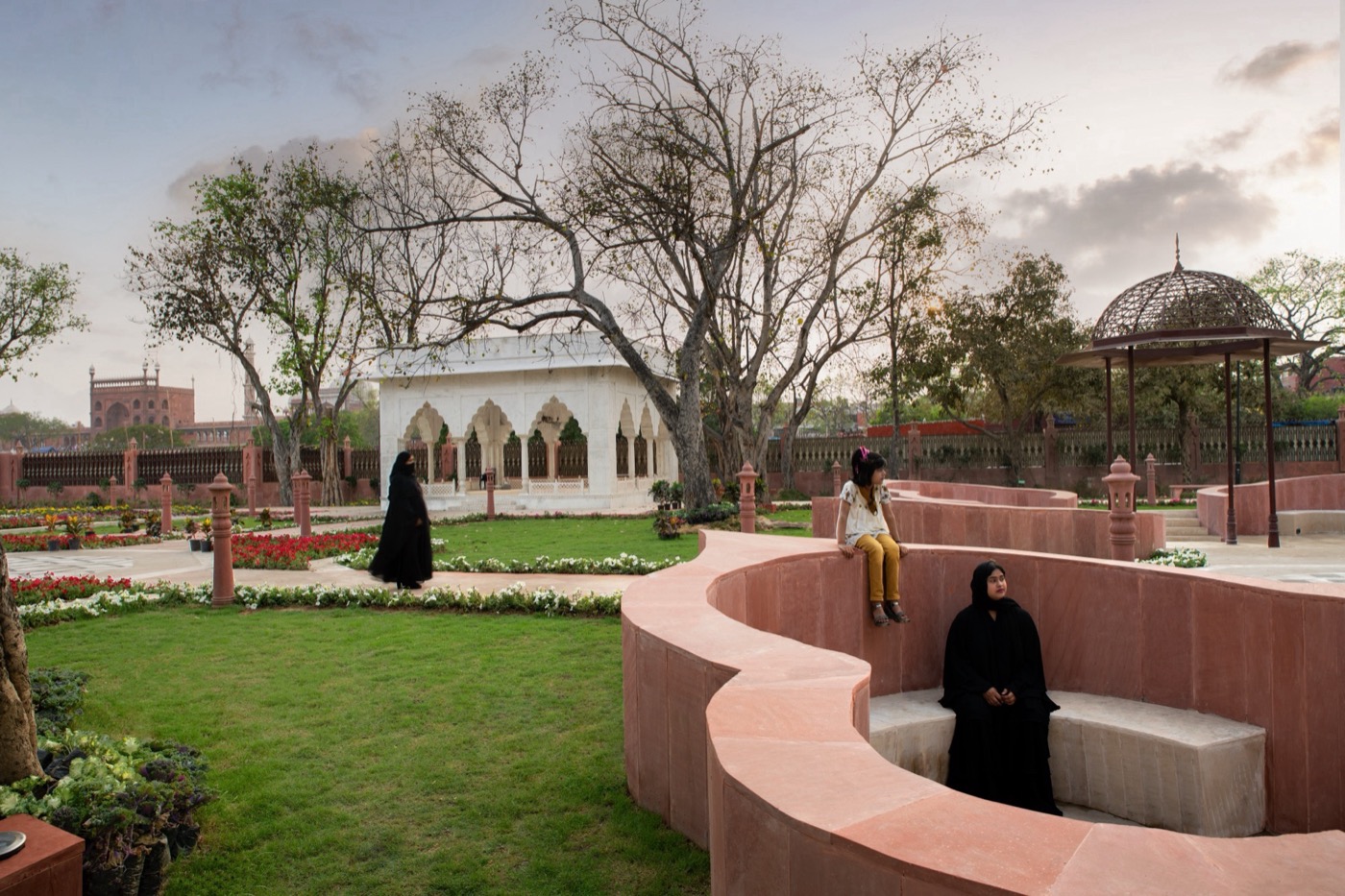
At the centre, a white stone Baradari becomes the visual and emotional anchor of the space.
The axis continues into a sunken court seating inspired by the historic water channels of the
fort -creating an intimate pause for gathering, reflection, and community interaction.
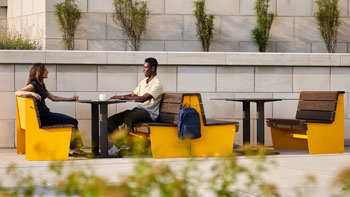
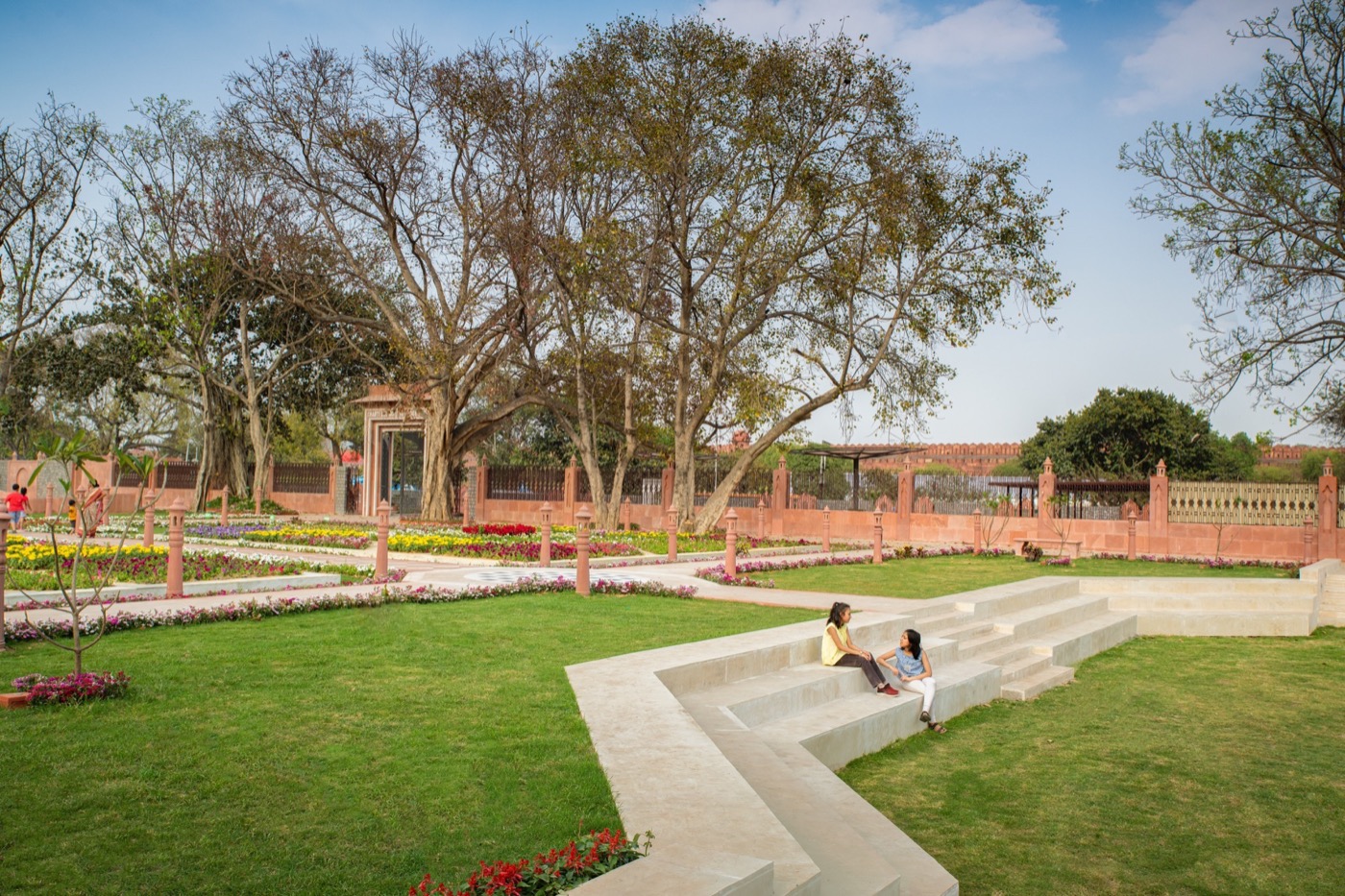
The journey concludes at an open-air amphitheatre designed for performances, festivals, and
shared public life. Shaded seating edges allow flexibility for both formal and informal use,
making the park active throughout the day.
More than a landscape intervention, Heritage Park responds to a social need. In an area where
open recreational space is almost absent, it creates a safe ground for children to play, for
women to access public space with comfort and security, and for the larger community to
gather beyond the pressures of dense urban living.
The material palette, lighting, and spatial character borrow from the memory of Old Delhi’s
monuments and havelis, creating a balance between heritage and present-day use.
Heritage Park is not just redevelopment, it is the reclaiming of public space, identity, and
belonging in the heart of Old Delhi.
https://maps.app.goo.gl/1EC2MPU8jWiNDeT89
76441


LILA 2026 Sponsor