LILA 2026 Jury Distinction
Houguan Lake Eco Demonstration Park
www.valechestudio.com/
2026 Public Projects / China / Built in 2024 /

The jury appreciated this intervention for operating at the boundary between human use and non-human ecological processes by repurposing an abandoned aquaculture zone into a vast wetland and a multi-functional habitat, including educational purposes. It does not pretend to create untouched nature, nor does it reduce the wetland to a scenic park for people. Instead, it walks the fine line and works through gradients, edges and transitional surfaces where water, soil, plants, species and public access interact. The project also holds together different scales of perception: from the broader territorial wetland system to the close-up, human-scale experience of paths, bridges and carefully constructed details.
- from the award statementsLocated at the confluence of the Yangtze and Han rivers, Wuhan occupies a historic inland delta and is known today as the “City of a Thousand Lakes”. Decades of industrial expansion have left this watery terrain with severe ecological degradation. In the last ten years, Wuhan has invested significantly in ecological planning and environmental remediation to restore its landscape heritage. The Houguan Lake Eco-Demonstration Park is a component of this strategy and part of a regional ‘aquatic-biological’ corridor. Our design pilots strategies for remediating abandoned aquaculture and wet agriculture in the region. Through targeted intervention, the project restores a functional wetland, expands habitat, improves soil and water quality, and re-establishes key ecological services for the area while engaging the public in an educational landscape.
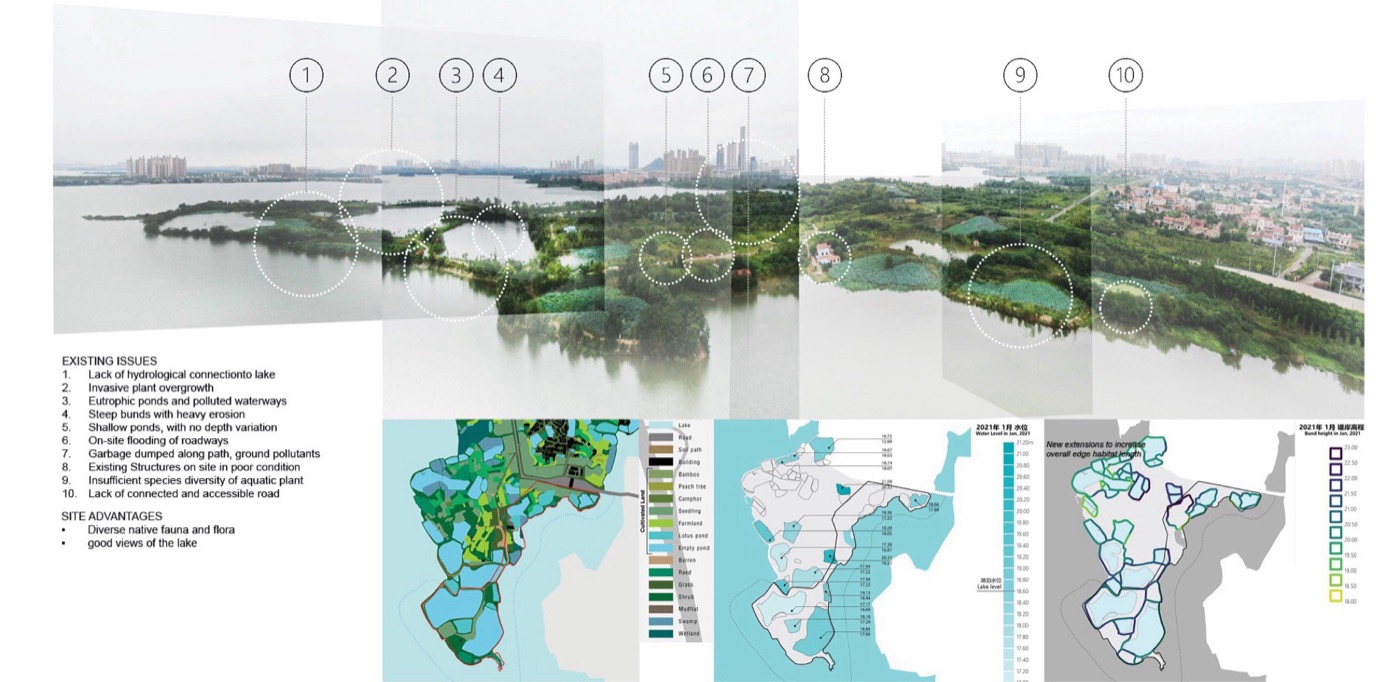
The 32-hectare project site consisted of shallow fishponds and lotus and reed beds. These ponds were shallow, flat-bottomed basins, separated by narrow ‘bunds’. Exposed soils were compacted, polluted, or covered. Only 3% of the site was active marsh or wetland habitat. With limited water circulation, the remaining ponds were stagnant, hypoxic, and full of invasives.
Our design strategy was straightforward. We developed a stormwater management framework that would handle storage and run-off (approximately 65,000 cubic meters) from nearby residential plots by regrading and reconnecting individual ponds. Within this framework, we employed a modular site remediation strategy. Working around remaining healthy soils and habitat fragments, we sculpted a new topography by inserting precisely sloped land extensions along the bunds at selected intervals. These low-cost landforms—‘ecological engines’—could be replicated for immediate and incremental ‘spot remediation’ throughout the corridor. Each ‘engine’ is constructed from debris taken from improper reclamation, bund cuts, dredged pond sediment, and on-site organic matter.
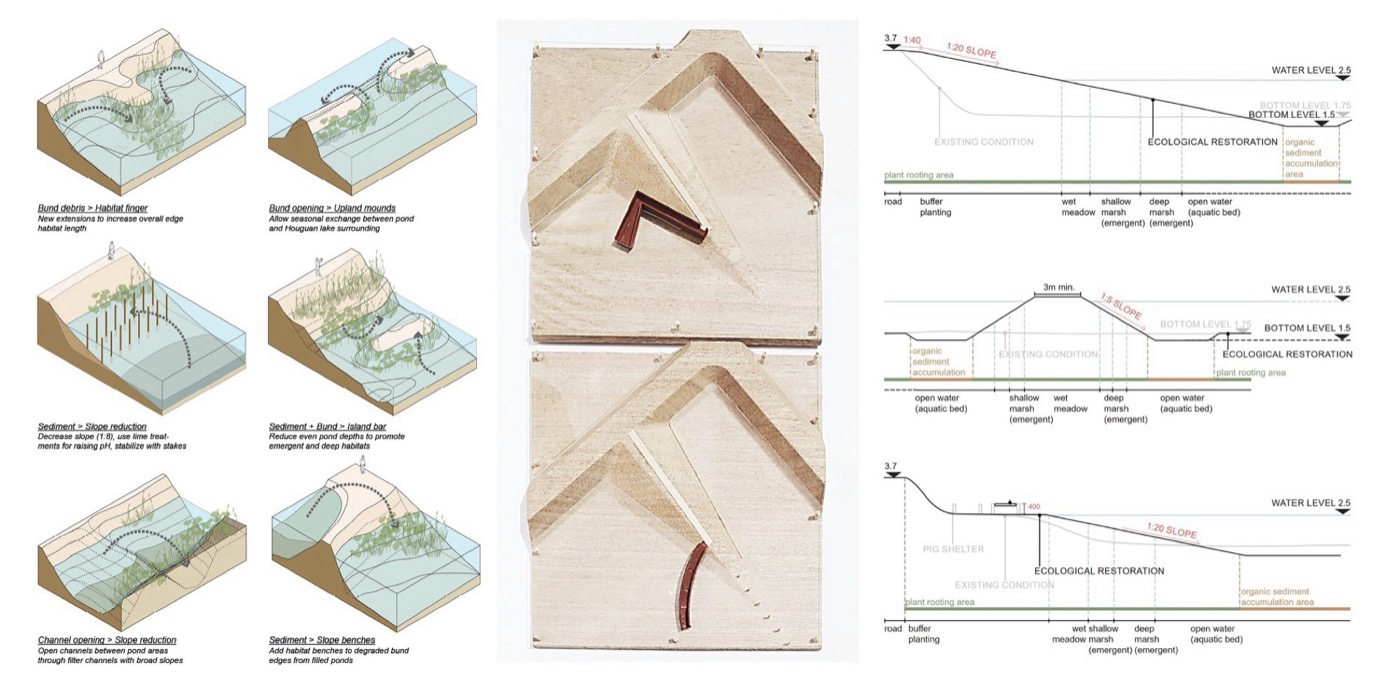
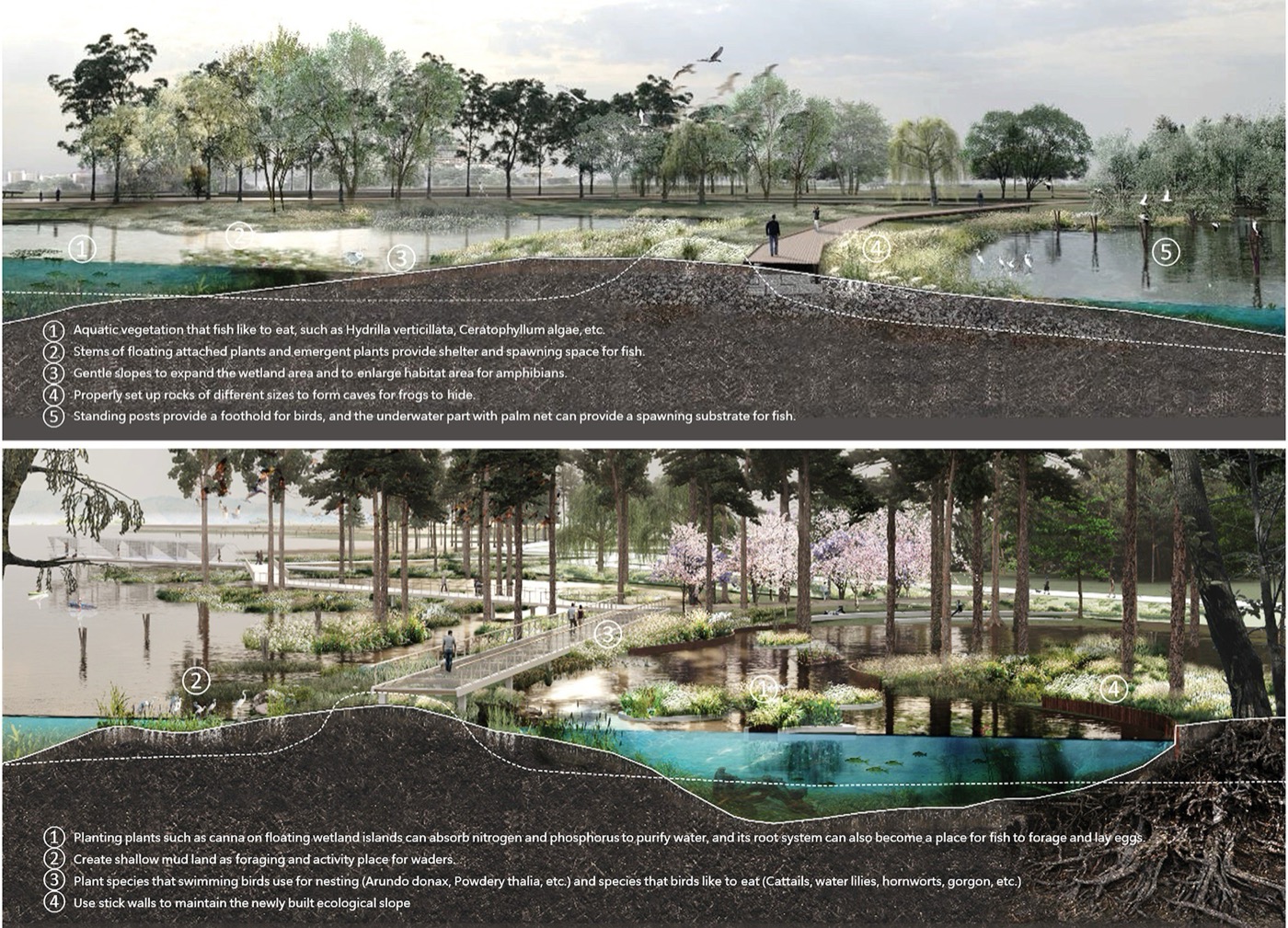
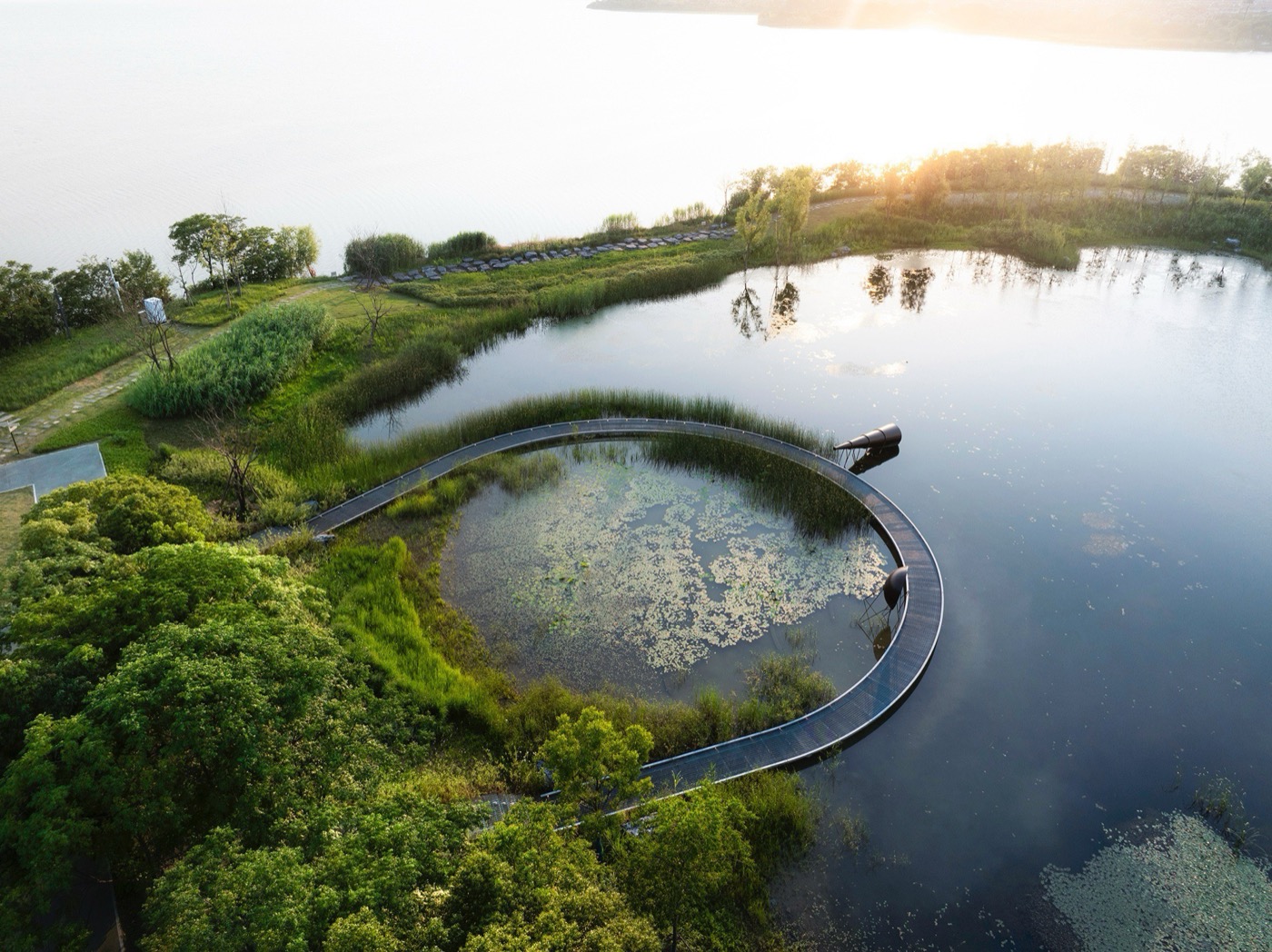
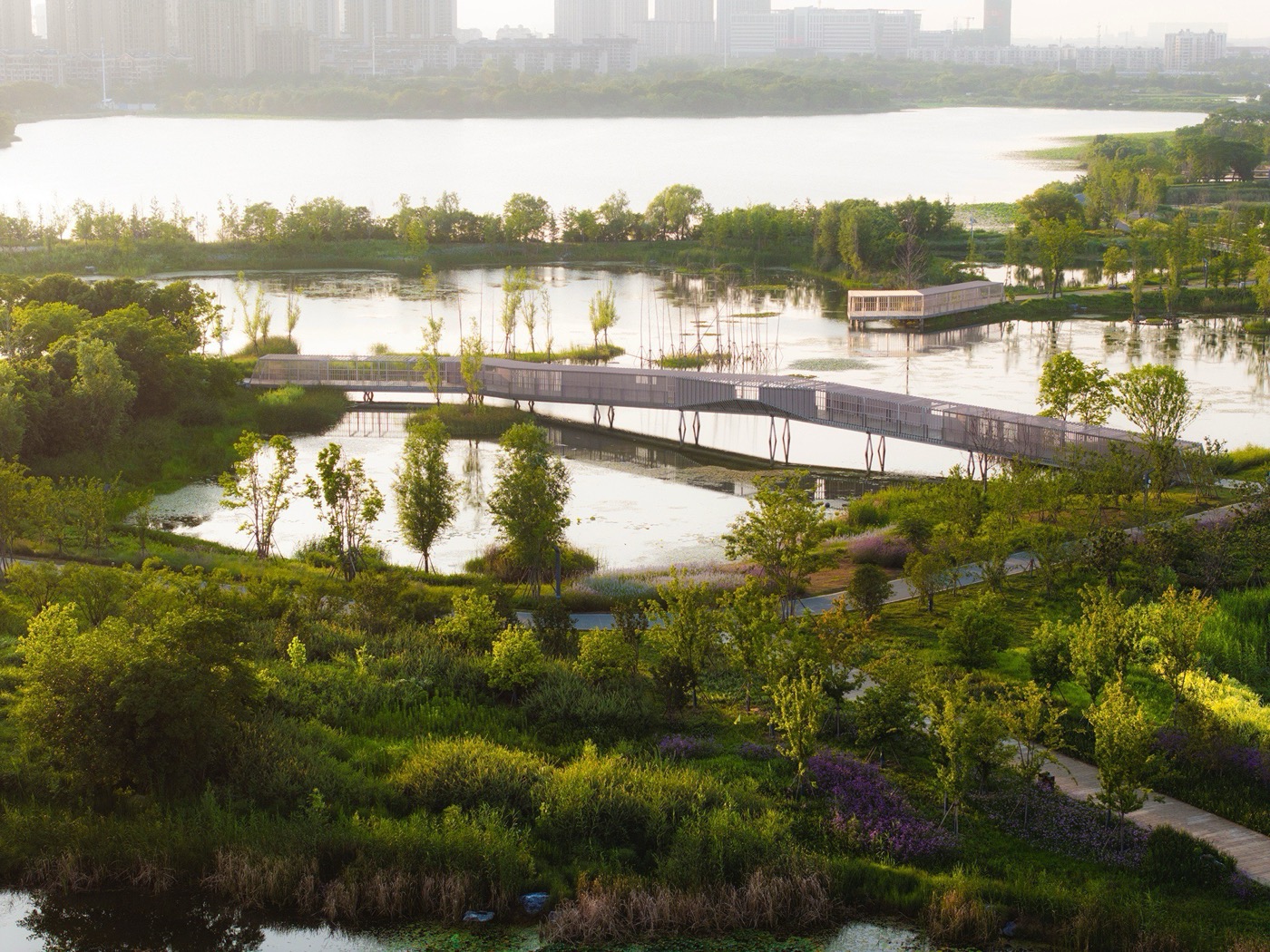
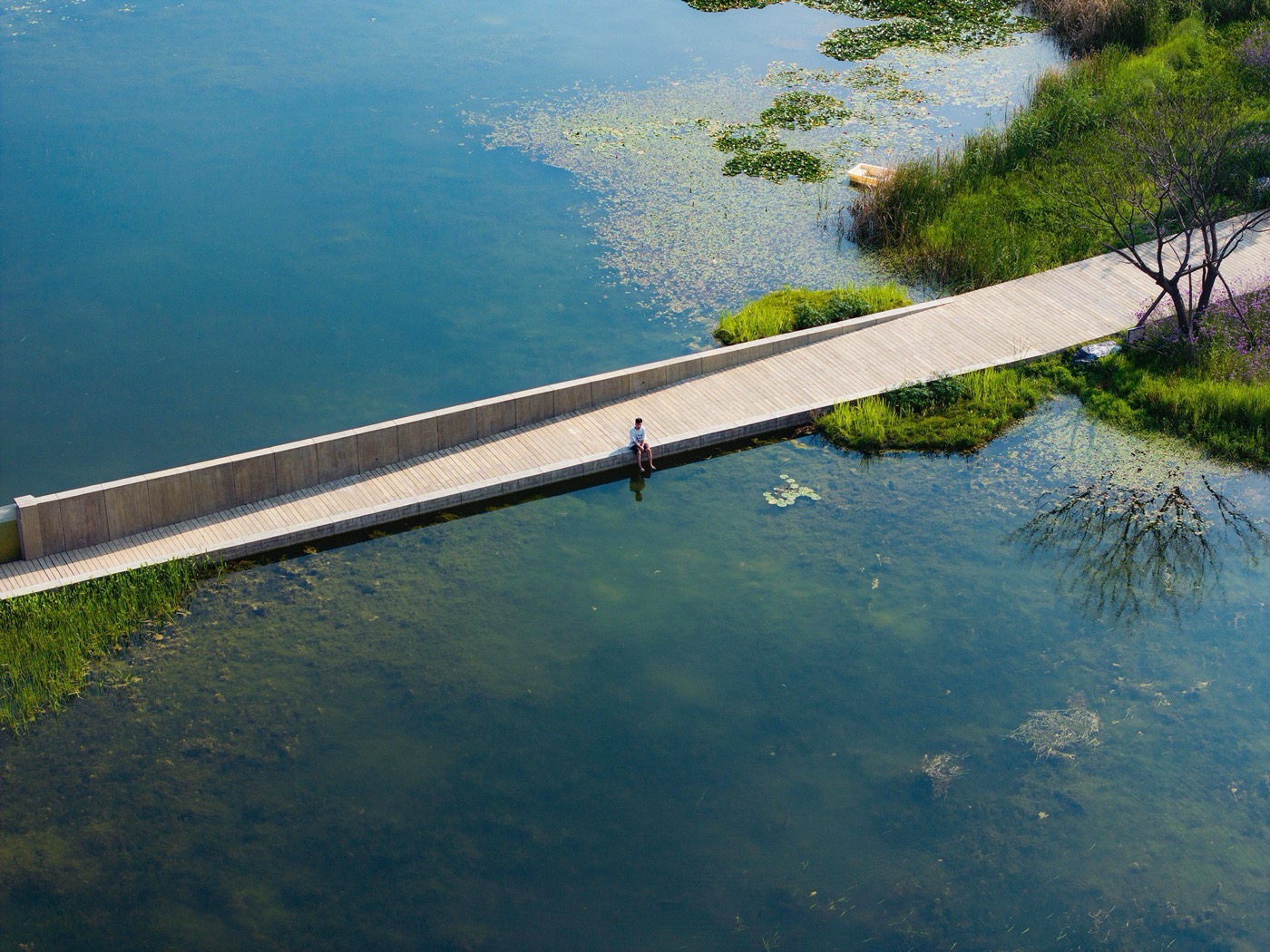
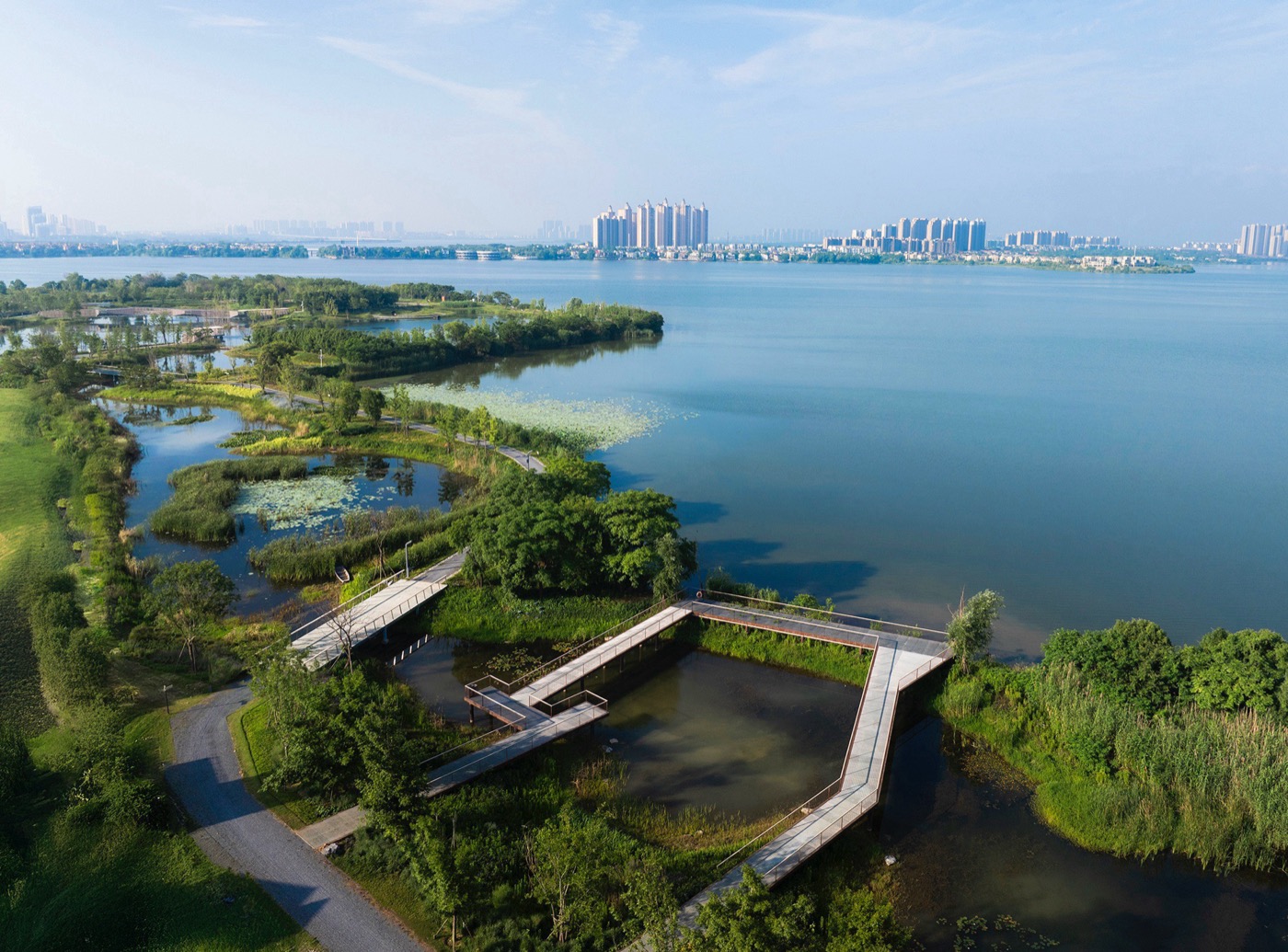
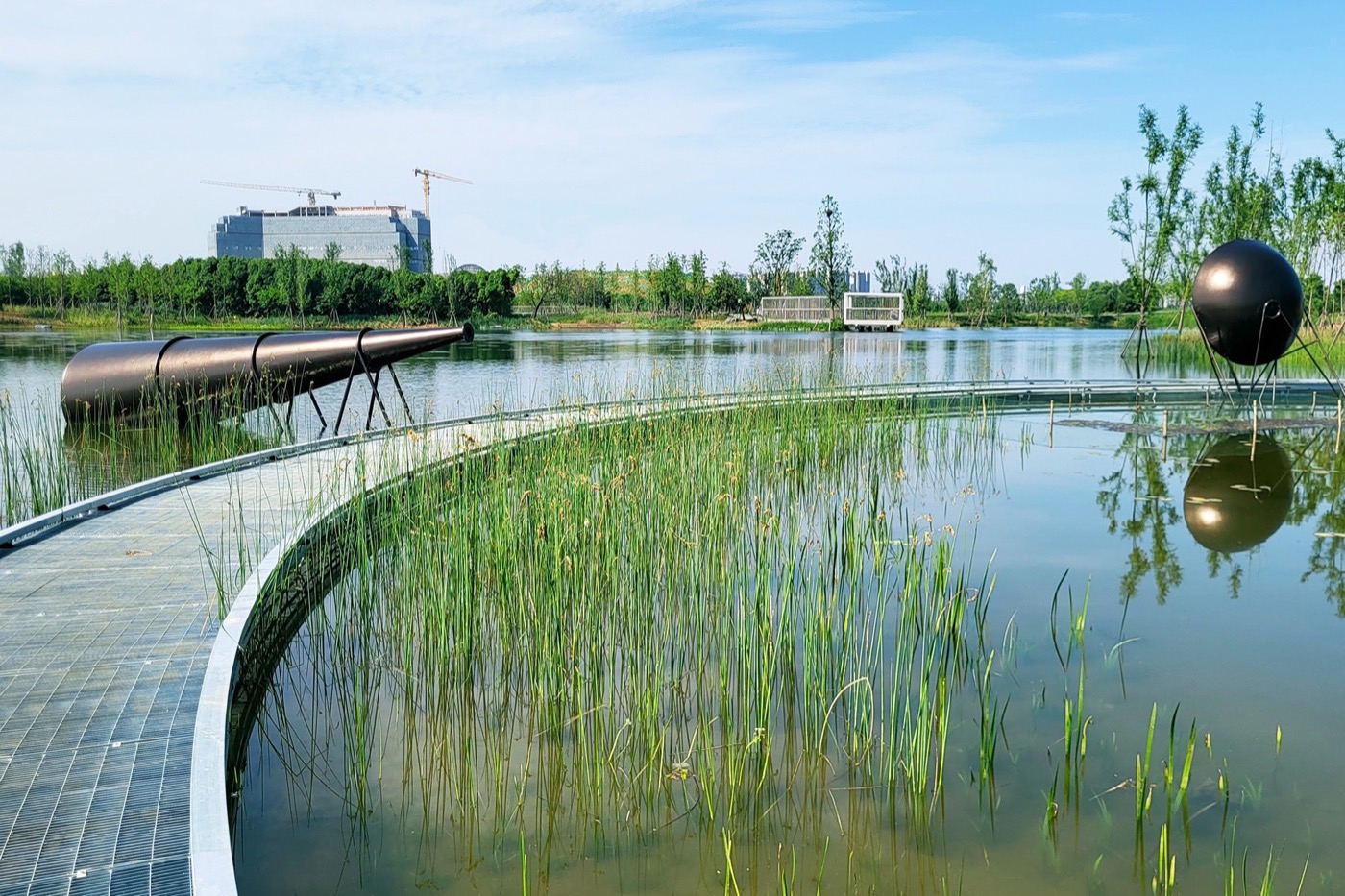
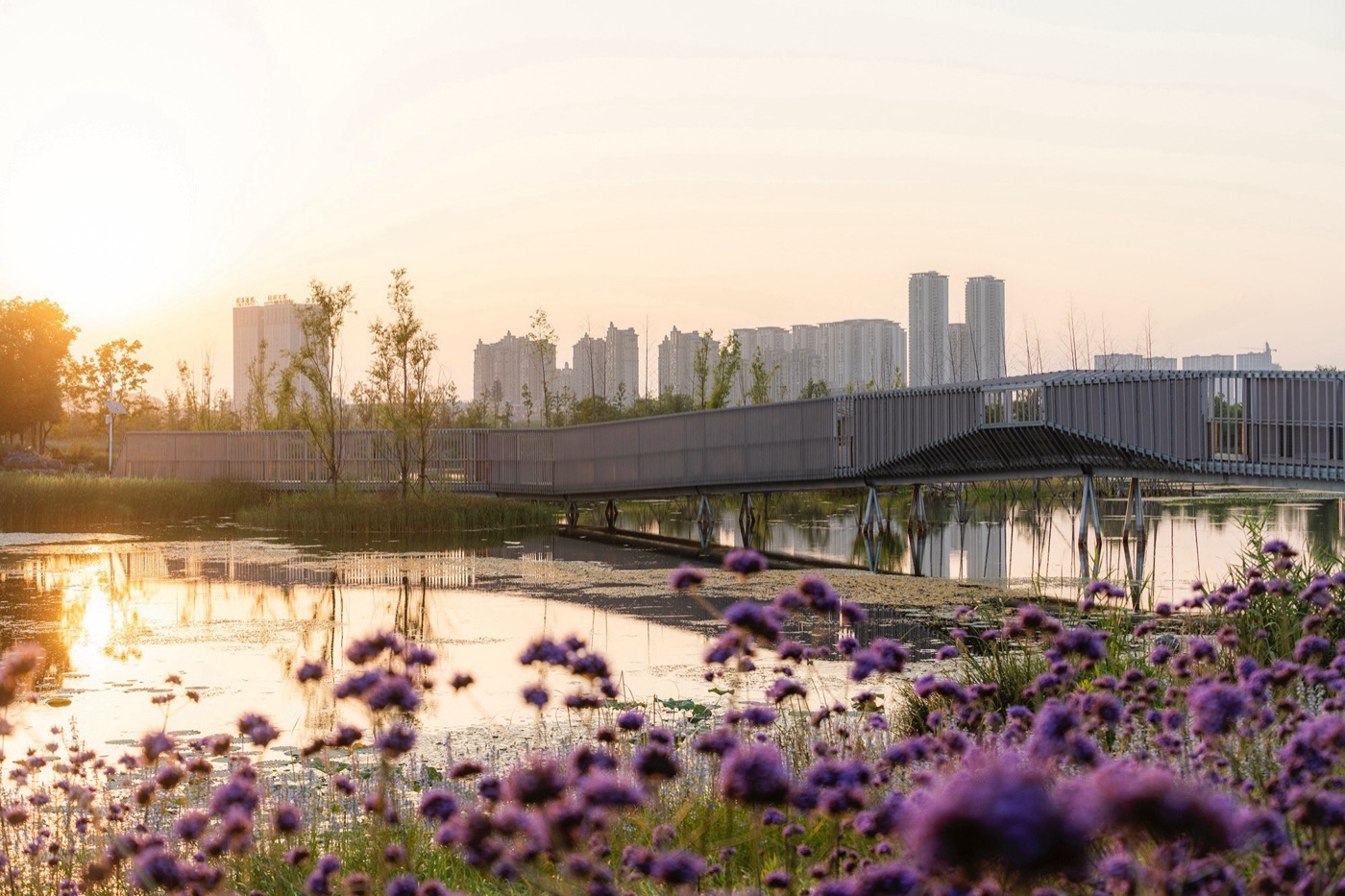
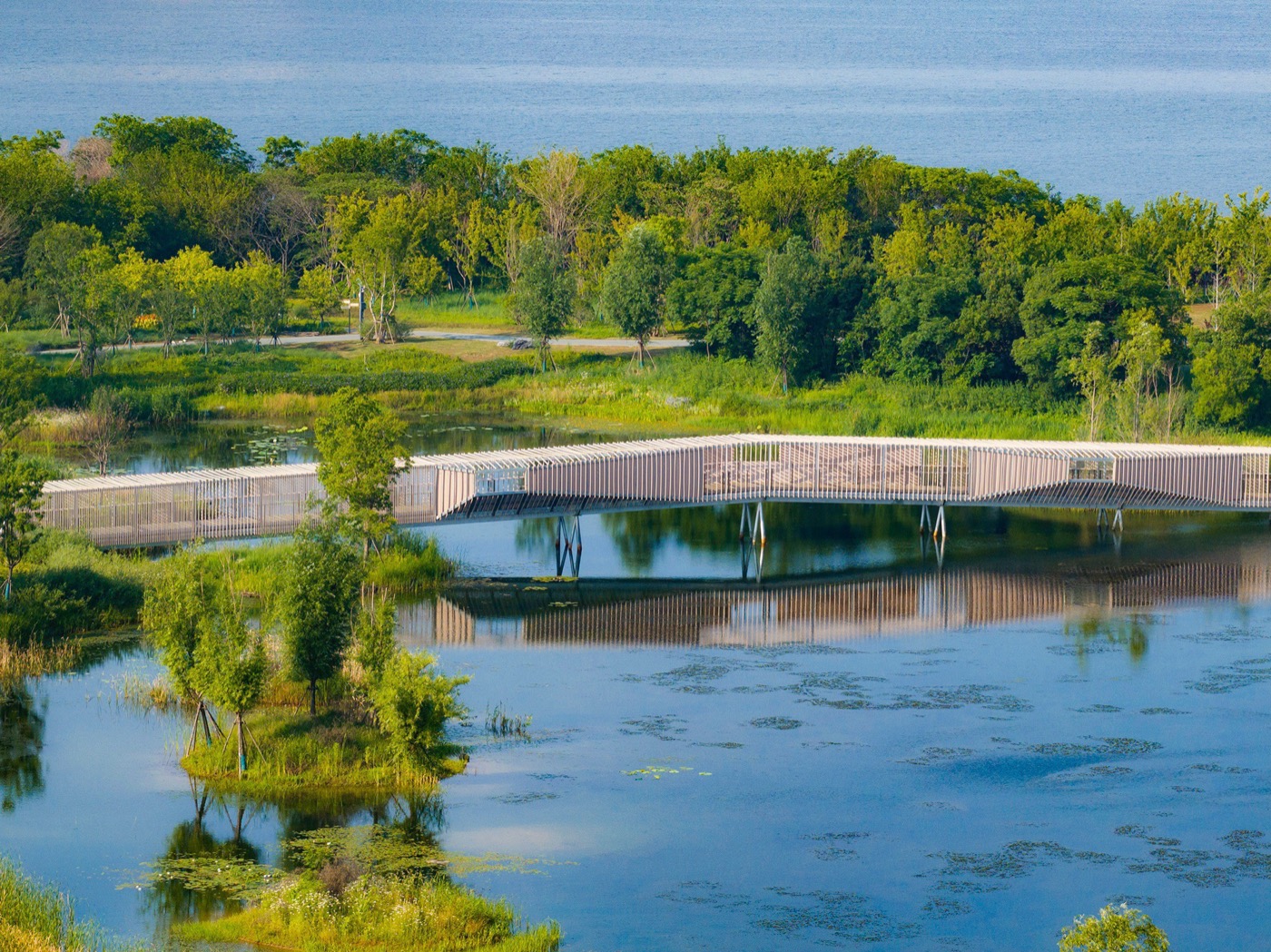
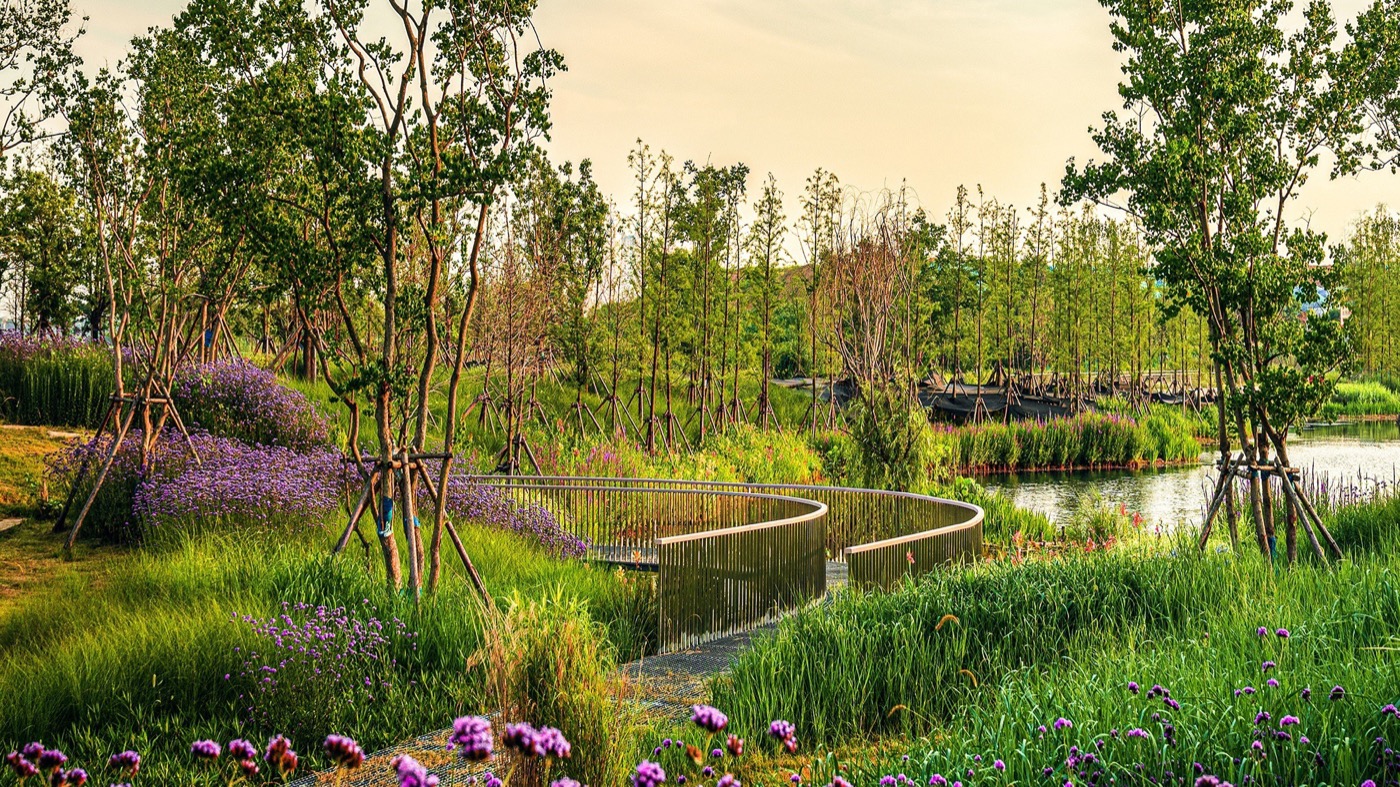
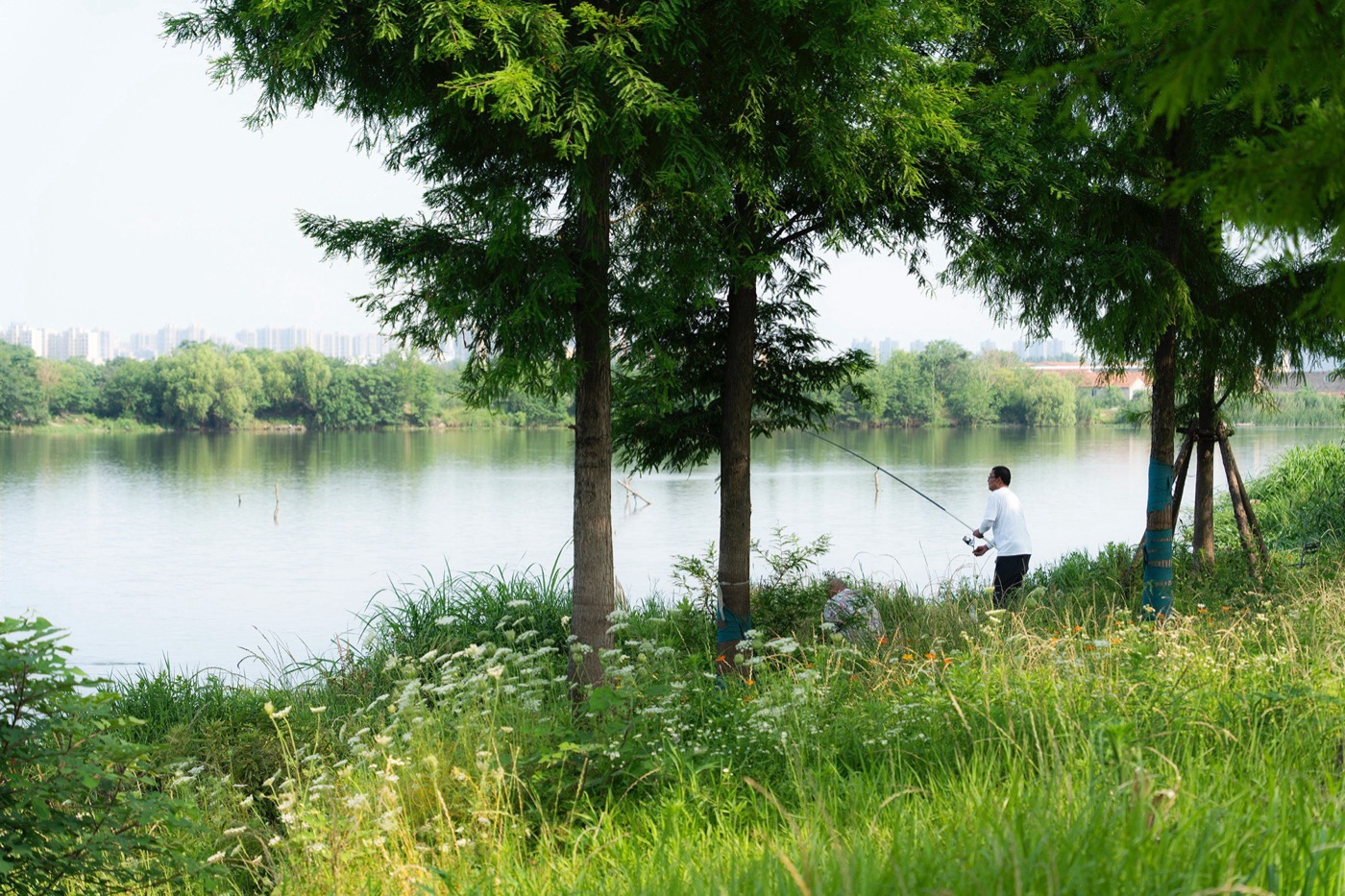
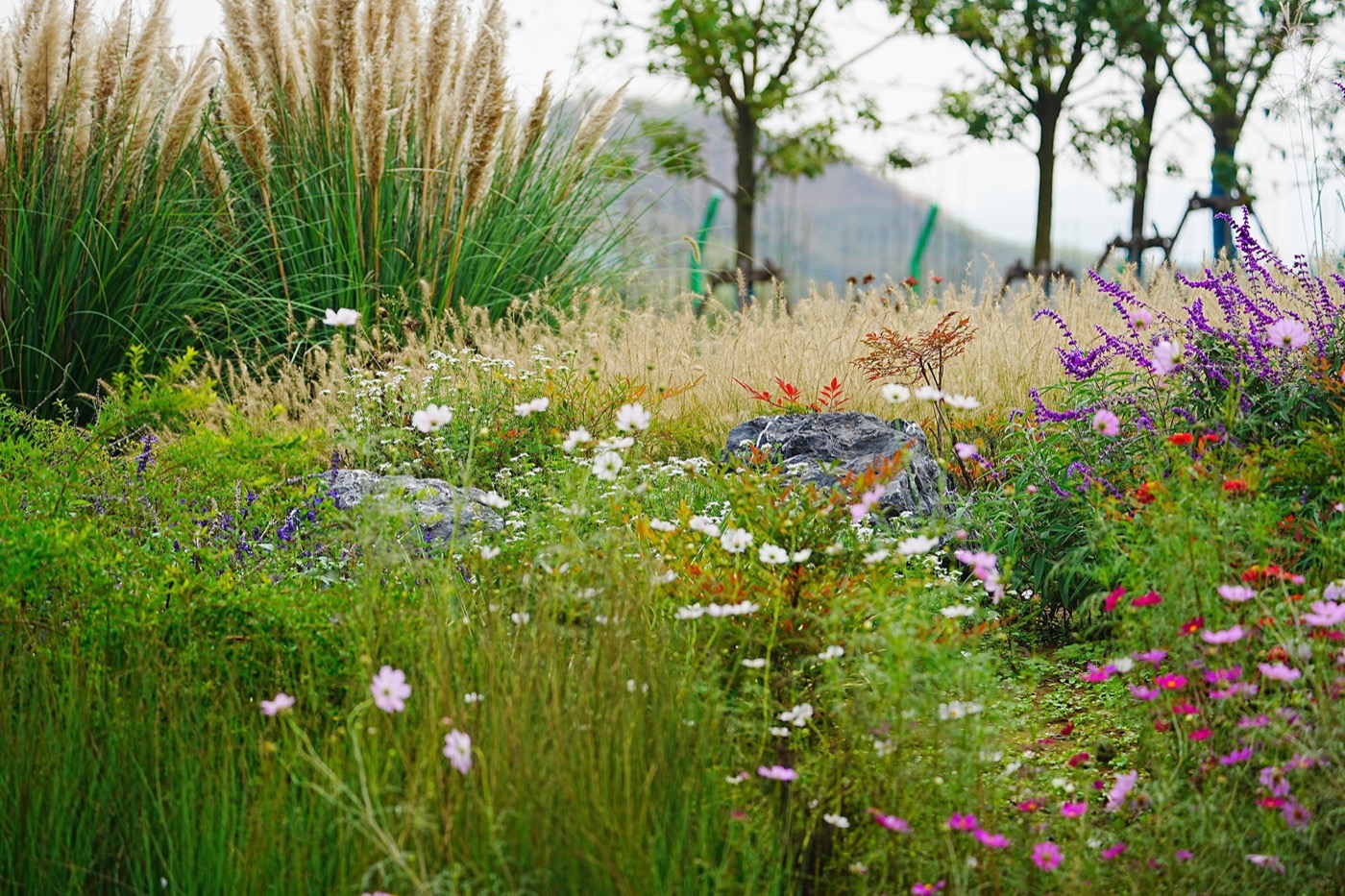
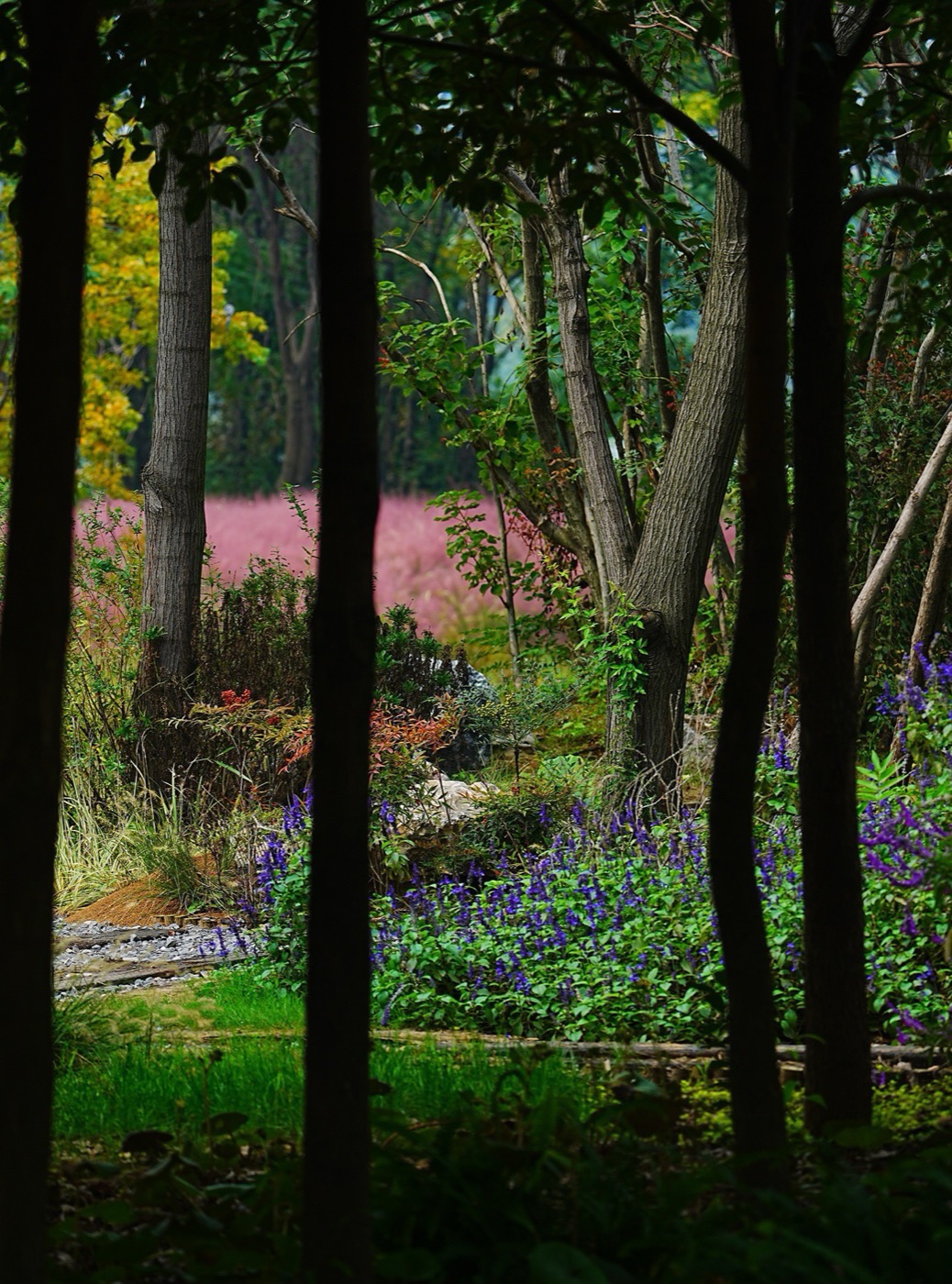
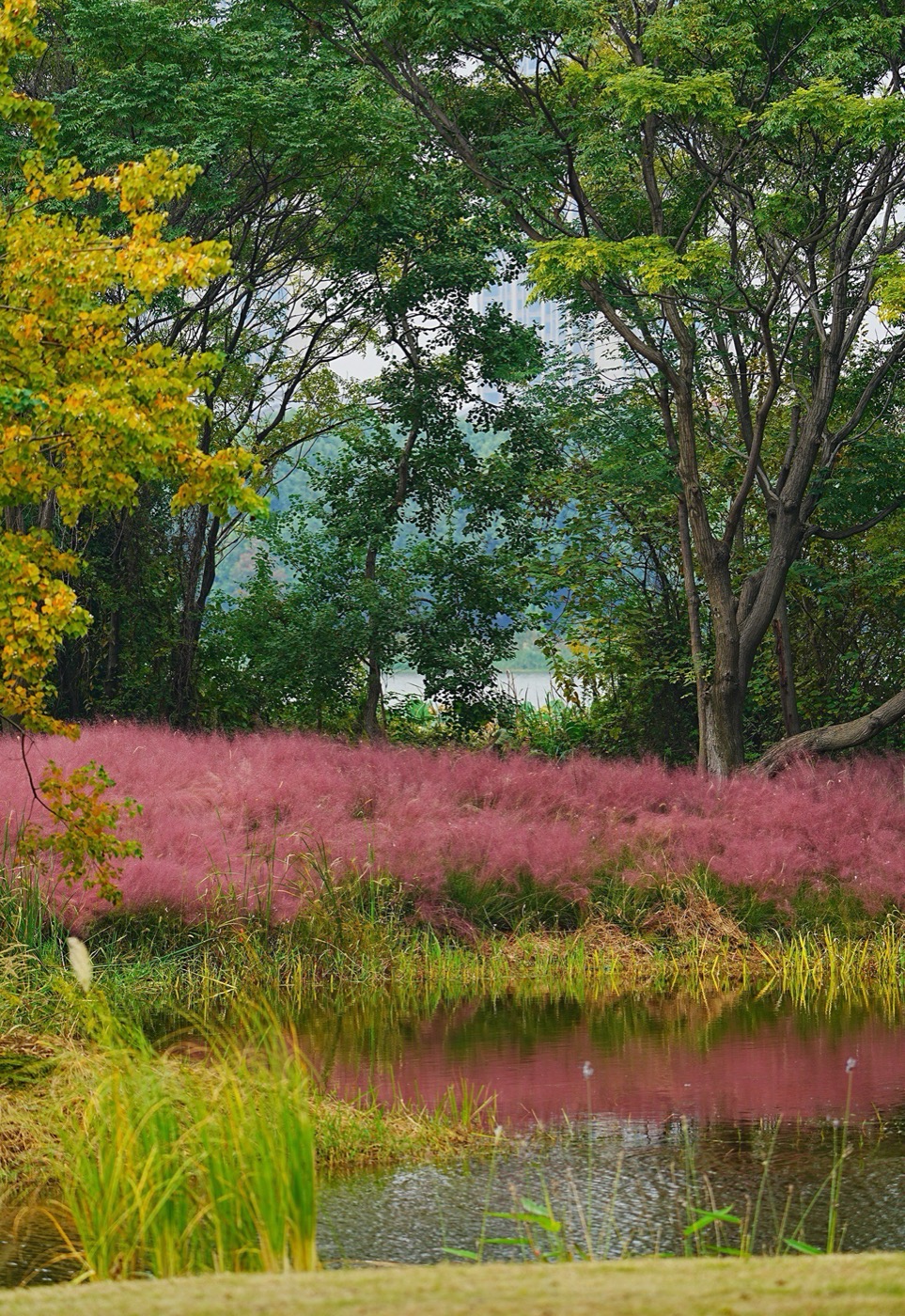
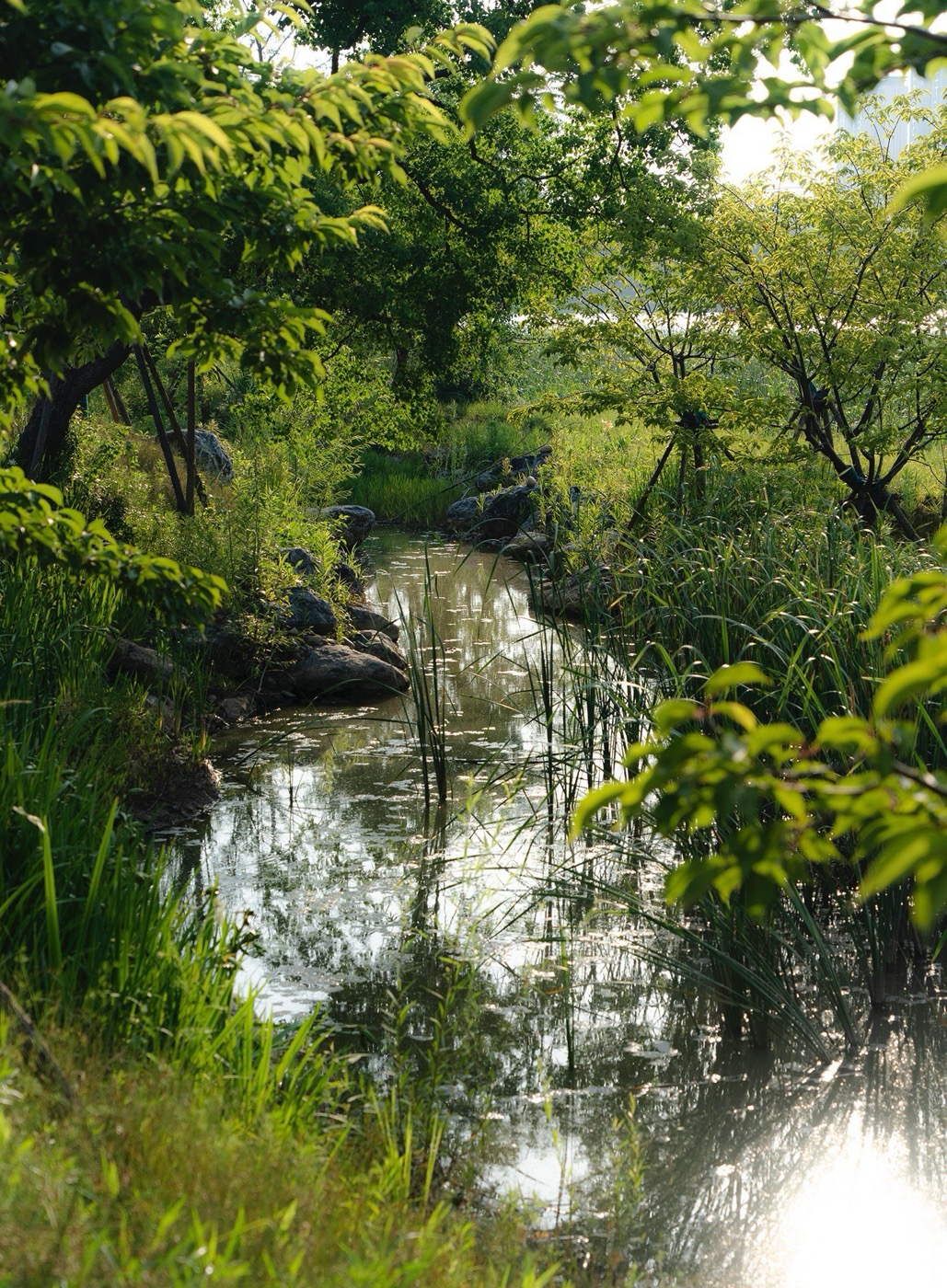
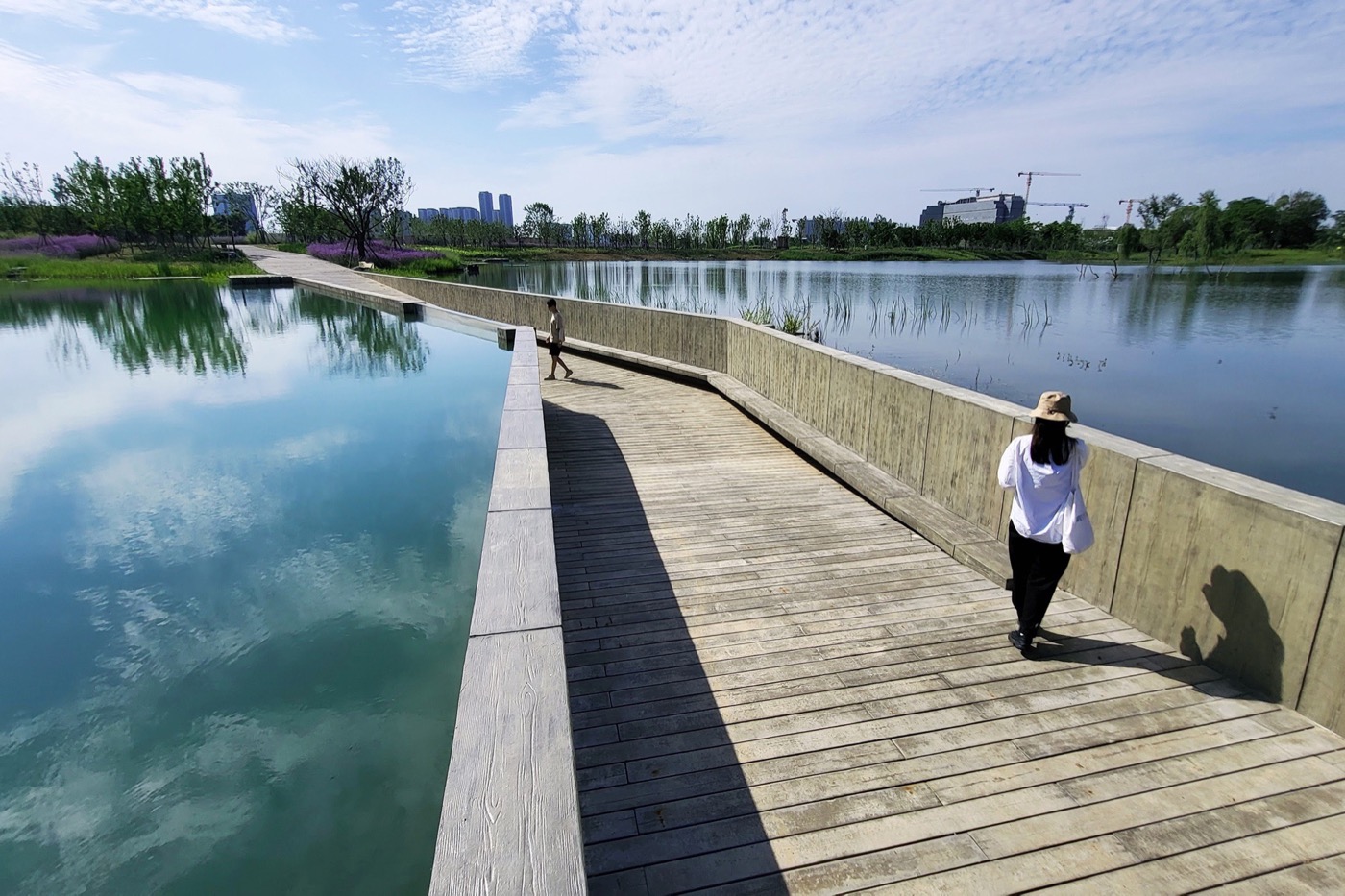
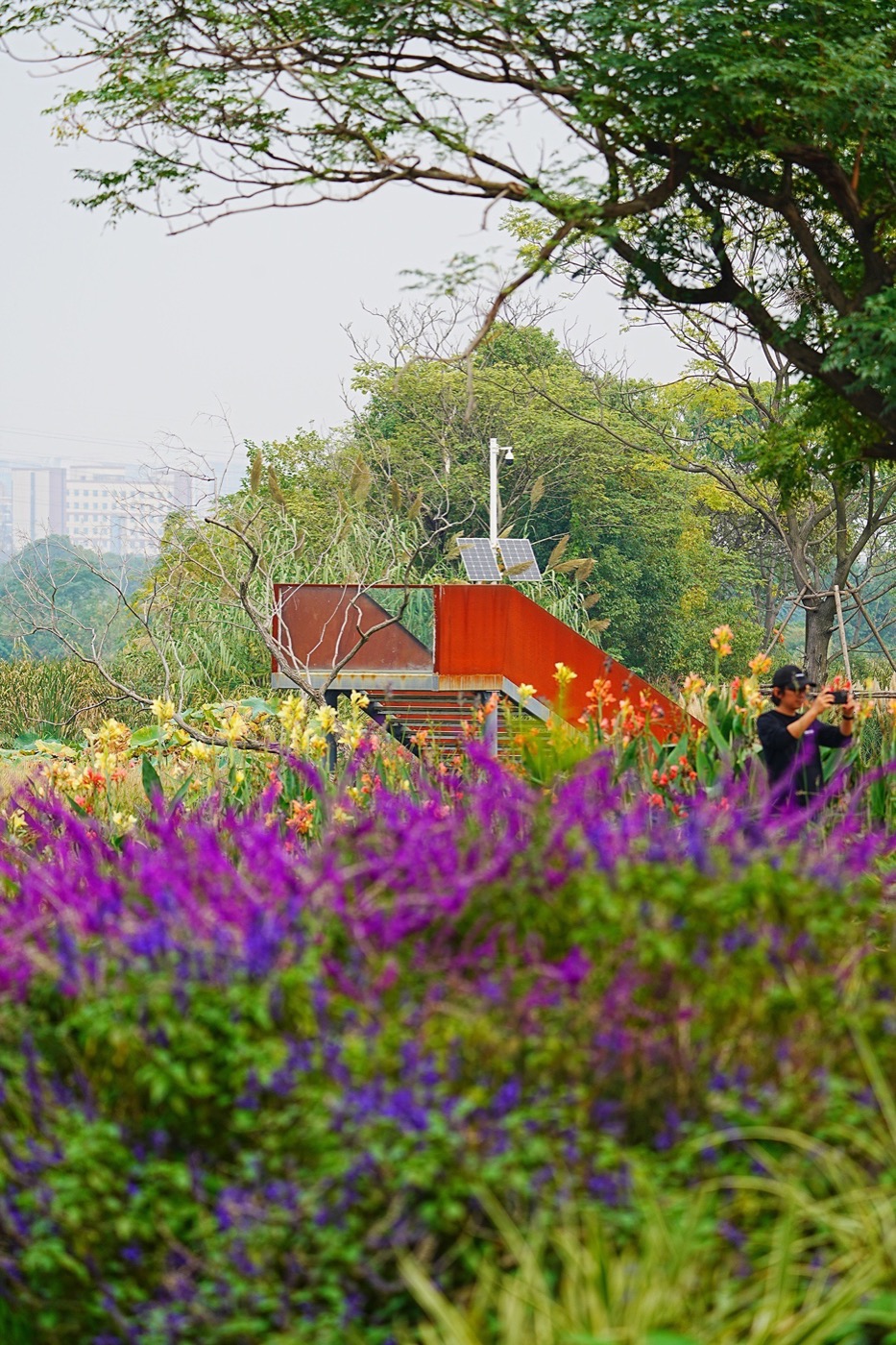
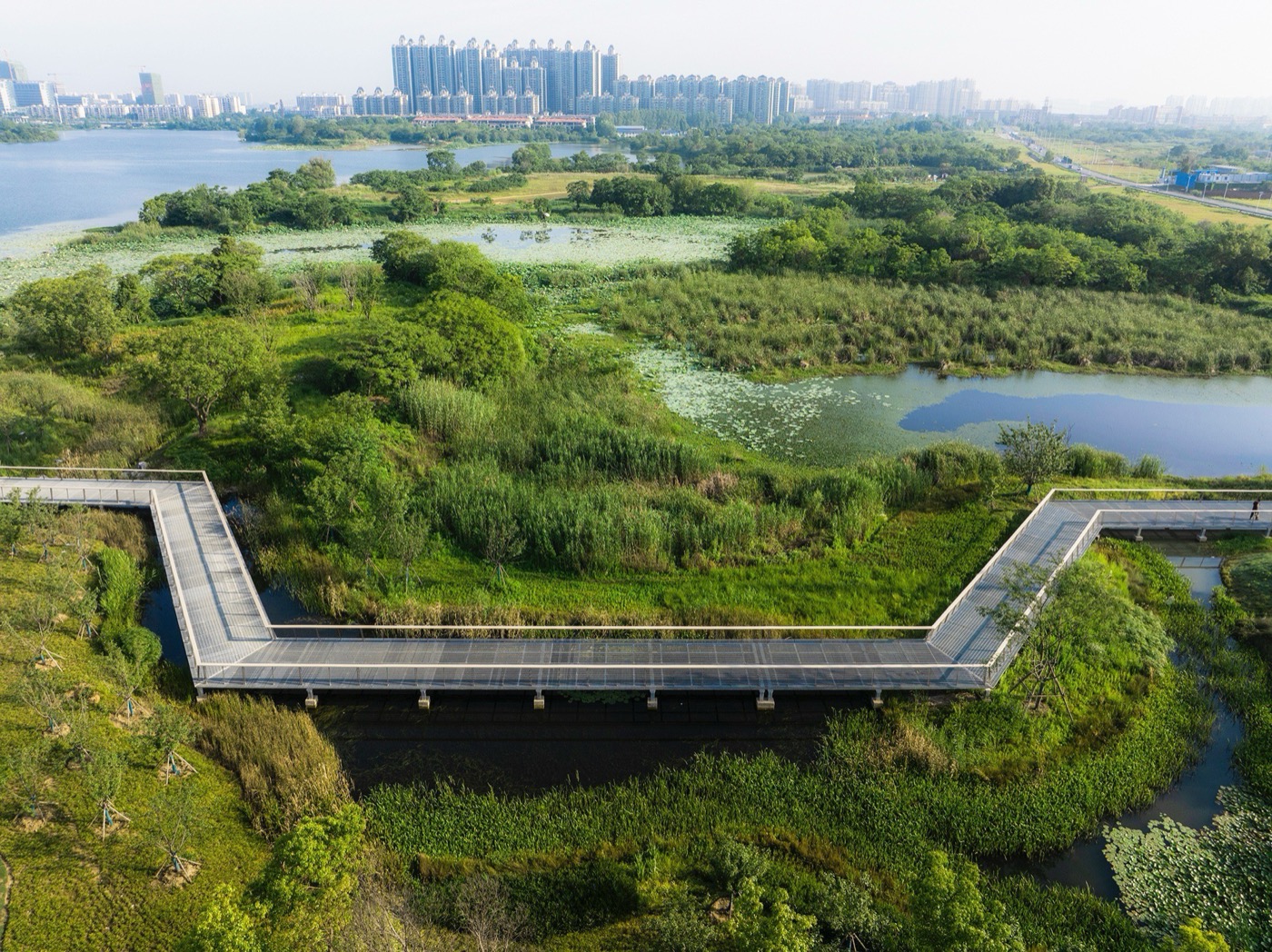
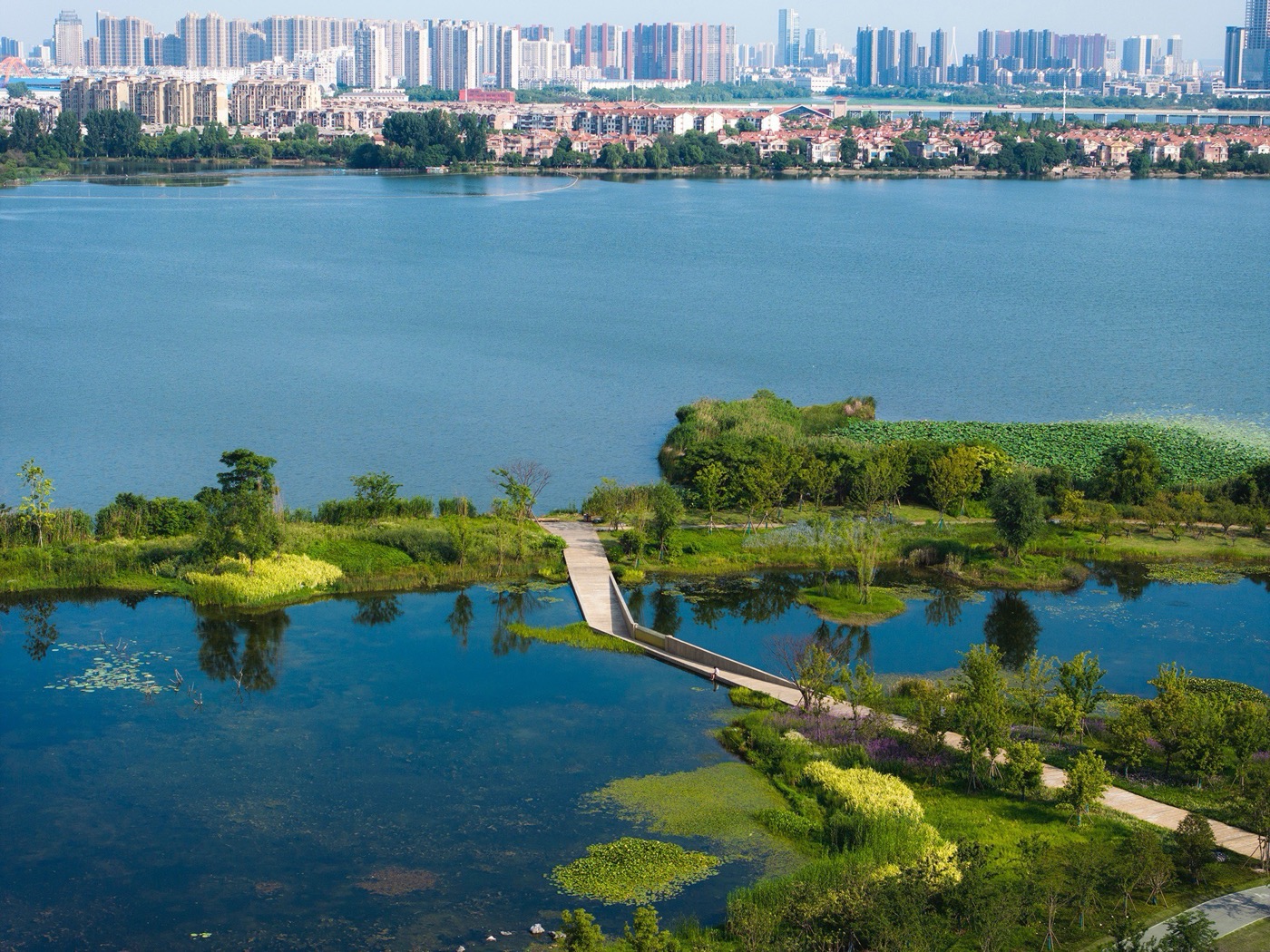
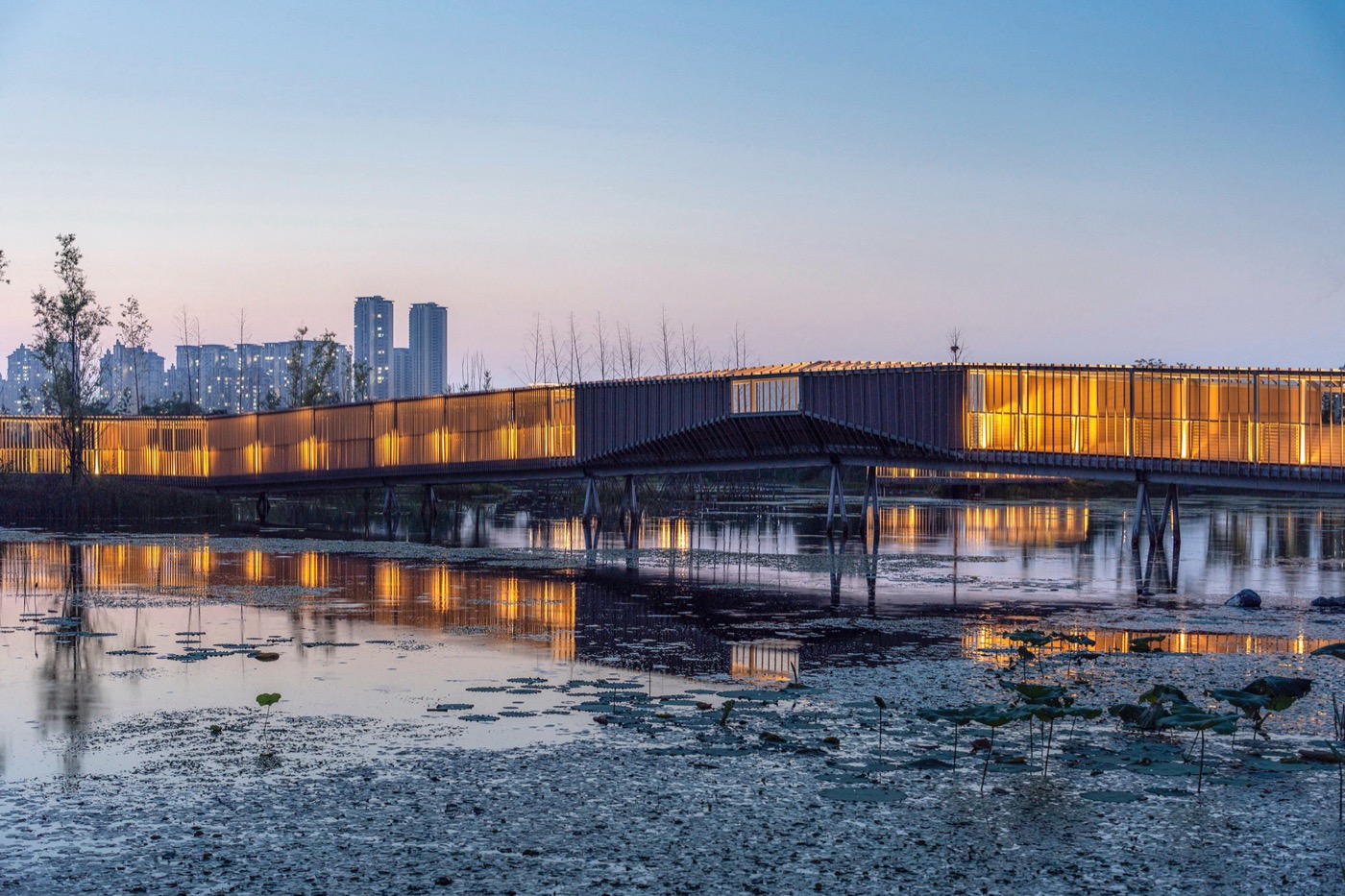
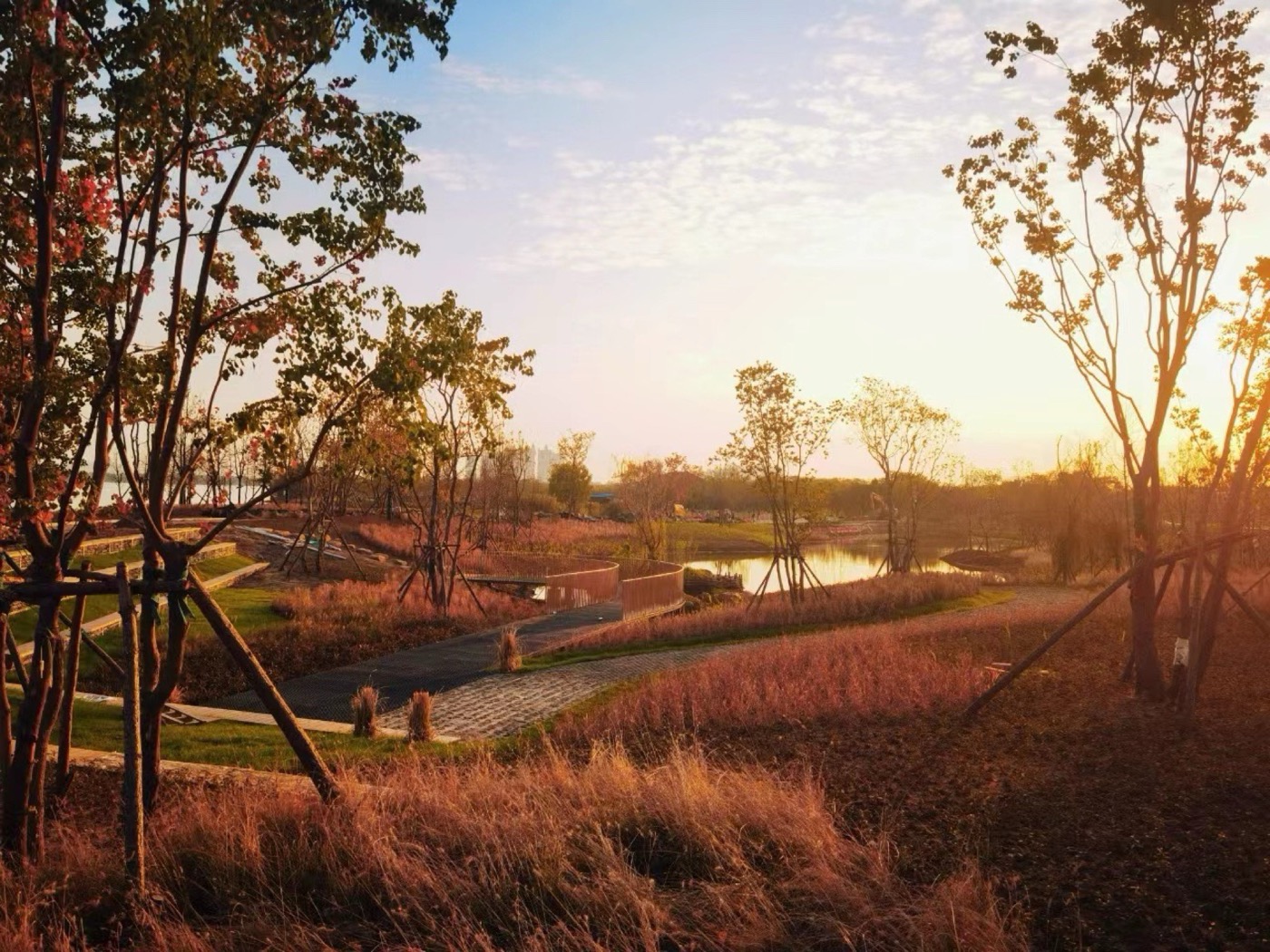
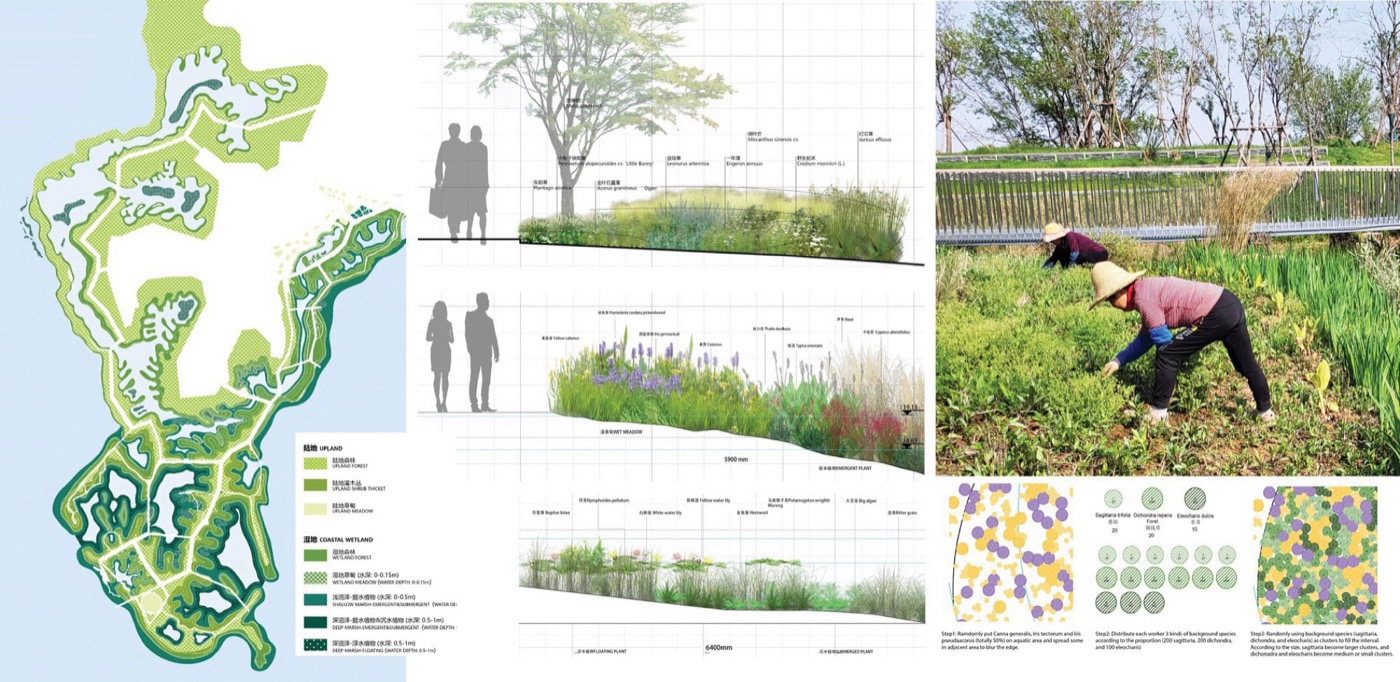
The ‘ecological engines’ repeat across the site and initiate new topographic and hydrological dynamics, adding more than six hectares of new wetland and associated habitats. The interdigitated terrain doubles the overall edge length of each pond—regenerating wetland interface, increasing species diversity, and resuming water exchanges with Houguan Lake.
The planting approach was closely tied to soil type, hydrology, slope, and existing habitat. Maintaining the concept of pilotable ‘modules’, we developed 18 separate plant matrices of native and regionally adapted species. While this strategy mimicked natural habitat textures, implementation was difficult given the itinerant nature of restoration labor in Wuhan. In response, we devised a sequential approach for ordering, staging, and planting the matrices that allowed natural plant patterns to emerge through a process of staged implementation steps.
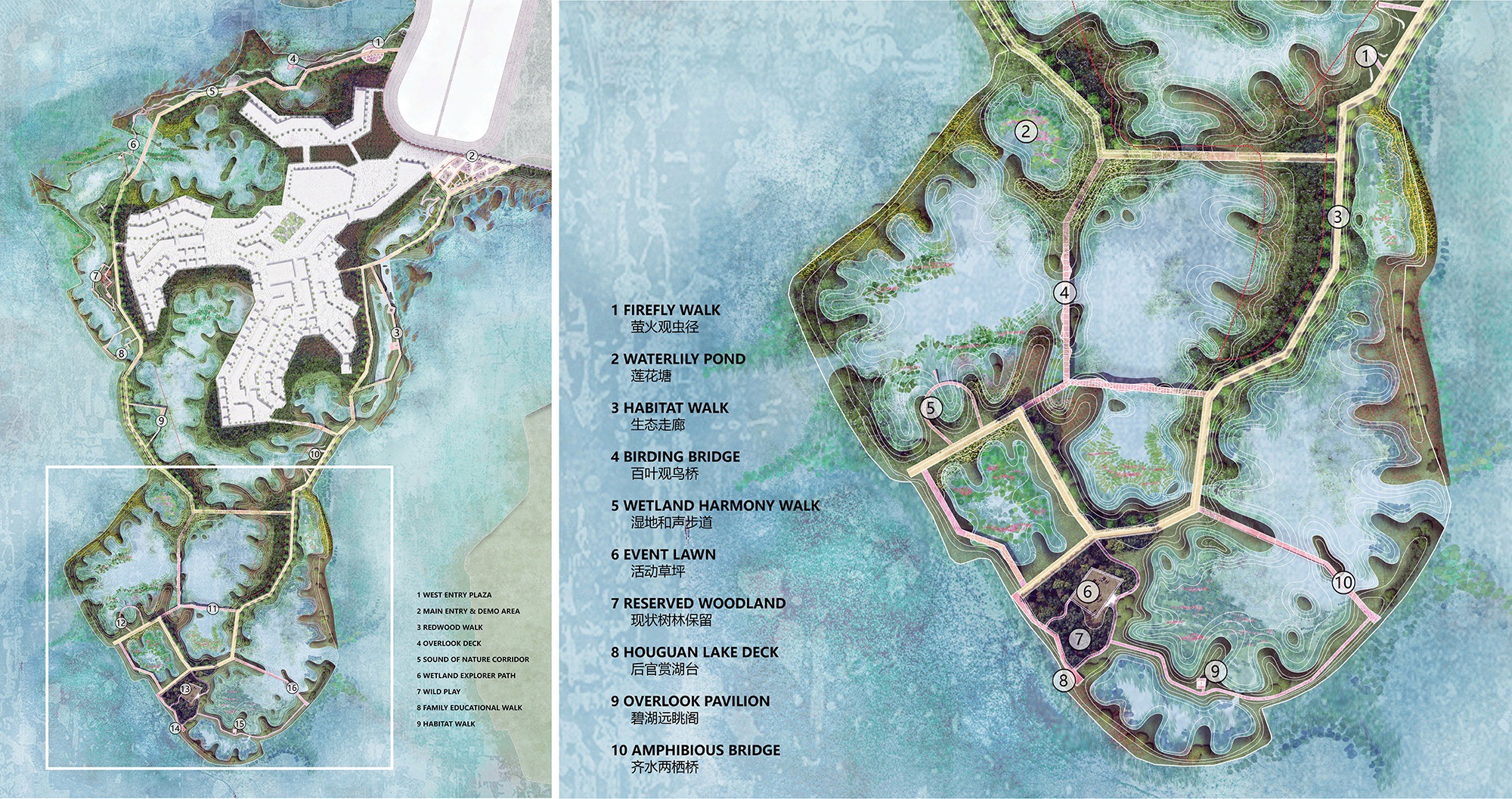
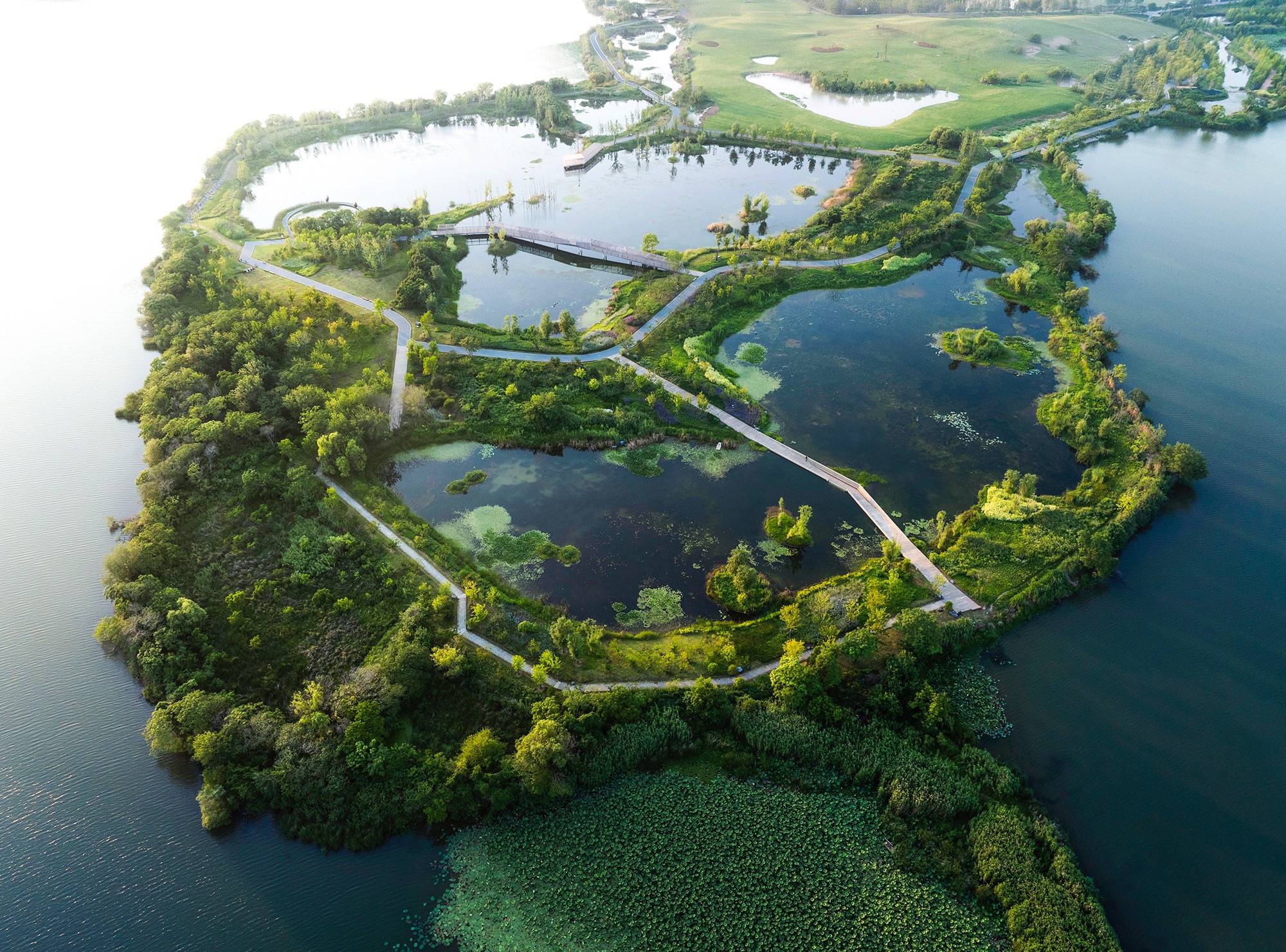
While the project’s focus was ecological restoration, the municipal client and managers also aimed to promote environmental education and showcase wetlands as a public asset. Bridges, paths, and platforms choreograph a continuous public loop, bringing residents, students, and visitors into contact with the restoration process. By coupling rigorous, repeatable ecological remediation with an immersive public landscape, the project recasts formerly industrial fishponds as an accessible, high-performing wetland park and a prototype for future restoration efforts across Wuhan’s lake region.
Landscape Designer: Valeche Studio
Executive Landscape Architect & Ecology: Wuhan Ecological Environment Design & Research Institute
Client: Wuhan Urban Development Group
Photo Credits: Valeche Studio, Zhang Kun, Wuhan Ecological Environment Design & Research Institute
https://maps.app.goo.gl/C9uN88dBZm2s8UrX9
76906


LILA 2026 Sponsor