I Vivai al Parugiano
www.paesaggistipercaso.it/
2026 Hospitality and Therapeutic / 2026 Landscape and Architecture / Italy / Built in 2022 /

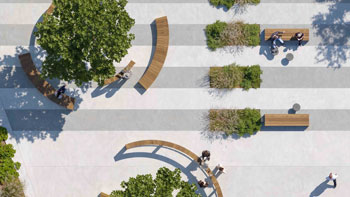
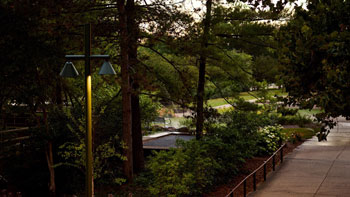
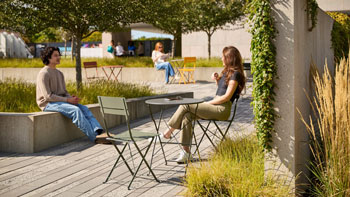
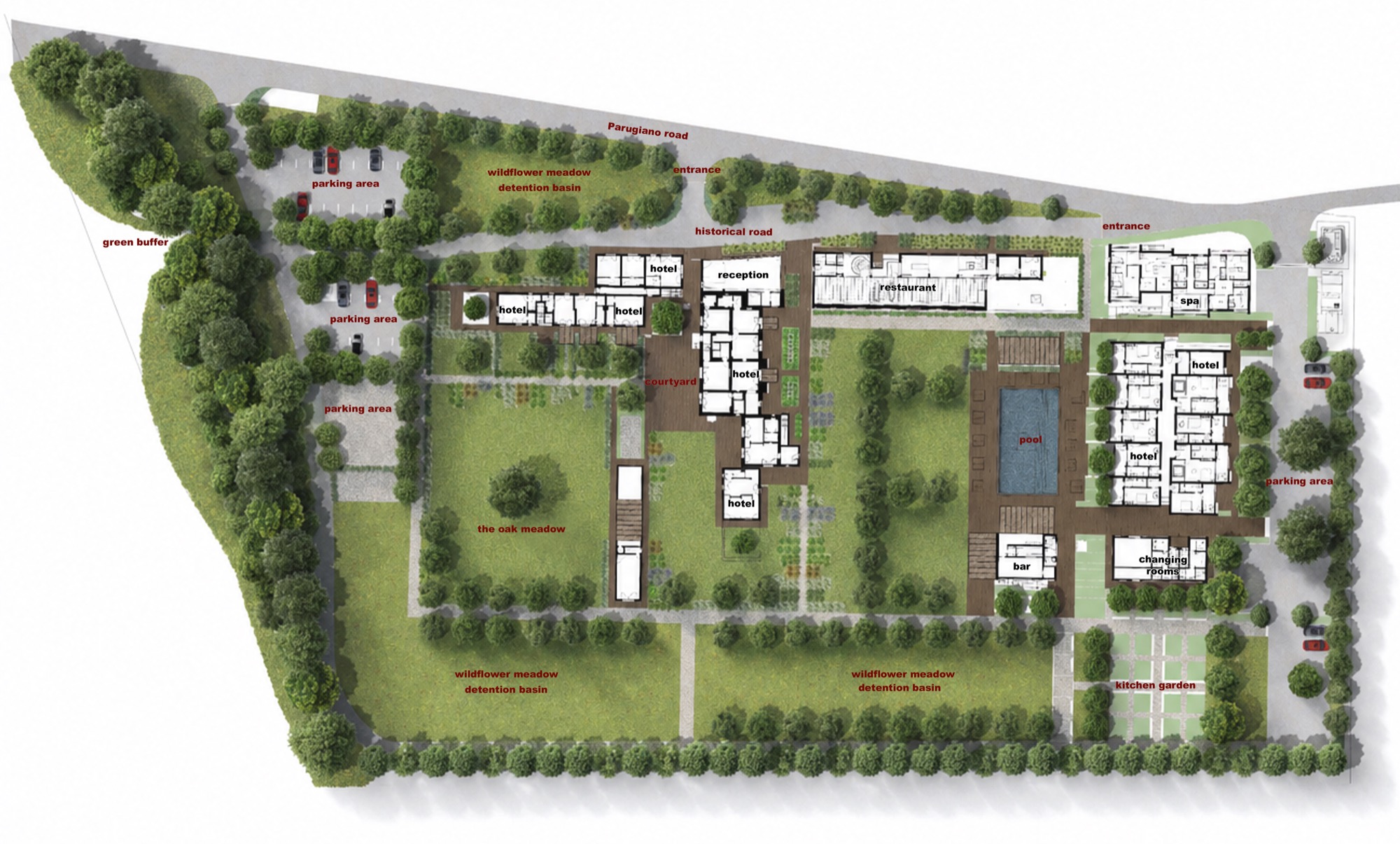
I Vivai al Parugiano in Montemurlo (PO) is a resort that includes an hotel, a restaurant, a pool with an outdoor bar and a small spa. The landscape design draws inspiration from the historical evolution of the complex and its intimate relationship with the surrounding agricultural area. The name itself recalls the site’s origin as a plant nursery serving the park of nearby Villa Pazzi. The outdoor spaces design is a natural extension of the architectural design, acting as a mediating interface between the built volumes and the landscape context. The result is a composition that is both recognisable and harmoniously integrated within the landscape matrix.
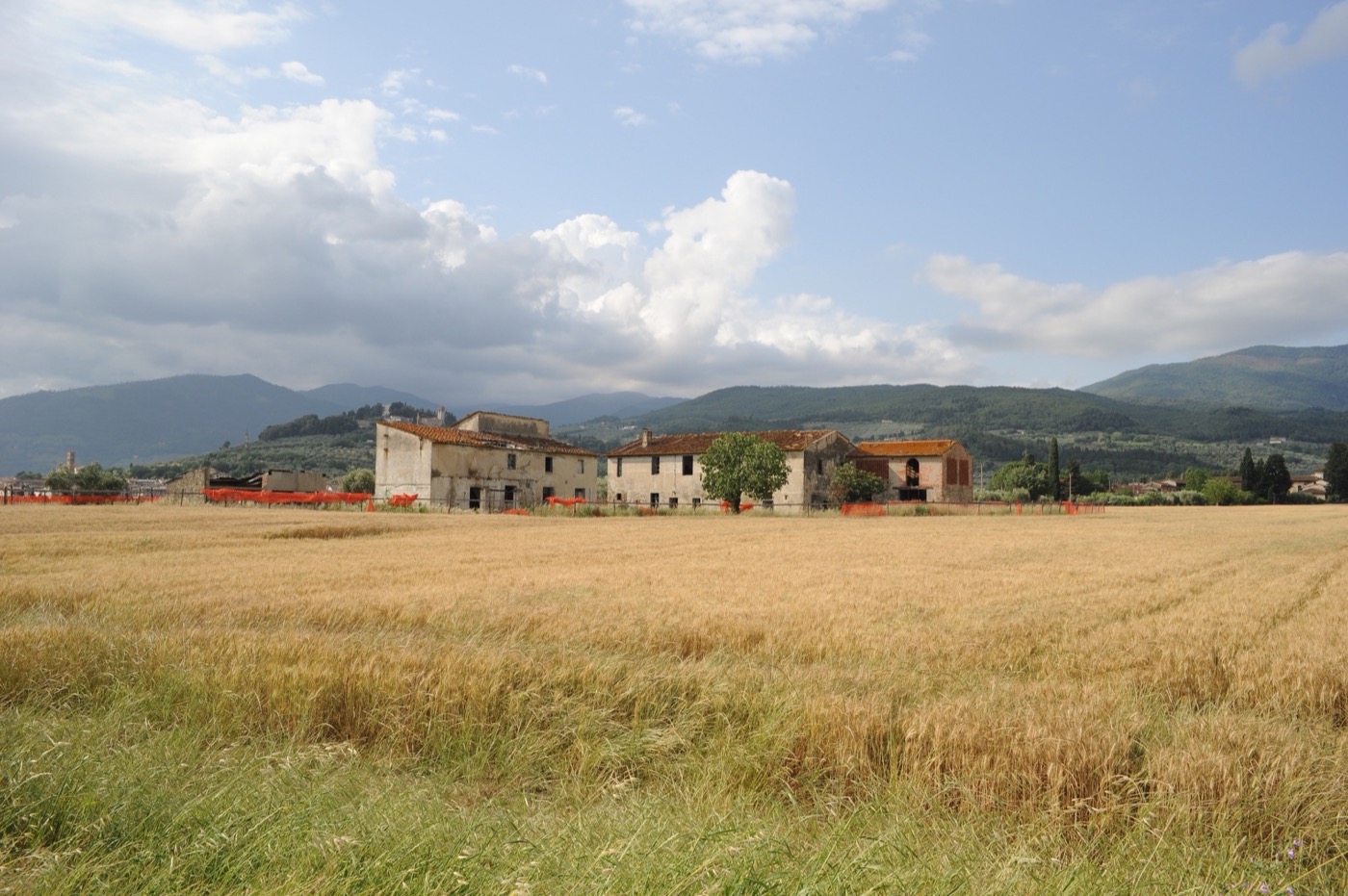
A 1954 aerial photograph reveals the site’s former conditions: an agricultural mosaic typical of Firenze-Prato-Pistoia plain, shaped by a mixed-use agrarian-hydraulic system with cultivation of cereals and grapevines together with maples, mulberries, willows or fruit trees. Over the years, this landscape has been significantly altered and replaced by urbanisation and infrastructural sprawl. Yet, residual agricultural fields, even if simplified, remain in the surrounding area. The preservation and integration of enduring structural elements (alignments, tree rows, historical paths) into the landscape project establishes meaningful visual and physical connections with the surrounding environment, enabling the transformation of the building complex into a new fragment of landscape.
While the architectural project by B-arch combines the restoration of a 19th-century farmhouse with the insertion of new contemporary volumes, the landscape design by PXC reinterprets the rural settlement and establishes a strong relationship among outdoor spaces, buildings and the territorial context. This ensures visual permeability and ecological continuity. Along its perimeter, the tourist complex interacts with wheat and sunflower fields through a permeable vegetal buffer that enhances panoramic views towards the Montemurlo hills. However, along the southern boundary, a reconstructed patch of native lowland woodland acts as a visual, an acoustic screen mitigating the impact of a nearby high-traffic road, and helps to increase local biodiversity. The path system, both pedestrian and suitable for vehicular, maintains the orientation and structure of the original agricultural matrix.
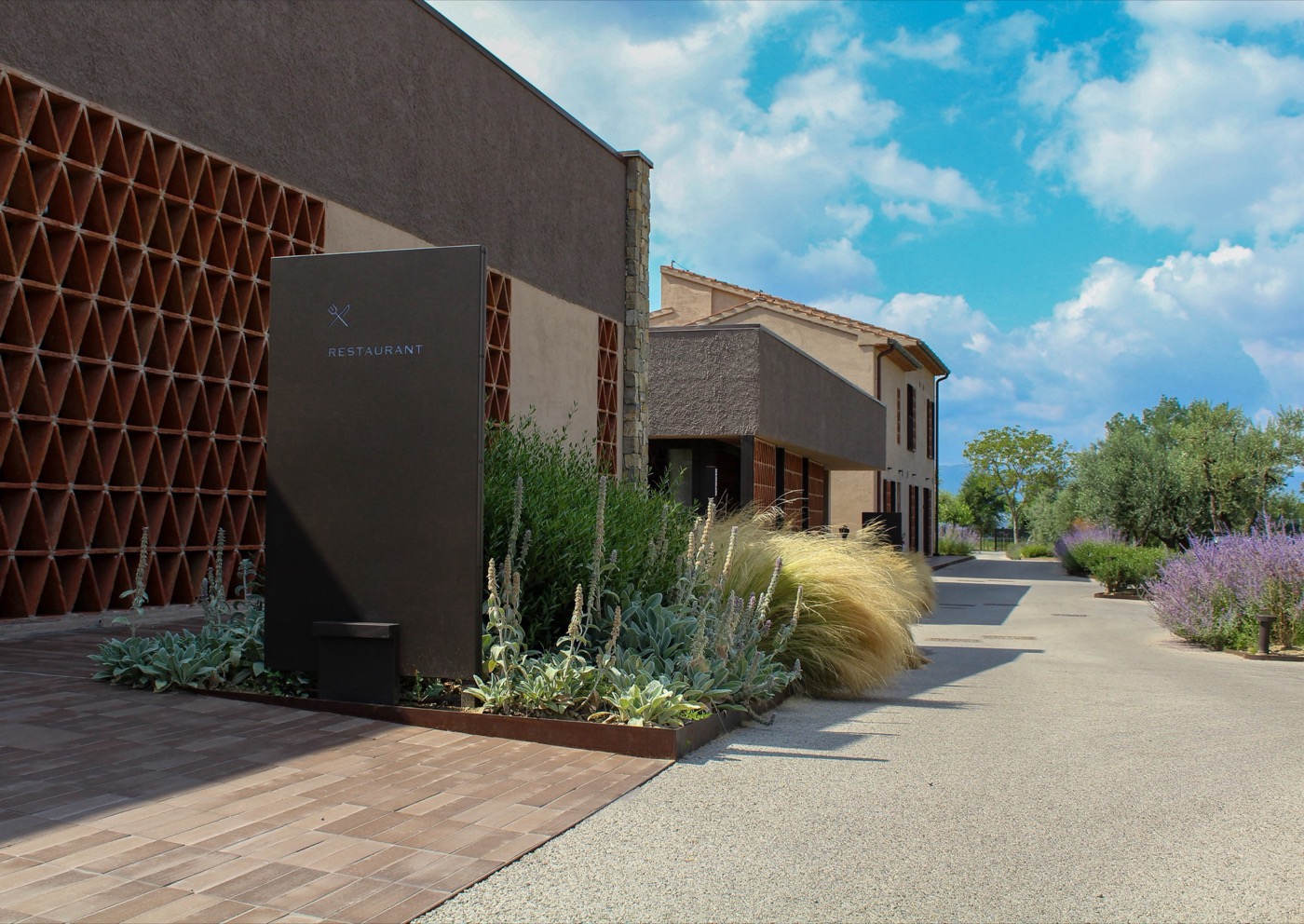
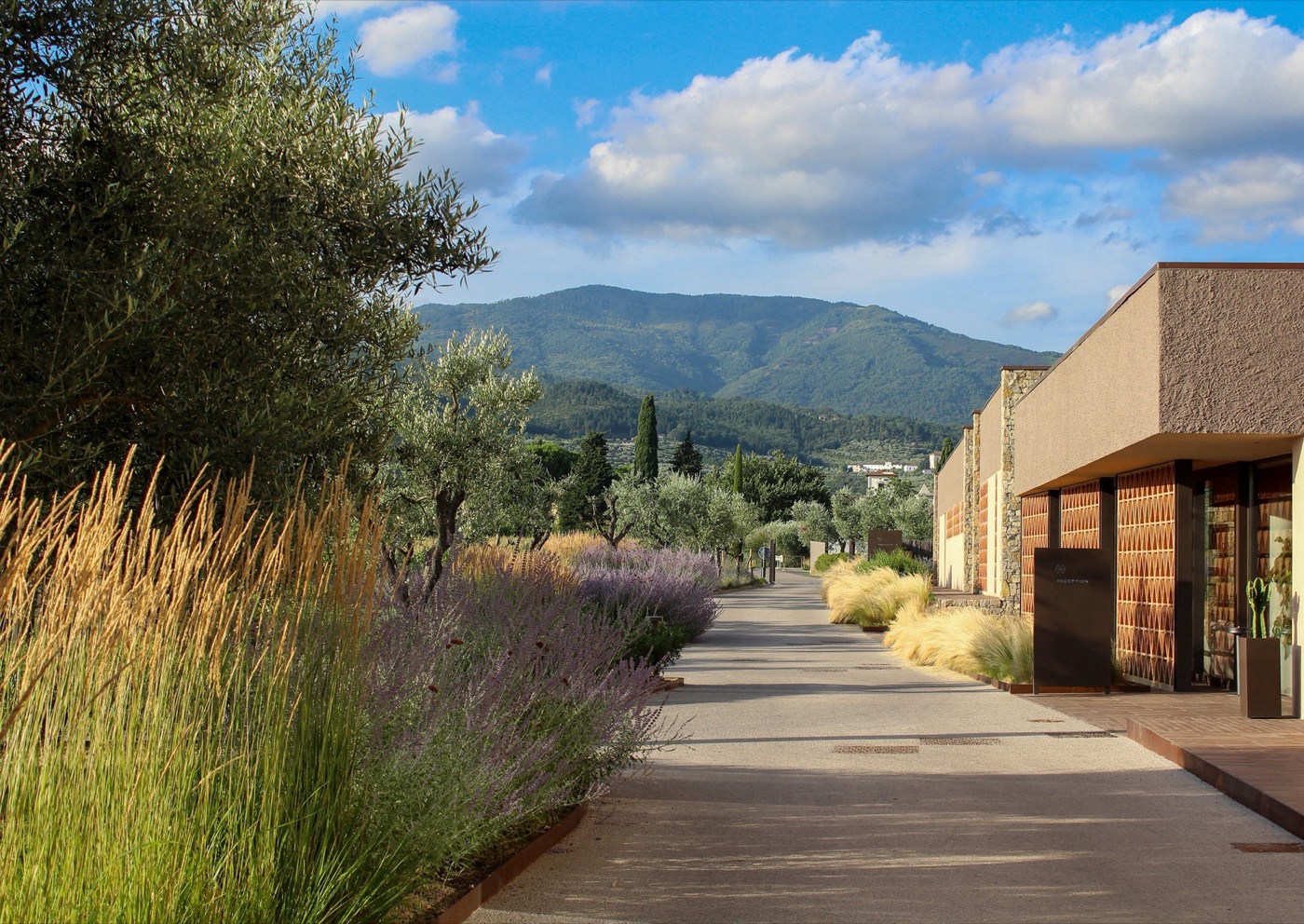
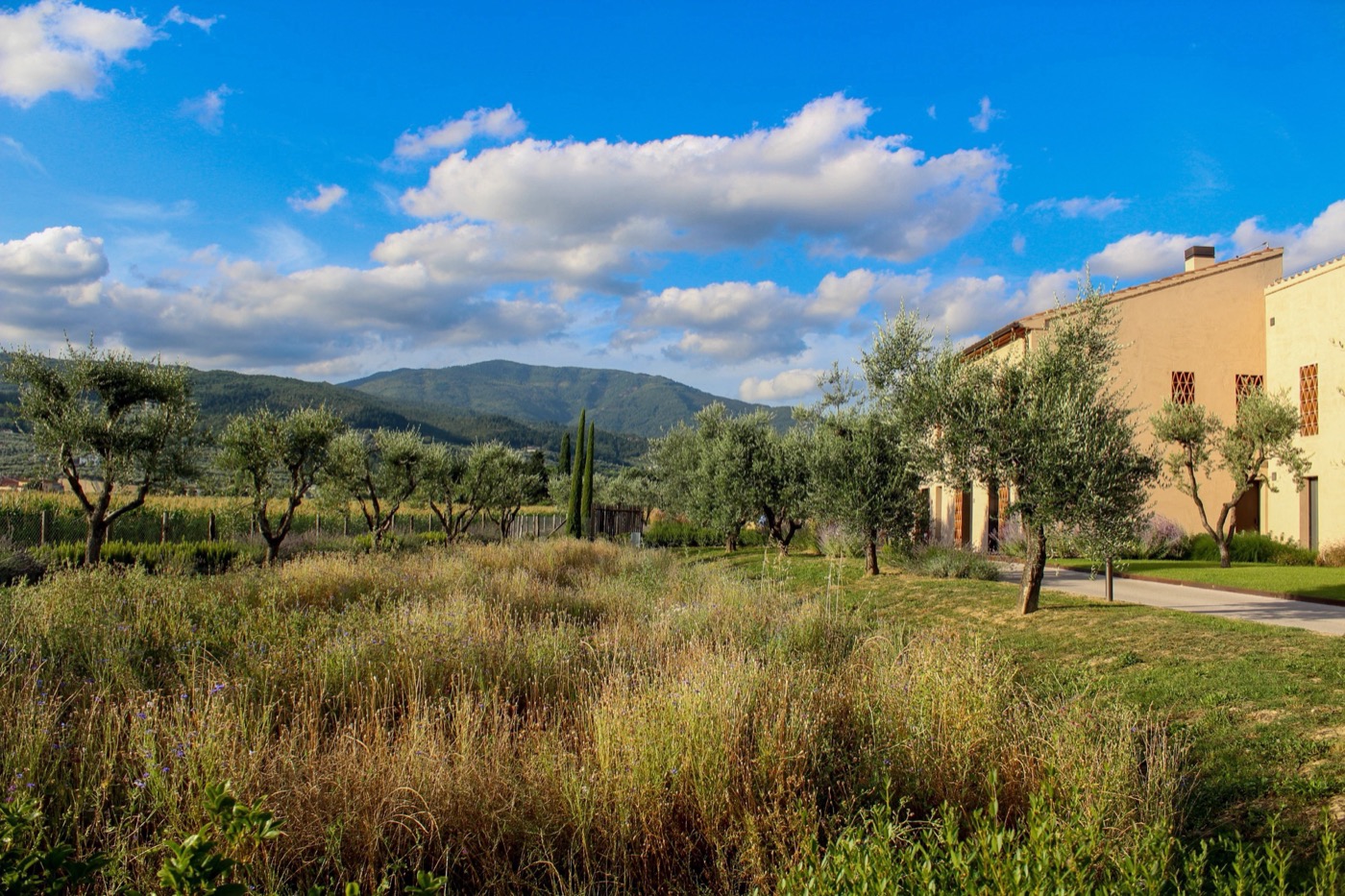
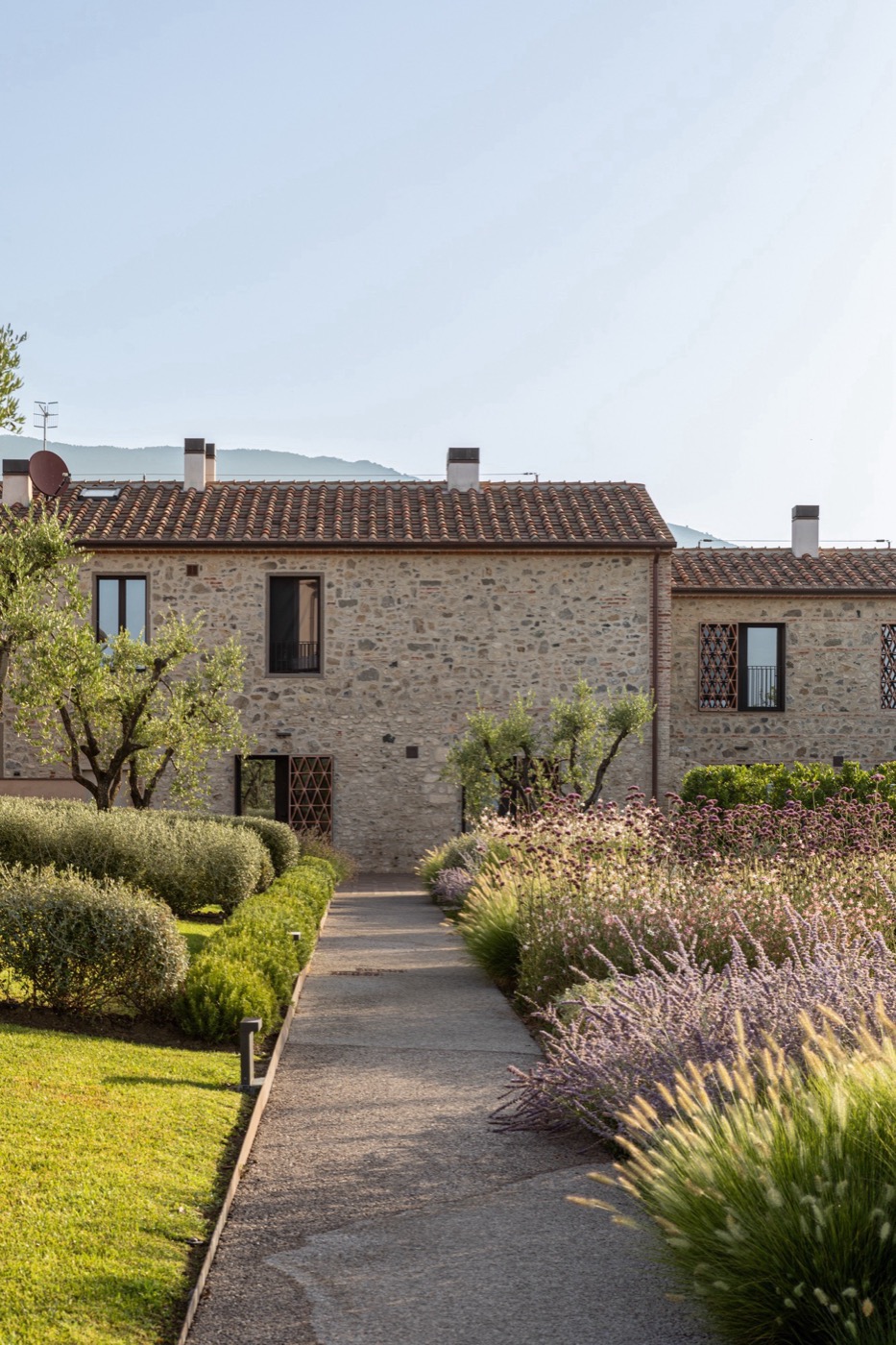
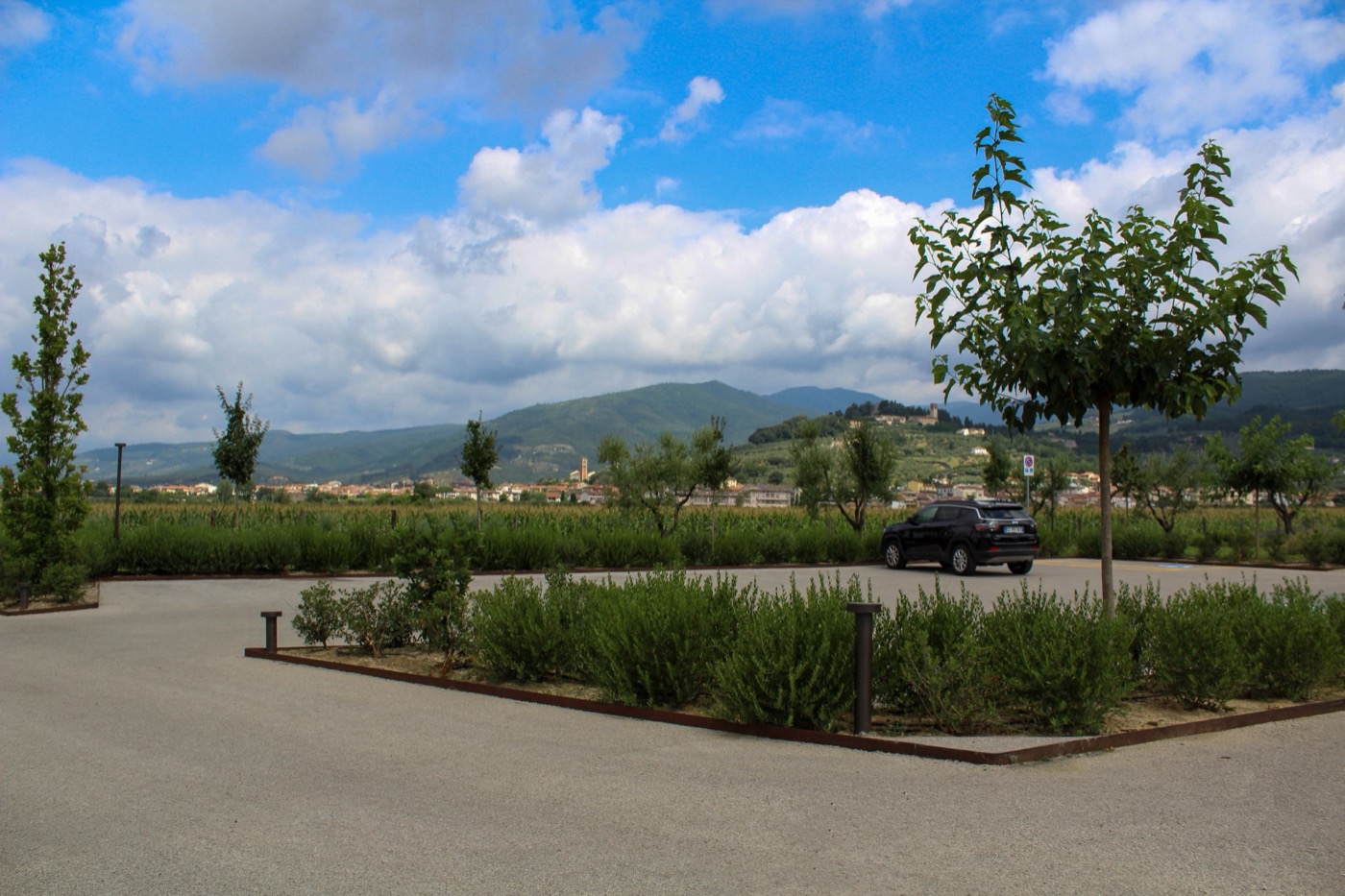
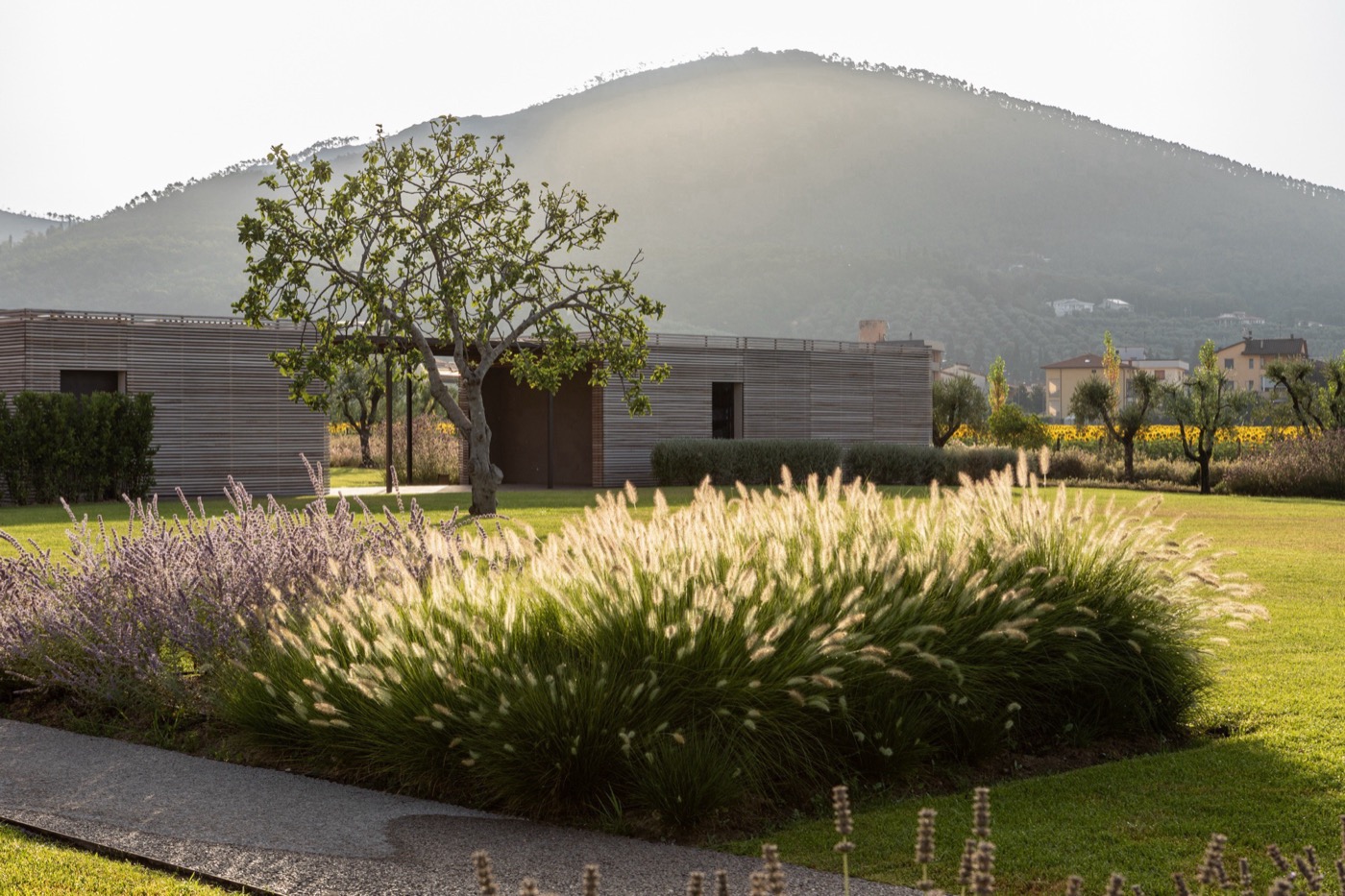
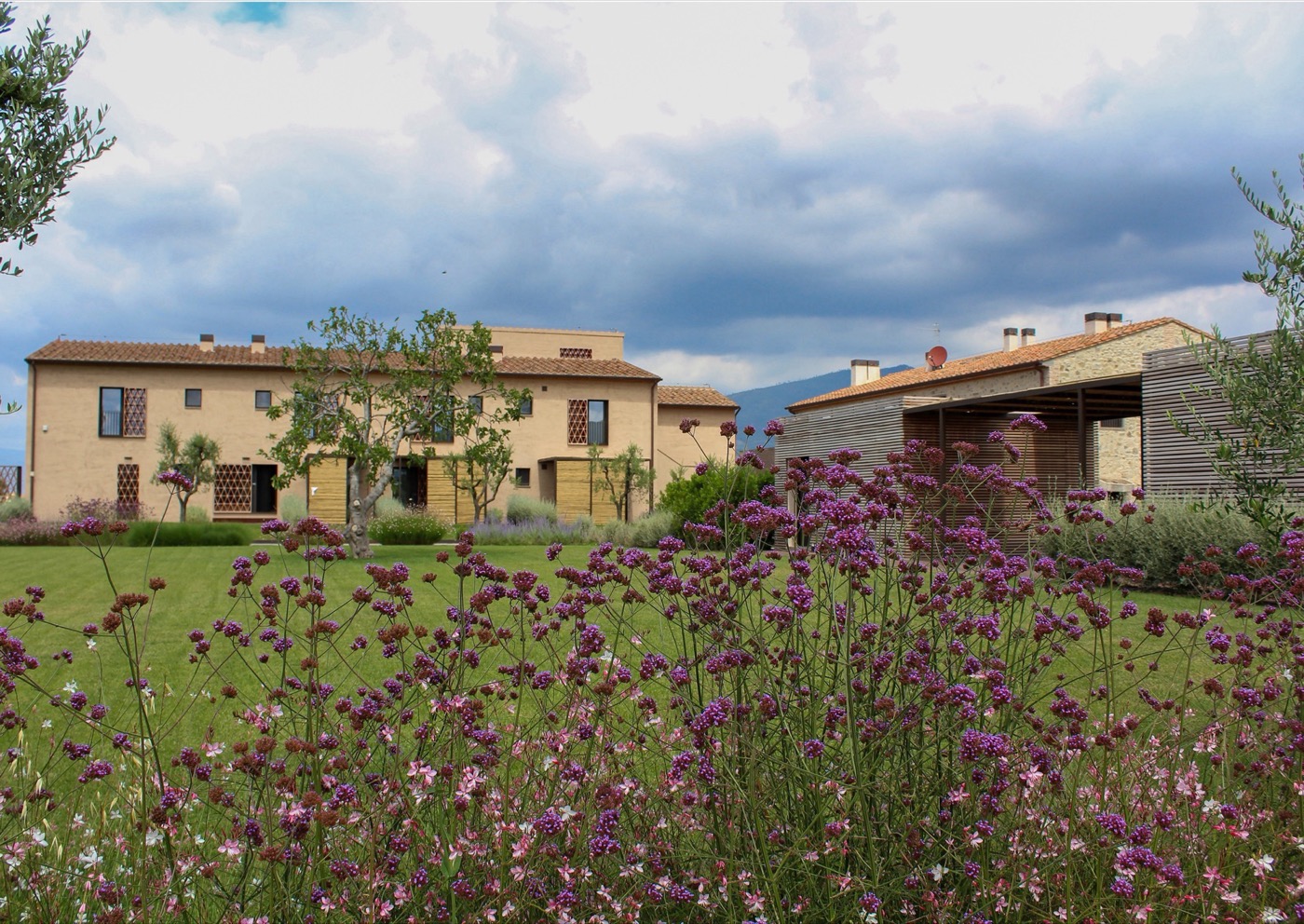
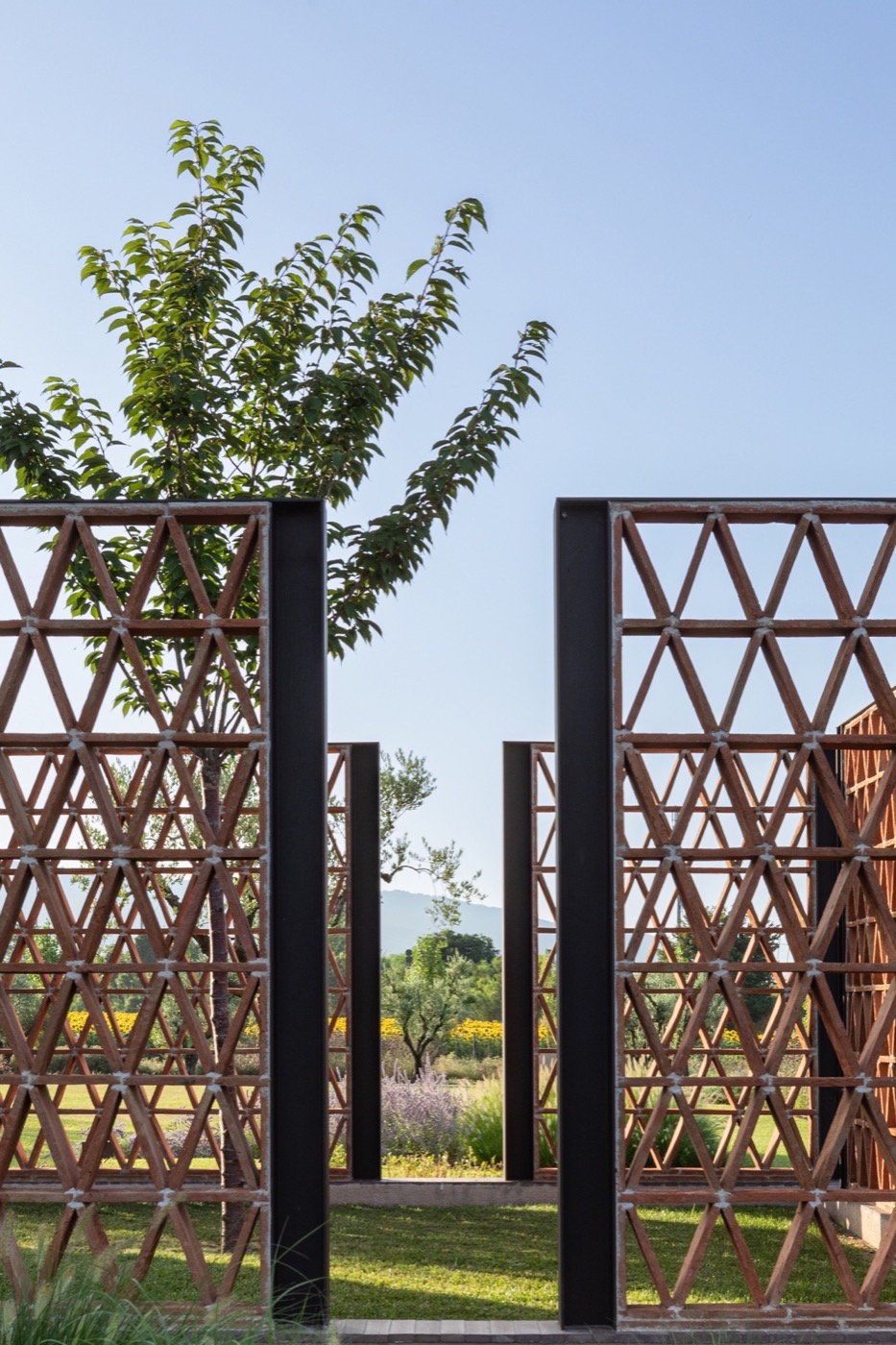
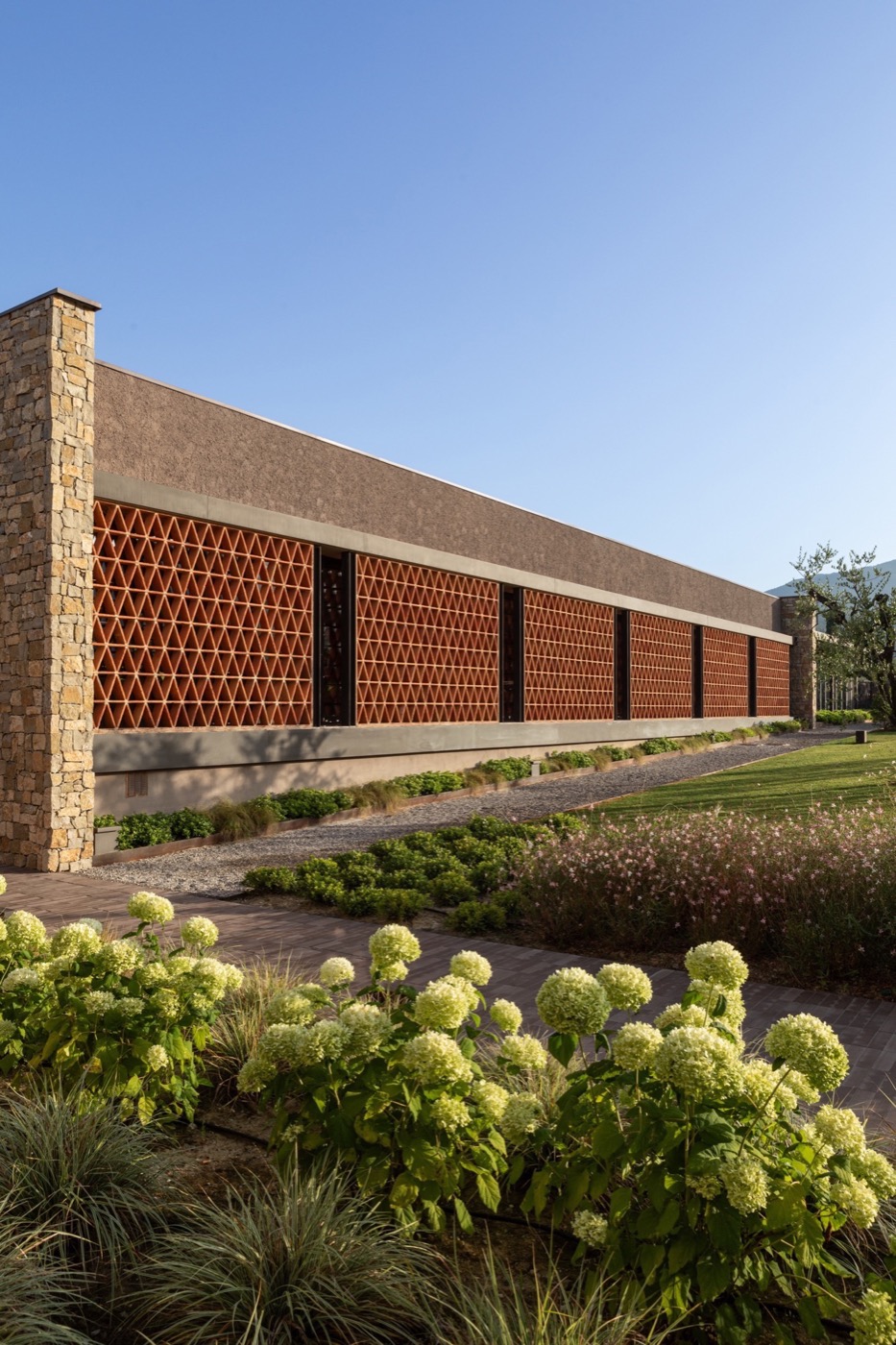
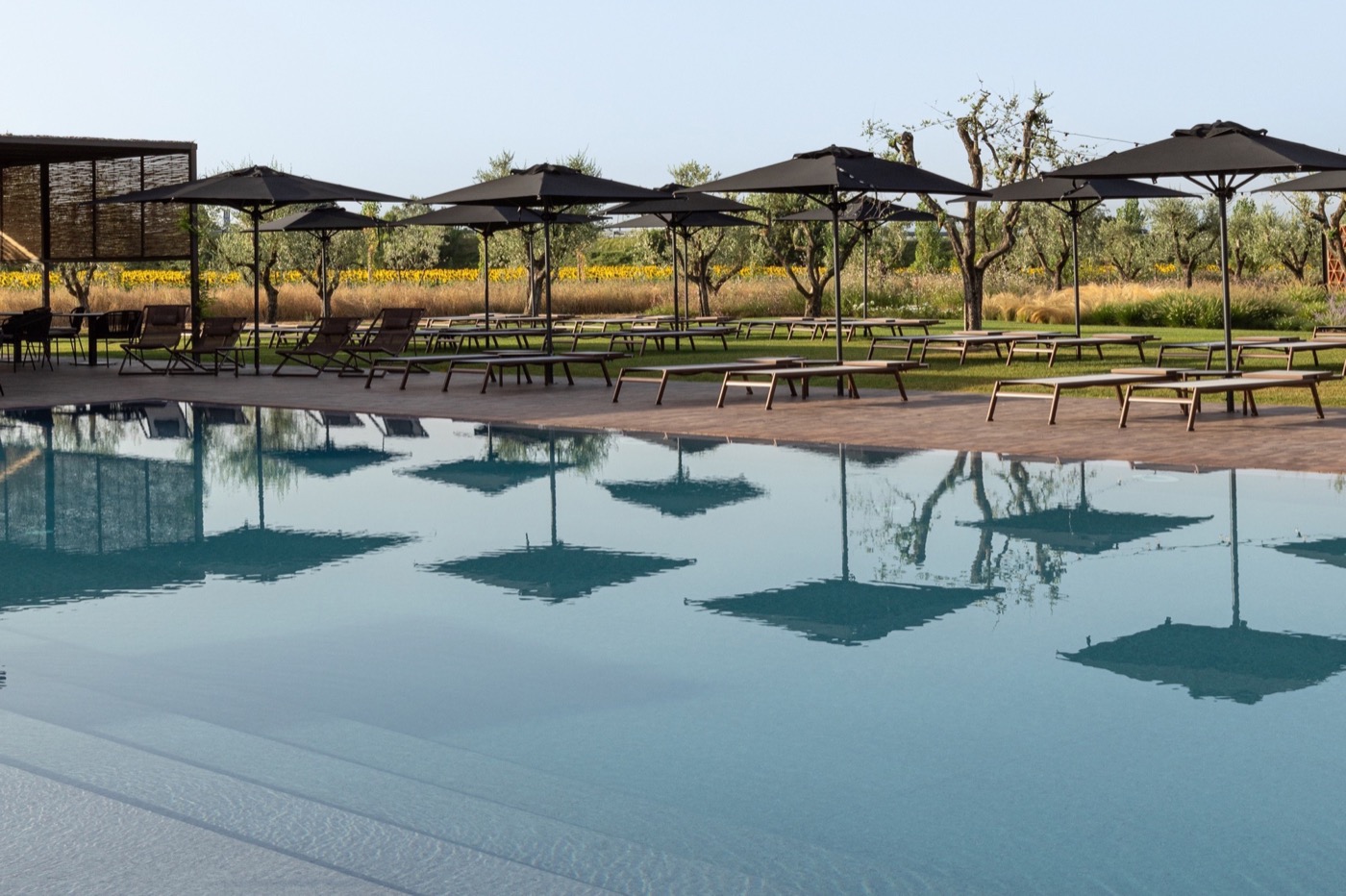
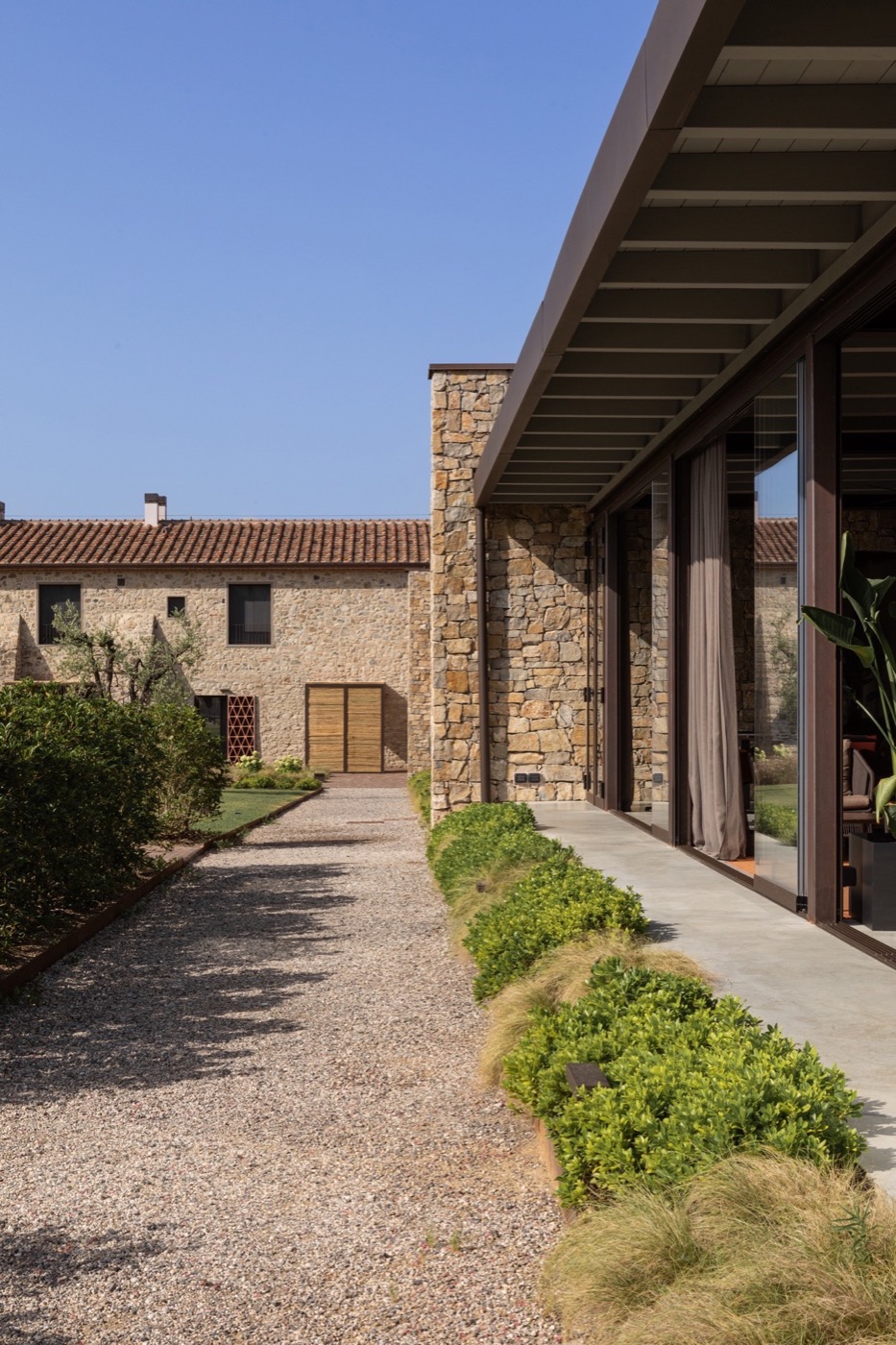
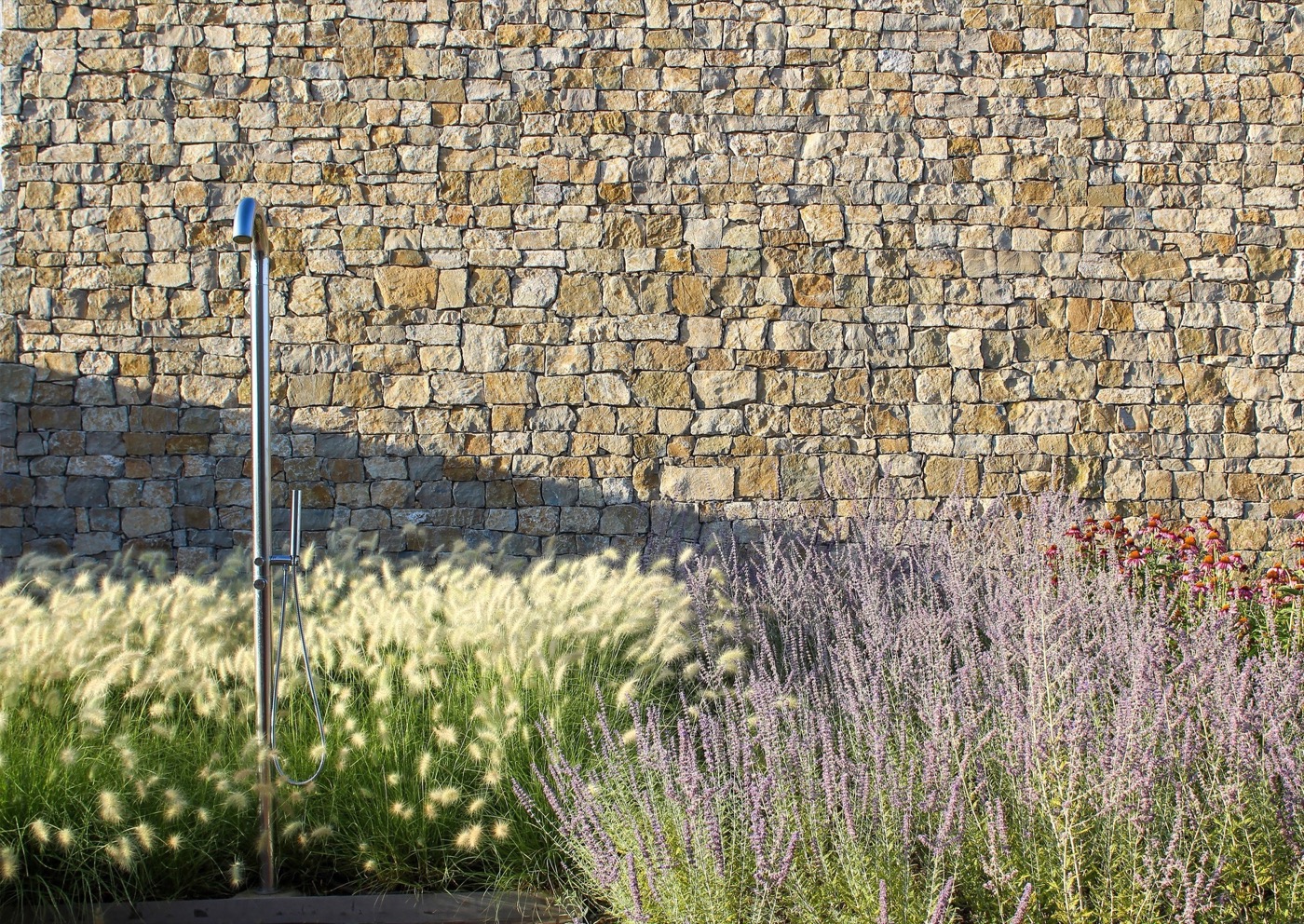
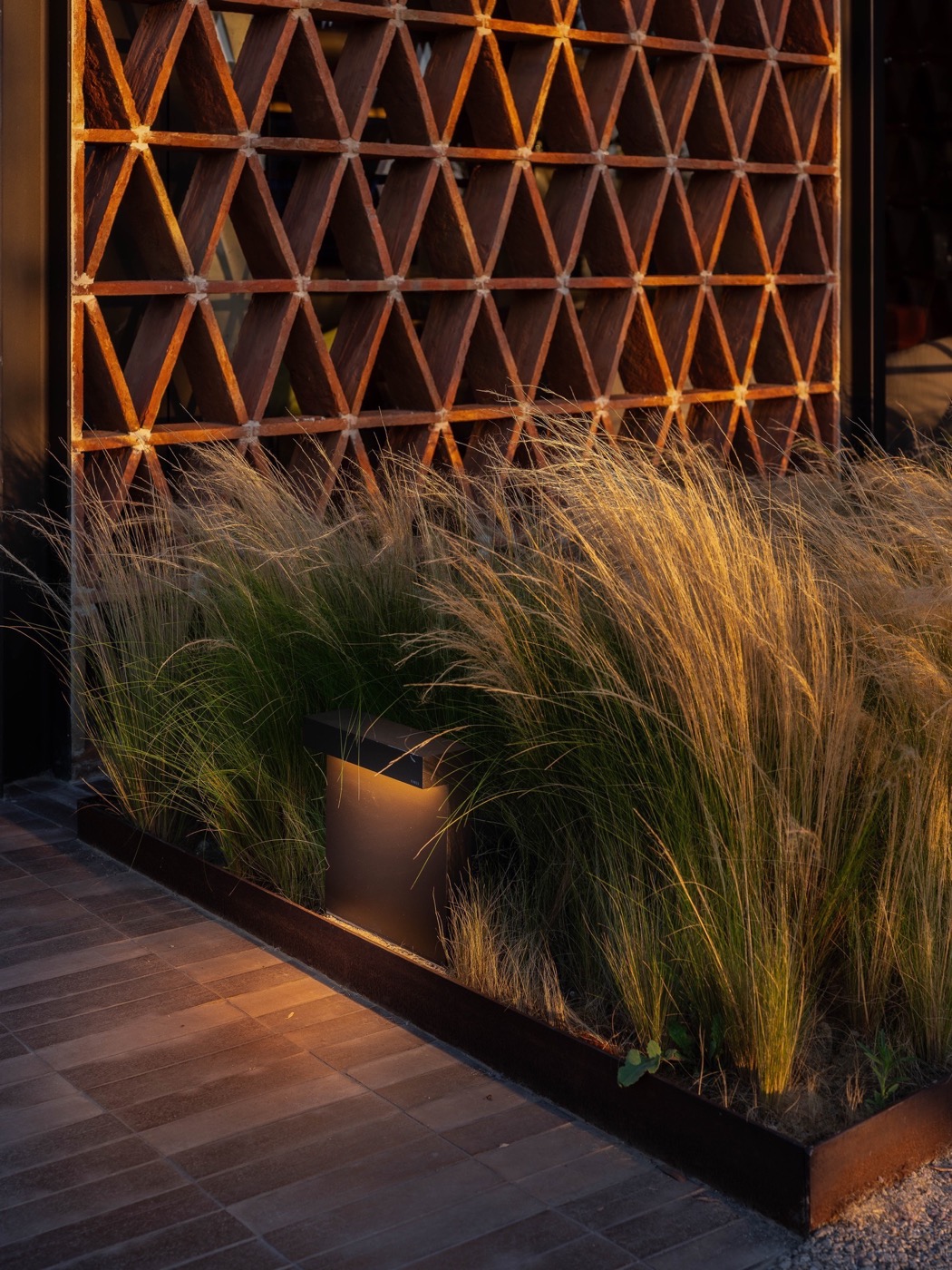
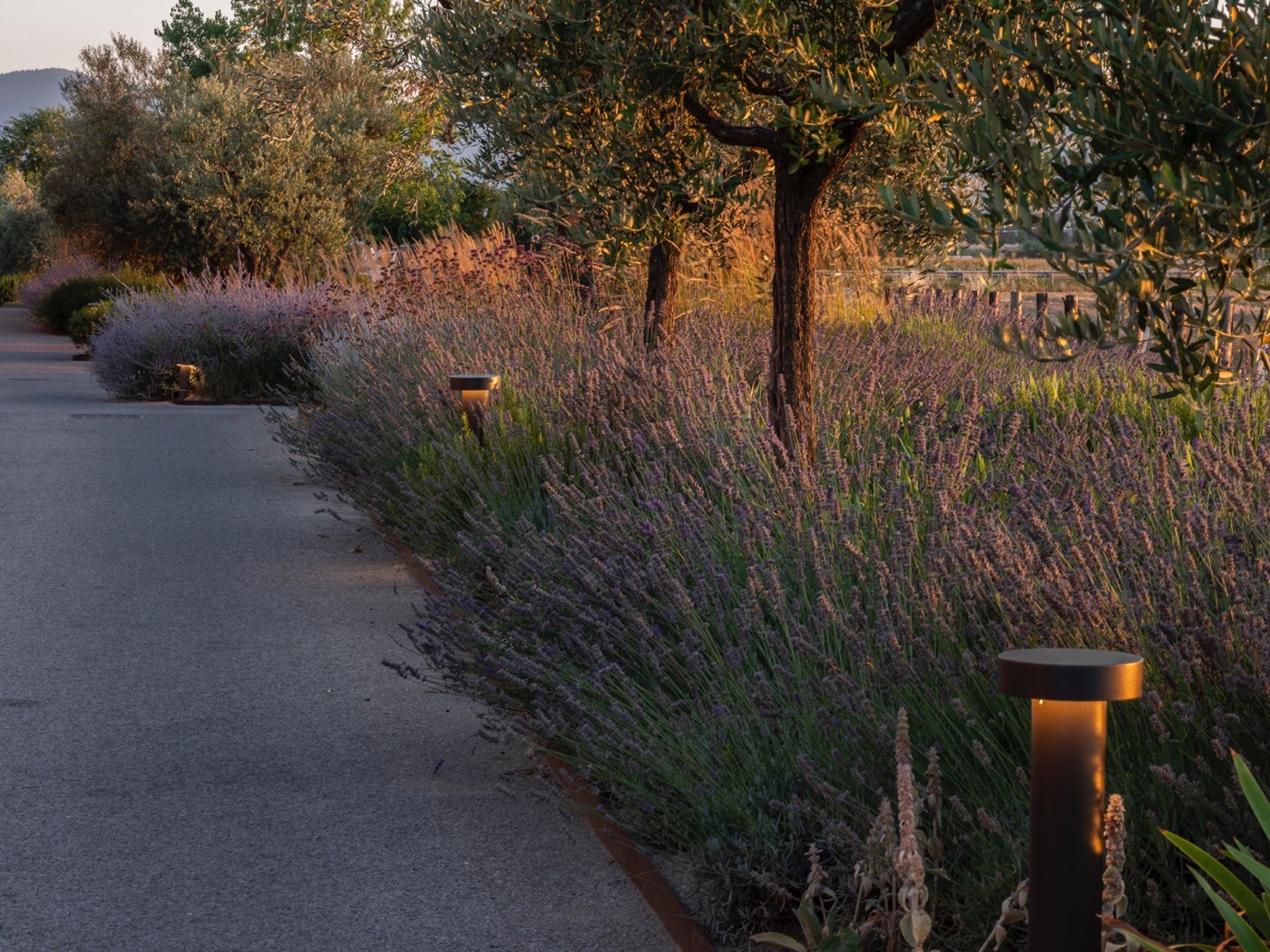
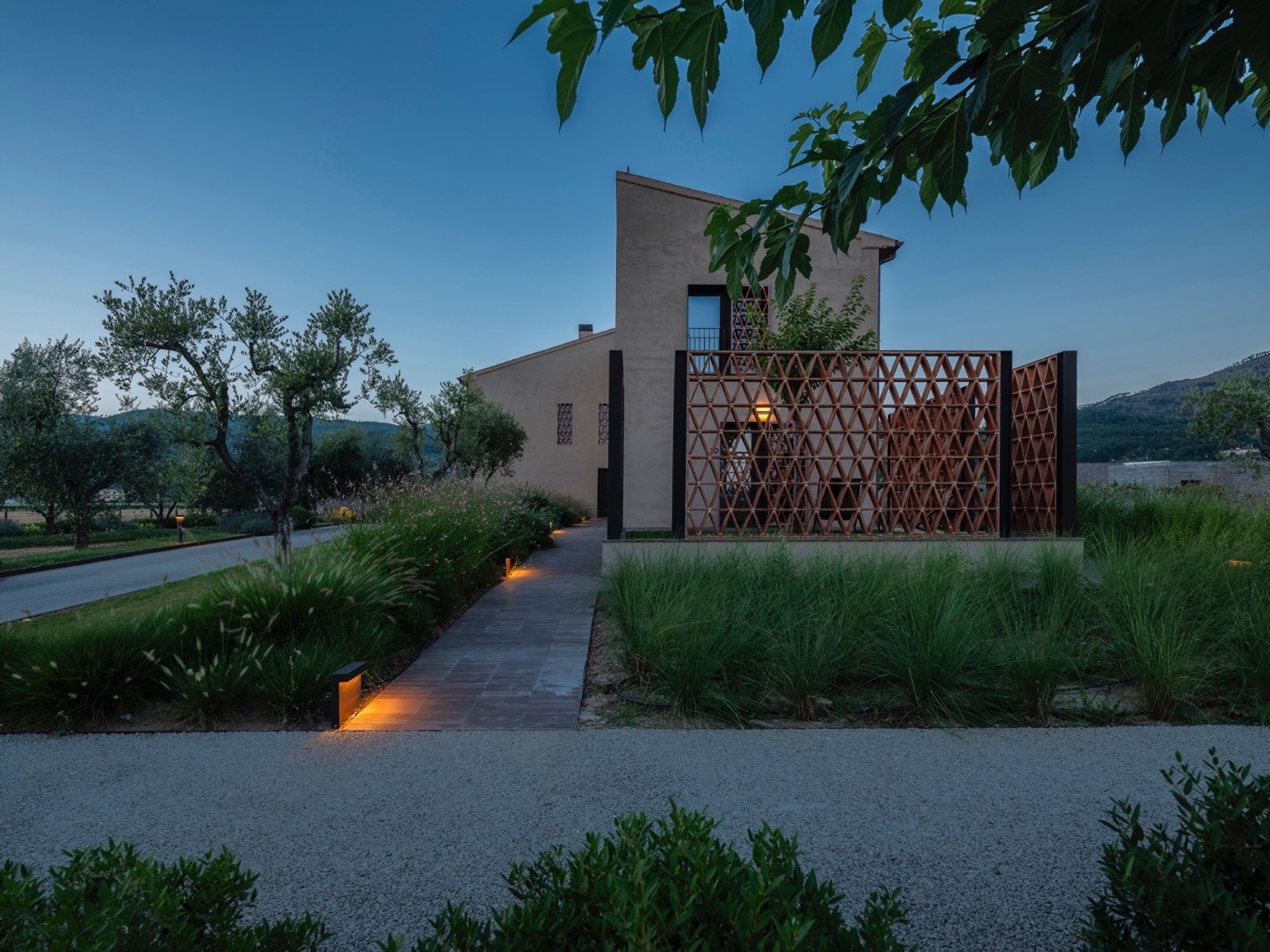
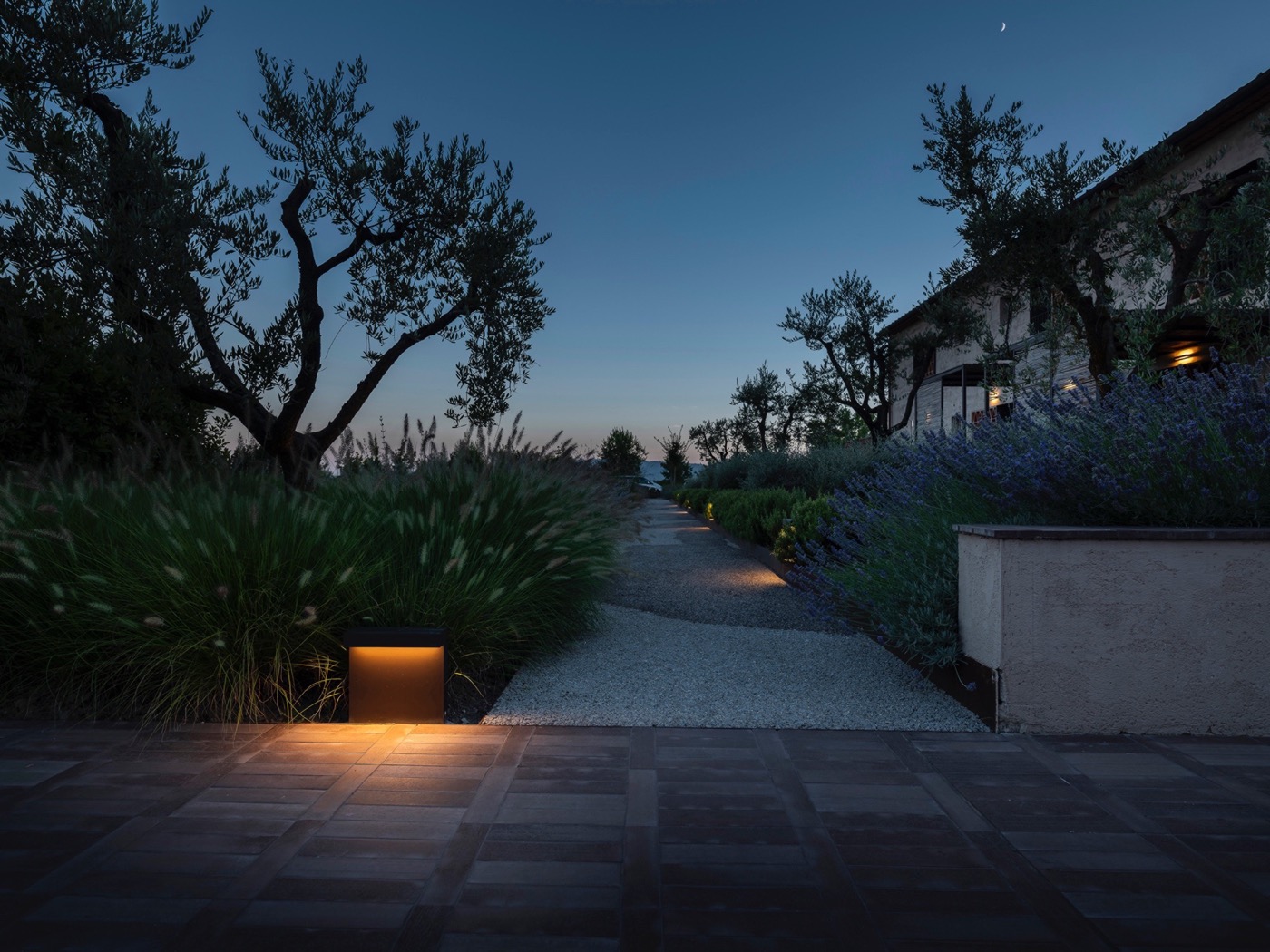
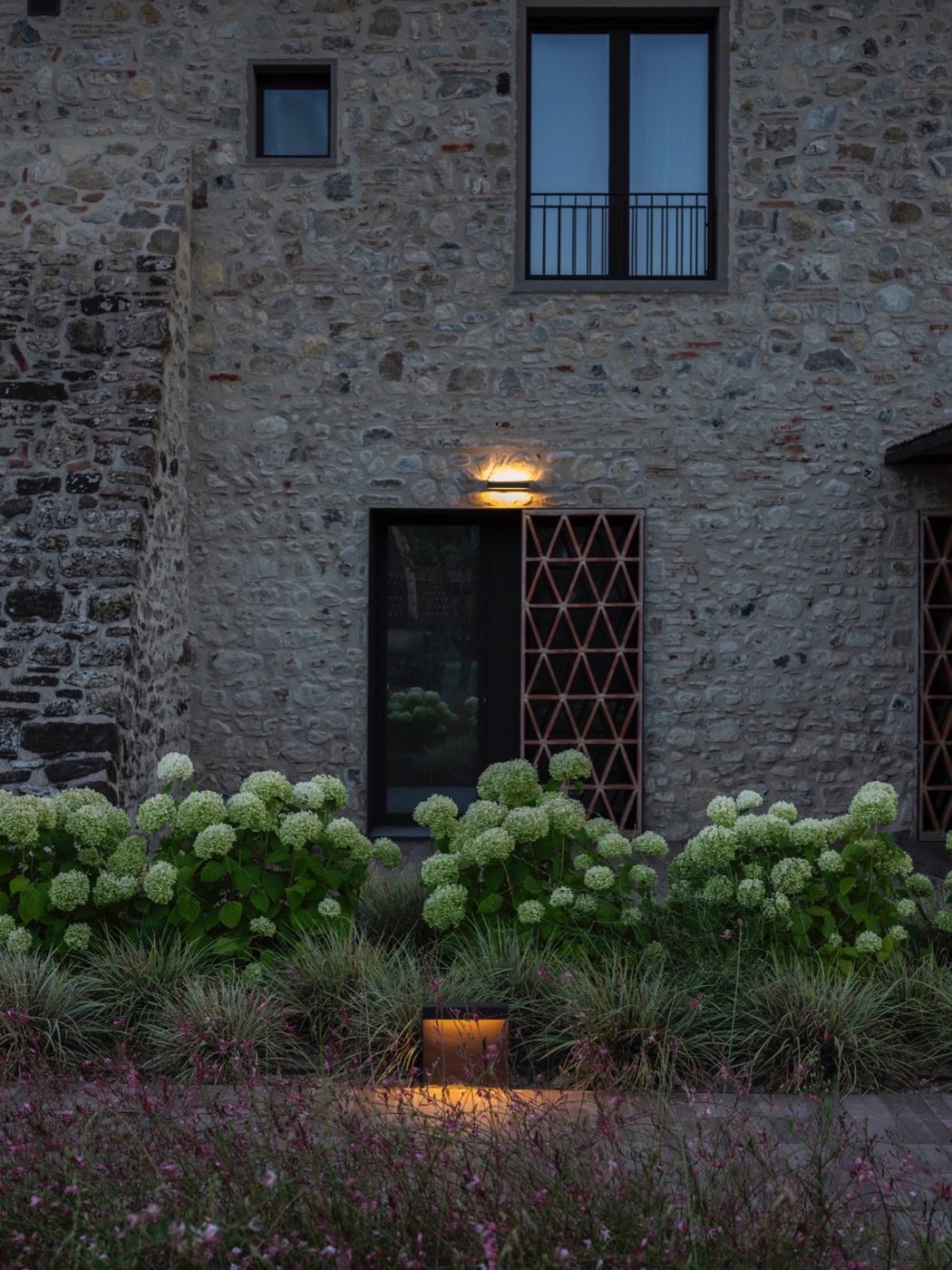
The planting palette includes tree species typical of the local landscape selected according to their specific function: isolated trees, rows of trees or groups of trees along paths and in car parks to provide shade during summer; traditional olive tree varieties in rows or in a regular grid to recreate sections of olive groves as in the surroundings of the project area; isolated big fruit trees used as eye-catchcer; isolated trees, not belonging to the landscape context, to enrich the inner courtyard and the gardens rooms with their blossoms. Mixed hedges are used as structural green elements to give shape to the design and to promote ecological continuity: mediterranean shrubs nearby the buildings and native shrubs within the green barrier along the high-traffic road.
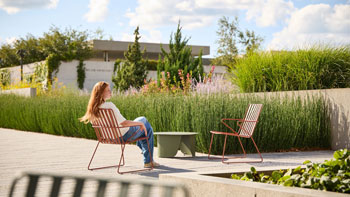
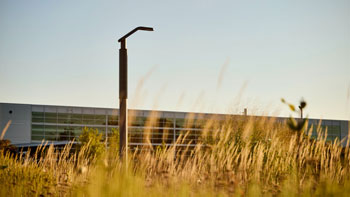
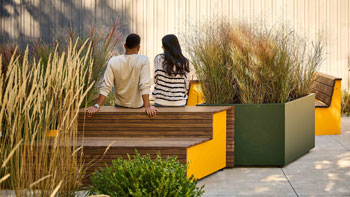
Perennial and grass borders are composed with rhythm and repetition to highlight the layout of open spaces near the buildings while transition to informal and naturalistic along the margins to merge with meadows and cultivated fields. The project integrates also sustainability strategies: permeable paving materials are used extensively, except in direct proximity to buildings; plants are selected and associate on low water demand and similar ecological requirements in order to reduce and optimise irrigation needs and nutrient input; a carefully calibrated lighting system is provided via full CUT-OFF LED lights; retention basins are used to temporarily store water during extreme weather events while in summertime they become flowering meadows which improve local biodiversity.
LANDSCAPE DESIGN: PXC–paesaggistipercaso; ARCHITECTURAL DESIGN: b-arch architettura
CLIENT: Diana srl
TIMELINE: 2018–2022
DIMENSIONS: 23.750 m² (total area including buildings, green spaces, car parks, paved areas and pathways) – 22.885 m² (open spaces only)
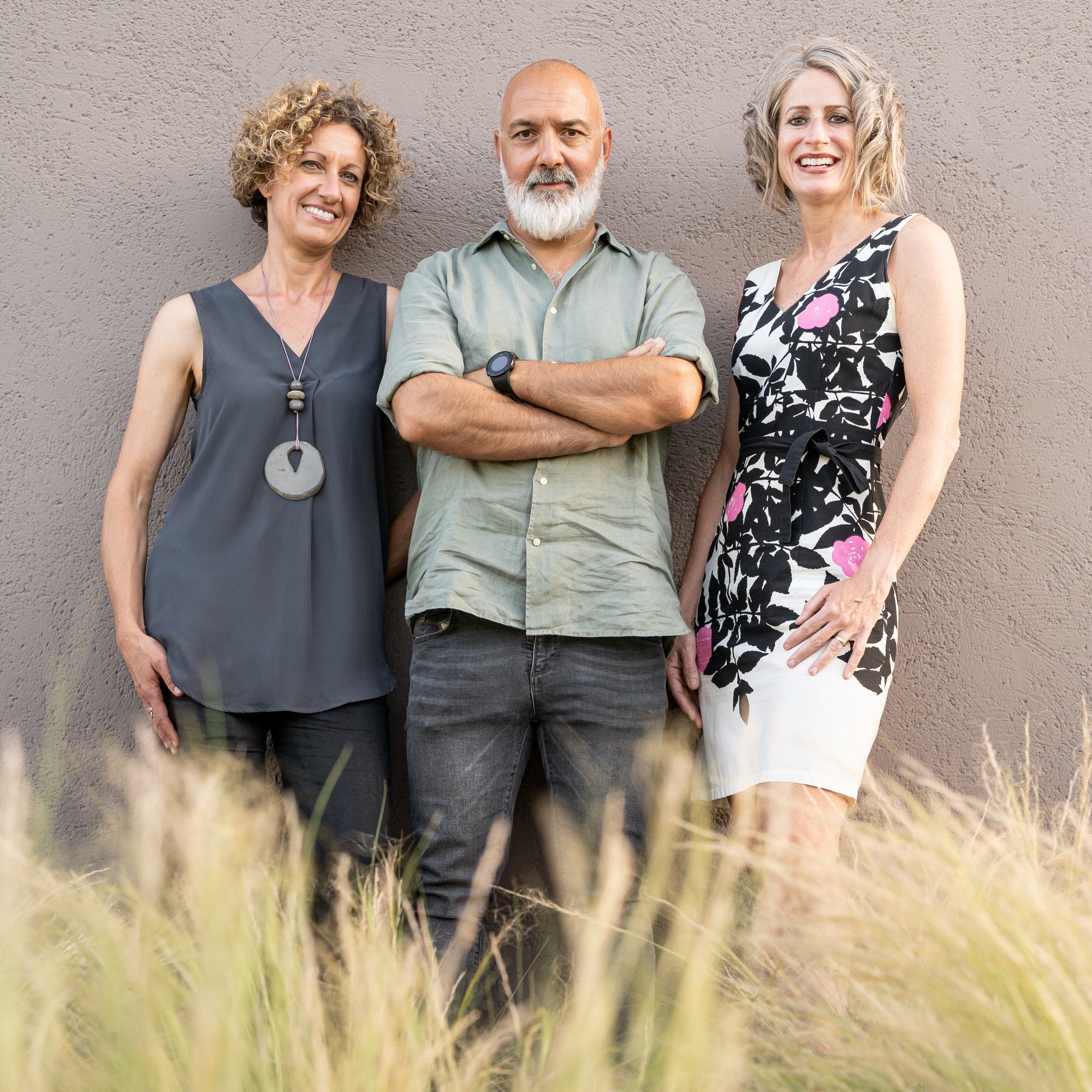
PXC-Paesaggistipercaso is landscape architecture studio established in 2005 by landscape architects Giuseppe Bagnoli, Francesca Bertamini and Nicoletta Boccardi, a close-knit and versatile team that, through its two offices in Pistoia and Trento, operates throughout the country. Open-space projects, at various scales, explore sites to interpret their context and capture their identity, looking for elements of continuity and at the same time embracing change by applying methods and techniques for environmental and social sustainability. PXC is members of AIAPP (Italian Association of Landscape Architecture)
43.9172733,11.0487558
73641


LILA 2026 Sponsor