Johanna Moosdorf School
rplusb.de/ + www.competitionline.com/de/bueros/rb-landschaft-s-architektur-13481/wettbewerbe
2026 Schools and Playgrounds / Germany / Built in 2024 /
Open Space as Infrastructure: School and Sports Landscapes in the Context of the Sponge City
Teaser:
With the Johanna Moosdorf School in Leipzig, an educational campus has been created that rethinks open space as climate-active infrastructure, a social space, and a resilient element of urban repair. Movement, biodiversity, and water-sensitive design are combined into a future-oriented system.
Urban Repair through Density and Open Space
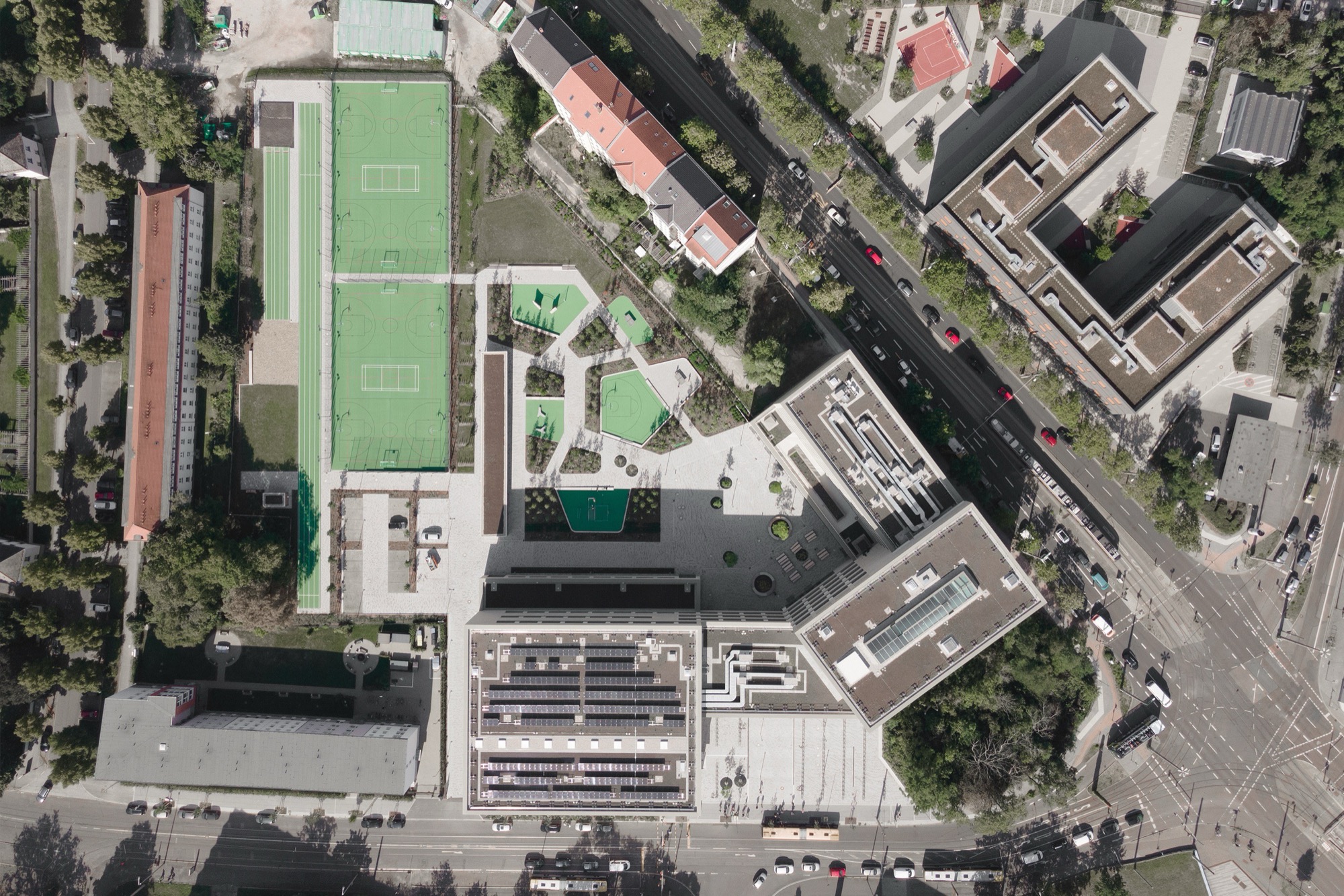
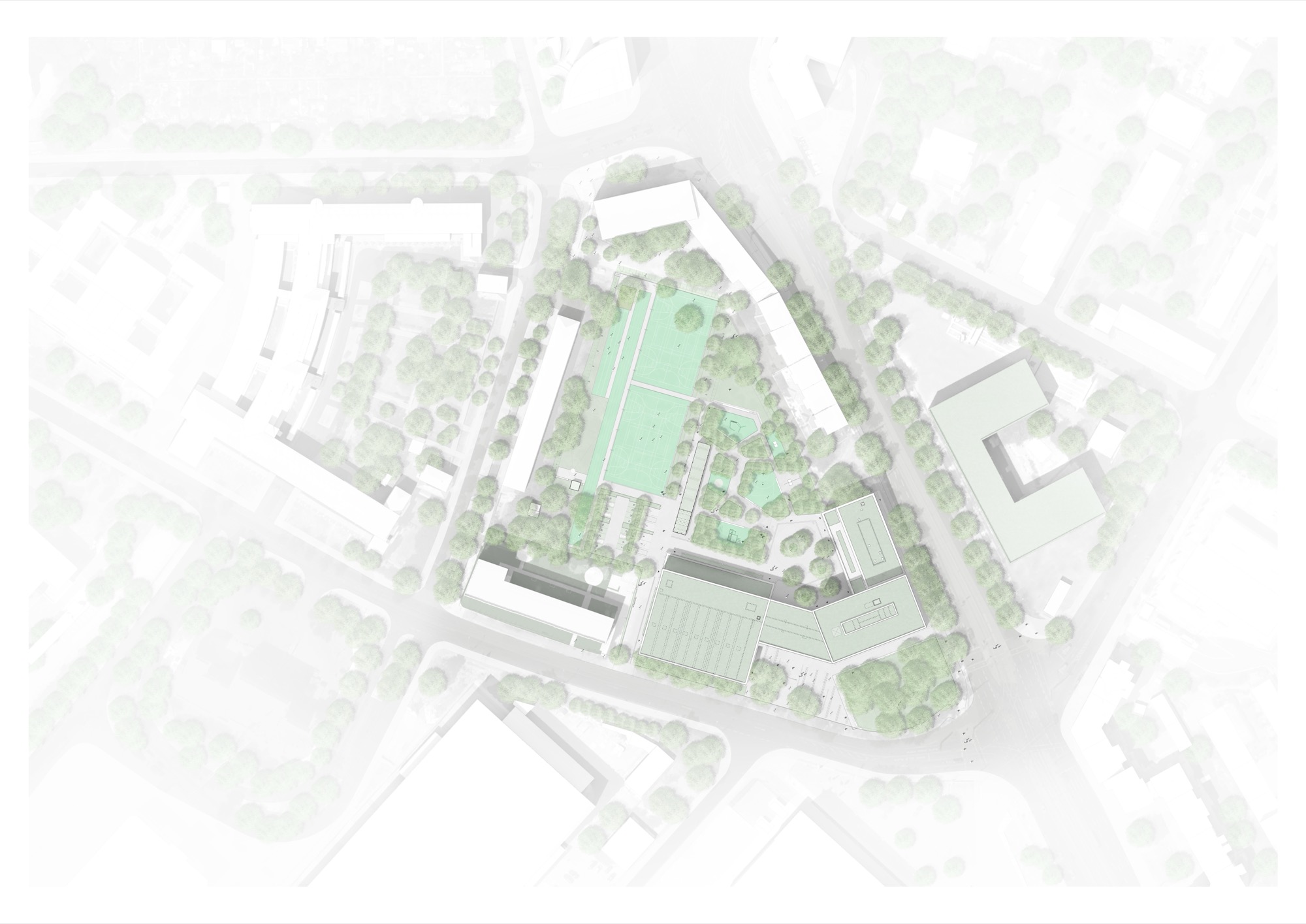
Located in Leipzig-Thonberg along Prager Straße, the project follows a clear inner-city strategy: density enables open space. A former brownfield site that evolved into a valuable biotope was consciously integrated into the design. By stacking school and sports facilities vertically, land consumption is minimized while creating generous, connected open spaces.
Open space is not residual but the starting point of the design—an approach highly relevant in growing cities. The project transforms a long-vacant site into a vibrant educational and open-space environment, contributing significantly to urban repair.
Urban Integration and Identity
The building defines strong spatial relationships, forming a clear urban edge along Prager Straße while protecting against noise. A high-rise element marks the city entrance. The forecourt acts as both address and public space, integrating the school into urban life.
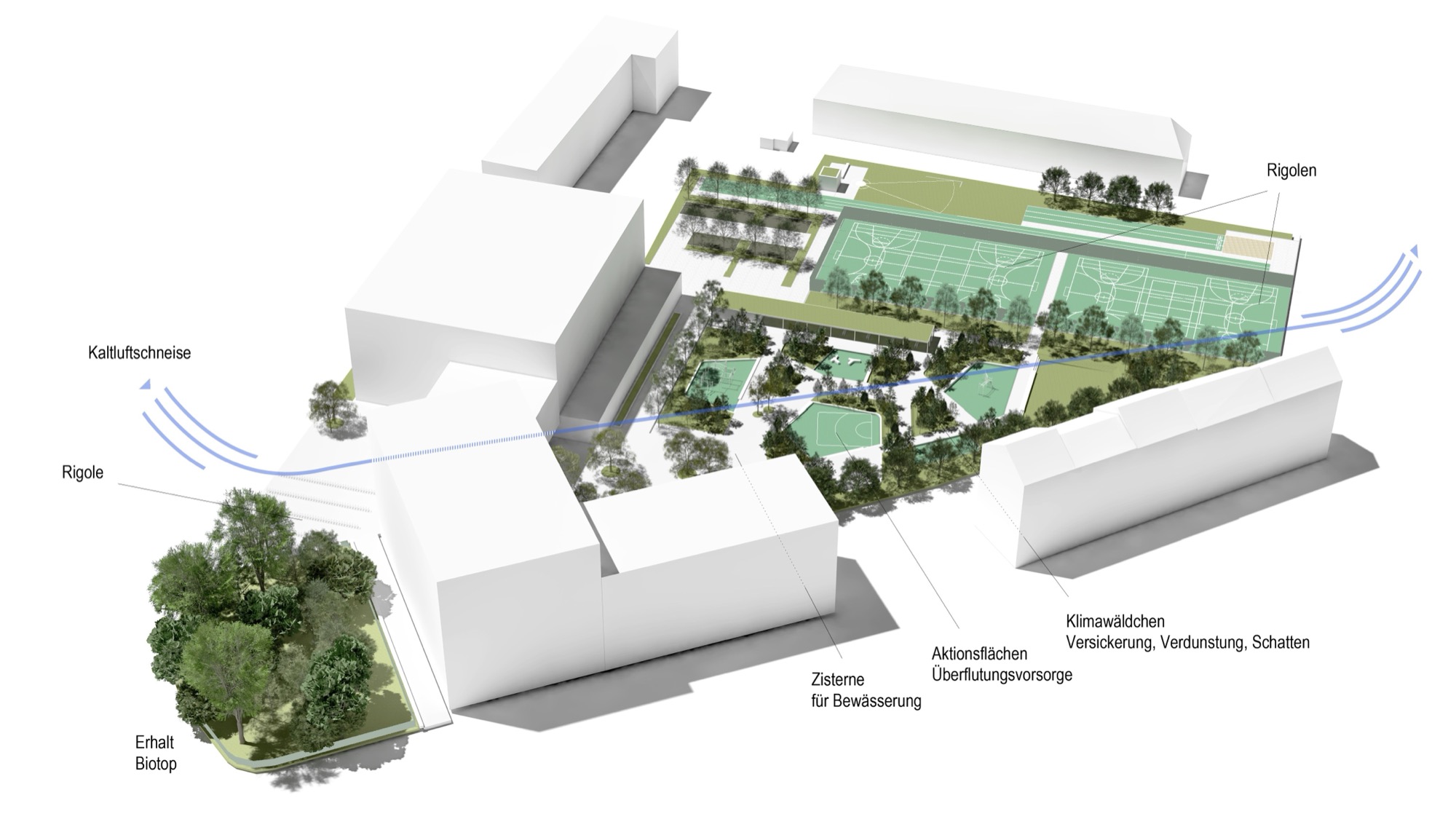
At the same time, it contributes to the urban climate as part of a cold-air corridor toward Friedenspark, demonstrating how open spaces can improve environmental conditions at a larger scale.
Diverse Open Spaces
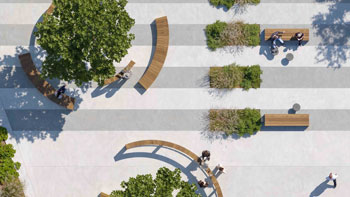
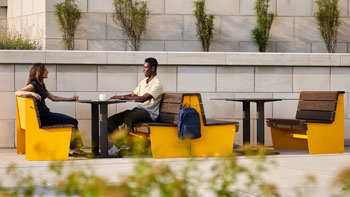
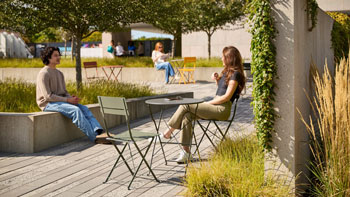
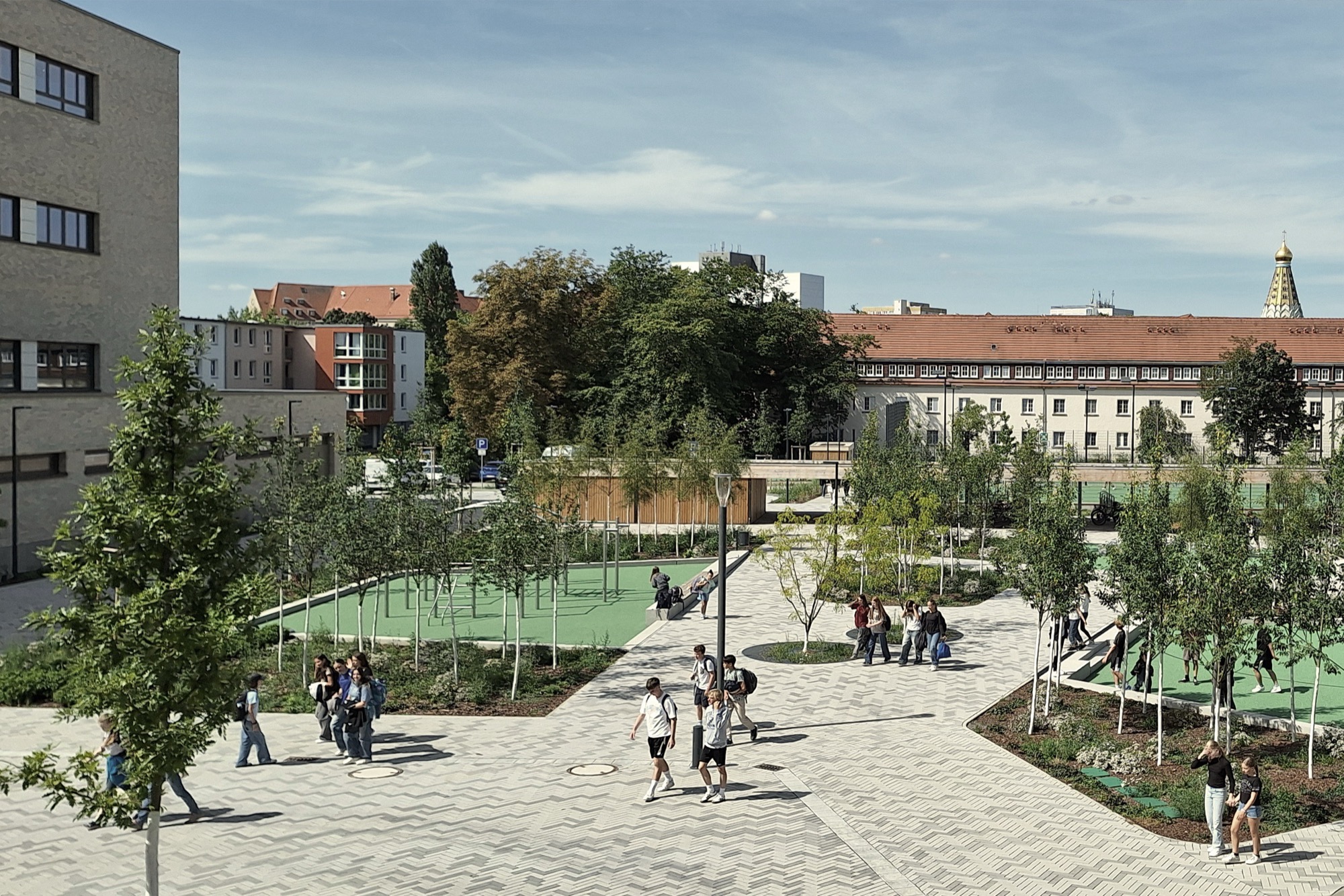
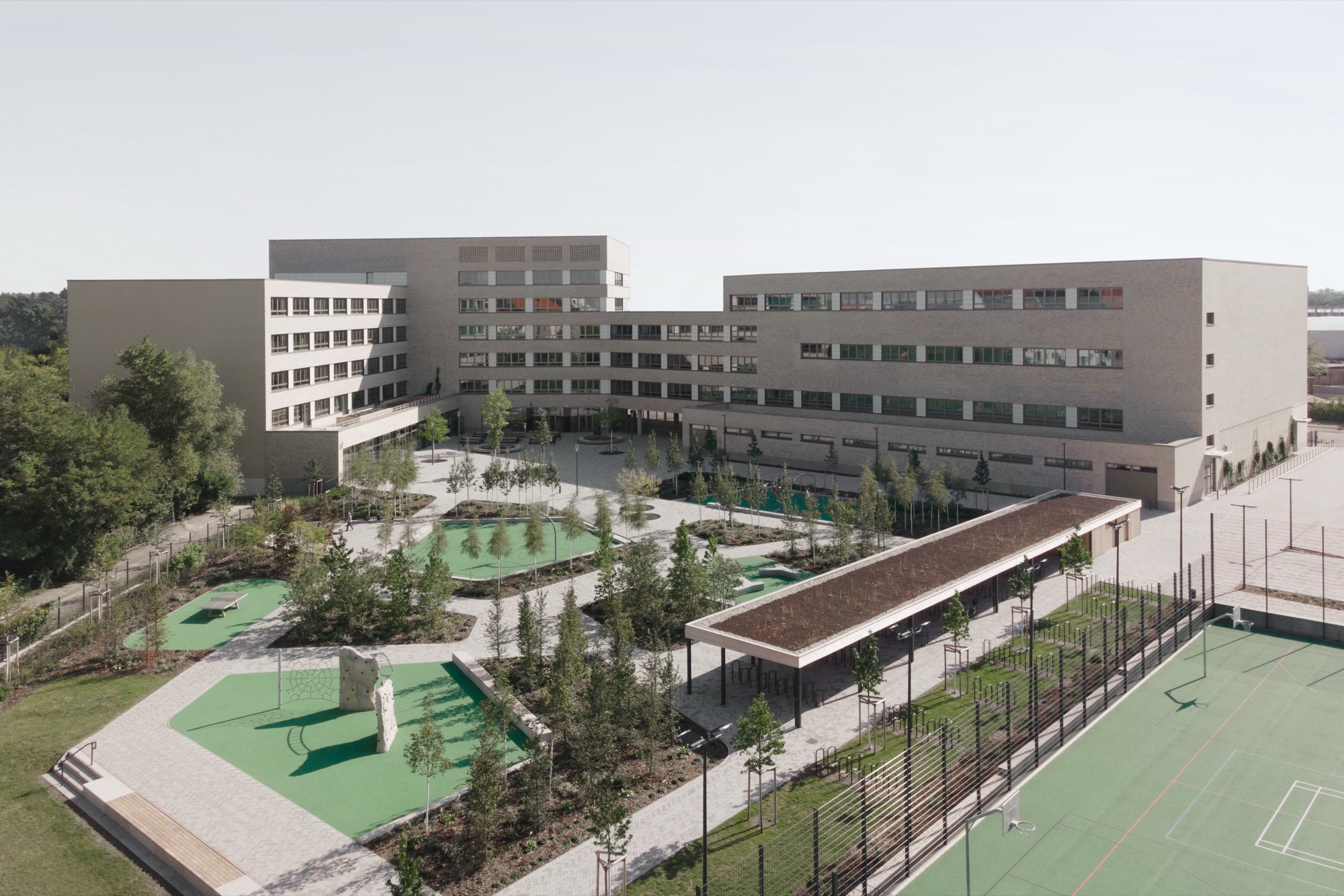
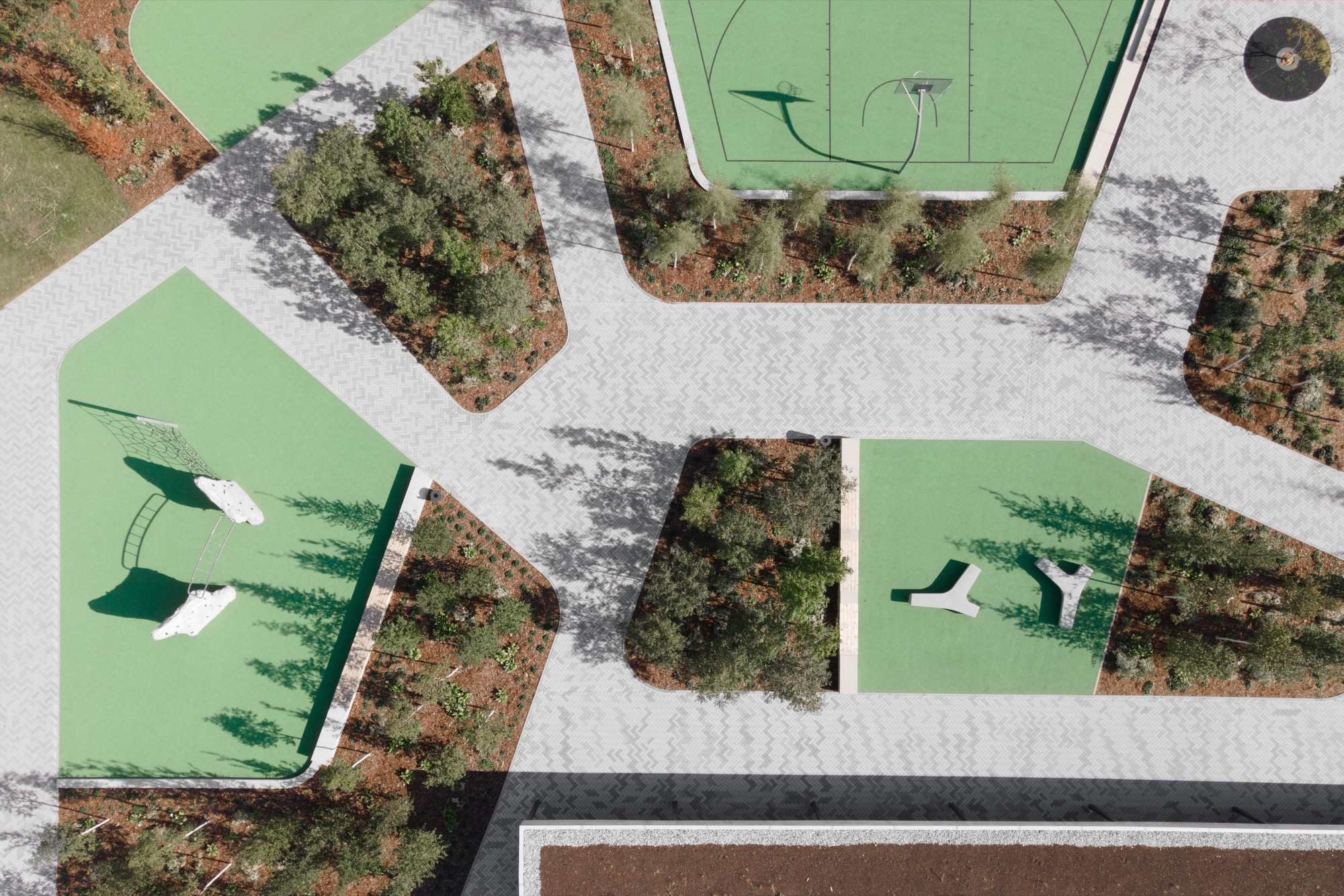
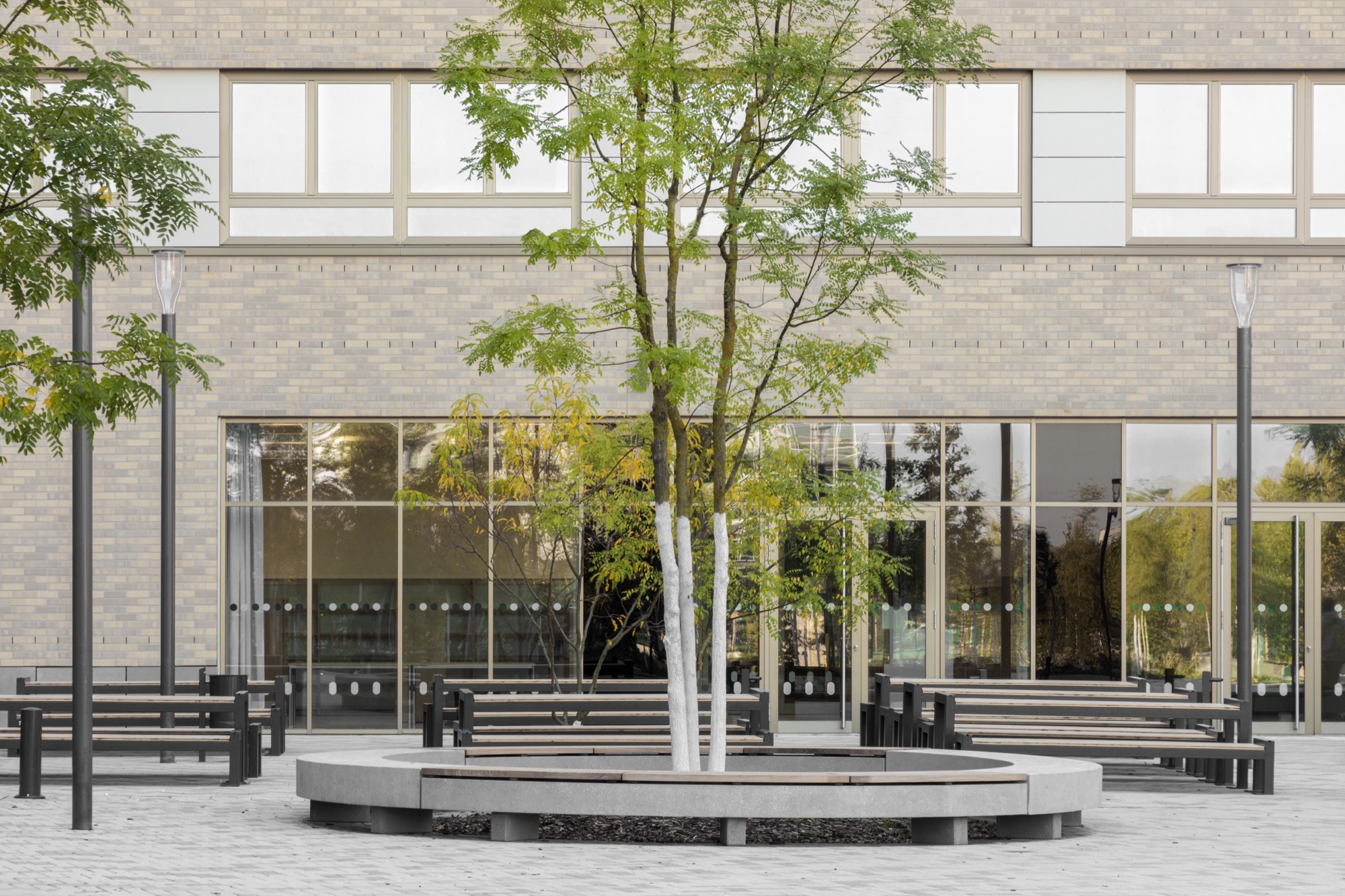
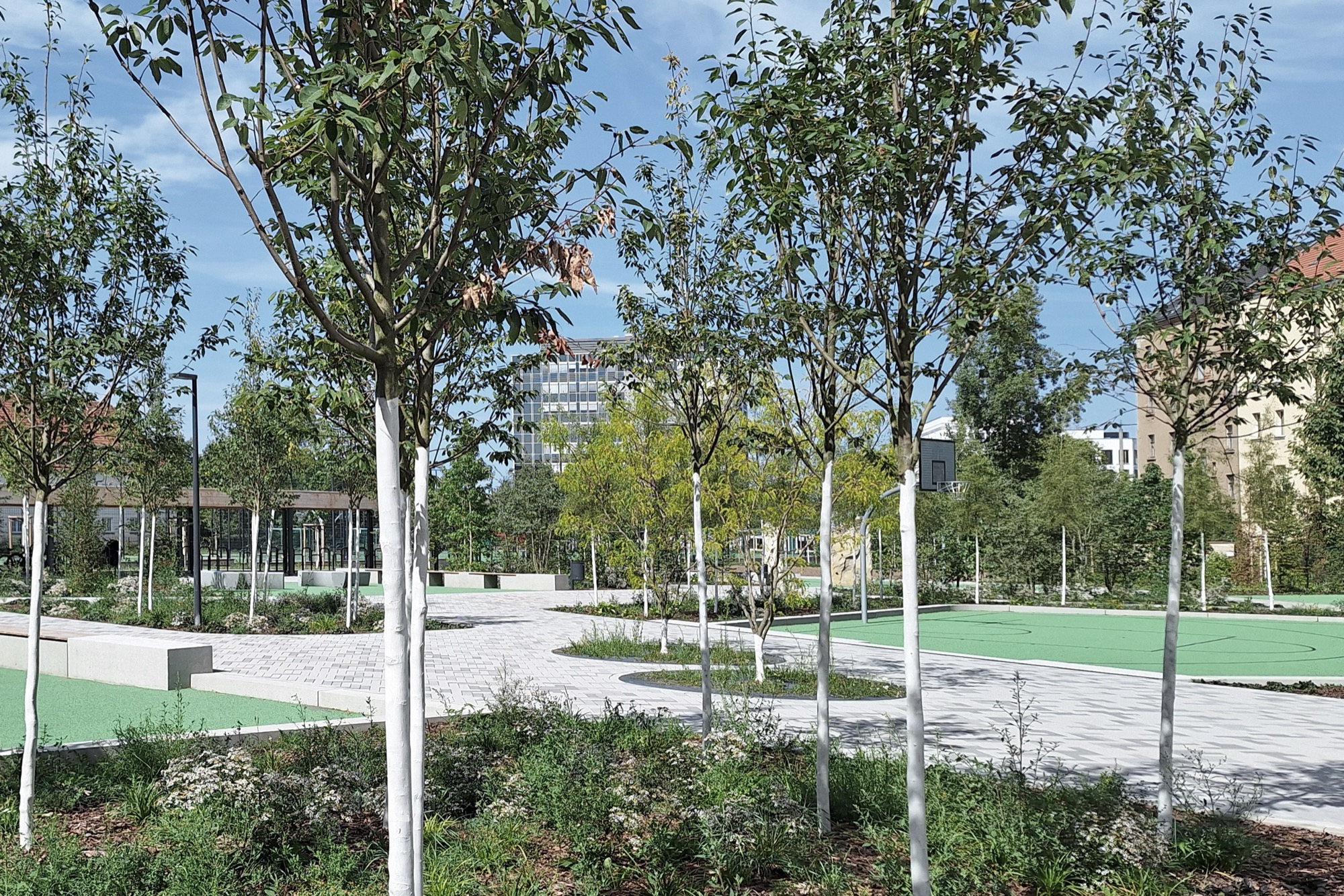
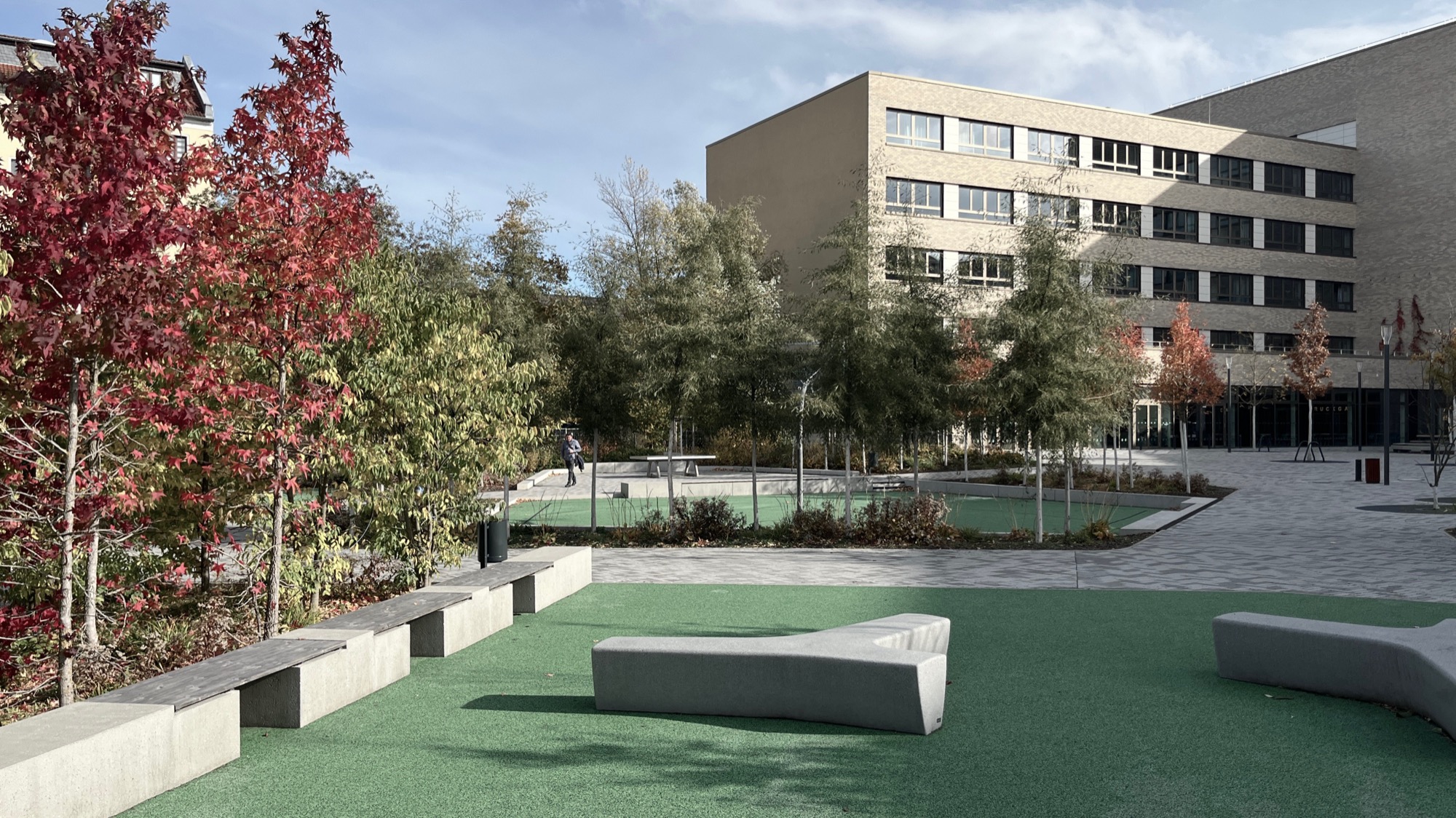
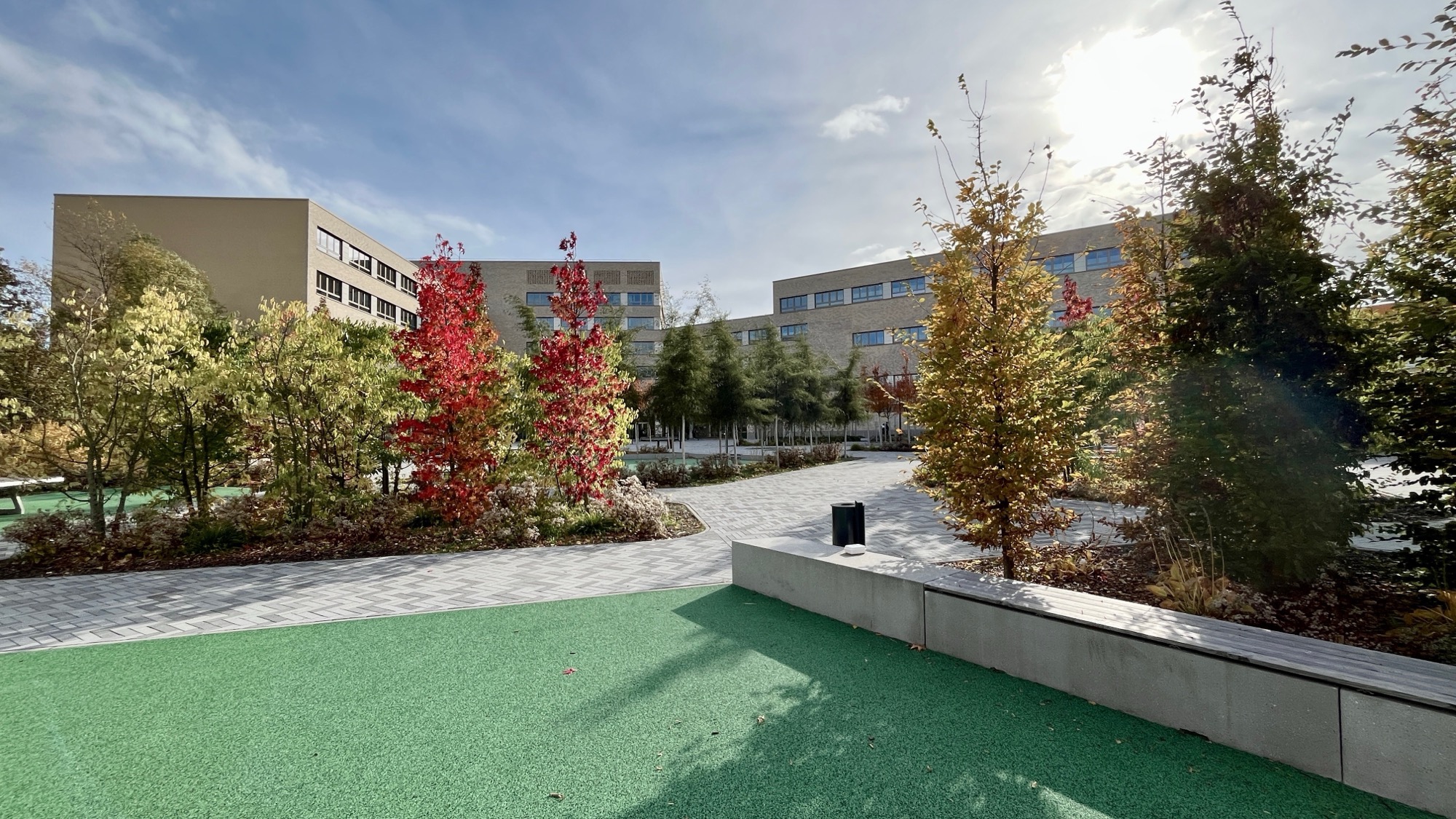
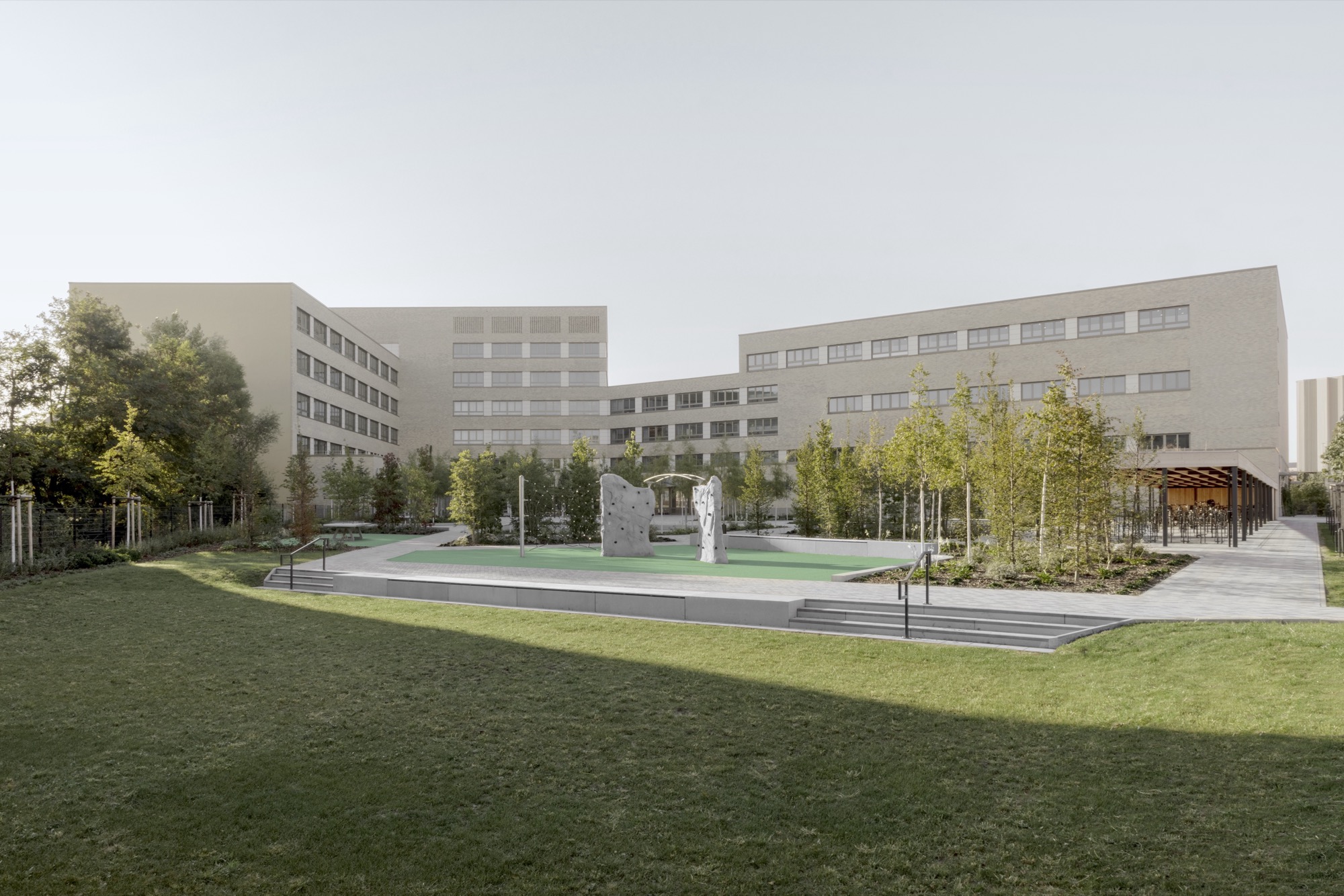
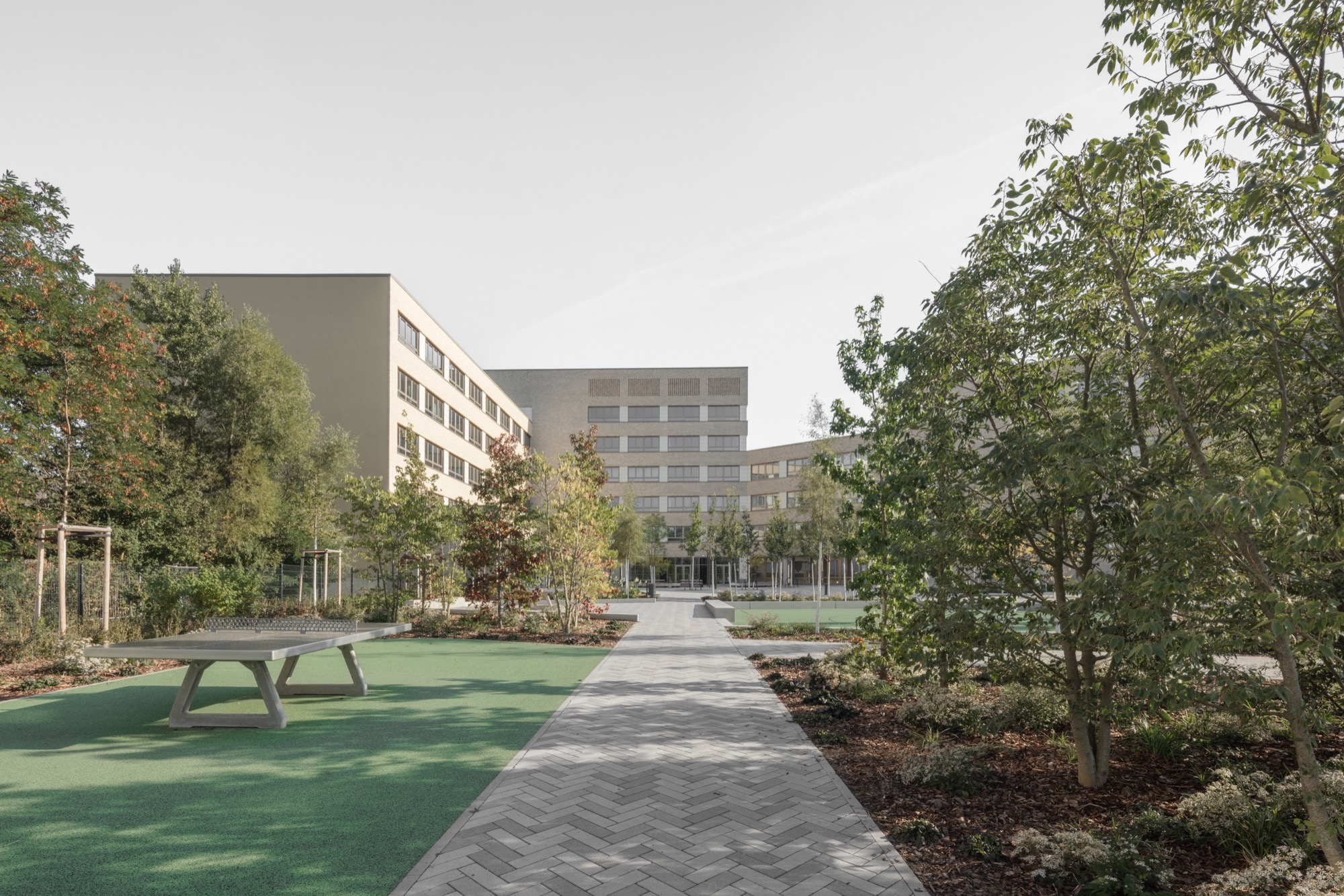
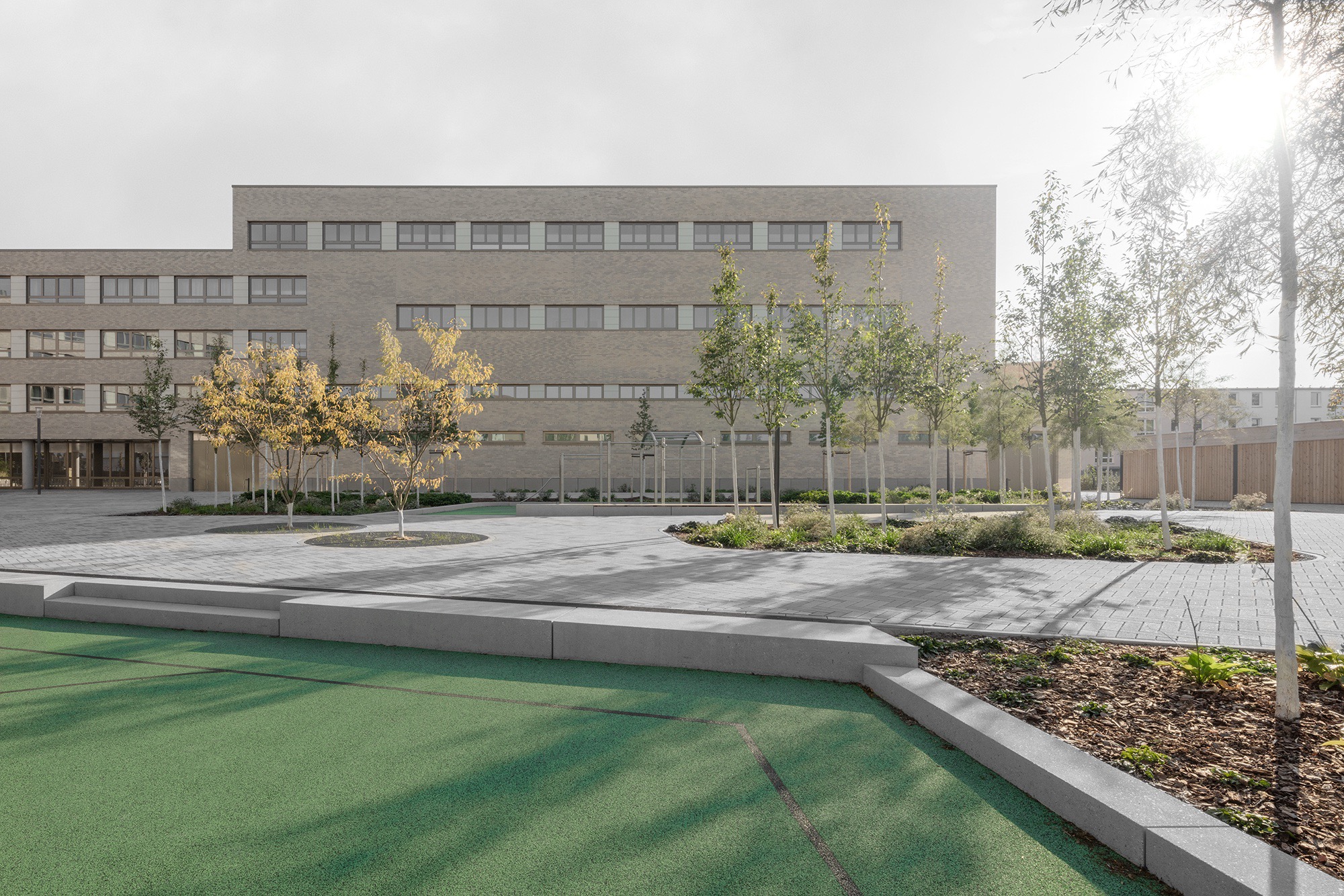
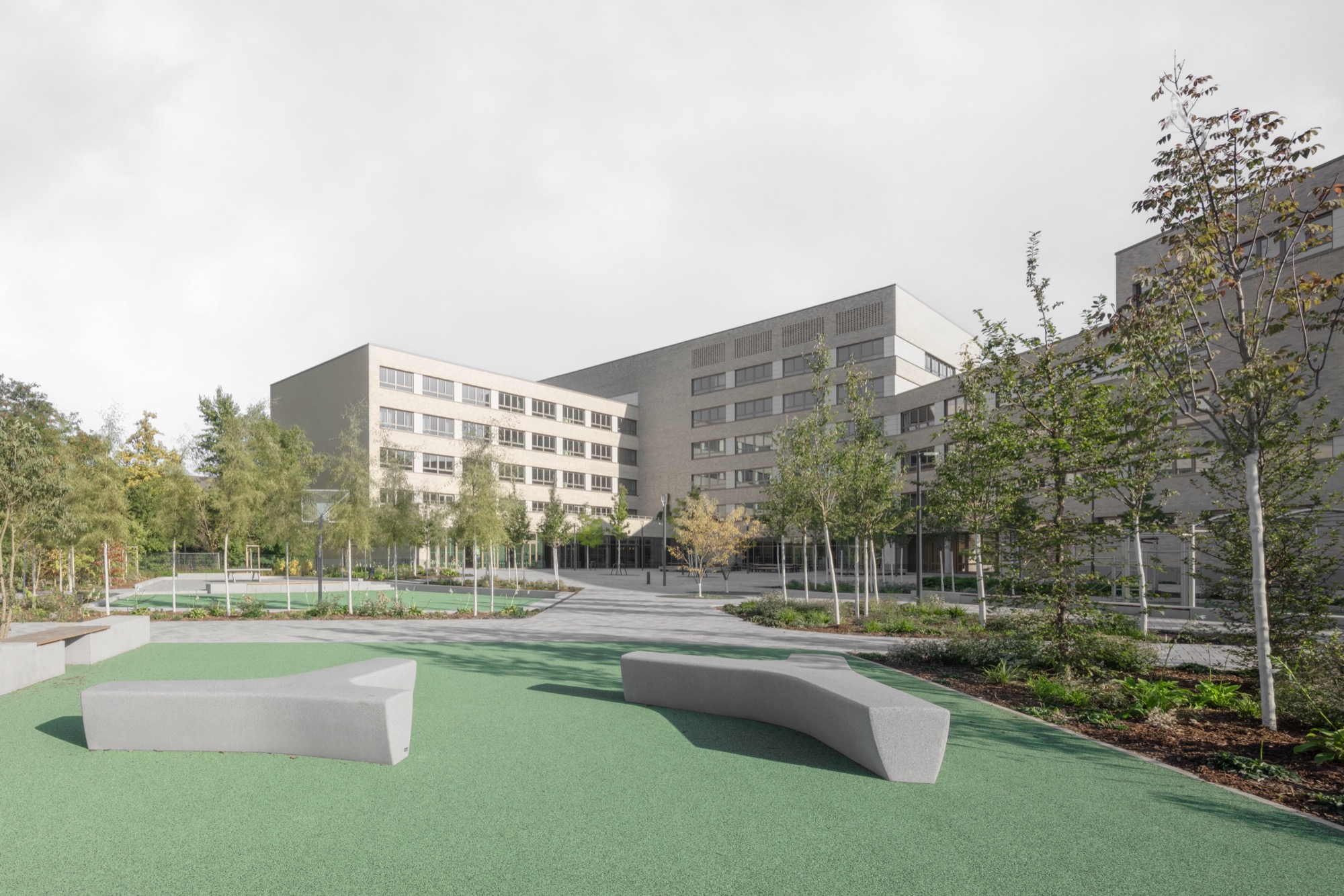
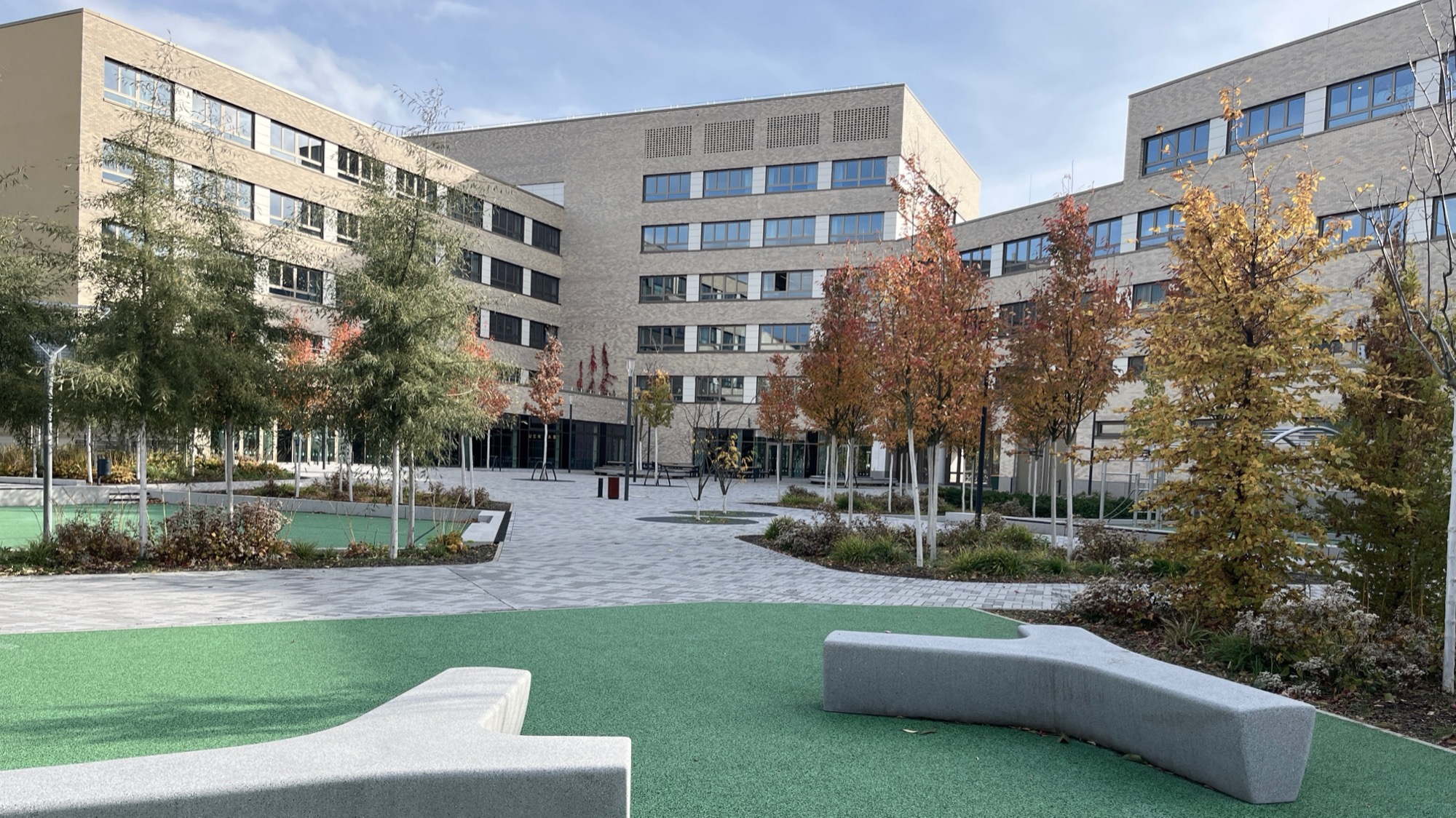
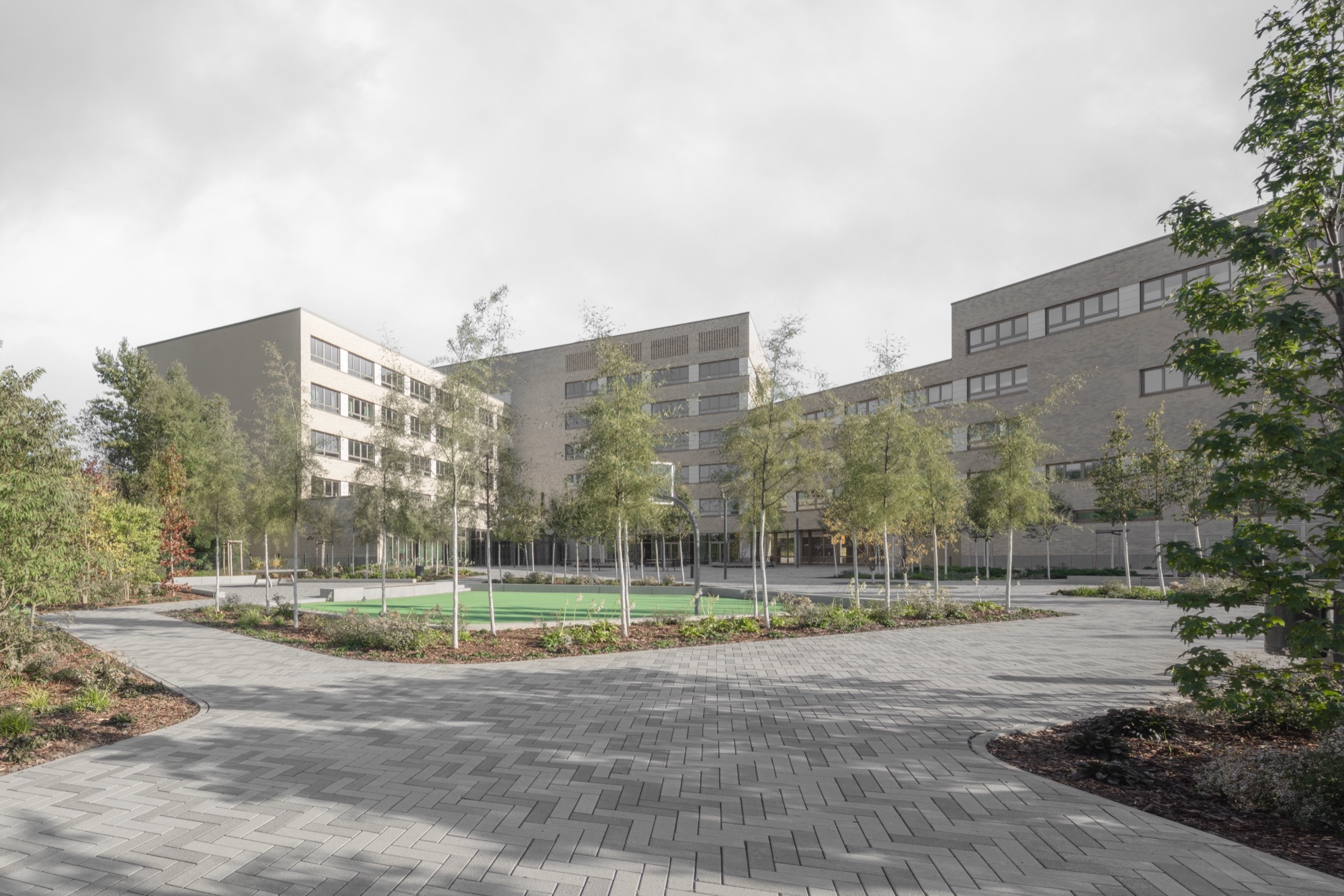
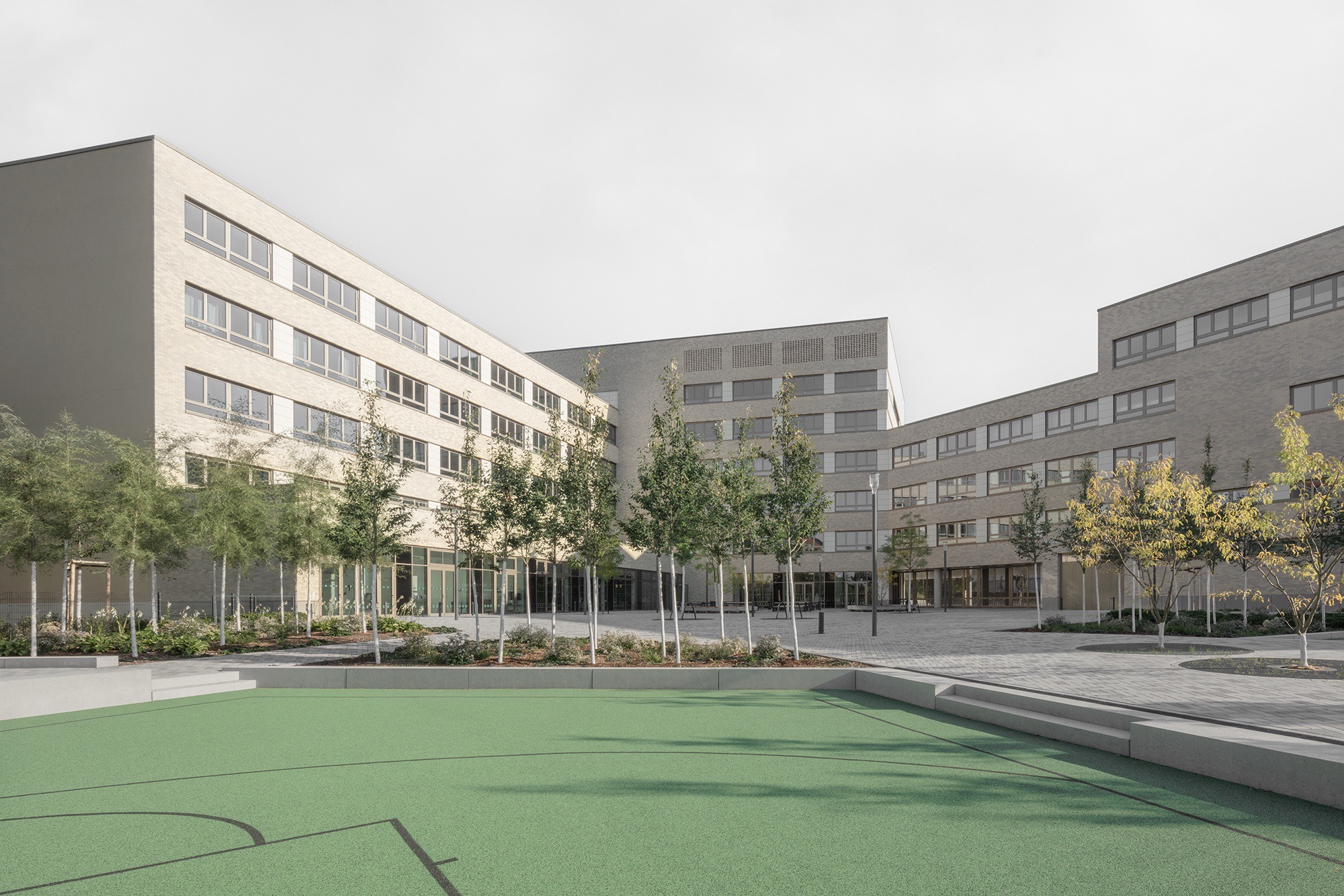
The schoolyard is designed as a differentiated system of plazas, green areas, and activity zones, allowing simultaneous use by different groups. A central multifunctional courtyard supports events, learning, and interaction, structured by large trees providing shade and spatial quality.
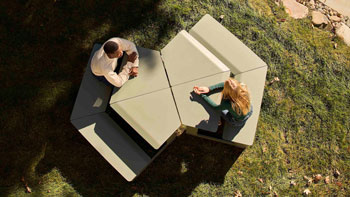
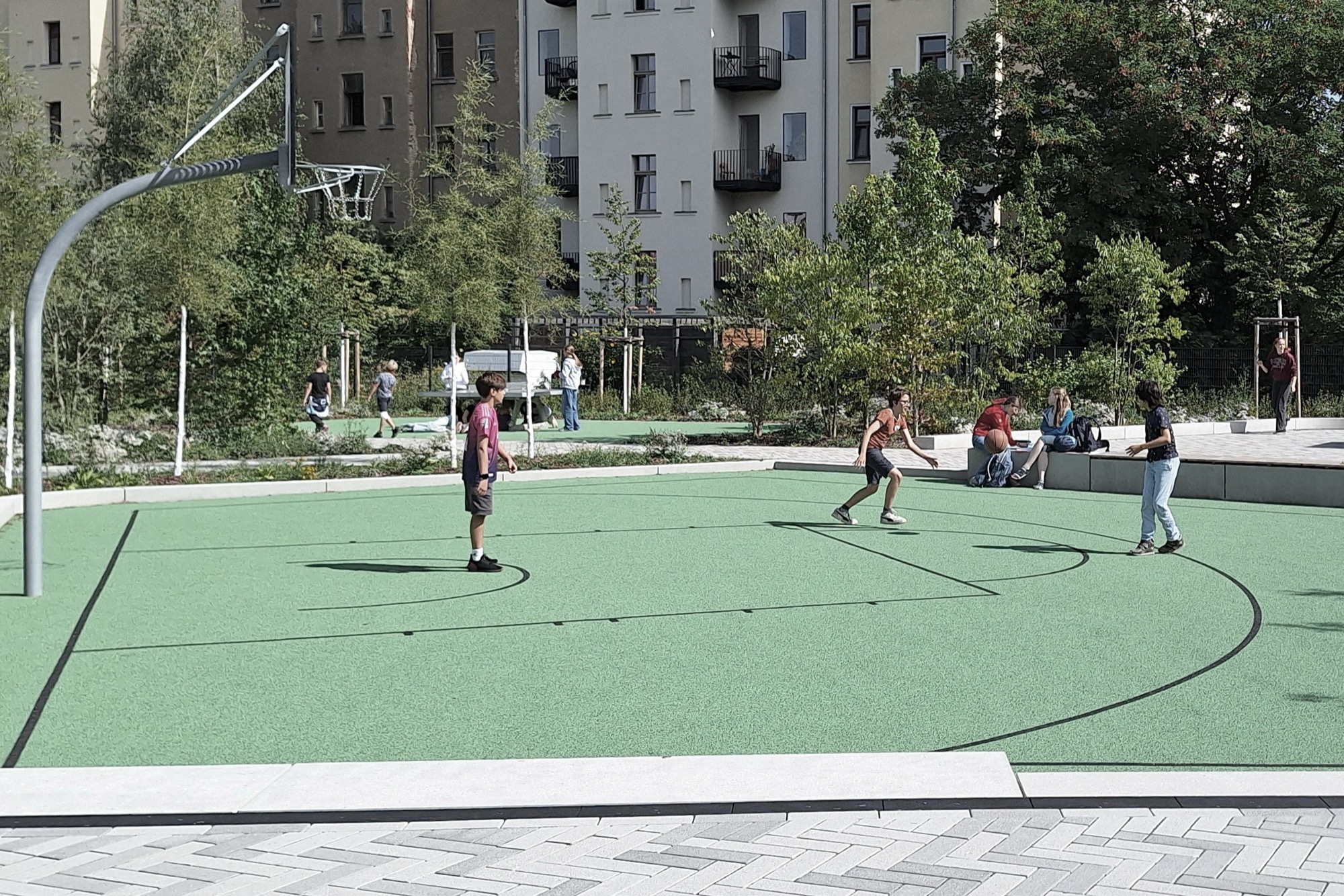
More intimate, planted areas offer retreat and informal communication. This diversity supports social sustainability by addressing varied needs and encouraging active use by students.

Movement as a Core Principle
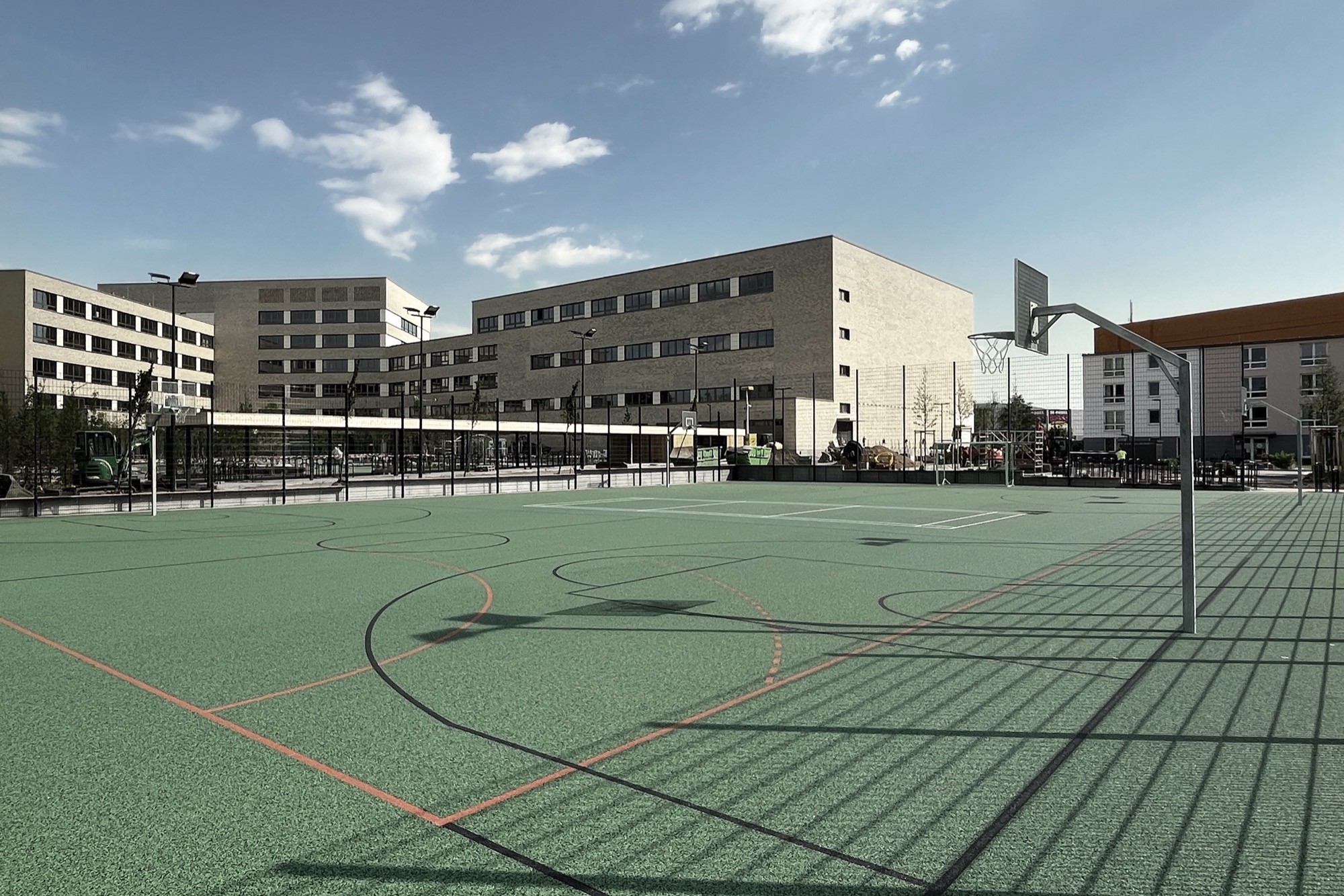
Movement is fully integrated into the design. Sports areas in the west (approx. 5,480 m²) include permeable surfaces, grass zones, and additional activity spaces within the schoolyard. Two multifunctional playing fields allow flexible use for various sports, ensuring high efficiency in a compact urban setting.
Athletics facilities, including a 100-meter track and long jump areas, follow principles of multifunctionality and dual use. Subtle topography supports both spatial organization and rainwater management.
The site integrates school and club sports, with facilities accessible beyond school hours. Combined with two sports halls—including a paralympic venue—it forms a regionally significant sports infrastructure.
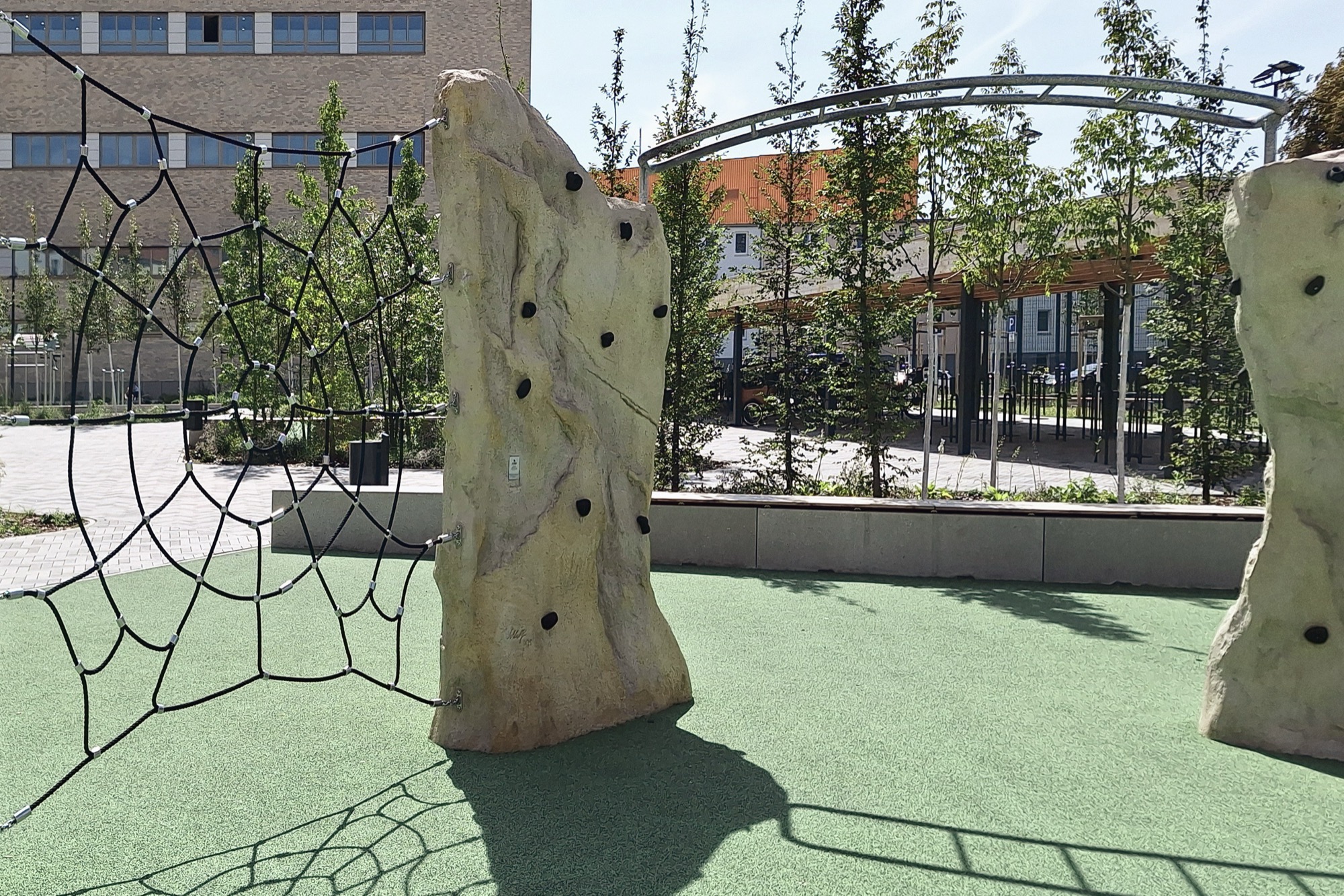
Informal movement is encouraged through bouldering, calisthenics, and streetball, embedded seamlessly into the open-space design. The school thus becomes part of a broader network of movement spaces within the district.
Sponge City Principle
Rainwater is fully retained and infiltrated on-site. Permeable surfaces, planted swales, and underground systems enable decentralized water management. A cistern supports irrigation, creating a largely closed water cycle.
Topography is used to create retention areas that store excess water during heavy rainfall, reducing flood risk. Open space becomes an active element of climate adaptation and urban water management.
Vegetation and Climate
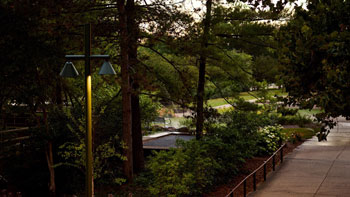
Vegetation ensures ecological continuity by preserving the existing biotope and adding climate-resilient plantings. Large trees reduce heat, while diverse planting improves soil, supports infiltration, and enhances biodiversity.
Vegetation islands structure space, improve microclimate, and integrate water management—demonstrating multifunctional design.
Materiality and Sustainability
Durable, reduced material choices and permeable construction minimize sealing and support the water concept. A restrained design language creates a robust and adaptable environment suited to everyday school use.
Inclusion and Social Resilience
All areas are barrier-free and inclusively designed, integrating paralympic standards from the outset. Diverse spatial qualities foster interaction, participation, and social resilience, making the open space a place for learning, movement, and exchange.
Linking School and City
The open spaces extend into the urban context, integrating the site into the neighborhood. Green structures improve adjacent areas, particularly along Prager Straße, where they act as buffers, ecological connectors, and social spaces.
Conclusion
The Johanna Moosdorf School demonstrates how school open spaces can function as multifunctional infrastructure. By combining sponge city principles, biodiversity, and social design, it creates a resilient and future-proof environment.
75132


LILA 2026 Sponsor