KALDERIMI RESTORATION, PIGI, MANI
etsi.design
2026 Landscape and Architecture / 2026 Public Projects / Greece / Built in 2025 /

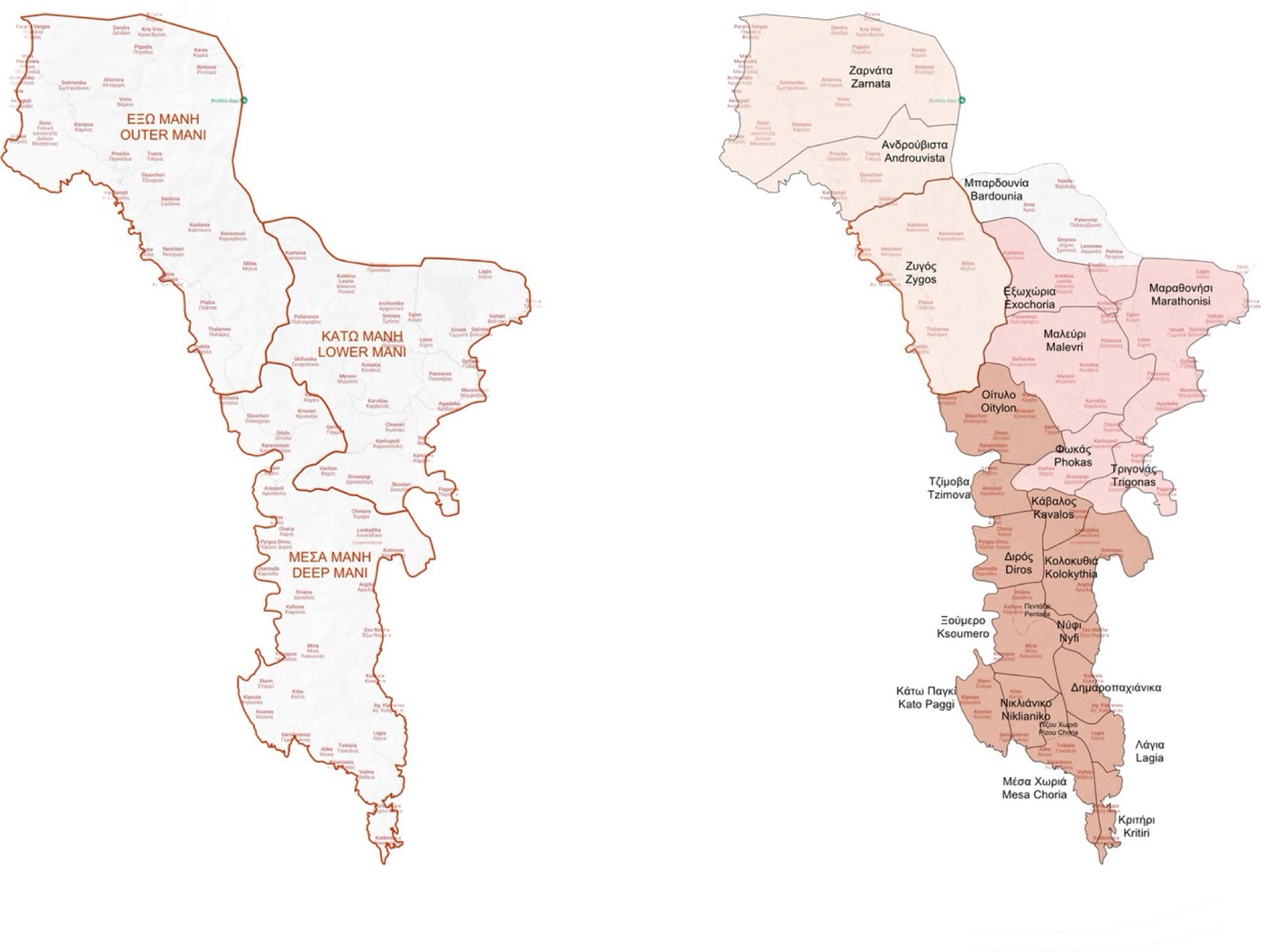
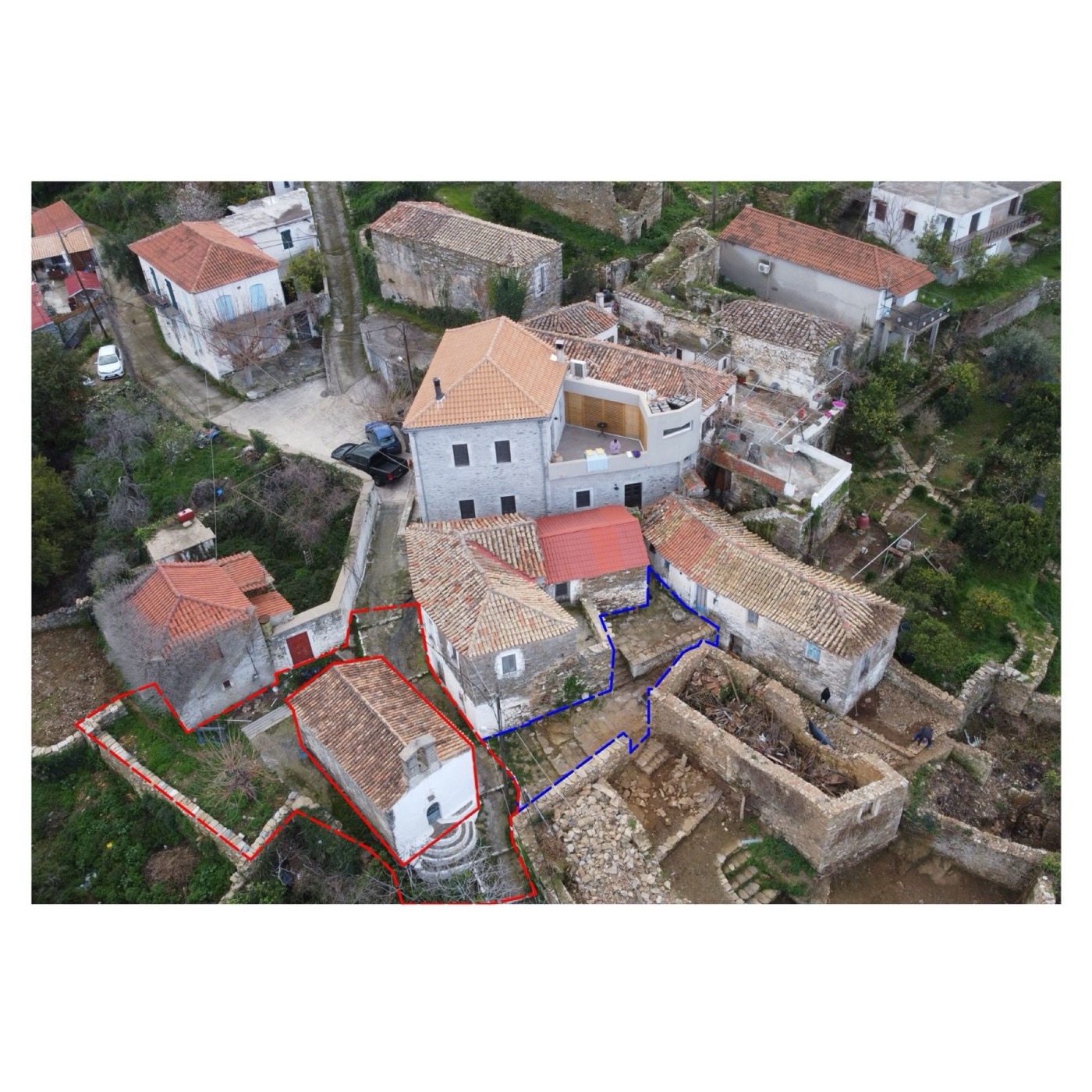
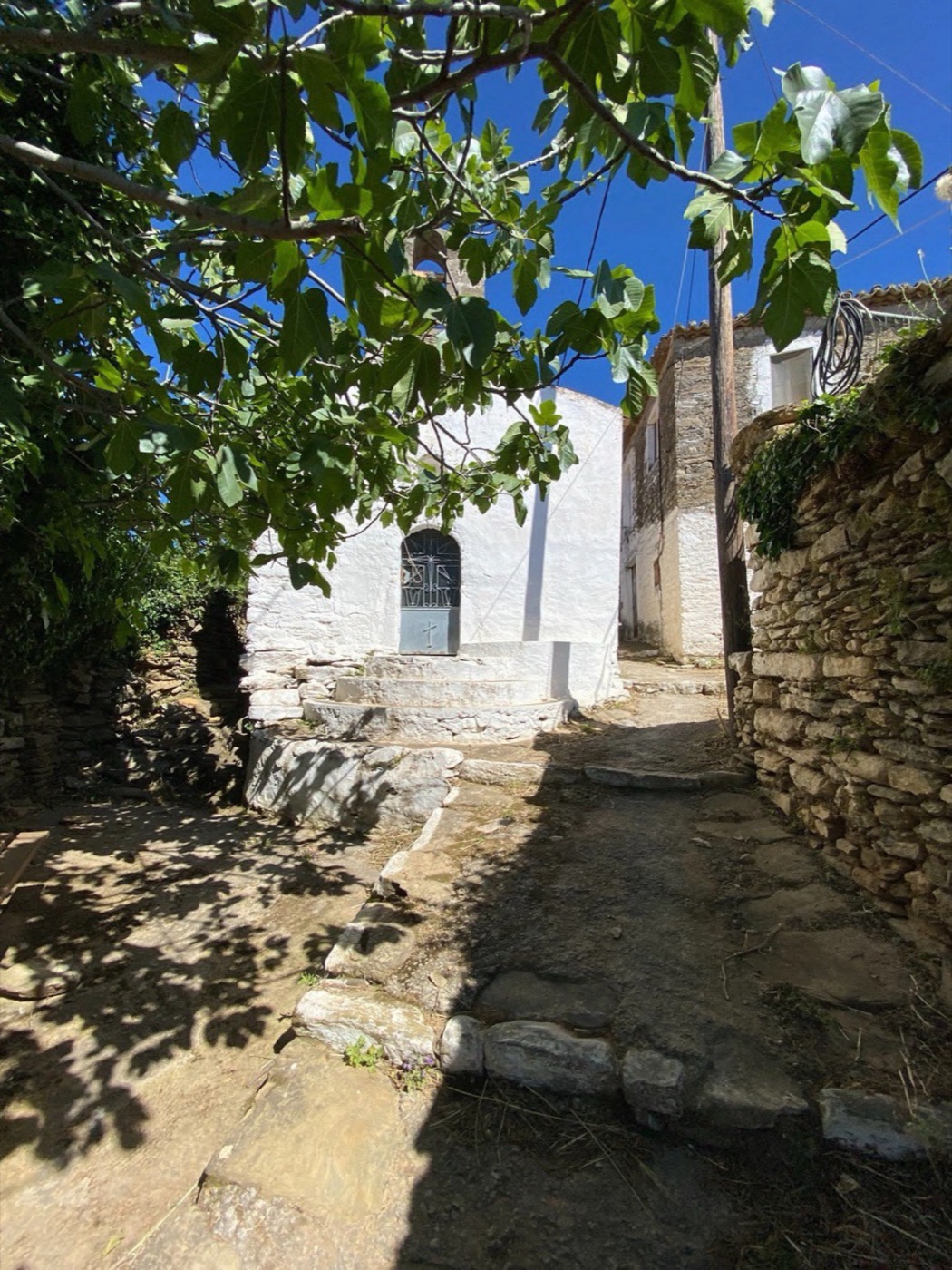
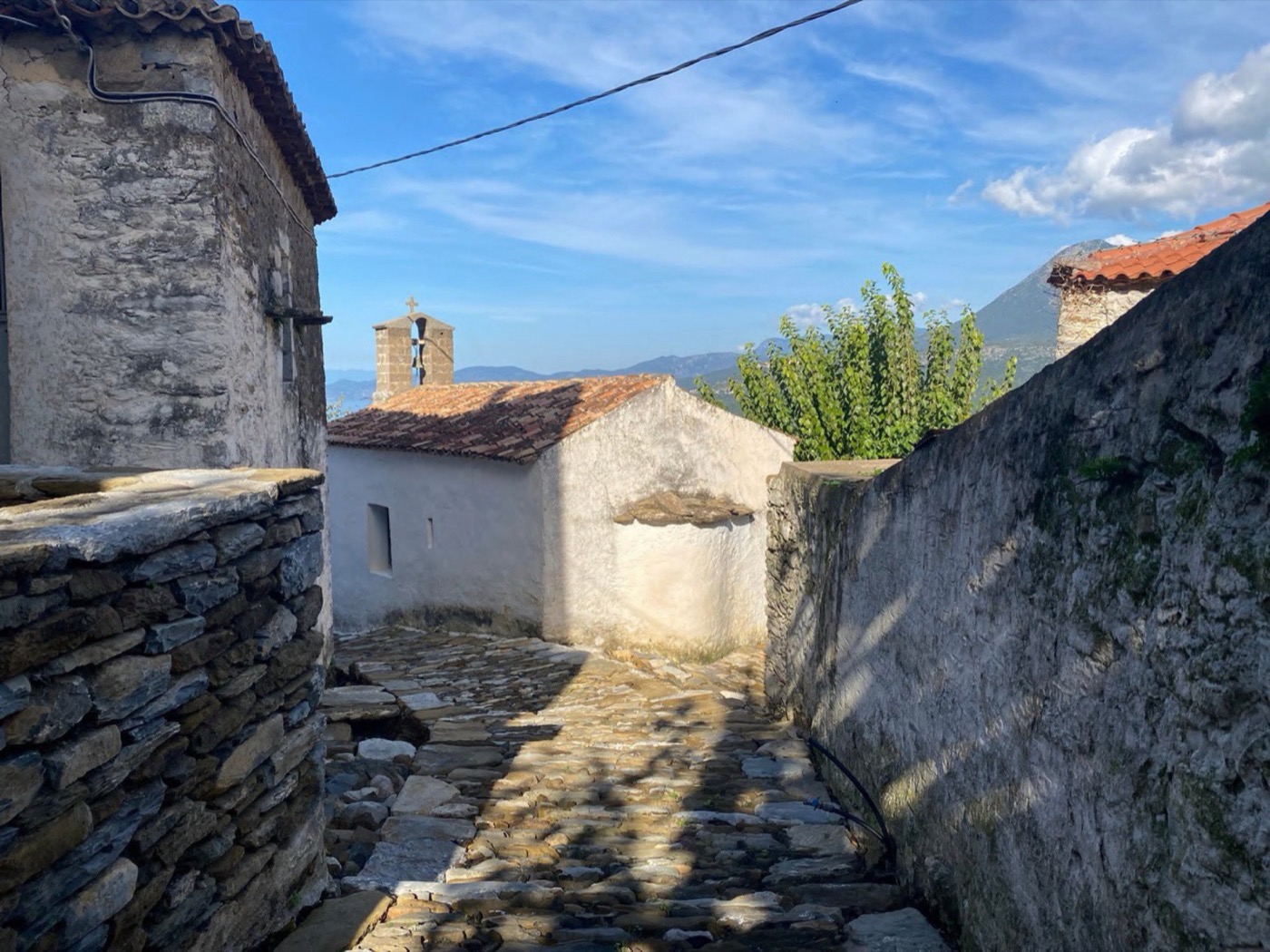
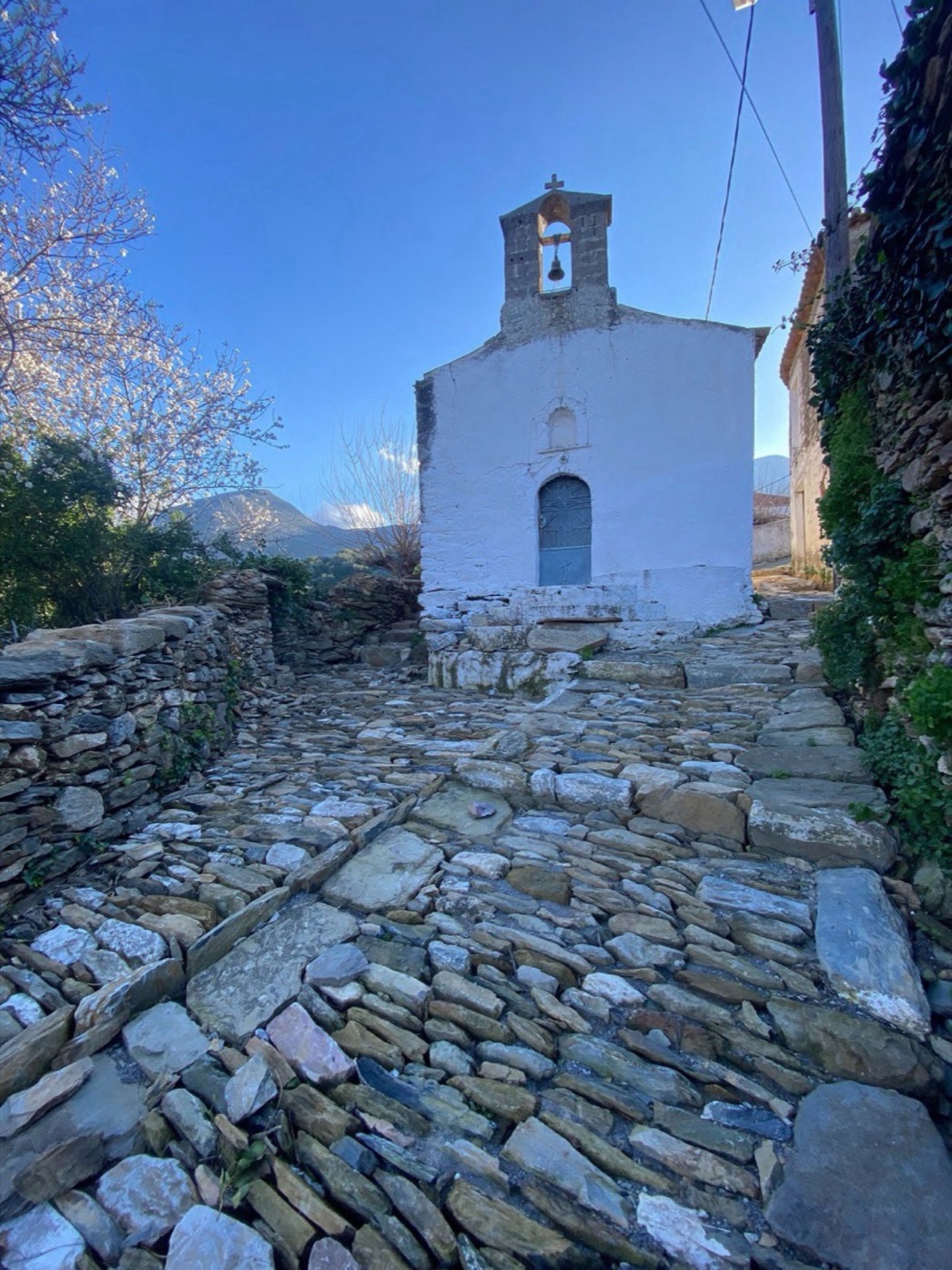
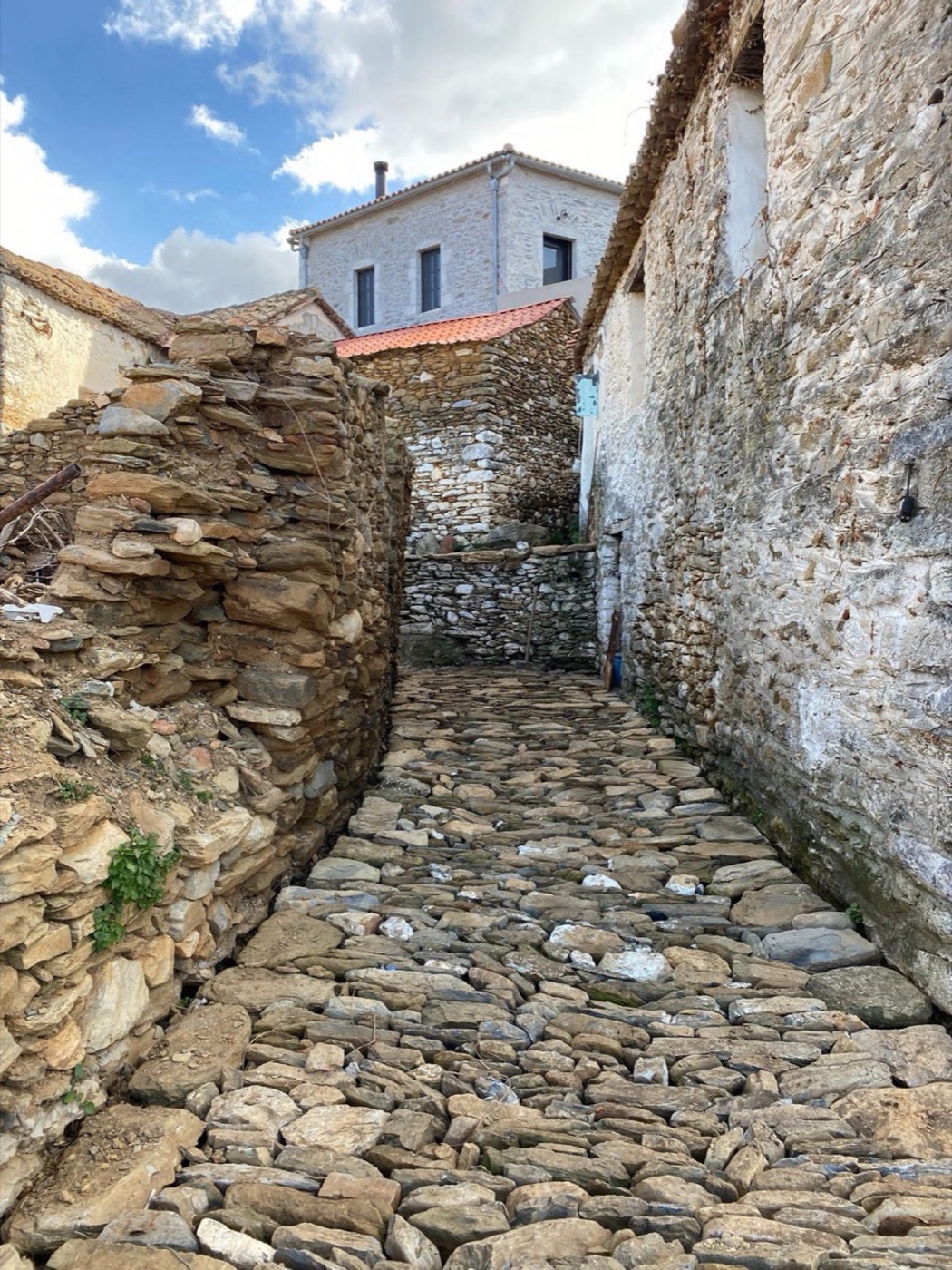
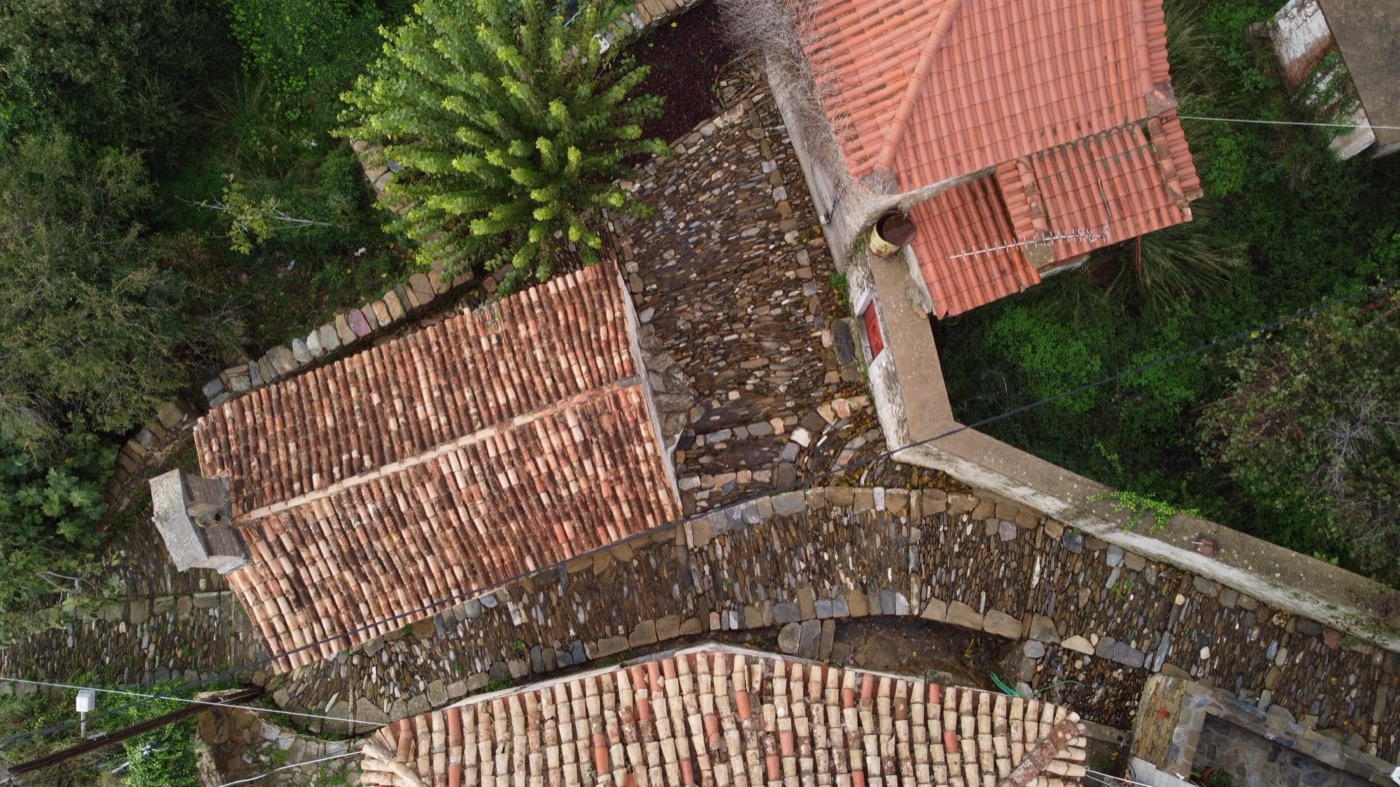
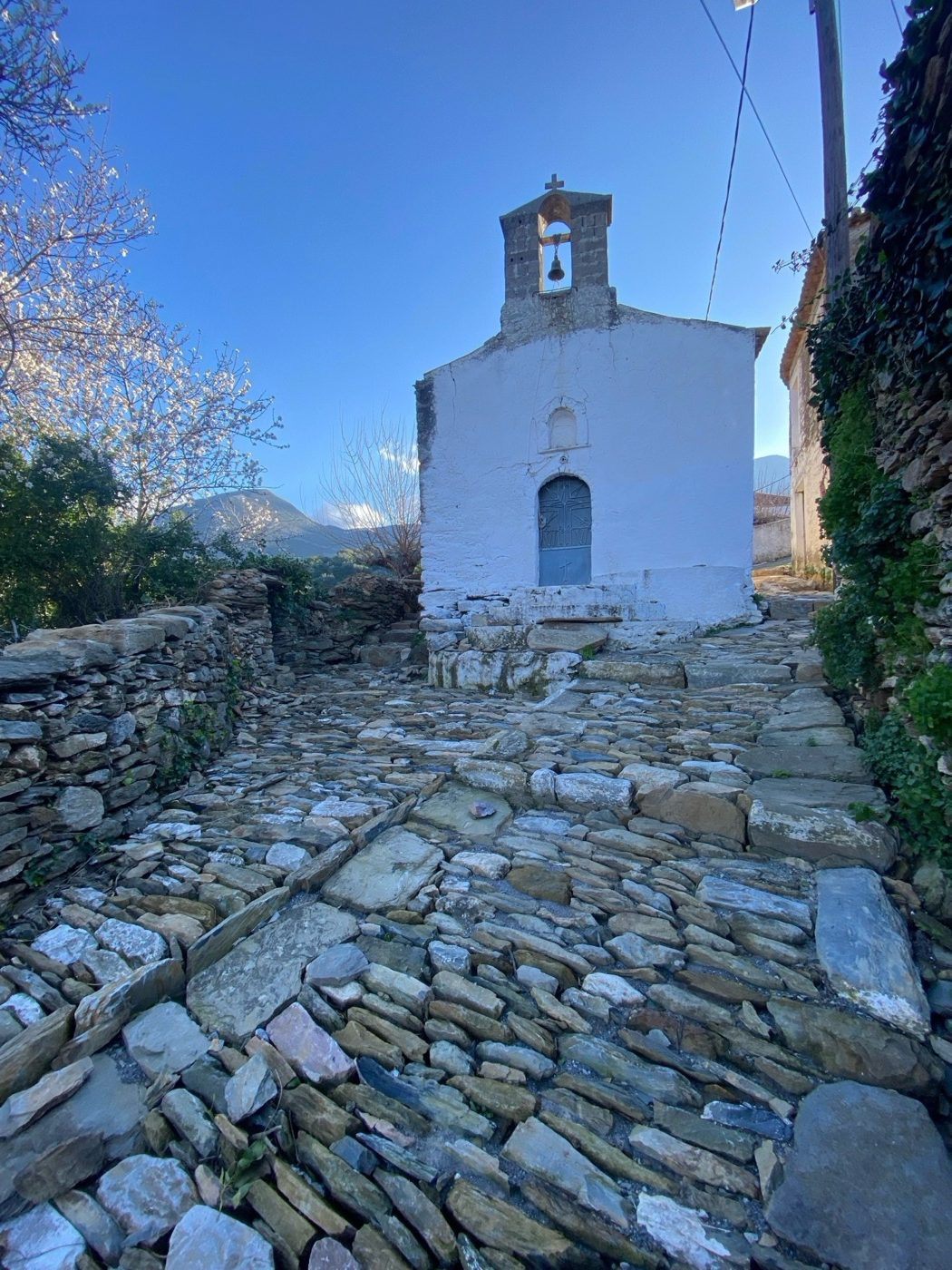
The project concerns the restoration of a segment of kalderimi, a traditional dry-built stone path, in the settlement of Pigi, within the historic cluster of villages of the Zygos region in Mani.
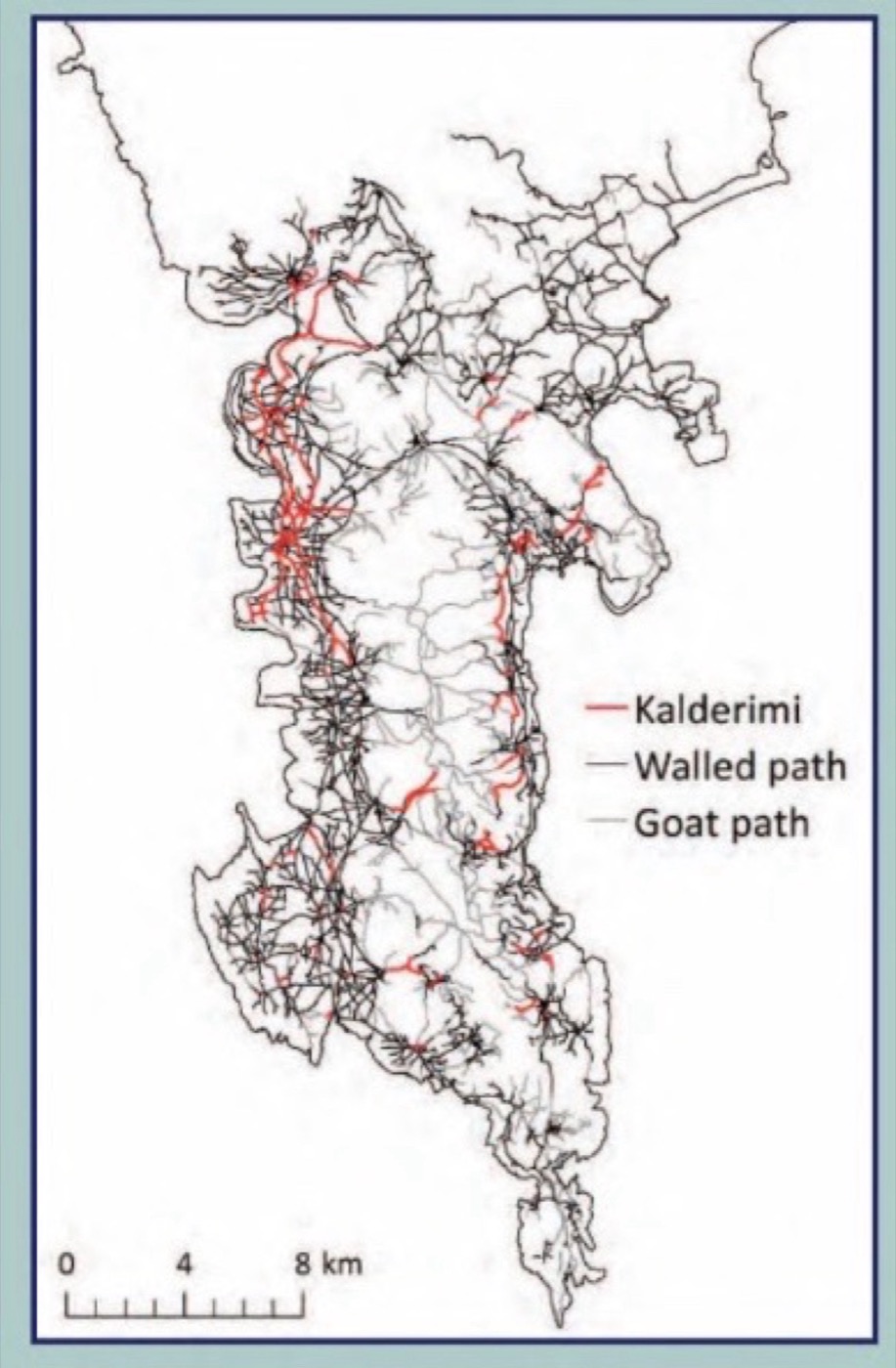
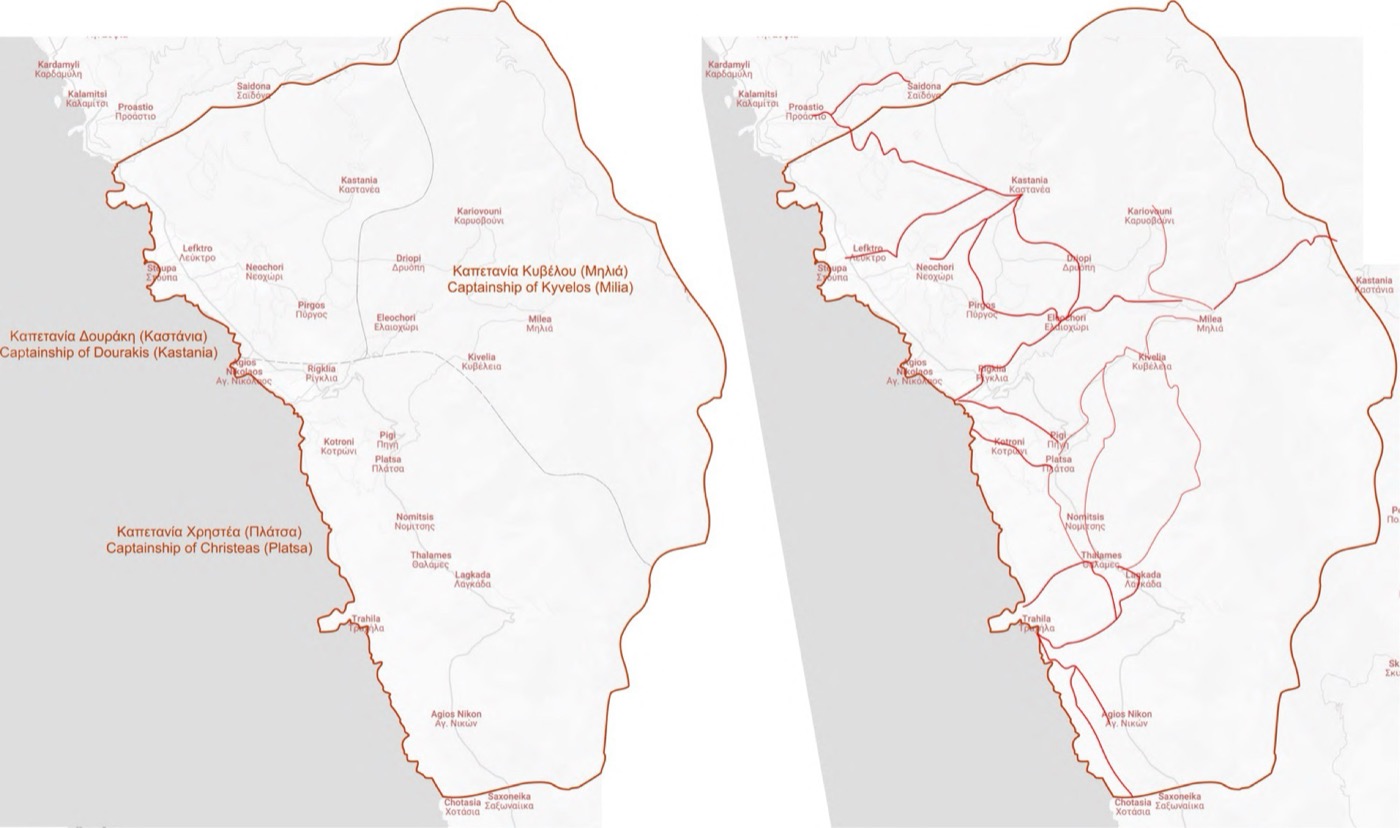
Between 2014 and 2016, the pre-modern path network of Mani was systematically mapped through fieldwork and remote sensing. This network, composed of stone-paved routes, walled footpaths, and informal trails, once formed the primary infrastructure of movement across the landscape. Long before the arrival of roads, these paths connected settlements, agricultural land, water sources, chapels, and the sea. They structured daily life.
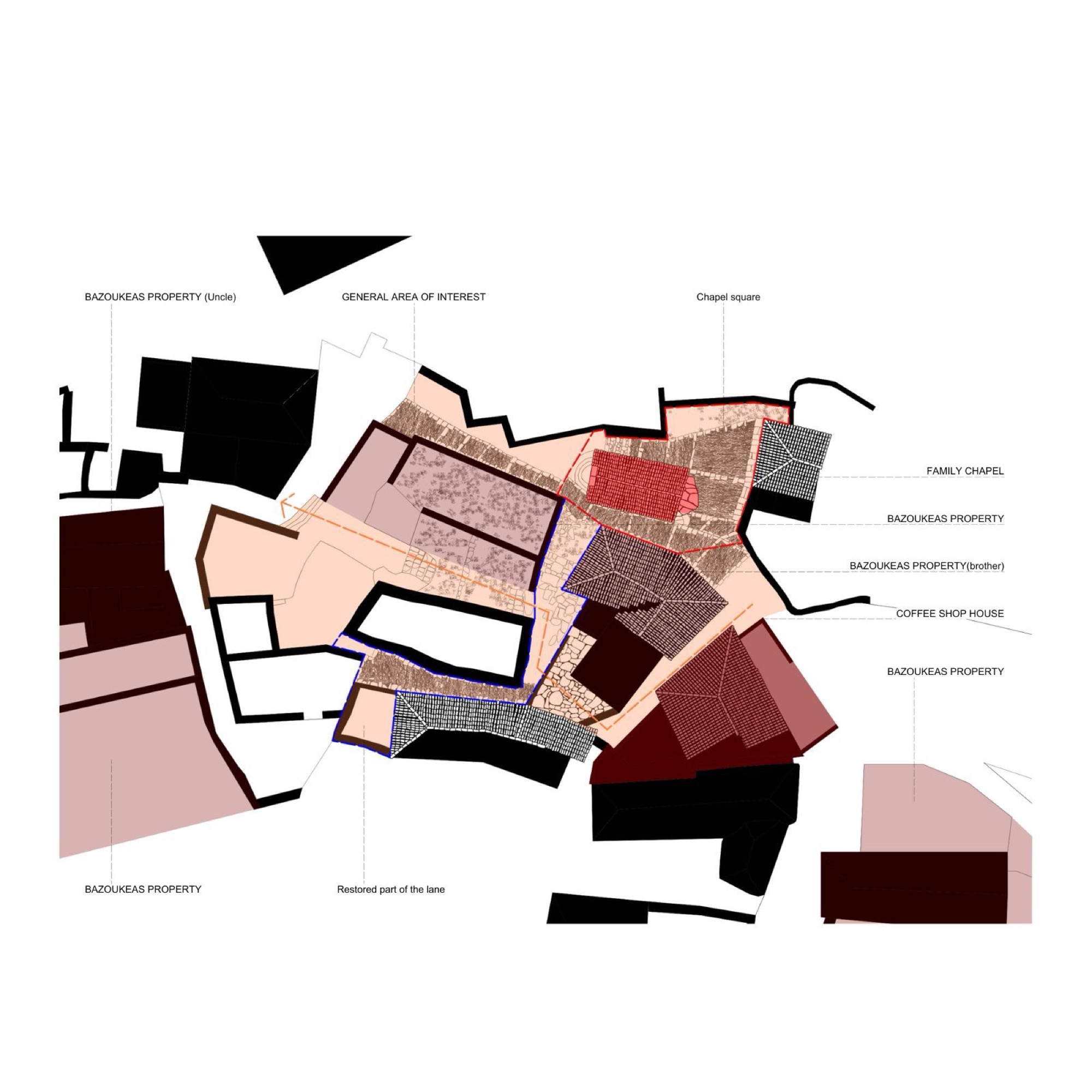
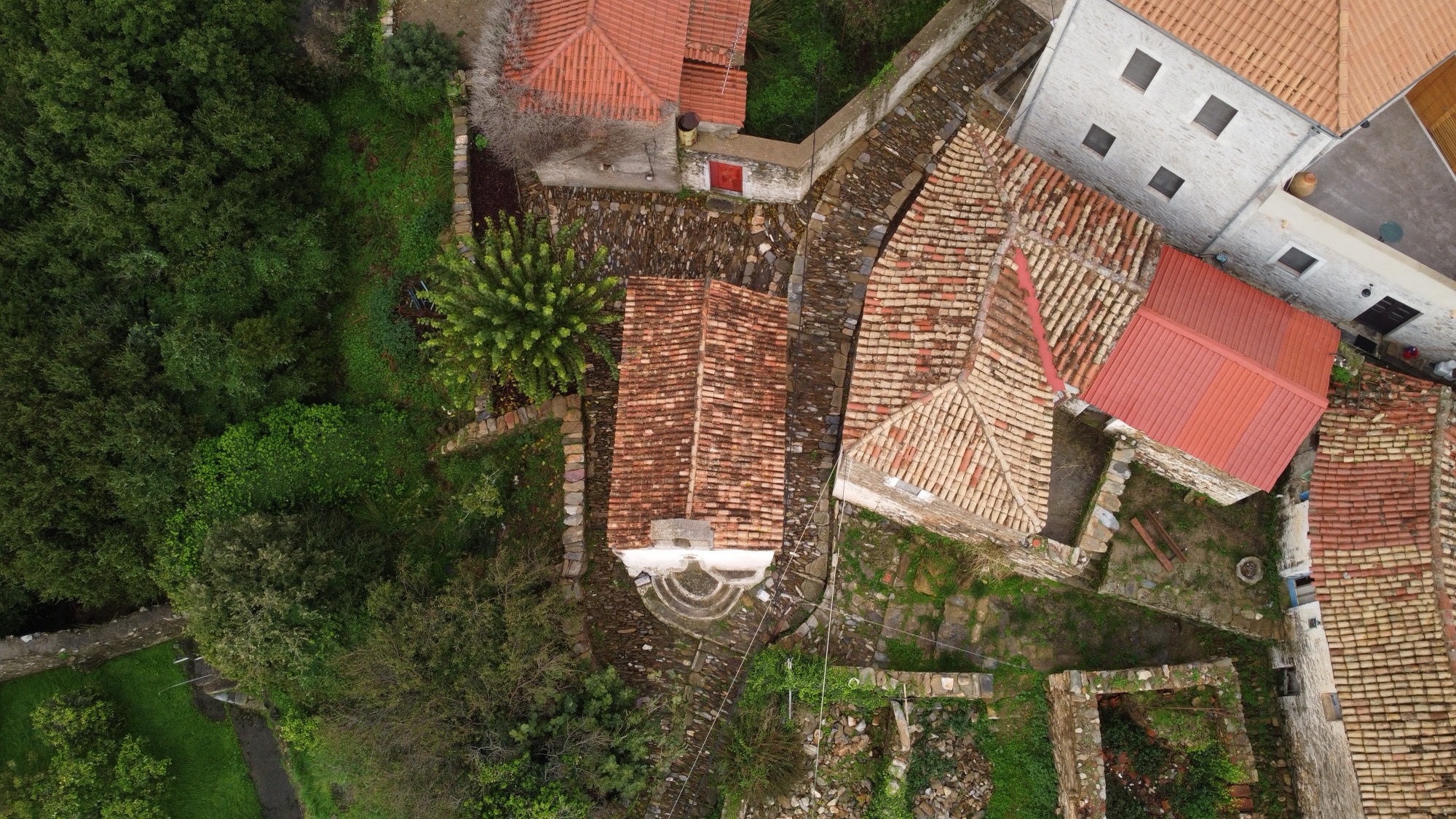
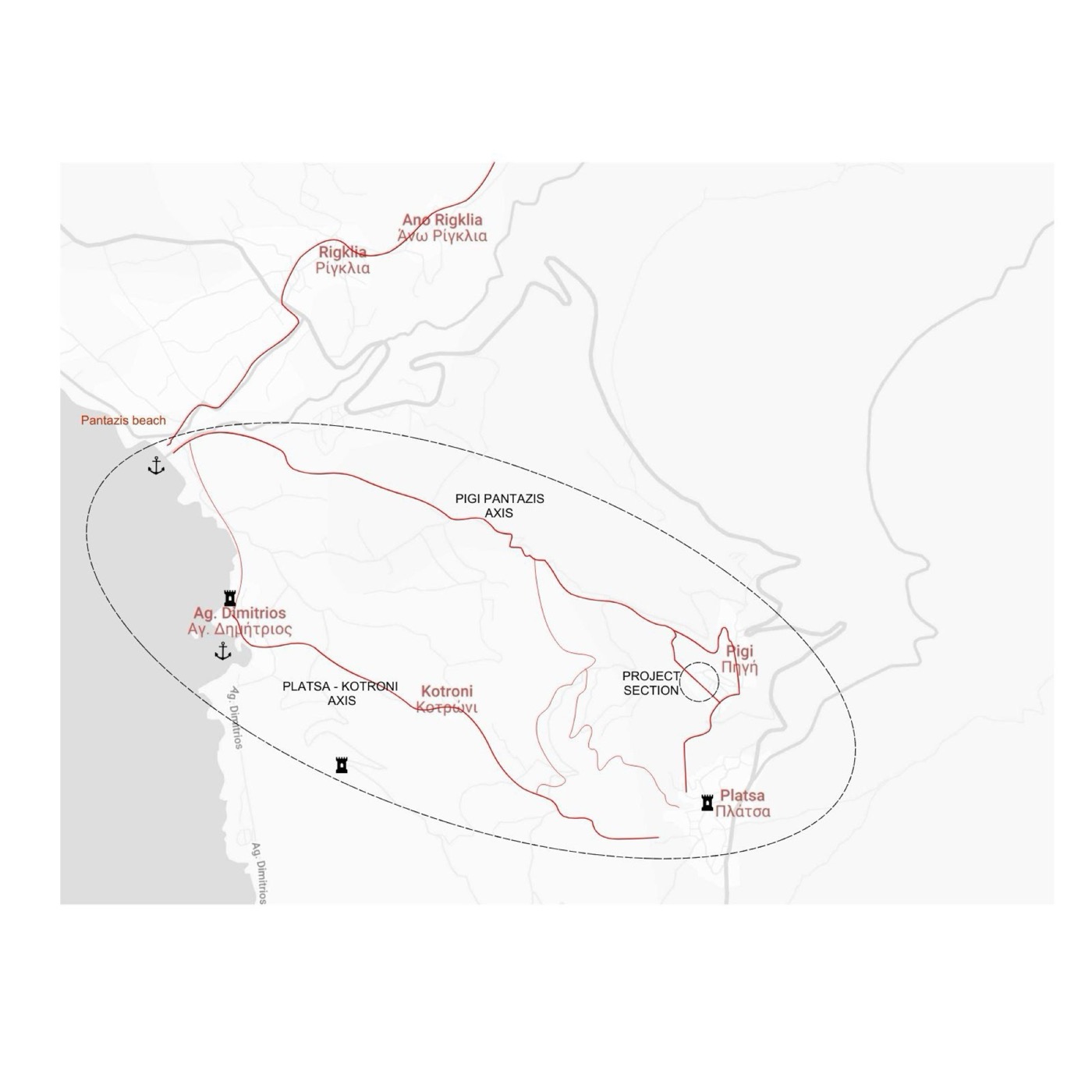
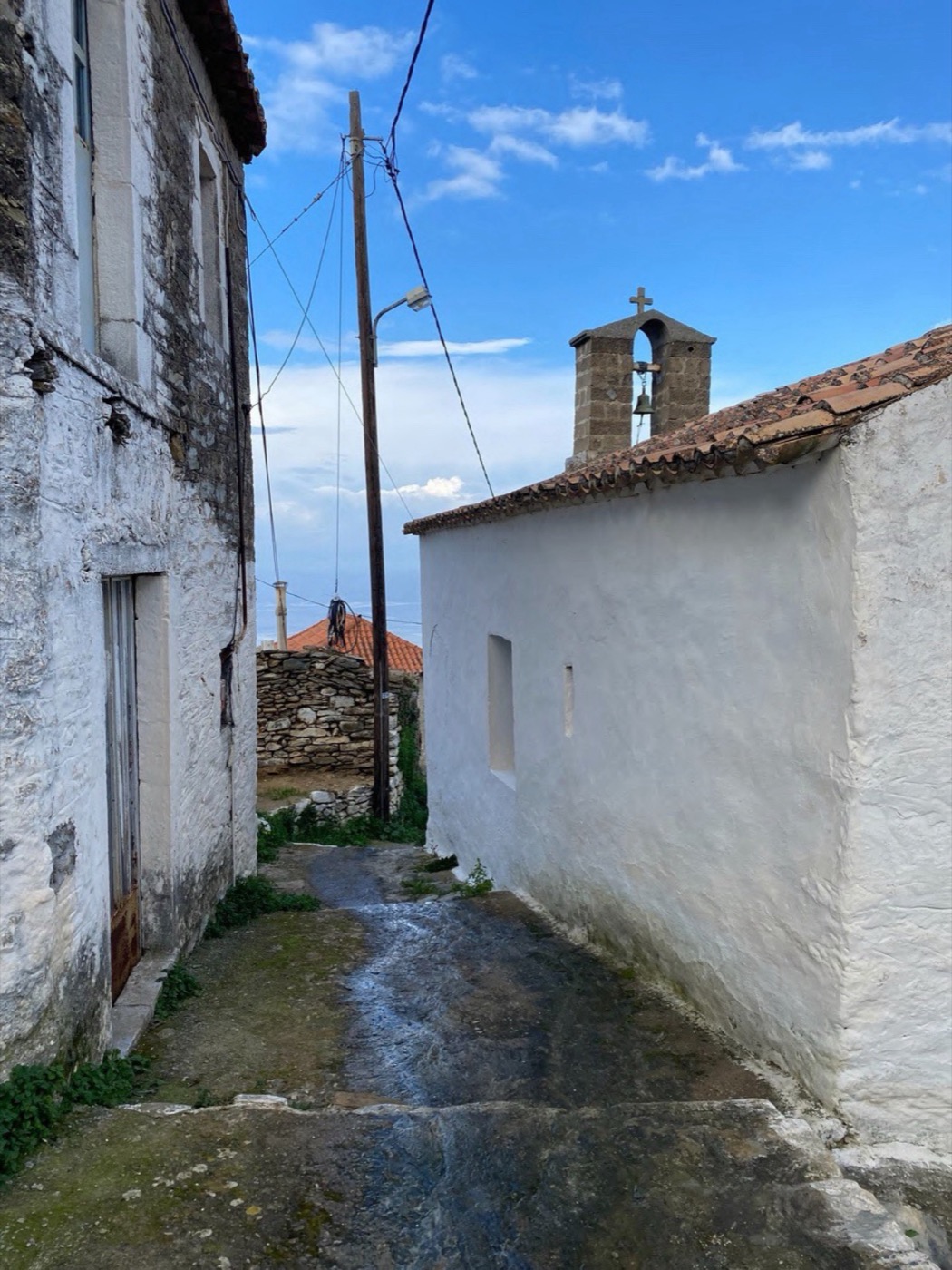
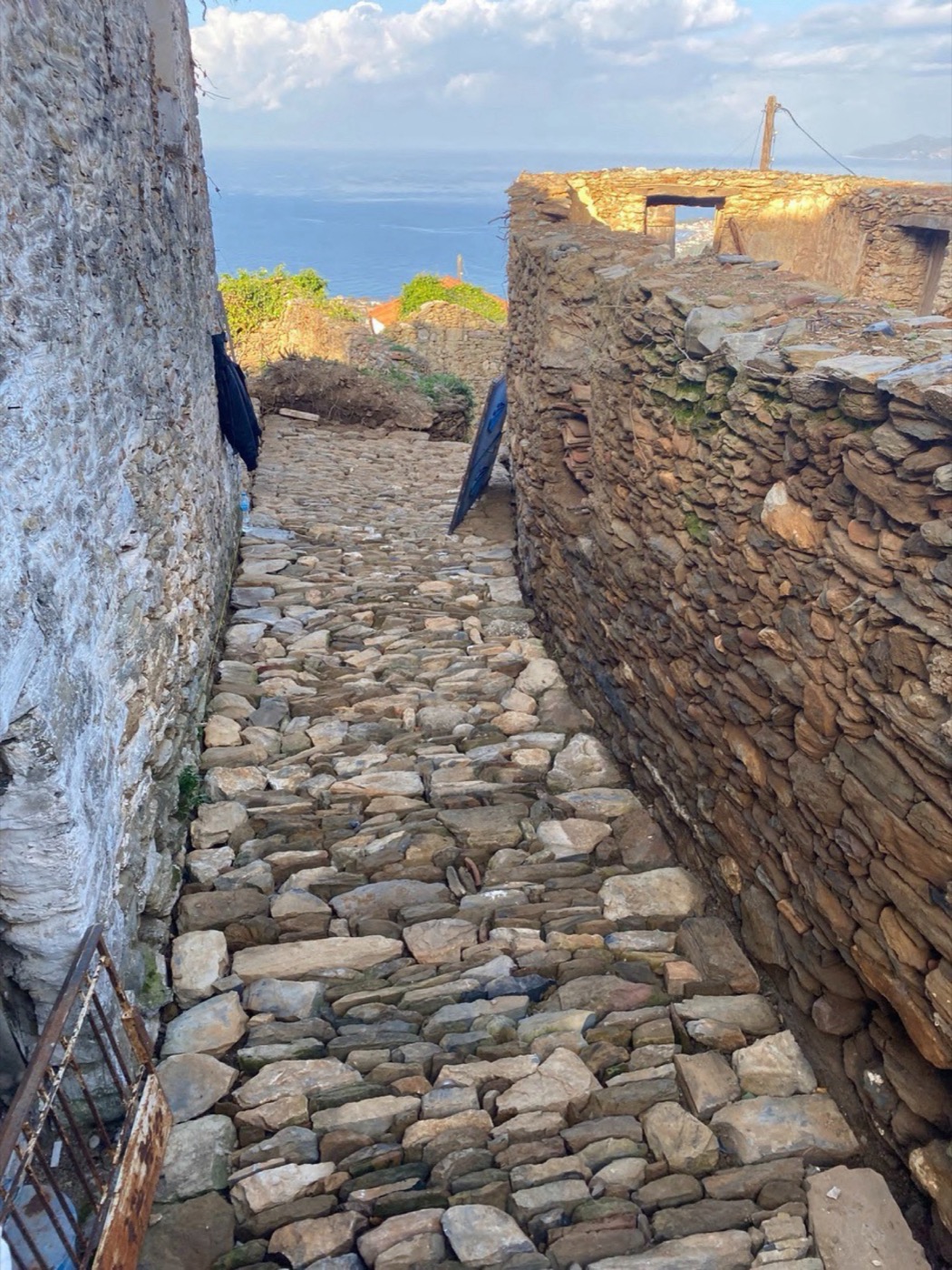
The restored segment belongs to this wider system. It lies within the Basoukeika cluster, a dense fabric of houses, courtyards, and narrow passages, and leads to the small 18th-century chapel of the Transfiguration, once the social and spiritual centre of the neighbourhood. It also formed part of a longer route linking the coast at Agios Dimitrios with the inland village of Platsa, involving a daily ascent of approximately 370 metres. Oral histories recall children walking this route to school.
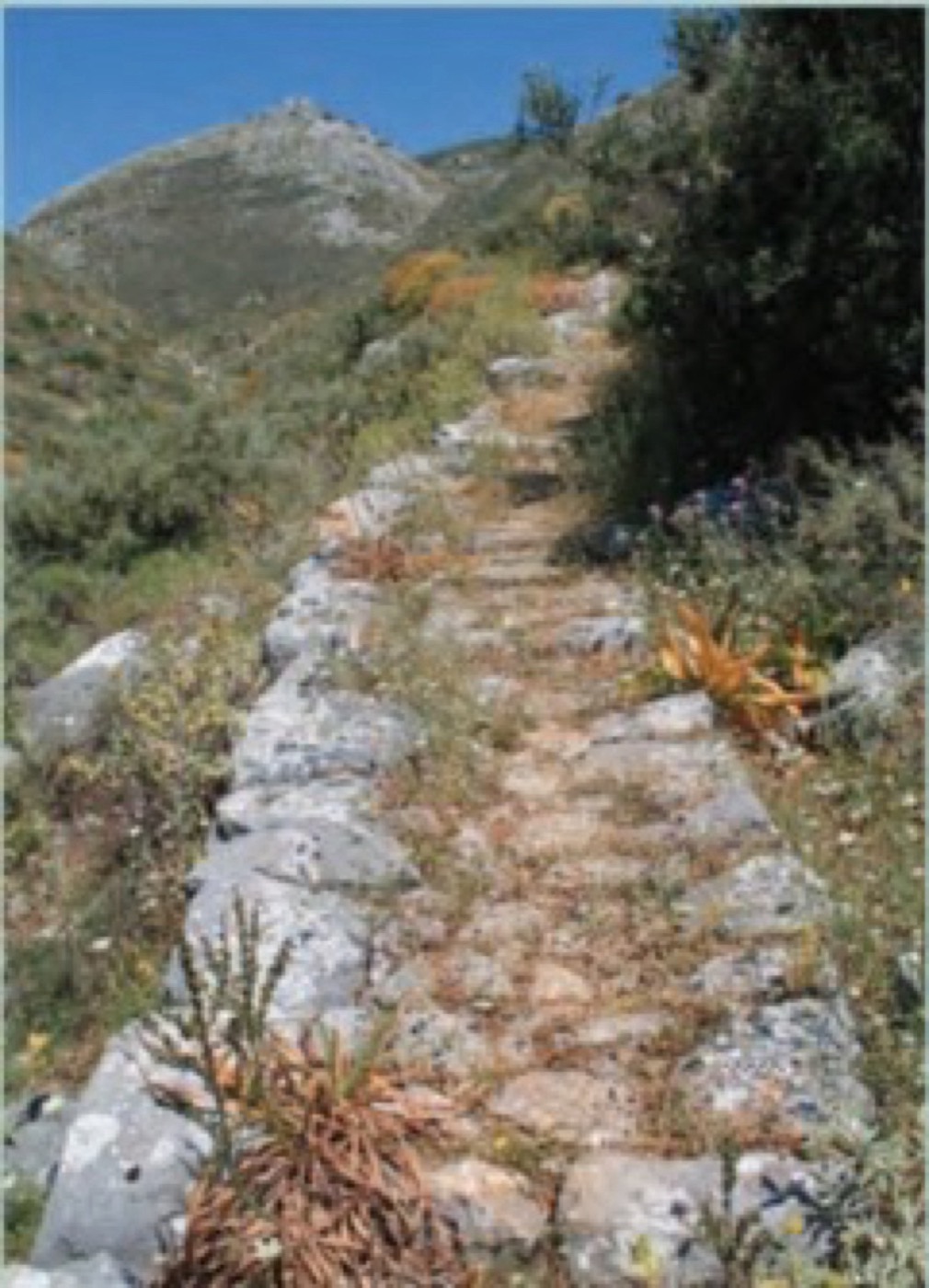
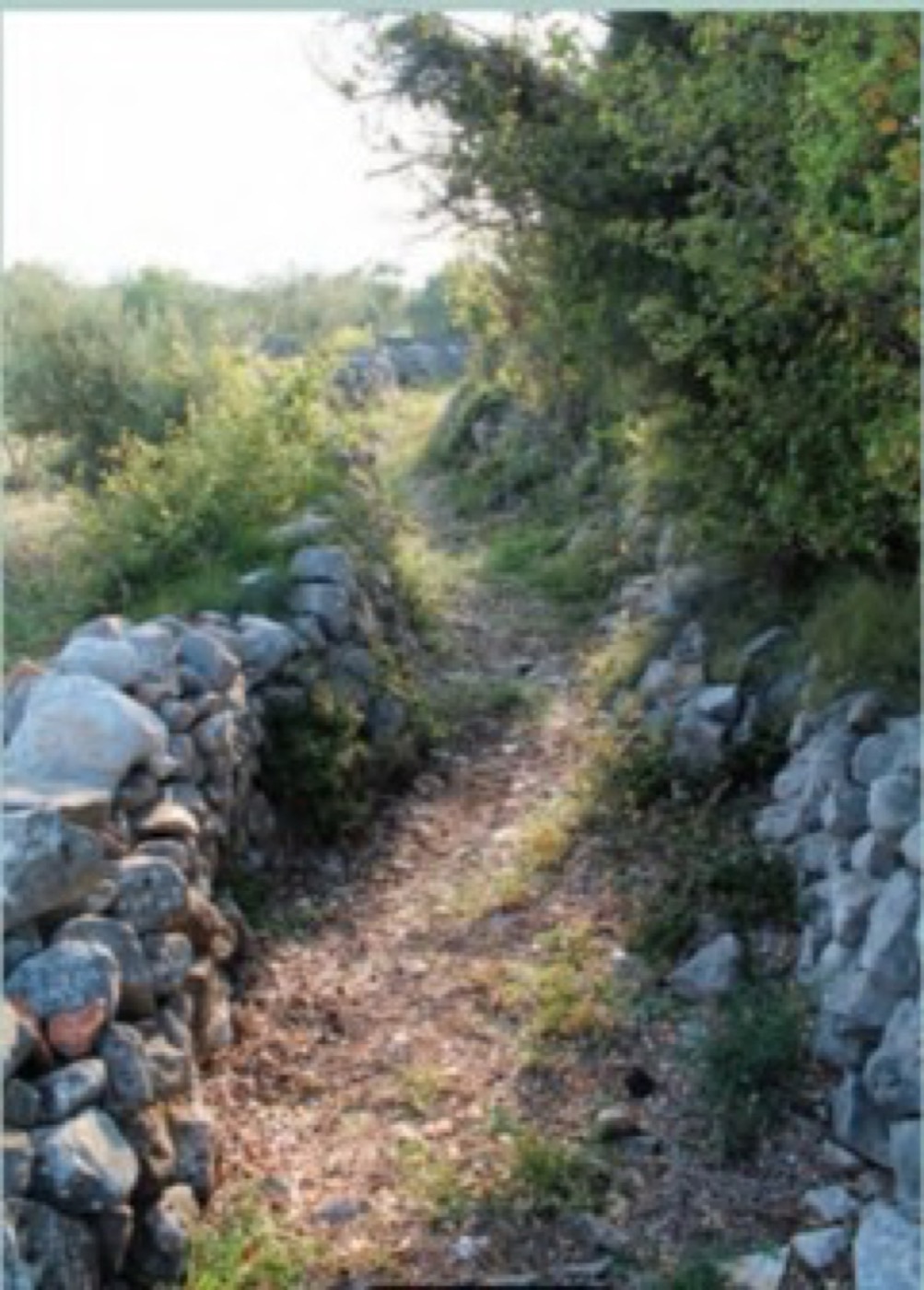
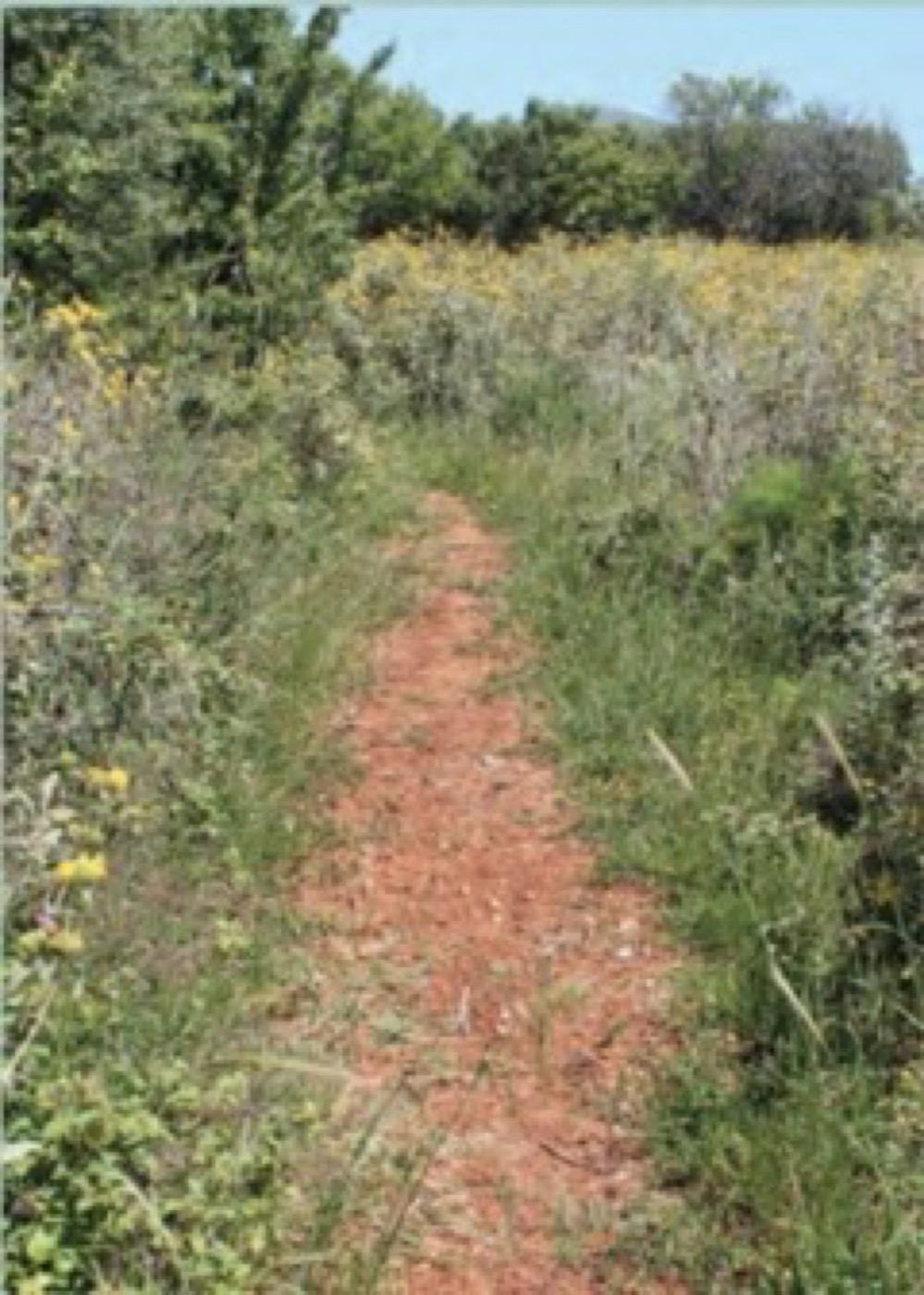
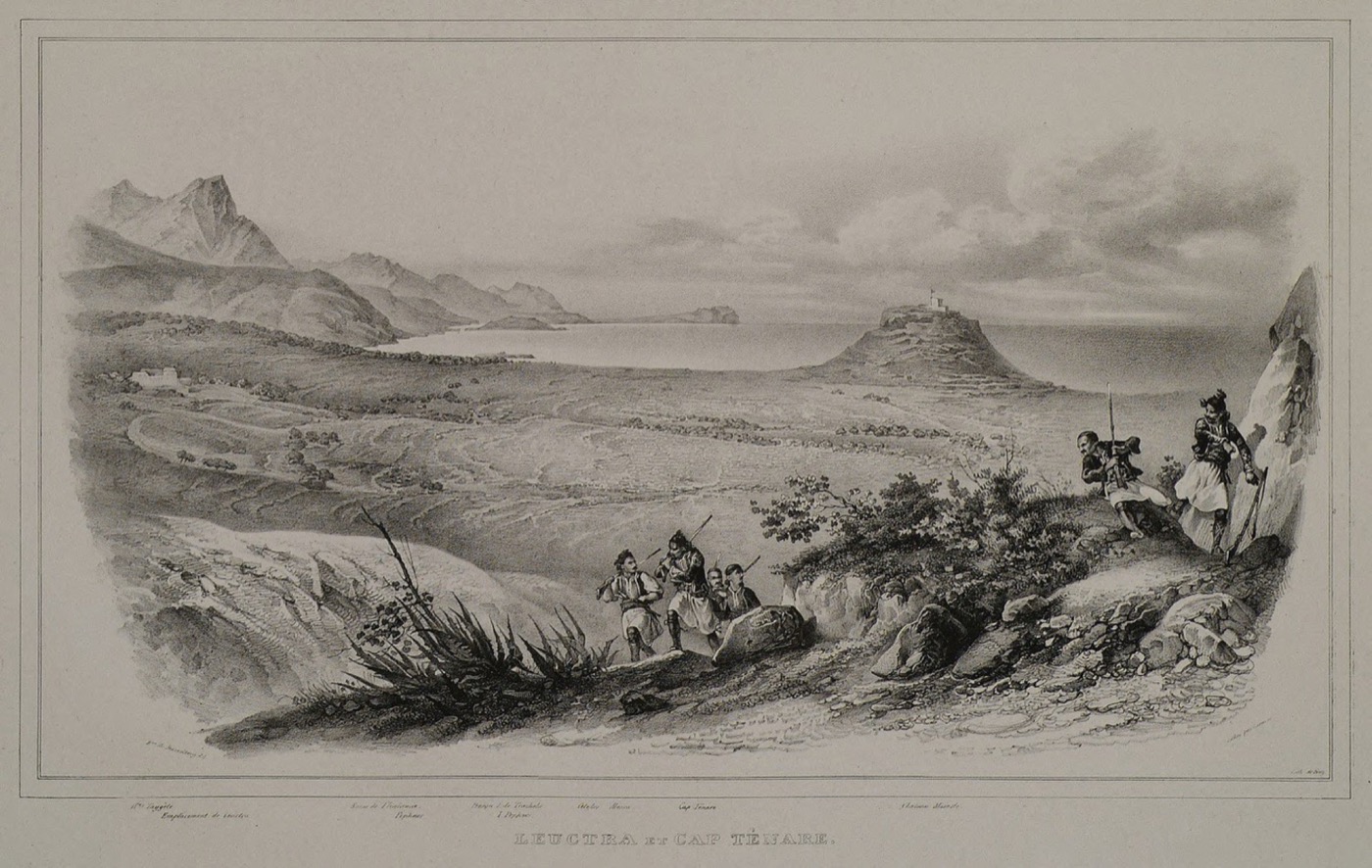
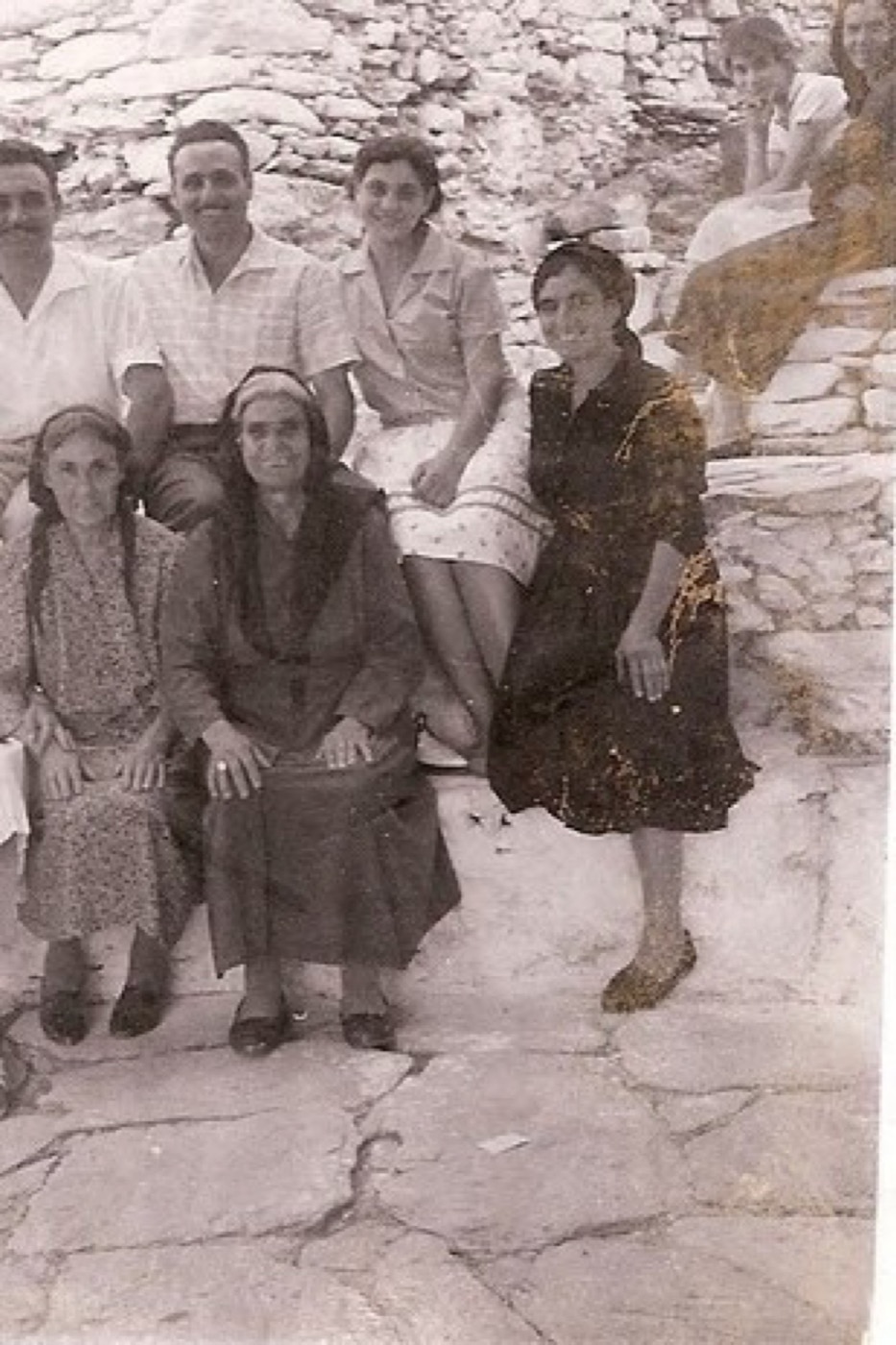
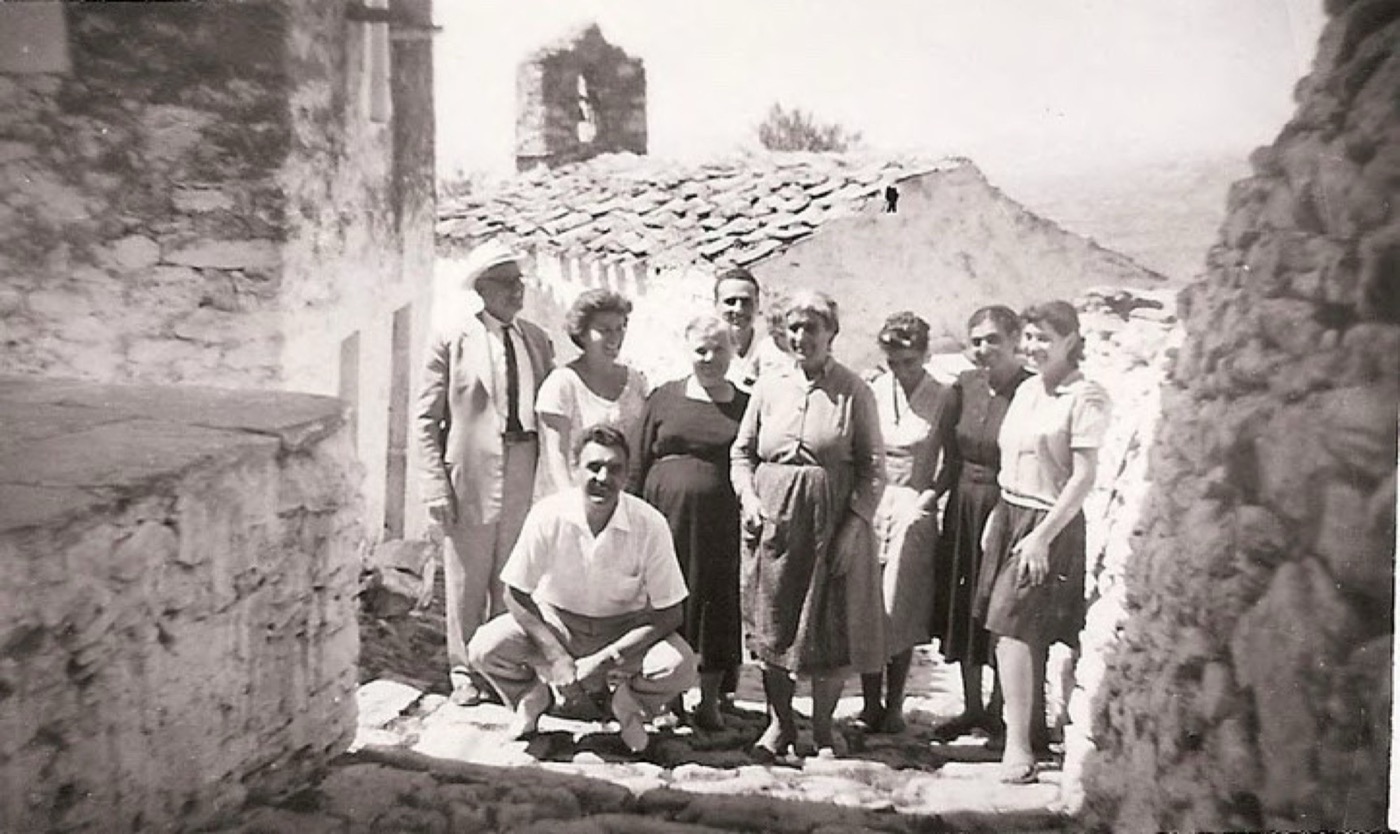
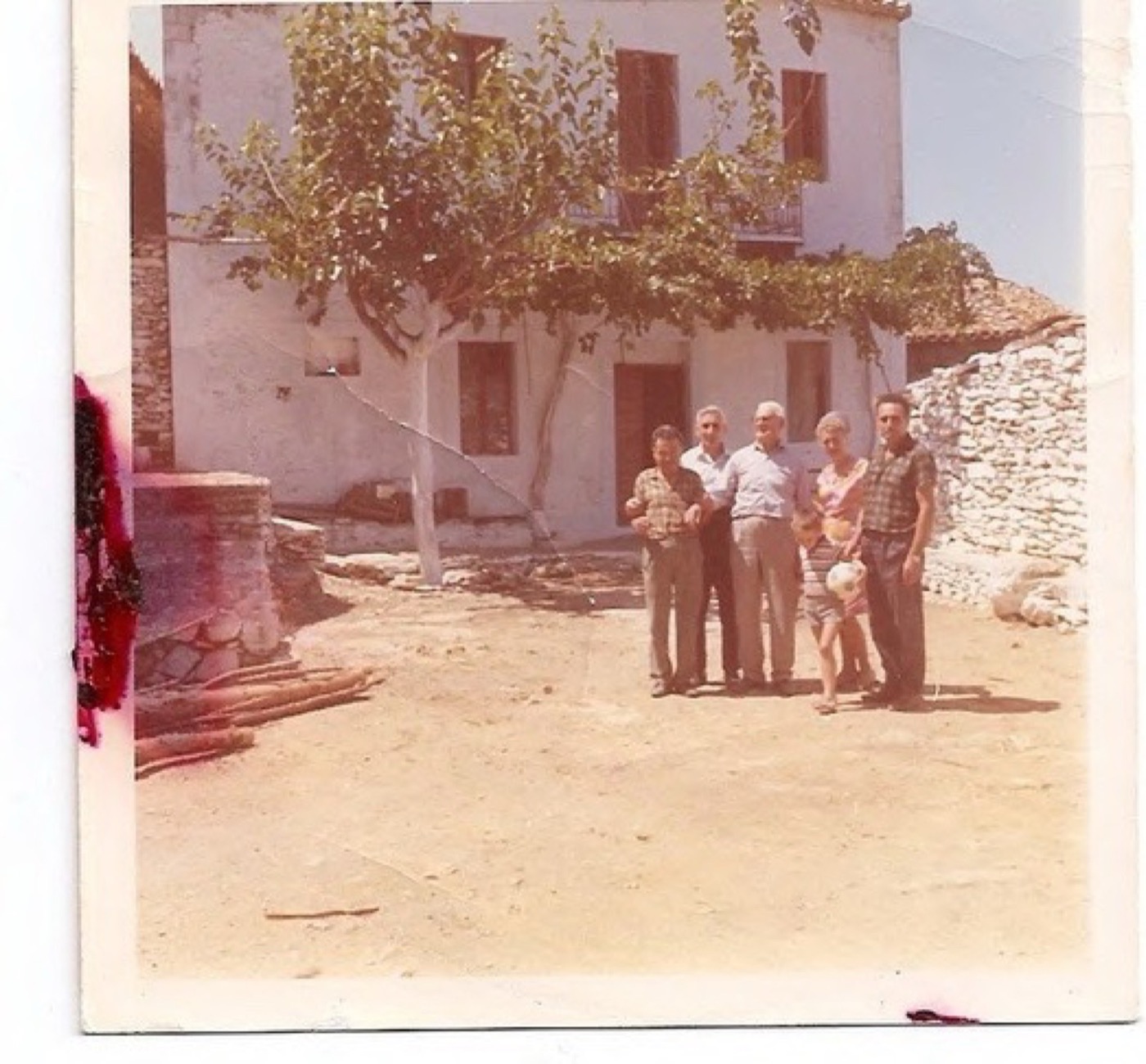
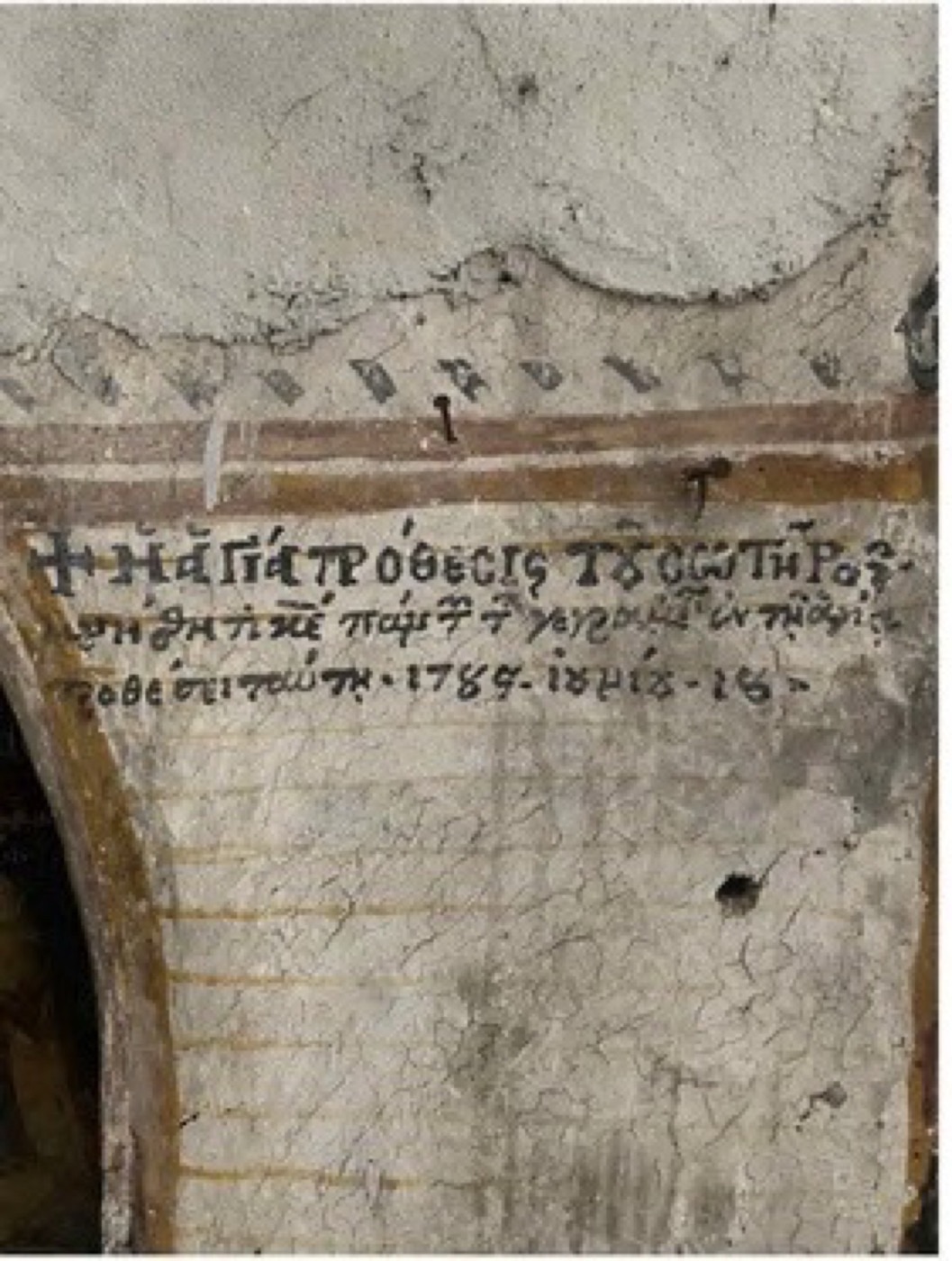
This was not heritage in the abstract.
It was infrastructure.
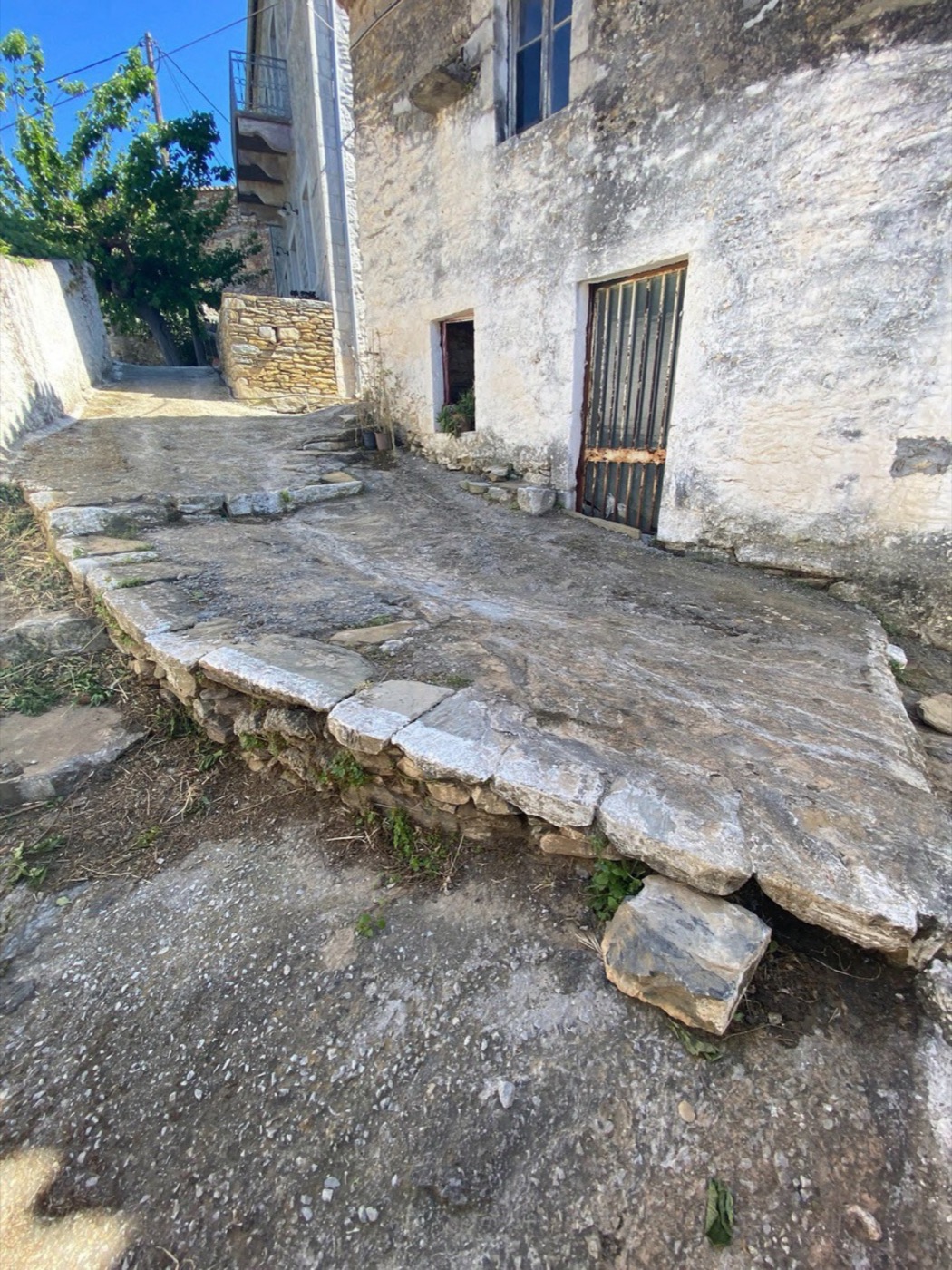
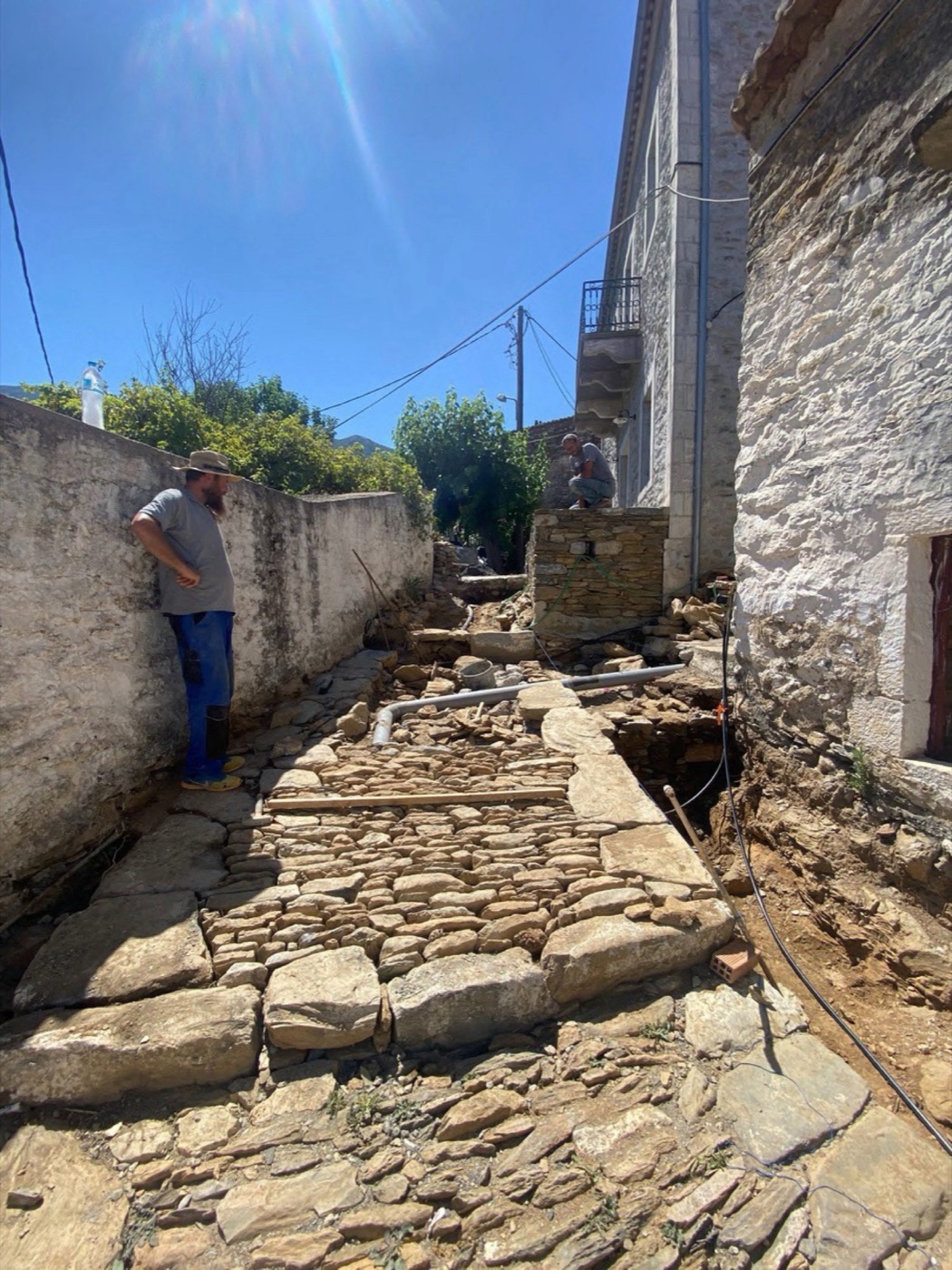
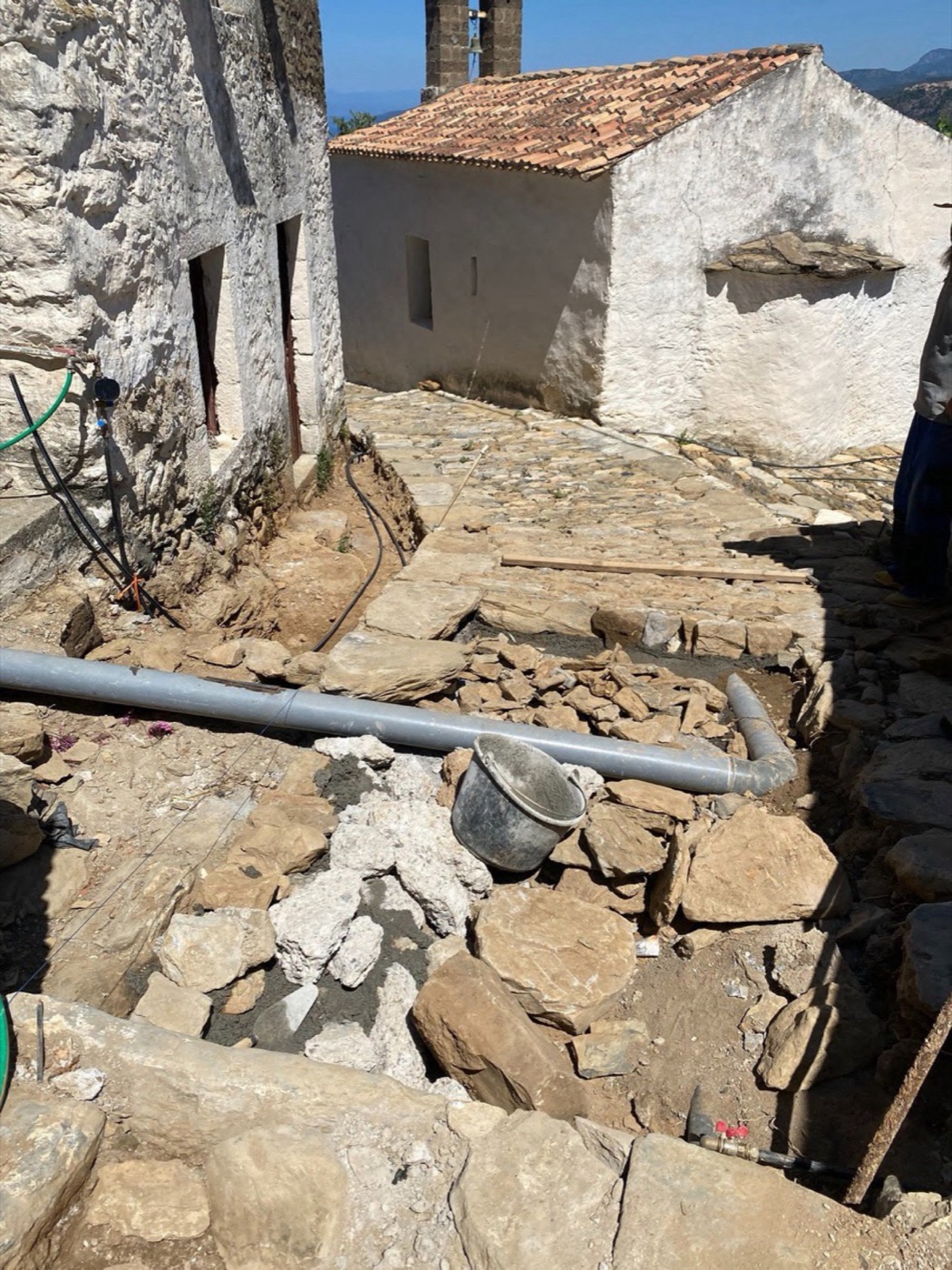
In the 1970s, with the arrival of motor roads, many of these paths were either abandoned or covered with concrete. This particular segment was buried under a hard, impermeable surface, slippery, deteriorating, and disconnected from its original logic.
The project began by removing this layer.
What emerged was not simply an older surface, but a different relationship to the ground.
Buildings remember through matter.
Roads remember through use.
Unlike buildings, which can fall into ruin and remain as artefacts, paths tend to disappear when they are no longer walked. Their survival depends not only on material continuity, but on repetition, on bodies moving through them over time.
The kalderimi is therefore not simply a remnant of the past, but the persistence of a spatial agreement between terrain, labour, and community.
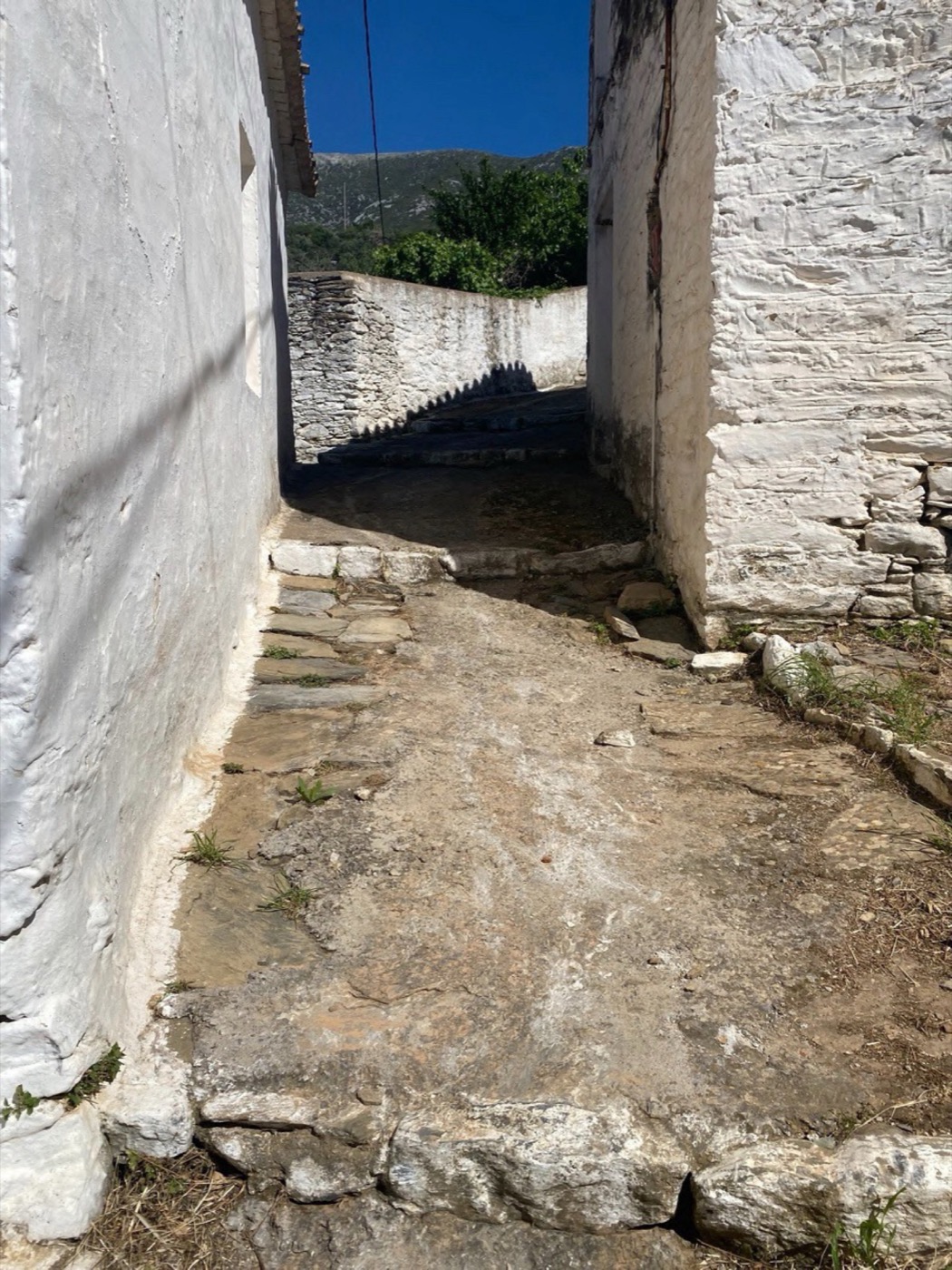
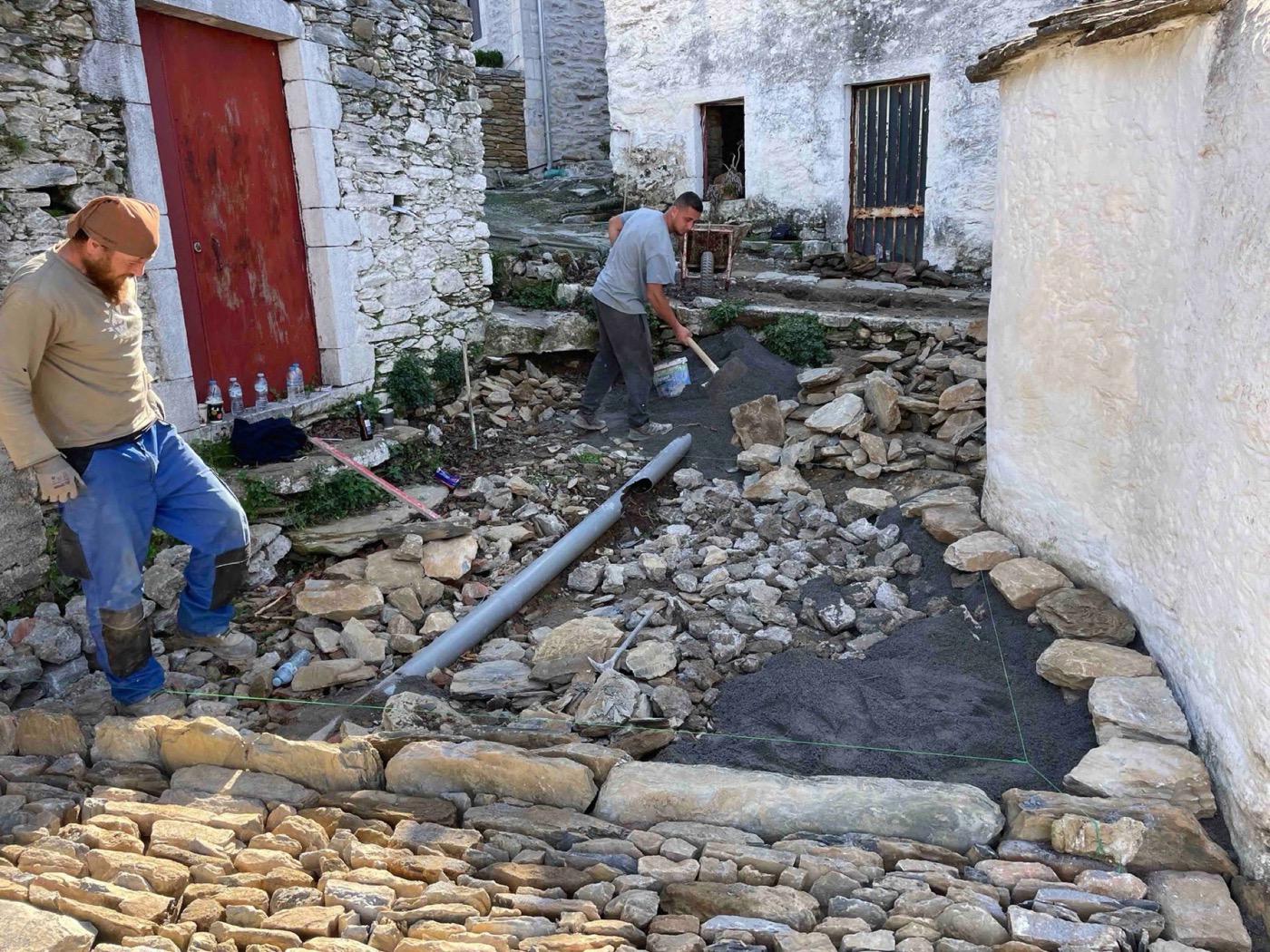
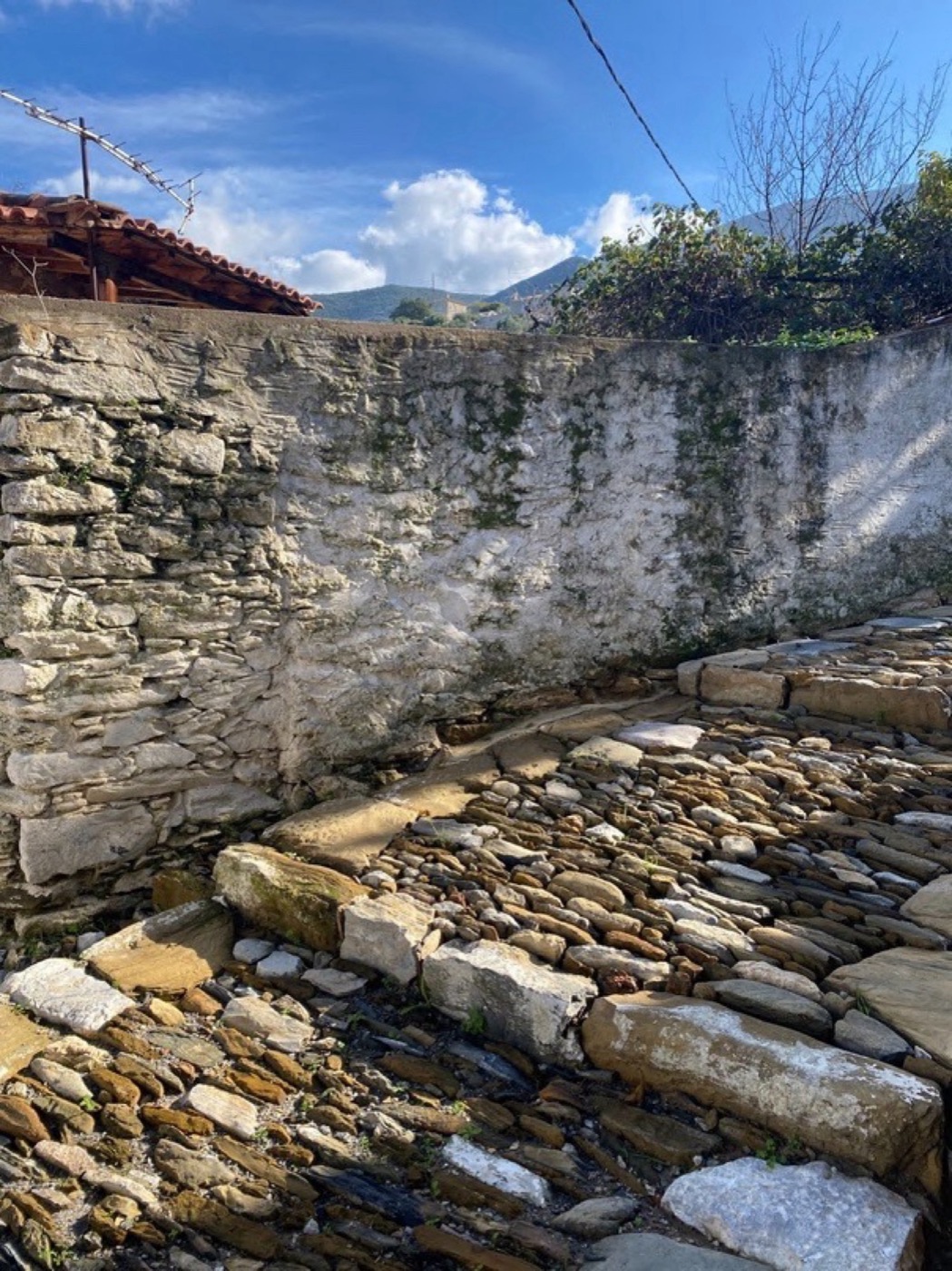
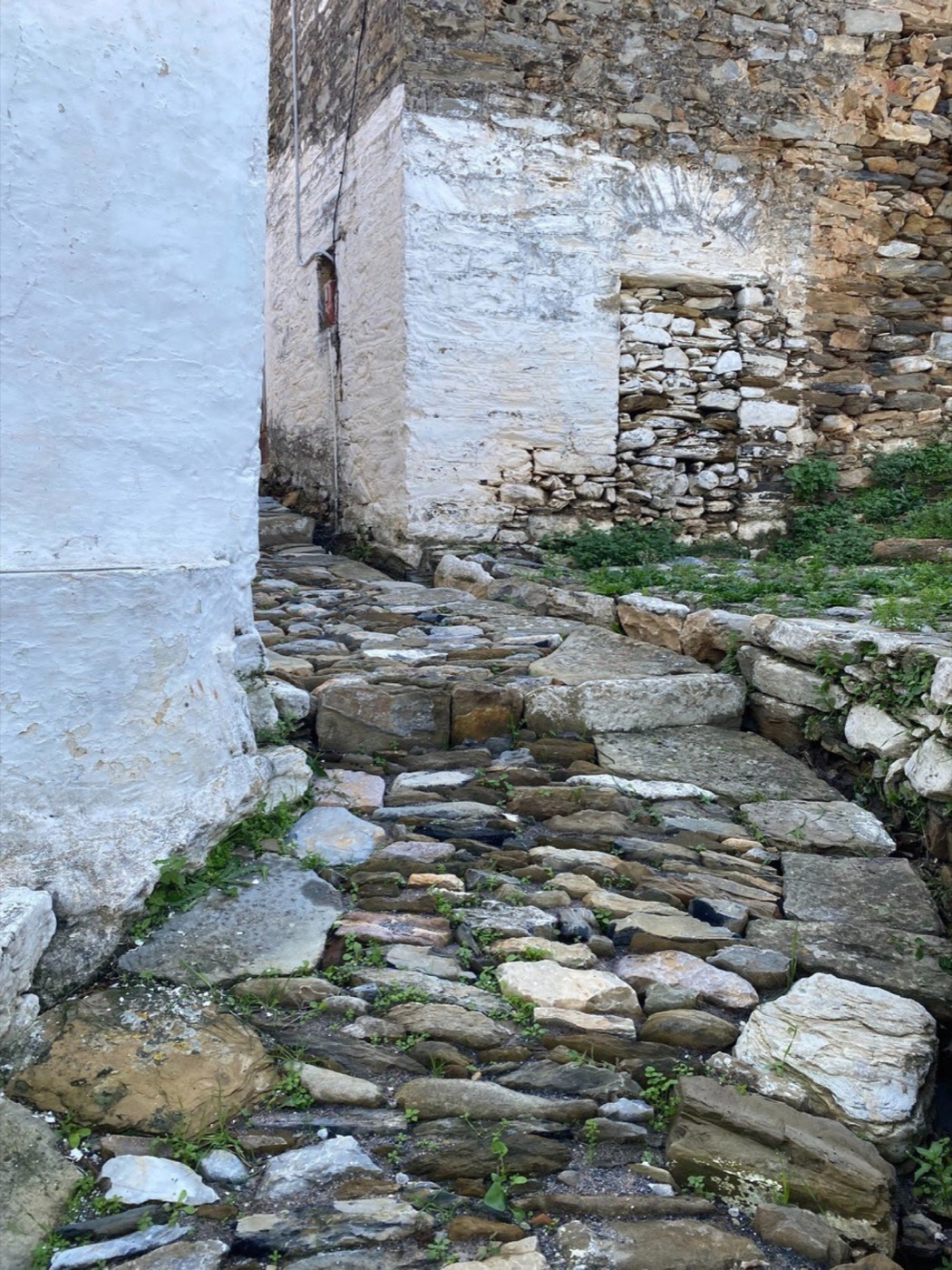
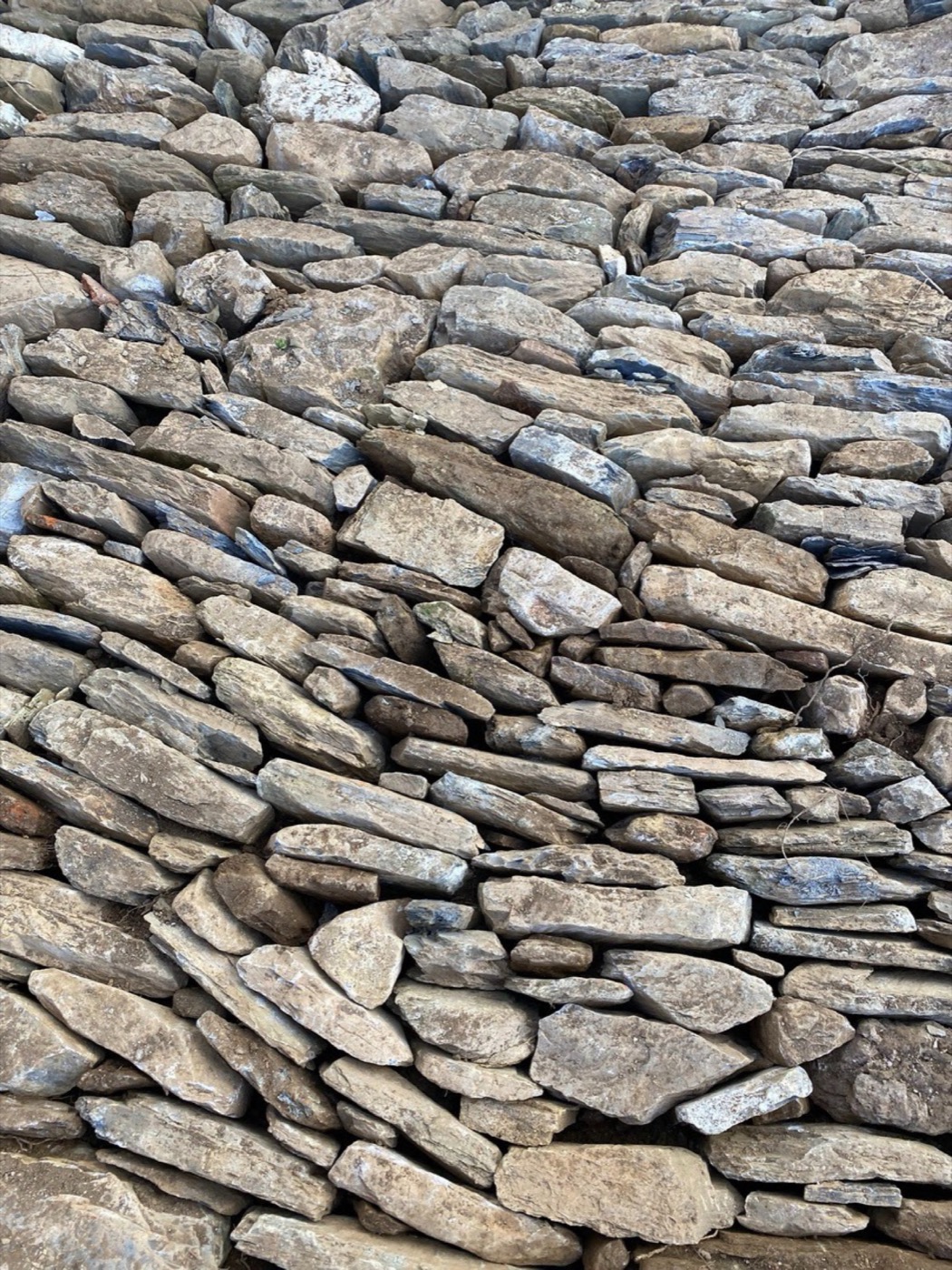
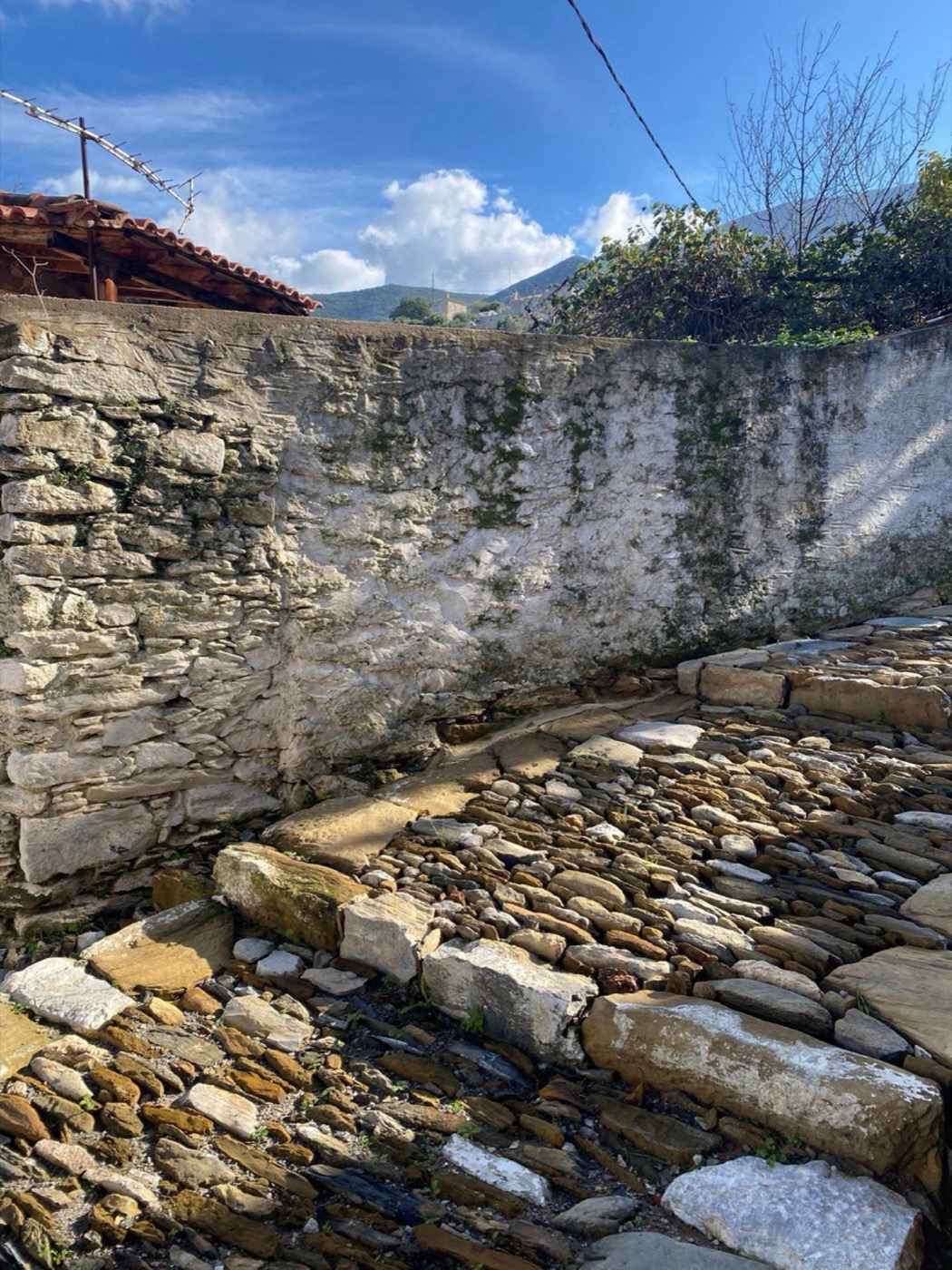
The restoration focused on minimal and precise intervention. The concrete was carefully removed, revealing fragments of the original paving. The path was then reconstructed using locally sourced slate, laid without mortar, following traditional dry-stone techniques.
Concrete fixes the ground.
Dry stone negotiates with it.
Each stone was selected and placed by hand, allowing the path to follow the natural slope, to drain water, and to remain permeable. The surface does not seal the ground, but works with it, allowing it to breathe, to absorb movement, and to age without failure.
The geometry of the path, its width, slope, and subtle irregularities, was preserved rather than standardised. Because the path is not designed as an object, but as an experience.
It is meant to be walked.
The tactile surface, the slight instability underfoot, and the rhythm of the stones recalibrate the body, slowing it down and aligning it with the terrain. The project restores not only a route, but the act of walking itself, as a shared, everyday practice.
Equally important was the role of local craftsmen. The construction became a process of knowledge transfer, where experienced masons worked alongside younger builders, transmitting techniques that are not easily codified: how to read the ground, how to select and shape stone, how to build without fixing.
This is not a lost tradition being revived.
It is a living form of intelligence.
The restored segment is small, but it is part of a larger system, a network that once made the region fully walkable. The long-term ambition is not the preservation of isolated fragments, but the gradual reactivation of this network as cultural and ecological infrastructure.
Because the kalderimi is not secondary to architecture.
It is what connects it.
The city may be rebuilt many times, but the street often remains, not as frozen memory, but as active memory. Memory kept alive by movement.
The restoration of the kalderimi is therefore not an act of conservation alone. It is an act of reactivation, of making a forgotten infrastructure available again to contemporary life, without erasing its past.
It is a small project, but it operates at the scale of territory.
Because ultimately, the kalderimi is not a line on the ground.
It is the trace of a way of living.
36.80953196301054, 22.31719245767105
76531


LILA 2026 Sponsor