Karmrakhayt – Secrets of the Hidden River
ururban.me/
2026 Landscape and Architecture / 2026 Schools and Playgrounds / Armenia / Built in 2025 /

![Science Inside Out Where Limitations Became Inspiration How are discoveries born?Often in the same way children imagine impossible things — by refusing to accept limitations. Science Inside Out playground was conceived as a space dedicated to curiosity, imagination, and the moment when an abstract idea begins to feel possible. The project explores how scientific thinking […]](https://landezine-award.com/wp-content/uploads/2026/05/00_HERO-IMAGE-2-600x400.jpg "Armenian Inventors: Science from Inside Out")
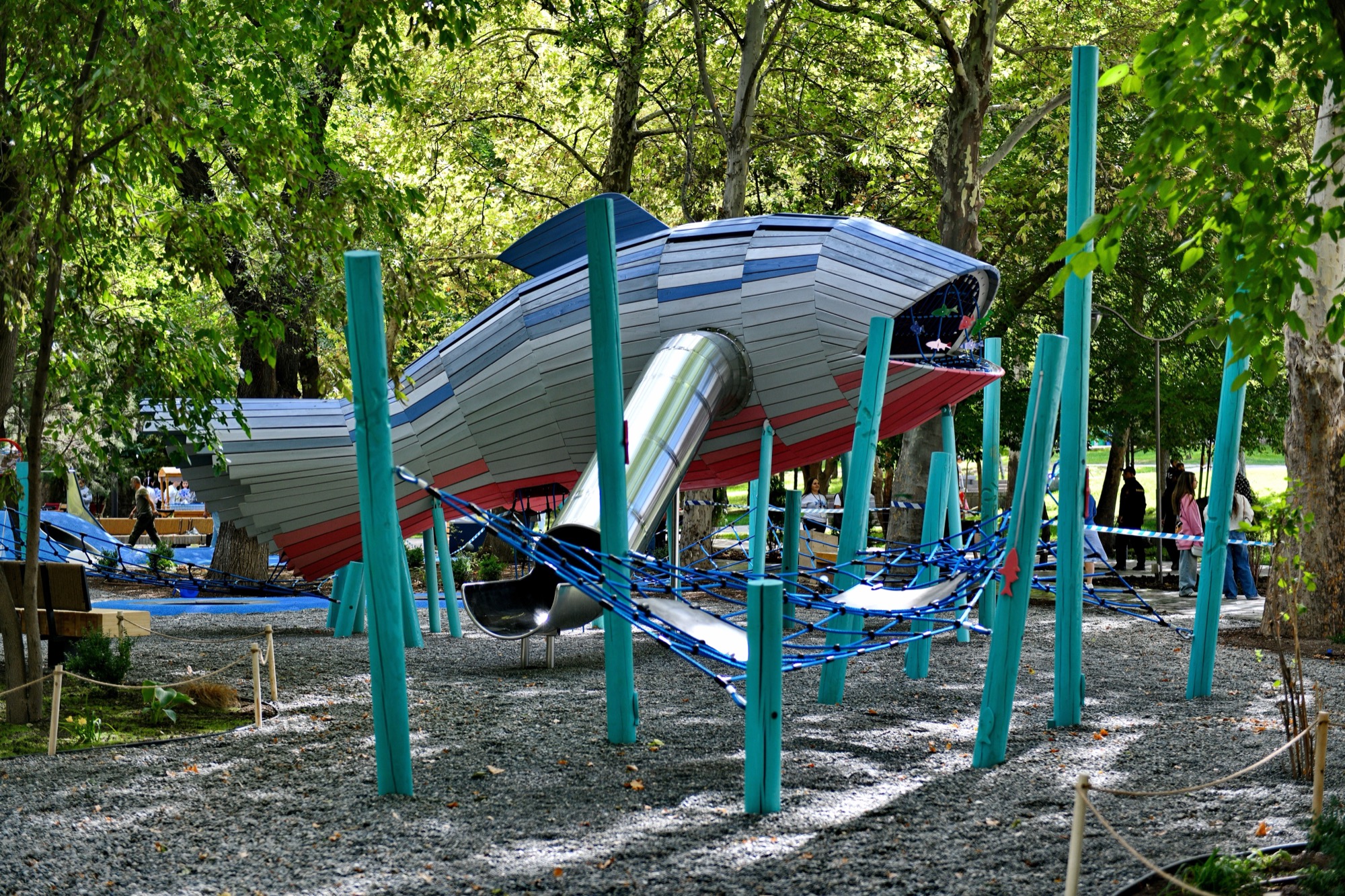
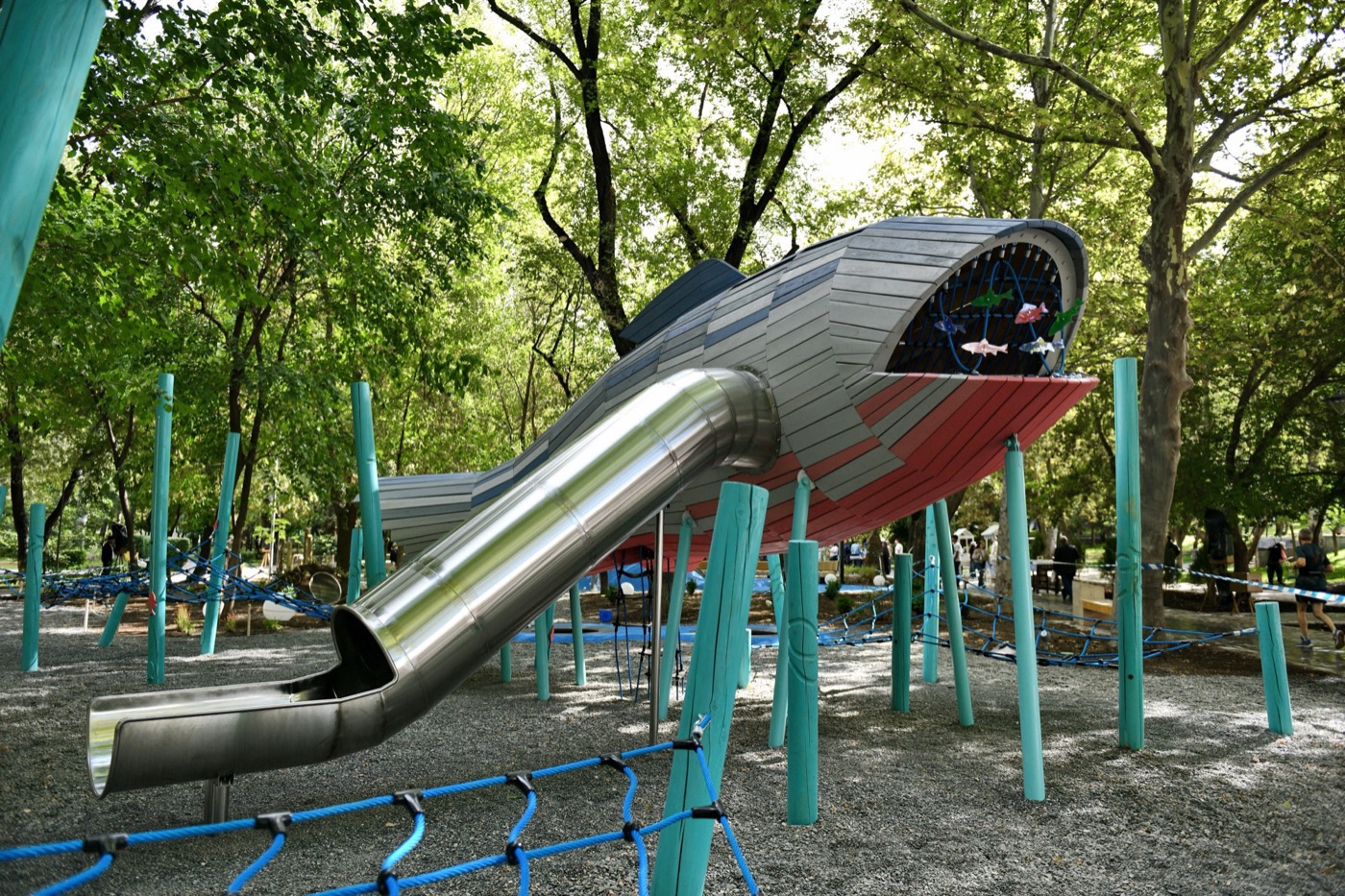
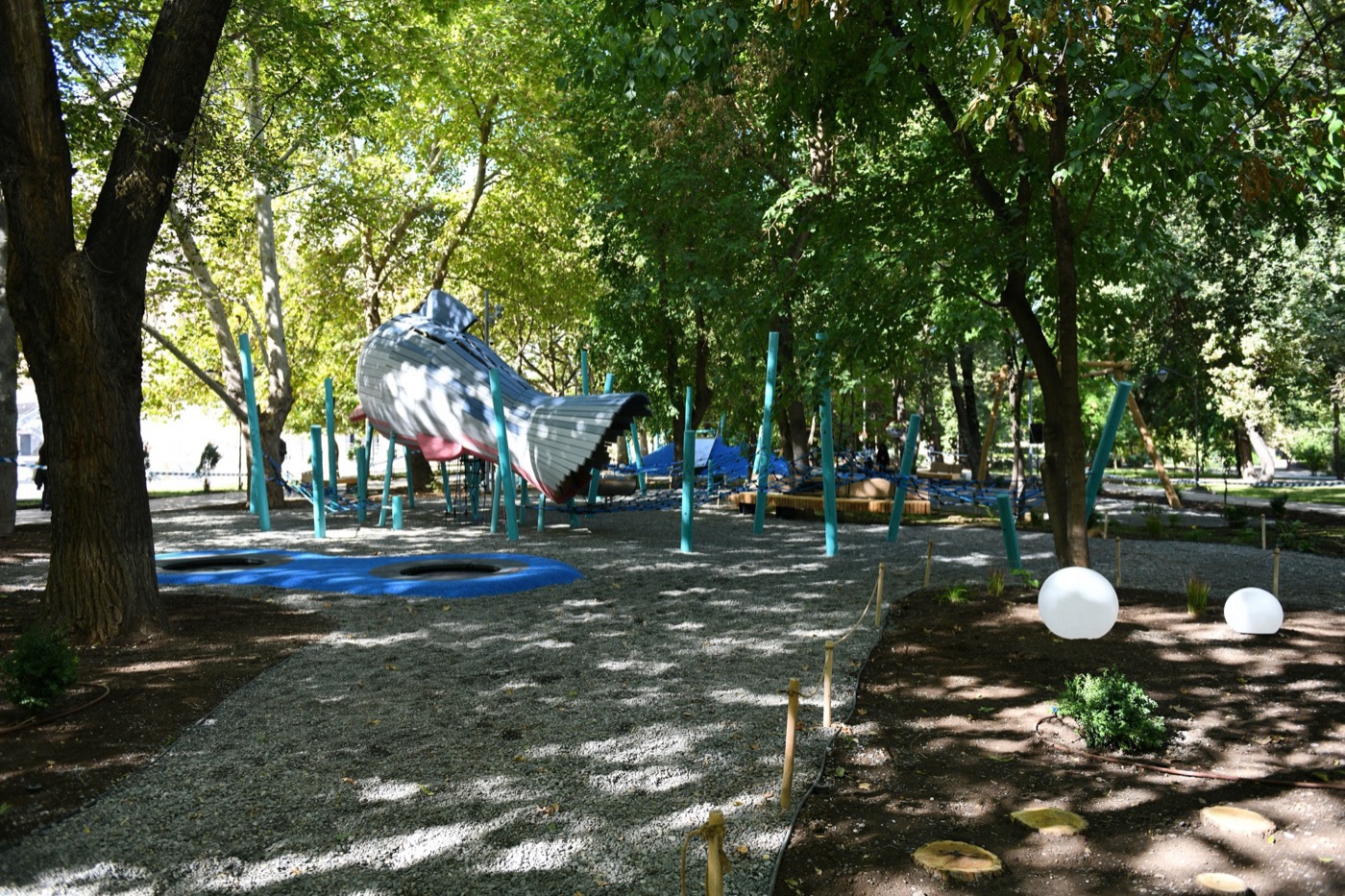
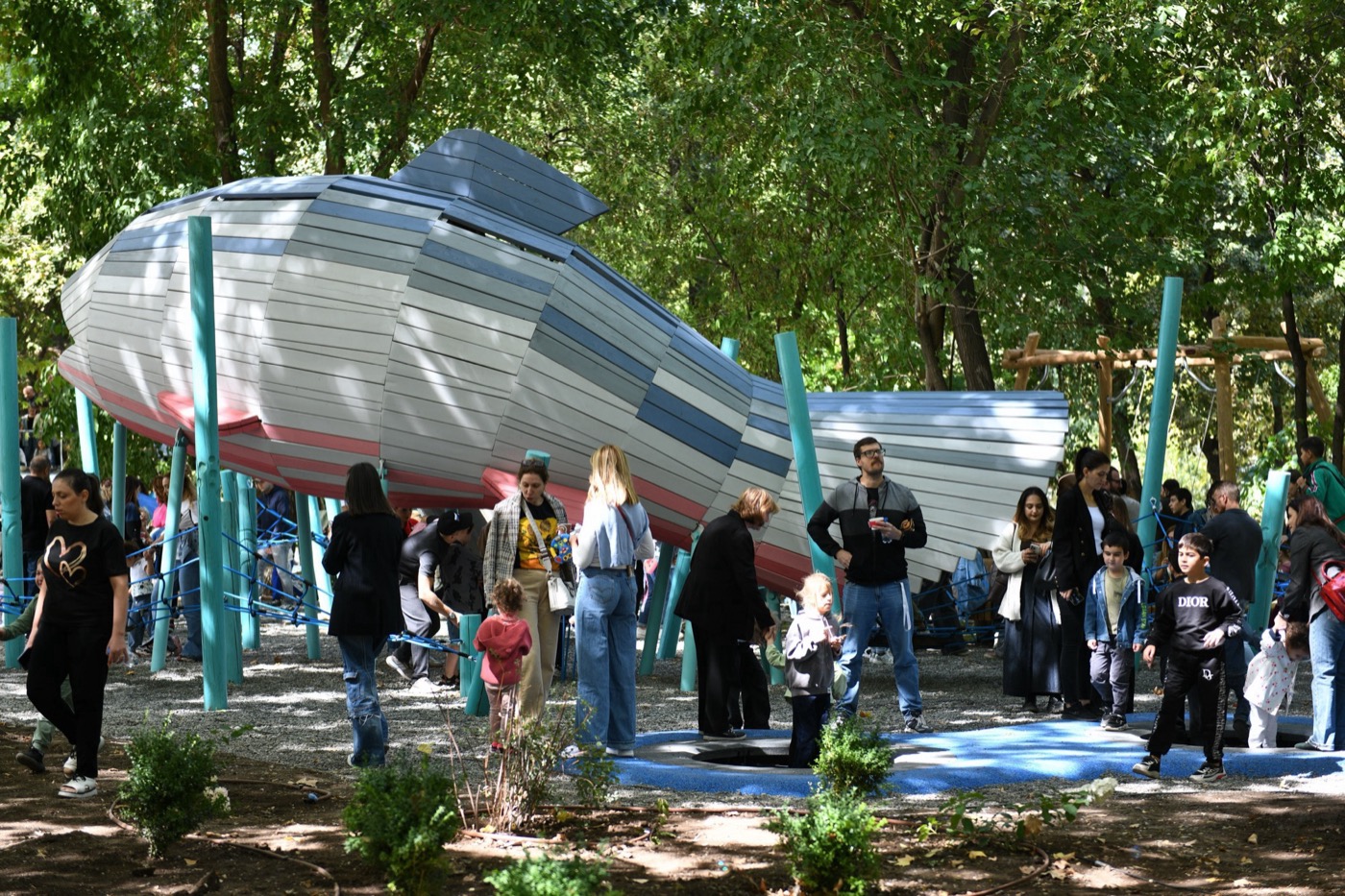
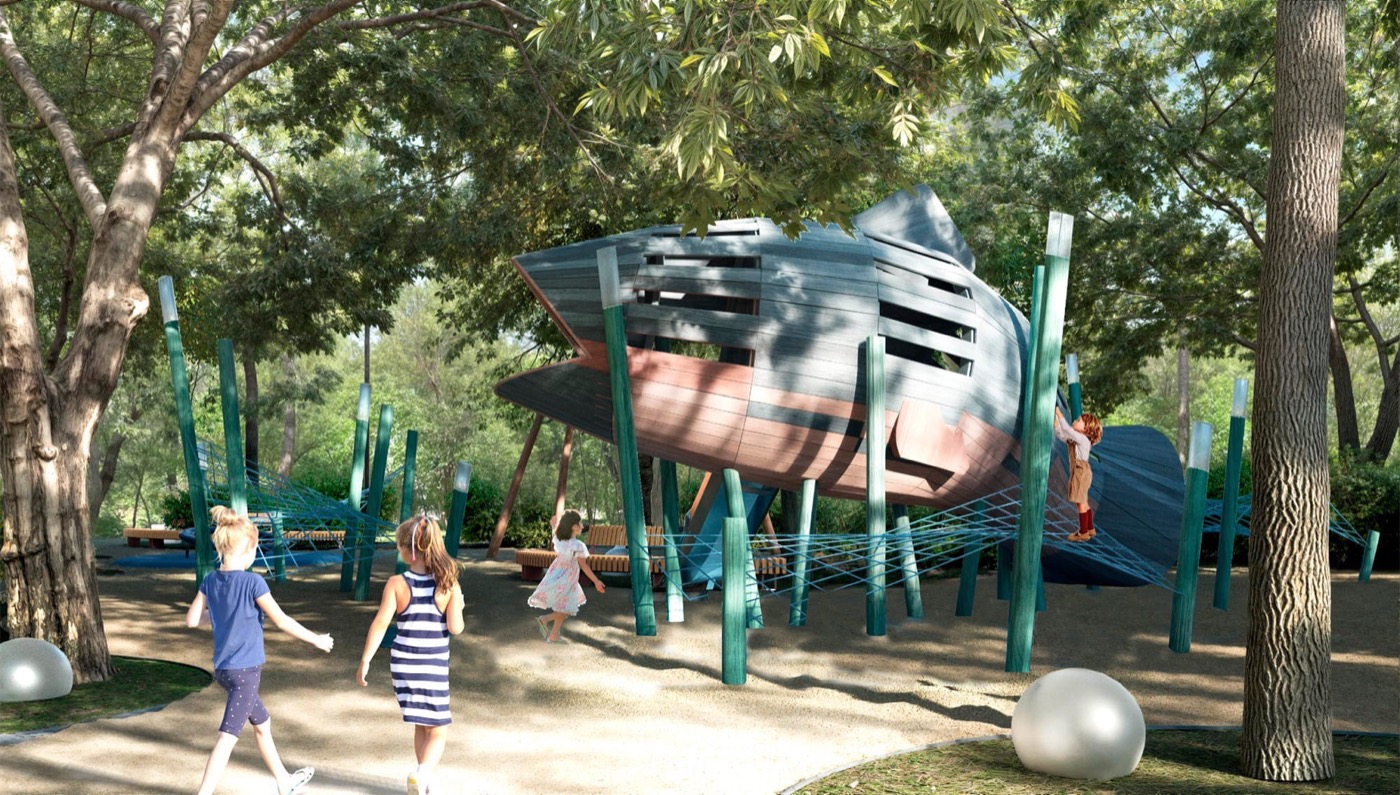
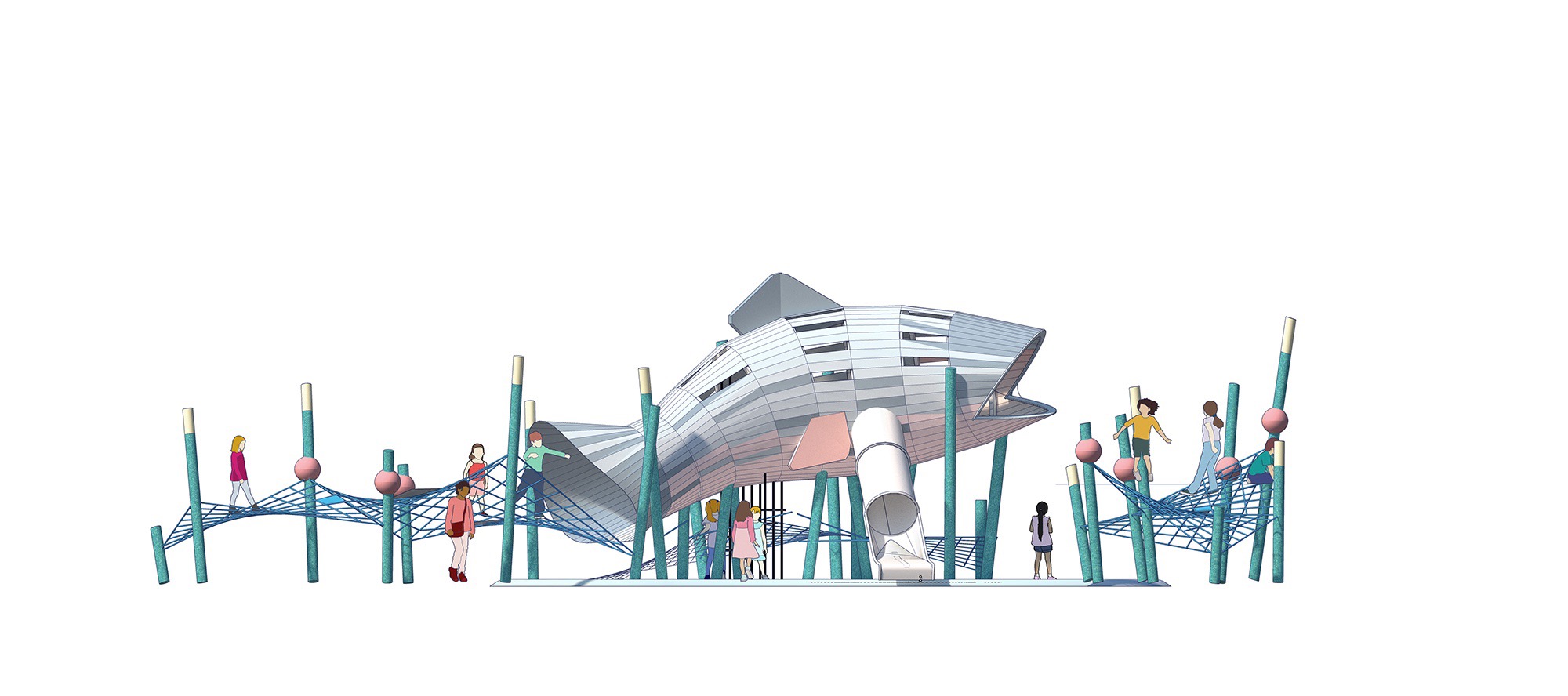
Karmrakhayt redefines the role of play in the city by transforming a conventional playground into a family-oriented public landscape and a new urban typology for Yerevan. Located within the central ring park, the project responds to the city’s lack of high-quality, inclusive environments for children. The central element — a 27-meter-long sculptural structure inspired by the Armenian mountain river trout — integrates climbing, exploration, and sensory play into a continuous environment.
The space supports multiple age groups and models of use, embedding inclusion, climate adaptation, and landscape design into a unified spatial experience. Originally designed for 300–500 daily users, the project now attracts over 10,000 visitors per week, with an average stay of 2.5–3.5 hours. A formerly transit-oriented boulevard has become a primary destination, used by families, teenagers, and the broader community throughout the day and evening.
Karmrakhayt demonstrates how designing for children can reshape public space — positioning play as a fundamental layer of urban life.
Reconstructing a River Through Play
In Yerevan, public spaces for children have long remained fragmented, standardized, and detached from both nature and identity. Play environments exist across the city, yet they rarely function as meaningful places. Karmrakhayt playground emerges as a response to this condition.
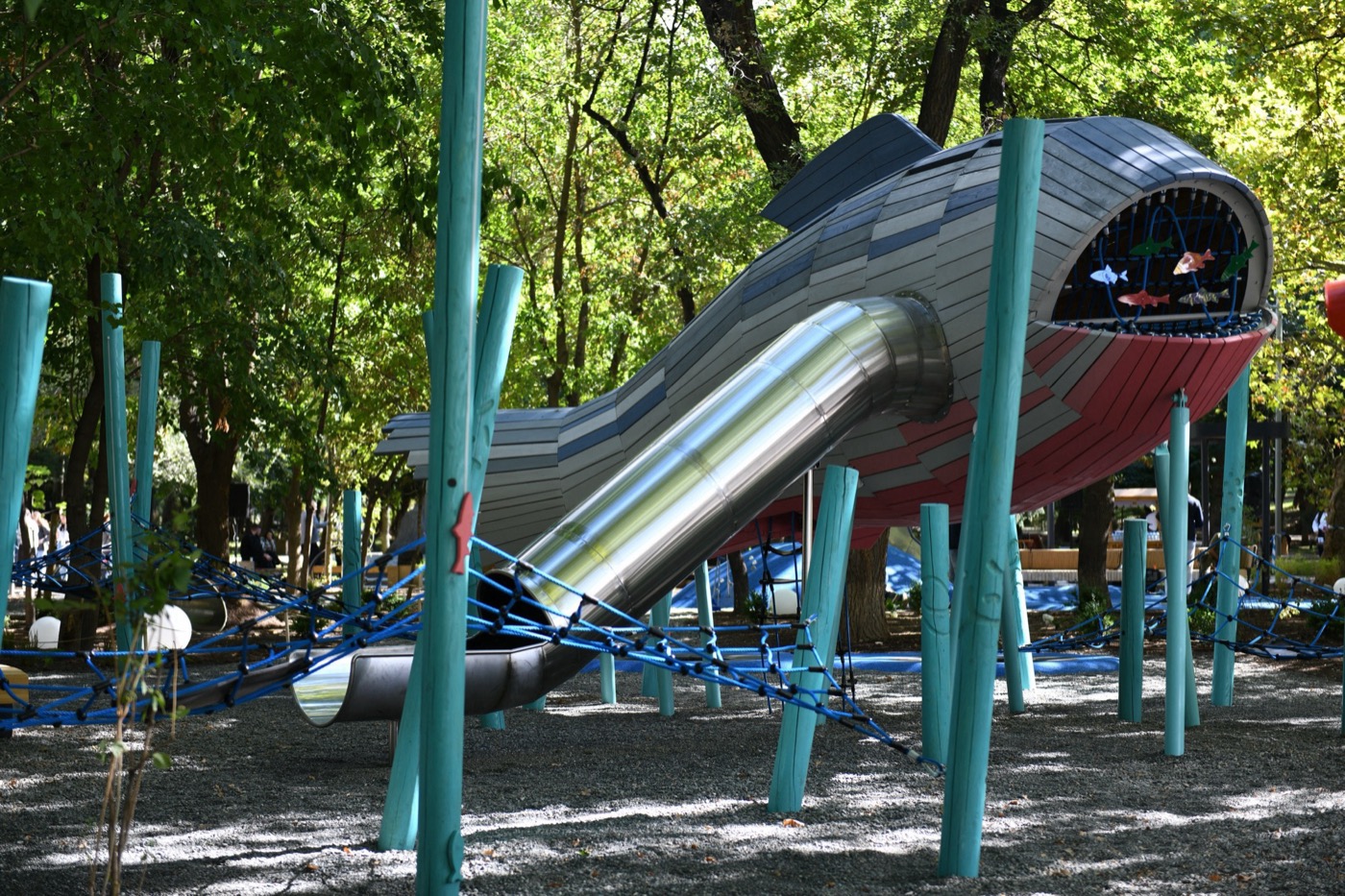
At the core of the project lies the idea of a “hidden river,” referencing Yerevan’s buried waterways — particularly the Getar River, which today flows invisibly beneath the city. At the center stands Karmrakhayt — a 3.5-ton sculptural form of the Armenian mountain river trout.
Inside the trout, children discover a sequence of hidden spaces: a slide, rope ladders, and small-scale elements designed to develop fine motor skills. The structure rests on sculptural supports reminiscent of aquatic vegetation, which become illuminated in the evening, extending play into nighttime.
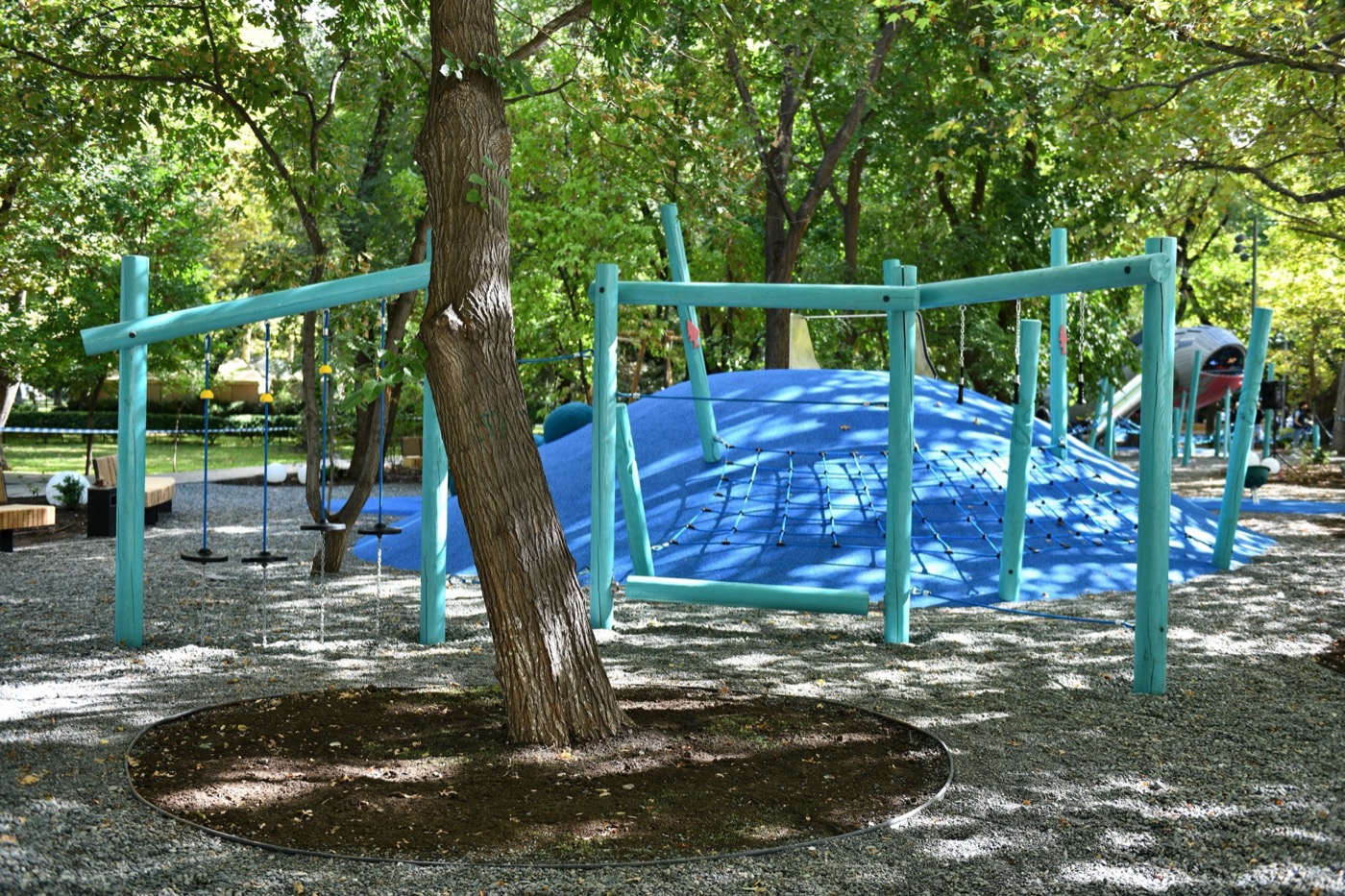
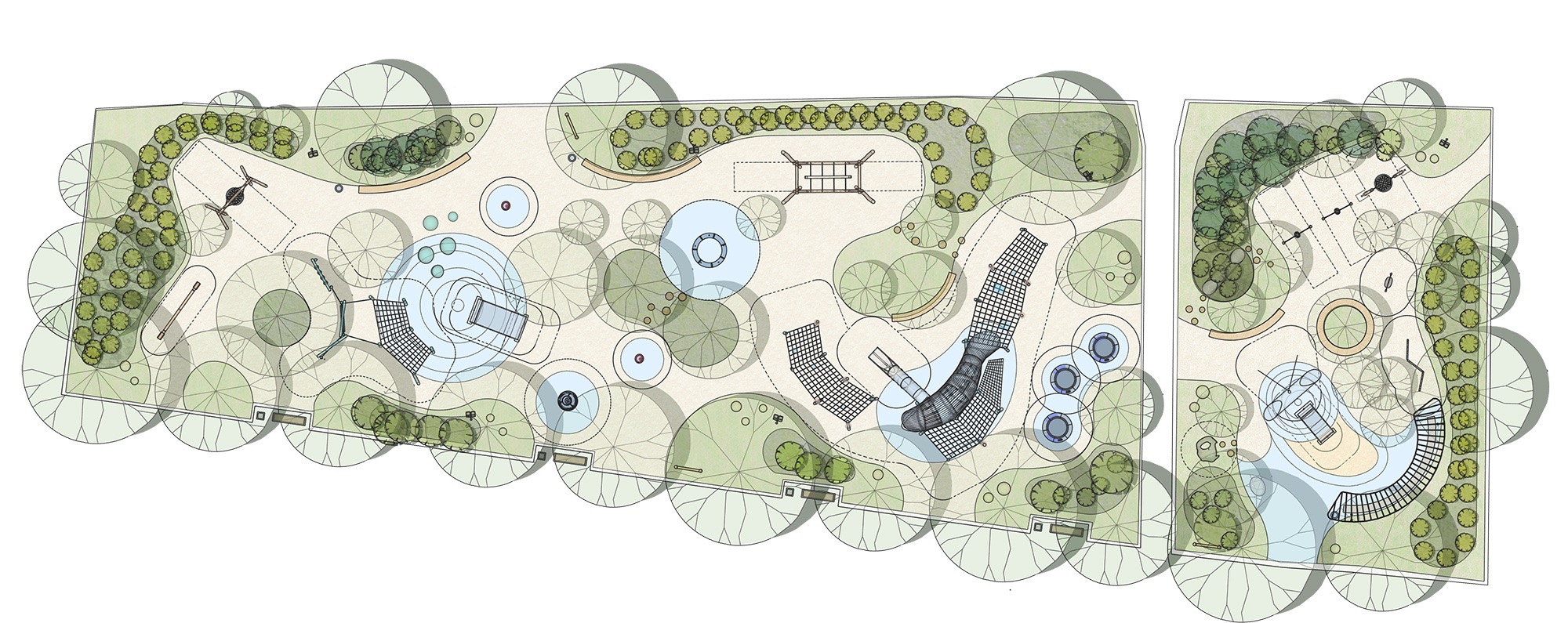
Surrounding the fish, a system of suspended net structures forms inhabitable “waves,” allowing more than 50 children to climb, balance, and move simultaneously. Together, the structure extends over 27 meters, creating a continuous spatial experience rather than a single object.
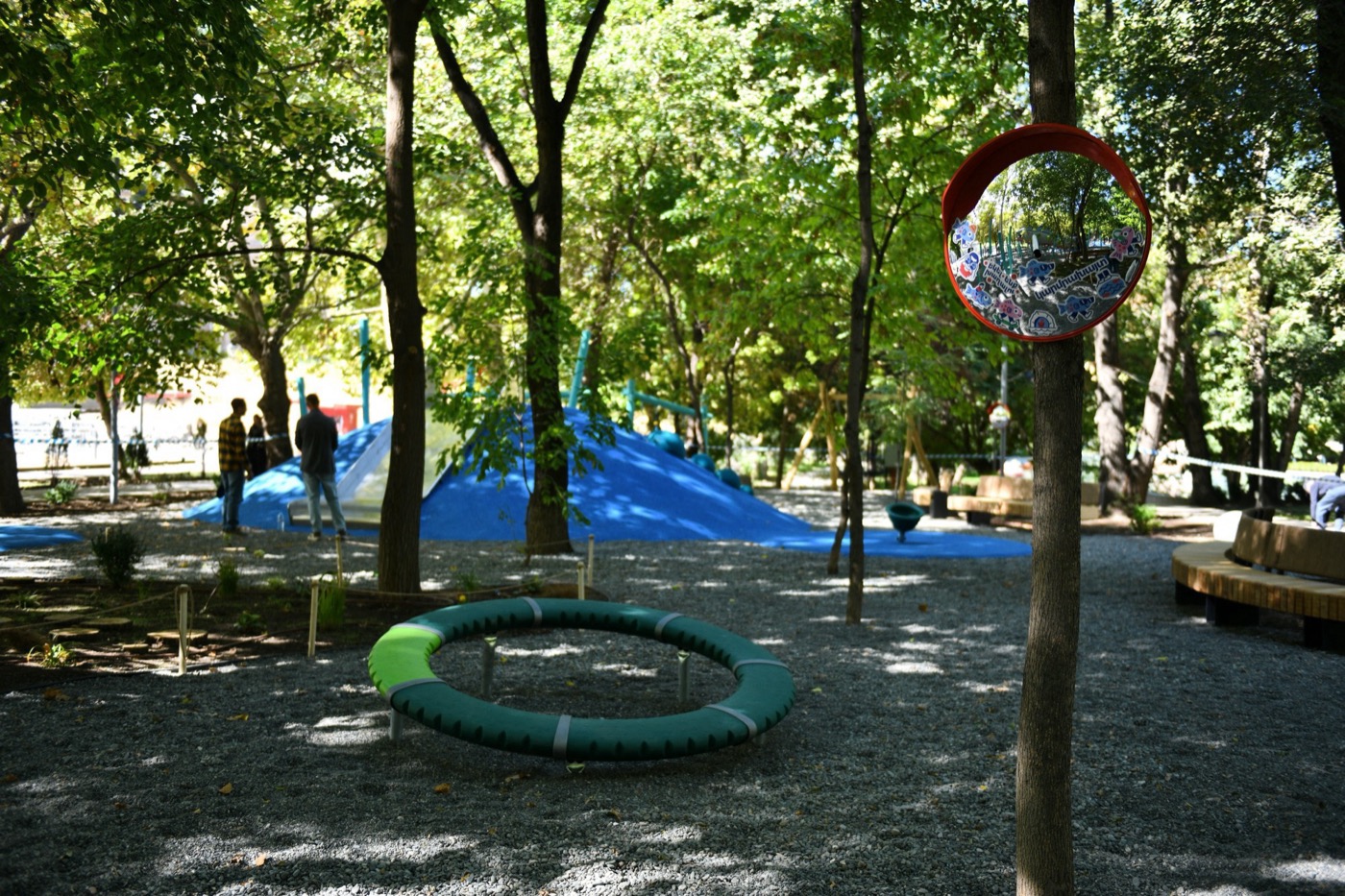
Children navigate freely, constructing their own scenarios — moving across “islands,” interacting with textured surfaces inspired by river pebbles, resting on illuminated elements, and continuously redefining their paths.
Landscape as Experience
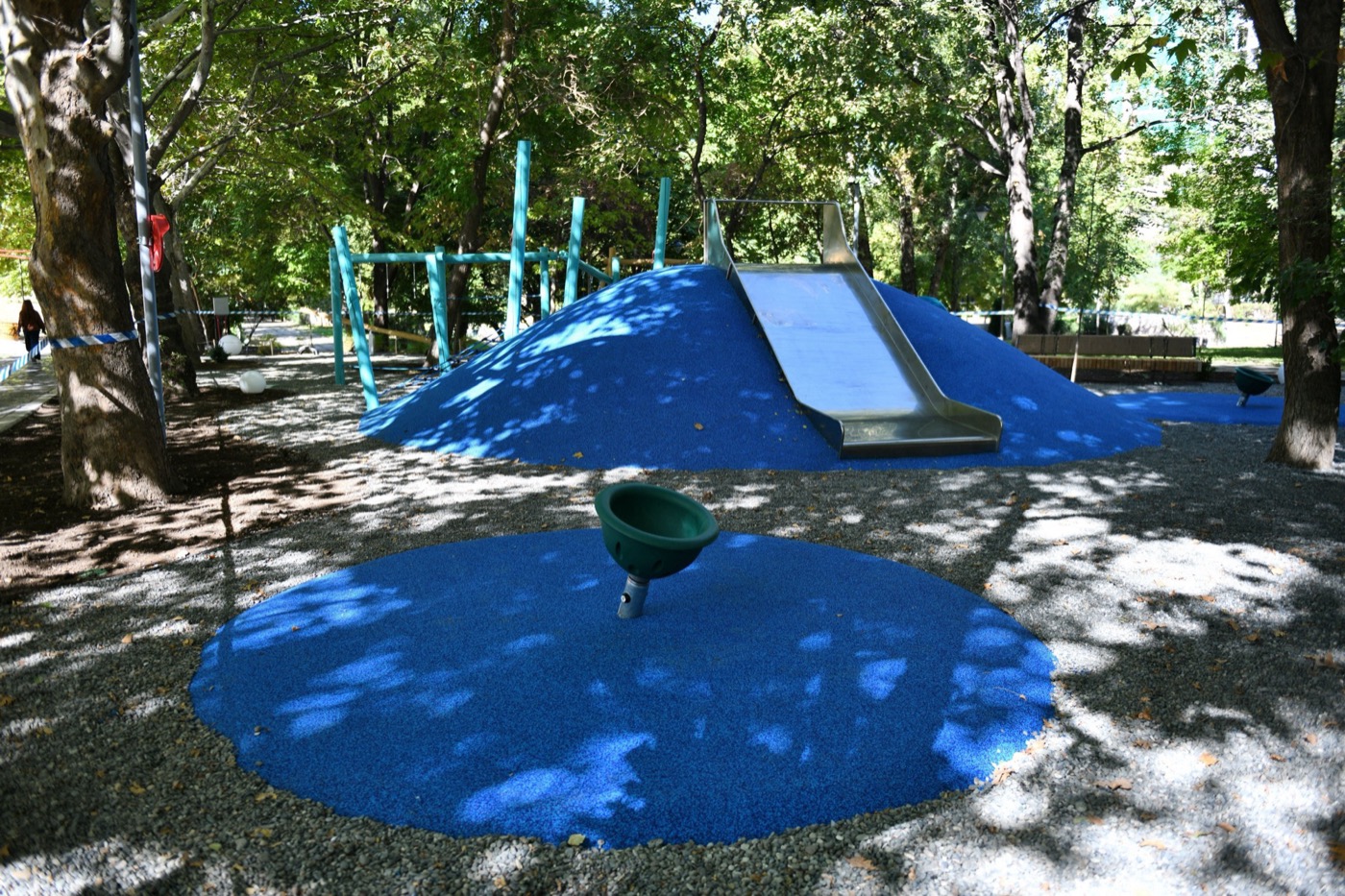
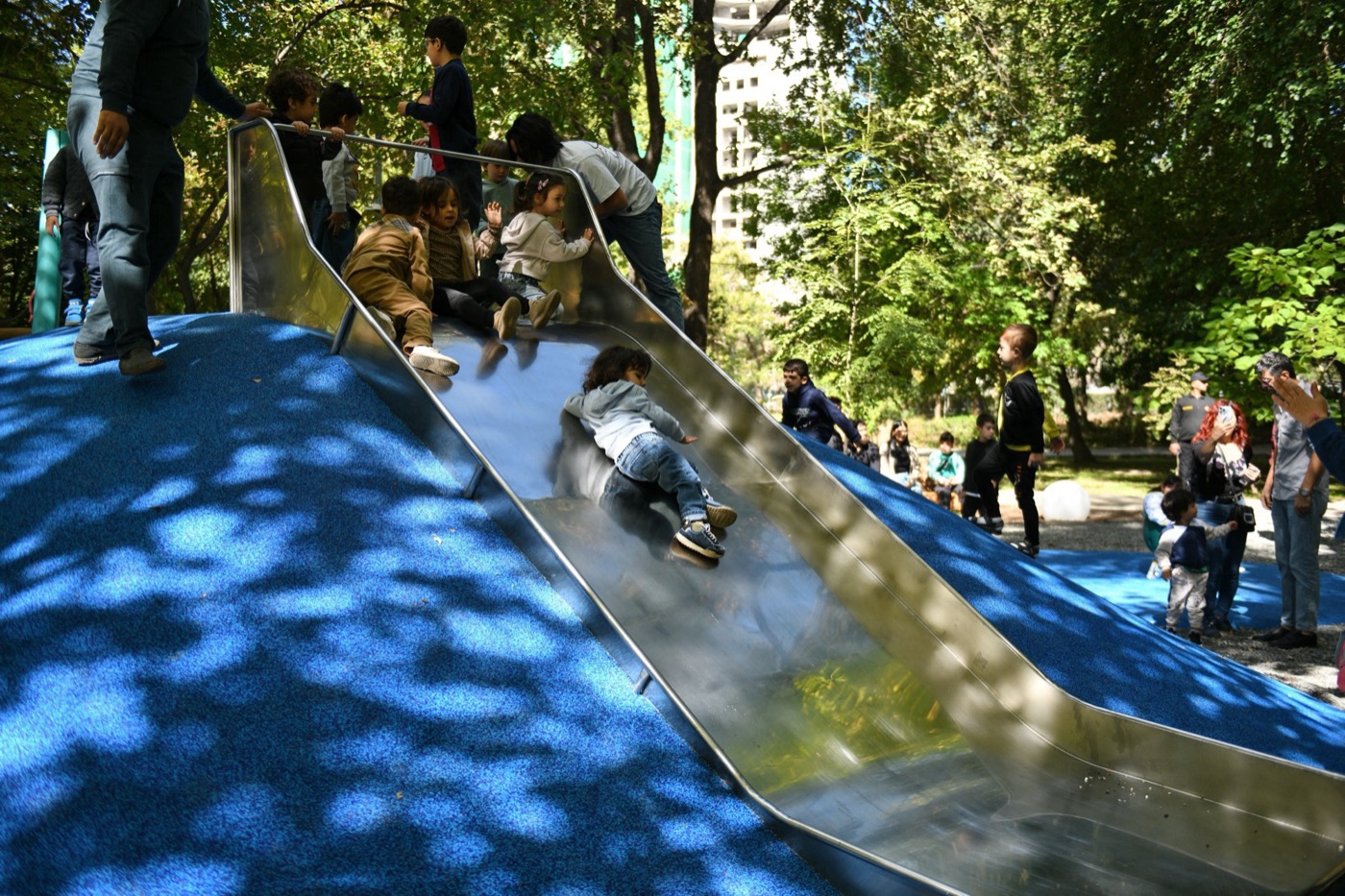
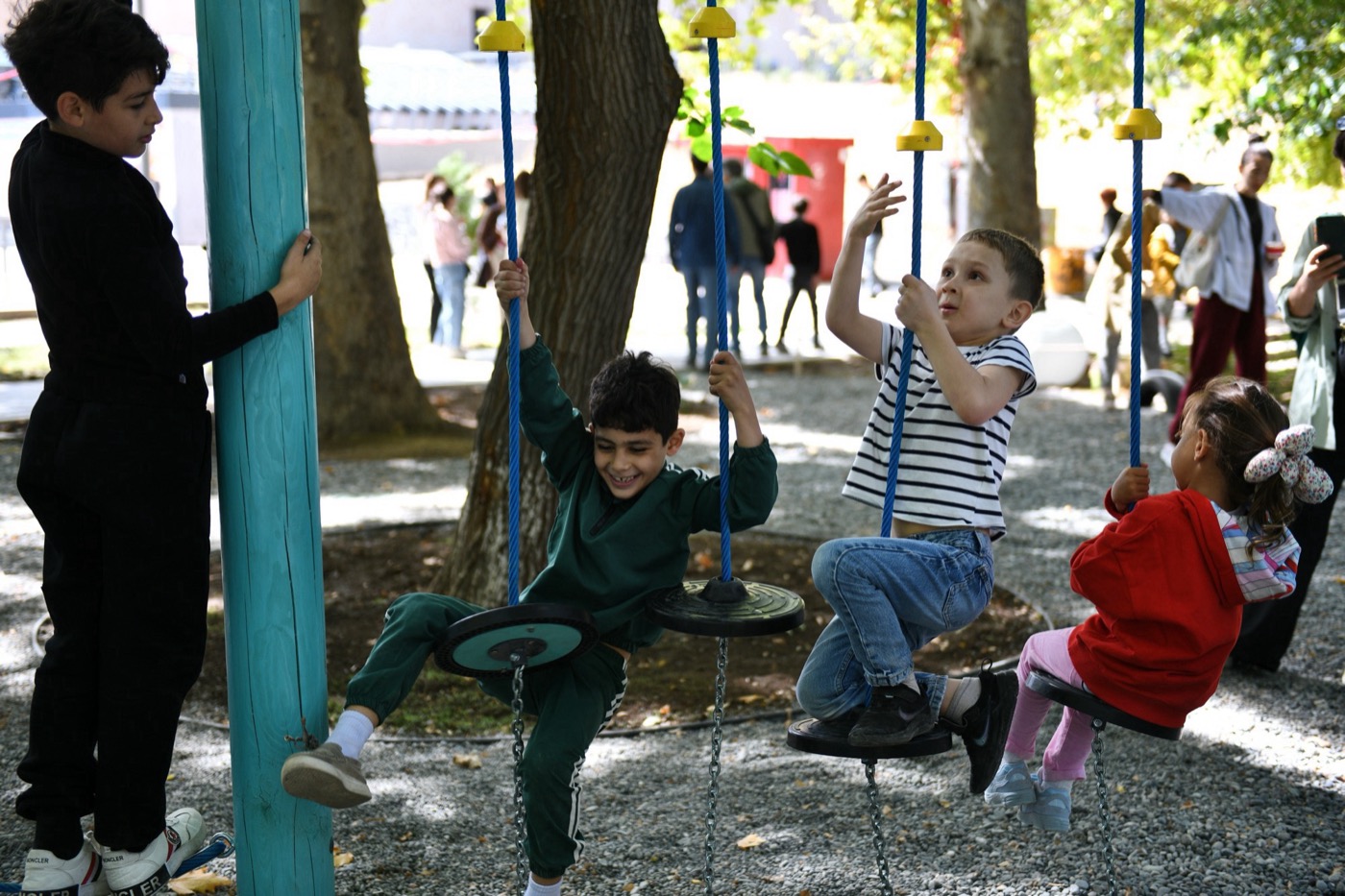
Through geoplastic modeling, the landscape is shaped into a sequence of soft hills — reaching up to 2 meters in height — creating a fluid terrain that encourages movement while avoiding rigid boundaries. Tunnels, elevated points, hammocks, and swings create a layered environment of discovery.
The project occupies an area of approximately 2,000 square meters.
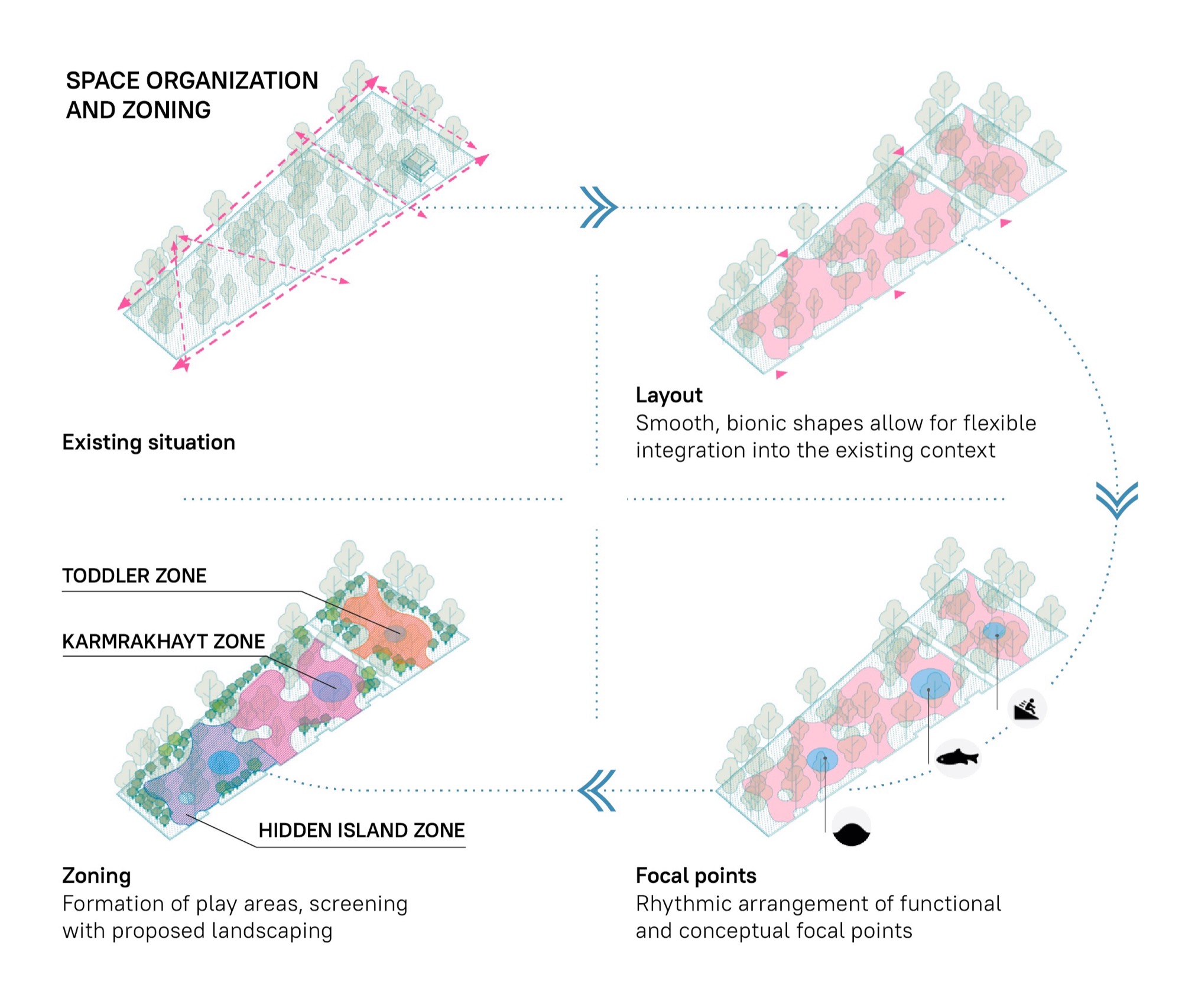
Designed for multiple age groups, the space avoids fragmentation. Younger children engage through sensory play and low-height elements, while older users encounter complexity through climbing systems, trampolines, and elevated structures. These layers overlap, allowing different age groups to coexist and learn from one another.
At the same time, zoning is carefully embedded within the landscape. Toddler areas are subtly separated through natural transitions, while quiet zones and resting areas provide space for slower activities.
Inclusion and Sustainability
Inclusion is embedded within the spatial logic of the project.
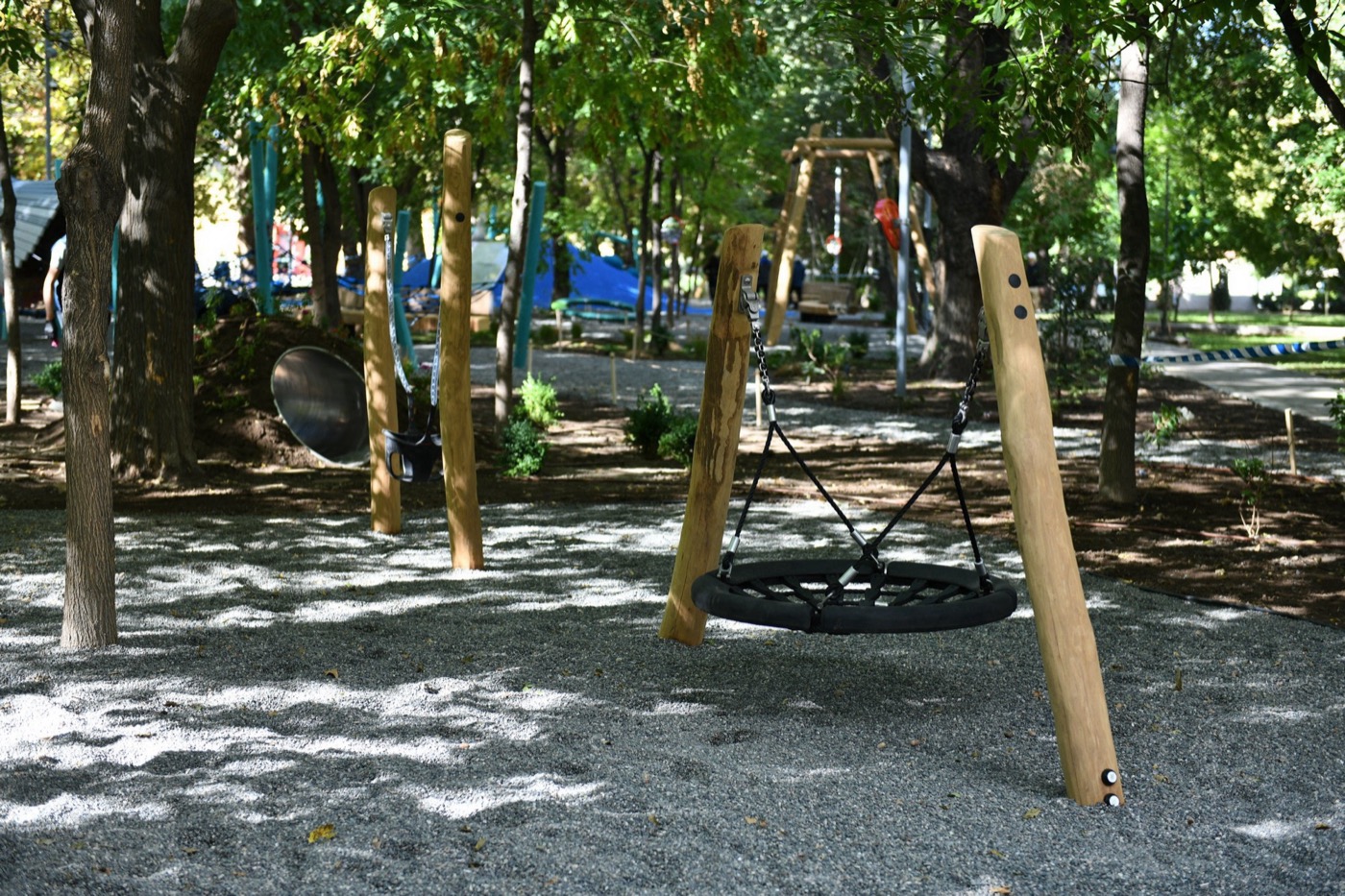
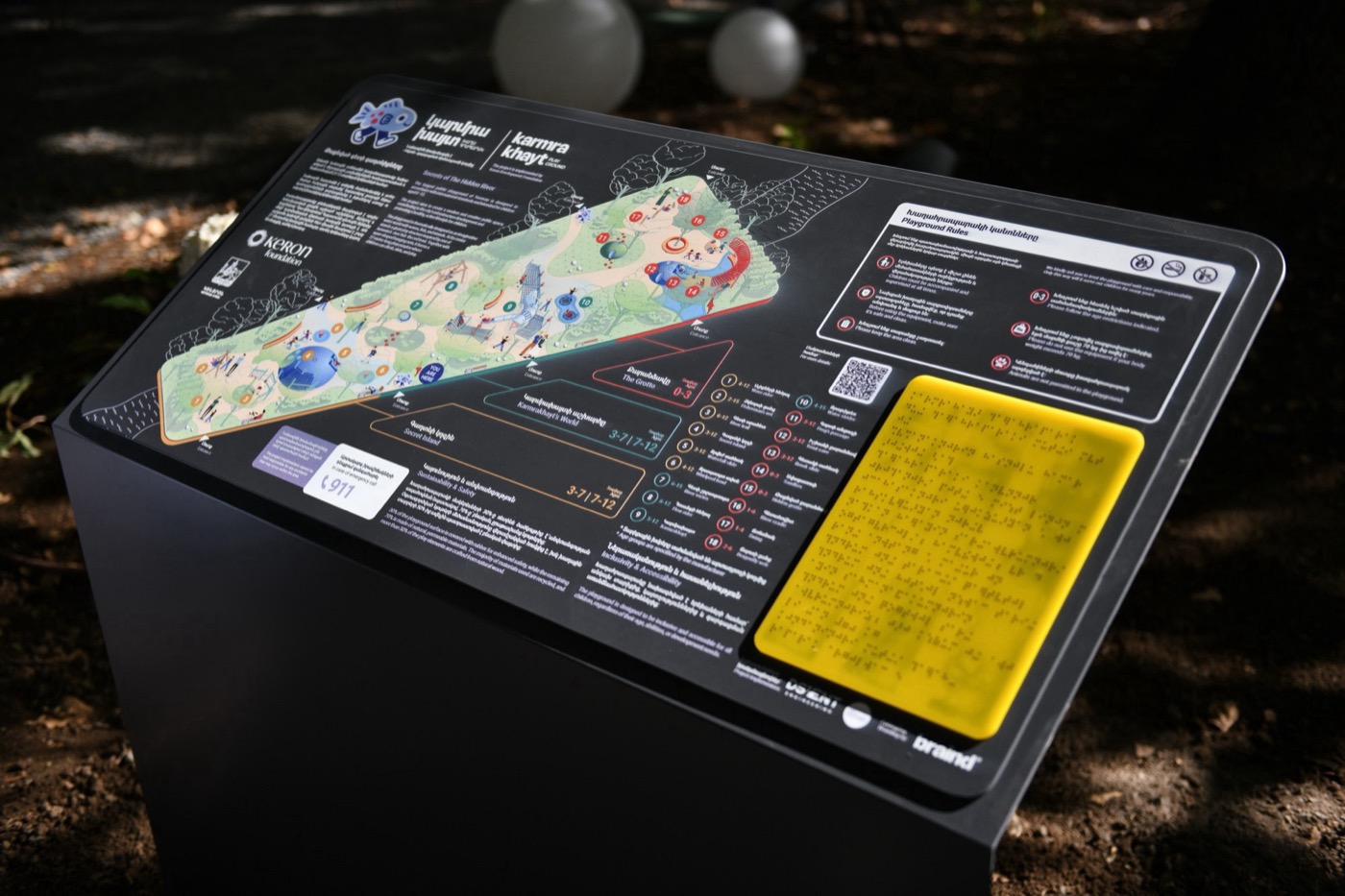
Nest swings, tactile elements, sensory planting, Braille navigation, and accessible circulation ensure that children with different abilities participate within the same environment. These elements are integrated into a continuous landscape.
More than 200 trees and perennial plants were introduced, transforming the previously under-irrigated boulevard into a functioning green environment.
The project was designed with a strong focus on sustainability, integrating environmentally responsible solutions at every stage. Over 70% of surfaces are made from natural, permeable materials, up to 100% recycled content is used in rubber flooring. In addition, over 40% of materials are recycled, including 33% post-consumer ocean waste.
Credits
Client: Keron Development Foundation in cooperation with the Kentron Administrative District.
Construction: DSVent.
Photos: Samvel Vanoyan
40.173159633583985, 44.51804205296393
73979


LILA 2026 Sponsor