Keila Song Festival Grounds
www.mareldarkitektur.se/ + www.molumba.com/
2026 Landscape and Architecture / 2026 Public Projects / Estonia / Built in 2024 /

![Jubileumsparken is situated in the heart of Gothenburg, Sweden. It is one of the city’s largest park projects and a fantastic way to celebrate the city’s 400th anniversary in 2023. Besides the anniversary, the park serves as a meeting place and an outdoor living room for people with different backgrounds and interests. Through employment, management, […]](https://landezine-award.com/wp-content/uploads/2024/05/00.1_MARELD_Philip-Liljenberg-600x450.jpg "Jubileumsparken (Play & Learn Park and Blue Park)")
![“Sun, play and beach life for everybody!”
When the sun is shining the bathing site at Öresjö comes to life. But it is also a recreational area that is used all year, for a dog walk or a trip by canoe. The work started with a masterplan for the site. The goal was to tie the […]](https://landezine-award.com/wp-content/uploads/2019/05/00-ôresjî-main-photo-600x398.jpg "Öresjö Recreational Area")
![The Briggen Park Passage, situated behind an existing food market (named Saluhallen Briggen), could be described as an opportunistic project. The budget was extremely low, resulting in partially pro bono design work and making the building process a long one. But it also contributed to several simple yet creative solutions that give the notion of […]](https://landezine-award.com/wp-content/uploads/2019/05/00-Briggen-Main-Photo-600x400.jpg "Briggen Park Passage")
Keila has played a key role in leading the song and dance festival tradition in Harju County, Estonia. The park where the festival grounds are located is an important bearer of local identity and collective memory. The town therefore sought to replace the outdated stage and reposition the festival grounds as an integrated part of everyday urban life. The site is located within a few minutes’ walking distance of the town center and lies strategically between a hospital, sports facilities, schools, and residential areas. The project was conceived as a landscape park that physically and visually connects these surrounding functions.
The outdoor stage and its surrounding park were designed to support large public events while also serving informal everyday use throughout the year. This required a series of decisive design choices such as a flexible stage typology, circular audience circulation, and an integrated ice rink for winter use, which resulted in a form that intentionally departs from the conventional image of a song festival stage.
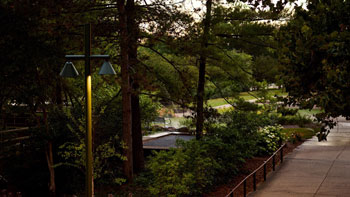
The design approach focused on identifying and reinforcing existing site qualities through minimal intervention. Sensitive shifting and remodeling of Soviet-era landforms creates stronger cohesion between the open-air stage, pathways, and surroundings, forming a clearly legible multifunctional landscape. Built elements and technical functions such as stands, dressing rooms, toilets, storage, and service spaces are embedded within the terrain itself, occasionally disappearing underground and re-emerging as cuts, indentations, or raised landforms. Paths, sightlines, and functions are drawn into the landscape as a continuous network of elegant curves. The project is experienced in motion, as changing vistas reveal the stage in different ways and generate a sequence of spatial situations shaped by topography and planting.
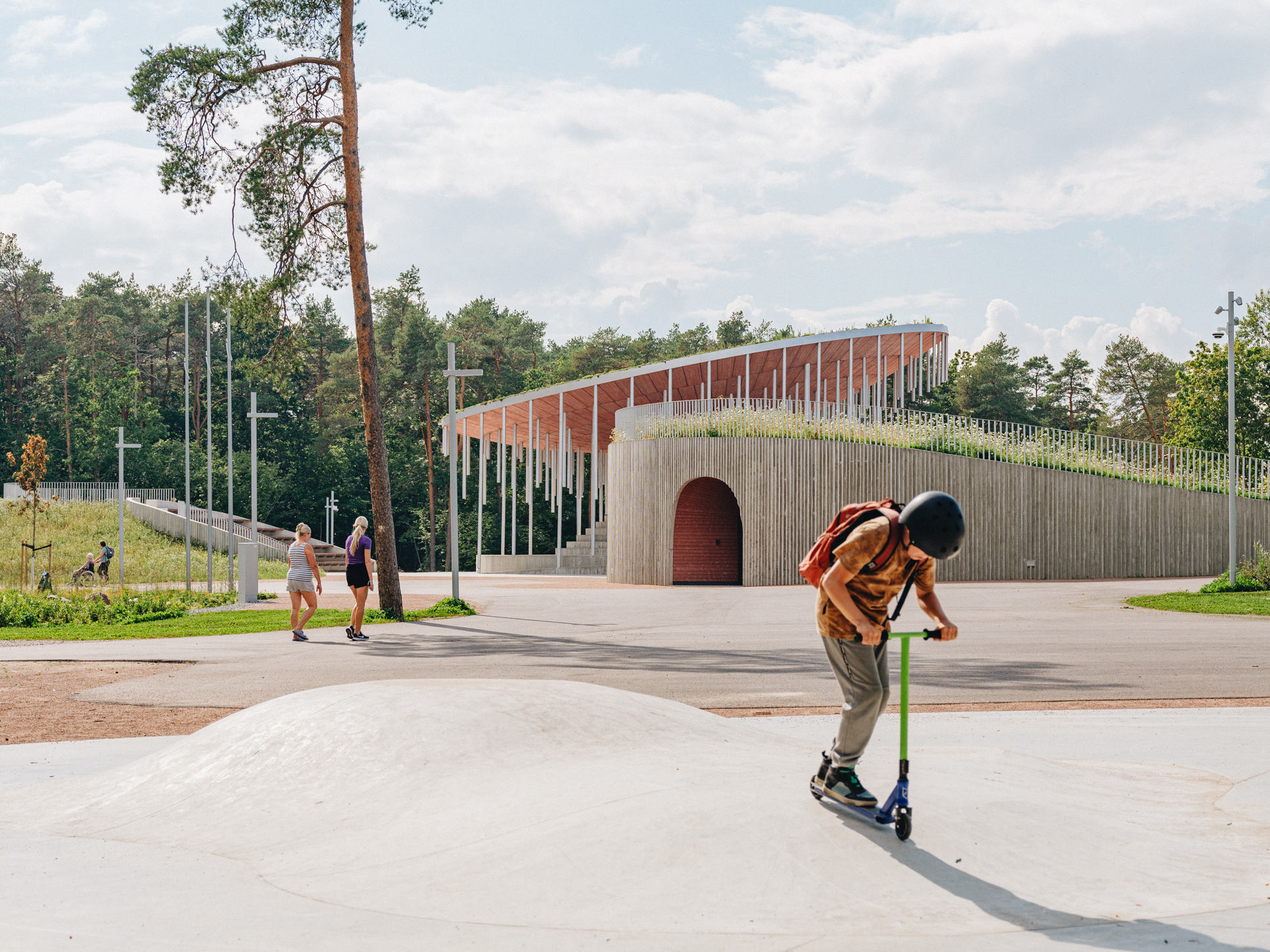
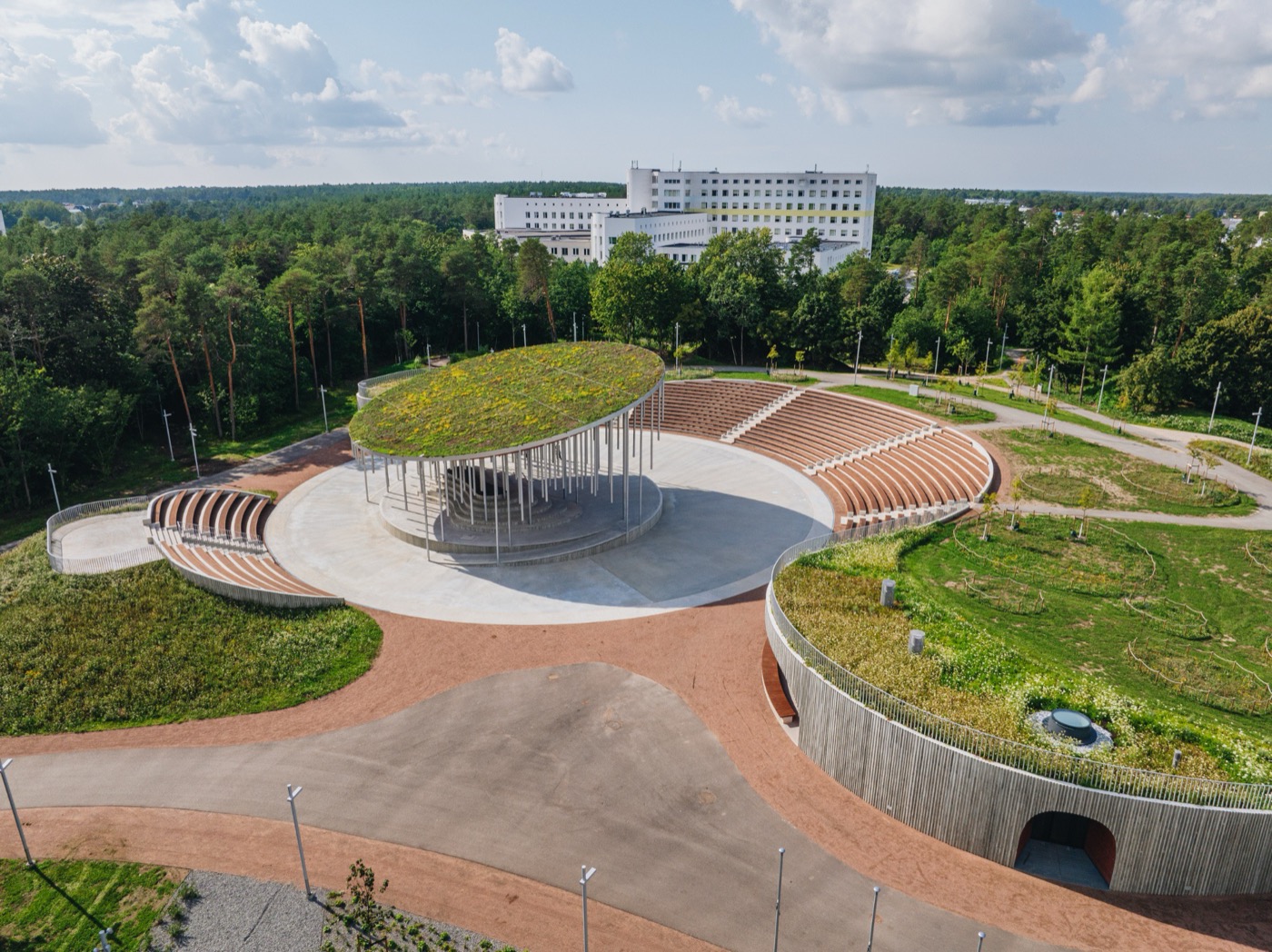
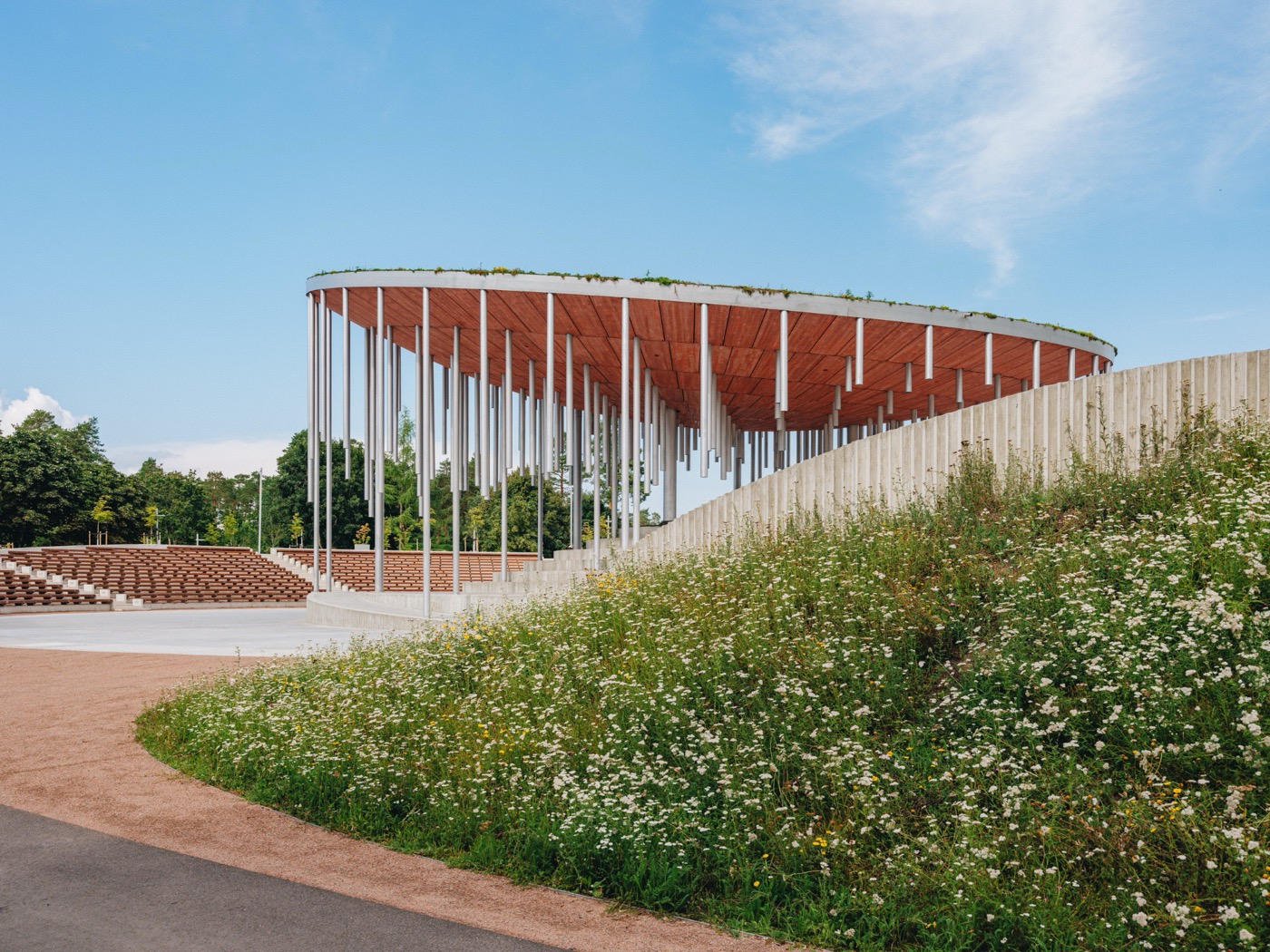
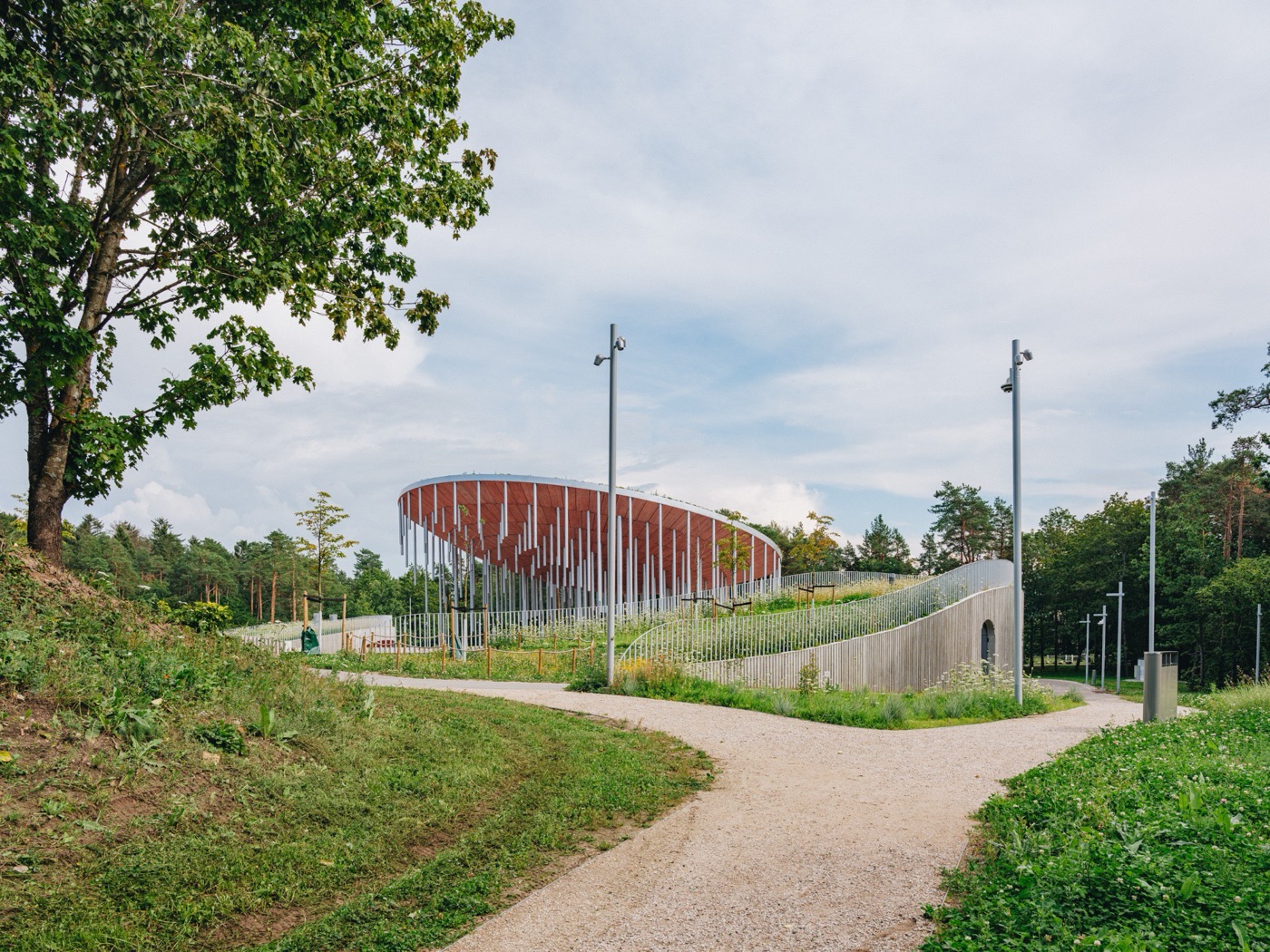
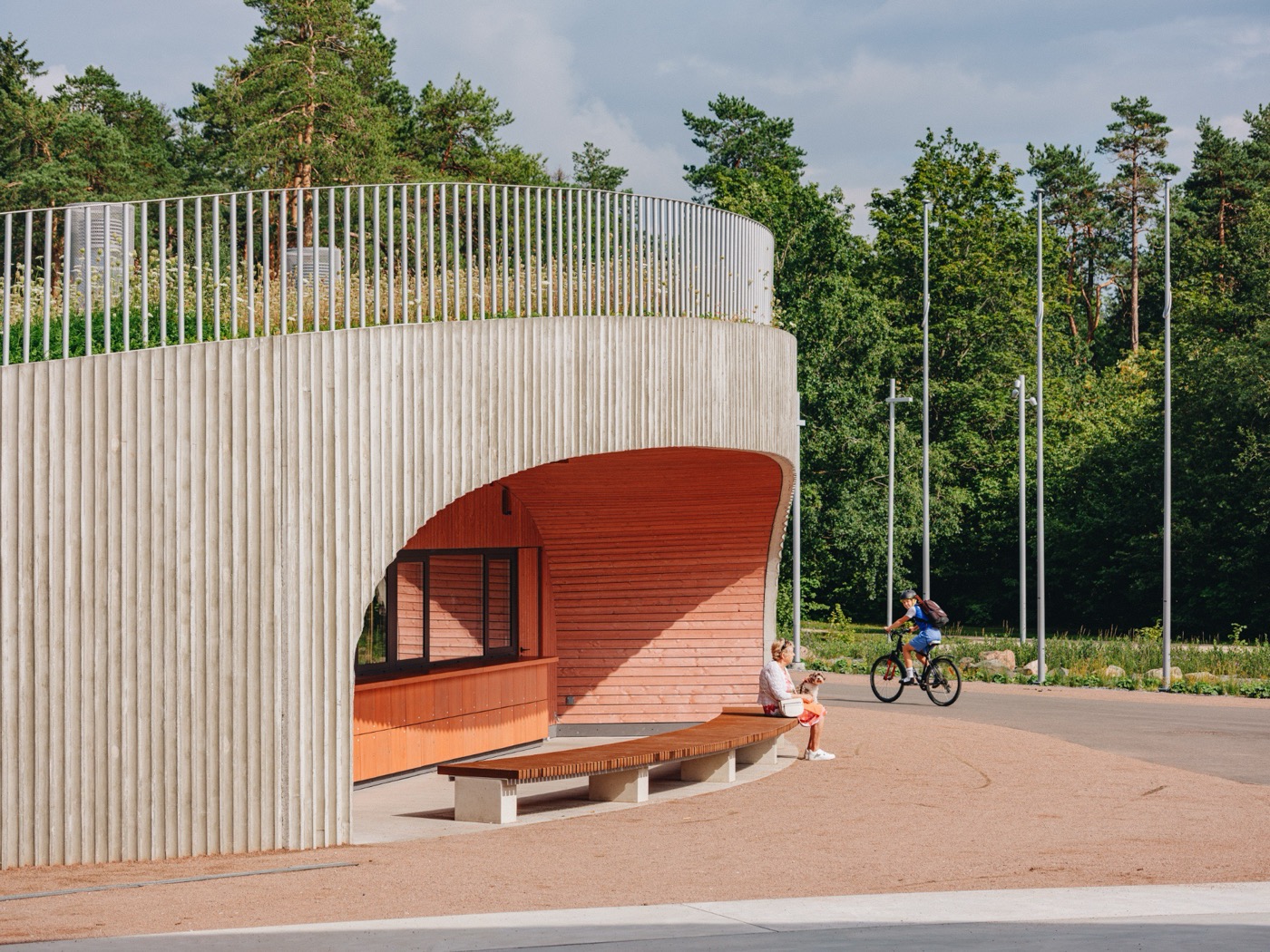
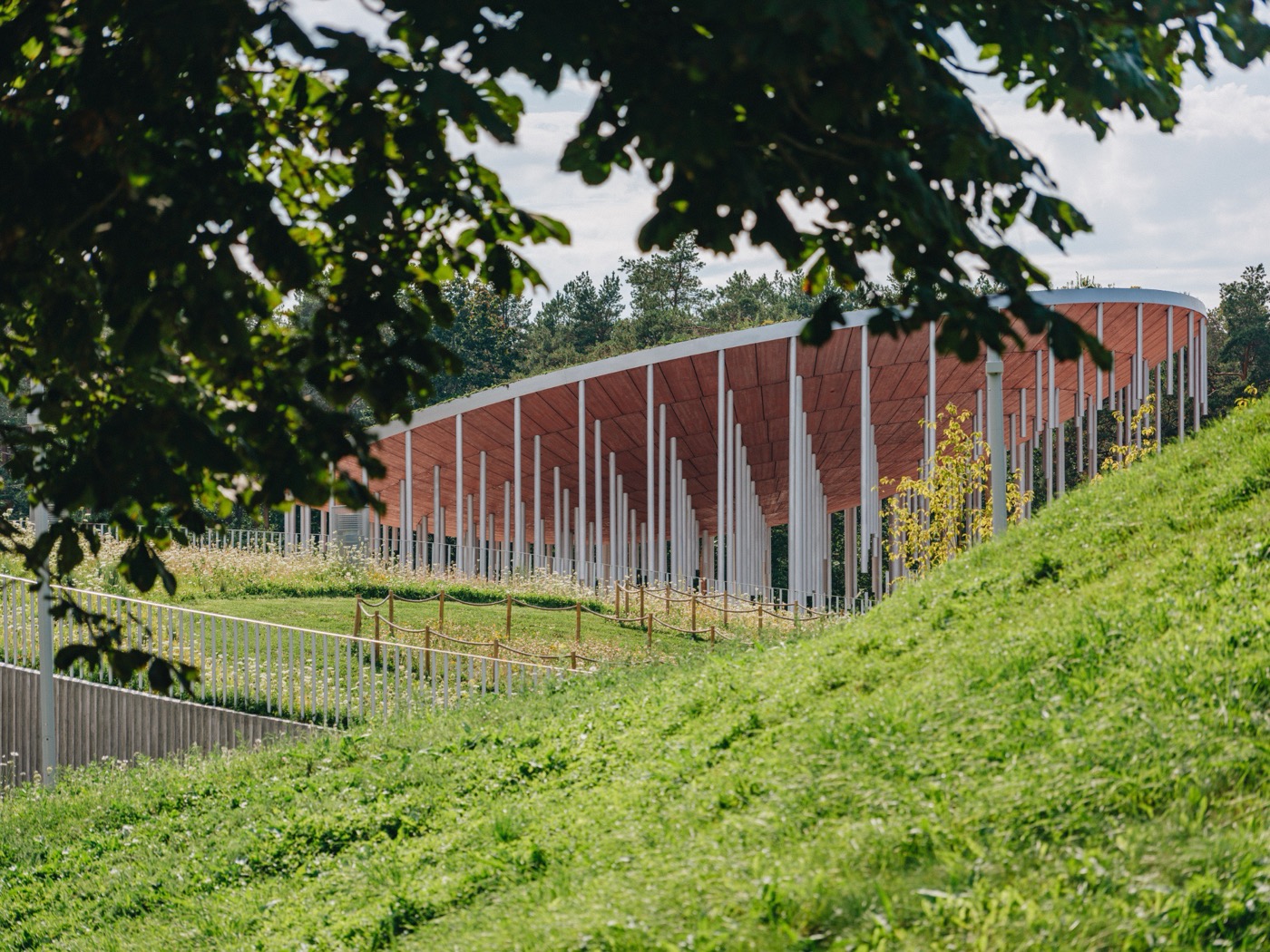
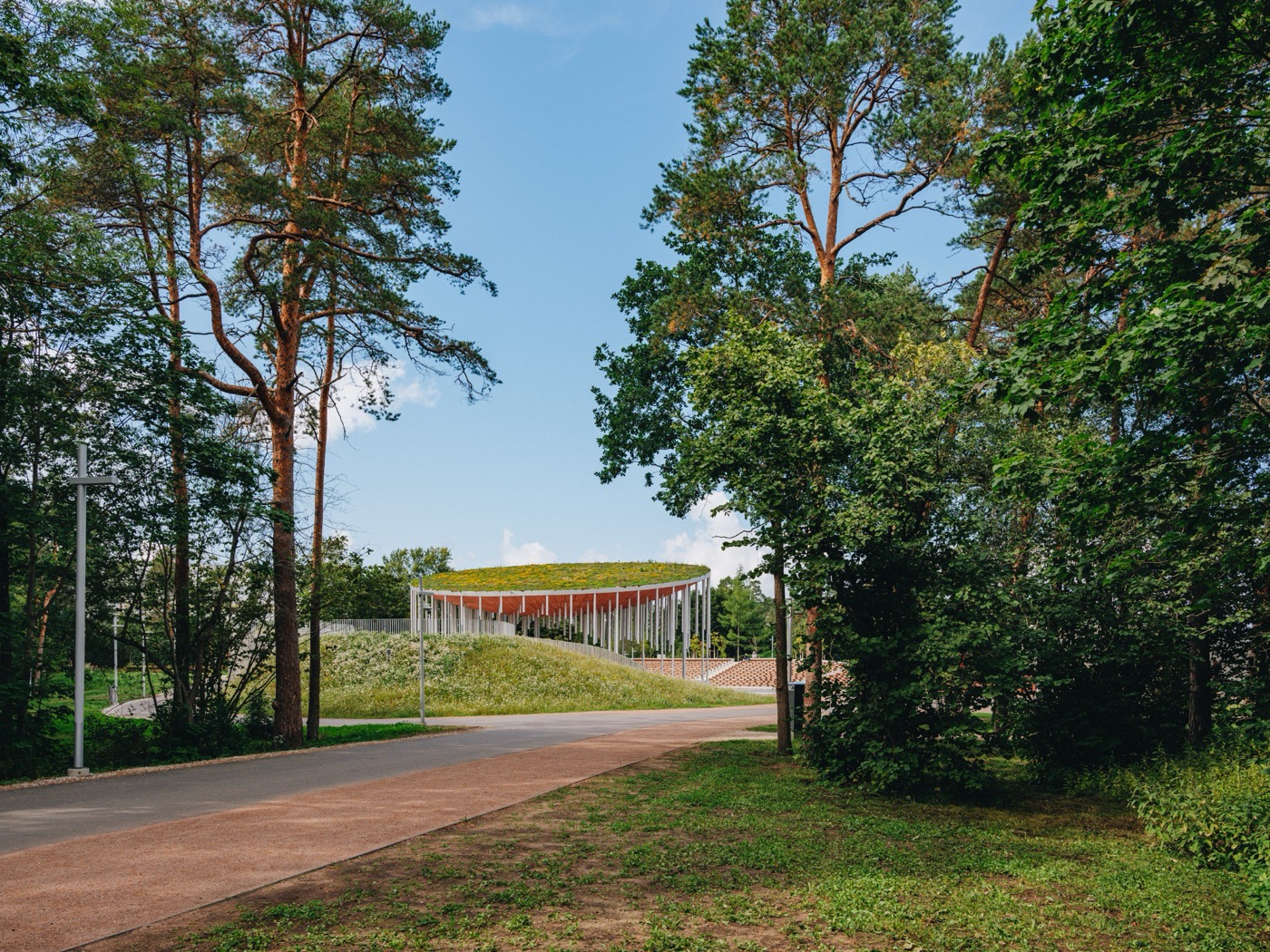
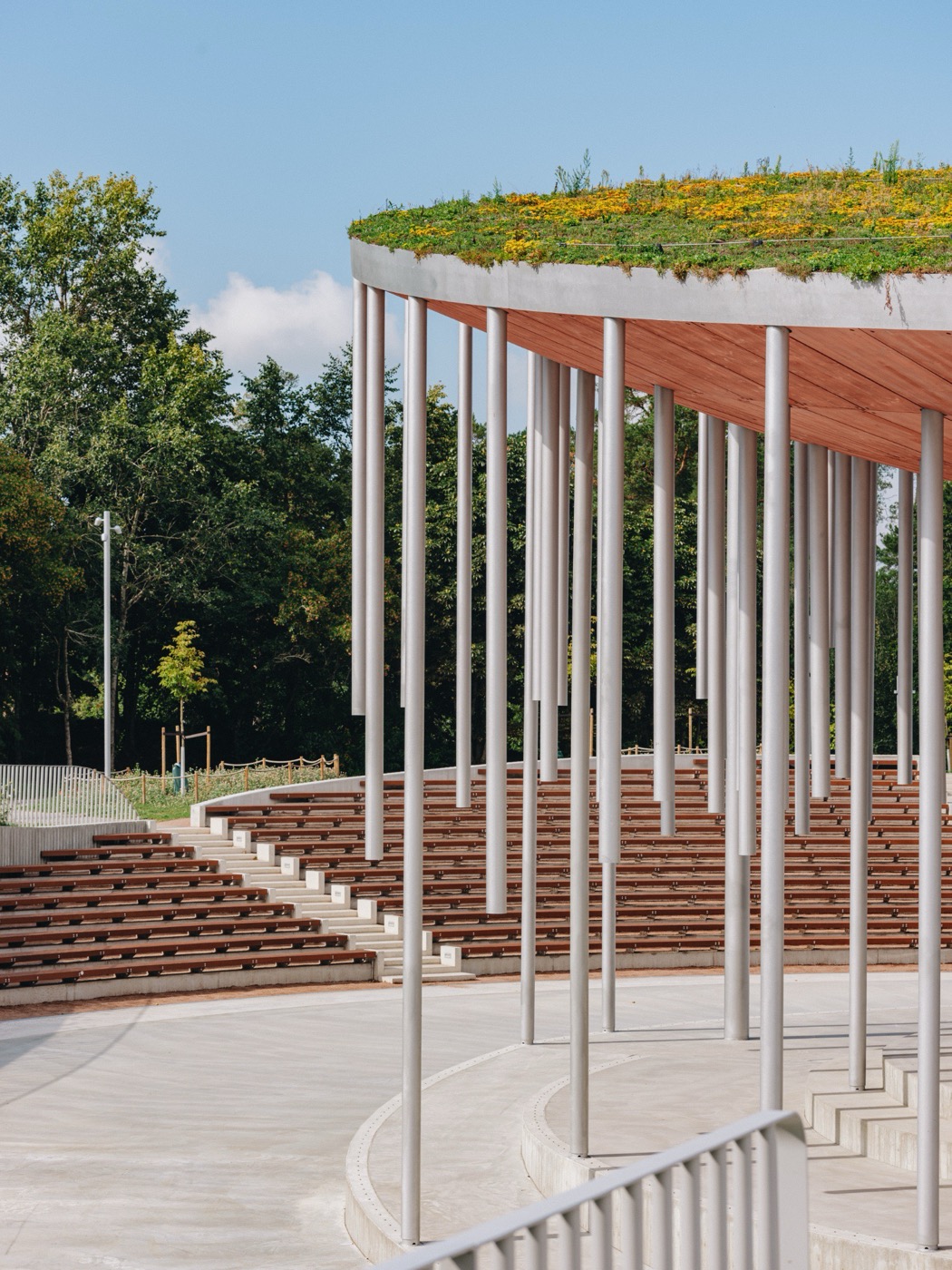
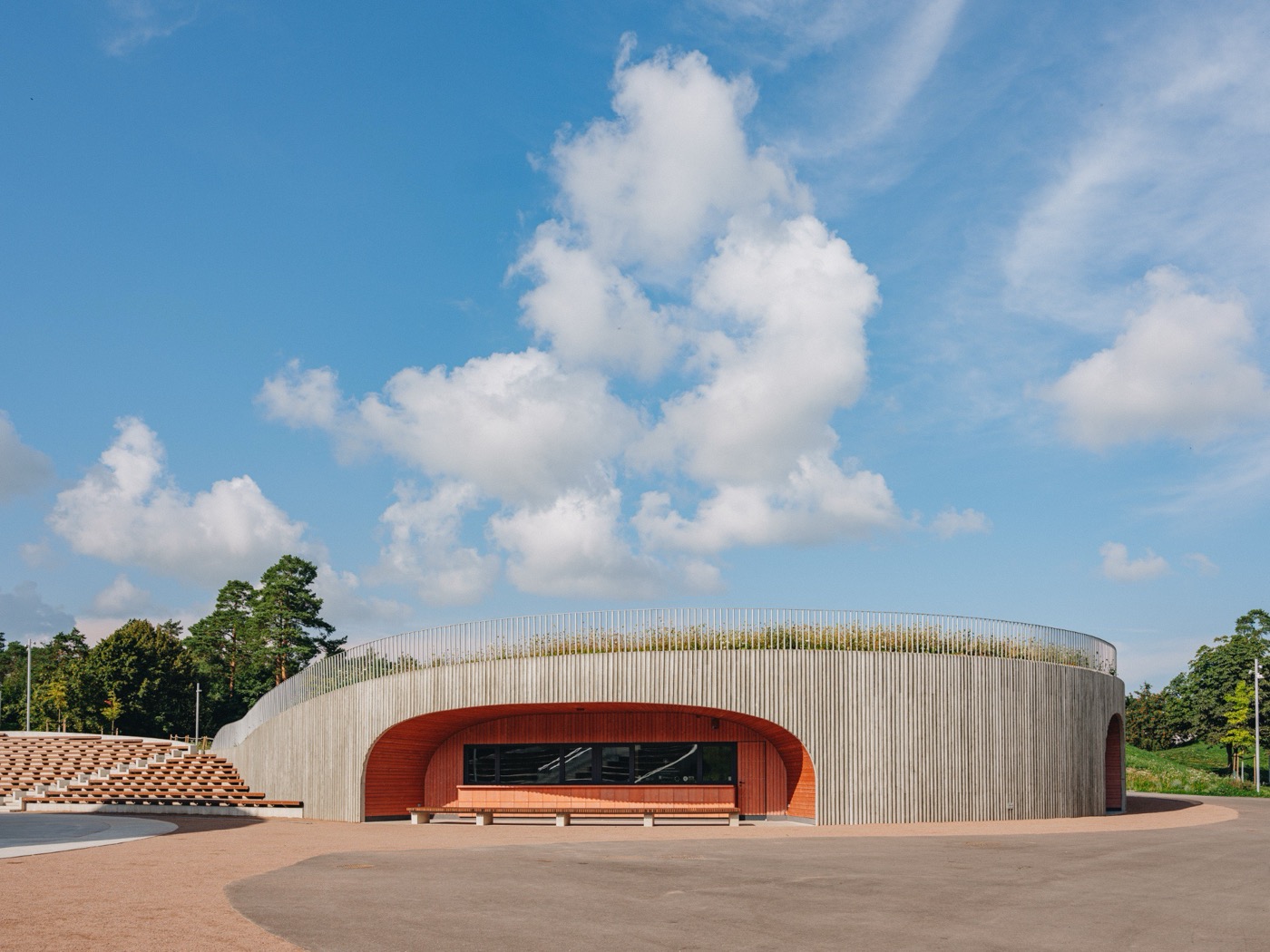
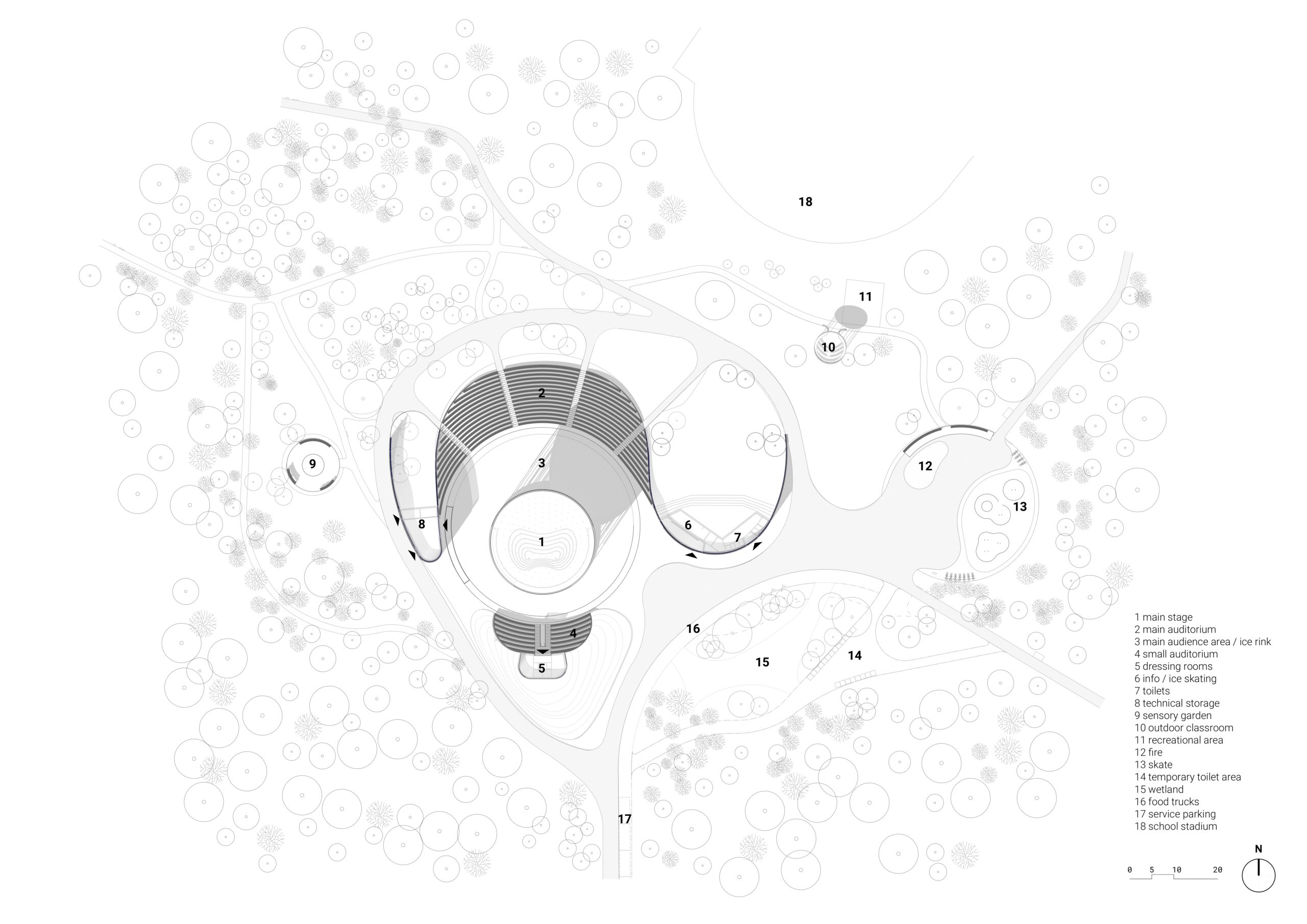
The former Soviet-era festival grounds had introduced physical and visual barriers that disconnected the site from adjacent neighborhoods. These landforms were reshaped into a unified park landscape that reconnects the school, hospital, residential areas, and recreational facilities both physically and visually. Accessibility to the upper spectator tiers is achieved through a gentle 1:25 slope that doubles as an inclusive path within the park, eliminating the need for separate ramps or lifts.
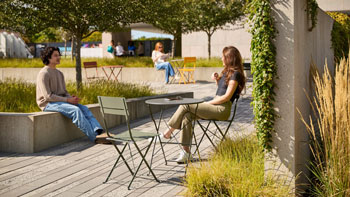
A calm sensory garden adjacent to the hospital offers a restorative outdoor environment for patients, visitors, and staff. At the opposite end of the park, an outdoor classroom and a small activity square for informal urban recreation such as skateboarding and kickbikes support daily use by children and young people. Together, these elements anchor the park within the everyday routines of education, healthcare, and leisure, ensuring continuous use beyond festival periods.
Rainwater is managed through an open rainwater system integrated into the landscape design. Instead of intensively mowed lawns, shrub and meadow communities support biodiversity while avoiding ecological traps and strengthening the existing green corridor. New habitats are created for a wide range of plants, insects, birds, and small mammals, enabling long-term ecological resilience alongside intensive public use.
The curvilinear spatial concept required complex three-dimensional modeling throughout the design process. Parametric tools and multiple 3D environments were used, from the shaped concrete retaining walls to the uniquely formed CLT roof panels of the stage. The steel structure of the stage roof deserves particular mention. No diagonal bracing was permitted between the columns supporting the roof, requiring unconventional structural solutions. Due to the geometry and the thick, grass-covered roof surface, wind loads required repeated simulation and interpretation. Several structural solutions demanded true out-of-the-box thinking to achieve the final rounded form while maintaining landscape continuity and the public character of the space.
The project was done in collaboration with Molumba, Lootusprojekt and other local consultants.
https://maps.app.goo.gl/mSg57ZndDfRqPSoWA
73533


LILA 2026 Sponsor