Kendall Indian Hammocks Park Forest Playground
www.landscapede.com
2026 Schools and Playgrounds / USA / Built in 2023 /
![Camp Matecumbe Playground is a nature-focused play space located set within a 98-acre park in western Miami-Dade County, Florida. The larger park features a significant Pine Rockland preserve and is home to the historic site of Camp Matecumbe, where many child refugees fleeing Castro’s Cuban Revolution in the 1960s were sheltered upon their arrival in […]](https://landezine-award.com/wp-content/uploads/2024/05/00-Camp-Matecumbe-Playground-Main-600x293.jpg "Camp Matecumbe Playground")
![Context The Upper Garden is a new children’s garden located at the historic Pinecrest Gardens in Pinecrest, Florida, near Miami. Pinecrest Gardens is the former site of Parrot Jungle, a historic tourist attraction operating since 1936. The Village of Pinecrest purchased the site in 2003 and opened it as a public garden. Conceived by Village […]](https://landezine-award.com/wp-content/uploads/2024/05/00-The-Upper-Garden-at-Pinecrest-Gardens-Main-600x293.jpg "The Upper Garden at Pinecrest Gardens")
Completed in 2023 in Miami-Dade County, the Kendall Indian Hammocks Park Forest Playground exemplifies a nature-centered approach to play design. The new play area is nestled within a native hammock of live oaks and sabal palms, replacing outdated play structures and a play space design that had minimal connection to its site. The client, the Miami-Dade County Parks, Recreation and Open Spaces Department, sought a design that would harmonize with the existing canopy while expanding meaningful access to nature for children and families.
The landscape architect embraced this challenge by shaping a play environment that weaves through the existing trees, allowing clearings, paths, and play spaces to emerge organically within the forest. Curving forms and gently flowing pathways guide movement through the site, while planting zones and play areas are interlaced to blur the boundary between designed space and natural setting. This layered approach invites exploration, discovery, and varied modes of engagement, allowing children of different ages, abilities, and comfort levels to interact with the landscape at their own pace.
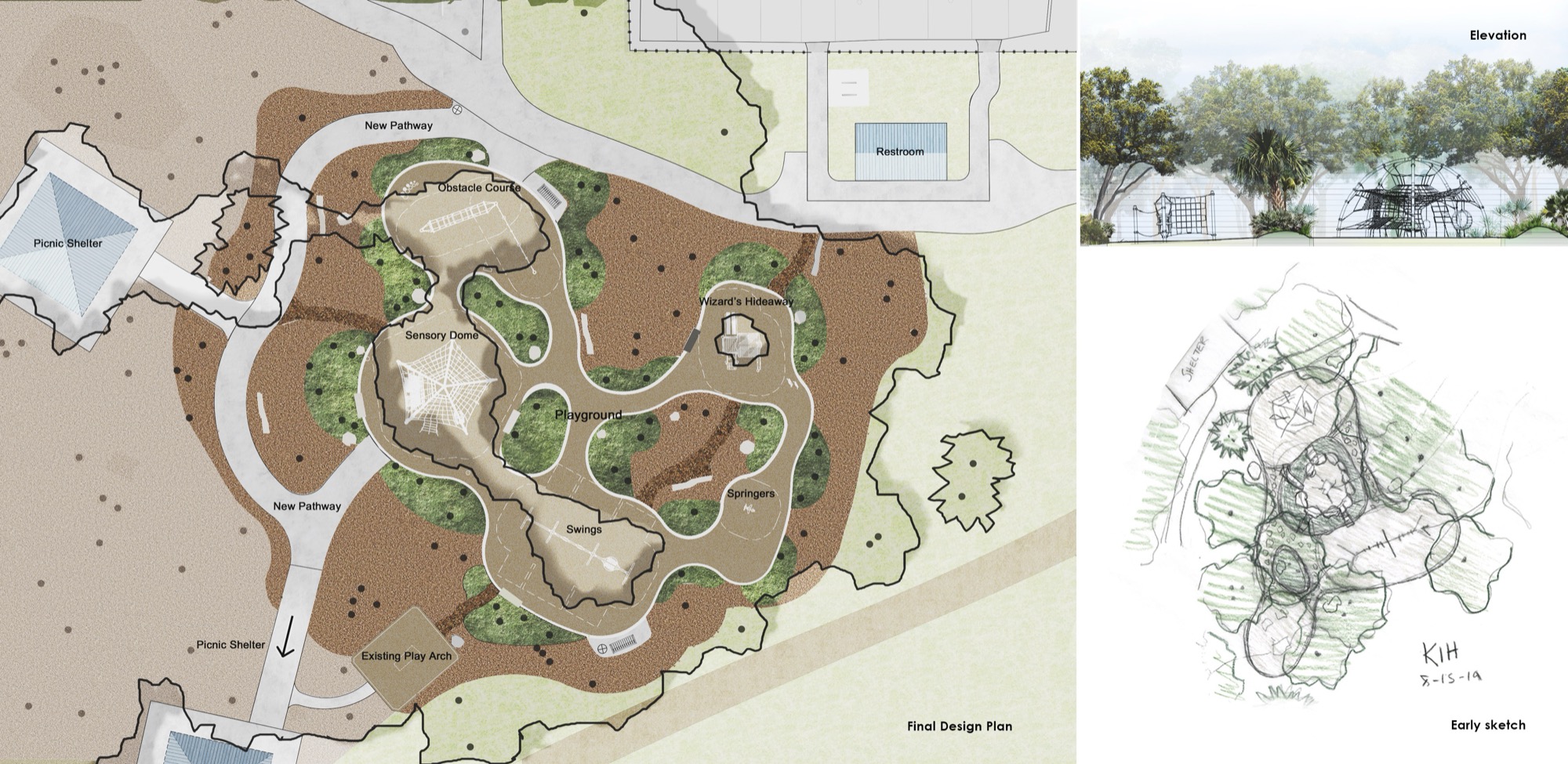
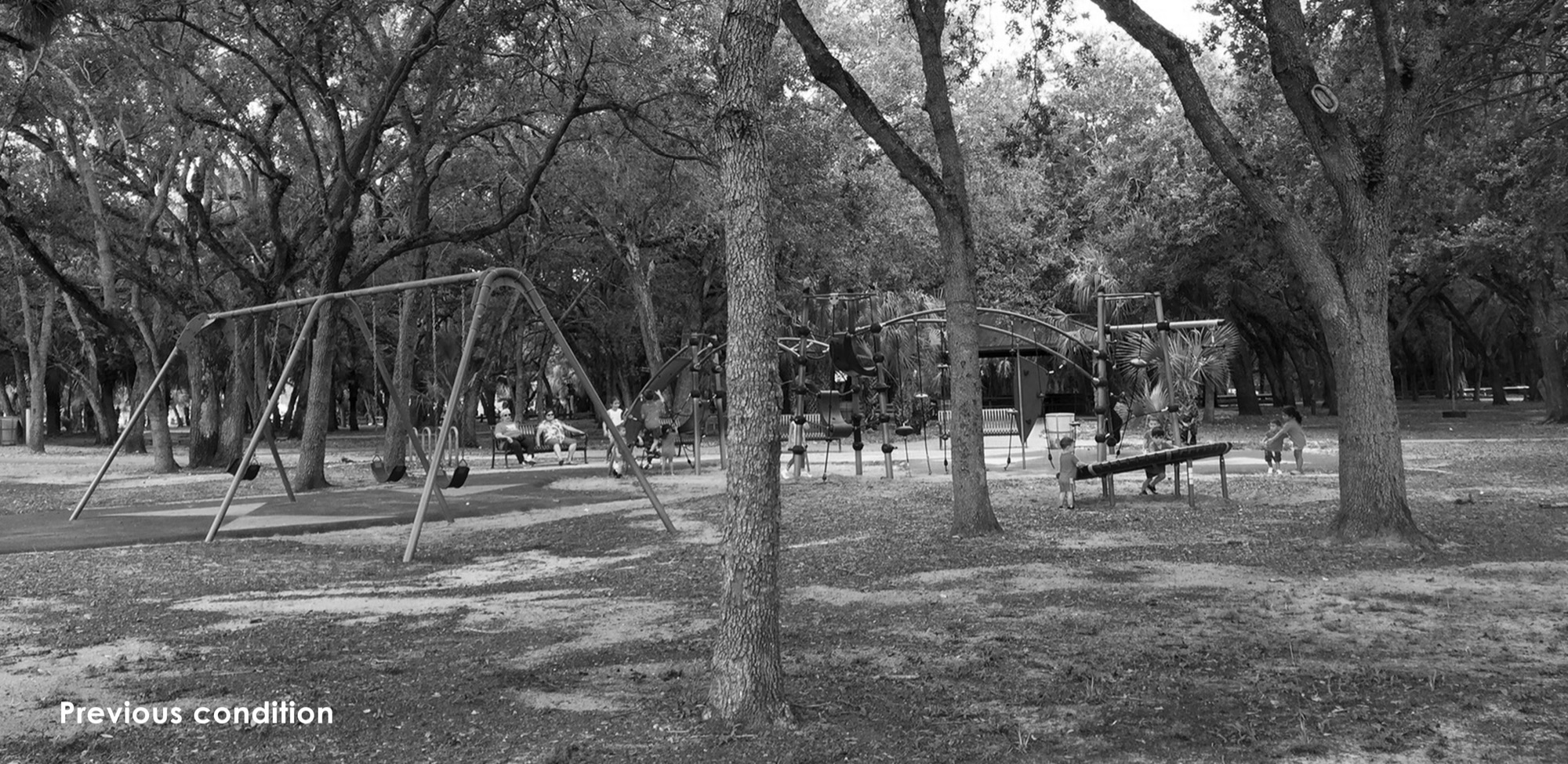

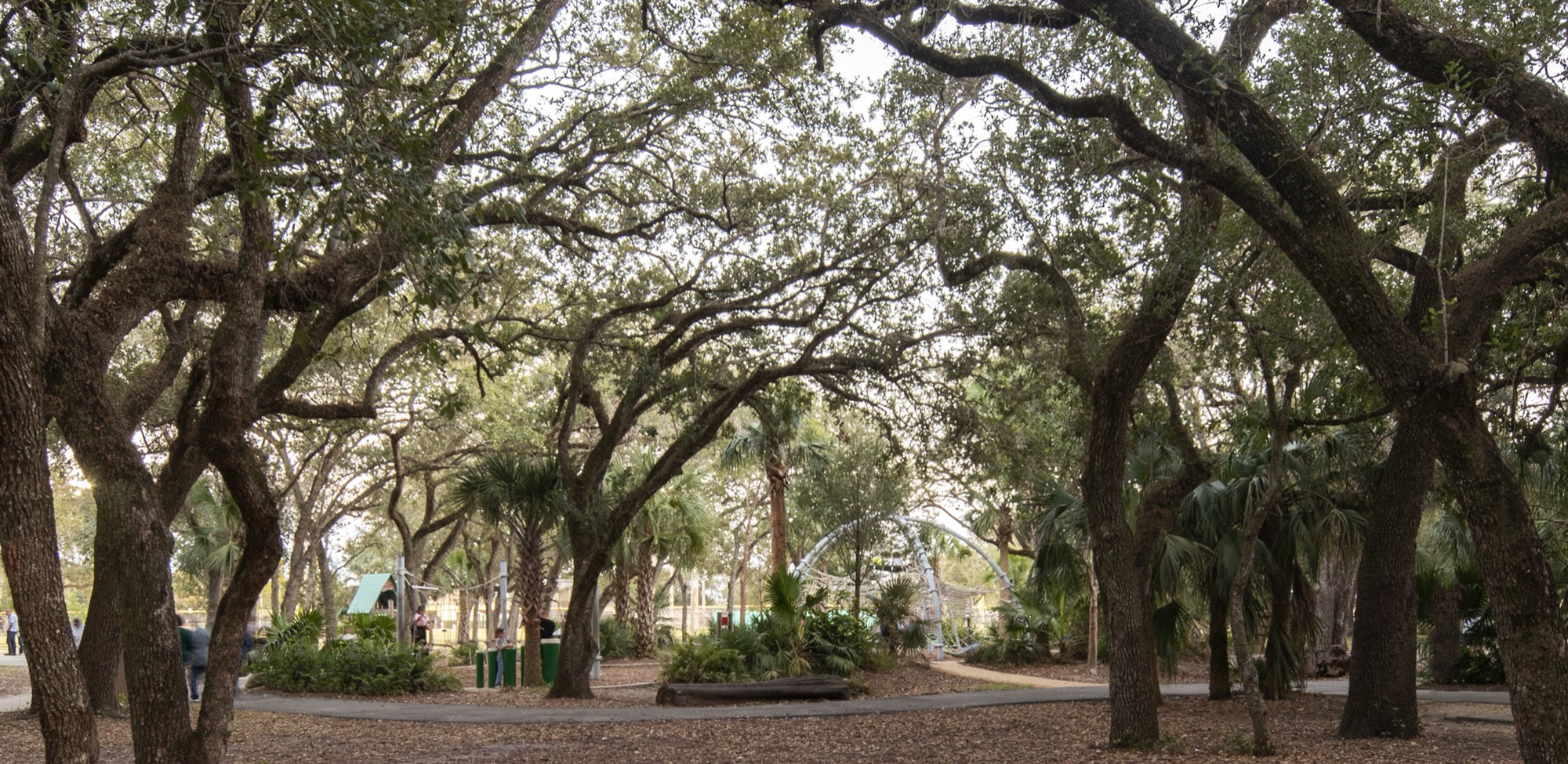
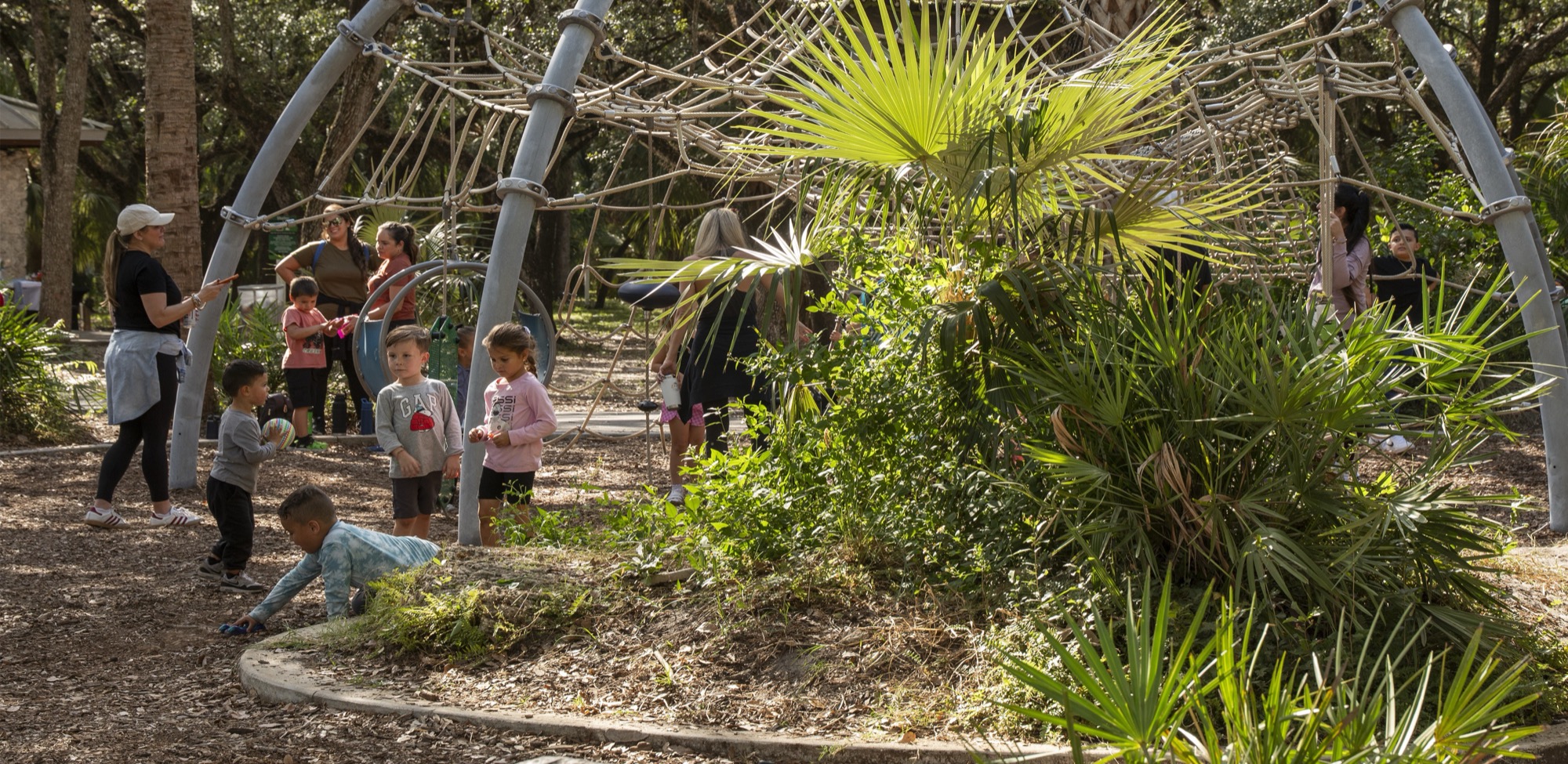
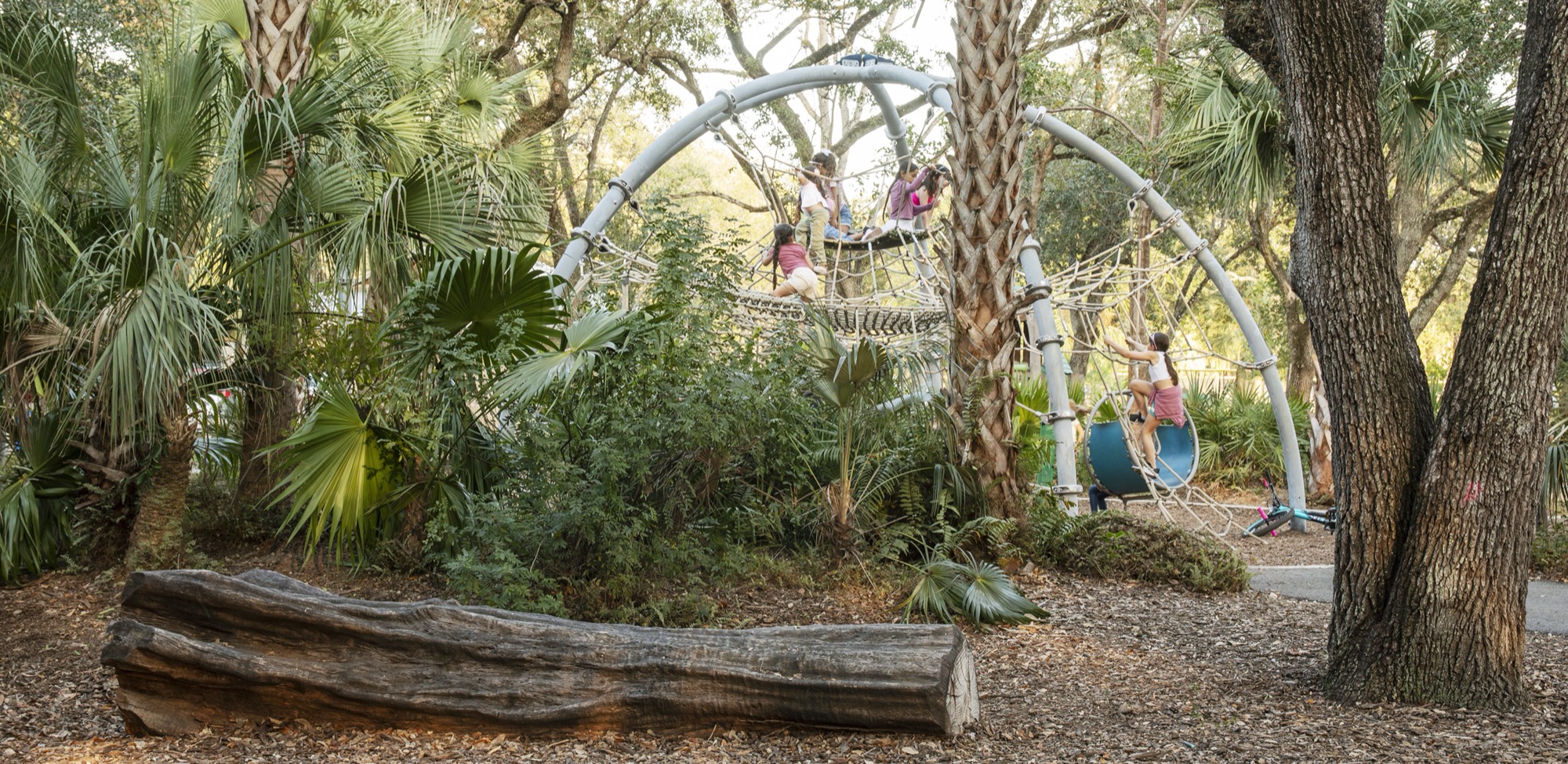

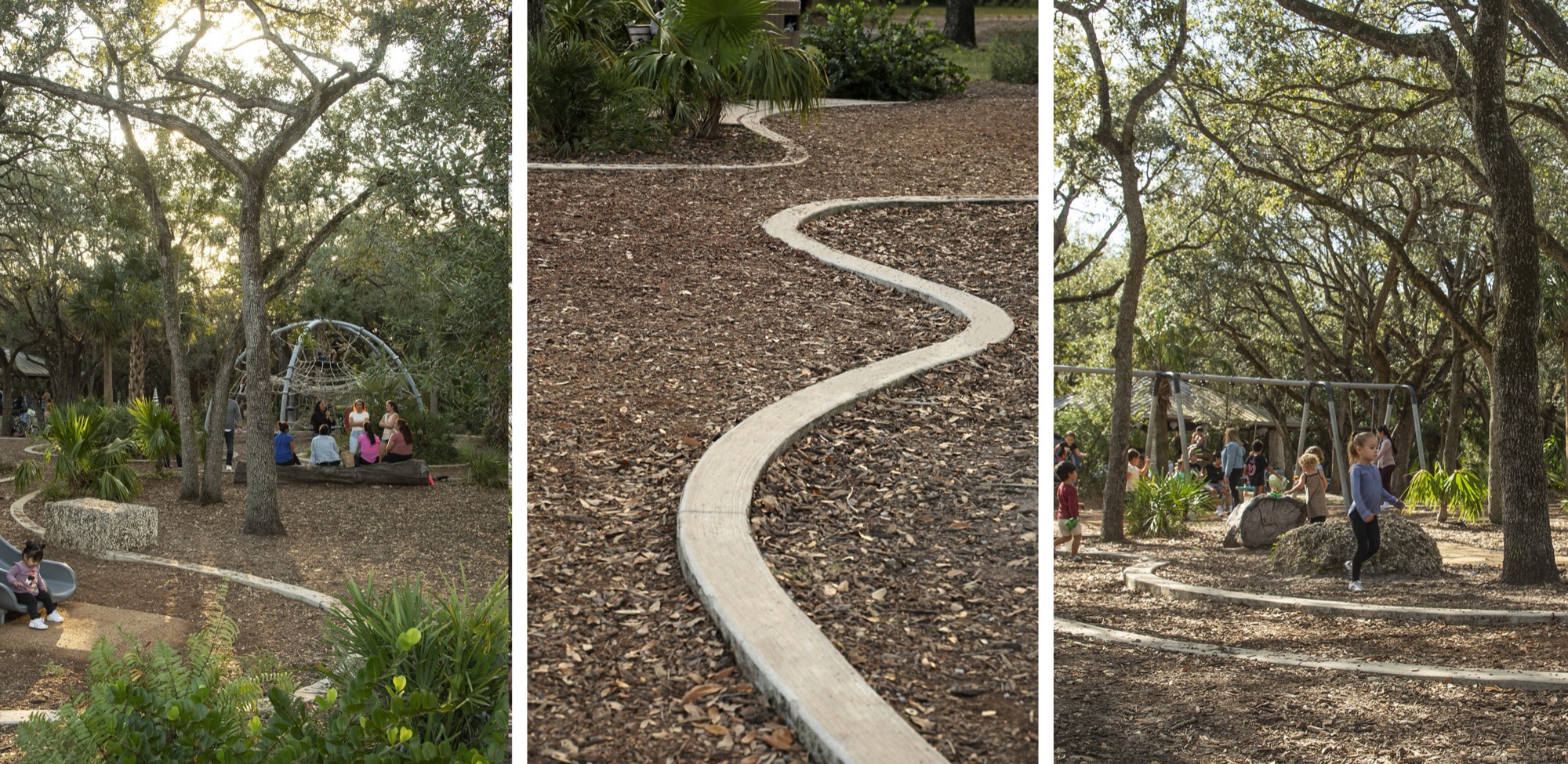

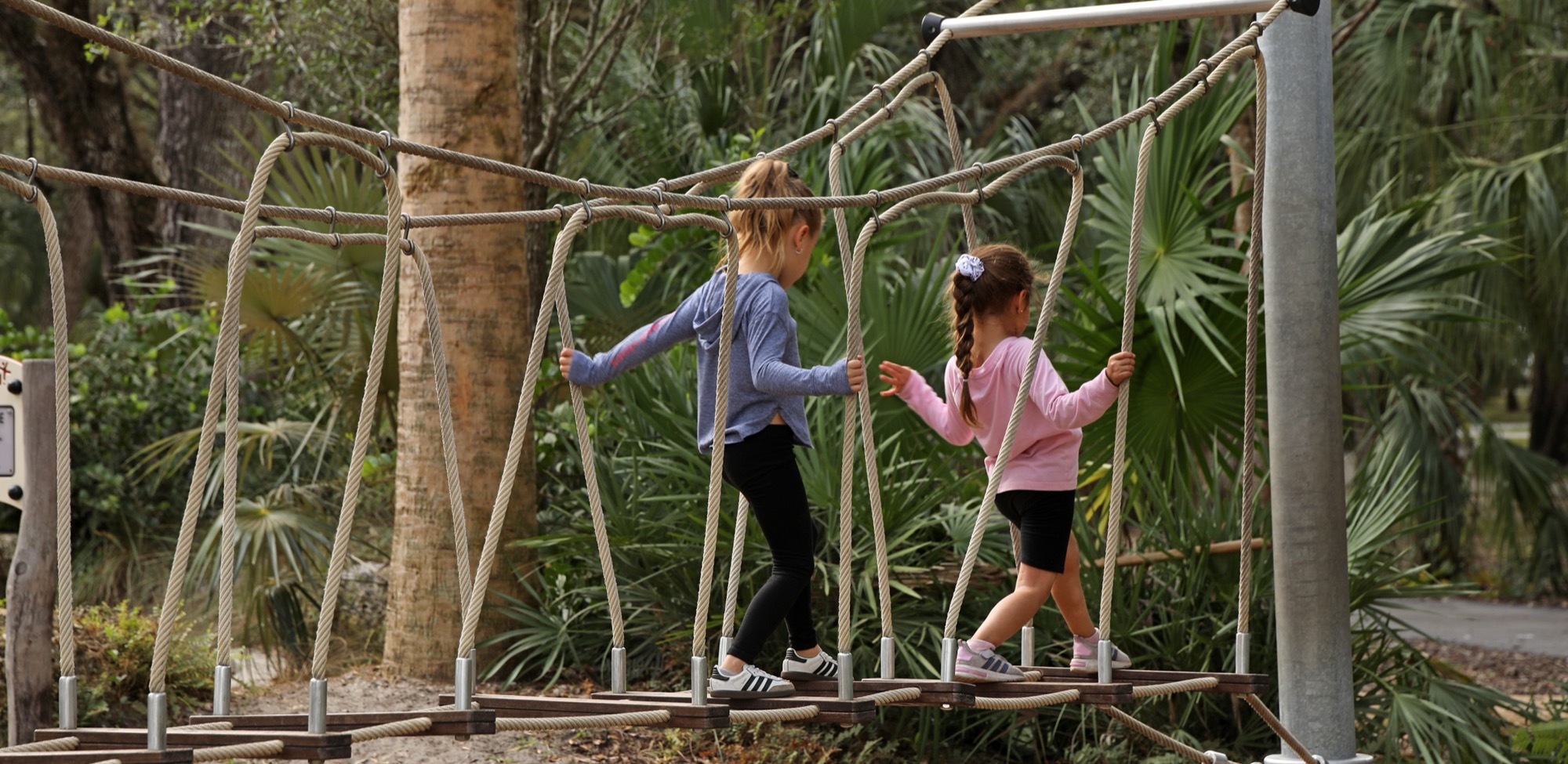
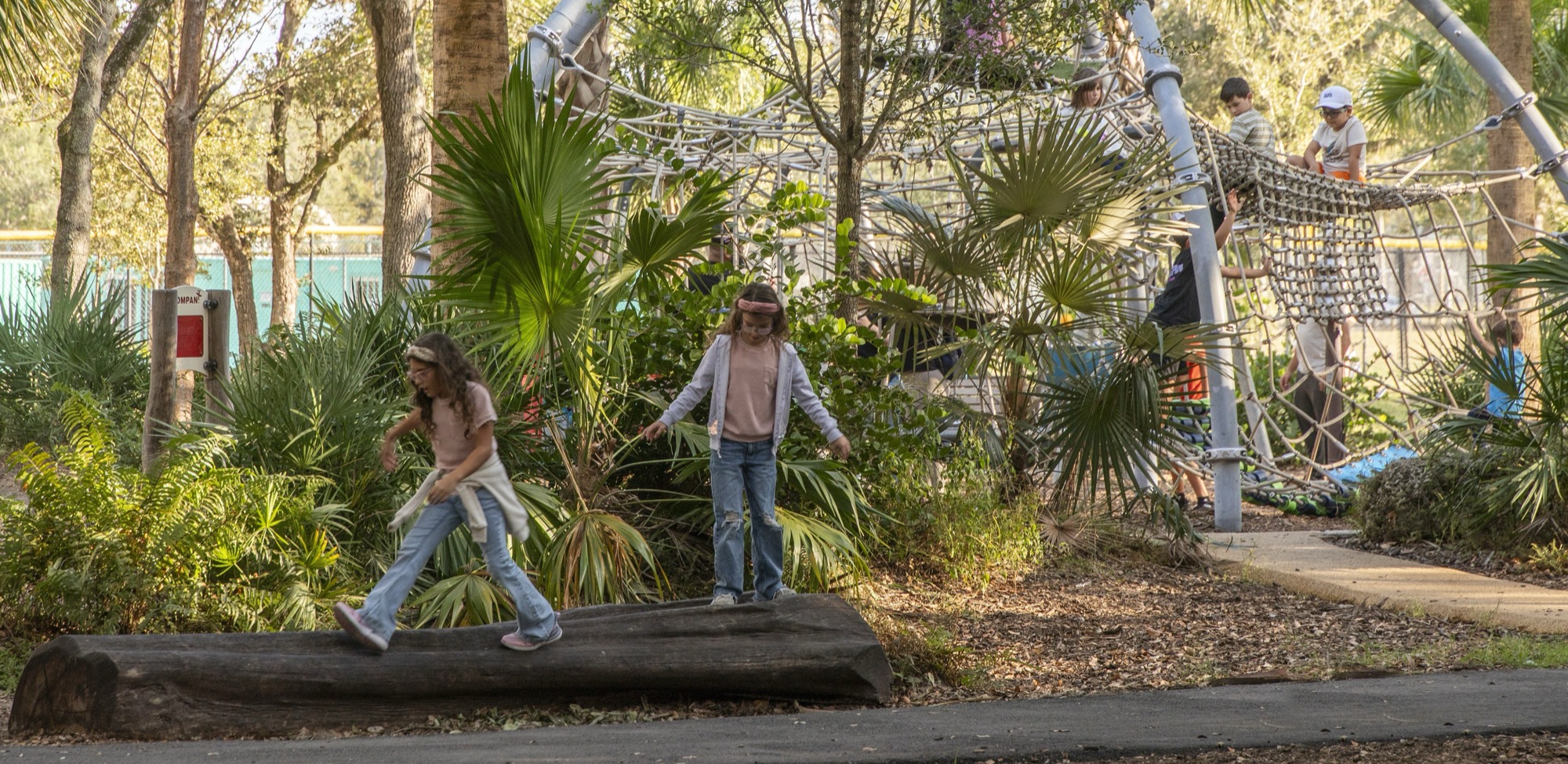
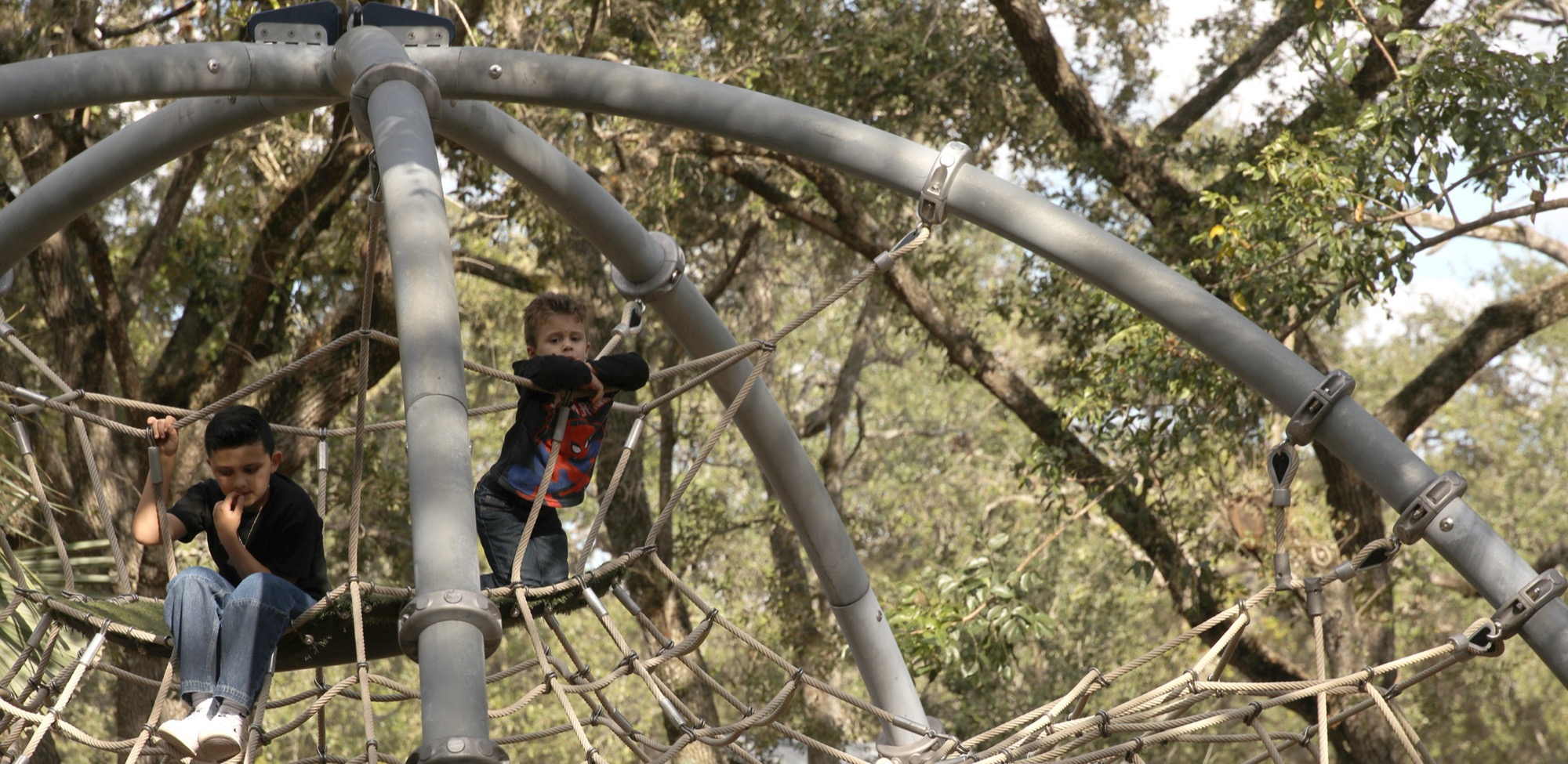
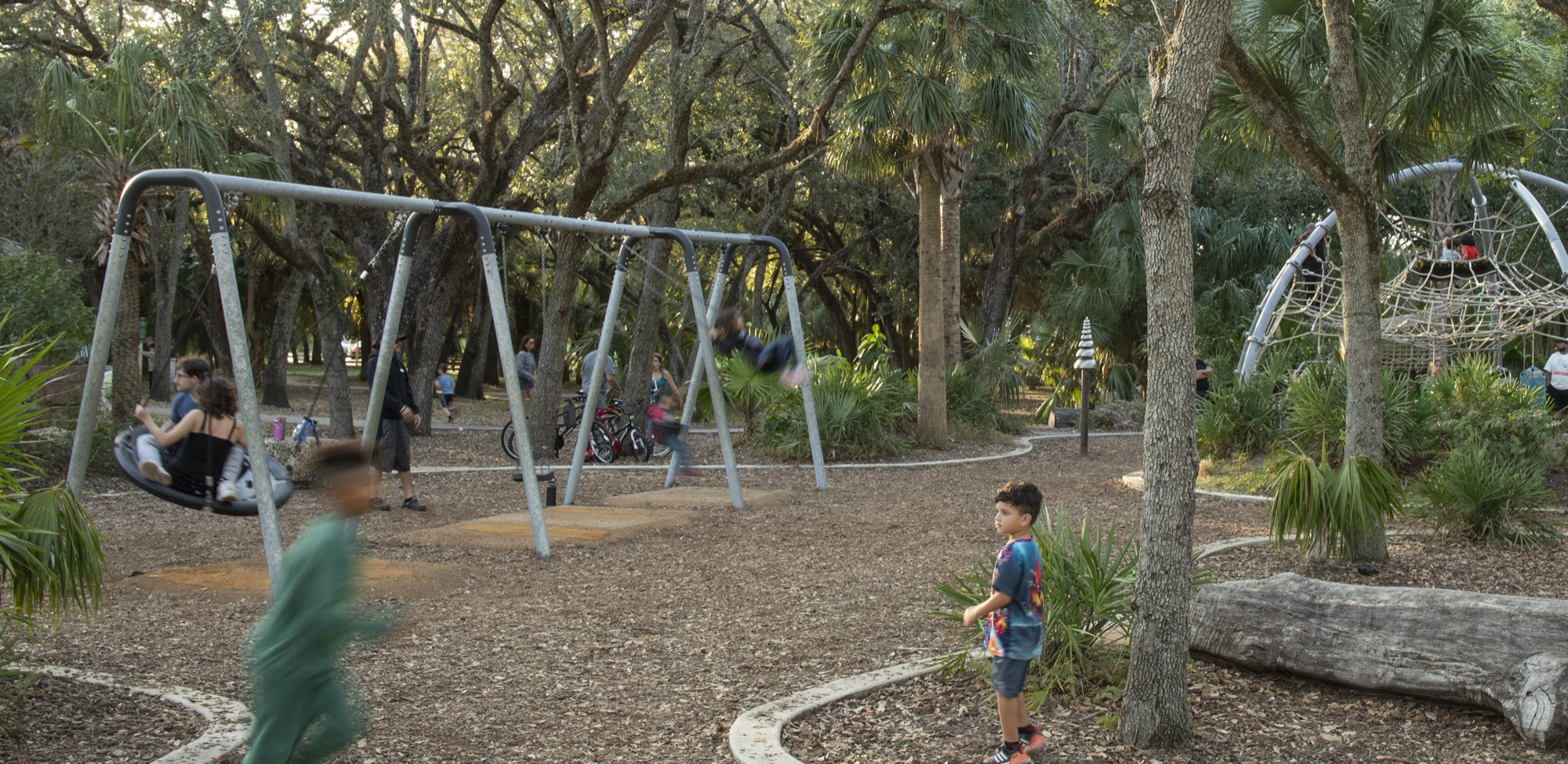
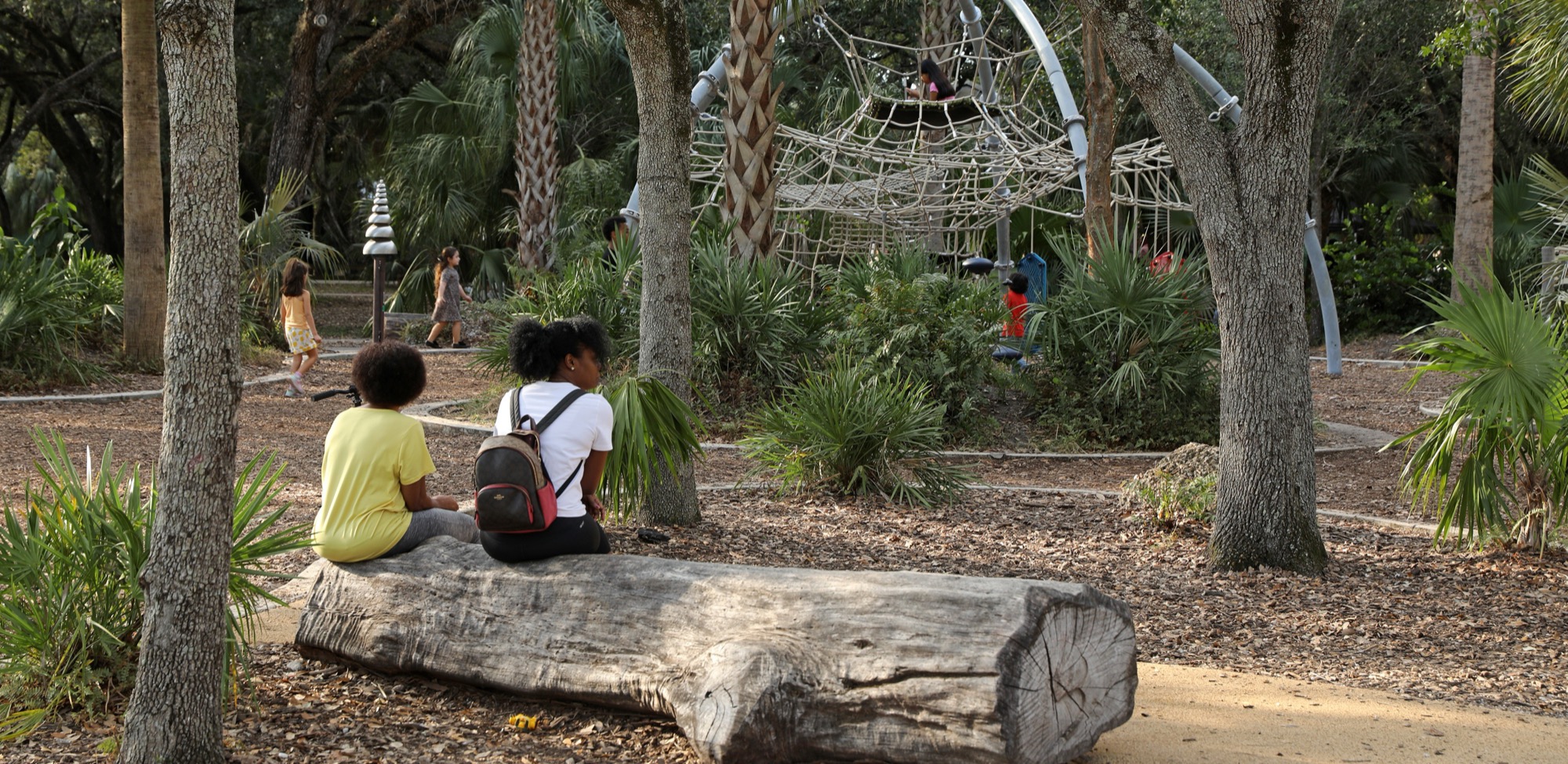
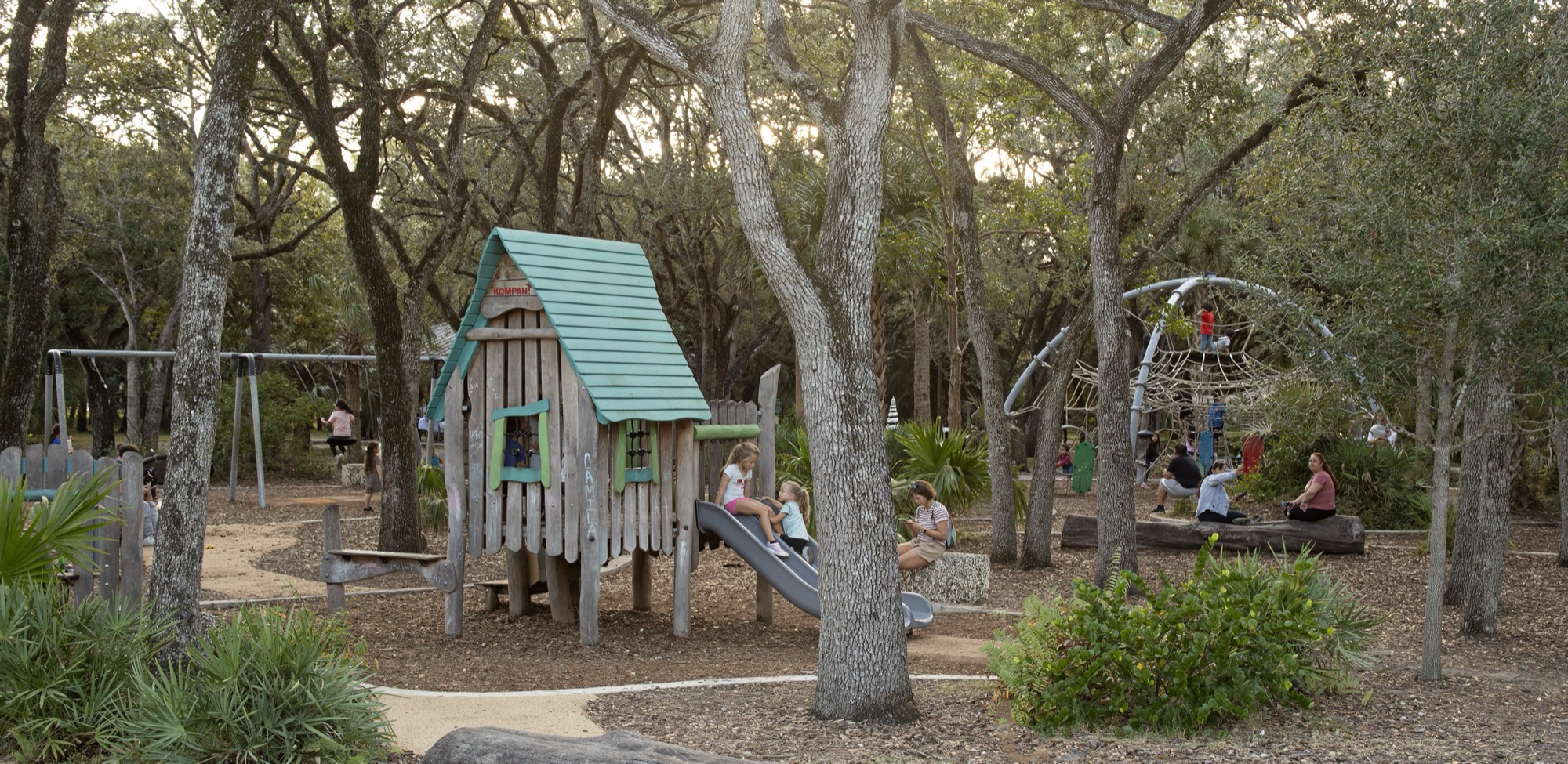
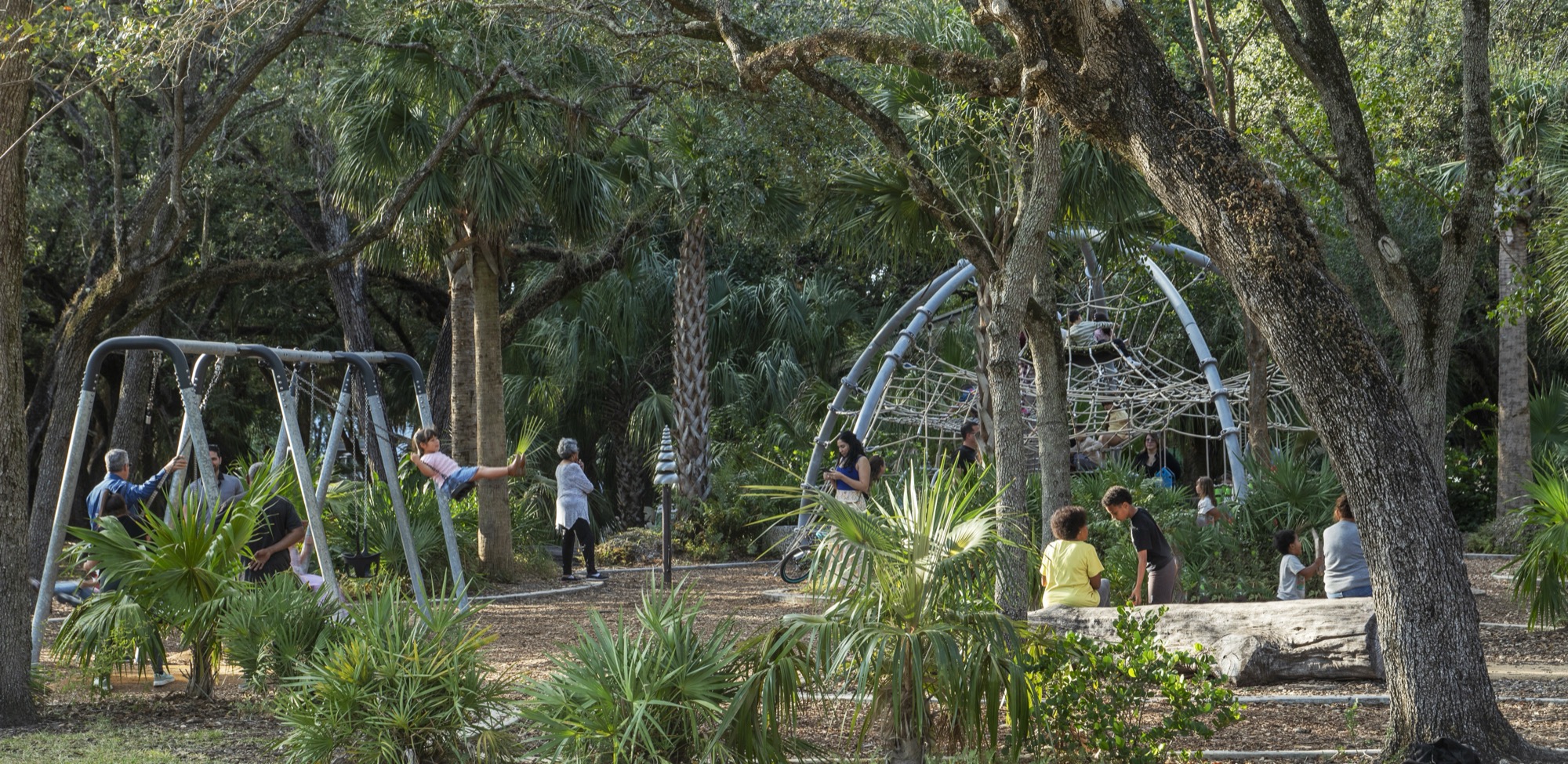
Preservation of the existing canopy was a foundational design driver. All trees and palms on site were retained or carefully relocated within the park, and the planting strategy reinforces the woodland character through the addition of native and ecologically appropriate trees and understory species, including gumbo limbo trees, sabal palms, wild coffee, thatch palm, cocoplum, saw palmetto, and bahama senna. The added planting layers enrich shade, texture, and seasonal change, while also enhancing both ecological value and the sensory experience of play.
Natural and locally rooted materials further anchor the playground in its regional context. Repurposed Australian pine logs, salvaged from a nearby park restoration, are used as informal seating and climbing elements, introducing children to tactile, imperfect materials that weather and change over time. South Florida oolitic limestone boulders and benches reflect the area’s underlying geology, reinforcing a sense of place shaped by local environmental conditions.
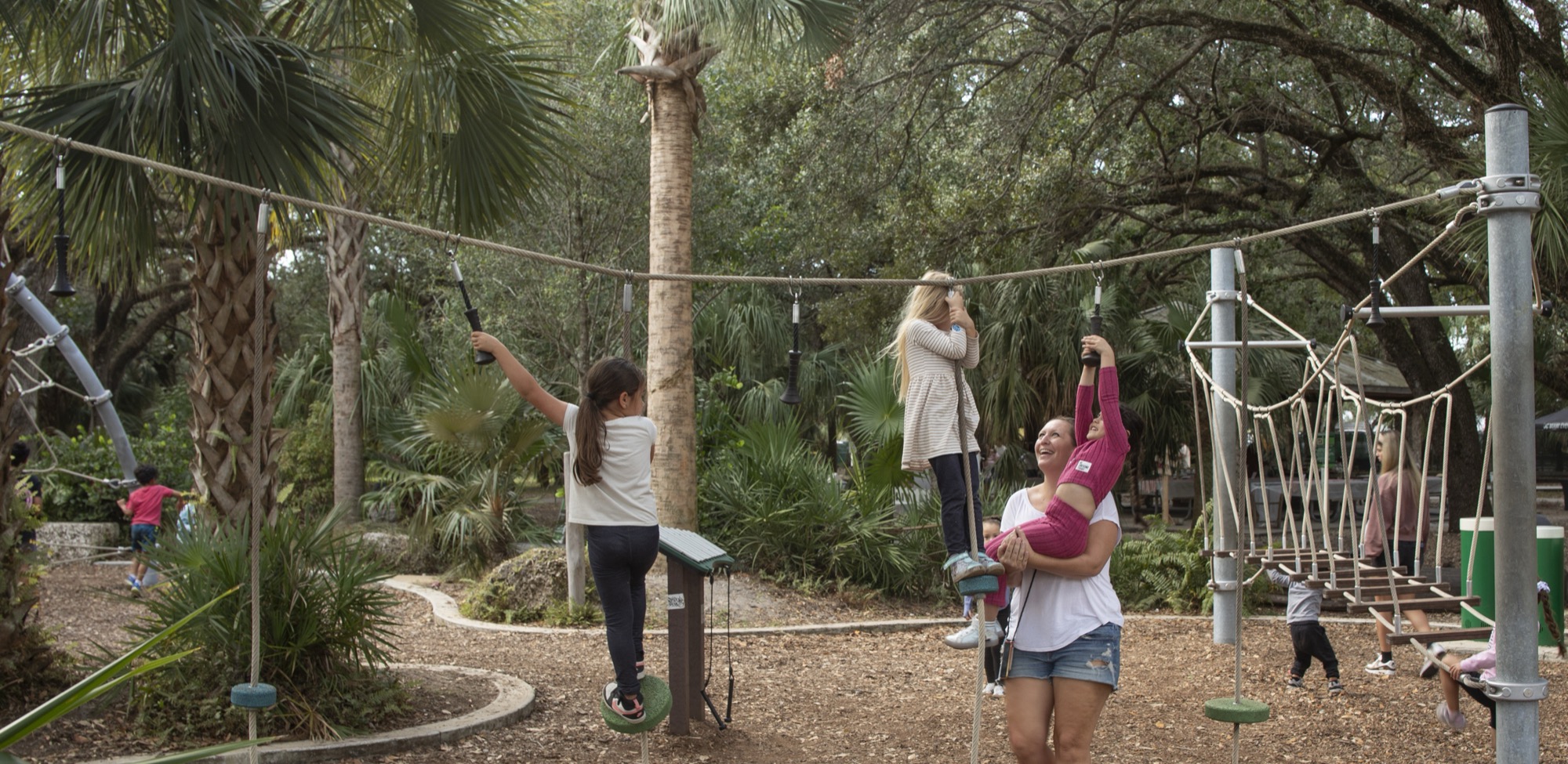
Play equipment is intentionally understated and integrated within the landscape. Constructed from durable materials and a restrained palette, the equipment supports movement and challenge without competing with the forest, allowing the canopy, understory, and ground plane to remain the primary drivers of experience and invite exploration and use of the larger environment.
Kendall Indian Hammocks Park Forest Playground reimagines the role of the public playground by placing the natural environment at the center of the play experience. Developed as part of a broader nature-based playground program by Miami-Dade County, to which the landscape architect significantly contributed, the project demonstrates how landscape-led design can create inclusive play environments that offer multiple ways for children and families of different ages, abilities, and backgrounds to explore, participate, and belong. By working with the existing forest rather than against it, and through the integration of native vegetation, locally rooted materials, and nature-inspired forms, the design invites curiosity, imagination, and unstructured exploration while cultivating long-term appreciation for natural spaces and environmental stewardship.
https://maps.app.goo.gl/w4hhZnBXuSmEKctZ7
73824


LILA 2026 Sponsor