Netball Hub and Park
www.insiteinternational.com
2026 Residential Parks / United Arab Emirates / Built in 2024 /

![The Valley is an inland residential community located in about 30minutes from Downtown Dubai. Developed in 4 phases each with their own distinct character and community typologies, the Valley master plan is approximately 670ha all linked by a nearly 65ha linear park. This linear park stretches for 7.5km and provides pedestrian, cycle and micromobility connectivity […]](https://landezine-award.com/wp-content/uploads/2025/05/00-Valley-Phase1-MainPhoto-00-600x450.jpg "The Valley, Phase 1 by InSite International")
Netball Hub & Park, JVC, Dubai
The Netball Hub and Park project begins with a simple premise: an urban park should be used, not just provided.
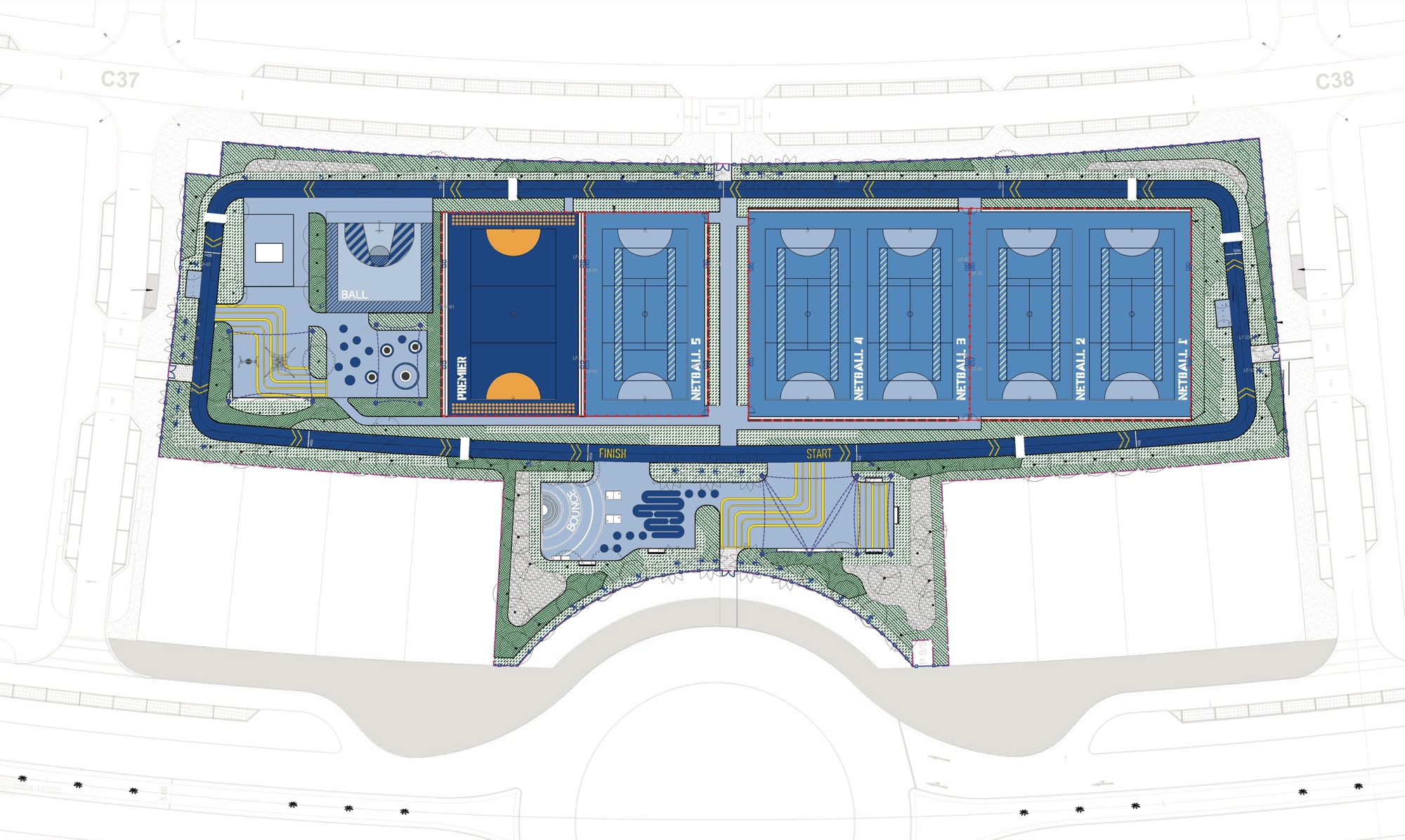
In Jumeirah Village Circle, a residential district with limited high-quality public space, a 12,970 sqm vacant plot was reworked as an urban park structured around shared activity and everyday use. Rather than introducing a single-purpose amenity, the design concentrates multiple programs into a compact footprint, positioning the park as active social infrastructure within a largely dispersed urban fabric.
The project maintained its central ambition despite an early change in site location following the sale of the originally proposed plot: creating accessible netball infrastructure within Dubai, where facilities for the sport were limited. Prior to the project, the main concentration of dedicated netball courts was located out of town at the Dubai 7s stadium, making regular access difficult for many communities across the city.
Since opening in March 2024, the park has been actively adopted by both organized clubs and the wider community. Weekly programming, including youth clinics, women’s sessions, league training, and weekend competitions, supports consistent use across age groups, while informal occupation extends beyond scheduled play. During the netball season, the courts accommodate more than 1,000 players and spectators each weekend, with surrounding spaces animated by families, teenagers, and casual users throughout the day. This sustained level of activity has established the park as a recognized hub for netball, with the developer now referring to it as “the home of netball.” Weekend use in particular reflects strong cross-generational engagement and sustained patterns of occupation rather than occasional visitation, while supporting broader public health objectives through accessible, everyday physical activity.
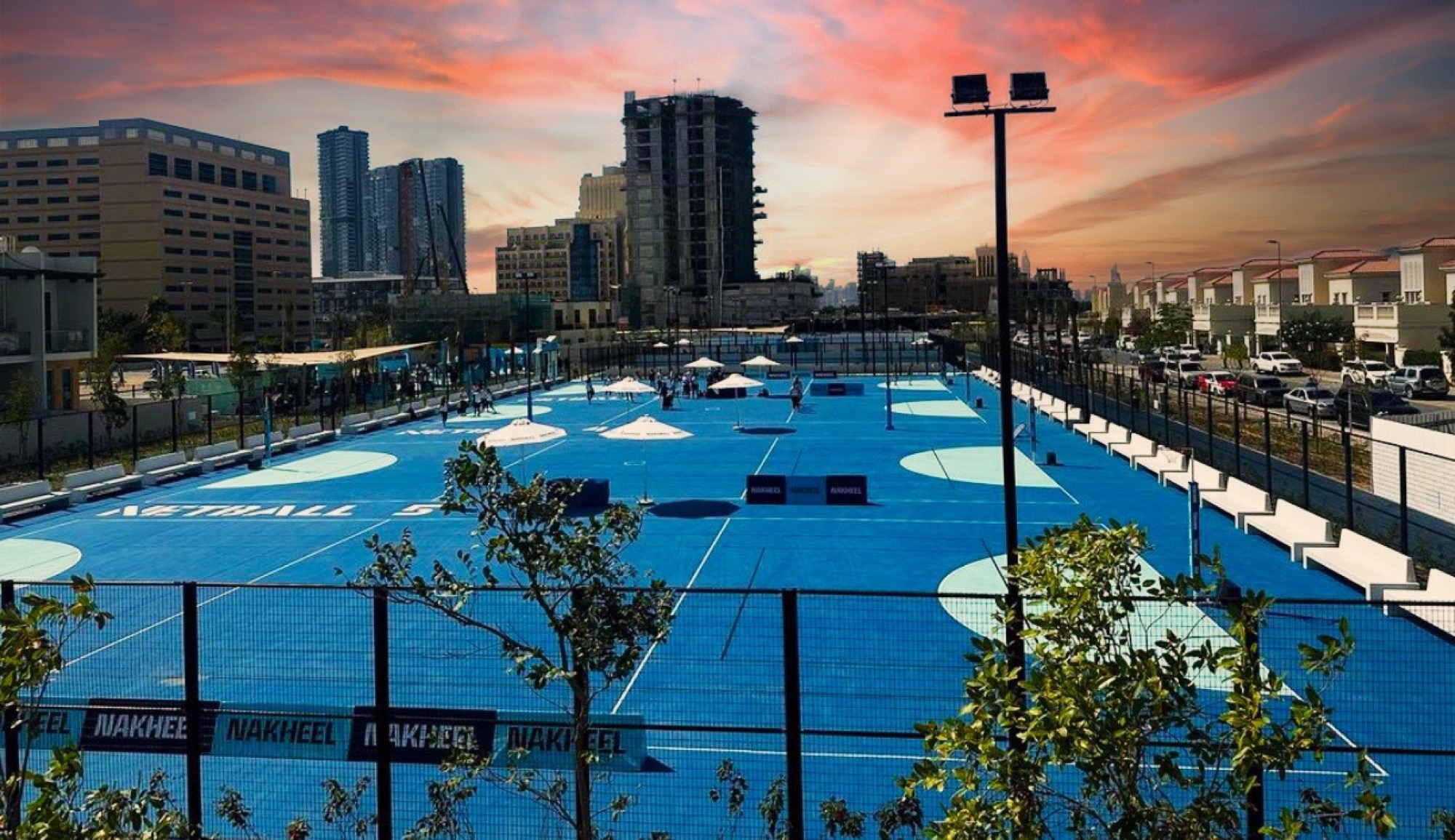
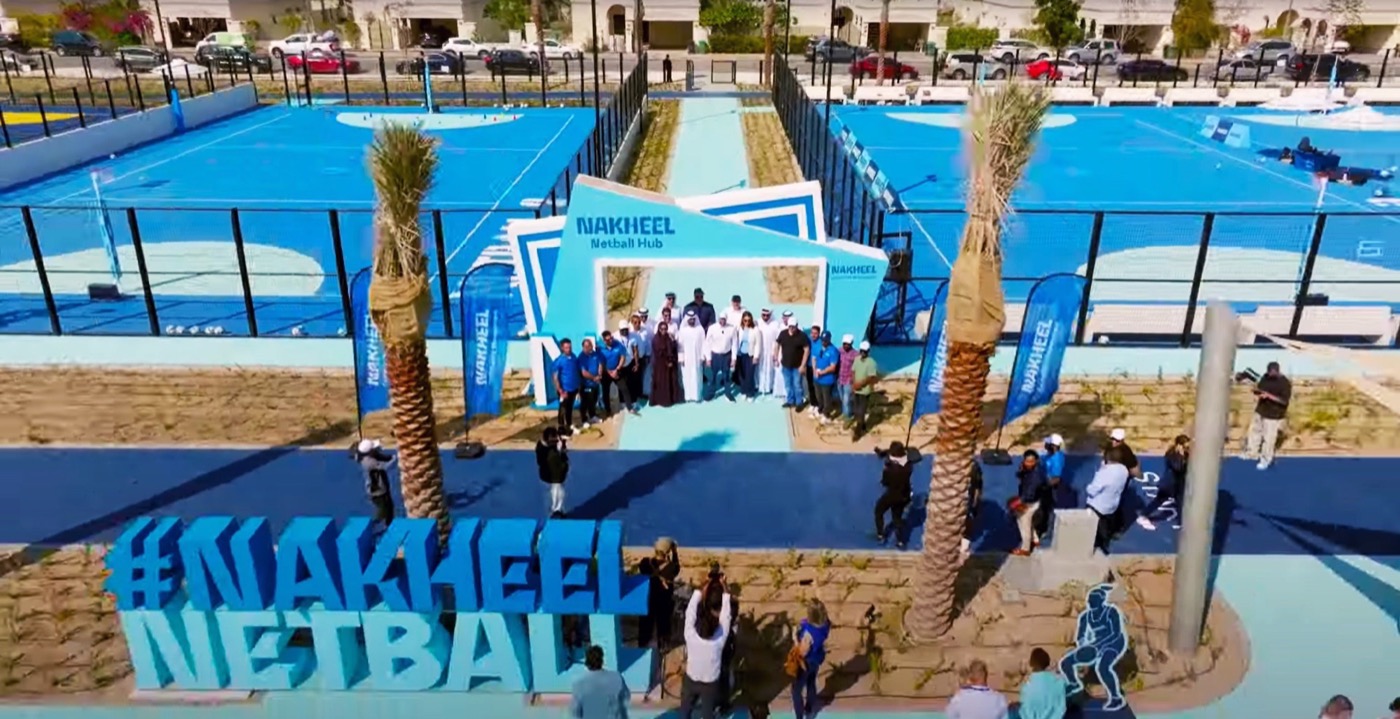
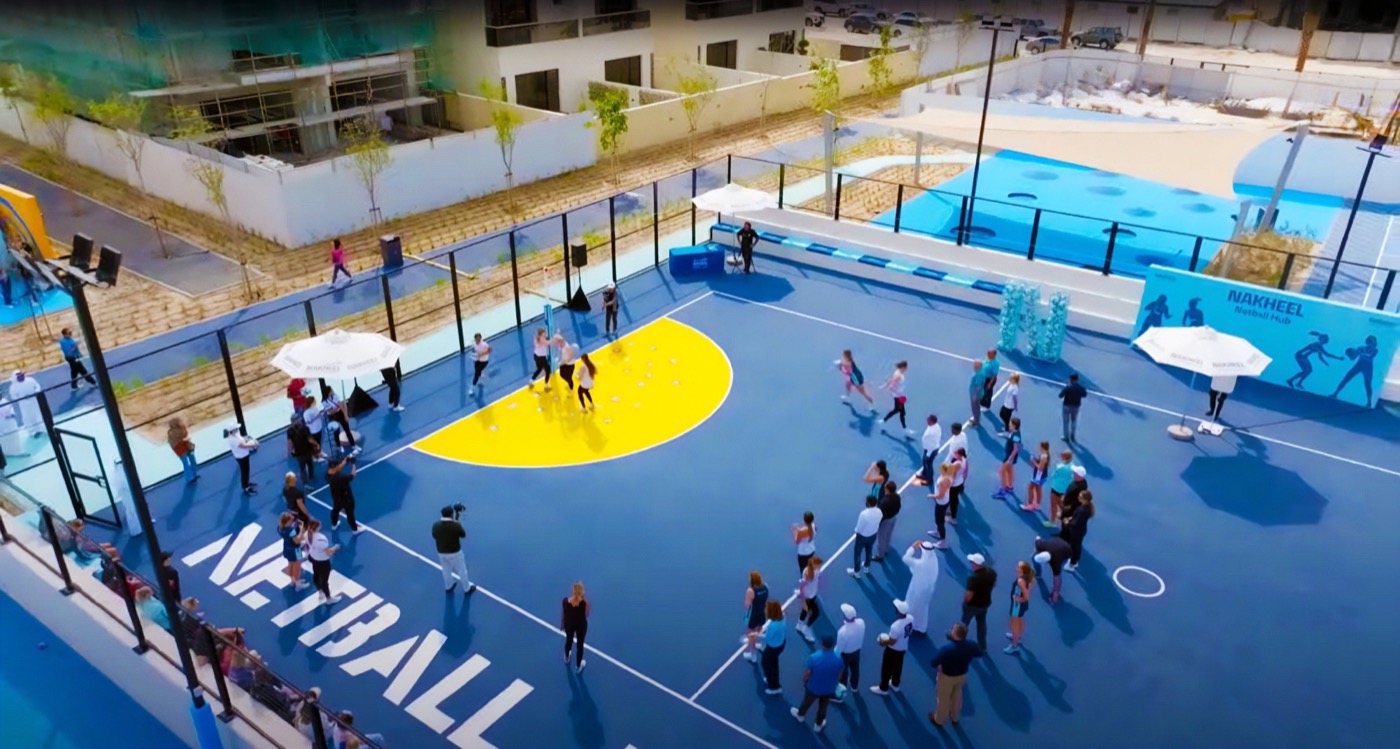
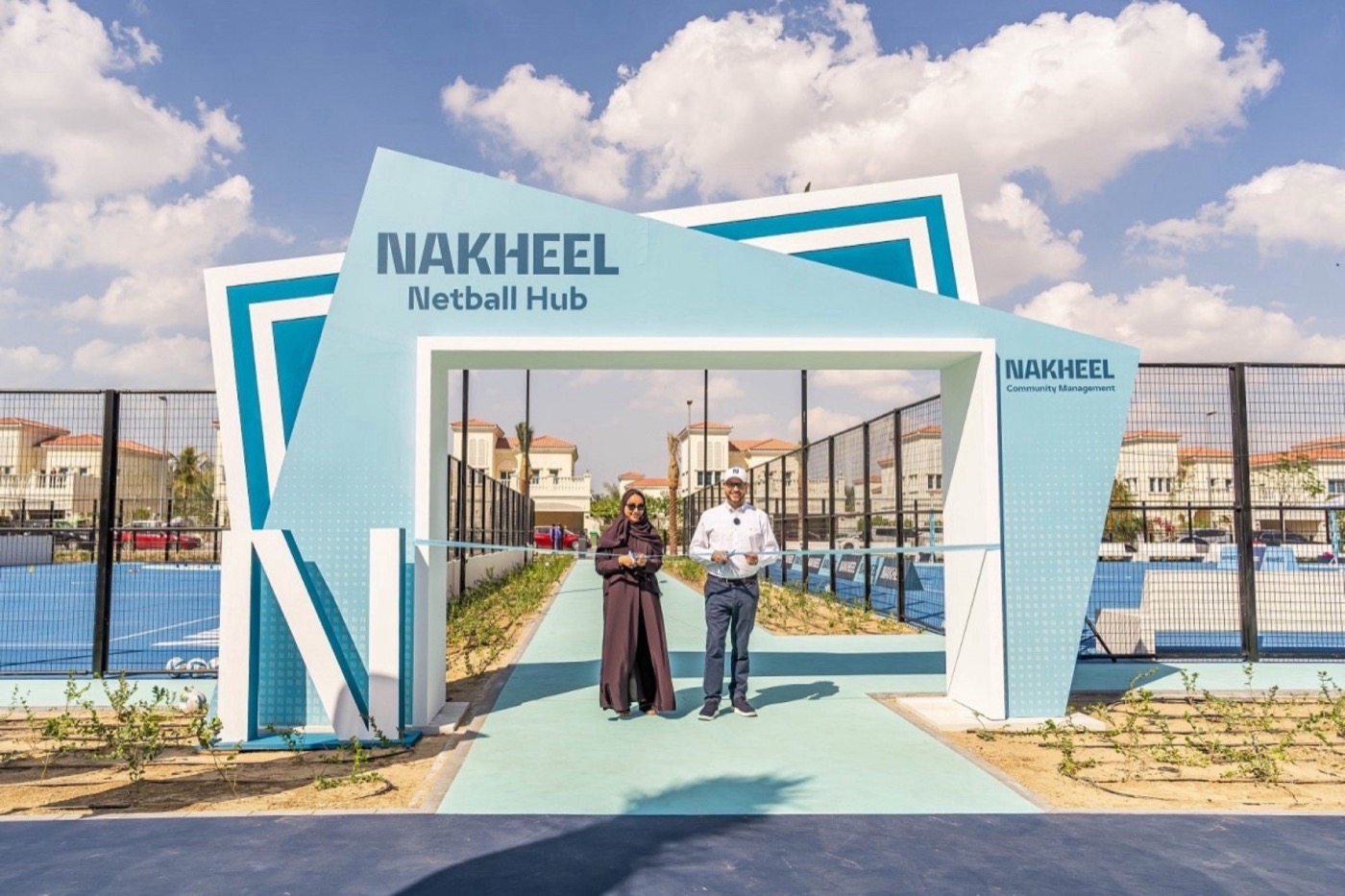
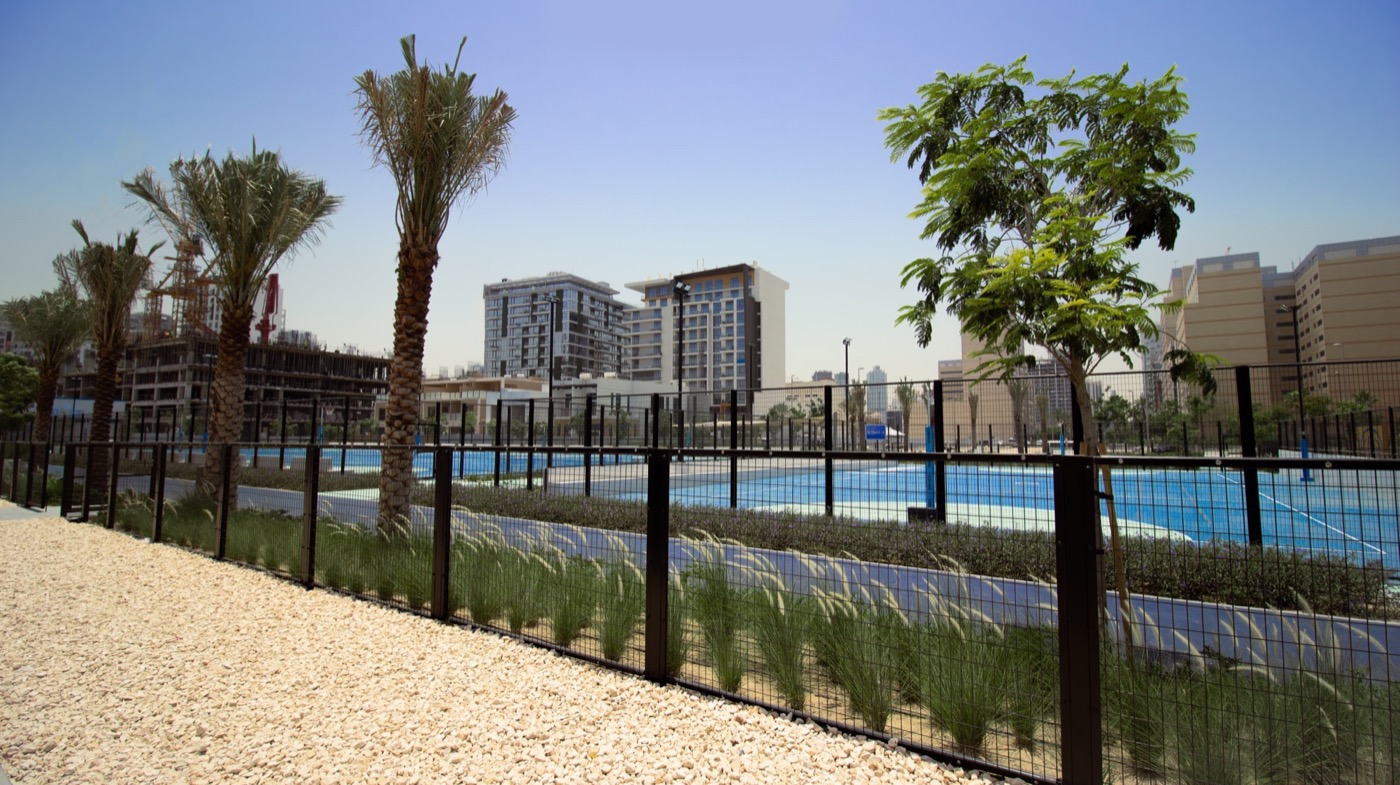
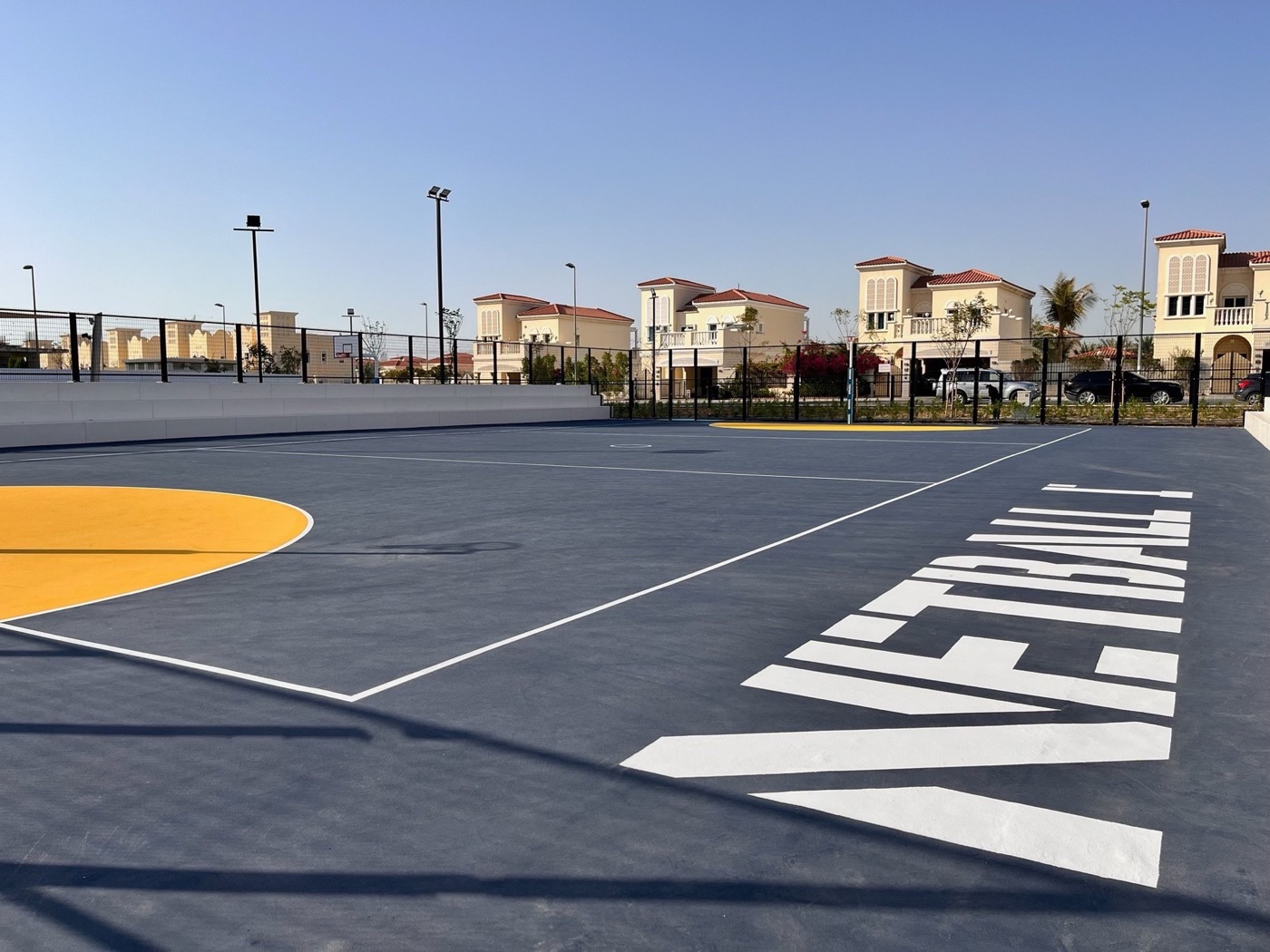
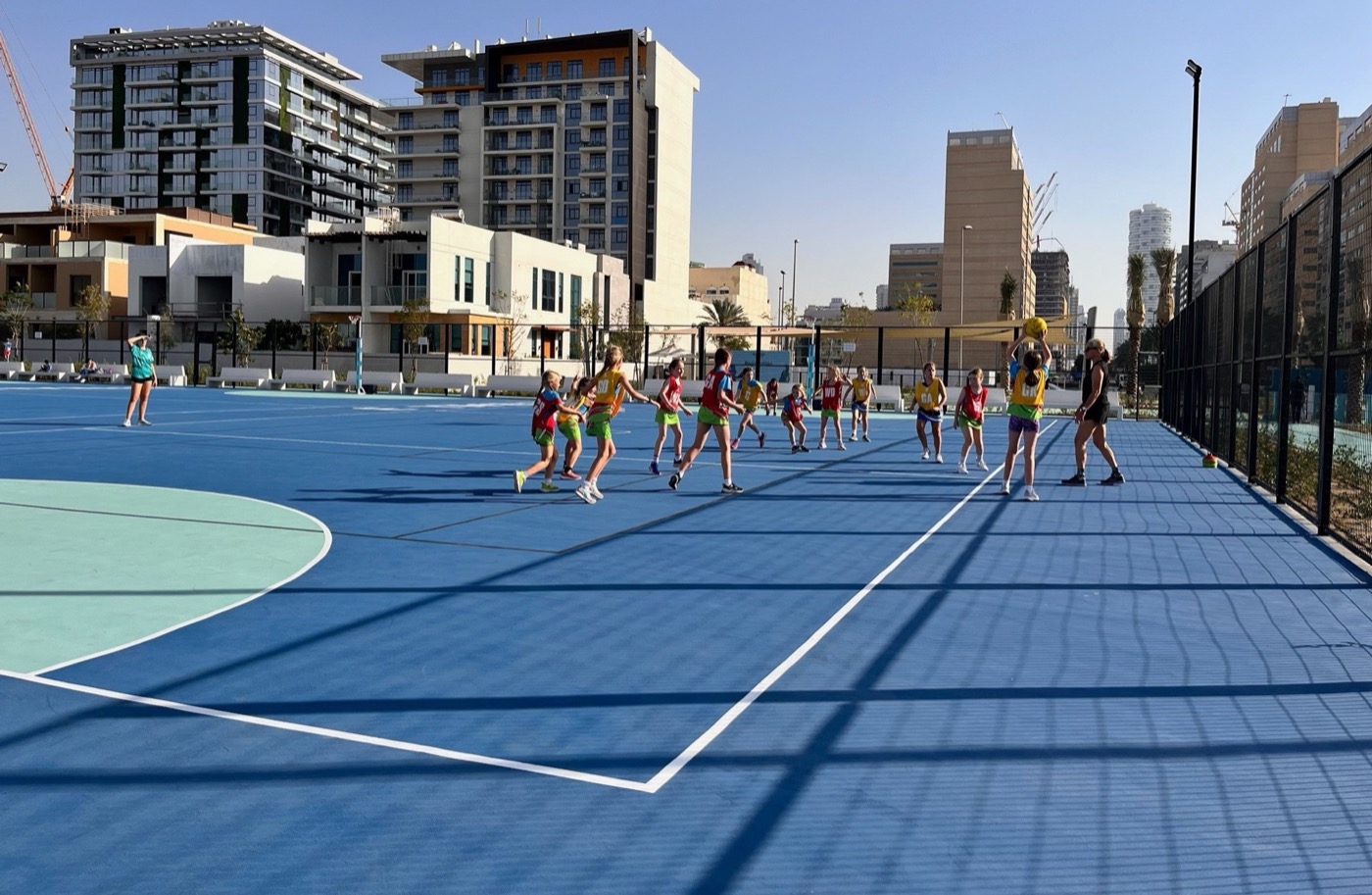
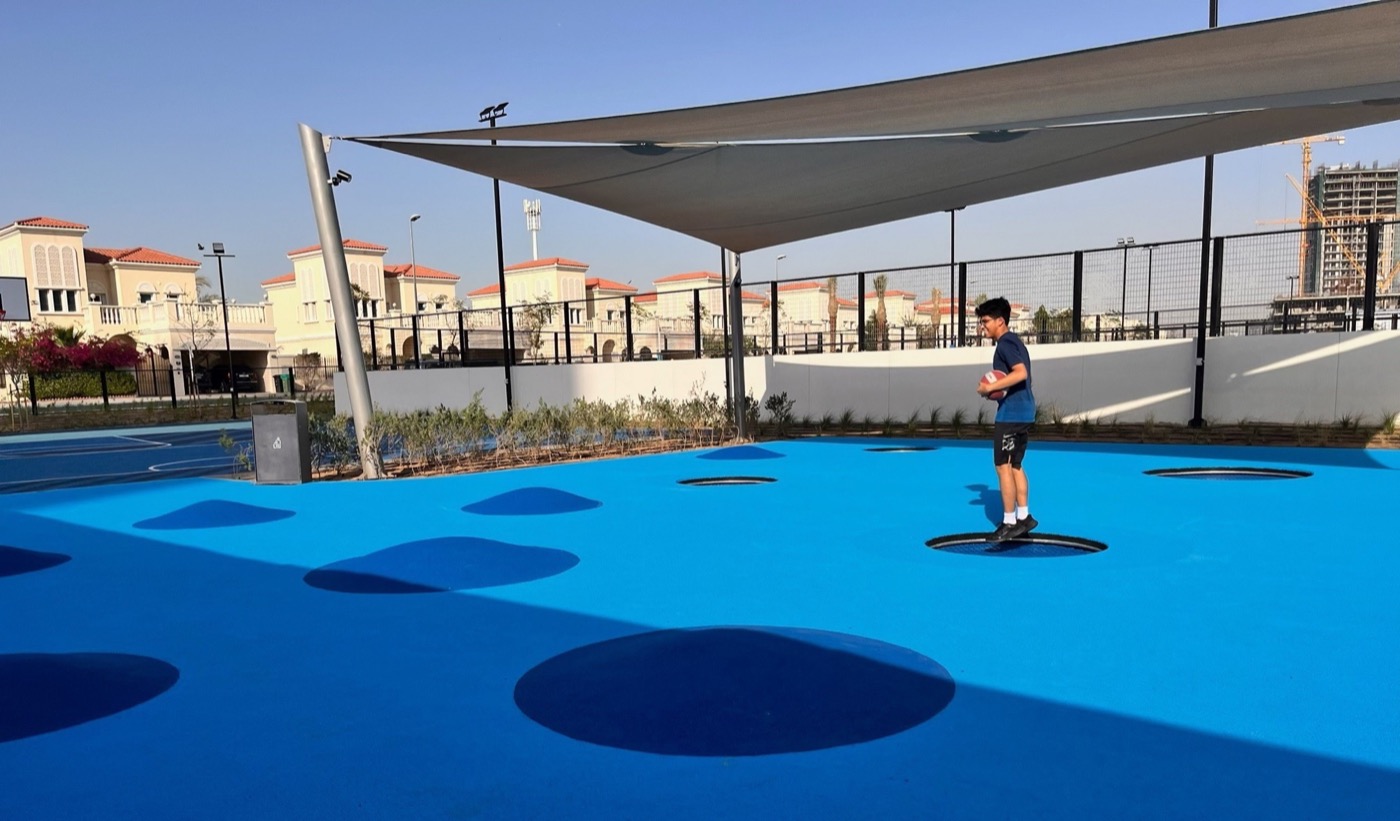
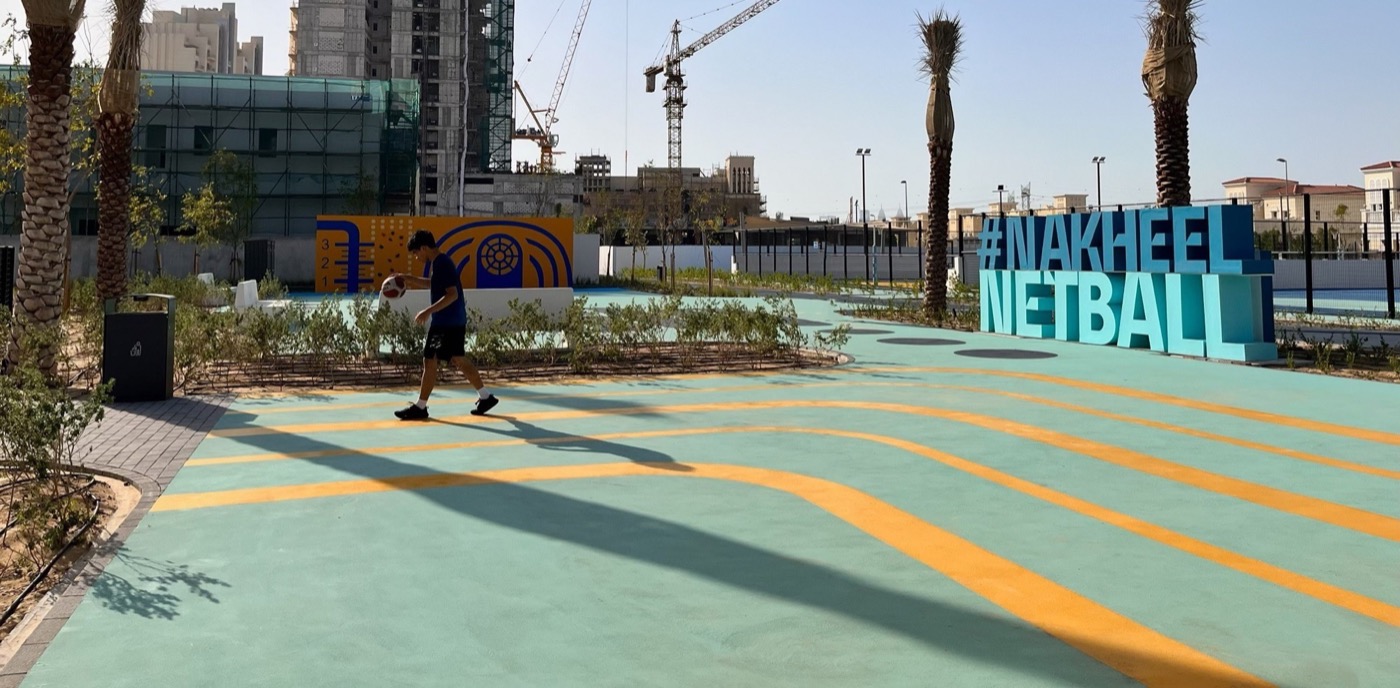
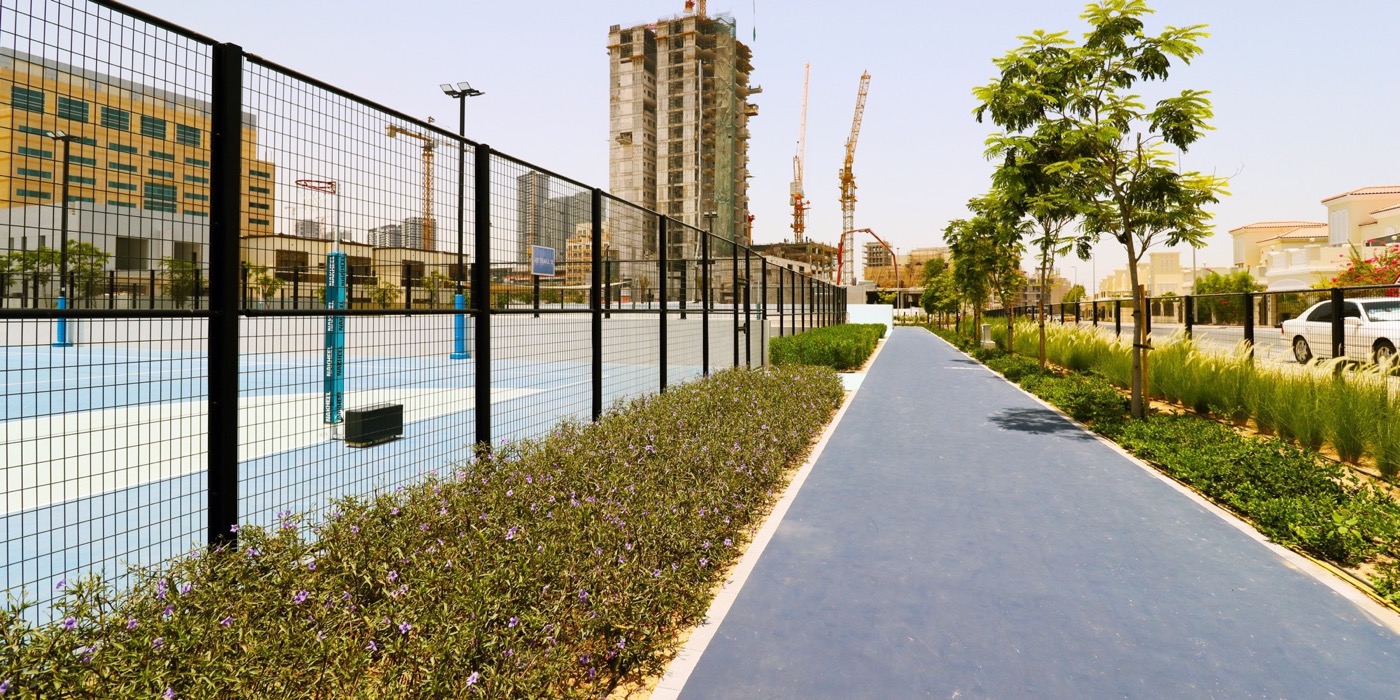
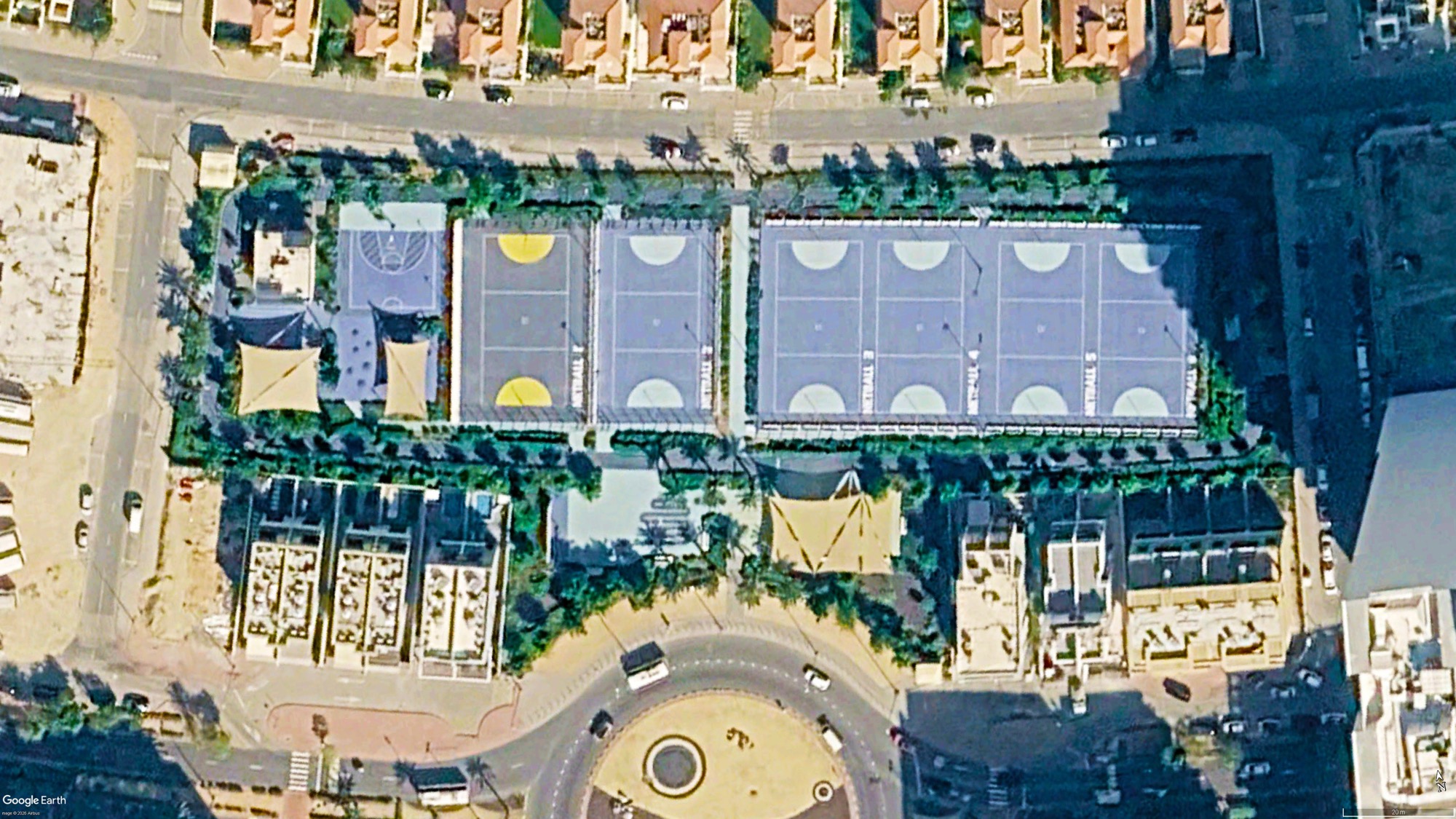
At its center, six courts (one premier and five multi-use) are embedded within an open and accessible layout. This density is deliberate: it allows simultaneous occupation while ensuring that sport remains visible and connected to the wider park. Organized play is not isolated but experienced alongside movement, rest, and informal use, enabling users to shift easily between participation and observation.
The courts function as multi-use infrastructure, supporting structured netball alongside informal and multi-sport activities. This flexibility extends their relevance beyond scheduled sessions, reducing downtime and increasing continuous occupation throughout the day. Surrounding these, informal play areas and adaptable surfaces allow further appropriation, supporting activities that evolve over time rather than being fixed at the point of design.
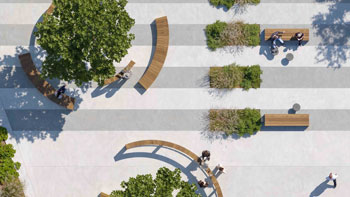
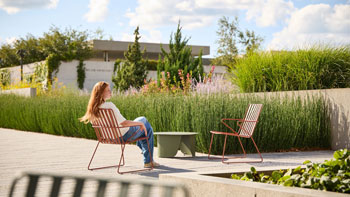
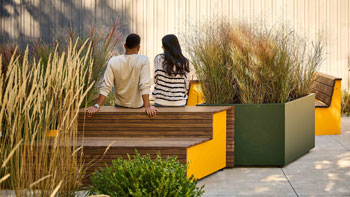
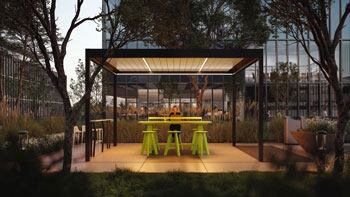
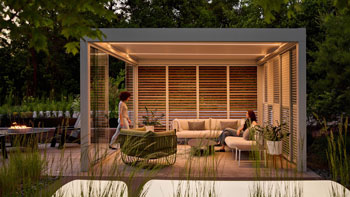
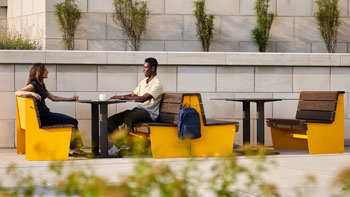
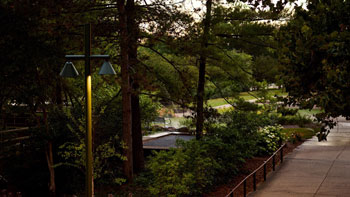
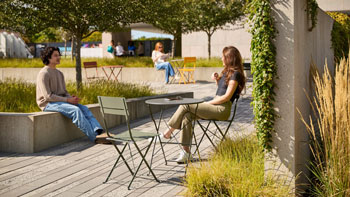
The layout moves from an active central core of courts to quieter, shaded edges for rest and informal use. Play areas, seating, table tennis, and a continuous jogging/scooter loop extend outward, while existing mature trees are retained as shaded pockets that offer moments of relief without disconnecting from activity. This balance between intensity and pause supports both social interaction and individual comfort.
Environmental performance underpins use. Shade structures and planting are concentrated over key areas, improving thermal comfort and extending usability during peak daytime conditions, while a calibrated lighting strategy supports safe evening activity without disrupting surrounding residences. Accessibility is resolved at grade across all routes and amenities, ensuring inclusive use across age and ability groups in line with Dubai Municipality requirements.
The project challenges the inefficiency of single-use recreational spaces by consolidating six courts, informal play, and passive amenities within a compact site. Its success lies not only in the intensity of use, but in the diversity and overlap of activities, structured sport, informal play, and everyday occupation occurring side by side.
Rather than treating wellbeing as a separate design layer, the project embeds it within patterns of movement, proximity, and shared experience. In doing so, it demonstrates how a compact urban park can operate as social infrastructure, supporting interaction, participation, and a more connected form of everyday urban life.
https://maps.app.goo.gl/NbUbcqvtYkeiQHws5
75137


LILA 2026 Sponsor