Open Space Danube Flats Vienna
grimm.co.at/ + www.nextroom.at/
2026 Landscape and Architecture / 2026 Public Projects / Austria / Built in 2025 /

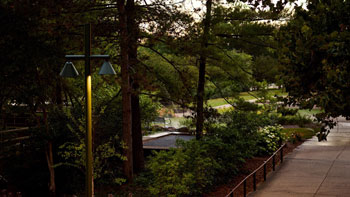
Danube Flats, located at Vienna’s Reichsbrücke, is a landmark high-rise development that reuses the basement levels of a previous building. This circular construction approach preserved existing resources while the shallow structural build-up posed a challenge for the landscape design. The ensemble of dynamically curved buildings includes Austria’s tallest residential tower. A sequence of open spaces connects the accessible courtyard with the public waterfront along the New Danube and the nearby subway station.
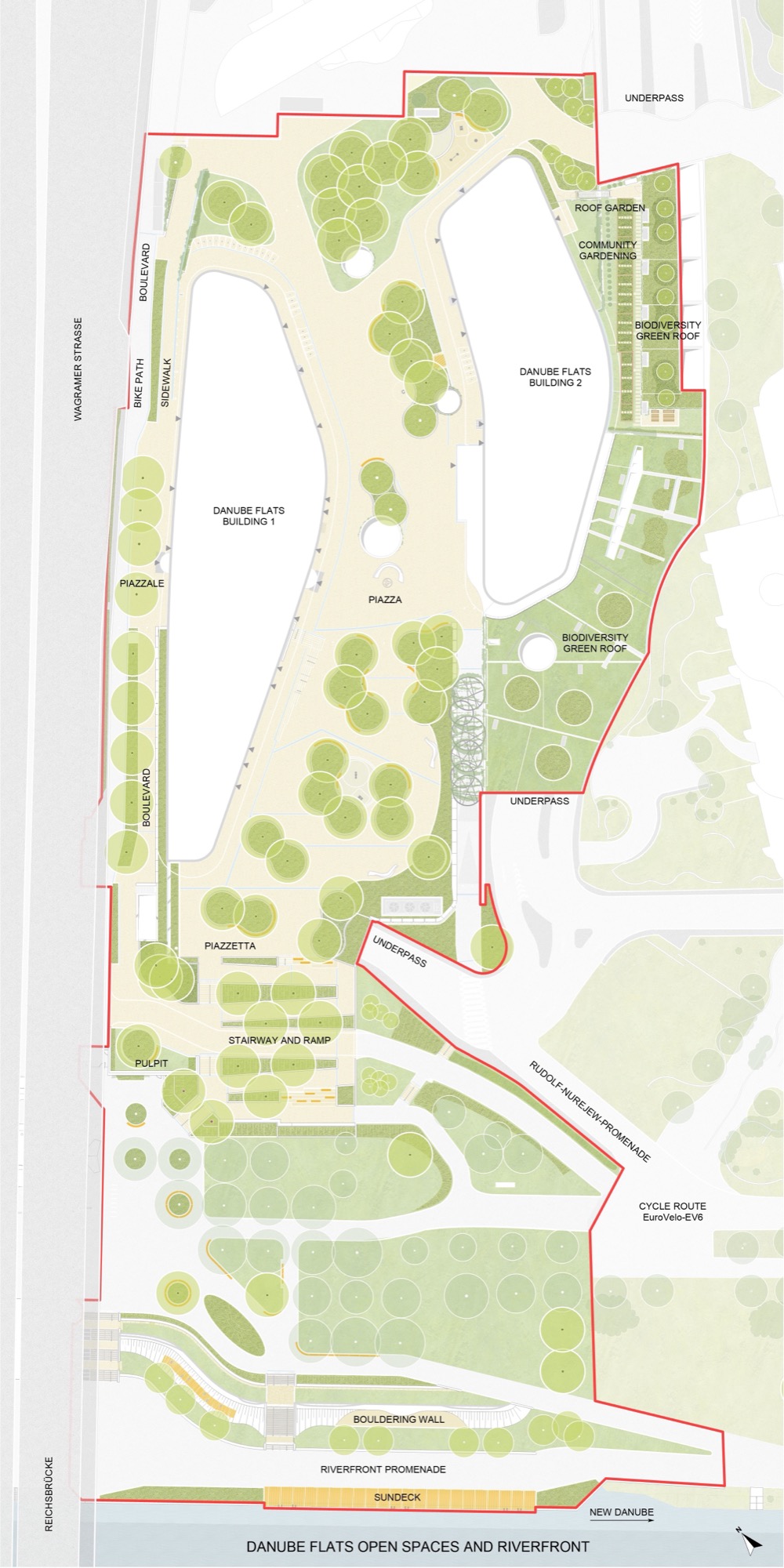
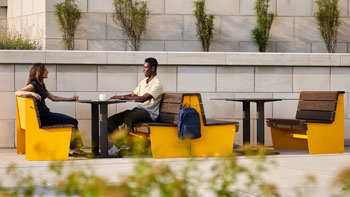
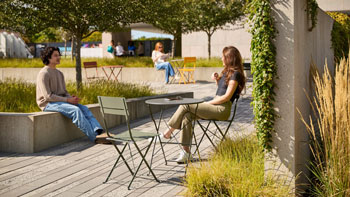
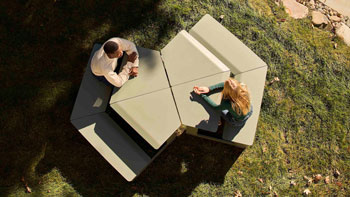
Public and private open spaces are interwoven into a continuous landscape network, offering a variety of spatial qualities for relaxation, social interaction, and physical activity. At the heart of the development, the piazza forms a lively urban space between the buildings, with outdoor dining areas, toddler play zones, and consumption-free areas for informal recreation. Toward the New Danube, the piazza gradually opens into a spatial sequence of piazetta, viewing platform, stairway, and ramp, linking the development to the riverside promenade.
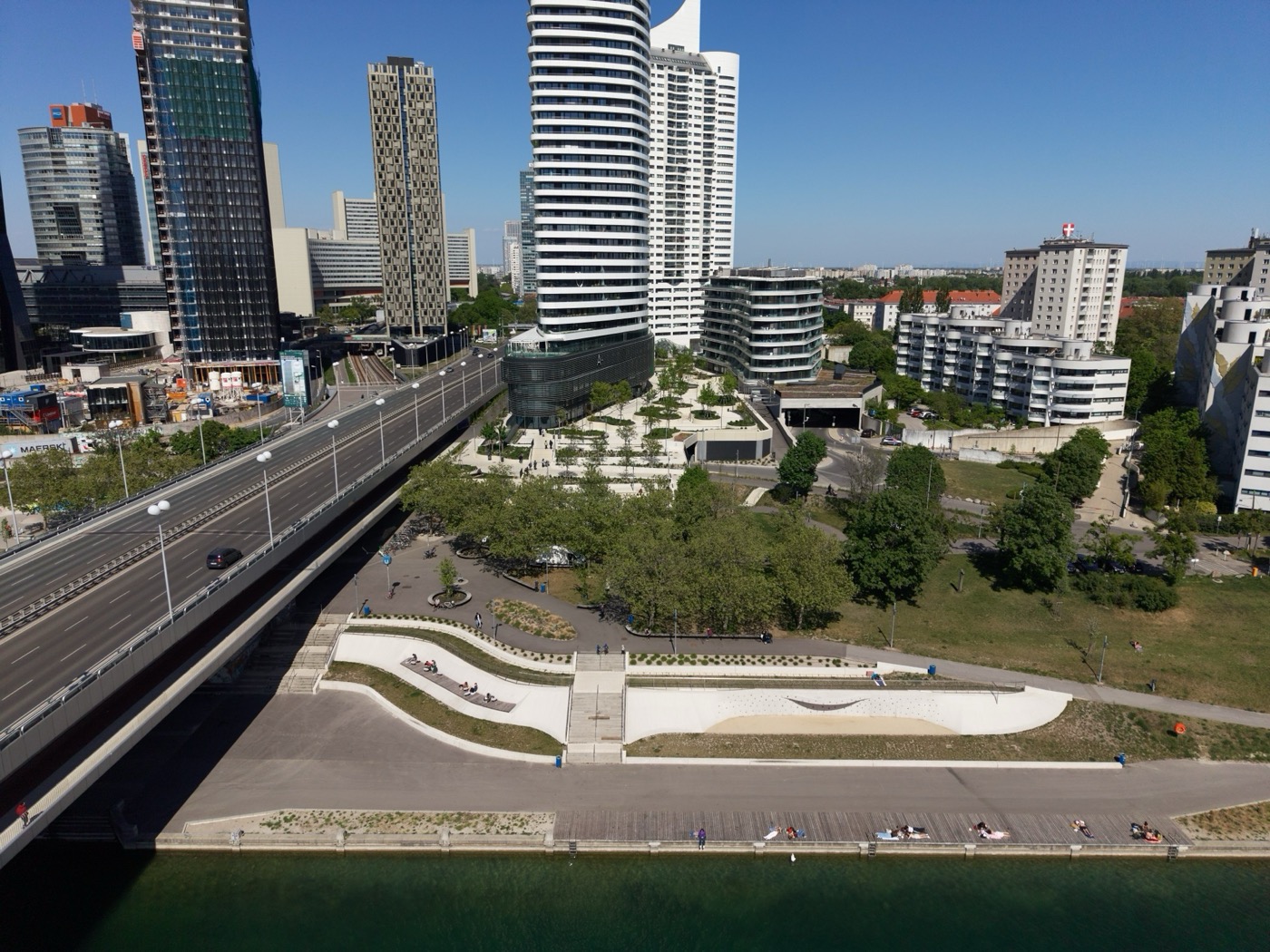
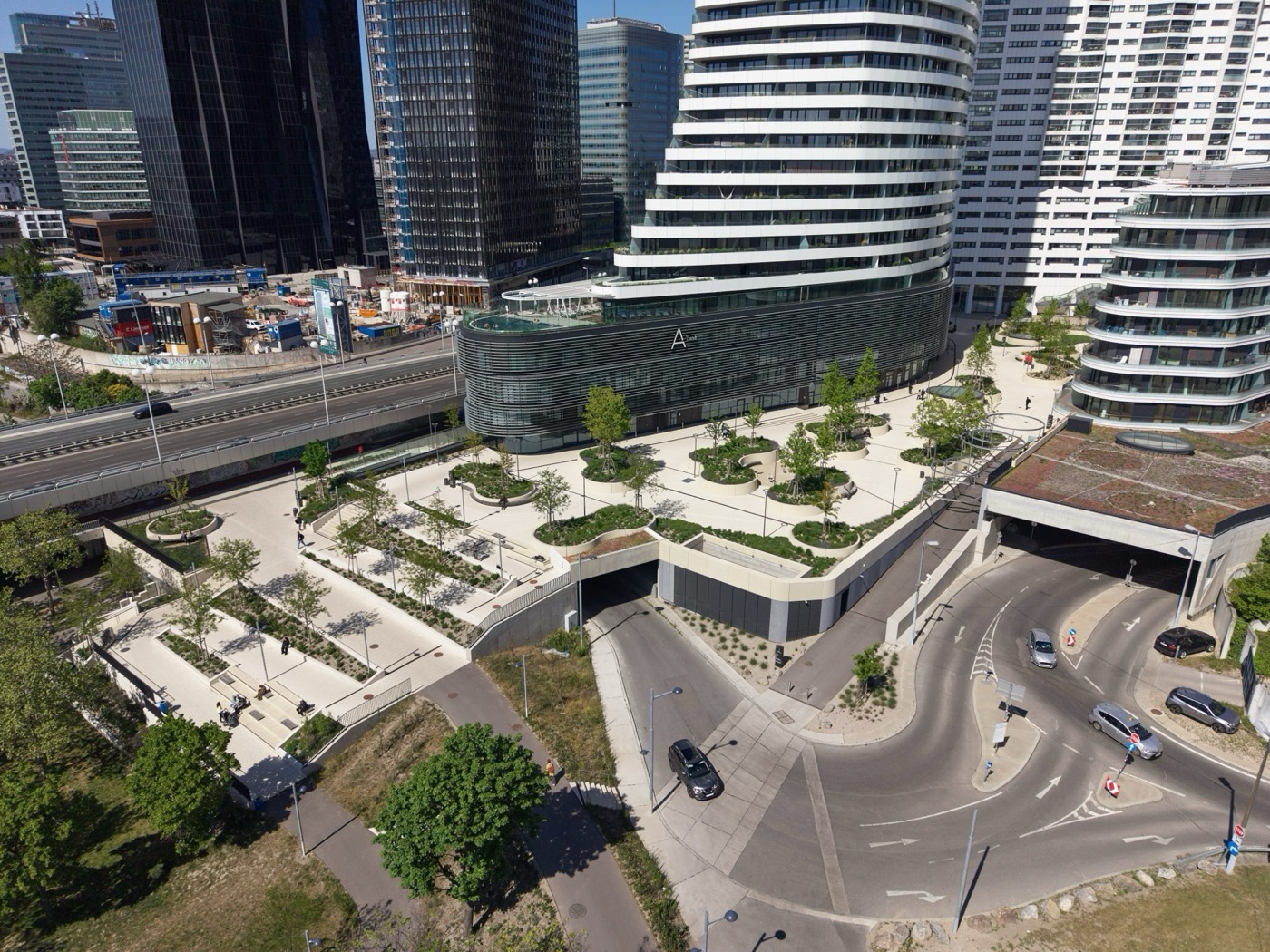
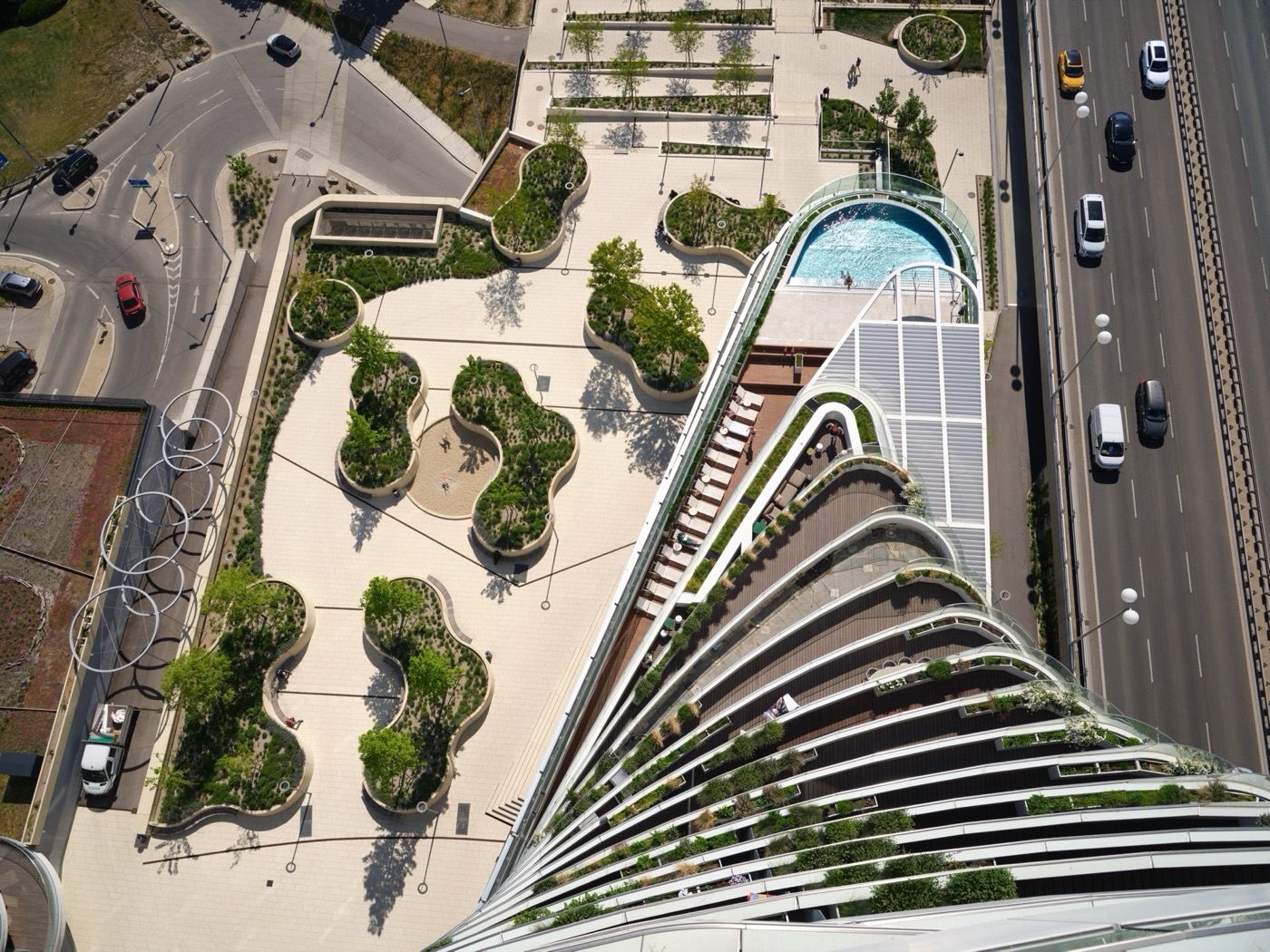
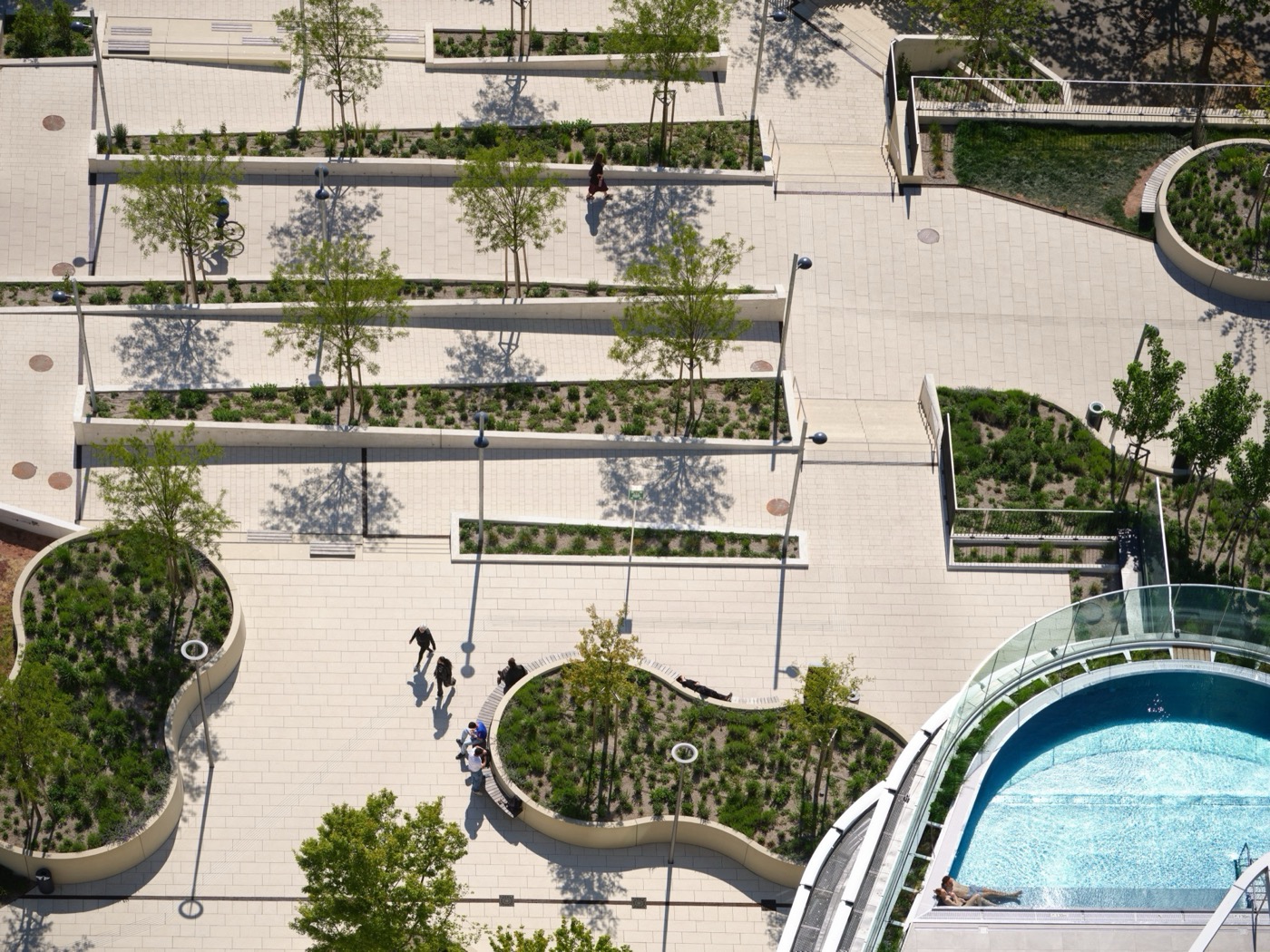
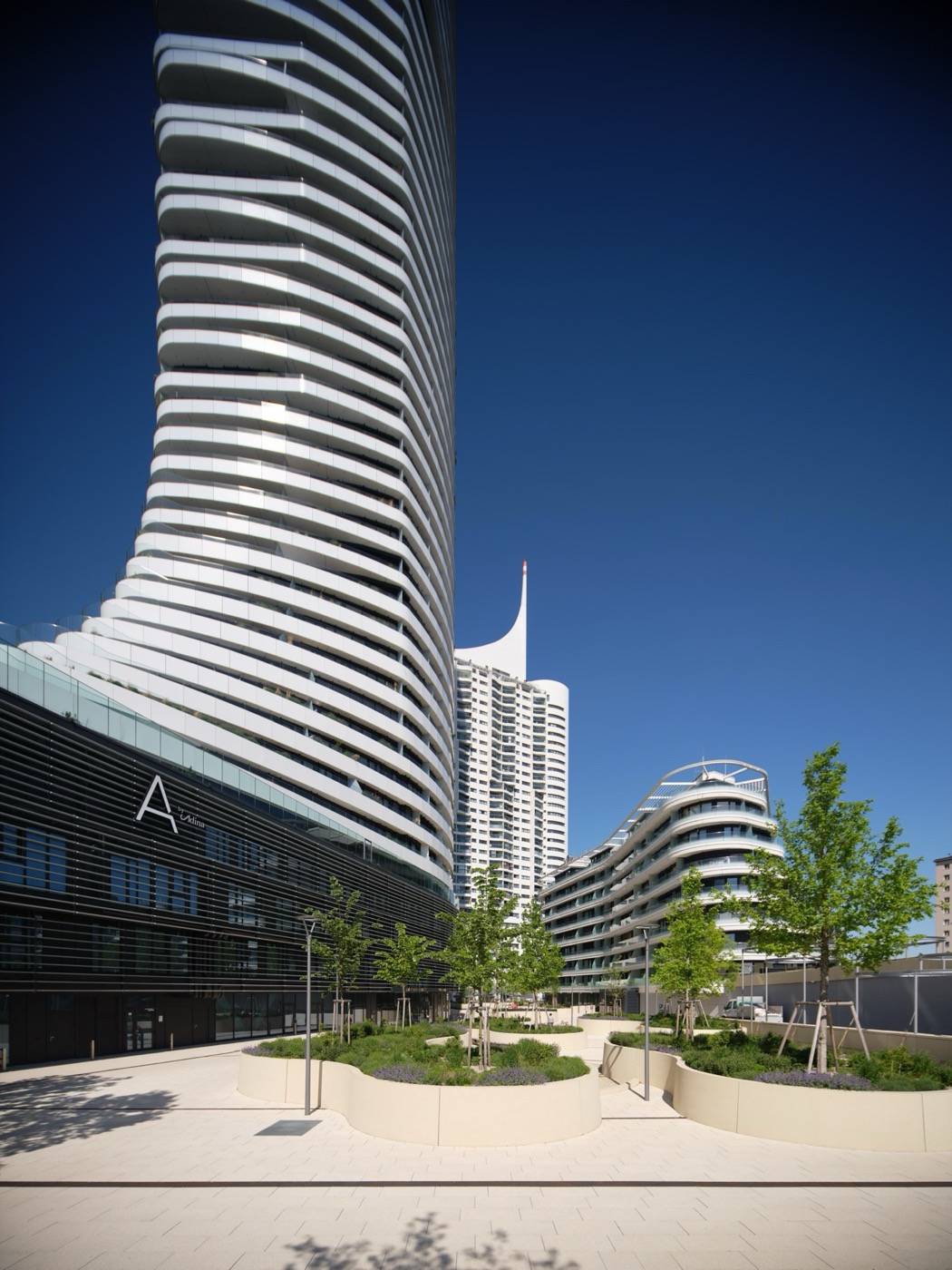
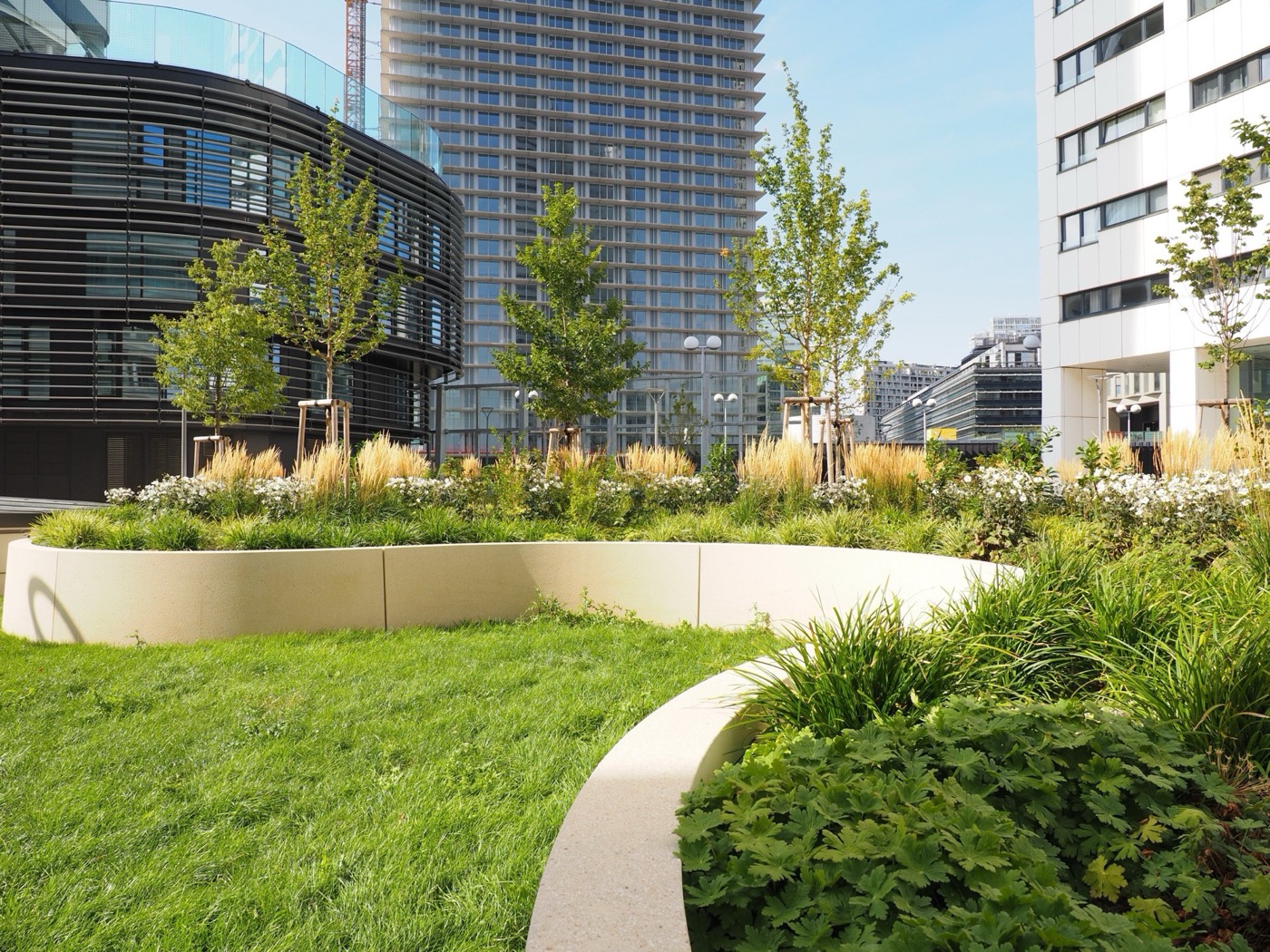
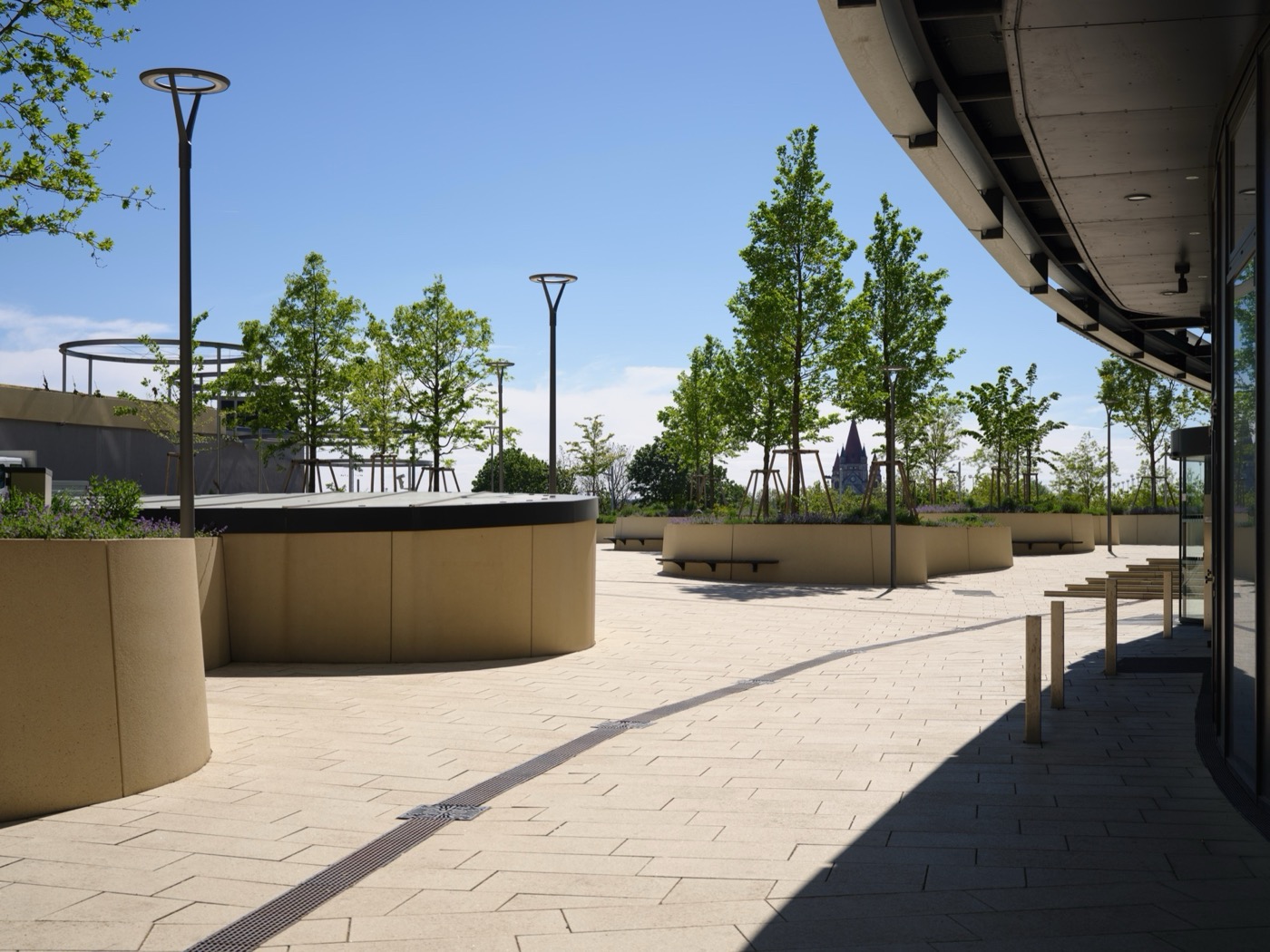
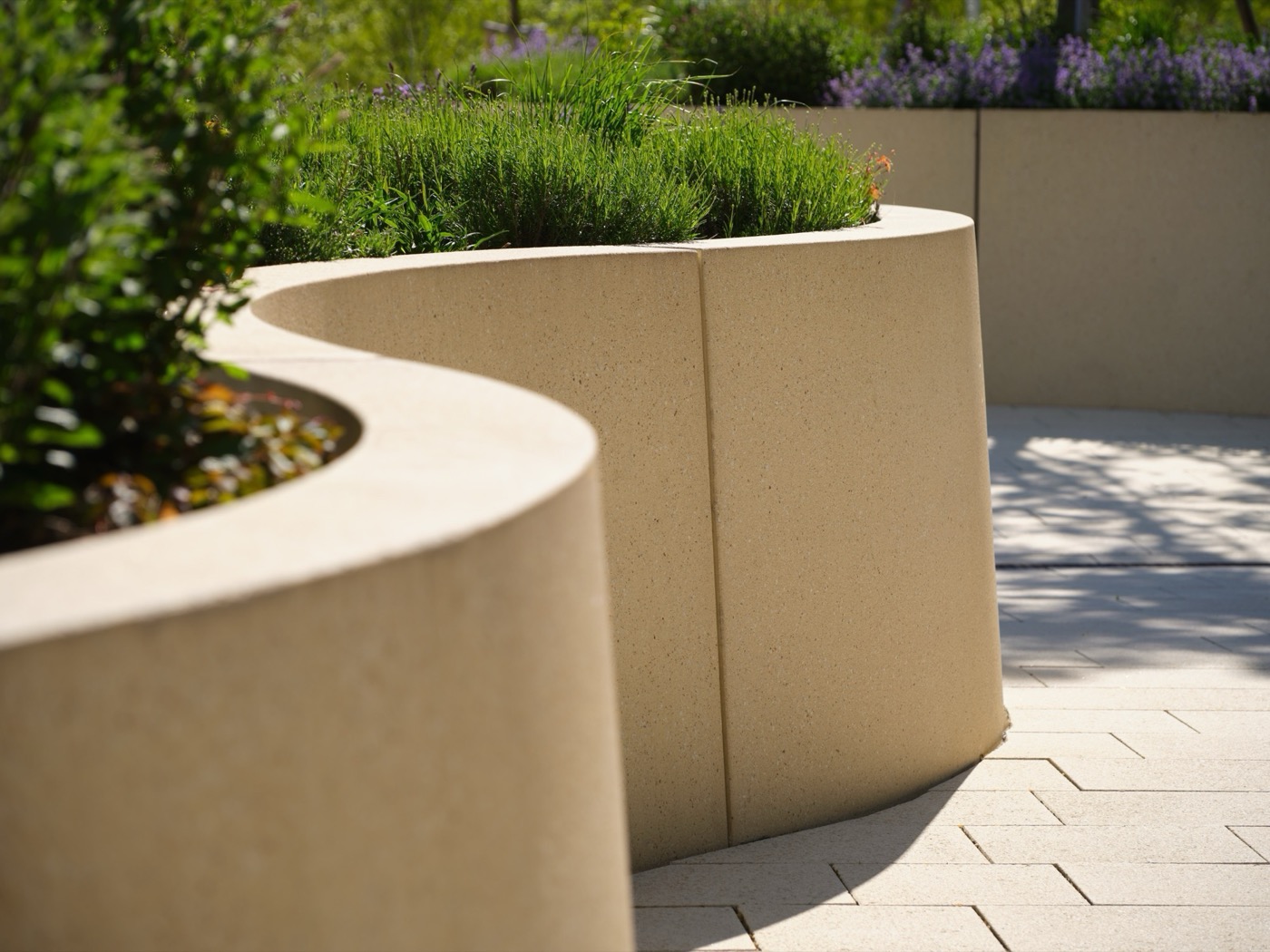
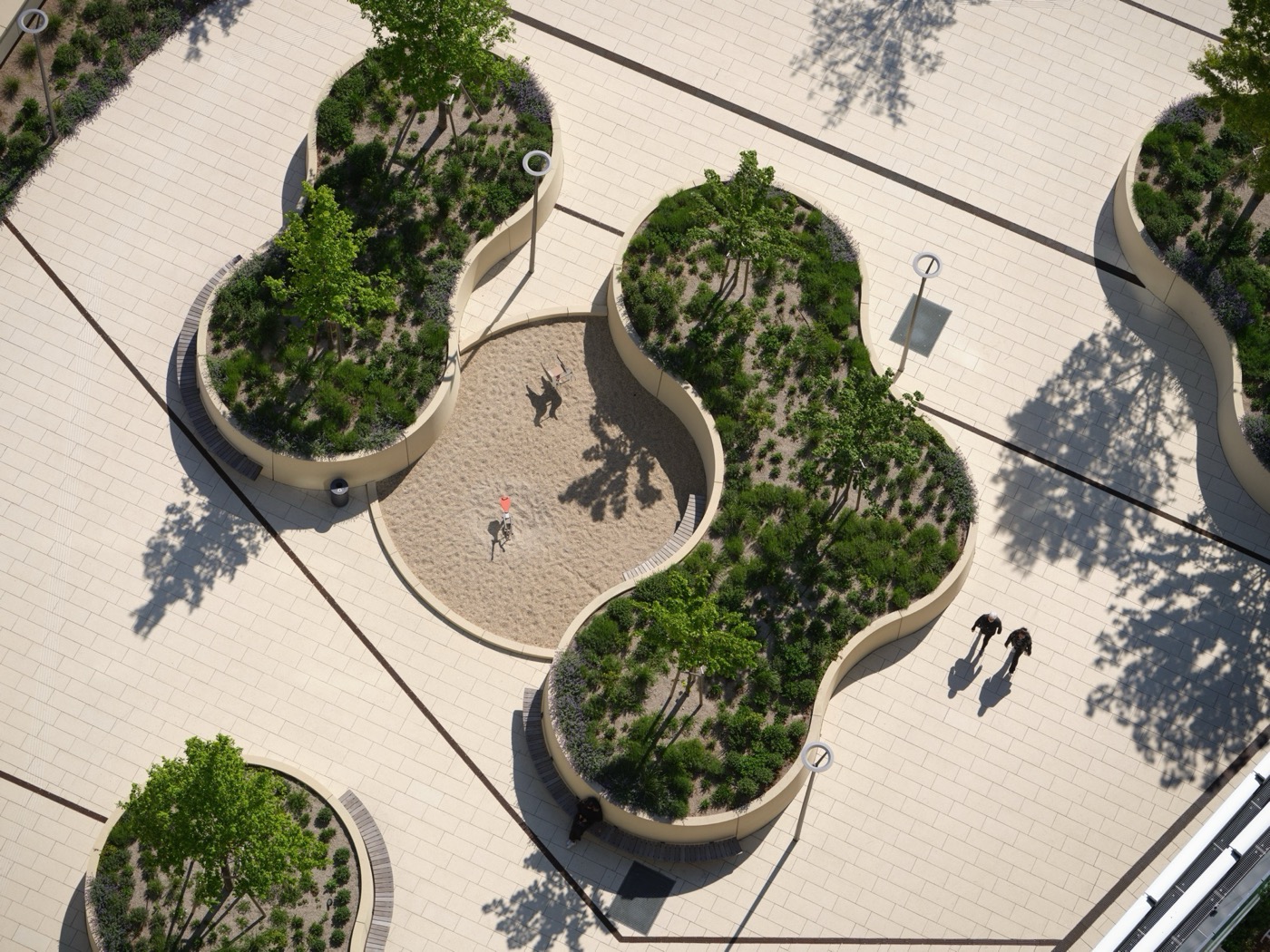
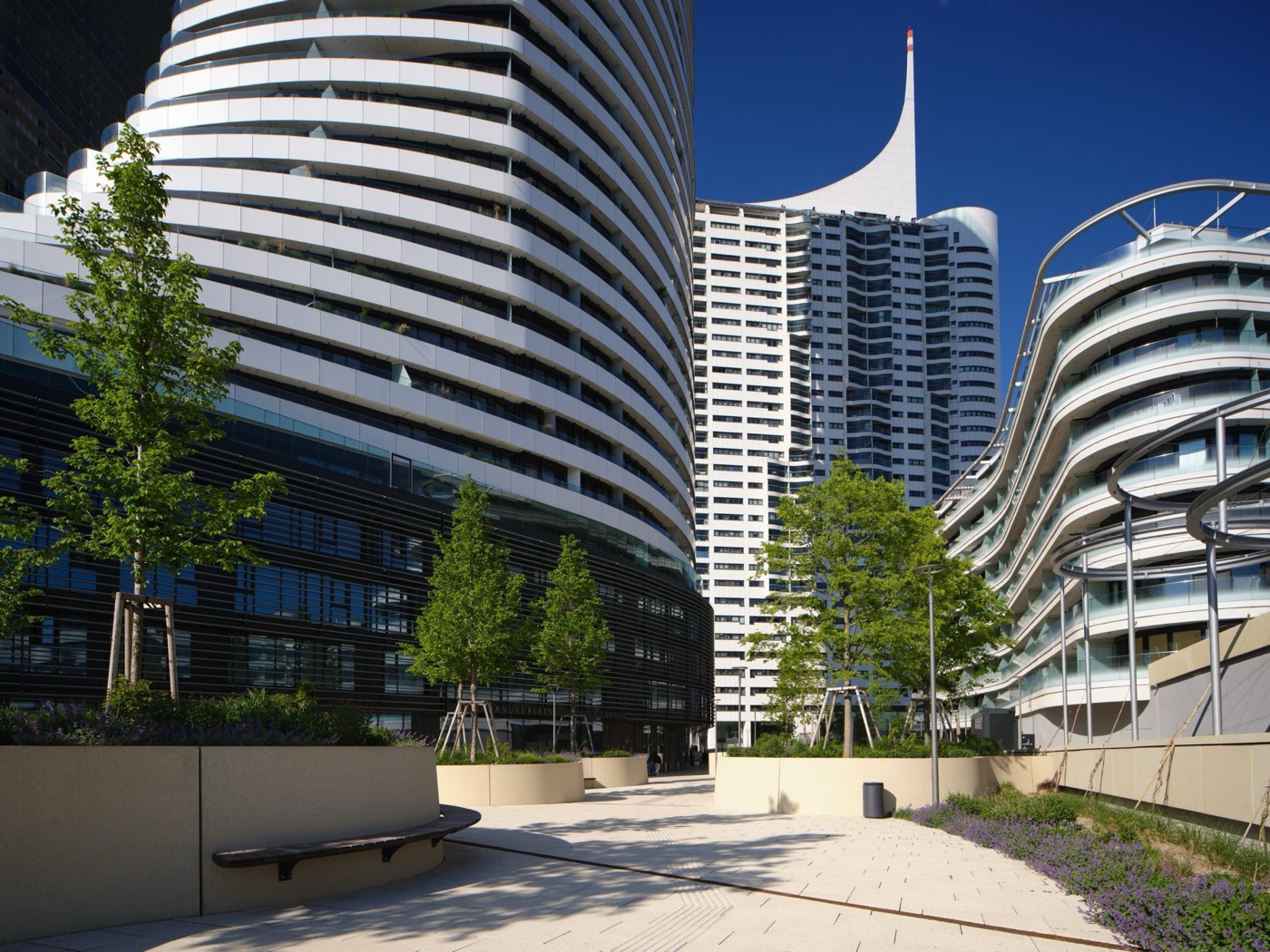
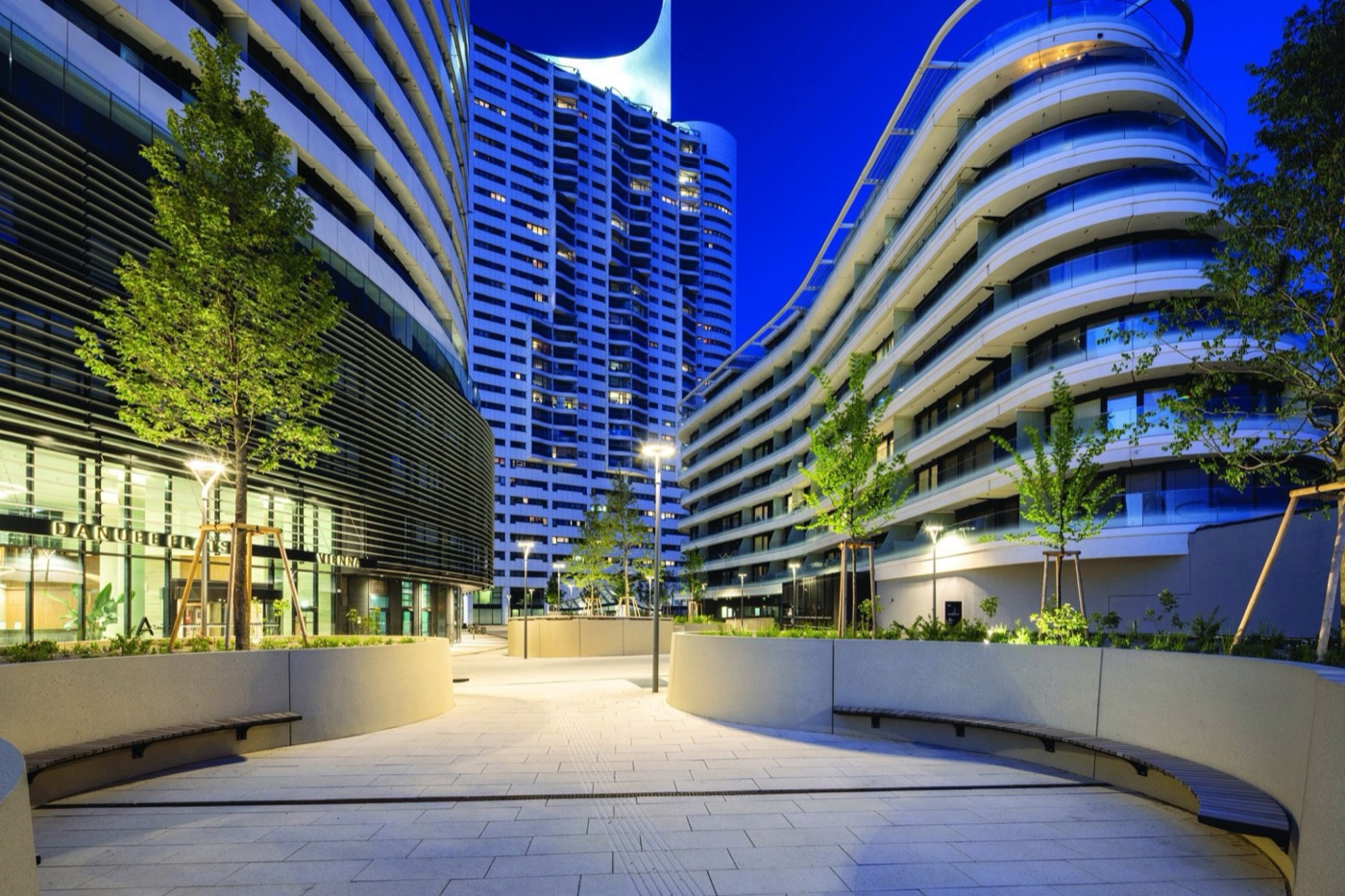
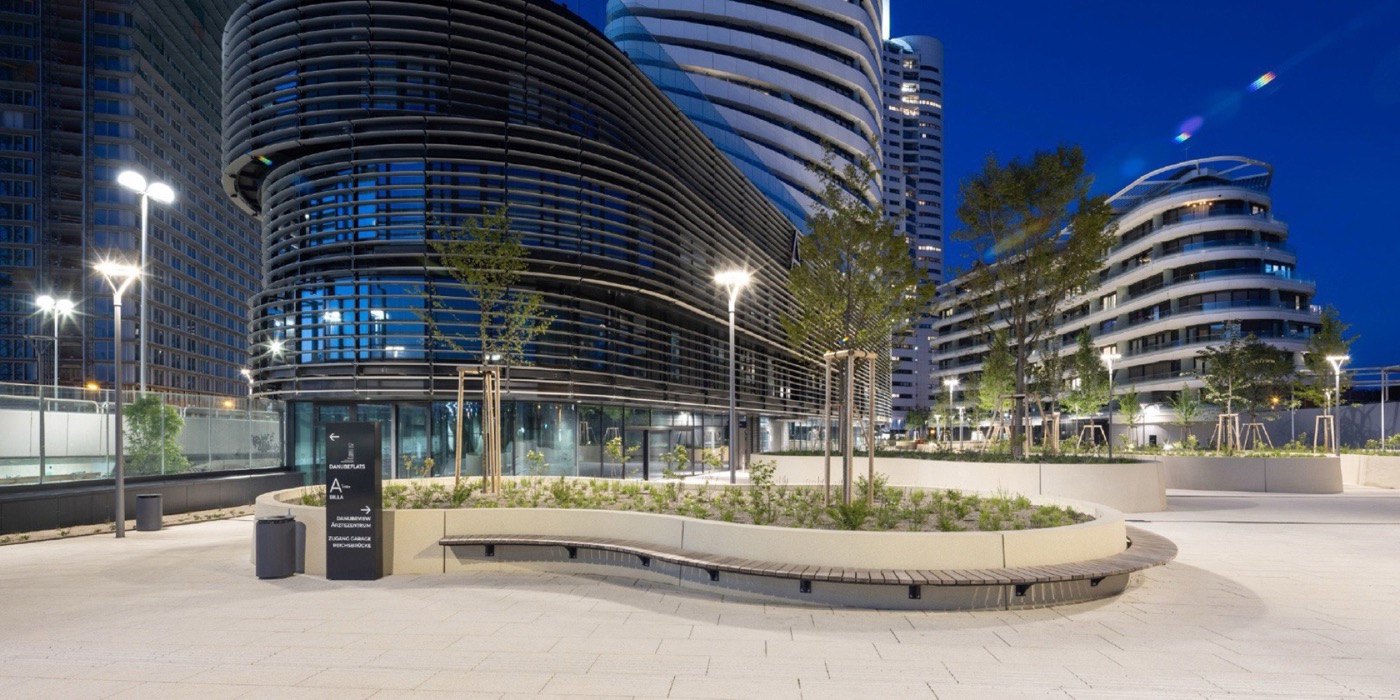
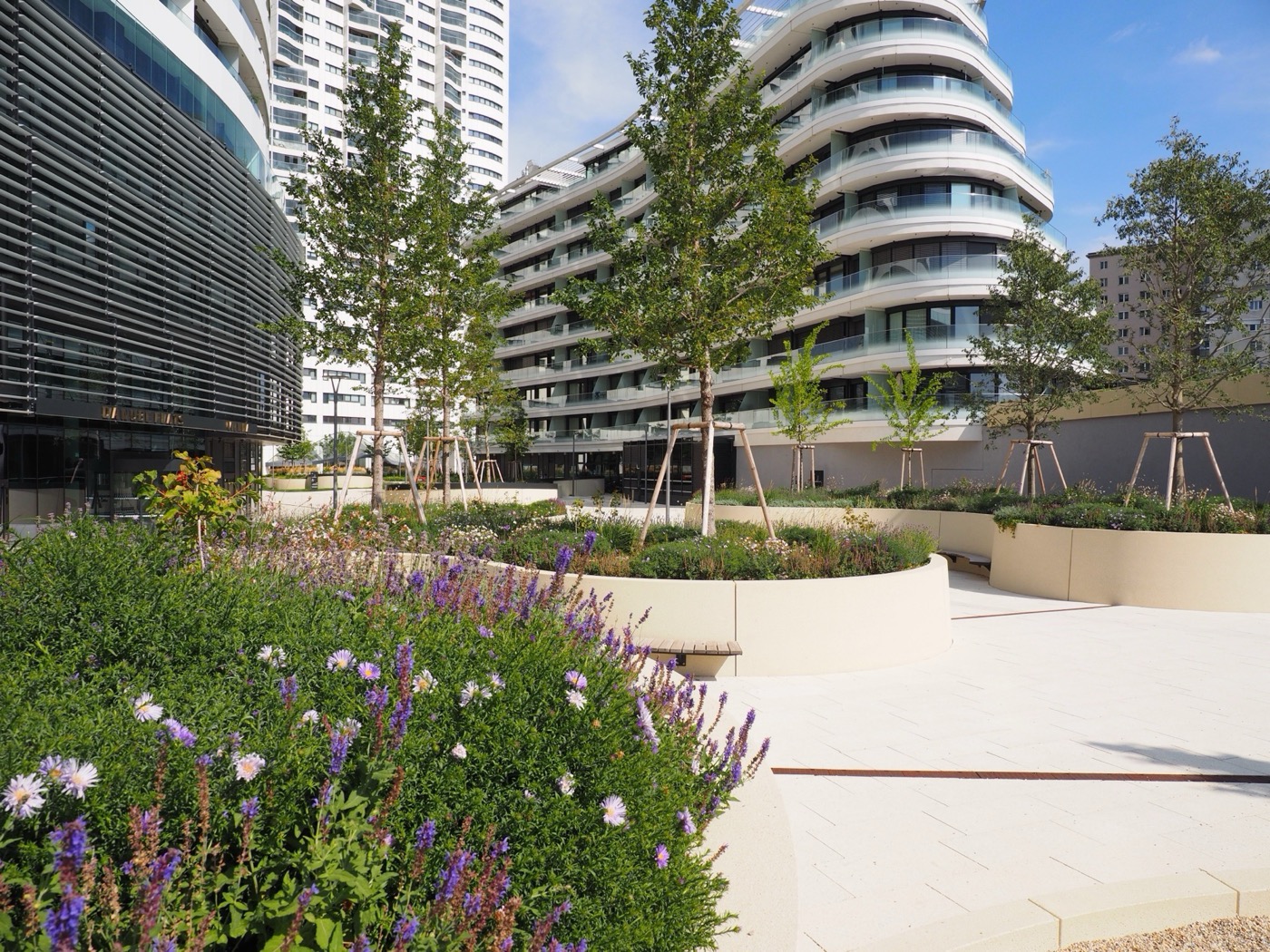
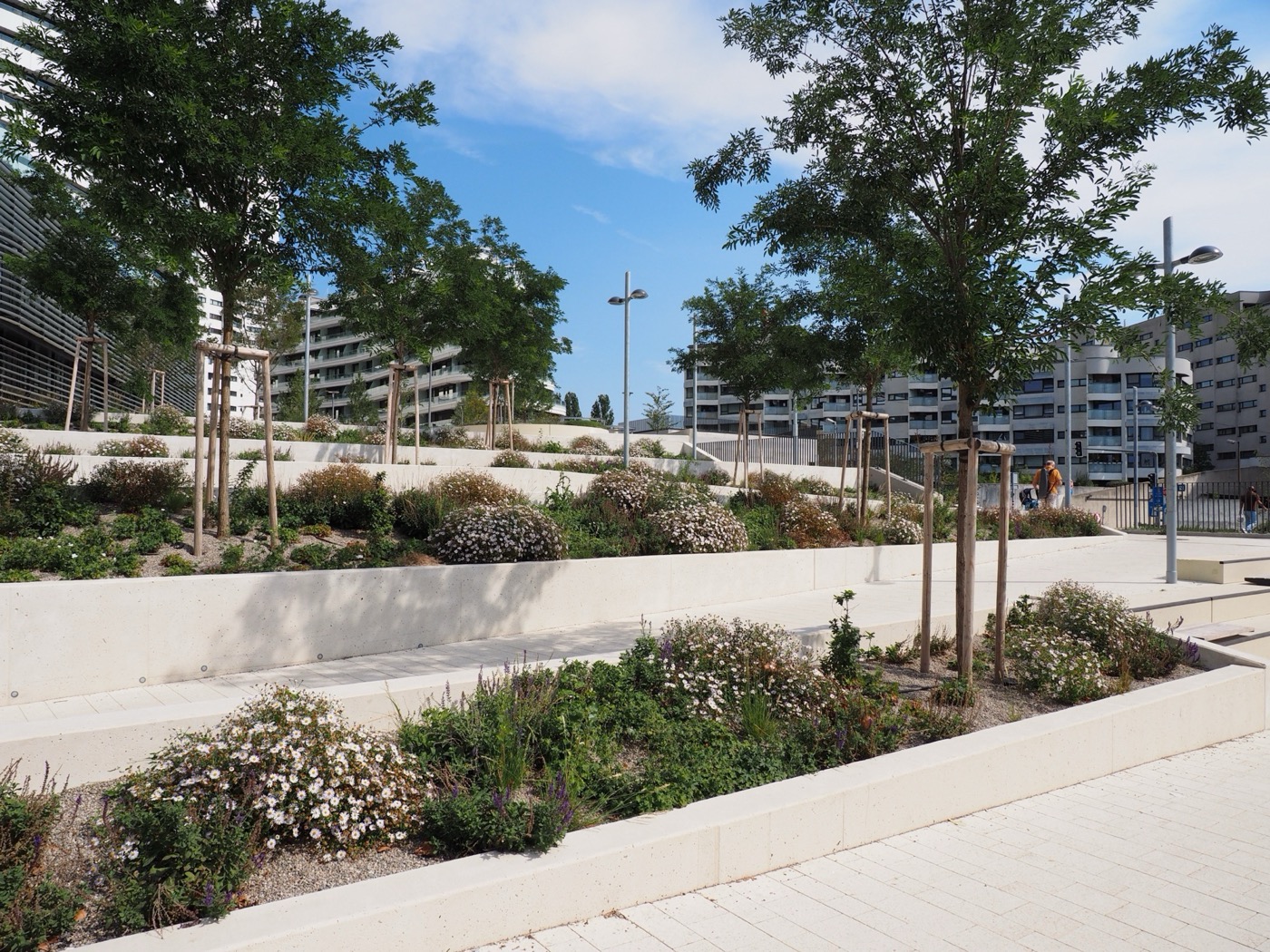
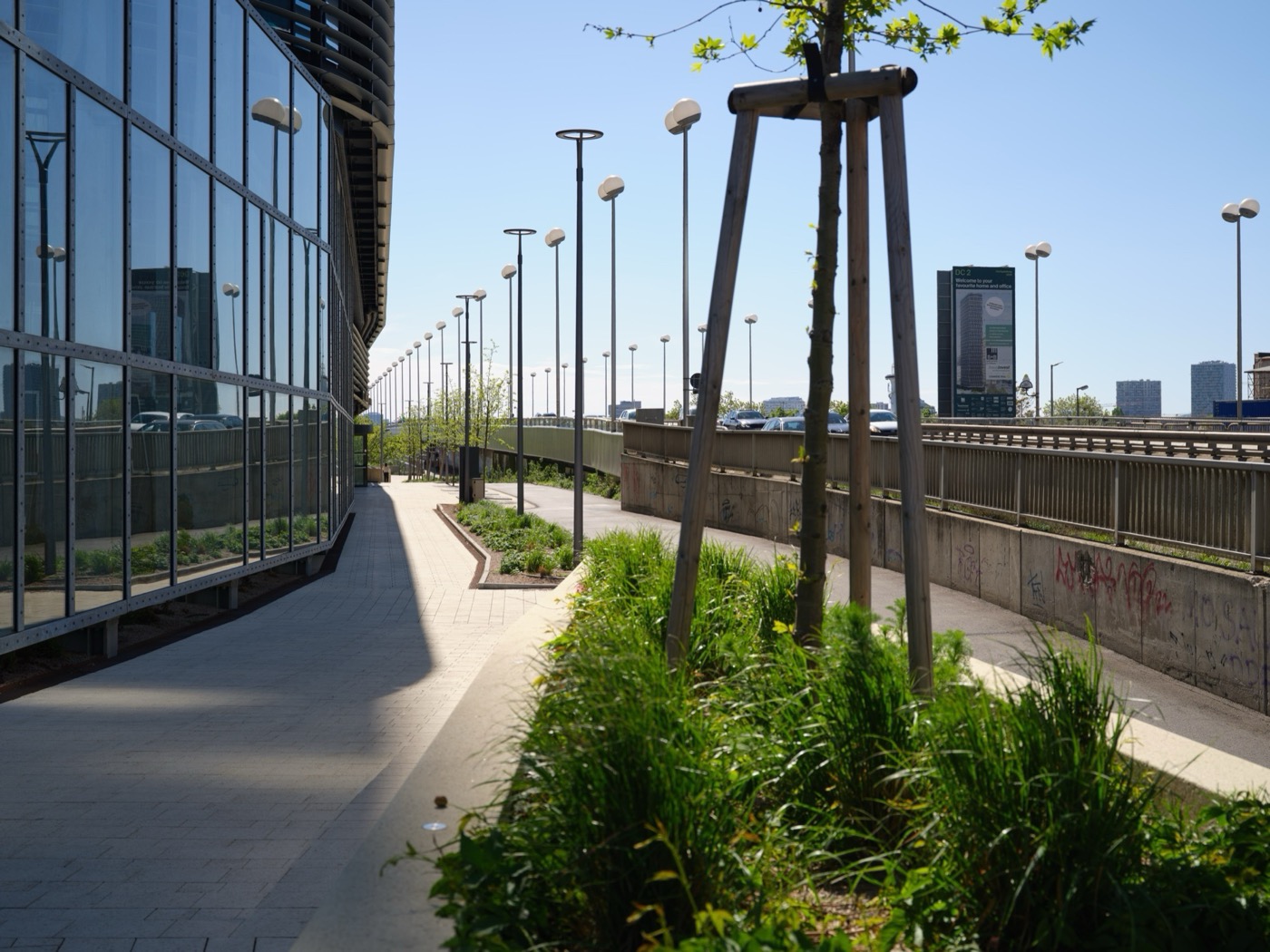
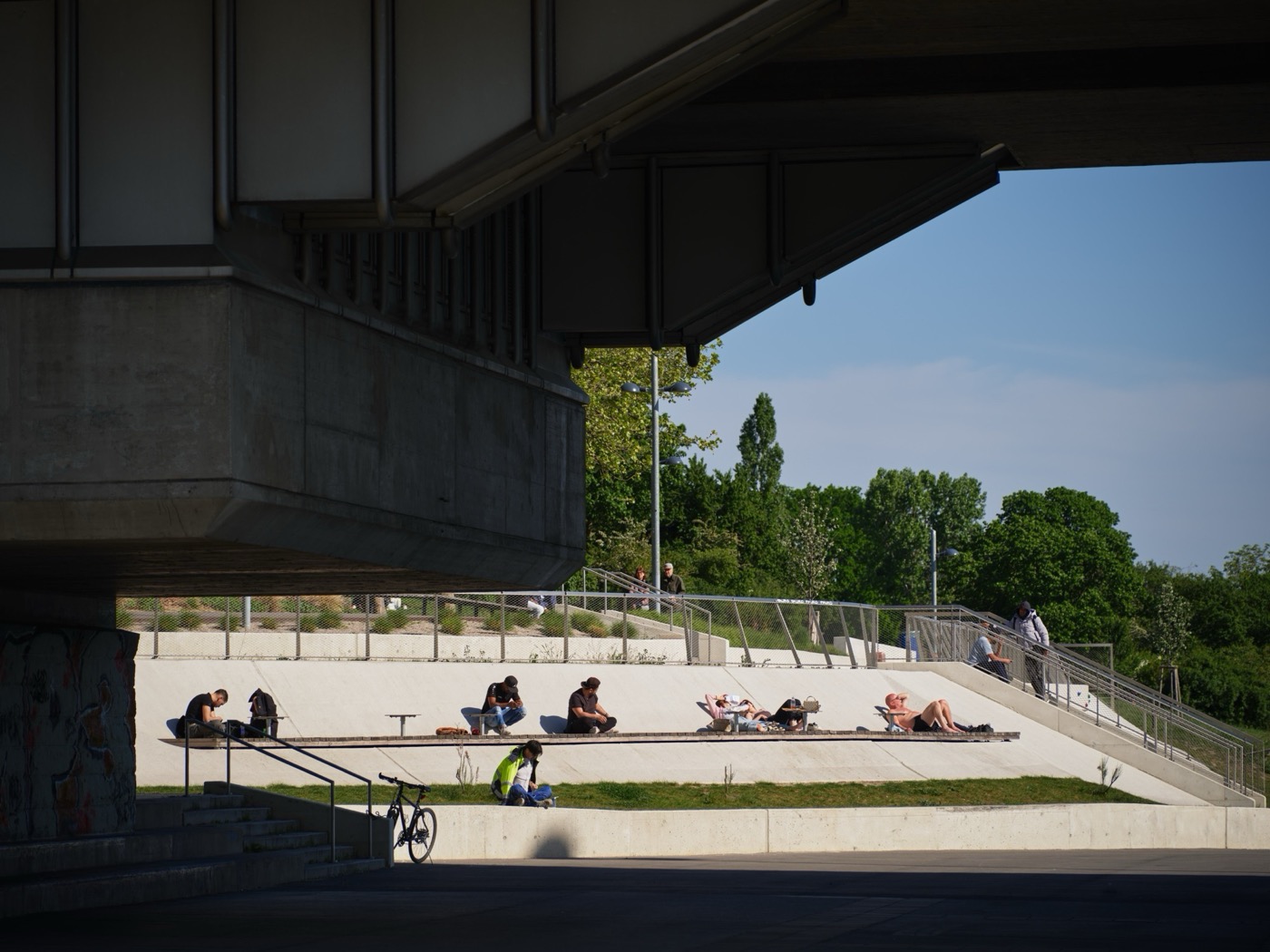
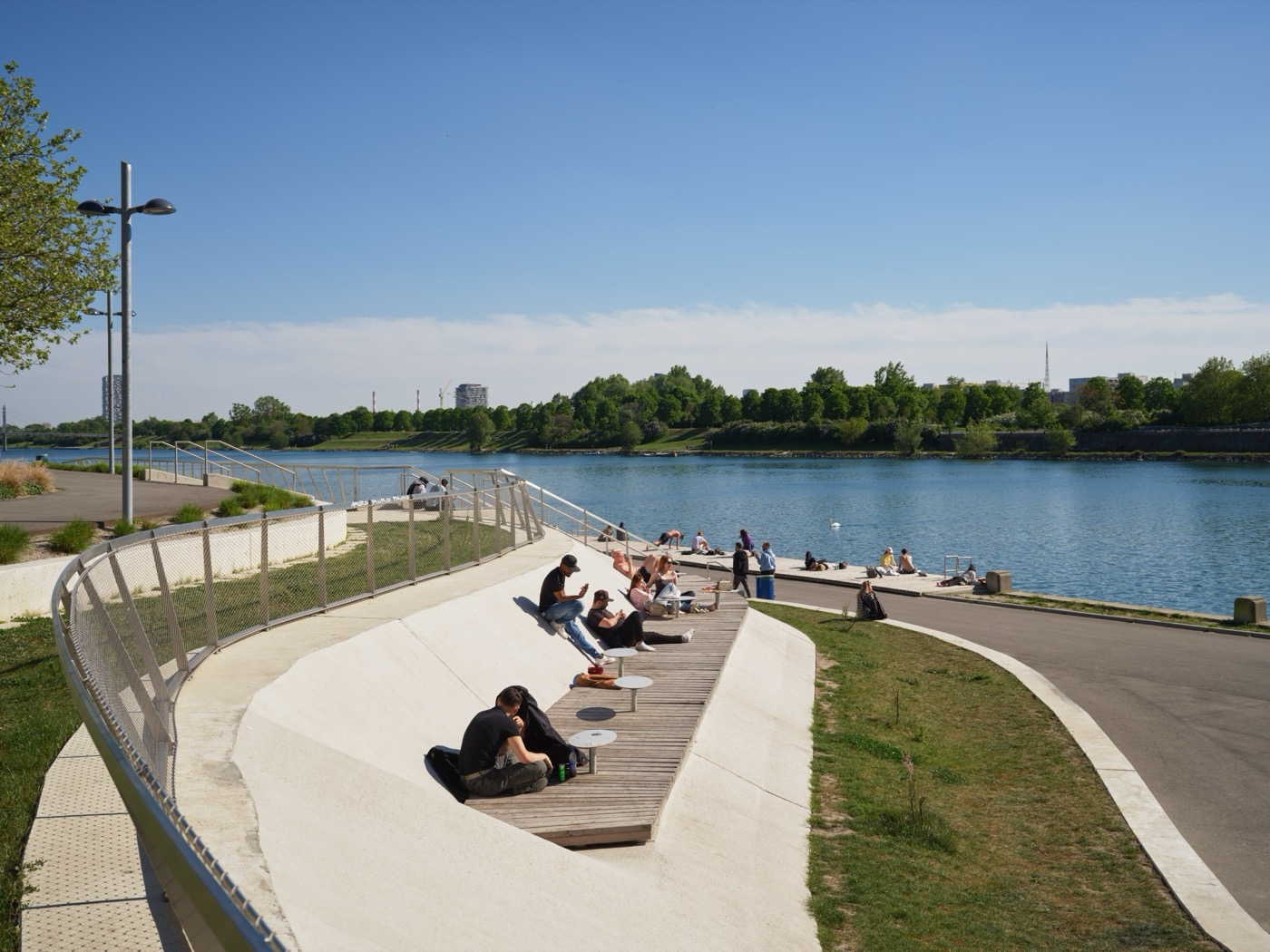
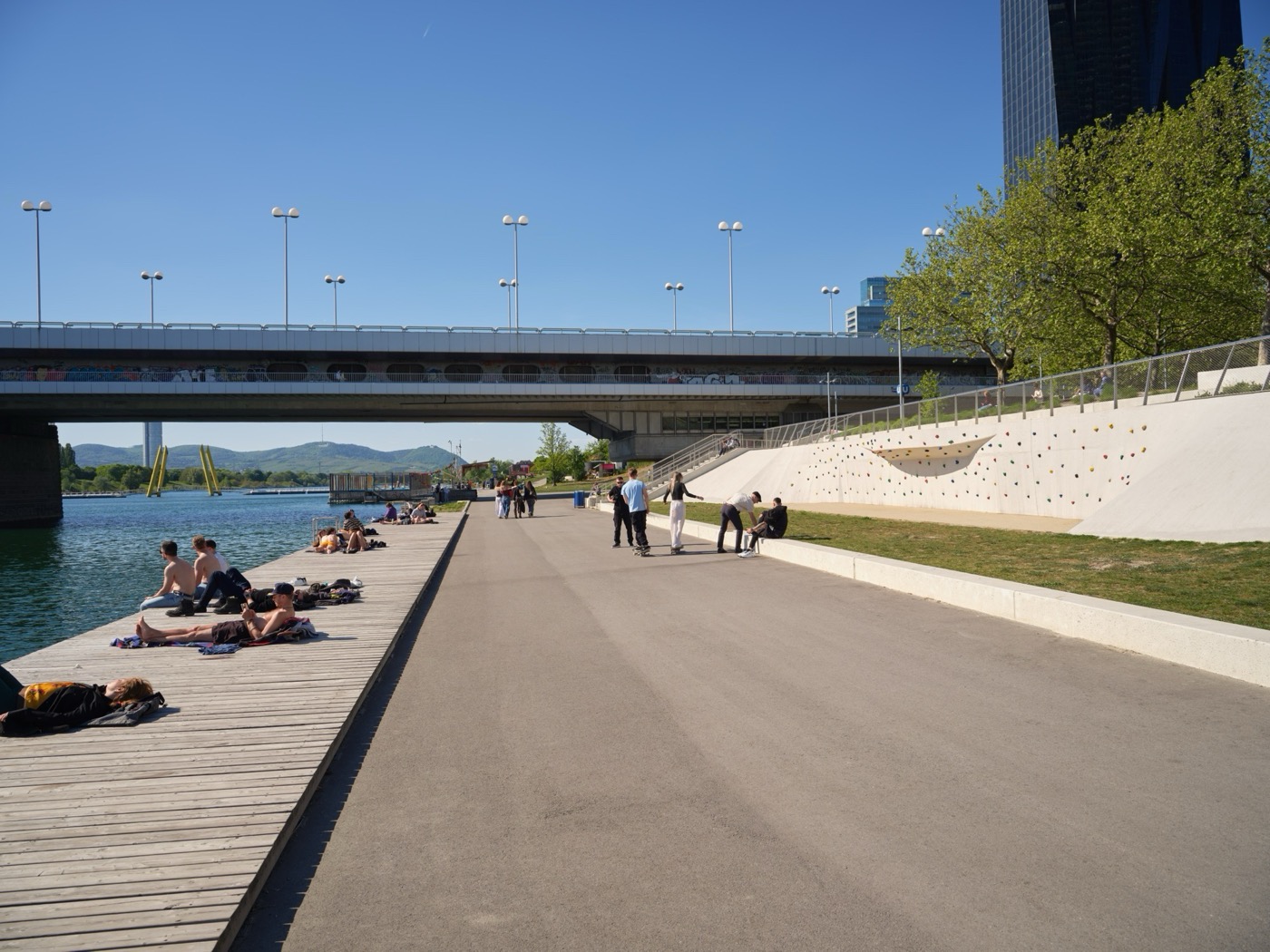
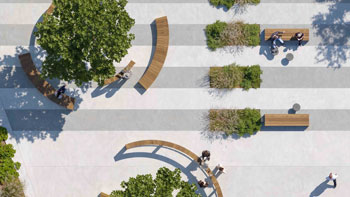
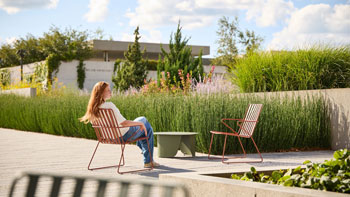
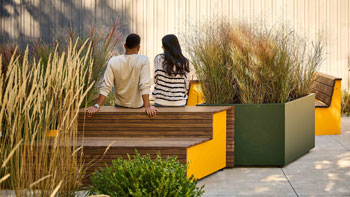
The open-space design follows the flowing geometry of the architecture. Curved raised planters provide generous root space for approximately 35 newly planted trees above the underground structures, while also creating sheltered niches for seating and gathering. Sand-coloured planters, mineral-textured paving slabs, and plantings of grasses and shrubs create a harmonious landscape image reminiscent of dunes. The trees, arranged as an archipelago of planted islands, reinforce the impression of a dense grove and help improve wind comfort in this exposed location.
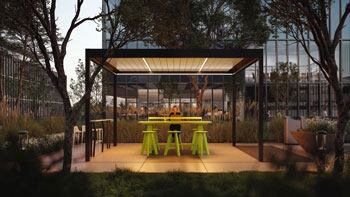
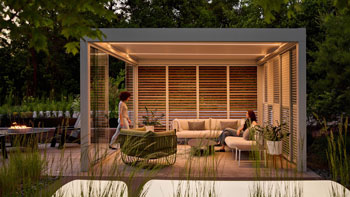
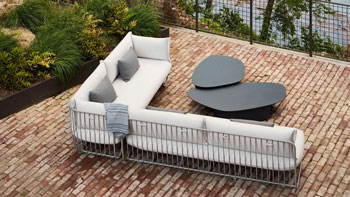
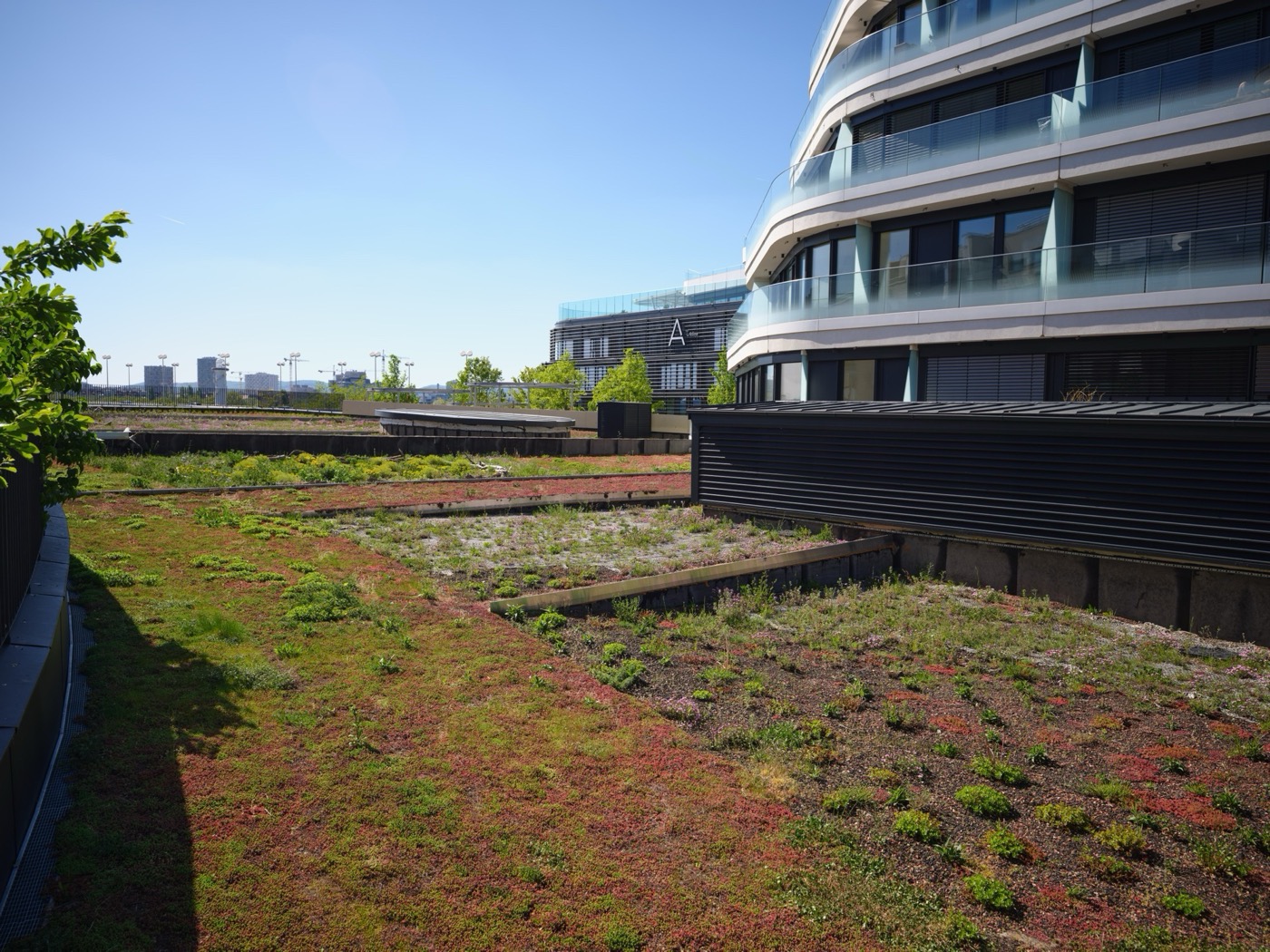
Above the highway underpass, a communal rooftop garden for residents includes raised planting beds surrounded by extensive and intensive green roofs designed to enhance biodiversity. Precisely positioned glass walls act as wind barriers and are combined with vertical greenery to improve the microclimate and the quality of outdoor spaces. A pergola made of circular steel frames spans the ramp between levels and serves as a distinctive shading element.
The adjoining public riverside zone was redesigned in accordance with the obligations defined in an urban development contract. A formerly heavily paved area and the massively reinforced embankment were reshaped topographically and transformed into a landscaped recreational zone. The embankment now includes a bouldering wall and a lounge deck with small tables. A generous wooden deck along the water’s edge and a viewing terrace above expand the range of spaces for recreation, relaxation, and quiet enjoyment by the river.
The design also incorporates a cycle-route hub connecting EuroVelo 6 along the riverbank with Reichsbrücke and the cycle-highway towards the city centre. The narrow space along the bridge approach, which also serves as access to Danube Flats, is transformed into a micro-boulevard for sustainable mobility. A row of trees and varied paving clearly separate pedestrian and bicycle movement while maintaining visual continuity between them.
Landscape Architect
Karl Grimm Landscape Architects, Erika M. Klosterhuber
Architect
A01 architects ZT GmbH
Client
S+B Plan & Bau GmbH
Photography
Johannes Hloch
Romana Graf, Karl Grimm Landscape Architects
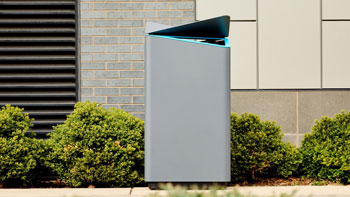
mmcité street furniture – Julius Philip – juliusfilip | photostudio | design
Wagramer Straße 2, 1220 Vienna, Austria
74355


LILA 2026 Sponsor