Oriental One
2026 Landscape and Architecture / 2026 Residential Parks / China / Built in 2025 /

![Project Overview: The reimagined Paddington Central Amphitheatre by Gillespies is a vibrant social hub within the 11-acre mixed-use campus of Paddington Central by British Land. Its undulating seating, adorned with foliage, and expansive performance space redefine urban connectivity, reflecting a societal shift towards urban greening for well-being and resilience. The Story British Land’s brief was […]](https://landezine-award.com/wp-content/uploads/2024/05/00-Paddington-Central-Amphitheatre-06-И-Gareth-Gardner-600x400.jpg "Paddington Central Amphitheatre")
![Oriental One is a new luxury development of ten distinctive towers containing 547 residential units and 4,595m2 of commercial space. They benefit from large communal courtyards, water features, roof gardens and a beautiful streetscape. Vanke started by investigating their target customer group, looking at their priorities for outdoor spaces. At the same time, field research […]](https://landezine-award.com/wp-content/uploads/2023/05/00-Oriental-One-project-main-photo-showing-roof-gardens-water-feature-and-winding-path-600x338.jpg "Oriental One")
![The Park is the centrepiece of Elephant Park, the £2.5bn revitalisation of Elephant & Castle by Lendlease and Southwark Council, which is setting a new benchmark in city living. At 2-acres it’s an inclusive and sustainable community space featuring expansive lawns, colourful rain gardens, the landmark water playscape, Elephant Springs, and walkways nestled within naturalistic […]](https://landezine-award.com/wp-content/uploads/2022/05/00-The-Park-within-Elephant-Park-Aur‚lien-Langlais_Lendlease-600x400.jpg "The Park within Elephant Park")
![Located in a prime position overlooking leafy Holland Park, Holland Park Villas is an exclusive gated residential development in the Royal Borough of Kensington and Chelsea by developer, Native Land. The architecture was conceived by John McAslan + Partners and comprises four contemporary ‘villas’ offering 68 elegant apartments and four penthouses that benefit from spectacular […]](https://landezine-award.com/wp-content/uploads/2019/04/XX-holland-park-villas-01∏john-sturrock-600x345.jpg "Holland Park Villas")
![Originally designed by Graham Dawbarn and operational by 1960, BBC Television Centre was the first production hub of its kind in the world. Consisting of purpose-built studios and offices radiating around a central circular space, the site was never intended for public access. The BBC sold it to Stanhope plc in 2012, and with lead […]](https://landezine-award.com/wp-content/uploads/2019/04/XX-television-centre-01∏john-sturrock-600x405.jpg "Television Centre")
![Built in 1779, the Grade I-listed Piece Hall is the sole survivor of the great 18th-century northern cloth halls. In the Georgian period, “pieces” of hand-loomed woollen cloth were traded there and exported widely. By 1815, the courtyard was being used as a venue for public spectacles and the Victorian era saw it become home […]](https://landezine-award.com/wp-content/uploads/2019/04/XX-the-piece-hall-halifax-main∏the-piece-hall-trust_paul-white-600x400.jpg "The Piece Hall, Halifax")
![Riverlight is a pioneering residential-led development on a five-acre industrial estate in the heart of the emerging Nine Elms regeneration area, close to Battersea Power Station on the south bank of the River Thames. Designed by world-renowned architects Rogers Stirk Harbour + Partners, Riverlight consists of six modern and elegant residential pavilions, carefully arranged within […]](https://landezine-award.com/wp-content/uploads/2018/04/Riverlight-02-john-sturrock-600x400.jpg "Riverlight")
![In 2008, Architects Foster + Partners were commissioned by client Canary Wharf Group to design a mixed-use scheme encompassing the over-ground elements of a new station for the Crossrail project at Canary Wharf. The client commissioned Gillespies to create an accessible shared and open space that would work to unite the residential neighbourhood of Poplar […]](https://landezine-award.com/wp-content/uploads/2018/04/Crossrail-place-roof-garden-15-gillespies-600x394.jpg "Crossrail Place Roof Garden")
In contemporary urbanization, landscape design faces key questions: can we create living natural experiences amid scarcity and density? Can we create unique places rooted in local culture despite global homogenization?
Oriental One, in Shanghai’s high-density core, uses landscape to integrate city, nature, culture, and dwelling.
I. Urban Vision
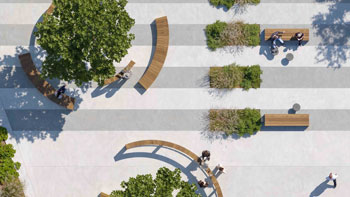
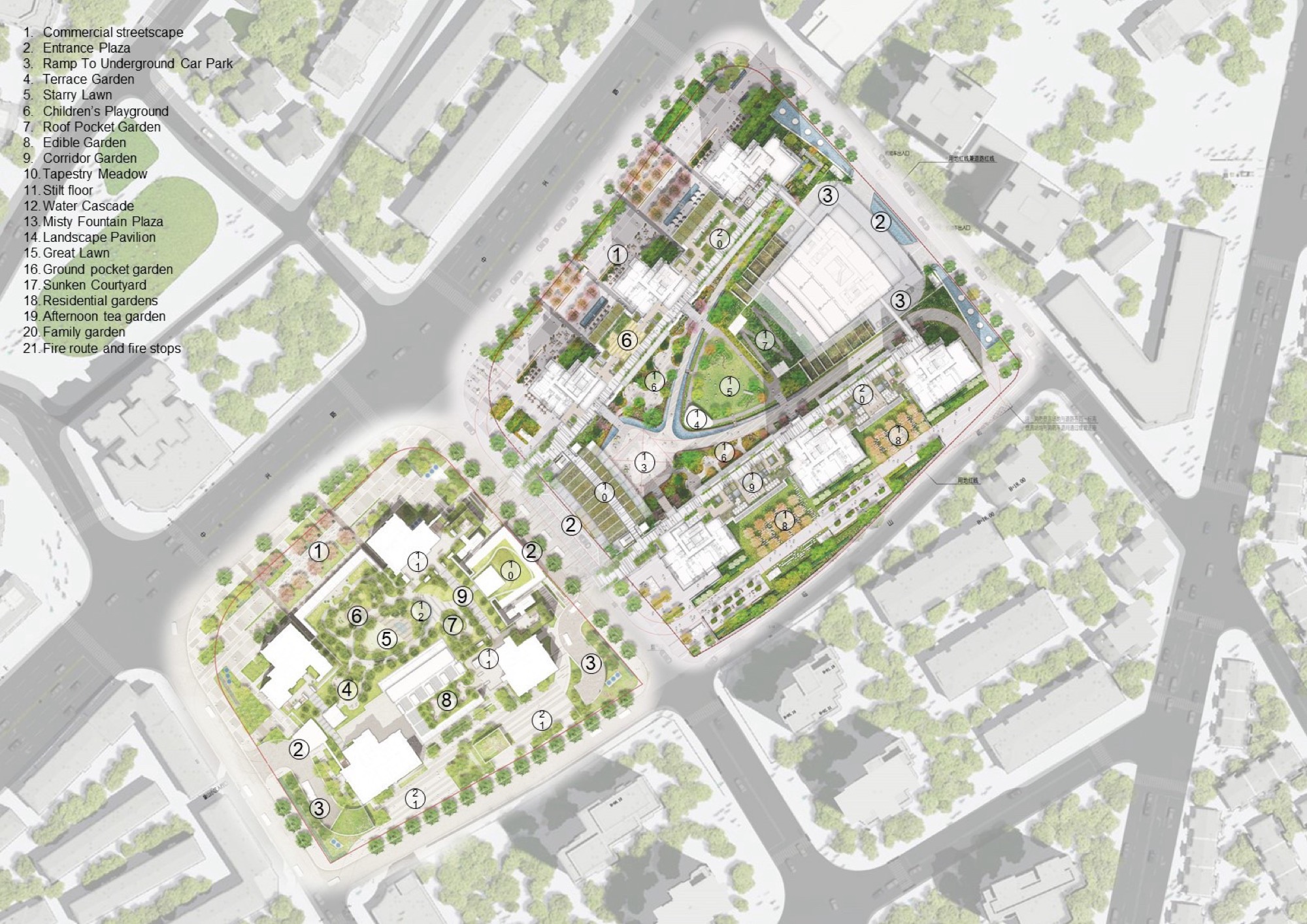
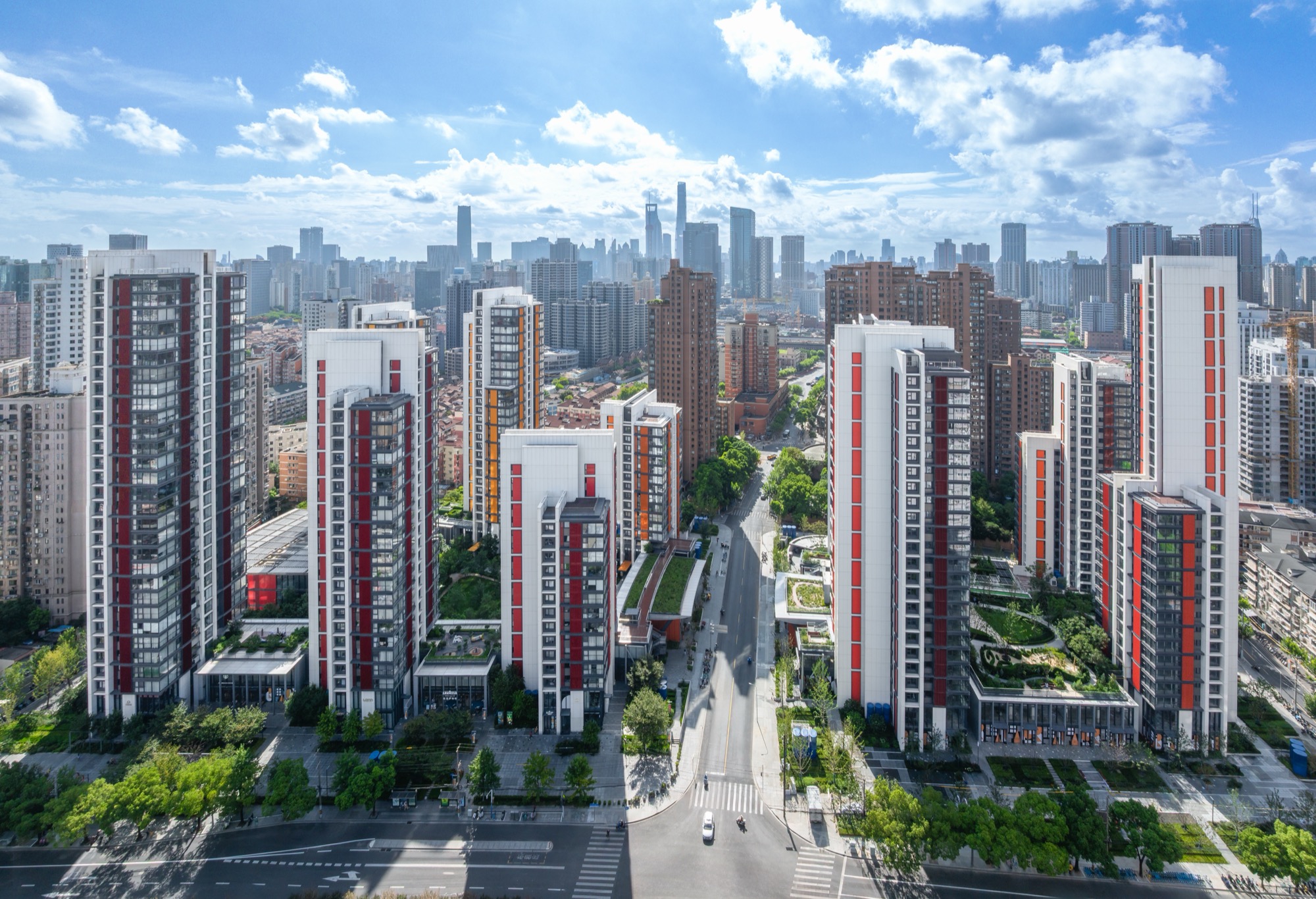
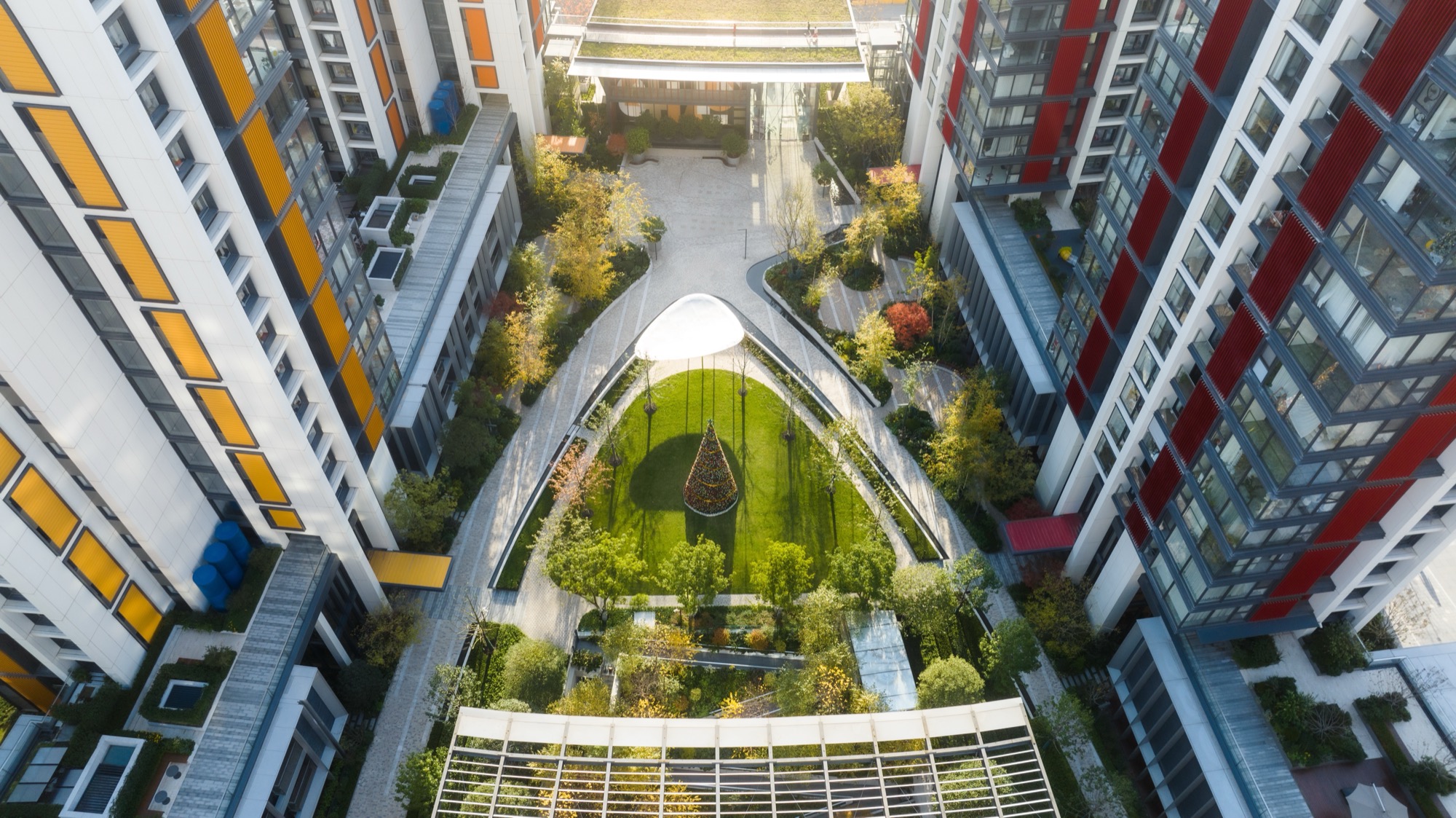
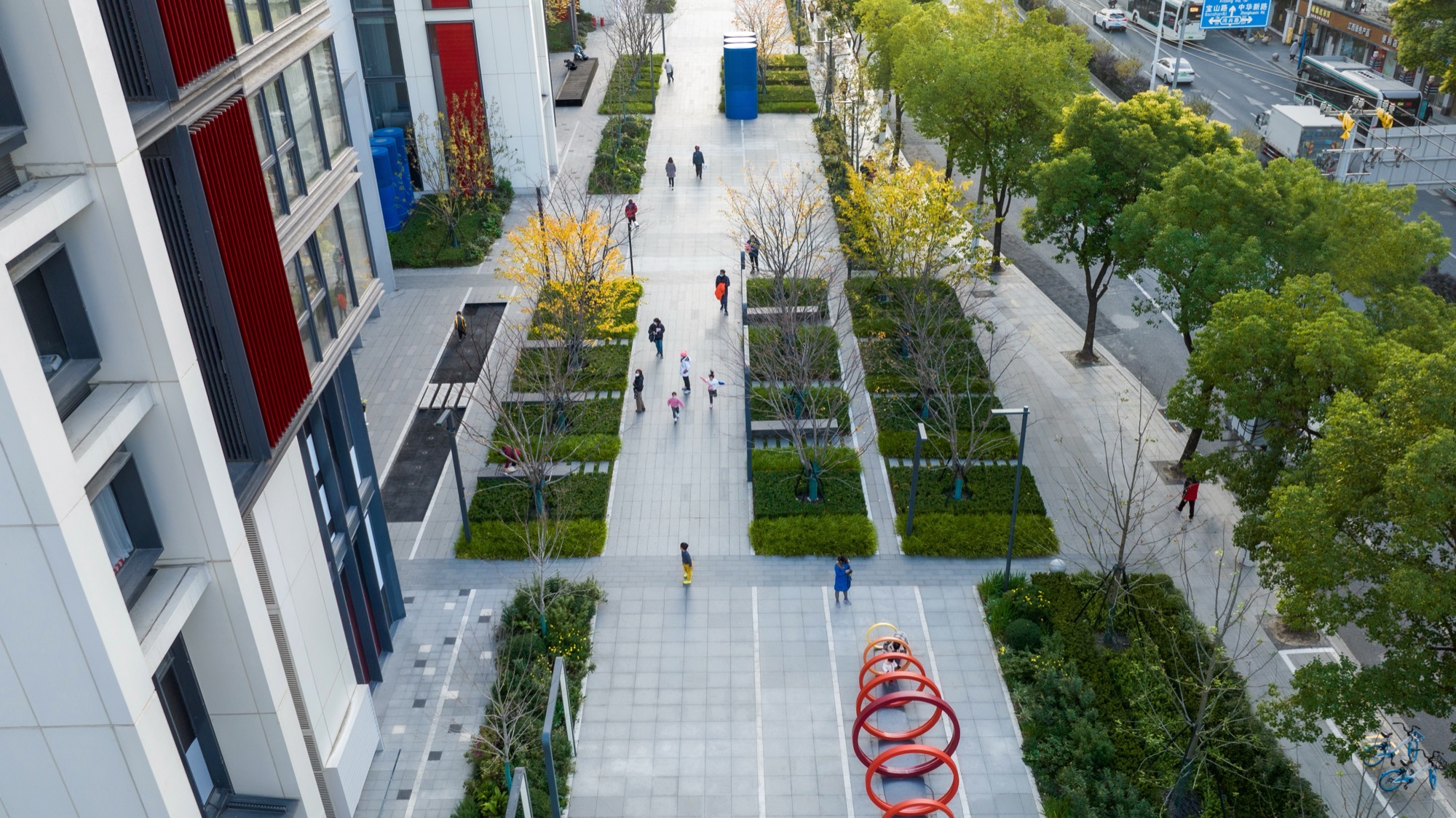
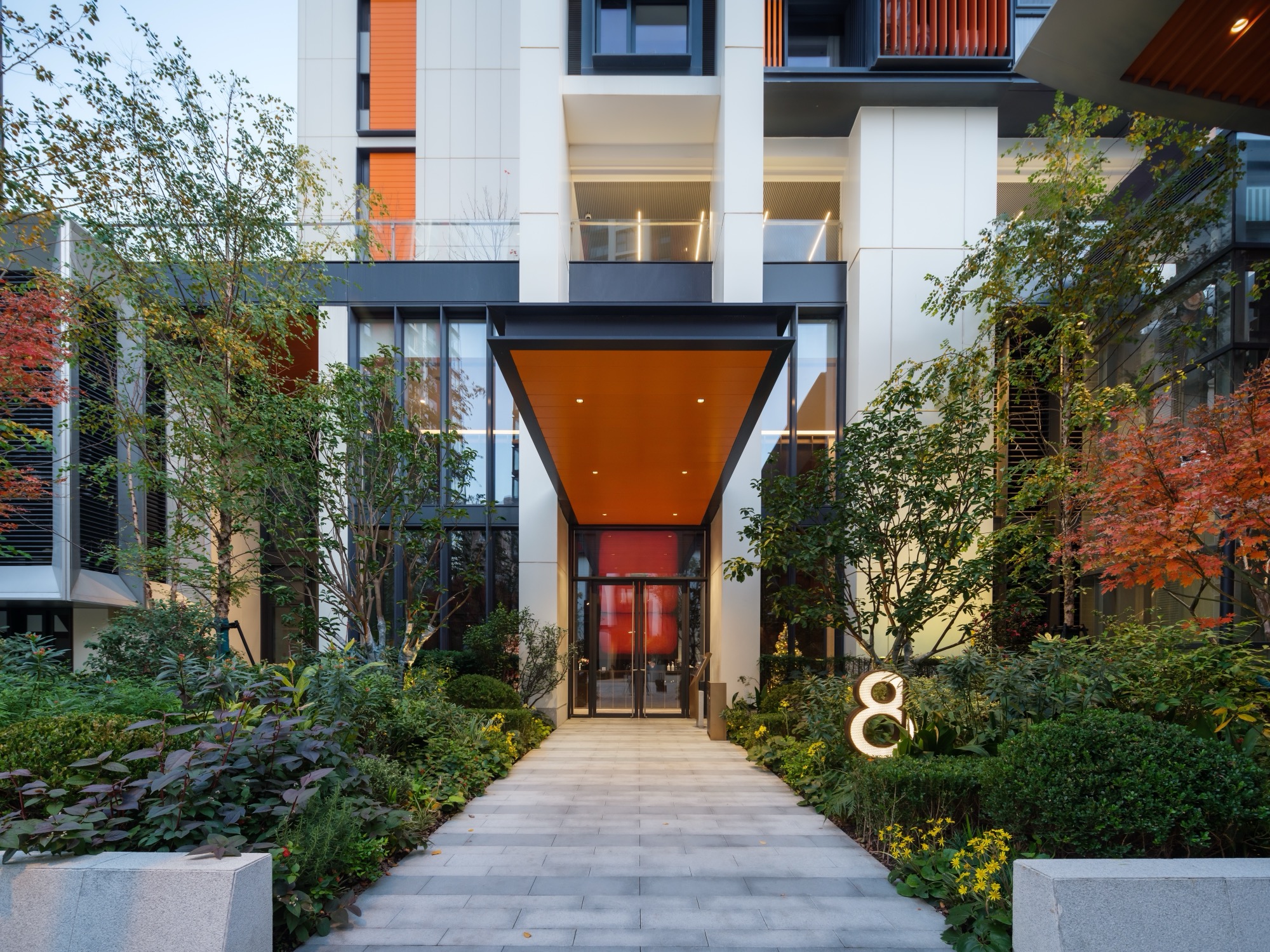
Split by a road but designed as one, a fan-shaped structure crosses the road. Along Zhongxing Road, it sets back over 25m to release public space – plazas for daily and festive use. The road becomes a stitched axis, not a boundary.
II. Vertical System
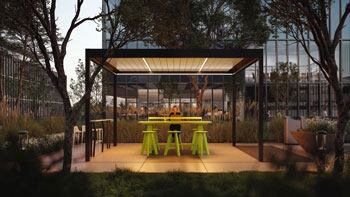
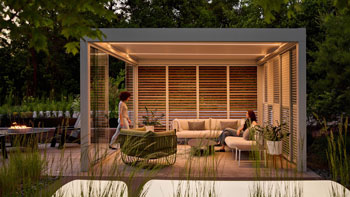
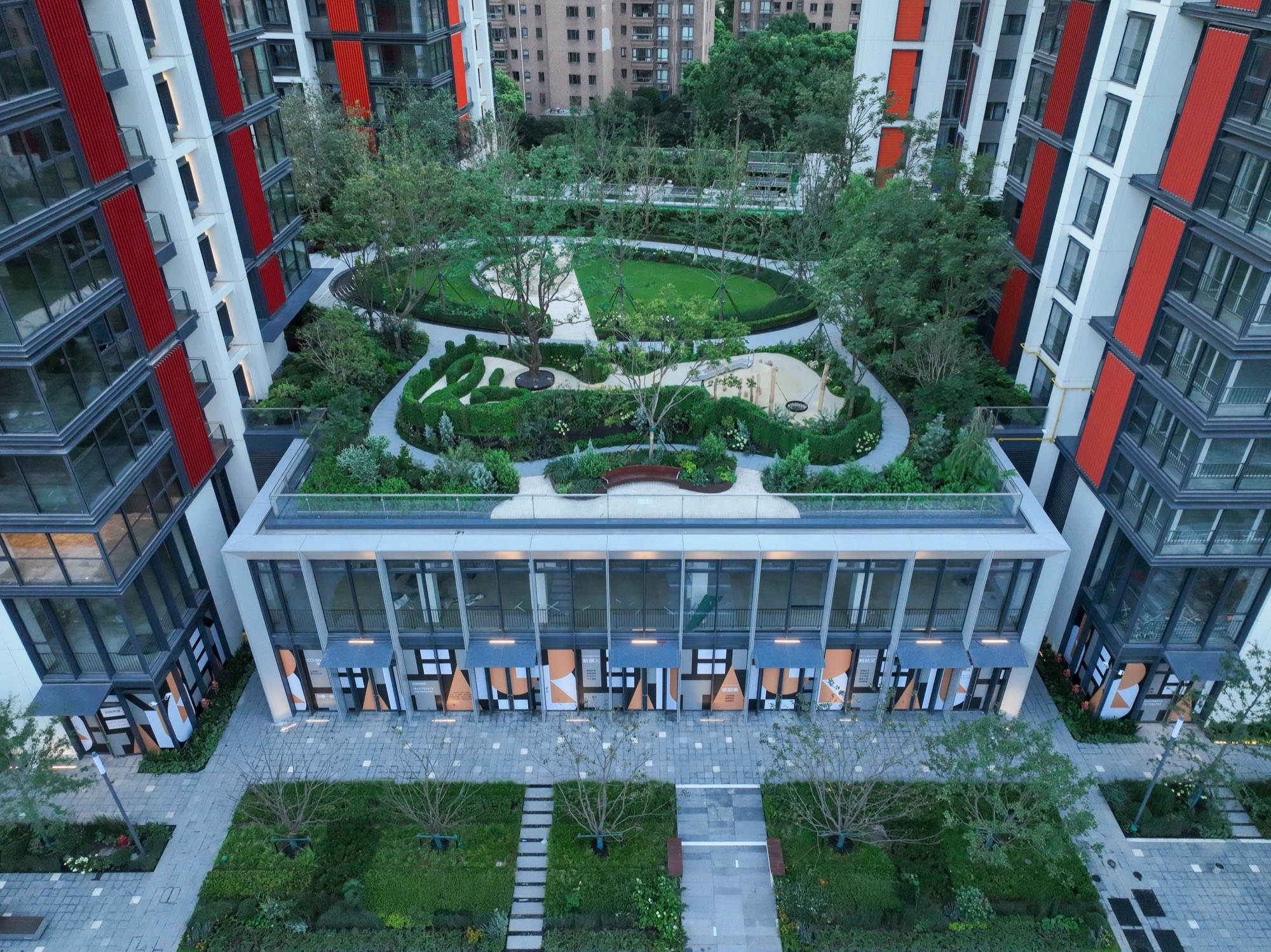
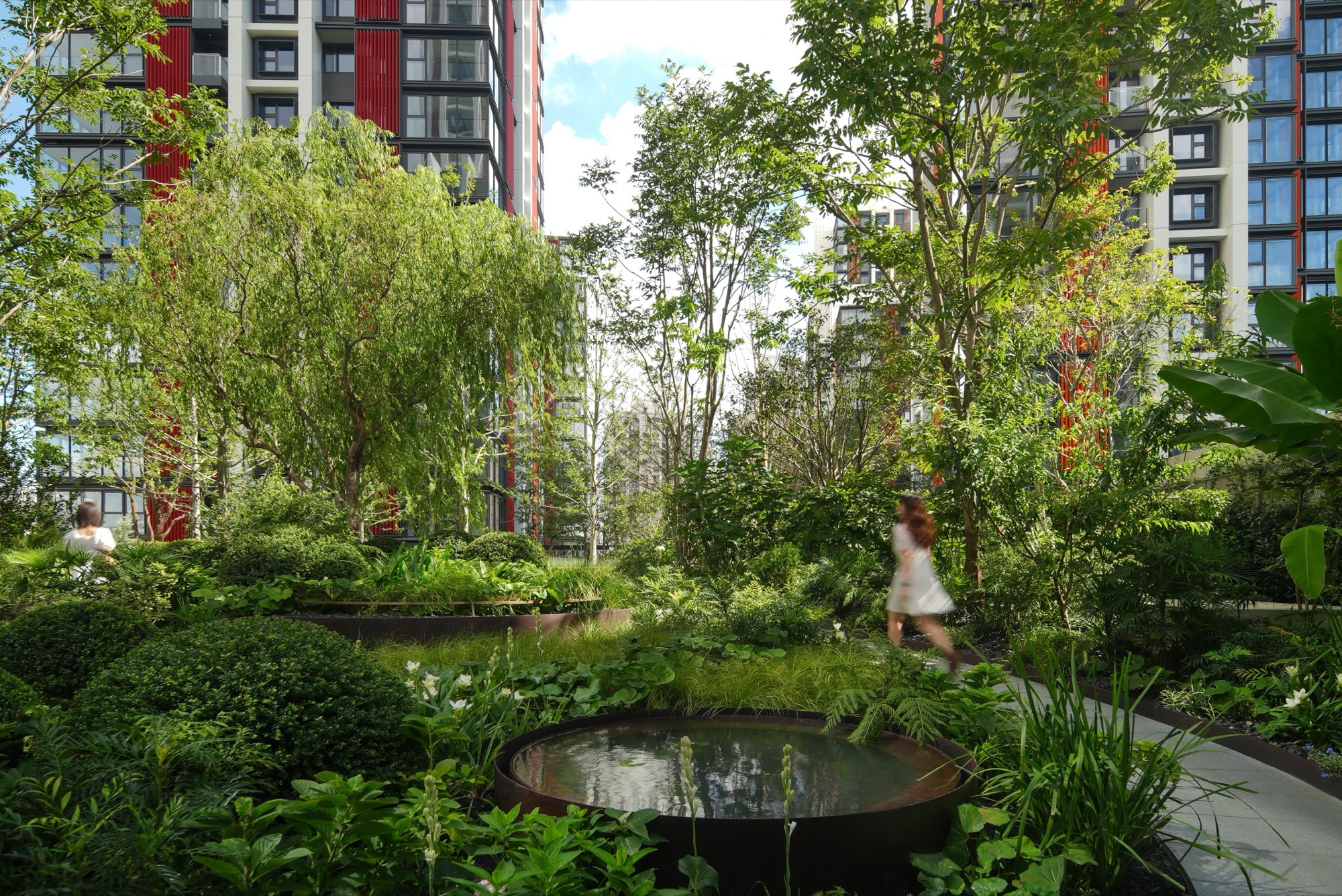
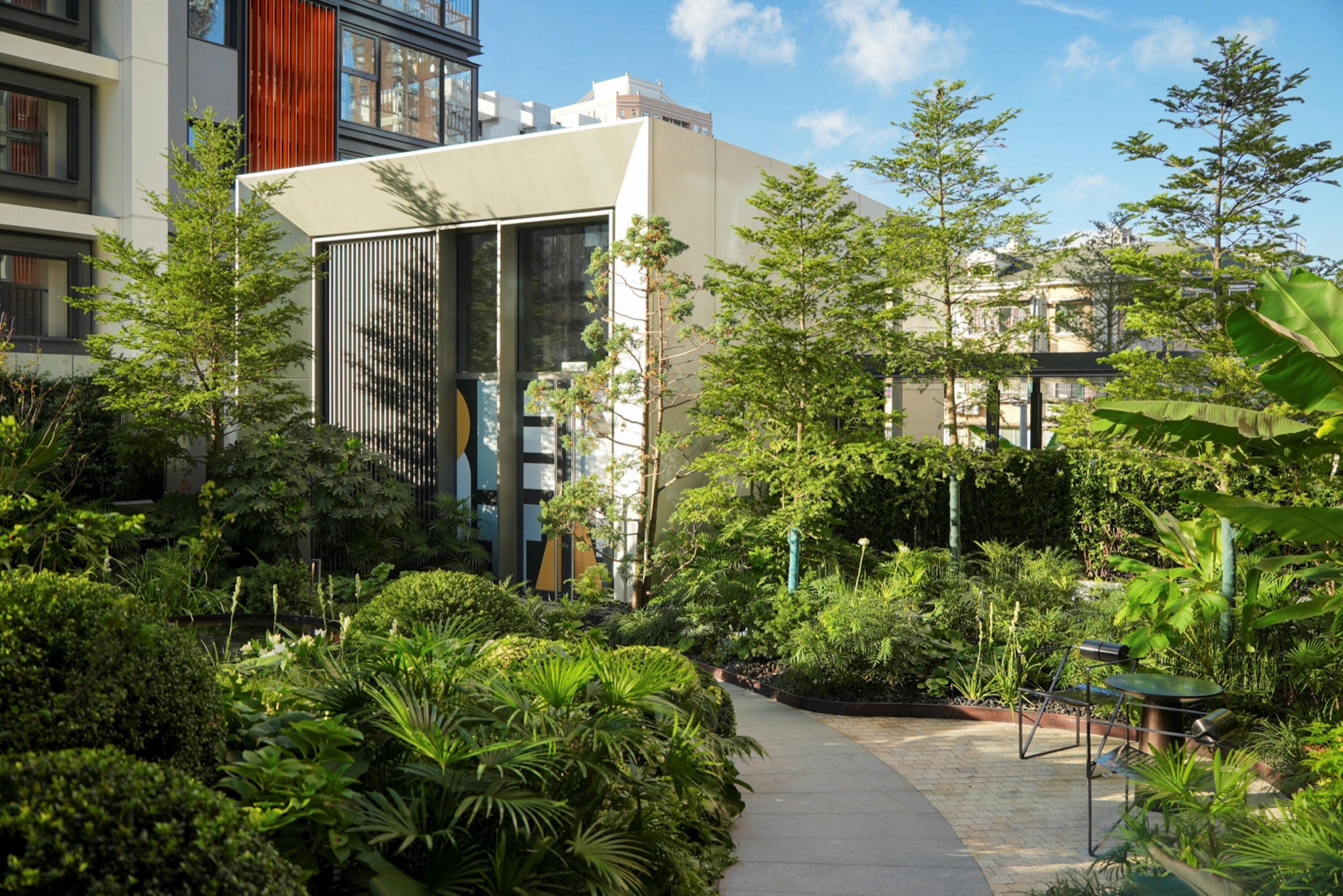
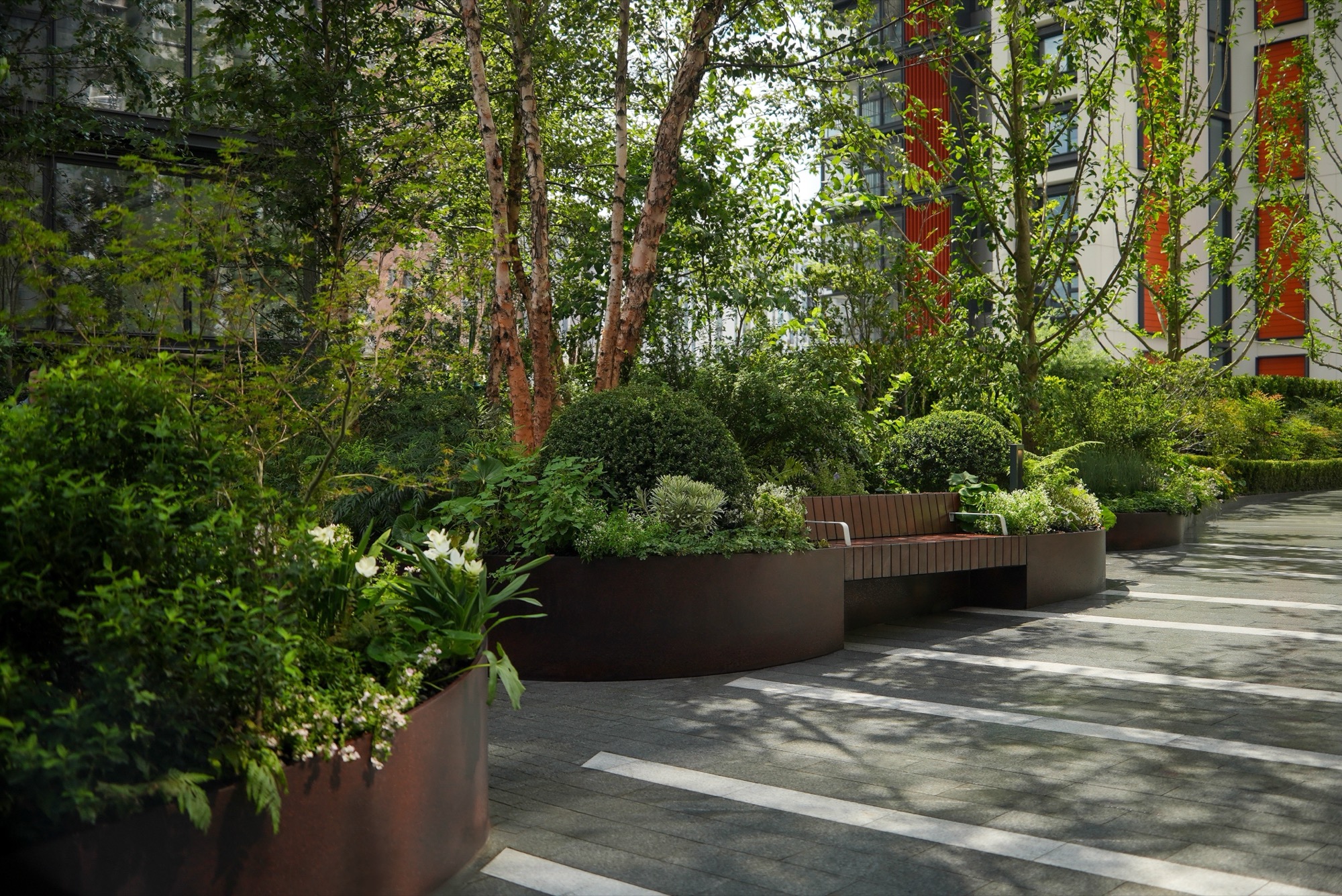
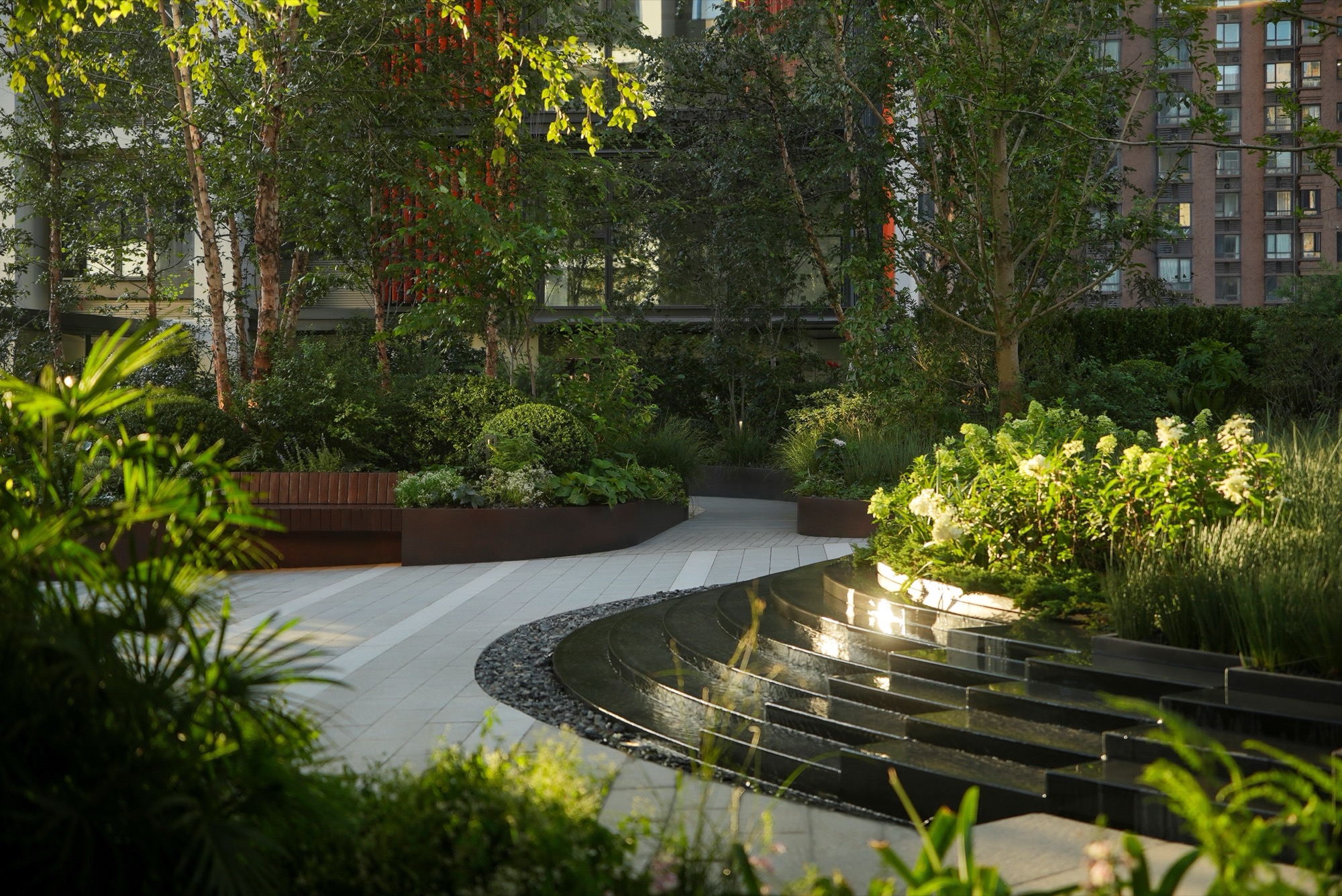
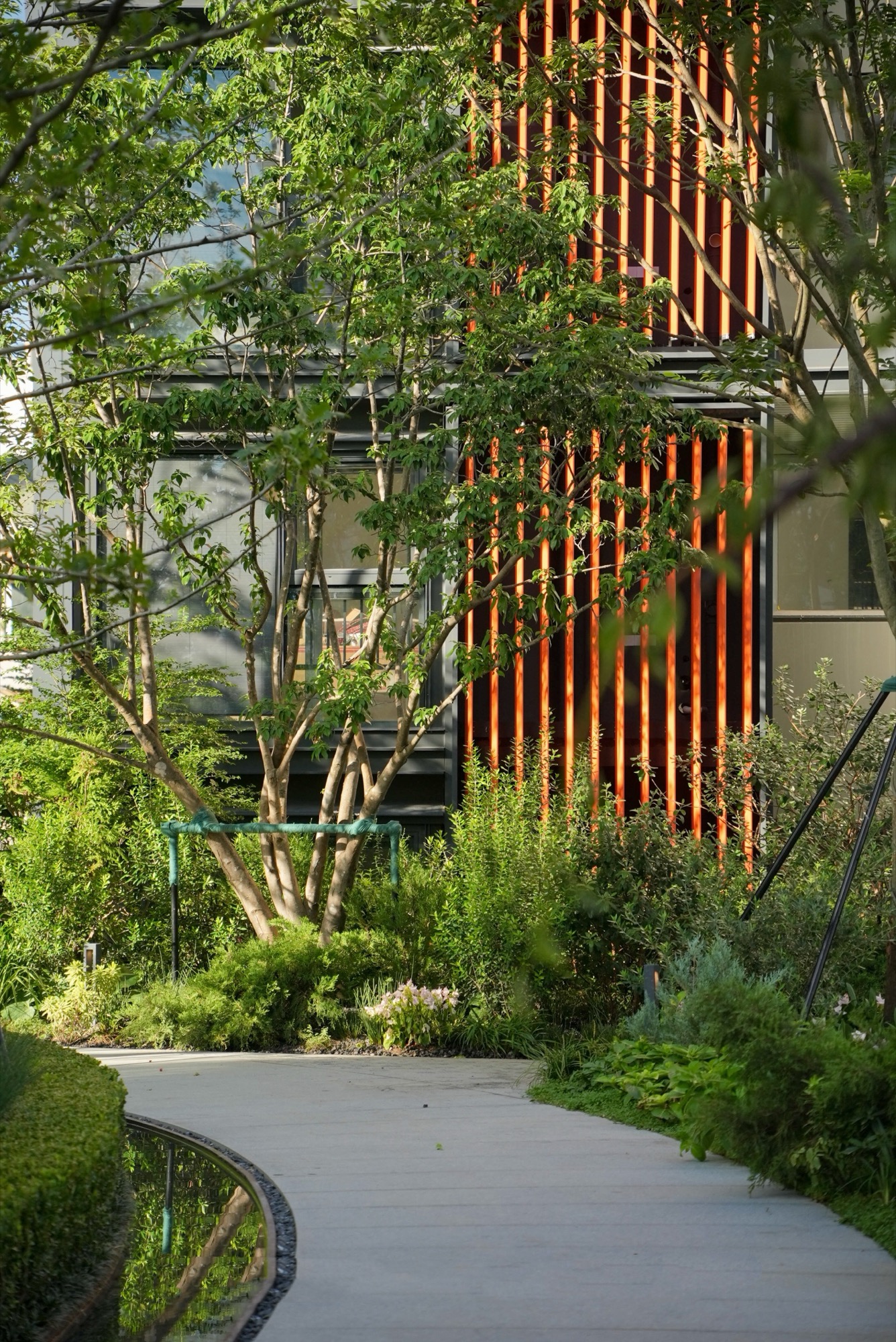
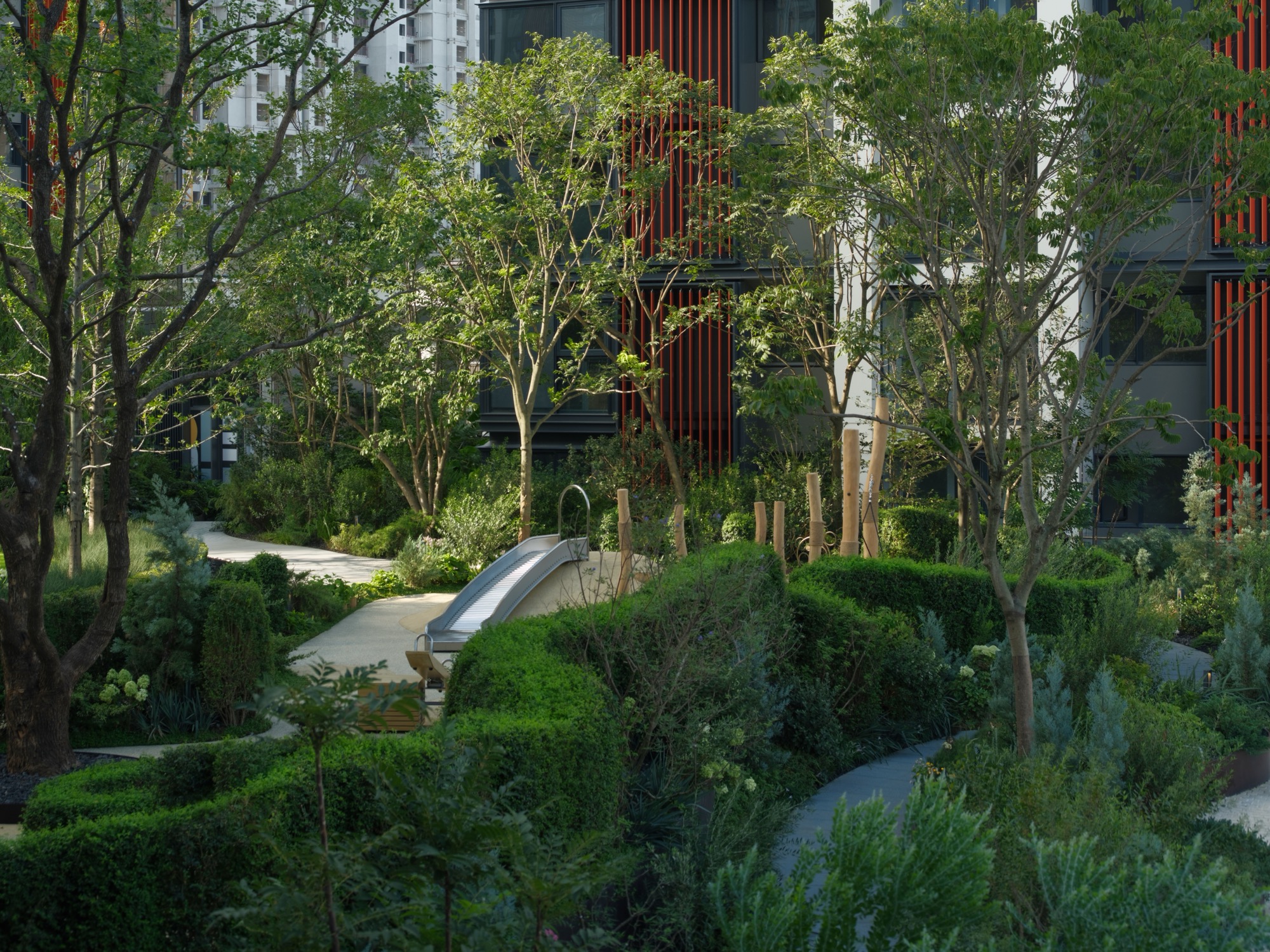
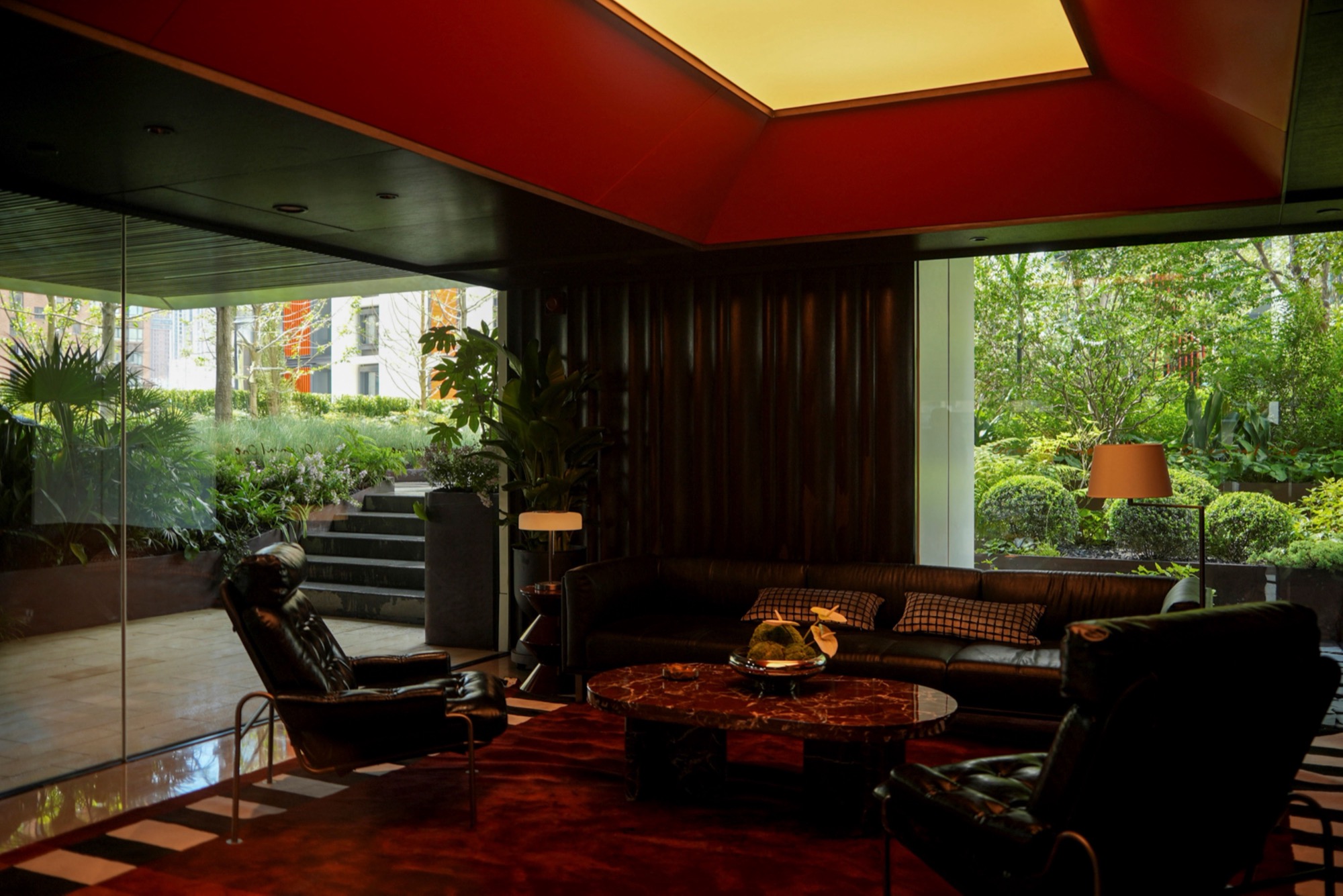
Using “Garden Room” as a prototype, hedges, planters, and topography enclose small gardens. “Ha-Ha” boundaries eliminate walls. Three levels: ground, sunken courtyard, and 9.45m-high roof garden.
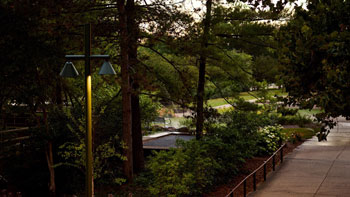
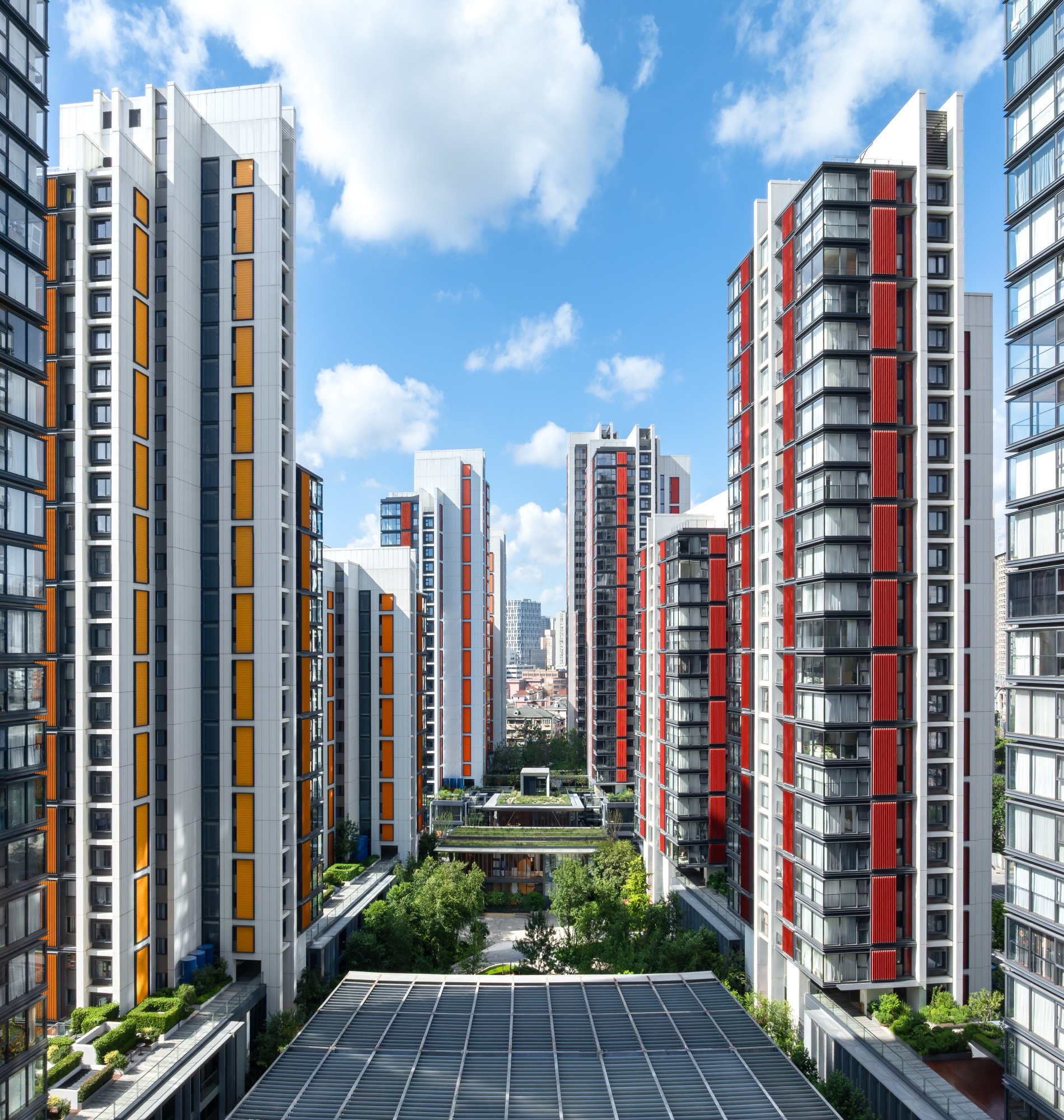
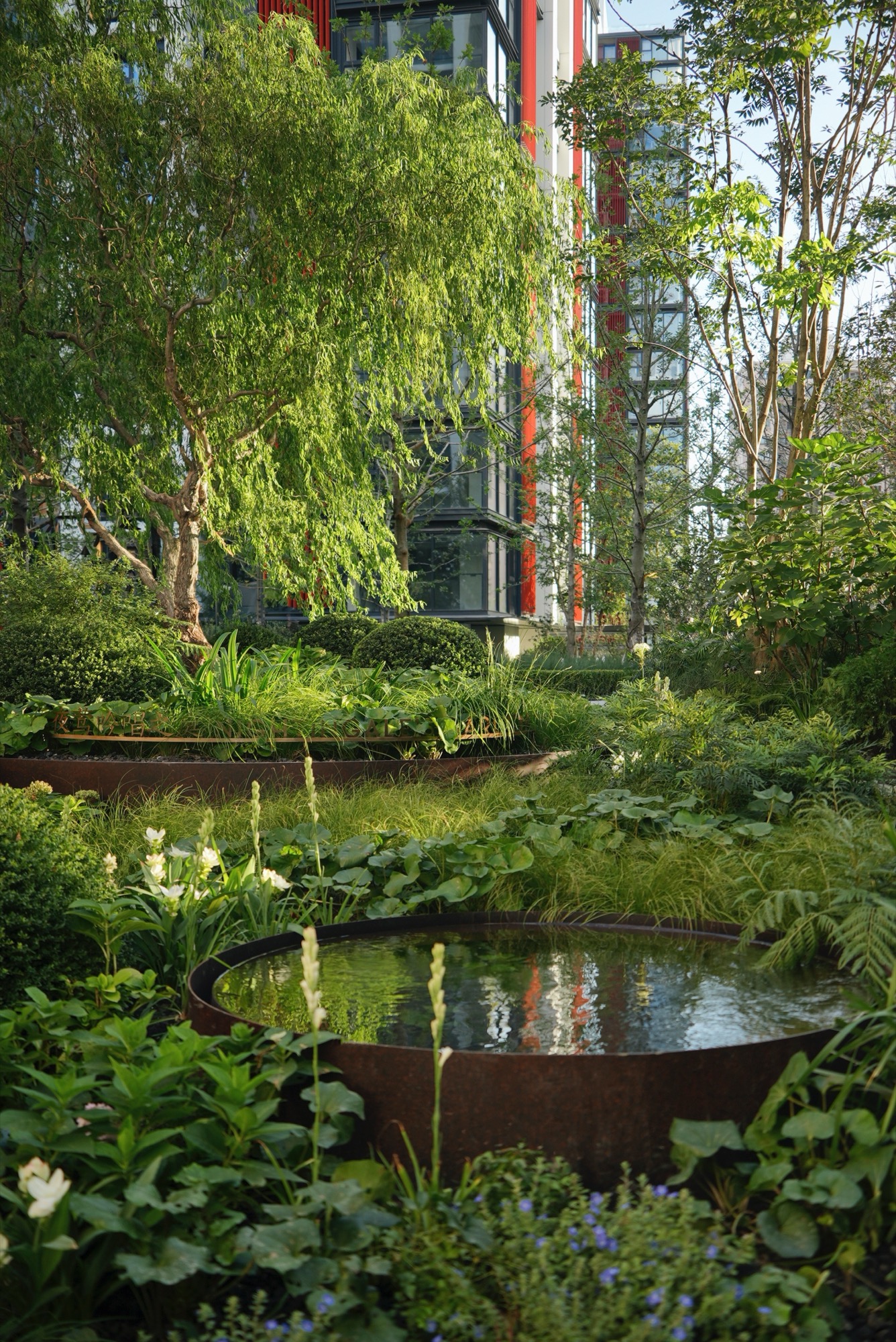
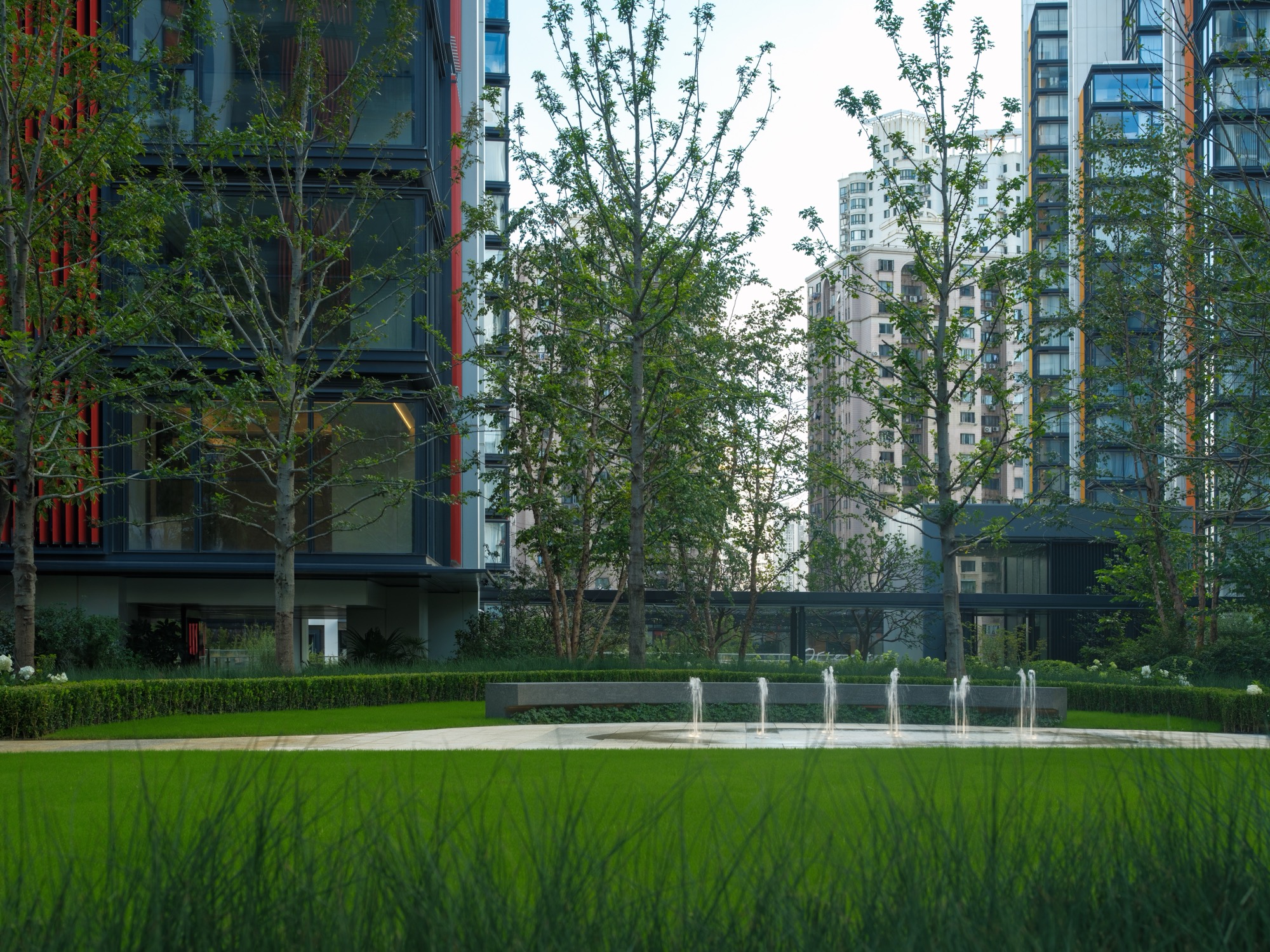
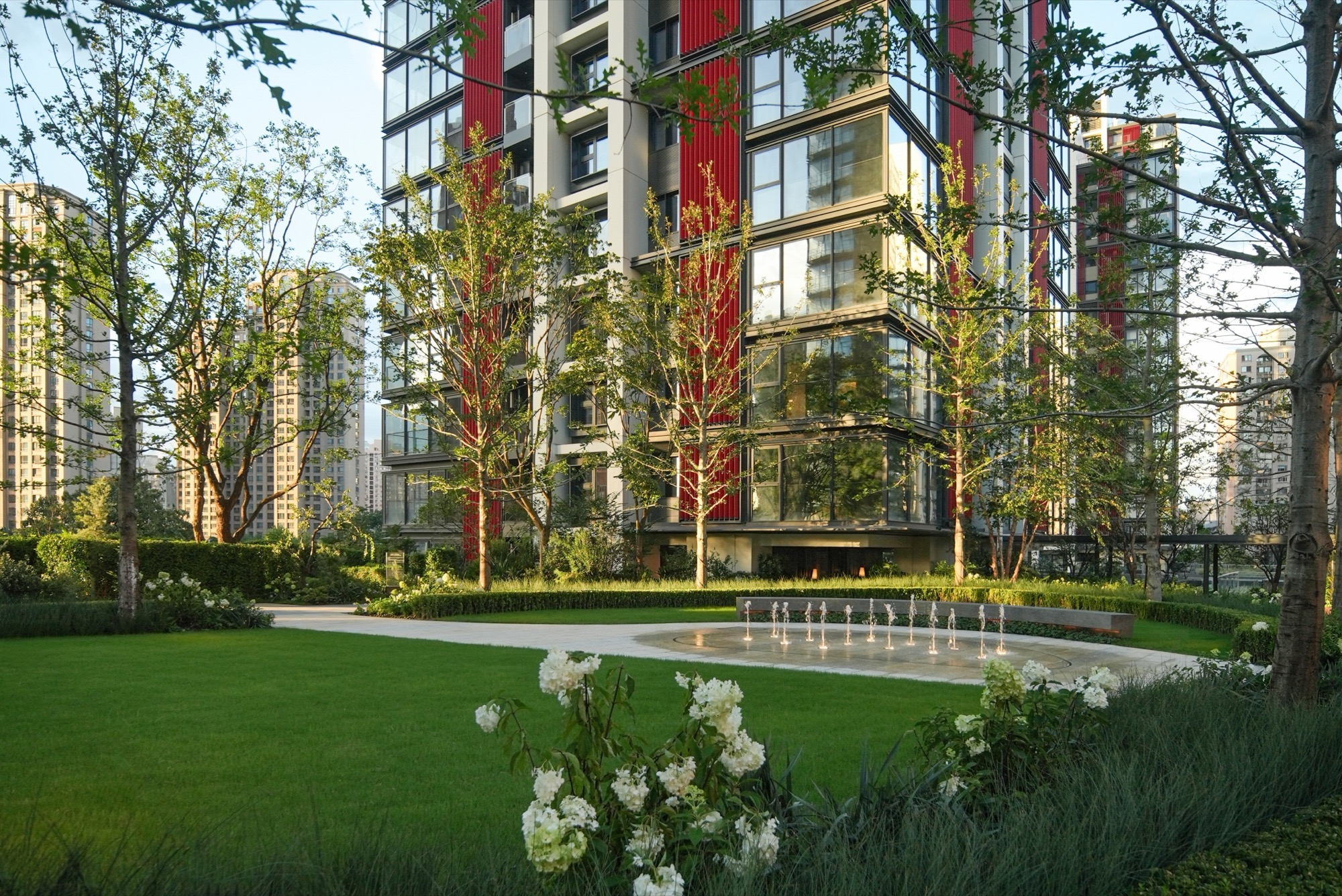
Ground Level: unfolds along “Misty Fountain Plaza – Landscape Pavilion – Great Lawn”,forming a garden stroll on both sides of the homecoming path
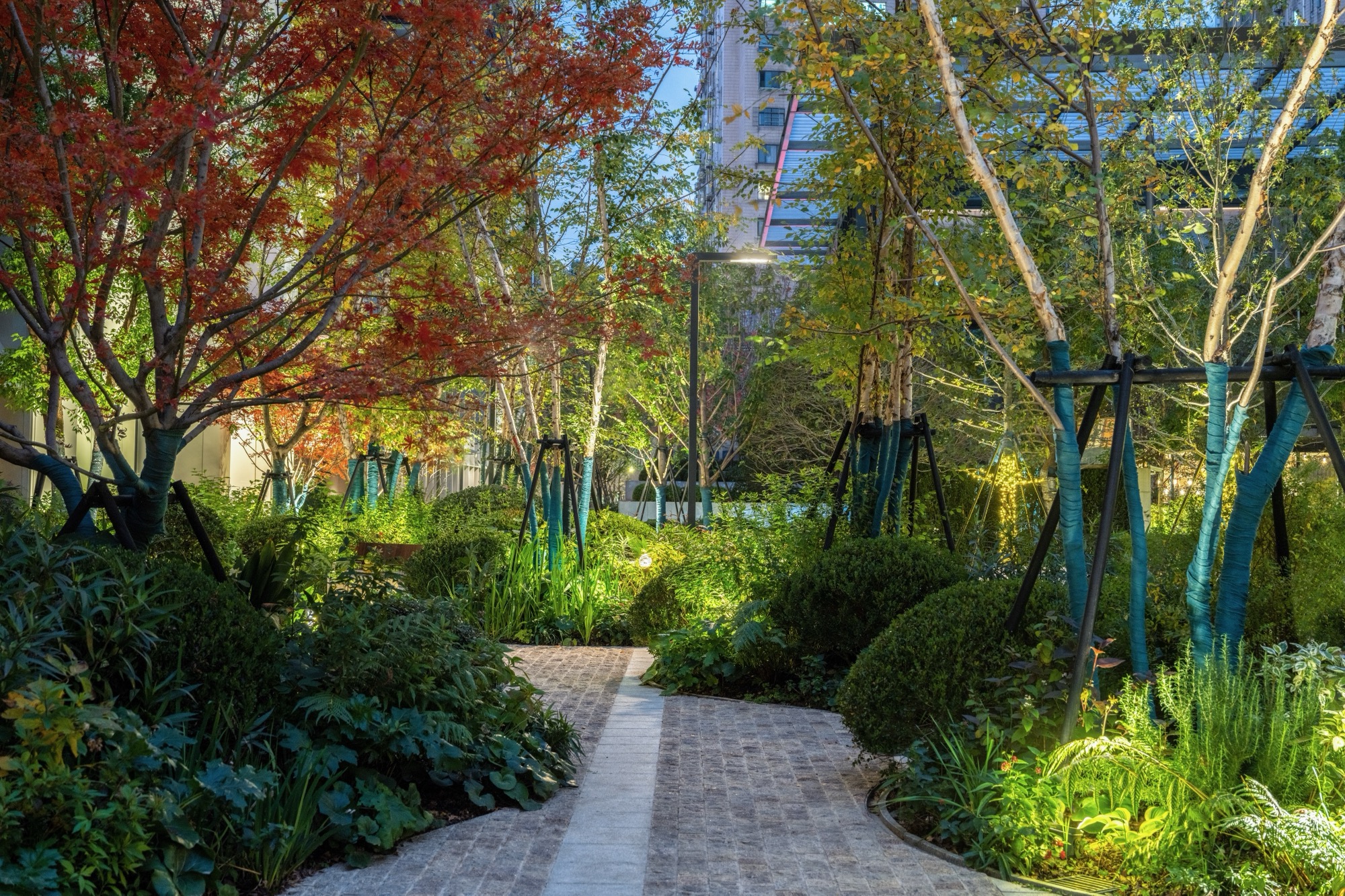
Sunken Courtyard: features naturalistic planting forms a lush “green room”
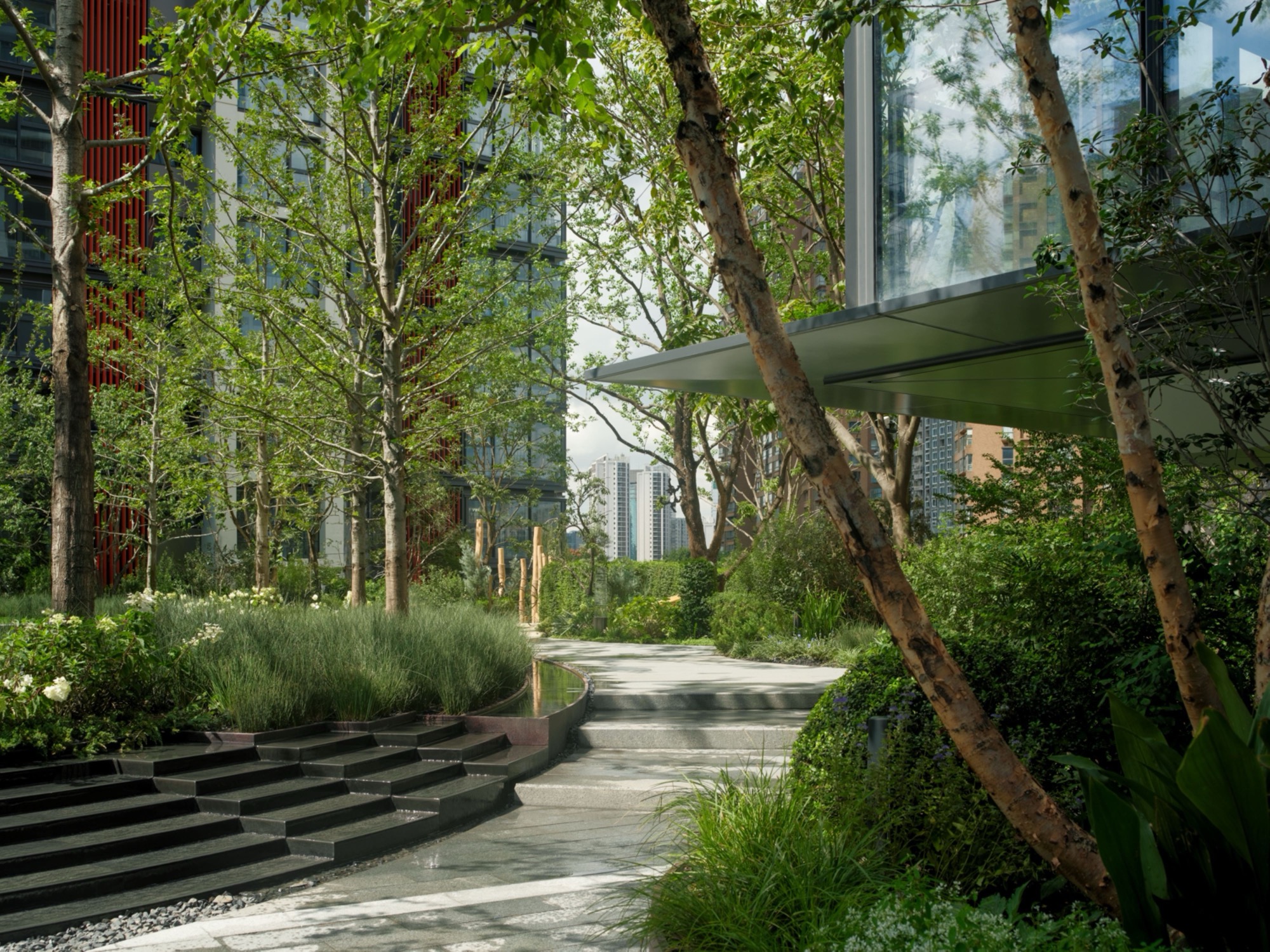
Roof Garden (+9.45m): Skybridges connect buildings – a floating ribbon with different gardens. Paths lean to small-scale socializing while keeping street views.
III. Thematic Narratives
Plants as language. Each garden tells a story rooted in color, texture, form, season, and local memory.
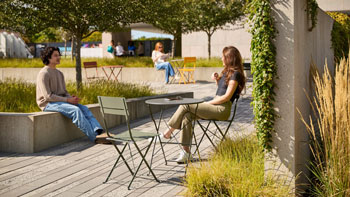
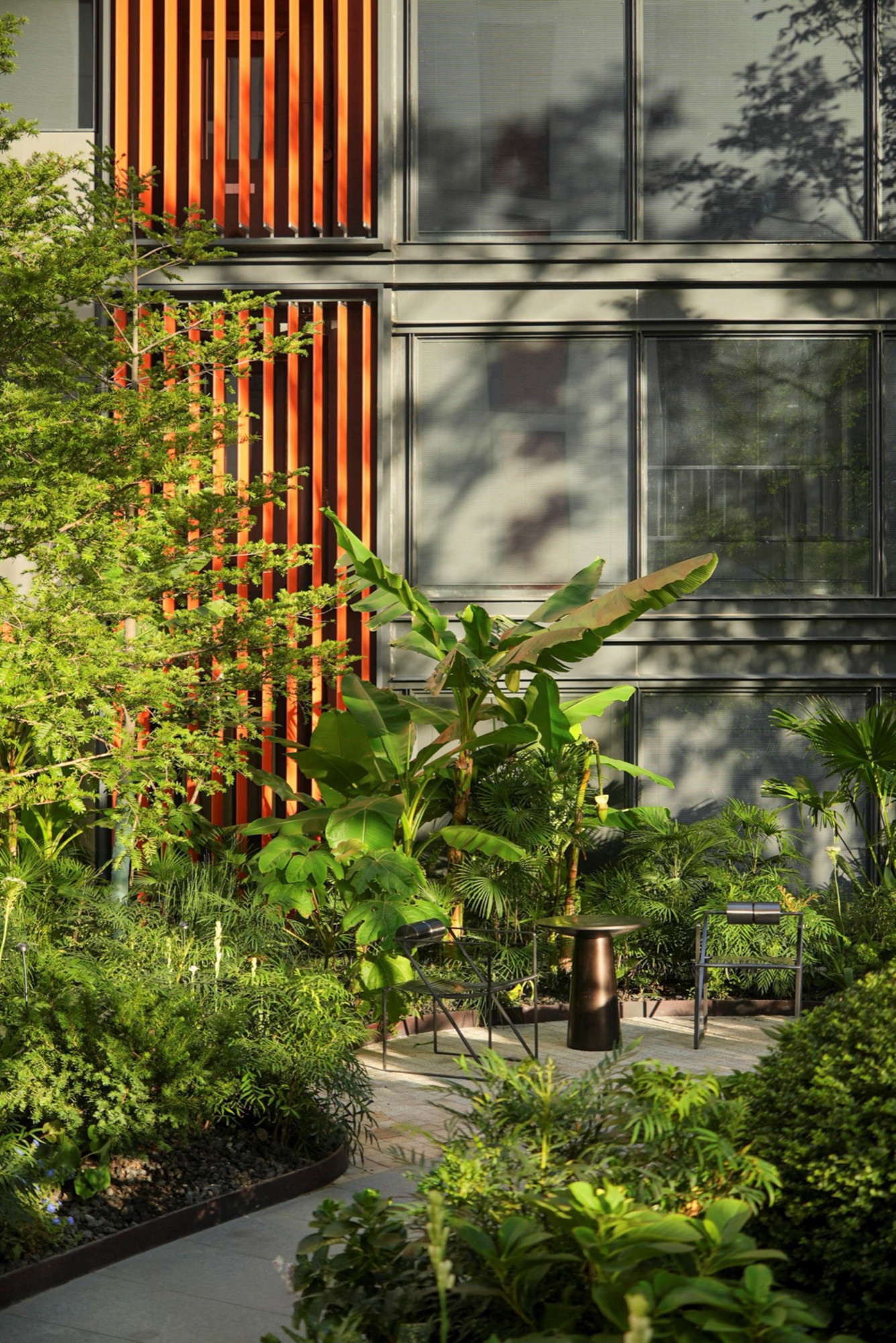
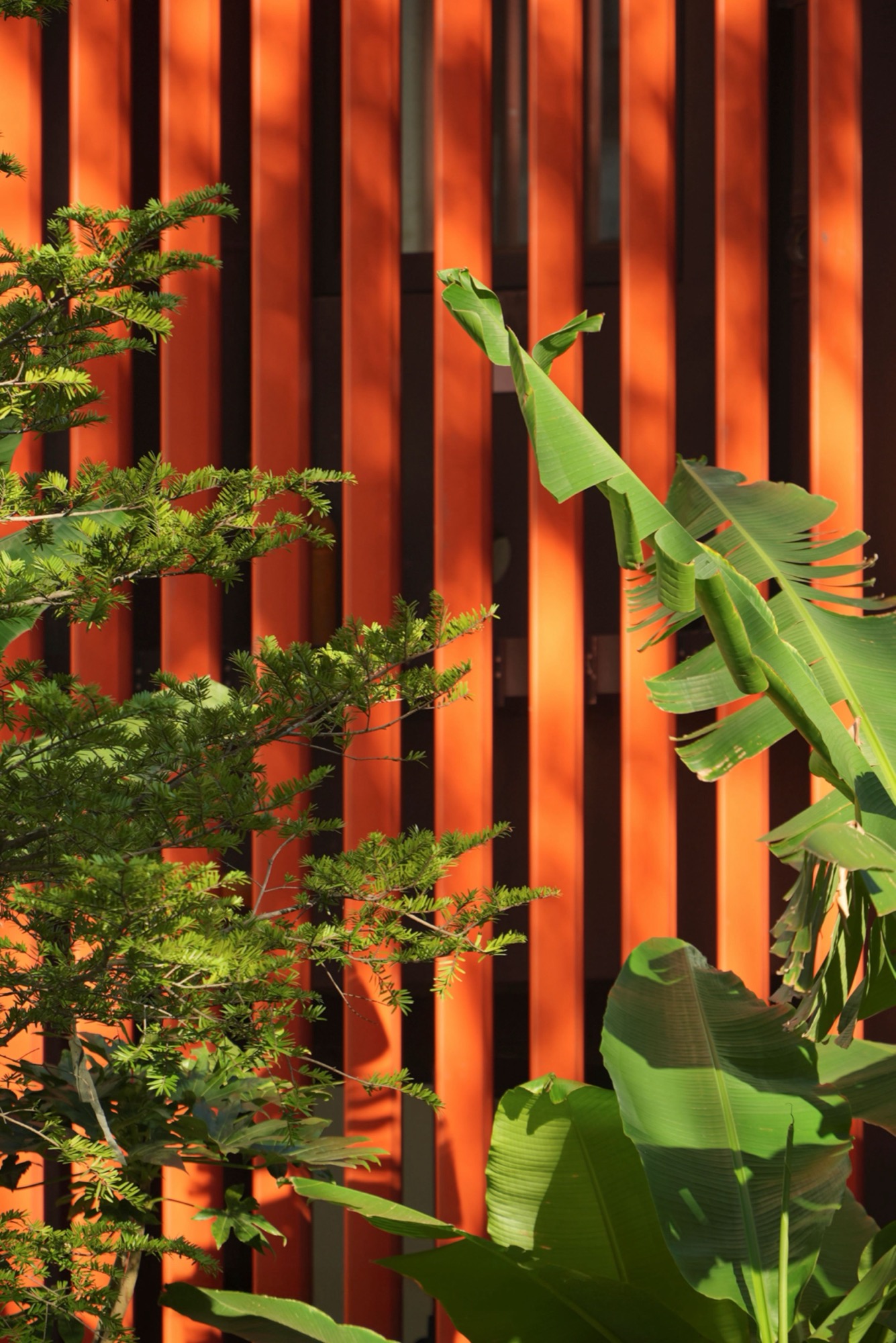
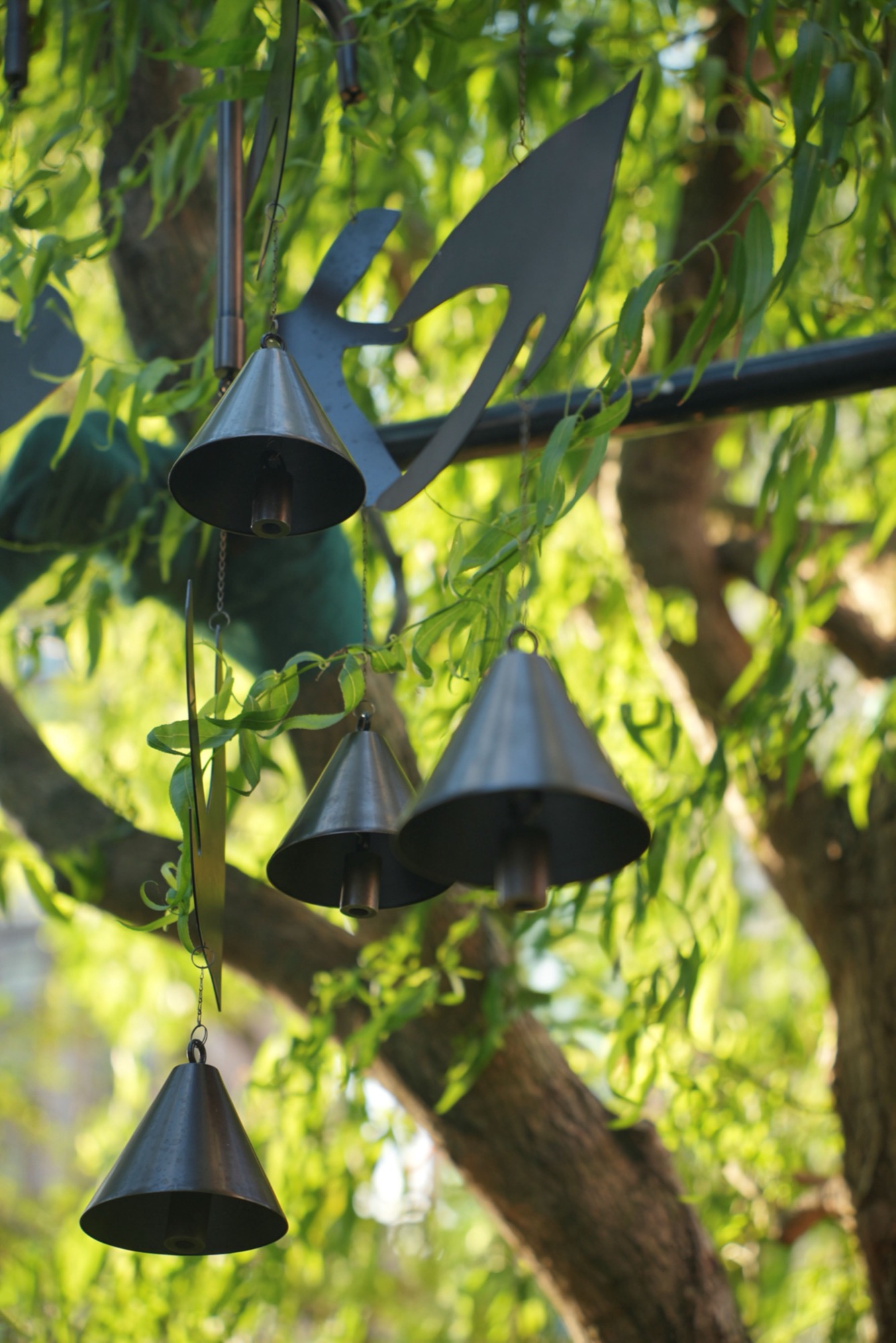
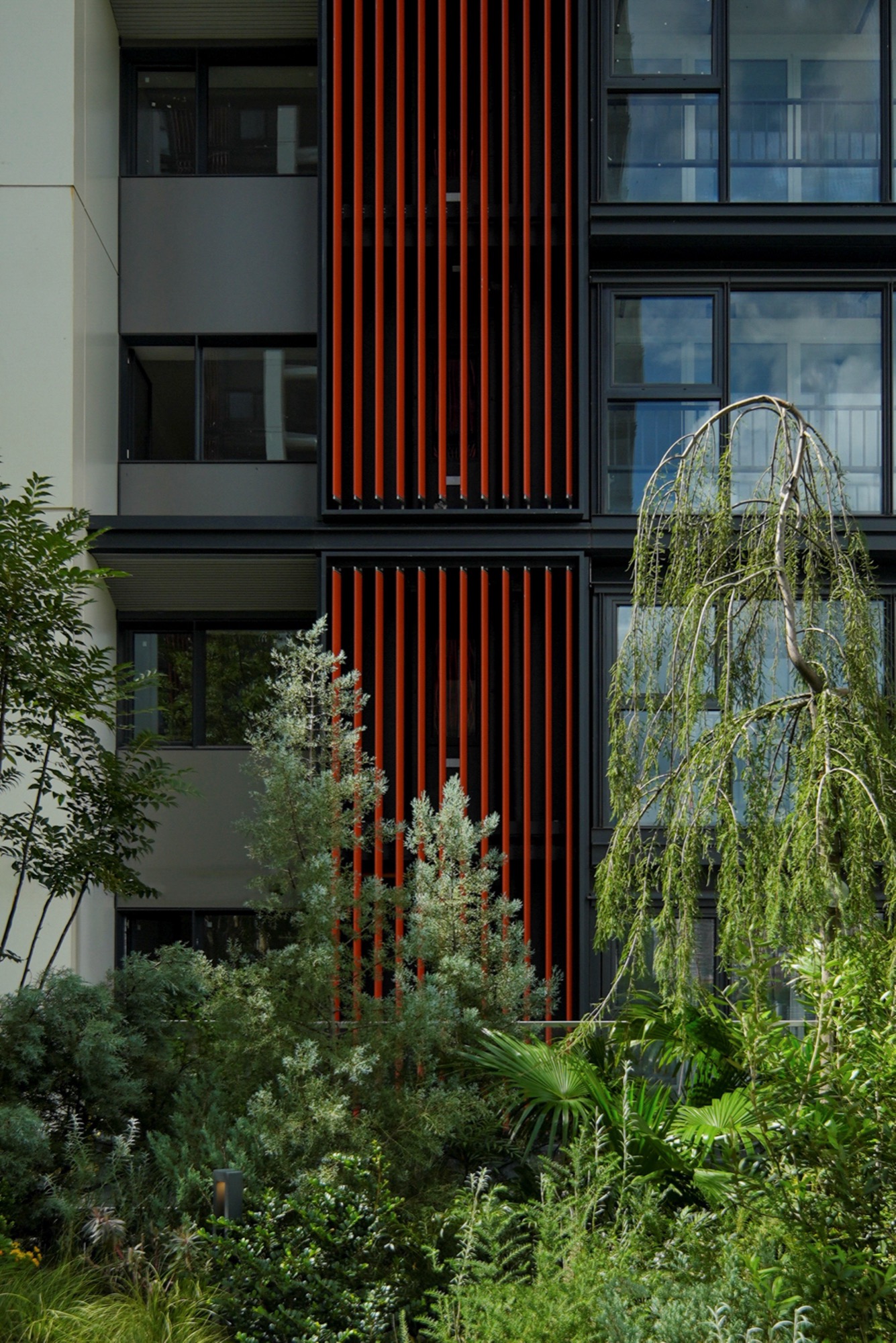
Terrace Garden: Salix babylonica ‘Tortuosa’ (willow – Chinese cultural symbol), Musa basjoo (Jiangnan poetic resonance), Ficus carica (old Shanghai courtyard fruit). Nymphaea, birdbath. Eastern atmosphere.
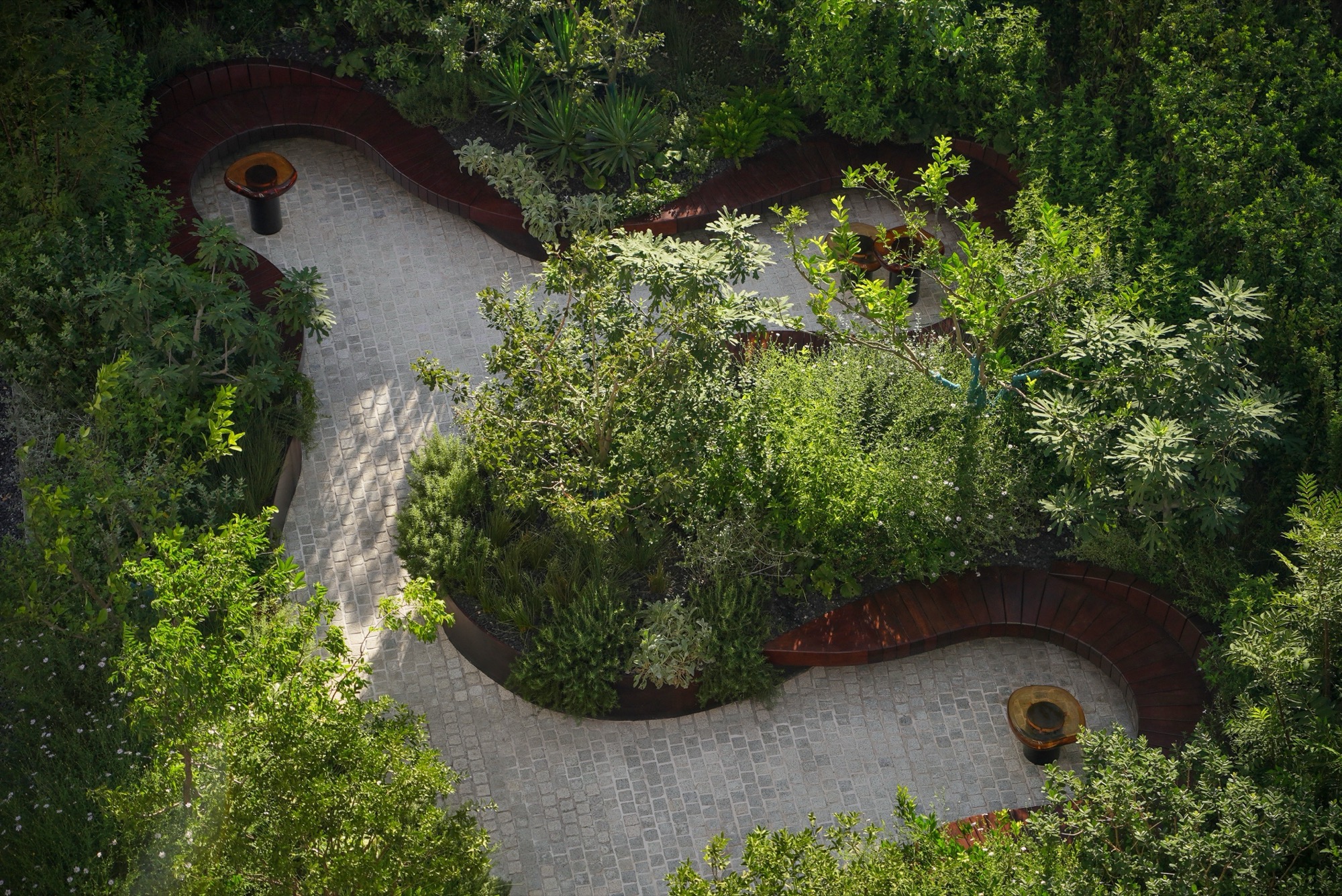
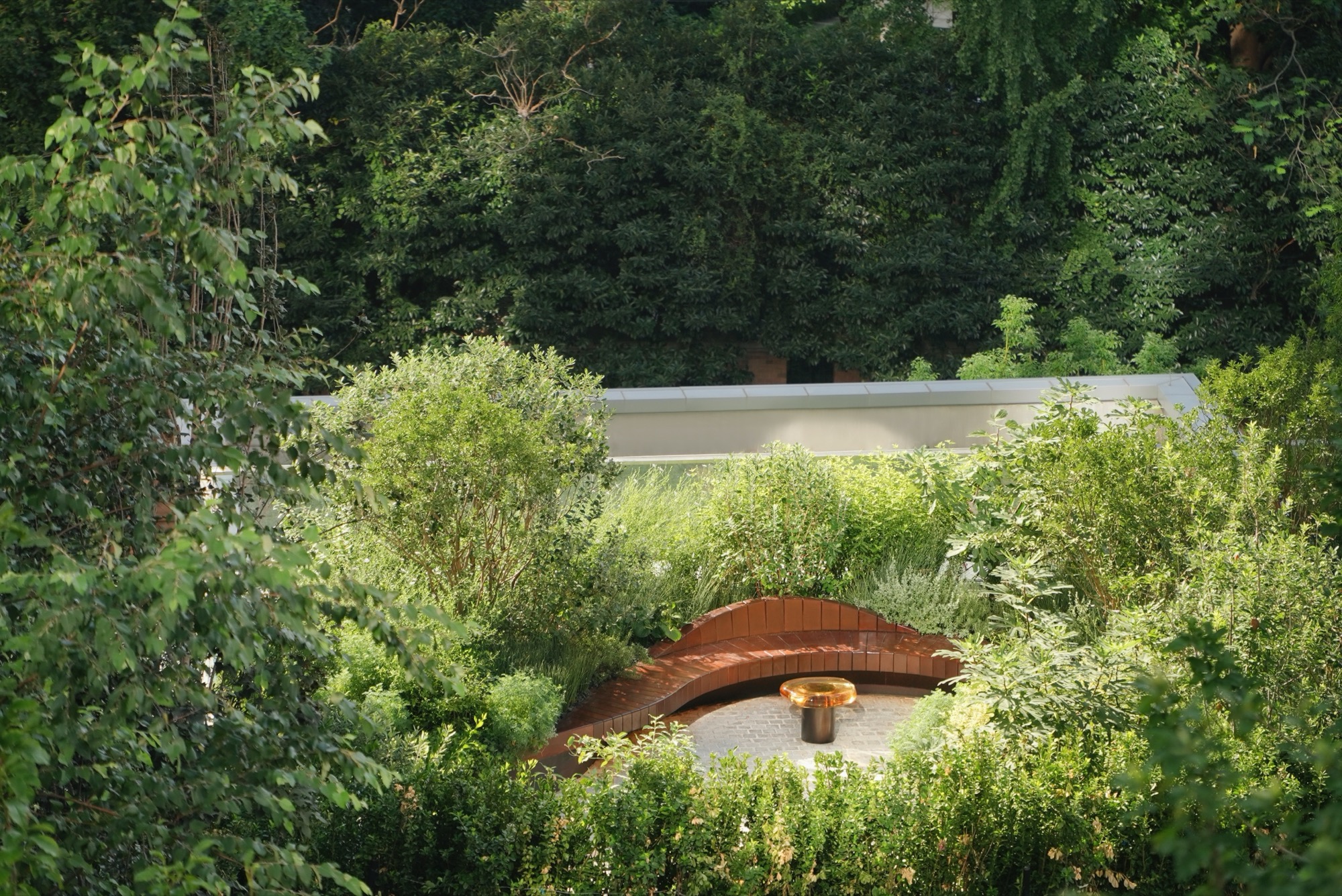
Edible Garden: Citrus reticulata, Myrtus communis ‘Variegata’, ,Malus spectabilis, Ziziphus jujuba (childhood memories), blueberry, oregano, catnip, Symphyotrichum campestre (typically spring wild vegetable). Integrates biodiversity and culture.
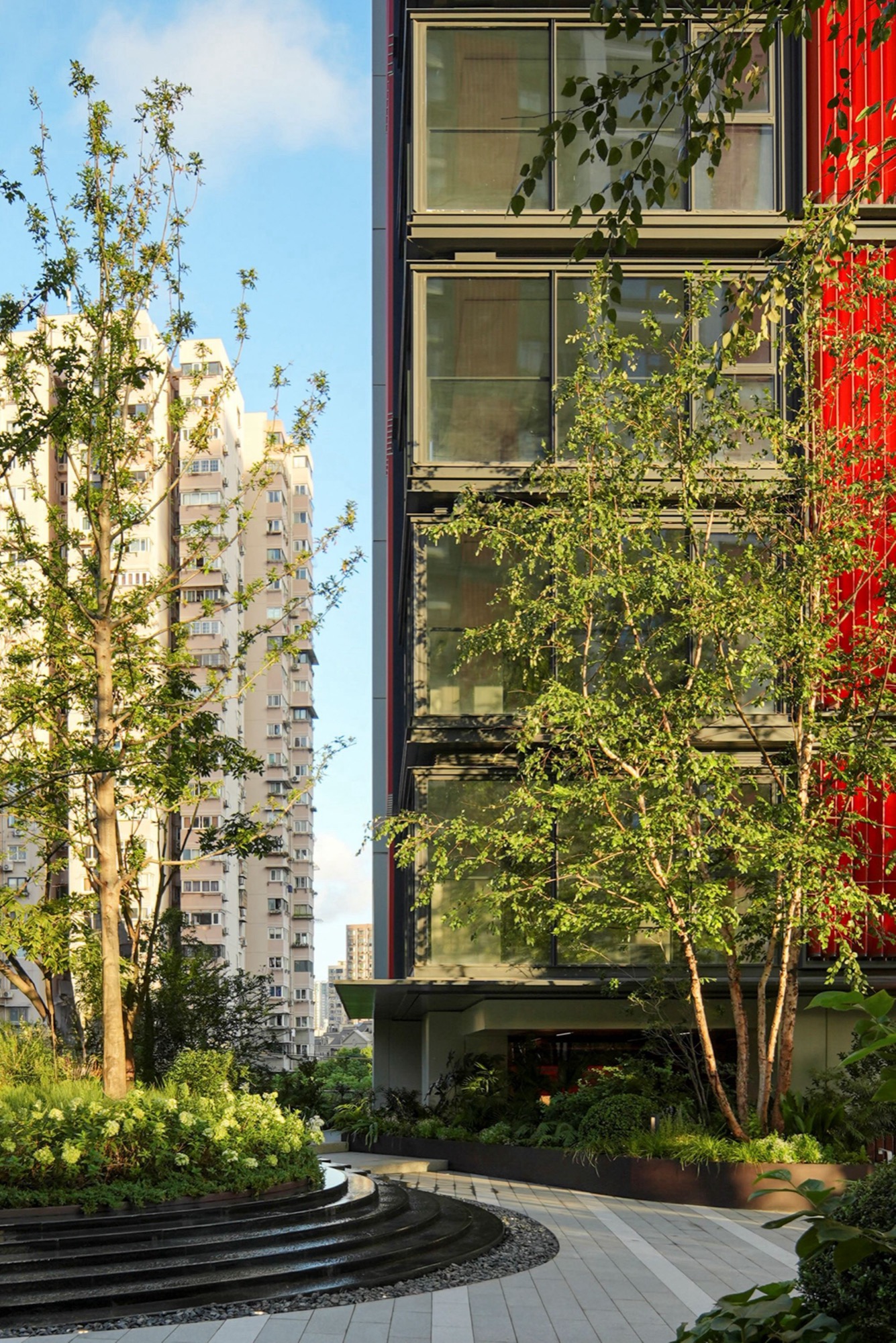
Pocket Garden: Roof pocket garden with open mid-storey plants (Ternstroemia gymnanthera, Pittosporum tobira, Gardenia jasminoides, Ilex cornuta). Betula nigra canopy, shade-loving Hydrangea and ferns.
Starry Lawn: Central lawn with flower borders, Cornus kousa subsp. chinensis (mountain lychee, native memory). Blue-white palette: Hydrangea paniculata, Juncus inflexus ‘Blue Arrows’, Anemone hupehensis var. alba.
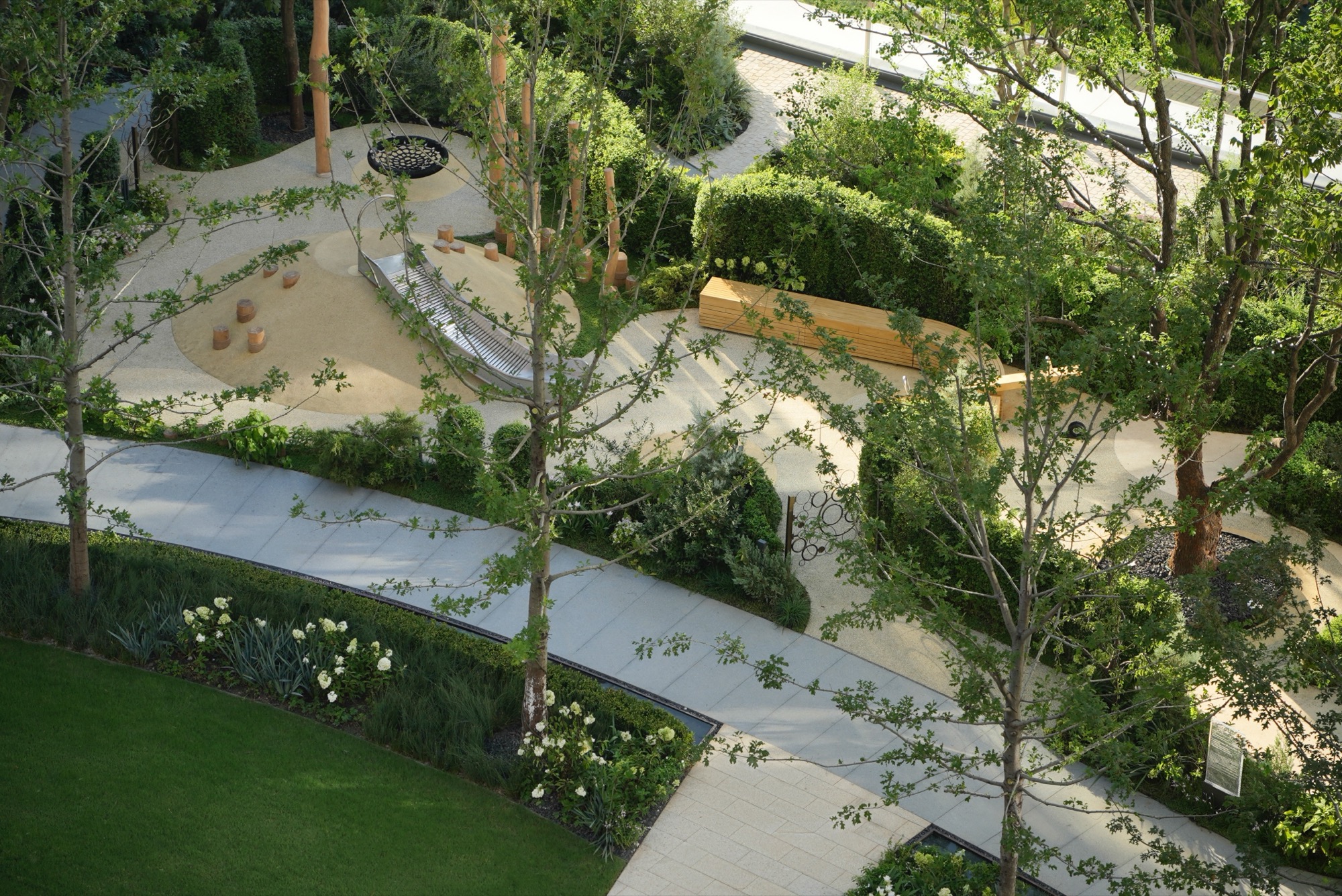
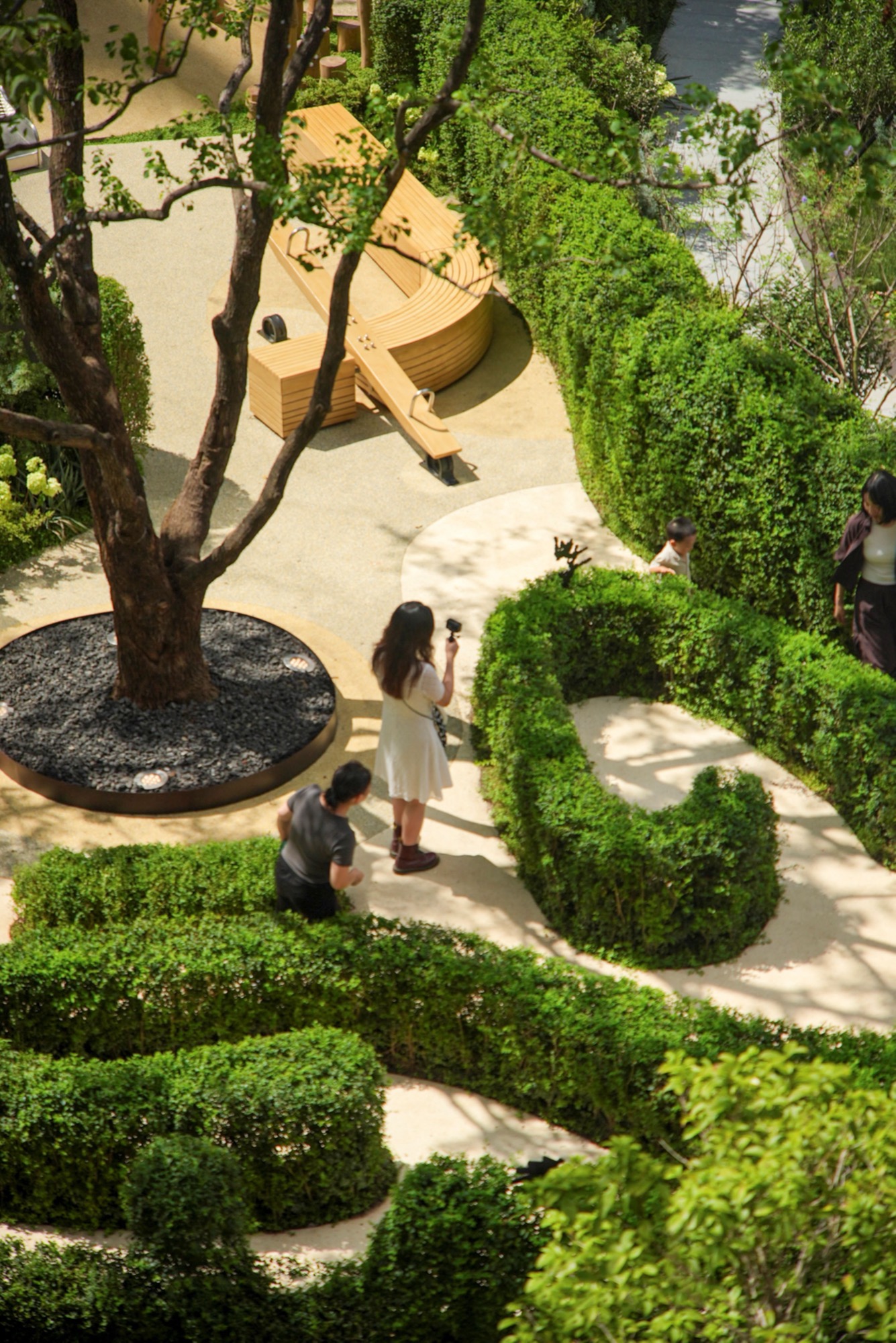
Children’s Playground (<200㎡): Hedges as a strong element, connecting climbing, slides, balance beams, seesaws, and a maze. Natural timber, combined with equipment. Hedge height 80cm to 40cm. Sapium sebiferum (fiery autumn leaves), Lantana camara. Hedge mazes of Olea europaea, Vitex agnus-castus.
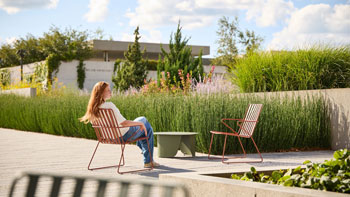
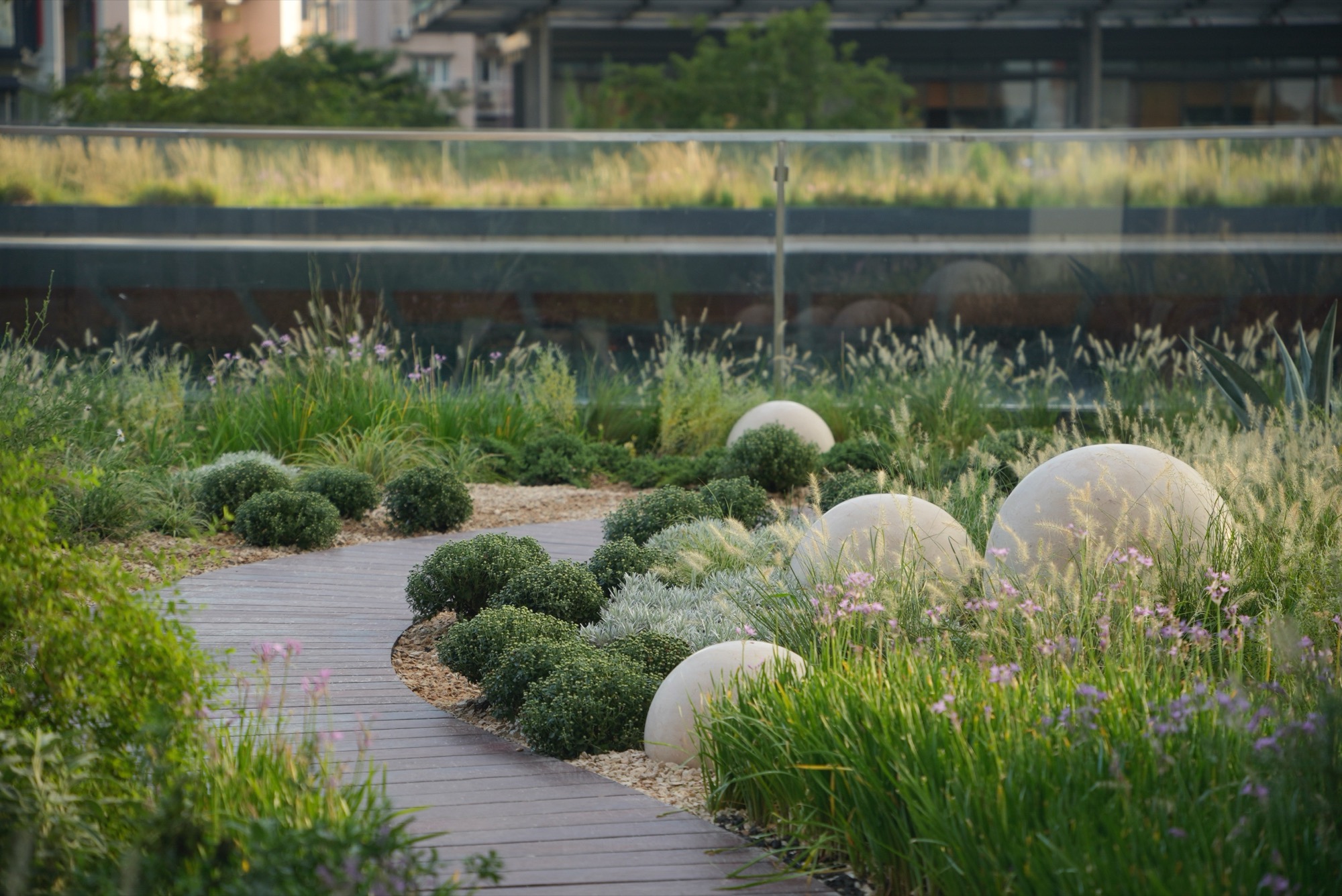
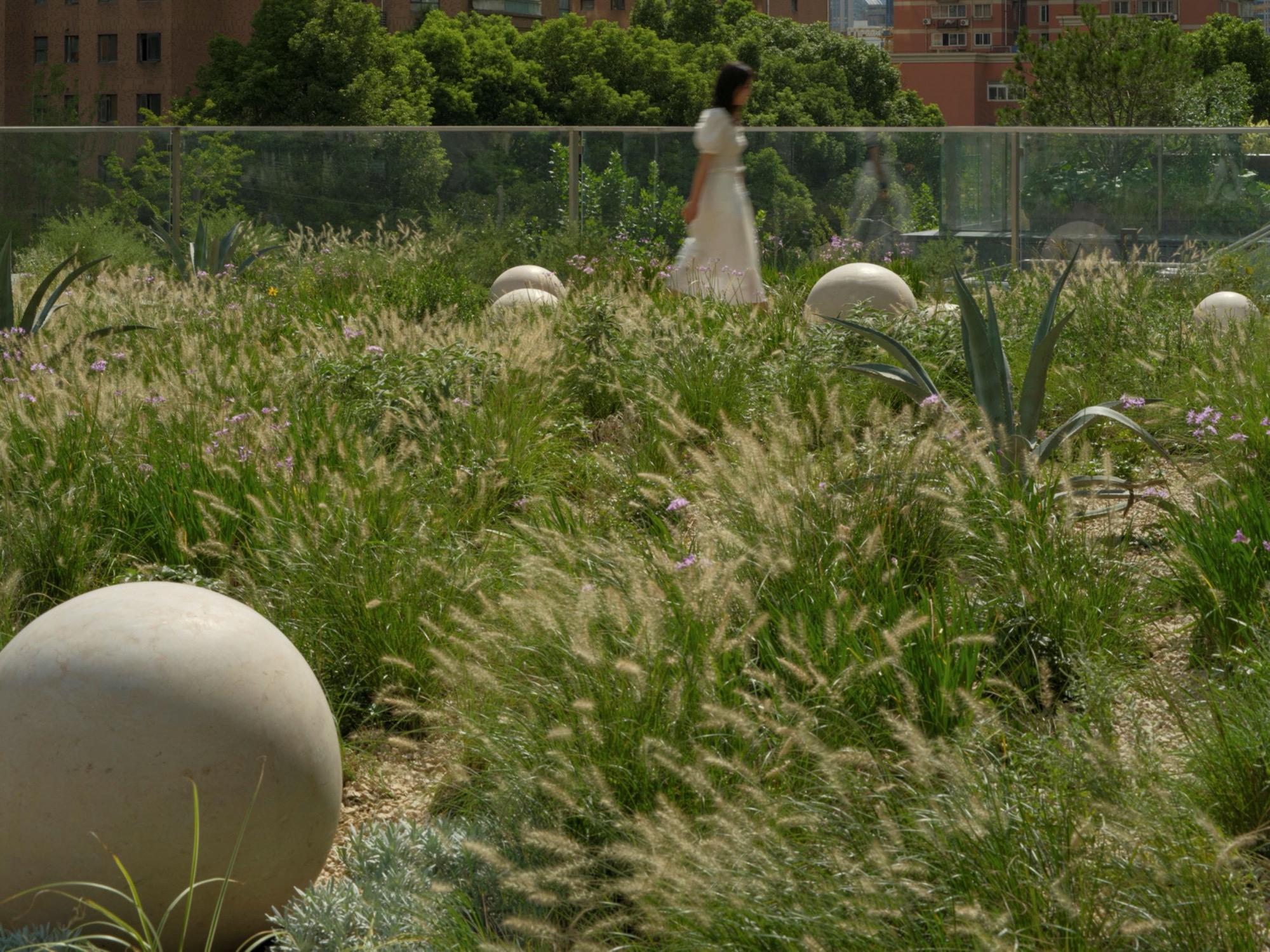
Tapestry Meadow: Ornamental grasses (Pennisetum alopecuroides ‘Little Bunny’, Andropogon scoparius, Leucanthemum maximum) and Agave americana simulate “waves and pebble beach” on shallow soil.
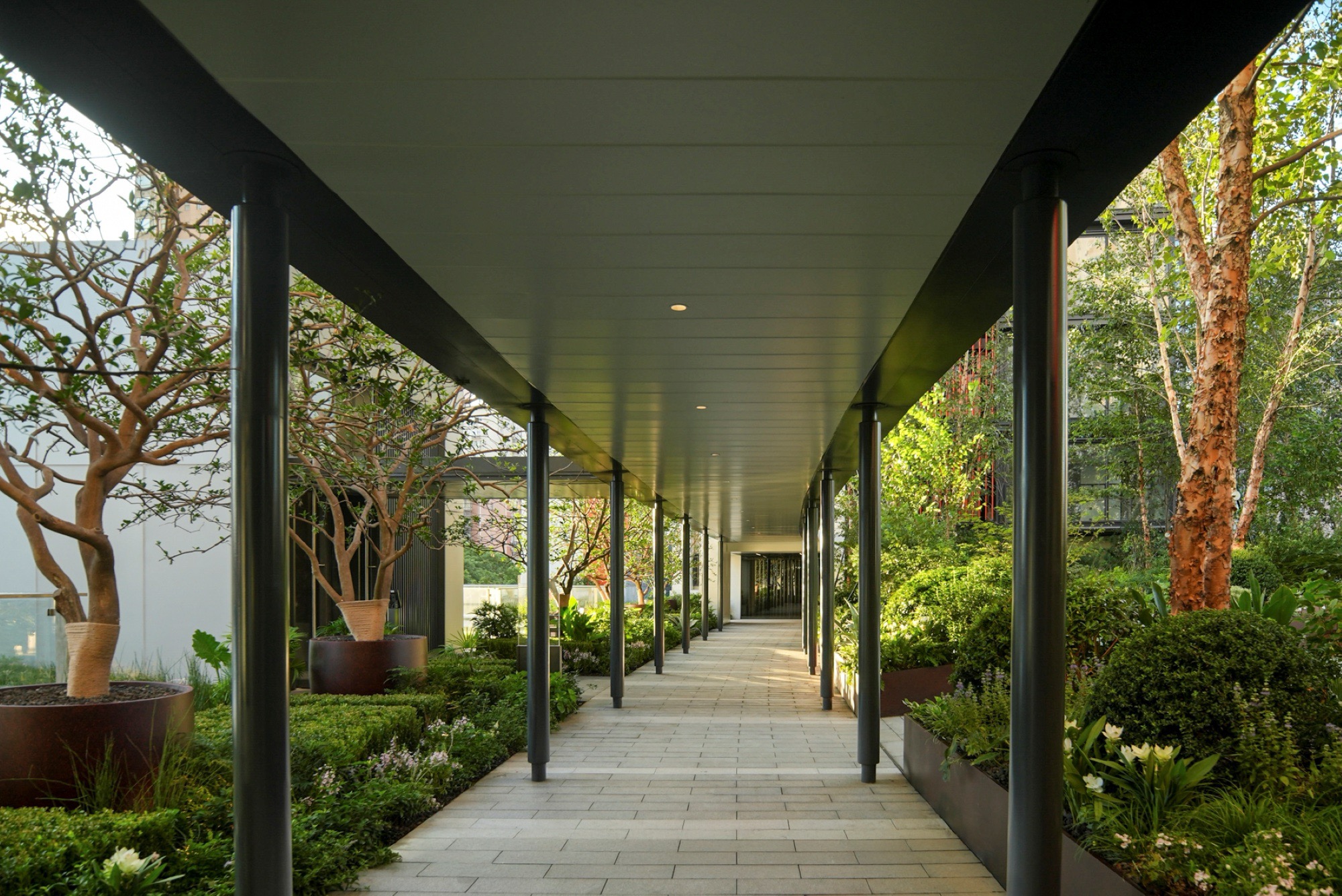
Corridor Garden: Sequential planters between columns, fragmented hedges with flower borders – freedom collides with order.
Entrance Flower Borders: Six buildings, six color palettes (purple-red, red, orange-red, orange-yellow, yellow, moon white), echoing facades.
IV. Ecological Paradigm Shift
From high-maintenance “floral decoration” to sustainable “plant ecosystem.” Over 170 local, adapted species form stable communities. Three layers: structural, theme, companion – self-renewing. Niche complementarity in vertical, root, and seasonal layering ensures long-term coexistence.
Native species prioritized: Betula, Sapium, Cornus, Salix, Musa, plus rare Sinojackia xylocarpa (endemic to East China).
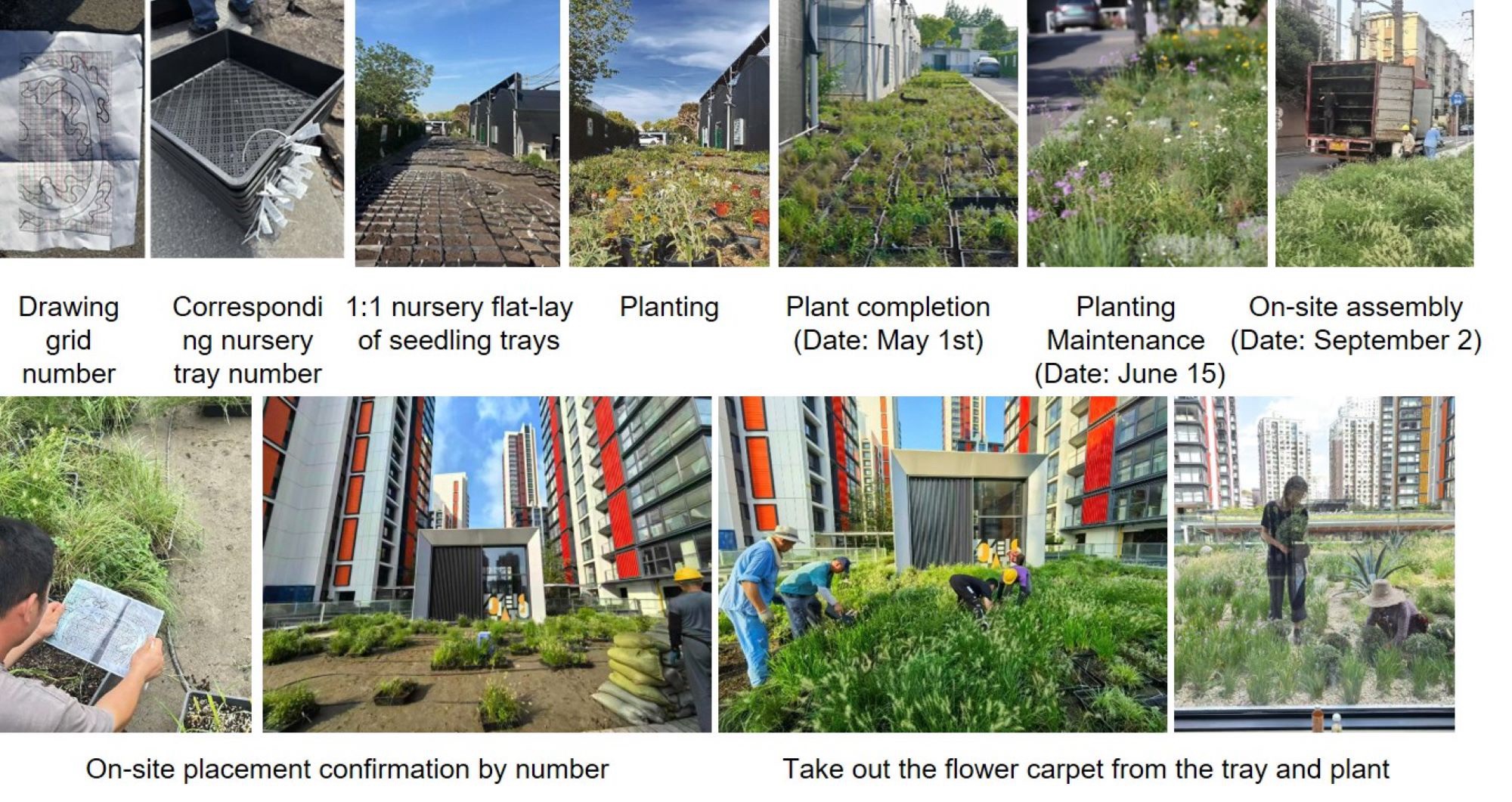
Technological innovation in shallow-soil roof planting: Pre-cultivated carpet technique, shallow-rooted perennials, lightweight substrate, drip irrigation (saves 50-70% water), soil moisture sensors.
V. Integration of Art and Furniture
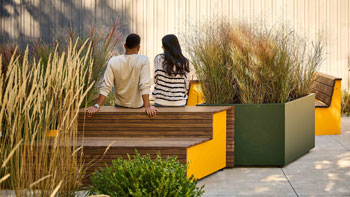
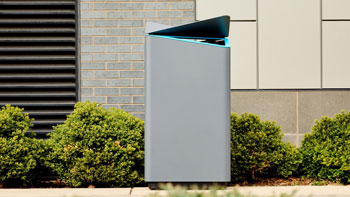
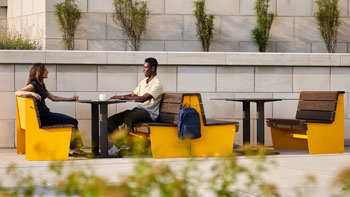
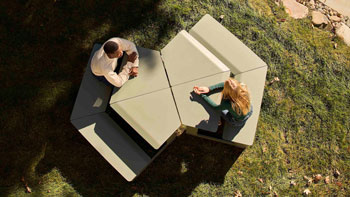
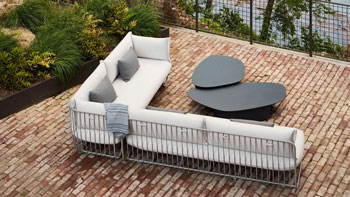
Bird-shaped wind chimes in Terrace Garden. Amber resin benches in the Edible Garden. Rounded stones in Tapestry Meadow materialize as a “pebble beach”. Cat-shaped signs in the children’s Playground reinforce hide-and-seek. Multi-sensory narrative system.
VI. Sustainability
Ecological: Low maintenance, low consumption. Local plant communities provide nectar, pollen, shelter, and berries for birds. Resilient ecological node.
Social: Public space released, shared urban living room, commercial activation.
Cultural: Modern translation of spatial narrative and local plant culture – international vision with local identity.
VII. International Implications
Replicable model: spatial setbacks, vertical construction, ecological thinking, narrative. “English skeleton, Eastern texture” – interdisciplinary integration. Paradigm shift to sustainable plant ecosystems.
Oriental One transcends conventional residential landscapes – a livable modern naturalistic garden through urban symbiosis, vertical construction, ecological science, and humanistic narrative.
Client: Vanke & Ronshine. Architectural design: RSHP and Shanghai Zhongfang Architectural Design Co., Ltd. Landscape consortium: Gillespies and GM Landscape. LANDTEK Group for key nodes. Special thanks to Perennial planting consultant: Endless Summer Landscape Design Office.
508 Zhongxing Rd, Jing An Qu, Shanghai, China, 200081
74238


LILA 2026 Sponsor