Park Hliník Nové Zámky
www.archinfo.sk/ludia/architekt-alebo-student-architektury/doc-ing-attila-toth-phd.html
2026 Landscape and Architecture / 2026 Public Projects / Slovakia / Built in 2023 /

Park Hliník was created through the transformation of an underused residual green space on the outskirts of Nové Zámky into a contemporary urban park with a distinctive identity and strong ecological value. The project demonstrates how even small-scale and financially modest interventions can significantly improve the quality of urban environments, support biodiversity, and introduce new and unconventional approaches to public space design within the Slovak context.
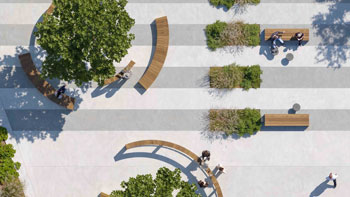
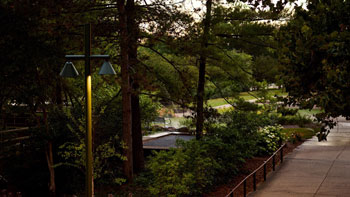
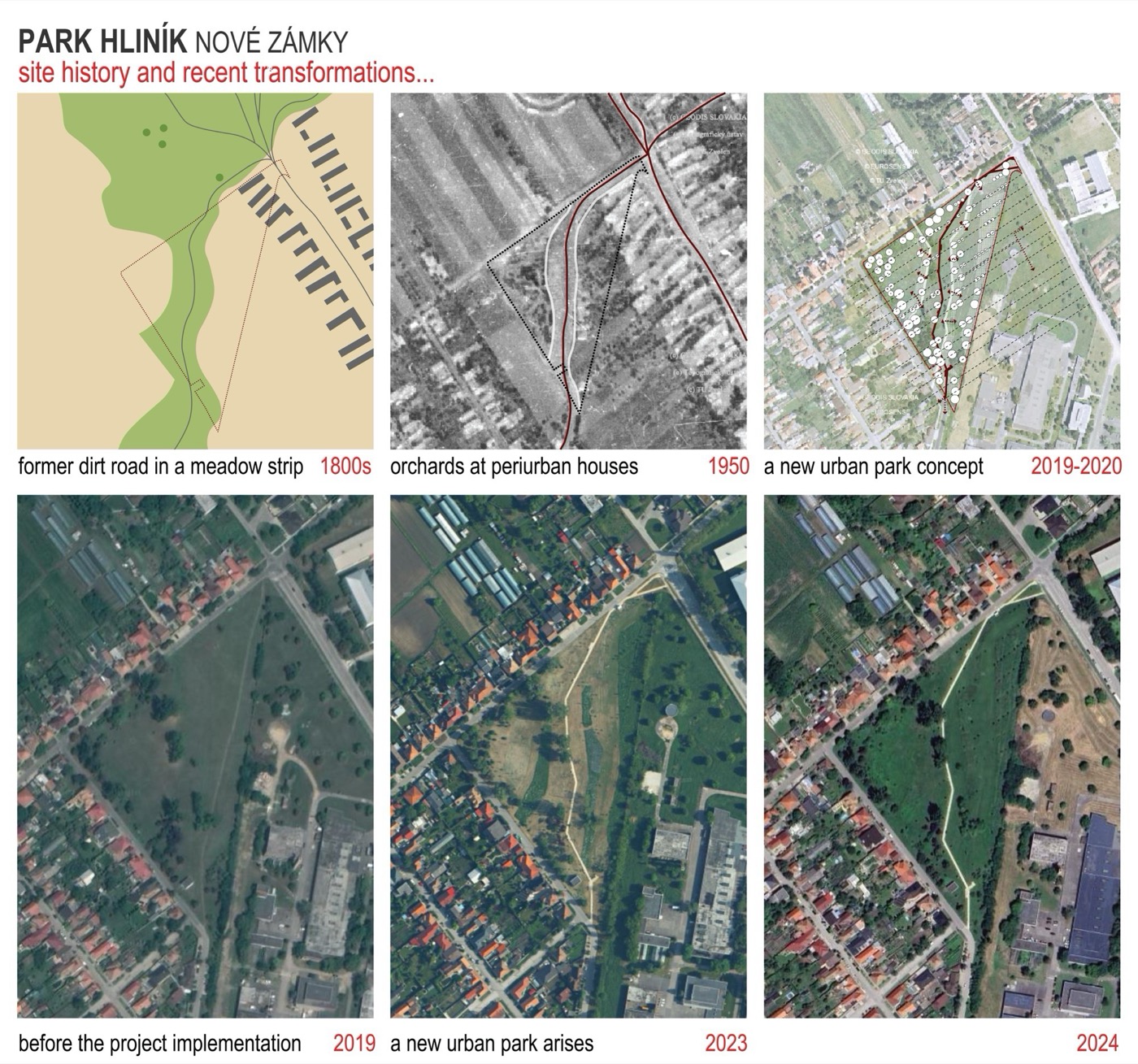
The landscape architectural concept is rooted in the historical memory of the site and respects its peripheral character. The main park path follows the route of a former field road and symbolically continues a local street connection toward the historic cemetery. The defining feature of the park is a system of geometrized meandering bands of flowering meadows and herbaceous grassland communities, which structure the space, create visual rhythms, and allow for informal movement through the park.
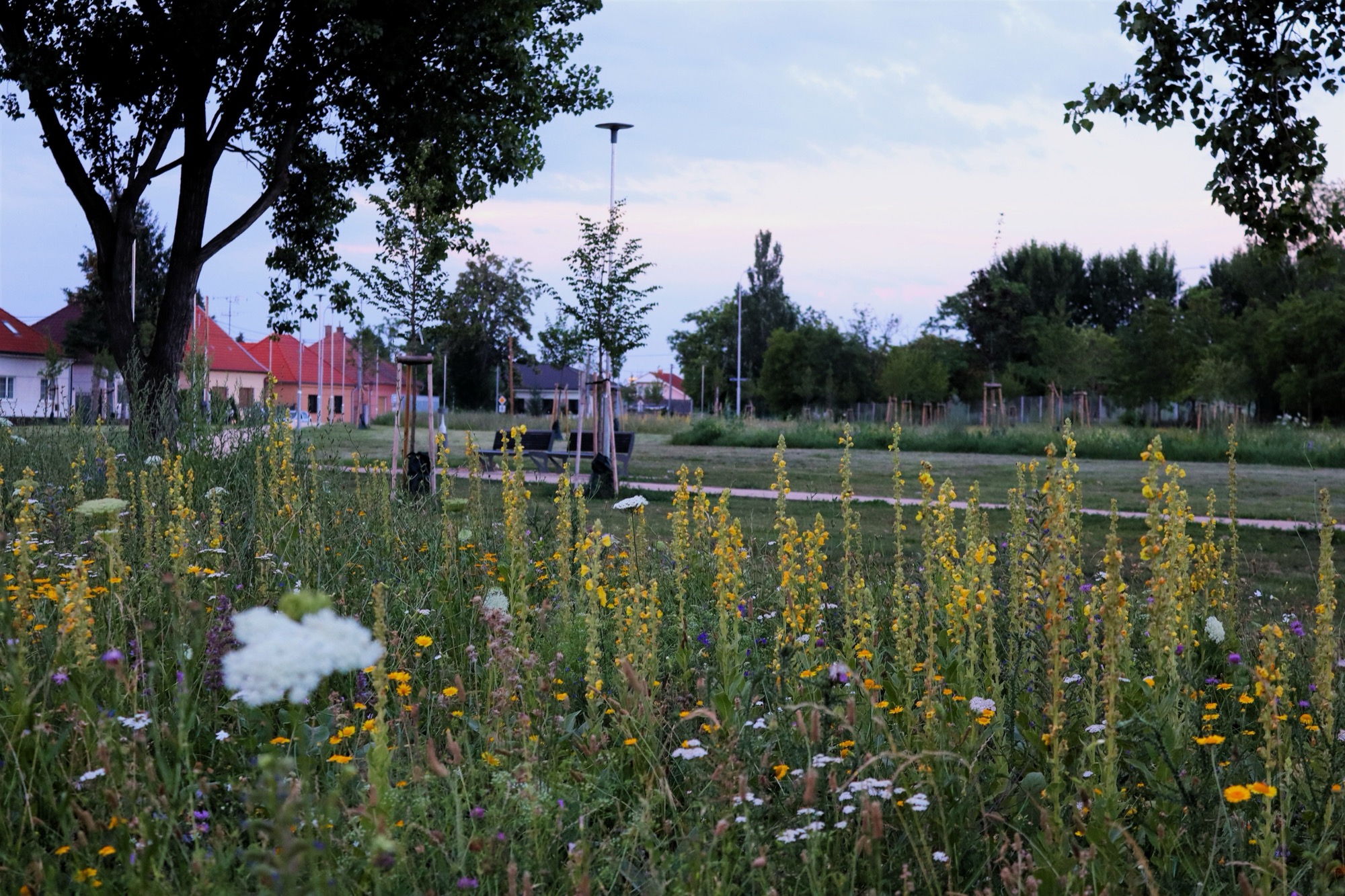
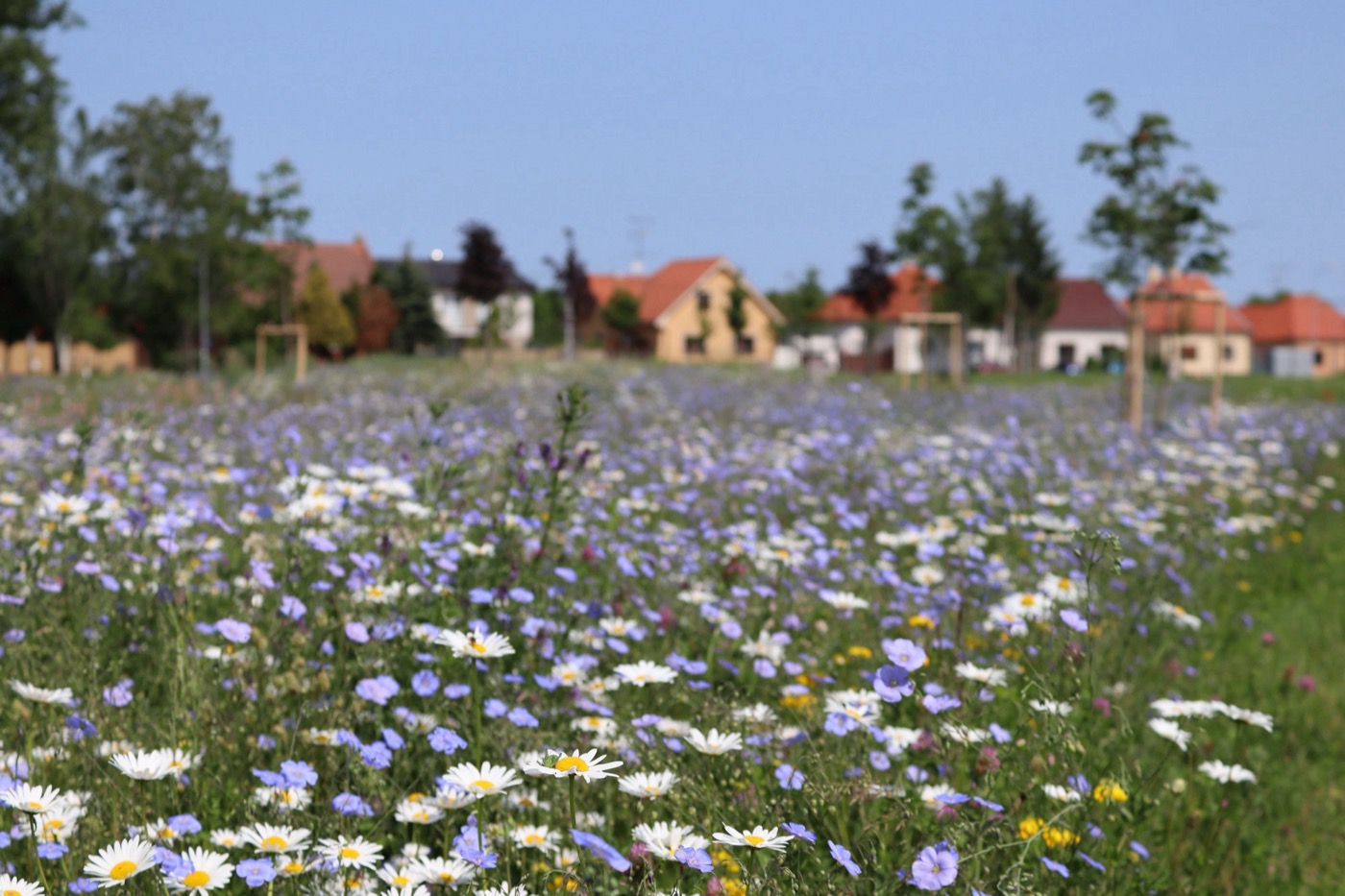
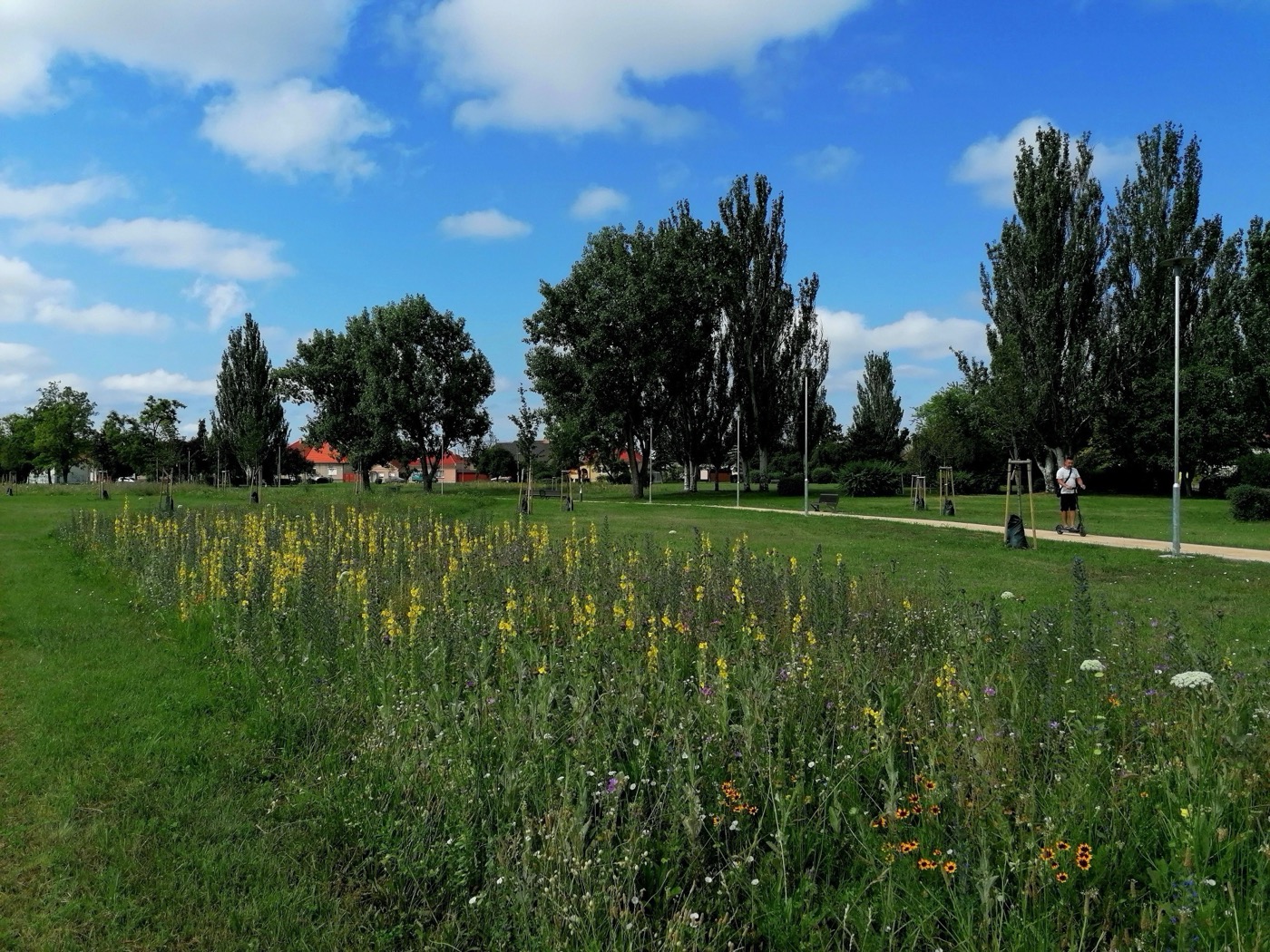
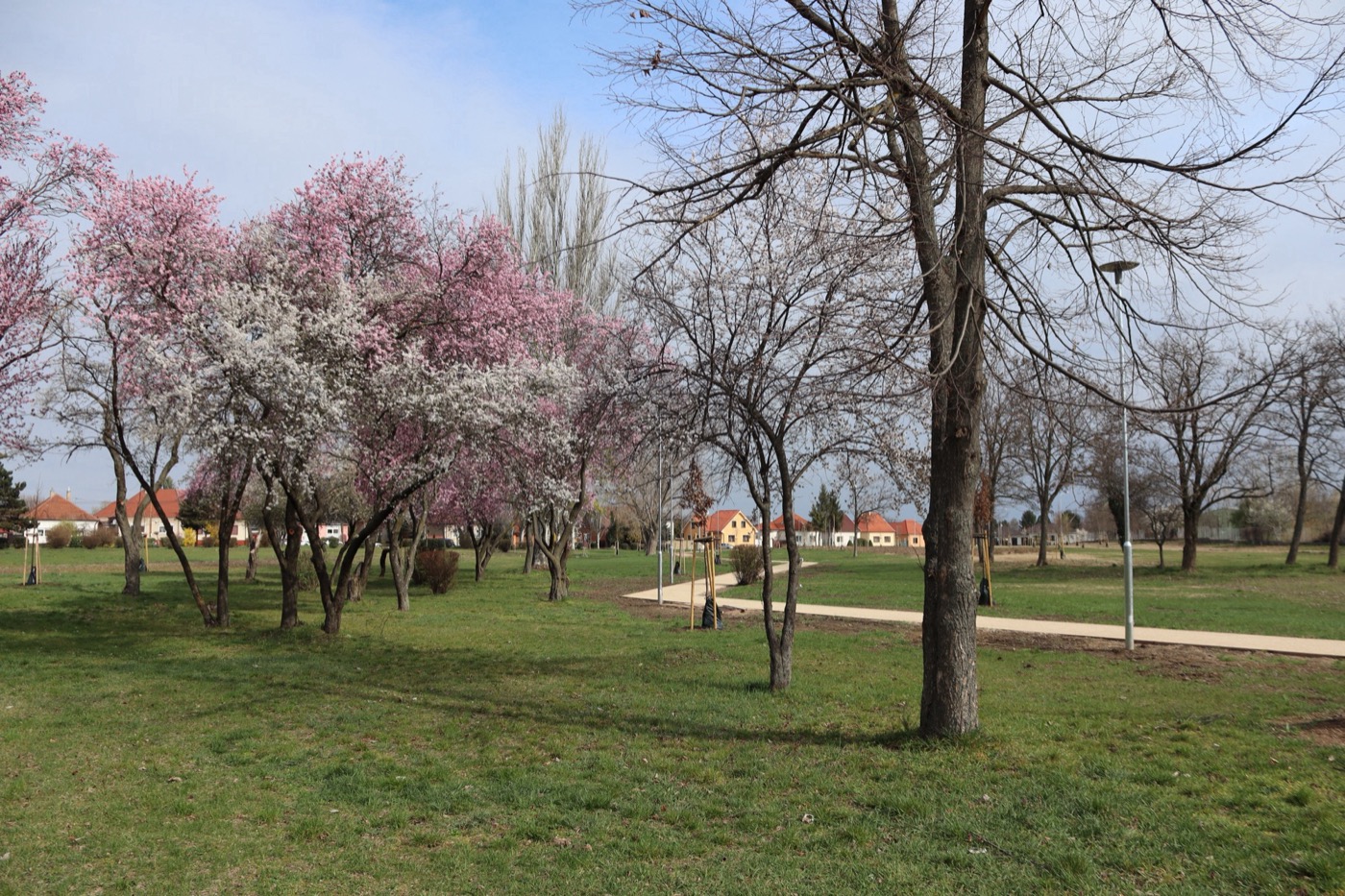
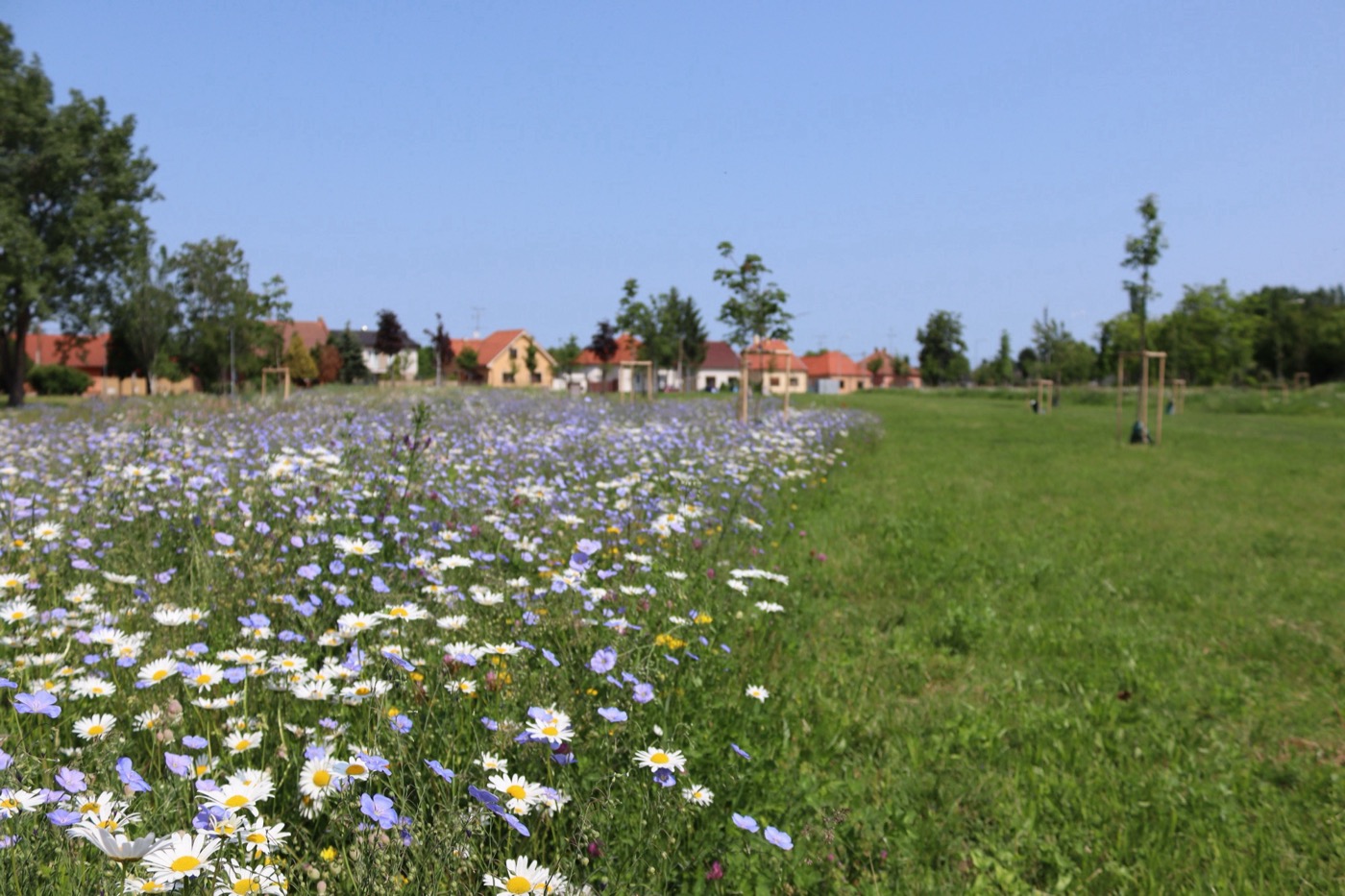
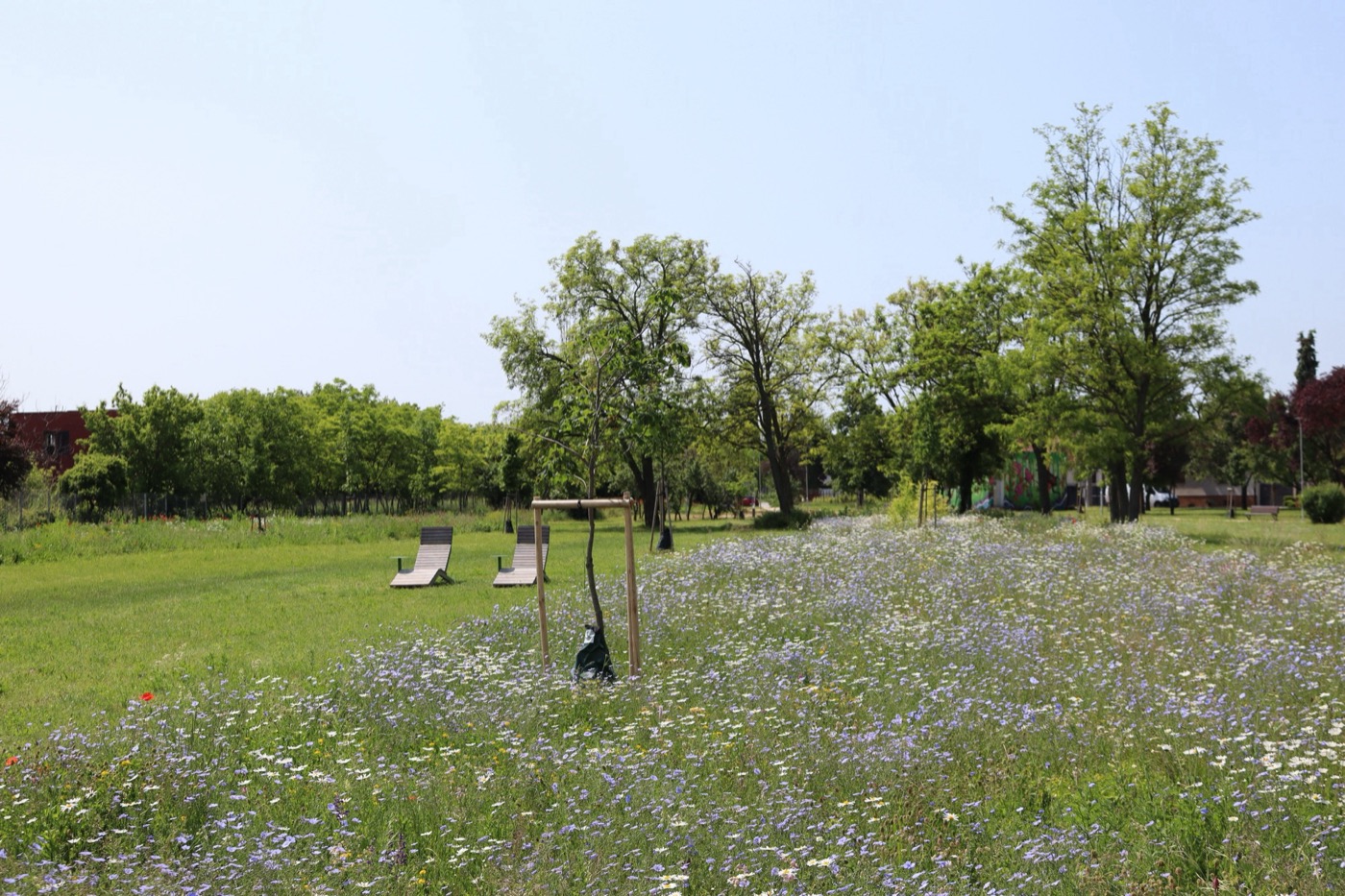
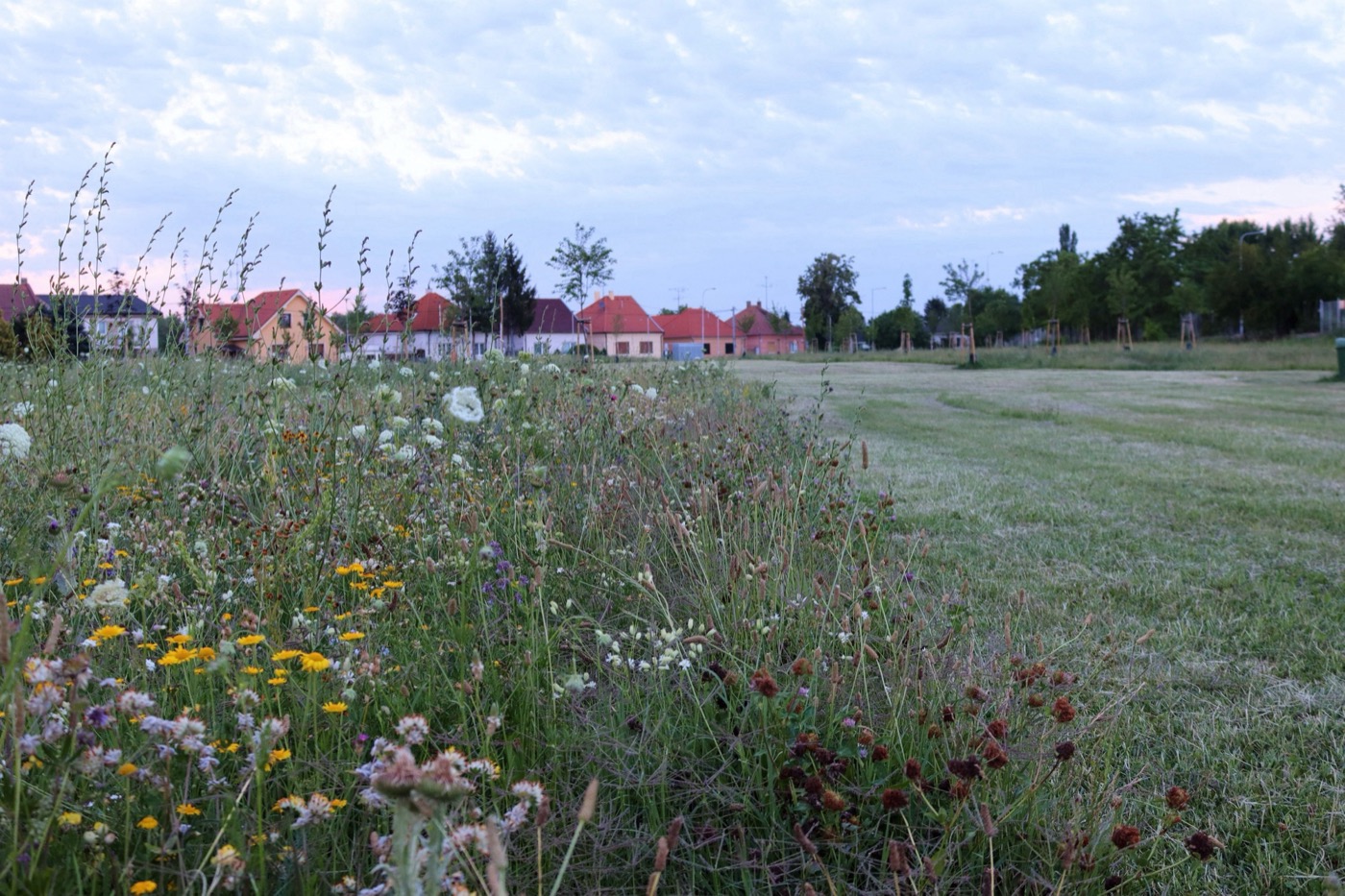
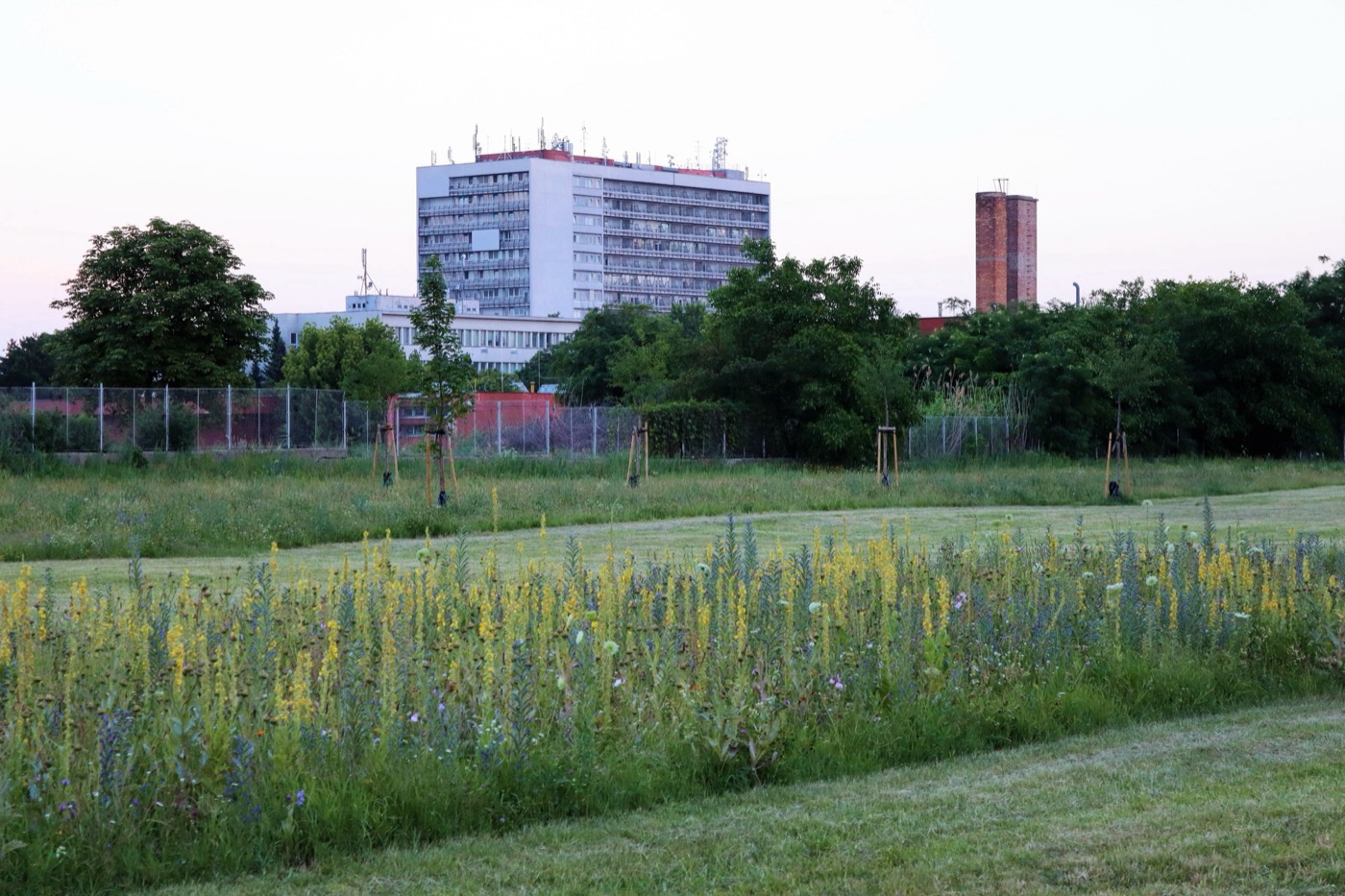
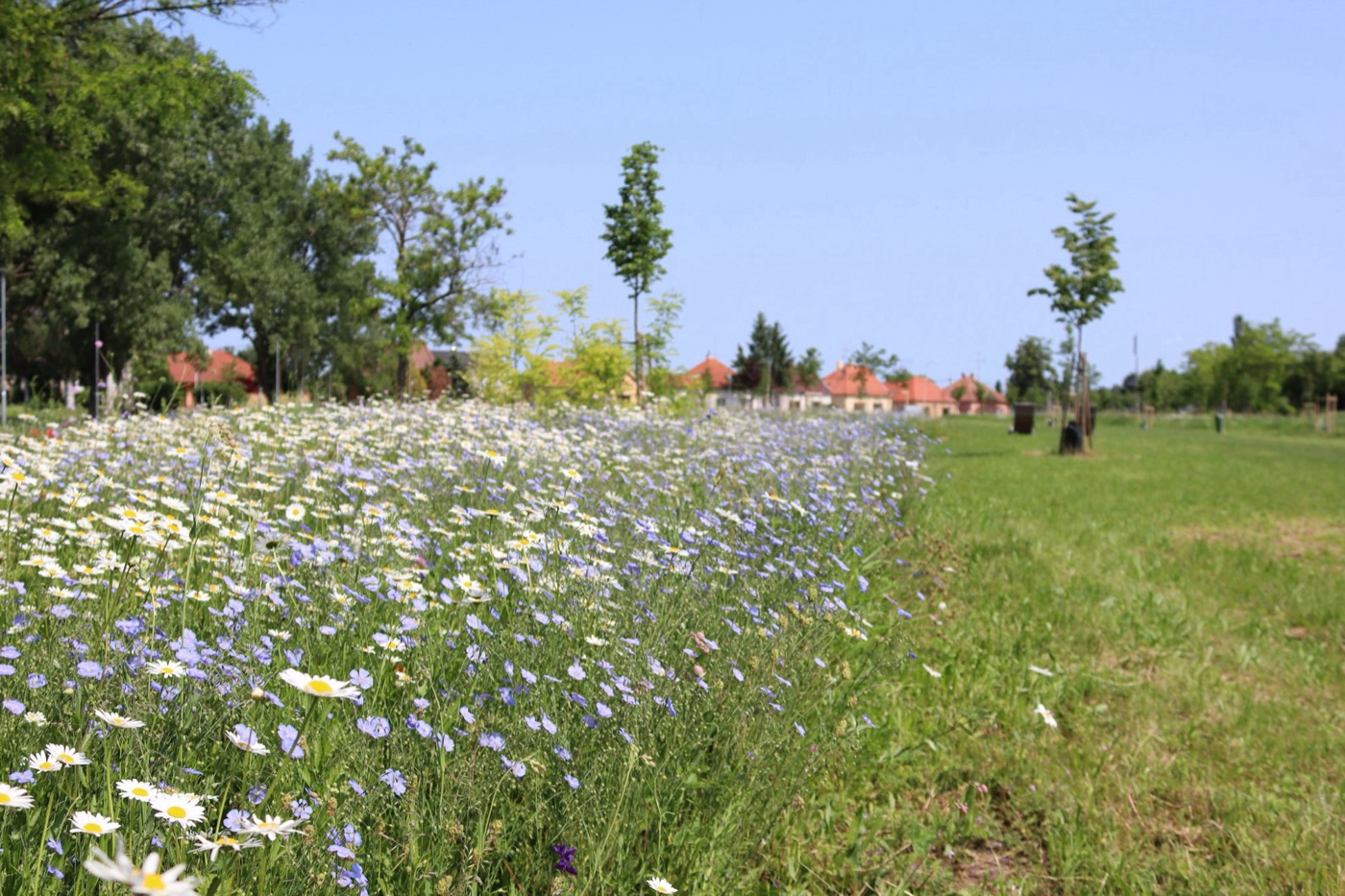
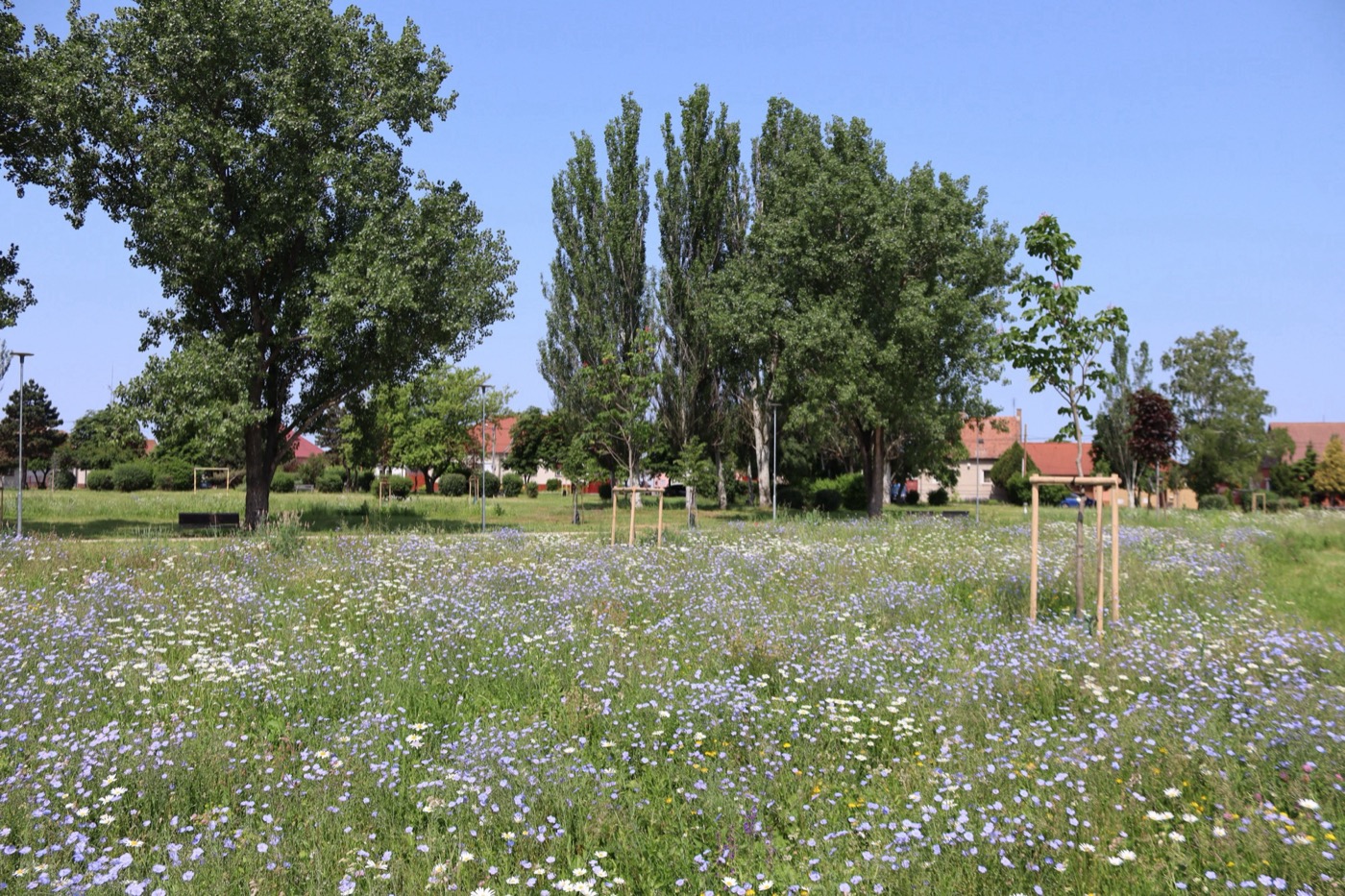
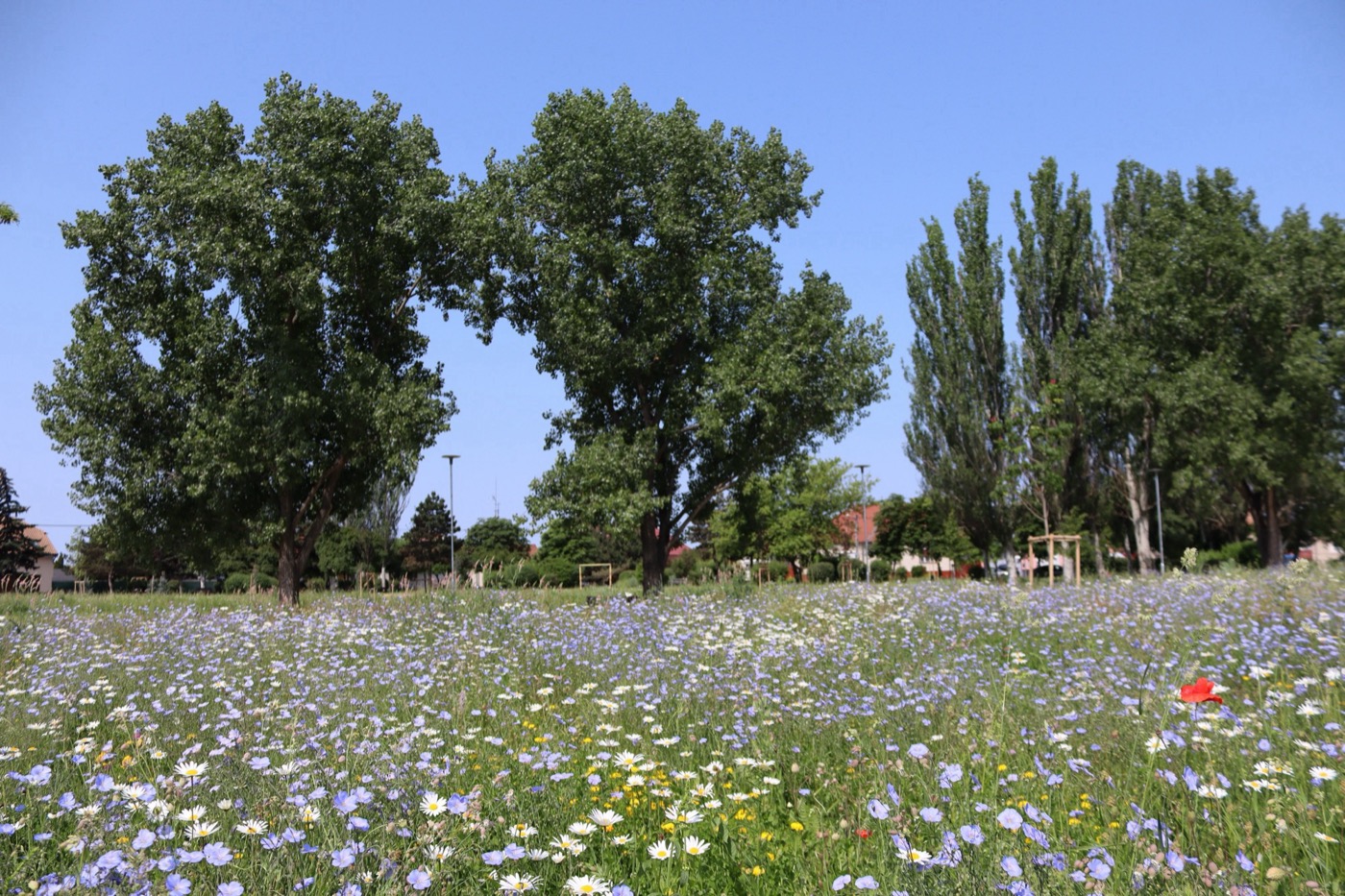
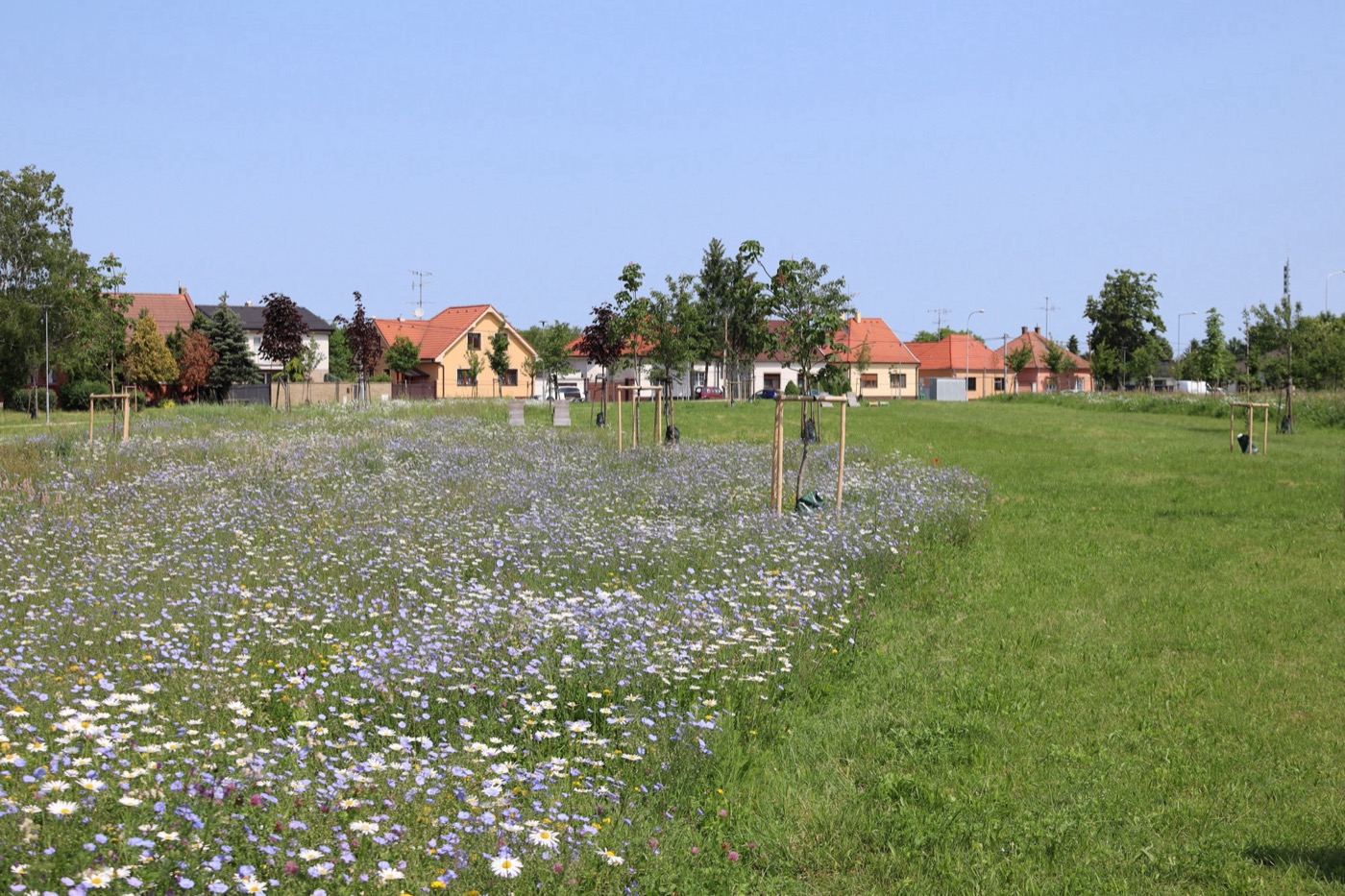
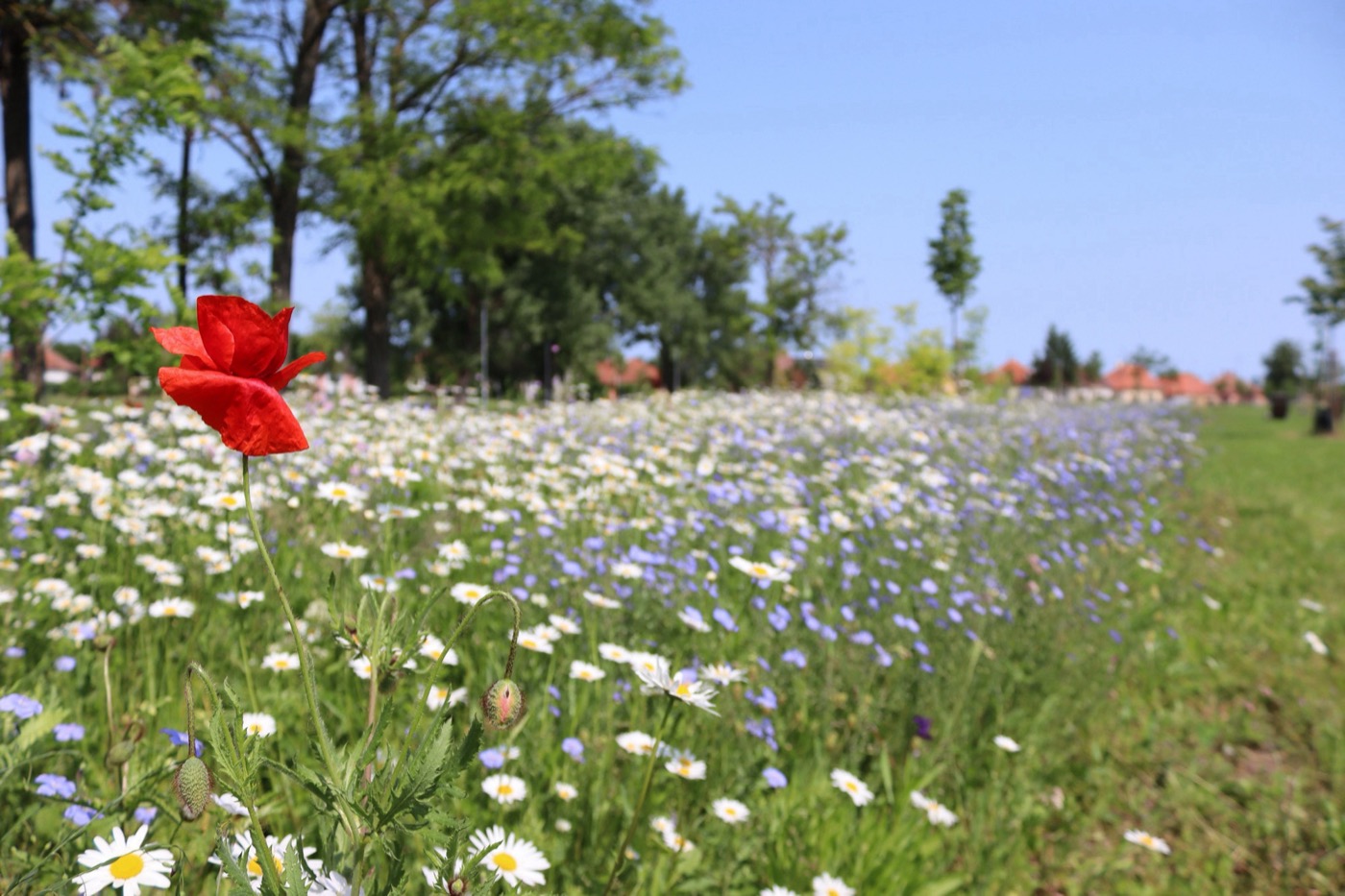
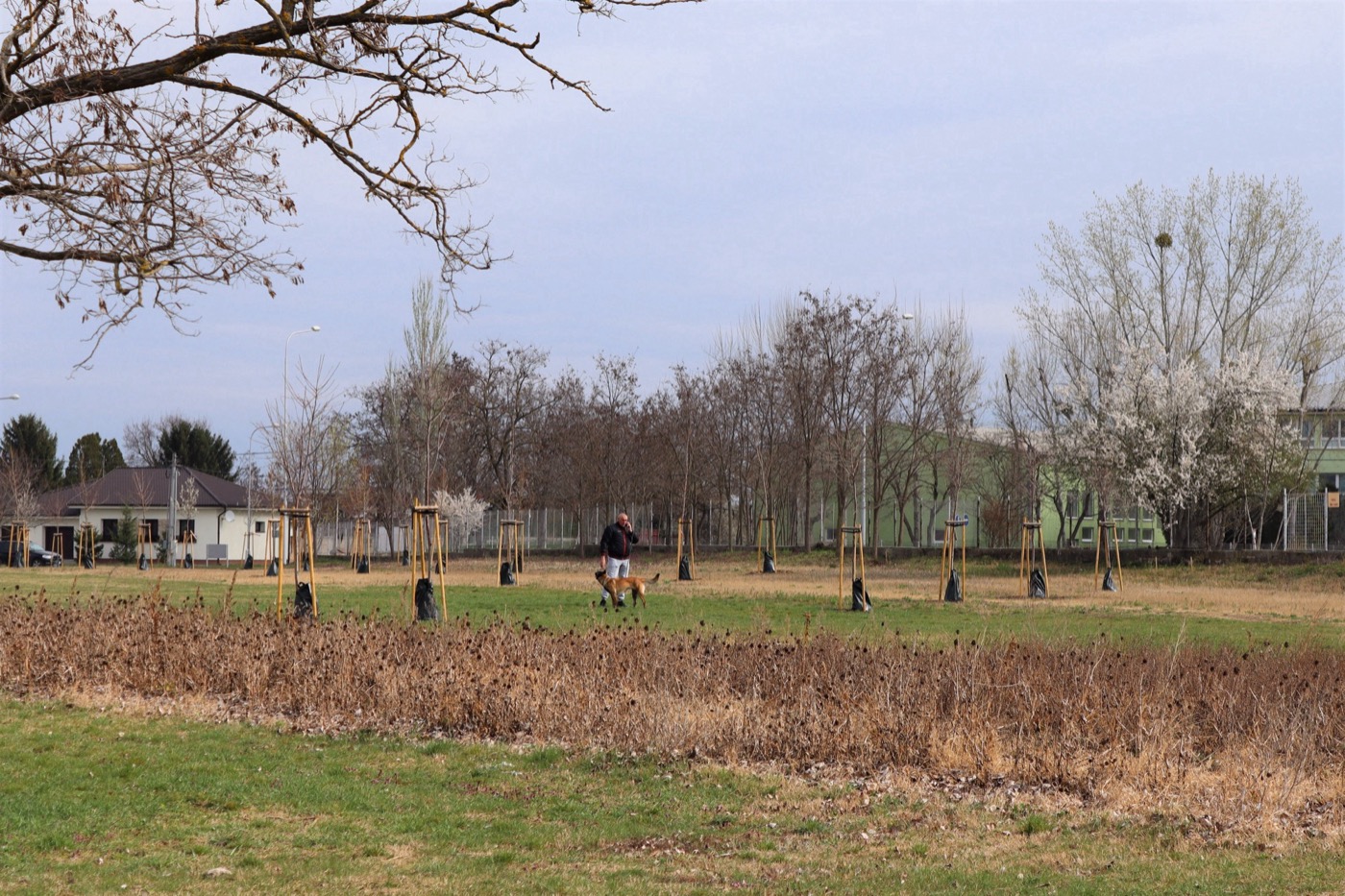
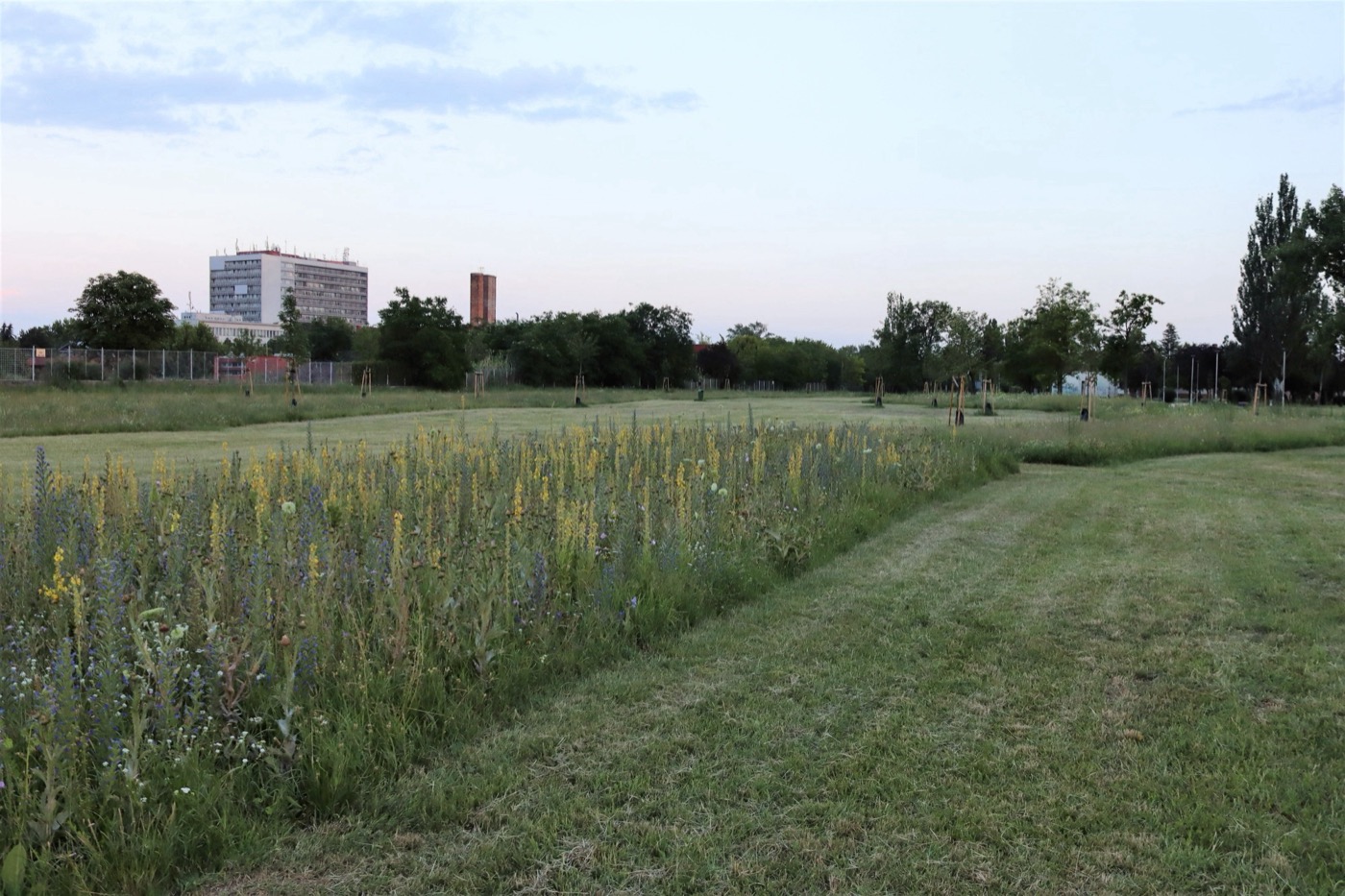
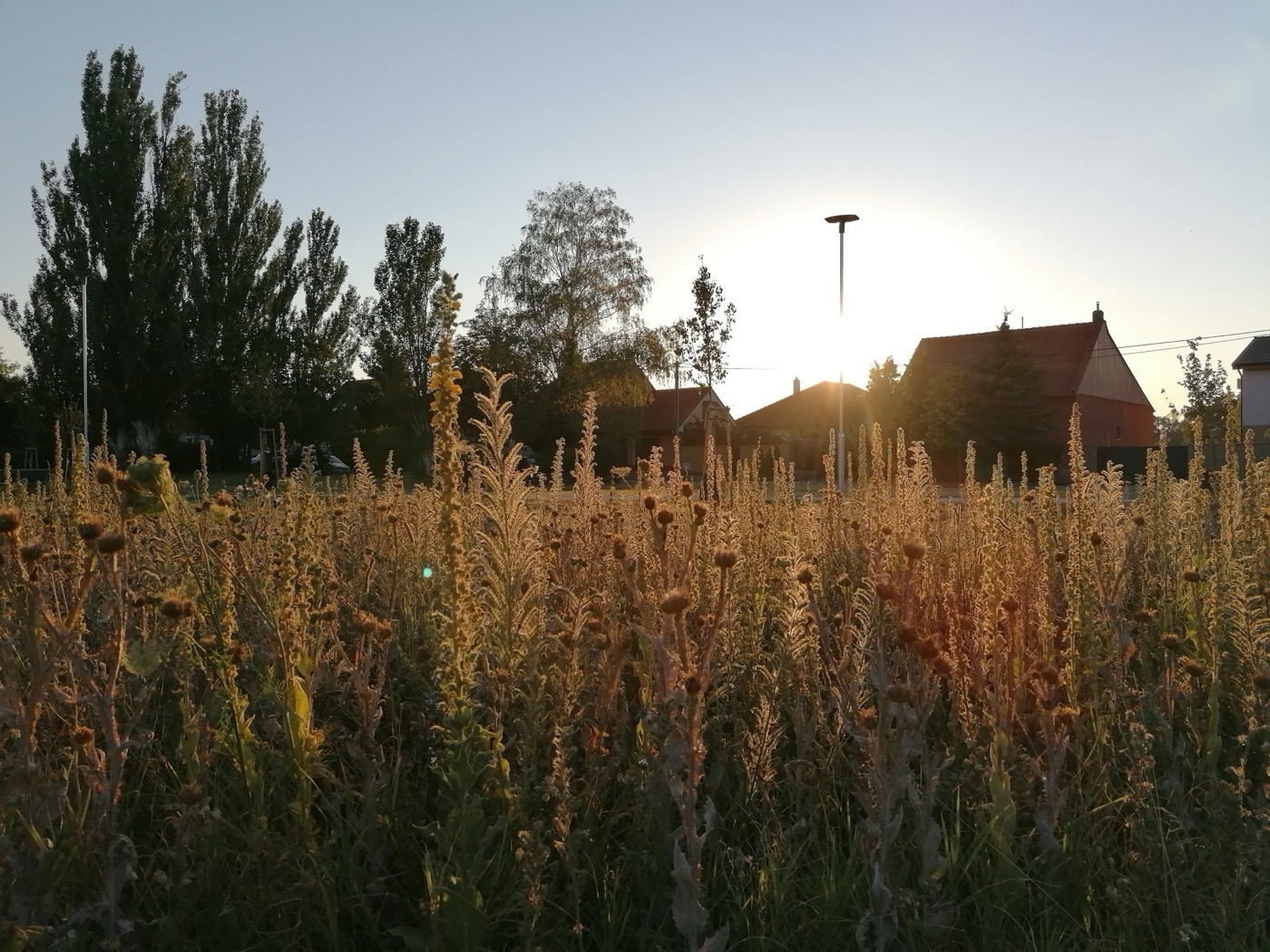
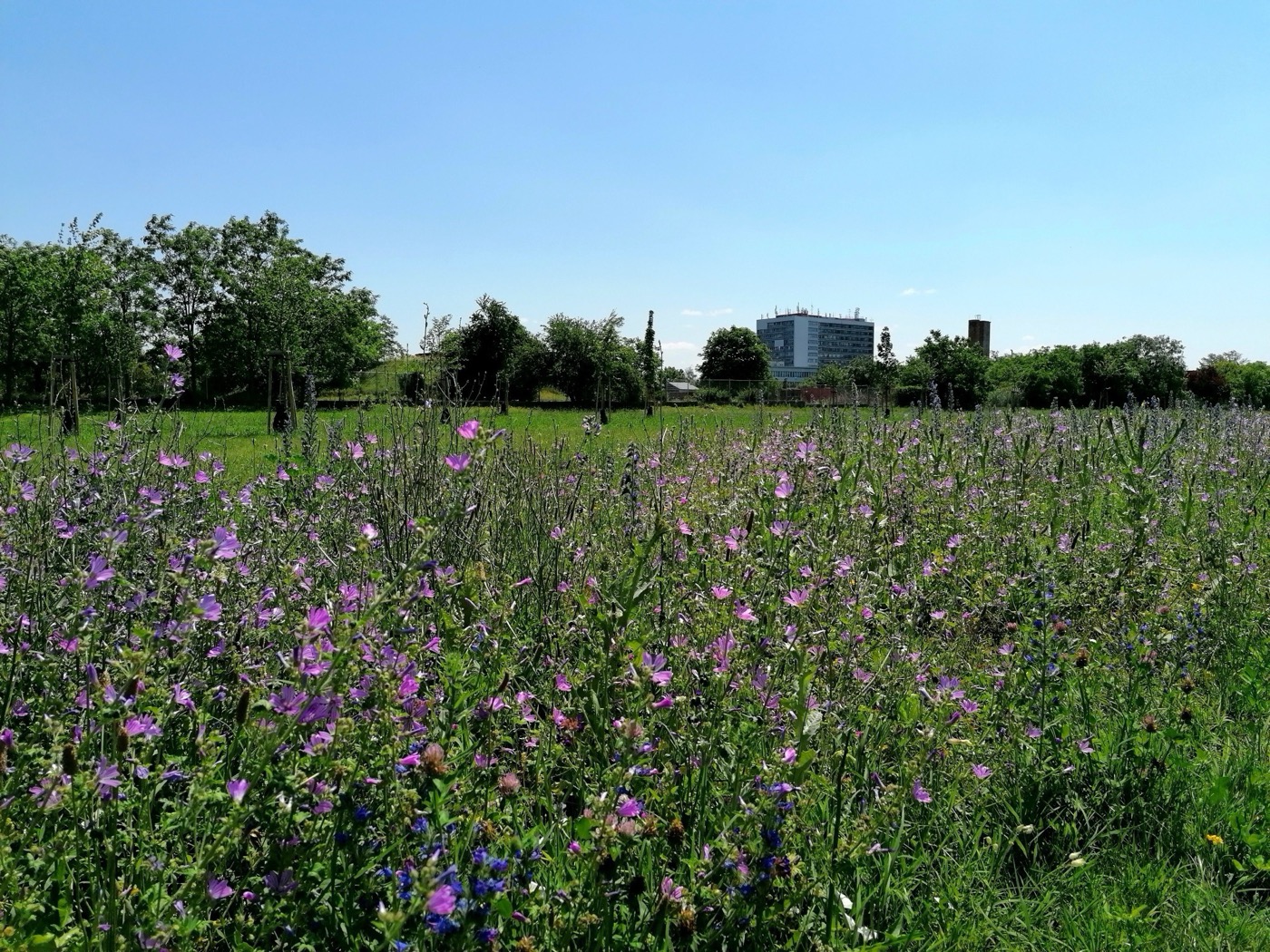
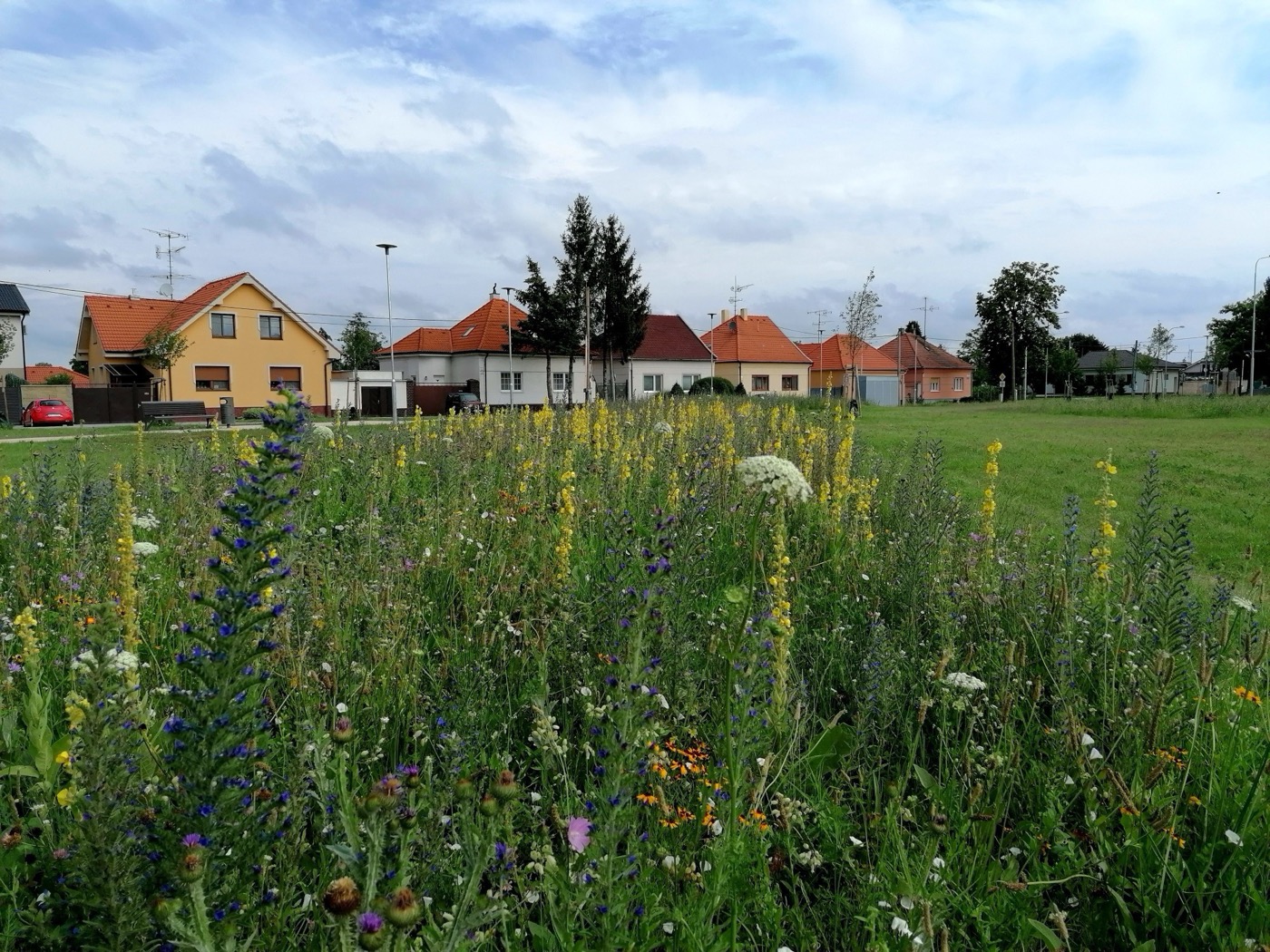
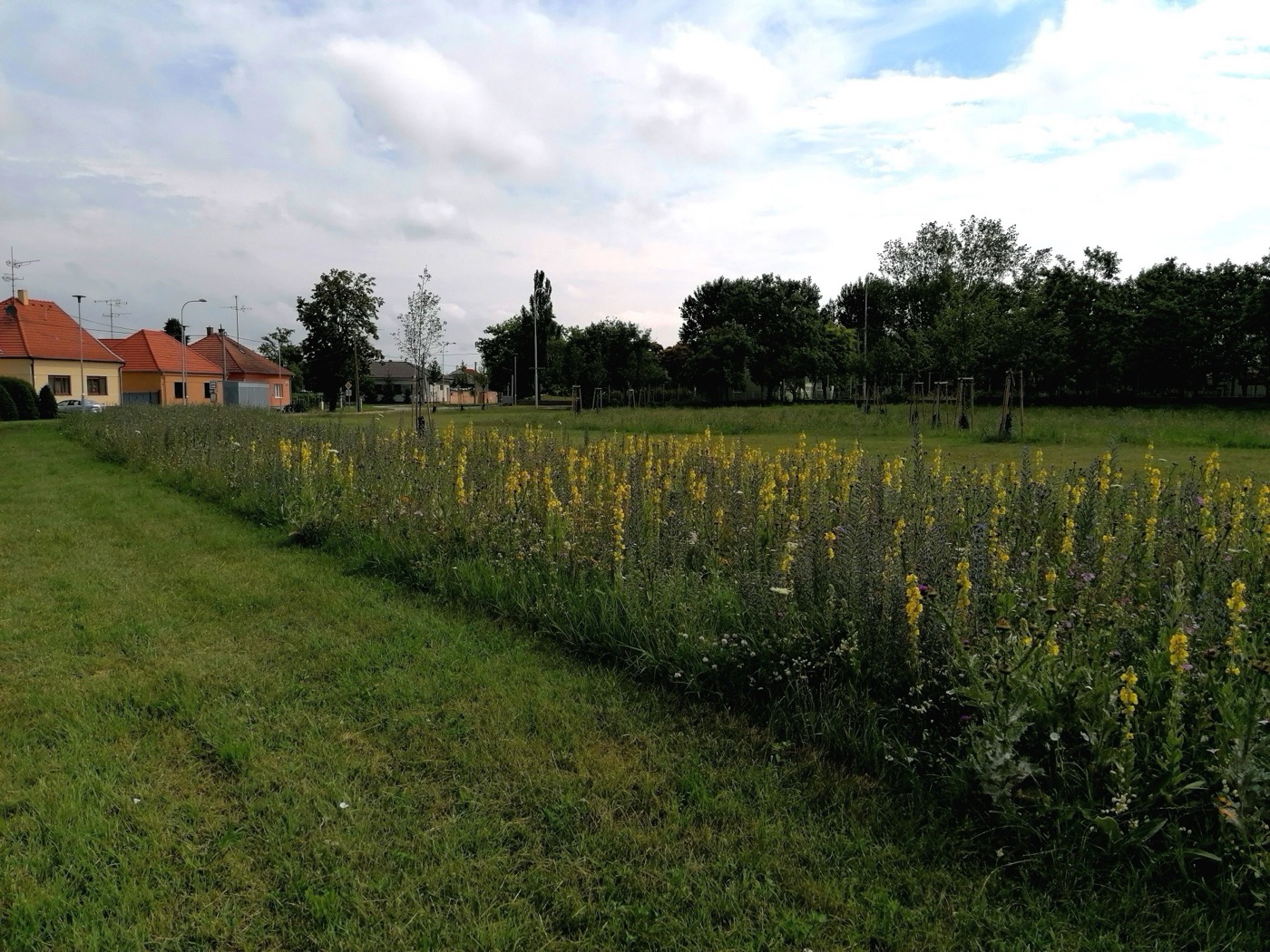
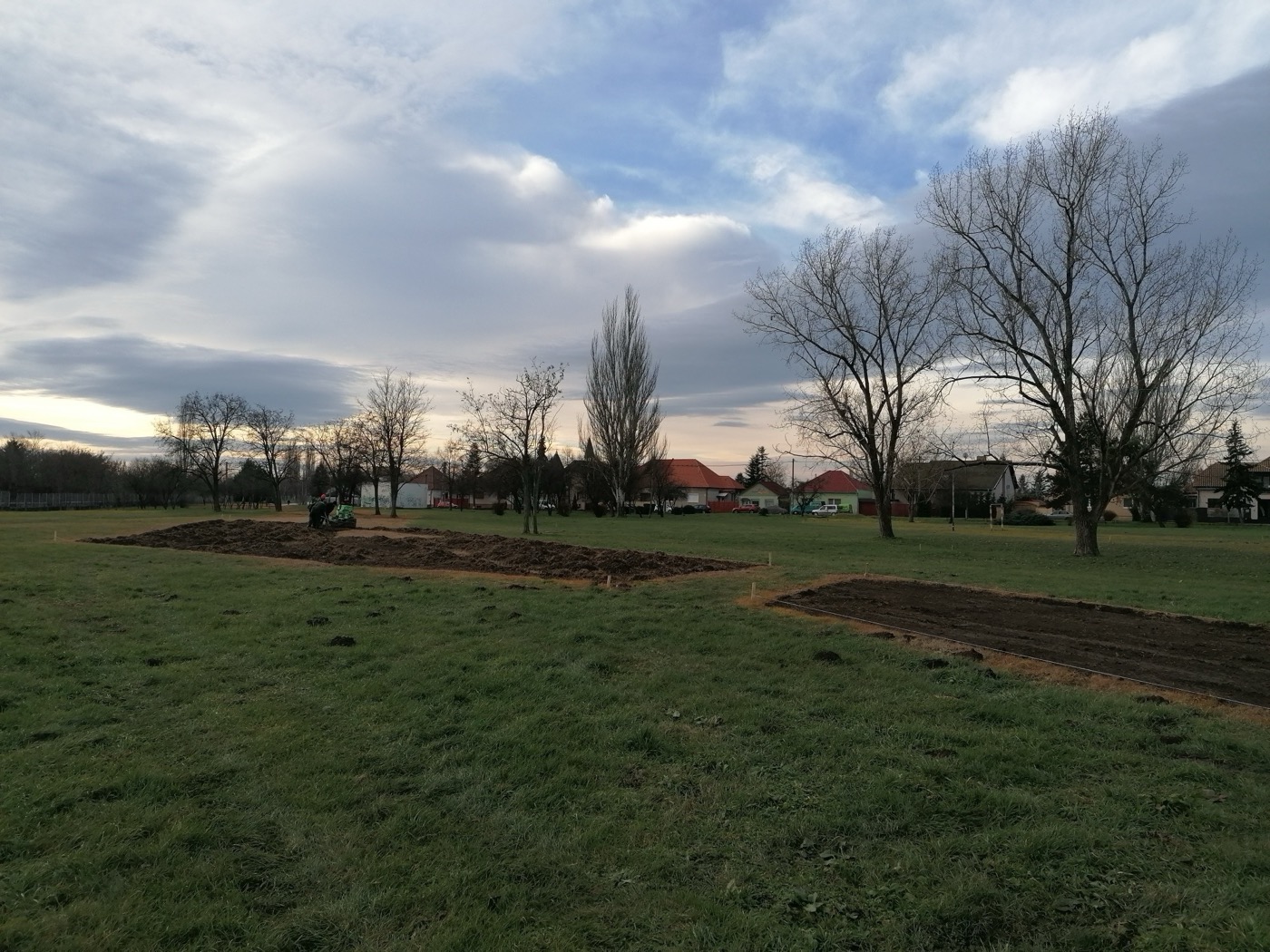
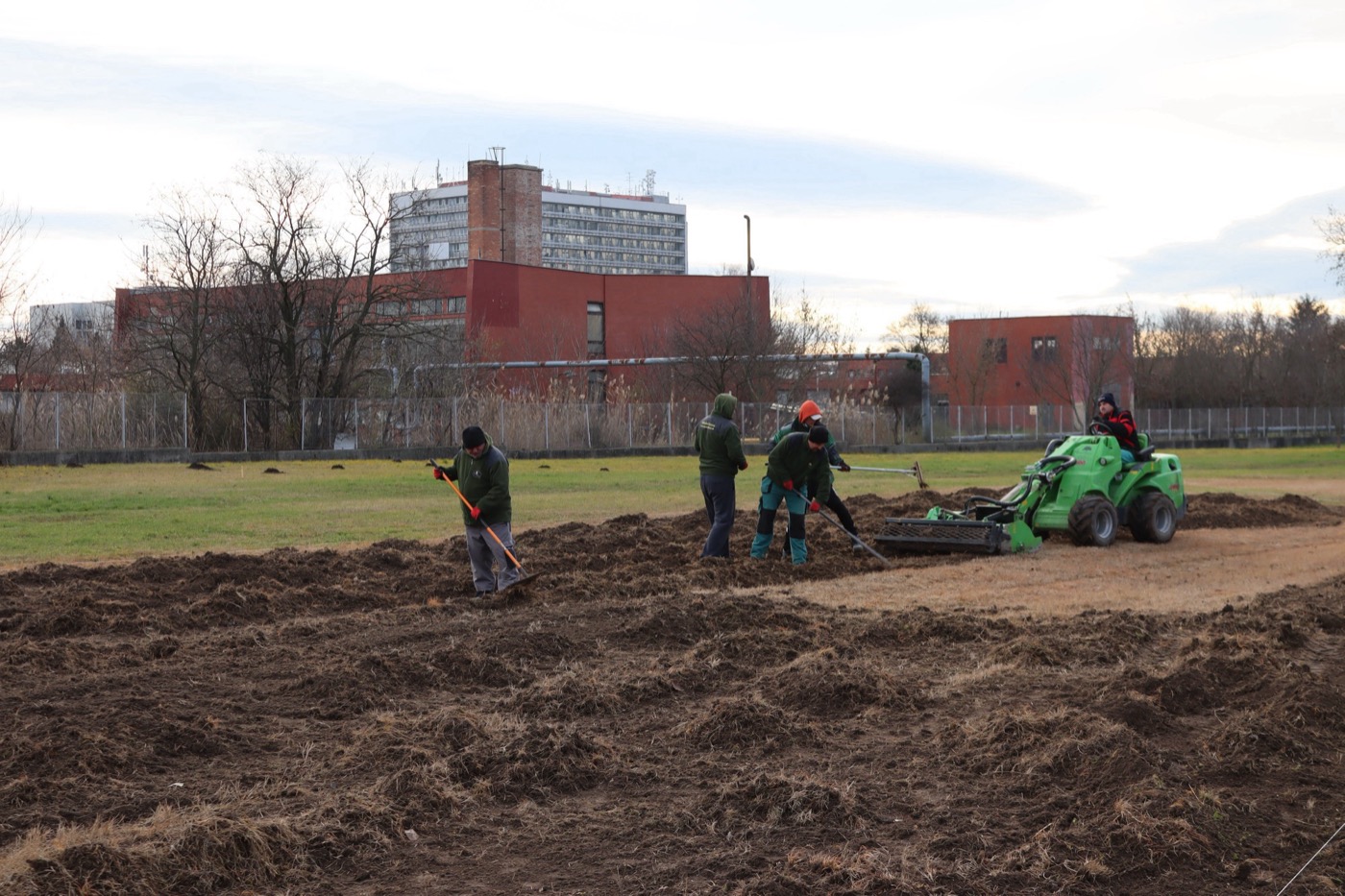
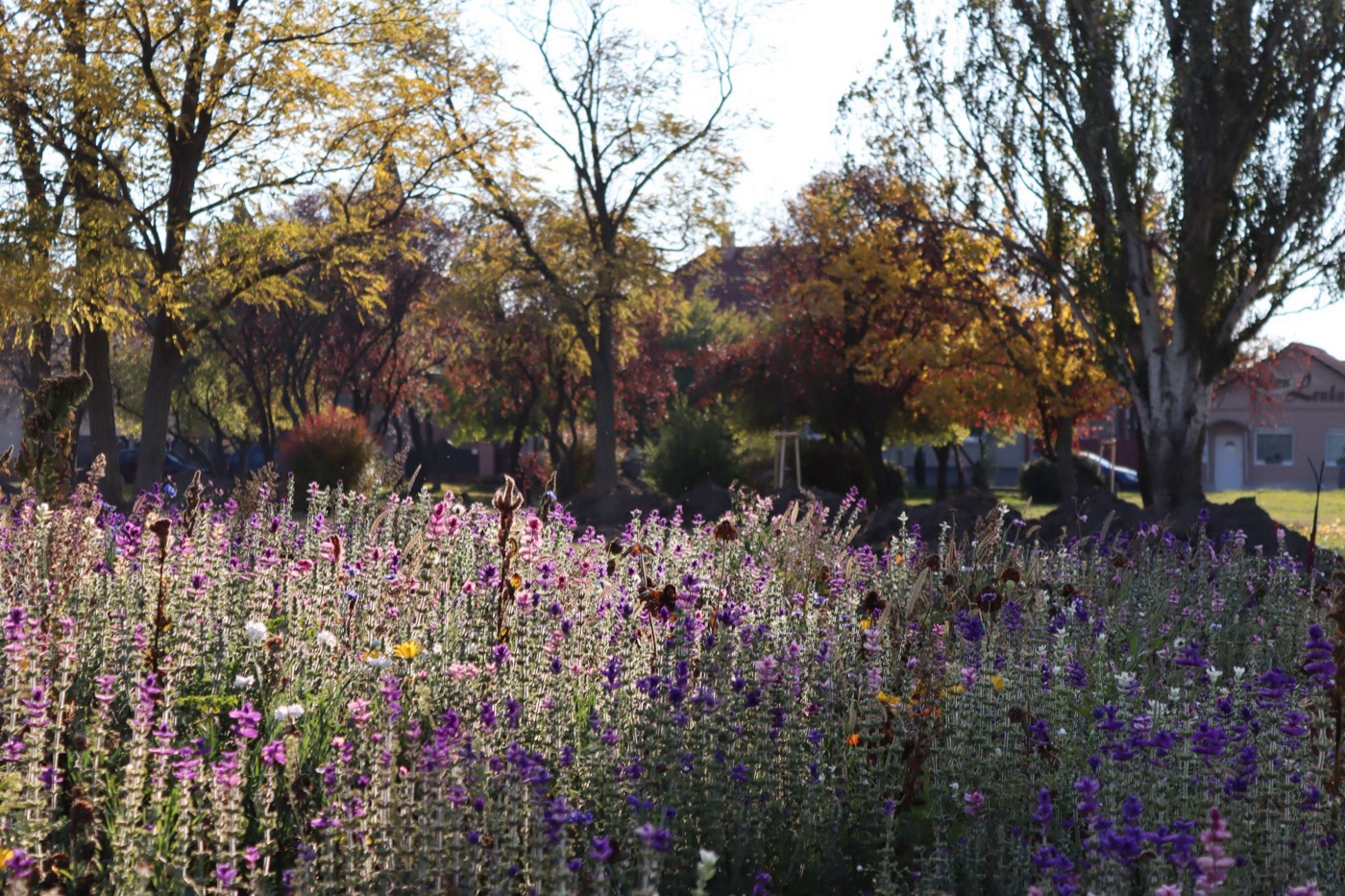
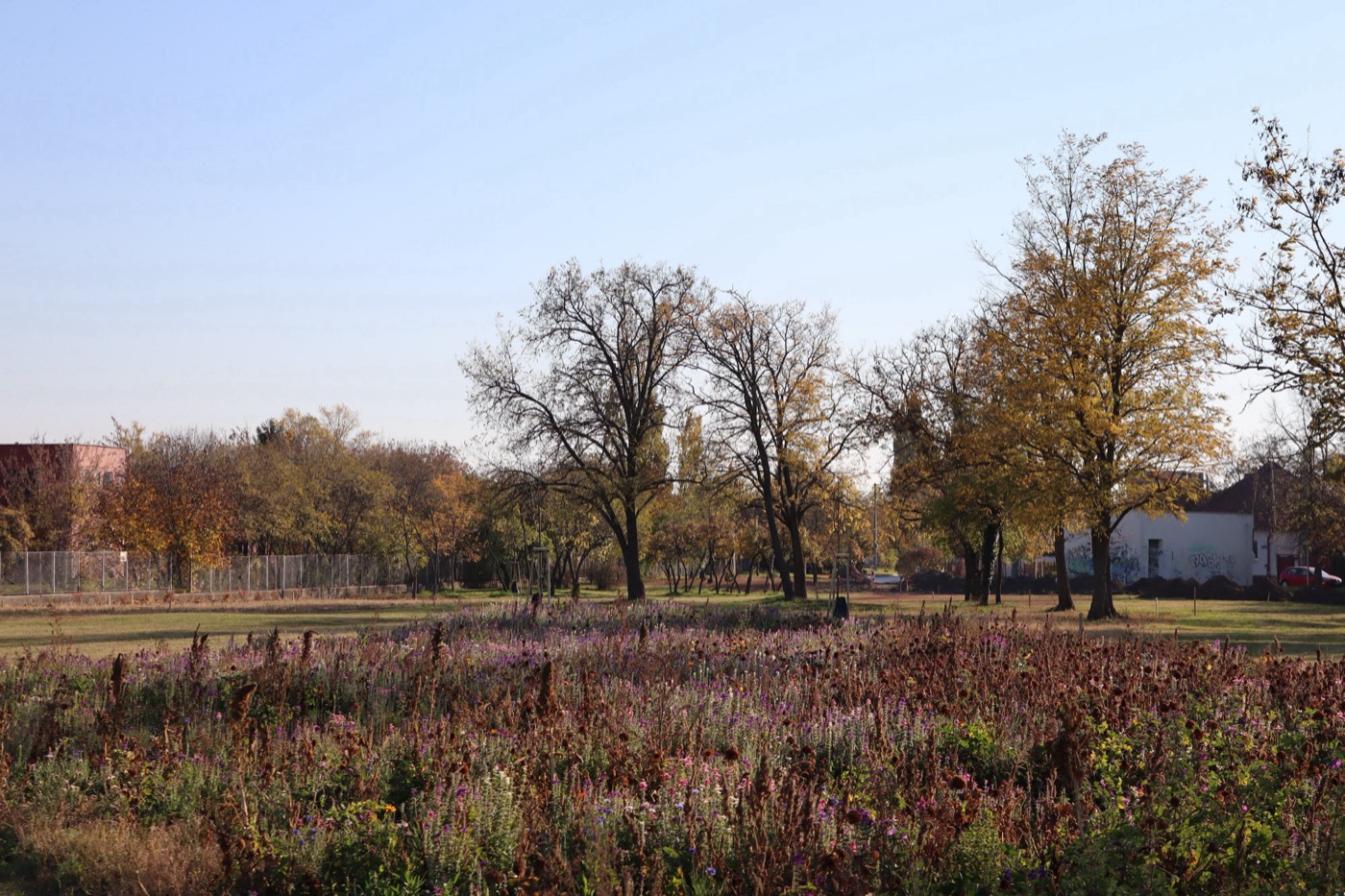
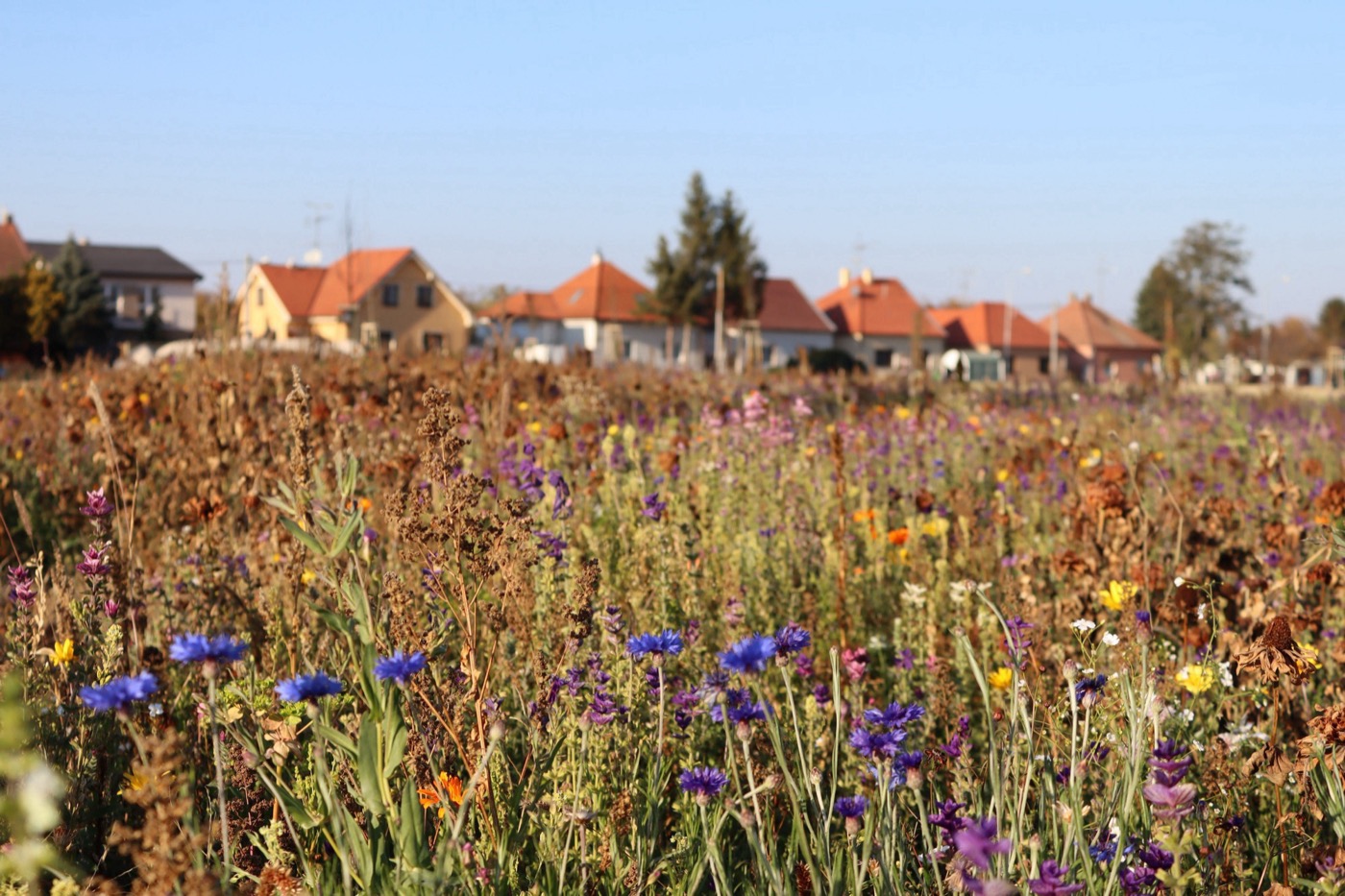
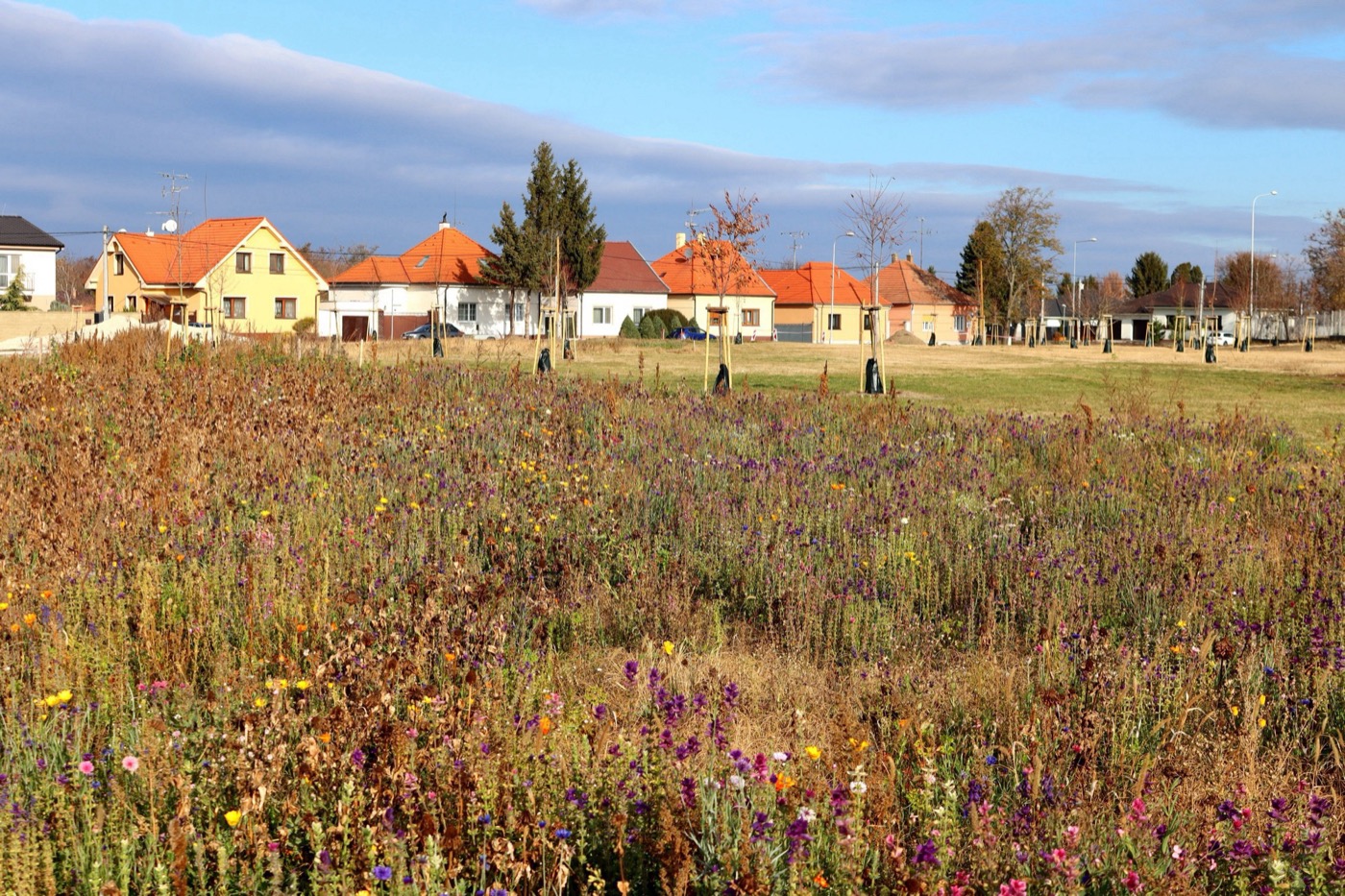
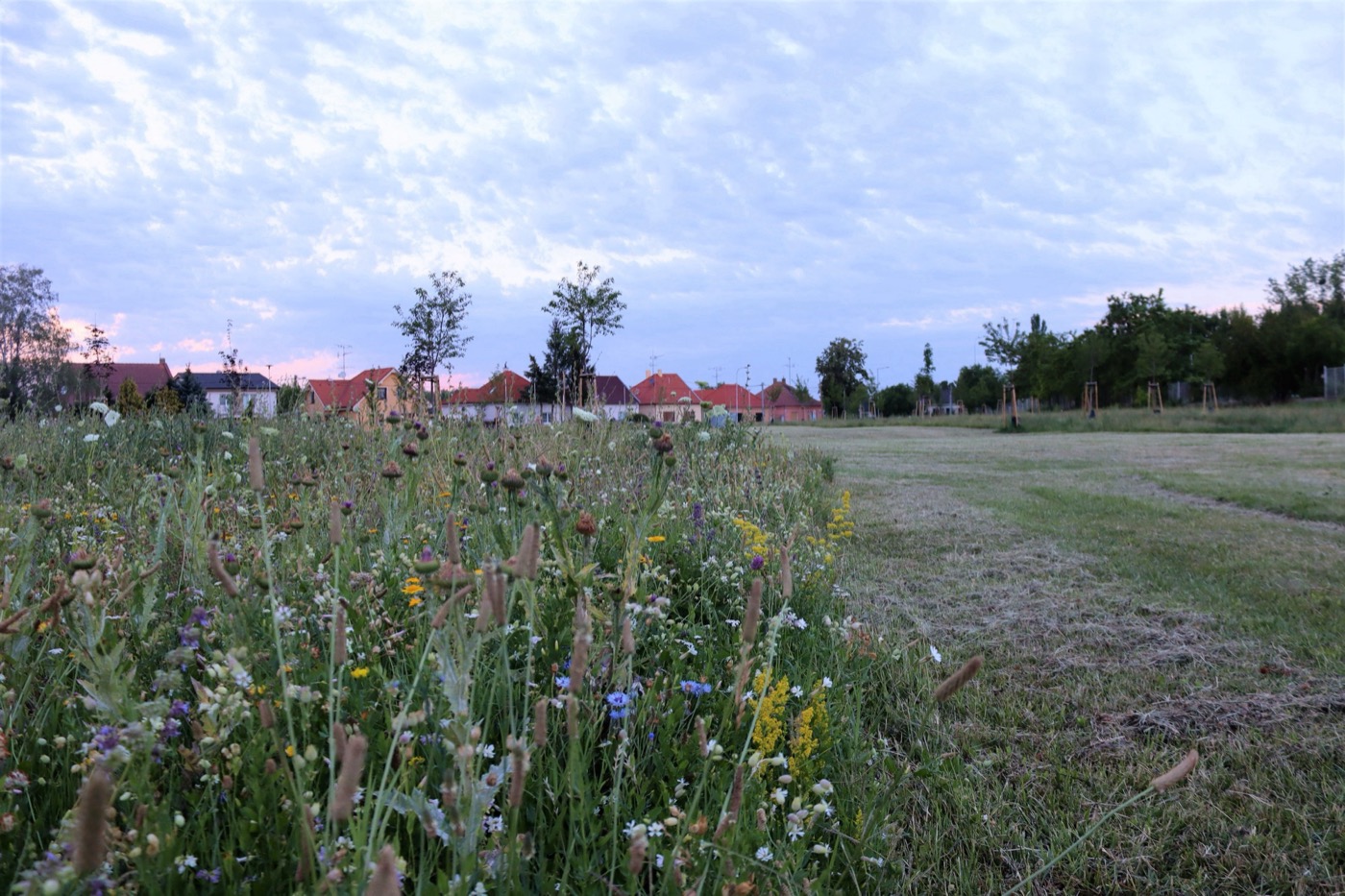
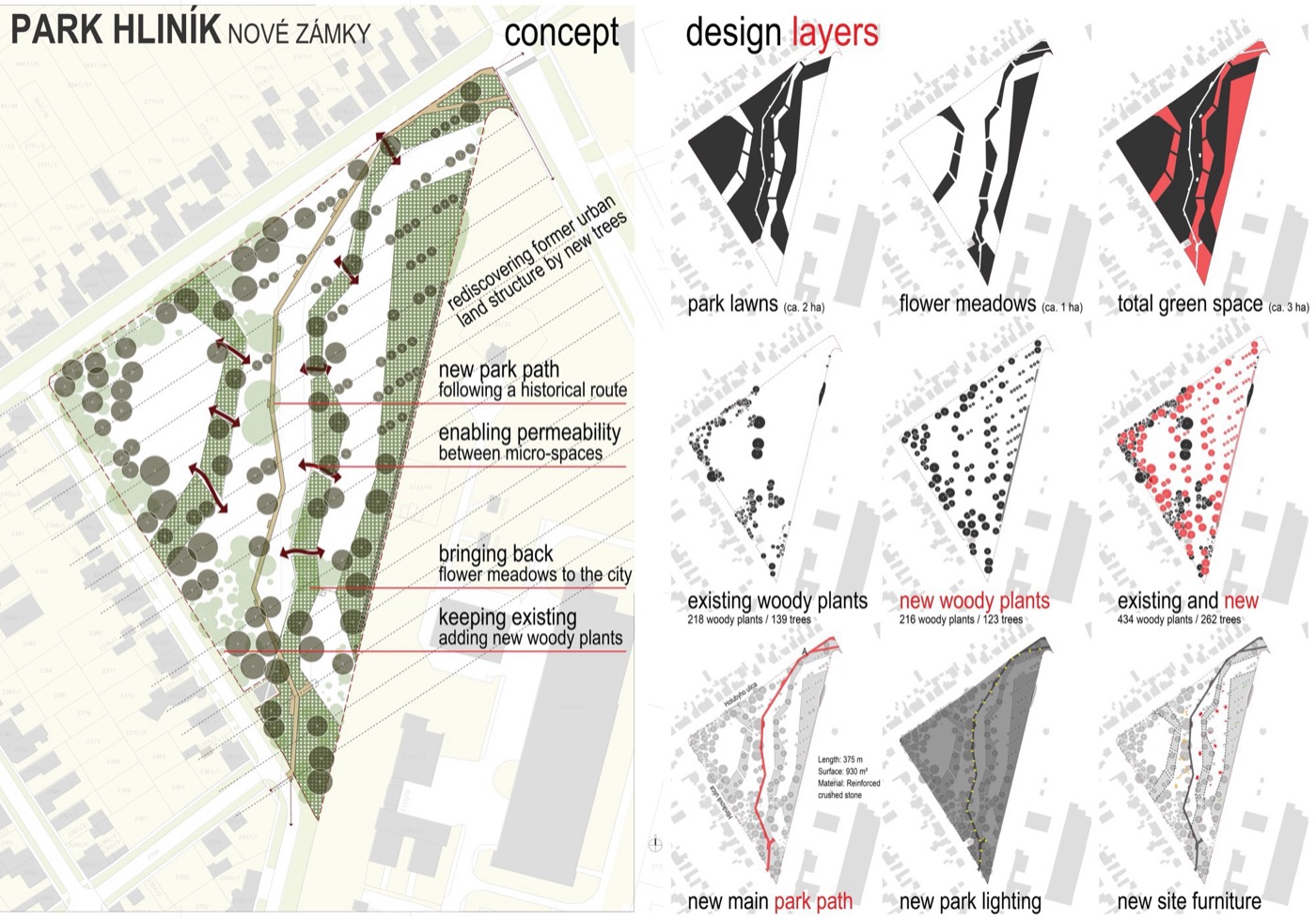
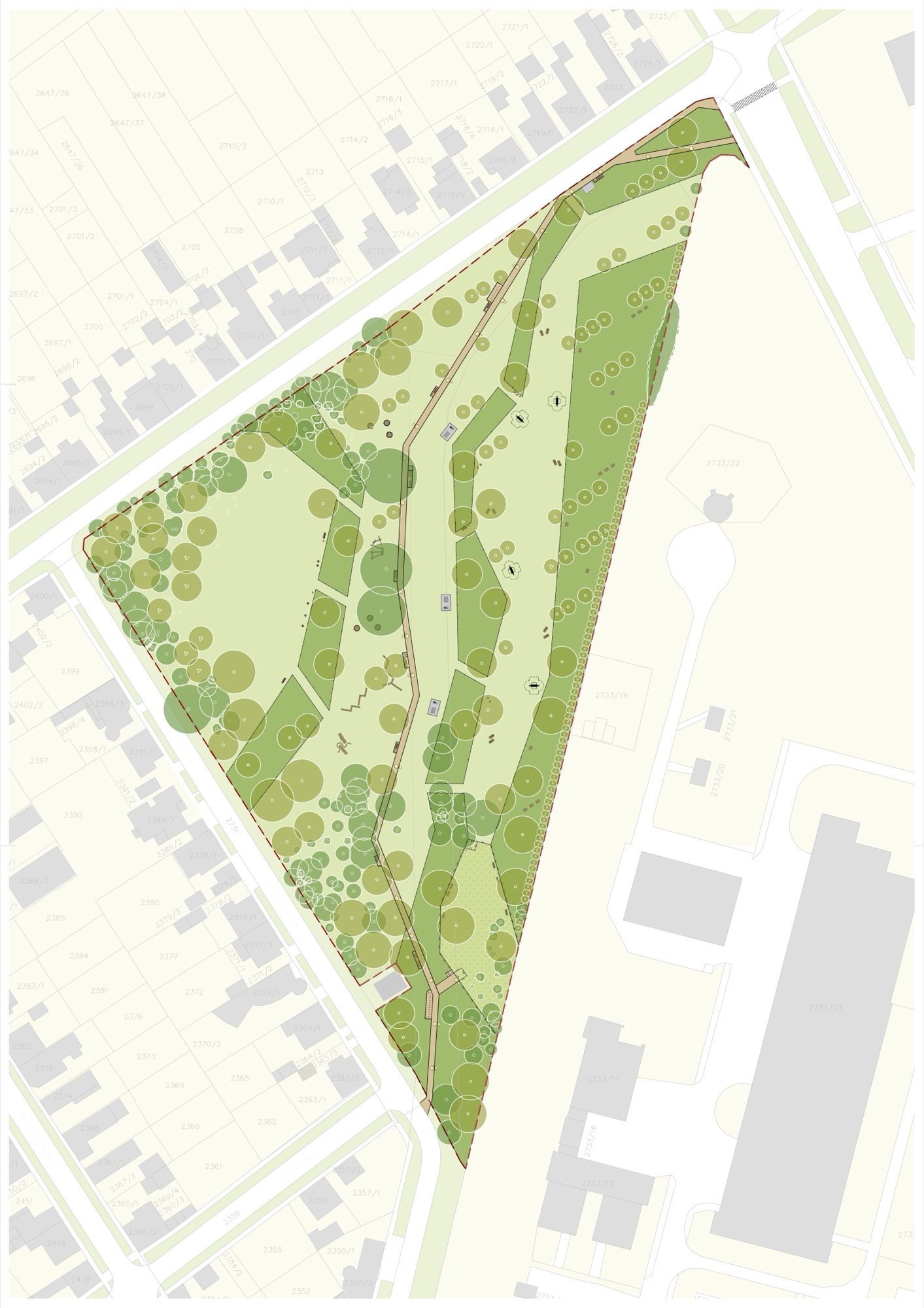
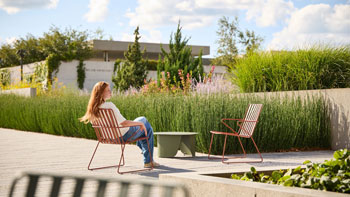
Approximately one third of the three-hectare site was transformed into flowering meadow habitats managed through a selective mosaic mowing regime. More than 120 new trees — predominantly native deciduous species — were planted to enrich the originally sparse and fragmented tree structure. The design minimizes sealed surfaces and promotes natural rainwater infiltration. The main pathway is made of mechanically compacted crushed stone, reinforcing the park’s environmentally sensitive character and reducing the dependence on conventional asphalt or concrete surfaces.
Park Hliník became the first public space in Nové Zámky to introduce compacted gravel pathways and selective mosaic grassland management, approaches that are already well established internationally but remain highly unconventional in Slovakia. The strong contrast between intensively maintained lawns and extensively managed flowering meadows creates a distinctive visual identity while simultaneously increasing ecological resilience and biodiversity. In this sense, the project can be understood as one of the first visible shifts toward a more ecological and climate-responsive model of urban green space management in the local context.
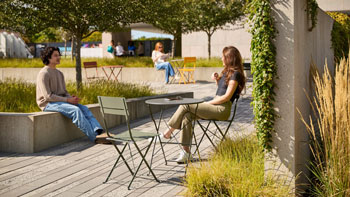
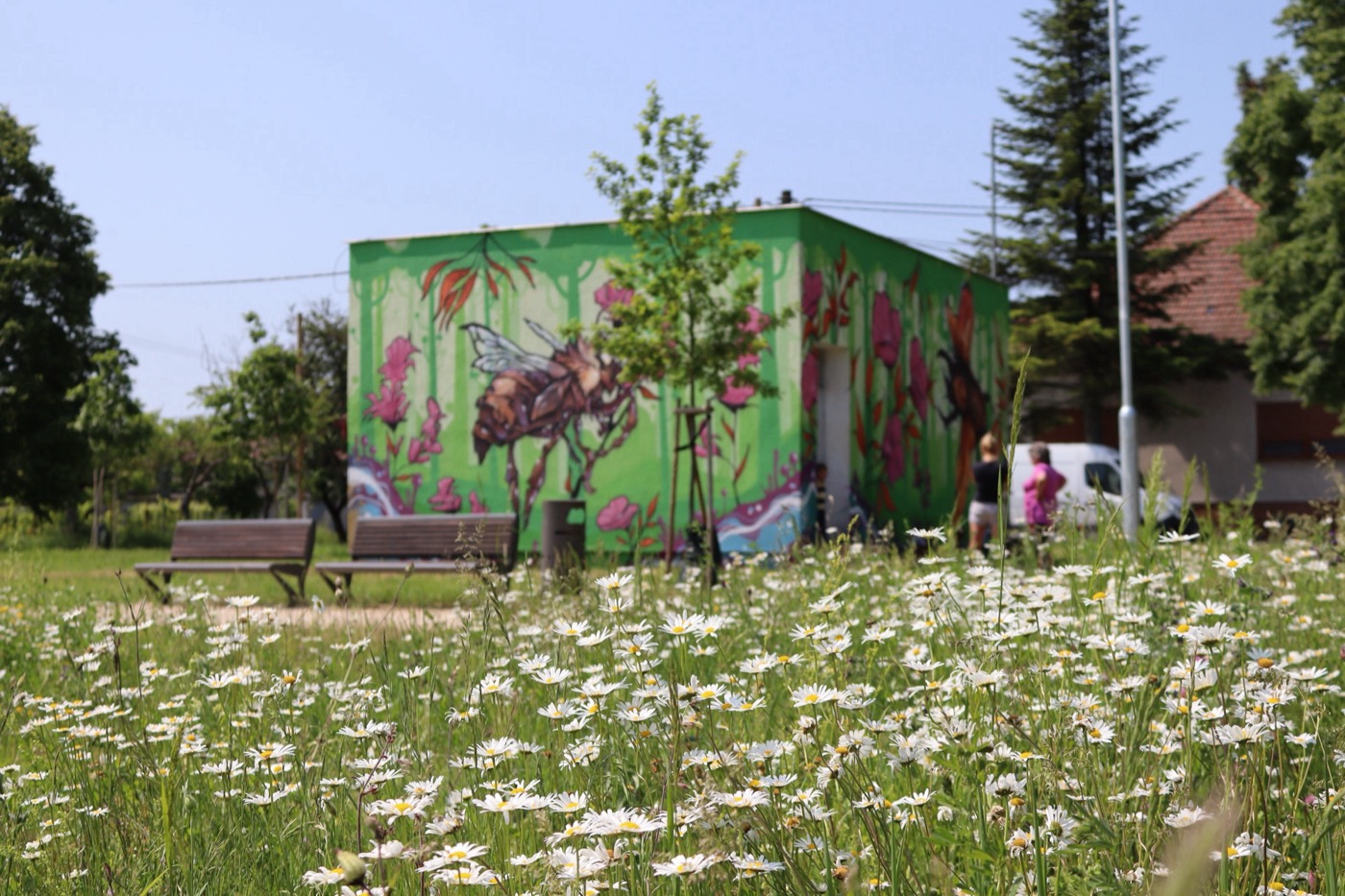
Sustainability and reuse were central principles of the project. Benches originally located in the city’s main square were repurposed and given a new life in the park, complemented by new wooden loungers. A previously neglected transformer station covered in graffiti was transformed into a distinctive artistic landmark through large-scale murals referencing biodiversity, pollinators, and the importance of nature for urban well-being. The intervention introduces contemporary art into public space and strengthens the park’s identity and recognizability.
Park Hliník does not aspire to be a conventional ornamental city park with high maintenance demands. Instead, its strength lies in embracing the peripheral character of the site, working with local identity, and exploring a new aesthetic language for public landscapes based on ecological principles, natural processes, and the seasonal dynamics of vegetation.
The project received international recognition as the first Slovak landscape architecture project ever selected for publication in Landscape Architecture Europe – Full of Life, the seventh edition of the influential triennial publication presenting outstanding contemporary landscape architecture projects from across Europe. The project was recognized for its innovative approach to biodiversity restoration, reinterpretation of historical cultural landscapes, and its ability to create a meaningful and resilient public space with minimal resources and strong environmental impact.
47.992101321005734, 18.14840766334959
73669


LILA 2026 Sponsor