Place Georges-Clémenceau, Pau
www.aplusrpaysages.com/
2026 Public Projects / France / Built in 2025 /

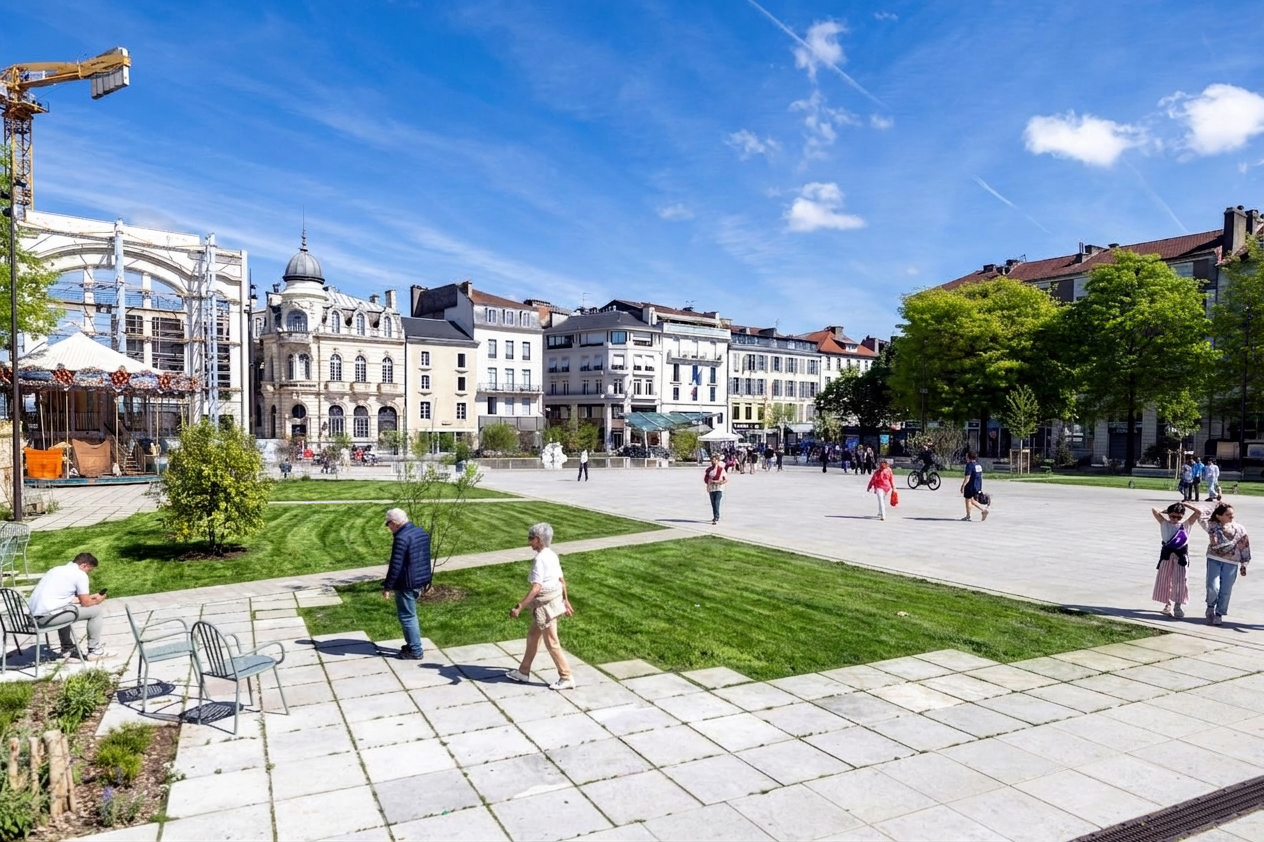
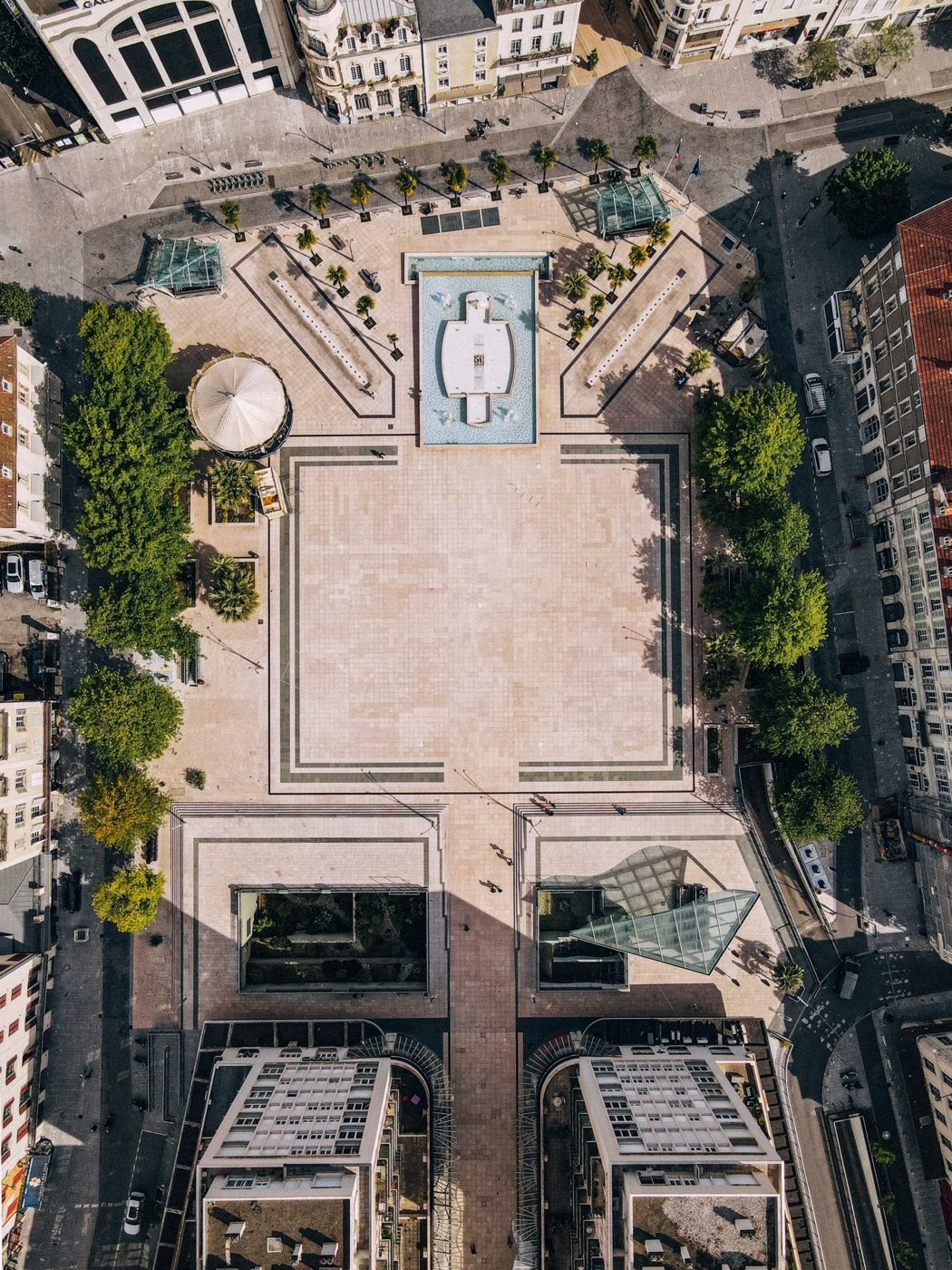
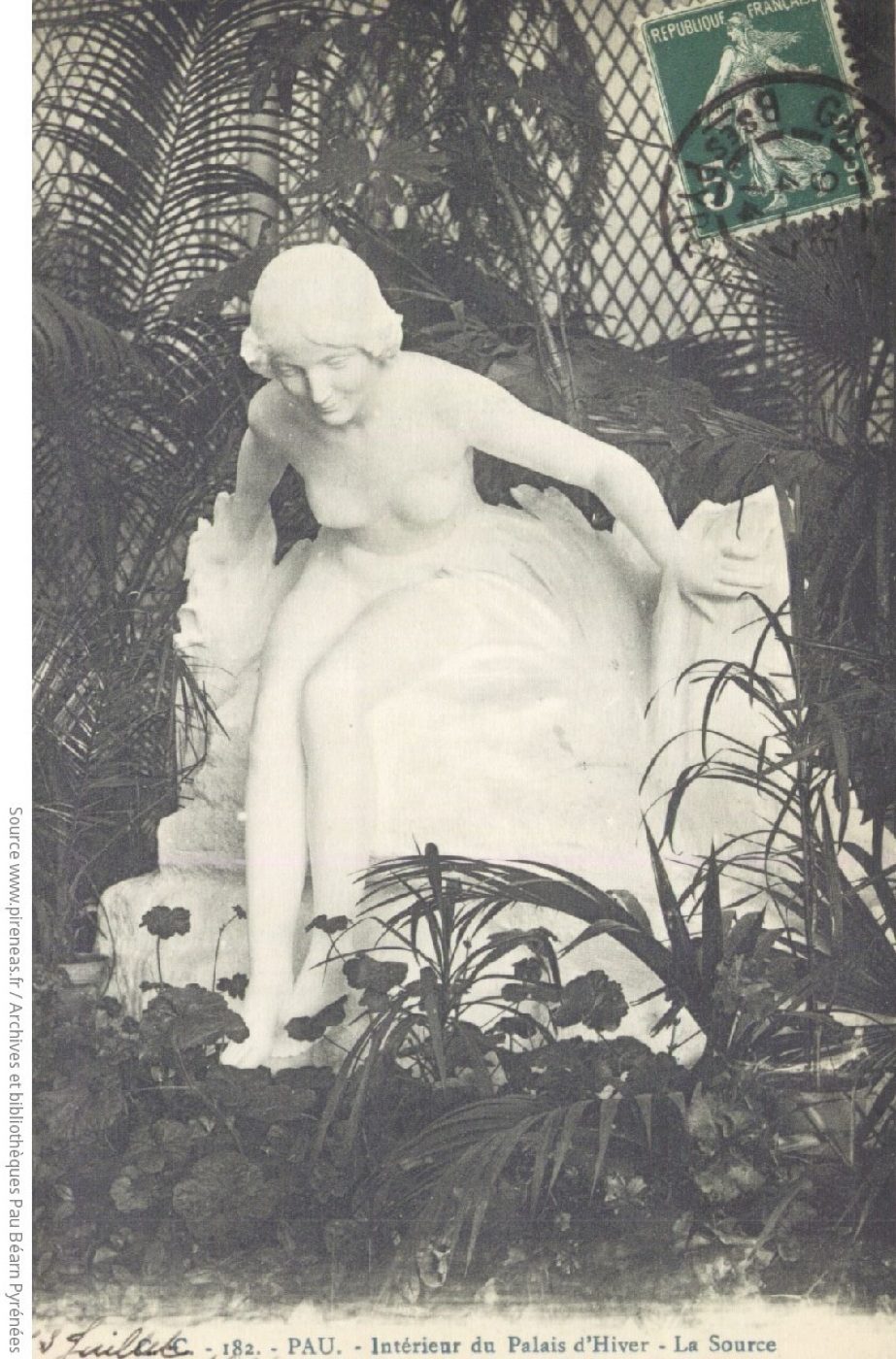
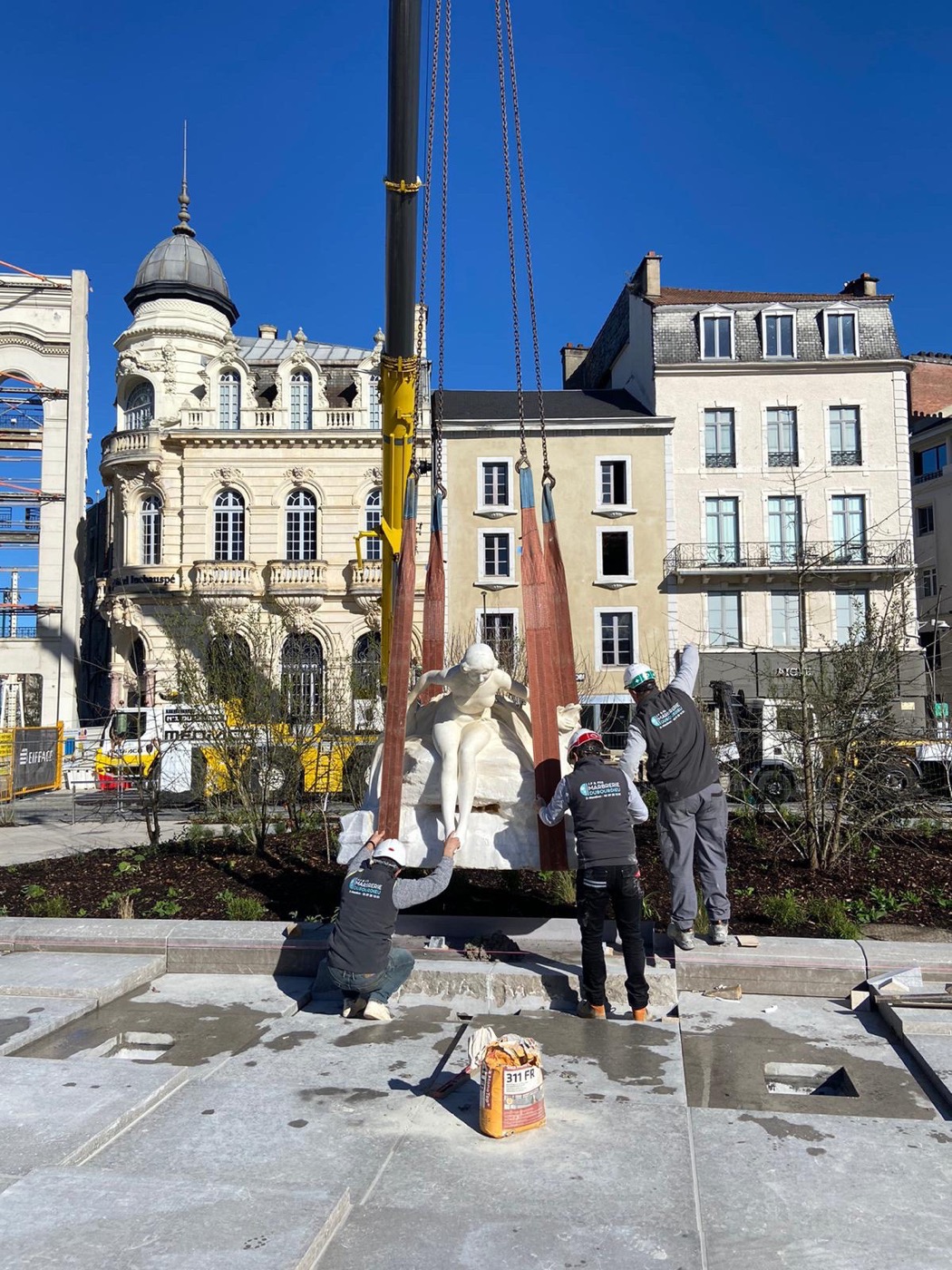
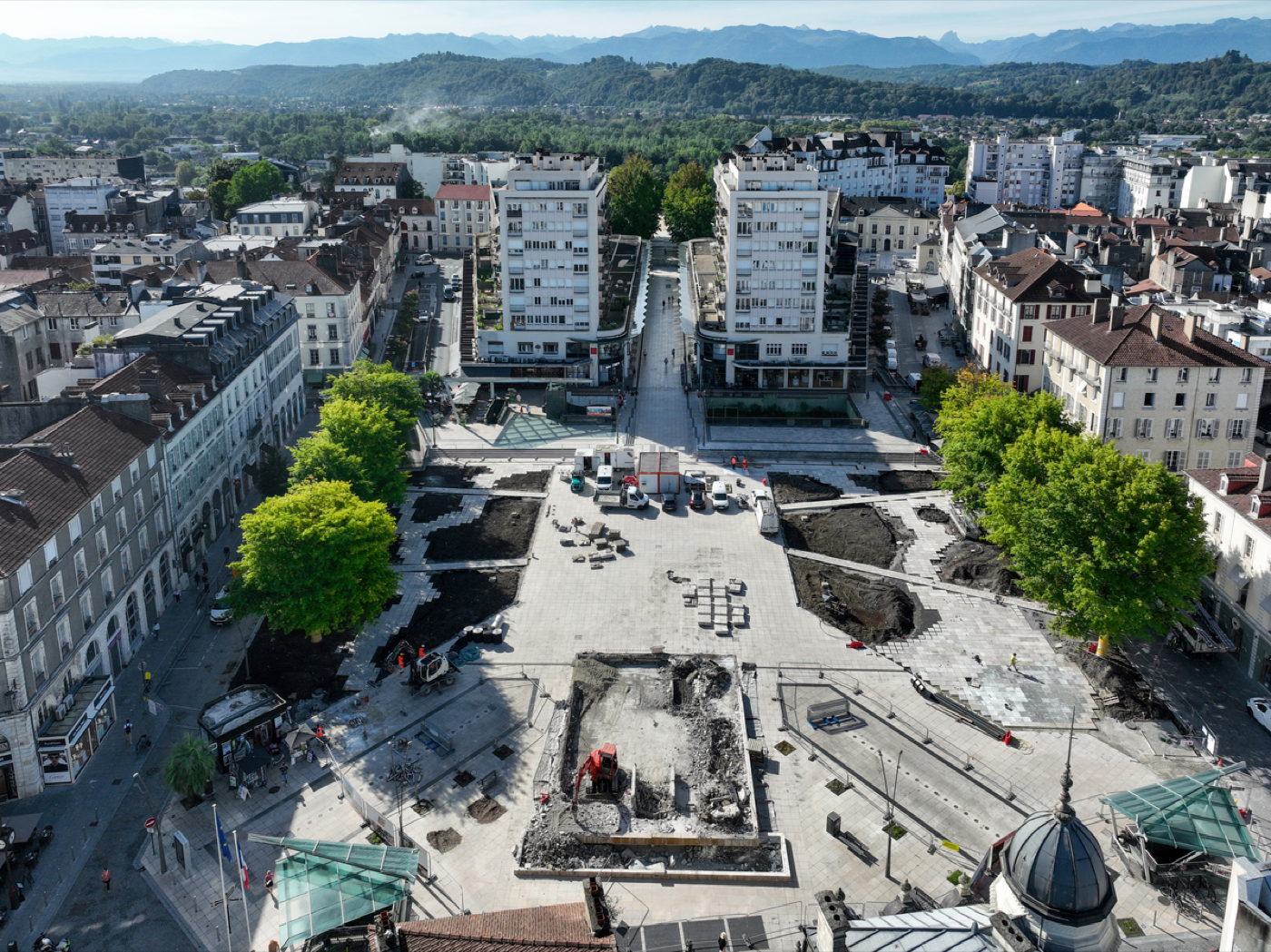
Located in the heart of historic Pau, Place Clémenceau serves as a key urban hub connecting the Palais des Pyrénées, Boulevard d’Aragon, and Square Georges V. It lies along the axis of the grand boulevard inherited from 19th-century urban planning. Long envisioned as a tree-lined promenade, it has gradually evolved into a vast paved plaza dedicated to hosting events. The project strikes a deliberate balance : maintaining the capacity to host large-scale events while reintroducing a sense of daily livability, creating a contemporary garden-square. The positioning of Paul Auban’s statue La Source, the geometry of the square, and its integration into the urban space are all reflections drawing on Decorges’ legacy. It is updated with new questions, notably emphasizing reuse, going beyond the initial request to green the square to question its identity.

‘Le jardin sur vide’ : Technical Constraints as a Starting Point
Central challenge of the project was to create a green space on a plaza entirely supported by the slab of an underground parking garage. This structural constraint—load limits and the limited thickness of the available substrate—served as starting point for all design decisions, from the selection of plant species to the composition of soil mixes.
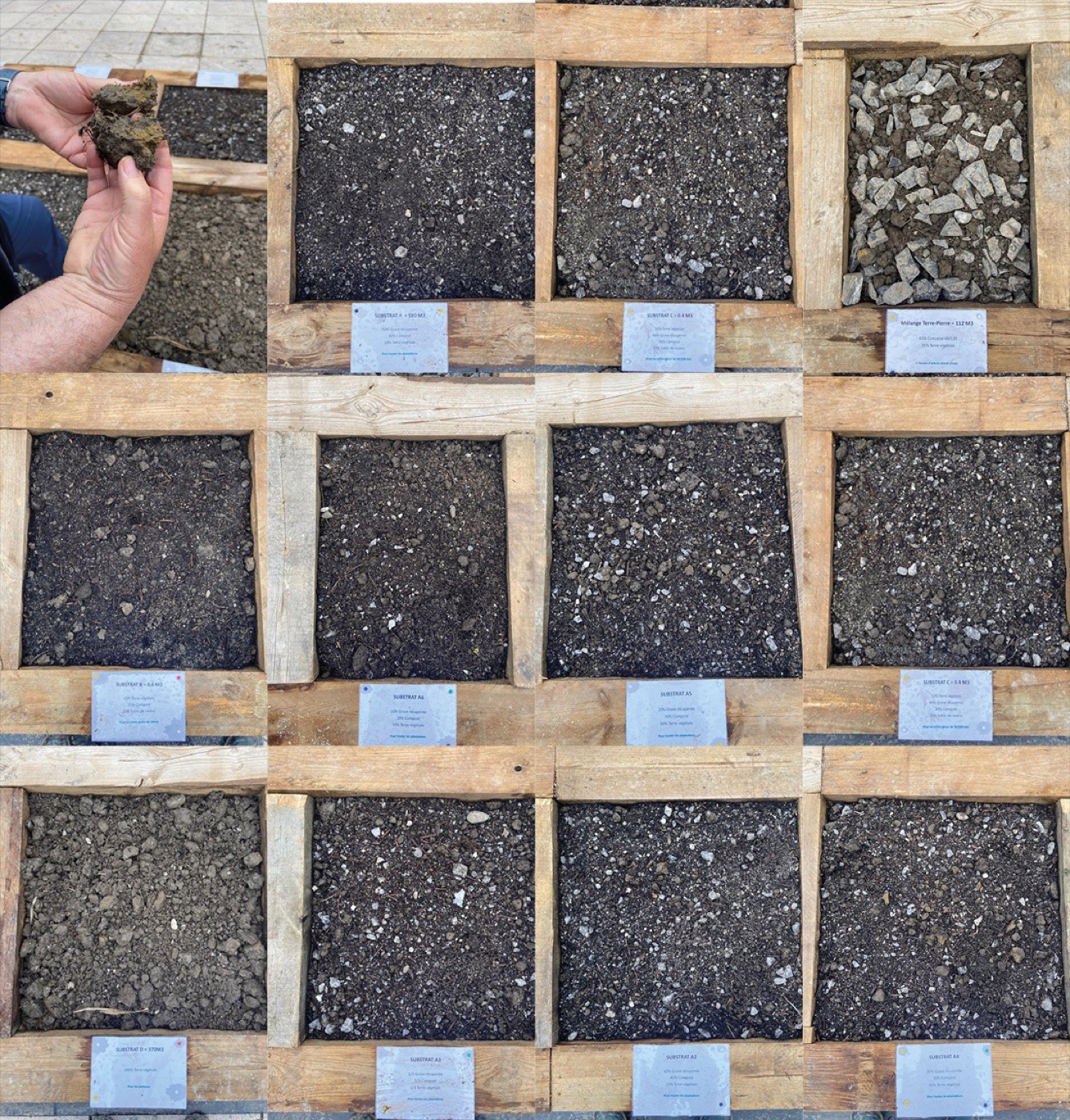
Materials present between the slab and the surface level—fine particles and limestone aggregates—were reused to create specific substrates. Preliminary trials, conducted in advance with phytosociologist Claude Figureau, allowed testing of different compositions—variations in limestone fines, additions of potting soil, river sand, and reused soil—to achieve precise balances suited to heat, drainage, and the limited thickness available. This reconstituted soil, nutrient-poor and well-draining, aligns the project with a circular economy approach while enabling the development of a plant palette consistent with site’s edaphic conditions.
Transform rather than replace : soil as a raw material
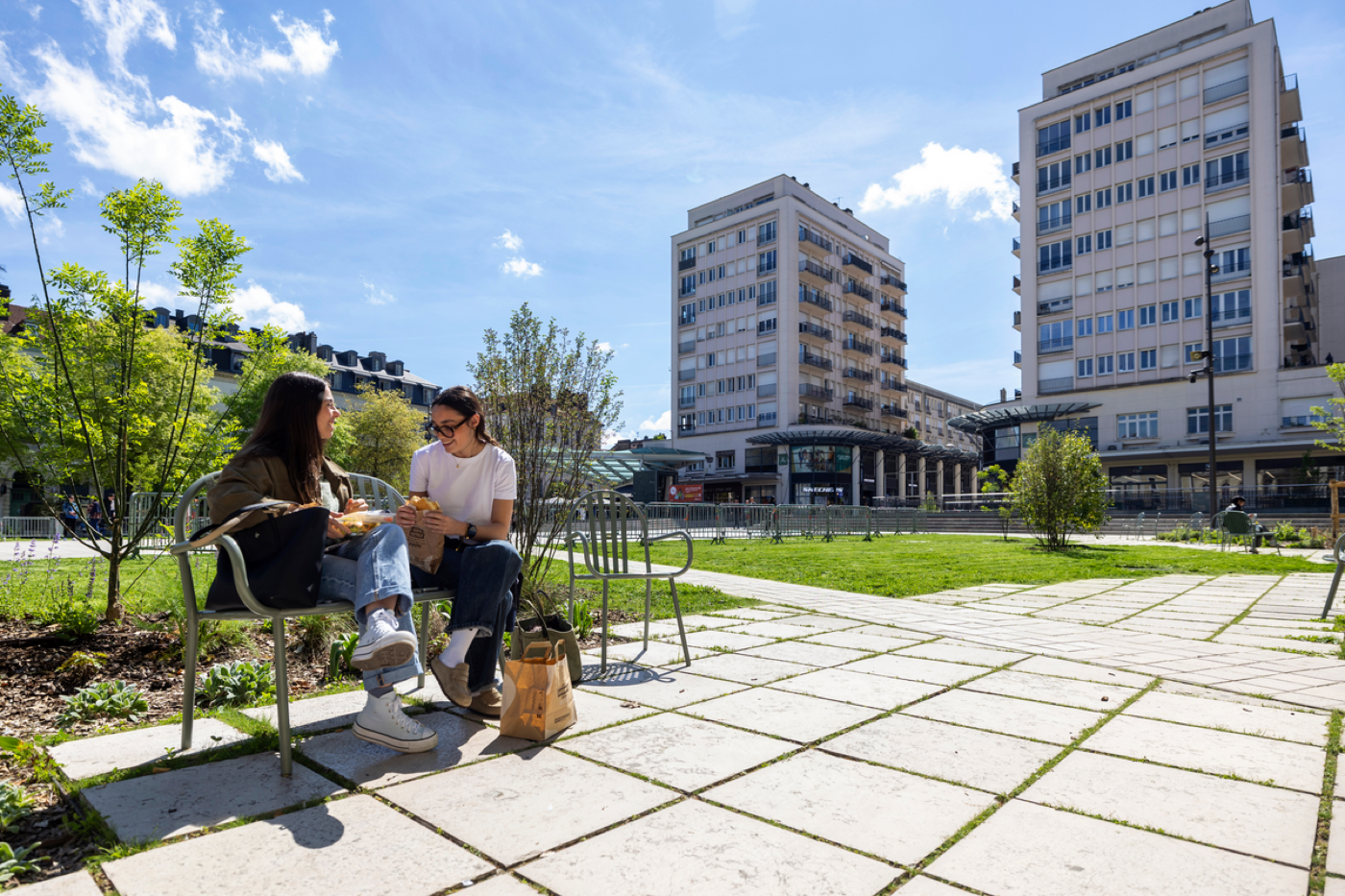
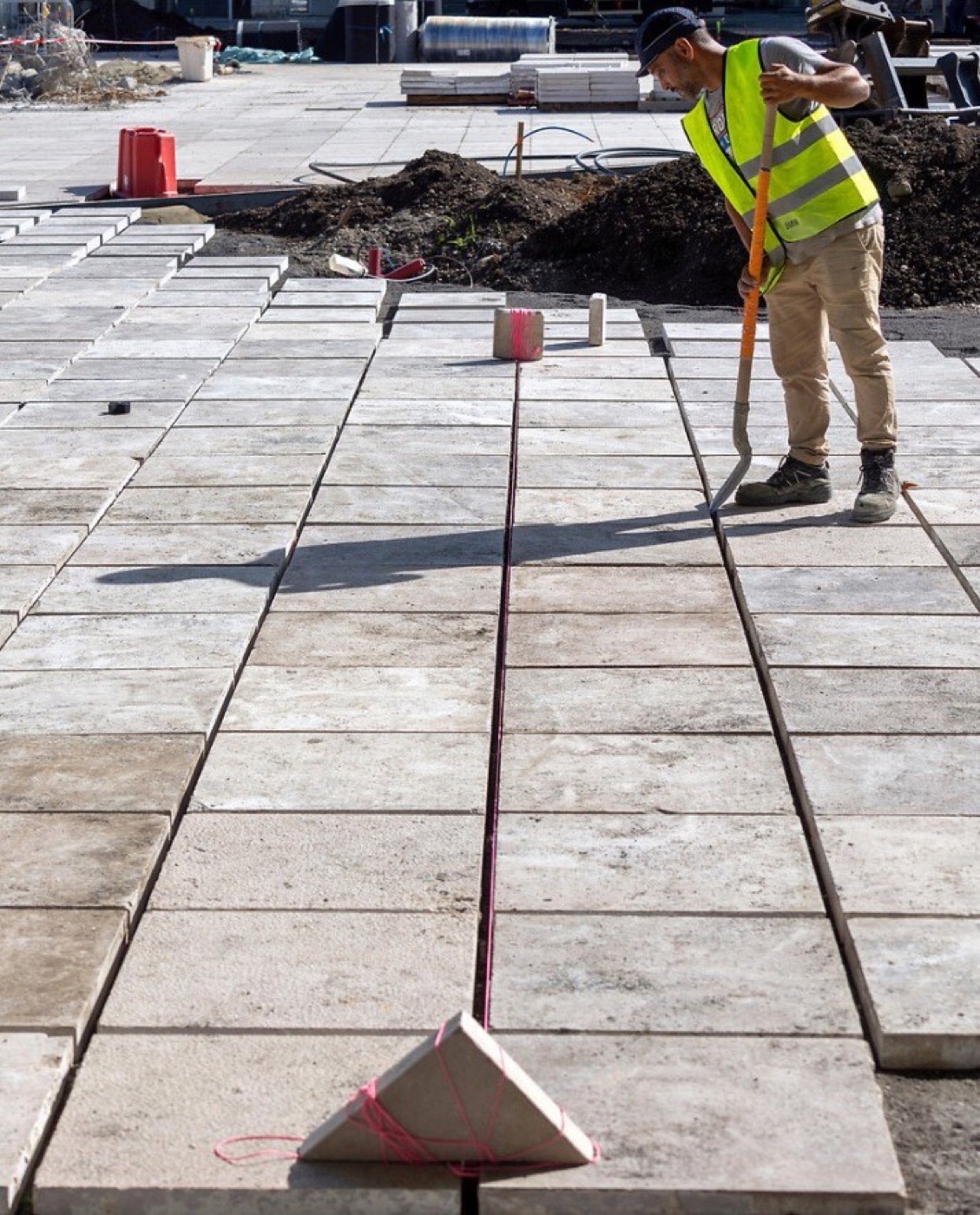
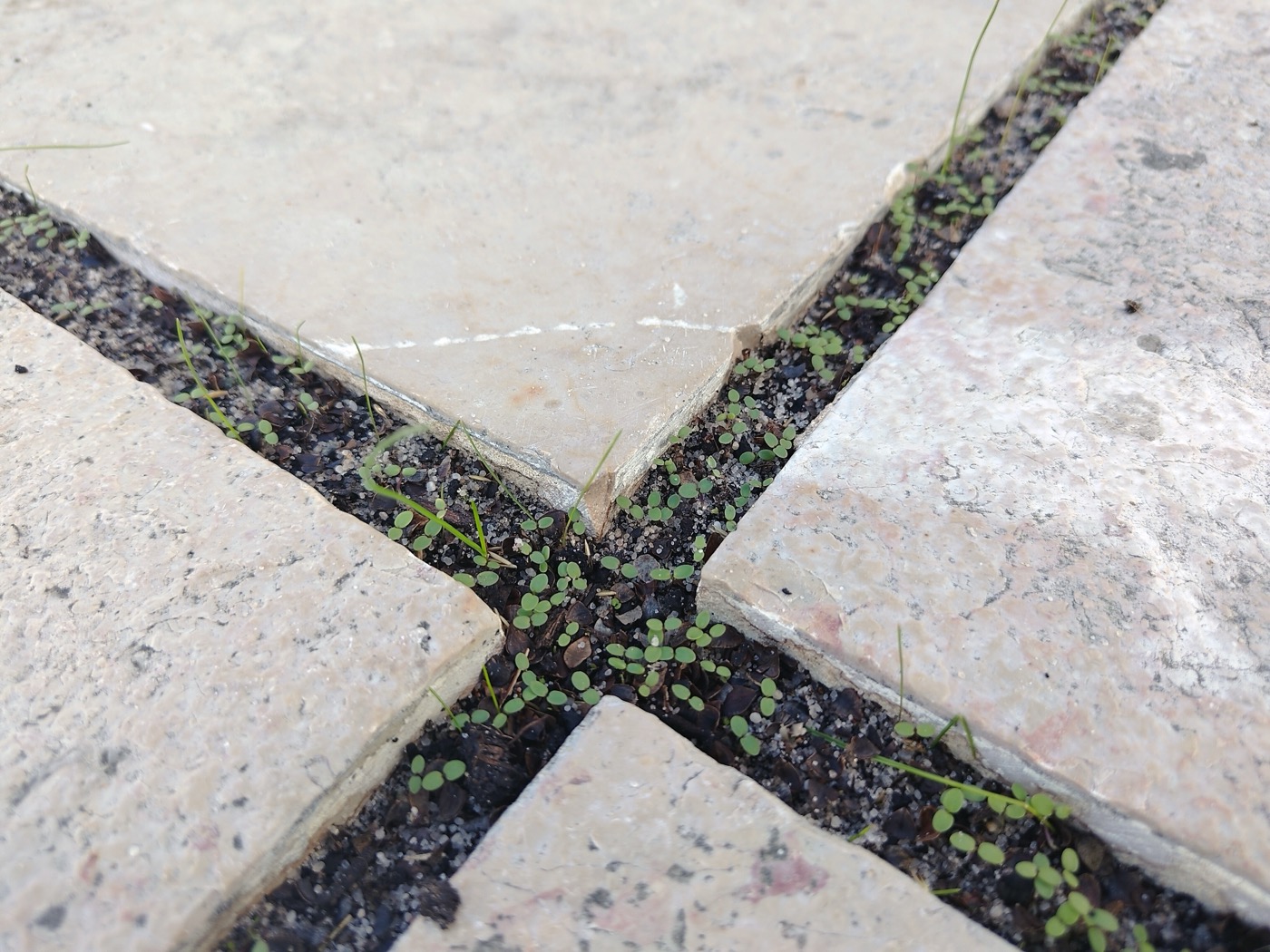
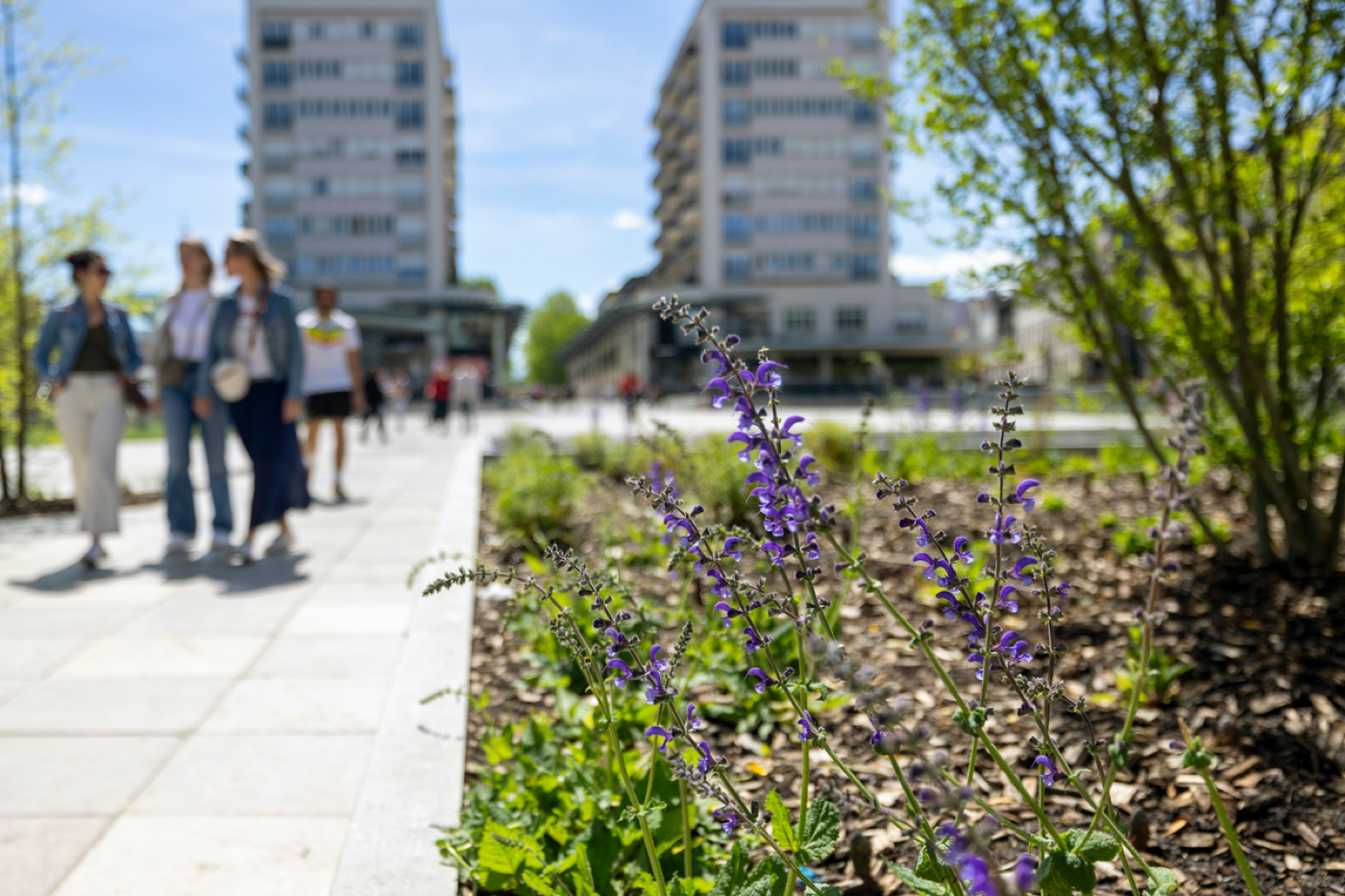
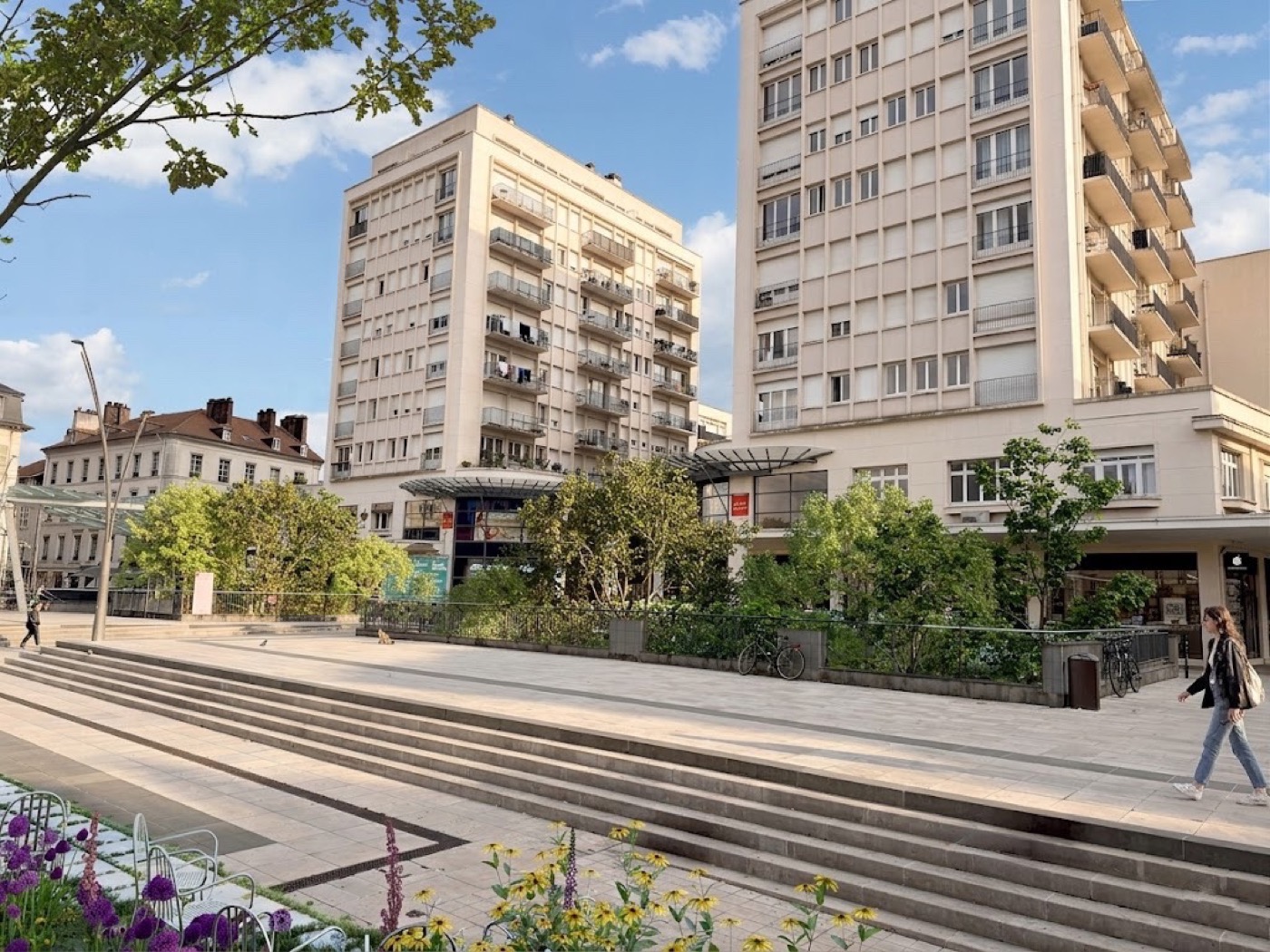
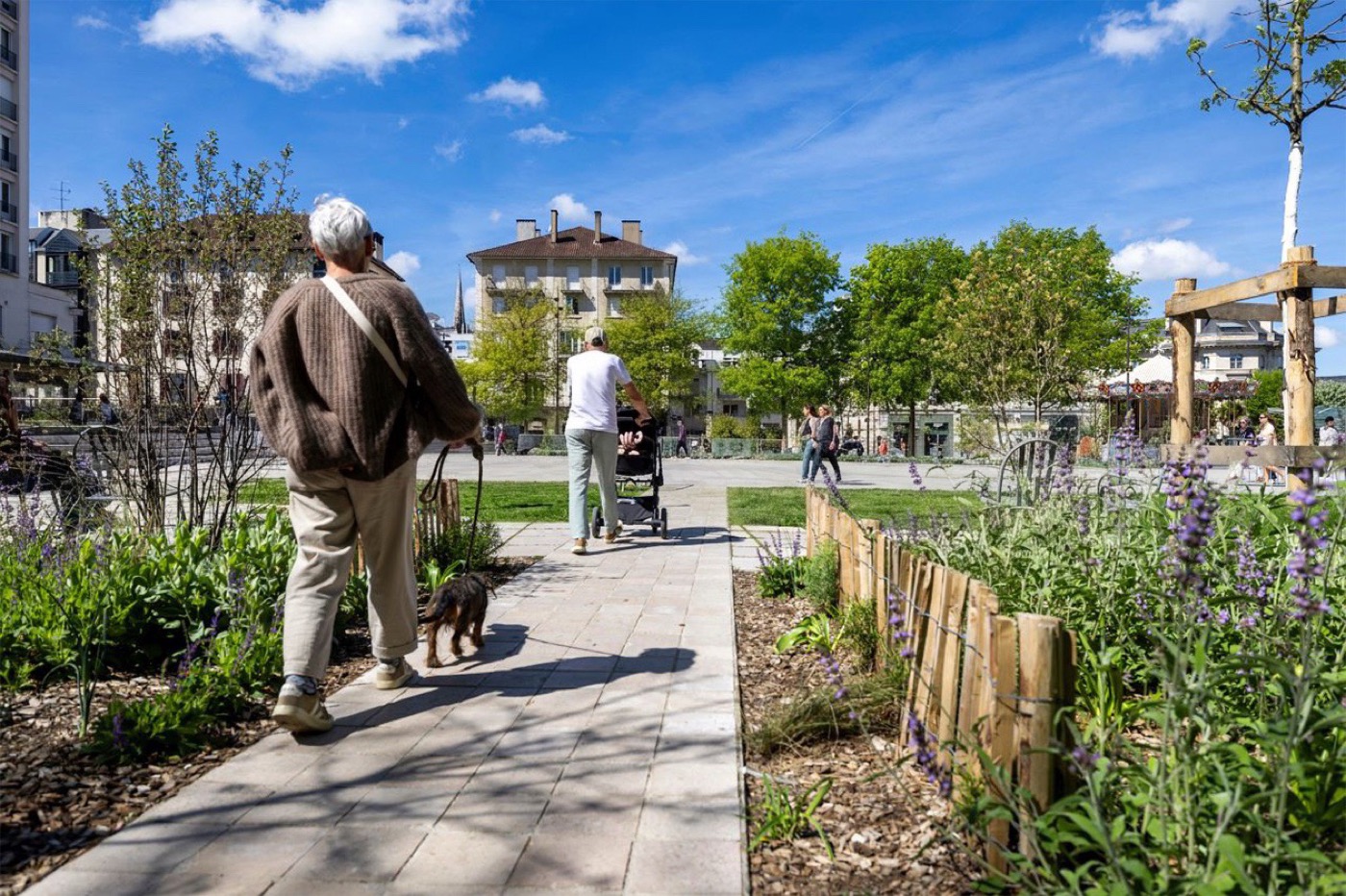
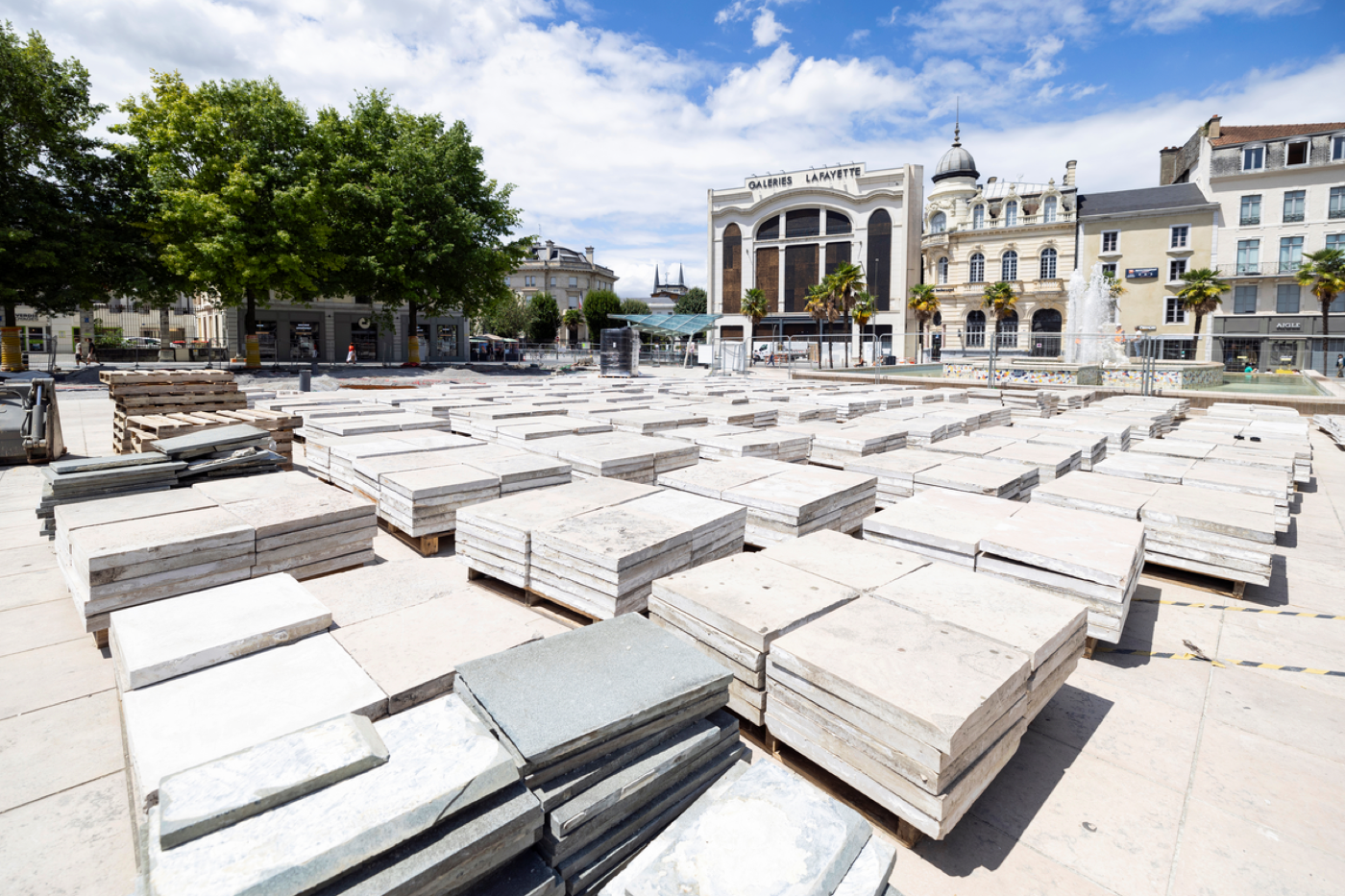
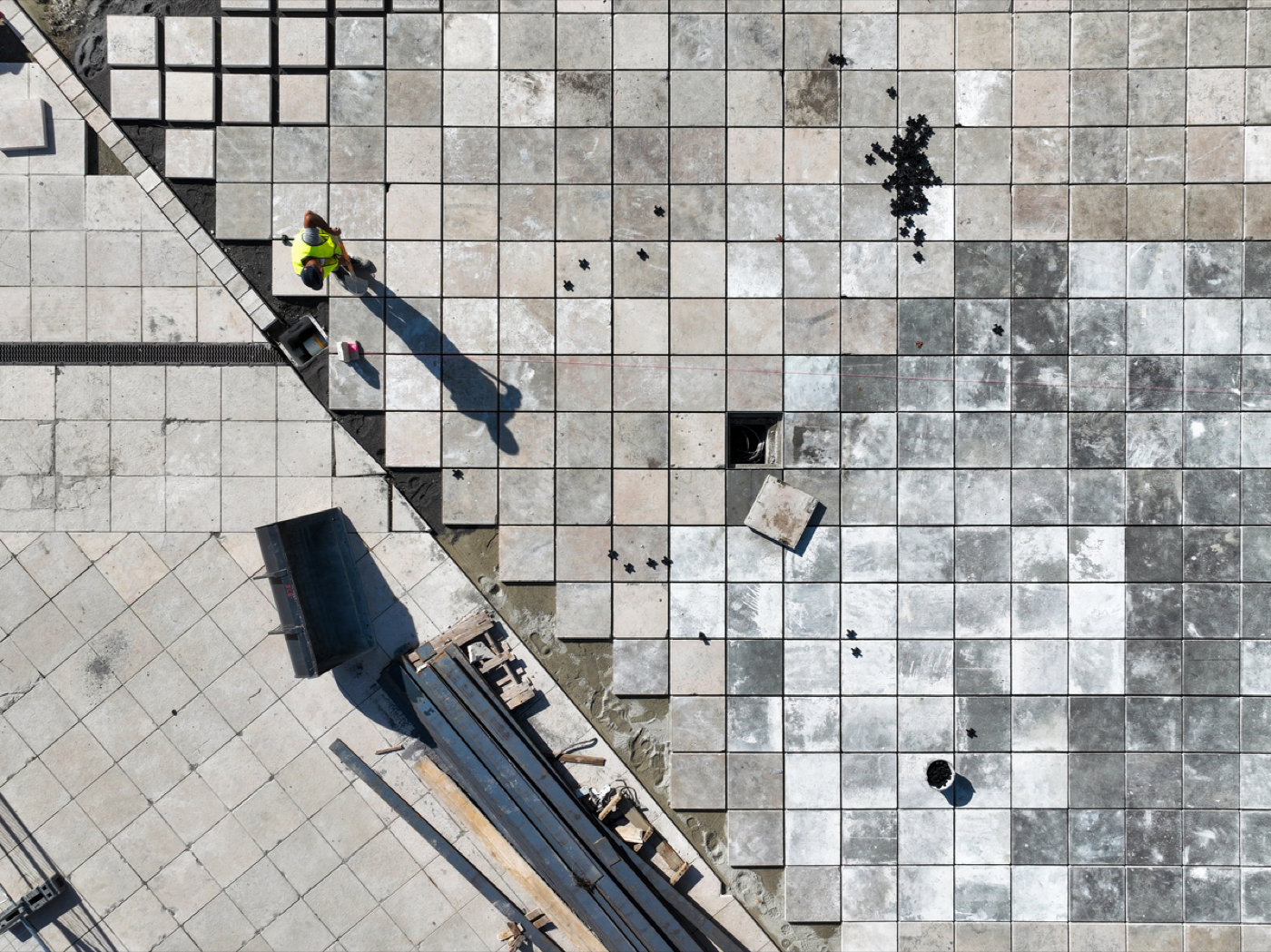
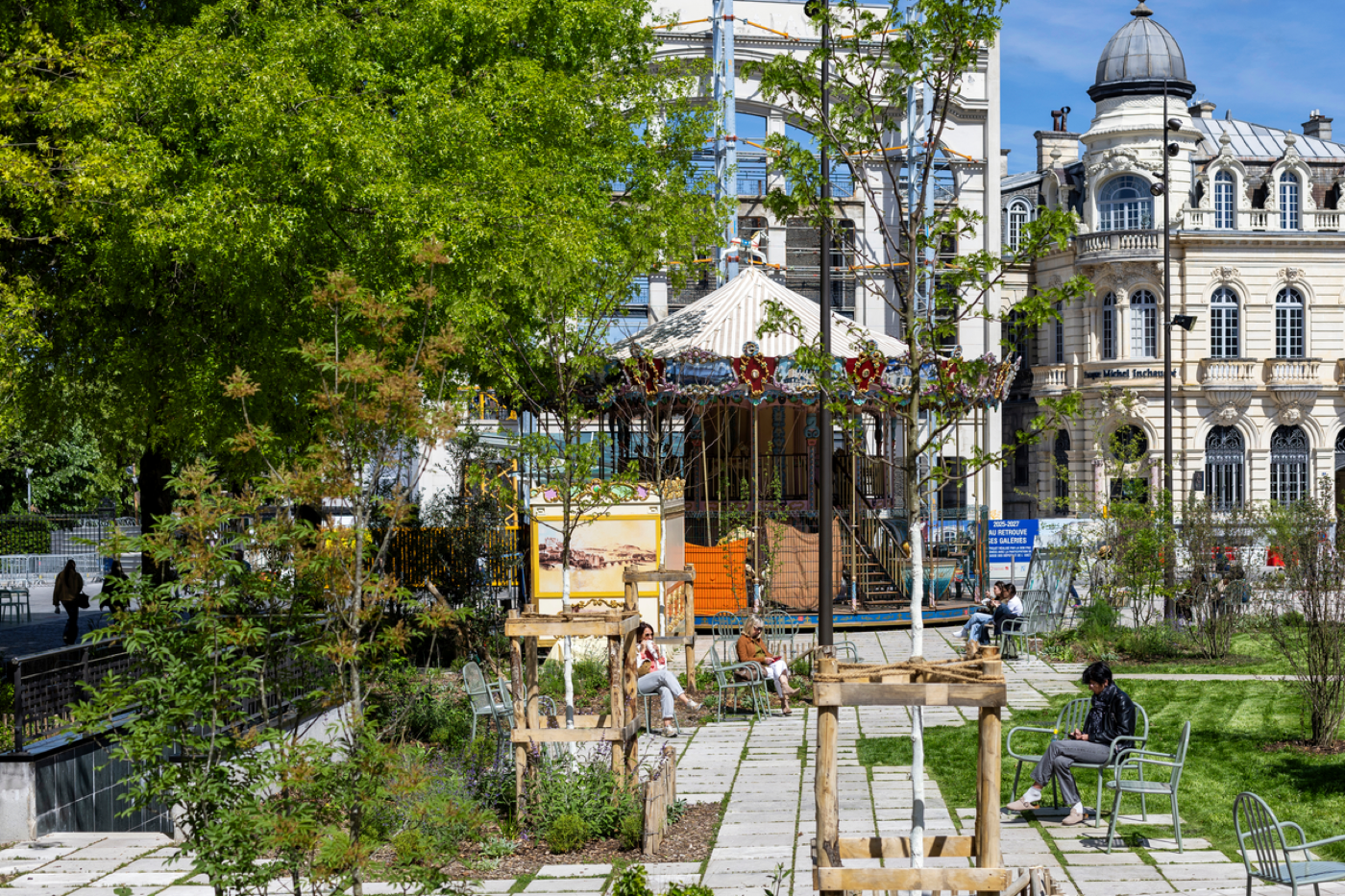
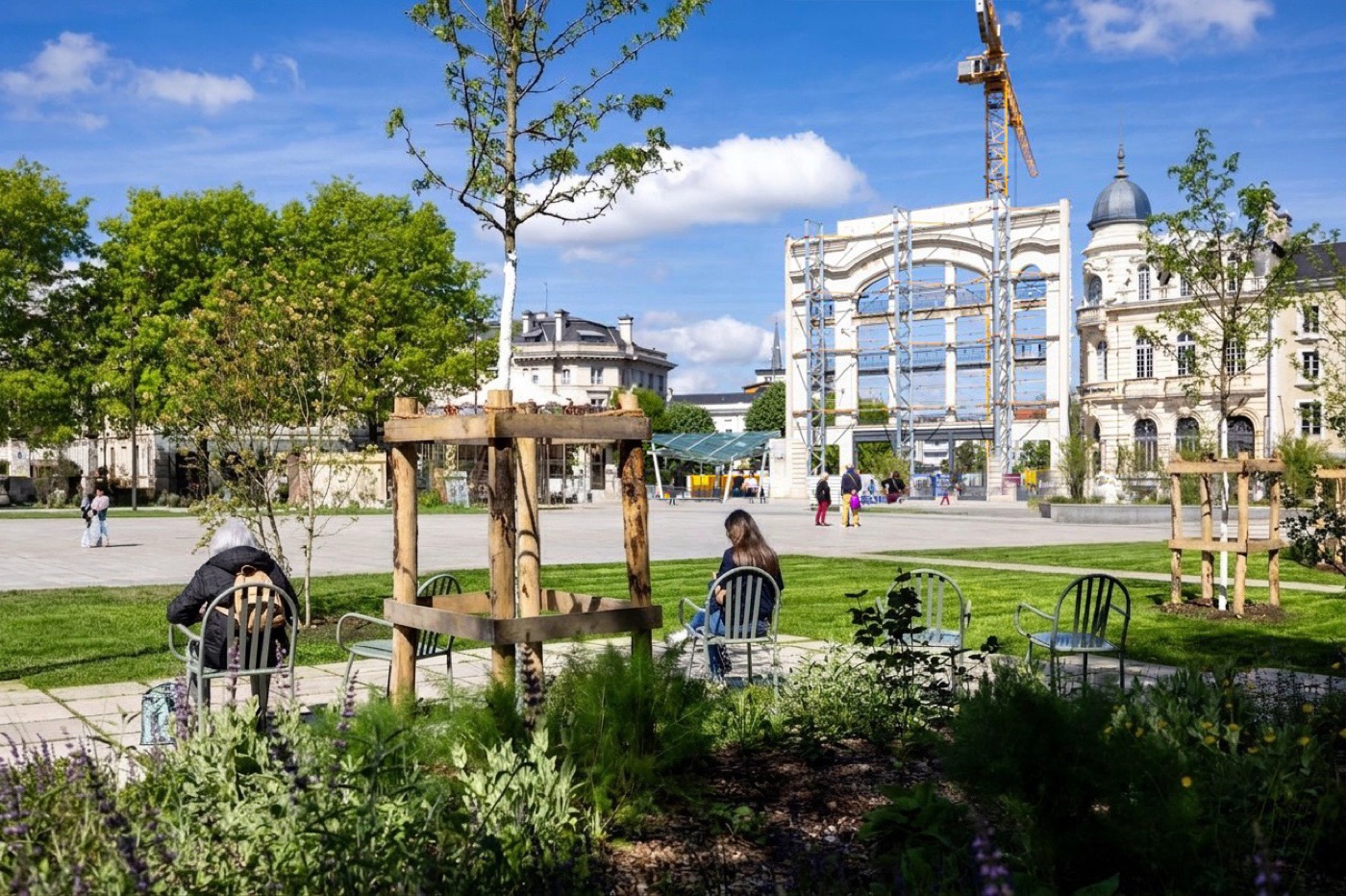
All existing pavers were removed and then reused to create pathways within the gardens. This approach creates nuanced surface, based on variations in the joints, that introduces a gradual transition from mineral to vegetation. The joint becomes an active space: it hosts a variety of plant life accompanying the transitions to lawns and flower beds.
Vegetation Strategy: A Gradually Declining Stratum starting from Existing Oaks
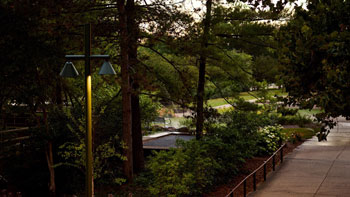
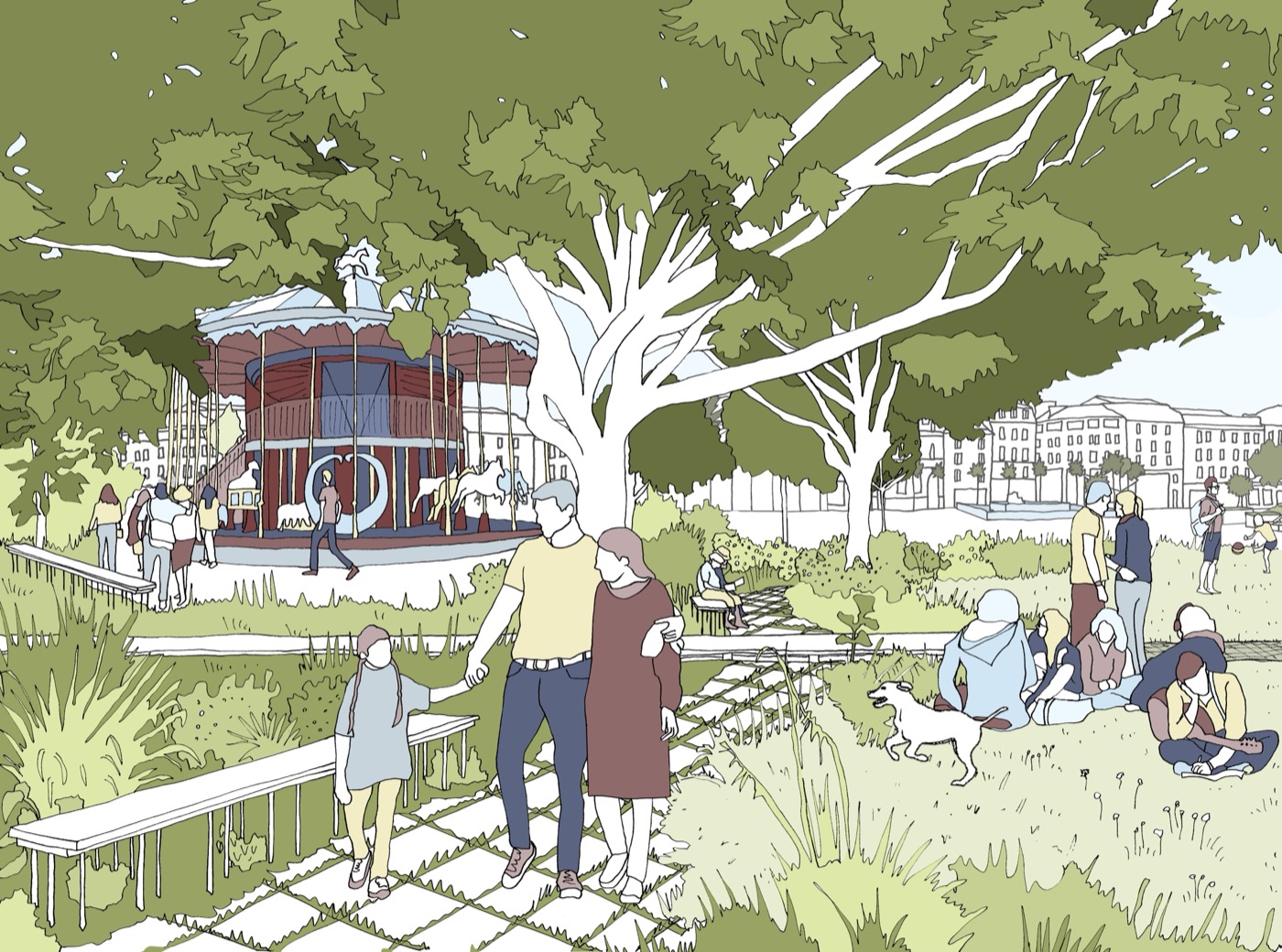
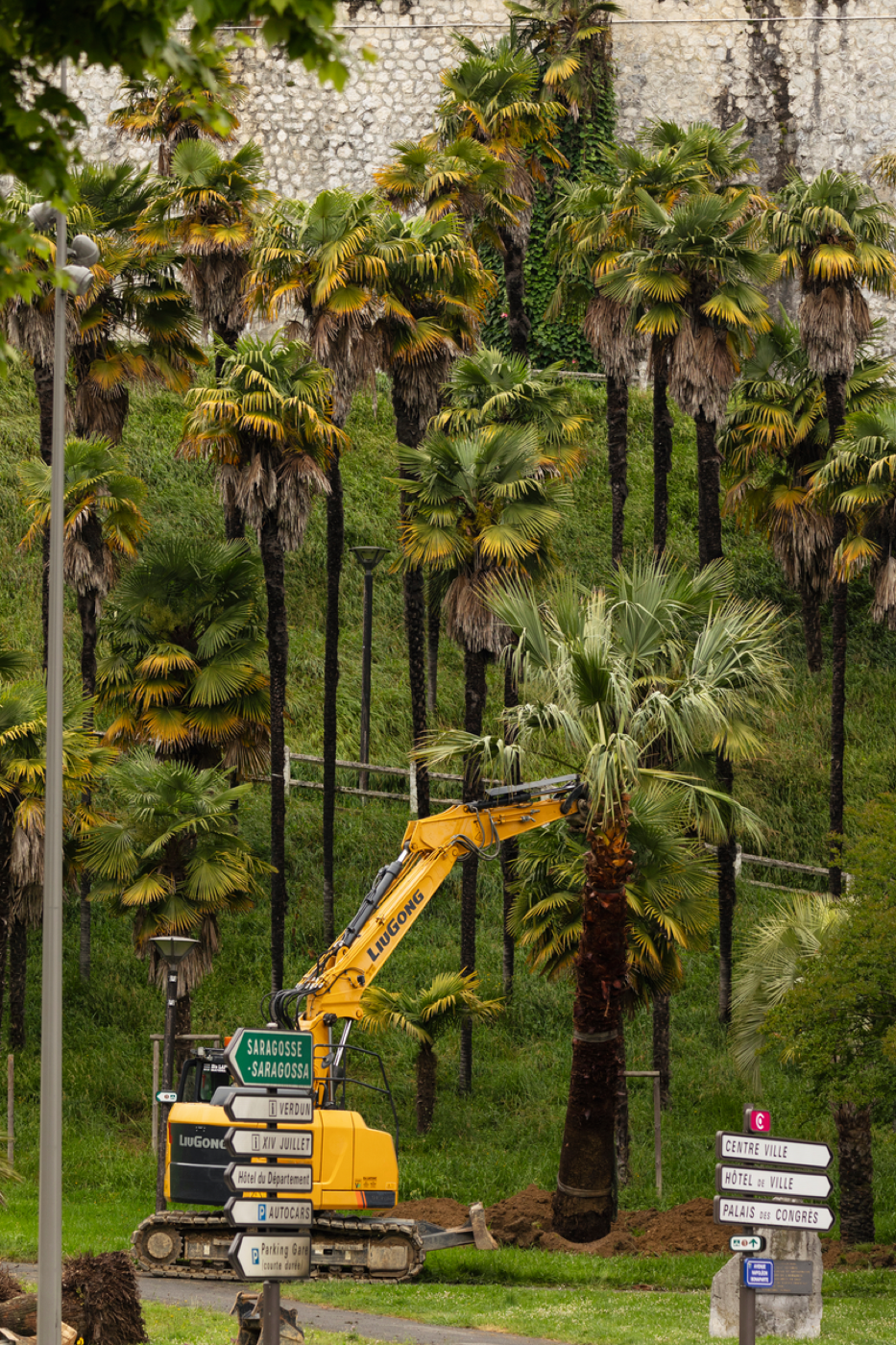
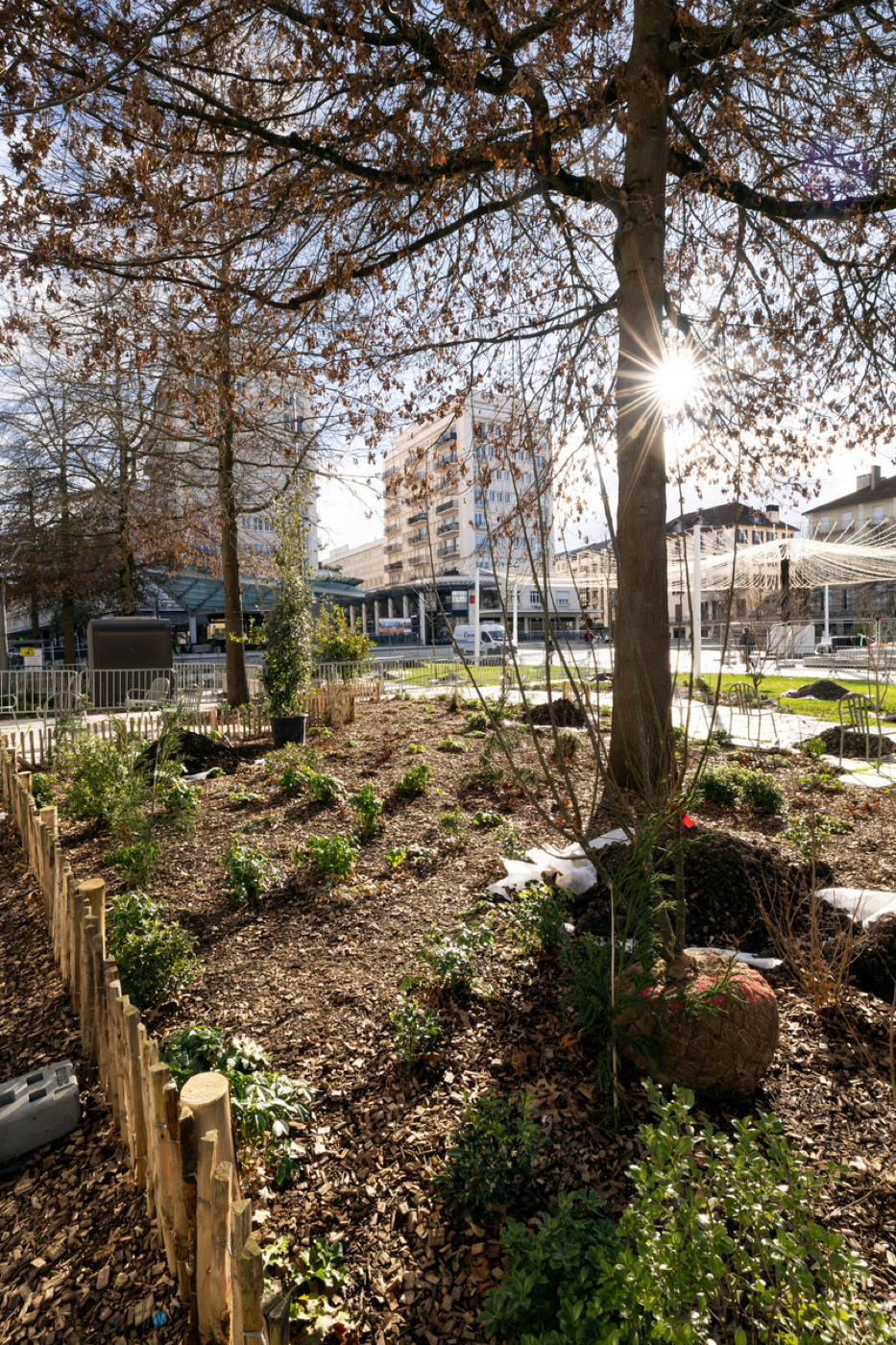
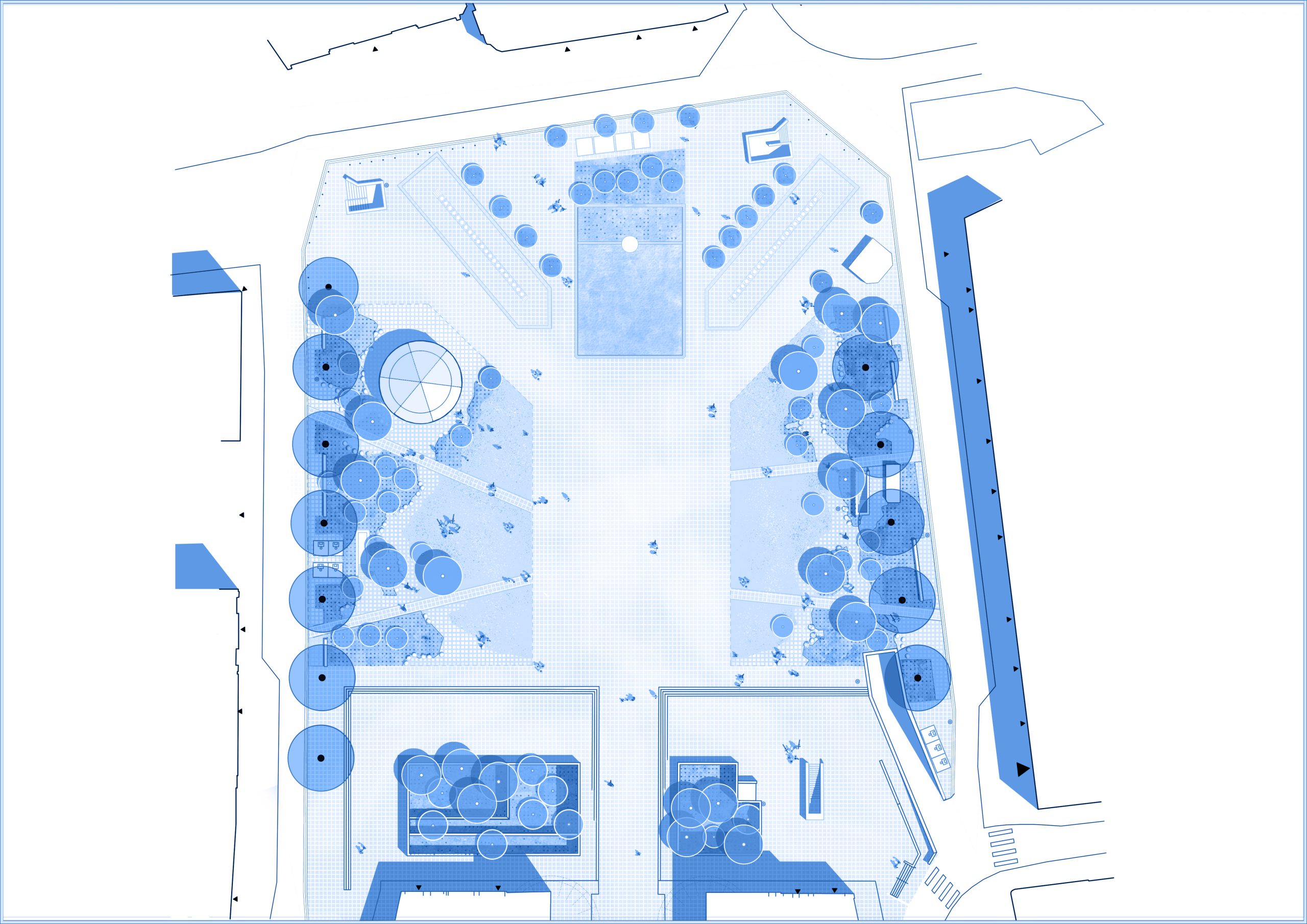
The vegetation strategy is organized around the existing, preserved, and protected Quercus palustris, which form the reference canopy layer. From these swamp oaks, the composition gradually decreases in height: standard-sized Gleditsia trees provide the transition to a layer of diverse shrubs a then to shrub beds before reaching the lawns. This arrangement creates a coherent and easily readable plant silhouette that adapts to weight constraints while offering a range of atmospheres, from the shade cast by the large trees to the low-angled light of the flowered lawns.
In sunny areas, low flower beds are punctuated by individual plants. In shaded areas, tall shrubs blend in with the carpet of low-growing plants. The choice of plant palette thus responds as much to the need to adapt to on-site conditions as to a desire to consider the plants’ morphology, anchoring them within the heritage context of the square.
Light wells transformed into small neighborhood forests
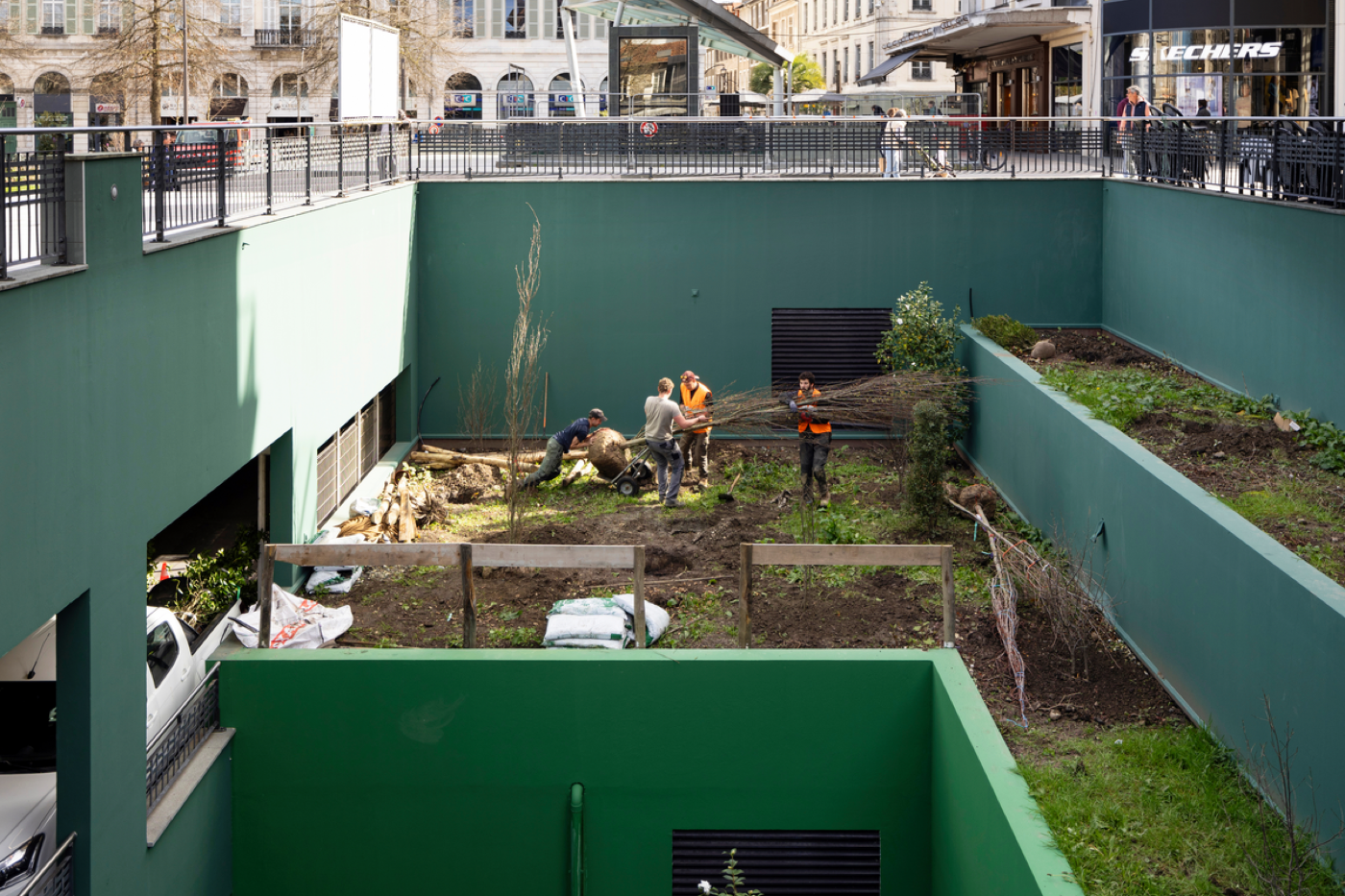
The parking garage’s skylights have been completely redesigned to become true green spaces. Rather than mere technical openings, they now house a small forest whose canopy spreads out at eye level: Carpinus betulus fastigiata… accompanied by climbing plants as Lonicera caprifolium…along the walls. These spaces create intimate, immersive landscapes, perceived from the plaza as green oases, and from the parking garage as living ceilings diffusing natural light. Within them, one discovers a layer of understory vegetation and a honey-producing garden.
Bringing the Square to Life: Daily Activities and Events
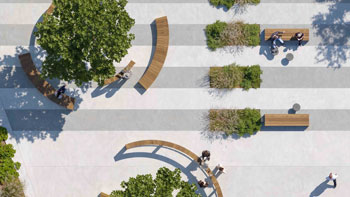
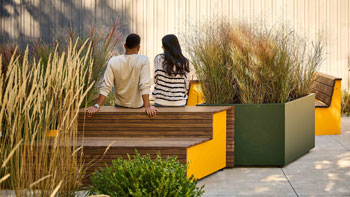
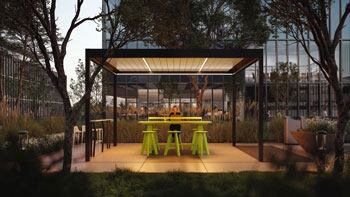
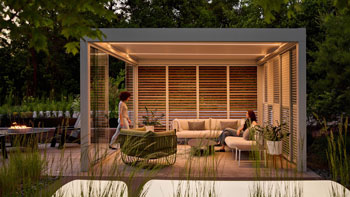
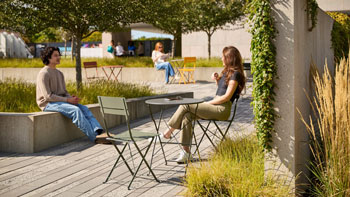
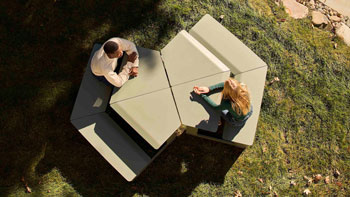
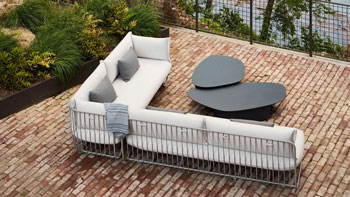
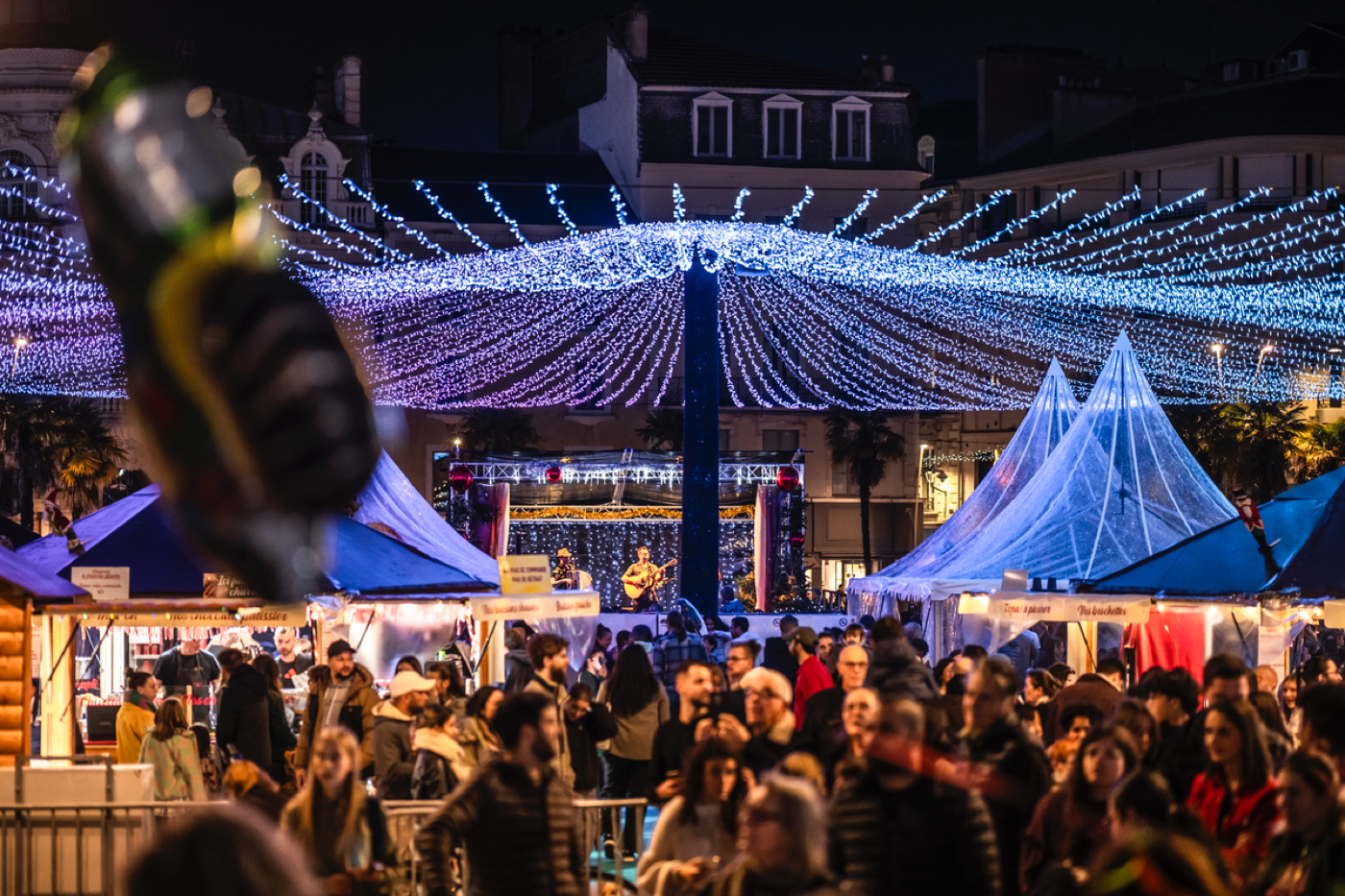
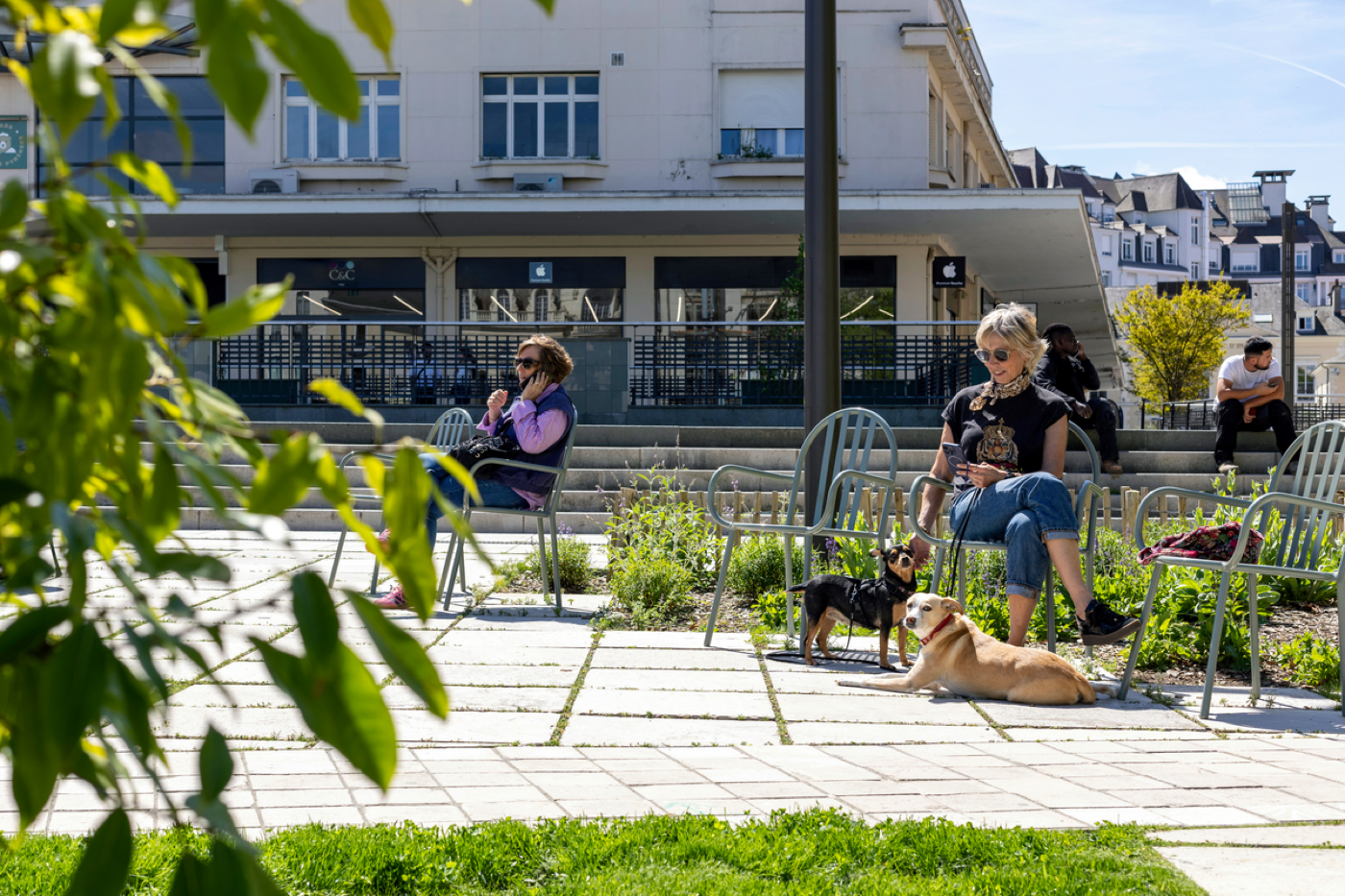
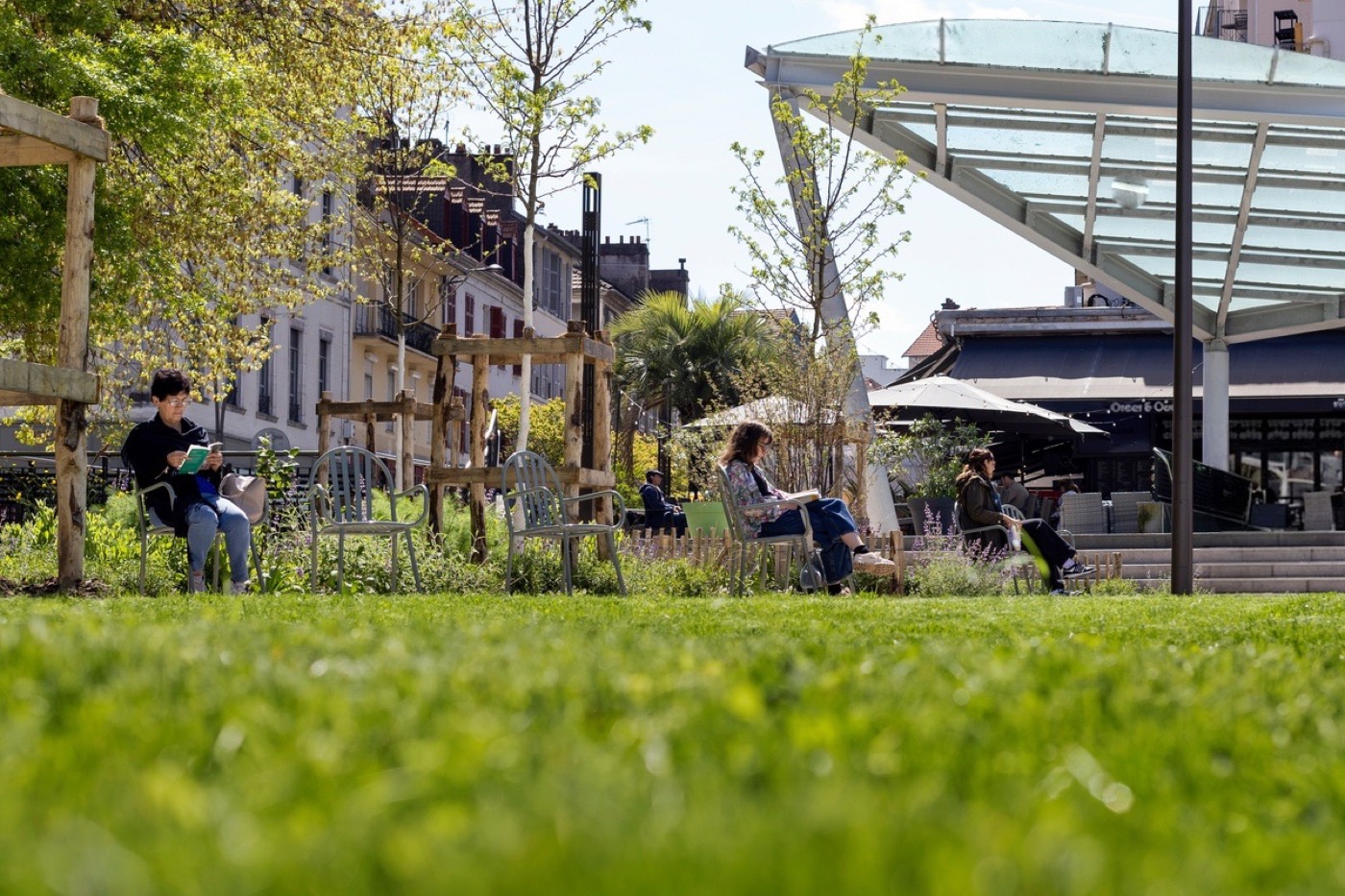
The project preserves a central plaza capable of hosting large-scale events, while creating outdoor “lounges” on either side—spaces for relaxation, shade, and socializing. This layout accommodates major events while restoring the square’s continuous use.
A contemporary design in dialogue with Art Deco
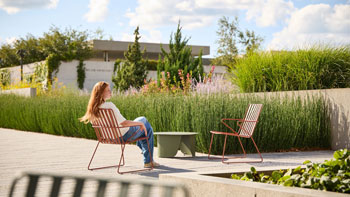
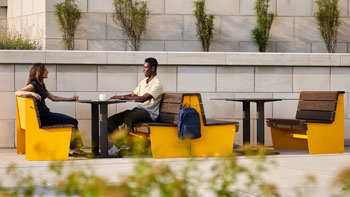
The square’s architectural identity, marked by Art Deco, serves as a point of reference. Without attempting to recreate the past, the project draws on its principles—geometry, curved lines, and the fusion of functionality and elegance—to inform a contemporary design. Chairs inspired by Robert Mallet-Stevens’ designs, locally manufactured, form a “jardin des chaises.”
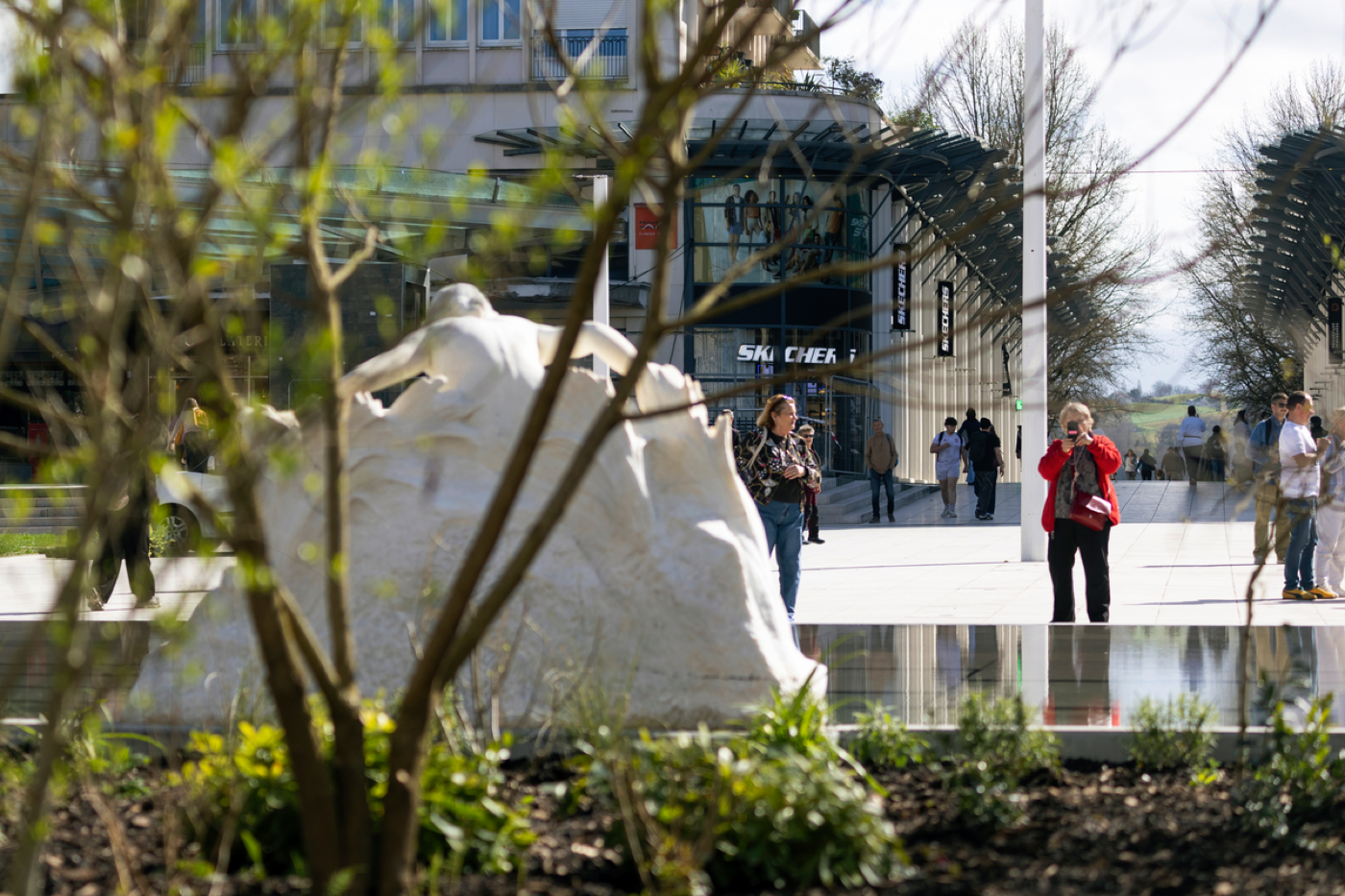
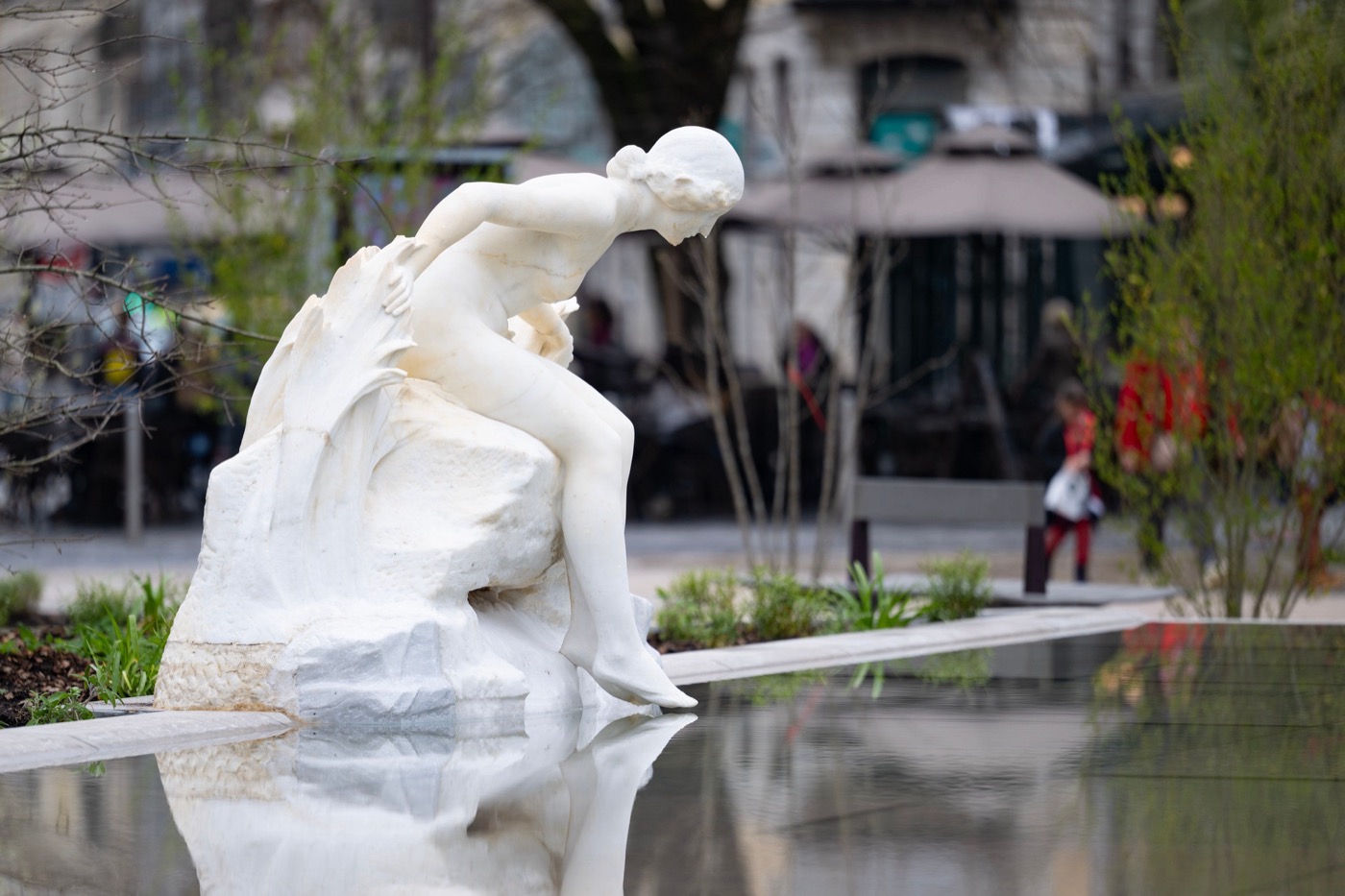
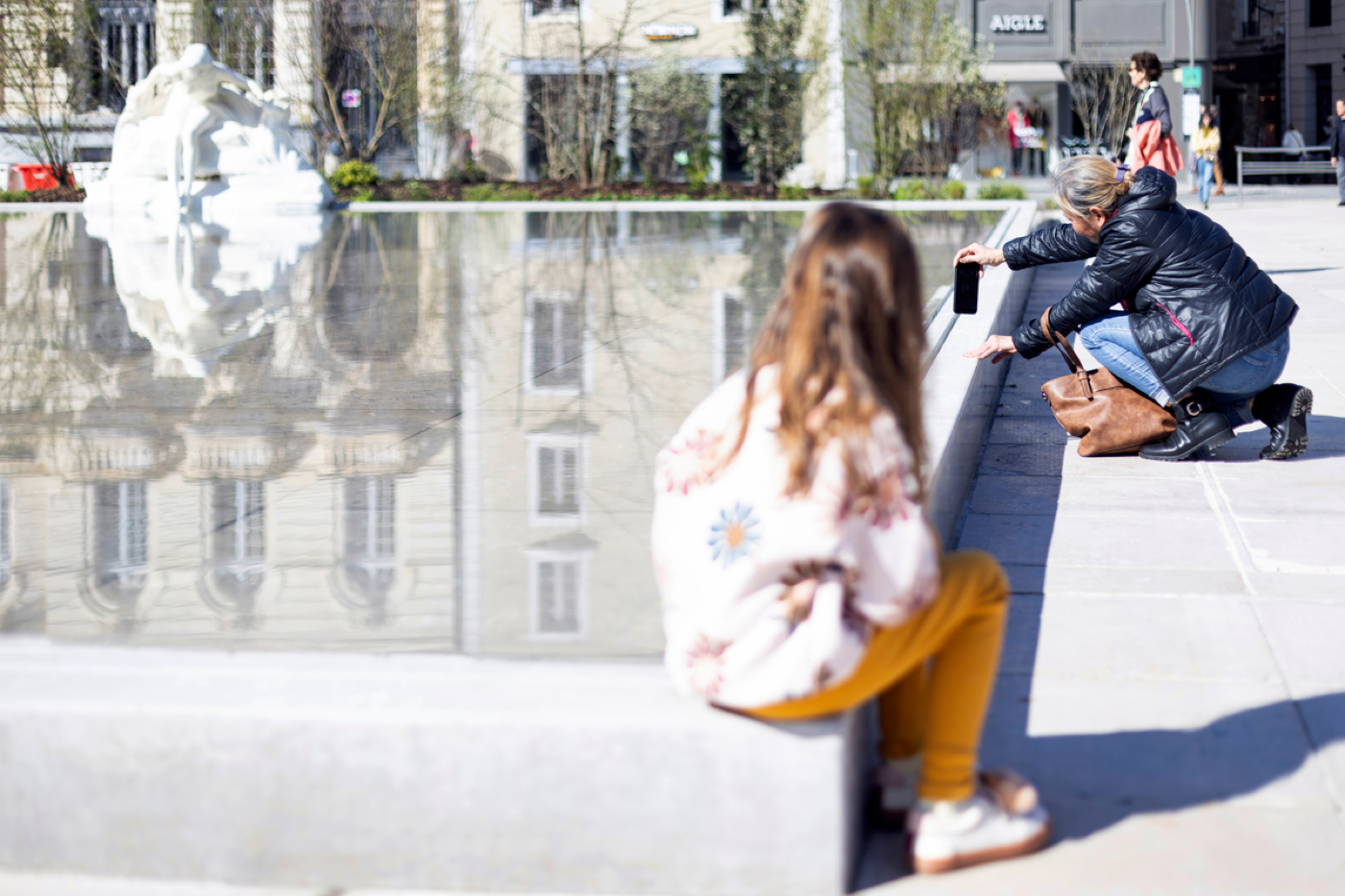
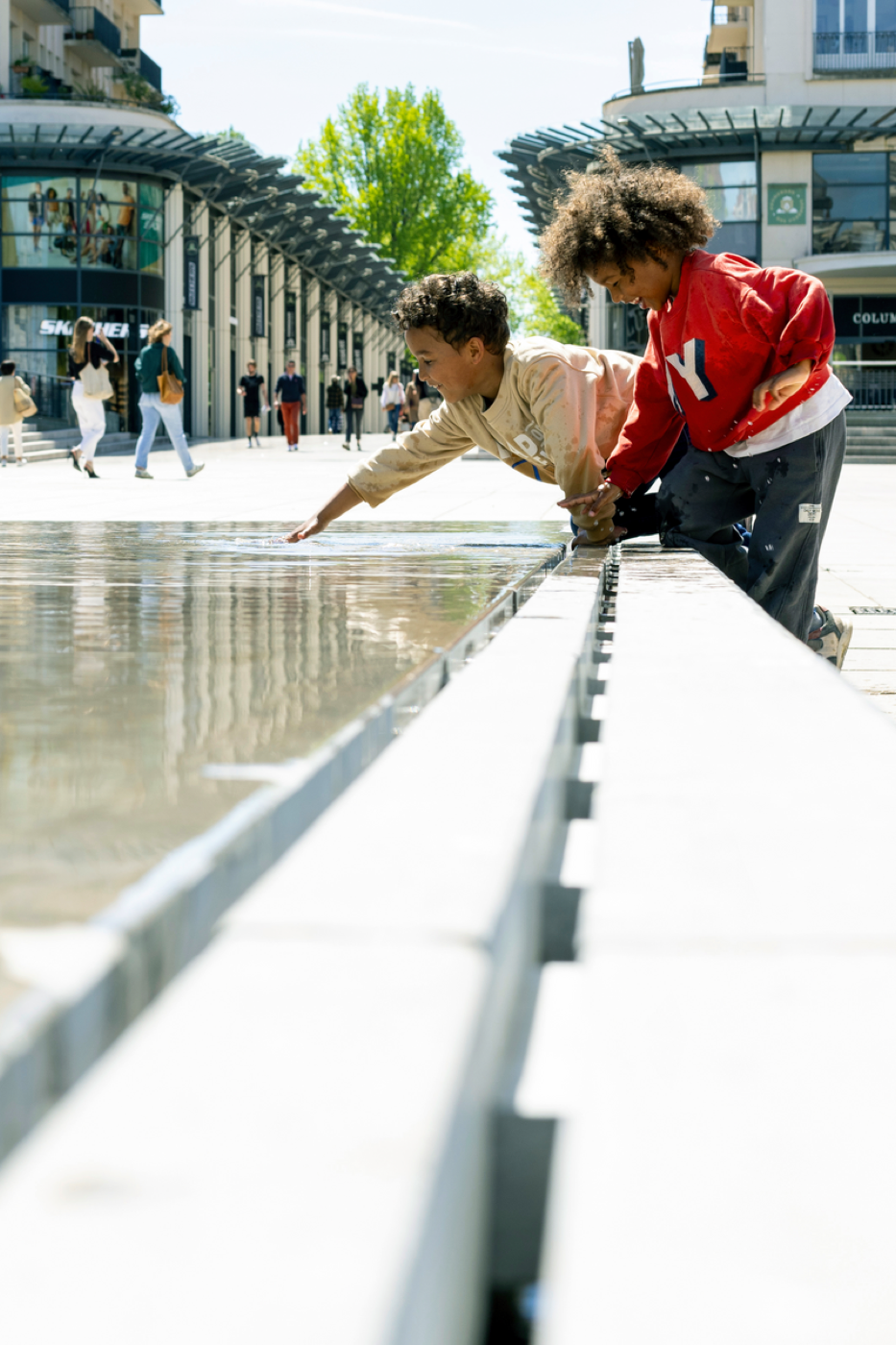
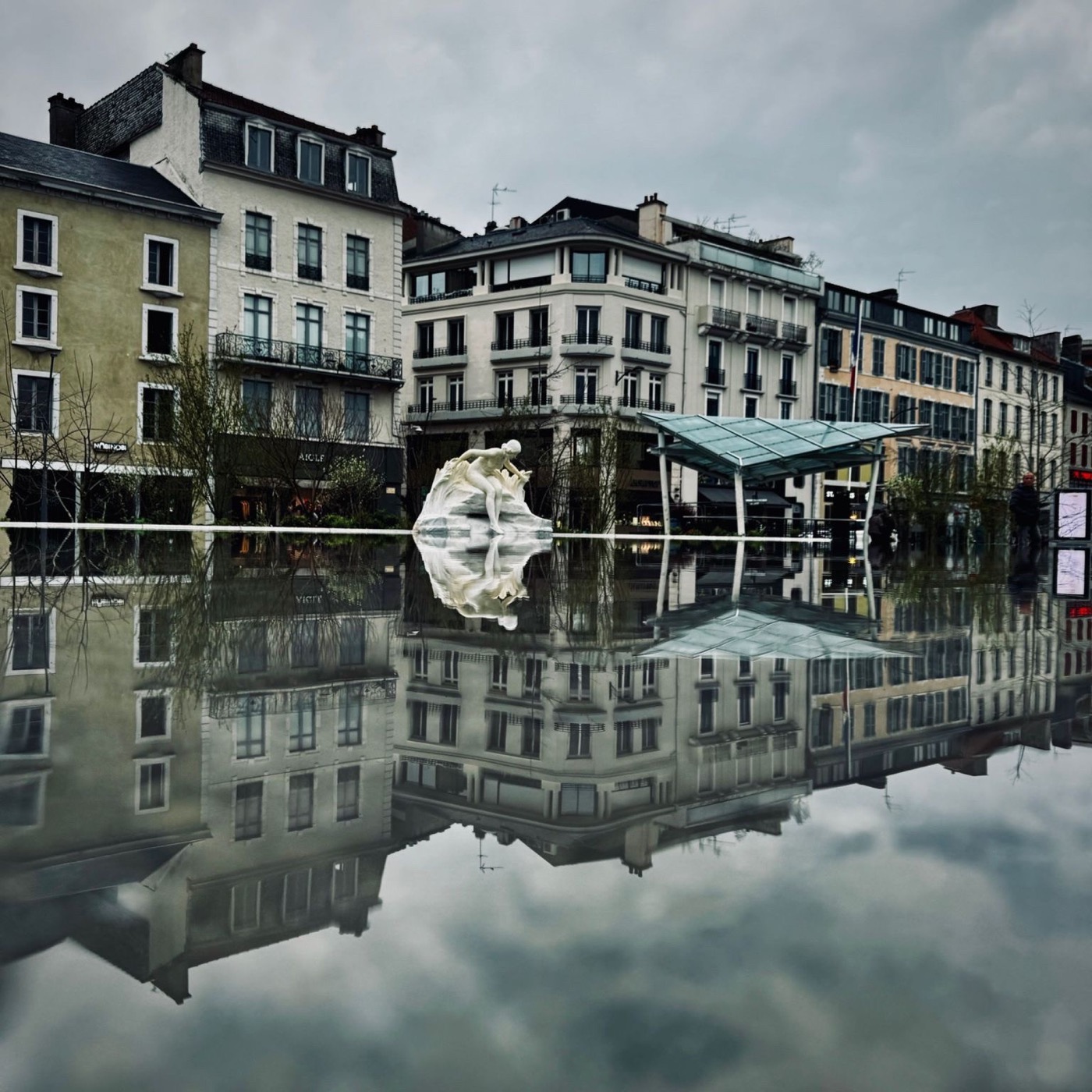
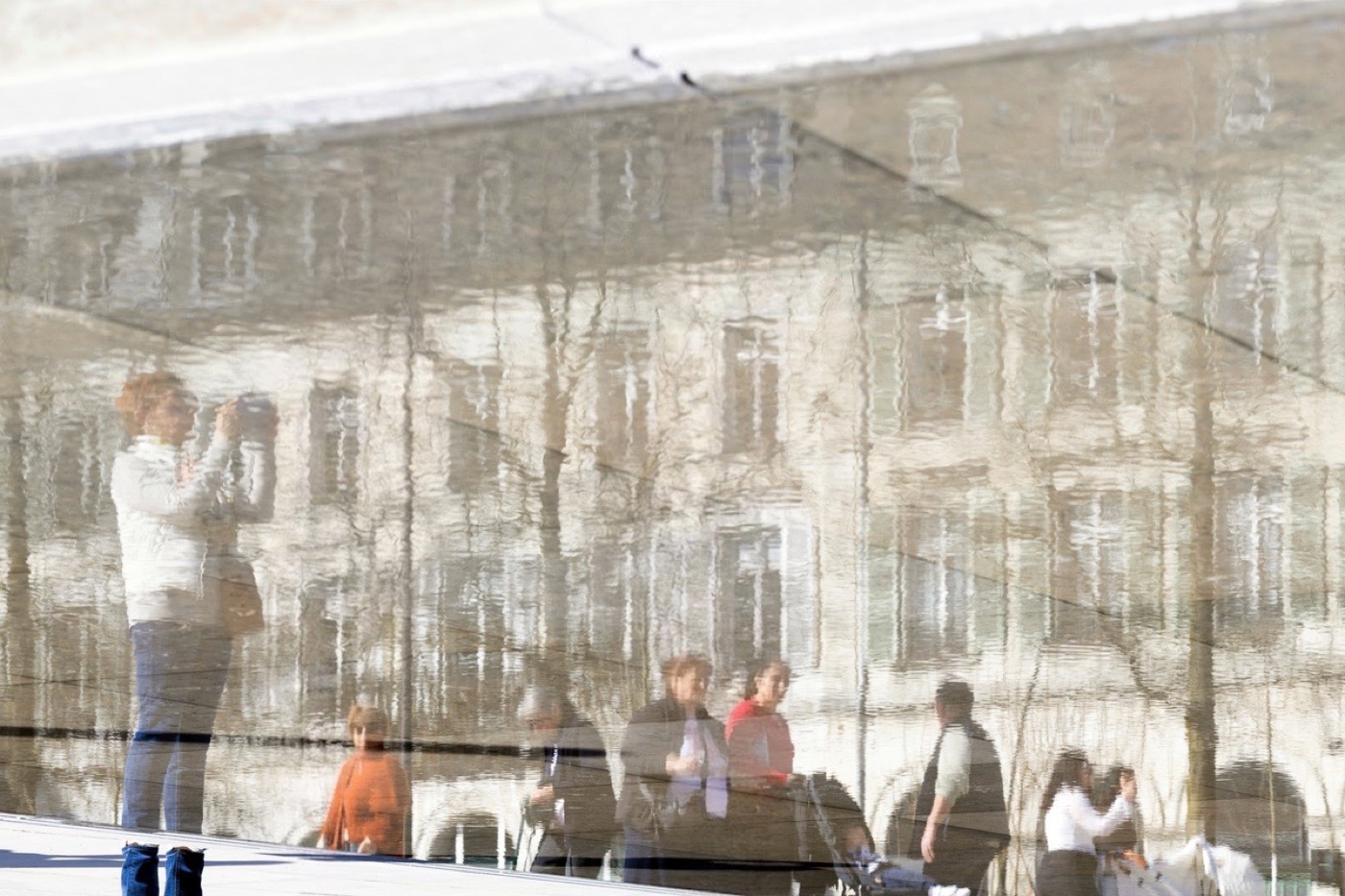
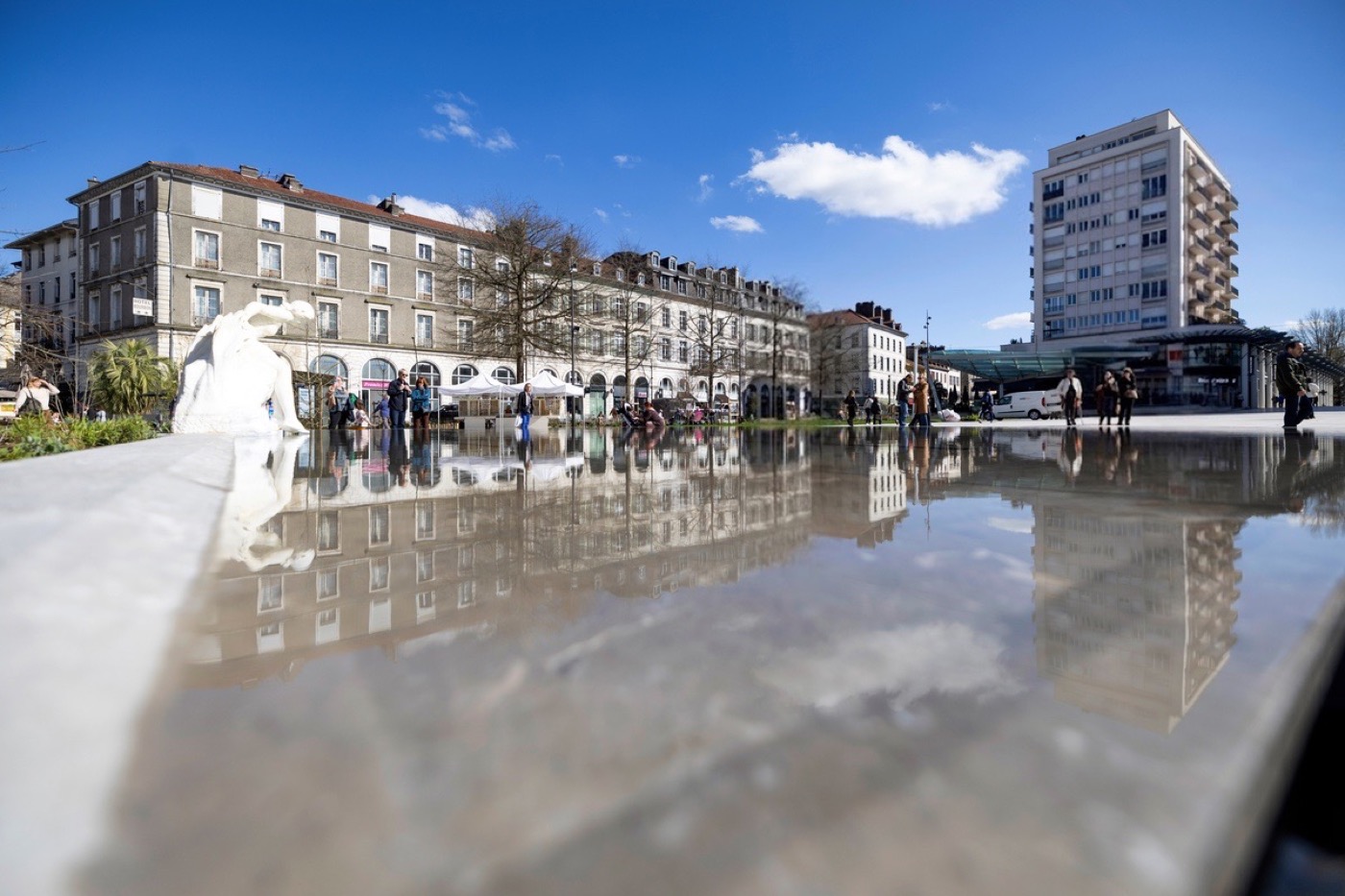
In the center, the old, dilapidated fountain is replaced by a flush-level water mirror that reopens the views toward the Pyrenees. La Source, fully restored, regains its central position. Its reflection in the water surface amplifies the perception of the work, creating a simple and immediately accessible scene.
43.29552231925398, -0.36834571460515214
76532


LILA 2026 Sponsor