Shortlisted for LILA 2026 Portfolio Award for Students & Young Pro:
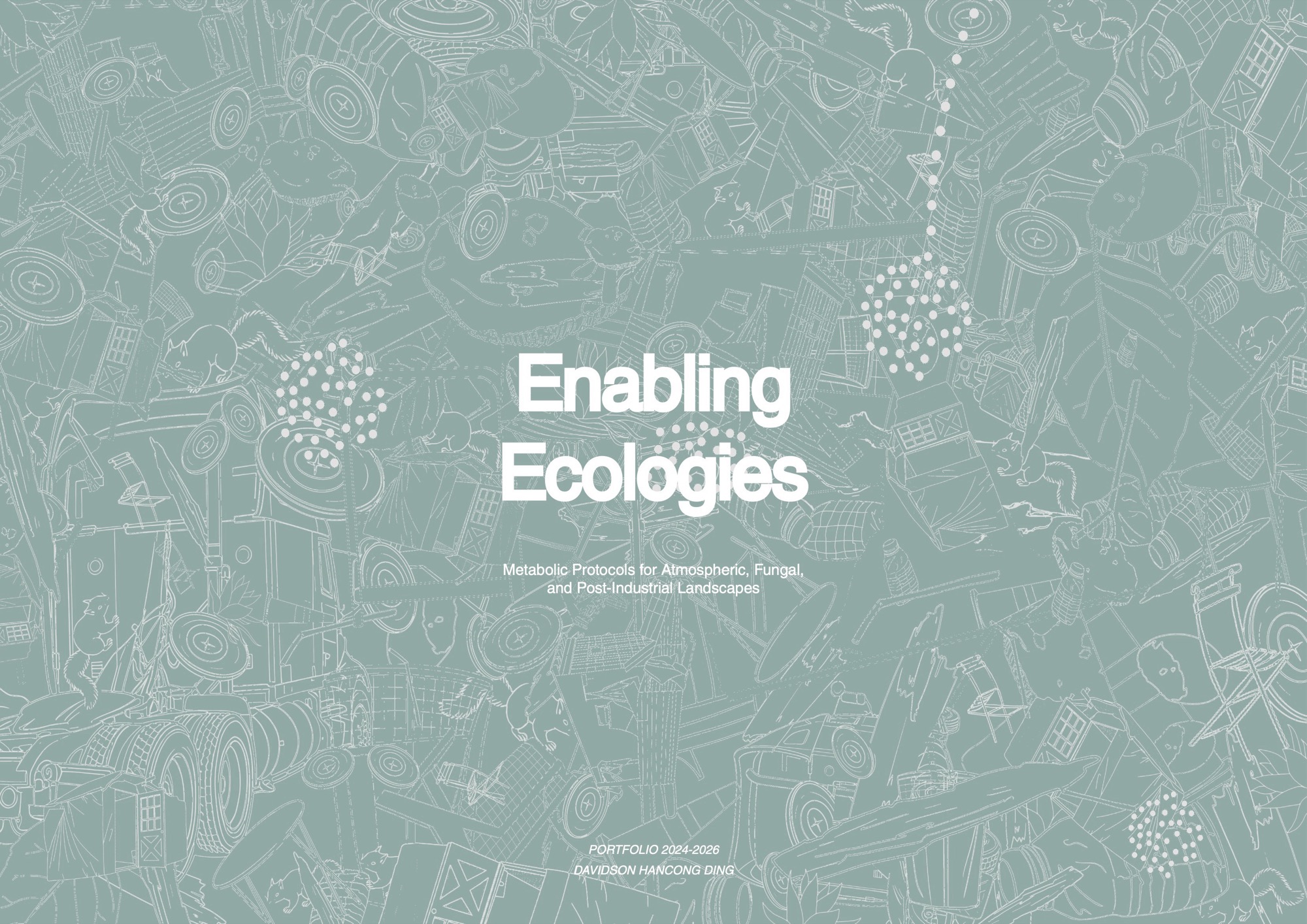
Portfolio: Hancong Ding

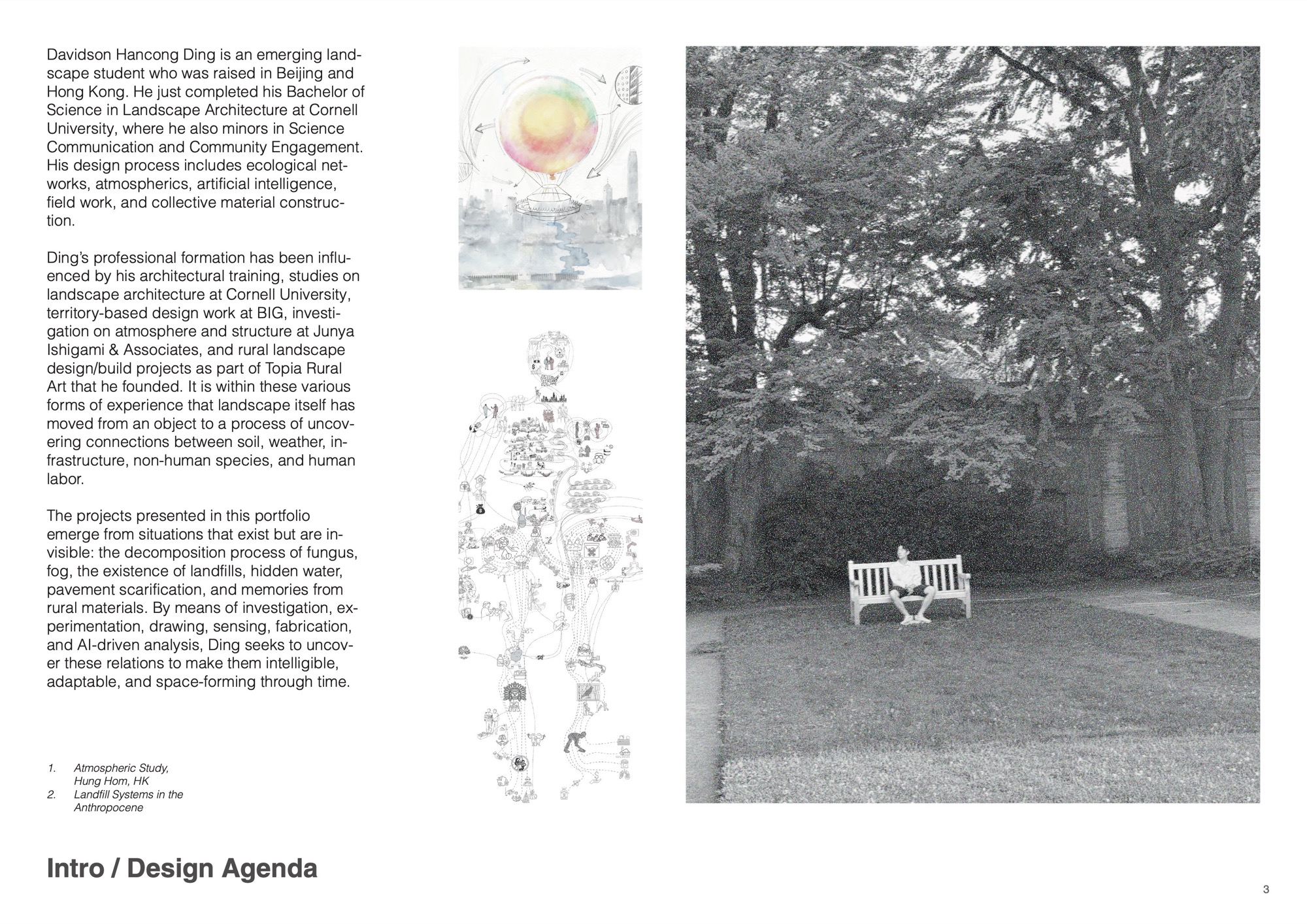
My portfolio traces the emergence of an ecological-technological landscape practice informed by field observation, atmospheric experimentation, artificial intelligence, material construction, and public participation.
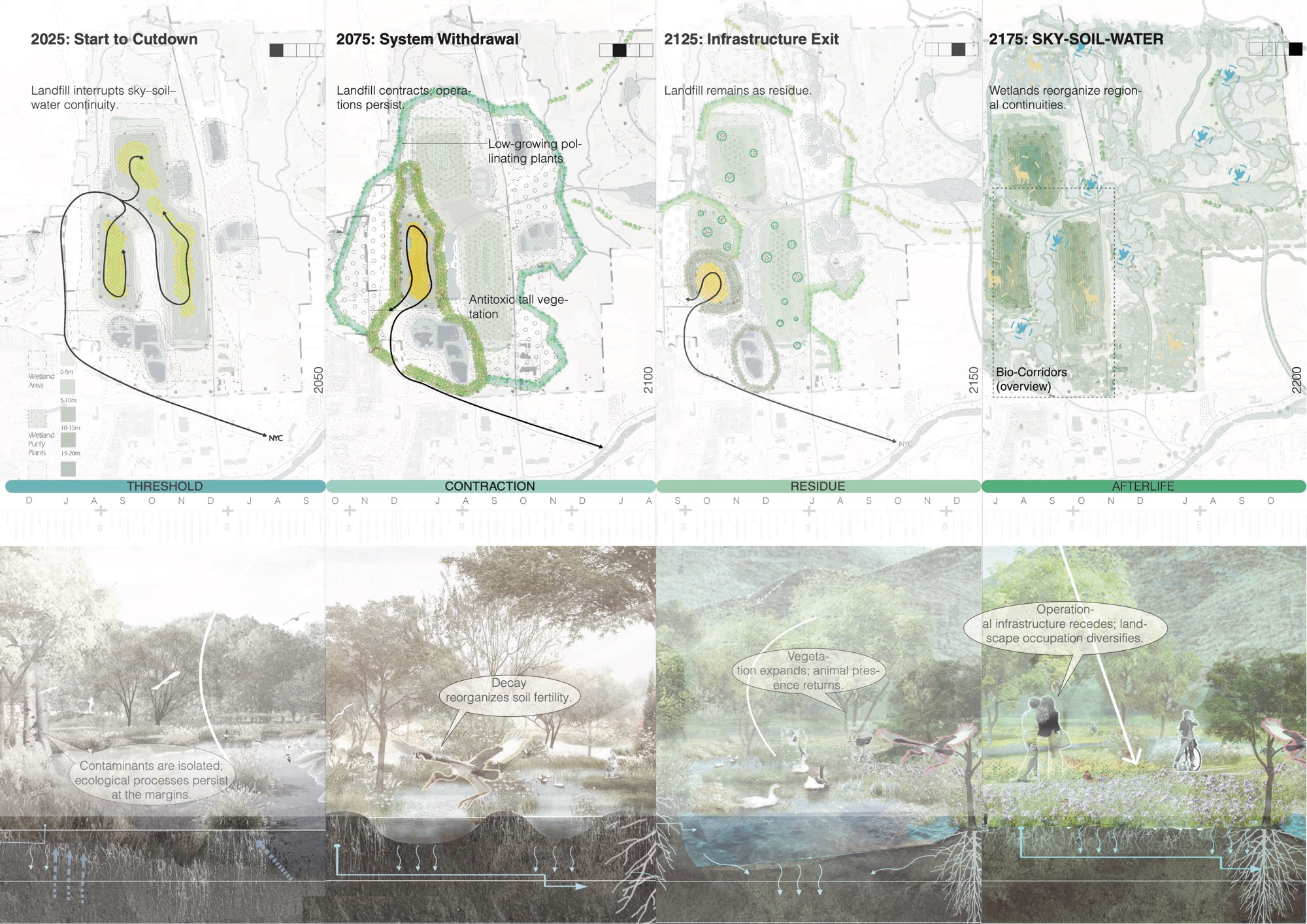
The chosen projects are primarily written or directed by me from 2024 to 2026, covering topics such as disturbed urban soils, fungal metabolism, fog, landfill ecologies, kinetic water systems, depaving, and rural collective building. Landscape is not seen as a composition but an environmental interface that makes tangible, negotiable, and spatially operative the normally invisible: moisture, decomposition, pollution, underground water, labor, and nonhuman organisms.
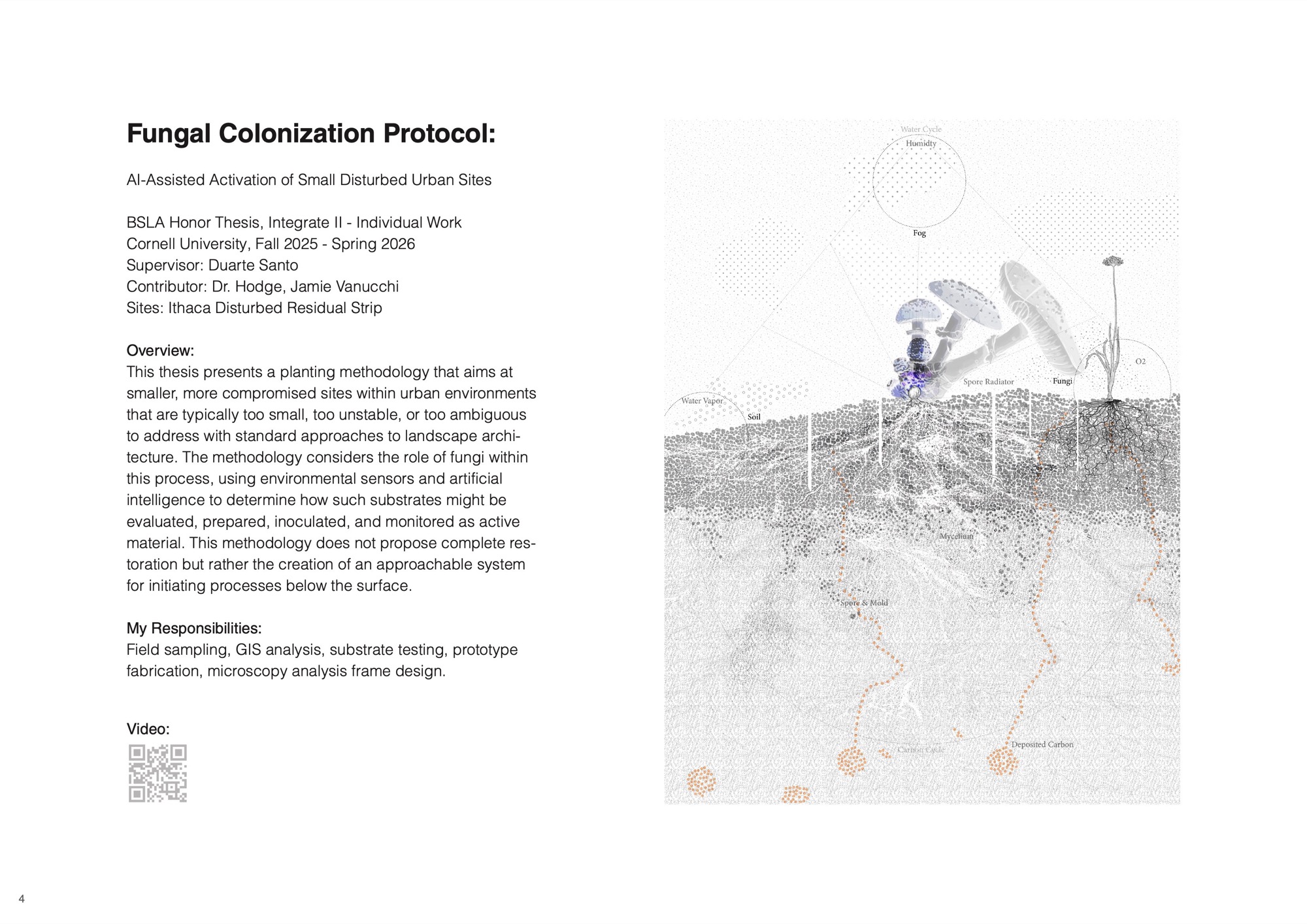
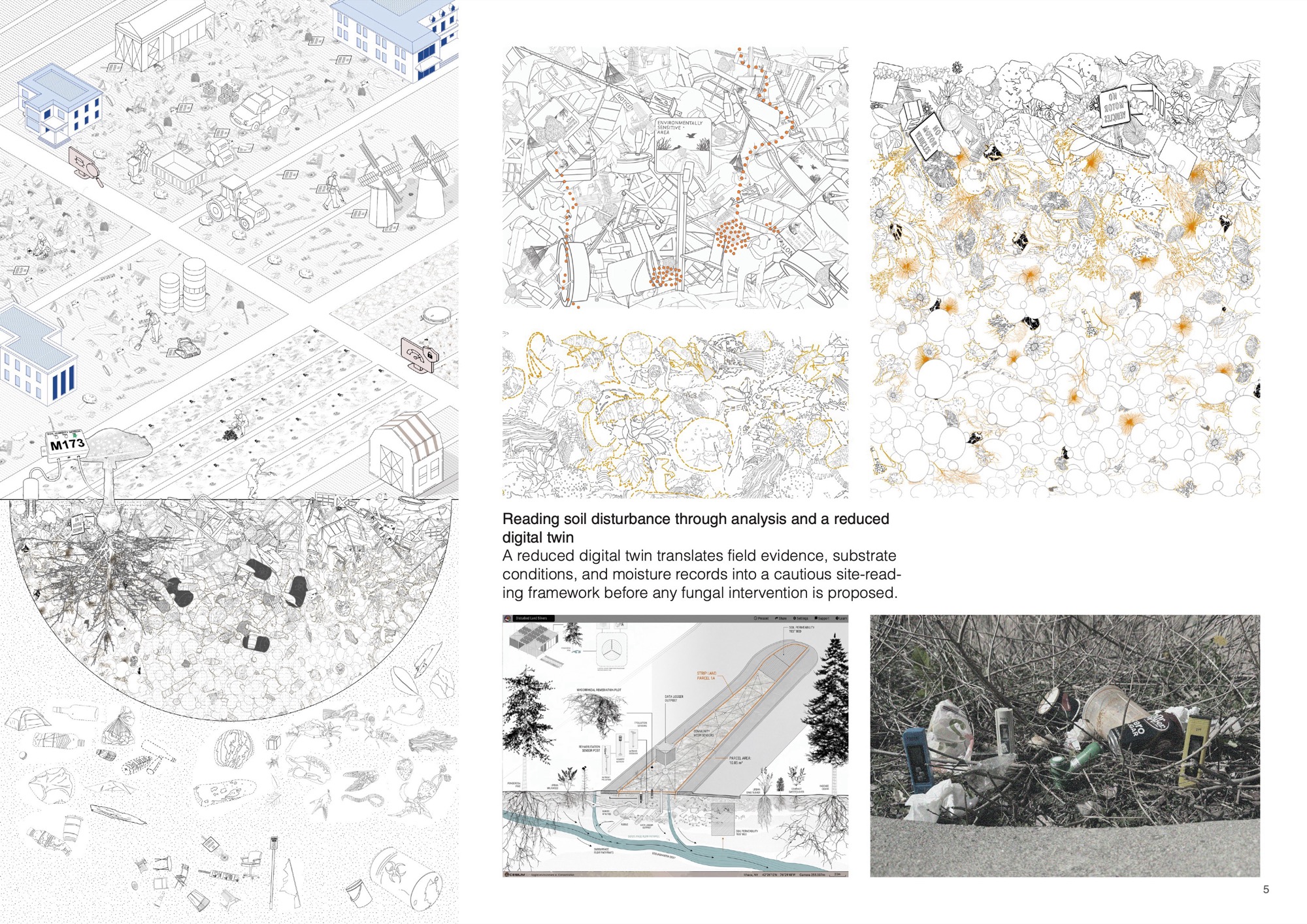
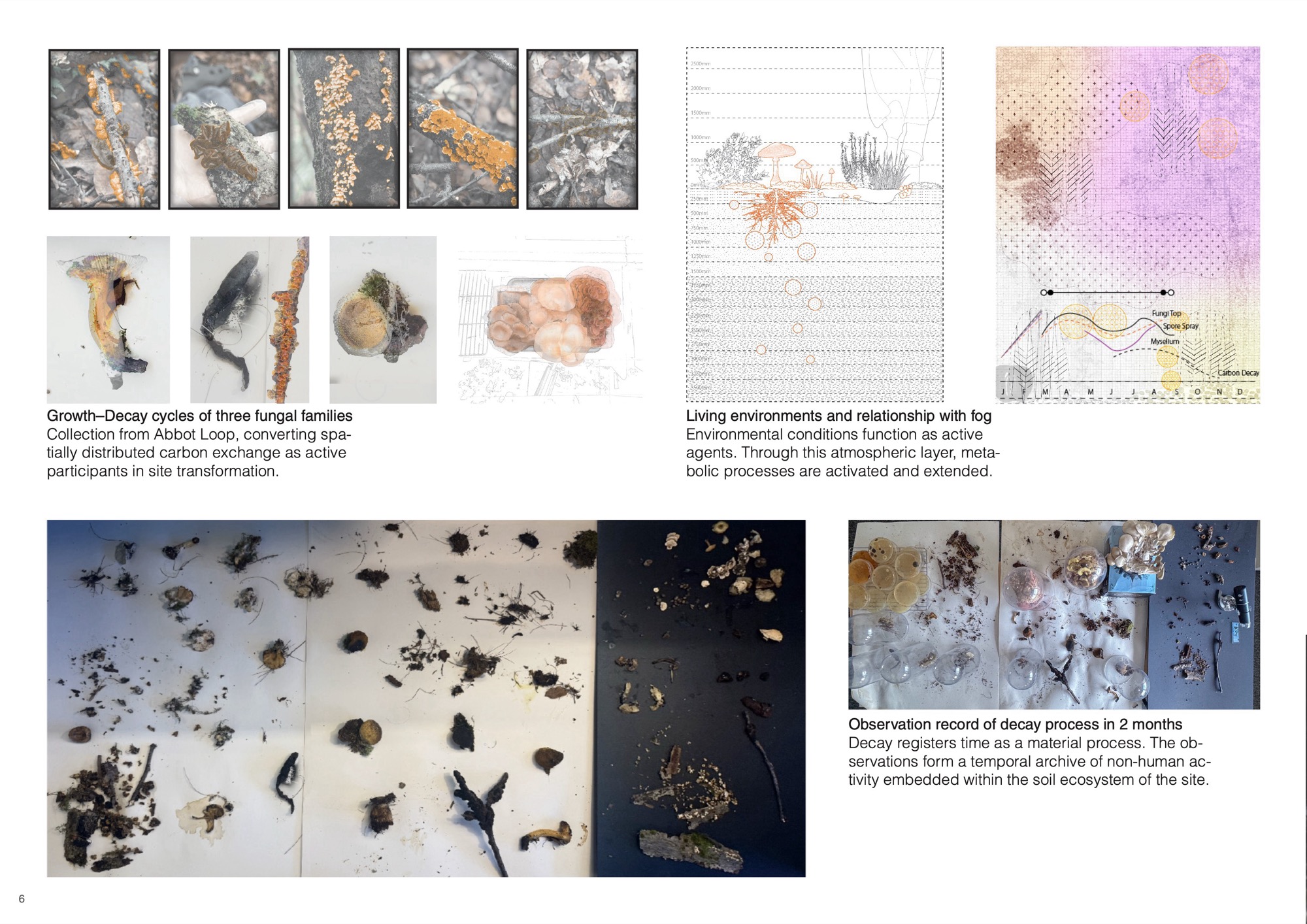
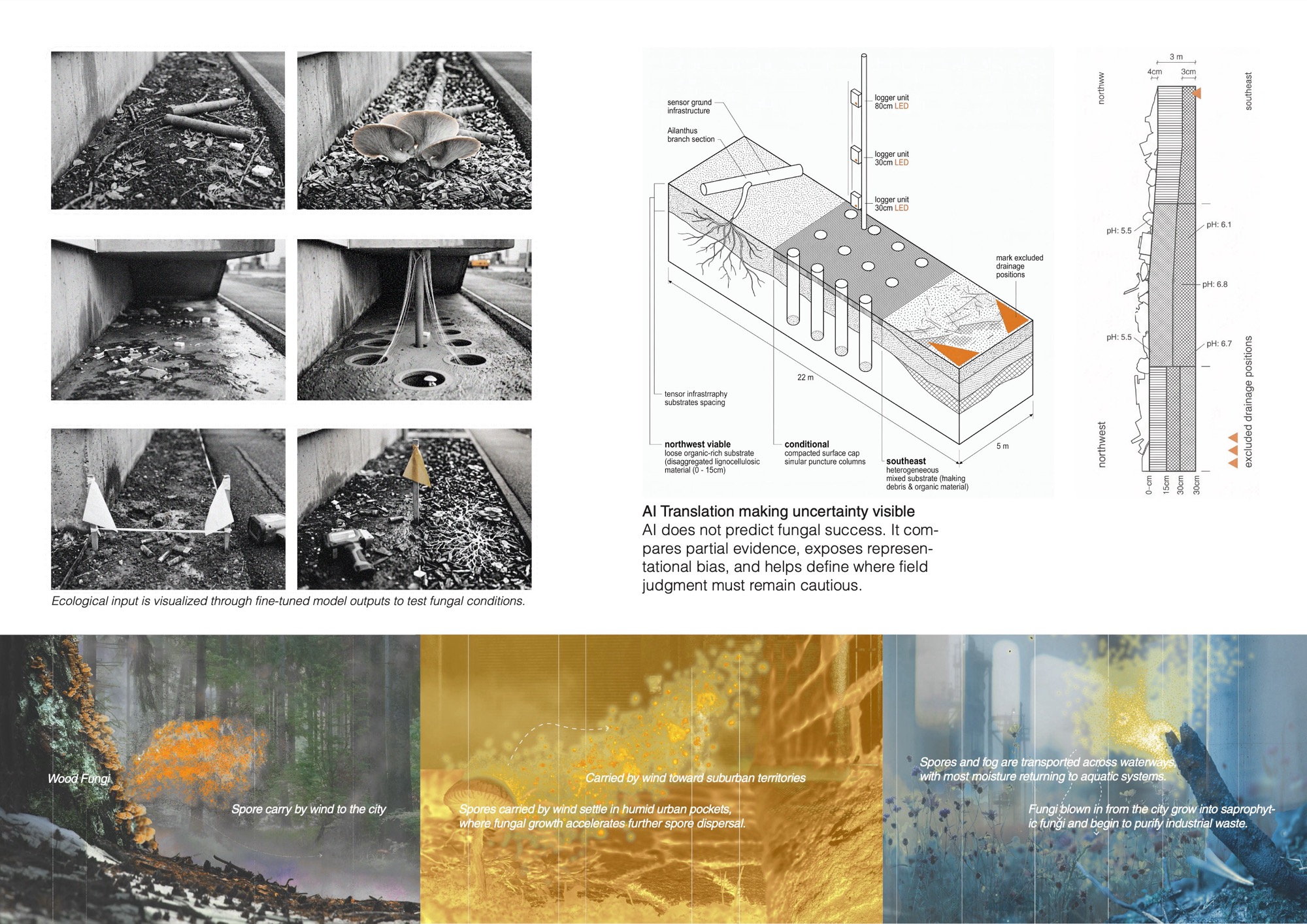
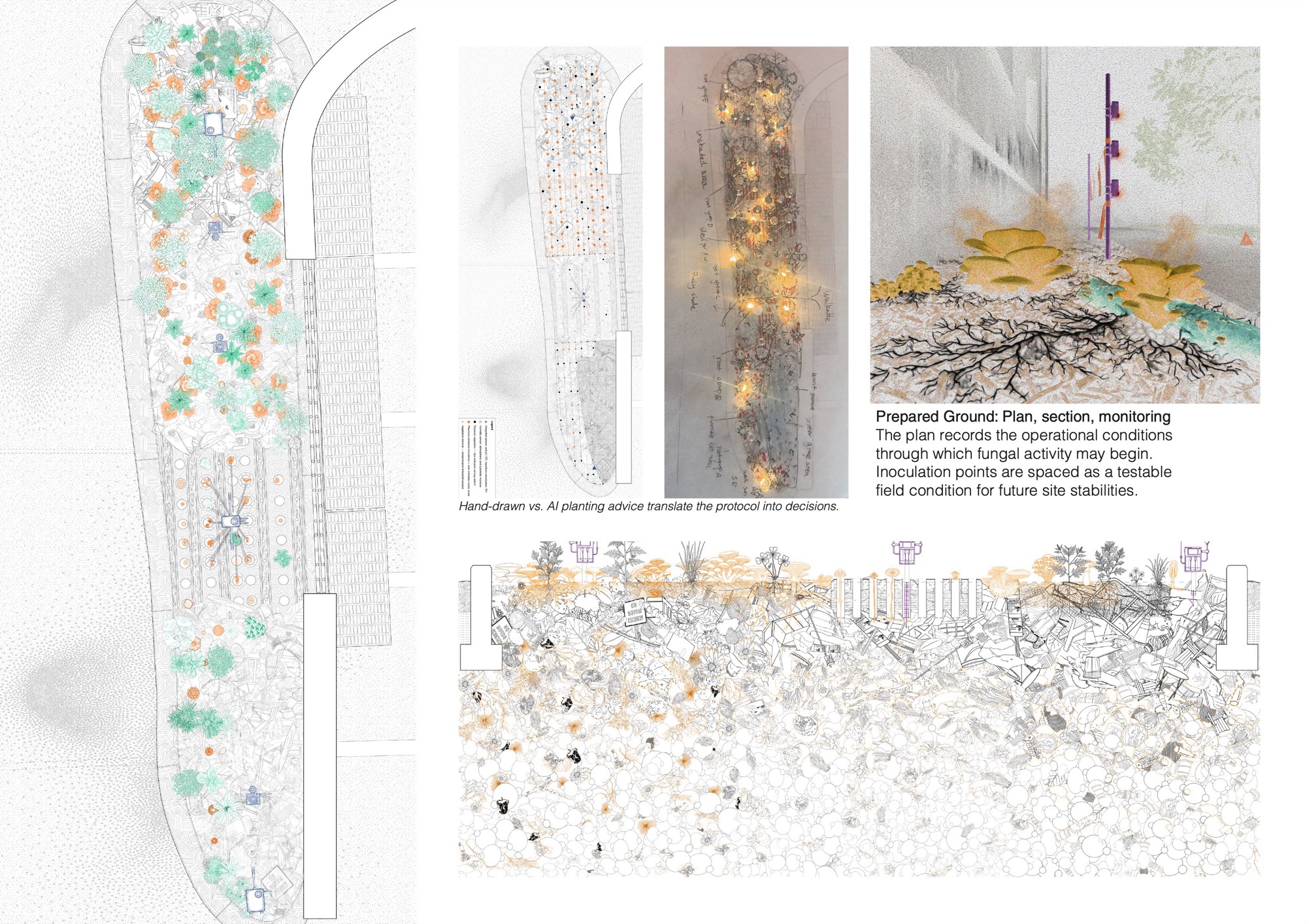
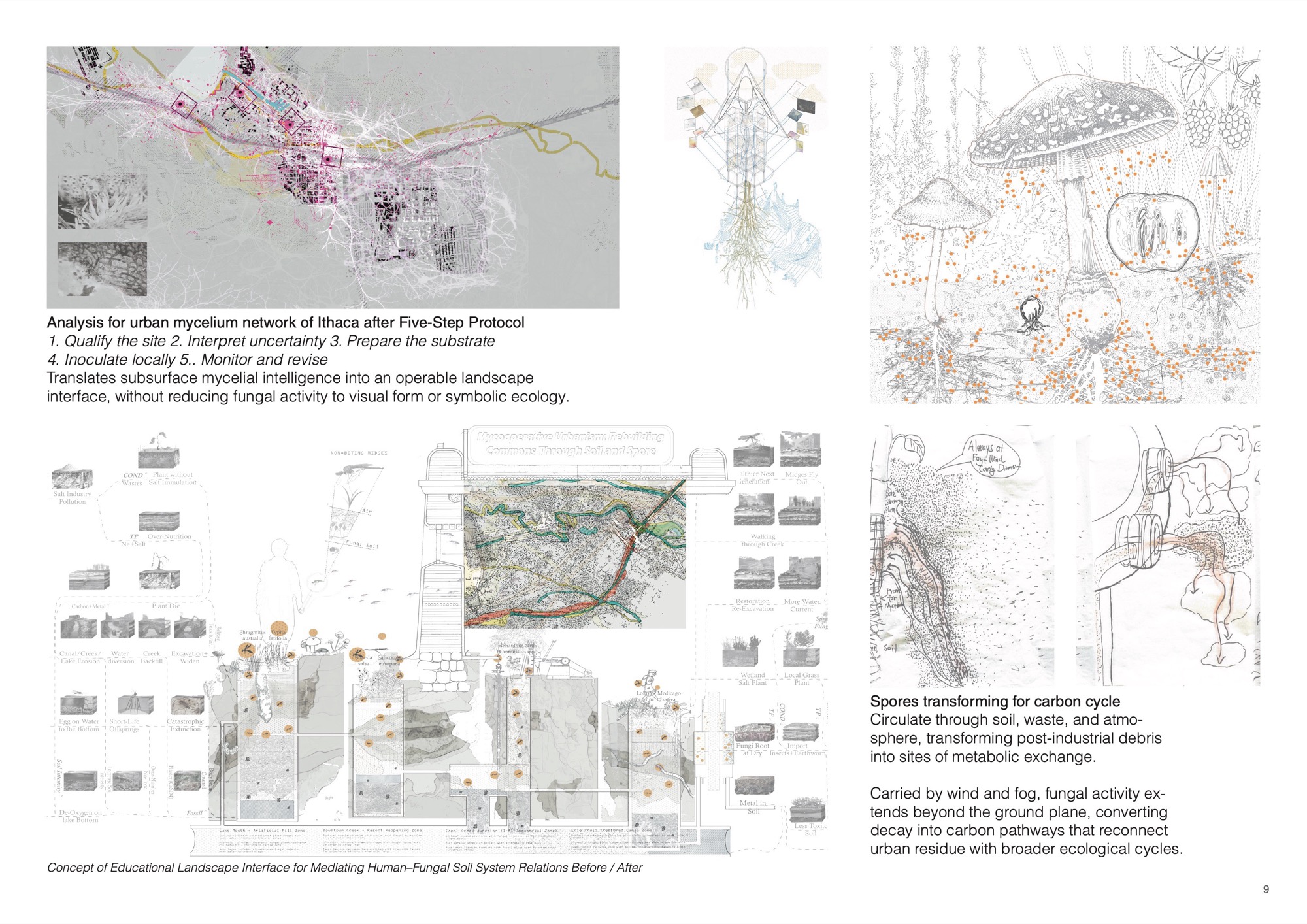
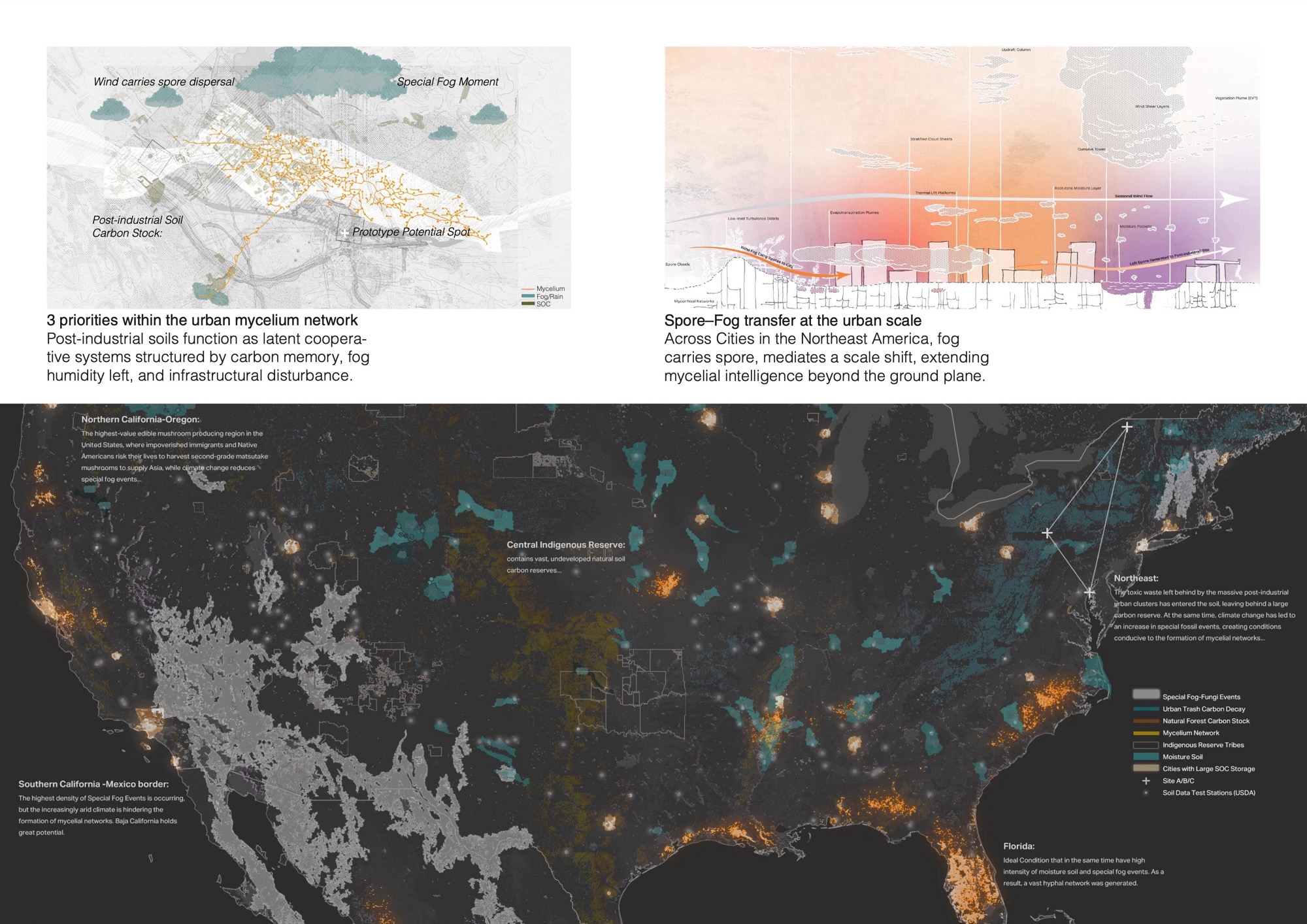
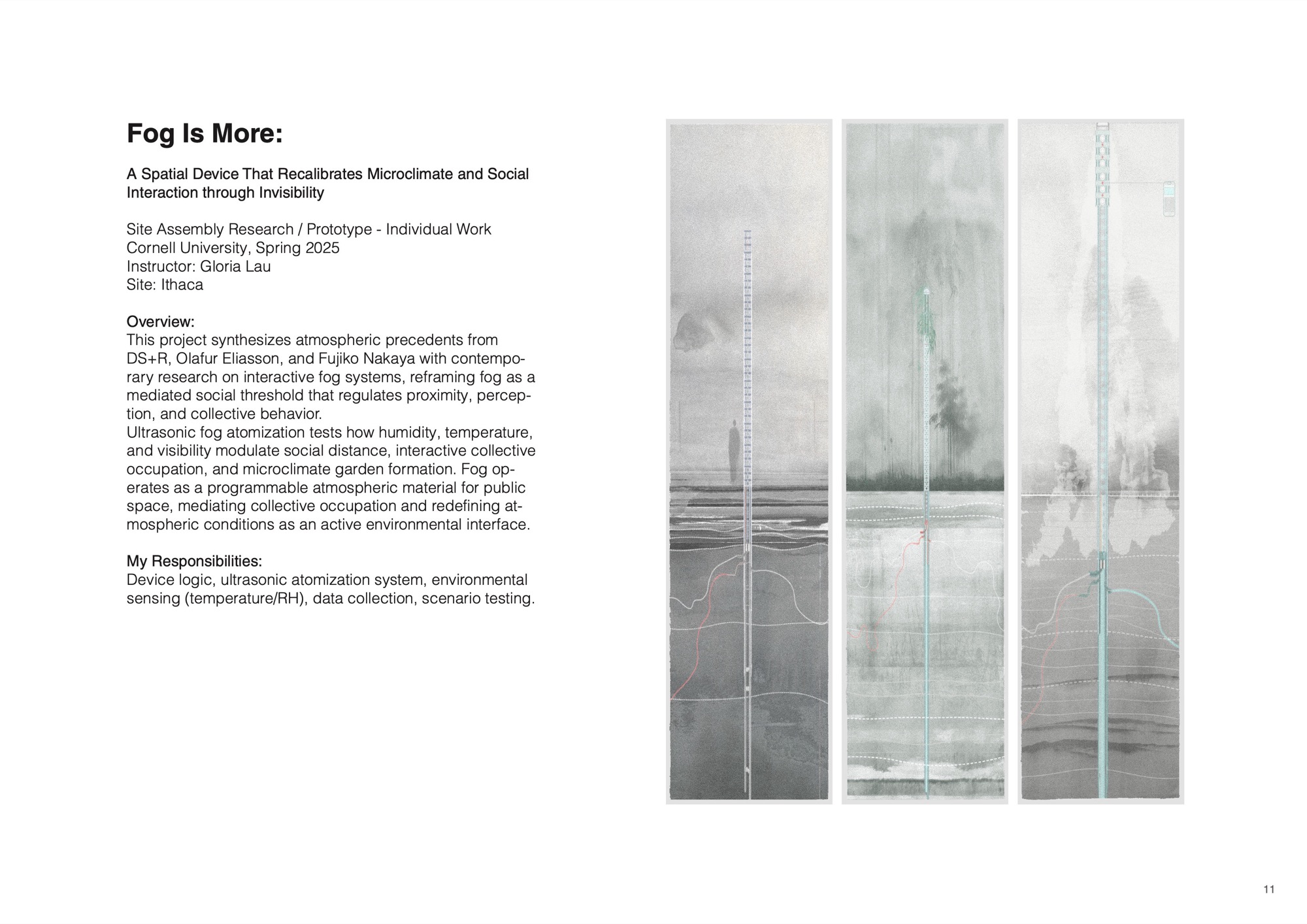
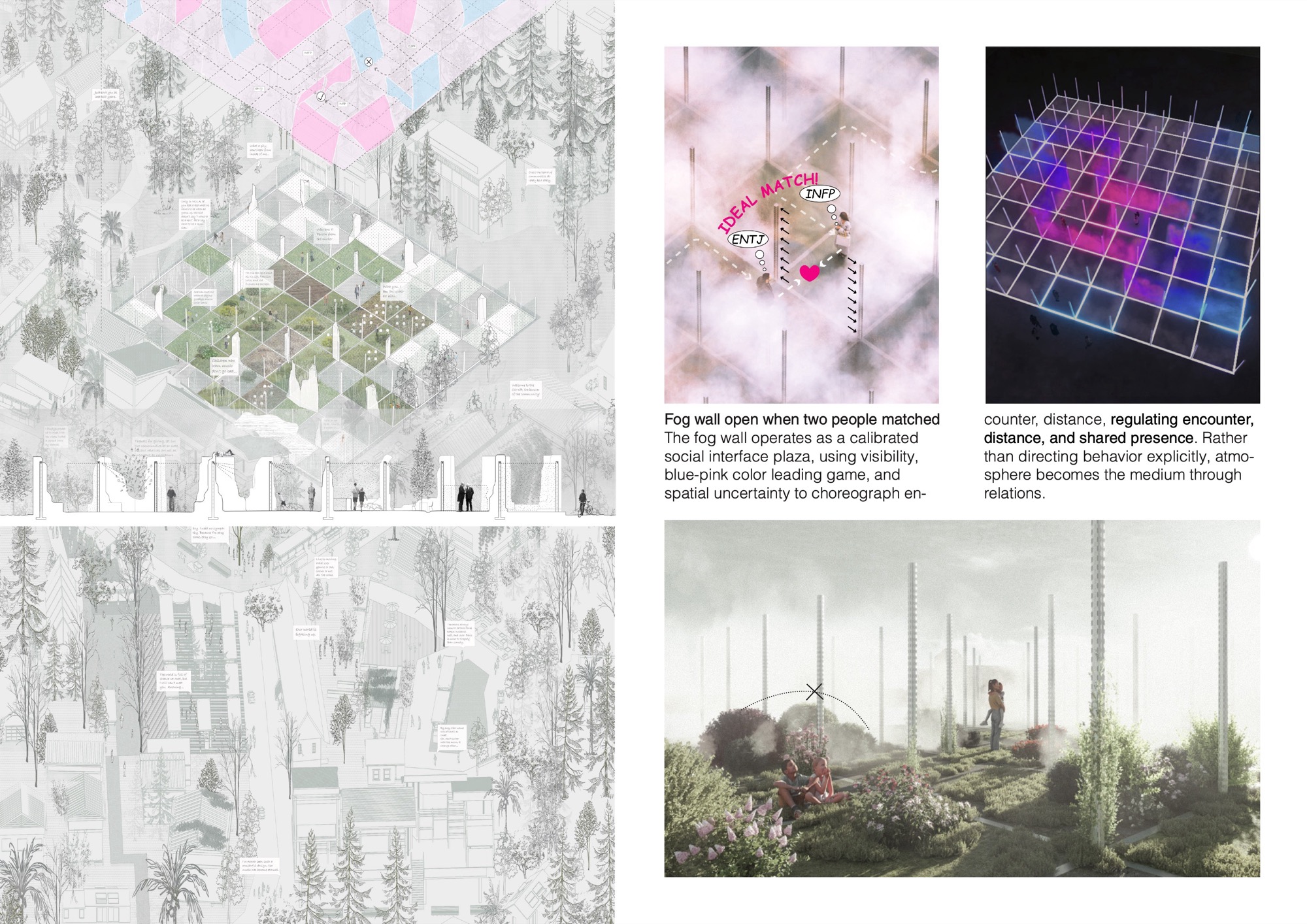
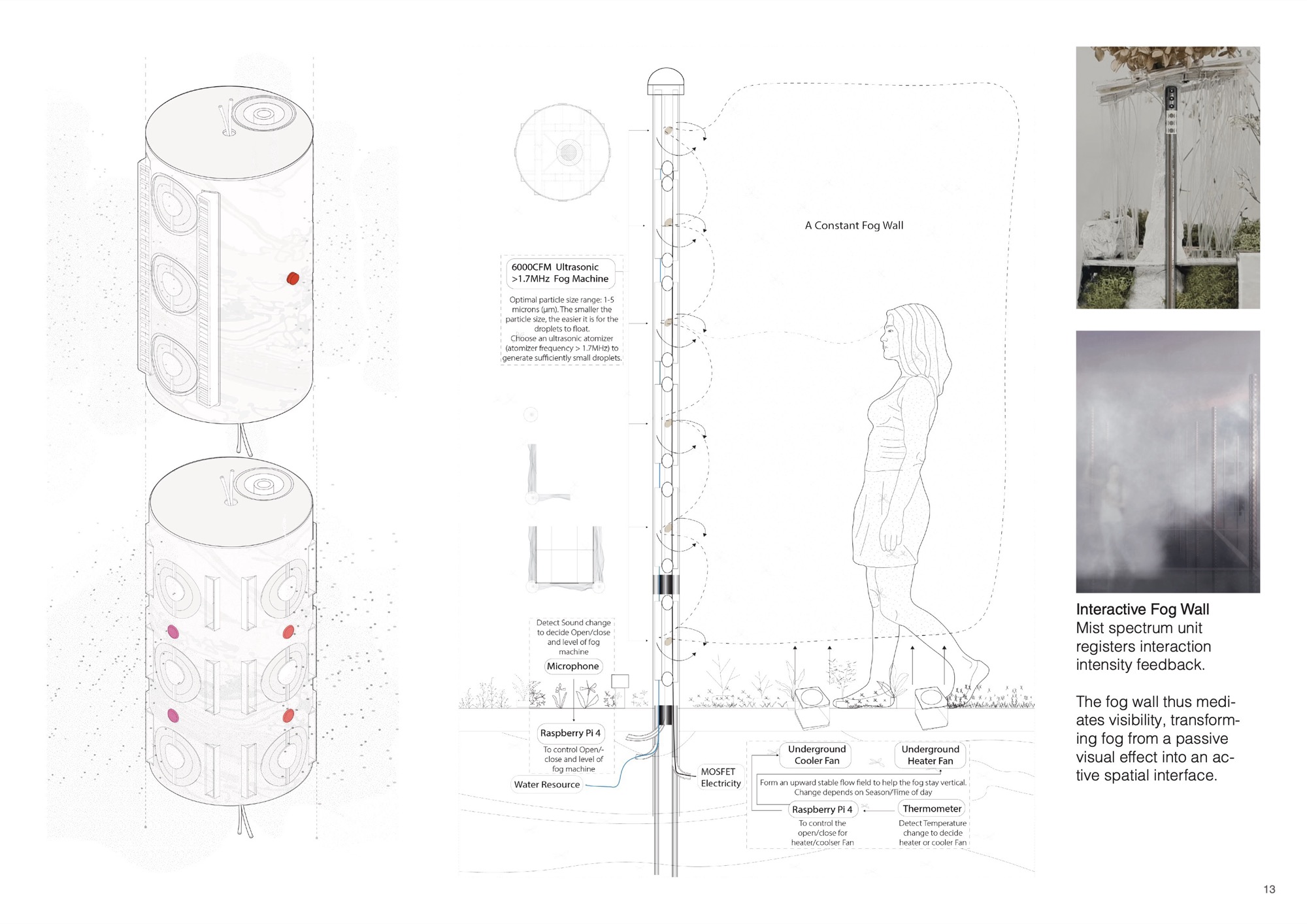
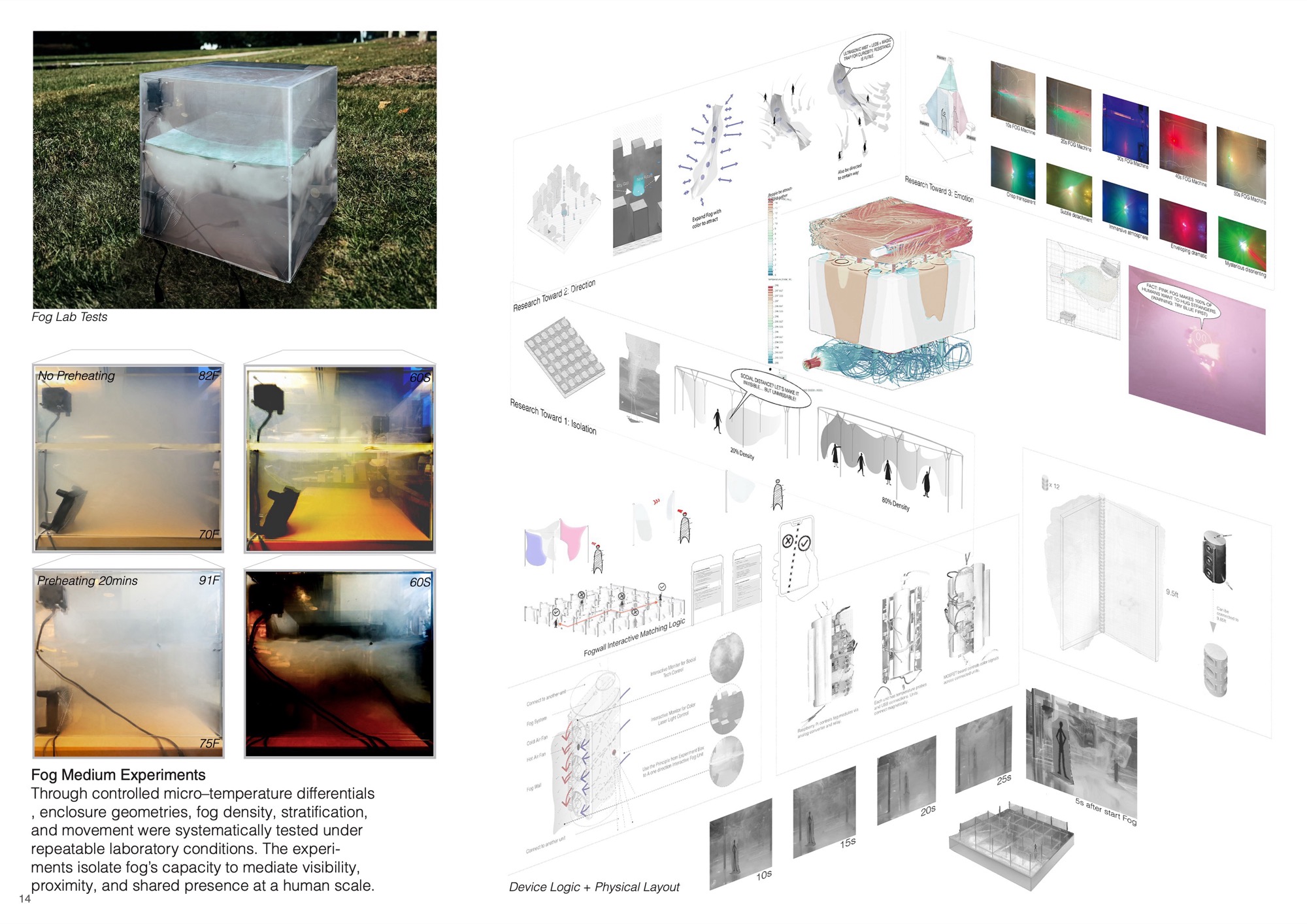
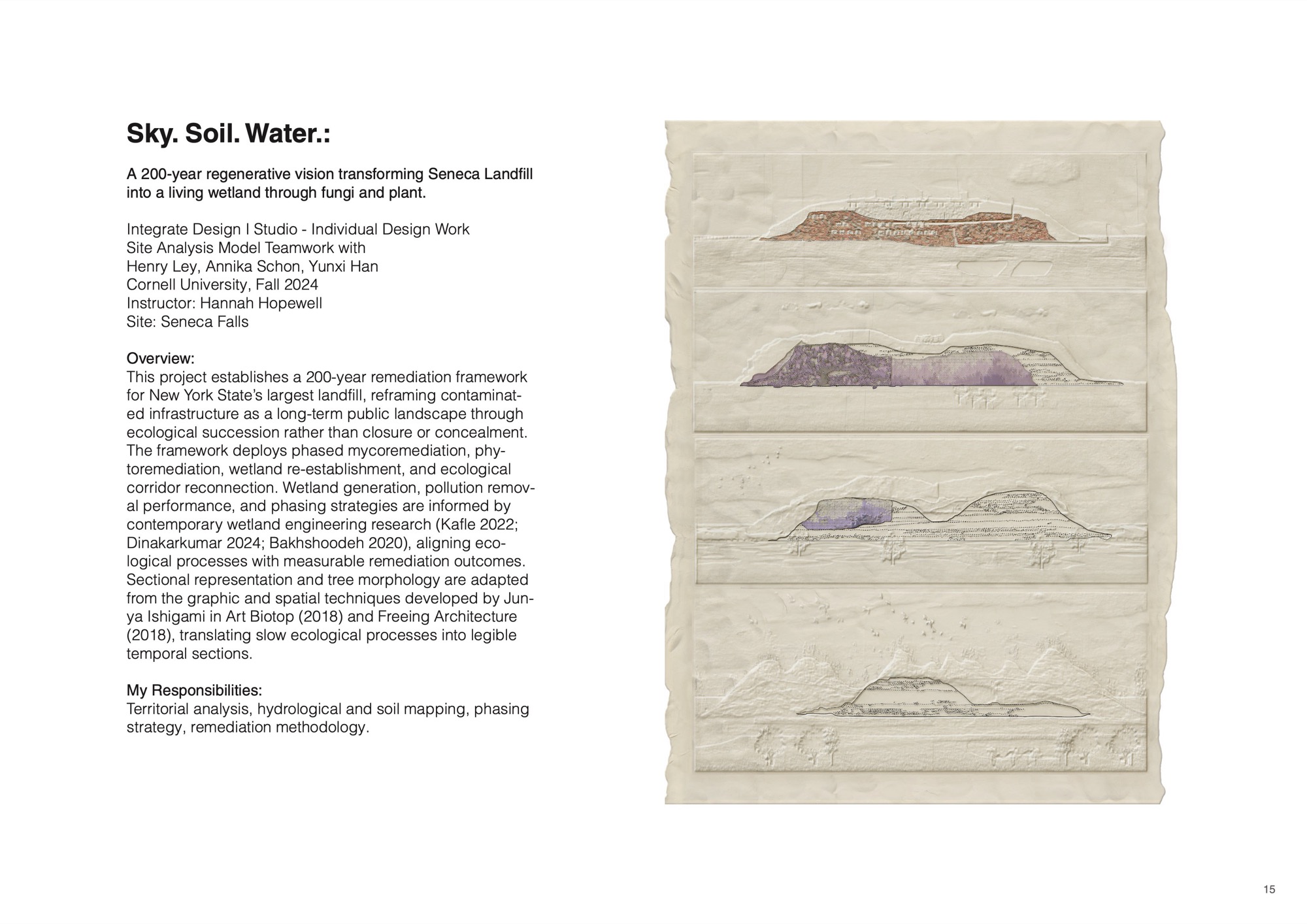
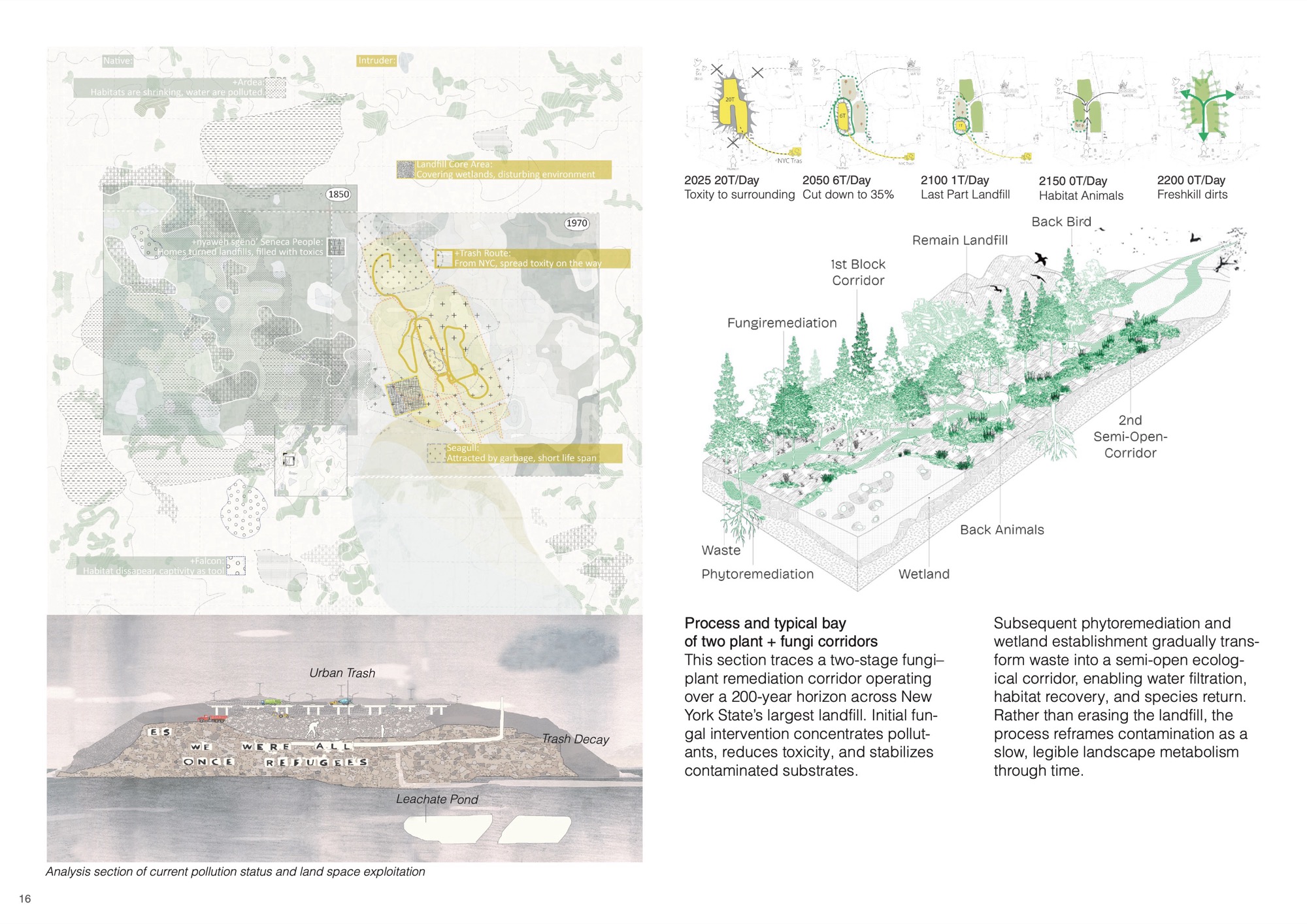
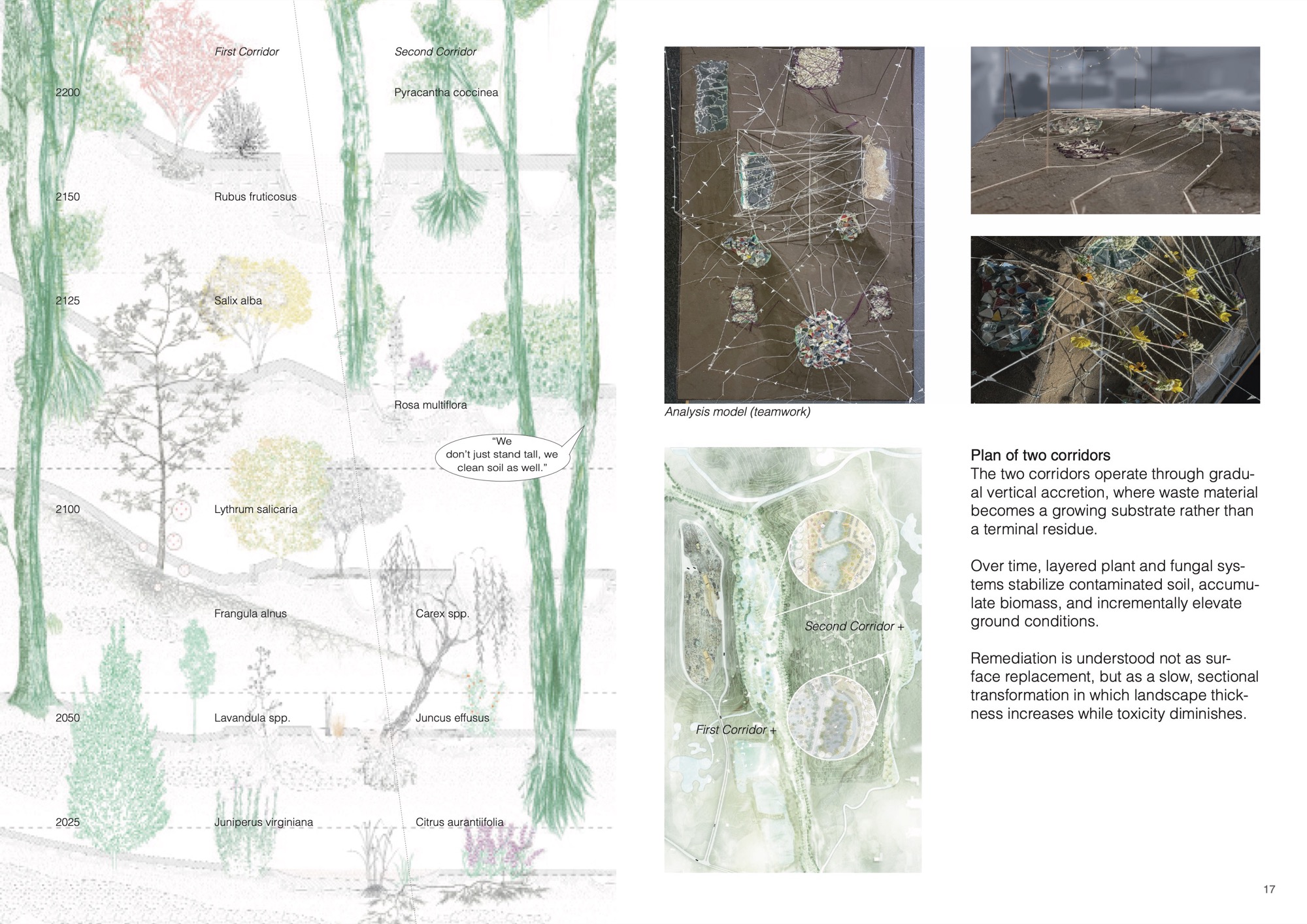
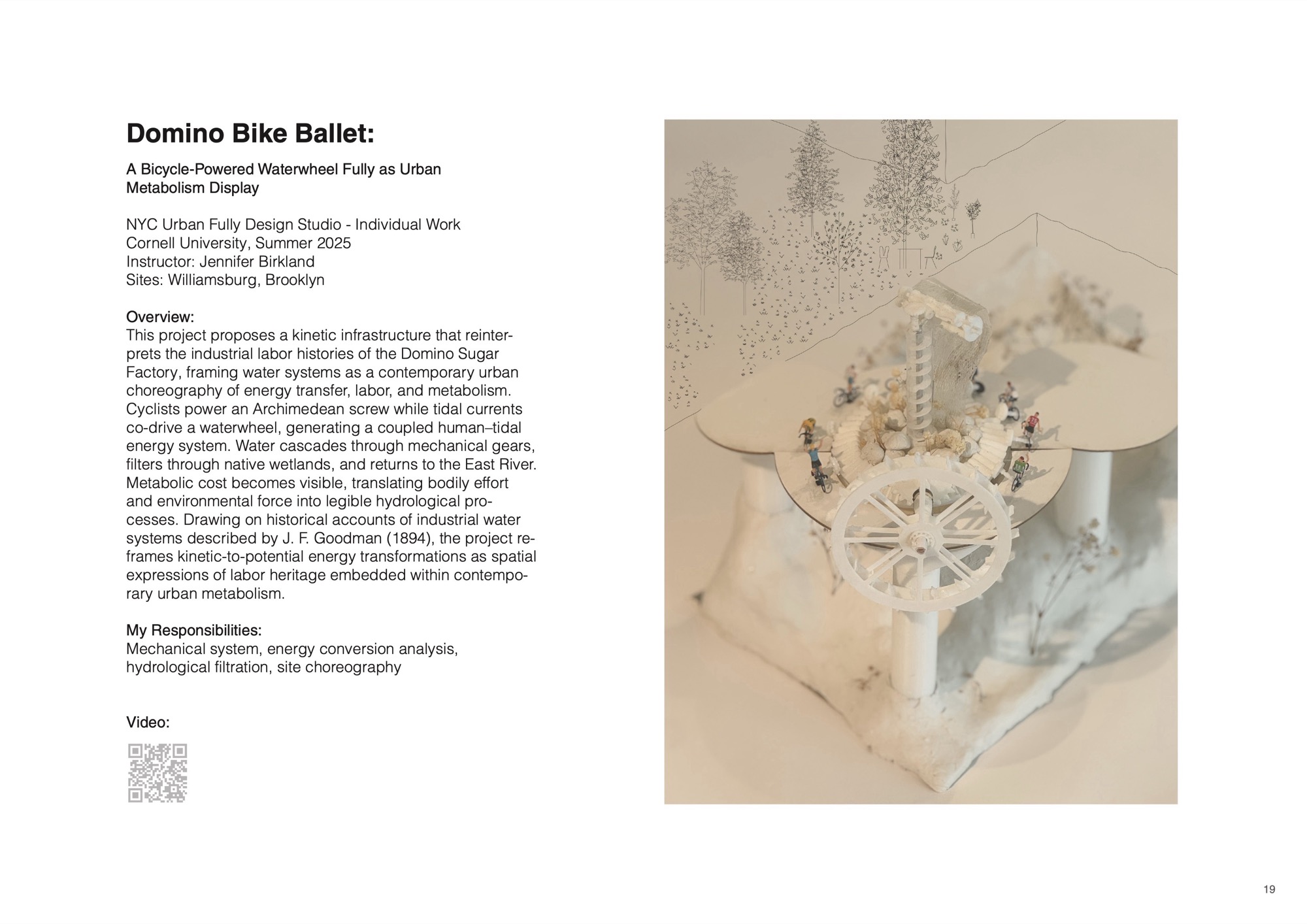
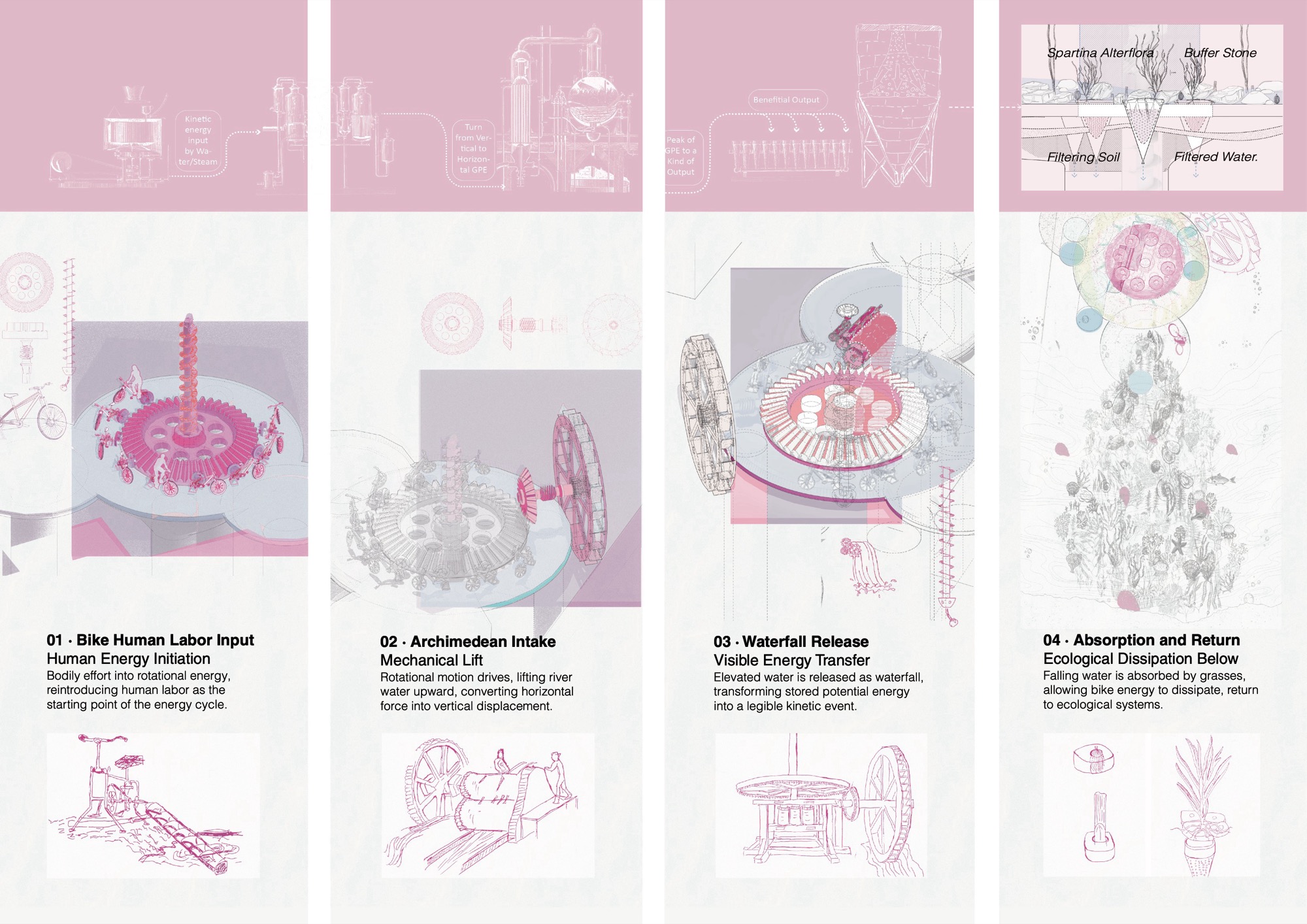
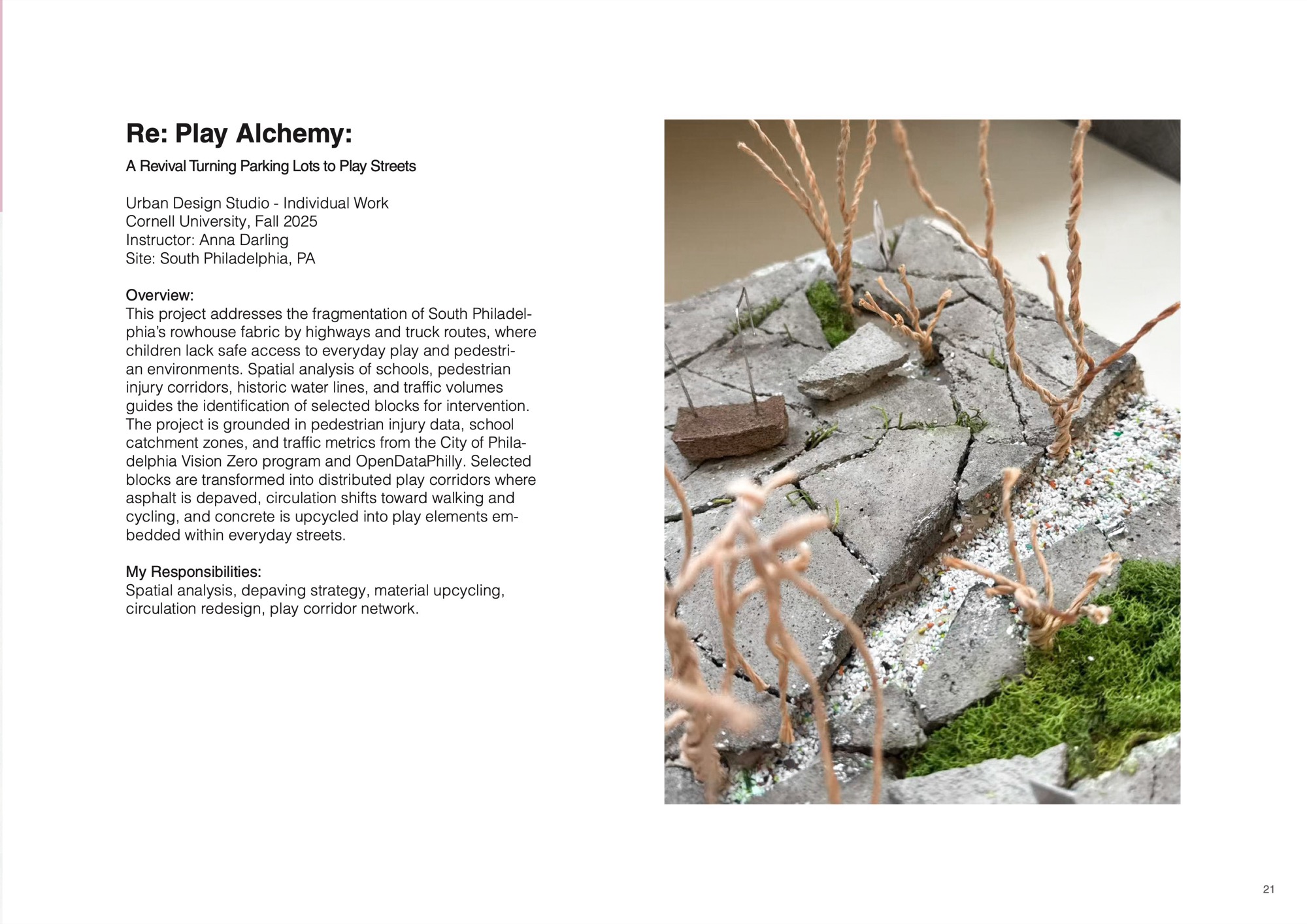
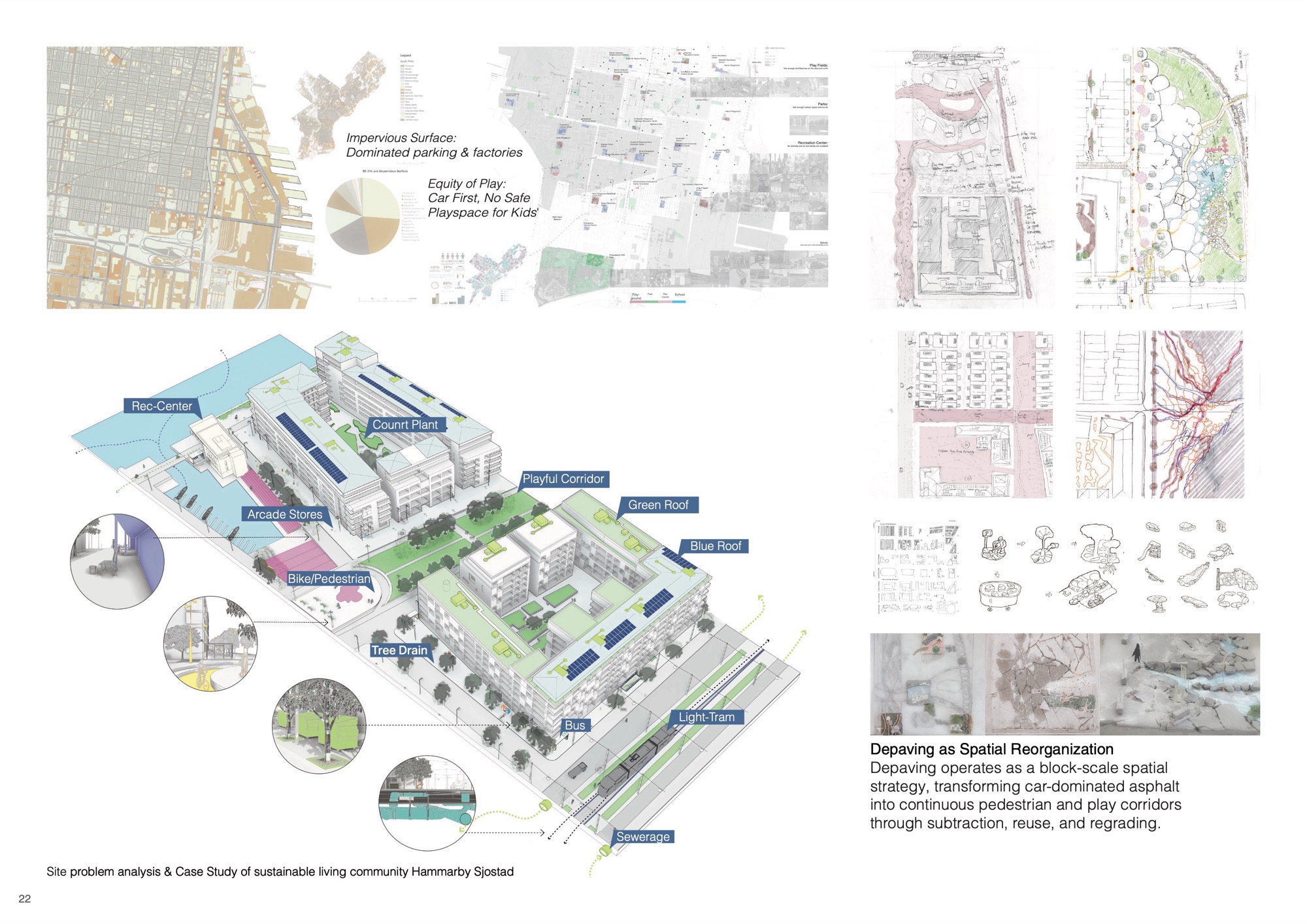
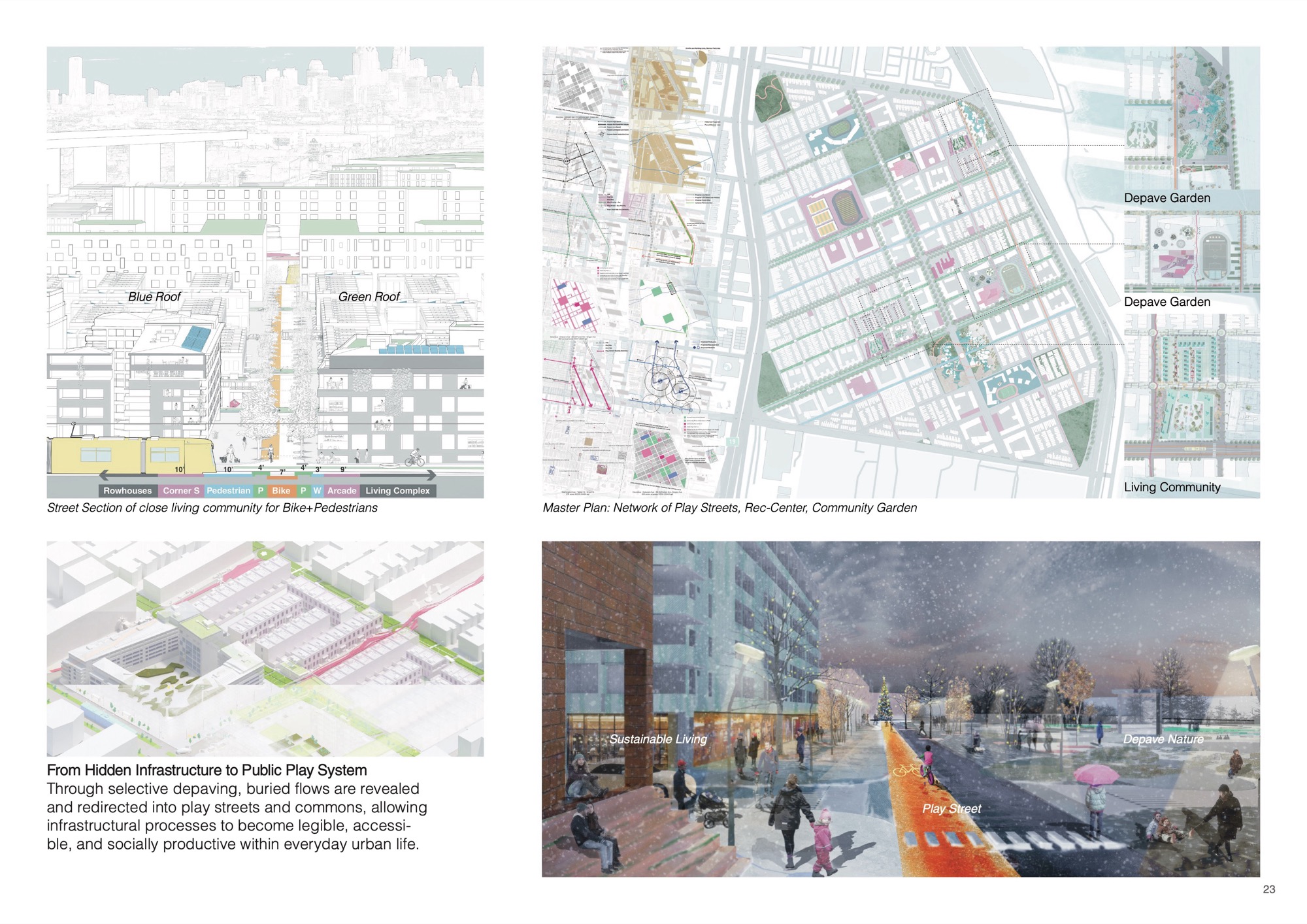
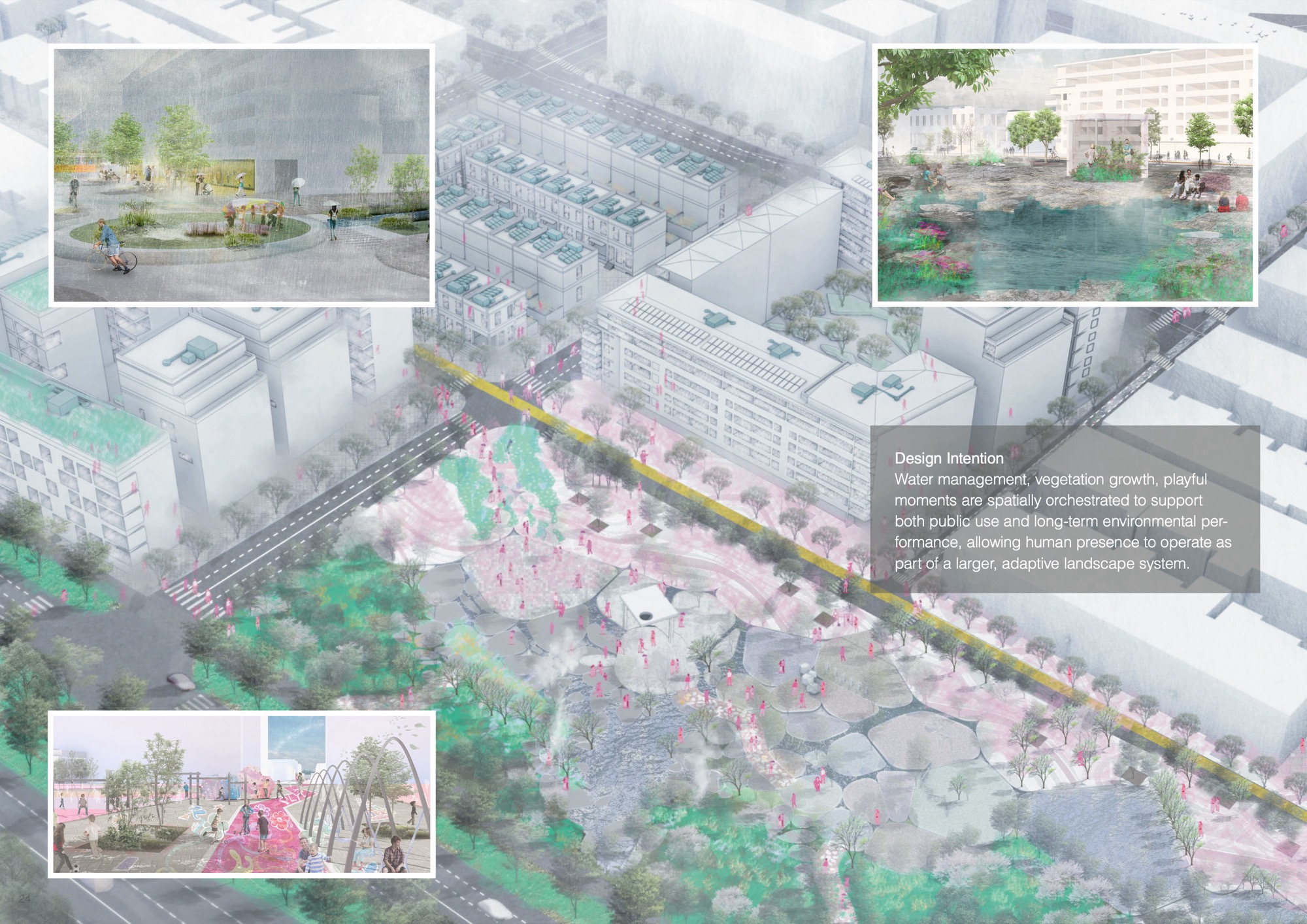
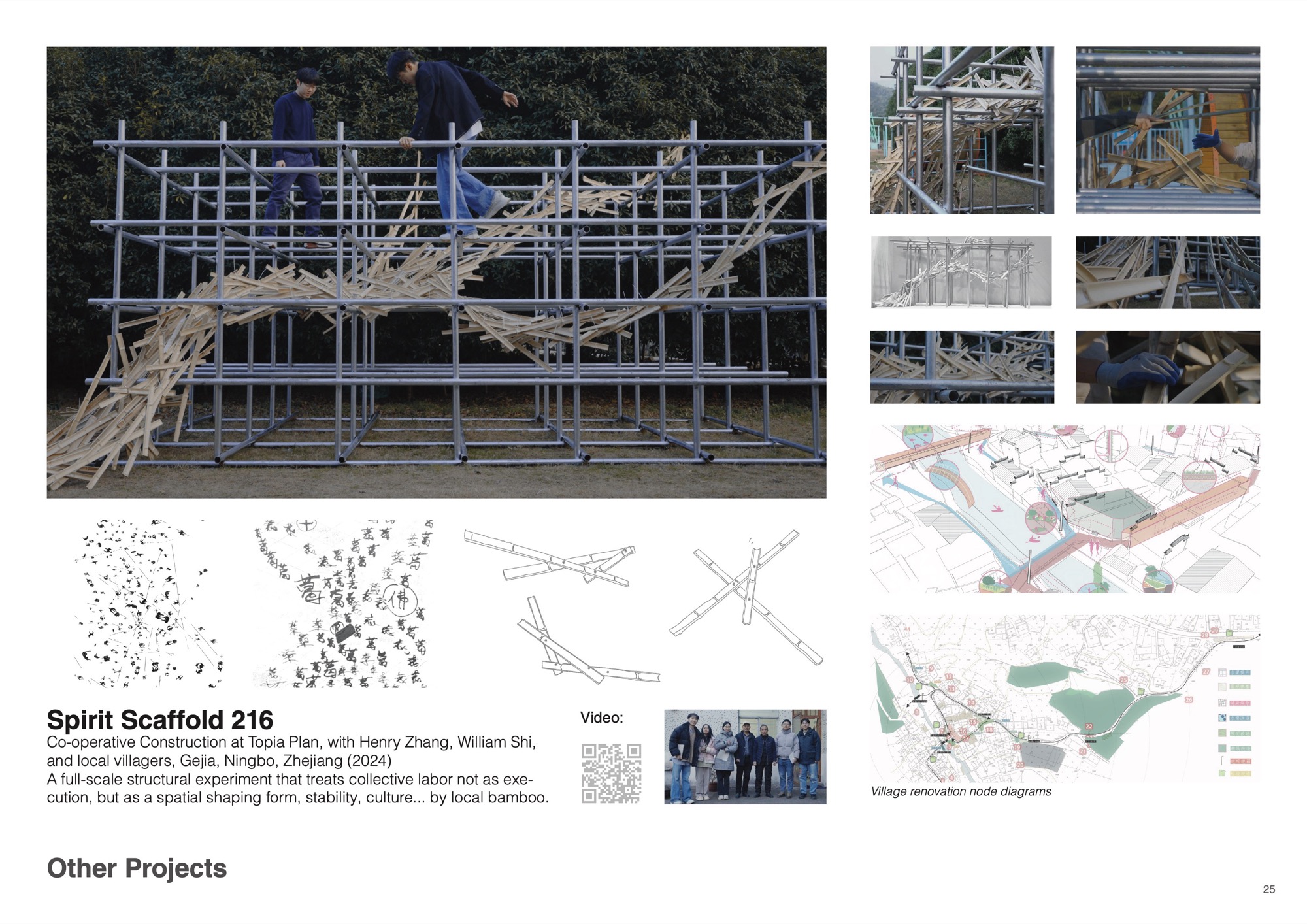
In my portfolio’s center lies my honors thesis project on fungal colonization protocols via artificial intelligence on small disturbed urban landscapes. In this project, artificial intelligence is neither used as a design style nor a replacement for ecological assessment. Artificial intelligence is rather a tool of interpretation that gathers fragmentary data, compares possible scenarios, and elucidates the boundaries of field manipulation. The same principle is applied to all other projects: fog becomes a socioclimatic medium; landfill becomes an ecosystem of 200 years; bicycle pathways become visible metabolisms of labor and water; asphalt becomes playful public ground; and bamboo becomes rural construction that we share.
My portfolio shows a diversity of topics but holds a unified perspective: not only must landscape architecture represent the ecological changes but create the context for making tangible, testing, caring, and publicly engaging with hidden environmental relations.
United States
75646


LILA 2026 Sponsor