Punt Sniep
www.kcap.eu
2026 Landscape and Architecture / 2026 Residential Parks / Netherlands / Built in 2021 /
![The Sibeliuspark in Oss has been transformed from a neglected, underutilized green space into a welcoming, lively, and diverse 25-hectare urban park. Designed by KCAP as landscape architect, the project features a nature-inclusive, climate-adaptive environment that integrates over 400 new trees, diverse programming for all ages, and integrated housing developments. The Urban Ox Park, featuring […]](https://landezine-award.com/wp-content/uploads/2026/05/HERO-IMAGE_Low-res-©-Aiste-Rakauskaite-10-600x400.jpg "Sibeliuspark")
![Cruquius Island in Amsterdam’s Eastern Docklands has been transformed from a former industrial zone into a richly layered residential neighbourhood defined by water, public space, and architectural clarity. Once the site of warehouses, cattle markets, and factories, this man-made peninsula now supports a vibrant, sustainable community that honours its past while shaping a new urban […]](https://landezine-award.com/wp-content/uploads/2025/05/00-1511-KCAP-Cruquius-Island_Marcel-Ijzerman-7-600x449.jpg "Cruquius Island Housing, Amsterdam by KCAP")
![Making Shenzhen’s East coast ‘typhoon-proof’ East Dike is located in Dapeng, a mountainous peninsula in the direct proximity of Hongkong and Shenzhen with an extraordinary lush and green environment. In 2018, the typhoon Mangkhut damaged the coastline of the Dapeng peninsula to various degrees. In 2019, team KCAP+FELIXX was selected to develop plans to restore […]](https://landezine-award.com/wp-content/uploads/2021/04/00-KCAPFelixx_Typhoon-proof-Shenzhens-East-coast__Dapeng-Peninsula_Masterplan-600x485.jpg "East Dike Dapeng, Shenzhen, China")
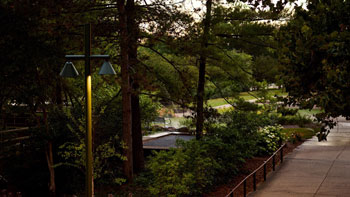
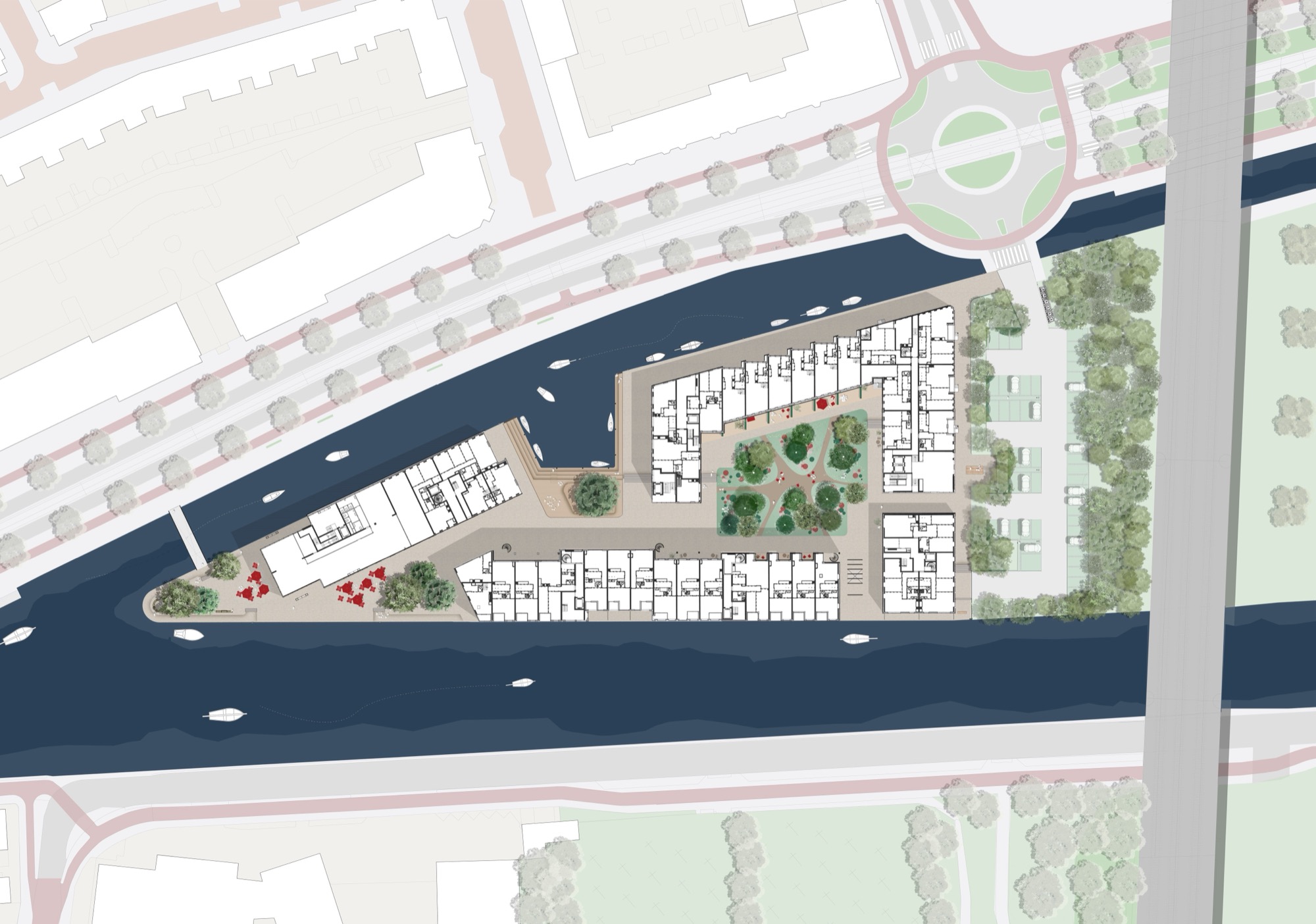
Punt Sniep transforms a long-overlooked peninsula at the heart of Diemen into a car-free residential community of 202 homes. The project demonstrates how landscape architecture can redefine the relationship between high-density urban living, water, and shared public space. Wedged between the historic Muidertrekvaart and Weespertrekvaart canals along the route to Amsterdam, the site’s unusual island-like geometry became the generative force behind the design rather than a constraint to be solved.
The project advances the discipline in three significant ways.
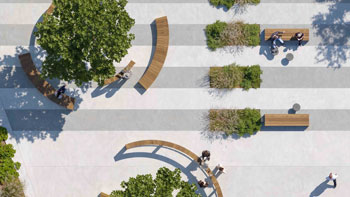
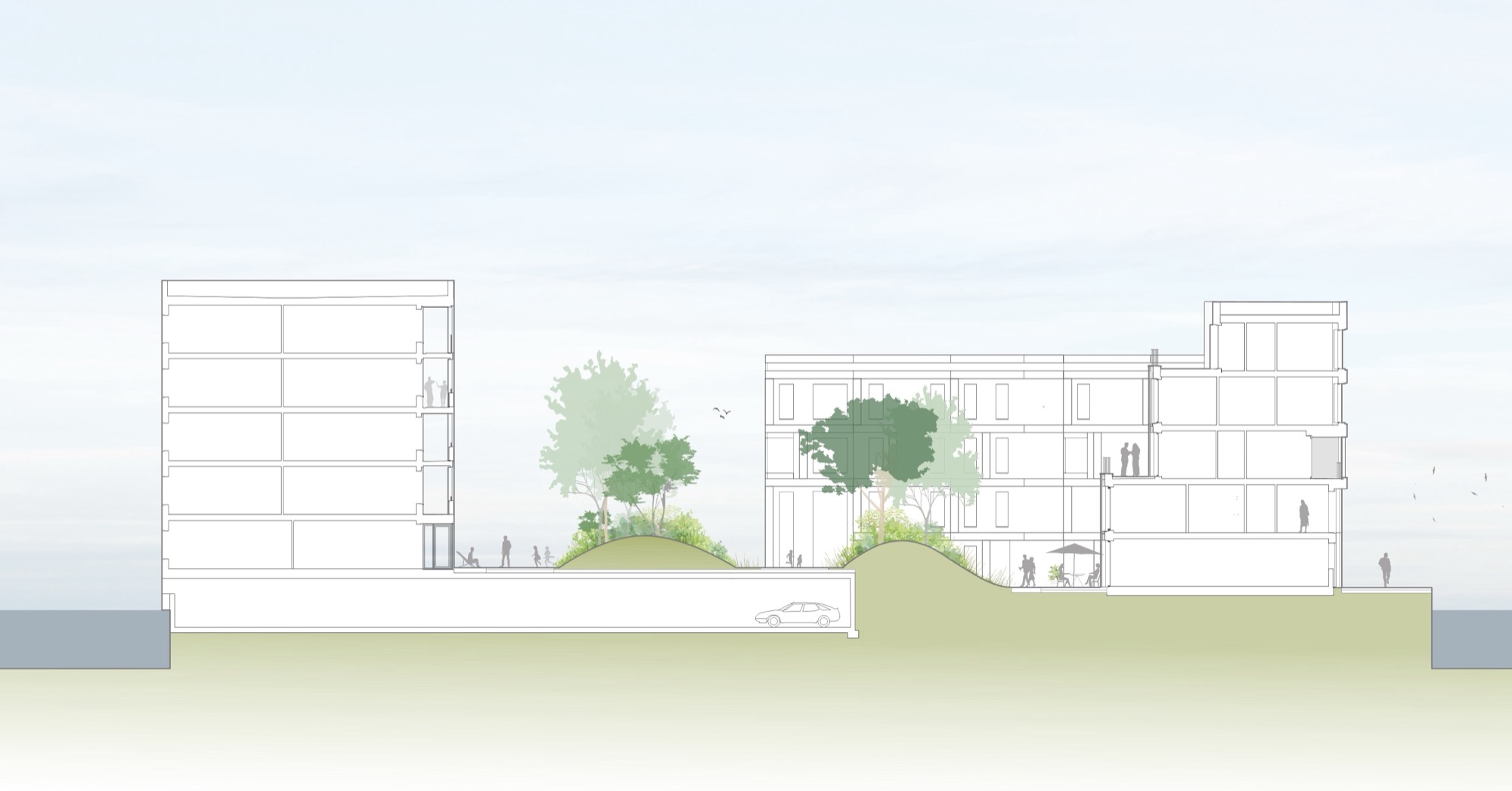
First, it proves that genuine high-density urbanism and a generous, mature landscape are not mutually exclusive. By concealing 182 parking spaces beneath an undulating, sculpted topography, the design reclaims the entire ground plane for people, plants, and water. At three strategic moments the terrain rises to accommodate fully grown trees. At the waterfront square, trees grow inside specially engineered tree bunkers within the parking structure itself. This is not greenery applied as decoration on top of infrastructure. It is a fundamental rethinking of how to integrate root systems, soil volume, and structural engineering so that a true urban arboretum can flourish above a working garage. The result is a neighborhood where residents live among real trees, not token planting.
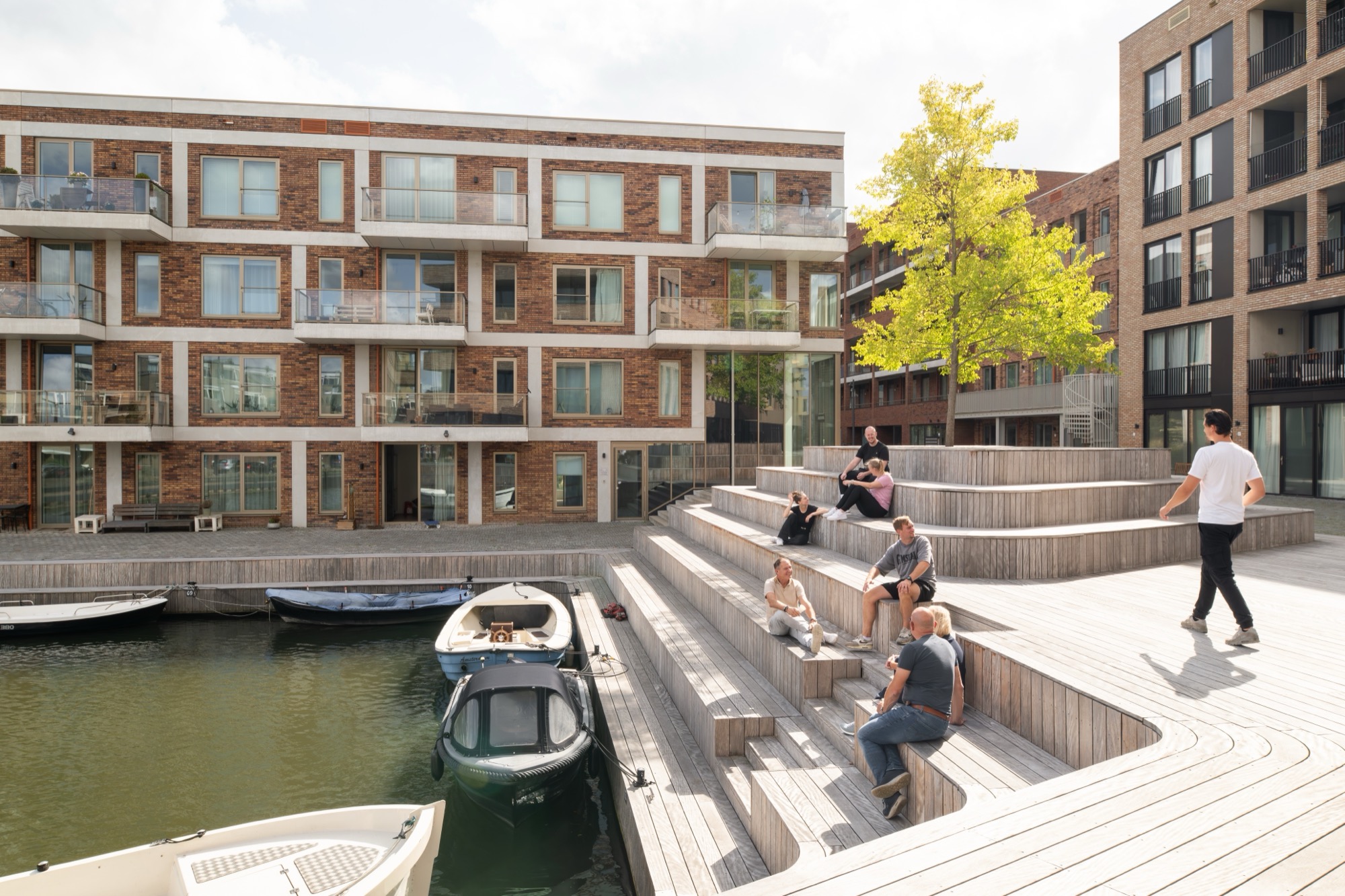
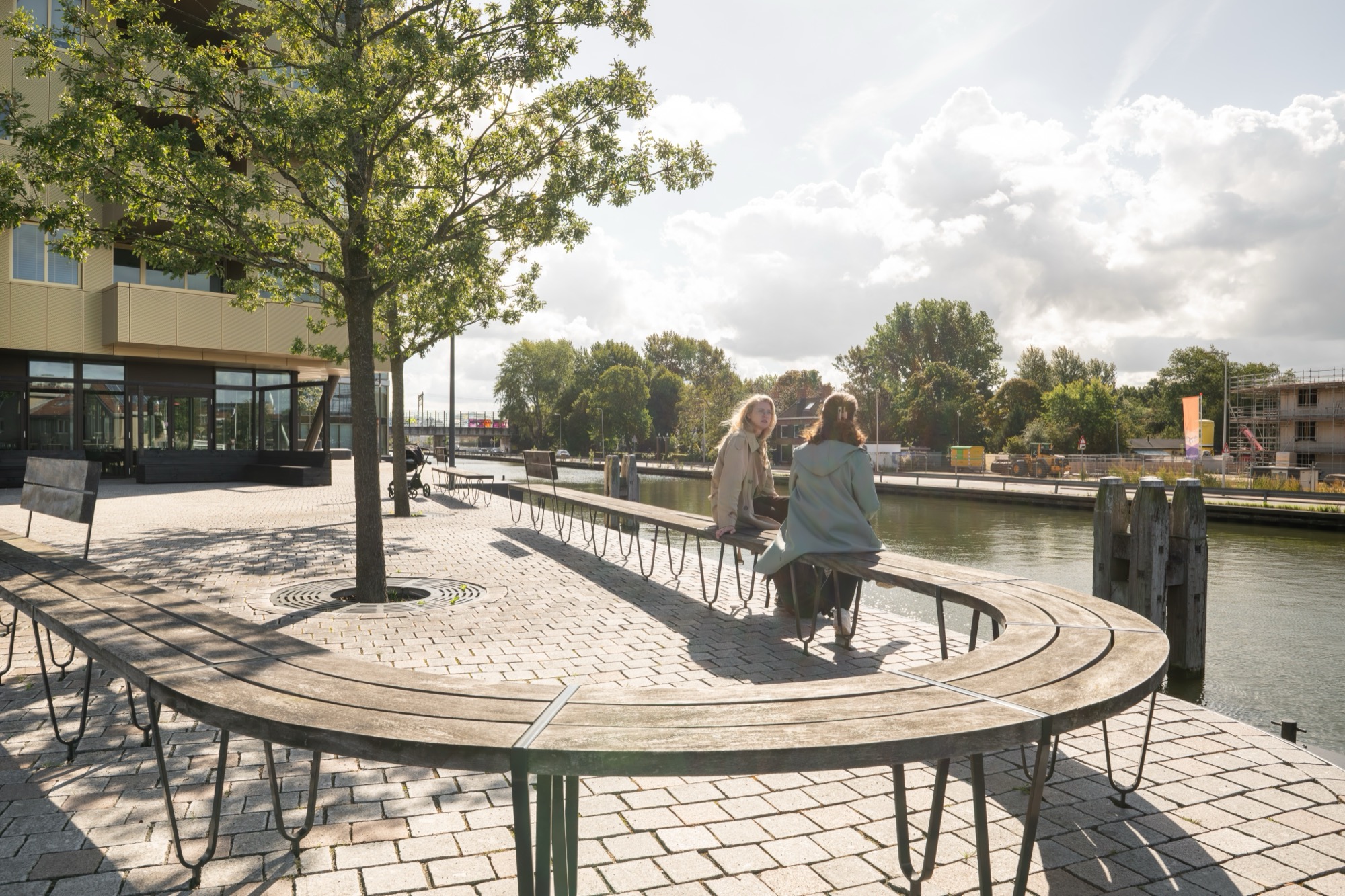
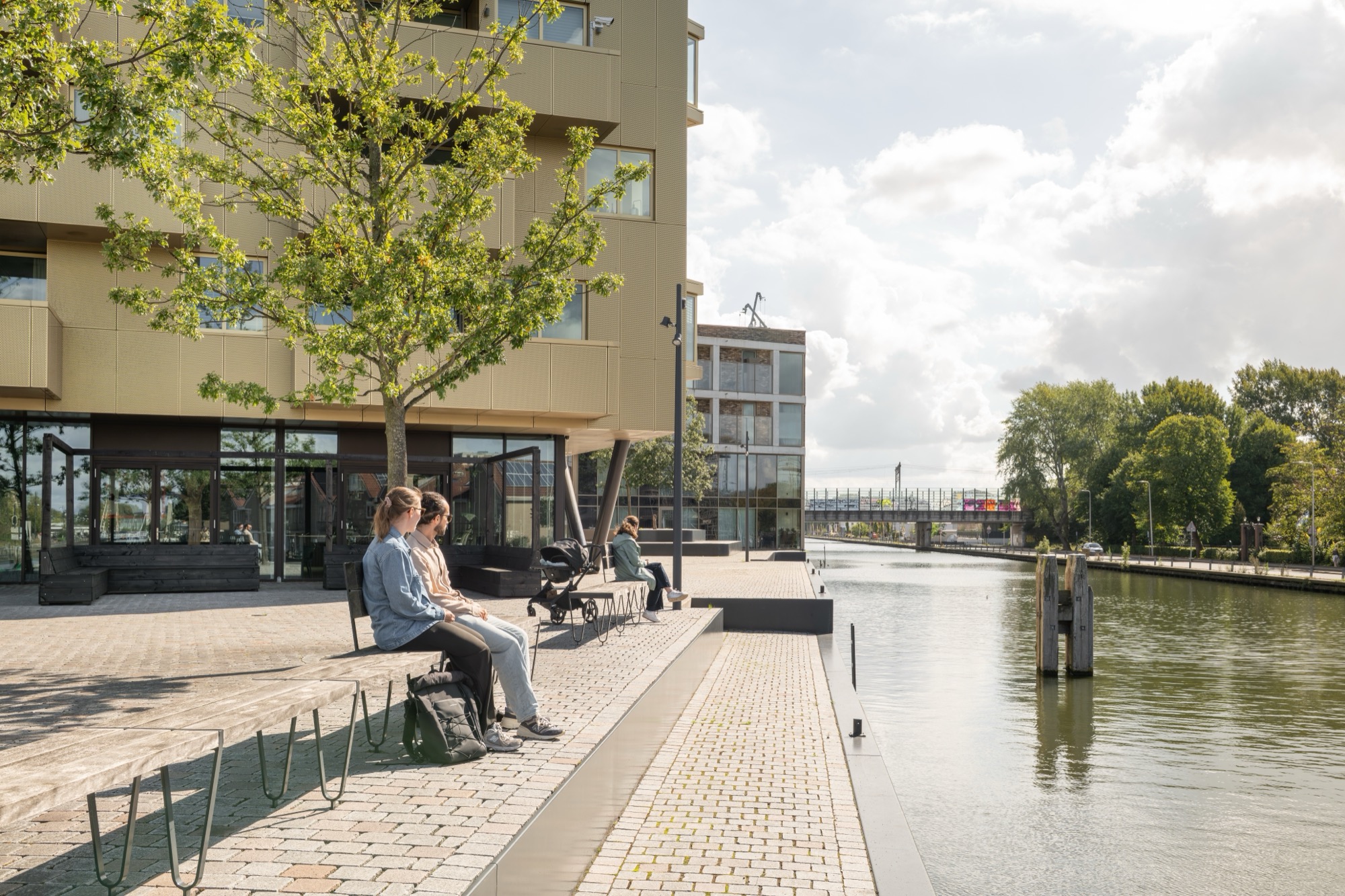
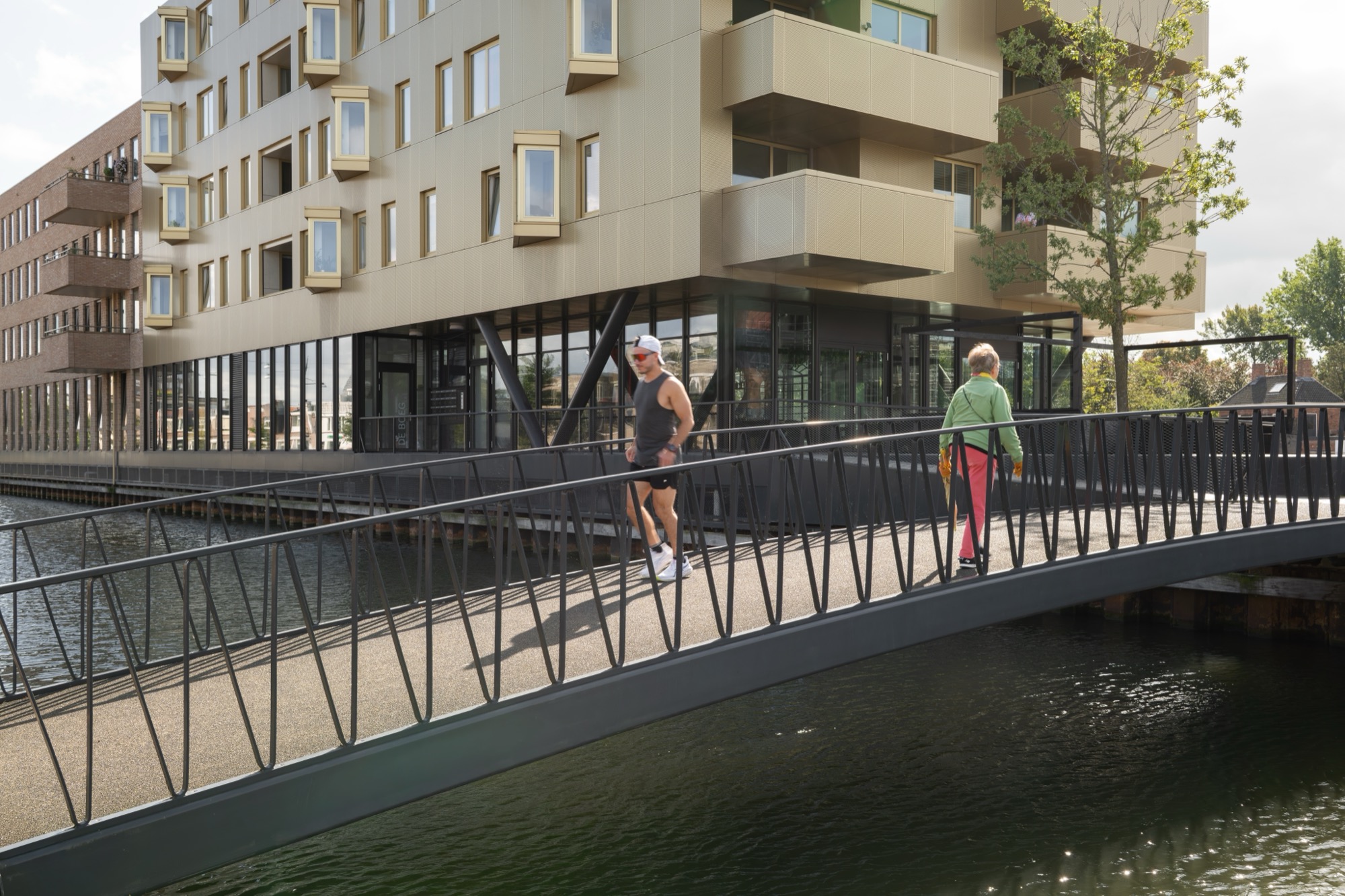
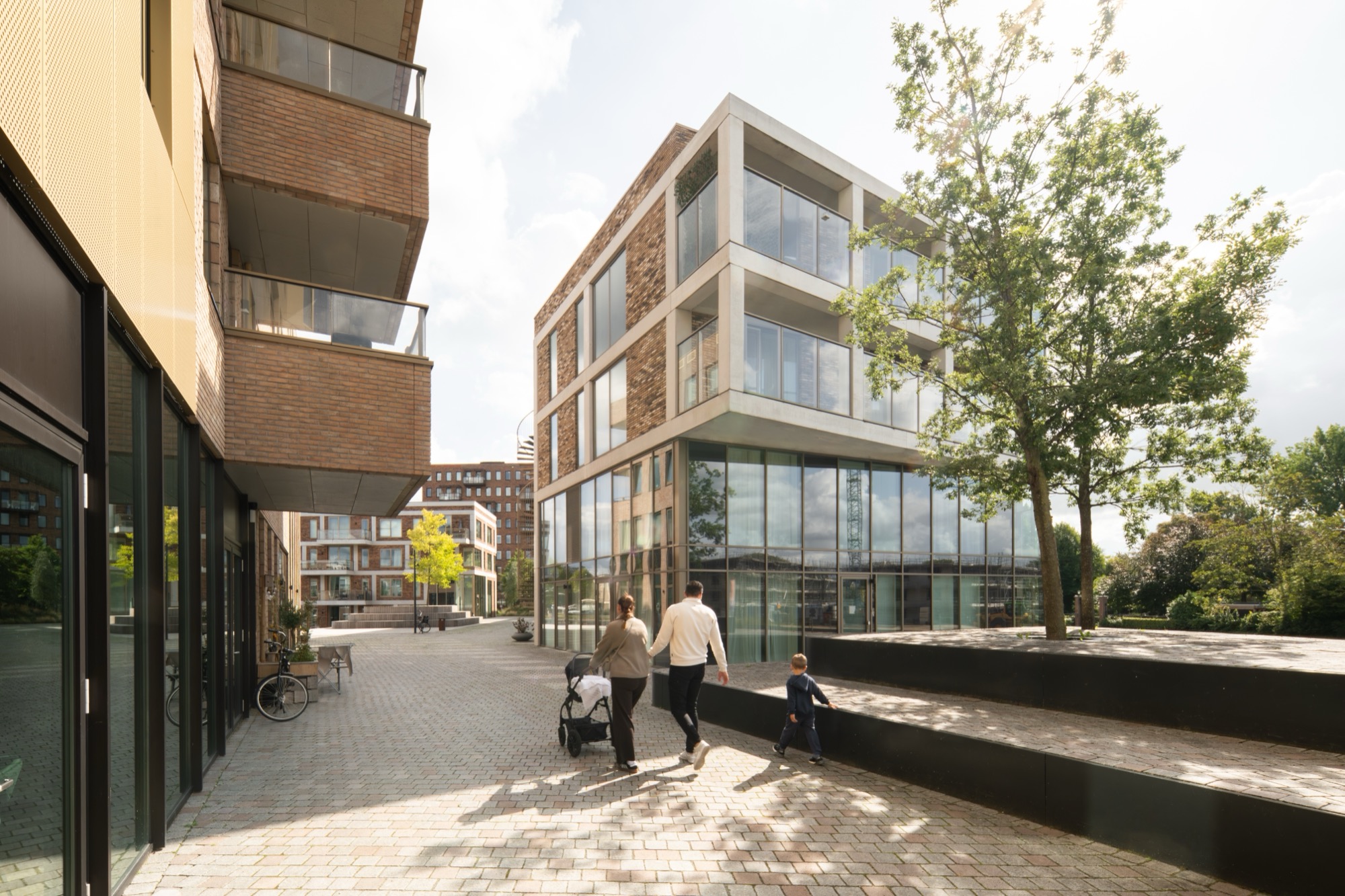
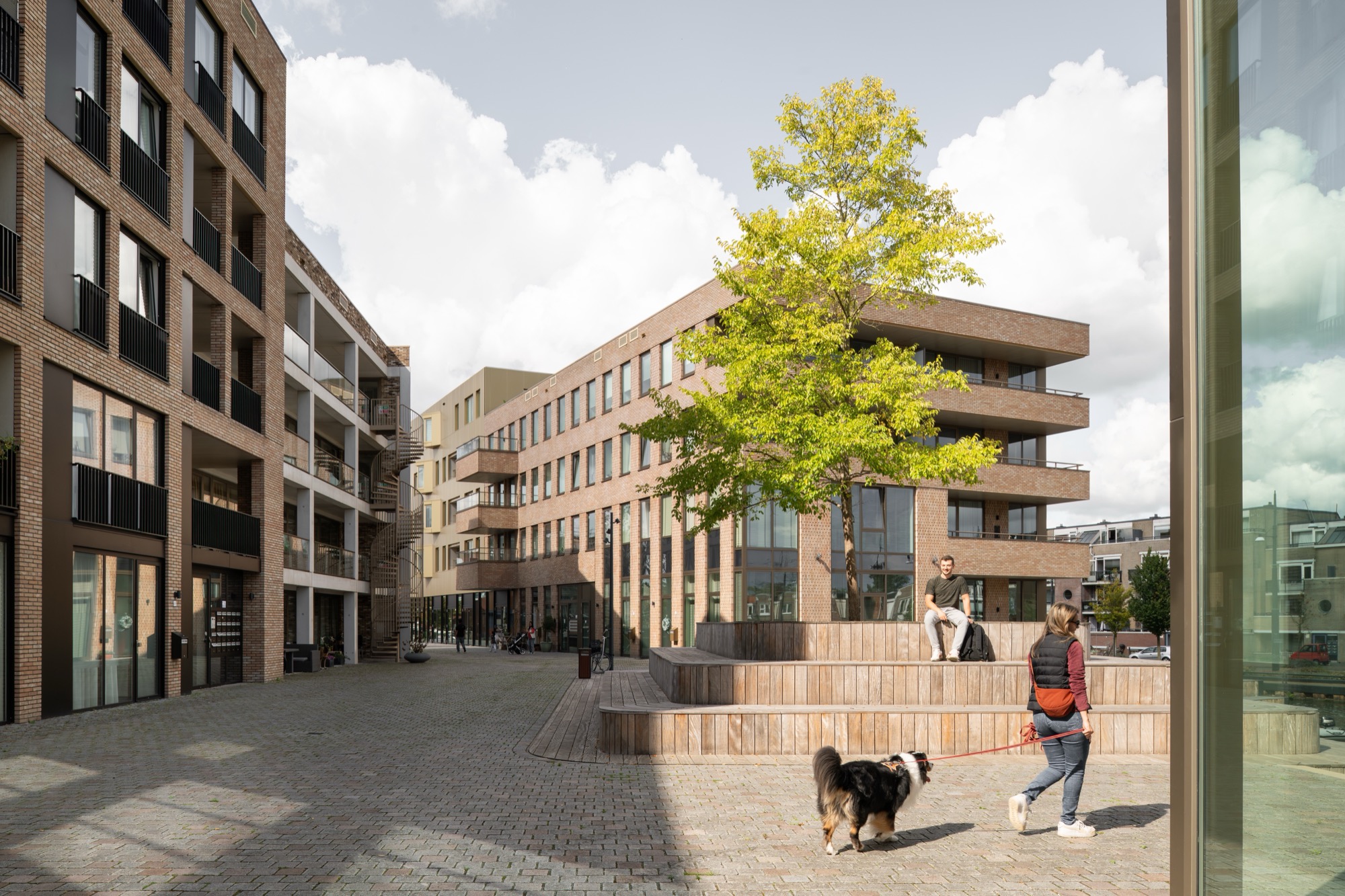
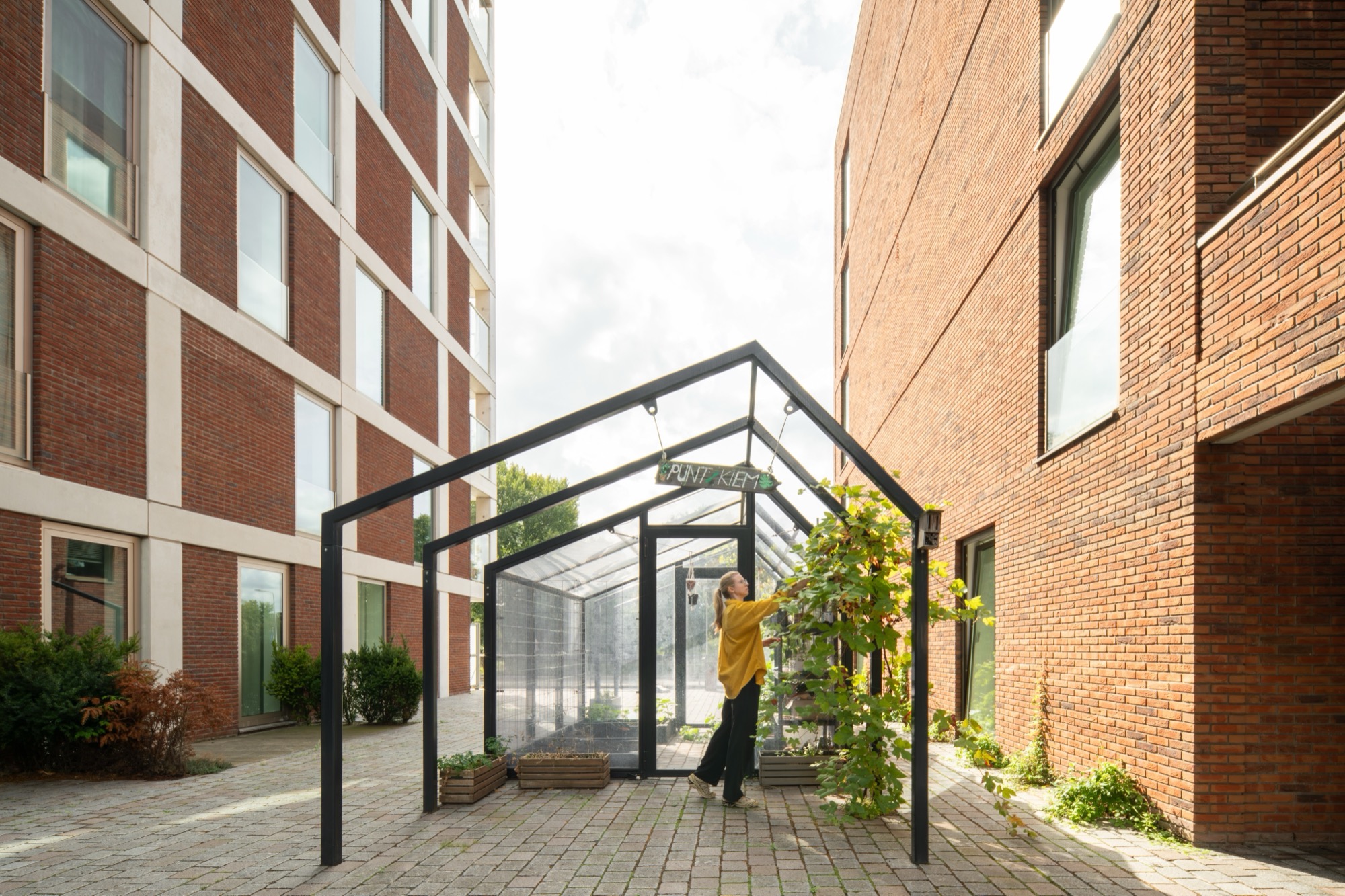
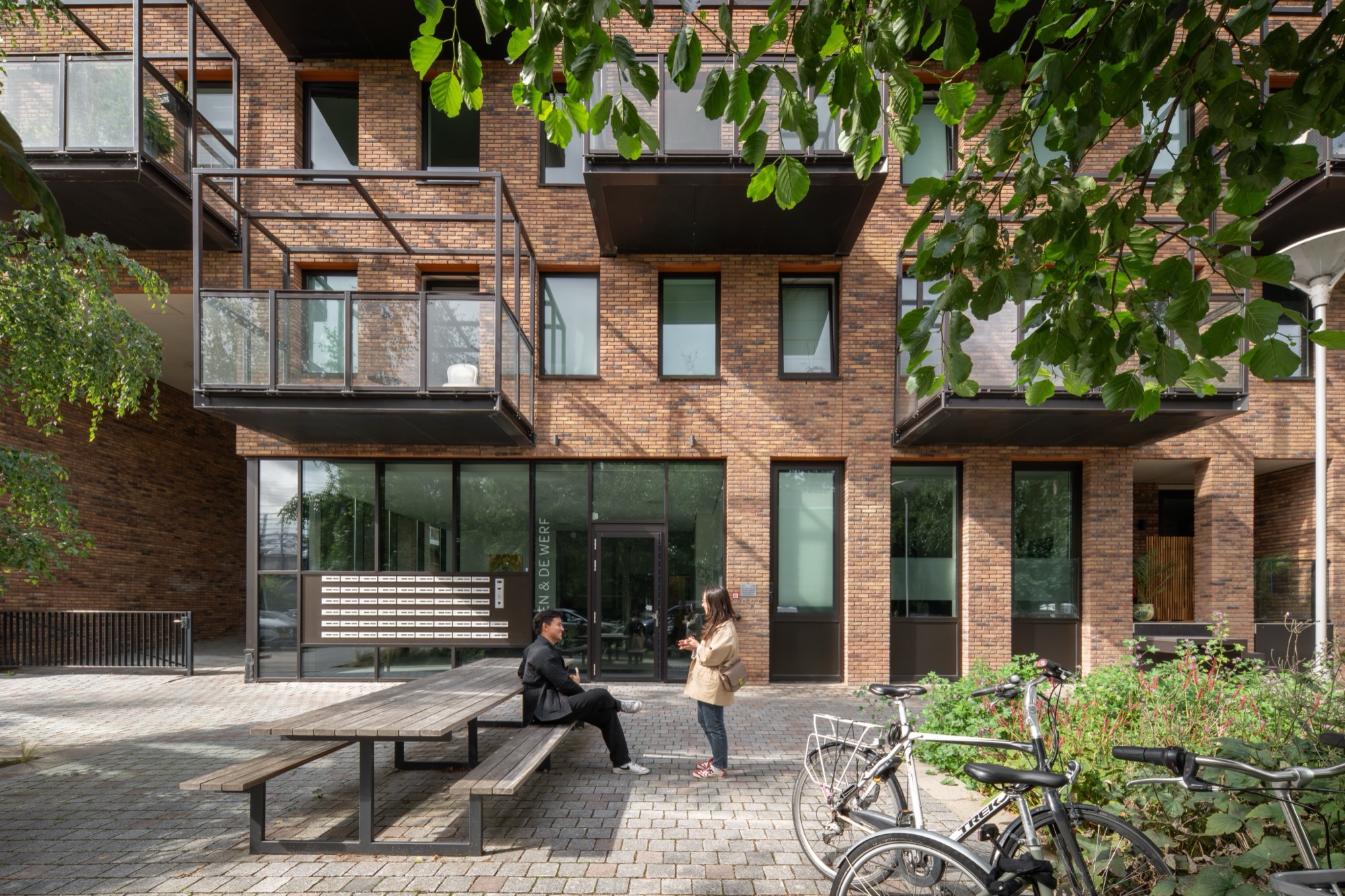
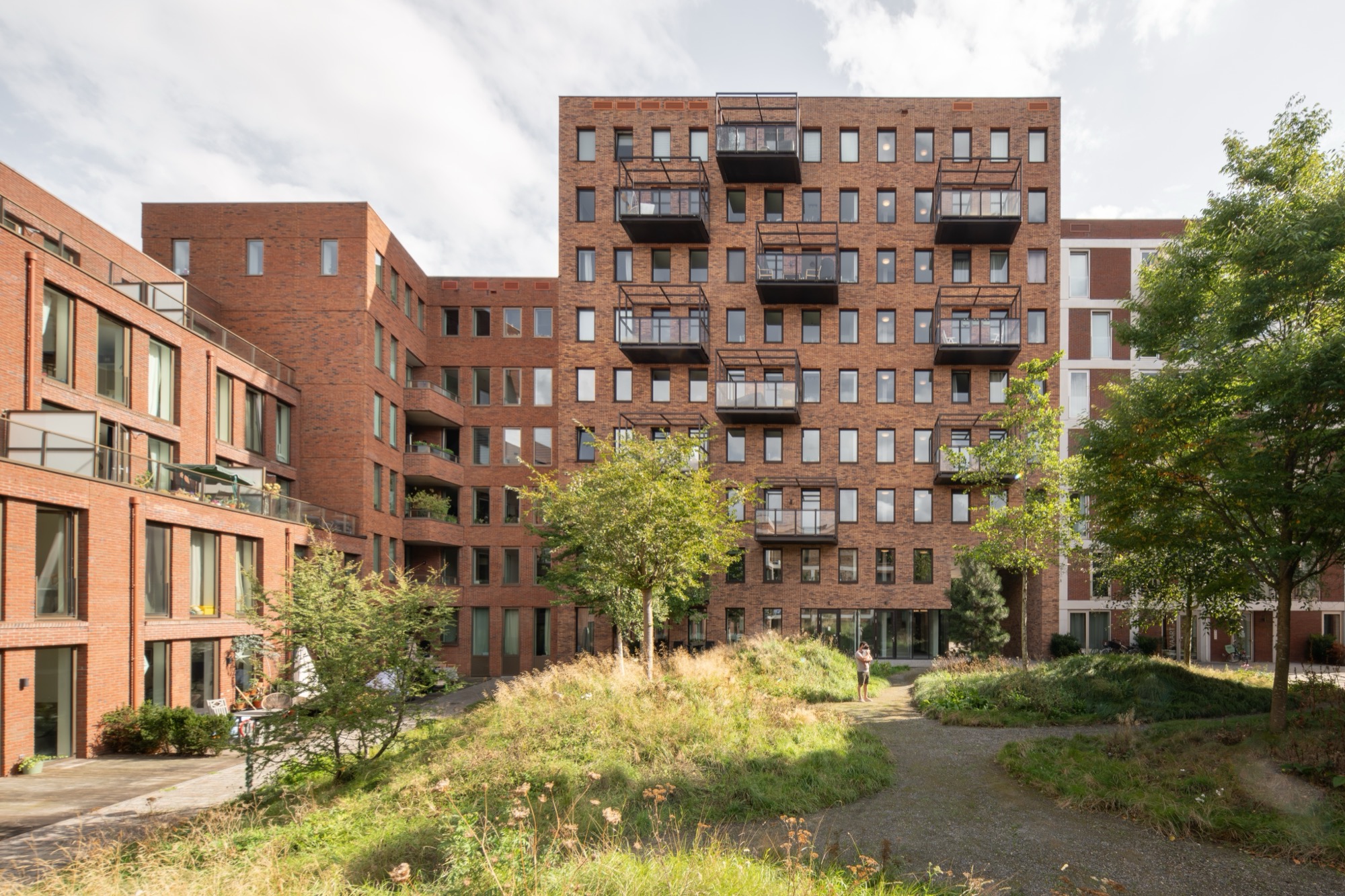
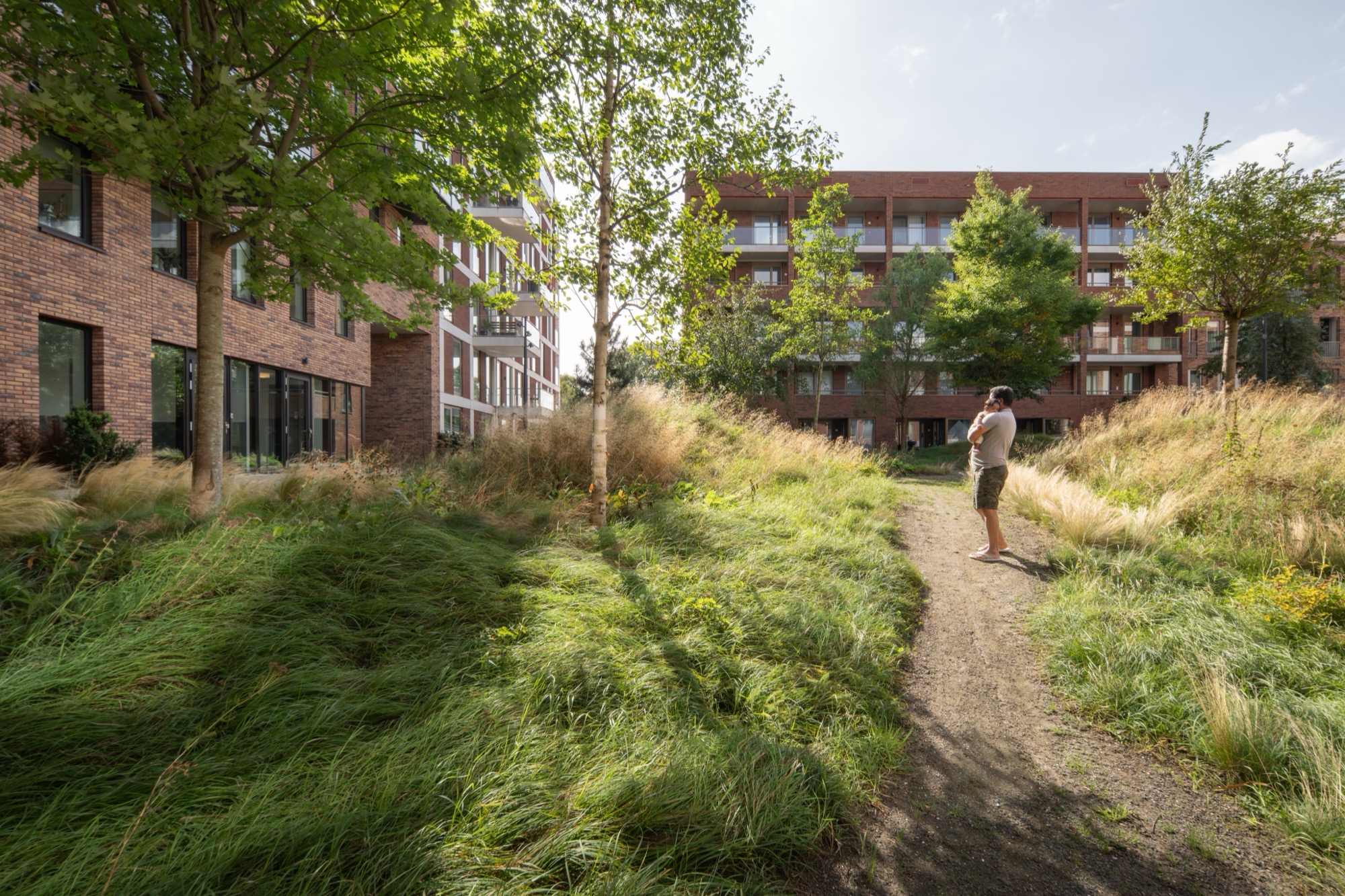
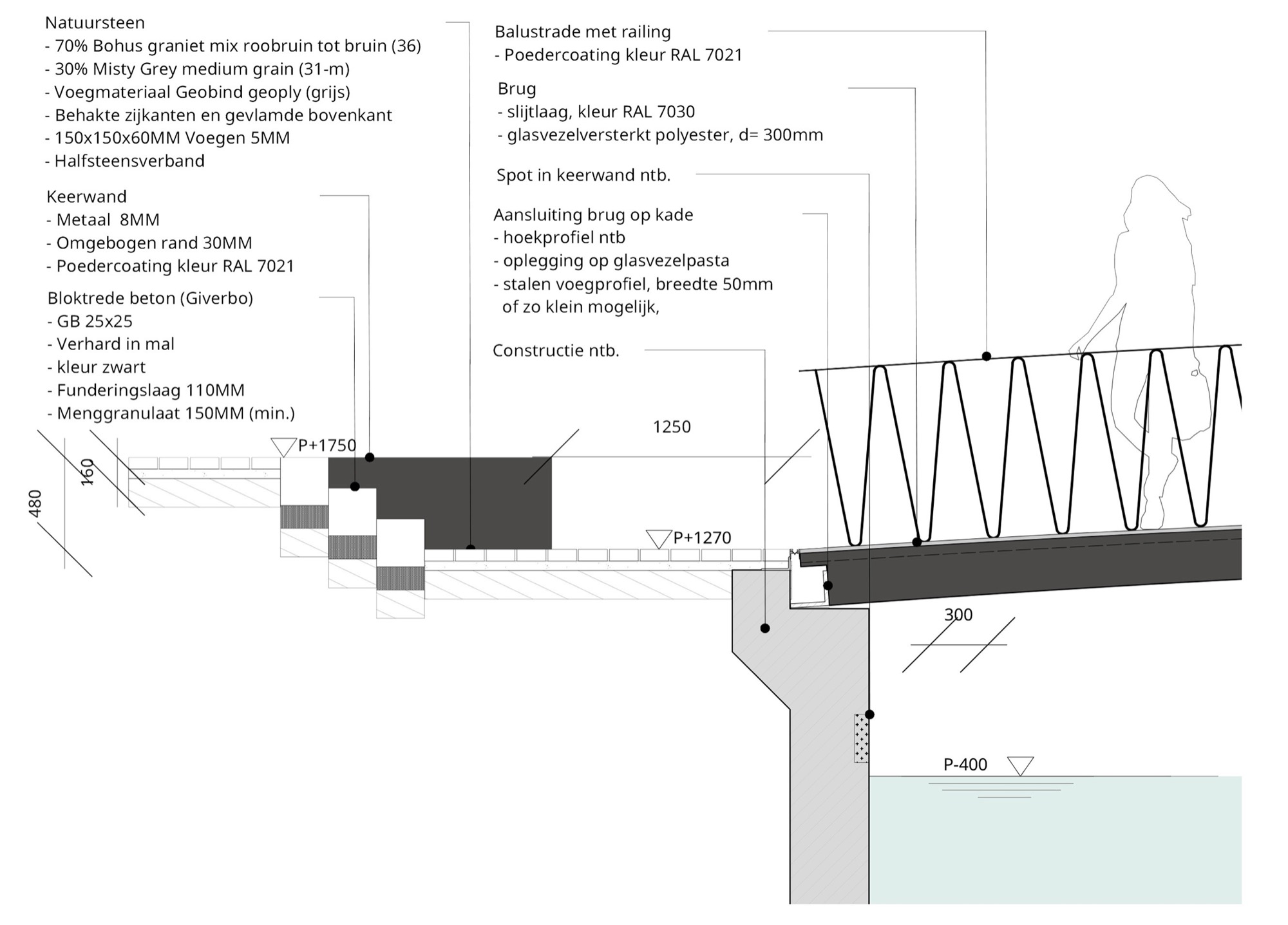
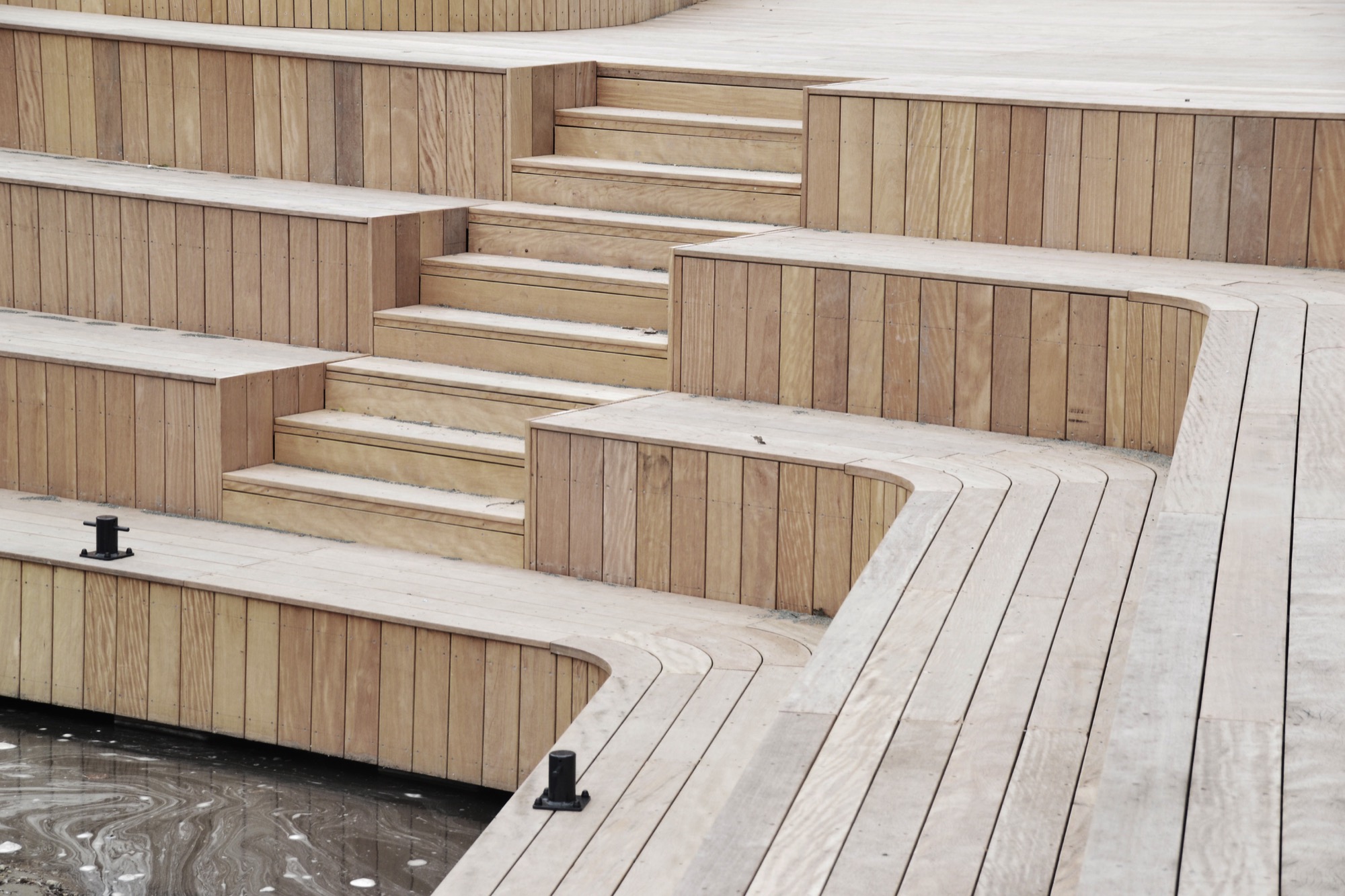
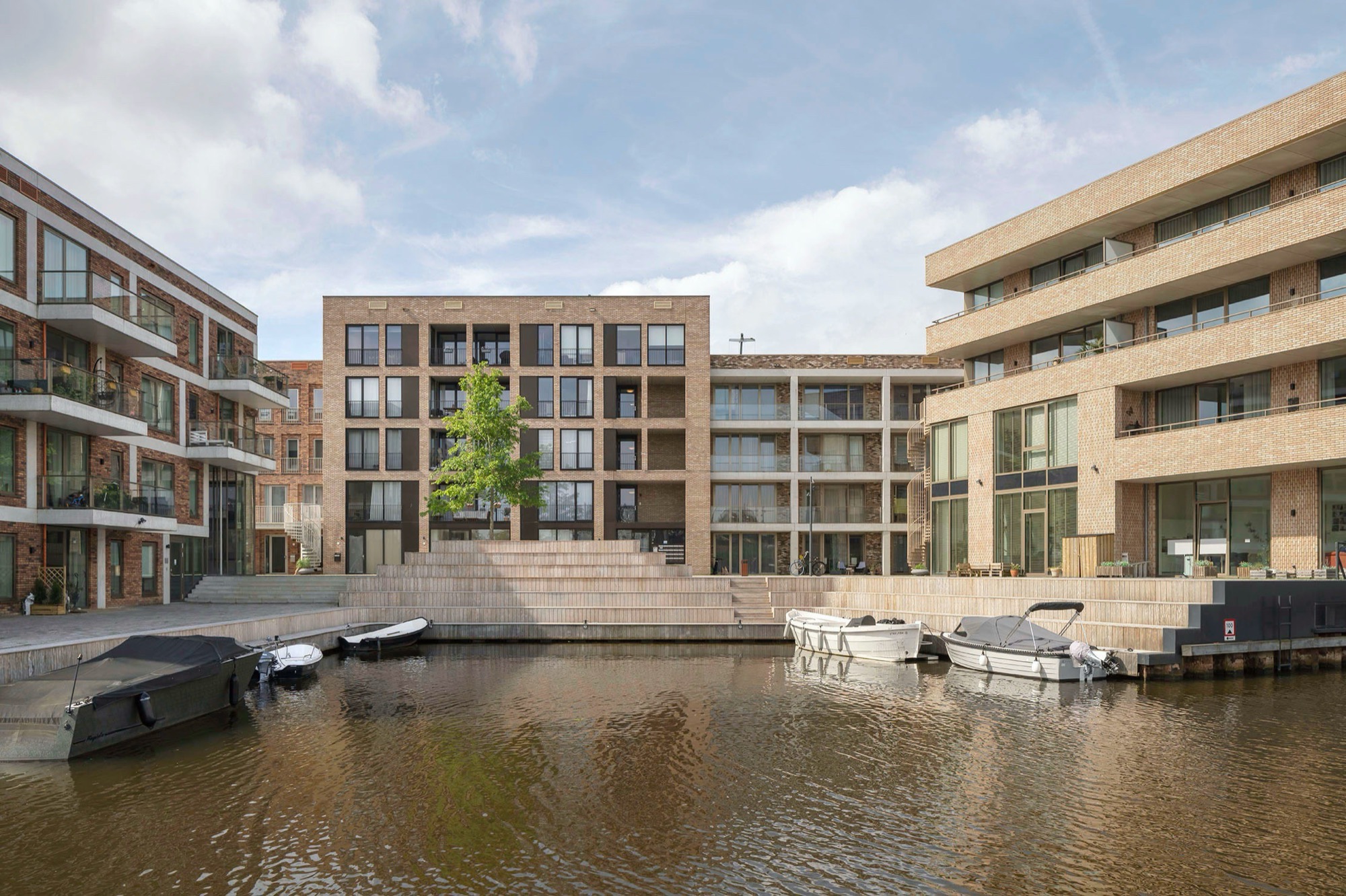
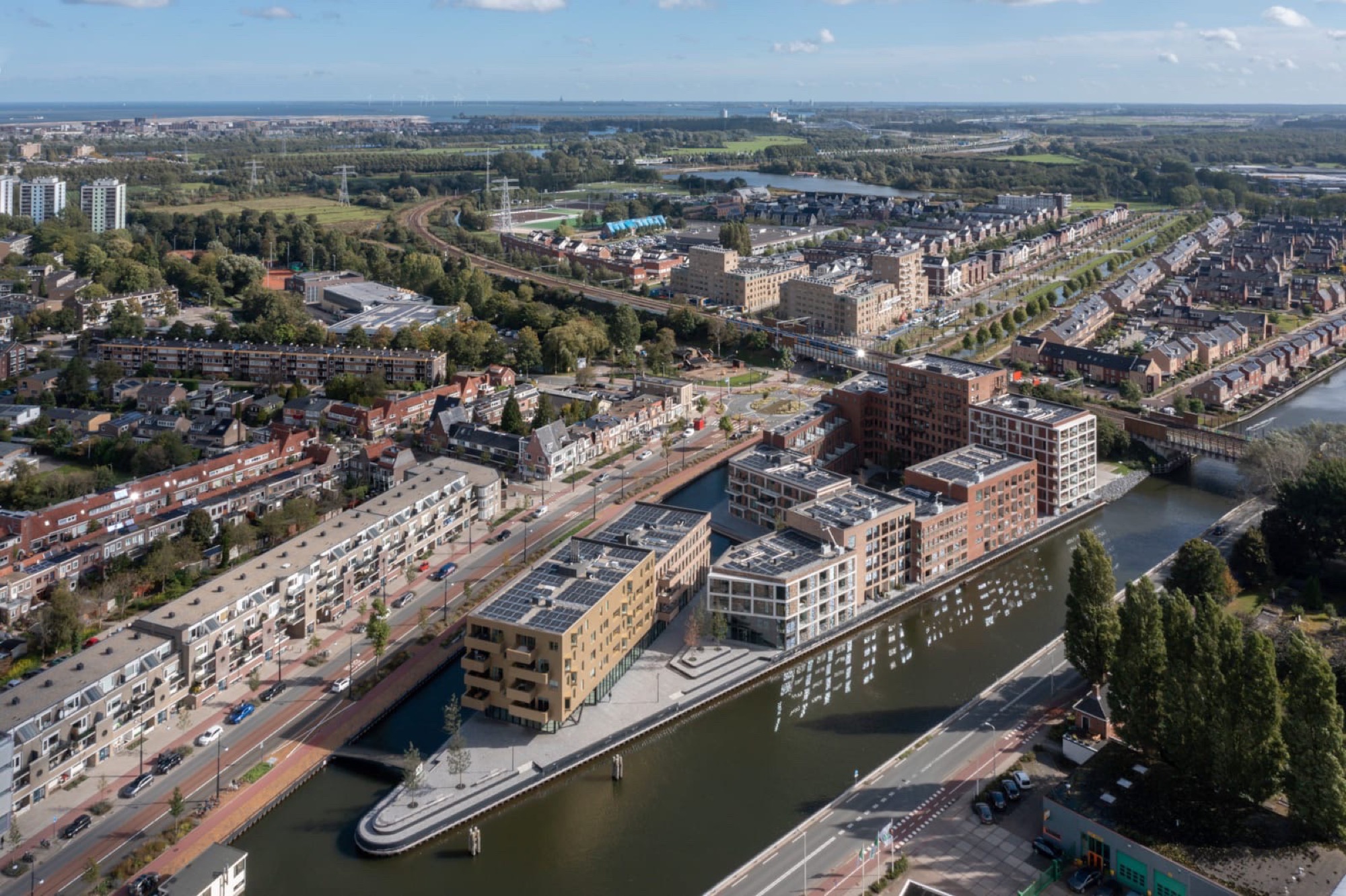
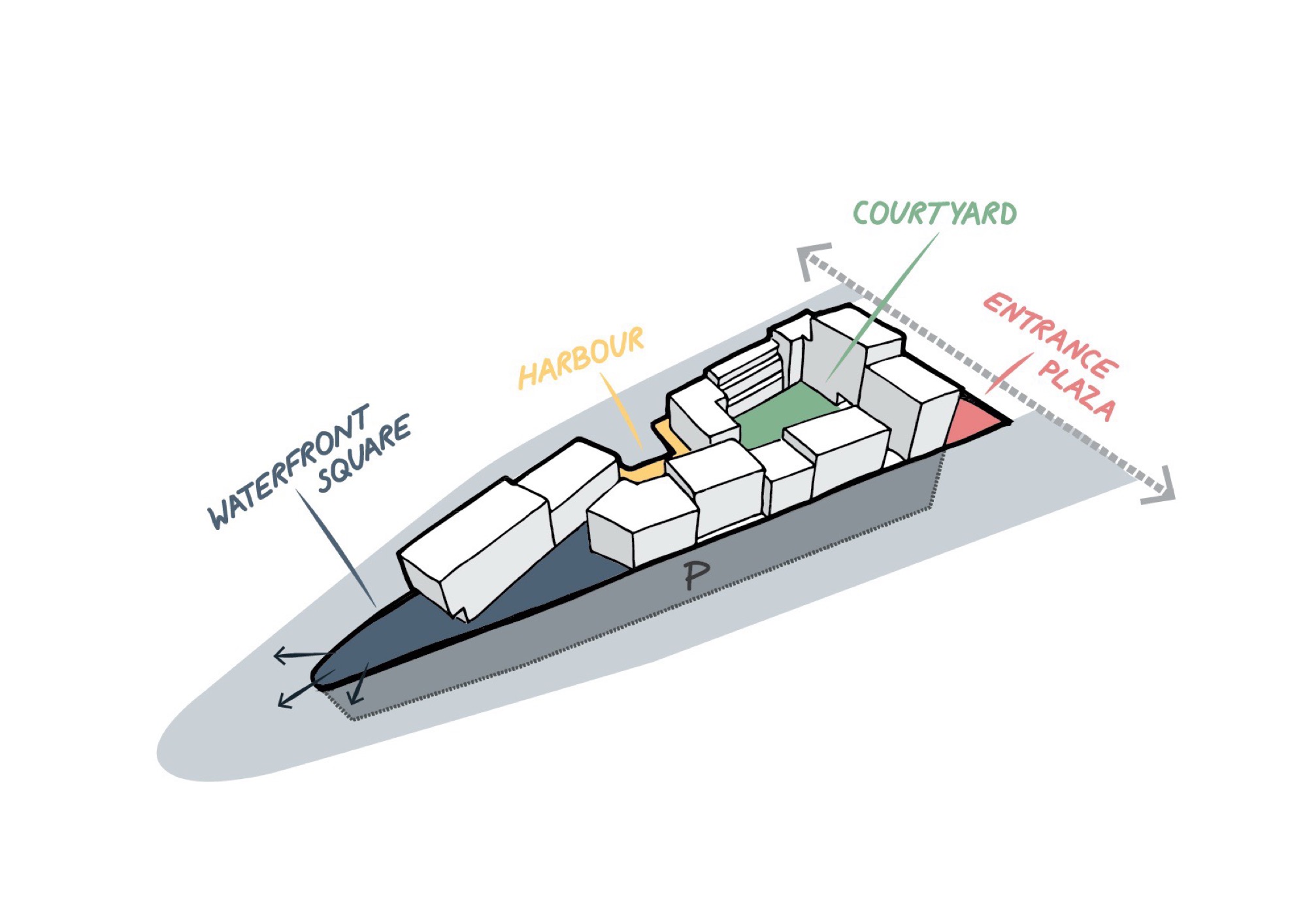
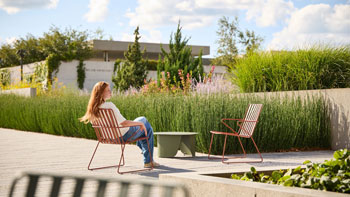
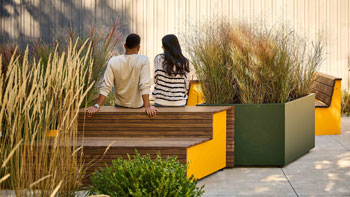
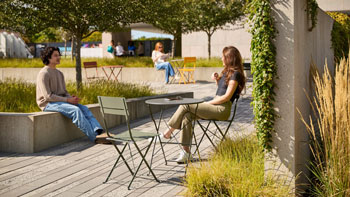
Second, the project organizes social life around a carefully calibrated sequence of four distinct public spaces. Each has its own character, function, and atmosphere. The entrance plaza welcomes visitors through a buffer of grass-concrete paving and lush planting, where parking is absorbed into the landscape rather than imposed upon it. The green courtyard at the development’s heart is designed as an arboretum and pollinator habitat, with diverse tree species, grassland, and a custom communal greenhouse where residents practice urban gardening together. The harbor celebrates the direct relationship with water. A wooden tribune offers space for gathering, and an elevated seating area sits beneath a monumental tree. At the peninsula’s tip, the waterfront square serves as the meeting point of the entire community. South and west facing, sculptural in form, it is animated by ground-floor gastronomy and connected to Diemen’s historic center by a pedestrian bridge that quietly references the area’s nautical heritage.
Third, Punt Sniep takes a clear position on community-building as a design responsibility. The interfaces between private dwellings and public space are calibrated to encourage encounter rather than separation. A communal lobby, the shared greenhouse, the harbor tribune, and the central courtyard are not amenities added at the end. They are the structural logic of the plan. In a Dutch housing context where speed and yield often dominate, Punt Sniep insists that the spaces between buildings are where neighborhoods actually become neighborhoods.
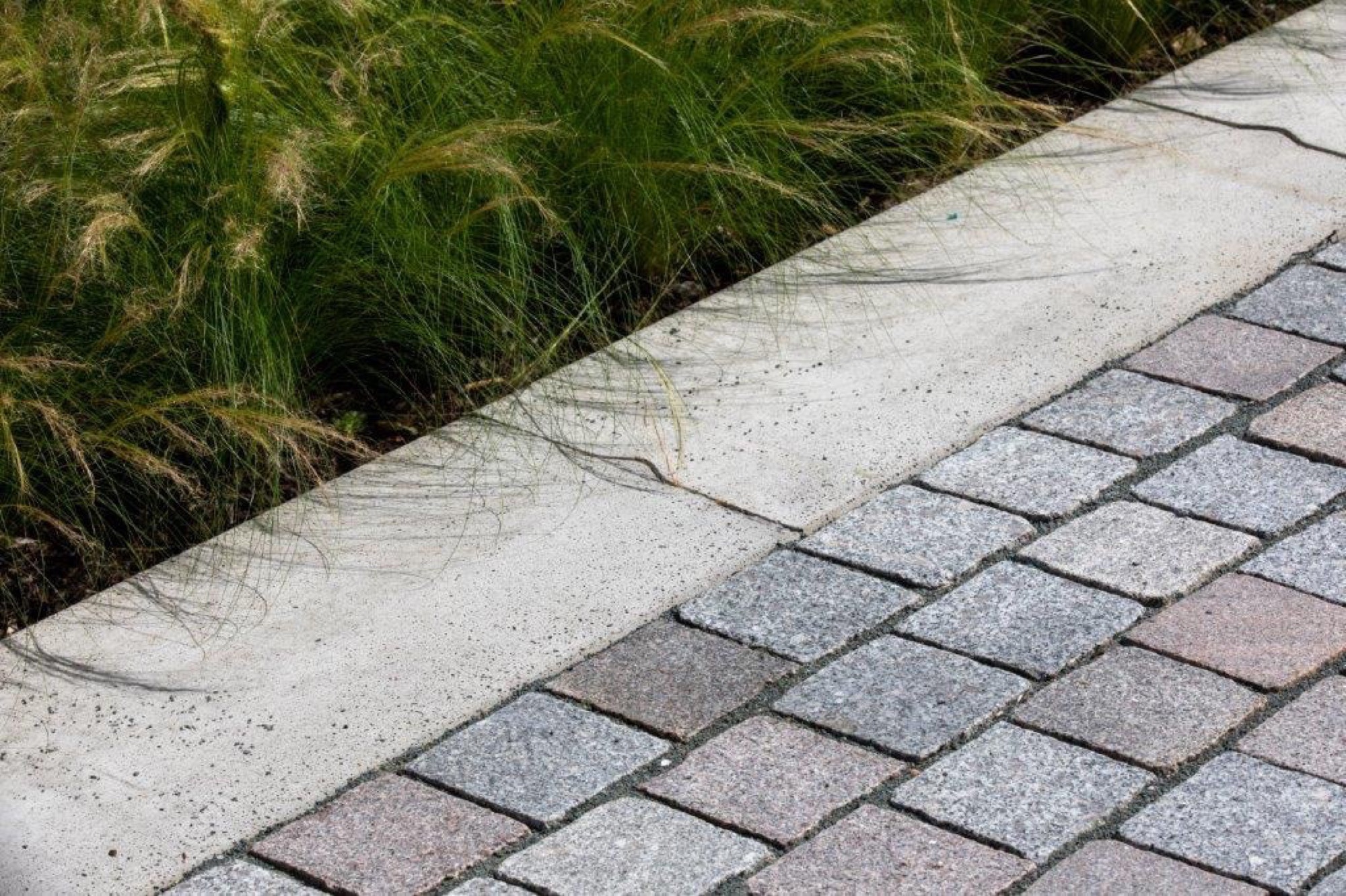
A continuous carpet of natural stone runs the length of the peninsula. It unifies the four zones, marks the car-free realm, and gives visual coherence to the whole. Concrete, steel, and wood recur throughout, echoing the site’s maritime past. The arboretum courtyard offers food and nesting opportunities for birds, butterflies, bees, and other insects, weaving biodiversity into daily residential life. Direct sailing access to Amsterdam via the Muidertrekvaart reinforces the cultural identity of living on the water, while cycling distance to the city positions Punt Sniep as a model of low-carbon, water-connected urban living.
What makes Punt Sniep particularly relevant is its replicability. European cities are grappling with how to densify without sacrificing ecological quality or social cohesion. Punt Sniep offers a clear, built answer. Hide the car. Raise the ground. Plant real trees. Design the in-between spaces with as much rigor as the buildings themselves, and let water do its work as a unifier rather than a divider. It is a project that quietly but decisively reframes what a contemporary residential peninsula can be.
Project Credits
Landscape Architecture: KCAP
Client: ABC Planontwikkeling + Nedreim (original commission); Vesteda (turnkey acquisition / owner)
Developer: ABC Planontwikkeling + Nedreim
Contractor: Heddes Bouw & Ontwikkeling B.V. and Kleywegen
Project Management: ABC Nova
Sustainability Consultant: MoBius Consult
Installations: J. van Toorenburg BV
Construction: van Rossum
Collaborator: Gemeente Diemen
Photography: Aiste Rakauskaite, Jan Bitter, Fred Tigelaar, Ossip van Duivenbode
Location: Diemen, The Netherlands
Year of Completion: 2021
52.33682936826323, 4.96737652677462
73562


LILA 2026 Sponsor