Recreational spot Rottebanbridge
urbansynergy.nl/
2026 Landscape and Architecture / 2026 Public Projects / Netherlands / Built in 2025 /

![A Neighbourhood Square Transformed into a Climate-Proof City Park Where 5,000 m² of asphalt once dominated the streetscape, a vibrant, climate-adaptive park now lies at the heart of Rotterdam’s Bospolder-Tussendijken (BoTu). The former Driehoeksplein has undergone a major transformation, renamed “Driehoekspark” by residents and local schoolchildren—a new name for a renewed place of daily life, […]](https://landezine-award.com/wp-content/uploads/2025/05/00-220307-option-A-600x386.jpeg "Driehoekspark by Urban Synergy")
BACKGROUND
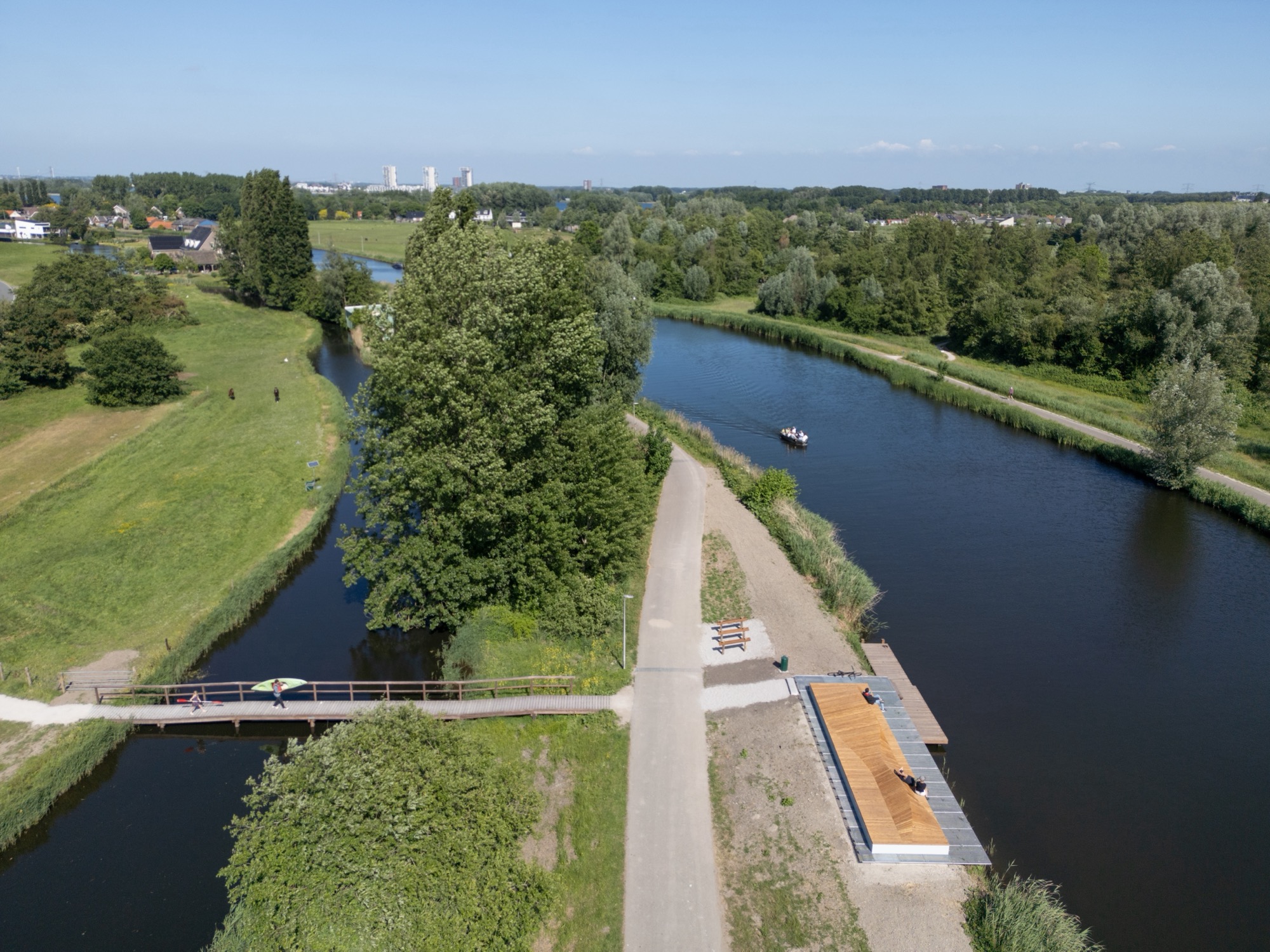
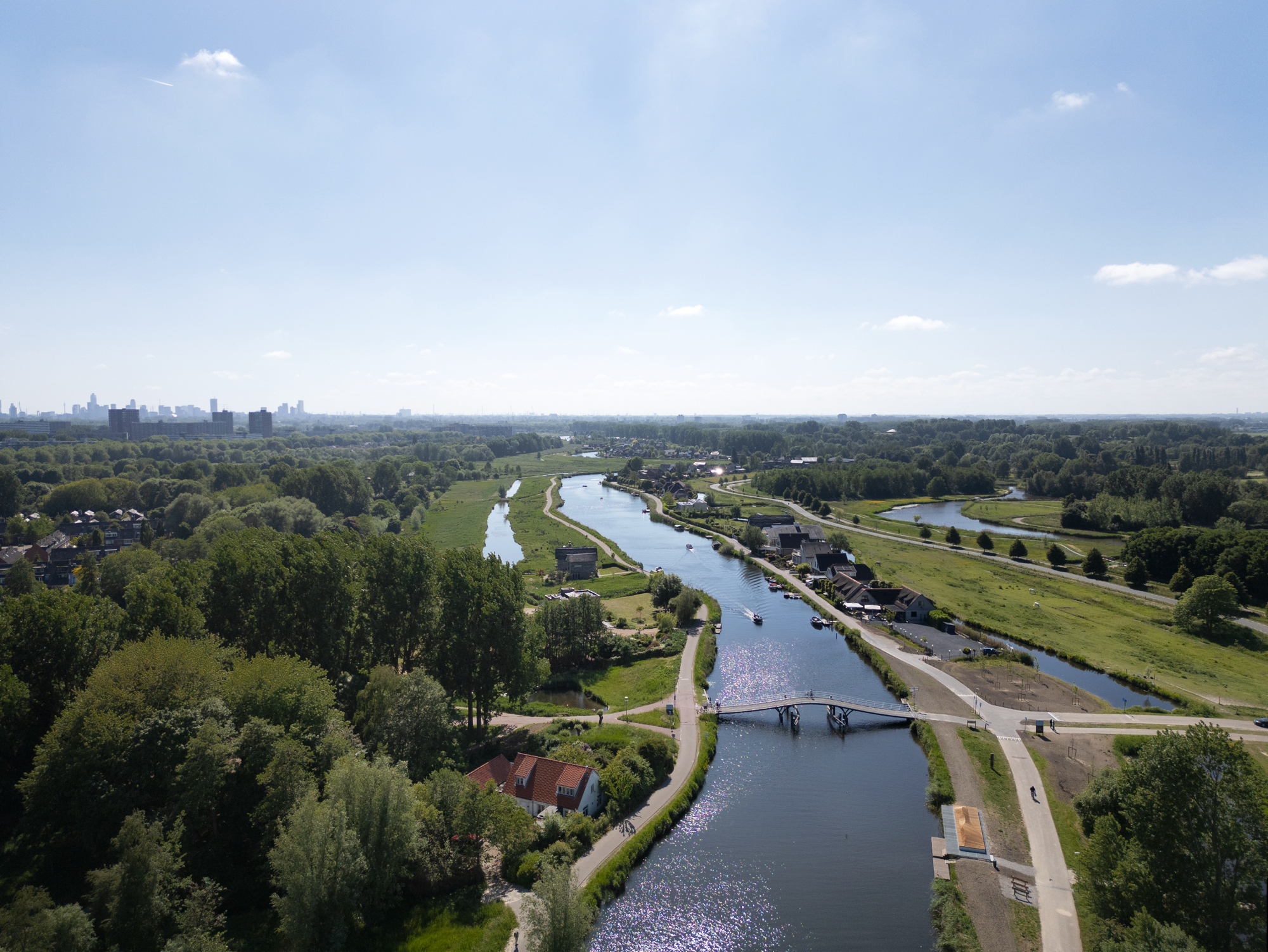
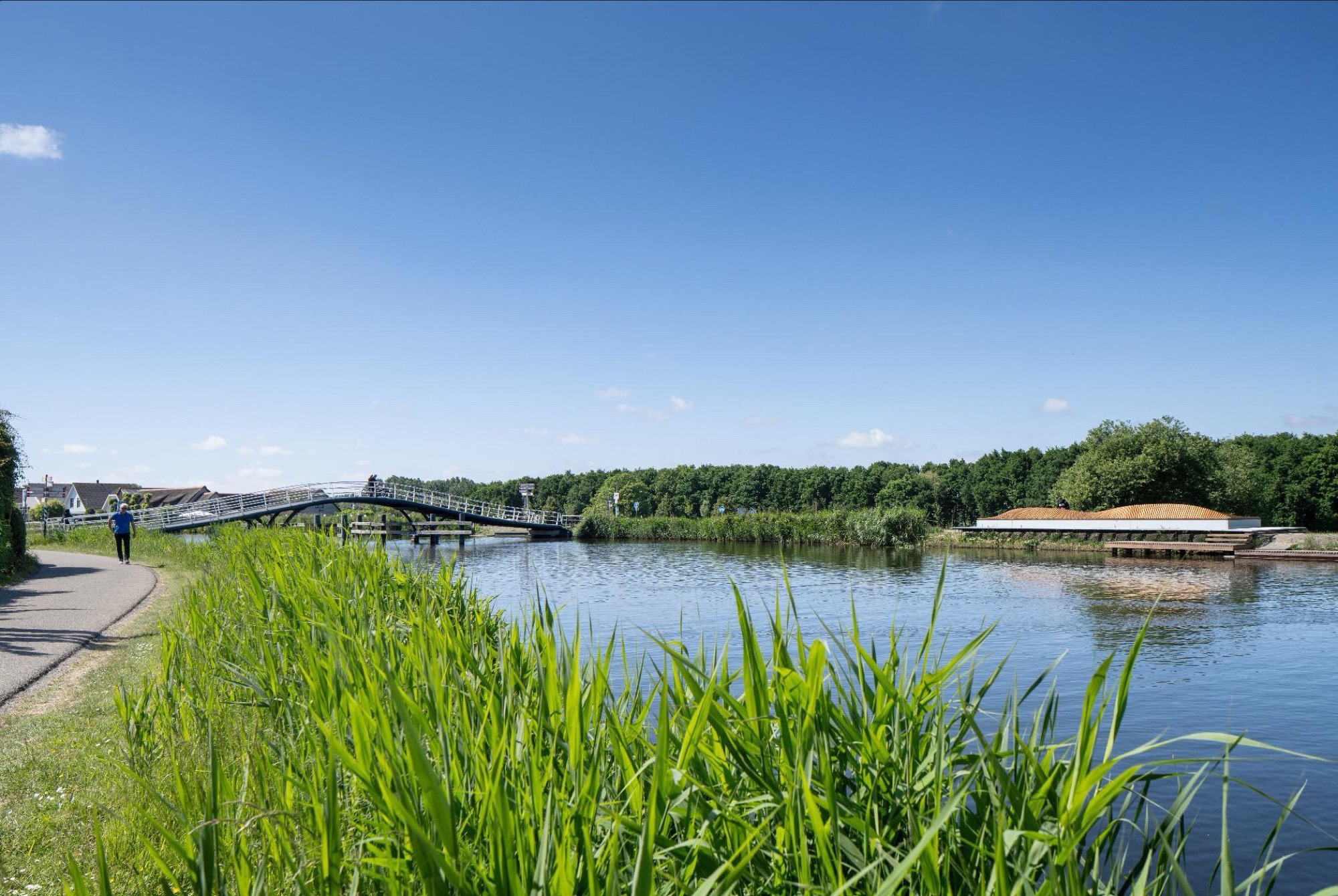
The Rotte is a historical river running from the city centre towards the recreational areas in northern Rotterdam. Alongside it are many recreational spaces and routes for cyclists, pedestrians, boats, and canoes. The Rottebanbrug is located halfway along the river, strategically positioned between two popular recreational areas: Hoge Bergse Bos and Zevenhuizerplas. This location held great potential to become an attractive gateway between these green spaces, functioning as a place to stay and enjoy the spatial quality of the river and its green surroundings. Originally, the resting place was small and outdated, traffic safety was limited, and canoe docking was insufficient. The site failed to provide a welcoming entrance to the surrounding landscape.
THE ASSIGNMENT
Recreatieschap Rottemeren commissioned Urban Synergy to transform the landscape around the bridge into an attractive, user-friendly place to stay and meet, acting as a hub for transferring from canoe to other transport, while designing the surroundings as a gateway between the two large recreational areas. It was essential to involve the requirements of stakeholders, including municipalities, the Schieland and Krimpenerwaard water board, the Province of Zuid-Holland, entrepreneurs from Outdoor Valley and Restaurant Nova, and diverse user groups.

THE DESIGN
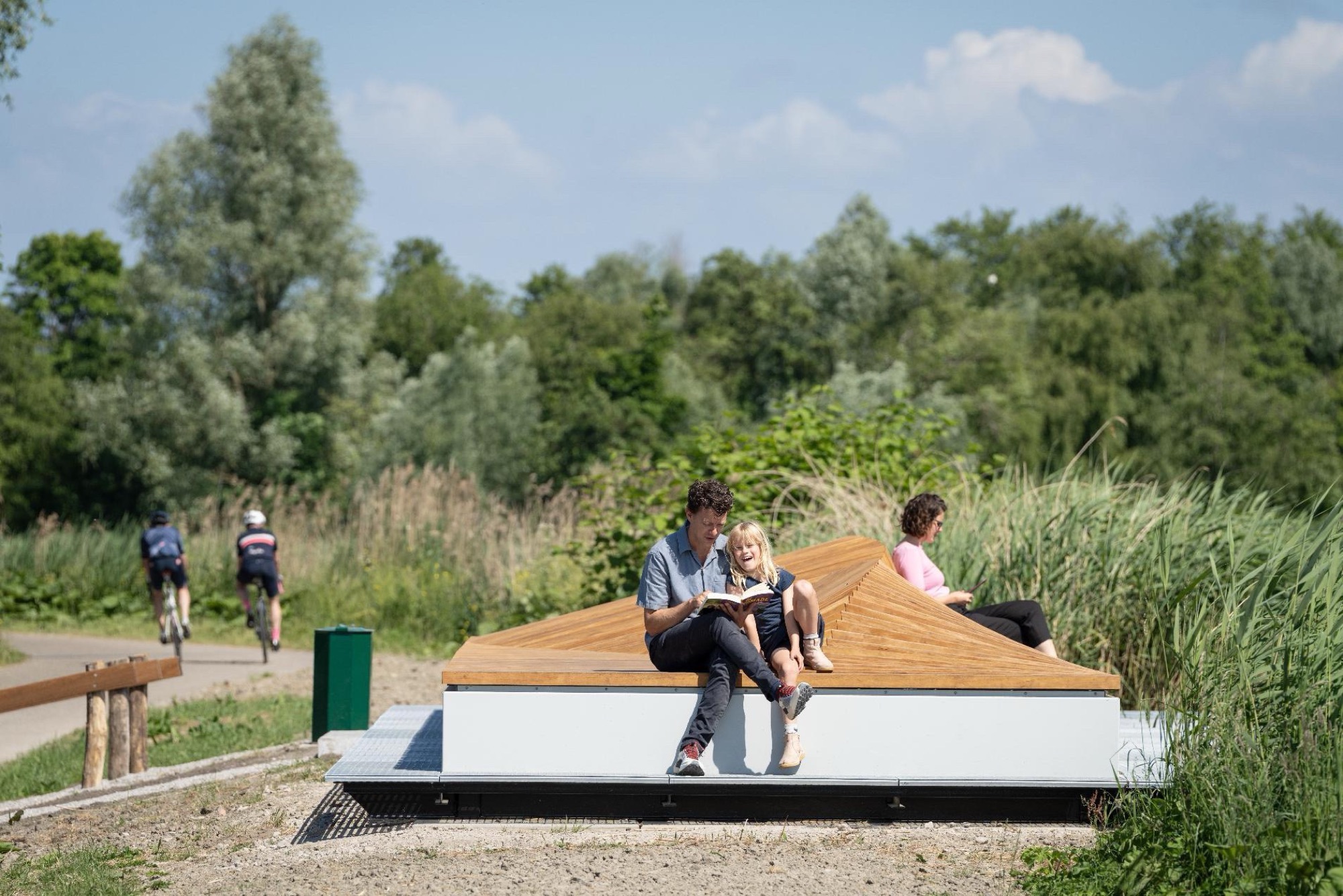
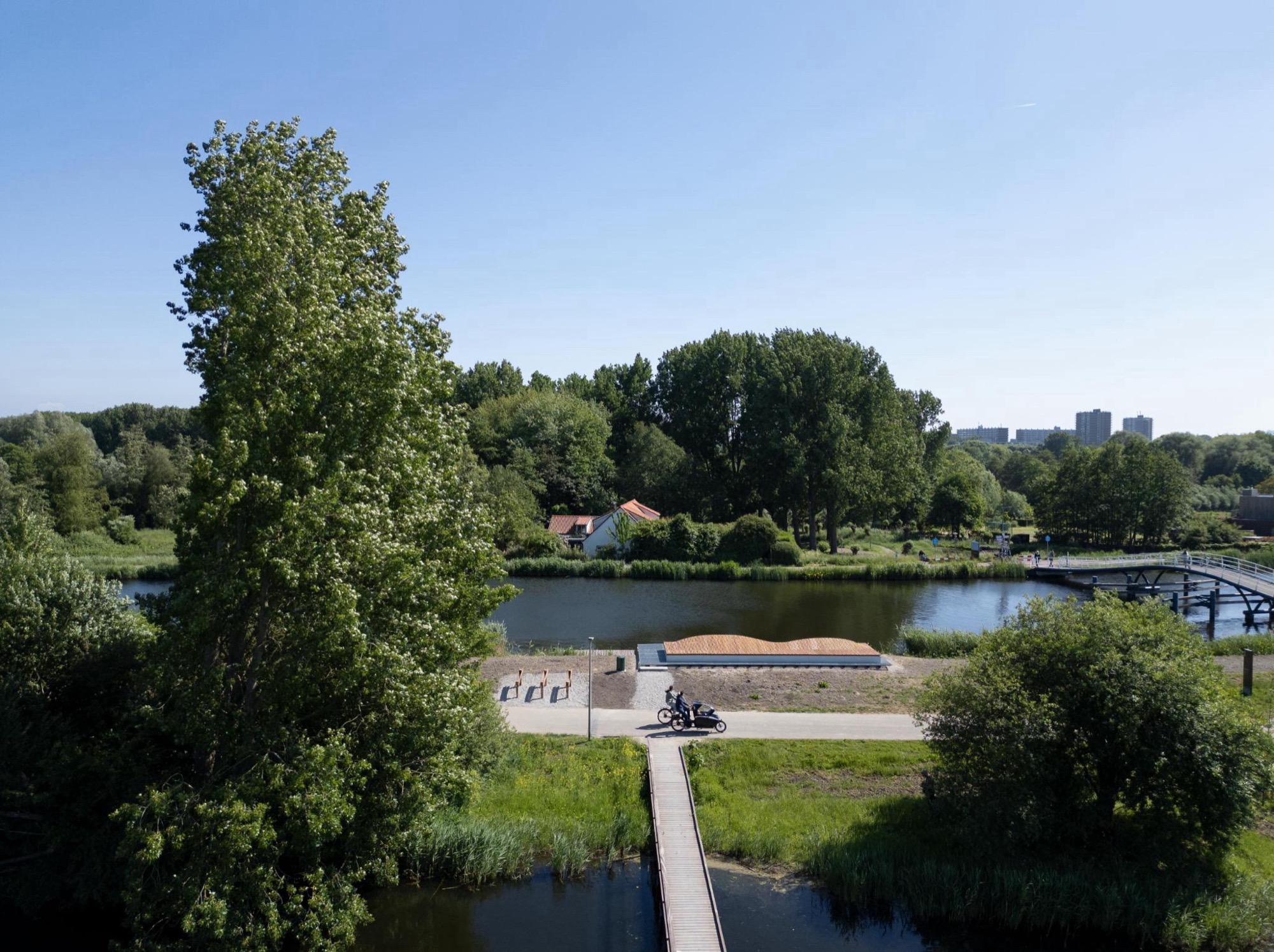
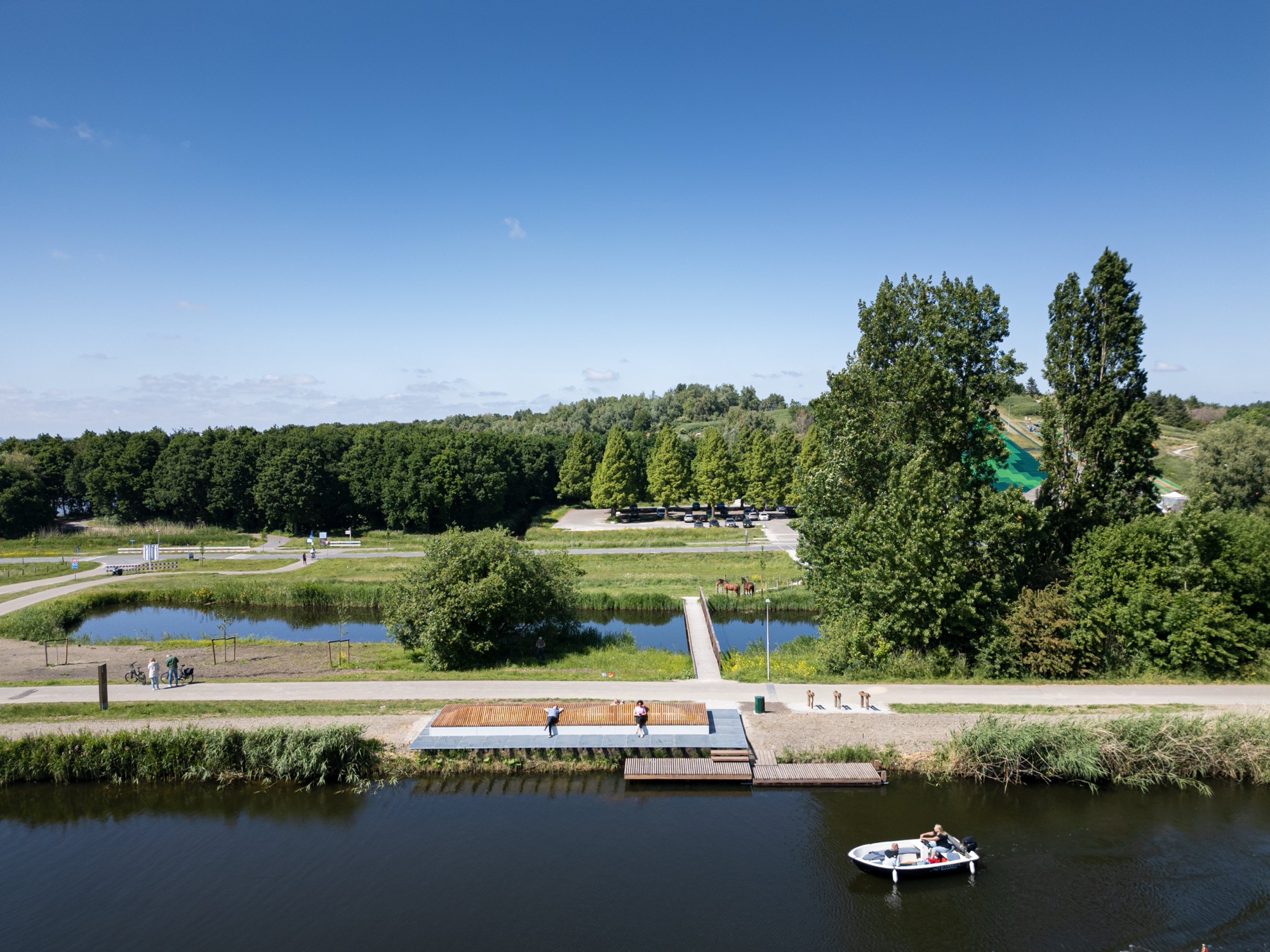
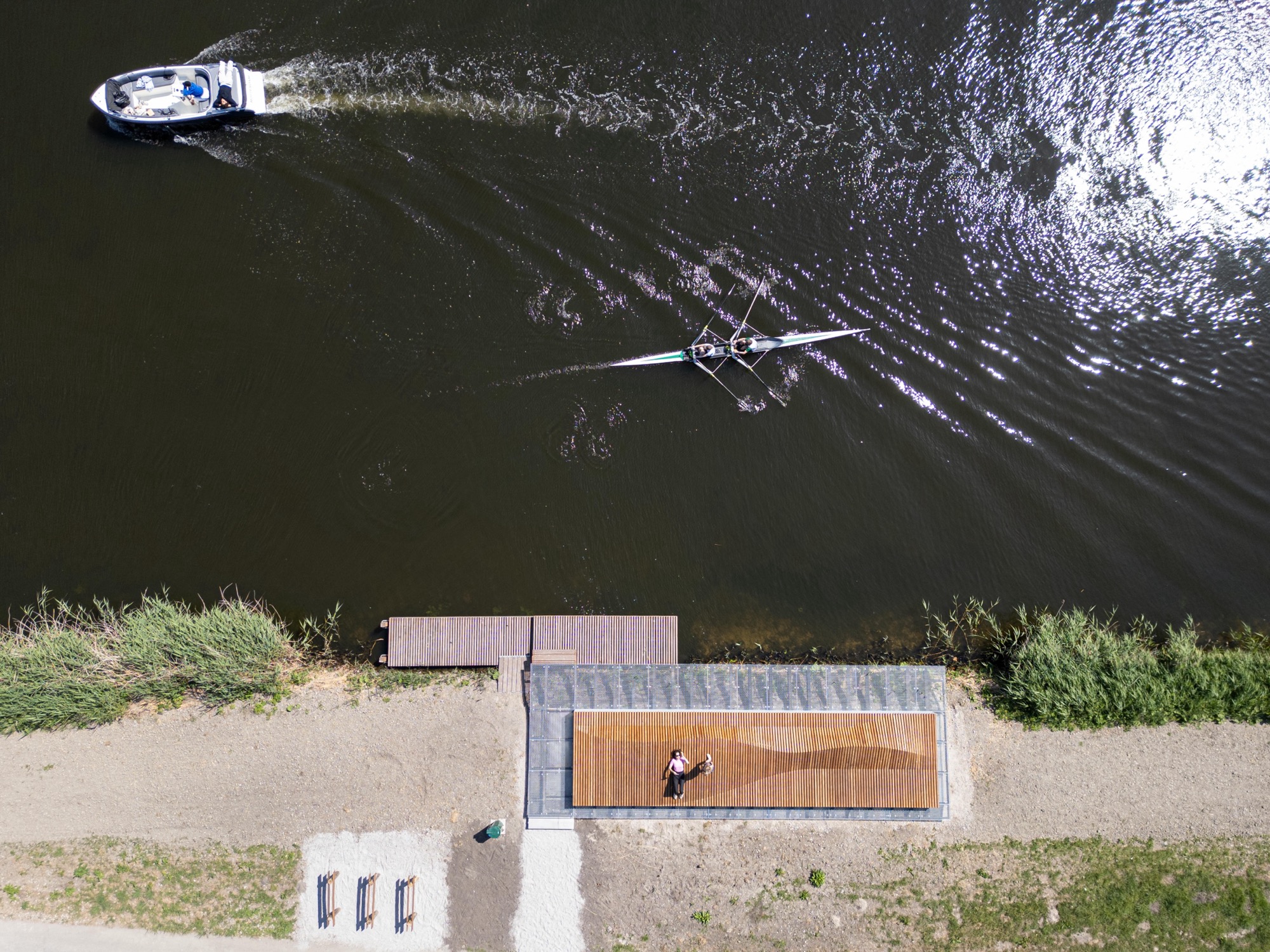
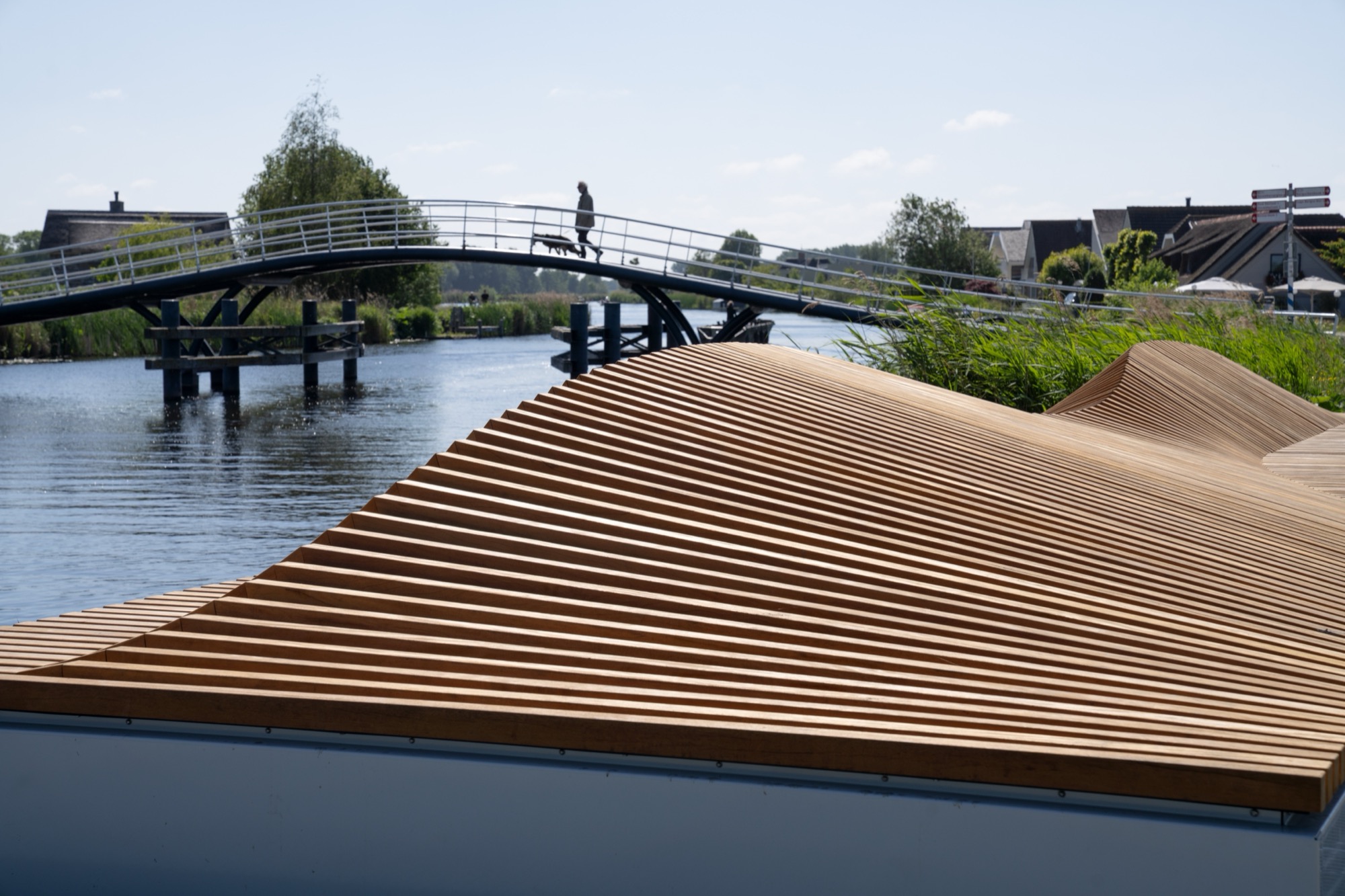
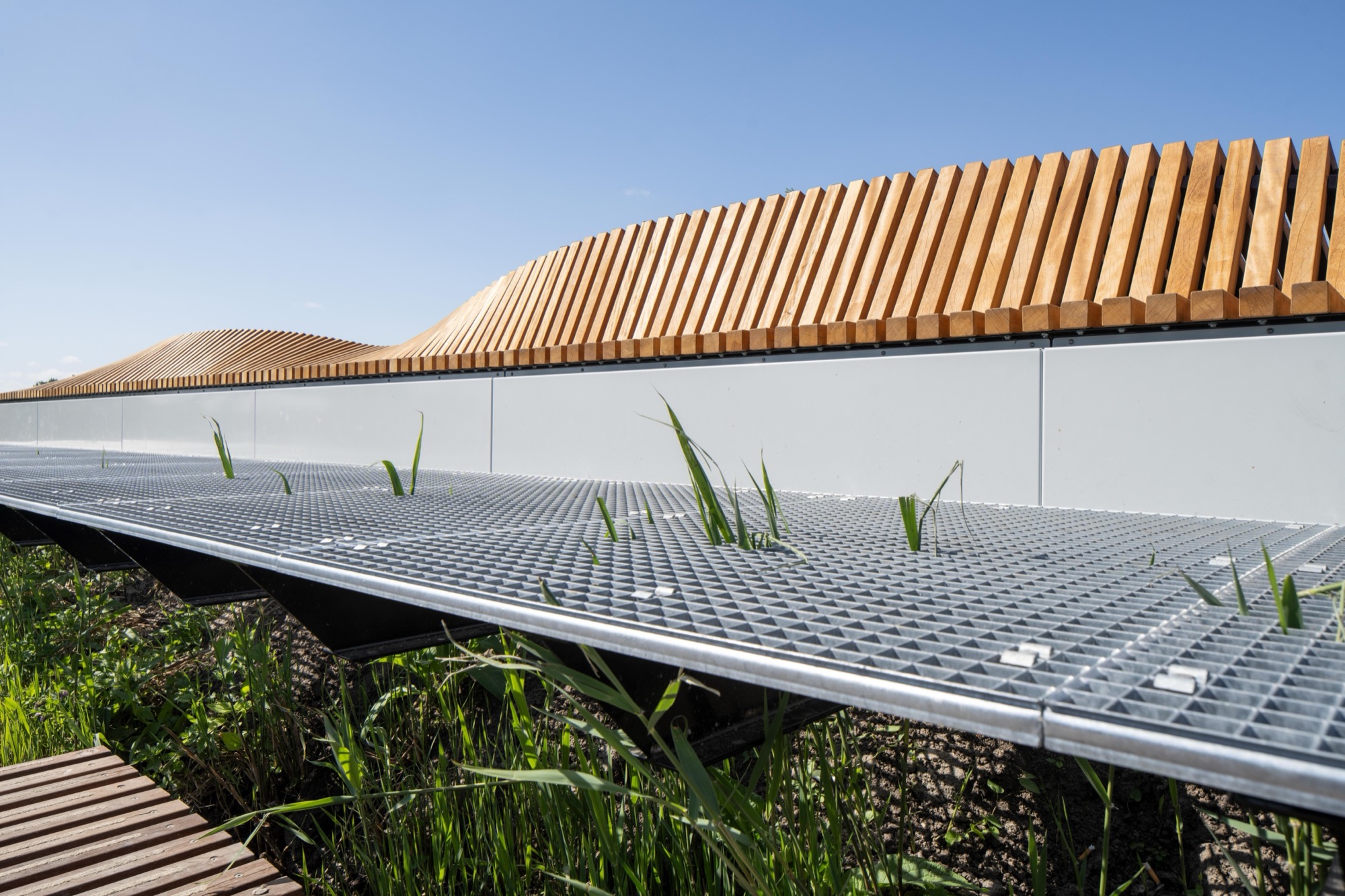
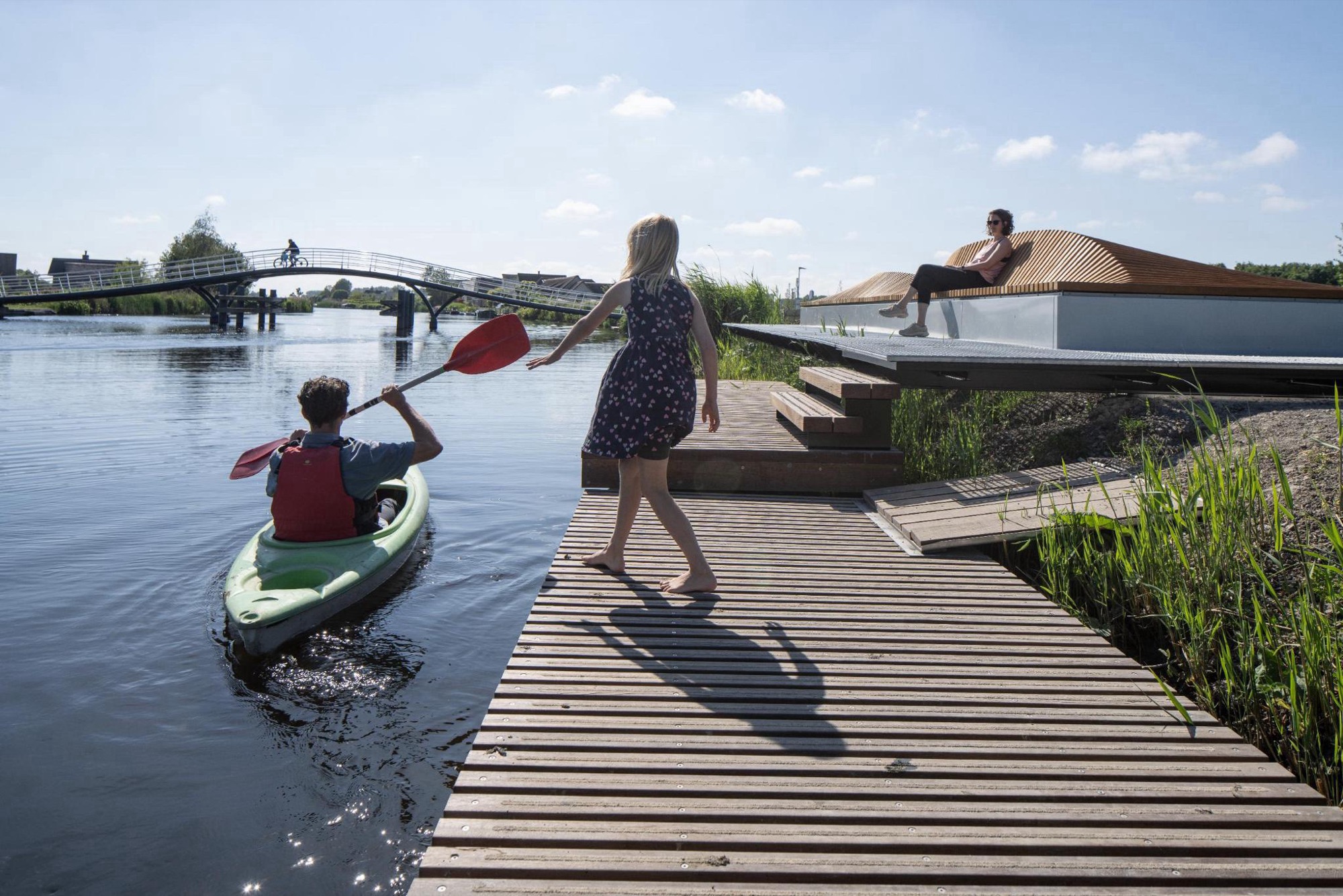
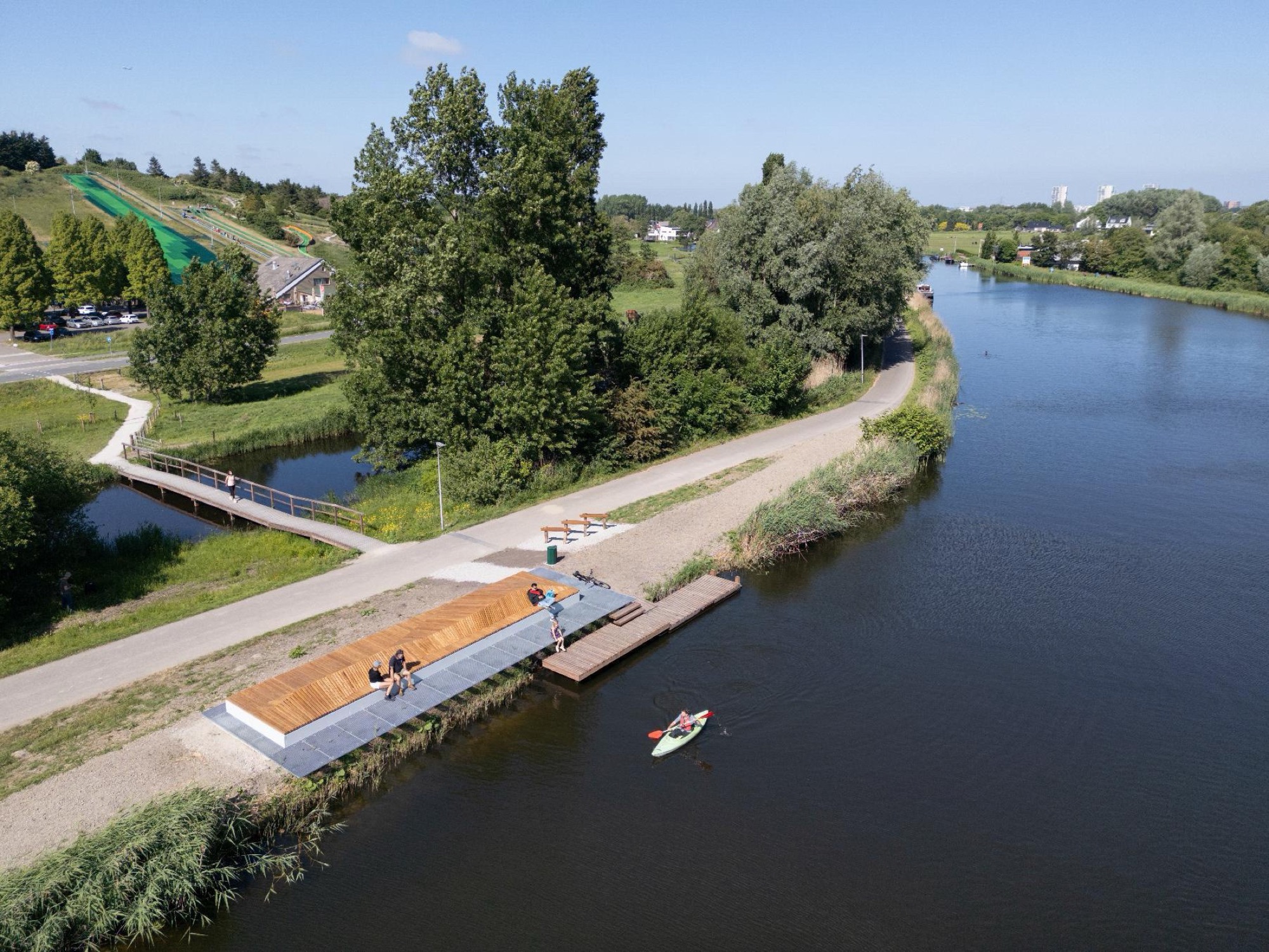
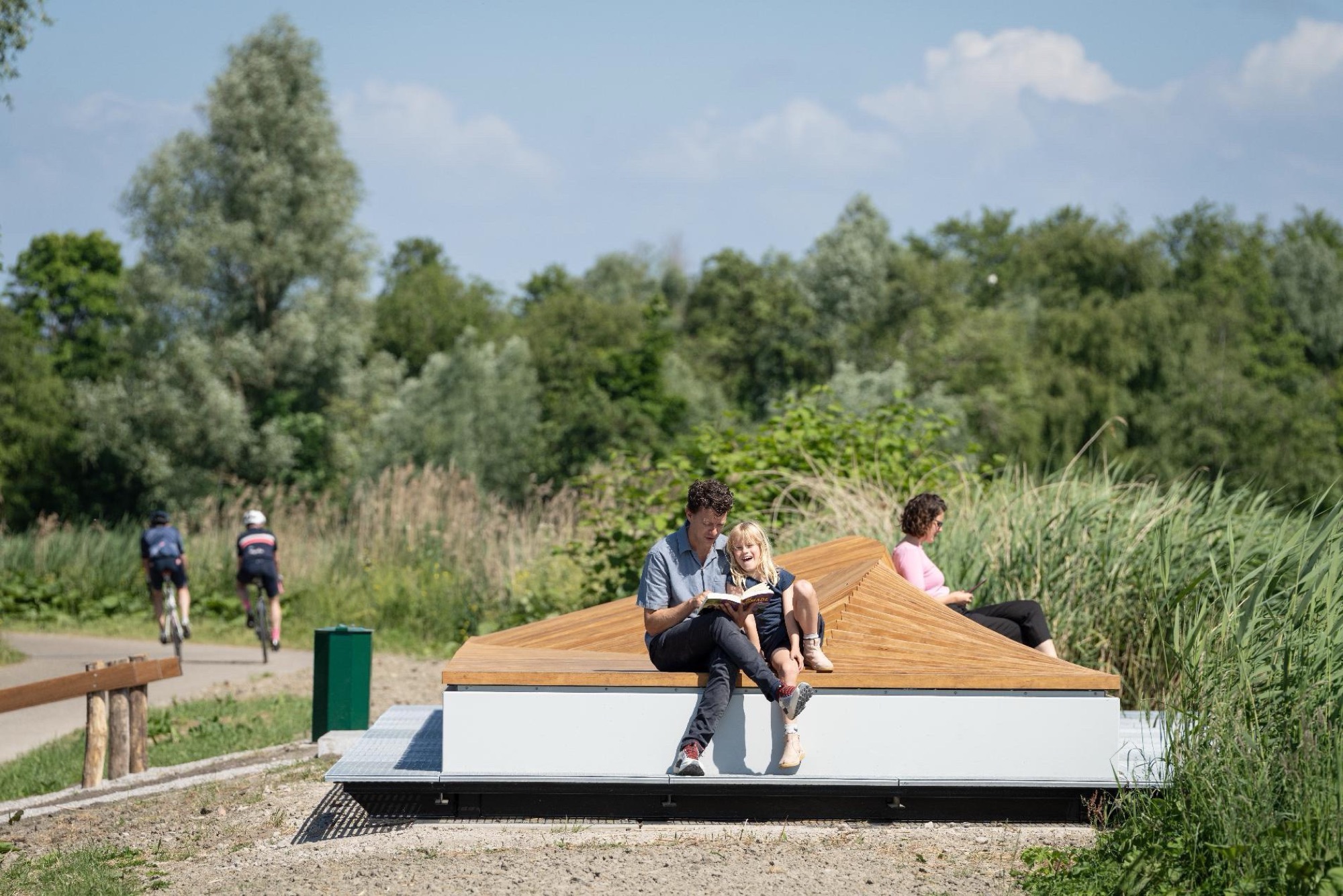
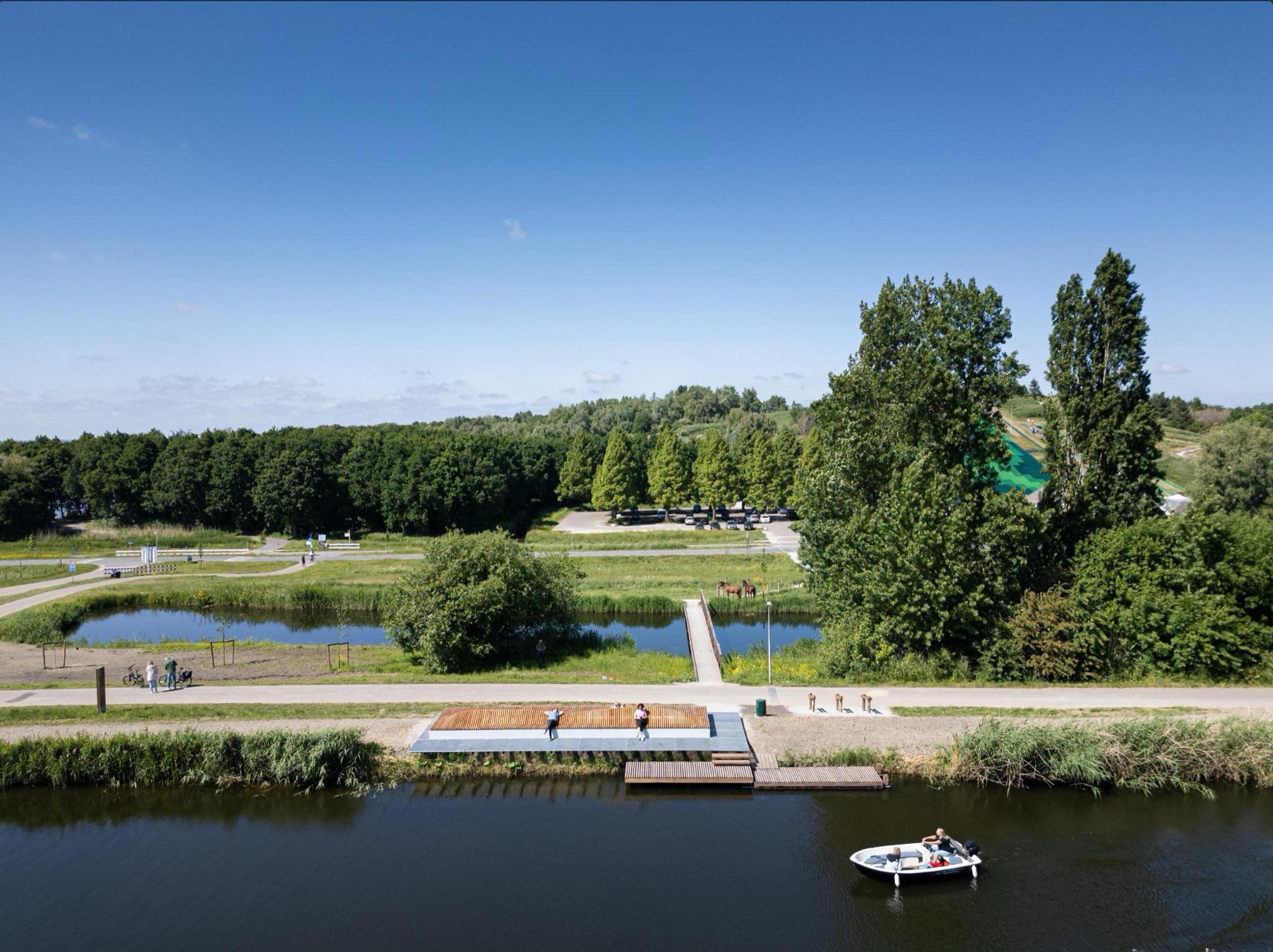
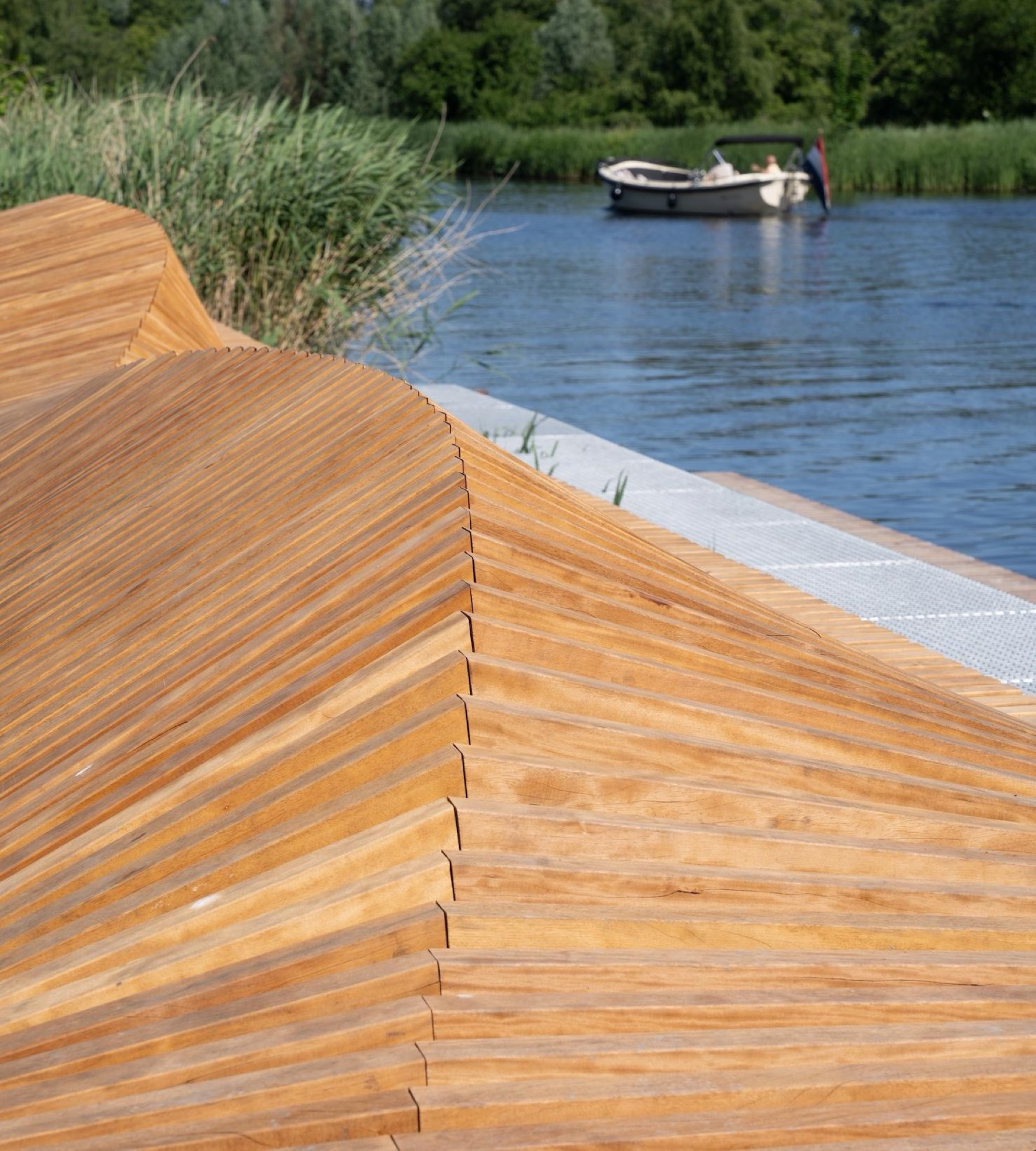
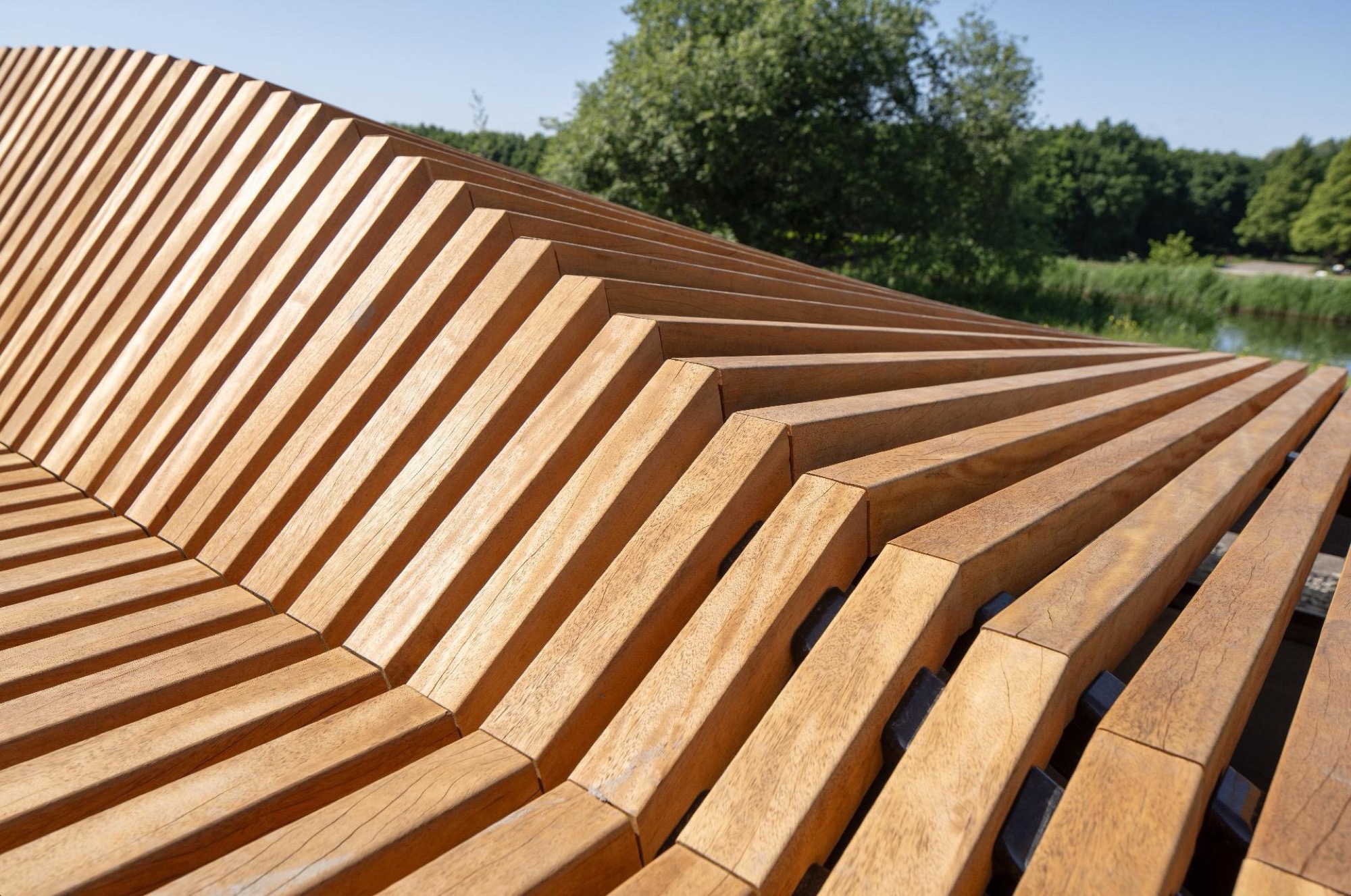
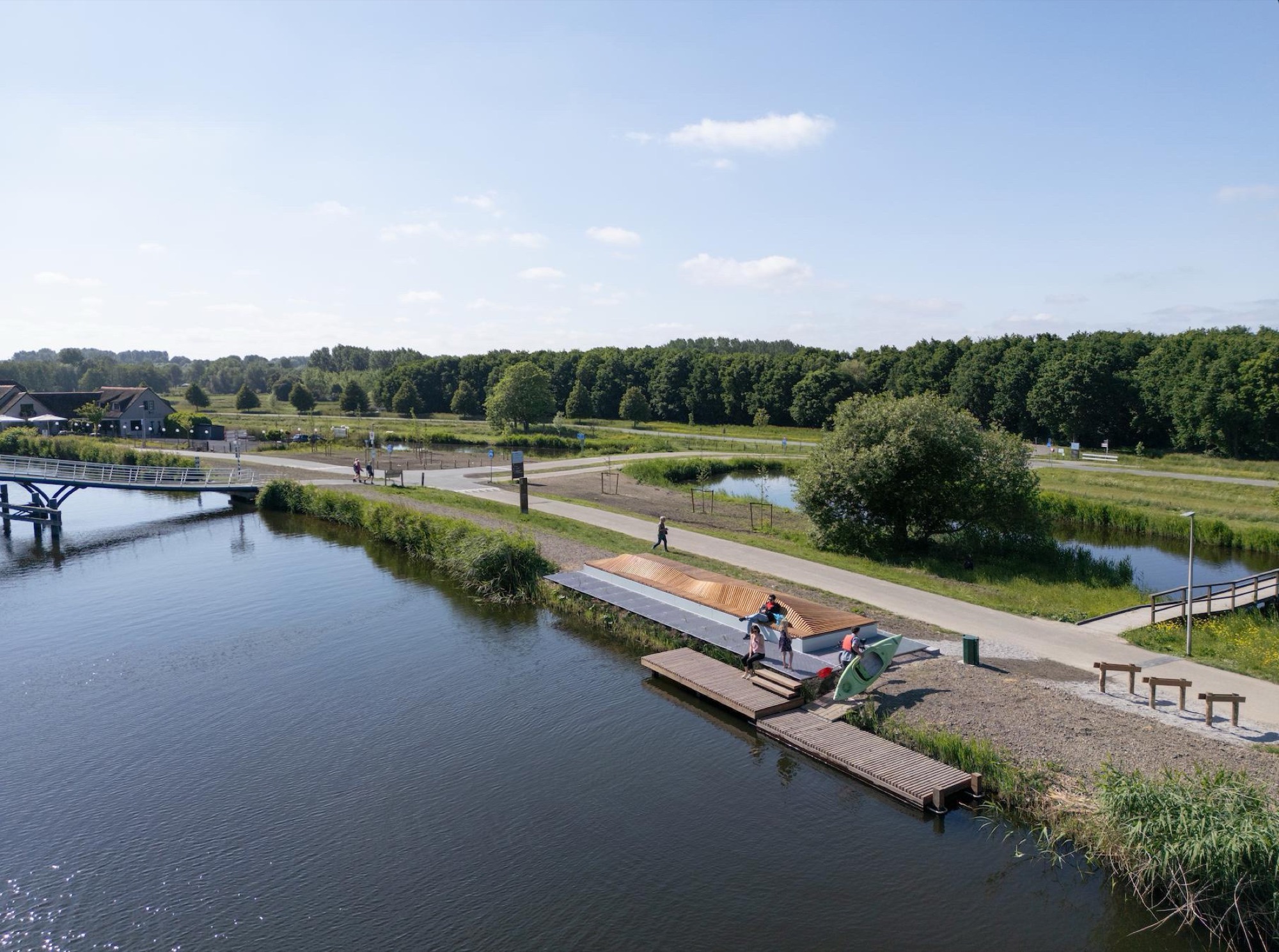
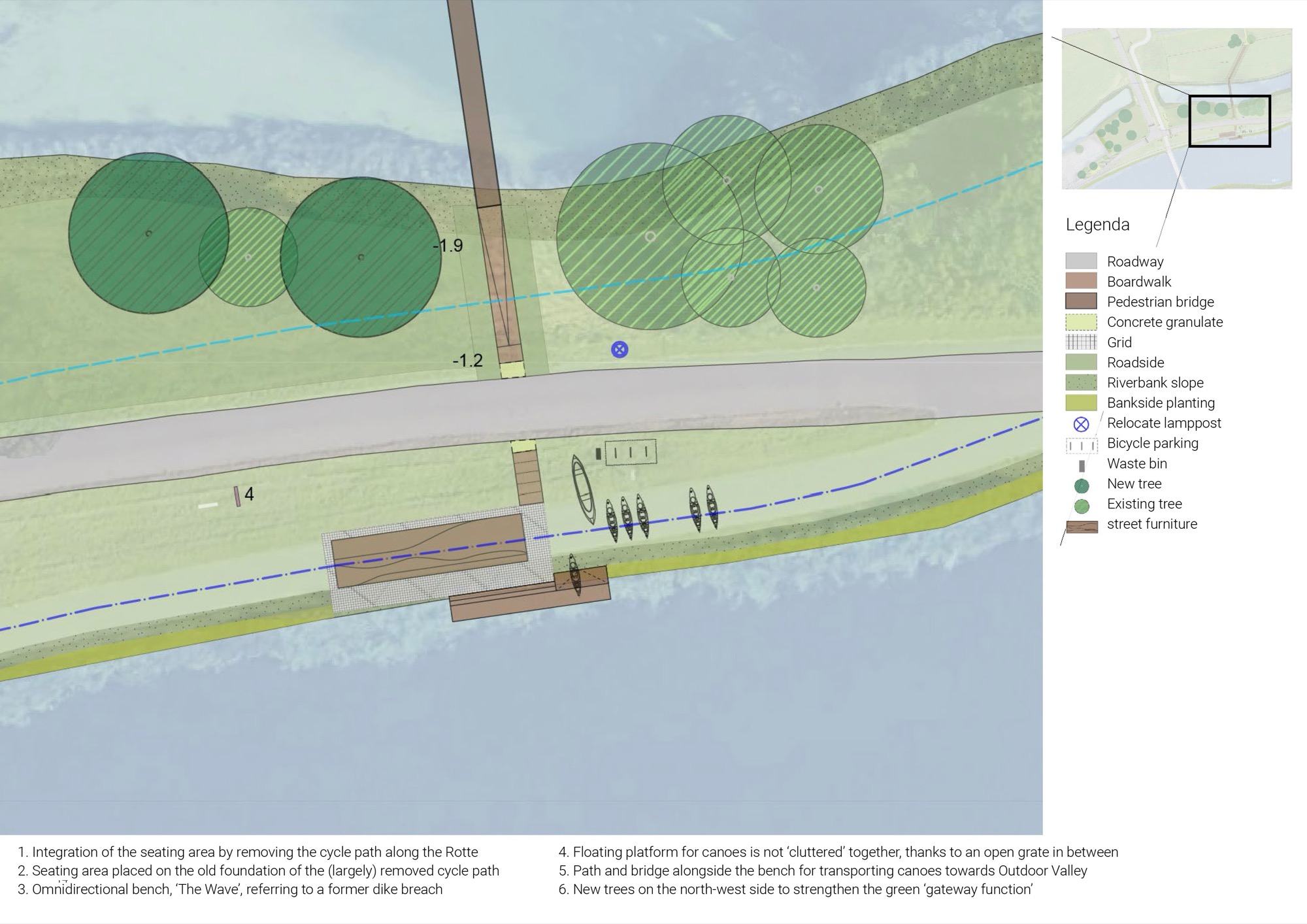
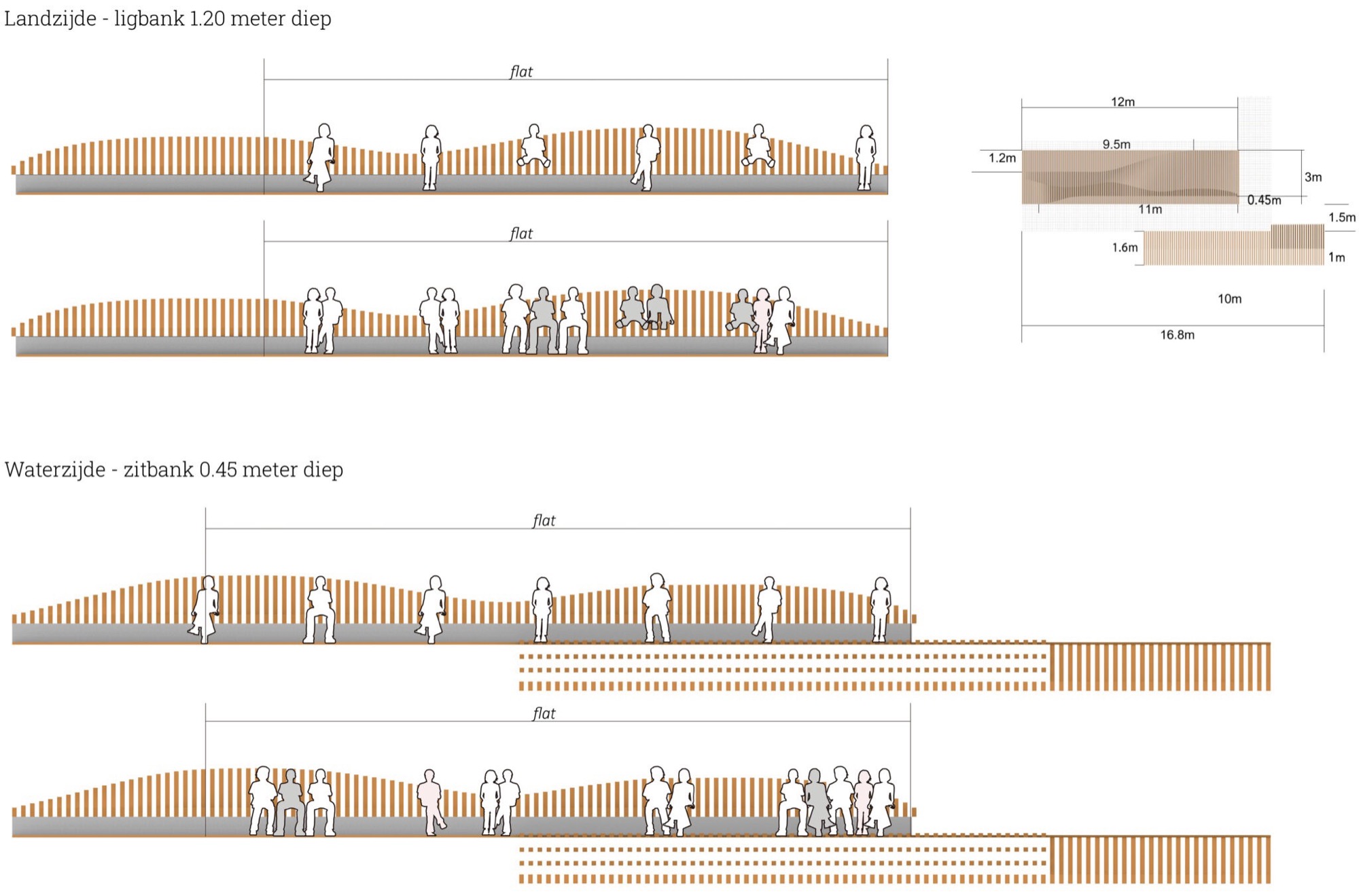
The centrepiece is a wave-shaped bench, a sculpted form inviting people to sit, dock, and rest at the water’s edge. Its shape is not arbitrary; historical research showed this location was once the site of a dike breach. The wave form is a quiet, poetic reference to that history, connecting the design to place and memory without being literal. The bench is oriented in multiple directions, so visitors can look at the water, the sun, or the recreational areas. A floating platform in front is subtly attached to the bench. Only a metal rack with growing reeds separates the two objects along the water. It sits at water level, allowing canoeists to step on and off safely. A new timber boardwalk connects the pontoon to the nearby Outdoor Valley canoe rental and car park.
An old cycle path next to the waterfront was removed, revealing the natural curve of the dike and placing the new bench in a green environment. This creates a better setting and makes the area feel more open. New trees and lower vegetation on each side shape the gateway towards Hoge Bergsche Bos and Zevenhuizerplas. Visual clutter was removed by getting rid of extra traffic signs, and space was made for an ice cream cart to park near the bridge. These changes turn a functional space into a place for people to enjoy.
THE PROCESS
Initially, the rowing clubs worried the new platform would interfere with their oars. To address this, the design team spent half a day by the river observing passing boats. They measured distances and angles to show exactly how much space there was. This evidence eased the rowers’ concerns, and the platform was shortened slightly as a final improvement.
The water board also needed certainty that the bench would not damage the dike. By studying old records and water levels, the team found the bench could be built exactly on the foundation of the former bike path, keeping the dike safe. Extra wadis were proposed to make the area climate-proof.
The bench’s location was also adjusted through conversations. When a nearby restaurant worried that large groups of youths might linger too close, the team moved the bench to the other side of the bridge. This new spot is safer because it can be seen by neighbors and visitors at Outdoor Valley, increasing social safety and ‘eyes on the street’. Finally, workshops with the community and local businesses shaped the final design, ensuring it truly belongs to its users.
THE RESULT
The Rottebanbrug is now a place where people stop, stay, and enjoy their environment. Cyclists stop for a short rest, walkers enjoy the waterfront view, and families pause for ice cream or a lunch break. It is now easy for canoeists to get in and out of their boats, while rowers can pass by without trouble. Best of all, the dike finally looks natural again.
The bench and bridge towards Outdoor Valley were built by GKB Groep. The bench has a strong construction and is easy to maintain. Each wooden slat is held by steel brackets, making them easy to replace. The project is significant because of its strategic location, its reference to a historical disaster, and mostly because it creates a great place to stay. The design fits within its natural environment and offers space for many visitors.
Clients: Monique Banus, Recreatieschap Rottemeren & Province of South-Holland
In Collaboration With: Staatsbosbeheer, Municipalities of Rotterdam, Lansingerland, and Krimpenerwaard, Hoogheemraadschap Schieland en Krimpenerwaard, Restaurant Nova, Outdoor Valley, local rowing associations, residents, and visitors.
https://maps.app.goo.gl/QB58sbndSzVguLWW9
73499


LILA 2026 Sponsor