LILA 2026 Jury Distinction
Rehabilitation of the Caupicho ravine in Quito
www.yes-innovation.com
2026 Public Projects / Ecuador / Built in 2022 /

The jury recognised the project as a radically modest but convincing form of living infrastructure activated by collective stewardship. It addresses flooding, erosion and pollution with basic means, combining hard and soft measures without turning the ravine into conventional grey infrastructure. Its strength lies in its replicability: simple devices, local materials and community participation create a model that could be applied to similar vulnerable ravines. The project also builds community indirectly through the shared care of land, which protects residents’ own environment. By reusing onsite soils, sediments and organic matter, it turns degradation into material for repair.
- from the award statementsQuebrada Caupicho is a small urban ravine located in the southern periphery of Quito, Ecuador, in a highly vulnerable area affected by flooding, erosion, pollution and progressive environmental degradation. Historically perceived as residual and dangerous infrastructure, the ravine had become physically disconnected from the surrounding community and increasingly threatened by accelerated urban runoff, informal wastewater discharge and unstable slopes.
The project proposes a different approach to urban risk management: instead of further hardening the ravine through conventional grey infrastructure, the intervention transforms it into a living landscape infrastructure based on ecological restoration, community appropriation and low-cost nature-based solutions.
Developed and implemented between August and October 2022, the project was conceived as a 1:1 experimental landscape laboratory demonstrating how small-scale, replicable interventions can collectively regenerate degraded urban ecosystems while improving social relationships with water and public space. The intervention was carried out through an agile co-design and construction process involving local residents, municipal technicians and implementation teams, allowing continuous adaptation of the solutions during construction.
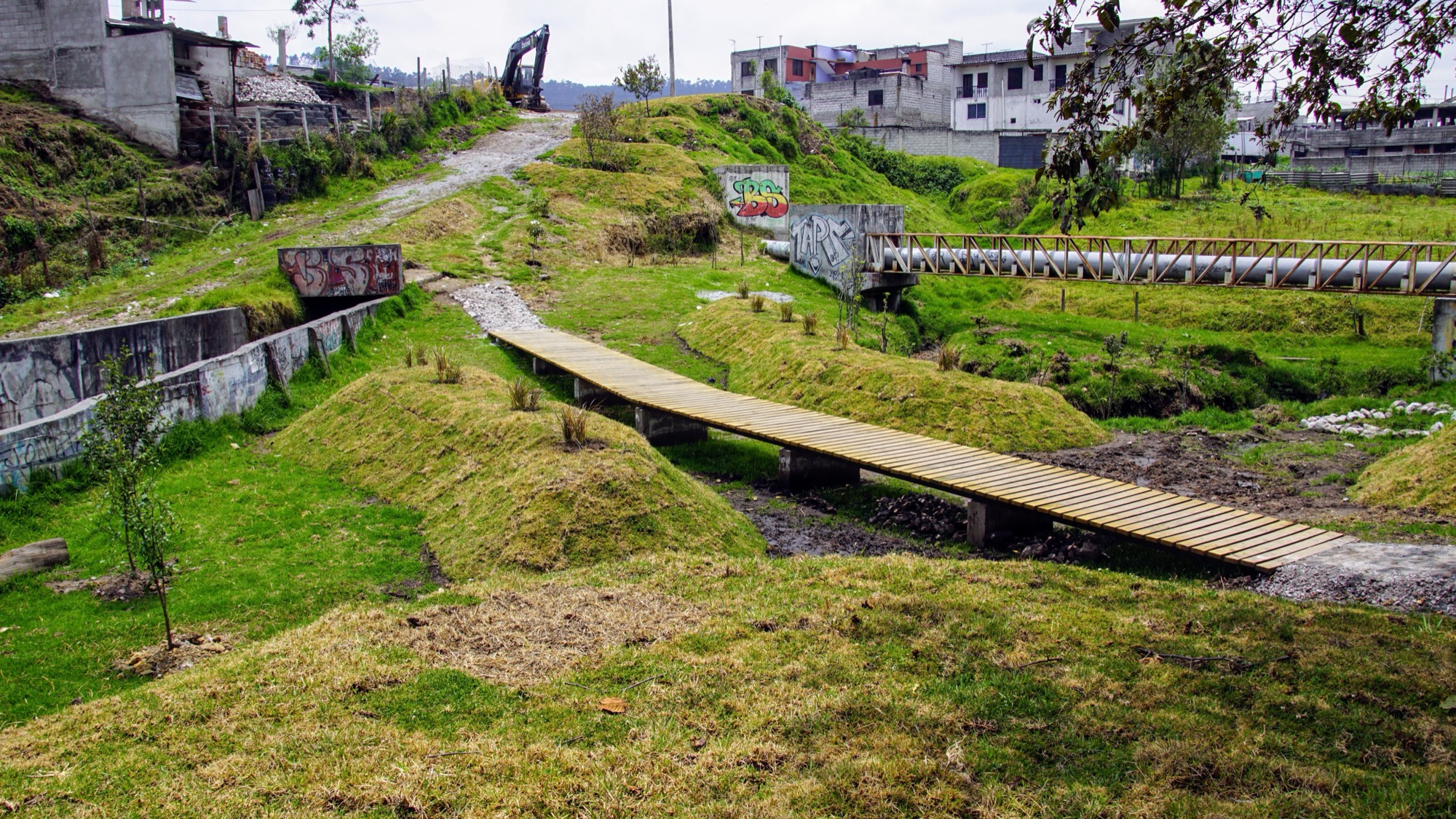
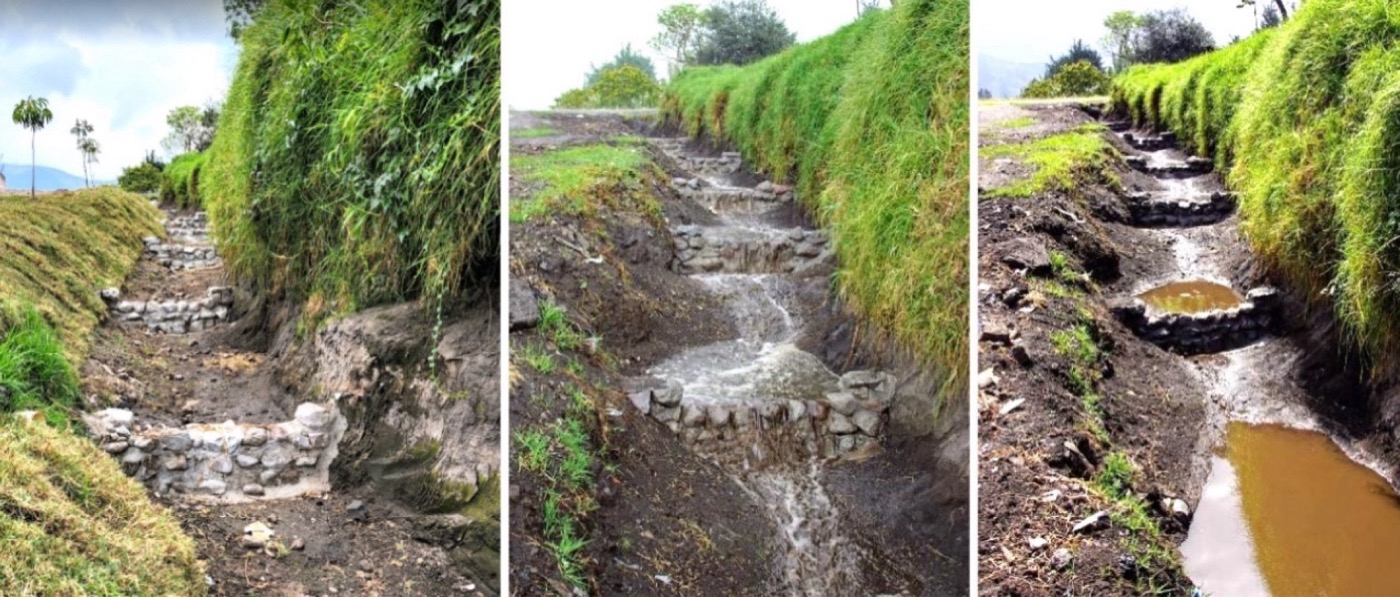
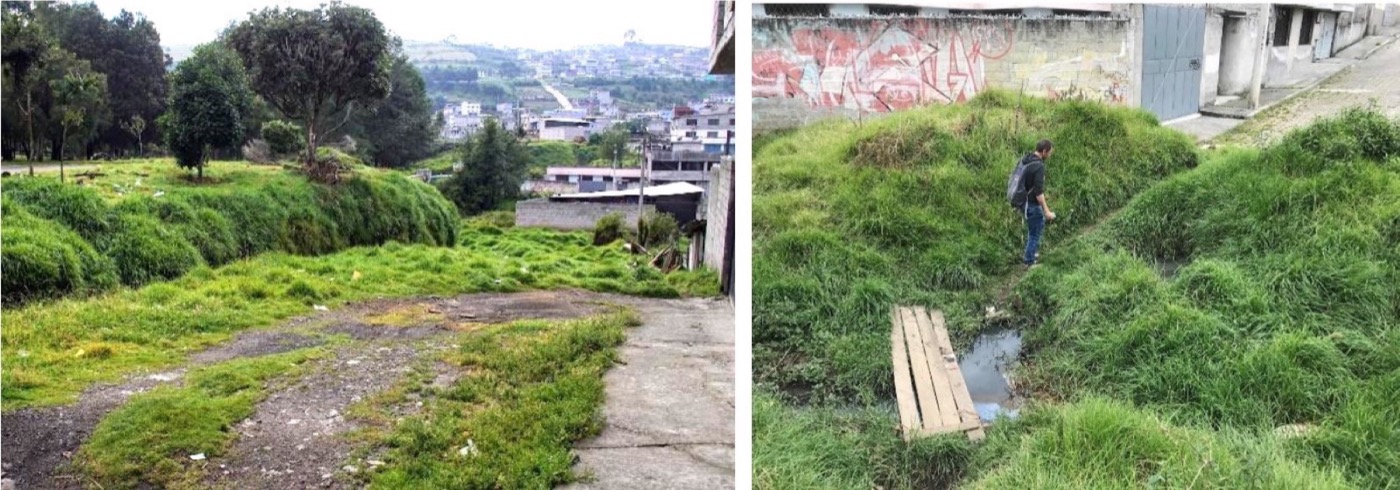
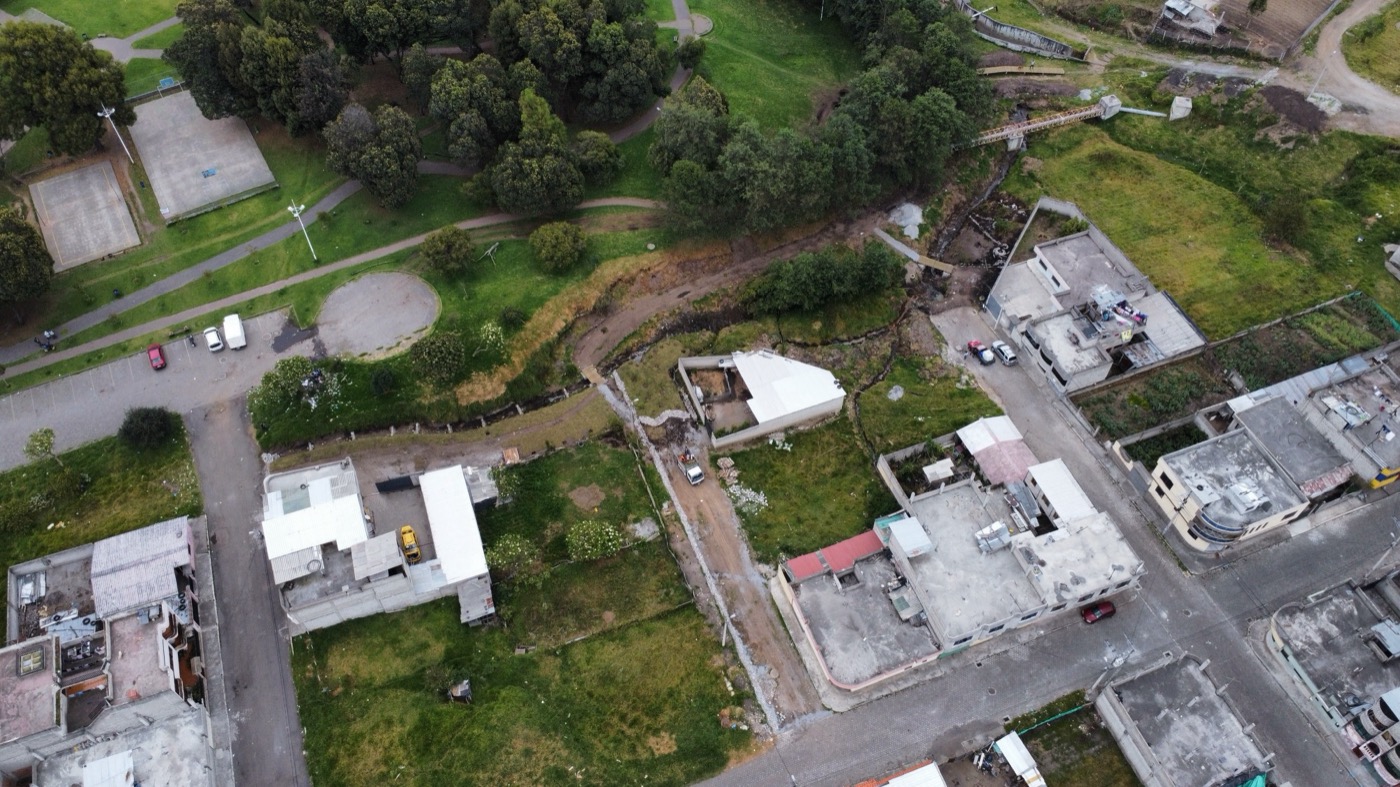
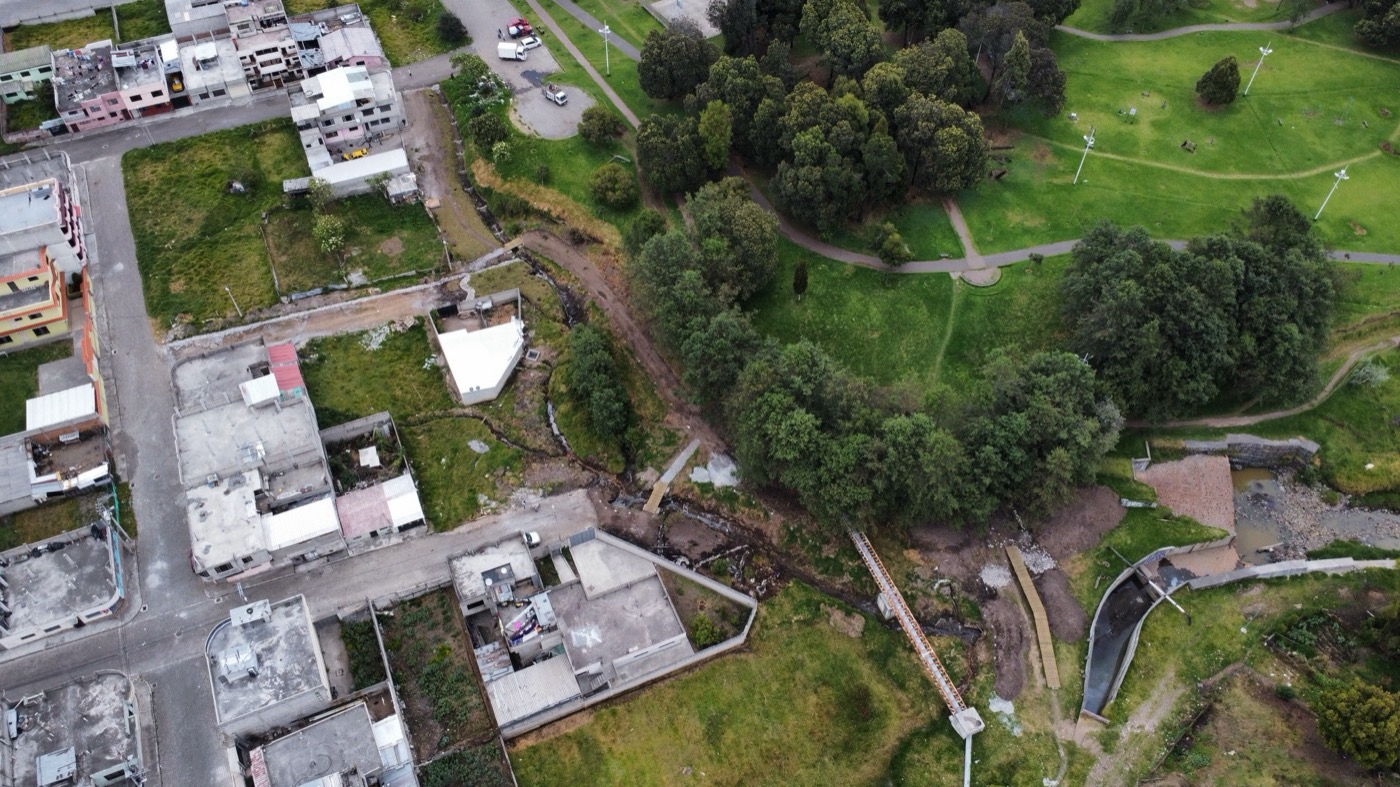
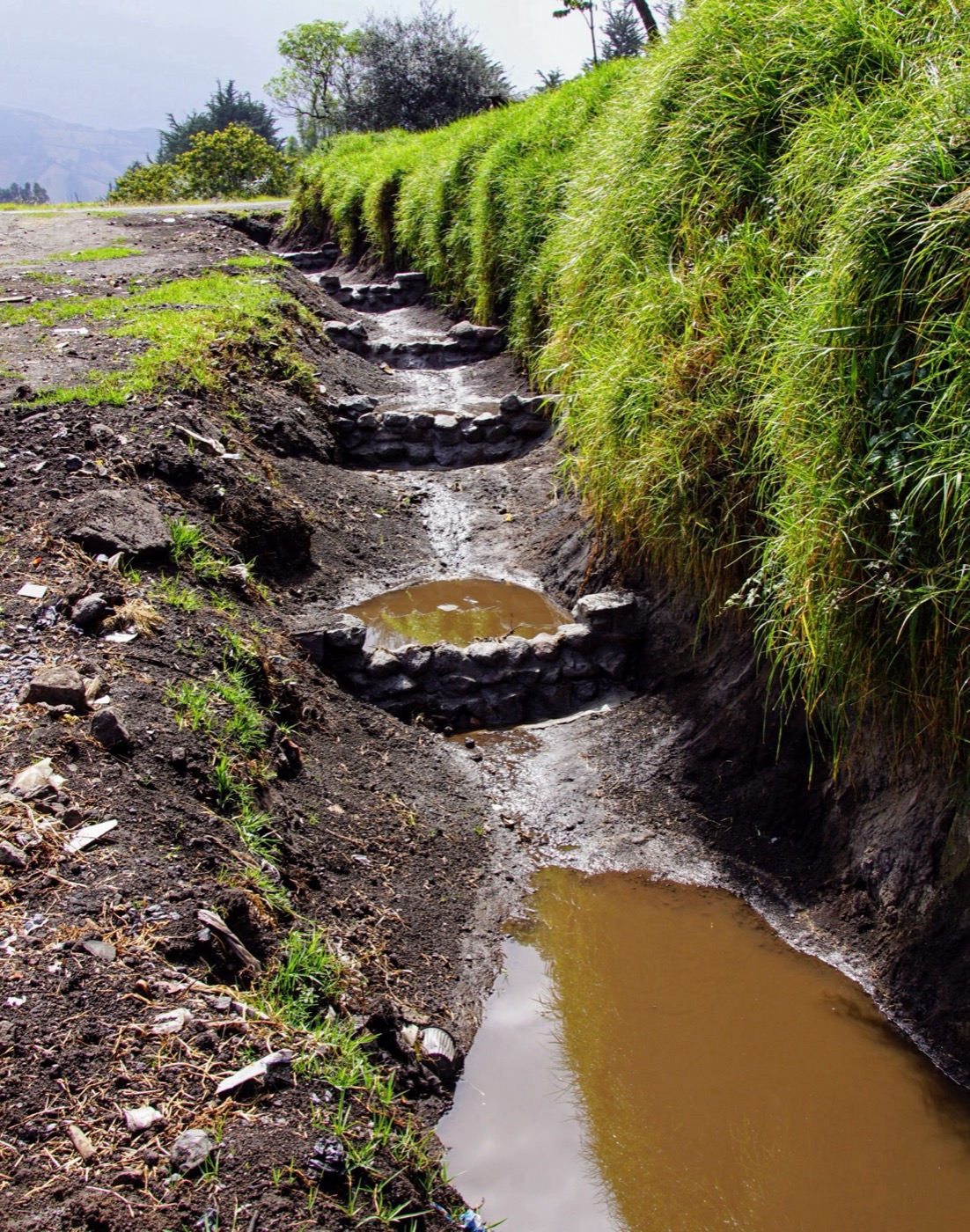
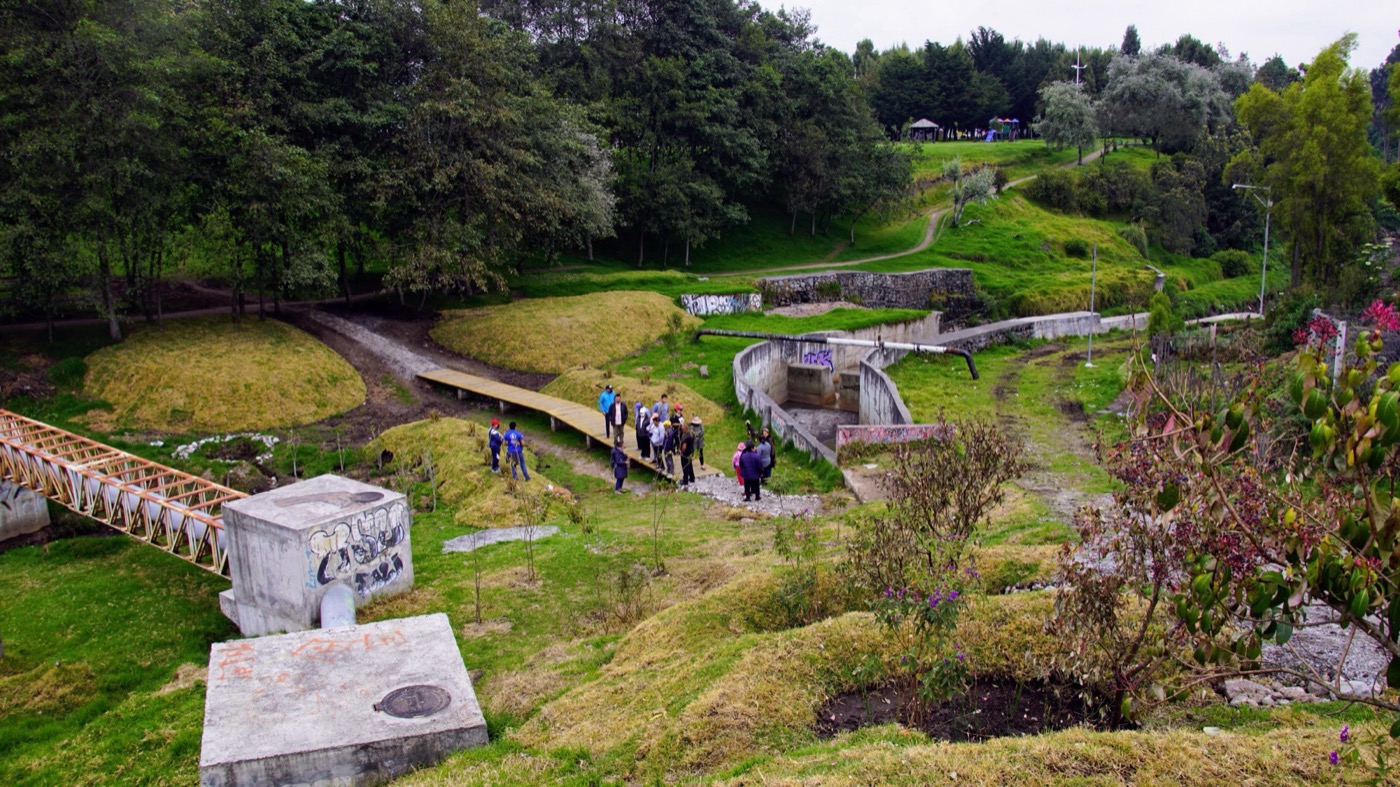
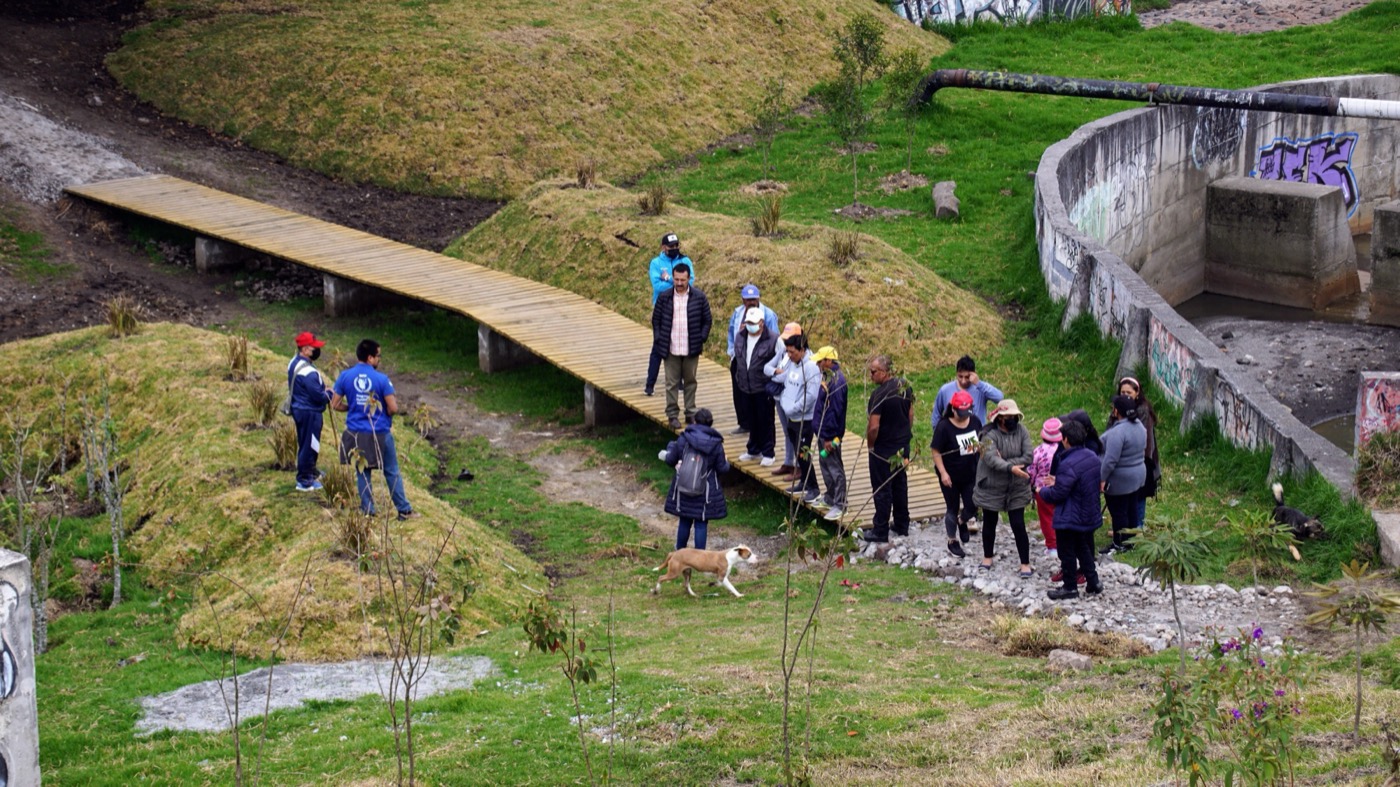
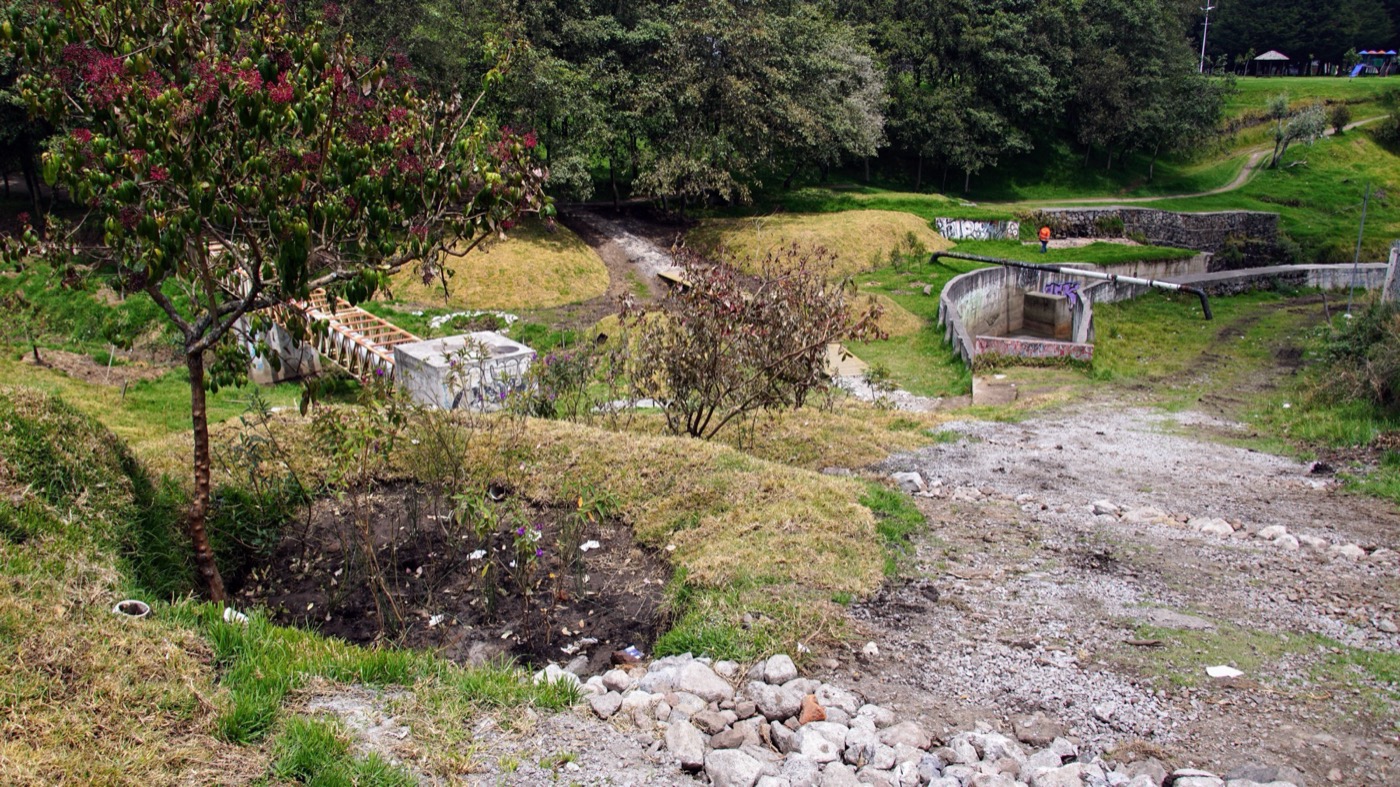
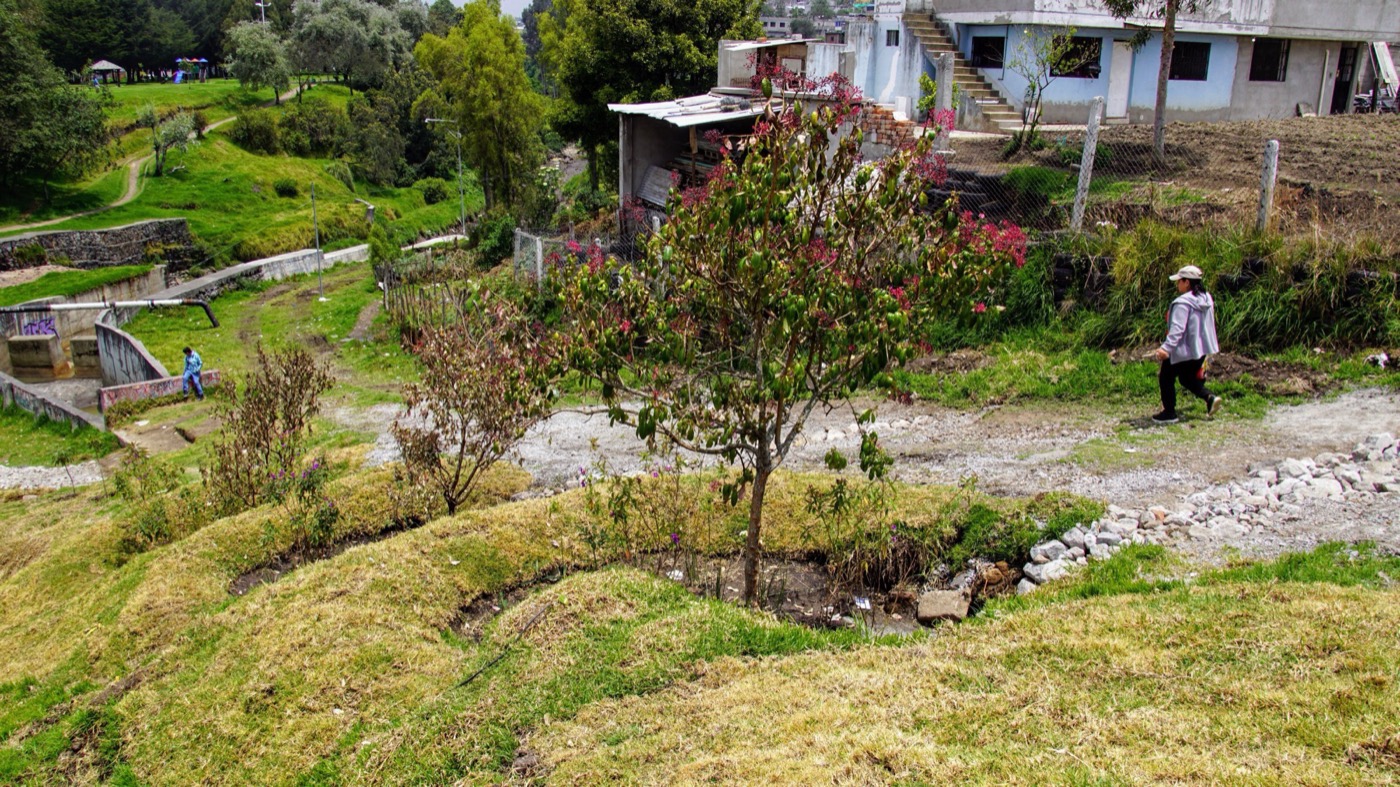
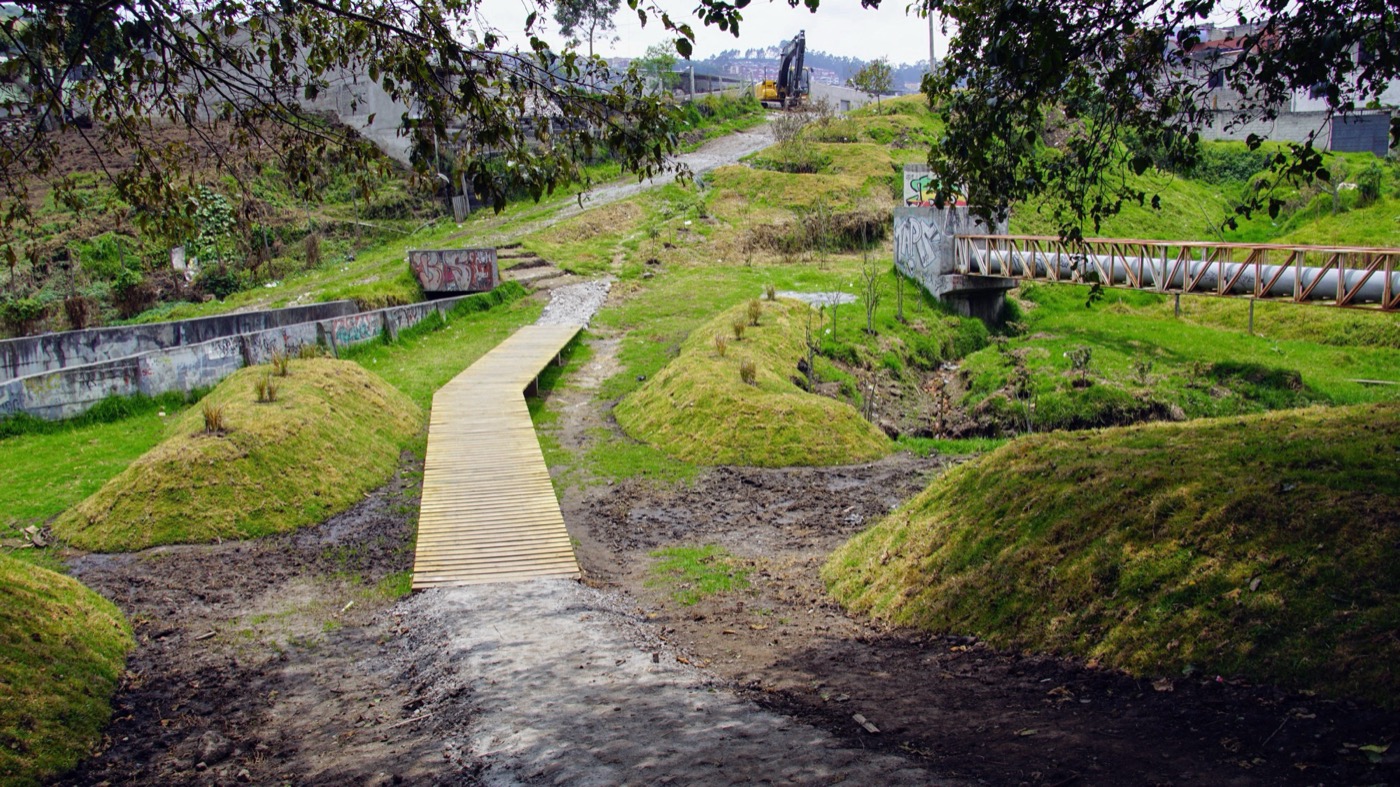
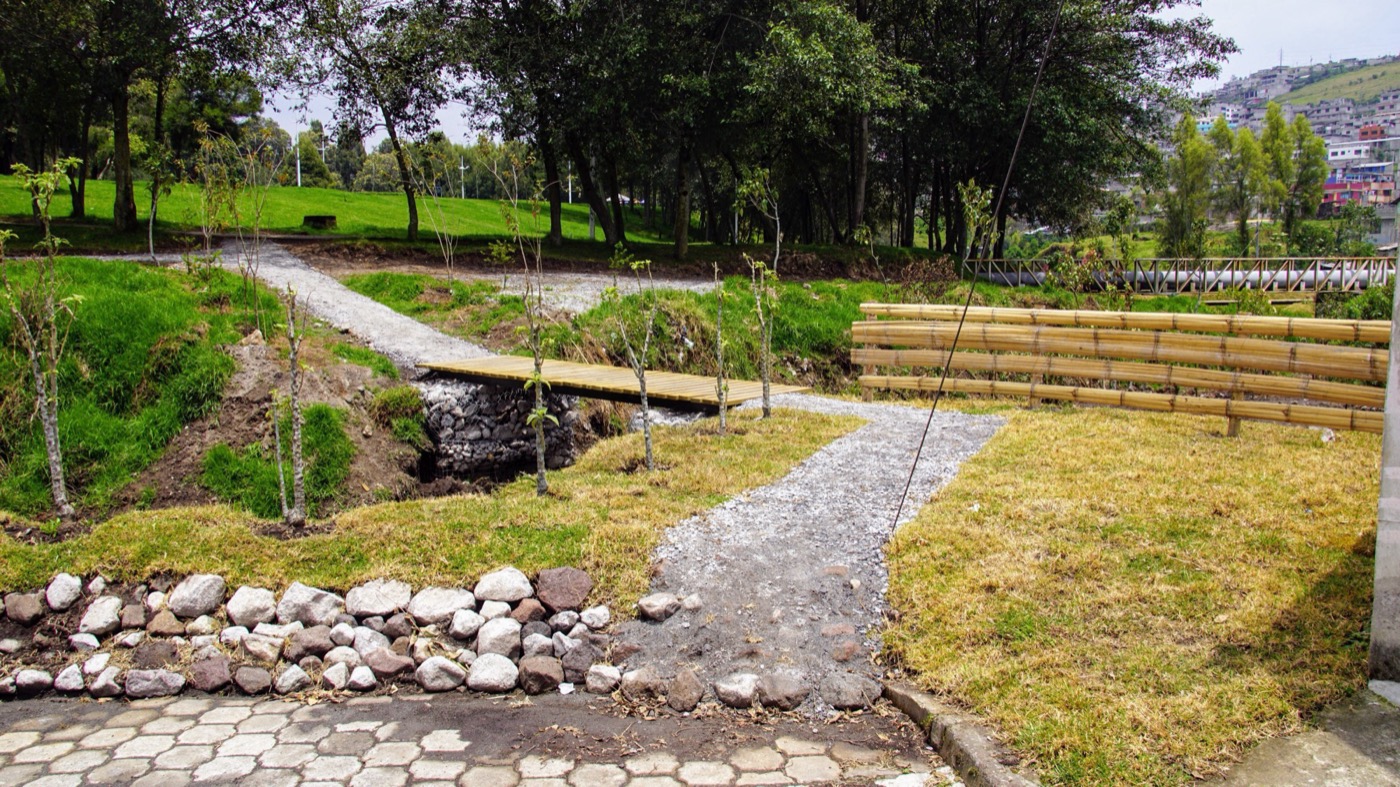
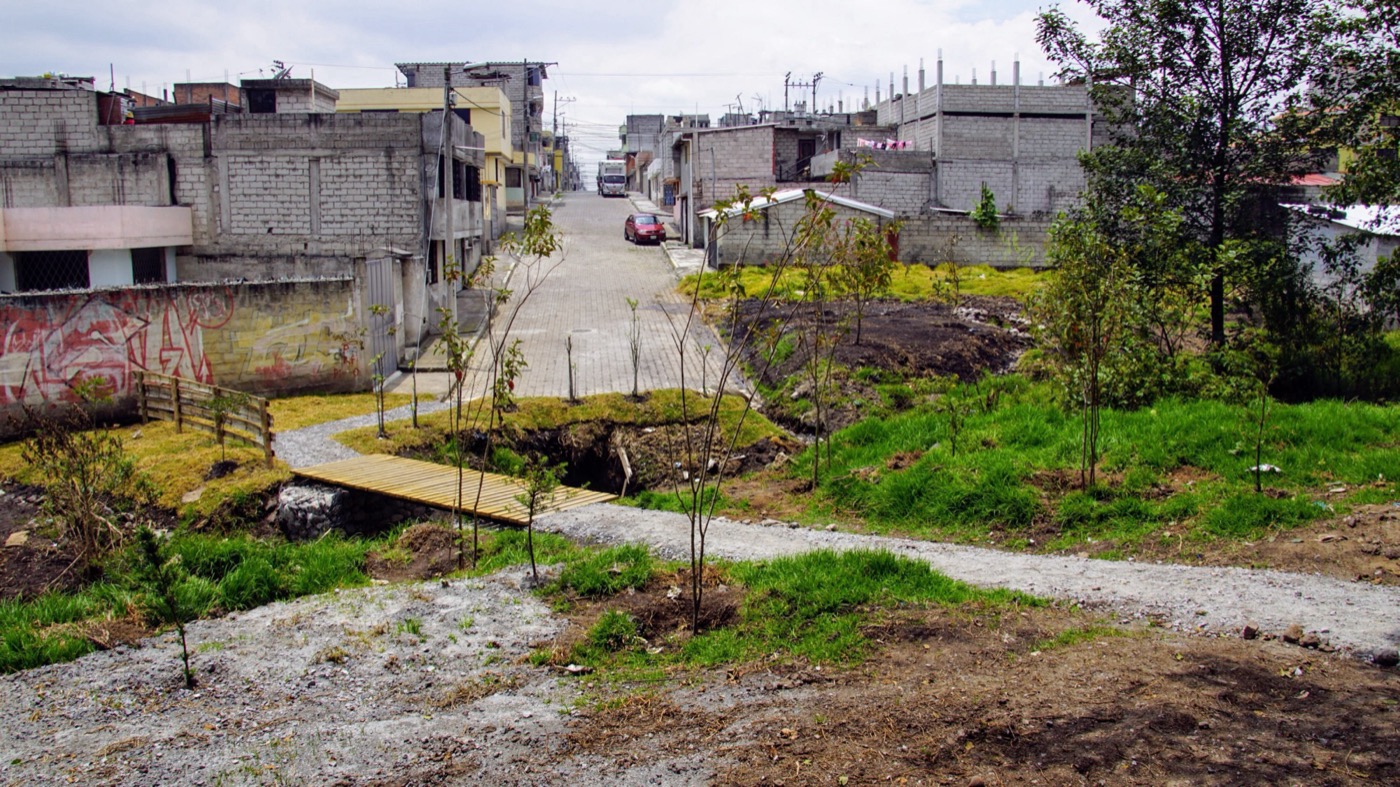
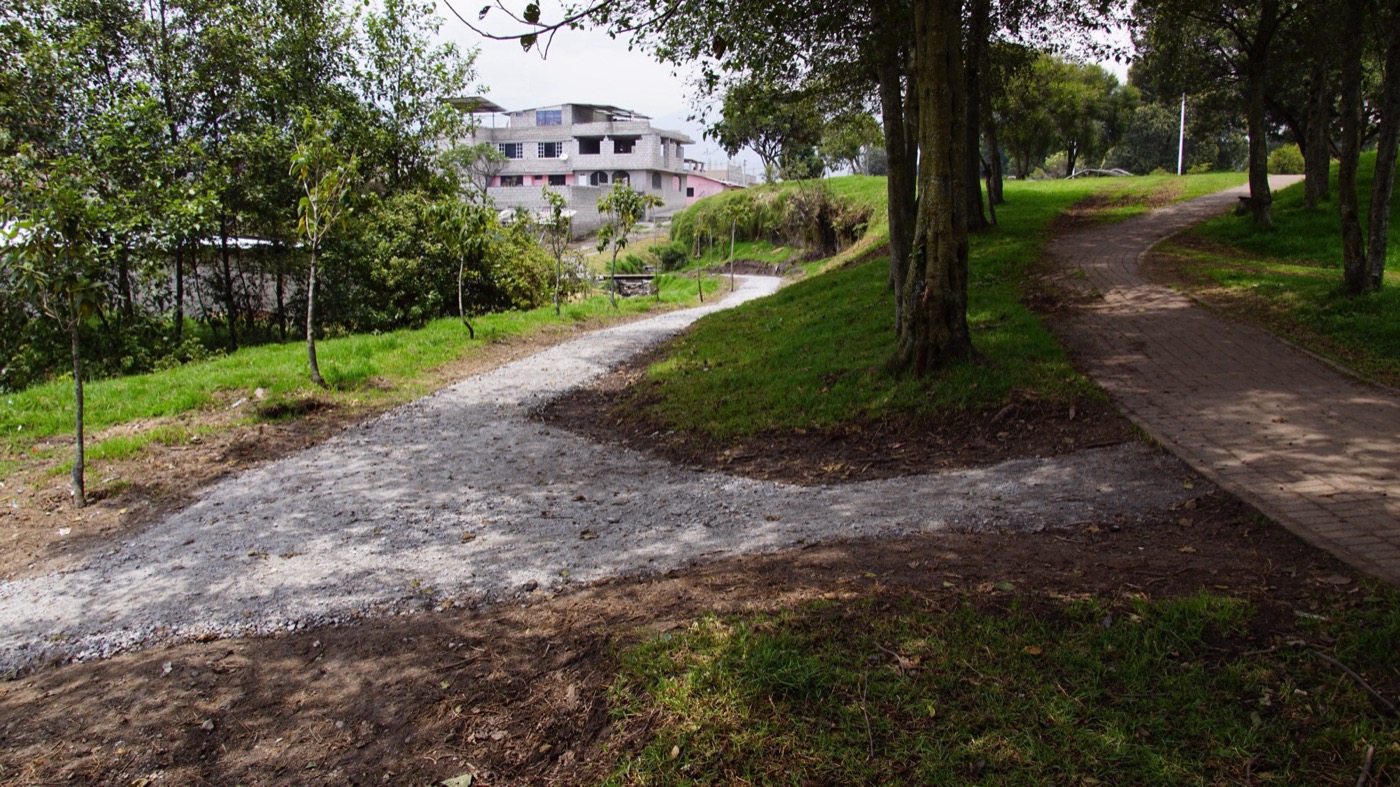
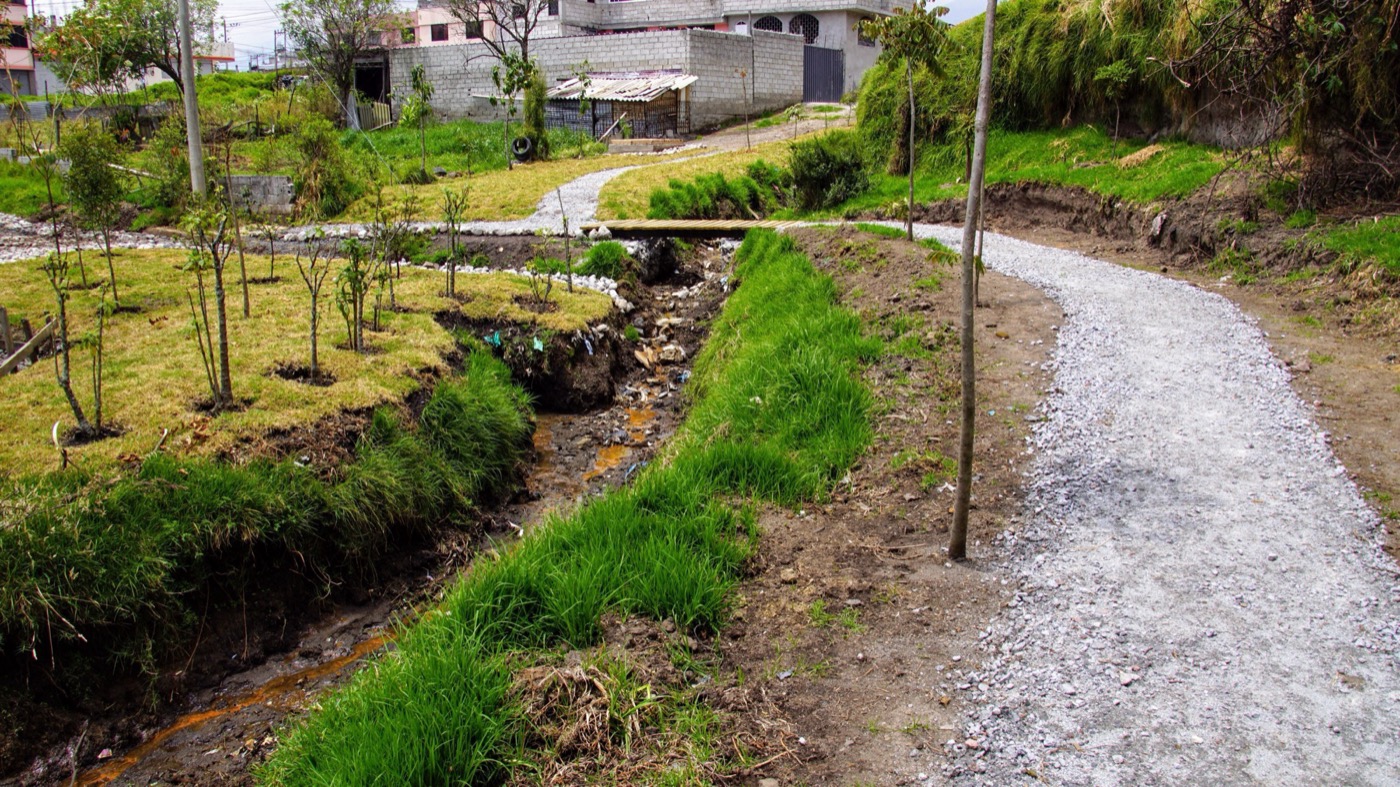
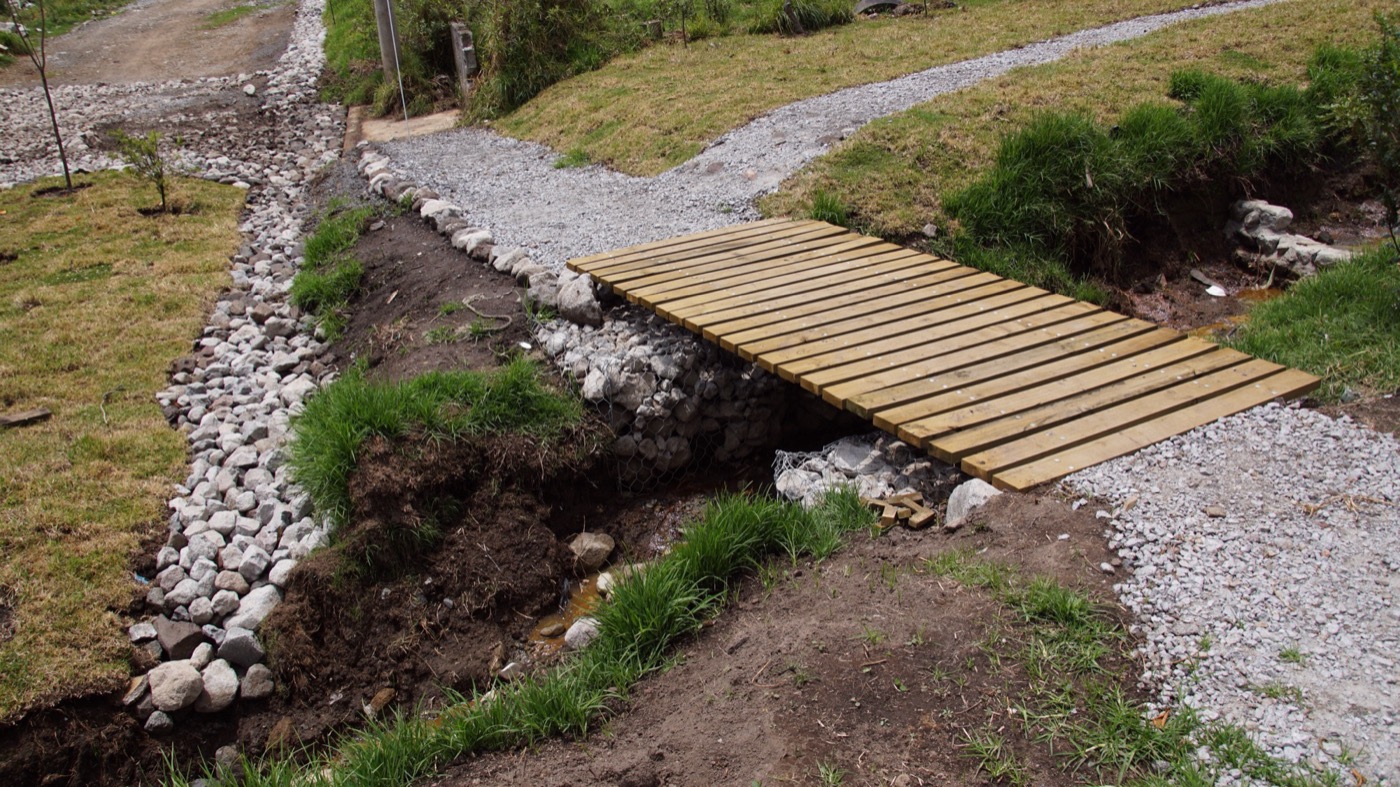
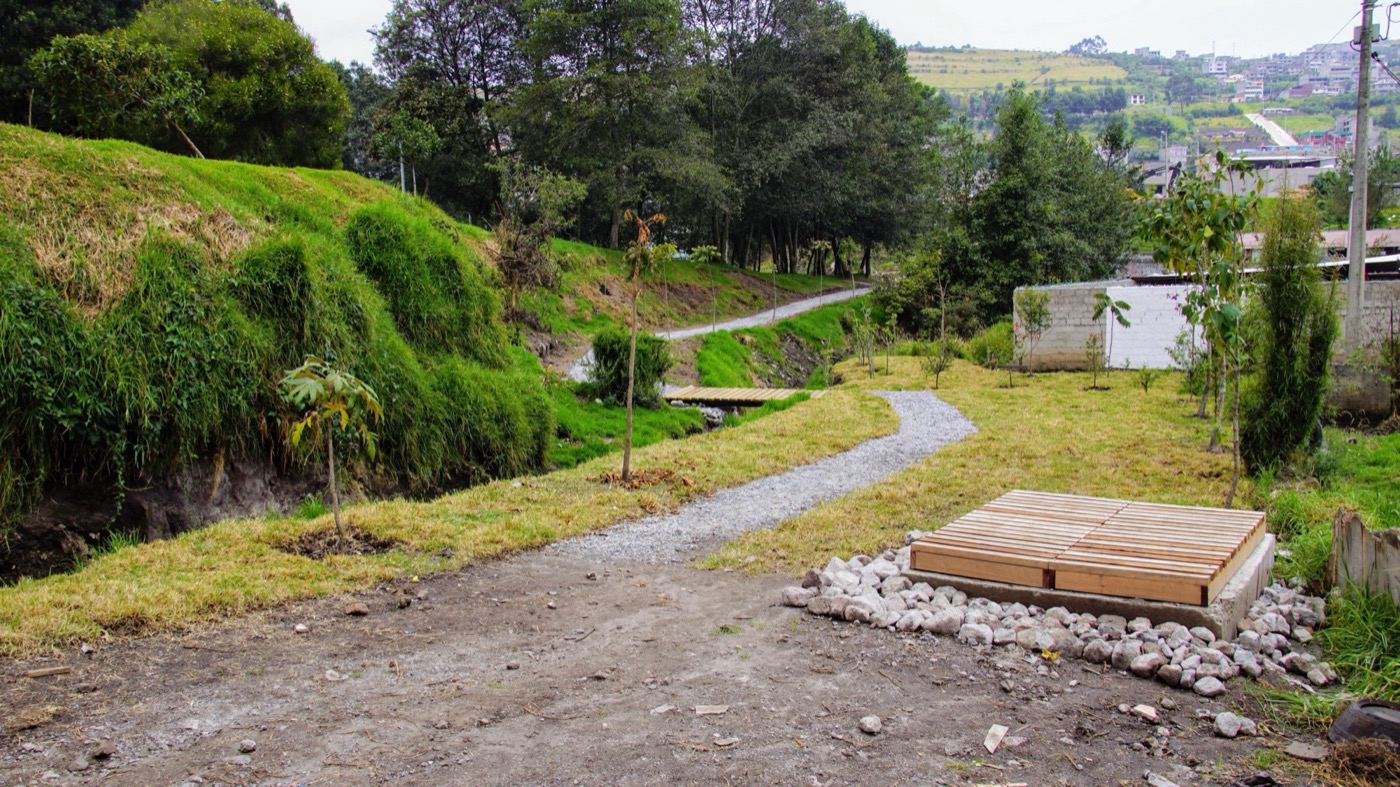
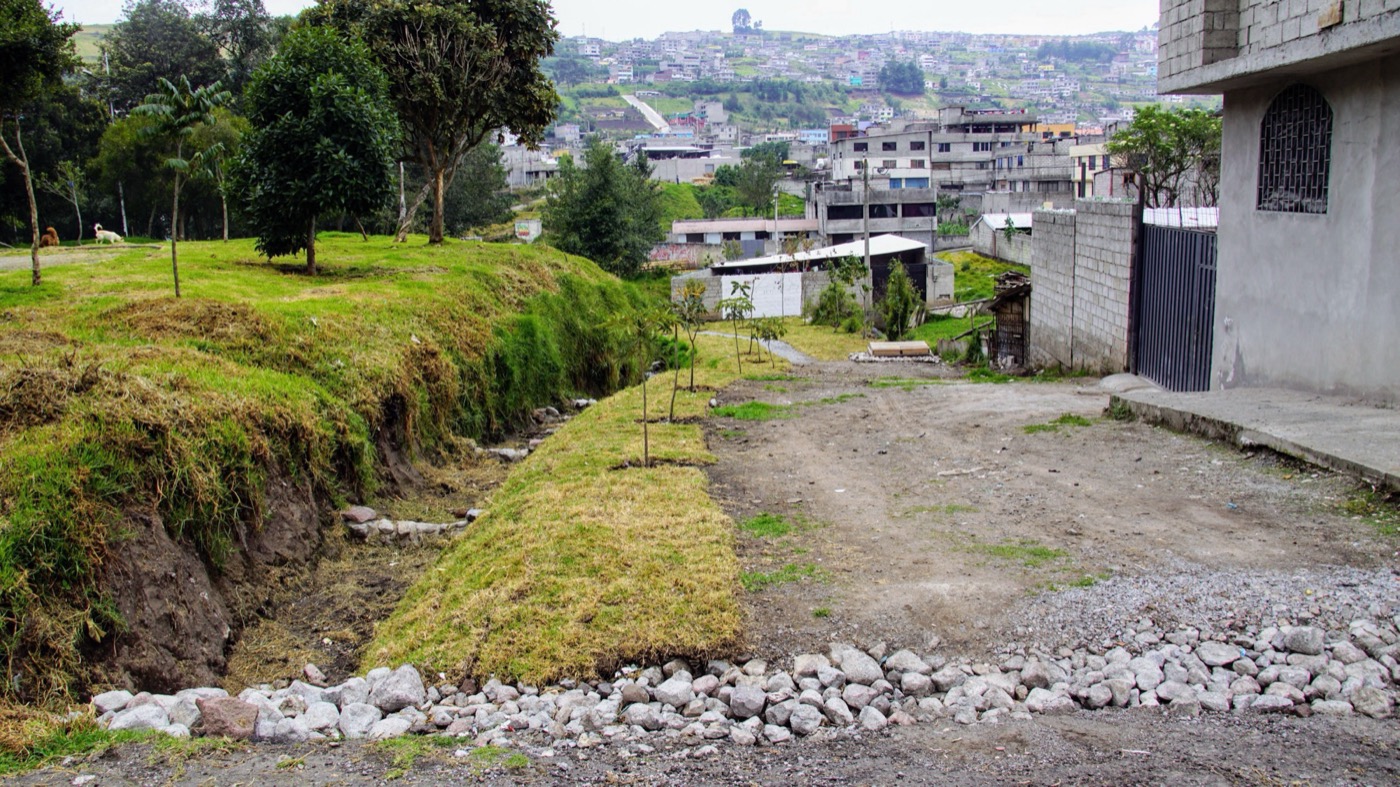
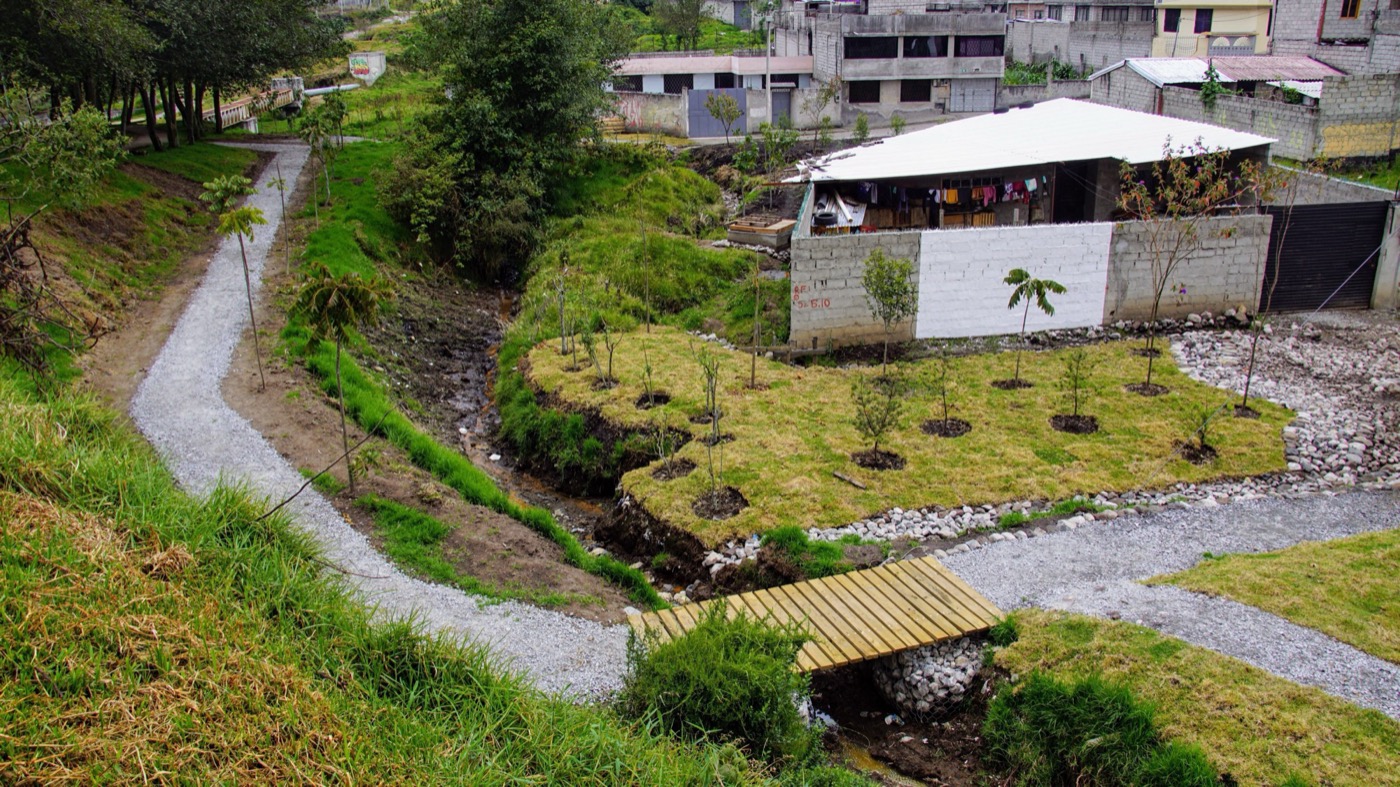
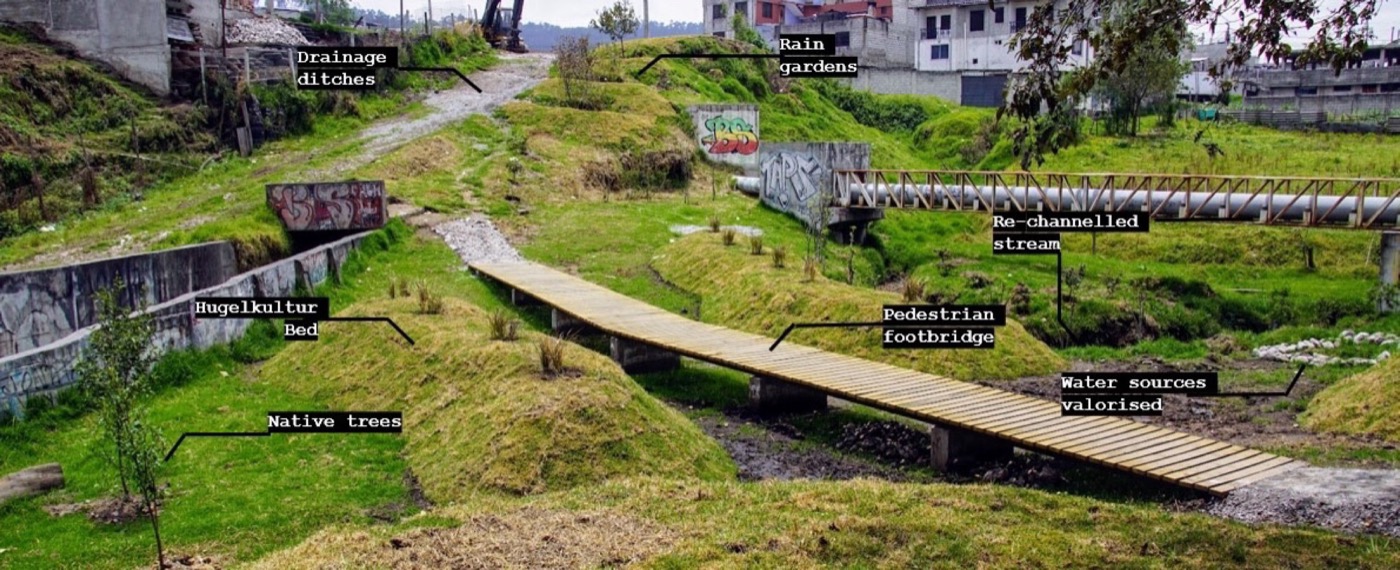
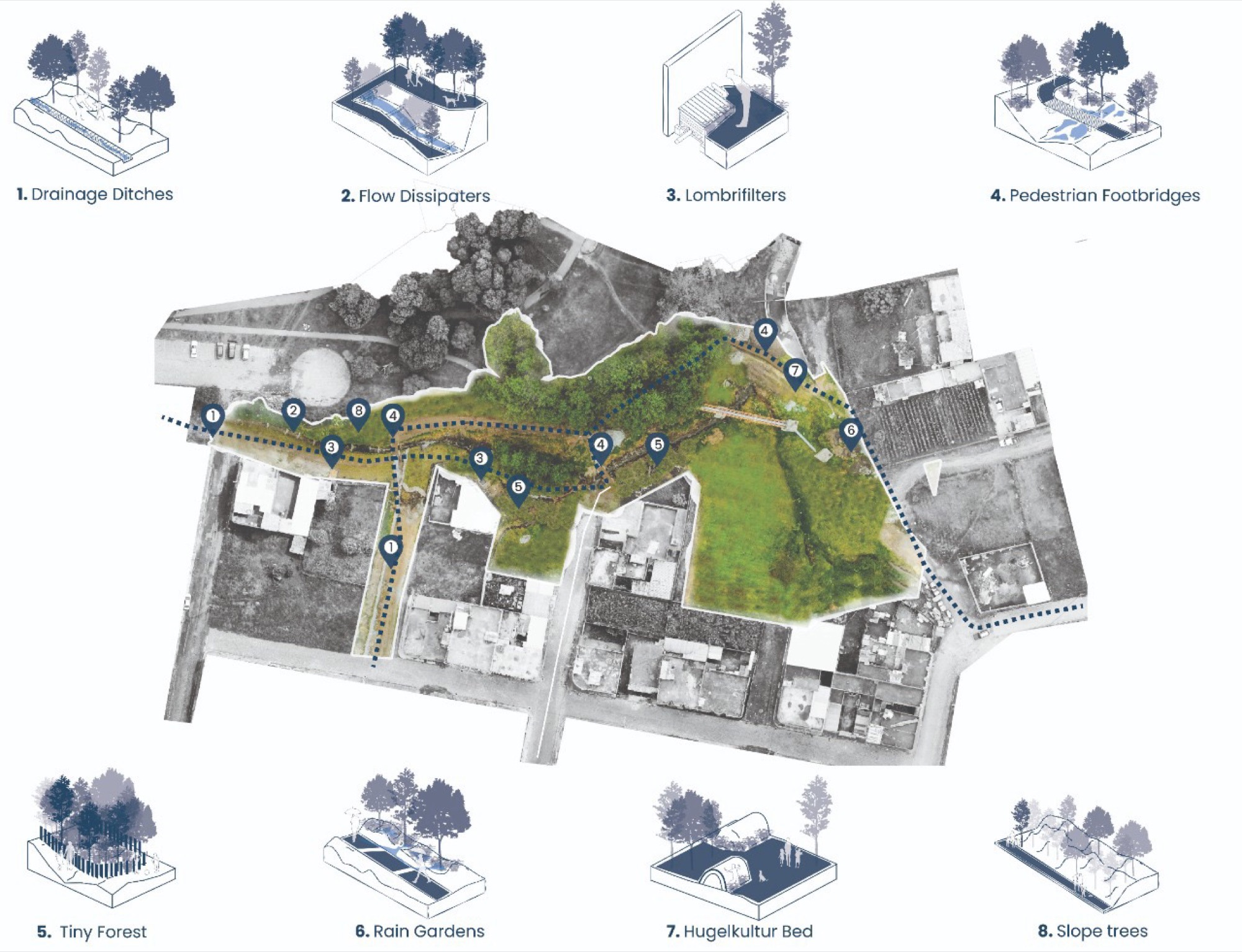
Rather than introducing a single monumental gesture, the project works as a connected ecological system composed of multiple interdependent devices distributed throughout the ravine and park. Eight families of nature-based solutions were implemented using locally available materials, reused onsite resources and simple construction techniques that could be replicated in other vulnerable urban ravines across Latin America.
The intervention included:
– runoff interception and infiltration systems,
– water flow dissipators reducing erosion during heavy rainfall,
– vermifiltration systems treating domestic wastewater before discharge into the ravine,
– pedestrian bridges reconnecting the neighbourhood with the park,
– microforests enhancing urban biodiversity,
– rain gardens mitigating recurrent flooding,
– permaculture-inspired landscape mounds built entirely from recovered organic material and dredged sediments,
– and slope stabilization through strategic tree planting.
A key principle of the project was to avoid generating waste. Excavated soils, sediments and fallen trees found onsite were entirely reintegrated into the landscape design, transforming what was previously considered debris into ecological and spatial resources.
The project intentionally embraces modesty and adaptability. Its value lies not in formal spectacle, but in demonstrating how landscape can operate as resilient infrastructure through incremental, distributed and community-supported actions. The intervention seeks to reveal the hidden ecological processes of the ravine — infiltration, retention, evaporation, filtration and biodiversity regeneration — making water visible again within the daily life of the neighbourhood.
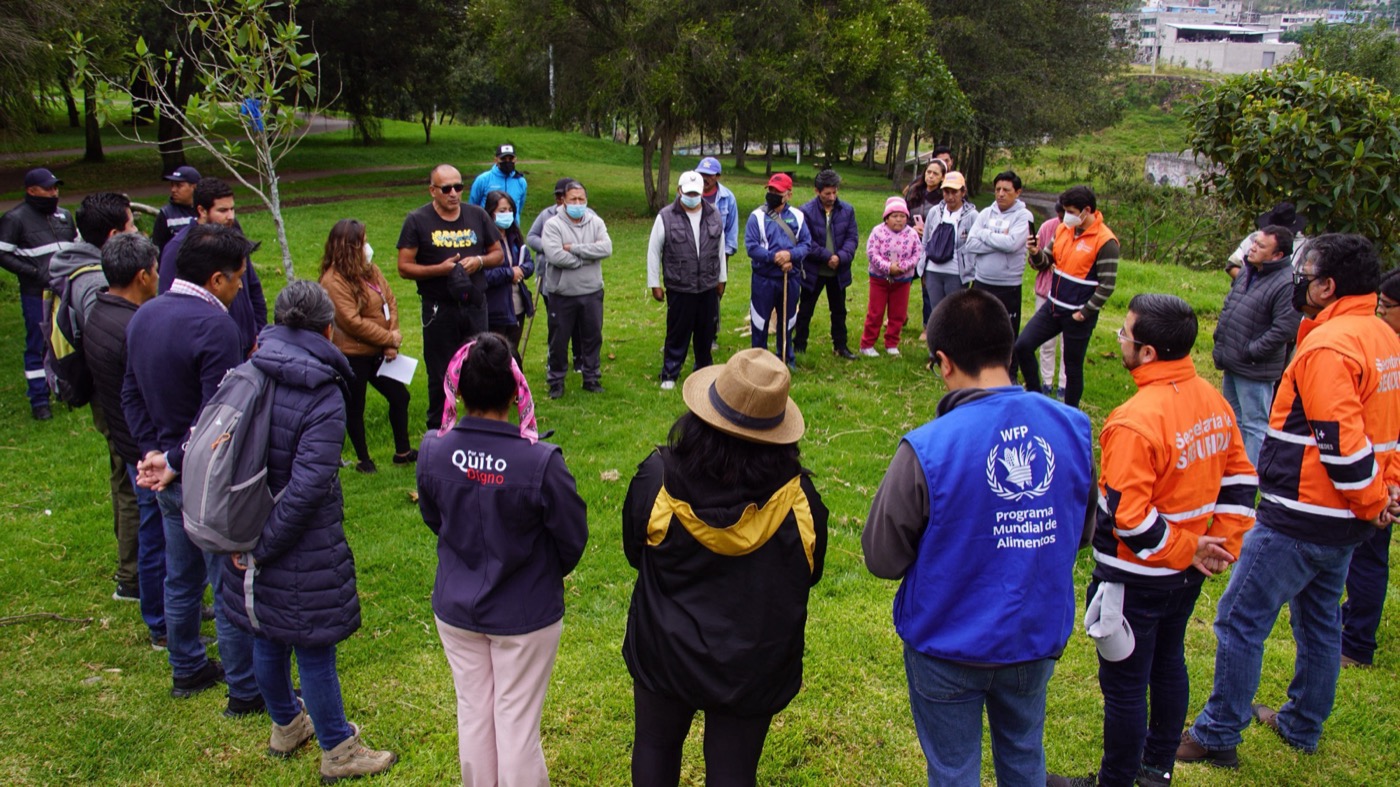
Equally important was changing the perception of the ravine from an urban barrier into a shared public asset. New pedestrian crossings and accessible paths reconnect both sides of the neighbourhood, while the restored landscape creates opportunities for environmental education, community stewardship and social interaction. The project was inaugurated with public sensitization workshops focused on ecological restoration and natural water management practices.
Quebrada Caupicho demonstrates that vulnerable urban landscapes can become catalysts for ecological transition and community resilience through simple, locally grounded and economically accessible interventions. In a context where many Latin American cities continue to channelize, bury or harden their waterways, the project proposes an alternative paradigm: restoring urban ravines as living infrastructures capable of simultaneously managing risk, supporting biodiversity and rebuilding relationships between communities and nature.
Client: World Food Programme (WFP)
Project Lead and Design: YES Innovation
Location: Quito, Ecuador
Year of completion: 2022
https://maps.app.goo.gl/Tkega9LczkgYrSFf6
76892


LILA 2026 Sponsor