Reminiscence of Water
www.hldgroup.net
2026 Public Projects / South Korea / Built in 2022 /

![The Temperature of the Garden: A Garden Where Water, Wind, and Warmth Stay Background The 2025 Seoul International Garden Show included a “Corporate Gardens” programme, in which Korean corporations commissioned publicly accessible gardens as a form of civic contribution. Among them, “The Temperature of the Garden” was commissioned by KyungDong Navien—a Korean company specialising in […]](https://landezine-award.com/wp-content/uploads/2026/05/00_tog_hero-600x423.jpg "Temperature of the Garden")
Reminiscence of Water (물의 기억)
Location: Geomdan, Incheon, South Korea
Client: Korea Land & Housing Corporation (LH) — Year: 2022
Type: 3rd LH Garden Show International Designers’ Garden Competition, winning entry
Lead: HLD (Seoul) | Lighting: Andrew Jaques, The Flaming Beacon (Melbourne) | Construction: Spacemaker A1
Site:
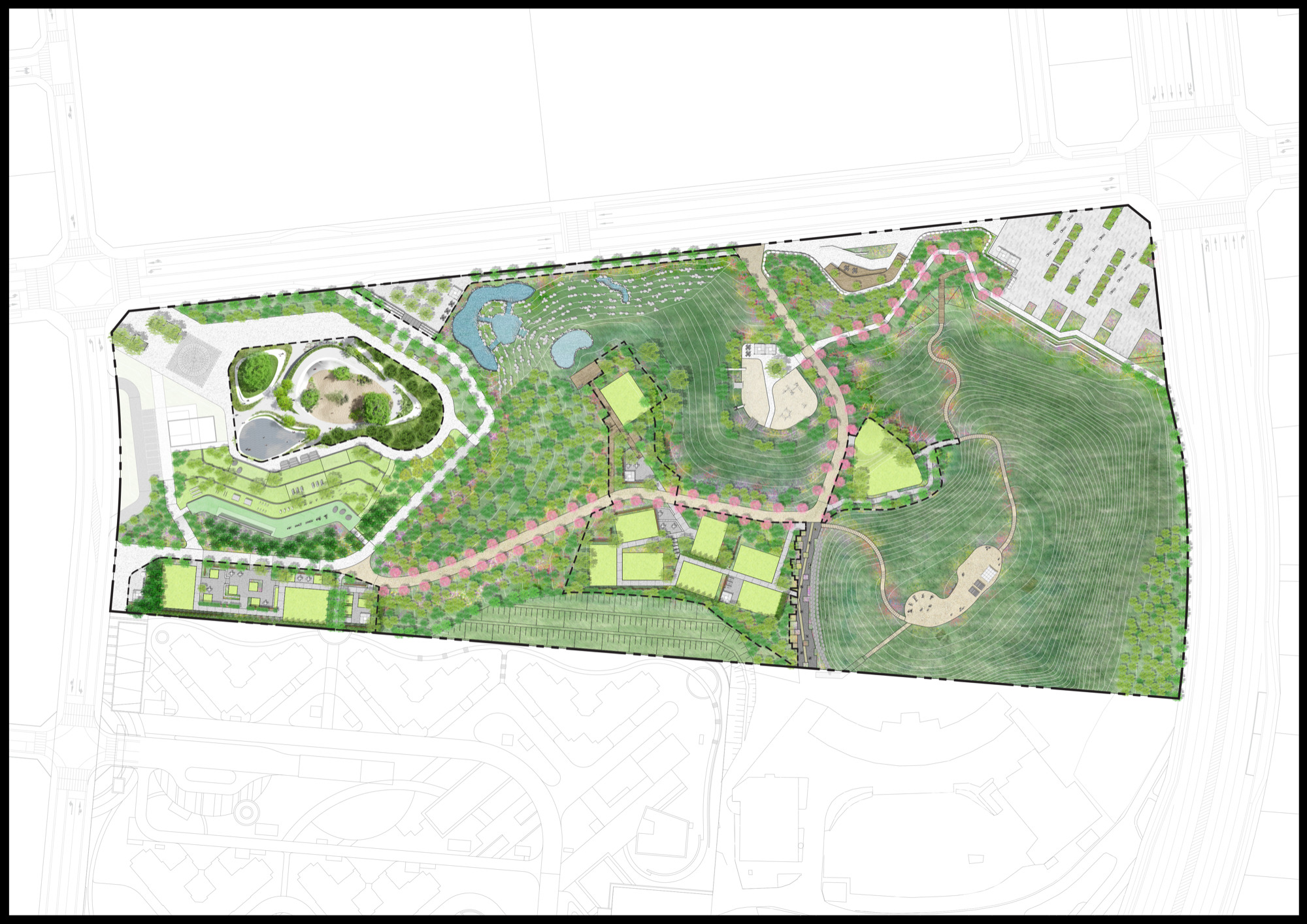
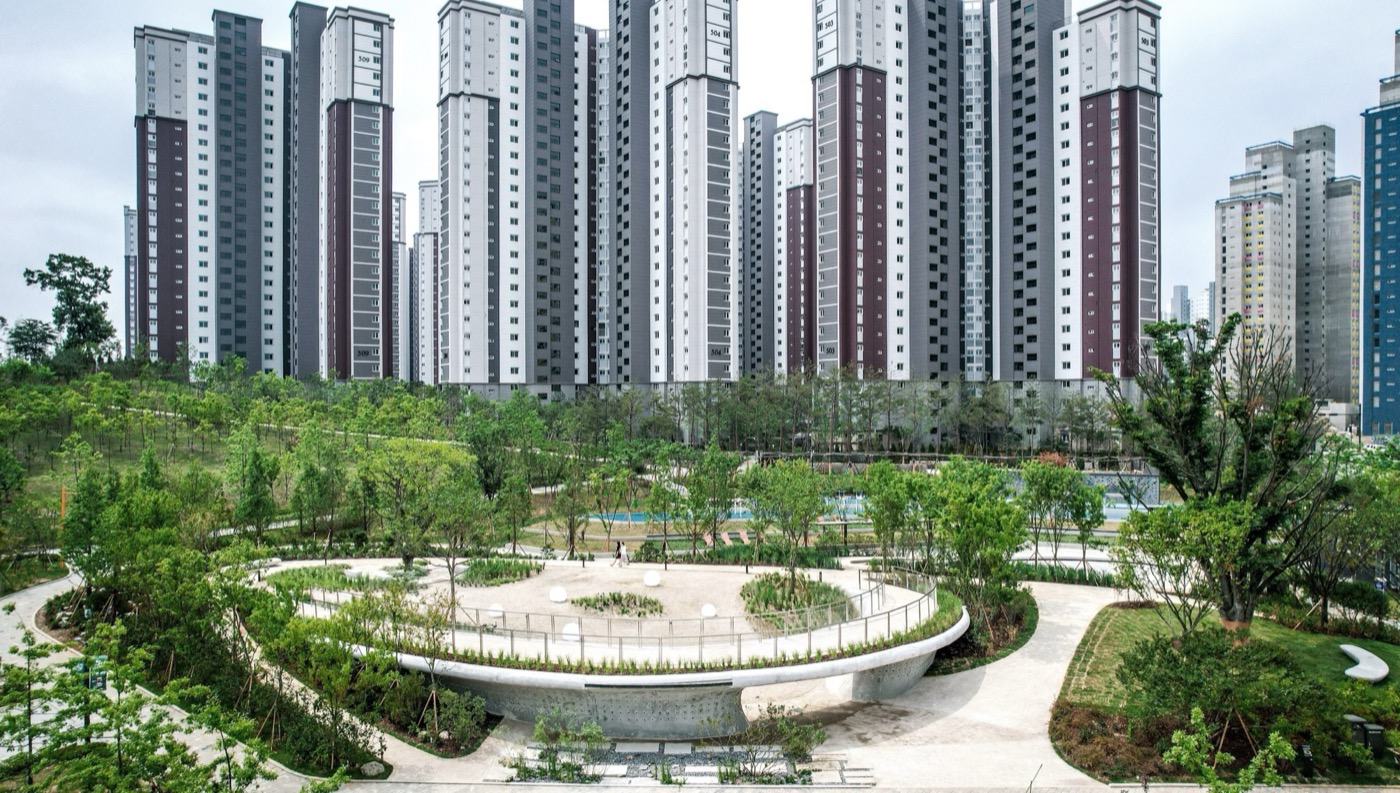
The Geomdan area on Incheon’s western edge was, until recent decades, part of the West Sea coast of Korea — a ria coastline of tidal flats (gaetgol), salt marsh, and migratory birds. Most of it has been reclaimed and built over. By the time LH commissioned this garden as the centerpiece of a new park, the coastal character survived only in nearby village names and older residents’ recollections. The garden is built on that vanished landscape — not as restoration, since the tide will not return, but as a reminiscence: a designed sensory reference to the coast the city erased.
Concept:
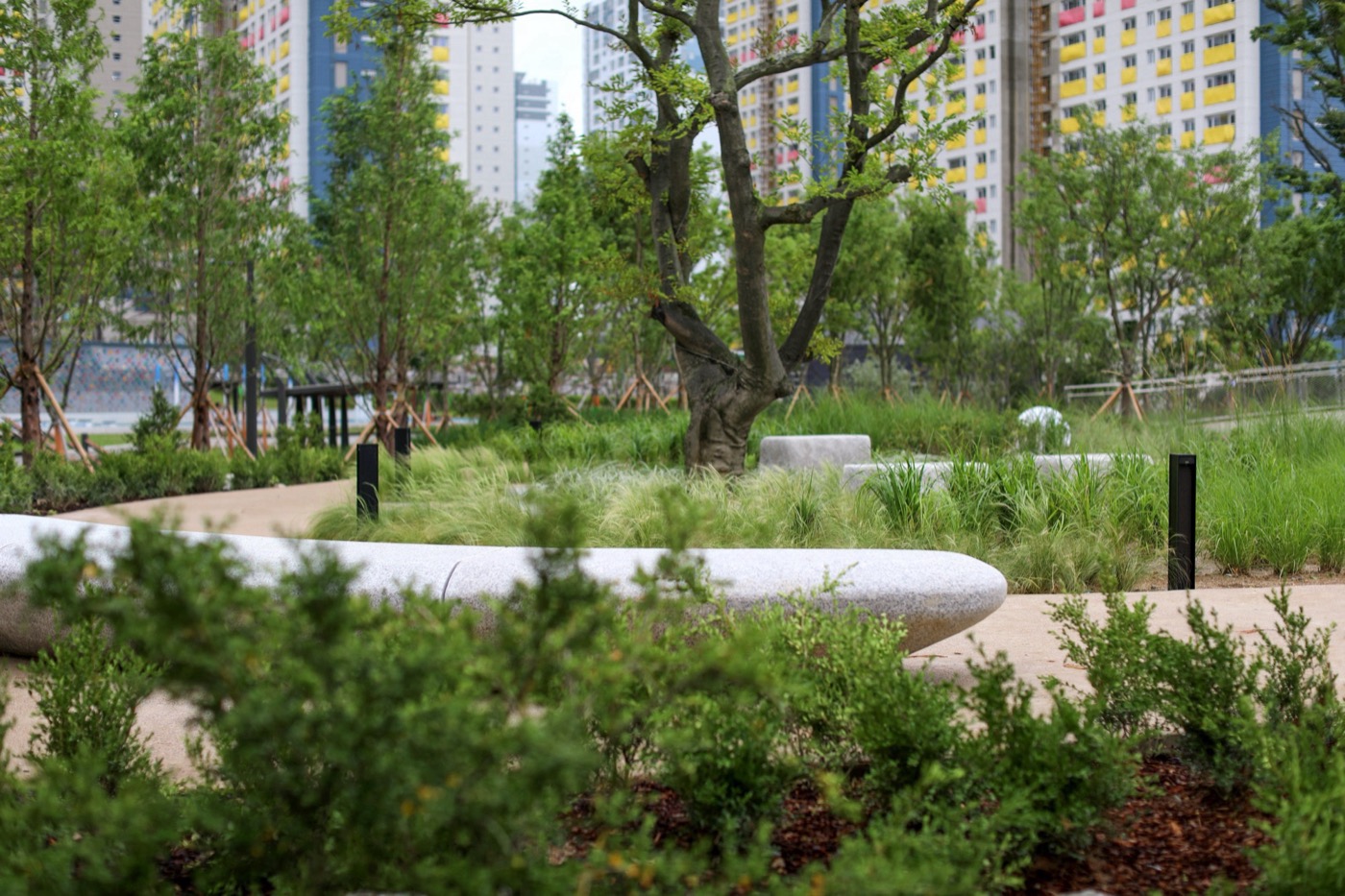
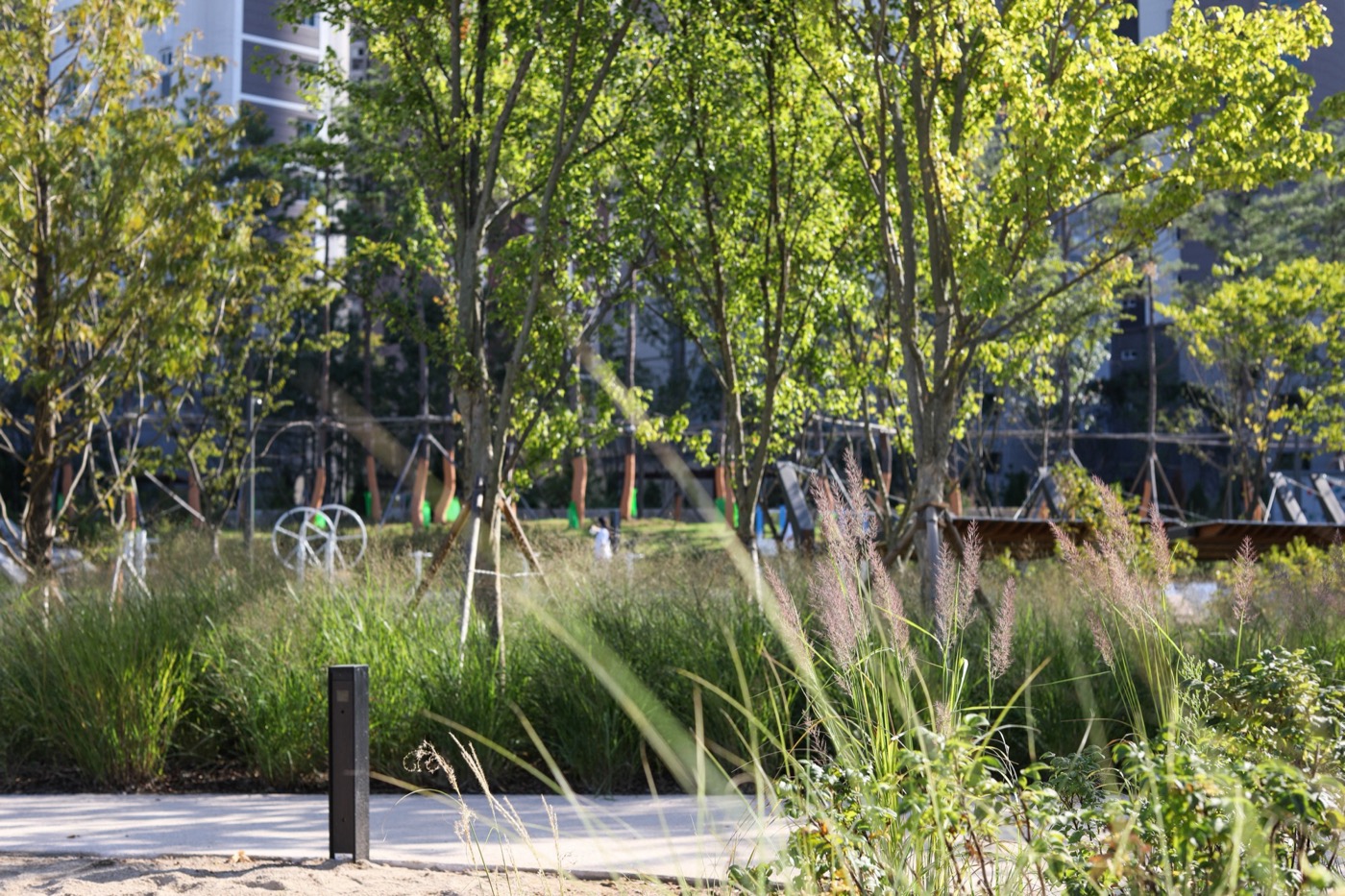
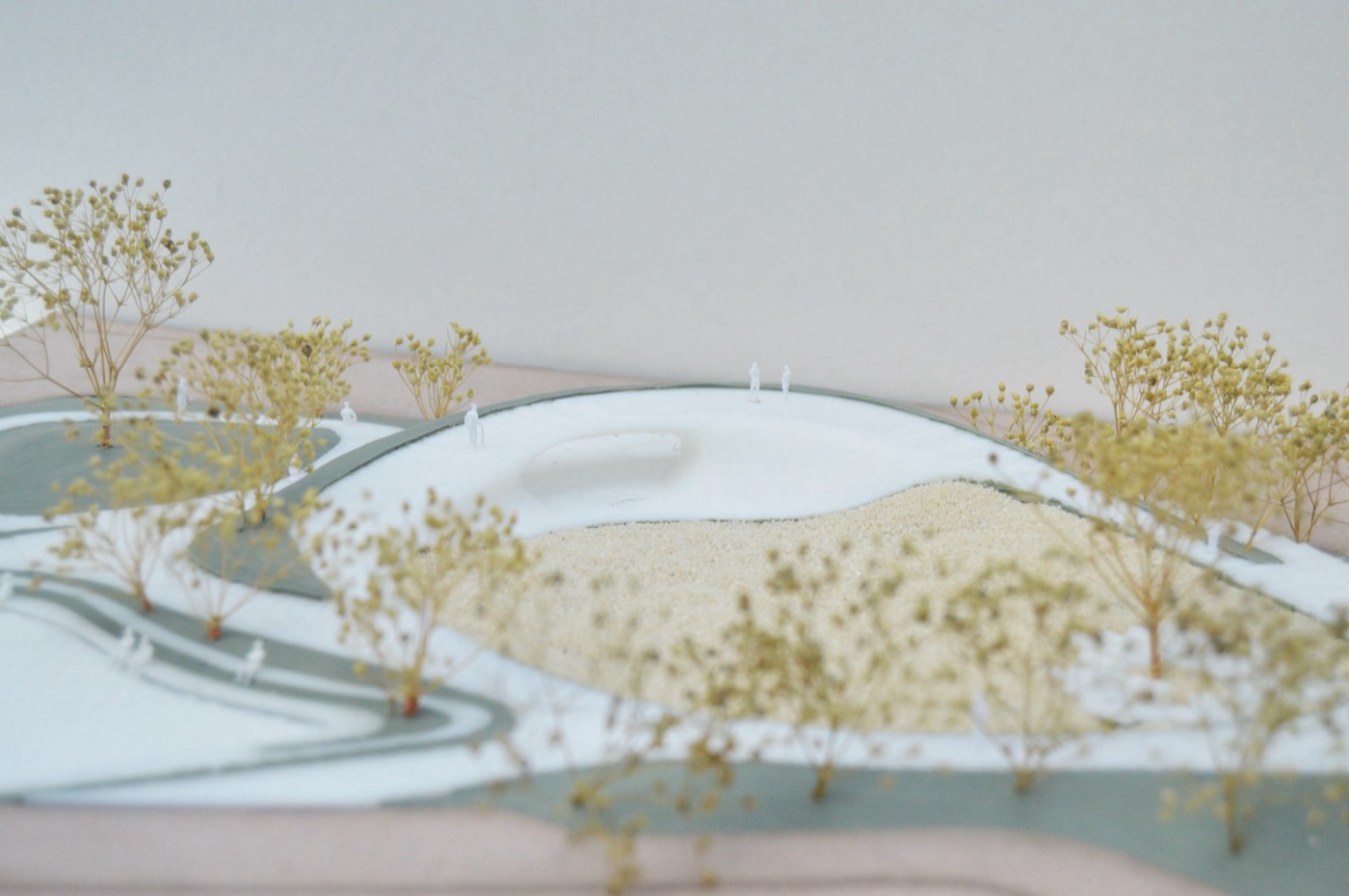
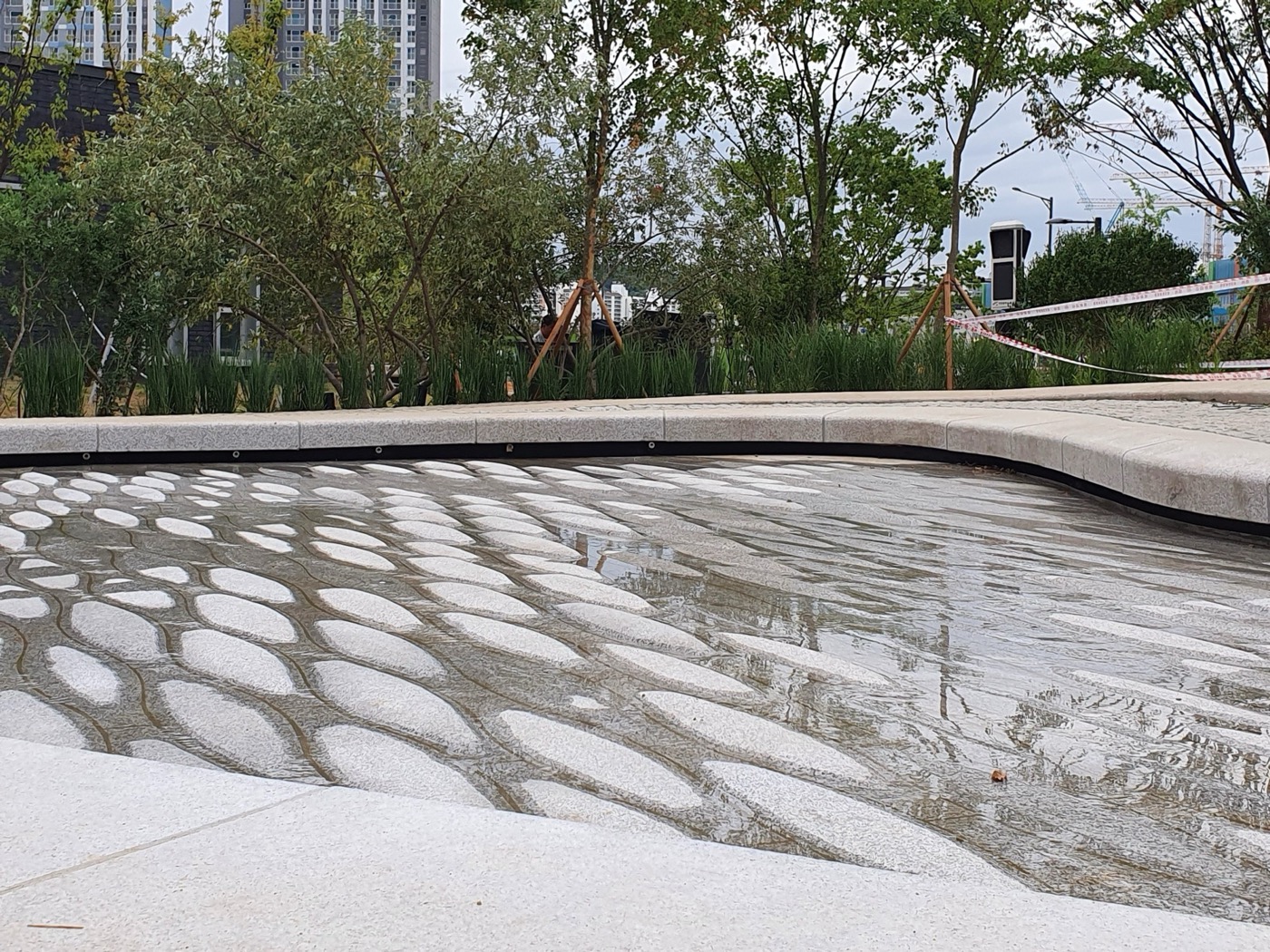
Water is the absent subject; its forms, rhythms, and traces become the design language. Three motifs structure the work: undulating lands and swaying grasses, the kinetic quality of the West Sea coast carried by native and ornamental grasses; life and its traces, the architecture of shells, breathing holes, and sand balls taken as a vocabulary of surface; and ripple marks (yeonheun), the wrinkles a retreating tide leaves on a mudflat, translated into urban paving.
-
- default
Spatial composition:
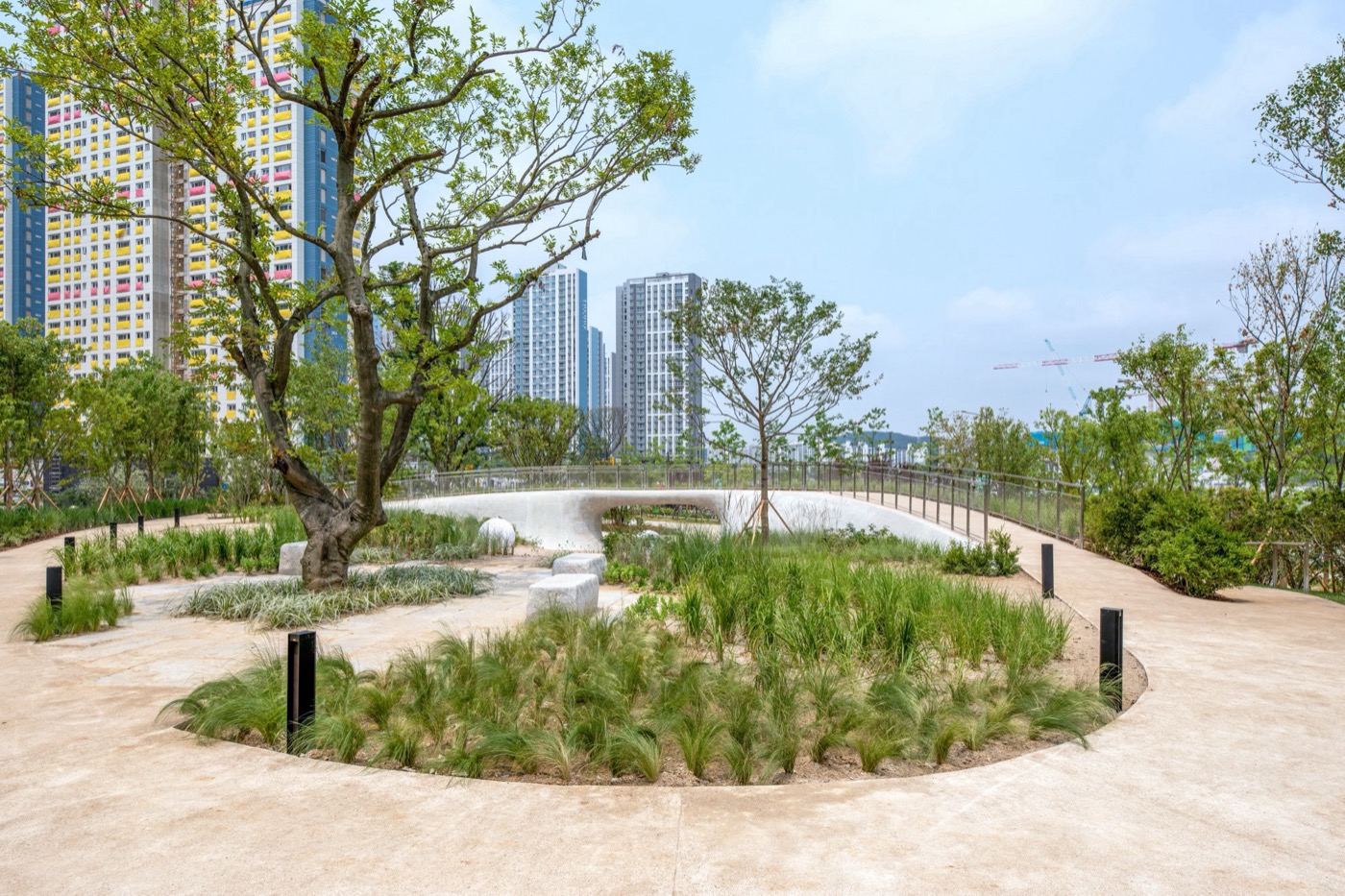
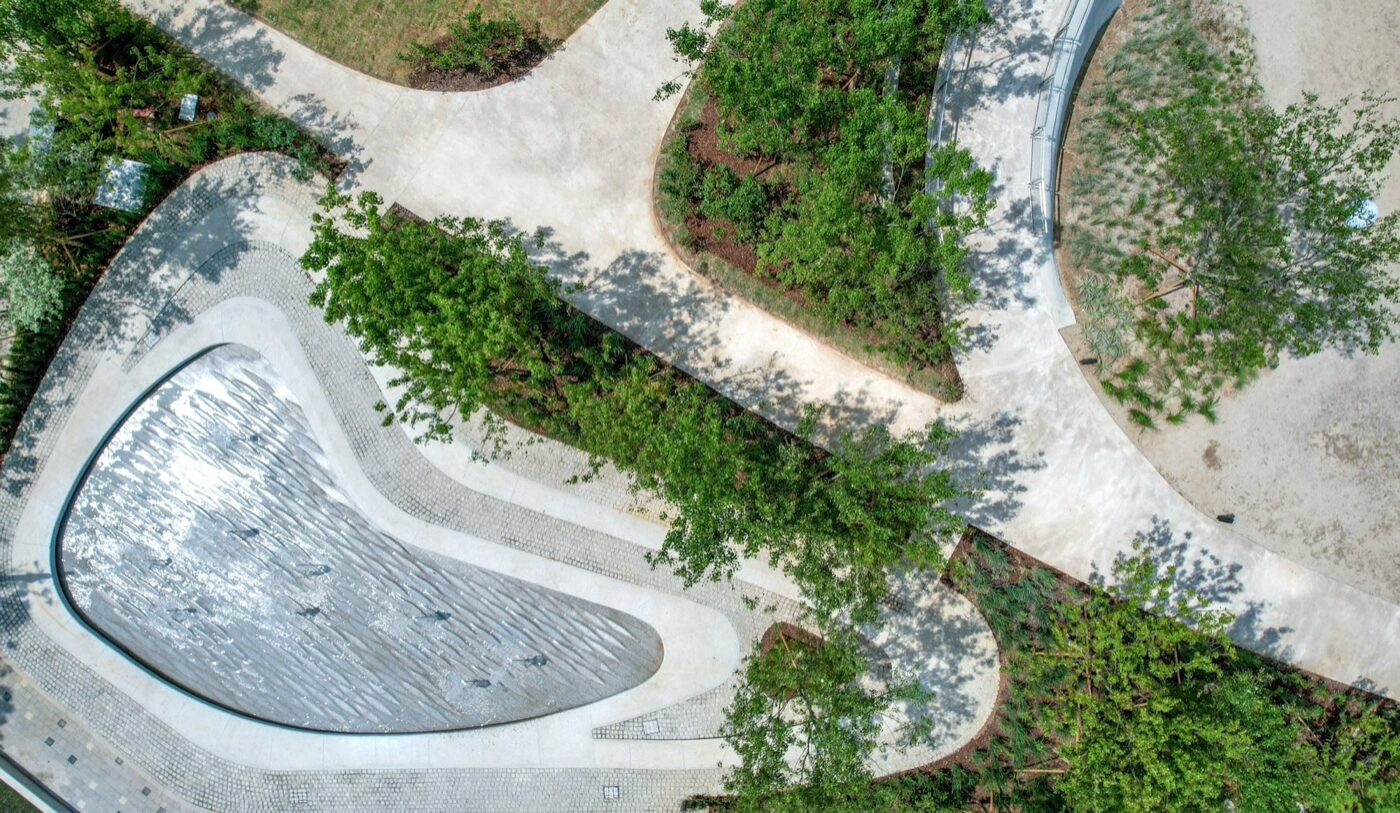
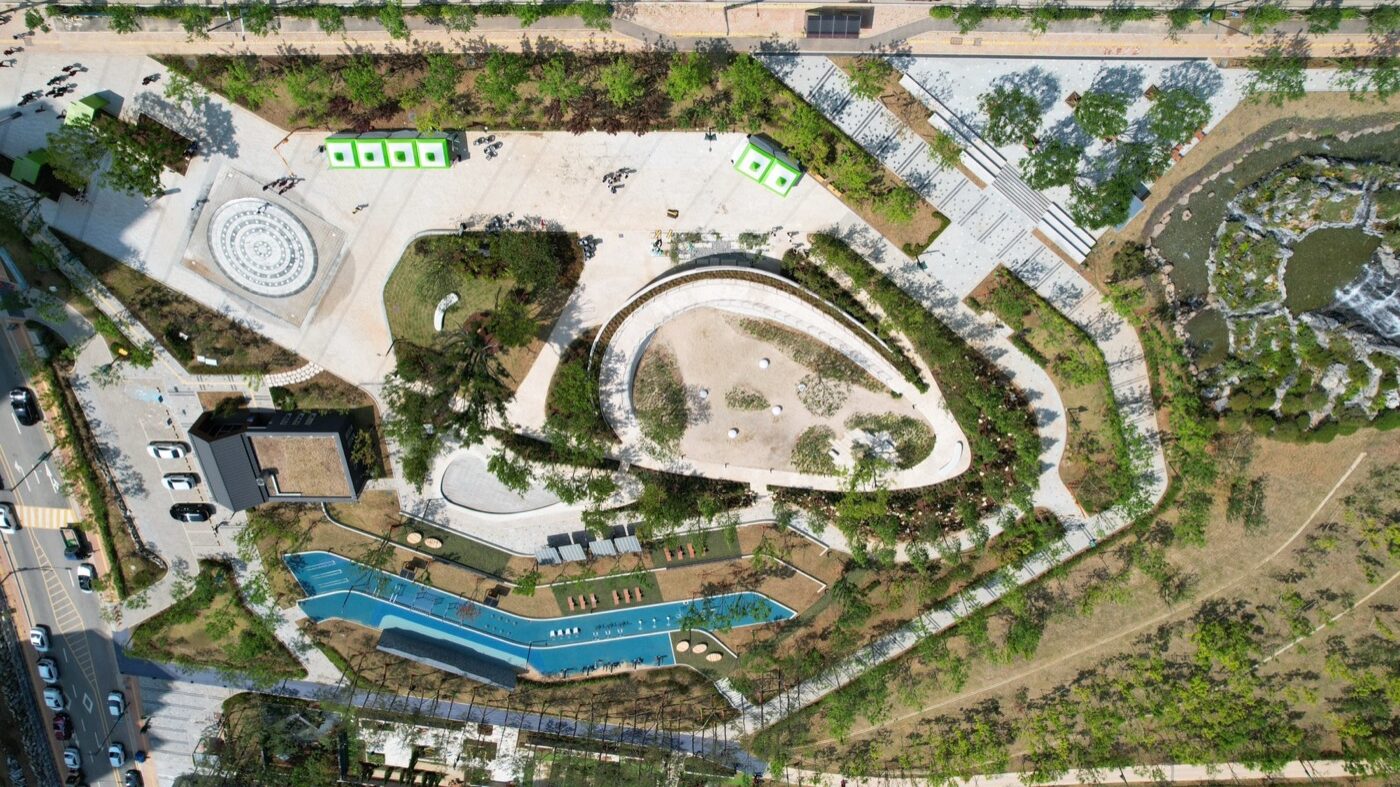
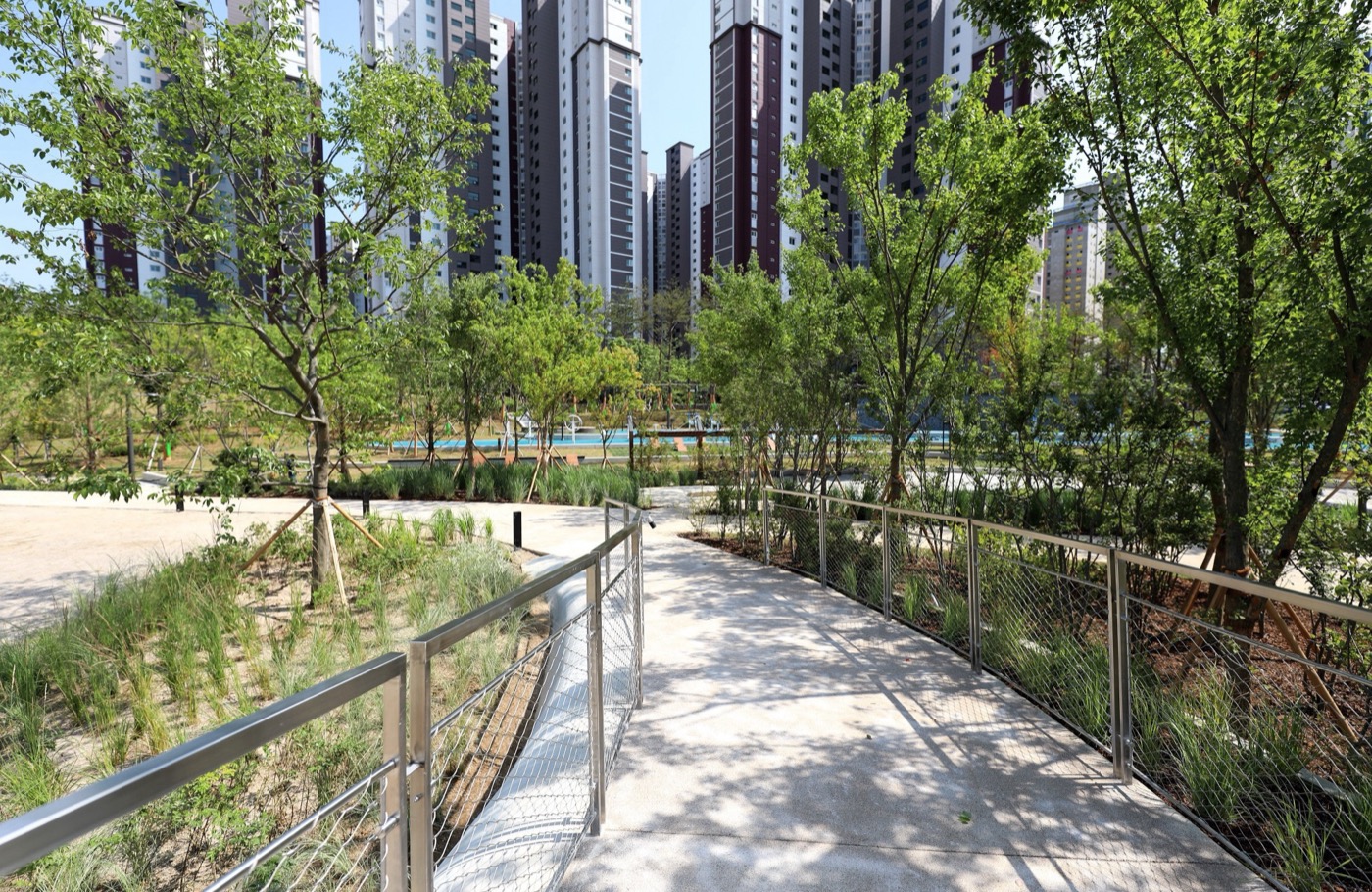
A soft triangular pocket ringed by mature trees, with three elements on a topographic field rising from +17.5 to +21.0 m.
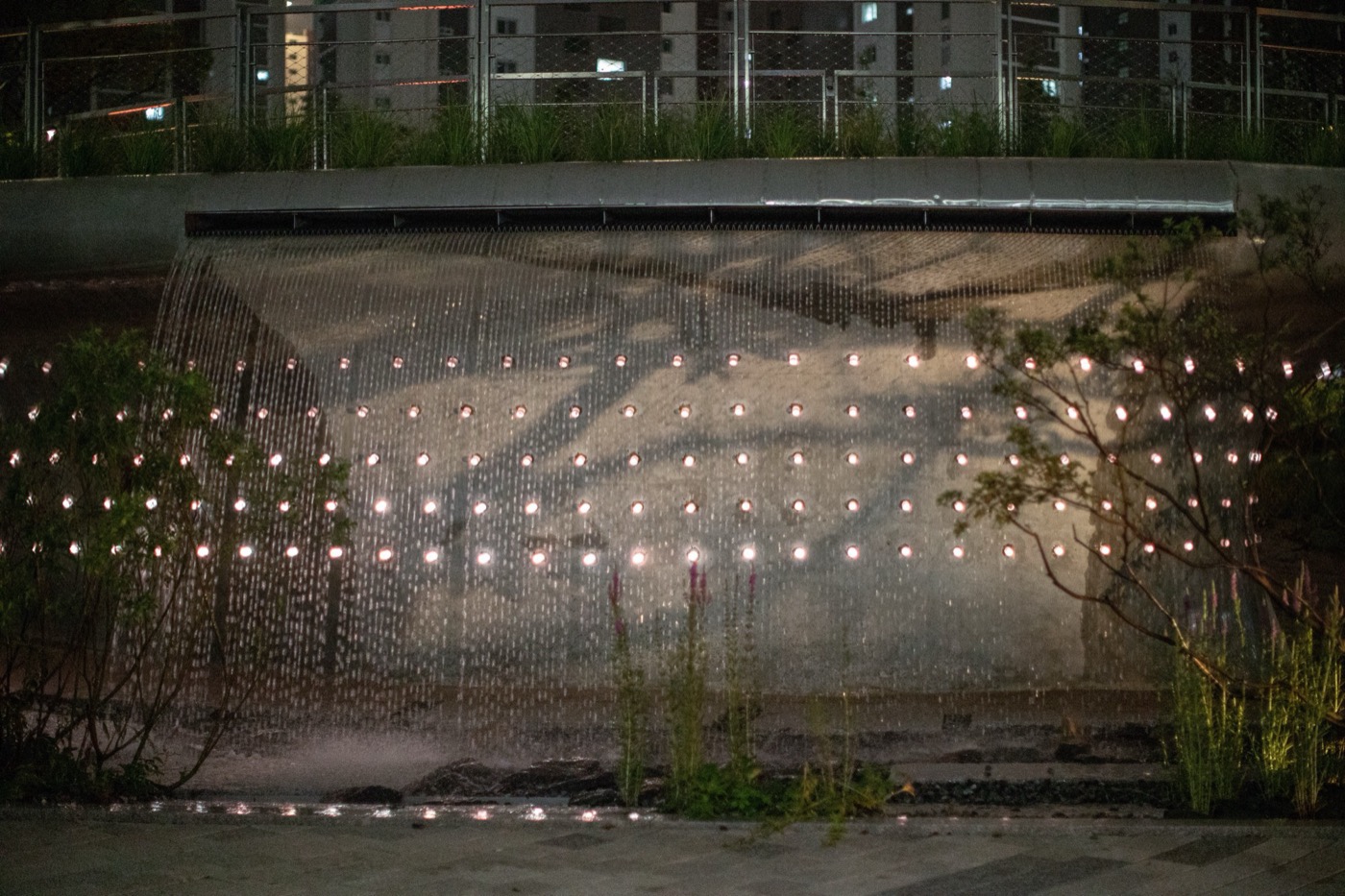
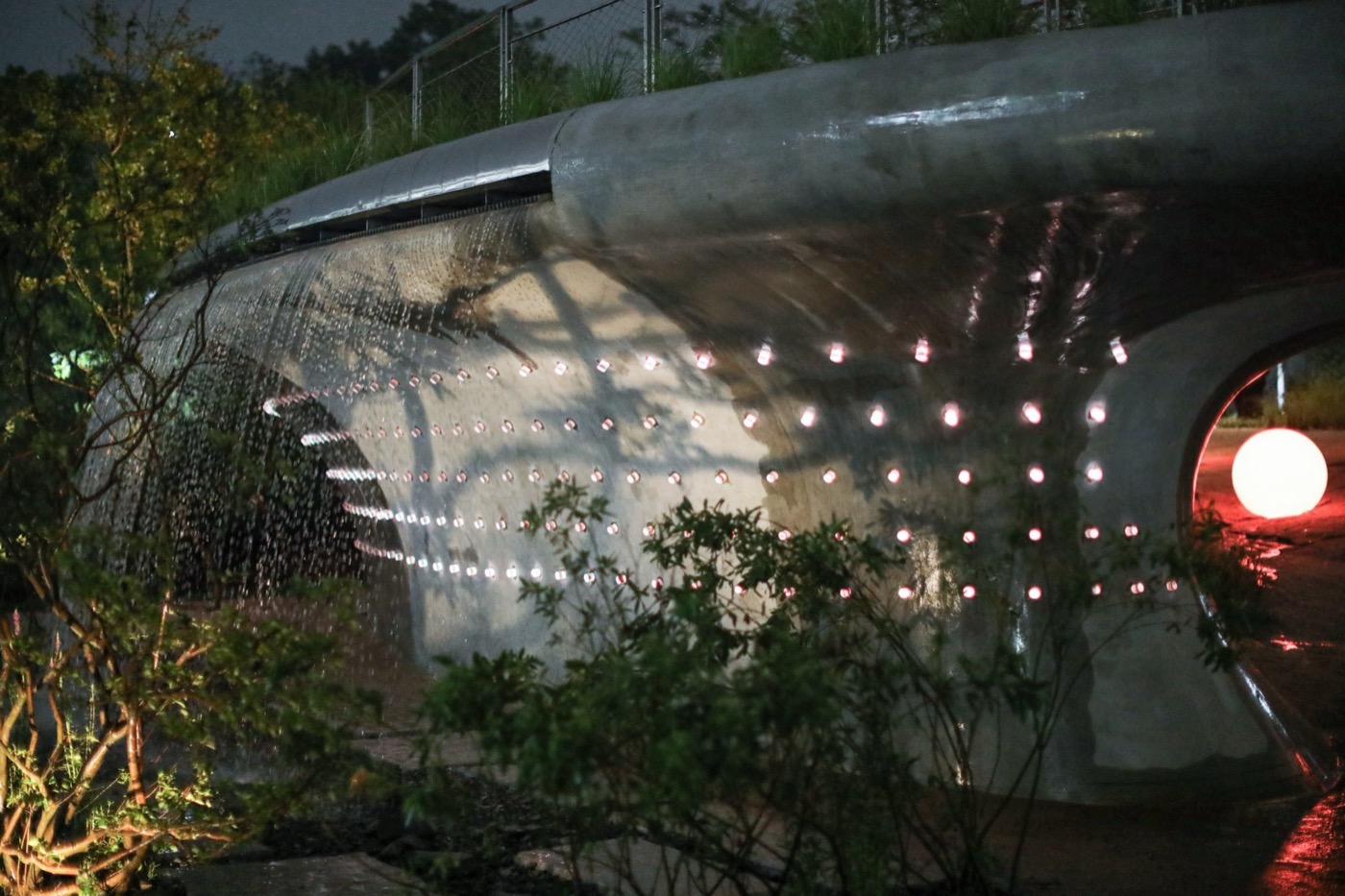
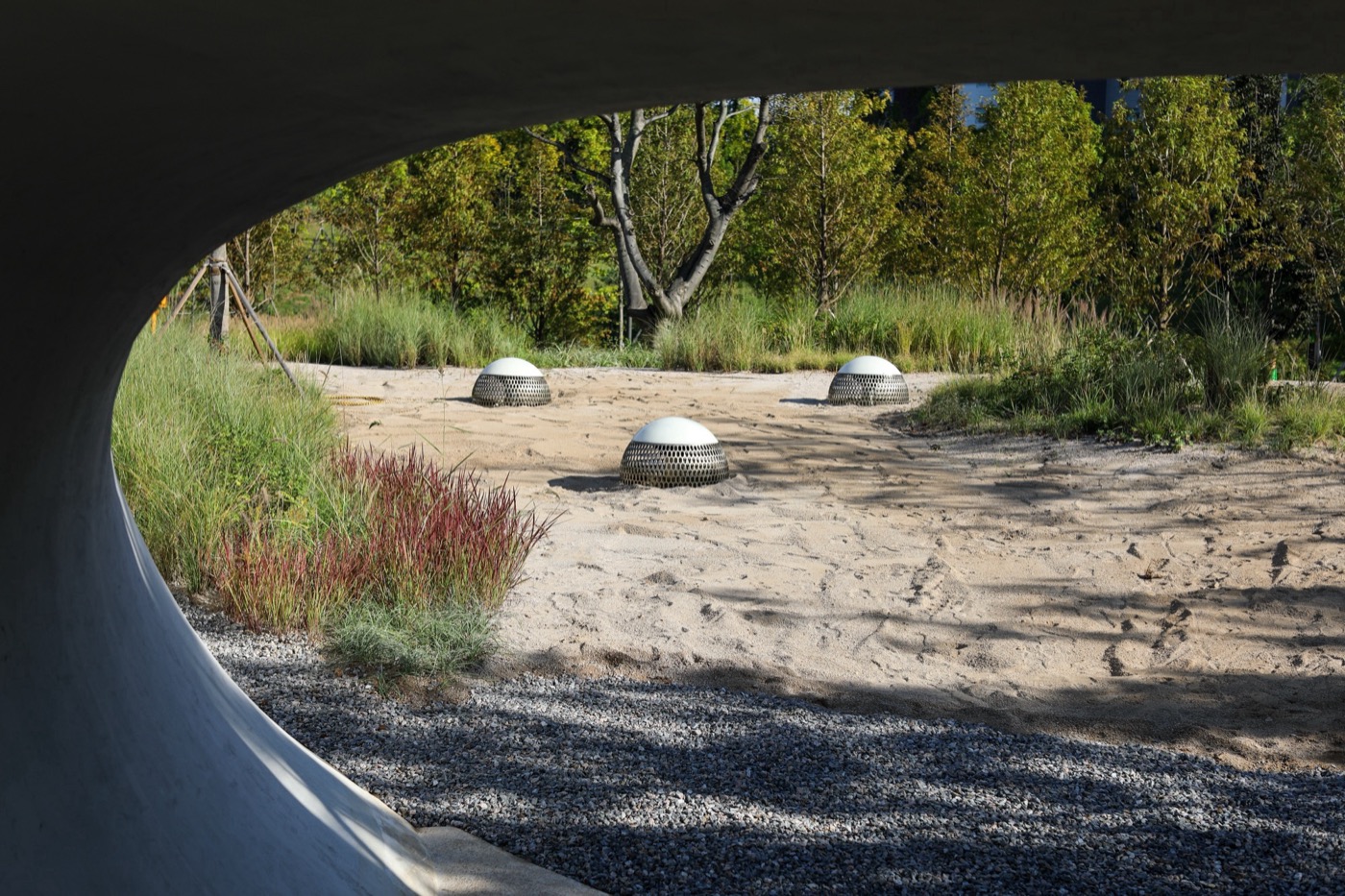
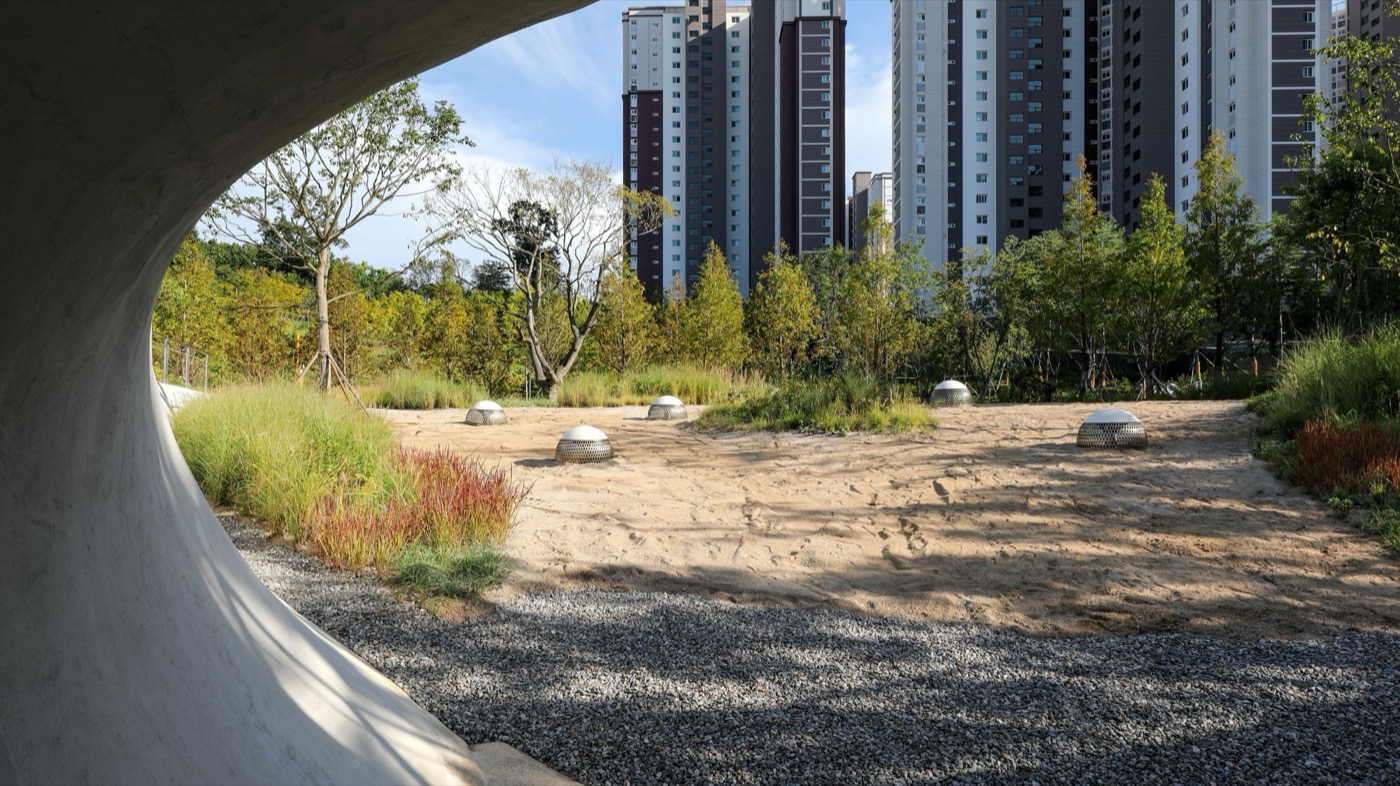
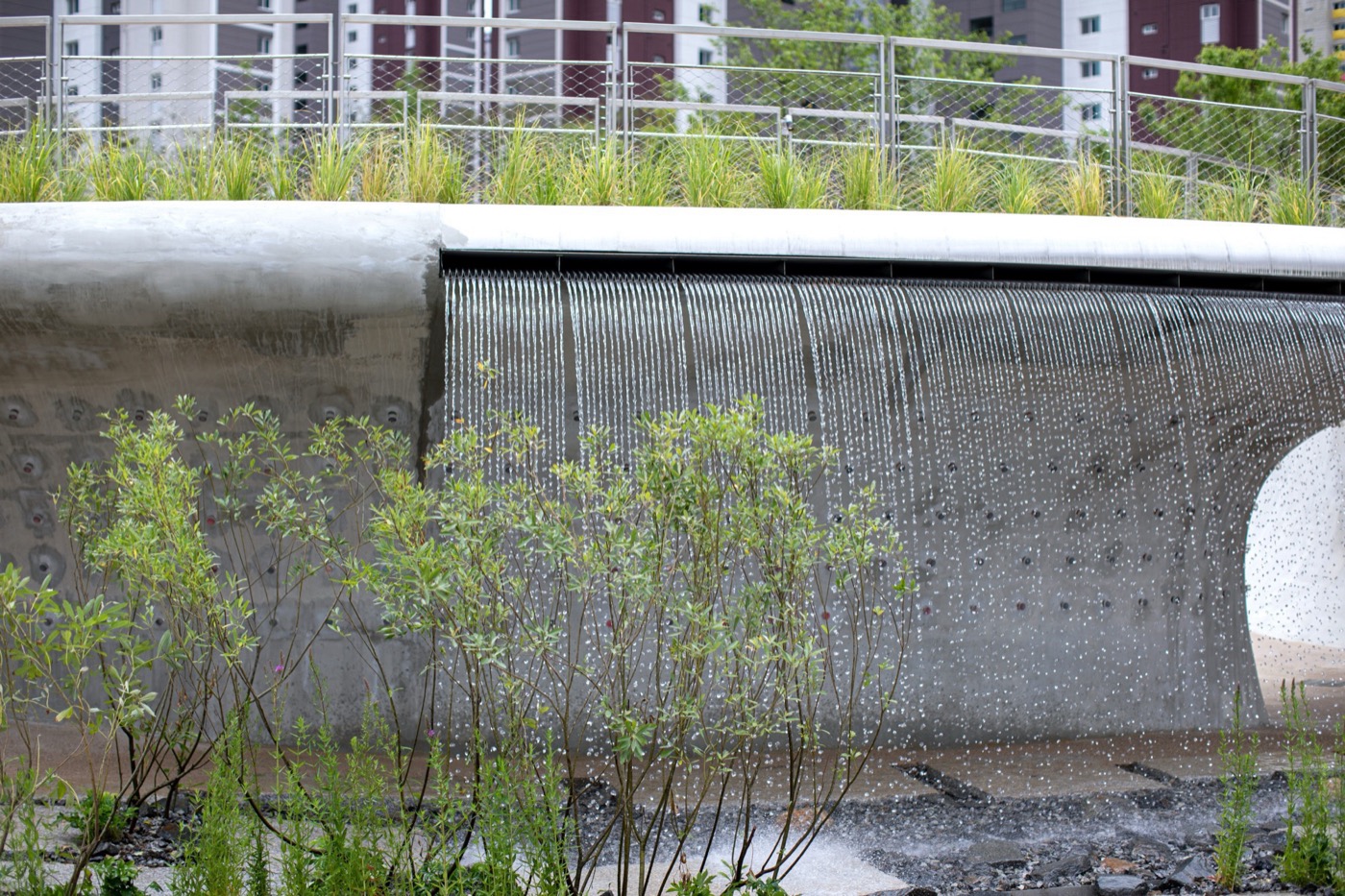
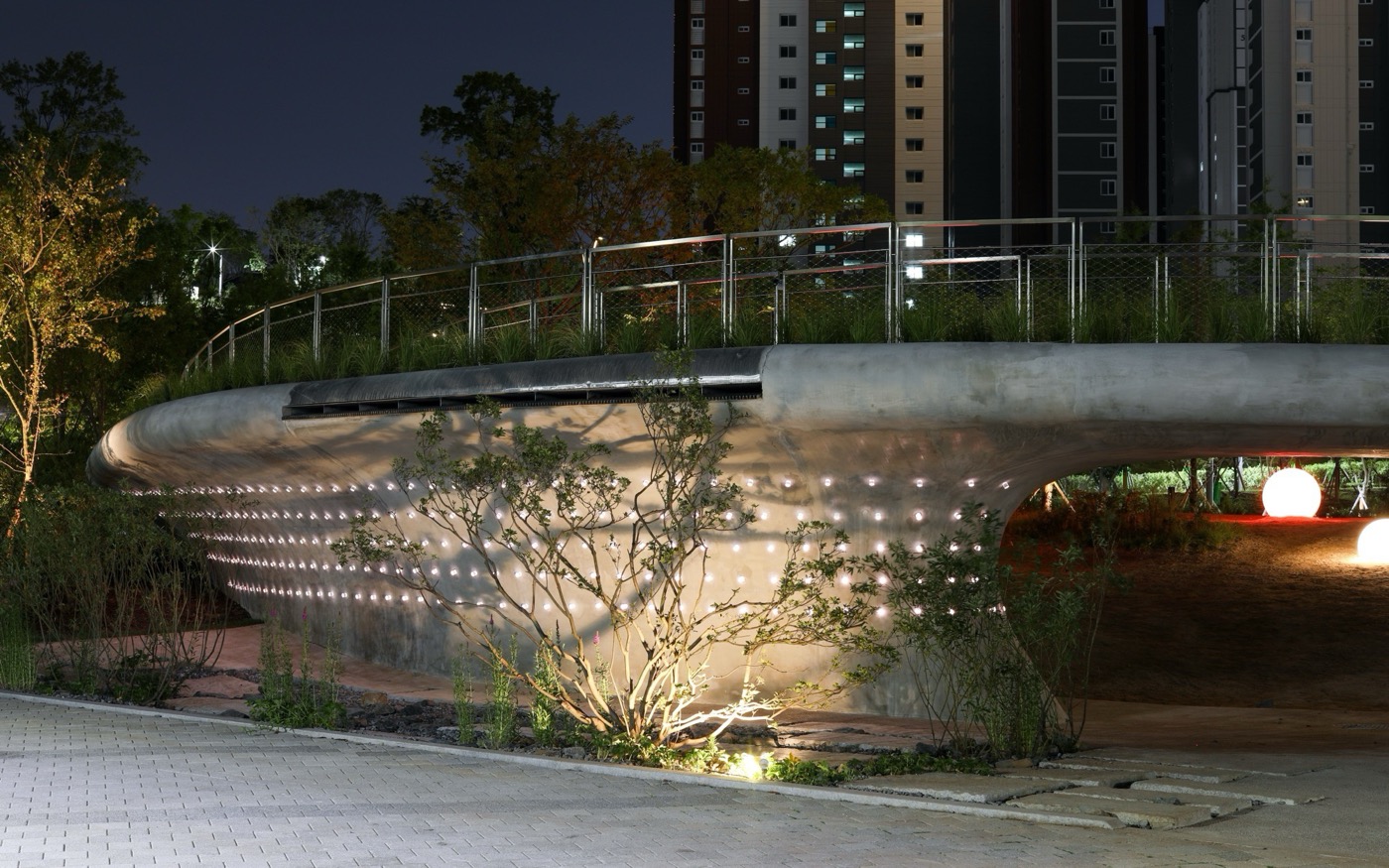
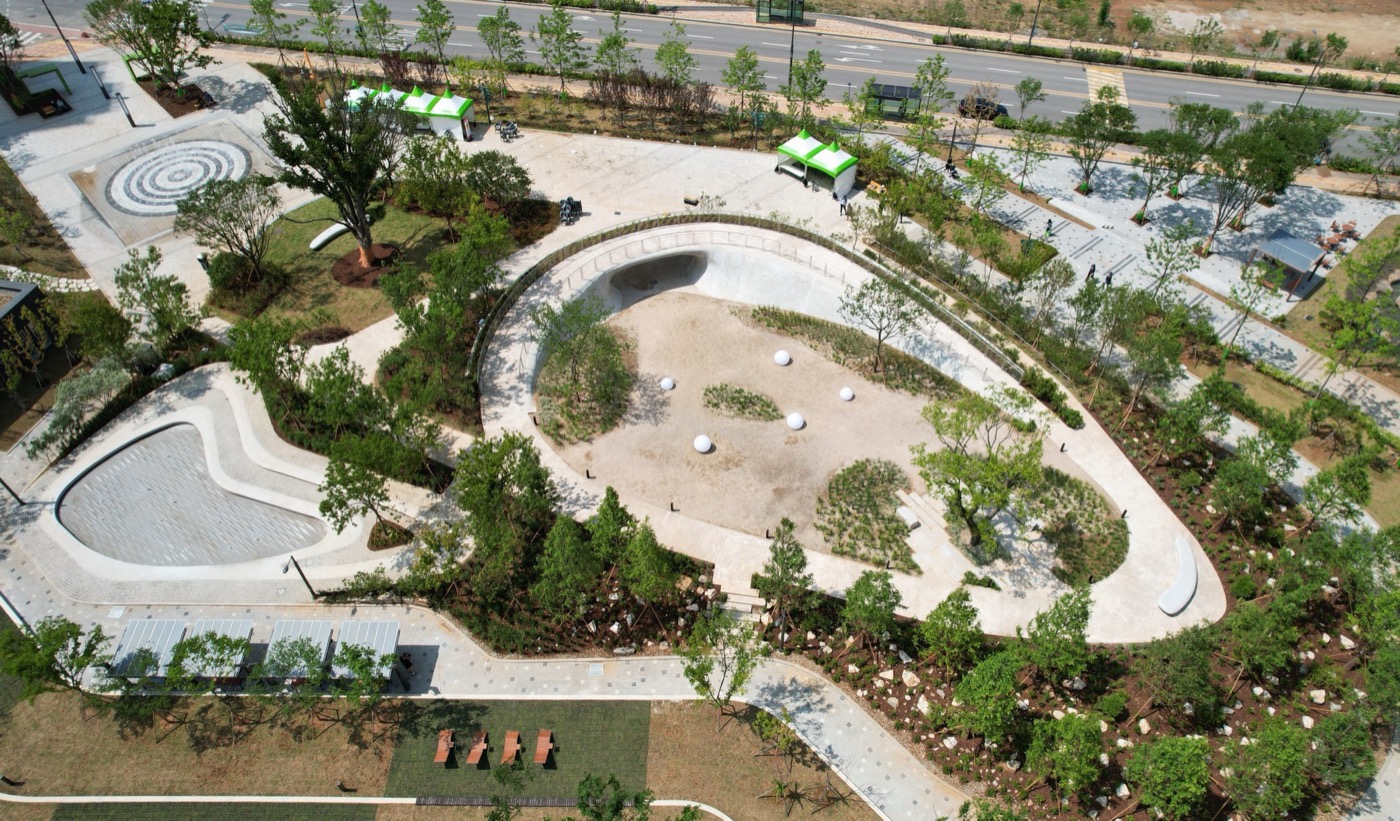
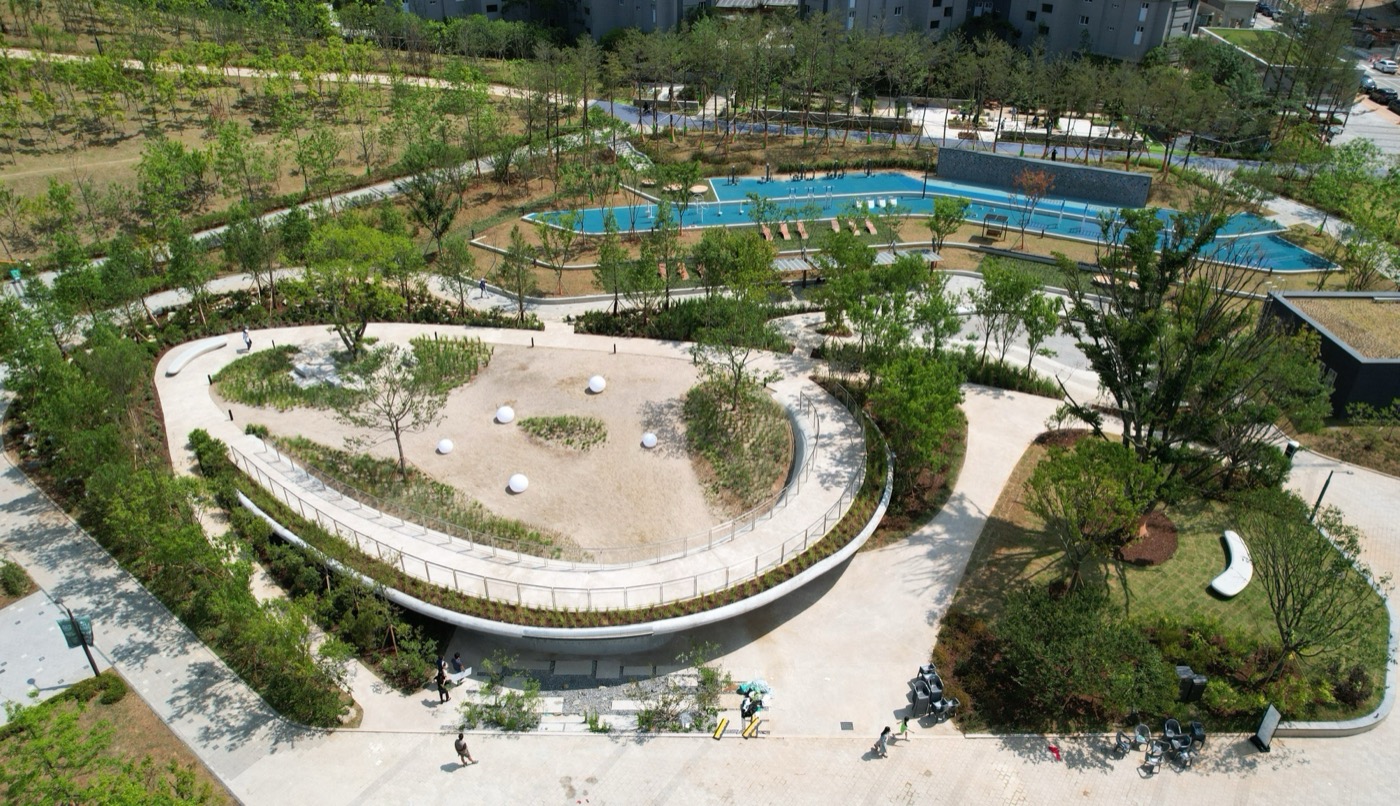
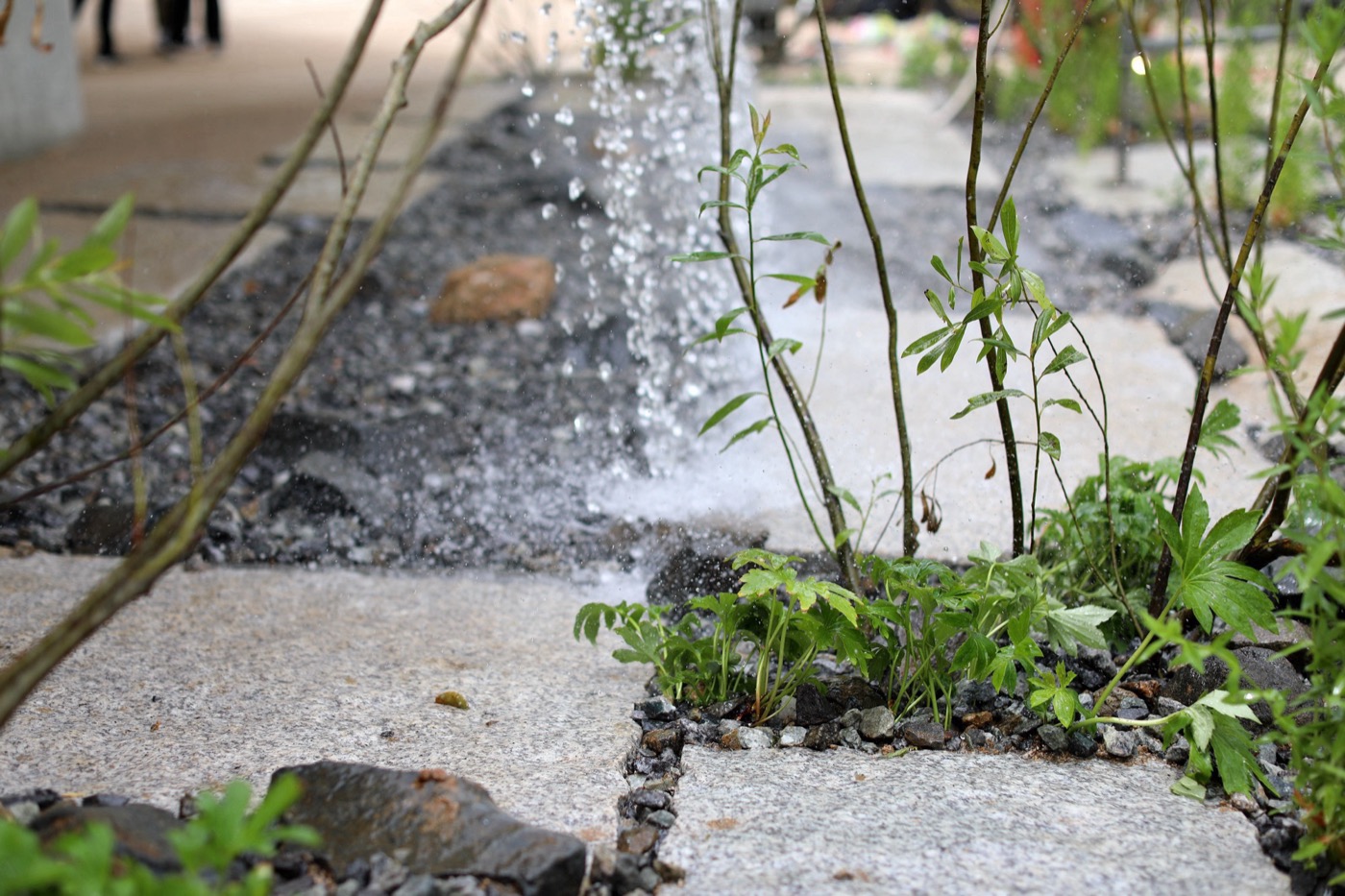
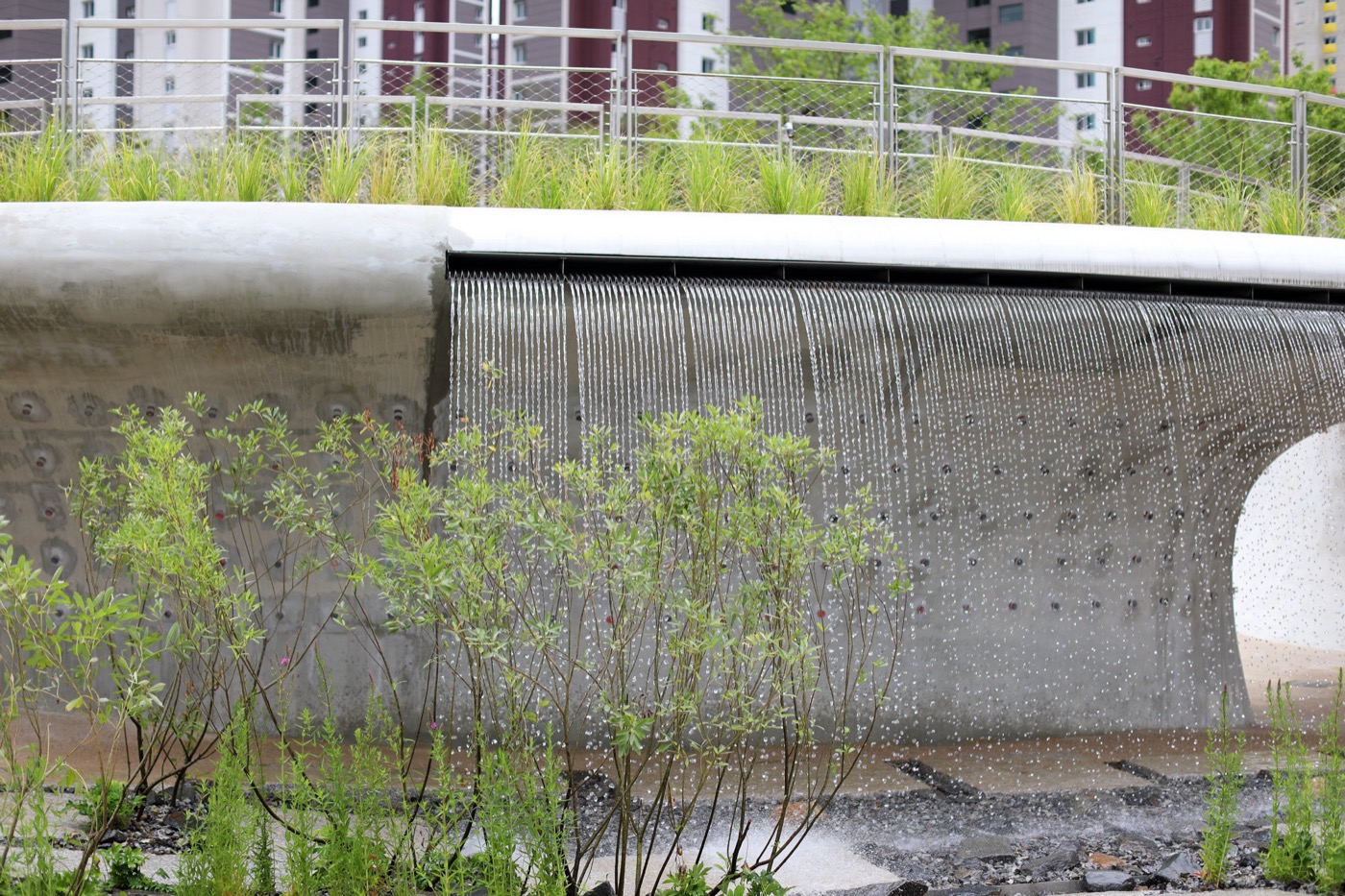
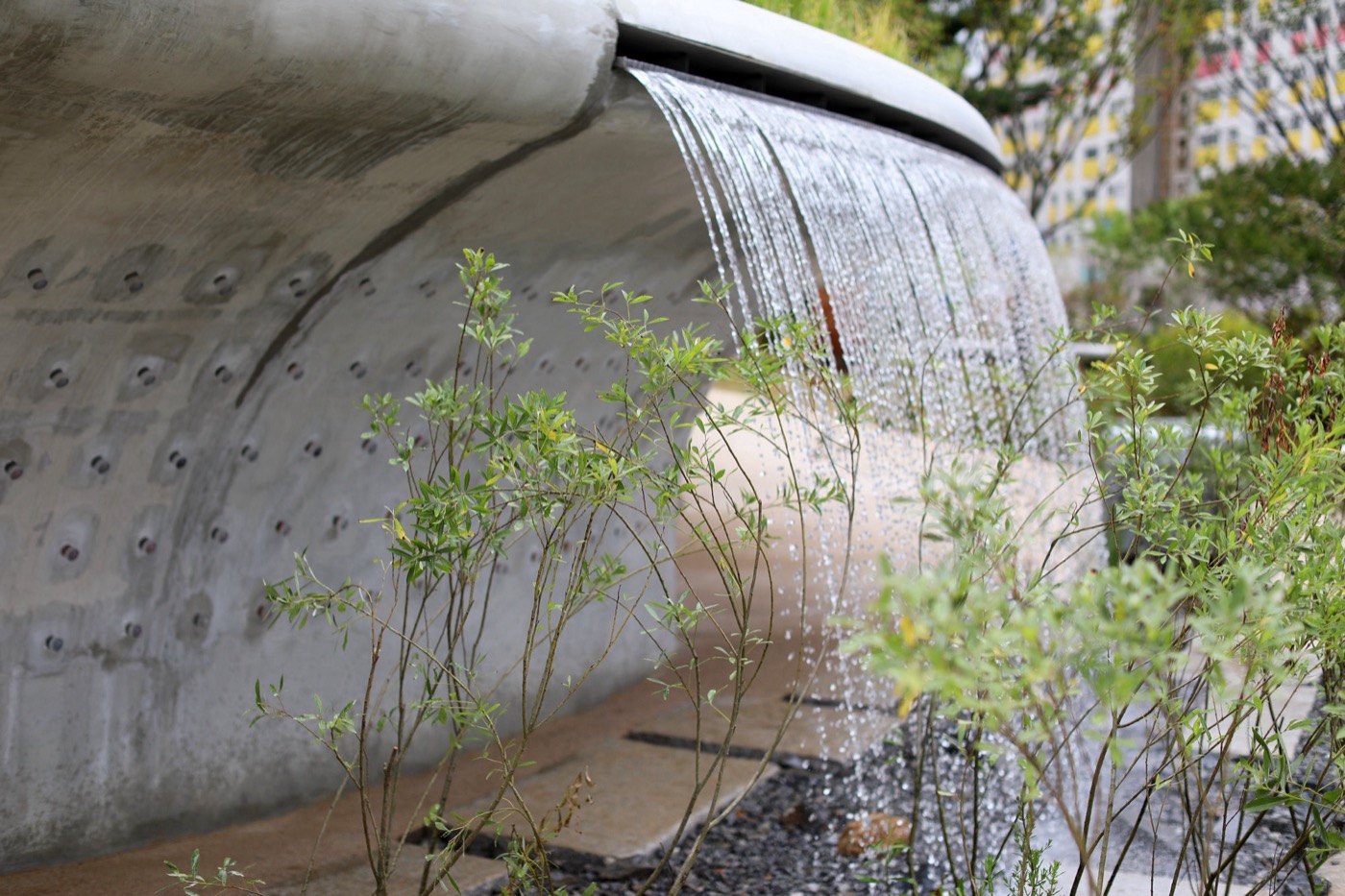
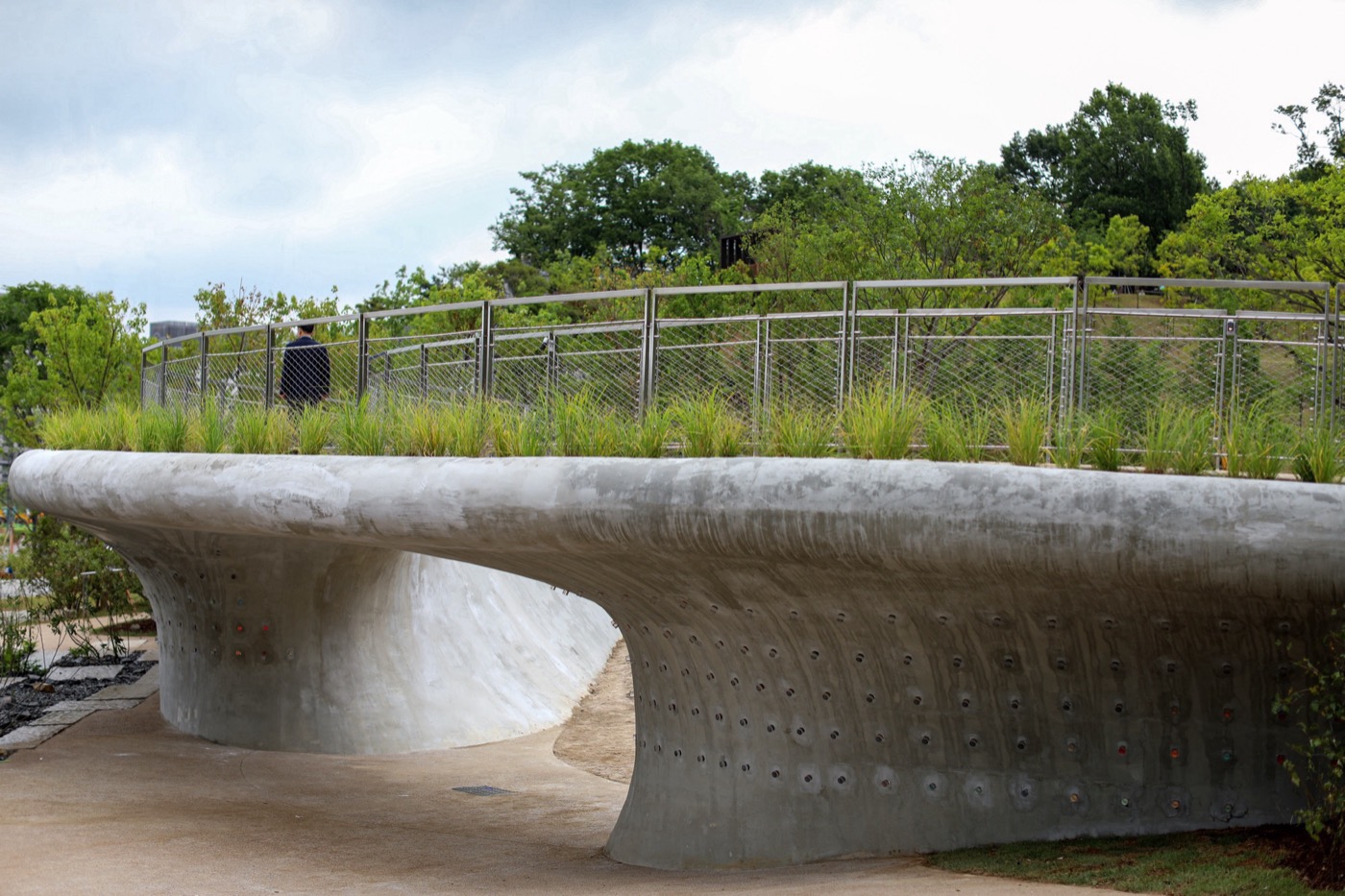
The Big Shell (큰 조개) is a long sculptural cast-concrete enclosure shaped in plan like a half-buried bivalve. Outside, it reads as a planted mound; inside, as a sand-floored room open to the sky, with one large opening punched through the wall. The interior is a coastal dune garden — Miscanthus ‘Adagio’ and ‘Little Zebra’, Rosa rugosa, Glehnia littoralis, Aster spathulifolius, Carex pumila, Briza minor. The opening doubles as a curved, dim tunnel that emerges beside a waterfall sliding down the inside curve into a pool. The wall has no flat surface anywhere; its formwork required bespoke modular drawings, EPS sub-shape build-up, and fourteen sequenced pour operations. Recessed lighting is cast into the inner curve.
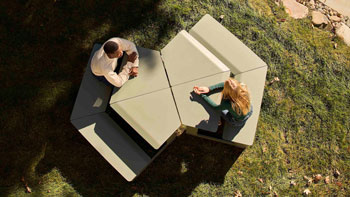
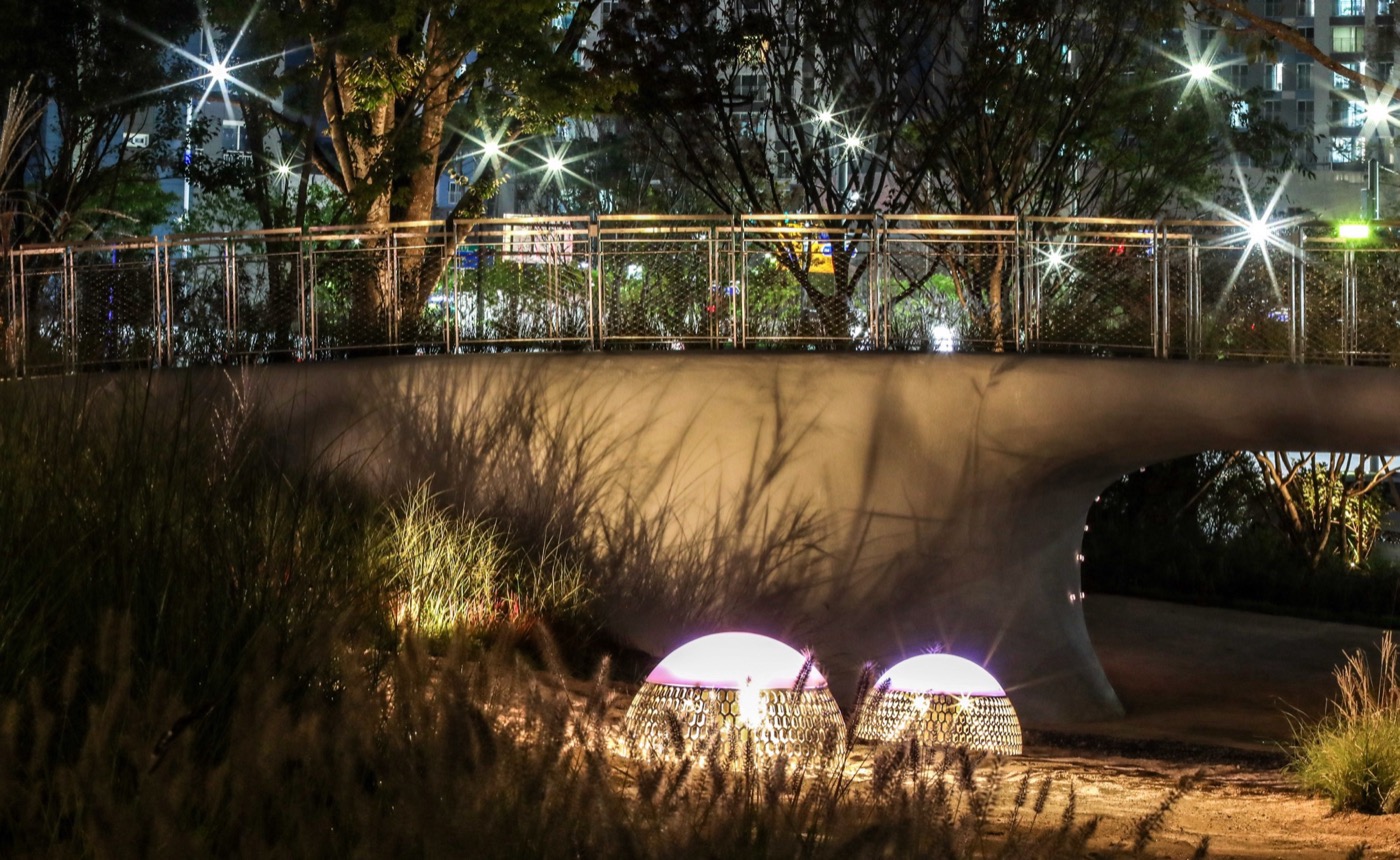
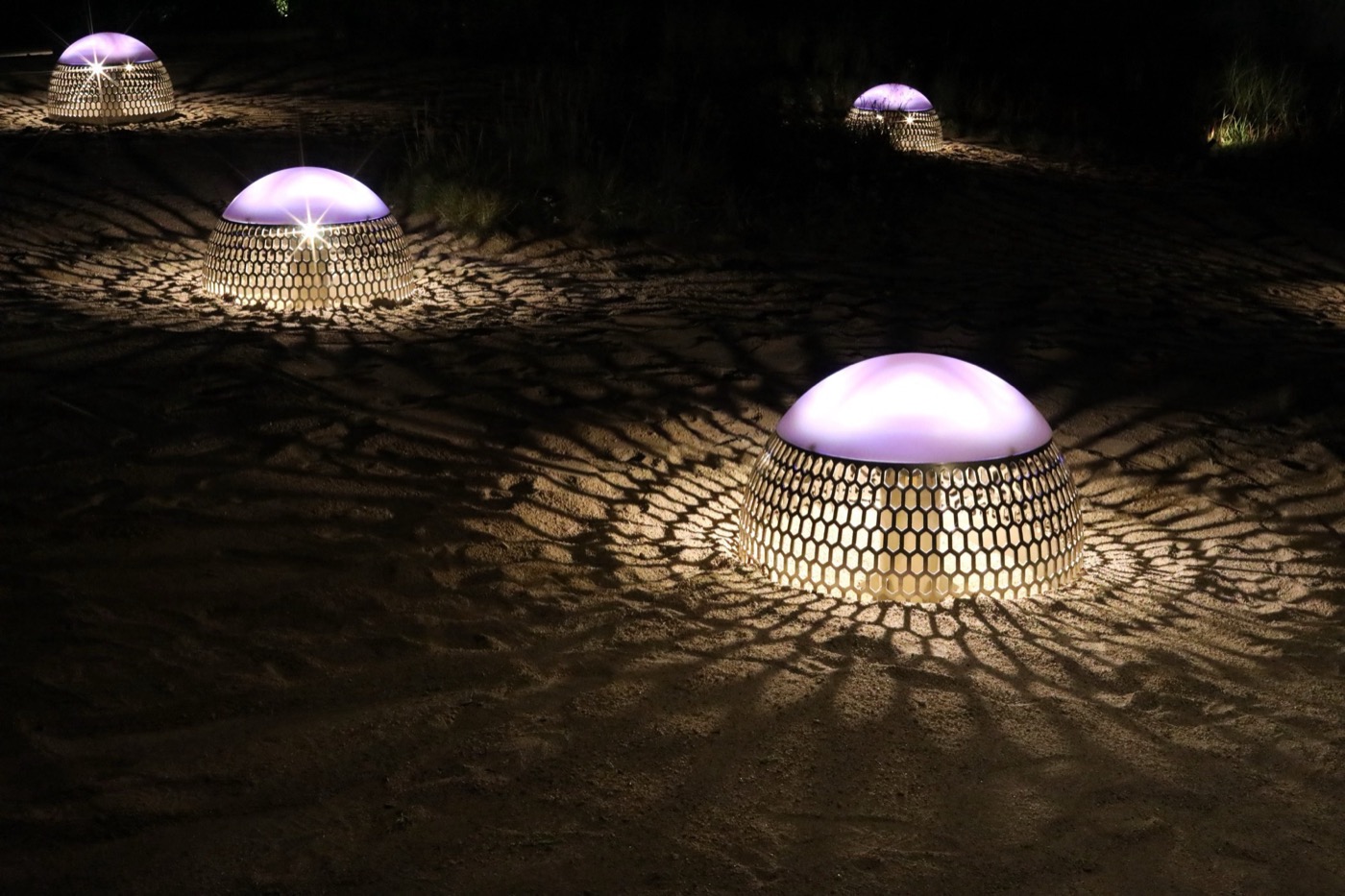
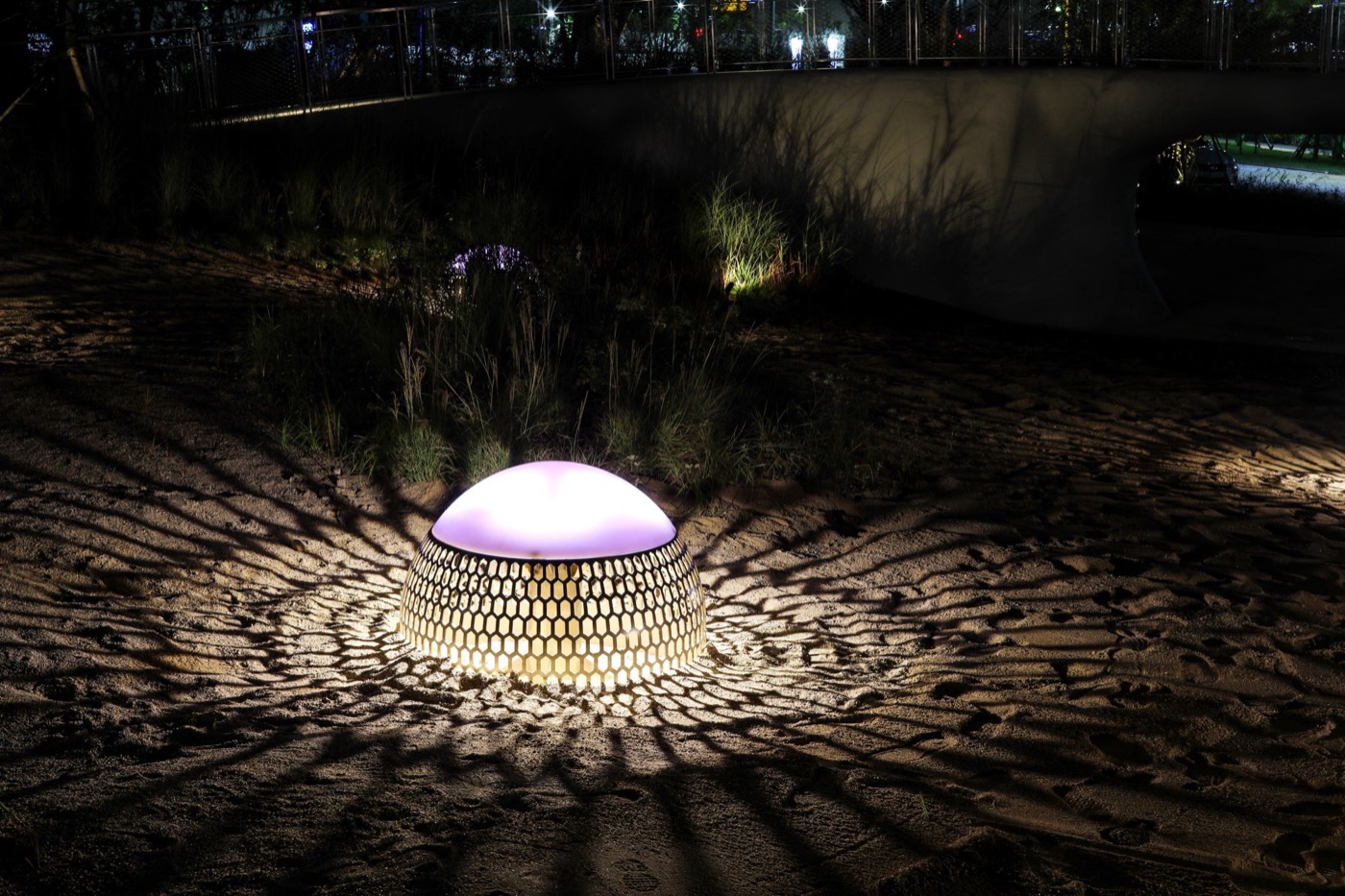
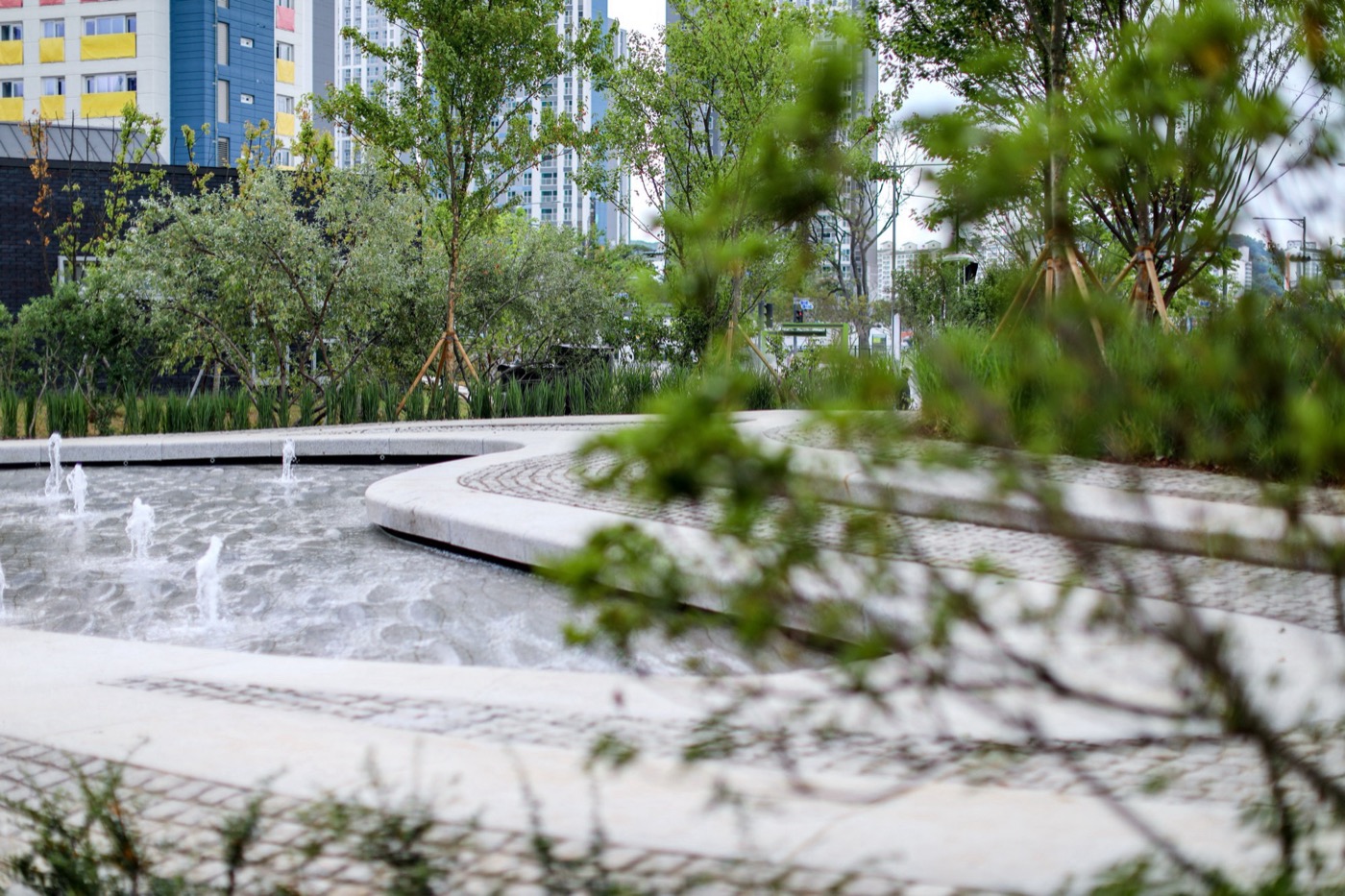
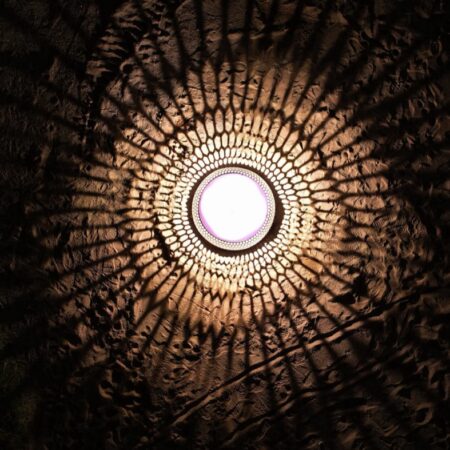
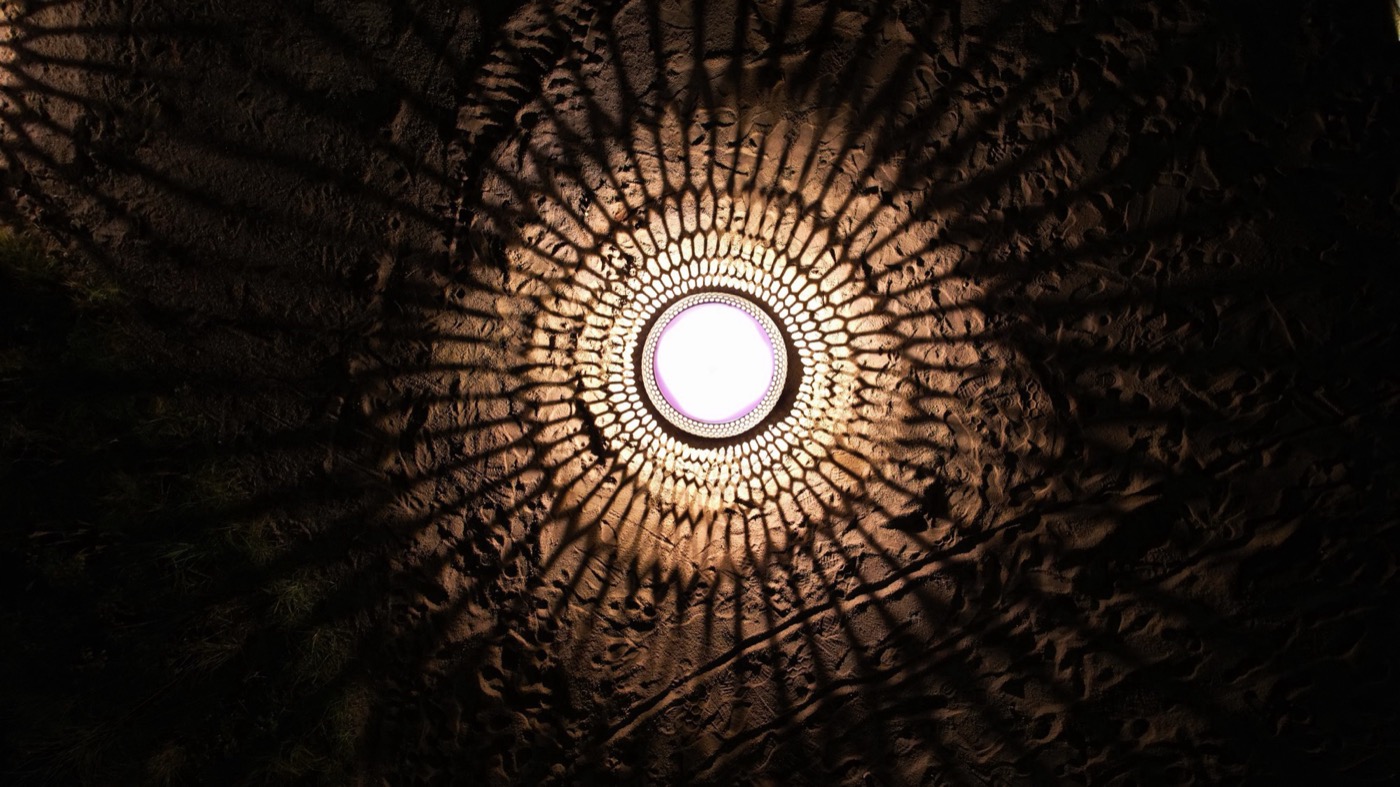
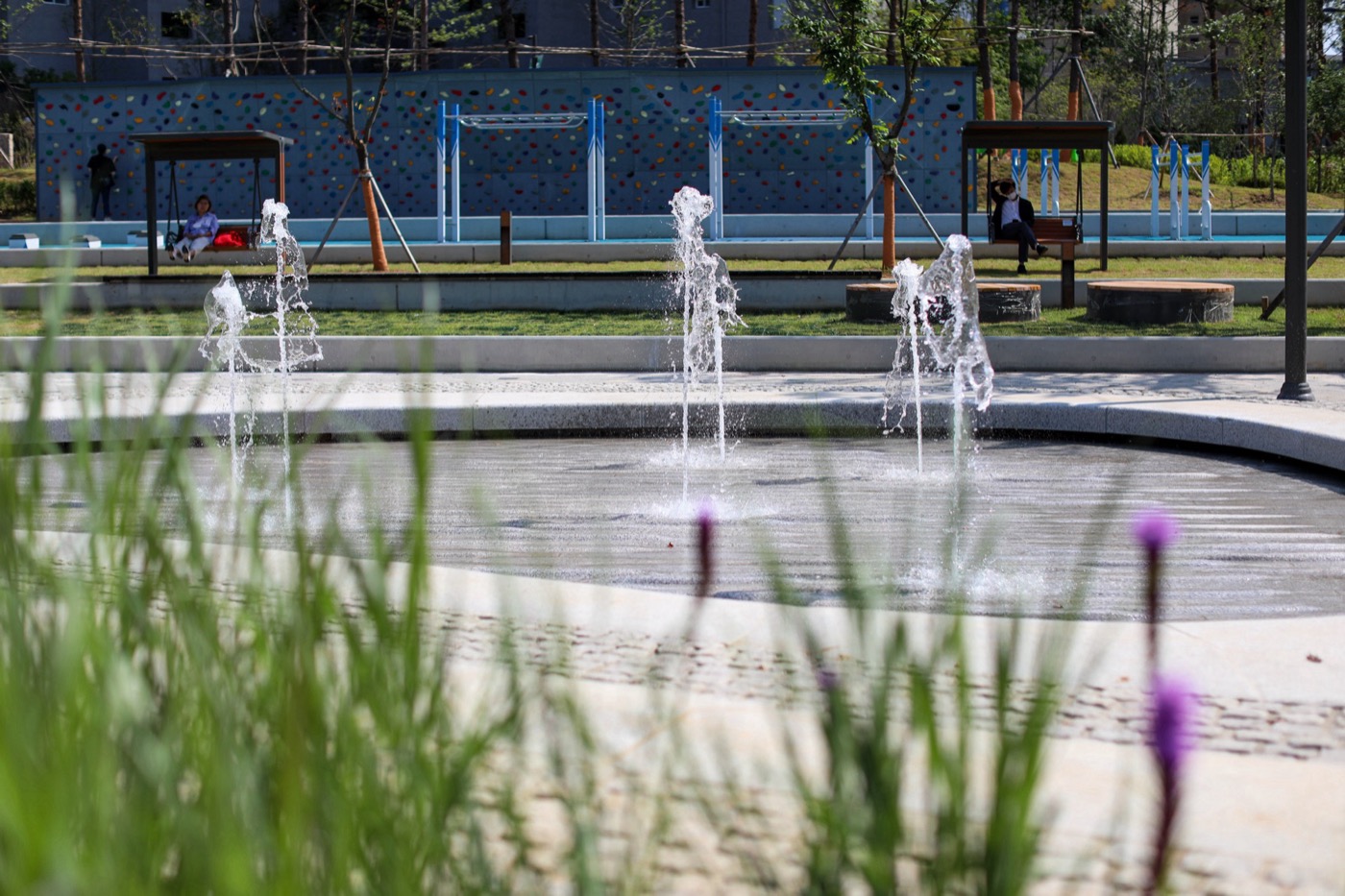
The Ripple Garden (연흔 정원) is a centimeters-deep pond whose bottom is a custom precast concrete module carved with mudflat ripples, supplied in three geometries (1,800 × 50 mm) so the field reads natural rather than tiled. Bubbler uplights — paired water spouts and LEDs cast into the modules — sit unevenly across the floor, mimicking the spacing of breathing holes. Among them stand the Algae Seats: 900 mm pod seats with translucent cast-resin tops over laser-cut hexagonal metal lattices, lit by internal RGB and 2700 K LED arrays. Routed shapes modulate the resin’s thickness so four bright “windows” bloom across each seat at night, while the lattice projects a hexagonal shadow across the pond.
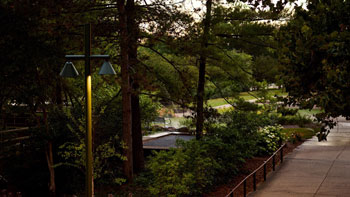
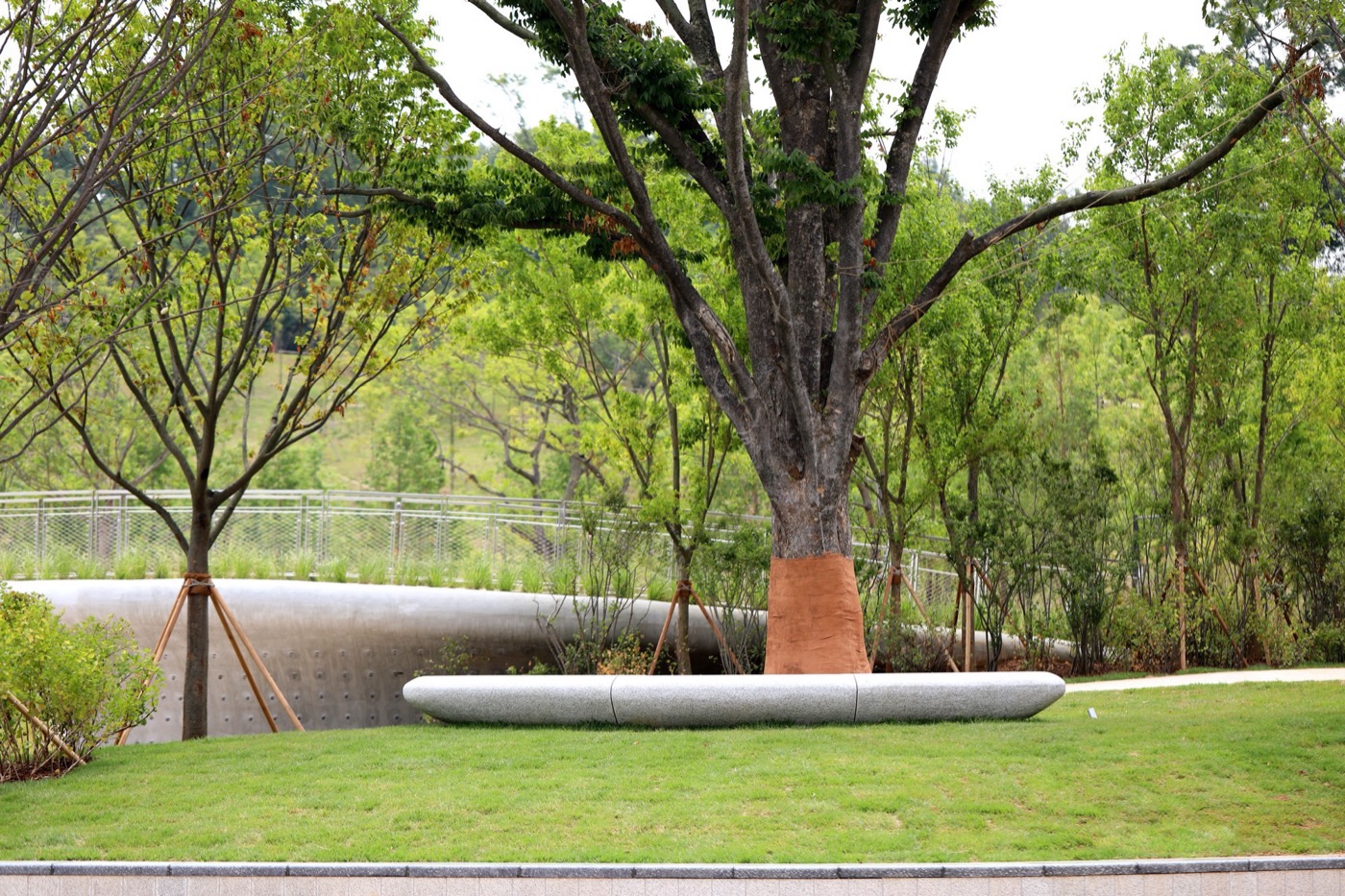
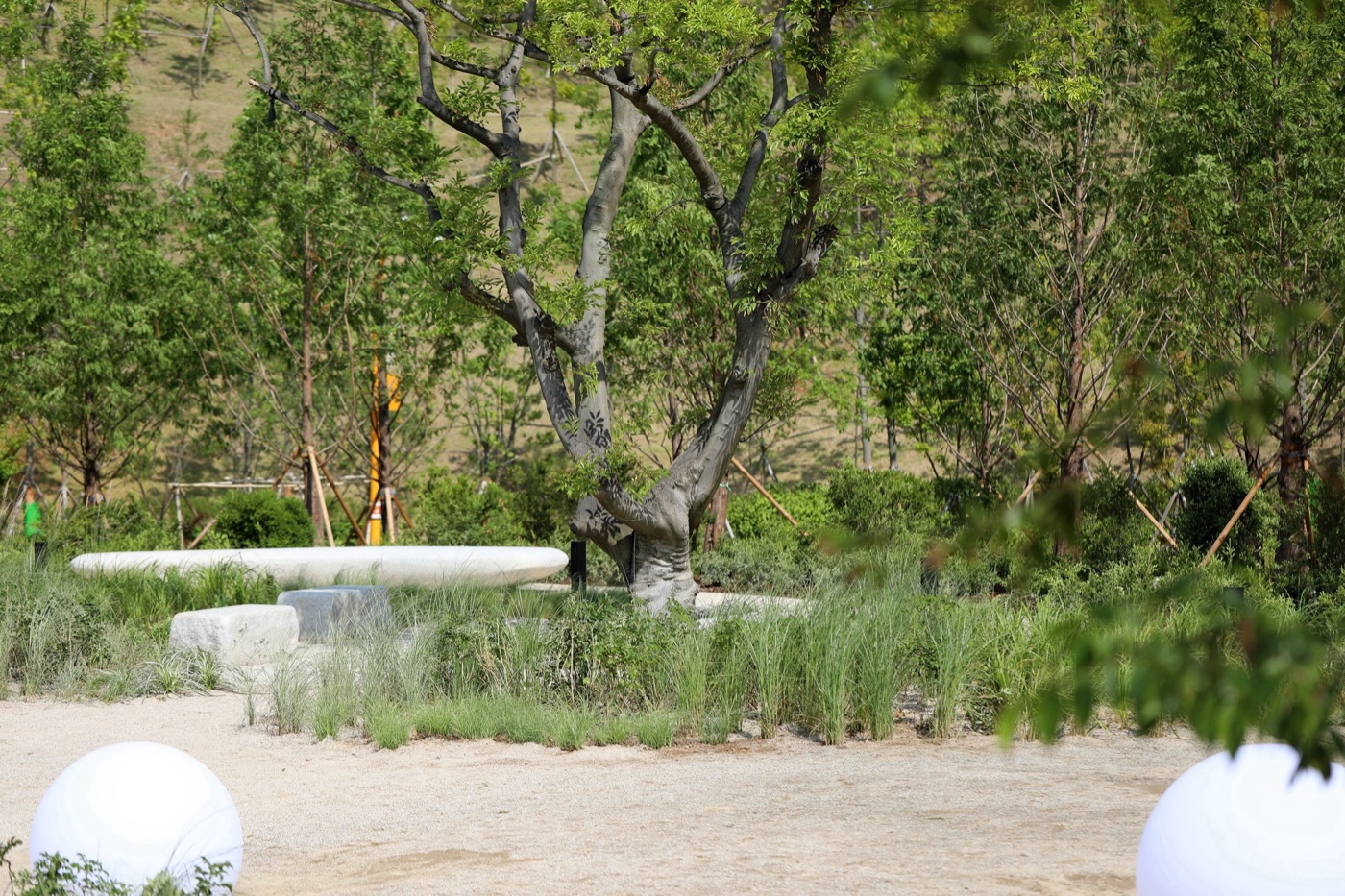
Zelkova Hill (느티나무 구릉) is the quietest element — a low planted mound around a mature Zelkova serrata with retained existing trees and a curving path. It is the visual hinge between the signature spaces and the surrounding park.
Lighting (with The Flaming Beacon):
Three principles: emphasize organic form (continuous warm uplighting of the shell’s inner curve, not spotlighting); play with pattern (in-ground pixel LEDs at 200 mm centers behind the shell, drivable as a low-resolution display; a rim-mounted projector for events); be interactive (sensors at the cave and pond rim trigger soft brightening and color shifts as people move through). The Algae Seats are lighting, furniture, and sculpture at once.
Planting:
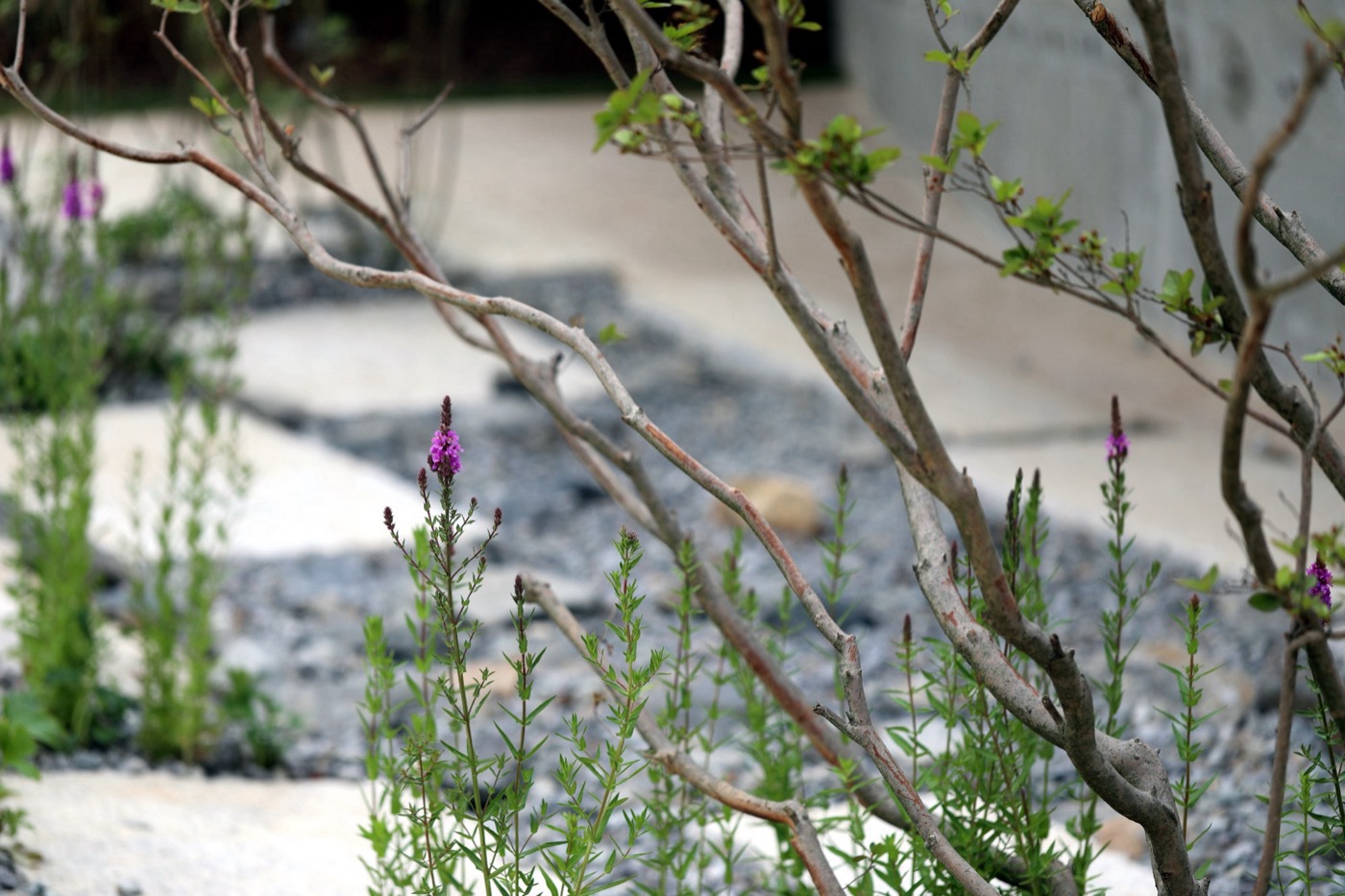
The focal zone is organized in four sectors: lower wet ground (Calamagrostis epigeios, Lythrum salicaria, Salix gracilistyla, Imperata cylindrica); a structural mid-slope of Miscanthus ‘Adagio’/’Little Zebra’ with Rosa rugosa, Glehnia littoralis, Aster spathulifolius, Solidago virgaurea, Carex pumila, Briza minor; drier upper ground (Pennisetum alopecuroides, Prunus japonica, Aster koraiensis); shaded edge (Carex foliosissima, Dryopteris crassirhizoma, Polygonatum odoratum, Allium tuberosum). The canopy comprises retained Zelkova serrata, Ulmus parvifolia, Celtis sinensis, with added Sorbaria sorbifolia, Koelreuteria paniculata, and Metasequoia glyptostroboides.
Outcome:
The garden does not restore a lost ecosystem and does not pretend to. What it offers, on reclaimed land in a new neighborhood, is a compact, durable, year-round encounter with the formal vocabulary of the West Sea coast — its grasses, surfaces, ripples, and quality of light — embedded in everyday urban life.
37.588457, 126.710068
77088


LILA 2026 Sponsor