Roškot theatre park
ateliersteflovi.cz/ + www.zarovkaarchitekti.cz
2026 Landscape and Architecture / 2026 Public Projects / Czech Republic / Built in 2025 /

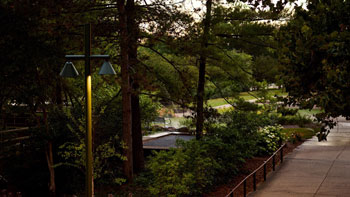
Revitalization has reimagined a neglected urban park into a precise, clearly articulated public landscape—one that resonates with the spatial clarity of Kamil Roškot’s theatre while cultivating contemporary civic life, ecological performance, and seasonal adaptability.
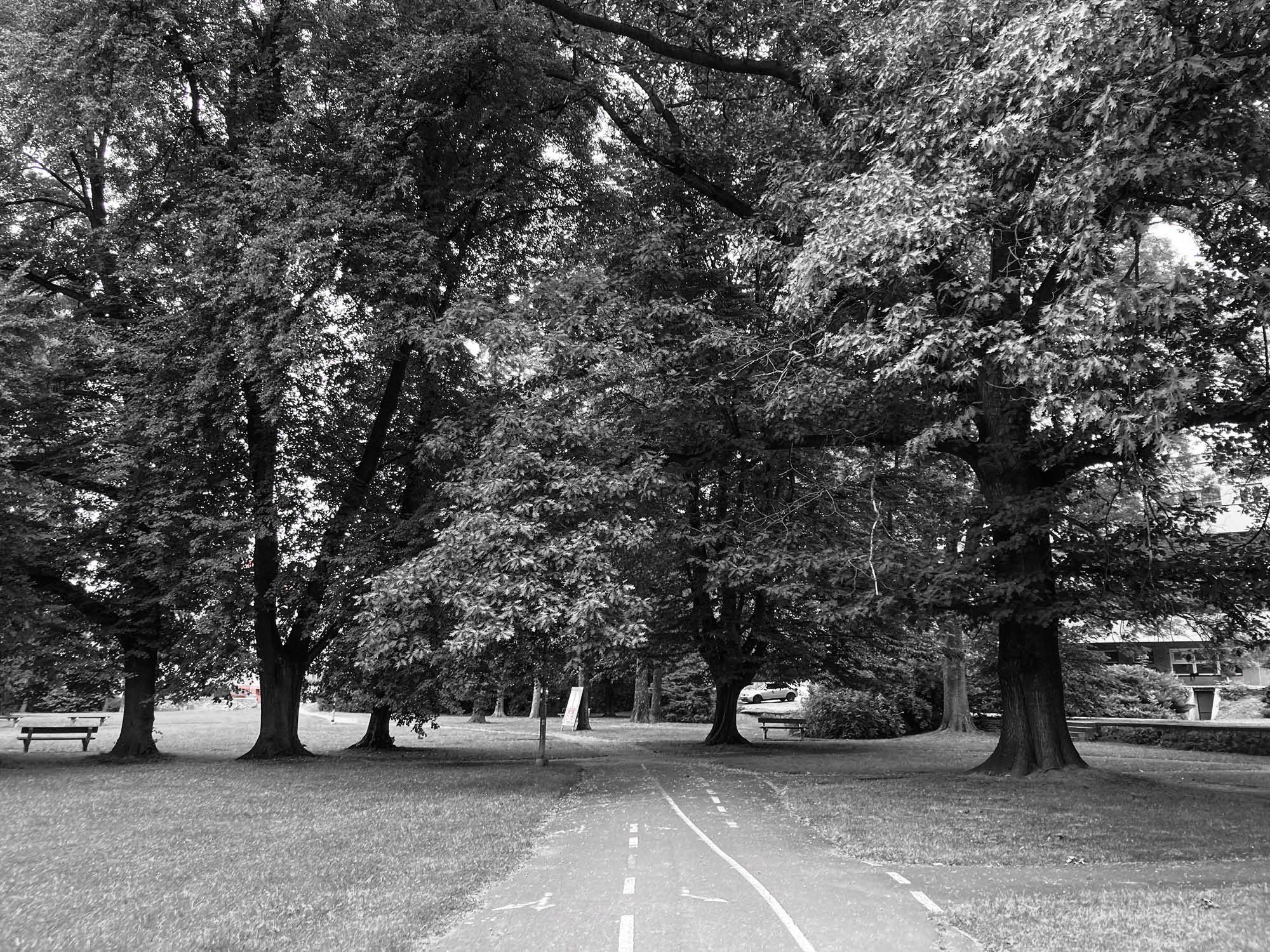
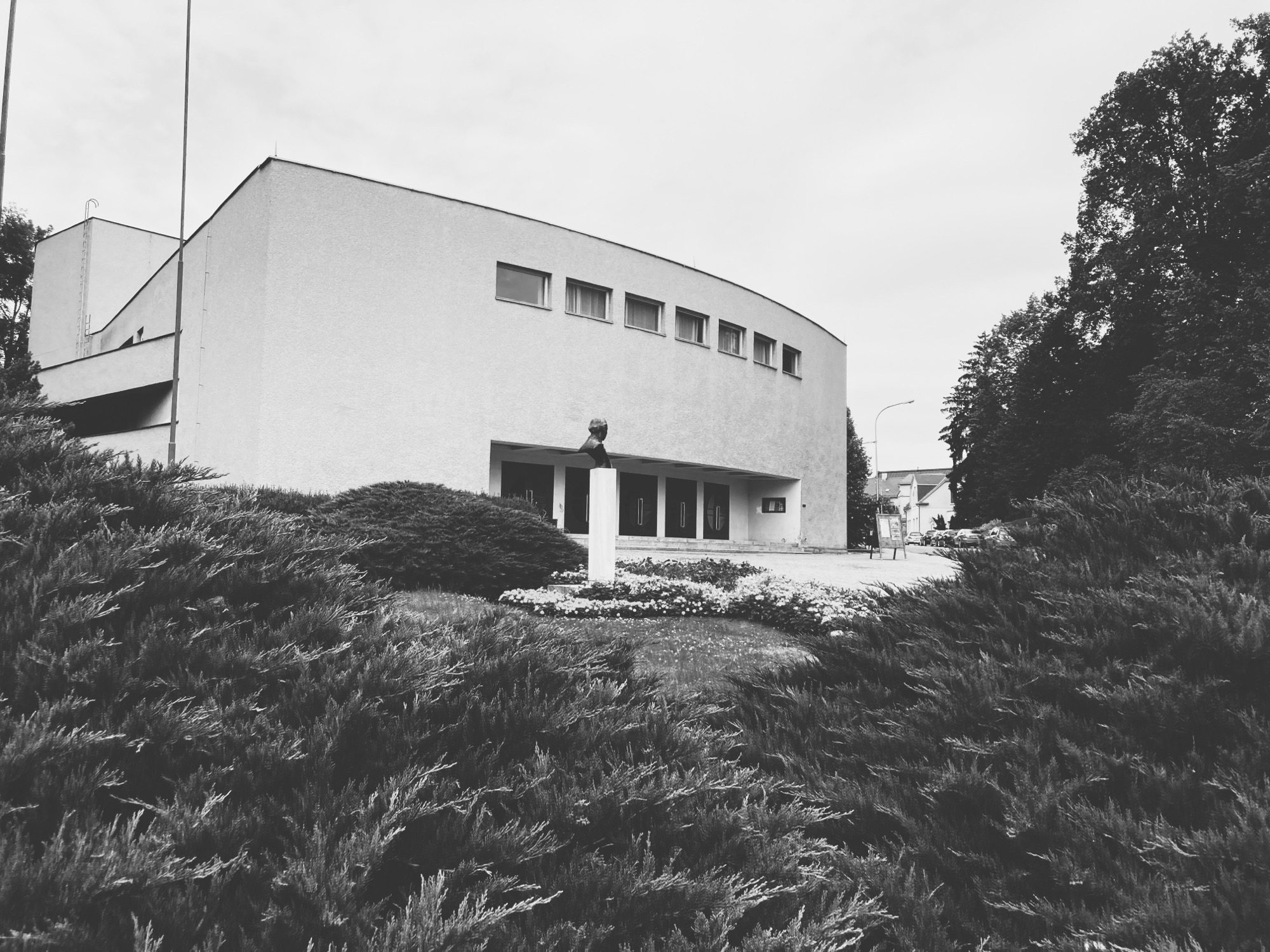
Set beside the iconic Roškot Theatre—a masterwork of Czech functionalism and a designated National Cultural Monument—the park long stood in quiet contradiction to its context. Despite its centrality, it lacked structure, identity, and purpose. Informal desire paths cut through deteriorating greenery, fragmented furniture disrupted coherence, and the absence of spatial hierarchy rendered the site as a mere passage rather than a place. The theatre’s architectural presence remained visually and conceptually unanchored in its immediate landscape, leaving a critical gap in the city’s cultural and spatial continuity.
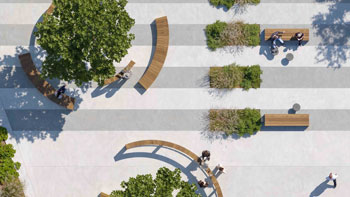
The project reframes the park as an urban forecourt—an interface between architecture, city, and community. Its ambition extends beyond repair, seeking instead to articulate a new layer of public life grounded in clarity, legibility, and restraint. The design draws directly from the compositional logic of the theatre, translating functionalist principles into a contemporary landscape language. Orthogonal geometries and axial relationships structure movement and define a hierarchy of spaces, guiding visitors intuitively while reinforcing visual connections to the theatre and surrounding streets.
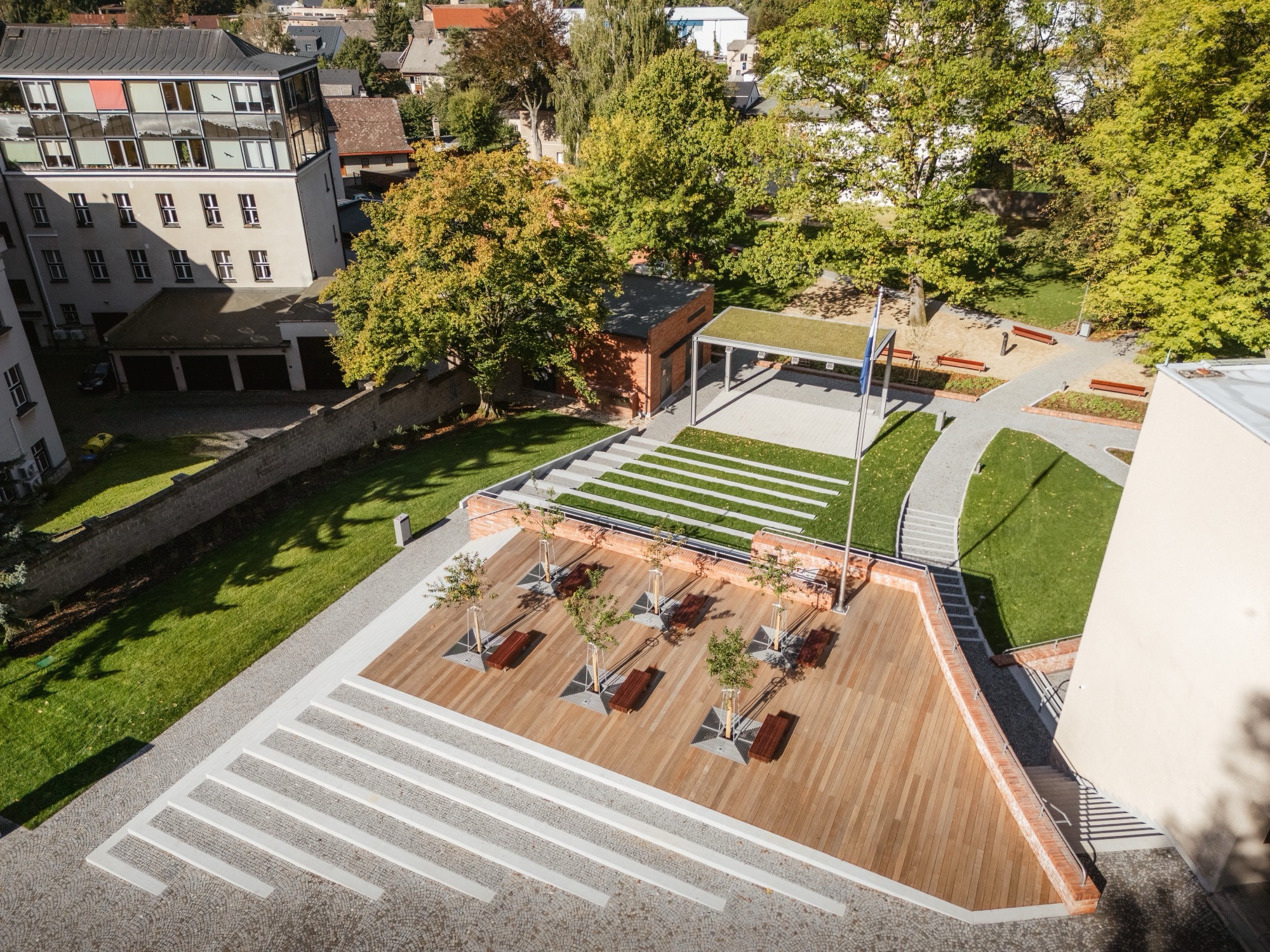
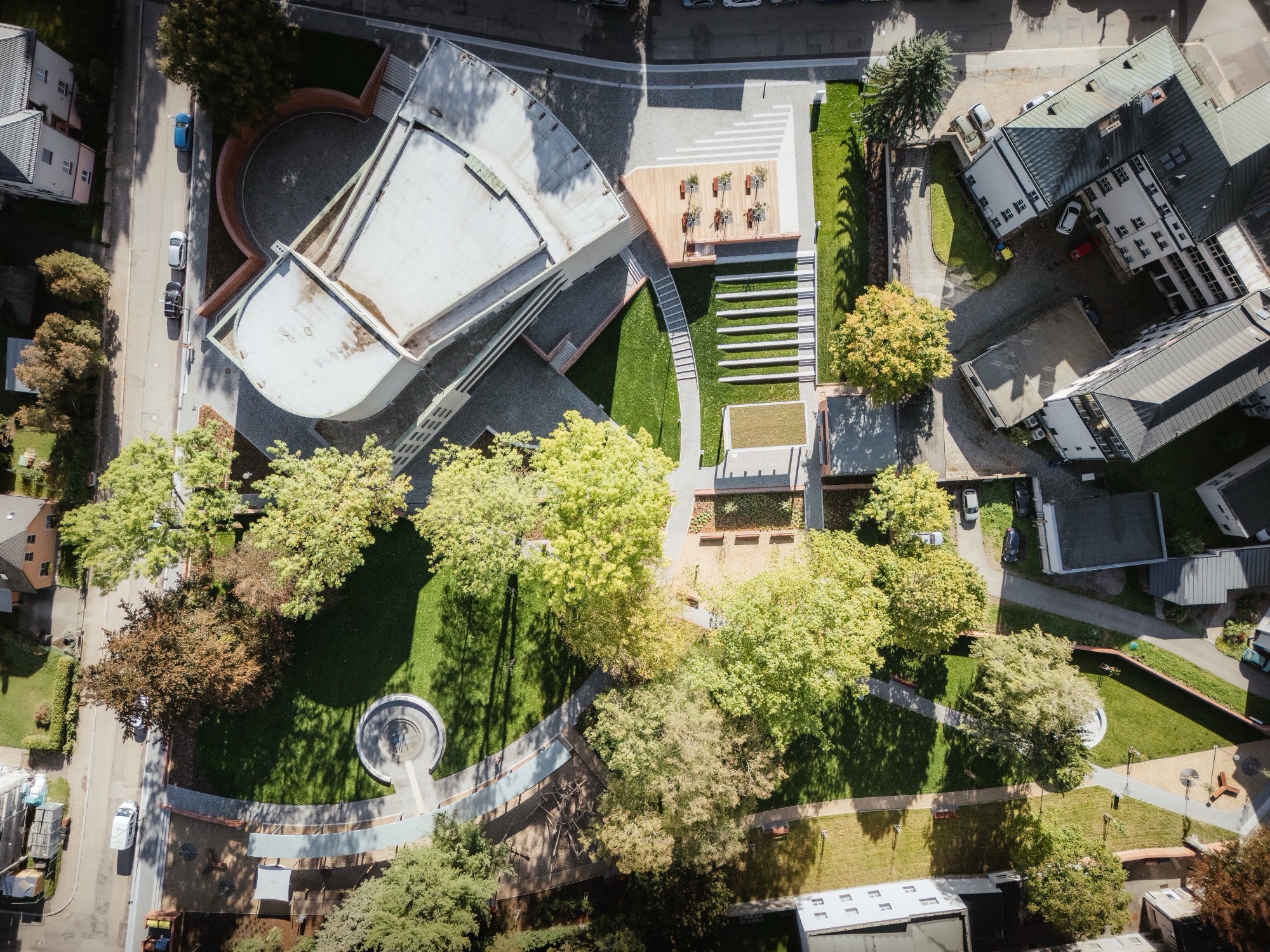
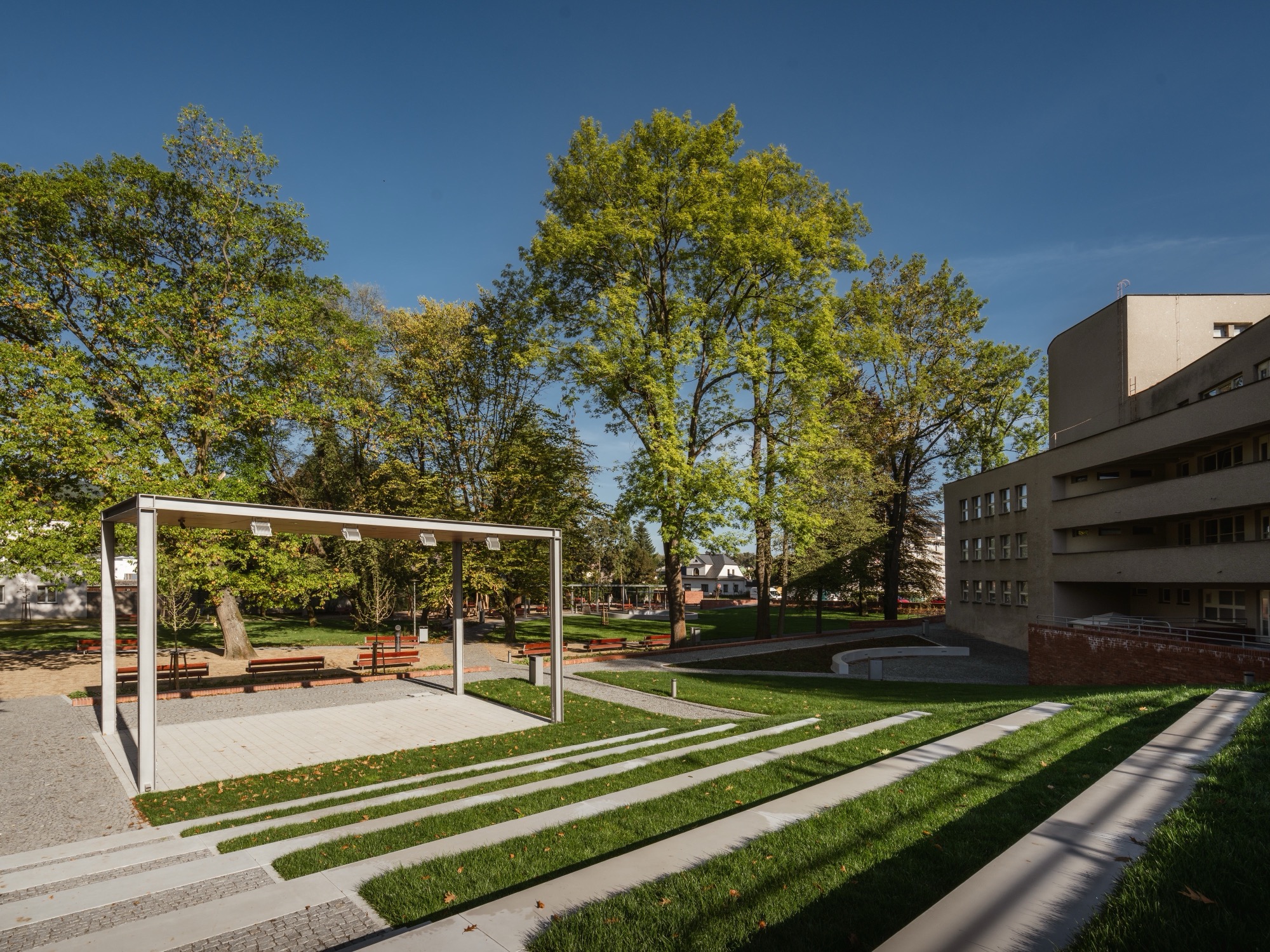
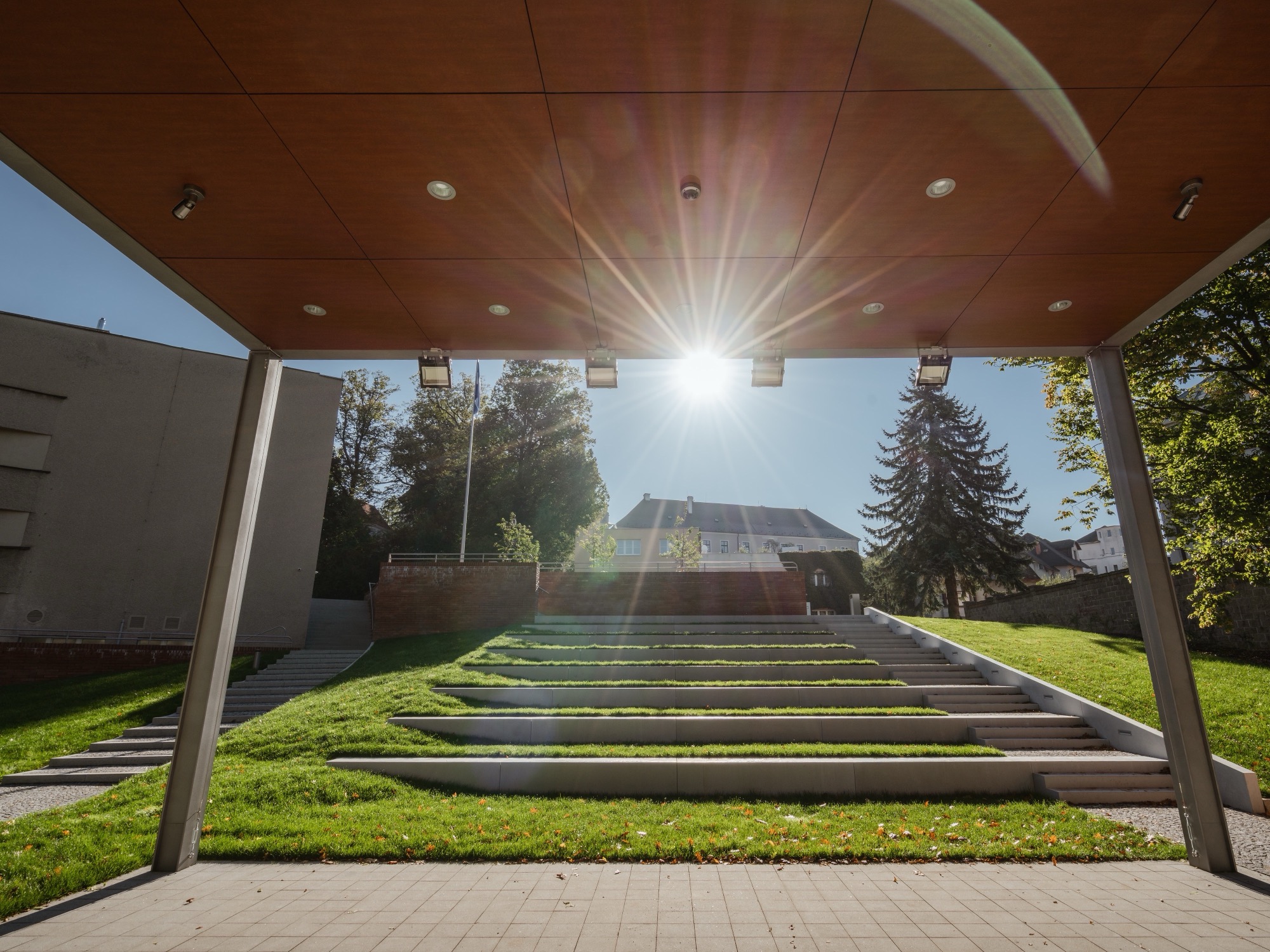
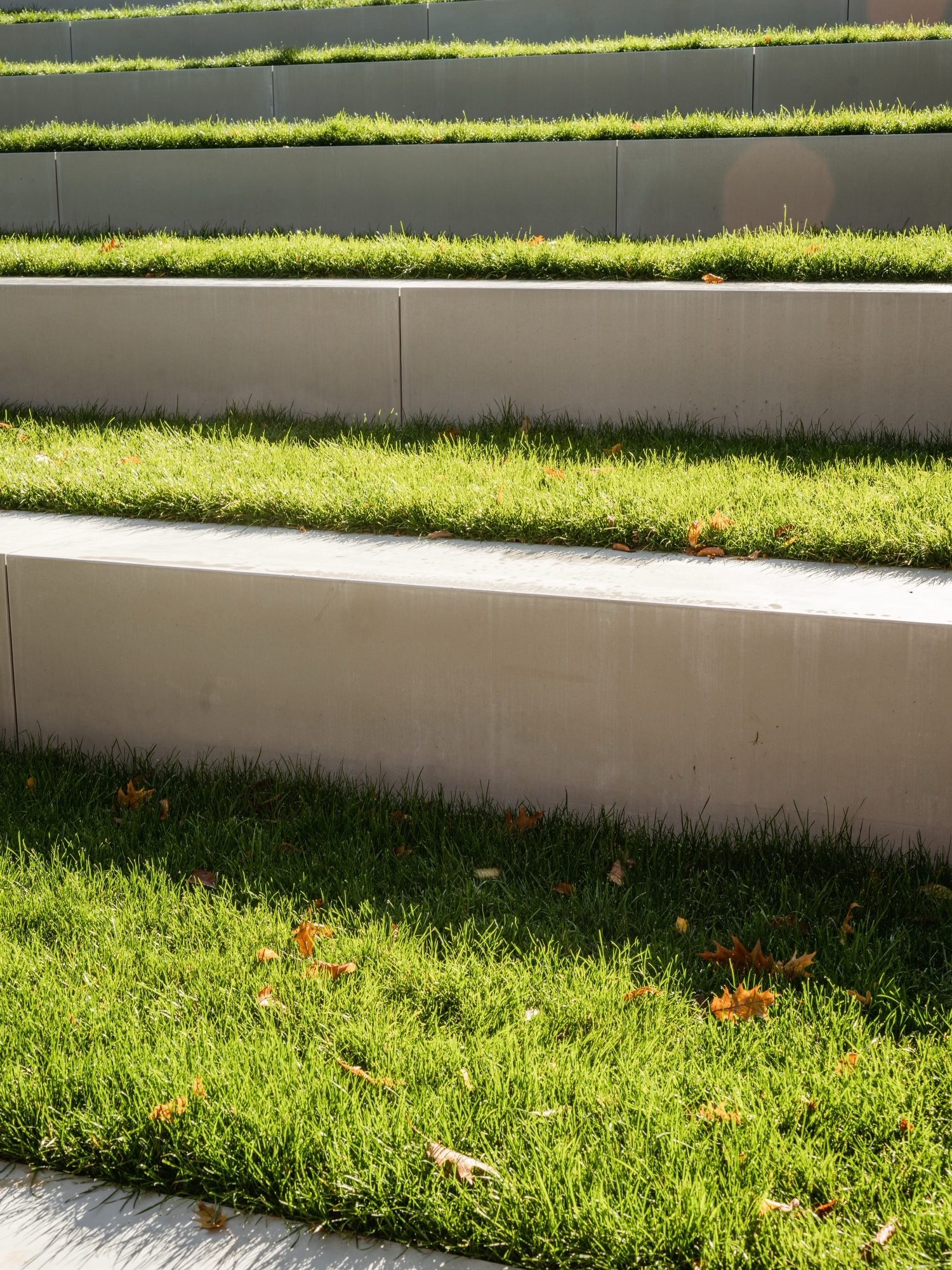
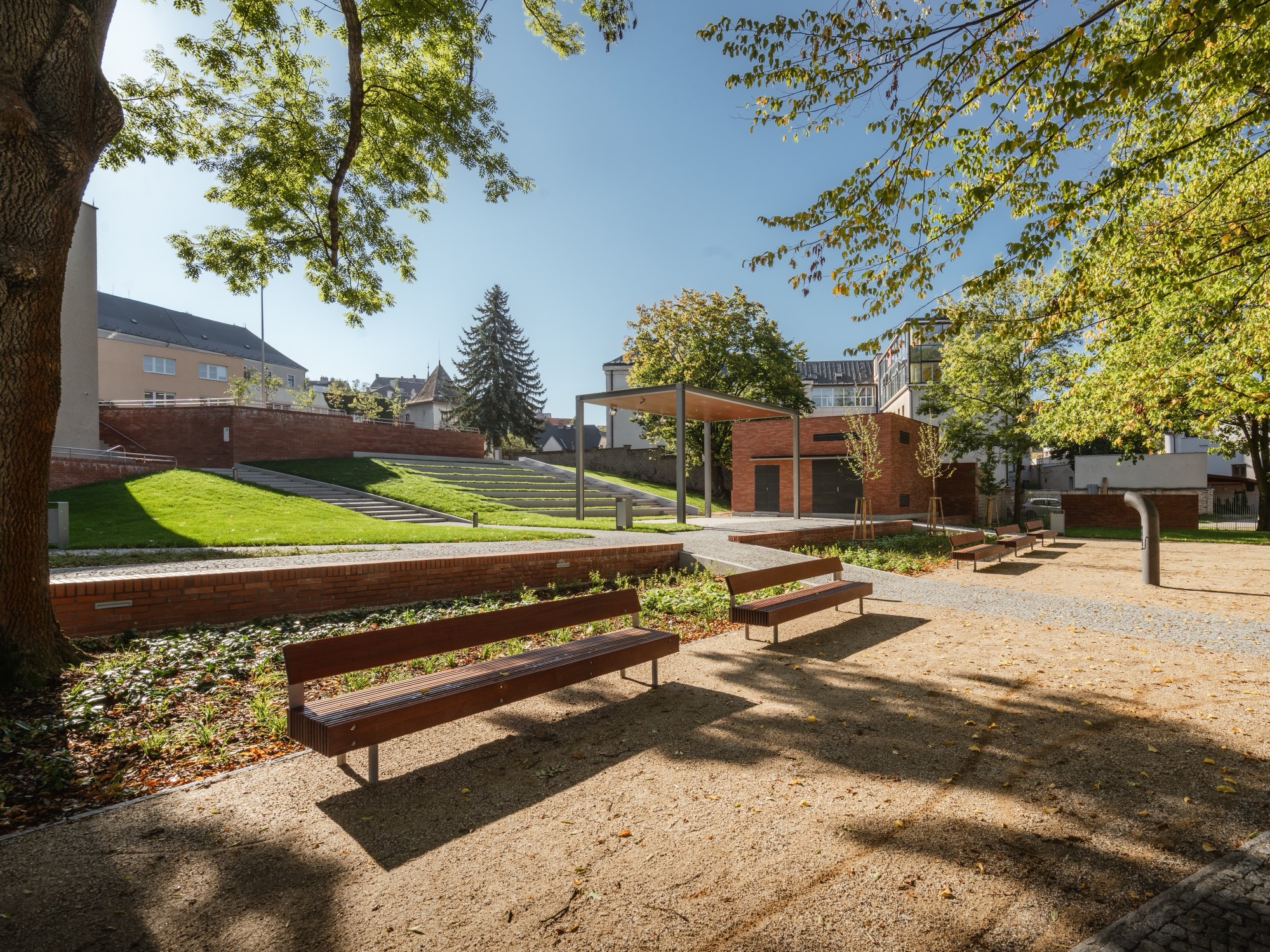
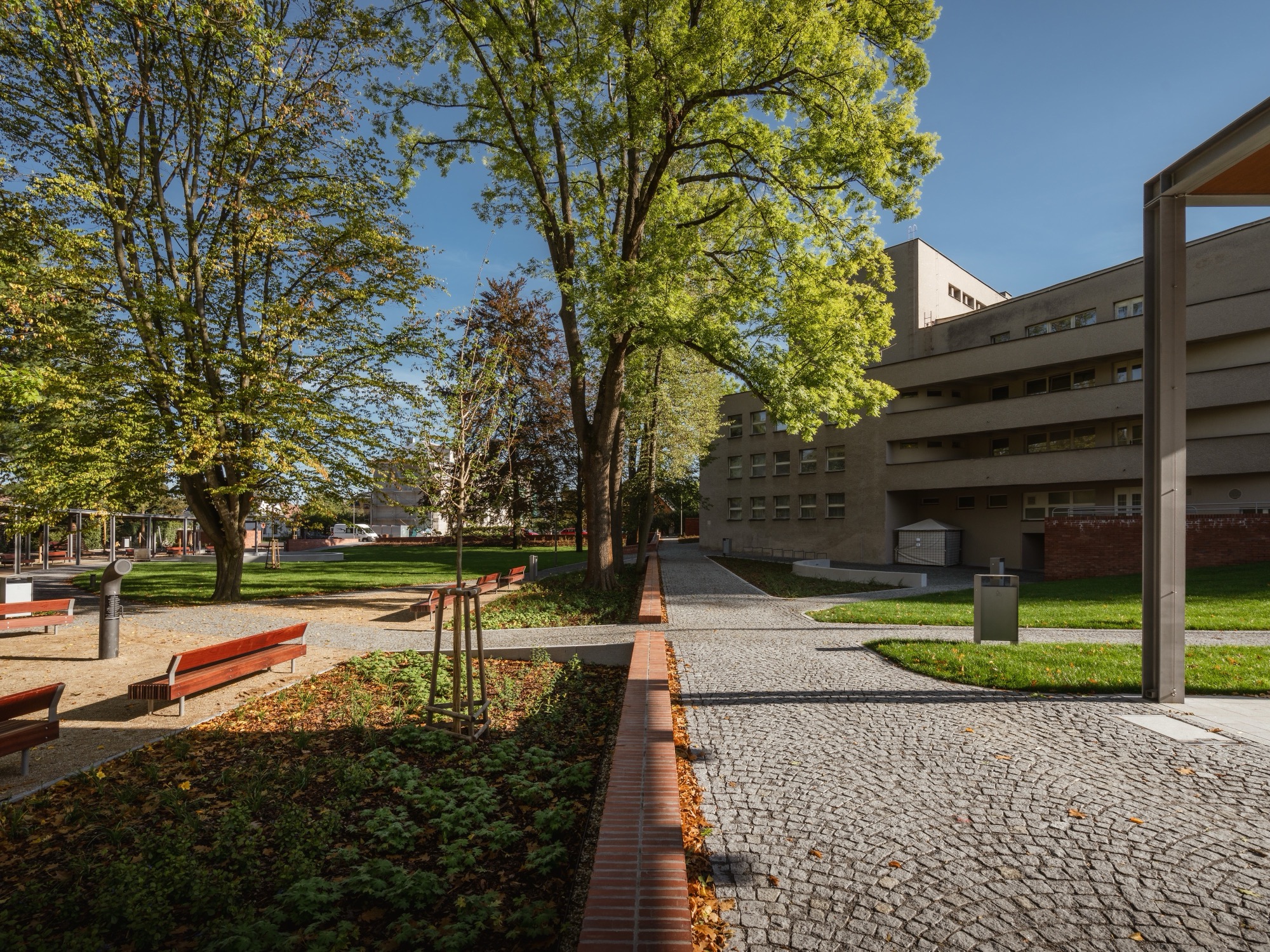
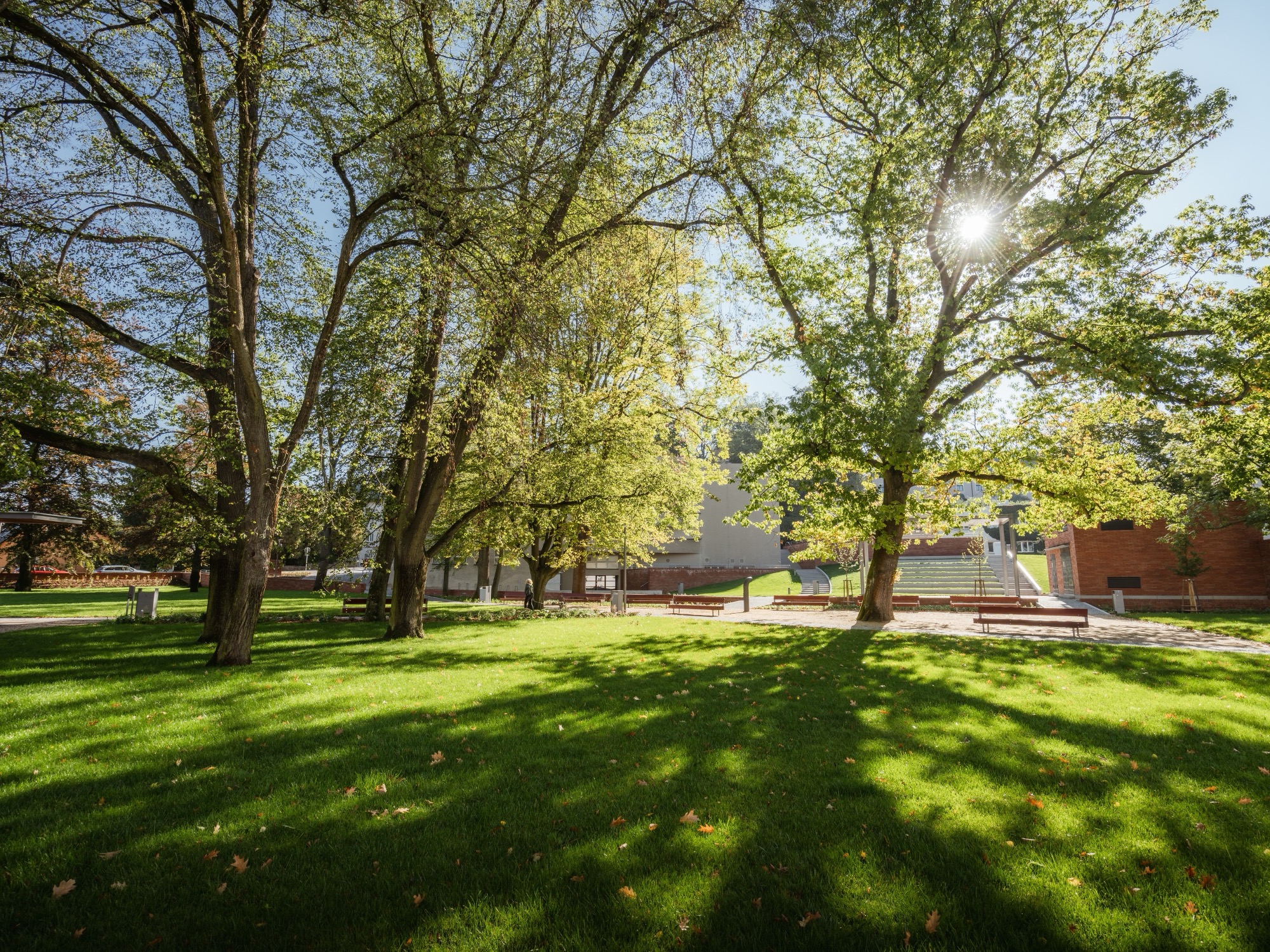
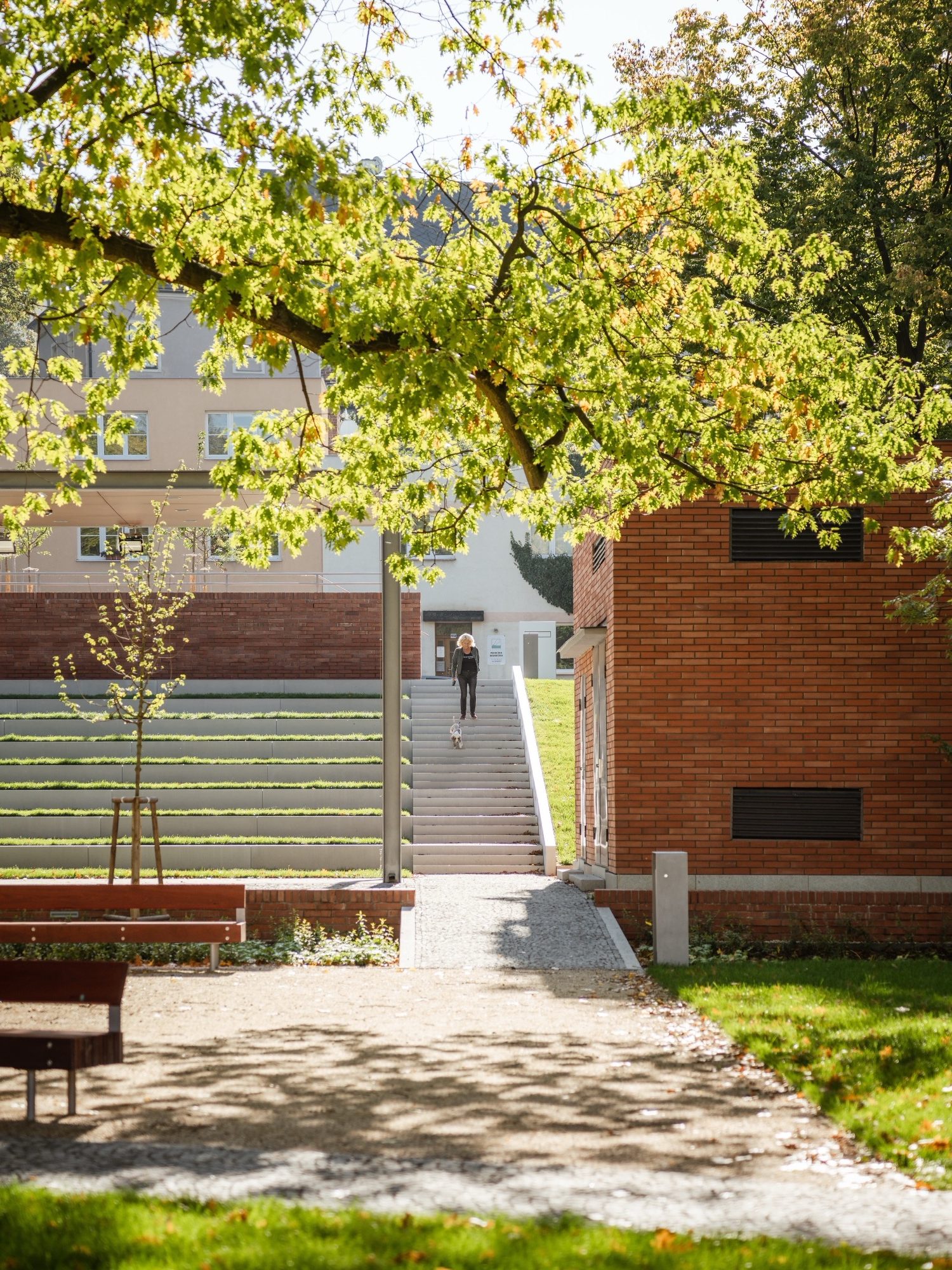
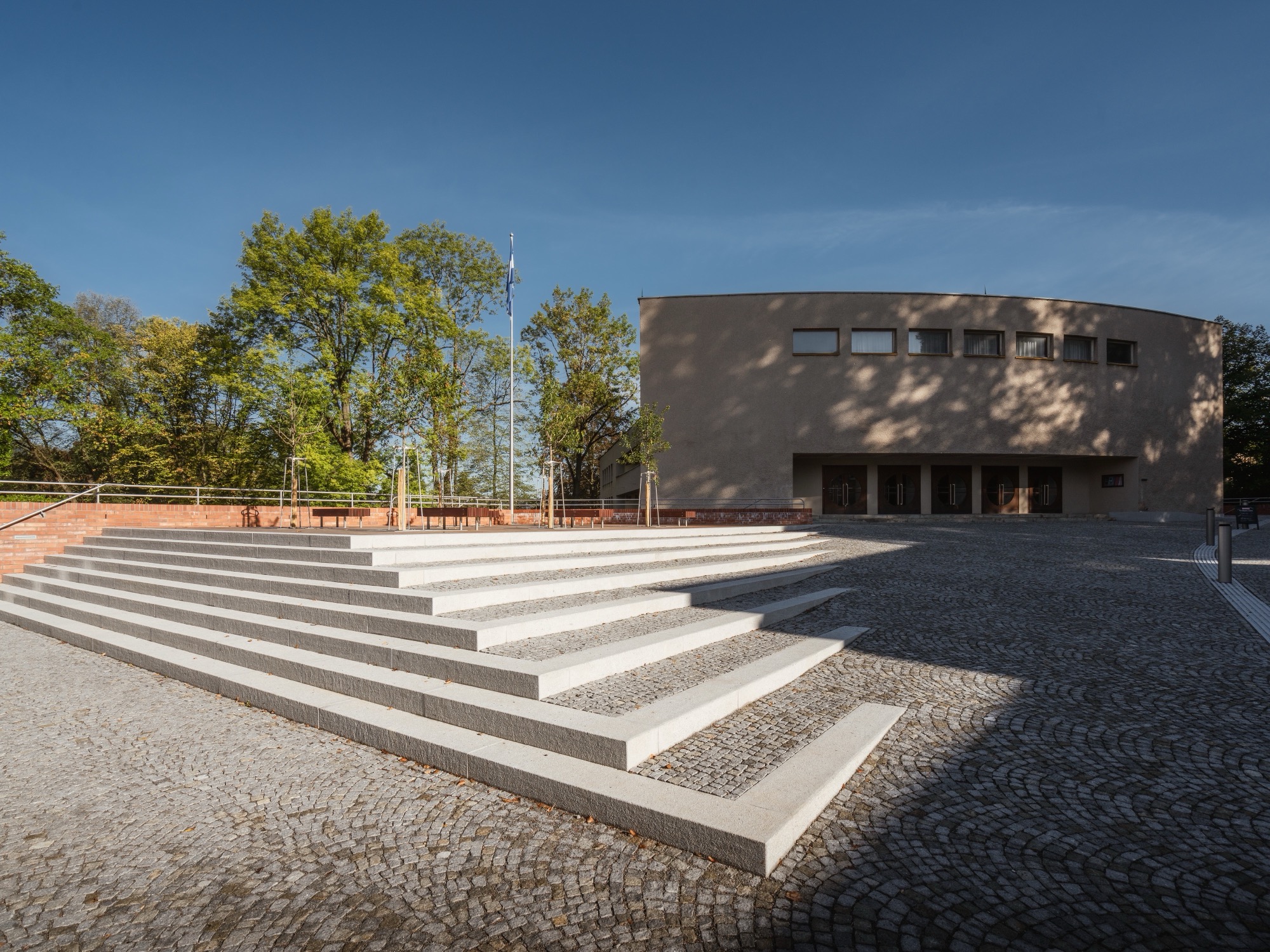
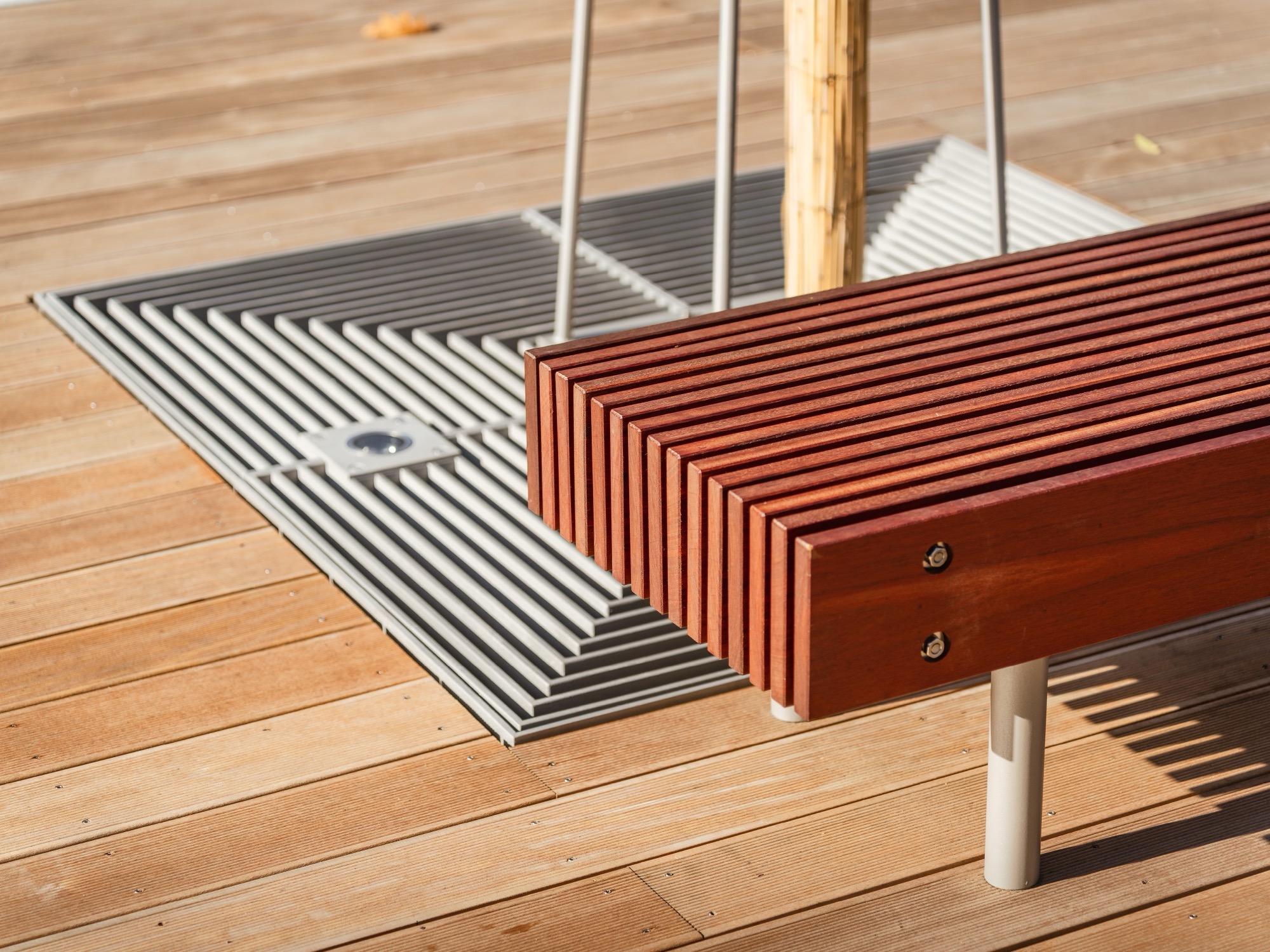
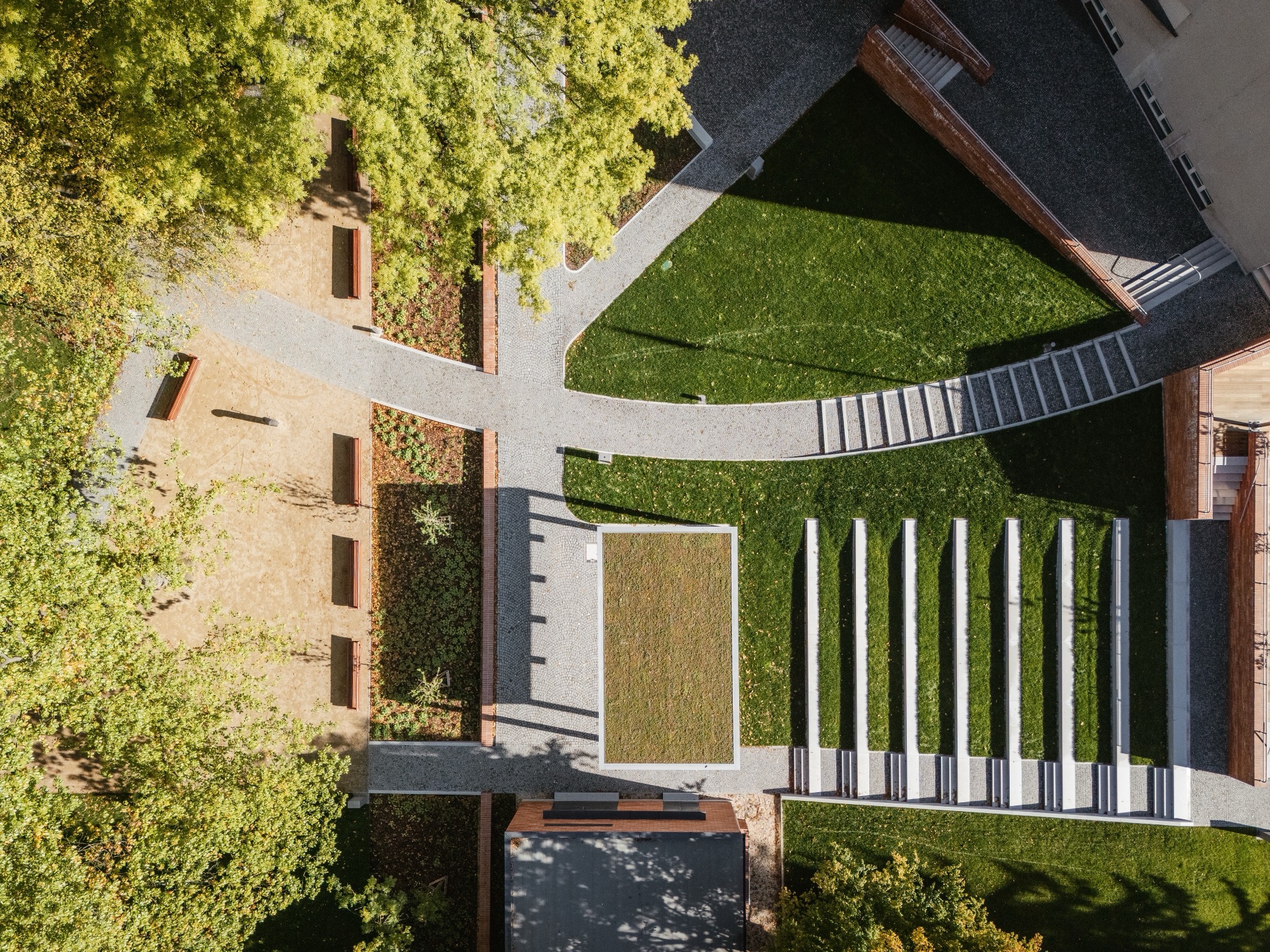
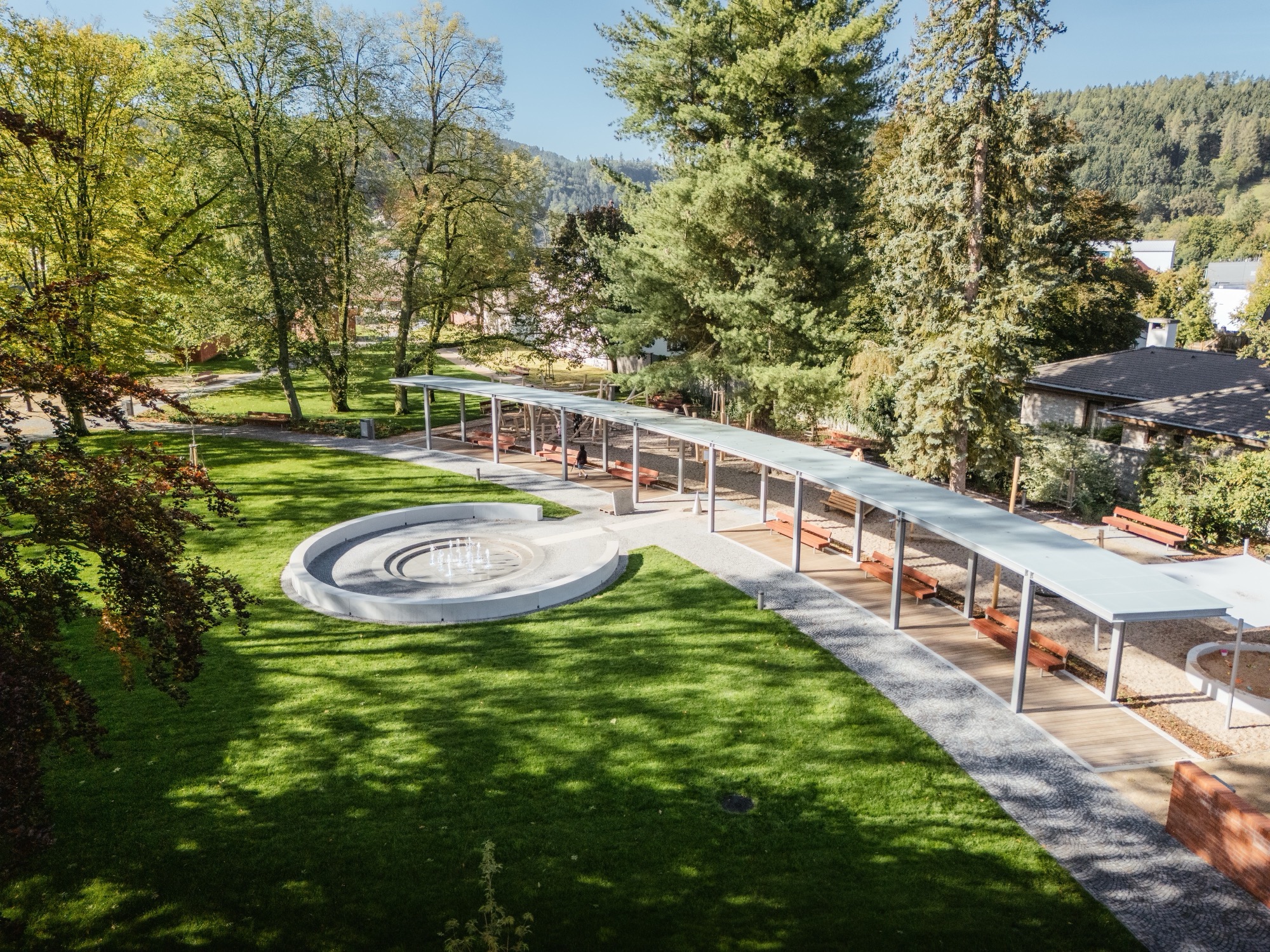
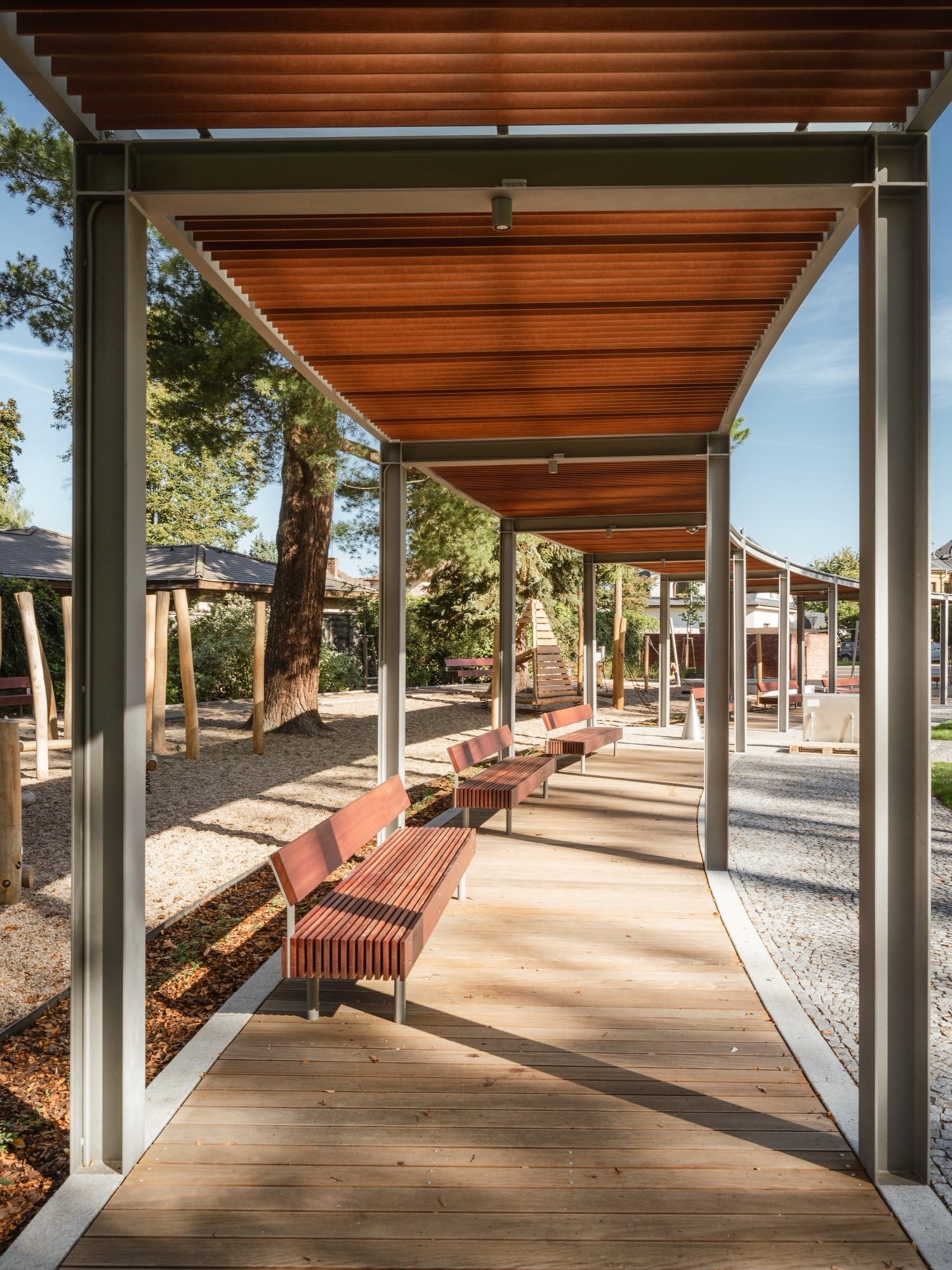
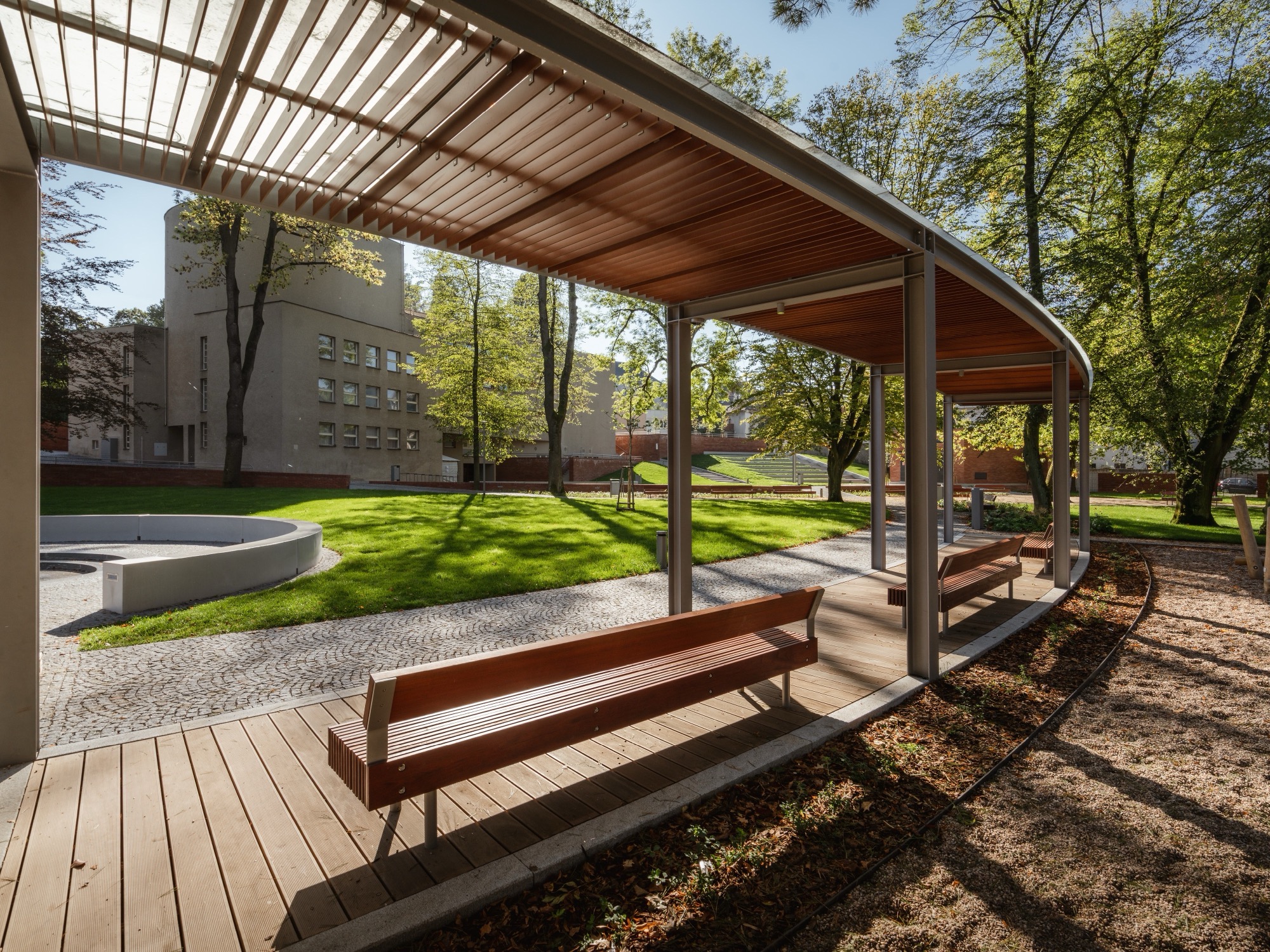
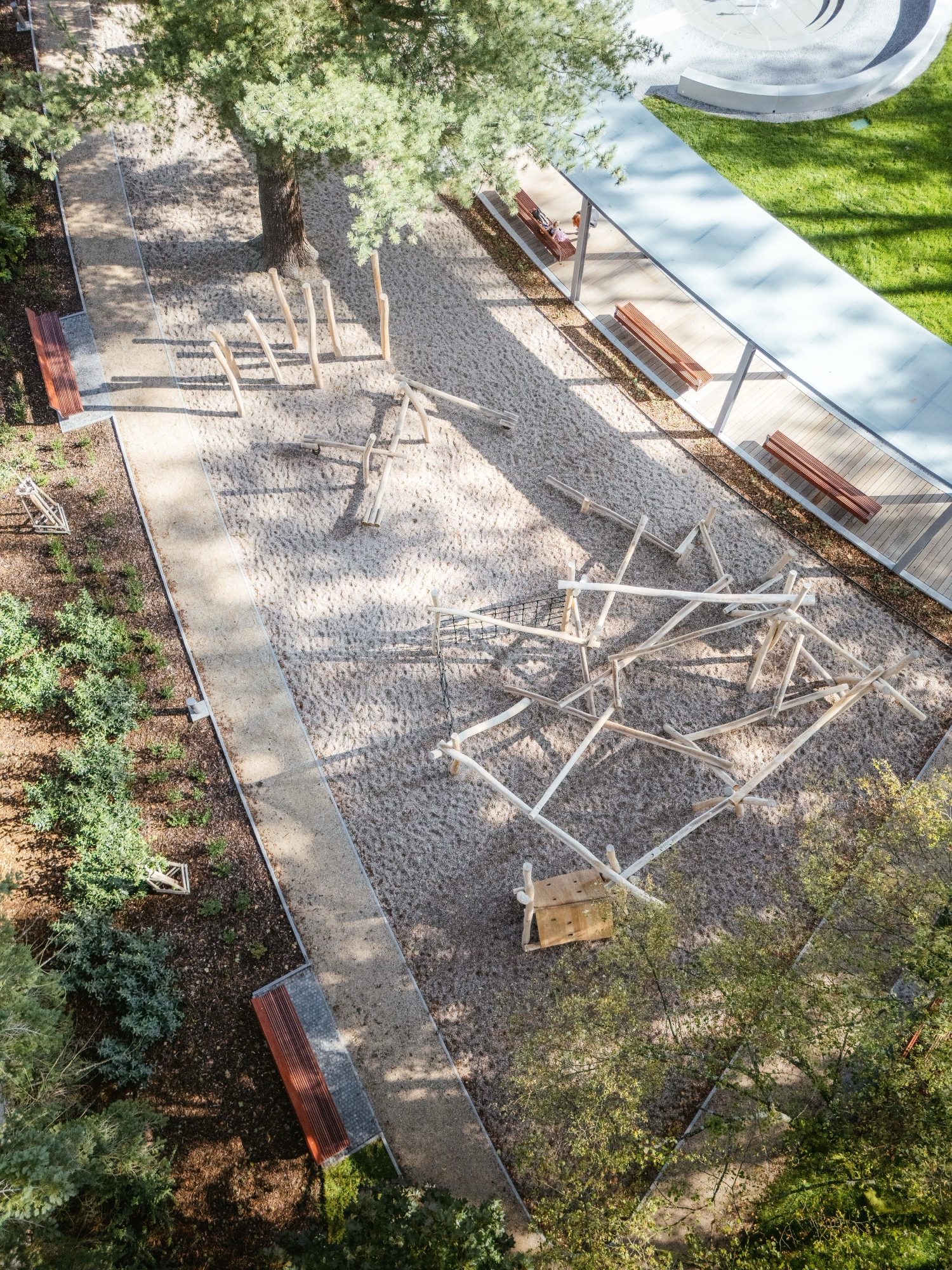
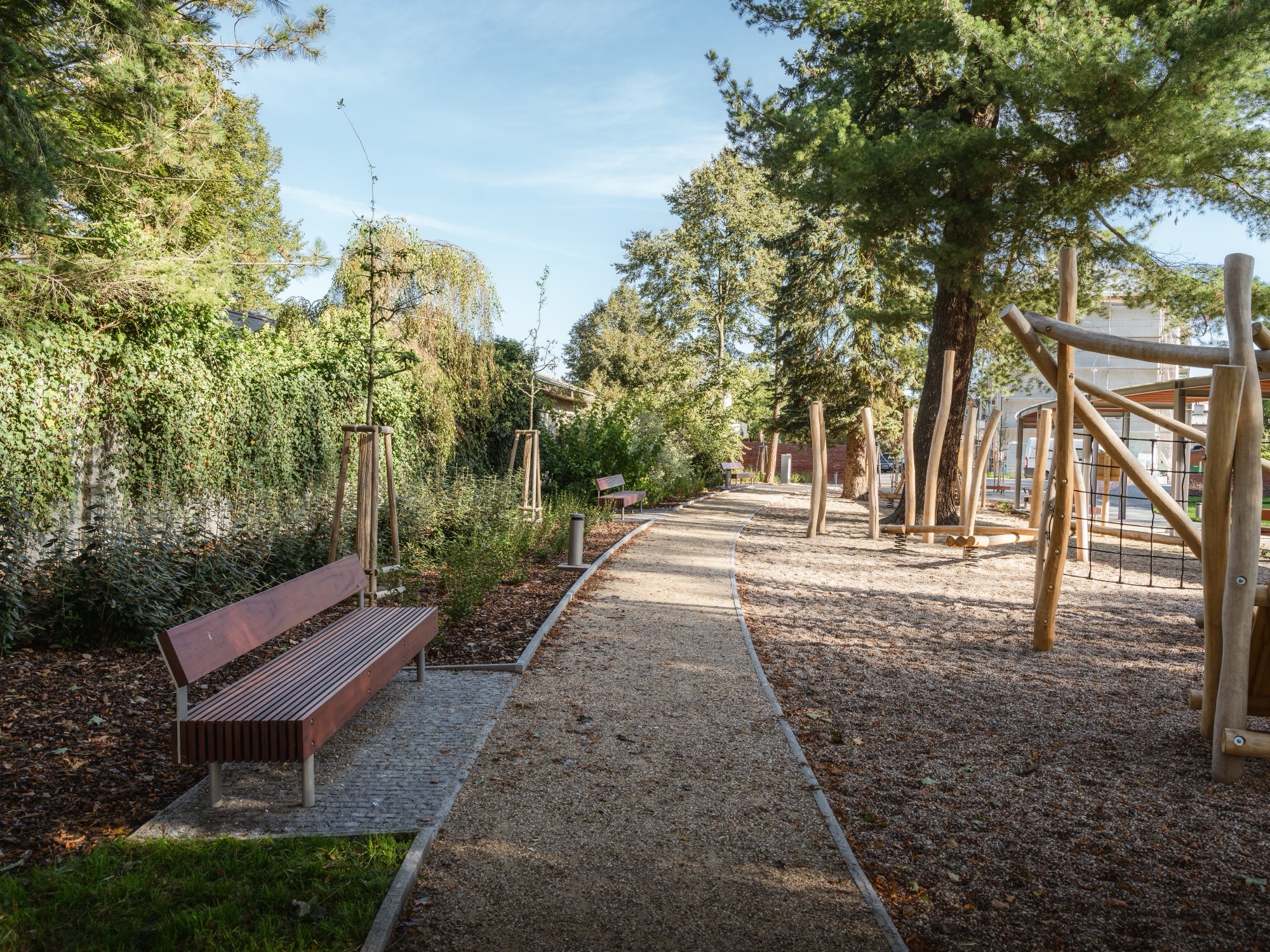
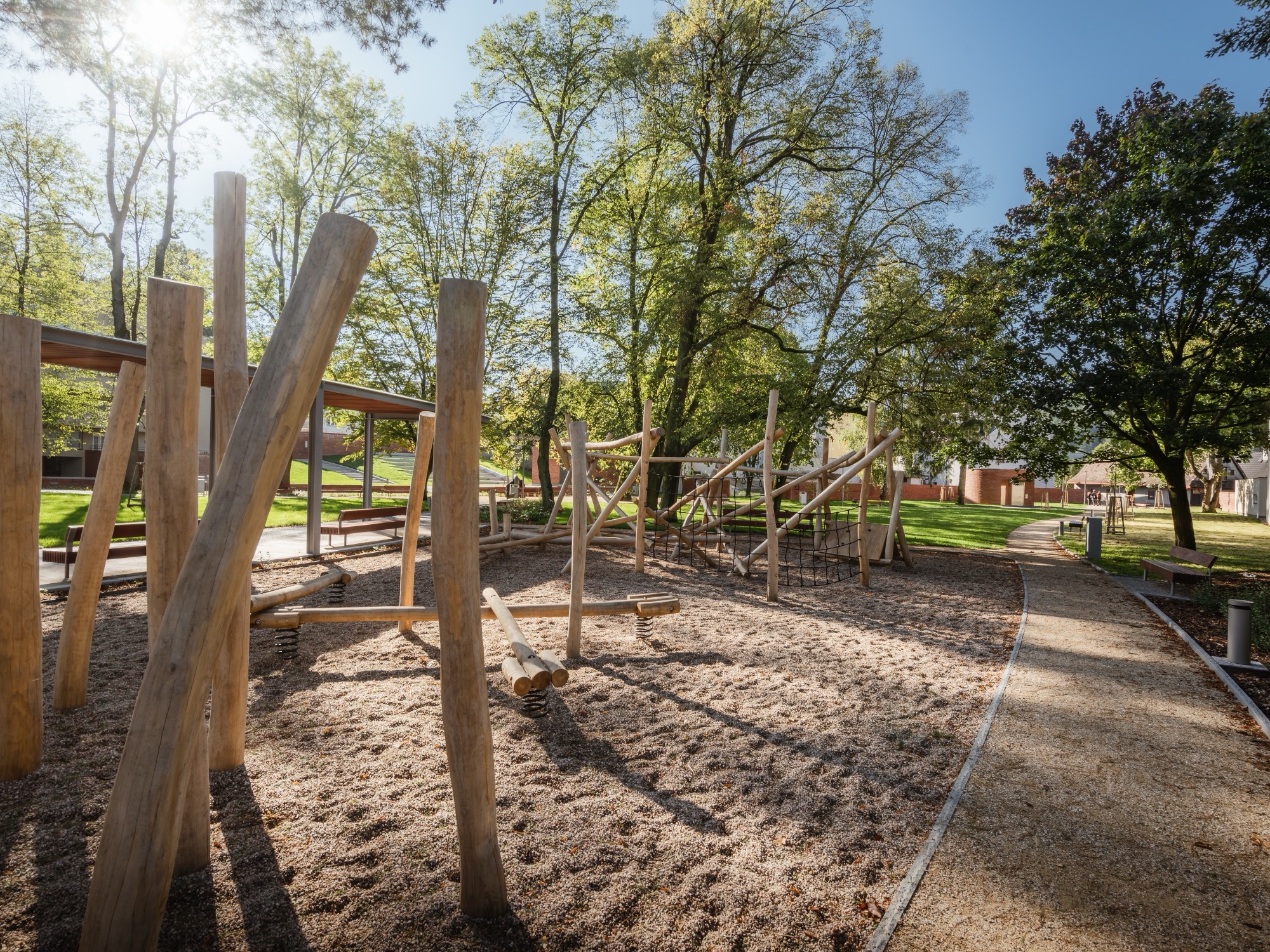
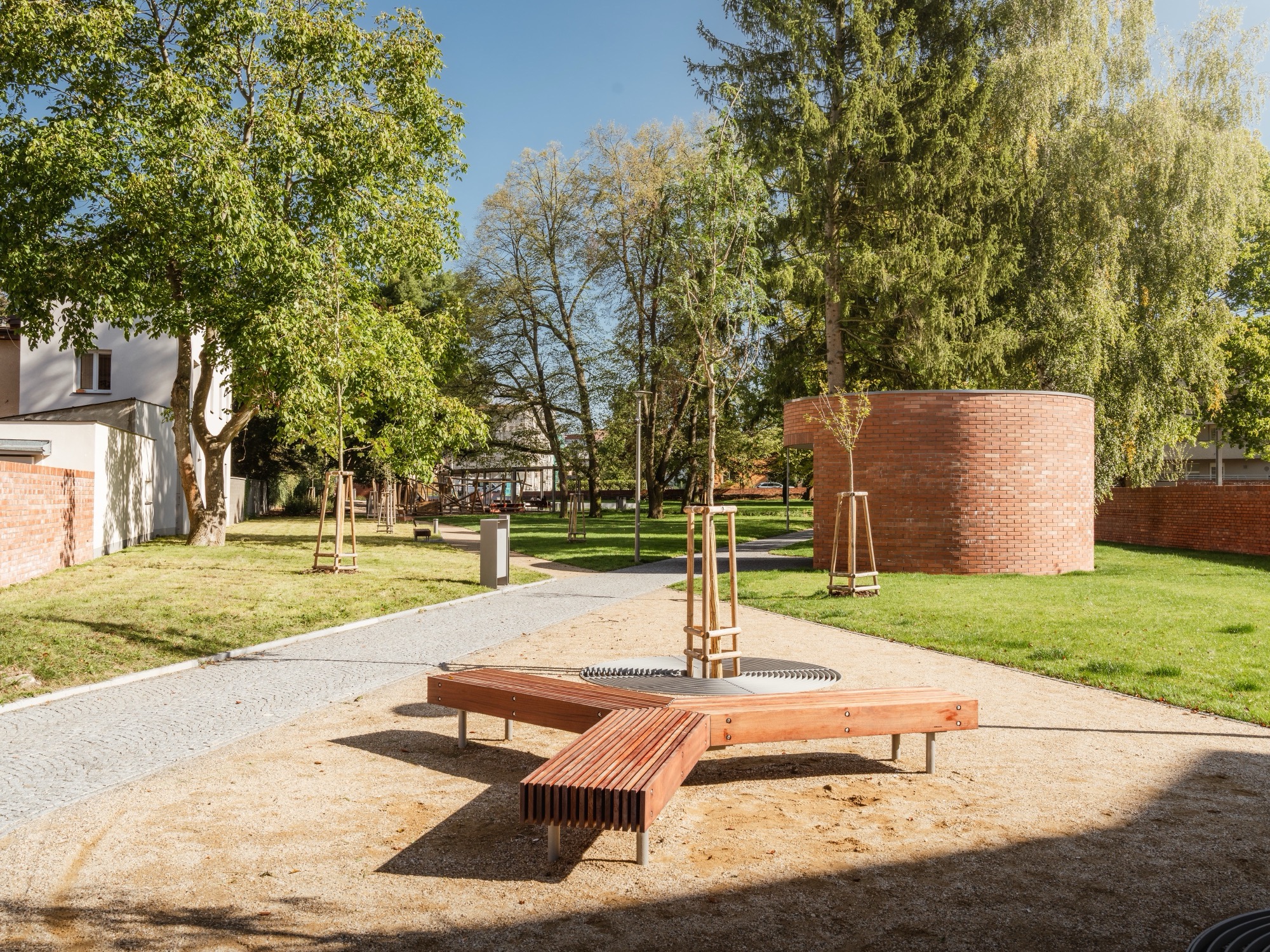

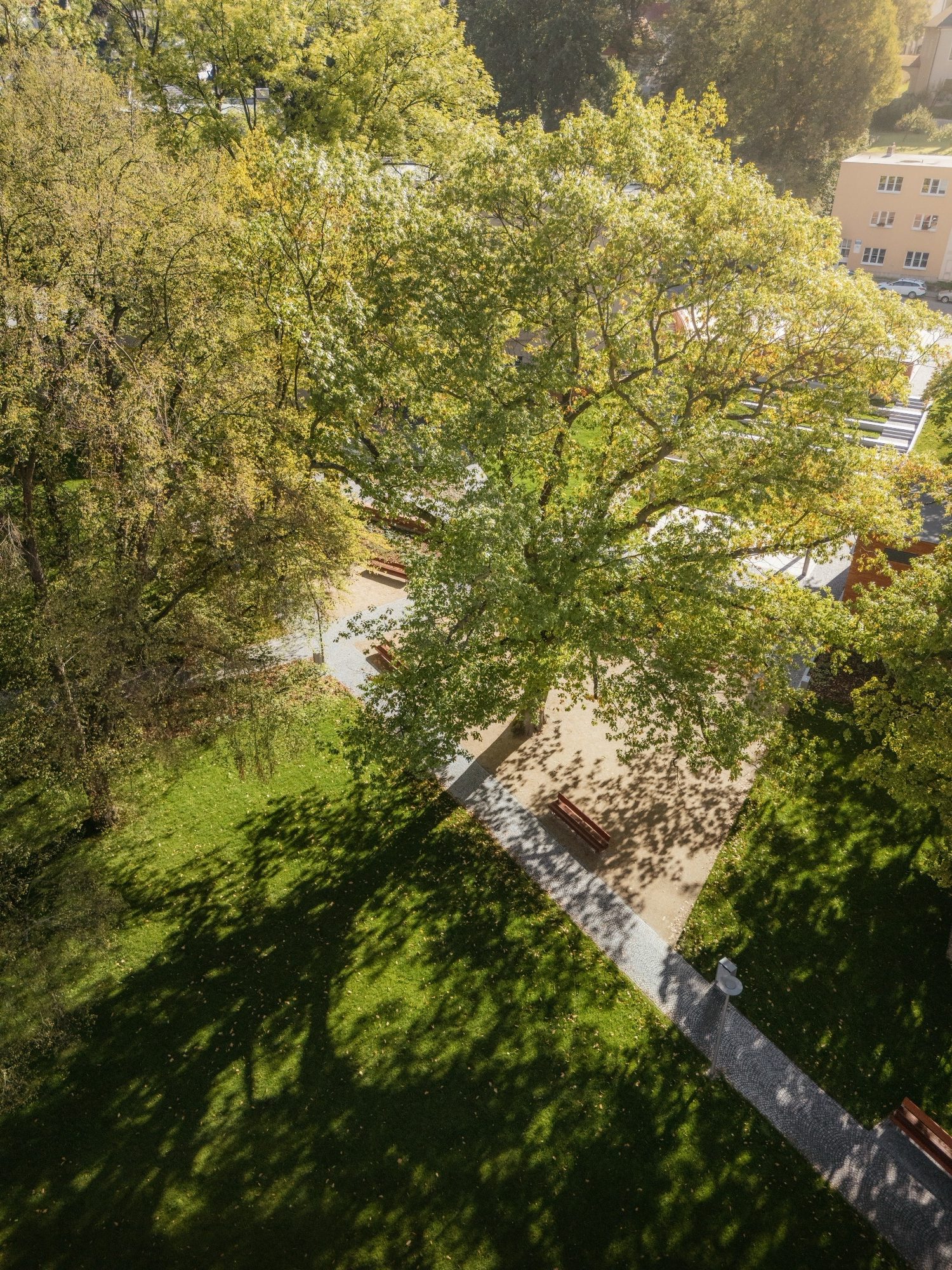
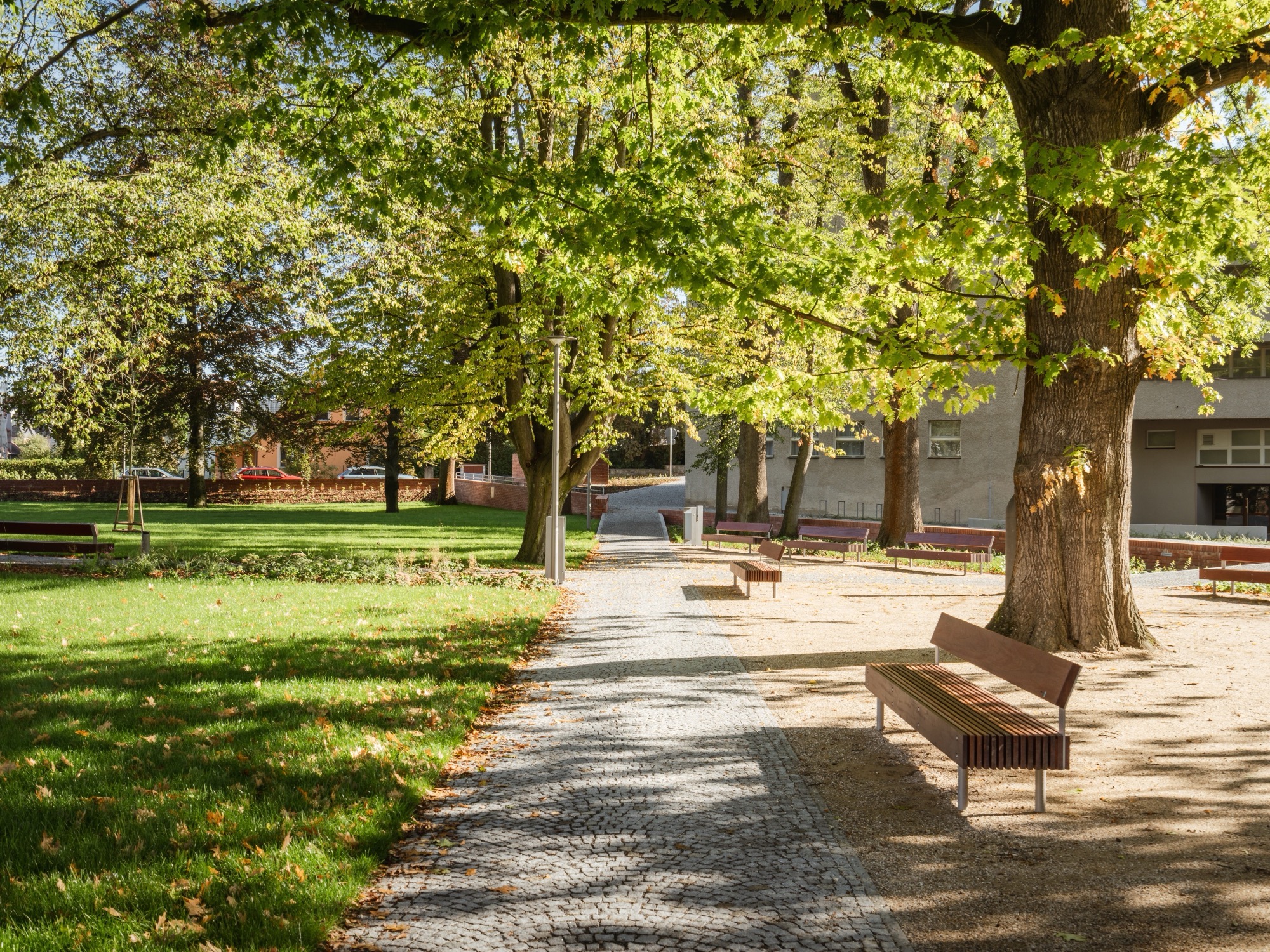
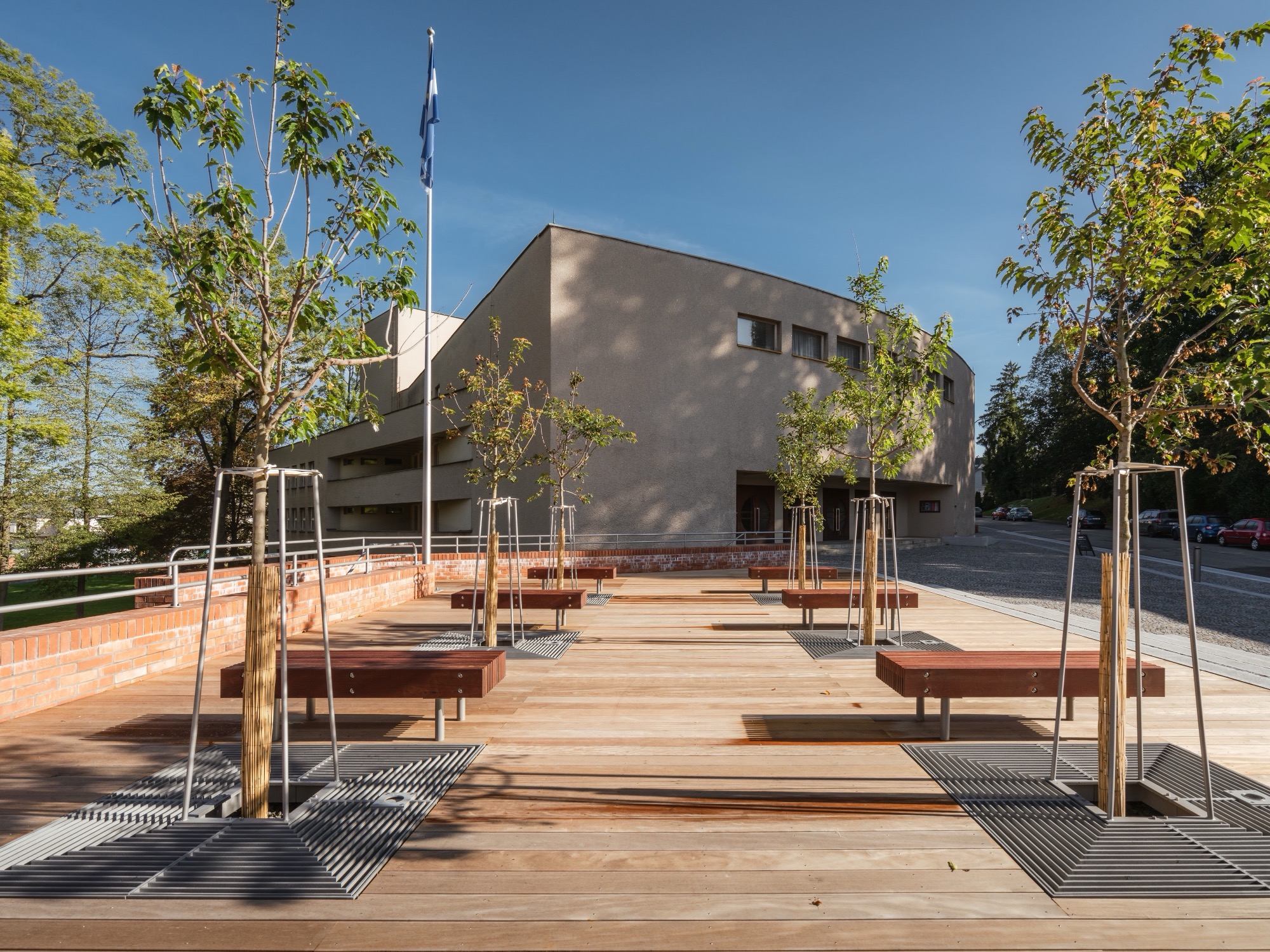
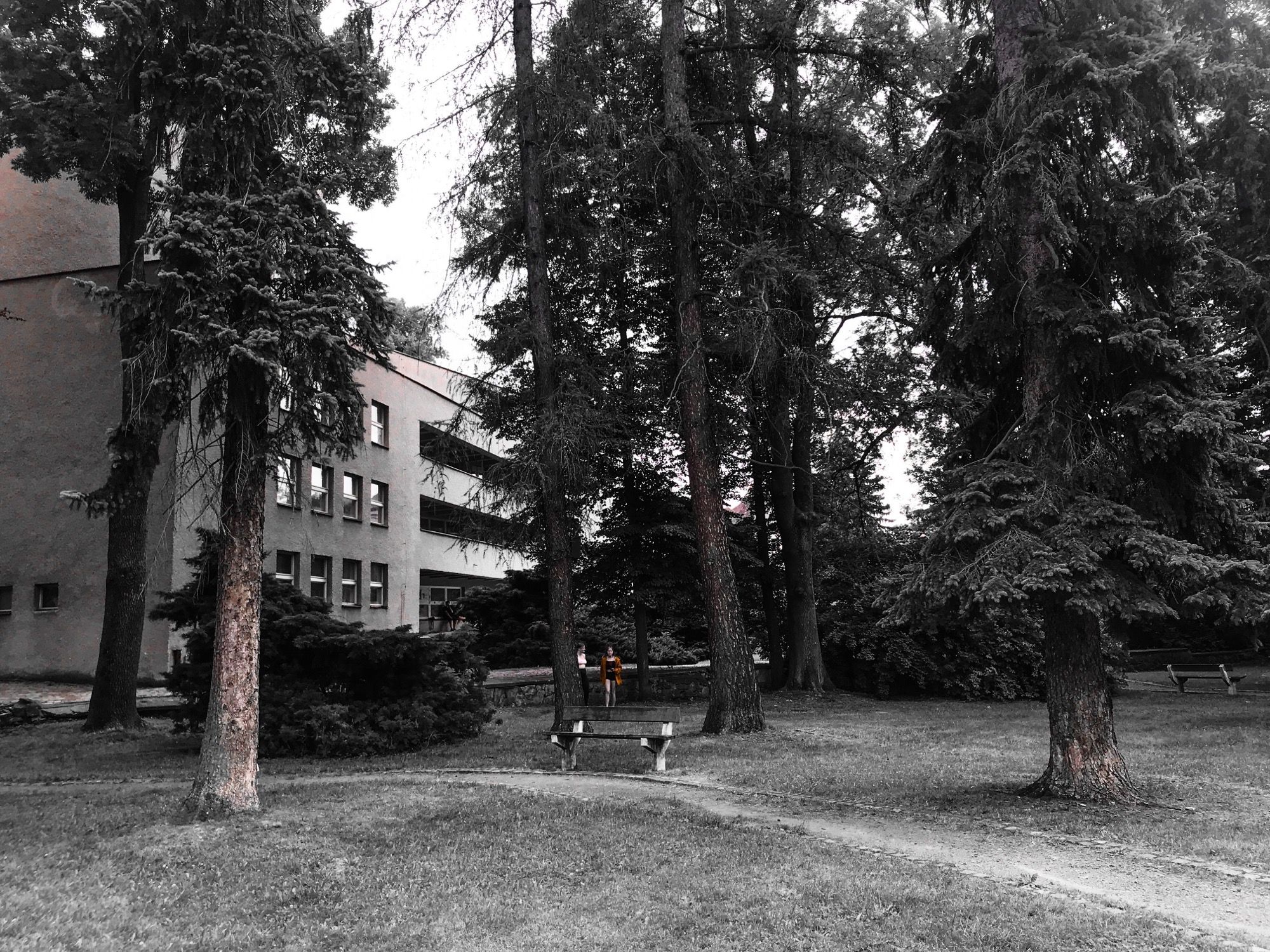
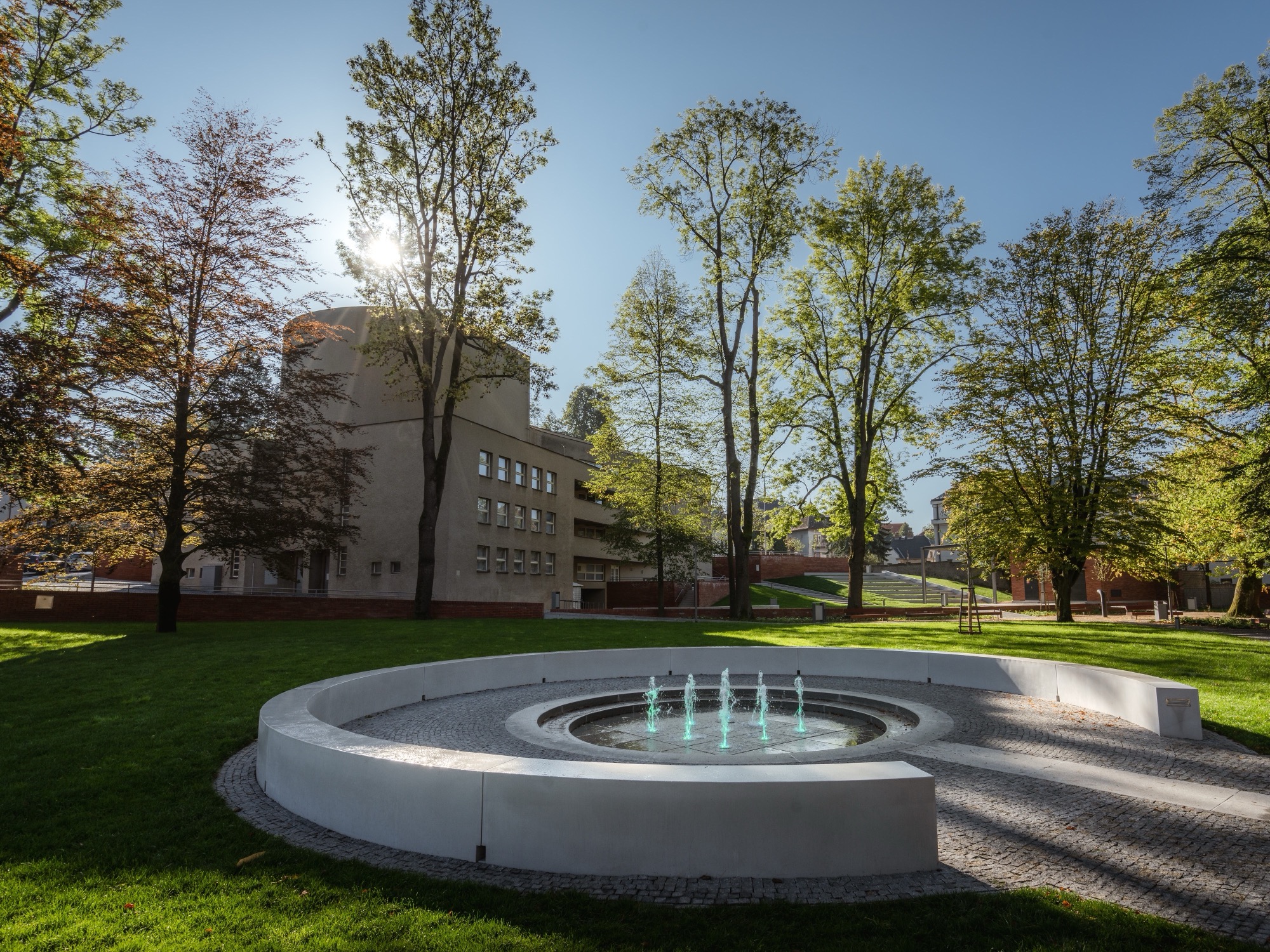
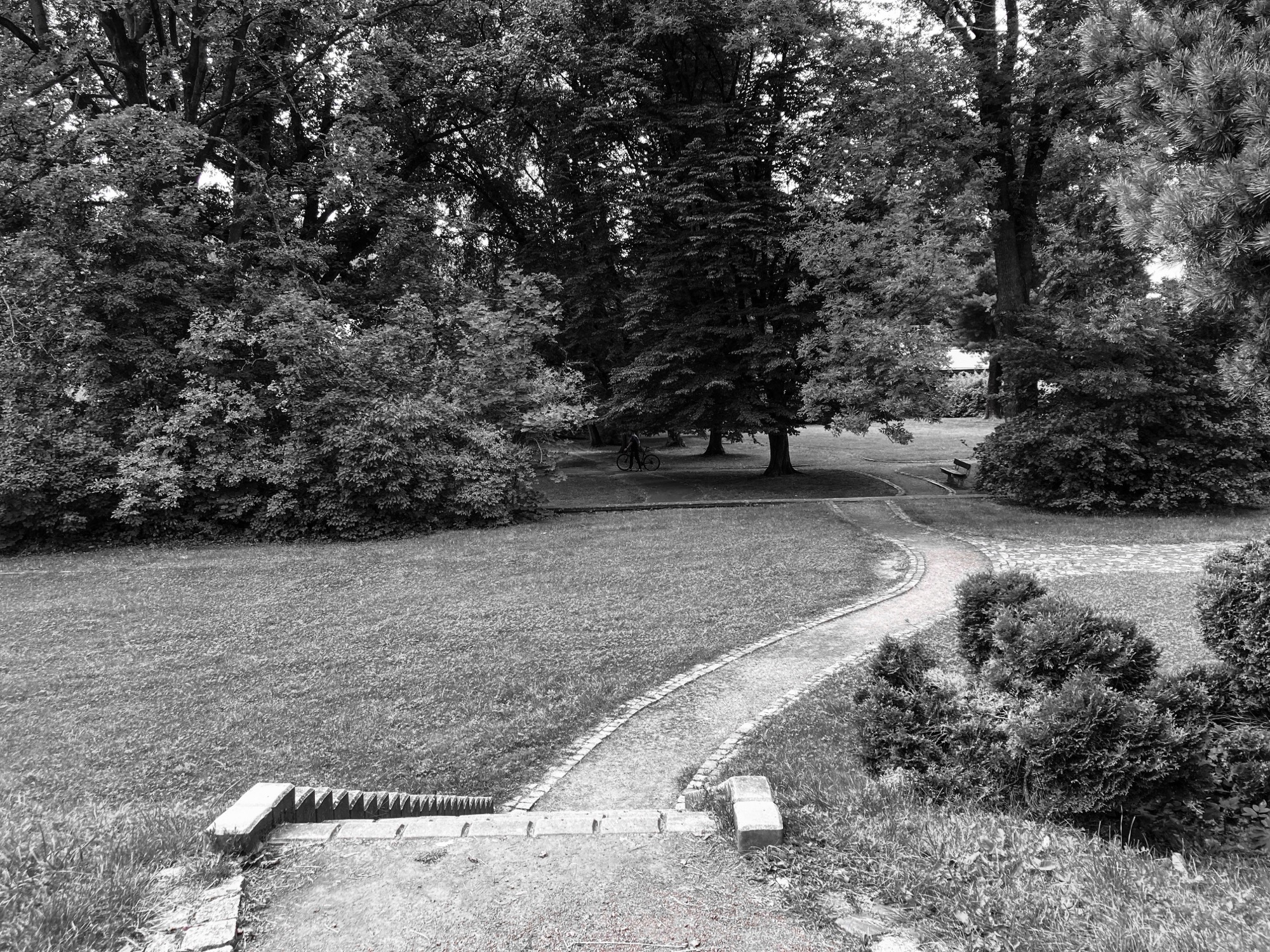
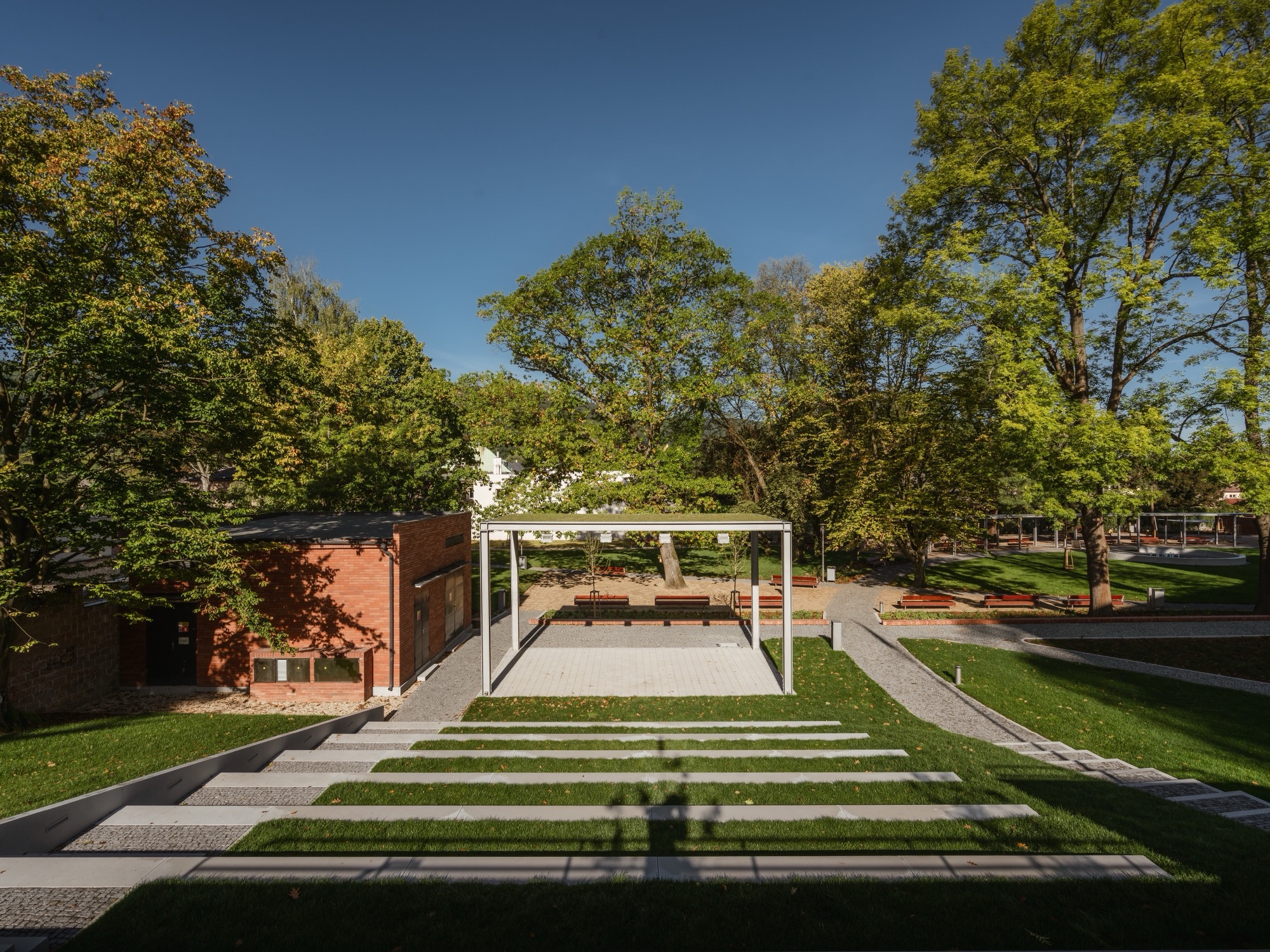
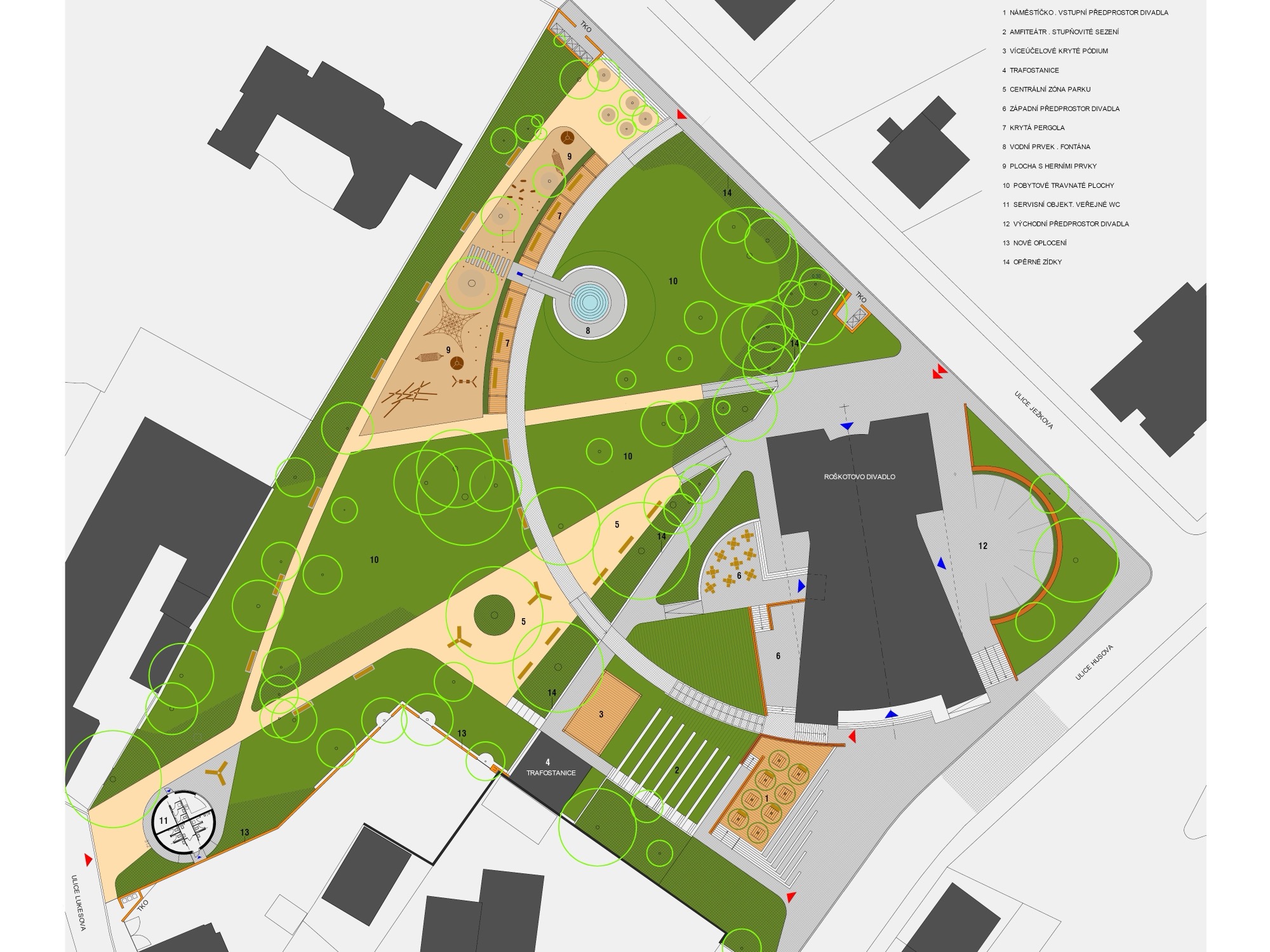
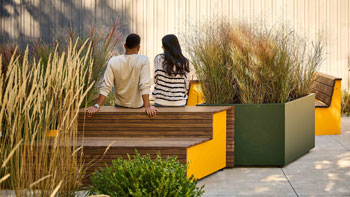
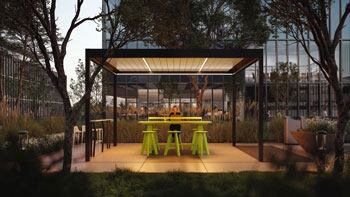
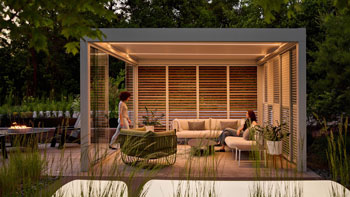
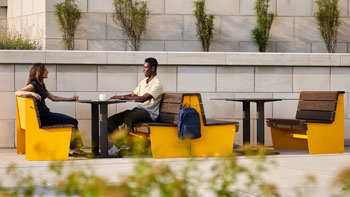
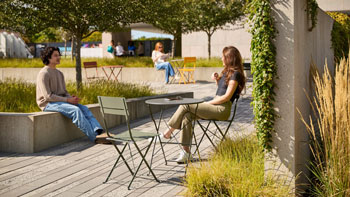
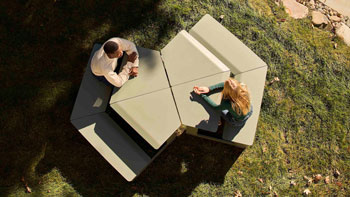
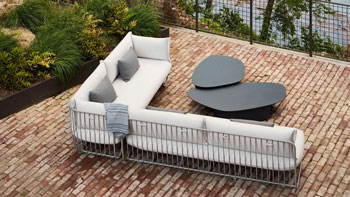
Material and spatial interventions are articulated with clarity and precision. A calibrated network of paths organizes circulation, while a sequence of programmatic elements—water feature, pergola, seating, and terraced steps set into the slope—supports diverse modes of occupation, from solitary pause to collective gathering. These elements reinforce the presence of the theatre, extending its architectural narrative into the open space.
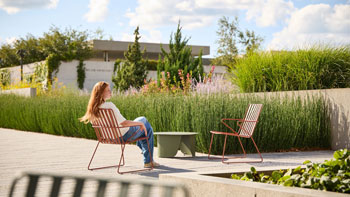
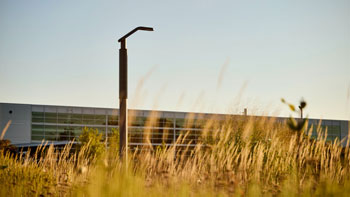
Vegetation plays a critical, performative role. The planting strategy references the horticultural character of the First Czechoslovak Republic, reinterpreted through a contemporary ecological lens. Improvement of the microclimate, cooling of the area, enhancement of the park’s ecological performance, mitigation of climate change impacts, and contribution to the overall quality of the urban environment. The park thus operates as both cultural infrastructure and environmental system—cooling the urban core while embedding resilience into its very fabric.
Today, the park functions as an integral part of the city’s daily rhythm. It is no longer a threshold to be crossed, but a destination to inhabit—a space where cultural events spill outdoors, informal encounters unfold, and the memory of place is continuously reactivated. By reconciling heritage with present-day demands, the project demonstrates how landscape architecture can mediate between permanence and change, transforming latent potential into a living, civic stage.
49.97514594782011, 16.39142438732702
73978


LILA 2026 Sponsor