Santa Clotilde Gardens Cultural Landscape
www.scob.es
2026 Landscape and Architecture / 2026 Public Projects / Spain / Built in 2025 /

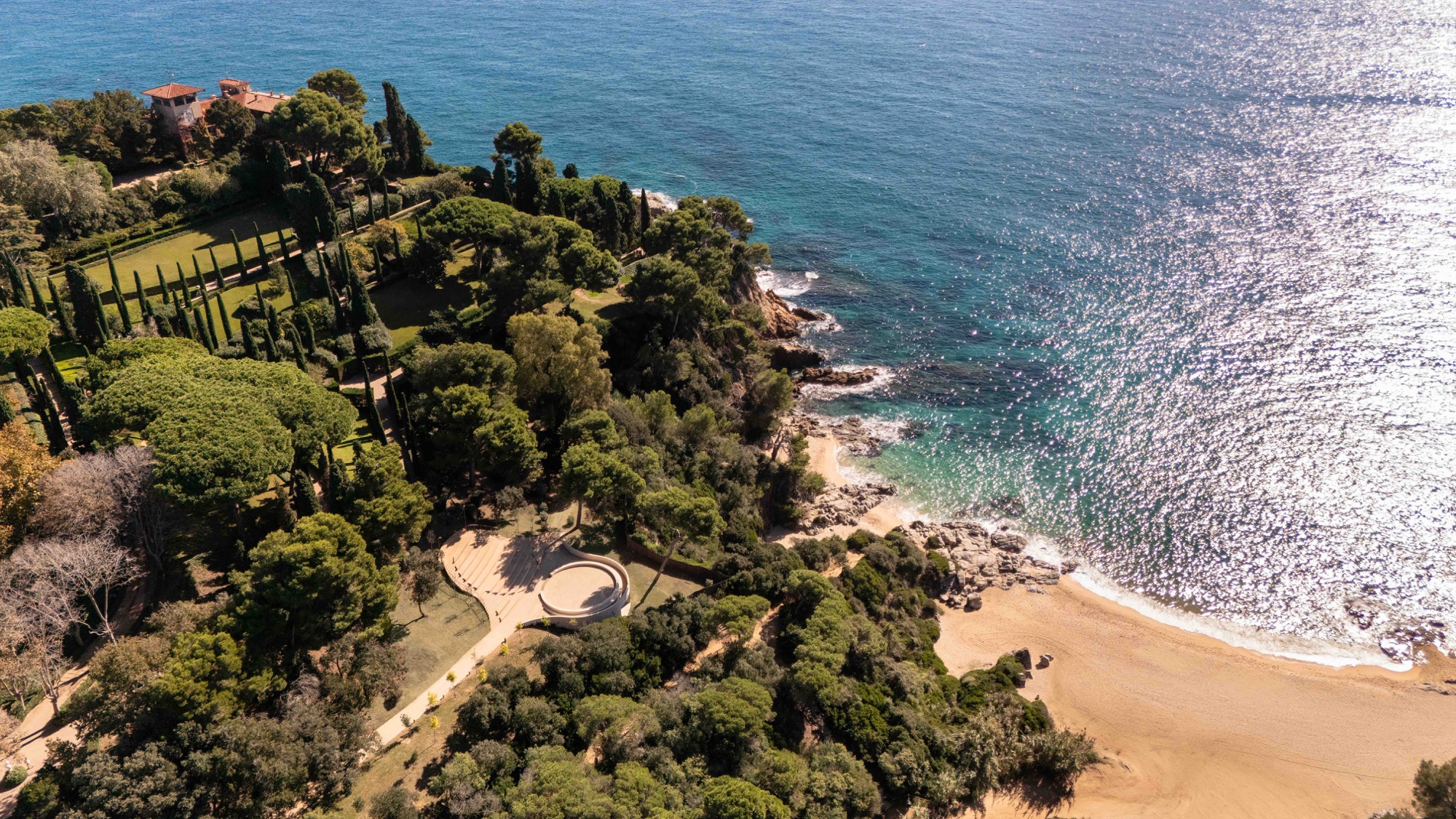
The Santa Clotilde Gardens in Lloret de Mar were designed by the architect and landscape designer Rubió i Tudurí and are considered one of the best‑preserved examples of a Novecentista garden in Catalonia. This artistic and social movement of the early 20th century was characterized by a return to the values of order, clarity, and simplicity as a response to the formal and expressive excesses of Modernisme. Novecentisme was initially known as the “Mediterranean style” due to its explicit intention to recover the roots of traditional Catalan culture, closely linked to the landscape and the territory.
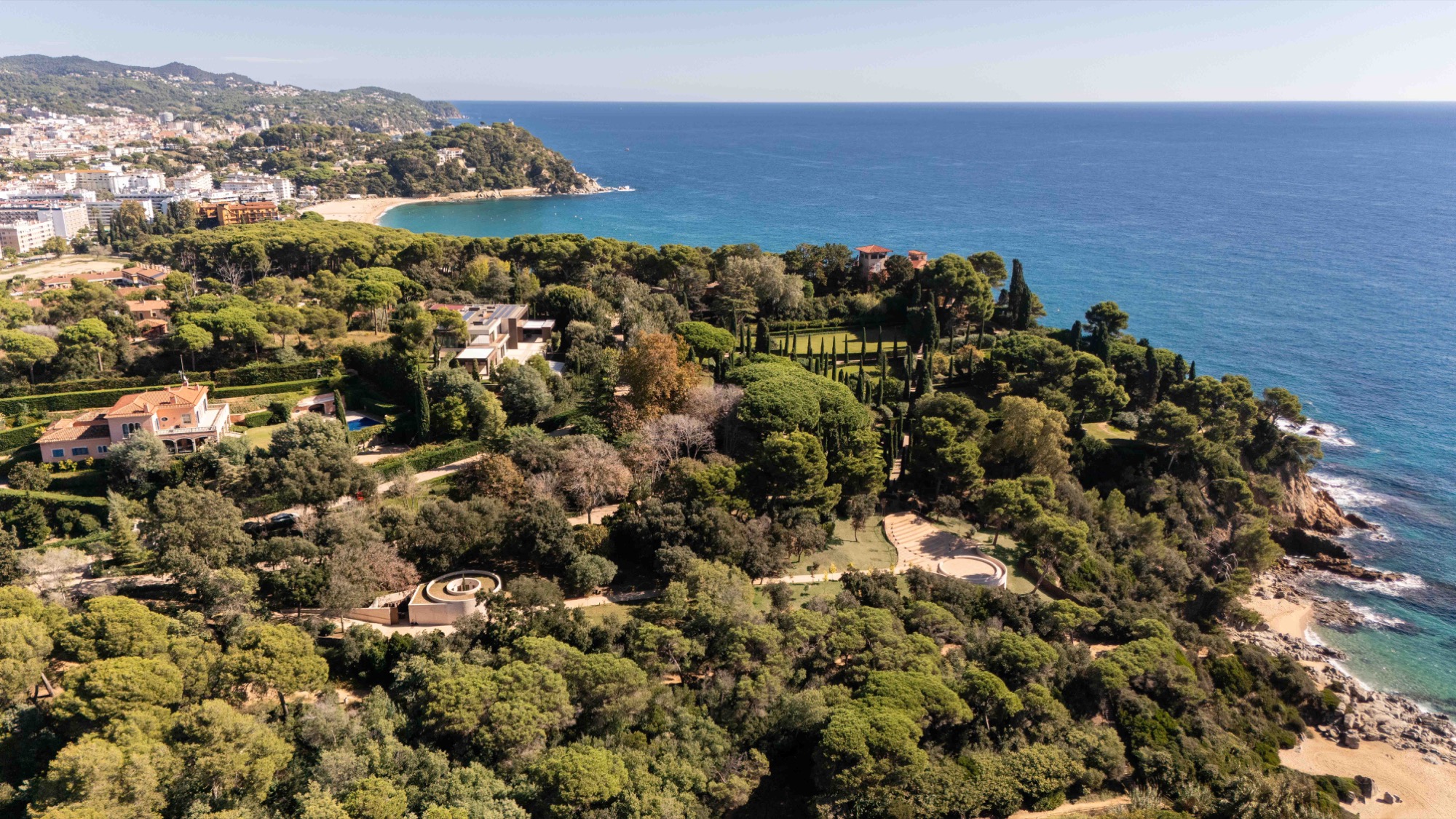
Rubió i Tudurí did not conceive the garden as a mystical or romantic space, but rather as an act of conscious reconciliation between human beings and nature. In this sense, he took advantage of the site’s steep topography to enhance the visual connection with the horizon and the sea, incorporating the landscape as an essential part of the garden experience. The structure is organised around a network of paths, stairways, and small circular plazas, accompanied by extensive use of ars topiaria and plant species with a distinctly Mediterranean character, such as cypresses, pines, ivy, myrtles, agapanthus, and oleanders.
“The creator of a garden manipulates the life of plants in a human way, because the human‑plant harmony of our art must be the fruit of man.
This means that the garden as a work of art must be extremely simple. The dialogue between the plants must be natural. The accumulation of artificial details is counterproductive. Often, the excess of ornaments and accessories has only one underlying aim: the great ideological and emotional void suffered by the so‑called garden.”
— Rubió i Tudurí
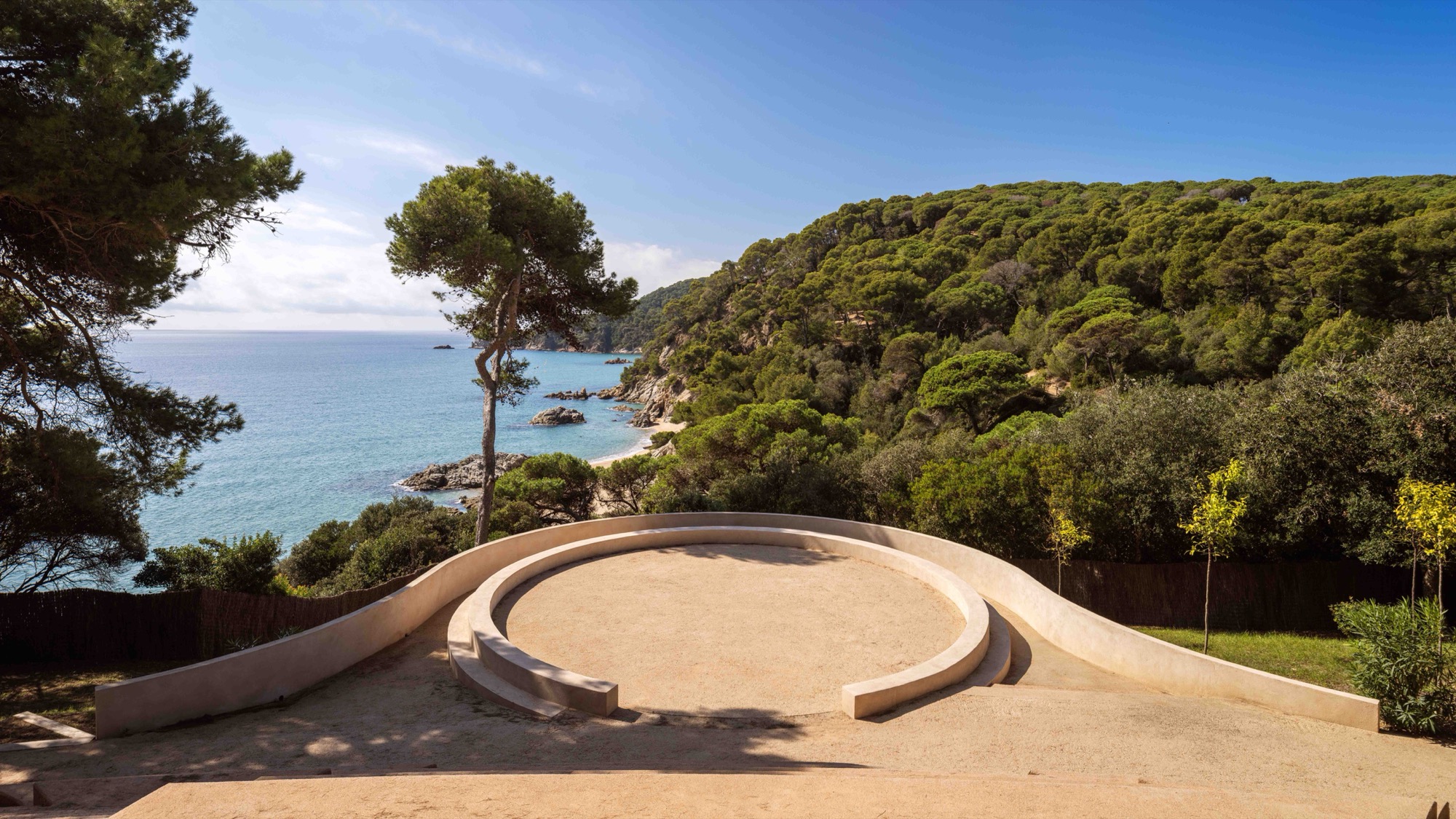
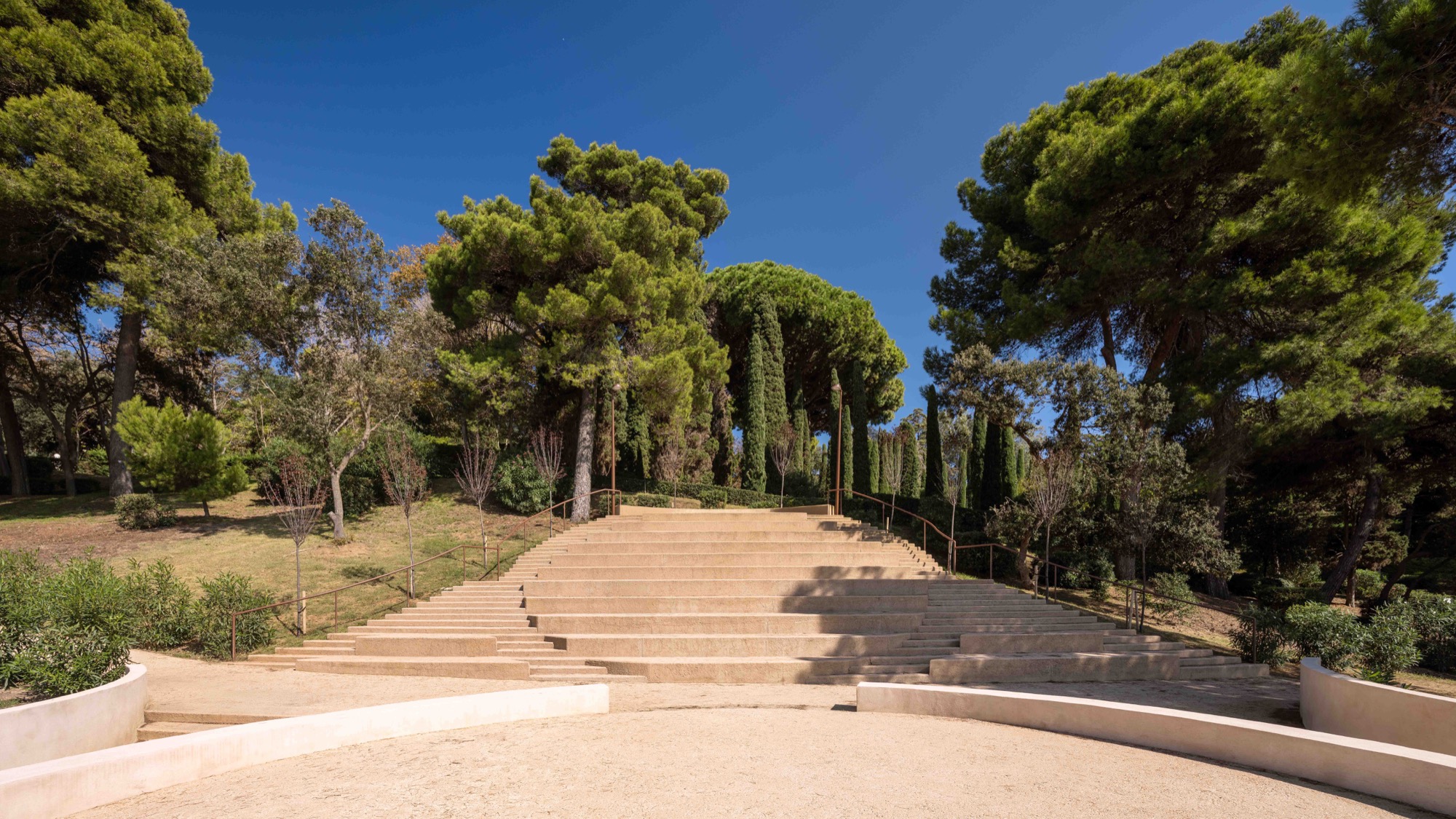
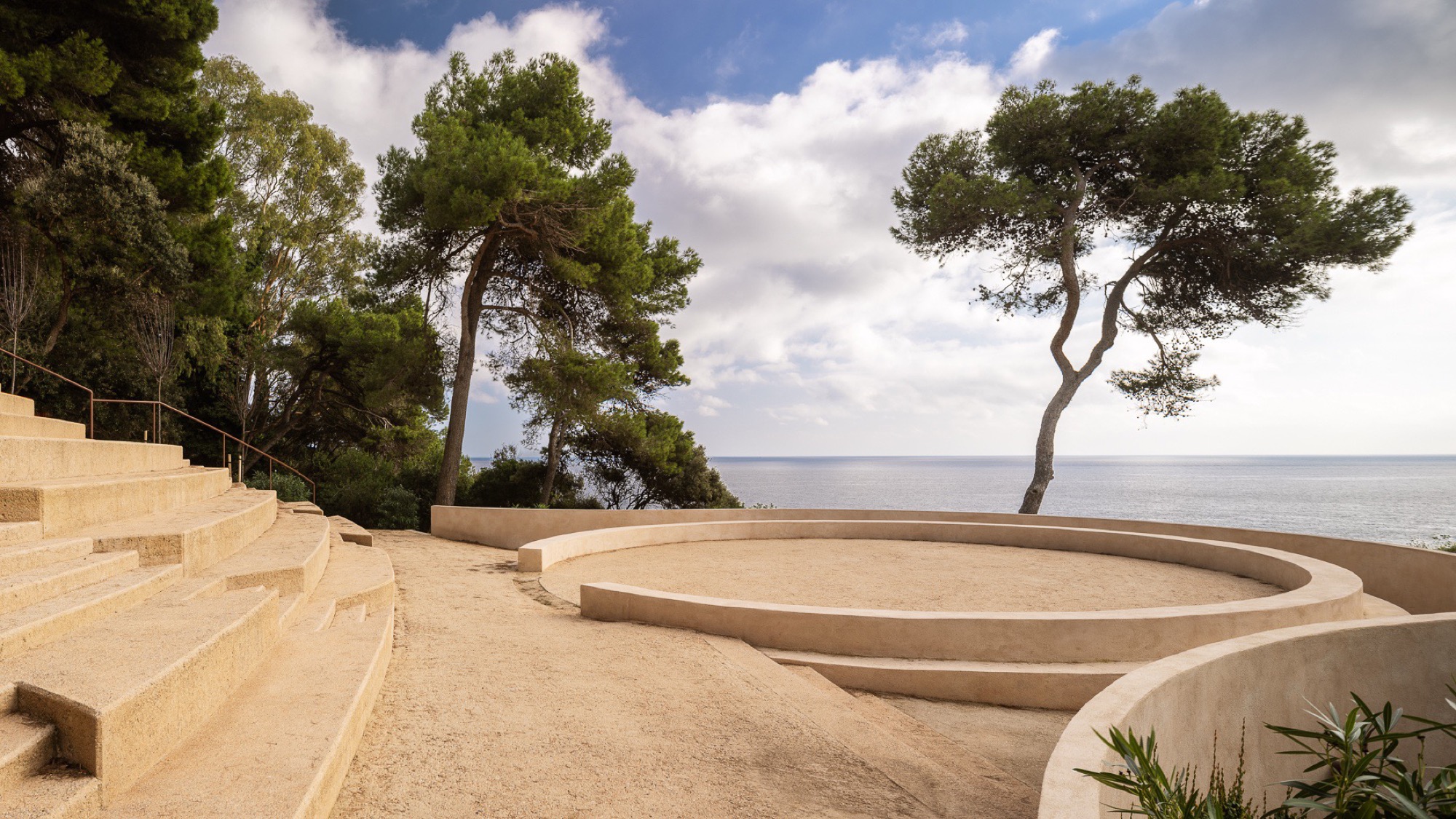
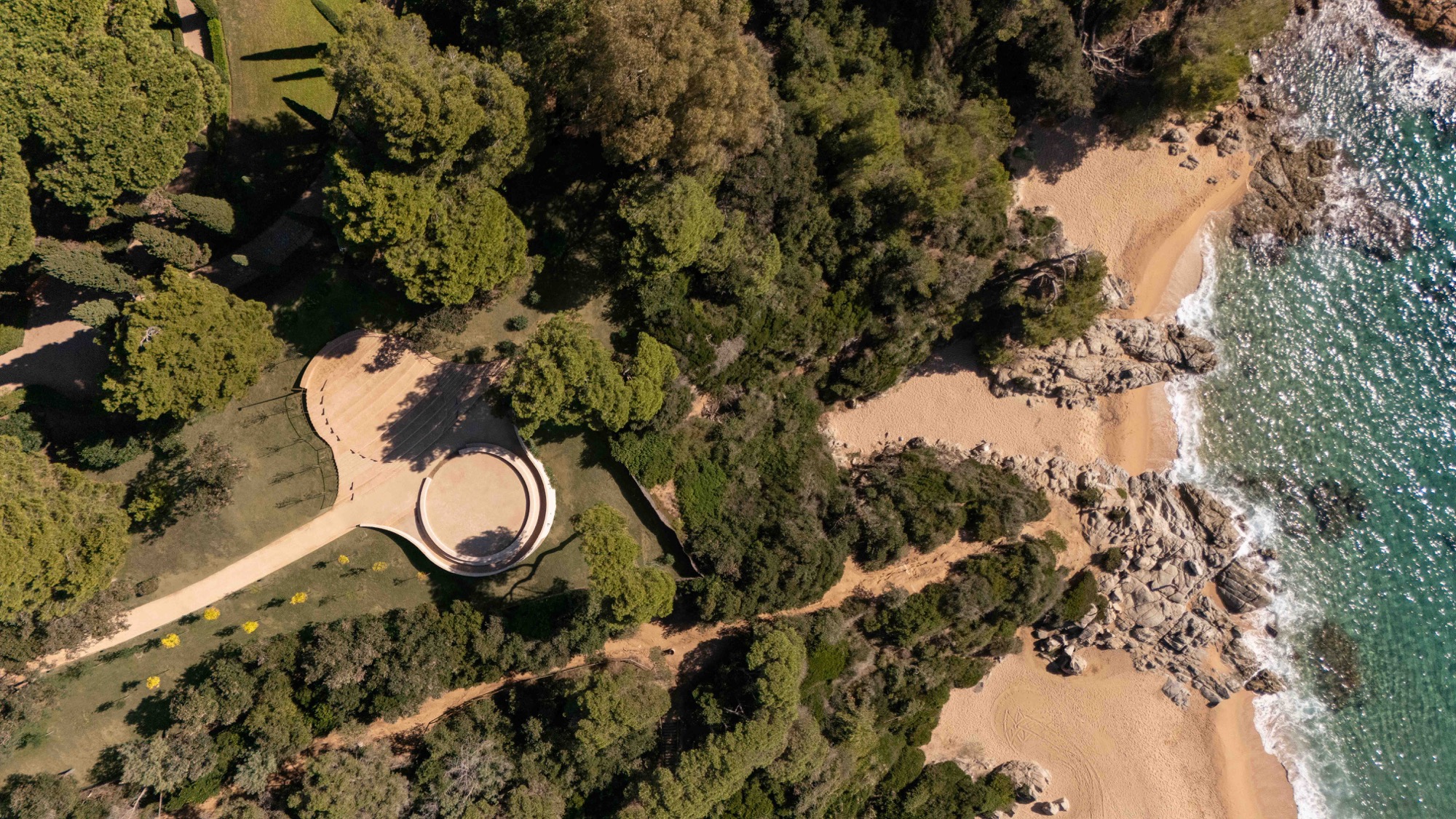
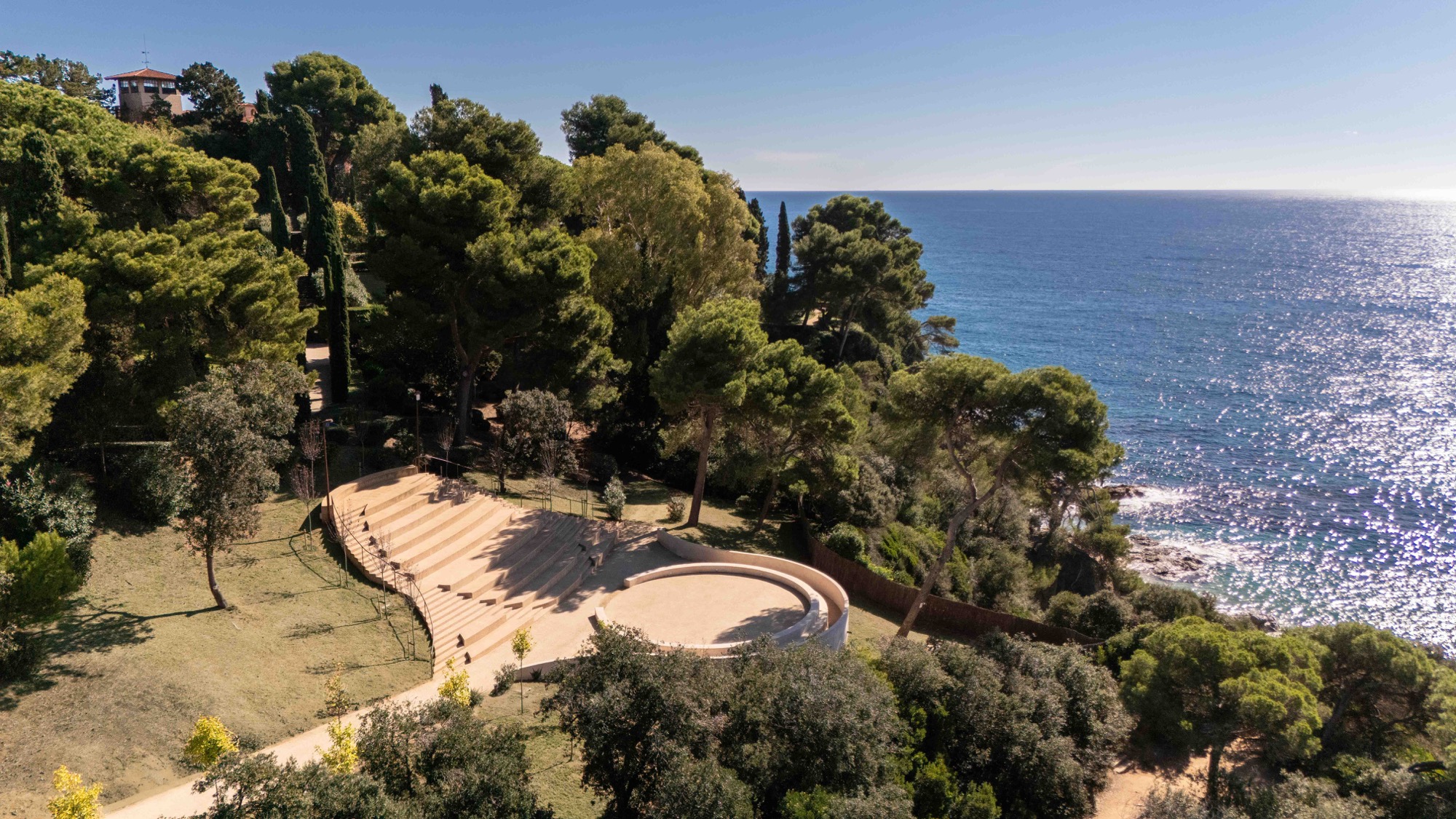
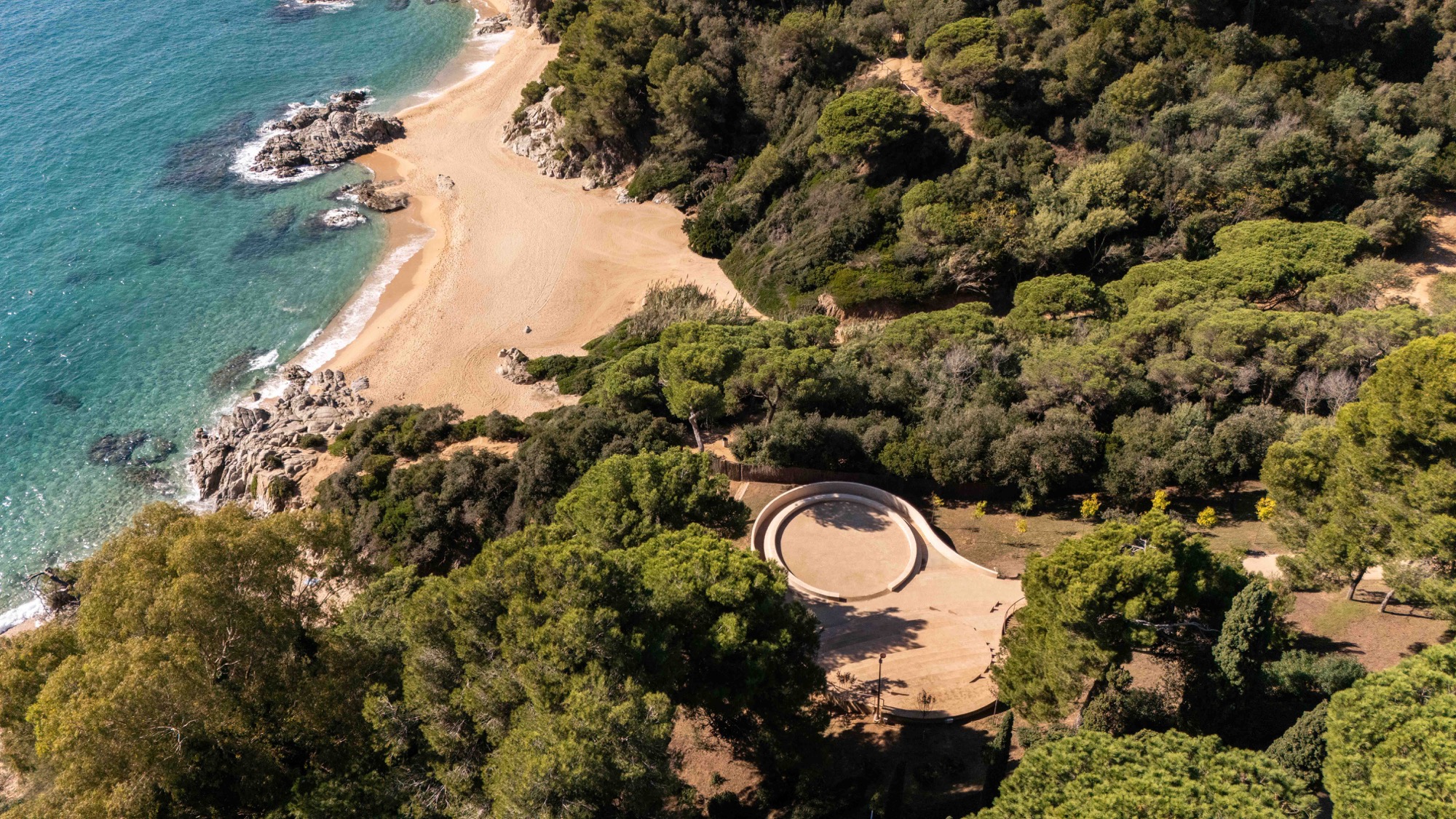
With more than 130,000 visitors per year, the Santa Clotilde Gardens are one of the most popular historic sites in Catalonia and one of the most sought‑after tourist destinations on the Costa Brava. With the aim of consolidating and expanding the cultural offerings of the complex, the Lloret de Mar City Council is promoting the construction of a small open‑air theatre on the western side of the gardens, in a privileged location with exceptional views of Cala Boadella. The program includes a stage with seating for around 300 people, dressing rooms, and a small service building.
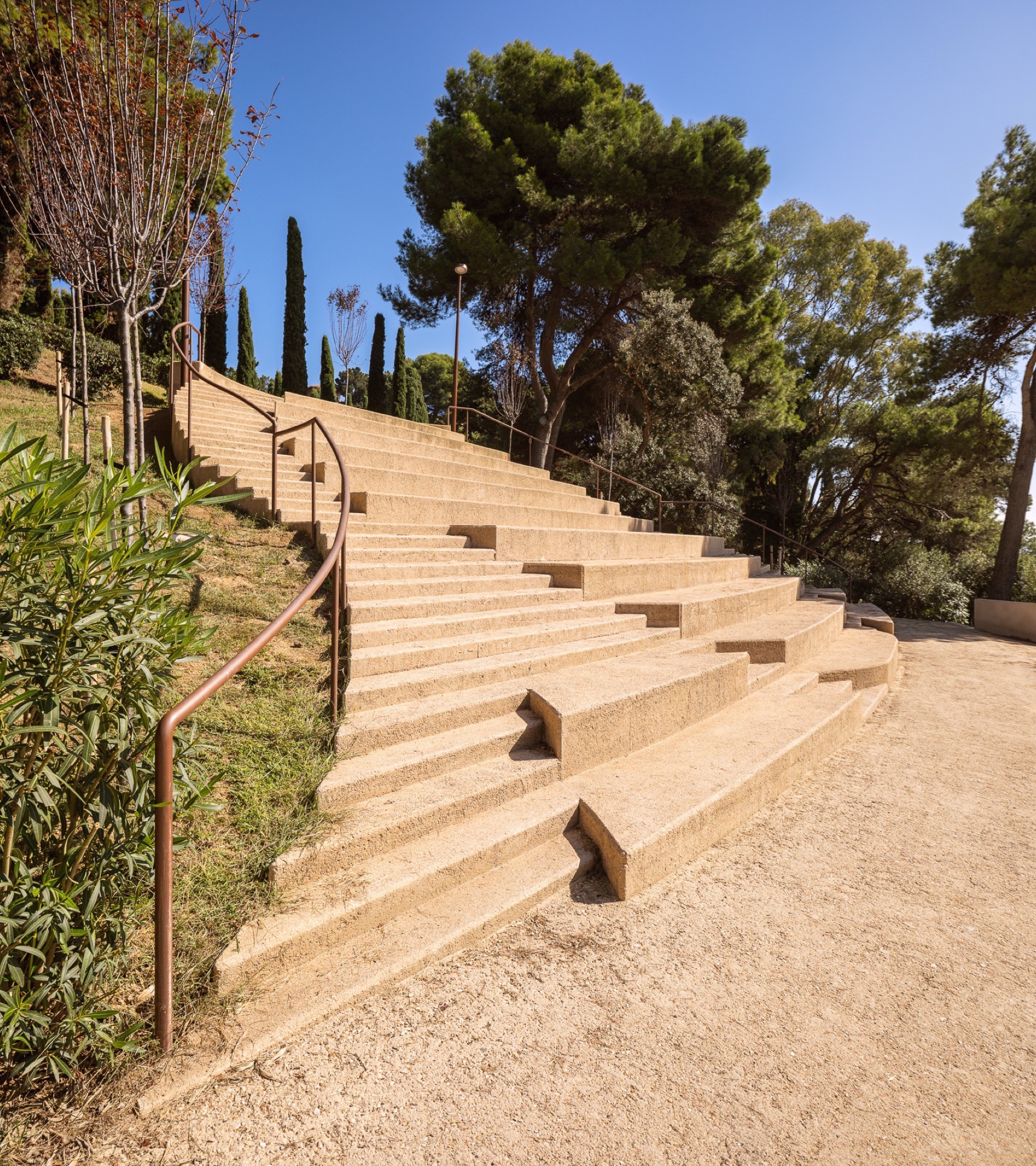
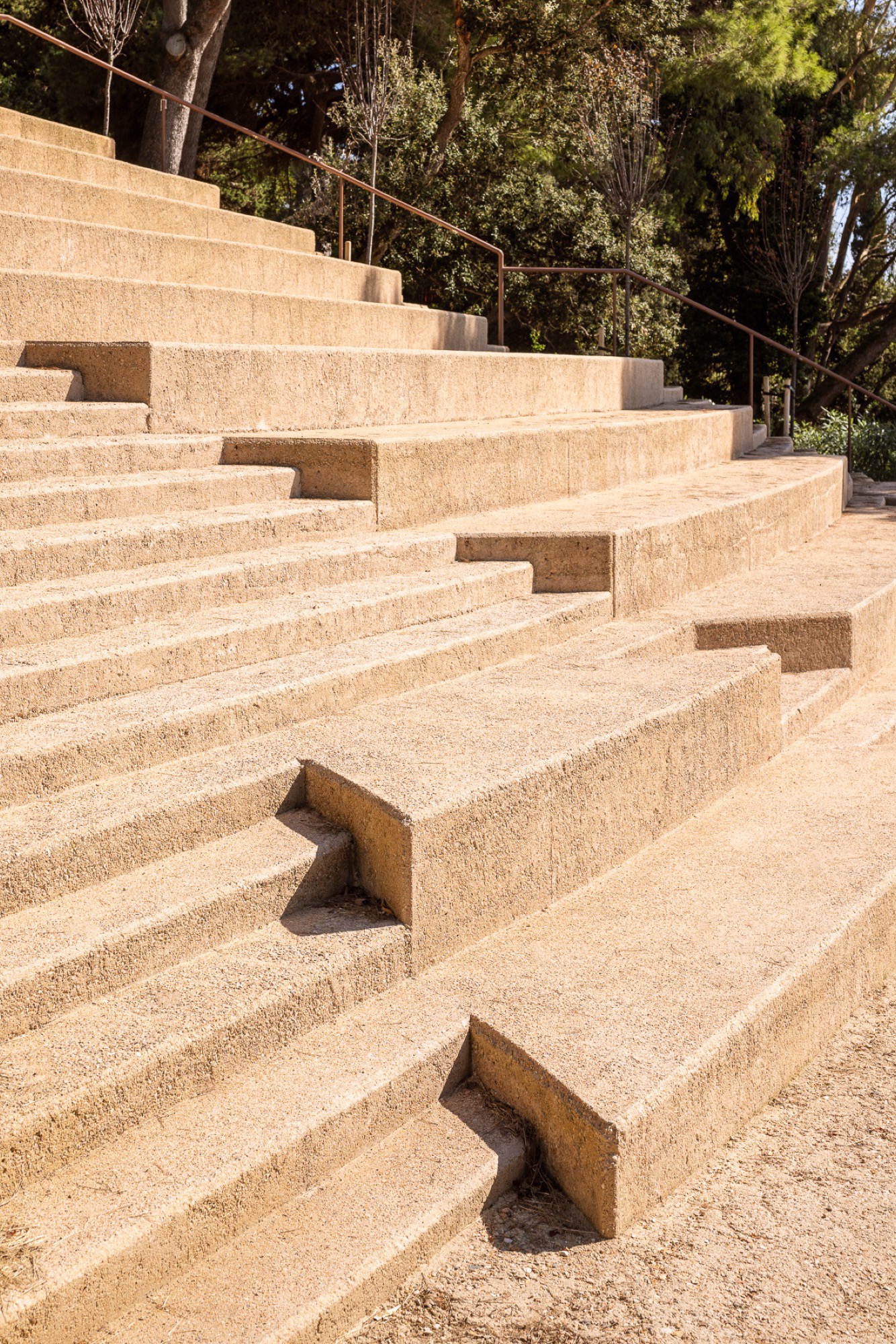
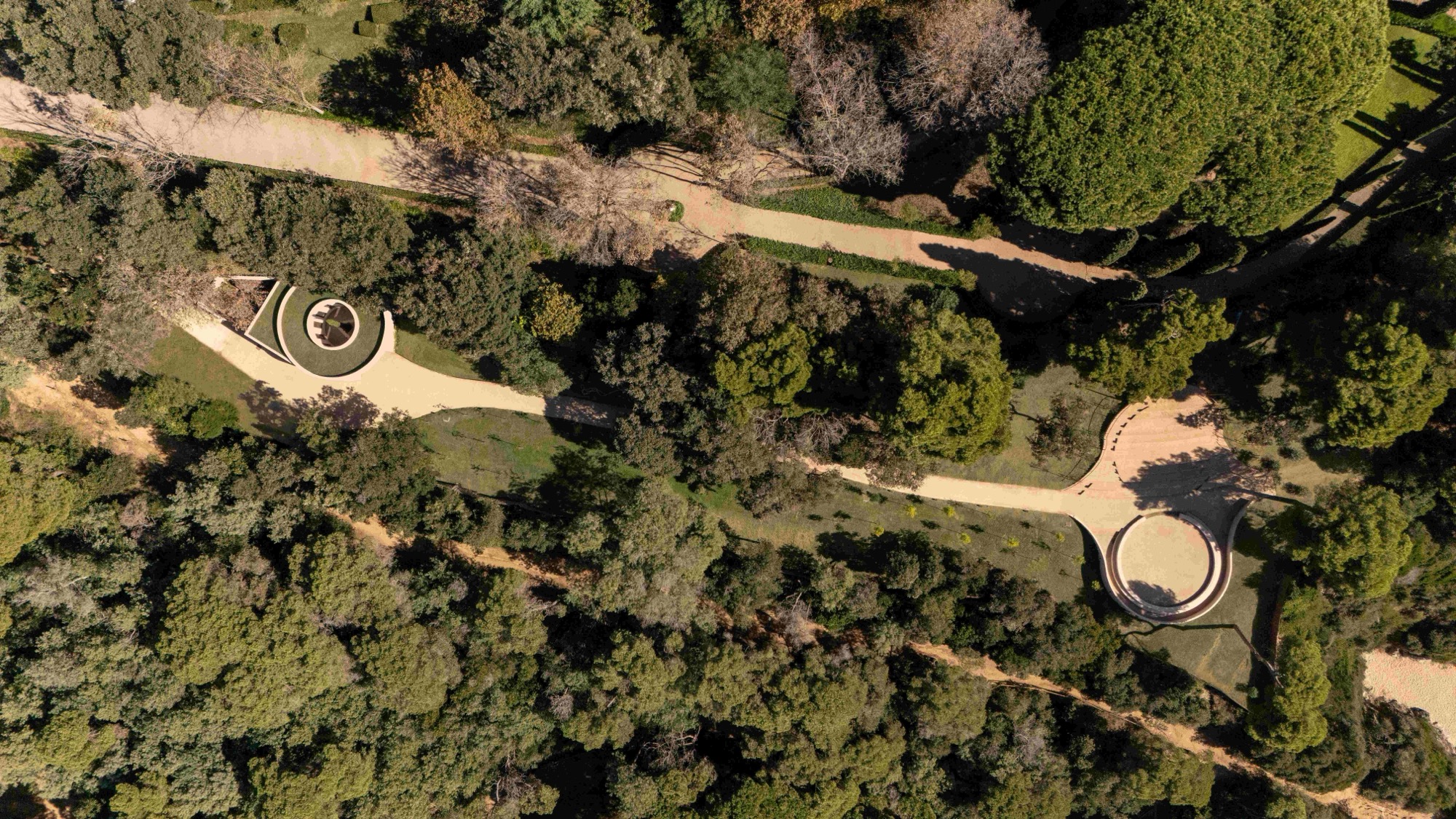
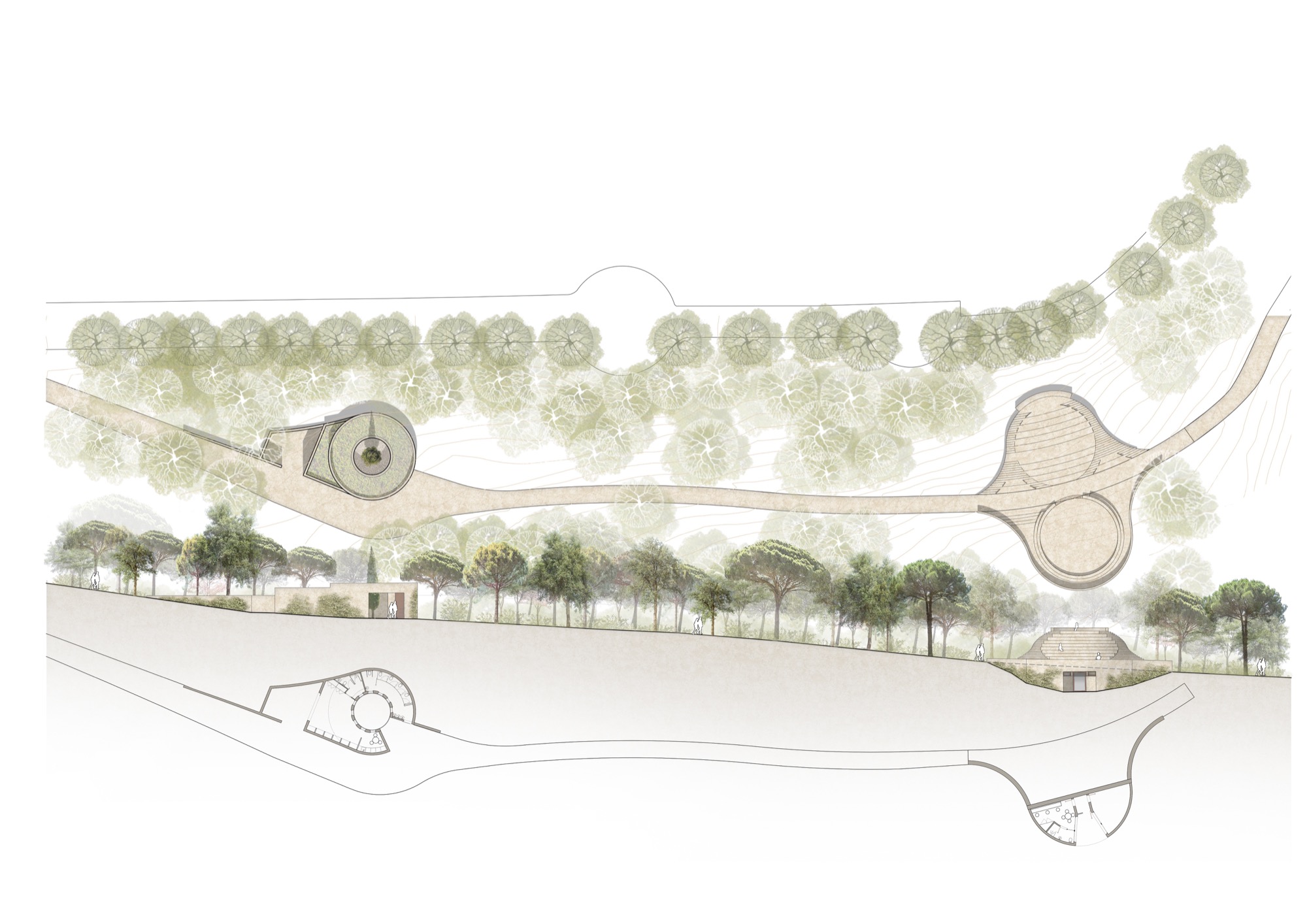
The ensemble formed by the two small volumes and the path connecting them follows the orientation, proportions, and geometries of the historic garden, with the intention of expanding and reinforcing the experience of connection with the landscape defined by Rubió i Tudurí. The principles of simplicity, order, and clarity are embraced by the project as fundamental values and as a commitment to a harmonious relationship with nature. In this sense, the proposal focuses on a materiality based on the use of sablón—a soil derived from the decomposition of granite, widely used locally and present in the gardens themselves—as an omnipresent element in pavements, seating tiers, walls, and lime renders.
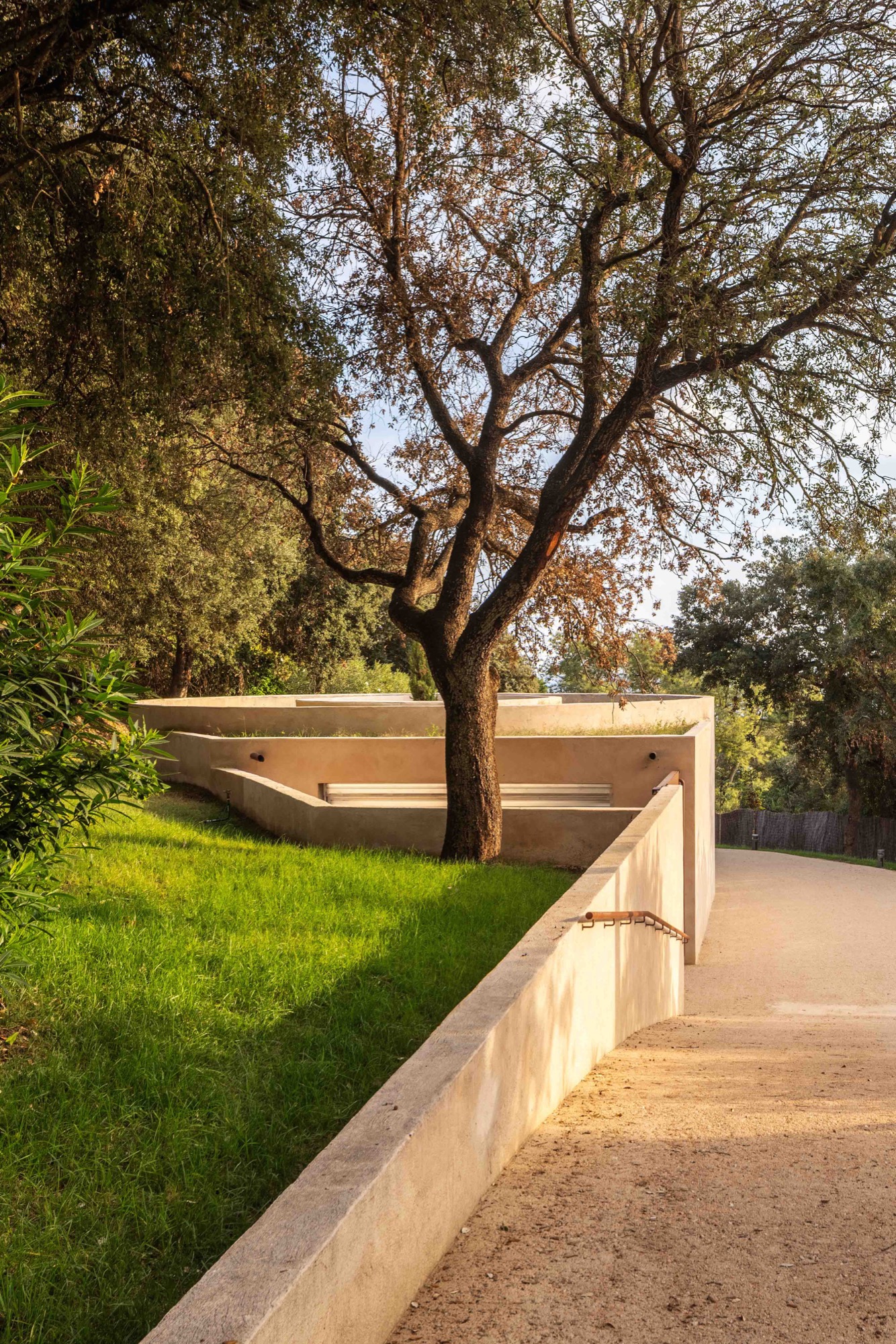
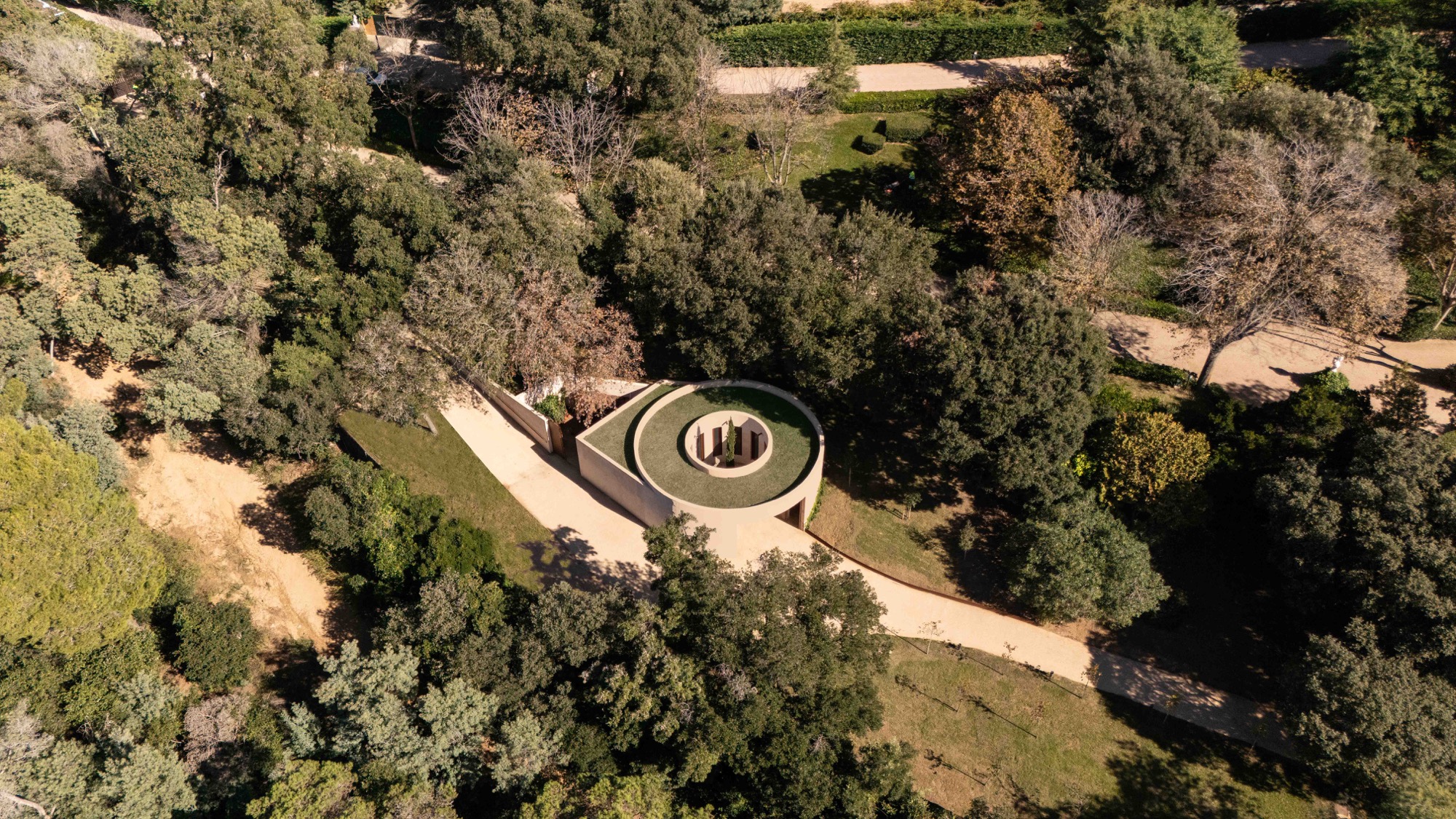
The two small structures are located in clearings within the narrow strip of forest between the garden and the cove, ensuring that no existing trees are affected. The access path, running parallel to the main routes of the historic garden, begins very close to the entrance, allowing the new space to be used independently of the garden’s visiting hours and thus increasing the versatility of the complex.
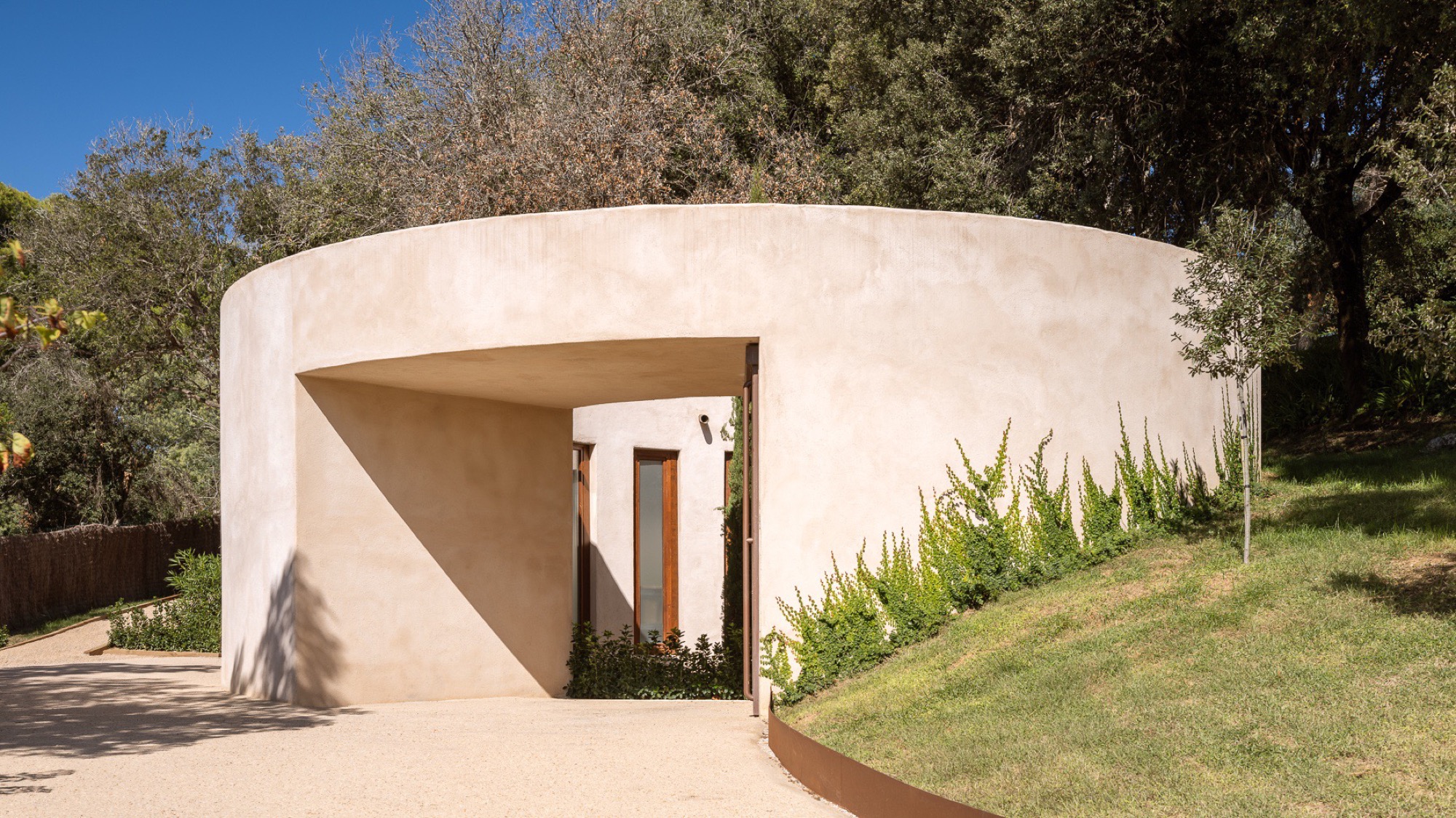
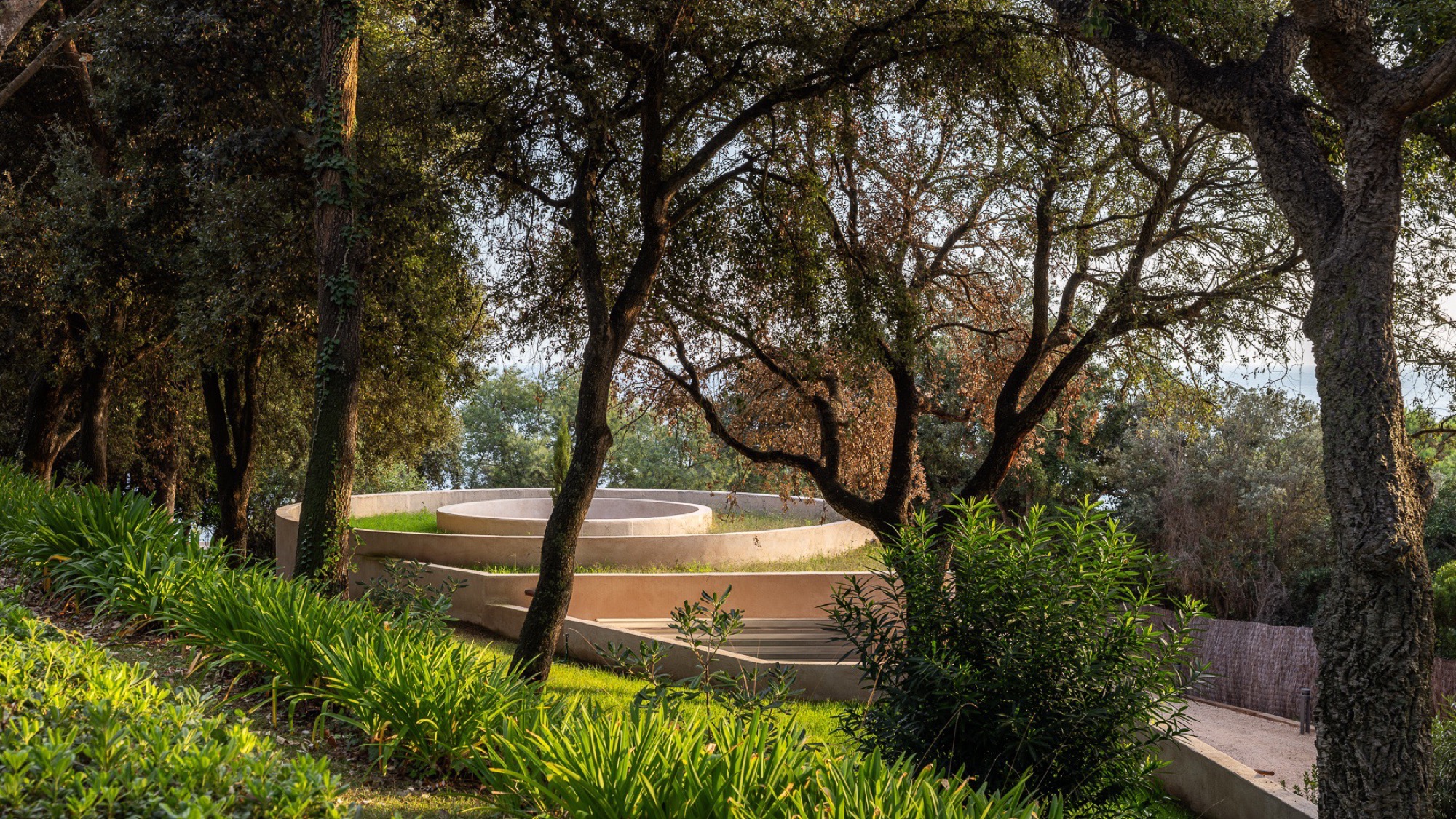
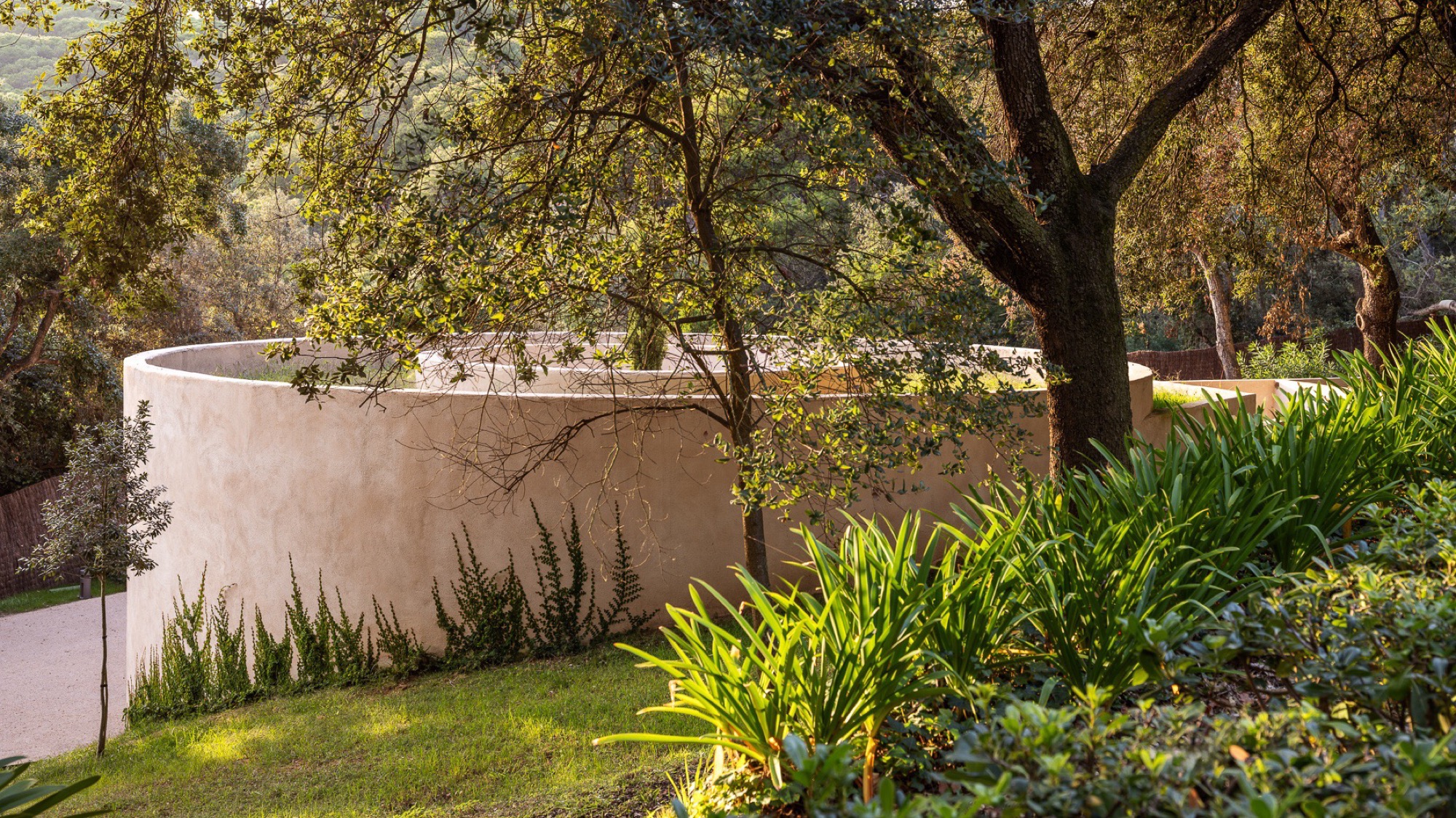
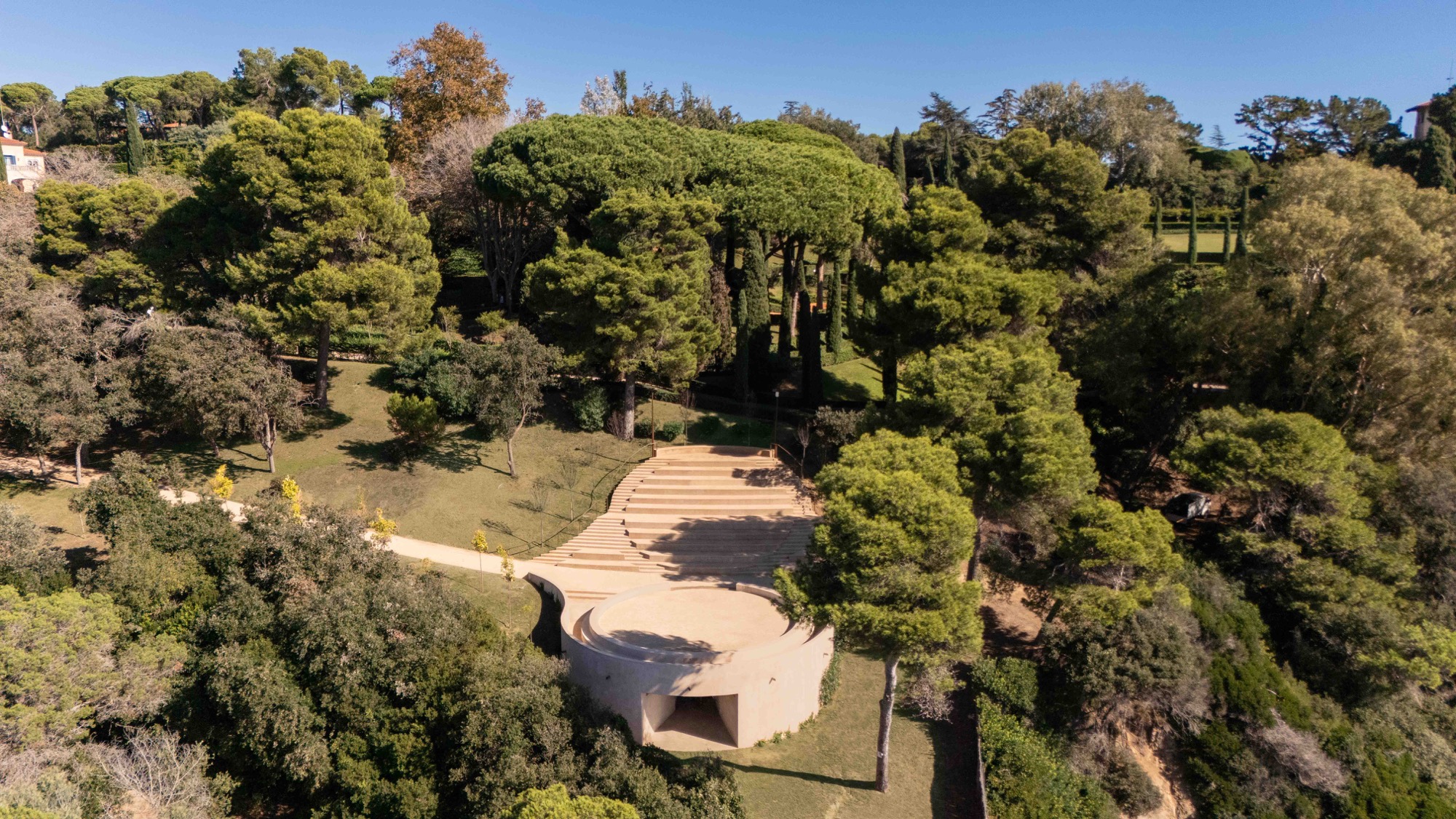
The service building, circular in plan and with a central courtyard, houses the public restrooms and the gardening storage area. Its rounded form, green roof, central cypress, and climbing plants partially covering the façade link it formally to the trimmed circular vegetation elements and the small plazas distributed throughout the garden.
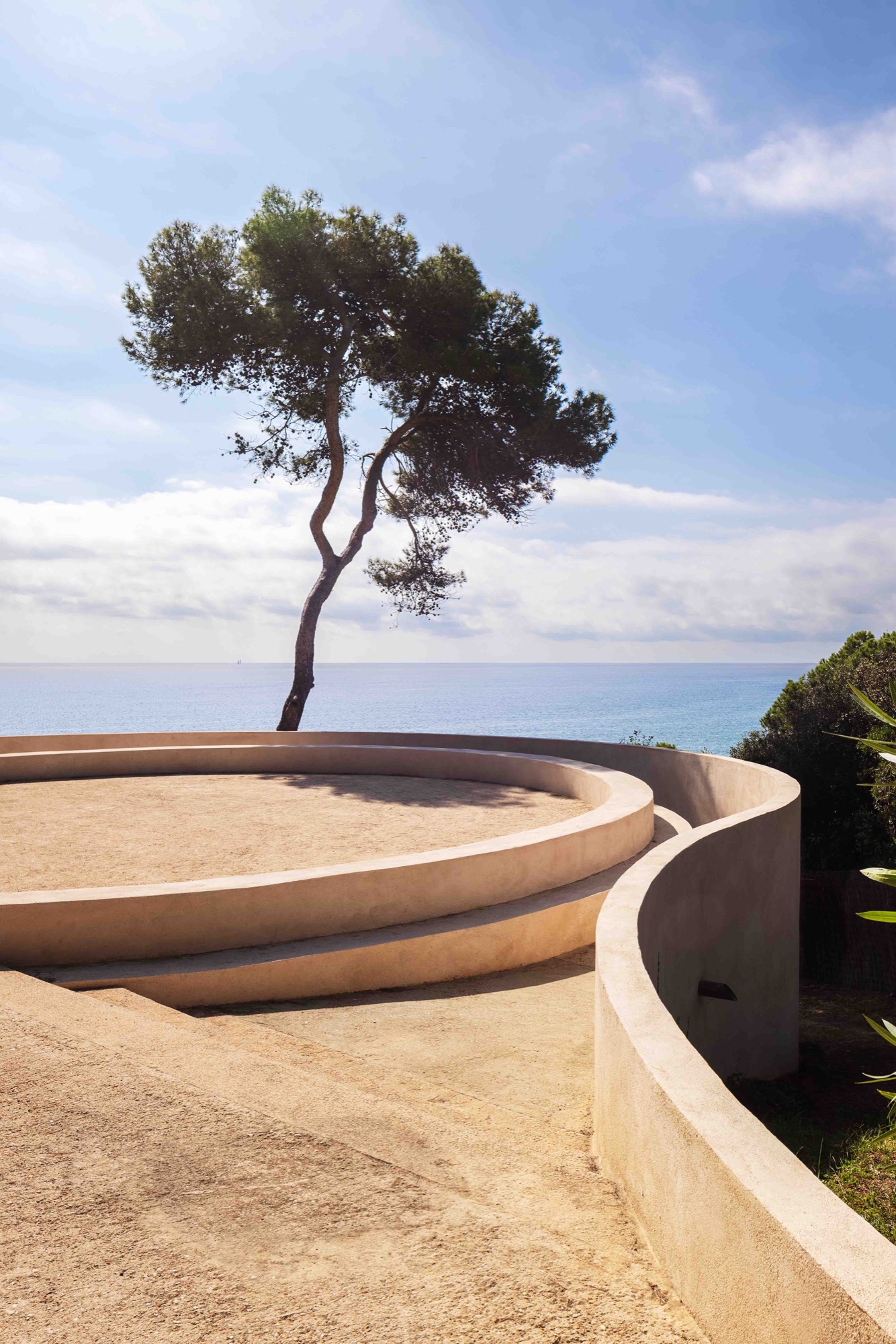
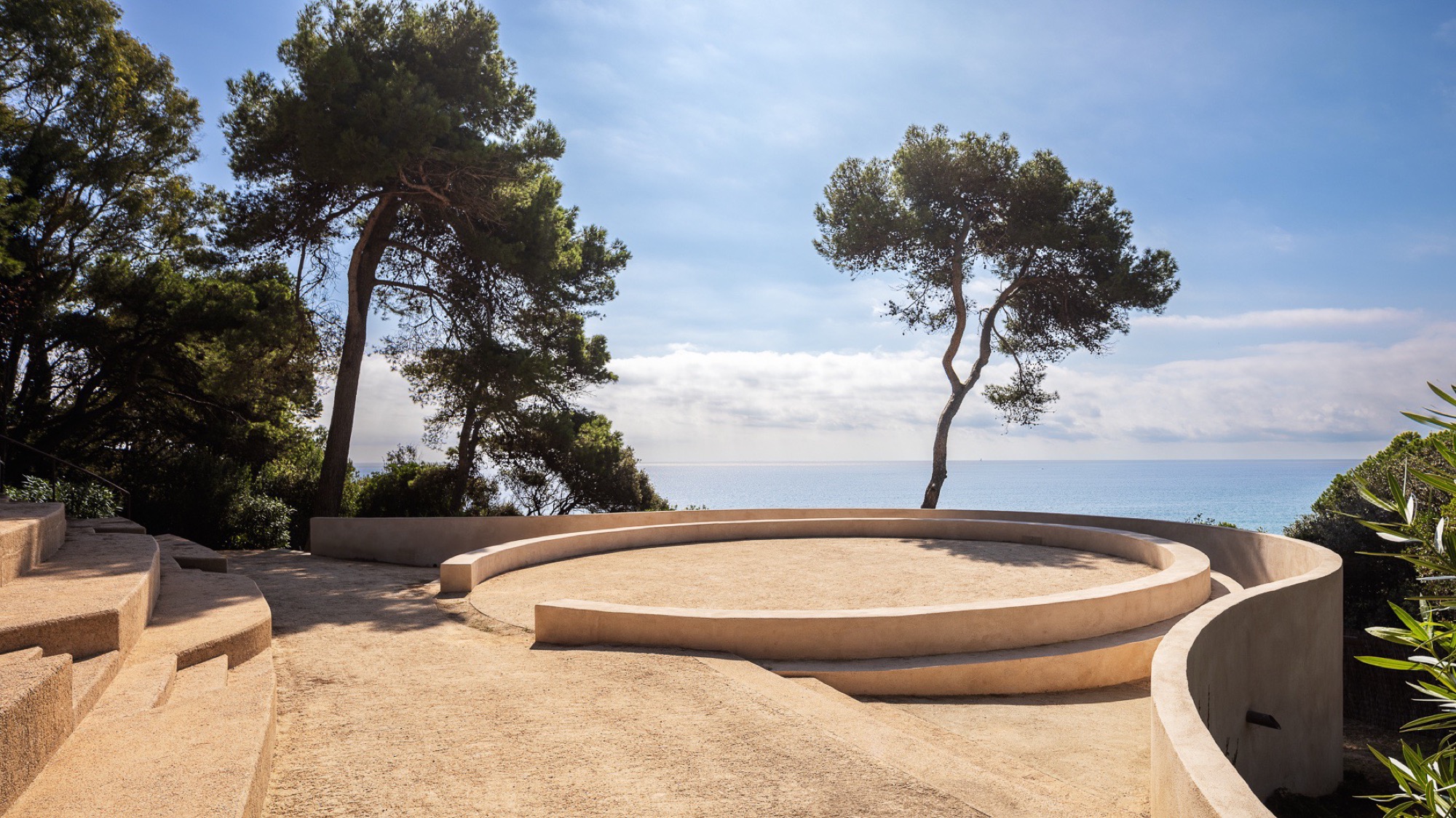
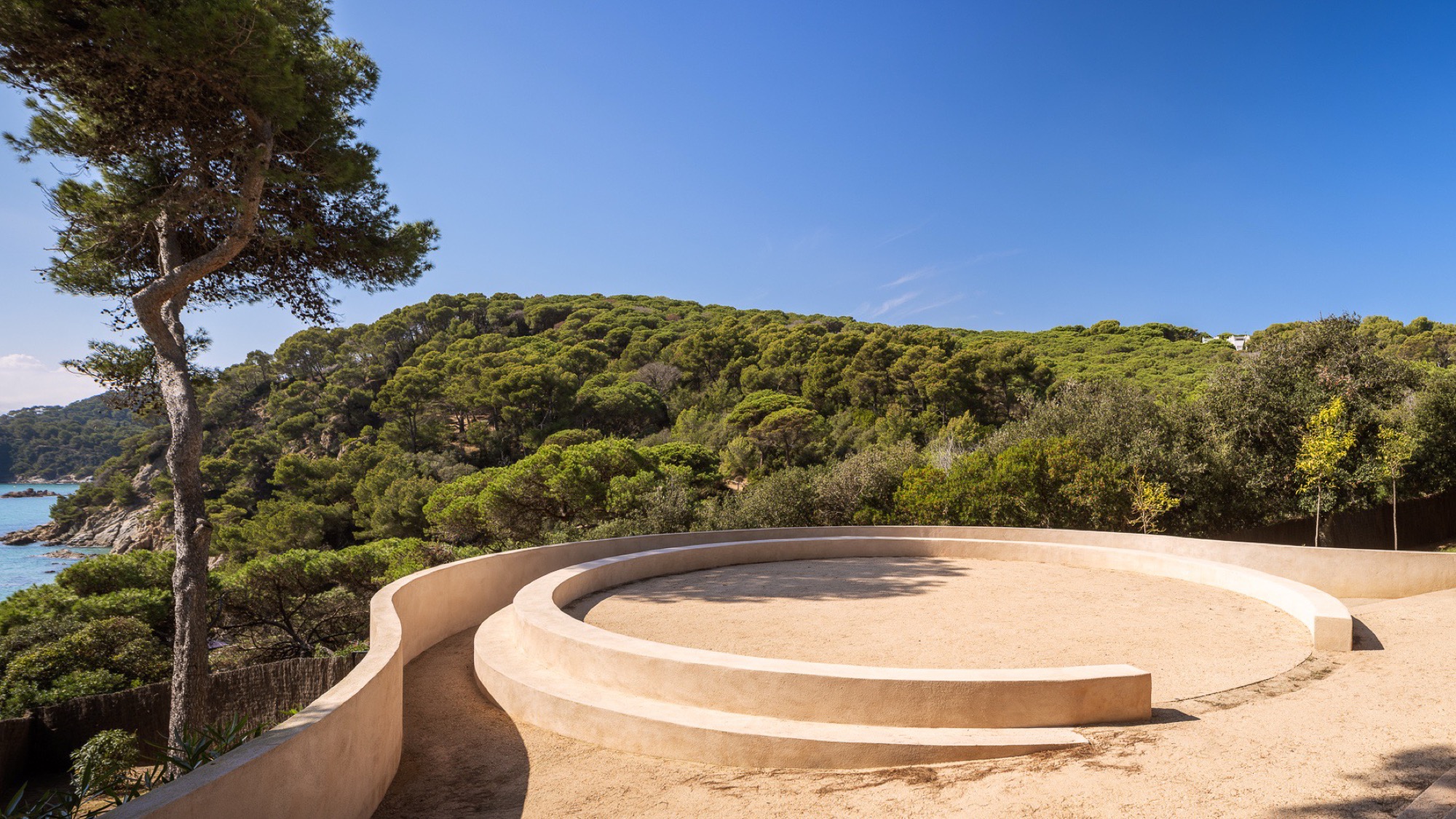
The path between the two buildings descends gently along the line of minimum slope until it reaches the theatre, facing the sea. The ensemble is organized with the stage to the west and the seating to the east. Taking advantage of the natural slope of the terrain, the seating tiers adapt to the gradient and orient the audience toward the views of Cala Boadella, where the mountain and sea landscape merge into a striking scenography. The stage, also circular in geometry and defined by a continuous bench and a perimeter ha‑ha, allows for small‑scale cultural and educational uses, while the dressing rooms and storage area are located at the lower level, making use of the topography.
Since the day of its inauguration, the new theatre of the Santa Clotilde Gardens has become a consolidated space for gathering, cultural activity, and entertainment, from which the Lloret de Mar City Council continues to promote respect for and dissemination of local historical and cultural values.
Passeig Jardins, s/n, 17310 Lloret de Mar, Girona
73496


LILA 2026 Sponsor