Sensory Landscapes
www.x-studio.tv + www.nordscape-lab.is
2026 Other Typologies / Italy / Built in 2021 /

![How to cultivate sensitive dialogues between nature and local communities in cities? Insect City explores new approximations to reimagine the boundaries between human and nature, through a site-specific intervention that leaves spaces for new encounters. The landscape project proposes to improve community and landscape awareness towards new relationship with the surrounding environment, seen not only […]](https://landezine-award.com/wp-content/uploads/2025/05/00-Insect-City_-IvanJuarez_x-studio-600x400.jpg "Insect City by Ivan Juarez | x-studio")
Located in a central position in the Mediterranean Sea, the island of Sicily has been characterized as a territory of encounter, hybridization and constant evolution, where diverse biological dynamics and cultural movements have taken place throughout history. On the northeast coast, between the Etna volcano and the Ionian Sea, a unique landscape emerges as a biological reference within the Mediterranean, shaped by a subtropical climate in which diverse plant species coexist in a productive land continuously nourished by volcanic sand from Etna’s eruptions.
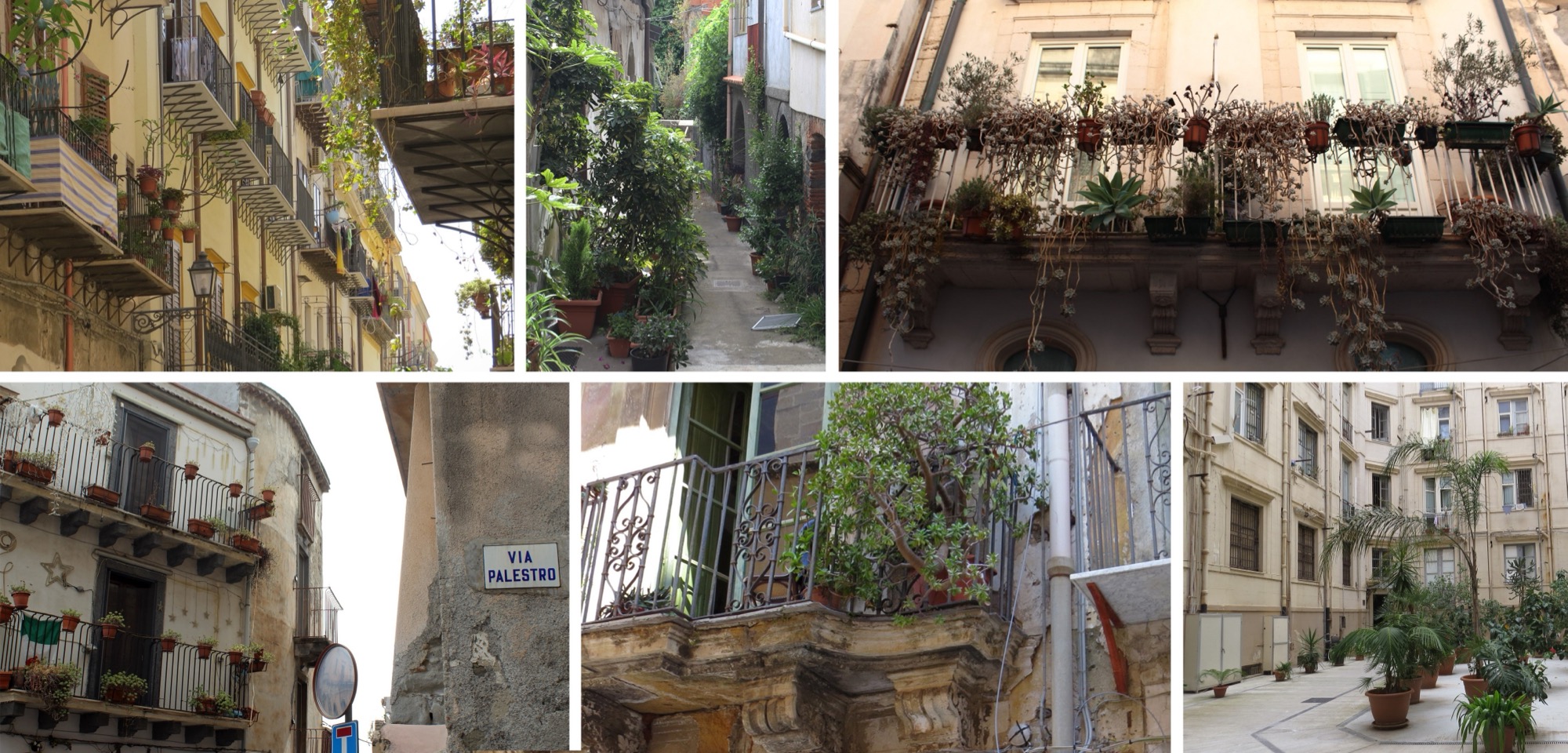
Within this context, Sensory Landscapes is conceived as a site-specific intervention that pays homage to this environment through a walkable garden bringing together plants representative of Mediterranean culture. The project engages touch, smell, sight and taste, connecting natural elements with sensory experiences such as scents, textures, flavors and scenes. It also draws from the Mediterranean culture of container gardening, a practice of growing plants in pots placed in shared domestic and urban spaces such as courtyards, balconies, terraces or sidewalks, reinforcing the connection between people, plants and everyday environments.
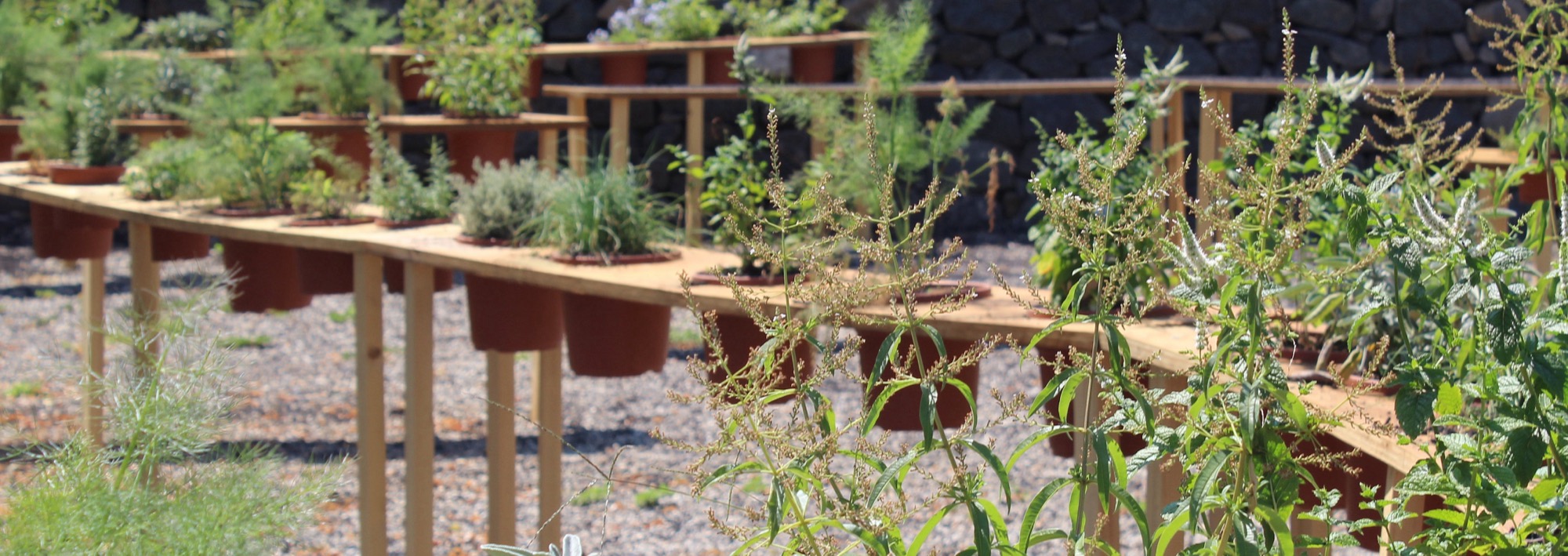
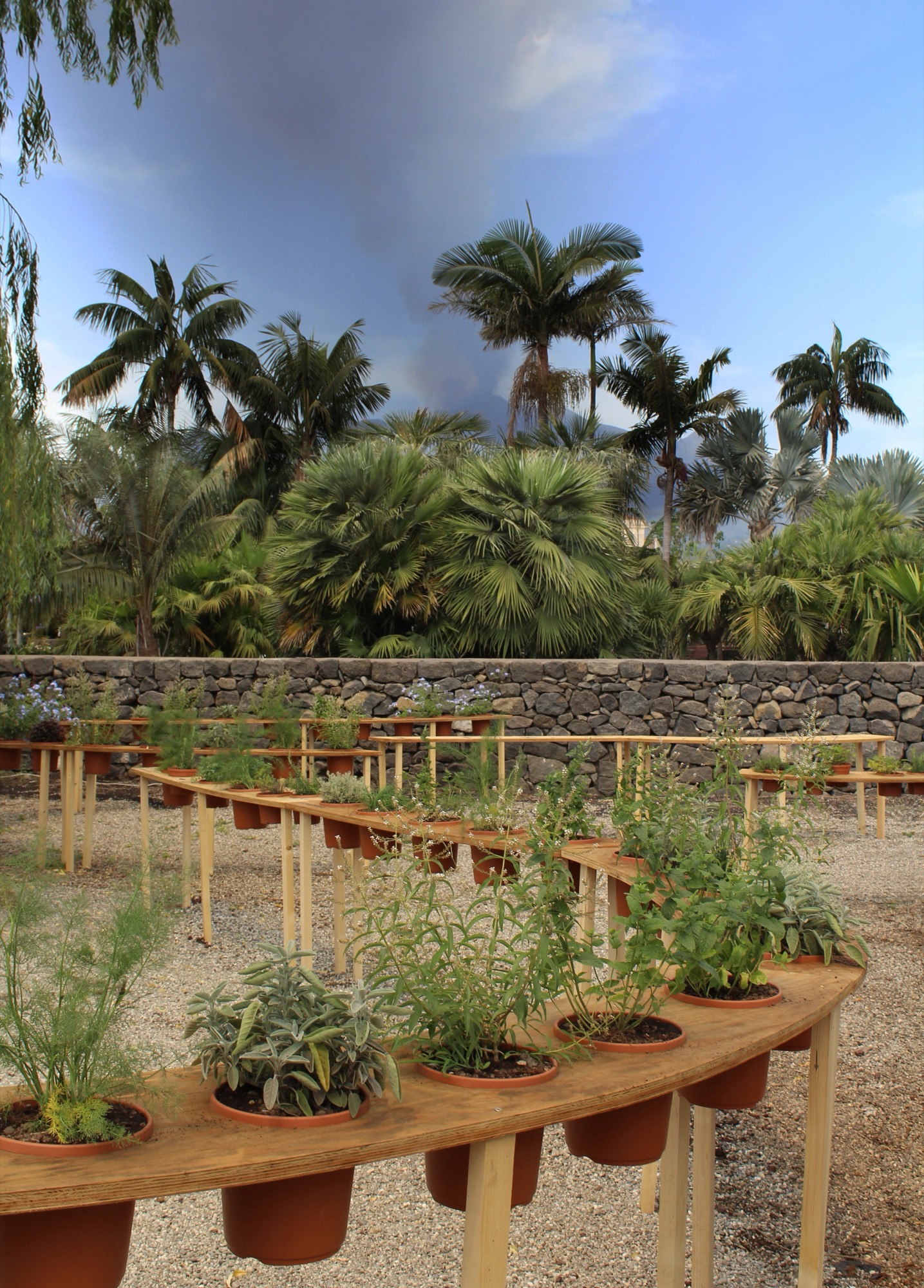

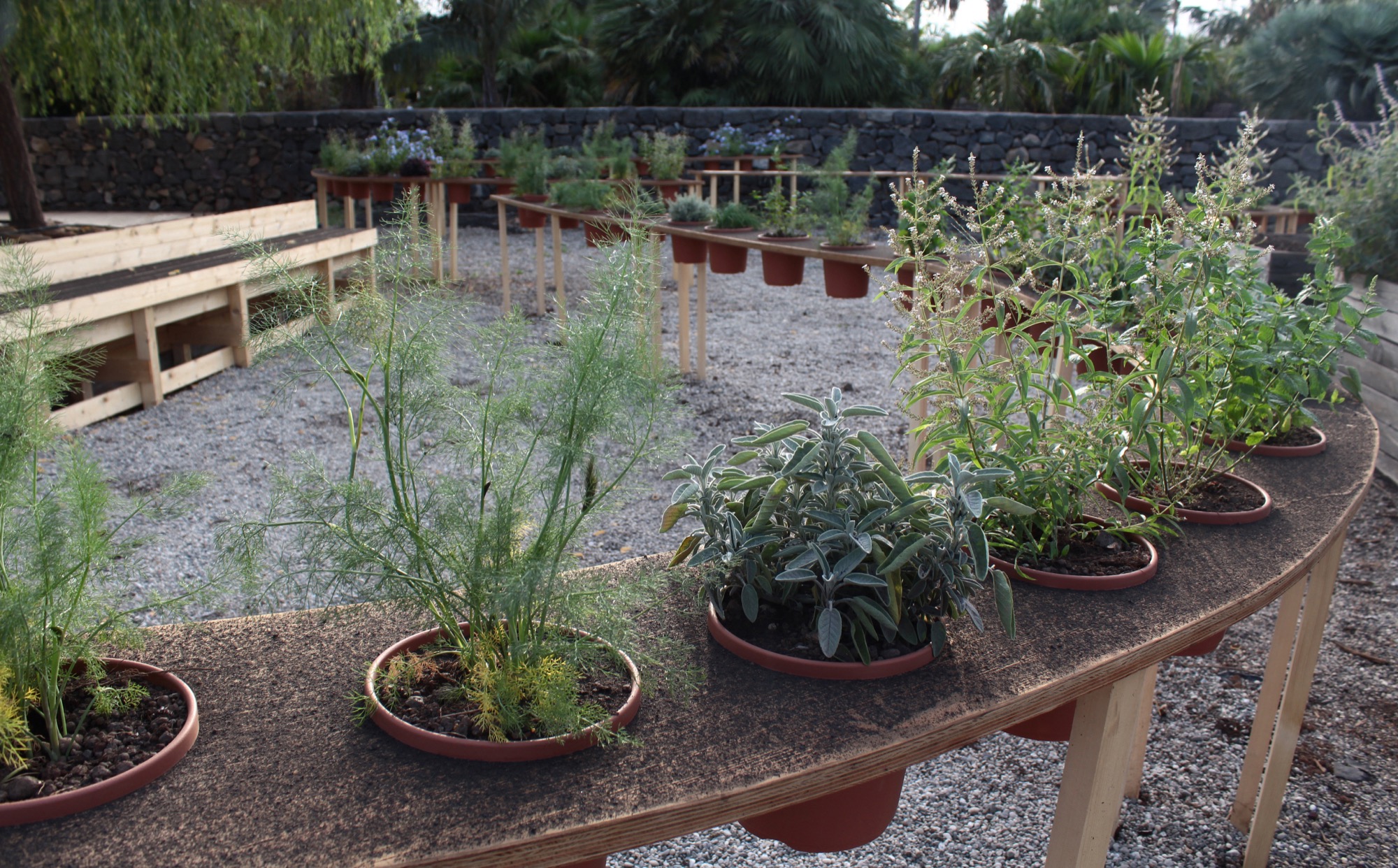
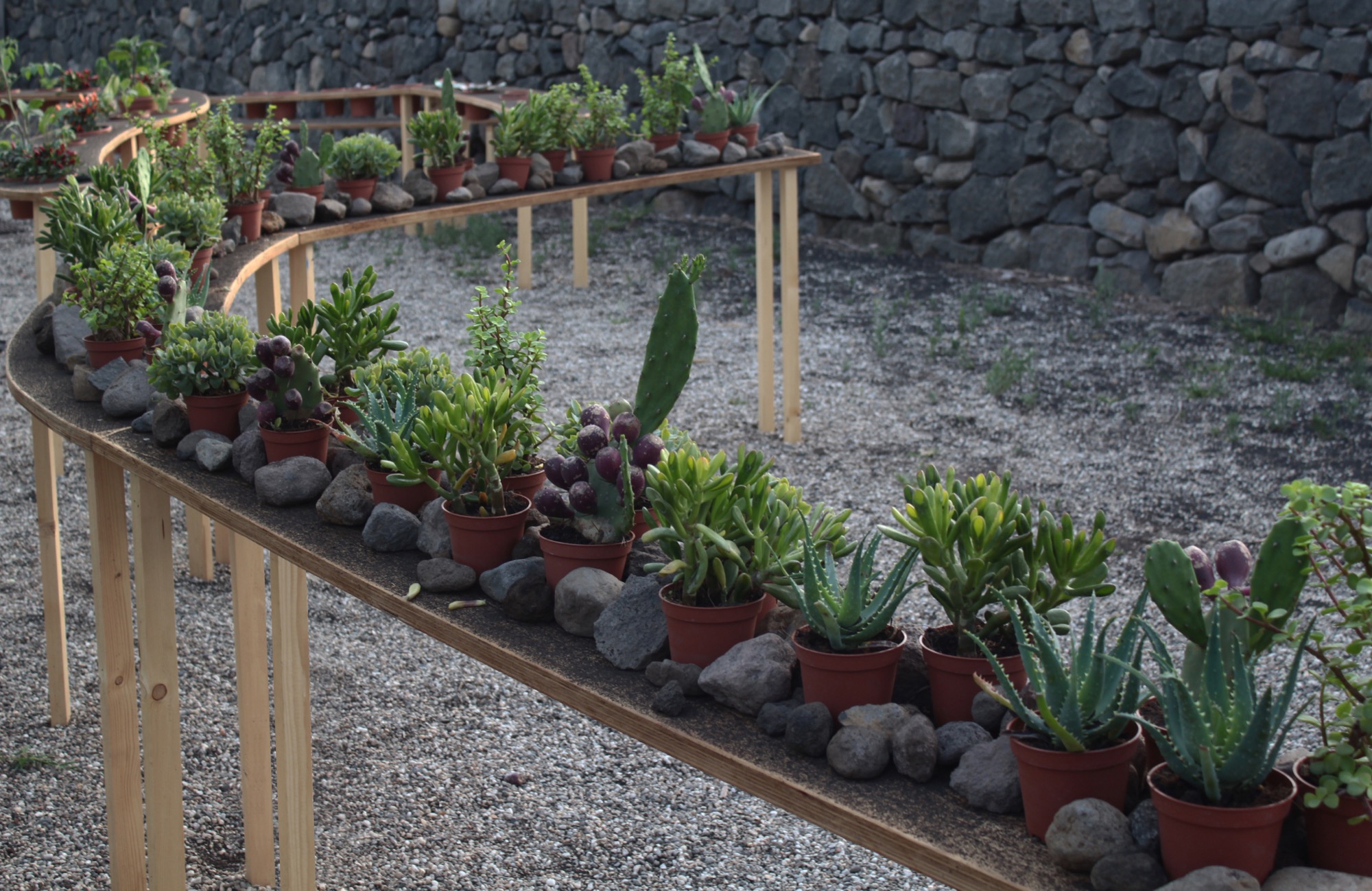
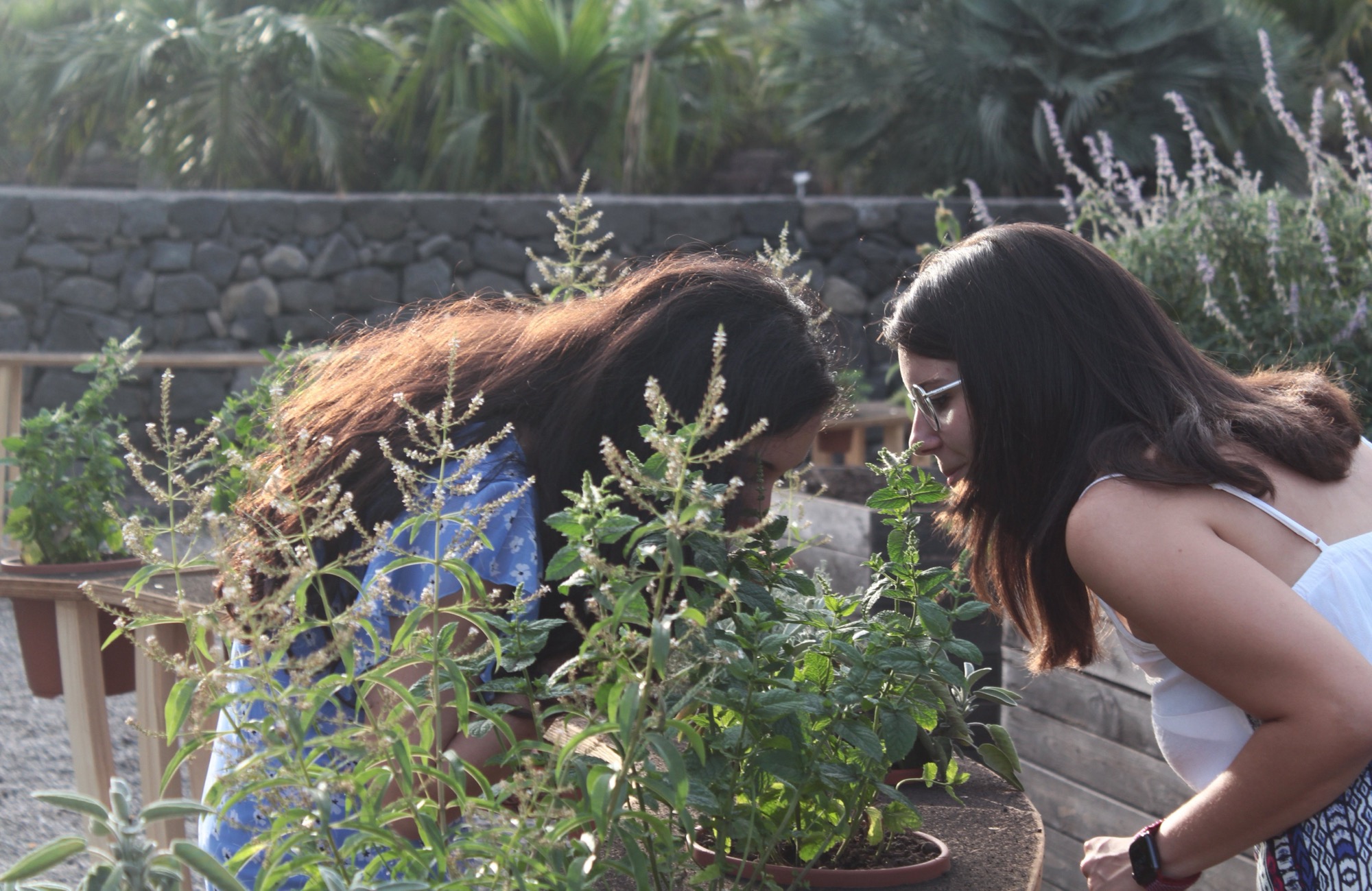
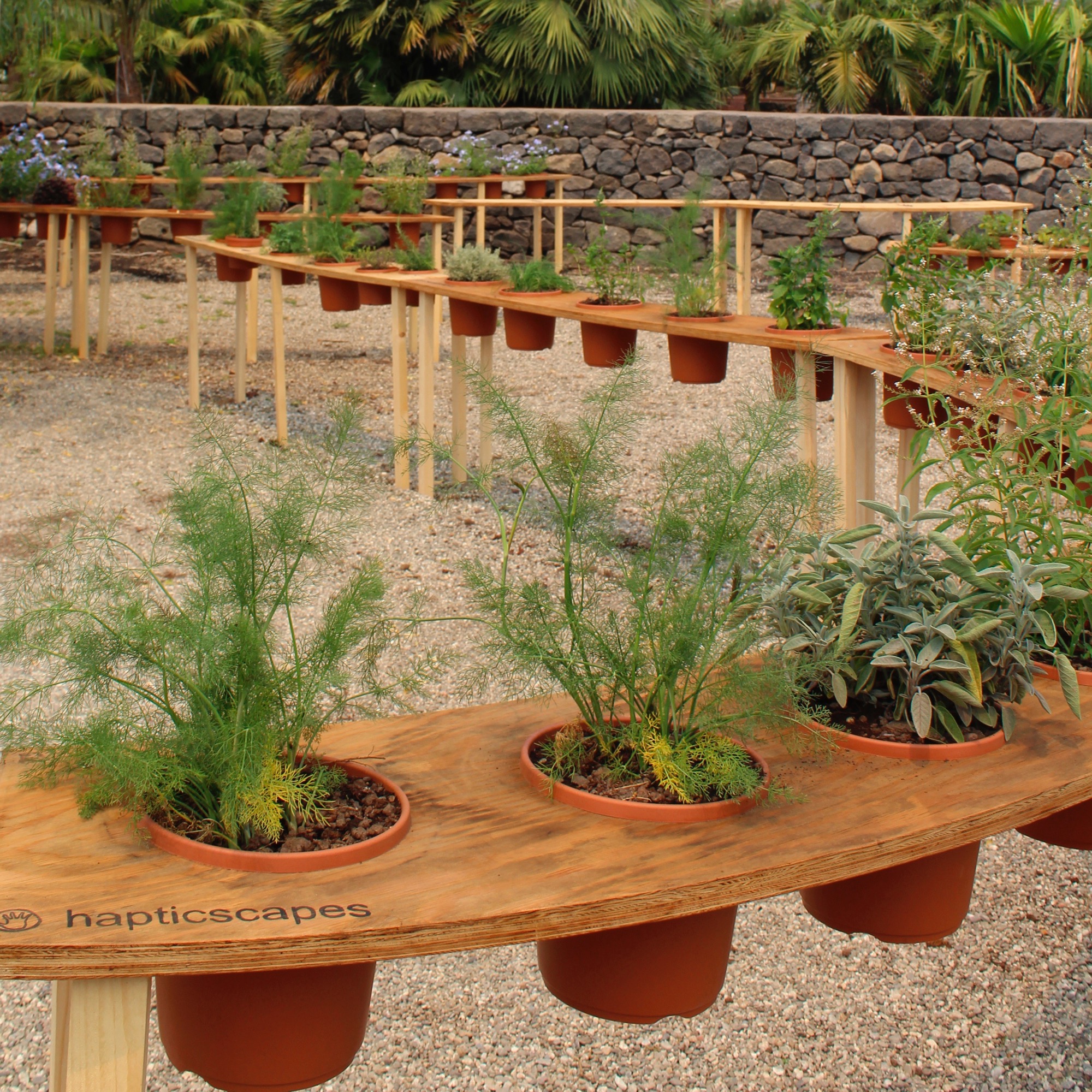
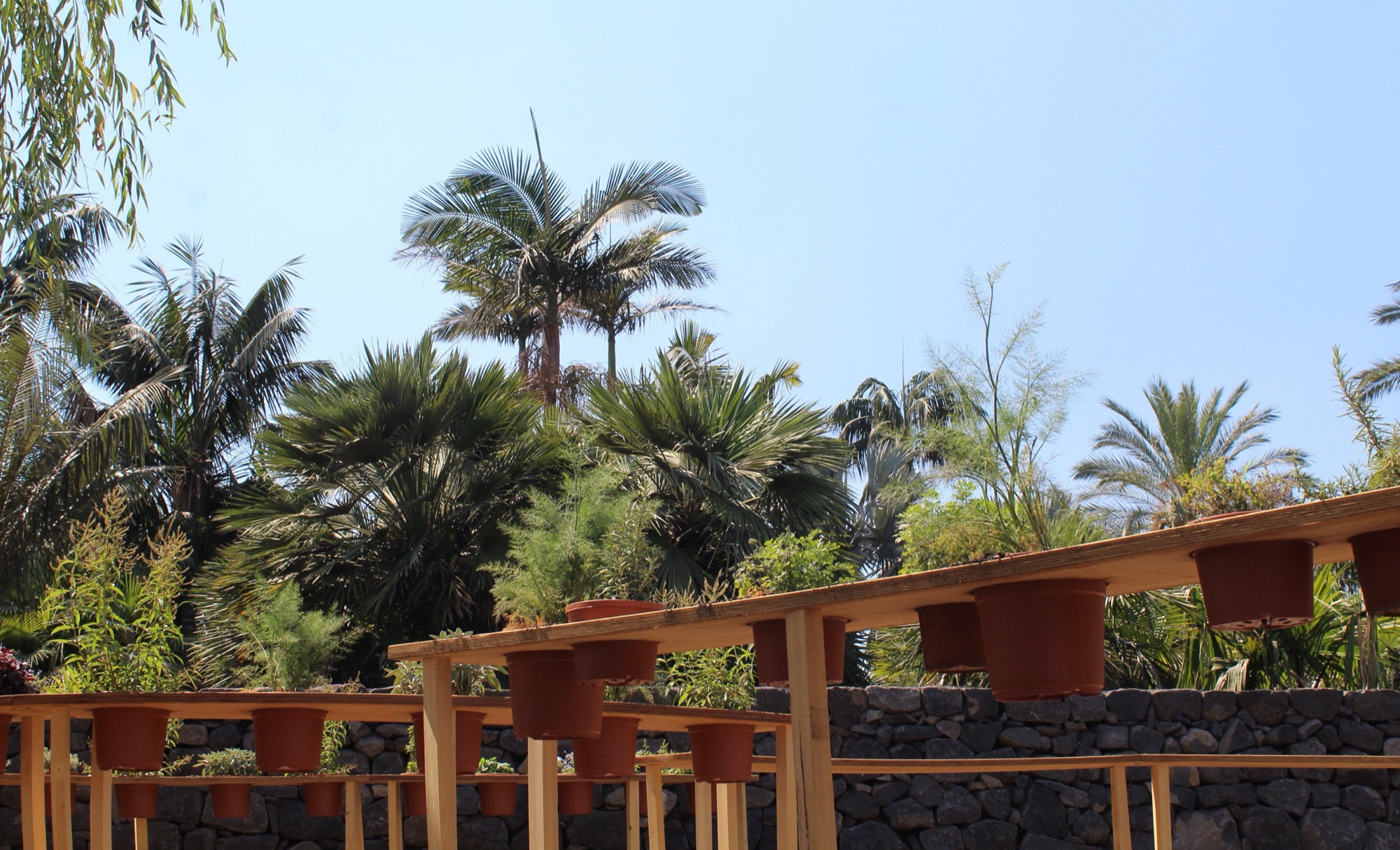
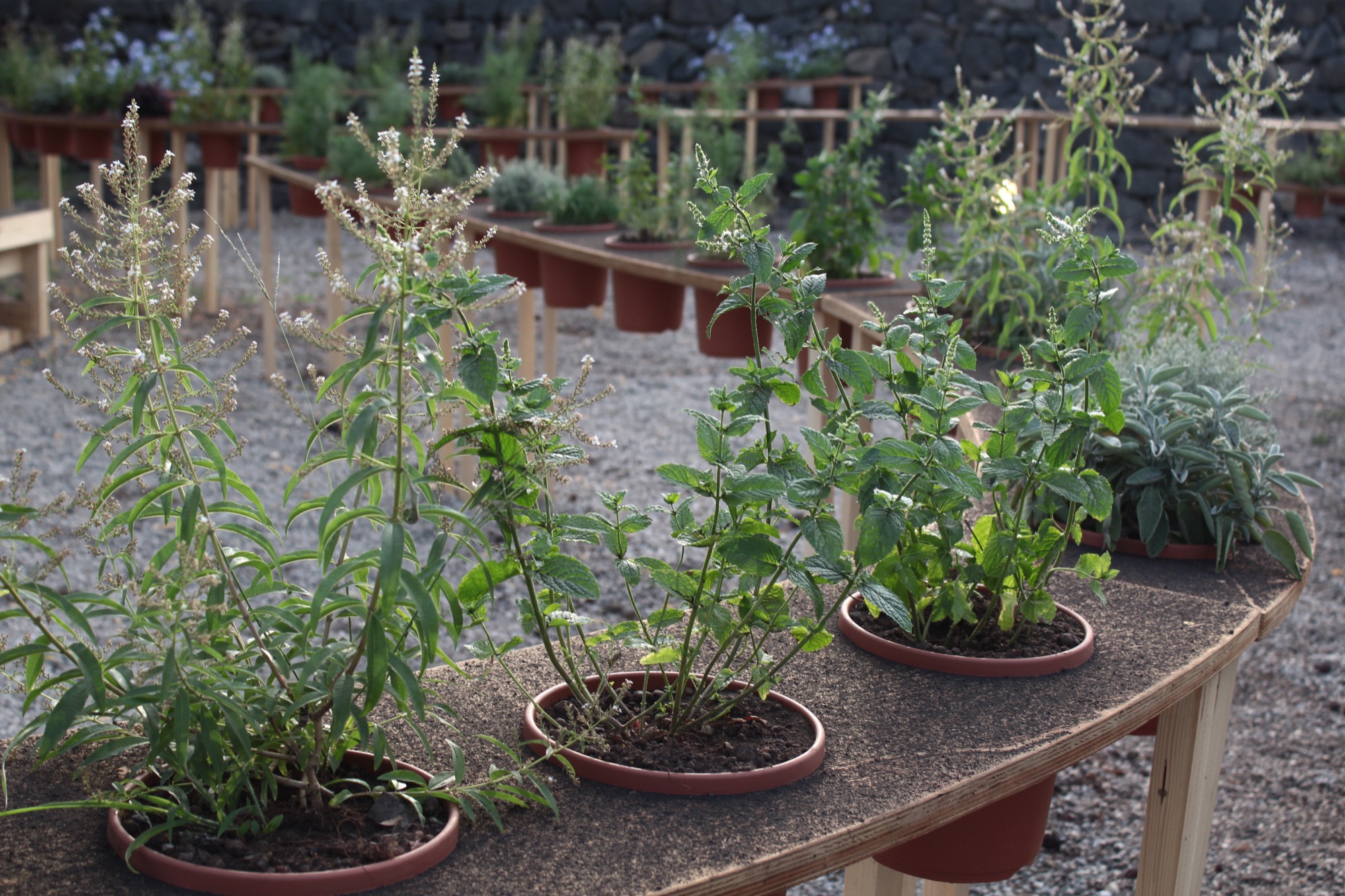
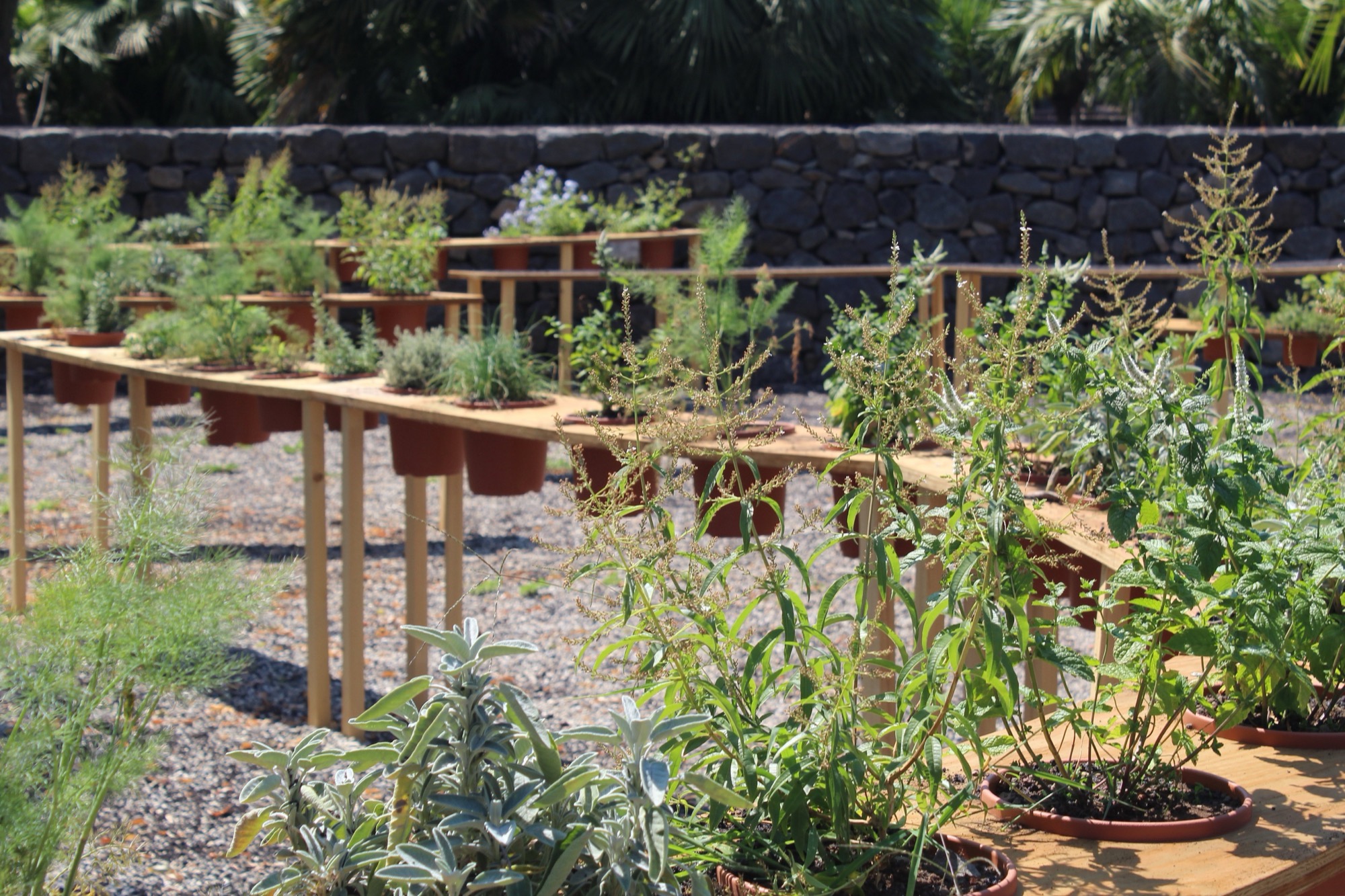
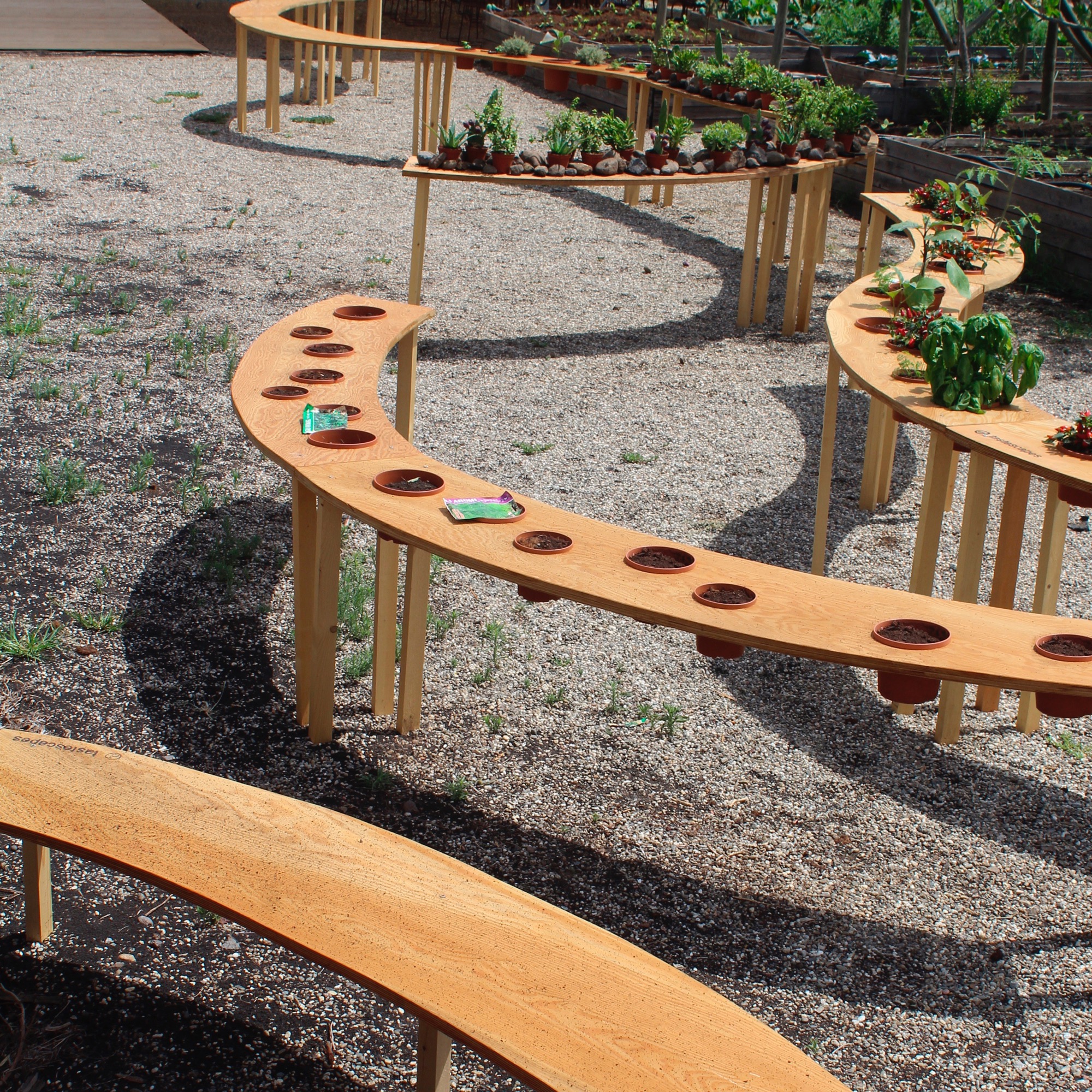
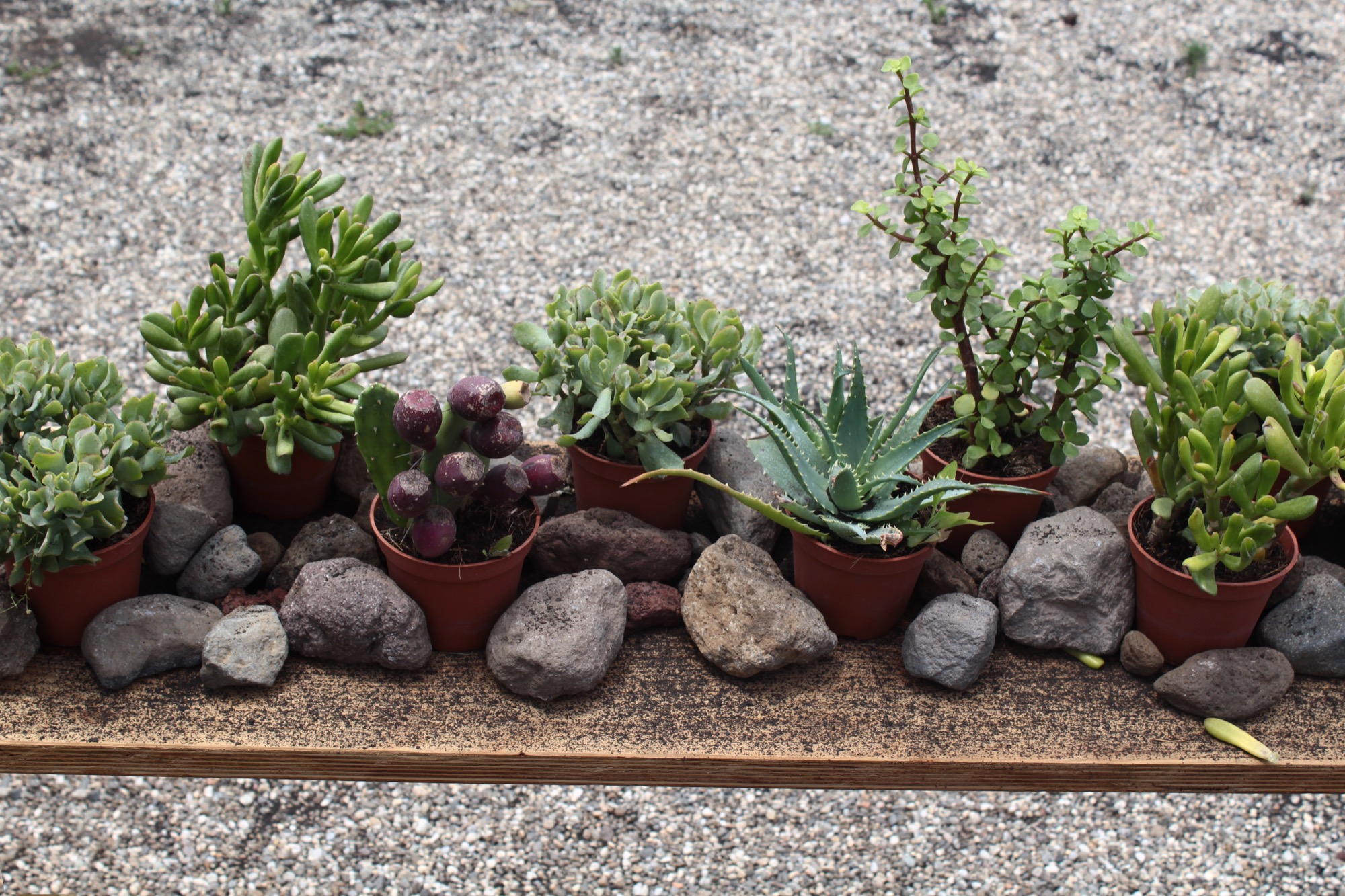
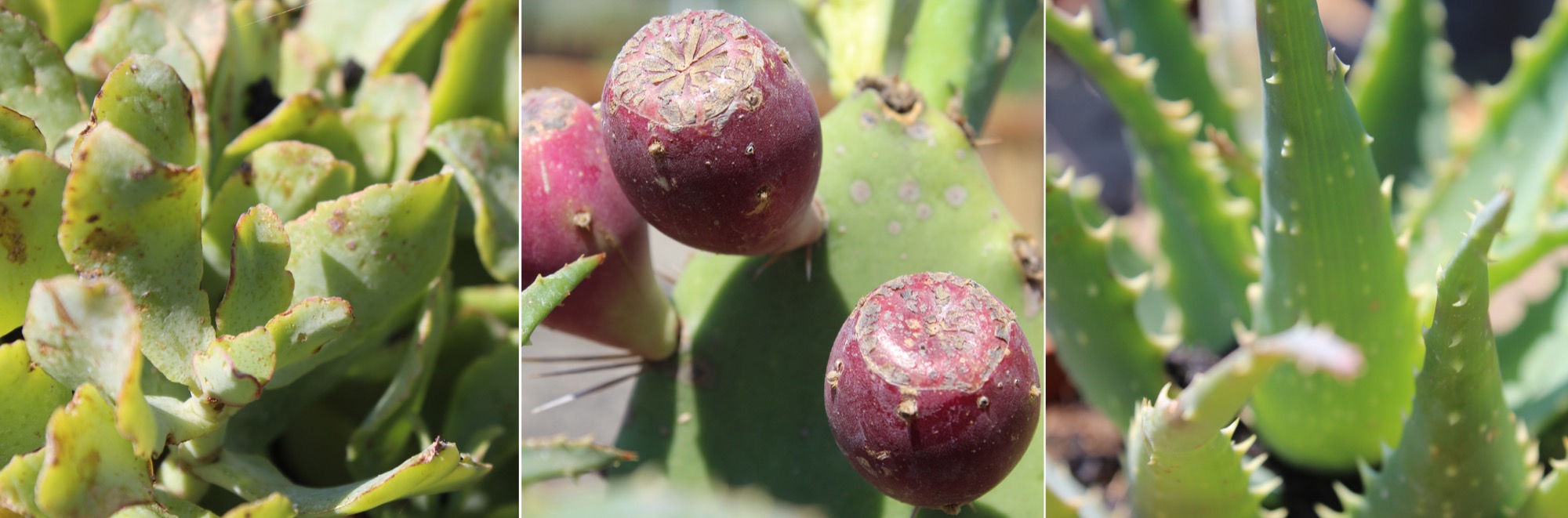
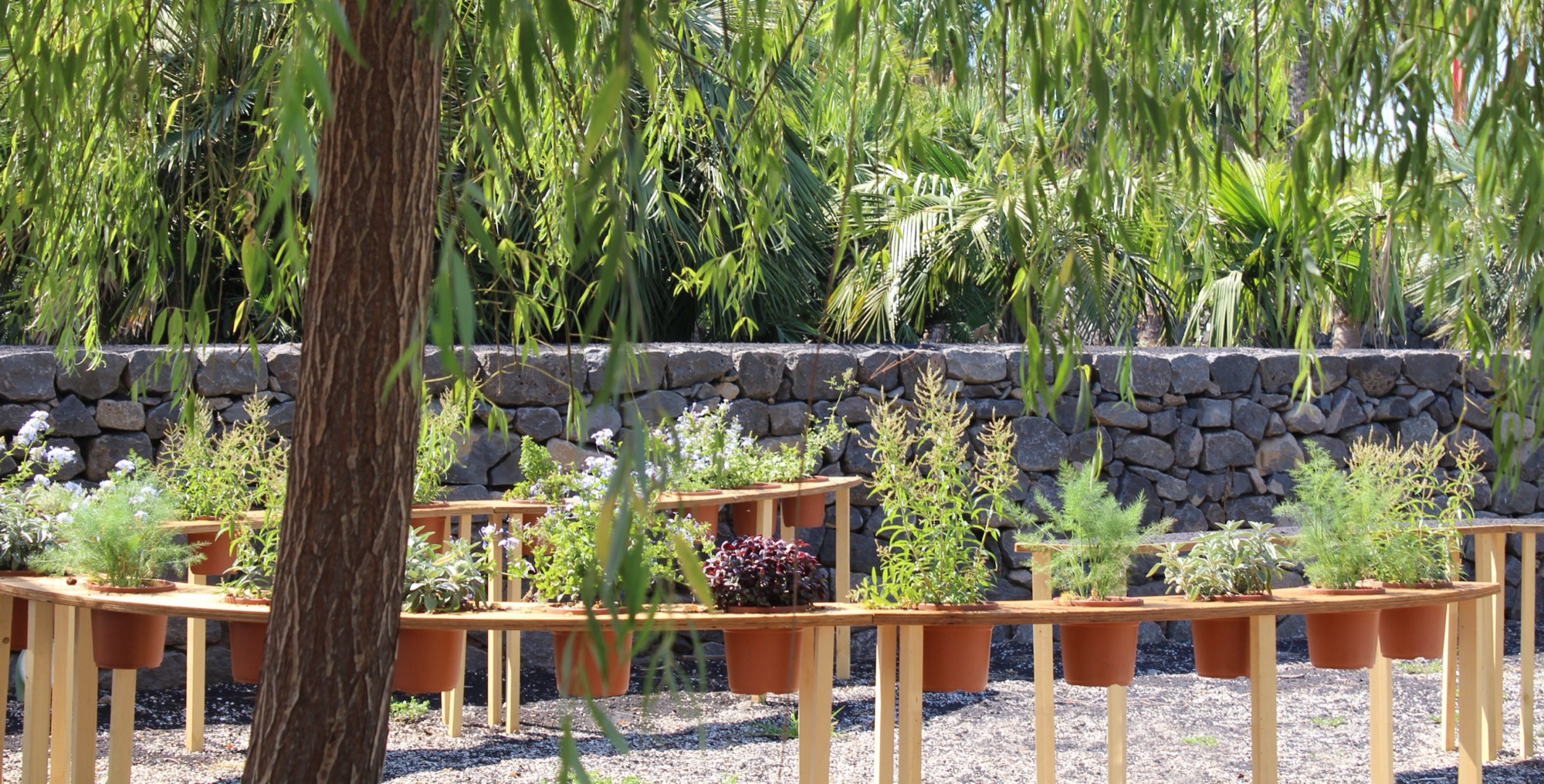
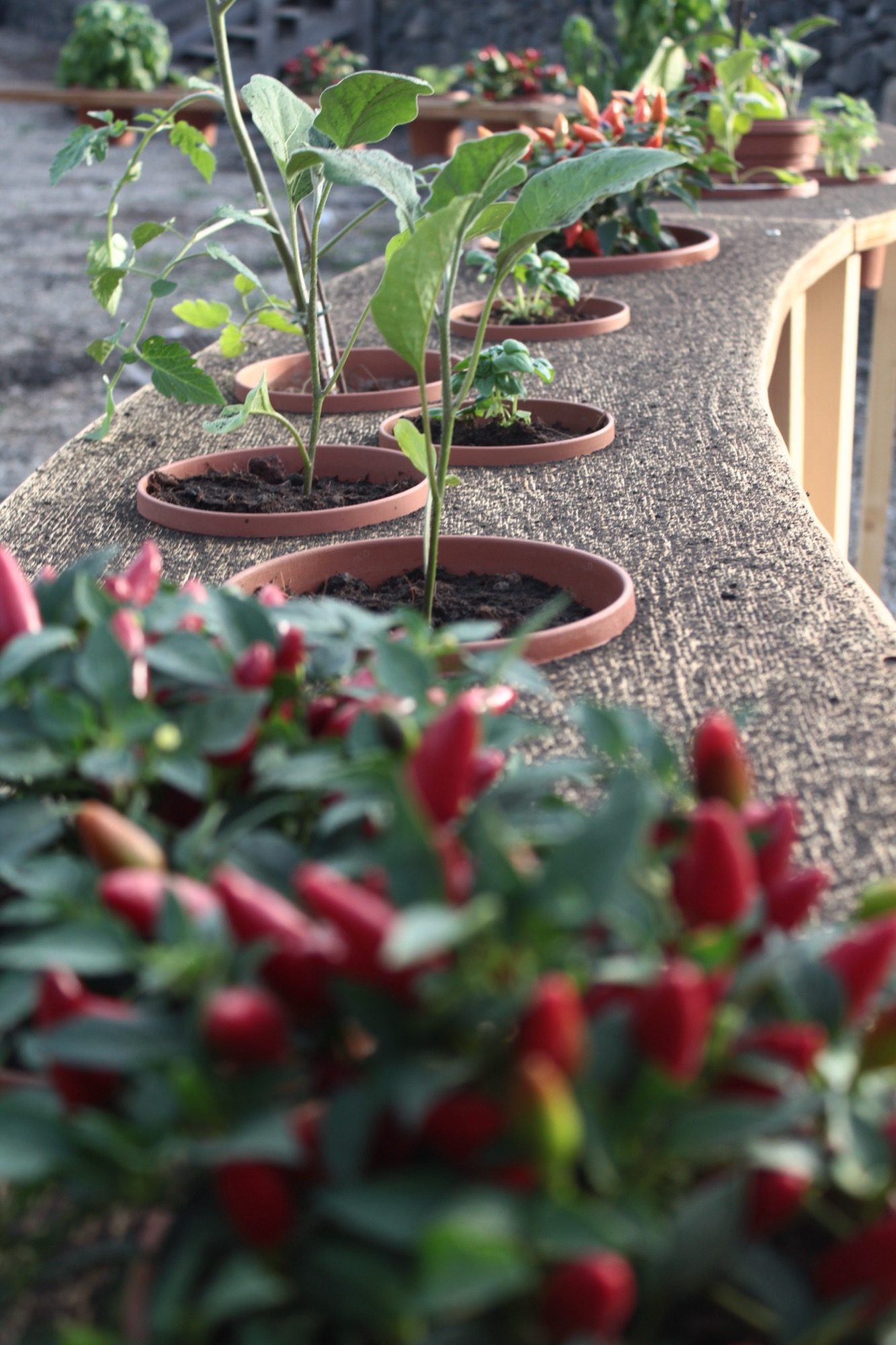
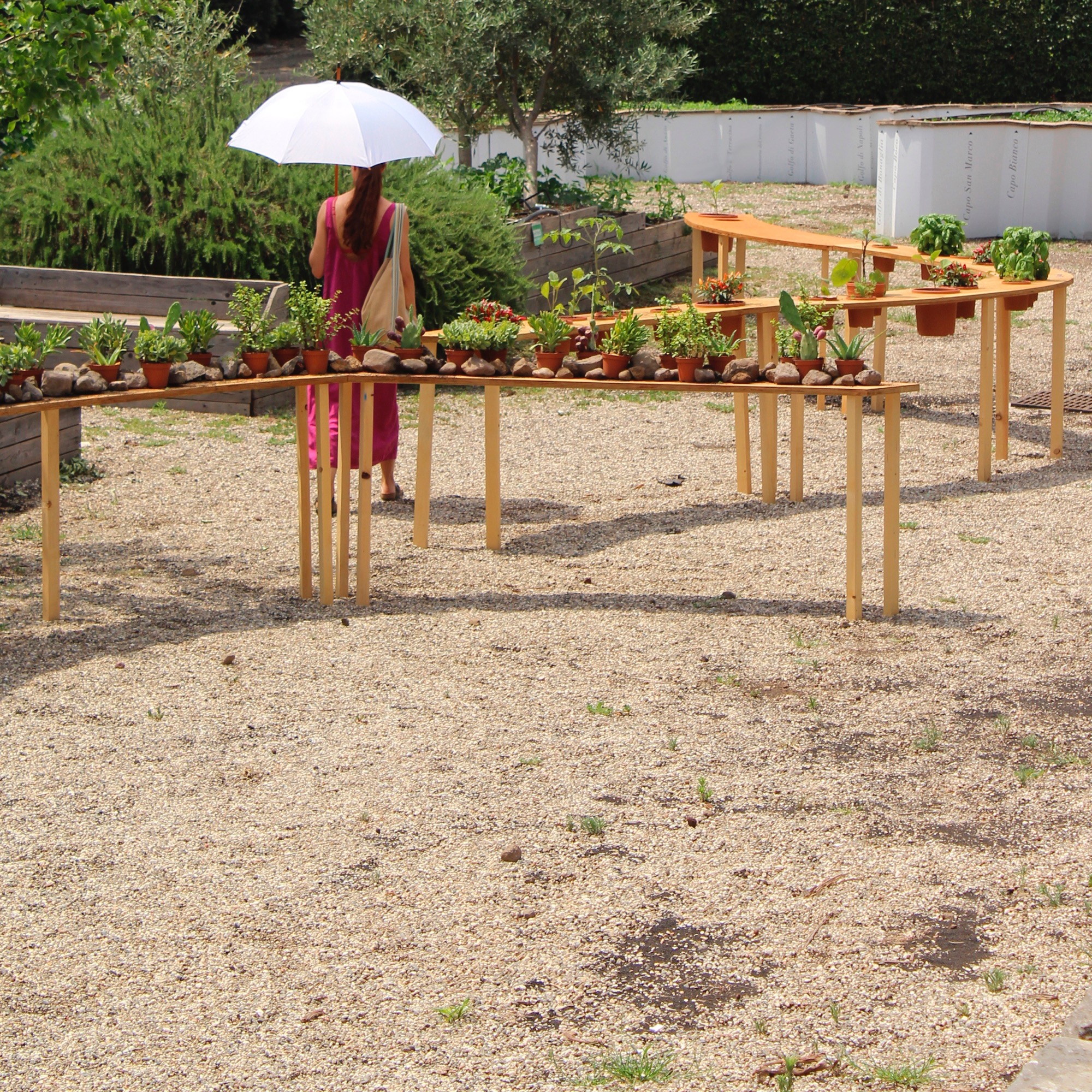
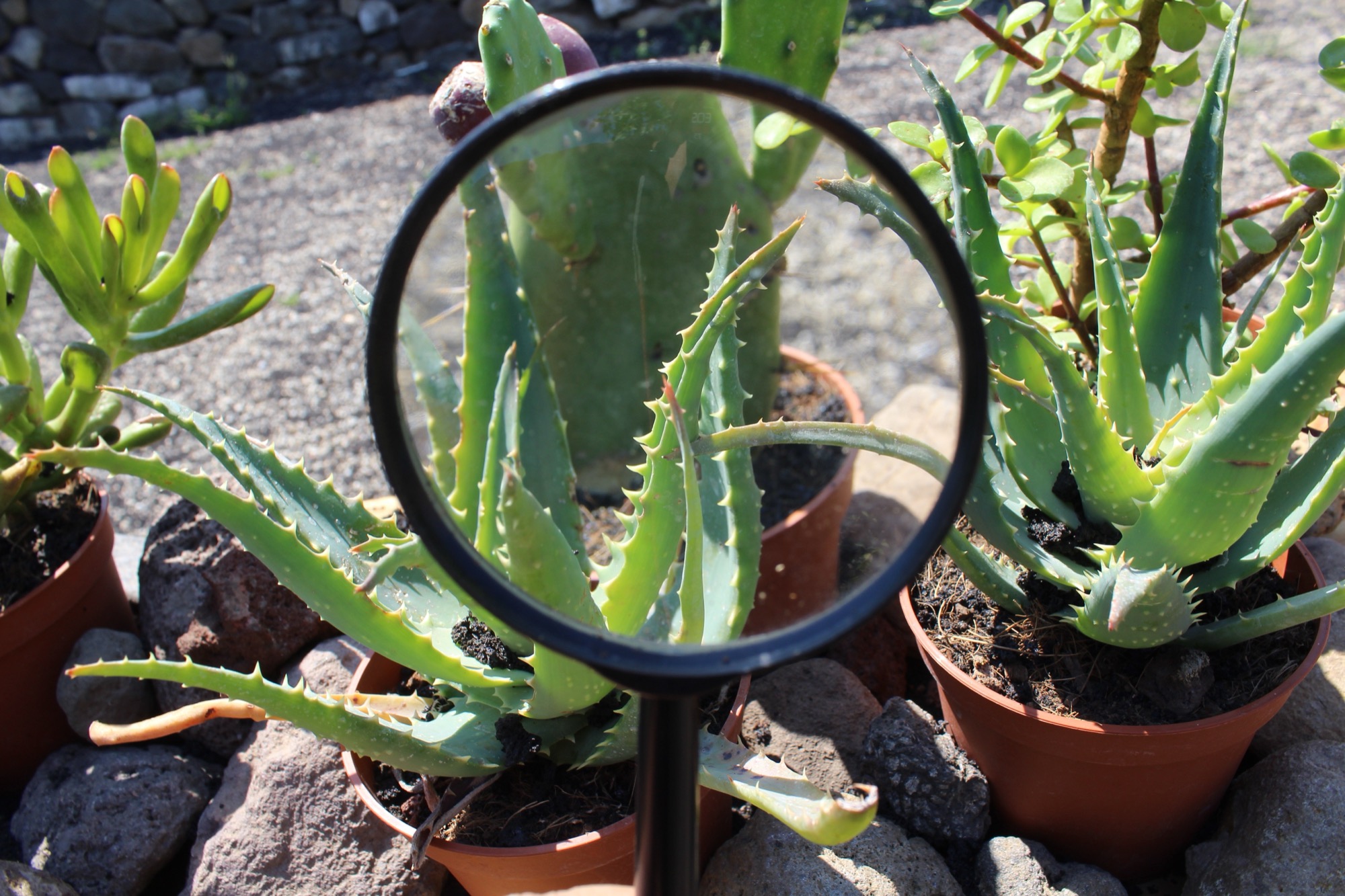
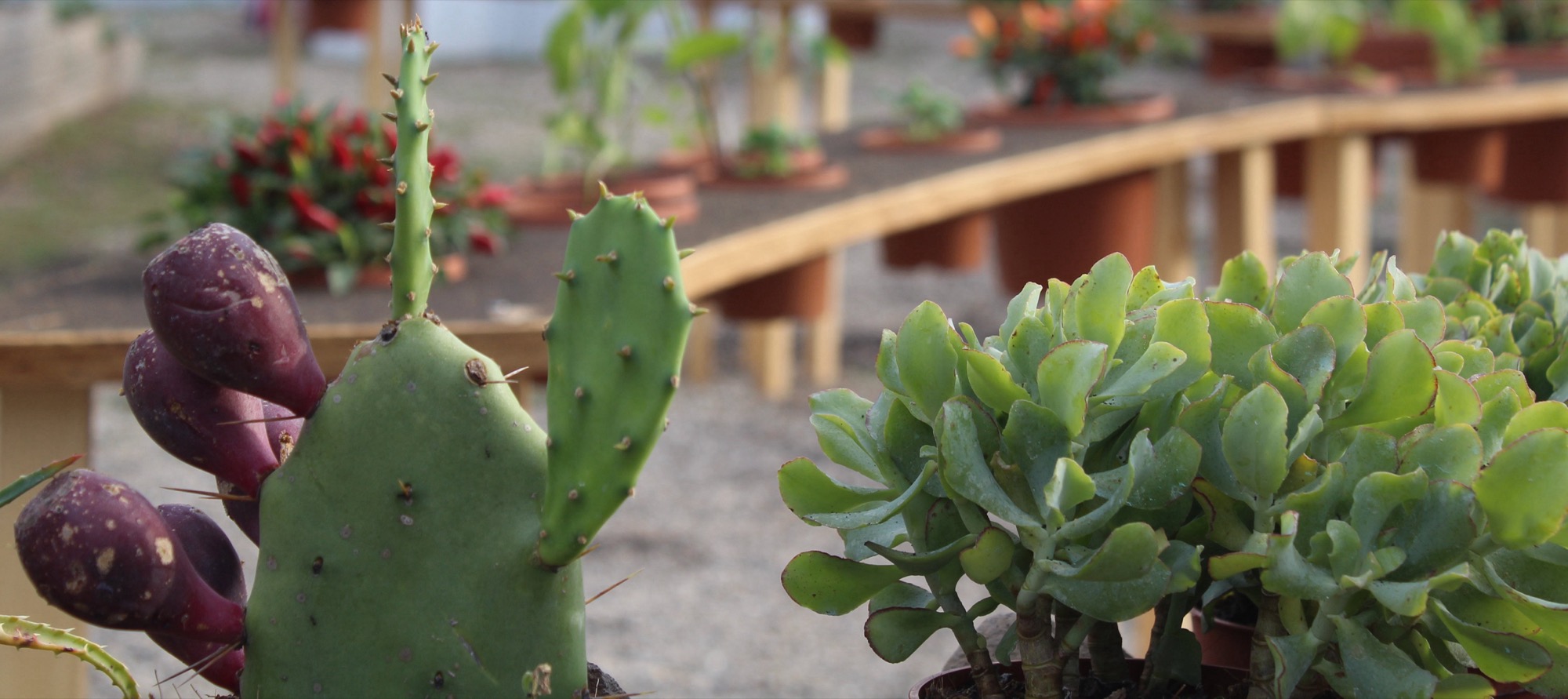
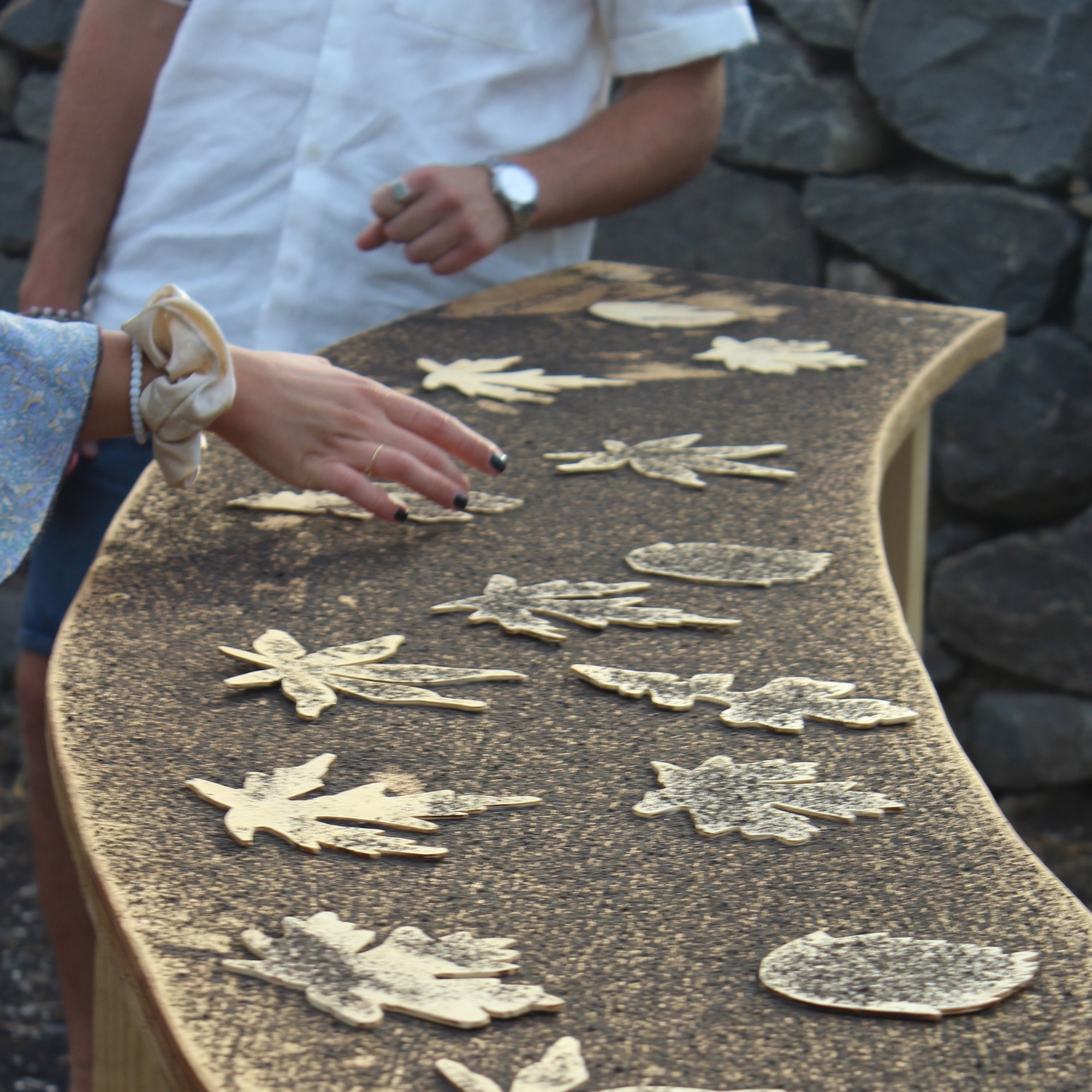
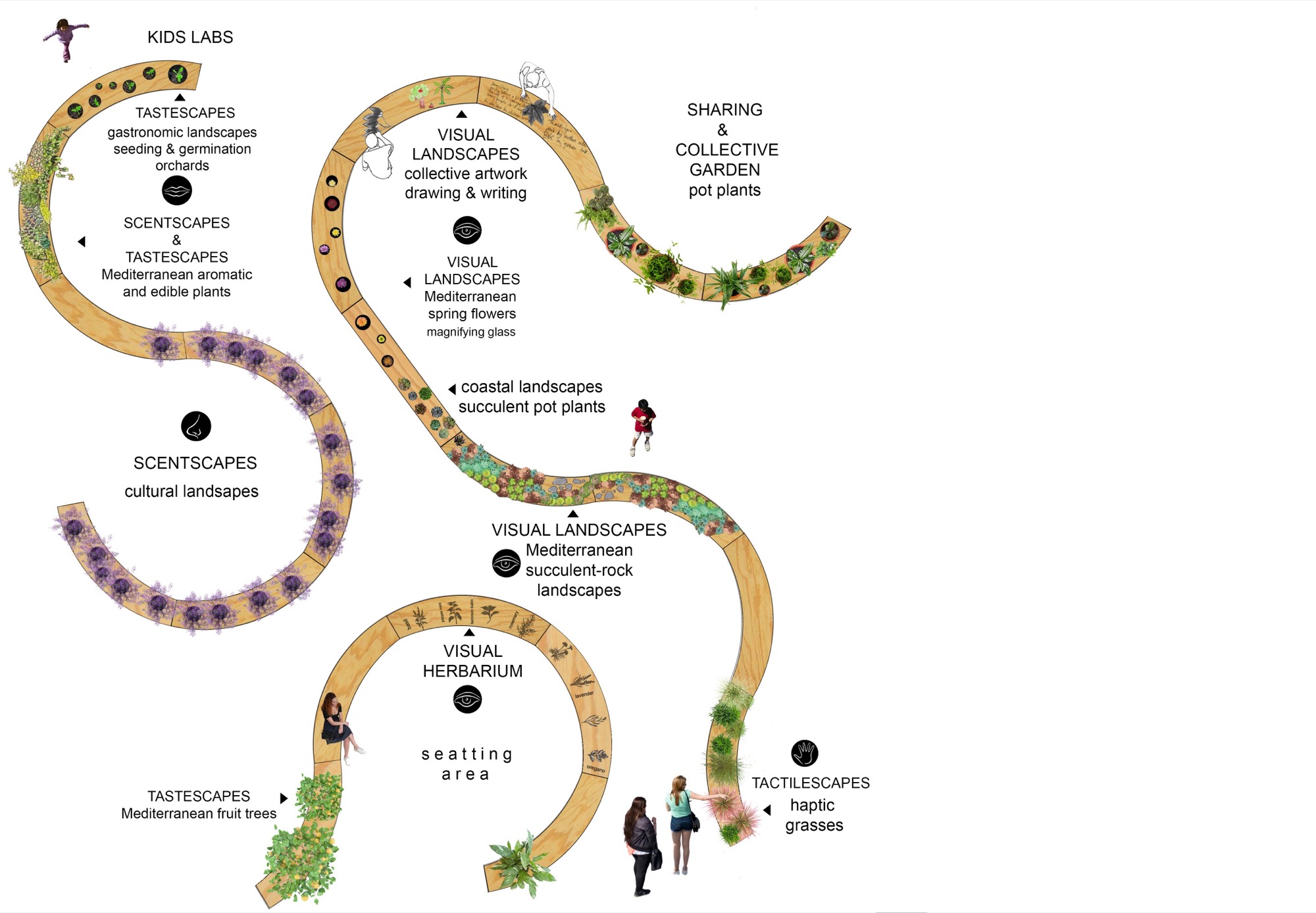
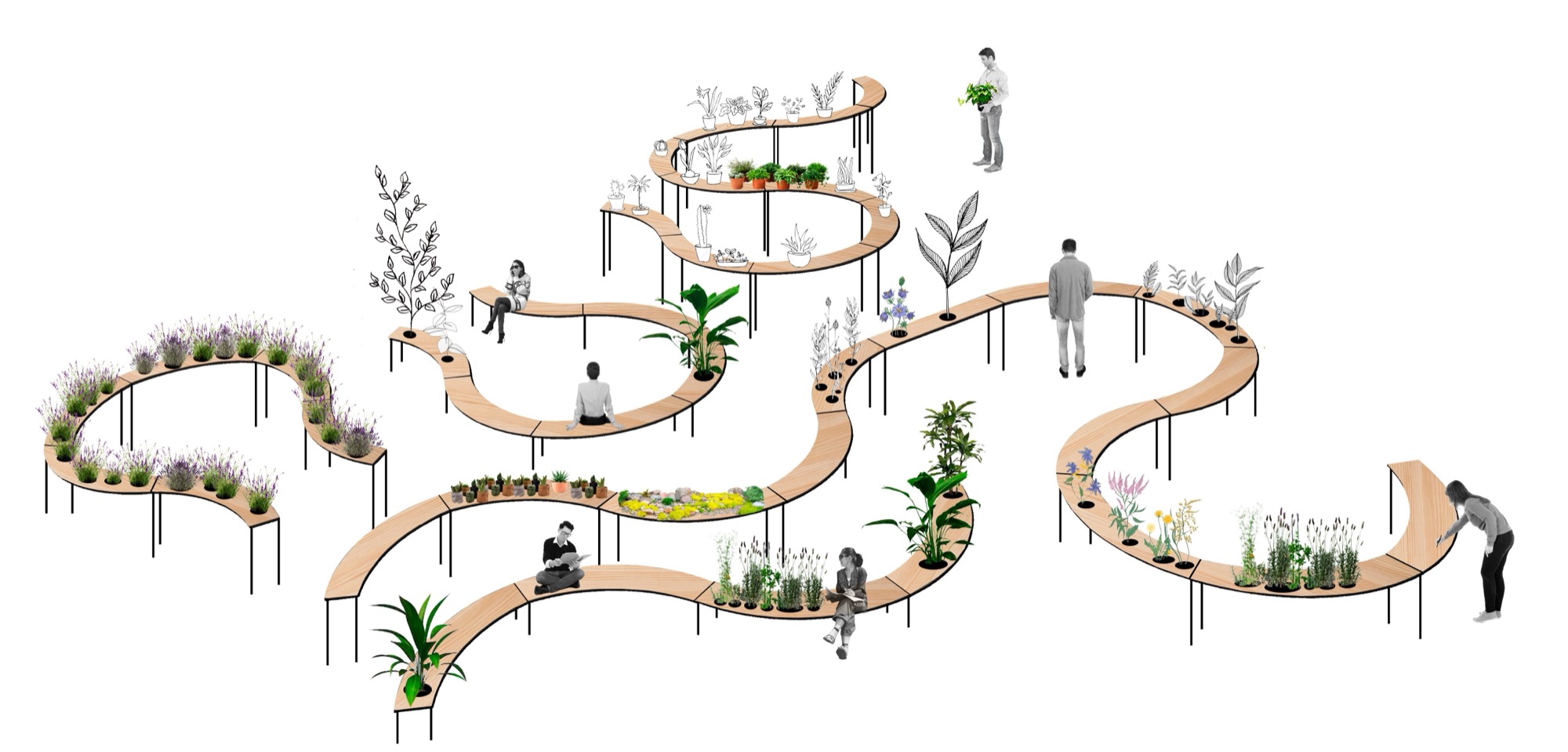
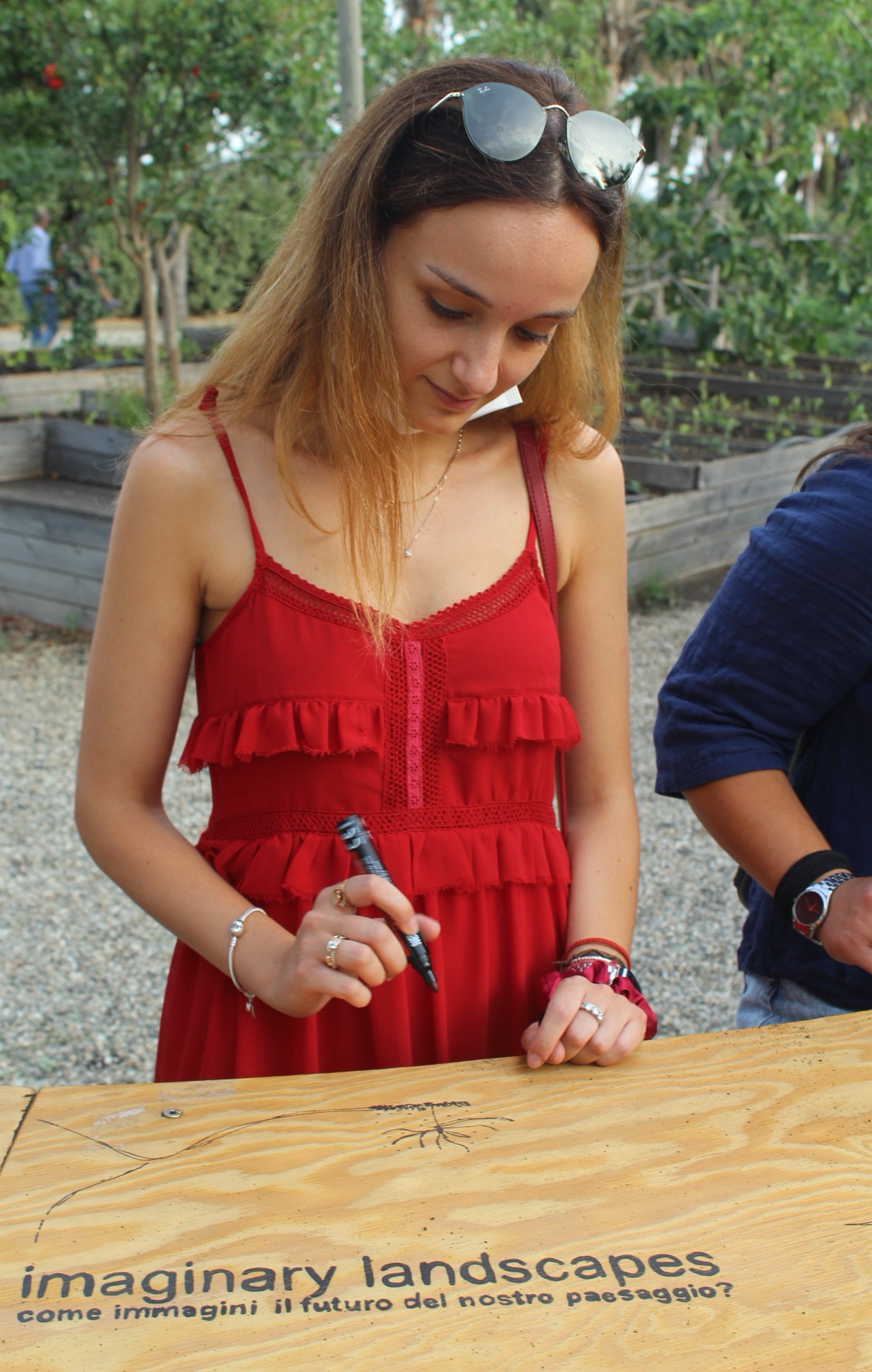
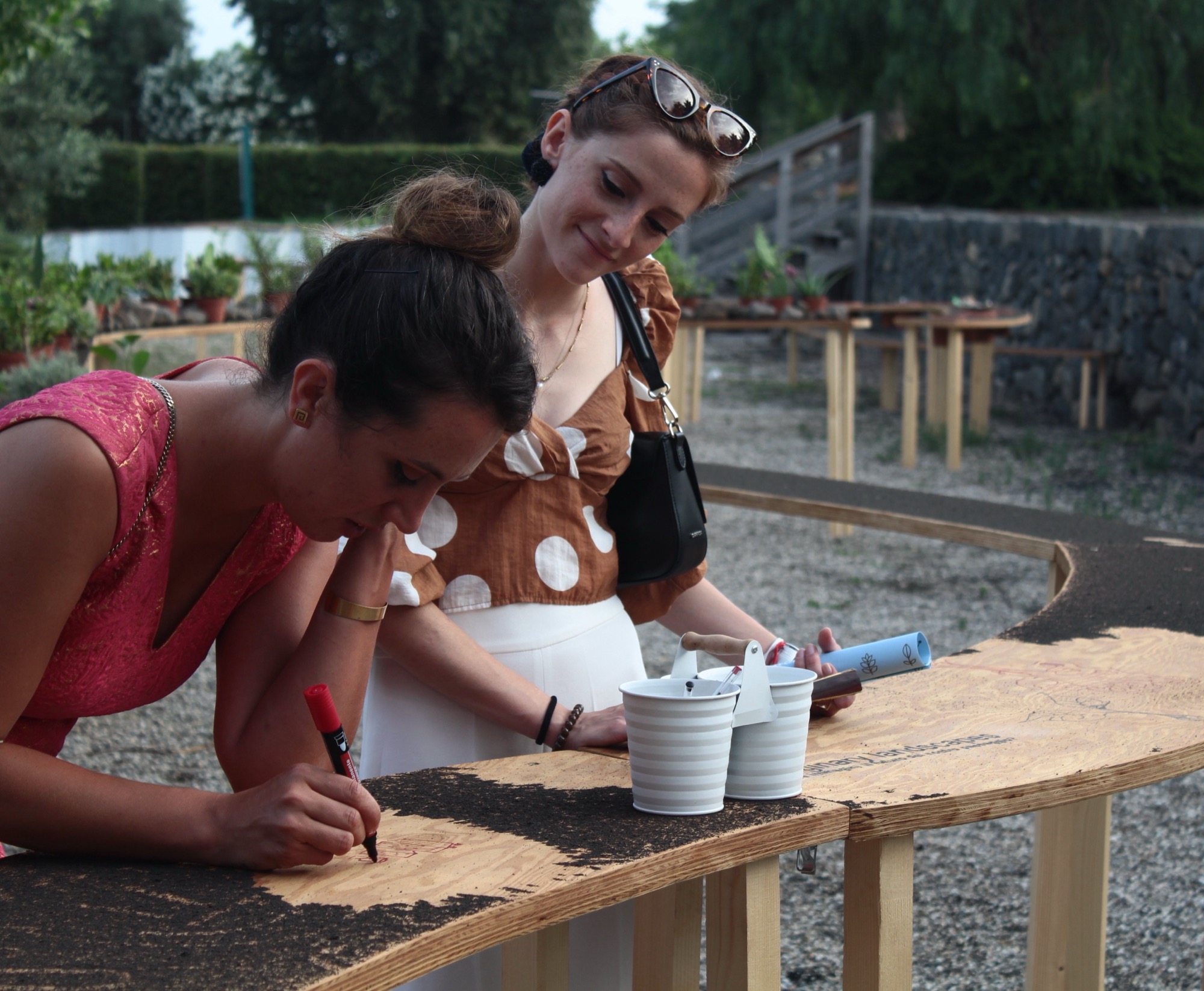
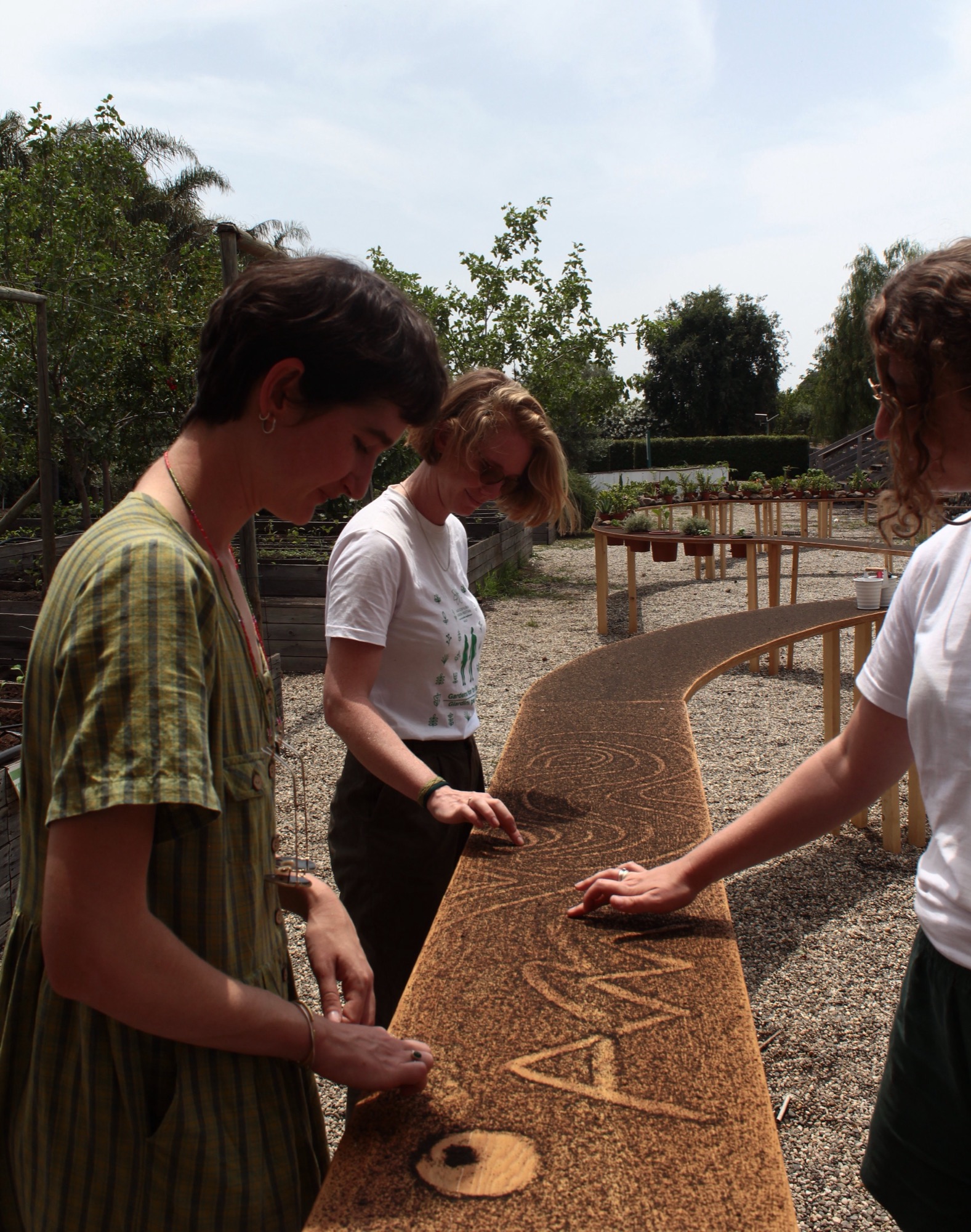

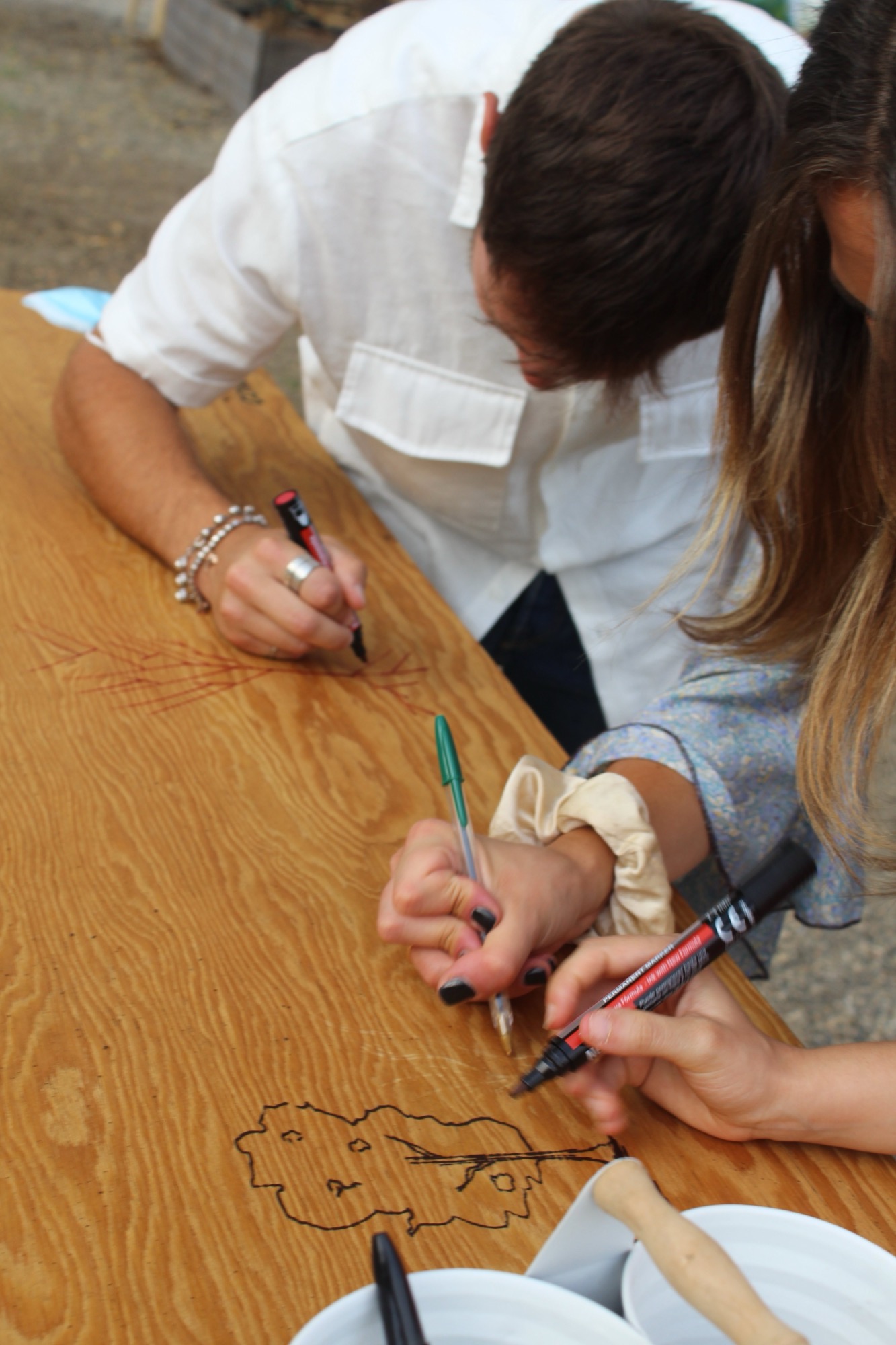
A continuous path structures the garden, linking visitors with different perceptual situations. The project unfolds as a sequence of environments—scentscapes (aromatic plants), landscapes of taste (edible species), hapticscapes (textural plants), and visualscapes—forming a multi-layered garden across tangible and intangible dimensions.
The planting strategy gathers Mediterranean species selected for their sensory qualities. Aromatic plants such as fennel, sage, lemongrass, mint, rosemary, thyme and marjoram activate smell through direct contact. Edible species including carrot, eggplant, chili, tomato, pumpkin and parsley connect taste with seasonal use. Texture is explored through plants such as prickly pear cactus, aloe, jade plant and elephant bush, offering spiny, fleshy or smooth surfaces, while softer herbs invite gentle touch. Visual qualities are introduced through species like plumbago and alternanthera, adding color and contrast.
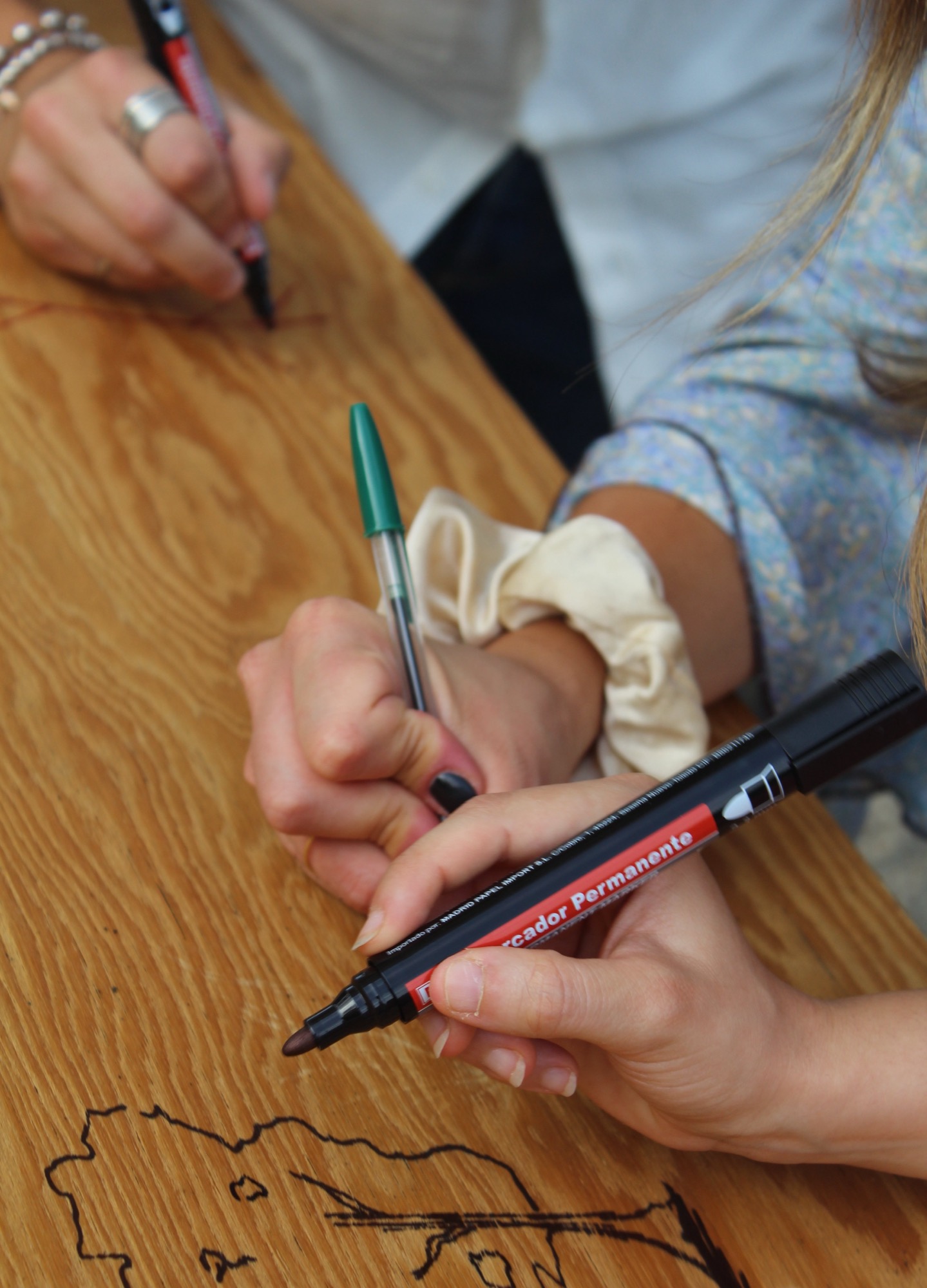
Conceived as a participatory garden, the project functions as a collective device enriched through interaction, enabling dialogue and exchange. It supports activities such as writing, drawing or eating, while promoting the act of sharing plants, allowing visitors to bring their own and connect through simple exchanges.
The garden is complemented by a Children-Lab, a space for knowledge and cultivation where children create orchards from local seeds. Through experiential learning, they engage with natural cycles, local food practices and farming processes such as seeding, sowing and harvesting.
https://maps.app.goo.gl/YrdPdqhXXhJK1aTW7
73557


LILA 2026 Sponsor