Stöng – (Re)interpretation
sprint-studio.com
2026 Landscape and Architecture / 2026 Other Typologies / Iceland / Built in 2024 /

Within the volcanic landscape of Þjórsárdalur, Stöng is one of Iceland’s most significant archaeological sites. The remains of the Viking-age farmstead, believed to have been abandoned following the eruption of Hekla in 1104, lie within a terrain shaped by ash, erosion, vegetation, and long historical memory. The project reinterprets the existing protective shelter and its surrounding landscape as a single spatial and cultural system, where architecture serves not as an object placed on the site, but as a mediator between fragile ruins, severe climate, public access, and the wider valley.
The intervention addresses a fundamental tension: how to open an archaeological site to visitors while protecting the vulnerable ground that gives it meaning. Rather than replacing the existing shelter, the project retains and transforms it, extending its life through reuse, reinforcement, and careful reconfiguration. This strategy reduces material waste and preserves continuity with the site’s previous protective layer, while allowing the structure to take on a renewed role as both shelter and interpretive threshold.
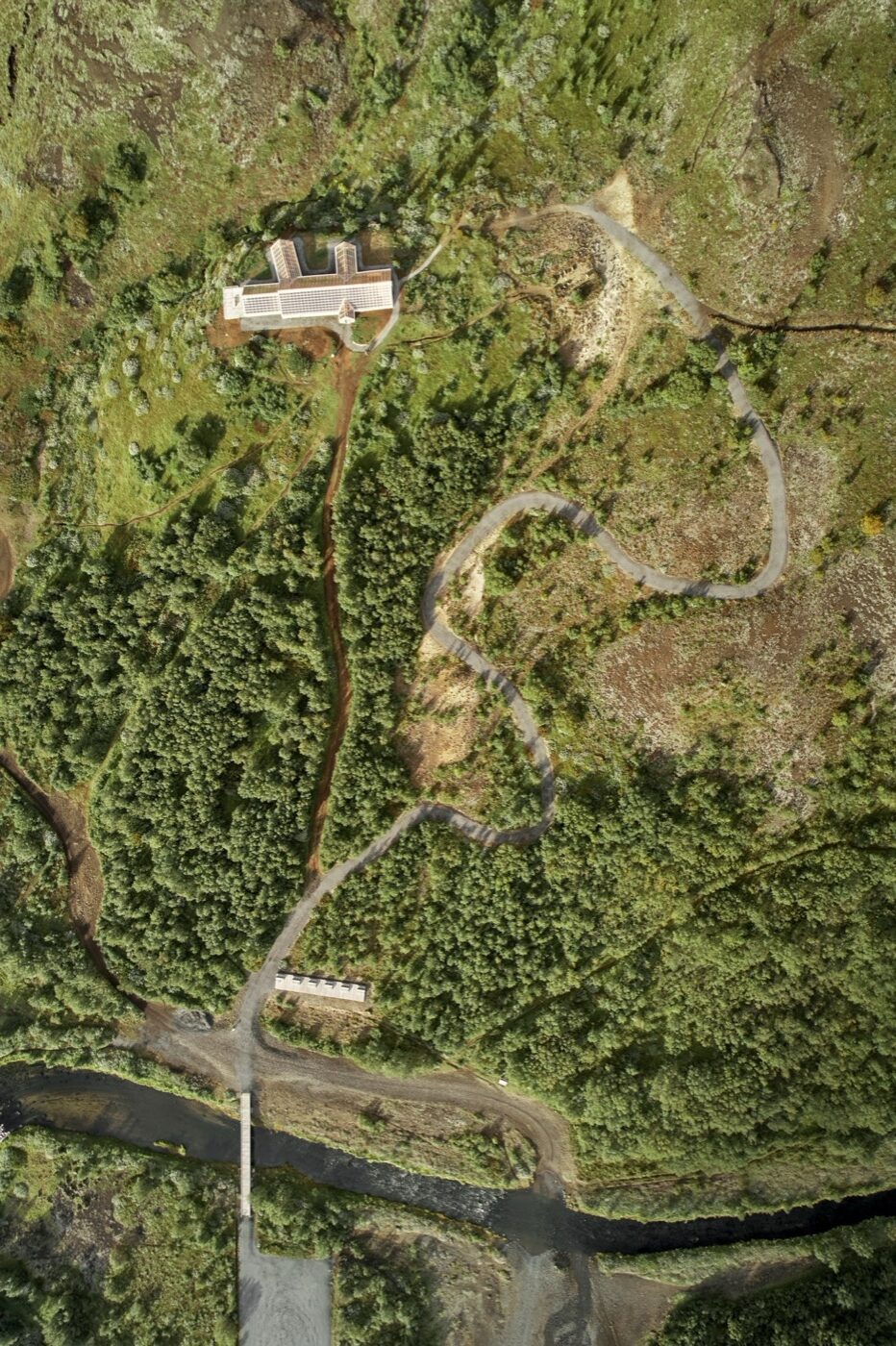
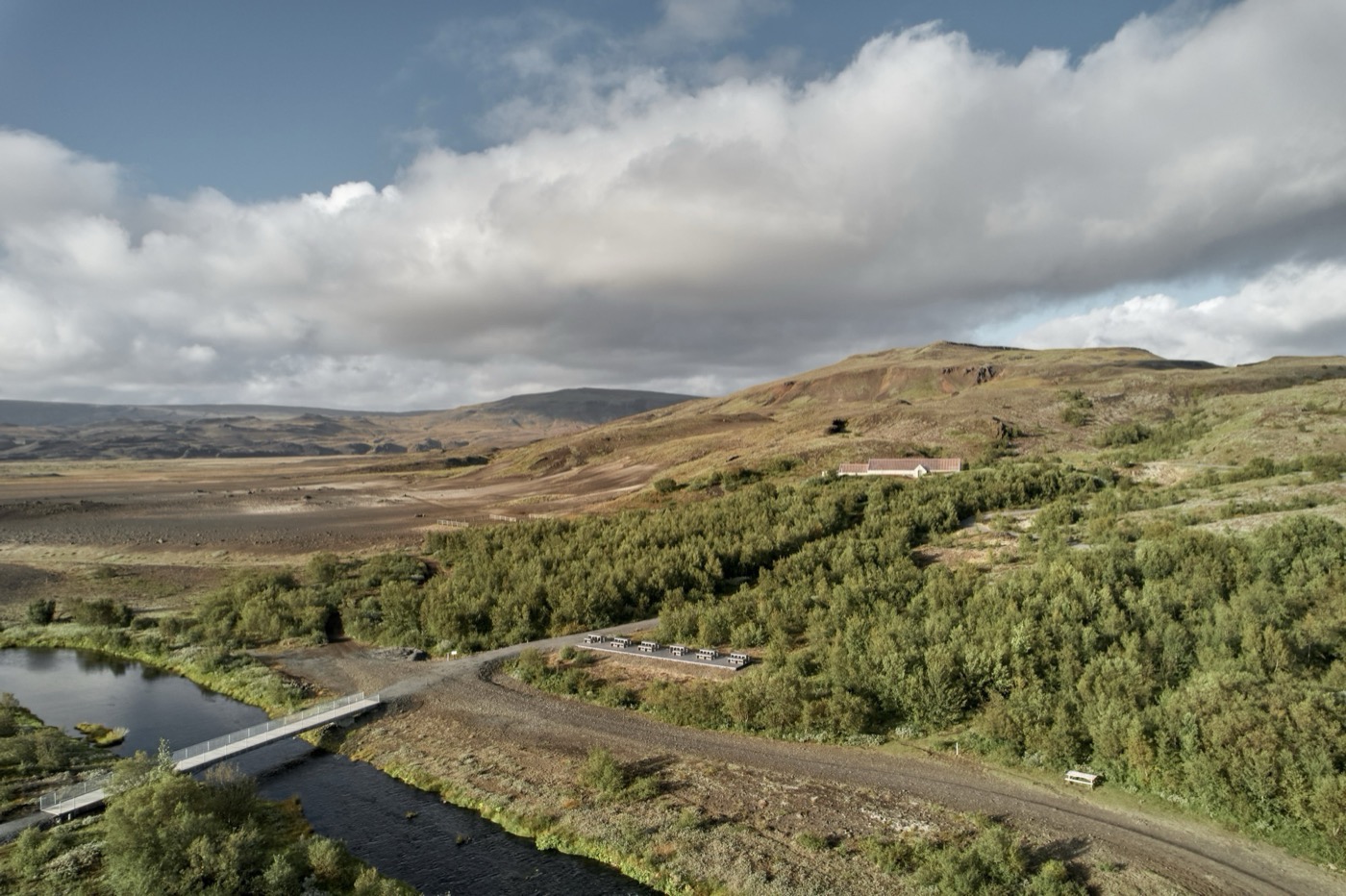
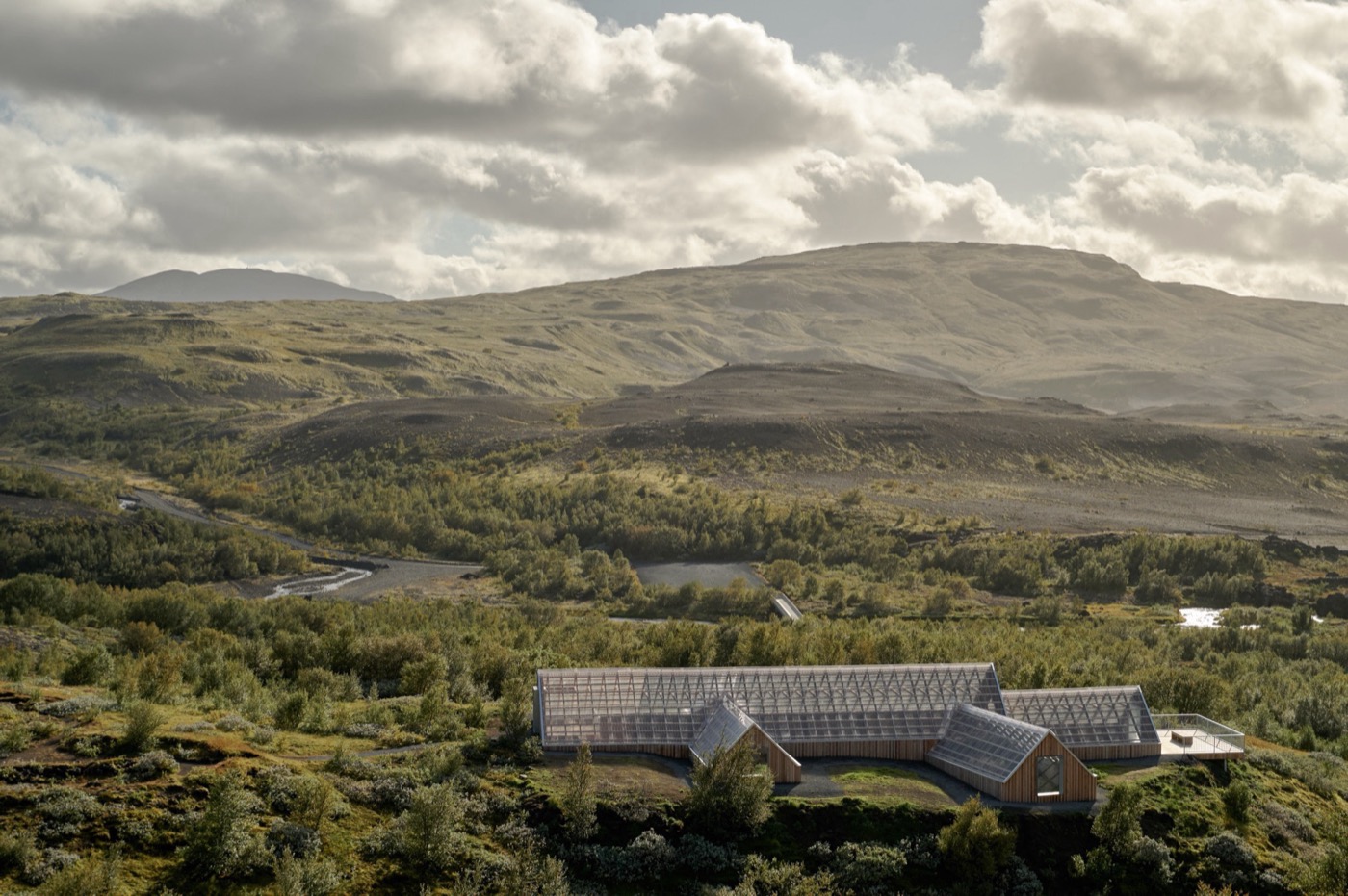
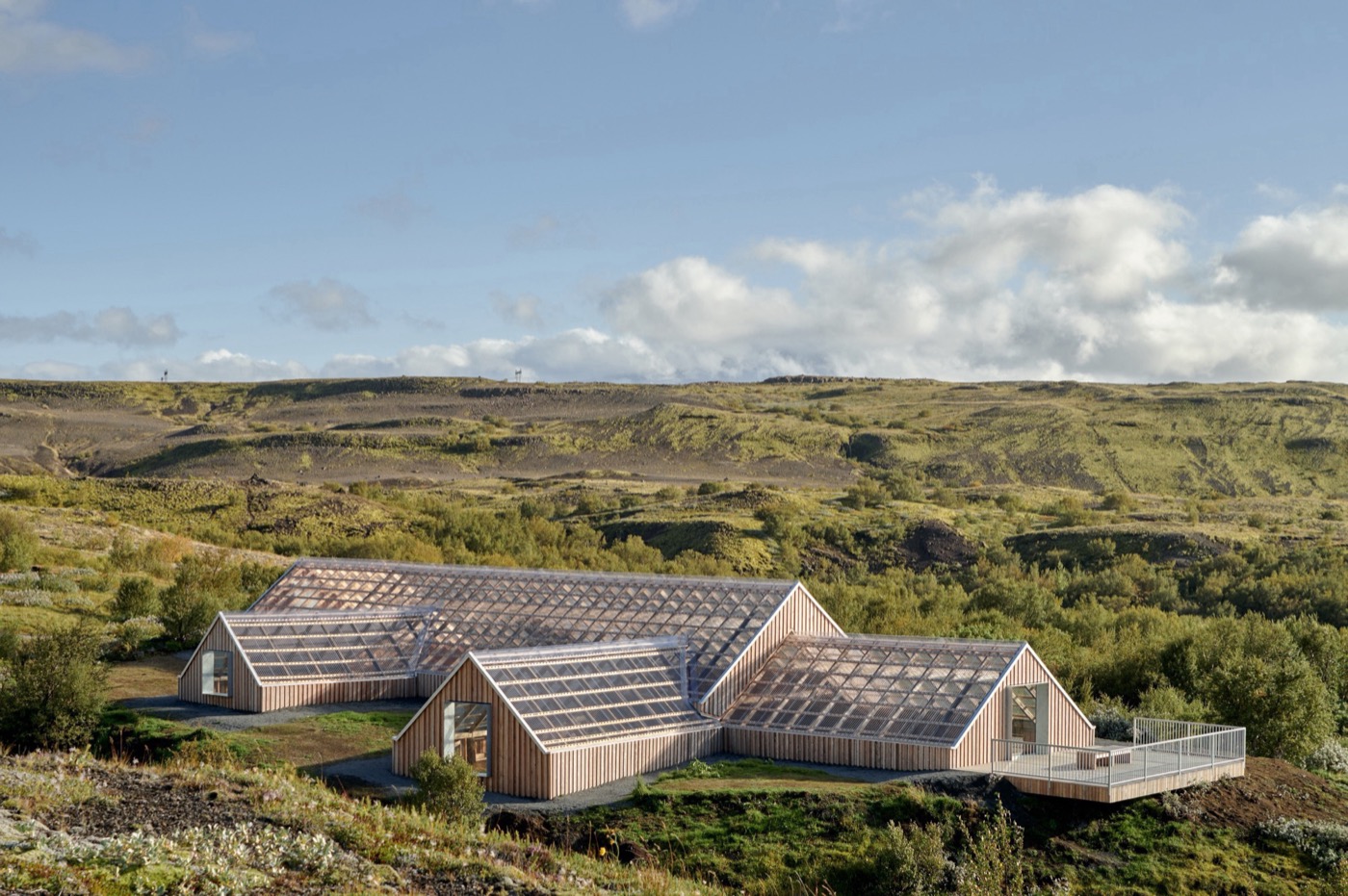
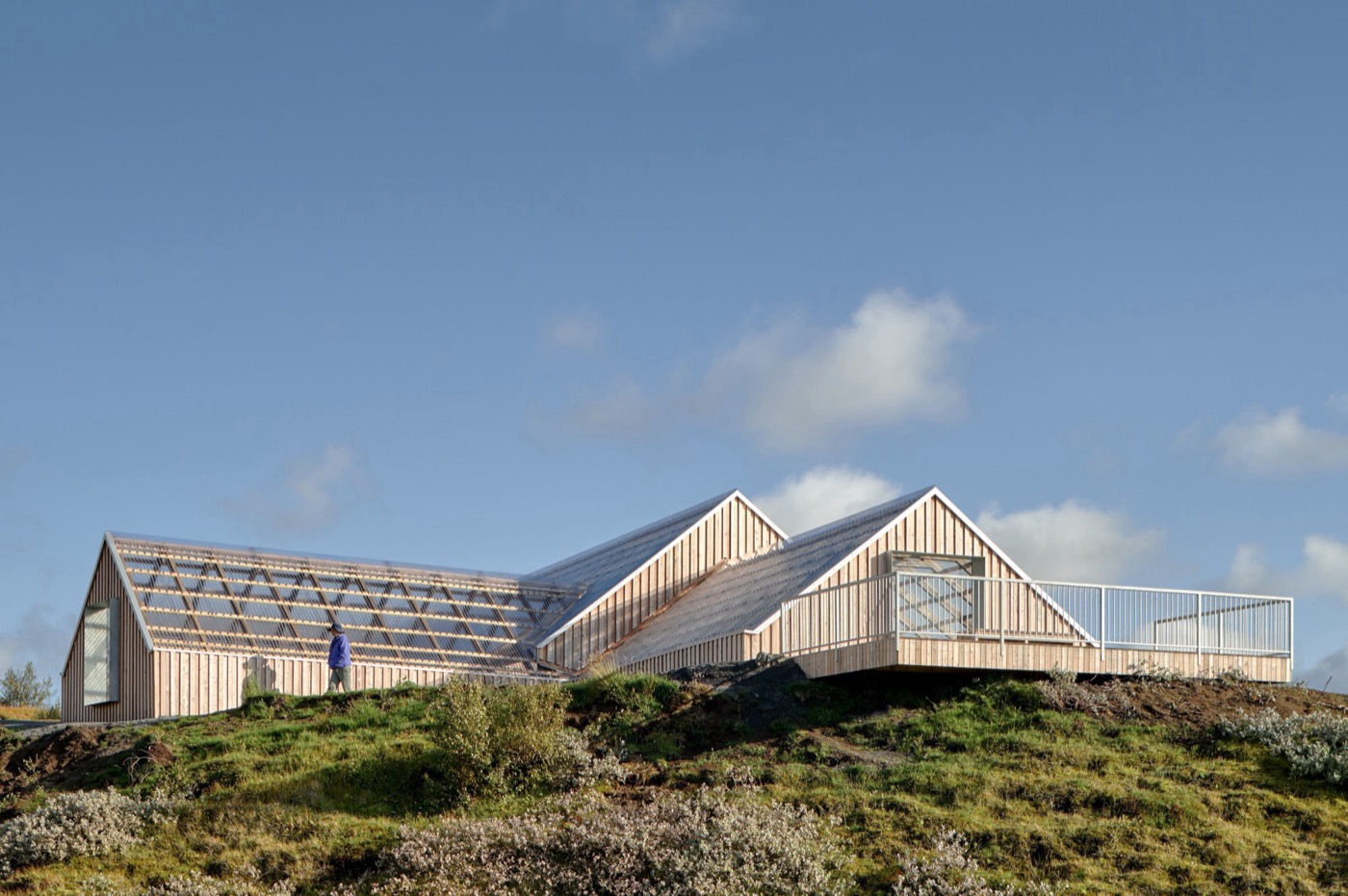
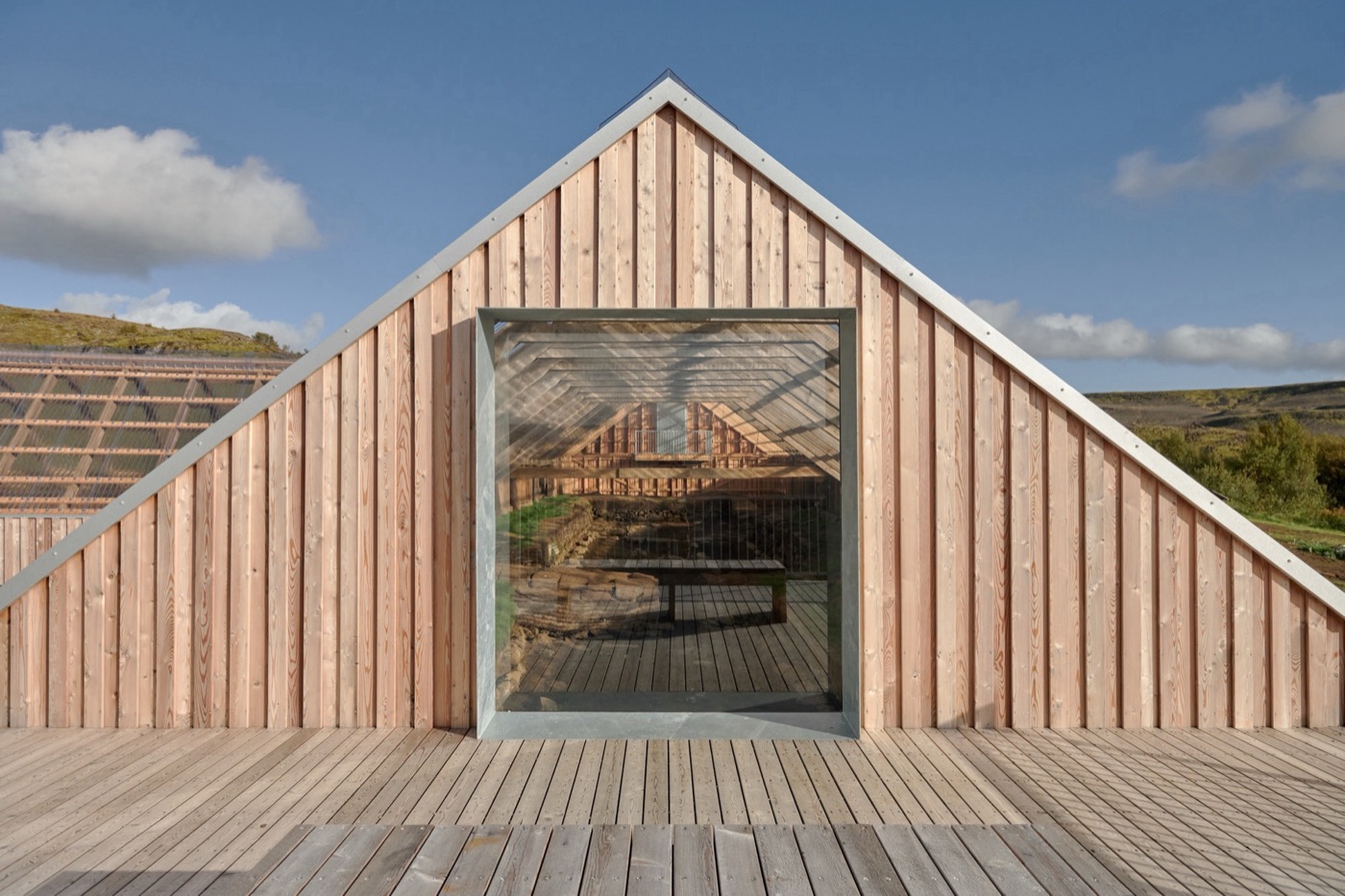
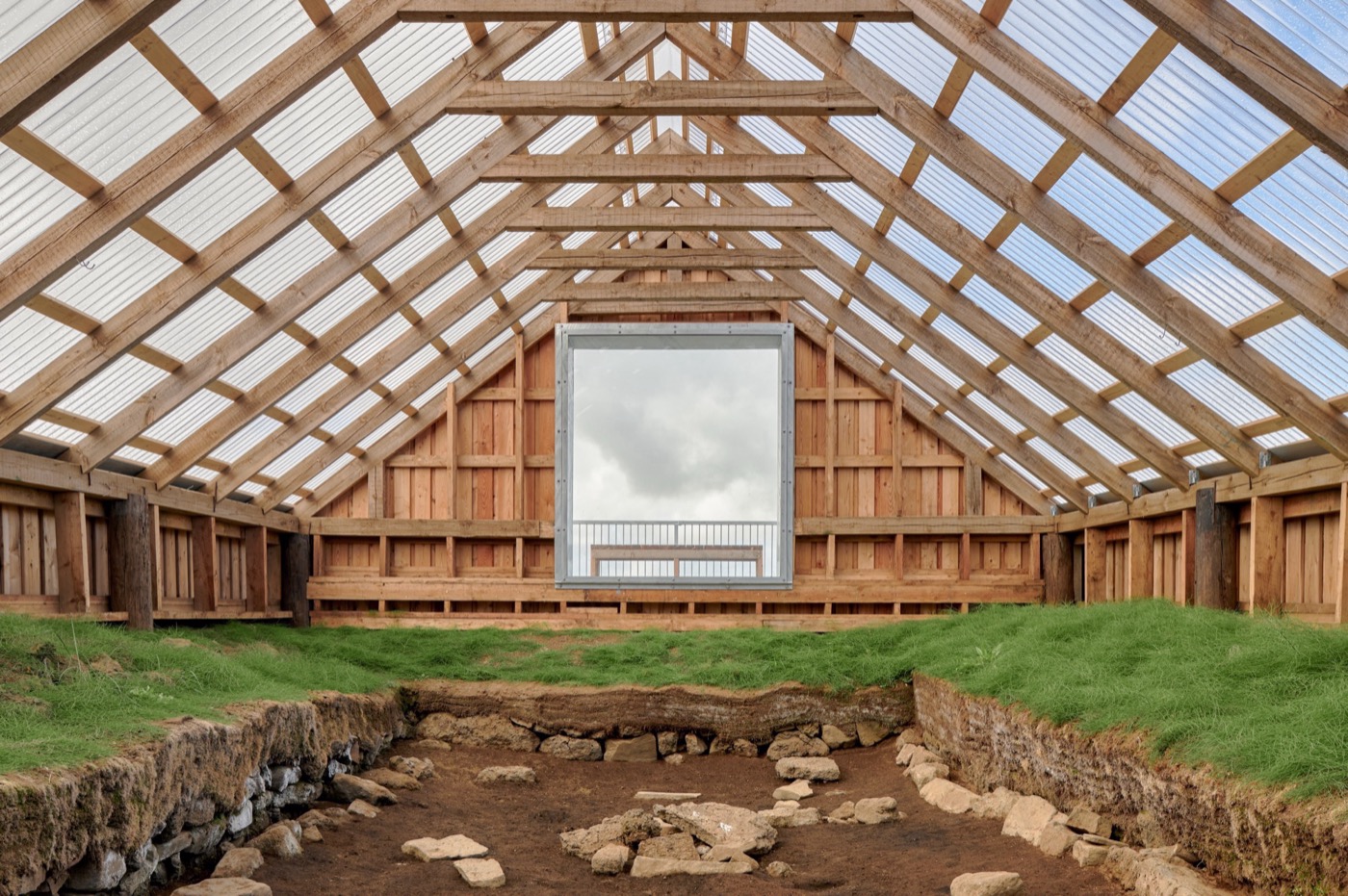
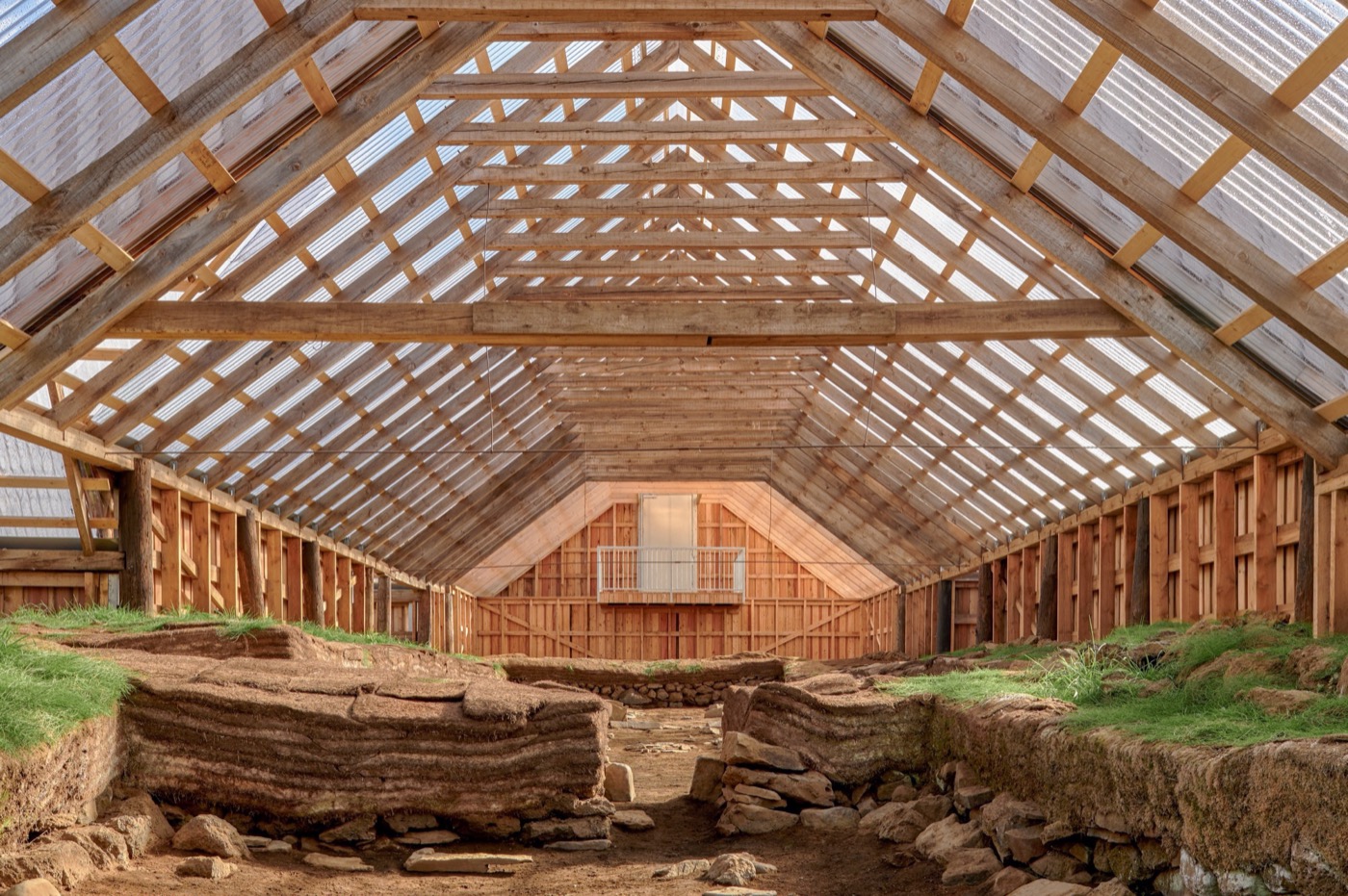
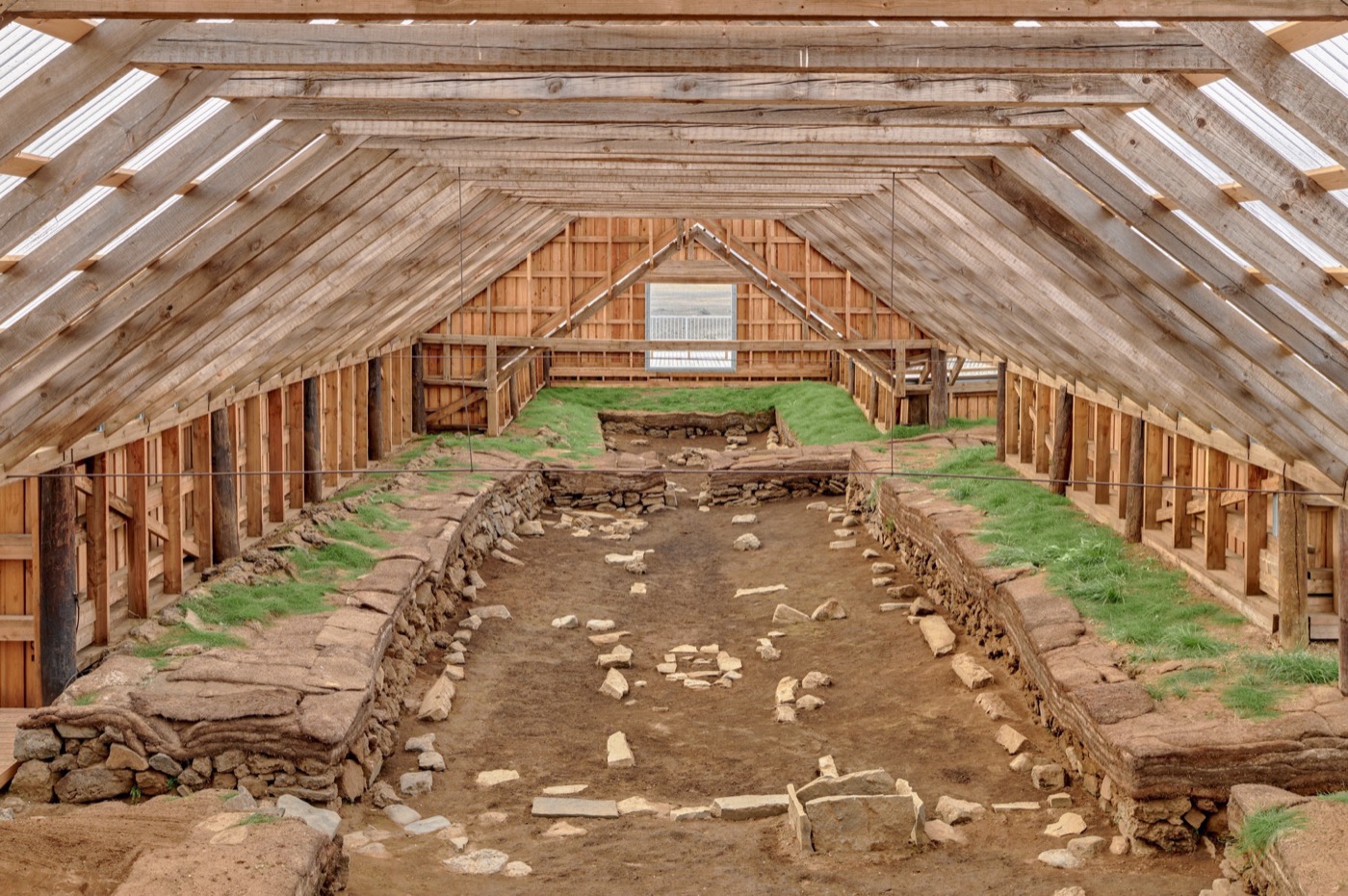
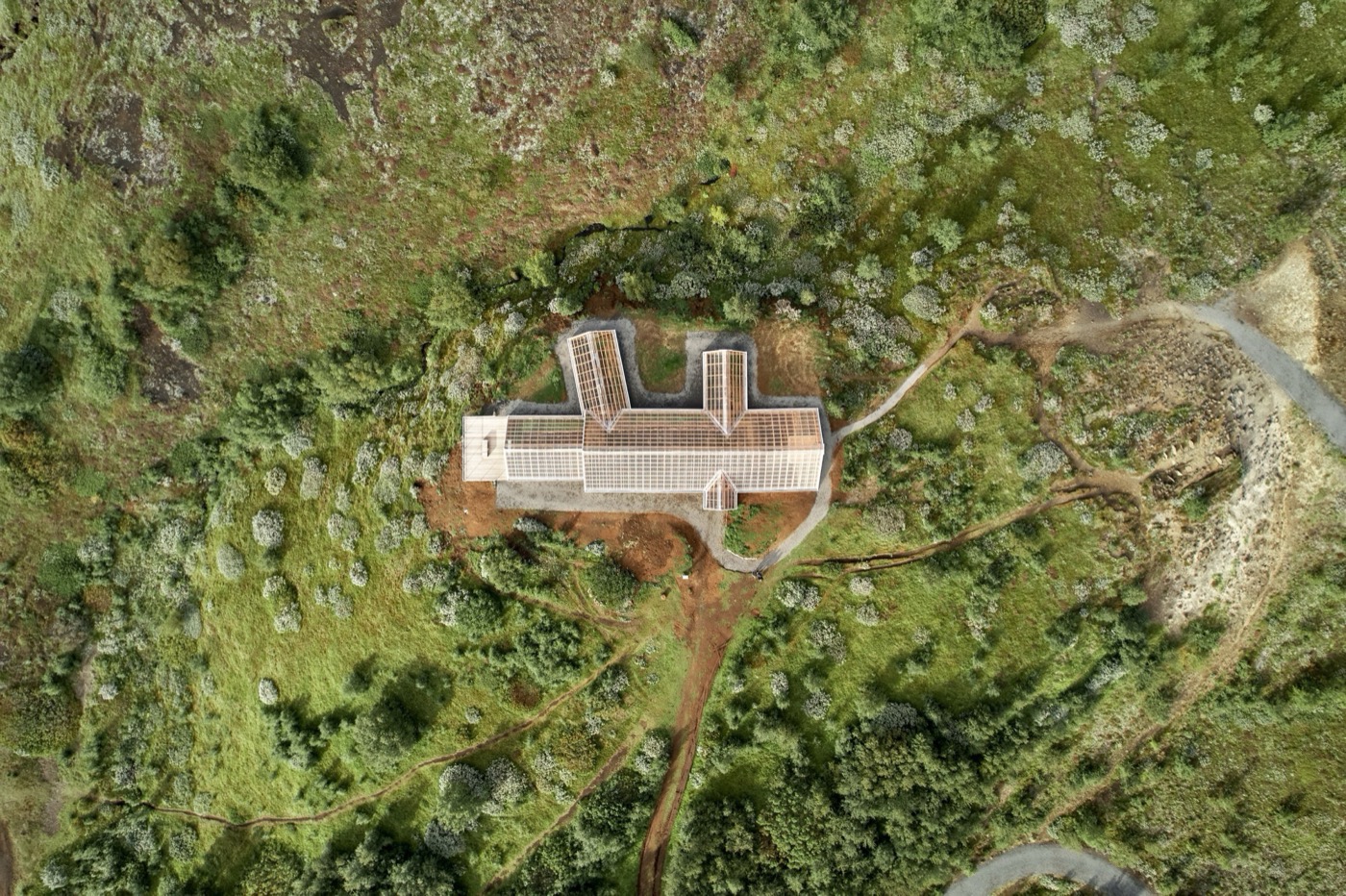
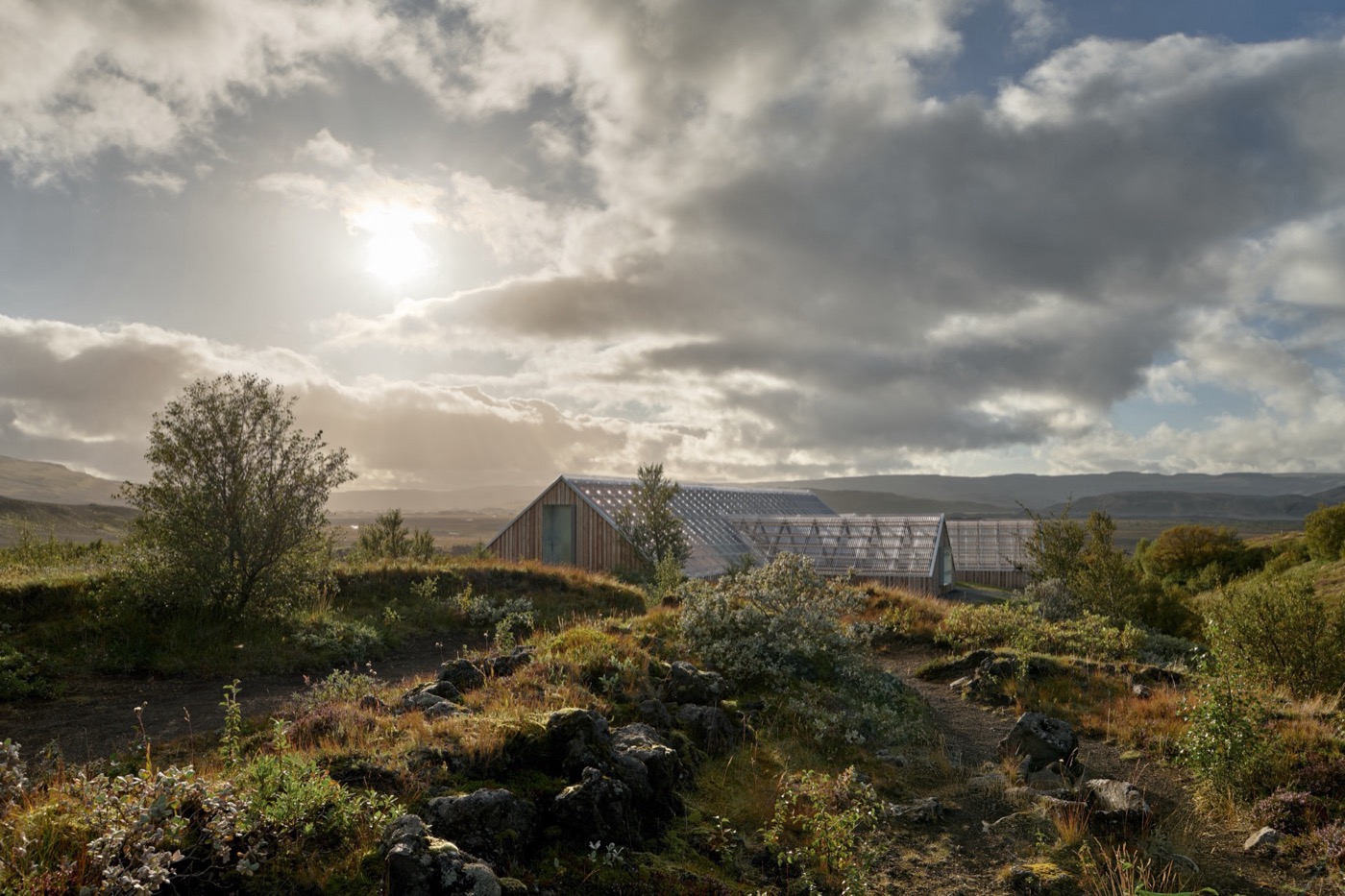
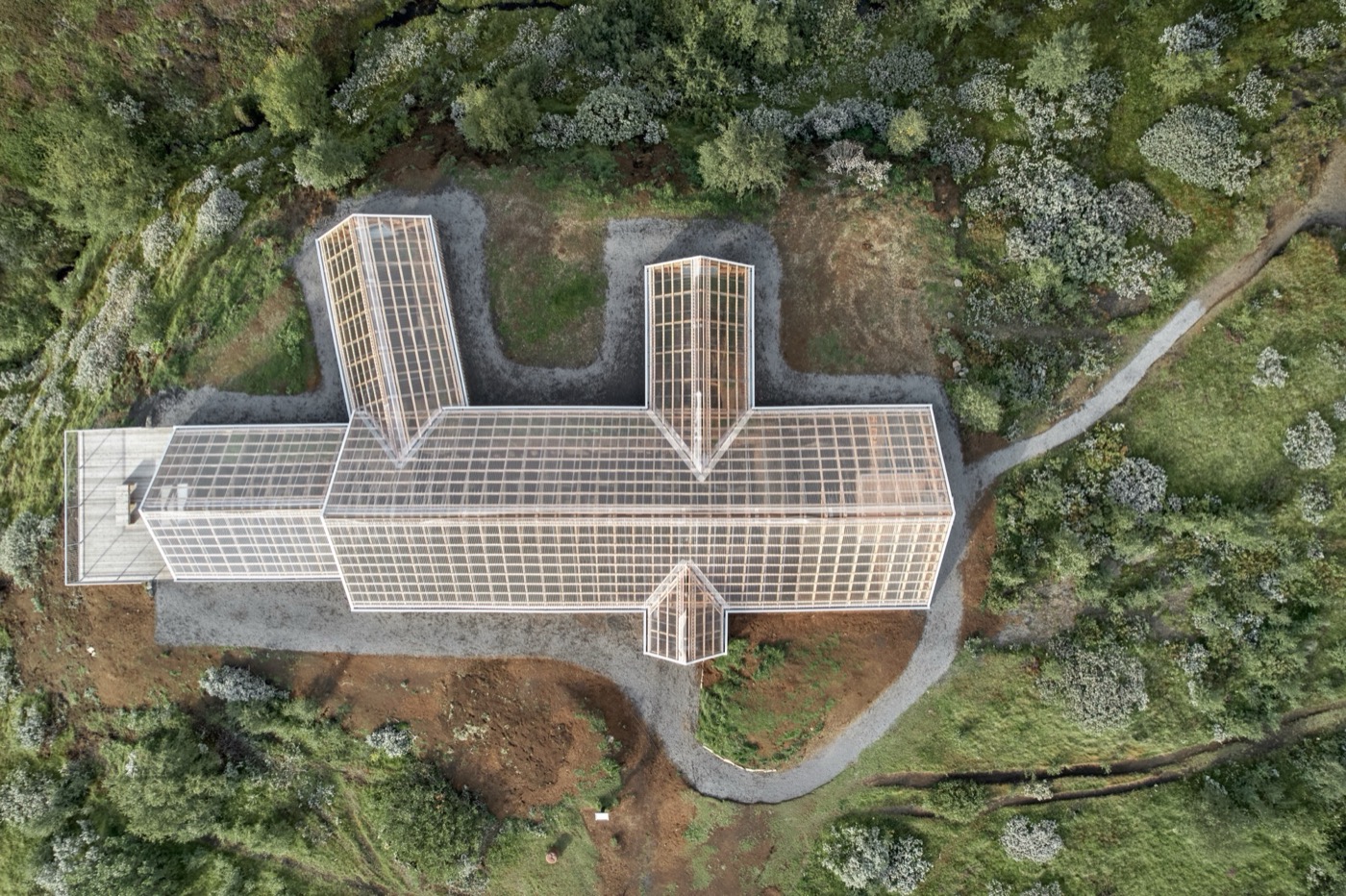
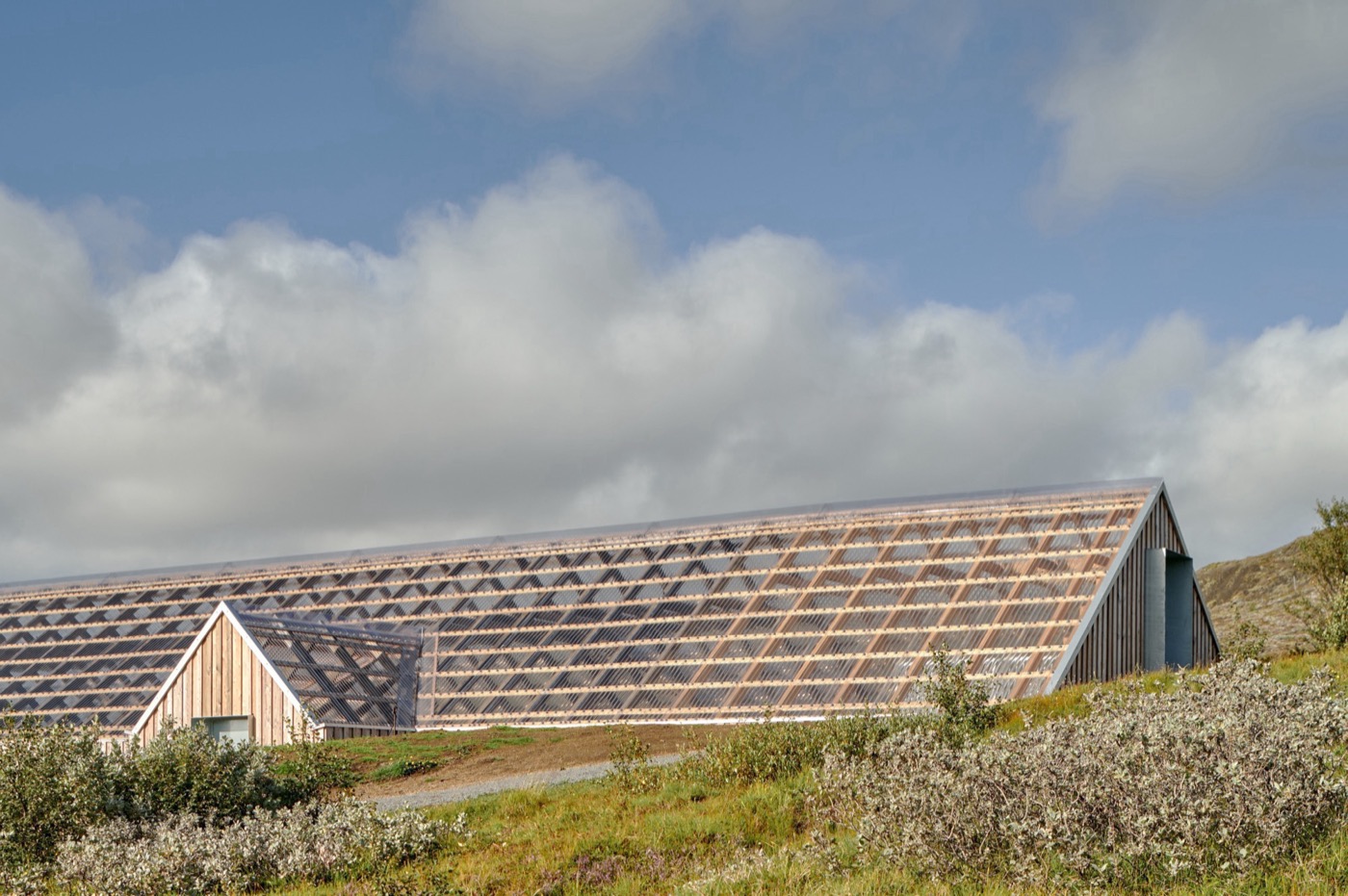
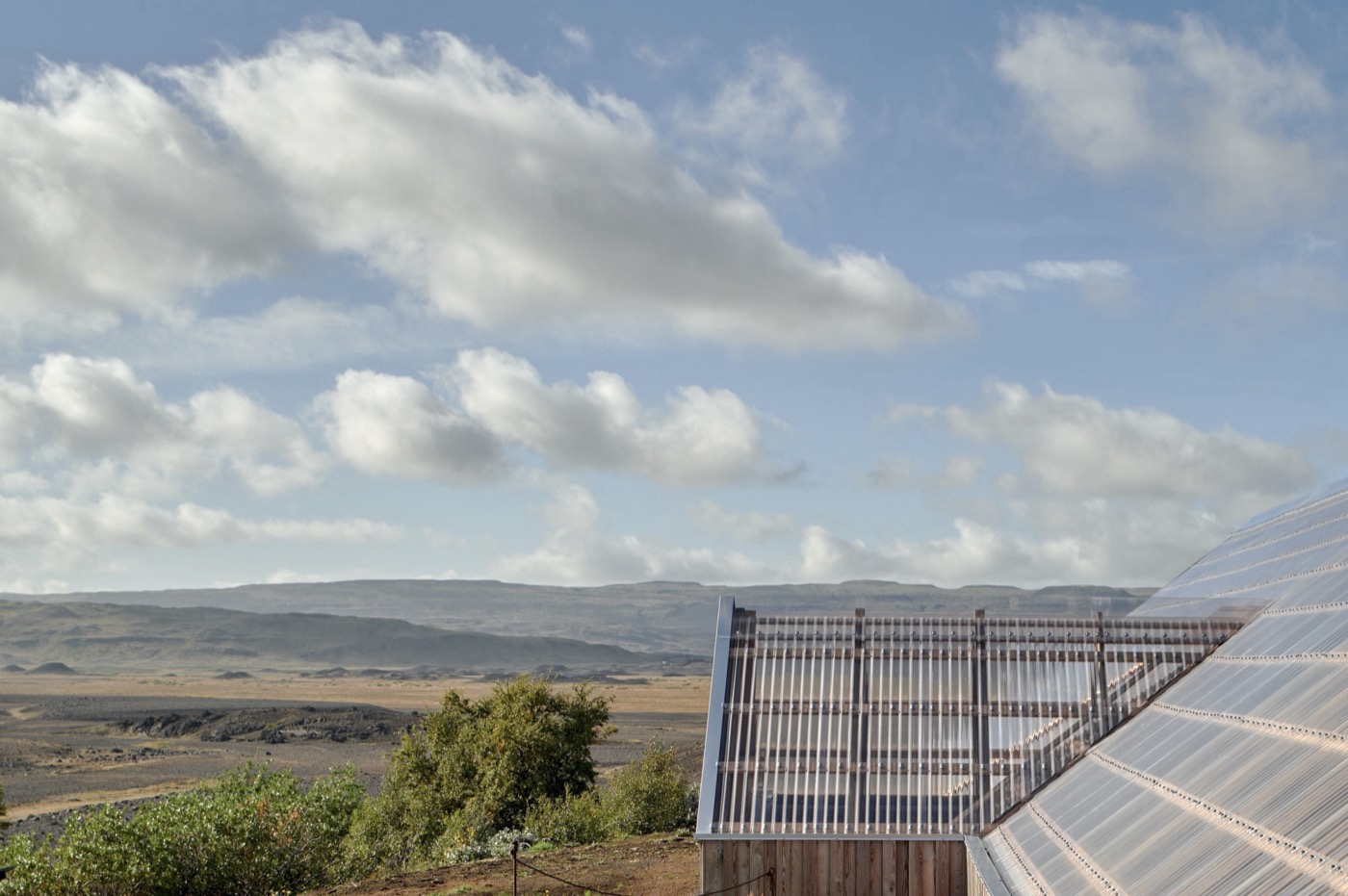
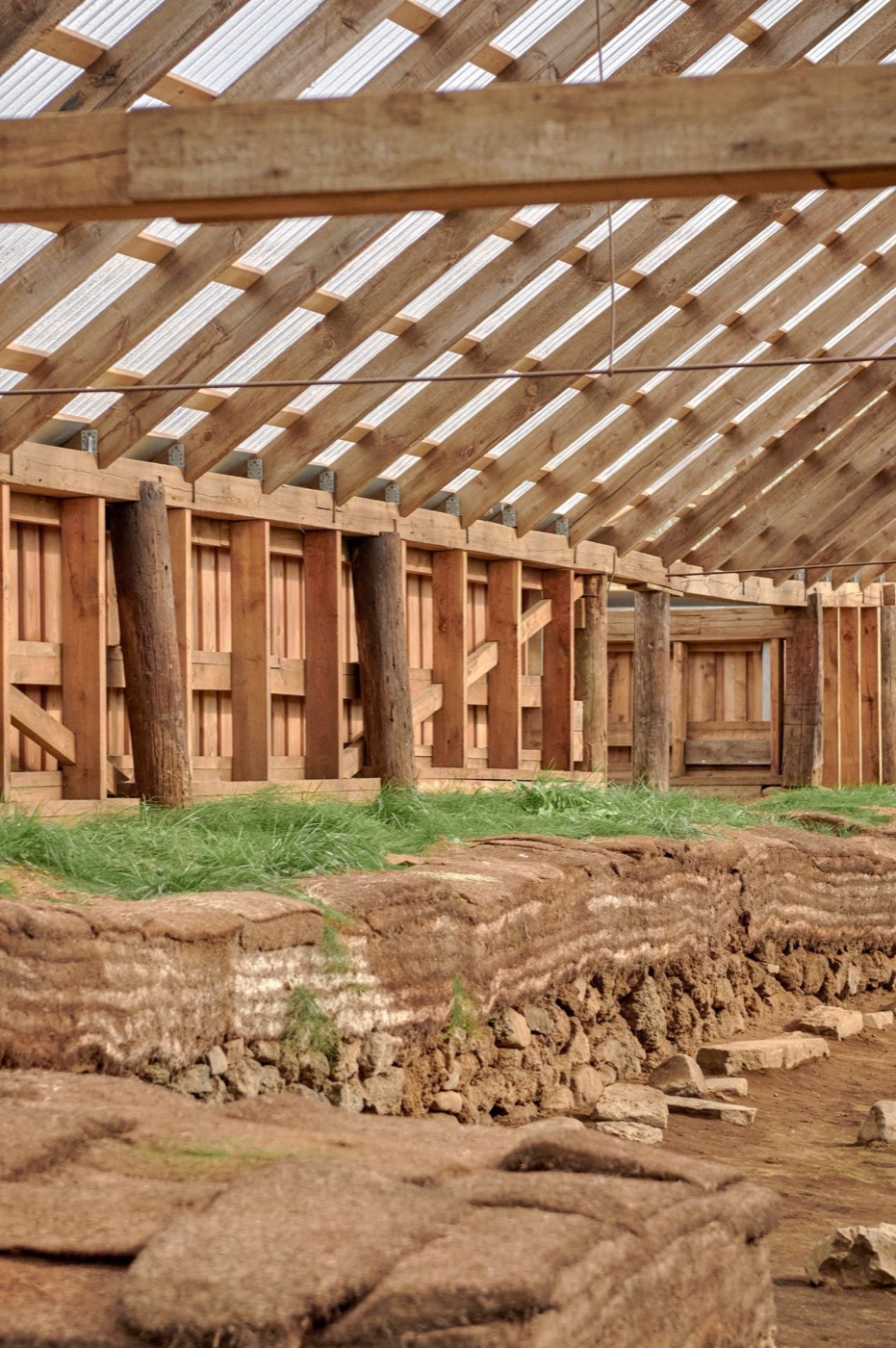
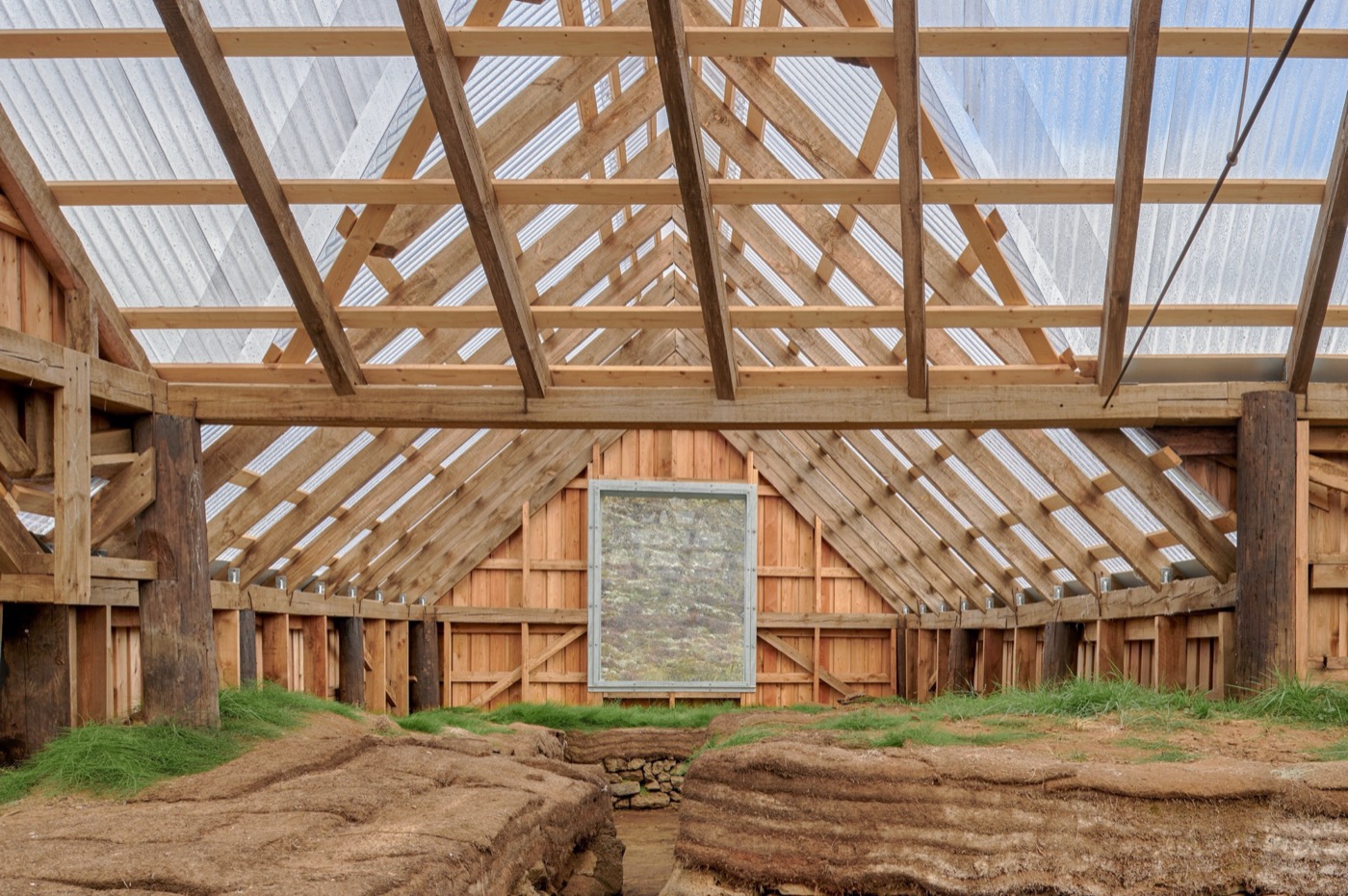
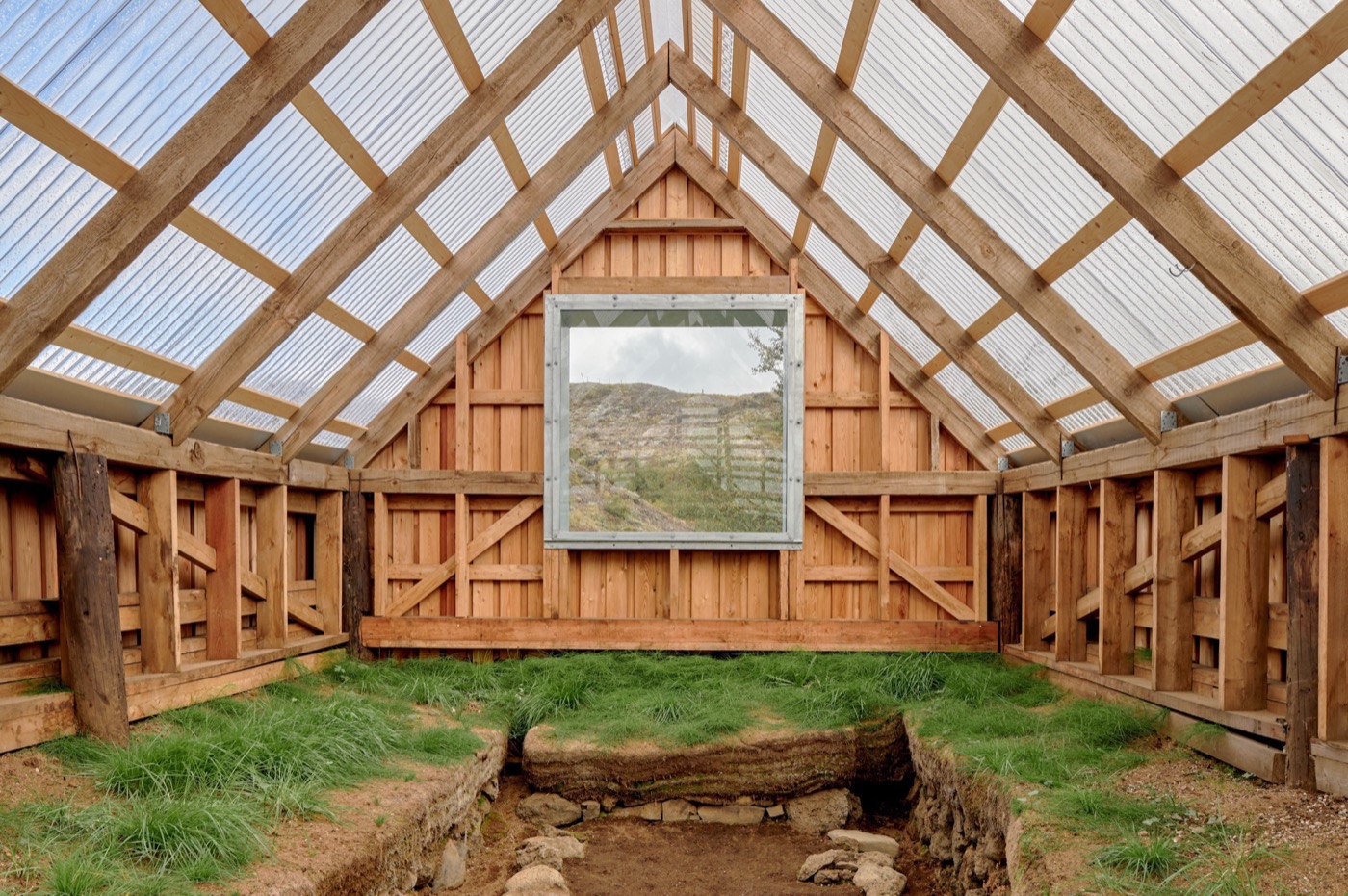
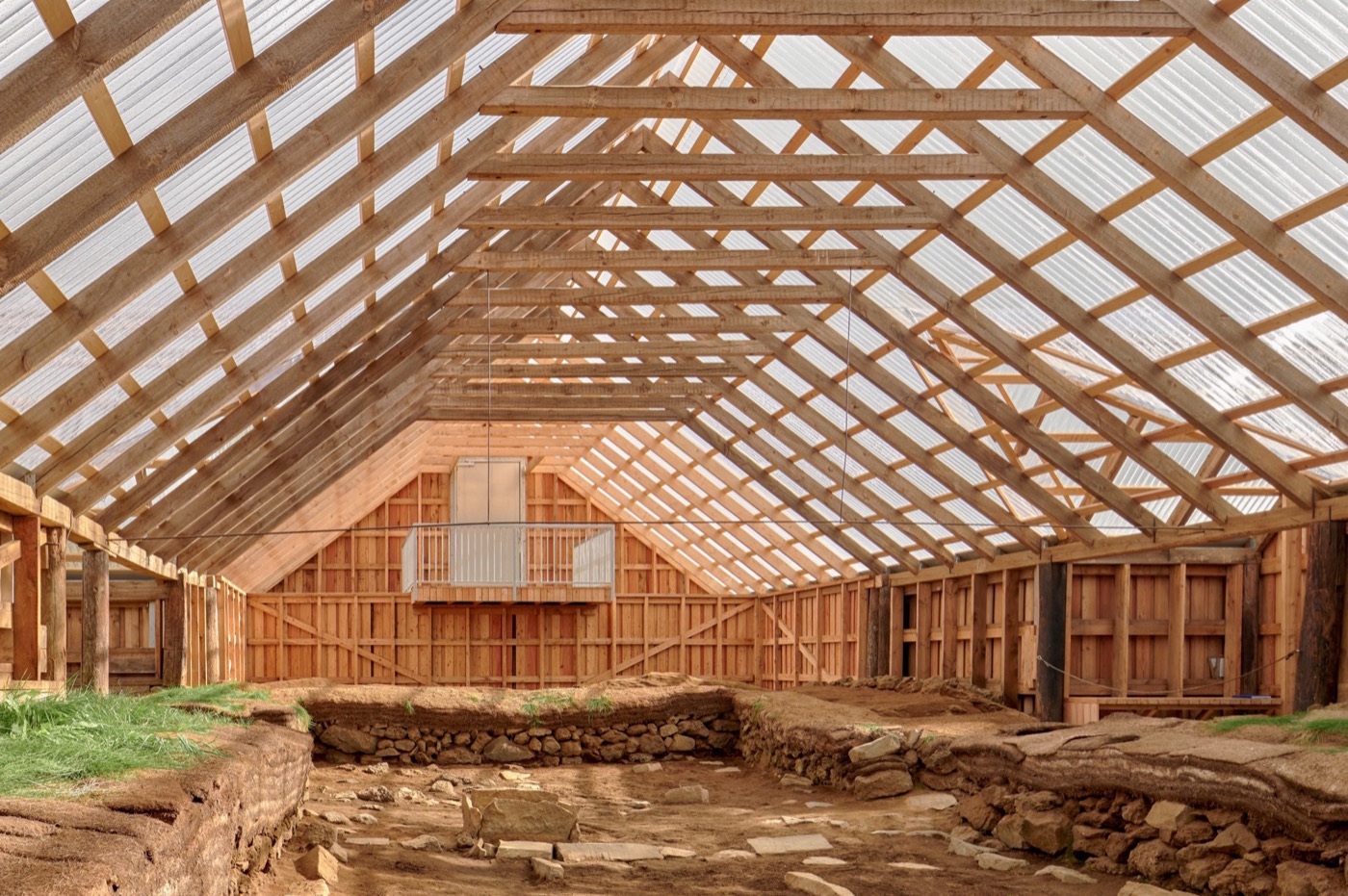
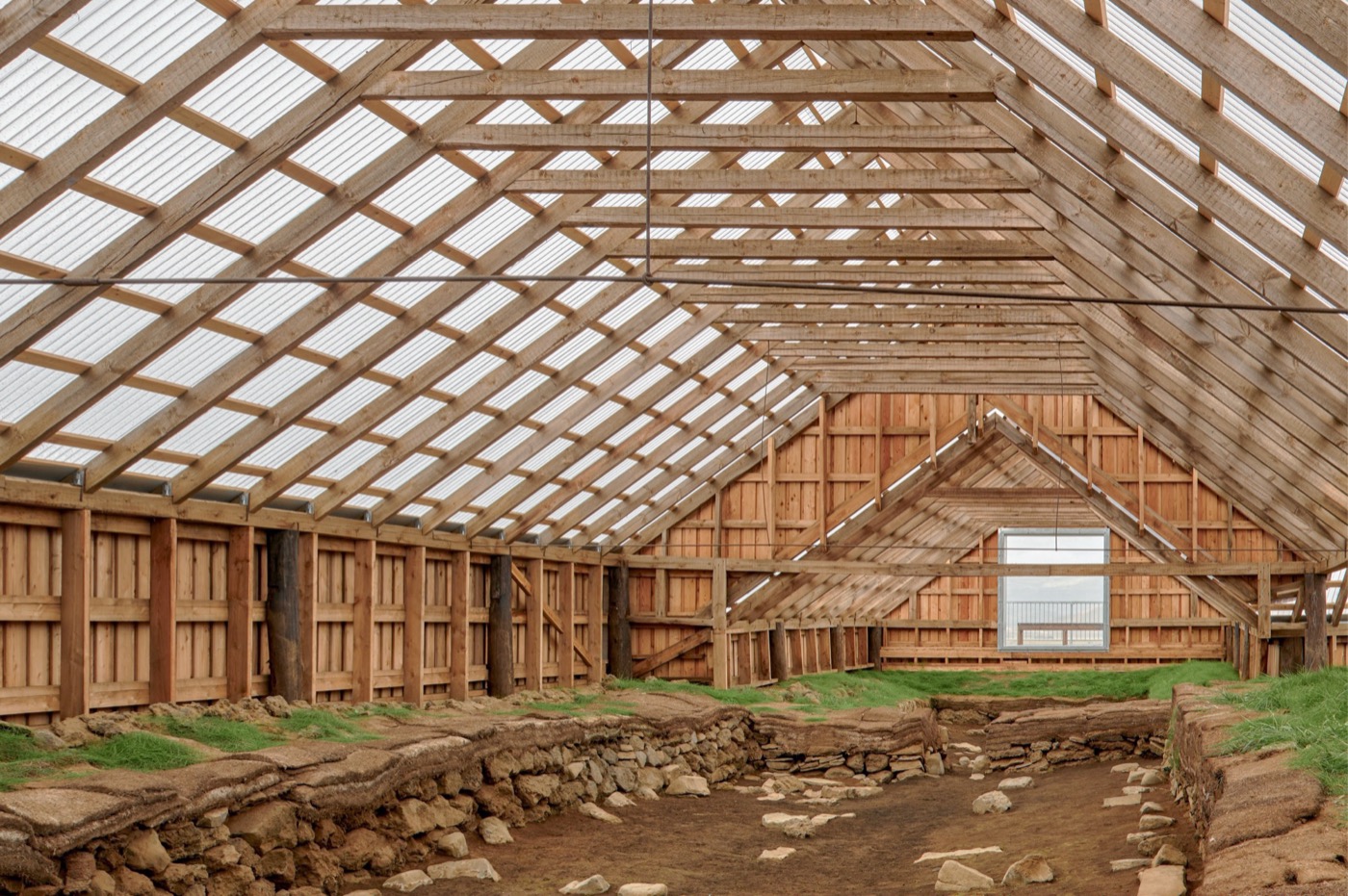
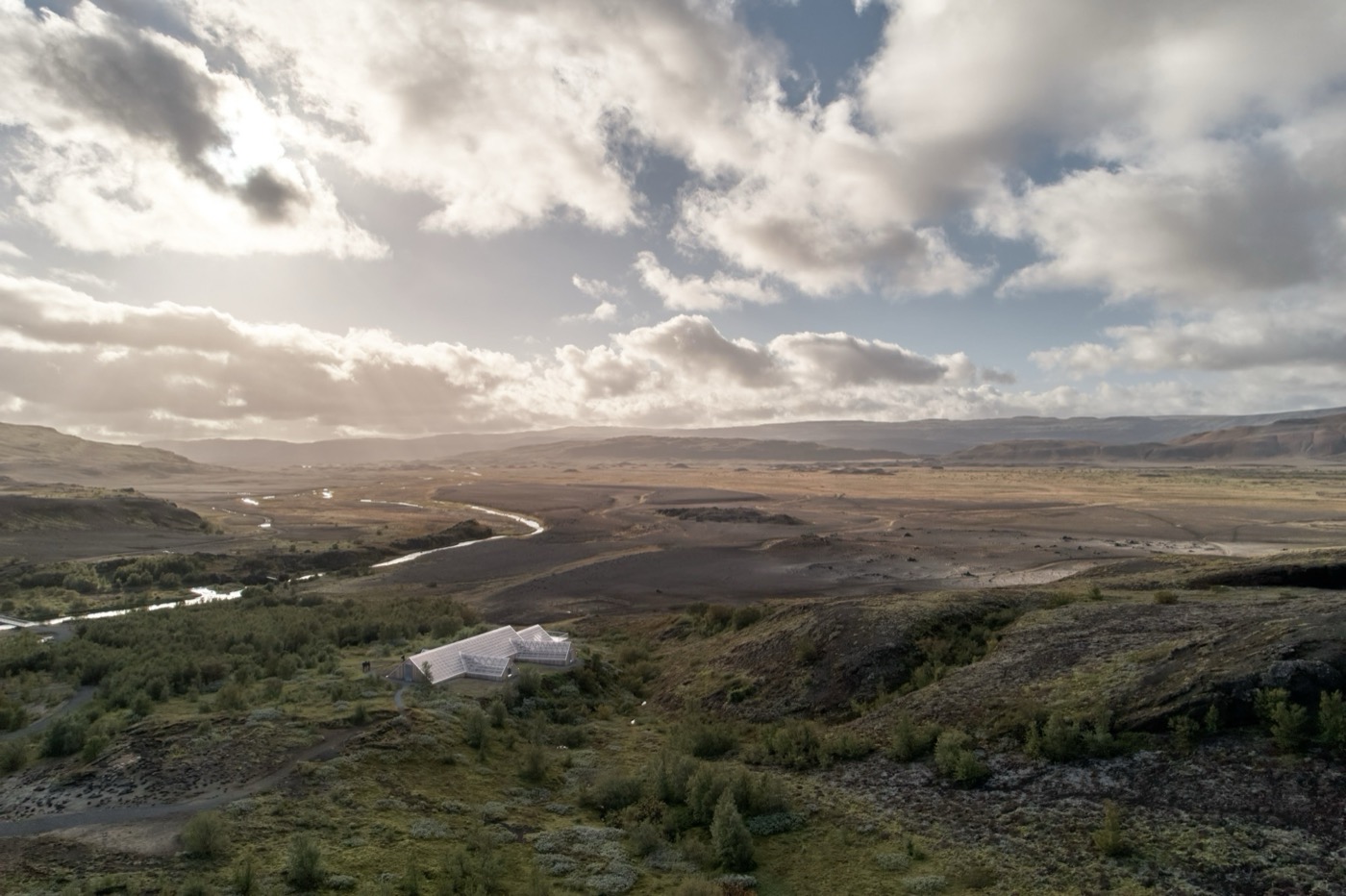
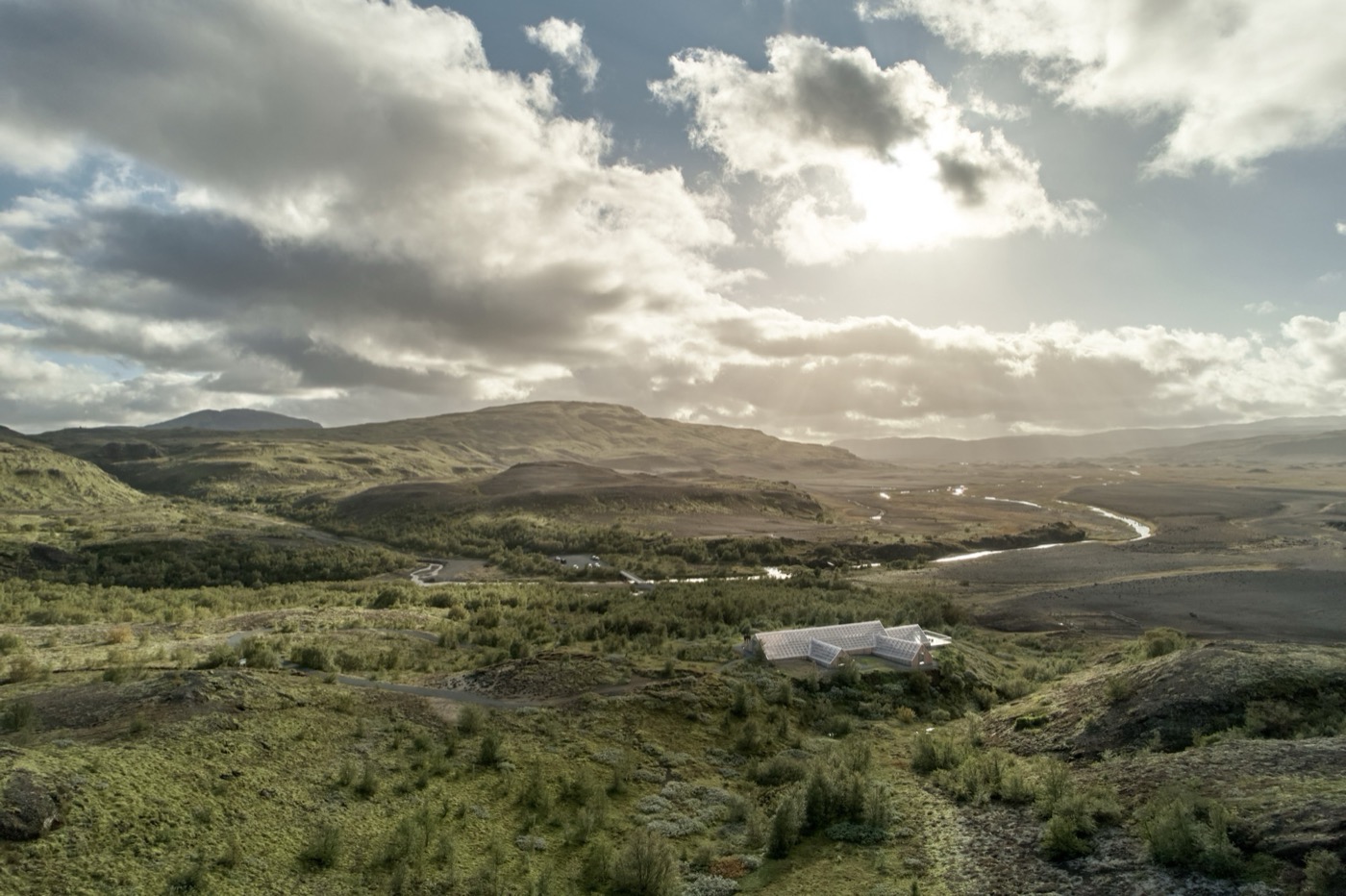
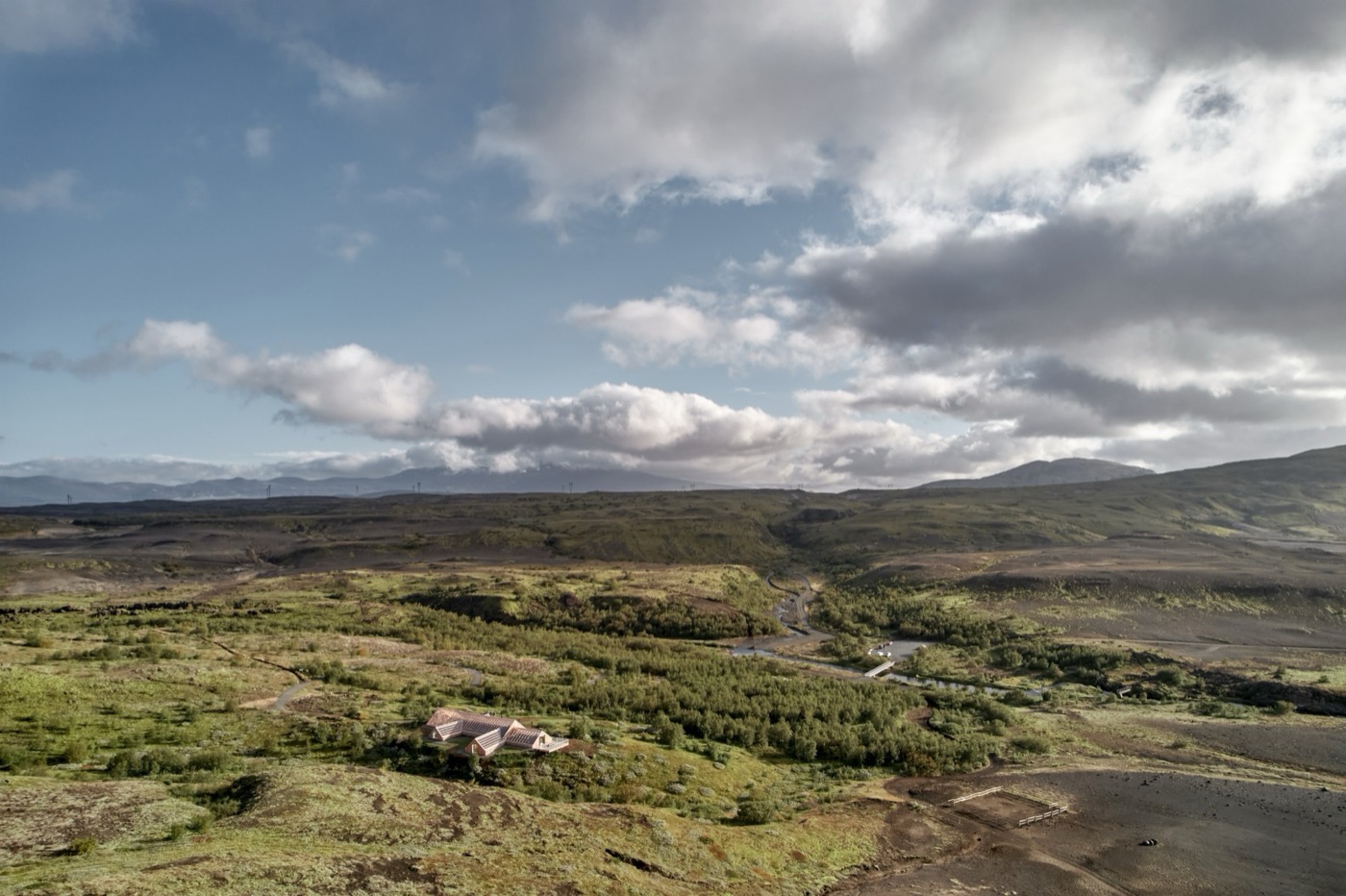
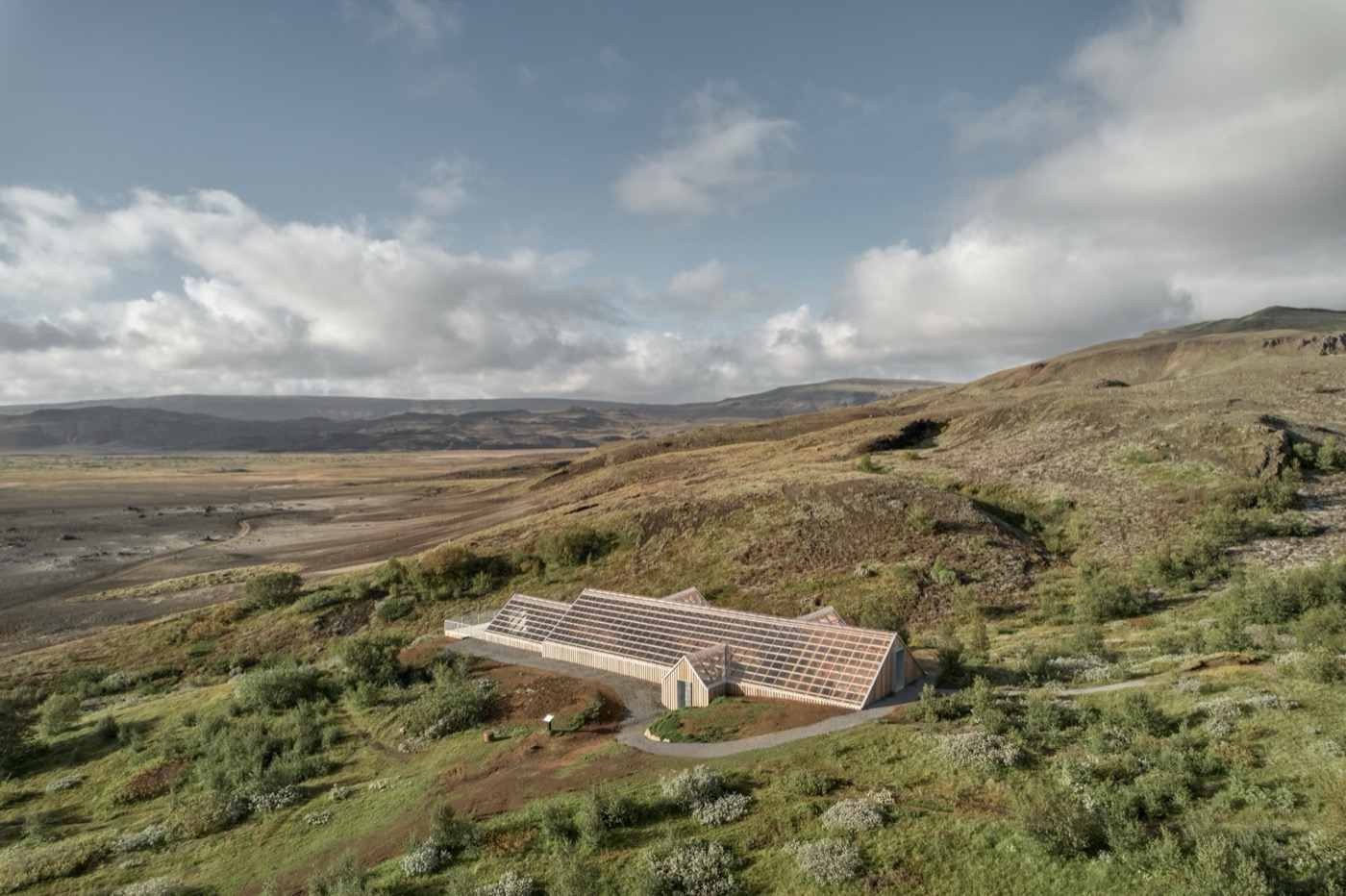
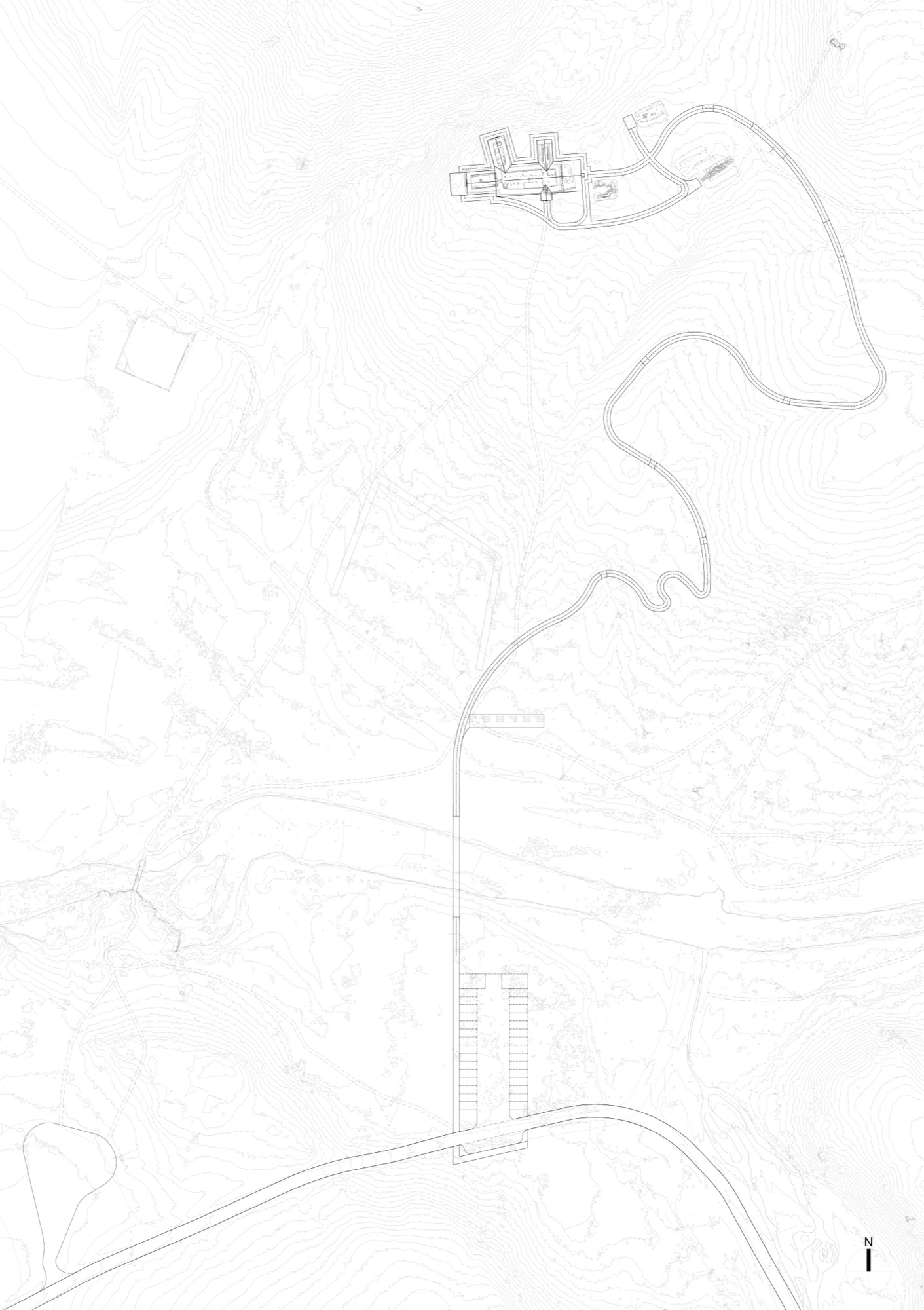
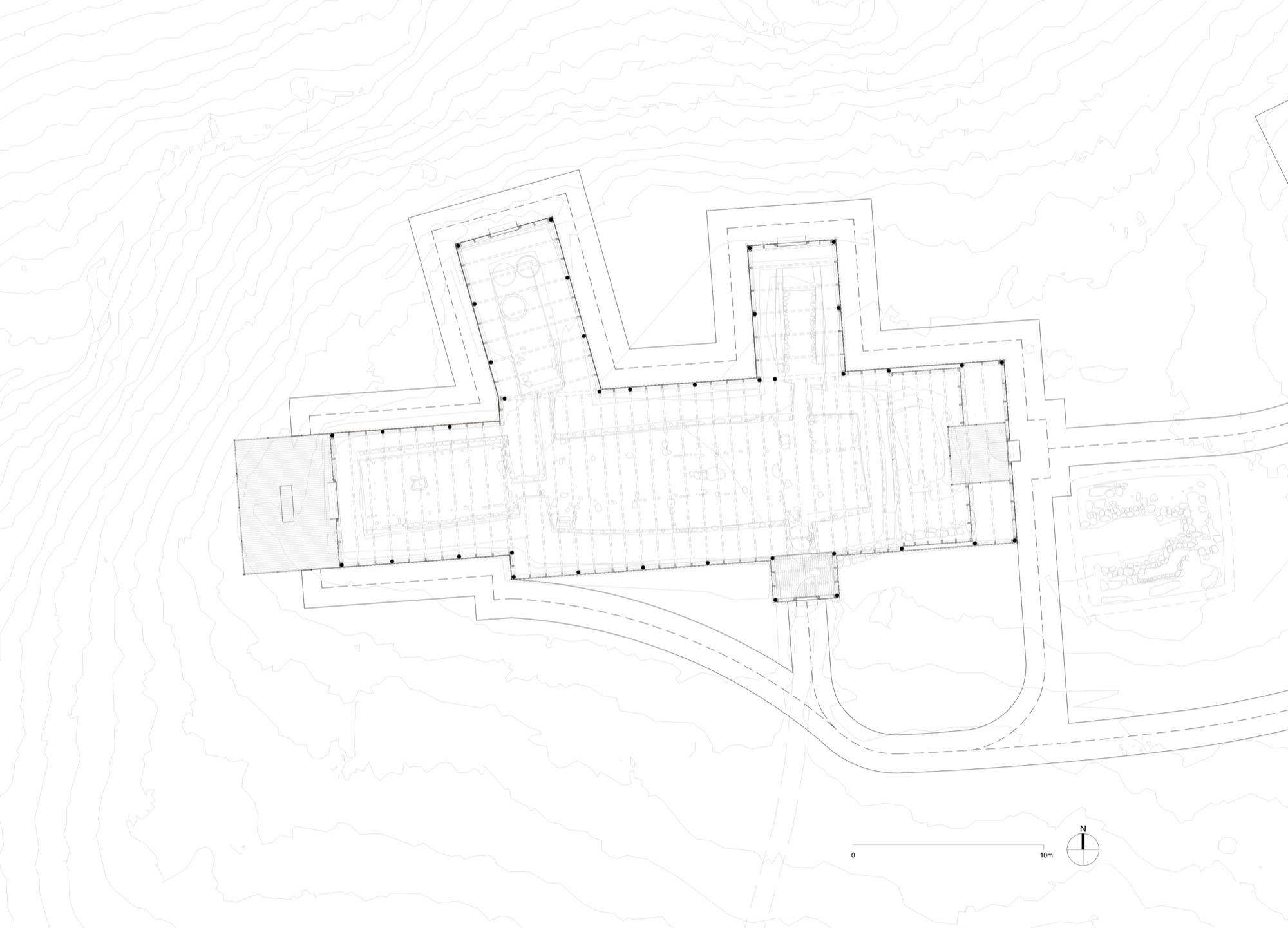
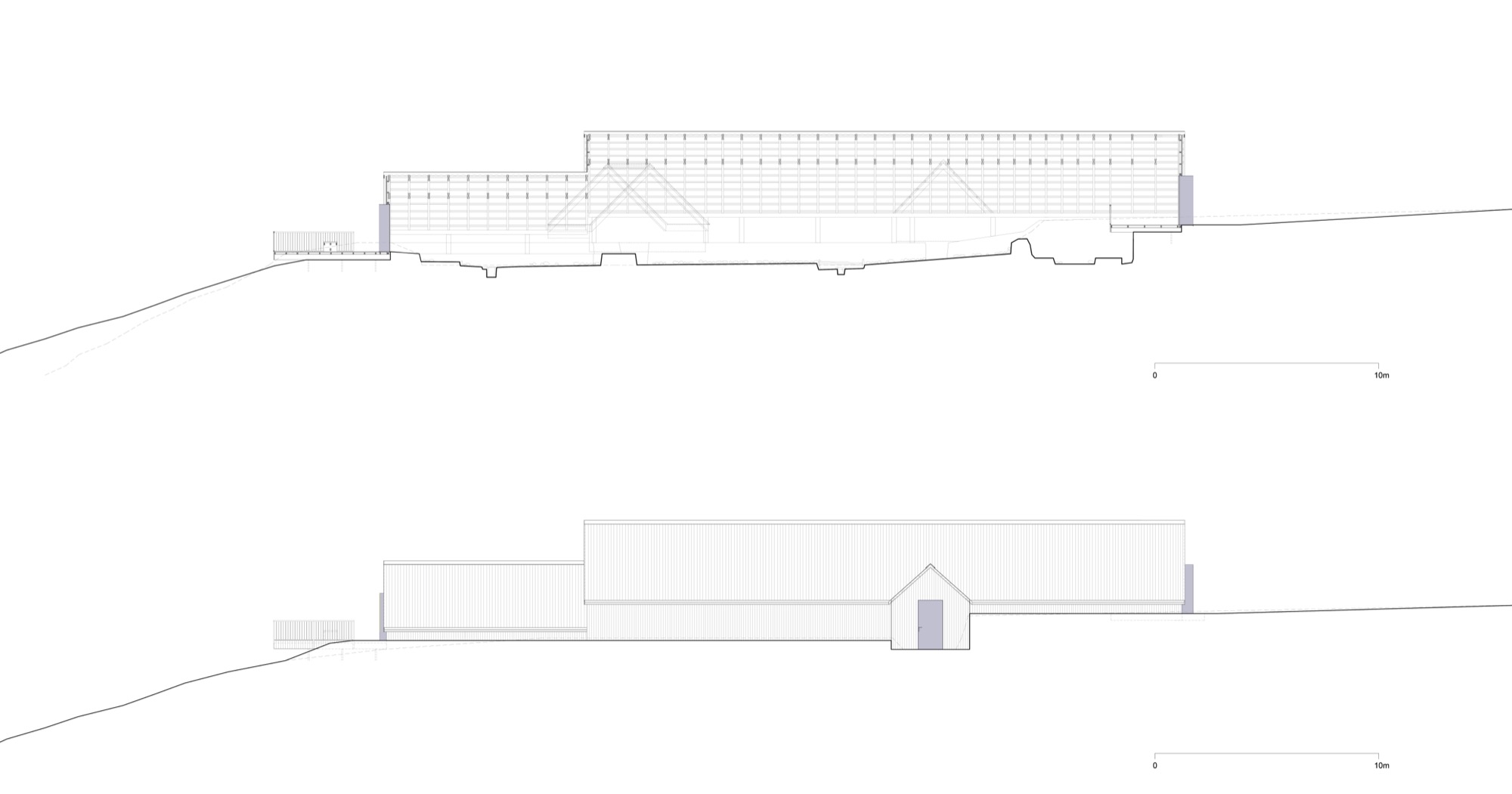
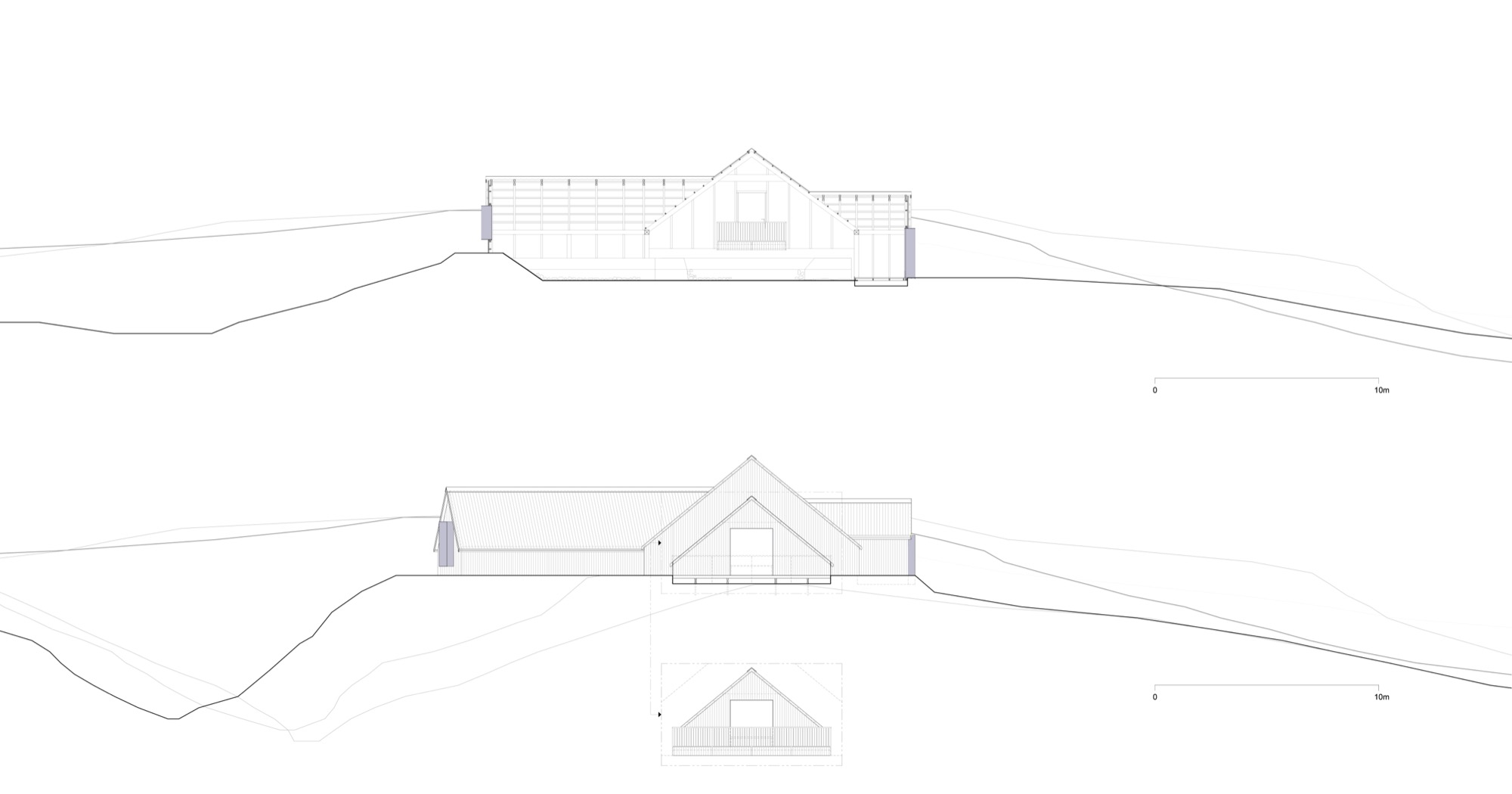
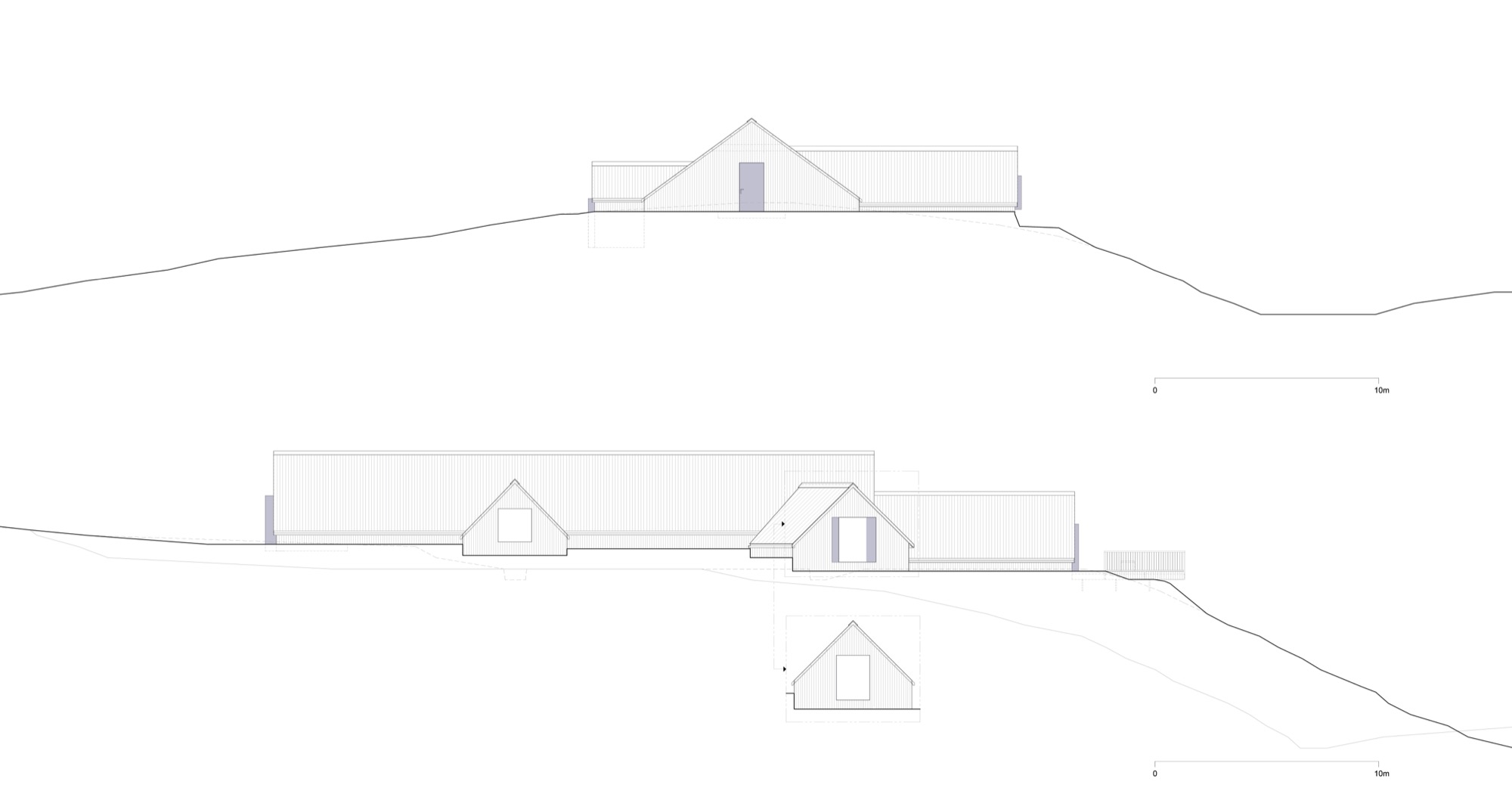
The project is organized as a sequence of movements through the landscape. Paths, a bridge, seating areas, elevated platforms, and the protective enclosure guide visitors across the terrain without requiring direct contact with the archaeological remains. The design choreographs a gradual transition from the open valley to the intimate scale of the ruins, allowing visitors to understand Stöng not as an isolated monument, but as part of a broader inhabited landscape. The ground is treated as a sensitive historical surface: something to be approached, observed, and protected.
A key ambition of the project is to dissolve the conventional boundary between interior and exterior. The shelter is not conceived as a closed building, but as a porous spatial frame through which the landscape continues to be present. Light, wind, views, vegetation, ground surfaces, and the changing atmosphere of Þjórsárdalur enter the visitor experience, while the paths and platforms extend the logic of the landscape into the protected interior. In this way, Stöng becomes one spatial identity: ruin, shelter, path, terrain, and horizon are experienced as parts of a continuous whole.
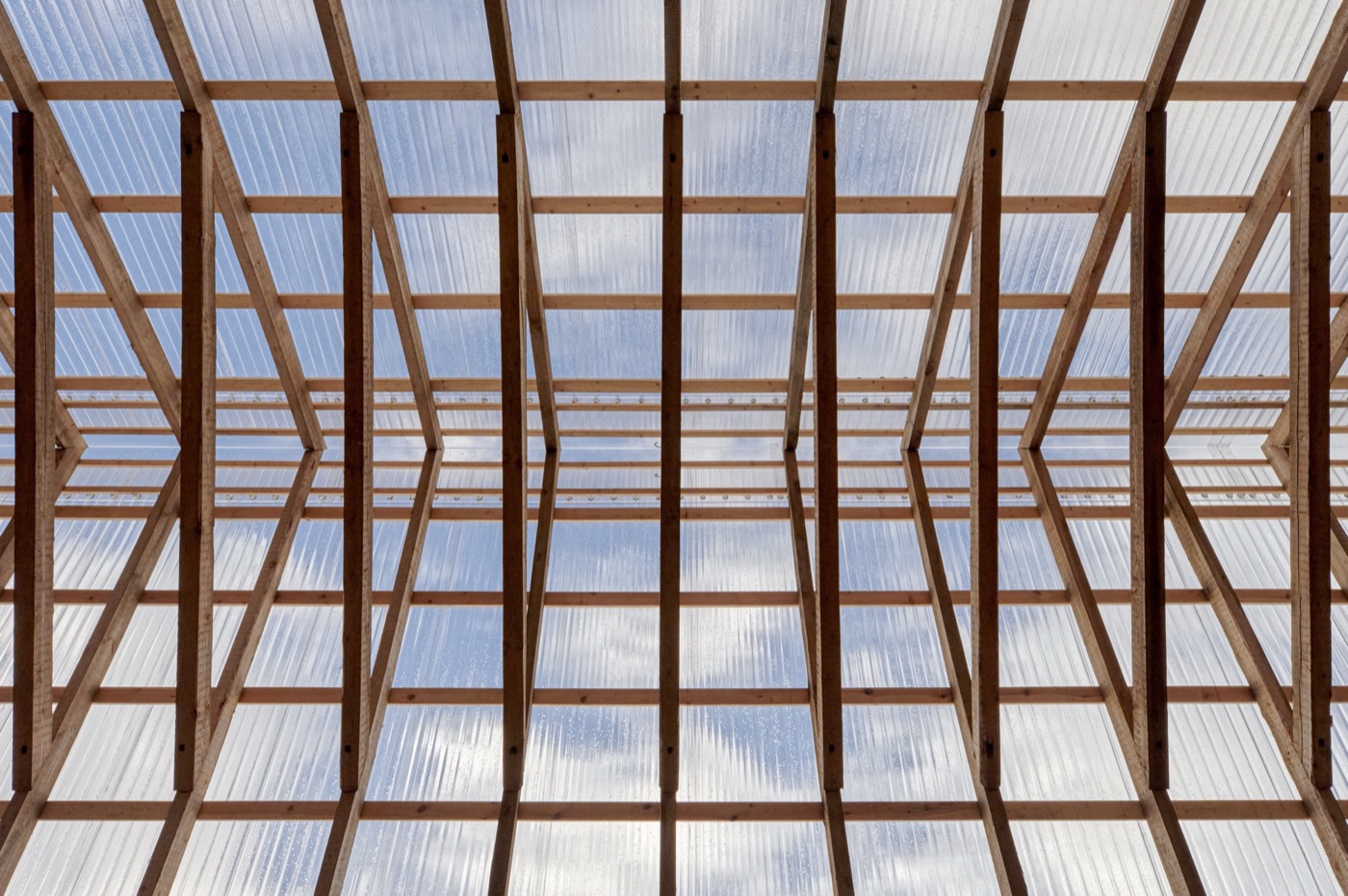
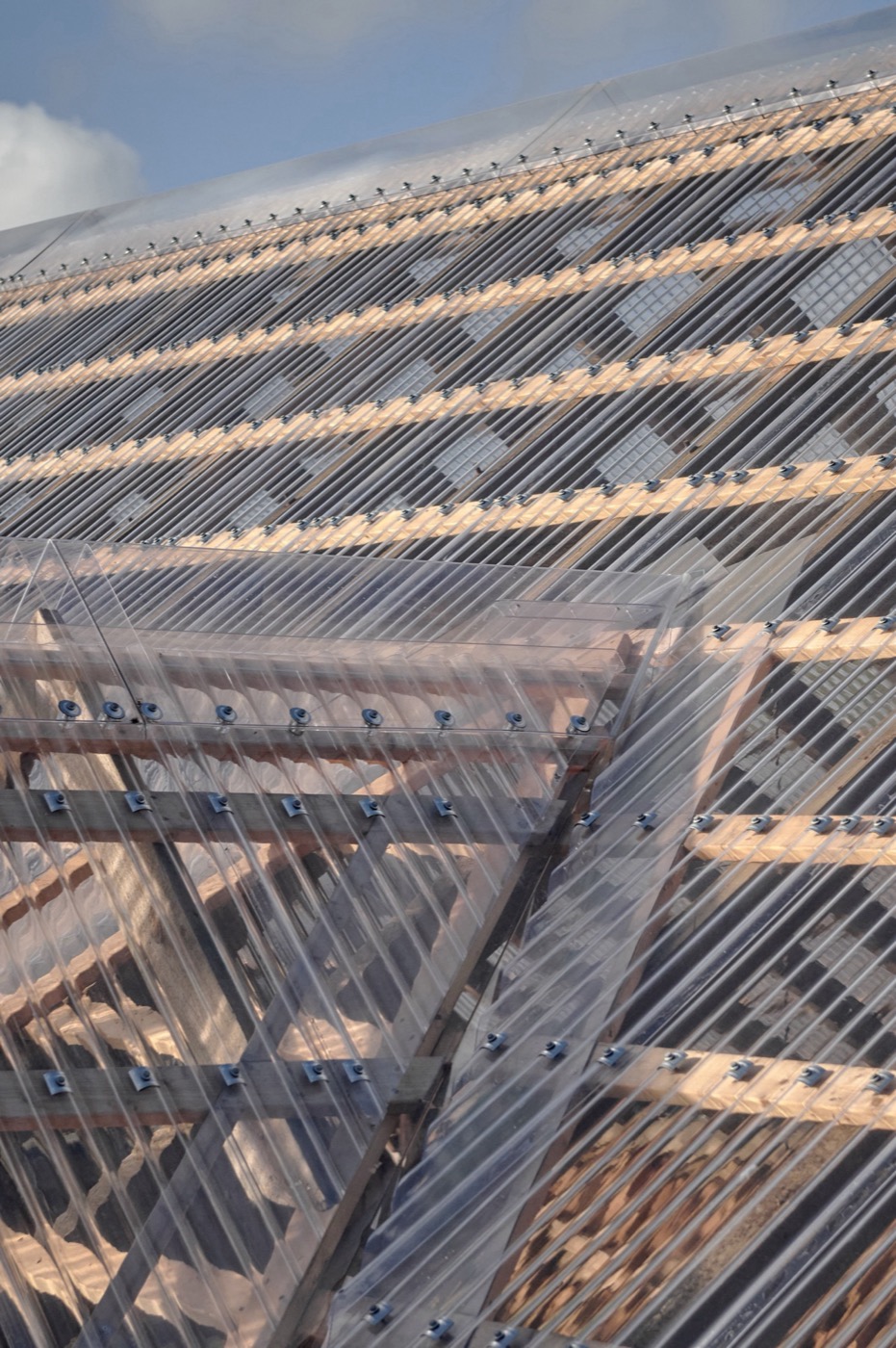
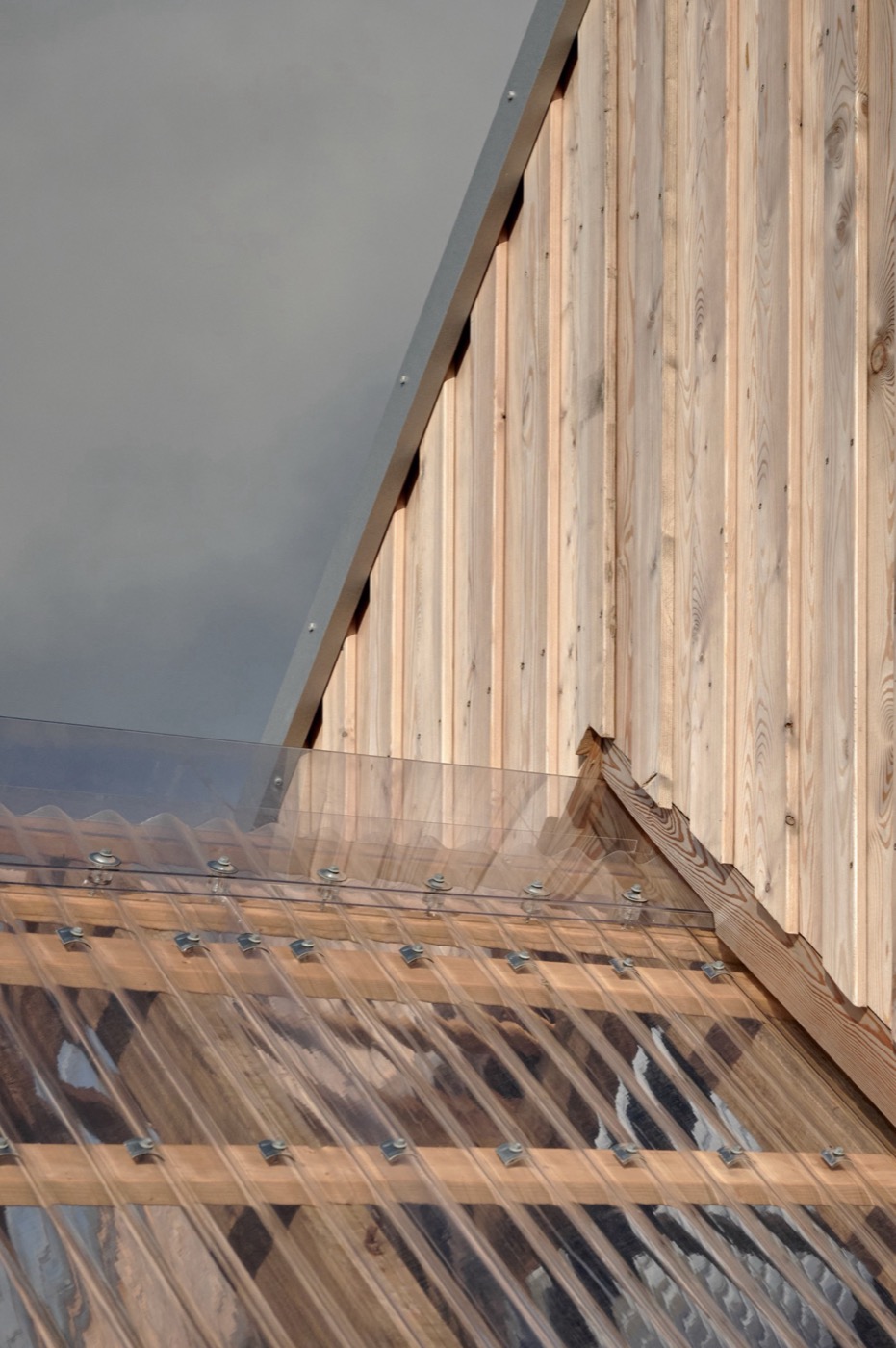
Materially, the project works with lightness, durability, and reversibility. The retained timber frame forms the basis of the renewed structure, conserving embodied carbon and limiting new construction. Untreated larch is used for new structural and cladding elements, chosen for its natural durability and its capacity to weather over time. Galvanized steel provides precise reinforcement where needed, while translucent polycarbonate filters daylight, improves climatic protection, and gives the shelter a quiet, temporary presence in the landscape. The architecture is designed for disassembly, allowing future adaptation, reuse, or removal with minimal impact on the archaeological site.
The relationship between landscape and architecture is central to the project. The shelter protects the ruins from weather, but it also frames light, views, movement, and interpretation. Its translucent surfaces create changing atmospheric conditions throughout the day and across seasons, making the experience of the site responsive to climate rather than detached from it. The intervention does not seek to reconstruct the past literally; instead, it makes the layers of time legible through spatial experience.
Environmental strategies are integrated into the landscape design. Permeable surfaces and bioswales manage stormwater passively, reducing the need for hard drainage infrastructure. The building operates without mechanical systems and requires minimal maintenance, an important consideration in a remote and exposed location. Its construction logic is modest, robust, and repairable, aligning the protection of cultural heritage with ecological responsibility.
Stöng proposes a form of public heritage architecture grounded in restraint. It protects without enclosing completely, guides without overdetermining, and interprets without simplifying. By joining shelter, path, terrain, ruin, and visitor into one continuous experience, the project foregrounds the reciprocal relationship between landscape and architecture. It allows a fragile archaeological site to remain present, accessible, and alive within the vast and changing landscape of Þjórsárdalur.
———————————————————
Architecture and Landscape Architecture: SP(R)INT STUDIO
Collaborators
Site analysis and archaeological excavation: The Cultural Heritage Agency of Iceland; Project supervisor: FSRE; Structure: VSB Engineers; Building contractor: Langeldur
Program
Culture
Labels
Archaeology · Heritage · Nature
Site area
40000 m²
Client
The Cultural Heritage Agency of Iceland
Total gross floor
385 m²
Cost
1450 €/m²
64.151535, -19.750889
77038


LILA 2026 Sponsor