Stratford Waterfront at East Bank
www.lda-design.co.uk/
2026 Landscape and Architecture / 2026 Public Projects / United Kingdom / Built in 2025 /

![Set on the Thames, the southeast London market town of Woolwich was once home to the Royal Arsenal munitions. During its height, the Arsenal employed 120,000 people and it drove the town’s economy, establishing its national significance. The proximity of the Arsenal to the town’s main square, Beresford Square, meant that the Square itself has […]](https://landezine-award.com/wp-content/uploads/2026/05/74367_01_WoolwichTownCentre_credit_Neil-Speakman-1-600x400.jpg "Woolwich Town Centre Regeneration")
![Lee Valley Ice Centre (LVIC) is a new £30m state-of-the-art, low-energy ice centre with two Olympic-sized ice pads. It is also the UK’s most sustainable ice centre. It occupies the site of a 1980s single-rink venue in east London that could no longer deal with demand. The old rink was surrounded by extensive, hard-standing car […]](https://landezine-award.com/wp-content/uploads/2025/05/00-61466_LVIC_LDADesign_mainphoto-600x338.jpg "Lee Valley Ice Centre by LDA Design")
![West End Project (WEP) is Camden Council’s £40m investment into the area around busy Tottenham Court Road in central London. It is a pioneering biophilic landscape, and healthy streets and spaces initiative and Camden’s largest transport and public realm scheme to date. It is designed to improve air quality and local health and wellbeing and […]](https://landezine-award.com/wp-content/uploads/2025/05/00_Main-Project-Image_West-End-Project_Alfred-Place-Gardens_LDADesigncredit-Neil-Speakman-600x400.jpg "West End Project by LDA Design")
![Union Terrace Gardens (UTG) in Aberdeen, Scotland, is one of the UK’s most important park regenerations. Set amongst many of the city’s finest buildings, it is Aberdeen’s most visible green space. Located within a steep river valley and bounded by a railway line, it has a dramatic, challenging typography. Dating back to 1878, UTG is […]](https://landezine-award.com/wp-content/uploads/2025/05/00_01_UnionTerraceGardens_mainphoto_credit_Andrew-Lee-600x420.jpg "Union Terrace Gardens by LDA Design")
![The Problem Strand (or Strond, meaning edge of river) is an important London east/west route, and has been since AD190. It is a key processional route between Westminster Abbey and St Paul’s. Completed in 1905, Aldwych is a Parisian-style boulevard. Combined, they formed a congested one-way gyratory, which turned one of London’s finest 18th century […]](https://landezine-award.com/wp-content/uploads/2023/05/00-20017_201_Aerial_LDA-Edits-Copy-600x337.jpg "Strand Aldwych, London")
![The problem Alfred Place was a heavily parked back street in London’s West End, situated alongside Tottenham Court Road in an area between the Euston Road and Oxford Street. With nowhere to sit, it was a place to hurry through. The street is lined with offices and the back entrances of large stores on Tottenham […]](https://landezine-award.com/wp-content/uploads/2023/05/00_AlfredPlaceGardens_credit@NeilSpeakman_2500-600x400.jpg "Alfred Place Gardens")
A new canvas for life and a cultural ecosystem
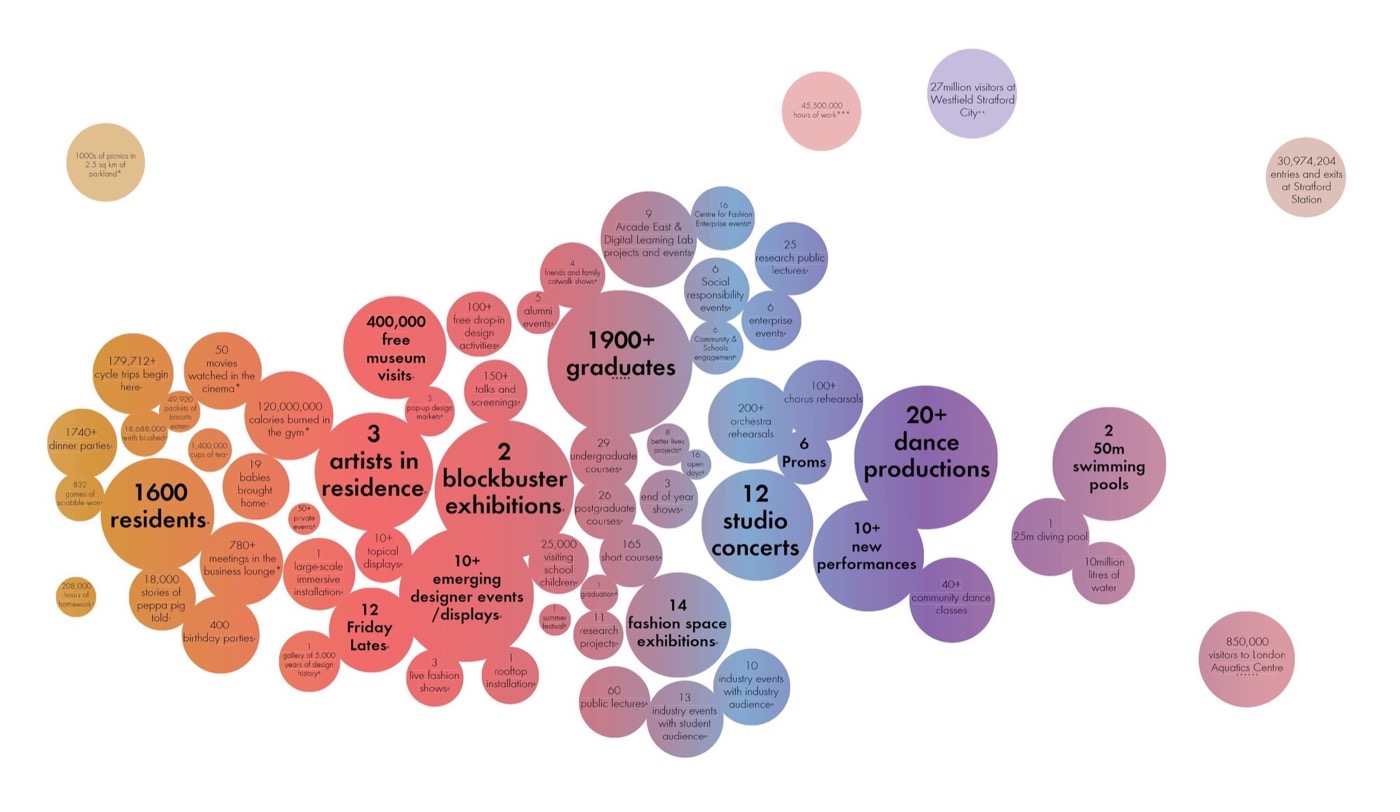
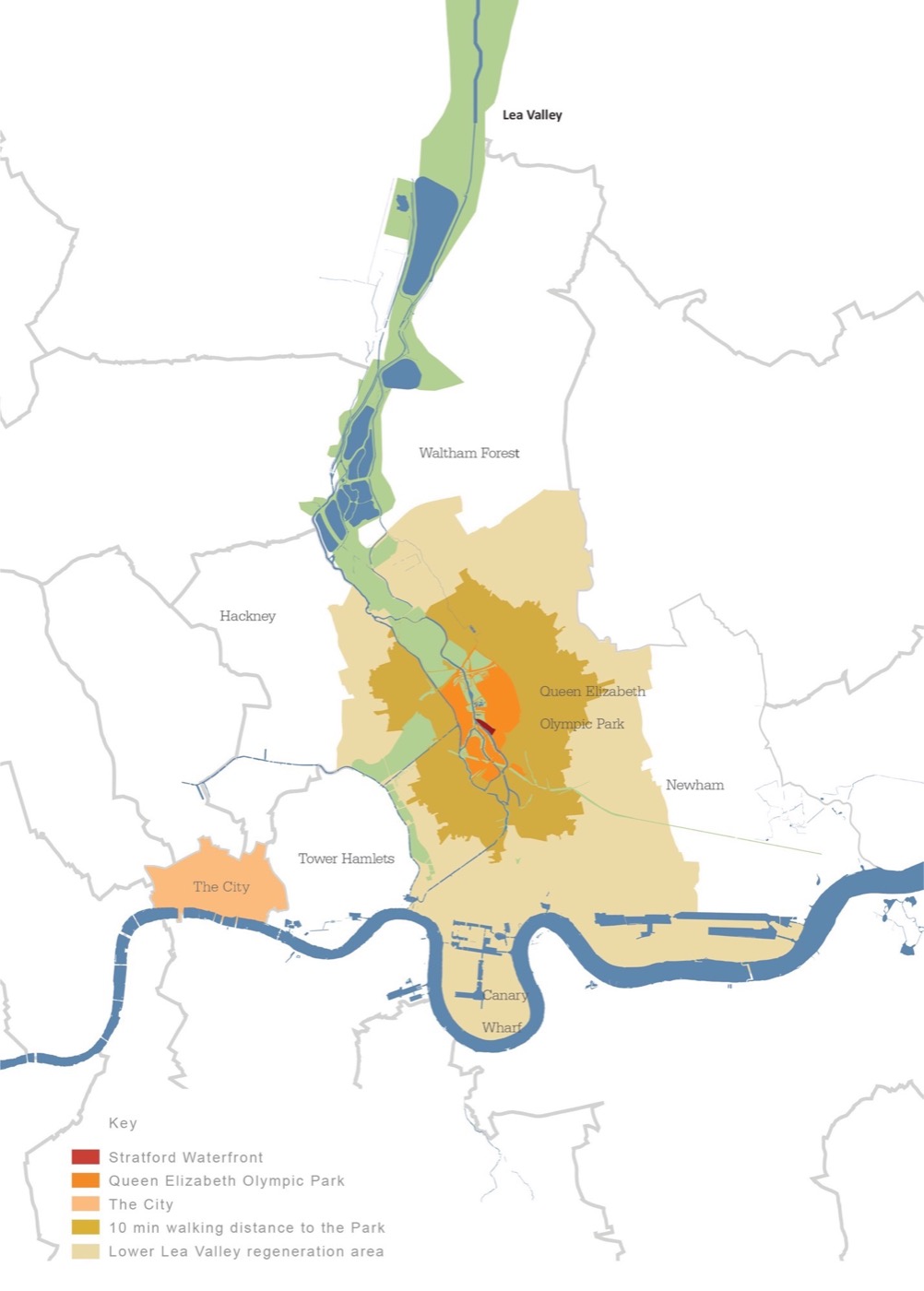
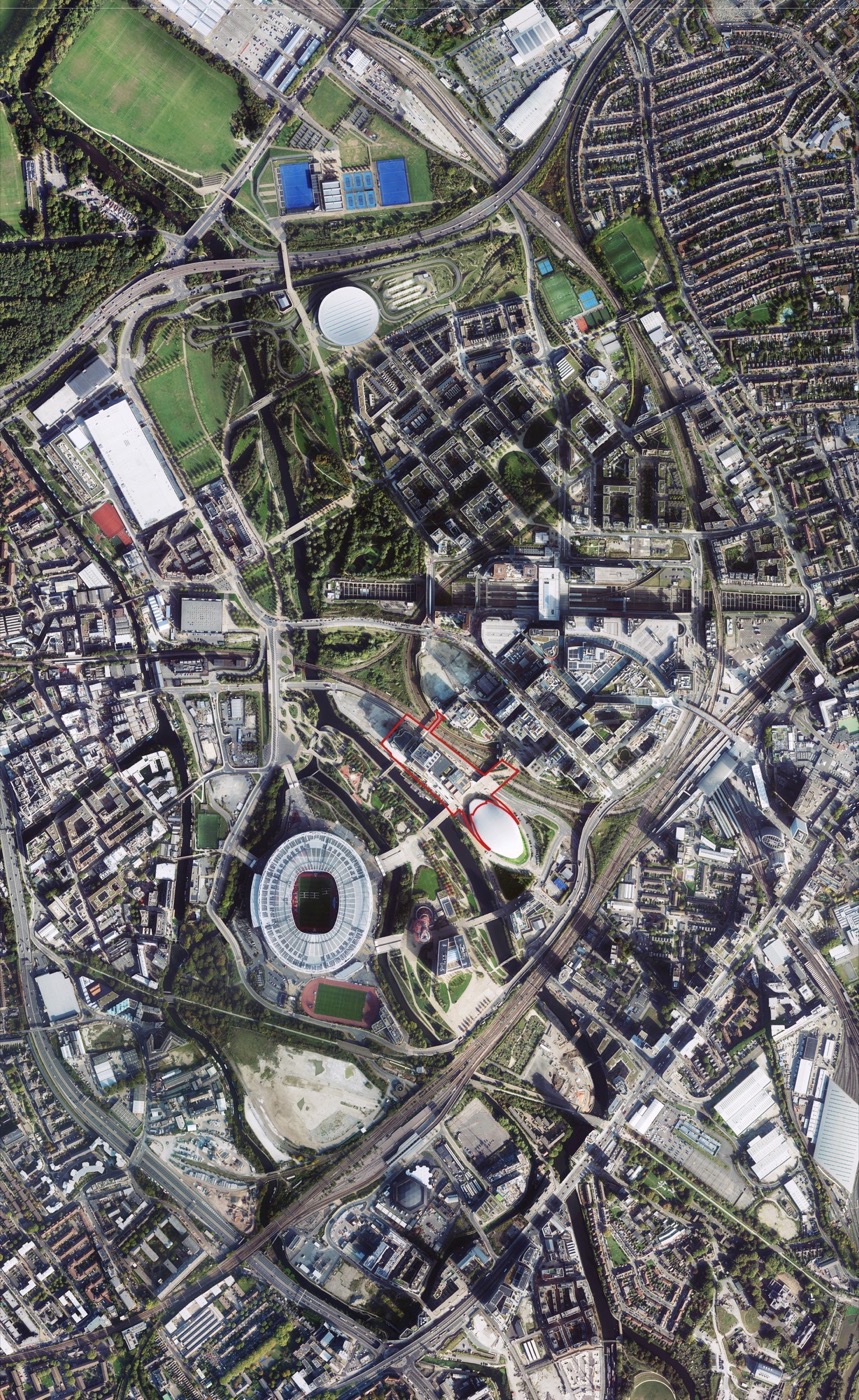
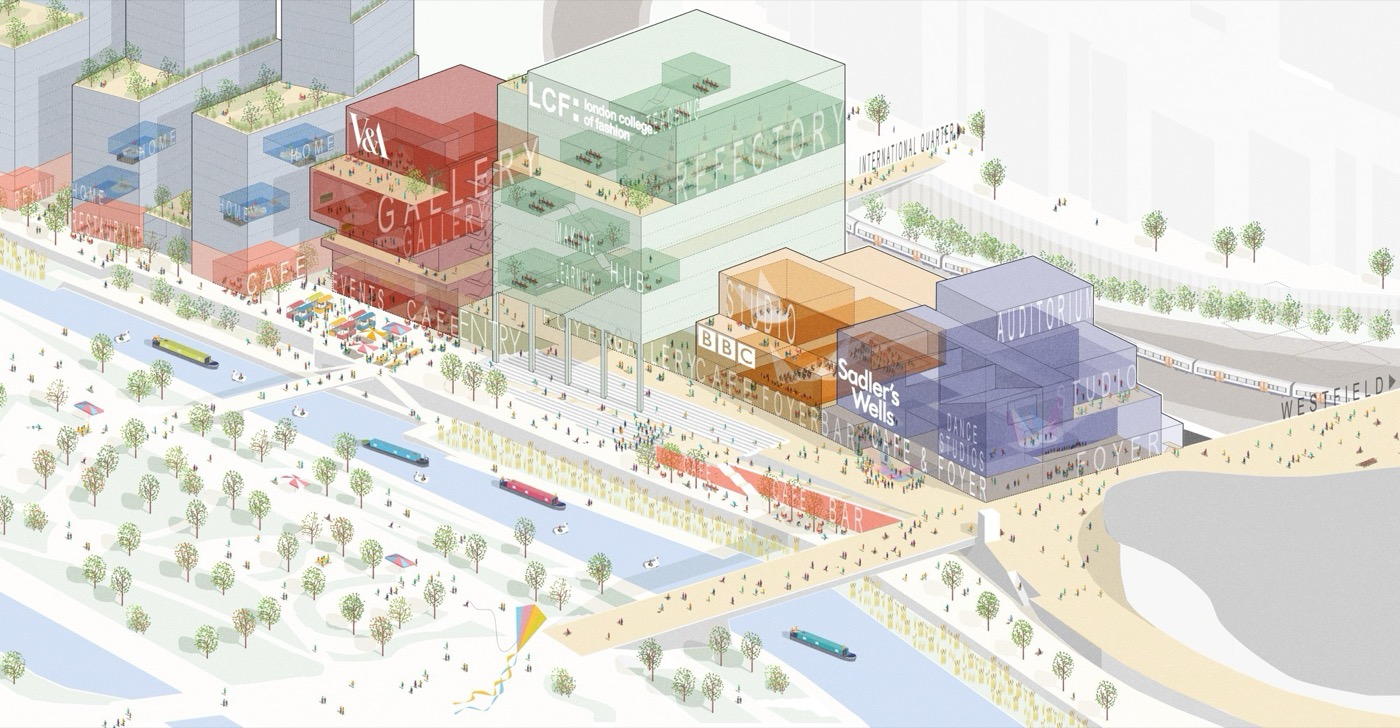
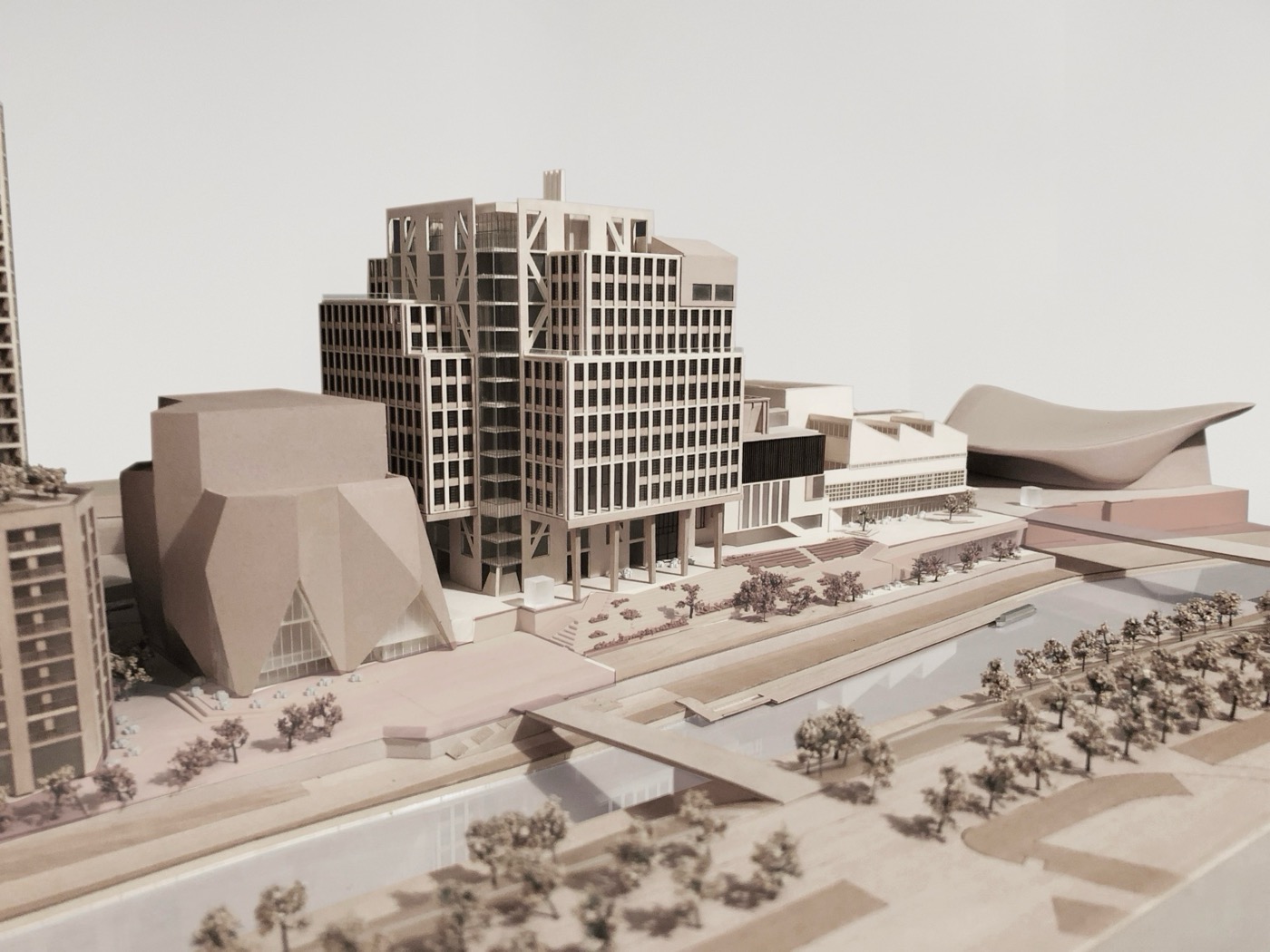
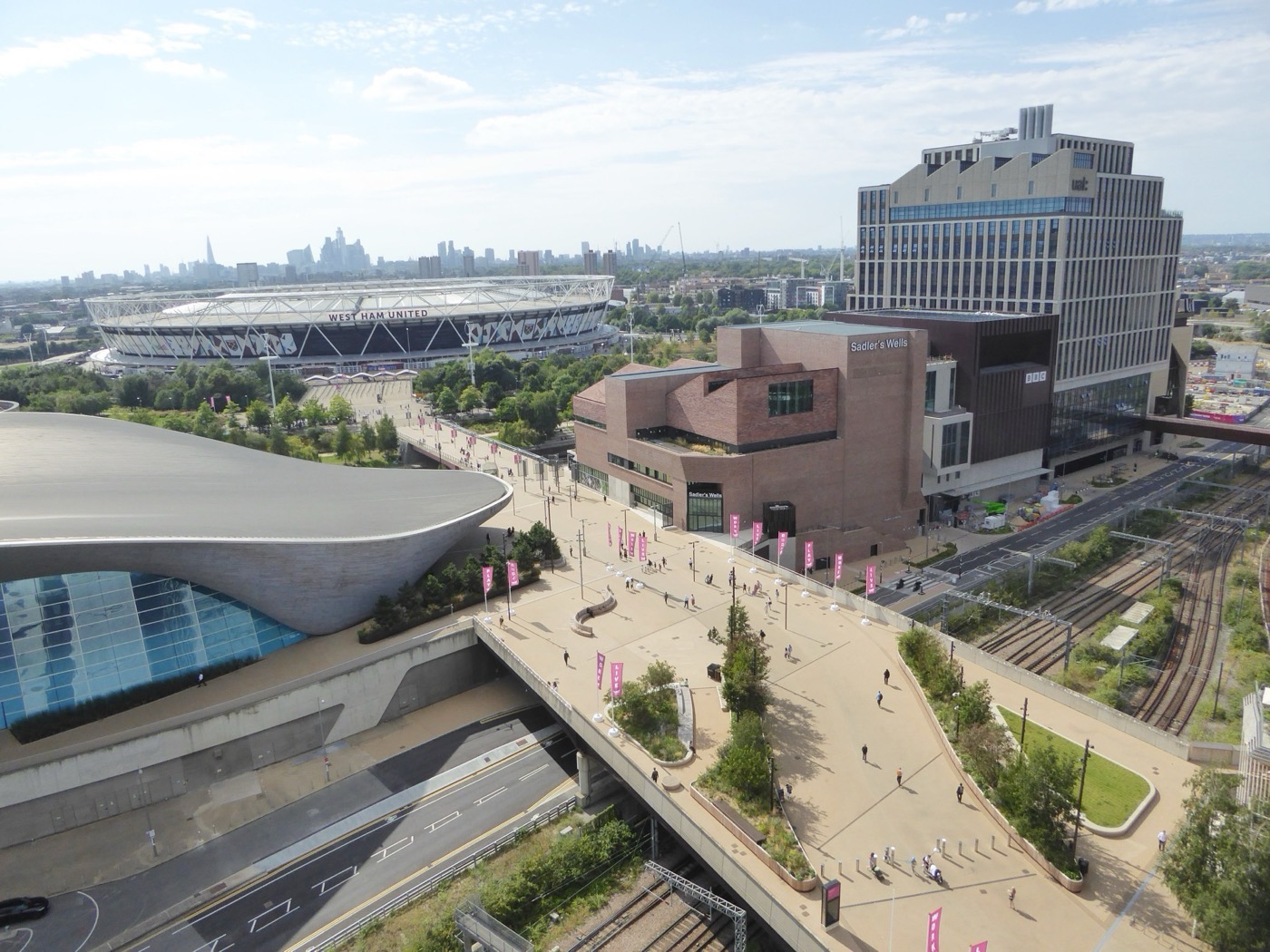
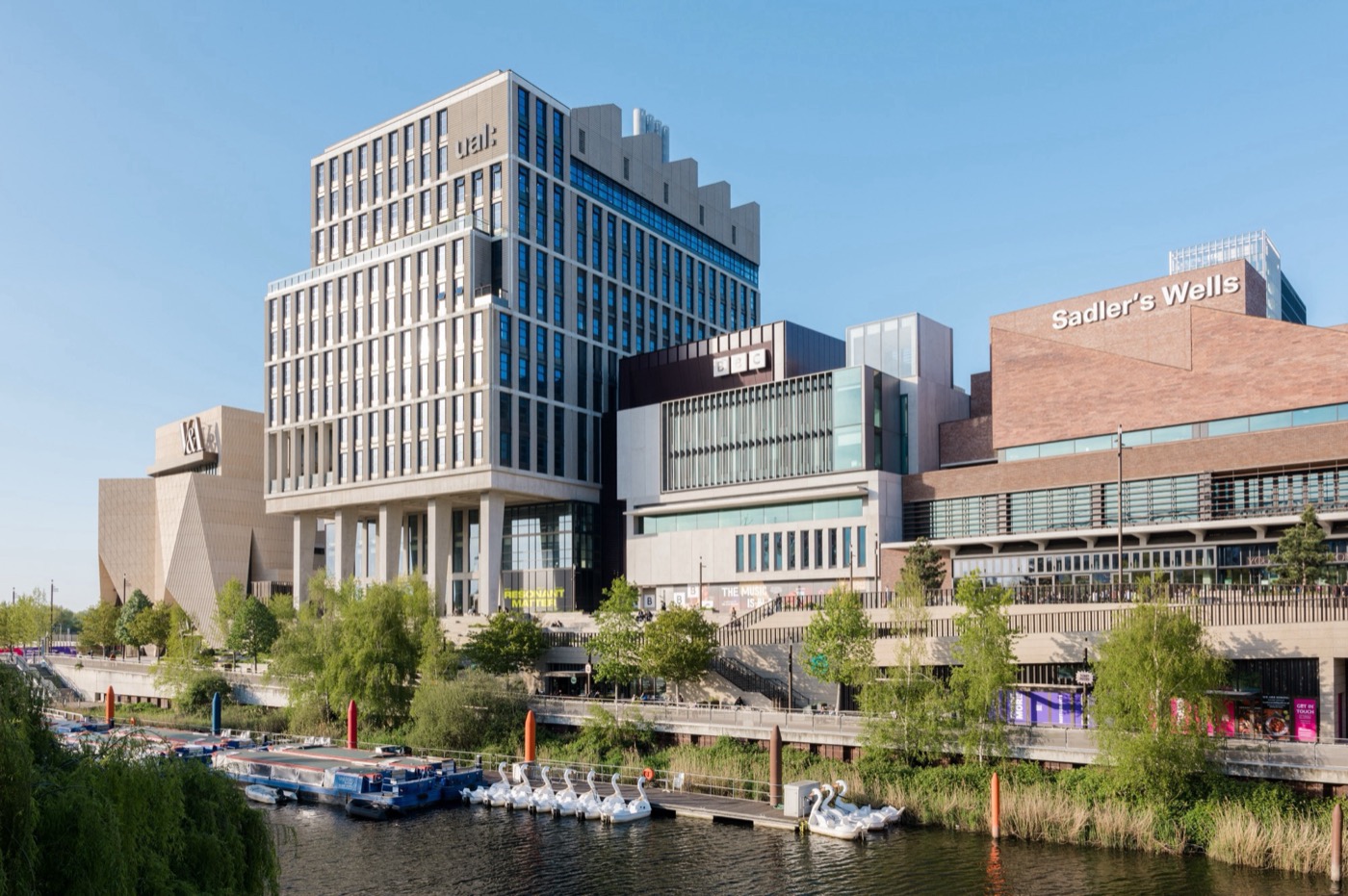
Stratford Waterfront, East Bank, cements Queen Elizabeth Olympic Park’s post-Games legacy. The project brings together world-renowned institutions, V&A East Museum, London College of Fashion, UCL East, BBC Music Studios and Sadler’s Wells East, to form London’s most significant cultural district in 150 years. It is distinctive in every way, with public space that is an active and unifying ingredient.
East Bank’s ambition is bold: to mix education and culture in novel ways to engage and benefit younger and local audiences, creating a new ecosystem with the potential to change lives. All of the institutions are committed to broadening their appeal, with V&A East Museum, for example, targeting 18 to 30 year olds.
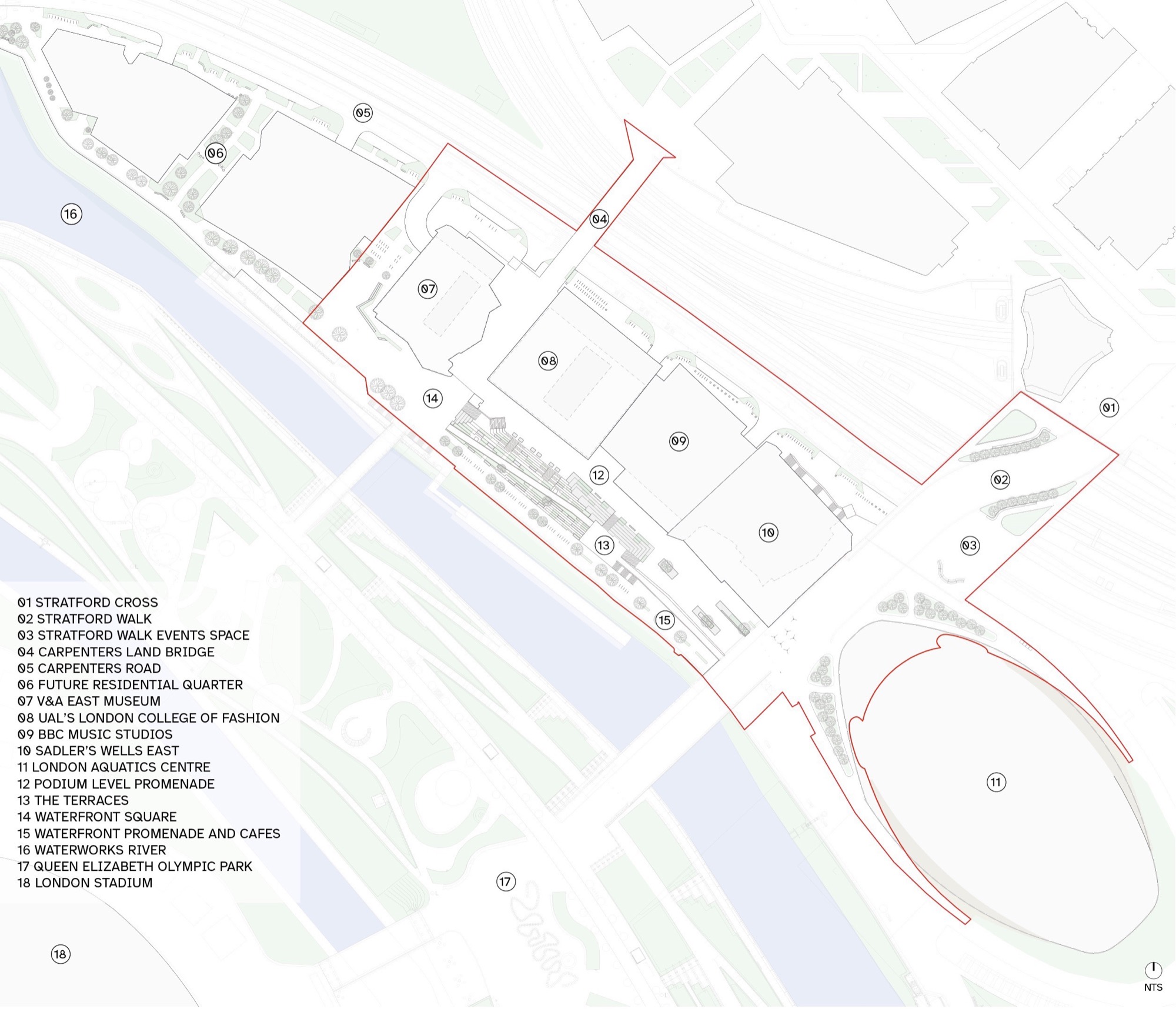
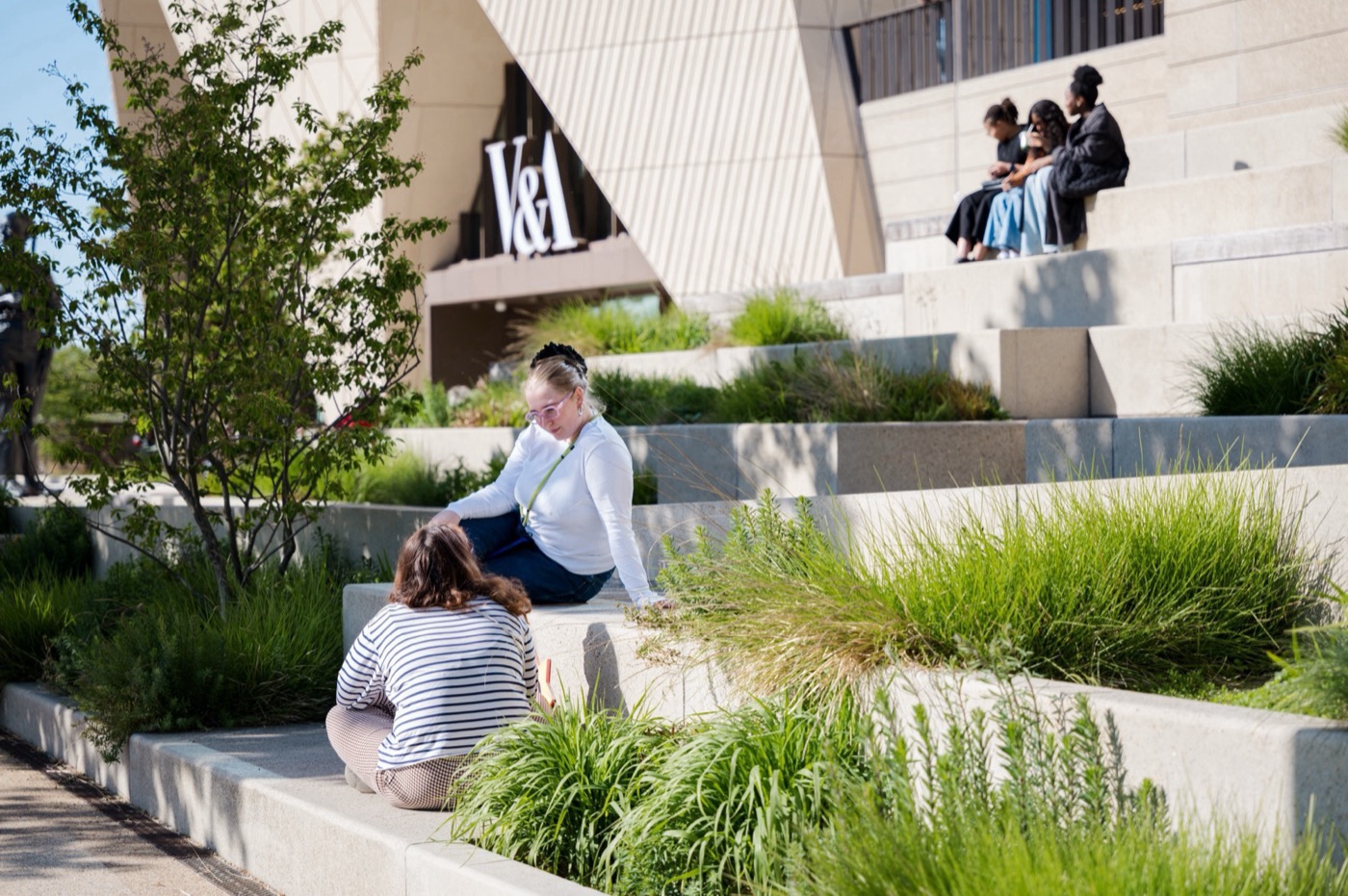
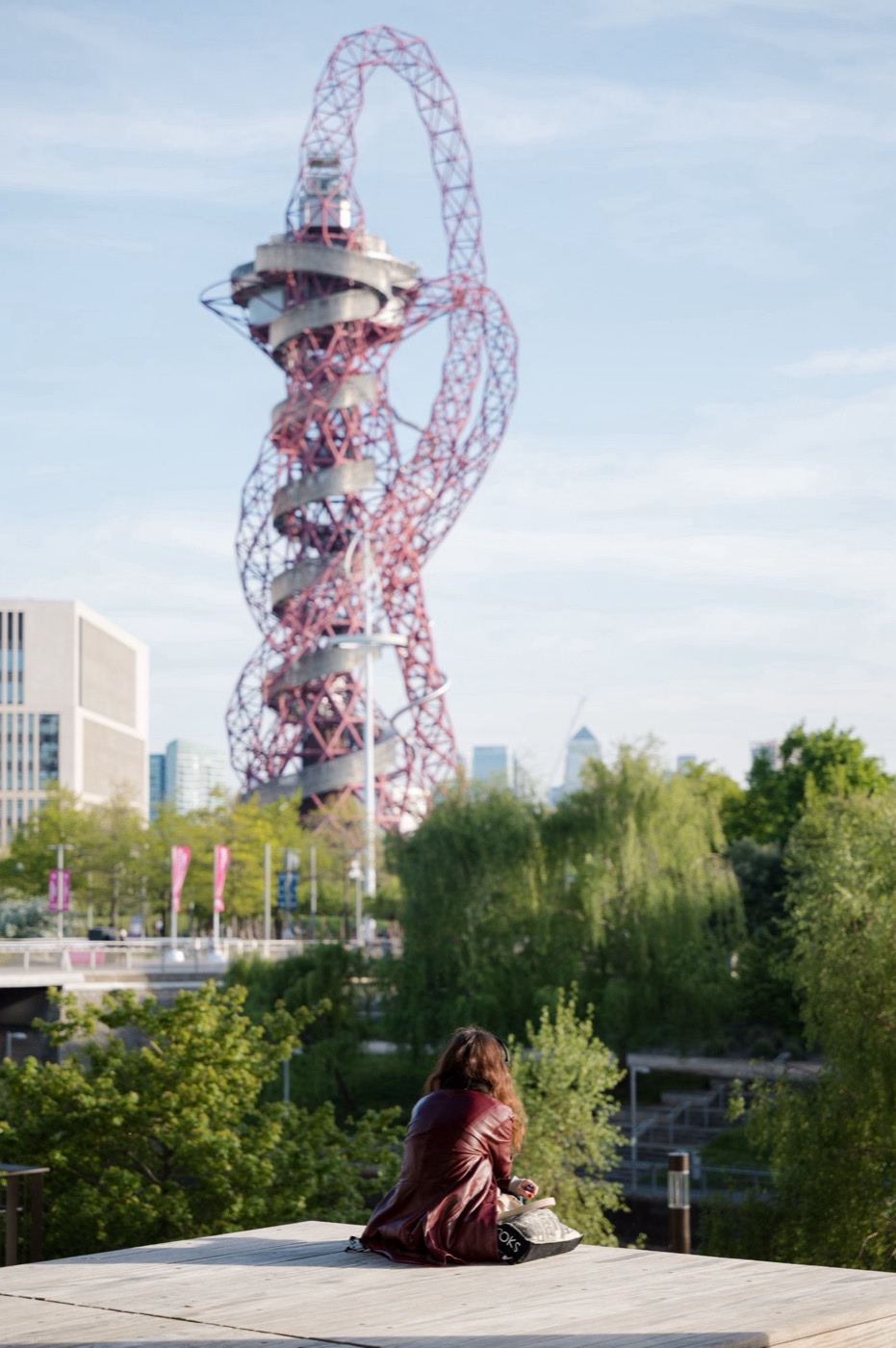
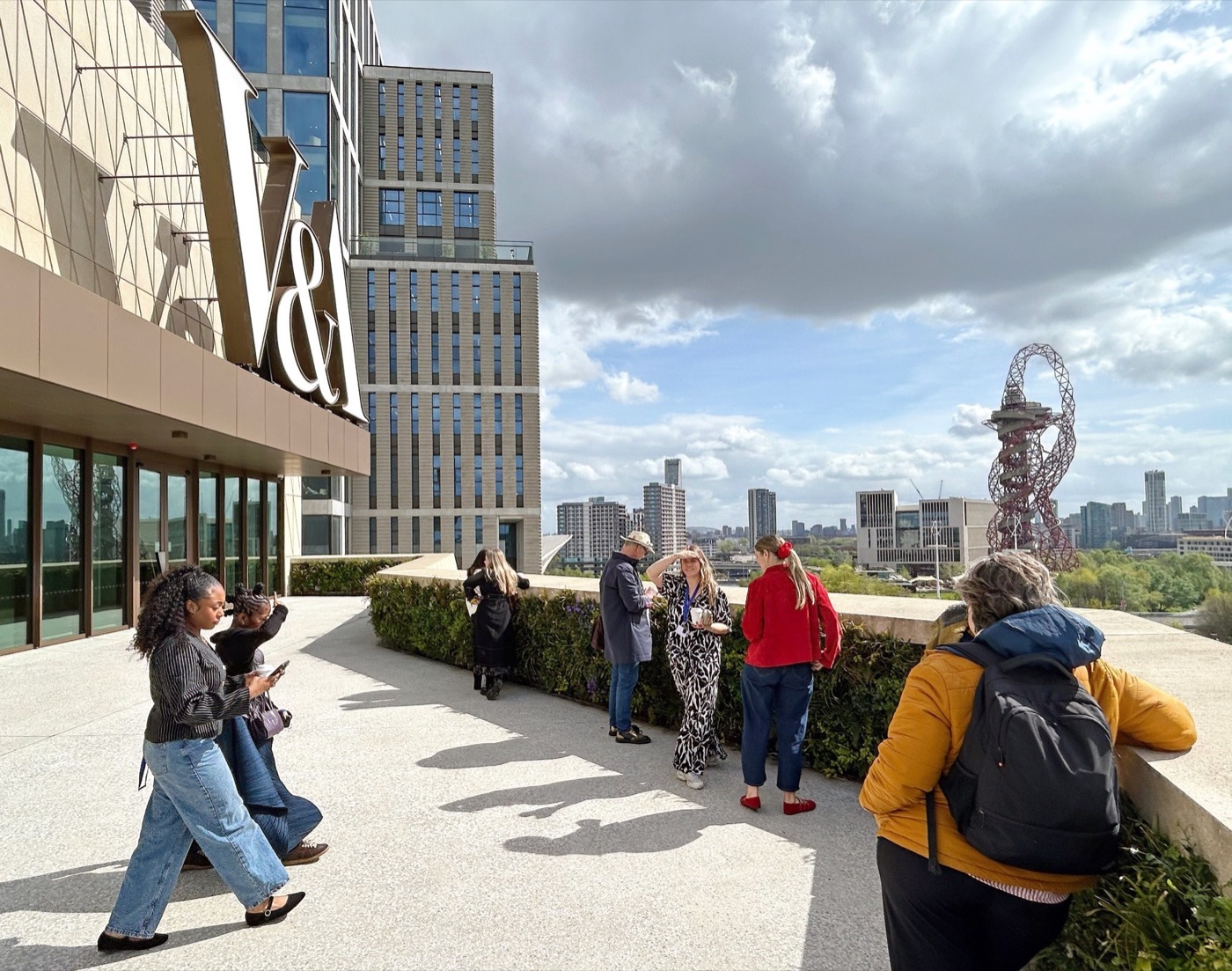
This new piece of city is quickly becoming a destination so compelling that it is rebalancing London, drawing people east. Over one hectare of public realm is designed using biophilic principles. This has created a flexible canvas that can support diverse events, establishing a unique relationship between performer, spectator and setting. The public terrace at V&A East Museum is already a city highlight.
It is hard to remember that before the 2012 Games, this place was scarred with heavily polluted waterways and a mountain of dumped fridges.
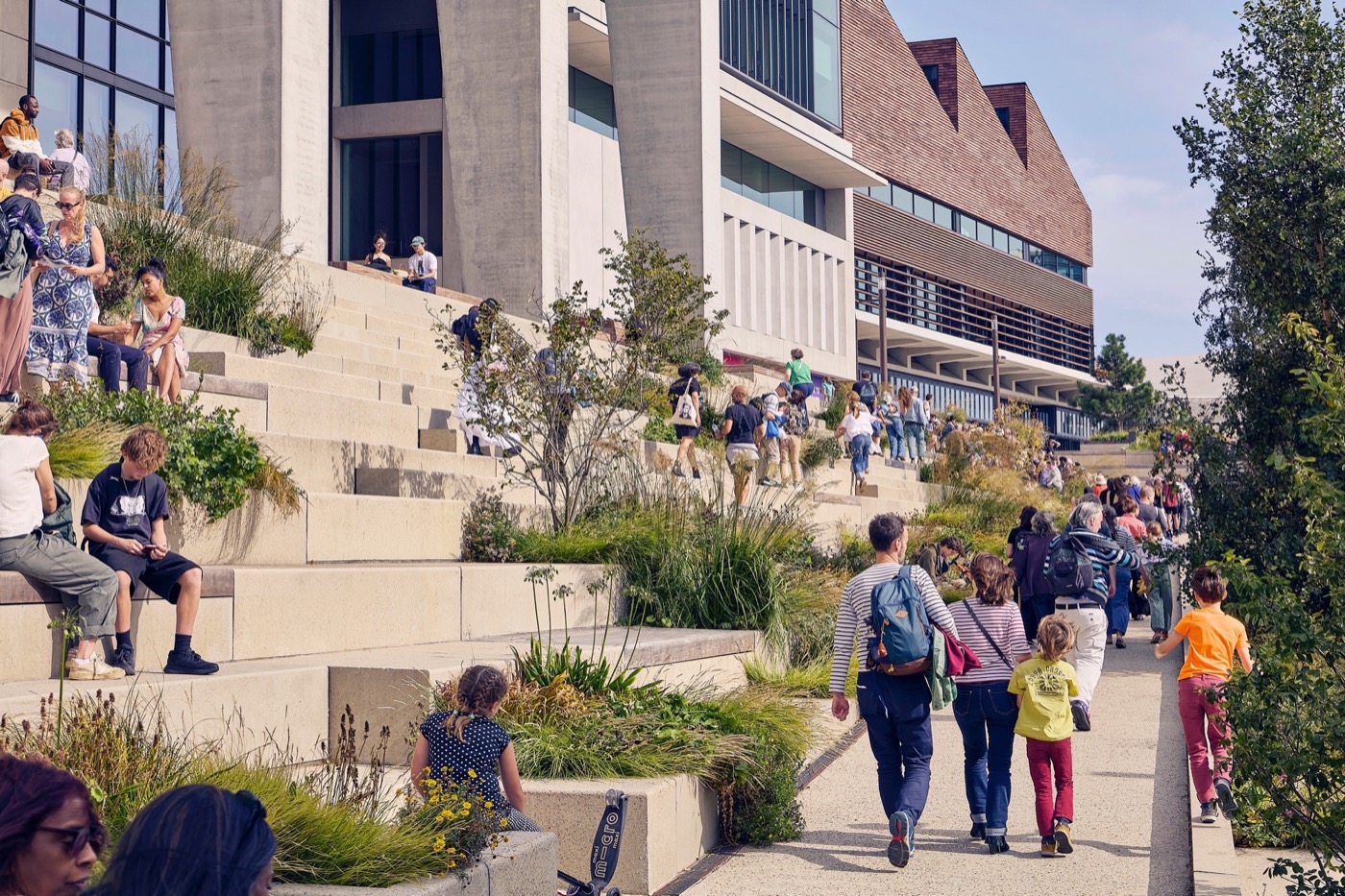
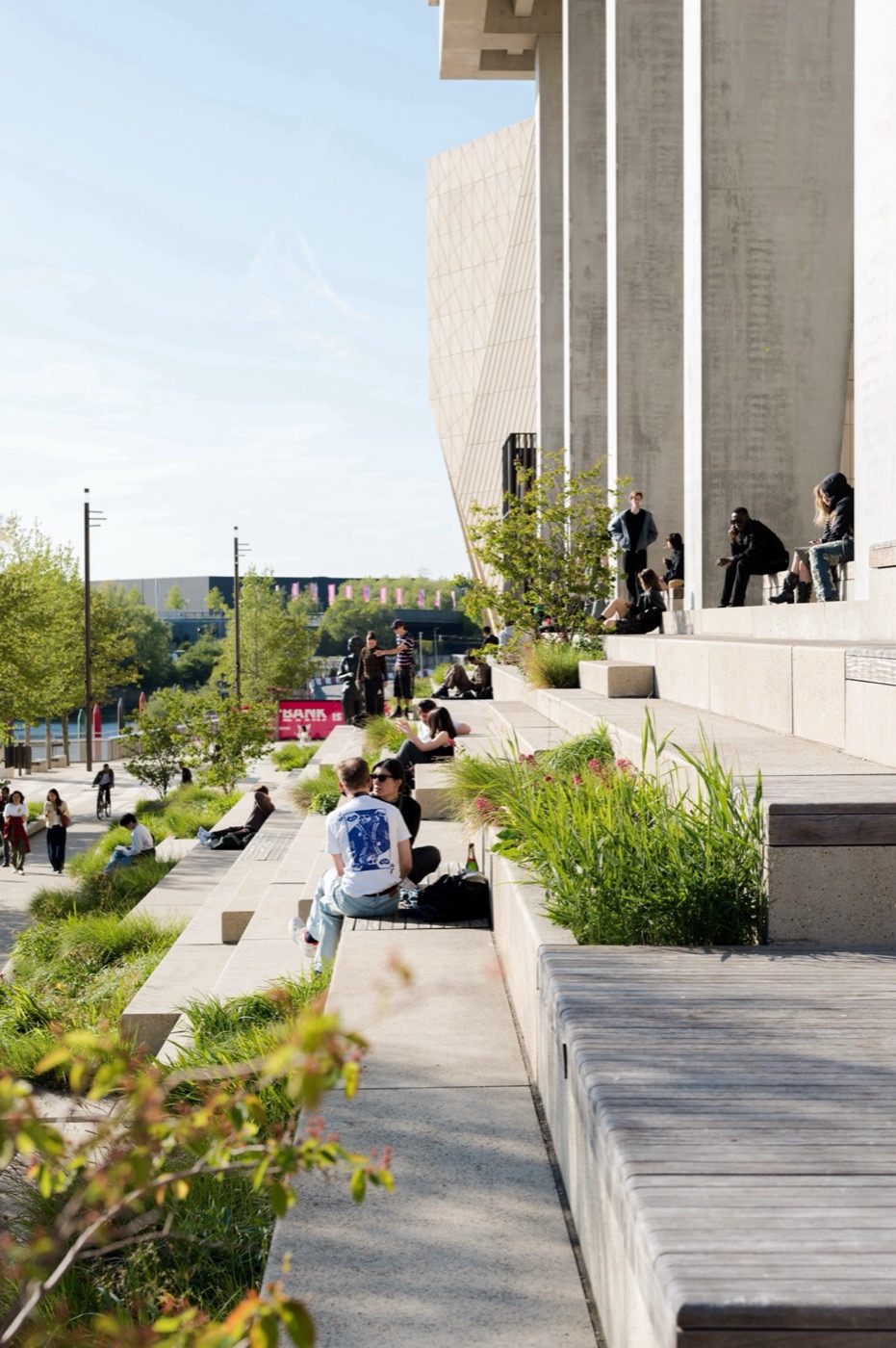
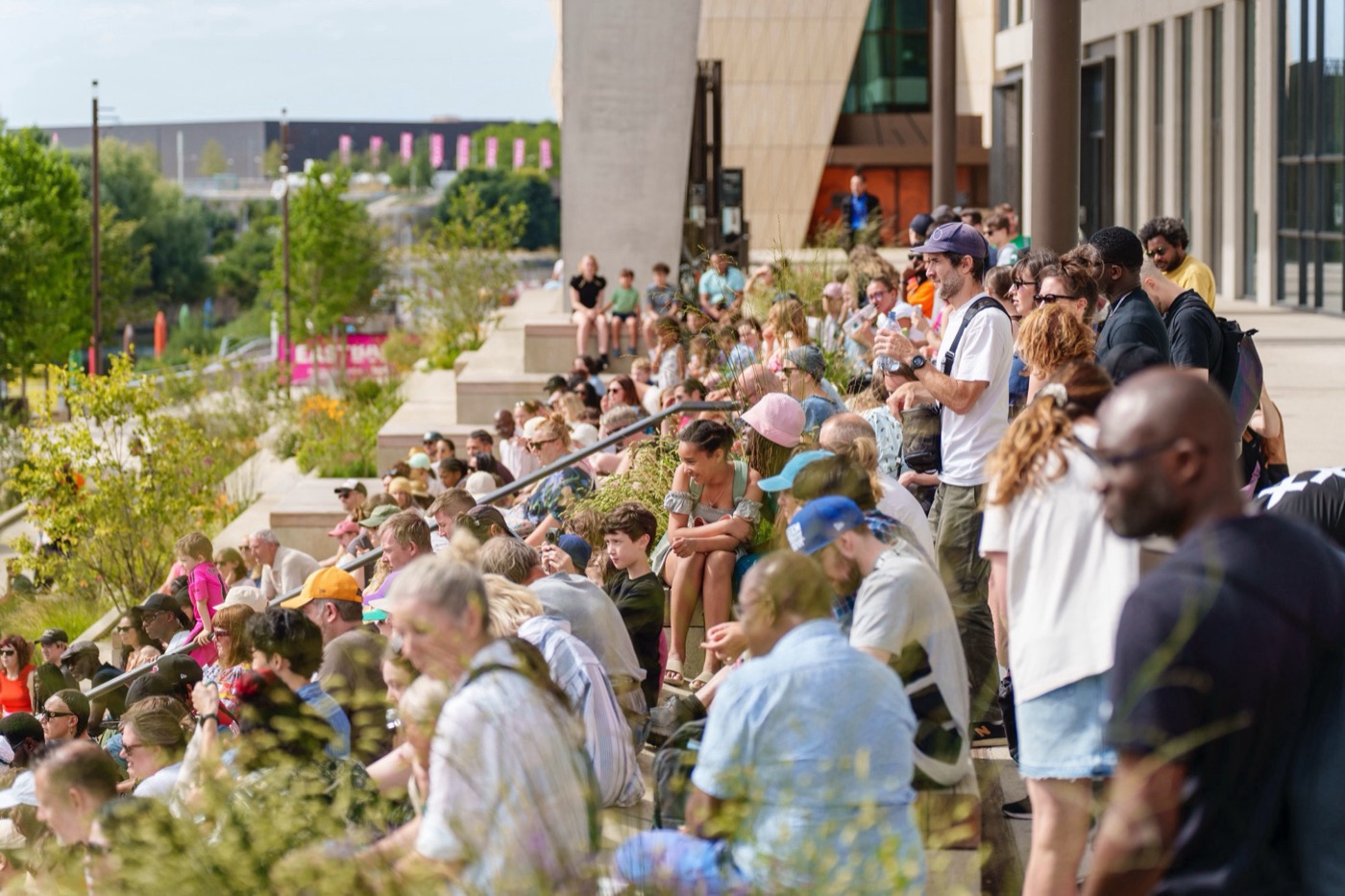
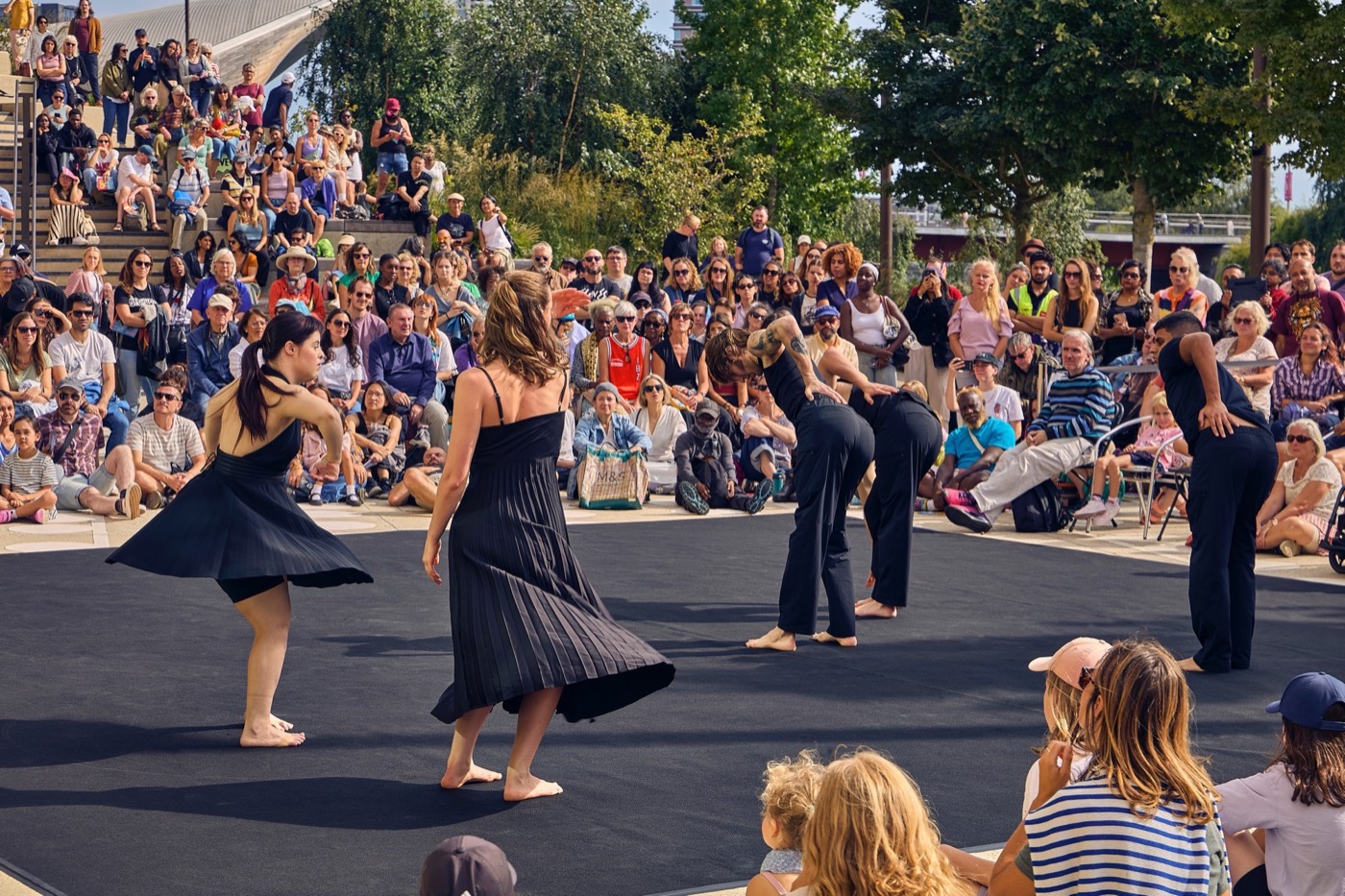
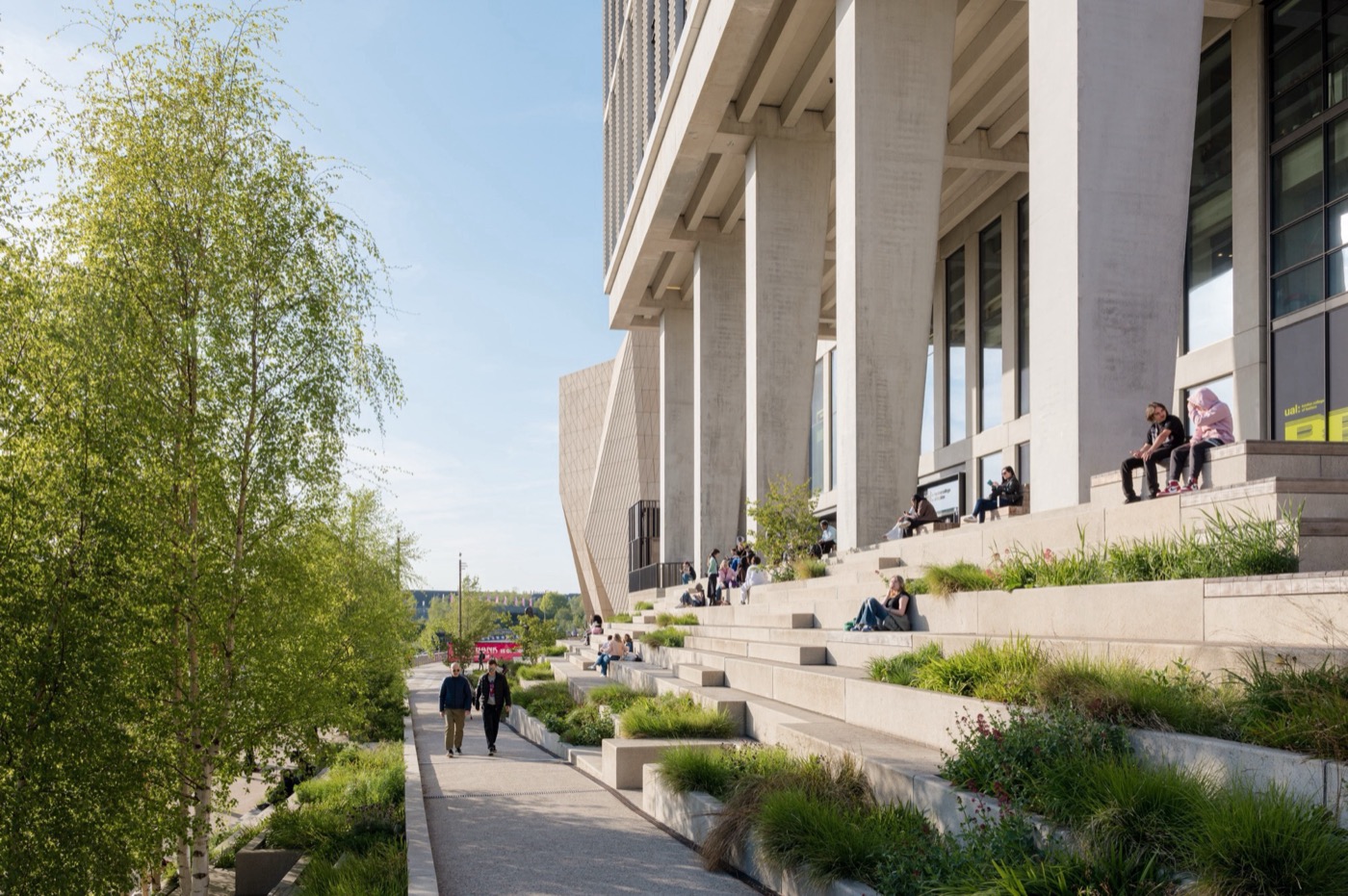
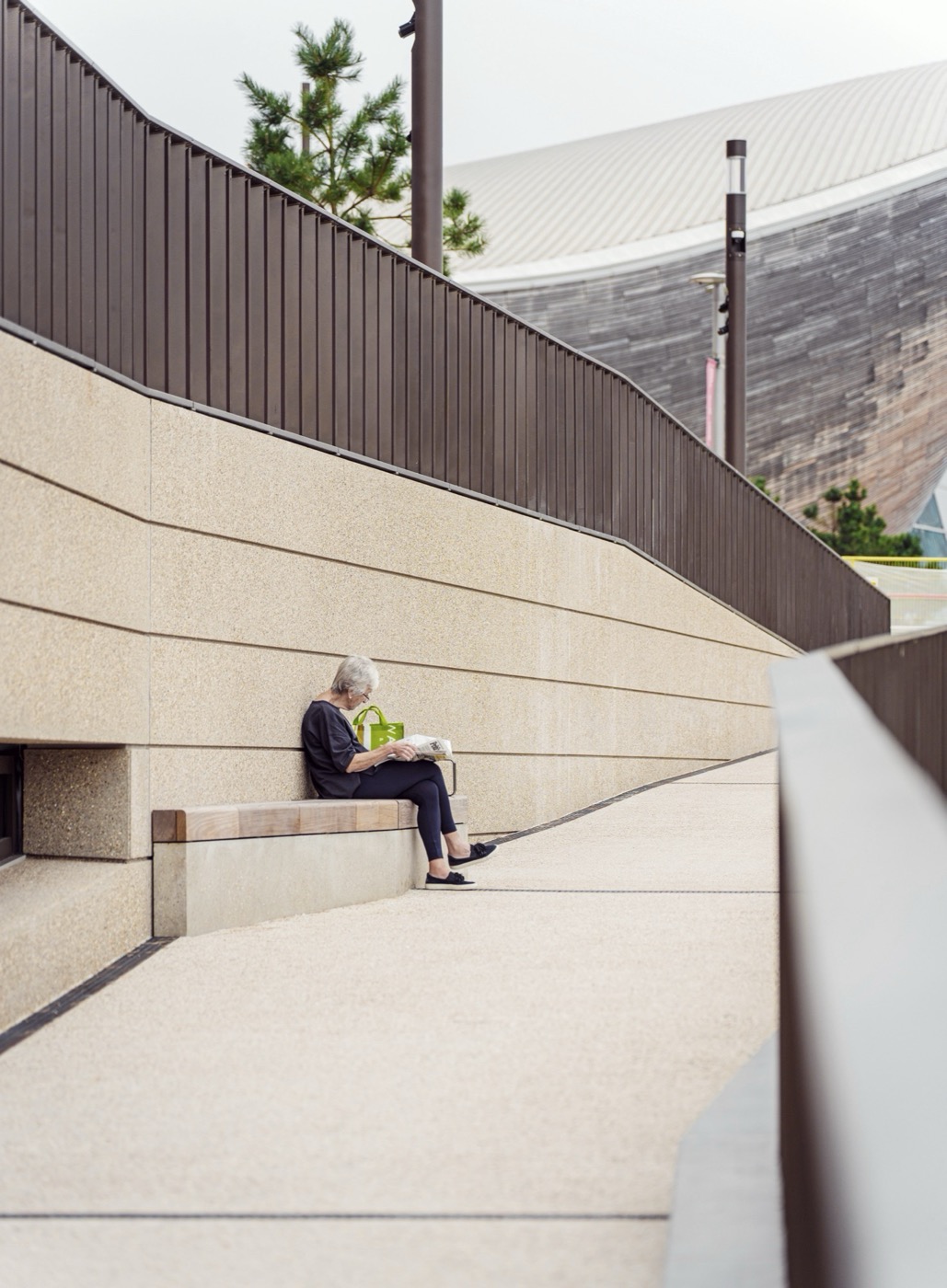
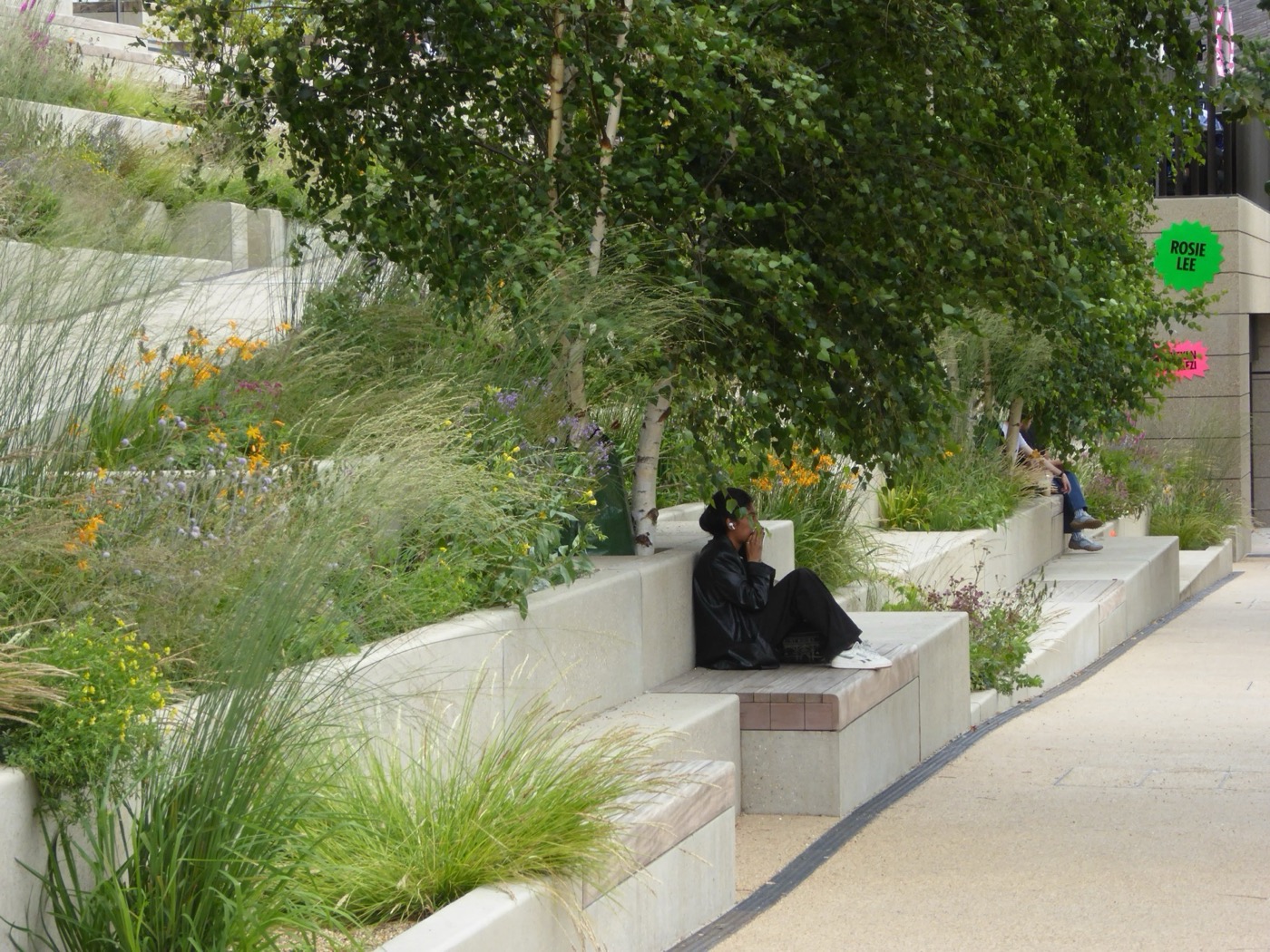
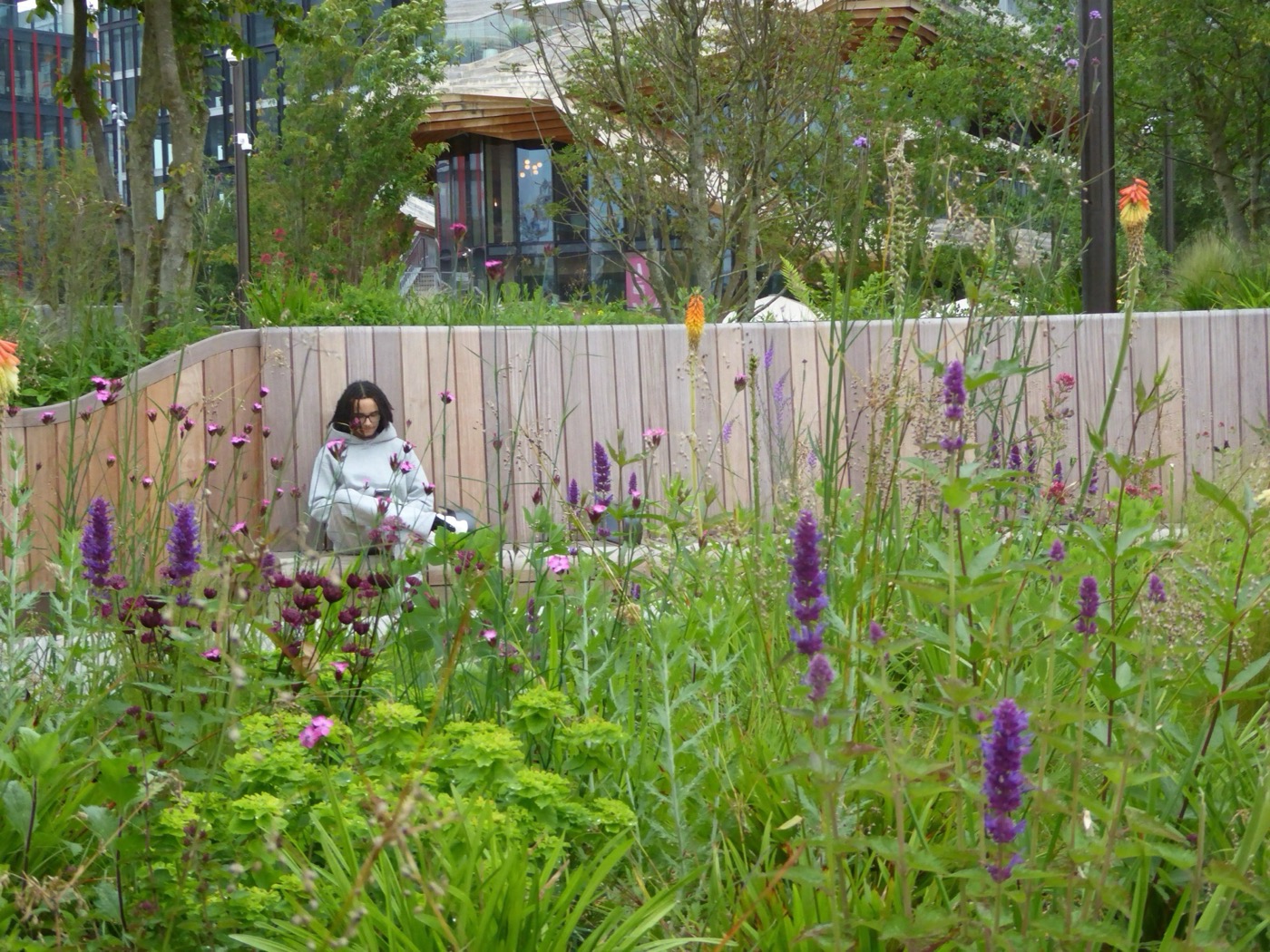
Design & Innovation
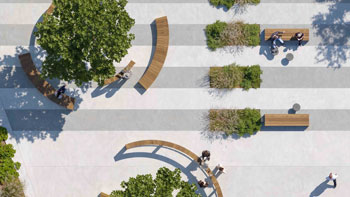
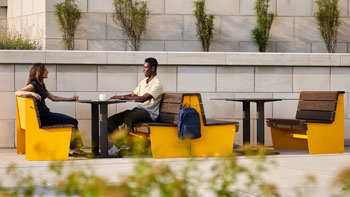
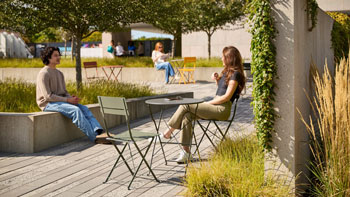
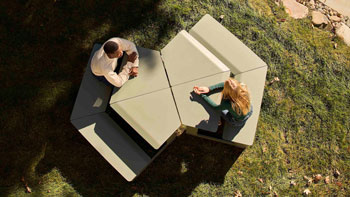
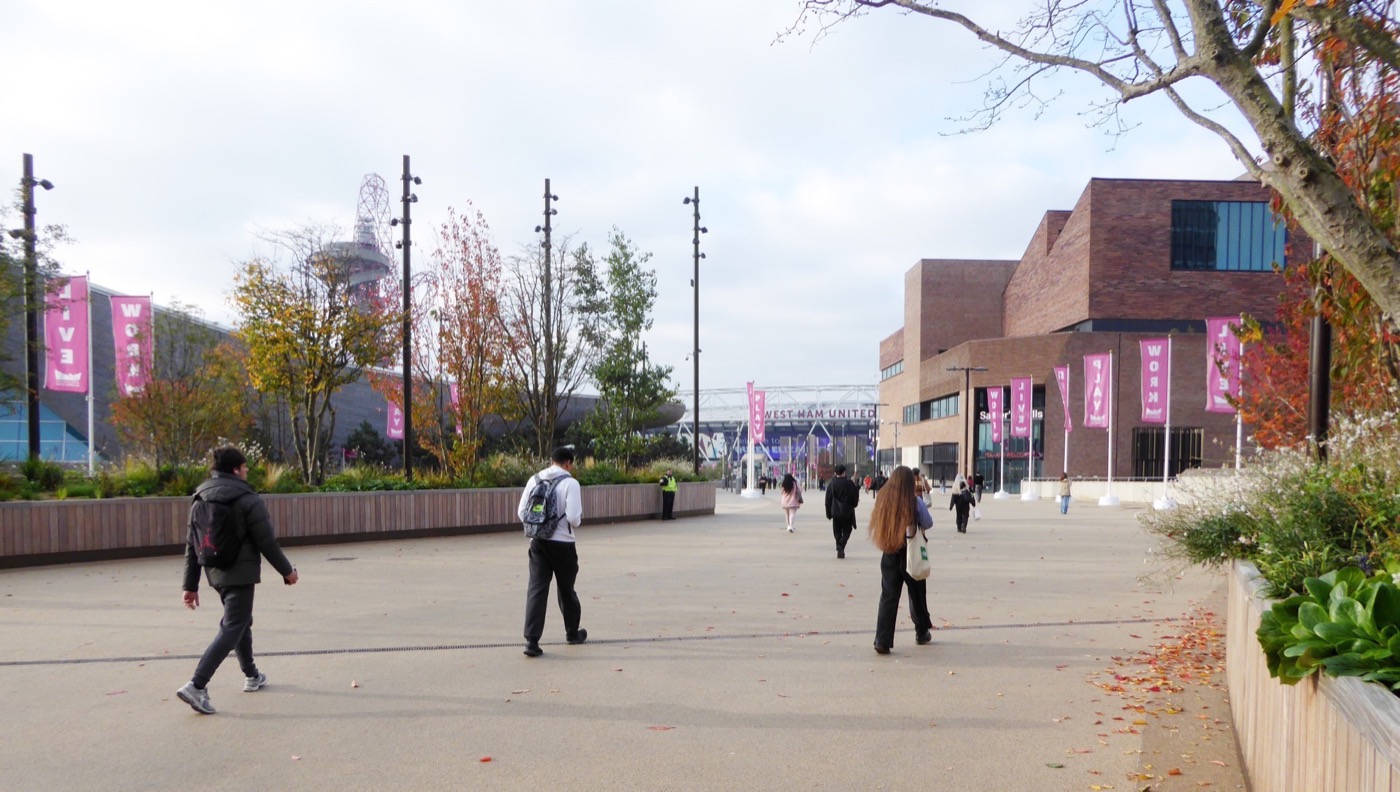
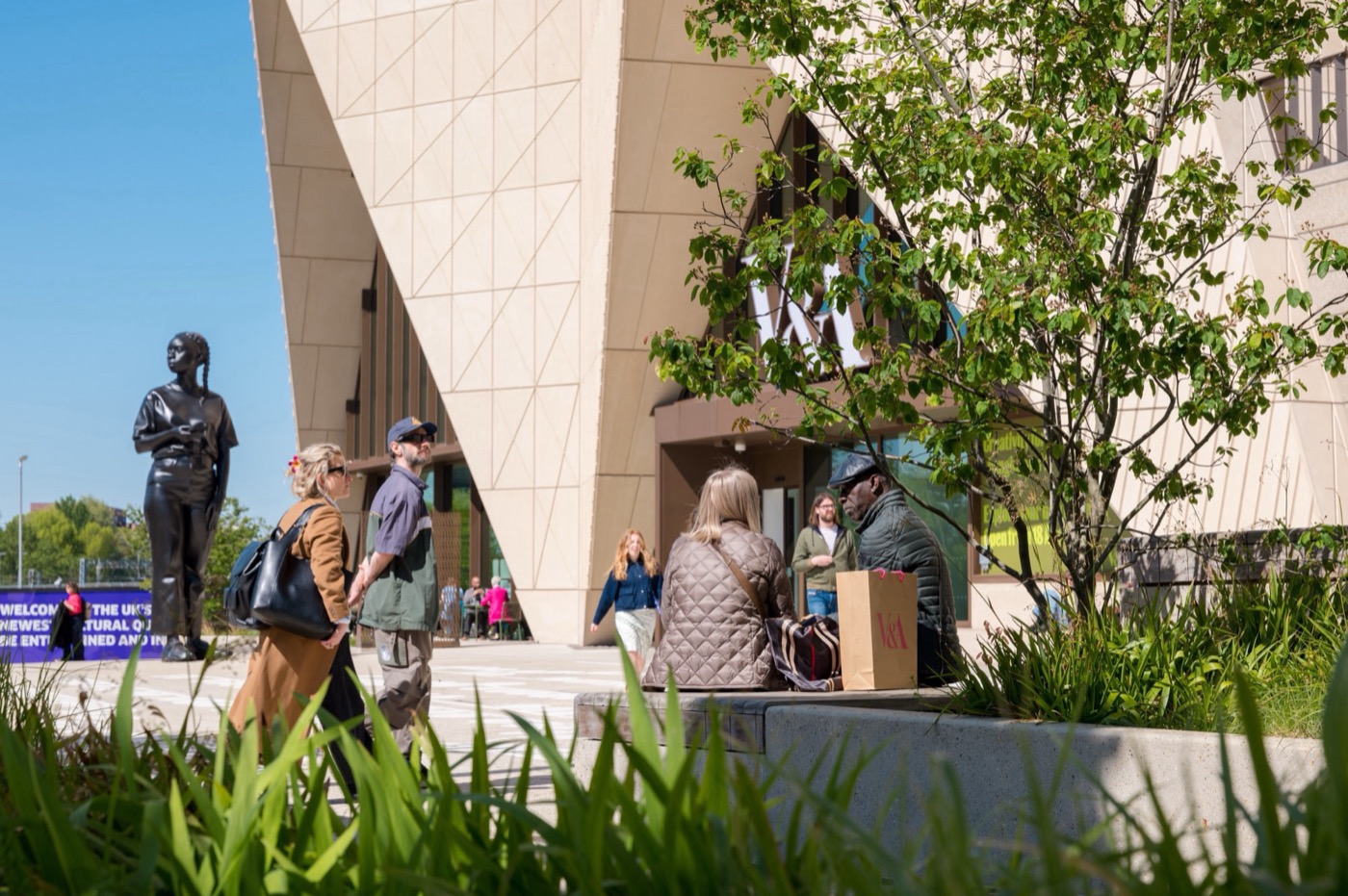
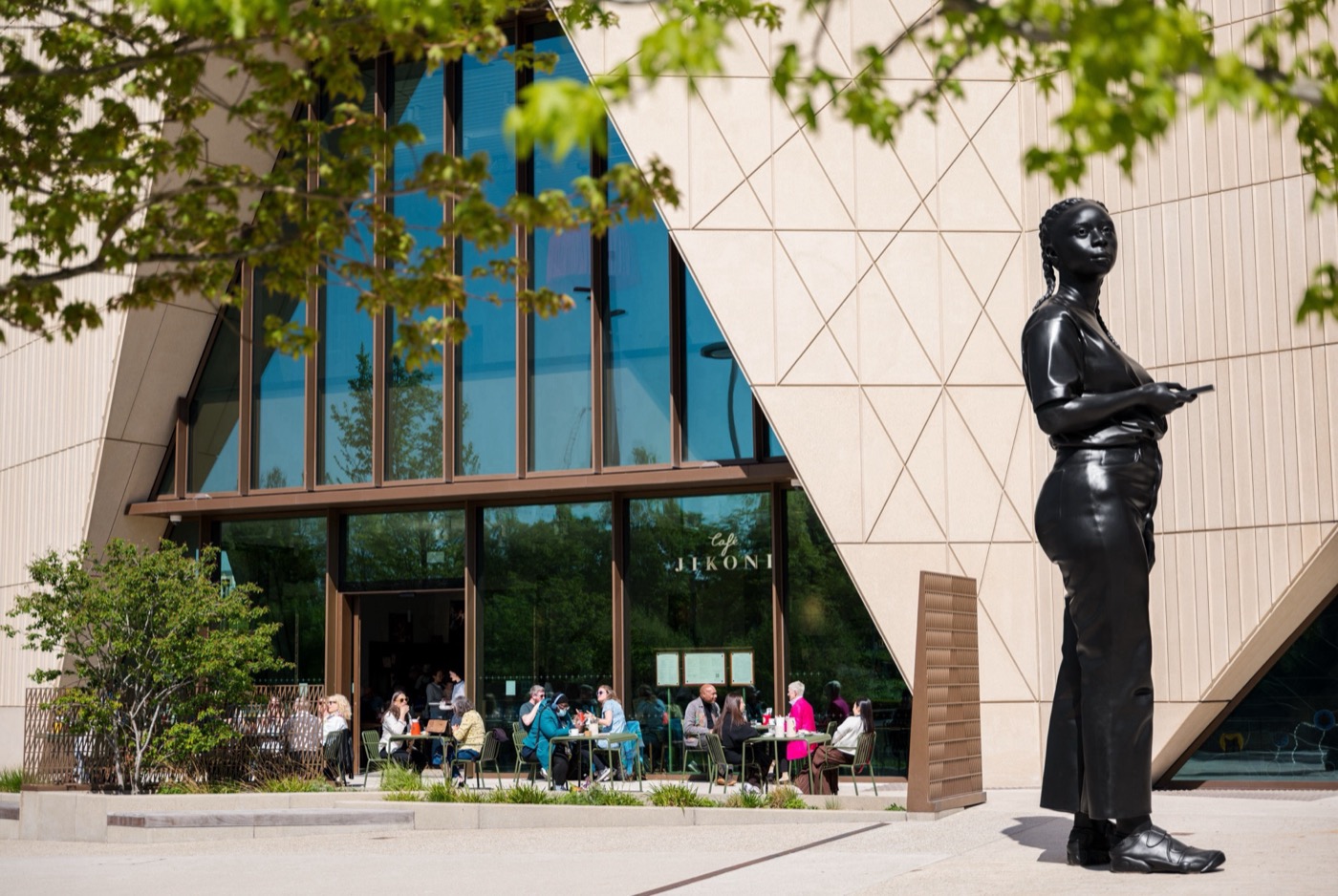
The public realm, uniting the four distinct institutions on Stratford Waterfront, has been described as a modern-day agora democratising the arts. It was designed as a ‘common ground’, a dynamic, biodiverse gathering place hosting art, performance and culture for the public. It features a year-round programme of free events, currently including ‘The Music Is Black’ festival, a collaboration involving all institutions.
An innovative, multifunctional design works hard to resolve complexity and constraint. Meeting these challenges shaped the development’s footprint and character. The landscape succeeds in uniting the shoulder-to-shoulder institutions, whilst taking inspiration from the Lea Valley’s legacy of industry, making and creativity. Movement from buildings into the public realm is fluid, with activated, community-focussed ground floors.
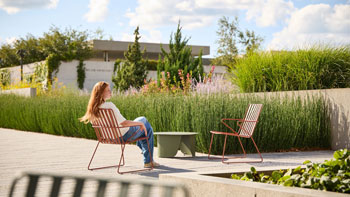
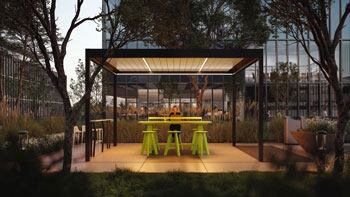
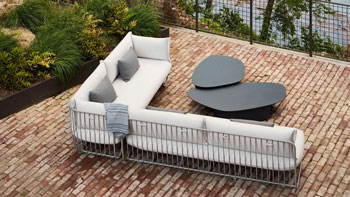
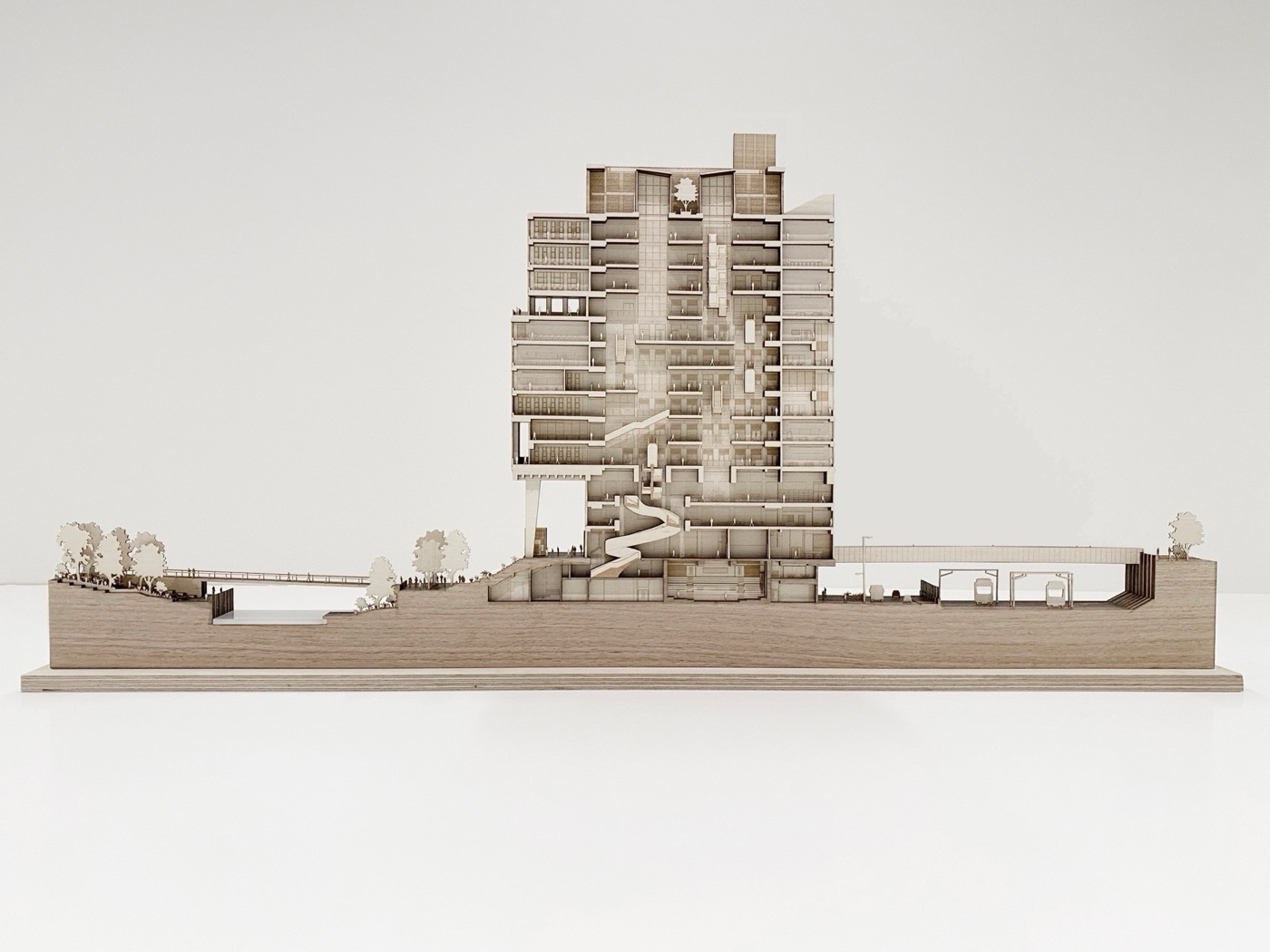
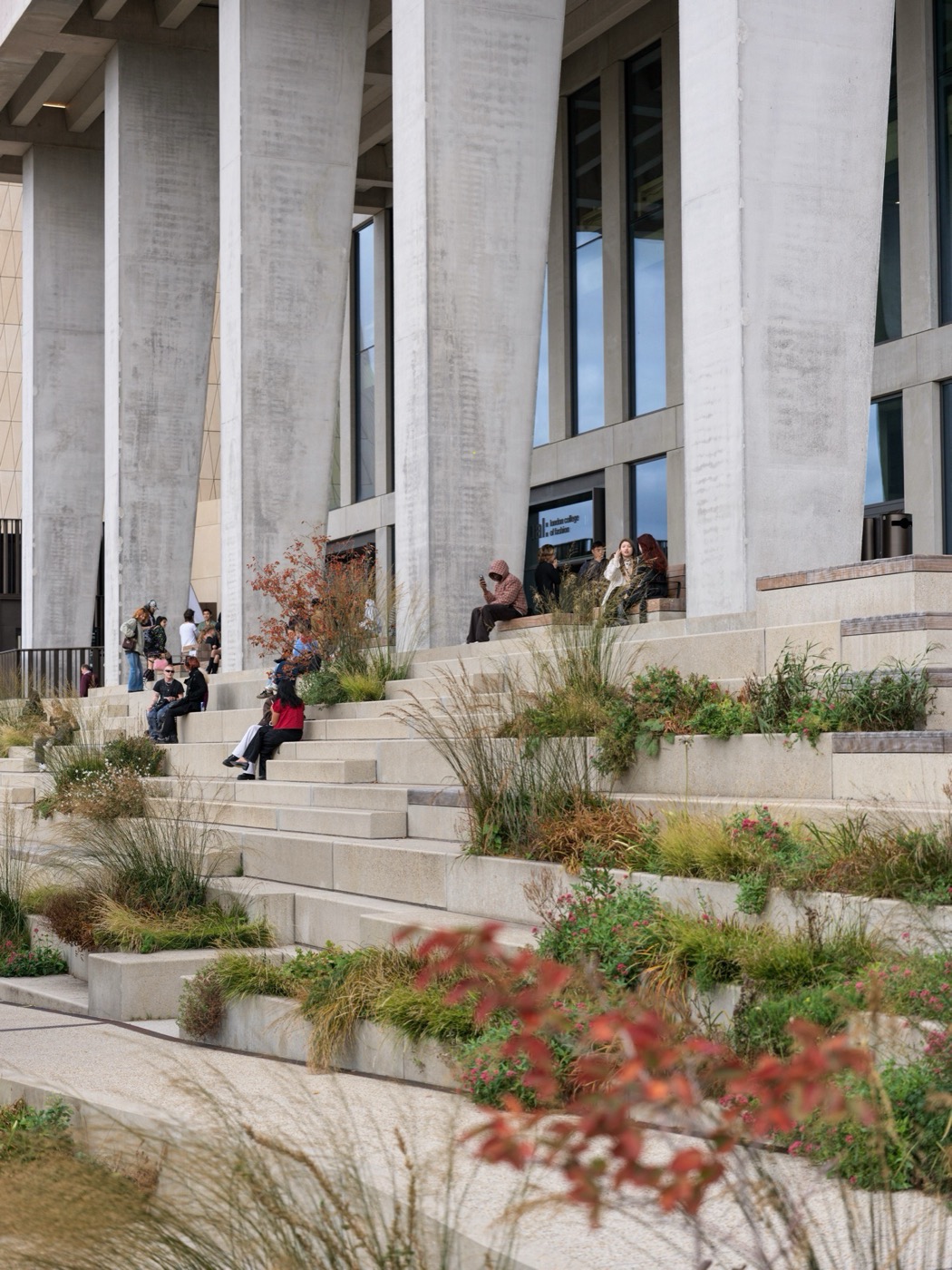
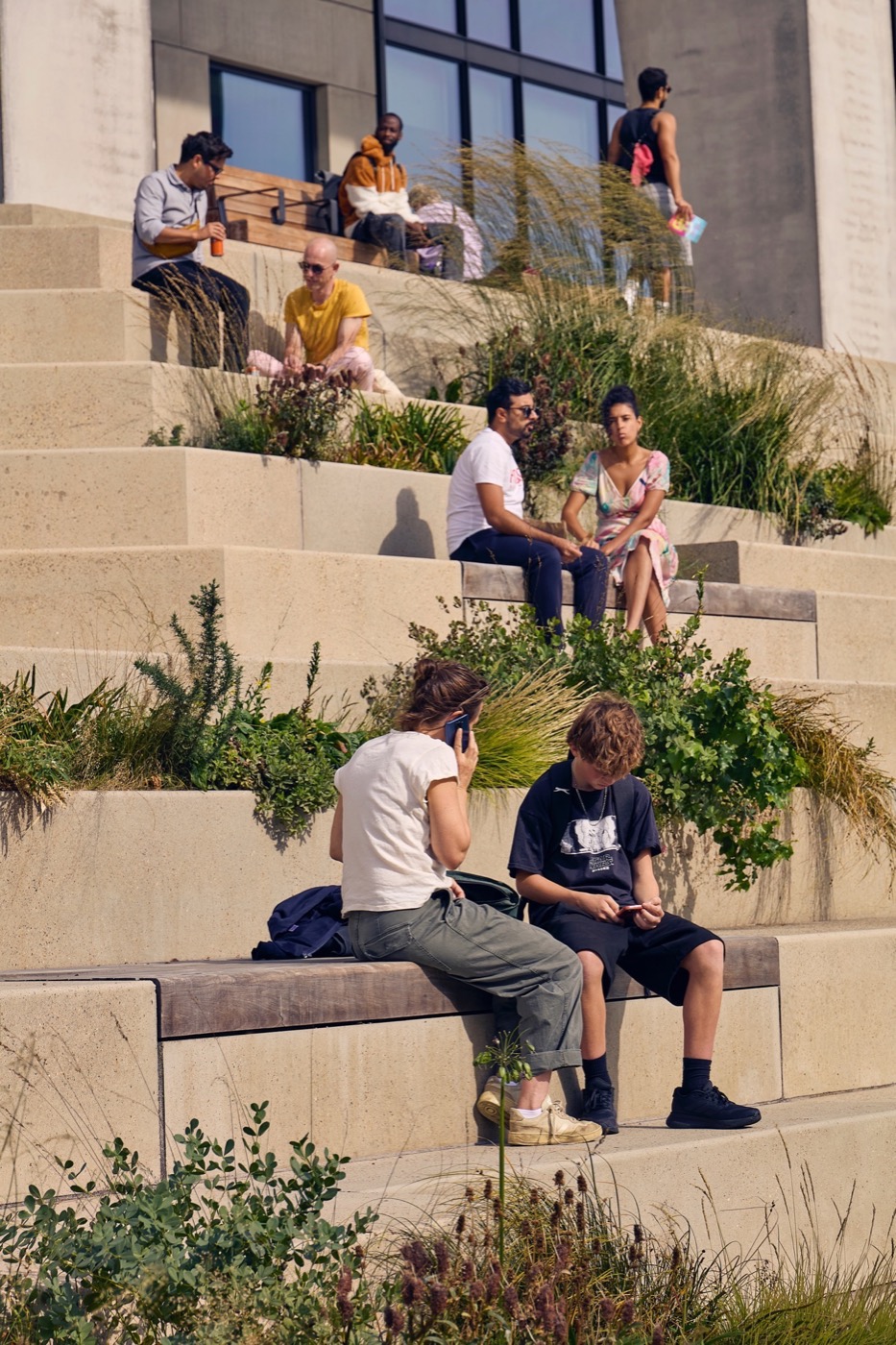
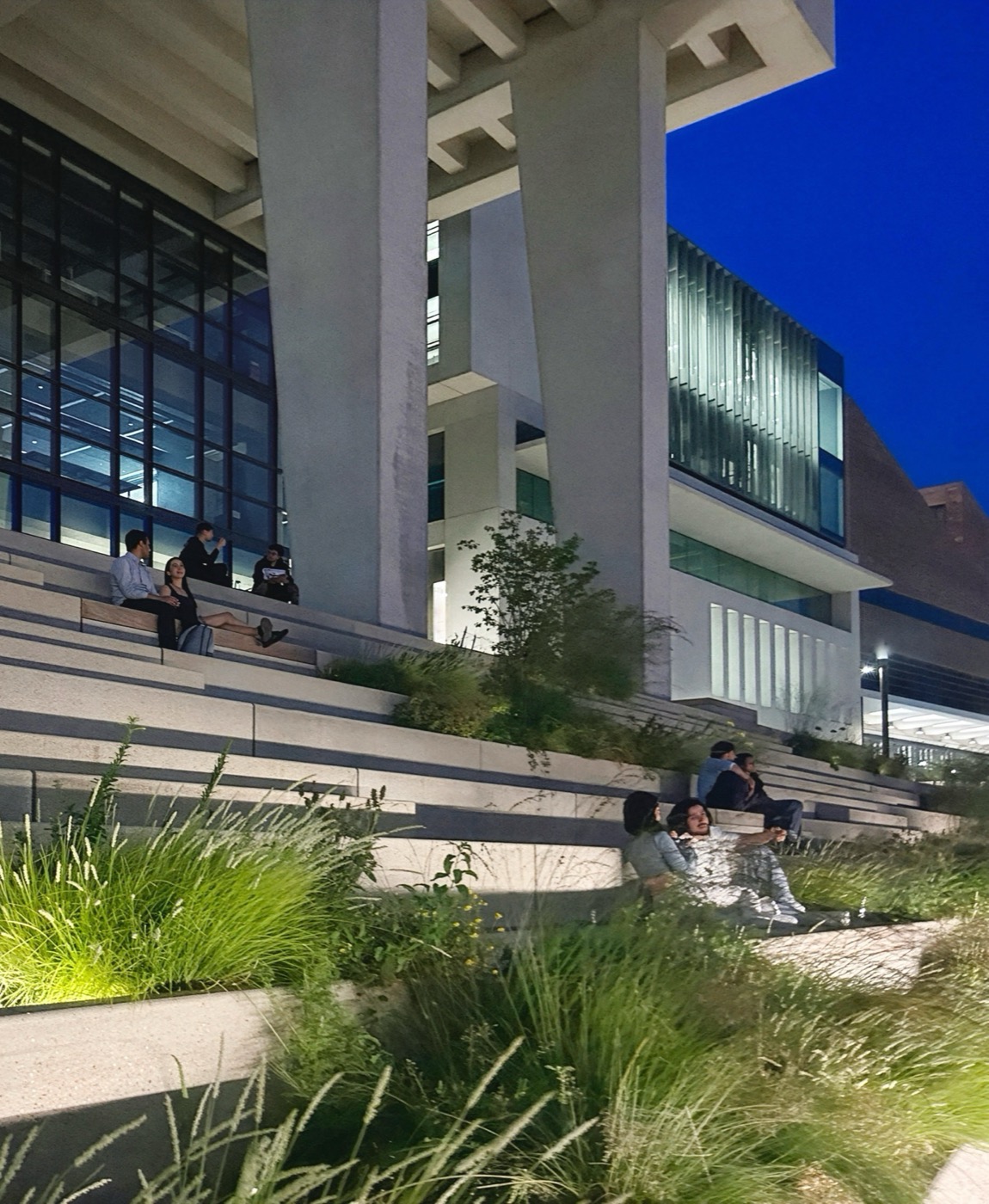
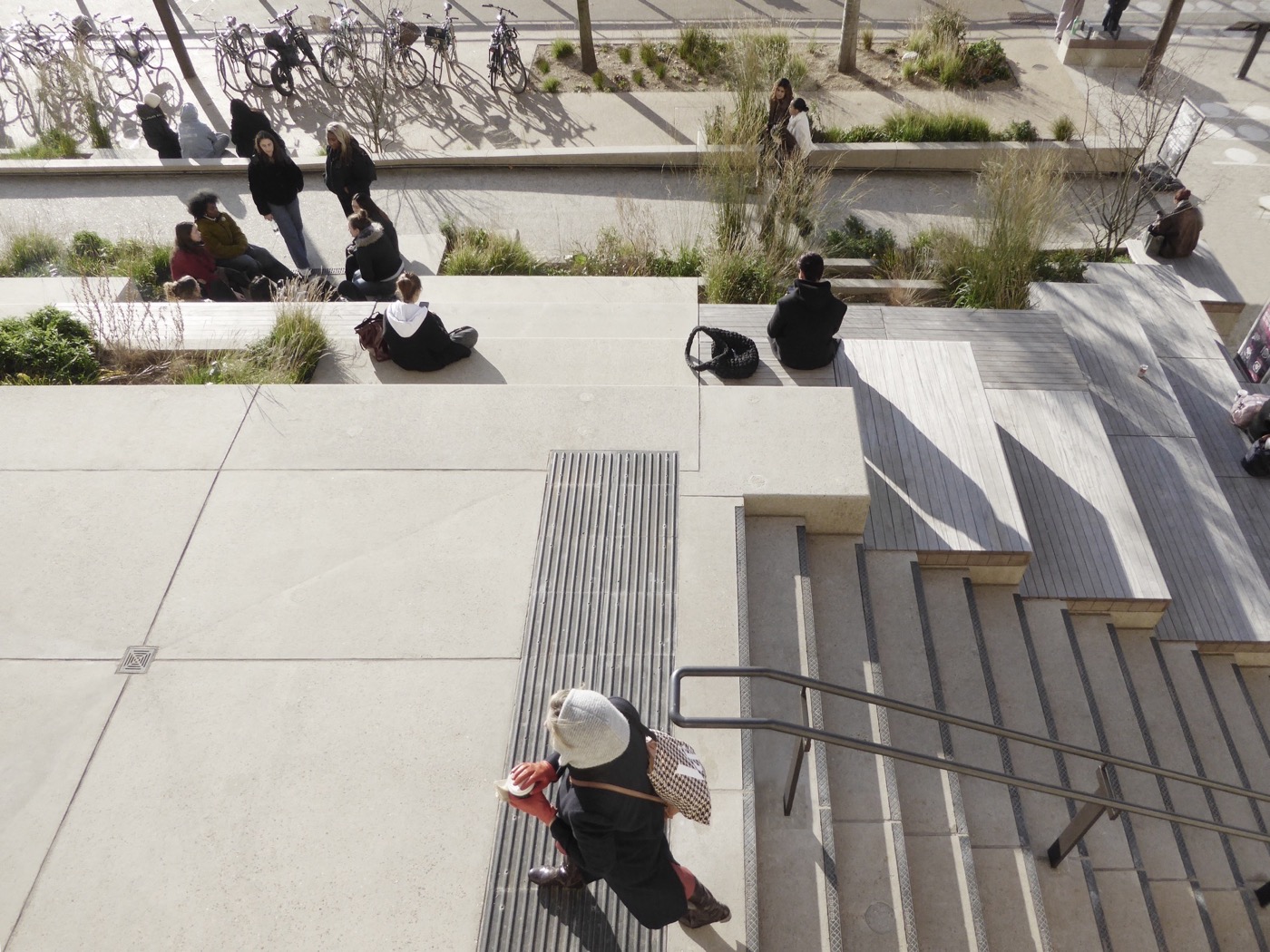
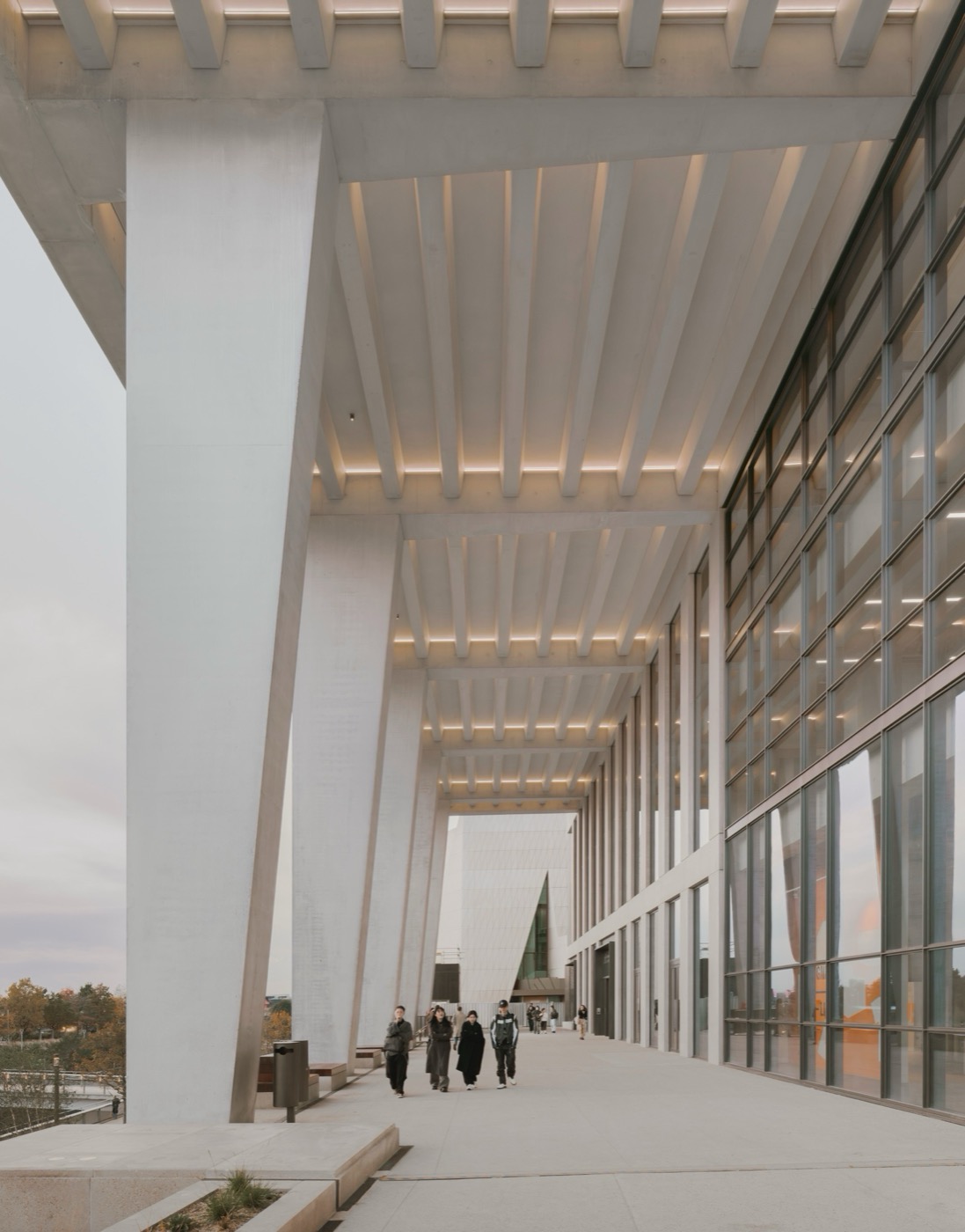
The site’s topography is steep. However, a podium design and generous terracing makes the most of an eight-metre level change to the river. The site’s infrastructure is concealed within the podium ensuring the space is clear and easy to move around. A south-facing waterfront promenade features cafés and restaurants with views over the Park. The terraces above are beautifully planted with seasonal colour amidst drifts of grasses. Planting is climate resilient and part of a SuDS system providing ecological value, carbon sequestration, nitrogen fixation and potential food sources, as well as wind and solar mitigation.
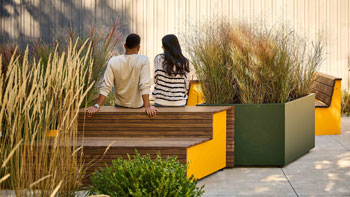
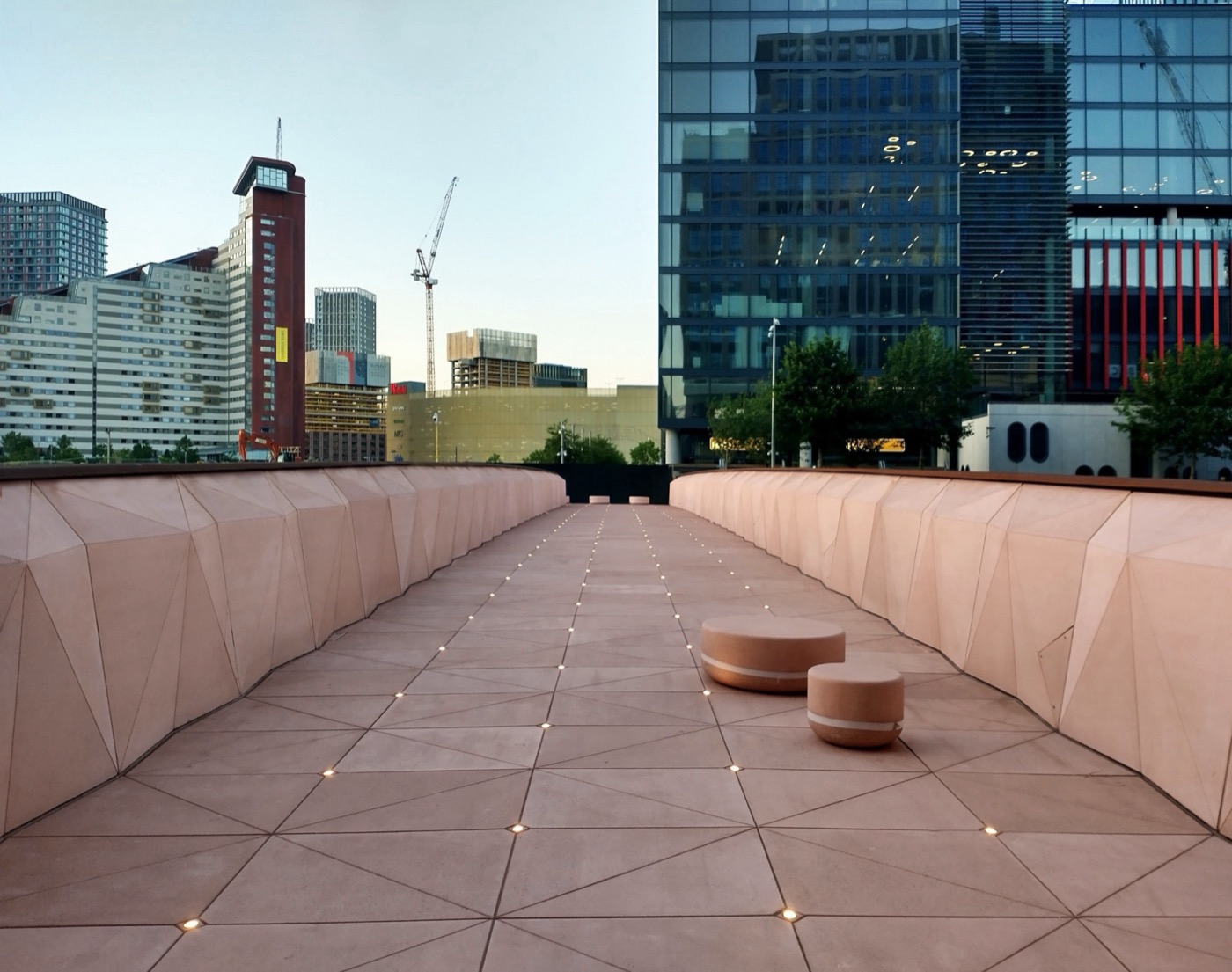
Improved access includes a new land bridge, and a 1:21 graded pathway runs through the terraces providing step-free access. Accessibility is aided by three new public lifts. The graded pathway includes niches for wheelchair users or pushchairs, with seating alongside.
Implementation
The masterplan and landscape design were developed through iterative engagement with local people, the cultural institutions, and accessibility groups founded during the 2012 Paralympic Games. This approach ensures everyone is included. Materiality of cast concrete, weathered metals and timber references the site’s historic industrial identity and its wider Lea Valley setting. The majority of the building façades and hard landscape are made from precast and in-situ concrete. Different finishes create variation in texture and appearance, revealing the aggregate used. The Park’s palette carries through, for example, with resin-bound gravel.
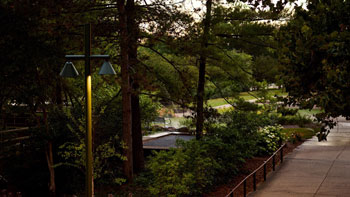
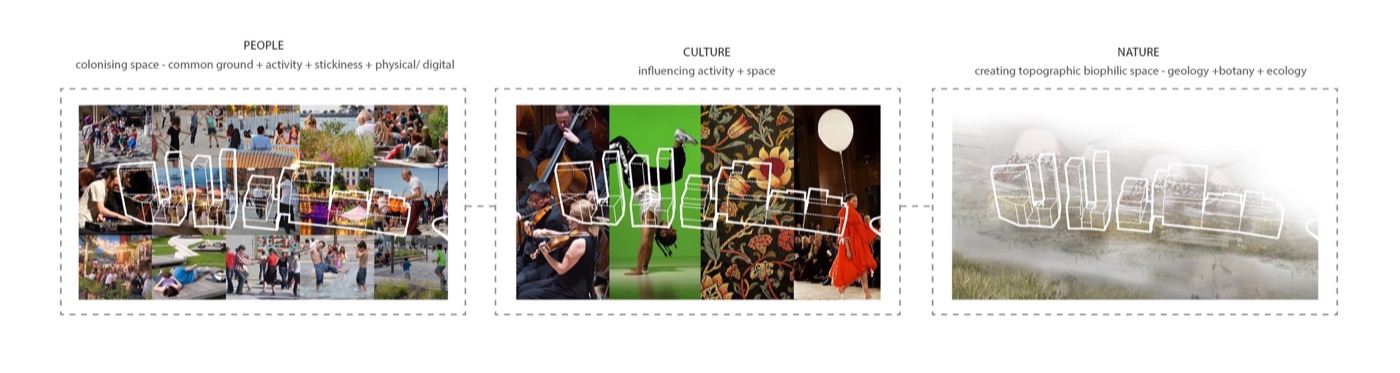
The way nature colonises post-industrial landscapes has inspired planting of the public realm and building roofscapes. It is designed as if seeds have blown in on the breeze and found a foothold to thrive. Seasonal colour comes from native and non-native species and there are 60 new semi-mature trees.
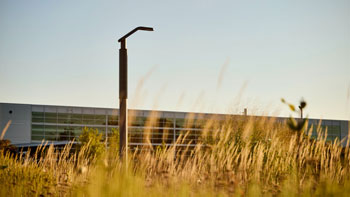
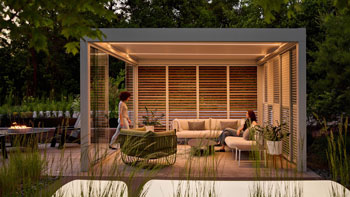
Soft lighting brings drama and a sense of romance to the terraces after dusk. The lighting balances twin needs: making the space feel safe and inviting without impacting the Park’s night-time ecology.
Significance
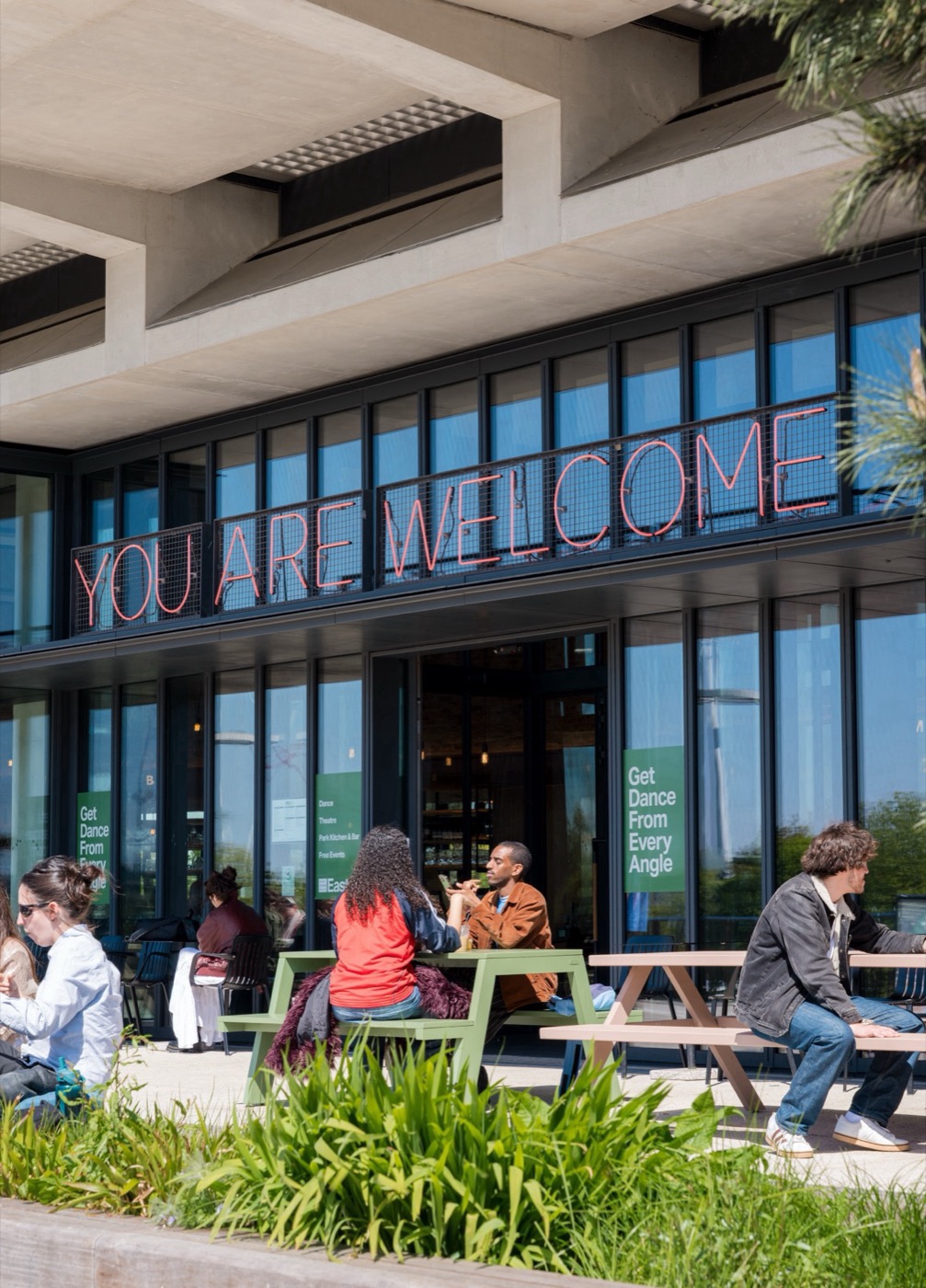
Stratford Waterfront is changing how we view and experience culture and how we use public space. Culture is harnessing the power of nature through design, acting as a catalyst for inclusion, change and community. There is a red neon sign above the door at Sadler’s Wells East that reads, ‘You are welcome’. This message is reinforced by truly invitational public space designed to support a multiplicity of life, accommodating the everyday and the extraordinary.
Client: LLDC
Lead Consultant: Allies & Morrison
Architects: Allies & Morrison, O’Donnell+Tuomey, Camps Felip Arquitecturia
Landscape Architect: LDA Design
Engineer: Buro Happold
Contractor: Mace
https://www.google.com/maps/place/107+Carpenters+Rd,+Stratford+Cross,+London+E20+2AR/@51.5419411,-0.0161812,17z/data=!3m1!4b1!4m6!3m5!1s0x48761d6f30b29bb5:0x32dfbb51821ee1a5!8m2!3d51.5419411!4d-0.0136063!16s%2Fg%2F11x91zwf_x?entry=ttu&g_ep=EgoyMDI2MDUwMi4wIKXMDSoASAFQAw%3D%3D
74367


LILA 2026 Sponsor