Tai’an Lu Villa
2026 Private Gardens / China / Built in 2021 /

This project redesigned a 1930s residential landscape in Shanghai’s former French Concession. It draws on traditions expecting a certain legibility to designed landscapes; the scheme satisfies them and attunes a present-day approach.
The site is L-shaped, to the house’s east and south. Separate registers of privacy organise the landscape at site scale. The site’s eastern half can welcome guests. The western third is programmed for family use, and framed from the private quarters. A gap of sky off the south façade invites those inside out to the site’s central void, which divides the east and west program areas.
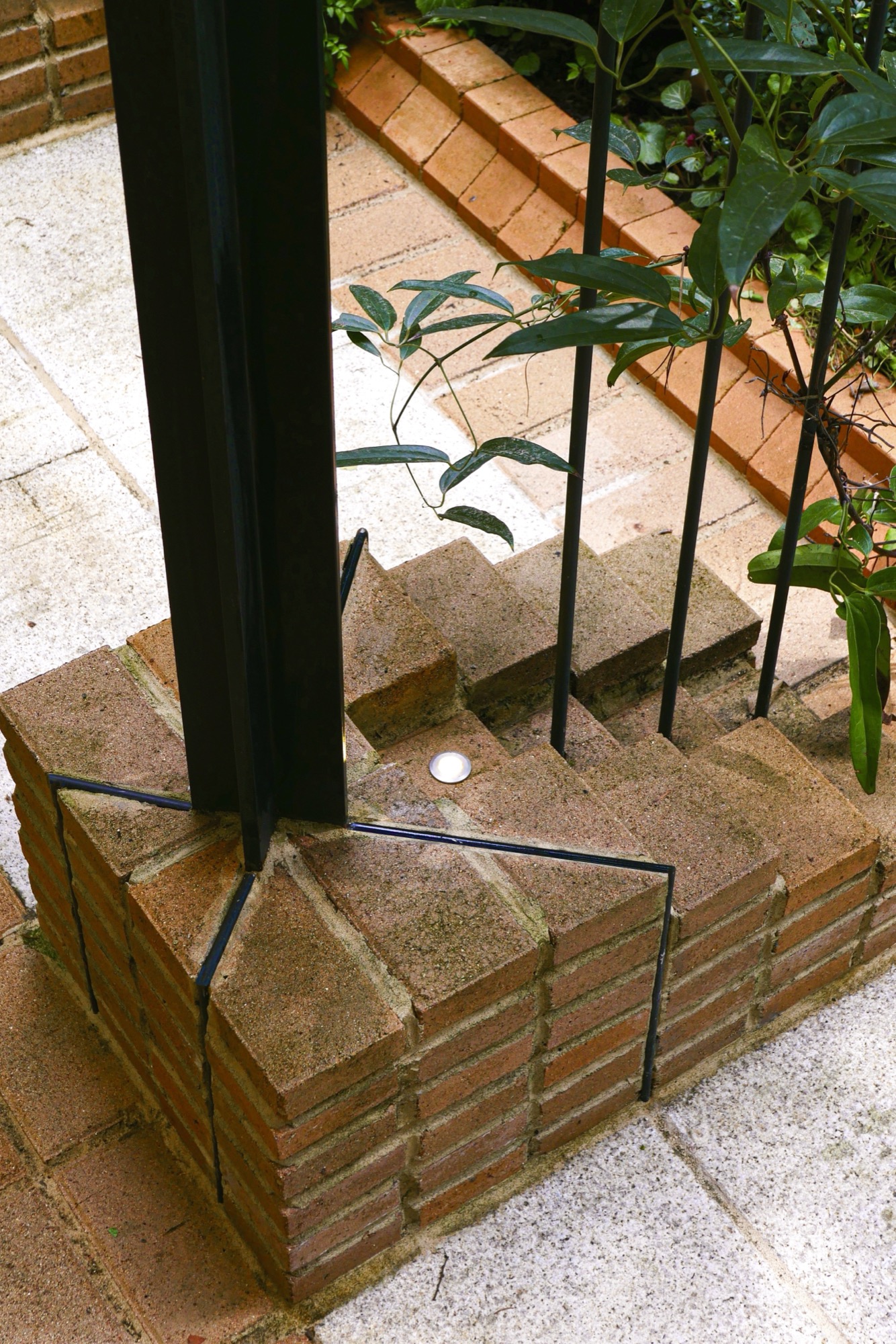
To signal legibility, this landscape drums up allusive resonances. One enters the eastern area through a four-metre gate. Some might term it Shanghai Art Deco and that’d be familiar. From modernist Venice we senses of uncanny proportion and detail. This layer reads less clearly, but the garden’s hardscape – raw material, manipulated –looks down this vector to a culture of bold exploration. Venice as concept alludes to aesthetics and mercantile distance from Shanghai, resonating with the family’s story of art and global business. These allusive qualities charge the garden’s hard, habitable parts with part of a personality.
It’s understood that Shanghainese gardens express, but tentatively. On the one hand, the classical gardens of nearby Suzhou underwrite an assumed textual dimension to the landscape. Suzhou’s gardens were designed by and for literati. They grasped that landscapes, when arranged to provoke literary references, could stake principled positions. Regional culture learned to read landscapes for poetics: personalities parley with the land; and the land, changed, speaks. On the other, Shanghai, annexed as a treaty port, absorbed immigrants and cultures into itself. Beyond 1842, China’s resources met the world’s commerce here. The rhetoric of the landscapes the Shanghainese demanded now had to entertain, impress and convince.
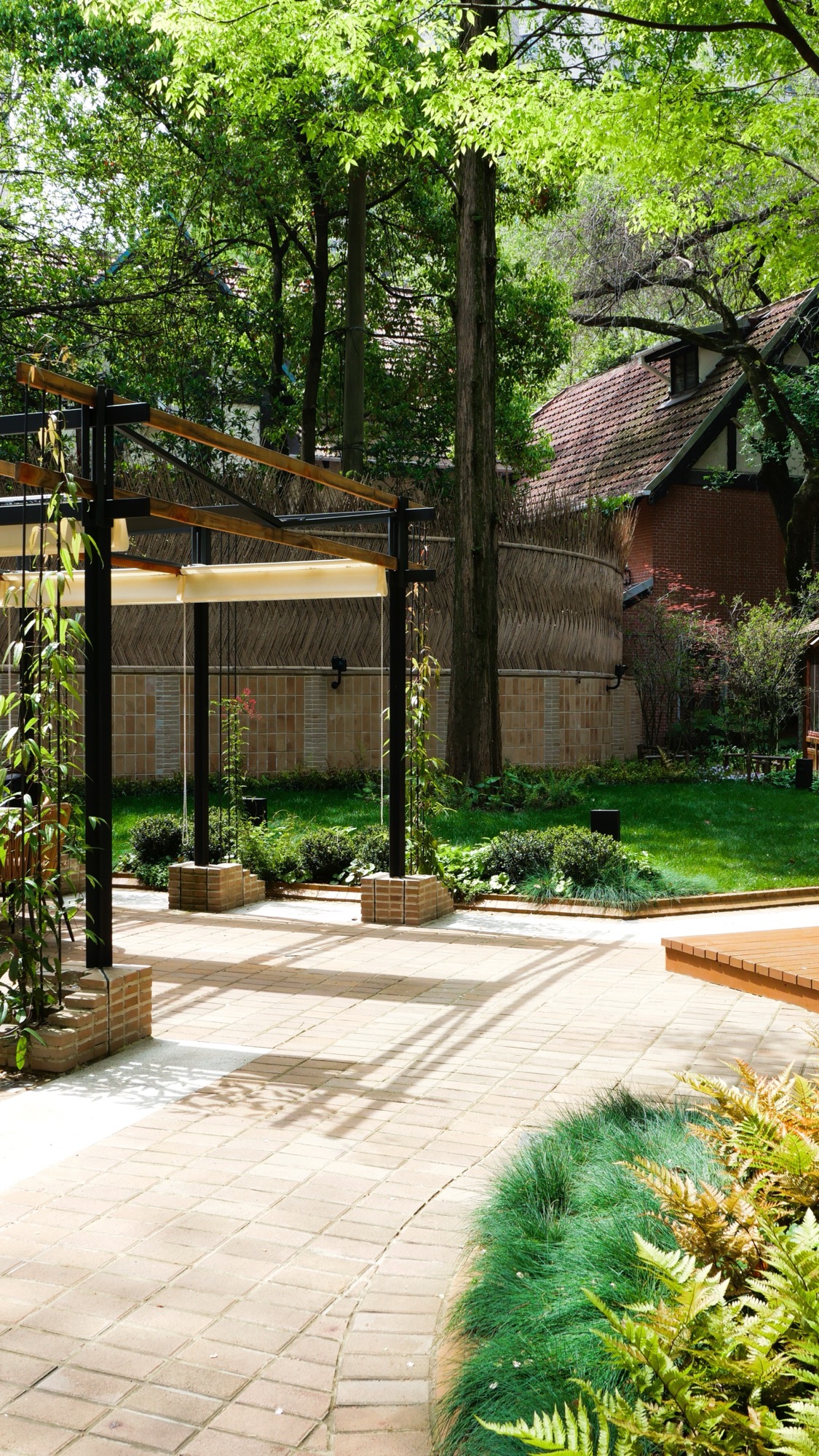
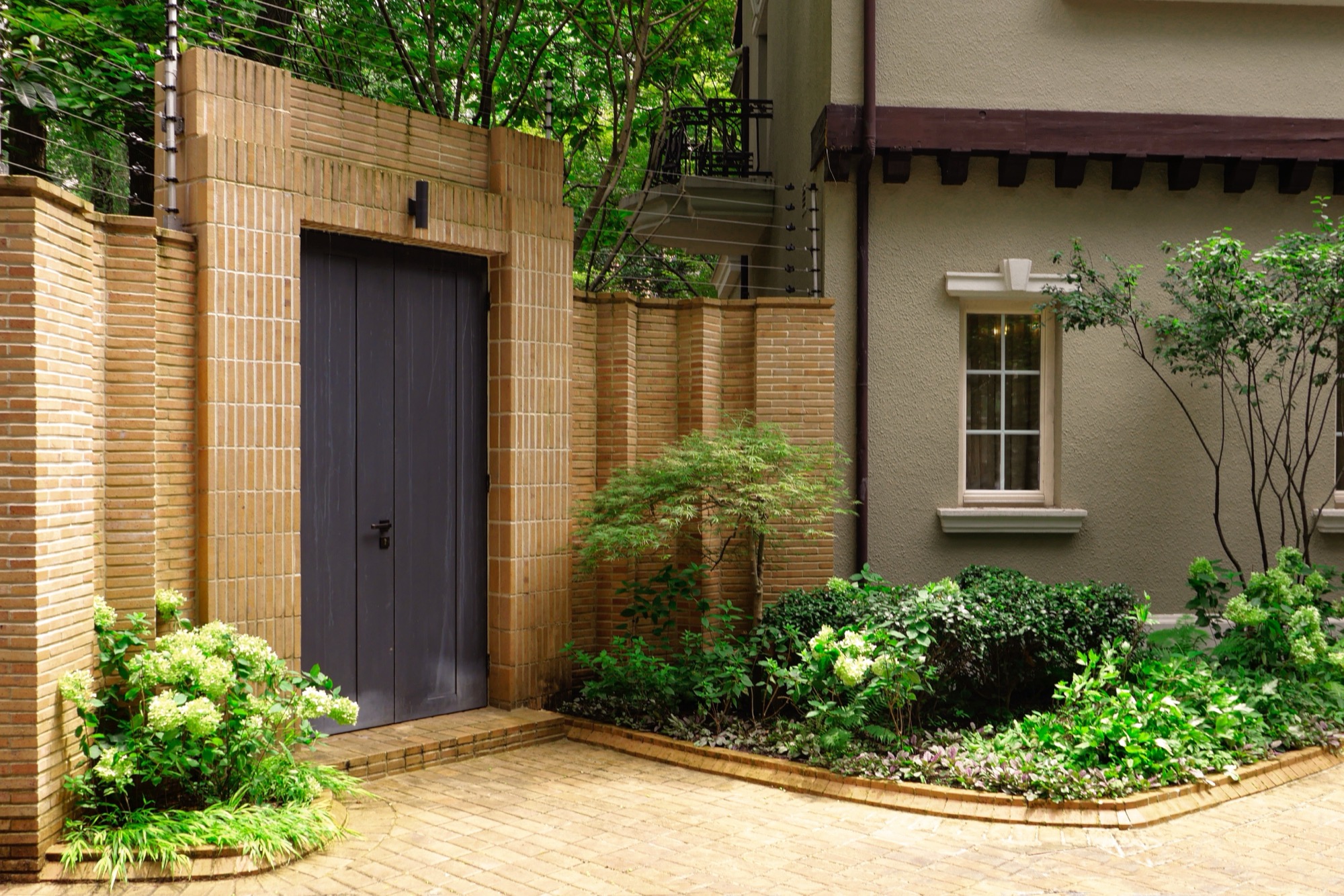
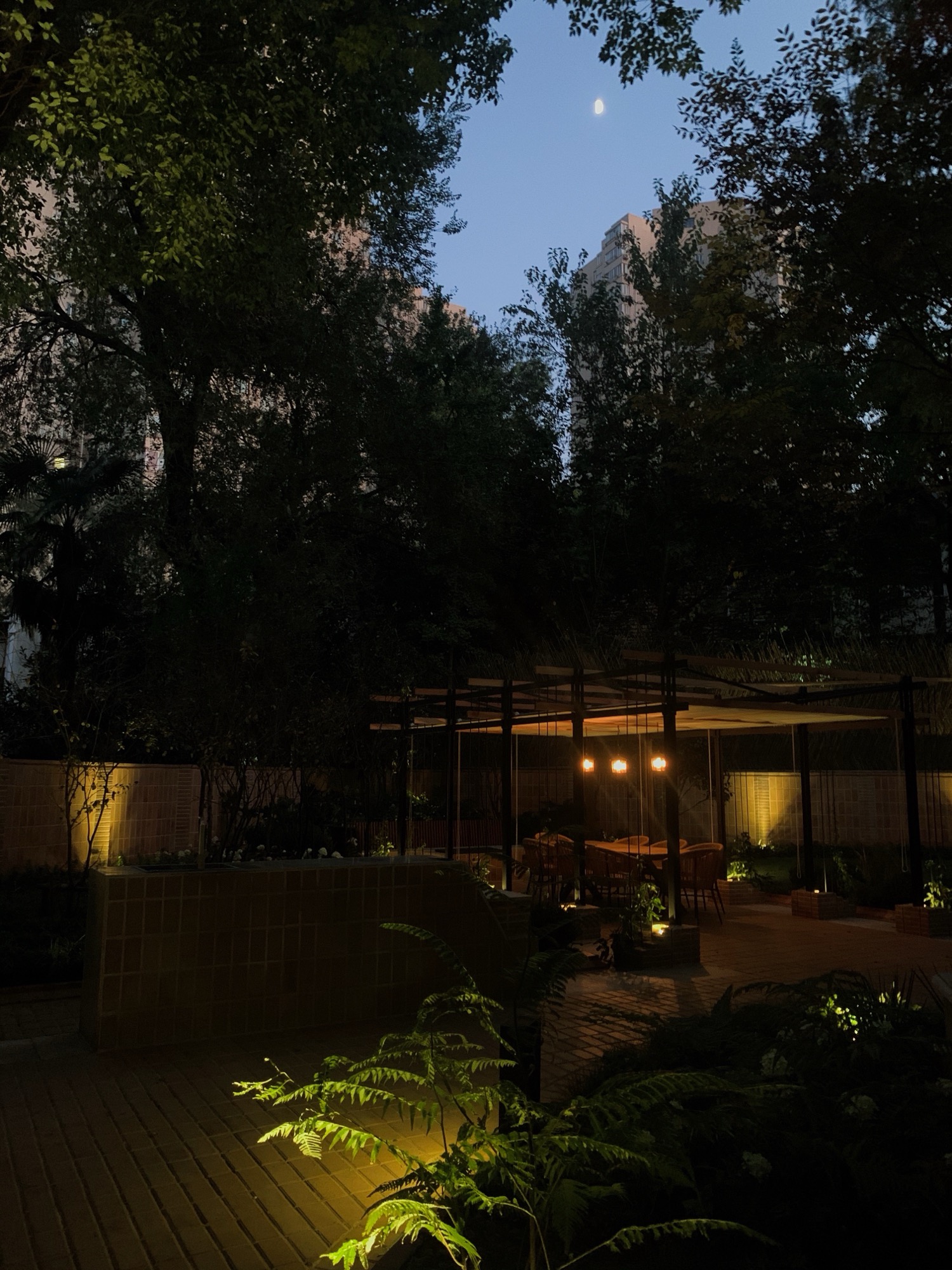
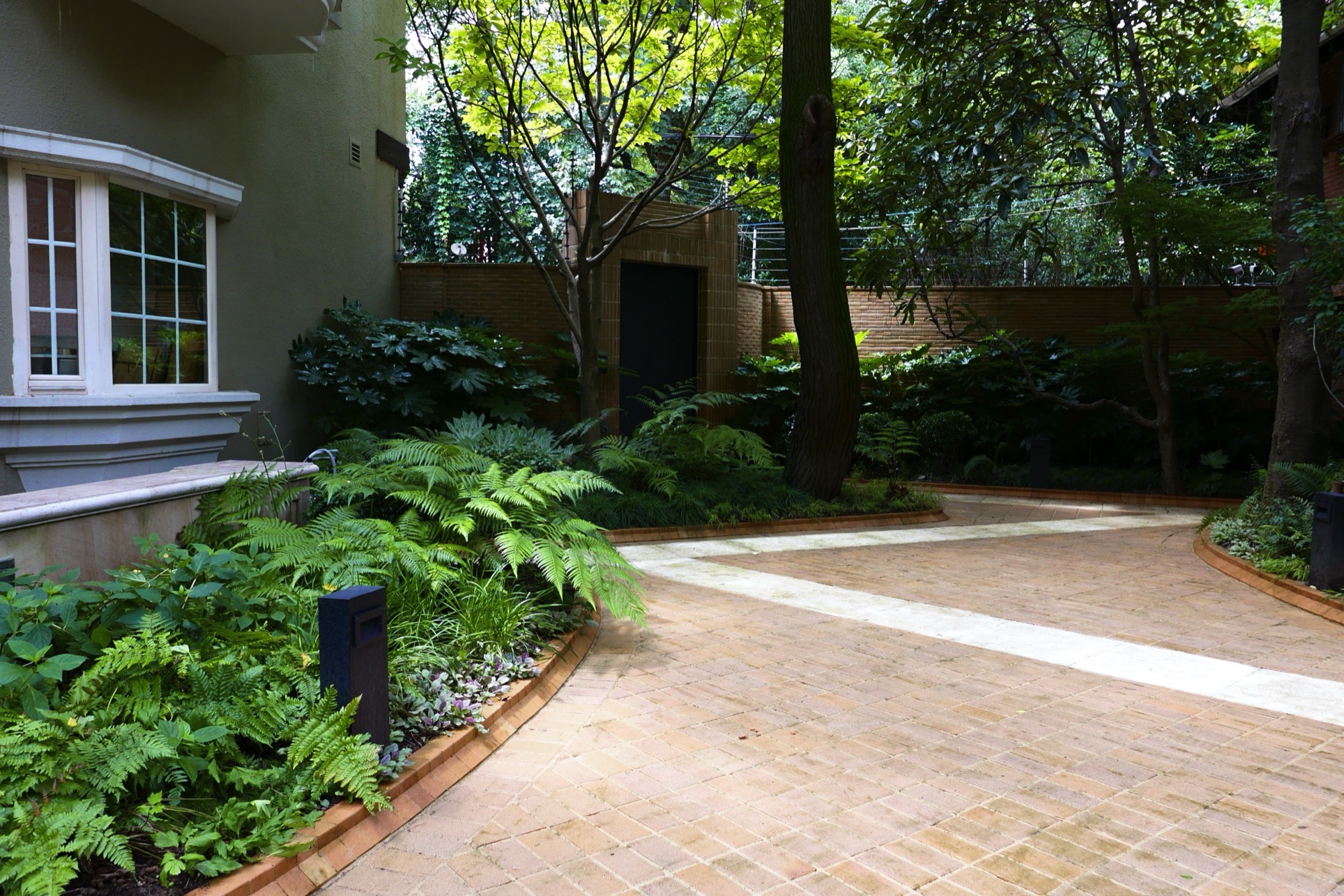
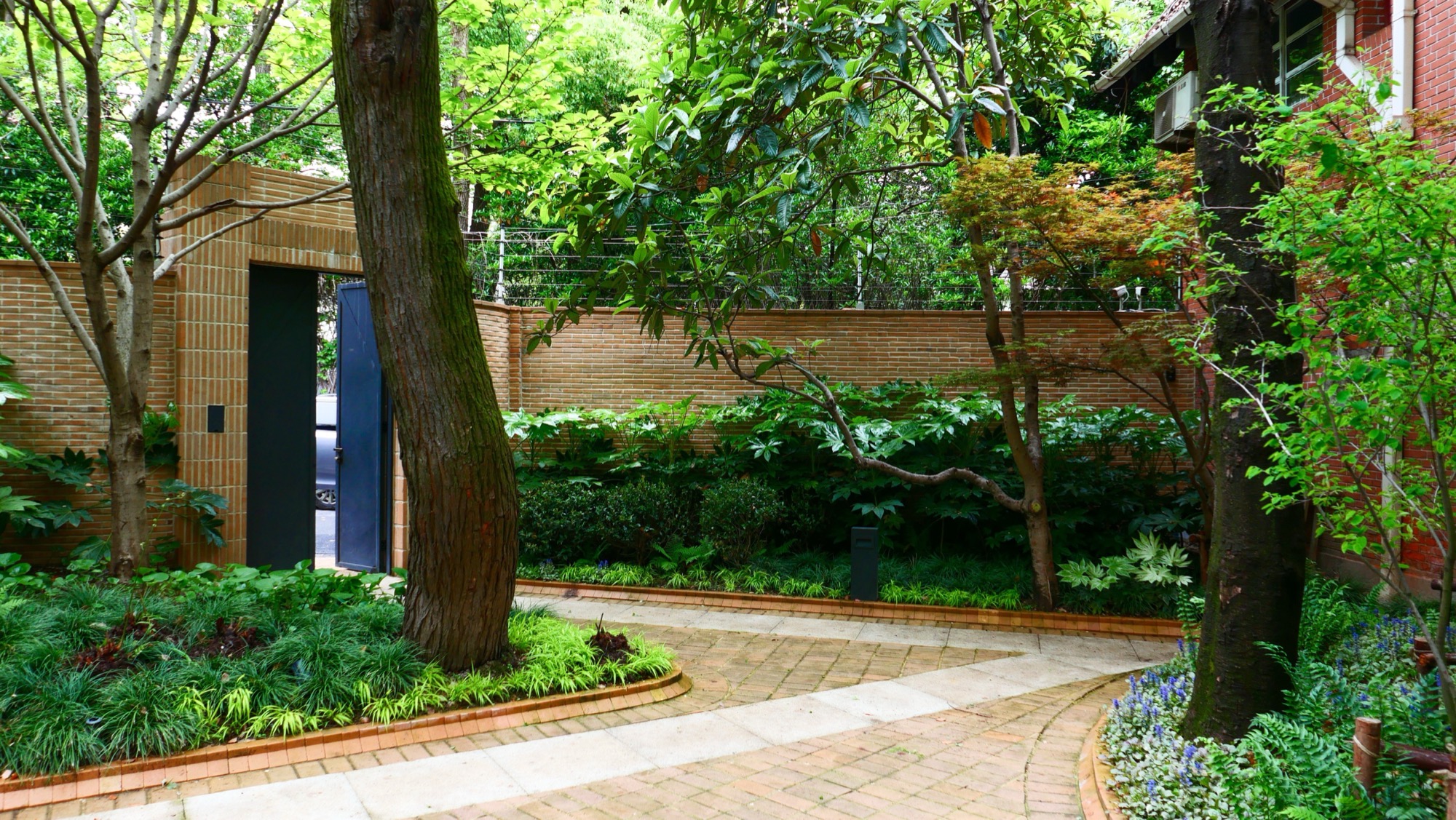
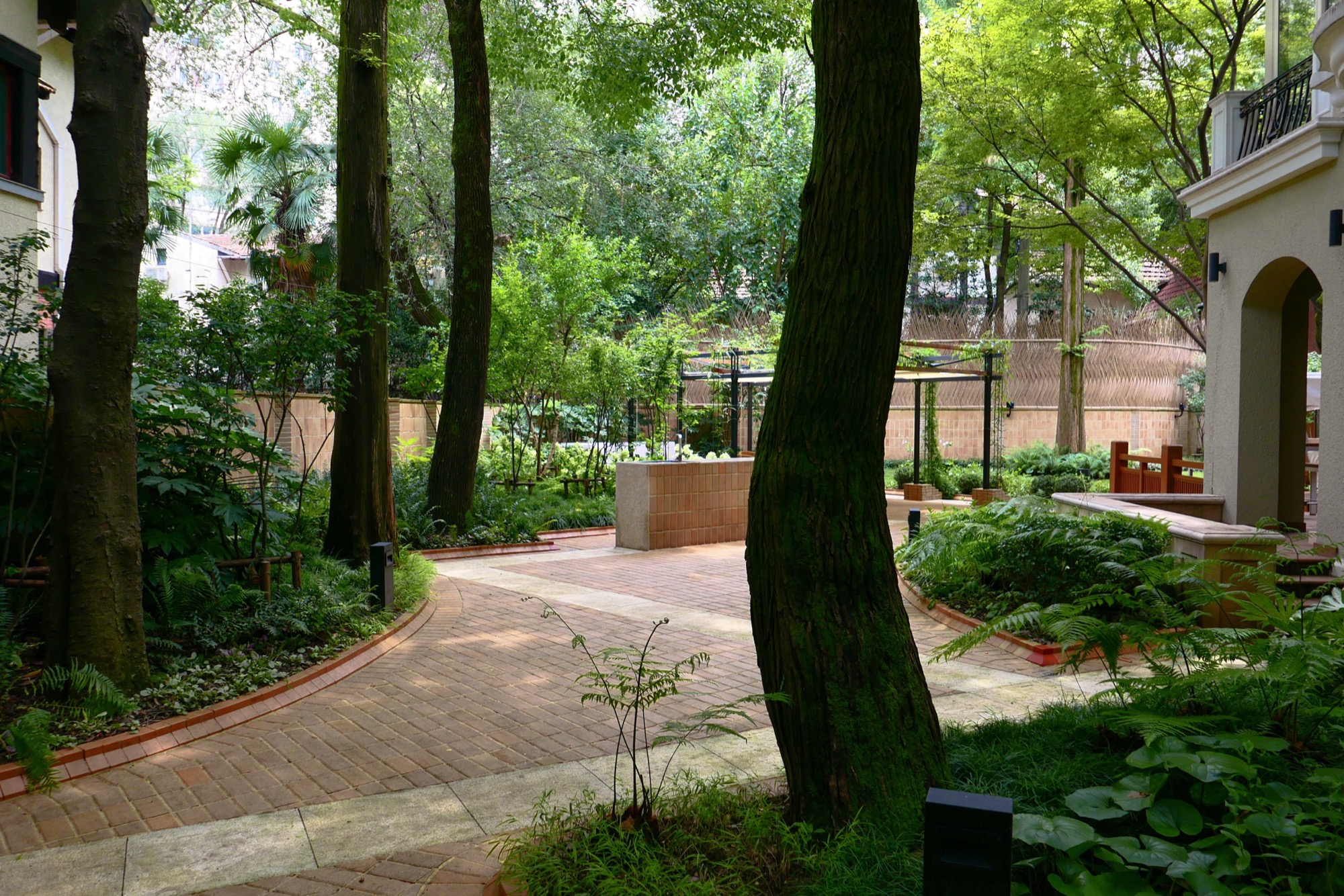
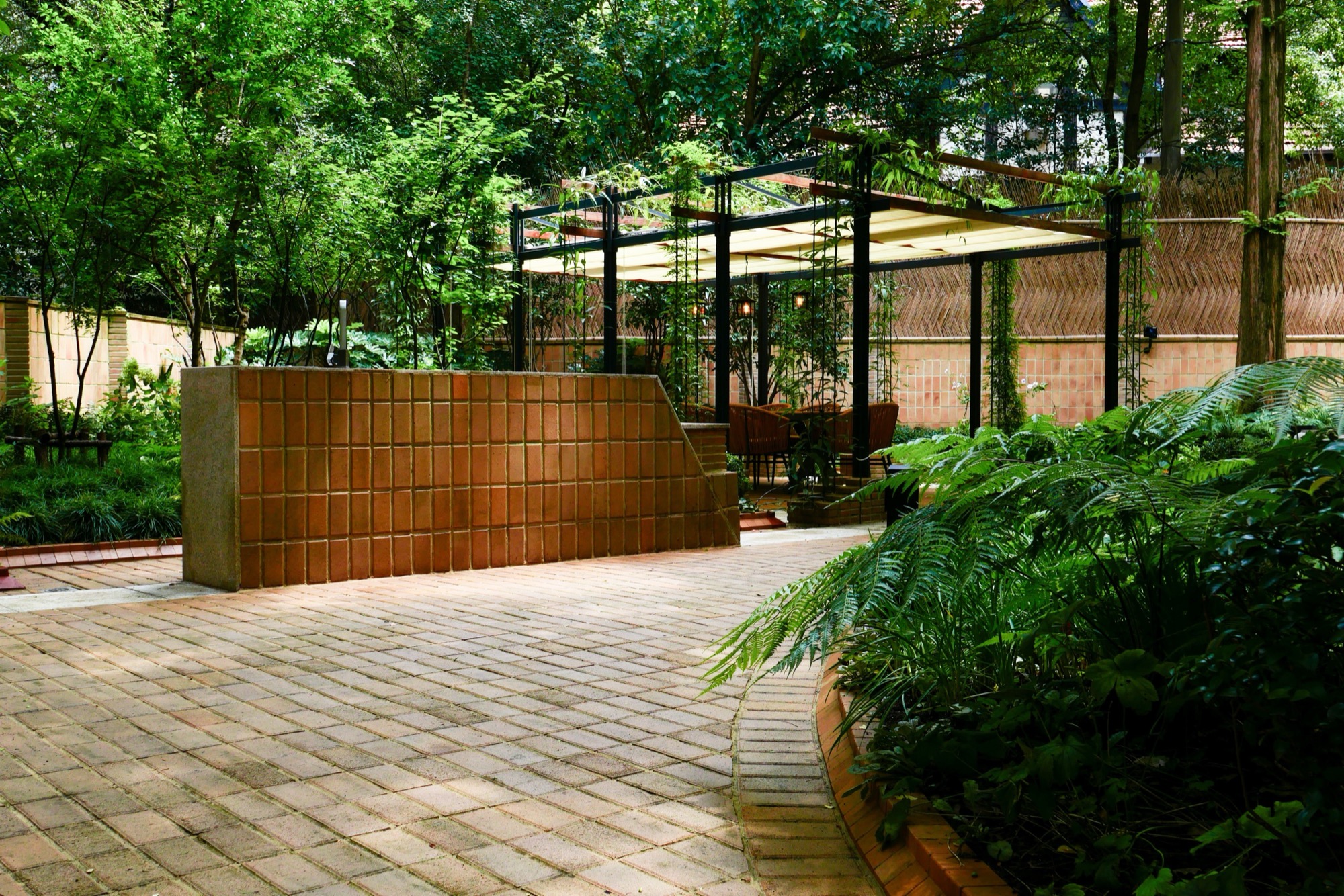
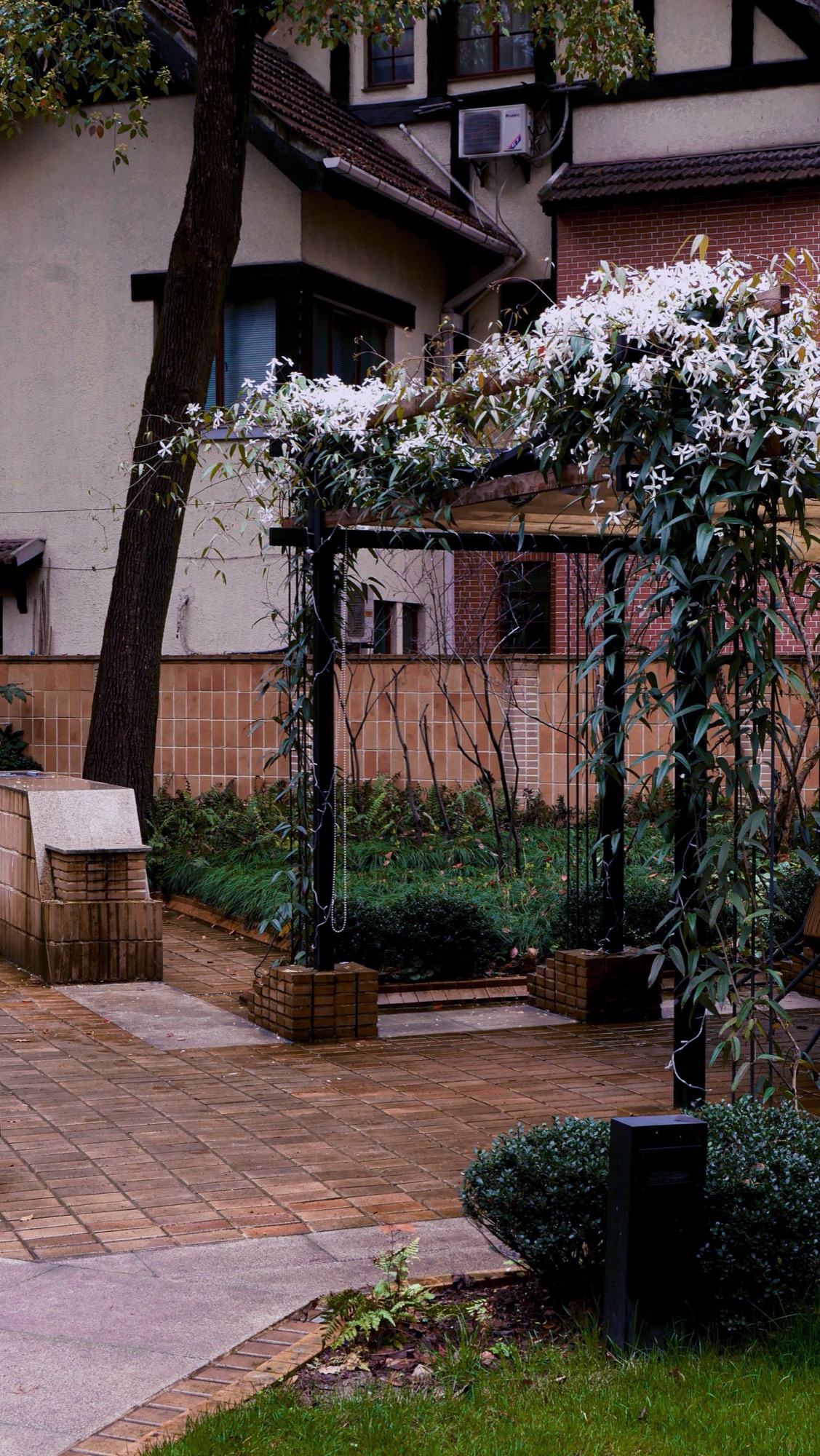
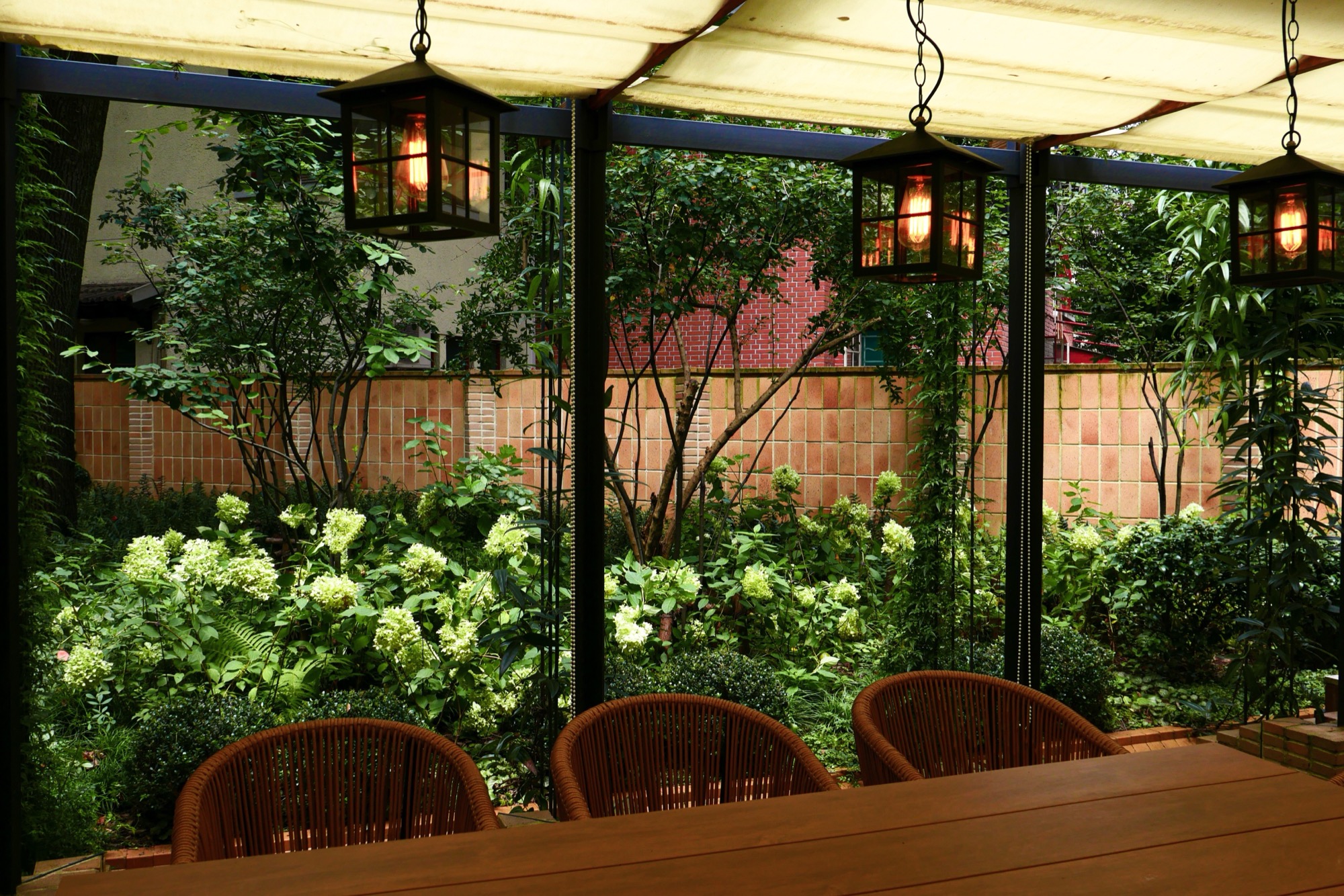
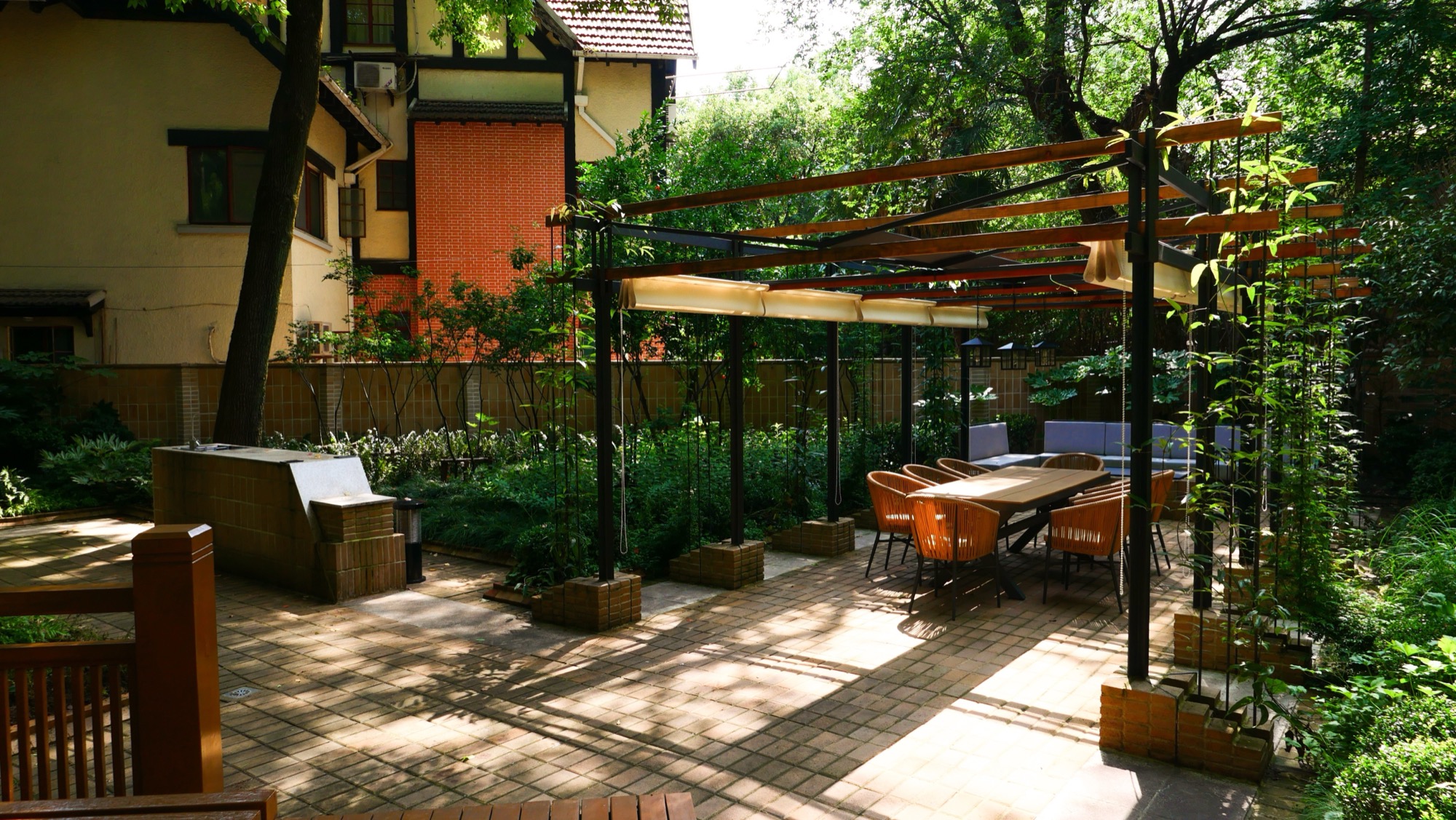
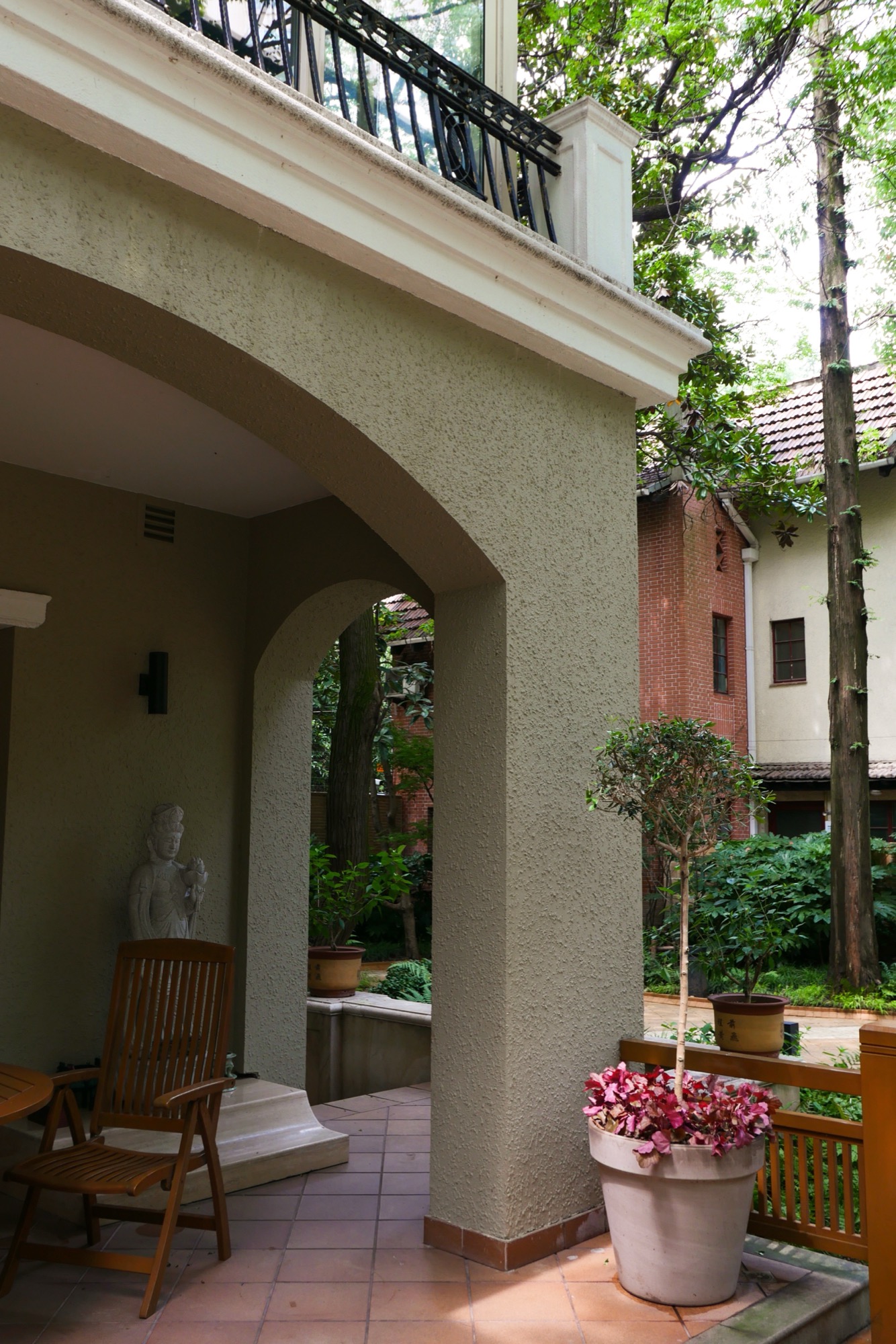
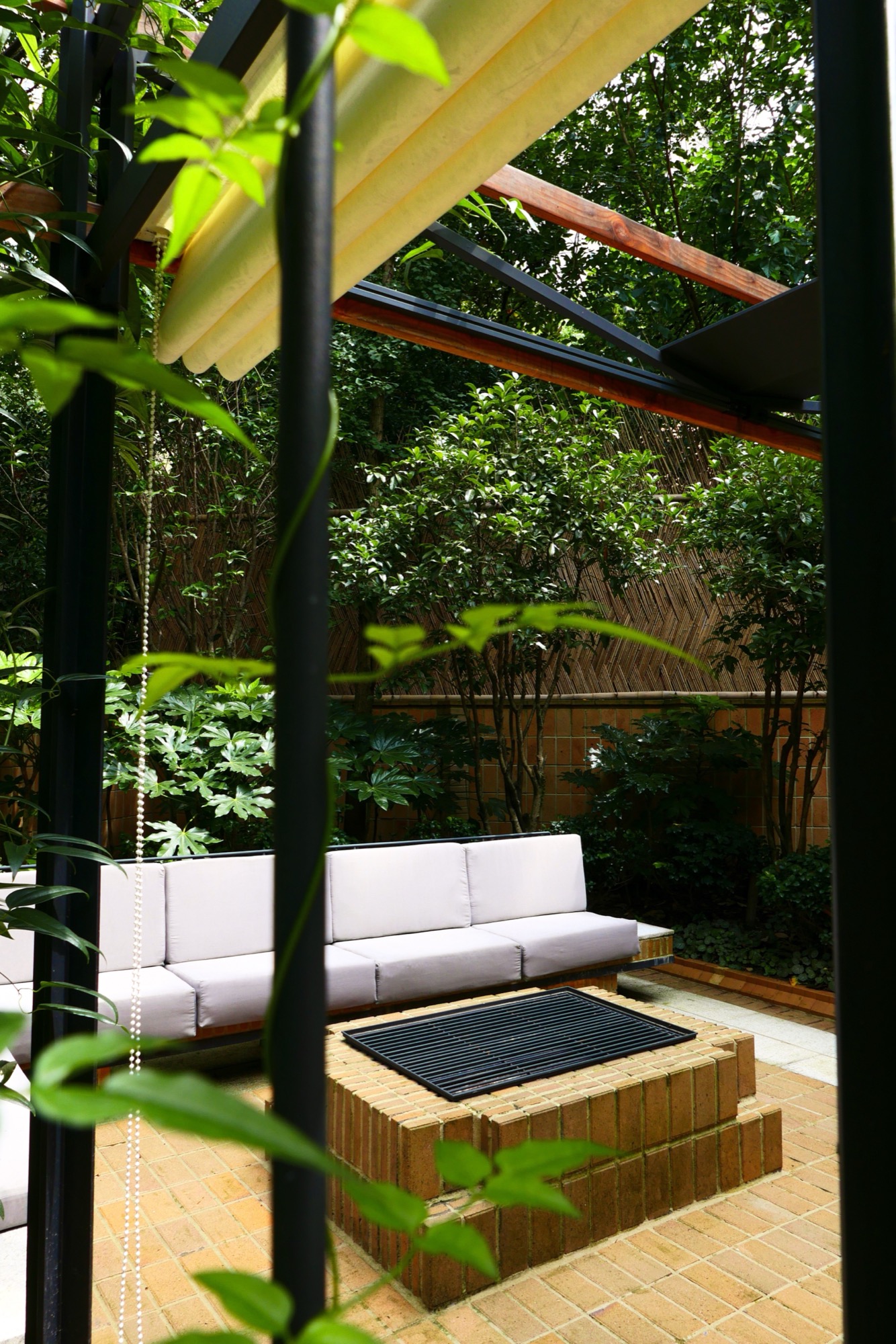
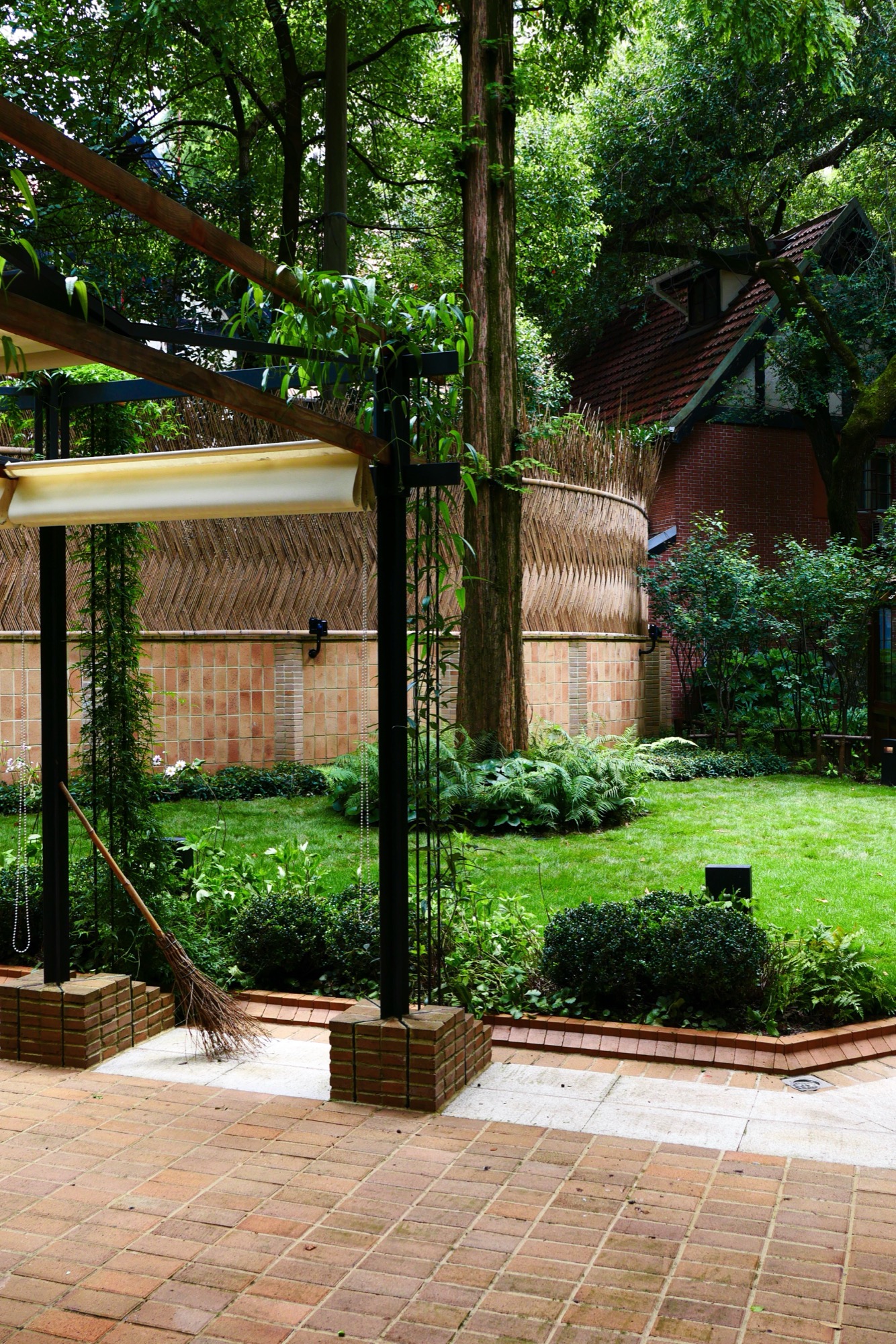
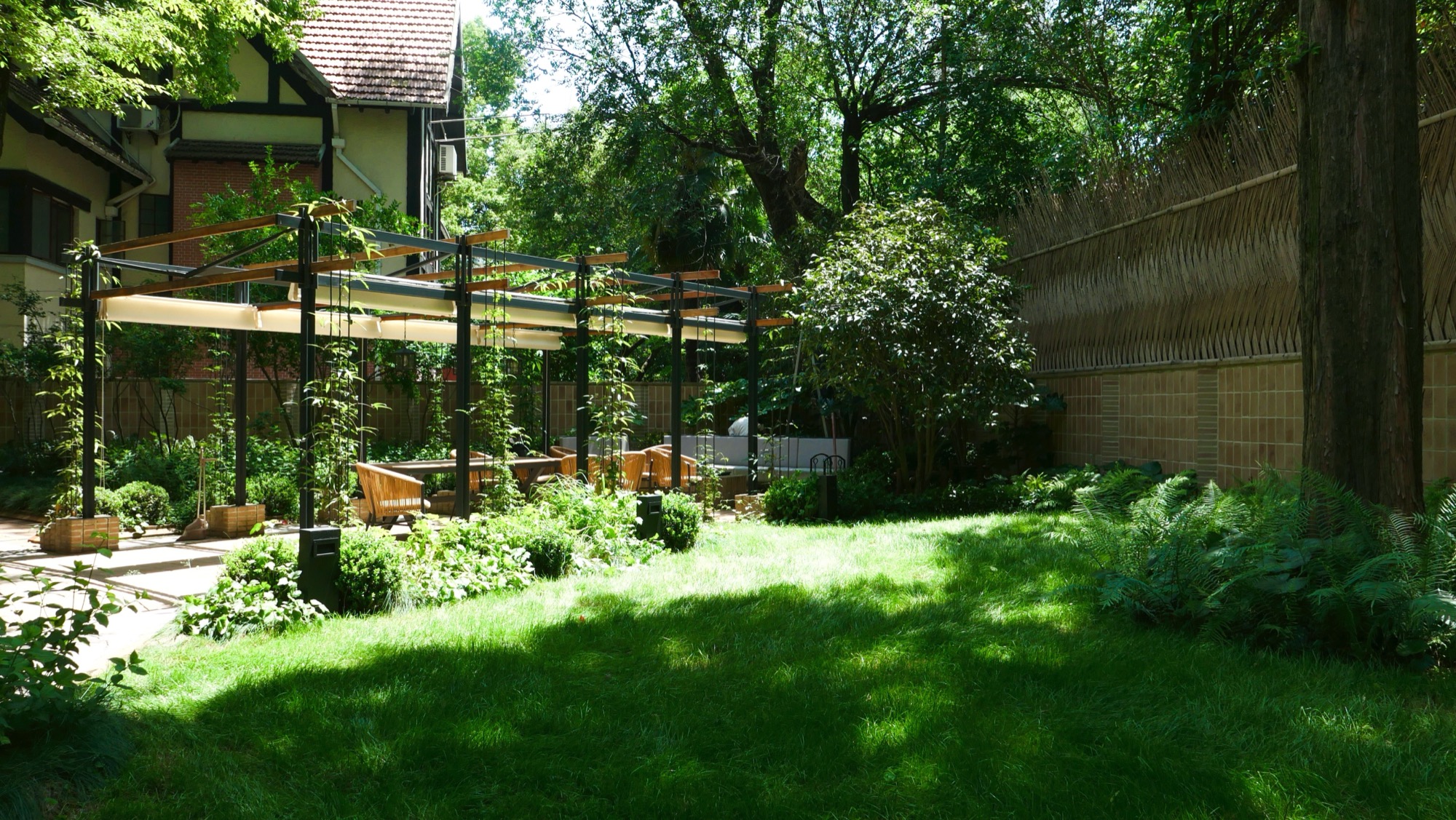
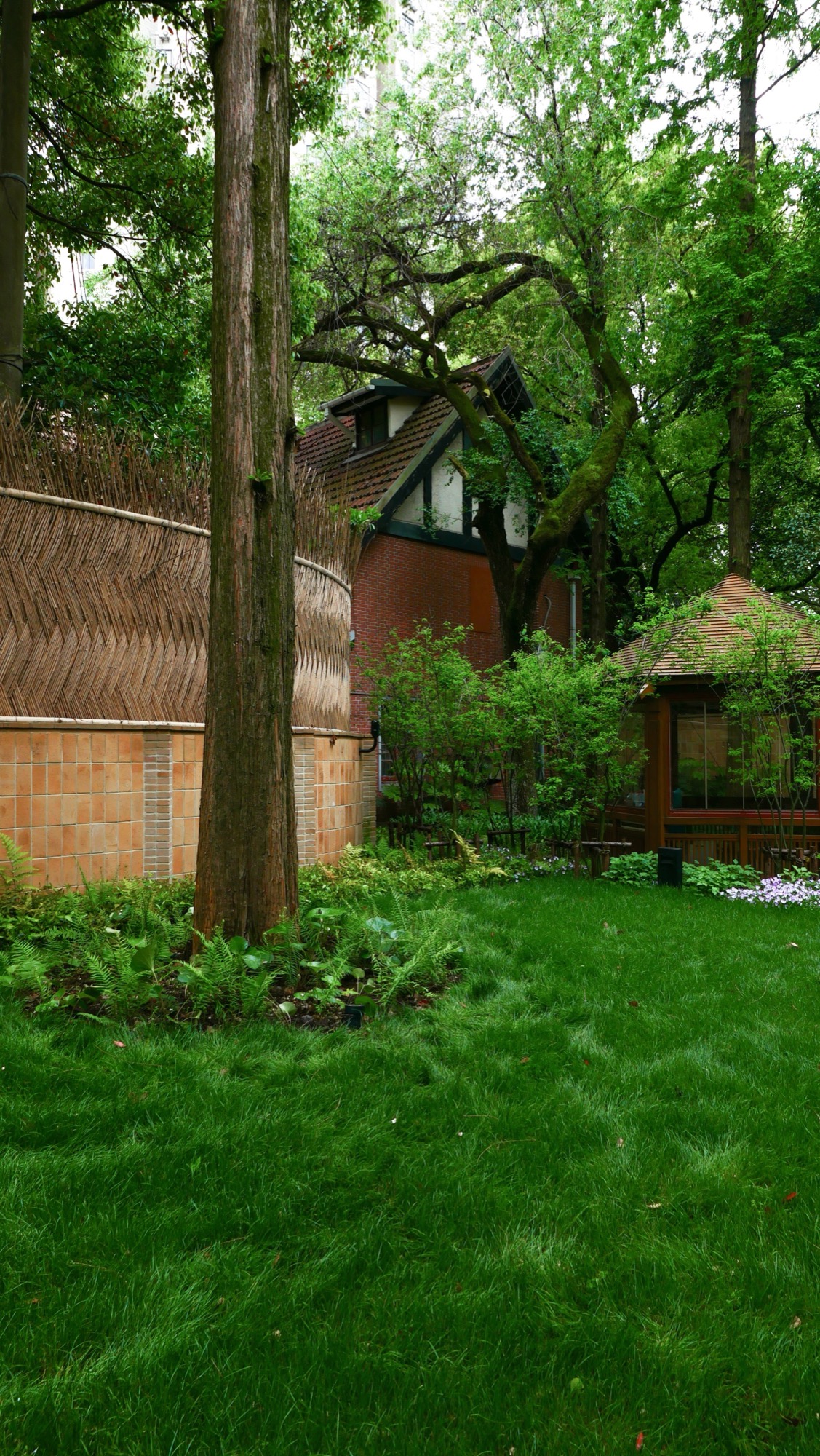
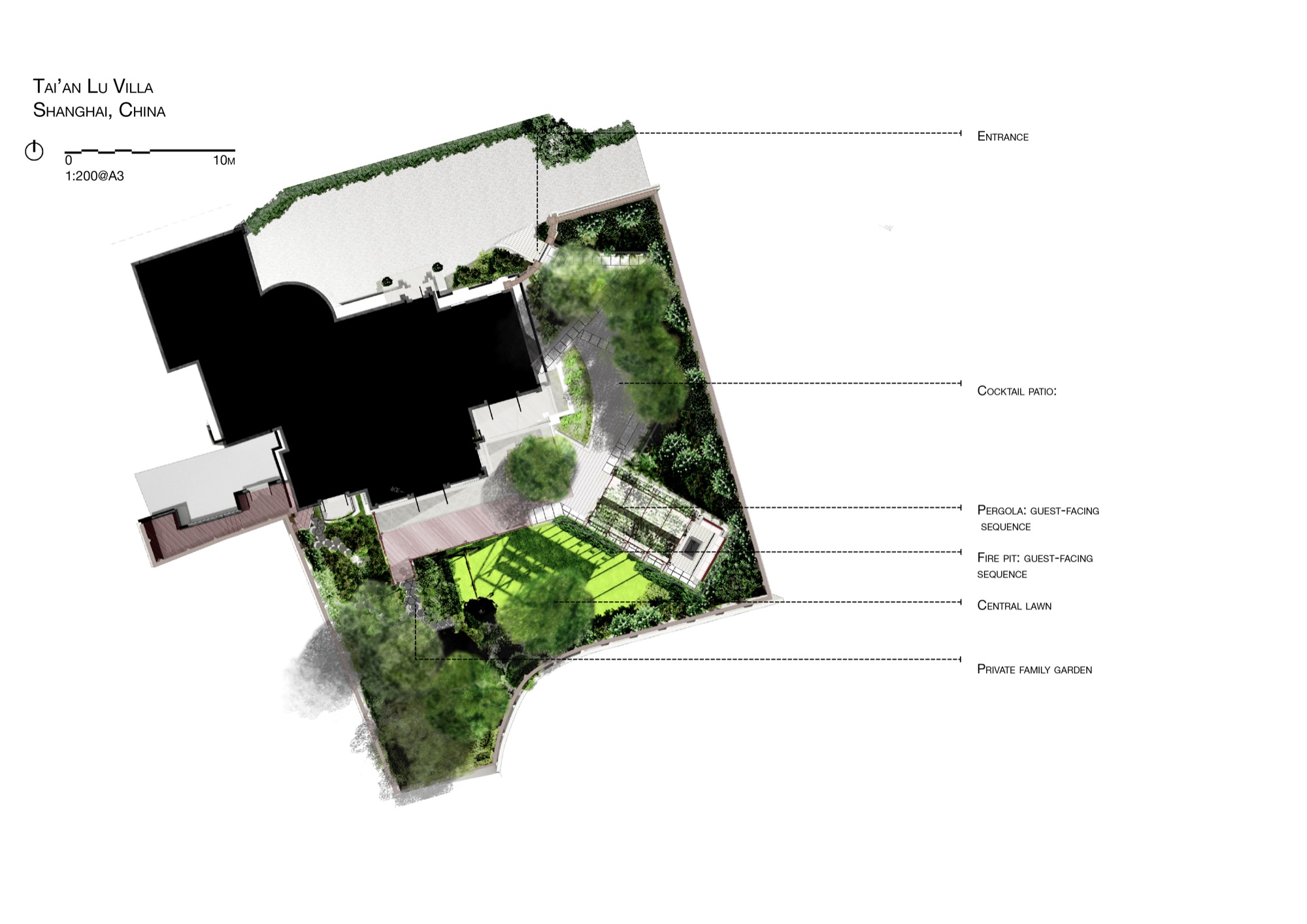
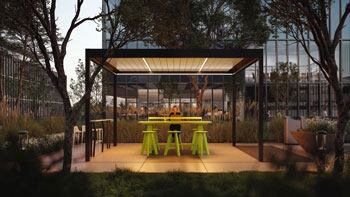
Inward, beyond the gate and a short dogleg, a camphor canopy opens. Under it is the first station in a choreographed sequence: a long patio. Cocktail tables might be set up here; a bar down the axis pivots to dinner service for the second station, a bowelised pergola whose services are vines. After dinner, guests settle around a fire at the third station, and discuss.
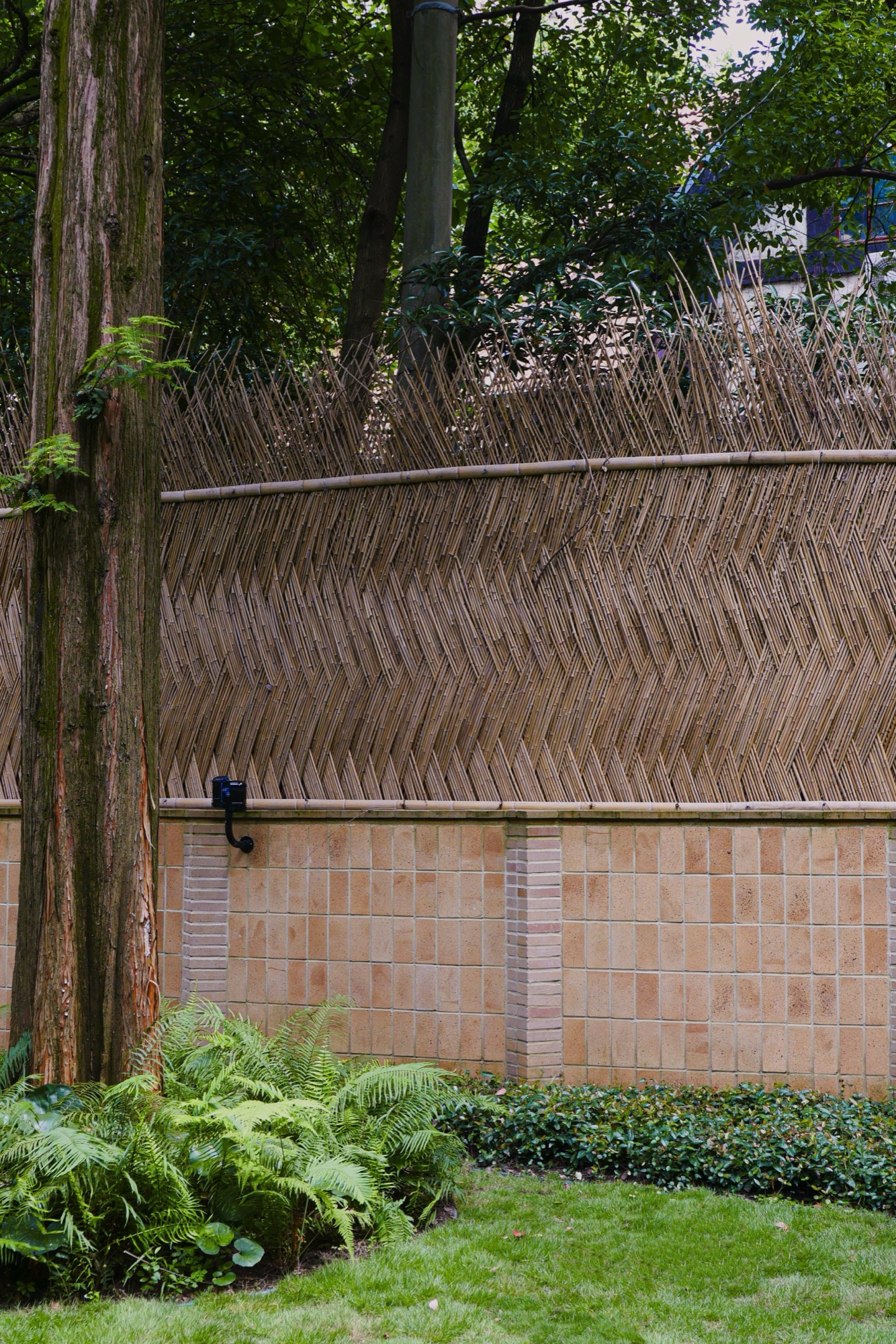
Hardscape propels people through this sequence. White granite zigzags across the brick patio, pricking its margins to contract into arcs. This zigzag slackens to slow the pace as guests move into the garden. It changes its course at points aligned with ribs in the outer wall, From the gate to the first turn is one gap between them, then two, then three and three again, then five: a Fibonacci sequence, almost.
These features play, and also urge people to resolution; their motifs suggest closer attention; they frame conversations. In all the garden insulates against Shanghai’s density, regulating something different within itself.
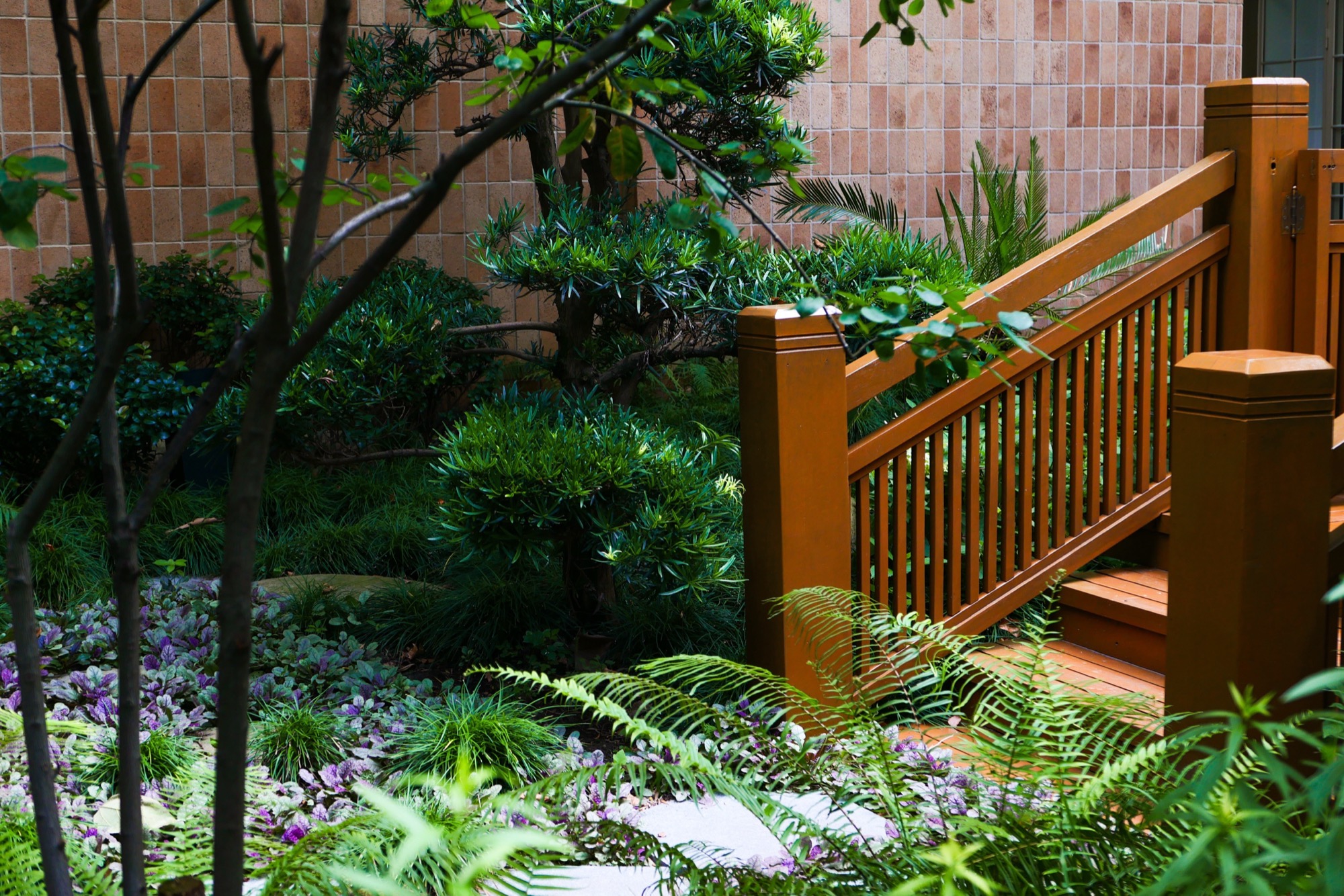
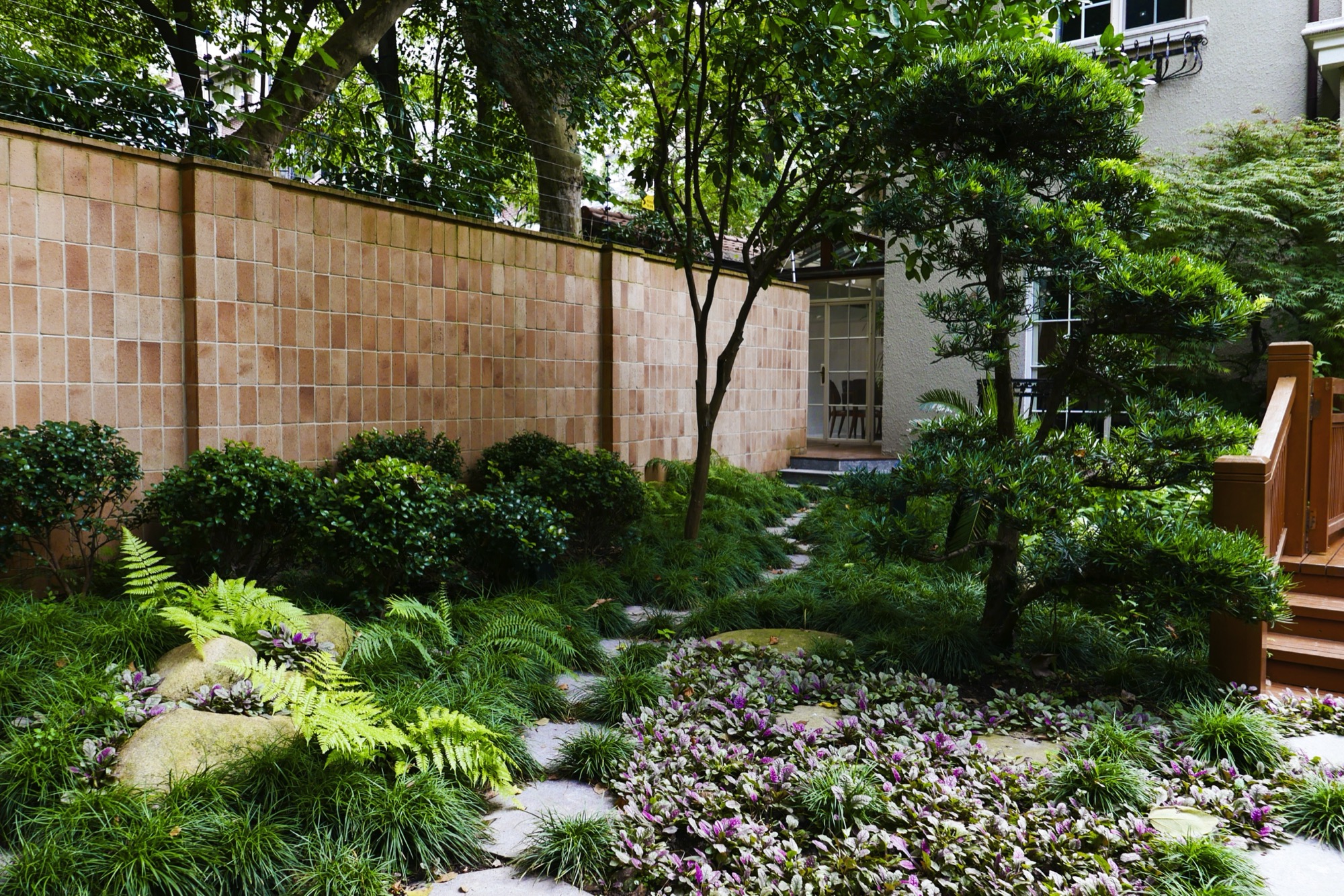
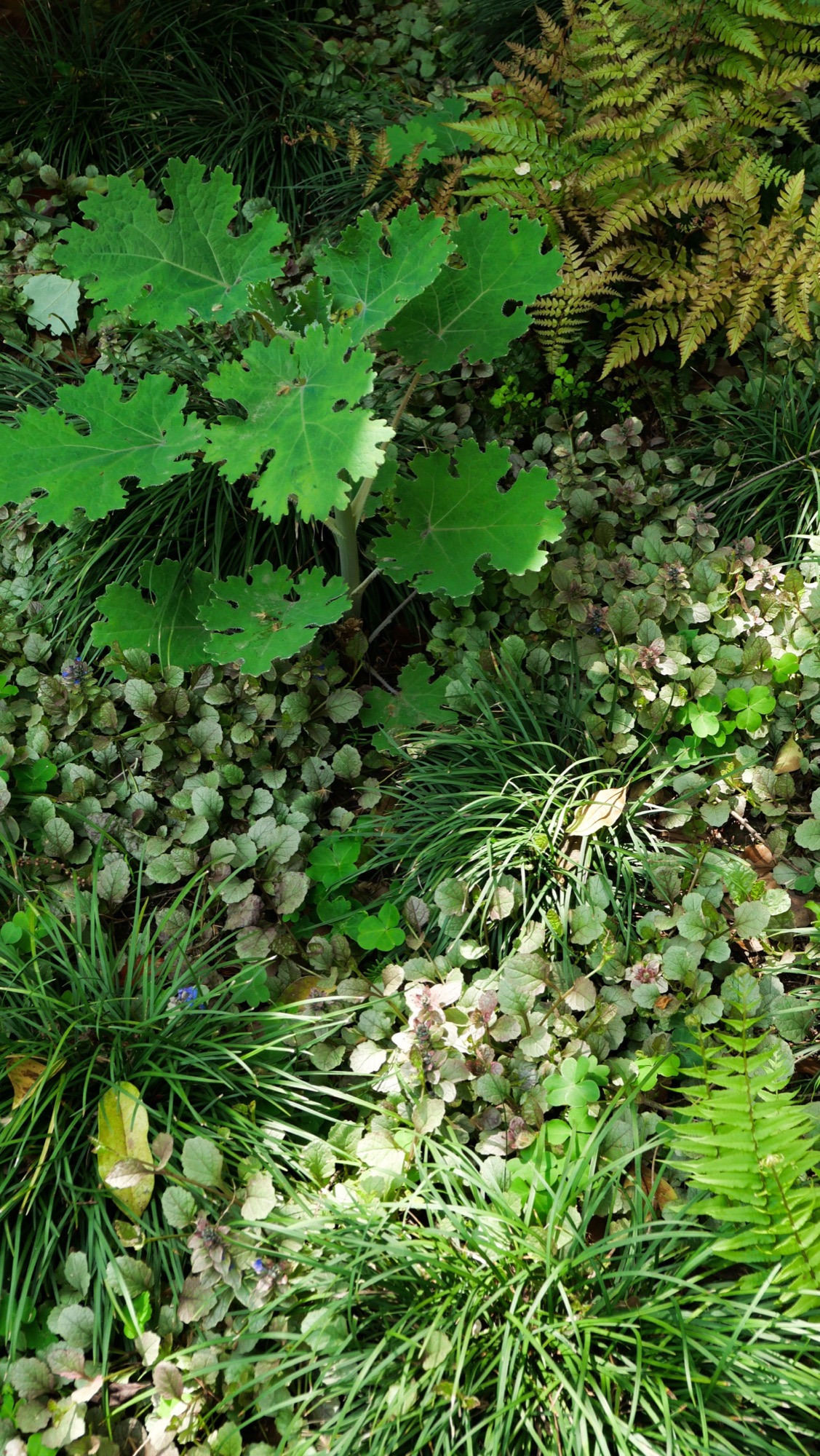
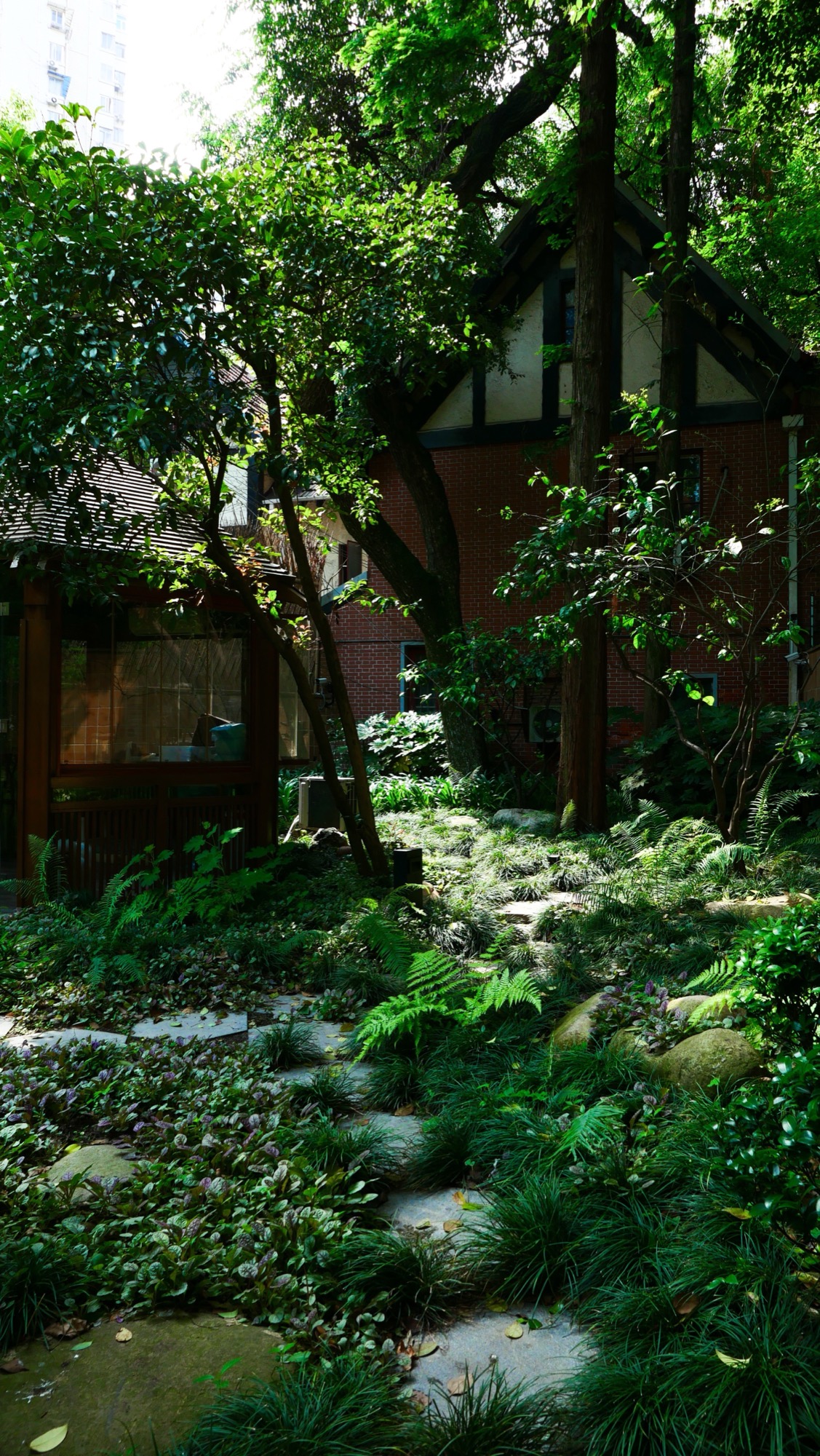
The western area offers embodied experience, a reprieve from the east side’s stagecraft. Hexagonal slate pavers mingle with underplanting, winding under trees around a small pagoda. One can pick satsumas or camellias along the way. Planting is the ground to the hardscape’s figure. It completes the scheme’s referential dynamic. If articulate clay and stone speak of erudition, the planting moves in a way familiar to anyone who has walked in the Chinese countryside. It surrounds and resolves into it. Raw materials make a bed for the products of craft. These are two sides of this family’s, and Shanghai’s, story.
The scheme’s designed planting density encourages microfauna to loosen and remediate Shanghai’s heavy soil. In turn a virtuous cycle of passive drainage is achieved with time. Only the east sequence hardscapes drain to the sewer. Legible landscapes inspire change, and the city government now commits itself to these concerns.
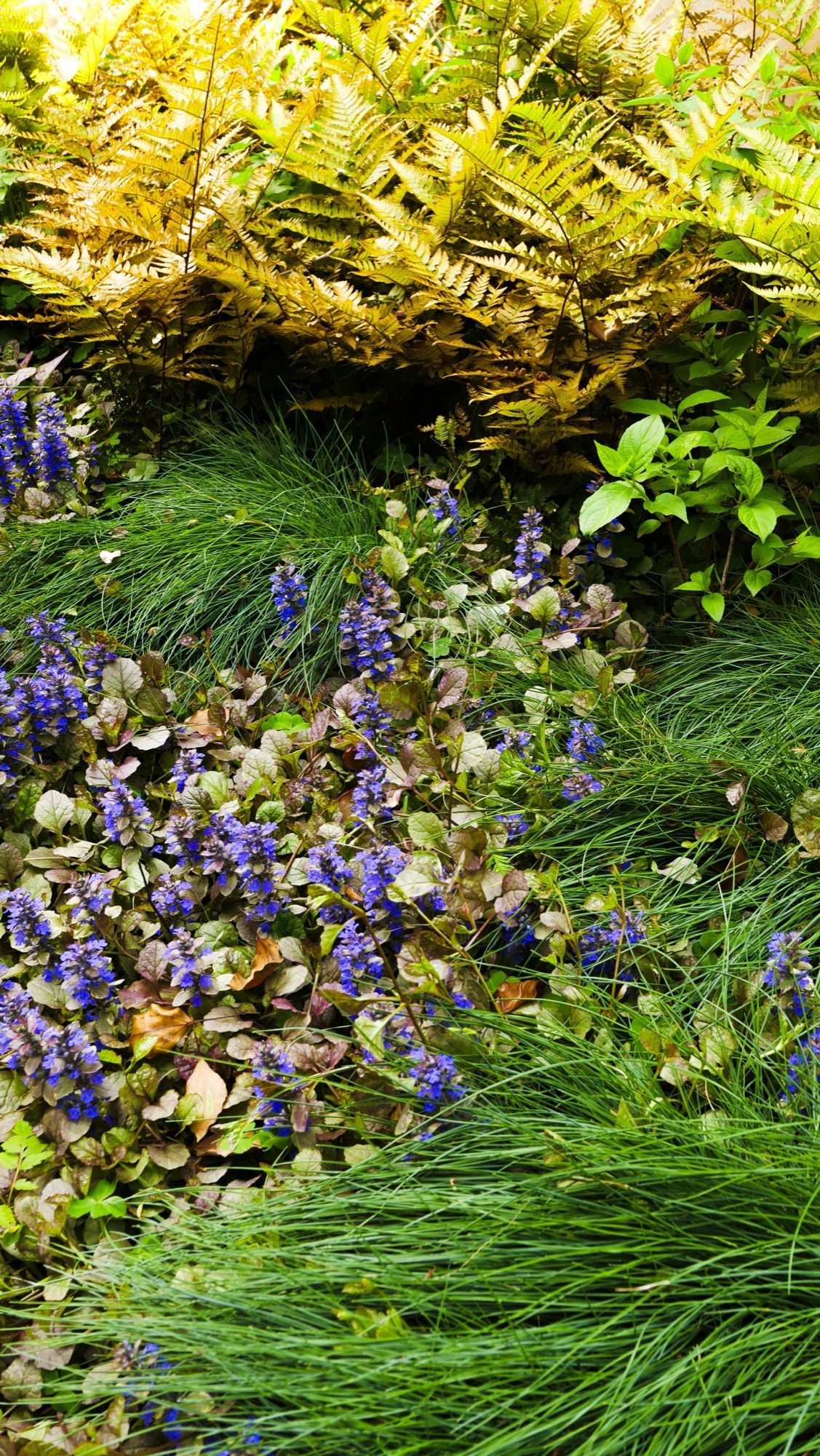
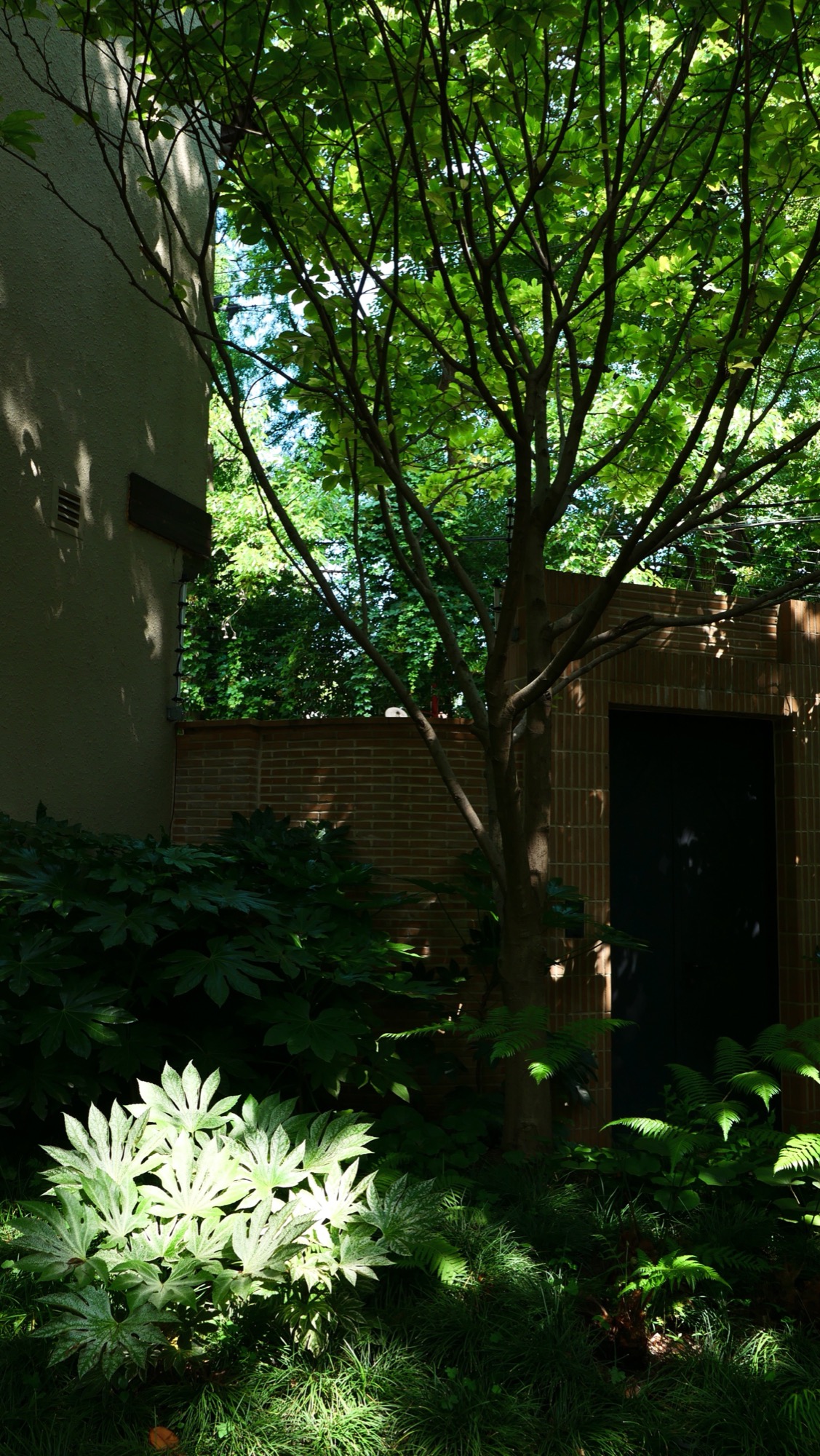
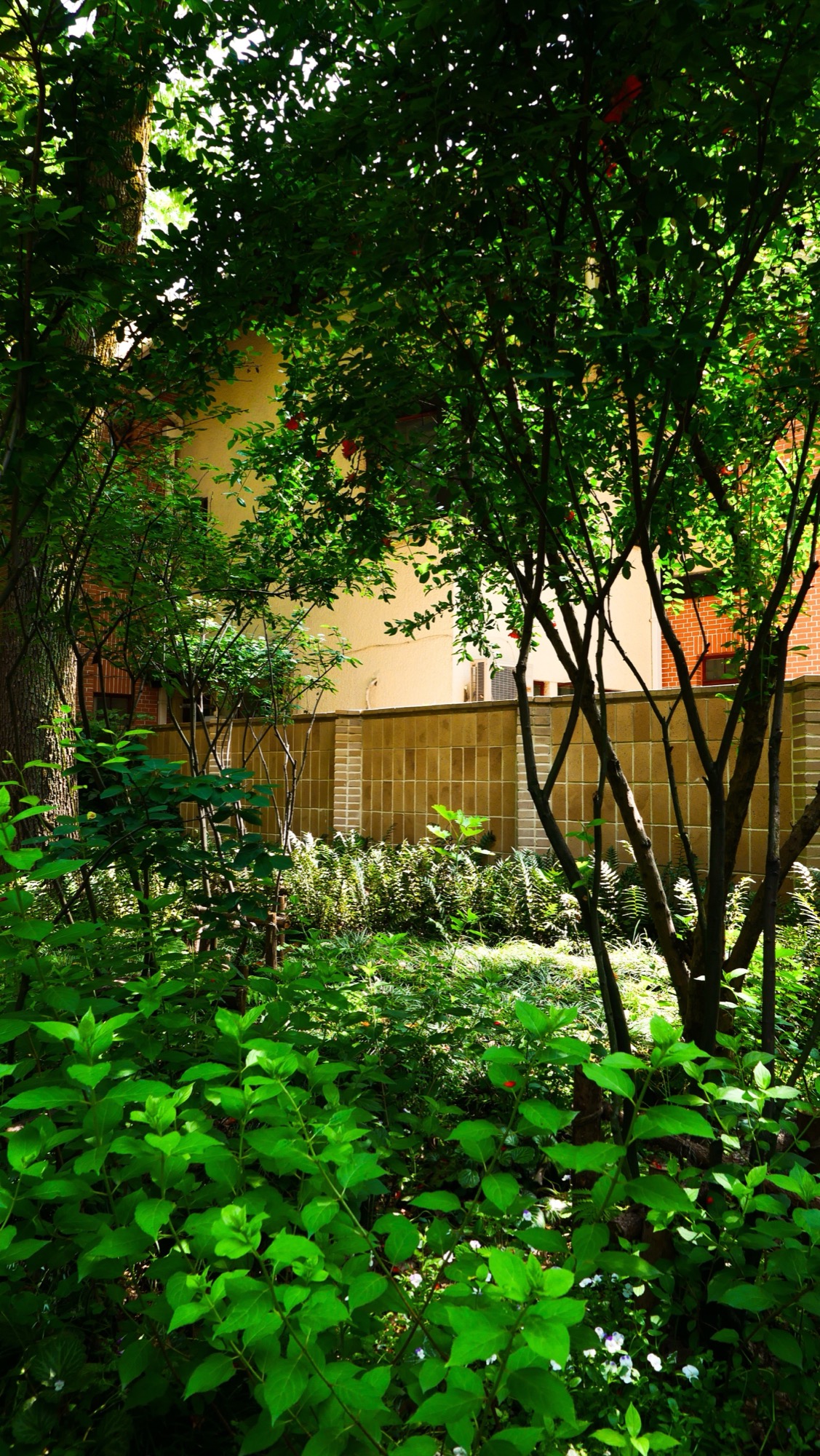
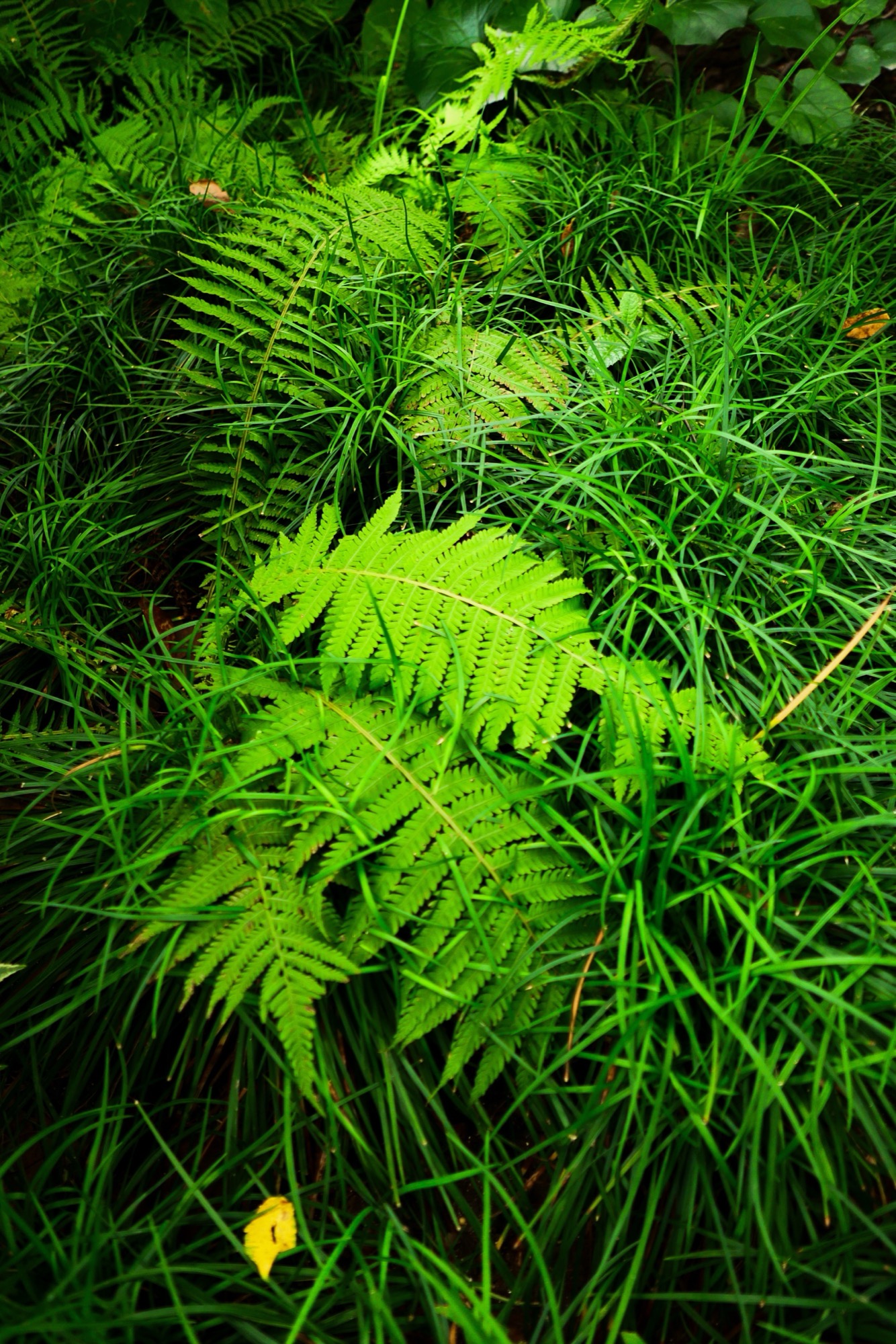
China had a dearth of specialist nurseries for native plants, but TSB’s research filled planting schedules with them. The same ferns that sprout from laneway walls also collar the metasequoia on the lawn, turning it to art. Textured greens swell against the east sequence and weave in and out of the west. This landscape’s fullness belies its impish disposition, but satisfies a brief that asked for peace and quiet. The planting is layered for sightlines at different elevations. Children will see differently and talk about it.
The Seasons Bureau was
Ryan Carter, director
Kino Gao, senior designer
Shaotian Li, junior designer
Amos Chan, project manager
Taylor Yang, project manager
Hugo Cardozo, technical drawing support
Wei Ming, site foreman
31.205366, 121.435724
75981


LILA 2026 Sponsor