Taman Bendera Pusaka
www.siurastudio.com/
2026 Landscape and Architecture / 2026 Public Projects / Indonesia / Built in 2025 /

Regenerative Urban Park
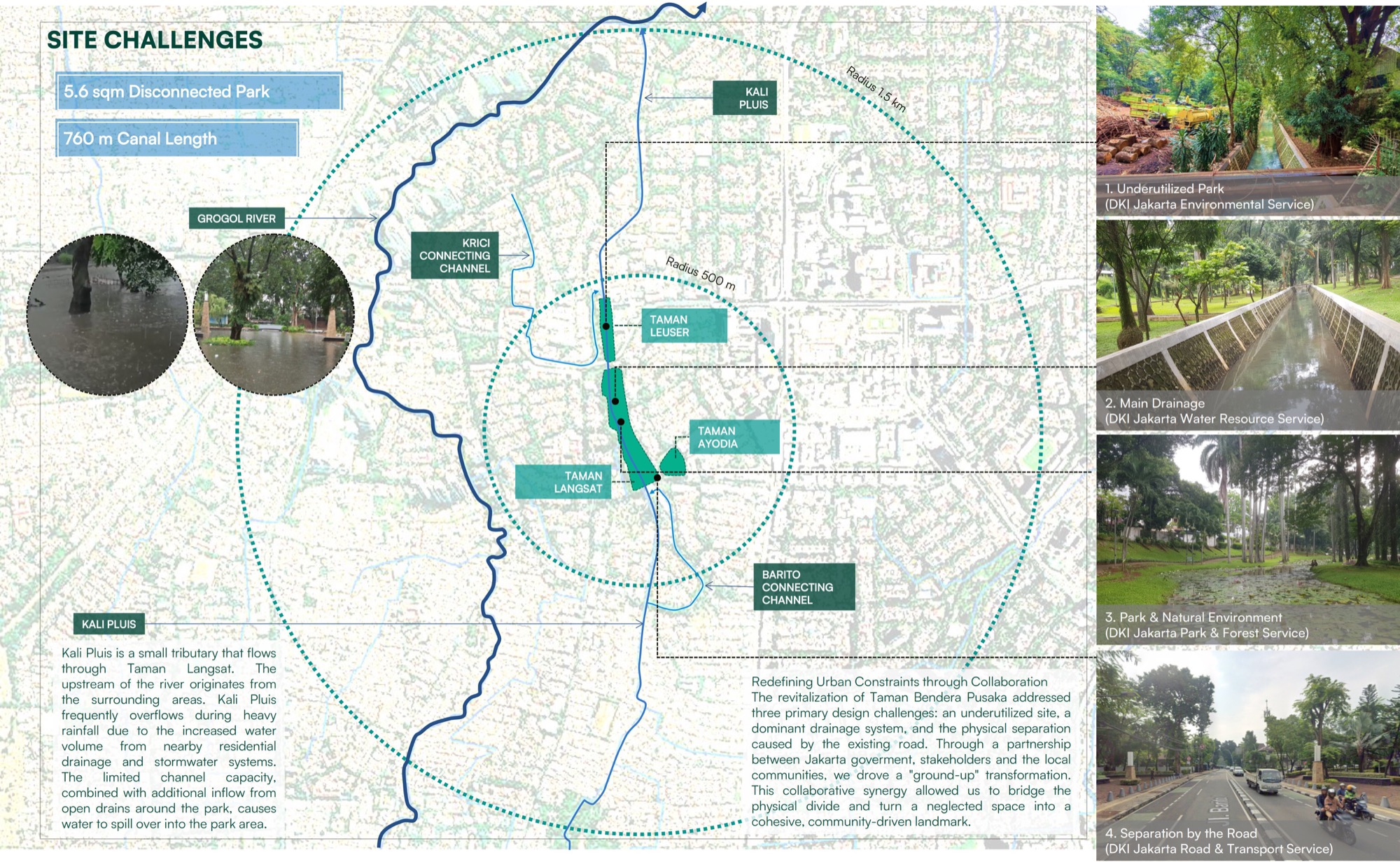
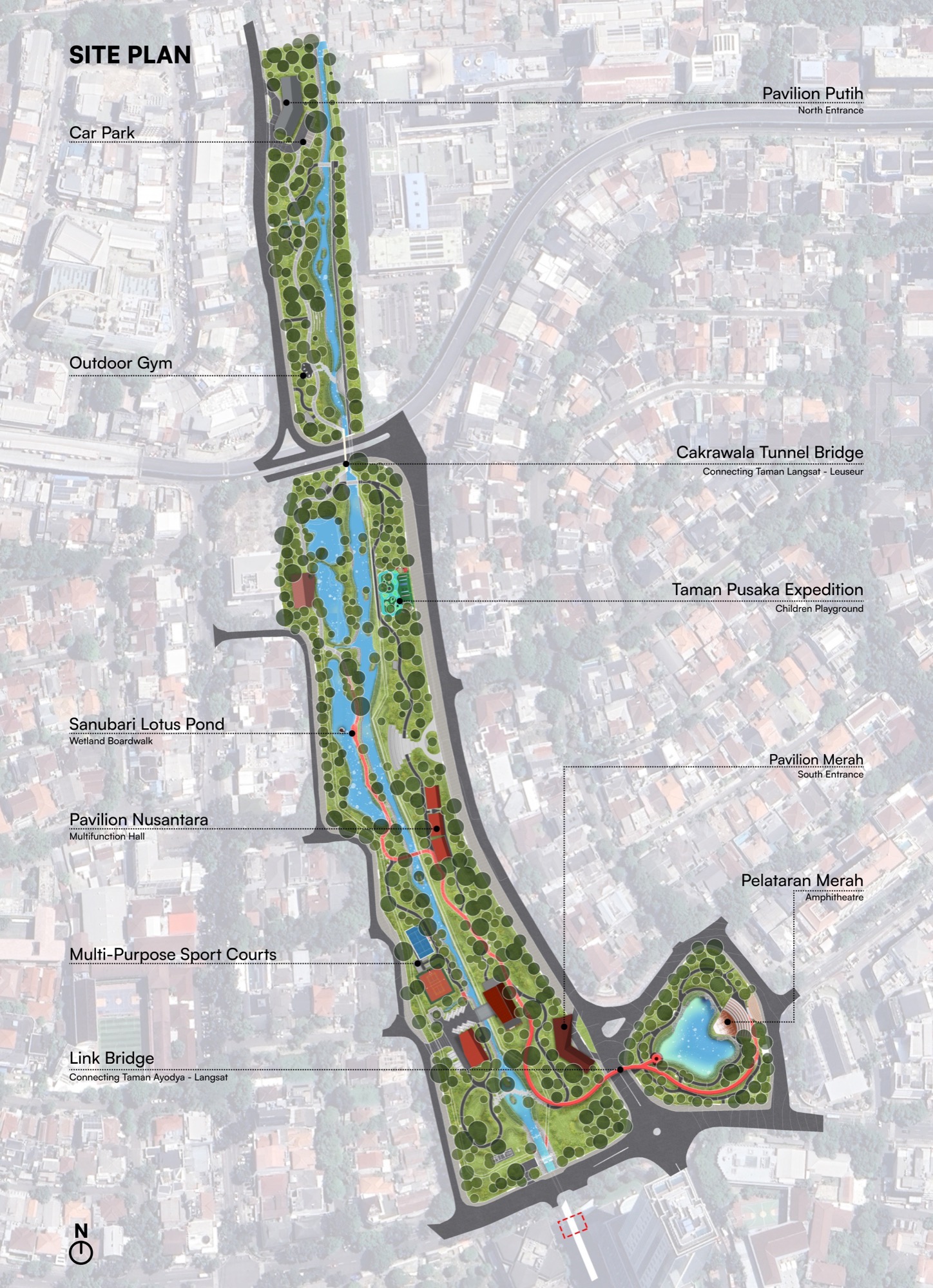
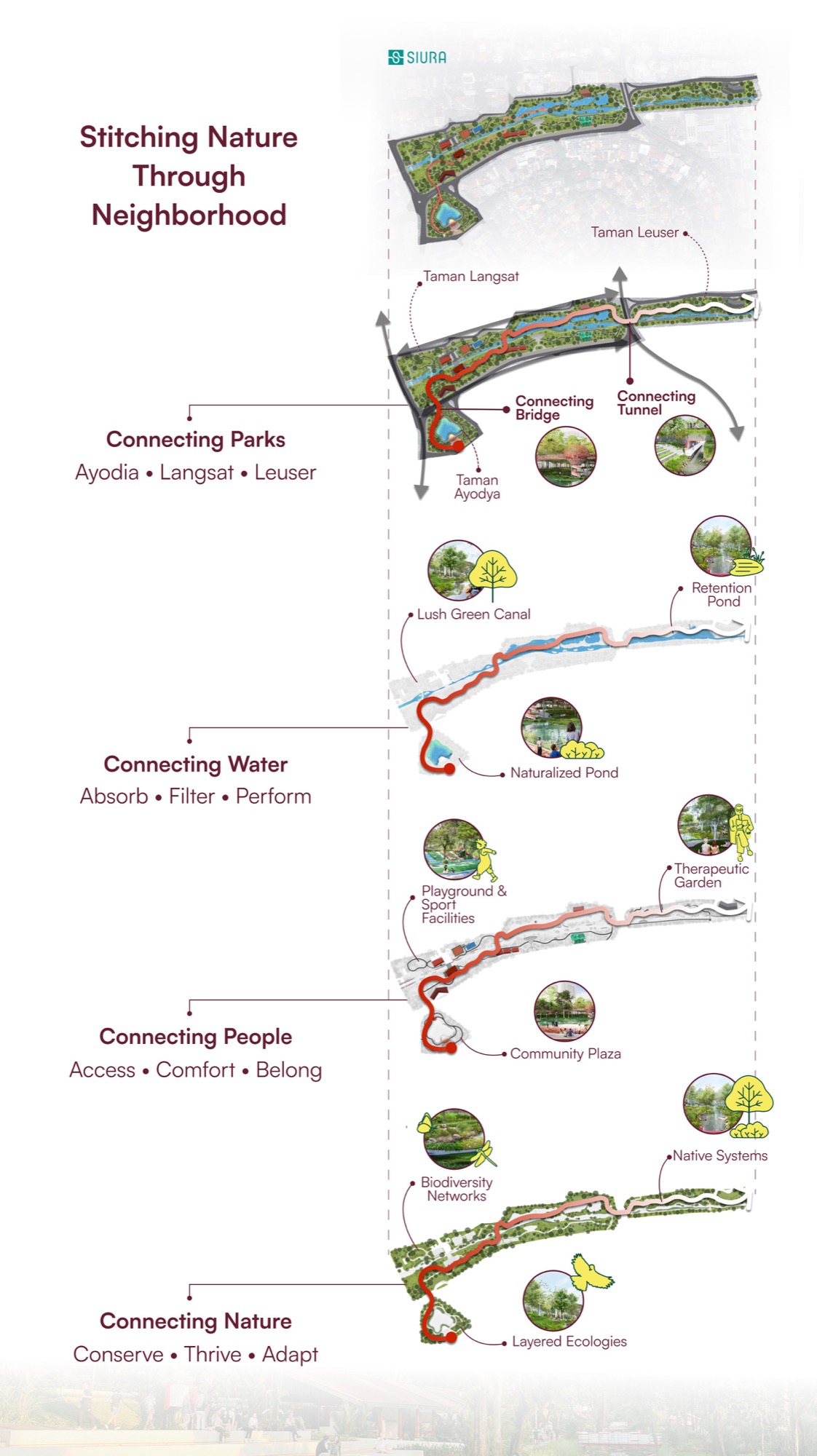
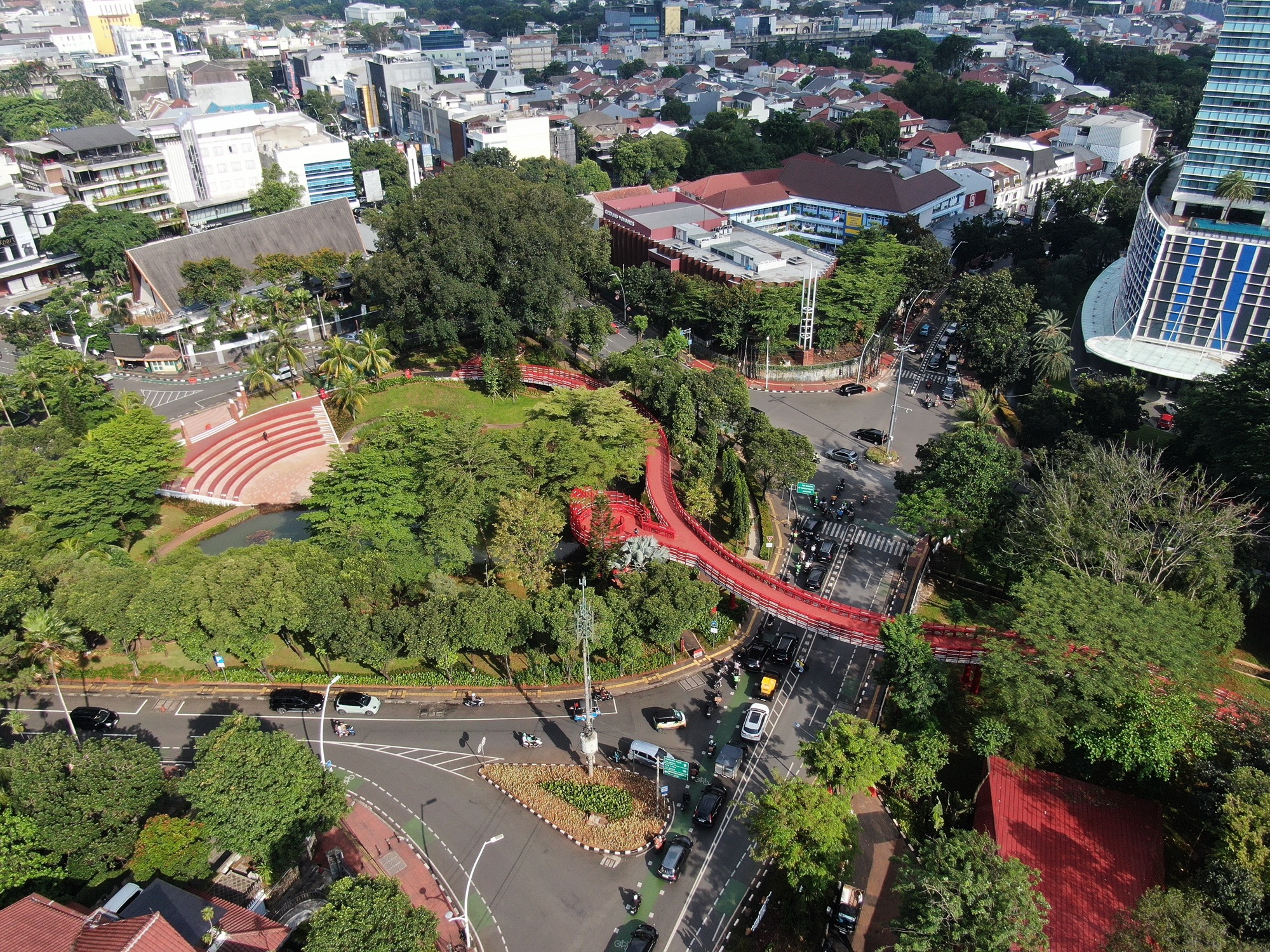
Taman Bendera Pusaka revitalises three disconnected parks — Taman Langsat, Ayodya, and Leuser — into a continuous 5.5-hectare urban landscape in South Jakarta. Previously separated by roads and a concrete canal, the site now operates as an interconnected ecological and social infrastructure.
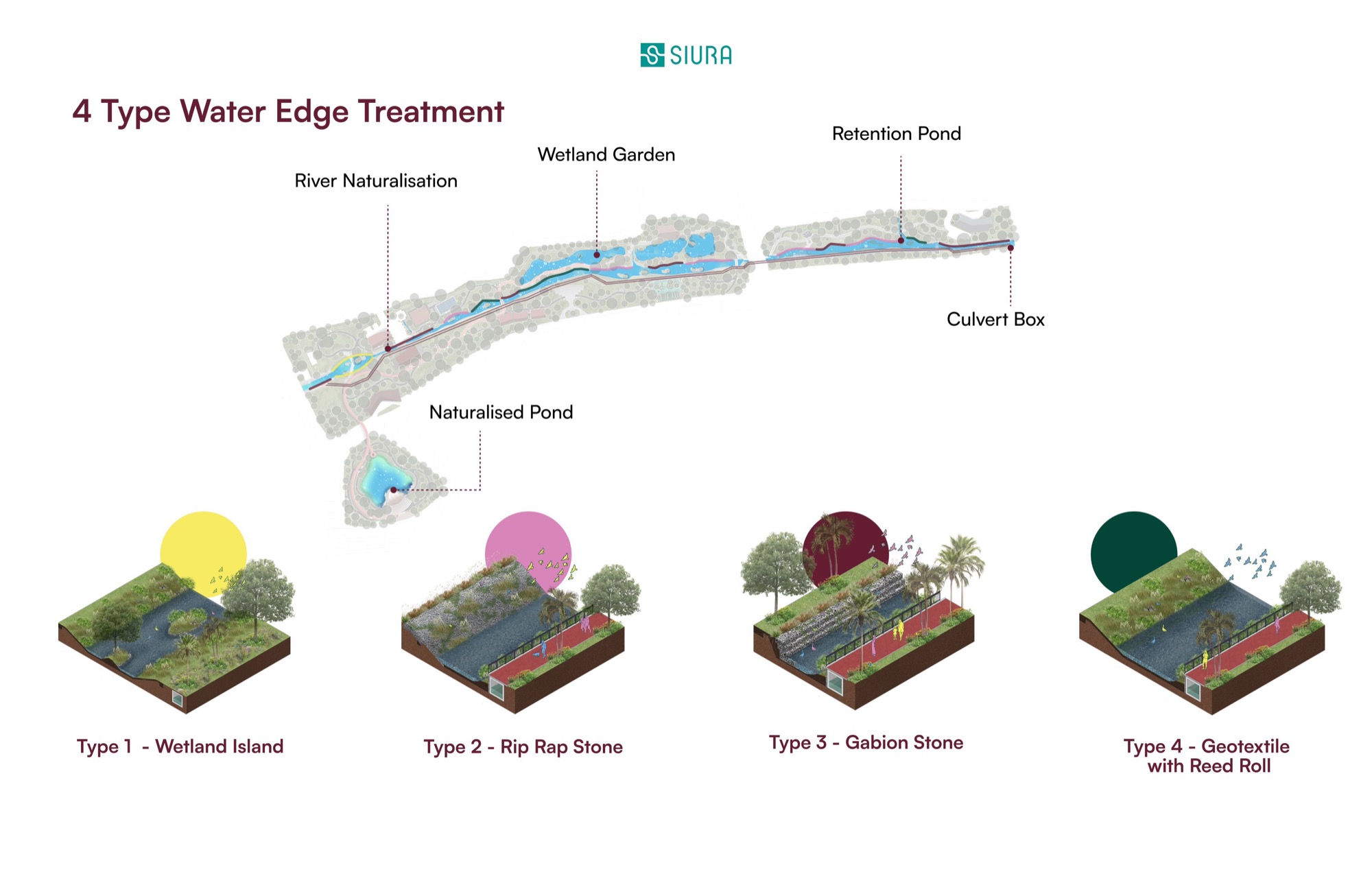
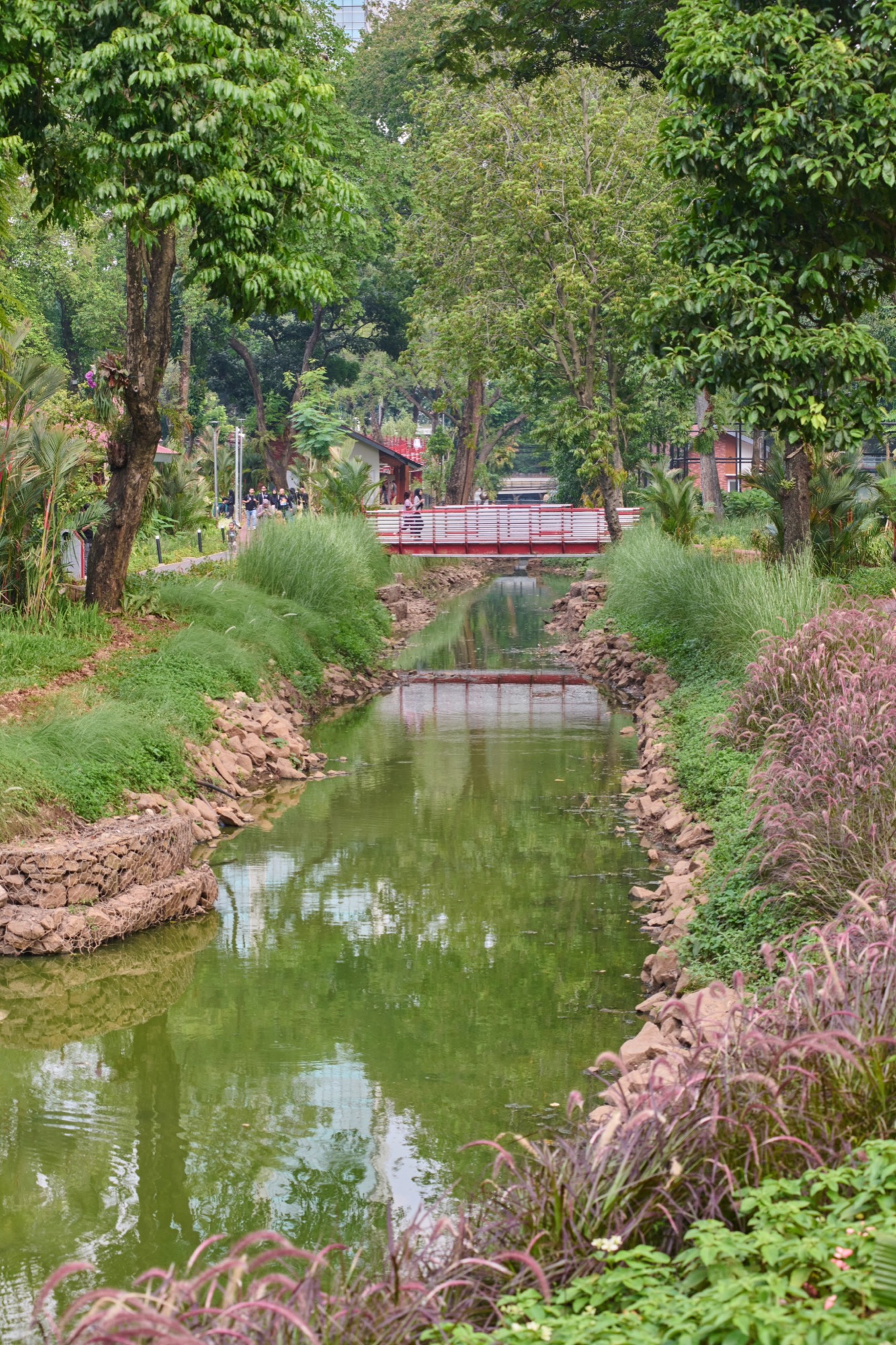
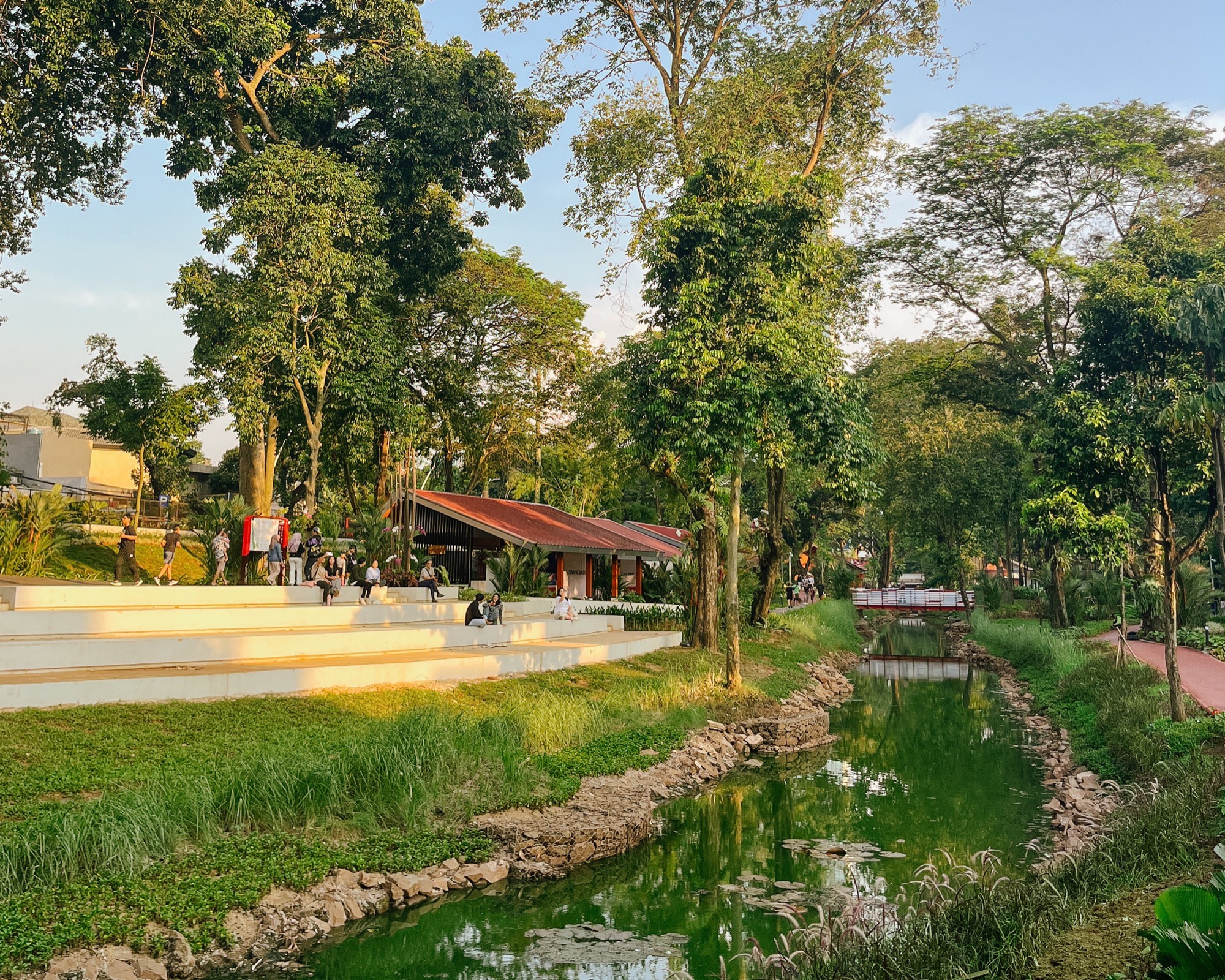
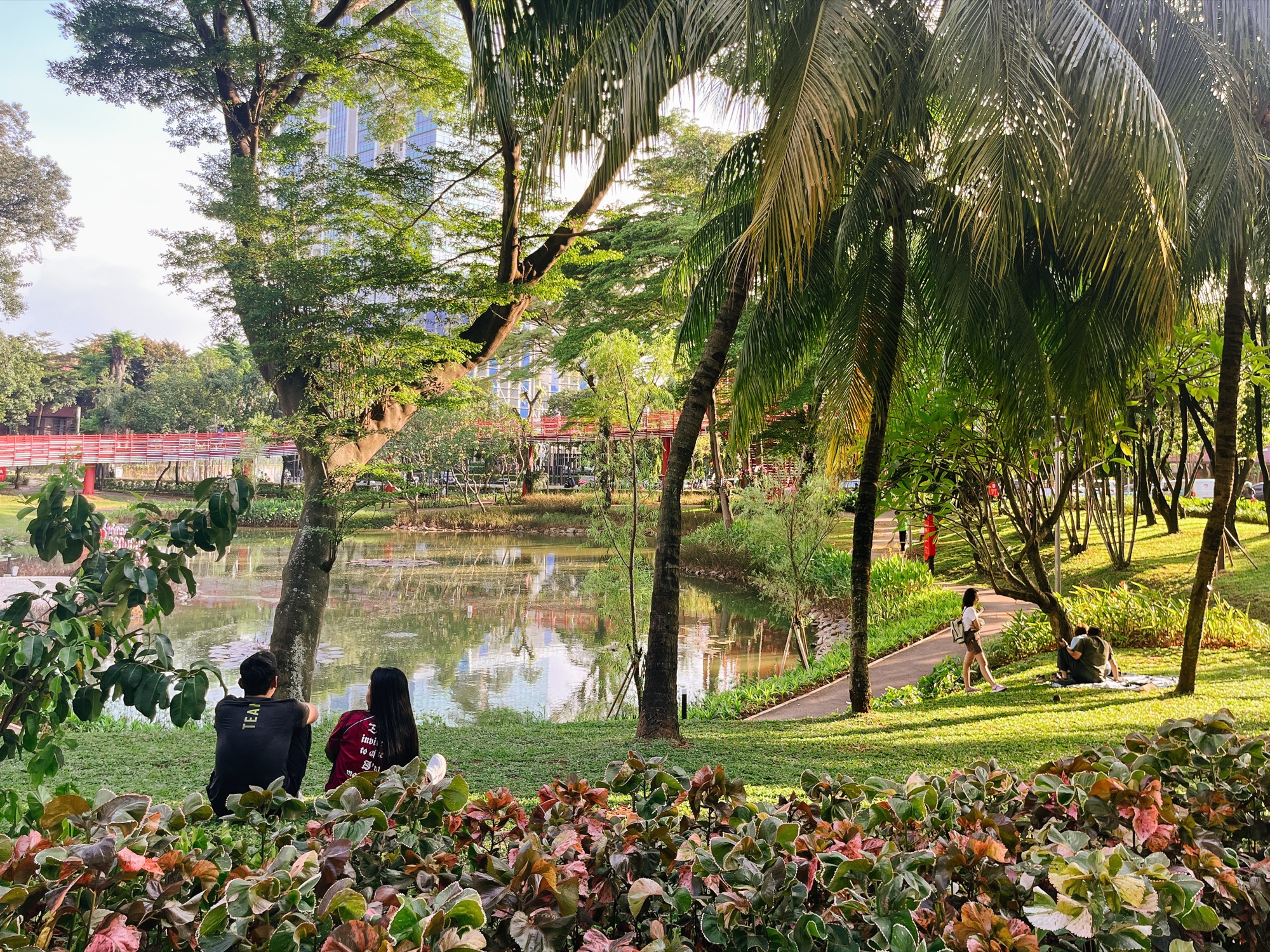
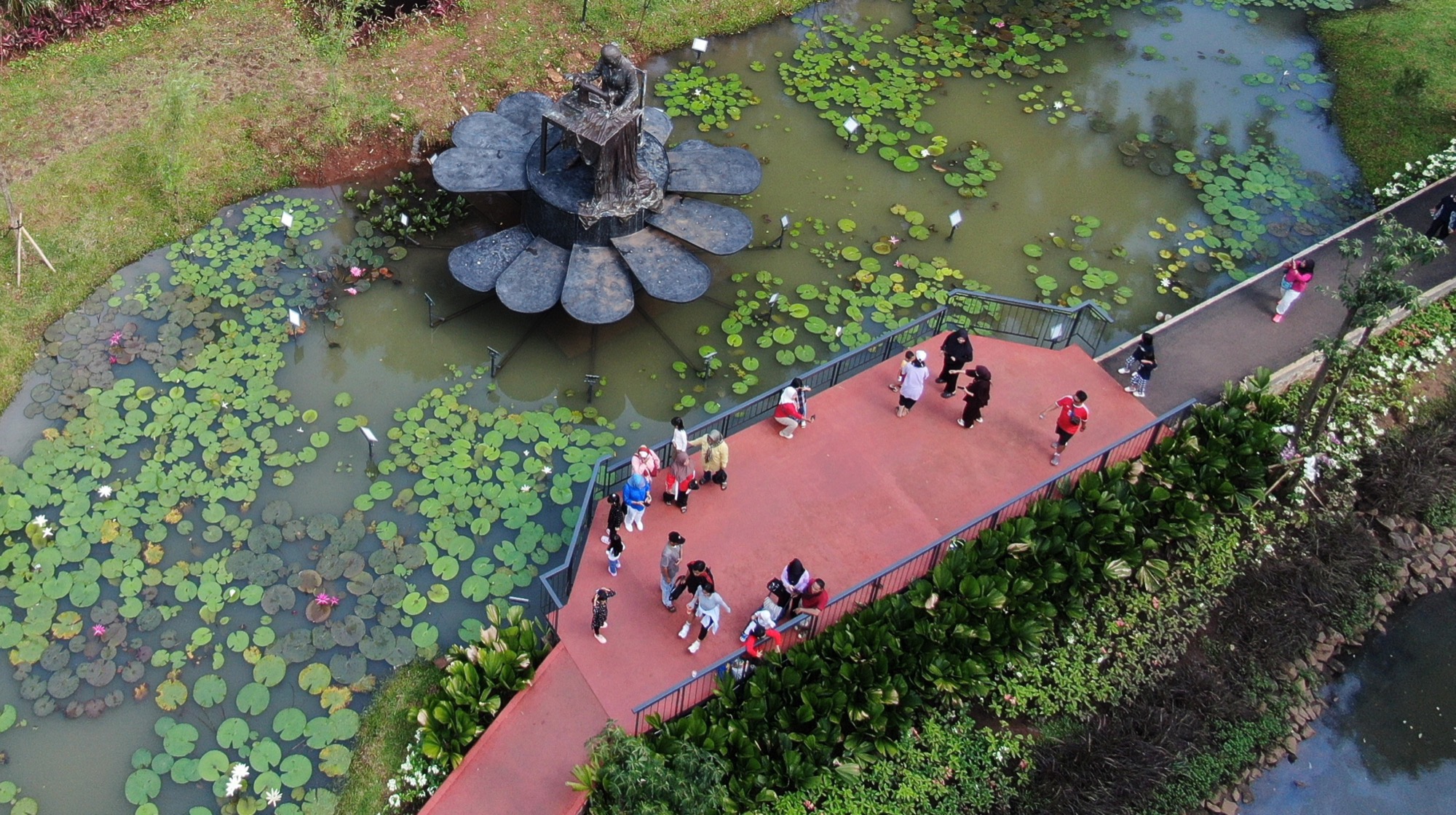
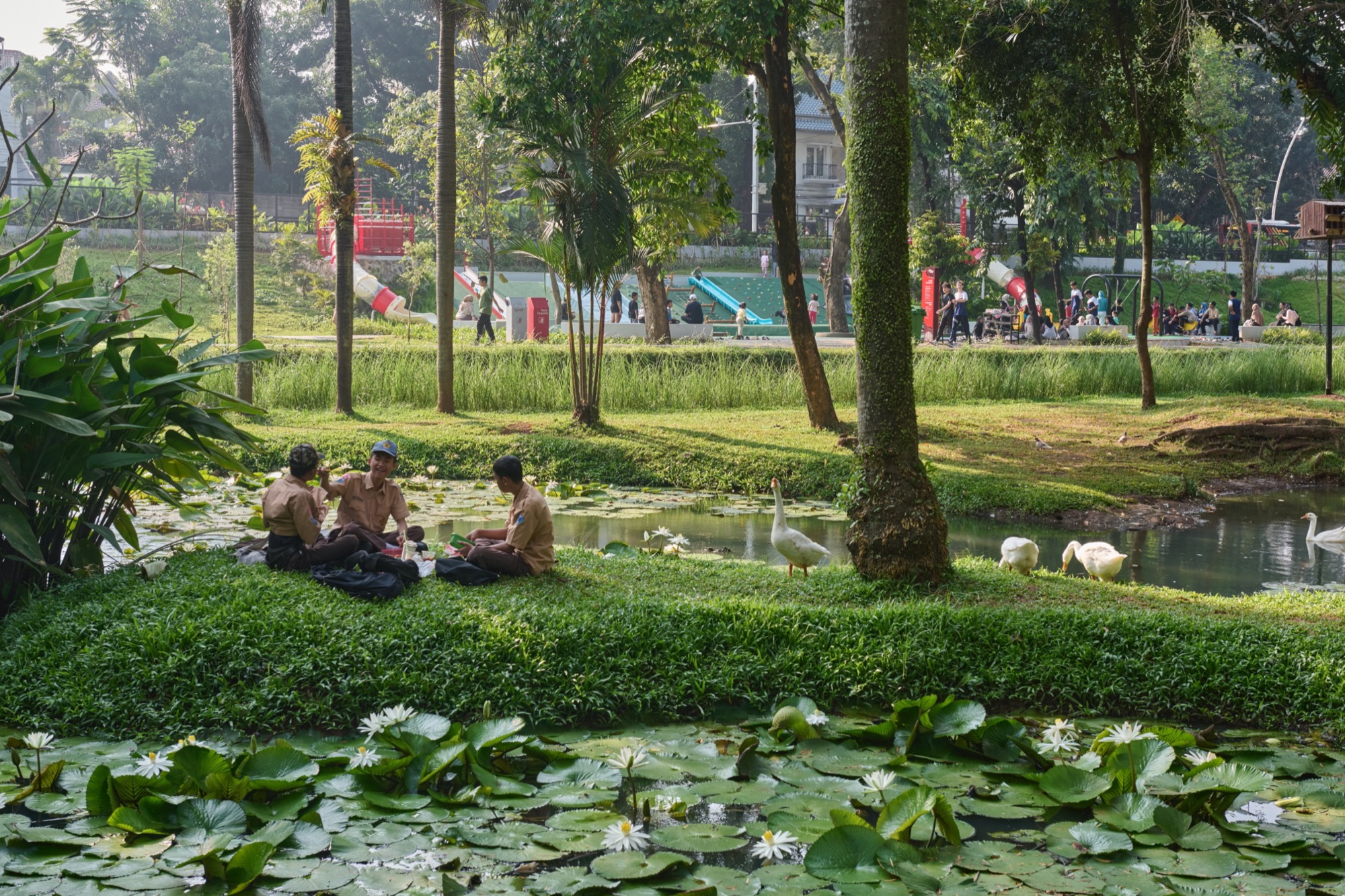
The project repositions the park as part of Jakarta’s water system. Existing canals and ponds are transformed into a green-blue network that retains stormwater, expands floodplain capacity, and supports urban biodiversity. Water movement defines the spatial structure of the park, shaping circulation, habitat, and public occupation.
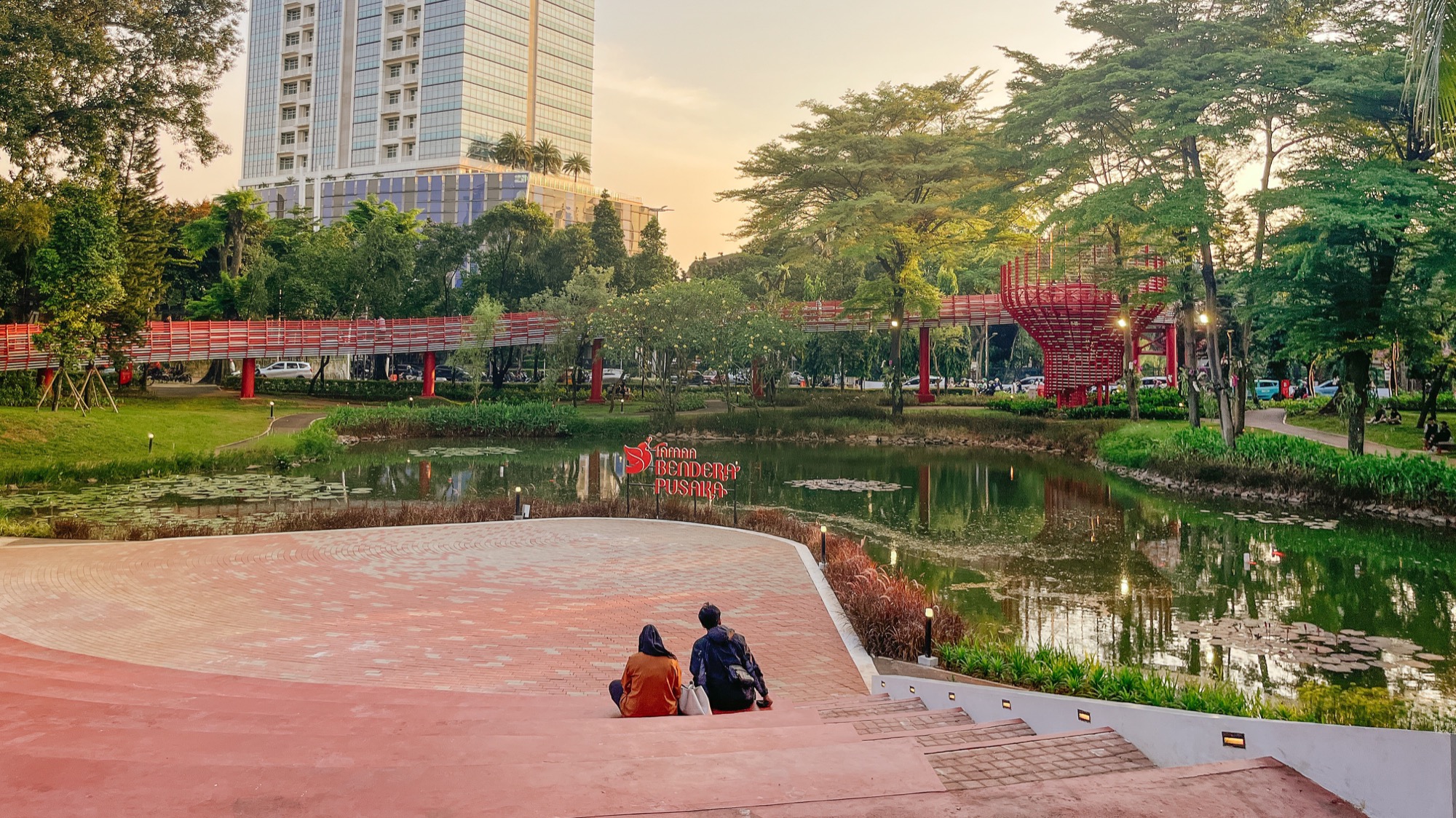
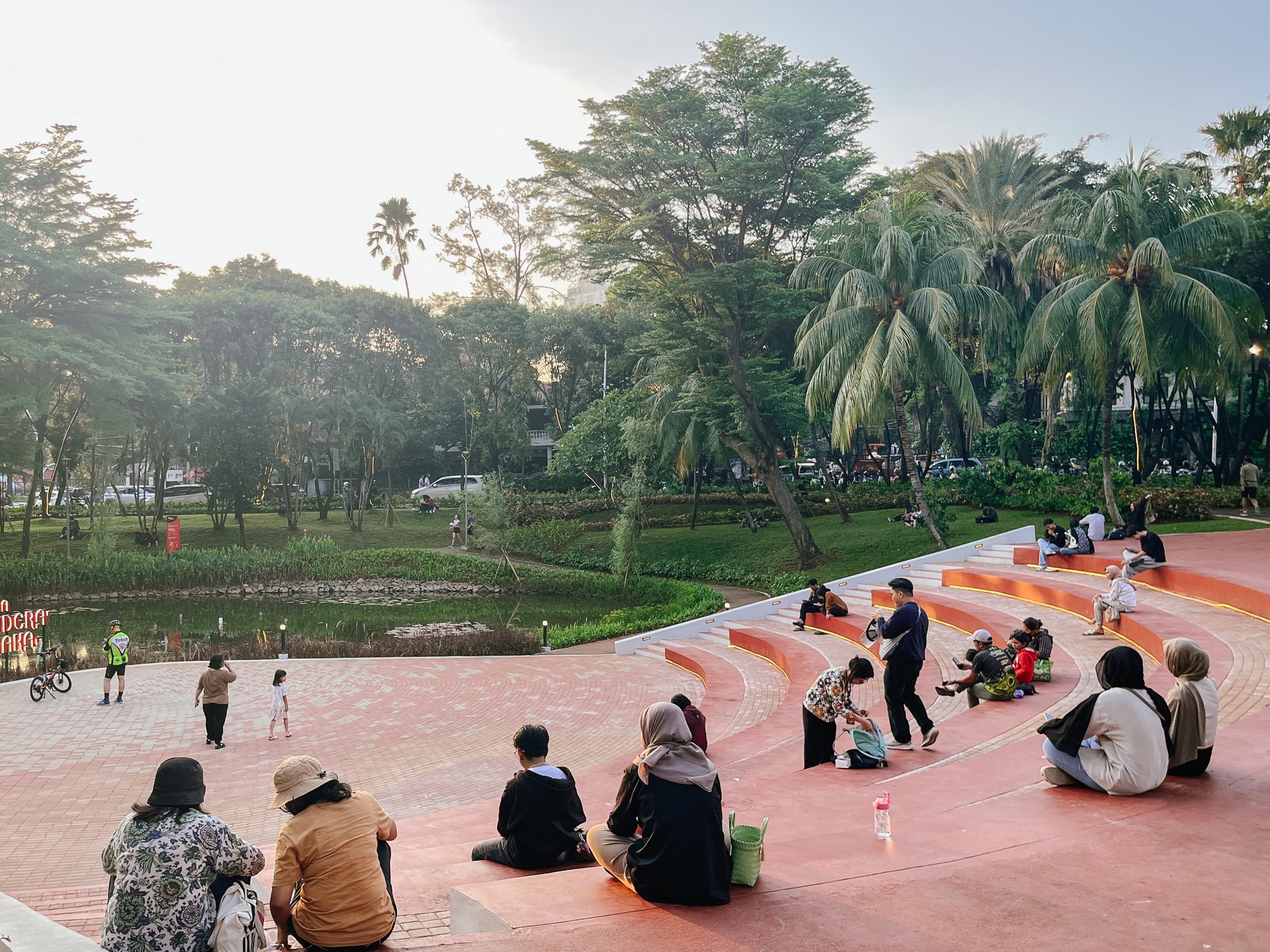
Rather than prescribing fixed uses, the landscape allows different forms of occupation over time. Wetlands, ponds, shaded clearings, bridges, and open lawns create conditions for gathering, movement, rest, and informal community use while also supporting non-human life processes.
-
- 2026 ALL RIGHTS RESERVED BY NILAI ASIA
-
- 2026 ALL RIGHTS RESERVED BY NILAI ASIA
-
- 2026 ALL RIGHTS RESERVED BY NILAI ASIA
-
- 2026 ALL RIGHTS RESERVED BY NILAI ASIA
-
- 2026 ALL RIGHTS RESERVED BY NILAI ASIA
-
- 2026 ALL RIGHTS RESERVED BY NILAI ASIA
-
- 2026 ALL RIGHTS RESERVED BY NILAI ASIA
-
- 2026 ALL RIGHTS RESERVED BY NILAI ASIA
Reconnecting Fragmented Landscapes
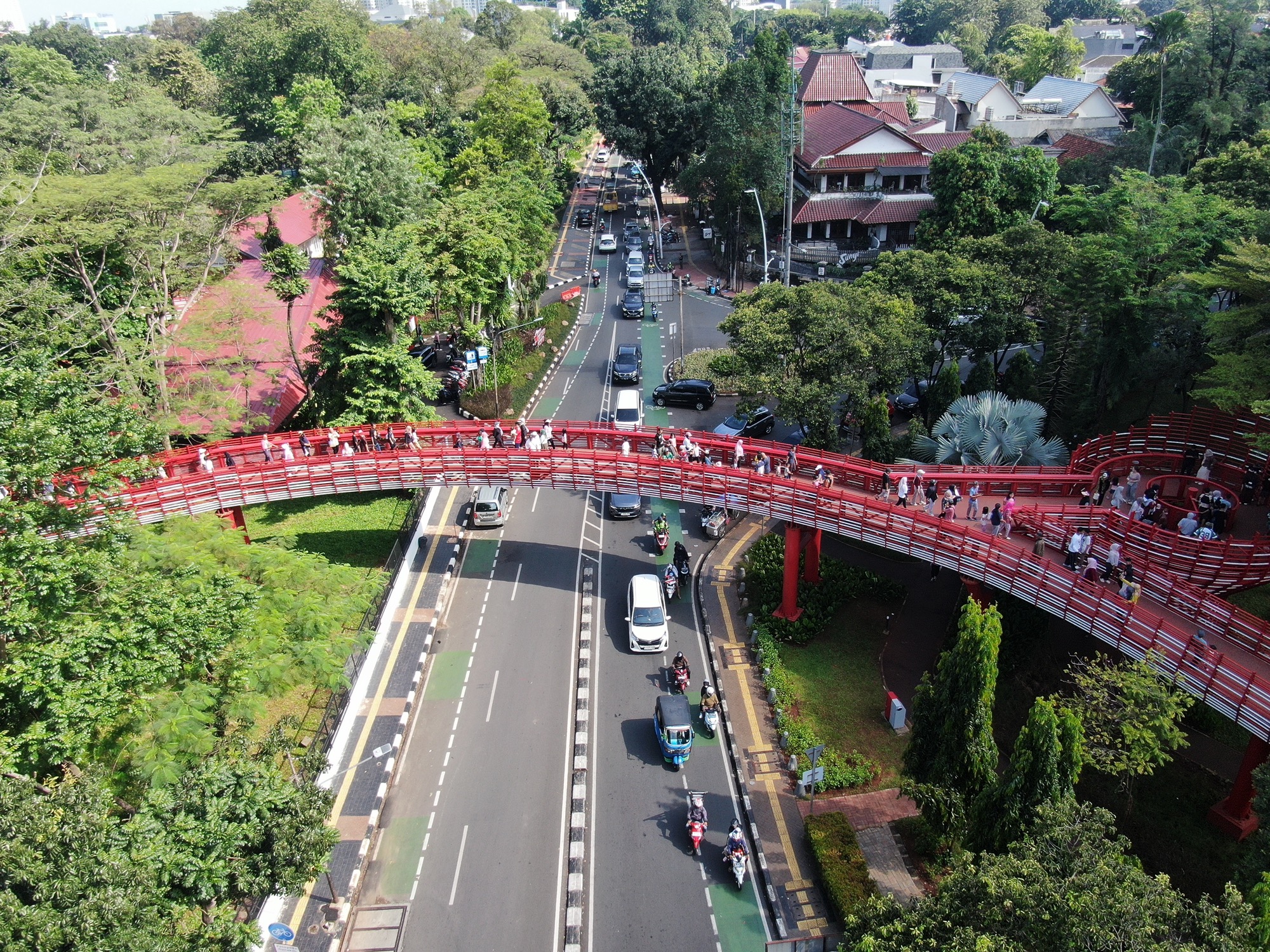
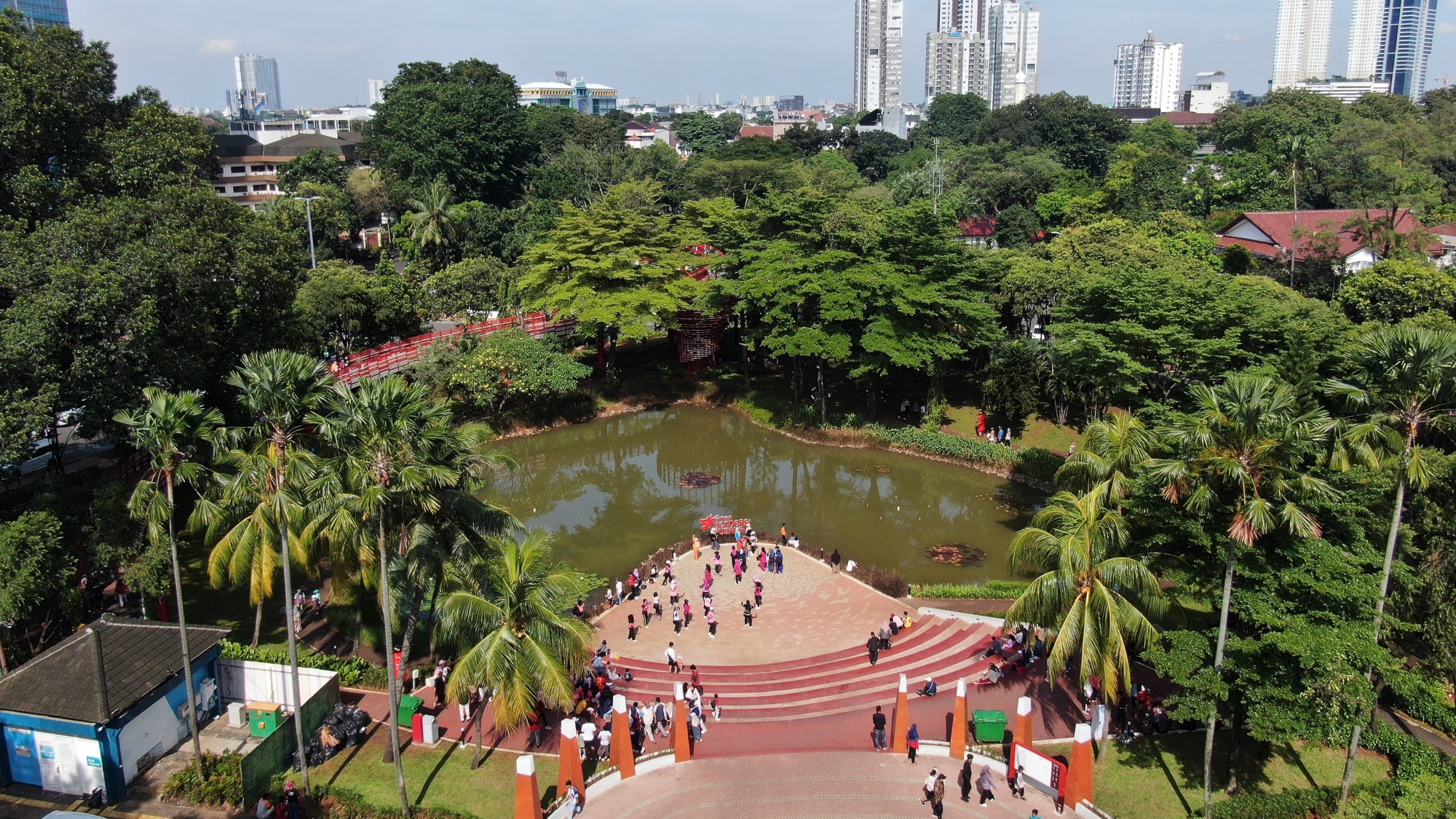
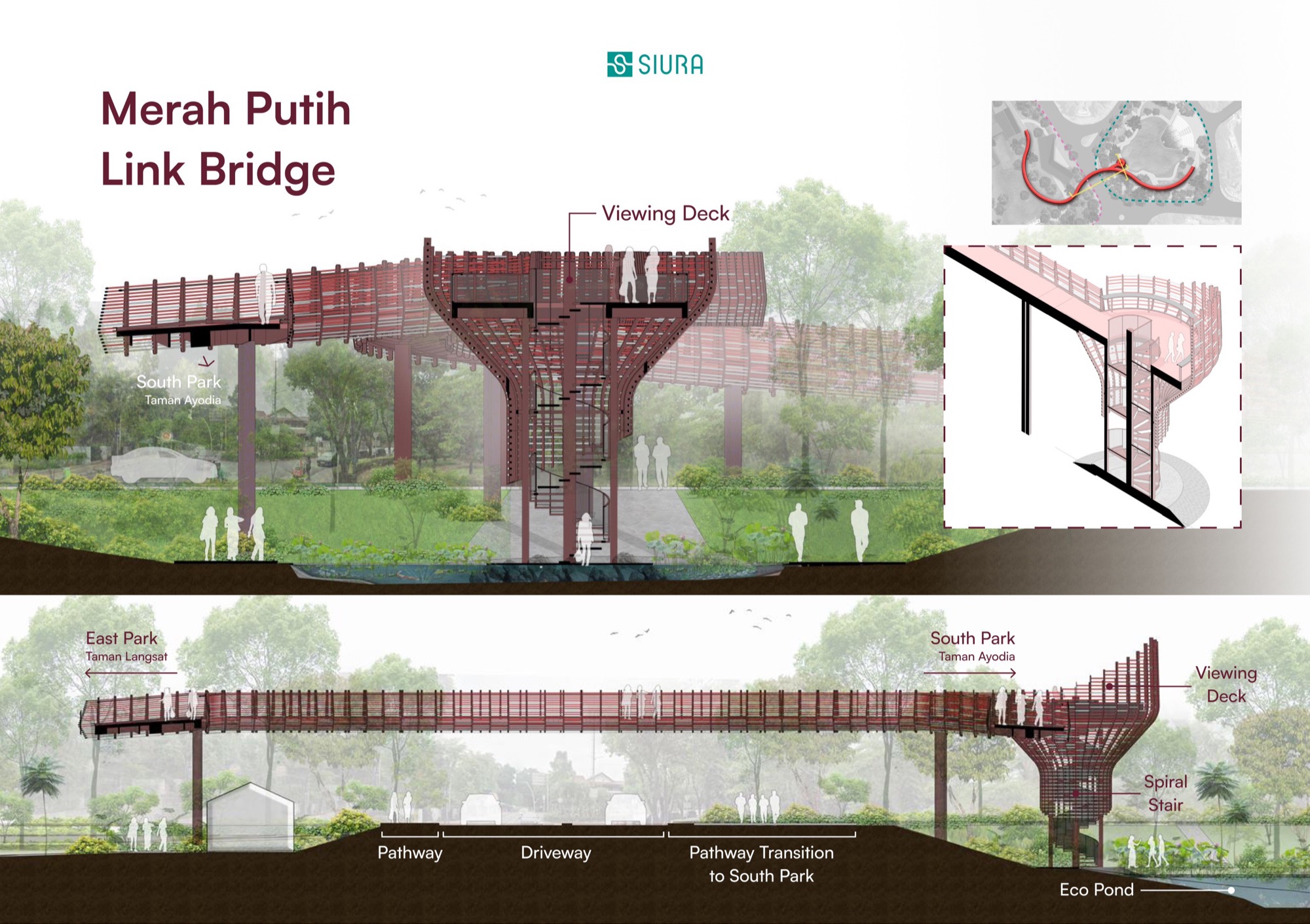
Historically, the three parks functioned as isolated green pockets divided by roads and engineered drainage infrastructure. The design reconnects them through a network of pedestrian bridges and underpasses that minimise intervention to the existing landscape.
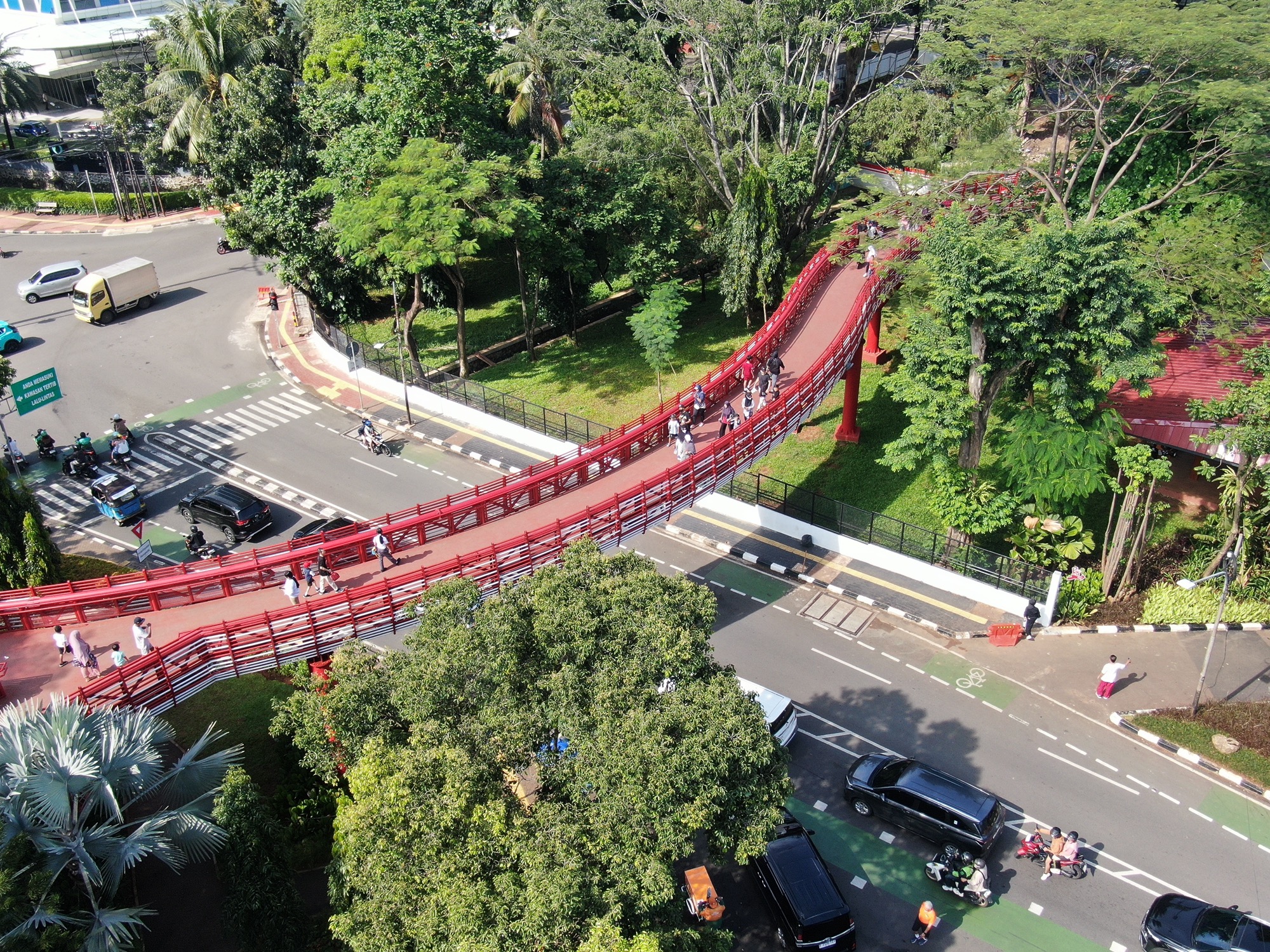
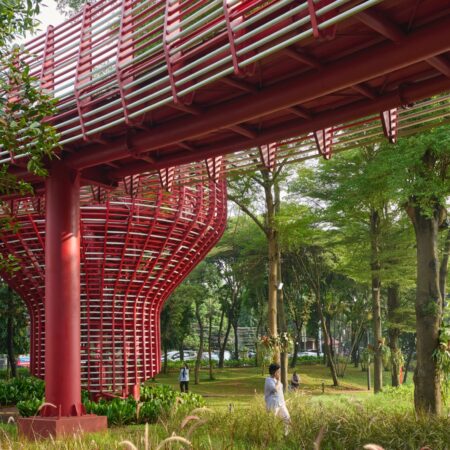
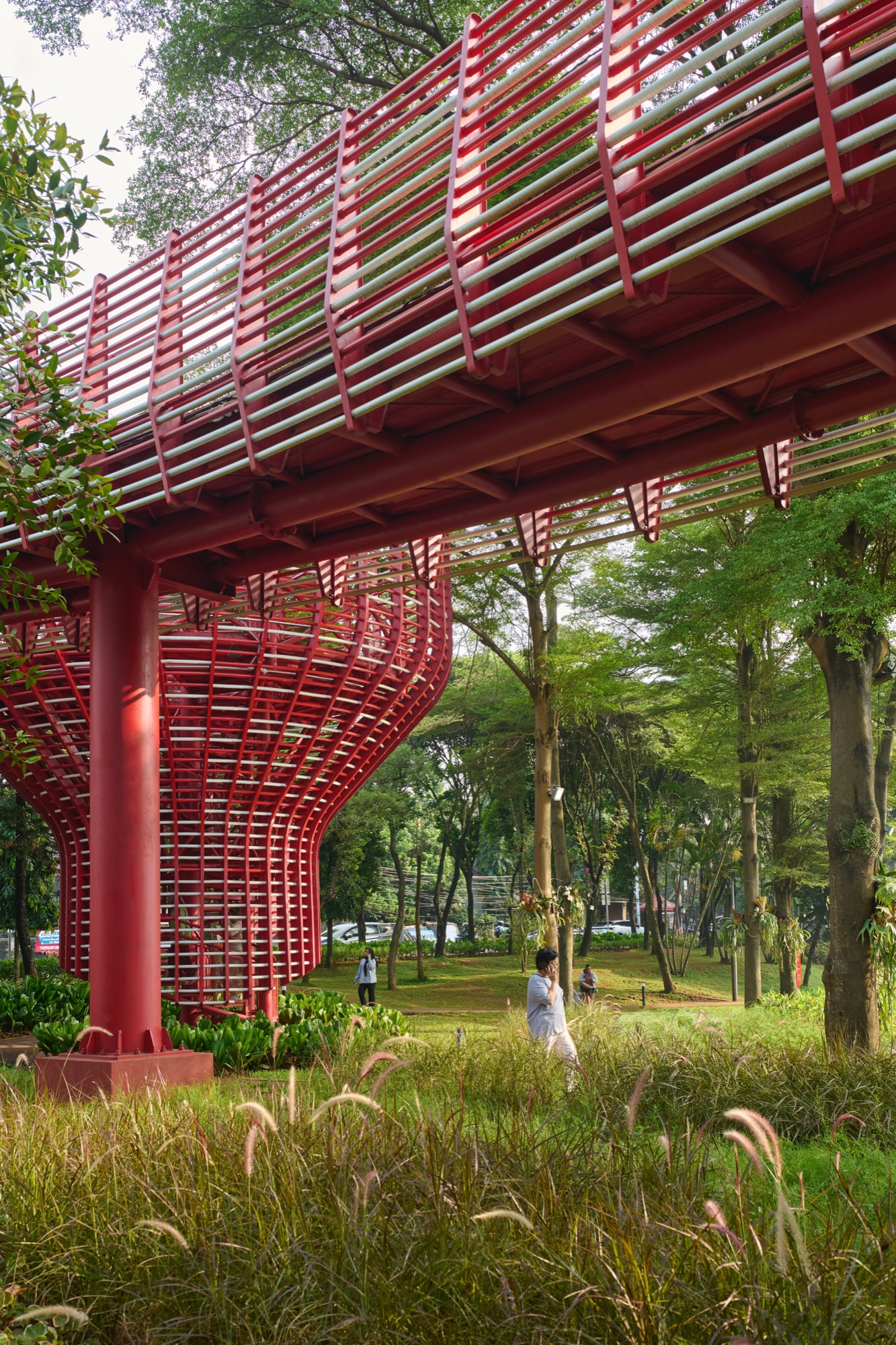
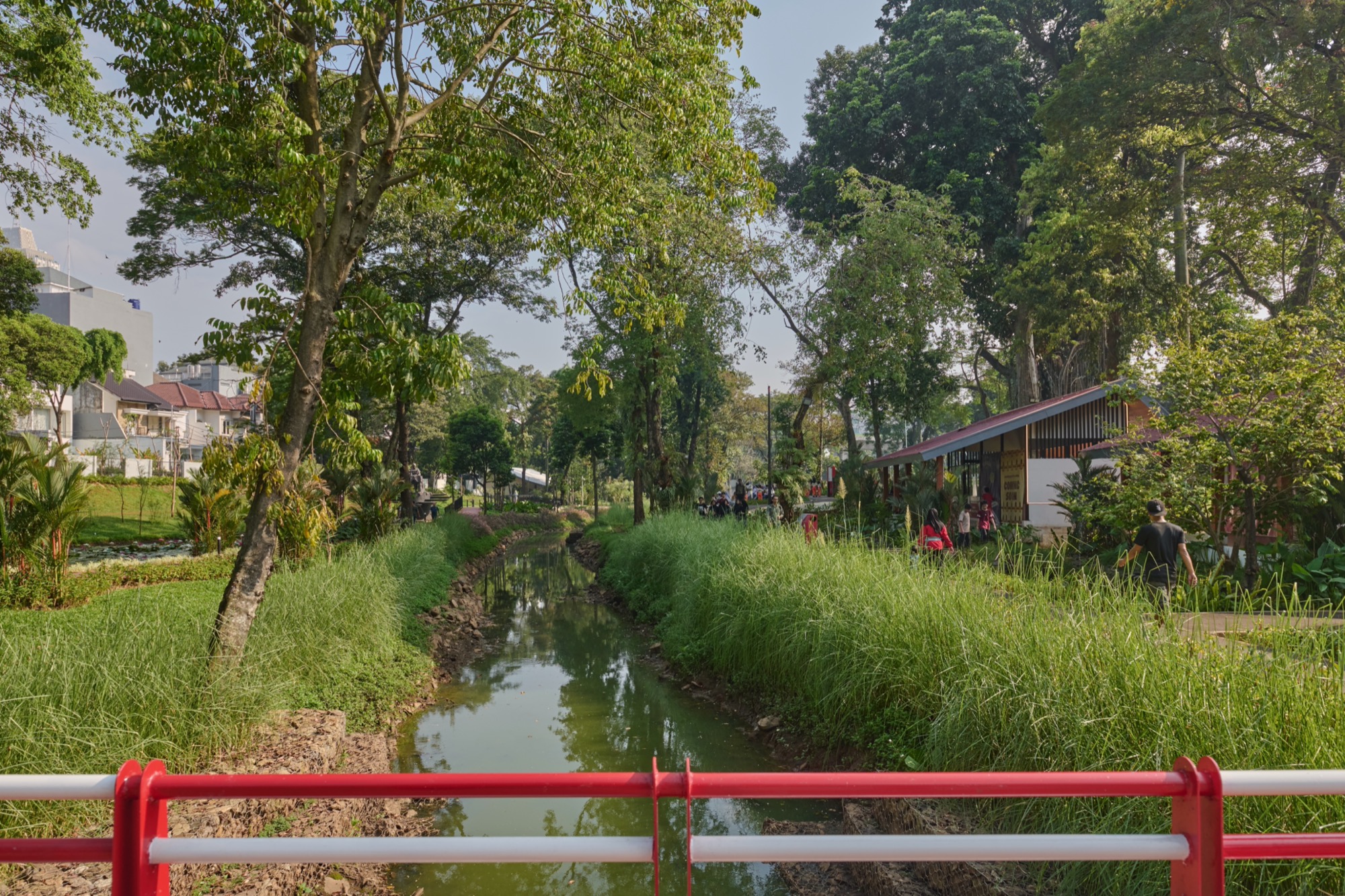
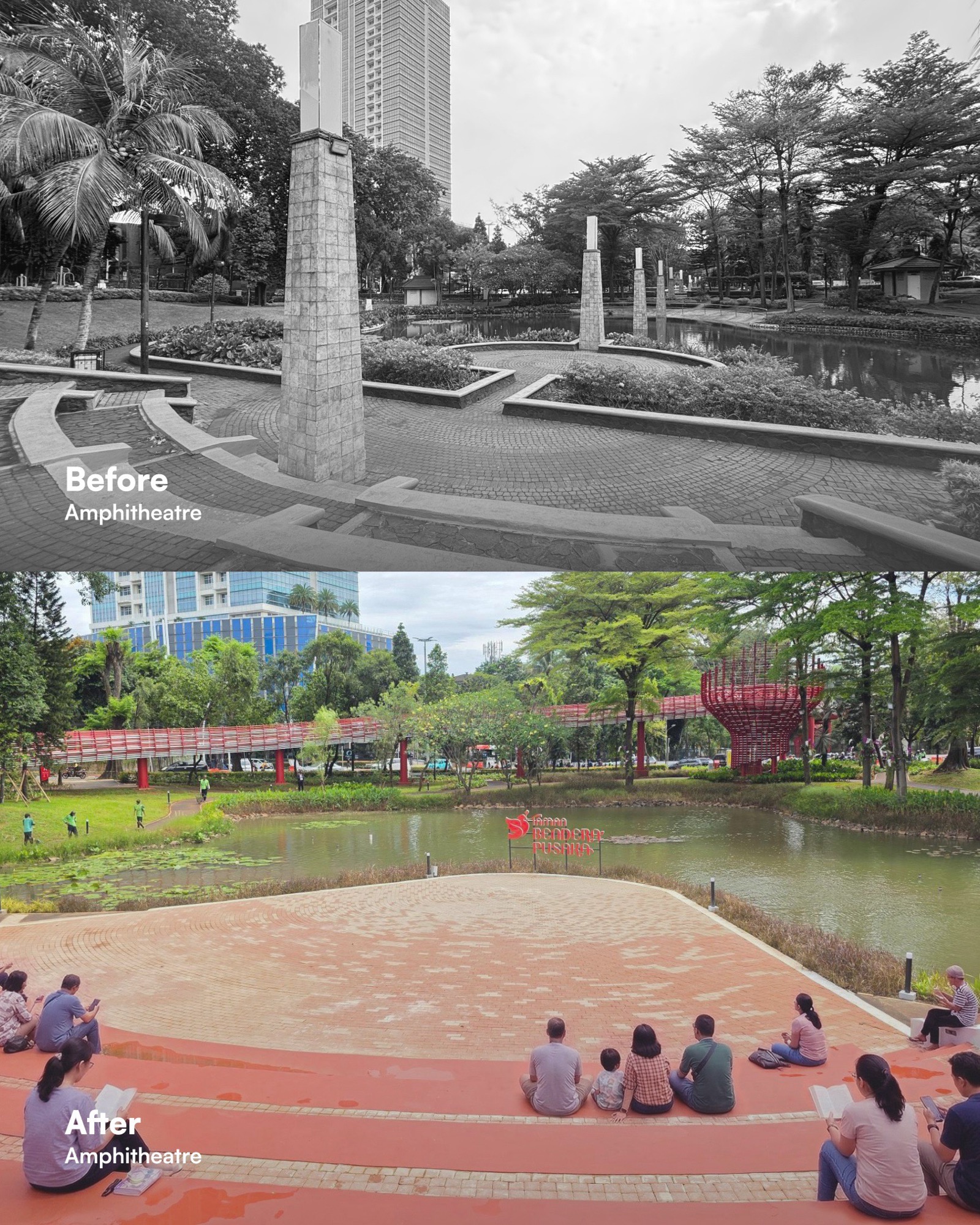
The main bridge, inspired by the red and white of the Indonesian flag, links the southern and northern parks through a gradual ramp that avoids mature trees. An underpass beneath the roadway creates a secondary pedestrian connection without interrupting traffic flow. Together, these interventions restore continuity across the site and re-establish pedestrian access within the neighborhood.
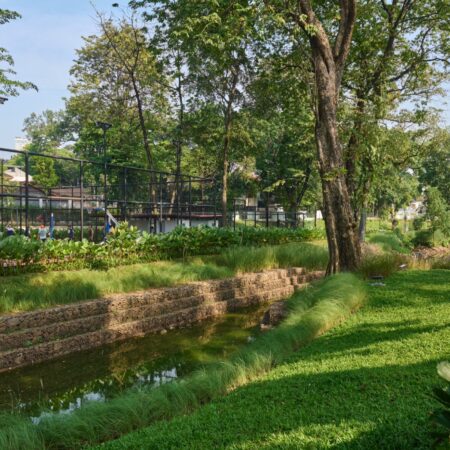
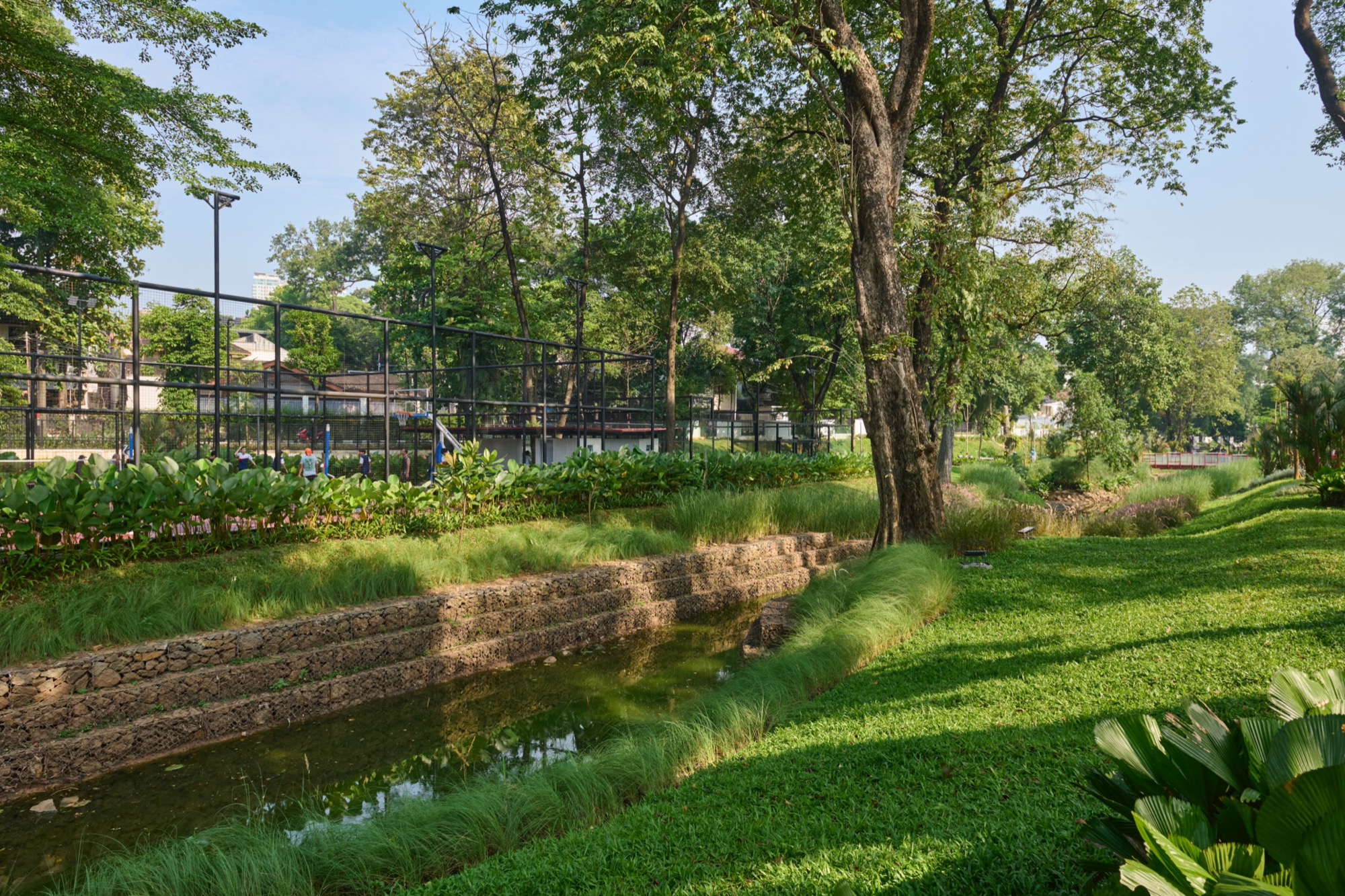
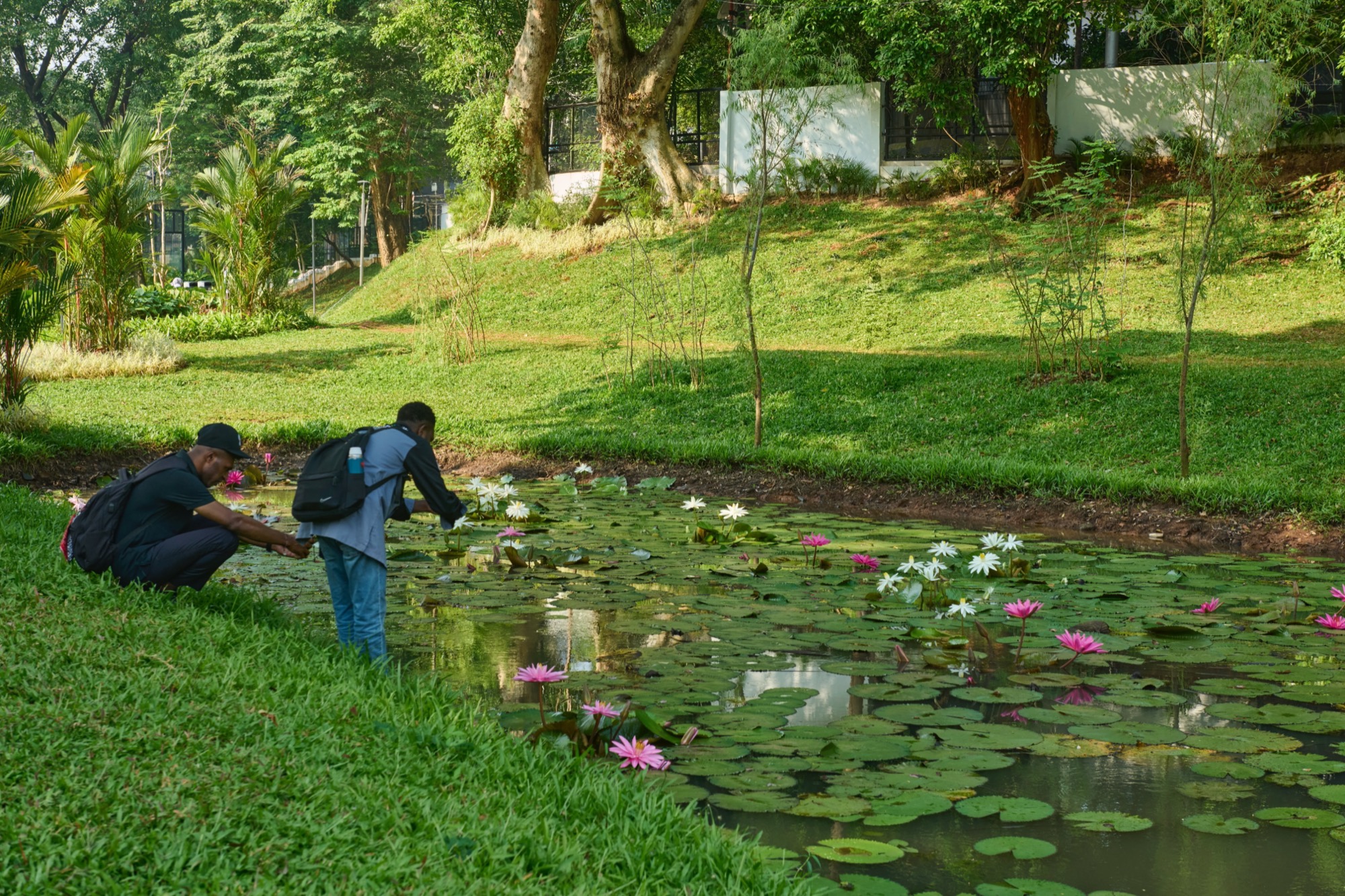
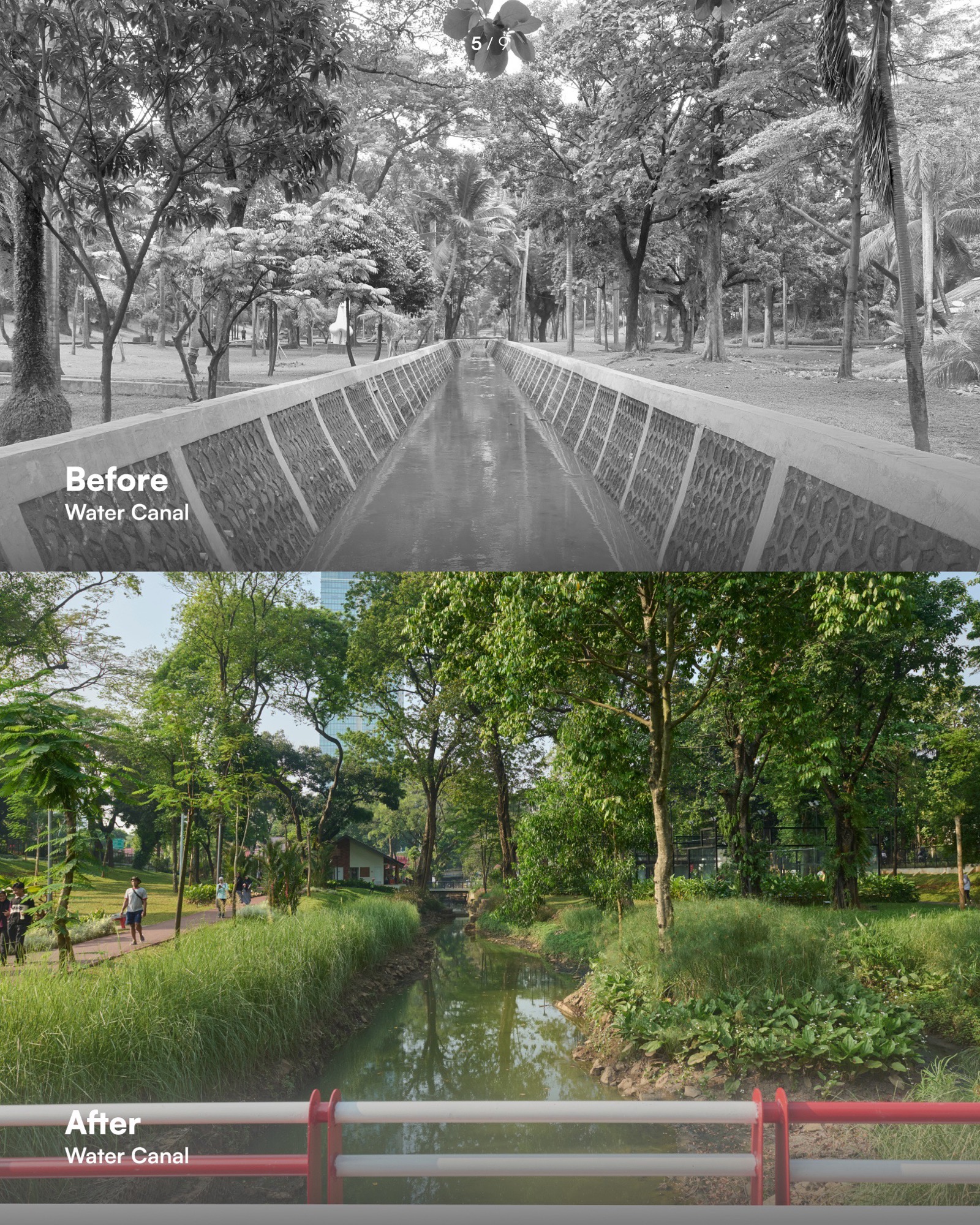
From Drainage Canal to Living Water SystemA central strategy of the project is the re-naturalisation of the existing concrete canal. Engineered drainage edges were replaced with planted embankments, wetland zones, and accessible water edges that slow water flow and improve ecological performance.
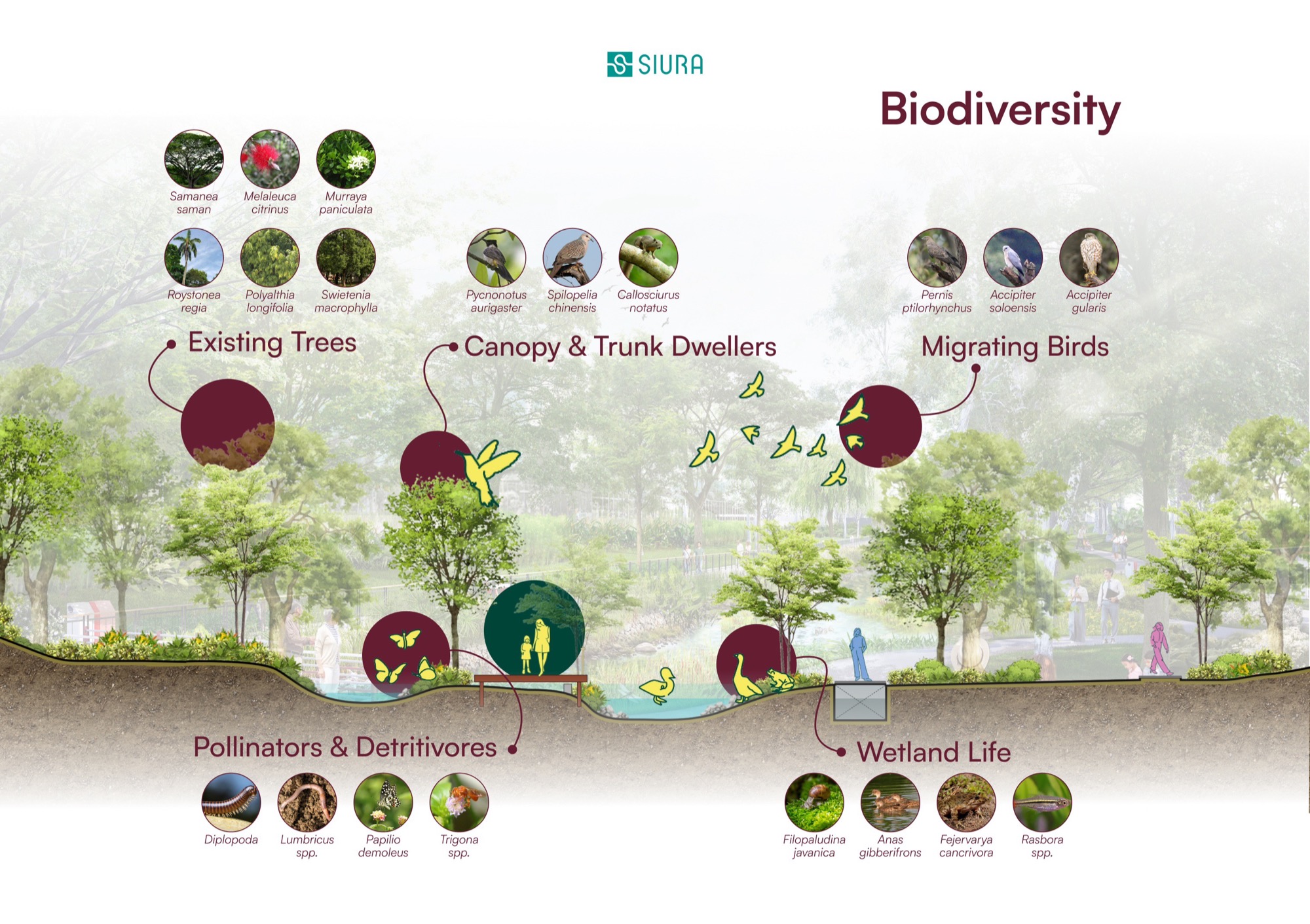
The restored waterway supports habitat formation for birds, fish, insects, and aquatic vegetation while increasing public engagement with water. Seasonal fluctuation, sedimentation, plant growth, and changing water levels are treated as active landscape processes rather than conditions to suppress.
The project prioritises adaptability over permanence, allowing the landscape to evolve through climate, maintenance cycles, and ecological succession.
Public Life and Community Use
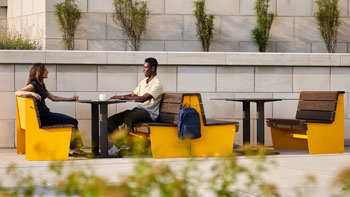
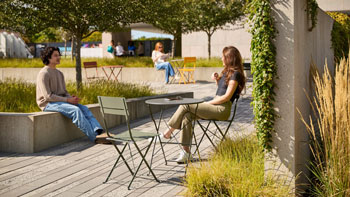
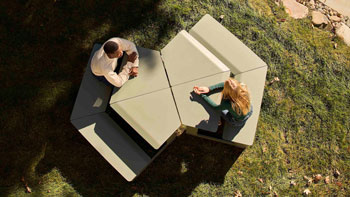
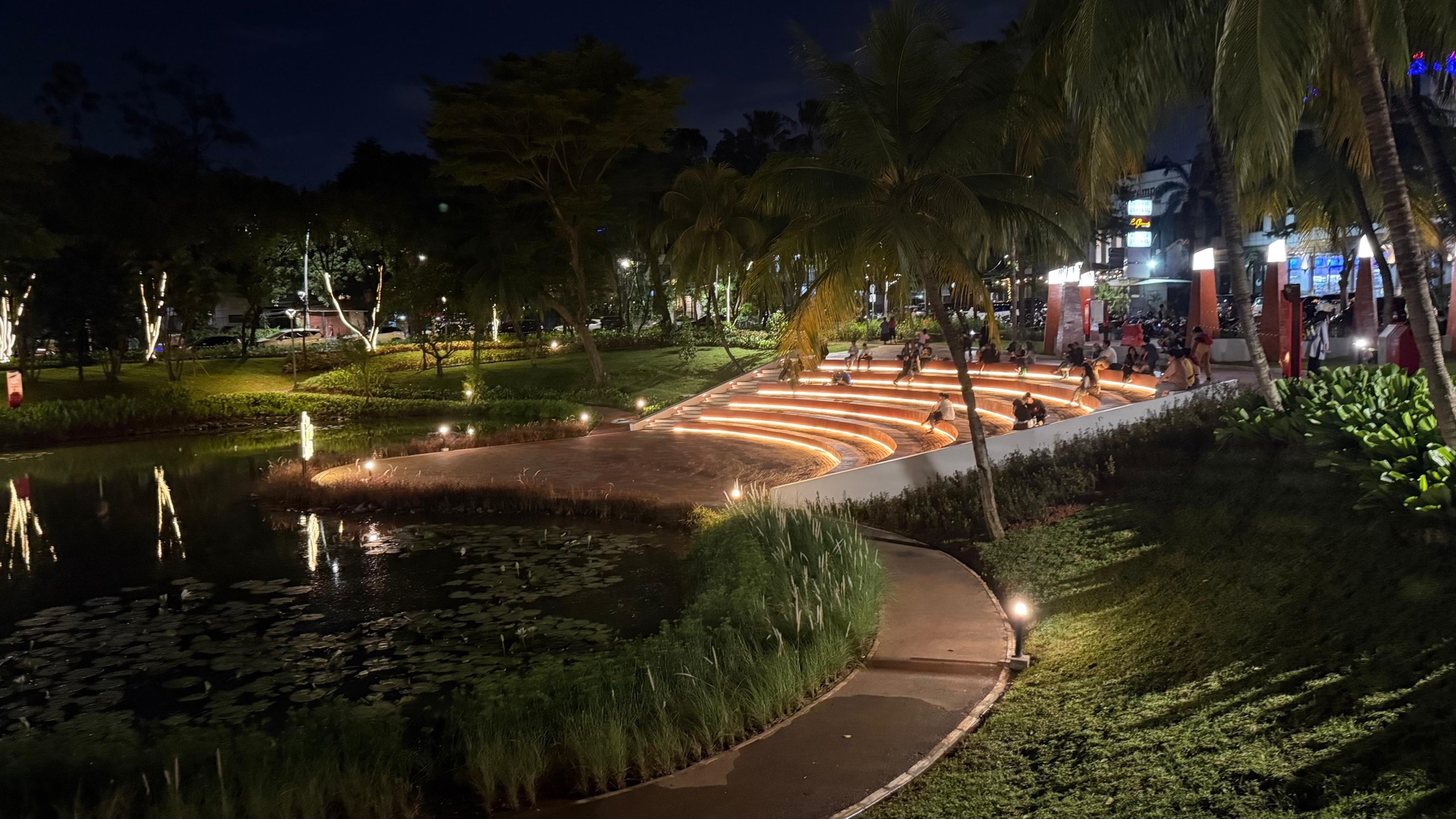
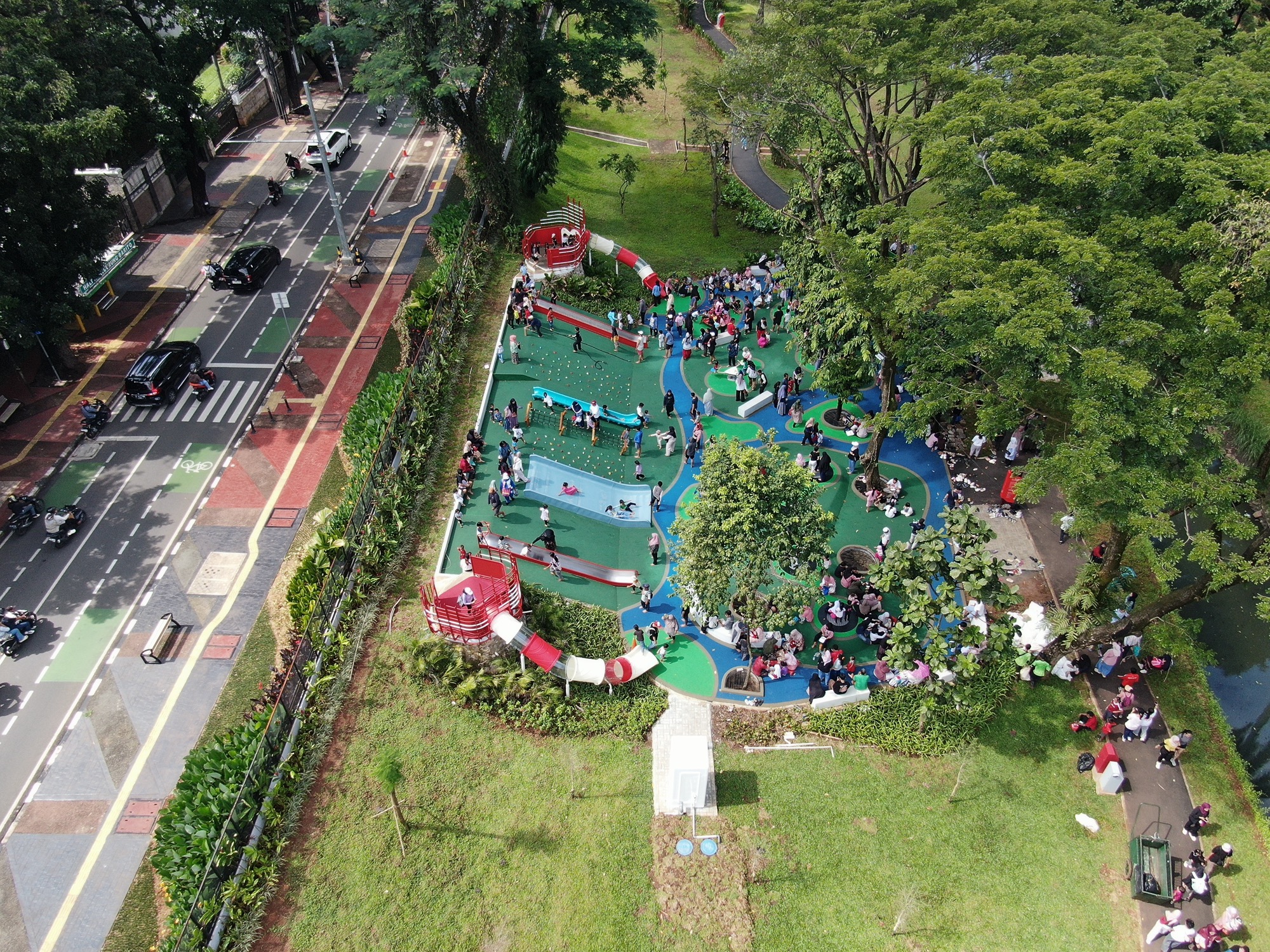
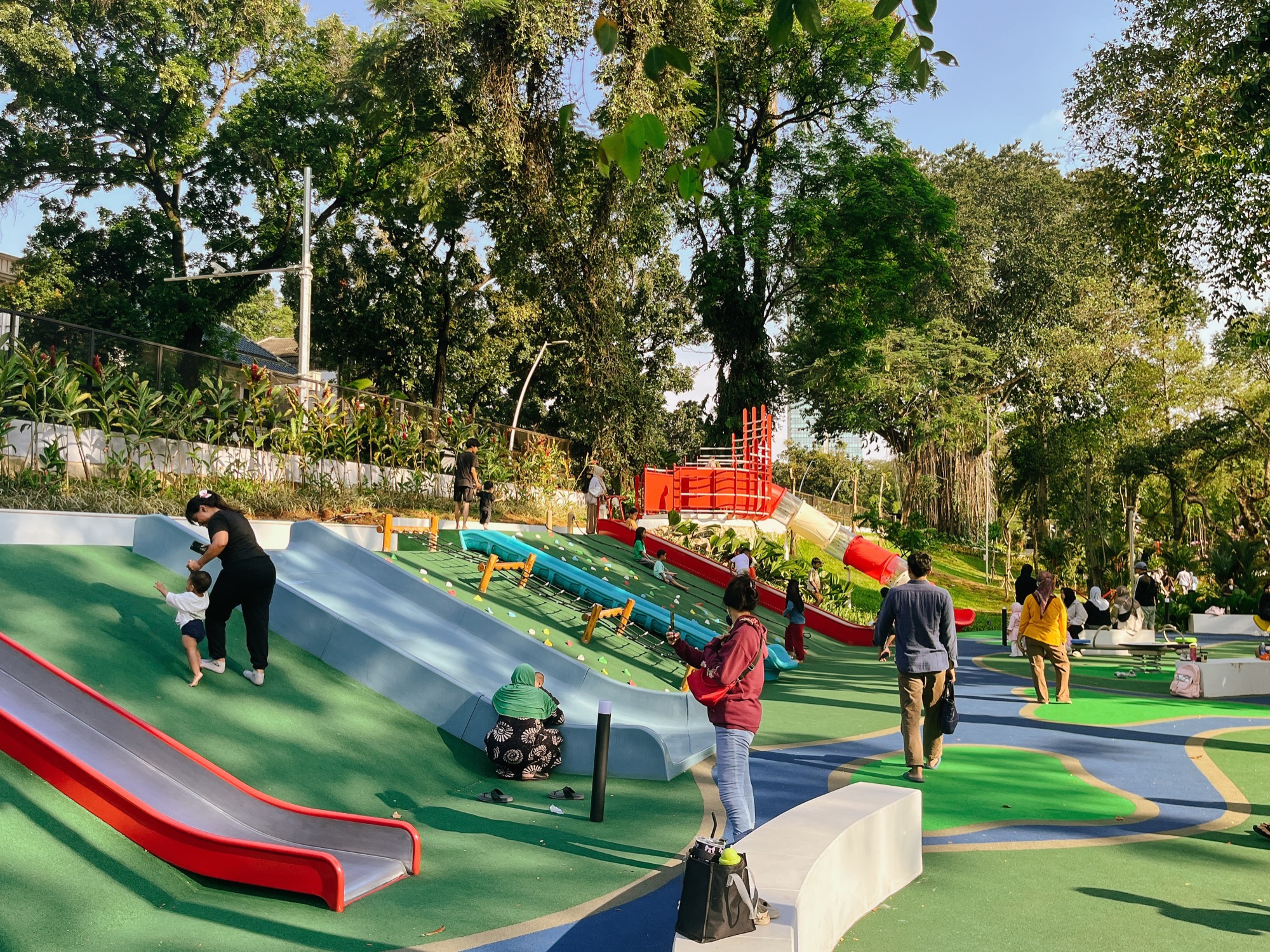
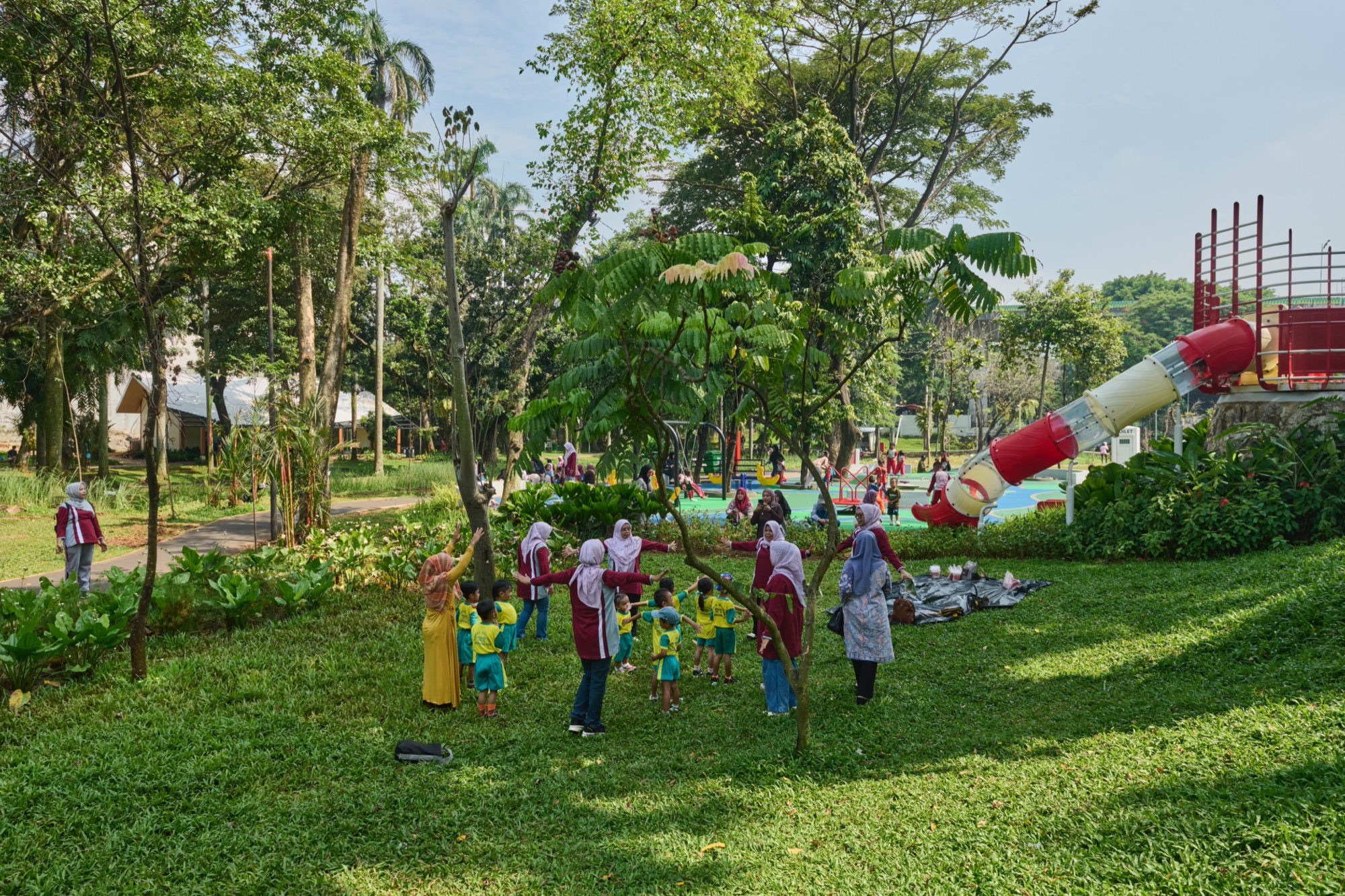
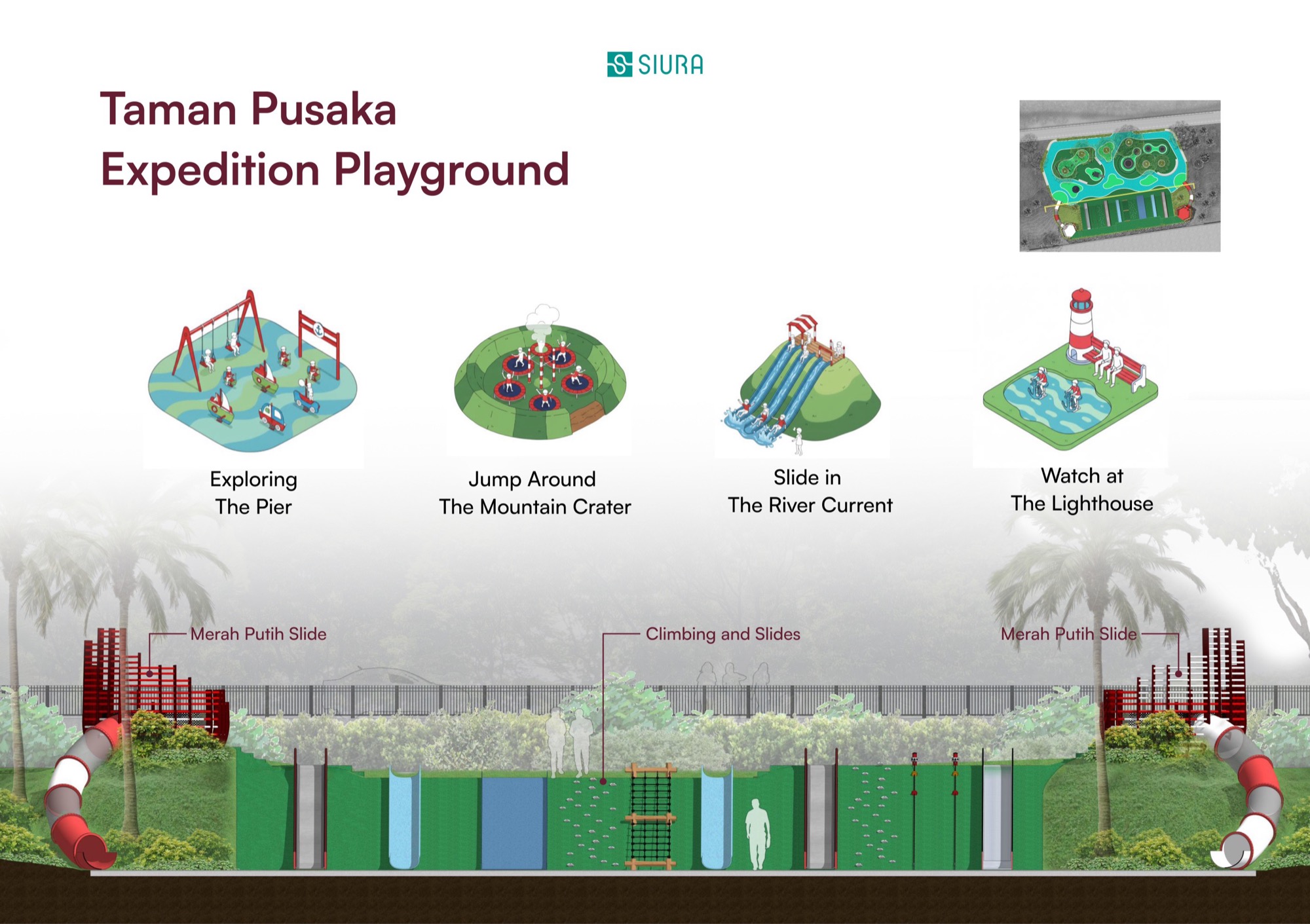
The park accommodates a range of active and passive programs that respond to the surrounding neighborhood. Open lawns, seating areas, play spaces, sports court, jogging paths, and community gathering areas support everyday use across different age groups and social backgrounds.
Programs are distributed within the landscape rather than isolated into singular zones, allowing ecological systems and public activity to coexist. The park functions as an accessible civic space for recreation, informal interaction, cultural events, and daily movement.
Cultural Built Form
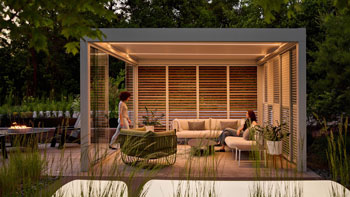
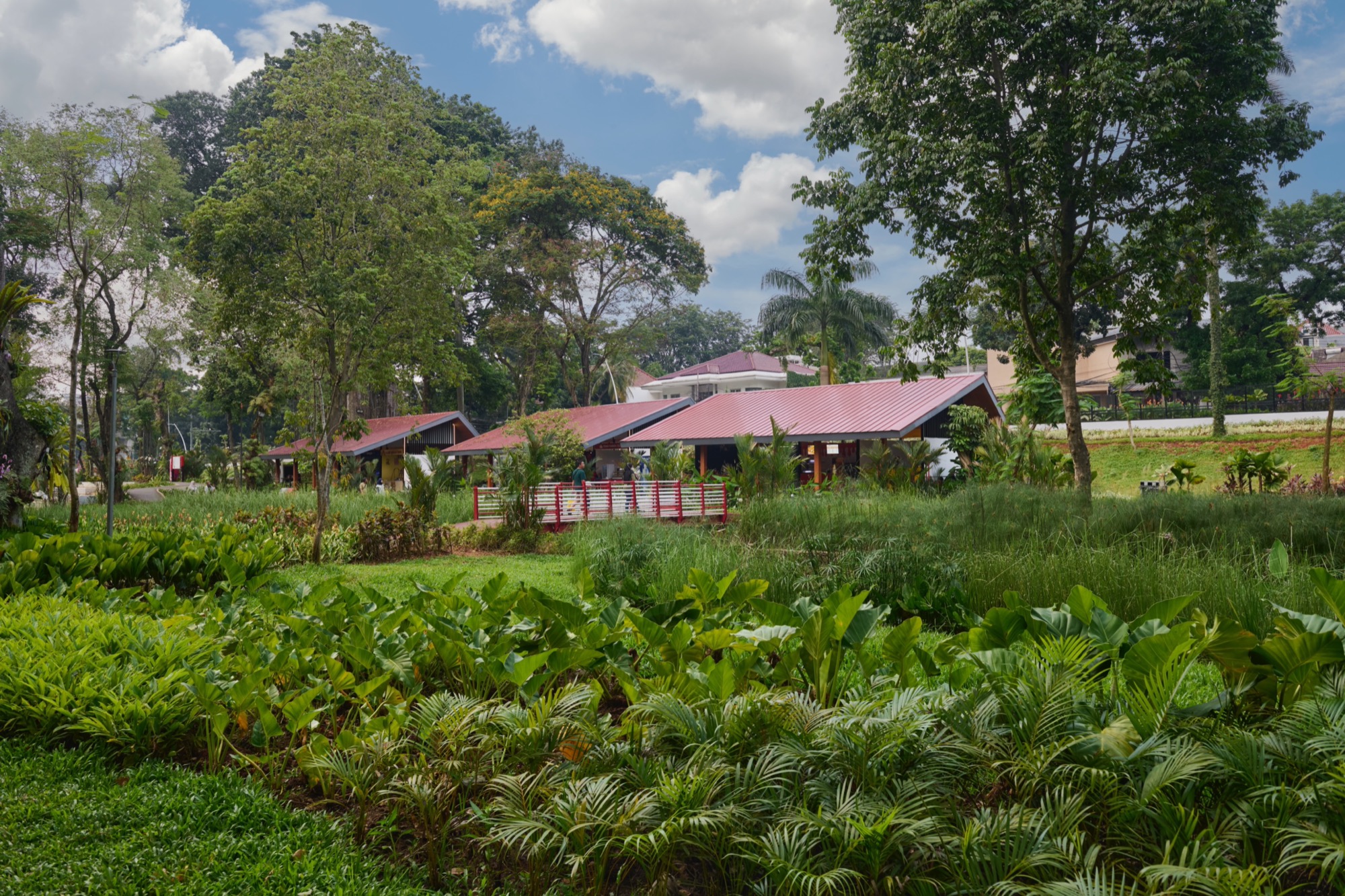
Architectural elements within the park are embedded into the landscape at the strategic location framed by lush greenery. The pavilions draw from the asymmetrical roof forms of local Jengki architecture while responding to Jakarta’s tropical climate through shading, ventilation, and open circulation.
Each structure supports different community functions, including gathering, learning, and small-scale cultural activities. The built form acts as supporting infrastructure within the larger landscape system rather than as isolated objects.
Regenerative Legacy
Completed within a six-month construction period, Taman Bendera Pusaka restores ecological function while strengthening community access to public green space. The project demonstrates how existing urban parks and drainage infrastructure can be reconfigured into living systems that support water management, biodiversity, and civic life simultaneously.
Taman Bendera Pusaka is conceived as an evolving landscape — one shaped by water, vegetation, climate and collective community use over time.
Client: Jakarta Park and Forest Service & PT Wisma Nusantara International
Lead Designer: SIURA Studio
Architect: Weharima
https://share.google/jtA7mQIjronaQLozc
75984


LILA 2026 Sponsor