The Campus Spine
www.aart.dk/eng + https://aart.dk/en
2026 Public Projects / Denmark / Built in 2025 /

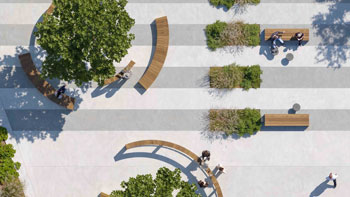
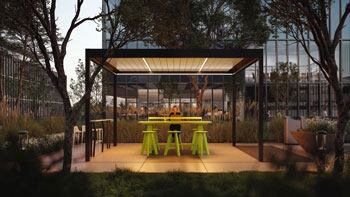
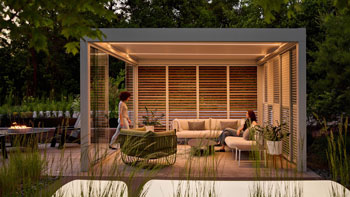
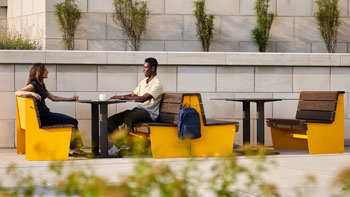
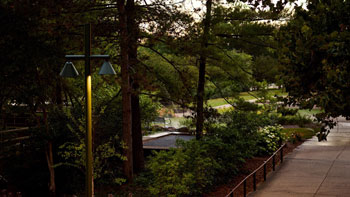
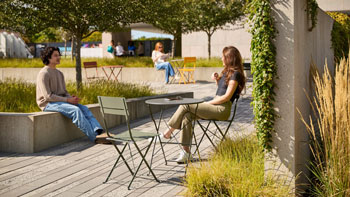
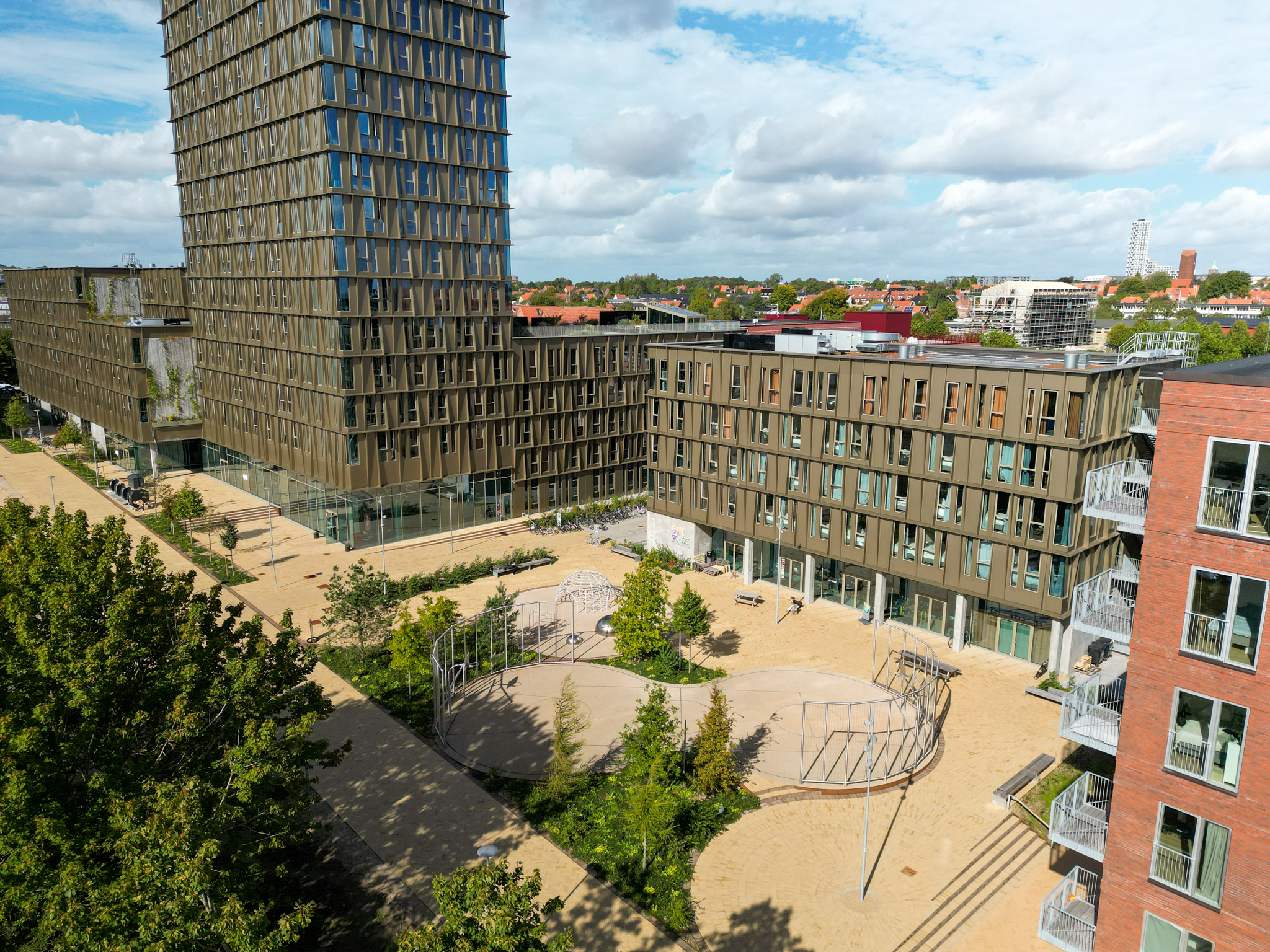
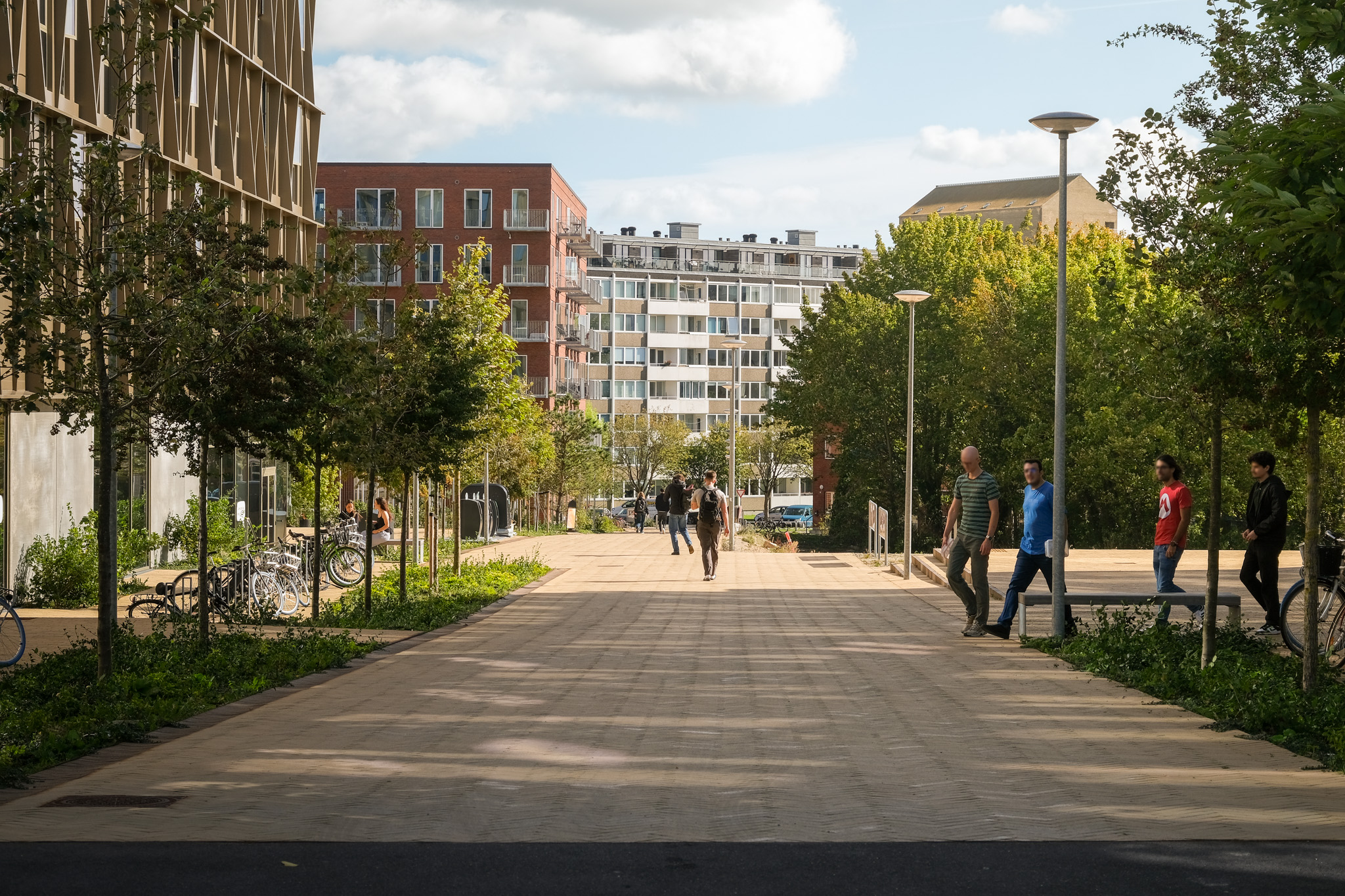
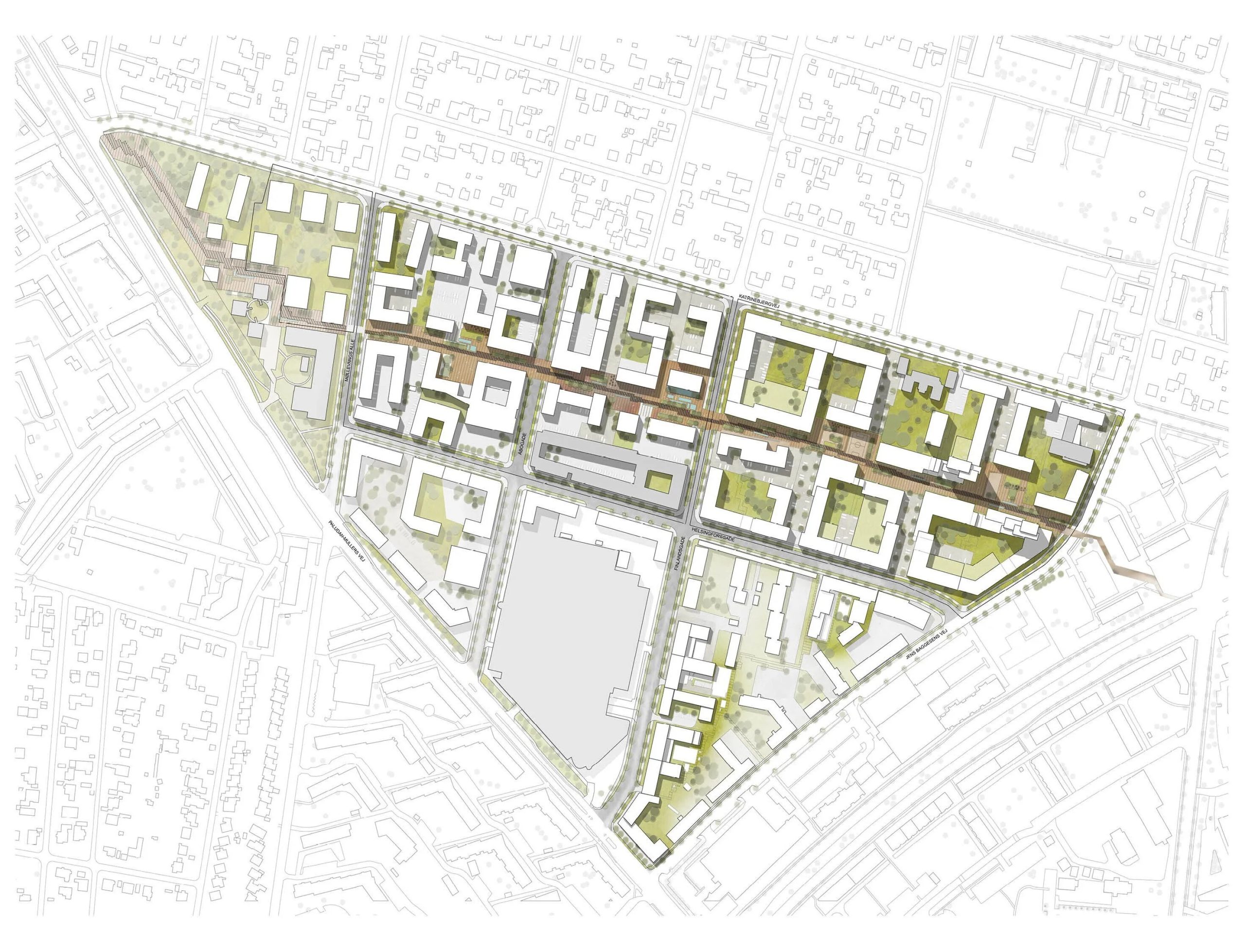
Campusstrøget (The Campus Spine) is the primary landscape structure in the transformation of Katrinebjerg (Aarhus, DK) from a former industrial and business district into a new campus quarter for Aarhus University. As part of the future Katrinebjerg Campus district, the project establishes a coherent east–west landscape connection that weaves together green spaces, surrounding buildings, and the broader university fabric, while prioritizing pedestrians and cyclists and shaping a clear spatial identity for the neighborhood.
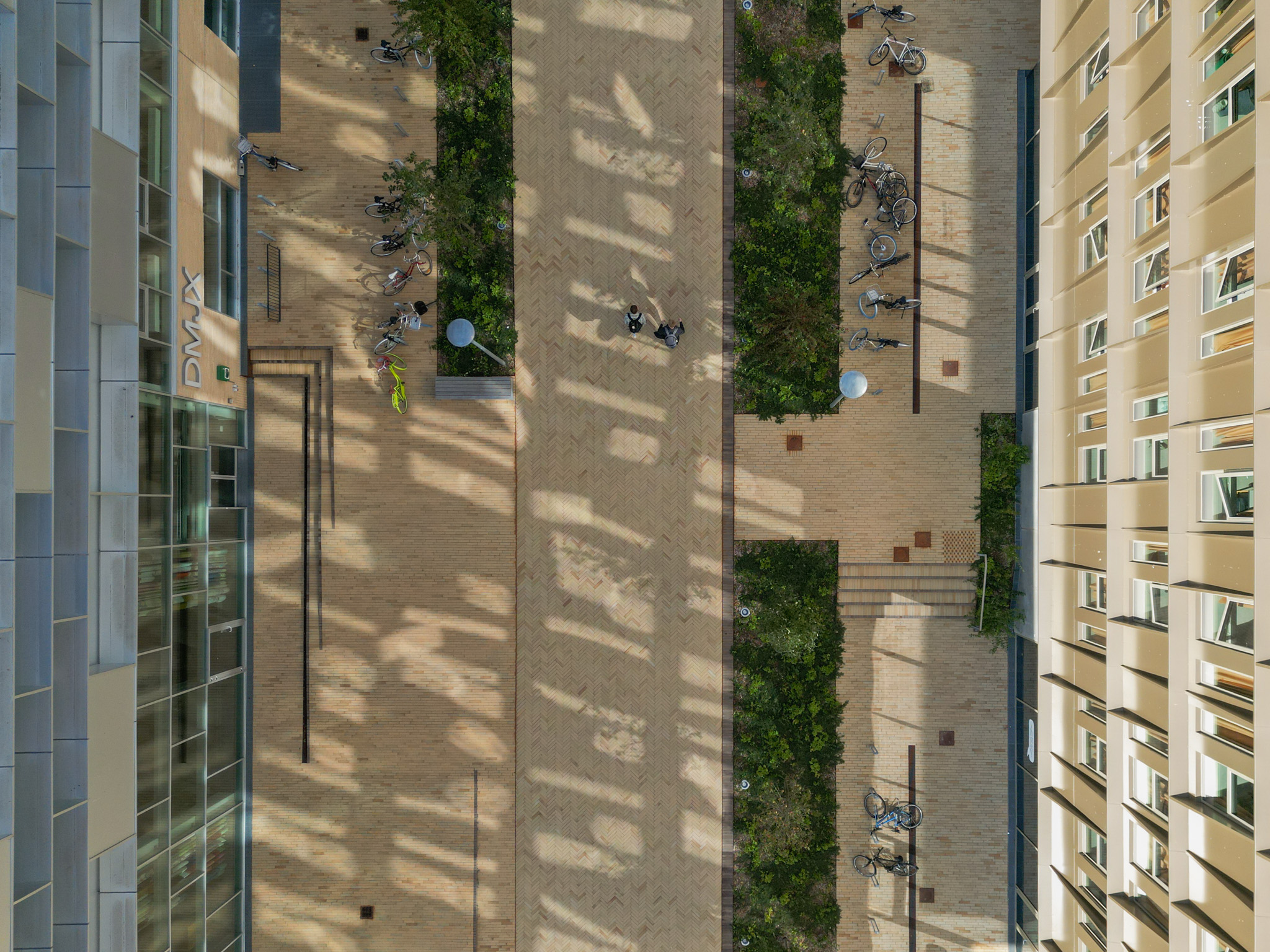
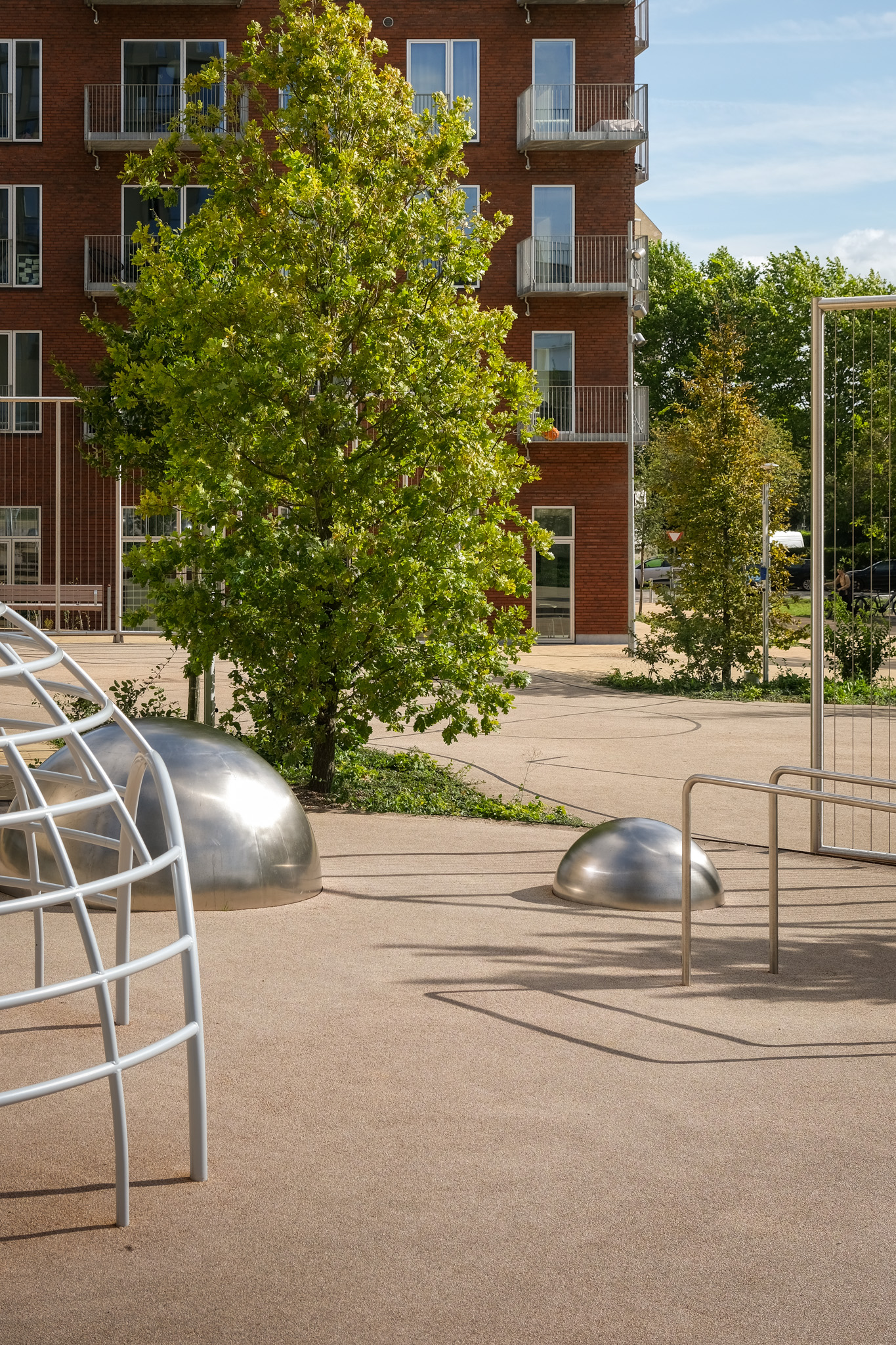
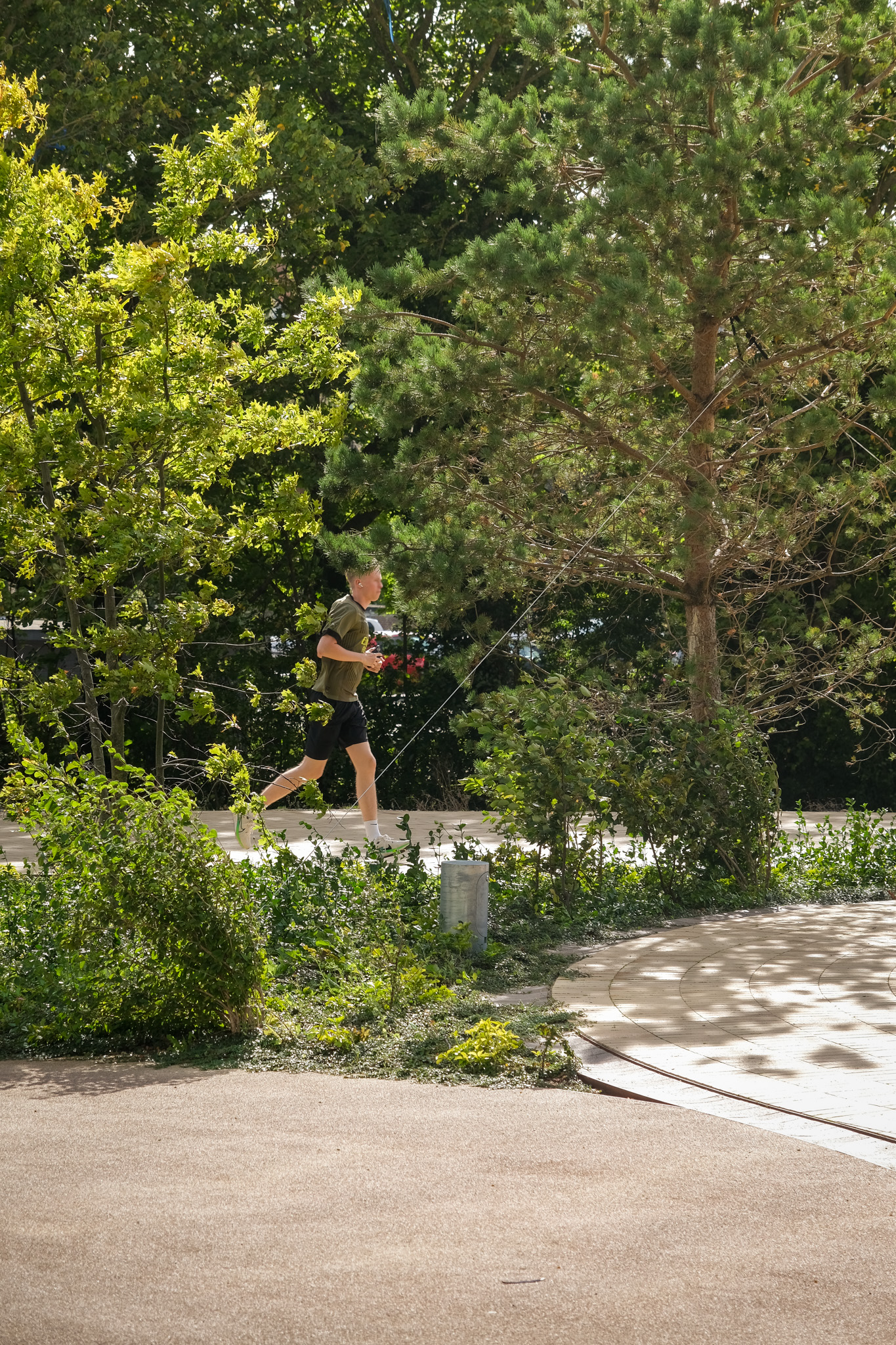
The project demonstrates how landscape architecture can serve as the primary organizing framework in a complex urban transformation. The district of Katrinebjerg is characterized by a diverse building stock in terms of typology, materials, and architectural expression. In response, Campusstrøget introduces a strong, unifying public realm through a continuous brick-paved surface extending from façade to façade. This creates visual coherence across the district and gives the new campus a distinct material and spatial identity in relation to other areas of Aarhus University, which reflect different architectural periods and expressions.
A key innovation of the project lies in the integration of material, topography, stormwater management, planting, and accessibility into a unified landscape system. The brick paving serves not only as an identity-bearing surface, but also as a technical and long-term sustainable solution. Laid on unbound base layers, the bricks can be reused in the future and allow for repairs and underground work to be carried out without material loss. In this way, durability, maintenance, and circularity are embedded directly in the landscape design.
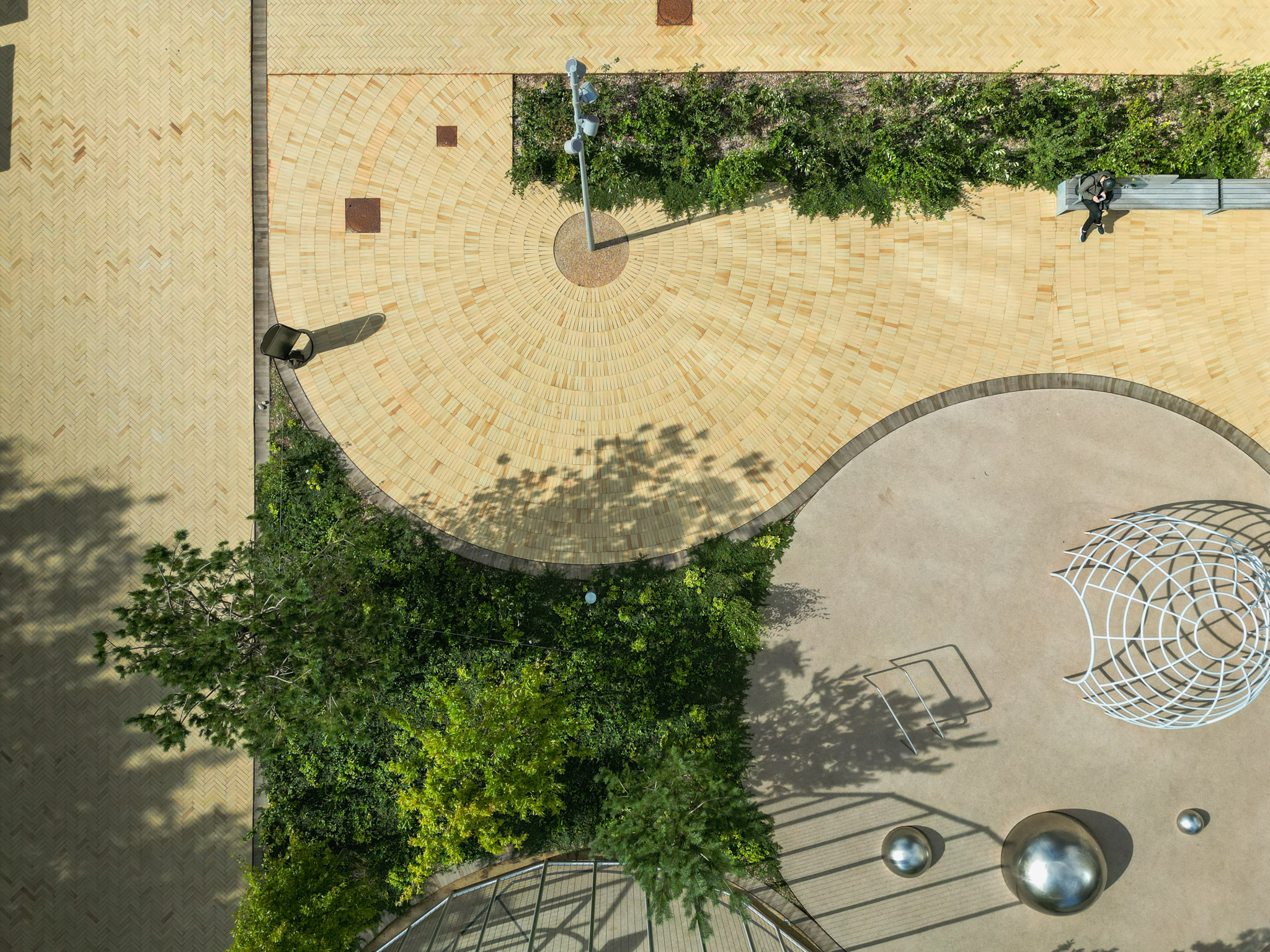
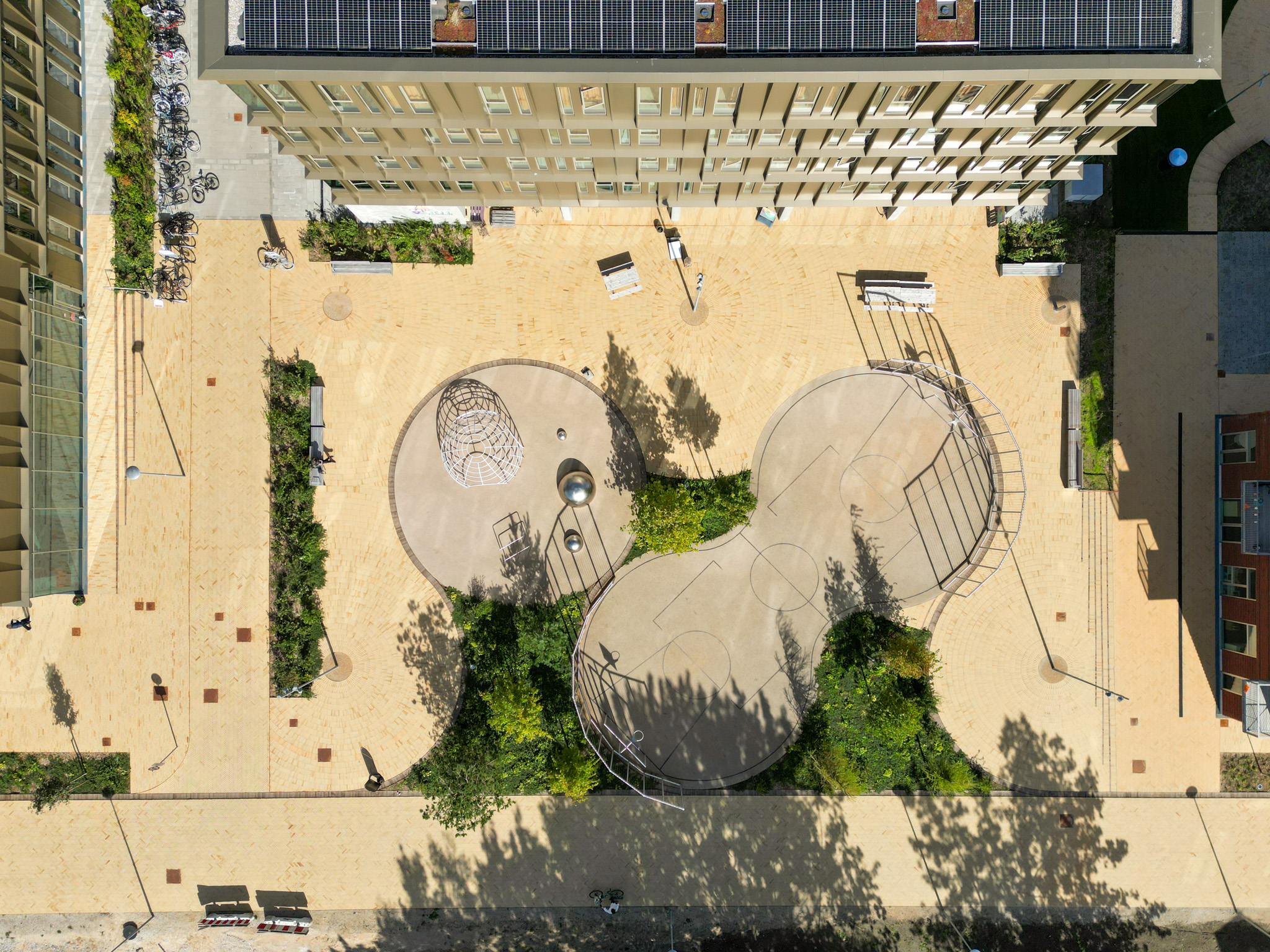
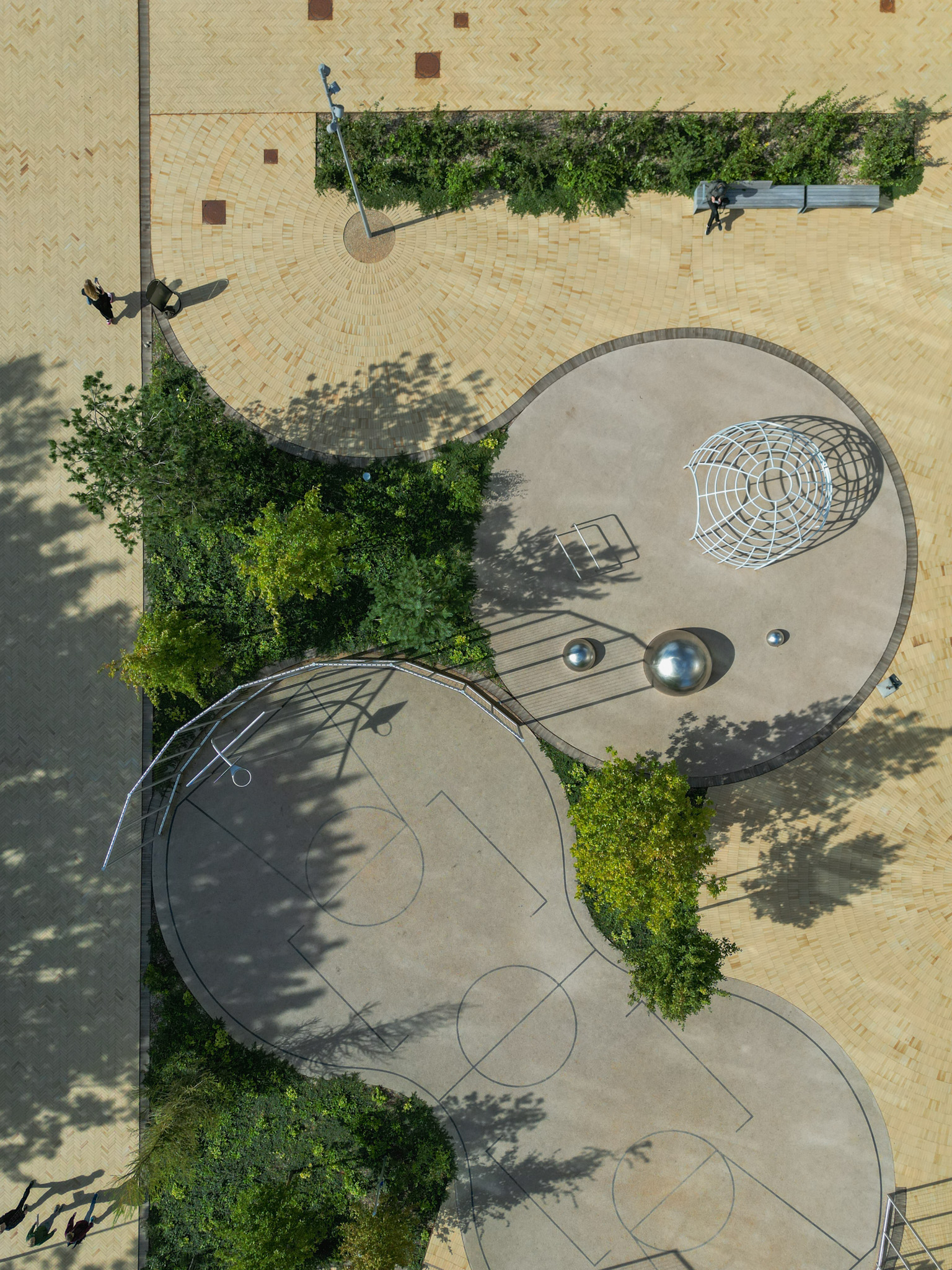
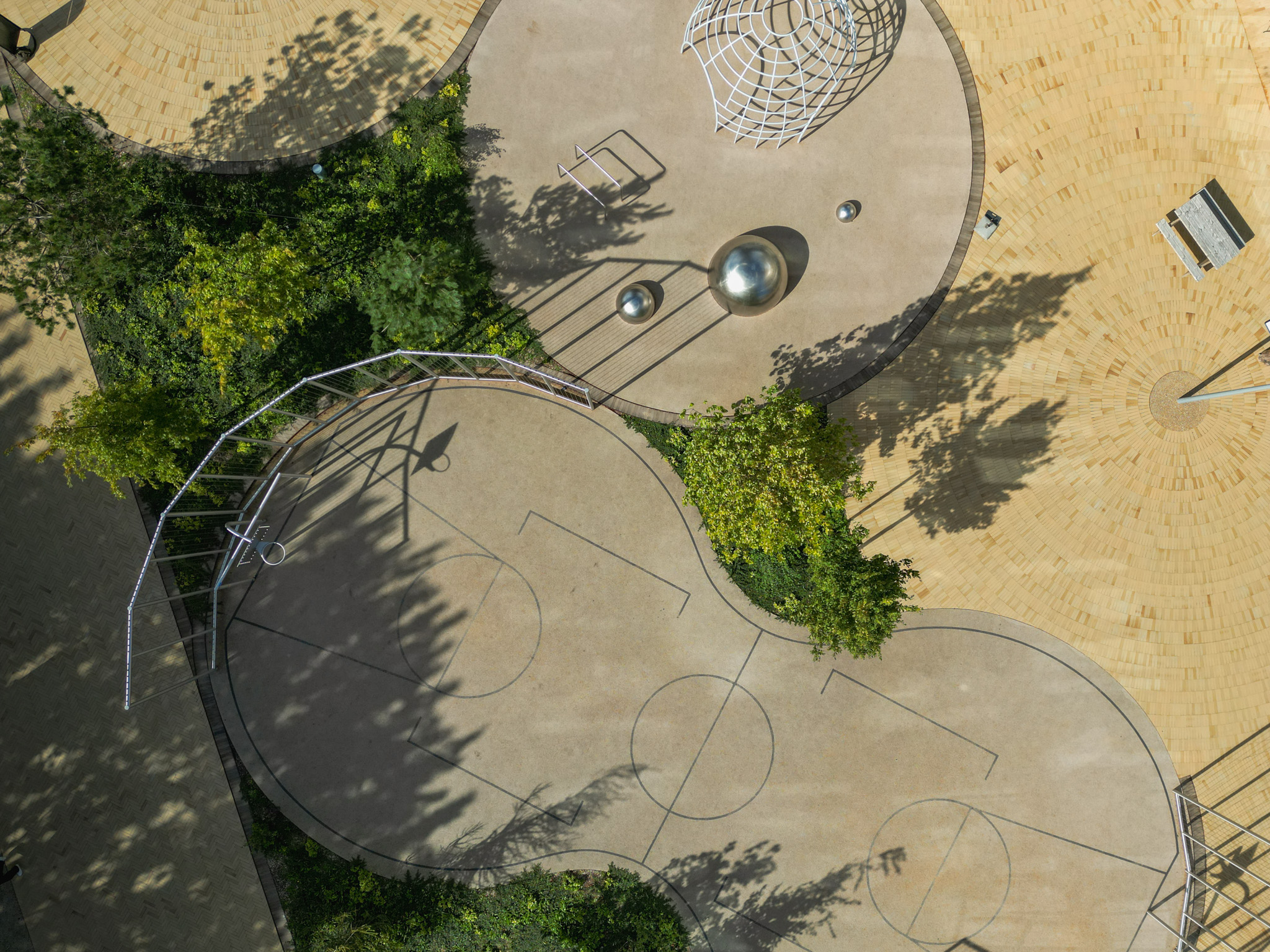
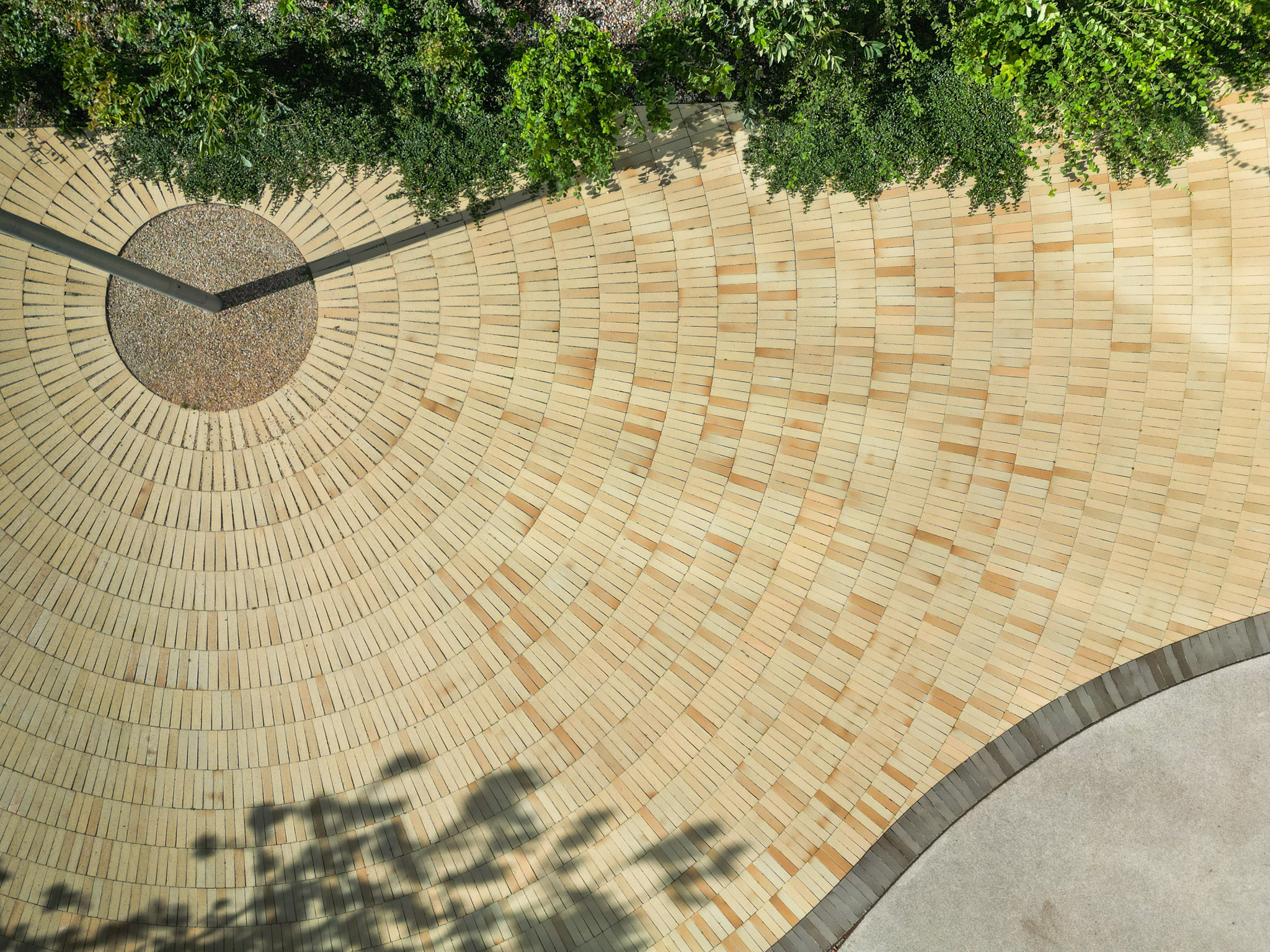
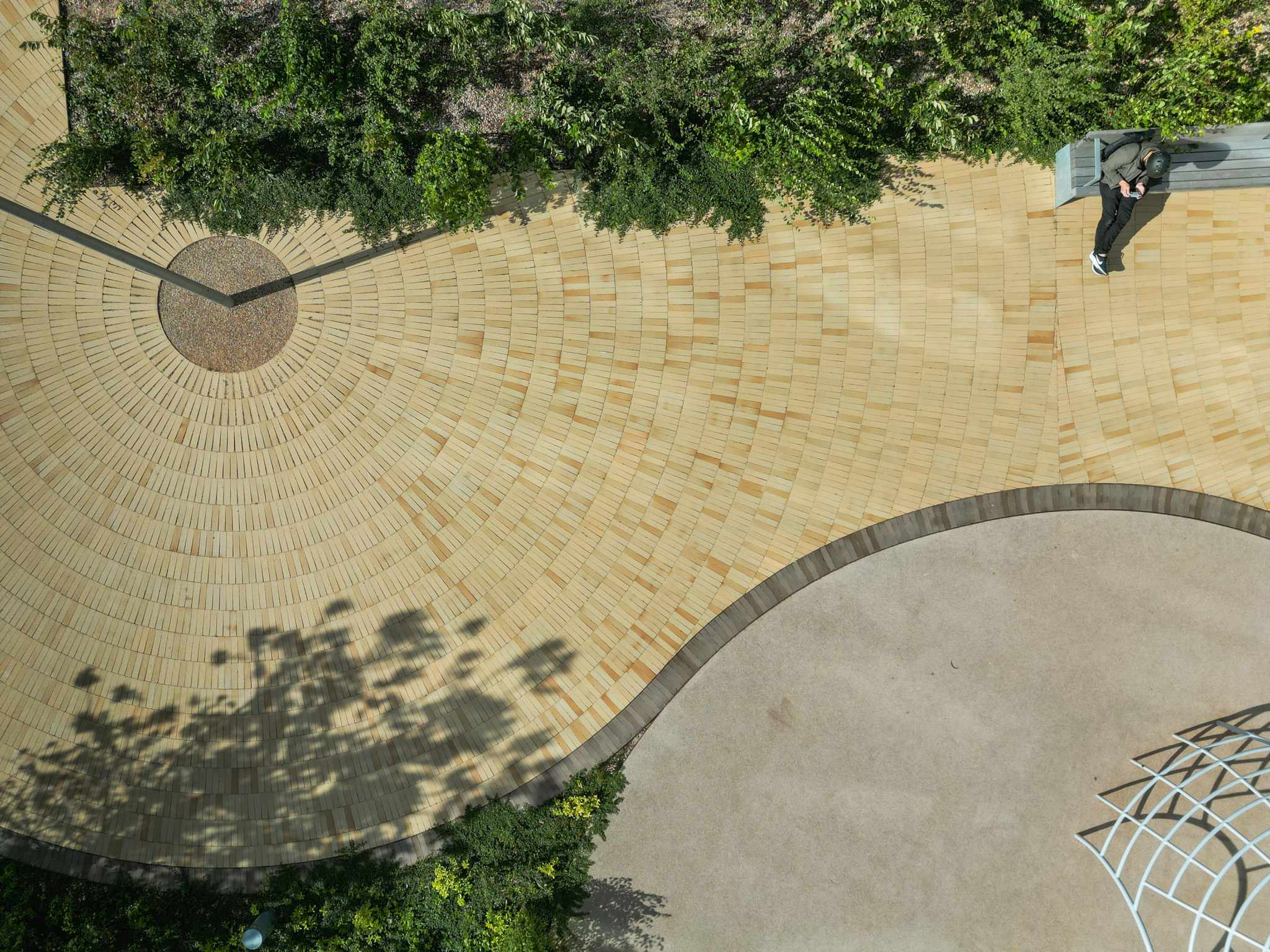
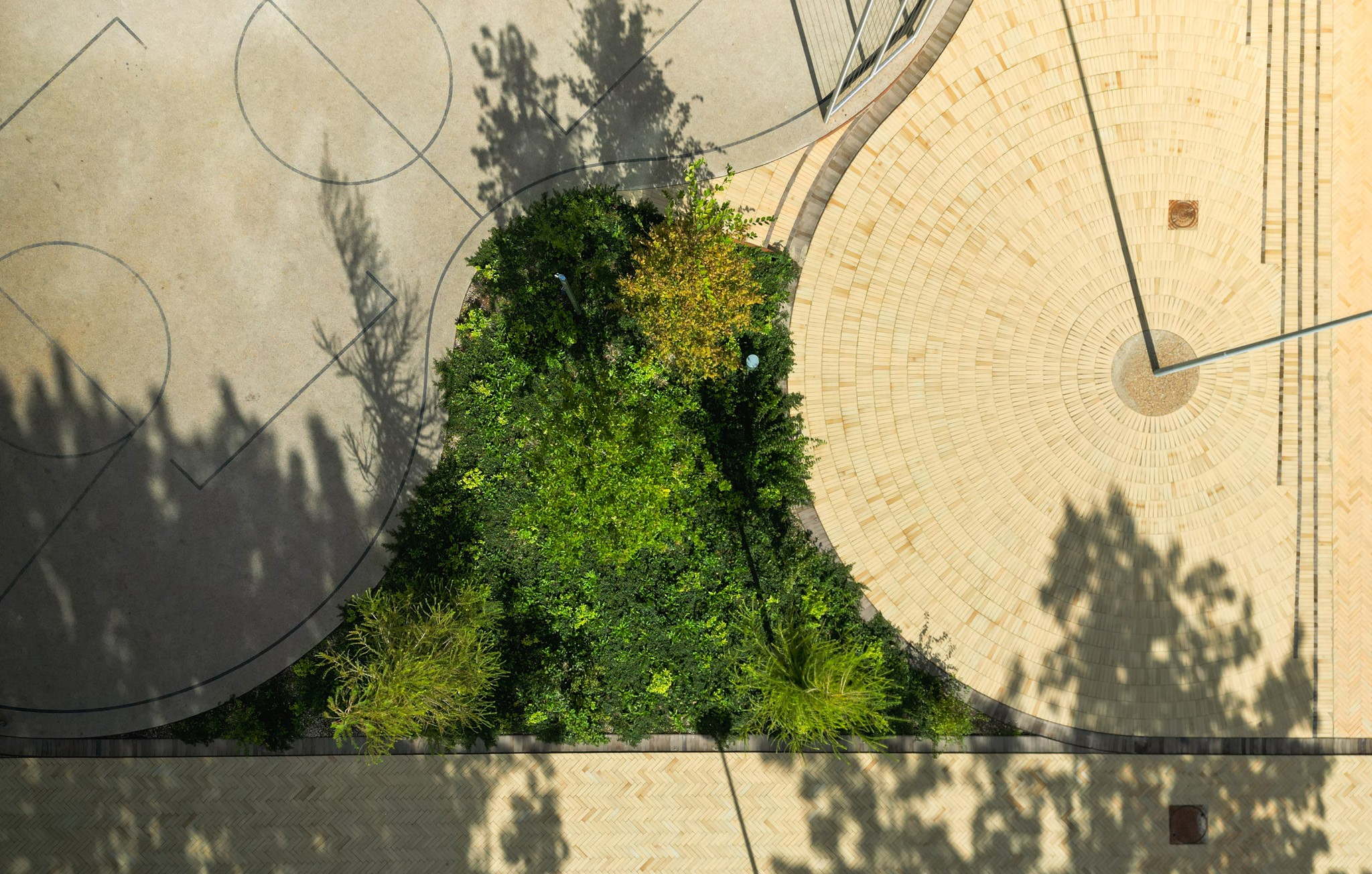
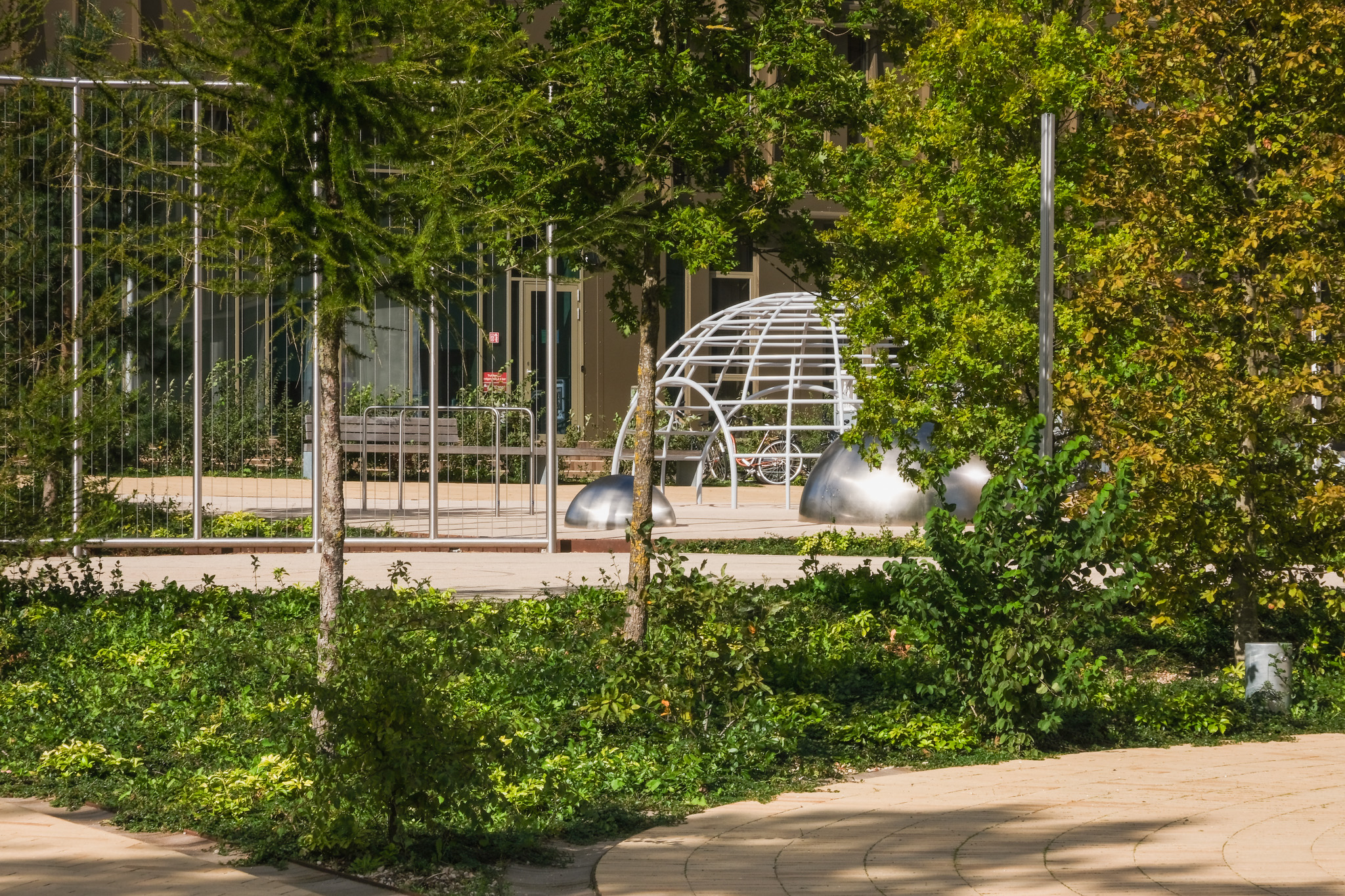
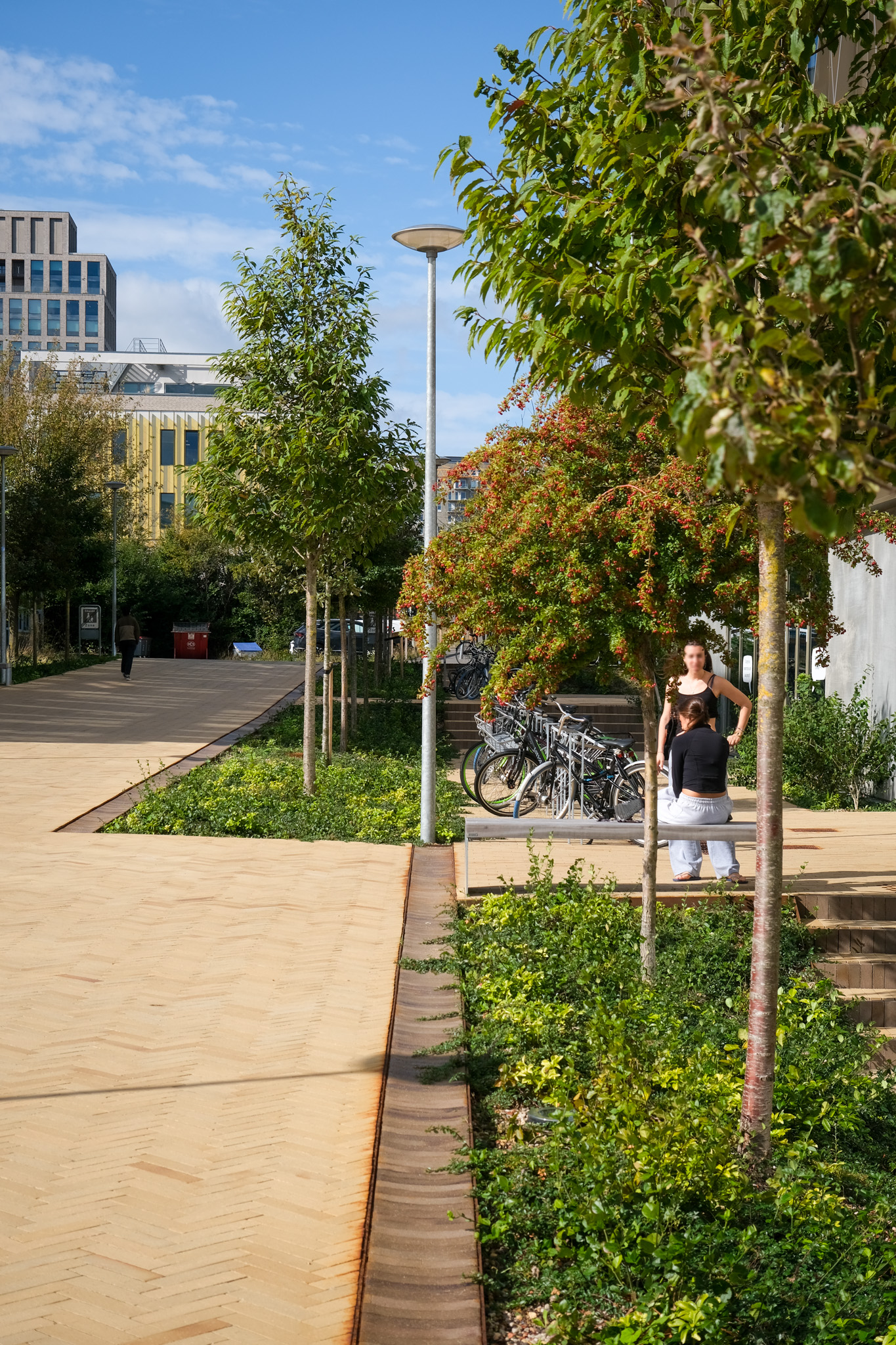
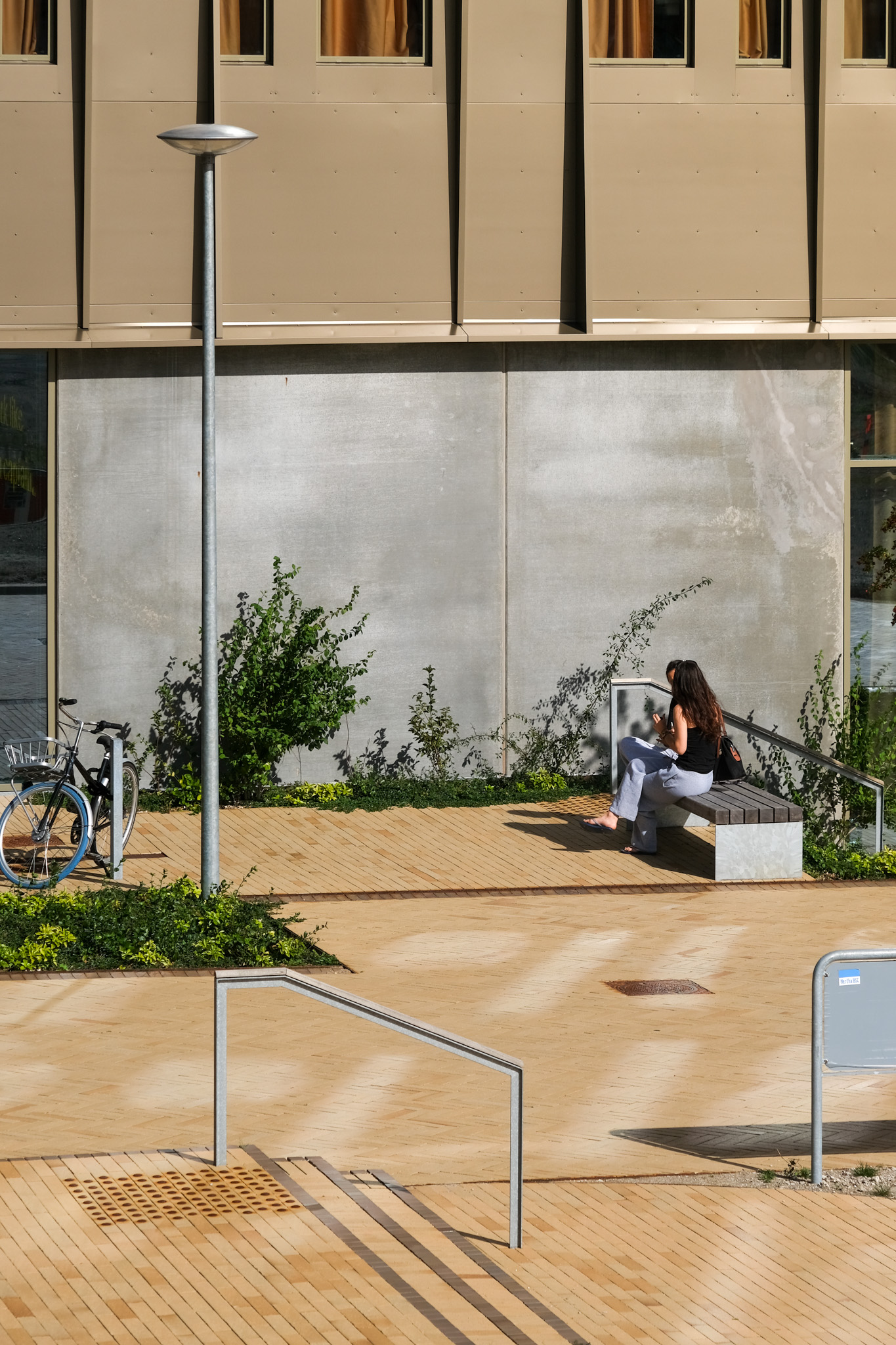
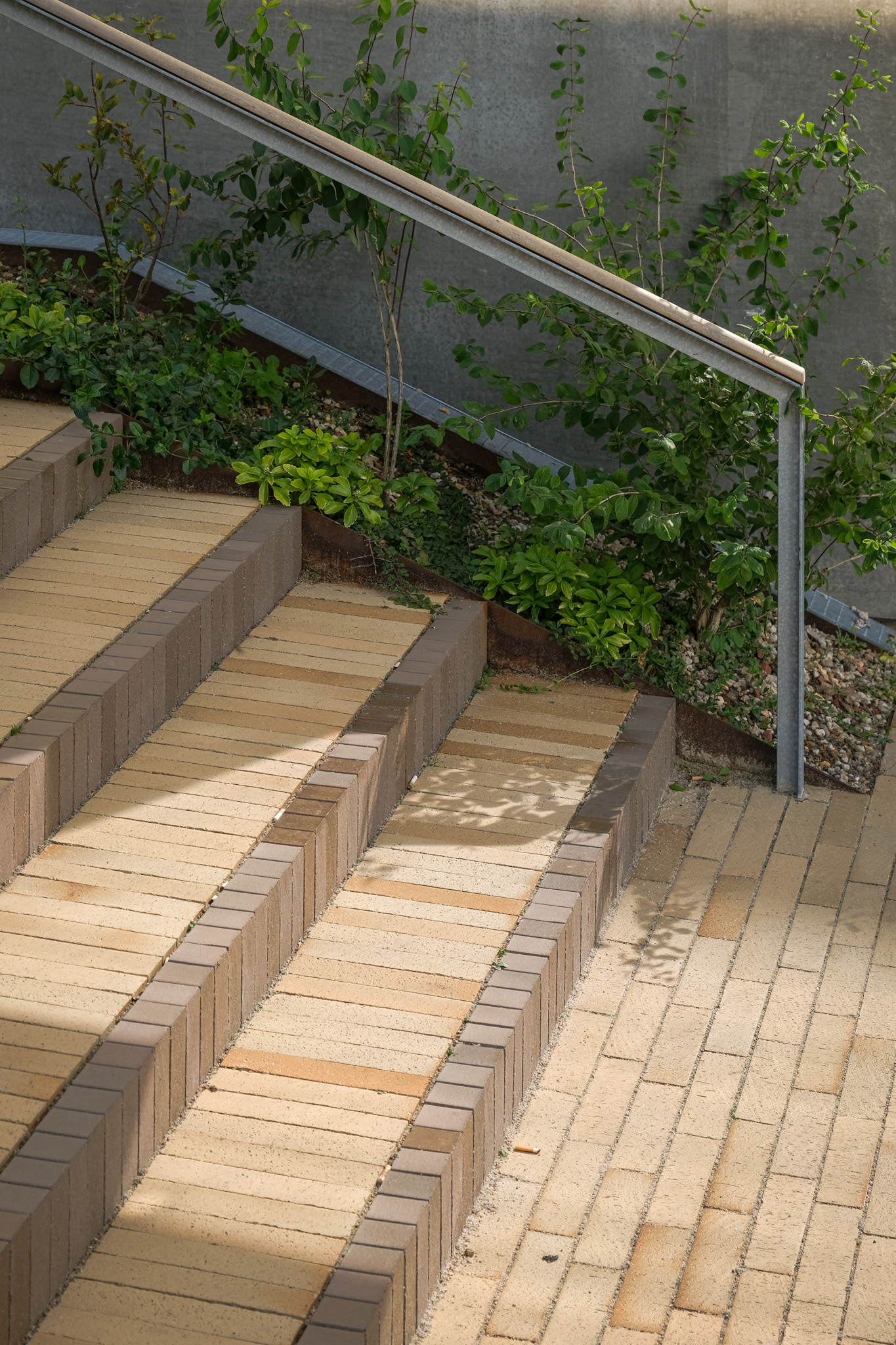
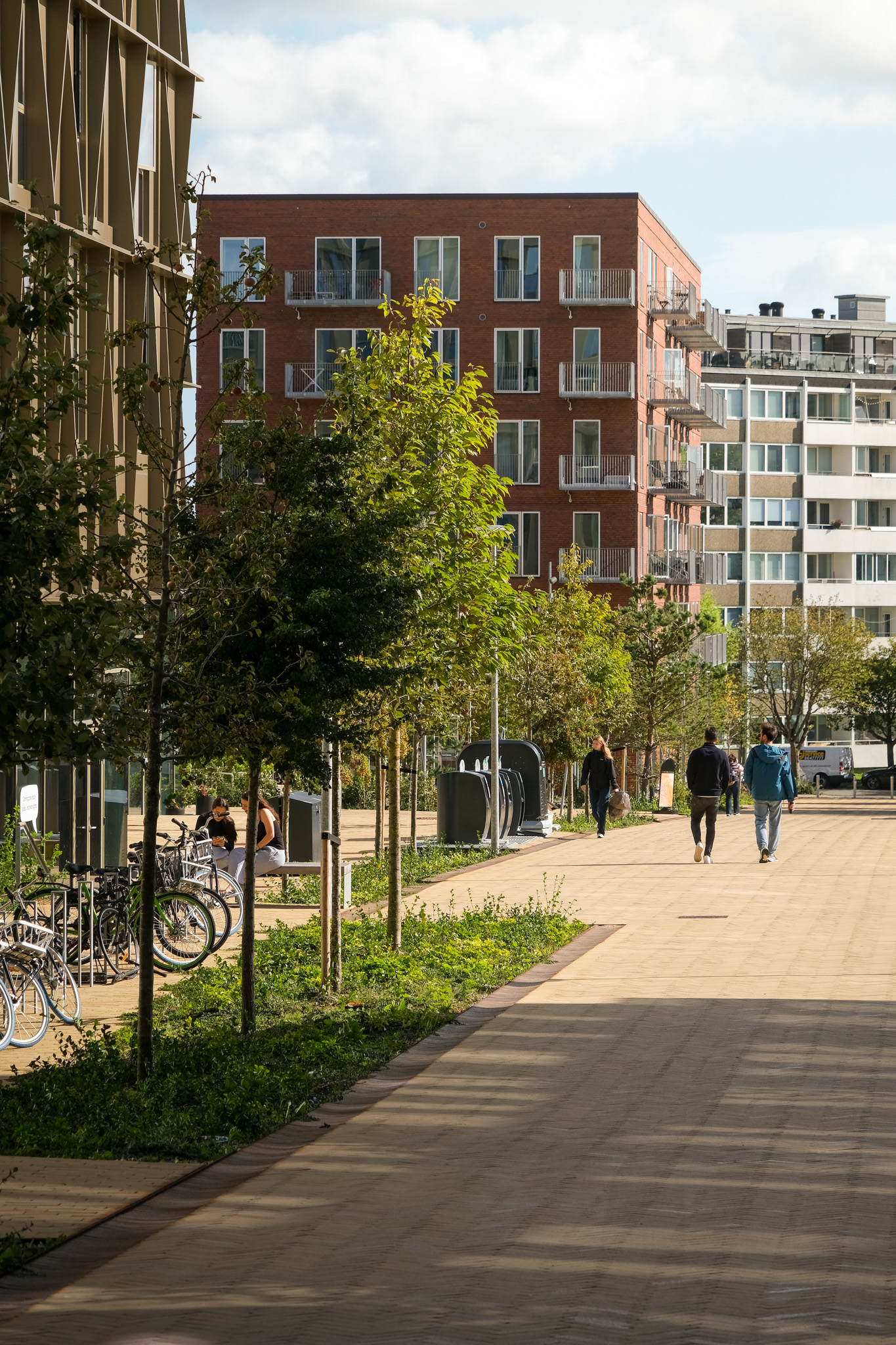
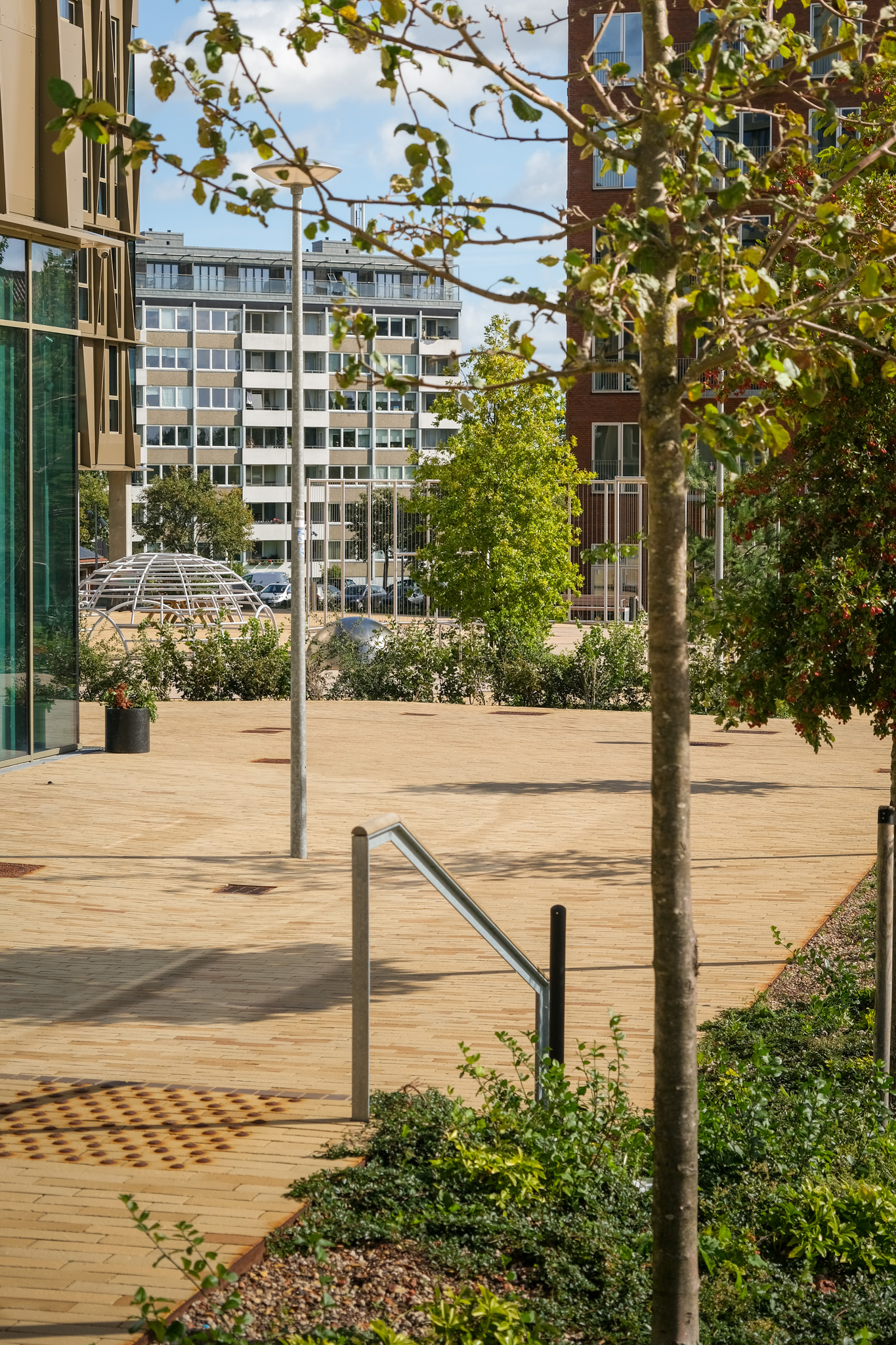
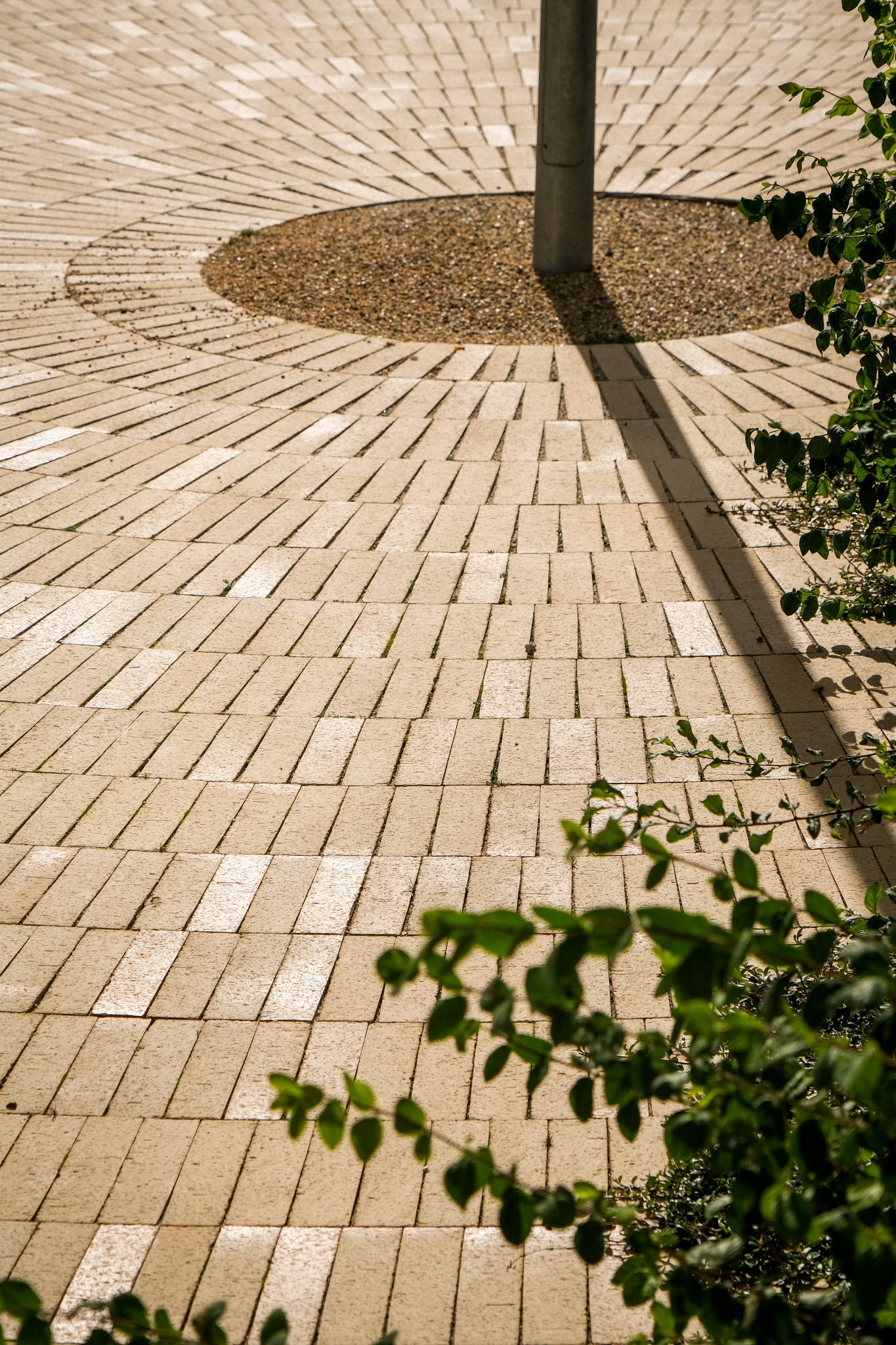
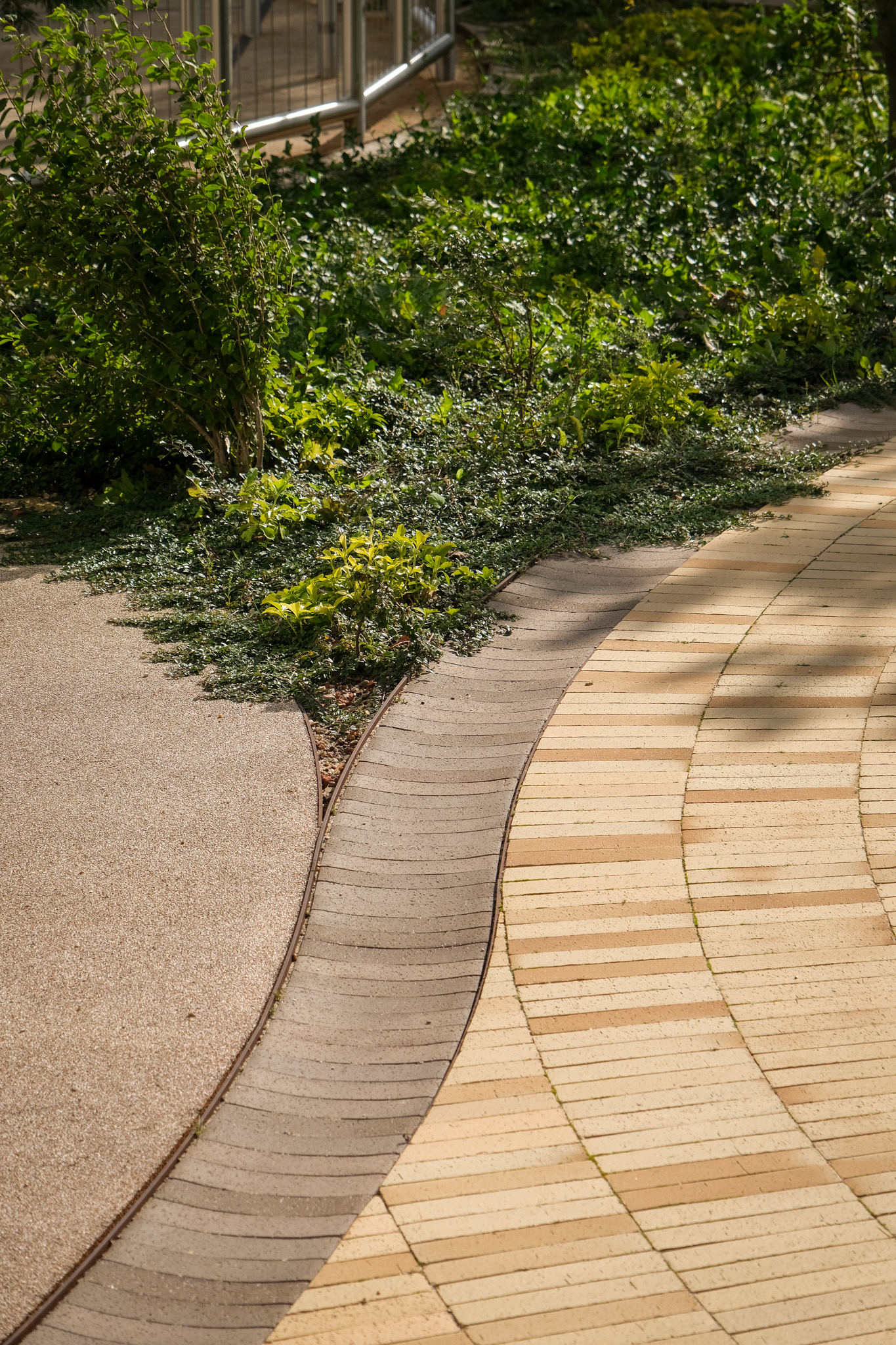
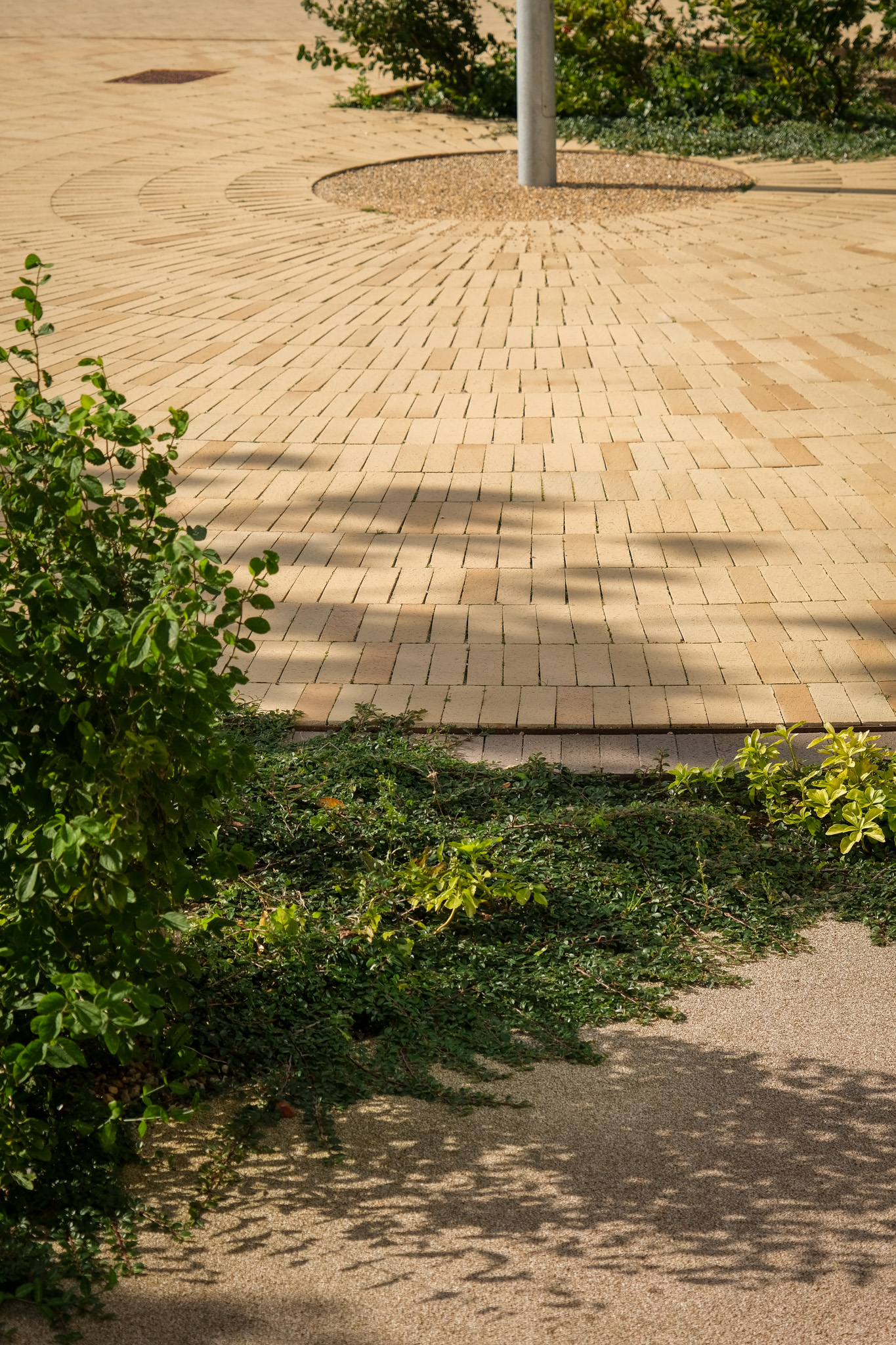
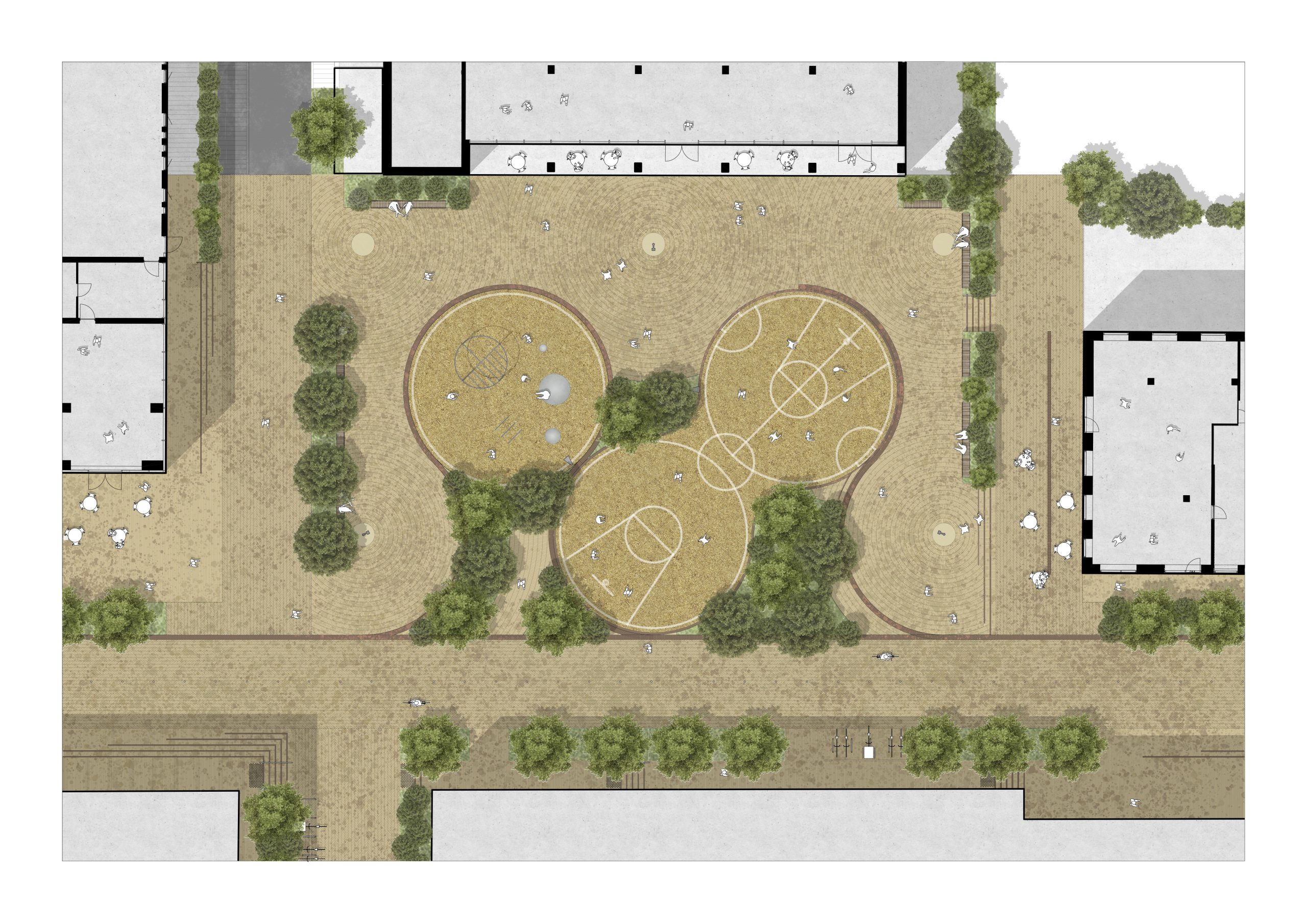
Stormwater is handled as an open and visible element within the public realm. A brick water channel runs through the campus spine and into the plazas, where rainwater is delayed and directed into adjacent planted areas and infiltration zones before being released onward. Rather than concealing climate adaptation below ground, the project makes water an integral part of the sensory and spatial experience of the landscape. In the activity plaza, the water channel follows a curved route across the radial paving pattern, making rainfall legible and present in the everyday use of the space.
The project demonstrates how topographic differences can be transformed from a potential challenge into a spatial quality. In the first built stage, a height difference of 10 metres is used strategically to create varied spatial sequences, soft transitions, and distinct places for movement and stay. At the same time, the overall gradient of the spine is kept below 40 ‰, ensuring accessibility without the need for additional ramp landings or handrails. This balance between spatial richness and inclusive access is central to the project’s value.
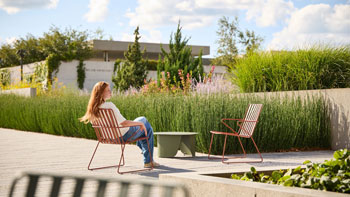
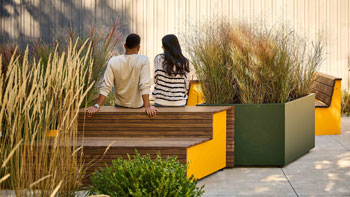
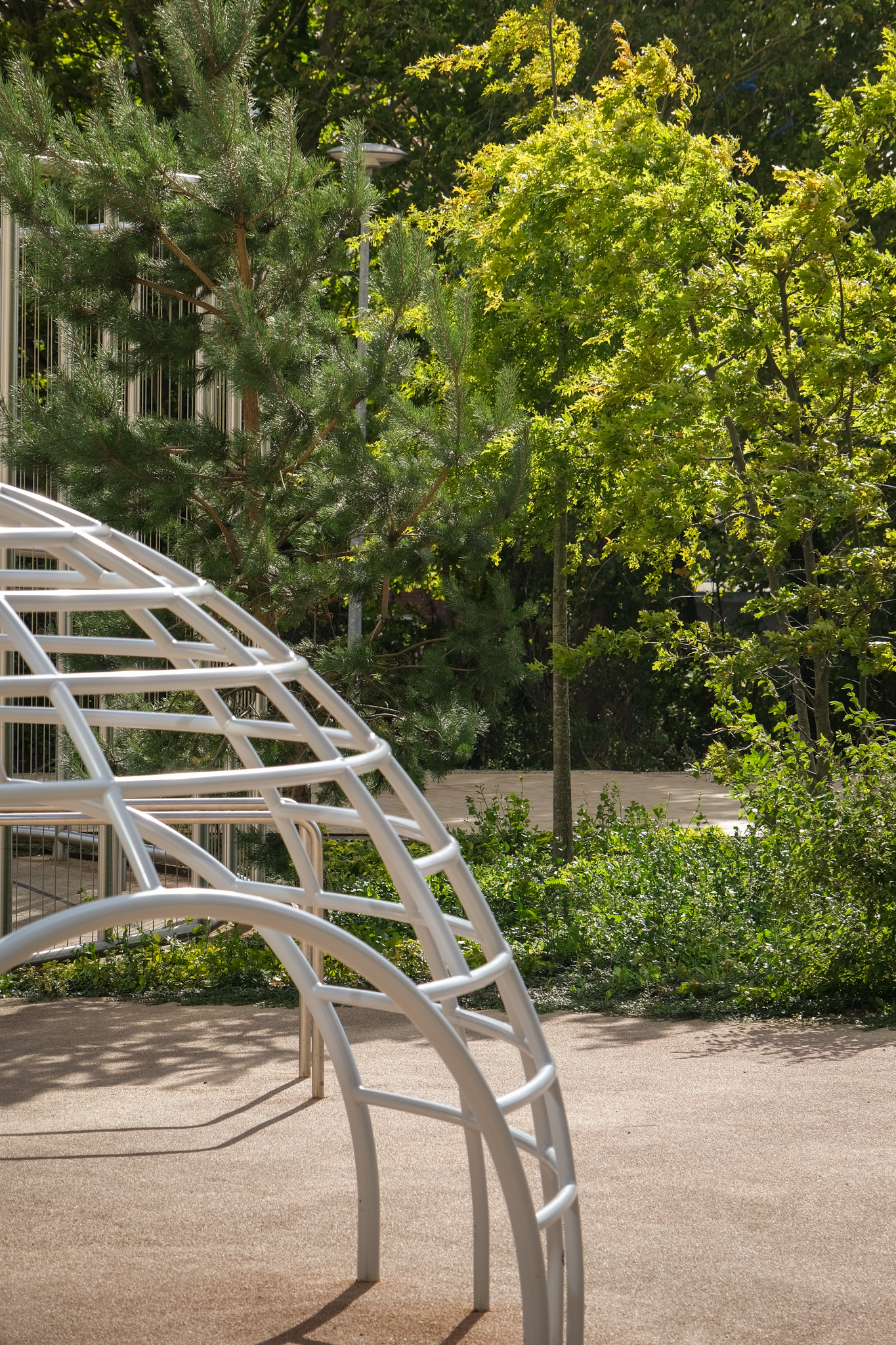
Planting is used to create both identity and ecological value. Along the spine, rows of smaller flowering trees establish a coherent and relatively light canopy, while plazas and key spaces allow for larger, more sculptural trees and freer planting compositions.
Species are selected to support biodiversity through flowering and fruiting periods, while also providing habitat for insects and birds. Evergreen and groundcover planting ensures a year-round green character. The project also extends the landscape vertically through green roofs, terraces, and façade planting, strengthening the relationship between buildings and public space.
The project shows how a consistent public-realm strategy can unify a highly diverse development area, support climate adaptation, enhance biodiversity, and priorities soft mobility and inclusion, while creating a distinct identity over time and across multiple phases. It is a project where landscape architecture is not an addition to urban development, but the framework that provides coherence, resilience, and everyday value.
Client: FEAS
Landscape architect: AART
Contractor: Danjord
56.171576, 10.194374
75361


LILA 2026 Sponsor