Triangle Park Urban Forest
stoss.net
2026 Public Projects / USA / Built in 2023 /

![Triangle Park reshapes an empty traffic island into an urban forest demonstration project—a first of its kind—bringing needed shade, biodiversity, and open space to an underserved area of East Cambridge. Guided by the city’s Urban Forest Master Plan, this 1-acre site hosts 400 new trees across a rolling landscape, offering a pocket of relief amidst […]](https://landezine-award.com/wp-content/uploads/2025/05/00-MAIN-IMAGE-600x420.jpg "Triangle Park Urban Forest by Stoss Lanscape Urbanism")
![Eda U. Gerstacker Grove exemplifies how flexible, innovative open space can serve as a catalyst for social activation and community building. This 4 acre campus quad was transformed from a barren void at the center of the University of Michigan’s North Campus, into a lush, verdant and vibrant social space for students, faculty and visitors […]](https://landezine-award.com/wp-content/uploads/2020/03/00-Gerstacker_Grove21-600x475.jpg "Eda U. Gerstacker Grove")
![The Eda U. Gerstacker Grove is a renovation of a 4-acre underutilized campus quad at the center of the University of Michigan’s North Campus, home to the Schools of Engineering, Art, and Architecture and the Freshman Residence Halls. The new Grove activates the space for the students, faculty, and administrators on campus now, while it will also […]](https://landezine-award.com/wp-content/uploads/2018/04/20161013_Xu_002-MAIN-IMAGE-600x400.jpg "Eda U. Gerstacker Grove")
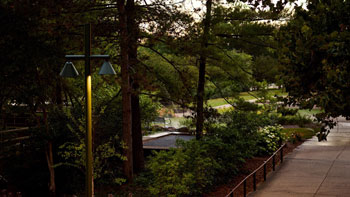
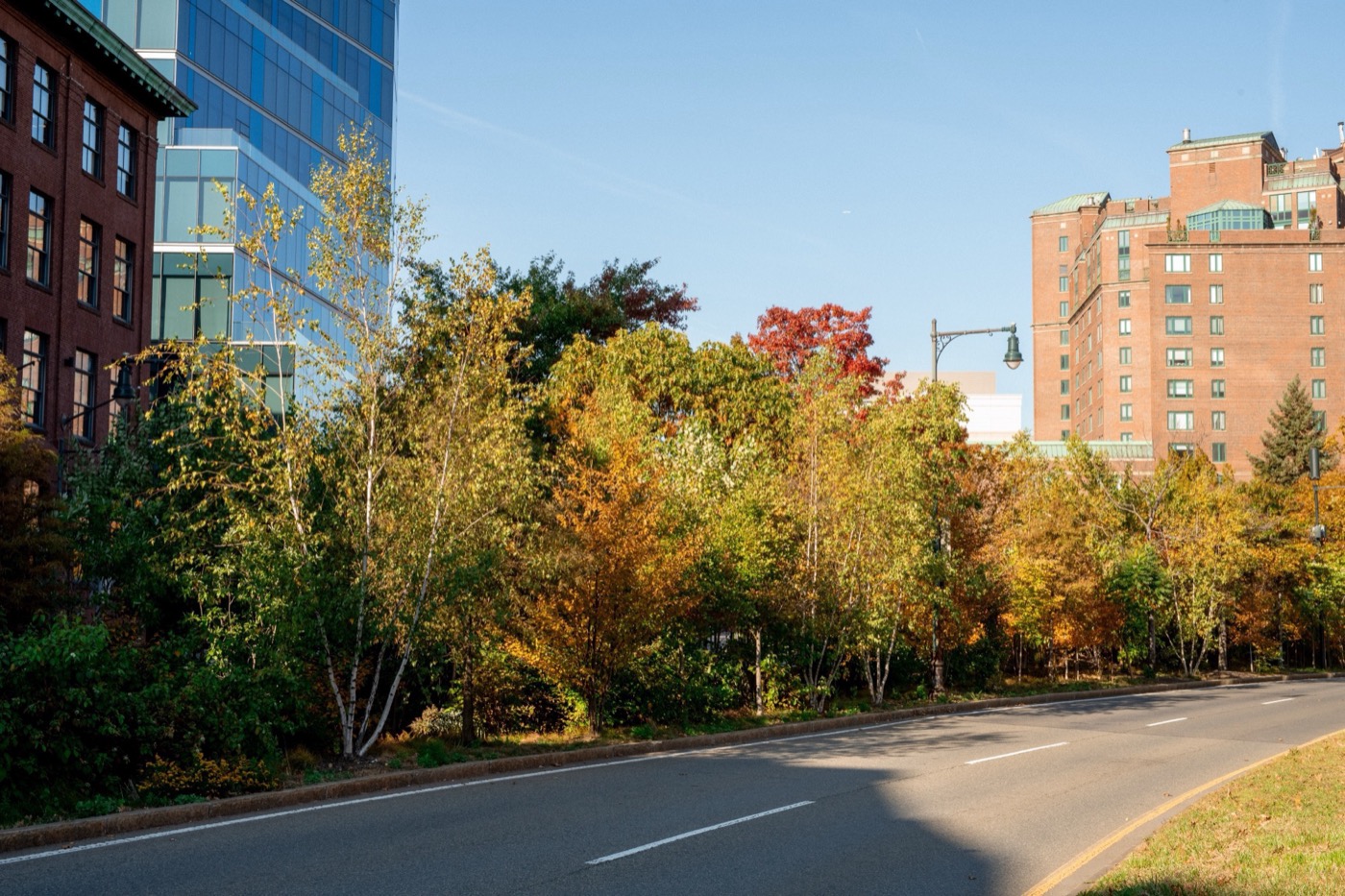
Triangle Park redefines what urban open space can be by transforming a residual, contaminated traffic island into a high-performing urban forest and civic landscape. In a rapidly densifying area of East Cambridge with limited access to green space, the project delivers shade, biodiversity, and social infrastructure while testing new models for how cities can grow and sustain their urban canopies under climate stress.
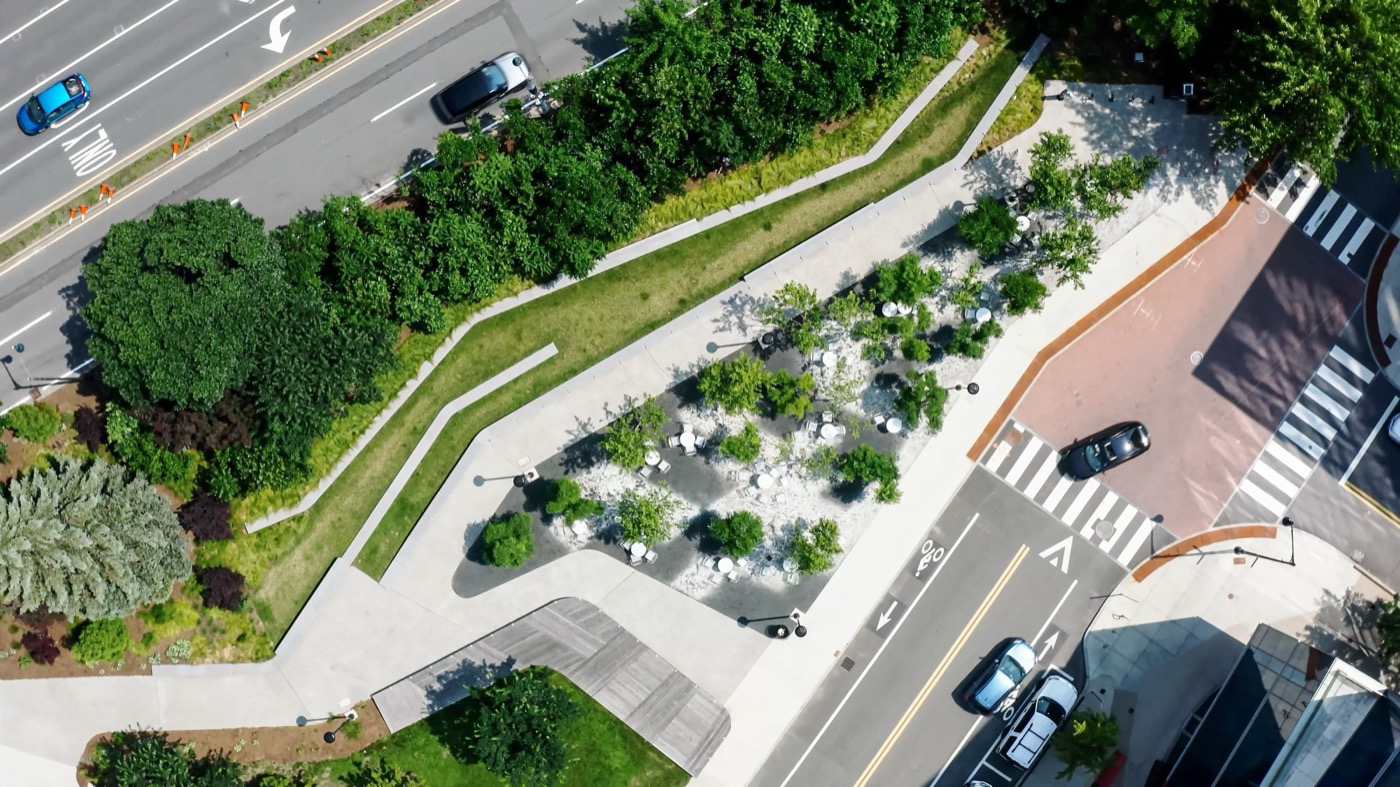
Long considered a “leftover” site, the one acre parcel has cycled through multiple uses, from tidal mudflat to fueling station, parking lot, and dumping ground, leaving behind degraded soils and a fragmented condition shaped by surrounding roadways. Rather than treating these constraints as limitations, the project embraces them as a framework for innovation. Triangle Park demonstrates how small, compromised urban sites can be leveraged as experimental grounds for ecological performance, public use, and long term resilience.
-
- Project: Triangle Park; Location: Cambridge, MA; Client: Stoss Landscape Urbanism
-
- Project: Triangle Park; Location: Cambridge, MA; Client: Stoss Landscape Urbanism
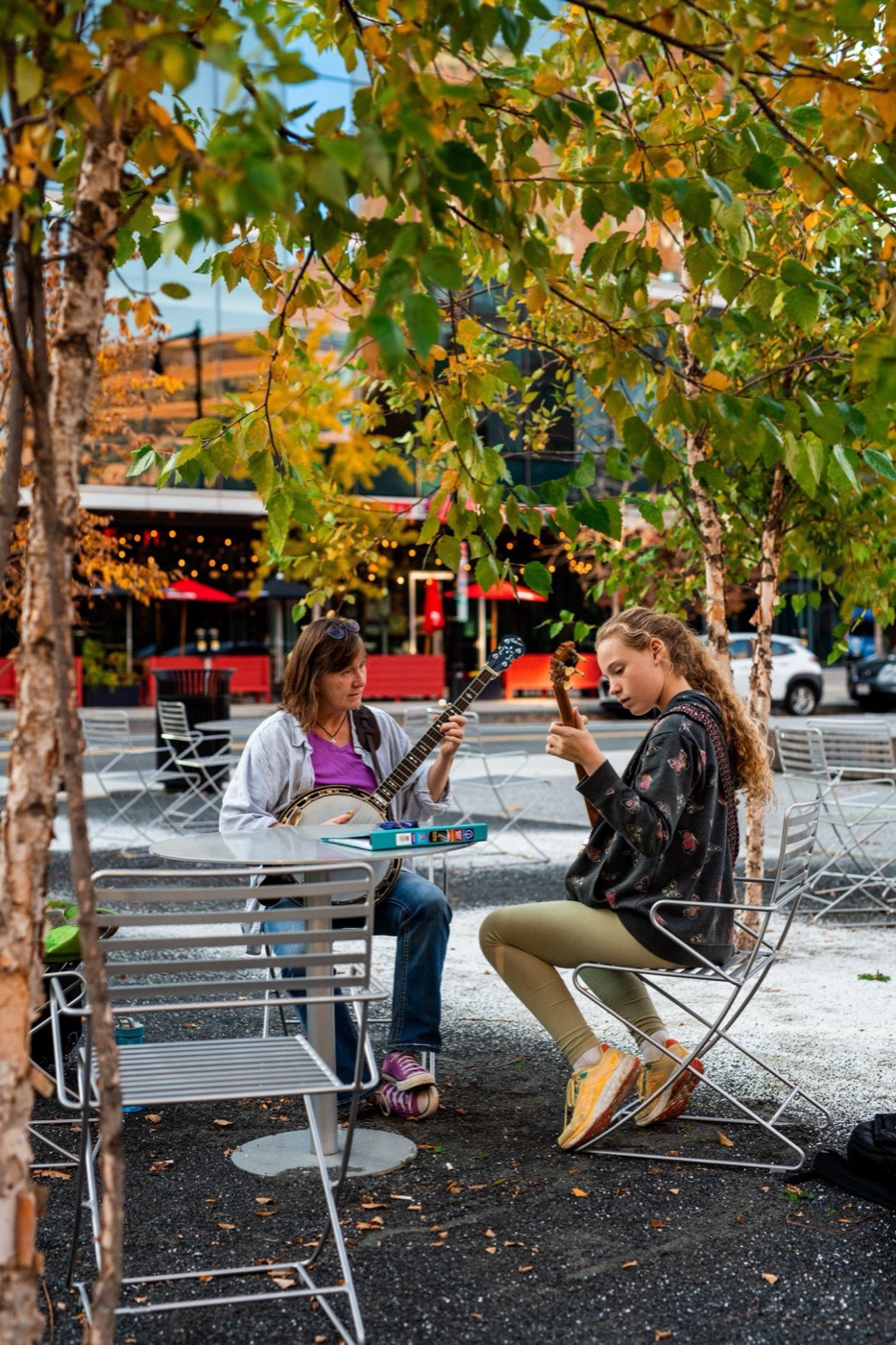
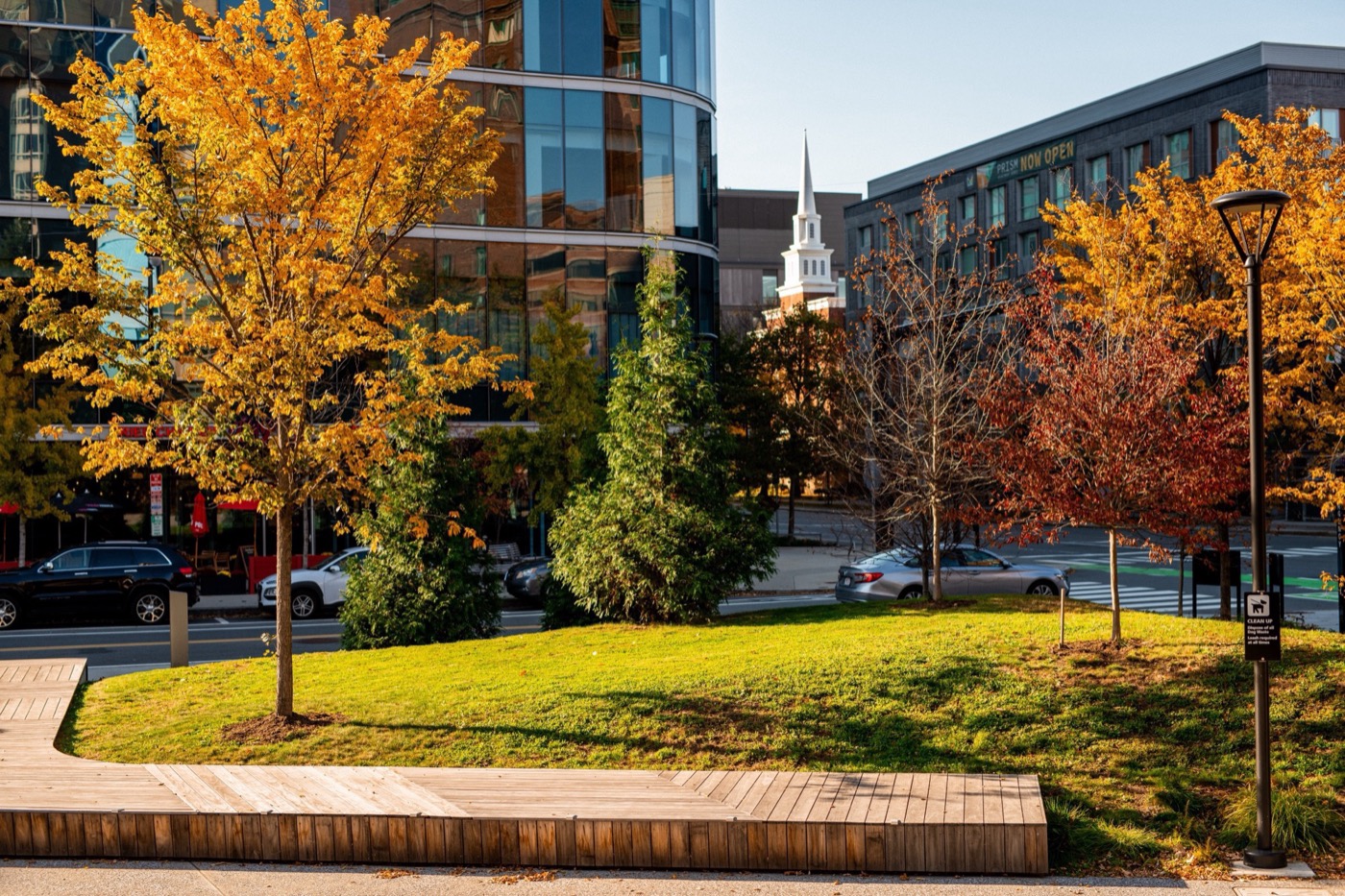
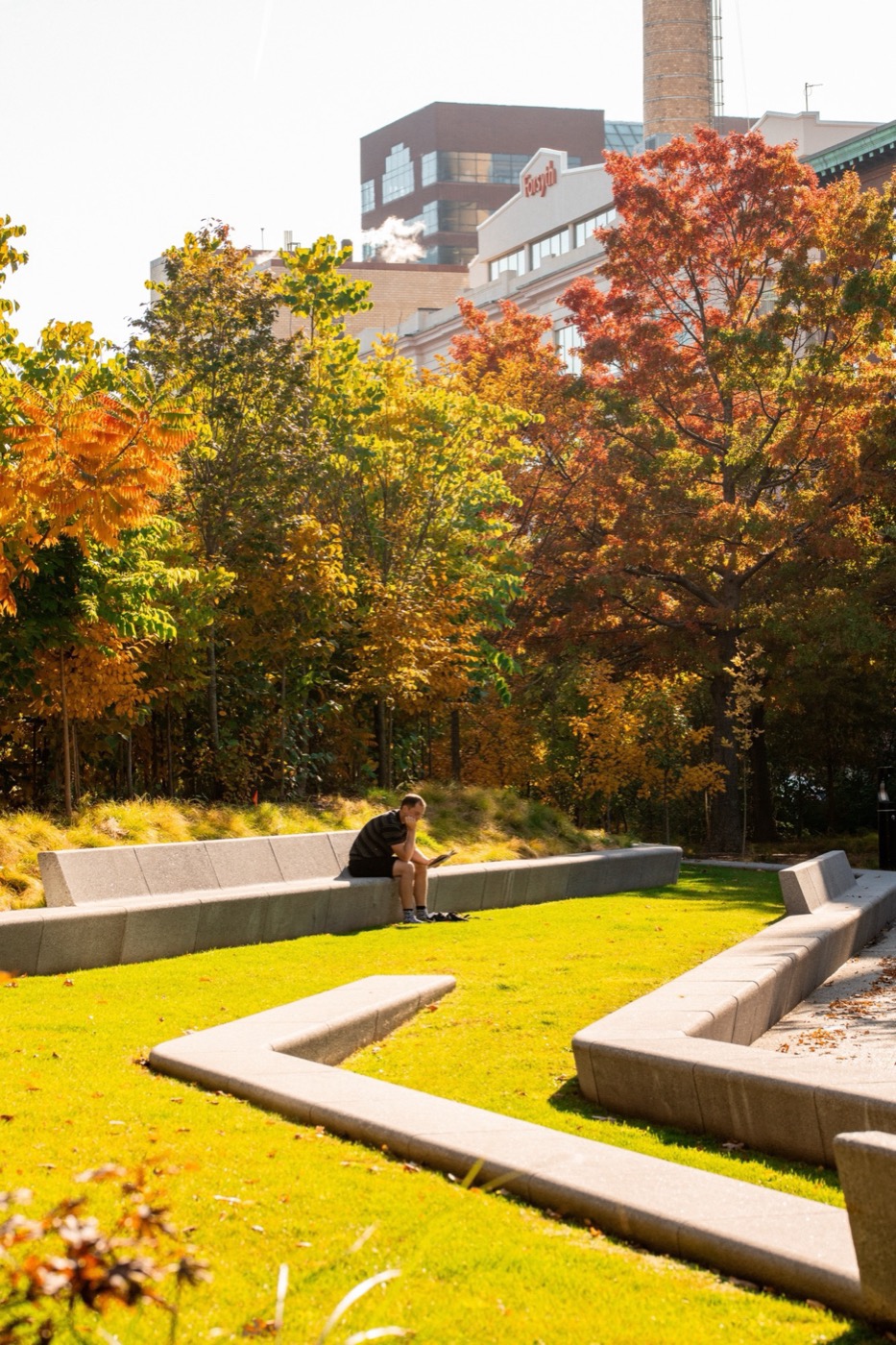
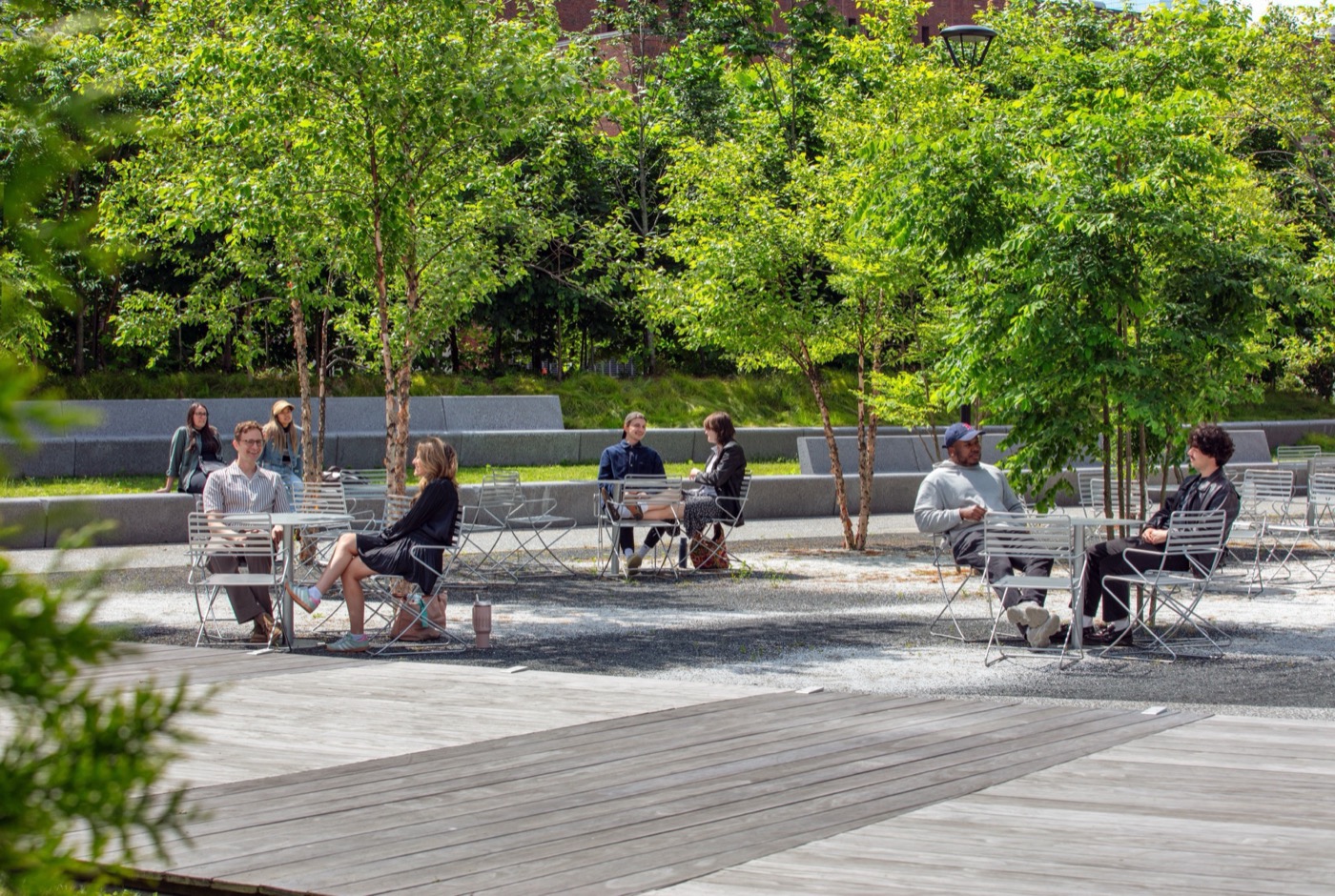
-
- Project: Triangle Park; Location: Cambridge, MA; Client: Stoss Landscape Urbanism
-
- Project: Triangle Park; Location: Cambridge, MA; Client: Stoss Landscape Urbanism
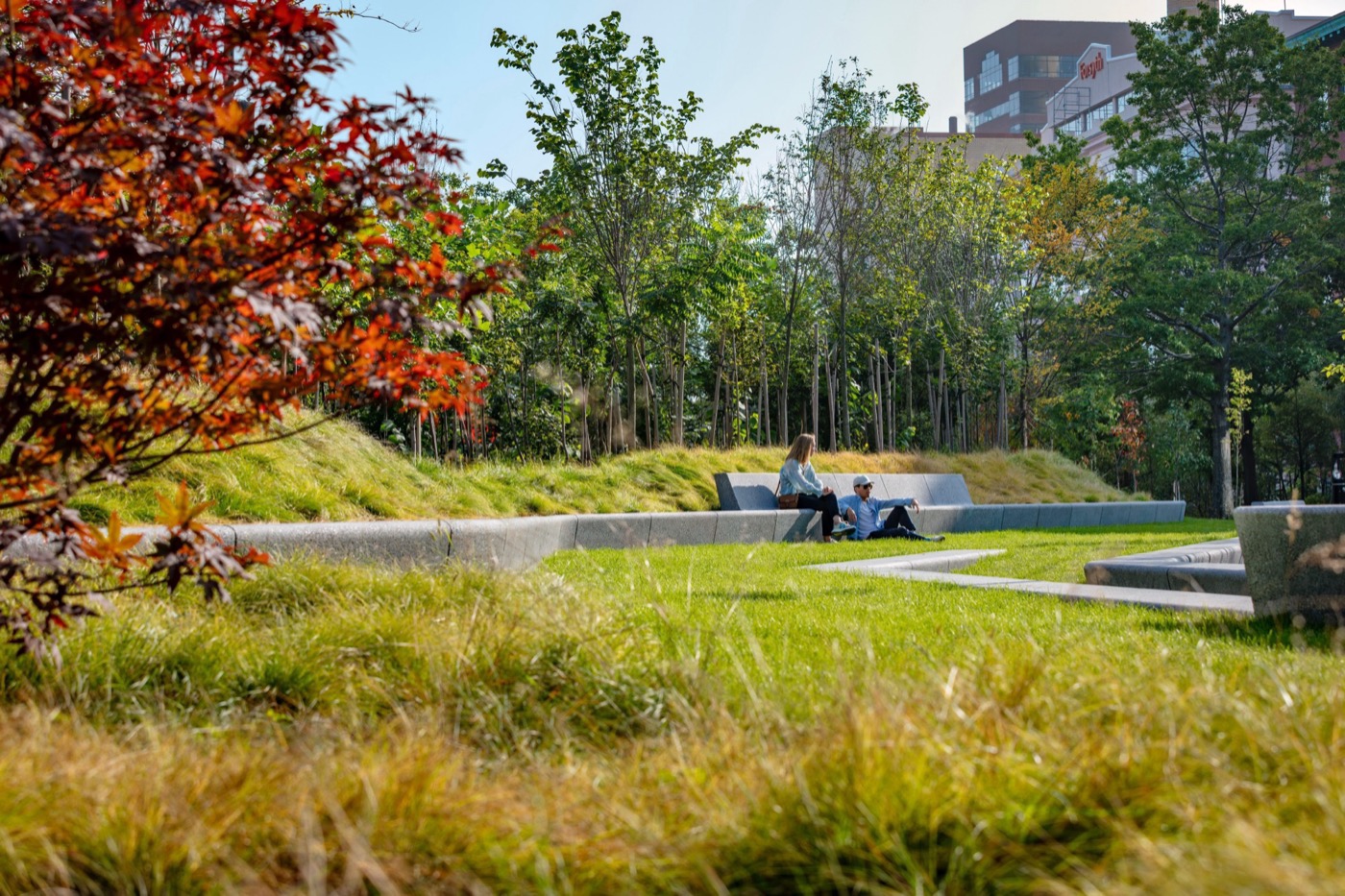
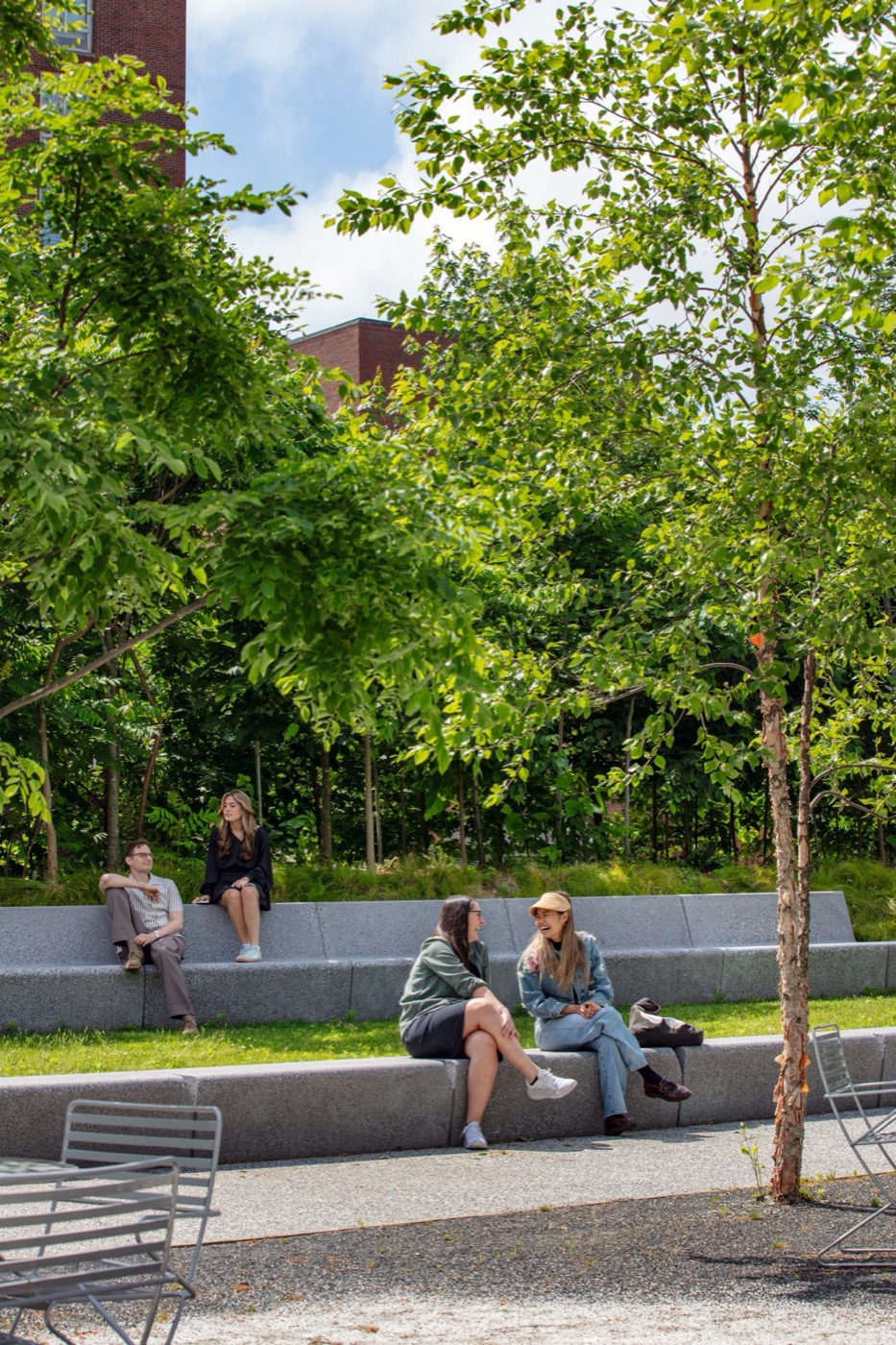

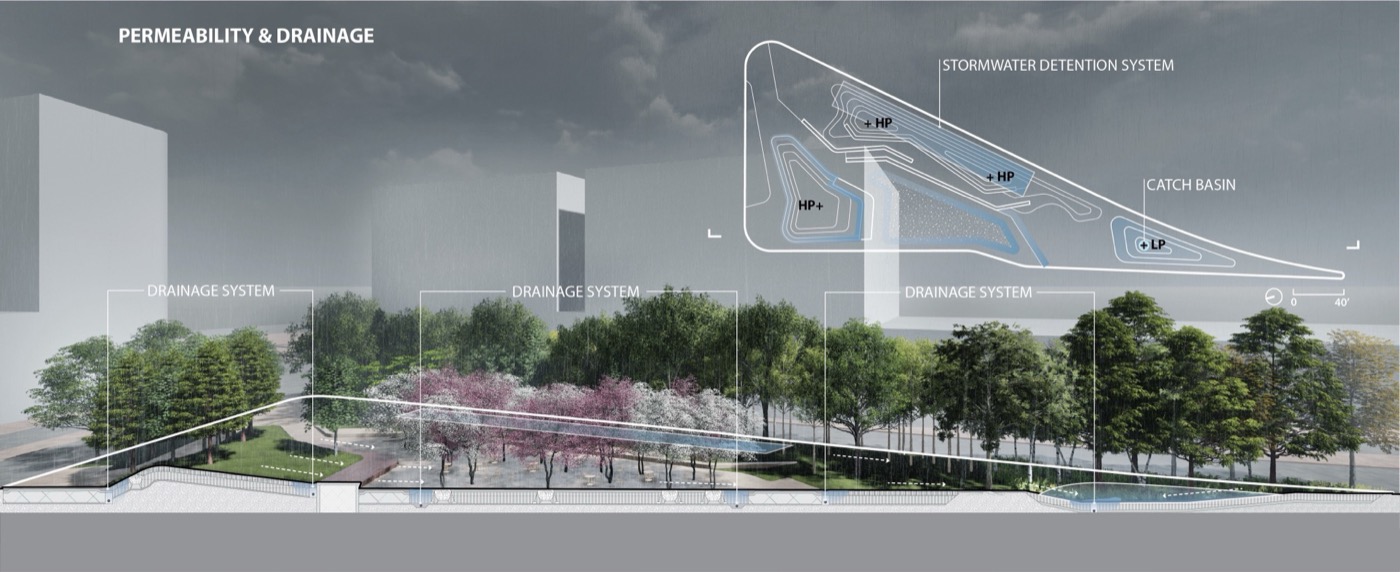
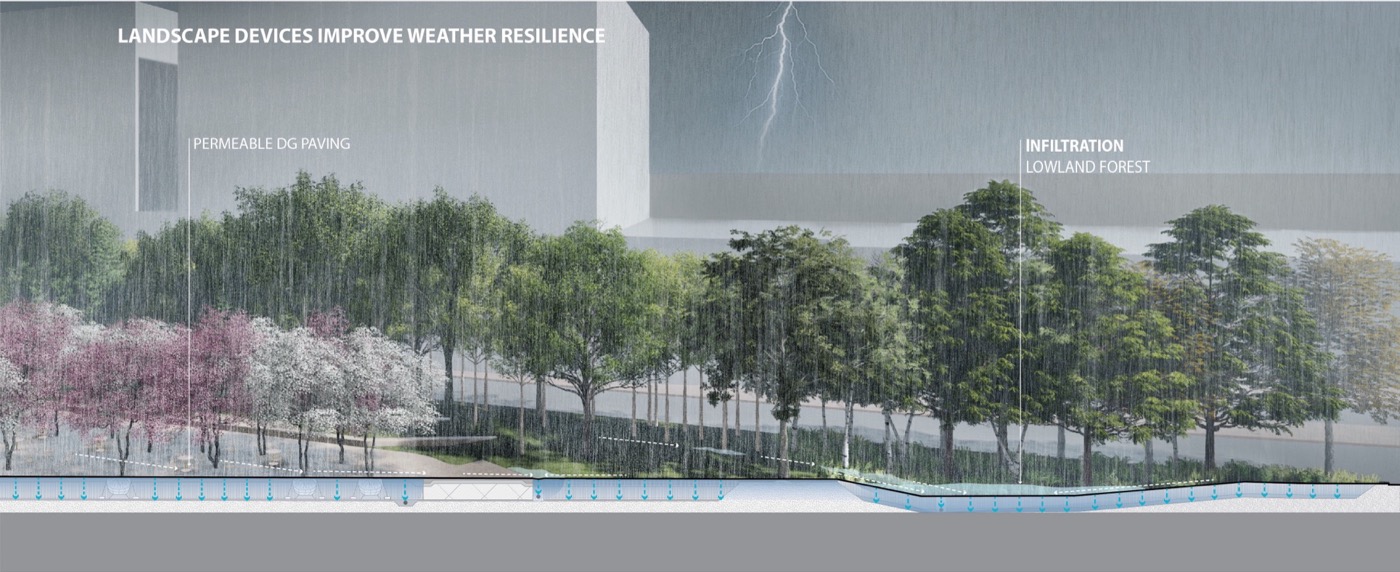
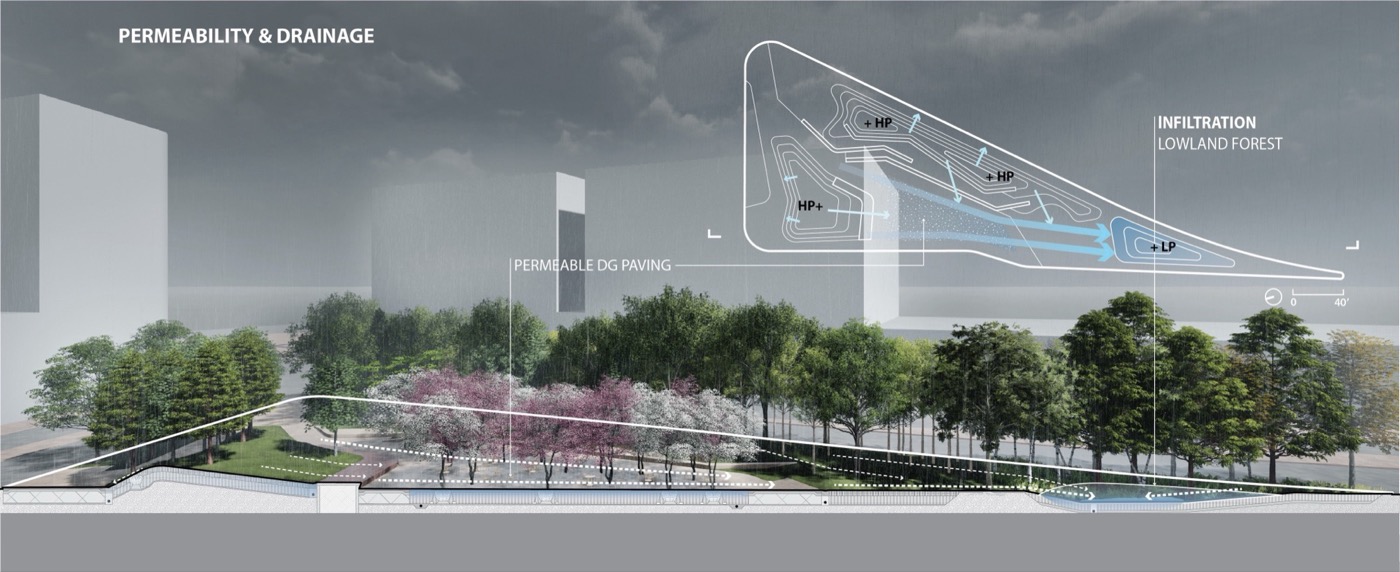
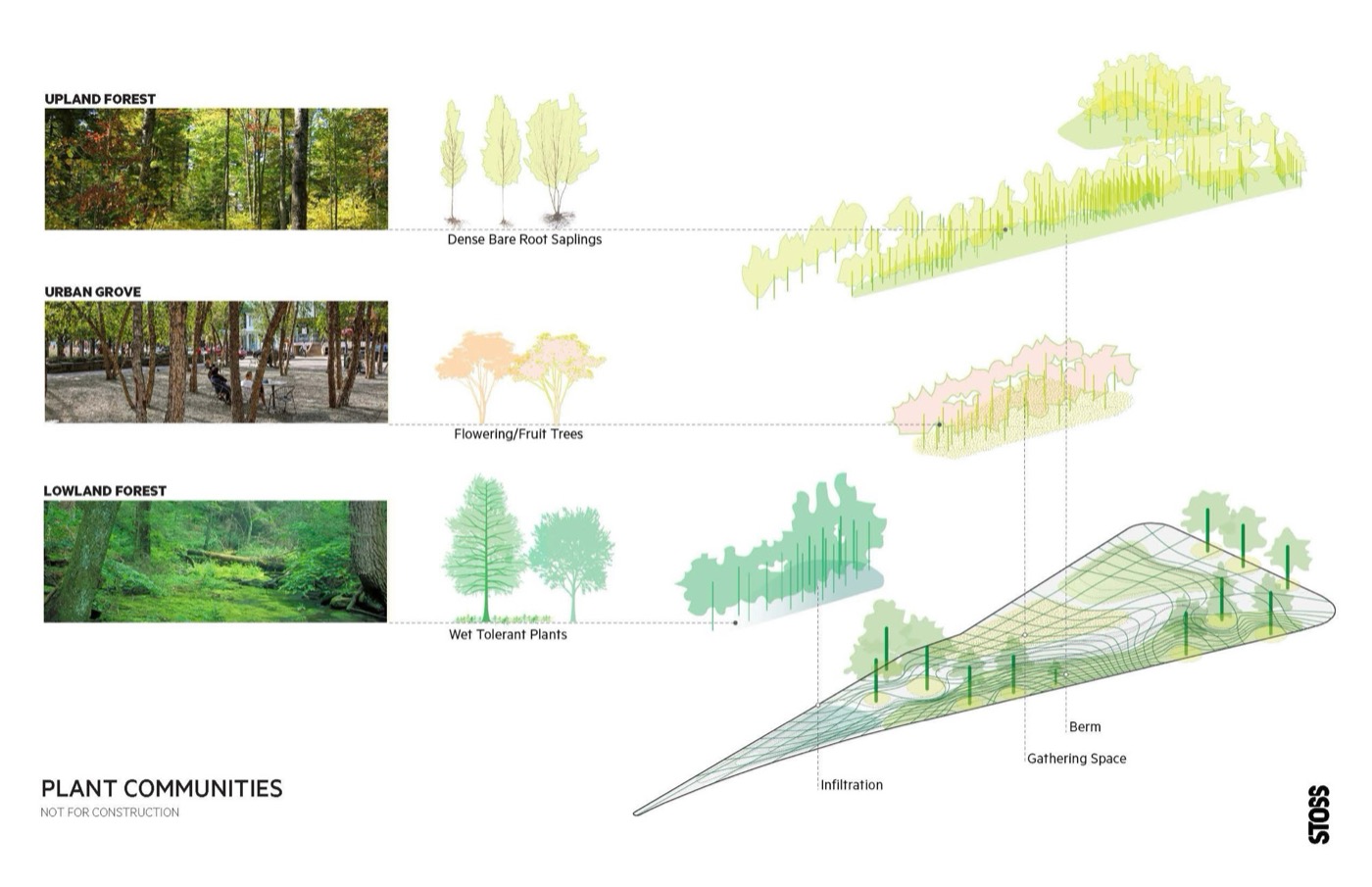
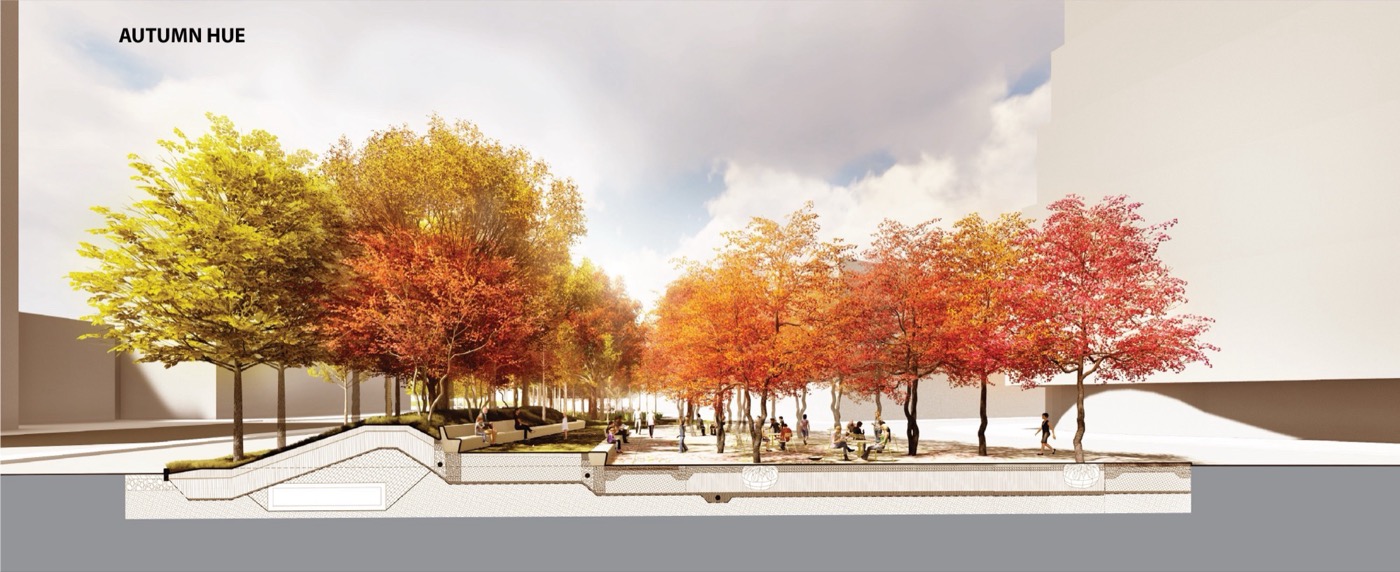
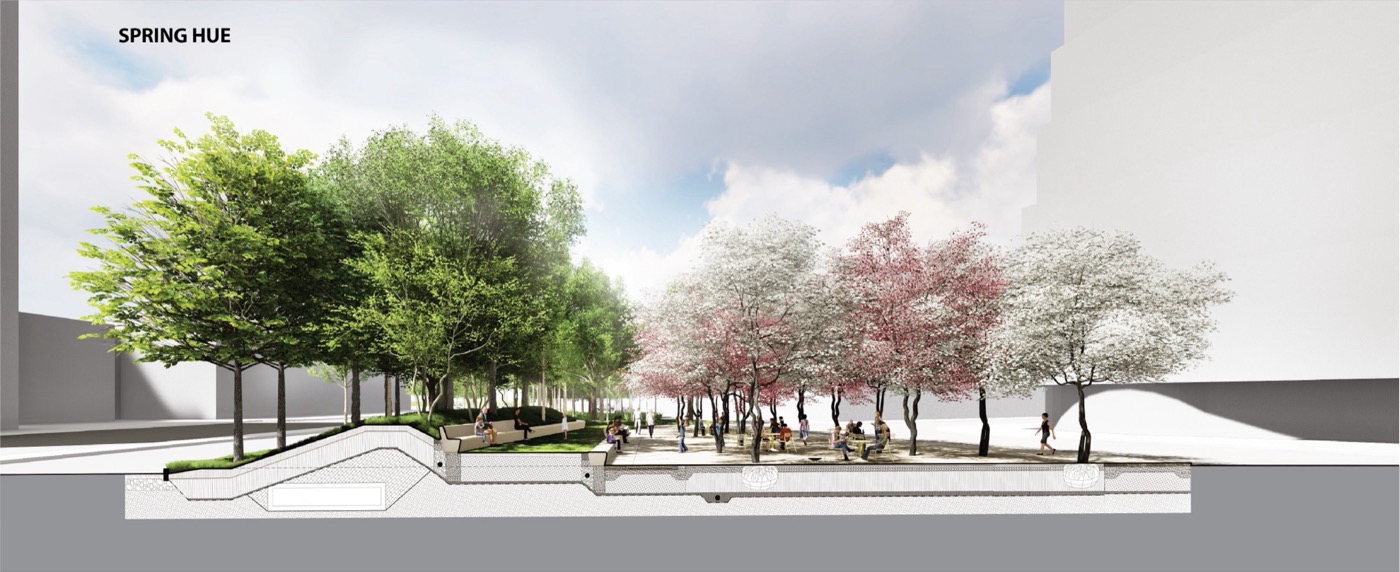
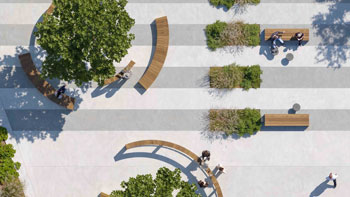
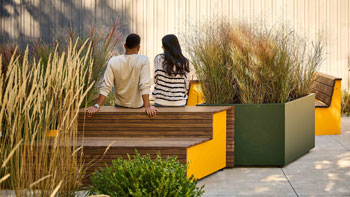
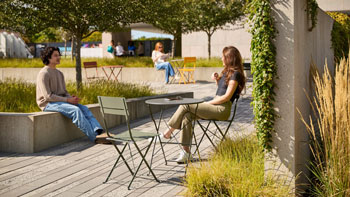
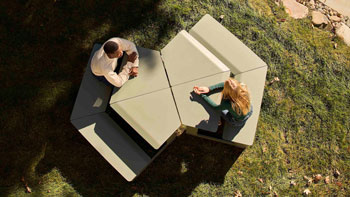
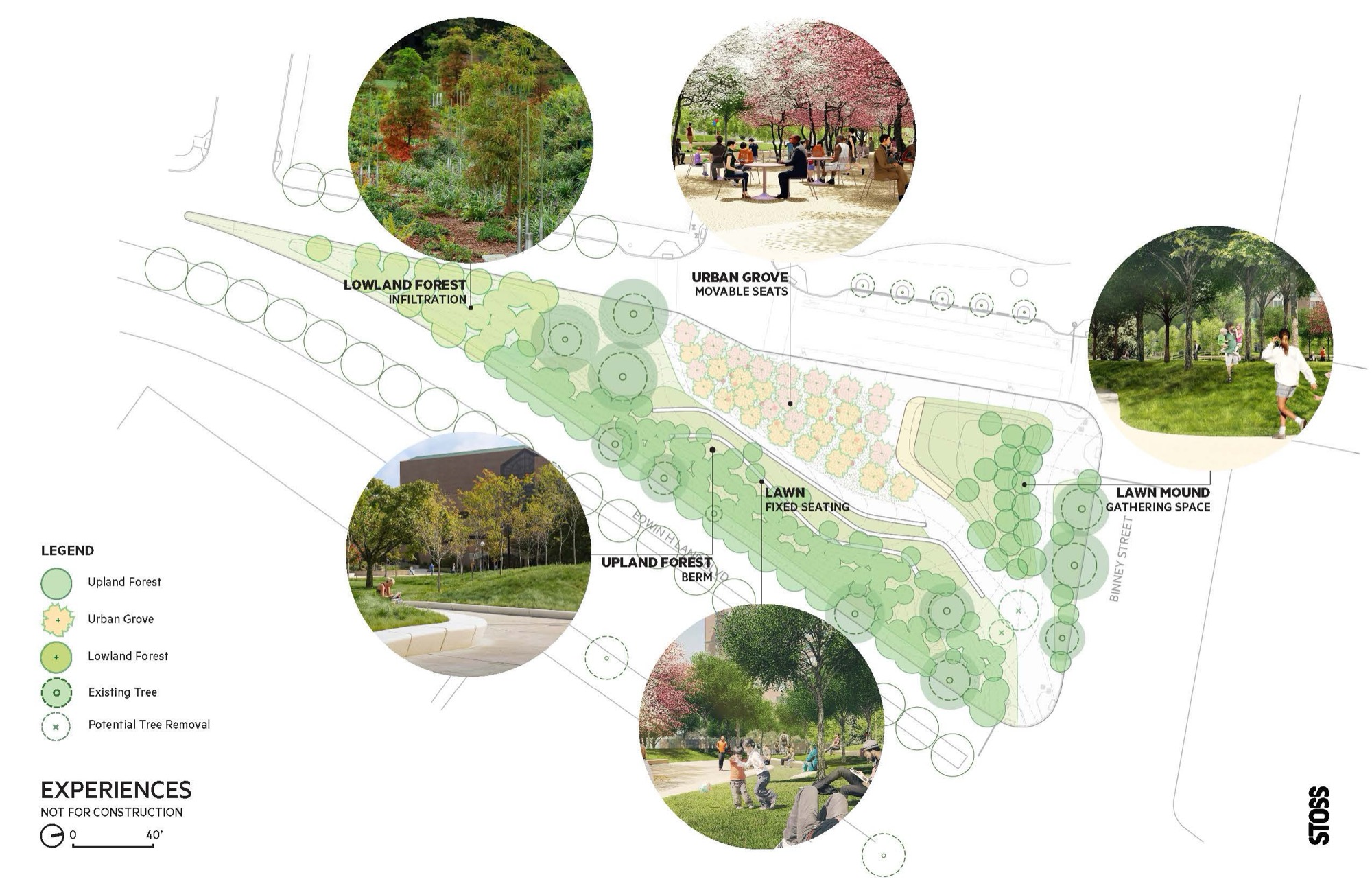
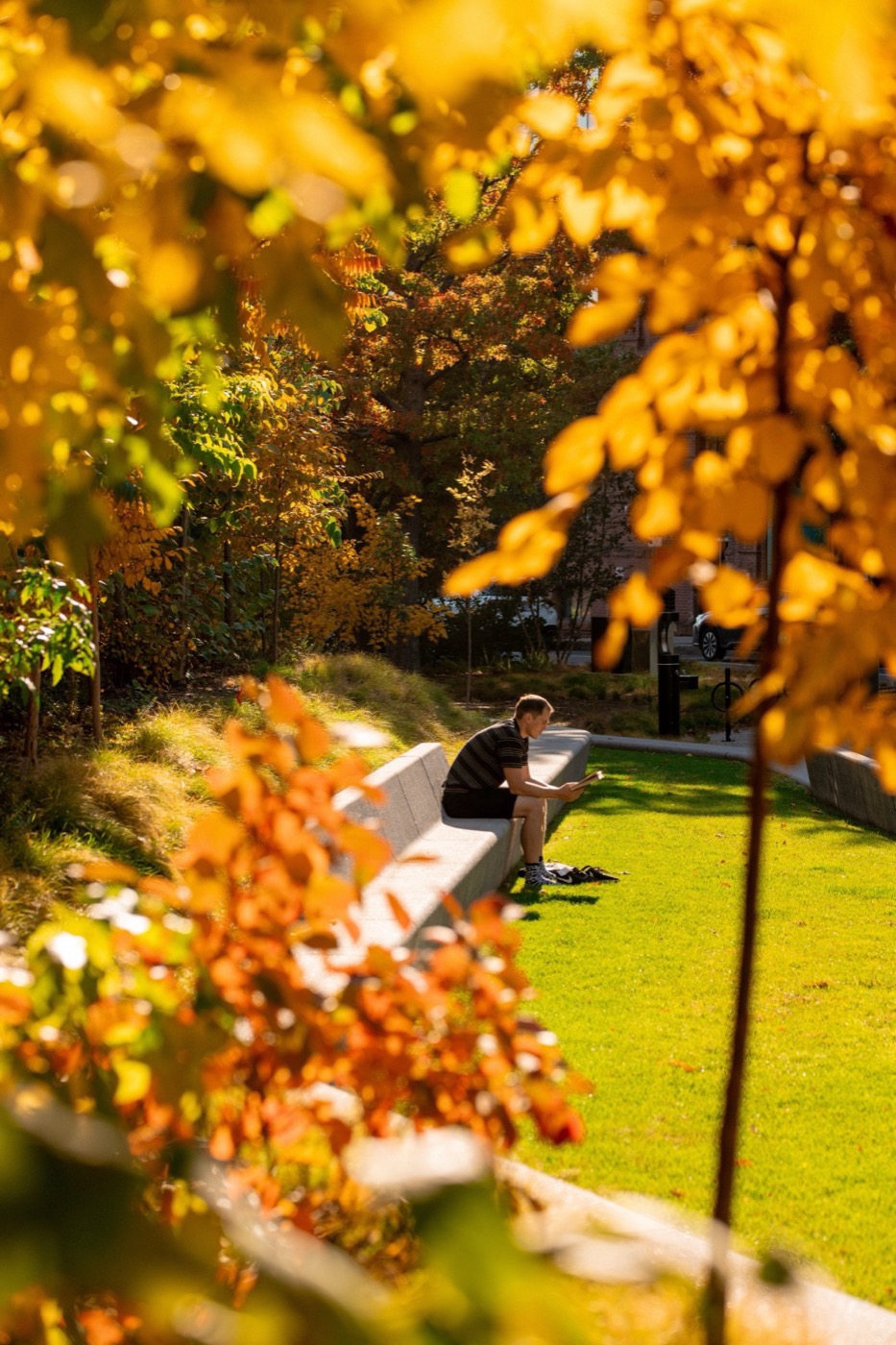
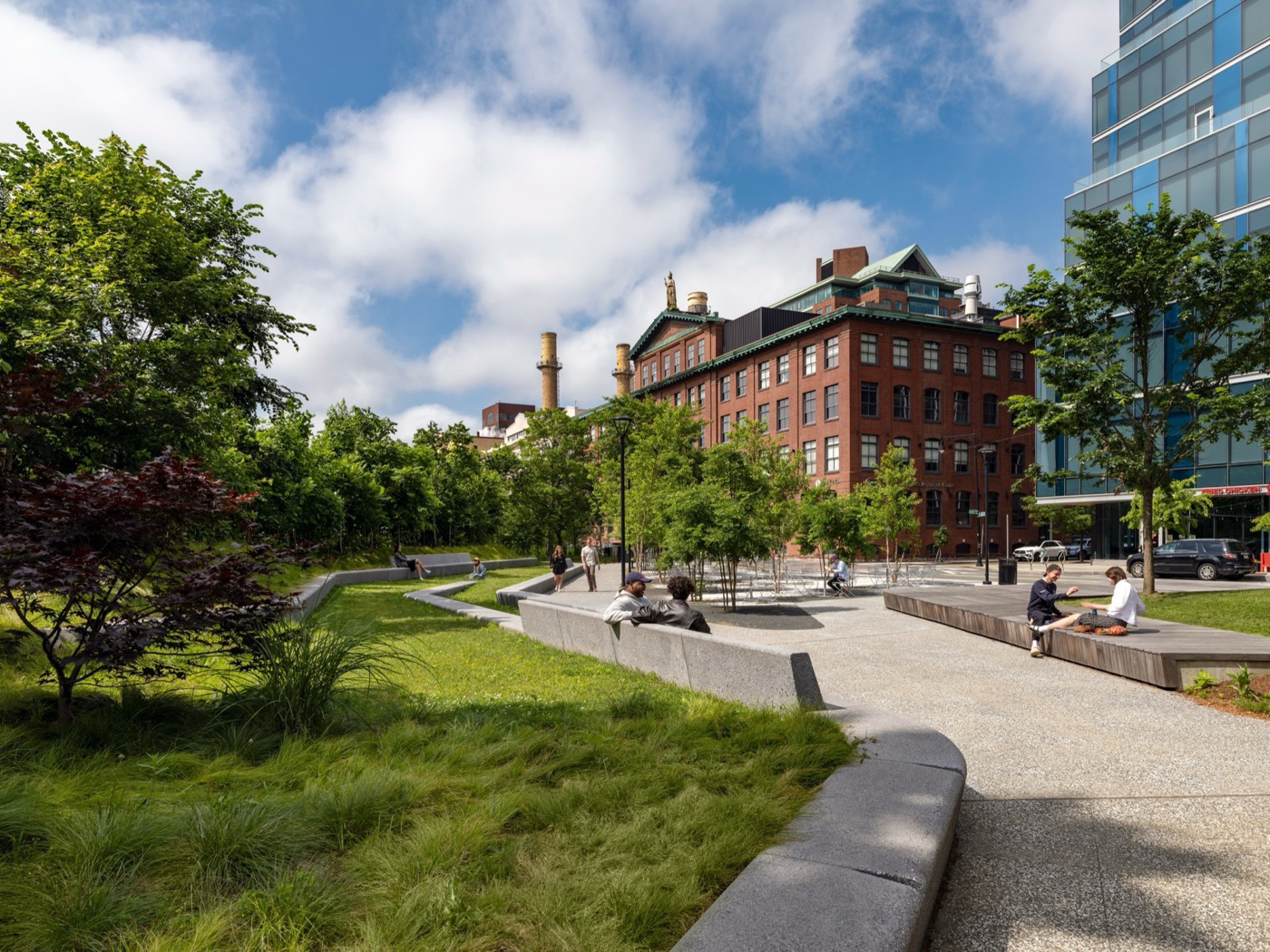
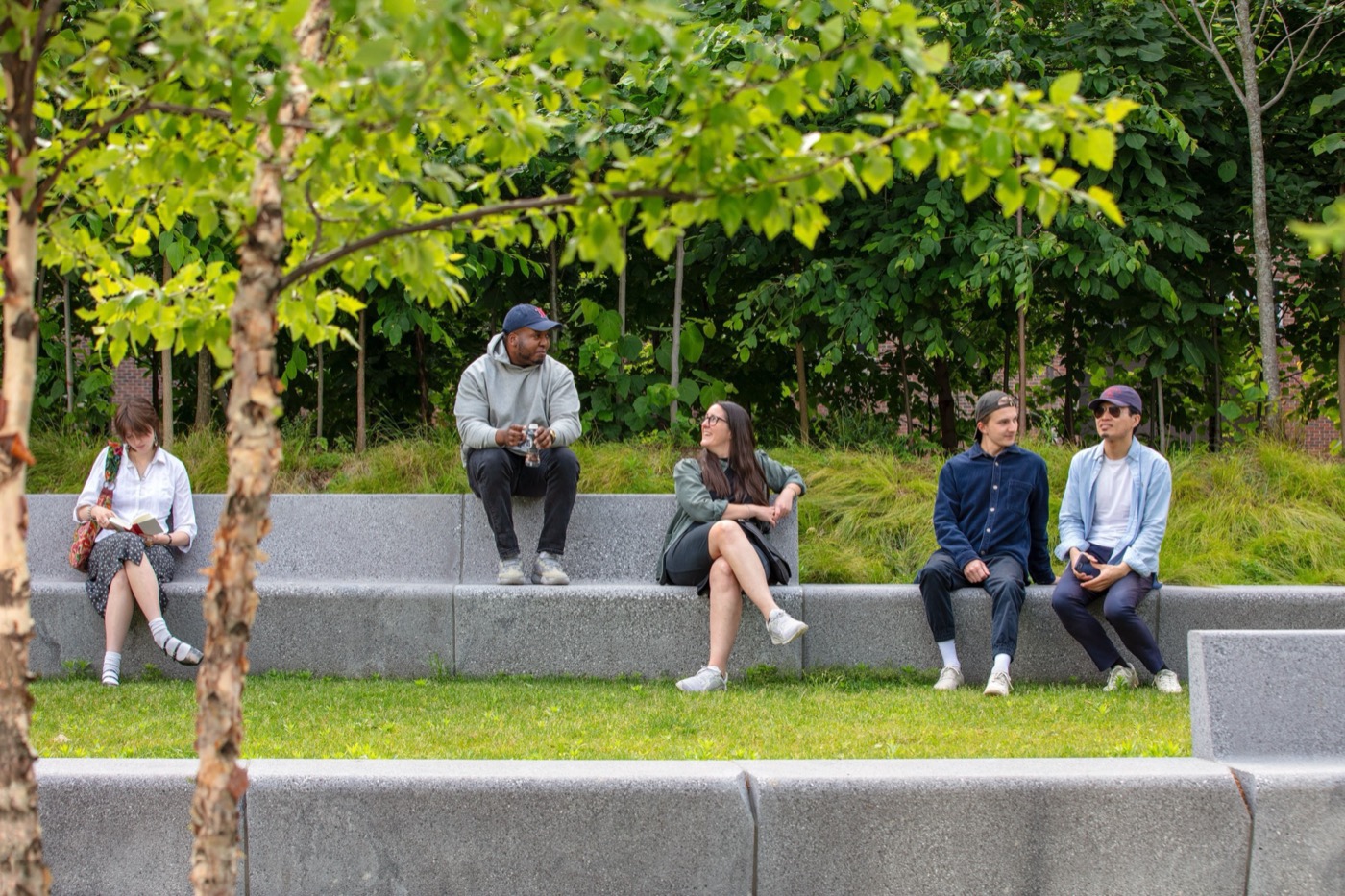
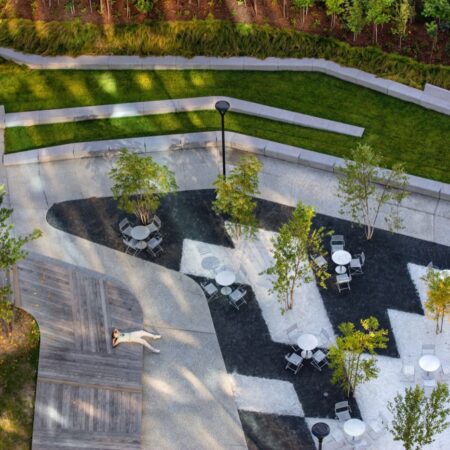
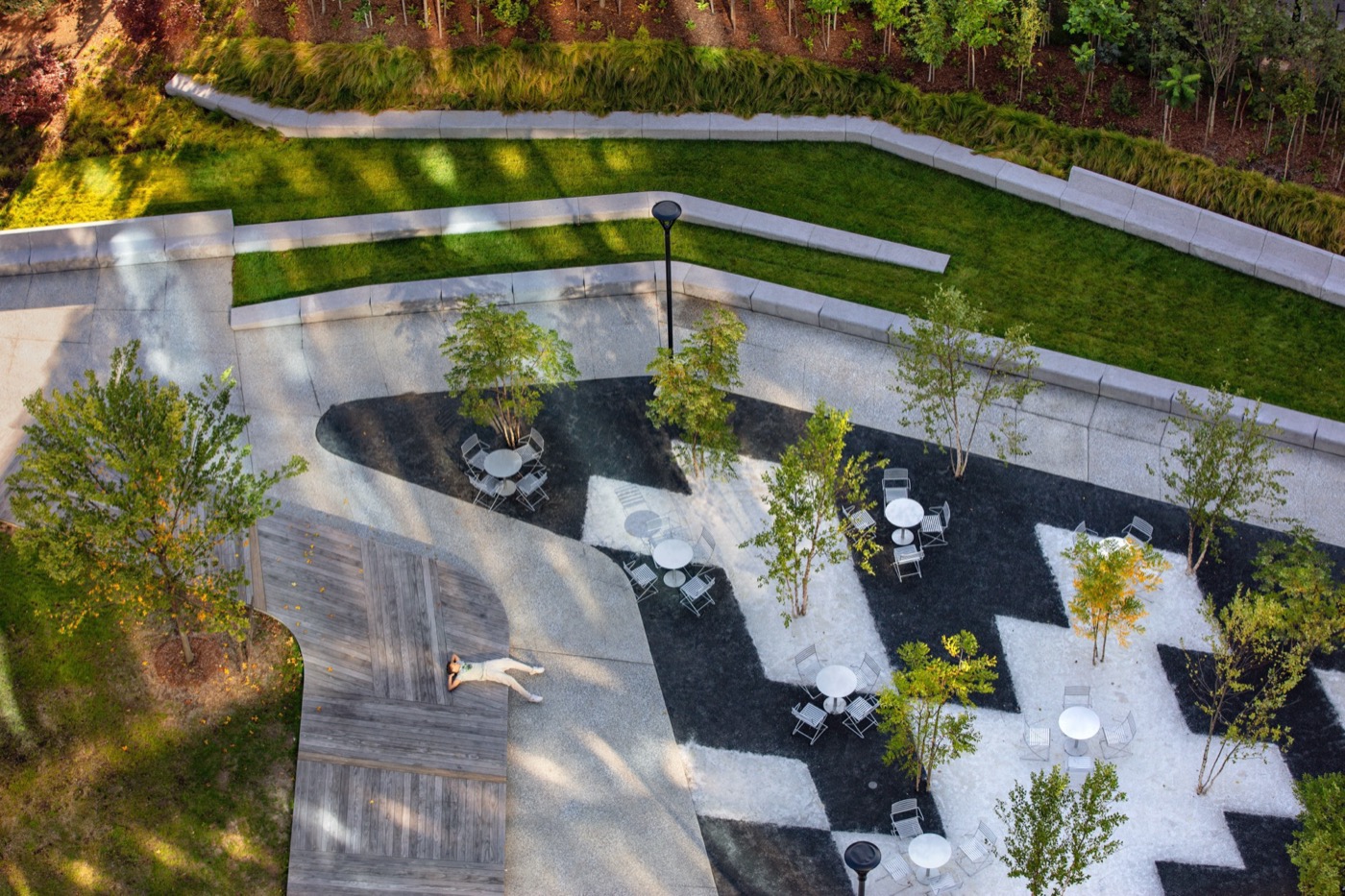
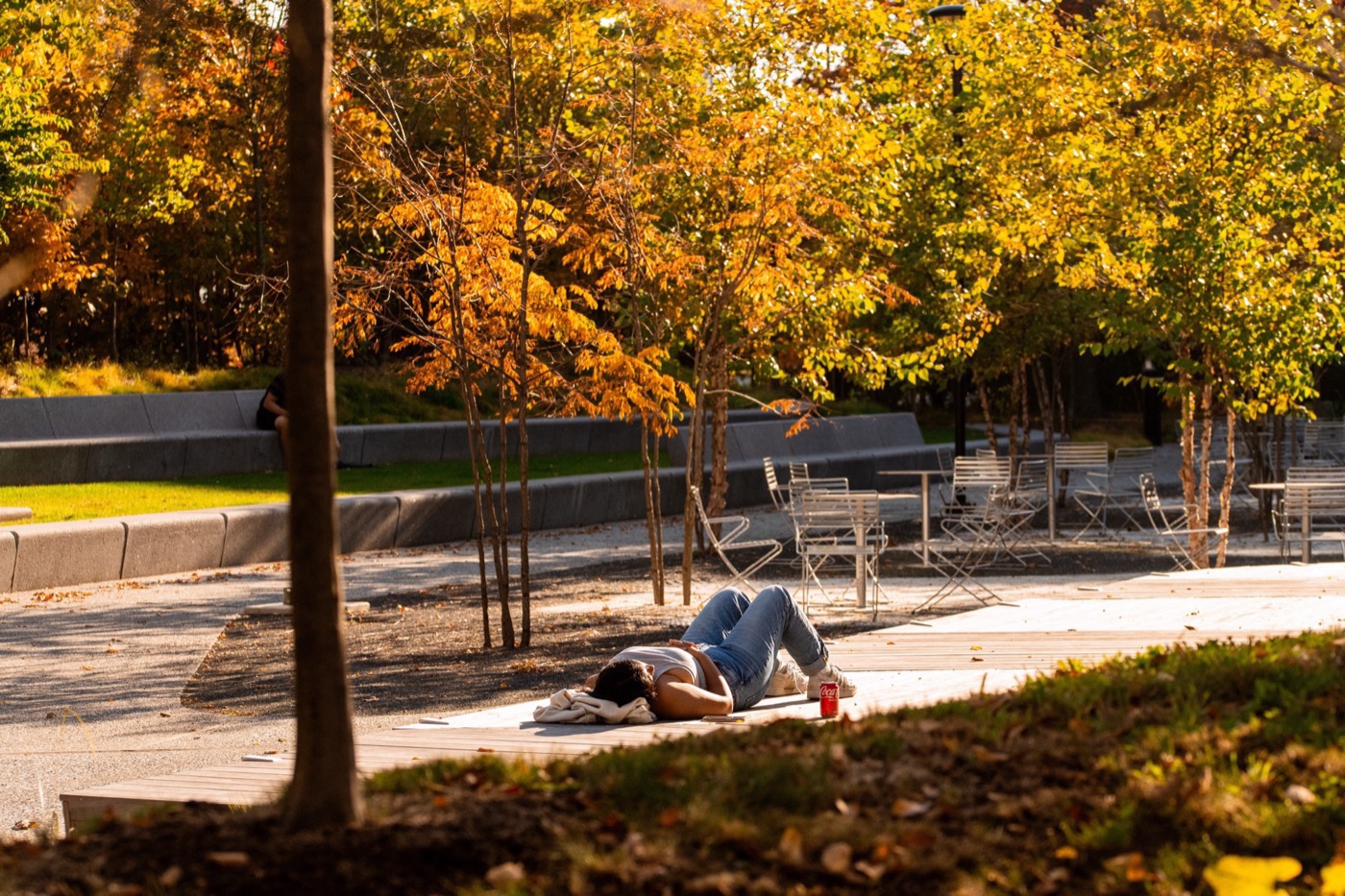
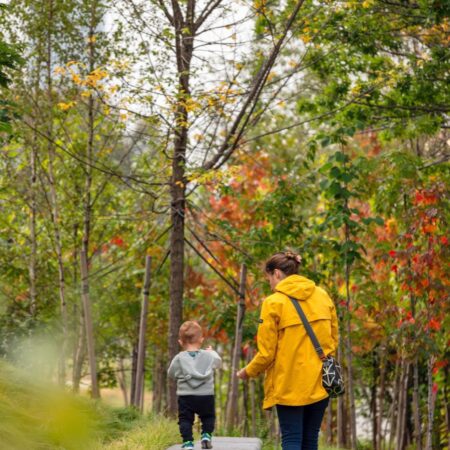
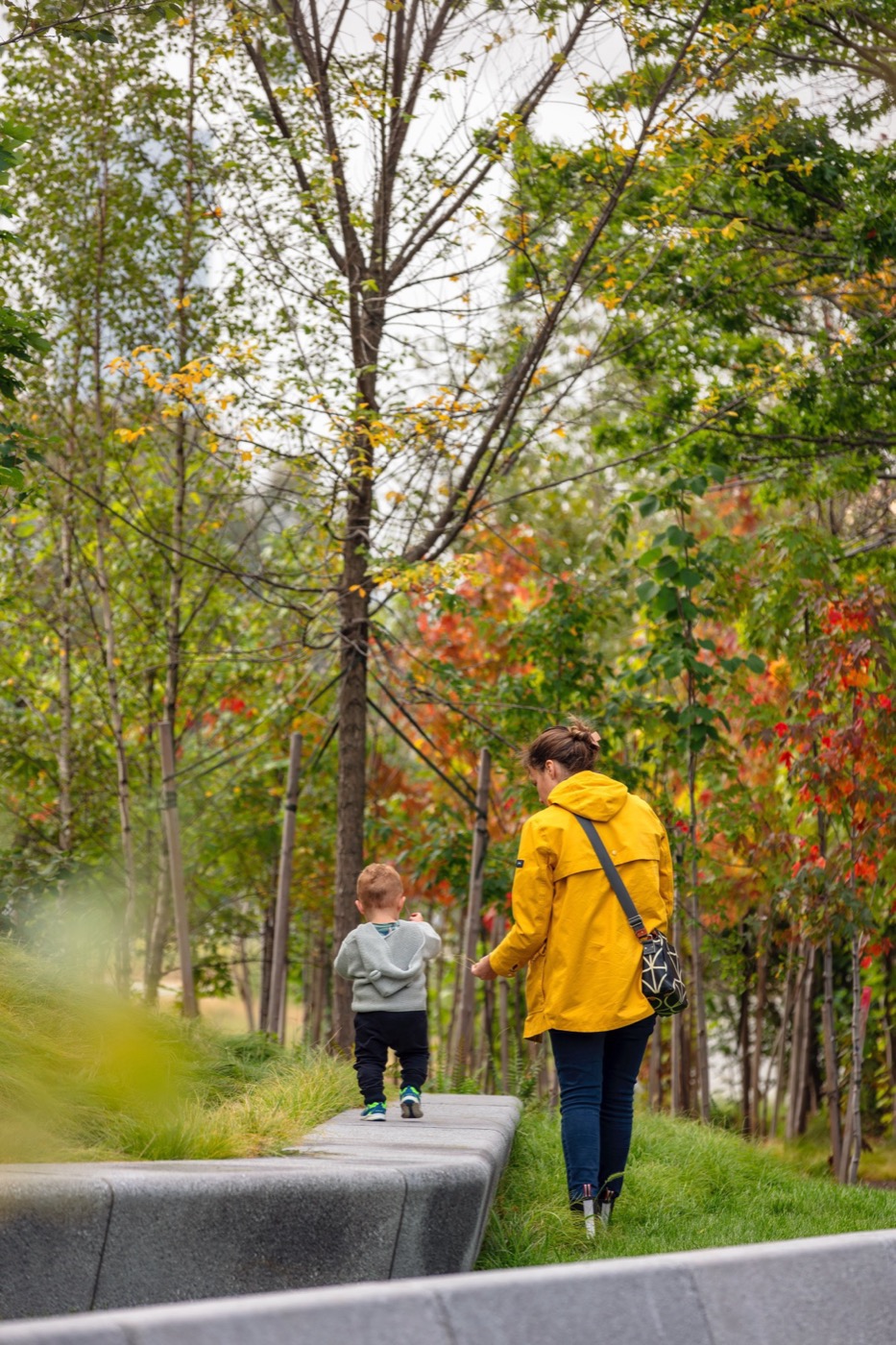
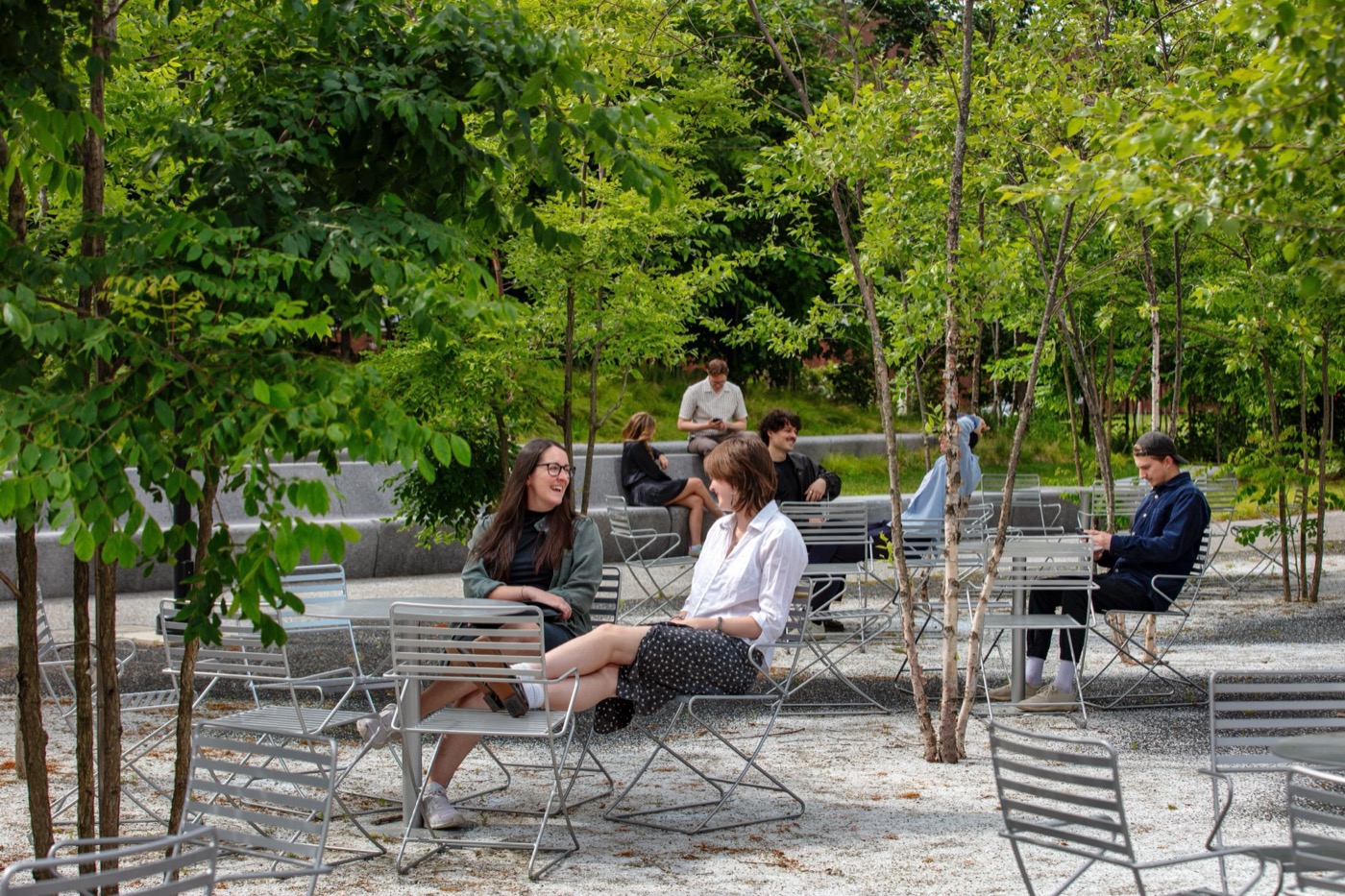
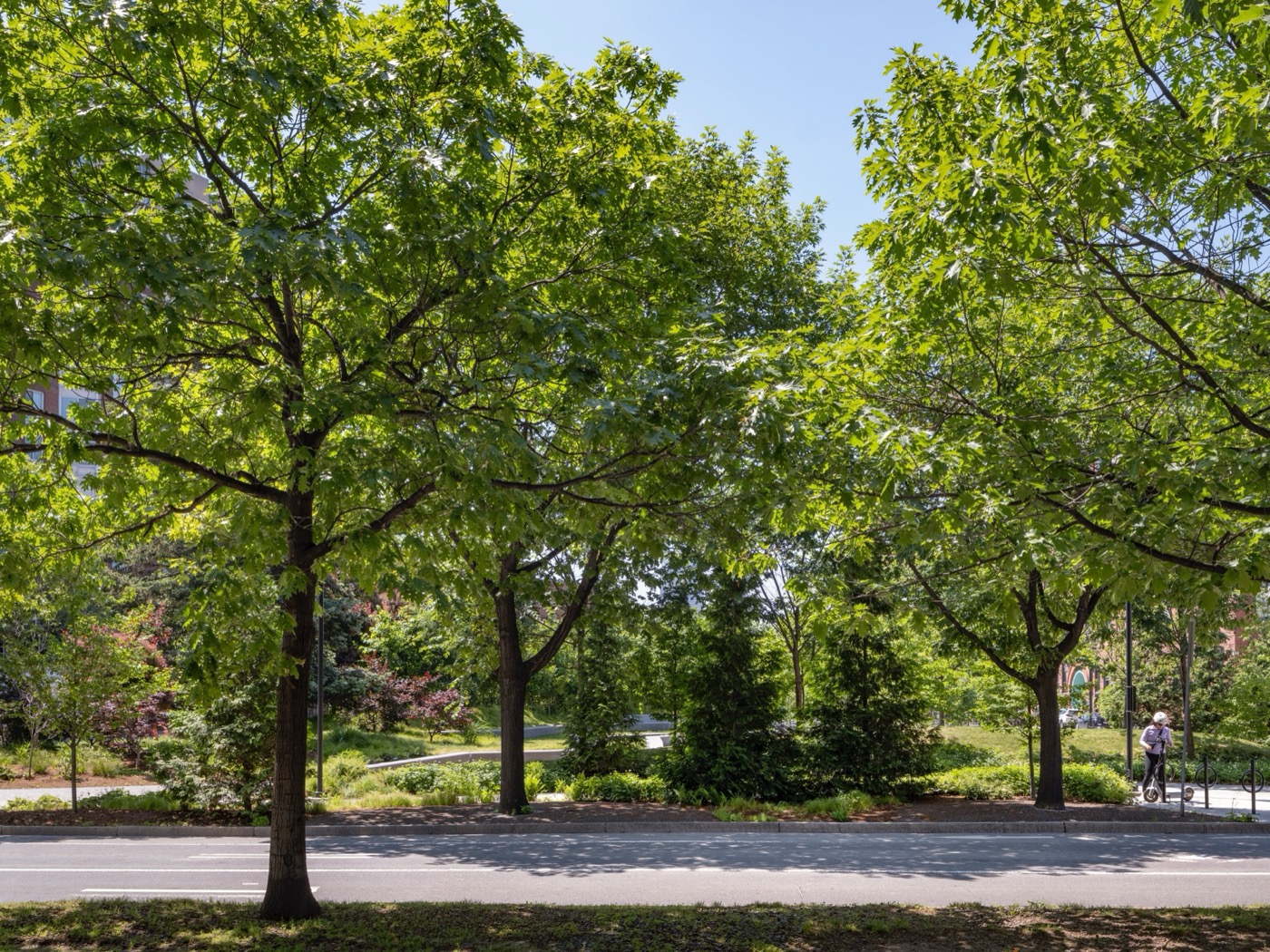
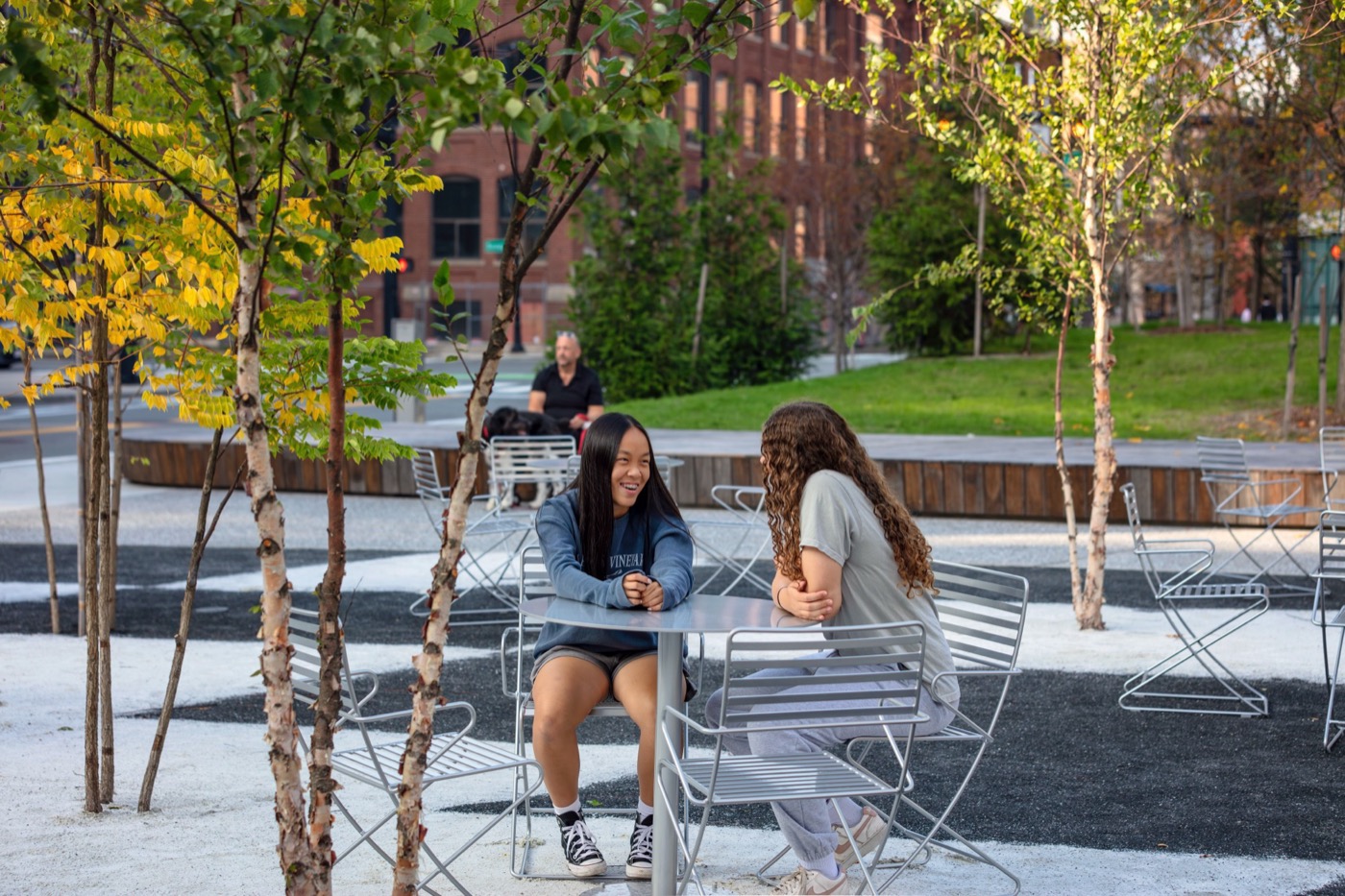
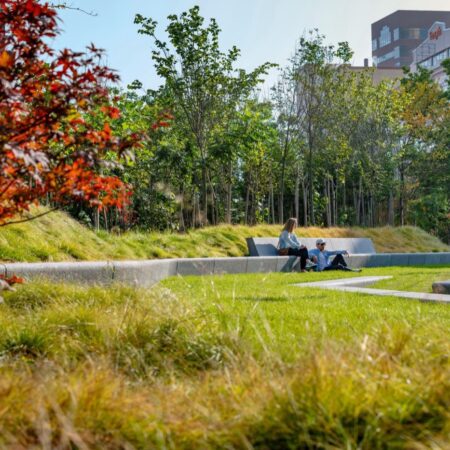
At the core of the design is a system of three interdependent habitats, upland, midland, and lowland forests, each calibrated to address specific environmental and social needs. The upland forest establishes a protective edge along the busiest streets, where dense bare root plantings rise atop sculpted berms to buffer traffic, reduce noise, and create a sense of enclosure. Integrated seat walls carve out a flexible central space for gathering, transforming infrastructural edges into civic amenities. The midland forest forms the social heart of the park, an urban grove of smaller flowering trees that provides shade, seating, and moments of intimacy within an otherwise exposed context. At the site’s narrow tip, the lowland forest operates as a stormwater infiltration landscape, capturing runoff and supporting a lush, adaptive planting system.
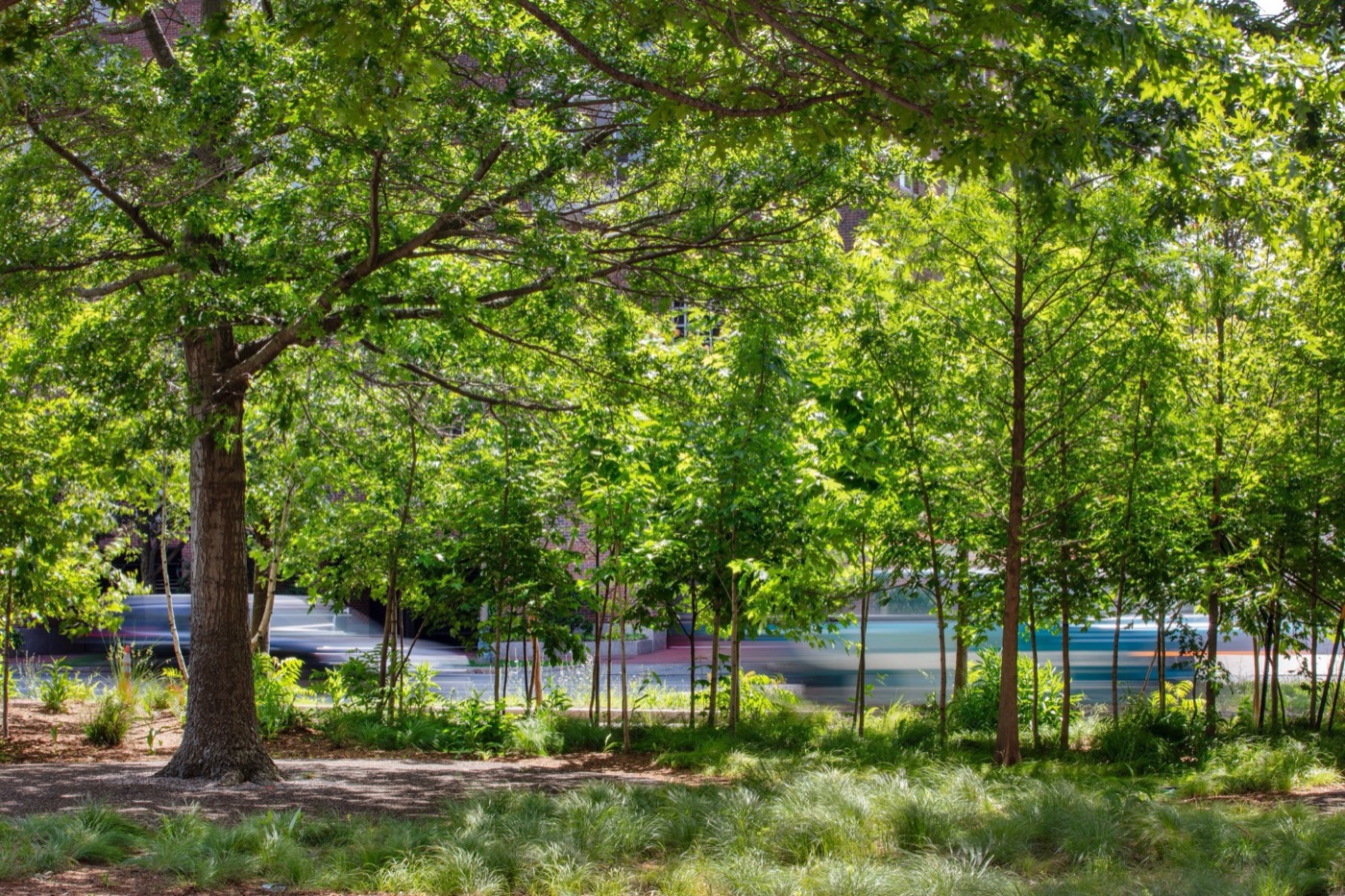
What distinguishes Triangle Park is its commitment to experimentation and long-term ecological thinking. The project introduces over 400 new trees across fifteen urban-tolerant species, increasing canopy coverage by approximately 400 percent while retaining twelve existing trees. Central to this strategy is the use of intensive bare root plantings, an approach that encourages natural competition among species. Rather than prescribing a fixed outcome, the design allows the landscape to evolve—enabling trees to adapt to site-specific conditions, increasing temperatures, and intensifying storm events. This process-based methodology, more common in natural forest systems than in urban parks, positions the project as a living experiment in urban forestry.
This adaptive approach is reinforced through a close partnership with the City of Cambridge, which has committed to long-term monitoring and maintenance, including selective thinning to support a healthy and resilient canopy over time. In this way, the project extends beyond its physical boundaries, informing broader municipal strategies and contributing directly to the City’s Urban Forest Master Plan.
Triangle Park should be recognized not only for its spatial and aesthetic qualities, but for advancing a new paradigm for landscape architecture—one that integrates design, ecology, and management as a continuous process. It demonstrates that even the smallest and most constrained sites can deliver meaningful environmental performance, support biodiversity, and create inclusive public space. By transforming a fragmented remnant into a resilient, evolving urban forest, the project offers a replicable model for cities facing the dual pressures of climate change and urban growth.
Project Credits –
Client: City of Cambridge
Landscape Architect: Stoss Landscape Urbanism
Collaborators: HLB Lighting, Nitsch Engineering, Pine & Swallow Associates, SGH, Irrigation Consulting LLC
Photography: Sahar Coston-Hardy, Mike Belleme
42.3648459152049, -71.07794294787621
73488


LILA 2026 Sponsor