URBAN ECOTONE
www.po-ola.om
2026 Landscape and Architecture / 2026 Residential Parks / Built in 2022 /

URBAN ECOTONE – ECOLOGICAL TRANSITION ZONE IN A DENSE NEIGHBOURHOOD
The refurbishment of a social housing complex in a densely populated district of Paris is triggering a transformation of the surrounding public spaces. The introduction of vegetation in this urban block, along with the work on interfaces and boundaries has resulted in a positive sense of ownership of the spaces.
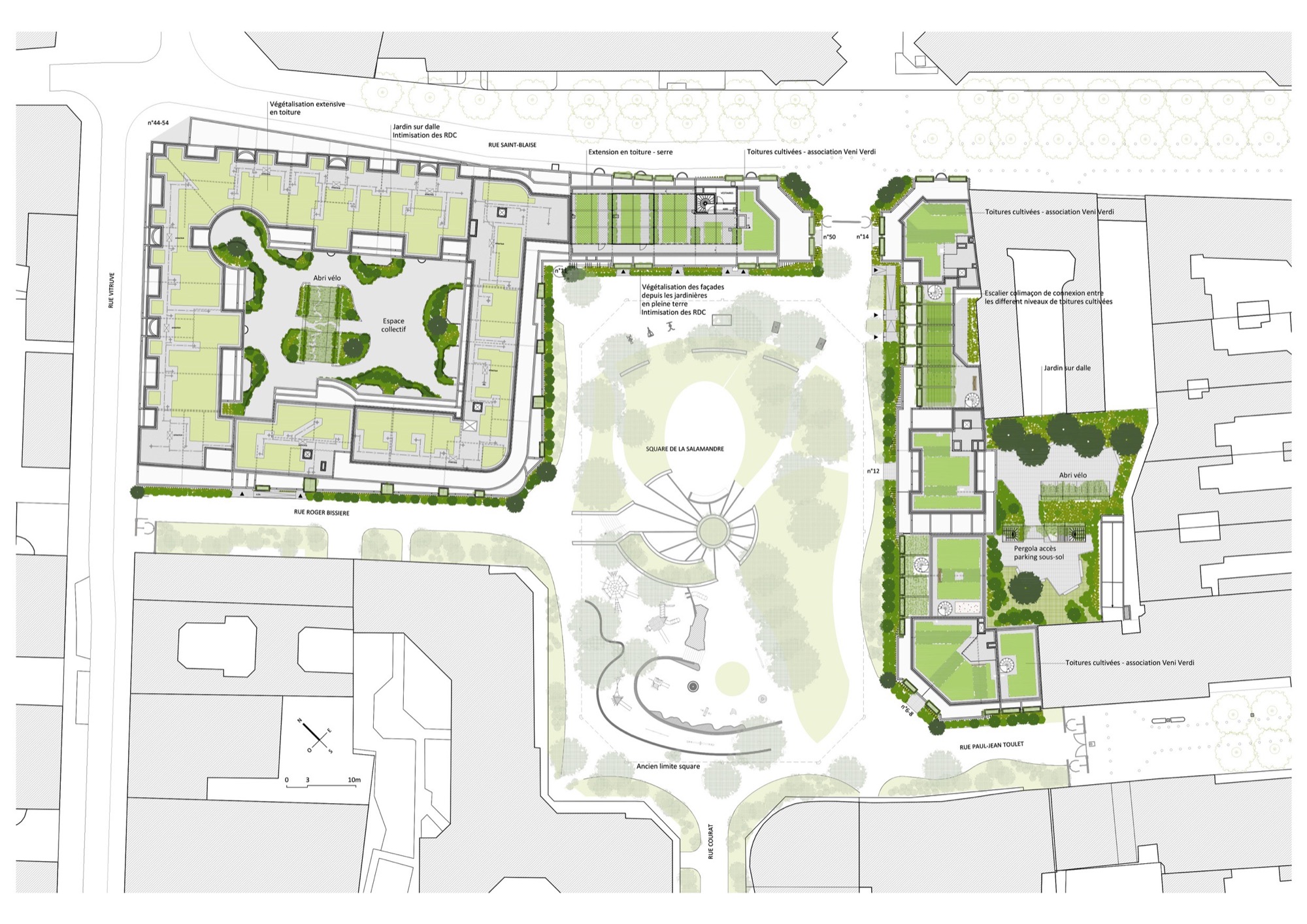
The project involves renovating the Salamandre group and its outdoor spaces, a social housing complex dating from the 1980s located in Saint-Blaise, an exceptionally dense and sparsely-planted district of Paris.
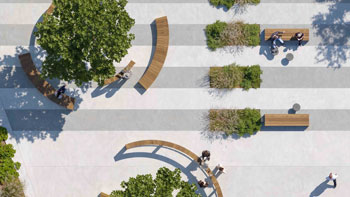
In contact with an enclosed public square and paved semi-pedestrian streets, the planting of the facades around the Salamandre square extends its limits to the streets that delimit the block, widening the radius of its perception and creating continuities.
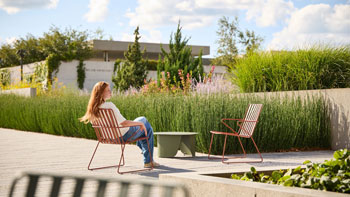
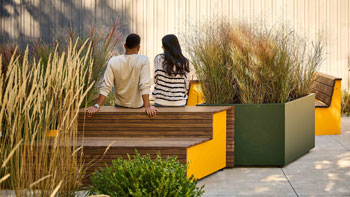
Some thirty varieties of climbing plants colonise 3500m2 of facades. Shrubs keep ground-floor traffic at a distance, protecting views while providing natural light and cooling the site.
In dialogue with the City of Paris, we negotiated strips of land at the foot of the facades. In addition to the size of the new planted areas, the principles of waterproofing have been extended to the public space.
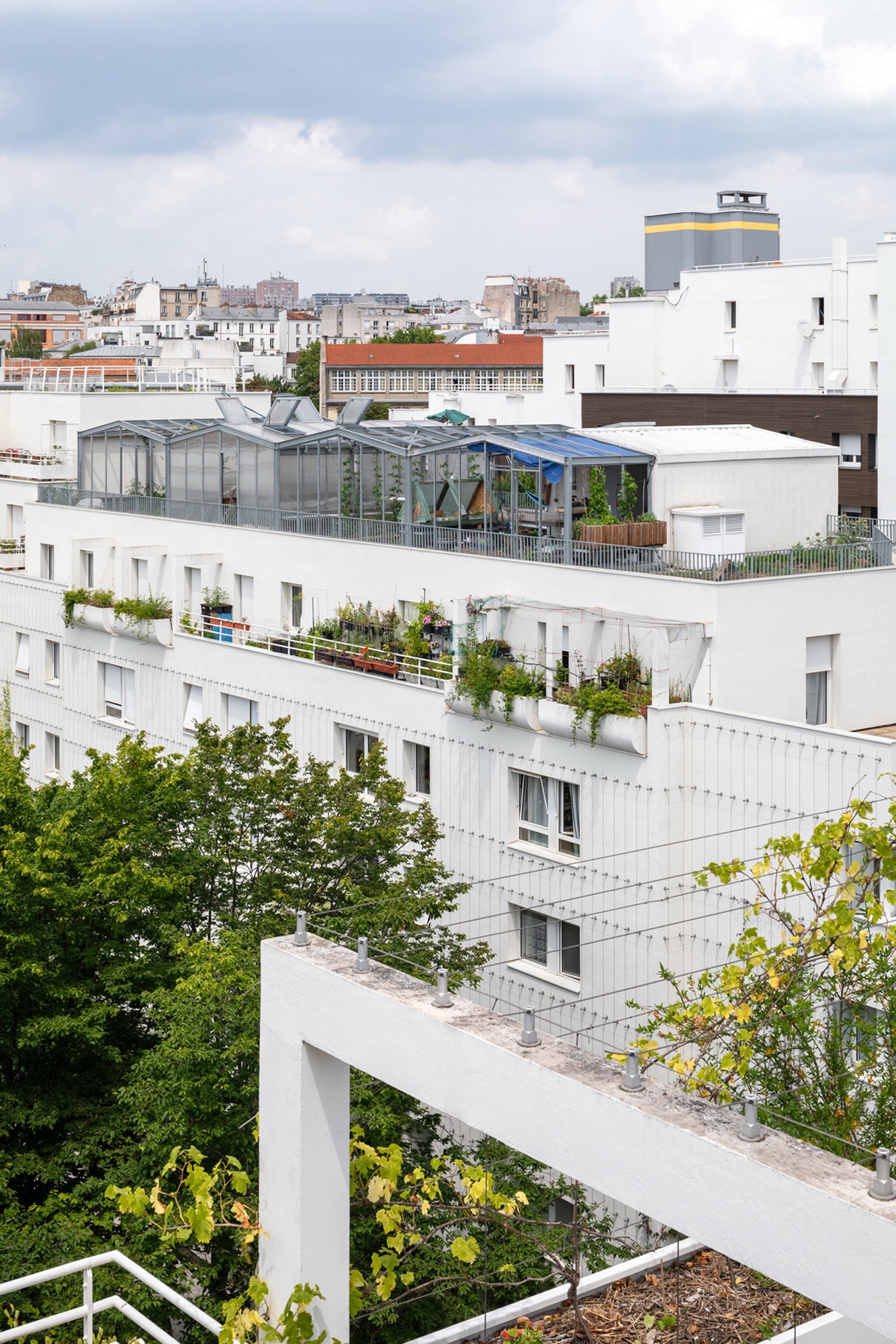
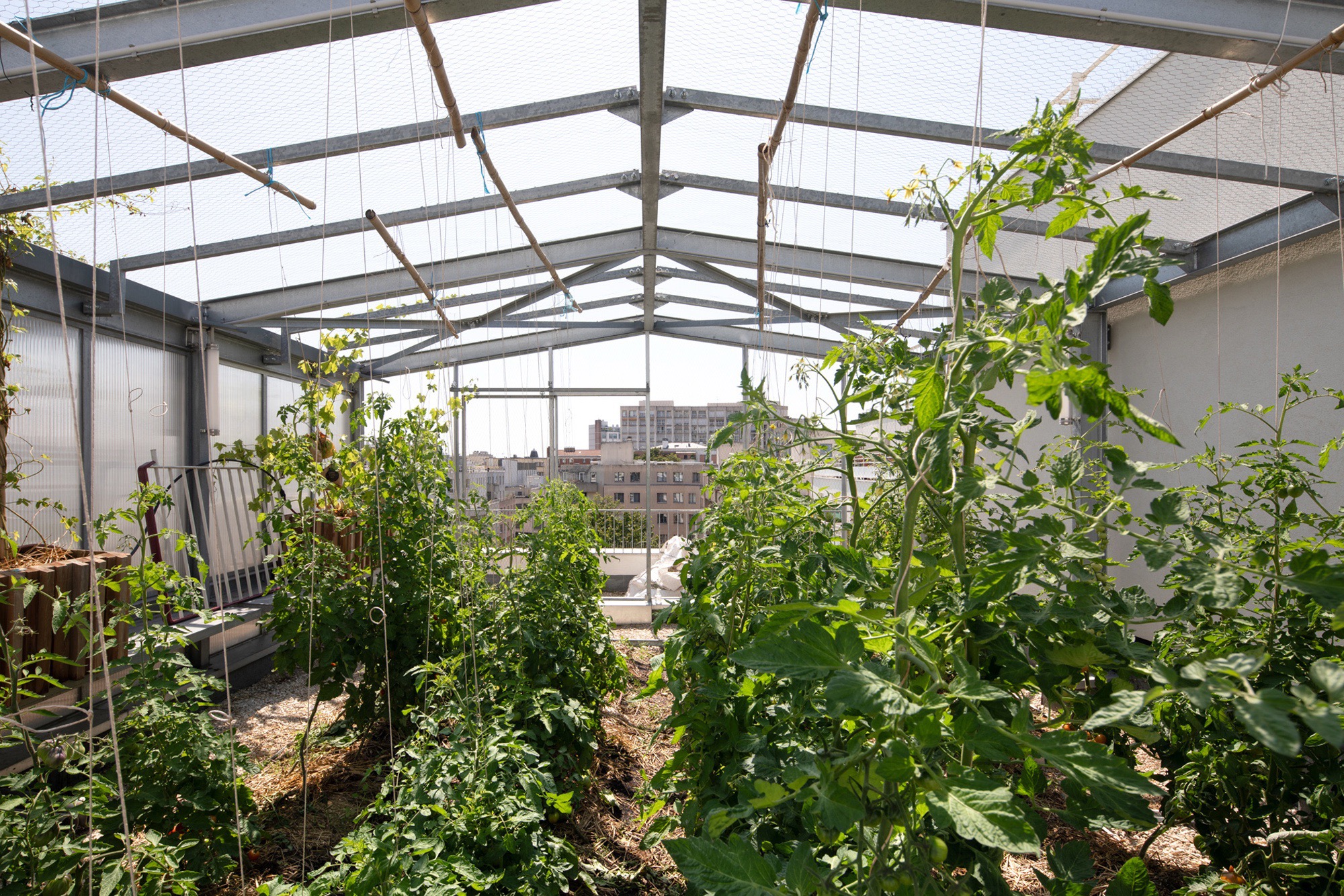
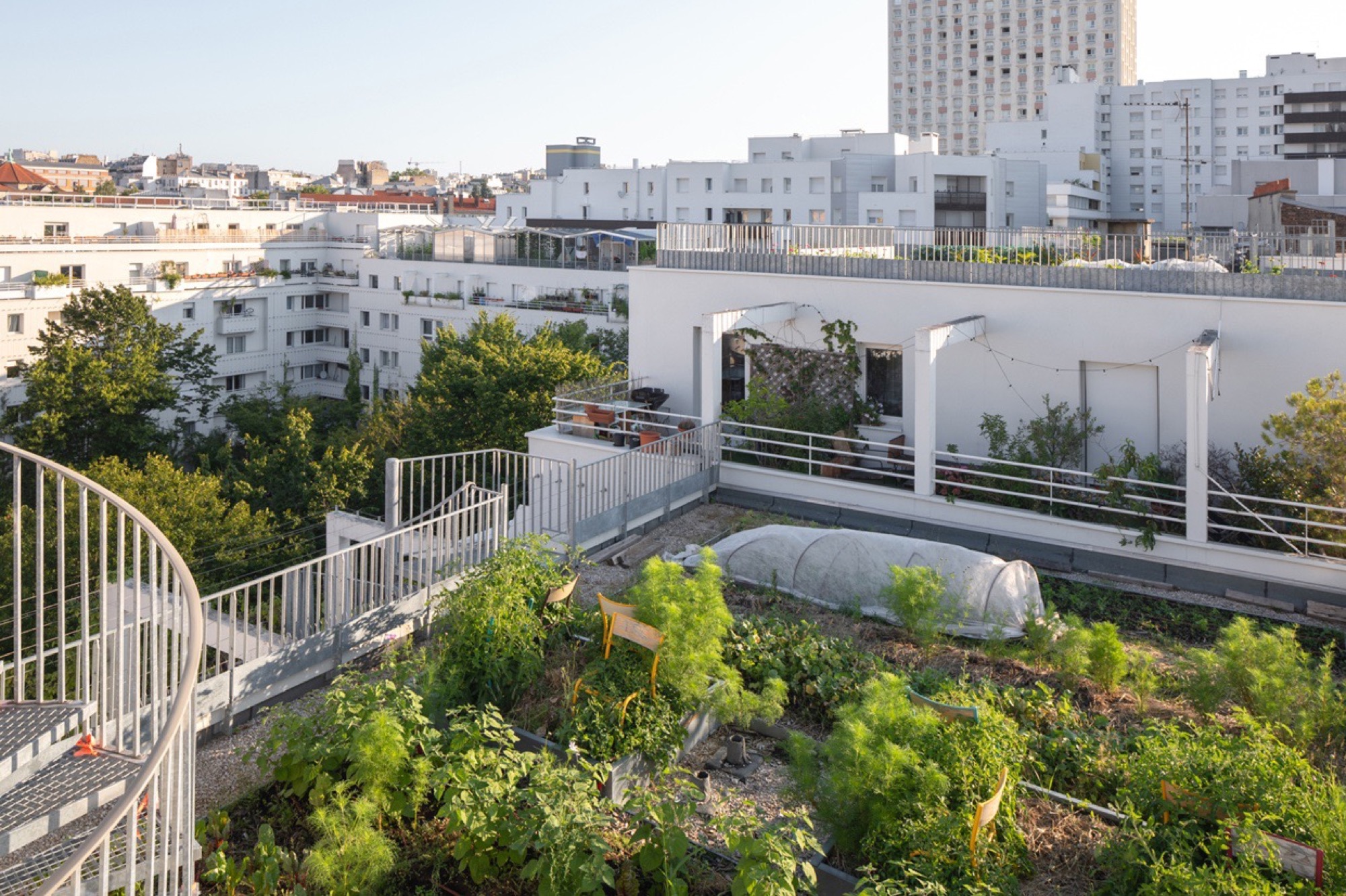
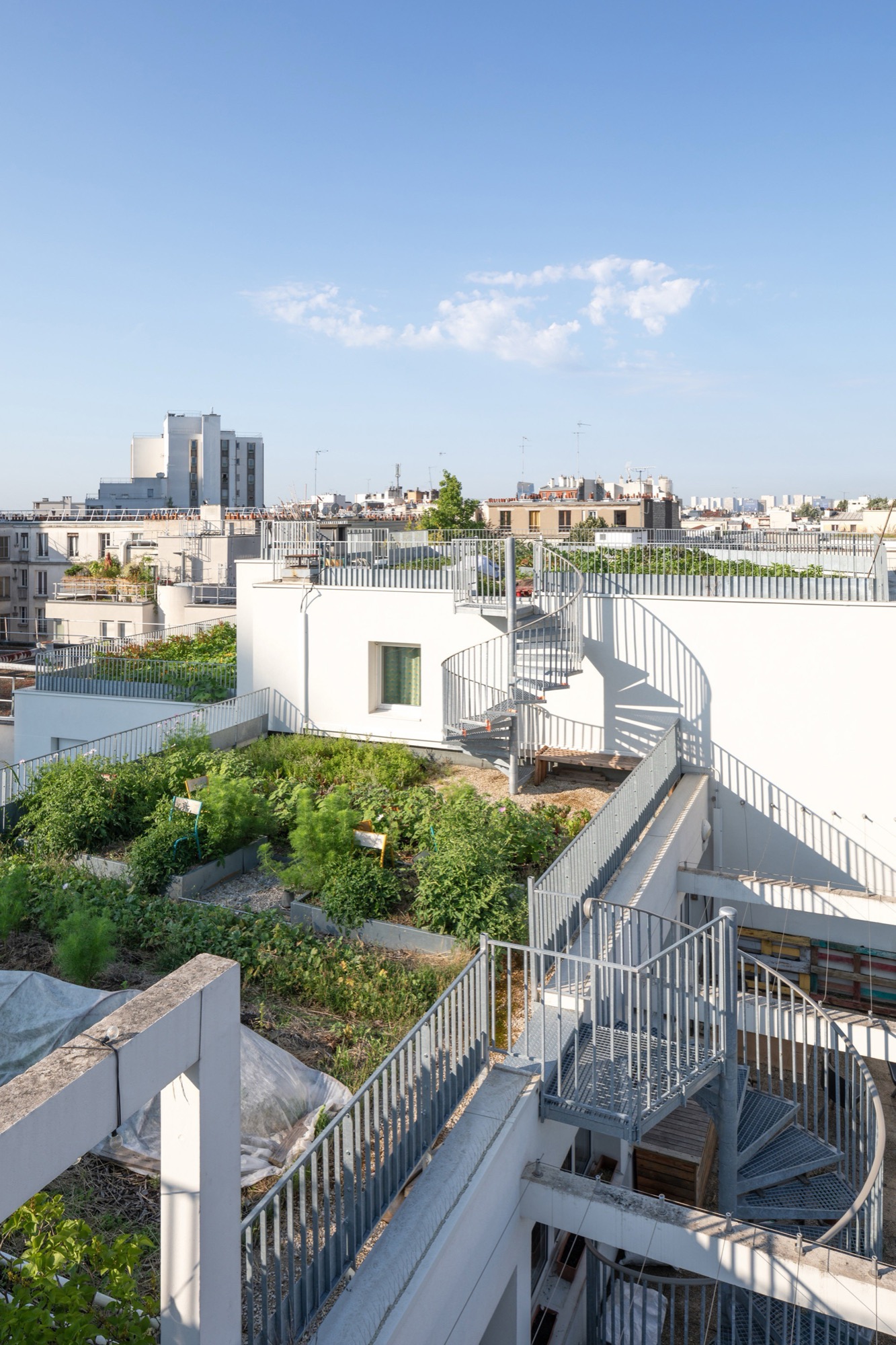
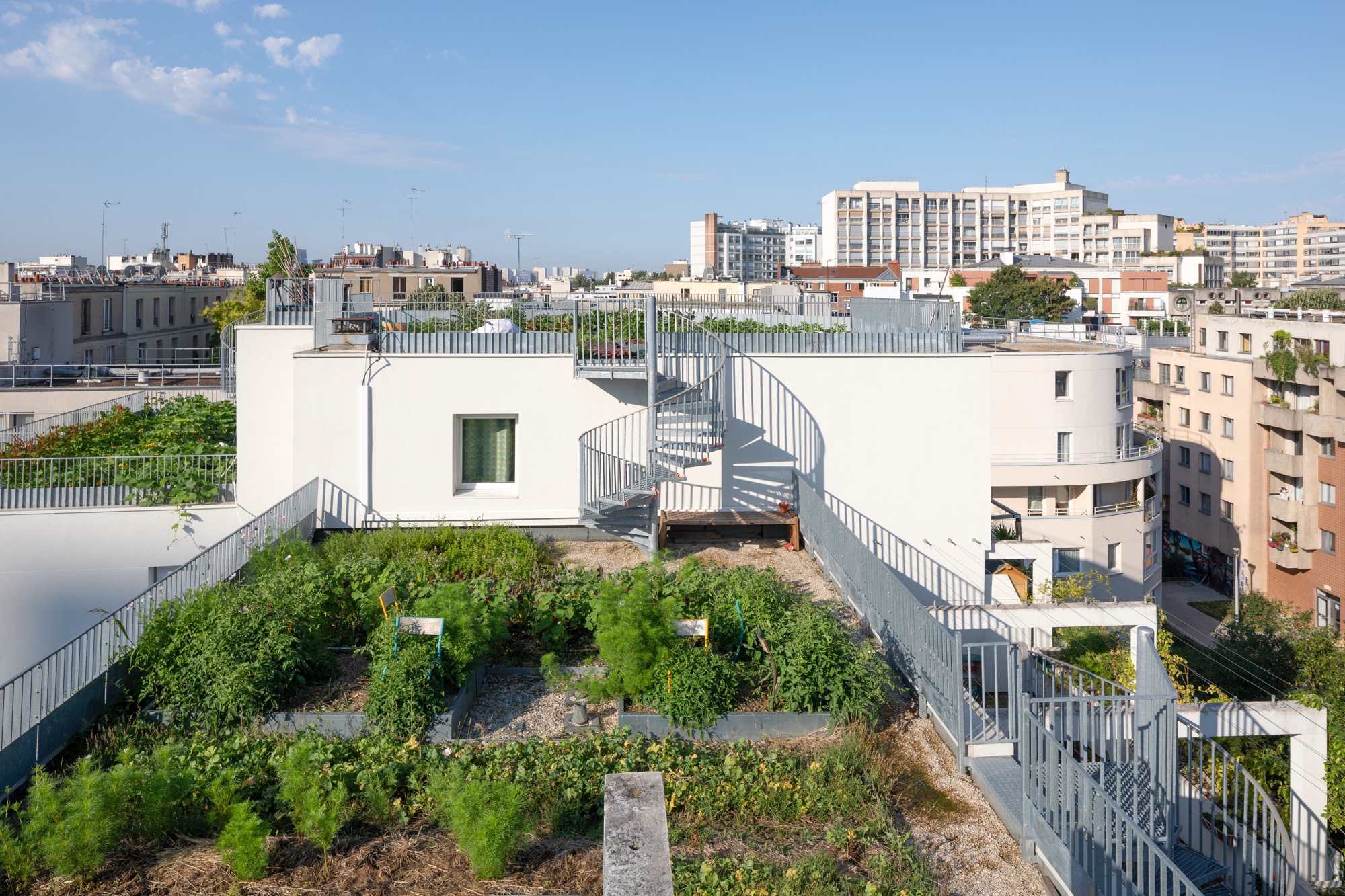
On the roofs, optimising load-bearing capacity has made possible to create areas dedicated to agriculture, including a greenhouse, run by the Venni Verdi association, who conducts workshops with the neighbors and students and sells its produce every week in the square.
Users benefit from livelier spaces, refreshed by the vegetation, and enjoy a new level of acoustic comfort. Private and public spaces are calmer, and the quality of life for residents and users has improved.
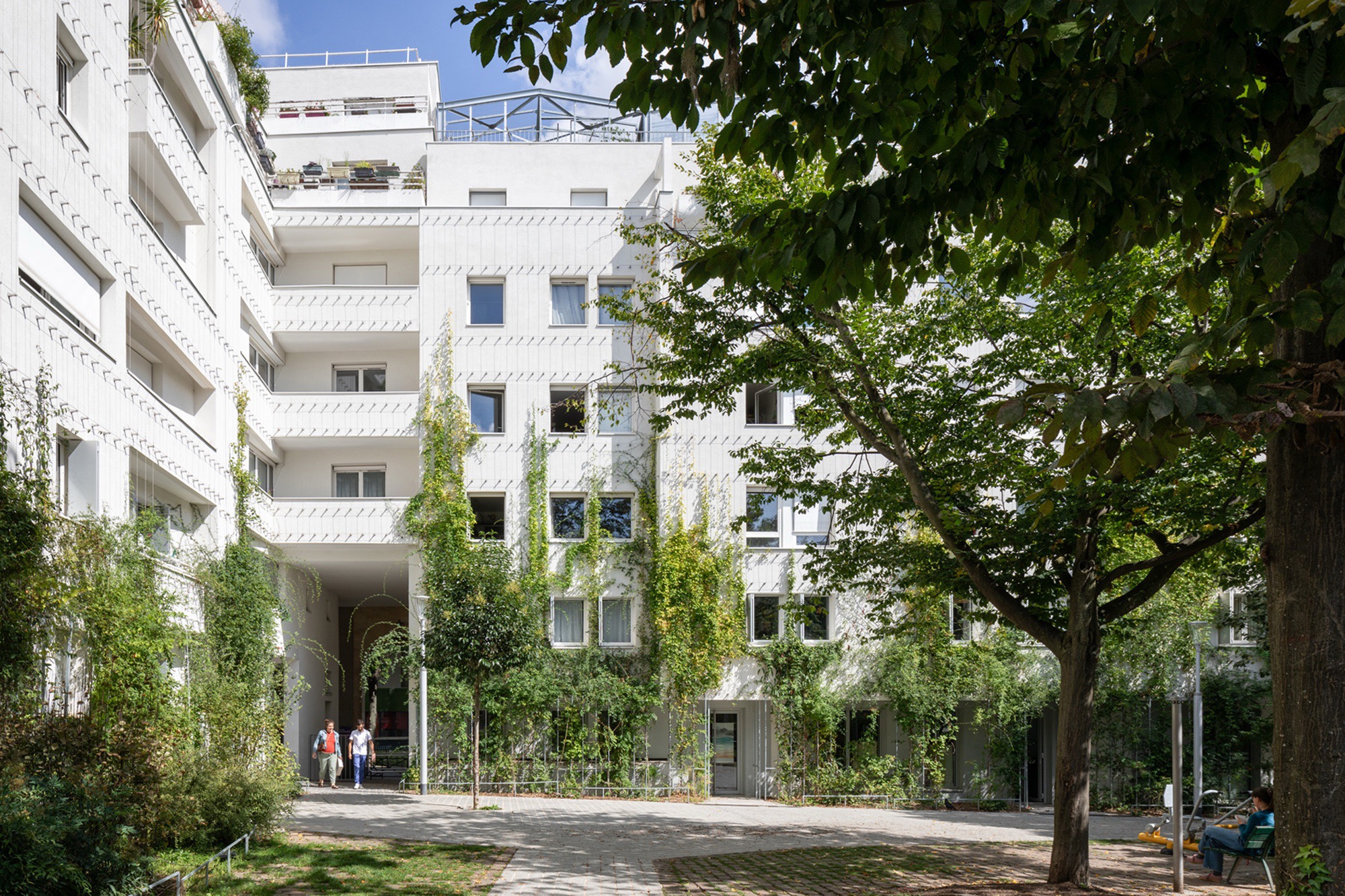
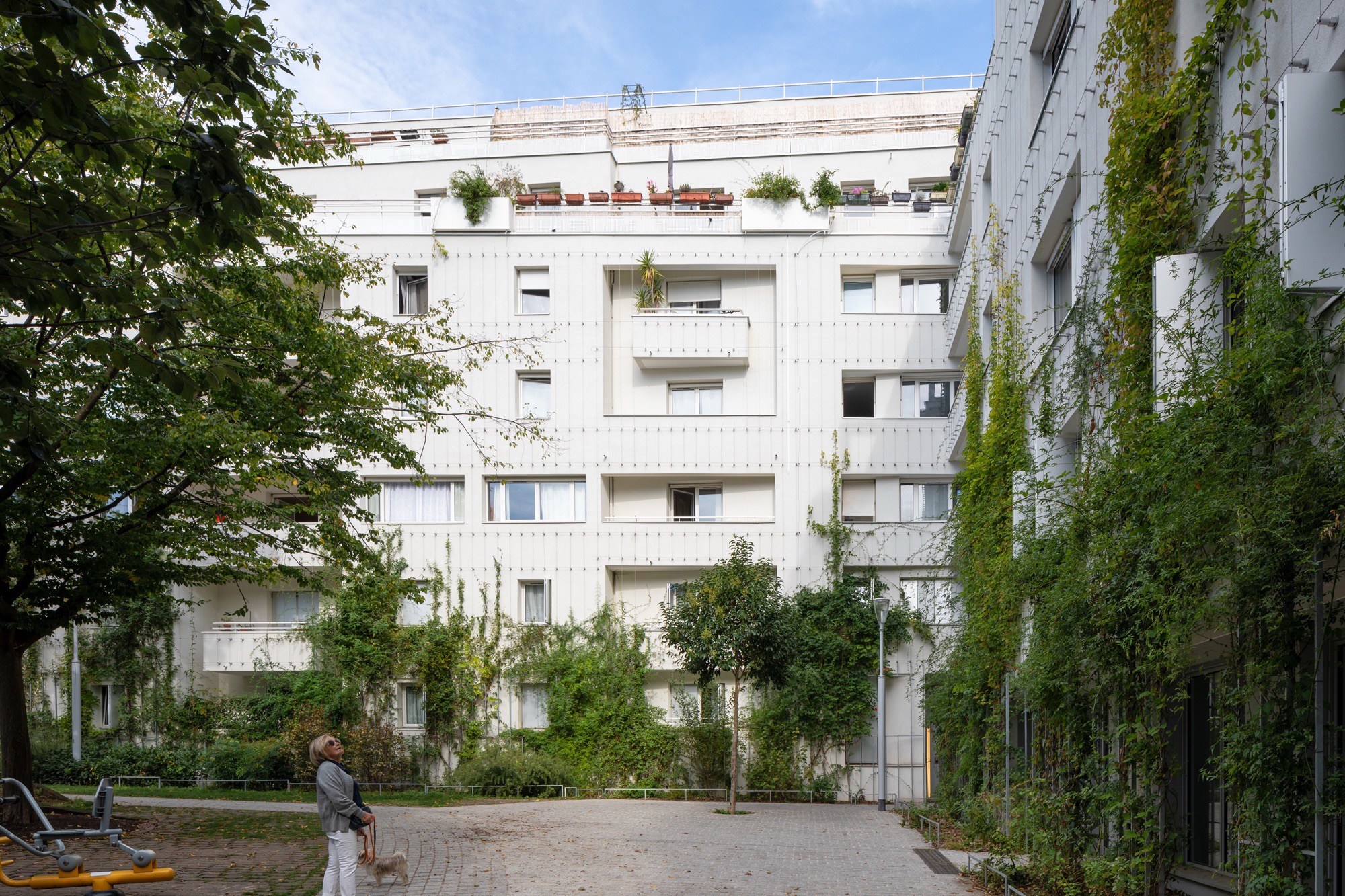
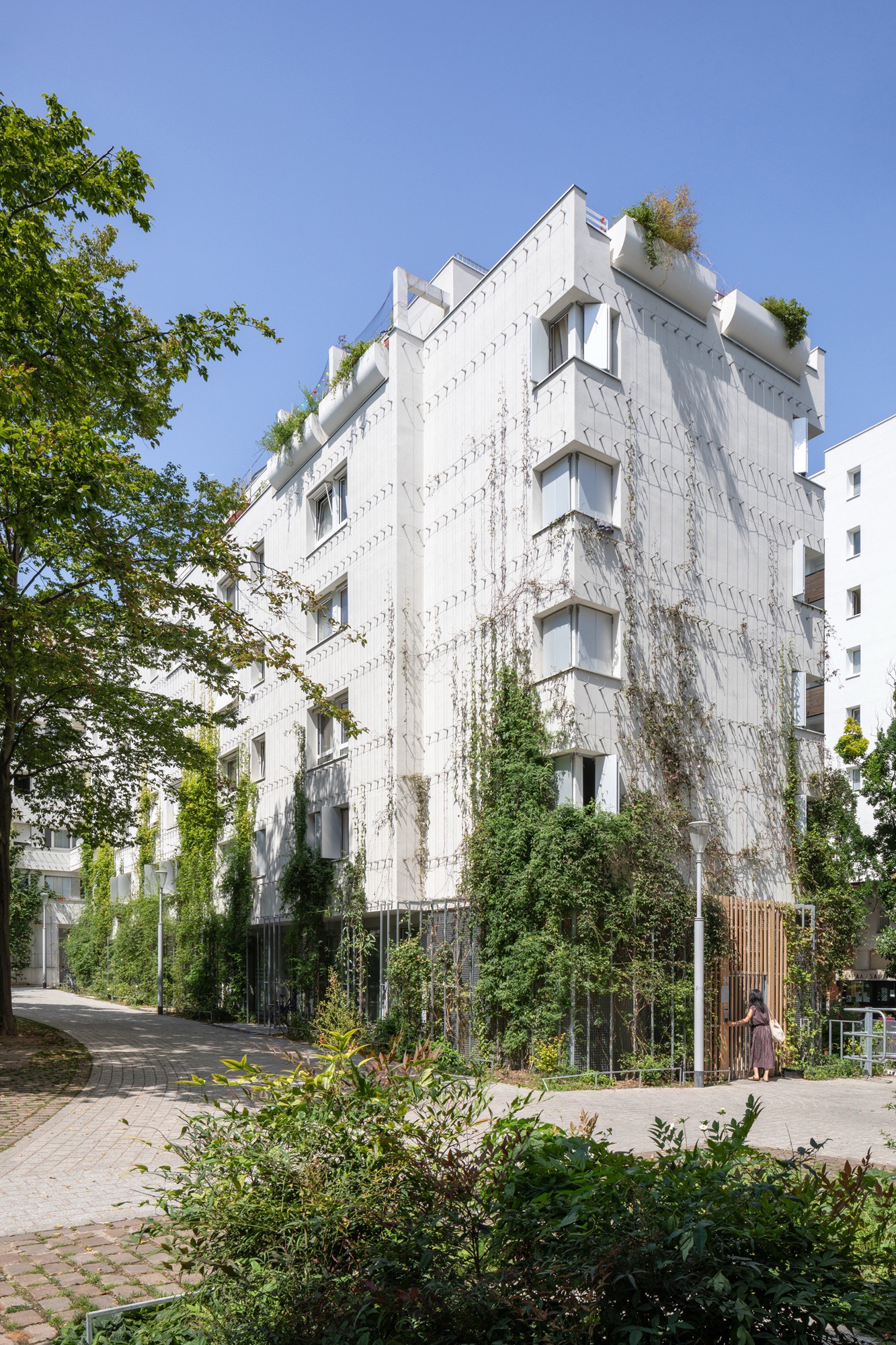
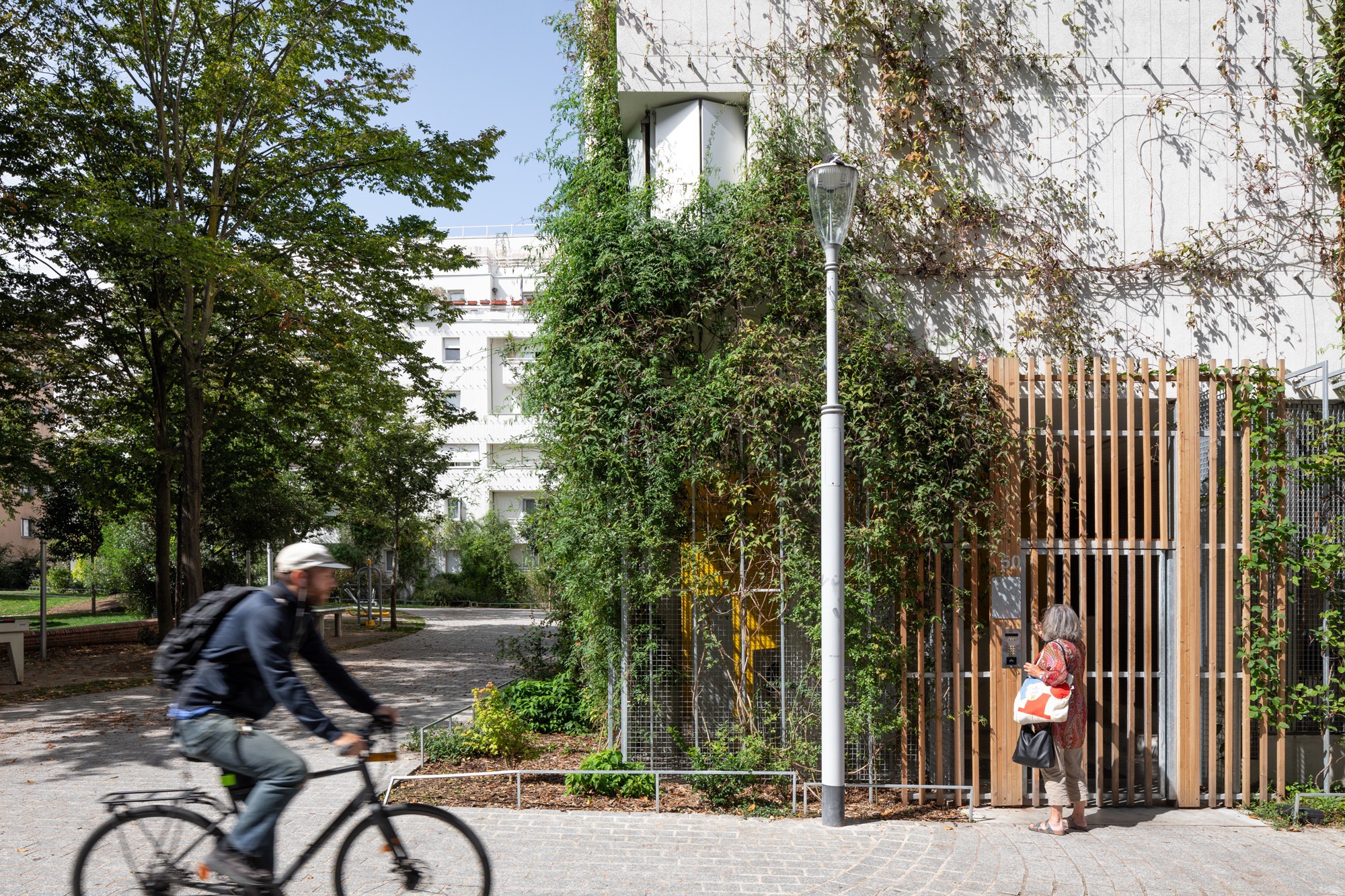
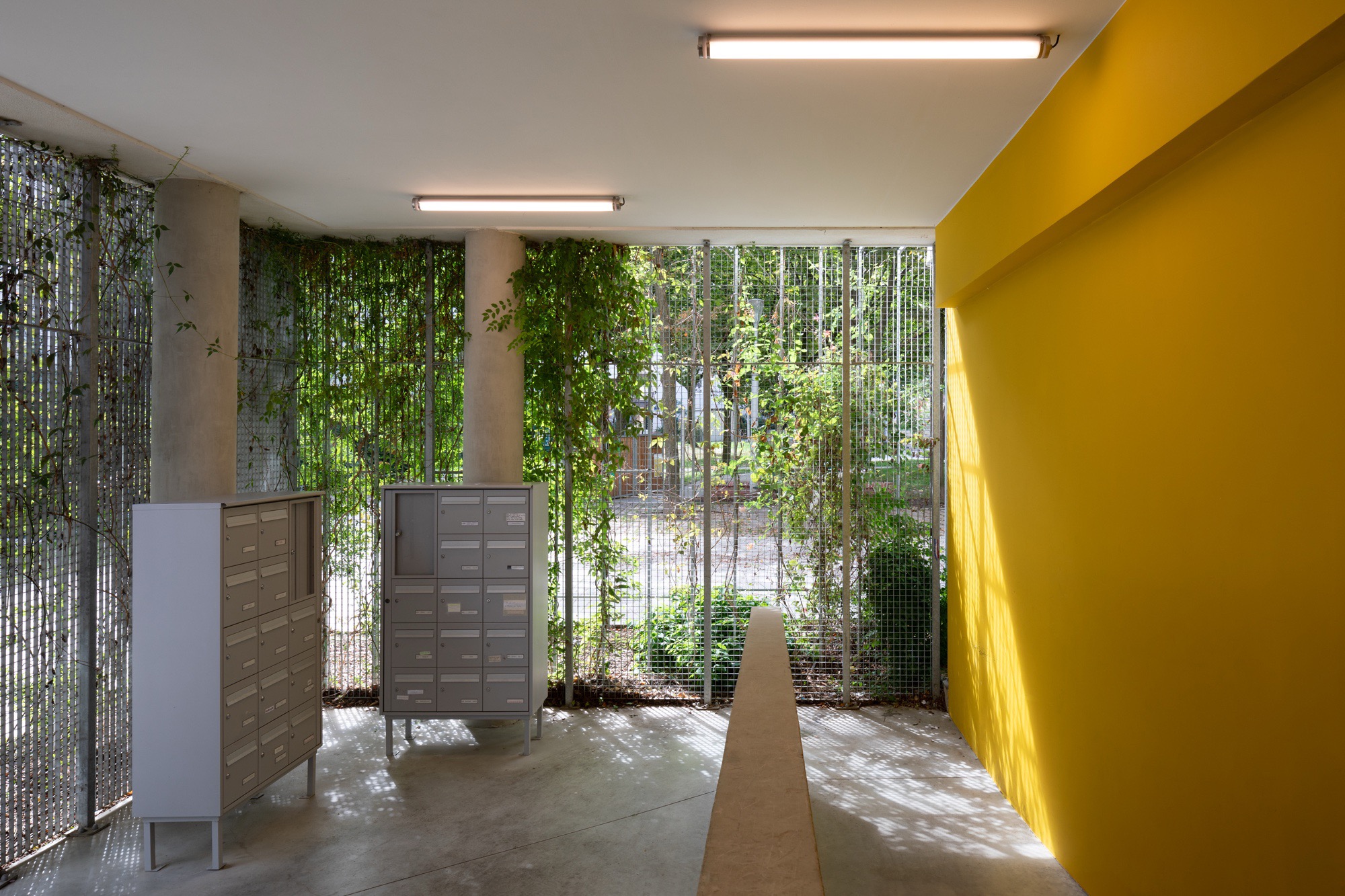
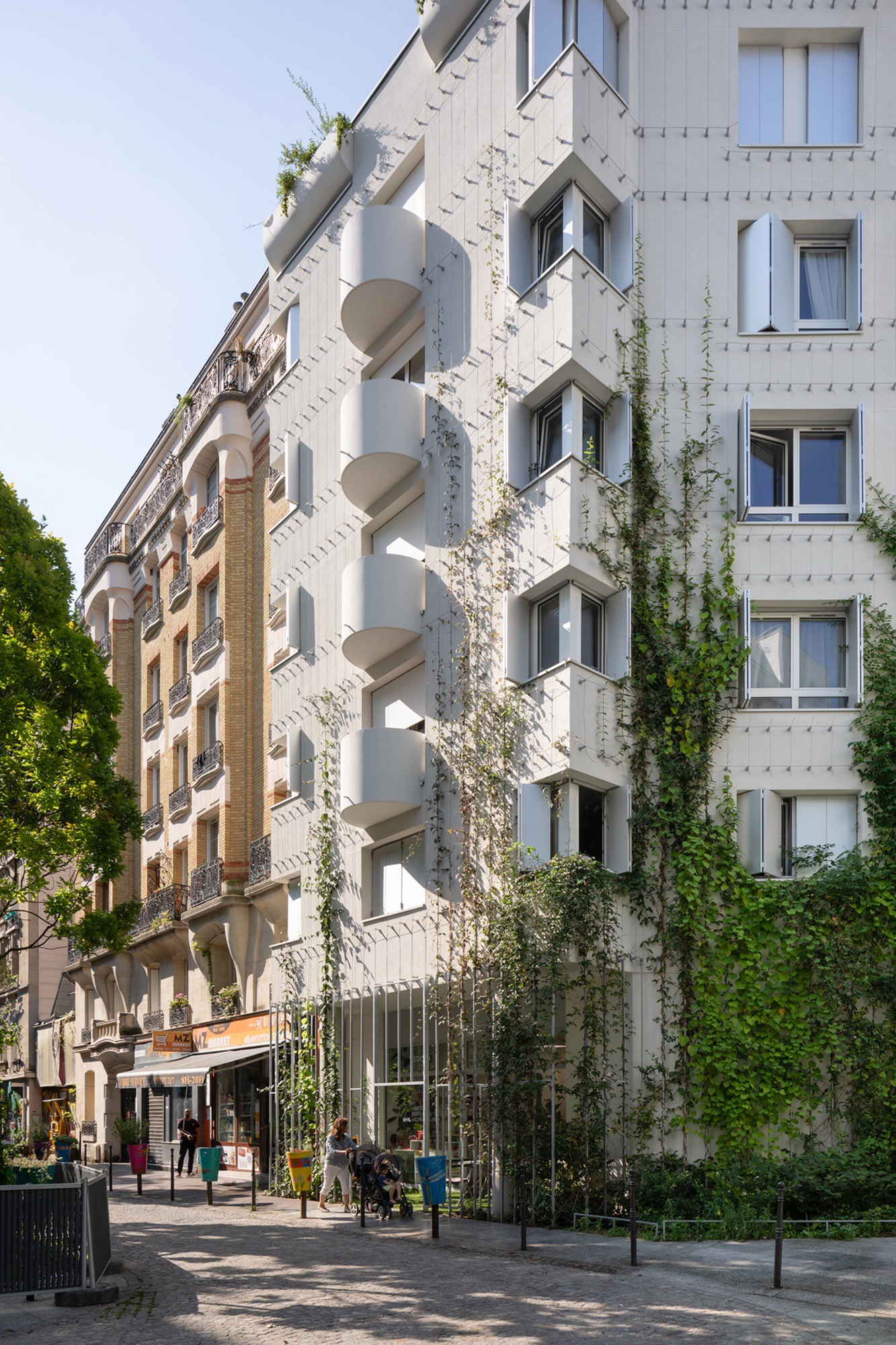
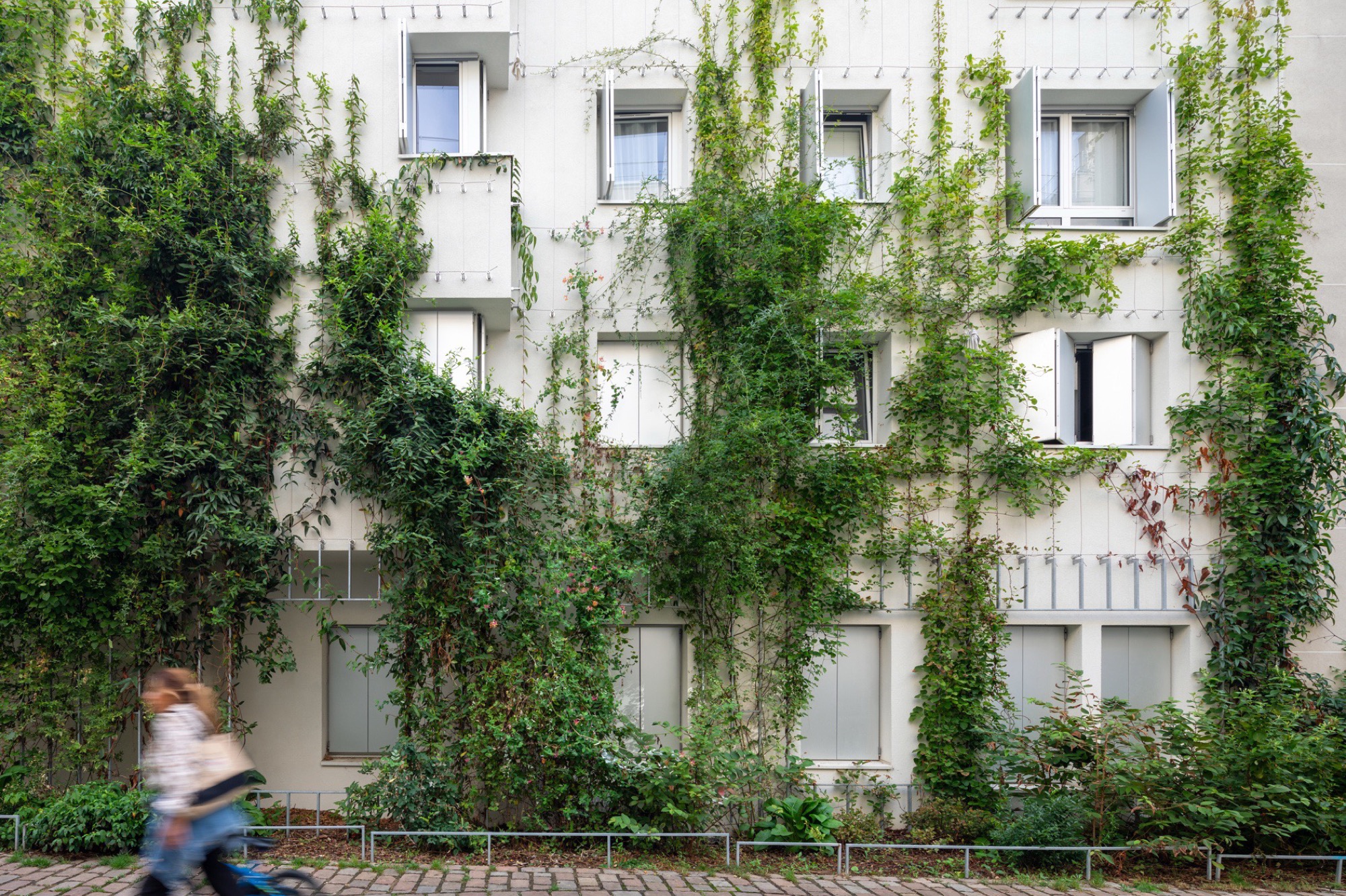
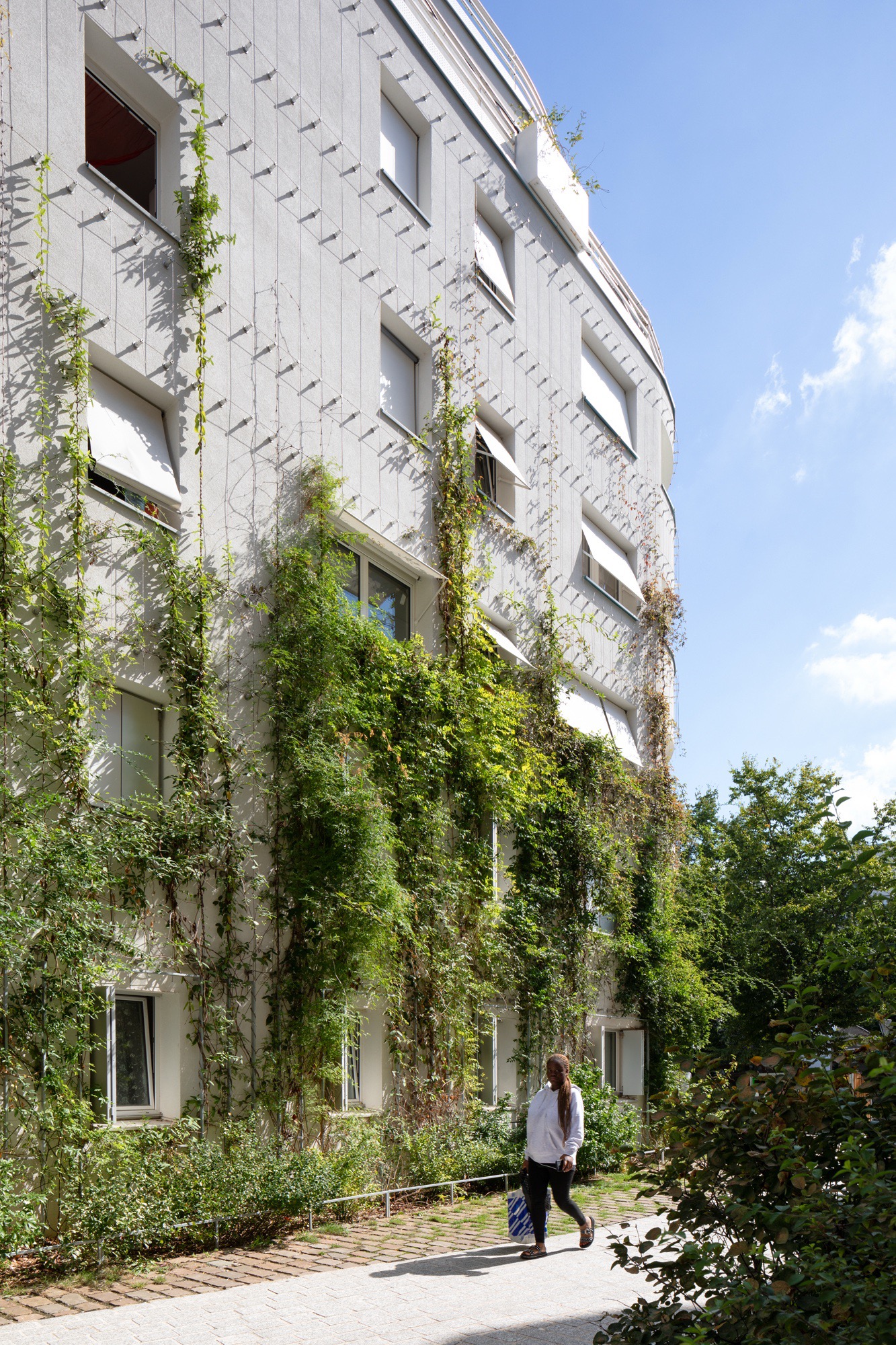
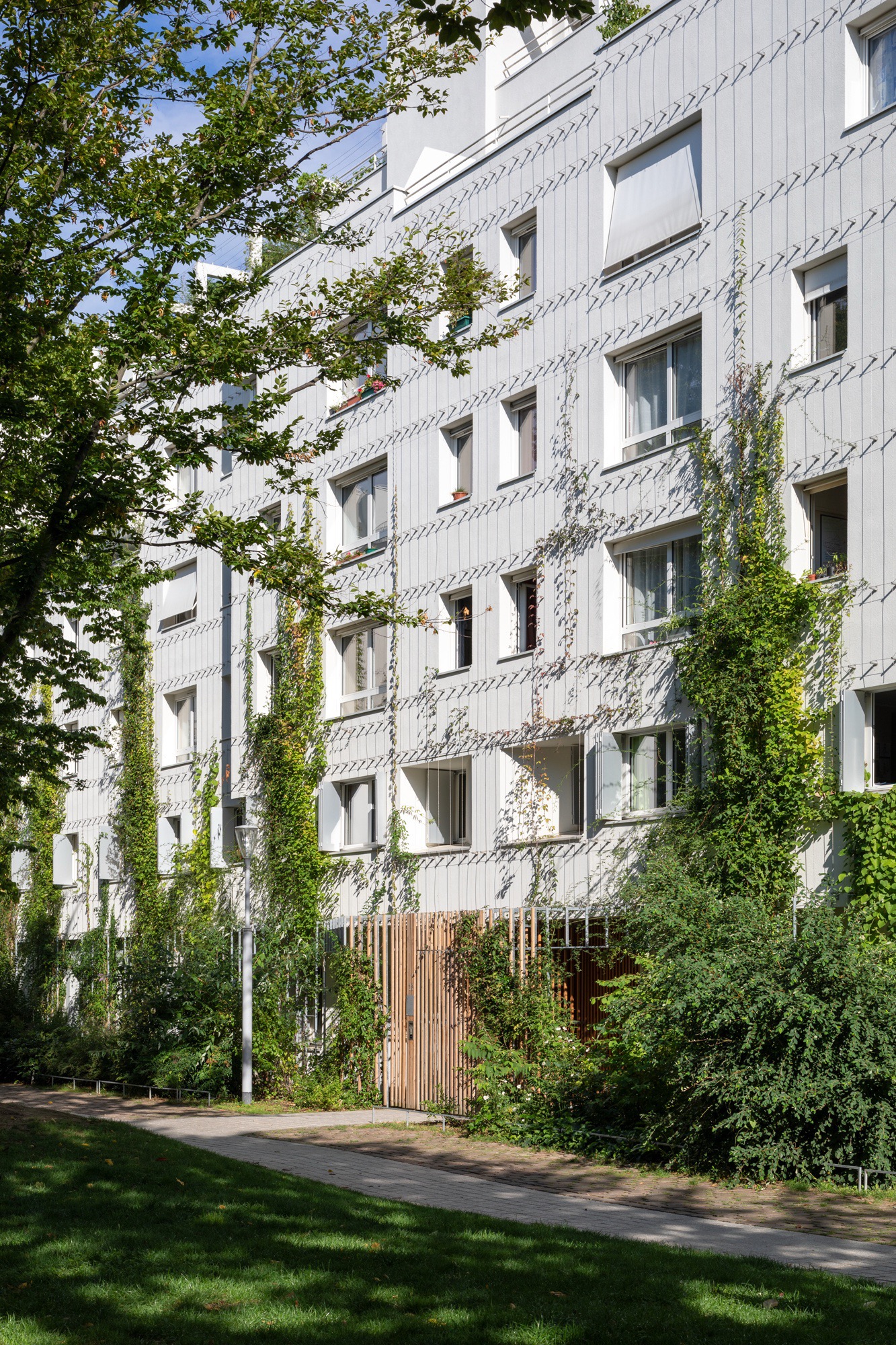
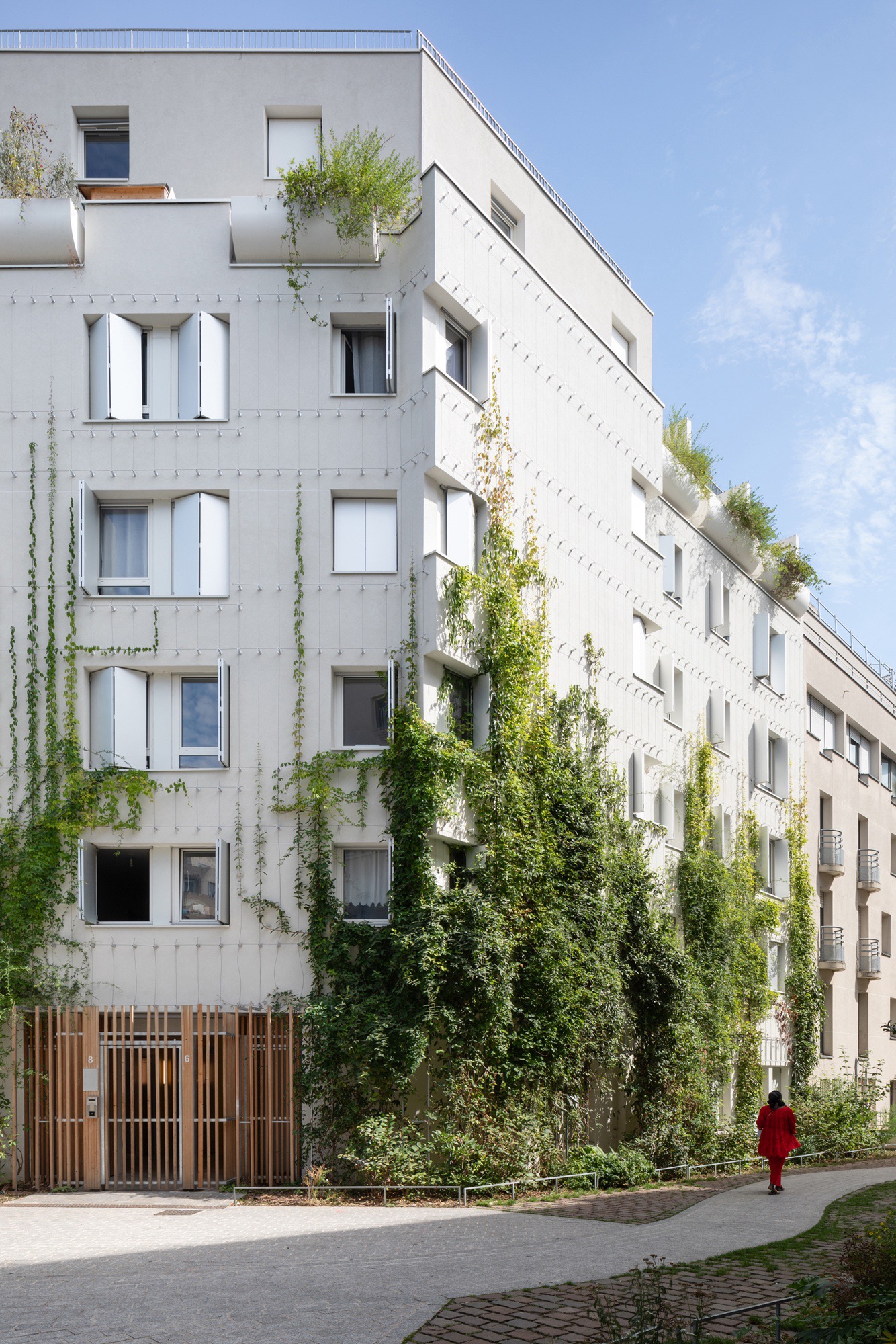
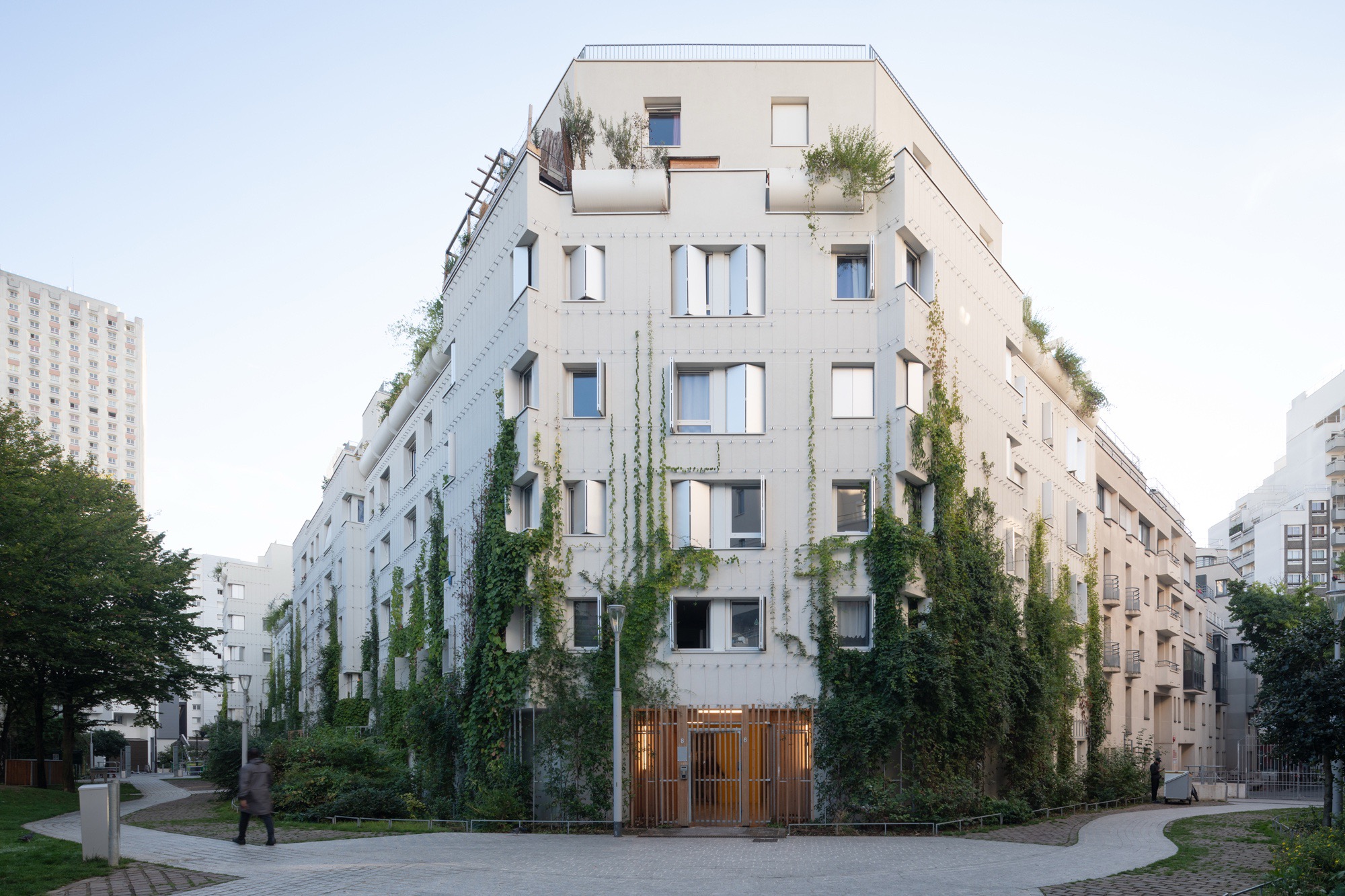
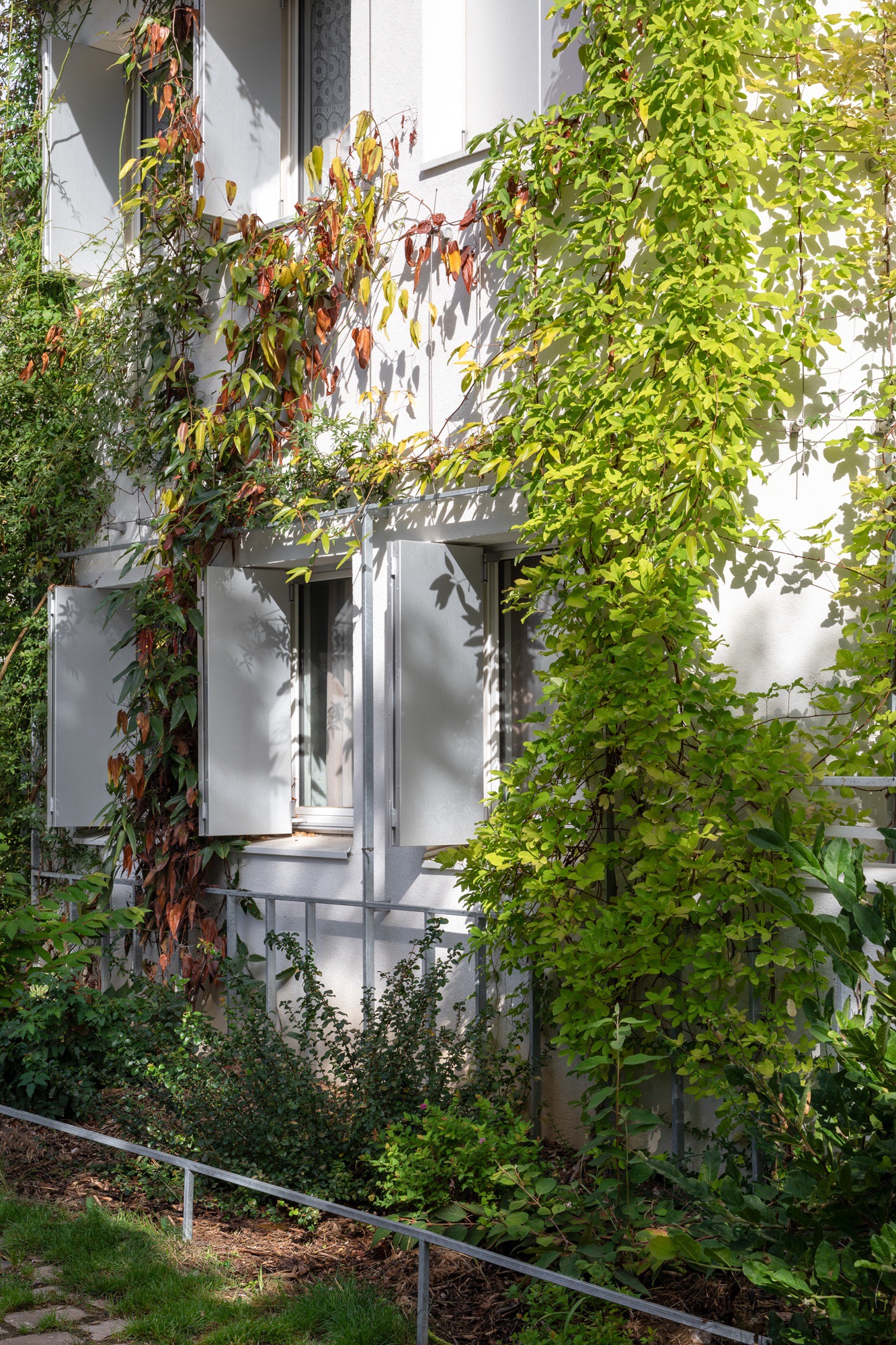
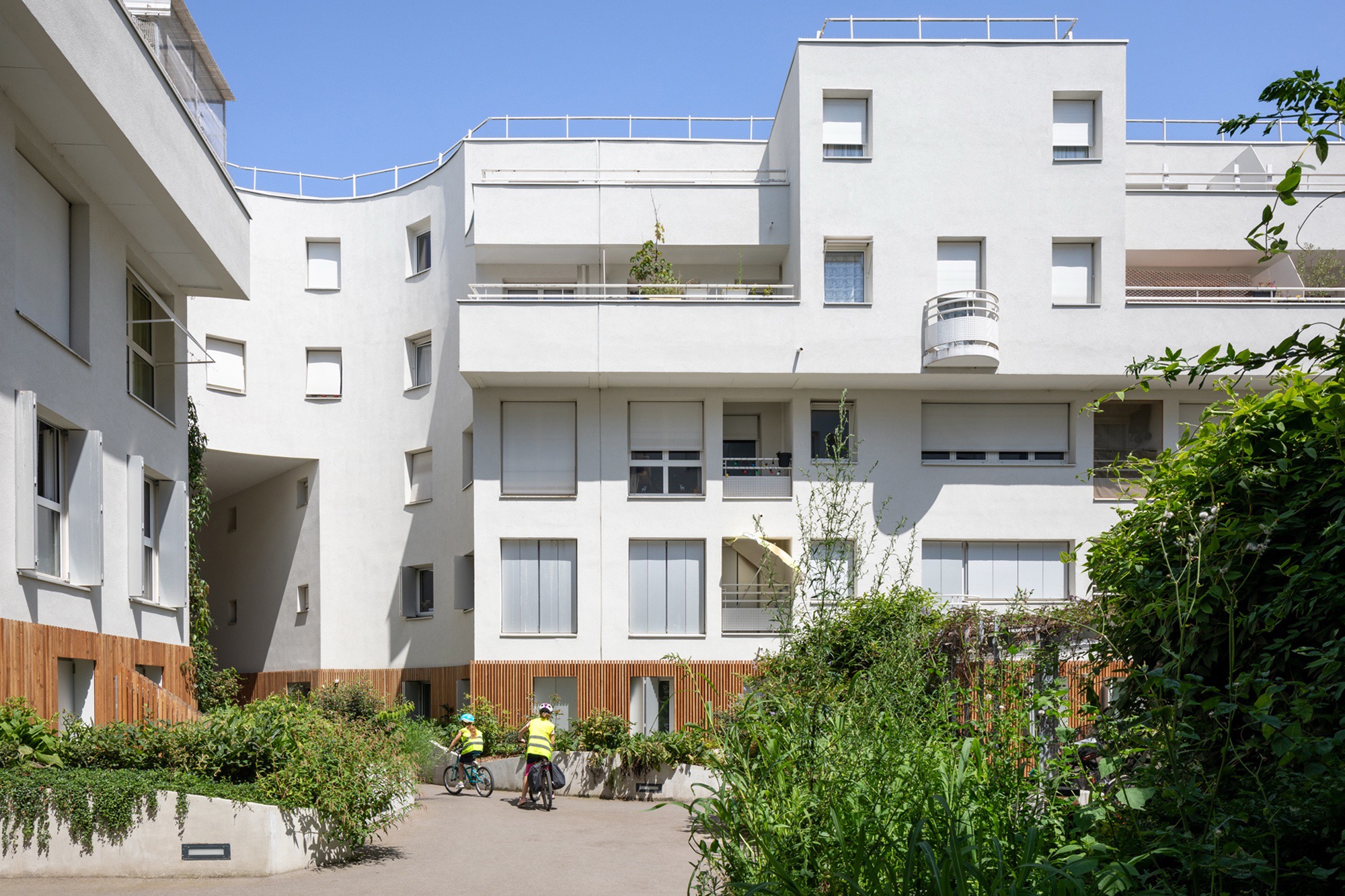
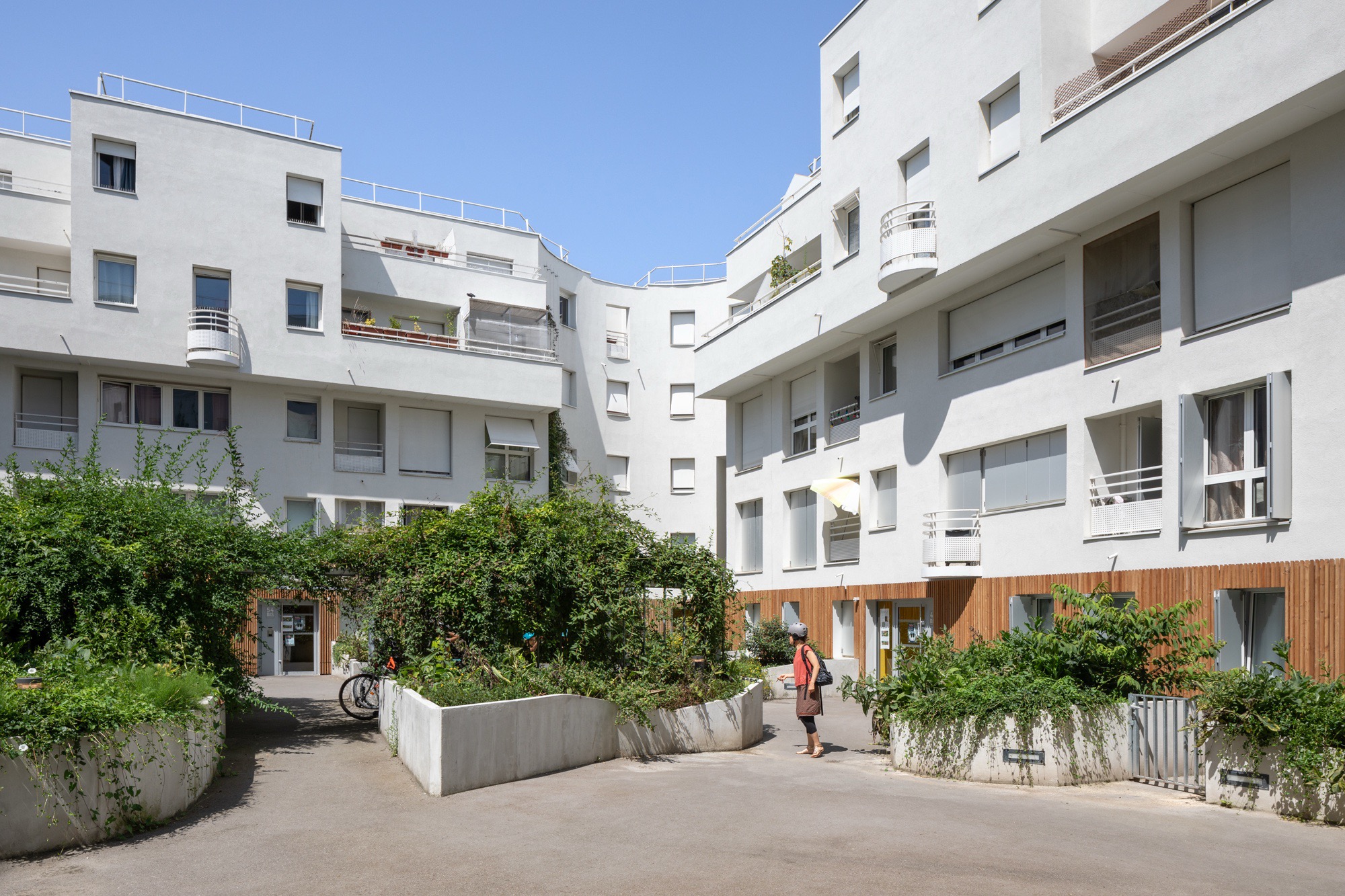
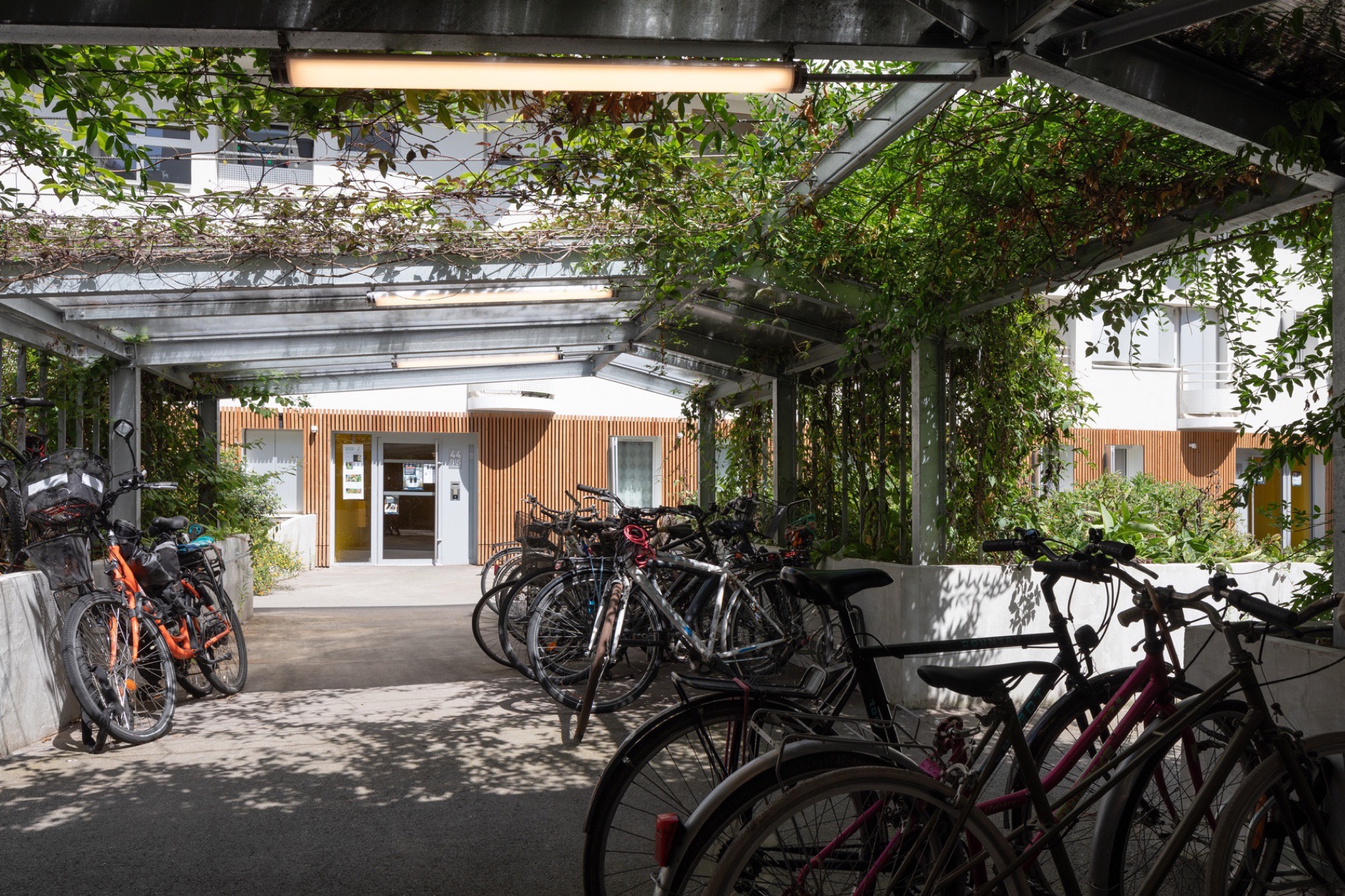
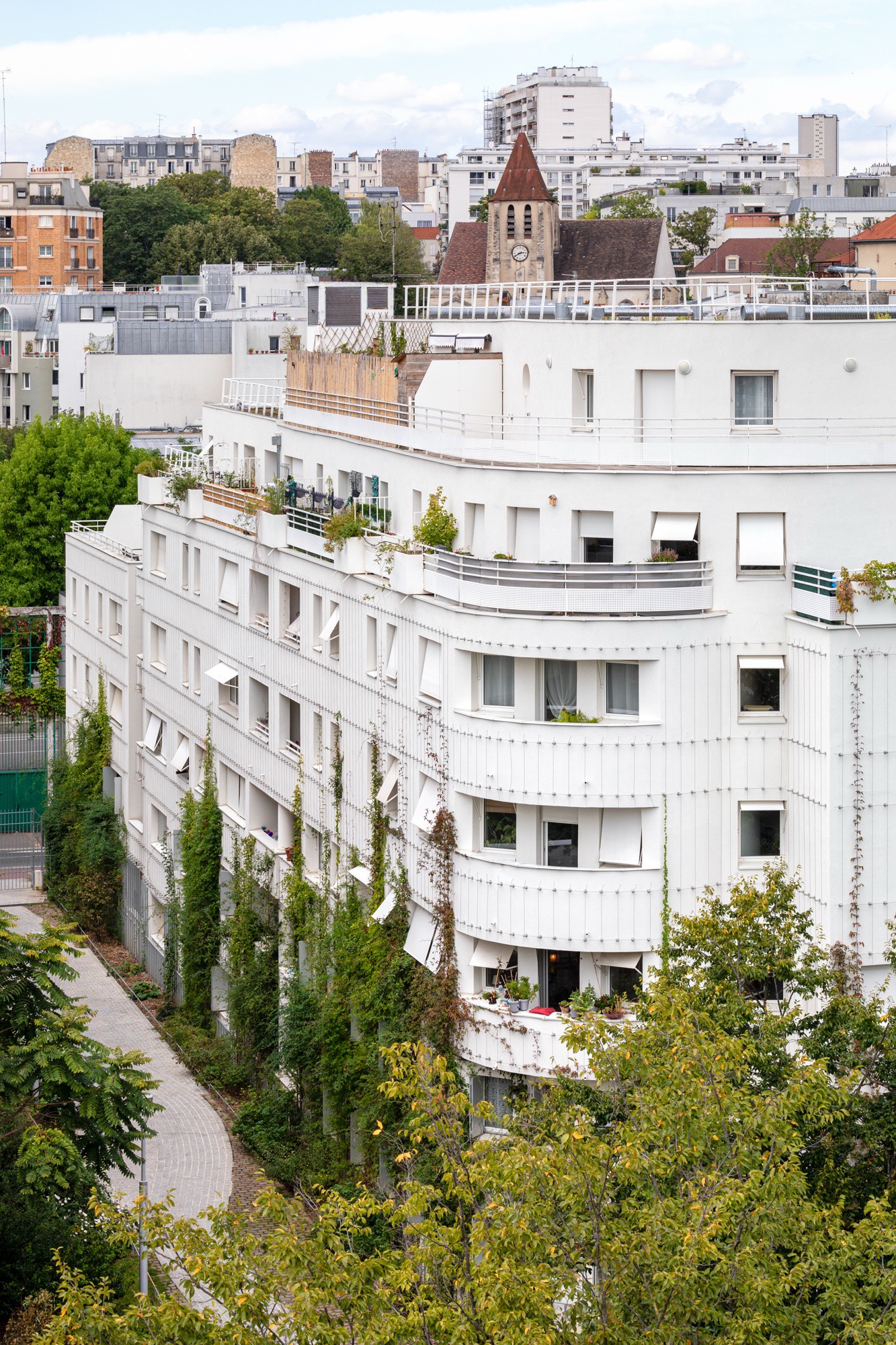
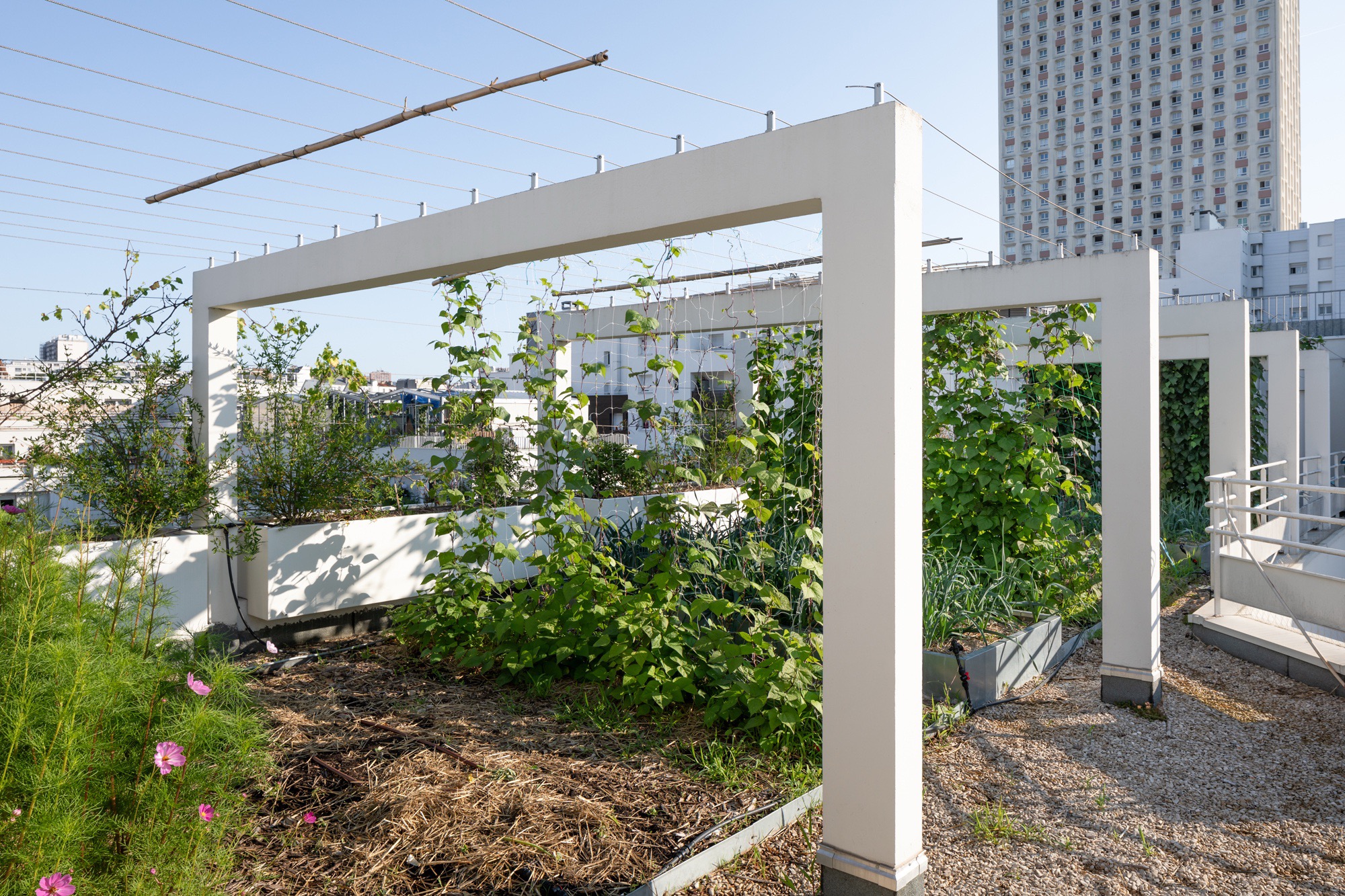
We invoke the notion of ecotone, borrowed from landscape ecology, to describe the interfaces between the intimate environment of the home and the social environment of the public space. These spaces welcome biodiversity and develop a host of potential benefits that complement both architecture and the city: urban coolness, acoustic comfort, aesthetics, seasonal identification, pollination, water infiltration and storage, air pollution control, etc. The benefits of a constructive relationship with living things are both individual and collective (calming, physical and psychological health).
The image of urban acupuncture illustrates the systems triggered by relatively modest interventions, in particular the planting of vegetation at the foot of the buildings, on an urban scale: the generalisation of the project’s principles to the entire square, accompanied by the affirmation of the pedestrian character of the block, has led to a more positive appropriation of the spaces.
The roofs, a fifth façade that creates social links, offer the opportunity to grow and consome fresh, healthy produce. Operated by the Veni Verdi association, it opens up new fields to local residents and children, illustrating a cycle from production to consumption and highlighting the importance of choices at every stage, as well as the pleasure of making them.
Client :
Paris Habitat OPH
Team credits :
POOLA paysagistes
Frédéric Bernard Architectures
ETB Antonelli
BCD Eco
Photo credits : Pierre L’Excellent
https://maps.app.goo.gl/4XX2qSvLy8f2F5p47
73609


LILA 2026 Sponsor