WEC (World Heritage Centre Wadden Sea)
wearelaos.nl
2026 Other Typologies / Netherlands / Built in 2025 /
![A New Entrance for the Groningen Provincial Government How could the new entrance for the Groningen Provincial Government building become more inviting? LAOS, together with De Unie Architecten, answered this question with a competition-winning design that transforms the once hidden entrance into a welcoming and recognisable part of the city. A richly detailed public square […]](https://landezine-award.com/wp-content/uploads/2026/05/00_LAOS-hero-image-600x400.jpg "A New Entrance for the Groningen Provincial Government")
![The art of omission (less is more?) LAOS landscape urbanism designed a wooden sculpture that serves as a meeting point as well as an entrance area to a number of temporary buildings on an institutional site. For a long time, the site has been part of a sand landscape consisting of heath, sand drifts, and […]](https://landezine-award.com/wp-content/uploads/2024/05/00-MAIN_Wooden-sculpture_LAOS.png-600x400.jpg "Wooden sculpture")
![Schoolyard breathes new life into run-down park The northern village of Wagenborgen was given a boost when they received funding to make schools in earthquake-prone areas safe and sustainable. The school was relocated to a historic, but run-down park. For the new child centre De Kronkelaar, LAOS landscape urbanism designed the outside area: an inviting, […]](https://landezine-award.com/wp-content/uploads/2024/05/00-MAIN_Schoolyard-Child-Centre-Wagenborgen_LAOS-600x400.jpg "Schoolyard Child Centre Wagenborgen")
![Practical functionality in a poetic image For the new construction of Kielzog, a House for Culture and Government in Hoogezand, LAOS landscape urbanism designed a courtyard garden and a sloped garden. In both, there is a practical functionality captured in a poetic image, with grass being the predominant feature. This look best conveyed the vision […]](https://landezine-award.com/wp-content/uploads/2024/05/04-Kielzog_LAOS-600x400.jpg "Kielzog: gardens at the House for Culture and Government, Hoogezand")
![There was an increasing need for coastal defenses in Delfzijl due to rising sea levels and climate change. The dike reinforcement project in Delfzijl was part of the national flood protection program known as Het Hoogwaterbeschermingsprogramma (HWBP). Space in this urban area was limited, and many programmatic issues came into play, which together required an […]](https://landezine-award.com/wp-content/uploads/2024/05/00-MAIN_Beach-Boulevard-Delfzijl_LAOS-600x401.jpg "Beach Boulevard Delfzijl")
![Identity needed Park Meerstad is now an essential part of Meerstad’s identity– exactly as LAOS landscape urbanism had envisioned it. The fact that the park was designed first, followed later by the adjoining residential area, played strongly into this ambition. Thanks to its expressive multidimensional appearance and broad programme, Park Meerstad has become a popular […]](https://landezine-award.com/wp-content/uploads/2024/05/00-MAIN_Park-Meerstad_LAOS-600x400.jpg "Park Meerstad")
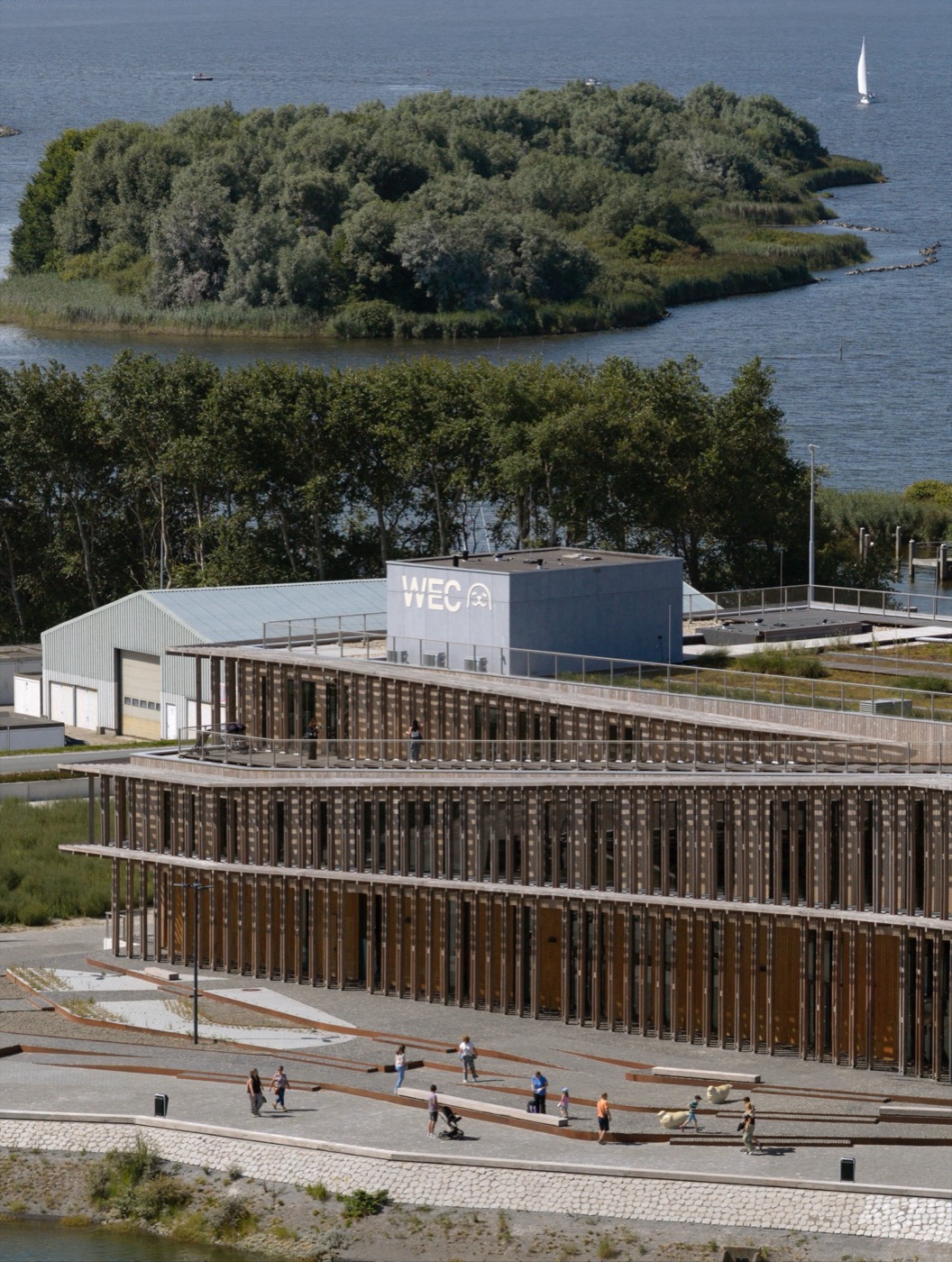
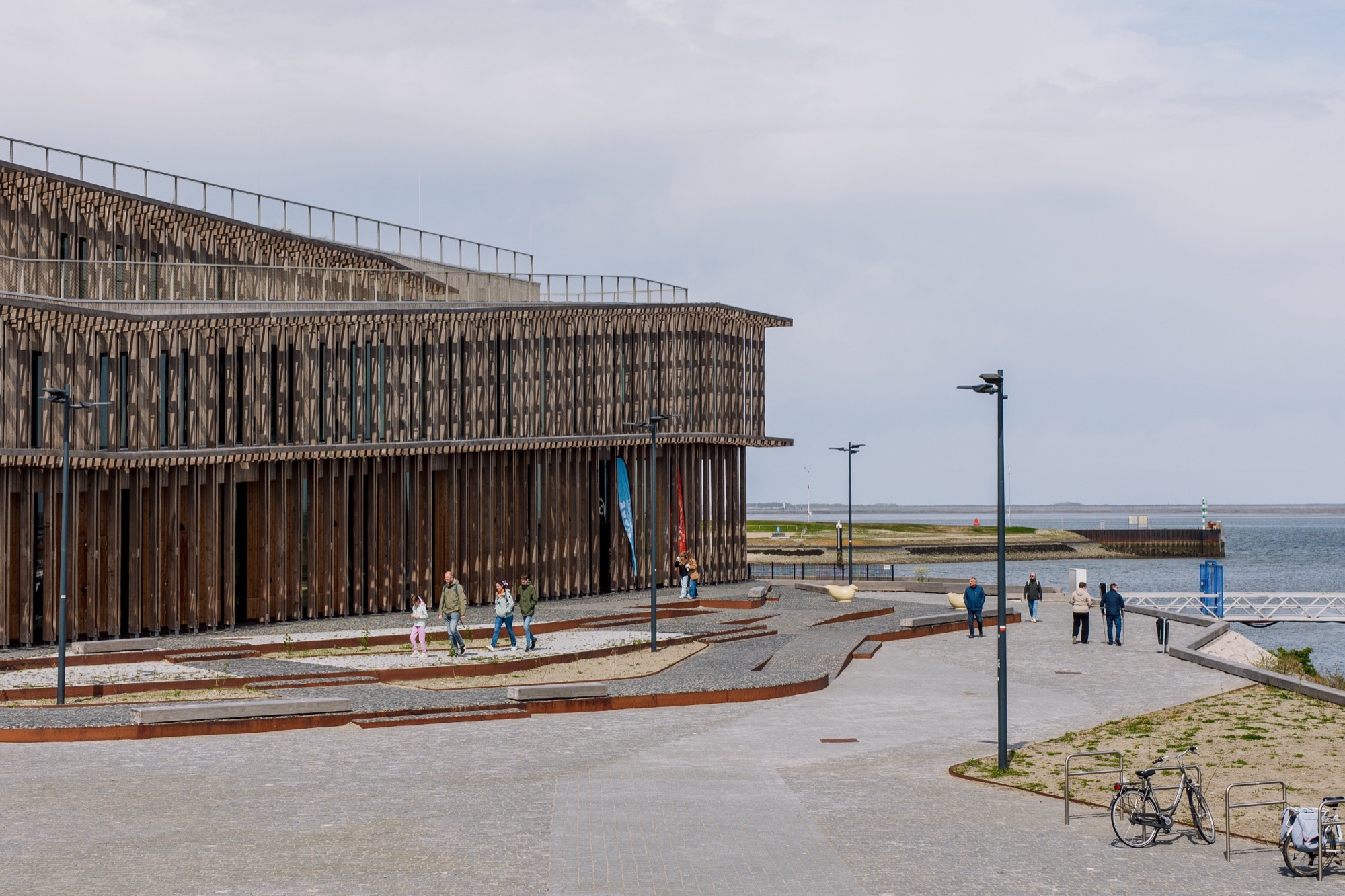
On April 26, 2025, the World Heritage Center Wadden Sea (WEC) was inaugurated in Lauwersoog. This dike experience and research center was designed by the Danish architectural firm Dorte Mandrup in collaboration with co-architect Team 4. LAOS landscape urbanism was responsible for the design of the public space of WEC. The overwhelming landscape of this location served as the primary source of inspiration for both the building’s interior and exterior, as well as the public space. The entire composition responds to it and allows itself to be shaped by it.
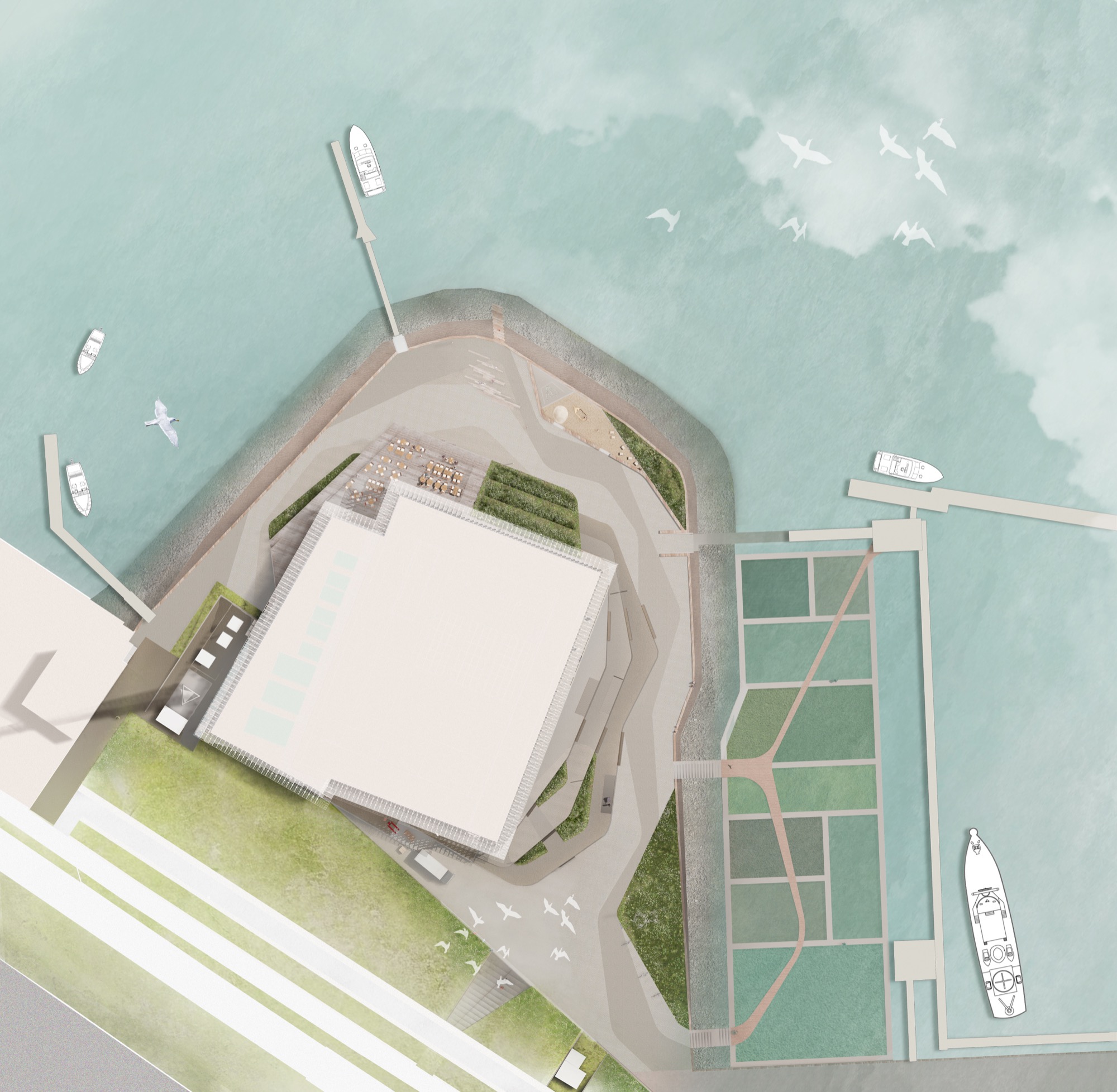
Context and location of the site
The Pieterburen Seal Rehabilitation and Research Centre foundation initiated the WEC to develop a modern facility for rehabilitation and research, complemented by improved reception and exhibition spaces designed to serve around 150,000 visitors per year. This development provided an opportunity to broaden the scope beyond seals to include the unique and vulnerable ecology of the UNESCO World Heritage Wadden Sea.
The Wadden Sea World Heritage Center Foundation organized an international design competition for the building. For the public space, including the parking area, the client required a landscape architect with expertise in both landscape and harbor contexts, and with experience in complex spatial challenges such as nature conservation, flood protection, energy transition, sustainability, and economic development. LAOS fulfilled these criteria through its work on various visions, spatial frameworks, and design proposals for both the harbor area and the Lauwersmeer region for decades.
The site lies within a landscape of exceptional ecological value, including Natura 2000/National Park Lauwersoog and the Natura 2000/UNESCO World Heritage Wadden Sea. LAOS drew inspiration from the robust, at times rugged natural and working landscapes, as well as the dynamic natural processes at work. To engage with this setting with appropriate restraint, bold gestures and robust forms and materials were chosen as most fitting. The WEC is an integral part of the Wadden landscape experience.
Landscape design of WEC
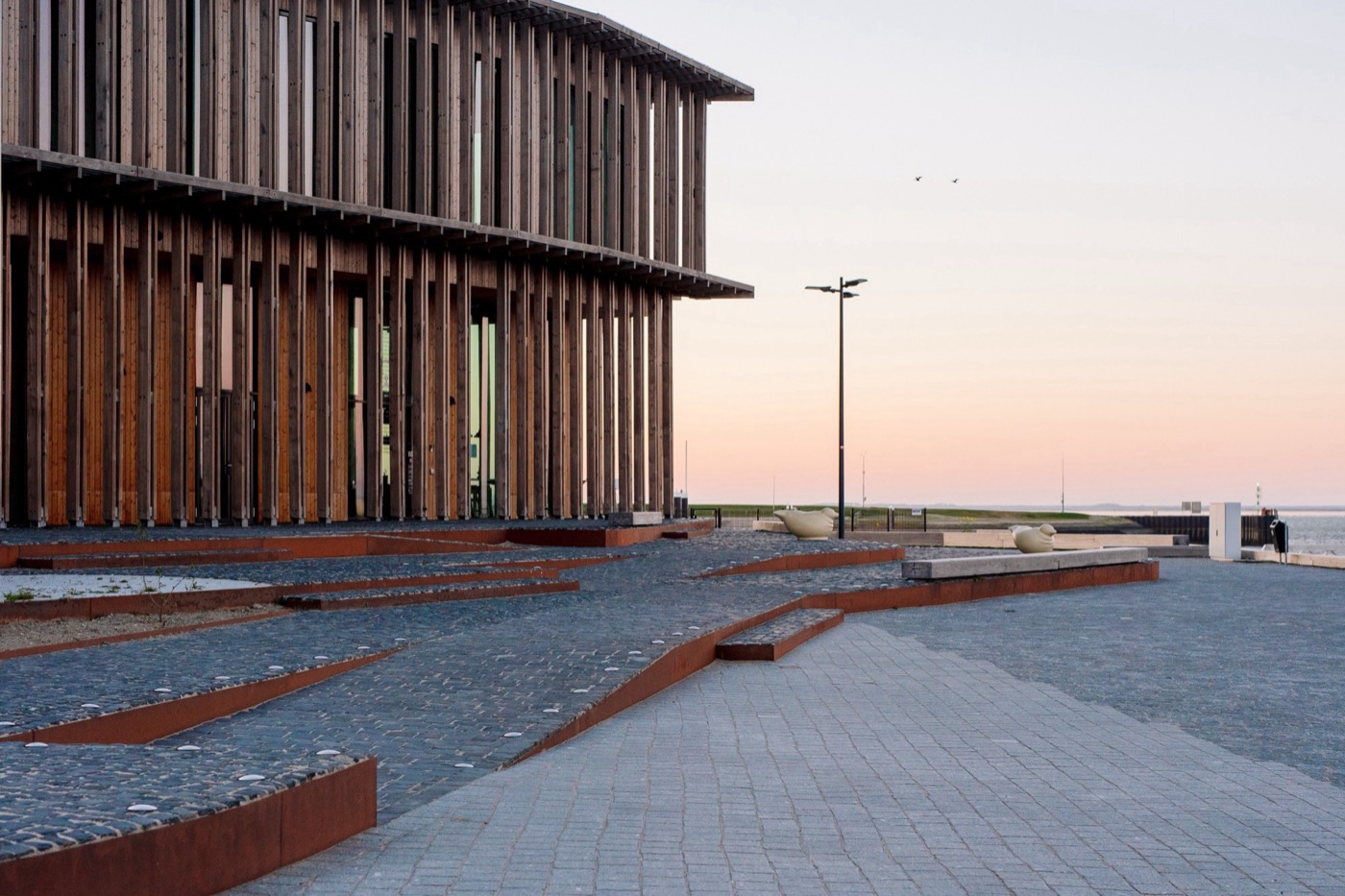
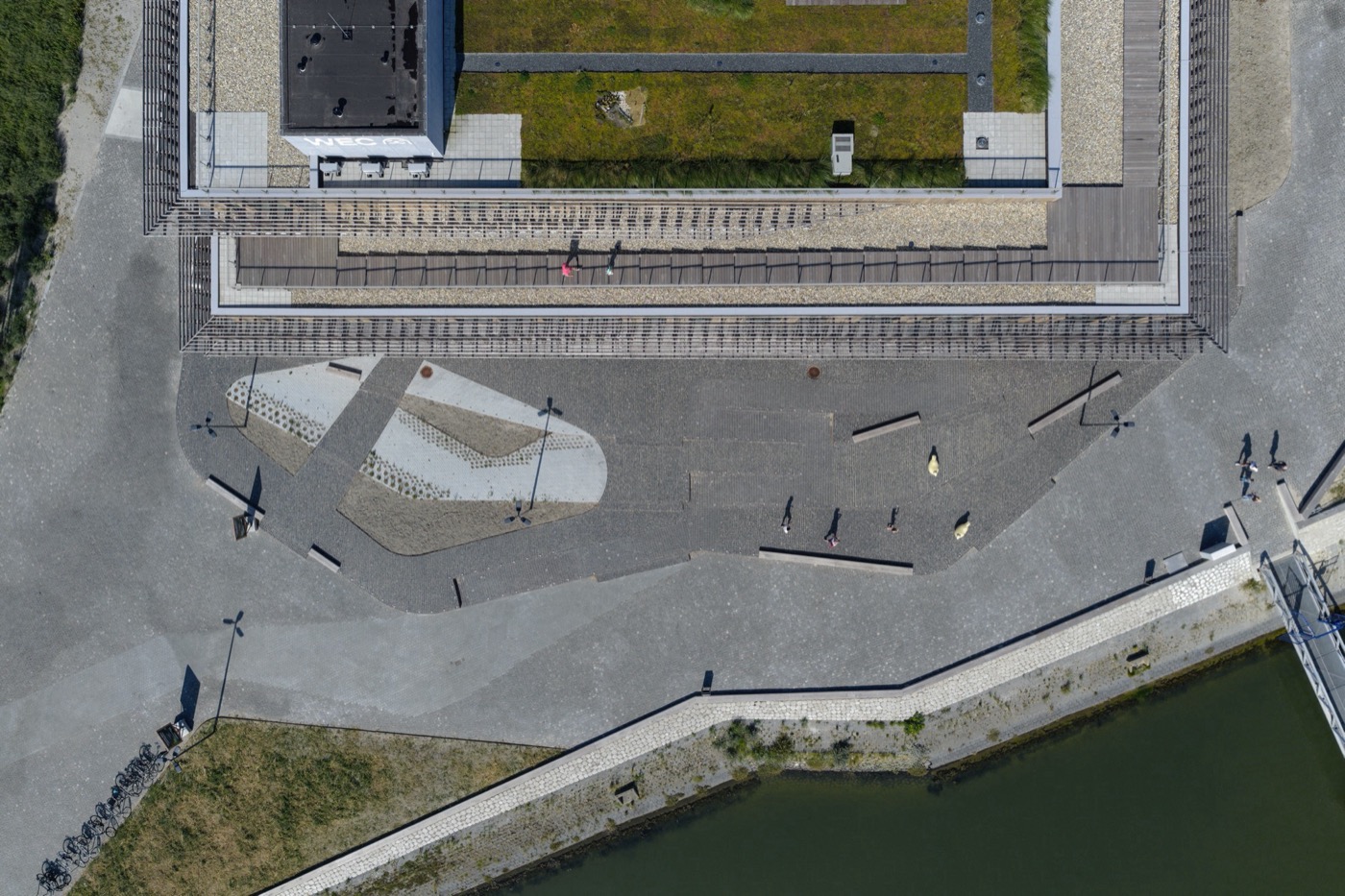
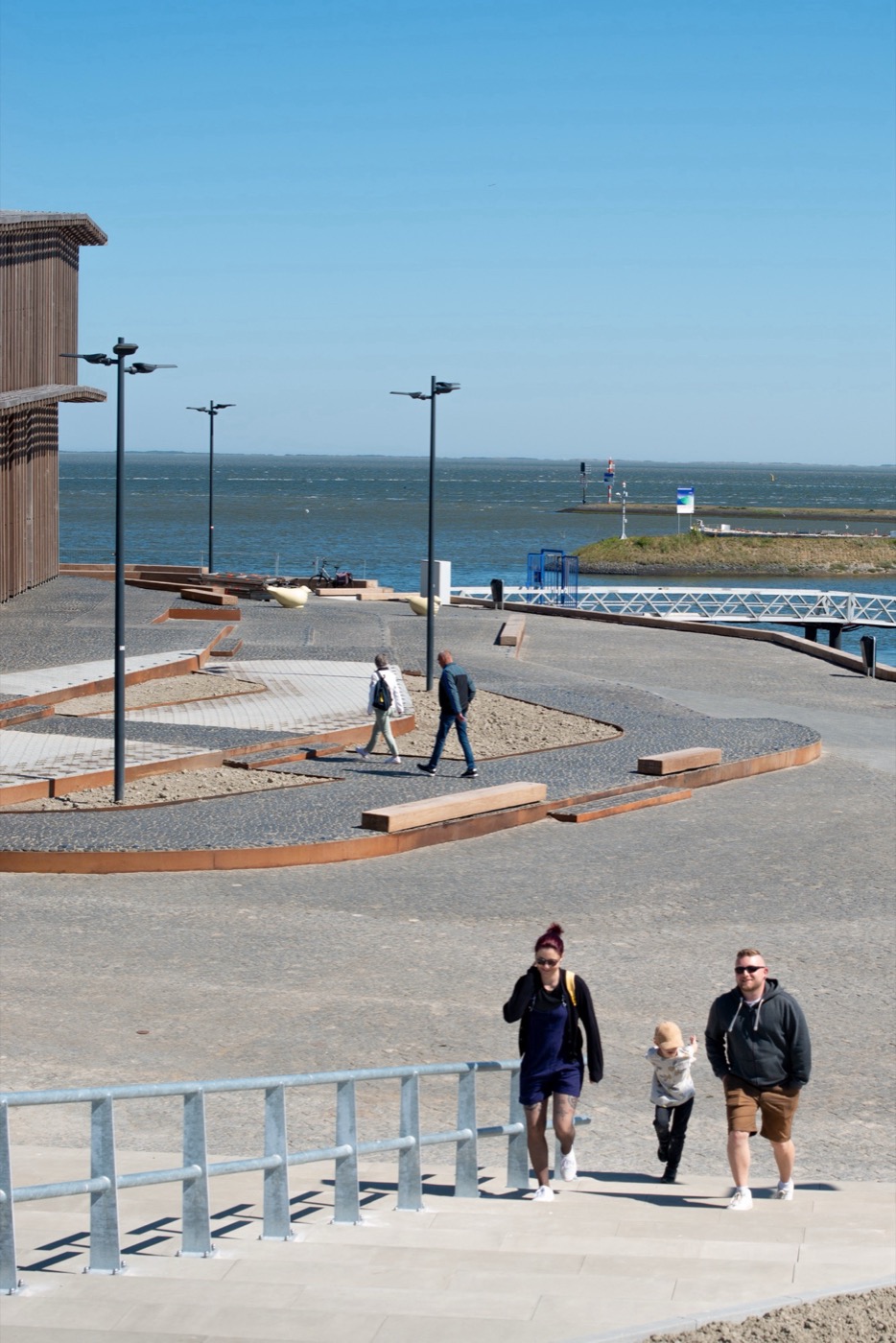
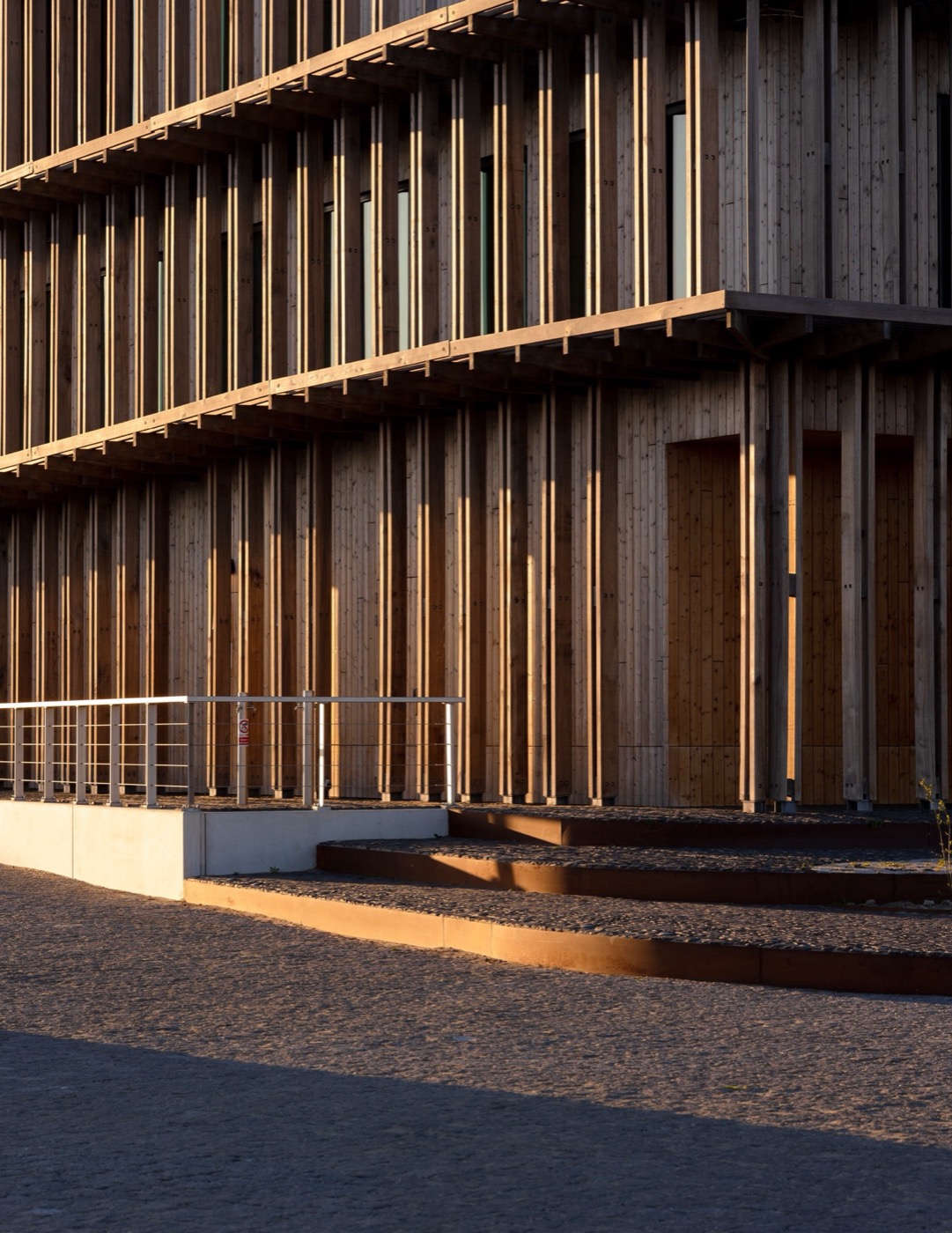
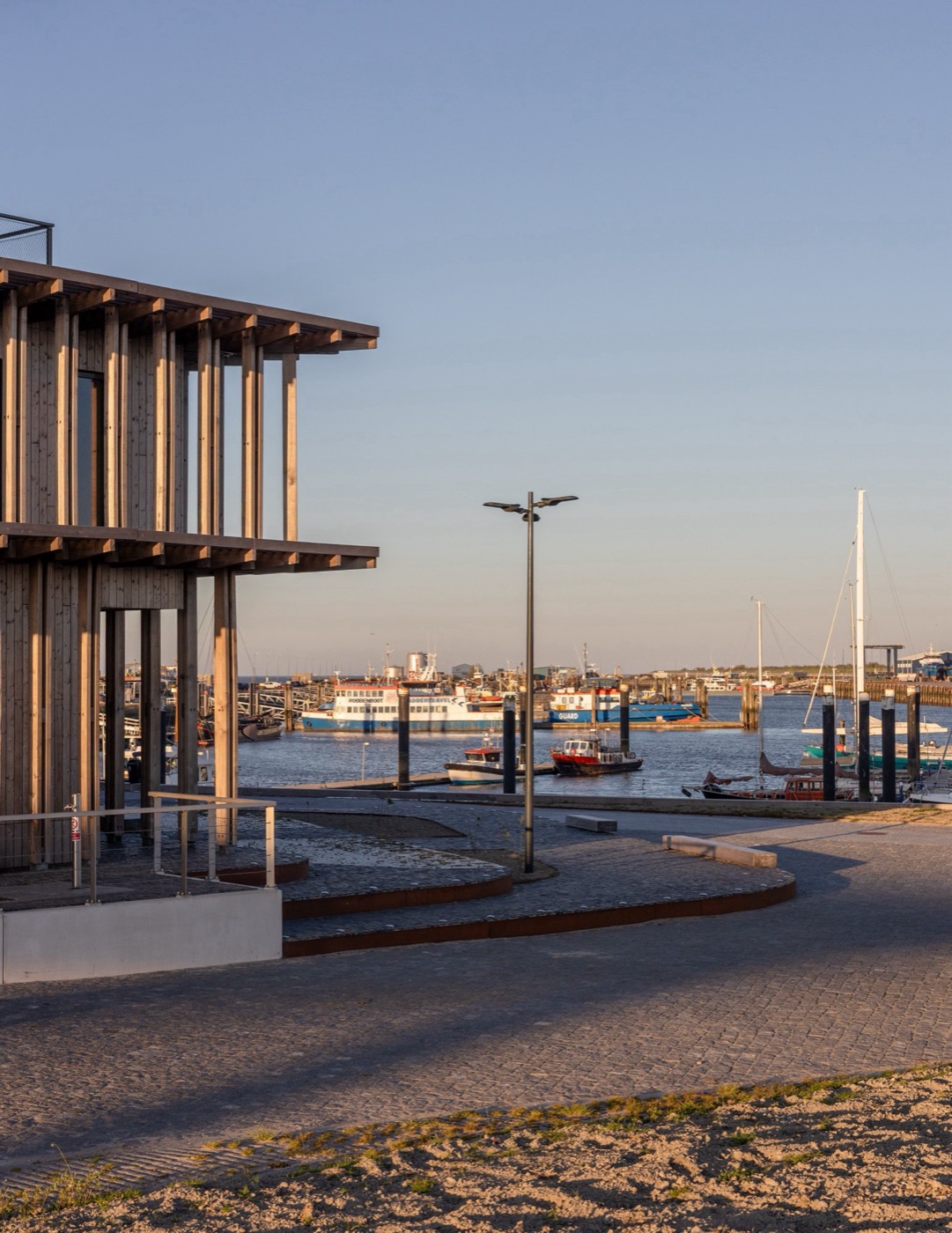
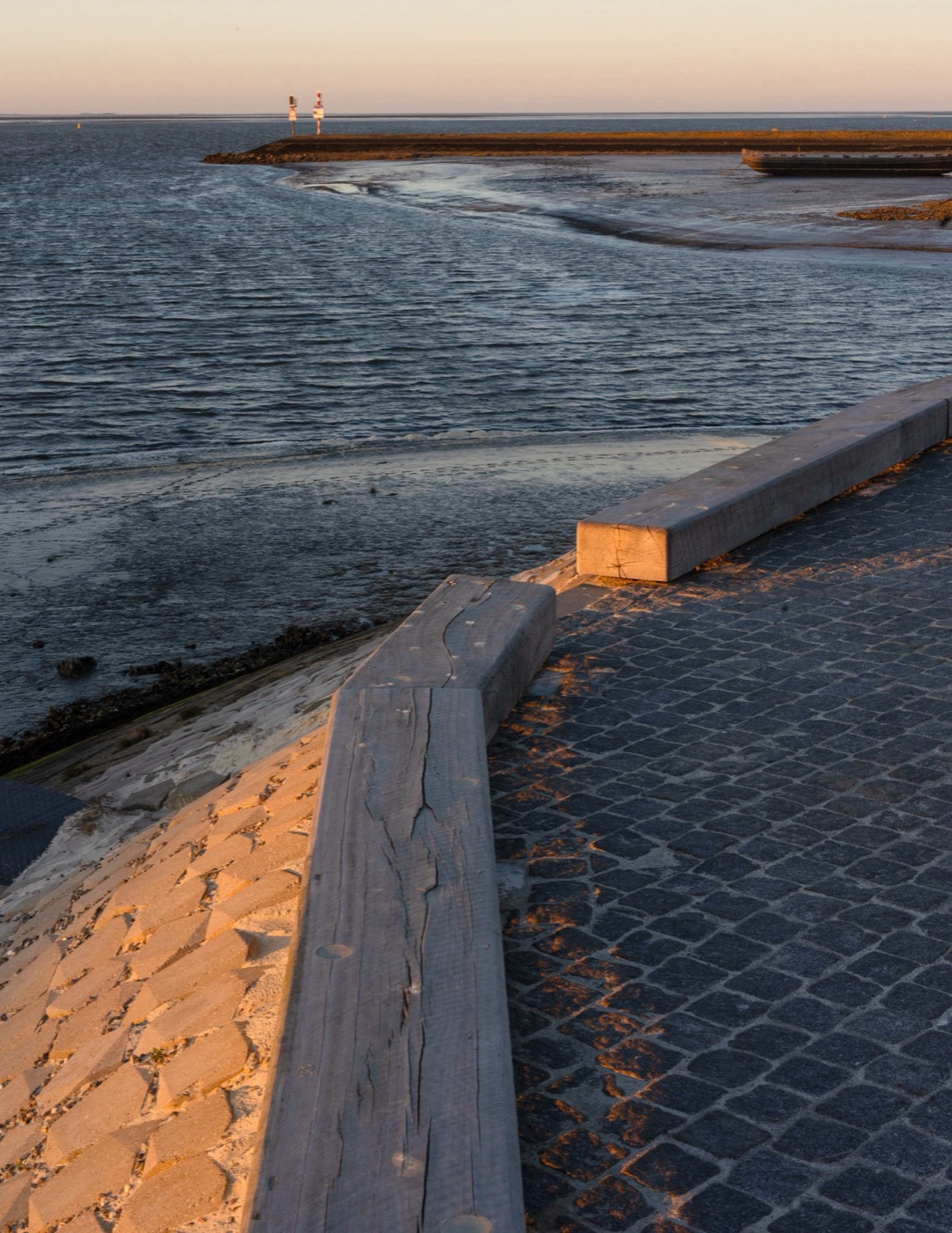
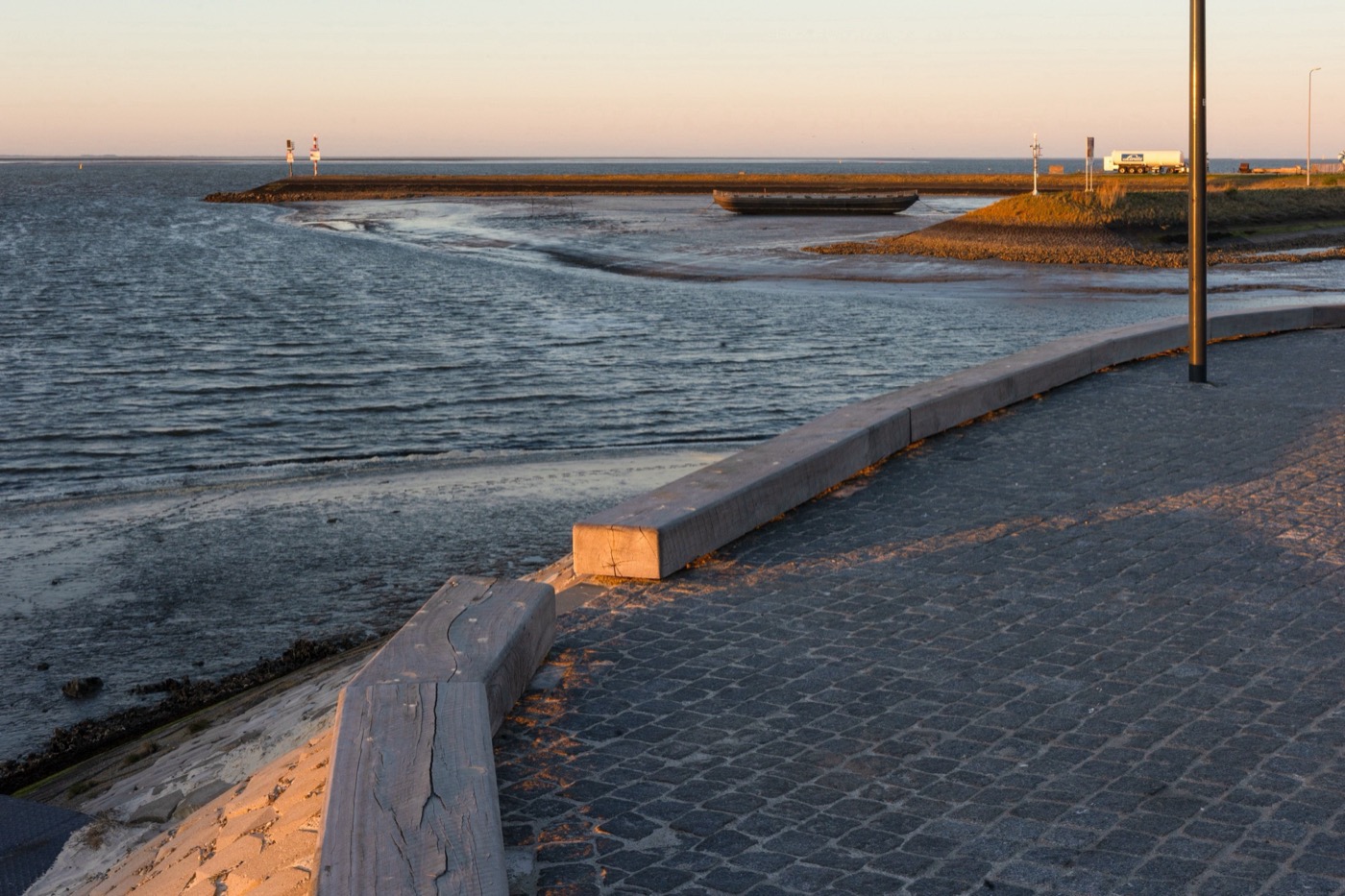
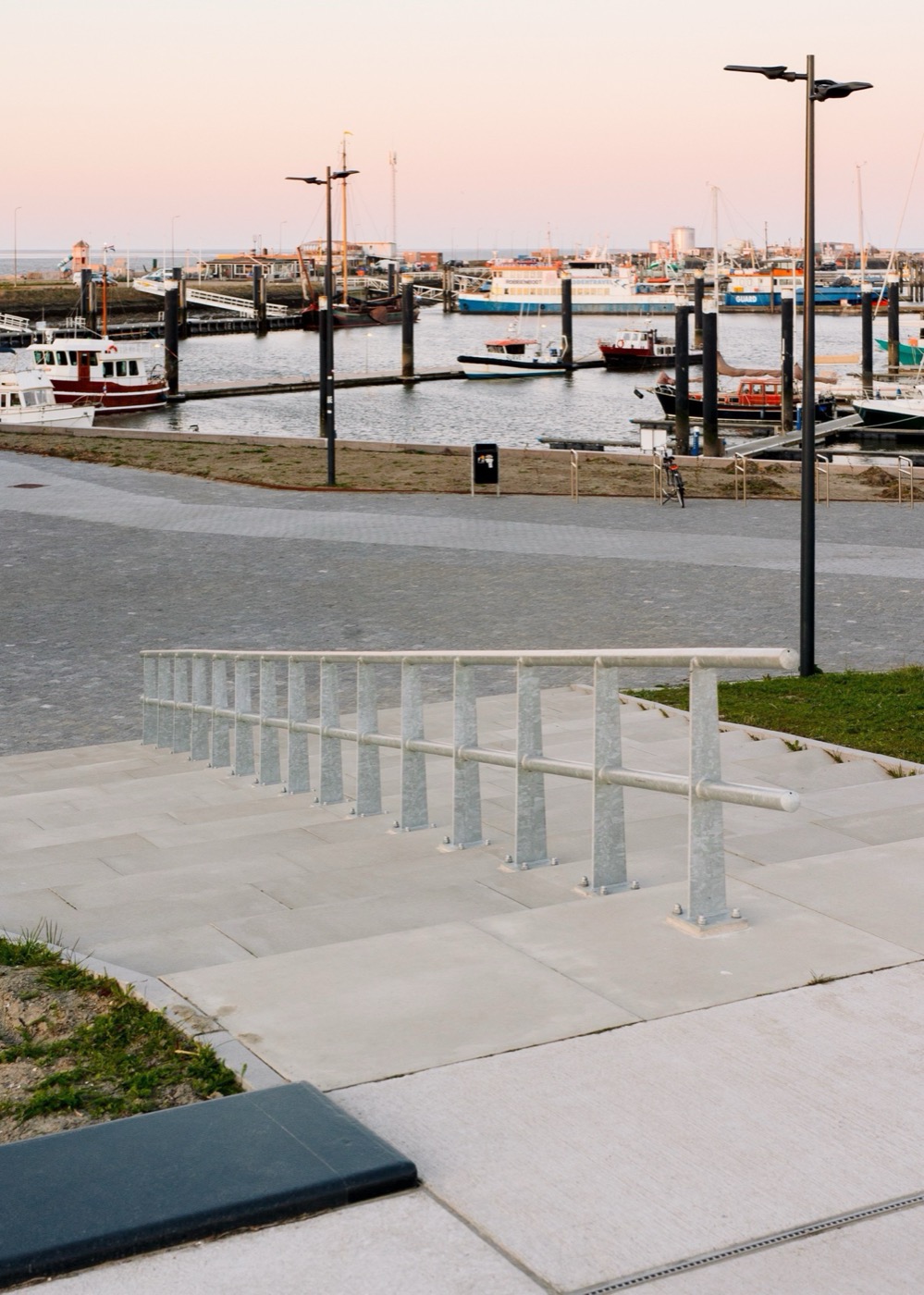
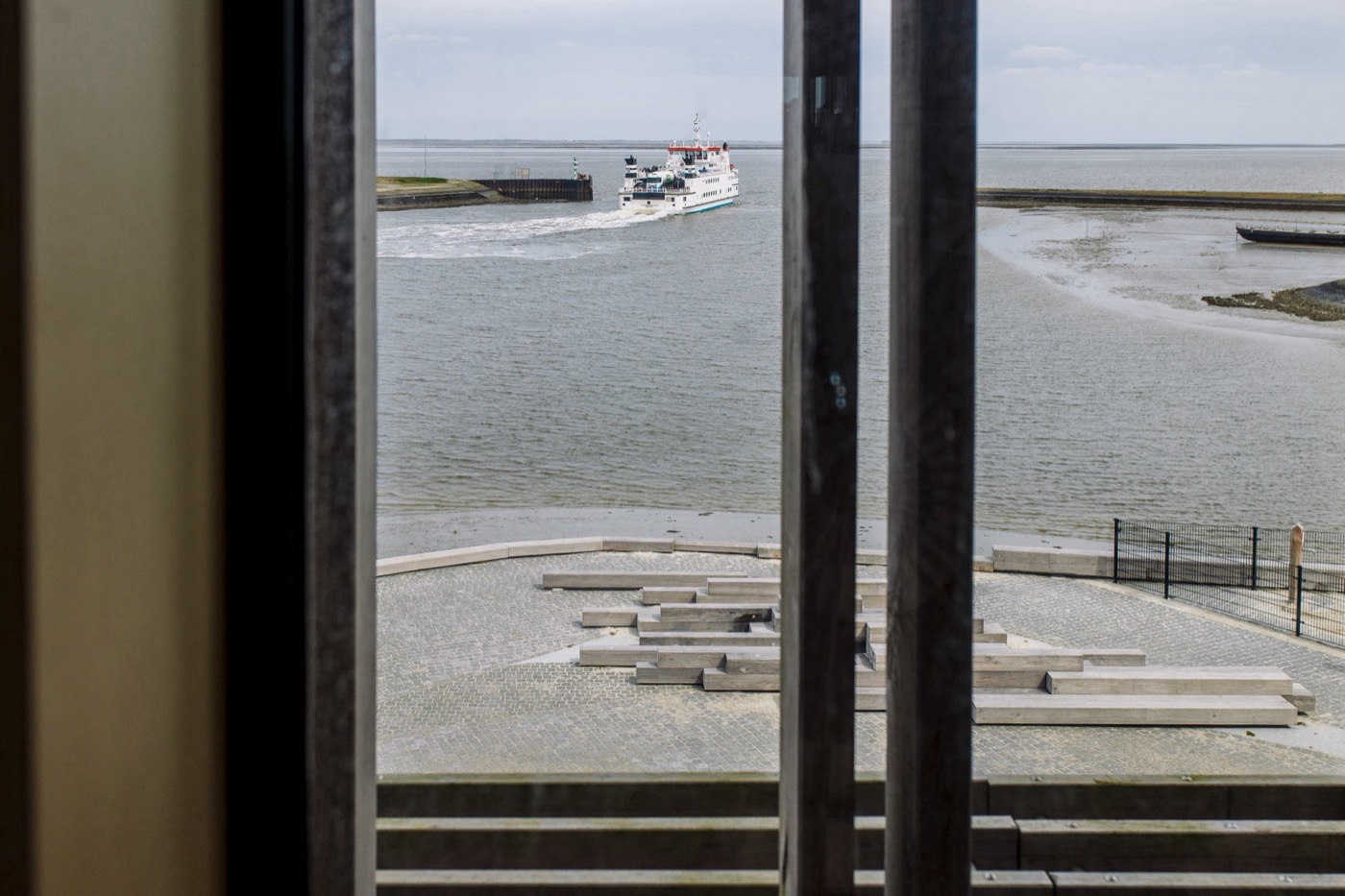
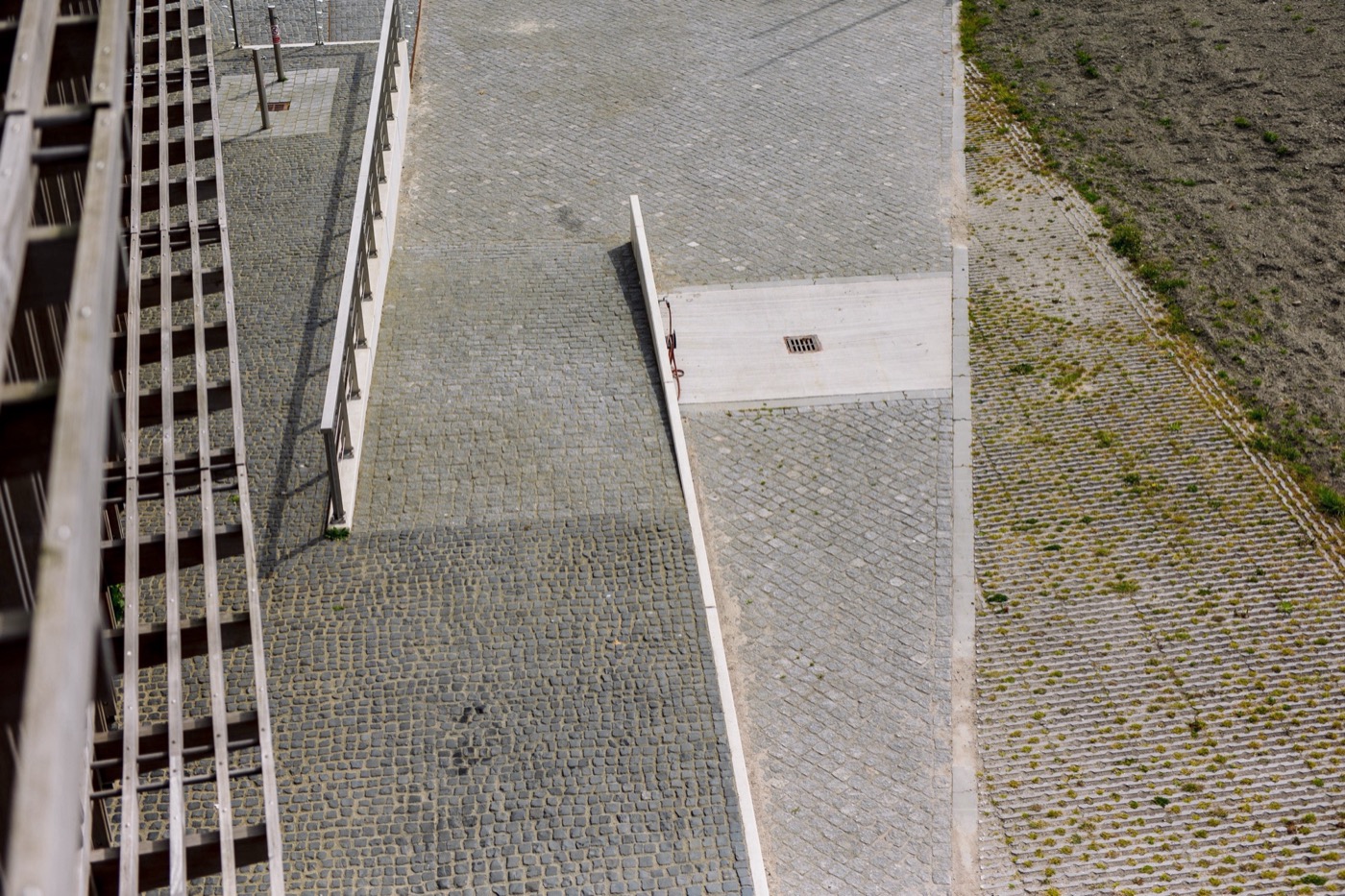
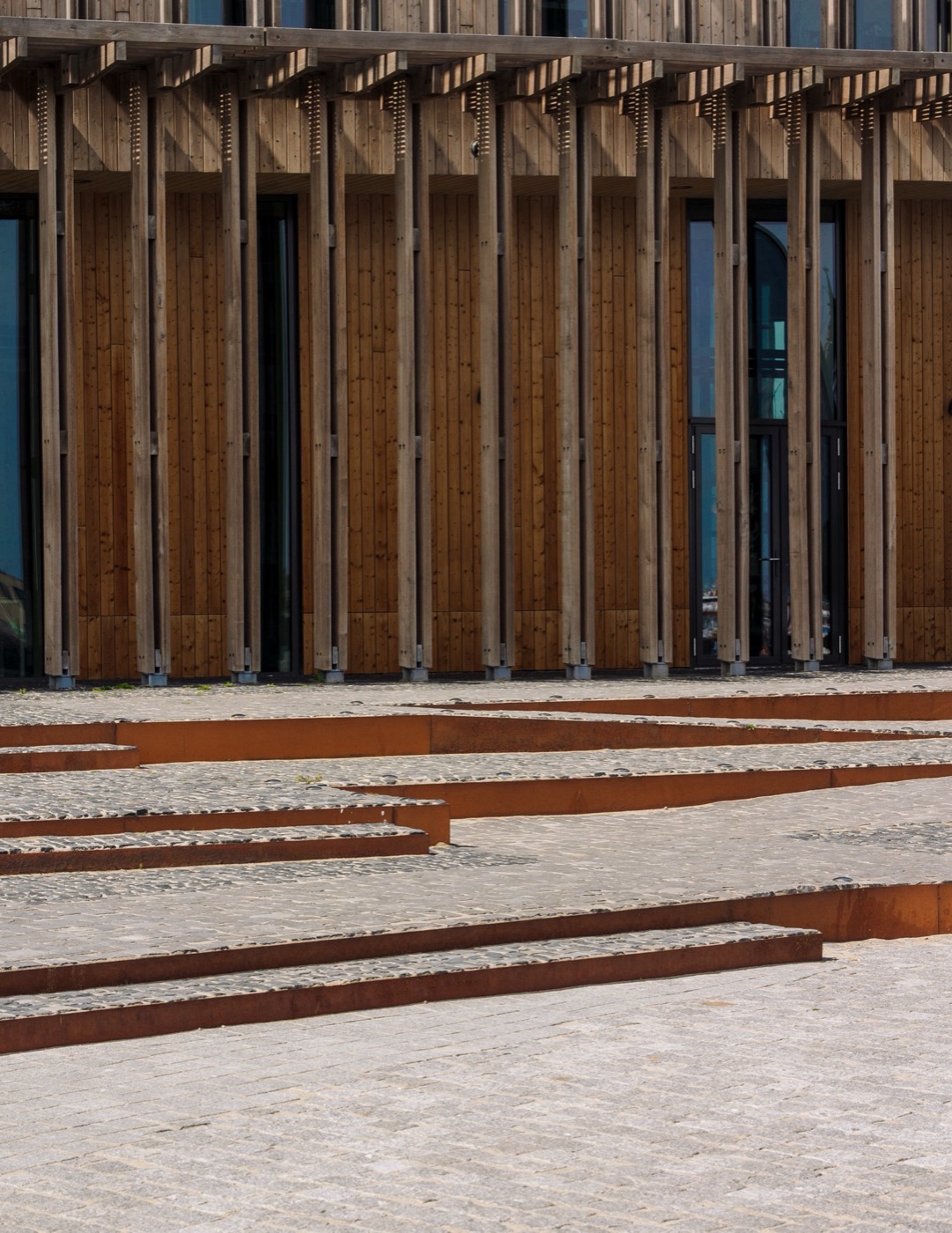
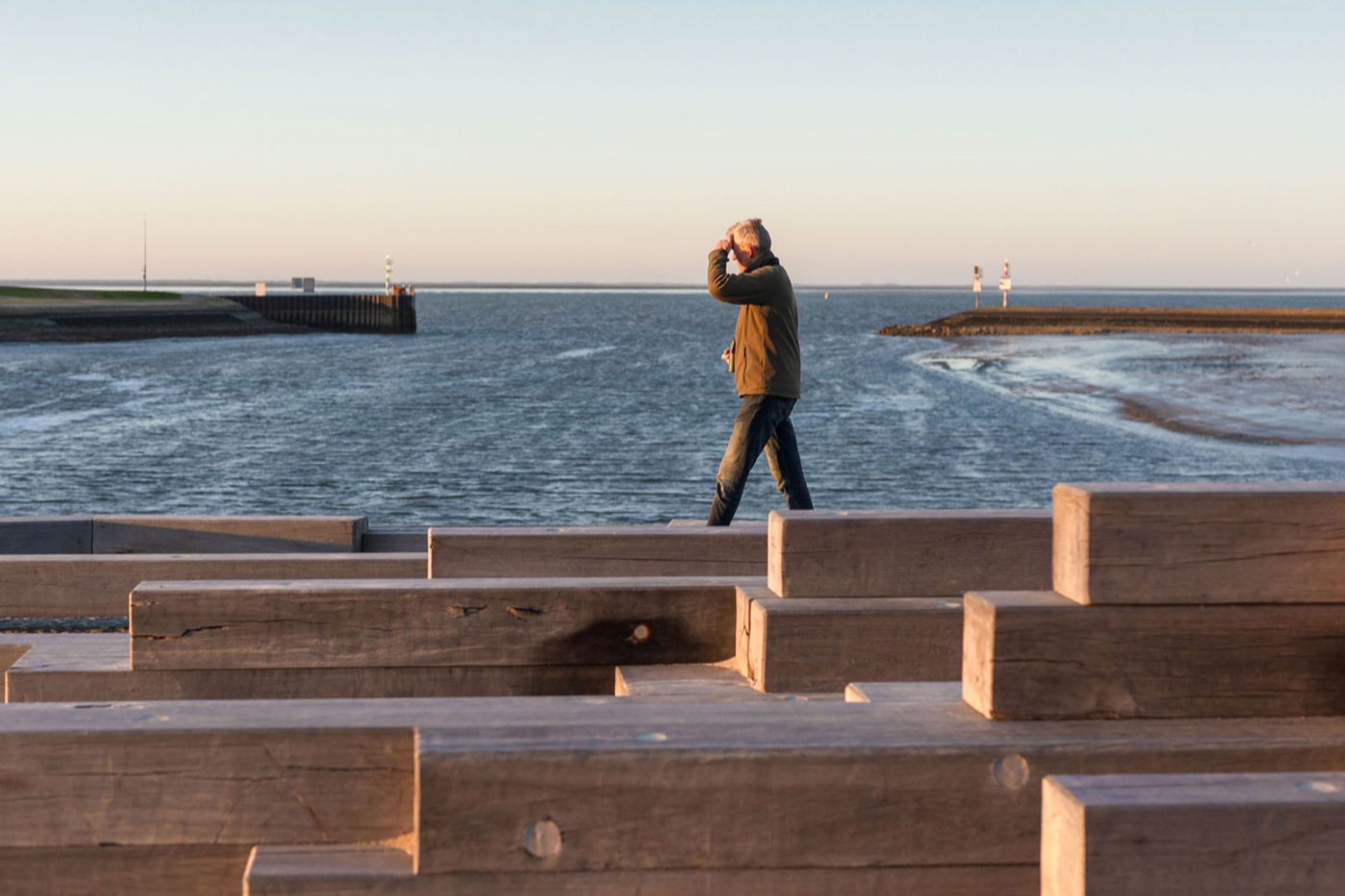
A key aspect of the public space design is the elevated position of the building. Located in an dike area exposed to storm surge flooding, the building is positioned approximately five metres above NAP in response of climate change and sea-level rise. To integrate the building with the landscape, LAOS extended the dike slope. This intervention created a gradually ascending landscape of steps and ramps. To maintain visual connections between the sea, the harbor, and the building’s floor level, the terrain was raised by approximately 70 centimetres using soil excavated from the construction pit.
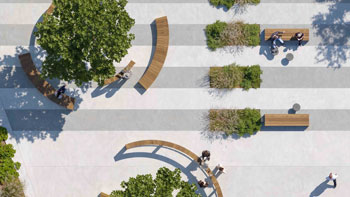
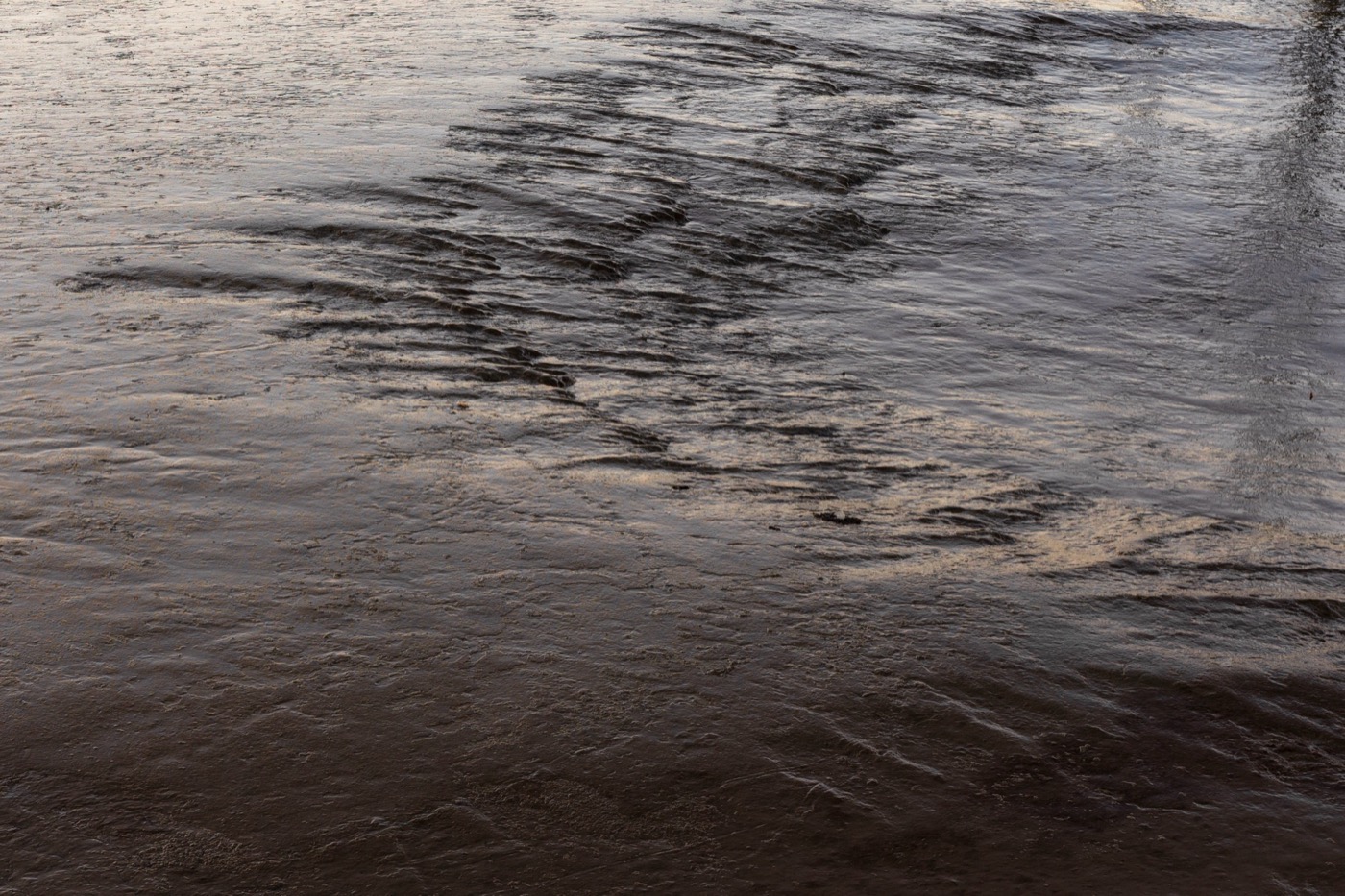
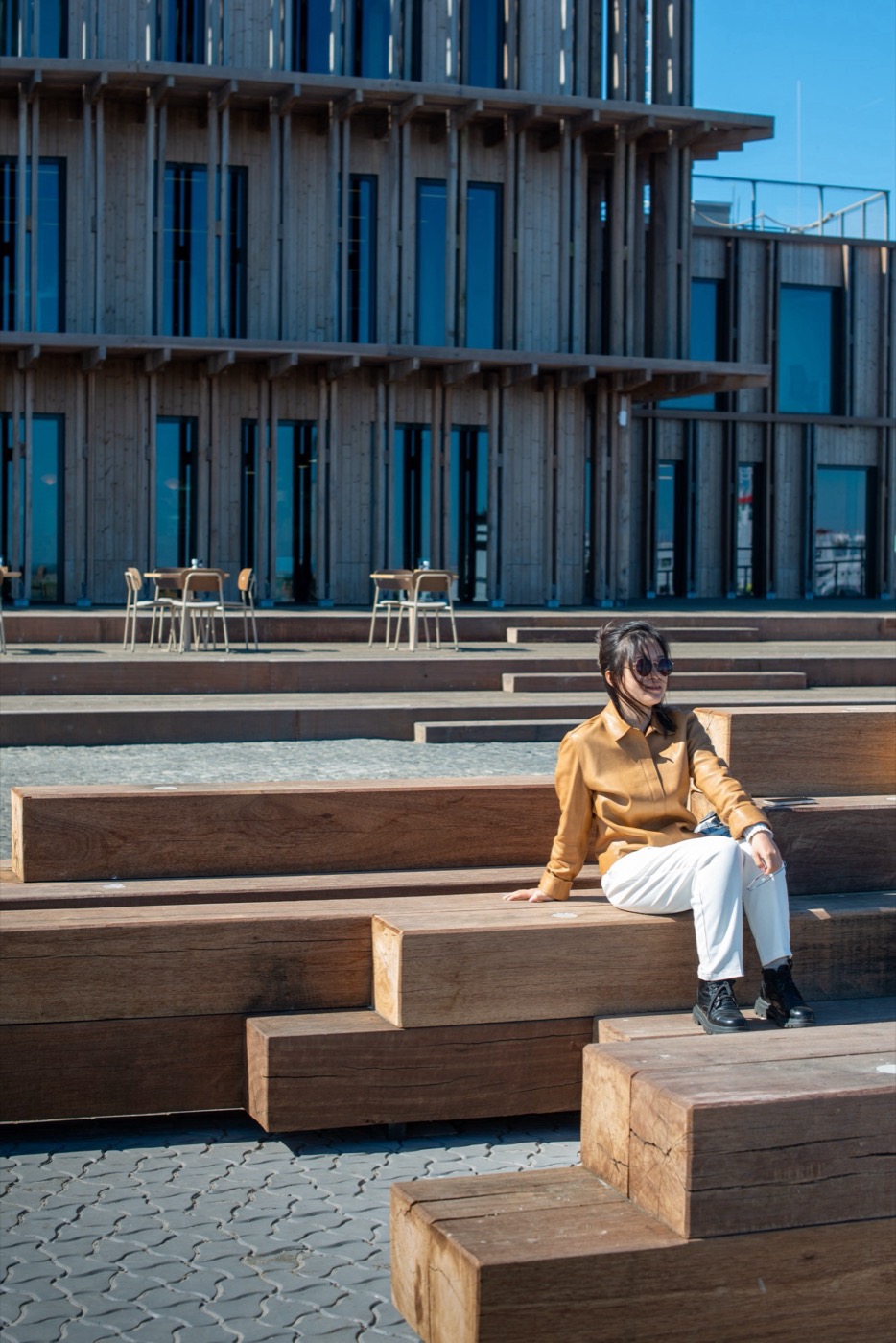
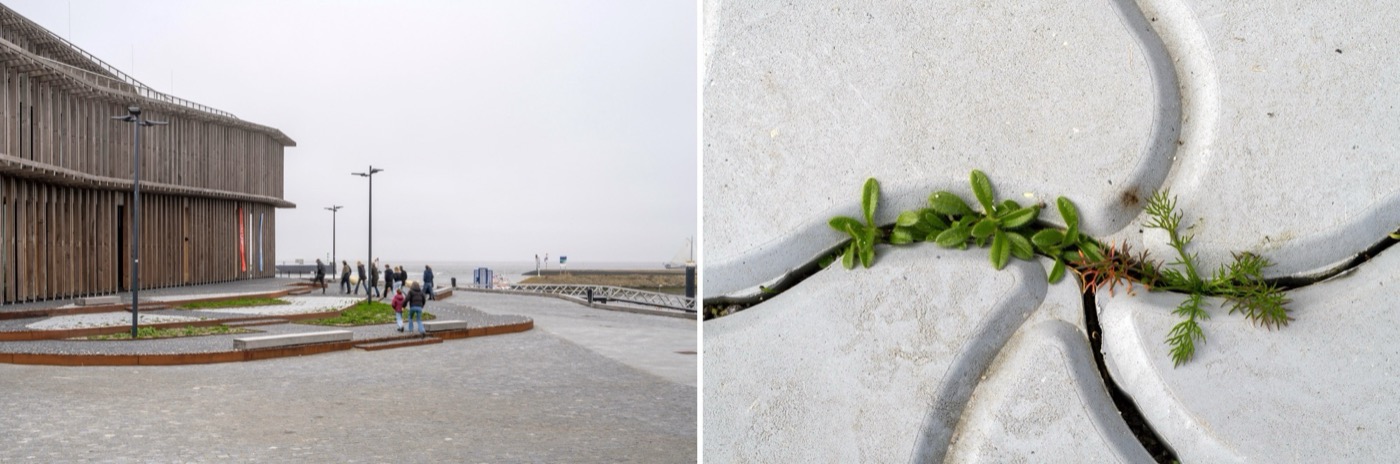
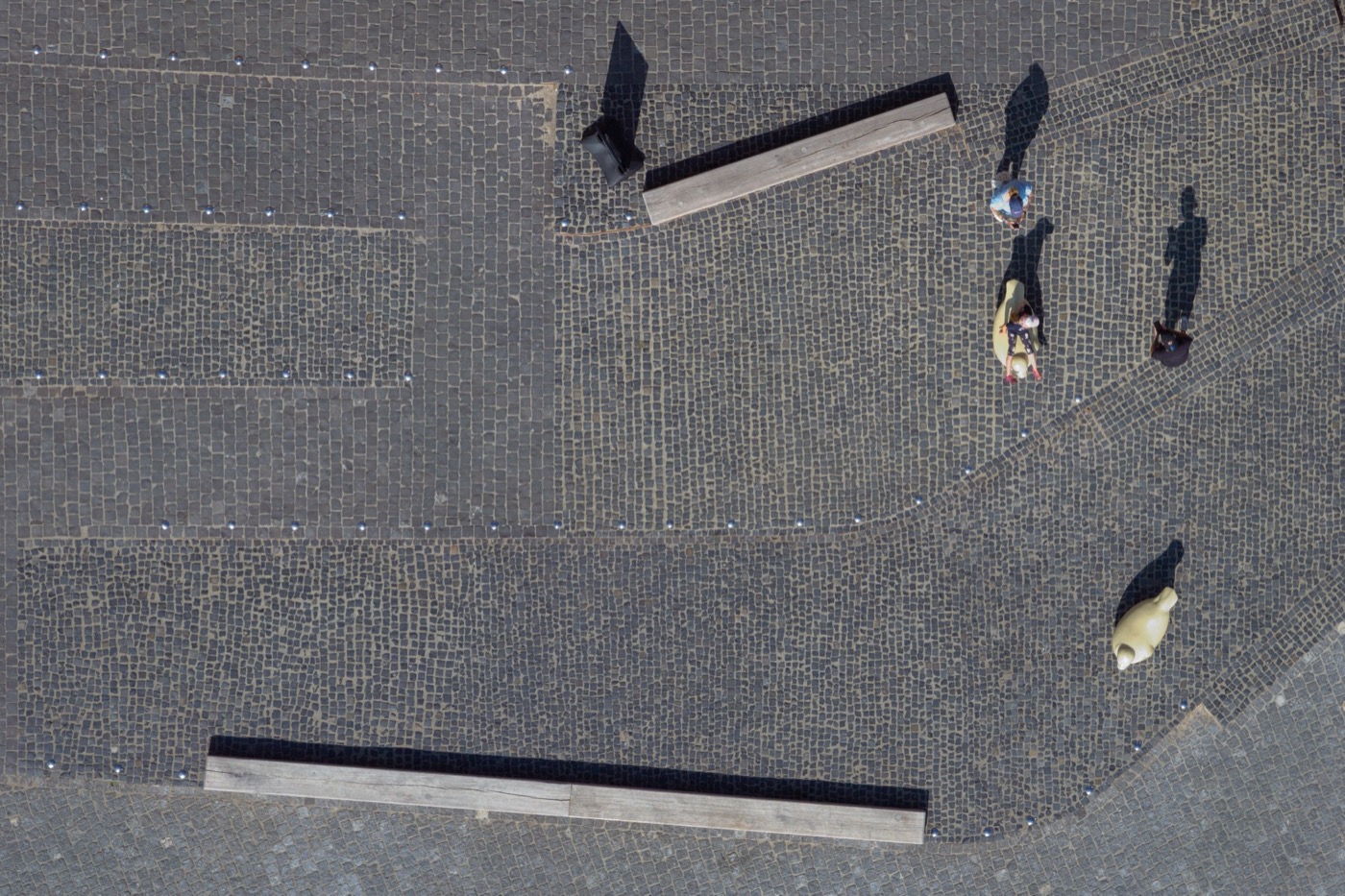
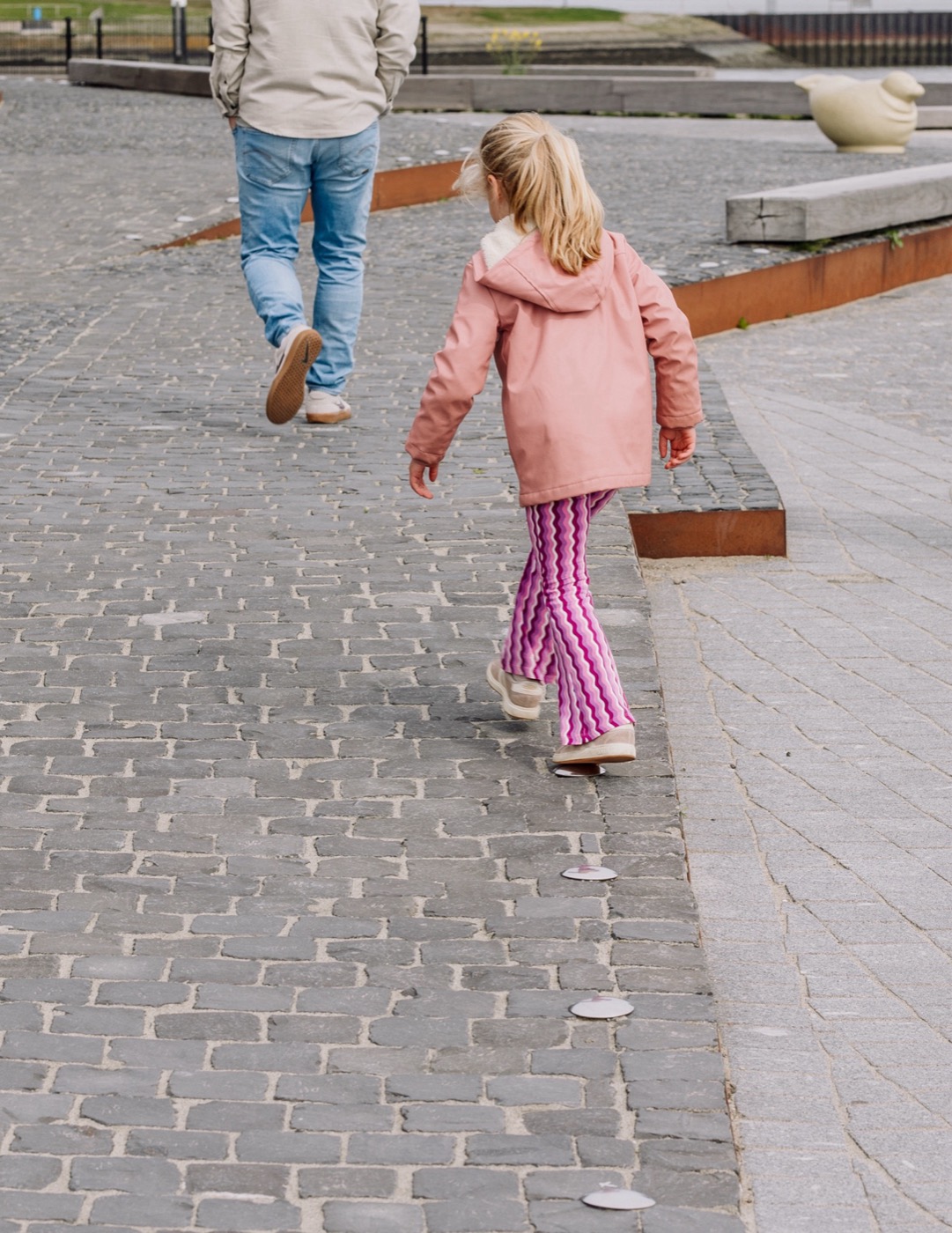
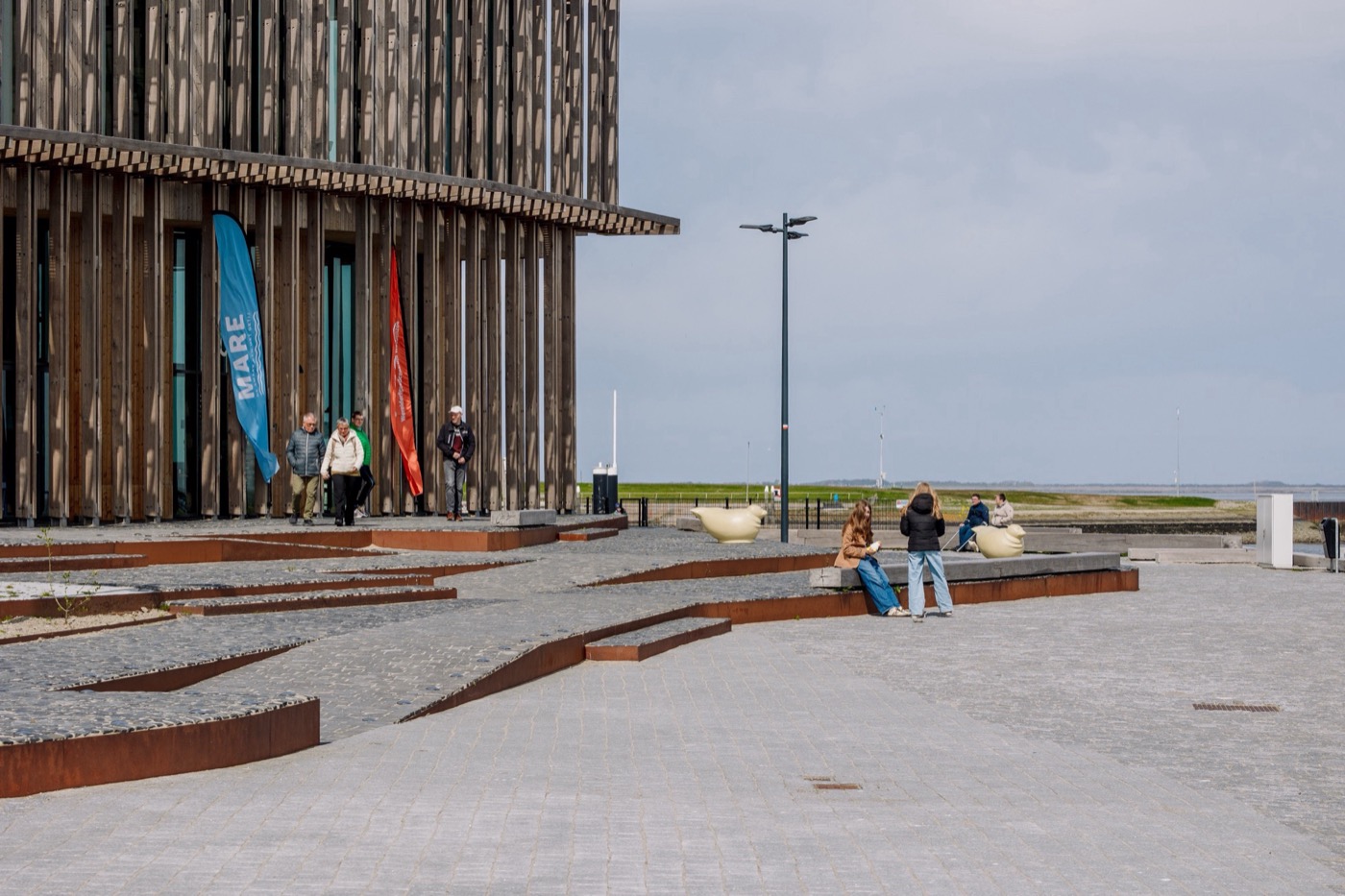
The quay paving, planting beds, and stepped elements feature a ribbed pattern inspired by the formations of exposed tidal flats, shaped by ebb and flow and wind, where layers of water deposit sand ridges. By extending this motif, the quay appears shaped by the same natural processes. The steps adjacent to the research spaces function as a practical extension of the building, supporting both work and recreation.
Environmentally conscious and sustainable design
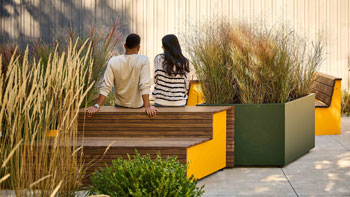
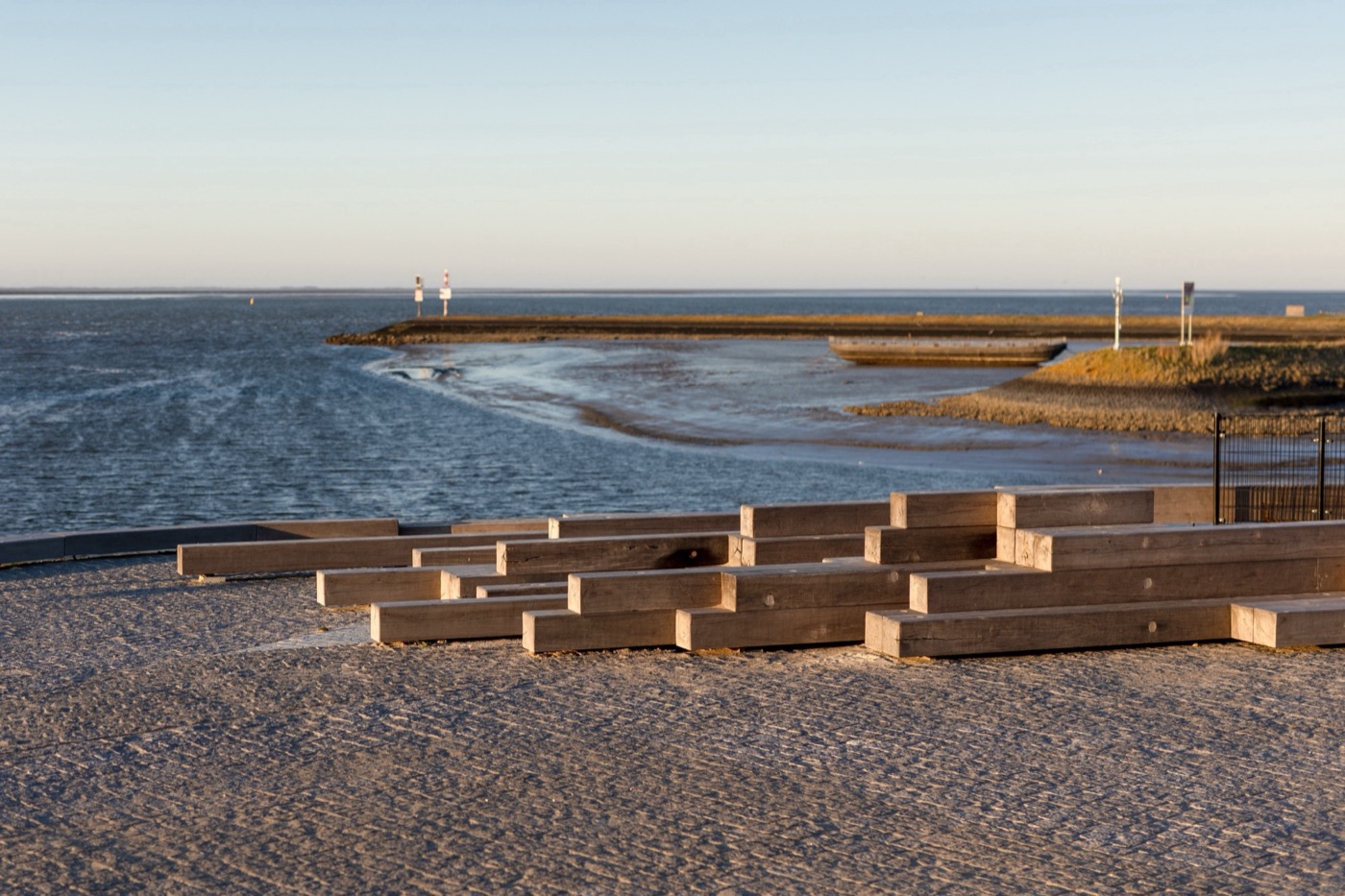
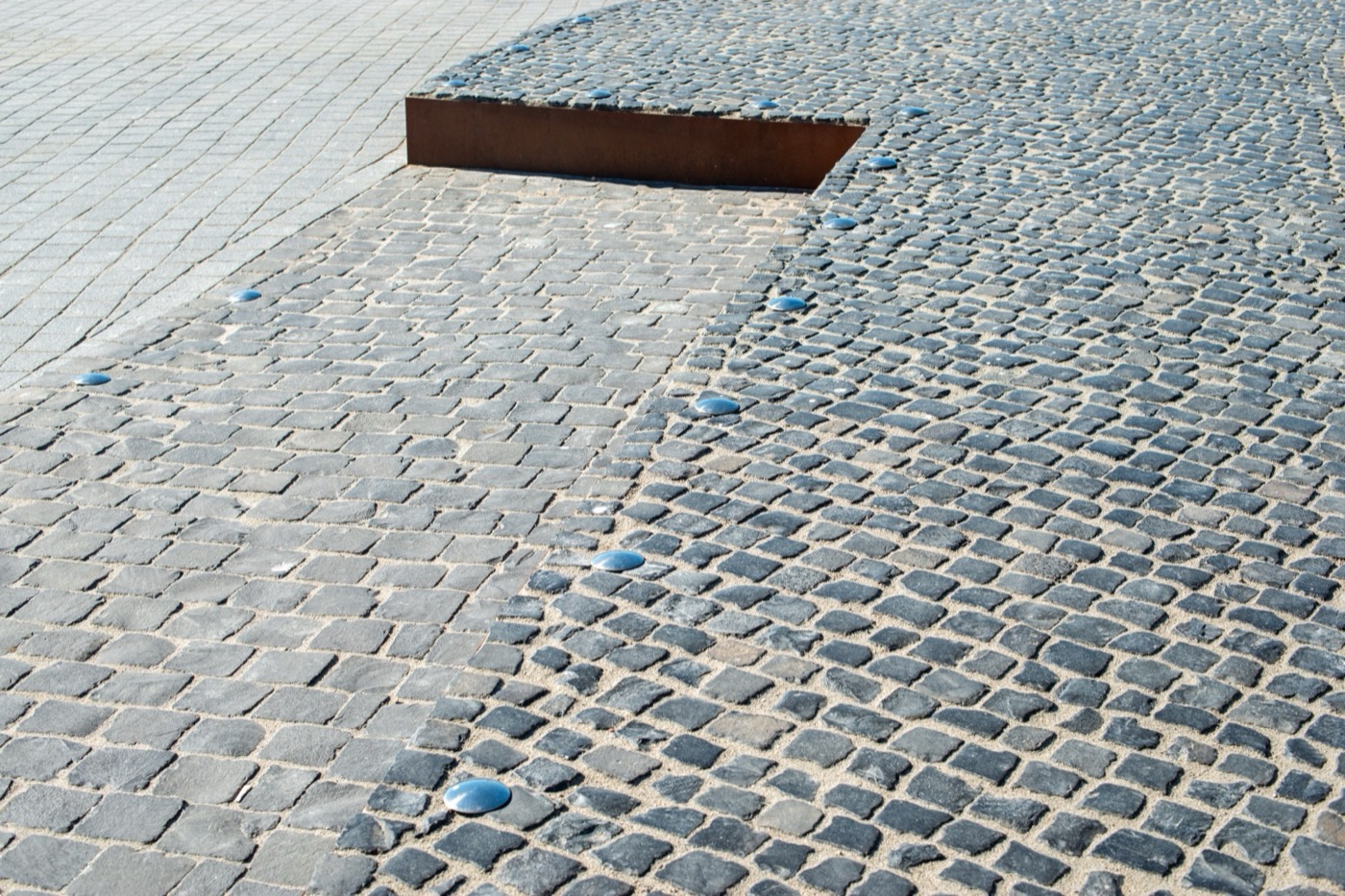
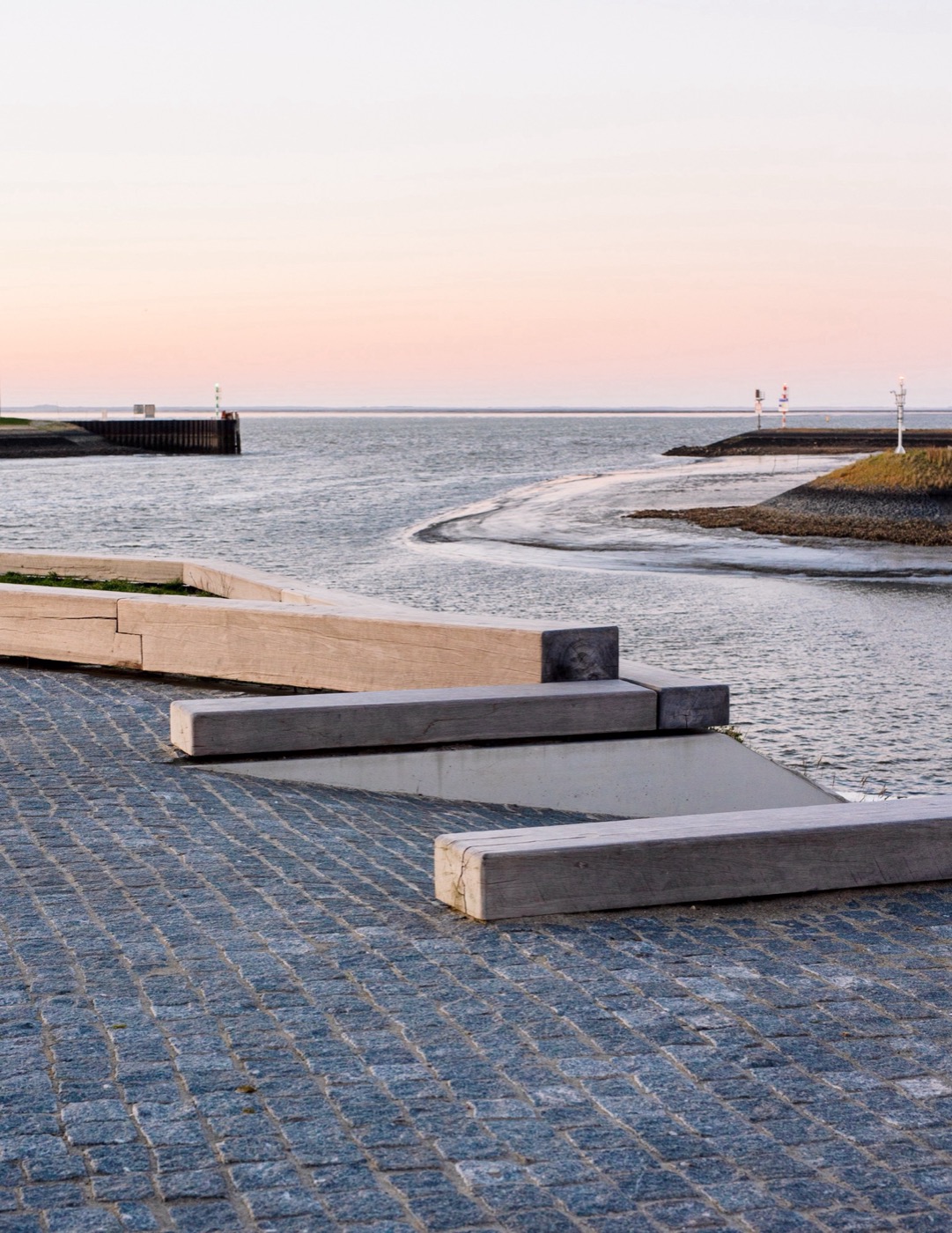
The public space makes extensive use of reclaimed and reused materials, prioritising locally sourced elements that can withstand the harsh climate of Lauwersoog and its dike conditions. Durability and resilience guide the material choices throughout. Granite and basalt stones from the former harbor were reused for the steps, while old mooring posts were repurposed for seating elements, benches, and the balcony.
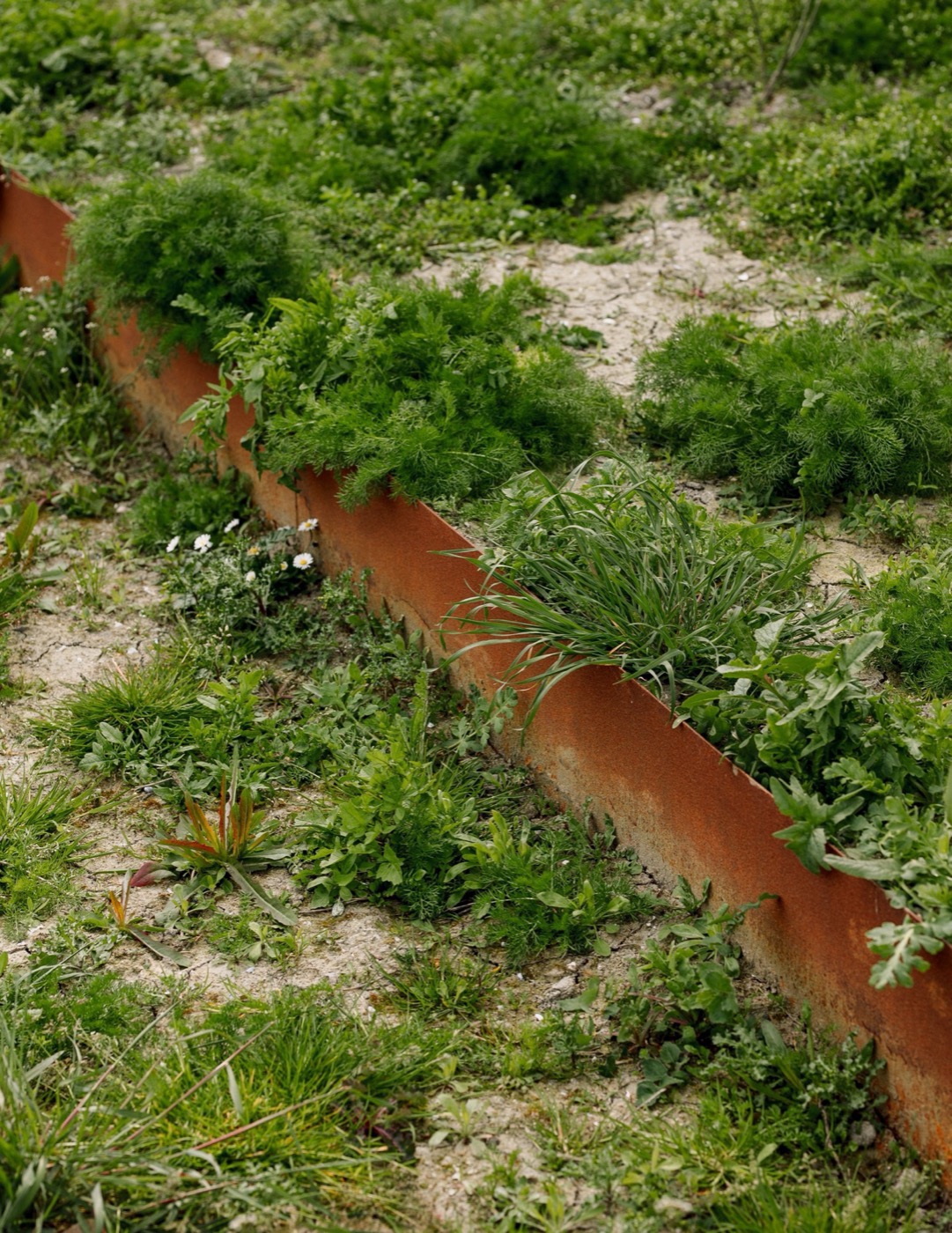
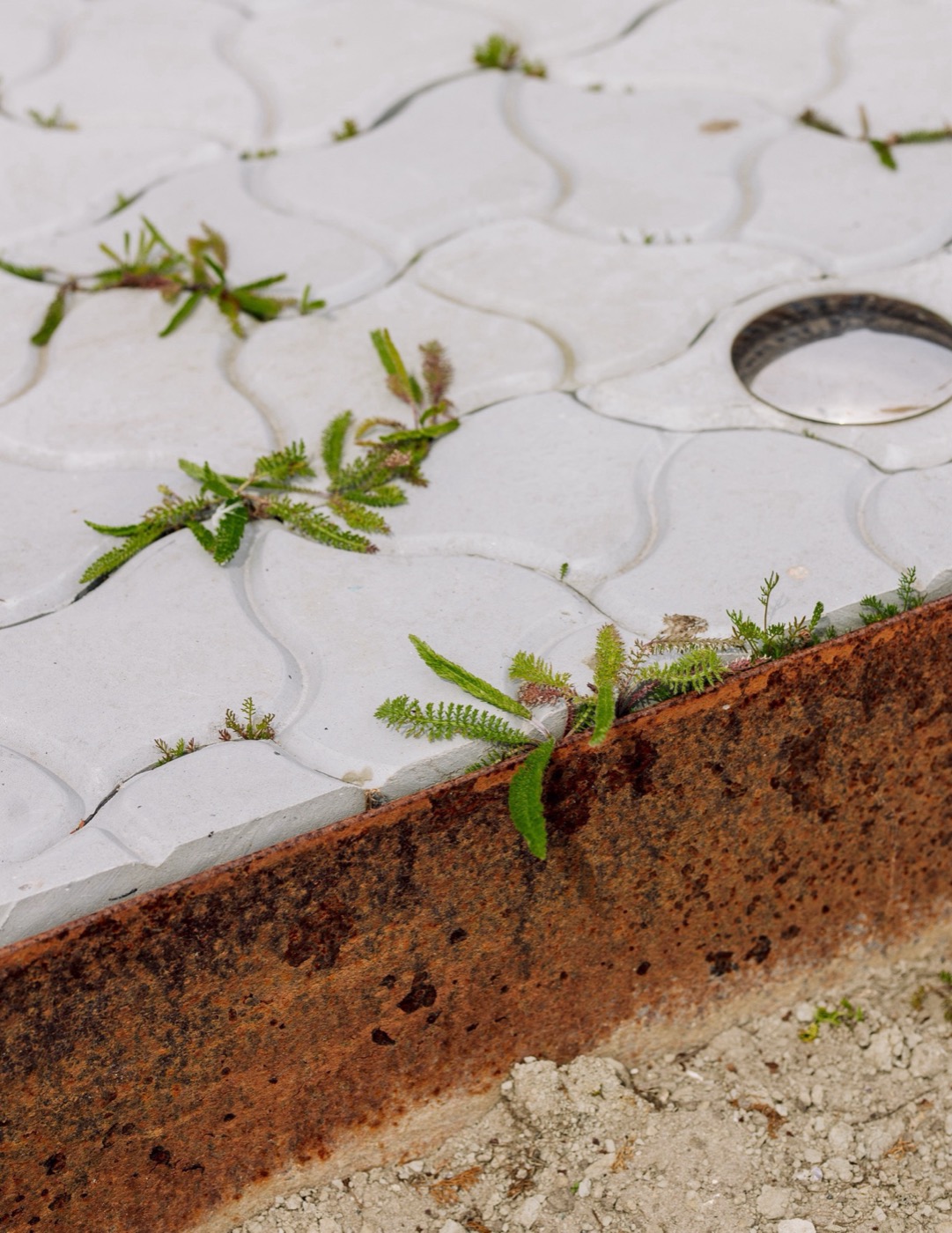
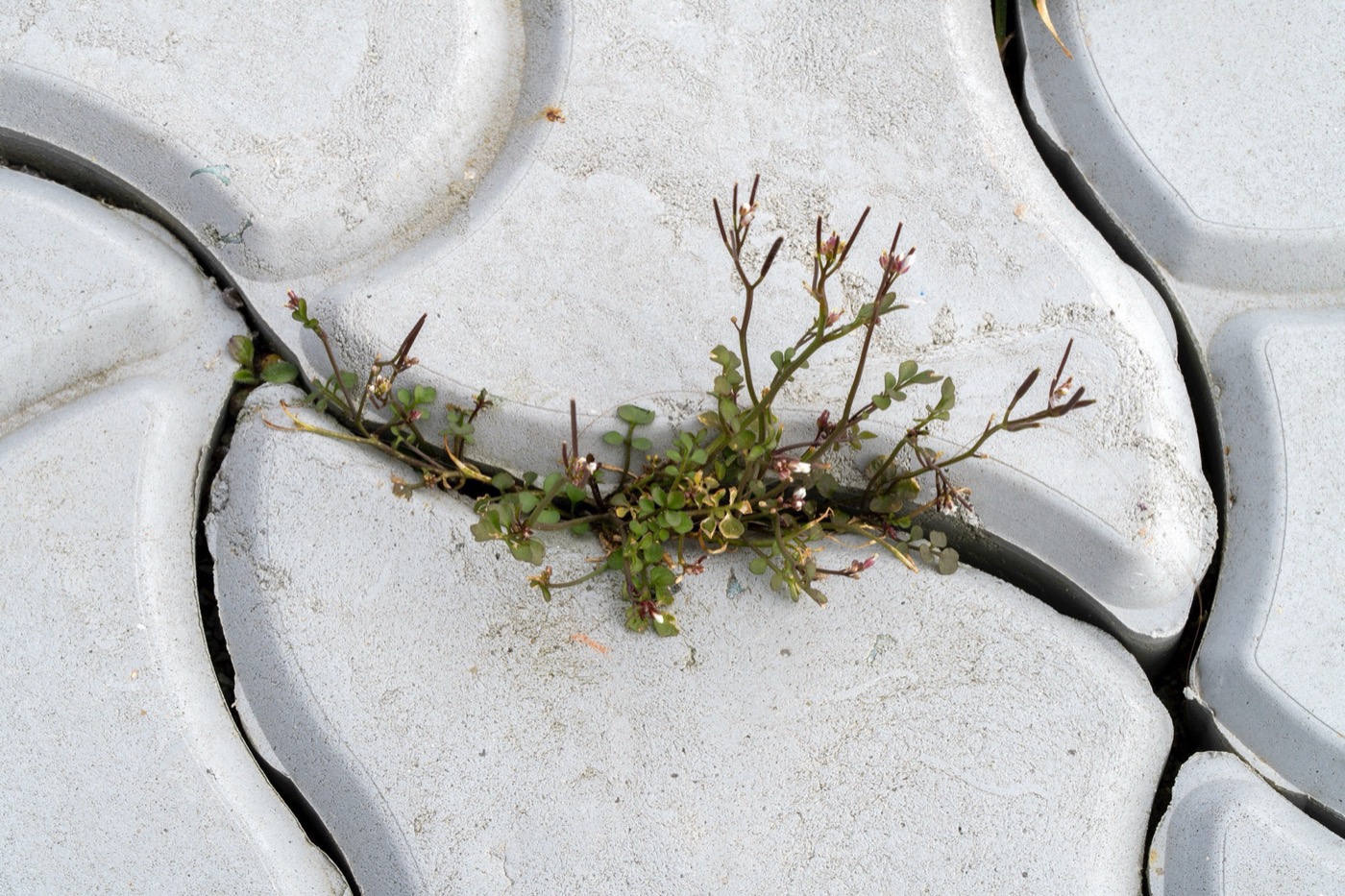
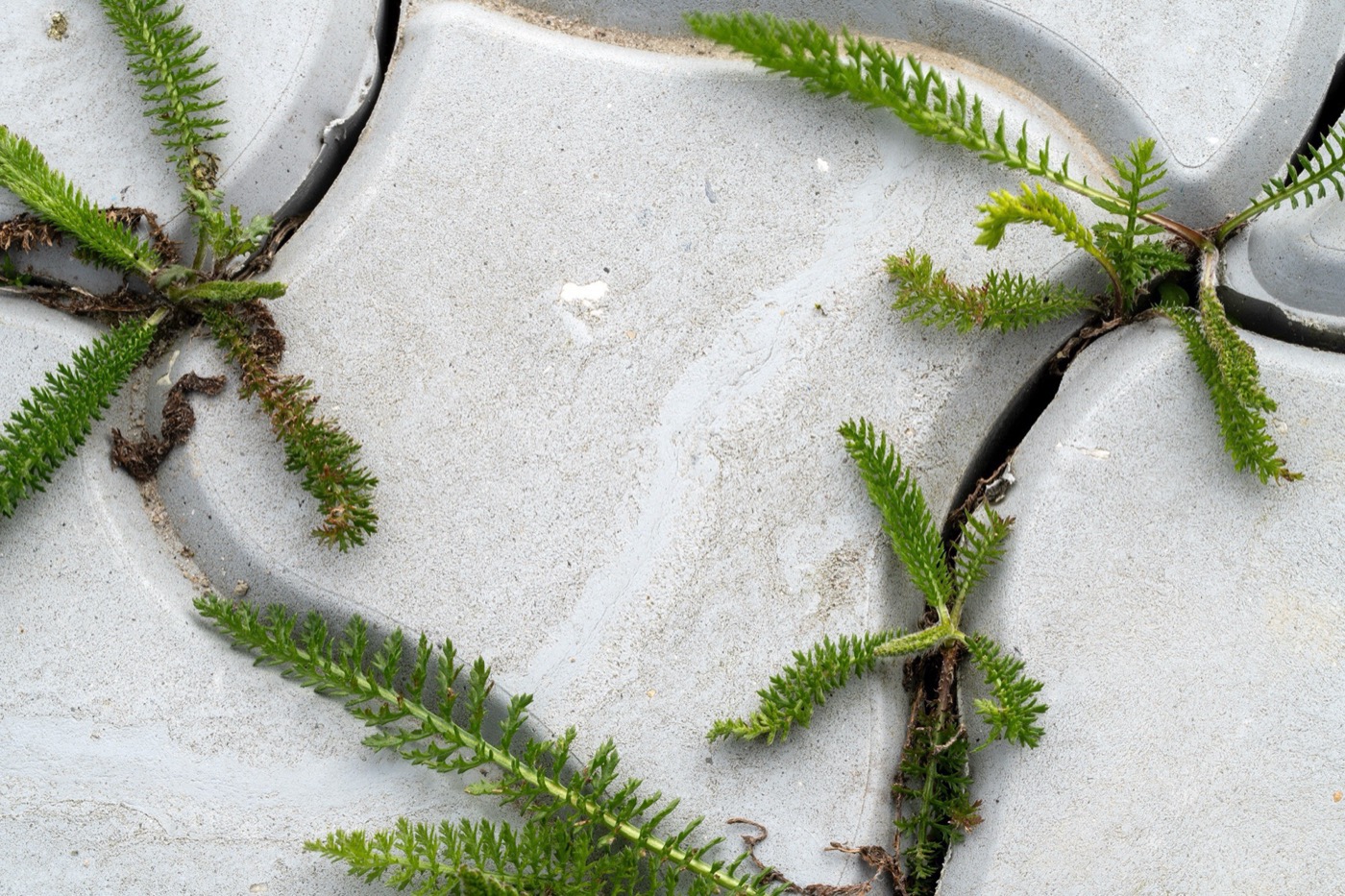
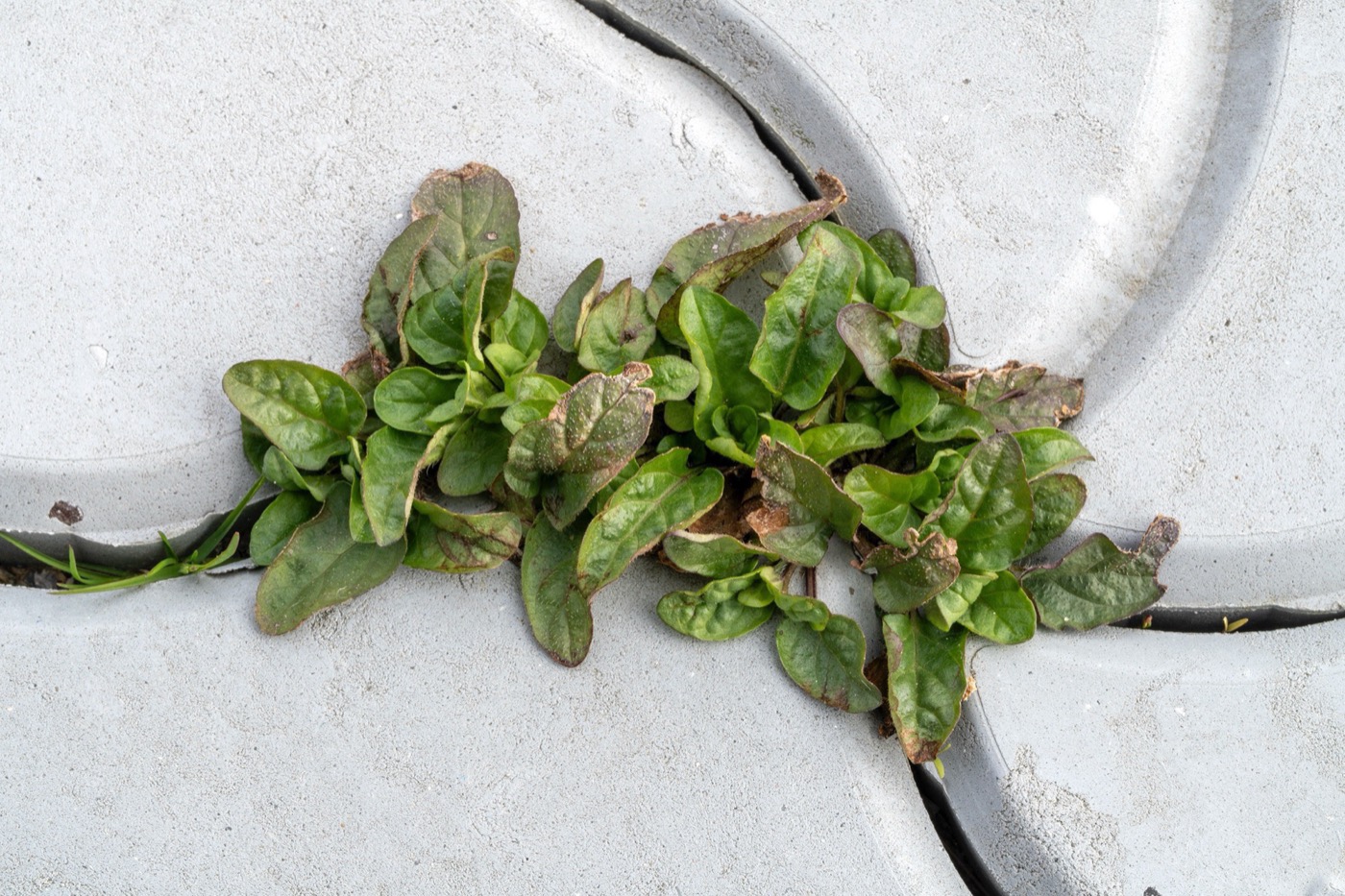
The paving incorporates tiles were produced by The Great Plastic Bake Off. These “Wadden tiles” are permeable, similar to grass-concrete pavers, allowing salt marsh vegetation to grow through them.
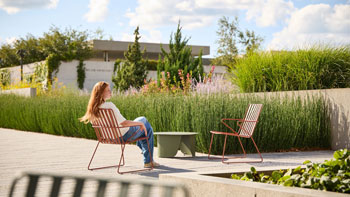
The planting beds were raised by 30 cm using local harbor sediment from Klaei BV as part of a clay-ripening pilot project. Together with Cruydt-Hoeck, LAOS developed a low-maintenance seed mix of native salt-marsh species resistant to sea wind and saline conditions.
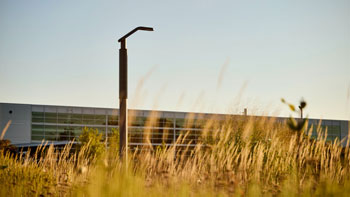
The lighting design for the public space and façade illumination takes into account the ecological values of the area and the designation of Lauwersmeer National Park as a Dark Sky Park in 2016. Lighting is carefully shielded to prevent upward spill and reflection across the water surfaces of the Wadden Sea and Lauwersmeer.
Integrally across all scales
In collaboration with the architect a strong and coherent whole has emerged. Drawing on the disciplines of urban planning, landscape architecture, and architecture, and guided by a shared ambition, this project has resulted in a future-proof design: conceived and developed integrally across all scales. The project can confidently be regarded as a benchmark for sustainable material use. The development of the site of WEC has transformed a neglected and fragmented harbor area into a distinctive destination and a high-quality waterfront environment.
53.40850169629778, 6.198547810557896
75914


LILA 2026 Sponsor