1 HOTEL MAYFAIR: THE METABOLIC RETROFIT
padlandscapes.com/
2026 Hospitality and Therapeutic / United Kingdom / Built in 2023 /

![PAD landscapes, Ryder Court, London. London considers itself a first-tier leader in policy influence for biodiverse roofs but still ranks low for the delivery of green roof area per capita. Central London offers 1.2m2 green roof per person, about a fifth of Basel for example (5.7m2/person). And while rooftop greening is increasingly visible here, it […]](https://landezine-award.com/wp-content/uploads/2026/05/00_PAD-landscapes-Ryder-Court-21-600x338.jpg "Ryder Court")
1 HOTEL MAYFAIR: THE METABOLIC RETROFIT
Luxury as a Living System
In the heart of Mayfair – a district defined by stone, heritage, and the high artifice of the Ritz – stands a quiet rebellion to the norm. Europe’s first 1 Hotel Mayfair, together with new office and mixed-commercial space, the project aims beyond a designed public realm and buildings, but as a metabolic retrofit. With this project, PAD landscapes took the mission-driven 1 Hotels brand and asked a singular question: Can the redevelopment of a highly dense brownfield site function as a carbon-sequestering, biodiversity-hosting, living, breathing organism?
-
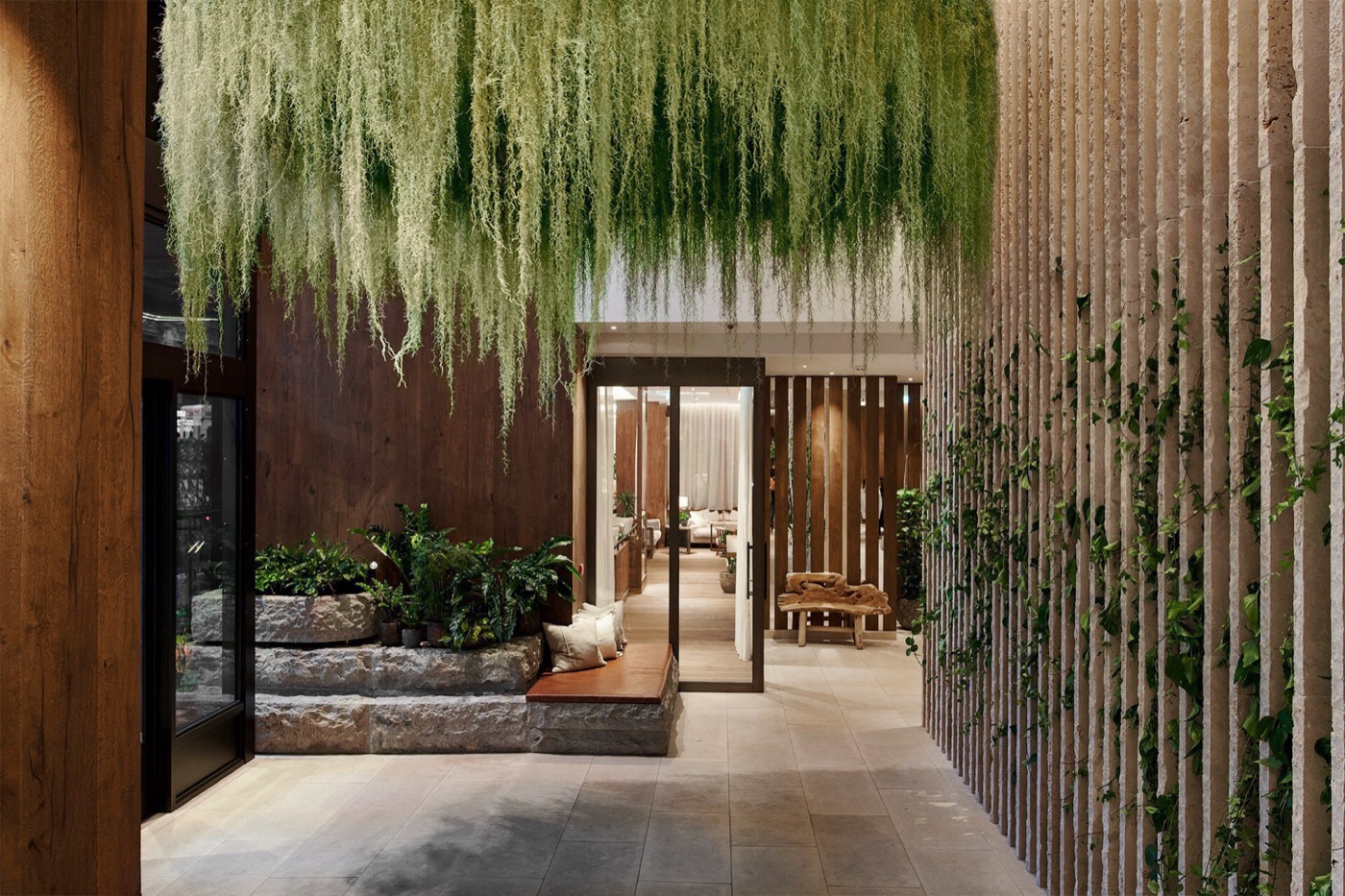
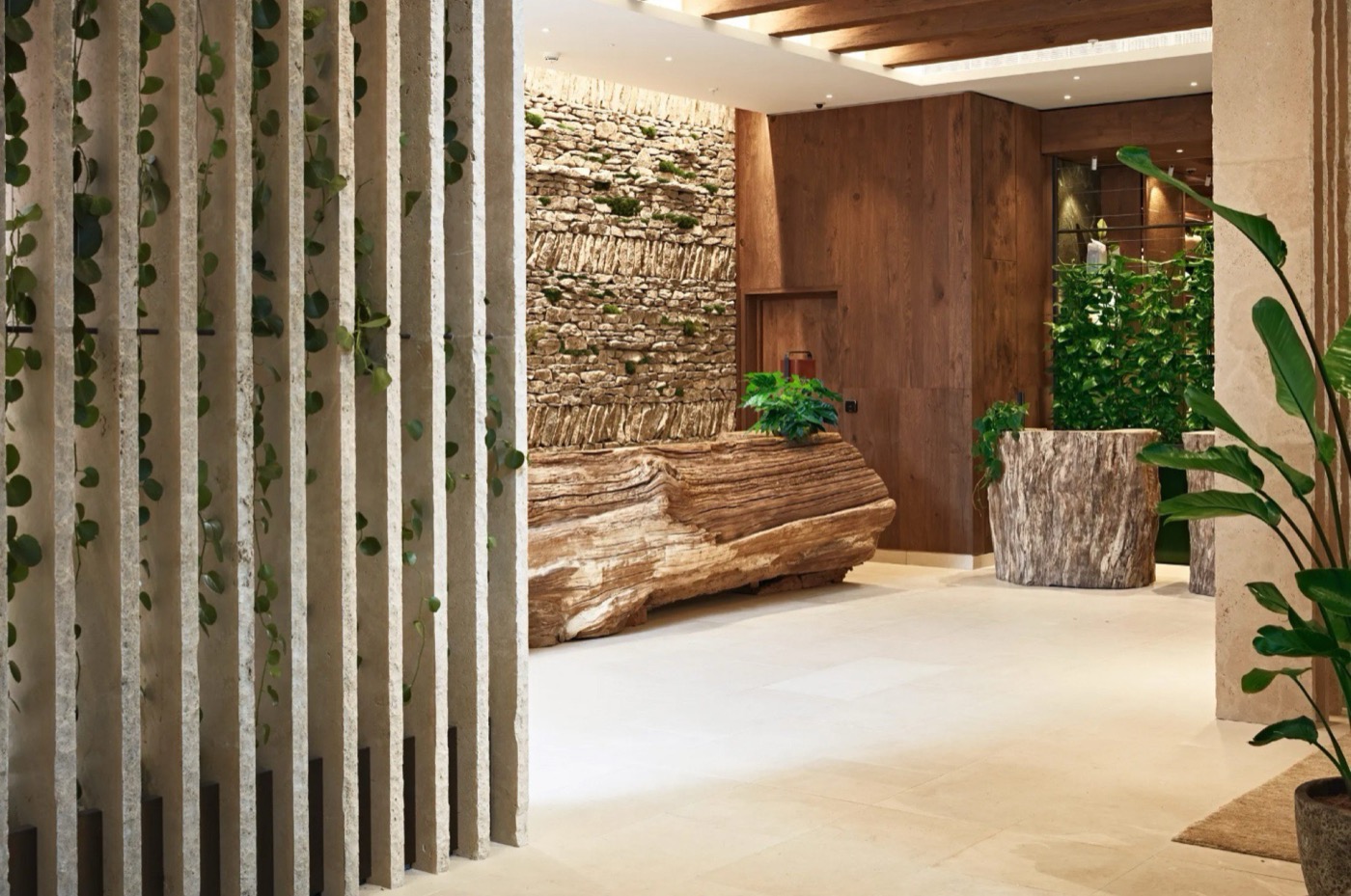
- Lobby at 1 Hotel Mayfair
-
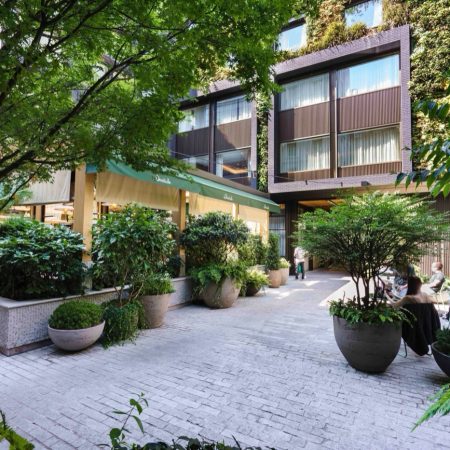
- PAD design – 1 Hotel Mayfai shoot of the living wall gardens and court yard area, June 2024 London UK
-
- PAD design – 1 Hotel Mayfai shoot of the living wall gardens and court yard area, June 2024 London UK
-
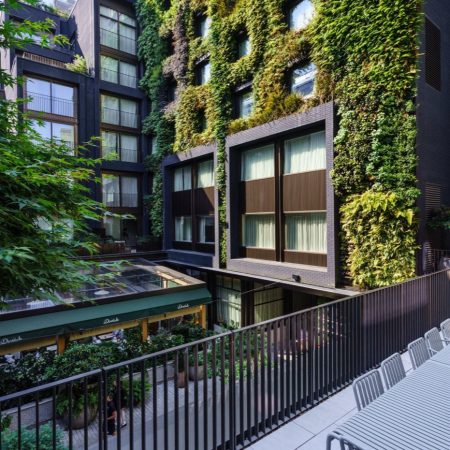
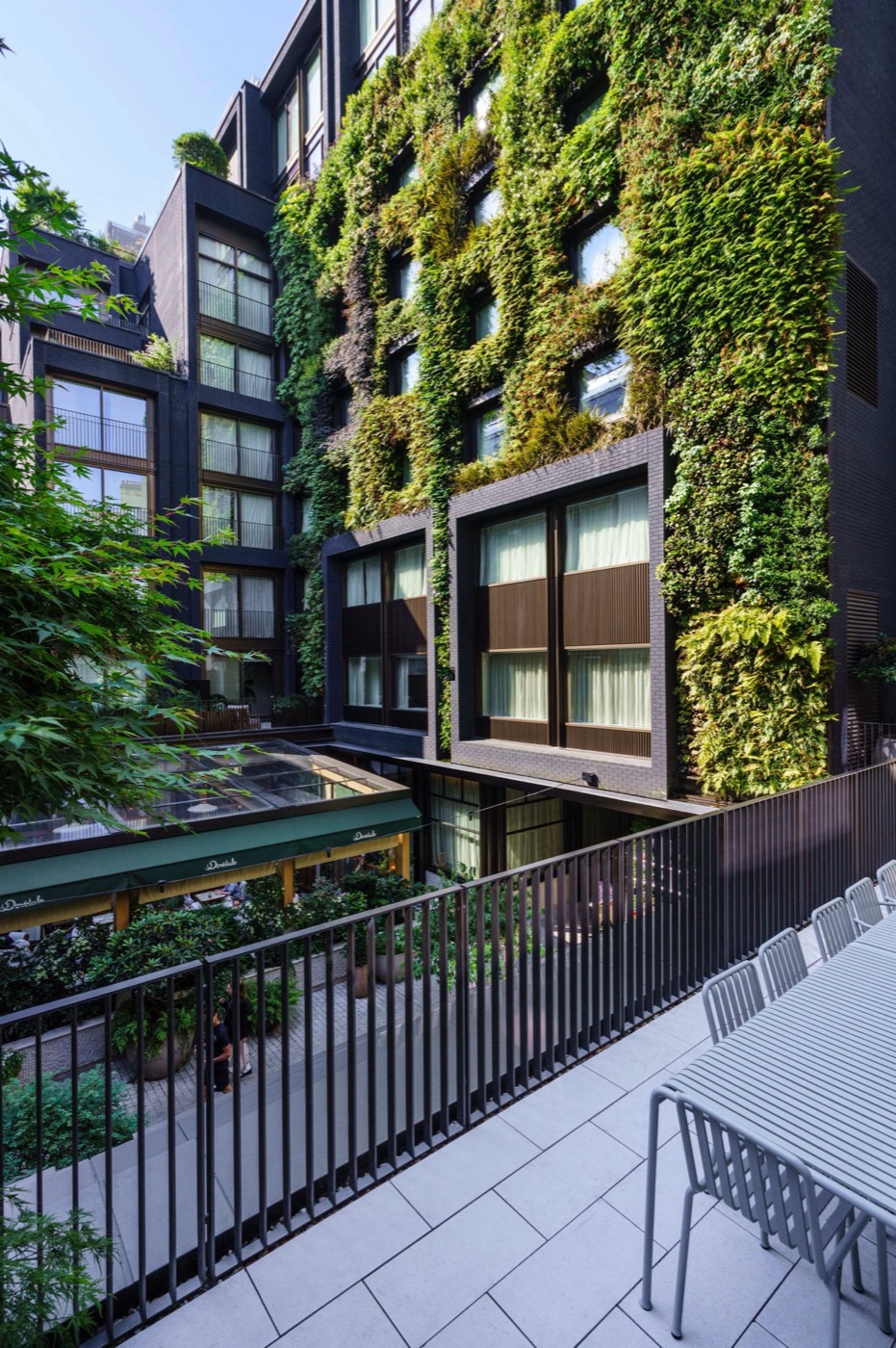
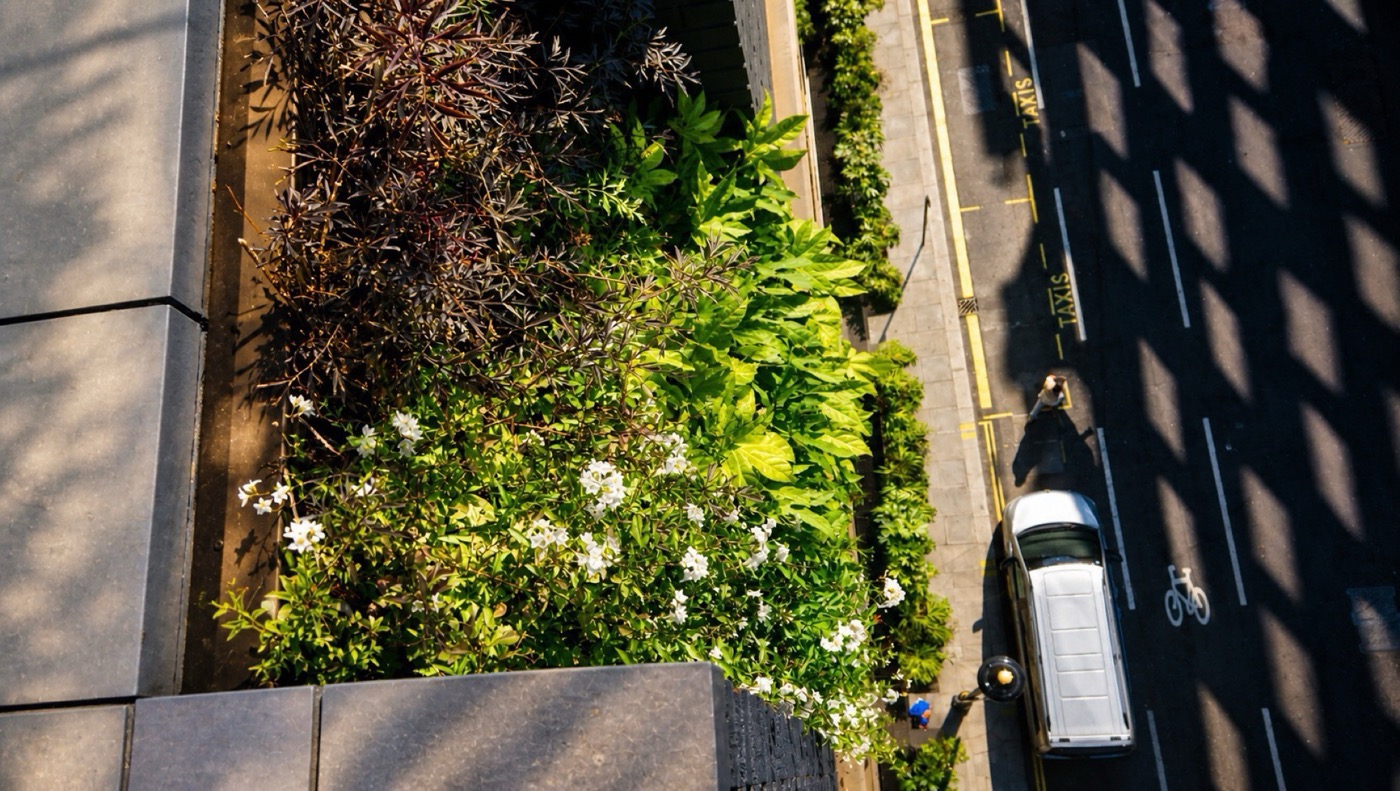
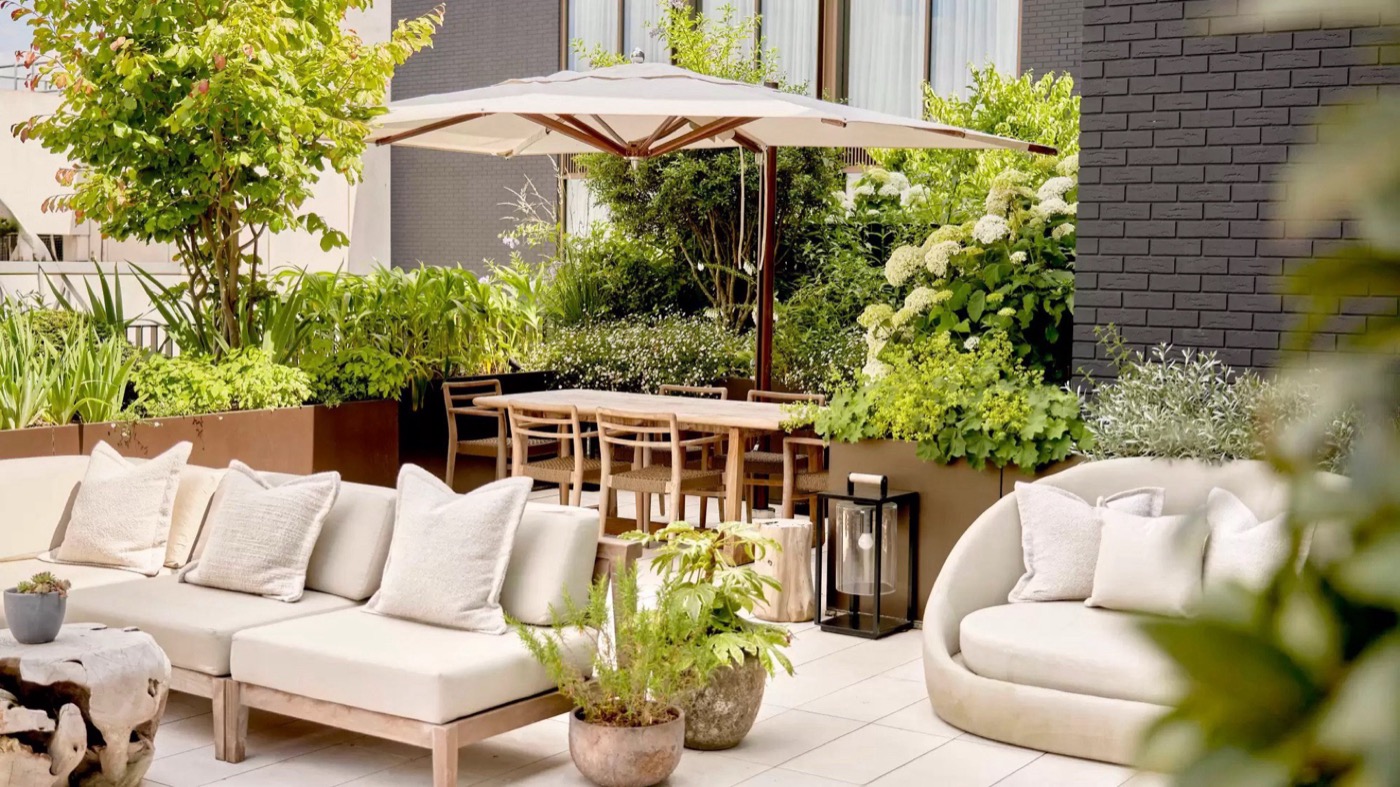
- PAD design – 1 Hotel Mayfai shoot of the living wall gardens and court yard area, June 2024 London UK
The Architectural graft: Retention as Radicalism
Sustainability is often framed as new tech, but here it began with the act of restraint. By retaining 90% of the existing structure and facade, we treated the building as a found object. This conscious decision to avoid the wrecking ball saved embodied carbon, allowing us to focus on grafting a botanical façade (a biophilic skin) onto a mid-century skeleton. Rather than build a hotel; we sought to re-animate a redundant object.
Spatial moves: From Tarmac to Landscape
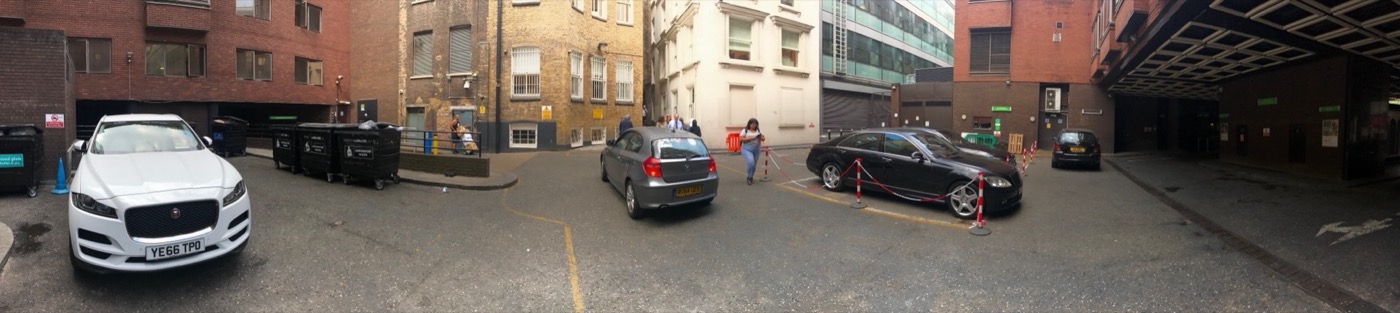
The project’s most transformative work lies hidden below the ground plane. We reclaimed a busy, inhospitable car park and inverted it into an accessible, public realm ‘sponge’.
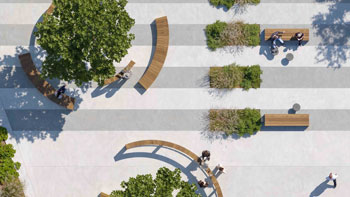
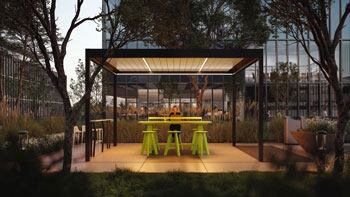
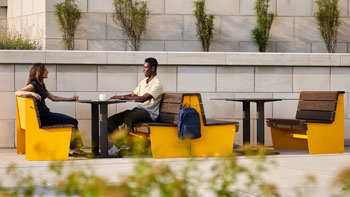
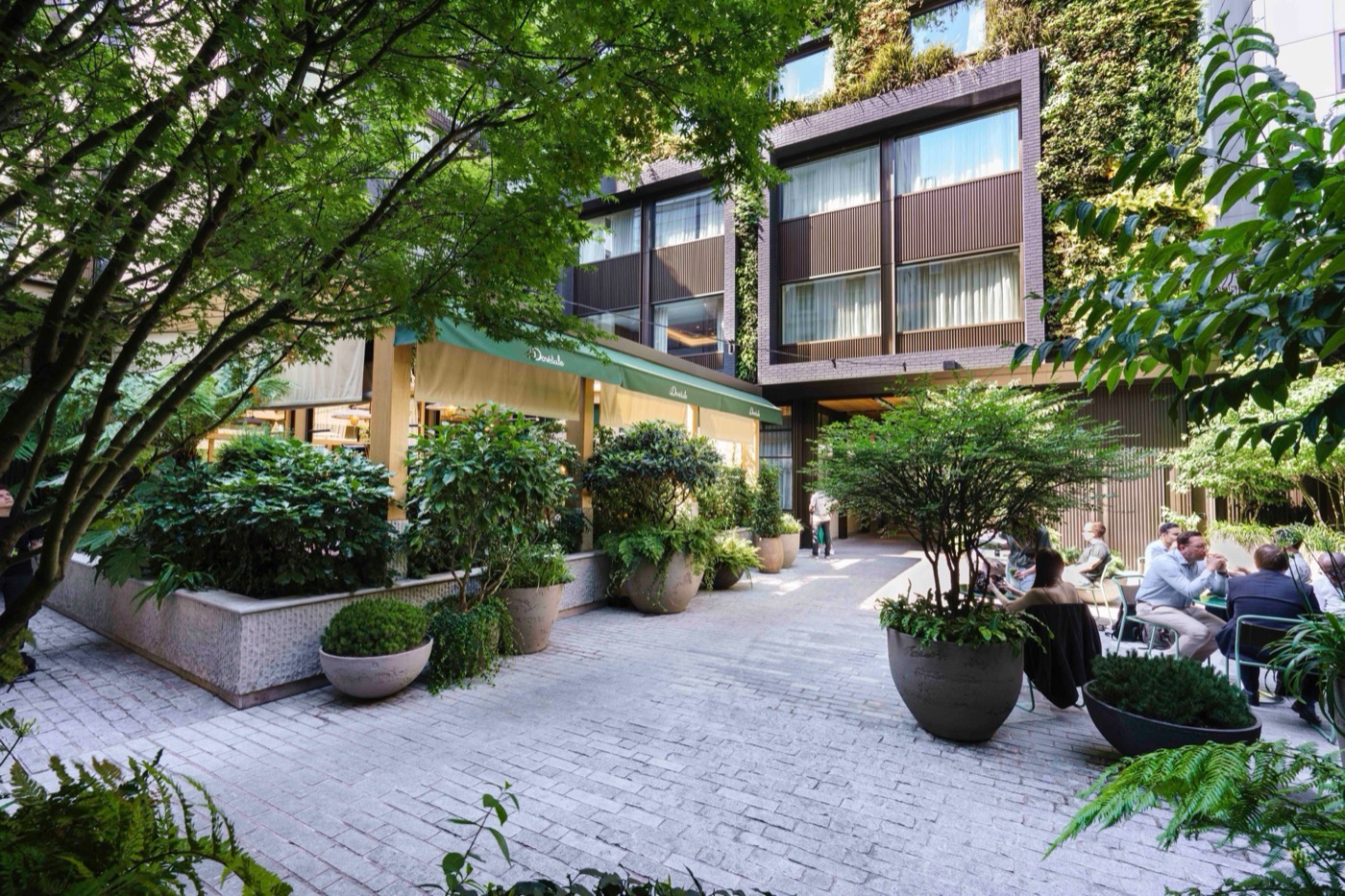
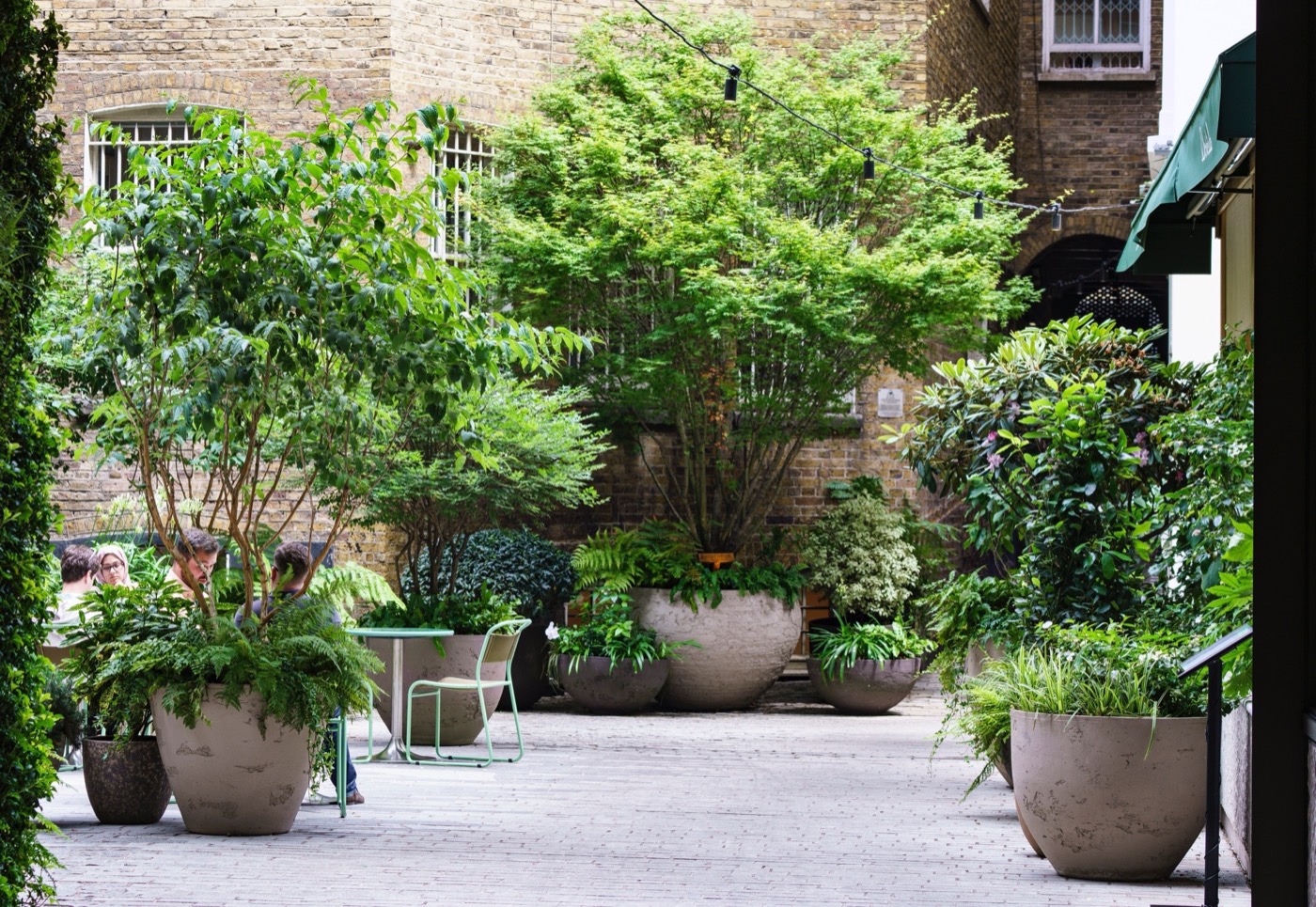
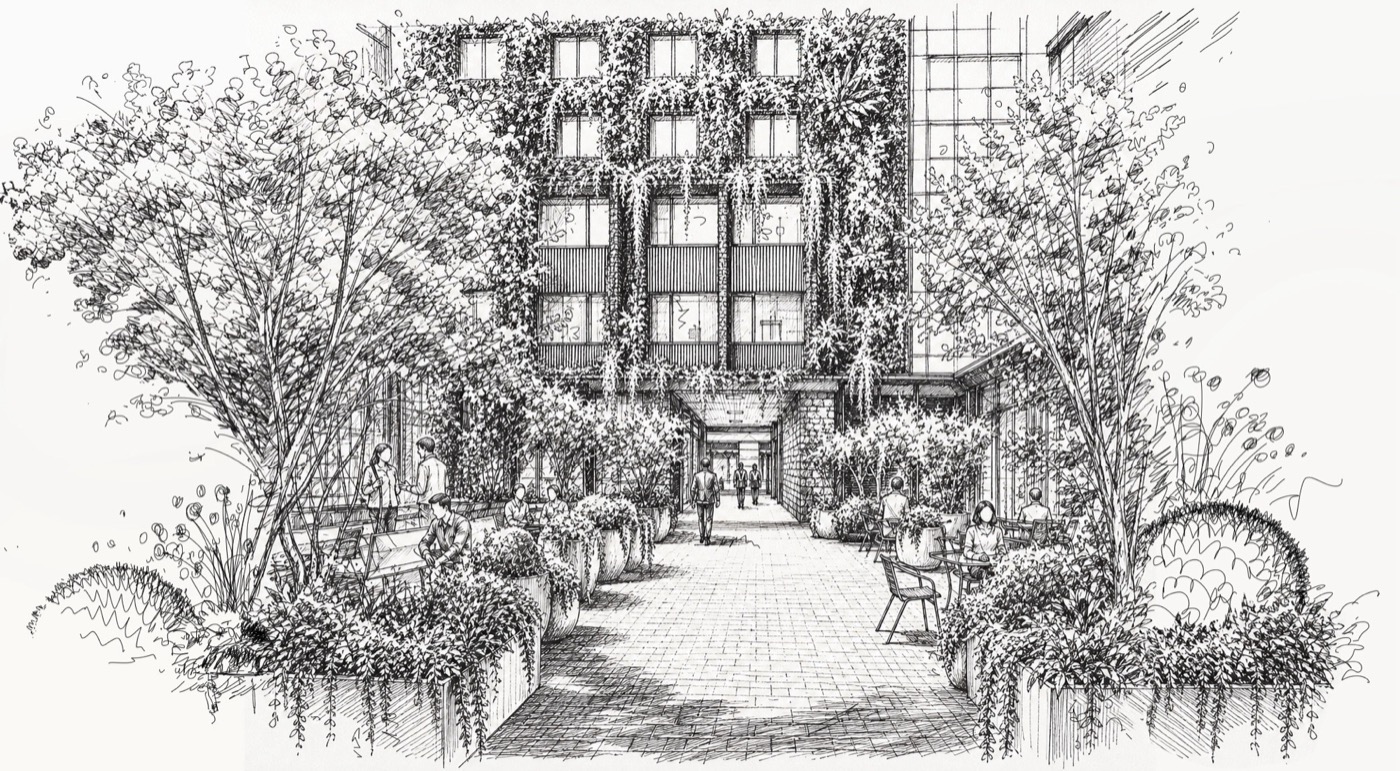
• The Courtyard Intervention: We dissolved the barrier between public and private. What was once an unsafe cut-through is now an open, publicly accessible garden courtyard. Reclaimed stone in odd sizes creates a moment of sensory deceleration, providing a pause effect and psychological break from the high-decibel hum of London’s traffic surrounding all sides. Underneath sits a sponge city approach with water retention as part of a holistic resilience strategy. Different strata provide a range of purposes: the top layer – filtration, the 2nd layer plugs into the public realm planting via capillary action, followed by a 3rd layer for longer-term year-round water storage.
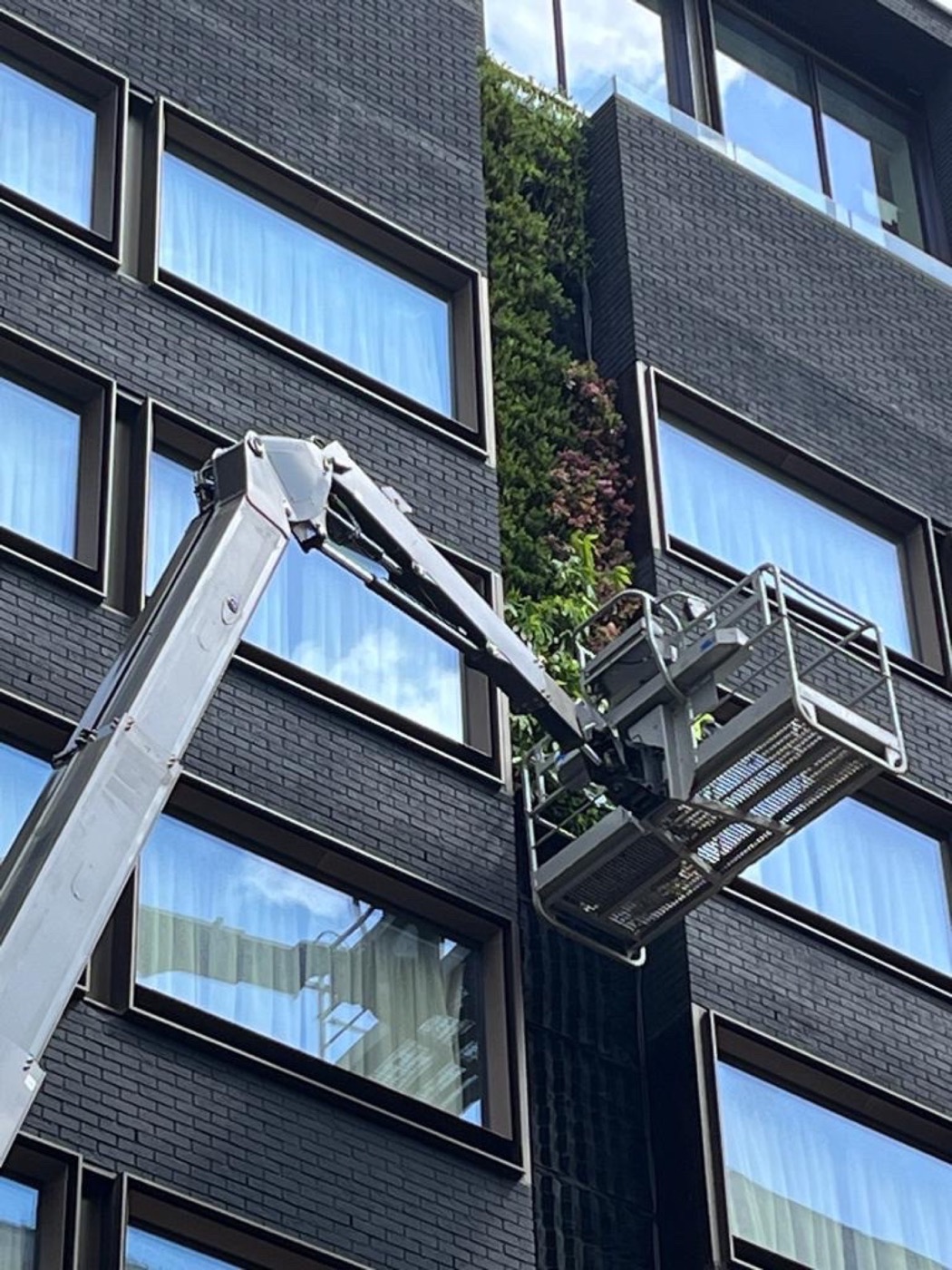
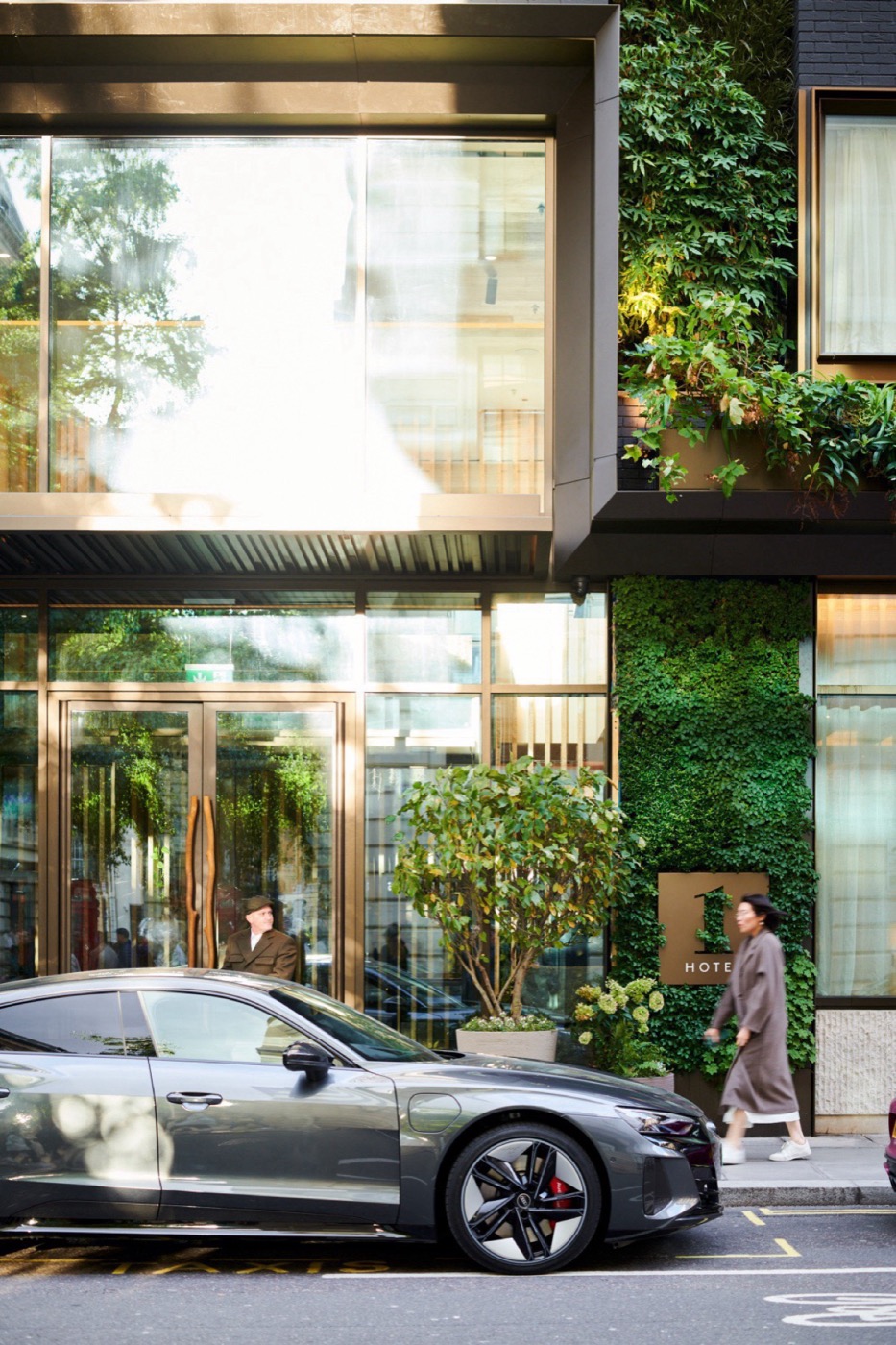
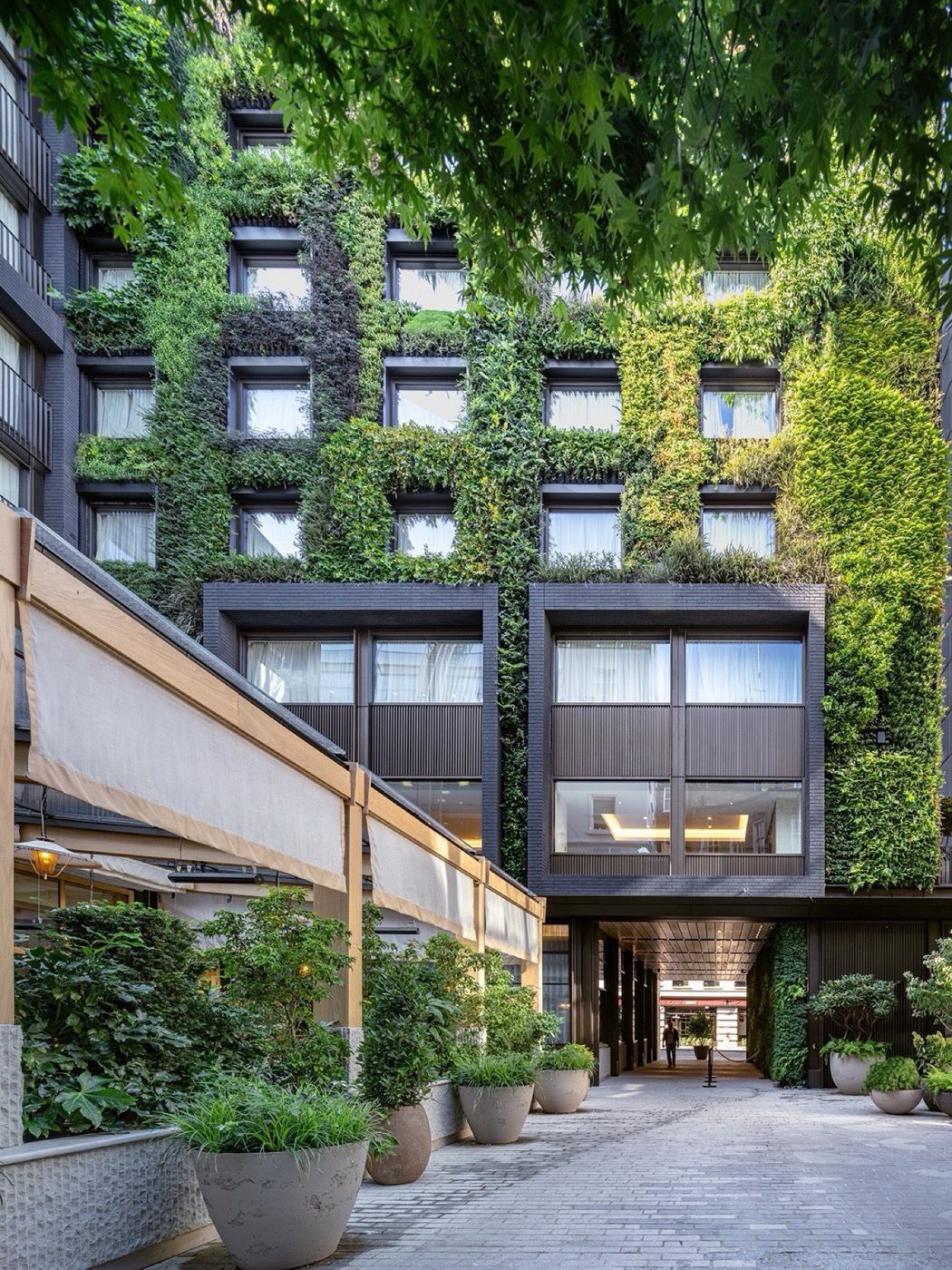
• The Vertical Forest: We created a biophilic skin of over 1,000m². This botanical façade is not a product but a bespoke engineered hydroponic Vertical Garden. This turned the old facade into a biological filter, connecting blue roof on top, via the bespoke hydroponic system. This system includes layers of recycled denim felt material, grit and plant roots to slow stormwater, filter and clean water, before it is directed to the retention system below. Whilst alleviating thermal loading to the hotel façade, the vertical garden acts as a waypoint for pollinators navigating the corridor between Green Park and the city’s richly planter residential squares.
Interior Biophilia: The Raw and the Refined
To continue these principles, the design logic flows from the roof gardens, façade and public realm into the hotel and commercial space’s marrow. We resisted the call for a synthetic luxury in favour of a more primordial materiality.
• The London Oak: The reception desk works like a piece of furniture but is a raw segment of a naturally felled oak (Quercus petraea), and a tactile connection to this native species to all who enter the building.
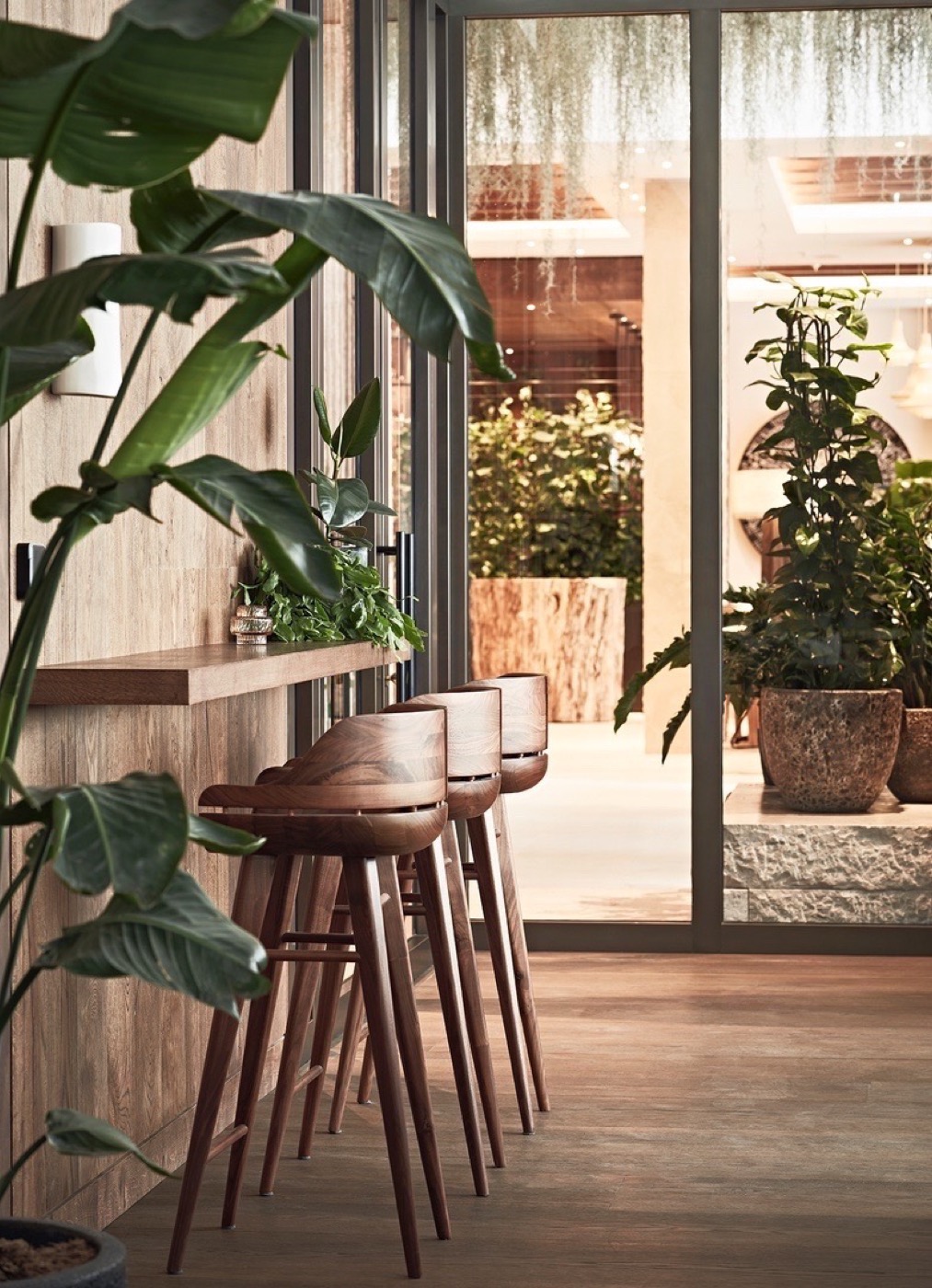
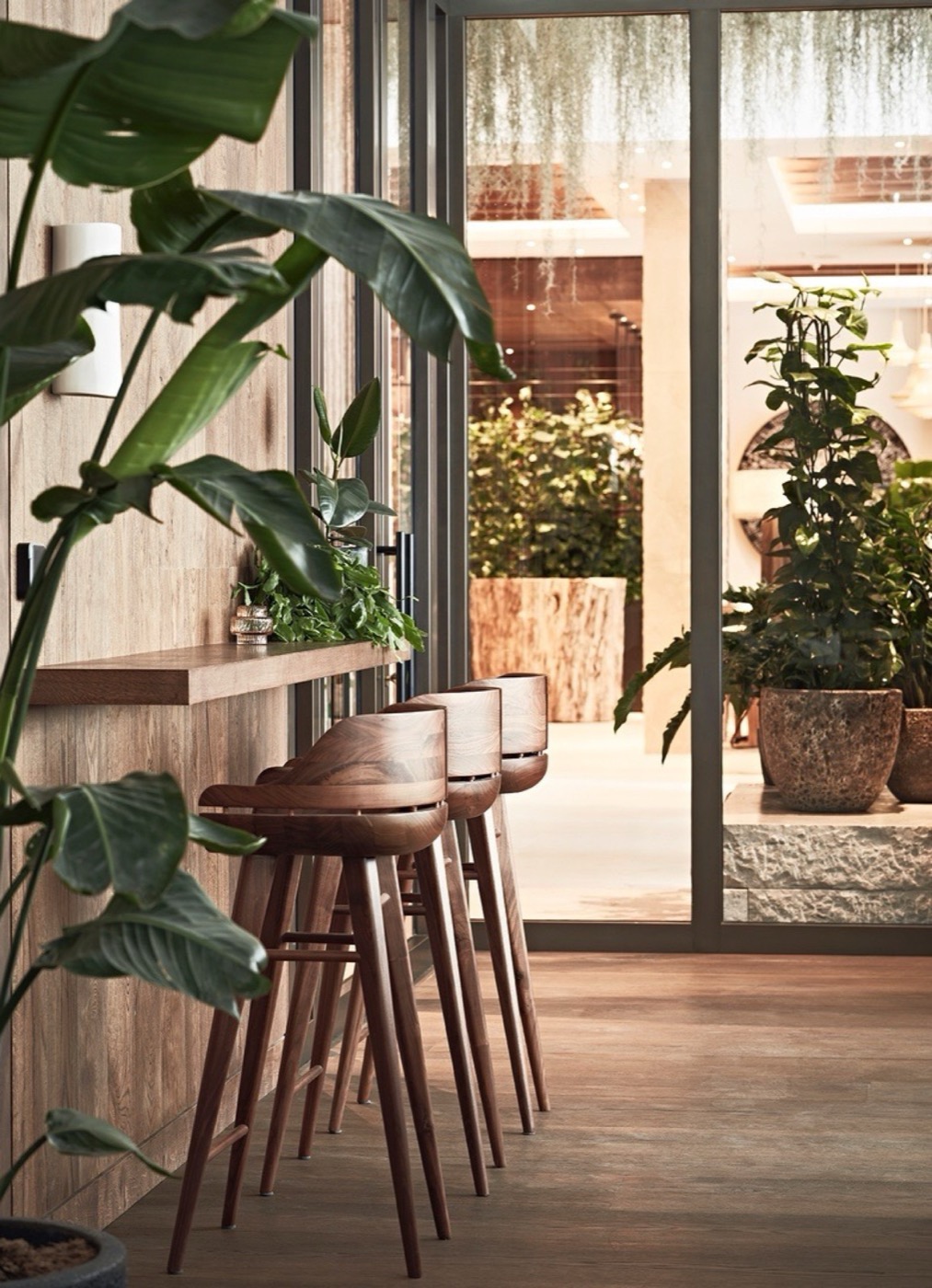
• The Green Lung: a hand-selection of over 4,000 indoor plants were chosen with the criteria for filtering harmful VOC’s. Species include Chrysanthemum morifolium and Chlorophytum comosum. Along hallways connecting bedrooms, night-time oxygenating plants were selected including Aloe barbadensis, and Dracaena trifasciata.
• The Biological Chandelier: A finishing touch is hovering above the lobby: a huge living moss installation, for which Tillandsia usneoides was selected. As an atmospheric epiphyte, the species lacks a root system and its entire physiology is fine-tuned to “sample” the surrounding environment, making it a powerful biomonitior for air quality.
Technical Ecology: The Numbers
From the street level to the sky, creating a multi-layered ecological stack:
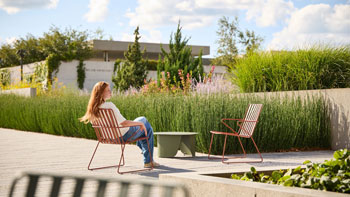
• 1,000m² of Ecological Roof Gardens, for local biodiversity, providing refuge for invertebrates and birdlife in response to the Local Authority’s Biodiversity Action Plan target species.
• 19,000 plants of Botanical Façade: a bespoke engineered vertical garden and filtration system.
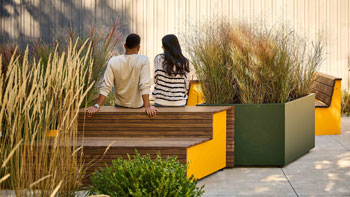
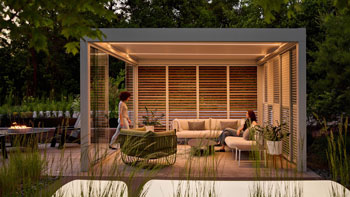
• 700m² of Accessible Terraces: Spaces where the human guest becomes a secondary participant in the immersive landscape, surrounded by species selected for their wide floristic range.
• 450m² of New Public Realm: A ‘gift’ of green space given back to the city, proving that dense urban redevelopment can – and must – enhance the public realm and perform as much as it appears.
The Conclusion: A New Standard of “Prime”
1 Hotel has moved Mayfair beyond the era of the historic manicured garden and represents a shift toward a true performative landscape. We have aimed to demonstrate that the most prestigious real estate in London can be reclaimed for nature, turning a static building into a breathing, growing, and evolving part of the urban fabric.
51.507707437872845, -0.14189559847157995
74332


LILA 2026 Sponsor