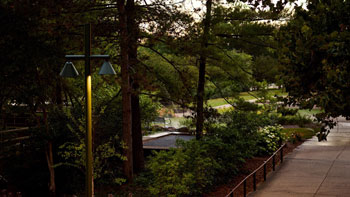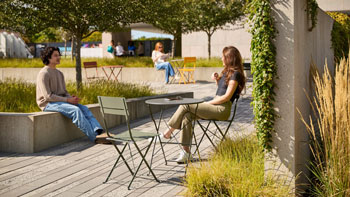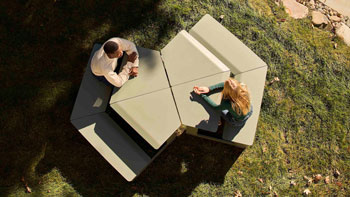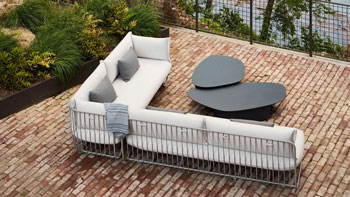
Munich, Angela-Molitoris-Square
www.lohrer-hochrein.de/
2026 Public Projects / Germany / Built in 2024 /

![Urban Frame Located at the threshold of Traunstein’s town square – the vibrant “heart of the city” – Maxplatz was historically dominated by vehicular infrastructure. Three traffic lanes, on-street parking, and narrow sidewalks constrained its potential as a place of stay. Guided by the ambition to create a flexible, representative, and high-quality civic space, the […]](https://landezine-award.com/wp-content/uploads/2026/03/2025-07-31-Traunstein_©christoph-mittermuller-3009-600x400.jpg "Traunstein, Neugestaltung Maxplatz")
![Urban Regeneration in a Historic Context Wangen im Allgäu exemplifies the archetypal small town: a compact historic core, well-preserved architectural layers, and scenic surroundings. Yet, the 2024 landscape exhibition became the catalyst for a comprehensive urban redevelopment—centered on the ERBA site, a former textile factory complex on the edge of the old town. This 19th-century […]](https://landezine-award.com/wp-content/uploads/2025/05/00-Wangen_©Thorsten_Jochim1-600x450.jpg "Wangen Landscape Design Exhibition 2024 by lohrer.hochrein landschaftsarchitekten und stadtplaner gmbh")
Embedded in a Larger Landscape
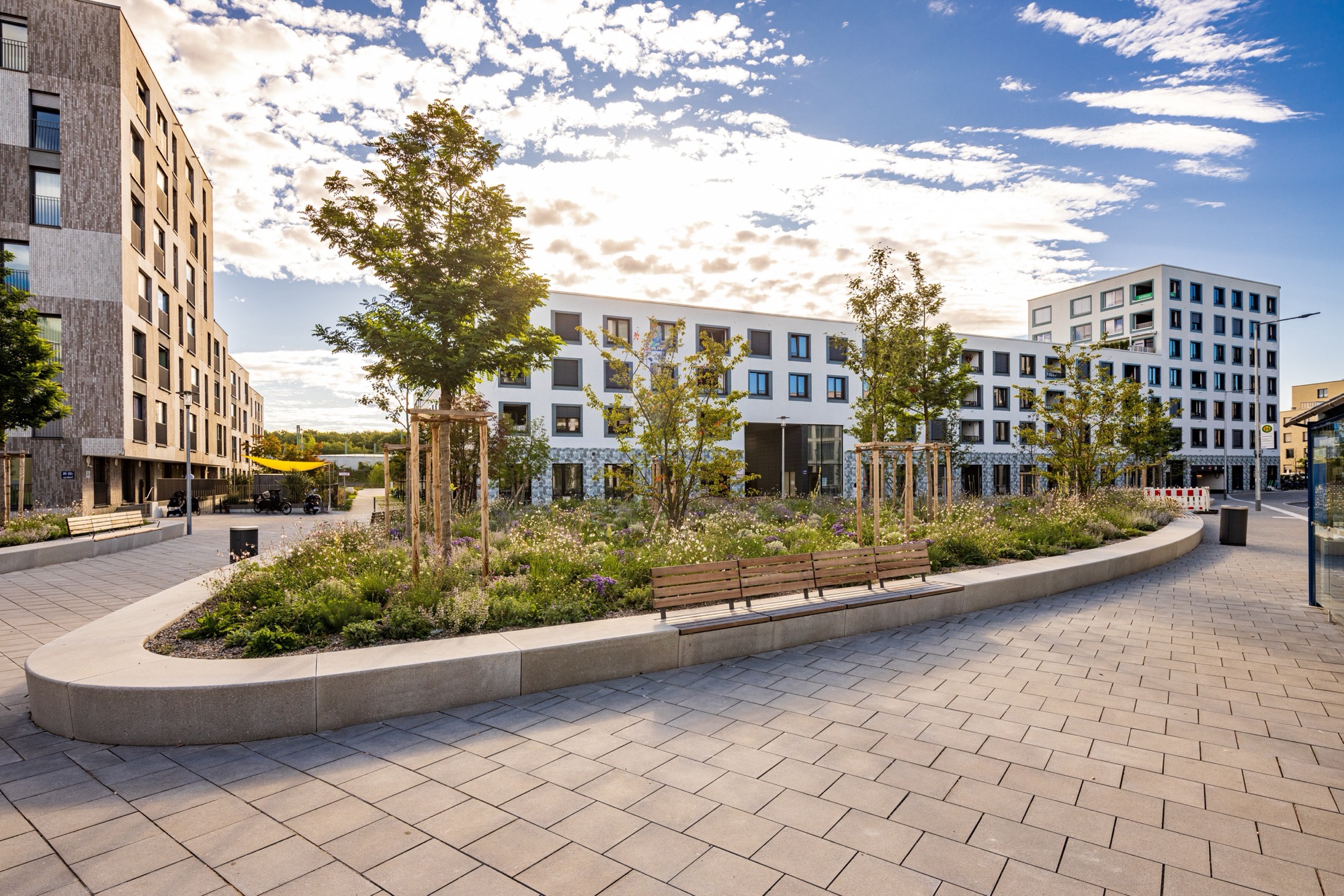
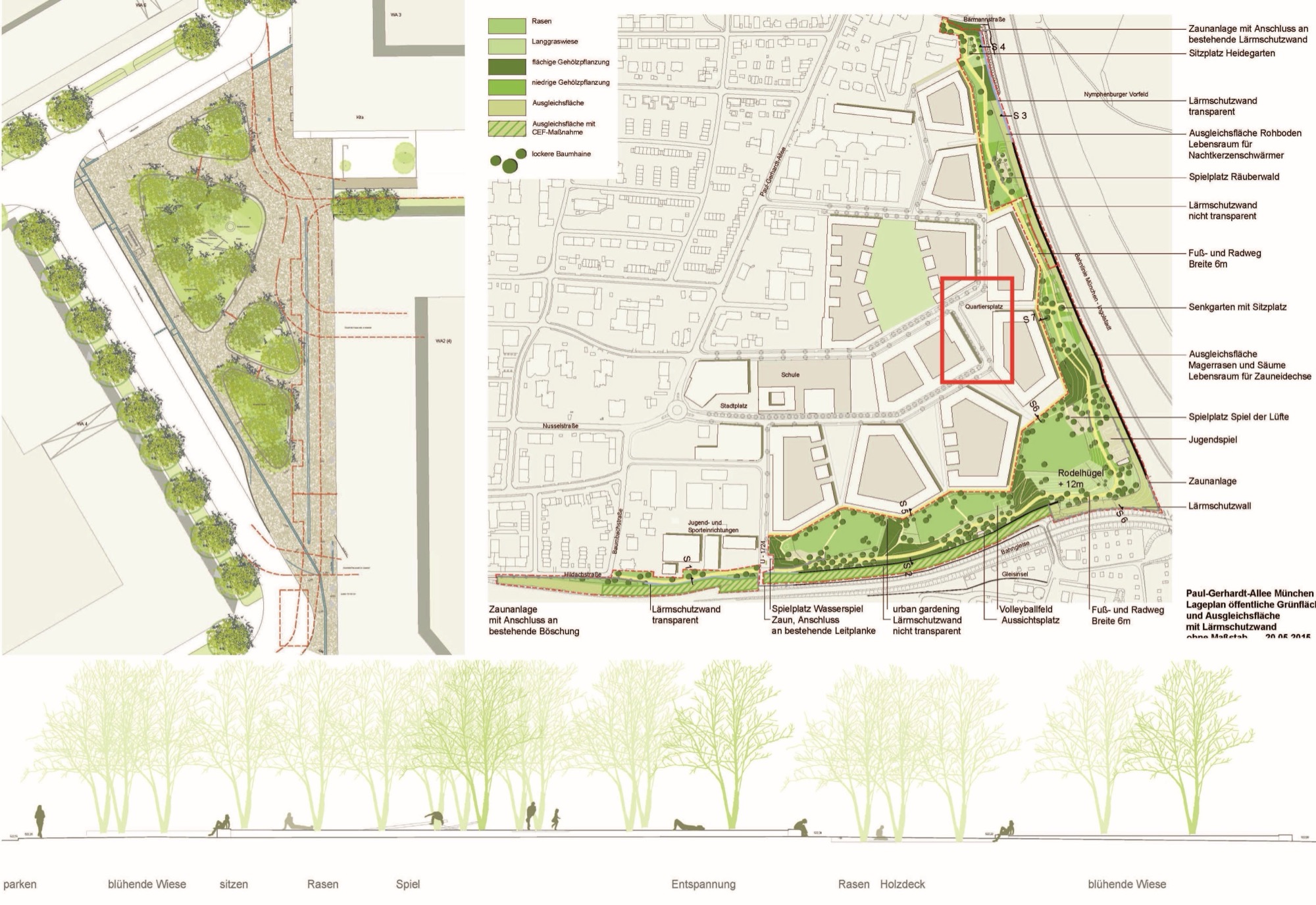
The neighbourhood square is conceived as a subsequent commission and forms part of the spatial continuum of the previously realised landscape park along Paul-Gerhardt-Allee in western Munich. Within this superordinate open space framework, it acts as a connective hinge – mediating between the residential edges and the larger green system while establishing its own distinct identity as an urban place.
A Framework for Everyday Urban Life
The project translates the general open space objectives of the development into a site-specific spatial figure. It provides accessible, multifunctional open space for recreation and everyday use, contributes to a clearly legible green structure, strengthens ecological performance, and reduces surface sealing.
At the same time, the square is envisioned as a communicative urban space – a lively meeting point for residents and visitors, offering diverse opportunities for stay and informal appropriation.
Between Movement and Occupation
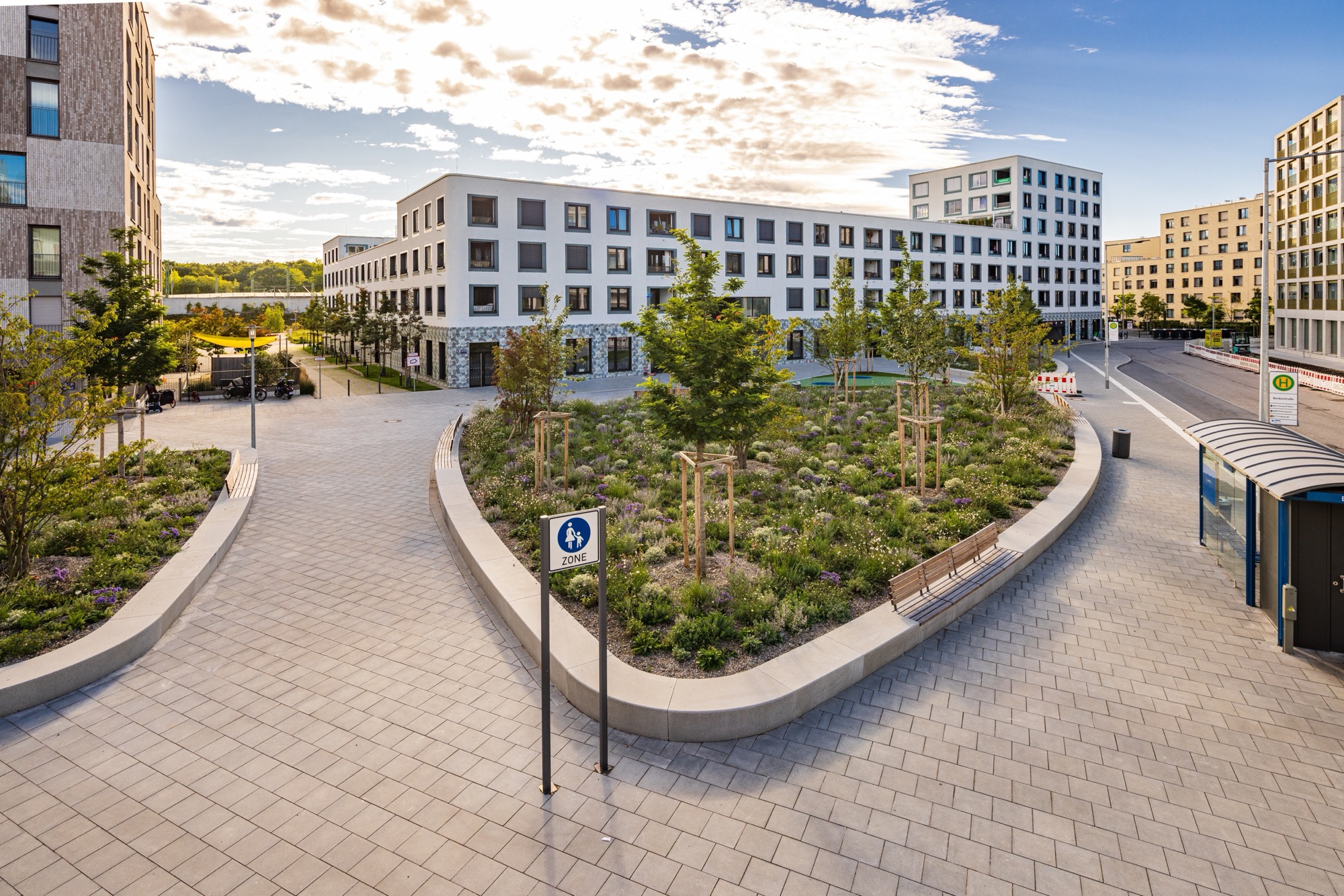
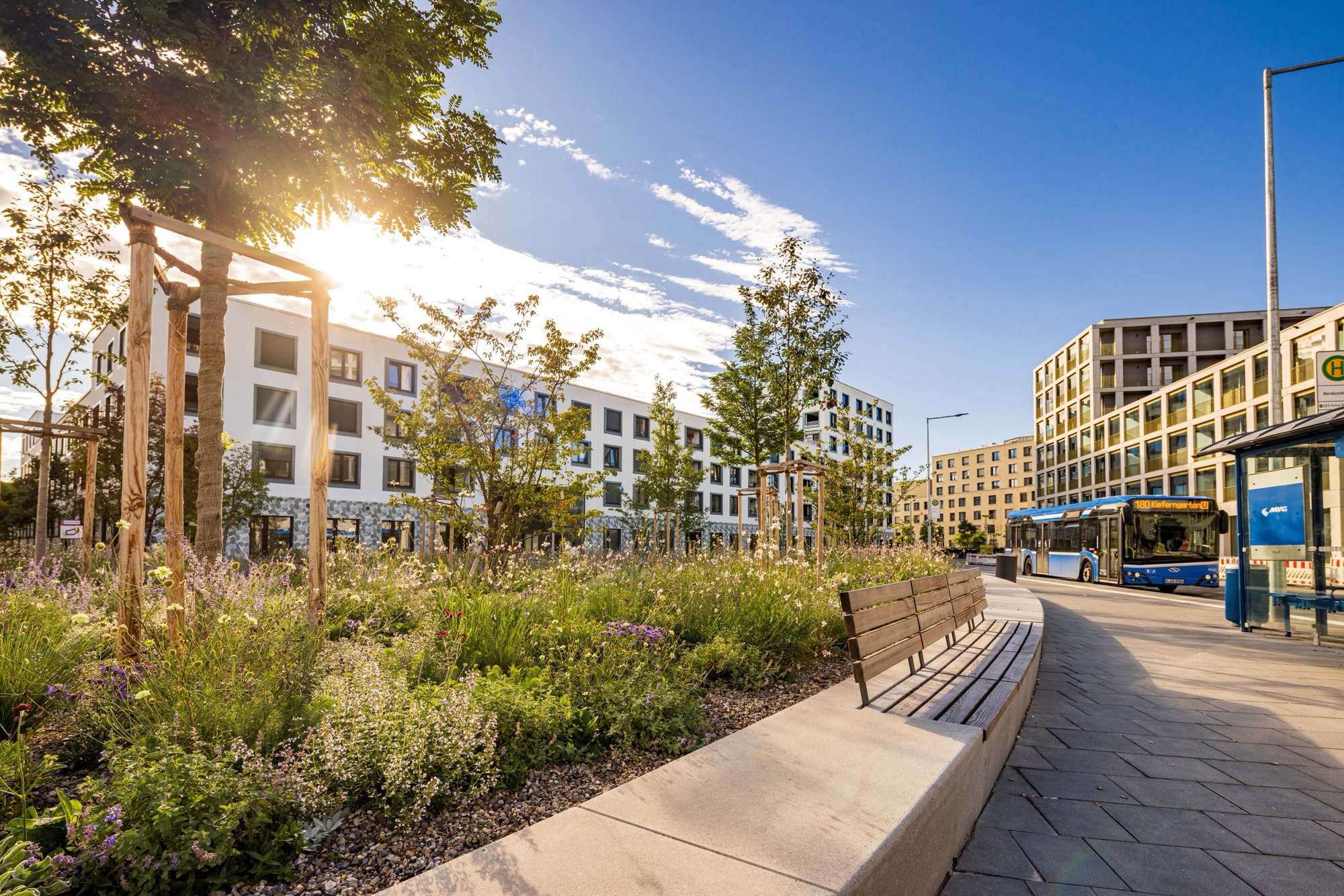
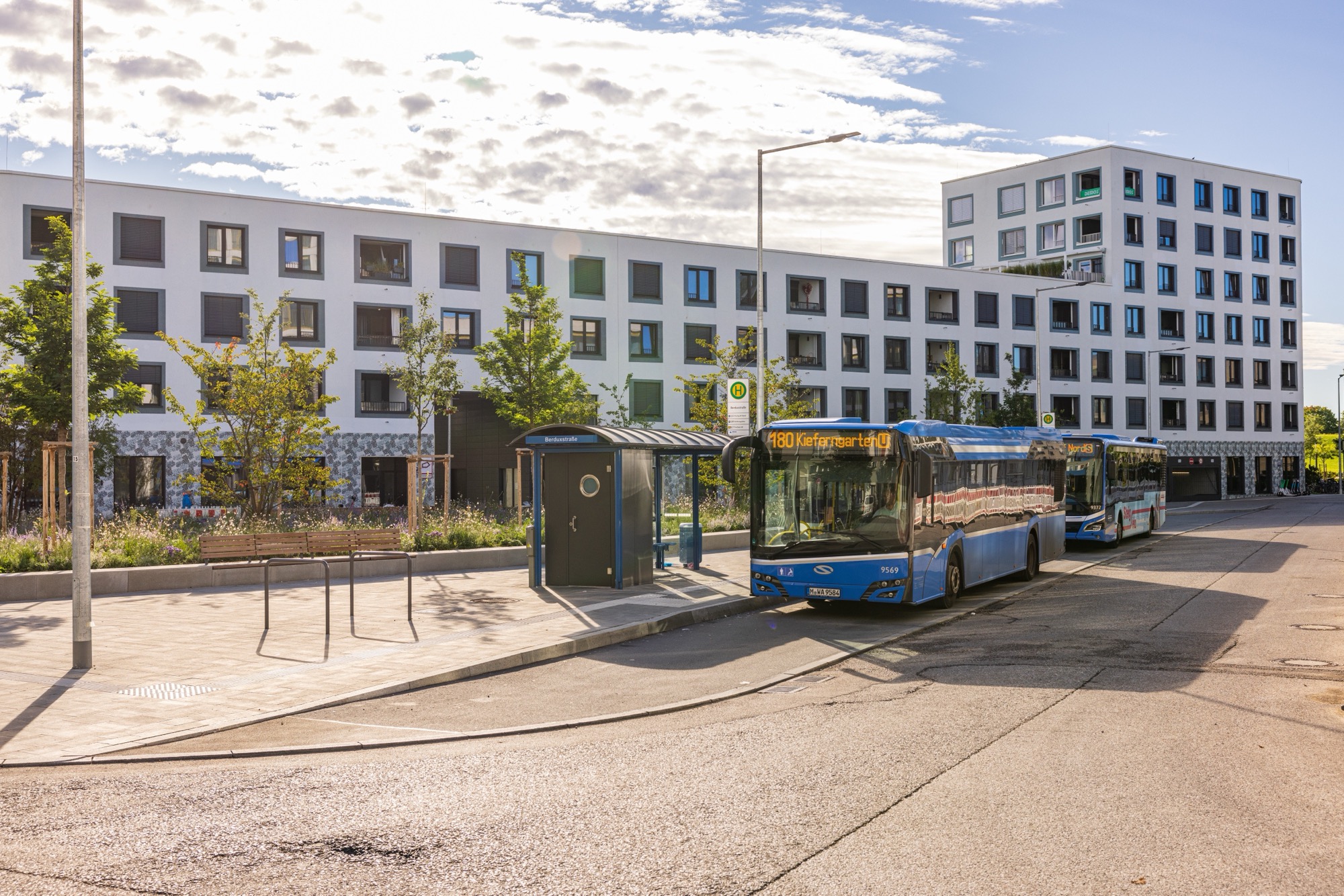
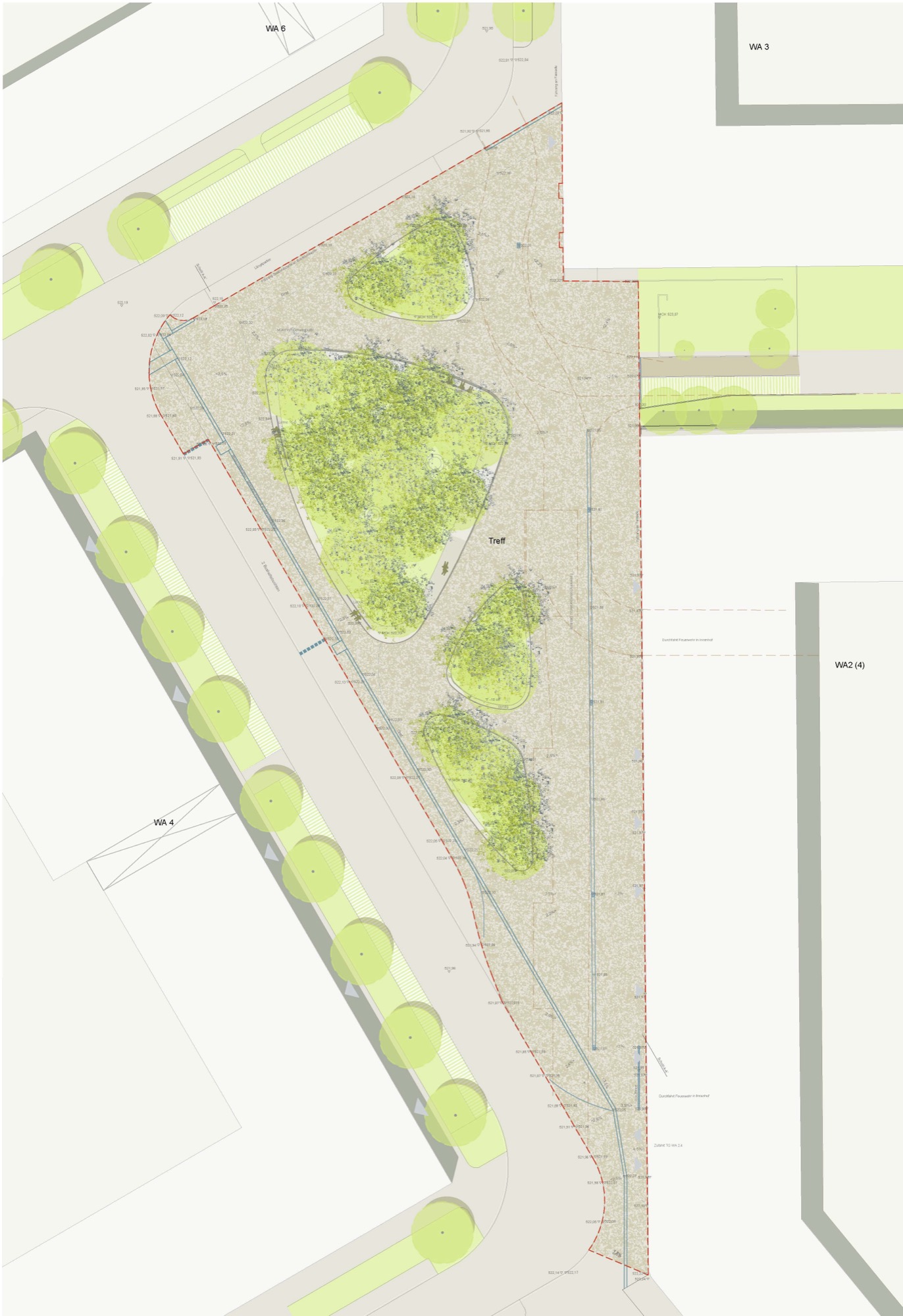
Defined as a “traffic area of special designation” (internal square), the space accommodates overlapping demands of circulation, access, and social use. Pedestrian and cyclist flows traverse the site, connecting to the green corridor to the east, while emergency routes, bus stops, and parking are carefully integrated.
The spatial framework remains deliberately flexible, allowing for future adaptation to changing ground floor uses. Although active uses are intended to support urban vitality, no gastronomic functions are currently implemented.
Islands in Flow
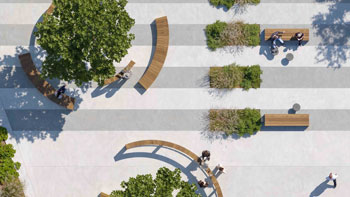
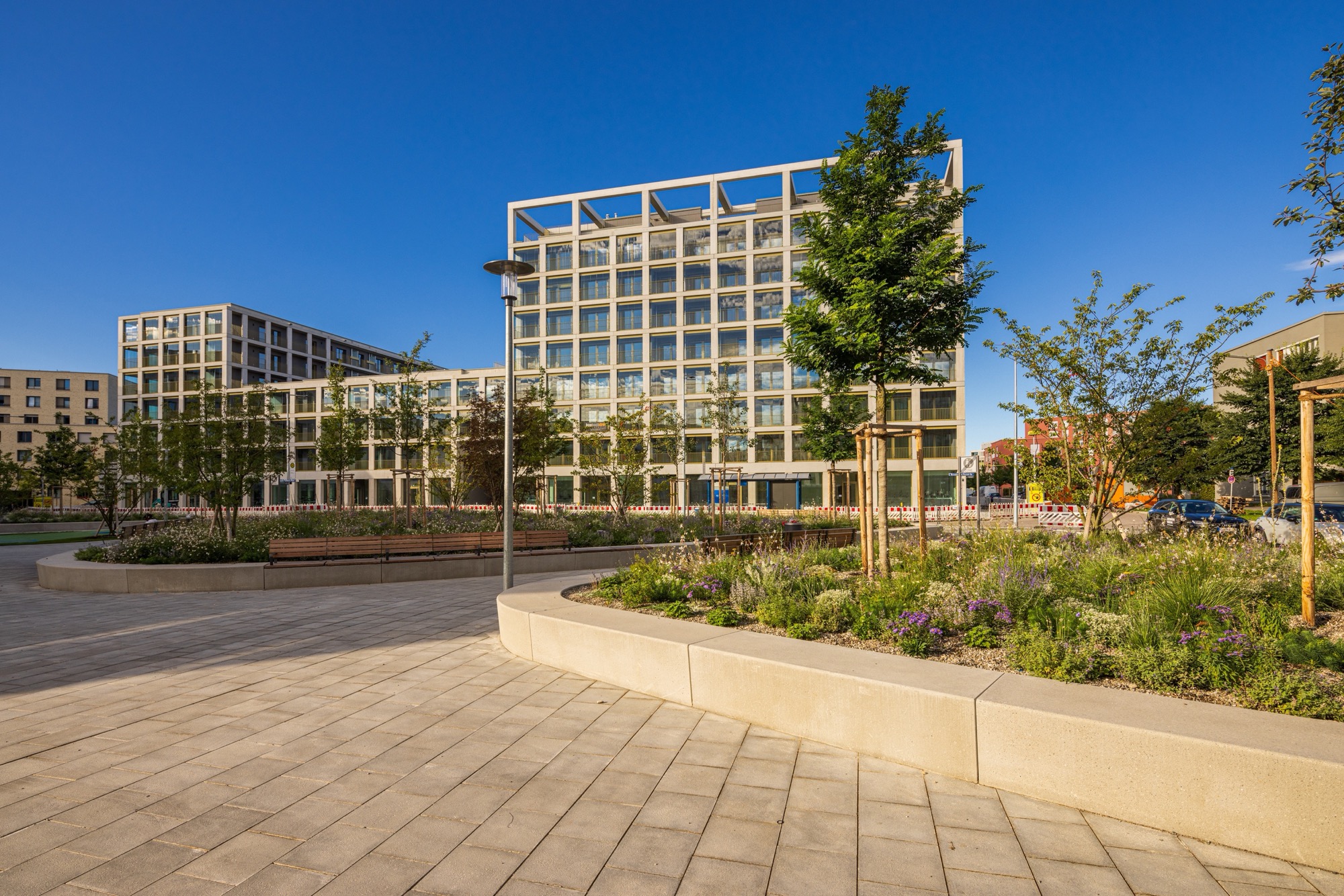
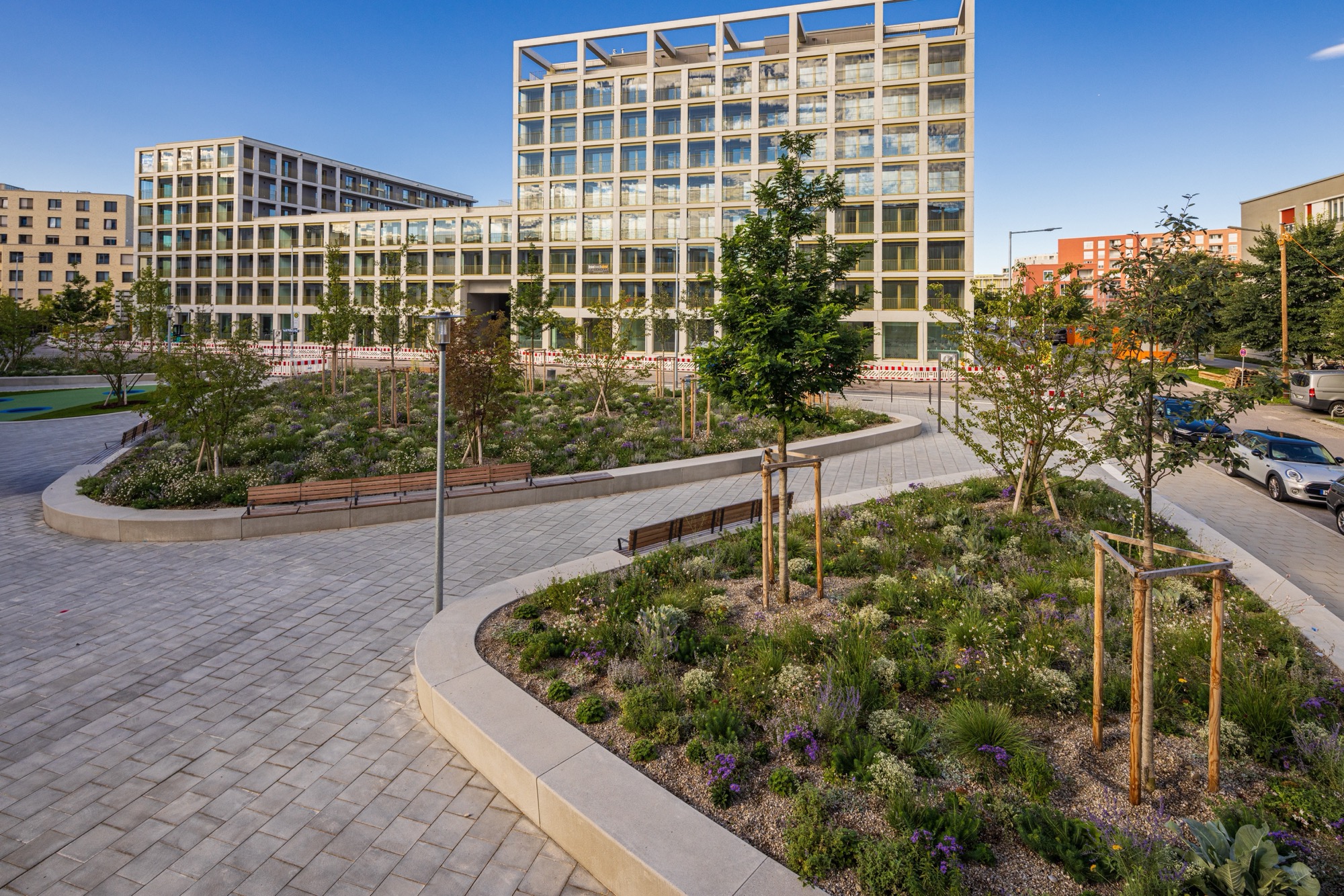
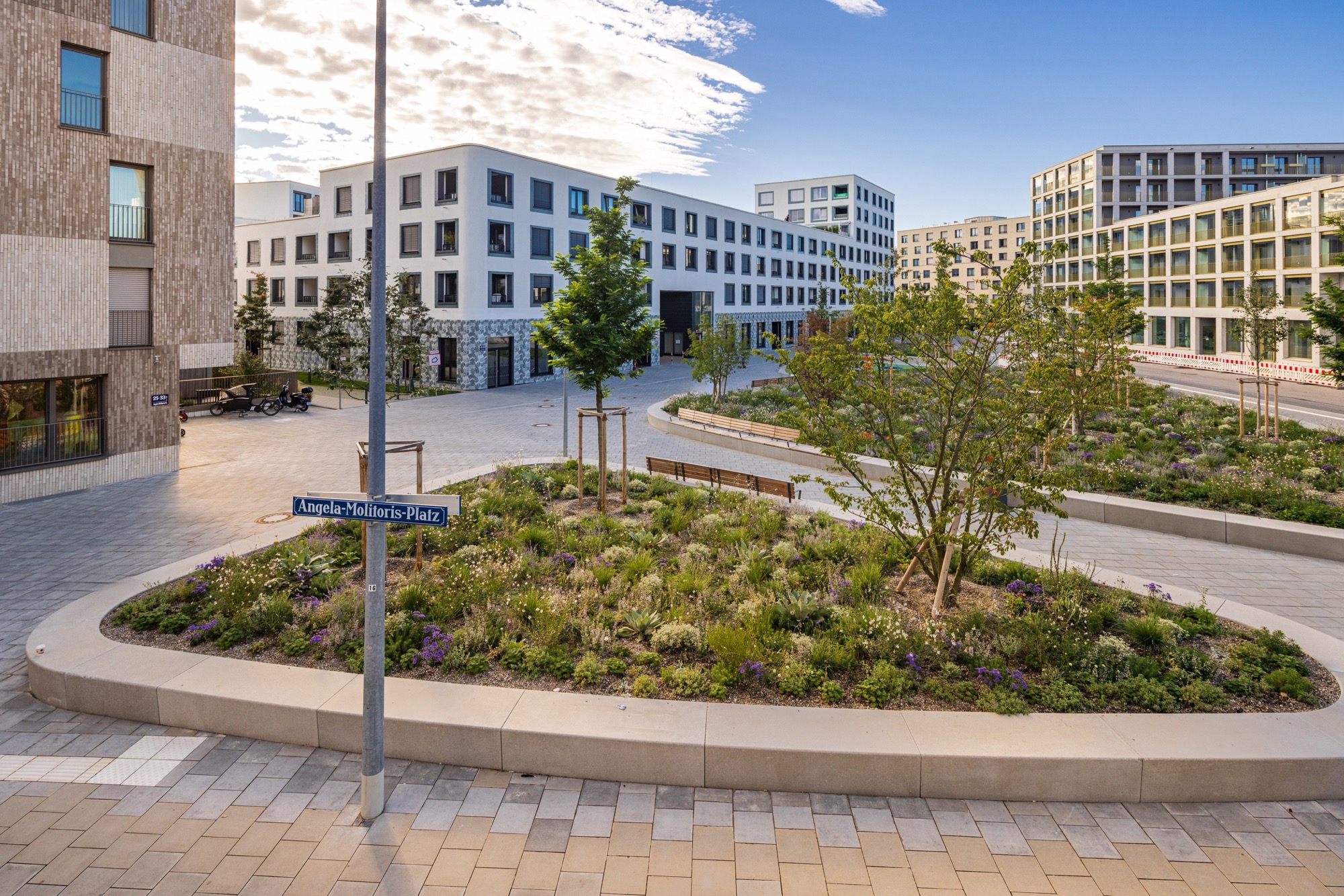
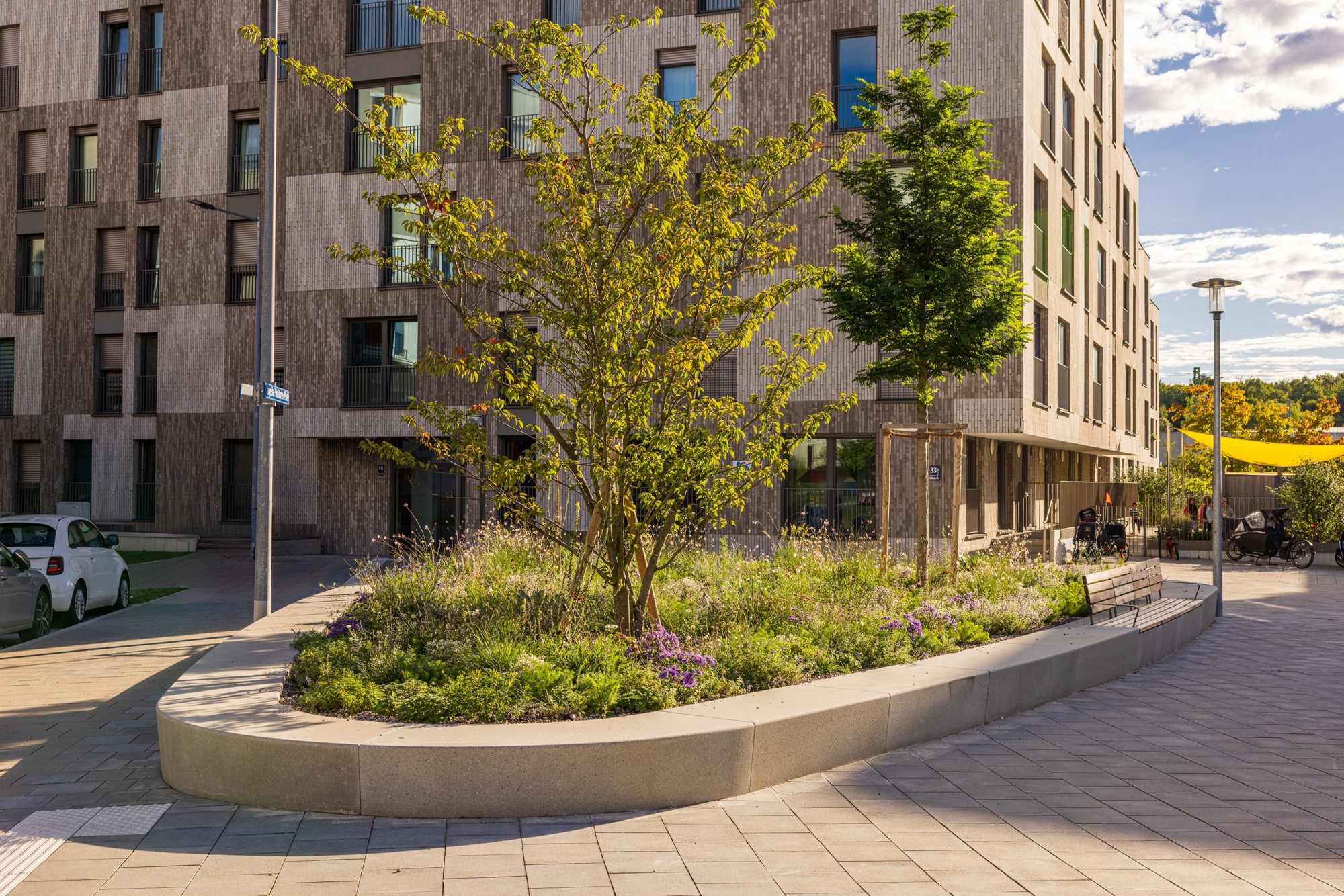
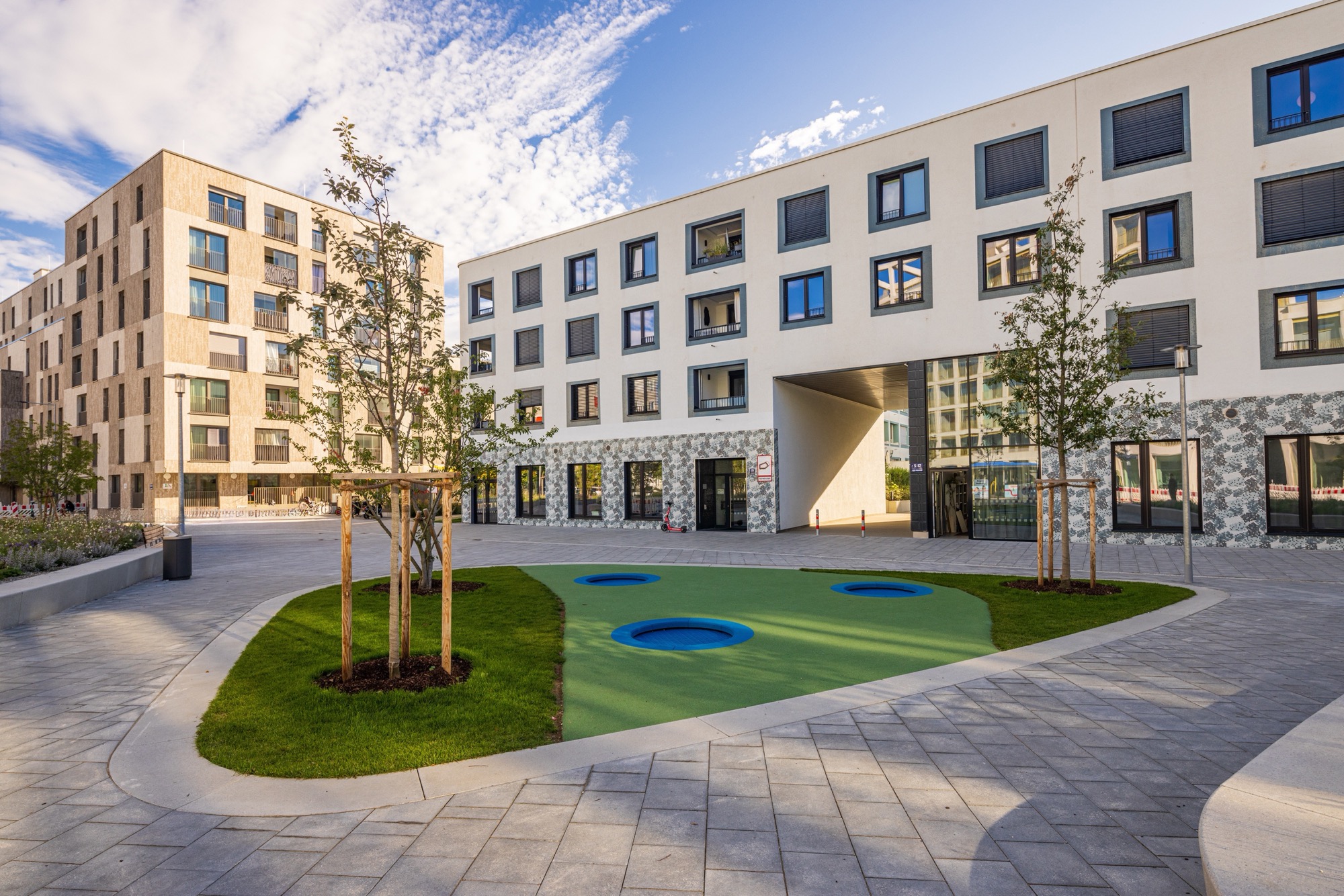
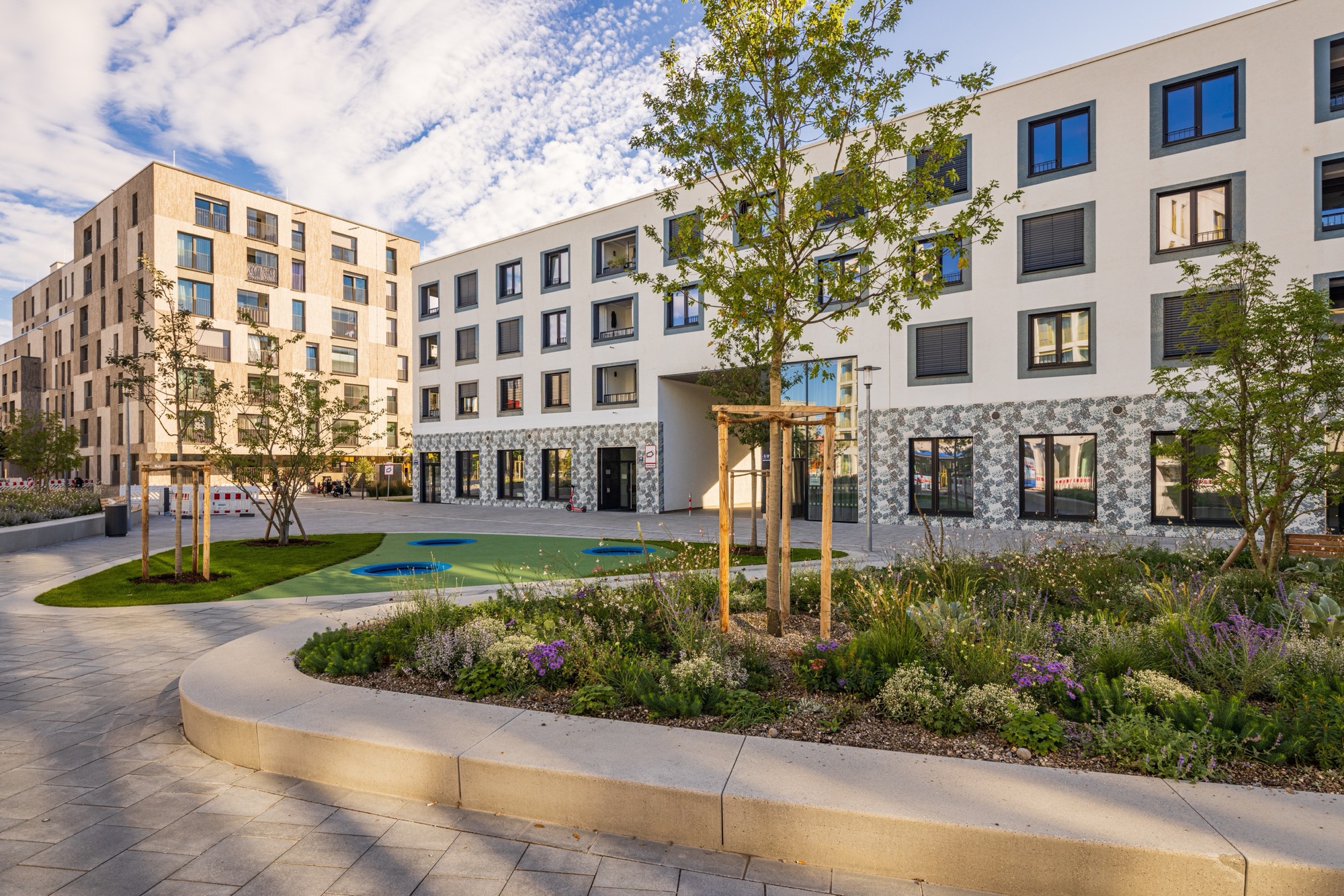
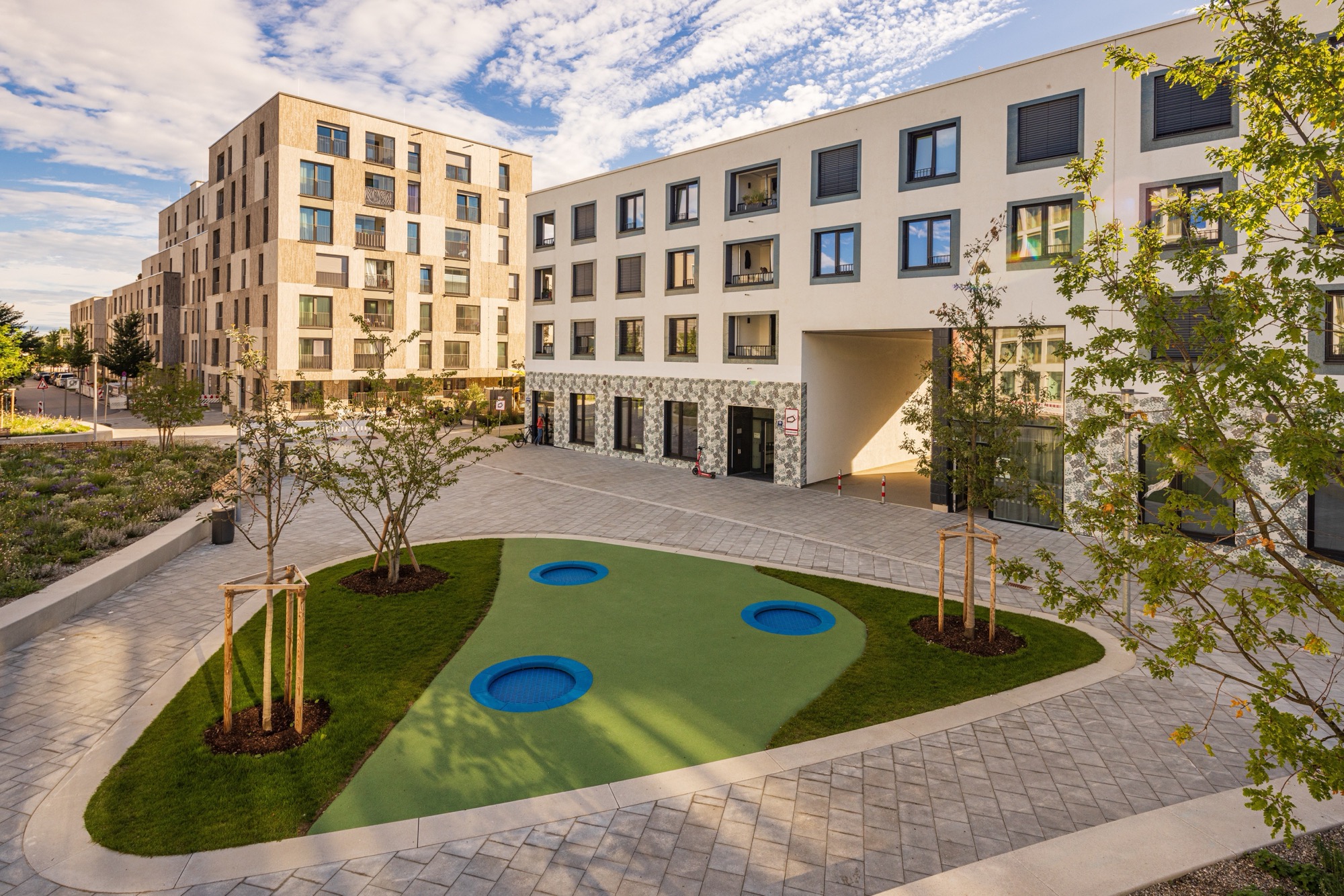
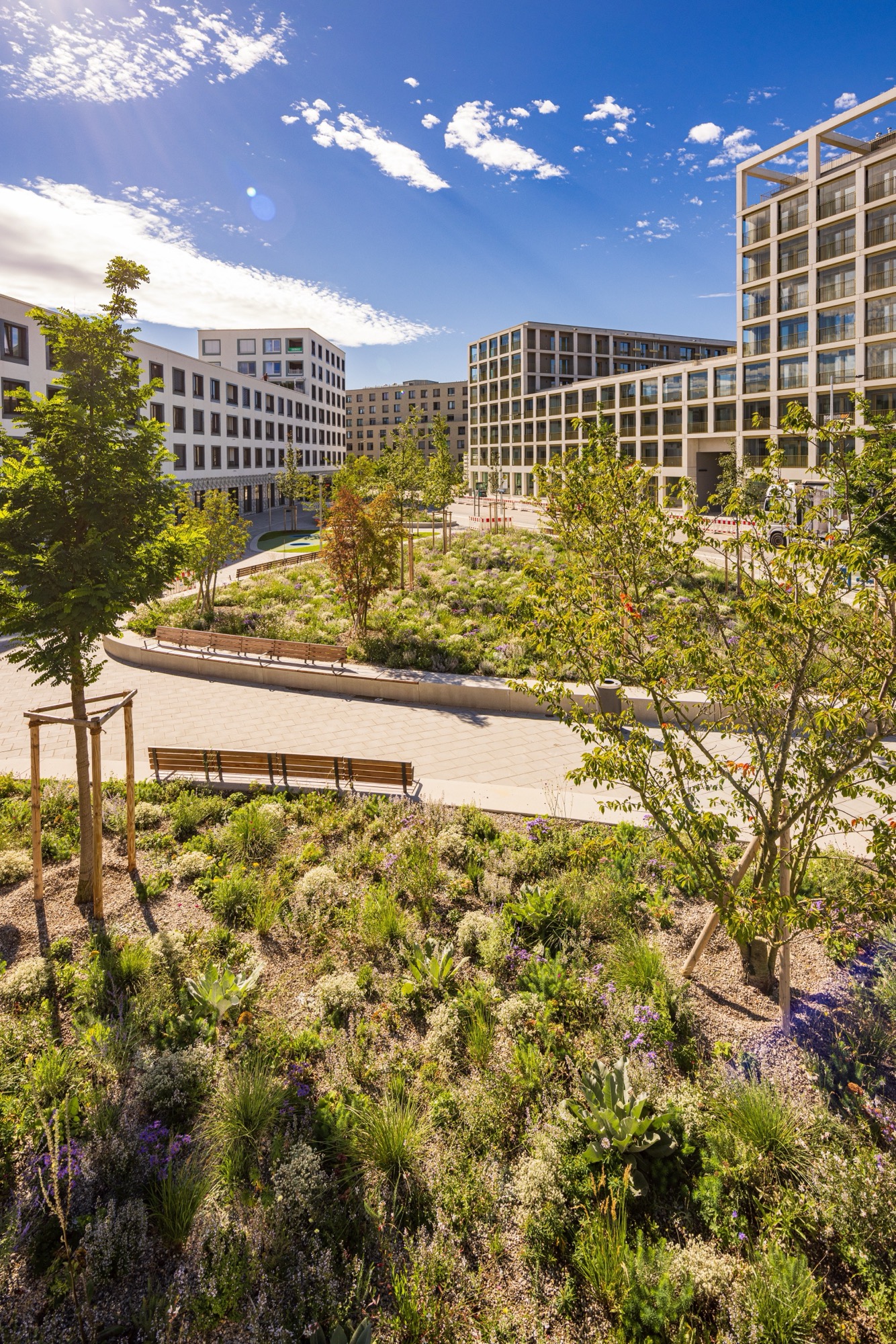
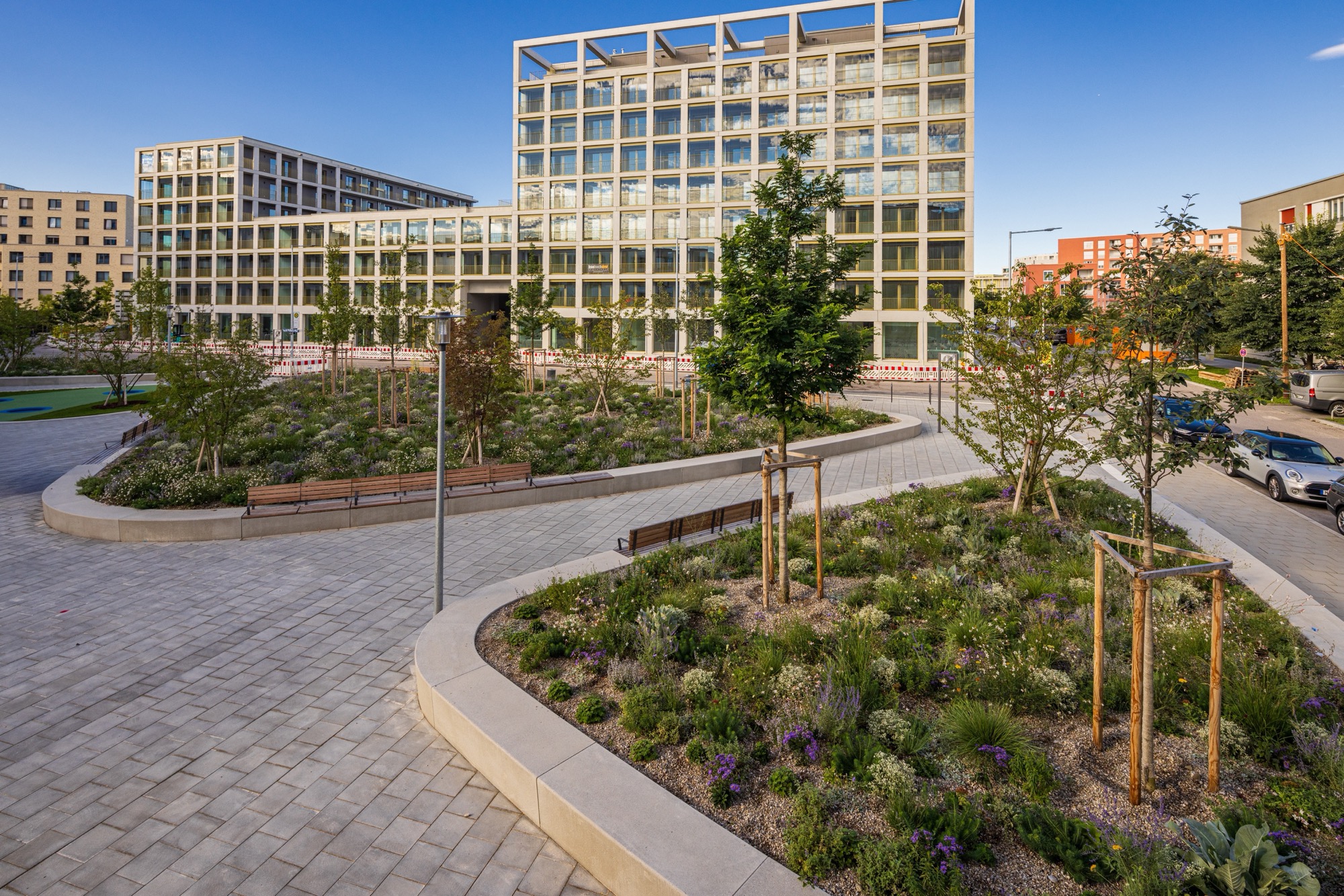
The square unfolds as a permeable field of movement, structured by a series of green islands. These slightly elevated plateaus provide protected areas for rest and lingering, while circulation flows – pedestrians, cyclists, and playing children – move fluidly around them.
This interplay of calm and movement enables a coexistence of uses without conflict. The open ground plane beneath the tree canopy remains largely unobstructed, ensuring visual continuity, safety, and spatial clarity.
Canopy, Meadow, and Lawn
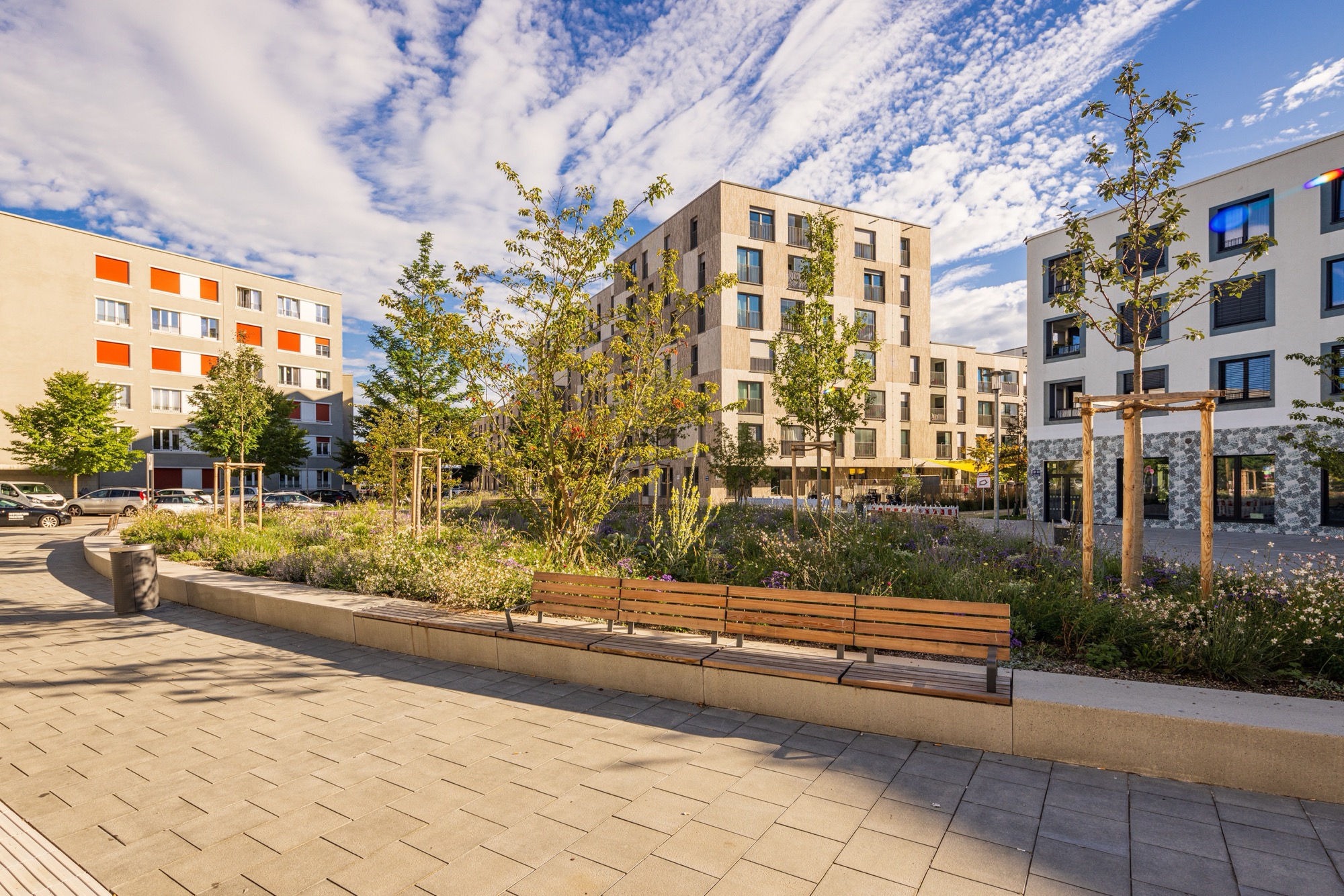
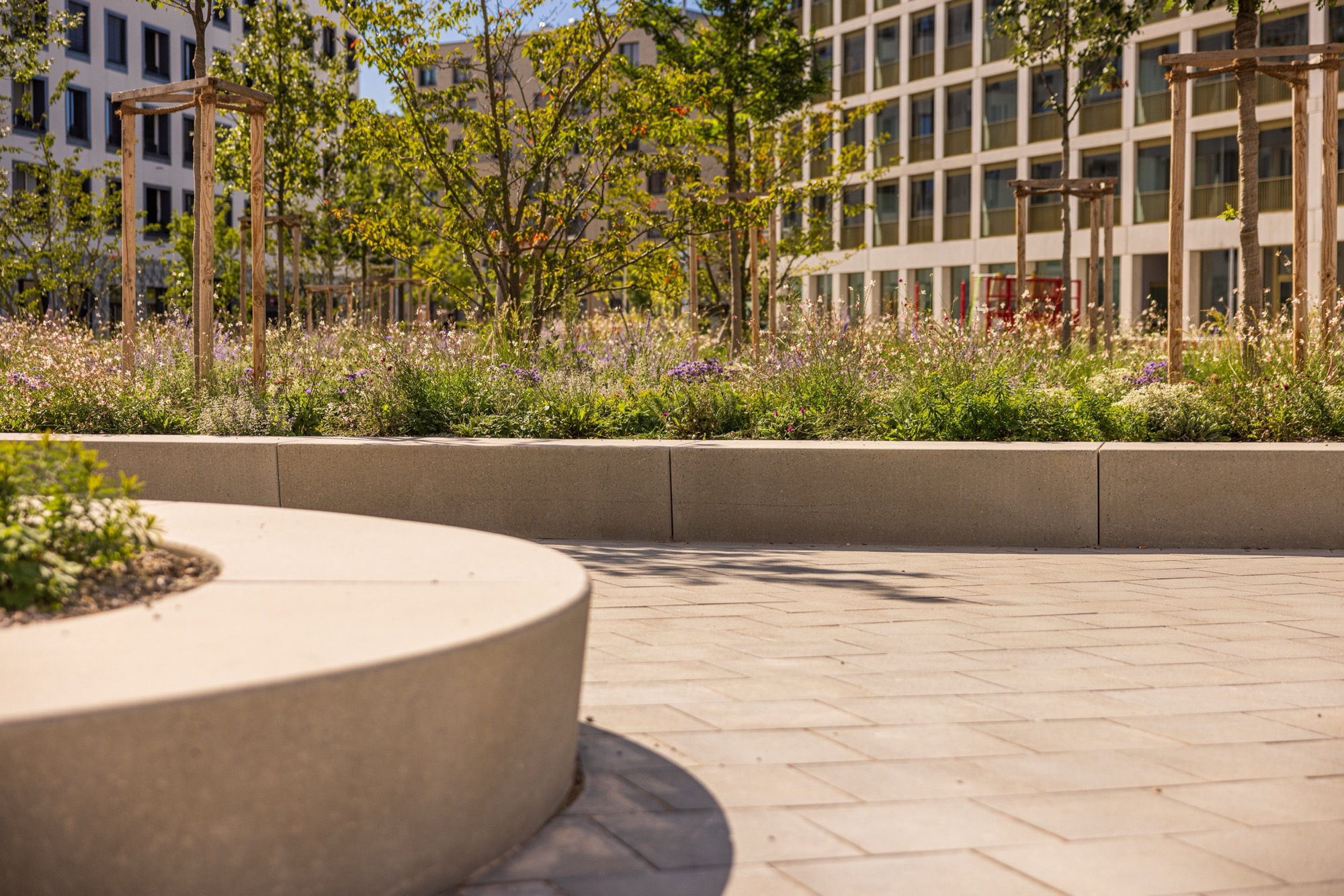
A grove of high-canopy trees defines the spatial character and establishes a comfortable microclimate. The deliberate use of Celtis occidentalis reflects a forward-looking approach to climate resilience and urban tree selection.
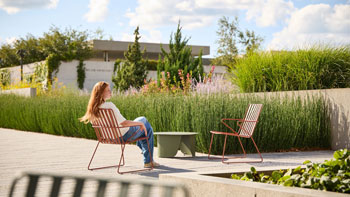
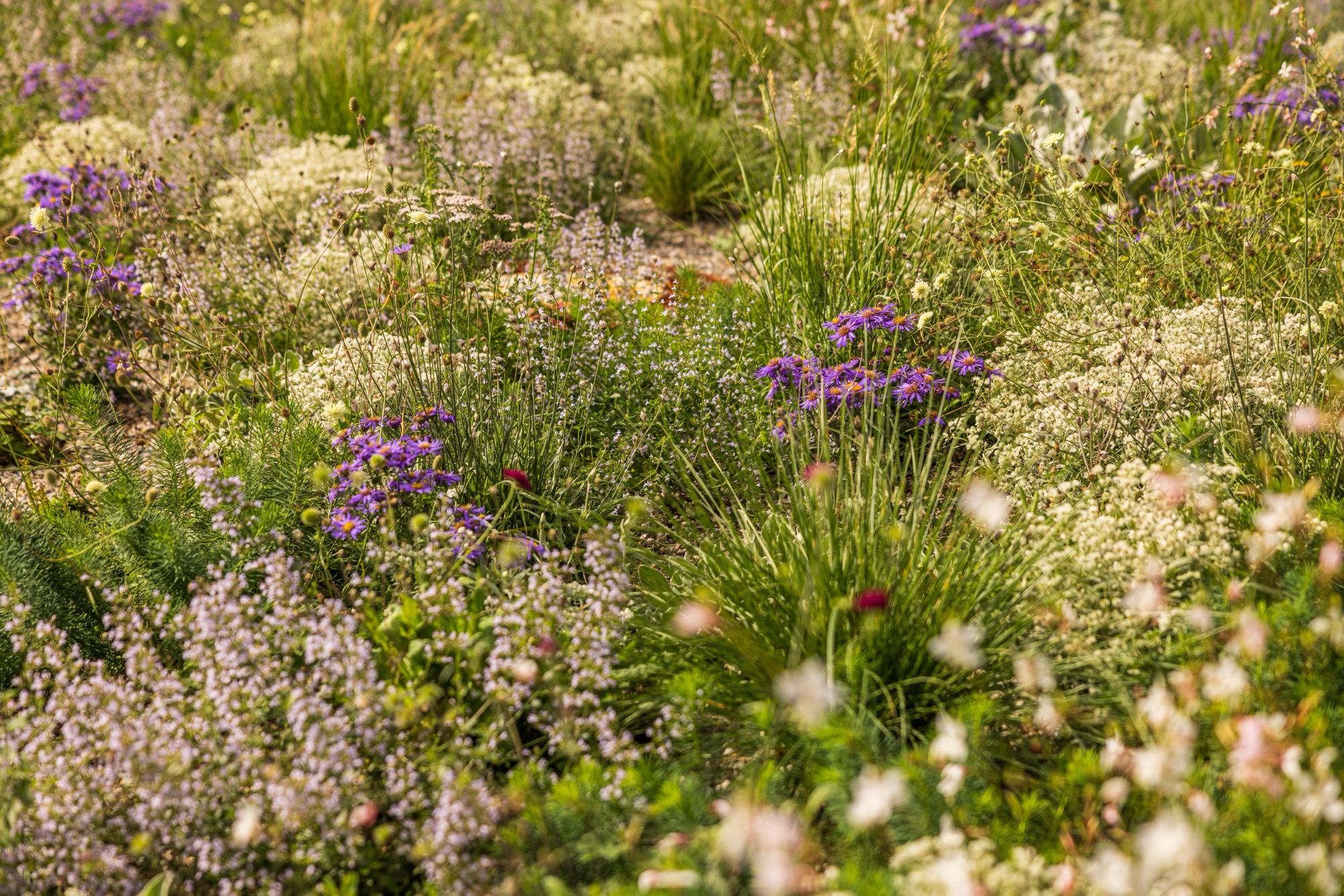
The planted areas differentiate into intensively used lawns – inviting sitting, lying, and play – and flowering meadows that enhance biodiversity. The absence of shrubs at eye level preserves openness and reinforces the sense of a continuous, flowing space.
Edges as Places
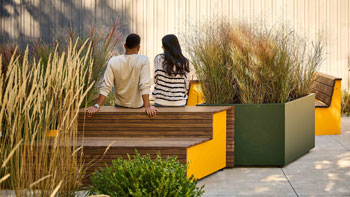
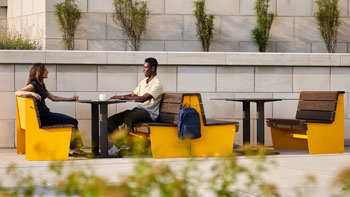
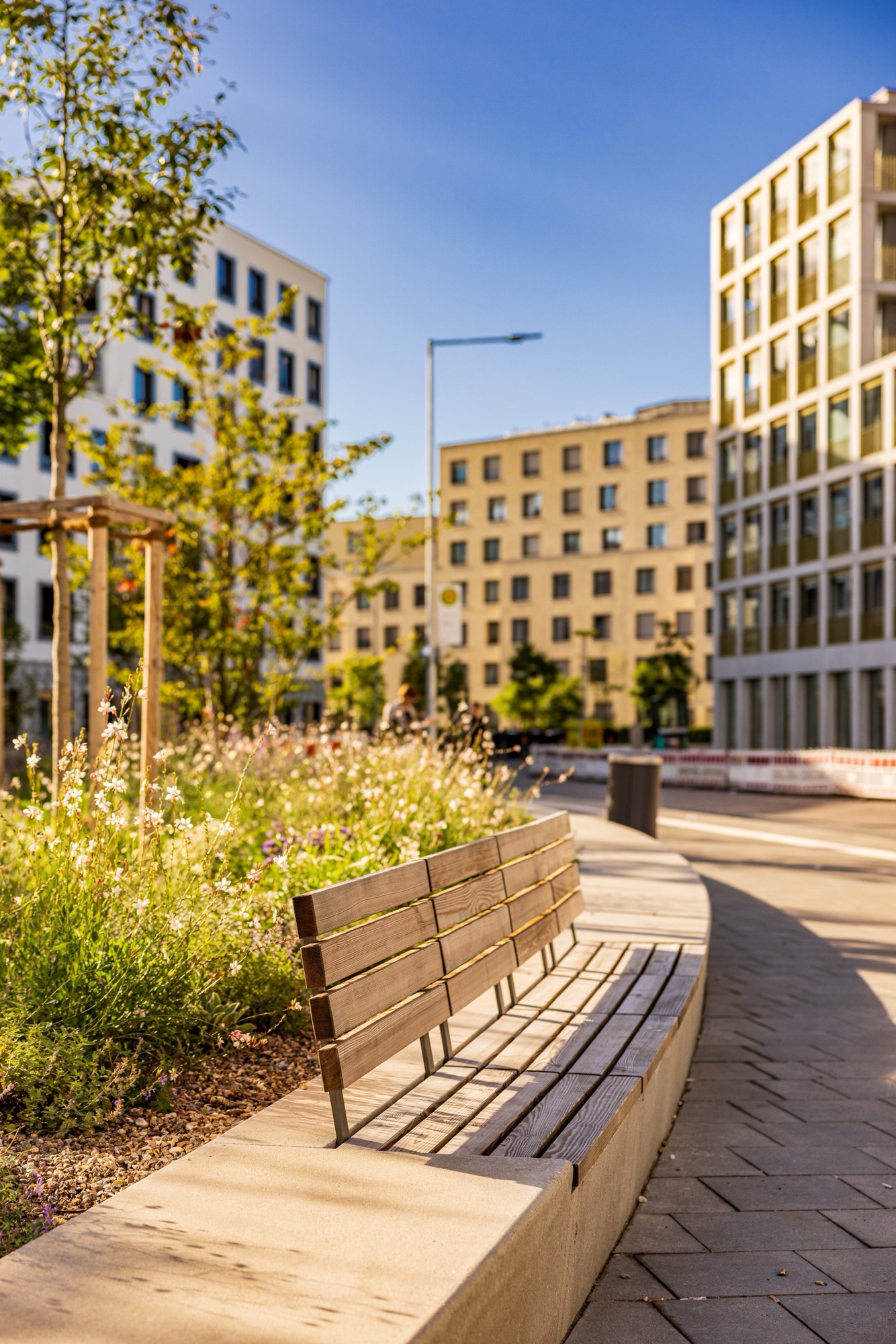
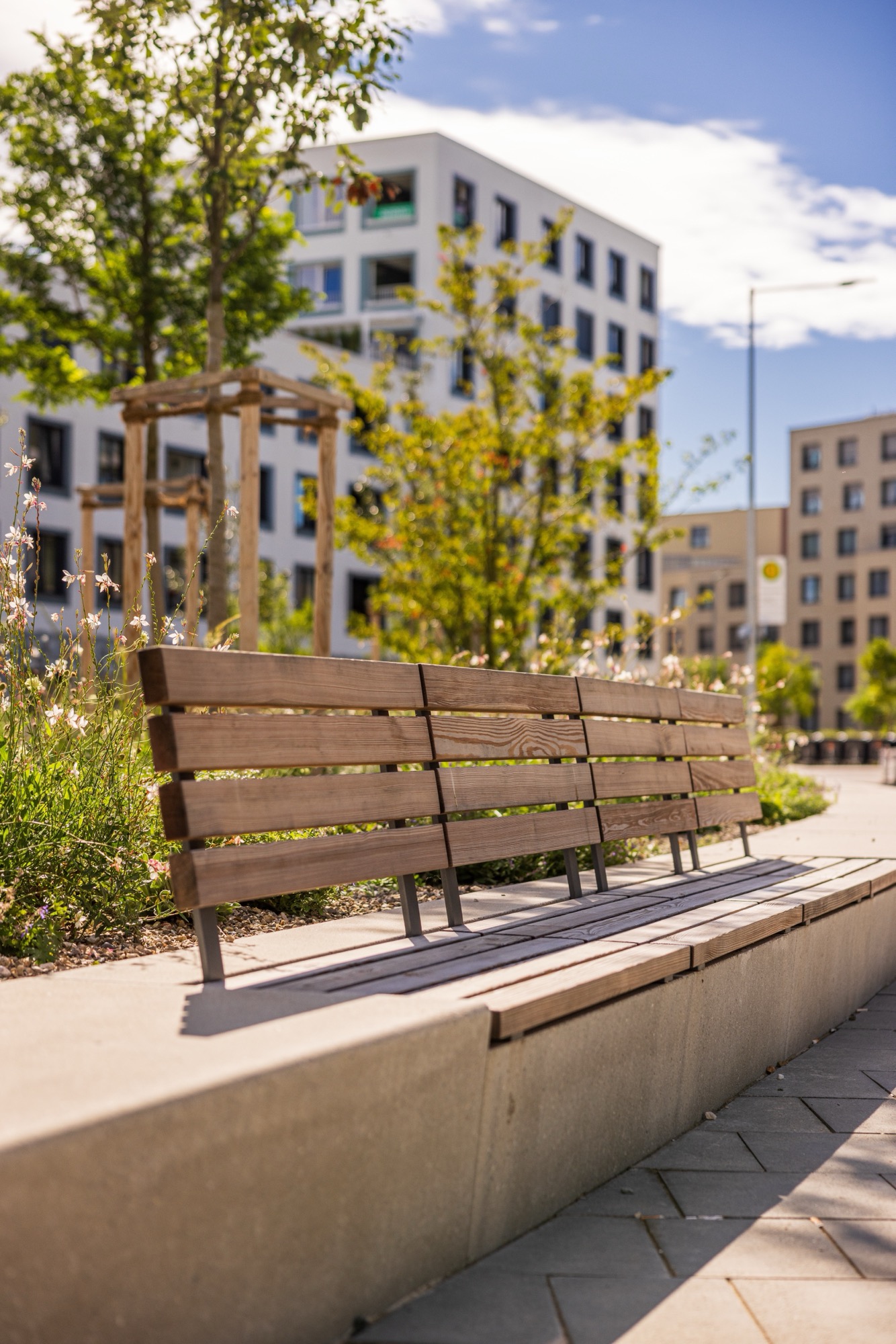
The topographic articulation of the islands is expressed through precise material edges, which simultaneously function as seating elements. These range from simple concrete borders to more defined seating elements with timber surfaces and backrests.
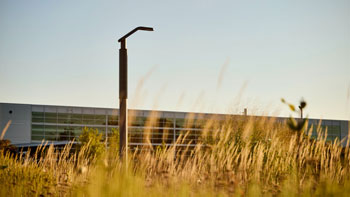
Integrated lighting within these edges provides a subtle illumination strategy, ensuring safety while maintaining a calm and coherent nighttime atmosphere. Playful insertions such as in-ground trampolines activate the space and address a wide range of users.
Inclusive Paths
Clear and barrier-free circulation underpins the spatial organisation. A tactile guidance system for visually impaired users runs alongside the bus stop, linking key points across the site and extending towards adjacent crossings and building entrances.
Bicycle parking is arranged in small, decentralised clusters near entrances, maintaining the openness of the central space.
A Shared Urban Ground
The neighbourhood square is conceived as an open, inclusive urban ground – simultaneously a place of passage and of stay. Through the interplay of shaded canopy, open surfaces, and green islands, it establishes a balanced atmosphere that accommodates both activity and retreat.
In this way, the square becomes a resilient and identity-forming centre of everyday urban life within the neighbourhood.
Client: Aurelis Real Estate GmbH Co. KG, Munich
Partner Landscape architect : Großberger Beyhl Partner Landschaftsarchitekten mbB, Munich
Landscaping company: Hallertauer Landschaft GmbH & Co. KG
Street planning: IB Schönenberg
48.151705749505, 11.48160164231453
73599


LILA 2026 Sponsor