Dornstadt Arkadien Quartier
www.henninglarsen.com
2026 Residential Parks / Germany / Built in 2022 /

![The Mandai Rainforest Resort did not begin as a forest. The 4.6-hectare site along the Upper Seletar Reservoir was once the staff and animal keeper quarters of the adjacent zoo, a cleared, domesticated patch of ground sitting at the edge of Singapore’s Central Catchment Nature Reserve. The ecology did not start well. But at the […]](https://landezine-award.com/wp-content/uploads/2026/05/00_LILA_Mandai-Rainforest-Resort_Hero-Image_©Chan-Hui-600x407.jpg "Mandai Rainforest Resort")
![What kind of park would best serve a community as active, rooted, and diverse as Sembawang? The answer, at Bukit Canberra, was not a park at all — but a living commons. From meals, to movement, to medical care, it integrates essential neighbourhood functions into a seamless landscape experience, all in one. Bukit Canberra is […]](https://landezine-award.com/wp-content/uploads/2026/05/00_LILA_Bukit-Canberra_1_©DP-Architects_Hero-Image-600x338.jpg "Bukit Canberra")
![The Biotope offers an office environment uniquely entwined with the natural environment for the municipal offices of Lille. The design transforms the typical office program into a unique, circular environment that supports people, animals, and local nature alike. Located on a bustling, yet constrained site without the possibility of an extensive ground level park, our […]](https://landezine-award.com/wp-content/uploads/2021/04/00-1787-0493b-600x403.jpg "The Biotope")
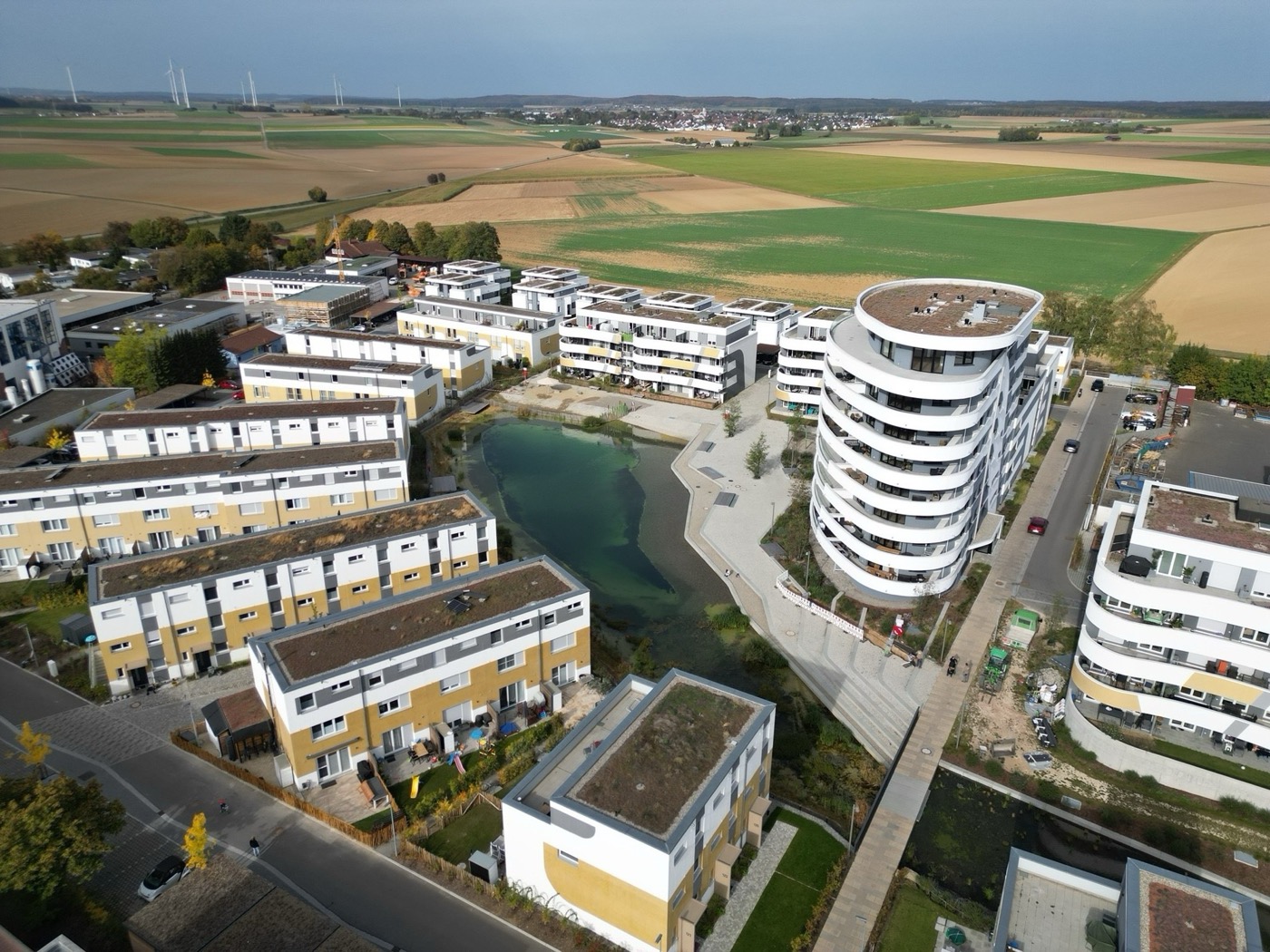
Nearly 500 inhabitants have found a home in this new district of Dornstadt. On the former industrial wasteland of the Kaupp window factory in Ulm/Dornstadt with an area of about four hectares, the Quartier Arkadien was built. With this development, the real estate developer Strenger has realized a significant expansion of Dornstadt. In addition to the creation of living space, the primary goal was to achieve a new sense of community in this neighbourhood based on open spaces and thus to create an ecologically and socially intact and healthy living environment. The open space open and accessible for all as well as close to homes serves as a living, leisure and social space and is an important basis for the social network within the neighborhood.
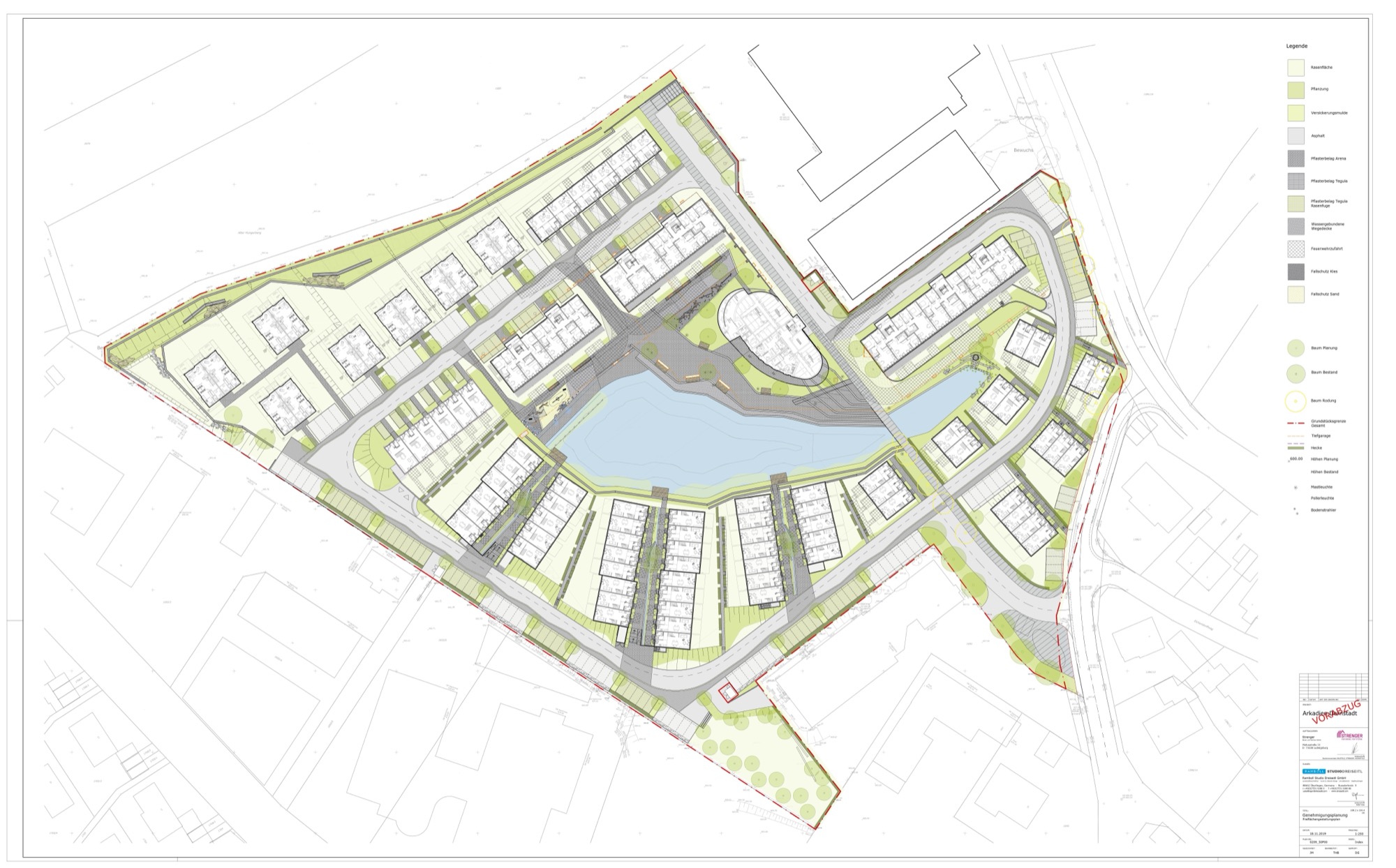
Sponge City approach as liveable features
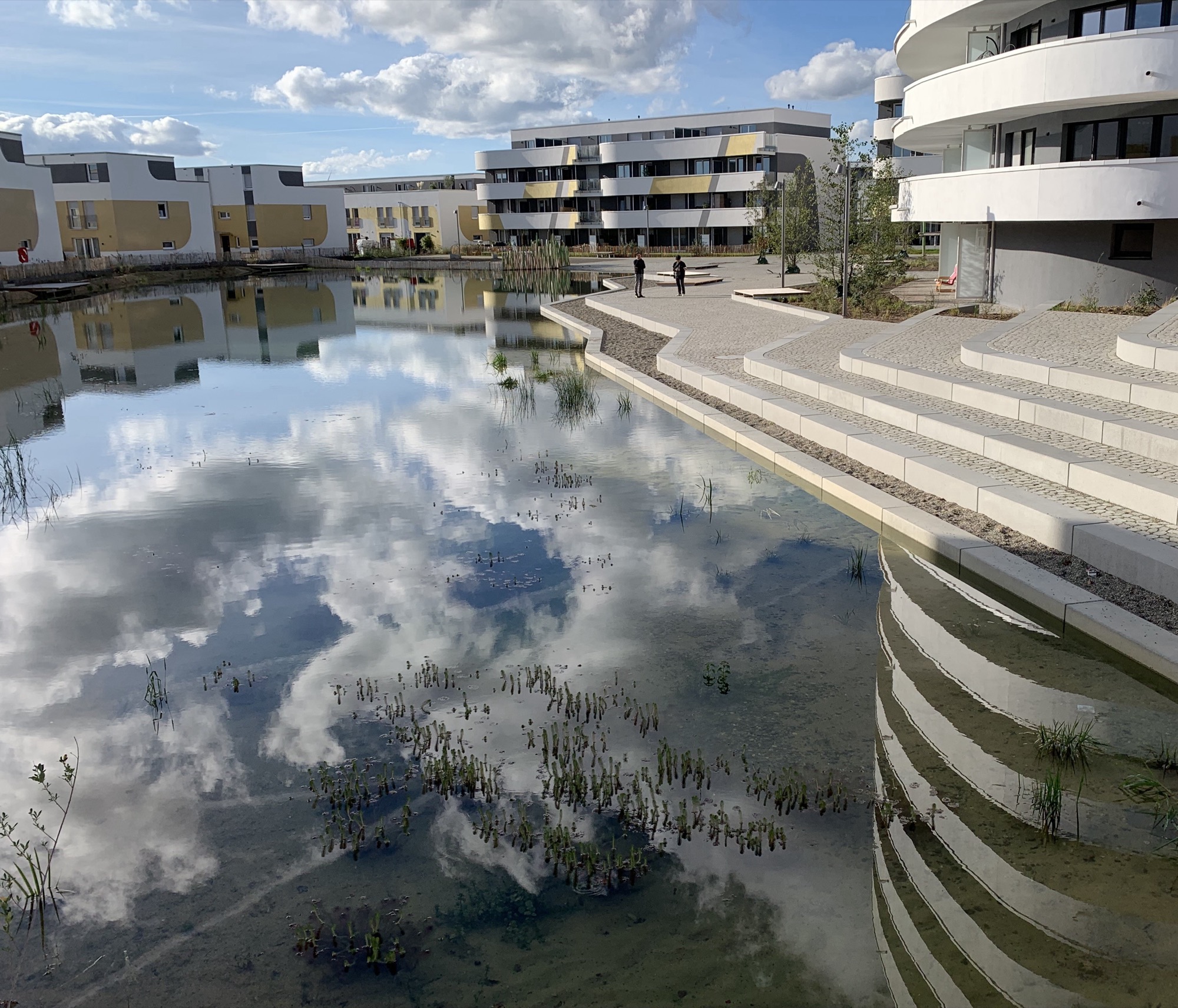
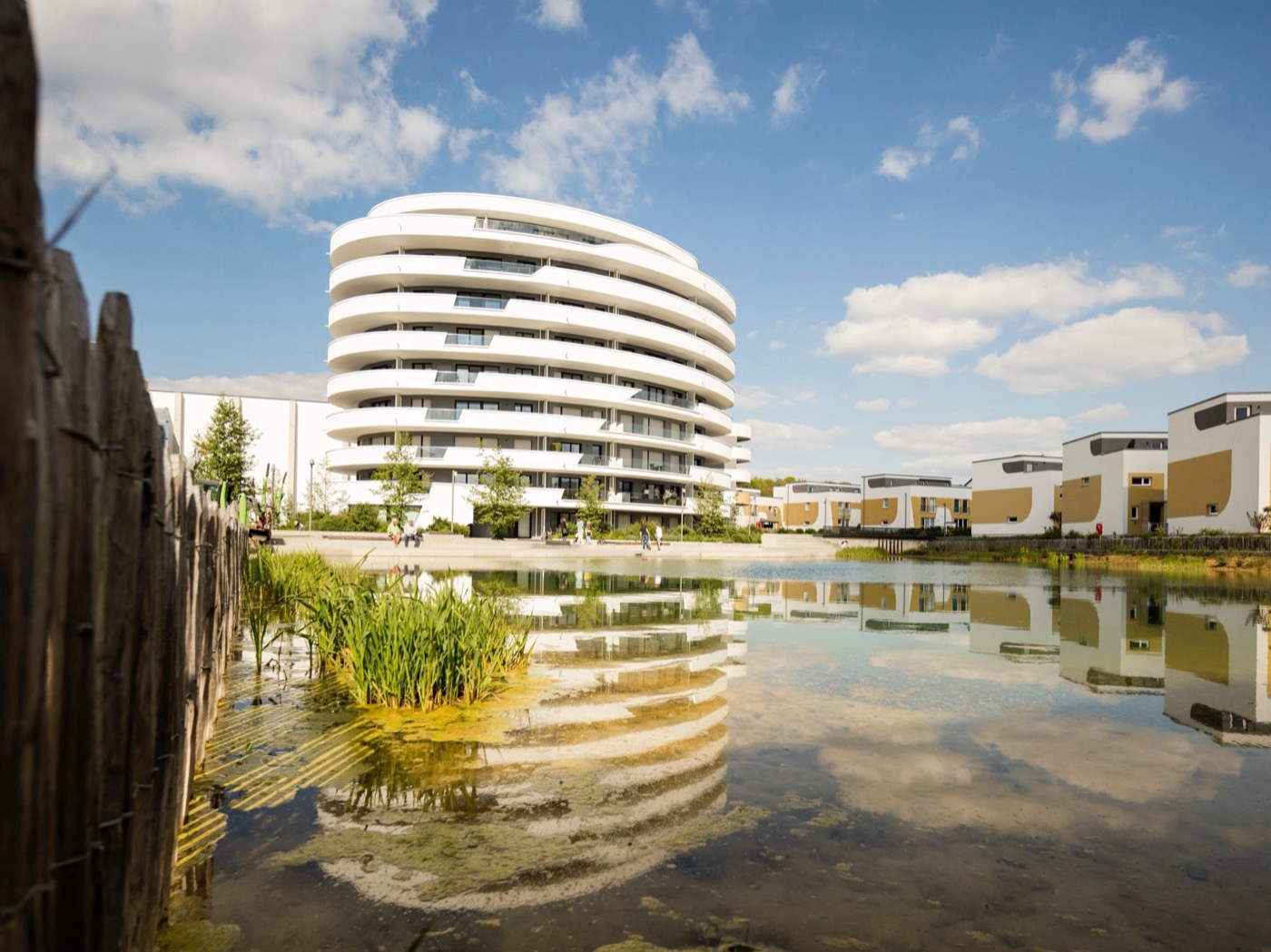
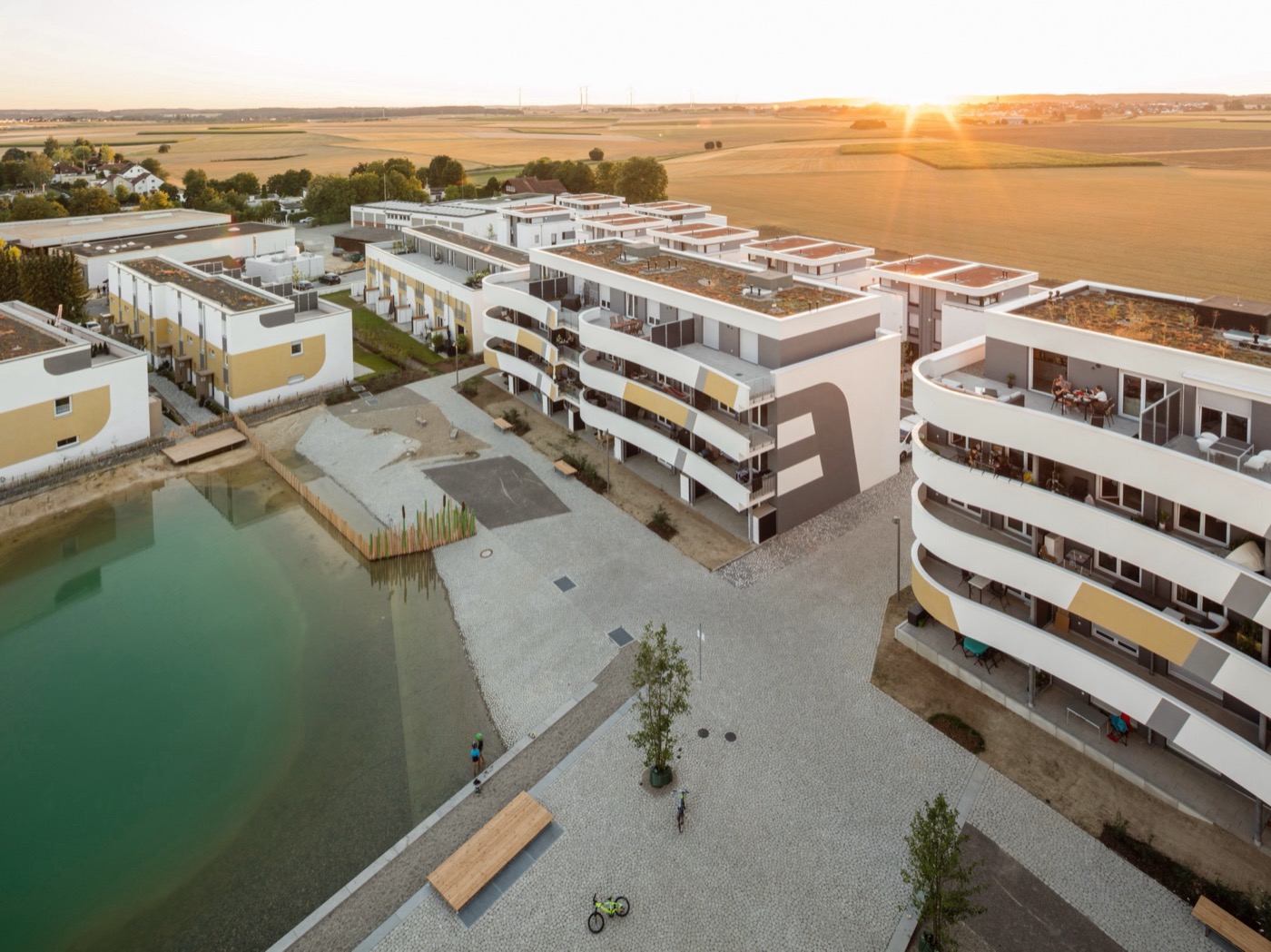
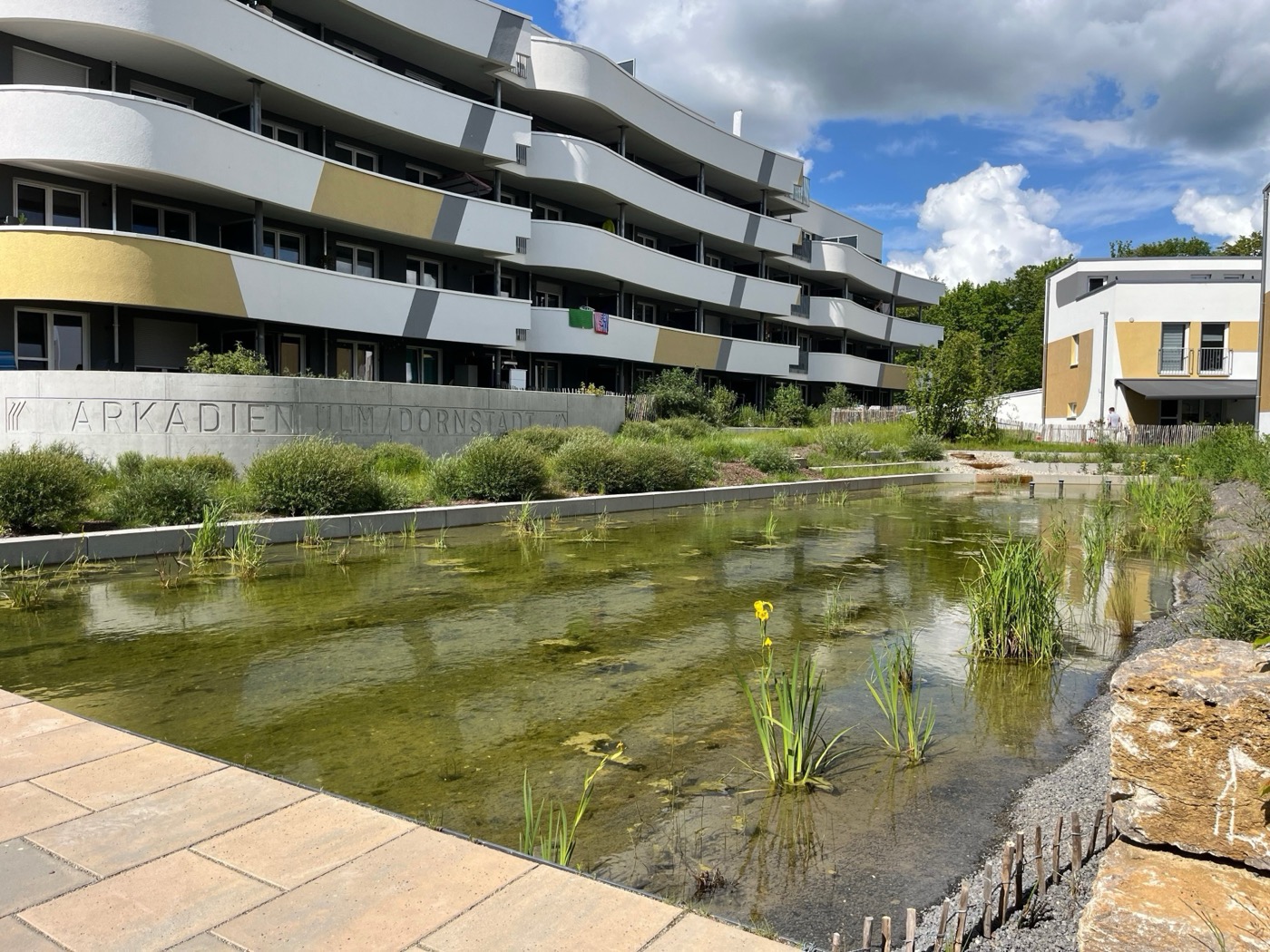
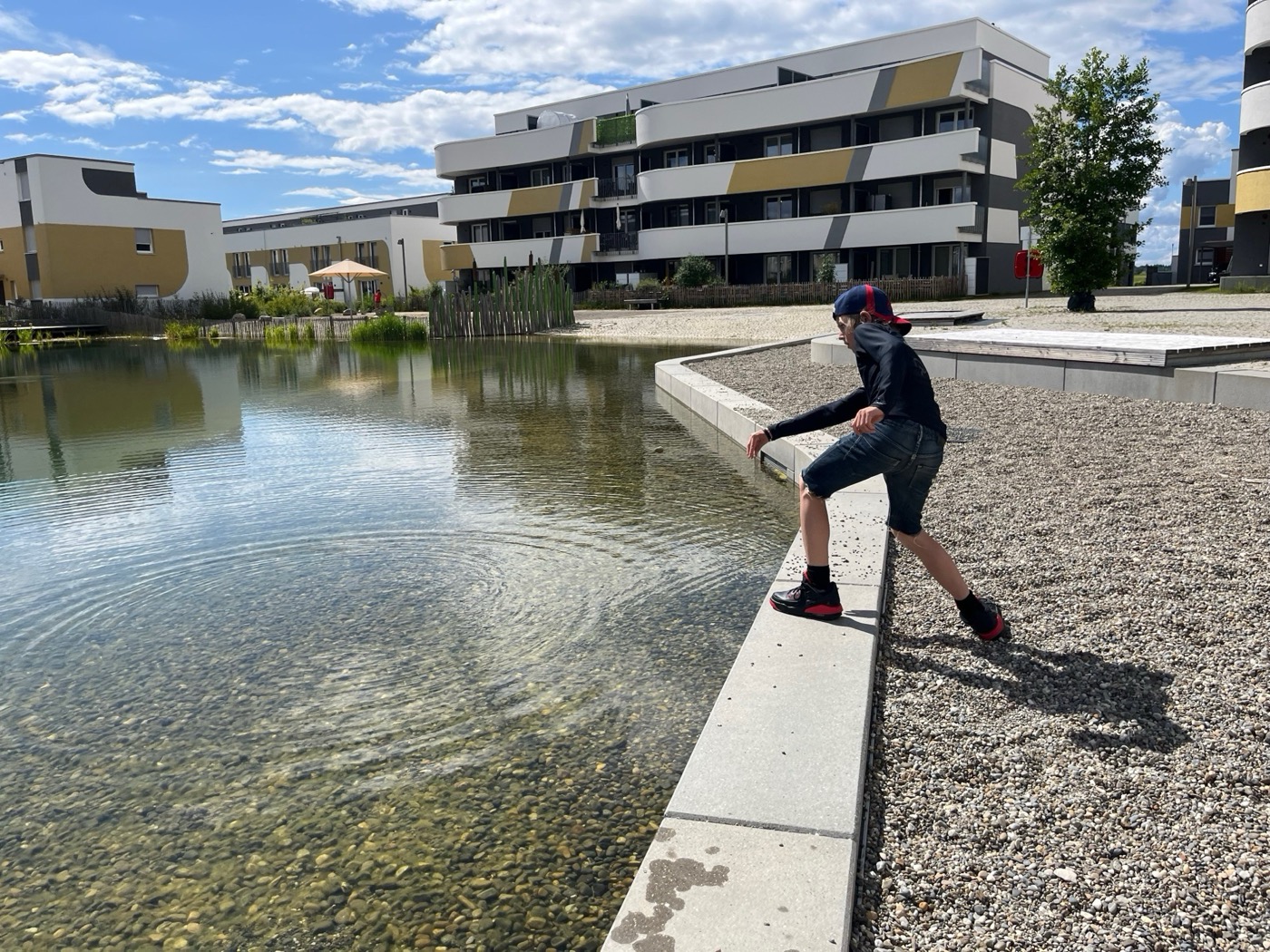
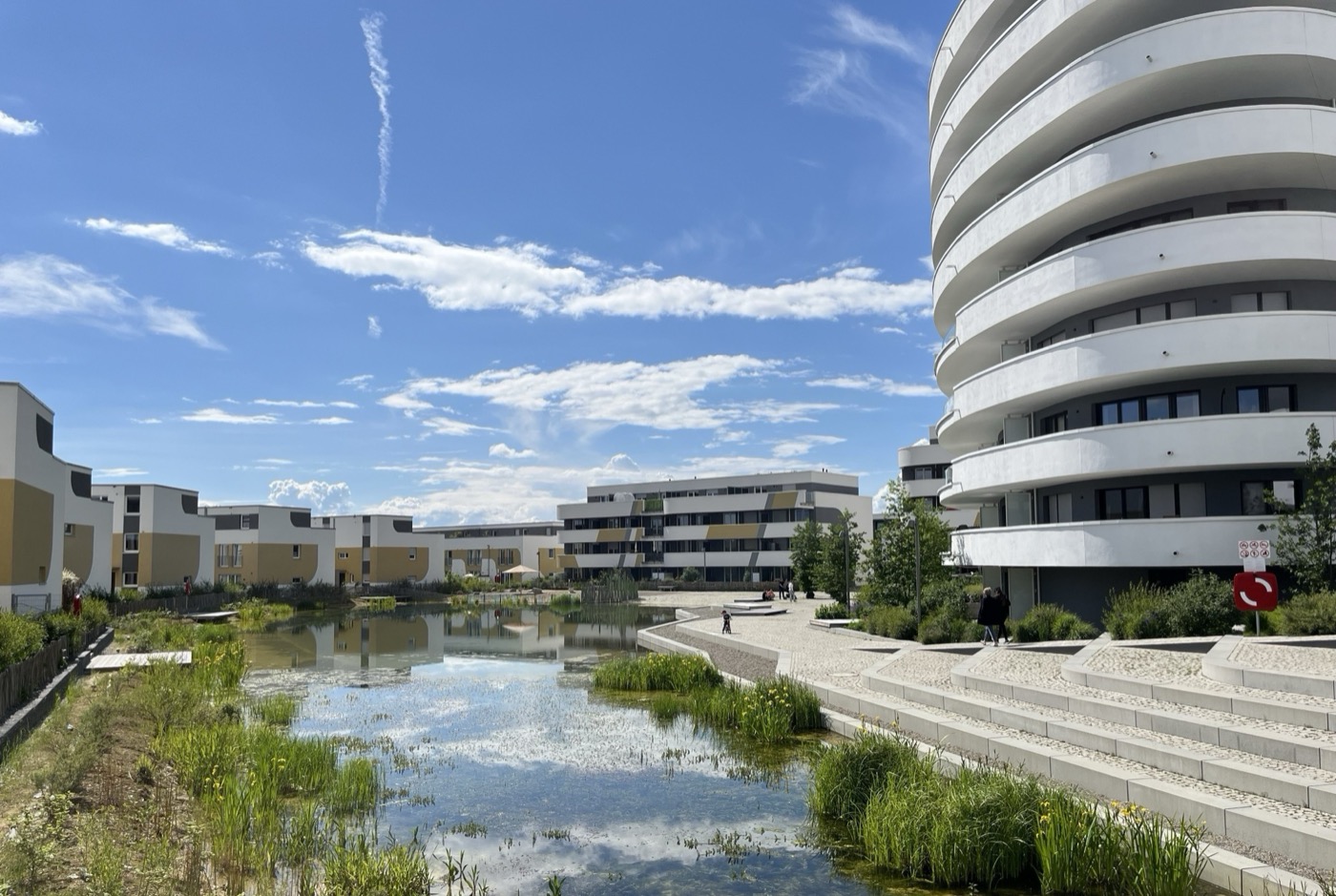
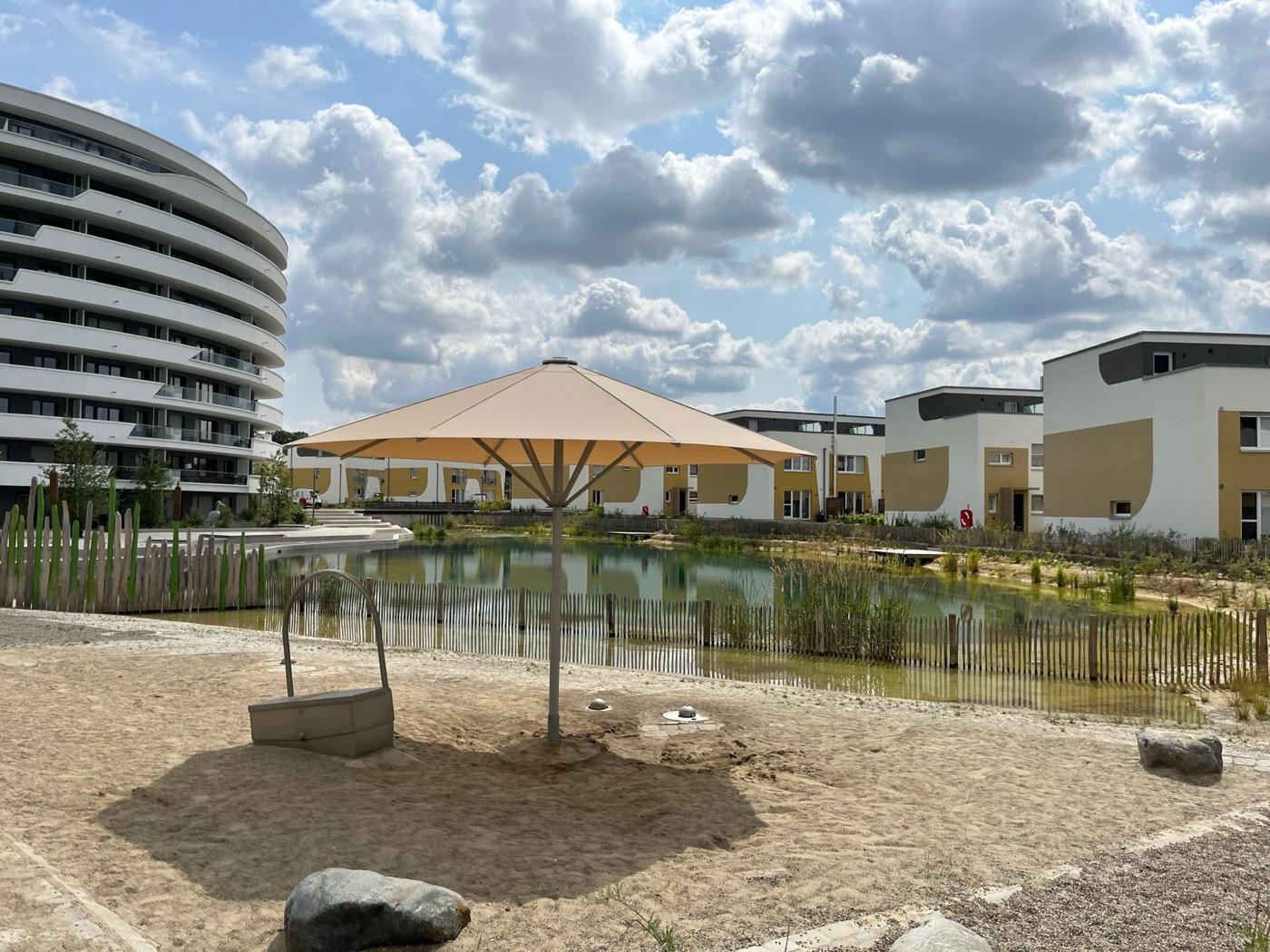
The central outstanding feature for the Community is an iconic and experiential central lake integrated as a main part of the Sponge City Quartier. The lake mitigates the local climate and offers a variety of activities including a save beach playground for small kids. These features stand for strong contribution of the open space for the active community live in the project. Especially since the sense of togetherness as a strong baseline strengthens the social integration of all groups and individuals.
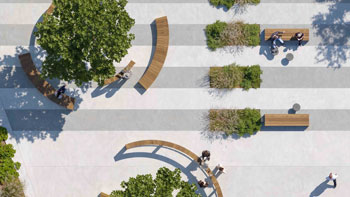
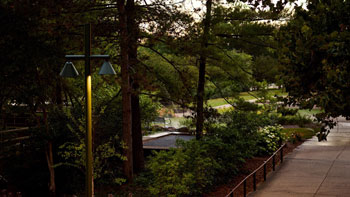
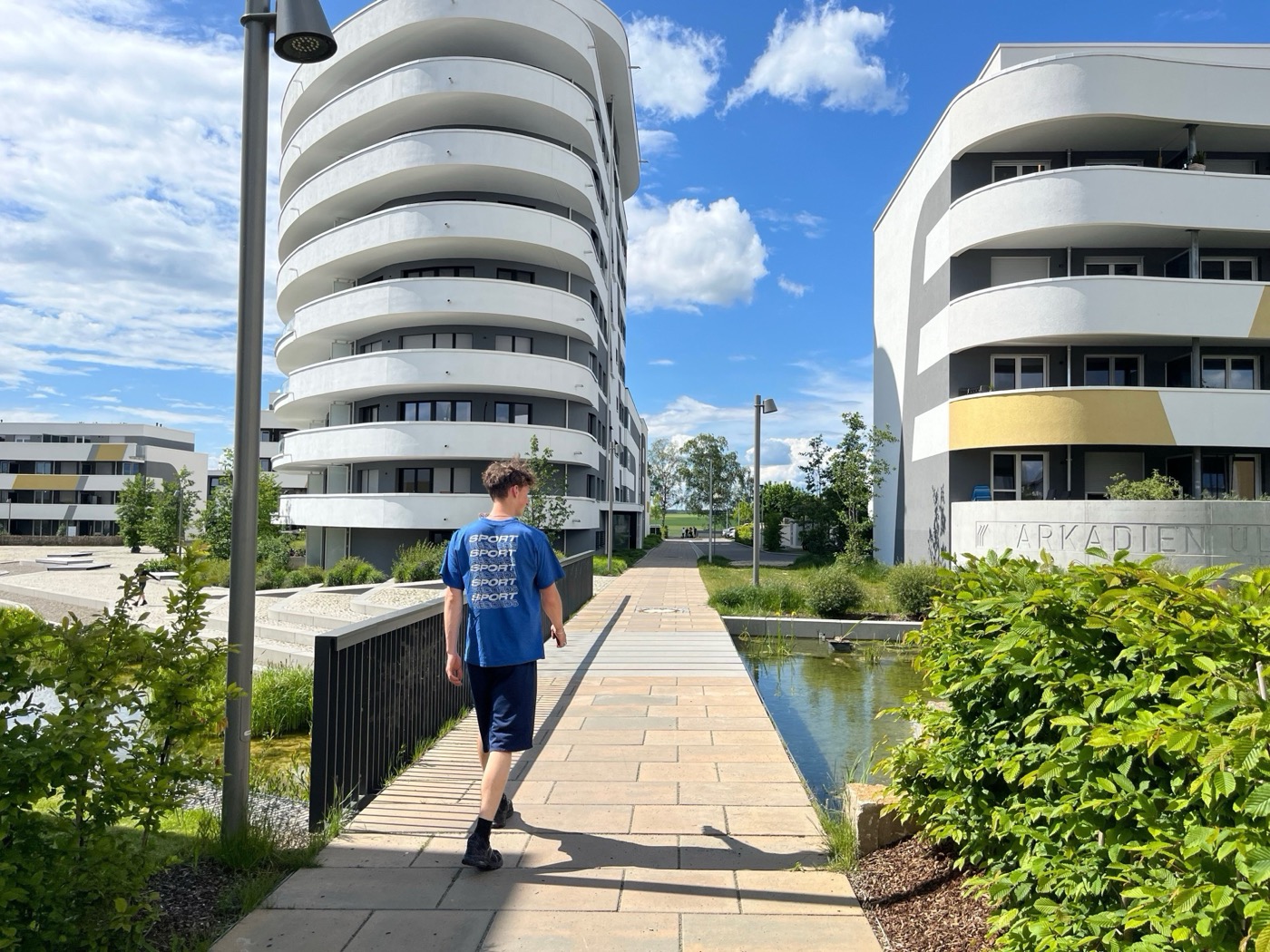
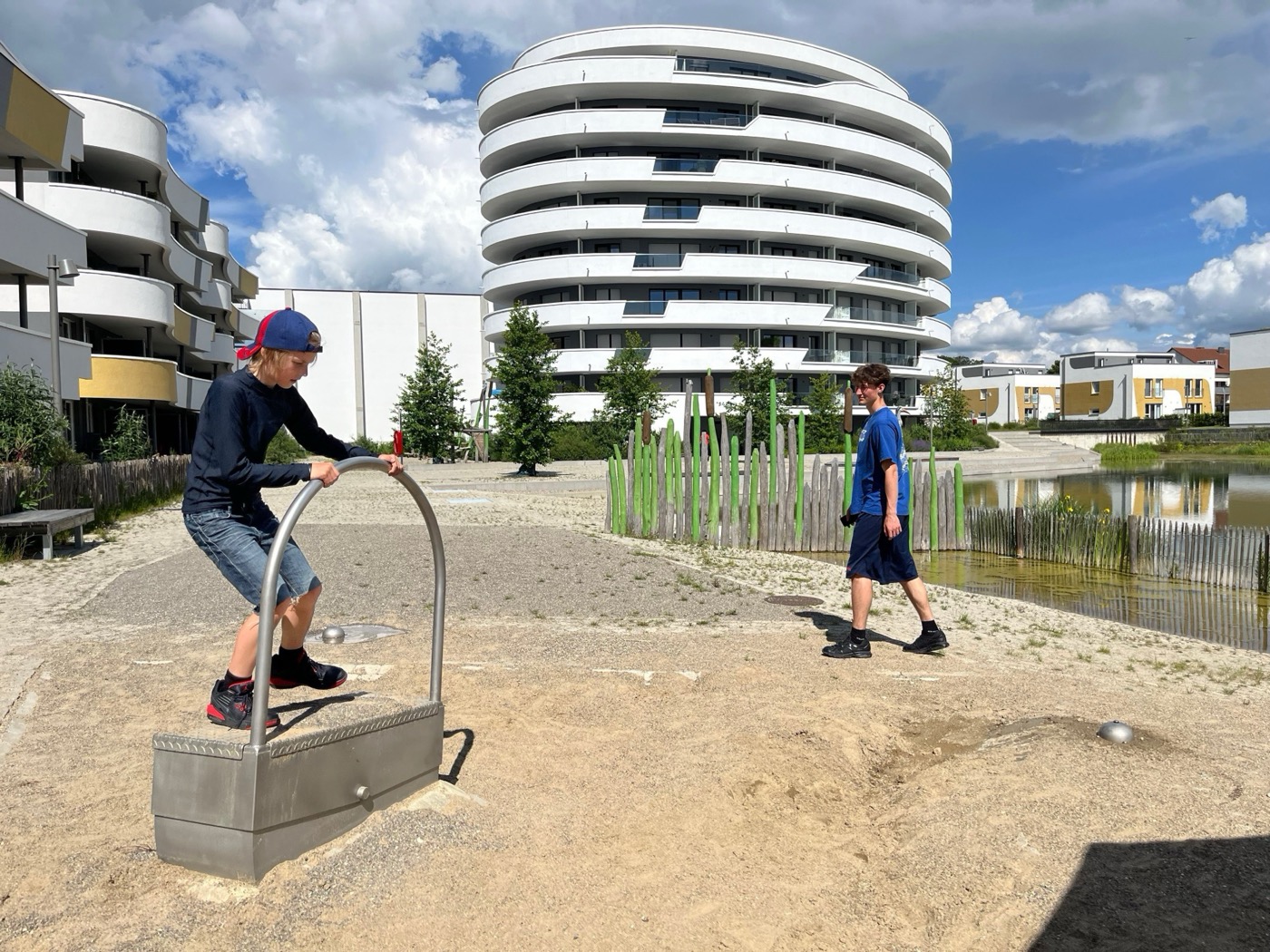
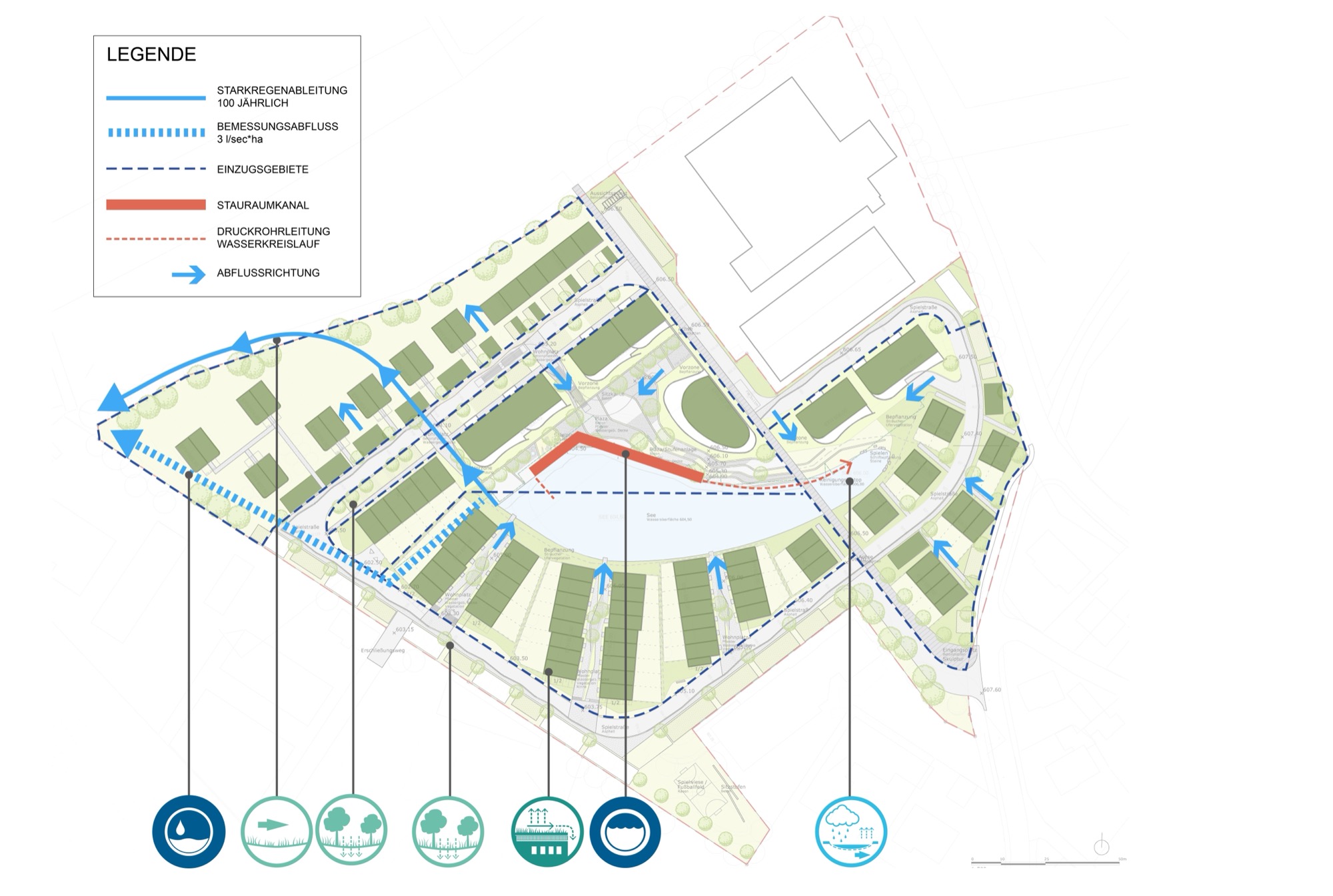
From Hauffstraße, the settlement will be accessed parallel to the street with an axis for pedestrians, which will provide access to both the central areas and the northwestern edge of the settlement with its special view. In the centre of the settlement is a lake with different water and shore qualities, which absorbs the rainwater from the surrounding roof and square areas. The adjacent plaza is available as a central lounge area for all age groups. The surrounding play street is also not only used for access of the building, but is also designed as a play and recreation area.
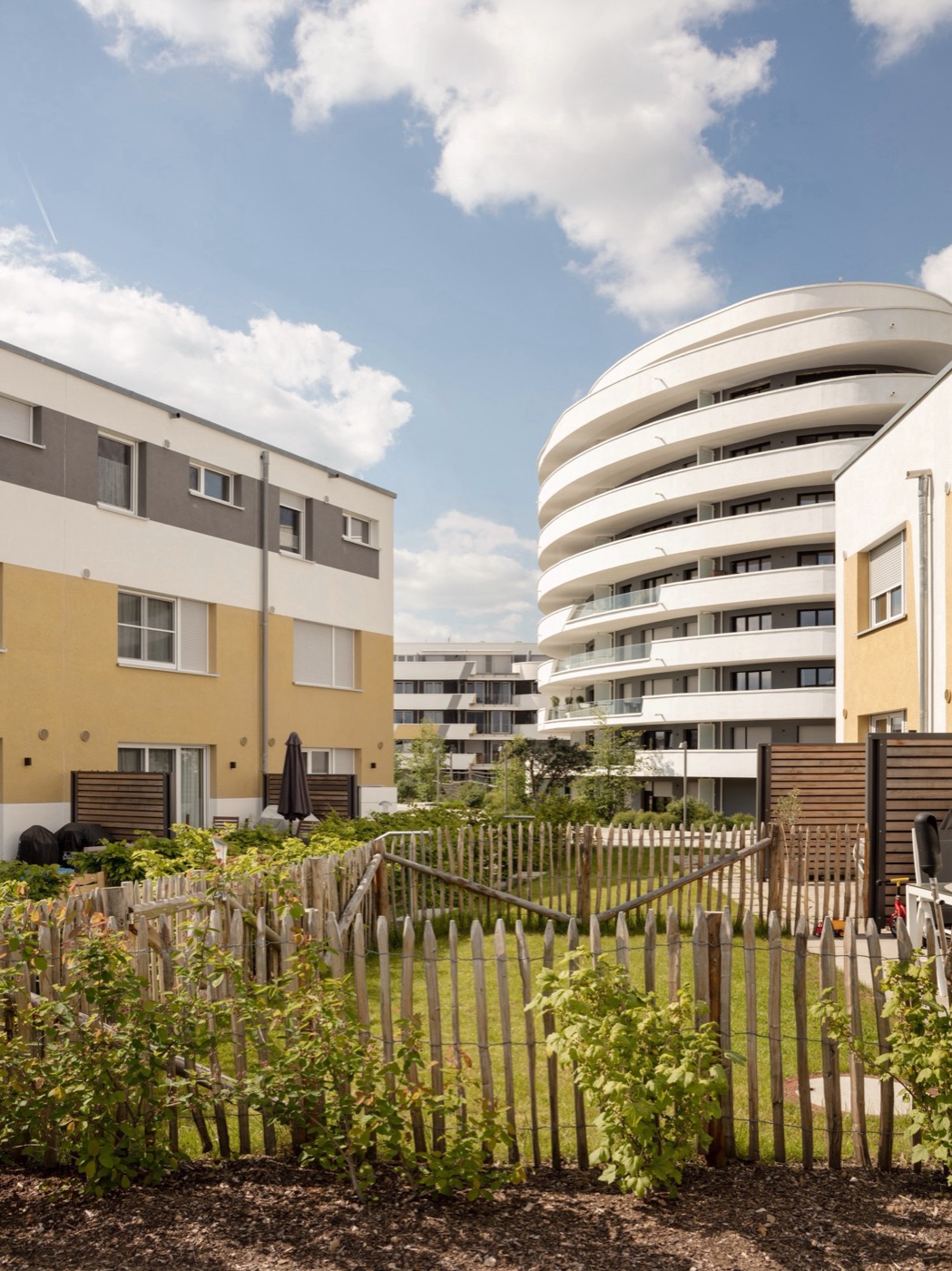
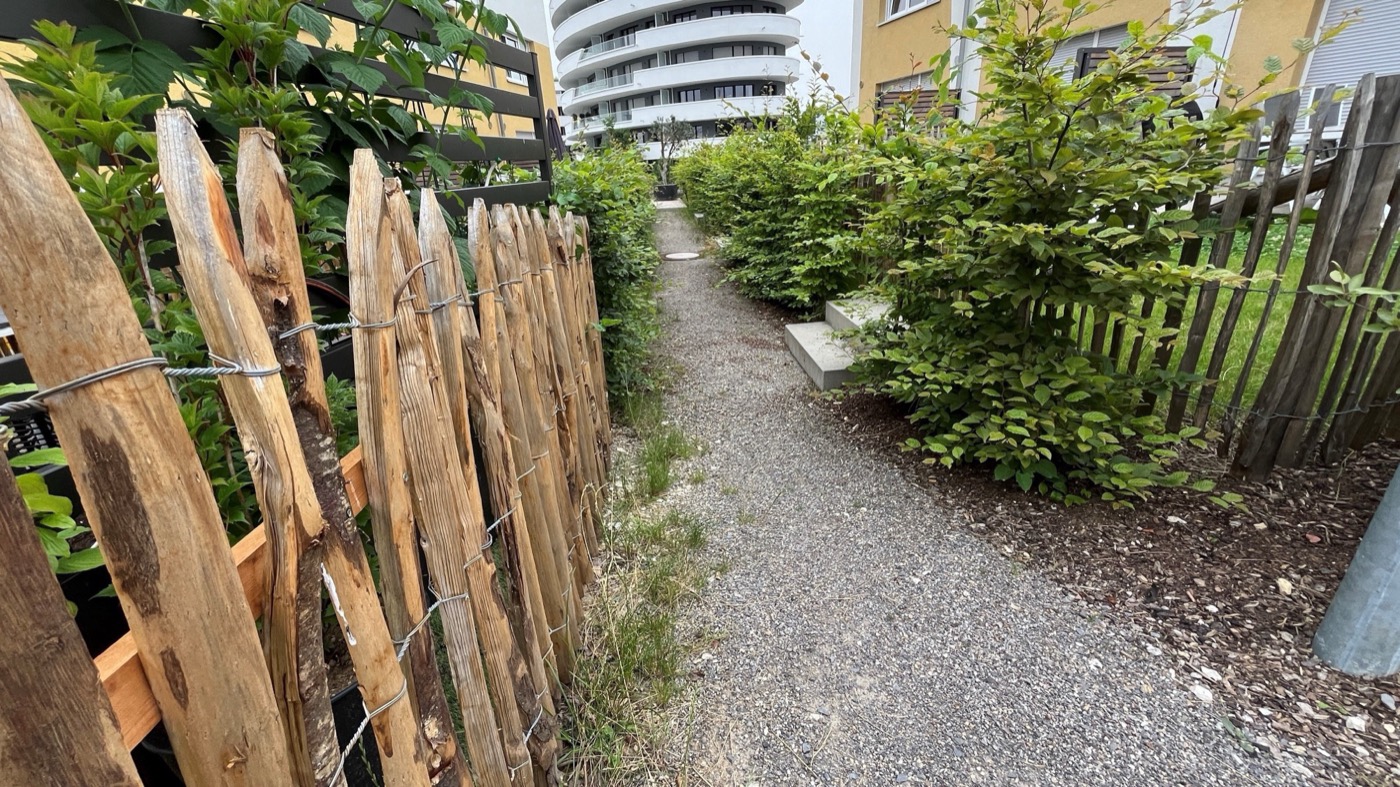
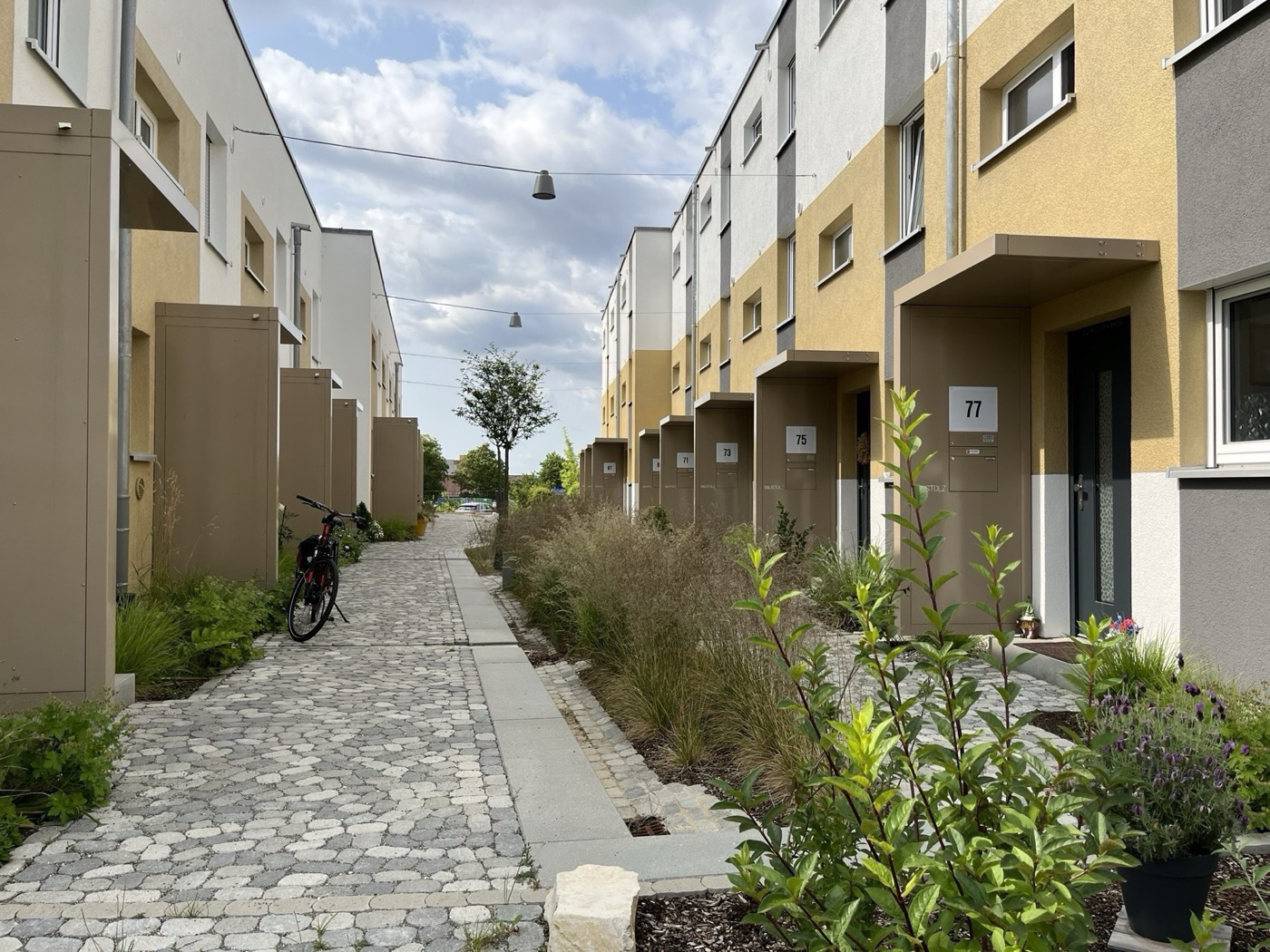
Between the terraced houses in the south, there are also semi-private residential courtyards alternating with the private garden areas, which offer the surrounding residents their own neighbourhood space. The public areas are partly owned by the municipality and partly by the owners’ association. Design guidelines for public and communal areas up to the enclosures of private garden areas are defined in a design statute for an overall composition.
Connectivity and landscape experience
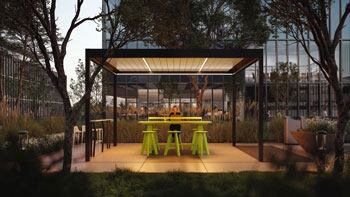
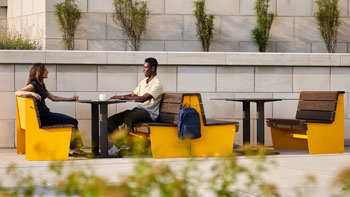
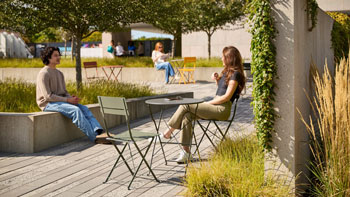
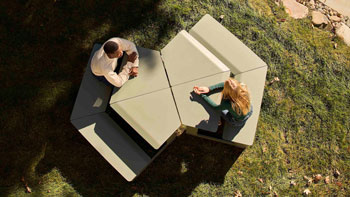
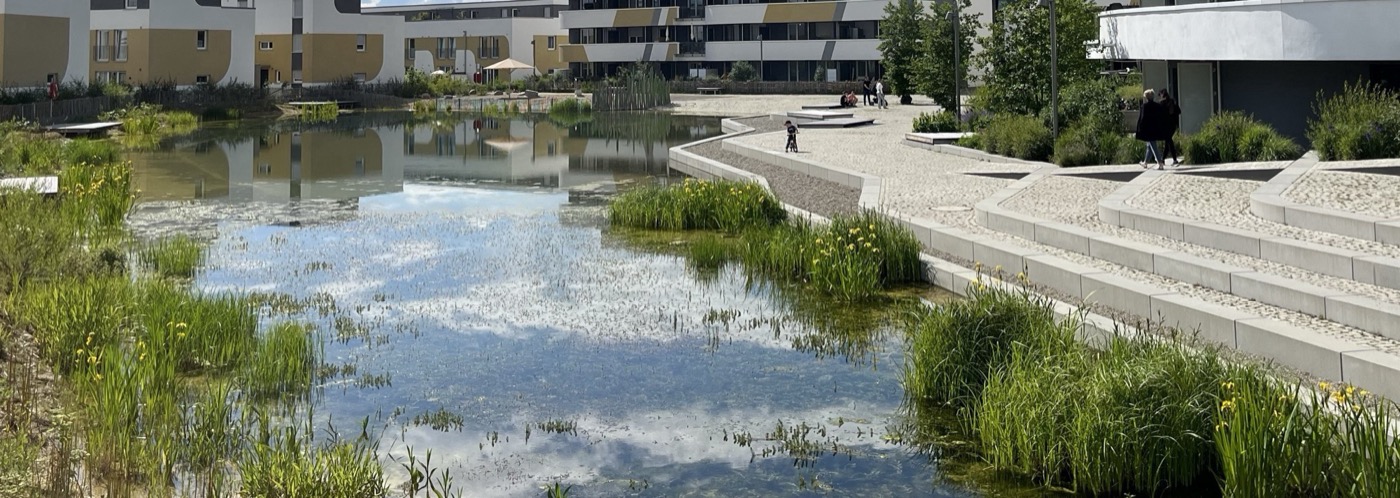
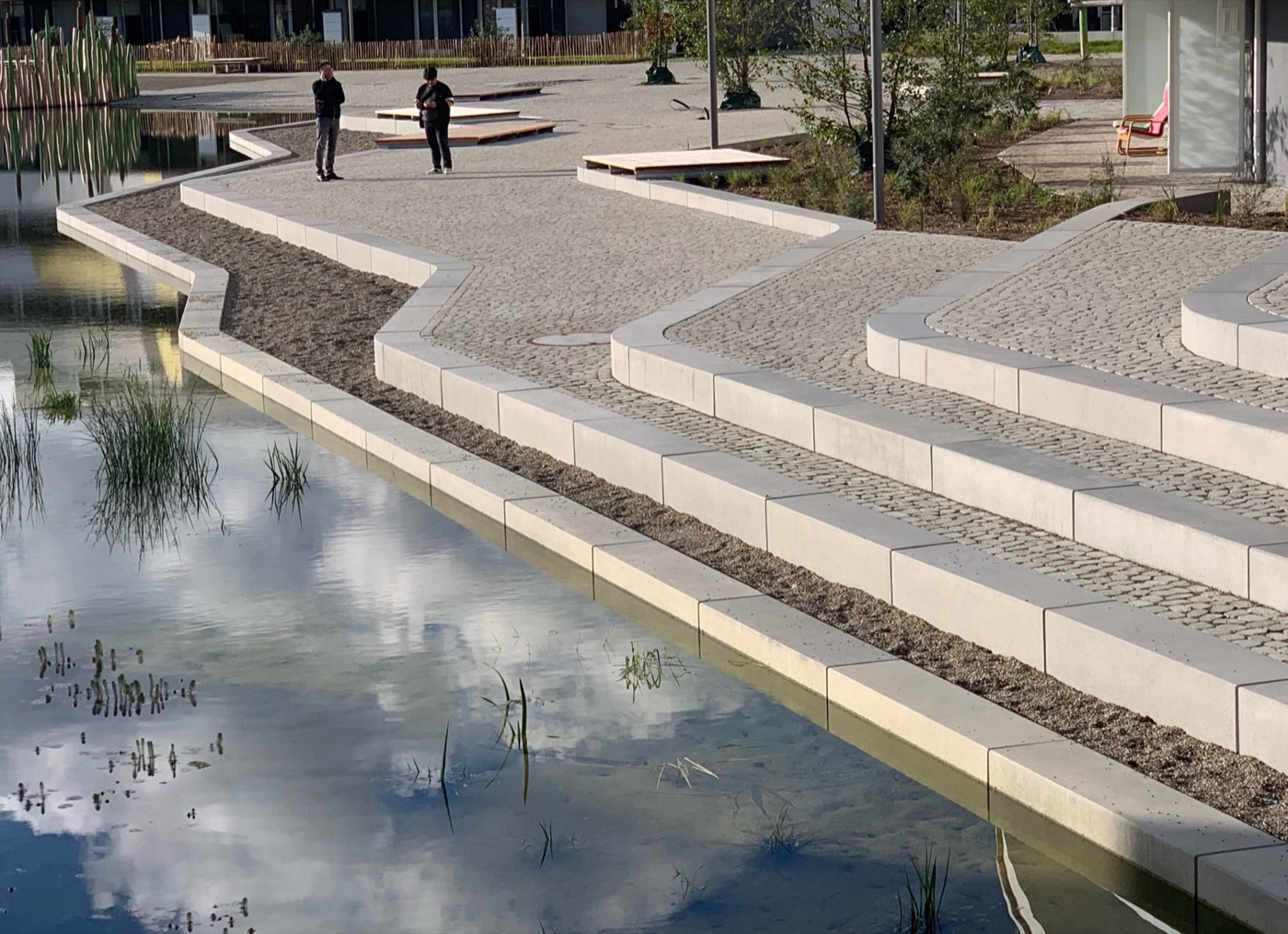
The central pedestrian axis serves as a representative pedestrian access and forms the backbone of the entire settlement. It consists of a continuous covering of large-format concrete slabs and has a width of 2.50 m. In the area of the footbridge, it is flanked on one side by a parapet. The eastern prelude of the axis is lined with pine trees. The plaza represents the centre of the settlement and is used for meeting, playing and spending time at the lake. Linear concrete steps mediate between the heights and, together with wooden decks, serve as seating. Along the lakeshore, a walkable gravel strip creates a special quality of stay and at the same time serves to drain rainwater. Two play areas offer play opportunities for different age groups. On the plaza, free-standing, multi-stemmed alders form punctual tree canopies. Opposite the fortified shore at the Plaza, the southern shore of the lake is soft and green. The shallow water area is overgrown with reeds.
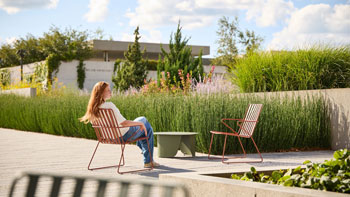
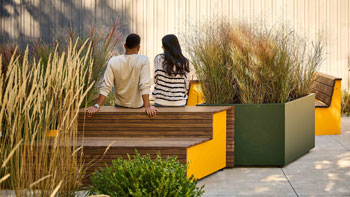
The residential courtyards serve the immediate neighbourhood as a development and meeting space. They have a small scale, individual character and accommodating save play for kids. A continuous concrete strip, partly flush with the floor and partly at seat height, serves for drainage and forms the backbone for unformal furniture with free-standing chairs and flowerpots. A place where all neighboors meet and greet.
Climate adaptation – designed as a social and recreational playground
A sophisticated sponge city concept was integrated into the design. It is a drainless district in which all rainwater is managed on site. A large part of the rainwater from roofs and open spaces enters the lake via a plant filter and is only infiltrated in the form of an overflow in heavy rainfall. A smaller portion of the rainwater is fed directly into an infiltration swale. The stormwater that accumulates on the roads is infiltrated under the road via filter and retention ditch
48.472966, 9.938974
74246


LILA 2026 Sponsor