Marina Park
www.okra.nl/
2026 Public Projects / Ireland / Built in 2025 /

![An inspiring haven for education Fontys Hogescholen’s Rachelsmolen campus in Eindhoven is undergoing a remarkable transformation, evolving from a secluded island in the city to a captivating and inspiring educational environment. The vision is to create a campus that revolves around human interaction, fostering innovation, experimentation, and entrepreneurial spirit through vibrant cross-pollination. A vibrant urban […]](https://landezine-award.com/wp-content/uploads/2025/05/00-OKRA_Eindhoven_AT-600x397.jpg "Fontys Campus Rachelsmolen by OKRA")
![Reimagining informal settlements with green solutions Rapid, unplanned urbanization puts public space under pressure, especially in fast-growing African cities where overpopulation and insecurity create tension. While formal cities discuss resilience, mobility, and safety, informal cities face deeper challenges, balancing hope for the future with harsh daily realities. Change can start from the ground up. Small-scale, […]](https://landezine-award.com/wp-content/uploads/2025/05/00-Empower-shack-OKRA-600x450.jpeg "Empower Shack by OKRA")
![CO-CREATED REINVENTION: A NEW CITY HEART FOR HENGELO In the heart of Hengelo, an ambitious redesign of the Centrum area has revitalised the cityscape. This resulted in a dynamic space that reflects its unique identity and responds effectively to the evolving shopping climate. This transformative project is the result of a collaborative effort, instilling a […]](https://landezine-award.com/wp-content/uploads/2024/05/00-OKRA_Hengelo_centre_Enschedeseweg-600x397.jpg "Hengelo city centre")
![Historical Monument On July 18th of this year, 80 years after the first deportation convoy left the station, the commemorative park of the Bobigny Deportation Station will be officially opened. From 1943 to 1944, this was the main departure point for the deportation of French Jews, and it was later used as a scrapyard for […]](https://landezine-award.com/wp-content/uploads/2023/05/BOBIGNY-PARIS-042-600x264.jpg "Bobigny Memorial Park")
![East of Cork’s city centre, adjacent to the river Lee, lies Marina Park. This 35-ha park functions as a catalyst for the city development in the surrounding formal industrial areas. In 2014, together with REDSCAPE, OKRA won the competition for a plan for the entire park area. For the execution this plan has been divided […]](https://landezine-award.com/wp-content/uploads/2023/05/00-DJI_0068-600x450.jpg "Marina Park")
![Since 2020 the inner city of Utrecht is once again surrounded by water and greenery. The restoration of the canal structure around the old city of Utrecht is an important part of the Master Plan Station Area. To this end, the original, historical water structure was restored by re-excavating the canal where it was filled […]](https://landezine-award.com/wp-content/uploads/2022/05/00-OKRA_Utrecht_Catharijnesingel_Antoine-Thevenet_210811-3-600x397.jpg "Catharijnesingel")
![After more than a century, trains no longer use the Oosterspoorbaan. Bikes and pedestrians are the new users of this unique city park that connects the historical city centre of Utrecht with the green estates of Rhijnauwen and Amelisweerd. These act as the green belt around Utrecht. The intensely used path along the historical river […]](https://landezine-award.com/wp-content/uploads/2022/05/00-15-003_Utrecht_Oosterspoorbaan_Maddalena-Scalera_2-600x400.jpg "Oosterspoorbaan park")
![Transformation of a vehicular space Rotterdam has always been known as a modern car-friendly city, with large buildings and busy traffic arteries. It was not a city to wander through or relax at a pavement café. But much has changed in recent years. Rotterdam is now positively hip. This rehabilitation has much to do with […]](https://landezine-award.com/wp-content/uploads/2020/05/00-OKRA_Rotterdam_Binnenrotte_for_LILA-2020-Awards-purposes-only_01-600x400.jpg "Binnenrotte, Rotterdam")
![A major transport hub Rouen Rive Droite station is a major regional transport hub with over 6 million annual passengers, located in the densely built-up historic city centre of Rouen in Normandy. The station area today operates as the most important gateway to the urban region, but with its many carriageways and disorganised public space, […]](https://landezine-award.com/wp-content/uploads/2020/05/00-OKRA_Rouen-Station-Area_main-600x345.jpg "Rouen Station Area")
![Long term vision – OKRA has been asked to give a vision of the future for a long term coastal defence strategy so that coastal safety is accompanied by a quality impulse for the small coastal town. The necessary coastal reinforcement offered an opportunity to develop a larger area, of around a kilometre, at the […]](https://landezine-award.com/wp-content/uploads/2019/04/00-OKRA-Cadzand-Bad-balcony-to-harbour-03802-600x400.jpg "Coastal Town of the 21st Century")
![OKRA is an award-winning design office for landscape architecture and urbanism. Over the last twenty-five years OKRA has focused on the transformation of cities and landscapes for the people who use them. OKRA has extensive experience in defining frameworks for urban development, design public space, master planning and strategies. OKRA has a multi-disciplinary team with […]](https://landezine-award.com/wp-content/uploads/2016/07/RobertAarts_OKRA_25Years_130919_High-lights_001-600x400.jpg "OKRA")
Marina Park: A dialogue between river and city
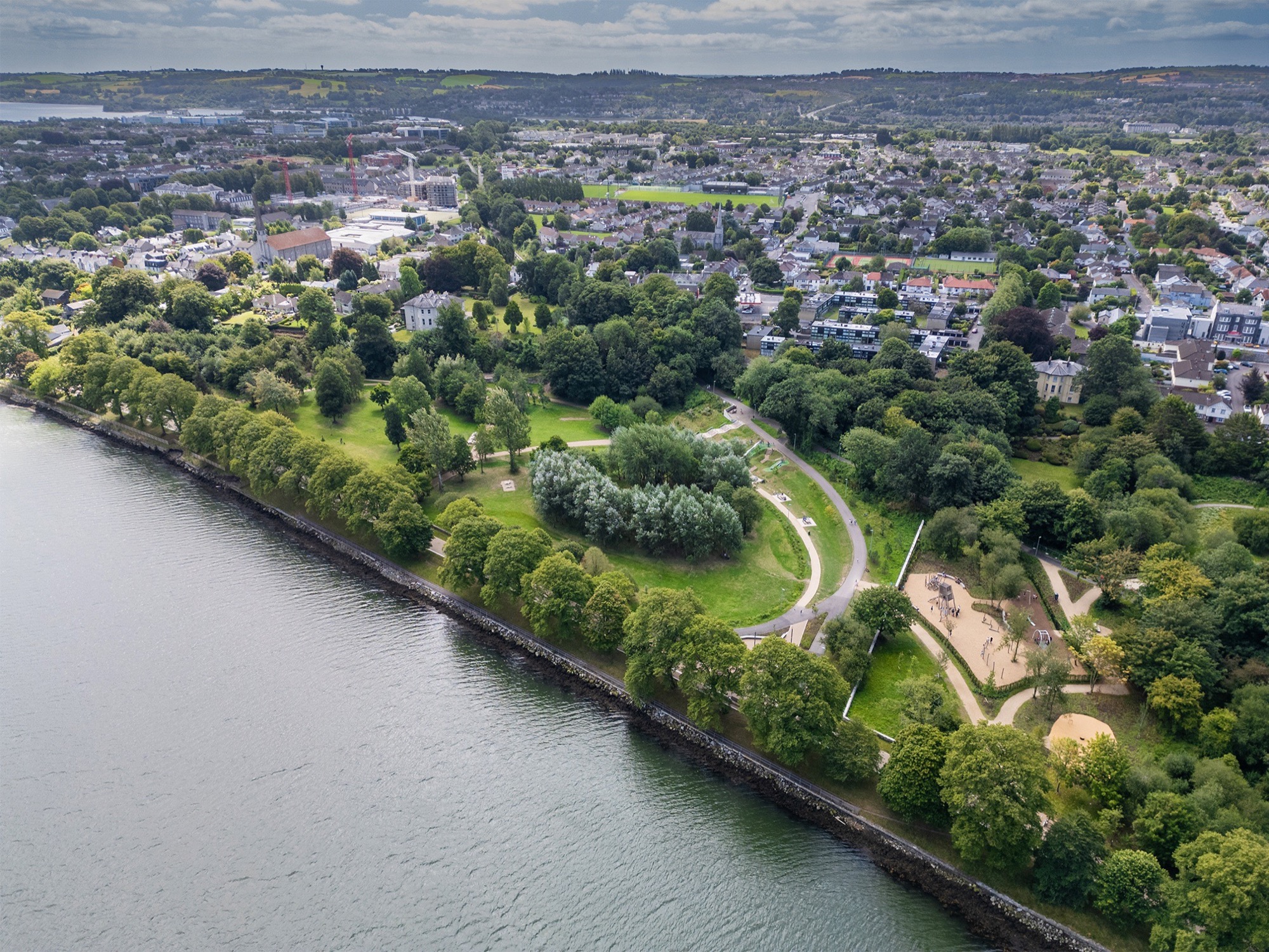
Marina Park in Cork embodies many facets of the city. It fulfils the long-standing promise of creating a regional park to the east of the city. Like many former industrial cities, Cork has significant decommissioned industrial areas along the river, adjacent to its city centre. Today, these areas present an opportunity for residential development and the redevelopment of public spaces. Marina Park is a key component in Cork’s ambition to develop its docklands industrial area into a lively and integrated neighbourhood for the city.
Catalyst for transformation of Cork’s docklands
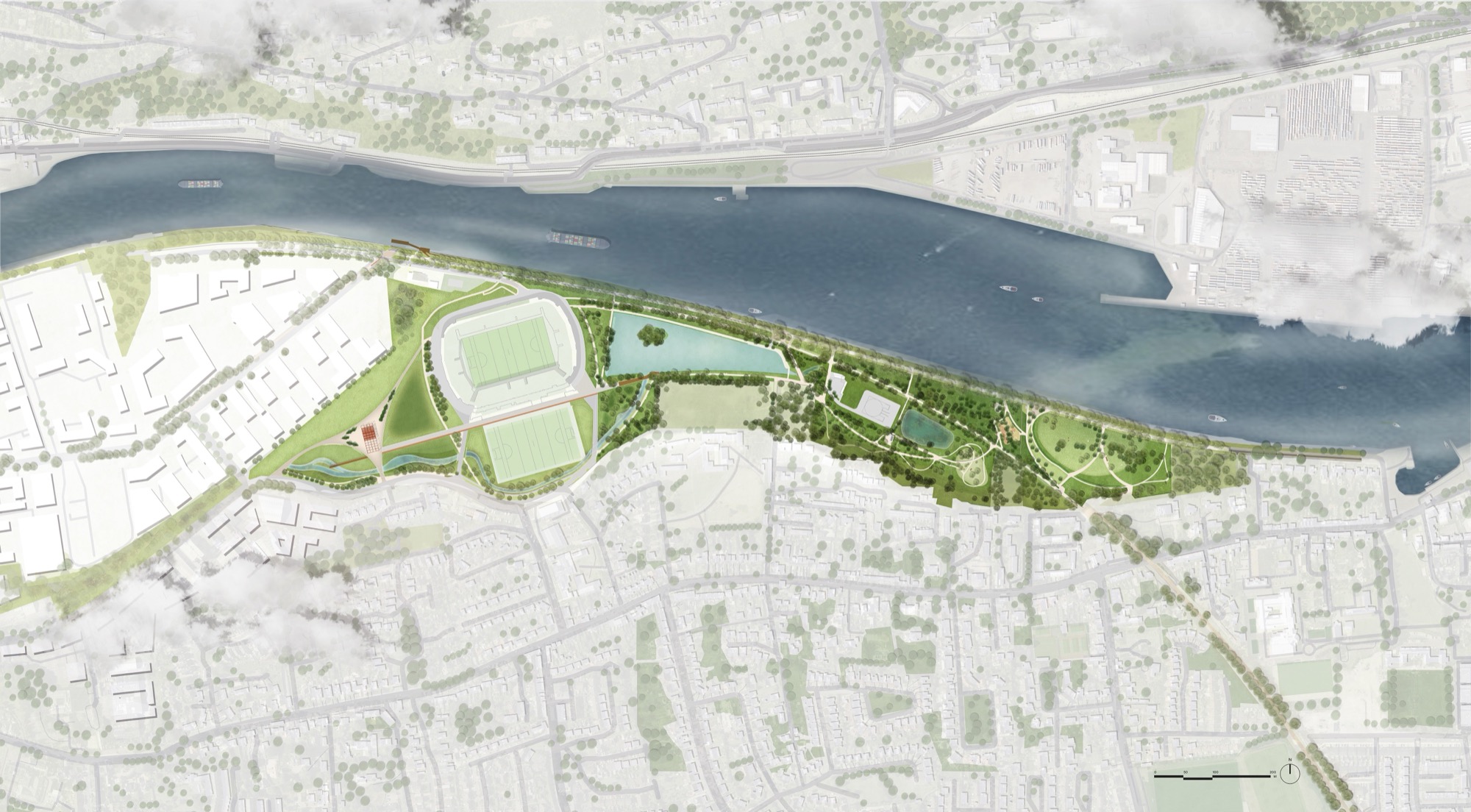
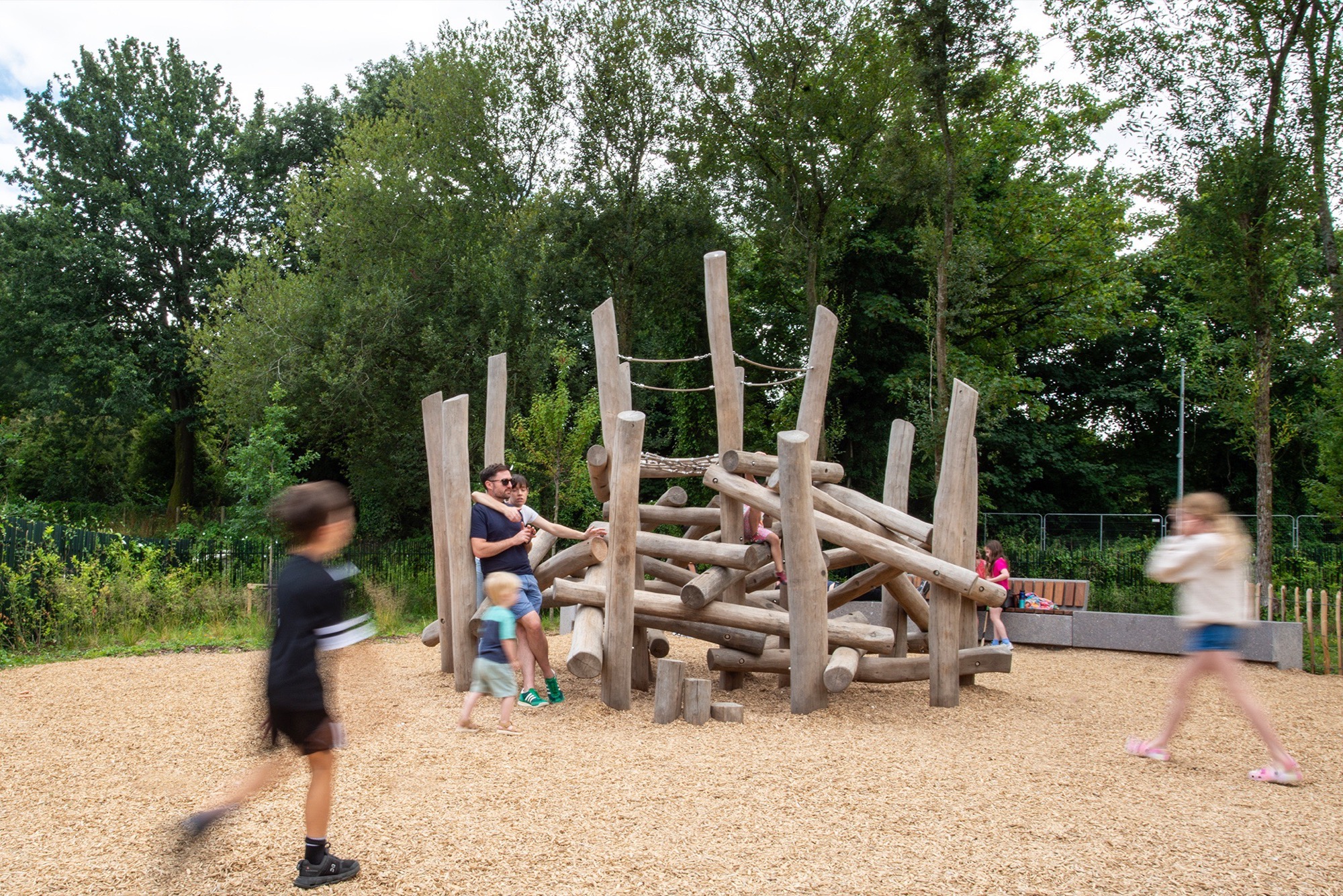
Designed on a former brownfield site of derelict showground buildings, a Gaelic sports stadium, and a run-down natural zone, the park transforms a complex, fragmented context into a unified landscape. Guided by an overarching vision, the park is realised in distinct phases, structured around three coherent yet diverse landscapes: an urban park, the Eco Park and Marina Promenade.
Embracing the water: an adaptable park
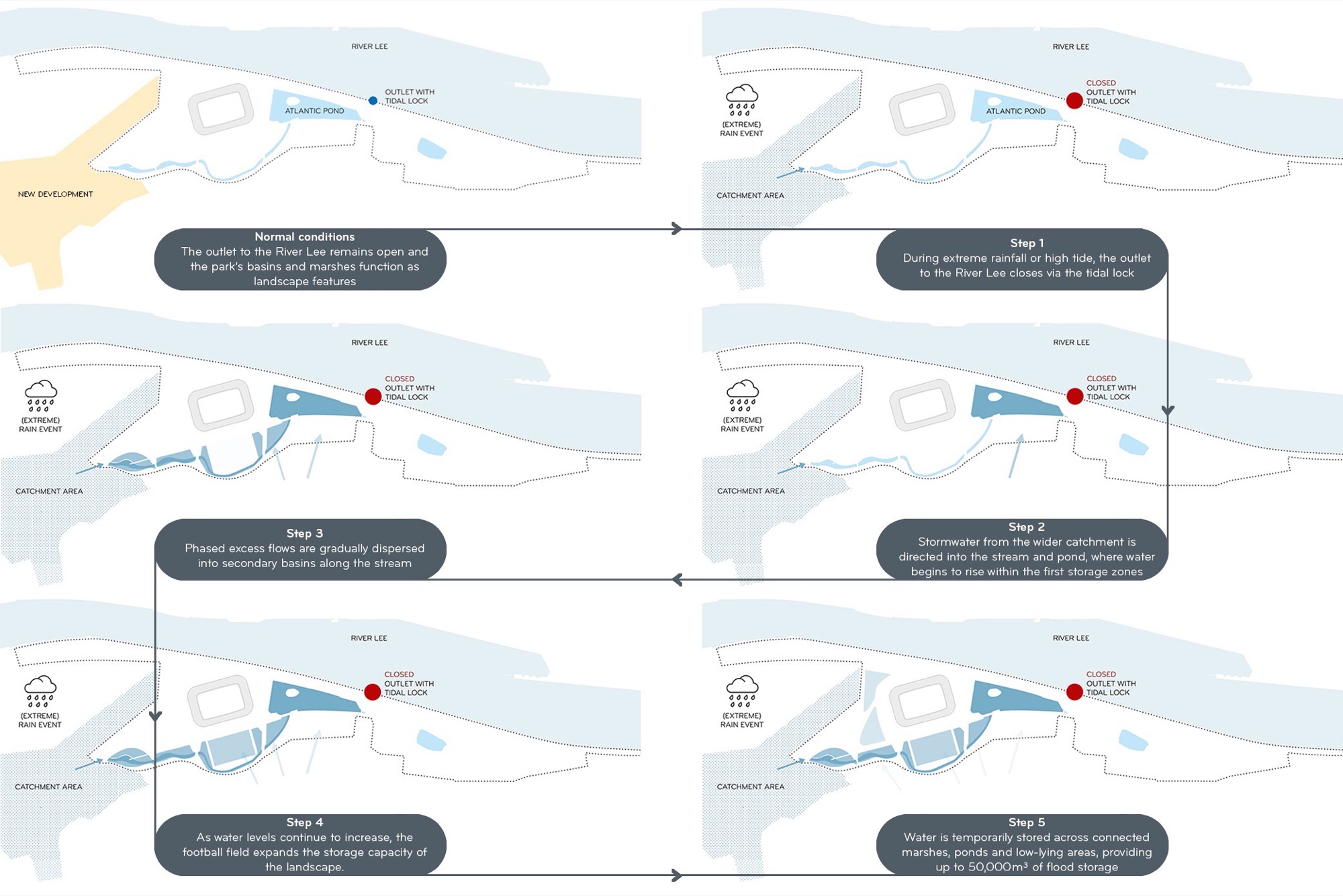
The park plays a vital role in managing storm water runoff, not only within the park but also for the surrounding residential areas, and future dockland development. It presents a landscape-oriented solution for urban adaptation, accommodating the temporary storage of increased or extreme rainfall events and rising sea levels.
Water becomes the backbone of the park, harmoniously integrating natural wetland areas with social gathering and event spaces. The integrated approach to landscape, water engineering, and cultural heritage results in a well-balanced park that transforms the contextual challenges of temporary water storage into one of the park’s stand out features.

An energetic gathering point
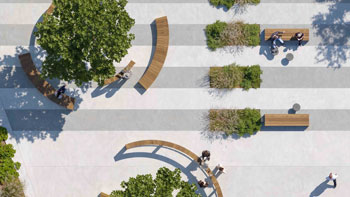
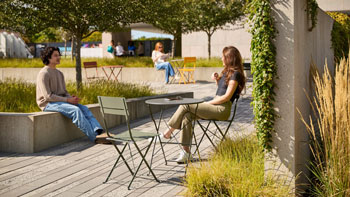
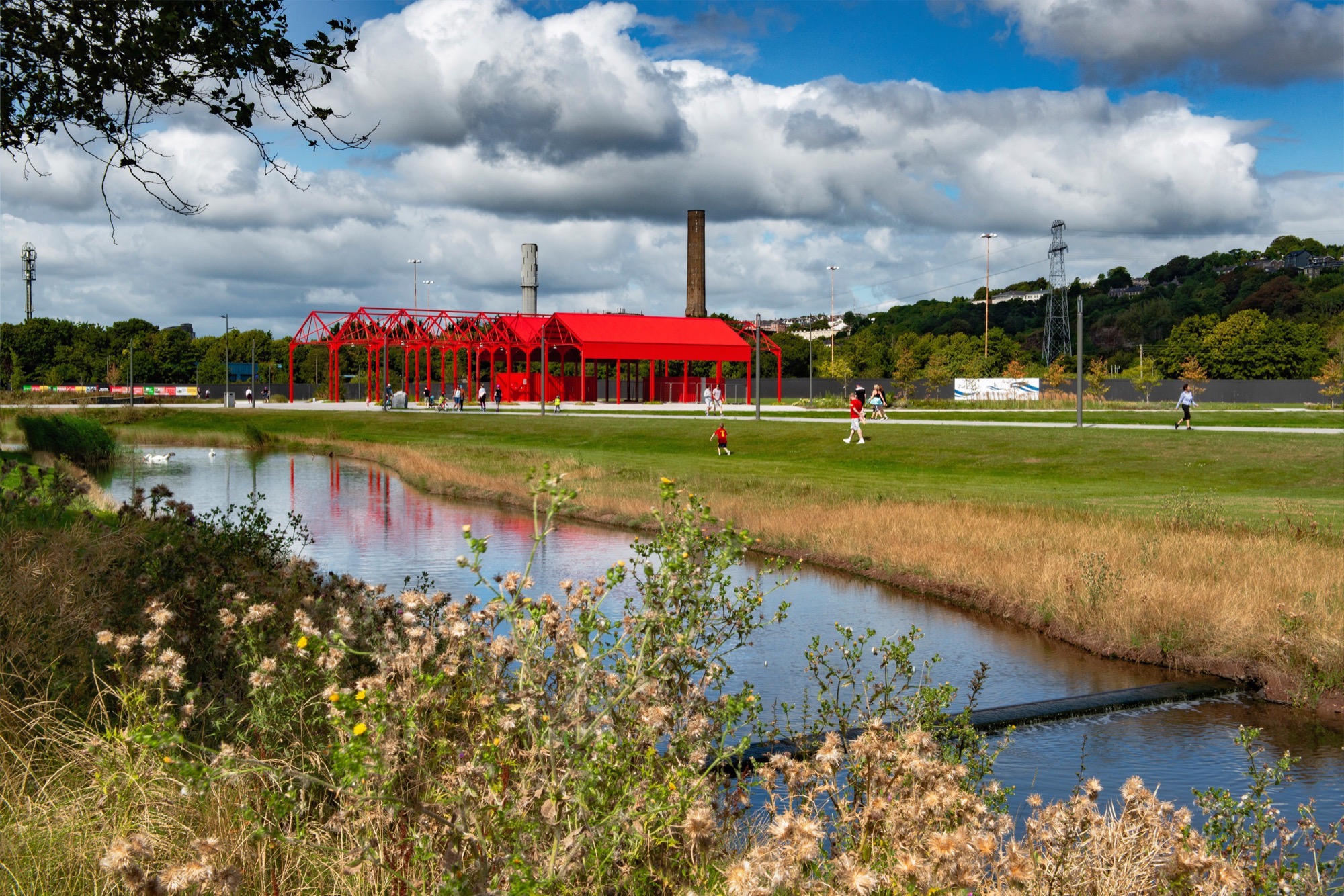
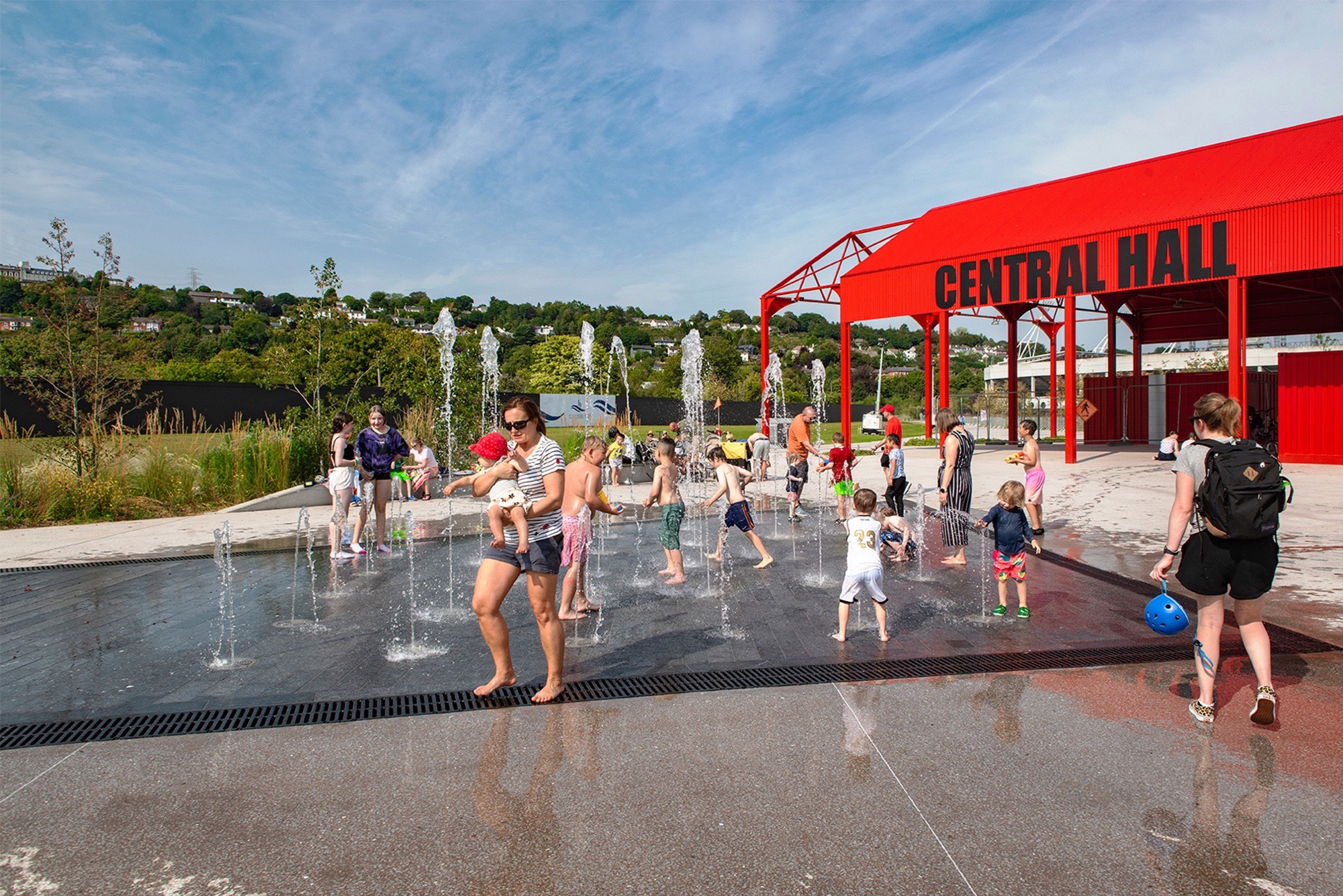
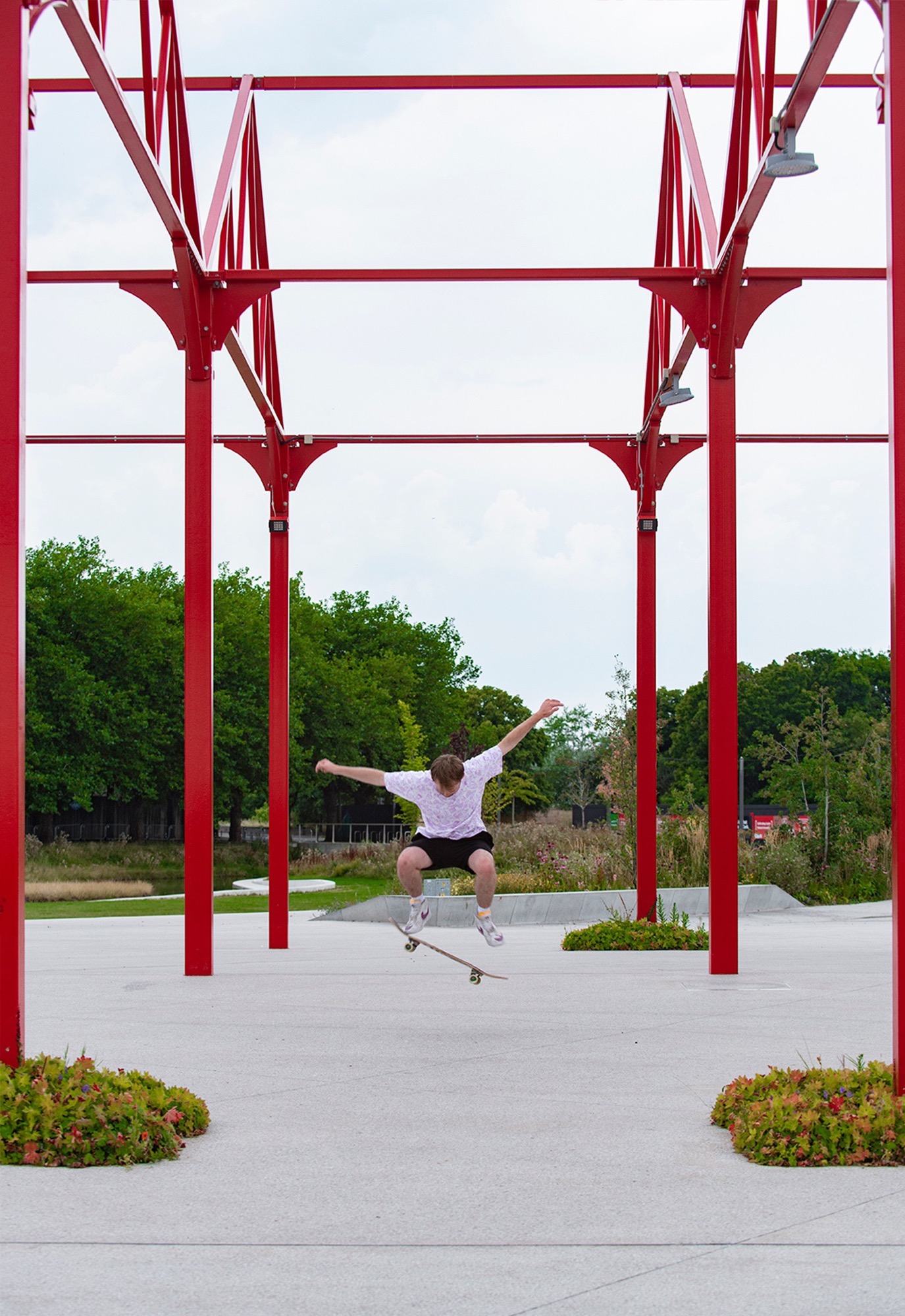
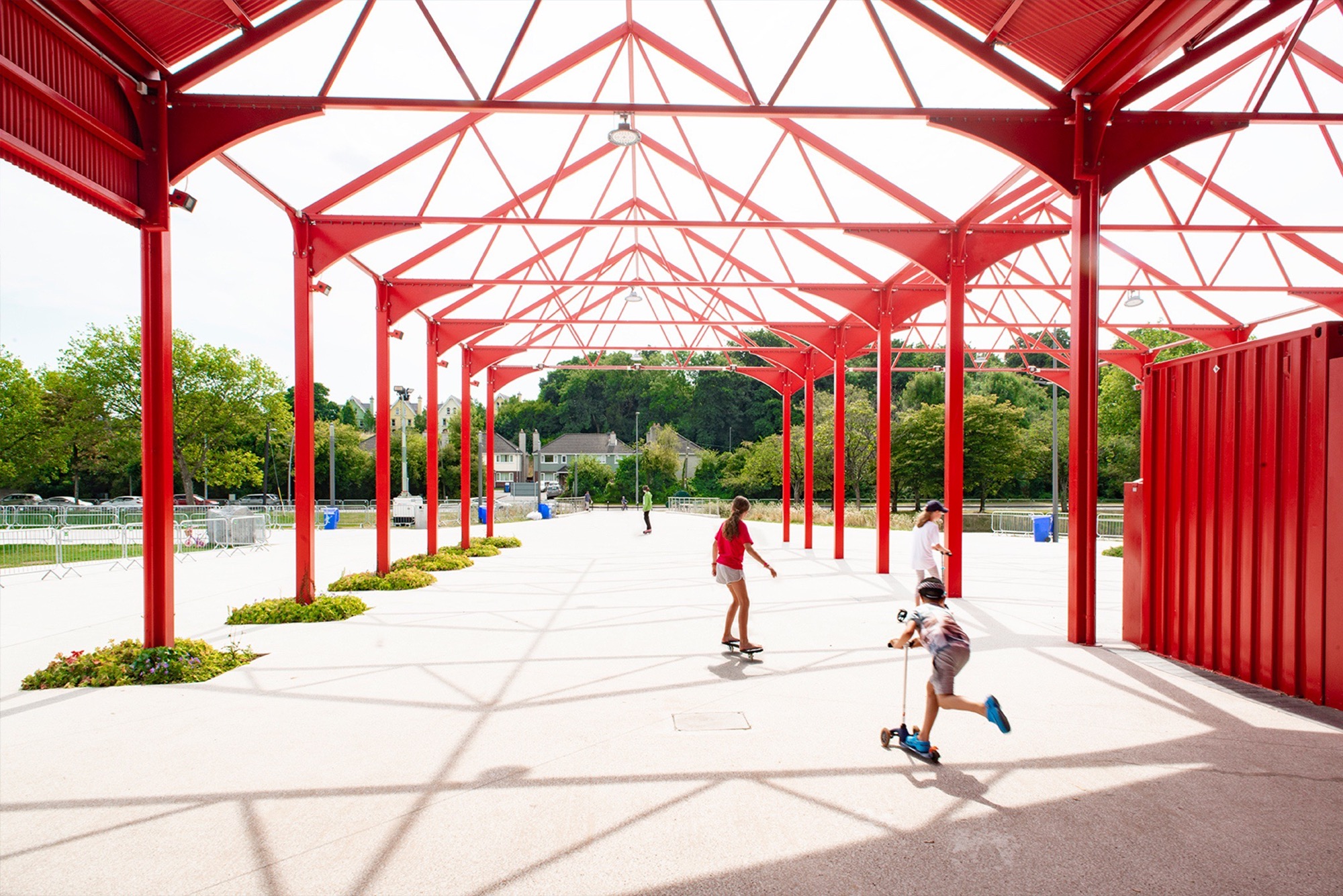
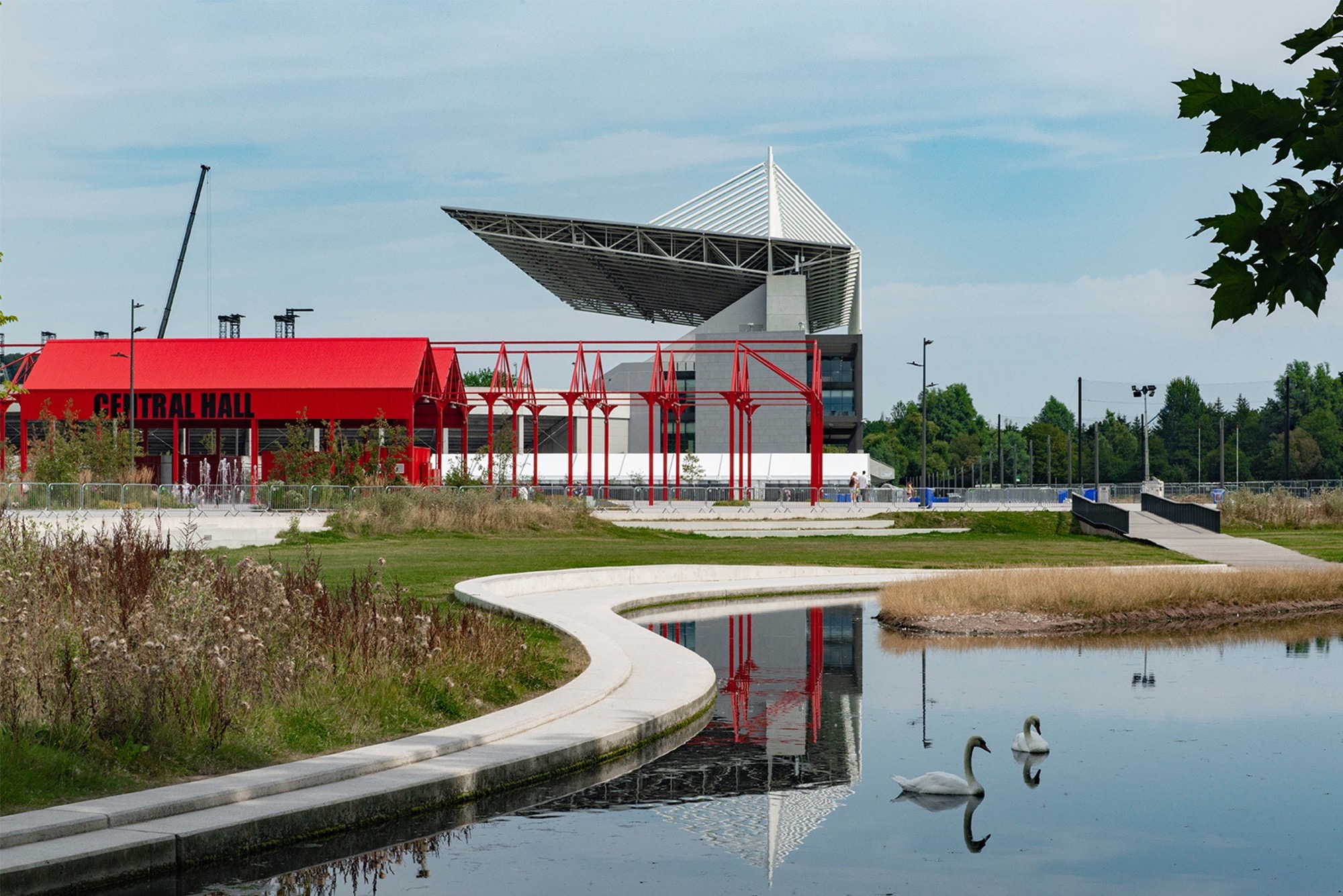
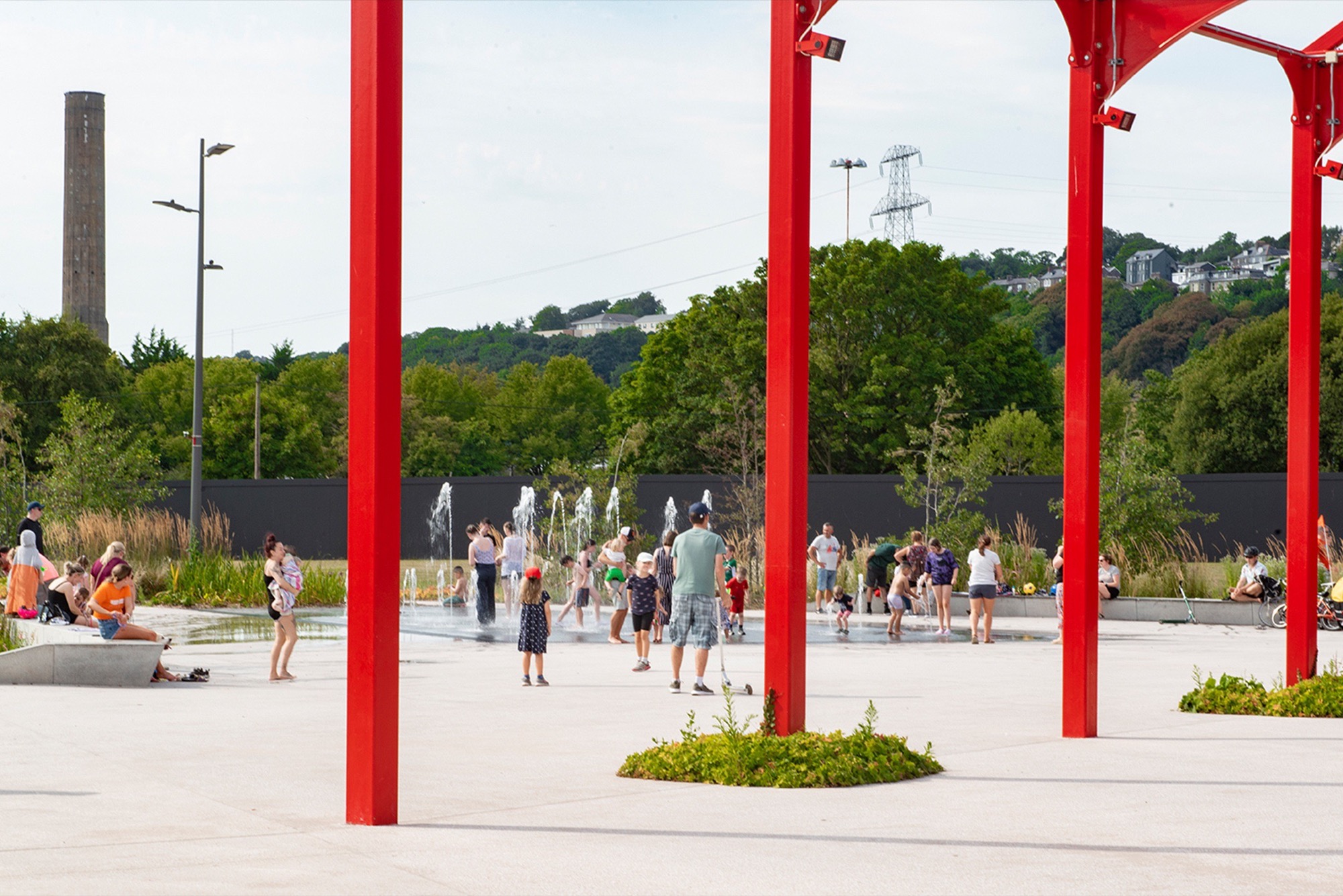
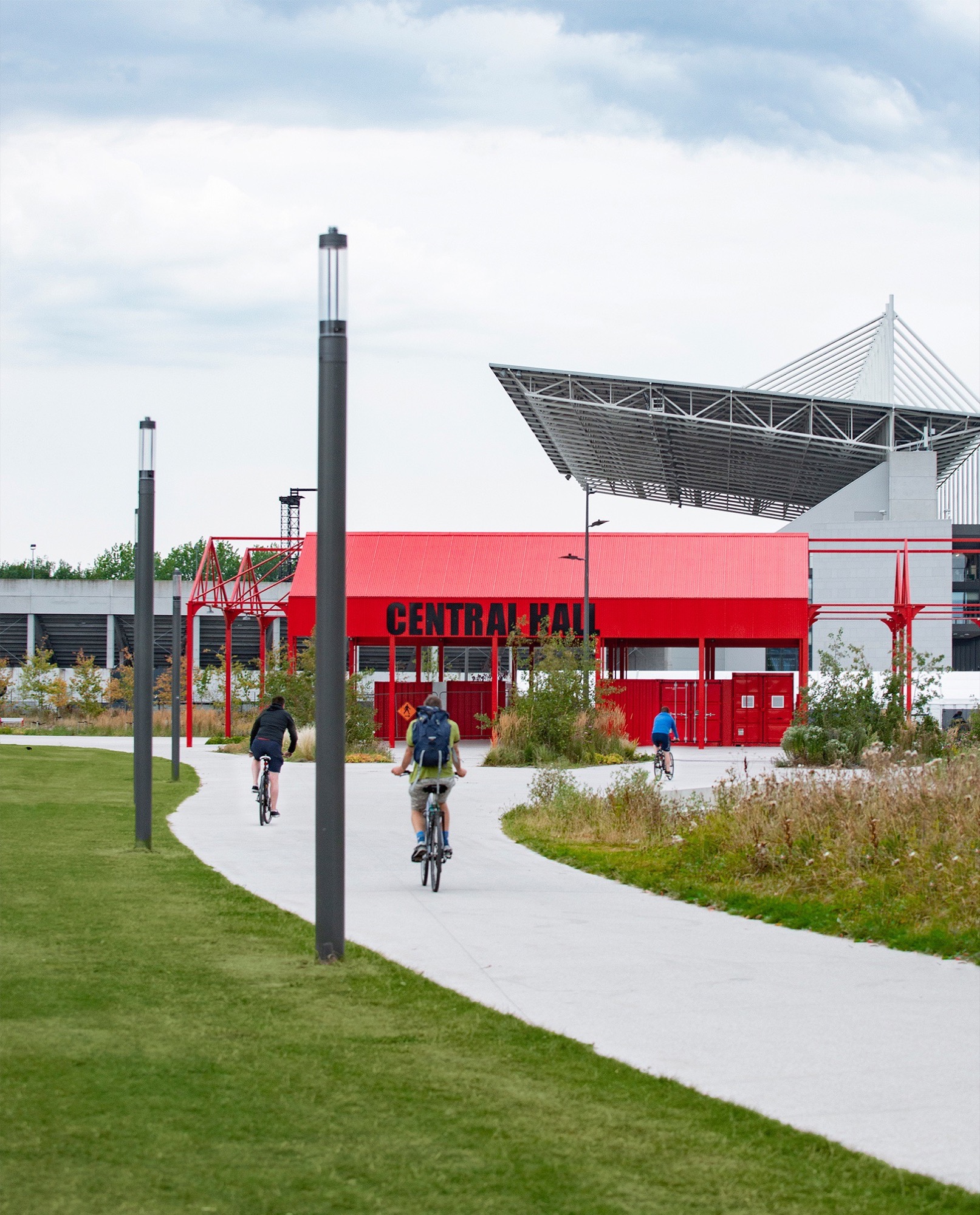
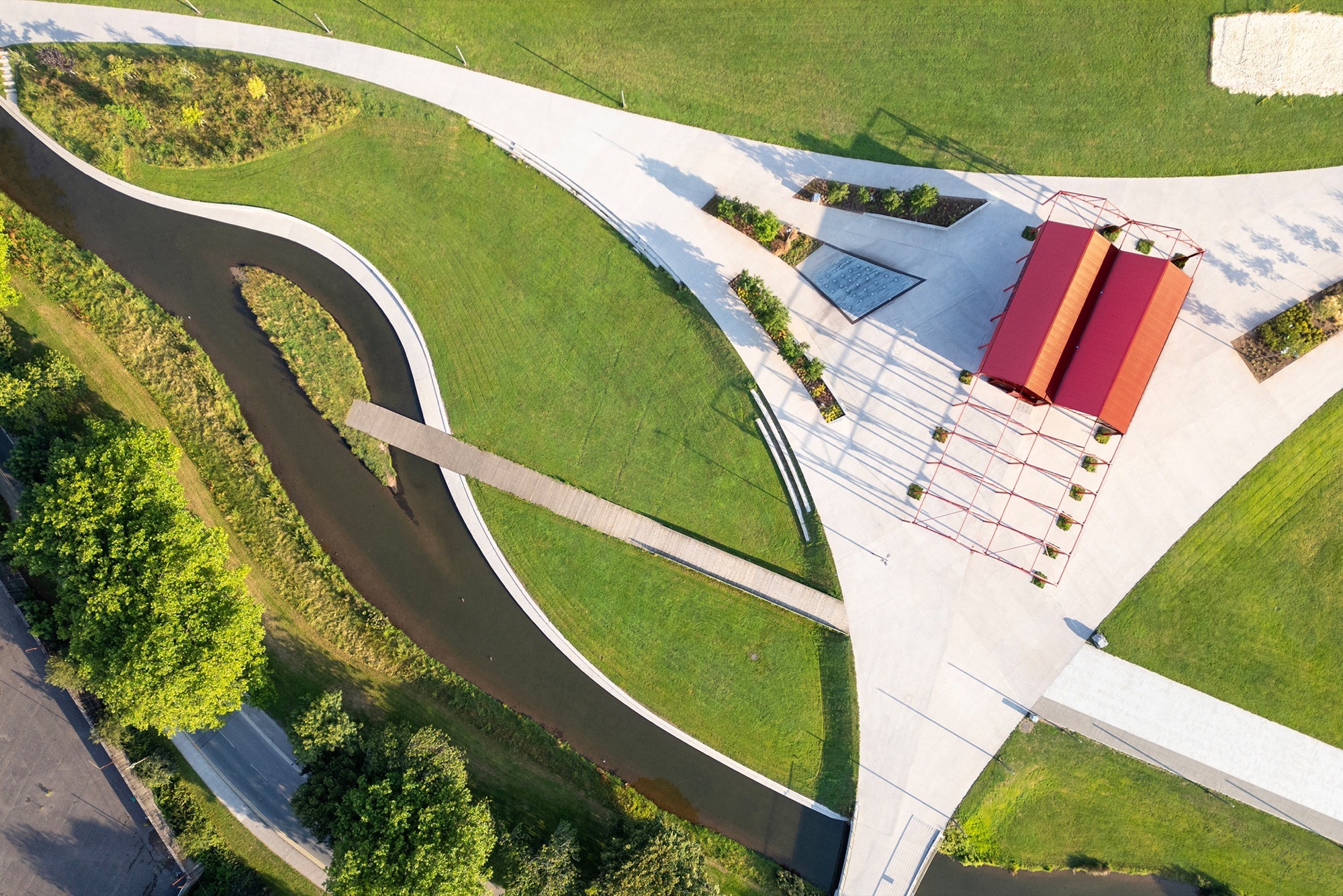
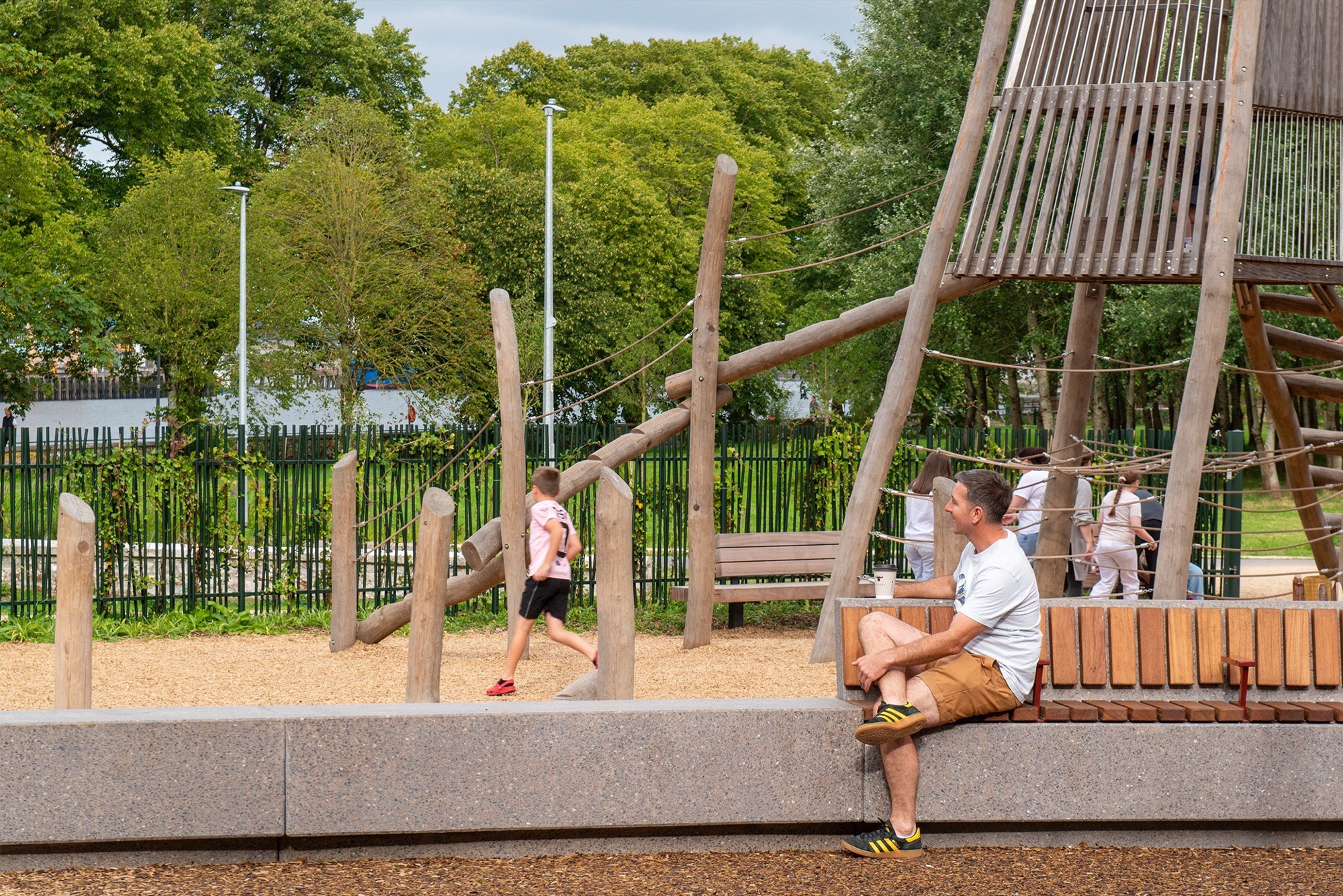
The most urban and multifunctional part of the park has been put into use. Here, the park gracefully embraces the renovated Gaelic sports stadium, extending the space for events and matches. Where the various entrances to the park converge, a new striking pavilion stands. The ‘Central Hall’ re-purposes structures from the former exhibition grounds and houses a coffee bar. Additionally, the strong connection between the square and water is made accessible to visitors with a striking water feature. A grid of fountains creates a creative play object as an attractive meeting point in the park.
The park to connect with nature
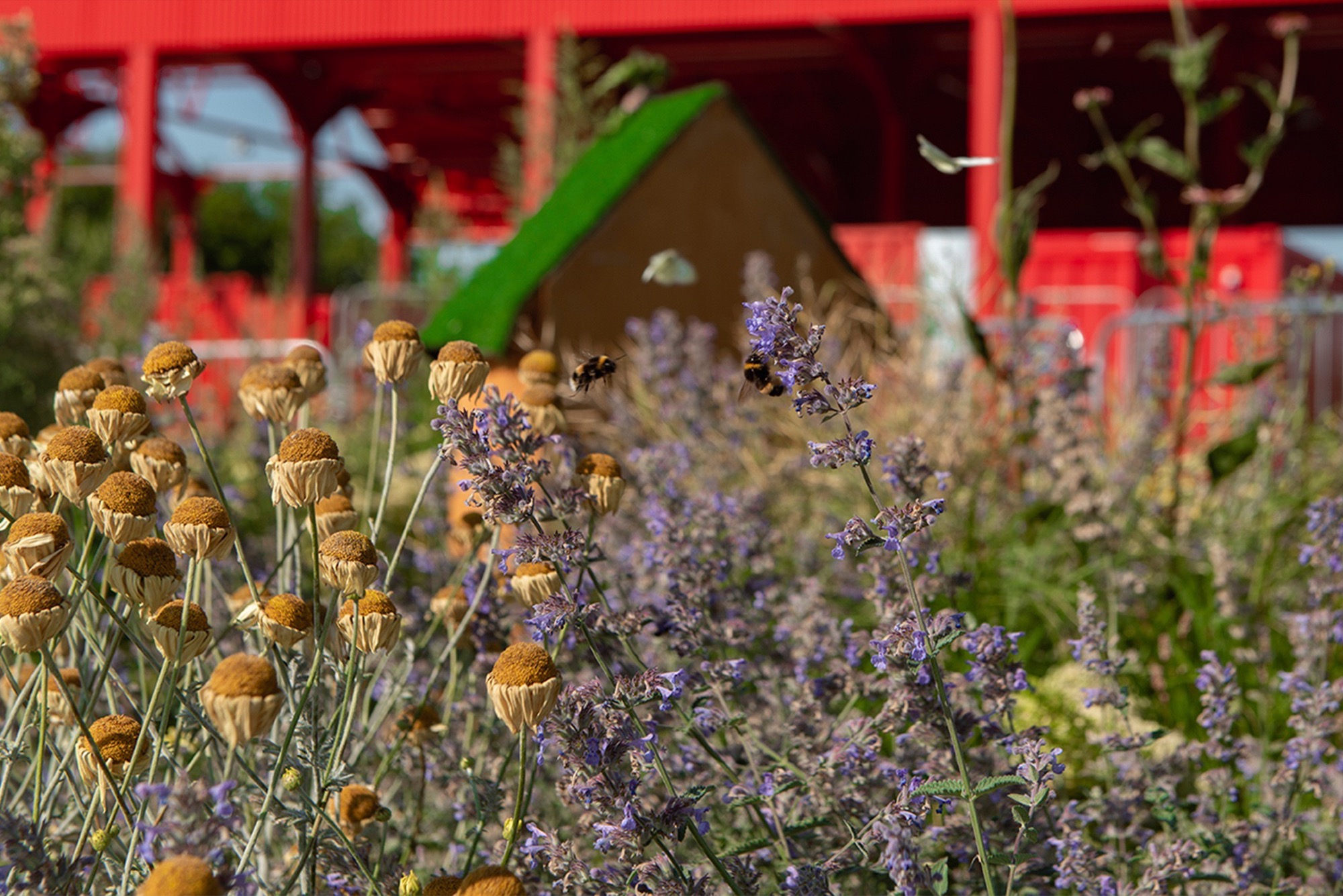
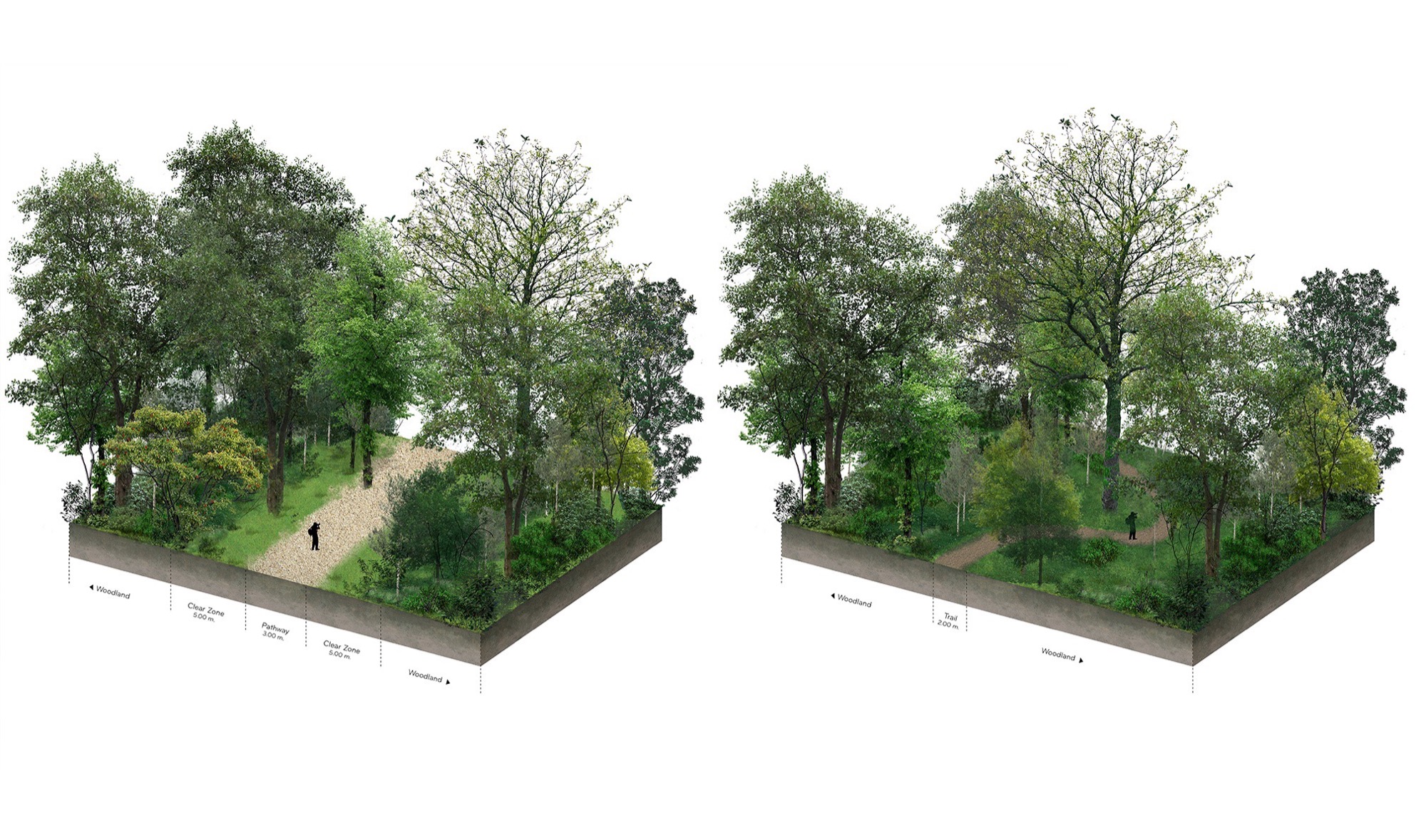
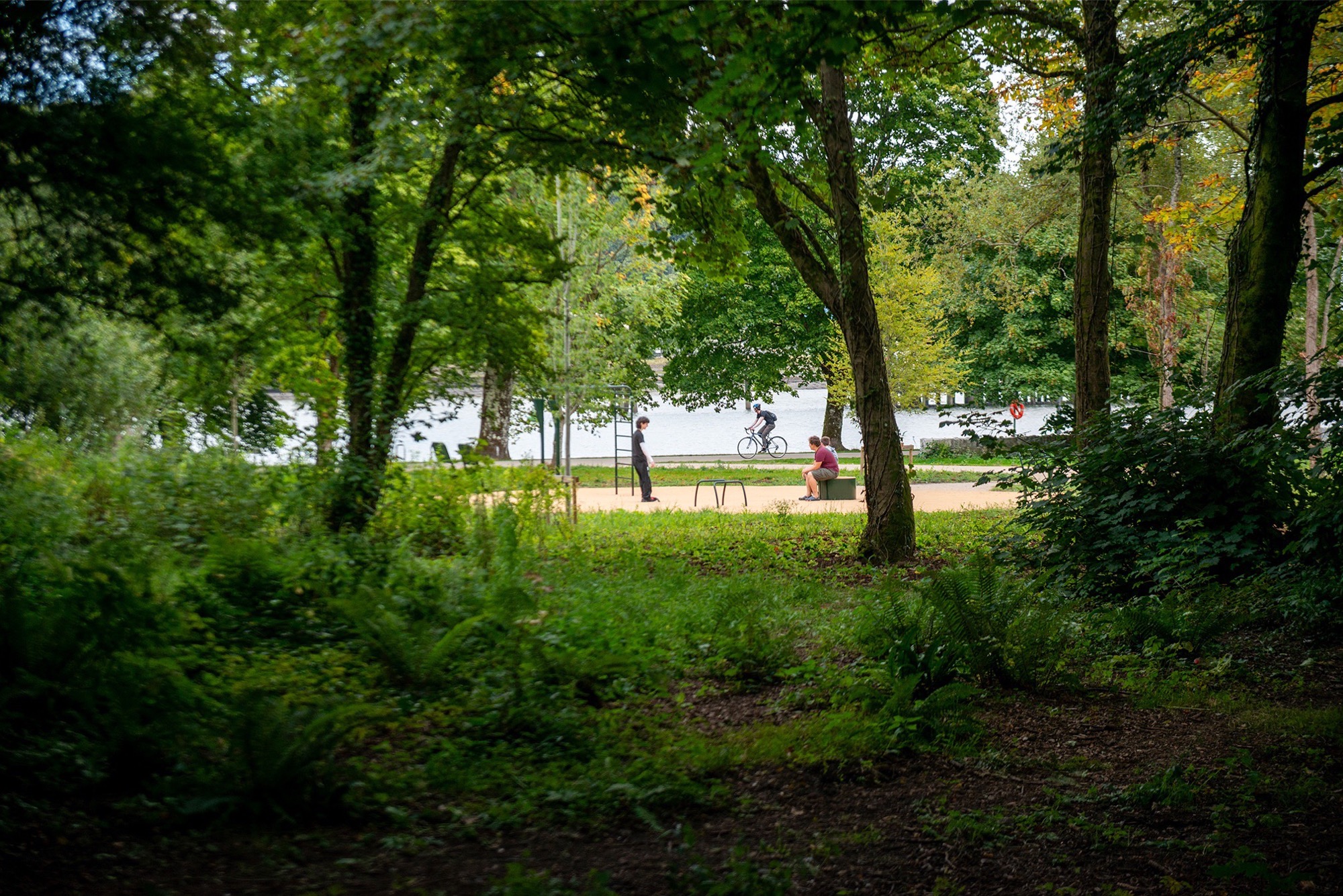
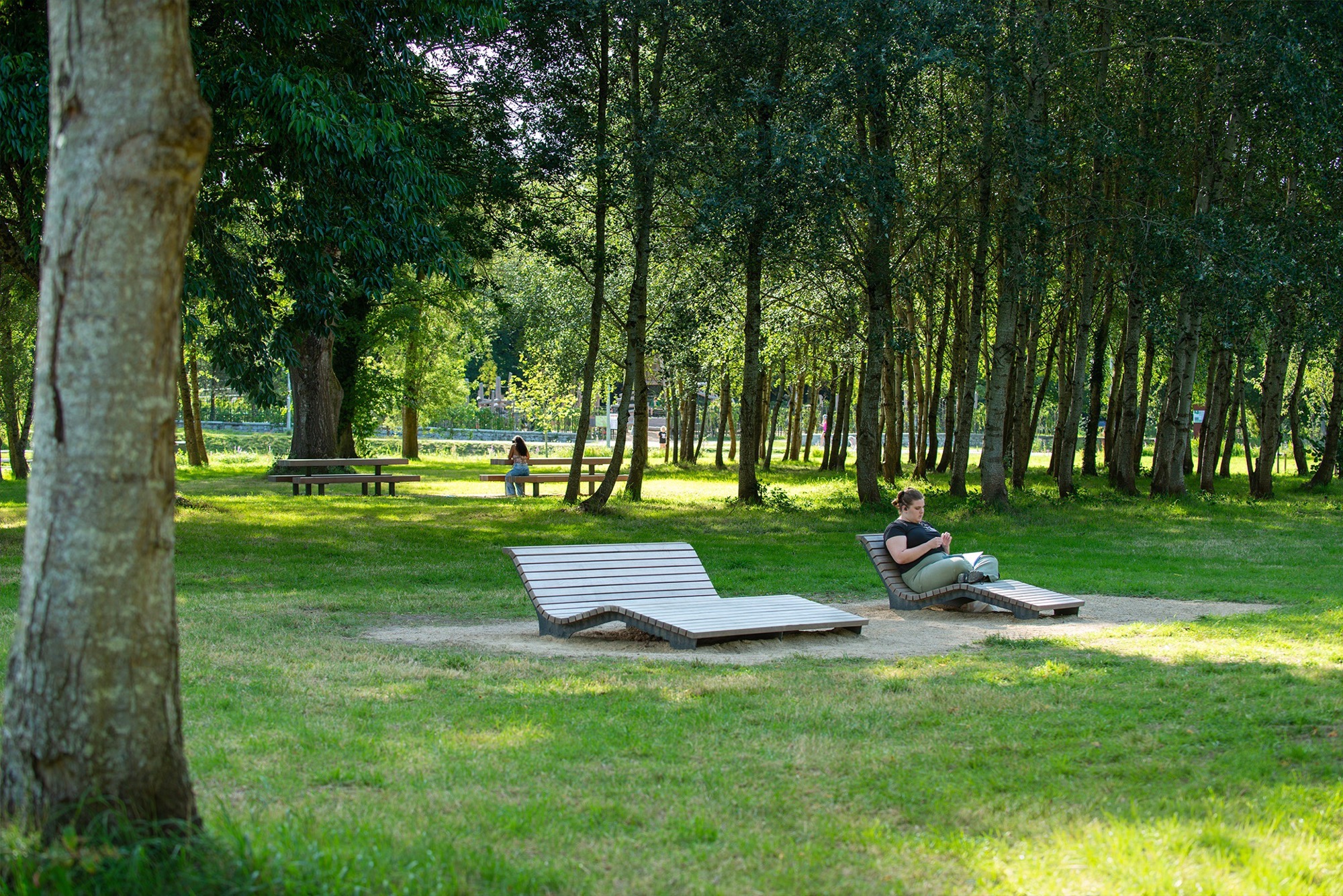
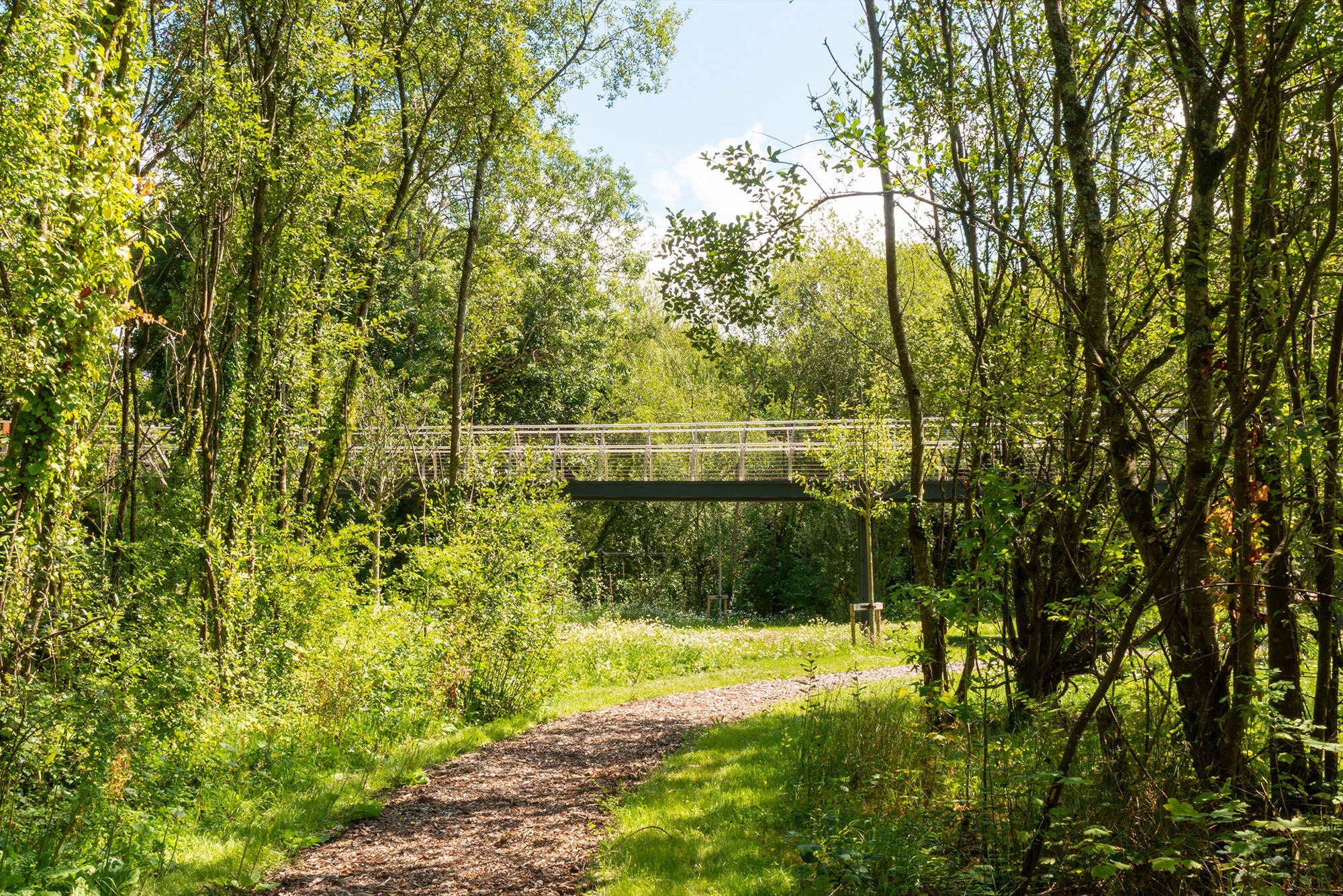
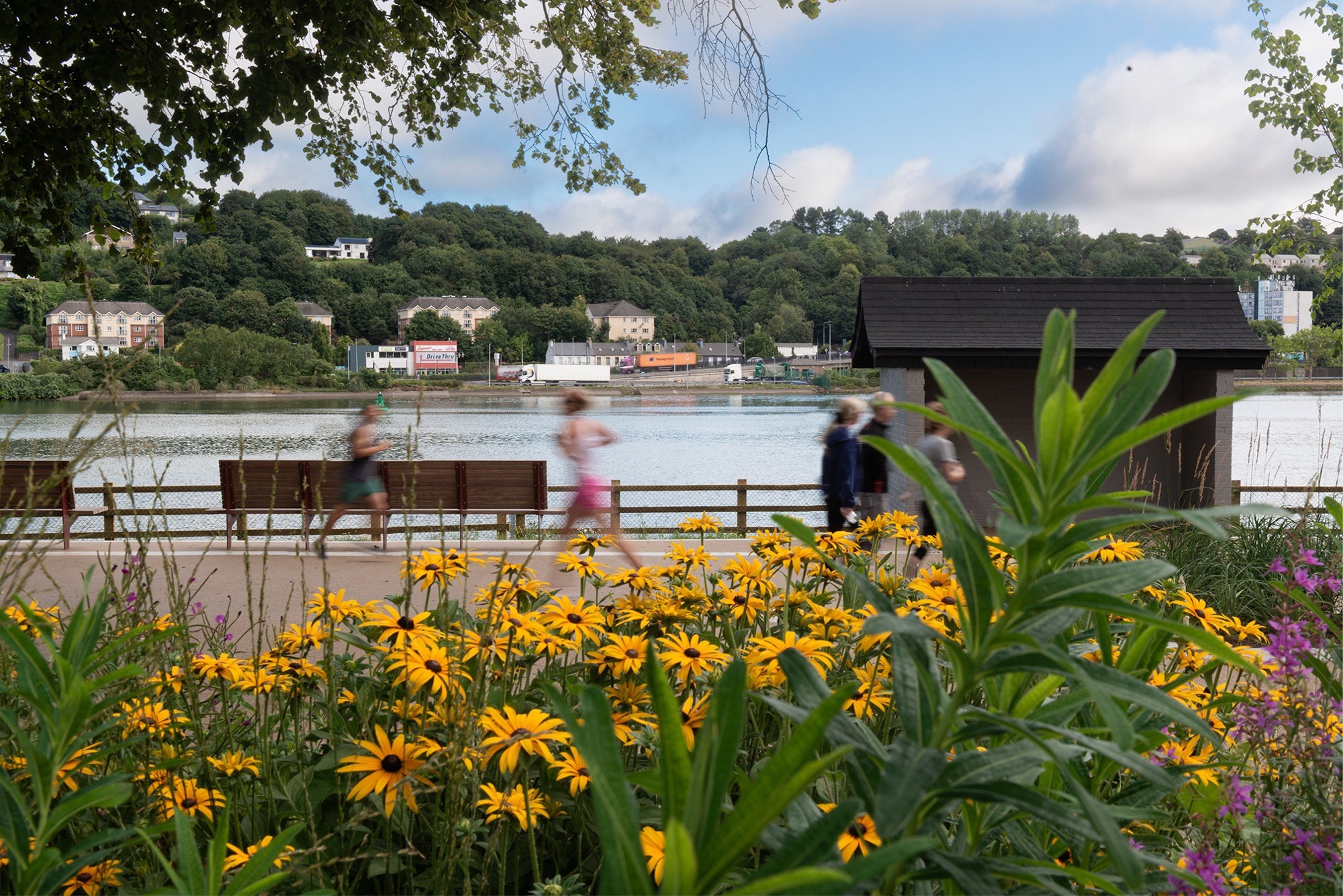
The Eco-Park spans 13 hectares and is a key part of the broader Masterplan, focusing on preserving existing green spaces and heritage, while incorporating a strong blue framework to enhance biodiversity and climate resilience. Designed to move from urban edges into progressively natural habitats, it balances recreation with ecological stewardship: native Irish species will support woodlands, meadows, grassland and marsh. The flexible layout allows future activities and unique features to be added within the overall framework. Formal and informal paths create varied visitor experiences, while water features and shorelines are improved to support wildlife and amenities.
The new riverside route
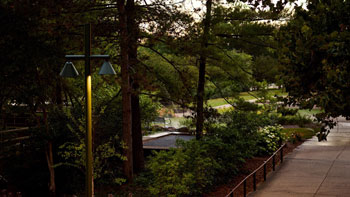
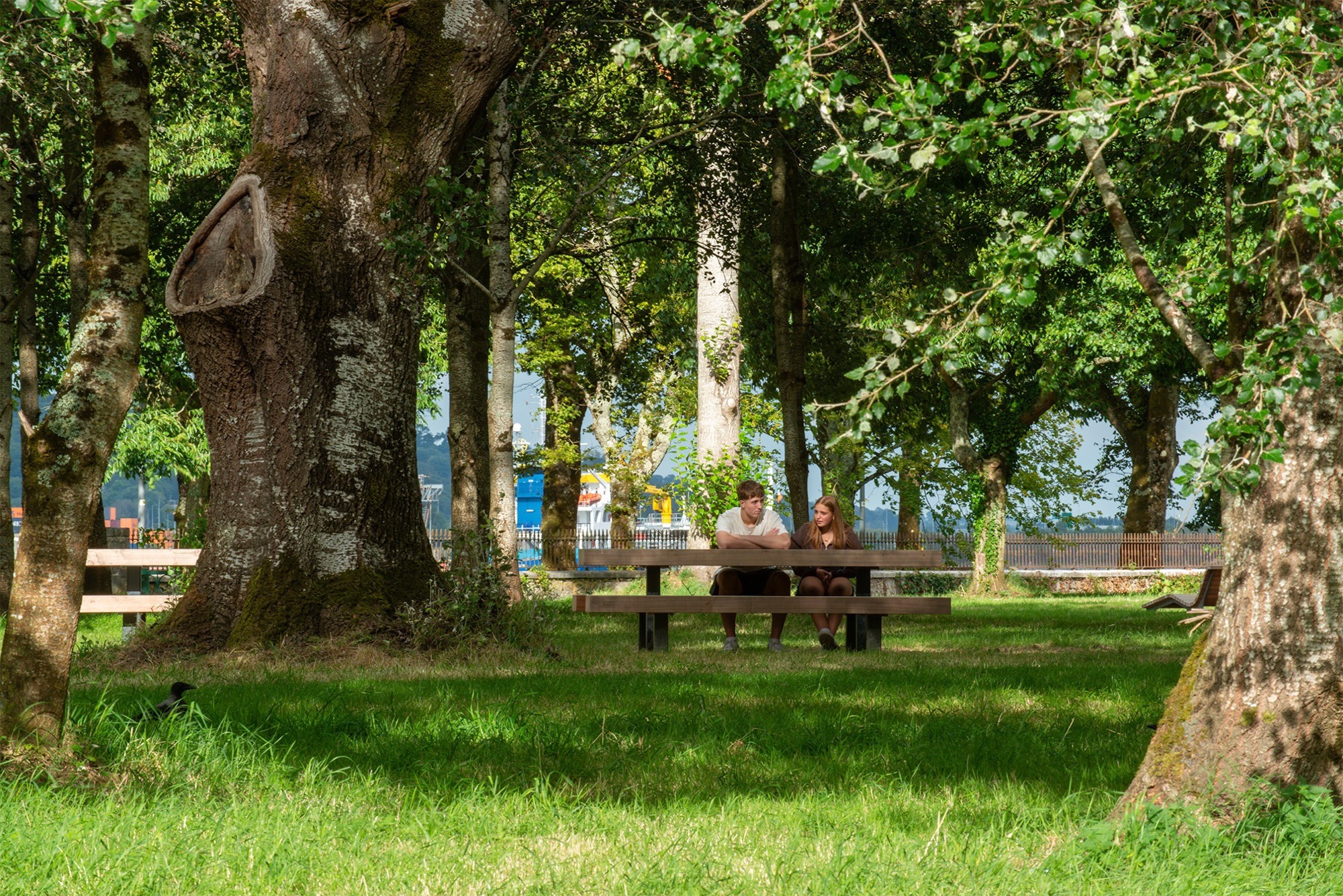
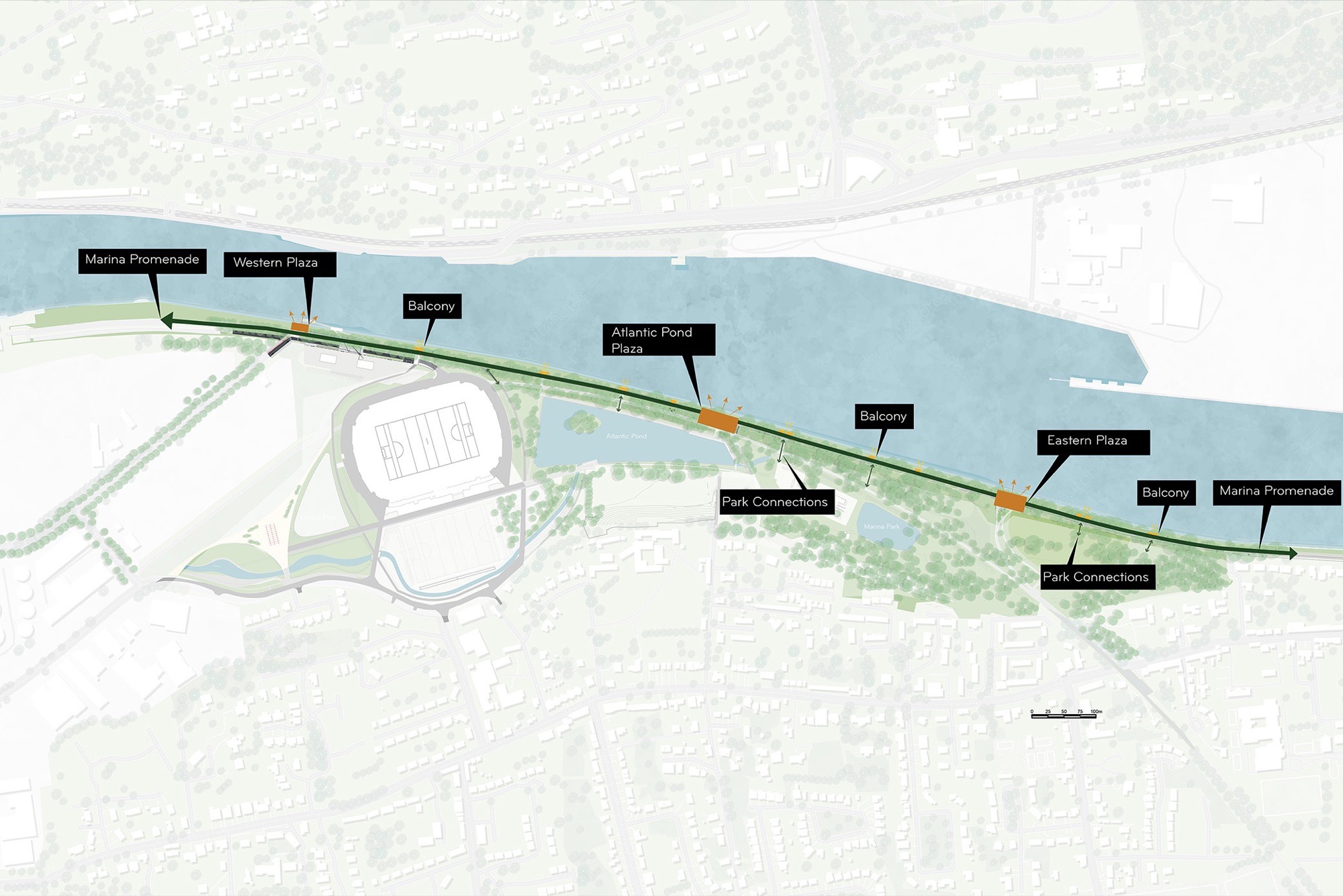
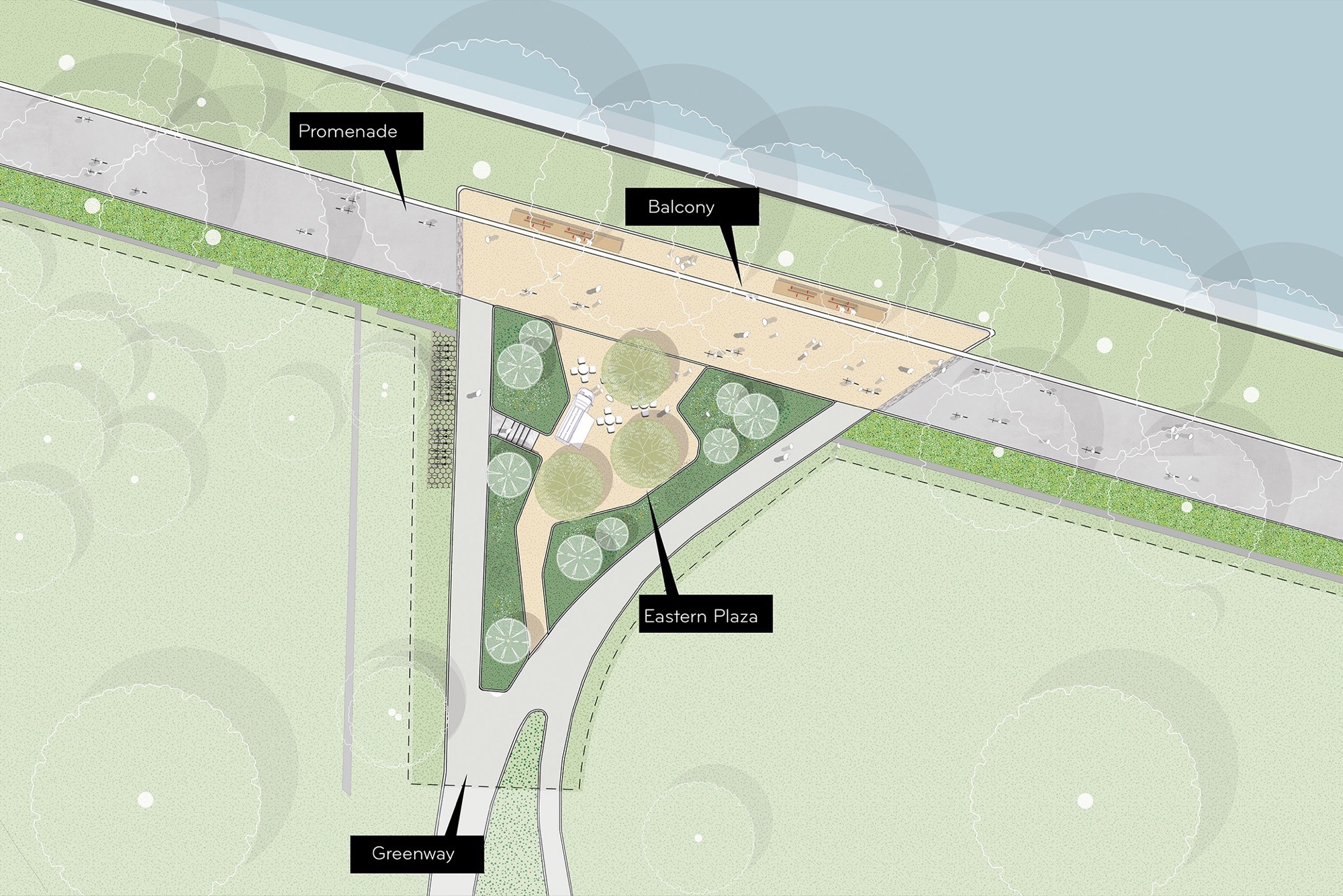
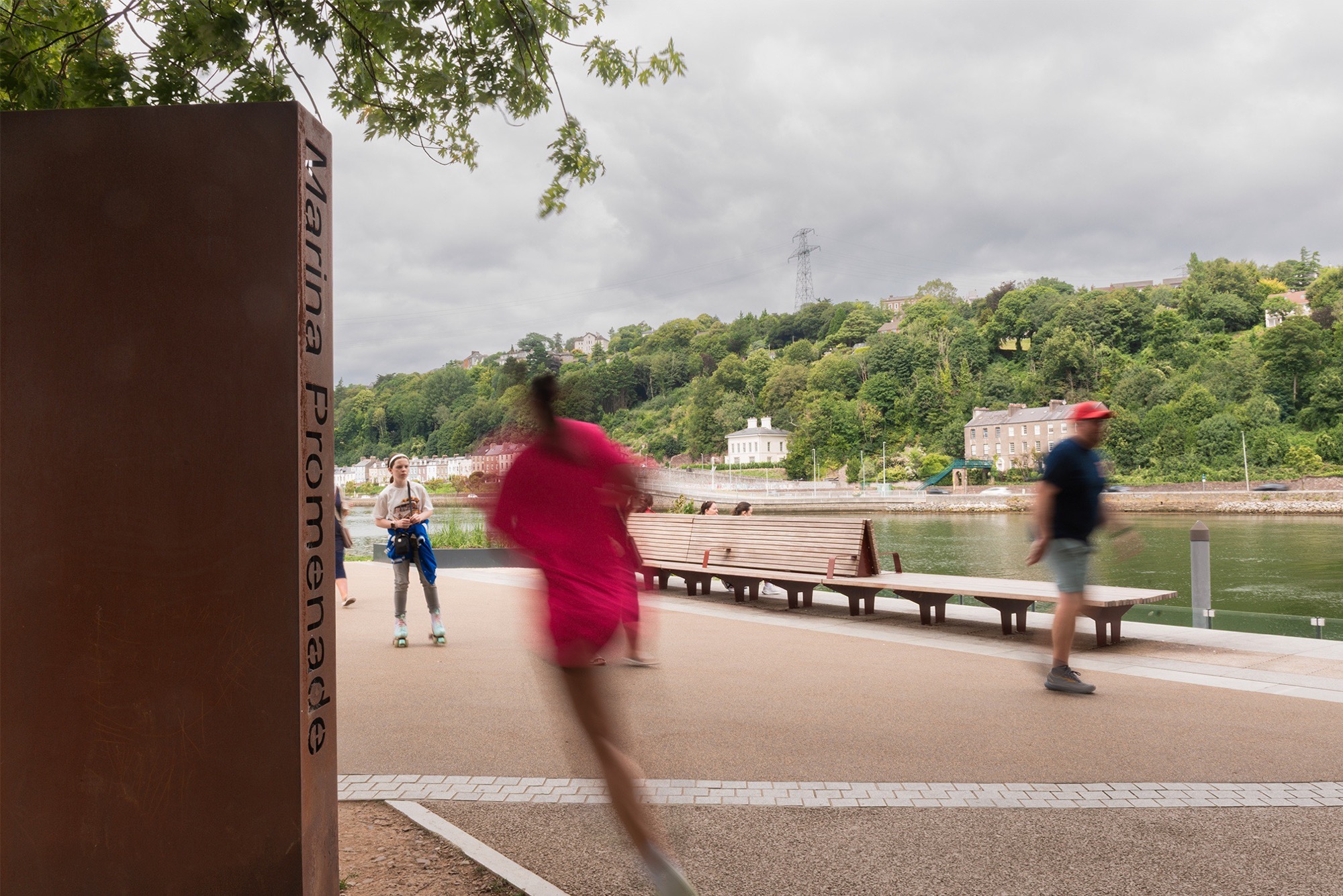
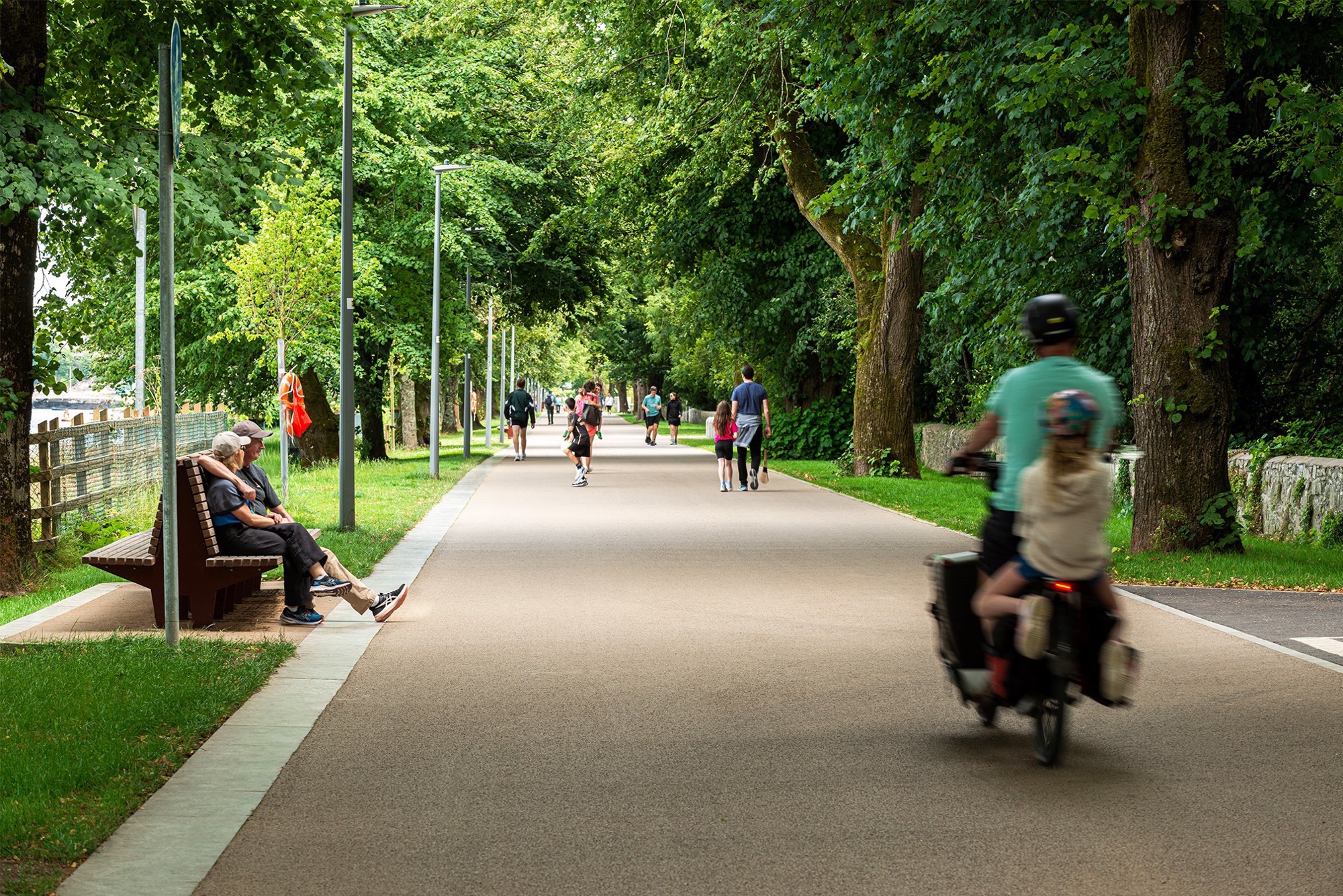
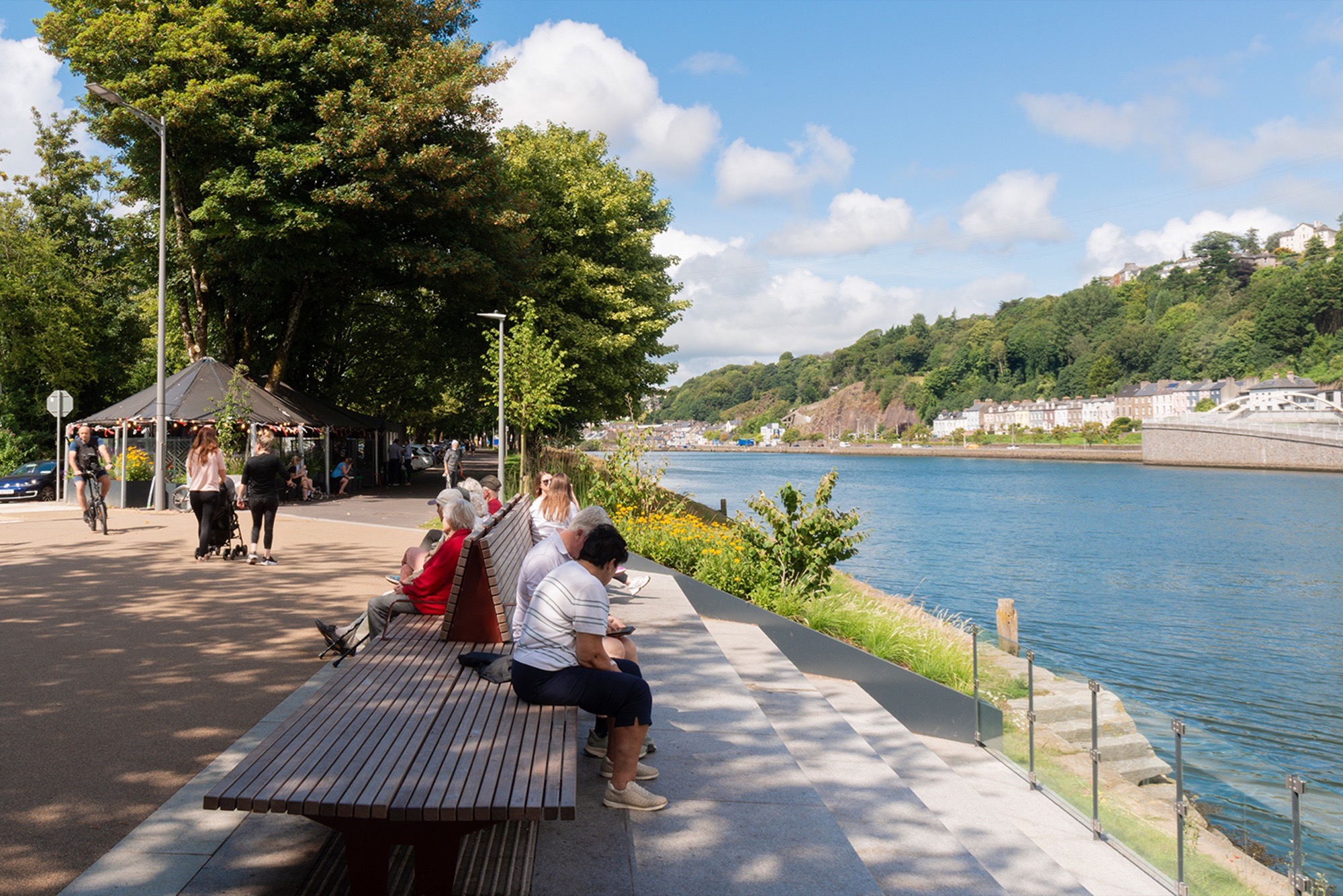
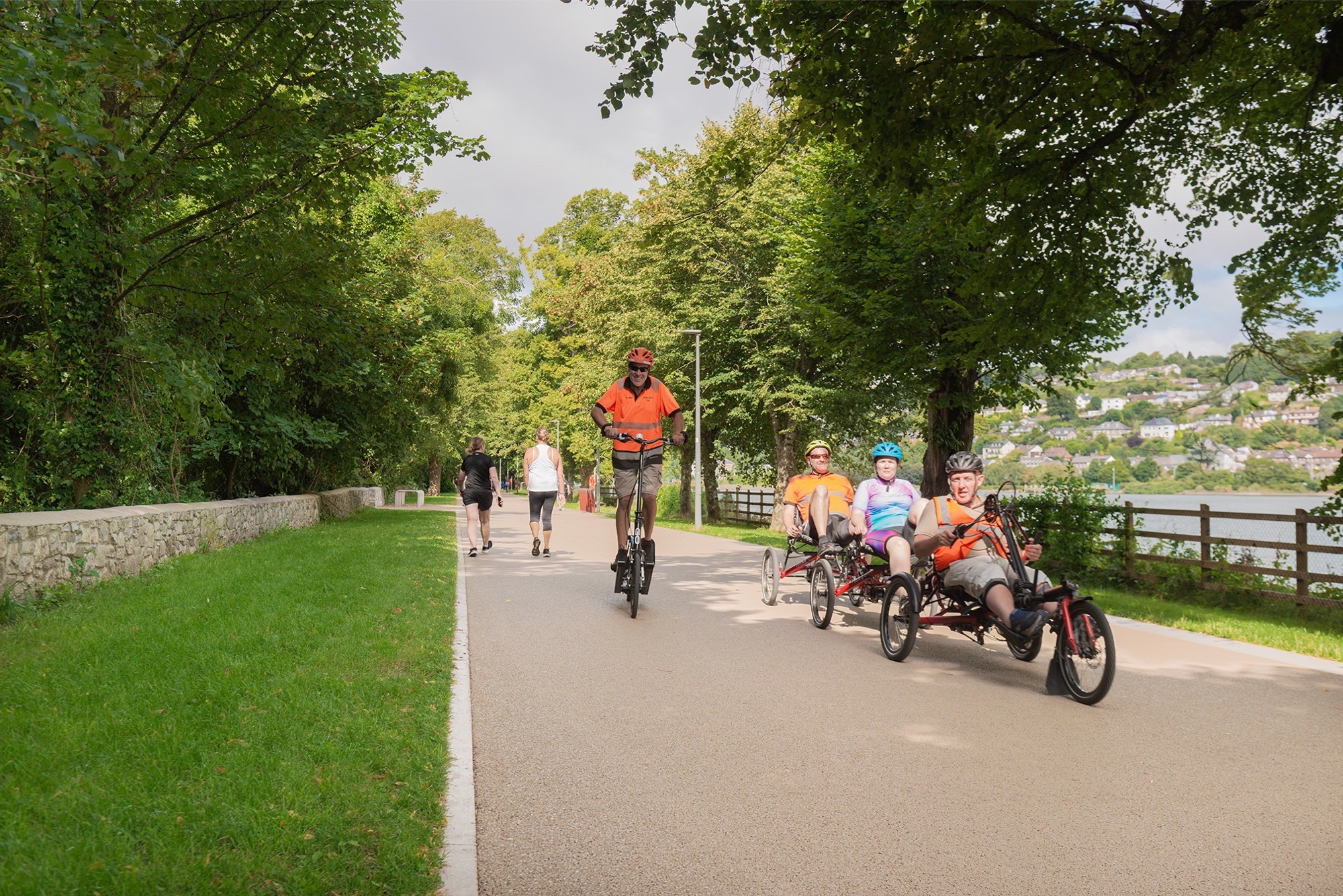
Supporting Cork’s ambitions for active movement, the Marina Promenade introduces an important slow traffic route along the river Lee. The new car-free shared pathway for pedestrians and bicycles is running through the beautiful double tree-row of mature existing trees.
The promenade provides a unique attraction for Cork city and serves to integrate the Marina Park, the Passage Railway Greenway and the new developments of Blackrock Village and Docklands. This promenade has existed since mid-18th century, used as a tracking wall to guide ships up the River Lee to Cork Harbour, but later was taken over by car traffic. The new design provides a safe, attractive and enjoyable experience and encourages a flow of people to explore the riverside and the park alongside it.
Aligned with the city’s vision for sustainable growth in balance with natural preservation, Marina Park invites exploration of an area where history, nature, and contemporary life coexist. Positioned a short distance from the city centre, the completed park spans 70 acres, significantly expanding Cork’s green spaces. As a green stage for activity, it is set to be a driving force in Cork’s development as a climate-adaptive, sustainable and healthy city.
Collaboration: REDSCAPE (landscape), O’Connor Sutton Cronin (OCSC) (Engineers), Howley Hayes Cooney (heritage consultant)
Client: Muncipality of Cork
Photography: Jason Gairn, Cork City Council / Darragh Kane
51.89877565819207, -8.43832685105774
73581


LILA 2026 Sponsor