Maltings Wynd/DundasHill Climate Resiliant Landscape
www.rankinfraser.com
2026 Landscape and Architecture / 2026 Residential Parks / United Kingdom / Built in 2024 /

![Prestonpans Civic Square is the principal public space in the small town of Prestonpans on the East Lothian coast of Scotland. The regeneration of the split level square was driven by Prestonpans Community Council in partnership with East Lothian Council. The square had changed little since an earlier redevelopment in the 1950’s, becoming tired and […]](https://landezine-award.com/wp-content/uploads/2024/05/00-PWM-0223-0152-photo-credit-Keith-Hunter-600x376.jpg "Prestonpans Civic Square")
![The iconic and previously derelict, 125-year-old Category B Listed railway viaduct at Bowling Harbour in West Dunbartonshire has been transformed into a linear park and active travel connection as part of the wider regeneration of Bowling Harbour by Scottish Canals. The problem 1. Bowling Harbour is an important destination for boaters, cyclists, walkers and other […]](https://landezine-award.com/wp-content/uploads/2022/05/00-evening-illumination-Keith-Hunter-600x400.jpg "The Bowline as part of Bowling Harbour Regeneration")
![Introduction The innovative regeneration of DundasHill takes a long term, sustainable approach to the future transformation of the former Diagio distillery site through the commissioning of a development masterplan and the advance implementation of a green infrastructure framework. Taken together, the masterplan and green infrastructure will shape the future development of up to 620 new […]](https://landezine-award.com/wp-content/uploads/2020/03/00-main-project-photograph-600x369.jpg "DundasHill Landscape and Public Realm Infrastructure")
![Previous state Dunbar is an historic town of approximately 7000 people situated on the south east coast of Scotland, 30 miles from Edinburgh. The Dunbar Battery was originally built as a civil defensive bastion in 1781. In the 19th and 20th C it housed a hospital for infectious diseases and a military hospital during World […]](https://landezine-award.com/wp-content/uploads/2018/04/13.-View-from-upper-level-of-battery-towards-coastal-garden-credit-rankinfraser-landscape-architecture-MAIN-IMAGE-600x449.jpg "The Dunbar Battery")
![rankinfraser landscape architecture was founded in 2008 by Chris Rankin and Kenny Fraser who combine practice with teaching at the University of Edinburgh. We are based in the historic Edinburgh New Town and the practice now consists of an international team of 10 landscape architects. Whilst most of our work is concentrated in Scotland, we […]](https://landezine-award.com/wp-content/uploads/2017/06/rfla-office-photo-600x436.jpg "rankinfraser landscape architecture")
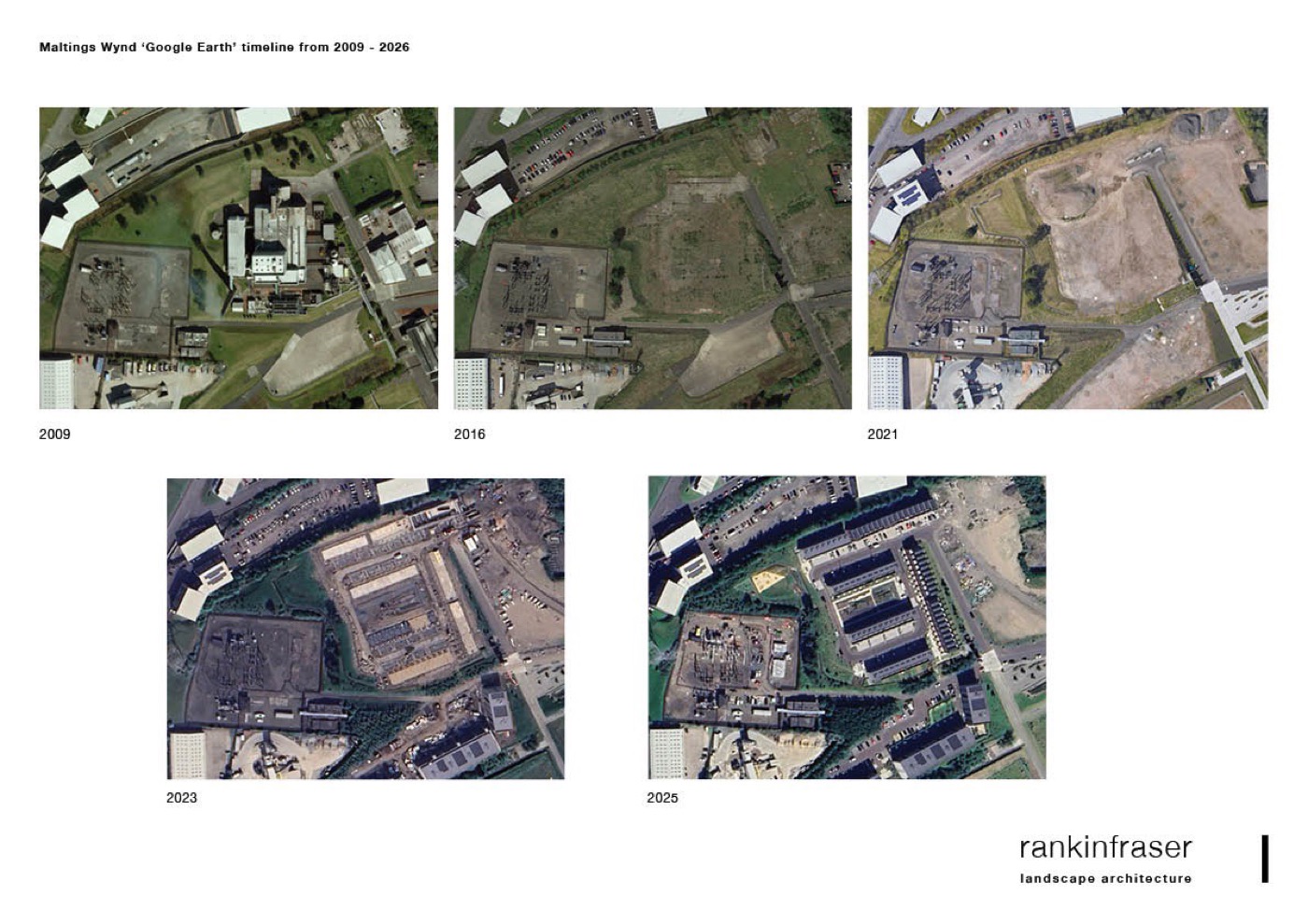
‘Maltings Wynd’ is the second phase of the ongoing residential regeneration of DundasHill in Glasgow, Scotland. The site was former brownfield land, occupied by the former Port Dundas Distillery until it closed in 2011. rankinfraser landscape architecture has been working on the regeneration of this site with the client Igloo Regeneration since 2016.
Landscape and Public Realm Framework
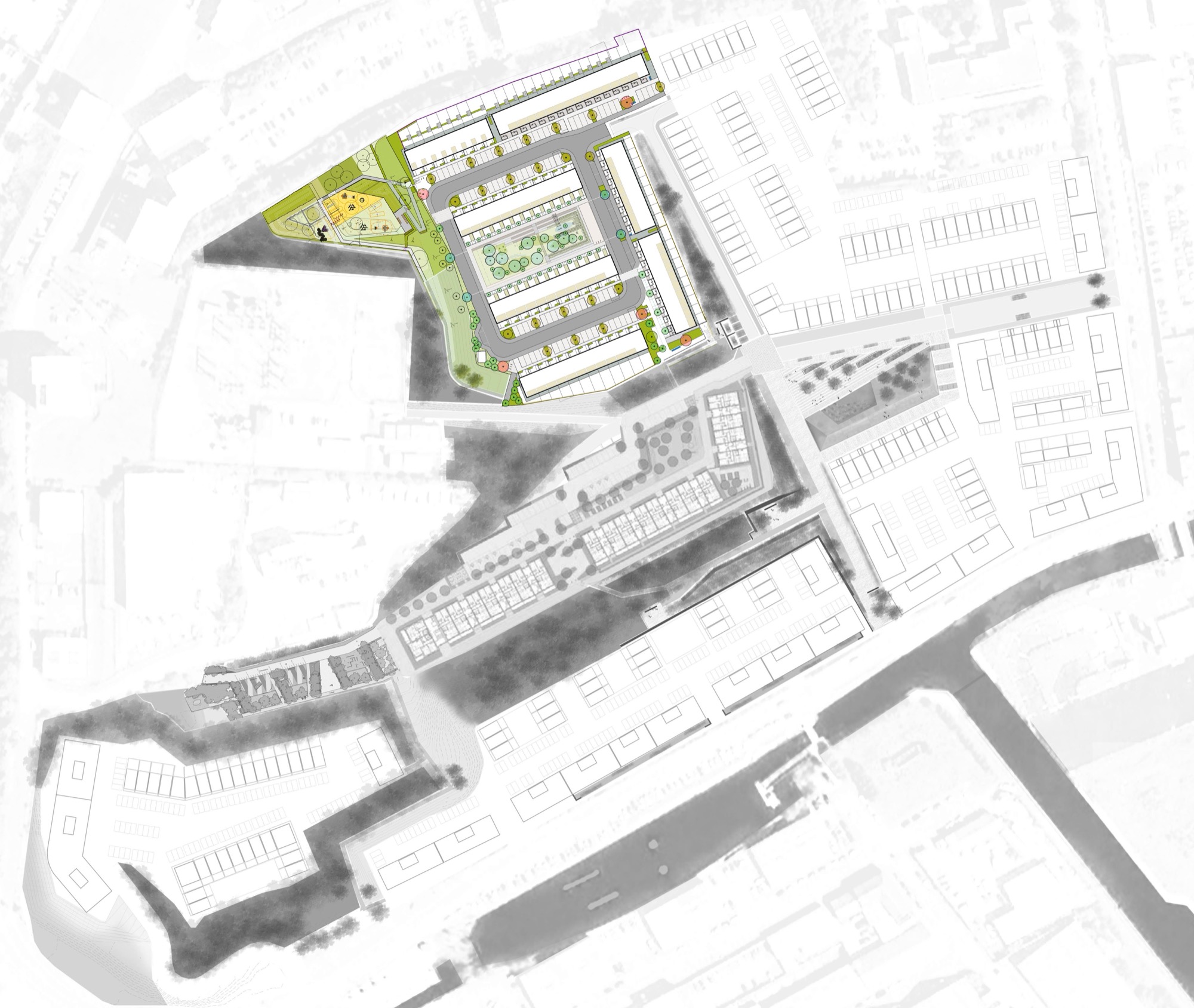
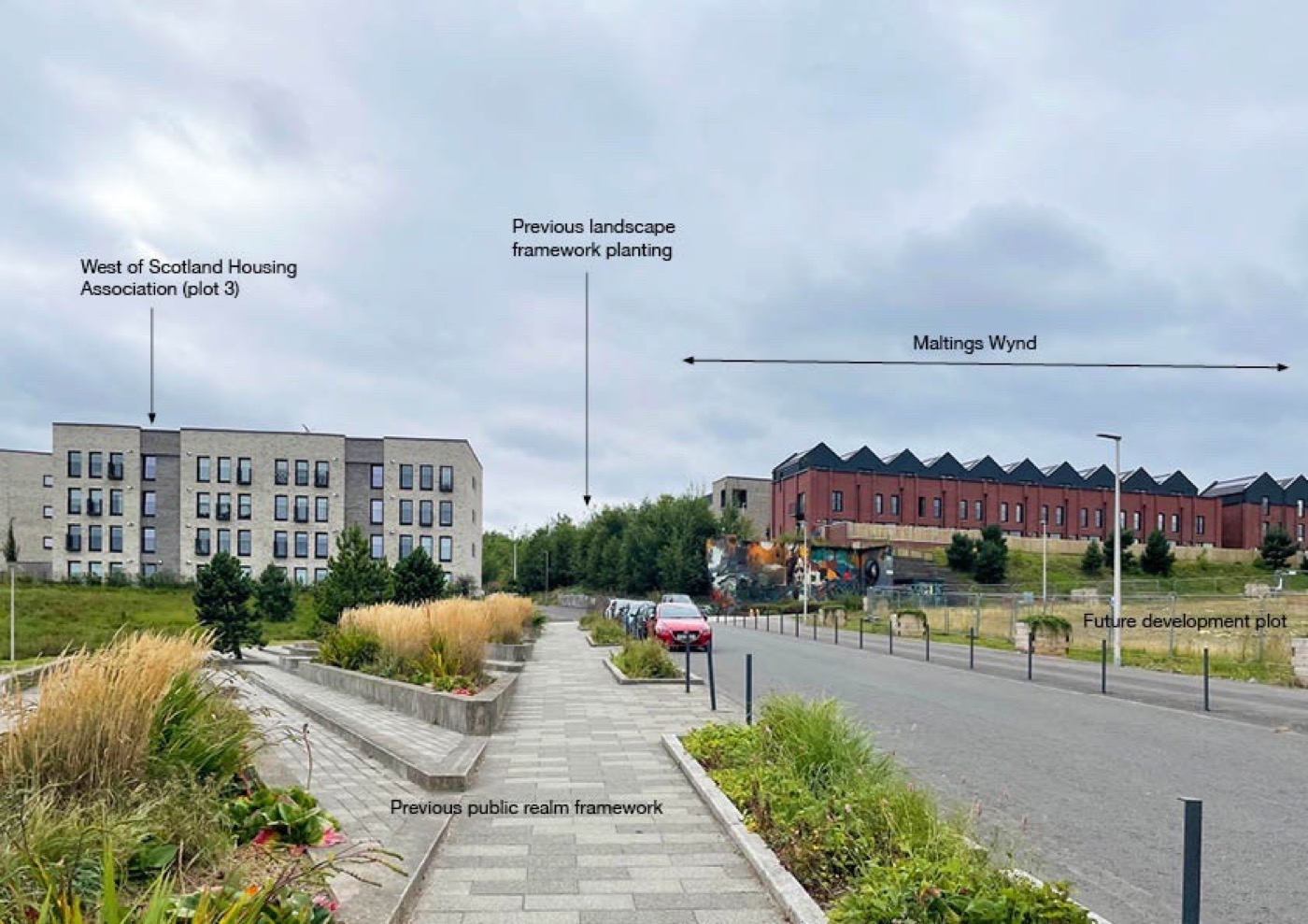
The site wide landscape and public realm framework designed by rankinfraser was completed in 2019. The long term investment by the client has created a place with a distinct identity that incorporates elements of the site’s industrial past, uses significant areas of tree planting to create shelter and enhance biodiversity and defines six plots for residential development. The first of these plots (plot 3) was completed by West of Scotland Housing Association in 2024. rankinfraser were the landscape architects for Maltings Wynd (plot 4a) also completed in 2024.
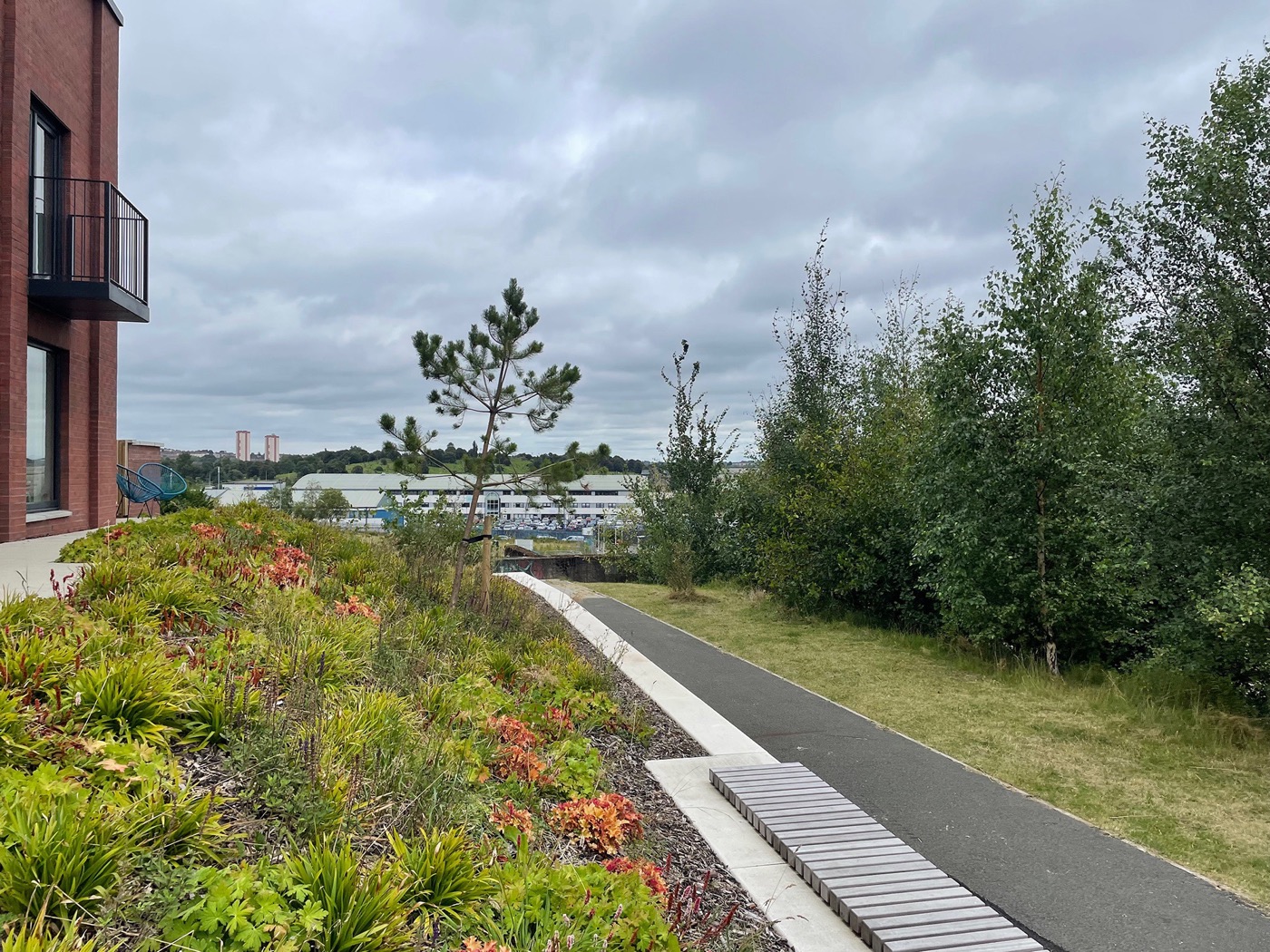
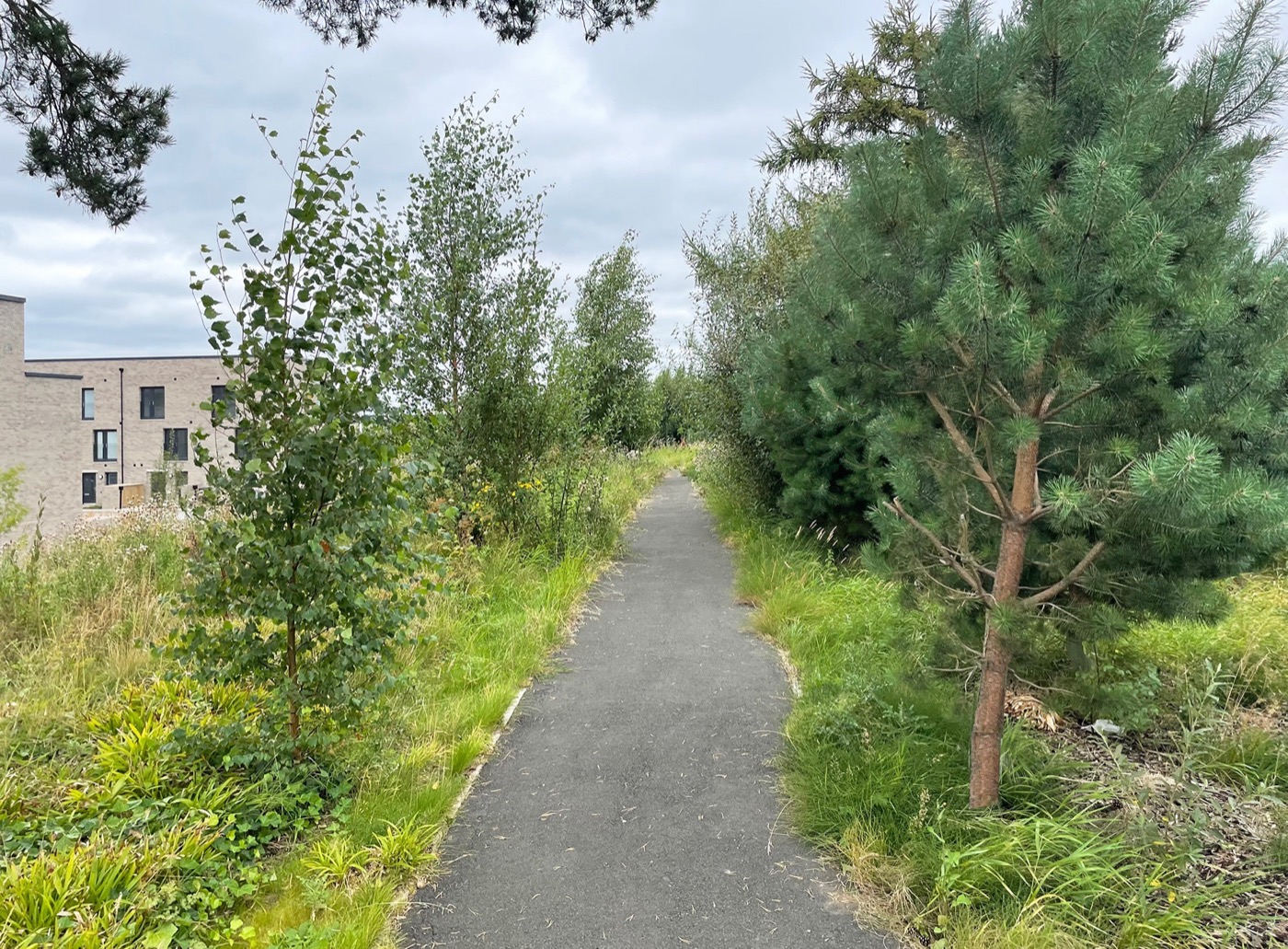
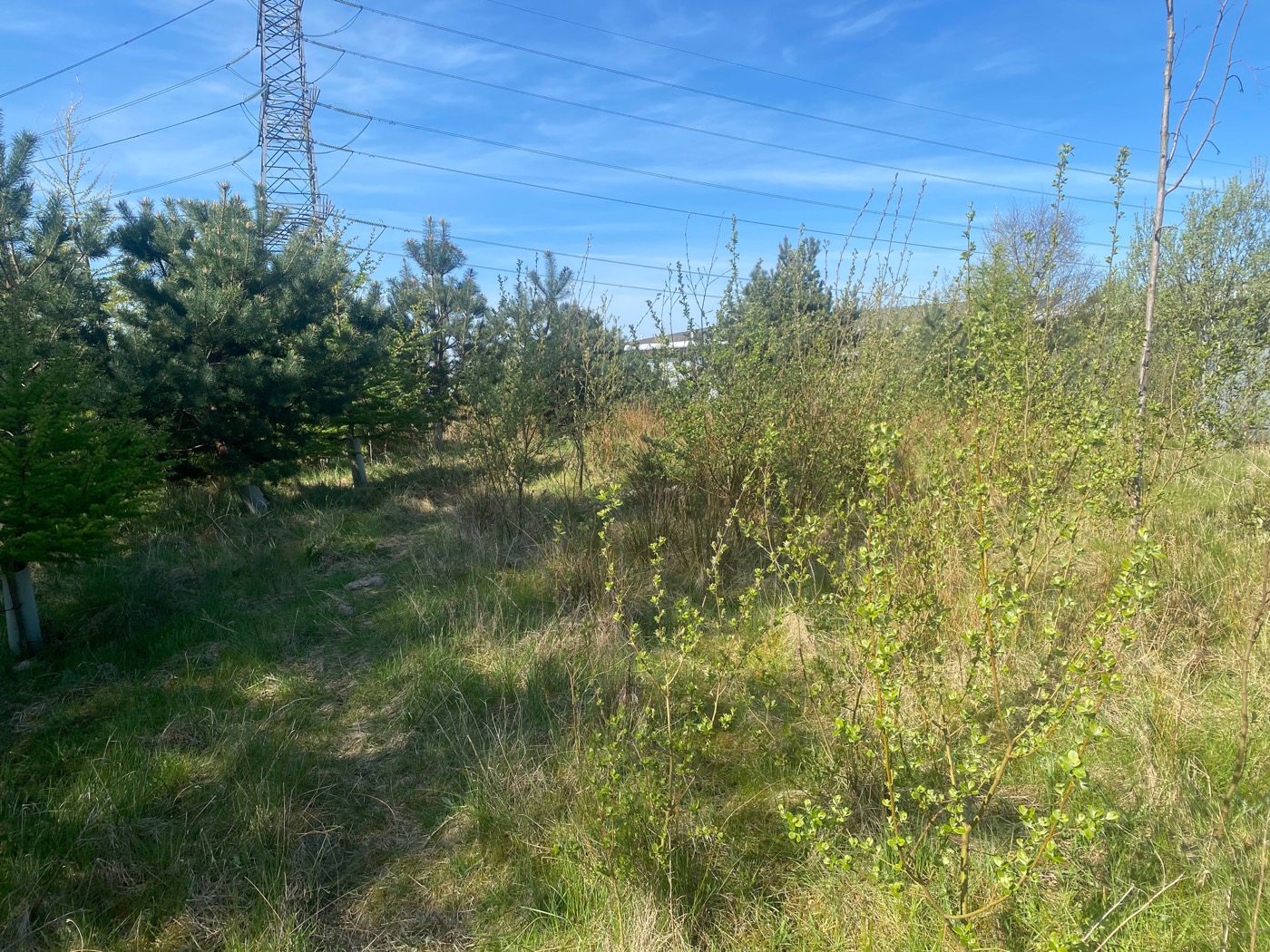
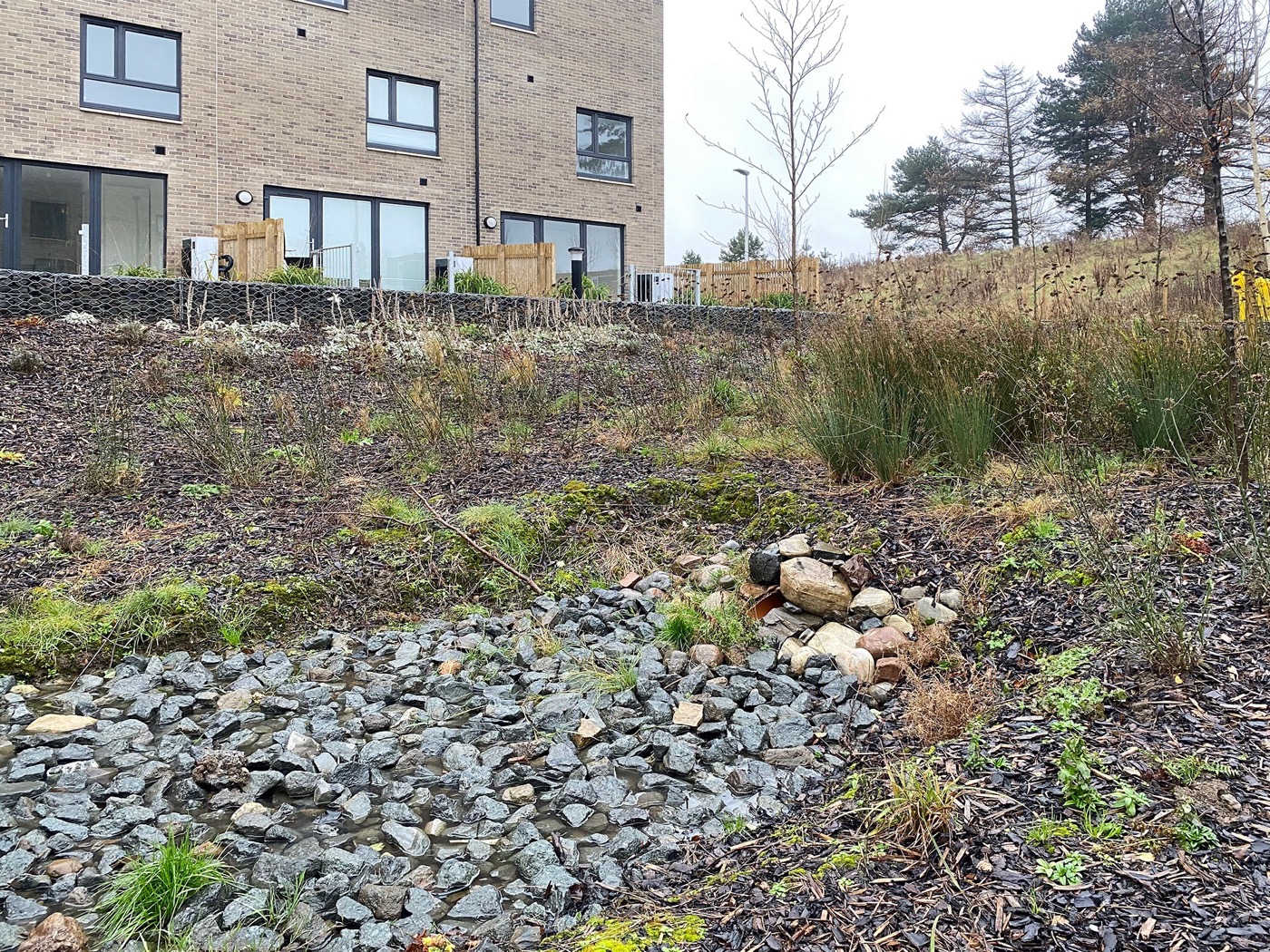
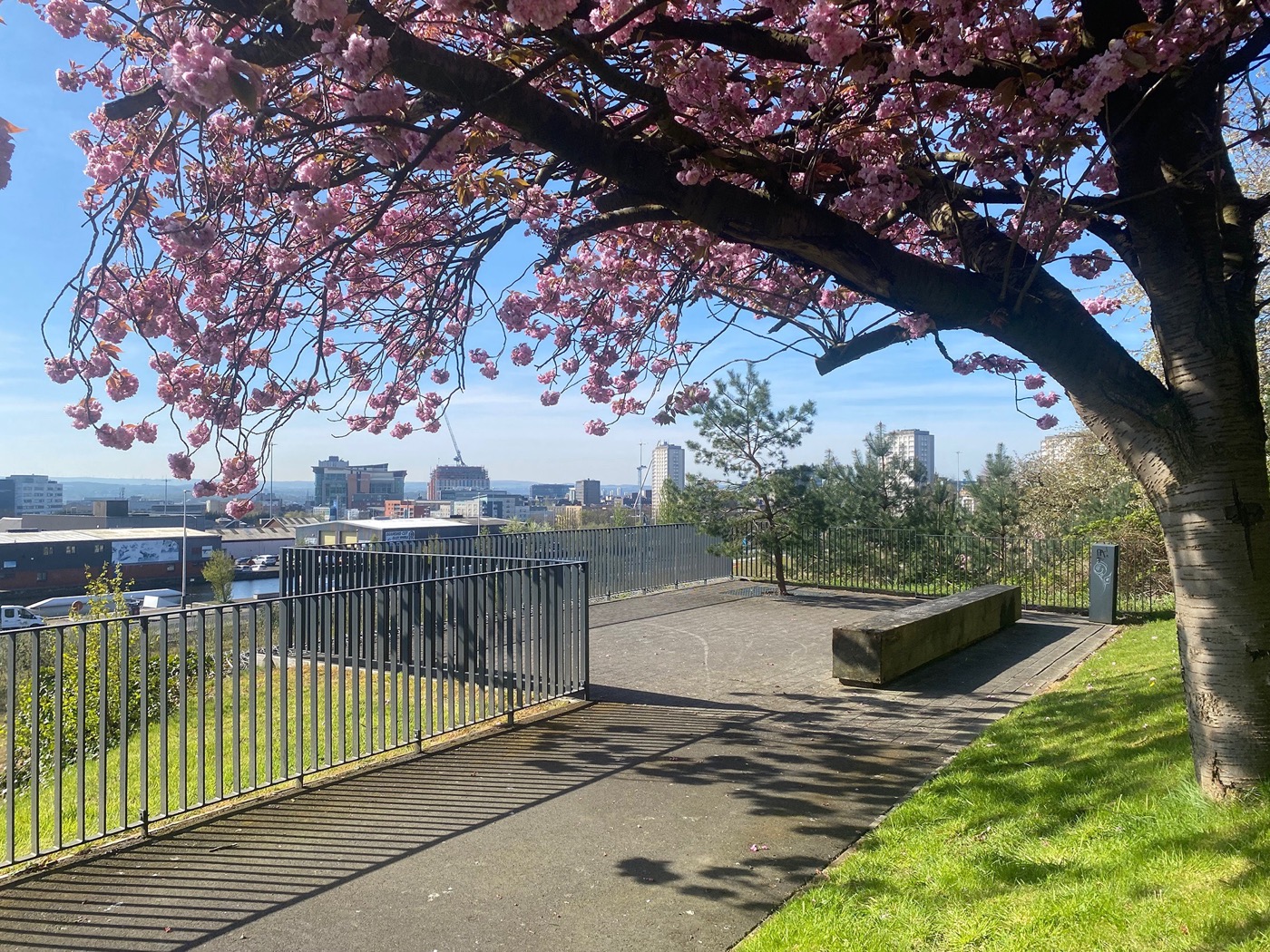
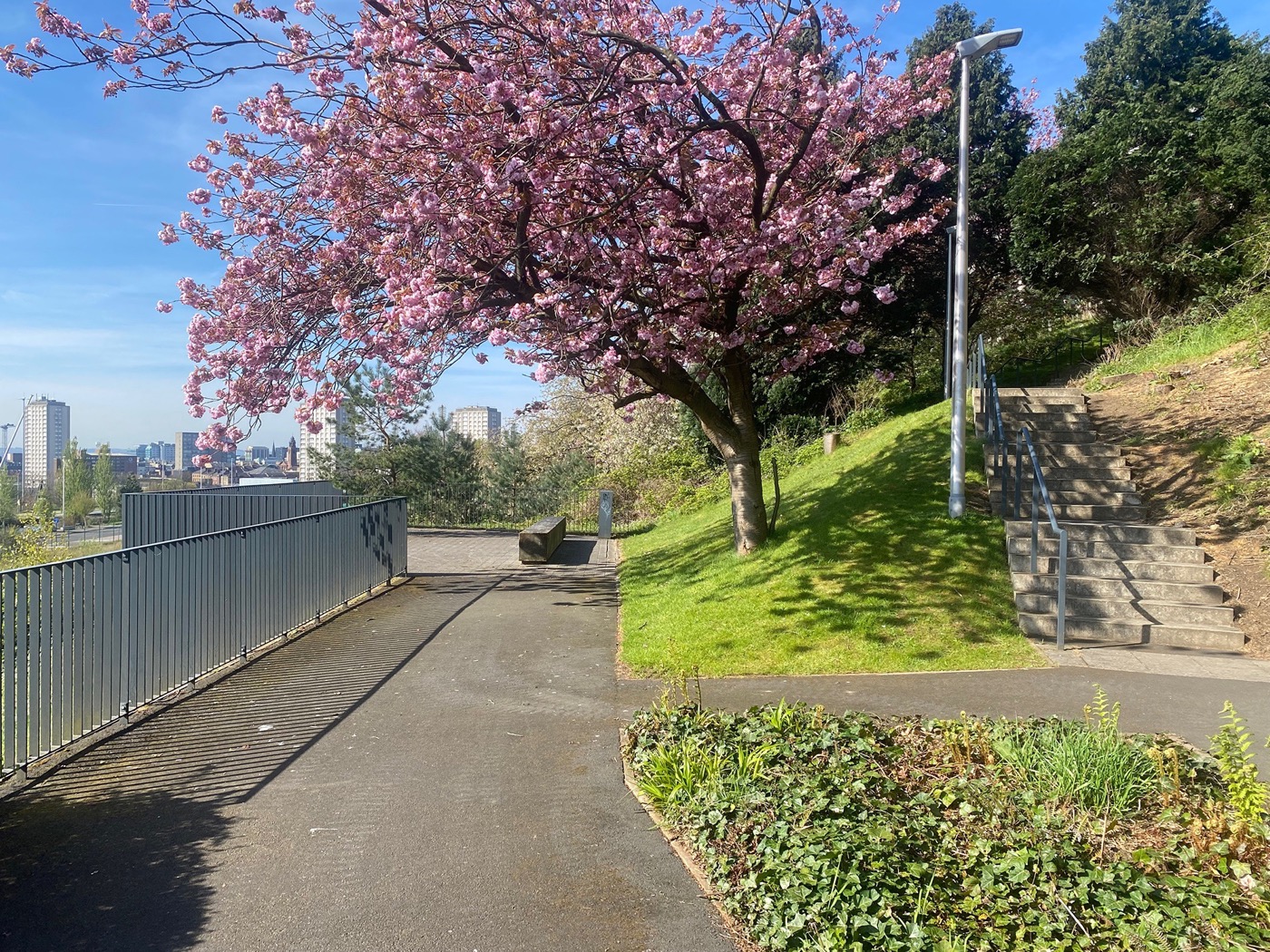
The landscape and public realm embeds climate resilient blue/green infrastructure principles at all scales which generates a landscape character and place identity unique to this site. An important factor in the success of this project, to the credit of the client Igloo Regeneration is how the public realm fully integrates with the earlier landscape framework of structure planting, viewpoints and footpaths; ensuring that the new homes and public spaces already feel part of an established landscape.
Landscape and Architecture
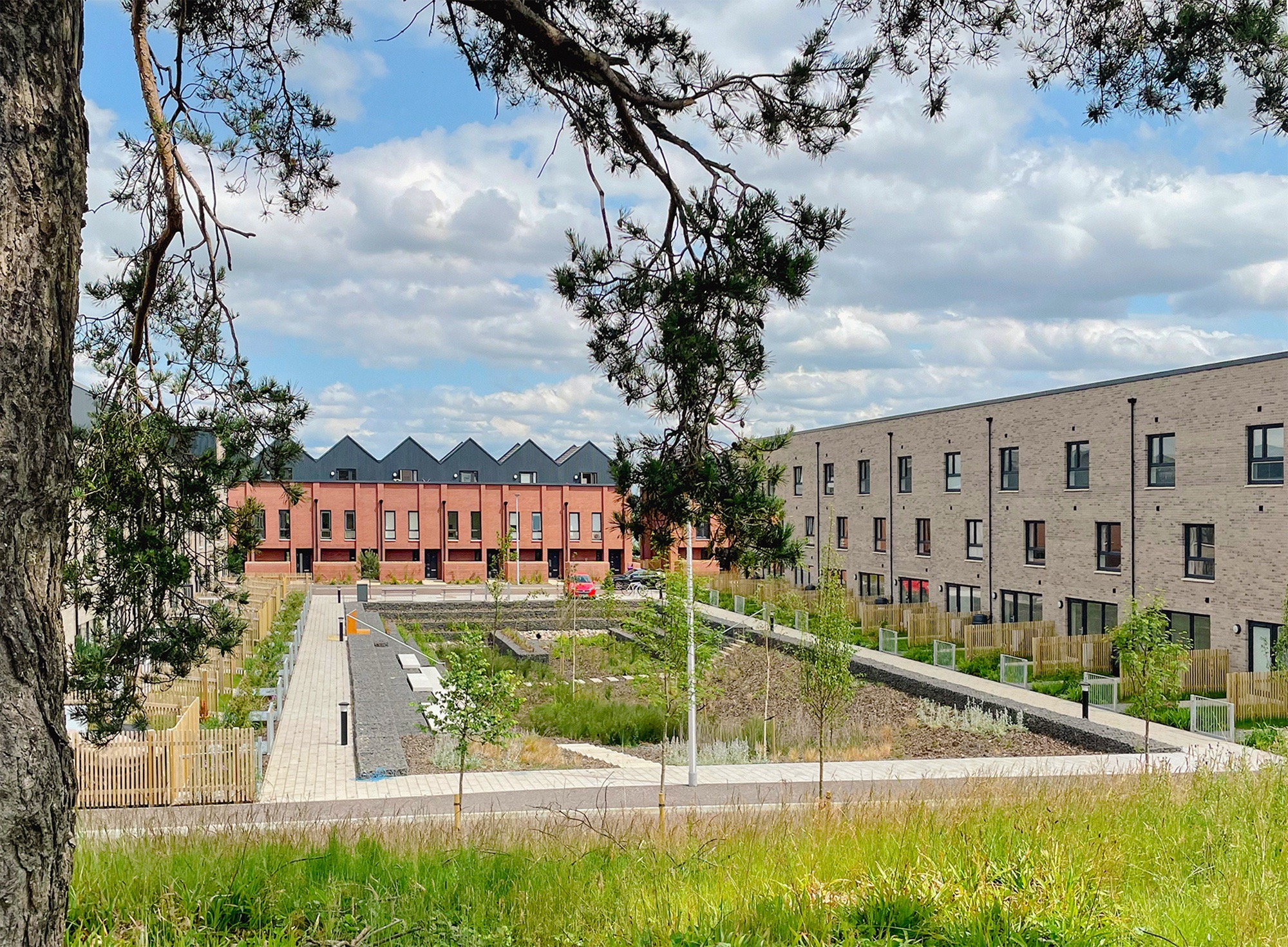
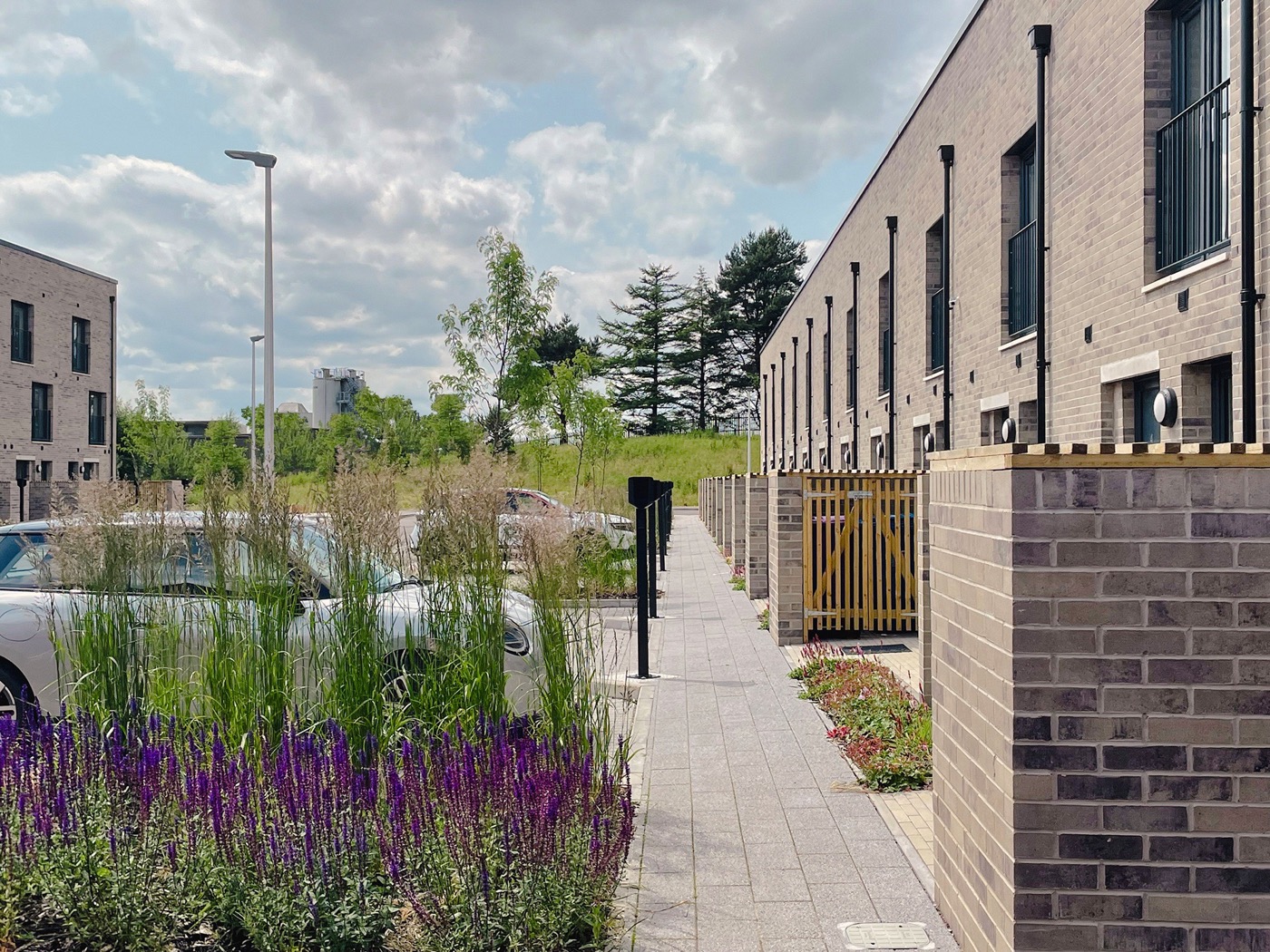
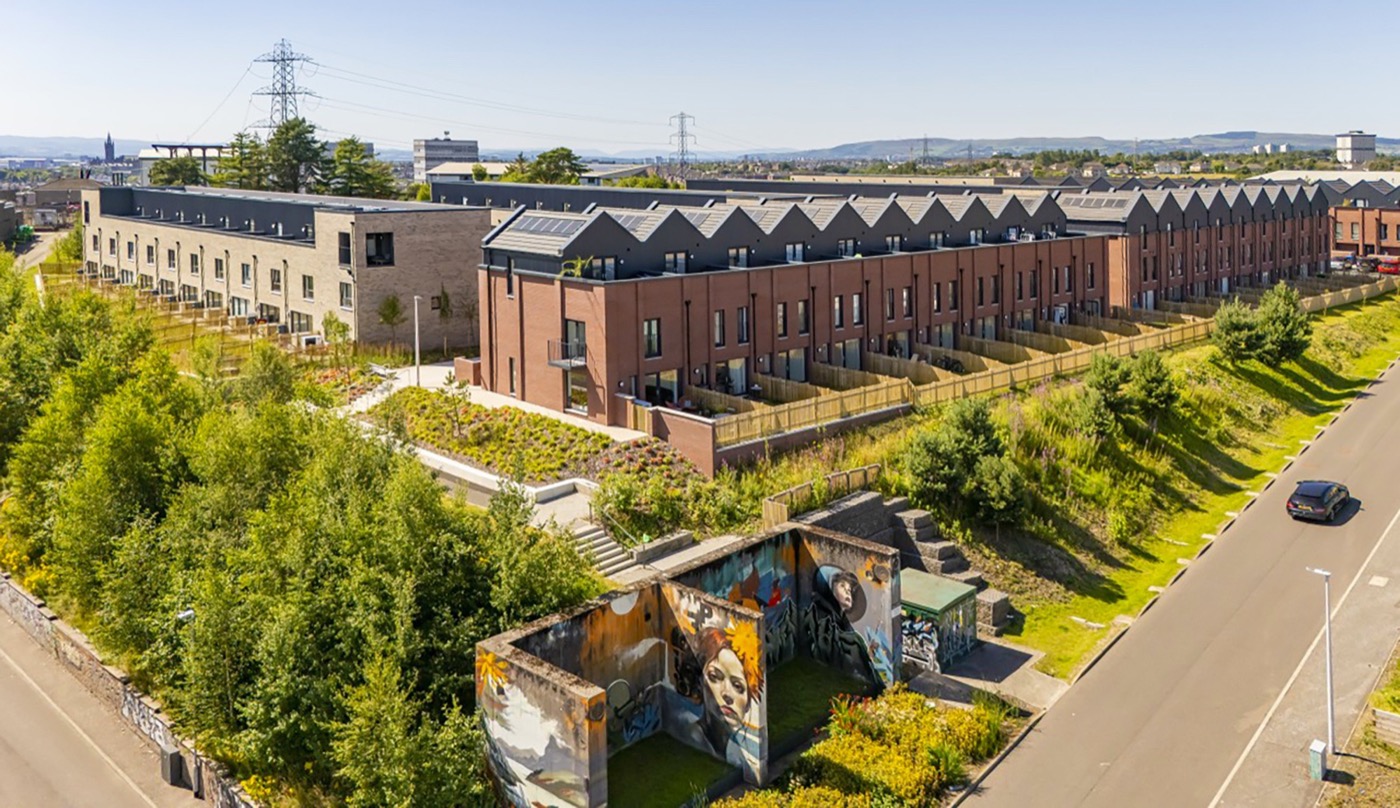
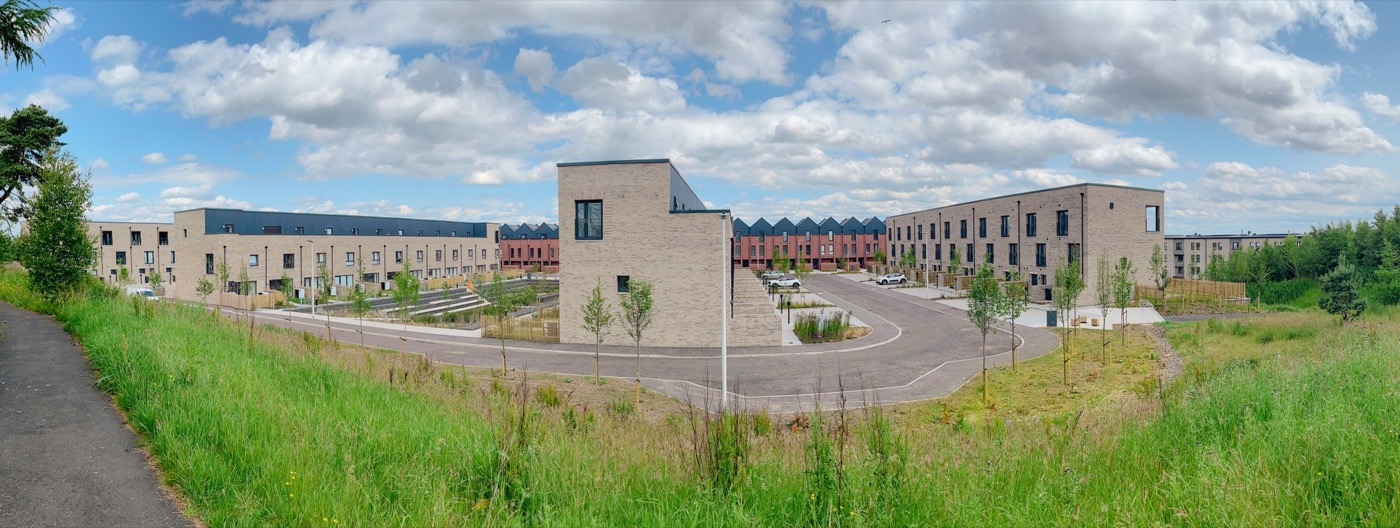
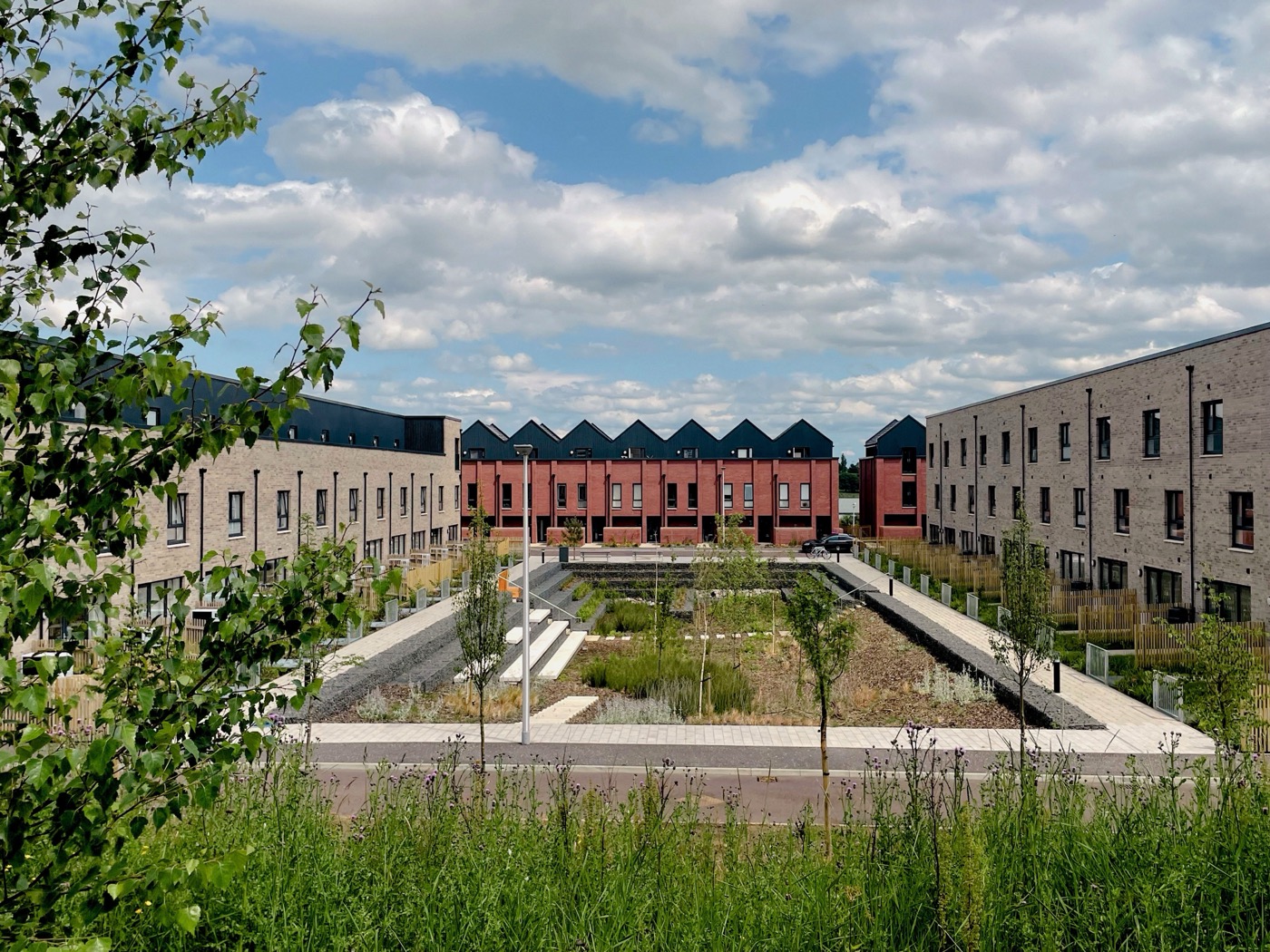
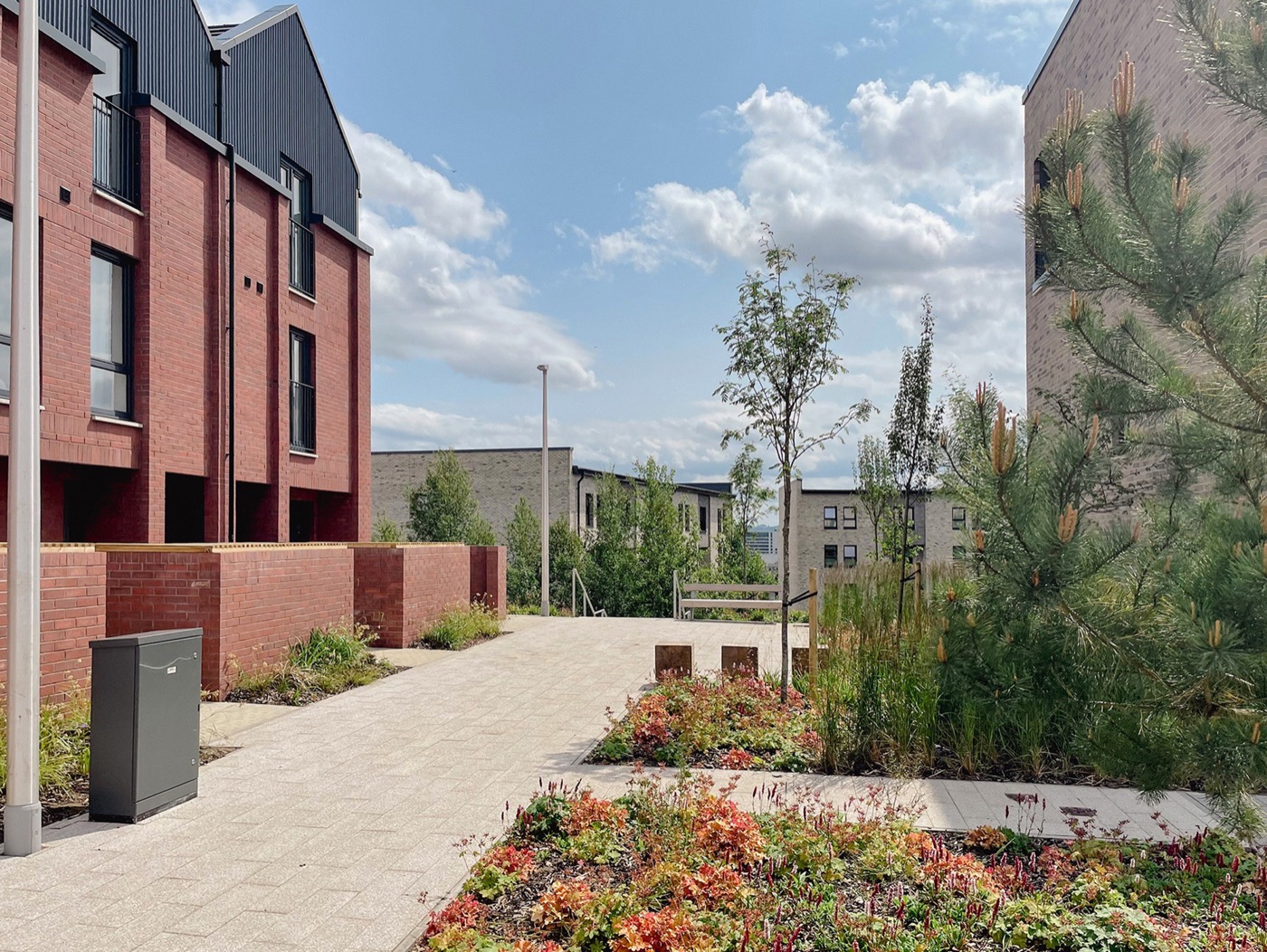
Maltings Wynd includes 78 townhouses designed within a carefully considered landscape led masterplan that places blue/green infrastructure at its heart. The homes were designed by architects Ann Nisbet Studio and Stallan-Brand, selected by the client following an invited design competition. Stallan-Brand are experienced in large scale housing design whilst Ann Nisbet was previous known for designing bespoke single family homes. The relationship of landscape and architecture was carefully considered at all stages of the project, from how the landscape framework could create distinct ‘plots’ for new development to how the homes and public spaces relate to create a safe and comfortable neighbourhood. The ambition for the architecture was to develop a sensibility, which would share similar ideas and together create a harmonious feel across the plot, but with enough variation to bring richness and interest. The Ann Nisbet terraces, with their sawtooth roofscape, create a dynamic edge onto Vinter Street and along the northern edge of the site. The Stallan-Brand terraces are located at the interior of the site, forming the internal streets.
Maltings Wynd Landscape
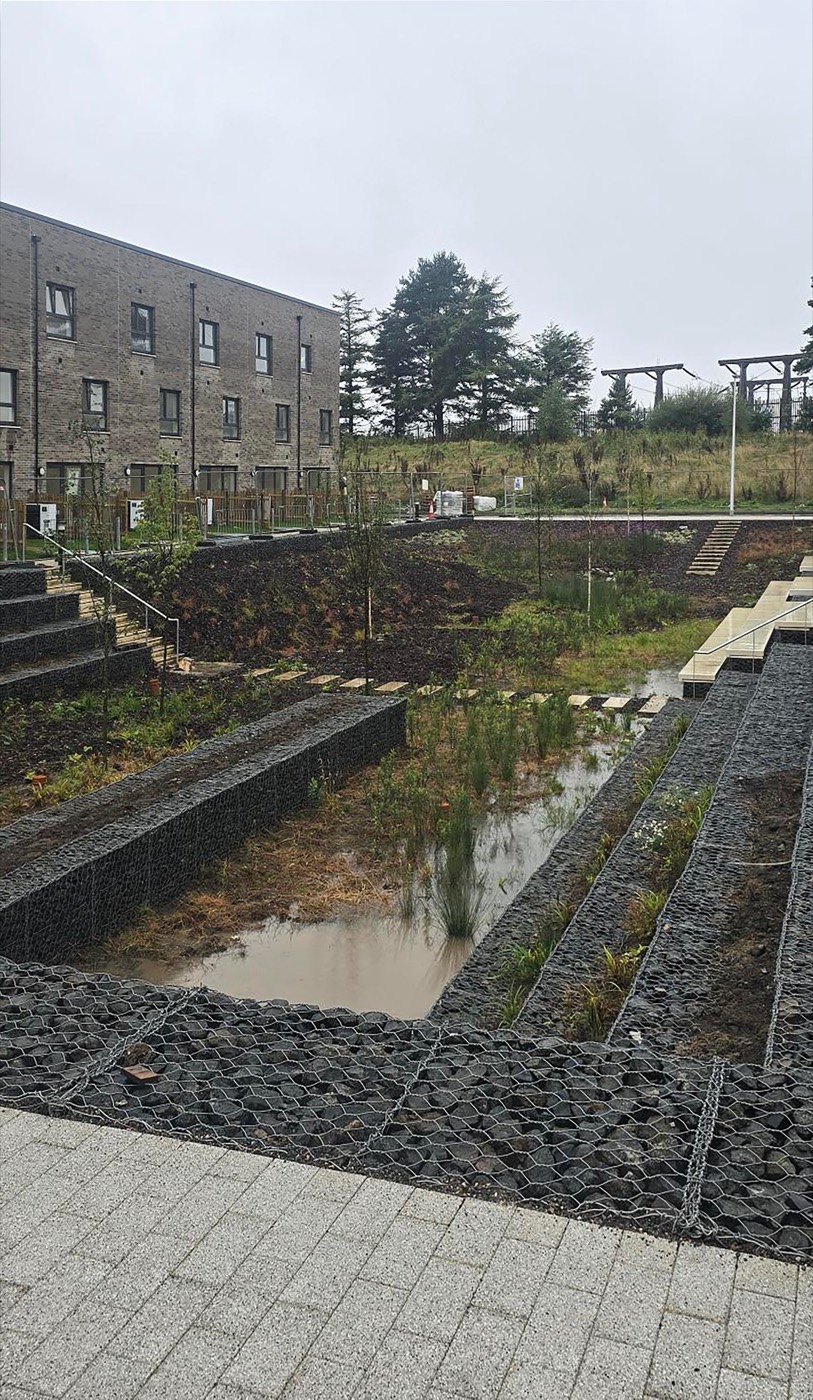
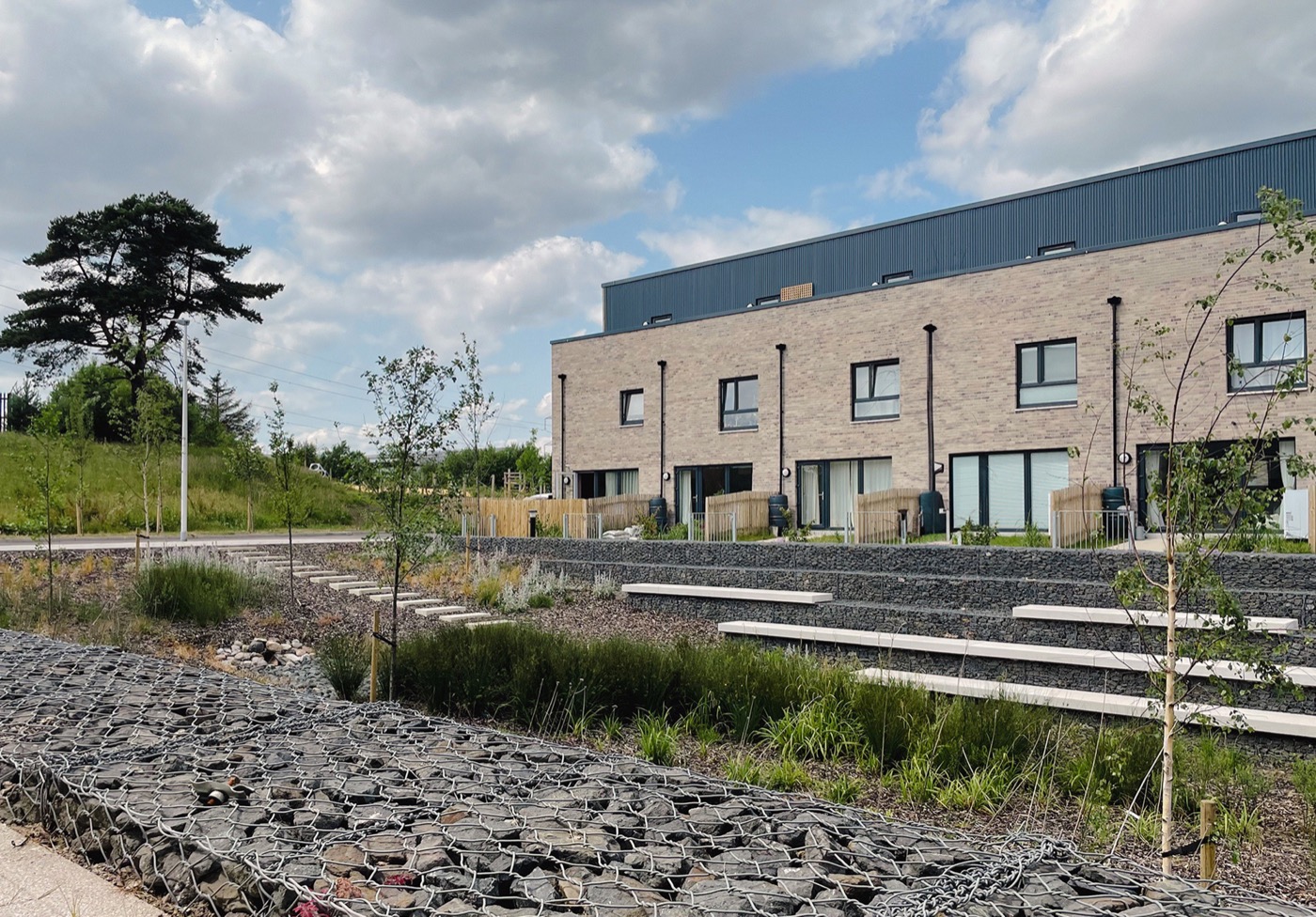
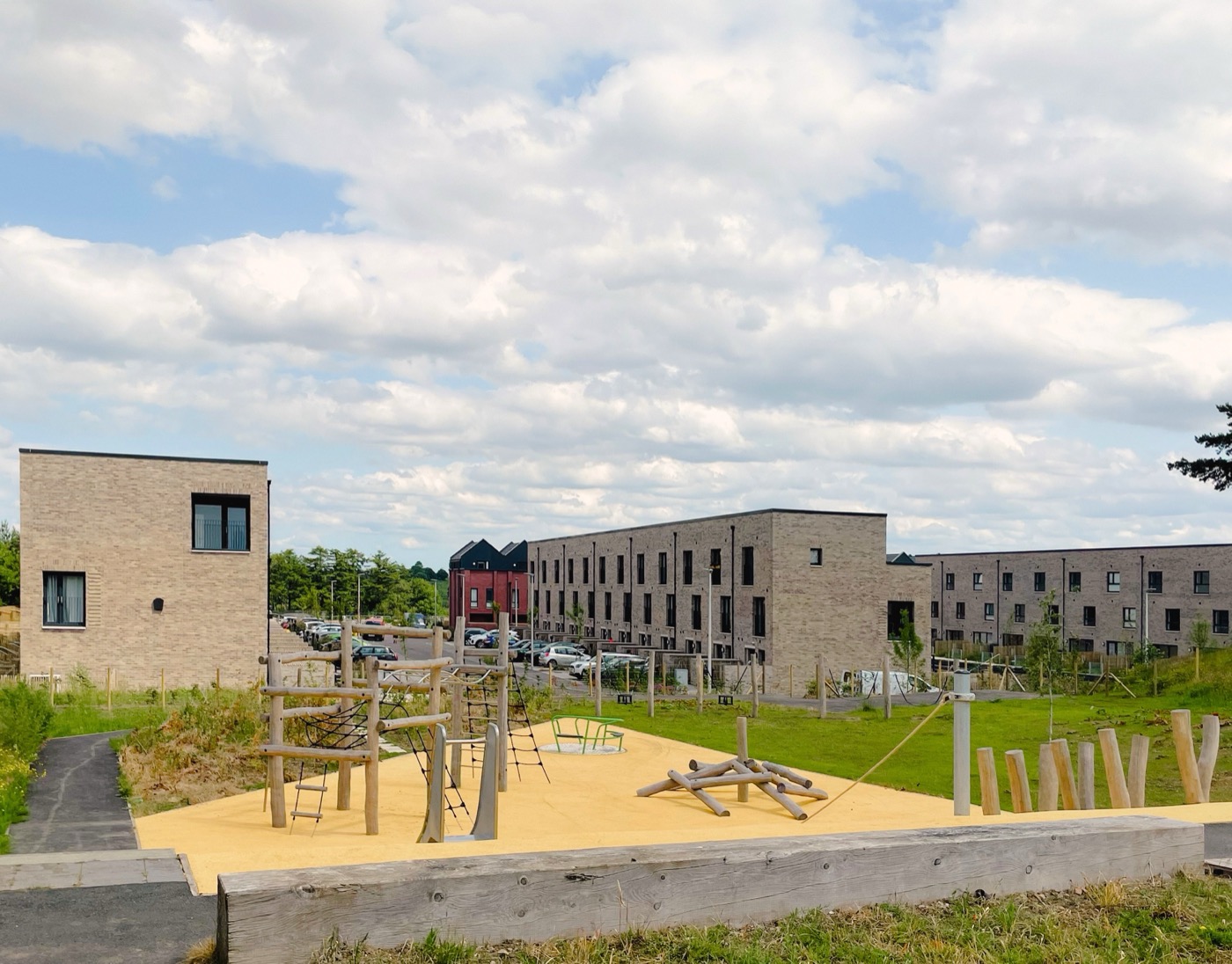
Located at the highest part of DundasHill, Maltings Wynd landscape includes several elements that combine to create a unique sense of place and identity including; the central rain garden, dedicated play spaces, the well considered relationship of new homes to streets and public spaces, new public art and enhanced shelter planting to improve the micro-climate of this exposed hilltop location. The successful overall approach to the integration of blue-green infrastructure into the public realm has secured a national ‘Building with Nature’ full accreditation for the project.
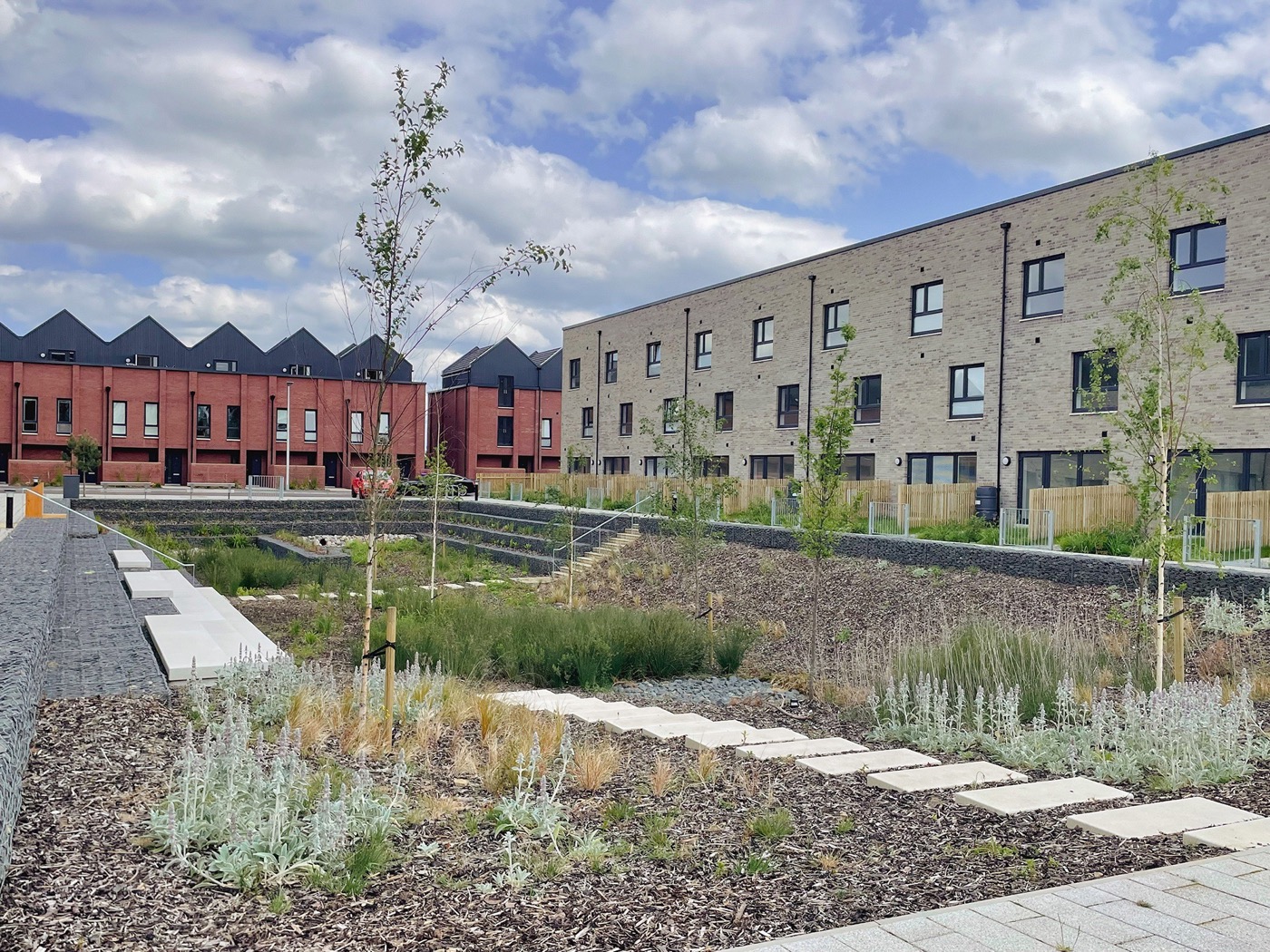
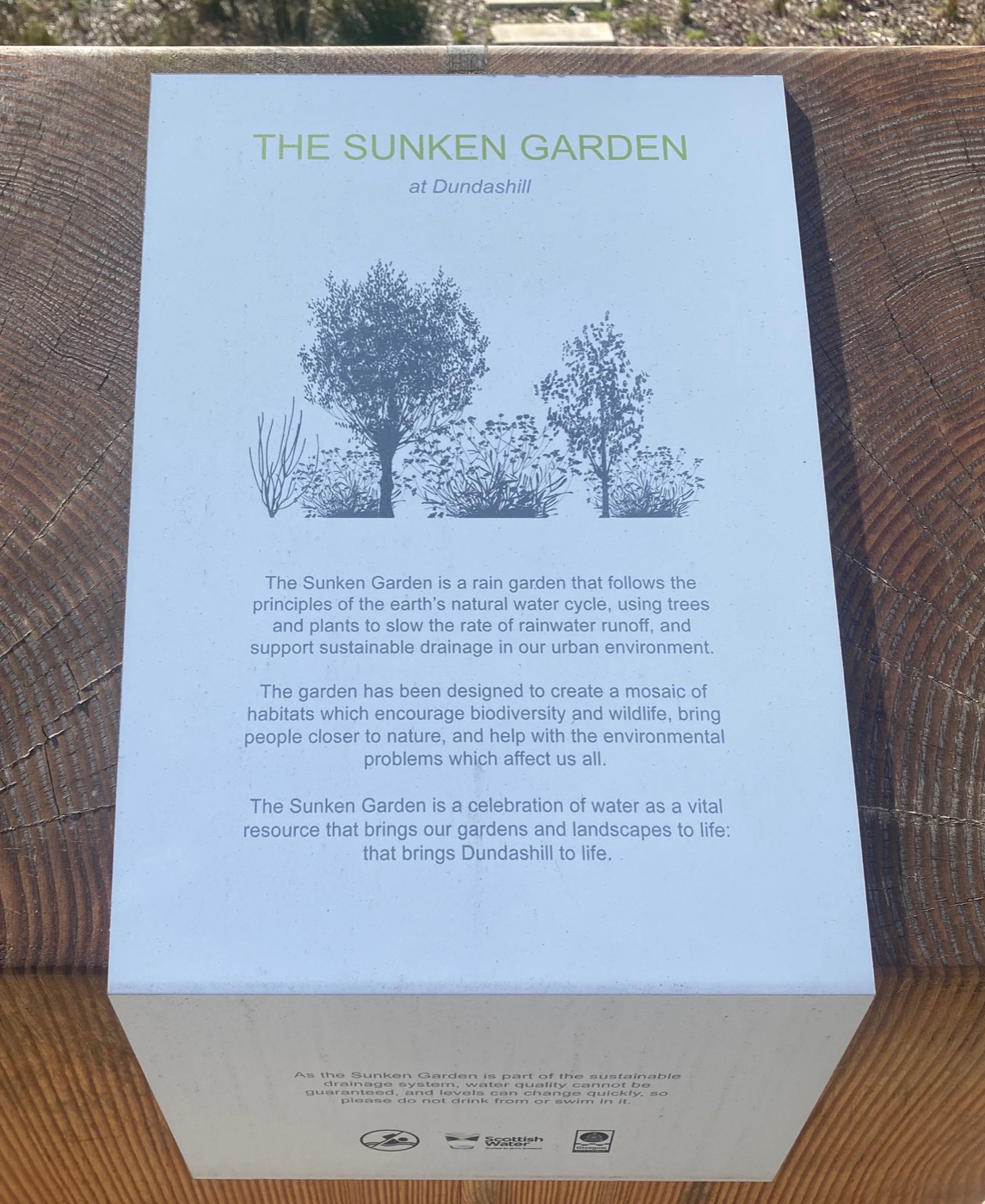
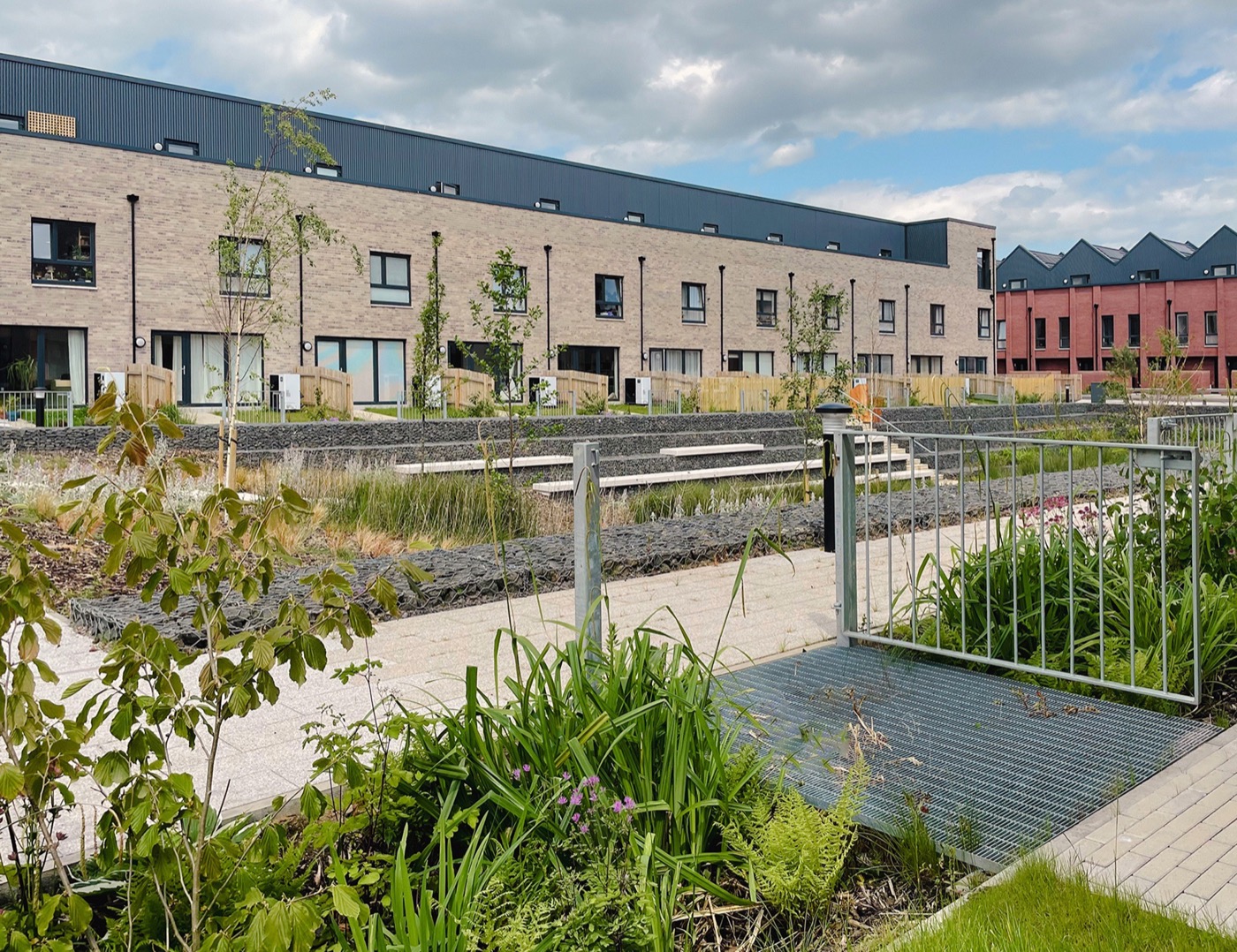
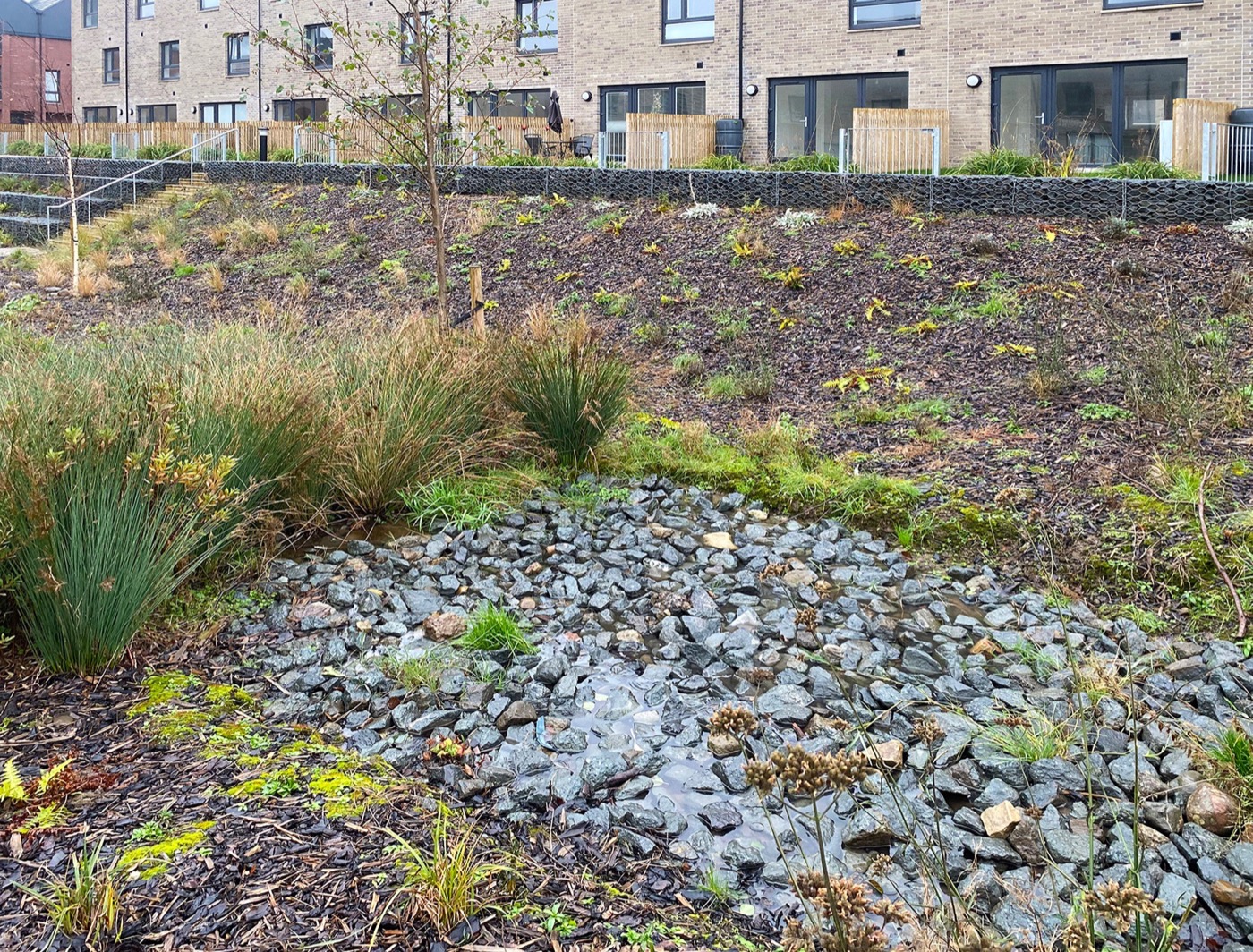
The central focus of the development is the innovative communal garden that also acts as a multifunctional and accessible rain garden, promoting social gathering and biodiversity. It is the heart of the Maltings Wynd development and a place for residents and nature to thrive. The client was keen to demonstrate that climate resilient landscape design can generate new forms of public open space, which in turn creates distinct places. This garden is unusual for a commercially led housing project in Scotland, where much more conventional and ‘risk averse’ approaches are more normal. The design required a lot of detailed conversations with the relevant local and national authorities to secure its adoption as a fully functioning part of the sustainable drainage for the site. The nearby play space is designed to provide a different type of social place. Earlier tree planting is now giving shelter to this space which utilises the earthworks constructed as part of the earlier infrastructure phase.
The planting design particularly the choice of tree species, seeks to further enhance the sense of place. Streets, public spaces, rain gardens, and the sunken garden are differentiated by various tree types. Regularly spaced, clear-stemmed street trees are planted within streets, public spaces are defined by the feature Scots Pines, rain gardens are planted with a diversity of species tolerant of a variety of wet/dry conditions, and the sunken garden is defined by a loose, naturalistic planting which lends itself to habitat creation whilst creating a ‘wild’, natural character at the centre of the development.
55.8742993533706, -4.253174593836066
73567


LILA 2026 Sponsor